Cotton Mather
The most prominent minister in colonial New England. His works on church history, science, and practical piety shaped American Puritanism in its final generation.
1663–1728
Biography
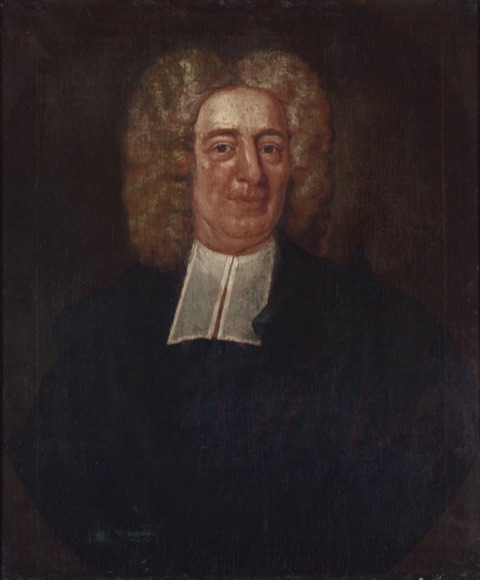
Cotton Mather was born on February 12, 1663, in Boston, Massachusetts, the son of Increase Mather and the grandson of Richard Mather and John Cotton, the two most influential ministers of the first Puritan generation in New England. He entered Harvard College at eleven, the youngest student ever admitted, and graduated in 1678.
Mather was ordained in 1685 and became assistant minister at the Second Church (North Church) in Boston, where he served alongside his father. He became sole minister in 1723 and served until his death. He was elected a Fellow of the Royal Society in London in 1713, the first native-born American to receive that honor.
Mather was a prolific author who published over 450 works. His Magnalia Christi Americana (1702) was an ecclesiastical history of New England that preserved the records of the founding generation. His Bonifacius, or Essays to Do Good (1710) urged Christians to organize voluntary associations for charitable work and influenced Benjamin Franklin.
Mather's involvement in the Salem witch trials of 1692 has been extensively debated. He encouraged the courts but expressed reservations about the use of spectral evidence. His reputation suffered when the trials were later repudiated.
Mather also championed smallpox inoculation during the 1721 Boston epidemic, a position that was controversial but medically correct. He died on February 13, 1728, in Boston.
Life & Career
Why Mather Matters
Mather represented the last generation of New England Puritanism in its original form. He attempted to maintain the theological and ecclesiastical standards of his grandfathers' generation while adapting to the changing social conditions of colonial Massachusetts.
His Magnalia Christi Americana preserved the founding narratives, conversion accounts, and church records that became the primary source for understanding early New England Puritanism. Without Mather's historical work, much of the first generation's story would have been lost.
His Essays to Do Good shifted Puritan piety toward active benevolence and social reform. While earlier Puritans emphasized personal godliness and church discipline, Mather argued for organized charitable efforts, voluntary associations, and practical service to the community. This emphasis influenced later American evangelicalism and its tradition of voluntary societies.