


A General Introduction
“I will say this for the benefit of those who will read this work.” Theodoret.
1. I write of the wonders of the Christian religion as it fled the corruptions of Europe for the American shore. With the help of that religion’s holy Author, and with the care for truth required by him who is Truth itself, I report the wonderful displays of his infinite power, wisdom, goodness, and faithfulness by which his providence has illuminated an Indian wilderness.
I relate the significant events that brought about and attended the first settlement of colonies renowned for the degree of reformation professed and attained by the evangelical churches established at those ends of the earth. With that setting in place, I proceed to the significant events that took place there.
I first introduce the people who served those colonies in exemplary ways. I recount remarkable events in the exemplary lives of many magistrates and still more ministers, who lived so as to leave posterity examples worthy of everlasting remembrance.
I add notable matters concerning the only Protestant university ever to shine in that hemisphere of the New World. Our biographies also present particular Christians whose virtues offer the whole world examples to emulate.
I then introduce the actions of greater public importance that distinguished those colonies: the institutions directed by their synods, with a rich variety of synodical and ecclesiastical decisions; the disturbances that assailed them through every sort of temptation and enemy; and the methods by which they weathered each terrible storm.
Among these accounts I place an entire book that gathers, with all possible truthfulness, memorable events and astonishing judgments and mercies that befell particular people in New England.
Let my readers expect everything promised in this bill of fare. They may find many other passages as well, worthy of a place in history. In all of it, only the author’s inadequate preparation of such a great feast can discredit the invitation.
2. The reader will doubtless want to know:
> “What drove men distinguished by piety > Through so many turns of fortune, > And compelled them to face so many labors?”
At fitting points, this history will try to answer with historical faithfulness and simplicity, while giving as little offense as possible. In brief, from the very beginning of the Reformation in England, there has always been a generation of godly people who wanted to pursue the reformation of religion according to God’s Word and the example of the best reformed churches. They fit the character of good people that Josephus gives in his paraphrase of Samuel’s words to Saul: “They think they do nothing right in God’s service unless they do what God has commanded.” There has also been another generation, generally holding power, who used it both to halt the desired reformation and to persecute its most wholehearted supporters with innumerable troubles.
Many reformers joined the Reverend John Fox in the complaints he entered in his Martyrology about the lures of popery left in the church, and in his wish: “God take them away, or relieve us of them, for God knows they cause much blindness and strife among people!” They zealously decried the policy of always accommodating the people’s ignorance and vanity. They earnestly called for purer practices in God’s house and closer conformity to the law of Christ and to early Christianity. Others refused to go beyond the first attempt at reformation.
The first reformers certainly never meant their own work to be the absolute limit of reformation, beyond which it would be sinful to proceed. Their advance beyond Wycliffe, their changes and growth in their own models, Cranmer’s statements, Bucer’s Scripta Anglicana, and a thousand other things abundantly show this. The truest friends of reformation waited a long time, without success, for the original reformers’ design, which even Heylin acknowledges, to be followed as it should have been. Then a party that unjustly claimed for itself the venerable name “the Church of England” grievously struck its fellow servants through countless oppressions. As our great Owen expressed it, “Multitudes of devout, peaceable Protestants were driven by their harsh treatment to leave their native country and seek, in a wilderness at the ends of the earth, refuge for their lives and liberties and freedom to worship God.”
3. It is the history of these Protestants that I attempt here. They greatly honored and loved the Church of England and humbly petitioned to be part of it. Yet, through the mistaken actions of a few powerful brethren, they were driven to seek in the American deserts a place where they could practice the Protestant religion according to the light of their consciences.
In this undertaking I intend to preserve and secure the interests of religion in the churches of that little country, New England, as far as the Lord Jesus Christ may bless it for that purpose. I also hope to offer the churches of the Reformation throughout the world a few records useful to the work of reformation, to which I believe they will soon be awakened.
I am far from boasting that these churches “have need of nothing.” I wish their works were more perfect before God. Indeed, what Augustine called “the perfection of Christianity” will likely remain, until the time appointed for the antichristian apostasy has ended, this: “that they acknowledge they are never perfect.” Nevertheless, I believe that, as far as they have progressed, they have provided great examples of the methods and measures by which evangelical reformation should be pursued, the qualifications needed in those who pursue it, the difficulties most likely to obstruct it, and the directions and remedies most likely to overcome those obstructions.
Perhaps I can do no greater service to the churches on the best island in the world than to give a distinct account of these great examples among churches of exiles. They were driven from that island into a dreadful wilderness merely because they wished the Reformation well. When the blessed martyr Constantine was carried with other martyrs in a dung cart to the place of execution, he said cheerfully, “Even so, we are a precious fragrance to God in Christ.” Injurious accounts by their brethren have often thrown the reformed churches in America into a dung cart, though those churches desire to forget and forgive every such injury. Yet, as they have been a precious fragrance to God in Christ, I hope they will also be a precious fragrance to his people. When their history is considered, I hope they will prove useful as well as precious.
A reformation of the church is coming. I cannot help saying, with the dying Cyrus to his children in Xenophon, “Learn from what has happened before, for that is the best instruction.” Here the reader has an account of what has happened before. Commenting on the phrase in the Song of Songs, “O you fairest among women,” Bernard offers this perceptive gloss: “He teaches her that she is beautiful, though not beautiful in every respect, but beautiful among women. He makes the distinction so that she may be restrained all the more and know what she lacks.” Thus I do not say that the churches of New England are as orderly as churches can be. I do say, with confidence, that they closely resemble the churches of Christianity’s first ages.
If I assert that the church’s condition in those first ages deserves considerable attention in any reformation, the great Peter Ramus, among others, gives me courage. When the Cardinal of Lorraine, that great man’s patron, took offense at his becoming a Protestant, Ramus replied: “Among the riches with which you endowed me, I shall remember this forever: through your reply at Poissy I learned that, of the fifteen centuries since Christ, the first was truly golden, while the others grew worse and more corrupt the farther they departed from it. So, when the choice was mine, I chose the golden age.” In short, the first age was the golden age. To return to it will make a person a Protestant and, I may add, a Puritan.
It is possible that our Lord Jesus Christ brought several thousand reformers into the seclusion of an American desert for a purpose. There, many of his faithful servants could enjoy the precious liberty of their ministry, though surrounded by temptations throughout their lives. He might first show them, and then through them, examples of many good things toward which he wished his churches elsewhere to aspire and rise. Having done this, he knows whether everything for which New England was planted has been accomplished, and whether the plantation may soon afterward come to nothing.
Some have imagined that the “outer regions” of America are the “outer darkness” to which the unprofitable are condemned in the scriptural words, “Cast the unprofitable servant into outer darkness.” No doubt those who imposed church requirements and harsh treatment that drove English Christians into America’s dark regions considered those Christians a very unprofitable sort of people. But look, you European churches: there are golden lampstands, more than twice seven times seven, in the midst of this outer darkness! Here light has arisen in darkness for Abraham’s upright children. Let us say humbly that it will profit you to consider the light now shining from this outer darkness across the Atlantic Ocean. At the same time, we must ask your prayers that these golden lampstands may not soon be removed from their place!
4. Whether New England survives anywhere else or not, it must live in our history!
From Herodotus to Howell, countless historians have praised history so extensively that copying even a tenth of their commendations would fill a folio Polyanthea. Lacking both the freedom and the occasion to quote them, we will content ourselves with the judgment of someone who was hardly a professional historian, in a passage to which all humanity agrees: “History is the witness of times, the messenger of antiquity, the light of truth, the life of memory, and the teacher of life.” Of every kind of history, however, church history deserves the highest place. Its subject surpasses the rest in dignity, pleasure, and usefulness.
I observe that Moses, the first of all historians, devotes only one or two chapters of Genesis to describing the whole world, but perhaps seven times as many to describing one little pavilion, the Tabernacle. When I consider the reason for this difference, it seems to suggest that the church, where God is served, is far more precious than the world, which was indeed created for the church’s sake and use.
Surely the greatest interest must lie in the history of the people whom the Son of God has redeemed and purified for himself as a people of his own. By supernatural work in their minds, the Spirit of God causes them to live as strangers in this world, conforming to the truths and rules of his holy Word while expecting advancement to a kingdom in another and better world. Our Lord Jesus Christ has obtained and preserved such a people visibly in every age. His wonderful providence toward them, for “O Lord, you lift them up and cast them down!”, their calamities and deliverances, the qualities they have shown, and the notable people and actions among them provide more cause for wonder and instruction than any other story can claim. Only atheism in people’s hearts can persuade them otherwise.
Let a sensible person read Herodotus. His history rises like a river where the sacred records of the Old Testament leave off, then runs smoothly and pleasantly through accounts that may sometimes need an apology, until the Greeks drive the Persians before them. Let him next read Thucydides, who turned from action to writing and carries the ancient history of the Greeks down to the twenty-first year of the Peloponnesian War in a manner Casaubon judges “more to be admired than imitated.”
Let him then turn to Xenophon, that bee of Athens, who continues the account of Greek affairs from the Peloponnesian War to the battle of Mantinea. He gives us a Cyrus as well, and writes so well that Lipsius calls him “a pleasing, trustworthy, and circumspect writer.” Let the reader proceed to Diodorus Siculus. Besides offering a rich treasury of Egyptian, Assyrian, Libyan, Greek, and other antiquities, he carries forward the account begun by his predecessors to the end of the 119th Olympiad. He does so in a style that Photius judges “especially fitting for history.” Where Diodorus falls short, let Arrian, Justin, and Curtius supply what is missing; to Colerus, Curtius is “sweeter than any honey.”
Next let him consult Polybius and learn about the birth and growth of the Roman Empire as described in five of the forty books he composed. A learned professor of history calls him “a prudent writer, if ever there was one.” Let him then survey the Roman affairs briefly set out by Lucius Florus and consider the events of more than three hundred years reported by Dionysius of Halicarnassus, who, if Bodin’s judgment is accepted, “seems to have surpassed all Greek and Latin writers.”
From there let him pass to Livy, of whom the famous critic says, “Among historians, I mean, this was the only genius the Roman people possessed who was equal to their empire.” Let him fill the gaps left by Livy’s lost groups of ten books with the best surviving fragments of antiquity from other writers, especially Dio and Sallust, who carry us farther along. Then let him proceed to the writers of the Caesars’ times: first Suetonius, then Tacitus, then Herodian, and then the whole army of historians now crowding our library. To all these let him add the incomparable Plutarch, whose books, it is said, Theodore Gaza preferred to every book in the world except the inspired oracles of the Bible. If that number is still too small to satisfy an appetite for history, let him add Polyhistor and all the chronicles of later ages.
After all this, he must recognize that the two short books of church history written by the evangelist Luke offer more glorious accounts than all those voluminous historians put together. In particular, the deeds of one man, Paul, which Luke has portrayed, possess more true glory than all the acts of those detestable plunderers and murderers, those seemingly unstoppable bands of robbers whom the world has dignified with the name of conquerors.
Tacitus counted “great wars, the storming of cities, and kings defeated and captured,” the ravages of war and the celebrated violence in which great warriors make such wretched displays, as the noblest matter for a historian. I humbly think there is nobler matter in the planting and forming of evangelical churches; in the temptations, corruptions, and afflictions that assault them and their deliverance from those assaults; and in the exemplary lives of those whom heaven employs as patterns of holiness and usefulness on earth. It is to these things that I now invite my readers. Compared with them, the subjects of many other histories carry as little weight as the questions about Z, the last letter of our alphabet, and whether H should be pronounced with an aspiration, questions on which whole volumes have been written. They are of no more account than the writings of Didymus. But I must now give the reader some account of how I will treat this subject.
5. Reader, I have done the work of an impartial historian, though perhaps not without giving occasion for the rule a worthy writer offers in his Historica: “Read historians with moderation and allowance, remembering that they cannot be lynx-eyed in every circumstance.” Polybius complains of historians who always made the Carthaginians brave and the Romans base, or the reverse, according to their affection for their own party. I have tried in good conscience to avoid writing merely for a party. I have not followed the historian Lucian mocks, who always calls his own captain an Achilles and the opposing captain a Thersites.
Nor have I given further cause for Baron Maurier’s complaint that most histories are panegyrics written by interested hands. Such writers raise iniquity to the heavens, like Paterculus and Machiavelli, who offer Tiberius Caesar and Caesar Borgia as examples to imitate, when true history would have shown them as horrible monsters, indeed as devils.
I do not think an historian must confine himself to bare facts, without reflection, to deserve the name impartial. I can point to this definition: “History is a narrative of deeds, with praise or blame.” If I am not altogether a Tacitus when virtues and vices call for reflection as well as reporting, I appeal in my defense to Tacitus himself. Lipsius calls him one of the wisest historians, though Tertullian, long before, counted him one of the least truthful. Tacitus says, “I take the chief purpose of annals to be that virtues should not pass unmentioned, and that wicked words and deeds should fear the disgrace posterity will bring.”
I have praised no one unless I truly judged both that the person deserved it and that posterity would benefit from knowing why. My judgment of merit has not been swayed by whether people share my particular views on questions disputed among the churches of God. Throughout this undertaking I have been as willing as an earlier writer to bear the name Simplicius Verinus, a plain speaker of truth. Nor am I like Pope Zachary, unable to bear even hearing of antipodes. I hate with all my heart the spirit of Schlusselbergius, who furiously attacks and reviles everyone who differs from him; the spirit of Heylin, who seems to think no abuse too harsh for a reformer; and the spirit of those English writers, some of them authors of folios, whom a noble historian calls “hotheaded, passionate bigots.” For them, it is enough that you belong to a different religion: they will defame and condemn you and pursue you with a thousand slanders.
But how can one write the lives of commendable people without commending them? Has the rule given in one of the most eminent ancient works still in our hands become wholly obsolete: “Nothing is more proper to history than to pursue the praise of deeds excellently done”? On the other hand, I have not refrained from mentioning many things worthy of censure, even among my best friends, when I thought those things wrong. In telling our story, I have not steered so far toward Placentia that I passed by Verona: I have not sacrificed truth to please people. I have kept in mind Polybius’s direction to the historian: “He should sometimes praise enemies when their praiseworthy actions call for it, and at the same time reprove his best friends when their deeds deserve reproof. History is good for nothing if truth, the very eye of the creature, is absent from it.”
Still, I have thought it my duty on every account to be more restrained and gentle in mentioning censurable things than in exercising my freedom to praise. If I have carried that restraint too far, something in my temperament may have led me into the fault. A writer of church history should, I know, be like the builder of the Temple, of the tribe of Naphtali. For this, too, I plead Polybius in my defense: “An historian’s work is less to commemorate the vices and villainies of men than their just, fair, and honest actions. Readers of history gain more from examples that stir their emulation than from objects of their indignation.”
I cannot approve of Josephus’s conduct in leaving the story of the golden calf out of his Antiquities. Jerome, with some justice and aptness, calls him “the Greek Livy,” and I am not surprised that Chamier, Rivet, and others charge him with partiality toward his countrymen. Yet I have left some censurable events in the history of our colonies unmentioned. Bringing them back from the grave in which oblivion has buried them would be as unhelpful as it would be improper.
I wished to avoid the joke made at Pope Urban’s expense when he appointed a committee to unearth his predecessors’ old errors. Someone fastened spurs to the heels of a statue of St. Peter. A notice from the statue of St. Paul opposite him on the bridge asked where he was going. Peter answered, “I see danger in staying here. I fear they will call me to account for denying my Master.” Paul replied, “Then I had better go too, for they will question me about persecuting the Christians before my conversion.”
In short, my pen will reproach no one who can speak well of a good man outside his own faction. I will quarrel only with those who can agree with nobody outside their own schism. If I portray any group in charcoal, I remember a remarkable saying of the best queen who ever lived, our late Queen Mary. Monsieur Jurieu, in defending the Reformation in Scotland, had painted a very dark picture of its former Queen Mary. A flatterer tried to turn our Queen Mary against that reverend man: “Is it not shameful that, without regard for Your Majesty, this man dares to cast such infamous slanders on a queen from whom you descend?” That excellent princess replied, “Not at all. Is it not enough that fulsome praise lulls great people to sleep throughout their lives? Must flattery follow them even to their graves? How would they fear the judgment of posterity if historians were not allowed to speak the truth after their deaths?”
Whether I commend myself or give my reader cause to censure me, my chief care is to speak the truth. I have considered Plato’s words: “God takes it as a grave offense when someone condemns a person like himself, that is, one distinguished by virtue, or praises that person’s opposite.” Above all, the Ninth Commandment of a greater Lawgiver than Plato has guarded my concern for truth from first to last.
If I have made a mistake anywhere, it will be merely circumstantial and wholly unintentional. Remember that no historian has deserved better than the incomparable Thuanus; yet learned men have said of his work what they will never be able to say truly of ours: that it contains “many things utterly false and unworthy.” I find even Erasmus mistaking one ancient man for two. English writers, too, often err about matters of quite recent importance. Baker, Heylin, and Fuller, all professed historians, tell us that Richard Sutton, a single man, founded the Charterhouse. His name was Thomas, and he was married. I could recount perhaps countless such mistakes in the most credible writers. I hope I shall commit none like them.
Though I claim the character of an impartial historian as my due, I doubt I can claim to be an elegant one. I cannot say whether modern critics will like the style of this church history. If they think it simple, modest, and humble, Eusebius says Hegesippus used such a style. As far as we know, Hegesippus was the first after Luke to compose a complete body of ecclesiastical history. He divided it into five books and called it Memoirs of Ecclesiastical Acts.
Others, perhaps, will think my style too ornamented by its many closely placed references to other and earlier matters, which an attentive reader will find in almost every paragraph. I confess I agree with the saying, “As a moderate sprinkling of salt seasons food and adds flavor, so a little antiquity makes discourse more graceful.” I have seldom seen that manner of writing criticized except by those who, for a peculiar reason, sometimes complain that “the grapes are not ripe.”
For these ornaments, I seek pardon rather than praise. They are not childish scraps plucked from collections of quotations. I might have called them choice flowers, equal to most found in ancient or modern writing, which came almost unbidden to my hand as I worked. But Ambrose’s words frightened me, as they frightened Baronius: “Everyone is deceived by his own writings.” I have noticed that learned men are so afraid of being called pedants, a reproach earned by dabblers through their habit of quoting, that they abandon an excellent way of writing to avoid resembling those feeble imitators. What can we say? The best way of writing under heaven becomes the worst when custom, the tyrant Erasmus calls mos in one Latin syllable, decrees it so.
Had I surrendered entirely to other people’s judgment about how to write, the story of Polyclitus’s two statues tells me what might have happened. He made one according to the rules he thought best and the other according to the wishes of everyone who looked at his work. In the end, everyone applauded the first and mocked the second, including the very people who had directed its making.
For any inaccuracies critics discover in so long a work, I ask courteous readers for a favorable judgment. I am sure they will give one when they consider the variety of my other duties. These kept me in continual motion, almost like the ninth sphere, during the few months in which this work was taking shape.
The wise designers of Chelsea College, who planned to support capable historians there, rightly observed one respect in which Roman Catholics fault Protestants. Roman Catholics do not burden their scholars with parish duties. Among Protestants, the same person must preach, teach the catechism, administer the sacraments, visit the afflicted, and oversee every part of church discipline. If books are to be written in the service of religion, people carrying all these burdens must write them.
Of all the churches under heaven, none expects a greater variety of service from its pastors than those of New England. Among the New England churches, none requires more than those in Boston, the chief city of English America. The Lord Jesus Christ has entrusted one of those churches to the unworthy hand that compiled this history.
Reader, allow me to say humbly, with the speaker in Cicero, “Before the matter itself, a few words about myself.” A very large flock has demanded constant sermons from me, usually more than one a week and sometimes three or four, together with every other duty of pastoral care. Had I possessed as many heads as Typhoeus, eyes as Argus, and hands as Briareus, I could have found work for them all. My position has also obliged me to spend much time serving others in the gospel. It would have been a great sin to neglect or lessen the care these duties rightly required: I had to fulfill this ministry and devote myself almost wholly to it.
Perhaps the only time, or at least most of the time, I have had for this church history was time I might otherwise have spent on less profitable recreation. I have written it in snatches. My reader will not find me the person meant in the litany, “Deliver me from a man of only one occupation.” Nor have I spent thirty years shaping this history, as Diodorus Siculus spent on his, though both Bodin and Sigonius complain of errors in it.
I wish I could have given this work even one quarter of the little more than two years that have passed since I began it. At times I have had to put it aside for whole months, then return to it for only a stolen hour or two in a day. I have risked earning the title Coryat gave his account of his travels: Crudities Hastily Gobbled Up in Five Months. Protogenes spent seven years painting a picture. When Apelles saw it, he said, “The time spent on it has greatly diminished the work’s grace.” Whatever else may diminish the grace of the work now in the reader’s hands, in which portraits of great and good people have a considerable place, too much time spent making it cannot be the cause.
Our English martyrologist thought it sufficient apology for any shortcomings in the first edition of his Acts and Monuments that it had been “hastily gathered in about fourteen months.” I may say in defense of this collection of our acts and monuments that, during the little more than two years since I began it, I would have been glad to devote even half of about fourteen months wholly to the work.
Besides the time necessarily claimed by daily service to my own church first and then to many others, I have lost much precious time through weak and broken health. It has made me unfit for hard study; I accomplish nothing worthwhile by working late into the night. Yet during these same past two or three years, I have also had the further diversion of publishing more than twenty other books on a wide variety of subjects, though not as many as people say Hermes Trismegistus produced. I have composed several more that remain unpublished.
Even this is not the whole of my task. I know Jerome’s saying, “What is done by a distracted mind is not done well,” and Quintilian’s observation, “The mind cannot give itself wholly to many things at once.” Nevertheless, when I took up this way of serving the Lord Jesus Christ in my generation, I began another, greater undertaking. I think it has occupied more of my thought and hope than this history, and in it hardly a day has passed without a line.
I considered that every kind of learning could serve gloriously to illuminate Sacred Scripture. No published commentary had yet supplied even a thousandth part of the illumination possible. I considered that, especially in recent years, learned writers had illuminated many particular texts more strikingly in their scattered books than ordinary commentators had. The treasures that could illuminate the Bible lay dispersed through hundreds of volumes. A laborer resolved to overcome every obstacle might gather them together.
The advances of recent ages in the sciences could also be called upon, with inexpressible pleasure, to help illuminate the holy oracles in ways ordinary annotations have not attempted. Anyone of ordinary understanding who spent much time with these materials might sometimes offer an illuminating observation of his own that deserved attention.
Surely good people would welcome innumerable Jewish, Chaldean, Arabian, Greek, and Roman antiquities brought before them, casting a sweet light on the Word that is our light. They would welcome the people and things that serve as types in our Book of Mysteries set beside their corresponding antitypes. They would welcome hundreds of references to our dearest Lord Messiah discovered in the writings that testify of him, far more often than most people have imagined.
They would welcome the histories of every age showing precise and surprising fulfillments of divine prophecies, so far as those prophecies have been fulfilled. For prophecies still awaiting fulfillment, they would welcome interpretations supported, not by mere conjecture, but by mathematical and incontestable demonstrations. They would welcome, gathered in one place, thousands of remarkable discoveries of the deep things of the Spirit of God. Sometimes one or two, or just a few, such discoveries have been thought enough to establish a person as an author. They would also welcome the delightful insights of Grotius, Bochart, Mede, Lightfoot, Selden, Spencer, and many more giants of learning, carefully selected and corrected, all set upon one table.
Travelers tell us that in Florence there is a rich table, worth a thousand crowns, made of precious stones neatly inlaid. Thirty men worked on it daily for fifteen years. Yet even that table could not offer a feast so rich as one laid with the thoughts of those learned men, a feast for the soul. It is a pity that, instead of one frail American overwhelmed by a thousand other cares, able to touch this work only as a diversion from them, more than thirty men are not employed on it every day. When the excellent Mr. Poole finished his laborious and enduring work, some notable people observed, “Because he lacked assistants to gather the many scattered critical observations in other authors, he left behind many better things than he found.” Our undertaking aims at more than all this, unless its epitaph is to be, “Yet he fell attempting great things.”
I intend, accordingly, to offer the church of God views of his blessed Word more engaging in their rarity and novelty than any yet gathered in one exposition. They should also be acceptable to the most judicious for the demonstrable truth of their claims, and to the most orthodox for the care taken throughout to follow the analogy of faith. In a few months I have prepared a great number of golden keys to open the collected books of heaven, along with thousands of charming, curious, and singular notes. With this new help, “the word of Christ may run and be glorified.”
If the God of my life will spare my life, sinful and slothful as it still is, and thereby forfeited, for as many more years as the barren fig tree was granted in the parable, I may humbly offer the church of God our Biblia Americana: a volume enriched with better things than all the silver of the Indies. Yet it is not I, but the grace of Christ with me.
My reader sees why I commit the fault of speaking about myself in recounting these small particulars. I mean to excuse any other fault of inaccuracy or inadvertence that may be found in a history made up of many small scraps of time, like the scraps of paper on which it was written, taken from duties varied enough to overwhelm someone of my limited abilities.
> Let one who can do great things give great things; > for me, who can do little and asks for little, > it is enough to have given little.
6. But shall I predict your fate, my book, now that you are going out into the world?
> Little book, I envy you: you will go to the city without me.
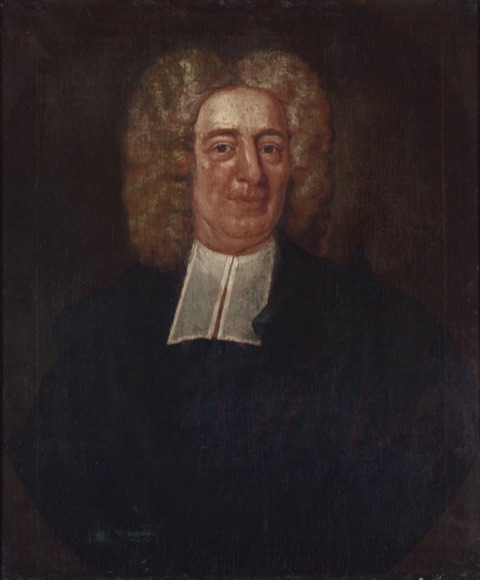
Luther, who had such a heart himself, advised every historian to get the heart of a lion. The more I consider how our Church History must provoke that roaring lion who has torn the church to pieces through all the ages, the more I wish for a lion’s heart. If mine had not been strengthened like oak and brass for the encounters this history may face, I would have adopted the silkworm’s motto, “It is covered while it works,” and written anonymously. Claudius Salmasius called himself Walo Messalinus; Ludovicus Molinaeus called himself Ludiomaeus Colvinus; Carolus Scribanius called himself Clarus Bonarscius. Even Peter du Moulin and Dr. Henry More styled themselves Hippolytus Fronto and Franciscus Paleopolitanus. I might have tried to rearrange the letters of my name to conceal it, or directed readers to find it in the second chapter of the second part of Selden’s De Diis Syris (On the Syrian Gods). Instead, I freely confess that COTTON MATHER has written all these things:
> It was I, I who wrote them; turn your sword against me.
I hope I have done a right work. But we have not yet reached the day when God will bring every work into judgment, the day of the kingdom promised to David. A son of David has told us, as truly as wisely, that until that happy day arrives, one of the vanities of human affairs is this: “For a right work, a man will be envied by his neighbor.”
I would be less surprised to live to see our Church History troubled by the angry criticisms, or “mad-versions,” of slanderous writers than Virgil would have been to read his Bucolics reproached in the Antibucolica of a nameless scribbler and his Aeneid attacked in Carbilius’s Aeneidomastix. Herennius took pains to collect the faults in Virgil’s incomparable works, and Faustinus to collect what he called their thefts. Even Pliny, Seneca, and our Jerome reproached him as a man without judgment or knowledge of the sciences. Yet Paedianus said of Virgil that he was so free from envy that, whenever he found something learned said by another, he rejoiced no less than if he had said it himself. How should a book no better worked than ours escape such attacks, when the finest works in every age have been disparaged as Plato’s were by Scaliger and Aristotle’s by Lactantius?
In the reign of our King Edward VI, an order was given to bring in all the teeth of St. Apollonia that people throughout his kingdom carried as cures for toothache. There were so many that they almost filled a large cask. Envy has as many teeth as Madam Apollonia would have had if all those supposed relics had truly been hers. Must all those teeth fasten on you, my book? Perhaps they will. Yet, ground between them, the book will become, like Ignatius in the teeth of furious tigers, finer white bread for the churches of God.
I expect the greatest and fiercest envy from those Idumaeans whose religion consists entirely of ceremony. They show more charity to people who deny the most essential teachings in the Articles and Homilies of the Church of England than to conscientious people who show their conscience by dissenting over a small ceremony. Their hearts are well expressed by one of them, Howell, in his Familiar Letters: “I pity a Turk or an infidel more than I hate him. He is made of the same metal and bears the same stamp as I do, though the inscriptions differ. If I hate anyone, it is the schismatics who disturb the sweet peace of our church. I could be content to see an Anabaptist go to hell on a Brownist’s back.”
Howell also tells of a young man in High Holborn whose body was dissected after his death. A serpent with several tails, he says, was found in the left chamber of the young man’s heart. I have no doubt our Church History will find some reader disposed like Howell, with a heart as full of serpents and venom as it can hold. Nor will such people be able to contain what is in their hearts. Their tongues and pens will scourge me like scorpions and, if I choose to feel them, make me feel as many lashes as Cornelius Agrippa expected from their brethren for his book exposing their vanities.
A scholar of the great Jewel once wrote about eighty verses. At the beginning of Queen Mary’s reign, the censor of Corpus Christi College publicly and cruelly whipped him, one lash for every verse. In those verses, the young man prayed to the Lord Jesus Christ and received this answer:
> The Lord looked down from his high throne and replied: > “Do not doubt, young man. Believe rightly and trust firmly in me. > I died long ago; now I sit at my blessed Father’s right hand > And rule the world from heaven’s highest place. > Believe me, Scripture will regain its sway, > And the wicked Mass will fade away in its appointed time.”
Reader, I too expect nothing but scourges from those who hold the Mass book dearer than the Bible. But I have also spoken of another expectation, which will console me through it all.
They say that on the highest of the Capsian Mountains in Spain there is a lake into which, if you throw a stone, smoke immediately rises. It forms a dense cloud that sends out a storm of rain, hail, and terrible thunderclaps for a good quarter of an hour. Our Church History will be like a stone thrown into that lake. It will raise a furious storm among some whose church offices have placed them as though on the tops of Spanish mountains. This work is written in a catholic spirit of communion, and I have taken the liberty of criticizing the divisive demands and persecutions of a party that has always been as much an enemy of the English nation as of Christian and Protestant interests. That party will certainly pass swift judgment on the whole work at its first glance.
Among the Duke of Alva’s council of twelve judges was a Fleming named Hessels, who always slept through the trials of accused people. When awakened to give his opinion, he rubbed his eyes and cried, still half asleep, “To the gallows! To the gallows!” This man was himself eventually condemned to the gallows without a hearing. Our work must expect equally swift judgments from people who will give no waking thought to the account of Christianity presented here. They always have a death sentence to pronounce, or at least to wish for, against the generous principles without which the Reformation cannot be maintained. I am quite content for our work to share the fate of those principles. Nor do I disagree with the excellent Whitaker’s words about Luther: “Happy is he whom the Lord has honored by giving him the most wicked men as enemies.”
An old writer of epigrams, seeing guilty people driven mad by his verses, could say, “This is what I want; now my verses please me.” Surely a historian should not be displeased when the enemies of truth show their madness at the true and free account his history gives. The more stones they throw at this book, the more they will show that it is a tree bearing good fruit. I will also build myself a monument from their stones and inscribe on it this line from the epitaph of the martyr Stephen:
> He received their stones, for Christ was his rock.
Perhaps, though, those who will use every monkish device to hold back the approaching Reformation will try instead to give me the kind of epitaph the old monks gave Wycliffe, if they think me worth an epitaph at all.
An undertaking of this kind must face such envy from people under the power of “the spirit at work in the children who refuse persuasion.” I might therefore expect a different reception from good people who have a better spirit in them. As the apostle James has observed, in Monsieur Claude’s reading, “The Spirit that is in us longs against envy.” Yet even in us there is also the flesh, one of whose works is envy, and it longs against the Spirit.
Not all good people will be satisfied with everything set before them here. In my own country, a considerable number of loose and frivolous inhabitants have arisen who dislike the purity of Congregational church discipline. That discipline cannot thrive where the power of godliness dies. There are also many eminently godly people who favor a broader way. My Church History may displease them when, on a few occasions, it speaks in favor of Congregational discipline. They may also dislike my expressed belief that Scripture, reason, and antiquity support it, and that it is not far from a glorious resurrection.
After thirty or forty years of hard study concerning the church discipline truly instituted by Christ, the famous Mr. Baxter finally acknowledged that it is Congregational discipline and proved it beyond refutation. I believe that the further learned people pursue the matter without prejudice, the more generally they will pronounce in its favor.
On the other side, some among us profess Congregational church discipline very strictly, yet have an unhappy narrowness of soul. They confine their esteem and kindness too much to their own party. My Church History will offend them because my regard for our declared principles does not prevent me from extending the right hand of fellowship to valuable servants of the Lord Jesus Christ who do not yet find our church discipline agreeable to their present understanding and insight. If matters stand this way in my own country, they cannot be otherwise in the country to which I send this account of it.
It has been said that if all Episcopalians were like Archbishop Ussher, all Presbyterians like Stephen Marshall, and all Independents like Jeremiah Burroughs, the church’s wounds would soon be healed. My effort to carry that spirit through this entire Church History will earn the book wounds from people of another spirit. In every country, too, there will be good people in whom the grace of Christ has not yet so prevailed as to remove the ill nature described by the comic writer: “Nothing is more unjust than a man without understanding, for he thinks nothing has been done rightly unless he did it himself.”
Yet all these things, and a hundred more that occur to me, are small discouragements in a service such as I have attempted here. I foresee a reward that will more than overcome them all. Perhaps the philosopher Strato thought himself well rewarded for his labors when Ptolemy gave him eighty talents. Perhaps the poet Archimelus thought the same when Hiero sent him a thousand bushels of wheat for one short epigram. The poet Saleius may have thought himself well rewarded when Vespasian sent him twelve thousand five hundred philippic coins, and the poet Oppian when Caracalla sent him a gold piece for every line he had written in his honor.
I live in a country where rewards like these have never been customary. It has no offices of advancement for me, and I will count myself well rewarded here if I escape without being heavily reproached, criticized, and condemned for what I have done. I thank the Lord that I scorn such lesser considerations. I do not seek benefactors to whom I might dedicate these labors. There is ONE to whom all is due. From him I shall receive a reward. And what reward? With inexpressible joy, I am assured of this: These poor labors of mine will certainly serve the churches and interests of the Lord Jesus Christ. I think I can say that I wish to live no longer than I count service to the Lord Jesus Christ and his churches a glorious reward in itself.
When David was planning to build the house of God, this command came from heaven concerning him: “Go tell David, my servant.” The addition of that title, greater than any royal title, to David’s name was sufficient reward for all his planning for God’s house. Throughout our Church History, we have been at work for the house of the Lord Jesus Christ, that Man who is the Lord God and whose form seems on that occasion to have been shown to his David. It is reward enough for me to have been a servant of that heavenly Lord. The greatest honor and sweetest pleasure outside heaven is to serve our glorious Lord JESUS CHRIST, who has loved us and given himself for us. It is infinitely reasonable that we should give ourselves, and all that we have and are, to him. Perhaps even the angels in heaven aspire to no higher happiness.
To you, then, O Son of God, King of heaven, and Lord of all things, whom all the glorious angels of light love beyond words to glorify, I humbly offer a poor history of churches that acknowledge you alone as their Head, Prince, and Lawgiver. You purchased these churches with your own blood and have protected and preserved them until now through wonderful acts of your providence. I offer, too, a history of a people whom you formed for yourself to show forth your praises. I bless your great name for inclining me to this history and carrying me through the work. I pray that you will sprinkle this book with your blood, make it acceptable and profitable to your churches, and use what you have prepared here to serve your truths and ways among your people. For it is YOU who have prepared it for them. Amen.
> What am I? Nothing. Who am I? No one. > But the grace of CHRIST makes me what I am, and makes me live and labor.