The Christian Philosopher is Cotton Mather's survey of the natural world in thirty-two essays, running from light and the stars down through weather, water, minerals, plants, insects, fishes, birds, and animals to the anatomy of the human body. Each essay reports what the natural philosophers of his day had found and then turns the finding into a passage of praise.
One free account opens 250+ books and saves your place on every device. Google sign-in or an email link. No card.
You’re on the list — we’ll email you if this goes to print.
Included with your free account
This book, and 250+ more, free to read
A free account opens the whole library to read online, on your phone or at your desk. Open a book on one device and it is waiting at the same page on the next. The PDF and EPUB of every book are yours to keep, and audiobooks, sold separately, play in the same app.
250+ modernized editionsNot samples. The whole work, free.
Your place, on every devicePhone, tablet or desktop, same page.
105 audiobooks, sold separatelyAbout 866 hours of narration, from $4.99.
"The Christian Philosopher" is a book of thirty-two essays by Cotton Mather, printed in London in 1721, on the natural world as it was then known. Each essay gathers what astronomers, chemists, and microscopists had discovered about one subject, from light and comets to insects and the human body, and turns the discovery into praise.
“speaks of a twofold book of God: the book of the creatures, and the book of the Scriptures. God first taught us by his works, and afterward by his words.”
From this edition
How the argument unfolds
01
The claim. Mather opens by promising that the essays “will show that philosophy is no enemy to religion but a mighty and wondrous incentive to it.”
02
The text. The whole book is offered as a commentary on one verse: “Remember that thou magnify his work, which men behold” (Job 36:24).
03
The heavens. Essays 1 to 11 cover light, the stars, the sun, the planets one by one, comets, and the moon, with figures from Cassini, Huygens, Halley, and Newton.
04
The atmosphere. Essays 12 to 19 come down into the weather: rain, the rainbow, snow, hail, thunder and lightning, air, wind, and cold, where Mather adds observations from New England.
05
The globe. Essays 20 to 25 take the earth itself, its position and gravity, its water, its structure, magnetism, and the minerals in it.
06
The living world. Essays 26 to 31 grow longer as they descend into plants, insects, reptiles, fishes, birds, and four-footed animals, largely from the microscopists and from Ray and Derham.
07
Of Man. The last essay takes a quarter of the book, working through the body part by part as “a machine of astonishing workmanship and design”, then the soul, the trades, and human invention.
08
The close. Mather declares that “Atheism is now forever chased and hissed out of the world”, then stops: “But it is time to stop here. Indeed, how could we go any further?”
Key themes
Natural theology. Every essay runs the same way: what has been observed, then what it shows of the Maker. Mather calls the result “that philosophical religion”.
The new science. The book reports the work of Newton, Boyle, Cheyne, Huygens, Halley, Grew, Malpighi, Swammerdam, and Leeuwenhoek, often quoting them at length rather than summarizing.
Debt to Ray and Derham. Mather names his two chief sources plainly: “the industrious Mr. Ray and the inquisitive Mr. Derham, a sweet pair of brothers.” Much of the botany and zoology reached him through Ray's The Wisdom of God Manifested in the Works of the Creation.
The body. The essay on man treats anatomy as evidence and as devotion at once: “My God, I will praise you, for I am strangely and wonderfully made!”
Wonder as a duty. The devotional turns are written in the first person and addressed to God directly, so that the reader is asked not to agree with an argument but to join in an act.
The Introduction
The essays now before us will show that philosophy is no enemy to religion but a mighty and wondrous incentive to it. They present that philosophical religion which carries with it a most vivid character and a victorious proof of “a reasonable service.” “Glory to God in the highest” and “good will toward men” are here stirred up and put into practice. A spirit of devotion and of charity is kindled, by the methods offered in these essays. Such things cannot fail to bring more benefits than any pen of ours can declare or any mind conceive.
Kindled by such dispositions and resolutions of piety, a man shows himself most truly a man. With unutterable satisfaction he answers the great end of his being, which is to glorify God. He also discharges the office of a priest for creation, under the influence of a wonderful Savior. In doing so he asserts and secures his title to that priesthood, which will make up so large a part of the blessedness of the life to come. The whole world is indeed a temple of God, built and furnished by that Almighty Architect. In this temple every such man, moved by the occasions it gives him, will speak of his glory. He will also rise to that higher way of thinking and living which the wisest of men choose to take. The more cultivated part of mankind, and the honorable of the earth, will find no dishonor in being acquainted with it.
Consider that passage in the best of books, “Ye sons of the mighty, ascribe unto the Lord glory and strength” (Ps 29:1). Munster offers a gloss and a hint on it that carries real force: nothing is so lofty or so magnificent that it is not bound to praise and magnify God its creator. Here, then, is a religion that will be found beyond controversy. It is a religion that will claim every possible regard from the high and the low alike among the people. I will use the term again: a philosophical religion. And yet how evangelical!
In carrying out this purpose, and in introducing almost every part of it, the reader will constantly find some author or other quoted. I hope this steady practice of quoting will not be censured as an ambition to hint at and boast of learning. That is the very fault the gentlemen of Port-Royal have rebuked. Nor, I hope, will it show the disposition for which Augustine reproached Julian. Who could hear such things, Augustine asked, and not be terrified by the mere noise of the names, if he were unlearned, as most people are? Would he not take you for some great man because you were able to know them?
Nor will there be any trace of the tiresome vanity La Bruyère satirized so well. His Herillus always quotes, whether speaking or writing. He makes the prince of philosophers say that wine intoxicates, and the Roman orator say that water tempers it. If he talks of morality, it is not he but the divine Plato who declares that virtue is lovely and vice hateful. The most common and trivial thoughts he himself can produce, he credits to Latin and Greek authors.
In my own quotations, my first aim has been a due gratitude to those who have been my instructors. Something in me would have led me to this even without prompting. But Pliny, who is one of them, gave me the rule outright: it is honest to acknowledge those by whom we have profited. It also seems only just that the names of those whom the great God has singled out should live and shine in any such collection, since he used them to make the discoveries gathered here. Among them, let it be known, there are two above all to whom I owe more than to many others: the industrious Mr. Ray and the inquisitive Mr. Derham, a sweet pair of brothers. In many paragraphs of this composition I have drawn much of my substance from them. I hope I have done so without playing the plagiarist Fidentinus upon them, and I give thanks to Heaven for them.
It is true that some scores of other philosophers have been consulted for this work. But industry so applied earns little praise for the one who uses it. He earnestly renounces any praise. He asks that not only he but the greater men who have been his teachers may disappear before the glorious God, whom these essays are all written to present as worthy of praise. By his grace we are what we are, and we have nothing but what we have received from him.
A considerable body of people in France, if the Jansenists may now be counted as such, learned from Monsieur Pascal to refer to themselves by the French impersonal pronoun on, “one.” It was his opinion that an honest man should not be fond of naming himself or using the words “I” and “me.” Christian piety, he held, will annihilate our “I” and “me,” and ordinary human courtesy will suppress and conceal it.
Most certainly there can be very little claim to any “I” or “me” in what is done in these essays. It is done, and entirely, by the help of God. That is all that can be claimed.
Very little of what appears here can be said to be truly performed by the hand now writing, except the devotional part of these essays. Even so, they are not altogether without contributions from America. The virtuosos and all the genuine philosophers of our age have approved the design of the devout Ray and Derham and others in their treatises. They cannot, then, find it distasteful to see what those excellent men hinted at more generally here carried out in more detail, with the more special flights of true philosophical religion put on display. There are also those who value the essays of the memorable ancients, Theodoret, Nazianzen, and Ambrose, on the work of the six days. They will not count it a fault if, among lesser men of our own day, some are found who say, “Let me run after them.”
I remember that when we read, “Praise is comely for the upright” (Ps 33:1), Kimchi urges that the word we render “comely” means “desirable” and “acceptable.” The sense of the sentence, then, is that those who are upright desire nothing but the praise and glory of God. I am certain that essays like these, meant to observe and proclaim and publish the praises of the glorious God, will be desirable and acceptable to all who have a right spirit in them.
The rest, who are blinded, are fools and not worth regarding. They deserve as little regard as a monster brandishing a broomstick. Scarcely anything worse could be wished on them than that they should go on enjoying their own foolishness. That such centaurs should be found in the tents of professed Christianity! Good God, for what times have you kept us! If the self-taught philosopher will not shame them, Abu Bakr will. He is a Muslim writer who presented just such a figure more than five hundred years ago, and he will rise up in the judgment with this generation and condemn it.
Reader, even a Muslim will show you a man with no teacher but reason in a serious view of nature, and led on by it to acknowledge a glorious God. He supposes a man simply using his rational faculties in viewing the works of God. Of that man even the Muslim will tell you this: “There appeared to him such footsteps of wisdom and wonders in the works of creation that his mind was struck with overwhelming admiration. He became convinced by them that all these things must proceed from a free agent who was infinitely perfect, indeed above all perfection, one to whom the weight of the smallest atom, whether in heaven or on earth, was not unknown. As he viewed the creatures, whatever excellence of any kind he found, he concluded that it must proceed from the influence of that free agent, so illustriously glorious, the fountain of being and of working.
“He knew, therefore, that whatever excellences were by nature in that being were by so much the greater, the more perfect, and the more lasting. There was no proportion between the excellences that were in that being and those found in the creatures. He also discerned, by the virtue of that nobler part of himself by which he knew the necessarily existing being, that there was in himself a certain resemblance of it. And he saw that it was his duty to labor by every means to obtain the properties of that being, to put on its qualities, and to imitate its actions. He must be diligent and careful also in promoting its will. He must commit all his affairs to it, and heartily accept all its decrees concerning him, whether from within or from without. So he took his pleasure in it, even if it should afflict him and even destroy him.”
I was going to say, what golden words, and from a gilded mind! But the great Alsted instructs me otherwise. We Christians, in our valuable citations from those who are strangers to Christianity, should seize upon such sentences as containing our own truths, held for a time in the hands of unjust possessors. He allows me to say: listen to Cicero, whom nature taught. Still, this much I may say: God has, this far, taught even a Muslim. And this I will say: Christian, beware lest a Muslim be called in for your condemnation.
Let us conclude with a remark of Minucius Felix: “If so much wisdom and penetration are required to observe the wonderful order and design in the structure of the world, how much more must have been needed to form it!” People so admire philosophers because they discover a small part of the wisdom that made all things. They must be utterly blind, then, not to admire that wisdom itself.
The Religion of a Philosopher
Being a commentary, drawn from the more modern and certain philosophy, upon this instruction:
“Remember that thou magnify his work, which men behold” (Job 36:24).
The works of the glorious God in the creation of the world are what I now propose to display, in brief essays that enumerate some of them, so that he may be glorified in them. Indeed, my essays can claim to cover no more than some of them. Theophilus, writing about the creation to his friend Autolycus, could rightly say that even with a thousand tongues and a thousand years to live, he still could not describe the admirable order of creation. Such is the transcendent greatness of God, and the riches of his wisdom appearing in it!
Chrysostom, I recall, speaks of a twofold book of God: the book of the creatures, and the book of the Scriptures. God first taught us by his works, and afterward by his words. Let us for a while read the former of these books; it will help us in reading the latter, for they wonderfully assist one another. The Philosopher, when asked what his books were, answered, “the whole universe of natural being.” Every person is furnished with that same public library. Reader, walk with me into it, and see what we find there so legible that even someone running past may read it. Behold a book of which we may fittingly use the words of honest Ægardus: “It is easy for everyone to read, even for those who never learned to read; it is common to all, and lies open before everyone’s eyes.”
Of the Light
Would it not be proper, first of all, to lay down the laws of nature by which the material world is governed? When we come to consider them, we find that among second causes they take us no further. All mechanical accounts come to an end there, and we step at once into the presence of the glorious God. The very next thing we have to do is acknowledge him as the first cause of all, and the Christian philosopher will make that acknowledgment at every invitation. The acute pen of Dr. Cheyne has set these laws down as follows.
I. All bodies persevere in the same state of rest, or of moving forward in a straight line, unless forced out of that state by some violence impressed on them from outside.
II. The changes made in the motions of bodies are always proportional to the impressed force that moves them, and are produced in the same direction as that moving force.
III. The same force with which one body strikes another is returned upon the first by that other, but these forces are impressed in contrary directions.
IV. Every part of every body attracts, or gravitates toward, every part of every other body. But the force by which one part attracts another, at different distances from it, varies inversely as the squares of those distances. At the same distance, the force of attraction or gravitation of one part toward various others is proportional to the quantity of matter they contain.
These are laws of the great God, who formed all things. God is always to be seen in these everlasting ordinances. But now, in going on to magnify that work of God which men behold, it seems proper to begin with the thing by which we behold all the rest.
Light calls first for our contemplation. It is a most marvelous creature, whose Father is the great God. “There one begins to know God.” The Verus Christianismus (“True Christianity”) of the pious John Arndt dwells well on that strain of piety: God and his love displayed in the light.
The question was once put: In what place is the light contained? By what way is the light divided?
Aristotle’s definition of light, “light is the activity of a transparent body,” is worth attentive consideration.
Light is undoubtedly produced, as Dr. Hooke judges, by a motion, quick and vibrating.
Mr. Molyneux has proved that light is a body. Its refraction, in passing through a transparent body, shows that it meets a different resistance there, and resistance must come from contact between two bodies. Moreover, it takes time to pass from one place to another, even though its motion is the swiftest of all. Finally, it cannot by any means be increased or diminished. If you increase it in one place, you do so only by robbing some other part of the medium it would have occupied, or by drawing into the brighter spot light that should naturally have spread elsewhere.
Sir Isaac Newton judges it probable that bodies and light act mutually on one another. Bodies act on light by emitting, reflecting, refracting, and inflecting (bending) it. Light acts on bodies by heating them and setting their parts into a vibrating motion.
Every hypothesis of light that tries to explain its phenomena by new modifications of the rays is too dark to satisfy. The phenomena depend not on any such modifications, but on certain inborn and unchangeable properties, essentially inherent in the rays themselves.
The rays of light are certainly little particles, actually emitted from the luminous body, and refracted by some attraction, through which light and the bodies it falls on act mutually on one another. It is evident that as rays pass by the edges of bodies, they are curved by the action of those bodies as they pass.
It is now perceived that bodies draw light, and that this light in turn heats bodies. Because of this attraction, the motion of light is swifter within bodies than in a vacuum, and slower after being reflected than at the moment it strikes.
Enlightened by the discoveries of the great Sir Isaac Newton, we now understand that every ray of light carries its own color, and its own degree of refrangibility and reflexibility, that is, of how far it can be refracted and reflected. One ray is violet, another indigo, a third blue, a fourth green, a fifth yellow, a sixth orange, and the last red. All of these are original colors, and from mixing them all the intermediate colors arise. White comes from an even mixture of the whole, while black, on the contrary, comes from very little of any of them being reflected, or from all of them being largely smothered. It is not bodies that are colored, but the light that falls on them. Their colors arise from their aptitude to reflect rays of one color and transmit all those of another. It is now decided: no color in the dark!
Though light is certainly a body, it is almost impossible to conceive how small its corpuscles are. Dr. Cheyne illustrates this with an experiment showing that light may be propagated from innumerable different luminous bodies without any considerable opposition to one another. Their several streams of light will be transmitted together into a dark place through the smallest opening in the world. Suppose a metal plate, with the smallest hole that can be made at its top, were set upright on a horizontal plane. Suppose numberless luminous objects of about the same height as the plate were set around it, at an ordinary distance from it. The light from every one of these objects would be propagated through that hole without interfering.
Mr. Romer, from his accurate observations of the eclipses of Jupiter’s satellites, their passages into and out of its shadow, believes he has demonstrated that light takes one second to move 9,000 miles. He shows that the rays of light take ten minutes to pass from the sun to us. Yet Mr. Huygens has shown that a bullet from a cannon, without losing any of its first velocity, would be 25 years passing from us to the sun. So the motion of light is more than a million times swifter than that of a cannonball, and we may carry the matter even further than that.
Suppose the distance of the sun from the earth to be 12,000 diameters of the earth, or suppose 10,000. Light then runs 1,000 diameters in a minute, which is at least 130,000 miles in a second. Dr. Cheyne shows that light is about six hundred thousand times swifter than sound. Amazing velocity!
To balance the surprise at so swift a motion, I may propose one that is just as surprisingly slow. Dee affirms that he and Cardan together saw an instrument in which one wheel, constantly moving along with the rest, would still not finish its revolution in less than seven thousand years. It is easy to conceive, with Stevinus, an engine with twelve wheels, its handle turned about 4,000 times an hour, which is as often as a man’s pulse beats. Even so, in ten years’ time the weight at the bottom would not move anywhere near a hair’s breadth. As Mersennus notes, it would not pass an inch in 1,000,000 years, although it is in motion all this while and has not stood still one moment. For Cardan was mistaken in his claim that “very slow motions must necessarily have intervals of rest between them.”
Behold the light emitted from the sun;
what more familiar, and what more unknown?
While by its spreading radiance it reveals
all nature’s face, it still itself conceals.
See how each morn it does its beams display,
and on its golden wings brings back the day!
How soon the effulgent emanations fly
through the blue gulf of interposing sky!
How soon their luster all the region fills,
smiles on the valleys, and adorns the hills!
Millions of miles, so rapid is their race,
to cheer the earth, they in few moments pass.
Amazing progress! At its utmost stretch,
what human mind can this swift motion reach?
But if, to save so quick a flight, you say
the ever-rolling orb’s impulsive ray
on the next threads and filaments does bear,
which form the springy texture of the air,
that those still strike the next, till to the sight
the quick vibration propagates the light,
still it is as hard, if we this scheme believe,
the cause of light’s swift progress to conceive.
So Sir Richard Blackmore, in his Creation, Book 2.
The Jews have a good saying: “The works of the outward creation carry in themselves an image of the inward creation.” It well becomes a Christian philosopher to allow for that image in his contemplations, and now and then to reflect on it with devout thoughts.
Before I go any further, I confess I cannot resist the invitation I think I have to insert an observation of Hugh of Saint Victor. Every creature addresses a threefold voice to us: Accipe, Redde, Fuge, “receive, render, flee.” Indeed, “there is no speech nor language, where their voice is not heard” (Ps 19:3). It is an exercise highly becoming the Christian philosopher to draw lessons of piety from the whole creation of God, and to hear what maxims of piety all the creatures would remind us of, by way of reflection and likeness. In pursuing these meditations, what better can be considered than this threefold voice from all these thousands of powerful preachers who continually surround us?
First, Accipe Beneficium, “receive the benefit”: consider what benefit a good God has bestowed on me in this creature. Second, Redde Servitium, “render the service”: consider what service I owe to a gracious God in the enjoyment of such a creature. Lastly, Fuge Supplicium, “flee the punishment”: consider what sorrow a righteous God may inflict on me by such a creature, if I persist in disobedience to him.
Even a pagan like Plutarch will remind the Christian philosopher of this: that the world is nothing other than the temple of God, and all the creatures are the mirrors in which we may see the skill of him who is the maker of all. And his fellow pagan Cicero has reminded us that “we know God from his works.” It is no wonder, then, that a Bernard should see this: “The true lover of God, wherever he turns, finds a familiar reminder of his Creator.” The famous hermit’s book of those three leaves, the heaven, the water, and the earth, if well studied, how nobly would it fill the chambers of the soul with the most precious and pleasant riches! Clement of Alexandria calls the world “a Scripture of those three leaves,” and the creatures speaking to us in it have rightly been called real preachers by those who have best understood them:
While I survey the wonders of the painted world before me,
and gaze on the work of Nature as she brings it forth,
divine power flashes out from the very things themselves,
and the light turf itself proves that there is a God.
But the light now calls for me.
How glorious a body! But how infinitely, and beyond all comprehension, glorious is the infinite God, who has claimed it as his glory: “I form the light” (Isa 45:7). This is the God of whom we have that sublime stroke in the history of the creation: he said, “Let there be light: and there was light” (Gen 1:3). This is the God whose majesty is within that Holy of Holies, where he dwells in the light that no man can approach. Lord, in a wondrous display of your kindness, you have granted the benefit of the light to your creatures. Whatever makes things manifest is light. How miserable we would be, and in what inexpressible confusion, if the light were withheld from us! What could be manifest to us, what enjoyed or performed by us?
O let all who walk in the light of the living unite in praises to the Creator of the light! O give thanks to the Lord, for he is good, and his mercy endures forever. But, Lord, will you leave my soul in darkness? The light granted to the soul, in the knowledge of those things which to know is life eternal, is more precious and needful than the light in which our body finds itself so much befriended. O Father of glory, let me have the eyes of my understanding enlightened.
I have a most glorious Redeemer, of whom I am assured that he is the true Light, and the Light of the world. This is a light which, like other light, carries its own evidence with it. Nothing more is needed to prove that our blessed Jesus is the Son of God and the Savior of the world than to behold him attentively. He can be nothing other than what he asserts himself to be, the Light of men. Lord, in your light I shall see light. When I see the truth as it is in Jesus, in such a revelation and such a display of it as my Jesus gives, then I see everything in a true light. My Savior, you are more precious, more needful, and more useful to me than the light. I will walk in you and under your guidance; so shall I walk in the light continually.
But what does the light mean to someone who has no eyes to perceive it? O my Redeemer, bestow an eye on me, a faculty to discern the things that are spiritually discerned.
As for the light of reason, which enlightens every man who comes into the world, every man has all possible reason to glorify God. He should never do anything of which anyone may justly say, “That seems unreasonable to me.”
But, O my God, you have favored us with a rich gathering of light in the book of your living oracles, where we have a light shining in a dark place. I would consider everything in the light in which this lovely book sets it before me. But let me never rebel against the light!
The light is truly sweet. But what shall I find the inheritance of the saints in light to be! Those who are shut out of that light, and cast into outer darkness, where they shall never see light, oh, the weeping and wailing and gnashing of teeth they must be exposed to! My Savior, I am under your guidance, passing through a gloomy valley into your light; and when I sit in darkness, the Lord will be a light to me.
How swift is the motion of the light! But, O my Savior, why are you not swifter in coming to visit and relieve a world lying in the perpetual night of wickedness? Why is your chariot so long in coming?
And, O my soul, why are you slow in your contemplations of God, and Christ, and heaven? Fly there with a swiftness beyond that of the light, for so you can, on every occasion.
Of the Stars
Let us proceed, and, in keeping with the purpose of our upright stature, behold the heavens and lift up our eyes to the stars.
The learned Huygens suspects that every star may be a sun to other worlds in their several vortices. Consider then the vast extent of our own solar vortex, and into what astonishment must we find the grandeur and glory of the Creator growing upon us! Especially if it should be so, as he thinks, that all these worlds have their inhabitants, whose praises are offered up to our God!
How small the earth would look to one gazing down
from the high summit of heaven, if any earth at all
could be seen from heaven’s summit!
So Buchanan. His improvement of the thought is this: how little of this little has vain man to strive for, and to boast of!
O shame! O headlong madness of a foolish wish!
Mr. Childrey mentions two curiosities that ought to be inquired into a little further. The first is that between the two constellations of Cygnus and Cepheus, a black, long, little cloud lies across the Milky Way, neither growing nor shrinking nor changing the place in which it appears.
The second is that in February, and a little before and after that month, there is a very distinctive way the twilight behaves in the evening, once it has nearly deserted the horizon. A bright path strikes up toward the Pleiades and almost reaches them, which is not observed at any other time of the year.
The Jews have a fancy among them that when the Almighty first bespangled the heavens with stars, he left a spot near the North Pole unfinished and unfurnished. So if anyone else should set up as a God, this trial might be made of his pretensions: “Go, fill up, if you can, that part of the heavens which is still left imperfect.” But without any such suppositions, we may see enough in the heavens to proclaim this to us: “Lift up your eyes on high, and behold who hath created these things” (Isa 40:26). None but an infinitely glorious God could be the Creator of them!
The telescope, invented at the beginning of the last century and now improved to lengths of even eighty feet, brings objects at a mighty distance much nearer to us. It is an instrument with which our good God has in a singular manner favored and enriched us, a messenger that has brought us the most wonderful discoveries from very distant regions.
My God, I cannot look upon our glasses without uttering your praises. By them I see your goodness to the children of men!
By this enlightener of our world, it is particularly discovered:
That all the planets at least, excepting the sun, are dense and dark bodies, and that whatever light these opaque bodies have is borrowed from the sun.
That every one of the planets, excepting the sun, changes its face like the moon. Venus and Mercury appear sometimes like a half-moon and sometimes quite round, depending on whether they are more or less opposite to the sun. Mars has his times of appearing in a curved shape. Jupiter has four little stars that continually move around him, and in doing so cast a shadow on him. Saturn has a ring encircling him.
That each of these planets has spots on its surface, like those of the moon.
That not only each of these planets, but the sun also, besides whatever other motion they may have, turn upon their own centers, some of them with a motion of revolution, others by that of libration, a rocking back and forth.
It was a good remark made by one of the ancients: “What is the heaven, and the beauty of all nature, other than a kind of mirror, in which the mastery of the supreme Maker shines back?”
The pagan Cicero, contemplating the admirable order and the incredible constancy of the heavenly bodies and their motions, adds this: “Whoever thinks this is not governed by mind and understanding is himself to be accounted void of all mind and understanding.”
According to Mr. Huygens, the distance of the sun from us is 12,000 diameters of the earth. A diameter of the earth is 7,846 miles. The distance of the nearest fixed stars from us, compared with that of the sun, is as 27,664 to 1. So then the distance of the nearest fixed stars is at least 2,404,520,928,000 miles. That is so great that a cannonball, going all the way with the same velocity it has when it parts from the mouth of the gun, would scarcely arrive there in 700,000 years. Great God, what is your immensity!
The number of the stars! The learned Arndt has a good thought on it: “If God created so great a multitude of stars, who can doubt that he has a far greater abundance of heavenly spirits, praising him without ceasing?” If the morning stars are so many, how many are the sons of God!
Glorious God, I give thanks to you for the benefits and improvements of the sciences, granted by you to these our latter ages. The glasses, which our God has given us the discretion to invent and apply for the most noble purposes, are favors of heaven most thankfully to be acknowledged.
The world has much longer enjoyed the Scriptures, which are glasses that bring the best of heavens much nearer to us. But though the object-glasses are here, the eye-glasses are wanting. My God, bestow on me that faith which, using the telescope of your word, may discover the heavenly world, and acquaint me with what is in that world, to which I hope I am going.
I hear a great voice from the starry heavens: “Ascribe ye greatness unto our God” (Deut 32:3). Great God, what a variety of worlds you have created! How astonishing are their dimensions! How stupendous are the displays of your greatness and your glory in the creatures with which you have replenished those worlds! Who can tell what angelic inhabitants may there see and sing the praises of the Lord! Who can tell what uses those marvelous globes may be designed for! Of these unknown worlds I know this much: it is our great God who has made them all.
Questions
Who wrote "The Christian Philosopher"?+
Cotton Mather, the Boston minister and Fellow of the Royal Society, wrote "The Christian Philosopher." It was printed in London in 1721 for Eman. Matthews.
What is "The Christian Philosopher" about?+
It is about the natural world as a display of God's work. In thirty-two essays Mather reports what the natural philosophers of his day had discovered about light, the planets, weather, water, minerals, plants, insects, fishes, birds, animals, and the human body, and after each subject turns to devotion.
How is the book organized?+
As thirty-two numbered essays, each headed "Of the ..." and each named for its subject, preceded by Mather's own introduction and a short opening on Job 36:24. The essays run in order from the heavens down through the atmosphere and the globe to plants, animals, and finally man, and they vary greatly in length: Mars fills one page, man fills a quarter of the book.
Which scientists does Mather cite?+
Among many others, Isaac Newton, Robert Boyle, George Cheyne, Christiaan Huygens, Edmond Halley, John Ray, William Derham, Nehemiah Grew, Marcello Malpighi, Jan Swammerdam, and Antoni van Leeuwenhoek. He usually quotes them by name and at length.
Why does "The Christian Philosopher" matter in American history?+
It is the first general survey of the natural sciences written by an American, published by a colonial minister who had been elected to the Royal Society in 1713 and who corresponded with its members about New England plants, fossils, and weather.
Do I need a science background to read it?+
No. Mather writes for a general reader and explains each subject before he uses it. The science is that of 1721, so it is read now as an argument and as a record of what was known then, not as a current account of nature.
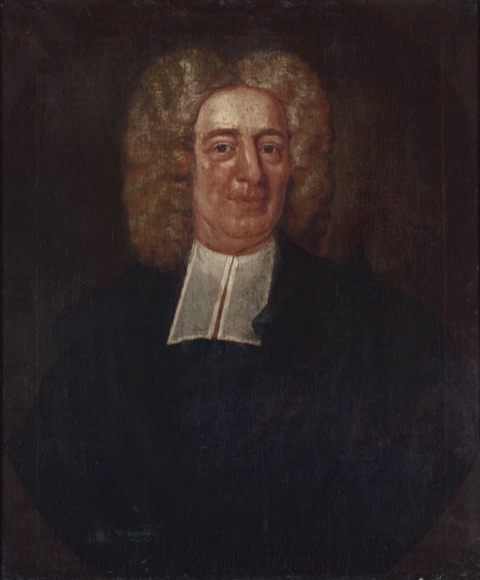
Cotton Mather was a Boston minister, the son of Increase Mather and grandson of Richard Mather and John Cotton. He entered Harvard at twelve, served the North Church in Boston for more than forty years, and published over four hundred works on theology, history, medicine, and natural philosophy. He was elected a Fellow of the Royal Society in 1713, and corresponded with its members on New England plants, fossils, and weather. He also promoted smallpox inoculation during the Boston epidemic of 1721, the year The Christian Philosopher was printed.
“Updated Works has been an incredible blessing to my Christian life and ministry… remarkably faithful to the original authors while making these timeless treasures understandable for modern readers.”