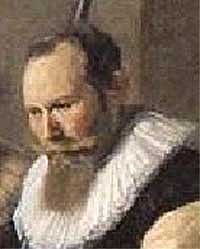
John Bunyan
Author of The Pilgrim's Progress, the most widely read allegory in the English language. Bunyan was a tinker with no formal education who became one of the most influential writers in English literature.

1628–1688
Biography
John Bunyan was born in 1628 in Elstow, near Bedford, the son of a tinker (a mender of pots and pans). He received only a basic village education and followed his father's trade. He served in the Parliamentary army during the Civil War, probably from 1644 to 1647.
Bunyan's conversion came gradually during the late 1640s and early 1650s, and he described the process in painful detail in his spiritual autobiography Grace Abounding to the Chief of Sinners. He was tormented for years by doubts, blasphemous thoughts, and the fear that he had committed the unpardonable sin. His eventual deliverance came through reading Luther's commentary on Galatians and through the counsel of John Gifford, the pastor of an Independent congregation in Bedford.
Bunyan joined Gifford's church and soon began preaching. Despite his lack of education, his preaching was vivid, forceful, and drew from the plain language of working people. He was licensed to preach by the congregation around 1657.
When the monarchy was restored in 1660, Bunyan refused to stop preaching without a license and was imprisoned in Bedford jail. He spent twelve years in prison (1660-1672), during which he wrote extensively. He was released under the Declaration of Indulgence in 1672 and became pastor of the Bedford Meeting. He was imprisoned again briefly in 1676-1677.
The Pilgrim's Progress was published in 1678 and became an immediate bestseller. It has been translated into over 200 languages and has never been out of print. Bunyan continued to write and preach until his death in 1688 from a fever caught after riding through the rain to London to reconcile a father and son.
Bunyan published over sixty works during his lifetime. Besides The Pilgrim's Progress, his most important include Grace Abounding, The Holy War, Come and Welcome to Jesus Christ, and The Strait Gate.
Life & Career
Why Bunyan Matters
Bunyan was not a systematic theologian, but his works shaped popular Protestant piety more than almost any other English writer. His genius was in translating Calvinist theology into narrative and allegory that ordinary people could grasp immediately.
The Pilgrim's Progress dramatized the Reformed understanding of conversion, sanctification, and perseverance through the story of Christian's journey from the City of Destruction to the Celestial City. The book made abstract doctrines concrete: Doubting Castle, the Slough of Despond, Vanity Fair, and the Valley of the Shadow of Death became part of the English language.
Bunyan's other works addressed practical pastoral problems. Come and Welcome to Jesus Christ was addressed to those who doubted their welcome before God. The Strait Gate warned against presumption. Grace Abounding modeled honest spiritual autobiography as a genre. In all of these, Bunyan wrote from his own experience of doubt, temptation, and deliverance.
Modernized Editions by Bunyan
Updated English
Bunyan's Catechism
John Bunyan
 Audio
Audio
Christian Behavior
John Bunyan
 Audio
Audio
Christiana's Journey
John Bunyan

Come and Welcome to Jesus Christ
John Bunyan
 Audio
Audio
Grace Abounding to the Chief of Sinners
John Bunyan

Prayer
John Bunyan
 Audio
Audio
Solomon's Temple Spiritualized
John Bunyan
 Audio
Audio
The Fear of God
John Bunyan
 Audio
Audio
The Life and Death of Mr. Badman
John Bunyan
 Audio
Audio
The Pilgrim's Progress
John Bunyan