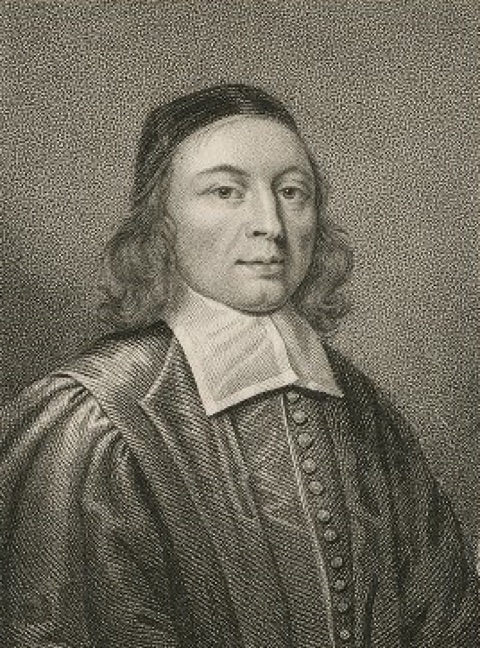
Richard Baxter
The most prolific English Puritan author. His Reformed Pastor became the standard work on pastoral ministry, and his Saints' Everlasting Rest pioneered the practice of meditation on heaven.

1615–1691
Biography
Richard Baxter was born in 1615 in Rowton, Shropshire. He was largely self-educated, having been unable to attend university due to illness and financial constraints. He was ordained in 1638 and served briefly in several parishes before settling in Kidderminster, Worcestershire, in 1641.
Baxter's ministry at Kidderminster transformed the town. When he arrived, he found a population largely ignorant of basic Christianity. Over the next nineteen years, through a combination of preaching, catechizing household by household, and disciplined pastoral care, he brought the majority of the town's families into active church attendance. His account of this ministry in The Reformed Pastor (1656) became the most influential manual on pastoral work in English.
During the Civil War, Baxter served as a chaplain in the Parliamentary army but grew increasingly uncomfortable with the radicalism of some factions. He was a moderate who spent his career trying to find common ground between Presbyterians, Independents, and moderate Episcopalians.
After the Restoration in 1660, Baxter was offered the bishopric of Hereford, which he declined. He was ejected from Kidderminster by the Act of Uniformity in 1662 and spent the rest of his life in London, writing, preaching when possible, and enduring periodic persecution. In 1685, at the age of seventy, he was tried before Judge Jeffreys for alleged sedition in his paraphrase of the New Testament and imprisoned for nearly two years.
Baxter wrote over 160 books. Besides The Reformed Pastor, his most important works include The Saints' Everlasting Rest (1650), A Call to the Unconverted (1658), and his autobiography Reliquiae Baxterianae. He died in 1691.
Life & Career
Why Baxter Matters
Baxter was the great moderate of the Puritan movement. Where others drew sharp lines, Baxter sought the widest possible Protestant unity. This made him controversial in his own time but gave his works a breadth of appeal that outlasted factional divisions.
The Saints' Everlasting Rest pioneered a distinctive approach to devotional meditation. Baxter taught readers to use their imaginations to contemplate heaven, engaging all the senses in structured meditation on the life to come. This method influenced later devotional writers across Protestant traditions.
The Reformed Pastor remains Baxter's most practical legacy. His insistence that pastors must know every member of their flock individually, and must catechize and counsel them household by household, set a standard for pastoral care that later movements, from Methodism to modern church growth, have drawn upon.
Baxter's theological system was idiosyncratic. He modified strict Calvinism in ways that satisfied neither the high Calvinists nor the Arminians, developing what he called a middle way. His views on justification were particularly controversial. But his practical works transcended these debates and have been valued by Christians of nearly every theological persuasion.
Modernized Editions by Baxter
Updated English Audio
Audio
A Call to the Unconverted
Richard Baxter

A Christian Directory, Volume 1: Walking with God
Richard Baxter

A Christian Directory, Volume 2: Governing Heart and Life
Richard Baxter

A Christian Directory, Volume 3: Governing the Household
Richard Baxter
 Audio
Audio
The Catechizing of Families
Richard Baxter
The Reformed Pastor
Richard Baxter
The Saints' Everlasting Rest
Richard Baxter