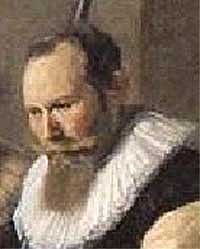
John Owen
The most formidable Reformed theologian in English. His works on the Holy Spirit, the atonement, and indwelling sin remain standard texts in Reformed seminaries worldwide.

1616–1683
Biography
John Owen was born in 1616 in Stadham, Oxfordshire, the son of a Nonconformist minister. He entered Queen's College, Oxford, at twelve and took his BA in 1632 and MA in 1635. He was ordained and served briefly as a chaplain and private tutor before the Civil War drew him into public life.
Owen's career turned in 1642 when he heard a sermon at St Mary Aldermanbury that resolved a prolonged spiritual crisis. He became a convinced Independent (Congregationalist) and began publishing theological works that caught the attention of Parliament. His sermon before the House of Commons the day after the execution of Charles I brought him to national prominence.
Oliver Cromwell appointed Owen as his personal chaplain and took him on the military campaigns in Ireland and Scotland. In 1651 Owen became Dean of Christ Church, Oxford, and in 1652 Vice-Chancellor of the University. He used these positions to reform the curriculum, raise academic standards, and place godly men in positions of influence.
After the Restoration in 1660, Owen was ejected from Oxford and spent the remaining twenty-three years of his life as a Nonconformist pastor and writer in London. He led a small Independent congregation, endured periodic harassment from the authorities, and produced the bulk of his theological output during these years.
Owen's works fill twenty-four volumes in the standard edition. His most important include Of the Mortification of Sin (1656), Communion with God (1657), The Death of Death in the Death of Christ (1648), and his massive Commentary on Hebrews. He also wrote extensively on the work of the Holy Spirit, church government, and the nature of justification.
Owen died on August 24, 1683, in London. He was buried at Bunhill Fields.
Life & Career
Why Owen Matters
Owen stands as the most systematic and rigorous theologian of the English Puritan movement. His intellectual range covered Christology, pneumatology, ecclesiology, and soteriology with a depth that few English-speaking theologians have matched.
His most distinctive contribution was his treatment of the work of the Holy Spirit. His Pneumatologia (1674) was the first comprehensive treatment of the Spirit's work in English, covering regeneration, sanctification, and the Spirit's role in prayer and worship. This work filled a gap in Reformed theology that had been largely overlooked.
Owen's The Death of Death in the Death of Christ (1648) provided the definitive defense of particular redemption (limited atonement) in English. The argument was so thorough that it effectively closed the debate among English Calvinists for a generation.
His practical works on sanctification, particularly Of the Mortification of Sin and Of Temptation, translated his theological rigor into direct pastoral counsel. These shorter works have remained in print continuously and are still widely read by Christians of many traditions.
Modernized Editions by Owen
Updated English
A Discourse Concerning the Holy Spirit, Volume 1
John Owen

A Discourse Concerning the Holy Spirit, Volume 2
John Owen
A Discourse Concerning the Holy Spirit, Volume 3
John Owen
A Discourse Concerning the Holy Spirit, Volume 4
John Owen
 Audio
Audio
Communion with God
John Owen
 Audio
Audio
Indwelling Sin in Believers
John Owen
 Audio
Audio
On Temptation
John Owen
Spiritual-Mindedness
John Owen
 Audio
Audio
The Death of Death in the Death of Christ
John Owen

The Duty of Pastors
John Owen

The Glory of Christ
John Owen
 Audio
Audio
The Mortification of Sin
John Owen