The Preface
Religion stands on tiptoe in our land, Ready to pass to the American strand. When height of malice and prodigious lusts, Impudent sinning, witchcrafts and distrusts, (The marks of future bane) shall fill our cup Unto the brim, and make our measure up; … Then shall Religion to America flee; They have their times of gospel, even as we. … Yet as the Church shall thither westward fly, So sin shall trace and dog her instantly.
The occasion that first produced the following sermon cannot be better expressed than in the words used by the worthy gentlemen who served as conservators of our peace, in their humble address to Their Majesties, dated May 20, 1689. Among other things, they said:
Your three several princely declarations, encouraging the English nation to cast off the yoke of a tyrannical and arbitrary power under which they were then held, came to the view and consideration of the people of this country, who found themselves under like (if not worse) evil and unhappy circumstances as their brethren in England. First, they had been unrighteously deprived of their charter government and privileges, without any hearing or trial, and under utter impossibility of receiving notice of any writ served upon them. This was followed by the exercise of an illegal and arbitrary power over them, which had almost ruined a once-flourishing country and had become very grievous and intolerable, besides the growing miseries and daily fears of total subversion by enemies at home and invasion by foreign force.
The people, excited to imitate so noble and heroic an example, and strongly and unanimously moved to see to their own safety and defense, resolved to seize and secure some of the principal persons responsible for, and most active in, the ill management of the illegal and arbitrary government set over them by commission. Accordingly, on the eighteenth day of April last past, they rose as one man, seized Sir E. Andros the late governor and other of the evil instruments, and have secured them for whatever justice and order Your Majesties shall direct.
Thus that address.
Following the revolution just described, various debates arose about the further steps needed for the service of Their Majesties and this afflicted country. These debates soon issued in the return of our government into the hands of our ancient magistrates, who, together with the representatives or deputies of the several towns in the colony, made another address to Their Majesties, dated June 6, 1689. In that address were these words:
Finding an absolute necessity of civil government, the people generally made known their desire and urgent wish, again and again, that the governor, deputy governor, and assistants chosen and sworn in May 1686, according to the charter and the court as then formed, would assume the government. The said governor, deputy governor, and assistants, then resident in the colony, consented to accept the present care and government of this people according to the rules of the charter, for the preservation of peace and common safety, and to take further acts of authority as emergencies required, until, by direction from England, there should be an orderly settlement. We hope this will restore us to the full exercise of our government as before, notwithstanding that we have for some time been most unrighteously and injuriously deprived of it.
That royal charter was the sole inducement and encouragement for our fathers and predecessors to come into this wilderness and settle it at their own cost and charge.
In answer to this address, His Majesty, in a most gracious letter dated the 12th of August 1689, used these words to the government here:
Whereas you give us to understand that you have taken upon yourselves the present care of the government until you should receive our order in the matter, we do hereby authorize and empower you to continue, in our name, your care in its administration and the preservation of the peace, until we shall have taken such resolutions and given such directions for the more orderly settlement of the said government as shall most conduce to our service, and the security and satisfaction of our subjects within that our colony.
It was in the time of our greatest troubles and difficulties, at a time appointed for a General Assembly of this great colony, that the sermon that follows was expected from me. By the grace of God, it was not altogether unacceptable at the time to some who desired its publication. But I did not fully consent to their wish until now, when they had the opportunity (with their renewed urging) to join it to another discourse they have also obtained from me. Though the small differences among us at the time the sermon was preached are now so well settled, I still allow myself to hope that what is here set out will not, and should not, be judged unseasonable.
I confess it is a very bold thing for one so unremarkable as myself to address the whole country as I do here. But if it is a fault, it is a fault born of love, and if the general temper of the year will not excuse a breach of order on my part, I have only one more thing to offer in my defense.
There was once a people in the world among whom it was the custom that, when men wished to win the favor of their ruler, they were to present his own son before him, as a sight that would speak more than any advocate could.
In that spirit, so that I may not lack the favor of my country, however blameworthy they may judge my freedom with them, I will present them only with my own father. His cheerful undertaking of a hazardous voyage to a strange land, and of the innumerable difficulties and temptations found there, for no other cause than that he might speak for them, has surely earned a pardon for me, with whom he has now left both his church and family for nearly two years, if I have transgressed by taking the liberty of speaking to them, at the same time, of the things that may promote our enjoyment of the Divine Presence among us. Now may salvation be near to us, and glory dwell in our land!
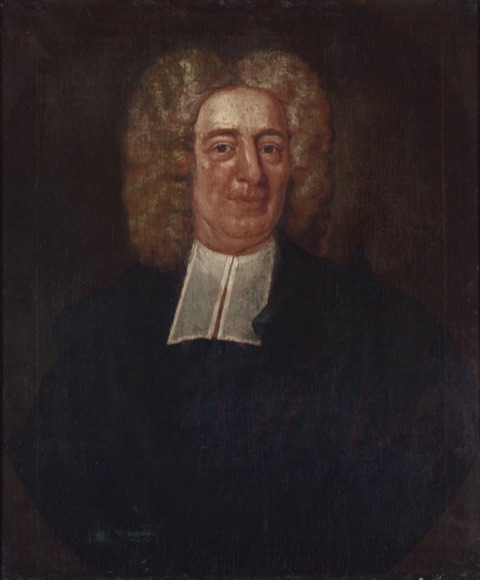
Cotton Mather.
The Way to Prosperity
It is the word of the eternal God in 2 Chronicles 15:2:
Hear ye me, Asa, and all Judah, and Benjamin: the Lord is with you while you are with Him.
It is a remarkable occasion that has brought these words to be the subject of our present meditations. But it was a still more remarkable occasion on which these words were first uttered. We find them in the sacred book of Chronicles, which are not the civil records referred to elsewhere in the Bible, but an inspired history of things that concerned the line of Christ and the church of God for three thousand five hundred years. It seems, as Jerome put it, an epitome of the whole, and it was written as late as the last of all the books of the Old Testament, and the Hebrew Bibles give it a place accordingly.
The Greeks chose to entitle it The Book of Things (Elsewhere) Passed By, because, as Lyra notes, following the rule of our Savior, “it gathers fragments that nothing may be lost.” Even if there were nothing else to justify that name but the story that gives us our text, it would be enough. It is a story passed by in the book of Kings, but worthy to be held in everlasting remembrance.
The ready pen of Ezra (for we conjecture him to be the scribe of the Holy Spirit here, notwithstanding a few clauses that may be judged added by another hand after his death, the pen of Ezra, I say) tells us here that the people of God had newly been invaded by a vast army of Cushites. But we are still at a loss as to who these Cushites were. Far more scholars in the world than there were soldiers in that army have so far been content with our translation, which renders them Ethiopians here. But that learned Frenchman Bochart, whose happy industry has delved into the treasures in the depths of Scripture more than any man’s, has proven with irrefutable demonstration that the Cushites mentioned in the oracles of God were not Ethiopians but Arabians. These Arabians, though they have not been called Saracens (as some have thought) from their word Sarak, meaning To Steal, well deserved such an origin for their thieving inclinations. They were a wild sort of men who lived largely on the plunder and ruin of their neighbors, and a million of them now had designs on Jerusalem as their prey.
The blessed God gave His people a notable victory over these invaders, and they were now returning from Gerar (a place between thirty and forty miles off) to Jerusalem. The Holy Spirit of God stirred up and inclined a prophet named Azariah to address them with a faithful and solid sermon on the occasion, and in my text you have the sum and substance of it.
We may observe, first, its preface, which is very solemn and earnest: “Hear ye me, Asa, and all Judah, and Benjamin.” He was probably not among the greatest of men, and likely not among the oldest either, for it appears from verse eight that his father was still alive and present at this time. Yet, speaking in the name of the great and eternal God, he expects and demands the attention of the whole army.
Second, its design, which is to declare both the source and the use of their recent prosperity. “The Lord is with you, while you are with Him,” or as the Vulgate has it, “inasmuch as you have been with him.” What follows is only an explanation and expansion of this. He saw they were absorbed in various business and plans; they had their enemies subdued, and their minds were full of thoughts and concerns about what to do next. But he calls them back to acknowledge the presence of God as the cause of their success in their recent action, and above all, to obtain and secure the presence of God so that they might succeed equally well in their future undertakings.
I am therefore to call for your attention to this faithful saying.
Doctrine. That the God of Heaven will be with a people while they are with Him.
The explanation of this truth will be pursued through the following propositions.
It is the interest, and should be the desire, of every people to have the God of Heaven with them. But we must ask: what is implied in that presence of God we should be concerned about?
In answer to this, there is a threefold presence of God mentioned in the Scripture of truth.
First, God is naturally present with all creatures. He is an immense being, and no creature can exist without Him. The apostle argued this way in the court at Athens, in Acts 17:27: “God is not far from every one of us.” No, He is near us all, He is with us all. And Paul could have had the Gentiles themselves confessing it, for besides what their own Seneca acknowledged, one of their own poets had said, “All things are full of Jove.” It is the speech of our God, in Jeremiah 23:24: “Do not I fill Heaven and Earth, saith the Lord?” Yes, He does.
The Jews call God by the name Makom, meaning “Place,” because all things exist in Him. This, if I am not mistaken, is His name in the book of Esther. Whether it is proper and fitting to speak of an imaginary, infinite space beyond the utmost edge of the world, filled with our God alone, we cannot say for certain. But we are sure that the heaven of heavens sets no limits on His being, and the ancients were not mistaken when they said, “God Himself is His own world, place, and all things.” We cannot so well say that God is in the world as we may say that the whole world is in God, and we may say with the psalmist in Psalm 139:7, “Whither shall I flee from thy presence?”
Second, God is gloriously present with the inhabitants of the third heaven. The heaven of heavens contains the most intimate and marvelous manifestations of God. It is the place of which we may say, as is said of that state in Revelation 21:23, “The glory of God doth lighten it.” There the blessed ones have God with them, so that they always behold His face, and are satisfied with His likeness forever. When we come to heaven, then, as in 1 Thessalonians 4:17, “We shall ever be with the Lord.” So the Lord will be with us forever. Heaven is the throne of the Most High; He is there as a prince on his throne, the great King residing there in a manner very much beyond words. To be there is called, in 2 Corinthians 5:8, “a being present with the Lord.” So it is toward heaven, and not toward a Bible, that we are directed to make our bodily gestures when we pray or take an oath before the Lord.
But third, God is graciously present with His people by being favorable to them. This gracious presence of God is what a people ought to be concerned about. It consists in the engagement of divine providence for the welfare of such a people. God is with us when God is for us.
To particularize: first, God is with a people by directing them. When Israel was to pass through the wilderness, they had that encouragement in Exodus 33:14, the presence of God going with them. What was that? They had a cloudy, fiery pillar miraculously leading them every step of the way. There was a wonderful pillar that was a cloud by day and a fire by night, its lower part resting on the tabernacle while its upper part was visible to the whole congregation, its motions managed by the ministry of angels. Now God was with them, and He led them forth by the right way.
A people are often brought into a wilderness of difficulties and emergencies, but if God is with them, He guides them to a good outcome in all of it. The presence of God appears in His directing and inclining a people toward actions that serve His honor and their safety, and toward methods that may free them from all distress. When God is with a people, He shapes their counsels for them, and disposes them toward the things that should be done. He supplies them with insight beyond the reach and range of their own wisdom, and He lays before them invitations and provocations that, as it were, push them into the way they should go.
When the Jews were about to reclaim the desirable things the Babylonians had deprived them of, they took the right way to disappoint all who wished to interrupt them in it. We find in Nehemiah 4:13 that while those efforts continued, they kept watch in a manner suited to the danger, and when the danger had passed, they returned each to his own work. How did this come to pass? It was because God was with them.
Second, God is with a people by protecting them. It was God’s promise to His people in Isaiah 43:2: “When thou passest through the waters, I will be with thee, and through the rivers, they shall not overflow thee.” On this text, blessed Bilney, after his condemnation, wrote so sweet a paraphrase that his friends had the whole sentence fairly copied onto their tables. A people may seem ready to be swallowed by a stormy, gaping ocean of troubles, but if God is with them, they will escape it all unharmed.
The presence of God is a defense, a refuge, to the people who share in it. It was said to David in 2 Samuel 7:9: “I was with thee, and have cut off all thine enemies out of thy sight.” When God is with a people, He distracts and confounds their enemies, and He troubles those who trouble them. A people who have God with them are too strong for all the malice and power of their enemies. No adversary, no desolation, will make such a people miserable. They are the Jacob to whom it was said in Genesis 28:15: “Behold, I am with thee, and I will keep thee, saith the Lord.”
Third, God is with a people by assisting and succeeding them. When Joshua had a vast undertaking before him, it was said to him in Joshua 1:9: “Be of good courage, for the Lord thy God is with thee, whithersoever thou goest.” In other words, God will assist you, and give you success, in your undertakings. The presence of God will carry a people comfortably through all they take in hand. Whether they have Canaanites to subdue, or possessions to gain or keep, the presence of God will make them prosper in it all. It was said to Solomon in 1 Chronicles 22:11: “My son, the Lord be with thee, and prosper thou, and build the house of the Lord thy God.” So if the Lord is with a people, they will prosper in all their affairs. In every undertaking they will come off satisfied, and they will not fail in anything they attempt. This is the presence of the Lord.
The presence of God with a people in His outward providence has a different foundation, and a different continuance, from His presence with His people in the covenant of grace. As the great Owen well observed in a discourse to Parliament, “these two must be carefully distinguished.” We must not judge the stability of the new covenant by whatever variety and sovereignty we may see in providential dealings toward this or that people in the world. David settles this matter in 2 Samuel 23:5: “Though my house be not so with God, yet He has made with me an everlasting covenant, ordered in all things and sure.” David had promises for the prosperity of his house; he also had the sure mercies of the covenant made over to him in God’s promises. These two kinds of promise stood on different footing. The sure mercies of the covenant were, for him, absolute and unchangeable, but the prosperity of his house we find governed by another law, and subject to dreadful change.
To bring this to the matter before us: in the covenant of grace, God has promised that He will be with His people. We read this in Hebrews 13:5: “He hath said, I will never leave thee, nor forsake thee.” The all-sufficient God, who answers our necessities whatever they may be, the unchangeable God, who is still what He was to the saints of old, this God has said it. And how much better is this He Himself has spoken it than the best the master said so in all the world!
He has said it, and said it with negatives multiplied. In the original they are heaped one upon another: “I will not, I will not leave thee; I will not, I will not, I will not forsake thee.” Well, but God is not with a people in His outward providence in quite that same manner.
This twofold presence of God differs in two ways.
First, it has a different foundation. When we look at the covenant of grace, there the sins of one are atoned for by the sufferings of another, and so God comes to be with His people, for whom the atonement has thus been procured. So it is said in 2 Corinthians 5:21: “Christ was made sin [or a sin-offering] for us, that we might become the righteousness of God in Him.” Now turn to outward providence, and there you see different terms at work. Here God is with a people according to those terms in Ezekiel 18:20: “The soul that sinneth, it shall die; one shall not bear the iniquity of another.”
Again, it has a different continuance. In the covenant of grace, God has bound Himself to be with His people forever, indeed to ensure that they will therefore be with Him forever. He says in Jeremiah 32:40: “I will not turn away from them to do them good, but I will put My fear in their hearts, that they shall not depart from Me.” Now turn to outward providence, and there you see it is otherwise. God is with a people for a time, and upon their misbehavior and provocations He changes the course of His dealings with them. It is with them as it was with that family in 1 Samuel 2:30: “I said indeed that thy house should walk before Me for ever; but now the Lord says, that be far from Me.”
The sense of all this will prepare your thoughts for one more conclusion.