Aristotle
Aristotle was a Greek philosopher who founded formal logic and wrote foundational treatises on ethics, politics, biology, and rhetoric. His works structured Western thought so thoroughly that medieval scholars called him simply "The Philosopher."
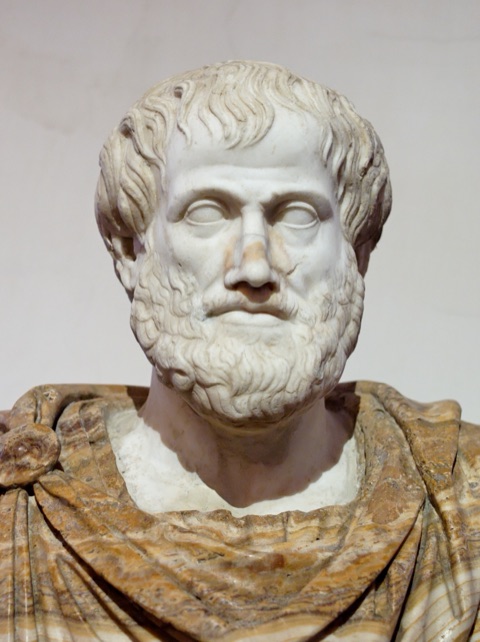
384–322 BC
Biography
Aristotle (384 to 322 BC) was a Greek philosopher and naturalist whose treatises on logic, ethics, politics, biology, and rhetoric became the framework for university study across Europe and the Islamic world. He was born in Stagira, a town on the Chalcidice peninsula in northern Greece. His father, Nicomachus, served as physician to Amyntas III, king of Macedon, a connection that placed Aristotle near the Macedonian court from childhood.
At about seventeen, around 367 BC, Aristotle traveled to Athens and entered Plato's Academy, where he studied and taught for roughly twenty years until Plato's death in 347 BC. He then left Athens and settled at Assos, on the coast of Asia Minor, under the patronage of the ruler Hermias of Atarneus, whose relative Pythias he married. Aristotle spent time on the nearby island of Lesbos, where his close observation of marine animals fed the biological works that would occupy much of his research, including his studies of the reproduction and classification of living things.
In 343 BC, Philip II of Macedon invited Aristotle to tutor his son, the future Alexander the Great, then about thirteen. The arrangement lasted several years before Alexander began his military career. Aristotle returned to Athens in 335 BC and founded his own school in a grove sacred to Apollo Lykeios, from which it took the name the Lyceum. Its members were later called Peripatetics, from the covered walkways where teaching took place.
The surviving corpus attributed to Aristotle is not the polished dialogues he published for a wide audience—those are lost—but the working treatises used in his school. In logic, the group of texts later called the Organon set out the theory of the syllogism, the first formal system of deductive reasoning. In the Nicomachean Ethics, named for his son, he argued that human flourishing (eudaimonia) is achieved through virtuous activity guided by practical reason, with each moral virtue lying as a mean between extremes. The Politics analyzed the constitutions of Greek city-states and defended the polis as the natural setting for human life, while the Poetics examined tragedy, defining plot, character, and the concept of catharsis in ways that shaped literary criticism for centuries.
His inquiries extended across nearly every field then known. The Metaphysics investigated being, substance, and cause; the Physics treated motion, time, and the four causes; the treatise On the Soul examined perception and thought; and the Rhetoric analyzed the means of persuasion. In these works Aristotle repeatedly proceeded by gathering observations and existing opinions, sorting them into categories, and reasoning toward general principles.
When Alexander died in 323 BC, anti-Macedonian feeling in Athens turned against Aristotle. Facing a charge of impiety, he withdrew to Chalcis on the island of Euboea, his mother's home city, reportedly remarking that he would not let Athens sin twice against philosophy—a reference to the execution of Socrates. He died there the following year, in 322 BC. Leadership of the Lyceum passed to his pupil Theophrastus.
Life & Career
Why Aristotle Matters
Aristotle established logic as a formal discipline. The syllogistic system he laid out in the Prior Analytics stood as the standard account of valid inference for more than two thousand years, and his classifications of terms, propositions, and fallacies supplied much of the vocabulary that later philosophers used to argue with one another and with him.
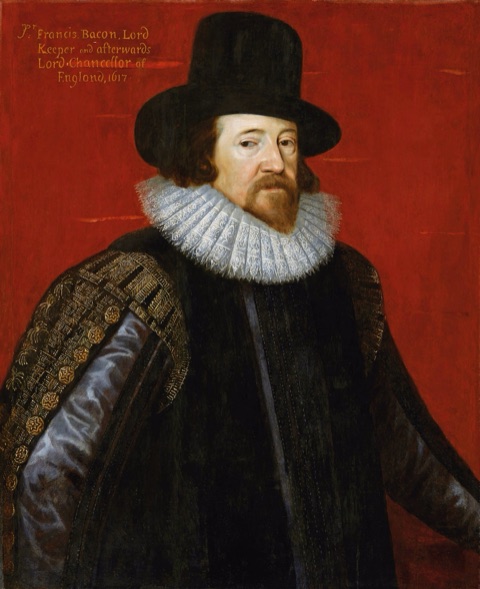
His works shaped medieval thought across two languages. Translated into Arabic and studied by scholars such as Avicenna and Averroes, and later rendered into Latin, they became the backbone of the university curriculum in the thirteenth century. Thomas Aquinas built his theology on Aristotelian categories, referring to Aristotle simply as "the Philosopher," and the resulting scholastic synthesis dominated European learning until the early modern period, when figures like Francis Bacon defined their own programs against it.
In moral and political thought his questions remain live. The Nicomachean Ethics grounds ethics in character and habit rather than in rules alone, and its account of virtue, friendship, and the good life is still taught and defended in contemporary virtue ethics. The Politics, with its comparative study of constitutions and its claim that human beings are political animals, still shapes debate about citizenship, the ends of government, and the relationship between the individual and the community.
Aristotle also founded systematic natural inquiry. His biological writings recorded detailed observations of hundreds of species, and although many of his physical and astronomical conclusions were overturned by later science, his insistence on gathering evidence, dividing subjects into distinct fields of study, and defining terms precisely helped establish the idea of organized knowledge.