Aristotle's foundational treatise on government and society. This systematic analysis of constitutions, citizenship, and the ideal state shaped political philosophy for over two thousand years.
A free account opens the whole library to read online, on your phone or at your desk. Open a book on one device and it is waiting at the same page on the next. The PDF and EPUB of every book are yours to keep, and audiobooks play in the same app.
250+ modernized editionsNot samples. The whole work, free.
Your place, on every devicePhone, tablet or desktop, same page.
131 audiobooksFrom $4.99 each, or all of them with a $50 gift.
Politics is Aristotle's treatise on how cities are organized and which arrangements govern best. Written in the 4th century BC, it argues that the city exists by nature and that "humans are naturally political animals," then classifies the forms of government, examines why each one fails, and describes the education a good state requires.
“From this it's clear that a city is a natural creation, and that humans are naturally political animals.”
From this edition
How the argument unfolds
01
The city exists by nature. Book 1 opens from the whole: "a city is a natural creation, and that humans are naturally political animals." Anyone needing no society at all is "either a beast or a god."
02
The household first. Before the city he takes apart its smallest units — master and slave, husband and wife, father and child — and the property that keeps a household running.
03
Against the ideal states. Book 2 tests Plato's Republic and finds its shared wives and property self-defeating: "what many people share is cared for least."
04
The citizen and the constitution. Book 3 defines a citizen as "anyone who has the right to participate in the judicial and executive functions of government," and a city as a body of such people.
05
Six forms of government. Rule by one, a few, or the many, aimed at the common good, gives a kingdom, an aristocracy, and a free state; each corrupts into tyranny, oligarchy, and democracy.
06
The best practicable state. Book 4 asks what works rather than what is ideal and answers with the middle class: "the most perfect political community must be found among those in the middle rank."
07
Education holds it together. Book 8 makes schooling a public duty — "education should obviously be uniform and consistent within each city," not "left to individuals as it is now."
Key themes
The city as natural, not invented. Human association is a growth, not a contract. Speech and the shared perception "of good and evil, of just and unjust" are what make a city possible, and "the concept of a city naturally comes before that of a family or an individual."
Household, mastery, and slavery. Book 1 argues that some people are slaves by nature — "a slave is a living tool" — while also recording the opposing view that such authority goes against nature and that this power "can't be based on justice but only on force."
Constitutions and their corruption. The line runs between rule for the common good and rule for the ruler; governments serving only their rulers are "nothing more than tyrannies over slaves." Book 5 traces how each type collapses, usually over a claim about equality.
Leisure, virtue, and education. The last two books tie the constitution to how citizens are raised, on the principle that "nature requires us not only to work productively but also to enjoy our leisure in a worthy way."
Free audiobook preview
Listen to the first 9 minutes
Politics · Audiobook · 8 hr 58 min
0:00 / 9:15
Enjoying it? The full audiobook runs 8 hr 58 min. Listen in the Updated Works app on any device.
Every city is a community, and every community forms itself around some perceived good. People only act when they see something worth pursuing. This principle applies to all communities, but especially to the highest and most comprehensive one, which aims at the highest good and contains all the others. We call this a city, and its community a political community.
Some people make a mistake here. They think that political leadership, royal rule, household management, and master-slave relationships all work on the same principles. They believe these differ only in scale, not in kind. In their view, ruling slaves means governing a very small group, managing a household means a slightly larger one, and running a city or kingdom means an even larger one. They see no real difference between a large household and a small city. They think royal government and political government are identical, except that in one case a single person stays permanently in charge, while in the other, citizens take turns governing and being governed according to political principles. But this view is wrong, as anyone who examines the question properly will see.
When investigating any subject, we need to break it down into its component parts until we reach the smallest, most basic elements. If we follow this same method with the city, we can identify its primary components, understand how they differ from each other, and see whether systematic analysis can help us examine each element we've mentioned.
Chapter 2: From Household to City
If we want to understand this particular field of study, we need to trace it back to its origins and earliest development. Then, as with other subjects, we'll see the matter clearly laid out before us. First, we'll recognize that certain beings must join together because their species can't survive without each other. Take males and females, for instance, who come together for reproduction. This isn't a matter of choice but rather a natural drive that operates in both plants and animals, pushing them to leave behind others like themselves. It's also natural that some beings command while others obey, so that each can achieve their mutual safety. A being endowed with a mind capable of reflection and planning is naturally the superior and the one who governs, while someone whose strength is merely physical is formed to be a slave. This means the different conditions of master and slave benefit both parties equally. But there's a natural difference between a female and a slave. Nature isn't like craftsmen who make cheap Delphic swords for poor people to use for multiple purposes. Instead, she creates separate instruments for every particular purpose, and this way her goals are most completely achieved. Whatever is used for only one task brings that task to much greater perfection than when it's used for many. Yet among non-Greek peoples, a female and a slave occupy the same level in society. The reason is that among them there are no people naturally qualified to govern, so their society can only consist of slaves of different sexes. This is why the poets say it's proper for Greeks to rule over non-Greeks, as if a non-Greek and a slave were naturally the same thing.
Of these two partnerships, the household comes first. Hesiod was right when he said, “First a house, then a wife, then an ox for the plough,” because a poor man always has an ox before he has a household slave. The partnership that nature established for daily needs is the household, and those who make it up are called by Charondas “meal sharers,” and by Epimenides the Cretan “smoke sharers.” But the partnership of many families, first created for their lasting mutual benefit, is called a village. A village is most naturally made up of descendants of one family, whom some people call “milk siblings,” meaning the children and grandchildren of that family. This is why cities were originally governed by kings, as non-Greek states still are today, since they're composed of people who had previously submitted to royal government. Every family is governed by its eldest member, as are its branches, because of their family connection. This is what Homer means when he says, “Each one ruled his wife and child,” and people used to live in this scattered way. The widespread belief that the gods themselves are subject to royal government comes from this fact: all people formerly lived under kings, and many still do. Since they imagined themselves made in the likeness of the gods, they assumed the gods' way of life must be the same as theirs.
When many villages unite so completely that they form one society in every respect, that society is a city. It contains within itself, if I may put it this way, the goal and perfection of government. Cities were first founded so we could live, but they continue to exist so we can live well. For this reason, every city must be recognized as a work of nature, if we accept that the original partnership between male and female is natural. All subordinate partnerships tend toward the city as their goal, and the goal of anything is its nature. What every being is in its most perfect state is certainly the nature of that being, whether it's a person, a horse, or a house. Besides, whatever produces the final cause and the goal we aim for must be best. A government complete in itself is that final cause and what is best. From this it's clear that a city is a natural creation, and that humans are naturally political animals. Anyone who is naturally (and not accidentally) unfit for society must be either inferior or superior to humanity. Think of the man in Homer who is criticized for being “without society, without law, without family.” Such a person must naturally have a quarrelsome disposition and be as solitary as birds.
The gift of speech also clearly proves that humans are more social animals than bees or any herding cattle. Nature, as we say, does nothing in vain, and humans are the only animals who possess speech. Voice, as the sign of pleasure and pain, is given to other animals too, and their nature is capable of perceiving pleasure and pain and communicating these sensations to others. But it's through speech that we can express what is useful and what is harmful to us, and consequently what is just and what is unjust. In this particular way humans differ from other animals: we alone have a perception of good and evil, of just and unjust. Sharing these common perceptions is what forms a family and a city.
Furthermore, the concept of a city naturally comes before that of a family or an individual, because the whole must necessarily come before the parts. If you take away the whole person, you can't say a foot or a hand remains, except in an equivocal sense, like supposing a stone hand were made (but that would only be a dead one). Everything is understood to be what it is by its active qualities and powers, so when these no longer exist, that thing can't be said to be the same anymore, but only something with the same name.
It's clear, then, that a city comes before an individual. If an individual isn't self-sufficient enough to form a complete government, he relates to a city as other parts relate to a whole. But someone who is incapable of society, or so self-sufficient that he doesn't need it, forms no part of a city. He's either a beast or a god.
There is in all people a natural drive to form this kind of association with each other, and the person who first founded civil society was the cause of the greatest good. Just as the completion of civil society makes humans the most excellent of all living beings, so without law and justice we would be the worst of all. Nothing is as difficult to control as injustice armed with weapons. But humans are born with these weapons: intelligence and courage, which can be applied to completely opposite purposes. Whoever abuses them will be the most wicked, most cruel, most lustful, and most gluttonous being imaginable. Justice is a political virtue. By its rules the state is regulated, and these rules are the standard of what is right.
Chapter 3: The Parts of Household Management
Now that we've established what parts make up a city, we need to start by examining household management, since every city consists of households, and every household has its own distinct components. A complete household includes both free people and slaves. In any investigation, we should begin with the smallest units, and the smallest parts of a household are the master and slave, the husband and wife, and the father and child. Let's examine these three relationships: what each one actually is, and what it should be. In other words, we need to look at the master's authority, the marriage relationship, and parental authority. We can think of these as the three distinct elements of a household. Some people believe that managing the household's resources is something separate from governing it, while others consider resource management the most important part. We'll look at that question separately. But first, let's discuss the master and slave relationship, so we can understand what's fundamentally necessary and see if we can improve on what's already been said about this.
Some thinkers have argued that the master's power over his slave comes from superior knowledge, and that this knowledge is essentially the same whether someone is a master, a magistrate, or a king (as we mentioned earlier). But others believe that the master's authority over slaves goes against nature. They argue that only law makes one person a slave and another free, while nature itself makes no such distinction. Therefore, they say, this power can't be based on justice but only on force.
Chapter 4: Property and the Slave as a Tool
Every family needs resources to survive, and acquiring those resources is clearly part of household management. Without the basics, we can't live at all, much less live well. Just as any craft that reaches perfection requires the right tools to complete its work, so does the art of managing a household. Tools come in two types: some are inanimate, others are living. Take a ship's pilot, for instance. The tiller is lifeless, but the sailor is alive. A servant functions as a living tool in many crafts.
Property, then, is a tool for living. An estate is simply a collection of tools, and a slave is a living tool. But a servant who can carry out tasks on his own is more valuable than any other tool. If every tool could do its job on command, or even anticipate its master's wishes (like the legendary statues of Daedalus, or the tripods of Vulcan that the poets say moved on their own into the assembly of the gods), then the shuttle would weave by itself and the lyre would play without a musician. Architects wouldn't need assistants, and masters wouldn't need slaves.
What we usually call instruments are things that produce something else, while possessions are things we simply use. With a shuttle, we make something else for our use, but we just use a coat or a bed directly. Since making and using are fundamentally different activities, and both require their own instruments, those instruments must naturally differ from each other. Life itself is about using things, not about producing other things. That's why a slave's services are for use.
We can think of a possession the same way we think of a part of something. A part isn't just connected to something else; it has no independent existence. The same goes for a possession. A master is only the master of his slave, not part of him. But the slave is not only the slave of his master; he is nothing else. This fully explains what a slave is by nature and what he's capable of. Any being who by nature belongs entirely to another person, and not to himself, yet remains human, is a slave by nature. A person who is another's property is merely his chattel, even though he's still a human being. And a chattel is simply a tool for use, separate from the owner's body.
Questions
What is Politics by Aristotle about?+
"Politics" is Aristotle's study of the city — how it arises, who counts as a citizen, and which constitutions govern well. Across eight books he moves from the household to the six forms of government, the causes of revolution, and the education a state owes its young.
When did Aristotle write Politics?+
Aristotle wrote "Politics" in the 4th century BC, around 330 BC, during his teaching years in Athens. The work reads as assembled lecture material rather than a finished book, and it breaks off mid-discussion of musical education in Book 8.
What does Aristotle mean by calling humans political animals?+
He means the city is natural to human beings rather than something they opt into. This edition renders the line "a city is a natural creation, and that humans are naturally political animals"; anyone self-sufficient enough to need no society "forms no part of a city. He's either a beast or a god."
What forms of government does Aristotle describe in Politics?+
Aristotle describes six forms: three aimed at the common good and three corrupted counterparts. Rule by one is a kingdom, which degenerates into tyranny; rule by a few is an aristocracy, which becomes oligarchy; rule by the citizens as a whole is what this edition calls a free state, which becomes democracy.
What is the best form of government according to Aristotle?+
Among achievable constitutions Aristotle favors one dominated by the middle class: "the most perfect political community must be found among those in the middle rank," judging such states least vulnerable to "the civil unrest and rebellions that tear communities apart." Book 7 treats the ideal separately, where the best state is the one whose citizens live by virtue.
Why is Aristotle's Politics important?+
"Politics" supplied much of the vocabulary Western political thought still uses: constitution, citizen, the common good, aristocracy, oligarchy, tyranny. Rather than designing one imaginary republic, Aristotle compared constitutions that actually existed and asked why each held or failed, and his account of citizenship, class conflict, and revolution runs through medieval and modern political theory.
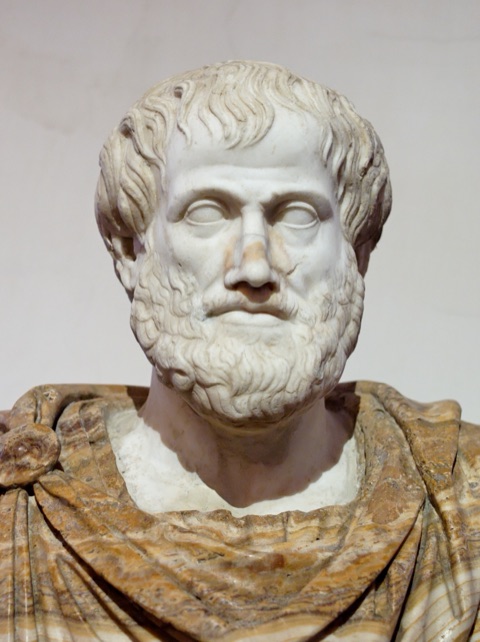
Aristotle (384-322 BC) was an ancient Greek philosopher and scientist, one of the most influential thinkers in Western history. Born in Stagira, he studied at Plato's Academy in Athens for twenty years before becoming tutor to the young Alexander the Great. In 335 BC he founded his own school, the Lyceum, where he taught and conducted research until shortly before his death. Aristotle's surviving works cover an astounding range of subjects including logic, metaphysics, ethics, politics, biology, physics, and rhetoric. His method of systematic analysis and classification shaped intellectual inquiry for centuries. In the medieval period, he was simply called "The Philosopher," and his works formed the basis of university education. While modern science has moved beyond many of his specific conclusions, his logical methods and his ethical and political insights continue to be studied and debated today.