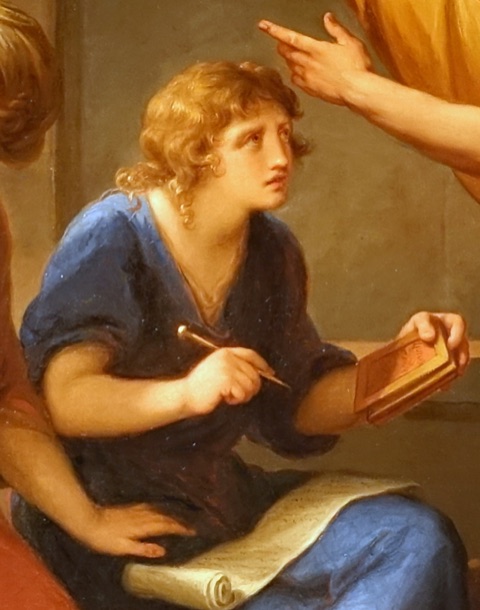
Marcus Aurelius
Roman emperor from 161 to 180 AD and a Stoic philosopher whose private notebook, the Meditations, records his effort to govern an empire while living by Stoic principles. It remains the most widely read Stoic text and the last major work of the tradition.
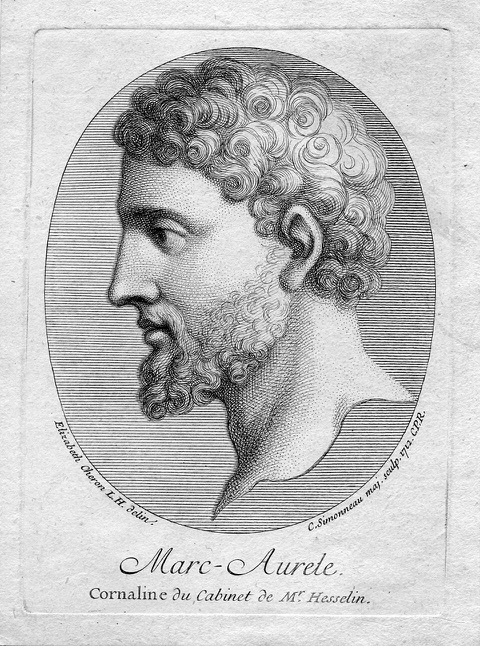
121 to 180 AD
Biography
Marcus Aurelius (121 to 180 AD) was Roman emperor from 161 to 180 AD and a Stoic philosopher whose private notebook, the Meditations, survives as the fullest first-person record of Stoic ethics we possess. He was the last of the rulers later called the "Five Good Emperors," and his reign closed a long stretch of stable succession that ended with his own son.
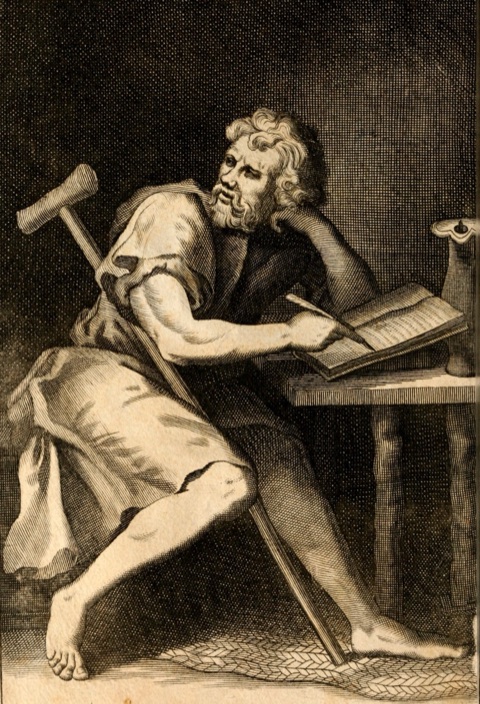
He was born in Rome on April 26, 121 AD, into a wealthy family of Spanish origin, and given the name Marcus Annius Verus. The emperor Hadrian noticed the boy early and arranged his place in the succession: in 138 AD Hadrian required his chosen heir, Antoninus Pius, to adopt Marcus. From that point Marcus was raised as a future emperor. He studied rhetoric under Marcus Cornelius Fronto, whose correspondence with him survives, but turned increasingly toward philosophy. He credited his teacher Quintus Junius Rusticus with introducing him to the discourses of the freed slave and Stoic teacher Epictetus, which shaped his thinking permanently.
In 145 AD Marcus married Faustina the Younger, the daughter of Antoninus Pius. When Antoninus died in 161 AD, Marcus became emperor and immediately shared power with his adoptive brother Lucius Verus, an arrangement without precedent in Roman rule. The two governed jointly until Verus died in 169 AD, after which Marcus ruled alone.
Much of his reign was spent at war. Conflict with the Parthian Empire in the east occupied its first years, and from around 166 AD the Marcomannic Wars pulled Marcus to the Danube frontier for long campaigns against the Marcomanni, Quadi, and other Germanic and Sarmatian peoples. Returning armies also carried back the epidemic known as the Antonine Plague, probably smallpox, which killed large numbers across the empire for years. It was during these frontier campaigns, in camp and on the march, that Marcus wrote the reflections later gathered as the Meditations.
Written in Greek and headed in the manuscripts "To Himself," the Meditations was never meant for publication. It is a private set of notes in which Marcus reminds himself to accept what he cannot control, to do his duty without complaint, to treat other people with patience, and to keep in view the brevity of every human life. The first book is different in character: a long list of debts, in which he names family members and teachers one by one and states what each taught him.
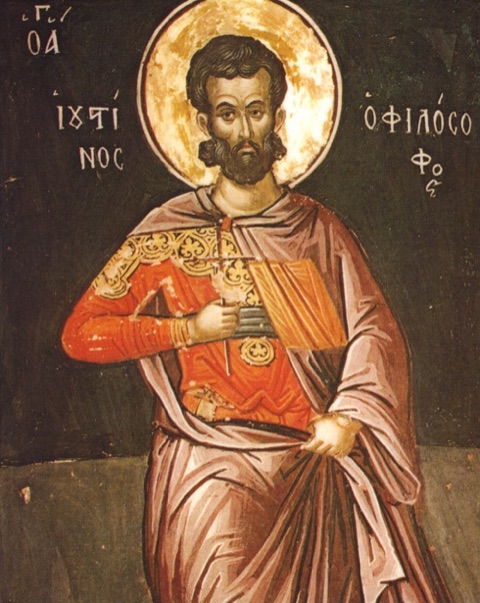
His reign was not gentle toward the growing Christian movement. Christians were prosecuted and executed in this period, including the martyrs of Lyon in 177 AD, and the apologist Justin Martyr was put to death in Rome around 165 AD. In 177 AD Marcus raised his son Commodus to share the throne, breaking the recent pattern of adopting a capable successor from outside the family. Marcus died in 180 AD, most likely at Vindobona on the Danube, and Commodus succeeded him alone.
Life & Career
Why Aurelius Matters
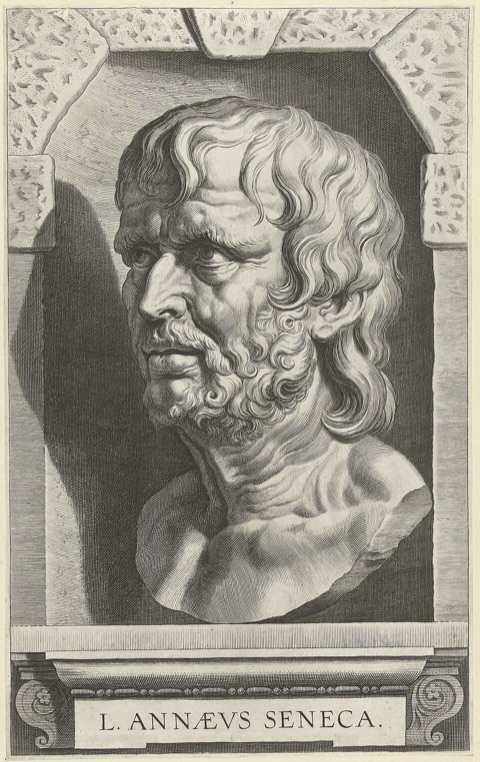
Marcus Aurelius matters first as a philosopher, and specifically as the author of the single most widely read work of Stoicism. The Stoic school had produced systematic thinkers for centuries, but most of their technical writing is lost. What survives from the Roman period comes largely from three men: Seneca, the ex-slave Epictetus, and Marcus. Among these the Meditations is unique because it was written by a ruler, for no audience, as a working document of self-correction rather than instruction to others.
The book's value lies in that privacy. Because Marcus was not composing a treatise or performing for students, the Meditations shows Stoic doctrine being used as a practical tool under real pressure: the exhaustion of command, the deaths of colleagues and children, the plague, and the endless business of the frontier. Its recurring themes come directly from earlier Stoicism, above all from Epictetus, whom Marcus quotes: the distinction between what is in our power and what is not, the priority of virtue over external goods, the acceptance of nature and providence, and the reduction of anger and fear through clear judgment.
The Meditations also carries an unusually strong sense of mortality and scale. Marcus repeatedly measures human ambition against the size of the cosmos and the shortness of time, reminding himself that fame is forgotten and that the same events recur endlessly. This cast of thought made the book portable across later centuries, read by people with no interest in Stoic physics or Roman politics but drawn to its plain counsel on how to live and how to face death.
As a historical figure, Marcus stands at a hinge point in Roman history. He was the last emperor of the long second-century peace, and his decision to leave the throne to Commodus rather than an adopted successor is often treated as the moment when that stability began to break. His frontier wars, memorialized on the Column of Marcus Aurelius in Rome, marked the start of sustained pressure on the Danube that would trouble the empire for generations.