Thomas Hobbes
The English philosopher who argued that without a common power to hold people in awe, human life would be "solitary, poor, nasty, brutish, and short." His 1651 book Leviathan founded modern social contract theory.
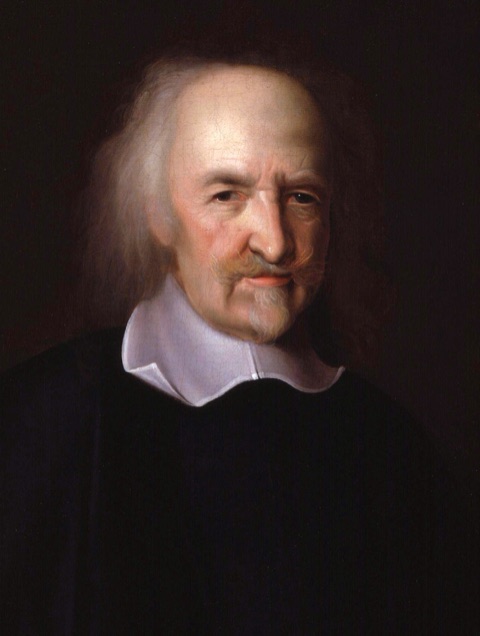
1588–1679
Biography
Thomas Hobbes (1588 to 1679) was an English philosopher who founded modern social contract theory and defended absolute sovereign power as the only reliable cure for civil war. He was born on April 5, 1588, at Westport, near Malmesbury in Wiltshire, the son of a poorly educated village clergyman. He later joked that his mother, alarmed by news of the approaching Spanish Armada, gave birth to twins, "myself and fear," a remark that fits the preoccupation with security running through all his work.
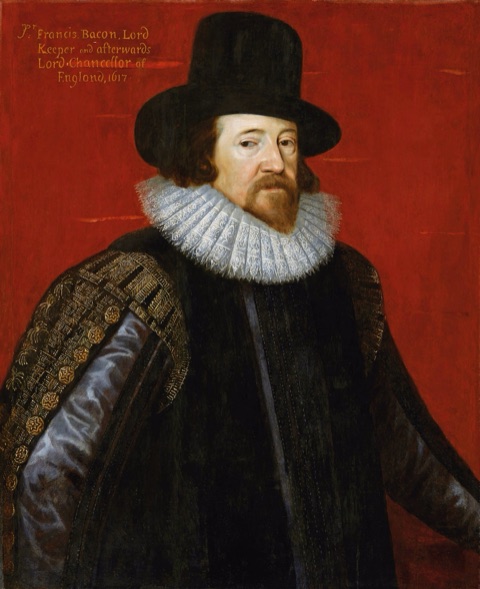
He entered Magdalen Hall, Oxford, around 1603 and took his degree about 1608, then joined the household of the Cavendish family, earls of Devonshire, as tutor and secretary. That connection lasted, on and off, for the rest of his life and gave him both leisure to study and entry to Europe's leading circles. In the 1620s he worked for a time as a secretary to Francis Bacon, and in 1629 he published the first English translation of Thucydides' History of the Peloponnesian War, drawn directly from the Greek. On his continental tours he met Galileo in Florence in 1636 and joined the Paris salon of Marin Mersenne, where he exchanged ideas and objections with René Descartes and Pierre Gassendi.
From these encounters Hobbes built a thoroughgoing materialism. He held that everything real is body in motion, and he set out to explain sensation, appetite, reasoning, and even the commonwealth in mechanical terms. He planned a three-part system, the Elements of Philosophy, covering body, man, and citizen, though he wrote the volumes out of order as events pressed on him.
The English Civil War drove both his life and his argument. Fearing reprisal for a manuscript defending royal authority, he fled to Paris in 1640 at the opening of the Long Parliament and stayed for eleven years. There he published De Cive in 1642 and, in the exiled court, tutored the future Charles II in mathematics. His masterwork, Leviathan, appeared in London in 1651. Beginning with human nature and the "state of nature," a condition of war of every man against every man, it argued that self-interested individuals would rationally surrender their rights to an undivided sovereign in exchange for peace and protection.
Leviathan satisfied almost no one. Royalists objected to its secular grounding of authority and its harsh treatment of church power, while its logic of obedience to whoever could actually keep order unsettled defenders of the old regime. Having made Paris uncomfortable, Hobbes returned to England late in 1651 and submitted to the Commonwealth. He completed his system with De Corpore in 1655 and De Homine in 1658, and spent years in a bitter mathematical feud with the Oxford geometer John Wallis over his repeated claims to have squared the circle.
After the Restoration in 1660, Charles II granted his old tutor a pension, but Hobbes remained a target. Following the plague and the Great Fire, a 1666 parliamentary committee investigating atheism and profaneness named Leviathan, and he was effectively barred from publishing on religion and politics in England. He turned to other work, writing Behemoth, a history of the Civil War, and in his eighties producing verse translations of Homer's Iliad and Odyssey. He died on December 4, 1679, at Hardwick Hall in Derbyshire, aged 91.
Life & Career
Why Hobbes Matters
Hobbes gave political philosophy a new method. Rather than grounding government in scripture, tradition, or the authority of Aristotle, he tried to derive it from premises about human beings as they actually are: bodies driven by appetite and aversion, roughly equal in their capacity to kill one another, and therefore mutually insecure. From that starting point he reasoned toward the state as a construction of human choice. This move, treating the commonwealth as an artificial thing built by contract rather than a natural or divinely ordained order, set the terms for nearly all later argument about the legitimacy of the state.
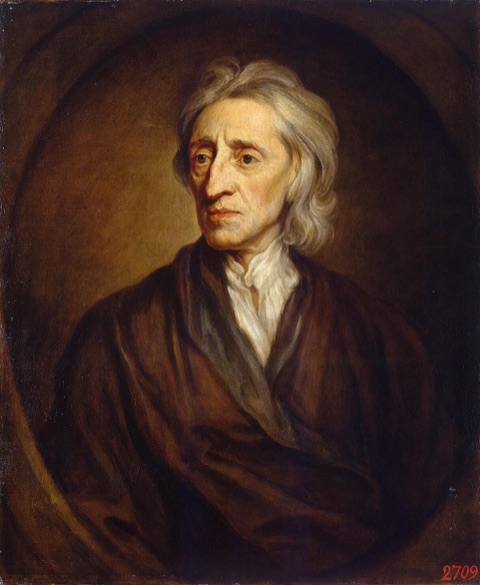
His account of the social contract became the framework that John Locke and, later, Jean-Jacques Rousseau reworked and opposed. Locke's Two Treatises accepted the idea of a state of nature and a contract but rejected Hobbes's absolute sovereign in favor of limited, revocable government. The whole tradition of liberal constitutional thought defined itself in part against Leviathan, which is one measure of how much it owed to him. Even thinkers who found his conclusions intolerable adopted his questions.
Hobbes also pressed a strict materialism and a hard-edged psychology of self-interest that influenced later moral and political science well beyond his own conclusions. His analysis of how individually rational choices can produce collectively disastrous outcomes, the war of all against all, anticipates problems that modern game theory and economics study directly. His name became shorthand for a clear-eyed, unsentimental view of power and human motivation.
Beyond the theory, Hobbes wrote English prose of unusual force. The phrases of Leviathan, above all its description of life without government as "solitary, poor, nasty, brutish, and short," have outlasted most of the debates of his century and remain among the most quoted lines in political thought. He is read today both as a historical source for the crisis of the English Civil War and as a living argument about order, fear, and the price of security.