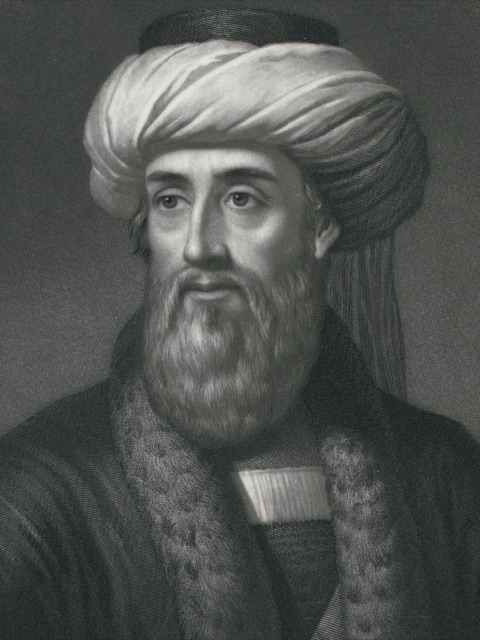
Epictetus
A Greek Stoic philosopher, born a slave, whose lectures survive in the Discourses and the Enchiridion (Handbook) recorded by his pupil Arrian. He is best known for the distinction between what is within our power and what is not.
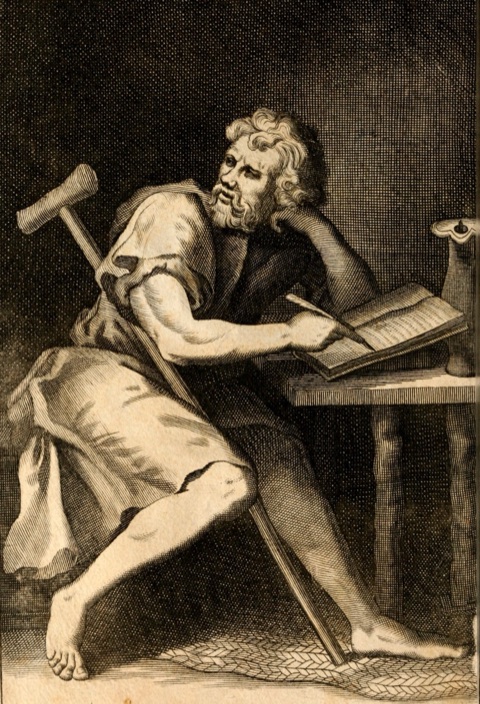
around 50 to 135 AD
Biography
Epictetus (around 50 to 135 AD) was a Greek Stoic philosopher who was born into slavery and taught that a person's freedom depends entirely on the correct use of the mind. He was born at Hierapolis in Phrygia, a region of Roman Asia Minor, and as a young man belonged to Epaphroditus, a wealthy freedman who served as an administrative secretary to the emperor Nero. Ancient writers report that Epictetus was lame in one leg, a detail Origen and later Simplicius record without agreeing on its cause.
While still in the household of Epaphroditus, Epictetus was permitted to study Stoic philosophy under Musonius Rufus, the most respected Roman Stoic teacher of the age. After Nero's death in 68 AD he gained his freedom and began to teach in Rome. When the emperor Domitian expelled philosophers from the city around 93 AD, Epictetus left Italy and settled in Nicopolis, a city in Epirus in northwestern Greece that Augustus had founded to mark his victory at Actium in 31 BC. There he opened a school that attracted students from across the Roman world, many of them young men of senatorial and equestrian rank.
Epictetus wrote nothing himself. His teaching survives because one of his pupils, Arrian of Nicomedia, who later became a Roman consul, provincial governor, and historian of Alexander the Great, took down his lectures and published them as the Discourses. Four of the original eight books survive. Arrian also compiled a short digest of the master's practical advice, the Enchiridion, or Handbook, which condensed his ethics into a form meant to be carried and reread.
At the center of his thought is the division between what is "up to us" and what is not. Our judgments, desires, aversions, and impulses are within our power; our bodies, property, reputations, and public offices are not, because they depend on circumstances and other people. Epictetus taught that suffering comes from wanting what we cannot command, and that a person who trains desire to rest only on things within reach becomes secure against fortune. A much-quoted line from the Enchiridion states that people are disturbed not by events but by their opinions about events.
His method was practical rather than theoretical. He spoke plainly, questioned his listeners directly, and treated philosophy as daily training rather than a body of doctrine to be memorized. He compared the student to an athlete and the philosopher to a sentry posted by God, and he insisted that logic and physics mattered only insofar as they helped a person live rightly. He addressed problems his hearers actually faced: illness, exile, poverty, the death of family, and the pressures of serving under emperors.
Epictetus died around 135 AD at Nicopolis, having never held property or founded a family in the ordinary sense. Simplicius, a philosopher of the sixth century who wrote a commentary on the Enchiridion, reports that late in life Epictetus took into his household a child who would otherwise have been abandoned and raised it with the help of a woman of the town.
Life & Career
Why Epictetus Matters
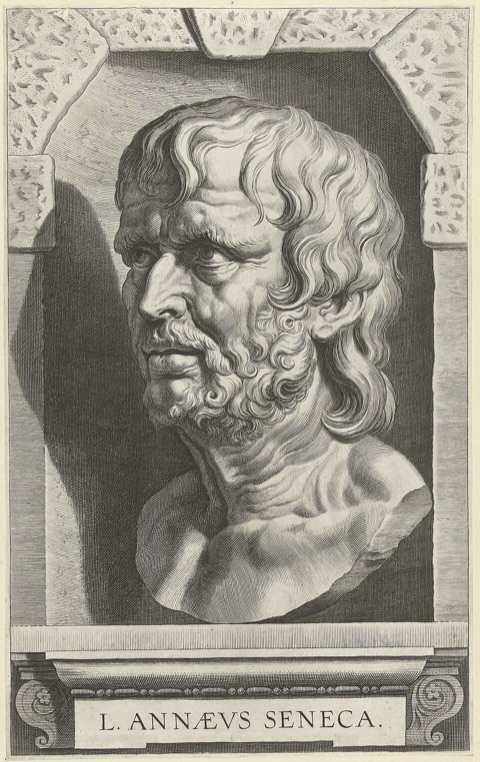
Epictetus is one of the major Roman-era Stoics whose teaching survives in bulk, alongside Seneca and Marcus Aurelius, and the only one who came to Stoicism from slavery. Because Arrian preserved his spoken lessons rather than polished treatises, the Discourses give an unusually direct record of how a Stoic school actually operated and what its teacher said to students day by day. This makes Epictetus a primary source for how ancient philosophy was practiced, not merely written.
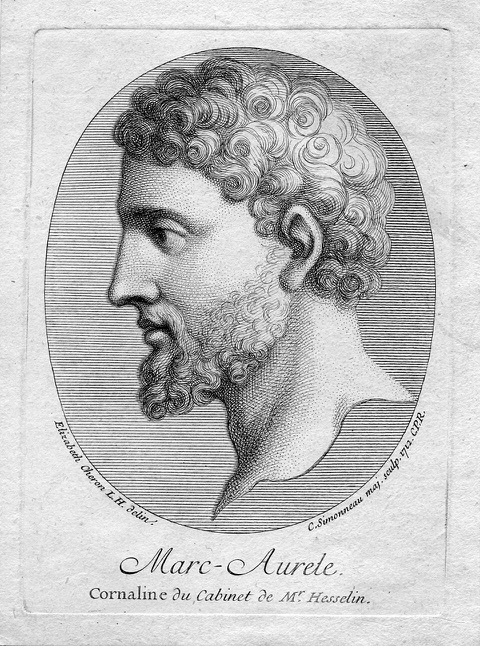
His influence on the Stoic tradition is clearest in Marcus Aurelius. The emperor names Epictetus among the men to whom he owed his outlook, records that his teacher Rusticus lent him a copy of the Discourses, and echoes Epictetus's language throughout the Meditations. Through Marcus, Epictetus's distinction between what we control and what we do not passed into the most widely read Stoic book of all.
The Enchiridion had a long afterlife. Simplicius wrote a full commentary on it in the sixth century, and Christian monks adapted it into paraphrases that replaced the pagan references with monastic ones, so that Epictetus's ethics circulated in the medieval church under other names. During the Renaissance and after, his work was central to the revival of Stoic thought, and translations of the Handbook were printed repeatedly across Europe.
In the modern period his ideas reentered wide circulation through psychology. The maxim that people are disturbed not by things but by their judgments of things was cited by Albert Ellis and taken up in the cognitive tradition of therapy that treats emotional distress as rooted in belief. His arguments about enduring hardship without losing composure have also been credited by figures who faced captivity and adversity, keeping the Enchiridion in print as a practical manual rather than a museum piece.