Polycarp of Smyrna
Bishop of Smyrna and one of the Apostolic Fathers, remembered for his single surviving letter, the Epistle to the Philippians, and for the eyewitness account of his death preserved as the Martyrdom of Polycarp.
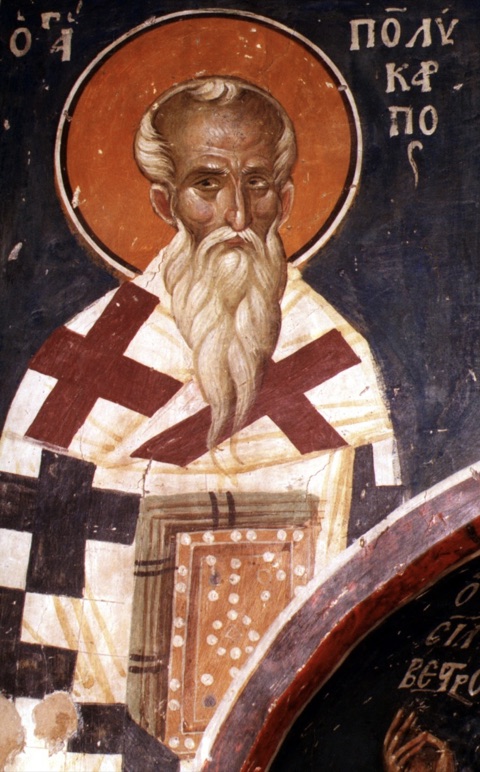
around 69 to around 155 AD
Biography
Polycarp of Smyrna (around 69 to around 155 AD) was a Christian bishop of Smyrna, a port city on the Aegean coast of Roman Asia in what is now Izmir, Turkey. He is counted among the Apostolic Fathers, the writers who bridge the generation of the apostles and the church of the second century, and he is remembered chiefly for one letter that survives under his name and for a detailed account of his execution.
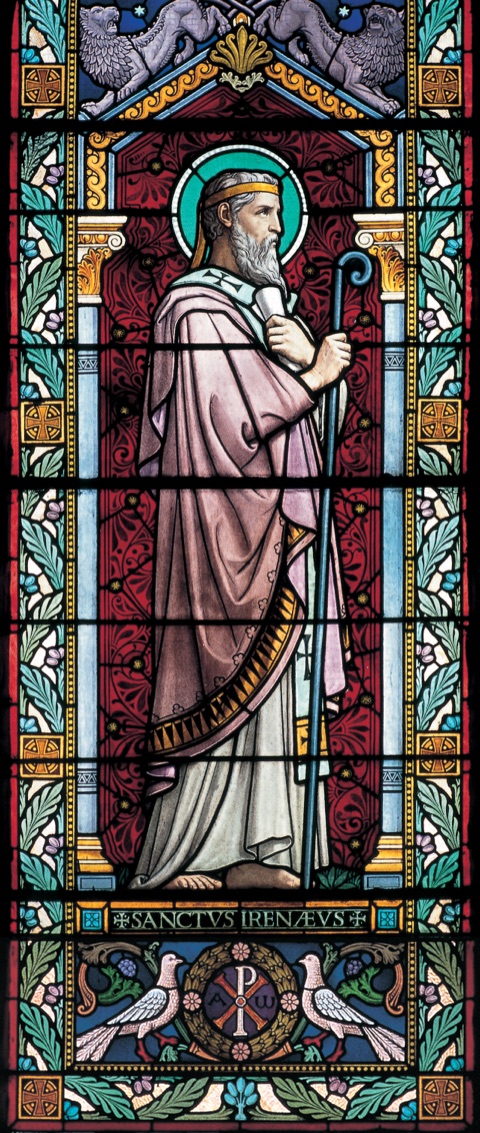
Polycarp's importance rests heavily on the testimony of Irenaeus of Lyon, who as a young man had heard Polycarp preach and who later wrote about him in his work Against Heresies and in a letter to a friend named Florinus. According to Irenaeus, Polycarp had been instructed by the apostles and had spoken with people who had seen Jesus, and he named the apostle John as Polycarp's teacher. This reported link to the apostolic generation made Polycarp a valued witness in later disputes about what the apostles had actually taught.
Polycarp was in contact with the wider church of his day. Around the beginning of the second century, Ignatius of Antioch, traveling under guard toward his own death in Rome, addressed one of his letters to Polycarp and mentioned him in others. Late in his life Polycarp traveled to Rome and met with Anicetus, the bishop there, to discuss the date on which Easter should be observed; the two men did not reach agreement but parted on peaceful terms. Irenaeus also recorded that Polycarp opposed the teacher Marcion and rejected Gnostic ideas circulating in Asia Minor.
The one work attributed to Polycarp that survives is his Epistle to the Philippians, a letter written to the church at Philippi in Macedonia. It urges its readers toward righteous conduct, warns against greed and false teaching, and quotes freely from writings that later formed part of the New Testament, which makes the letter an early indicator of which texts were being read and treated as authoritative in the churches of Asia.
The account of his death, known as the Martyrdom of Polycarp, takes the form of a letter from the church of Smyrna to the church of Philomelium and is among the earliest surviving records of a Christian martyrdom outside the New Testament. It describes his arrest during a local persecution, his refusal to swear by the emperor or curse Christ, and his execution in the city's stadium, where he was burned and then stabbed. The text reports that he was eighty-six years old at his death, the detail from which his approximate birth date is calculated.
Why Polycarp Matters
Polycarp mattered to the early church less for a body of writing than for the position he held in its memory. Because Irenaeus presented him as a direct hearer of the apostle John, Polycarp became a human link in the chain by which second-century Christians claimed that their teaching descended unbroken from the apostles. In the conflicts with Marcion and with Gnostic teachers, that claim of continuity was a central argument, and Polycarp's name carried weight precisely because he was said to have received his instruction firsthand.
His Epistle to the Philippians is valuable to historians as evidence of how the churches of Asia read and used Christian writings in the early second century. The letter weaves together phrases and ideas drawn from texts that were later gathered into the New Testament, showing that these writings already carried authority in worship and instruction before any formal list of scripture existed. It also gives a picture of the practical concerns of a working bishop: conduct, church order, and resistance to error.
The Martyrdom of Polycarp holds a distinct place as an early example of its genre. As one of the earliest detailed narratives of a Christian's death for the faith, it set patterns that later martyr accounts would follow, and it shaped how the church described and commemorated those who died under Roman persecution. Its attention to dates and circumstances also makes it a source for the study of persecution in the Roman province of Asia.
Through Irenaeus, and through the later church historian Eusebius who preserved these traditions, Polycarp was cited across the following centuries as a witness to the beliefs and practices of the church closest in time to the apostles.