

Modern English edition · 155 AD
Epistle to the Philippians & the Martyrdom of Polycarp
One of the earliest and most inspiring accounts of Christian martyrdom. This letter from the church at Smyrna describes the arrest, trial, and death of the elderly bishop Polycarp around AD 155.
One free account opens 250+ books and saves your place on every device. Google sign-in or an email link. No card.
You’re on the list — we’ll email you if this goes to print.
Included with your free account
This book, and 250+ more, free to read
A free account opens the whole library to read online, on your phone or at your desk. Open a book on one device and it is waiting at the same page on the next. The PDF and EPUB of every book are yours to keep, and audiobooks play in the same app.
- 250+ modernized editions Not samples. The whole work, free.
- Your place, on every device Phone, tablet or desktop, same page.
- 131 audiobooks From $4.99 each, or all of them with a $50 gift.
- PDF and EPUB included Download any book to keep.



About this book
The Martyrdom of Polycarp is one of the earliest and most inspiring accounts of Christian martyrdom. Written as a letter from the church at Smyrna to the church at Philomelium, it describes the arrest, trial, and death of Polycarp, the elderly bishop of Smyrna, around AD 155. This document has encouraged believers facing persecution for nearly two thousand years.
Polycarp represents a direct link to the apostolic age. Church tradition holds that he was a disciple of the apostle John and had known others who had seen the Lord. By the time of his martyrdom, he had served Christ for eighty-six years—his famous reply when commanded to revile Christ. This long faithfulness made his final witness all the more powerful.
The account describes how Polycarp, warned of his impending arrest, initially fled to the countryside but was eventually captured. His response to his captors was remarkable: he ordered food and drink set before them and asked only for an hour to pray. He prayed so fervently that his captors later regretted being involved in arresting such a godly man.
At his trial, the Roman proconsul gave Polycarp multiple opportunities to save his life by cursing Christ and swearing by Caesar's genius. Polycarp's responses became legendary: "Eighty-six years I have served Him, and He has done me no wrong. How then can I blaspheme my King and my Savior?" When threatened with wild beasts and fire, he remained unmoved, declaring that the fires of judgment awaited those who oppose God's truth.
The account of Polycarp's death contains remarkable elements. When placed in the flames, the fire reportedly formed a vault around him like a ship's sail, and a sweet fragrance like incense arose. When the fire failed to consume him, he was killed by a dagger thrust. The Christians gathered his bones "more precious than jewels" and commemorated his martyrdom annually.
The document carefully distinguishes true martyrdom from foolish provocation. Some had rushed forward to martyrdom unwisely; the church commends Polycarp's approach of not seeking death but accepting it when unavoidable. It also clarifies that Christians honor martyrs not as they worship Christ but as disciples and imitators of the Lord.
The Martyrdom of Polycarp offers modern readers a window into the faith and courage of the early church. In Polycarp we see what it means to follow Christ faithfully through a long life and to finish well when the ultimate test comes. His example challenges believers in every age to consider what they would die for—and therefore, what they truly live for.
About the author
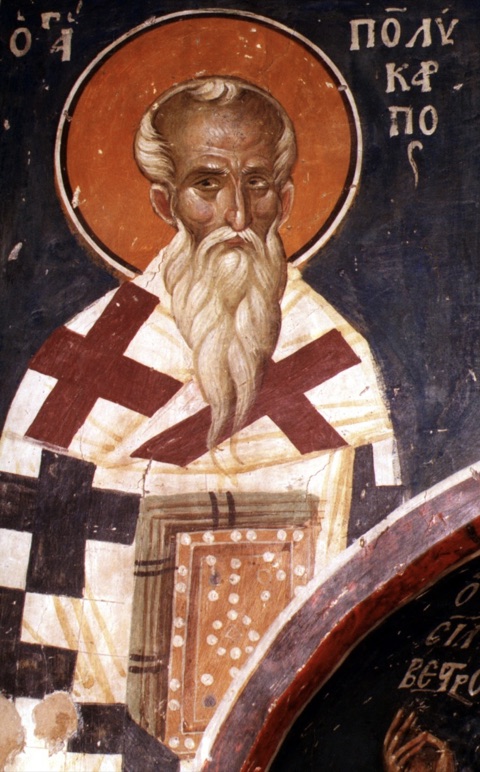
Polycarp of Smyrna
The Early Church Fathers were Christian theologians and writers of the first several centuries whose works helped establish Christian doctrine and practice. These include the Apostolic Fathers who had direct connection to the apostles, the Greek and Latin Fathers who articulated theology in response to various challenges, and the Desert Fathers who developed monastic spirituality. Their writings, including letters, apologies, theological treatises, and biblical commentaries, provide invaluable insight into how the earliest Christians understood and lived their faith. The Early Church period saw the development of the biblical canon, creedal formulations, and liturgical practices that continue to shape Christianity today.
“Updated Works has been an incredible blessing to my Christian life and ministry… remarkably faithful to the original authors while making these timeless treasures understandable for modern readers.”





