Tertullian
The first major Christian author to write in Latin and the writer who coined the term "Trinity." His Apologeticus defended Christians before Roman magistrates, and his treatises supplied much of the theological vocabulary still used in Western Christianity.
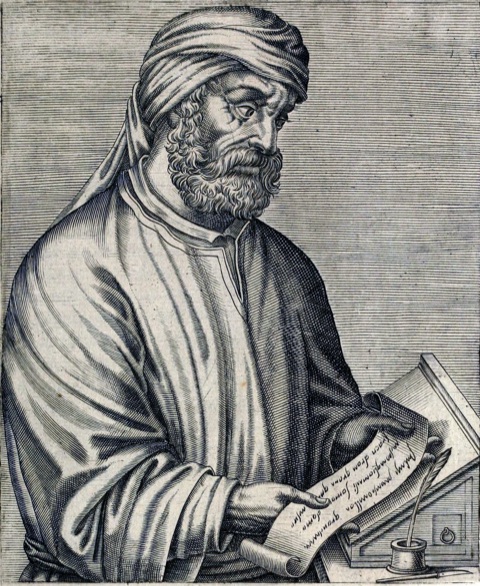
155–220 AD
Biography
Tertullian (155 to 220 AD) was a Christian writer from Carthage, in the Roman province of Africa, who became the first major theologian to compose his works in Latin rather than Greek. His full name was Quintus Septimius Florens Tertullianus. Because his output shaped the language of Western Christian thought, later readers gave him the title "Father of Latin Christianity."
Little about his life is documented with certainty. The fourth-century writer Jerome reported that Tertullian was the son of a centurion, that he served as a presbyter, and that he lived to an advanced age, but modern scholars treat these details as uncertain. What his own writings make plain is a thorough training in Roman rhetoric and law: he argues like an advocate, marshals evidence, presses definitions, and turns an opponent's premises against him. He was a convert to Christianity as an adult and wrote for a church living under the threat of Roman persecution.
His best-known work is the Apologeticus, or Apology, composed around 197 AD and addressed to the magistrates of the Roman Empire. In it he answered the standard charges against Christians—atheism, secret crimes, disloyalty to the state—and argued that the persecutions were both unjust and self-defeating. From this treatise comes his often-quoted claim that the blood of Christians is a seed: the more believers Rome executed, he wrote, the more their numbers grew. He returned to the theme in shorter pieces such as To Scapula, addressed to the proconsul of Africa, and To the Martyrs, written to encourage imprisoned believers.
A large part of his work is polemical theology directed against teachers he judged heretical. Against Marcion, in five books, is his longest surviving treatise and answers Marcion of Pontus, who had rejected the Old Testament and its God. In Against Praxeas he set out the language of the Trinity; in The Prescription Against Heretics he argued that heretics had no right to appeal to Scripture at all, since the Scriptures belonged to the church. Other treatises took up specific questions of doctrine and practice: On Baptism, the earliest surviving Christian treatise on the subject; On the Soul; On the Resurrection of the Flesh; and On the Flesh of Christ, in which he defended the reality of Christ's human body.
Later in life Tertullian was drawn to Montanism, the movement its followers called the New Prophecy, which claimed fresh revelations of the Holy Spirit and demanded a stricter moral discipline. His attraction to its rigor shows in works such as On Monogamy, On Fasting, and On Modesty, where he took harder positions on remarriage, fasting, and the forgiveness of grave sins than the mainstream church of Carthage would accept. This turn eventually set him at odds with that church, though the details of the break are not fully known.
His writing was read long after his death even by those who rejected his later views. Jerome recorded that Cyprian of Carthage, who led that church a generation afterward, read Tertullian daily and called him "the master." Through Cyprian and later through Augustine of Hippo, his vocabulary and arguments passed into the wider Latin tradition.
Why Tertullian Matters
Tertullian's most far-reaching contribution was linguistic. Writing theology in Latin for the first time on a large scale, he had to find or invent words for ideas that had been discussed until then mainly in Greek. He introduced or fixed the meaning of terms that became standard in Western doctrine, including trinitas (Trinity), persona (person), and substantia (substance). Much of the technical vocabulary in which the Latin church would later state its beliefs traces back to his treatises.
In Against Praxeas he gave the doctrine of the Trinity one of its earliest formulas, describing God as one substance in three persons—a way of speaking that anticipated the settled language of the fourth-century councils by well over a hundred years. In his Christology he argued that Christ was one person in whom two natures, divine and human, were joined without being confused, a distinction that later Christological debates would take up in similar terms. On the Flesh of Christ and On the Resurrection of the Flesh pressed the full reality of Christ's body and of bodily resurrection against opponents who spiritualized both.
As an apologist he set the pattern for Latin defenses of the faith. The Apologeticus combined legal argument, appeals to Roman precedent, and sharp rhetoric to make the case that persecution was unlawful and futile, and it remained a model for Christian writers addressing hostile authorities. His polemical works against Marcion, the Valentinians, and other teachers preserve detailed accounts of second-century movements that would otherwise be known only through their enemies.
His attachment to Montanism kept him from being counted among the recognized Fathers in the way Cyprian and Augustine were, and no council canonized his authority. Yet the church that distanced itself from his rigorism kept reading him. Cyprian's dependence on him and Augustine's later use of his terms carried his formulations into the mainstream of Western theology, so that ideas first framed in his Carthaginian Latin shaped Christian doctrine far beyond his own lifetime and church.
Complete Works in English
Free to readEvery surviving work, translated in full and free to read, from our Patrologia Latina project.