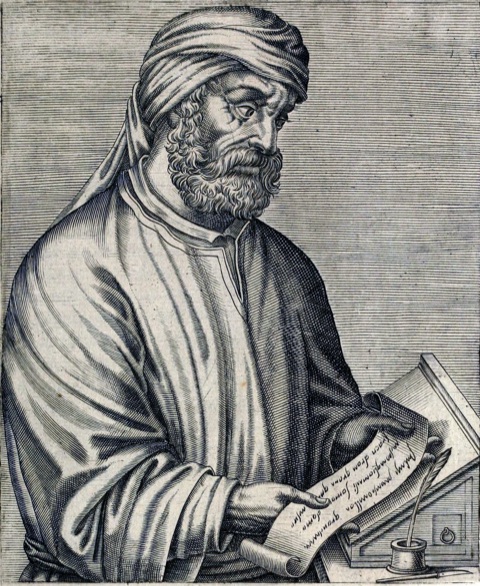
Cyprian of Carthage
Bishop of Carthage through the Decian persecution and the leading letter-writer of the third-century Latin church, executed under the emperor Valerian in 258 AD in the first recorded martyrdom of an African bishop.
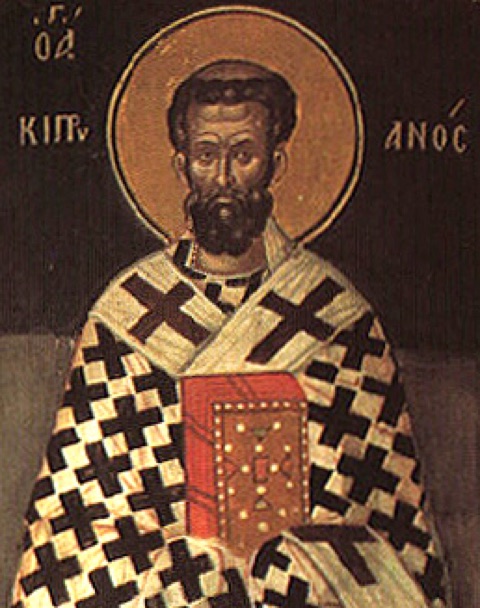
210 to 258 AD
Biography
Cyprian of Carthage (Thascius Caecilius Cyprianus, around 210 to 258 AD) was the bishop of Carthage and the leading churchman of the Latin-speaking West in the mid-third century, remembered for his letters, his treatises on church unity and discipline, and his death as a martyr. He came from a wealthy pagan family in Roman North Africa and made his living as a teacher of rhetoric before his conversion.
He became a Christian around 246 AD, guided by a Carthaginian presbyter named Caecilianus, sold part of his estates for the benefit of the poor, and accepted baptism relatively late in life. Within roughly two years the Christians of Carthage elected him their bishop, over the objection of a group of senior presbyters whose resentment shadowed the rest of his episcopate. He brought to the office the training of a Roman rhetorician and a deep debt to Tertullian, the earlier Carthaginian writer whose works he is said to have read constantly.
His time as bishop coincided with the first empire-wide persecution of Christians, ordered by the emperor Decius in 250 AD, which required every inhabitant to sacrifice to the gods and obtain a certificate. Cyprian withdrew from the city and governed by letter from hiding, a decision his enemies used against him. When the persecution eased, the church was left with the problem of the lapsed — the many who had sacrificed or bought certificates and now wanted readmission. In his treatise On the Lapsed and at a council of North African bishops at Carthage in 251 AD, Cyprian argued for restoration only after genuine penance, resisting both those who wanted quick pardons and the rigorists at Rome around the presbyter Novatian who refused any pardon at all.
Out of the same crisis came his most influential work, On the Unity of the Catholic Church, written around 251 AD, which argued that the church is one, that its unity is held together by the shared office of the bishops, and that no one who leaves that communion can be saved. A severe plague struck Carthage soon after, and Cyprian organized relief and burial for the sick across the city; his treatise On Mortality dates from these years.
In the mid-250s AD he came into open conflict with Stephen, the bishop of Rome, over whether people baptized by heretics or schismatics had to be baptized again on entering the Catholic Church. Cyprian and the African bishops held councils at Carthage in 255 and 256 AD affirming that such baptisms were invalid; Stephen insisted they were valid and threatened to break communion. Several of the letters in this library — those to Jubaianus, Magnus, Pompey, and Quintus — belong to this rebaptism controversy and record the argument in Cyprian's own words.
Under a new persecution ordered by the emperor Valerian, Cyprian was exiled to the coastal town of Curubis in 257 AD and then brought back for trial. On 14 September 258 AD he was condemned by the proconsul Galerius Maximus at Carthage and beheaded. The court record of his hearing survives as the Acts of the Proconsul, and his deacon Pontius wrote an account of his life shortly after his death.
Life & Career
Why Cyprian Matters
Cyprian is the founding theologian of Latin ecclesiology — the doctrine of what the church is and how it holds together. Writing in the wake of persecution and schism, he insisted that the church is a single visible body, that its unity rests on the collective office of the bishops, and that to separate from that communion is to cut oneself off from salvation. His formula that there is no salvation outside the church, and his image of the church as a mother from whom the schismatic tears himself away, became fixed points in Western thought for more than a thousand years.
His handling of the lapsed set the working pattern for how the church would treat serious failure and repentance. By requiring public penance proportioned to the offense while refusing to close the door permanently, he charted a middle course between laxity and the absolute rigor of the Novatianists, and in doing so helped shape the developing system of penitential discipline.
The rebaptism controversy with Stephen of Rome made Cyprian a permanent reference point in later debates over the authority of the Roman see and the validity of sacraments administered outside the church. His position — that baptism by heretics is no baptism — was ultimately not the one the Western church adopted, and Augustine of Hippo argued against it in the following century during the Donatist dispute; but Cyprian's letters remained the classic statement of the case and were cited on every side.
Beyond the doctrine, his correspondence is one of the fullest surviving windows into a third-century church actually functioning: bishops consulting one another across provinces, councils debating and voting, discipline worked out case by case. The survival of both Pontius's biography and the official record of his trial made Cyprian one of the best-documented figures of the pre-Constantinian church and a model for the martyr literature that followed.
Complete Works in English
Free to readEvery surviving work, translated in full and free to read, from our Patrologia Latina project.