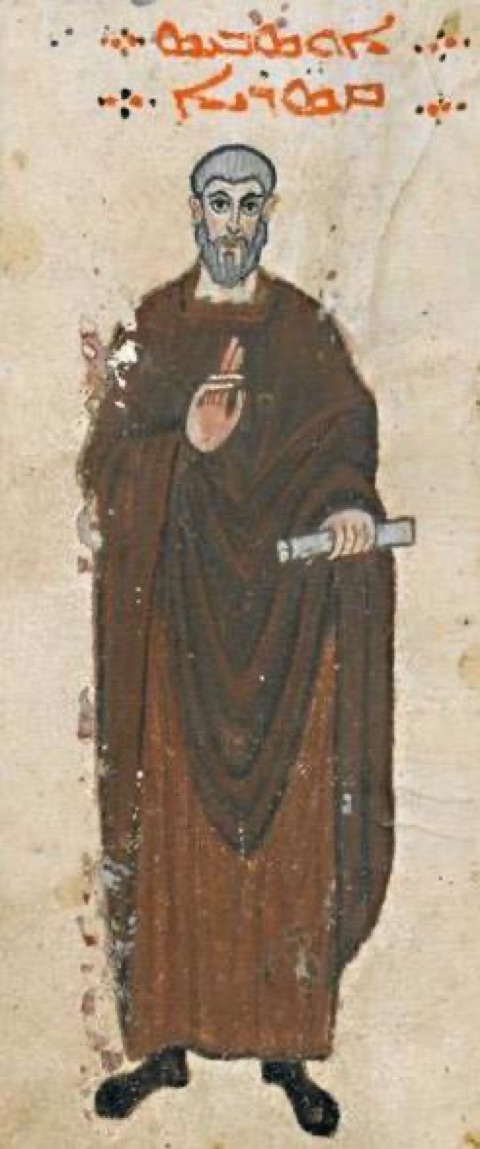
Pliny the Younger
Roman senator, advocate, and imperial governor whose collected Letters preserve daily life under the emperors Domitian and Trajan. His accounts of the eruption of Vesuvius and of the early Christians in Bithynia are among the most-cited documents of the first-century Roman world.
61 – 113 AD
Biography
Gaius Plinius Caecilius Secundus (61 to around 113 AD), known as Pliny the Younger, was a Roman senator, advocate, and administrator whose published Letters are a primary source for public and private life during the reigns of Domitian and Trajan. He was born at Comum (modern Como) in northern Italy into a wealthy provincial family, and after the death of his father he came under the care of his uncle, Pliny the Elder, the naturalist and author of the Natural History, who formally adopted him in his will.
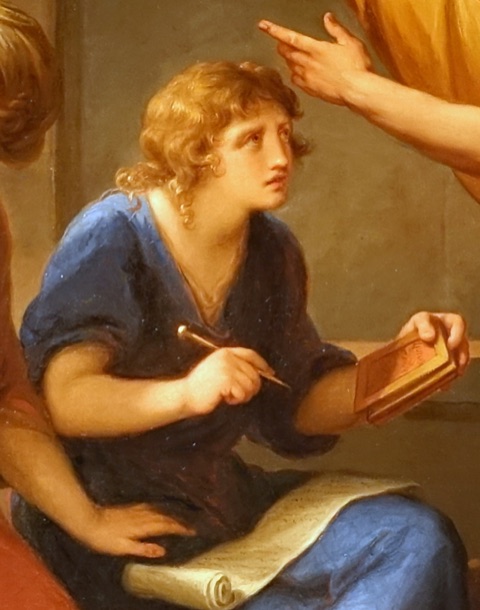
Pliny was seventeen and staying with his uncle at Misenum in August of 79 AD when Vesuvius erupted and buried Pompeii and Herculaneum. His uncle sailed toward the disaster to observe it and to help evacuate coastal residents, and died on the shore near Stabiae. Decades later Pliny described both the elder man's death and his own escape in two letters written at the request of the historian Tacitus. These are the only surviving eyewitness reports of the eruption, and the phrase "Plinian eruption" now names that column-forming volcanic type after him.
He trained in rhetoric under Quintilian and built his reputation as an advocate in the centumviral court, which handled inheritance and property cases, and in high-profile prosecutions and defenses before the Senate. His public career advanced through the standard offices of the senatorial cursus: quaestor, tribune, and praetor under Domitian, followed by appointments as prefect of the military treasury and then of the treasury of Saturn. In 100 AD he held a suffect consulship under Trajan and delivered the address later expanded into the Panegyricus, a formal speech of thanks praising the emperor and contrasting his rule with Domitian's.
Around 110 AD Trajan sent Pliny to govern the province of Bithynia-Pontus, on the southern coast of the Black Sea, as his personal legate with authority to reform its finances and civic affairs. From that post came the tenth book of his correspondence, more than a hundred exchanges with Trajan on matters ranging from municipal building projects and firefighting brigades to the status of foundlings. Among them is his letter asking how to handle people accused of being Christians, in which he describes interrogating them, executing those who refused to recant, and reports their practice of meeting before dawn to sing to Christ "as to a god." Trajan's reply, instructing him not to seek Christians out and to disregard anonymous accusations, survives alongside it.
Pliny prepared the first nine books of his Letters for publication himself, arranging them not by date but for variety and literary effect. They cover recommendations for friends, descriptions of his country villas at Laurentum and in Tuscany, accounts of trials and Senate debates, obituaries, and reflections on writing and estate management. He also founded and endowed a library and a school at Comum and established a fund to support the children of his home town. He appears to have died around 113 AD, probably while still in office in Bithynia, since the correspondence with Trajan breaks off and no later record of him survives.
Life & Career
Why Pliny Matters
Pliny's Letters are among the fullest surviving sources for the everyday workings of the Roman elite between roughly 90 and 113 AD. Because he published them himself and arranged them for effect, they preserve a deliberately composed self-portrait: a wealthy senator managing estates, cultivating friendships, pleading in court, and navigating the transition from the suspicion of Domitian's final years to the more open reign of Trajan. Historians draw on them for Roman law, provincial administration, patronage, slavery, and social custom in ways that narrative histories rarely allow.
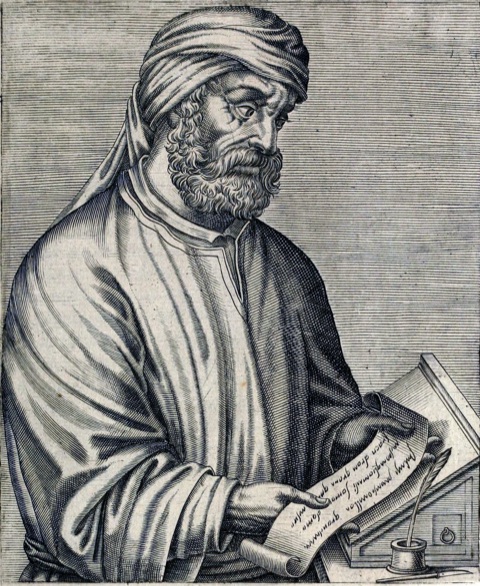
His exchange with Trajan over the Christians of Bithynia is the earliest surviving description of Christian practice by a Roman official, and one of the first non-Christian references to the movement. The letter and the emperor's reply set out an early legal posture toward Christianity that later writers, including Tertullian and the church historian Eusebius, cited and disputed. For the study of the first-century church, that single exchange carries weight out of proportion to its length.
The two Vesuvius letters give volcanology and archaeology their only eyewitness testimony to the eruption of 79 AD, fixing details of the ash cloud, the sequence of collapses, and the panic along the bay that excavators at Pompeii and Herculaneum still measure their findings against. His careful descriptions of the villas at Laurentum and in Tuscany, meanwhile, became models for later readers: Renaissance and eighteenth-century architects reconstructed and imitated the Roman country house from his room-by-room accounts.
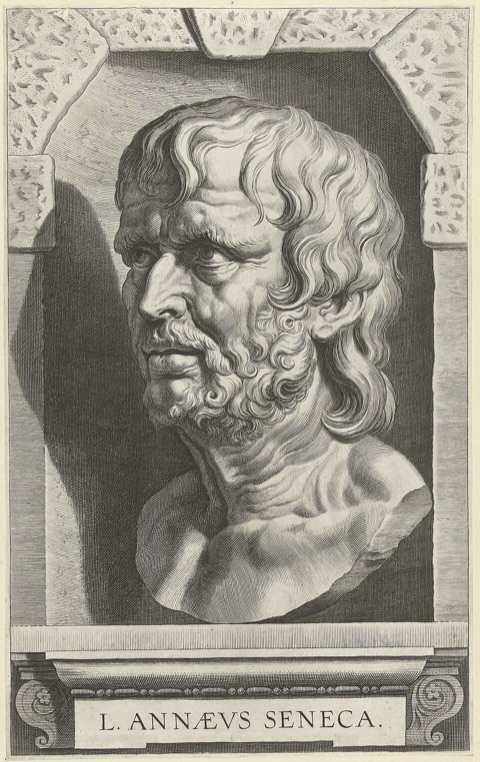
As a stylist, Pliny helped define the polished, personal Latin letter as a literary form, distinct from the philosophical epistles of Seneca and the political letters of Cicero. His nine books of curated correspondence, addressed to named friends but written for a reading public, established a template that later letter-writers across Europe would follow.