Josephus
First-century Jewish historian whose Greek works, The Jewish War and Antiquities of the Jews, are the main narrative sources for Judea under Roman rule, the revolt of 66 to 70 AD, and the destruction of the Second Temple.
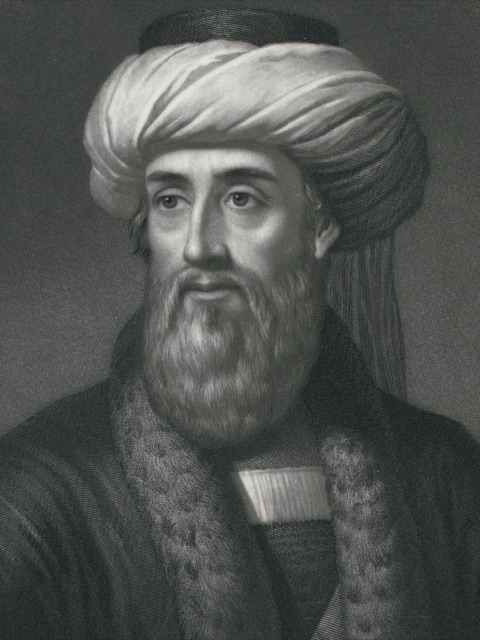
37 to 100 AD
Biography
Flavius Josephus (37 to 100 AD) was a Jewish priest, general, and historian who wrote the fullest surviving accounts of Judea under Roman rule and of the revolt that ended with the destruction of Jerusalem in 70 AD. Born Joseph ben Matthias in Jerusalem in 37 AD, he came from a priestly family and claimed Hasmonean royal descent through his mother. In his autobiography he describes an education in Jewish law, a period spent testing the teachings of the Pharisees, Sadducees, and Essenes, and three years in the wilderness with an ascetic named Bannus before he attached himself to the Pharisees.
Around 64 AD he sailed to Rome to plead for the release of several priests whom the procurator had sent to Nero for trial. He secured their freedom with the help of Poppaea, Nero's wife, and returned to a Judea sliding toward war. When the revolt against Rome broke out in 66 AD, the Jerusalem authorities appointed him commander of the rebel forces in Galilee, where he fortified towns and quarreled with rivals such as John of Gischala.
In 67 AD the Roman general Vespasian besieged Josephus and his men at Jotapata. When the town fell, Josephus and a group of survivors hid in a cave and made a suicide pact rather than surrender; Josephus outlasted the others and gave himself up to the Romans. Brought before Vespasian, he predicted that the general would become emperor. When Vespasian was proclaimed emperor in 69 AD, he freed Josephus, who adopted the family name Flavius and served the Romans as an interpreter and intermediary.
Josephus accompanied Vespasian's son Titus to the siege of Jerusalem in 70 AD, where he tried without success to persuade the defenders to surrender and watched the Temple burn. After the war he settled in Rome as a client of the Flavian emperors, receiving citizenship, a pension, and a house that had belonged to Vespasian. There he devoted himself to writing, working from Roman records, his own experience, and earlier Greek and Jewish sources.
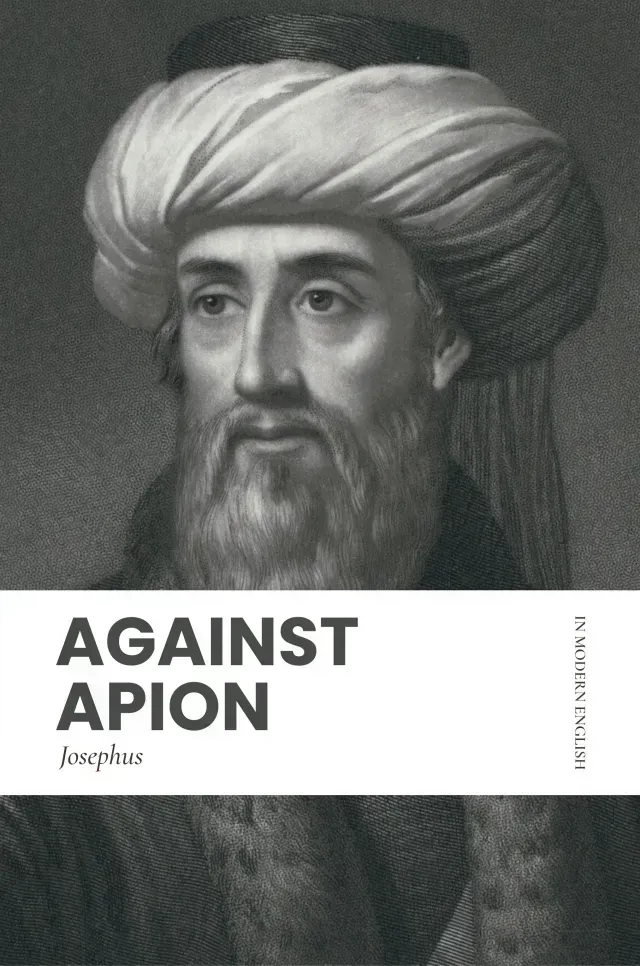
His first major work, The Jewish War, was composed within a few years of the conflict and narrates the revolt from the Maccabean background through the fall of Jerusalem and the last stand at Masada. He later completed the Antiquities of the Jews around 93 AD, a history of the Jewish people in twenty books running from the creation to the eve of the war, retelling the biblical narrative for a Greek-speaking audience and continuing it through the Hasmonean and Herodian periods. His shorter works include the Life, a defense of his own conduct in Galilee, and Against Apion, a two-book argument for the antiquity and coherence of Judaism against its critics.
Josephus died around 100 AD, having outlived the emperors he served. His decision to surrender at Jotapata and to write under Flavian patronage drew charges of treachery from his own people, and he answered them directly in the Life. Whatever readers made of the man, his books preserved a first-century record of Jewish law, politics, and warfare that survives in almost no other form.
Life & Career
Why Josephus Matters
Josephus is the single most important narrative source for Judea in the first century AD. Without him, the Jewish revolt of 66 to 70 AD, the campaigns of Vespasian and Titus, the destruction of the Second Temple, and the final siege of Masada would be known only in fragments. The Jewish War and the Antiquities of the Jews supply the framework that historians still use to reconstruct the period, and they preserve details of Jewish sects, legal practice, and daily life that no other ancient writer recorded at length.
For readers of the New Testament, the Antiquities is an important outside witness. It describes Herod the Great and his building of the Temple, the census and the procurators, the high-priestly families, John the Baptist, and the execution of James, and it contains the disputed passage about Jesus known as the Testimonium Flavianum. These references made Josephus one of the most copied and quoted non-Christian authors in the medieval West, since Christian scribes valued him as a Jewish confirmation of their scriptures.
His Against Apion is one of antiquity's most sustained defenses of a national tradition against its detractors, arguing for the great age of the Jewish people and the reasonableness of their laws by appealing to Egyptian, Phoenician, and Greek records. Together with the autobiographical Life, it shows a writer working to explain Judaism to a Greco-Roman readership at a moment when the Jewish homeland lay in ruins.
Because he wrote as both a participant and a beneficiary of Roman power, Josephus has been read in sharply different ways: as a traitor who abandoned his people, as a survivor who preserved their memory, and as a careful, if partial, reporter. That tension is part of why his works have been read, translated, and debated for nearly two thousand years.