Origen of Alexandria
An early Christian theologian and biblical scholar who directed the catechetical school of Alexandria. He is known for the Hexapla, his allegorical method of reading Scripture, the systematic treatise On First Principles, and the apologetic work Against Celsus.
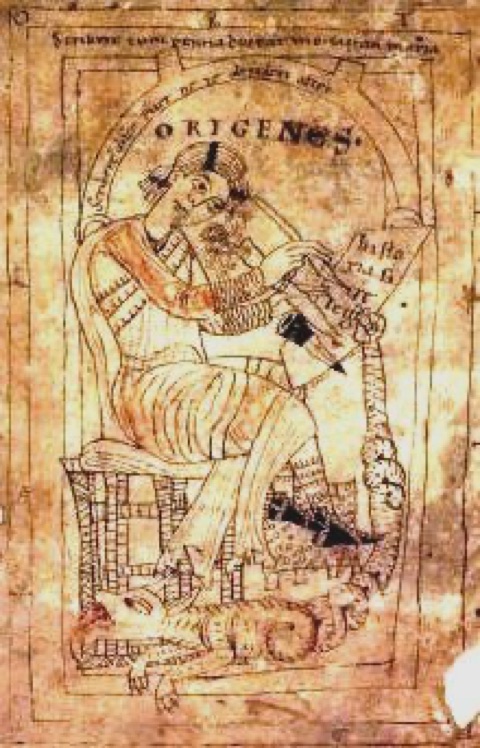
185 to 253 AD
Biography
Origen of Alexandria (around 185 to 253 AD) was an early Christian theologian, biblical scholar, and apologist who directed the catechetical school of Alexandria and produced the Hexapla and the treatise On First Principles. He was born in Alexandria, then the leading intellectual center of the Roman East, into a Christian household. His father, Leonides, was arrested and executed during the persecution under the emperor Septimius Severus around 202 AD; according to the historian Eusebius, the teenaged Origen wished to join his father in death and was kept from turning himself in only when his mother hid his clothing.
Around 203 AD, still in his late teens, Origen took over the instruction of catechumens in Alexandria after the established teachers fled the persecution, and Bishop Demetrius confirmed him as head of the school. He supported himself by selling his collection of classical literature and lived under a severe ascetic regimen of fasting, little sleep, and voluntary poverty. Eusebius reports that he studied philosophy under Ammonius Saccas, who also taught the Neoplatonist Plotinus, and that in youthful zeal he read the words of Matthew 19:12 literally and had himself castrated, an act his own bishop would later hold against him.
A wealthy convert named Ambrose became his patron and supplied him with shorthand writers and copyists, which made possible an enormous output of writing. His largest scholarly project was the Hexapla, an edition of the Old Testament arranged in six parallel columns: the Hebrew text, a Greek transliteration of the Hebrew, and the Greek versions of Aquila, Symmachus, the Septuagint, and Theodotion. It was built to establish a reliable text and to equip Christians in their disputes with Jewish interpreters. He also composed commentaries and homilies on most books of the Bible, working out a method that read Scripture on literal, moral, and spiritual levels, with the allegorical or spiritual sense treated as the highest.
In Alexandria he wrote On First Principles (Peri Archon), an early attempt to set out Christian teaching as a connected system, covering God, the Father and the Son, creation, free will, and the destiny of rational souls. In it he advanced speculative positions that he framed as open inquiry rather than fixed doctrine, including the pre-existence of souls before the body and the eventual restoration of all rational creatures to God, a view later summarized under the term apokatastasis.
Around 231 AD, while traveling through Palestine, Origen was ordained a priest by the bishops of Caesarea without the consent of Demetrius of Alexandria. Demetrius objected to the ordination, in part on the ground of Origen's earlier self-mutilation, and had him condemned by synods at Alexandria and removed from his teaching post. Origen settled in Caesarea, established a new school there, and continued to preach and write; among his pupils was Gregory Thaumaturgus, who later delivered a panegyric in his honor.
Late in life, around 248 AD, Origen wrote Against Celsus (Contra Celsum), a point-by-point reply to the pagan philosopher Celsus and his earlier attack on Christianity, The True Word. It remains one of the fullest defenses of the faith from the early church. During the persecution under the emperor Decius around 250 AD, Origen was imprisoned and tortured. He survived the immediate ordeal but died a few years afterward, around 253 AD, probably at Tyre, in his late sixties.
Life & Career
Why Origen Matters
Origen was the first Christian writer to attempt a comprehensive, systematic account of the faith. On First Principles took the scattered convictions of the early church about God, creation, the soul, and salvation and organized them into a connected argument, setting a pattern that later theologians would follow even when they rejected his particular conclusions. His pairing of philosophical training with close biblical study made Alexandria a model for Christian scholarship for generations.
His approach to Scripture carried the widest and longest influence. By reading the biblical text on literal, moral, and spiritual levels, Origen supplied the early church with a method for finding Christian meaning in the Old Testament and for handling passages that seemed obscure or troubling on the surface. His commentaries and homilies were copied, translated, and imitated across both the Greek East and the Latin West, and his allegorical technique became standard in medieval exegesis.
Origen's speculative theology placed him at the center of controversy for centuries after his death. His account of the relationship between the Father and the Son, his teaching on the pre-existence of souls, and his suggestion that all rational beings might finally be restored to God were later judged to cross doctrinal lines. His writings were disputed during the Origenist controversies of the late fourth and sixth centuries, and positions associated with him were condemned at the Second Council of Constantinople in 553 AD, after which many of his Greek works survived only in fragments or in Latin translations by Rufinus.
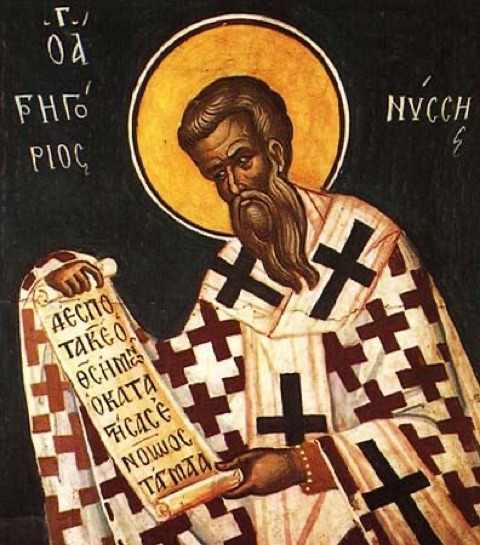
Even so, his ideas continued to shape Christian thought through those who studied him. The Cappadocian fathers Basil the Great and Gregory of Nyssa compiled an anthology of his writings, the Philocalia, and drew on his exegesis, while Eusebius devoted much of the sixth book of his Ecclesiastical History to Origen's life. Through admirers and critics alike, his questions about the Trinity, human freedom, and the ultimate fate of souls remained live subjects in the theological debates that followed.
Complete Works in English
Free to readEvery surviving work, translated in full and free to read, from our Patrologia Latina project.