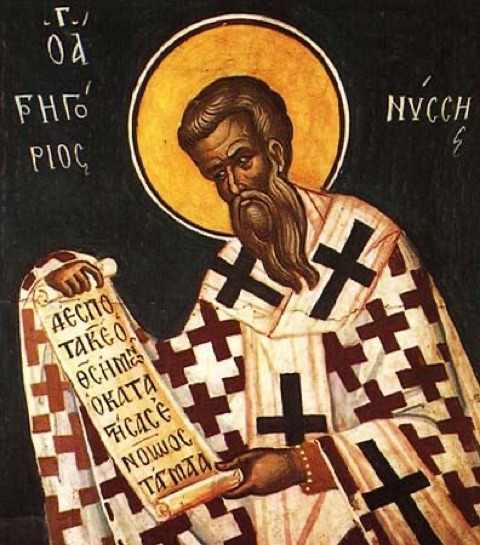
Gregory of Nyssa
A Cappadocian bishop who helped secure Nicene Trinitarian doctrine at the Council of Constantinople in 381 AD, and whose treatises on the soul, the making of man, and the ascent of the mind toward God shaped both Eastern and Western mystical theology.
335 to 395 AD
Biography
Gregory of Nyssa (around 335 to 395 AD) was a Cappadocian bishop and theologian who defended Nicene doctrine against the followers of Arius and Eunomius and wrote some of the most philosophically ambitious works of the early Greek church. He was the younger brother of Basil the Great and of Macrina the Younger, and together with Basil and Gregory of Nazianzus he is counted among the three Cappadocian Fathers, the group whose formulations of the Trinity carried the day at the Council of Constantinople in 381 AD.
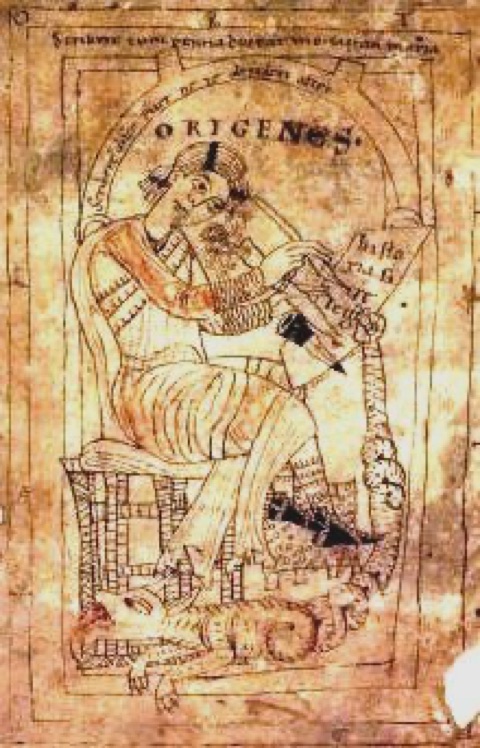
He was born into a wealthy Christian family in Cappadocia, a region of central Asia Minor. Several of his siblings entered church life; besides Basil and Macrina, his brother Peter became bishop of Sebaste. Gregory himself did not at first pursue ordination. He worked for a time as a teacher of rhetoric and appears to have married, a fact he alludes to in his treatise On Virginity. His theological education owed much to Basil, whom he called his master, and to the writings of Origen of Alexandria, whose allegorical reading of Scripture and account of the soul's endless progress toward God he adapted for his own purposes.
Around 372 AD Basil, then archbishop of Caesarea, had Gregory consecrated bishop of Nyssa, a small town in the province. The appointment was partly a move in Basil's disputes with the Arian emperor Valens over the division of church provinces. Gregory proved an awkward administrator, and around 376 AD a synod controlled by the Arian party charged him with financial irregularity and irregular election and deposed him. He went into exile until 378 AD, when the death of Valens allowed the exiled Nicene bishops to return to their sees.
The years after his restoration were his most active. His brother Basil died in 379 AD, and Gregory took up the defense of Basil's theology, completing and extending it. His sister Macrina died the same year; his dialogue On the Soul and the Resurrection presents a deathbed conversation with her on the nature of the soul and the resurrection of the body, modeled on Plato's Phaedo, while his Life of Macrina records her ascetic household at Annesi. In these years he also wrote Against Eunomius, a long refutation of the radical Arian Eunomius of Cyzicus, and On the Making of Man, a completion of Basil's unfinished work on the six days of creation.
Gregory attended the Council of Constantinople in 381 AD, which reaffirmed the Nicene Creed and condemned the teaching that the Son and the Holy Spirit were lesser than the Father. Imperial legislation issued after the council named him as one of the bishops communion with whom marked orthodoxy in his region. He traveled on church business to Arabia and Jerusalem, and afterward wrote a letter warning against the disorders he had seen among pilgrims to the holy places. He delivered funeral orations for members of the imperial family, including the princess Pulcheria and the empress Flacilla.
His later writings turned increasingly toward the interior life. The Life of Moses and his homilies on the Song of Songs treat the biblical text as a map of the soul's ascent, developing his central idea that because God is infinite, the creature's approach to God has no final stopping point but is a perpetual advance, a movement he called epektasis. His Great Catechism set out the main doctrines of the faith for those instructing catechumens. He is last recorded at a synod in Constantinople in 394 AD and is thought to have died soon after, around 395 AD.
Life & Career
Why Gregory Matters
Gregory belongs to the small group of theologians who fixed the language in which the Christian doctrine of the Trinity was afterward stated. Building on Basil's distinction between the one shared essence (ousia) and the three persons (hypostases), he pressed the point that Father, Son, and Holy Spirit are one God and not three, using the analogy and its limits with unusual philosophical care. His treatises Against Eunomius and To Ablabius (That There Are Not Three Gods) were among the works that made the pro-Nicene position intellectually defensible against its most capable opponents.
His account of God's infinity had consequences beyond the Trinitarian debates. Against Eunomius, who held that the term "unbegotten" gave direct knowledge of the divine essence, Gregory argued that God is by nature unbounded and therefore never fully comprehended by any created mind. From this he drew his doctrine of epektasis: the soul's growth toward God is unending, because there is always more of an infinite God to receive. This turned the older ideal of a final vision of God into an eternal progress, an idea that separated him from parts of the Platonic tradition he otherwise drew upon.
In spiritual and mystical theology his influence ran through both churches. The Life of Moses and the homilies on the Song of Songs treat the ascent of Moses into the divine "darkness" on Sinai as a pattern for the soul that passes beyond images and concepts into the presence of a God who cannot be seen. These works fed the later apophatic tradition, including the writings circulated under the name of Dionysius the Areopagite, and through them the mystical theology of the medieval West.
He also preserved something of Origen at a time when Origen's name was becoming suspect. Gregory took over Origen's confidence in the soul's education across time and, in On the Soul and the Resurrection and the Great Catechism, argued for the eventual restoration of all rational creatures, the view later known as apokatastasis. That position kept his work in dispute in later centuries even as his Trinitarian writings were treated as authoritative, and it is one reason his reputation stood somewhat apart from that of his brother Basil and Gregory of Nazianzus.