

Modern English edition · 225 AD
On First Principles
The first systematic Christian theology ever written. Origen addresses God, creation, free will, Scripture interpretation, and the soul's journey, establishing patterns of theological reflection for centuries.
One free account opens 250+ books and saves your place on every device. Google sign-in or an email link. No card.
You’re on the list — we’ll email you if this goes to print.
Included with your free account
This book, and 250+ more, free to read
A free account opens the whole library to read online, on your phone or at your desk. Open a book on one device and it is waiting at the same page on the next. The PDF and EPUB of every book are yours to keep, and audiobooks play in the same app.
- 250+ modernized editions Not samples. The whole work, free.
- Your place, on every device Phone, tablet or desktop, same page.
- 131 audiobooks From $4.99 each, or all of them with a $50 gift.
- PDF and EPUB included Download any book to keep.



About this book
On First Principles (De Principiis), written around 220-230 AD, represents the first attempt at a comprehensive systematic theology in Christian history. Origen of Alexandria, the most learned Christian scholar of his age, sought to present the Christian faith as an intellectually coherent system that could engage with Greek philosophy while remaining faithful to Scripture. The result was a work of remarkable ambition and lasting influence.
The treatise is organized around fundamental topics: God and the spiritual powers (including angels and demons), the material world and its creation, human nature and free will, and the interpretation of Scripture. Origen addresses these subjects not as isolated doctrines but as interconnected aspects of a unified vision of reality centered on God's providential purposes.
Origen's doctrine of God emphasizes divine incorporeality and transcendence. Against pagan criticism and certain Christian teachings, he argued that God is wholly spiritual, without body or parts. Yet this transcendent God is also deeply involved with creation, working providentially through the Logos (Christ) and the Holy Spirit to bring all rational creatures to their proper end.
The work's treatment of free will is particularly significant. Against fatalistic philosophies and certain Gnostic systems, Origen vigorously defended human moral responsibility. Our choices matter; they shape our character and determine our destiny. Yet free will operates within the context of divine providence, which uses even evil choices to accomplish good purposes.
Origen's approach to Scripture proved enormously influential. He distinguished between literal, moral, and spiritual senses of biblical texts, arguing that the deeper meanings were more important than the surface narrative. This allegorical method of interpretation dominated Christian exegesis for centuries and continues to shape how many read the Bible today.
Some of Origen's speculations proved controversial, particularly his teaching on the pre-existence of souls and universal restoration (apokatastasis). Later church councils condemned certain of his views, though scholars debate whether these condemnations accurately represent his actual positions. Despite these controversies, Origen's systematic approach to theology and his commitment to integrating faith with reason established patterns that Christian thinkers have followed ever since.
About the author
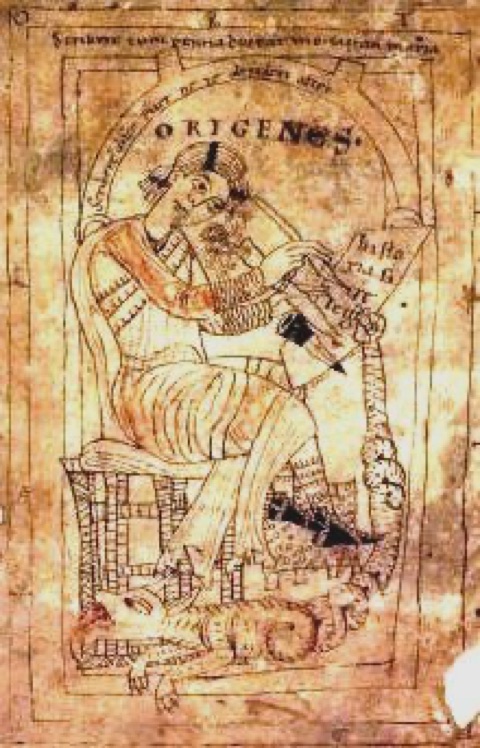
Origen of Alexandria
Origen of Alexandria (184-253 AD) was the most influential Christian theologian and biblical scholar before Augustine. Born in Alexandria to Christian parents, he received an excellent education in both Greek philosophy and Christian Scripture. When his father was martyred during persecution, Origen began teaching to support his family, eventually becoming head of Alexandria's catechetical school. His scholarly output was prodigious, including the Hexapla (a six-column comparison of Old Testament texts), commentaries on most biblical books, and numerous theological treatises. Origen endured torture during the Decian persecution, dying shortly after from his injuries. His speculative theology later became controversial, with some ideas condemned at church councils. Yet his influence on Christian thought was immense, shaping biblical interpretation, systematic theology, and spiritual formation for centuries. He remains one of the most brilliant and complex figures in Christian history.
“Updated Works has been an incredible blessing to my Christian life and ministry… remarkably faithful to the original authors while making these timeless treasures understandable for modern readers.”





