Dionysius of Alexandria
Bishop of Alexandria from around 248 AD, a pupil of Origen who led the city's catechetical school before becoming bishop, and a prolific letter-writer who worked to keep Carthage and Rome from breaking apart over the rebaptism of converts.
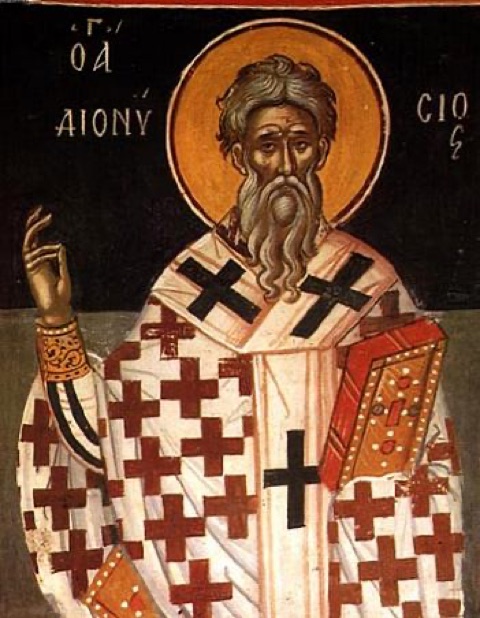
190–265 AD
Biography
Dionysius of Alexandria (around 190 to 265 AD) was the bishop of Alexandria from about 248 AD until his death, a pupil of Origen, and a prolific correspondent whose letters survive in fragments quoted by later historians. Born to a pagan family, he studied under Origen at Alexandria and later took charge of the city's catechetical school around 233 AD, succeeding Heraclas. When Heraclas died about 248 AD, Dionysius followed him again, this time into the bishop's chair, which he held for roughly seventeen years.
His episcopate ran through two imperial persecutions, a plague, and civil disorder in the city. Under Decius he was arrested in 250 AD and escaped into the desert; under Valerian he was tried before the prefect Aemilianus and banished around 257 AD to Kephro, a settlement in Libya. He returned to Alexandria after Gallienus ended the persecution in 260 AD. His festal letters from these years describe an epidemic sweeping the city and the conduct of Christians who nursed the sick, giving one of the fullest surviving accounts of the plague that struck the Roman Empire in the mid-third century.
Much of Dionysius's surviving work is correspondence written into the church's disputes. When the churches of Carthage and Rome divided over whether people baptized in separated or heretical communities had to be baptized again, Dionysius wrote a series of letters to Pope Stephen of Rome and his successors urging both sides to keep the peace. He also corresponded over the schism of Novatian at Rome and the treatment of Christians who had lapsed under persecution, generally pressing for reconciliation rather than exclusion. A fragment of the correspondence with Stephen survives in this collection.
Two of his longer treatises are known through later quotation. In On Nature, addressed to his son Timothy, he argued against the Epicurean doctrine that the world arose from atoms moving by chance. In On Promises he opposed the millenarian teaching of Nepos, an Egyptian bishop who read the Book of Revelation to predict a literal earthly reign of Christ. Examining Revelation's vocabulary and style against the Gospel and letters attributed to John, Dionysius concluded that the same author could not have written both, and that the Revelation was the work of a different John. It is one of the earliest surviving pieces of critical analysis of a biblical book's authorship.
Late in life Dionysius was drawn into a dispute over the language used to describe the relationship of the Son to the Father. His teaching against the Sabellians, who collapsed the distinction between Father and Son, was questioned at Rome by his namesake Dionysius, bishop of that city, and he wrote a Refutation and Defense to answer the complaint. Athanasius of Alexandria later cited him as a witness on his own side in the fourth-century Arian controversy. Invited in 264 AD to a synod at Antioch called to examine the teaching of Paul of Samosata, Dionysius declined on account of age and illness and sent a letter instead; he died about 265 AD. Later writers called him "the Great."
Life & Career
Why Dionysius Matters
Dionysius mattered first as a churchman who kept lines of communication open when the third-century church was tearing along several seams at once. In the baptismal controversy he took the Roman side on the question itself yet refused to let the disagreement become a breach, writing repeatedly to Stephen and later bishops of Rome to hold the parties together. The same instinct shaped his handling of the Novatianist schism and the readmission of the lapsed, where he pressed for reconciliation. His letters record a bishop treating unity as something to be negotiated and protected rather than assumed.
His work on the Book of Revelation gave later readers a model of critical reasoning about scripture. Rather than dismiss Nepos's millenarianism by authority, he compared the Greek of Revelation with the Gospel and letters carried under John's name, weighed the differences in style and vocabulary, and drew a conclusion about authorship from the evidence. That argument fed directly into the long debate in the Greek-speaking church over whether Revelation belonged in the canon, and it is an early instance of the methods later associated with the study of biblical authorship.
In the doctrinal history that led to Nicaea, Dionysius occupies a revealing middle position. His forceful writing against Sabellianism drew a sharp distinction between Father and Son, which struck critics at Rome as leaning too far the other way; his reply worked to state the unity of God without erasing that distinction. Because Athanasius later appealed to him, the exchange became a test case for how the pre-Nicene church had spoken about the Son before the fourth-century vocabulary was fixed.
Finally, Dionysius survives as a source. Eusebius of Caesarea quoted his letters at length in the Ecclesiastical History, and through those extracts the persecutions, the Alexandrian plague, and the internal quarrels of the mid-third-century church are visible in the words of a man who lived through them.
Complete Works in English
Free to readEvery surviving work, translated in full and free to read, from our Patrologia Latina project.