Joseph de Maistre
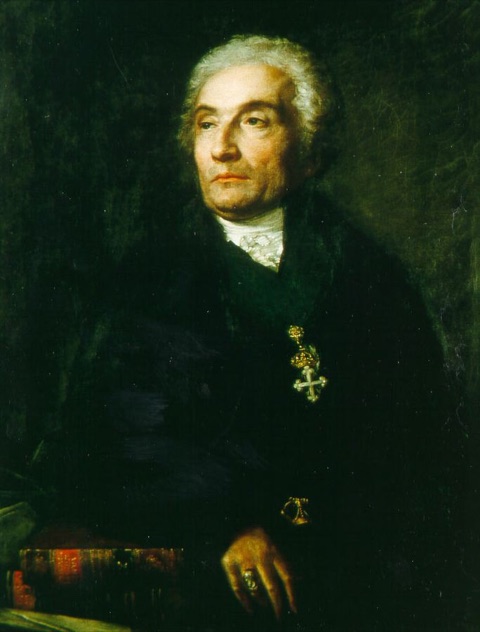
A Savoyard magistrate and diplomat who became a leading voice of European counter-revolutionary thought, arguing that political constitutions grow from history and divine providence rather than reason. His Considerations on France (1797) read the Revolution as a providential punishment.
1753–1821
Biography
Joseph de Maistre (1753 to 1821) was a Savoyard magistrate, diplomat, and political philosopher who became a central theorist of European counter-revolutionary thought after the French Revolution. He was born on April 1, 1753, in Chambéry, then part of the Kingdom of Sardinia, the eldest son of a magistrate who served in the Savoy Senate. He studied law at the University of Turin and, following his father, entered the Savoy magistracy, rising to become a senator in 1788.
His life changed in 1792, when French revolutionary armies invaded and occupied Savoy. Refusing to serve the new French administration, de Maistre left his home and property behind, moving first to Lausanne and later to Turin and Sardinia. The experience of exile and the collapse of the old order in France reoriented his intellectual life. He had been a member of a Masonic lodge in his youth and was widely read in the writers of the Enlightenment; he now turned his learning against them, attacking the rationalism of Voltaire, Rousseau, and Francis Bacon, on whom he wrote a book-length critique.
In 1797 he published Considerations on France anonymously in Switzerland. The book argued that the Revolution was not the work of human planners but a providential event, a punishment visited on France that no faction could control and that would end in a restoration of the monarchy. Against the idea that a nation could design its own government on paper, he insisted that genuine constitutions are the slow, unwritten products of history, custom, and religion. He developed this claim further in the Essay on the Generative Principle of Political Constitutions, written in 1809 and published in 1814, which held that the most important laws of a people are never written down and cannot be manufactured by an assembly.
From 1803 to 1817 de Maistre served as the Kingdom of Sardinia's minister plenipotentiary at the court of Tsar Alexander I in St. Petersburg. The long Russian posting, often poorly paid and diplomatically marginal, gave him time to write. It produced his most ambitious book, Les Soirées de Saint-Pétersbourg (The St. Petersburg Dialogues), a series of conversations on providence, suffering, war, and divine justice, including the meditation on the executioner as the hidden foundation of social order. The dialogues were published in 1821, the year of his death.
Recalled to Turin in 1817, de Maistre spent his final years as a magistrate and minister of state in the restored Sardinian government. In 1819 he published Du Pape (On the Pope), a defense of papal authority as the necessary guarantor of order in Europe that made him a founding figure of nineteenth-century ultramontanism. He died in Turin on February 26, 1821. His prose, epigrammatic and combative, and his willingness to press his premises to their harshest conclusions kept his work in circulation long after the political cause he served had faded.
Life & Career
Why Maistre Matters
De Maistre gave the counter-revolution one of its most systematic intellectual defenses. Where the Enlightenment treated reason, individual consent, and written constitutions as the proper basis of government, he argued the reverse: that lasting political order rests on inherited authority, religion, and forces older than any single generation's reasoning. His claim that a people cannot write itself a durable constitution—that real constitutions grow rather than get made—became a standing argument in the tradition of political conservatism.
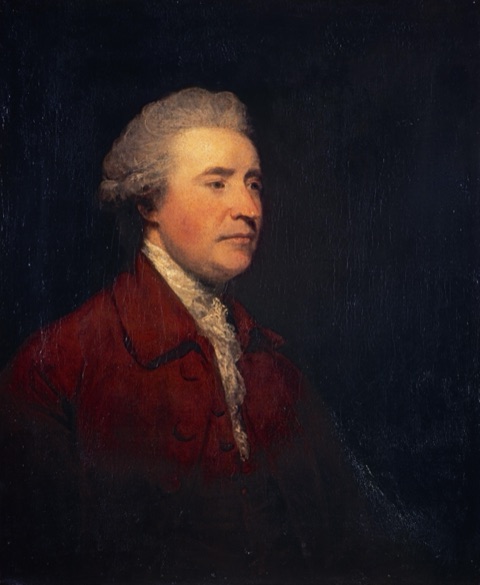
His reading of the French Revolution shaped how the event was interpreted for a century. In Considerations on France he treated the Terror not as an accident to be corrected but as a providential judgment with its own logic, insisting that the men who thought they directed the Revolution were in fact carried by it. This providential and historical framing set him apart from Edmund Burke, whose hostility to the Revolution he shared but whose more pragmatic, empirical temper he did not.
De Maistre is also read as a theorist of authority and violence who refused to soften his conclusions. The St. Petersburg Dialogues dwell on suffering, war, and sacrifice as structural features of human existence, and his portrait of the executioner as the unspoken cornerstone of society has been cited and debated ever since. Isaiah Berlin later treated him as a forerunner of later authoritarian and irrationalist currents, a reading others have contested, and the argument over how to place him continues.
Through Du Pape and his defense of the papacy as Europe's arbiter, he supplied a founding text of ultramontanism, the movement that pressed for centralized papal authority in the Catholic Church. His influence runs through later traditionalist, legitimist, and conservative writers, and his work remains a reference point wherever the claims of Enlightenment liberalism are challenged from the right.