Niccolo Machiavelli
Florentine diplomat and political theorist whose 1513 treatise The Prince analyzed how rulers gain and hold power apart from conventional morality. His name became an adjective for cold political calculation, though his republican writings argue a different case.
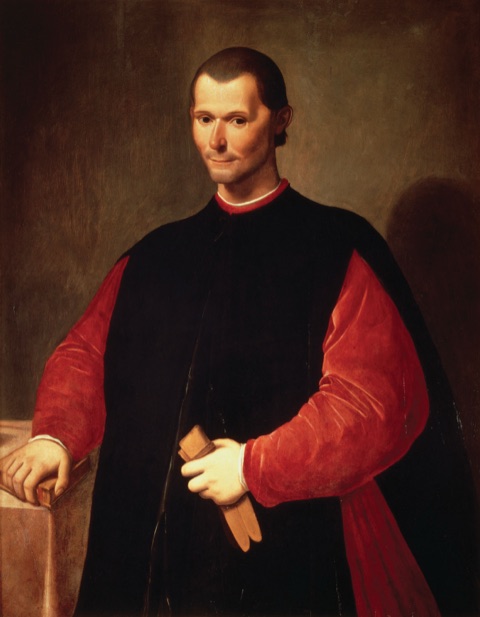
1469 - 1527 AD
Biography
Niccolò Machiavelli (1469 to 1527) was a Florentine diplomat, political theorist, and playwright who served the Republic of Florence for fourteen years before writing The Prince. He was born in Florence on May 3, 1469, into a family of modest means; his father Bernardo was a lawyer with a large personal library, and Niccolò grew up reading the Latin historians who would later fill his political writing.
In 1498, after the execution of the Dominican preacher Girolamo Savonarola, Machiavelli was appointed Second Chancellor of the Florentine Republic and secretary to the Ten of War, the committee that handled foreign affairs and military matters. Over the next fourteen years he carried out diplomatic missions to the court of Louis XII of France, to the Holy Roman Emperor Maximilian, and to the papacy. In 1502 he spent months observing Cesare Borgia as Borgia consolidated control over the Romagna, and the cold efficiency he saw there marked his later thinking about how power is actually seized and kept.
Distrusting the mercenary companies on which Italian states relied, Machiavelli persuaded Florence to raise a citizen militia, drawing up the plans himself and helping muster the first troops in 1506. The experiment ended badly: when Spanish and papal forces sacked the nearby town of Prato in 1512, the militia collapsed, the Republic fell, and the Medici family returned to power in Florence. Machiavelli was dismissed from his offices and barred from the government he had served.
In 1513 his name appeared on a list connected to an anti-Medici conspiracy. He was arrested, imprisoned, and tortured with the strappado, then released in a general amnesty after Giovanni de' Medici was elected Pope Leo X. Shut out of public life, he withdrew to his farm at Sant'Andrea in Percussina, south of Florence. In a letter to his friend Francesco Vettori dated December 10, 1513, he described spending his evenings in his study reading the ancient writers, and reported that he had composed a short work "on principalities." That work was The Prince.
The Prince circulated in manuscript during his lifetime and was printed in 1532, five years after his death. In the same years he wrote the Discourses on Livy, a longer and more admiring examination of the Roman Republic that argues for the strength of popular government and civic liberty. He also completed The Art of War, the only major prose work published while he lived, in 1521, and the comedy Mandragola, staged to acclaim in Florence. In 1520 Cardinal Giulio de' Medici commissioned him to write the Florentine Histories, which he presented to the cardinal, by then Pope Clement VII, in 1525.
Machiavelli hoped his writings would win him back a place in Florentine affairs, but the return never fully came. When the Medici were again driven out in 1527 and the Republic restored, the new regime distrusted him for his recent Medici patronage. He died in Florence on June 21, 1527, and was buried in the church of Santa Croce.
Life & Career
Why Machiavelli Matters
Machiavelli separated the study of politics from the study of morality. Earlier "mirror for princes" writers had told rulers to be just, pious, and generous because virtue was its own reward and its own strategy. In The Prince, Machiavelli asked instead what actually keeps a ruler in power, and answered that a prince must be prepared to act against faith, charity, and religion when necessity demands it. His claim that it is safer to be feared than loved, and his admiration for rulers who used cruelty efficiently, gave his name to the word "Machiavellian" and put his books on the Church's Index of Prohibited Books in 1559.
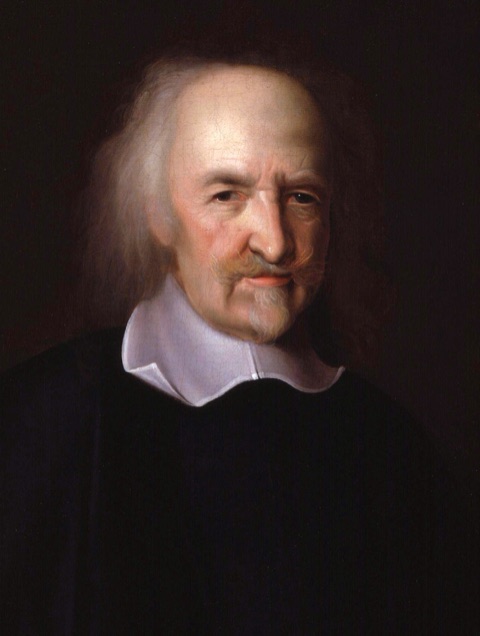
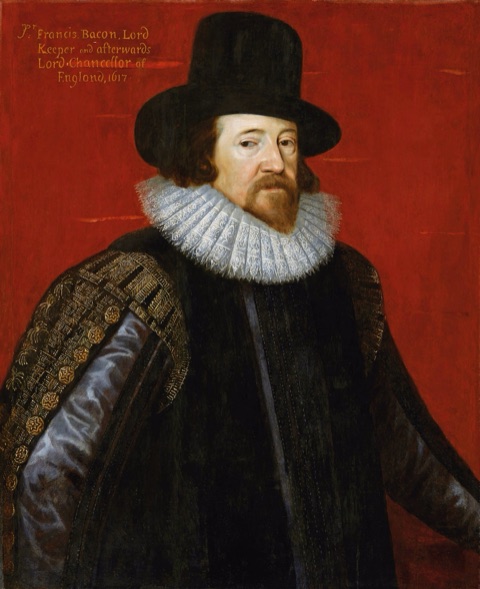
His method mattered as much as his conclusions. He argued from history and observed example rather than from theology or ideal forms, treating states as objects to be studied like any other part of the natural world. This empirical, results-oriented approach to politics influenced the tradition that runs through Francis Bacon and Thomas Hobbes and helped establish political theory as a subject distinct from ethics.
The narrow reputation as a teacher of tyranny fits only part of his work. The Discourses on Livy praises republics over principalities, defends the political role of the common people, and holds up the Roman Republic as a model of durable free government. Readers from the English republicans of the seventeenth century to the American founders drew on this side of Machiavelli, and scholars have long debated whether the true Machiavelli is the advisor of princes or the partisan of liberty.
He also shaped how history and drama were written in the Renaissance. The Florentine Histories treated the past as a chain of causes to be explained rather than a store of moral examples, and Mandragola remains one of the most performed comedies of the Italian Renaissance.