Thomas Paine
The English-born pamphleteer whose Common Sense (1776) argued for American independence in language ordinary colonists could read, followed by The American Crisis, Rights of Man, and The Age of Reason.
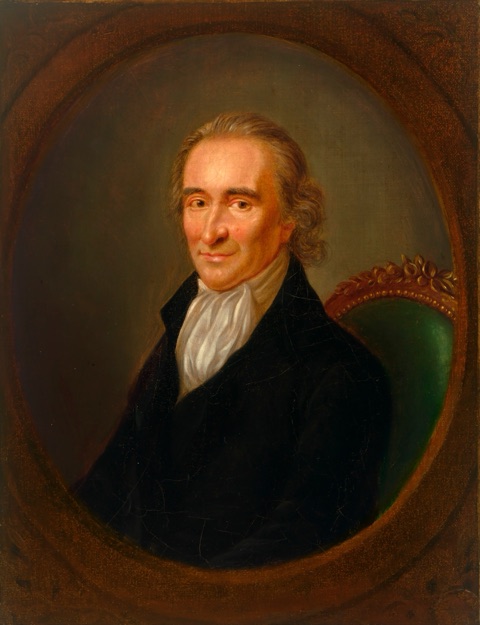
1737 to 1809 AD
Biography
Thomas Paine (1737 to 1809) was an English-born political writer whose pamphlet Common Sense helped turn colonial resistance into a movement for American independence. Born on January 29, 1737, in Thetford, Norfolk, he was the son of a Quaker stay-maker and spent his early adulthood moving between trades. He worked as a corset-maker, a schoolteacher, a shopkeeper, and twice as an excise officer collecting taxes on liquor and tobacco. He was dismissed from the excise service the second time in 1774, in part for publishing a pamphlet, The Case of the Officers of Excise, that lobbied Parliament for higher wages.
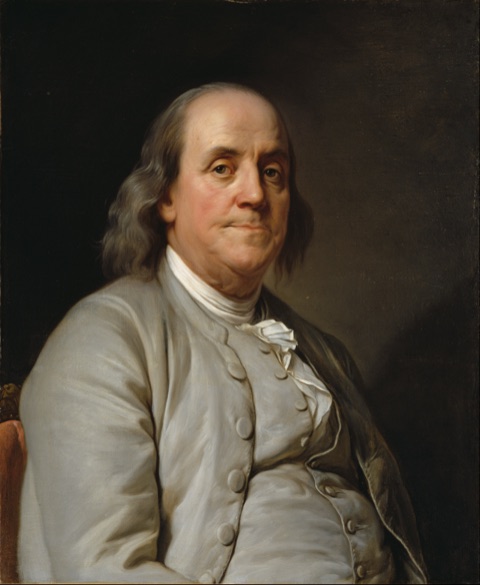
In London he met Benjamin Franklin, who supplied him with letters of introduction and encouraged him to emigrate. Paine reached Philadelphia in November 1774 and found work editing the Pennsylvania Magazine. On January 10, 1776, he published Common Sense anonymously. The pamphlet attacked hereditary monarchy and the authority of the British crown and called openly for separation, and it circulated in the hundreds of thousands across the colonies. Later that year, with Washington's army in retreat, Paine began The American Crisis, a series of essays whose first number opened, "These are the times that try men's souls."
During the war Paine served as secretary to the Congressional Committee for Foreign Affairs. He resigned in 1779 after a public dispute over the conduct of the diplomat Silas Deane, in which Paine was accused of revealing confidential material. He afterward held a clerkship with the Pennsylvania Assembly and pressed for financial support for the Continental cause. In the mid-1780s he turned to engineering, designing a single-span iron bridge, and in 1787 he traveled to England and France to promote the design.
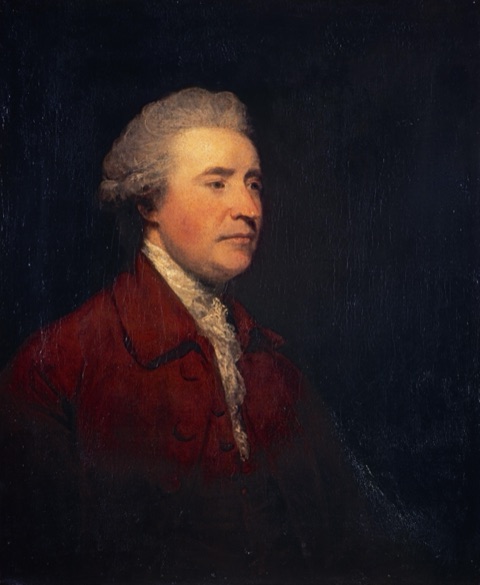
The French Revolution drew Paine back into political argument. When Edmund Burke published Reflections on the Revolution in France in 1790, Paine answered with Rights of Man, issuing the first part in 1791 and the second in 1792. The book defended the revolution, rejected inherited privilege, and proposed measures such as public relief for the poor and old age pensions funded by progressive taxation. British authorities charged him with seditious libel, and he was tried in absentia and outlawed after crossing to France.
In France, Paine was elected to the National Convention in 1792 as a deputy for Pas-de-Calais, though he spoke no French and relied on interpreters. He aligned with the moderate Girondins and argued against executing Louis XVI, urging that the deposed king be exiled instead. As the Terror advanced, Paine was arrested in December 1793 and held in the Luxembourg Prison in Paris. He remained there until November 1794, when the American minister James Monroe secured his release. While imprisoned and in the period around it he wrote The Age of Reason, a two-part critique of organized religion and revealed scripture that set out his own deist position.
Paine returned to the United States in 1802 at the invitation of President Thomas Jefferson. The Age of Reason had made him widely unpopular among American readers, and his open letters attacking Washington's conduct had cost him former allies. He spent his final years on his farm in New Rochelle, New York, and in lodgings in New York City, where he died on June 8, 1809. Few mourners attended his burial. Ten years later the English radical journalist William Cobbett disinterred his remains and carried them to England, intending a memorial that was never built.
Life & Career
Why Paine Matters
Paine's importance rests on how he wrote as much as on what he argued. Before Common Sense, the case for independence circulated mainly among lawyers and legislators in the vocabulary of English constitutional law. Paine wrote for shopkeepers, farmers, and soldiers, using plain sentences, biblical illustration, and direct appeal. The pamphlet reframed the quarrel with Britain as a matter of principle rather than of tax policy, and its scale of circulation made independence a subject of common conversation in taverns and households.
His political writing advanced a consistent set of claims across two revolutions. He held that legitimate government rests on the consent of the governed rather than on inheritance, that written constitutions should limit power, and that natural rights belong to individuals regardless of birth. In the second part of Rights of Man he went further than most contemporaries, sketching a program of social provision that later commentators have read as an early argument for the welfare state.
The Age of Reason gave Paine a second and more contested reputation. By defending deism and subjecting the Bible to open criticism, he reached a popular audience that earlier freethinking had not, and the book remained in print among radical and secular movements long after his death. It also made him a target of religious opposition on both sides of the Atlantic and contributed to the neglect of his reputation in the United States for much of the nineteenth century.
Paine belonged to no single country's founding story. He wrote in support of the American Revolution, sat in the legislature of revolutionary France, and stood trial for his writing in Britain. That transatlantic career made him a reference point for later democratic and republican movements, which drew on his phrases and his insistence that ordinary people were competent to judge questions of government for themselves.