De Maistre’s provocative analysis of the French Revolution as divine punishment and providential instrument, arguing that the Revolution leads men rather than men leading it.
One free account opens 250+ books and saves your place on every device. Google sign-in or an email link. No card.
You’re on the list — we’ll email you if this goes to print.
Included with your free account
This book, and 250+ more, free to read
A free account opens the whole library to read online, on your phone or at your desk. Open a book on one device and it is waiting at the same page on the next. The PDF and EPUB of every book are yours to keep, and audiobooks play in the same app.
250+ modernized editionsNot samples. The whole work, free.
Your place, on every devicePhone, tablet or desktop, same page.
131 audiobooksFrom $4.99 each, or all of them with a $50 gift.
Joseph de Maistre’s Considerations on France, written in 1796, is one of the most original and penetrating analyses of the French Revolution ever published. Rather than treating the Revolution as a political event to be explained by ordinary causes, de Maistre argues that it belongs to a higher order entirely—that it is a providential event whose scale, force, and strange internal logic point unmistakably to the hand of God working through human history.
De Maistre’s central insight is that the Revolution leads men rather than men leading the Revolution. Its most active figures are instruments, not directors; its villains succeed not because they are brilliant but because they ride a current far larger than themselves. The moment any of them presumes to take personal control, he falls. Even the most radical measures of the Terror, de Maistre argues, served purposes their architects never intended—preserving France’s territorial integrity and military power at the very moment when foreign coalitions sought to dismember her.
The work moves from a theological reading of revolution as divine chastisement to a searching examination of national guilt, the nature of sovereignty, and the relationship between crime and punishment in the life of nations. De Maistre writes with epigrammatic force and intellectual boldness, challenging every comfortable assumption about progress, human agency, and the meaning of historical catastrophe.
This modern English edition preserves de Maistre’s distinctive voice and rhetorical power while making the text fully accessible to contemporary readers. For anyone interested in the French Revolution, political theology, the philosophy of history, or the counter-Enlightenment tradition, this remains an essential and endlessly provocative work.
On Revolutions
We are all bound to the throne of the Supreme Being by a flexible chain, one that holds us without enslaving us.
What is most remarkable about the universal order of things is the way free beings act under the divine hand. Freely bound, they act both voluntarily and necessarily at the same time: they truly do what they choose, yet they cannot disrupt the larger design. Each of these beings stands at the center of a sphere of activity, whose size varies at the pleasure of the eternal Geometer, who knows how to shape, expand, restrict, and direct the will without ever altering its nature.
In the works of man, everything is as limited as its maker: the vision is narrow, the methods are rigid, the mechanisms are inflexible, the movements are labored, and the results are monotonous. In the works of God, the riches of the infinite reveal themselves openly even in the smallest detail; His power operates as if at play; in His hands everything is flexible, nothing resists Him; for Him everything serves as a means, even the obstacle itself; and the irregularities produced by the actions of free beings ultimately find their place within the general order.
Consider a watch in which every spring continually varies in strength, weight, size, shape, and position, and which nevertheless keeps perfect time. That image gives some sense of how free beings act in relation to the Creator's design.
In the political and moral world, as in the physical world, there is a common order, and there are exceptions to that order. We typically see a series of effects produced by the same causes; but at certain moments in history, we see actions suspended, causes paralyzed, and entirely new effects emerging.
A miracle is an effect produced by a divine or superhuman cause, one that suspends or contradicts the ordinary course of events. If, in the heart of winter, a man commands a tree to cover itself suddenly with leaves and fruit before a thousand witnesses, and the tree obeys, everyone will cry miracle and bow before the wonder-worker. But the French Revolution, and everything happening across Europe at this moment, is just as extraordinary in its own way as a tree bearing fruit in January; yet instead of marveling, people look elsewhere or reason poorly.
In the physical world, where human beings play no role as a cause, we are quite willing to admire what we don't understand. But in the sphere of our own activity, where we feel ourselves to be free agents, pride easily leads us to see disorder everywhere that our action is suspended or disrupted.
Certain measures within human power regularly produce certain effects in the ordinary course of things. When a person fails to reach his aim, he knows why, or believes he does; he recognizes the obstacles, weighs them, and nothing surprises him.
But in times of revolution, the chain that binds humanity is suddenly shortened, human agency diminishes, and the usual means betray us. Swept along by an unknown force, people chafe against it, and instead of recognizing the hand that constrains them, they fail to see it at all, or they insult it.
I can make nothing of it is the great phrase of the day. That phrase is perfectly reasonable if it leads us back to the first cause that is currently providing so great a spectacle for humanity; it becomes foolishness if it expresses nothing more than sterile resentment or despair.
How can it be, people cry out from every direction, that the most guilty men alive are triumphing over the entire world? A horrifying act of regicide has succeeded beyond anything its perpetrators could have hoped for. Monarchy is paralyzed across all of Europe. Its enemies find allies even among those who sit on thrones. Everything goes right for the wicked. The most audacious schemes are carried out on their side without difficulty, while the good party stumbles and embarrasses itself in everything it attempts. Public opinion hounds loyalty across the whole of Europe. The most capable statesmen are consistently wrong. The greatest generals are humiliated. And so it goes. Without doubt, this is exactly what we should expect: the first condition of a revolution that has been decreed by Providence is that everything capable of preventing it must be swept aside, and that nothing should go right for those who try to stop it. Yet order is never more visible, and Providence never more unmistakable, than when a higher power steps in to replace human agency and acts entirely on its own. That is precisely what we are witnessing right now.
What is most striking about the French Revolution is the sheer, sweeping force with which it flattens every obstacle in its path. Its whirlwind carries off like a wisp of straw everything that human strength has managed to set against it. The purity of one's motives may have lent dignity to the resistance, but that is all it has done. This relentless force, moving without deviation toward its goal, sweeps aside Charette, Dumouriez, and Drouet with equal indifference.
It has been observed, with considerable justification, that the French Revolution leads men rather than men leading it. This observation is entirely accurate, and while it can be applied to varying degrees to all great revolutions, it has never been more strikingly true than in this period.
Even the villains who appear to be directing the Revolution are, in reality, nothing more than instruments of it; and the moment they presume to take control, they fall into disgrace. Those who established the Republic did so without intending to, without even understanding what they were doing. Events carried them there; a deliberate plan would never have succeeded.
Robespierre, Collot, and Barère never set out to establish the revolutionary government or the reign of terror. They were drawn into it gradually, by circumstances beyond their control, and nothing like it will ever be seen again. These thoroughly mediocre men exercised over a guilty nation the most dreadful despotism that history has ever recorded, and they were surely the most astonished men in the kingdom at the extent of their own power.
Yet at the very moment these detestable tyrants had filled the measure of crimes required by that phase of the Revolution, a single breath of wind swept them away. That gigantic power which had made all of France and Europe tremble could not withstand the first serious blow against it. And since there was to be nothing great, nothing worthy of reverence in a revolution that was wholly criminal, Providence arranged that the first strike would be delivered by the September massacrers, so that even justice itself might be made infamous.
Many people have been puzzled by the fact that men of quite ordinary ability judged the French Revolution more accurately than men of genuine brilliance; that they believed in it firmly, while seasoned politicians remained skeptical. The reason is that this conviction was itself one of the revolution's essential components. The revolution could only succeed through the breadth and energy of the revolutionary spirit, or, to put it plainly, through faith in the revolution. As a result, men without genius or learning managed very well what they called the revolutionary chariot; they dared everything without fear of a counter-revolution; they always pressed forward without looking back; and everything worked out for them, because they were nothing more than instruments of a force that understood far more than they did. They made no mistakes in their revolutionary careers for the same reason that Vaucanson's mechanical flute player never played a false note.
The revolutionary torrent shifted direction repeatedly, and the most prominent figures of the revolution gained whatever power and fame they possessed only by riding the current of the moment. As soon as they tried to resist it, or even to drift away from it by isolating themselves or pursuing their own ambitions too aggressively, they vanished from the scene entirely.
Take a close look at Mirabeau, who made such a striking impression on the revolution: at his core, he was the king of the marketplace. Through the crimes he committed and the books written on his behalf, he amplified the popular movement; he positioned himself in the wake of a mass already in motion and pushed it in the direction it was already heading. His power never reached beyond that. He shared with another hero of the revolution the ability to stir up the crowd, without ever having the ability to control it, which is the true mark of mediocrity in political upheavals. Factional men less brilliant than he, but in fact more skillful and more powerful, exploited his influence for their own gain. He thundered from the podium, and all the while he was their dupe. He claimed on his deathbed that had he lived, he would have gathered together the scattered pieces of the monarchy; and yet at the very height of his influence, when he had sought nothing more than a ministerial post, his own subordinates had brushed him aside like a child.
In short, the more closely one examines the apparently most active figures of the revolution, the more one finds in them something passive and mechanical. It cannot be said too often: it is not men who lead the revolution, it is the revolution that employs men. The saying is quite apt when people observe that it goes all by itself. That phrase means that never had the Divinity shown Himself so clearly in any human event. If He employs the vilest instruments, it is because He punishes in order to regenerate.
Conjectures on the Ways of Providence in the French Revolution
Each nation, like each individual, has received a mission it must fulfill. France exercises over Europe a genuine authority that it would be pointless to dispute, and which it has abused in the most reprehensible way. France stood above all others at the head of the religious order, and it is not without reason that her king was called Most Christian: Bossuet said nothing excessive on this point. Since she used her influence to contradict her calling and corrupt Europe's moral foundations, no one should be surprised that she is being brought back to that calling by terrible means.
For a long time, no punishment so terrifying had been seen inflicted on so many of the guilty. There are innocent people among the victims, no doubt, but far fewer than is commonly assumed.
All those who worked to strip the people of their religious beliefs; all those who set metaphysical sophistry against the laws of property; all those who said, "Strike, as long as we profit from it"; all those who laid hands on the fundamental laws of the State; all those who counseled, approved, or supported the violent measures taken against the king, and so on: all of these people willed the Revolution, and all those who willed it have been, by it, most justly its victims, even by our own limited understanding.
One grieves to see distinguished scholars fall under Robespierre's axe. We cannot mourn them too deeply on a human level, but divine justice has not the slightest regard for mathematicians or natural philosophers. Too many French scholars were the principal architects of the revolution; too many loved it and encouraged it, as long as it cut down only the powerful, like Tarquin's rod sweeping through the tallest poppies. They said, as so many others did: It is impossible for a great revolution to take place without bringing misfortunes in its wake. But when a philosopher consoles himself over those misfortunes by pointing to the results, when he says in his heart, Never mind a hundred thousand murders, provided we are free, if Providence answers him, I accept your approval, but you will be counted among the number, where is the injustice? Would we judge any differently in our own courts?
The details would be repellent, but how few Frenchmen, among those called innocent victims of the revolution, could not have heard their own conscience say: Now, seeing the bitter fruits of your errors, acknowledge the blows you yourselves set in motion.
Our ideas about good and evil, about the innocent and the guilty, are too often warped by prejudice. We declare two men guilty and disgraced for fighting with a blade three inches long, but if the blade is three feet long, the combat becomes honorable. We condemn the man who steals a penny from his friend's pocket, yet if he merely takes his friend's wife, it amounts to nothing. All brilliant crimes that presuppose the exercise of great or agreeable qualities, and especially those that are crowned by success, we forgive readily, if we do not go so far as to turn them into virtues. Yet the very brilliance surrounding a guilty man only darkens him in the eyes of true justice, for which the greatest crime is precisely the abuse of one's gifts.
Every person has certain duties to fulfill, and the scope of those duties depends on their position in society and the resources at their disposal. It is simply not the case that the same action is equally criminal for any two given individuals. To stay within our subject: an act that was merely a mistake or a moment of madness on the part of an obscure man suddenly handed unlimited power could be a serious crime on the part of a bishop or a duke and peer.
Finally, there are actions that are excusable, even praiseworthy by human standards, yet are in their depths infinitely criminal. If someone says to us, for example: "I embraced the French Revolution in good faith, out of a pure love of liberty and of my country; I believed in my heart and conscience that it would bring about the reform of abuses and the public good"; we have nothing to say in response. But the eye before which all hearts are transparent sees the guilty thread; it discovers, in some petty quarrel, in some minor wound to pride, in some base or criminal passion, the original motive behind those resolutions that one would wish to make glorious in the eyes of men. For that eye, the lie of hypocrisy grafted onto treason is one more crime. But let us speak of the nation in general.
One of the greatest crimes that can be committed is, without doubt, the assault on sovereignty, since none carries more terrible consequences.
If sovereignty rests in a single ruler, and that ruler falls victim to an act of violence, the crime is all the more monstrous. But if that sovereign did nothing to deserve his fate; if his very virtues were what moved the guilty to raise their hands against him, then the crime defies description. These are the defining features of the death of Louis XVI, and what demands our attention is this: never did a greater crime have more accomplices. The death of Charles I had far fewer, and yet it was possible to level against him charges that Louis XVI never deserved. And yet Charles was shown the most tender and courageous concern for his welfare; even the executioner, who was simply following orders, did not dare reveal his identity. In France, Louis XVI walked to his death surrounded by 60,000 armed men, who did not fire a single shot for Santerre. Not one voice was raised in defense of the unfortunate king, and the provinces were as silent as the capital. "One would have put oneself at risk," people said. Frenchmen! if you find that a satisfying answer, speak less of your courage, or at least admit that you make very poor use of it.
The indifference of the army was no less striking. It served the executioners of Louis XVI far more faithfully than it had ever served him, for it had already betrayed him. Not the slightest sign of discontent was visible in its ranks. In short, never did a greater crime belong (with a vast range of gradations, it must be said) to a greater number of guilty parties.
There is one more important observation worth making: every attack on sovereignty committed in the name of the nation is always, to some degree, a national crime. It is always, to some degree, the nation's own fault if a group of agitators has managed to place itself in a position to commit such a crime in its name. Not all Frenchmen, of course, willed the death of Louis XVI; but the vast majority of the people did will, for more than two years, every act of folly, every injustice, and every outrage that ultimately brought about the catastrophe of January 21st.
Now, all national crimes against sovereignty are punished swiftly and terribly. This is a law that has never once admitted an exception. A few days after the execution of Louis XVI, someone wrote in the Universal Mercury: "Perhaps it need not have come to this; but since our legislators have taken the event upon their own responsibility, let us rally around them, extinguish all hatreds, and speak of it no more." In other words: perhaps one should not have assassinated the king, but since it is done, let us say nothing further and remain good friends. What madness. Shakespeare understood far more when he wrote: the life of every individual is precious to that person, but the life of those on whom so many other lives depend, the life of sovereigns, is precious to everyone. Does a crime make royal majesty simply disappear? In the place it once occupied, a dreadful abyss opens up, and everything surrounding it is swept in.
Every drop of Louis XVI's blood will cost France torrents of blood in return. Four million Frenchmen, perhaps, will pay with their heads for the great national crime of an anti-religious and anti-social insurrection, crowned by regicide.
Where are the first national guardsmen, the first soldiers, the first generals who swore their oaths to the nation? Where are the leaders, the idols of that first assembly, so guilty in its own right, for whom the title constituent will serve as an eternal mockery? Where is Mirabeau? Where is Bailly, with his beautiful day? Where is Thouret, who coined the word expropriate? Where is Osselin, the rapporteur of the first law that outlawed the émigrés? One could name thousands of the revolution's most active instruments who met violent deaths.
Here again we can admire order within disorder, because even brief reflection makes it clear that the Revolution's great criminals could only be brought down by the hands of their own accomplices. If force alone had produced what people called the counter-revolution and restored the king to his throne, there would have been no way to deliver justice. The greatest misfortune that could befall a man of tender conscience would be to sit in judgment over the murderer of his father, his kinsman, his friend, or even the mere usurper of his property. Yet this is precisely what would have happened in any counter-revolution as it was commonly imagined, for the senior judges, by the very nature of things, would have belonged almost entirely to the class that had been wronged. Justice, even when it did nothing more than punish, would have looked indistinguishable from revenge. Beyond that, legitimate authority always exercises a certain restraint when punishing crimes that have countless accomplices. When it sends five or six men to their deaths for the same offense, it begins to look like a massacre; push further, and it becomes something the public finds repugnant. Finally, great crimes unfortunately demand great punishments, and in this territory it is dangerously easy to go too far, especially when the crime is one of treason against the sovereign and flattery transforms itself into an executioner. Humanity has never forgiven the old French legal system for the appalling execution of Damiens. What, then, would French magistrates have done with three or four hundred Damiens, and with all the monsters who had overrun France? Would the sacred sword of justice have fallen without pause like Robespierre's guillotine? Would every executioner in the kingdom and every artillery horse have been summoned to Paris to carry out quartering? Would lead and pitch have been melted in vast cauldrons to be poured over limbs torn by red-hot pincers? And beyond the mechanics of punishment, how would the different crimes have been categorized? How would the sentences have been scaled? And above all, how would anyone have punished without laws to stand on? A few of the great criminals would have been selected, some will say, and all the rest would have received clemency. But this is precisely what Providence refused to allow. Since Providence can accomplish whatever it wills, it has no use for the kind of clemency that is really just an admission of powerlessness. The great purification had to be carried out, and it had to be visible; the French character, freed from its bitter and corrupted impurities, had to emerge cleaner and more pliable in the hands of the future king. Providence, of course, has no need to punish in this life in order to justify its ways, but in that era it descended to our level and punished exactly as a human tribunal would have.
There are nations that have been condemned to death in the most literal sense, just as guilty individuals are sentenced by a court, and we understand why. If it were part of God's design to reveal His plans regarding the French Revolution, we would read France's punishment as clearly as a judge reads a verdict. But what more would that knowledge give us? Isn't this punishment already visible? Haven't we seen France dishonored by more than a hundred thousand murders? The entire soil of that beautiful kingdom covered with scaffolds? That wretched land soaked in the blood of her own children through judicial massacre, while inhuman tyrants squandered those same lives abroad in service of a cruel war fought purely for their own gain? No bloodthirsty despot in history ever toyed with human life so brazenly, and no passive people ever walked toward slaughter with such compliance. Iron and fire, cold and hunger, deprivation, suffering of every conceivable kind: none of it breaks them from their torment. All who are marked for destruction must fulfill their fate. No defiance will stir among them until the judgment has run its course.
And yet, for all its cruelty and devastation, this war offers so many compelling perspectives. How quickly one moves from grief to admiration. Let us place ourselves at the most terrible moment of the Revolution; let us imagine that, under the government of the infernal committee, the army were suddenly and completely transformed into royalists. Let us suppose that the soldiers convene their own primary assemblies and freely elect the most enlightened and capable men to determine the right course of action in these difficult circumstances. Let us suppose, finally, that one of these chosen representatives rises and speaks: "Brave and faithful warriors, there are moments when all human wisdom amounts to nothing more than choosing between different evils. It is painful, no doubt, to fight for the Committee of Public Safety; but something still more catastrophic would be to turn our weapons against it. The moment the army involves itself in politics, the state will collapse; and France's enemies, seizing on that moment of dissolution, will pour in and tear her apart. We must not think about the present moment alone, but about the long course of time ahead. What matters above all is preserving the integrity of France, and we can only do that by fighting for the government, whatever it may be. In doing so, France, despite her internal convulsions, will retain her military strength and her standing in the world. Properly understood, we are not fighting for the government at all; we are fighting for France and for the future king, to whom we will deliver an empire perhaps greater than the one the Revolution inherited. It is therefore our duty to push past the reluctance that makes us hesitate. Our contemporaries may slander us for it, but posterity will vindicate us." That man would have spoken as a great philosopher. And yet, this imagined scenario is precisely what the army brought about in reality, without any awareness of what it was doing. Terror on one side, and immorality and recklessness on the other, produced exactly the outcome that a supremely wise and almost prophetic judgment would have prescribed.
Let one reflect carefully on this, and it becomes clear that once the revolutionary movement had taken hold, France and the monarchy could only have been saved by Jacobinism.
The king never had a true ally, and it is plain enough, requiring no great boldness to say so, that the coalition had designs on the territorial integrity of France. How, then, was one to resist it? By what extraordinary means could anyone break the combined force of a united Europe? Only the infernal genius of Robespierre could have worked such a miracle. The revolutionary government hardened the souls of the French by tempering them in blood: it inflamed the spirit of the soldiers and doubled their strength through a ferocious despair and a contempt for life that bordered on madness. The horror of the scaffolds, driving citizens toward the frontiers, fed the war effort abroad even as it crushed every last trace of internal resistance. All lives, all wealth, all power rested in the hands of the revolutionary authority, and this monster of power, drunk on blood and success, a terrifying phenomenon never before seen and doubtless never to be seen again, was at once a dreadful punishment for the French and the only means of saving France.
What were the royalists actually asking for when they demanded a counter-revolution of the kind they had in mind, one carried out swiftly and by force? They were asking for the conquest of France; and in doing so, they were asking for its partition, the destruction of its influence, and the humiliation of its king. That amounts to perhaps three centuries of massacres: the inevitable consequence of such a violent disruption of the balance of power. But our grandchildren, who will care very little about our suffering and who will dance on our graves, will laugh at how little we understood. They will find it easy to make peace with the excesses we have witnessed, excesses that will have preserved the integrity of the most beautiful kingdom after that of heaven.
All the monsters the revolution has produced appear, by every indication, to have worked in the end only for the monarchy. Through them, the brilliance of military victories has compelled the admiration of the world and wrapped the French name in a glory that even the crimes of the revolution could not entirely strip away. Through them, the king will ascend once more to his throne with all his splendor and all his power, perhaps even with power greater than before. And who knows whether, instead of pitifully surrendering some of his provinces in exchange for the right to reign over the rest, he may not restore them with the confidence of a ruler who gives back what he could have kept? Stranger things have certainly come to pass.
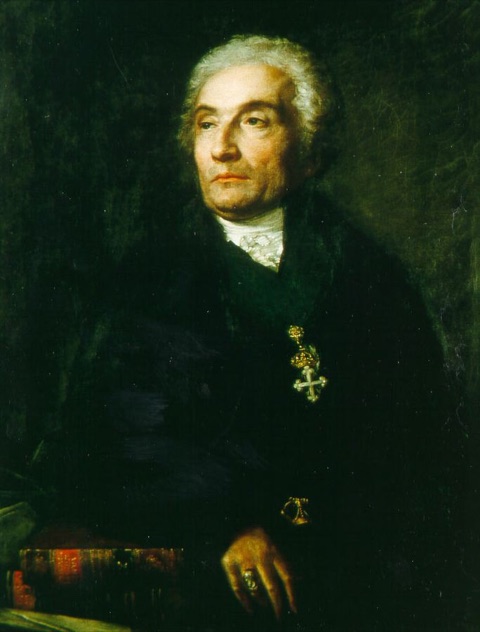
Joseph de Maistre (1753–1821) was a Savoyard philosopher, writer, and diplomat who became one of the most influential conservative thinkers of the modern era. Born in Chambéry in the Kingdom of Sardinia, he served as a senator and later as Sardinian ambassador to Russia. The French Revolution transformed his intellectual life, prompting him to develop a comprehensive philosophy of history, sovereignty, and providence that challenged the foundations of Enlightenment rationalism. His major works—Considerations on France, Essay on the Generative Principle of Political Constitutions, and The St. Petersburg Dialogues—established him as the foremost voice of the counter-revolutionary tradition. De Maistre’s writing is marked by its epigrammatic brilliance, theological depth, and unflinching willingness to follow his arguments wherever they lead.