John Chrysostom
Archbishop of Constantinople and the most celebrated preacher of the early Greek church, whose expository homilies and treatise On the Priesthood shaped Christian preaching and pastoral practice. The epithet "Chrysostom," Greek for "golden-mouthed," was attached to his name after his death in tribute to his oratory.
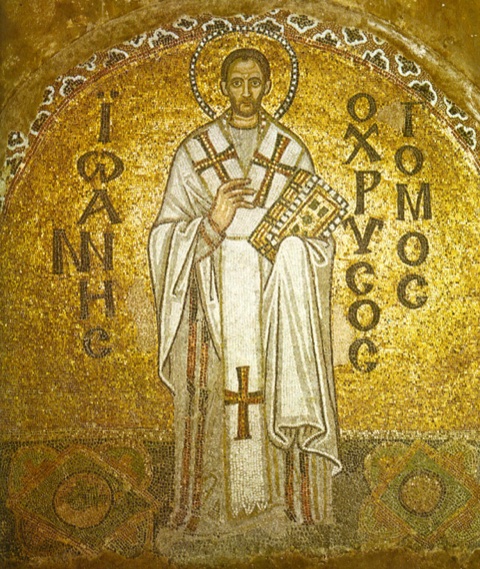
349–407 AD
Biography
John Chrysostom (around 349 to 407 AD) was a preacher and biblical commentator who served as archbishop of Constantinople and became the most influential expositor of the early Greek-speaking church. Born in Antioch in Syria, he was raised by his widowed mother Anthusa and studied rhetoric under Libanius, the leading pagan orator of the city. Ancient reports say Libanius, asked on his deathbed who should succeed him, answered that it would have been John had the Christians not taken him.
After his baptism, John abandoned a public career for the ascetic life. He spent several years among the monks in the mountains near Antioch and, according to his early biographer Palladius, two of those years alone in a cave, memorizing the Bible and ruining his health with cold and fasting. Poor digestion and weakened kidneys forced him back to the city. He was ordained deacon around 381 and priest in 386 by Flavian, bishop of Antioch, and for the next twelve years he preached in the city's churches.
Antioch made his reputation as an expositor. Working in the tradition of Antiochene exegesis, which favored the plain historical sense of Scripture over the allegorical method associated with Alexandria, he preached verse-by-verse through whole books of the Bible, including long series on Genesis, the Psalms, Matthew, John, Romans, and the Pauline epistles. His Homilies on Ephesians belong to this expository program. In 386 and 387 he delivered the eight discourses known as Adversus Judaeos, aimed at Christians in his congregation who kept Jewish fasts and festivals. When a riot over new taxes led the people of Antioch to topple imperial statues in 387, exposing the whole city to the emperor Theodosius's punishment, John calmed the terrified population in the sermons later collected as the Homilies on the Statues.
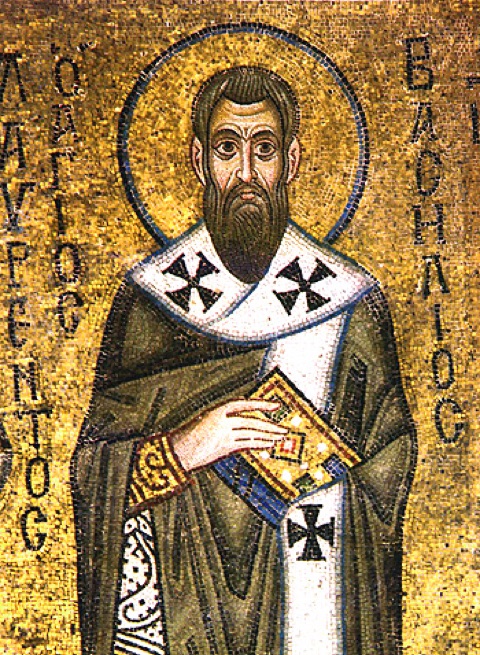
In 398 he was taken to Constantinople, partly by a ruse to overcome his reluctance, and consecrated archbishop of the imperial capital. He reformed the clergy, cut the expenses of the episcopal household, and redirected church funds toward hospitals and the relief of the poor. His treatise On the Priesthood, cast as a dialogue with his friend Basil, set out the weight and danger of the pastoral office and became a standard text on ministry for later generations.
His preaching against luxury, and his refusal to flatter the court, made him enemies. He came into conflict with the empress Eudoxia and with Theophilus, the patriarch of Alexandria. In 403 a gathering of hostile bishops known as the Synod of the Oak, meeting near Chalcedon, deposed him on assorted charges. He was briefly recalled after an earthquake and popular protest, but a fresh quarrel led to his final banishment in 404. Sent to Cucusus in the Armenian mountains and then ordered farther east to Pityus on the Black Sea, he died on the forced march at Comana in Pontus on September 14, 407. In 438 the emperor Theodosius II had his body brought back to Constantinople and buried in the Church of the Holy Apostles.
Life & Career
Why Chrysostom Matters
Chrysostom set the pattern for Christian expository preaching. Rather than treating biblical texts as pretexts for abstract doctrine, he worked through books line by line, drawing out the plain meaning and pressing it on the daily conduct of his hearers. More of his work survives than that of any other Greek father, and this vast body of homilies became a reference point for how Scripture should be read aloud and applied in the church.
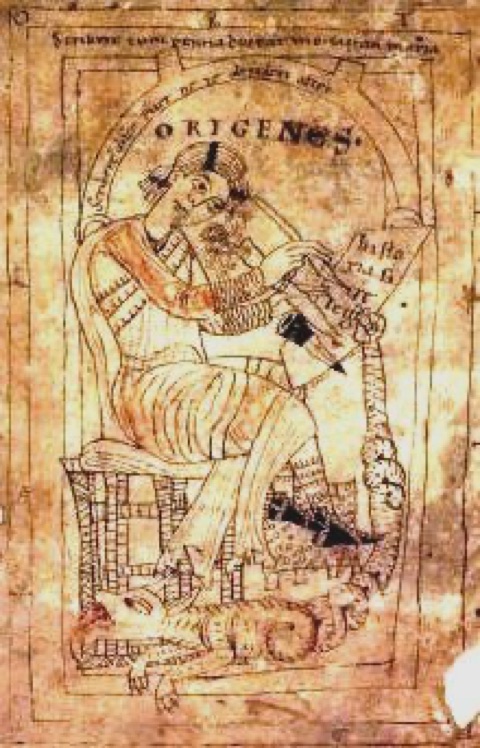
He gave classical shape to Antiochene exegesis. Where the Alexandrian school, following Origen, looked for hidden spiritual senses beneath the letter of the text, Chrysostom kept close to the historical and grammatical meaning while still drawing moral instruction from it. This literal-historical emphasis influenced later interpreters in both East and West and remained an alternative to allegorical reading for later generations.
His pastoral and moral teaching carried as much weight as his exegesis. On the Priesthood examined the responsibilities and temptations of ministry so searchingly that it remained a manual for clergy for centuries. His sermons returned again and again to wealth, almsgiving, and care for the poor, insisting that the goods of the rich were owed to the needy, themes that made him a frequent authority in later Christian teaching on social duty.
In the Eastern Orthodox Church his stature is fixed by liturgy and calendar. The Divine Liturgy of Saint John Chrysostom is the eucharistic service celebrated on most days of the year, and he is honored, with Basil the Great and Gregory of Nazianzus, as one of the Three Holy Hierarchs. Western Christianity counts him among the Doctors of the Church, and his commentaries continued to be printed, translated, and read across confessional lines long after his death.