Basil the Great
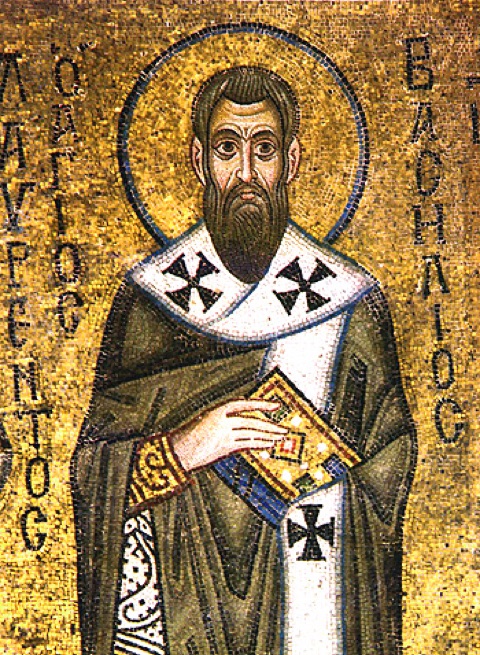
Bishop of Caesarea in Cappadocia and the eldest of the three Cappadocian Fathers, who defended the full divinity of the Son and the Holy Spirit against the Arians and wrote the treatise On the Holy Spirit. He also drafted the monastic rules that still govern Eastern Orthodox monasticism and built one of the first charitable hospital complexes.
around 330 to 379 AD
Biography
Basil the Great (around 330 to 379 AD) was a Greek bishop of Caesarea in Cappadocia, in what is now central Turkey, and the eldest of the three theologians known as the Cappadocian Fathers. He was born into a wealthy and devout Christian family that produced an unusual number of saints: his grandmother Macrina the Elder, his parents Basil the Elder and Emmelia, his sister Macrina the Younger, and his brothers Gregory of Nyssa and Peter of Sebaste. Several of his siblings, like Basil himself, became leaders of the fourth-century church.
He was educated in Caesarea, then Constantinople, and finally in Athens, where around 350 AD he studied rhetoric alongside Gregory of Nazianzus, who became his lifelong friend and ally. Among their fellow students was the future emperor Julian, later called the Apostate. Basil returned home to begin a career teaching rhetoric, but around 356 AD, under the influence of his sister Macrina, he abandoned it, received baptism, and traveled through the monastic settlements of Egypt, Palestine, Syria, and Mesopotamia to study the ascetic life at its source.
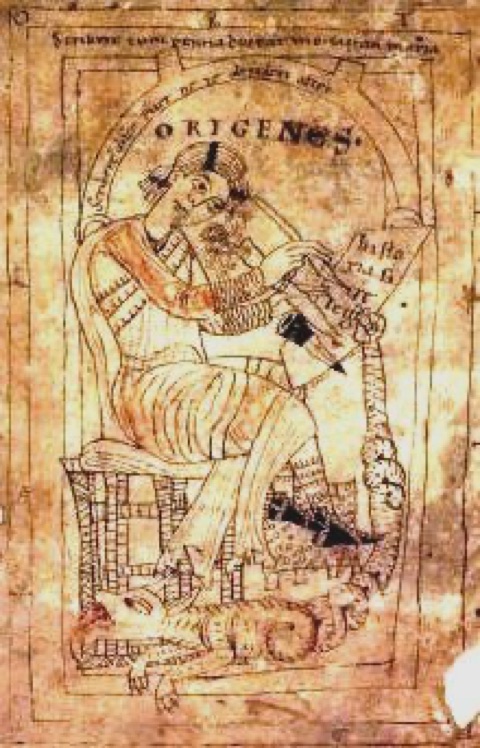
Around 358 AD he withdrew to the family estate at Annesi, on the Iris River in Pontus, where he lived as an ascetic and drew Gregory of Nazianzus to join him. There the two compiled the Philocalia, an anthology of extracts from the writings of Origen, and Basil began composing the ascetic rules that circulated as his Asketikon. These rules, organized around communal life, obedience, work, and prayer rather than solitary extremes, shaped Eastern monasticism and later influenced the Rule of Benedict in the West.
Basil was ordained a priest at Caesarea and, in 370 AD, was consecrated bishop of the city, giving him authority over a large region of churches. His episcopate coincided with the reign of the Arian-leaning emperor Valens, and Basil became a central defender of the Nicene position that the Son and the Holy Spirit are fully God. When Valens's prefect Modestus threatened him with confiscation, exile, and death, Basil refused to yield, and the standoff became one of the famous episodes of the Arian controversy.
His theological writing served this fight directly. In Against Eunomius, composed around 364 AD, he argued against the radical Arian claim that the Son was unlike the Father in essence. In On the Holy Spirit, written around 375 AD for his friend Amphilochius of Iconium, he defended the divinity of the Holy Spirit and the practice of glorifying the Spirit together with the Father and the Son. His homilies on the six days of creation, the Hexaemeron, were widely read and imitated, and the Divine Liturgy that bears his name is still celebrated on certain days in the Orthodox Church.
Basil also turned his wealth and office toward the poor. Outside Caesarea he built a complex of buildings, later called the Basiliad, that included a hospital, a hospice for travelers, and a home for the sick and destitute, staffed to care for those with contagious diseases. He died in 379 AD at about fifty, and did not live to see the First Council of Constantinople in 381 AD affirm the divinity of the Holy Spirit that he had defended.
Life & Career
Why Basil Matters
Basil belongs to the group of three fourth-century theologians, with his brother Gregory of Nyssa and his friend Gregory of Nazianzus, whose work settled the language of Trinitarian doctrine for the Greek-speaking church. The Council of Nicaea in 325 AD had declared the Son "of one substance" with the Father, but the meaning of that phrase remained contested for decades. Basil helped fix a precise vocabulary, distinguishing the single ousia, or shared essence of God, from the three hypostases, or persons, of Father, Son, and Holy Spirit. This distinction gave the church a way to affirm one God in three persons without collapsing the persons together or dividing the essence.
His treatise On the Holy Spirit carried the Nicene logic to its conclusion. Where earlier debate had focused on the Son, Basil argued that the Spirit shares the same divine honor and worship, building his case partly on the wording of the baptismal formula and the church's liturgical prayers. The argument prepared the ground for the First Council of Constantinople in 381 AD, which expanded the Nicene Creed to confess the Spirit as "the Lord, the giver of life," worshipped and glorified together with the Father and the Son.
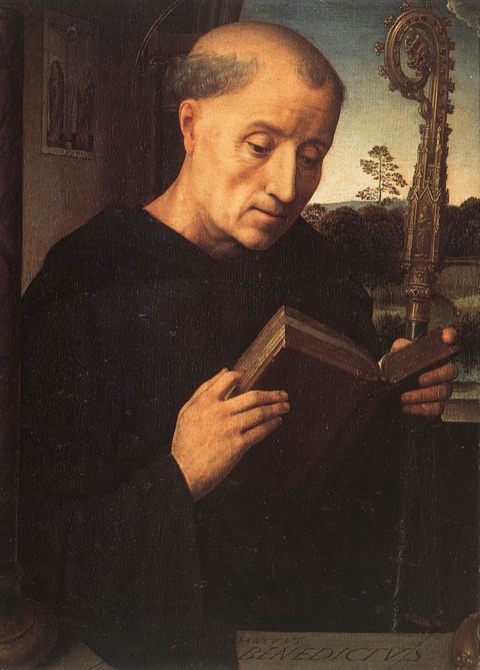
Basil's rules for monastic life favored ordered community over the extreme feats of solitary hermits, emphasizing obedience, manual labor, common prayer, and care for the needy. These rules became a foundation of Eastern Orthodox monastic practice and reached the Latin West through Benedict of Nursia, whose own rule cites Basil by name. Communities in the Orthodox world still trace their form of life to him.
He also gave the church a working model of organized charity. The Basiliad he built outside Caesarea, with its hospital and shelters, was among the earliest institutions of its kind, and its combination of medical care, hospitality, and relief for the poor became a pattern for later Christian charitable foundations. Together with his liturgical and doctrinal work, it explains why the Eastern churches count him among the small number of teachers they title "the Great."