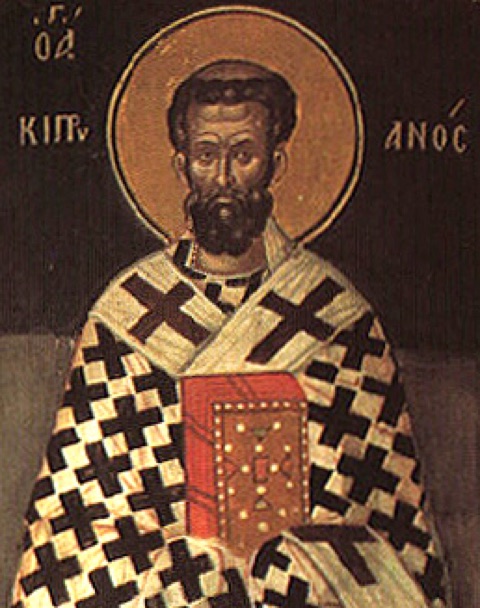
Hermas
Hermas was the second-century Christian author of The Shepherd of Hermas, a Roman apocalypse about sin and repentance that was read in churches and treated by many early Christians as near-scripture.

Biography
Hermas was a Christian living in Rome during the second century AD and the author of The Shepherd of Hermas, one of the most widely read texts of the early church. Almost everything known about him comes from the book itself, which is written in the first person. In it he describes himself as a former slave who had been sold to a woman named Rhoda, later freed, and who then grew prosperous in business before losing much of his wealth. He presents himself not as a bishop or trained theologian but as an ordinary layman with a wife and children, troubled by his own sins and those of his household.
The Muratorian Fragment, a Latin list of accepted Christian writings usually dated to the late second century, states that Hermas wrote The Shepherd while his brother Pius was bishop of Rome. Pius held that office in the middle of the second century, roughly 140 to 155 AD, which places the composition of at least part of the book in that period. Some scholars argue that the work was assembled in stages over a longer span, since its five Visions, twelve Mandates, and ten Similitudes differ in tone and may have circulated separately before being joined. Whatever its history, it was attached to the name Hermas from an early date.
The book takes its title from a figure who appears to Hermas dressed as a shepherd and identifies himself as the angel of repentance sent to instruct him. Through a series of visions and dialogues, first with an elderly woman who represents the church and then with the shepherd, Hermas receives commandments on how to live and parables that explain them. The central concern of the work is repentance after baptism: at a time when many Christians believed that serious sin committed after baptism could not be forgiven, The Shepherd teaches that God grants one further opportunity for repentance to those who have fallen. Written in Greek and set in the streets, farms, and households of imperial Rome, it records the everyday religious life of a lay believer in the second-century city.
Why Hermas Matters
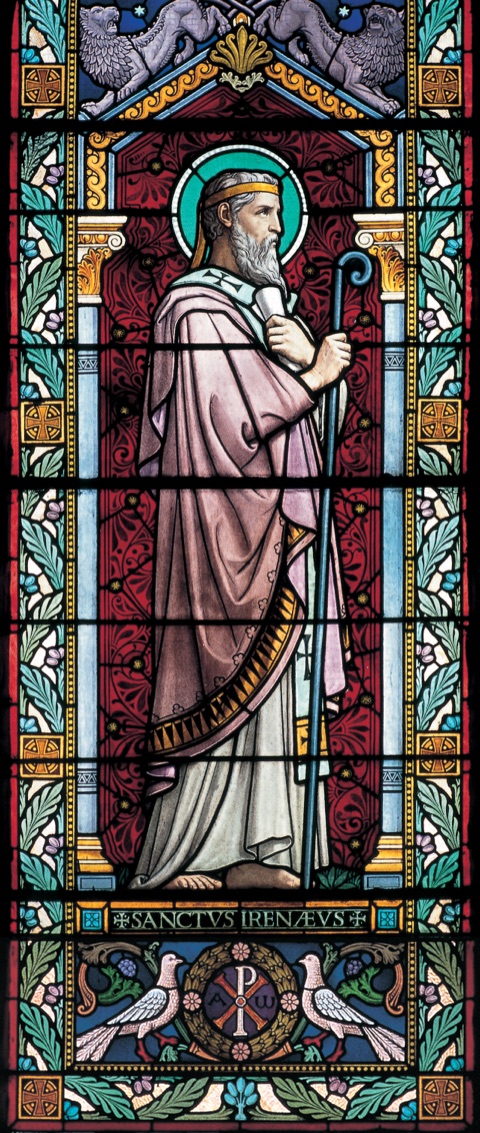
The Shepherd of Hermas was among the most popular Christian writings of the second and third centuries. It was read aloud in worship, used to instruct new believers, and cited with respect by Irenaeus of Lyon, Clement of Alexandria, and Origen of Alexandria, several of whom treated it as scripture. In the fourth century it was copied into the Codex Sinaiticus, one of the oldest surviving complete Bibles, where it stands at the end of the New Testament alongside the Epistle of Barnabas. Few non-canonical works reached anything close to this standing.
Its main theological contribution is its teaching on repentance. The early church wrestled with a hard question: what becomes of a baptized Christian who commits grave sin? Some held that baptism washed away past sins once and for all, leaving no remedy for later failures. Hermas answered that God allows a single further repentance for those who sin after baptism, though he warned against presuming on it. This position helped shape the developing Christian understanding of penance and forgiveness.
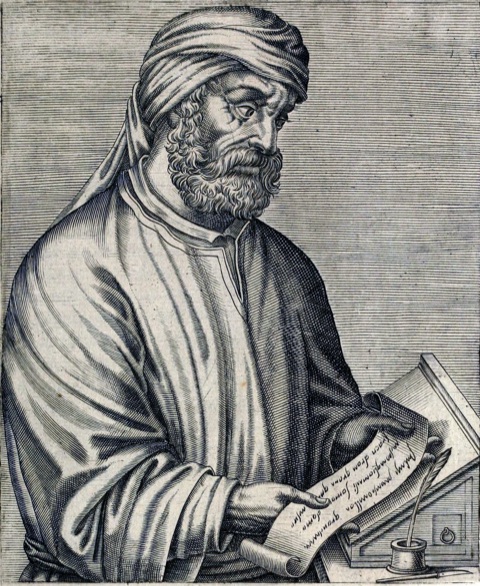
The book also drew sharp disagreement, which is itself a measure of how seriously it was taken. The Muratorian Fragment allowed that The Shepherd could be read privately but ruled that it should not be counted among the prophets or the apostles or read publicly in church. Tertullian, after he joined the rigorist Montanist movement, attacked its lenient view of forgiveness and dismissed it as the "shepherd of adulterers." These debates over its authority fed the wider process by which the early church distinguished the books it received as scripture from those it valued but did not.
Because Hermas wrote as a layman rather than a church leader, his book preserves a perspective that most surviving early Christian literature lacks. It reflects the anxieties, family life, and moral struggles of an ordinary member of the Roman congregation, and for that reason it remains a primary source for how second-century Christians understood sin, wealth, and the possibility of a second chance.