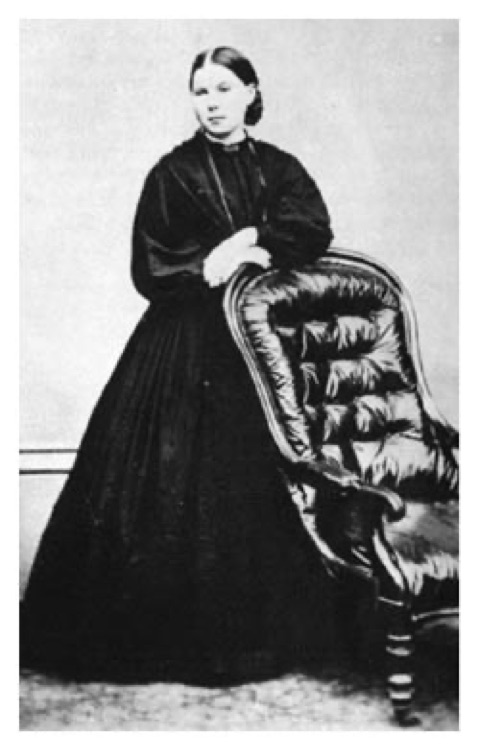
Harriet Martineau
English writer and social theorist who popularized political economy for a mass Victorian audience and is often called the first female sociologist. She reported on slavery and society in the United States, translated Auguste Comte for English readers, and wrote across economics, fiction, history, and journalism.
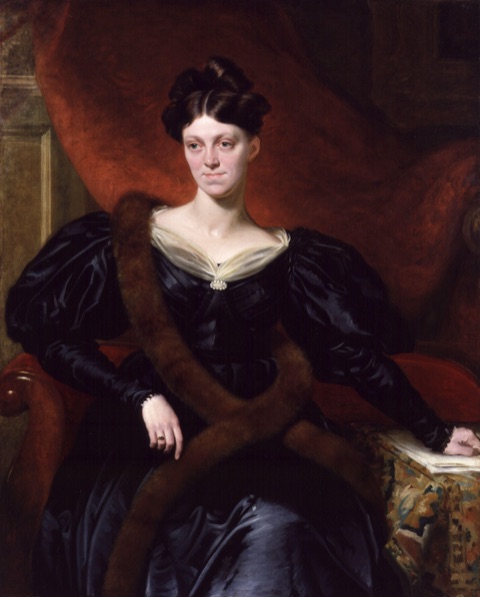
1802–1876
Biography
Harriet Martineau (1802 to 1876) was an English writer, journalist, and social theorist who made political economy comprehensible to ordinary readers and is frequently described as the first woman to work as a sociologist. She was born on June 12, 1802, in Norwich, the sixth of eight children in a Unitarian family of Huguenot descent. Her father, Thomas Martineau, manufactured textiles; the family valued education and dissenting religion. Martineau lost most of her hearing during childhood and used an ear trumpet for the rest of her life.
The collapse of the family's finances shaped her career. Her father's business faltered before his death in 1826, and the loss of the family's remaining capital at the end of the 1820s pushed Martineau from genteel dependence into professional writing. In 1832 she began publishing Illustrations of Political Economy, a monthly series of didactic tales that dramatized the ideas of Adam Smith, Thomas Malthus, David Ricardo, and James Mill through stories set among laborers, manufacturers, and emigrants. The series ran through 1834, sold in numbers that outpaced many novels of the day, and made her nationally known.
In 1834 Martineau sailed for the United States, where she traveled for two years and grew closely associated with the abolitionist circle around William Lloyd Garrison. She turned the journey into two books, Society in America (1837) and Retrospect of Western Travel (1838), examining American institutions—including slavery, marriage, religion, and democratic politics—against the country's stated principles. Her methodological essay How to Observe Morals and Manners (1838) set out rules for the systematic observation of societies, an early statement of sociological method.
She also wrote fiction and history. The novel Deerbrook appeared in 1839, followed by The Hour and the Man (1841), built around the Haitian leader Toussaint Louverture. A long illness in the early 1840s produced Life in the Sick-Room (1844); after she attributed her recovery to mesmerism, she defended the practice publicly. In 1846 she settled in the Lake District village of Ambleside, where she built a house called The Knoll, farmed a smallholding, and continued to write.
Travel to Egypt and Palestine in 1846 and 1847 produced Eastern Life, Present and Past (1848), which traced religions as a historical succession and marked her movement away from Christian belief toward a secular, positivist outlook. Household Education (1849) argued that children of both sexes should be raised to reason and self-govern, and her History of England During the Thirty Years' Peace covered the period from 1816 onward. In 1853 she published a condensed English translation of Auguste Comte's Cours de philosophie positive as The Positive Philosophy of Auguste Comte; Comte thought her version clear enough to recommend to his own students.
For more than a decade Martineau wrote regularly for the London Daily News, producing well over a thousand leading articles on economics, foreign affairs, and reform. Believing herself to be dying of heart disease, she wrote her Autobiography in 1855; she in fact lived two more decades, dying at The Knoll on June 27, 1876. The Autobiography, with its frank account of her deafness, her doubts, and her working life, was published the following year.
Life & Career
Why Martineau Matters
Martineau's importance rests first on her role as a translator of specialist knowledge into public argument. The Illustrations of Political Economy reached readers who would never open Ricardo or Malthus, and in doing so helped establish economics as a subject of general debate rather than a preserve of theorists. She wrote to persuade a broad audience, and her monthly tales demonstrated that abstract doctrines about wages, population, and trade could be carried by narrative.
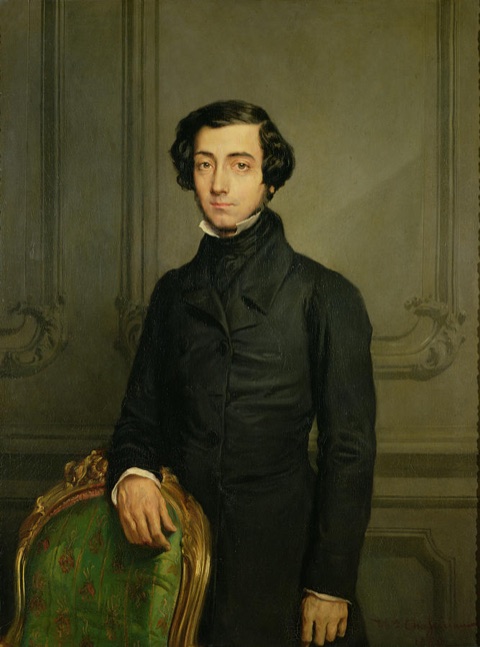
Her American writing gives her a place in the history of social observation. Society in America approached a nation by measuring its practices against its founding claims, and How to Observe Morals and Manners proposed procedures for studying a society's institutions and morals without imposing the observer's prejudices. These works are read as early contributions to sociology, written in the same decades that Alexis de Tocqueville was examining American democracy.
Martineau was also a working reformer. She argued for the abolition of slavery, for the education of girls, for improvements in nursing and public health, and for women's economic independence, and she pressed these causes in books and in her Daily News columns. Her insistence that women be trained to think and support themselves, set out in Household Education, connected her domestic writing to her wider social program.
Finally, she helped move positivist and secular thought into English intellectual life. Her condensation of Comte introduced his system to English readers in a usable form, and her later writing openly set aside the Unitarian faith of her upbringing. Across economics, journalism, fiction, and philosophy, she built one of the most productive writing careers of the Victorian period.