Charlotte Mason
The founder of the Charlotte Mason educational method — a Victorian teacher and writer who insisted that children are born persons and built an entire philosophy of education around that conviction.
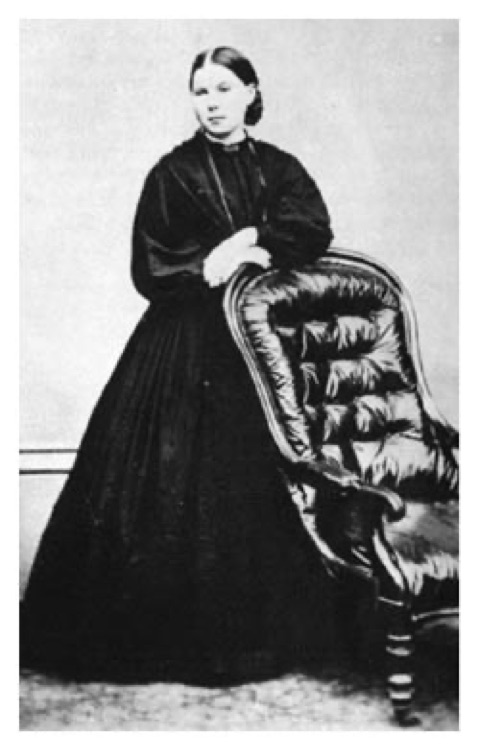
1842–1923
Biography
Charlotte Mason was born in Bangor, North Wales, in 1842, the only child of a Liverpool merchant and his wife. She was educated at home until her parents died within months of each other when she was in her teens, leaving her without family or means. She trained as a teacher at the Home and Colonial School Society in London and spent her early career teaching in village schools and, later, training other teachers. These years convinced her that the prevailing Victorian approach to children — treating them either as empty vessels to be filled or as little adults to be disciplined into shape — was fundamentally mistaken.
Mason's public turn came in 1886, when she delivered a series of lectures to parents in Bradford that were published that same year as Home Education. The book struck a nerve. In 1887, a group of parents and educators organized themselves around her ideas, forming what became the Parents' National Educational Union (PNEU) to put her method into practice in their own households. In 1892, Mason founded the House of Education in Ambleside, Cumbria, to train teachers and governesses in her approach. Ambleside became the center of her movement for the rest of her life.
Mason's core conviction was that children are born persons — whole human beings from the start, not products to be manufactured or tendencies to be shaped. From that foundation she built a philosophy organized around what she called atmosphere, discipline, and life: children should be raised in a rich environment of ideas, trained in the habits that free them to act rightly, and fed on living books rather than dry textbooks. Lessons should be short, varied, and end before the child tires. Time outdoors, direct observation of nature, and the reading of great literature were central. Over the course of nearly forty years she developed and defended this philosophy in a series of six volumes, of which Home Education was the first.
Mason died in Ambleside in 1923. Her method survived the disruptions of the twentieth century and experienced a major revival among home-schooling parents in the late 1980s and 1990s that continues today.
Life & Career
Why Mason Matters
Mason was not a theologian, but her philosophy of education rested on a theological claim: that every child is a complete person made in God's image, with spiritual, intellectual, and moral life already present from birth. She read the Gospels as containing a direct code of education summed up in three negative commands — 'Take heed that ye offend not, despise not, hinder not, one of these little ones' — and treated those commands as the governing rule for everything parents and teachers do.
This anthropology set her against two rival views. On one side stood the older Victorian approach, which treated children as undeveloped material to be beaten, drilled, or trained into acceptable shape. On the other stood the emerging 'child-worship' of the late nineteenth century, which made the child the center of the household and indulged every whim. Mason rejected both as failures to take the child seriously. A child was neither a problem to be solved nor an idol to be appeased, but a person entrusted to parents who would answer for what they had done with that trust.
Her method — short lessons, living books, narration, nature study, habit formation — all flowed from this conviction. She treated educational questions as moral questions and moral questions as questions about what a child already is. That integration of anthropology, theology, and practical method is what has kept her work in circulation for over a century.