Frederick Douglass
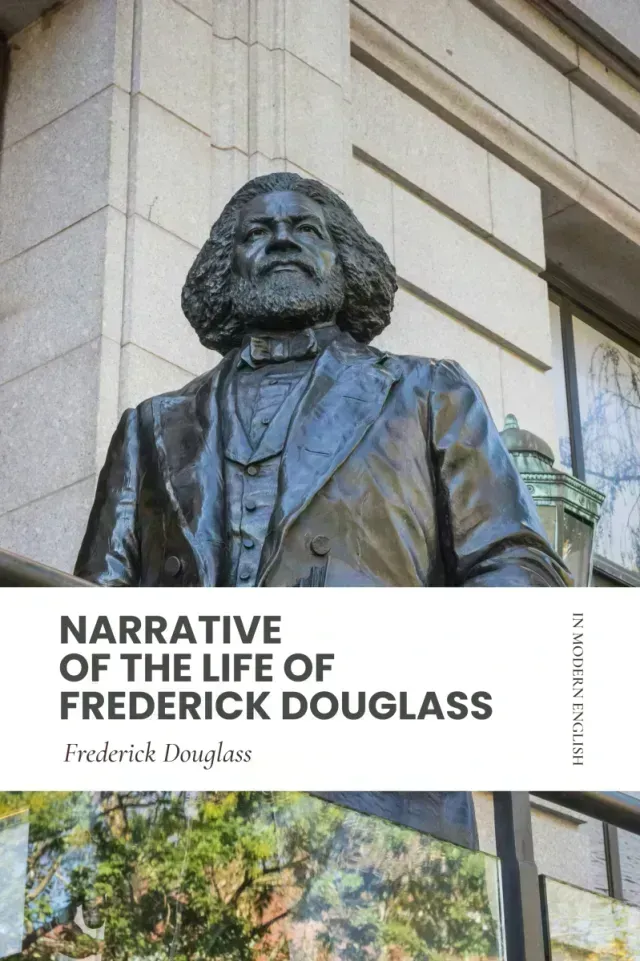
Frederick Douglass was an American abolitionist, orator, and writer who escaped slavery in 1838 and became the most prominent Black public figure of nineteenth-century America. His 1845 autobiography, Narrative of the Life of Frederick Douglass, an American Slave, was a bestseller and remains the most widely read of the American slave narratives.
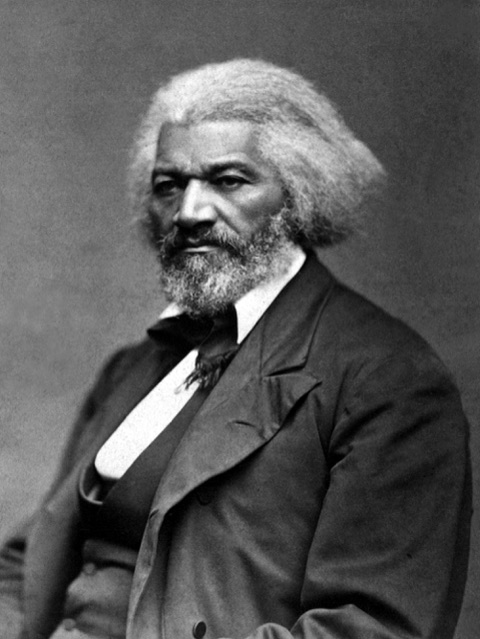
1818–1895
Biography
Frederick Douglass (1818–1895) was an American abolitionist, orator, newspaper editor, and statesman who escaped from slavery and became the most influential Black leader of the nineteenth century. He was born Frederick Augustus Washington Bailey around February 1818 on a plantation in Talbot County, on Maryland's Eastern Shore. He never knew the exact date, was separated from his mother, Harriet Bailey, in infancy, and never confirmed the identity of his father, who was widely believed to be white.
Around 1826 Douglass was sent to Baltimore to serve the household of Hugh and Sophia Auld. Sophia Auld began teaching him the alphabet until her husband forbade it, warning that literacy would make an enslaved person unmanageable. Douglass continued in secret, trading bread to poor white boys in the street for reading lessons and copying letters from shipyard timbers and his young master's discarded copybooks. As a teenager he was hired out to Edward Covey, a farmer known as a "slave-breaker"; a physical struggle with Covey became a turning point he later described as the moment he resolved to be free in fact.
On September 3, 1838, Douglass escaped from Baltimore, disguised as a sailor and carrying borrowed seaman's protection papers, reaching New York City by train and steamboat. There he married Anna Murray, a free Black woman from Baltimore who had helped fund his escape, and adopted the surname Douglass after a character in Walter Scott's poem The Lady of the Lake. The couple settled in New Bedford, Massachusetts, where Douglass took manual work on the docks and began reading The Liberator, the antislavery paper edited by William Lloyd Garrison.
In 1841 Douglass spoke at an antislavery meeting on Nantucket and was hired as a lecturer by the Massachusetts Anti-Slavery Society. His speaking drew such crowds, and such disbelief that a man so articulate had ever been enslaved, that in 1845 he published Narrative of the Life of Frederick Douglass, an American Slave, naming the people and places of his bondage. The book sold thousands of copies and made him a target for recapture, so he sailed to Britain and Ireland, lecturing for nearly two years. British supporters raised the money to purchase his legal freedom, and he returned to the United States a free man in 1847.
That December Douglass founded his own newspaper, The North Star, in Rochester, New York, taking as its motto "Right is of no sex — Truth is of no color." Editing his own paper let him break from Garrison, who read the Constitution as a proslavery document; Douglass came to argue that the Constitution could be wielded against slavery. In 1852 he delivered his address "What to the Slave Is the Fourth of July?" in Rochester, and in 1855 he expanded his life story into a second autobiography, My Bondage and My Freedom. He also joined the early women's rights movement, attending the Seneca Falls Convention of 1848 and speaking for female suffrage.
During the Civil War, Douglass pressed President Abraham Lincoln to make emancipation a war aim and to enlist Black soldiers, recruiting for the 54th Massachusetts Infantry, in which his sons Lewis and Charles served. He met Lincoln at the White House in 1863 and 1864. After the war he campaigned for the Thirteenth, Fourteenth, and Fifteenth Amendments and held a series of federal appointments, including United States Marshal for the District of Columbia in 1877, Recorder of Deeds for the District in 1881, and Minister Resident and Consul General to Haiti in 1889. His third autobiography, Life and Times of Frederick Douglass, appeared in 1881 and was revised in 1892. Anna died in 1882, and two years later he married Helen Pitts, a white former clerk in his office, a union that drew public criticism. Douglass died of a heart attack at his Washington home, Cedar Hill, on February 20, 1895.
Life & Career
Why Douglass Matters
Douglass turned his own life into the most effective argument the American antislavery movement possessed. Because proslavery writers insisted that enslaved people were incapable of intellect or self-government, the sheer fact of Douglass — a formerly enslaved man who wrote and spoke with force and precision — was itself a rebuttal. His 1845 Narrative gave the abolitionist cause a firsthand account with names, dates, and locations that could not be dismissed as invention, and it became the model for the American slave narrative as a literary form.
As an orator he was among the most sought-after lecturers of his century, and his 1852 address "What to the Slave Is the Fourth of July?" remains a standard text in the study of American rhetoric for its confrontation of the gap between the nation's founding language and the reality of slavery. Through The North Star and his later papers he built an independent Black voice in the press and used it to challenge even his own allies, most notably in his break with William Lloyd Garrison over whether the Constitution could be read as an antislavery instrument.
His influence extended past emancipation into the politics of Reconstruction. Douglass lobbied for Black citizenship and voting rights, supported the constitutional amendments of 1865 to 1870, and held federal office at a time when few Black Americans could, serving in appointments in the District of Columbia and as the United States representative to Haiti. He also lent his standing to the women's rights movement from Seneca Falls onward, insisting that the case for suffrage did not stop at race.
The three autobiographies he wrote across nearly forty years — the 1845 Narrative, My Bondage and My Freedom in 1855, and Life and Times of Frederick Douglass in 1881 — together form one of the fullest self-authored records of an American life in the nineteenth century, tracing one man's passage from enslavement to national office and documenting the arguments of the abolition and civil-rights struggles as he lived them.