Jan Amos Comenius
The father of modern education. A Moravian bishop and exiled pastor whose writings on teaching, learning, and the Christian formation of children shaped European schooling for centuries.
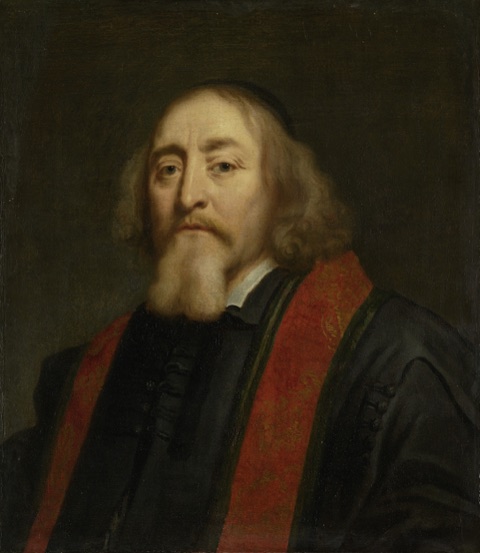
1592–1670
Biography
Jan Amos Comenius (Jan Amos Komenský) was a Czech philosopher, theologian, and pedagogue often called the father of modern education. He was born in 1592 in Moravia, a region that is now part of the Czech Republic, and lost his parents and sisters to plague while still a child. He was raised by relatives and educated at the schools of the Unity of the Brethren, the Czech reforming church founded by followers of Jan Hus more than a century before Luther. He went on to study at the Calvinist academies of Herborn and Heidelberg.
Comenius returned home to serve as a pastor and rector in Fulnek, but his life was shattered by the outbreak of the Thirty Years' War. The defeat of the Czech Protestants at the Battle of White Mountain in 1620 led to the suppression of the Unity of the Brethren, and Comenius lost his home, his library, and, in a later plague outbreak, his wife and children. He spent the rest of his life in exile — in Poland, England, Sweden, Hungary, and finally the Netherlands — serving as a bishop of the scattered Brethren and working tirelessly on two linked projects: the reform of education and the reform of the church.
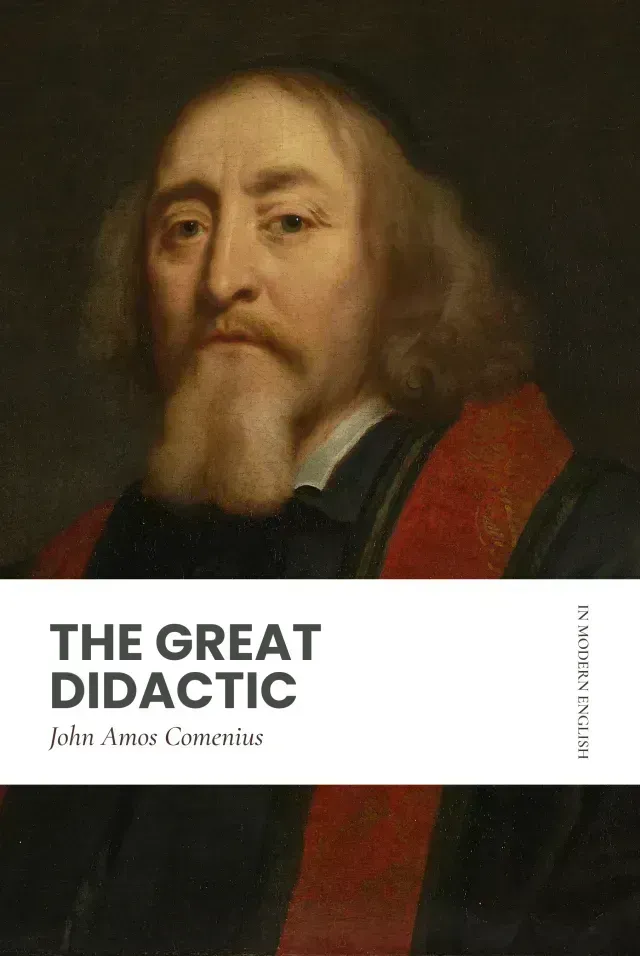
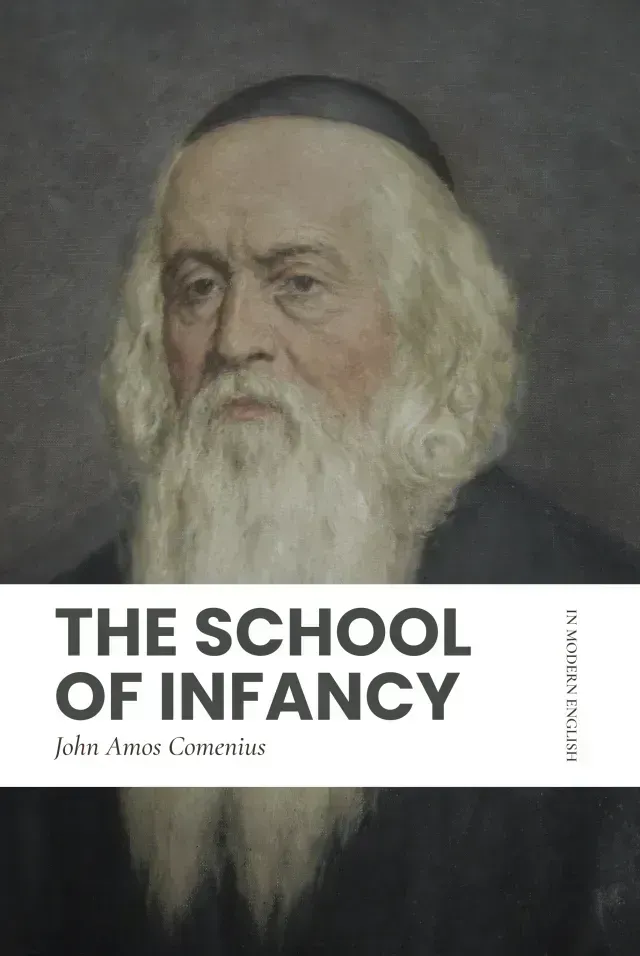
His educational writings made him famous across Europe. The Great Didactic (Didactica Magna), written in Czech in the 1630s and later translated into Latin, was the first systematic treatise on universal education. Orbis Sensualium Pictus, published in 1658, was the first illustrated textbook for children and became the most widely used schoolbook in Europe for more than a century. The School of Infancy extended his method to the earliest years of a child's life, arguing that the mother's knee is the first and most important classroom. Comenius believed that all human beings, regardless of class, sex, or nation, should be educated, that teaching should move from the known to the unknown and from the concrete to the abstract, and that the goal of education was not simply learning but the formation of the whole person in wisdom, virtue, and piety.
He died in Amsterdam in 1670 and is buried in nearby Naarden.
Life & Career
Why Comenius Matters
Comenius is rarely read today as a theologian, but his pedagogical writings cannot be understood apart from his theology. His convictions about how children should be educated grew directly out of his conviction that every human being is made in the image of God and called to know, love, and serve their Creator. He argued that because all people bear that image, all people must be taught — boys and girls, rich and poor, the gifted and the slow. This was a radical position in seventeenth-century Europe, and it put him far ahead of his contemporaries.
His method flowed from the same theological source. Because God had ordered the world so that the inner structure of things can be known through the senses, Comenius insisted that children should learn by encountering real objects before abstract words, and that schools should be places of delight rather than dread. His famous critique of the Latin schools of his day — that they had become grinding houses where children were beaten and bored into a hatred of learning — was a moral and theological argument, not just a pedagogical one. Teachers were answerable to God for the souls entrusted to them.
Comenius also worked throughout his life on a vast project of pansophia, the universal reconciliation of all knowledge under the lordship of Christ. He believed that the divisions of Christendom and the ignorance of ordinary people were linked problems, and that a rightly ordered education could contribute to the healing of both. His later writings on this theme influenced figures from John Milton and the Hartlib circle in England to the founders of the Royal Society.