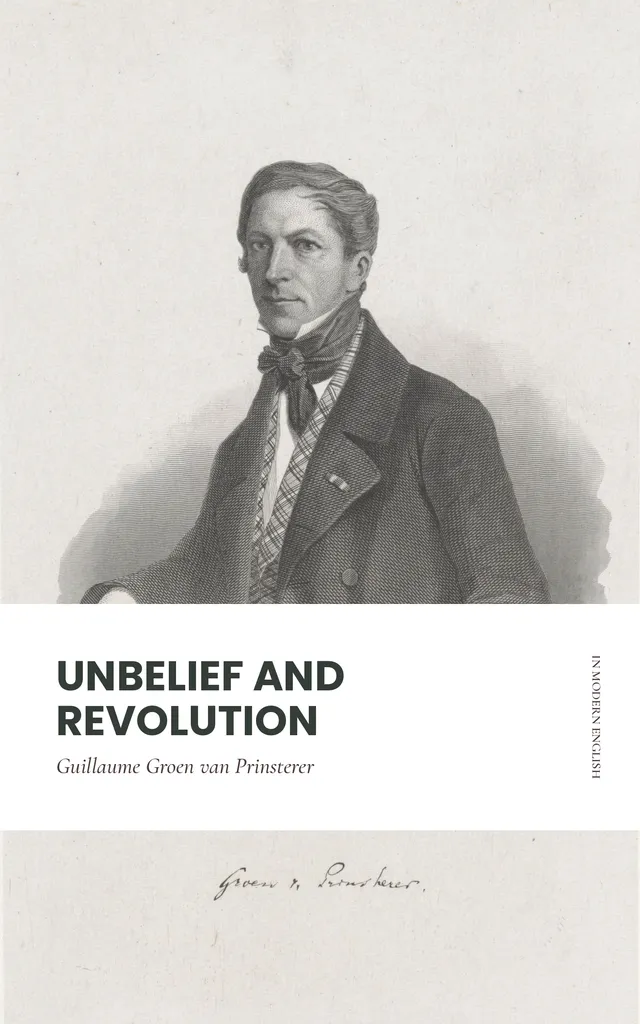
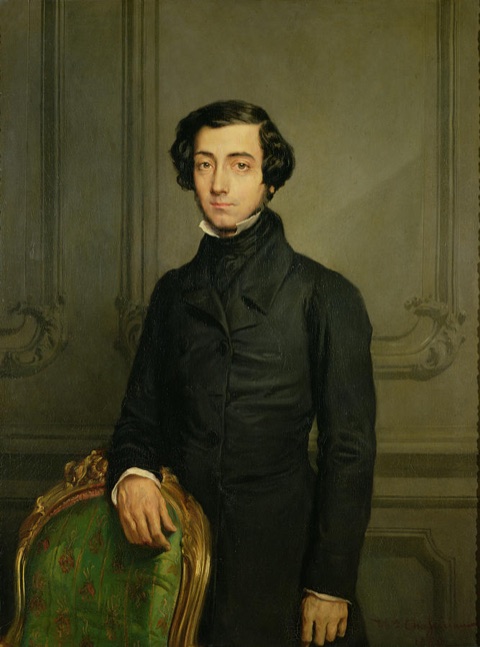
Guillaume Groen van Prinsterer
Dutch historian and statesman whose Ongeloof en Revolutie (Unbelief and Revolution, 1847) argued that the French Revolution grew from a religious root, the denial of God's sovereignty. He founded the Anti-Revolutionary movement in Dutch politics.
1801–1876
Biography
Guillaume Groen van Prinsterer (1801 to 1876) was a Dutch historian, statesman, and political writer who gave the name Anti-Revolutionary to a movement that shaped Dutch public life for more than a century. He was born on 21 August 1801 in Voorburg, near The Hague, the son of Petrus Jacobus Groen van Prinsterer, a physician who moved in aristocratic circles, and Adriana Hendrika Caan. The household was Walloon Reformed and moderately enlightened in outlook.
He studied at Leiden University alongside Johan Rudolph Thorbecke, who would later become his chief political opponent, and graduated in 1823 with doctorates in both literature and law. In 1828 he married Elisabeth van der Hoop, known as Betsy; the marriage remained childless. His work for the King's Cabinet took the couple to Brussels, where their pastor Jean-Henri Merle d'Aubigné drew them into the Réveil, the evangelical awakening then spreading through the Protestant churches of the Continent. Groen served as secretary of the King's Cabinet from 1829 to 1836, and in October 1829, back in The Hague, he began issuing the journal Nederlandsche Gedachten anonymously, arguing against what he called the spirit of revolution on the eve of the Belgian revolt of 1830. He suspended the journal in 1832 because he could not carry its costs.
In 1836 he was appointed archivist of the Royal House Archives, and from the mid-1830s he edited and published the papers of the princes of Orange as the Archives ou correspondance inédite de la maison d'Orange-Nassau. The edition established his standing as a documentary historian; John L. Motley acknowledged his debt to it in the preface to The Rise of the Dutch Republic, before the two men had met. Groen's own narrative history, the Handboek der geschiedenis van het vaderland, appeared in 1846.
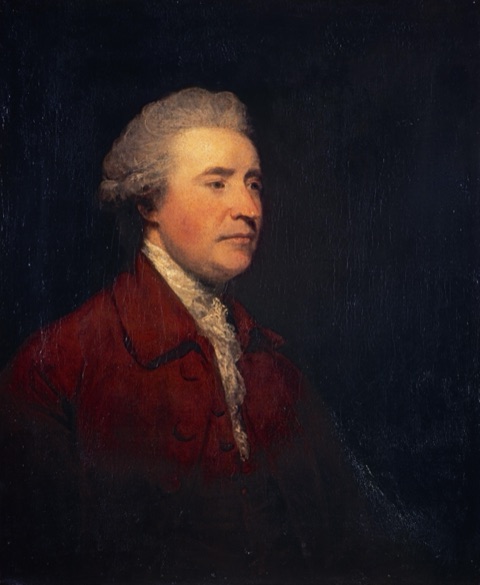
In the winter of 1845 and 1846 he delivered a series of private lectures to a small circle of sympathizers in The Hague. Published in 1847 as Ongeloof en Revolutie, and revised in 1868, the lectures traced the French Revolution back to an intellectual root: the rejection of God's authority in favor of the sovereignty of the people. The book drew openly on Edmund Burke, François Guizot, and Friedrich Julius Stahl, and it was as much a political manifesto as a historical study.
Groen entered the Second Chamber of the Dutch parliament in 1849, a year after Thorbecke's constitutional reform, and sat there from 1849 to 1857 and again from 1862 to 1866. He edited the Utrecht daily De Nederlander without salary from 1850 to 1855, turning its content in an Anti-Revolutionary direction until its losses ended the experiment. He was a declared opponent of slavery in both the East and West Indies, worked in 1842 to unite several abolitionist committees into a national society, and chaired the state commission on the abolition of slavery in 1853.
His longest campaign was over schools. He argued first for a Protestant character in the public schools, then for public schools divided by confession, and finally, after the 1857 education law of Van Brugghen prescribed a general Christian instruction he considered too vague to mean anything, for state funding of independent confessional schools on equal terms. That last position became the program of the schools struggle that occupied Dutch politics for the next sixty years.
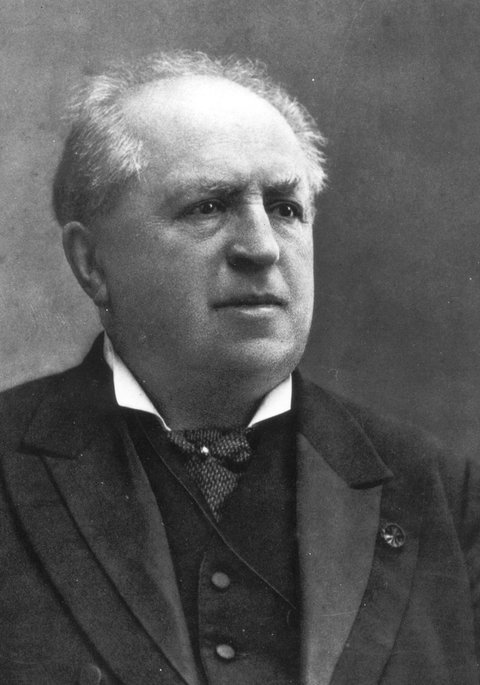
Groen's break with the conservatives in the late 1860s left him increasingly isolated, a condition he answered with the motto that became his best-known line: in our isolation lies our strength. Before the 1871 elections he withdrew his confidence from most of the Anti-Revolutionary members of parliament, keeping only three, among them Abraham Kuyper. Kuyper took over leadership of the Anti-Revolutionaries in the early 1870s. Groen died on 19 May 1876 in The Hague; the Anti-Revolutionary Party, the first organized political party in the Netherlands, was founded three years later.
Life & Career
Why Prinsterer Matters
Groen's central argument in Ongeloof en Revolutie was that the French Revolution was not primarily a political event with religious side effects but a religious event with political consequences. Where Burke read the Revolution as the destruction of an inherited constitution by abstract theory, Groen pressed the analysis one step further back and located its origin in unbelief: once the sovereignty of God was denied, sovereignty had to be relocated in the people, and every institution that rested on any other foundation became illegitimate. Revolution, on this account, was not a single event in 1789 but a continuing principle working itself out through liberalism, socialism, and whatever came after them.
This reading led him to reject the entire political spectrum available to his generation. The radicals held the new doctrine consistently, the liberals held it while preaching moderation, and the conservatives held it while recoiling from its results. None of them, in Groen's judgment, offered a position a Christian citizen could occupy. What he proposed instead he called Anti-Revolutionary or Christian-Historical: politics grounded in divine authority and in the actual historical development of a nation rather than in abstract rights deduced from first principles.
His practical thinking shifted over his career. Before 1848 he followed Carl Ludwig von Haller in treating governing authority as a kind of private possession of the ruler. After 1848, under the influence of Stahl, he moved to a public-law account in which the state's authority exists for the sake of public justice. The 1857 education law ended his hope for a confessionally Christian state; from then on he accepted the separation of church and state as a necessary settlement rather than a good one, and shifted his effort to securing equal treatment for confessional schools.
The line running from Groen to Abraham Kuyper is the most consequential part of his influence. Groen supplied the analysis and the vocabulary; Kuyper built the party, the newspaper, the university, and the mass constituency that turned it into a governing force, becoming prime minister in 1901. Through Kuyper and the Anti-Revolutionary Party, which lasted until it merged into the Christian Democratic Appeal in 1980, Groen's framing reached Reformed political thought in South Africa and North America, where Unbelief and Revolution continues to be read as a founding statement of the tradition.
He was also a working historian, and his political writing rested on archival labor. The Archives ou correspondance inédite made the correspondence of the House of Orange available to scholars for the first time, and his Handboek gave the Dutch national story a Calvinist and Orangist shape that his opponents contested precisely because the documentary work behind it was hard to dismiss.