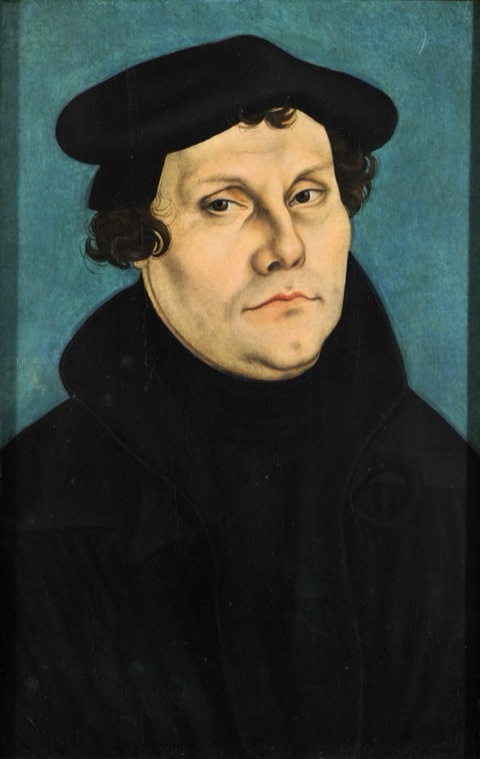
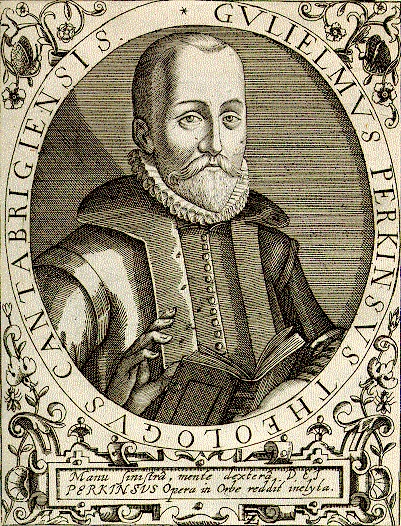
John Calvin
French reformer whose Institutes of the Christian Religion became the most influential systematic theology of the Protestant Reformation. His model of church government shaped Reformed churches worldwide.

1509–1564
Biography
Jean Calvin was born on July 10, 1509, in Noyon, Picardy, France. His father, a notary for the cathedral chapter, secured church benefices to fund his son's education. Calvin studied arts at the University of Paris and law at Orléans and Bourges, receiving an excellent humanist education that included Greek, Hebrew, and classical literature.
Calvin experienced a sudden conversion around 1533-1534, the details of which he described only briefly. By 1534 he had broken with the Roman Catholic Church and fled France after Francis I began persecuting Protestants. He spent time in Strasbourg and Basel, where in 1536, at the age of twenty-six, he published the first edition of his Institutes of the Christian Religion, initially a brief handbook of Protestant theology.
In 1536, William Farel persuaded Calvin to stay in Geneva to help organize the Reformation there. Calvin and Farel were expelled in 1538 after conflicts with the city council. Calvin spent three productive years in Strasbourg, where he pastored a French refugee congregation and expanded the Institutes. He married Idelette de Bure, a widow, in 1540.
Calvin returned to Geneva in 1541 at the city's invitation and remained there for the rest of his life. He established a church order (the Ecclesiastical Ordinances) that became the model for Reformed churches throughout Europe. He preached nearly every day, lectured on Scripture, wrote commentaries on almost every book of the Bible, and carried on an enormous correspondence with reformers, churches, and political leaders across Europe.
The Institutes went through multiple expansions, reaching their final form in 1559 as a comprehensive work in four books. Calvin's health was poor for much of his life, and he suffered from migraines, lung hemorrhages, and kidney stones. He died on May 27, 1564, in Geneva.
Life & Career
Why Calvin Matters
Calvin's Institutes provided the first comprehensive systematic theology of the Protestant Reformation. The work organized Christian doctrine around the knowledge of God and the knowledge of ourselves, moving from creation through fall, redemption, and the means of grace. Its clarity, organization, and biblical rootedness made it the standard reference for Reformed theology for centuries.
Calvin's commentaries covered nearly the entire Bible and established a method of interpretation that prioritized the plain sense of the text, the author's intention, and the text's place in the larger story of redemption. His exegetical work was admired even by those who disagreed with his theology.
His model of church government, with its system of pastors, teachers, elders, and deacons, was adopted by Reformed churches from Scotland to South Africa and became the basis of Presbyterian polity.
Calvin's doctrine of predestination became the most controversial element of his theology, though it occupied proportionally little of the Institutes. His treatment of the subject was pastoral in intent: he taught predestination as a doctrine of comfort, assuring believers that their salvation rested on God's eternal purpose rather than on their own unstable wills.
Modernized Editions by Calvin
Updated English Audio
Audio
Institutes of the Christian Religion: Book 1
John Calvin
 Audio
Audio
Institutes of the Christian Religion: Book 2
John Calvin
 Audio
Audio
Institutes of the Christian Religion: Book 3
John Calvin
 Audio
Audio
Institutes of the Christian Religion: Book 4
John Calvin
 Audio
Audio
On the Christian Life
John Calvin
The Necessity of Reforming the Church
John Calvin
On Prayer
John Calvin