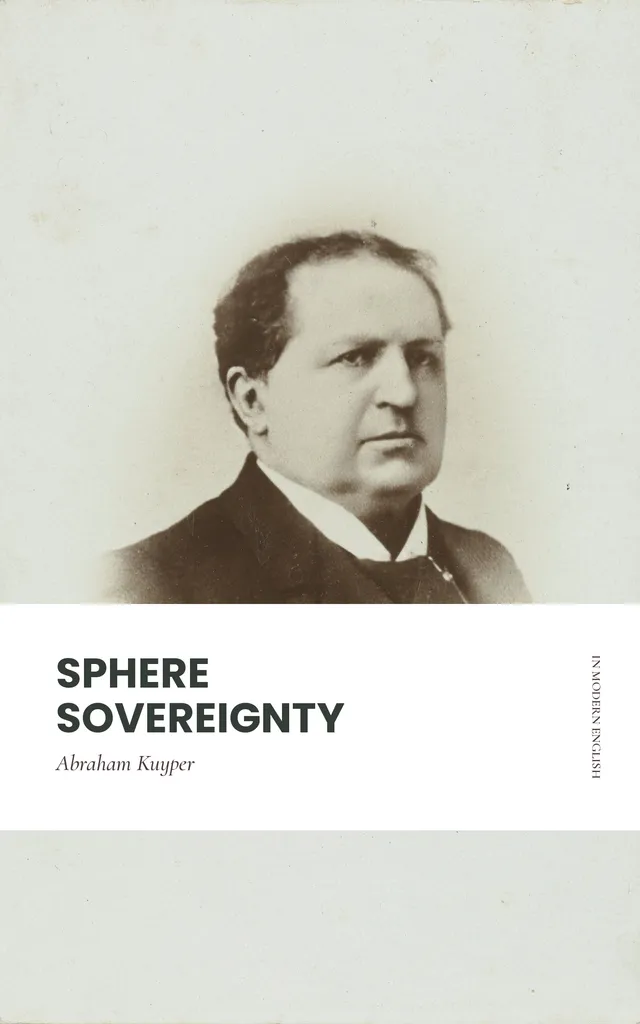
Abraham Kuyper
Dutch Reformed theologian and statesman who formulated the doctrine of sphere sovereignty and led the neo-Calvinist movement. He founded the Free University of Amsterdam, the Anti-Revolutionary Party, and the Reformed Churches in the Netherlands, and served as Prime Minister from 1901 to 1905.
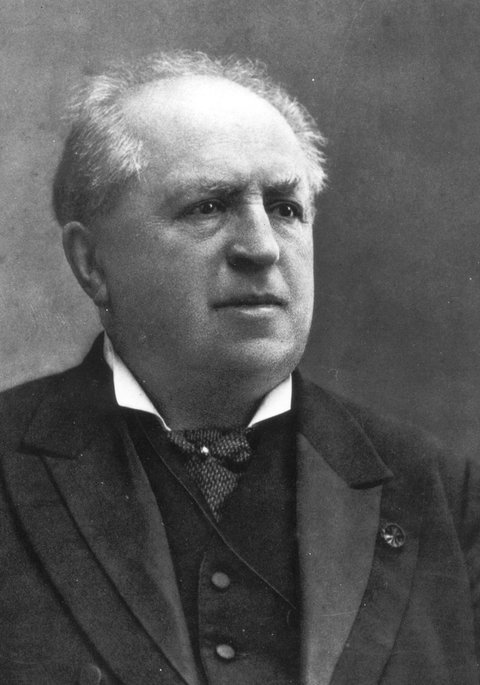
1837–1920
Biography
Abraham Kuyper (1837 to 1920) was a Dutch Reformed theologian, newspaper editor, and statesman who founded a university, a political party, and a denomination, and who served as Prime Minister of the Netherlands from 1901 to 1905. He was born on October 29, 1837, in Maassluis, the son of a minister in the Dutch Reformed Church.
Kuyper studied at Leiden, where the theological faculty was dominated by the modernist criticism of the day. He took his doctorate in theology in 1862 with a dissertation comparing the doctrines of the church held by John Calvin and the Polish reformer John a Lasco. In 1863 he was ordained and took his first pastorate at Beesd, a village in Gelderland. There he came into contact with a group of plain, confessionally strict parishioners whose settled Calvinism unsettled his own liberal training and moved him toward the older Reformed theology he would spend the rest of his life expounding. Pastorates at Utrecht and then Amsterdam followed.
His instrument for reaching a national audience was the press. In 1871 he took over the weekly religious paper De Heraut, and in 1872 he founded the daily De Standaard, which he edited for nearly half a century. Through both papers he addressed a constituency he called the kleine luyden, the ordinary Reformed people of the Netherlands who had little standing in the country's political and cultural establishment. He was elected to the Second Chamber of the States General in 1874 and resigned his pastoral charge.
In 1879 Kuyper founded the Anti-Revolutionary Party, generally regarded as the first modern political party in the Netherlands, and wrote Ons Program as its extended commentary. The party took its name from its opposition to the principles of the French Revolution, which Kuyper's predecessor Guillaume Groen van Prinsterer had identified as the root of the age's political disorder. The following year, on October 20, 1880, Kuyper opened the Free University of Amsterdam with the address Sphere Sovereignty. The university was "free" in the sense that it was governed neither by the state nor by the national church, and Kuyper served as its first professor of theology and its rector.
A long conflict over confessional discipline in the Amsterdam consistory came to a head in 1886, when Kuyper and dozens of fellow elders and deacons were suspended from office. The congregations that followed them out of the national church became known as the Doleantie, from the Latin for "grieving." In 1892 the Doleantie churches united with the churches of the earlier Secession of 1834 to form the Reformed Churches in the Netherlands.
In October 1898 Kuyper delivered the Stone Lectures at Princeton Theological Seminary, six addresses treating Calvinism as a system of life touching religion, politics, science, art, and the future. They were published in English as Lectures on Calvinism and remain his best-known work outside the Netherlands. Princeton conferred an honorary doctorate on him during the visit.
The elections of 1901 brought his coalition to power, and Kuyper became Minister of the Interior and chairman of the council of ministers. His government pursued a long-sought settlement of the school question, the funding of confessional schools alongside state schools. In 1903 it answered a wave of railway strikes with legislation prohibiting strikes by railway and public-service workers. The coalition lost the election of 1905 and Kuyper left office, returning afterward to parliament, to his newspapers, and to writing.
His later works included the three volumes of De Gemeene Gratie (Common Grace, 1902 to 1904) and Pro Rege (1911 to 1912). He died on November 8, 1920, in The Hague.
Life & Career
Why Kuyper Matters
Kuyper's central idea is sphere sovereignty, set out in the 1880 address that opened the Free University. Human society, on this account, is not a single mass governed from one center but a set of distinct spheres, each with its own nature and its own authority: the family, the church, the school, the university, the business, the guild, the arts, the sciences. The authority proper to each comes directly from God rather than by delegation from the state. The state therefore has no competence to organize the internal life of these spheres. Its office is to hold the boundaries between them, to protect the weak within them, and to secure the common goods that no sphere can supply for itself. The argument cut against two opponents at once: the revolutionary state that claims all of life, and the church that claims a governing authority over civil society.
His second major contribution is the doctrine of common grace, worked out at length in De Gemeene Gratie. Kuyper distinguished the saving grace that renews individuals from a general grace by which God restrains the effects of sin and sustains the created order, so that unbelievers can produce genuine science, art, law, and craft. This gave a theological warrant for Christians to work in the ordinary institutions of the world rather than withdraw from them, and it supplied neo-Calvinism with an account of culture that Reformed theology had not previously stated in such developed form.
Set against common grace is what Kuyper called the antithesis, the deep opposition between regenerate and unregenerate starting points that runs through every field of thought and action. Where common grace explains why Christians can cooperate with their neighbors, the antithesis explains why they need institutions of their own. In practice these two ideas produced the Reformed "pillar" of Dutch society: its own schools and university, its own newspapers, its own party, its own labor organizations. The pattern of pillarization that shaped the Netherlands into the second half of the twentieth century owes more to Kuyper than to any other single figure.
His influence carried well beyond the Netherlands. Herman Bavinck, his colleague and successor in the movement, gave neo-Calvinism its systematic form. Herman Dooyeweerd and D. H. Th. Vollenhoven developed sphere sovereignty into a full philosophy of the created order. Through the Stone Lectures and their American readers, Kuyper's language of a Christian worldview entered wide circulation in English-speaking Reformed and evangelical circles, and the vocabulary of sphere sovereignty and common grace is still standard in Reformed discussions of church, state, and culture. In twentieth-century South Africa the language of sphere sovereignty was also taken up in defense of separate development, an application other readers of Kuyper have disputed.