Modernized edition · Full text · Free PDF/EPUB
Types of the Messiah in Modern English
Summary
- Published
- 1829 AD, after Edwards's death
- Type
- Treatise on biblical typology
- Length
- 47,000 words · 3 hours
- Collection
- Puritan
- Topics
- ChristTheologyApologetics
What is Types of the Messiah about?
Types of the Messiah is Jonathan Edwards's argument, drawn from the Old Testament itself, that God designed Israel's history, leading figures and ceremonial law as types of the Messiah and his kingdom. Edwards traces the pattern from Eden to the return from Babylon and through the sacrifices, then concludes that Jesus is the Messiah.
Read the full summary (8 points, quotes, key themes)Show less
How the argument unfolds
- 01
The Biblical Foundation. God revealed the future by dreams, parables, signs and commanded actions, and the Messiah above all should be typified.
- 02
Historical Proofs. The prophets cite Israel's past deliverances as resemblances of the Messiah's work and call the history a parable.
- 03
From Eden to Sodom. Creation, Eden's river, the flood and Sodom's fire match the prophets' pictures of salvation and judgment.
- 04
Joseph to Gideon. Joseph, Moses, the burning bush, the bronze serpent, Joshua, Deborah and Gideon are set beside the prophecies.
- 05
Samson, David and Solomon. The longest catalogues, followed by the return from Babylon, Daniel and the barren mothers.
- 06
Shared Names. The Messiah is called David, Solomon and Zerubbabel, and his church Jerusalem and Zion, in senses that cannot be literal.
- 07
The Ceremonial Law. The sacrifices God calls atonements must represent the one real atonement, which Daniel 9 foretells will end them.
- 08
Objections and Corollaries. Unexplained types are no objection, the end of the Jewish order points to Jesus, and nature itself is a type.
Notable images & quotes
- Jonah's gourd. “That gourd was a feeble, tender, dependent, frail vine.” Killed overnight by an unseen worm, it is God's emblem of human life.
- The peaceable ark. Tigers, serpents and lambs “all lived peacefully together under one head, Noah”, a picture of the nations gathered into the church.
- The bush on Horeb. Horeb means dryness. “It was literally a root out of dry ground”, with the angel of the Lord dwelling in it.
- Trumpets and lamps. “Gideon and his men routed their vast enemy force with no weapons other than trumpets and lamps.” The lamps are the word; the trumpets its preaching.
Key themes
- The shadow and the substance. Since the exodus, itself a shadow, was typified beforehand, the redemption it pointed to must be typified far more richly.
- Humiliation before exaltation. Joseph rises from the dungeon, Moses from the river, and Solomon goes down to Gihon before he ascends the throne.
- Prophet, priest and king. Gideon builds an altar, David orders the priests, Solomon blesses the congregation: each joins offices the Messiah unites.
- Typology as teaching. Types suit human nature: “It illuminates and illustrates truth, conveys instruction with vivid impression, conviction, and delight, and aids the memory.”
Why read it today
It is a guided tour of the Old Testament. Nearly every major figure from Adam to Zerubbabel appears, along with the ark, the bronze serpent, the sacrifices and the temple, each set beside the prophecies of Isaiah, the Psalms, Daniel and Zechariah, and the method is argued, not assumed.
It shows a side of Edwards less known than his revival sermons. The closing pages on the typical and antitypical world carry his reading of Scripture into nature and history, where the whole created order points beyond itself to the city of God.
Source edition: Works of Jonathan Edwards, volume 2 (Hickman, 1834), complete in modern English
Reader questions (9)Hide the questions
Questions about Types of the Messiah
Is there a modern English version of Types of the Messiah?
Yes. This is Types of the Messiah by Jonathan Edwards in modern English. The language is modernized and the author's order and argument are kept. The full modernized text is free to read on this page.
Can I read Types of the Messiah online for free?
Yes. The complete text of this modern English edition is on this page, with no sign-up or paywall.
Is there a free PDF of Types of the Messiah?
Yes. The PDF and EPUB of this edition are free with an Updated Works account. Sign in with Google or an email link; no card is needed.
What is Types of the Messiah by Jonathan Edwards about?
It argues that God appointed the persons, events and institutions of the Old Testament as representations of Christ and his kingdom, and that their fulfillment in Jesus is evidence that he is the Messiah.
When was Types of the Messiah published?
First in 1829, seventy-one years after Edwards died. This edition follows volume 2 of the 1834 Hickman Works. The treatise does not say when it was written.
What does Edwards mean by a type?
A person, event or rite God ordered to represent a greater reality, its antitype. Because the antitype is greater, Samson bears a smaller form of the Messiah's title: Little Sun.
Why does Edwards argue almost entirely from the Old Testament?
He wants the case to rest on the older Scriptures and on how ancient Jewish teachers read them, citing Basnage's History of the Jews. Hebrews and Galatians appear mainly at the end, as confirmation.
How does Edwards answer the objection that typology is abused?
“I do not know that biblical types are abused any more by fanatical people with overactive imaginations than the visionary symbols of the book of Revelation are.” No one stops interpreting Revelation for that reason.
How does this work relate to Edwards's other writings?
He refers to his own discourse on the prophecies of the Messiah, where he says he proved that the angel in the burning bush was the Messiah himself.
Types of the Messiah in Modern English · Full text
Section 1: The Biblical Foundation of Typology
That the things of the Old Testament are types of the Messiah, his kingdom, and his salvation is made clear from the Old Testament itself.
From the beginning of the world, God’s consistent way in the Old Testament has been to display and reveal future things through symbolic representations. Those representations were nothing other than types of the future events they revealed. When God made future things known in visions, the things seen were not the future events themselves. Instead, they were other objects used as shadows, symbols, or types of what was to come. The bowing of Joseph’s brothers’ sheaves, the sun, moon, and stars paying homage to him, Pharaoh’s fat and lean cows, Nebuchadnezzar’s statue, Daniel’s four beasts, and many similar visions were all figures or types of the future events they represented.
God did not use types and figures only when revealing the future through visions and dreams. He also used them when the word of the Lord came through the mouth of the prophets. Their prophecies about future events generally relied on comparisons, figures, and symbolic images. For this reason, ancient prophecies were called parables, as in Balaam’s prophecies and especially in prophecies about the Messiah’s kingdom. Those prophecies are delivered in allegories. The things foretold are not spoken of under their own proper names, but under the names of other things used as symbols or types of what was to come.
In those ancient times, it was also the regular practice to deliver divine instruction through symbols and emblems. Led by the Spirit of God, holy men used types, figures, and riddles in their speeches and discourses. This way of communicating wisdom had a divine origin. We can see this from Solomon’s words, “To understand a proverb” (or parable) “and the interpretation, the words of the wise and their dark sayings” (Prov 1:6). The psalmist speaks the same way: “My mouth shall speak of wisdom, and the meditation of my heart shall be of understanding. I will incline mine ear to a parable. I will open my dark sayings upon the harp” (Ps 49:3-4). Another psalm opens similarly: “Give ear, O my people, to my law; incline your ears to the words of my mouth. I will open my mouth in a parable, I will utter dark sayings of old” (Ps 78:1-2).
Here, a parable means an enigmatic, symbolic speech (Ezek 17:2; Ezek 24:3). Because of this, speeches of divine wisdom in general came to be called parables, such as the speeches of Job and his friends. The wise men of all ancient nations drew their wisdom chiefly by tradition from the inspired wise men of God’s church, so they adopted the same method. Having received instruction in that form, they imitated it. This explains why Eastern nations so commonly dealt in riddles and dark figures, using symbols and hieroglyphics to represent divine realities or matters belonging to their gods and religion. In imitation of the inspired prophets and eminent saints of God’s church, it became the universal custom among ancient nations for priests, prophets, and sages to utter their omens and deliver their wisdom in allegories, riddles, and symbolic representations. Everything the wise said had to be clothed in allegory and veiled with types. The pagan oracles spoke in the very same manner.
Throughout the Old Testament ages, God typified future things not only through symbolic visions and prophecies. He also used things that had an actual historical existence. Sometimes he brought events to pass by his special providence for that purpose. At other times, he appointed and commanded specific actions to be performed for that very end.
Providential Events as Types
Scripture shows that God often typified future events by what he himself brought to pass through special providence. For example, the future conflict between the nations of Israel and Edom was typified by Jacob and Esau struggling together in the womb: “And the children struggled together within her, and she said, If it be so, why am I thus? And she went to inquire of the Lord; and the Lord said unto her, Two nations are in thy womb, and two manner of people shall be separated from thy bowels. And the one people shall be stronger than the other people, and the elder shall serve the younger” (Gen 25:22-23).
Likewise, Jacob’s triumph over Esau, his supplanting him to obtain the birthright and blessing, and his descendants’ dominance over the Edomites were all typified when Jacob grasped Esau’s heel at birth: “And after that came his brother out, and his hand took hold on Esau’s heel; and his name was called Jacob” (that is, supplanter) (Gen 25:26). Esau later exclaimed, “Is he not rightly named Jacob? for he hath supplanted me these two times. He took away my birthright, and behold now he hath taken away my blessing” (Gen 27:36). Hosea recalls the same sign: “He took his brother by the heel in the womb … Therefore, turn thou to thy God,” etc. (Hos 12:3, 6).
Just as Jacob grasping Esau’s heel typified Israel overcoming and supplanting their enemies, so Jacob’s wrestling with God and prevailing typified the spiritual wrestling of Jacob and his descendants with God. God told him, “Thy name shall be called no more Jacob, but Israel; for as a prince thou hast power with God and with men, and hast prevailed” (Gen 32:28). Hosea develops this further: “Yea, he had power over the angel, and prevailed: he wept and made supplication unto him. He found him in Bethel, and there he spake with us, even the Lord God of hosts, the Lord is his memorial. Therefore, turn thou to thy God: keep mercy and judgment, and wait on thy God continually” (Hos 12:4-6).
Similarly, the ascendancy of Perez’s descendants over those of Zerah, who had put out his hand first, was typified by Perez unexpectedly breaking out of the womb before his brother (Gen 38:29).
In the same way, Moses’s miraculous preservation in the midst of great waters while a helpless infant, and his being drawn out of the water, clearly typified the preservation and deliverance of the people he was made to lead and rescue. In Egypt, Israel survived amid dangers ready to overwhelm them. The king and his people did their utmost to destroy and uproot them, while Israel had no strength to resist and was like a helpless infant. Yet at last they were marvelously delivered from their overwhelming troubles and dangers.
In Scripture’s own language, such rescue is called being delivered out of great waters or drawn out of many waters. David sings, “He sent from above; he took me; he drew me out of many waters” (2 Sam 22:17; Ps 18:16). The psalmist is describing the same kind of rescue from cruel, bloodthirsty enemies that Israel experienced. He uses the same image again: “Send thine hand from above; rid me and deliver me out of great waters from the hand of strange children” (Ps 144:7). Elsewhere he cries, “I sink in deep mire, where there is no standing; I am come into deep waters, where the floods overflow me” (Ps 69:2), and later prays, “Deliver me out of the mire, and let me not sink; let me be delivered from them that hate me, and out of the deep waters” (Ps 69:14).
Other providential moments functioned the same way. When the king of Israel struck the ground three times with his arrows, providence ordered that act as a type of his defeating the Syrians three times (2 Kgs 13:18-19). When Jeremiah went down to the potter’s house, the potter’s work at the wheel (the vessel being ruined in his hand and remade into another vessel as seemed good to him) was ordered in providence to typify God’s dealings with the Jews (Jer 18).
The twelve fountains of water and seventy palm trees at Elim were clearly types of the twelve patriarchs, the fathers of the tribes, and the seventy elders of the congregation (Exod 15:27). In Old Testament language, the founding source of a family, tribe, or nation is called a fountain. Moses declared, “Israel shall dwell in safety alone; the fountain of Jacob shall be upon a land of corn and wine” (Deut 33:28). The psalmist cries, “Bless the Lord from the fountain of Israel” (Ps 68:26). Isaiah calls out, “Hear ye this, O house of Jacob, which are called by the name of Israel, and are come forth out of the waters of Judah” (Isa 48:1). Meanwhile, Scripture often represents God’s church by a palm tree or palm trees (Ps 92:12; Song 7:7-8). The elders and representatives of the church were therefore fittingly compared to palm trees, just as God’s people are often compared to trees elsewhere (Isa 61:3; Isa 60:21).
Miraculous Signs and Events as Types
God was also pleased to bring about extraordinary and miraculous events to typify future realities. His forming Eve from Adam’s rib typified the close bond and strict union of husband and wife, along with the mutual regard owed in that relationship. The narrative makes this plain: “And the Lord God caused a deep sleep to fall upon Adam, and he slept, and he took one of his ribs and closed up the flesh instead thereof; and the rib which the Lord God had taken from man, made he a woman, and brought her unto the man. And Adam said, This is now bone of my bones, and flesh of my flesh; she shall be called woman, because she was taken out of man. Therefore shall a man leave his father and his mother, and shall cleave unto his wife; and they shall be one flesh” (Gen 2:21-24).
When God spoke to Moses from the burning bush about Israel’s severe affliction and oppression in Egypt and promised to preserve and rescue them, the sight itself was clearly a type of what God was speaking about. The bush burned with fire without being consumed. In the same way, the church of Israel stood in the fire of affliction in Egypt, apparently in the utmost danger of total destruction, yet was marvelously preserved and delivered.
The Old Testament represents such a low, weak, and defenseless condition by a bush, a low tree, and a root out of dry ground, just like that bush in Horeb, a name that means a dry place (Isa 53:2; Ezek 17:22-24). In Old Testament language, affliction and danger are called fire: “I will bring the third part through the fire” (Zech 13:9), and “I have chosen thee in the furnace of affliction” (Isa 48:10). God’s marvelous protection of his people amid deep affliction is pictured as keeping them from being burned in the fire: “When thou passest through the waters, I will be with thee … when thou walkest through the fire, thou shalt not be burnt; neither shall the flame kindle upon thee” (Isa 43:2).
Likewise, delivering Israel from bondage and oppression under their enemies is pictured as rescuing them from the fire: “Is not this a brand plucked out of the fire?” (Zech 3:2). In fact, Israel’s deliverance from Egypt itself is frequently described as a rescue out of the fire: “We went through fire and through water, but thou broughtest us into a wealthy place” (Ps 66:12), and “The Lord hath taken you and brought you out of the iron furnace, even out of Egypt” (Deut 4:20; see also 1 Kgs 8:51; Jer 11:4).
Moses’s staff swallowing up the magicians’ staffs was clearly given by God as a sign and type of the supremacy of God’s power over their gods, showing that his power would prevail and swallow up theirs (Exod 7:12). That staff was a token of God’s authority, just as a prince’s rod or scepter represents royal power. Thus Scripture speaks of the rod of the Messiah’s strength (Ps 110).
Similarly, turning the Nile’s water into blood was a foreboding sign and type of the judgment God threatened at the same time. This happened first when Moses poured water onto dry land and it became blood, and later when the river and all the waters of Egypt turned to blood in the first plague. If Pharaoh refused to let Israel go, God would slay Egypt’s firstborn and later destroy Pharaoh and the flower of Egypt in the Red Sea (Exod 4:9; Exod 7). In Old Testament language, bringing massive bloodshed upon a nation is giving them blood to drink: “And I will feed them that oppress thee with their own flesh, and they shall be drunken with their own blood” (Isa 49:26).
Aaron’s rod budding, blossoming, and bearing fruit served as a type that God owned and blessed his ministry and crowned it with success. It was the rod of an almond tree (Num 17:8), the same emblem God used in Jeremiah 1:11-12 as a token and type of his word taking swift effect, just as Moses’s almond rod rapidly produced fruit.
God also caused the grain in the land of Judah to sprout again after it had been cut down with the sickle, bringing forth a new crop from seemingly dead roots, not once but twice. This was a sign and type that the surviving remnant of the house of Judah would again take root downward and bear fruit upward. It showed that God’s church would revive as if from its own ashes and flourish like a plant after seeming destroyed and past recovery (2 Kgs 19:29-30; Isa 37:30-31).
God worked the miracle of making the shadow on the sundial of Ahaz go backward, against the course of nature. It was a sign and type that King Hezekiah would be miraculously healed, contrary to nature, of a disease that was fatal in itself. He would be brought back from the grave to which he was descending, and the sun of his life’s day would turn back when, by nature, it was just setting (2 Kgs 20).
The miraculous joining of the two sticks bearing the names of Judah and Joseph, so that they became one stick in the prophet’s hand, typified the future complete union of Judah and Israel.
God also miraculously caused a gourd vine to grow up in a single night over Jonah’s head and perish in a single night, to typify human life. That gourd was a feeble, tender, dependent, frail vine. It sprang up suddenly, grew green and flourishing, gave pleasant and refreshing shade, made a fine show for one day, and then withered and dried up (Jonah 4:6).
By this type of the gourd, God rebuked Jonah for caring so little about the lives of Nineveh’s inhabitants. The plant was plainly meant to represent human life, or man in regard to his frail earthly existence, matching the frequent pictures of human frailty elsewhere in the Old Testament. It was a vine, a weak and dependent plant unable to stand on its own, which God uses to represent mankind in Ezekiel 15. It was delicate and short-lived, lasting only a single day, just as human life is often compared to a day. It grew green and flourishing one day and dried up the next. It came up in a night and perished in a night, flourishing in the morning and struck down the next evening, matching the psalmist’s picture of human life: “In the morning it flourisheth and groweth up; in the evening it is cut down and withereth” (Ps 90:6).
The worm that struck the gourd represents the cause of human death. A small worm killed the plant, just as man is elsewhere said to be crushed before a moth. Its approach went unseen because it came underground, just as Scripture pictures people not knowing the time of their death, caught like fish in an evil net or struck by an unseen arrow. God’s own words and application prove that he intended the gourd as an emblem of human life, for he directly compares the lives of Nineveh’s people to that plant (Jonah 4:10-11).
Jonah pitied the gourd (that is, he pitied himself for losing it) because it refreshed him while it lasted and shielded him from the scorching heat. In the same way, life is sweet, and by sparing their lives, God held the Ninevites back from the wrath threatened for their sins. How much more, then, should Jonah have pitied Nineveh’s many inhabitants when God threatened them with losing life itself, a blessing far more precious than the gourd was to him! If Jonah faulted God for not sparing him the shade of a gourd, how unreasonable it was to fault God for sparing the Ninevites their precious lives!
God also miraculously enabled David to kill both a lion and a bear and rescue a lamb from their jaws. This was plainly meant as a type, sign, and encouragement that God would empower David to destroy his people’s far stronger enemies and deliver Israel from them. David did this while serving as shepherd over his father’s flock, and Scripture repeatedly compares his shepherding of sheep to his acting as king and shepherd over God’s people (1 Chr 11:2; Ps 78:70-72; Jer 23:4-6; Ezek 34:23-24; Ezek 37:24).
Countless passages call God’s people his flock and sheep, while David’s Psalms and other Scriptures compare their enemies to lions and beasts of prey that devour the flock. David himself calls his own rescue and that of God’s people being saved from the lion’s mouth (Ps 7:1-2; Ps 17:12-13; Ps 22:21; Ps 35:17; Ps 57:3-4). David clearly understood and applied this miraculous triumph over wild beasts as a sign of what God would enable him to do against Israel’s mighty enemies, as his words to Saul before facing Goliath show.
Appointed Symbolic Actions of the Prophets
Even an apparently accidental event, such as the tearing of Samuel’s robe, signified the tearing of the kingdom away from Saul (1 Sam 15:27-28). Moreover, God commonly commanded men to perform specific actions to typify future events. Samuel poured out water at Mizpah to signify Israel’s repentance (1 Sam 7:6). Ahijah tore Jeroboam’s cloak into twelve pieces and gave him ten to signify the tearing of the kingdom of Israel and the giving of ten tribes to him (1 Kgs 11:30; see also 1 Kgs 20:35; 2 Kgs 13:14-20). When Elisha placed his hands with the king of Israel’s to shoot an arrow eastward toward Syria, God appointed that act to signify his help for Israel in fighting the Syrians (2 Kgs 13:15).
By God’s command, the prophet Isaiah walked naked and barefoot to typify the Egyptians and Ethiopians being led away naked and barefoot into captivity (Isa 20). Jeremiah likewise typified Judah’s Babylonian captivity and many of its details when God told him to put a linen waistband around his loins, hide it in a rock crevice by the Euphrates, and later return to retrieve it (Jer 13). God commanded him to smash a potter’s jar to typify the people’s destruction (Jer 19). By taking a wine cup and offering it to many nations at God’s direction, he typified God making them drink the cup of his fury (Jer 25). He was also told to make straps and yokes, place them on his neck, and send them to neighboring kings to typify the yoke of bondage under Nebuchadnezzar (Jer 27). Nehemiah shook out the folds of his garment to signify God shaking out from his house every man who failed to keep his oath (Neh 5:13).
Ezekiel repeatedly typified future events through actions God commanded. He ate the scroll (Ezek 3), lay on his side and carried out many related signs (Ezek 4), shaved his head and beard and burned part of the hair (Ezek 5), and forged a chain (Ezek 7:23). He also moved his belongings out of his house under specific conditions (Ezek 12:1), ate his bread with trembling (Ezek 12:18), filled a cooking pot with choice pieces of meat over the fire, and refrained from mourning when his wife died (Ezek 24). Hosea typified his prophecies by marrying a woman of whoredom (Hos 1) and by loving an adulteress under specific circumstances (Hos 3). Zechariah was commanded to typify his predictions by placing silver and gold crowns on the heads of returning exiles (Zech 6). He also used the two staffs named Beauty and Bands, threw silver to the potter in the Lord’s house, and took up the gear of a foolish shepherd (Zech 11).
Typifying prophetic messages by divine appointment was so common that false prophets imitated it, pretending to have commands from God to enact their false prophecies (1 Kgs 22:11; Jer 28:10). Even ordinary objects among the Israelites were treated by the Spirit of God as types, such as the grapevine representing mankind and especially God’s visible people (Ezek 15).
Because God so regularly represented divine truths through types from the beginning of the world, ancient nations, especially the Egyptians, probably came to regard symbolic figures as sacred things. That is why they called them hieroglyphics, a word meaning sacred images or representations. And because animals played such a large role in the ancient types of God’s church, they were widely used in Egyptian hieroglyphics as well, which likely paved the way for the Egyptians’ worship of all kinds of living creatures.
Why the Messiah Must Be Abundantly Typified
We have seen that throughout the Old Testament, from generation to generation and from the dawn of the world to the close of Old Testament history, it was God’s steady practice to represent divine truths through outward signs, types, and symbols. In particular, he used them to prefigure future events revealed by his Spirit and foretold by the prophets. Bearing this in mind, it is very unlikely that the Messiah, his kingdom, and his salvation would not be abundantly prefigured and typified in the Old Testament, especially when we consider the following reasons.
First, the Old Testament plainly shows that the Messiah and his salvation are the main subject of Old Testament prophecy, the theme with which the spirit of prophecy was chiefly occupied from the beginning of the world. It was the subject of the very first true prophecy ever spoken, and Scripture makes clear in every way that it is the chief of all prophetic events. It is described everywhere as the greatest and most glorious event, surpassing all that eye had seen, ear had heard, or the human heart had conceived.
At its fulfillment, not only God’s people and all nations will rejoice beyond words, but the trees of the field, the hills and mountains, the sea and dry land, and all heaven and earth will shout for joy. Compared with this event, the greatest works of the Old Testament (even the two most celebrated, the creation of the world and the redemption from Egypt) are not worthy to be mentioned or brought to mind. Even the grandest and most sacred things of the Mosaic dispensation, including the ark itself, the holiest of all, fade beside it. Above all other future events, this was the great object of the contemplation, hope, and eager expectation of God’s people from the beginning of the world.
Second, the Old Testament clearly presents the coming of the Messiah, his kingdom, and his salvation as the substance, main thrust, and goal of all Old Testament prophecy, the chief reason the spirit of prophecy was ever given. In Daniel 9:24, the angel describes this event as the fulfillment in which prophecies in general are summed up and finally confirmed, where all prophetic revelation reaches its ultimate outcome and consummation: “Seventy weeks are determined upon thy people and upon thy holy city; to finish the transgression, and to make an end of sins, and to make reconciliation for iniquity, and to bring in everlasting righteousness, and to seal up the vision and prophecy, and to anoint the most holy.”
That this is the meaning of “sealing up the vision and prophecy” is clear from the drift and phrasing of the whole verse, as well as from Ezekiel 28:12: “Thou sealest up the sum, full of wisdom and perfect in beauty.” Basnage notes in his History of the Jews that the Jewish rabbis agree to this day that all the oracles of the prophets relate to the Messiah.
Third, this event was the one in which God’s people from the beginning of the world had the closest and deepest stake, indeed an infinitely greater stake than in any other prophetic event. The Old Testament shows that the Messiah was not to be the Savior only of God’s people who lived after his coming. He was the Savior of the saints in every age from the foundation of the world. Through his coming and what he would accomplish at his appearing, they all receive the only true atonement for their sins, restoration from the curse brought by Adam’s fall, resurrection from the dead, and eternal life.
Fourth, it is all the more reasonable to expect that much in Israel’s state and constitution, including many things God ordered and appointed among them, should typify the Messiah. The Old Testament shows that Israel’s very existence as God’s distinct, separated people was meant to prepare the way for bringing the great blessing of the Messiah and his kingdom into the world.
God intimated this clearly at the very planting of that ancient church, when he separated Abraham from the rest of the world in Genesis 12:1-3: “Now the Lord had said unto Abraham, Get thee out of thy country, and from thy kindred, and from thy father’s house, unto a land that I will show thee; and I will make of thee a great nation; and I will bless thee, and make thy name great; and thou shalt be a blessing; and I will bless them that bless thee, and curse him that curseth thee; and in thee shall all families of the earth be blessed.” Bringing that great blessing to all the families of the earth was plainly God’s aim in calling and separating Abraham to make him a blessed nation.
It is therefore far more likely that many things belonging to Israel typified the great future blessings of the Messiah, which were God’s ultimate purpose in forming them. This is even clearer when we observe that in the Old Testament, God regularly foreshadowed the purpose for which he made or set apart both persons and things. He signified their calling beforehand in what belonged to them or happened to them. He often did this through the meanings of the names he gave them, such as Eve, Noah, Abraham, Isaac, Israel, Judah, Joshua, David, Solomon, and others. He also did it through things they saw, did, or experienced. Examples include Moses being drawn from the water, what God showed him in the burning bush at Horeb before sending him from Midian into Egypt, and David killing the lion and bear to rescue the lamb.
Fifth, God ordered many lesser redemptions, deliverances, and victories of his people to be represented by types, even though the Old Testament itself treats them as nothing beside the salvation and victory of the Messiah. Consider the redemption from Egypt. God typified it extensively afterward in ordinances appointed to commemorate it, explicitly explaining that it deserved signs and memorials to fix it in the mind. Regarding the Passover symbols of leaving Egypt (eating unleavened bread, staff in hand, and so on), Scripture gives this reason for such memorials: it is a night much to be remembered (Exod 12:42).
The exodus from Egypt was also heavily typified beforehand. It was foreshadowed in the smoking furnace followed by the burning torch that Abraham saw (Gen 15:17), in Moses being drawn from the water, in the burning bush surviving the flames, and in Moses’s staff swallowing the magicians’ staffs. Likewise, David’s victories over Israel’s enemies were typified by his killing the lion and bear to rescue the lamb. Israel’s victory over the Syrians was typified by the prophet helping the king shoot an arrow toward them (2 Kgs 13:15). Jerusalem’s deliverance from Sennacherib’s army was typified by grain sprouting anew from cut stubble. Hezekiah’s rescue from death was typified by turning back the sun when it was going down. Since God went to such lengths to typify those lesser victories and deliverances, is it not overwhelmingly likely that he would typify far more richly the infinitely greater victory and redemption of the Messiah, which the word of the Lord emphasized continually?
Sixth, it is even more reasonable to expect that God continually typified the Messiah and his salvation throughout the Old Testament because, from the very first revelation of the Messiah to mankind, prophecy and type went hand in hand. In the first prophecy of the Messiah, the first true prophecy ever given, God foretold and typified redemption together when he spoke to the serpent: “I will put enmity between thee and the woman, and between thy seed and her seed. It shall bruise thy head, and thou shalt bruise his heel” (Gen 3:15). This is beyond doubt a prediction of the Messiah’s victory over Satan, his suffering at Satan’s hands, and the victory and deliverance of his people through him.
Yet no one can reasonably doubt that these words also refer to the literal enmity between human beings and snakes, the way snakes strike people, and the way people crush snakes. After all, the preceding verse shows that God is addressing a beast of the field ranked among the wild creatures, and these words plainly established that ongoing state of affairs with serpents. If both meanings were intended in the same words, then one was undeniably ordained as a representation of the other. When God ordains and speaks of bruising a serpent’s head in order to signify the Messiah conquering the devil, he is making the bruising of a serpent’s head a sign, symbol, or type of that conquest.
The same is true of Genesis 3:14: “Thou art cursed above all cattle, and above every beast of the field: upon thy belly shalt thou go, and dust shalt thou eat all the days of thy life.” God is clearly speaking of the literal serpent, a beast of the field. Yet the Old Testament also shows that these words point to the devil’s defeated condition under the Messiah. Isaiah writes, “The wolf and the lamb shall feed together; and the lion shall eat straw like the bullock, and dust shall be the serpent’s meat. They shall not hurt nor destroy in all my holy mountain” (Isa 65:25; compare Isa 11:1-9; Isa 27:1; Zech 3:1-2). Thus the very first thing ordained and established in this world after the fall was a type of the Messiah, appointed for that very purpose. This strongly argues that typology is one of God’s primary ways of foreshadowing him. And since types and prophecies of the Messiah began together, there is every reason to believe they kept pace with each other ever after.
Seventh, it is credible not only that specific events and ordinances in Israel were typical, but that the very constitution of the nation and many features of its way of life were typical as well. We have a clear Old Testament precedent in which an entire family line was given a distinct, self-denying way of life from generation to generation in the most important outward matters, solely to typify a spiritual truth. I mean the descendants of Jonadab, the son of Rechab, whom Jonadab commanded by the spirit of prophecy to drink no wine, build no houses, sow no seed, and plant no vineyards.
Eighth, a powerful argument that Israel’s ancient state, including both its religious constitution and God’s providential dealings with the nation, was typical of the Messiah is that the ancient Jews themselves understood it that way. As Basnage observes in his History of the Jews, the ancient Jewish rabbis judged that everything that happened to their fathers happened as types and figures of the Messiah.
Section 2: Historical Proofs of Typology
Historical Events Cited as Resemblances of the Messiah
Turning to the historical events of the Old Testament, one strong proof that many of them were types of the Messiah’s kingdom and salvation is that the Old Testament itself expressly speaks of the Messiah’s works as represented or resembled by those events. At times, it cites them not merely as resemblances, but as signs and pledges of the Messiah’s great accomplishments.
In Isaiah 41, Abraham’s great victory over the eastern kings and nations is cited as a resemblance of the victory of the Messiah and his people over their enemies. Abraham is called “the righteous man” (Isa 41:2), just as in the opening of the next chapter of the same discourse the Messiah is called God’s servant, who will bring forth justice to the Gentiles, bring forth justice in truth, and establish justice on the earth. God is said to call Abraham “to his foot” (Isa 41:2), while to the Messiah God says, “I have called thee to righteousness” (Isa 42:6).
Of Abraham it is said, “That God gave the nations before him, as the dust to his sword, and as the driven stubble to his bow” (Isa 41:2). Scripture recalls this to encourage God’s people as a resemblance and pledge of what he will do for them in the Messiah’s days. Then he will make their enemies ashamed and confounded, reduced to nothing and perishing, so that they will look for them and not find them. Those who wage war against them will become nothing at all, and God’s people will thresh the mountains, crush them small, and make the hills like chaff, so that the wind carries them away and the whirlwind scatters them (Isa 41:11-12, 15-16).
Likewise, the church, the bride of the Messiah, is described in Song of Solomon 6:13 as represented by the company of Mahanaim recorded at the start of Genesis 32, composed of Jacob’s family joined by the heavenly host.
The redemption from Egypt is cited again and again in the Old Testament as a resemblance of the Messiah’s redemption. Balaam declared, “God brought them out of Egypt, he hath as it were the strength of an unicorn. Surely there is no enchantment against Jacob, neither is there any divination against Israel. According to this time shall it be said of Jacob and of Israel, What hath God wrought!” (Num 23:22-23). Micah promises, “According to the days of thy coming out of the land of Egypt, will I show unto him marvelous things” (Mic 7:15).
Isaiah prays, “Oh that thou wouldest rend the heavens; that thou wouldest come down, that the mountains might flow down at thy presence! When thou didst terrible things that we looked not for, the mountains flowed down at thy presence. For since the beginning of the world, men have not heard nor perceived by the ear,” etc. (Isa 64:1, 3-4). Again Isaiah declares, “And it shall come to pass in that day, that the Lord shall set his hand again the second time, to recover the remnant of his people which shall be left from Assyria, and from Egypt” (Isa 11:11; see also Isa 11:15-16).
The exodus clearly serves as a pattern of the Messiah’s redemption in Psalm 68 as well: “God bringeth out those that were bound with chains” (Ps 68:6), and “Though ye have lien among the pots, yet shall ye be as the wings of a dove covered with silver, and her feathers with yellow gold” (Ps 68:13). This clearly echoes Israel’s hands being freed from the burden of the pots in Egypt, as Psalm 81:6 and its context confirm. The overall thrust and purpose of the psalm show that this is a promise of the Messiah’s redemption.
God’s dividing the Red Sea and the Jordan and leading Israel through them are also frequently cited as resemblances of what he will do for his people in the Messiah’s days. Isaiah prophesies, “And it shall come to pass in that day, that the Lord shall set his hand again the second time to recover the remnant of his people that shall be left from Egypt” (Isa 11:11), and adds, “And the Lord shall utterly destroy the tongue of the Egyptian sea, and shake his hand over the river, and shall smite it in the seven streams, and cause men to go over dry shod. And there shall be an high way for the remnant of his people, which shall be left from Assyria, like as it was to Israel, in the day that he came up out of the land of Egypt” (Isa 11:15-16).
Elsewhere Isaiah writes, “When thou passest through the waters, I will be with thee; and through the rivers, they shall not overflow thee … for I gave Egypt for thy ransom” (Isa 43:2-3). Later in the same chapter he says, “Thus saith the Lord, which maketh a way in the sea, and a path in the mighty waters, which bringeth forth the chariot and horse, the army and the power; they shall lie down together, they shall not rise: they are extinct, they are quenched as tow. Remember not former things … Behold, I will do a new thing” (Isa 43:16-19). In another prophecy he promises, “And it shall come to pass at that day, that the Lord shall beat off from the channel of the river unto the stream of Egypt” (that is, the Lord will strike off or sweep away both the channel of the river and the stream of Egypt) “and ye shall be gathered one by one, O ye children of Israel” (Isa 27:12).
Again Isaiah cries, “Art not thou it which hath dried up the sea, the waters of the great deep, that hath made the depths of the sea a way for the ransomed of the Lord to pass over? Therefore, the redeemed of the Lord shall return and come with singing unto Zion,” etc. (Isa 51:10-11), and adds, “But I am the Lord thy God, that divided the sea,” etc. (Isa 51:15). In Isaiah 63:11-13 he recalls, “Then he remembered the days of old, Moses and his people, saying, Where is he that brought them up out of the sea with the shepherd of his flock? Where is he that put his Holy Spirit within him? That led them by the right hand of Moses, with his glorious arm, dividing the water before them, to make himself an everlasting name? That led them through the deep as a horse in the wilderness?”
The psalmist echoes the promise: “I will bring my people again from the depths of the sea” (Ps 68:22). Zechariah speaks the same way: “I will bring them again also out of the land of Egypt … and he shall pass through the sea with affliction, and shall smite the waves in the sea, and all the deeps of the river shall dry up, and the pride of Assyria shall be brought down, and the scepter of Egypt shall depart away” (Zech 10:10-11).
The destruction of Pharaoh and his army in the Red Sea is cited as a resemblance of the Messiah destroying the enemies of God’s people: “Thus saith the Lord, which maketh a way in the sea, and a path in the mighty waters; which bringeth forth the chariot and horse, the army and the power; they shall lie down together, they shall not rise” (Isa 43:16-17). More specifically, Pharaoh’s destruction in the Red Sea is presented as a type of the Messiah crushing the head of the old serpent or dragon.
Isaiah declares, “Awake, awake, put on thy strength, O arm of the Lord. Art not thou it that hath cut Rahab and wounded the dragon? Art not thou it which hath dried up the sea, the waters of the great deep, that hath made the depths of the sea a way for the ransomed to pass over? Therefore, the redeemed of the Lord shall return, and come with singing unto Zion,” etc. (Isa 51:9-10). Pharaoh is called leviathan and the dragon in Psalm 74:13-14, just as the devil is in a similar destruction during the Messiah’s time (Isa 27:1). That Pharaoh is meant by the dragon and leviathan in those earlier passages is plain from Ezekiel 29:3 and Ezekiel 32:2.
The joy and songs of Israel at their exodus from Egypt and their great deliverance at the Red Sea are cited as a resemblance of the joy God’s people will have in the Messiah’s redemption: “And she shall sing there as in the days of her youth; and as in the day when she came up out of the land of Egypt” (Hos 2:15). The Spirit of God also appears to recall how God led and guarded Israel when they left Egypt, going before them to lead them and behind them to shield them from the Egyptians, comparing it to what he will do in the Messiah’s days: “For ye shall not go out with haste, nor go by flight: for the Lord will go before you; the God of Israel will be your rereward” (Isa 52:12). Here he is named “the God of Israel,” the very God who led Israel out of Egypt when he entered into covenant with them and became their God.
God’s leading Israel through the wilderness is likewise cited as a resemblance of his dealings with his people in the Messiah’s era. Isaiah remembers him “That led them through the deep as a horse in the wilderness” (Isa 63:13). The psalmist prays, “O God, when thou wentest before thy people; when thou didst march through the wilderness,” in the context of the whole psalm (Ps 68:7). Hosea promises, “I will allure her, and bring her into the wilderness, and speak comfortably to her, and she shall sing as in the days of her youth; as in the day when she came up out of the land of Egypt” (Hos 2:14-15).
Ezekiel prophesies, “And I will bring you out from the peoples, and gather you out of the countries wherein ye are scattered, with a mighty hand and with a stretched-out arm, and with fury poured out” (plainly alluding to the manner of the exodus from Egypt). “And I will bring you into the wilderness of the people, and there will I plead with you face to face; like as I pleaded with your fathers in the wilderness of the land of Egypt, so will I plead with you, saith the Lord God. And I will cause you to pass under the rod, and will bring you into the bond of the covenant” (Ezek 20:34-37). Notice here that God’s speaking with Israel face to face and bringing them into covenant when he led them out of Egypt is also treated as a pattern of his revealing himself to his people in the Messiah’s days and bringing them into covenant fellowship through him.
God’s appearing with Israel in a pillar of cloud and fire is cited as a resemblance of his protection in the Messiah’s days: “And the Lord will create upon every dwelling-place of mount Sion, and upon her assemblies, a cloud and smoke by day, and the shining of a flame of fire by night. For upon all the glory shall be a defense” (Isa 4). The trembling of the earth and Mount Sinai when the law was given is similarly recalled: “The earth shook … even Sinai itself was moved at the presence of God, the God of Israel” (Ps 68:8).
So too is the dramatic effect of God’s presence on the mountains, especially Mount Sinai blazing with tremendous fire: “Oh that thou wouldst rend the heavens, that thou wouldst come down, that the mountains might flow down at thy presence, as when the melting fire burneth … When thou didst terrible things which we looked not for, thou camest down; the mountains flowed down at thy presence. For since the beginning of the world men have not heard,” etc. (Isa 64:1-4).
Even the rain that fell during the thunder and lightning at Mount Sinai, or during the hailstorm God sent upon the Amorites, is echoed: “O God, when thou wentest forth before thy people, when thou didst march through the wilderness, the earth shook, the heavens dropped at the presence of God. Thou, O Lord, didst send a plentiful rain, whereby thou didst refresh thine inheritance when it was weary” (Ps 68:7-9). All of these passages richly confirm that the redemption from Egypt and its accompanying events were intended by the supreme ruler of all things as types of the Messiah’s redemption and everything belonging to it.
We also have a clear sign that the manna God gave Israel was a type of something spiritual, because Scripture calls it the grain of heaven and angels’ food (Ps 78:24-25; Ps 105:40). It could be angels’ food only by representing a spiritual reality.
Let me pause here to observe how greatly this strengthens one of my earlier arguments. Earlier I argued that the Messiah’s great redemption must have been richly typified beforehand because God ordered lesser redemptions, especially the exodus from Egypt, to be typified beforehand. If God took such care to typify the exodus beforehand, even though the exodus itself was a type of the Messiah’s redemption, how much more must the great redemption itself (the antitype of the exodus) be abundantly typified! Would God do so much to foreshadow what was itself merely a shadow of the Messiah’s salvation, and not do far more to prefigure the very substance, that great redemption beside which the Old Testament often treats the exodus as unworthy of remembrance or notice?
God’s bringing Israel into Canaan, a place of rest and happiness, is likewise cited as a resemblance of what he will do for his people through the Messiah. Jeremiah declares, “Thus saith the Lord, the people that were left of the sword, found grace in the wilderness, even Israel, when I went to cause him to rest” (Jer 31:2), when read with the rest of chapters 30 and 31. Isaiah echoes this in context: “As the beast goeth down into the valley, the Spirit of the Lord caused him to rest. So didst thou lead thy people to make thyself a glorious name” (Isa 63:14). The psalmist writes, “Thy congregation hath dwelt therein: thou, O God, hast prepared of thy goodness for the poor” (Ps 68:10), and “Though ye have lain among the pots, yet shall ye be as the wings of a dove,” etc. (Ps 68:13).
Even the manner in which God gave Israel possession of Canaan, through a glorious conquest of its kings and nations, is cited as a resemblance of how God will bring his people into rest and glory through the Messiah after his exaltation: “The Lord gave the word; great was the company of them that published it. Kings of armies did flee apace; and she that tarried at home divided the spoil” (Ps 68:11-12). Again, the same psalm declares, “When the Almighty scattered kings in it, it was white as snow in Salmon” (Ps 68:14). This is joined with “But God shall wound the head of his enemies … The Lord said, I will bring again from Bashan; I will bring my people again from the depths of the sea: that thy foot may be dipped in the blood of thine enemies, and the tongue of thy dogs in the same” (Ps 68:21-23), and with “Rebuke the company of spearmen, the multitude of bulls,” etc., together with the rest of the psalm (Ps 68:30).
What God’s people will enter into during the Messiah’s days is also pictured through Israel’s execution of Achan in Joshua’s day: “And I will give her her vineyards from thence, and the valley of Achor for a door of hope; and she shall sing there, as in the days of her youth, as in the day when she came up out of the land of Egypt” (Hos 2:15).
Events from Joshua’s battle against the five Amorite kings, especially God’s raining great hailstones upon them, are cited as resemblances of the Messiah’s days. Isaiah writes, “For the Lord shall rise up as in mount Perazim, he shall be wroth as in the valley of Gibeon, that he may do his work, his strange work, and bring to pass his act, his strange act” (Isa 28:21), alongside “Behold, the Lord hath a mighty and strong one, which as a tempest of hail, and a destroying storm, shall cast down to the earth with the hand” (Isa 28:2). Elsewhere he declares, “And the Lord shall cause his glorious voice to be heard, and shall show the lighting down of his arm, with the indignation of his anger with tempest and hailstones” (Isa 30:30), and “When it shall hail, coming down on the forest; and the city shall be low in a low place” (or utterly abased) (Isa 32:19). Ezekiel adds, “I will rain upon him an overflowing rain, and great hailstones” (Ezek 38:22).
God’s deliverance of Israel under Deborah and Barak against the Canaanites is cited as a resemblance of his future triumph over the church’s enemies in the Messiah’s days: “Do unto them as unto Sisera, as to Jabin at the brook of Kison, which perished at En-dor: they became as dung for the earth” (Ps 83:9-10). This psalm is prophetic, looking forward to God’s great judgments against the church’s future enemies. There is no record of any such confederacy of these nations against Israel in David’s or Asaph’s day, and it is especially unlikely that Tyre showed the hostility mentioned in Psalm 83:7. Since the psalm is prophetic, it very likely points to the Messiah’s days, as most psalms do. What it foretells about the destruction of the church’s enemies closely matches many other prophecies of the Messiah’s era, and its closing verse, declaring that God will be known to all mankind as the only true God over all the earth, further confirms this.
Gideon’s victory over the Midianites is also cited as a resemblance of what the Messiah will accomplish. Isaiah writes, “For thou hast broken the yoke of his burden and the staff of his shoulder, the rod of his oppressor, as in the day of Midian” (Isa 9:4). The psalmist prays, “Do unto them as unto the Midianites” (Ps 83:9), and “Make their nobles like Oreb and like Zeeb; yea, all their princes as Zebah and Zalmunna” (Ps 83:11). Just as every man’s sword turned against his brother in Midian’s defeat, prophecy foretells the same fate for the enemies of God’s people in the Messiah’s time: “Every man’s sword shall be against his brother” (Ezek 38:21), and “And I will overthrow the throne of kingdoms, and I will destroy the strength of the kingdoms of the heathen, and I will overthrow the chariots of them that ride in them, and the horses and their riders shall come down every one by the sword of his brother” (Hag 2:22).
God’s dramatic intervention to fight for David at Baal-perazim is cited as a resemblance of the Messiah’s era: “For the Lord shall rise up as in mount Perazim” (Isa 28:21).
Zechariah also writes, “The Lord of hosts shall defend them, and shall devour and subdue with sling-stones” (Zech 9:15). This seems to allude to David defeating Goliath with a sling-stone, treating it as a resemblance of how God’s enemies will be subdued in the Messiah’s times. That in turn supports the conclusion that David crushing the head of that giant, the grand enemy of God’s church, is a type of the Messiah, the Son of David often called David in Scripture, crushing the head of Satan.
Old Testament History Called a Parable
Another proof that the entire sweep of Old Testament history was typical is that a plain summary narration of those events is called a parable and dark sayings, or riddles (Ps 78:2). This covers the whole series, from God’s first mighty works redeeming Israel out of Egypt down to their full possession of the promised land under David and the building of the temple under Solomon. Beneath the whole history lay hidden, in mystery and parable, a glorious system of divine truth concerning far greater realities. Here “parable” clearly does not mean merely a formal discourse on divine wisdom, as the word is sometimes used. Calling it both a parable and dark sayings shows it means a mystical, enigmatic utterance signifying spiritual and divine truths through figurative, typical representations.
Historical Events as Occasions for Messianic Prophecy
A further proof that many Old Testament historical events typify the Messiah’s coming and kingdom is that the Spirit of God repeatedly takes occasion from the earlier events to speak of the later ones. Either he foretells the Messiah and his salvation upon the occurrence of those ancient events, or while celebrating and promising those events he transitions directly to the greater realities, weaving both together in a single discourse. That shows the one is related to the other and serves as its image.
Thus, when the Spirit spoke through Balaam to celebrate God’s mighty work in bringing Israel out of Egypt, he took occasion to foretell the greater salvation God would accomplish through the Messiah (Num 23:23). When the Spirit spoke through Nathan to promise David Solomon’s glorious reign and his building a house for God’s name (2 Sam 7), he took occasion to promise the far more glorious and everlasting kingdom of the Messiah. David clearly understood Nathan’s words that way, as 2 Samuel 23 and the Psalms show, and many passages in the prophets confirm that the Spirit intended them so.
From the carrying of the ark up to Mount Zion and the joy and privileges Israel received as a result, the Spirit took occasion to speak extensively of the Messiah’s exaltation and the glorious privileges of his people (1 Chr 16:7-36, especially from 1 Chr 16:22). The same is true of Psalm 68, composed on the occasion of the ark’s ascent to Mount Zion. Anyone can verify this by weighing its contents, especially Psalm 68:25-29, comparing its first and seventh verses with Numbers 10:35, and comparing many of its passages with David’s song on bringing up the ark in 1 Chronicles 16. On that same occasion, the Spirit speaks of the Messiah in Psalm 132, whose setting is plain from its content and from comparing Psalm 132:8-11 with 2 Chronicles 6:41-42.
From David’s great victories over the Syrians and Edomites, the Spirit takes occasion to celebrate the Messiah’s victories in Psalm 60 and Psalm 108. Psalm 72, unmistakably a remarkable prophecy of the Messiah, was composed on the occasion of Solomon’s accession to Israel’s throne, as its title and opening verse show. In the same way, the Spirit repeatedly takes occasion to promise the Messiah’s redemption and the overthrow of his enemies from two historical deliverances: the destruction of Sennacherib’s army with Jerusalem’s rescue, and the fall of Babylon with the Jews’ return from captivity.
Historical and Messianic Events Spoken of as One
God does not merely take occasion from historical events to speak of the Messiah’s coming and salvation. In several instances, he clearly speaks of both as one, using the very same words to refer to both events. One is spoken of under the name of the other, as if the one were contained in the other or actually were the other. That can only be true because one is the type or representation of the other. It works in the same sense that David called the water from Bethlehem’s well the blood of the men who risked their lives to fetch it, Daniel’s beasts are called kingdoms, their horns are called kings, and Ezekiel’s hair is called Jerusalem (Ezek 5:5).
Thus Balaam prophesied of David, who struck the corners of Moab, and of the Messiah together as one. It is equally clear that the peace and glory of Solomon’s reign and that of the Messiah’s reign are spoken of as one in Psalm 72, and that the ark’s ascent to Mount Zion and the Messiah’s ascension are spoken of as one in Psalm 68.
Seemingly Minor Historical Details
Finally, some Old Testament historical details would seem pointlessly recorded if they were not typical. Consider David offering sacrifice after the ark had been carried six paces (2 Sam 6:13). That act would have been both meaningless to perform and irrelevant to record unless it signified something important. The same holds true of the careful record that Elim had twelve fountains of water and seventy palm trees.
Section 3: Old Testament Events and Figures
Creation, Eden, and the Tree of Life
The remarkable similarity between many Old Testament events, both miraculous and ordinary, and the prophetic descriptions of the Messiah’s era is strong evidence that the earlier events were designed to foreshadow the later ones.
God commanding light to shine out of darkness in Moses’s creation account closely mirrors what is foretold for the Messiah’s times. Isaiah promises, “I will make darkness light before them” (Isa 42:16), and “The people that walked in darkness have seen a great light. They that dwell in the land of the shadow of death, upon them hath the light shined” (Isa 9:2). Again he declares, “The eyes of the blind shall see out of obscurity and out of darkness” (Isa 29:18).
There is an equally striking resemblance between Moses’s account of the river running through the midst of Eden to water the trees of paradise and prophetic descriptions of the Messiah’s kingdom. Ezekiel writes, “Now when I had returned, behold at the bank of the river were very many trees, on the one side and on the other” (Ezek 47:7), and “And by the river upon the bank thereof, on this side and on that side, shall grow all trees for meat, whose leaf shall not fade, neither shall the fruit thereof be consumed” (Ezek 47:12). Isaiah prophesies, “I will open rivers in high places, and fountains in the midst of the valleys. I will make the wilderness a pool of water, and the dry land springs of water. I will plant in the wilderness the cedar, the shittah-tree, and the myrtle and the oil-tree. I will set in the desert the fir-tree and the pine and the box-tree together” (Isa 41:18-19).
Compare these promises with Isaiah 51:3: “The Lord will comfort Sion and he will make her wilderness like Eden, and her desert like the garden of the Lord.” Compare them also with Ezekiel 36:35, “This land that was desolate is become like the garden of Eden,” and with Psalm 46:4, “There is a river the streams whereof make glad the city of God.” Read these alongside Balaam’s blessing, “How goodly are thy tents, O Jacob, and thy tabernacles, O Israel! As the valleys are they spread forth; as the gardens by the river side; as the trees of lign aloes which the Lord hath planted, and as cedar-trees beside the waters” (Num 24:5-6), and Jeremiah’s promise, “And their soul shall be like a watered garden, and they shall not sorrow any more at all” (Jer 31:12).
The same parallel appears between the tree of life in Eden (which, standing in the center of the garden, was presumably beside the river) and Ezekiel’s vision of the Messiah’s era: “Every thing that liveth, which moveth, whithersoever the river shall come, shall live. Every thing shall live whither the river cometh. And by the river upon the bank thereof, on this side and on that side, shall grow all trees for meat, whose leaf shall not fade, neither shall the fruit thereof be consumed. It shall bring forth new fruit according to his months. The fruit thereof shall be for meat, and the leaf thereof for medicine” (Ezek 47:9, 12).
The Flood and Noah’s Ark
Moses’s account of the flood also bears a deep resemblance to many Old Testament portrayals of events under the Messiah’s kingdom. The destruction of the wicked world by a flood closely matches Old Testament depictions of the coming judgment on all God’s enemies, especially in the Messiah’s days.
The ungodly of the ancient world perished in a terrifying storm. Similarly, Job says of the wicked, “Terrors take hold on him as waters; a tempest stealeth him away in the night. The east wind carrieth him away, and he departeth; a storm hurleth him out of his place” (Job 27:20-21). Scripture often pictures sorrow and misery as overwhelming waters, and God’s wrath as waves and billows (Ps 42:7; Ps 88:7). The floodwaters did not merely engulf the wicked from outside; they entered their inward parts. God’s wrath against the ungodly is compared to that very thing: “As he clothed himself with cursing like as with a garment, so let it come into his bowels like water” (Ps 109:18). During the flood, water poured down from heaven like spouts or cataracts, and God’s wrath is pictured the same way: “Deep calleth unto deep at the noise of thy water-spouts” (Ps 42:7).
No one among the ungodly could escape the floodwaters or hide from them by fleeing into caves, digging deep into the earth, or climbing to mountaintops. Scripture uses the very same imagery for God’s wrath against the wicked. Isaiah warns, “The waters shall overflow the hiding-place” (Isa 28:17). Amos declares, “He that fleeth of them shall not flee away: he that escapeth of them shall not be delivered. Though they dig into hell, thence shall mine hand take them: though they climb up to heaven, thence will I bring them down: and though they hide themselves in the top of Carmel, I will search and take them out thence” (Amos 9:1-3). Many other passages speak in the same terms.
There is an especially close parallel between the flood’s destruction of the wicked world and the judgment foretold against the wicked in the Messiah’s times. Isaiah prophesies, “And it shall come to pass, that he who fleeth from the noise of the fear, shall fall into a pit; and he that cometh up out of the midst of the pit, shall be taken in the snare” (so that there will be no escape, wherever they flee, just as in the days of the flood). “For the windows from on high are open, and the foundations of the earth do shake. The earth is utterly broken down; the earth is clean dissolved; the earth is moved exceedingly and the transgression thereof shall be heavy upon it” (Isa 24:18-20).
This is more than a general resemblance. It is a clear allusion to the flood and a deliberate comparison with that earlier destruction, when the windows of heaven were opened and the fountains of the great deep broke up. Likewise, the destruction of God’s enemies in the Messiah’s days is explicitly called a flood in Daniel 9:26, “And the end thereof shall be with a flood,” and a flood driven by mighty rain in Ezekiel 38:22, “I will rain upon him and upon his bands, and upon the many people that are with him, an overflowing rain.”
There is an equally striking agreement between Moses’s record of those preserved in the ark and Old Testament prophecies of the church’s preservation and salvation through the Messiah. At the opening of Isaiah 32, the prophet declares, “A man shall be a hiding-place from the wind, a covert from the tempest.” Earlier he writes, “And there shall be a place of refuge, and for a covert from storm, and from rain” (Isa 4:6), and “Thou hast been a strength to the poor, a strength to the needy in distress, a refuge from the storm when the blast of the terrible ones is as the storm against the wall” (Isa 25:4).
The psalmist sings, “God is our refuge and strength, we will not fear though the earth be removed, though the mountains be carried into the midst of the sea” (as they in a sense were during the flood, surrounded and submerged by the sea) “though the waters thereof roar and are troubled; though the mountains shake with the swelling thereof” (Ps 46:1-3). Compare these promises with “When thou passest through the waters, I will be with thee” (Isa 43:2), “Surely in the flood of great waters, they shall not come nigh thee” (Ps 32:6), and “A thousand shall fall at thy side, and ten thousand at thy right hand, but it shall not come nigh thee” (Ps 91:7).
We may reasonably suppose that animals gathered and flocked to the ark from every region of the earth, creatures native to hot climates coming from the south and those suited to colder regions from the north. Since many regions have their own distinctive kinds of animals, beasts gathered and birds flocked from every quarter. This vividly pictures what prophecy repeatedly foretells for the Messiah’s days: the gathering of God’s people into his church from every corner of the world, turning to him when all the ends of the earth look to him to be saved (Isa 45:22).
Then God will bring the offspring of his church from the east and gather them from the west. He will say to the north, Give up, and to the south, Keep not back, bringing his sons from afar and his daughters from the ends of the earth (Isa 43:6-7, and many parallel passages). As God gathers his people from every country, people will ask, “Who are those that fly as a cloud, and as doves to their windows?”
Consider too the gathering of every kind of creature into the ark: clean and unclean, tame and wild, gentle and fierce, harmless and venomous, including tigers, wolves, bears, lions, leopards, serpents, vipers, and dragons. The door stood open to them, and they all lived peacefully together under one head, Noah, who welcomed, cared for, fed, and saved them, and to whom they tamely submitted. This vividly pictures the Messiah’s era, when not only Jews but unclean Gentile nations will be saved. Then the gates of God’s church will stand open to every kind of people (Isa 60:11 and its context), and the invitation will go out to everyone to come freely (Isa 55:1-9). God will abundantly pardon the wicked and unrighteous (Isa 55:6-9) and even restore the captivity of Sodom and her daughters (Ezek 16:53).
Nations that had once been Israel’s cruelest, most bitter enemies will be gathered into one holy society with Israel. Prophecy names the Egyptians (Ps 87:4; Ps 68:31; Isa 19:18-25; Isa 45:14), the Philistines (Ps 60:8; Ps 87:4; Zech 9:6-7), the Chaldeans (Ps 87:4), and the Assyrians (Isa 19:23-25). It includes the wildest, most barbarous regions: Tabor and Hermon, notorious haunts of wild beasts (Ps 89:12; Song 4:8; Ps 42:6; Hos 5:1), as well as Arabia and Ethiopia in many passages, lands teeming with the fiercest, most venomous, and most terrifying creatures.
Prophecy describes events under the Messiah’s kingdom when it declares that the beasts of the field, the dragons, and the owls will honor God (Isa 43:19-20), and that “the wolf shall dwell with the lamb, and the leopard shall lie down with the kid, and the calf, and the young lion, and the fatling together, and a little child shall lead them; and the cow and the bear shall feed, and their young ones shall lie down together; and the lion shall eat straw like the ox, and the sucking child shall play on the hole of the asp, and the weaned child shall put his hand on the cockatrice’ den, and they shall not hurt nor destroy in all God’s holy mountain” (Isa 11:6-9; Isa 65:25).
Finally, the ark was tossed back and forth on the floodwaters for a long time, seeming ready to be overwhelmed, yet at last it came to rest on a high mountain or rock, and those inside stepped out into freedom and a new world. In the same way, the church in the Messiah’s days endures long affliction, “tossed with tempest and not comforted” (Isa 54:11). Yet when she is ready to be overwhelmed, God will lead her to the rock that is higher than she (Ps 61:2), bring her out of affliction into a new world (Isa 65:17-18), and establish her upon God’s holy mountain, as prophecy so often promises.
The Destruction of Sodom and Deliverance of Lot
Another historical event that closely resembles Old Testament descriptions of spiritual realities, especially those belonging to the Messiah’s kingdom, is the destruction of Sodom and its neighboring cities.
First, it strongly resembles the future punishment of the wicked in general as depicted in the Old Testament. Fire and sulfur poured down from God out of heaven upon those cities. In the same way, the Old Testament often compares God’s wrath to fire poured out from heaven upon the ungodly (Nah 1:6; Isa 42:25; Jer 44:6; Lam 2:4; Lam 4:11; Ezek 22:21-22, 31). Alluding directly to Sodom’s downfall, Psalm 11:6 warns that upon the wicked God will rain snares, fire, brimstone, and a horrible (or, as the margin reads, burning) tempest, and calls this the portion of their cup.
Sodom’s ruin struck suddenly and without warning while its residents were immersed in luxury and sin, completely at ease and quiet. It came in the morning as the sun rose pleasantly over the earth, while the idle, corrupt inhabitants were sunk in sloth, sleep, and pleasure. This matches how the Old Testament repeatedly portrays God’s judgment overtaking the wicked. It fell on Sodom like a snare, echoing Psalm 11:6: “Snares, fire, and brimstone, shall God rain,” etc.
Job warns that while the wicked man is about to fill his belly, God will cast the fury of his wrath upon him and rain it down while he is eating (Job 20:23). The psalmist says God sets them in slippery places, casting them down to ruin in a moment, utterly swept away by terrors (Ps 73:18-19). Ecclesiastes says doom drops on them suddenly, like fish caught in an evil net while swimming carelessly in the water, or birds trapped in a snare while feeding on the bait (Eccl 9:12). Scripture especially warns that sudden ruin strikes those who harden their necks after repeated reproof, as Sodom’s residents had been reproved by Lot (Gen 19:9): “He that being often reproved hardeneth his neck, shall suddenly be destroyed, and that without remedy” (Prov 29:1).
There is also a particular parallel between Sodom’s destruction and the fiery judgment foretold against the enemies of God and the Messiah under the Messiah’s kingdom. Malachi asks, “Who may abide the day of his coming? And who shall stand when he appeareth? For he is like a refiner’s fire” (Mal 3:2). A refiner’s fire is an intense furnace that consumes the dross. He adds, “For behold, the day cometh that shall burn as an oven, and the proud, yea, all that do wickedly, shall be as stubble; and the day that cometh shall burn them up, saith the Lord of hosts; it shall leave them neither root nor branch” (Mal 4:1). The psalmist declares, “Thou shalt make them as a fiery oven in the day of thine anger. The Lord shall swallow them up in his wrath, and the fire shall devour them” (Ps 21:9). Daniel reports, “I beheld till the beast was slain, and his body destroyed and given to the burning flame” (Dan 7:11).
Indeed, that judgment is explicitly described as raining down fire and brimstone. Ezekiel prophesies, “And I will plead against him with pestilence and with blood; and I will rain upon him, and upon his bands, and upon the many people that are with him, an overflowing rain and great hailstones, fire and brimstone” (Ezek 38:22). Isaiah writes, “And the Lord shall cause his glorious voice to be heard, and shall show the lighting down of his arm with the indignation of his anger, and with the flame of devouring fire, with scattering, and tempest, and hailstones” (Isa 30:30), and adds, “For Tophet is ordained of old; for the king it is prepared. He hath made it deep and large. The pile thereof is fire and much wood. The breath of the Lord, like a stream of brimstone, doth kindle it” (Isa 30:33). Elsewhere he warns, “Thou shalt be visited of the Lord of hosts with thunder, and with earthquake, and great noise, with storm and tempest, and the flame of devouring fire” (Isa 29:6).
The Messiah’s enemies are also portrayed as destroyed by everlasting fire. Isaiah declares, “The people shall be as the burning of lime; as thorns cut up shall they be burnt in the fire. Who among us shall dwell with the devouring fire? Who among us shall dwell with everlasting burnings?” (Isa 33:11-14). Later he writes, “For behold, the Lord will come with fire, and with his chariots like a whirlwind, to render vengeance with fury, and his rebuke with flames of fire. For by fire and by his sword will the Lord plead with all flesh, and the slain of the Lord shall be many” (Isa 66:15-16), together with, “And they shall go forth and look upon the carcasses of the men that have transgressed against me, for their worm shall not die, neither shall their fire be quenched” (Isa 66:24).
The destruction of Sodom and Gomorrah carried a clear image of this as well. The fire that consumed them was, in effect, an everlasting fire, because it left them in eternal, irreparable desolation. They could never be rebuilt, and neither human nor beast could ever inhabit that place again, a fact Scripture repeatedly notes (Isa 13:19-20; Jer 49:18; Jer 50:39-40; Isa 1:9).
Ever since, the land and lake where Sodom and its neighboring cities once stood have abounded with that flammable sulfurous substance called bitumen and asphaltum, translated pitch in our Bible. That substance offers a further image of eternal burnings and closely mirrors Isaiah’s prophecy of the downfall of God’s enemies in the Messiah’s days: “For it is the day of the Lord’s vengeance, and the year of recompenses for the controversy of Zion; and the streams thereof shall be turned into pitch” (that is, bitumen or asphaltum) “and the dust thereof into brimstone; and the land thereof shall become burning pitch. It shall not be quenched night nor day. The smoke thereof shall go up for ever; from generation to generation it shall lie waste; none shall pass through it for ever and ever” (Isa 34:8-10).
Sodom’s ruin struck just as the sun had risen and lit up the earth with its rays. Likewise, many prophecies show that the great judgment on the church’s enemies arrives just when God appears gloriously for his people. It strikes when the morning of the church’s light, peace, and triumph dawns, when the glory of the Lord rises upon her, and when the Sun of righteousness rises with healing in his wings. That is when the day comes that burns like an oven and reduces the wicked to stubble. And Lot’s marvelous rescue from that destruction aptly represents the great preservation of God’s church and people so often promised by the prophets in the day of his indignation and vengeance upon his enemies.
Joseph
The striking parallels between so many details in Joseph’s life and Old Testament prophecies of the Messiah strongly argue that Joseph was a type of the Messiah.
Joseph is called the son of Jacob’s old age (Gen 37:3), just as prophecy everywhere presents the Messiah as coming and establishing his kingdom in the latter days. Joseph was Jacob’s beloved son (Gen 37:3), just as prophecy presents the Messiah as the Son of God and, in a unique and transcendent way, the beloved of God. Joseph was dressed in a beautiful coat, matching prophetic descriptions of the Messiah clothed in glorious garments: “Take away the filthy garments from him … I will clothe thee with change of raiment … so they set a fair miter on his head, and clothed him with garments” (Zech 3:4-5), and “He hath clothed me with the garments of salvation. He hath covered me with a robe of righteousness, as a bridegroom decketh himself with ornaments, and as a bride adorneth herself with her jewels” (Isa 61:10).
In Joseph’s dream, all his brothers’ sheaves bowed down to his sheaf. Likewise, prophecy declares that God will make the Messiah his firstborn, higher than the kings of the earth (Ps 89:27). Kings are all called sons of the Most High, yet this king is made supreme by God, and all others bow down before him: “Yea, all kings shall fall down before him” (Ps 72:11), and “Kings shall see and arise; princes also shall worship; because of the Lord that is faithful, and the Holy One of Israel, and he shall choose thee” (Isa 49:7; see also Isa 49:23).
Similarly, Psalm 45 declares, “He hath anointed thee with the oil of gladness above thy fellows,” and many other passages say the same. The saints are often called God’s children and the Messiah’s brothers: “I will declare thy name unto my brethren; in the midst of the congregation will I praise thee” (Ps 22:22). Yet everywhere the Messiah is their Lord and King, whom they honor, submit to, and obey. Indeed, God promises that every knee will bow to him (Isa 45:23).
In Joseph’s second dream, the sun, moon, and stars bowed down to him. In the prophets, the Messiah is presented as God, whom the Old Testament often describes as ruling sun, moon, and stars. The heavens declare his righteousness (Ps 97:6; Ps 50:6), and heaven, earth, sea, and the entire universe rejoice, worship, and praise him at his coming and reign (Ps 96:11-13; Ps 69:34; Isa 44:23; Isa 49:13). Before his reign, the sun is put to shame, the moon is confounded, and the stars withdraw their light, as if veiling their faces like worshiping angels (Isa 24:23; Joel 3:15), and the stars fall from heaven (Isa 34:4).
Joseph’s father and mother were also pictured bowing down to the ground before him, a detail never literally fulfilled in Joseph’s own life. We have no record that Jacob bowed to him that way in Egypt, and both Rachel and Leah were dead long before Jacob went down there. Yet prophecy shows the Messiah’s ancestors worshiping him: the Messiah is David’s son, yet David calls him Lord (Ps 110:1).
Joseph was hated by his brothers, matching what prophecy says of the Messiah: “I am become a stranger to my brethren, and an alien unto my mother’s children” (Ps 69:8). Joseph was hated by the sons of the same father, Jacob. Likewise, prophecy presents the Messiah as a son of Jacob and descendant of Israel who is hated by the majority of his own people, the Jews. Joseph’s brothers sold him for a few pieces of silver, matching the prophecy that the Jews would sell the Messiah for pieces of silver (Zech 11:12-13). Joseph’s brothers plotted to murder him, just as prophecy foretells the Jews murdering the Messiah.
Joseph became the savior of his brothers and of God’s church, preserving their lives. Prophecy abundantly portrays the Messiah as the Savior of his brothers, of the saints, of the church, and of the Jewish nation, rescuing them from death. More than that, Joseph was the savior of the whole world, saving not only Israel’s offspring but Gentile nations everywhere. The famine was severe over the whole face of the earth, and every country came to Joseph in Egypt to buy grain (Gen 41:56-57). His Egyptian name, Zaphnath-paaneah, means “savior of the world,” which accords completely with the Old Testament portrait of the Messiah.
Joseph passed first through deep humiliation and afterward into high exaltation. During his humiliation he was a man of sorrows, acquainted with grief. His disgrace and suffering were severe. Though innocent, he suffered unjustly at human hands, was falsely condemned as guilty of terrible crimes, shared the lot of serious criminals, and endured everything with remarkable meekness. Every detail matches the prophecies of the Messiah.
Joseph served one of Egypt’s chief rulers, Potiphar, captain of the guard, just as the Messiah is called the servant of rulers (Isa 49:7). Joseph was held as one of the king’s prisoners under Egypt’s chief officer of justice, the captain of the guard and, so to speak, high sheriff of Egypt. Likewise, prophecy shows the Messiah suffering at the hand of God, who bruised him, put him to grief, executed justice upon him for human sin, and made his soul an offering for sin. Joseph’s being thrown into the dungeon fittingly represents the Messiah’s extreme anguish, his descent into the grave (often called the pit in the Old Testament), and his remaining for a time under the power of death.
Joseph was also a prophet who received divine visions, understood visions from God, and interpreted the visions of others, matching Old Testament descriptions of the Messiah. He was a revealer of secrets, which is the meaning of Zaphnath-paaneah in Hebrew, unlocking mysteries that no one else could solve after all the wise men of Egypt had been tested and proved helpless (Gen 41:8-9). Compare what Isaiah 41:28-29 and Isaiah 42:1 say of the Messiah: “For I beheld, and there was no man even amongst them, and there was no counselor, that when I asked of them, could answer a word. Behold, they are all vanity. Behold my servant whom I uphold, mine elect in whom my soul delighteth. I have put my Spirit upon him; he shall bring forth judgment to the Gentiles.”
Joseph stood apart from everyone else as a man in whom the Spirit of God dwelt, matching the many Old Testament passages describing the Messiah as anointed with God’s Spirit. No one could compare with Joseph in wisdom, prudence, and counsel through the Spirit of God (Gen 41:38-39). So it is foretold of the Messiah: “His name shall be called Wonderful, Counselor” (Isa 9:6), and “The Spirit of the Lord shall rest upon him; the spirit of wisdom and understanding; the spirit of counsel and might; the spirit of knowledge and of the fear of the Lord, and shall make him of quick understanding in the fear of the Lord” (Isa 11:2-3). Zechariah writes, “Upon one stone shall be seven eyes” (Zech 3:9), and Isaiah adds, “Behold, my servant shall deal prudently” (Isa 52:13; see also Isa 41:28-29; Isa 42:1).
Joseph was exalted because of this great wisdom, matching Isaiah’s words about the Messiah: “Behold, my servant shall deal prudently; he shall be exalted, and extolled, and be very high” (Isa 52:13). Joseph’s exaltation was extraordinary. He was elevated by the king of the land, who in this picture naturally represents God, since the Old Testament shows that kings in their royal authority are images of God (Ps 82:1, 6). Pharaoh set Joseph over his entire house and people, just as prophecy repeatedly shows God exalting the Messiah over his people, his house or temple, and heaven itself. The king placed Joseph second only to himself in the kingdom, riding in his second chariot, just as prophecy sets the Messiah second in God’s kingdom, next to God the Father and raised by him to that rank: “Sit thou on my right hand” (Ps 110:1), and “I will make him my firstborn, higher than the kings of the earth” (Ps 89:27).
Joseph was set over all the nobles and officials of Egypt except Pharaoh himself (Ps 105:21-22). In the same way, prophecy declares that all kings will bow and submit to the Messiah, and implies that the angels of heaven as well as every nation on earth will be placed under him by God. Daniel sees this in vision: “I beheld till the thrones were cast down, and the Ancient of days did sit … Thousand thousands ministered unto him … I saw one in the night visions, and beheld one like unto the Son of man come forth in the clouds of heaven, and come to the Ancient of days; and they brought him near before him, and there was given him dominion, and glory, and a kingdom, that all nations and languages should serve him” (Dan 7:9-14). He is also called “Michael the great prince” (Dan 12:1) and “Michael, the first of the chief princes” (Dan 10:13), in a context that refers to angels as princes.
Pharaoh invested Joseph with his own authority and honor as his representative and vicegerent by taking the signet ring off his own hand and placing it on Joseph’s. So prophecy depicts God investing the Messiah with his own authority and honor, seating him on his own throne, and causing him to bear the glory (Zech 6:12-13, along with many other prophecies). Pharaoh dressed Joseph in fine new garments and royal insignia, matching Zechariah 3 and Isaiah 61:10. Specifically, Pharaoh clothed Joseph in fine linen (Gen 41:42), just as the Messiah appears clothed in fine linen in Daniel 10:5, since a careful reading of that chapter shows that the figure described there is the same person as Michael in Daniel 10:13, 21 and Daniel 12:1.
When Pharaoh exalted Joseph, he placed all his treasures and storehouses into Joseph’s hands to distribute to others and feed the world: “He made him lord of his house and ruler of all his substance” (Ps 105:21). Most remarkably, Joseph received those stores to lavish upon his guilty brothers, who had been his mortal enemies. This matches what is said of the Messiah’s exaltation: “Thou hast ascended on high … thou hast received gifts for men, yea, for the rebellious also” (Ps 68:18).
Upon exalting Joseph, Pharaoh gave him a wife, just as Isaiah 53 and Isaiah 54 present the Messiah’s marriage to his church as following his humiliation and accompanying his exaltation. Joseph married the daughter of Potipherah, a name meaning “destroyer of fatness,” carrying the same meaning as some scriptural names for the devil. Potipherah was priest of On, a name meaning “iniquity” or “sorrow.”
Likewise, prophecy depicts the Messiah bringing his church into marriage with himself out of sin and misery: “Turn, O backsliding children, unto me, for I am married unto you” (Jer 3:14; compare all of Hosea 2, Psalm 45:10, and Ezekiel 16:3-8). Ezekiel declares, “Thy birth and thy nativity is of the land of Canaan; thy father was an Amorite, and thy mother a Hittite … When I passed by thee and saw thee polluted in thy blood … behold, thy time was the time of love … and I entered into covenant with thee, and thou becamest mine” (Ezek 16:3, 6, 8). Everywhere the prophets show the Messiah drawing his people out of sin into blessed union with himself.
Joseph’s wife was named Asenath, meaning an unfortunate thing. Matching this, the Messiah is pictured after his exaltation marrying a poor, unhappy, afflicted, brokenhearted bride. Isaiah comforts her: “Fear not, for thou shalt not be ashamed; neither be thou confounded, for thou shalt not be put to shame. For thou shalt forget the shame of thy youth, and shalt not remember the reproach of thy widowhood any more, for thy Maker is thy husband; for the Lord hath called thee as a woman forsaken and grieved in spirit, and a wife of youth, when thou wast refused” (Isa 54:4-6), and “O thou afflicted, tossed with tempest and not comforted: behold, I will lay thy stones with fair colors,” etc. (Isa 54:11).
Hosea writes, “I will return and take away my corn … none shall deliver out of my hand … I will destroy her vines and her fig-trees … I will visit upon her the days of Baalim … I will bring her into the wilderness and speak comfortably unto her … and at that day she shall call me Ishi” (Hos 2:9-16), and “And I will betroth thee unto me for ever; yea, I will betroth thee unto me,” etc. (Hos 2:19-20). Isaiah adds, “Thou shalt no more be termed Forsaken, neither shall thy land be any more termed Desolate, but thou shalt be called Hephzibah, and thy land Beulah; for the Lord delighteth in thee, and thy land shall be married … and as the bridegroom rejoiceth over the bride, so shall thy God rejoice over thee” (Isa 62:4-5).
Before Joseph spoke reassuringly to his brothers, revealed his love and favor, and welcomed them into the blessings of his kingdom, they fell into deep distress and perplexity, reflecting on their sins and humbling themselves thoroughly before him. Prophecy repeatedly describes the Messiah dealing with sinners in this same way: “I will allure her and bring her into the wilderness, and speak comfortably unto her, and I will give her her vineyards from thence and she shall sing there” (Hos 2:14-15; see also Jer 3:12-13, 21-22; Jer 31:18-20).
Before receiving comfort and joy from him, Joseph’s brothers were brought to cry out to him for mercy with intense humility, earnestness, and repentance for mistreating him. Compare the prophecies of the Messiah: “And I will pour upon the house of David, and upon the inhabitants of Jerusalem, the spirit of grace and supplications, and they shall look upon me whom they have pierced, and they shall mourn for him,” etc. (Zech 12:10).
Hosea declares, “I will go and return to my place, till they acknowledge their offense and seek my face: in their affliction, they shall seek me early” (Hos 5:15). Ezekiel adds, “I will yet for this be inquired of by the house of Israel to do it for them” (Ezek 36:37). Jeremiah promises, “Then shall ye call upon me, and ye shall go and pray unto me, and I will hearken unto you, and ye shall seek me and find me, when ye shall search for me with all your heart. And I will be found of you, saith the Lord, and I will turn away your captivity” (Jer 29:12-14).
Once Joseph’s brothers were thoroughly humbled, his heart yearned toward them with overwhelming compassion and tenderness, even though he had previously spoken harshly to them. Compare Jeremiah 31:18-20: “I have surely heard Ephraim bemoaning himself thus, Thou hast chastised me, and I was chastised, as a bullock unaccustomed to the yoke. Turn thou me and I shall be turned; for thou art the Lord my God. Surely after I was turned, I repented; and after that I was instructed, I smote upon my thigh: I was ashamed, yea, even confounded, because I did bear the reproach of my youth. Is Ephraim my dear son? is he a pleasant child? For since I spake against him, I do earnestly remember him still. Therefore my bowels are troubled for him, I will surely have mercy upon him, saith the Lord.”
Joseph completely forgave all their past cruelty, blotting it out as though it had never happened and refusing to remember it against them (Gen 45:5-8; Gen 50:19-21), just as prophecy repeatedly promises forgiveness as a great blessing of the Messiah.
Consider also how Joseph comforted his brothers with the displays and fruits of his special, unique love. He drew them near, revealed himself as their own close kinsman, treated them with profound tenderness, embraced them, and showed deep concern for their welfare. He honored them before the Egyptians, hosted them at a joyful banquet at his own table, gave them fine changes of clothing, brought them into his land, gave them a rich inheritance, and provided generously for them in Goshen, a land of light. Every detail remarkably matches prophetic descriptions of how God will comfort, bless, exalt, and show favor to his church after her long sin and sorrow in the Messiah’s kingdom, in passages far too numerous to list.
At that moment, Joseph’s brothers were like people in a dream (Gen 45:3), matching what Scripture says of God’s church when delivered and comforted by the Messiah: “When the Lord turned again the captivity of Zion, we were like them that dream” (Ps 126:1). Joy spread through Pharaoh’s court among his servants and nobles when Joseph welcomed his brothers (Gen 45:16). Corresponding to this, Isaiah sings, “I have redeemed thee. Sing, O ye heavens; for the Lord hath done it” (Isa 44:22-23), and “Sing, O heaven, and be joyful, O earth … for the Lord hath comforted his people” (Isa 49:13). The psalmist joins in: “Praise him, ye heaven of heavens, and ye waters that be above the heavens” (Ps 148:4), followed by, “Let them praise the name of the Lord: for his name alone is excellent; his glory is above the earth and heaven. He also exalteth the horn of his people” (Ps 148:13-14).
Moses
The remarkable correspondence between Moses’s life and the prophecies of the Messiah likewise argues that Moses was a type of the Messiah.
Moses was God’s chosen one: “Had not Moses his chosen stood before him” (Ps 106:23). He was wonderfully preserved and upheld by God amid deadly danger, kept safe in the midst of many waters when cast into the river and drawn out of the water as an infant (compare Psalm 69 and Isaiah 53:2). God preserved him during his exile, protected him from Pharaoh’s rage whenever he delivered provocative messages to the king, guarded him at the Red Sea, sustained him in the wilderness amid a stubborn, envious congregation, and rescued him from the people’s rebellions. All of this matches many things foretold of the Messiah.
Moses was rescued twice from great waters when his enemies marked him for death: first when drawn out of the Nile, and again when rising up out of the Red Sea. This corresponds to the prophecies of the Messiah’s sufferings, death, and resurrection. Scripture often compares misery, wrath, and intense affliction to great waters, waves, billows, and deep floods, and applies that imagery specifically to the Messiah’s sufferings (Ps 69:1-3, 14-15). His deliverance from those sufferings is pictured as rescue from deep waters (Ps 69:14-15), and the realm of death and destruction is depicted as lying beneath the waters (Job 26:5-6). Moses’s rescues therefore mirror the prophecies of Christ’s resurrection.
Nor was Moses merely rescued from danger; each deliverance was followed by great exaltation, mirroring the Messiah’s exaltation in prophecy. After being drawn from the water, he was elevated in Pharaoh’s palace as the king’s son and heir. After his exile, he communed with God on Mount Sinai, a picture of heaven, and was made king over God’s church. Roughly forty days after rising out of the Red Sea, he ascended to God on Mount Sinai.
The Burning Bush
The details of the burning bush agree wonderfully with Old Testament portrayals of the Messiah.
It was not a tall tree but a bush, just as the Messiah is called “the low tree” (Ezek 17:24) and elsewhere a twig and a tender plant. It was literally a root out of dry ground, growing on Mount Horeb, a mountain named for its extraordinary dryness. The name Horeb means dryness. No spring flowed near that mountain until Moses drew water from the dry rock there. It stood in a parched wilderness where rain rarely fell, which is why Israel could be supplied with water there only by miracle: “I did know thee in the wilderness in the land of great drought” (Hos 13:5; see also Deut 8:15).
That bush sprang from the earth, just as the Old Testament presents Christ’s human nature as springing from the earth. Yet Christ’s divine nature was inside it. The angel of the Lord who appeared in the bush has been proved from the Old Testament to be the Messiah himself, as I have shown in my discourse on the prophecies of the Messiah. Scripture even says this angel dwelt in the bush (Deut 33:16), underscoring the picture of the Messiah’s divine nature dwelling in his human nature.
The bush burned with fire, matching what the prophets say of Christ’s sufferings. In the Old Testament, severe calamity and affliction are often called fire, and this especially represents the wrath of God, which is frequently called fire and which prophecy says the Messiah would endure. Yet though the bush burned with fire, it was not consumed, matching prophecies of the Messiah being upheld and preserved, with God not allowing his Holy One to see decay. Finally, the bush came through the fire alive and unharmed, matching prophecies of the Messiah’s resurrection from the dead and deliverance from all suffering. The angel who dwelt in that bush, the Messiah himself, emerged alive from the flames to accomplish redemption for his people (Exod 3:8), just as prophecy shows the Messiah rising from the dead and exalted out of humiliation to work salvation for his people.
The Bronze Serpent
When we compare Moses’s account of the bronze serpent (Num 21) with the prophetic portraits of the Messiah, we see compelling reason to recognize the serpent as a type of Christ.
Surely God’s command to heal people bitten by fiery serpents by making an image of those very serpents and lifting it on a pole had real significance. It was not an empty, meaningless ritual. God certainly had an important purpose and lesson in view, yet it would seem to have none unless it represented and displayed a vital spiritual reality. Anyone who weighs the remarkable parallels between this ordinance and what the prophets declare of the Messiah will conclude that the Messiah is the reality it pointed toward.
The sin, misery, and death from which the Messiah comes to save us are traced in the Old Testament to a serpent (Gen 3:1-6, 15, 20). The Messiah is foretold as saving his people from all harm by the most venomous serpents (Isa 11:8-9; Isa 65:25). Sin, our spiritual sickness, is compared throughout the Old Testament to serpent venom (Deut 32:33; Ps 58:4; Ps 140:3).
Notice that the bronze serpent is called a fiery serpent (Num 21:8) because it was made in the likeness of those fiery serpents. In the same way, the prophets portray the Messiah as set forth in the likeness of sinners, even as a great sinner. Isaiah declares, “All we like sheep have gone astray; we have turned every one to his own way; and the Lord hath made the iniquities of us all to meet in him” (for so the Hebrew reads) (Isa 53:6). Again, “He made his grave with the wicked” (Isa 53:9), and “He was numbered with the transgressors, and he bare the sin of many” (Isa 53:12).
He was treated as the worst of sinners. Being exhibited in the form of a great sinner was, in Old Testament imagery, being exhibited in the form of a venomous serpent, since the Old Testament compares wicked sinners to poisonous snakes: “The wicked are estranged from the womb; their poison is like the poison of a serpent; they are like the deaf adder that stoppeth up her ear” (Ps 58:3-4), and “They have sharpened their tongues like a serpent; adders’ poison is under their lips” (Ps 140:3).
To save the Israelites from dying of the fiery serpents’ venom, the bronze serpent was lifted up as an ensign, or banner, before Israel’s camp. The Hebrew word translated pole actually means ensign, which is the far more accurate English rendering. This matches the prophecy of the Messiah word for word: “And in that day there shall be a root of Jesse, which shall stand for an ensign to the people” (Isa 11:10). The word translated ensign there is the exact same word translated pole in Numbers 21.
The bronze serpent was raised as a banner so that it could be publicly displayed and the dying people summoned to look at it. In the same way, the prophets continually summon people to behold the Messiah. Isaiah cries, “O Zion, that bringest good tidings, get thee up into the high mountain; O Jerusalem, that bringest good tidings, lift up thy voice with strength. Lift it up; be not afraid. Say unto the cities of Judah, Behold your God” (Isa 40:9). We may well imagine heralds proclaiming throughout that vast camp in the wilderness, urging the bitten Israelites to look at the raised banner.
Compare these prophetic calls: “I said, Behold me, behold me, to a nation that was not called by name” (Isa 65:1), and “Lift up a standard for the people. Behold, the Lord hath proclaimed to the end of the world, say ye to the daughter of Zion, Behold, thy salvation cometh; behold, his reward is with him, and his work before him” (Isa 62:10-11).
Zechariah cries, “Rejoice greatly, O daughter of Zion; shout, O daughter of Jerusalem; behold, thy King cometh unto thee. He is just, and having salvation … and he shall speak peace unto the heathen … by the blood of the covenant I will send forth thy prisoners … turn ye to the strong hold, ye prisoners of hope” (Zech 9:9-12). Isaiah adds, “How beautiful on the mountains are the feet of him that bringeth good tidings, that publisheth peace, that bringeth good tidings of good, that publisheth salvation, that saith unto Zion, Thy God reigneth! Thy watchmen shall lift up the voice; with the voice together shall they sing; for they shall see eye to eye, when the Lord shall bring again Zion” (Isa 52:7-8).
The Israelites were saved by looking to the bronze serpent, fixing their eyes on it in expectation of rescue, just as a military banner saves an army when soldiers keep it in view and rally to it. So it is promised of the Messiah: “There shall be a root of Jesse, which shall stand for an ensign of the people; to it shall the Gentiles seek” (Isa 11:10), and “Look to me, and be ye saved, all the ends of the earth” (Isa 45:22). Faith and trust in the Messiah are repeatedly set forth in prophecy as the great condition of salvation through him. Indeed, as Basnage notes in his History of the Jews, the Aramaic Targum commentators themselves viewed the bronze serpent as a type of the Messiah and gave it the name of the Word.
Joshua
The extensive correspondence between Joshua’s history and Old Testament prophecies of the Messiah strongly argues that Joshua was a type of the Messiah.
First, look at the remarkable match between Joshua’s names and the titles attributed to the Messiah in the Old Testament. His original name was Oshea (Num 13:8), which means Savior. Prophecy applies the very same title to the Messiah: “He shall send them a Savior and a great one” (Isa 19:20), where the Hebrew word comes from the same root as Oshea. Elsewhere the Messiah is repeatedly called Savior (Isa 43:3, 11; Hos 13:4, 9-10; Obad 21) and even Salvation itself: “Behold, thy salvation cometh; behold, his reward is with him, and his work before him” (Isa 62:11). This matches what the prophets continually describe as the Messiah’s central office: to be a Savior and Redeemer, working out the greatest salvation for God’s people that ever was or will be, so that it is often called simply the Salvation.
Moses changed the name Oshea to Jehoshua: “And Moses called Oshea, the son of Nun, Jehoshua” (Num 13:16), which means the Lord the Savior, or Jehovah our Savior. That brings his name into even closer agreement with the Messiah’s name and nature. Indeed, it is hard to imagine any other reason why Moses changed his name under the Spirit’s direction except to make it signify this. It matches the prophetic names of the Messiah: Immanuel, God with us, and Jehovah our Righteousness. Moreover, Joshua is called the Shepherd, the stone of Israel (Gen 49:24), titles frequently given to the Messiah by the prophets. The fact that Joshua bore the Messiah’s own name and office makes it all the more likely that he was appointed as a type, since God frequently foreshadowed future realities through the meanings of names.
Joshua was also God’s chosen servant, called to his office and elevated to high dignity by God’s sovereign election and appointment, matching what the prophets say of the Messiah. Like Moses, he resembled the Messiah in many ways, especially in his close access to God on Mount Sinai and inside the tabernacle (Exod 33:11; Exod 24:13; Exod 32:17). Joshua was preeminently a man filled with the Spirit: “Take thee Joshua, the son of Nun, a man in whom is the Spirit” (Num 27:18), and he was full of the spirit of wisdom (Deut 34:9), matching many Messianic prophecies. Like the Messiah, Joshua was both king and prophet (Num 27:18; Deut 34:9; and the last two chapters of Joshua).
Joshua served as captain of Israel’s armies, fighting their battles and subduing their numerous, mighty enemies. He led them against Amalek and presumably against their other foes in the wilderness, and then conquered the powerful nations of Canaan, matching the Messiah’s portrait throughout the prophets. He rose up out of the flooded Jordan into Canaan, just as the prophets describe the Messiah emerging from overwhelming affliction, terrible suffering, and death into heaven, a land of rest and joy. The Old Testament itself uses the swelling of the Jordan to picture severe suffering (Jer 12:5).
Joshua led Israel out of the wilderness, out of Bashan, and through great waters into Canaan, a land of rest flowing with milk and honey. This agrees with Psalm 68:22: “The Lord said, I will bring again from Bashan, I will bring my people again from the depths of the sea.” It also matches Isaiah 11:10: “There shall be a root of Jesse, which shall stand for an ensign of the people, and his rest shall be glorious.” It likewise matches Hosea 2:14-15: “I will allure her, and bring her into the wilderness, and speak comfortably to her: and I will give her her vineyard from thence, and the valley of Achor for a door of hope; and she shall sing there, as in the days of her youth, and as in the day when she came up out of the land of Egypt.”
This likewise accords with the many prophecies we noted earlier that compare the Messiah’s salvation to leading Israel out of foreign bondage through the wilderness into liberty, rest, and joy in Canaan. It matches as well the prophecies showing God’s people rescued from great misery and brought into blessed circumstances through the Messiah, sharing with him in his deliverance from his sufferings and his advancement to a state of rest and glory.
In going before Israel as commander of the Lord’s army and bringing them into Canaan, Joshua performed the very office ascribed in the books of Moses and Joshua to the angel of God’s presence, who (as I have shown from the Old Testament) was the Messiah himself. God promised, “Behold, I send an angel before thee, to keep thee in the way, and to bring thee into the place which I have prepared” (Exod 23:20), and “For mine angel shall go before thee, and bring thee in unto the Amorites and the Hittites,” etc. (Exod 23:23), and “My presence shall go with thee, and I will give thee rest” (Exod 33:14). And to Joshua himself that angel declared, “Nay, but as the captain of the Lord’s host am I now come” (Josh 5:14).
Joshua was a glorious conqueror, just as the prophets everywhere depict the Messiah. He entered Canaan, defeated his enemies, and led his people into their rest and inheritance by his righteousness and strict obedience to God’s law.
The Lord charged him, “Go over this Jordan, thou and all this people, into the land which I do give thee … every place that the sole of your feet shall tread upon, that I have given unto you … from the wilderness, and this Lebanon, unto the great river, the river Euphrates … There shall not a man be able to stand before thee … Unto this people shalt thou divide for an inheritance the land which I sware unto their fathers to give them. Only be thou strong and very courageous, that thou mayest observe and do according to all the law which Moses my servant commanded thee: turn not from it to the right hand nor to the left, that thou mayest prosper whithersoever thou goest. This book of the law shall not depart out of thy mouth, but thou shalt meditate therein day and night, that thou mayest observe to do according to all that is written therein: for then thou shalt make thy way prosperous, and thou shalt have good success” (Josh 1:2-8).
God promised to be with Joshua, uphold him, and never fail him until he won complete victory over every foe. Compare what is promised of the Messiah: “Behold my servant whom I uphold … The smoking flax shall he not quench: he shall bring forth judgment unto truth. He shall not fail nor be discouraged, till he have set judgment in the earth, and the isles wait for his law” (Isa 42:1-4), and “I the Lord have called thee in righteousness: I will hold thine hand: I will keep thee, and give thee for a covenant of the people” (Isa 42:6).
Again Isaiah writes, “He hath made my mouth like a sharp sword; in the shadow of his hand hath he held me, and made me as a polished shaft; in his quiver hath he hid me” (Isa 49:2), and “Kings shall see and arise; princes also shall worship, because of the Lord that is faithful … In a day of salvation have I helped thee, and I will preserve thee and give thee for a covenant of the people” (Isa 49:7-8). Likewise, Psalm 89:20-24 declares, “I have found David my servant, with my holy oil have I anointed him: with whom my hand shall be established; mine arm also shall strengthen him. The enemy shall not exact upon him, nor the son of wickedness afflict him. I will beat down his foes before his face, and plague them that hate him. But my faithfulness and my mercy shall be with him, and in my name shall his horn be exalted.”
Many further details align just as closely. God made Joshua’s enemies his footstool (“Every place that the sole of your feet shall tread upon,” etc., Josh 1:3-5; “Put your feet upon the necks of those kings,” etc., Josh 10:24), matching Messianic prophecy. Like the Messiah, Joshua interceded for his people (Josh 10). The towering walls of God’s enemies collapsed before Joshua, matching prophecies of the Messiah: “And the fortress of the high fort of thy walls shall he bring down, lay low and bring to the ground, even to the dust” (Isa 25:12). Isaiah also writes, “For he bringeth down them that dwell on high; the lofty city he layeth it low, he layeth it low even to the ground; he bringeth it even to the dust” (Isa 26:5), and “In the day of the great slaughter, when the towers fell” (Isa 30:25).
Joshua wiped out the giants (Josh 11:21), matching “The Sabeans, men of stature, shall come over to thee. In chains shall they come over, and they shall fall down unto thee” (Isa 45:14), and “And the high ones of stature shall be hewn down, and the haughty shall be humbled” (Isa 10:33, which links directly to the Messianic prophecy beginning two verses later). God aided Joshua in battle by hurling huge hailstones from heaven on his enemies, matching Isaiah 30:30, Isaiah 32:19, and Ezekiel 38:22. Joshua conquered many kings and made Israel trample their proudest, strongest enemies underfoot (Josh 10:24; compare Isa 26:6; Isa 49:23; Zech 10:5; Ps 68:23; Mic 7:10; Ps 47:3; Isa 60:14; Ps 58:10).
Joshua made the sun stand still over Israel, matching prophecies of unending light in the Messiah’s kingdom (Isa 60:20; Zech 14:6-7). He hamstrung the horses and burned the chariots of God’s enemies (Josh 11:6, 9), echoing “And I will overthrow the chariots and those that ride in them, and the horses and their riders shall come down” (Hag 2:22) and “He maketh wars to cease to the end of the earth; he breaketh the bow and cutteth the spear in sunder; he burneth the chariot in the fire” (Ps 46:9). Finally, Joshua apportioned Israel’s inheritance as the judge God appointed to assign each tribe its share.
Deborah and Barak
There is also a striking parallel between Israel’s victory over the Canaanites under Deborah and the prophetic accounts of the church’s triumph over her enemies in the Messiah’s days, arguing that the earlier victory typified the later one.
The Canaanites were exceedingly strong, while God’s people were weak, unarmed, and severely oppressed. Countless prophecies describe the very same contrast between God’s people and their foes before their glorious victory under the Messiah. Moreover, this victory was won by a woman. In the same way, prophecy describes the warfare under the Messiah as carried on by the church, who wins the victory and is almost everywhere pictured as a woman, even in prophecies of her battle and triumph.
Micah declares, “Arise, thresh, O daughter of Zion, for I will make thine horn iron, and I will make thy hoofs brass; and thou shalt beat in pieces many people” (Mic 4:13). Song of Solomon celebrates her in martial terms: “What will ye see in the Shulamite? As it were the company of two armies” (Song 6:13). Elsewhere it sings, “I have compared thee, O my love, to a company of horses in Pharaoh’s chariots” (Song 1:9), “Thou art beautiful, O my love, as Tirzah, comely as Jerusalem, terrible as an army with banners” (Song 6:4), and “Who is she that looketh forth as the morning, fair as the moon, clear as the sun, and terrible as an army with banners?” (Song 6:10).
Deborah’s role as a prophetess accords well with the abundant outpouring of God’s Spirit upon the church at the time of her great triumph, when all her members become, as it were, prophets. The decisive help given by Jael, another woman and a Gentile (the wife of Heber the Kenite), who killed the enemy commander Sisera and was called blessed among women, fittingly represents the Gentile church’s share in overcoming God’s enemies in the Messiah’s days. Deborah told Barak, “The Lord is gone out before thee,” matching Isaiah’s words, “The Lord shall go forth as a mighty man. He shall stir up jealousy as a man of war. He shall cry, yea, roar. He shall prevail against his enemies” (Isa 42:13, and many similar prophecies).
God’s intervention in Deborah’s victory is described in imagery remarkably close to prophetic portraits of the church’s victory under the Messiah: marching out from Seir and the fields of Edom, the earth trembling, the heavens melting and pouring down rain, and the mountains quaking (Judg 5:4-5; compare Isa 34:4-6; Isa 24:18-21; Isa 63:1-6; Isa 64:1-4). God’s work in this battle is compared to his mighty deeds at the exodus and in the wilderness in almost the exact same language that Psalm 68 uses for the Messiah’s triumph (compare Judg 5:4-5 with Ps 68:7-8). That clearly shows the one victory is a grand image of the other, because two things that agree with a third agree with each other.
A heavy downpour accompanied Deborah’s victory, swelling the brook Kishon (Judg 5:4, 20-21). Likewise, at the church’s great victory under the Messiah, there will be a mighty outpouring of the Spirit, which the prophets often picture as a heavy shower of rain, and which Psalm 68 compares to the very same showers on Israel. The effects of the Messiah’s victories are compared to mountains melting (Isa 64:1-4), just as this victory is (Judg 5:5), and both are linked to Mount Sinai.
Barak is summoned to “lead captivity captive” (Judg 5:12), the exact expression used of the Messiah’s triumph over his enemies (Ps 68:18). It is a remnant of Israel that shares in this deliverance (Judg 5:13), just as prophecy repeatedly assigns the Messiah’s salvation to a remnant (Isa 4:3; Isa 7:3; Isa 10:21-22; Isa 11:11-16; Jer 23:3; Joel 2:32; Mic 2:12; Mic 4:7; Mic 5:3; Mic 7:8, 18; Zeph 3:13; Zech 8:12).
Of that remnant in Deborah’s day it is said, “Then he made him that remaineth to have dominion over the nobles among the people: the Lord made me have dominion over the mighty” (Judg 5:13). Compare the honor of the saints in the Messiah’s era: “Let the high praises of God be in their mouth, and a two-edged sword in their hand, to execute vengeance upon the heathen … to bind their kings with chains, and their nobles with fetters of iron, to execute upon them the judgment written. This honor have all the saints” (Ps 149:6-9), along with Isaiah 49:23, where kings lick the dust of the church’s feet.
Heaven’s angels are pictured fighting in Deborah’s battle (Judg 5:20), just as they fight for God’s people under the Messiah: “The chariots of God are twenty thousand, even thousands of angels” (Ps 68), and “The company of two armies” (Song 6:13; compare Gen 32:1-2). Israel’s foes were swept away by a flood (Judg 5:21; compare Dan 9:26; Ezek 38:22; Isa 28:17). And the church exults over Deborah’s triumph, “O my soul, thou hast trodden down strength” (Judg 5:21), matching numerous Messianic prophecies (Isa 26:6; Isa 49:23; Zech 10:5; Ps 68:23; Mic 7:10; Ps 47:3; Ps 110:1; Isa 60:14; Ps 58:10).
Gideon
The story of Gideon’s victory over the Midianites likewise agrees so closely with Messianic prophecies that it clearly serves as a type of the Messiah.
Gideon brought Israel out of the wilderness, caves, rocks, and mountains where they had been hiding (Judg 6:2). This matches many prophetic promises. The psalmist sings, “The Lord said, I will bring again from Bashan!” (Ps 68:22). Another psalm adds, “Tabor and Hermon shall rejoice in thy name” (Ps 89:12). Hosea writes, “I will bring her into the wilderness and speak comfortably unto her” (Hos 2:14), and Ezekiel declares, “I will bring you into the wilderness of the people, and there will I plead with you … I will bring you into the bond of the covenant” (Ezek 20:35-37).
Isaiah adds, “Let the wilderness and the cities thereof lift up their voice: let the inhabitants of the rock sing: let them shout from the tops of the mountains” (Isa 42:11). Song of Solomon calls out, “O my dove, that art in the clefts of the rock … let me see thy face” (Song 2:14). Jeremiah promises, “I will send for many hunters, and they shall hunt them from every mountain and from every hill, and out of the holes of the rocks” (Jer 16:16, read with Jer 16:14-15, 19-21).
Isaiah also speaks of bringing “out the prisoners from the prison, and them that sit in darkness, out of the prison-house” (Isa 42:7), and declares, “This is a people robbed and spoiled, they are all of them snared in holes, and they are hid in prison-houses; they are for a prey, and none delivereth; for a spoil, and none saith, Restore. Who gave Jacob for a spoil and Israel to the robbers? He hath poured upon him the fury of his anger and the strength of battle. But now thus saith the Lord that created thee, O Jacob, fear not, for I have redeemed thee” (Isa 42:22-25; Isa 43:1). Compare this directly with Judges 6:2-6: “The children of Israel made them dens which are in the mountains, and caves and strong holds … And they destroyed the increase of the earth, and left no sustenance for Israel, neither sheep, nor ox, nor ass … and Israel was greatly impoverished.”
In agreement with these and other prophecies of the Messiah’s times, God first confronted Israel over their sin and brought them to cry out earnestly to him before delivering them through Gideon (Judg 6:6-10). Nor did God send deliverance until they were reduced to extremity, matching Deuteronomy 32:36-37 and many other prophecies.
The enemies Gideon conquered were a countless multitude of nations banded together, matching many prophecies of the Messiah’s triumph. Gideon was appointed as deliverer by God’s sovereign choice and special call, endowed with strength and sustained directly by God, with the Spirit of God and the spirit of might resting upon him (Judg 6:14-16, 34), just as foretold of the Messiah. Gideon was, so to speak, a root out of dry ground, from a poor family and the least in his father’s house, a low tree without outward splendor (Judg 6:15), matching the prophecies of the Messiah.
Gideon was not only Israel’s military commander; God also directly appointed him to act as a priest, building God’s altar and offering sacrifice to atone for the sin that had brought that heavy judgment upon Israel (Judg 6:20-28). God gave special proof that his sacrifice was accepted by consuming it with fire sent straight from heaven (Judg 6:21), and that sacrifice secured reconciliation and peace for Israel (Judg 6:24). Every feature matches the prophecies of the Messiah. Gideon also destroyed idols, abolished their worship, tore down their altars, and restored the worship of the true God. As he did so, the idols and their worshipers were solemnly challenged to plead and defend their own cause (Judg 6:31-33), matching Isaiah 41:1-7, 21-29.
Gideon drank from the brook along the way, prepared for battle, won a glorious triumph over kings and rulers of many peoples, and filled the field with dead bodies. Compare Psalm 110:5-7: “The Lord at thy right hand shall strike through kings in the day of his wrath: he shall judge among the heathen: he shall fill the places with the dead bodies: he shall wound the heads over many countries: he shall drink of the brook in the way, therefore shall he lift up the head.”
Gideon’s band was a tiny remnant left after most of the people had turned back. Prophecy describes the victorious people of the Messiah’s times the same way: “And it shall come to pass in that day, that the remnant of Israel shall stay upon the Lord, the Holy One of Israel, in truth. For though thy people Israel be as the sand of the sea; yet a remnant shall return. Therefore thus saith the Lord, O my people, be not afraid of the Assyrian … For the Lord shall stir up a scourge for him according to the slaughter of Midian” (Isa 10:20-26). Micah writes, “And the remnant of Jacob shall be among the Gentiles in the midst of many people, as a lion among the beasts of the forests, as a young lion among the flocks of sheep; who if he go through, both treadeth down and teareth in pieces, and none can deliver. Thine hand shall be lifted up upon thine adversaries, and all thine enemies shall be cut off” (Mic 5:8-9).
Gideon’s force was not merely small. It was weak and unarmed. Compare Isaiah 41:14-16: “Fear not, thou worm Jacob, and ye men” (or few men, as the margin reads) “of Israel; I will help thee, saith the Lord, and thy Redeemer, the Holy One of Israel. Behold, I will make thee a new sharp threshing instrument having teeth; thou shalt thresh the mountains and beat them small, and shalt make the hills as chaff,” etc. Micah promises, “I will make her that halted a remnant, and her that was cast far off, a strong nation” (Mic 4:7), and “Arise, and thresh, O daughter of Zion: for I will make thine horn iron, and I will make thy hoofs brass; and thou shalt beat in pieces many people,” etc. (Mic 4:13).
Zephaniah declares, “I will also leave in the midst of thee an afflicted and poor people, and they shall trust in the name of the Lord” (Zeph 3:12). He continues, “In that day it shall be said to Jerusalem, Fear thou not, and to Zion, Let not thine hands be slack” (or faint, as the margin reads). “The Lord thy God in the midst of thee is mighty, he will save” (Zeph 3:16-17). Finally he promises, “Behold, at that time I will undo all that afflict thee, and I will save her that halteth,” etc. (Zeph 3:19).
The dream of a barley loaf rolling into Midian’s camp, striking a tent, overturning it, and knocking it flat symbolized Gideon’s overthrow of Midian (Judg 7:13). That closely resembles the vision in Daniel 2 of a stone cut out of the mountain without human hands, smashing the statue until it blew away like chaff from a summer threshing floor.
Gideon and his men routed their vast enemy force with no weapons other than trumpets and lamps. This matches the prophecies showing that the Messiah conquers his enemies not with carnal weapons but with spiritual ones, especially the preaching of the word. The psalmist sings, “The Lord shall send the rod of thy strength out of Zion: rule thou in the midst of thine enemies” (Ps 110:2). Isaiah declares, “He shall smite the earth with the rod of his mouth, with the breath of his lips shall he slay the wicked” (Isa 11:4), and “And he hath made my mouth like a sharp sword” (Isa 49:2).
In the Old Testament, God’s word is compared to a lamp and a light: “For the commandment is a lamp and the law is a light” (Prov 6:23), and “Thy word is a lamp unto my feet and a light unto my path” (Ps 119:105). This imagery is used specifically of the Messiah’s era: “A law shall proceed from me, and I will make my judgment to rest for a light of the people” (Isa 51:4).
Likewise, preaching the word is compared to blowing a trumpet: “Lift up thy voice like a trumpet: show my people their transgression” (Isa 58:1), and “If the people take a man and set him for their watchman; if he blow the trumpet, and warn the people,” etc. (Ezek 33:2-3). Prophecies of the Messiah’s days use this same figure: “And it shall come to pass in that day, that the great trumpet shall be blown, and they shall come that were ready to perish,” etc. (Isa 27:13), and “Blessed is the people that know the joyful sound. They shall walk, O Lord, in the light of thy countenance” (Ps 89:15).
God shattered Midian’s army by turning every man’s sword against his companion, matching “And the horses and their riders shall come down, every one by the sword of his brother” (Hag 2:22) and “Every man’s sword shall be against his brother” (Ezek 38:21). Finally, Gideon led captivity captive (matching Psalm 68), leading in chains the very kings and princes who had previously enslaved Israel, matching Psalm 149:7-9: “To execute vengeance upon the heathen, and punishments upon the people: to bind their kings in chains, and their nobles with fetters of iron: to execute upon them the judgment written. This honor have all the saints.”
Samson
There is an equally remarkable agreement between the history of Samson and the Old Testament prophecies of the Messiah.
His name Samson means Little Sun, a fitting name for a type of the Messiah, that Great Sun of righteousness whom prophecy so often compares to the sun. Because the antitype is far greater than the type (being its ultimate goal), it is fitting that when a type bears the antitype’s name, it takes a diminutive form. Samson and the other deliverers of the Old Testament who typified the great Savior were only little saviors. The prophets, priests, kings, captains, and deliverers of the Old Testament were genuine images of the great light of the church and world yet to come, yet they were only images, little lights shining during the night. When Christ came, the great light rose and ushered in the day.
Samson’s birth was miraculous. In his case, as in the prophecies of the Messiah’s birth, it was a great wonder that a woman should “compass a man.” Samson was raised up to save God’s people from their enemies, appointed to that great mission by God’s sovereign election and extraordinary designation, matching the prophecies of the Messiah.
Samson was a Nazarite from the womb. The word Nazarite means separated, signifying holiness and purity. A Nazarite had to guard with extraordinary strictness against even the slightest ceremonial defilement (Num 6:6), for the reason stated in Numbers 6:8: “All the days of his separation he is holy unto the Lord.” He had to abstain strictly from wine, strong drink, and every product of the vine, wine being the drink most tied to human carnal appetite.
He was to allow no razor to touch his head or alter what he was by nature, because doing so would defile it, just as lifting an iron tool to shape the stones of the altar would defile it. The purpose of these Nazarite rules concerning hair and wine is explicitly stated: “He shall be holy, and shall let the locks of the hair grow” (Num 6:5). This Nazarite sanctity, symbolizing complete holiness both in avoiding evil and practicing good, is celebrated in Lamentations 4:7: “Her Nazarites were purer than snow: they were whiter than milk: they were more ruddy in body than rubies: their polishing was of sapphire.” Samson’s consecration as a Nazarite from the womb therefore vividly pictures the perfect innocence, purity, and transcendent holiness of nature and life that prophecy attributes to the Messiah.
The mighty deeds Samson performed to rescue Israel and overthrow their enemies came not from his own natural strength, but from the special power and extraordinary help of God’s Spirit (Judg 13:25; Judg 14:6, 19; Judg 15:14; Judg 16:20). This matches the many prophecies we have already seen of the Messiah anointed and filled with God’s Spirit, upheld, helped, strengthened, and prospered by God.
Samson married a Philistine, and every woman he loved belonged to that hostile nation. This corresponds to prophecies portraying the Messiah marrying an outsider alienated from Israel’s commonwealth (Ps 45) and taking a bride born of the accursed people of Canaan (Ezek 16:3, 8 and the close of the chapter), as well as the countless prophecies of Christ calling the Gentiles and saving sinners.
Samson possessed extraordinary strength, resembling the Messiah as described in prophecy. God declares, “I have laid help on one that is mighty” (Ps 89:19). The psalmist cries, “Gird on thy sword on thy thigh, O most mighty, in thy glory and in thy majesty” (Ps 45:3), and Isaiah asks, “Who is this traveling in the greatness of his strength?” (Isa 63:1). While on his way to claim his bride, a young lion roared at him. In the same way, the enemies of the Messiah and his people are compared to a roaring lion opening its jaws to devour him: “They gaped upon me with their mouths, as a ravening and a roaring lion” (Ps 22:13), and “Save me from the lion’s mouth” (Ps 22:21). Samson tore the lion apart as easily as a young goat, matching prophecies that portray the Messiah tearing his enemies like a mighty lion (Gen 49:9) and punishing leviathan with his fierce, great, strong sword, trampling his foes like mud in his anger and staining his garments with their blood.
Samson ate honey out of the lion’s carcass, matching the glorious blessings that flow from the Messiah’s triumph over his enemies to both himself and his people: his own ascension, glory, and kingdom, and the glory of his saints. Samson hosted a wedding feast, echoing Isaiah 25:6: “And in this mountain shall the Lord of hosts make unto all people a feast of fat things; a feast of wines on the lees, of fat things full of marrow; of wines on the lees well refined.” It also echoes Isaiah 65:13-14: “My servants shall eat … my servants shall drink … my servants shall rejoice … my servants shall sing for joy of heart.” Countless prophecies promise this same abundance and joy in the Messiah’s times, specifically linked to his marriage with his spiritual bride (Isa 62:4-5, 7-9; Hos 2:19-22; Song 2:4; Song 5:1).
When Samson visited his wife bringing a young goat, he was rejected, and her younger sister, fairer than she, was offered to him (Judg 15:2). This mirrors how the Messiah came first to the Jews, offered up as a lamb or kid and extending the first offer of his sacrifice’s blessings to them. When they rejected him, the Gentiles were called, and the Gentile church became even more glorious and beautiful than the ancient Jewish church.
In Judges 16:1-2, Samson loved a prostitute, and out of love for her exposed himself to being surrounded by his enemies. Likewise, prophecy shows the Messiah loving a sinful people and seeking them as his bride, which brings upon him the hostility and cruelty of his foes (Isaiah 53 read with Isaiah 54). While his enemies lay in wait around him to kill him, Samson rose from sleep out of midnight darkness and ripped away the city’s fortified gate, which they had barred fast to trap him. He hoisted the gate, its two posts, and its crossbar onto his shoulders and carried them to the top of a hill (Judg 16:3). So prophecy pictures the Messiah surrounded by enemies, rising from the sleep of death and emerging from the thick darkness of his sufferings, plundering his foes, ascending into heaven, and leading captivity captive.
Samson was betrayed and sold by Delilah, his treacherous companion, just as prophecy depicts the Messiah sold by his own unfaithful, treacherous people. He was handed over to his enemies, mocked, derided, and cruelly abused, matching what was foretold of the Messiah. His death came partly from the murderous cruelty of his enemies and partly by his own willing act, just as prophesied of the Messiah. Most strikingly, Samson destroyed his enemies at his death, accomplishing his greatest slaughter in dying, matching Isaiah 53:10-12 and Psalm 68:18. He pulled down the temple of Dagon, matching prophecies of the Messiah overthrowing idols and idolatry worldwide. And he destroyed his enemies suddenly in the very middle of their gloating over him, turning their mocking triumph instantly into their own ruin, matching Isaiah 29:5-8.
David
An even clearer, richer, and more extensive agreement exists between the history of David and the prophecies of the Messiah.
His name David means beloved, just as the prophets present the Messiah as uniquely and transcendently the beloved of God. David was God’s chosen one in an extraordinary way. Saul was the king the people chose (1 Sam 8:18; 1 Sam 12:13). David was the king God chose, the man God himself sought out and selected according to his own mind, with no human input and contrary to human judgment. When Jesse had his older sons pass before Samuel, God said of one after another, “The Lord hath not chosen this; neither hath the Lord chosen this,” etc. (1 Sam 16:10).
Later David testified, “The Lord God of Israel chose me before all the house of my father, to be king over Israel for ever: for he hath chosen Judah to be the ruler; and of the house of Judah the house of my father; and among the sons of my father he liked me to make me king over all Israel” (1 Chr 28:4; see also Ps 78:67-70). God himself declares, “I have made a covenant with my chosen; I have sworn unto David my servant” (Ps 89:3), matching “Mine elect,” etc. (Isa 42:1) and “And he shall choose thee” (Isa 49).
David was a king of God’s own finding and providing, whom God calls his king: “I will send thee to Jesse … for I have provided me a king among his sons” (1 Sam 16:1), and “He is the tower of salvation for his king” (2 Sam 22:51), matching “I have set my king upon my holy hill of Zion” (Ps 2). He is called a man after God’s own heart, one in whom God delighted: “He delivered me because he delighted in me” (2 Sam 22:20), matching “Behold my servant whom I uphold; mine elect in whom my soul delighteth” (Isa 42:1).
David was preeminently God’s anointed (or Messiah, as the Hebrew word means). Scripture calls him so repeatedly. It says, “He showeth mercy to his anointed, unto David” (2 Sam 22:51), and “David, the son of Jesse; the man who was raised up on high, the anointed of the God of Jacob” (2 Sam 23:1). God also declares, “I have exalted one chosen out of the people; I have found David my servant; with my holy oil have I anointed him” (Ps 89:19-20). Samuel anointed him with special solemnity (1 Sam 16:13), and this matches Messianic prophecies in a striking way. The prophets speak of the Messiah being anointed with God’s Spirit. Likewise, David was anointed with the Spirit of God at the exact moment he was anointed with oil: “And Samuel took the horn of oil and anointed him in the midst of his brethren; and the Spirit of the Lord came upon David from that day forward” (1 Sam 16:13).
David is described as a poor man from a humble family in lowly circumstances: “I am a poor man, and lightly esteemed” (1 Sam 18:23), and “Who am I? and what is my house, that thou hast brought me hitherto?” (2 Sam 7:18). In the same way, prophecy calls the Messiah a root out of dry ground and a low tree.
David was also an eminently holy man, a man after God’s own heart. Throughout the history of Judah’s kings, he is described as one whose heart was wholly devoted to the Lord his God (1 Kgs 11:4), who followed the Lord completely (1 Kgs 11:6), and who did what was right in the Lord’s eyes (1 Kgs 15:11; 2 Kgs 18:3; 2 Chr 28:1; 2 Chr 29:2). He is described as pure, upright, and righteous, with clean hands, keeping the Lord’s ways and never wickedly departing from God (2 Sam 22:21-27). All of this matches what the prophets say of the Messiah.
David was the youngest son of Jesse, just as prophecy presents the Messiah coming in the latter days. He is frequently given the title of God’s servant. It would take forever to list every occurrence, which any concordance shows under the words servant David. The prophets repeatedly give the Messiah that exact same title (Isa 42:1-19; Isa 49:3-6; Isa 52:13; Isa 53:11; Zech 3:8).
David’s outward appearance did not recommend him to human admiration as a candidate for kingship and victory. On the contrary, it led people to look down on him. God told Samuel, “Look not on his countenance, or on the height of his stature … for man looketh on the outward appearance; but the Lord looketh on the heart” (1 Sam 16:7). Later, “And when the Philistine looked about and saw David, he disdained him; for he was but a youth” (1 Sam 17:42), and Saul asked, “Inquire whose son the stripling is” (1 Sam 17:56). Even his oldest brother Eliab thought him better suited to tending sheep than visiting the army (1 Sam 17:28). Compare Isaiah 53:2: “He shall grow up before him as a tender plant, as a root out of a dry ground. He hath no form nor comeliness; and when we shall see him, there is no beauty that we should desire him.”
David’s rise was also unexpected. Samuel had looked for a tall man with the outward look of a warrior, so when he saw Eliab he assumed the Lord’s anointed stood before him. David’s appearance astonished both Goliath and Saul. So prophecy depicts the Messiah’s lowly appearance as unexpected and startling: “Many were astonished at thee. His visage was so marred more than any man” (Isa 52:14). Yet at the same time David was ruddy, handsome, and attractive to look upon (1 Sam 16:12; 1 Sam 17:42), matching “Thou art fairer than the children of men” (Ps 45:2) and “My beloved is white and ruddy, the chiefest among ten thousands” (Song 5:10).
David was anointed king after offering a sacrifice (1 Sam 16), just as prophecy depicts the Messiah exalted to his kingdom after offering himself in suffering as a sacrifice to atone for human sin. David declared, “The Lord God of Israel chose me to be king over Israel for ever” (1 Chr 28:4), and God promised him, “And thine house and thy kingdom shall be established for ever before thee. Thy throne shall be established for ever” (2 Sam 7:16), matching the prophecies of the Messiah’s eternal reign.
David was a shepherd by occupation, and afterward he was made a shepherd to God’s Israel. “He chose David his servant, and took him from the sheepfolds, from following the ewes great with young. He brought him to feed Jacob his people, and Israel his inheritance” (Ps 78:70-72). This matches many prophecies of the Messiah, which often speak of him as the shepherd of God’s people and expressly compare him to David. “He shall feed his flock like a shepherd” (Isa 40:11). “They shall feed in the ways, and their pastures shall be in all high places. They shall not hunger nor thirst, neither shall the heat nor sun smite them. For he that hath mercy on them shall lead them; by the springs of water shall he guide them” (Isa 49:9-10). “And I will set up shepherds over them, which shall feed them … I will raise up unto David a righteous branch,” etc. (Jer 23:4-5).
Other prophecies speak even more directly. “And I will set up one shepherd over them, and he shall feed them; even my servant David: he shall feed them, and shall be their shepherd” (Ezek 34:23). “And David my servant shall be king over them, and they shall have one shepherd” (Ezek 37:24). “Tell me, O thou whom my soul loveth, where thou feedest, where thou makest thy flock to rest at noon” (Song 1:7).
David had a humble, meek, and merciful spirit (1 Sam 18:23; 2 Sam 6:21-22; 2 Sam 7:18; 1 Sam 24; 1 Sam 26; 2 Sam 2:5, 21; 2 Sam 4:9 and following; 2 Sam 22:26). Many passages in the Psalms display this same spirit, too many to list. This matches what Scripture says of the Messiah. “He is just and having salvation, lowly and riding on an ass, and a colt the foal of an ass” (Zech 9:9). “A bruised reed shall he not break,” etc. (Isa 42:3). “He shall gather the lambs with his arm, and carry them in his bosom, and shall gently lead those that are with young” (Isa 40:11). “He is brought as a lamb to the slaughter, as a sheep before her shearers is dumb, so he openeth not his mouth” (Isa 53:7).
David was also eminent for wisdom and prudence. “Behold, I have seen a son of Jesse prudent in matters” (1 Sam 16:18). “And David behaved himself wisely” (1 Sam 18:5). “And David behaved himself wisely in all his ways” (1 Sam 18:14). “David behaved himself more wisely than all the servants of Saul” (1 Sam 18:30). “He guided them by the skillfulness of his hands” (Ps 78:72). All of this agrees with what is foretold of the Messiah (Isa 9:6; Isa 11:2-3; the last two verses of Isaiah 41, together with Isaiah 42:1; Isa 52:13; Zech 3:9).
David is called “a mighty valiant man.” “Behold, I have seen a son of Jesse, a mighty valiant man” (1 Sam 16:18). This matches Psalm 45:3: “Gird thy sword upon thy thigh, O most mighty, with thy glory, and thy majesty.” It also agrees with Isaiah 63:1: “Who is this traveling in the greatness of his strength? I that speak in righteousness, mighty to save.” In this very respect, the Messiah is compared to David: “I have laid help upon one that is mighty; I have exalted one chosen out of the people; I have found David my servant” (Ps 89:19-20).
David was a sweet musician. He was chosen above everyone else in Israel to relieve Saul in his melancholy, and he is called “the sweet Psalmist of Israel” (2 Sam 23:1). He led the entire church of Israel in its praises, instituted the order of singers and musicians in the house of God, and gave the church the book of songs for ordinary public worship. This closely matches the prophecies of the Messiah, which everywhere depict him as ushering in the most pleasant, joyful, and glorious state of the church. In that day, God’s people will abound in praise, and the world will be filled with sweet, joyful songs after sorrow and weeping.
Songs will be heard from the uttermost ends of the earth, and all nations will sing. The mountains and trees of the field, together with every creature, sun, moon, and stars, heaven and earth, will break forth into singing. Even the dead will awake and sing, the lower parts of the earth will shout, the tongue of the mute will sing, and the dragons and all deeps will join in. The barren, the prisoners, the desolate, and the mourners will sing, and all nations will come and sing on the height of Zion. They will sing aloud and sing a new song, or sing in a new manner, with music and praises surpassing all that had gone before.
The particular texts are too many to list. For this very reason, the patriarch from whom Christ descended was named Judah, which means Praise. Moreover, the Messiah is depicted as leading God’s church in these sweet and joyful songs. “I will declare thy name unto my brethren. In the midst of the congregation will I praise thee” (Ps 22:22). “My praise shall be of thee in the great congregation” (Ps 22:25). “I will praise the name of God with a song, and will magnify him with thanksgiving. The humble shall see this and be glad” (Ps 69:30-32). “Let the heaven and the earth praise him, the seas and every thing that moveth therein” (Ps 69:34; see also Ps 138:1-5). In Psalm 89:15, we read of the joyful sound that will mark that time, and the day of the Messiah’s kingdom is compared to spring, the time of the singing of birds (Song 2).
David killed a lion and a bear and rescued a lamb from their mouths. Likewise, the prophecies compare the enemies of the Messiah and his people to a lion, as noted earlier. They also describe the people of God whom the Messiah delivers in terms that fit the symbol of a lamb: feeble, poor, and defenseless in themselves, yet meek and harmless (Ps 45:4; Ps 22:26; Ps 69:32; Ps 147:6; Ps 149:4; Isa 11:4; Isa 29:19; Isa 61:1).
David arrived at the camp of Israel to save them from Goliath and the Philistines at the very moment of immediate danger, when the army was going out to fight and shouting for battle. In the same way, the prophecies depict the Messiah appearing to save his people in the hour of their extremity. So God appeared to redeem his people out of Egypt. Speaking of the Messiah’s redemption, Balaam says, “according to this time shall it be said of Jacob and of Israel, What hath God wrought?” (Num 23:23). This agrees with the prophecy of God’s deliverance of his people in the Messiah’s times: “The Lord shall judge his people, and repent himself for his servants, when he seeth that their power is gone, and there is none shut up or left” (Deut 32:36). Many other passages teach the same truth (Ps 14; Ps 53; Ps 21:11-12; Ps 46; Ps 58:7-11; Ps 60; Ps 118:10-29; Isa 28:21-22; Isa 29:5-8; Isa 30:27-30; Isa 31:4-5; the latter part of Isaiah 40; Isa 41; the beginning of Isaiah 42; Isa 51:7-23).
David was hated, envied, and mistreated by his brothers when he came to them on a kind errand from his father to bring them provisions. In this he resembled the Messiah, just as Joseph did.
David killed Goliath, whose huge stature, great strength, mighty army, and overwhelming pride closely resembled the devil as depicted in prophecies of the Messiah’s victory and destruction of him. There he is called leviathan (Isa 27:1), whom the Old Testament portrays as a huge and terrible creature of vast strength and impenetrable armor, disdaining the weapons and strength of his enemies and reigning as king over all the children of pride (Job 41). David went against Goliath without carnal weapons and prevailed with a sling and a stone, which agrees with Zechariah 9:15: “The Lord of hosts shall defend them, and they shall devour and subdue with sling-stones.” On his way to fight Goliath, David drew his strength from the brook in the way, matching what is said of the Messiah: “He shall fill the places with the dead bodies: he shall wound the heads over many countries: he shall drink of the brook in the way; therefore shall he lift up the head” (Ps 110:6-7).
David cut off the Philistine’s head with Goliath’s own sword. From what the prophecies say about the Messiah’s sufferings at the hands of cruel enemies and the resulting exaltation and victory over them, we can clearly gather that the Messiah will destroy Satan with his own weapons. David carried Goliath’s head to Jerusalem, which agrees with what is foretold of the Messiah: “Thou hast ascended on high; thou hast led captivity captive,” together with the surrounding context (Ps 68:18). David also put Goliath’s armor in his tent, matching Psalm 76:2-3: “In Salem is his tabernacle” (or tent), “and his dwelling-place in Zion. There brake he the arrows of the bow, the shield, the sword, and the battle.”
When Saul saw David returning from his victory, he asked repeatedly with great astonishment, “Whose son is this youth?” (1 Sam 17:55), “Inquire whose son this stripling is” (1 Sam 17:56), and “Whose son art thou?” (1 Sam 17:58). This matches Psalm 24:8, “Who is this king of glory?” (repeated in Ps 24:10), as well as Isaiah 63:1: “Who is this that cometh from Edom, with dyed garments from Bosrah? This that is glorious in his apparel,” etc. The daughters of Israel went out to meet King David and sang praises to him as he returned from slaughtering the Philistine, matching Psalm 24, Psalm 68, and many other passages.
David won his wife by risking his life in battle against the Philistines and destroying them. This matches the prophecies of the Messiah’s sufferings and death, his conflict with and victory over his enemies, his redemption of the church through that victory, and the resulting joy of his marriage to the church.
David was a great savior who rescued Israel from Goliath, from the Philistines, and from all their surrounding enemies. “The Lord hath spoken of David, saying, By the hand of my servant David will I save my people Israel out of the hand of the Philistines, and out of the hand of all their enemies” (2 Sam 3:18). This agrees with the prophecies of the Messiah. David was also severely persecuted, and his life was unjustly sought, which likewise matches the prophecies of the Messiah.
David’s marriage to Abigail, a virtuous and beautiful woman who had been the wife of a son of Belial, matches innumerable prophecies depicting the Messiah’s church as his bride, brought into that blessed state out of guilt and bondage to sin. Everyone who was in distress, in debt, or bitter of soul gathered to David, and he became their captain. This agrees with innumerable prophecies portraying the Messiah as the captain and savior of the poor, afflicted, distressed sinners, prisoners, and the like.
David’s army is compared to the host of God (1 Chr 12:22). This matches what the prophecies declare about the Messiah’s divinity and about God’s people in his times becoming under him an army of mighty, valiant warriors who will thresh the mountains and tread down their enemies.
David was, in a sense, raised from the dead when he was wonderfully delivered from great danger and brought back from the wilderness, from exile, and from caves of the earth that resembled the grave: “O Lord, thou hast brought up my soul from the grave” (Ps 30:3). This agrees with the prophecies of the Messiah’s restoration from his lowly, suffering state and his resurrection from death.
David was made king over the strong city of Hebron, which had been taken from the Anakim, the giant enemies of God’s people. This matches the prophecies of the Messiah conquering the strong city, bringing low the lofty city, defeating the devil, and taking possession of the mightiest kingdoms on earth. The followers who came to make David king were men of understanding, mighty men of valor, and men of a whole heart (1 Chr 12), matching what the prophecies say of the Messiah’s followers.
David was made king by the choice and act of both God and his people (1 Chr 11:1-3; 1 Chr 12; 2 Sam 2:4; 2 Sam 5:1 and following). This agrees with Hosea 1:11: “Then shall the children of Judah and the children of Israel be gathered together, and appoint themselves one head.” David was crowned with great feasting and rejoicing (1 Chr 12:39-40), which agrees with how abundantly the prophecies portray the joy of the Messiah’s kingdom arriving.
David was the first king of Jerusalem, the city so often spoken of in prophecy as a type of the Messiah’s church. He mocked the idols as lame and blind and destroyed them (2 Sam 5:21), which agrees with the prophecies concerning the Messiah. He conquered the stronghold of the Jebusites and reigned there, just as we noted earlier about his reign in Hebron. He rescued Zion from the firm grip of idols and the enemies of God’s people, and he reigned on Mount Zion, matching innumerable prophecies of the Messiah.
David’s kingdom grew gradually from small beginnings until he had subdued all his enemies. It was first in David’s time that God chose a place to put his name there. Through David, God made Jerusalem his holy city and the place of his special gracious dwelling, matching the prophecies of the Messiah (Ps 132:13 and following; Zech 1:17; Zech 2:12; Isa 14:1). David provided a settled habitation for God. Through his favor to David, God is represented as taking up a permanent abode with his people, no longer walking in a movable tent and tabernacle that might be taken down, and giving Israel a secure dwelling so they would no longer be afflicted and carried into captivity (2 Sam 7:6, 10, 24). This corresponds to many prophecies of the Messiah. David provided a place for God’s dwelling in Zion and on Mount Moriah, matching Zechariah 6:12: “He shall build the temple of the Lord.”
David brought up the ark to abide in the midst of God’s people after it had departed into the land of the Philistines and remained long on the outer borders of the land at Kiriath-jearim. This agrees with what the prophecies foretell of the blessing God’s people will receive in the Messiah’s days, when the tokens of God’s presence return after long absence, he sets his tabernacle in their midst, and his soul no longer abhors them.
David ascended the hill of the Lord with the ark at the head of all Israel, rejoicing and giving gifts to men (2 Sam 6), which matches what is said of the Messiah’s ascension (Ps 68). David ascended with the ark that held the law of God, just as the Messiah ascended with that human nature which was the cabinet of the law. After ascending, David returned to bless his household, just as the Messiah especially blessed his church after his ascension. Yet Michal, his first wife, despised his humiliation, received no share in this blessing, and was in effect cast off. In the same way, the prophecies depict the Jews as despising the Messiah for his humiliation, missing the blessings he pours out after his ascension, and being rejected.
When David came to the throne, God broke out against his enemies like a bursting flood and in a dreadful storm of thunder, fire, and hail (2 Sam 5:20; 1 Chr 14:9; Ps 18). This matches Isaiah 24:18-20, Daniel 9:26, Ezekiel 38:22, Isaiah 30:30, and Isaiah 32:19. Indeed, the destruction of the enemies of God’s people in the Messiah’s days is expressly compared to that very outburst of God against David’s enemies: “For the Lord shall rise up as in mount Perazim” (Isa 28:21). Furthermore, the king of Tyre, a city renowned above all others in the world for commerce and seafaring, built David a house (2 Sam 5:11; 1 Chr 14:1).
David was not only a king, but also a great prophet (2 Sam 23:2) and a priest. He officiated as a priest when bringing in the ark (2 Sam 6:13-18; 1 Chr 15:27). He officiated as a priest again later (2 Sam 24:17-25; 1 Chr 21:16 and following). In certain respects he acted as chief in all priestly matters, ordering everything in God’s house, directing the priests in their duties, and organizing them into divisions. Likewise, the prophecies abundantly present the Messiah as prophet, priest, and king.
David is spoken of as the man raised up on high. This matches what is said of the Messiah in Psalm 89:19, “I have exalted one chosen out of the people,” and verse 27, “I will make him my first-born, higher than the kings of the earth.” It also agrees with Psalm 45:6, “Thy throne, O God, is for ever,” and Psalm 110:1, “Sit thou on my right hand,” along with innumerable other passages. David is further described as an eminently just ruler who shepherded God’s people in the integrity of his heart and executed judgment and justice (2 Sam 8:15; 1 Chr 18:14). This matches the abundant prophetic descriptions of the Messiah as the just ruler over men and the king who will reign in righteousness. He will sit on the throne of his father David to order and establish it with judgment and justice, and he is the righteous branch who will grow up to David.
God made David’s name like the name of the great men on earth (2 Sam 7:9; 2 Sam 8:13), which agrees with Isaiah 53:12: “Therefore will I divide him a portion with the great.” David’s fame went out into all lands, and the Lord brought the fear of him upon all nations (1 Chr 14:17). This matches Psalm 45:17, “I will make my name to be remembered,” and Psalm 72:11, 17, “All nations shall serve him,” and “His name shall endure for ever,” along with countless other texts.
David brought up the ark clothed in a robe of fine linen (1 Chr 15:27). This agrees with Isaiah 61:10: “He hath clothed me with the garments of salvation; he hath covered me with a robe of righteousness.” It also agrees with Zechariah 3:4: “Take away the filthy garments from him; and unto him he said, Behold, I have caused thine iniquity to pass from thee, and I will clothe thee with change of raiment” (see also Dan 10:5 compared with Dan 10:13, 21 and Dan 12:1).
God was with David wherever he went and cut off all his enemies (2 Sam 7:9; 2 Sam 8:6, 14; 1 Chr 17:8, 10; 1 Chr 18:6, 13; 2 Sam 22:1 and following), matching Psalm 2, Psalm 45, Psalm 110, Psalm 89, and innumerable other passages. David subdued the rest of the Canaanites and the ancient inhabitants of the land, thus completing what Joshua had begun in giving the people the land. (See what was said earlier about Joshua as a type of the Messiah in this respect.)
David saw to it that the Canaanites and enemies of Israel would no longer live mingled among them in the same land. This matches many prophecies. “No stranger shall pass through thee any more” (Joel 3:17). “In that day there shall be no more the Canaanite in the house of the Lord” (Zech 14:21). “For God will save Zion and will build the cities of Judah, that they may dwell there, and have it in possession. The seed also of his servants shall inherit it, and they that love thy name shall dwell therein” (Ps 69:35-36).
Isaiah and Ezekiel express the same promise. “And I will bring forth a seed out of Jacob and out of Judah, an inheritor of my mountains; and mine elect shall inherit it, and my servants shall dwell there” (Isa 65:9-11). “An highway shall be there, and a way, and it shall be called the way of holiness: the unclean shall not pass over it” (Isa 35:8). “And I will purge out from among you the rebels and them that transgress against me. I will bring them forth out of the country where they sojourn, and they shall not enter into the land of Israel” (Ezek 20:38).
David subdued the Philistines, Moabites, Ammonites, and Edomites, matching Isaiah 11:14, Numbers 24:17, Psalm 60:8, Psalm 108:9, Isaiah 25:10, Isaiah 34, Isaiah 63, Ezekiel 35, and Ezekiel 36:5. His kingdom reached from the river to the ends of the earth (2 Sam 8:3; 1 Chr 18:3), matching Psalm 72:8 and Zechariah 9:10.
David’s reign was also a time for the destruction of giants, for he killed all the remaining race of giants (1 Sam 17; 2 Sam 21:18-22; 2 Sam 23:20-21; 1 Chr 20:4-8; 1 Chr 11:22-23). This agrees with Isaiah 10:33: “And the high ones of stature shall be hewn down, and the haughty shall be humbled.” As I observed earlier, this verse appears to connect directly with the prophecy at the start of the next chapter, only one verse away. It also agrees with Isaiah 45:14, “The Sabeans, men of stature, shall come over to thee: in chains shall they come over,” and Psalm 76:5, “The stout-hearted are spoiled; they have slept their sleep.”
David destroyed the chariots and hamstrung the horses of the enemies of God’s people (2 Sam 8:4; 2 Sam 10:18; 1 Chr 18:4; 1 Chr 19:7). This agrees with Psalm 46:9, “He breaketh the bow and cutteth the spear in sunder. He burneth the chariot in the fire,” and Psalm 76:3, 6, “There brake he the arrows of the bow, the shield, and the sword, and the battle,” and “At thy rebuke, O God of Jacob, both the chariot and horse are cast into a dead sleep” (see also Ezek 39:9-10, 20; Zech 12:3-4). What David describes in Psalm 18 and 2 Samuel 22 about how God appeared for him to destroy his enemies in a terrible storm of thunder, lightning, earthquake, and devouring fire also agrees with many prophecies of the Messiah. (See what was observed earlier regarding the flood, the destruction of Sodom, and the defeat of the Amorites in Joshua’s day.)
Other kings brought gifts to David and bowed down to him (2 Sam 5:11; 1 Chr 14:1; 2 Sam 8:2, 10; 1 Chr 18:10; 2 Sam 10:19; 1 Chr 22:4), matching Psalm 72:10-11, Psalm 45:12, Psalm 68:29, Isaiah 49:7, and Isaiah 60:9. The honor, dominion, and crown of David’s enemies were given to him (2 Sam 12:30; 1 Chr 20:2), which agrees with Ezekiel 21:26-27: “Thus saith the Lord, Remove the diadem and take off the crown; this shall not be the same. Exalt him that is low, and abase him that is high: perverted, perverted, perverted will I make it, until he come whose right it is, and I will give it him.”
David’s sons were chief rulers, or princes, as the margin translates it. This matches Psalm 45:16: “Instead of thy fathers shall be thy children, whom thou mayest make princes in all the earth.”
David brought the wealth of the nations into Jerusalem, dedicated it to God, and in effect built the temple with it (2 Sam 8:11-12; 1 Chr 18:11; 1 Chr 26:26-27; 1 Chr 22; 1 Chr 29). This agrees with Micah 4:13: “Arise, thresh, O daughter of Zion; for I will make thine horn iron, and thy hoofs brass; and thou shalt beat in pieces many people; and I will consecrate their gain unto the Lord, and their substance unto the Lord of the whole earth.” It also matches Isaiah 23:17-18: “The Lord will visit Tyre and her merchandise and hire shall be holiness unto the Lord. It shall not be treasured nor laid up; for her merchandise shall be for them that dwell before the Lord, to eat sufficiently, and for durable clothing” (see also Isa 60:5-6, 9, 11, 13; Isa 61:6; Zech 14:14).
David was a mediator who stood between God and the people, both to turn away judgments and the punishment of sin and to secure God’s favor for them. For David’s sake, God granted Israel his gracious presence and favor (2 Sam 7:10). Again and again we read of God showing mercy to Israel and withholding judgment for his servant David’s sake (1 Kgs 11:12-13, 32, 34; 1 Kgs 15:4; 2 Kgs 8:19; 2 Kgs 19:34; 2 Kgs 20:6). David also stood between God and the people of Jerusalem when he saw the sword of justice drawn to destroy it (2 Sam 24:17-25). In the same way, the Messiah is described as Mediator. Being himself uniquely God’s chosen and beloved, he is given as a covenant for the people (Isa 42:6; Isa 49:8), the messenger of the covenant, and a prophet like Moses, who was a mediator. The prophecies likewise speak of forgiveness of sin, the greatest mercy toward God’s people, an everlasting covenant, and the sure mercies of David as coming through the Messiah.
As mediator, David saved the people of Jerusalem from destruction by offering himself to suffer and die by the sword of the destroying angel, and by building an altar and offering sacrifice (2 Sam 24:17-25). This agrees with the prophecies of the Messiah.
David not only set up a tabernacle for God on Mount Zion and thus provided a dwelling for the Lord, but he also in effect built the temple. He bought the land on which it stood, built an altar there, and gathered the materials for its construction. It was in his heart to build a house for God’s name, and he gave exact directions for how it should be built and ordered all its services (1 Chr 22; 1 Chr 23; 1 Chr 24; 1 Chr 25; 1 Chr 26), matching Zechariah 6:12-13. In this, David was like the Messiah, a prophet like Moses, who built the tabernacle and altar according to the pattern God gave him (just as God gave David the pattern of the tabernacle), delivered the ordinances of the house, and arranged everything belonging to its worship. Through David, God gave Israel new ordinances and a new law of worship, appointing many things not found in the law of Moses and even some things that superseded Mosaic ordinances. This agrees with what is foretold of the Messiah.
David made vast preparations for building the temple and stored up an immense treasure (1 Chr 22:14; 1 Chr 28:14 and following; 1 Chr 29:2 and following). This corresponds to many prophecies of abundance in the Messiah’s kingdom. “And in this mountain shall the Lord make unto all people a feast of fat things,” etc. (Isa 25:6). “Ho, every one that thirsteth,” etc. (Isa 55:1-9). “I will fill this house with glory” (Hag 2:7). “I will reveal unto them the abundance of truth and peace” (Jer 33:6). “Eye hath not seen, nor ear heard,” etc. (Isa 64). “I will extend peace to her as a river” (Isa 66:12).
The Psalms and Minor Prophets picture the same abundance. “The mountains shall bring peace,” and “There shall be abundance of peace” (Ps 72:3, 7). “The mountains shall drop sweet wine” (Amos 9:13). “And it shall come to pass in that day, that the mountains shall drop down new wine, and the hills shall flow with milk, and all the rivers of Judah shall flow with waters, and a fountain shall come forth out of the house of the Lord, and shall water the valley of Shittim” (Joel 3:18; see also Isa 60). To these we may add all that the prophecies say about the Messiah’s sacrifice fully satisfying God’s justice and the abundance of his righteousness and excellence.
David made this vast provision for the temple in the midst of trouble and war, at the risk of his own life. This matches the prophetic teaching that Christ procures the immense blessings of his church through his extreme sufferings and precious blood.
David was the head of God’s people and the prince of the congregation of Israel, not only in civil affairs but also in ecclesiastical affairs, serving as their leader in everything relating to religion and the worship of God. In this he resembled the Messiah as the prophecies portray him: a prophet like Moses, the head of God’s people, and their great king, prophet, and priest. Indeed, nearly everything the prophecies say of the Messiah implies that he will be the great head of God’s people in all their religious concerns.
David organized the entire body of the people and brought them into exact and beautiful order (1 Chr 27). This agrees with the prophetic pictures of the church in the Messiah’s days as “beautiful for situation” (Ps 48:2), “the perfection of beauty” (Ps 50:2), and “an eternal excellency, the joy of many generations” (Isa 60:15). It also matches Ezekiel’s vision of the exact measurements and order of every part of the temple, the city, and the whole land. Finally, David built the altar on the threshing floor of Araunah the Jebusite, on Gentile ground, matching the prophecies that the Messiah’s church will be raised in Gentile lands and built from those who had been sinners.
Solomon
What Scripture says of Solomon falls little, if at all, short of what it says of David in its remarkable agreement with the prophecies of the Messiah.
His name, Solomon, means peace or peaceable. God himself gave him this name because of its meaning, since he would enjoy peace and bring peace to God’s people. “Behold, a son shall be born to thee, who shall be a man of rest; and I will give him rest from all his enemies round about. For his name shall be Solomon; and I will give peace and quietness unto Israel in his days” (1 Chr 22:9). This matches Isaiah 9:6-7: “For unto us a child is born, unto us a son is given; and the government shall be upon his shoulder; and his name shall be called The Prince of Peace: of the increase of his peace there shall be no end.” It also agrees with Psalm 110, “Thou art a priest for ever after the order of Melchizedek,” who, as the apostle notes, was king of Salem, that is, king of peace.
Many other passages speak the same language. “The mountains shall bring peace unto the people,” and “In his days shall the righteous flourish; and abundance of peace so long as the moon endureth” (Ps 72:3, 7). “Righteousness and peace have kissed each other” (Ps 85:10). “How beautiful are the feet of him that publisheth peace” (Isa 52:7). “I will reveal unto them the abundance of truth and peace” (Jer 33:6).
When Solomon was born, we read that the Lord loved him (2 Sam 12:24). For this reason, the prophet Nathan called him Jedidiah, that is, the beloved of the Lord. He is also called the beloved son of his father: “For I was my father’s son, tender and only beloved in the sight of my mother” (Prov 4:3). Solomon was the son of a woman who had been the wife of a Hittite, a Gentile by nation, fittingly signifying the honor that the prophecies say the Gentiles will enjoy through their relationship to the Messiah. Moreover, God named Solomon from his mother’s womb as the great prince of Israel and the instrument of their happiness, matching Isaiah 49:1: “The Lord hath called me from the womb; from the bowels of my mother hath he made mention of my name.”
God promised to establish Solomon’s throne forever in terms remarkably like those the prophets use for the Messiah’s kingdom. “I will set up thy seed after thee which shall proceed out of thine own bowels: and I will establish his kingdom. He shall build a house for my name, and I will establish the throne of his kingdom for ever” (2 Sam 7:12; see also 1 Chr 22:10). Compare this with the prophecies of the Messiah: “Of the increase of his government there shall be no end upon the throne of David and his kingdom to establish it from henceforth even for ever” (Isa 9:6-7). “Thou art a priest for ever after the order of Melchizedek” (Ps 110). “His dominion is an everlasting dominion, which shall not pass away; and his kingdom that which shall not be destroyed” (Dan 7:14).
Solomon is also called God’s son. “I will be his father, and he shall be my son” (2 Sam 7:14). “His name shall be Solomon … he shall be my son, and I will be his father” (1 Chr 22:9-10). “And he said unto me, Solomon thy son, he shall build my house and my courts. For I have chosen him to be my son, and I will be his father” (1 Chr 28:6).
In an eminent way, Solomon was God’s elect. “And of all my sons (for the Lord hath given me many sons) he hath chosen Solomon my son, to sit upon the throne of the kingdom of the Lord over Israel. And he said, Solomon thy son have I chosen to be my son” (1 Chr 28:5-6). “David the king said unto all the congregation, Solomon my son, whom alone God hath chosen” (1 Chr 29:1). Even though David had many sons born before Solomon, Solomon was made his firstborn, higher than all the rest, his father’s heir, and prince over his brothers. This agrees with Psalm 89:27, “I will make him my first-born, higher than the kings of the earth,” and Psalm 45:7, “Thy God hath anointed thee with the oil of gladness above thy fellows.”
The word and counsel that Nathan, the Lord’s minister, spoke to Bathsheba, David’s wife and Solomon’s mother, led to the inauguration of Solomon’s blessed and glorious reign (1 Kgs 1:11-13). Likewise, the prophecies depict the preaching of God’s ministers as the means of introducing the Messiah’s glorious kingdom. “I have set watchmen upon thy walls, O Jerusalem, which shall never hold their peace day nor night … till he make Jerusalem a praise in the earth” (Isa 62:6-7). “How beautiful upon the mountains are the feet of him that bringeth good tidings! … Thy watchmen shall lift the voice; with the voice together shall they sing. For they shall see eye to eye, when the Lord shall bring again Zion” (Isa 52:7-8).
This earnest, unceasing preaching of ministers is directed first to the visible church of God, which the Old Testament portrays as both the wife and the mother of Christ. She is represented as his mother in Micah 4:10, “Be in pain, and labor to bring forth, O daughter of Zion, like a woman in travail,” together with the next chapter: “Thou, Bethlehem Ephratah, out of thee shall he come forth unto me, that is to be ruler in Israel … Therefore will he give them up, until the time that she which travaileth hath brought forth” (Mic 5:2-3). So too in Isaiah 9:6, “Unto us a child is born, unto us a son is given,” and in Song of Solomon 3:11, “Behold king Solomon with the crown wherewith his mother crowned him.”
Solomon’s father had solemnly promised, covenanted, and sworn to Bathsheba long beforehand that Solomon would reign and sit on his throne. In the same way, sending the Messiah and ushering in the blessings of his reign was God’s grand promise, covenant, and oath to his church of old, from Abraham, Isaac, and Jacob down through David and the prophets (Ps 89:3-4, 35-36; 2 Sam 23:3-5; Jer 33:17-26; and many other places).
Solomon’s glorious reign began in response to Bathsheba’s earnest petitions and pleadings with his father (1 Kgs 1:15-21). Likewise, the prophecies often declare that the glorious peace and prosperity of the Messiah’s reign will be granted in answer to the church’s earnest, persistent prayers. “I will yet for this be inquired of by the house of Israel to do it for them” (Ezek 36:37; see also Jer 29:11-14; Song 2:14; Zech 12:10). Bathsheba pleaded the king’s promise and covenant, just as the church is often depicted waiting for the fulfillment of God’s promises concerning the Messiah’s kingdom (Gen 49:18; Isa 8:17; Isa 30:18; Isa 40:31; Isa 49:23; Zeph 3:8; Isa 25:9; Isa 26:8; Isa 64:4).
Solomon came to the crown after the people had set up a false heir, one who claimed David’s throne and for a time seemed likely to carry everything before him. This matches the prophecies that the Messiah’s kingdom will be raised on the ruins of those who exalt themselves and seize dominion. “I the Lord have brought down the high tree and exalted the low tree,” etc. (Ezek 17:24). “Thus saith the Lord God, Remove the diadem, take off the crown; this shall not be the same. Exalt him that is low; abase him that is high” (Ezek 21:26). “The kings of the earth set themselves; the rulers take counsel together, saying, Let us break their bands,” etc. “Yet have I set my king on my holy hill of Zion” (Ps 2). “The stone which the builders refused, the same is become the head of the corner” (Ps 118:22).
In particular, this agrees with what Daniel says about the reign of Antichrist before the glorious day of the Messiah’s reign. Antichrist will set himself up in the place of the Most High as lawgiver and intend to change times and laws, and his reign will continue until the Messiah comes to overthrow it by establishing his glorious kingdom.
When David learned of the opposition to Solomon’s reign from the usurper and the rulers and great men with him, he solemnly declared his firm, unchangeable purpose and decree to exalt Solomon that very day to his throne on Mount Zion (1 Kgs 1:29-30). This agrees with Psalm 2: “The kings of the earth set themselves, and the rulers take counsel together against the Lord and against his anointed; saying, Let us break their bands. Yet have I set my king on my holy hill of Zion. I will declare the decree. The Lord hath said unto me, Thou art my Son, this day have I begotten thee.”
Solomon was made king by his father’s most solemn oath, which David declared he would not revoke but fulfill. “And the king sware, and said, As the Lord liveth, that hath redeemed my soul out of all distress, even as I sware unto thee by the Lord God of Israel, saying, Assuredly Solomon thy son shall reign after me, and he shall sit upon my throne in my stead; even so will I certainly do this day” (1 Kgs 1:29-30). This matches Psalm 110:4: “The Lord hath sworn, and will not repent, Thou art a priest for ever after the order of Melchizedek.”
When the time came for Solomon to be proclaimed king, all the opposition and influence of his rivals vanished as if by itself. Though they were powerful men who seemed to have made their position secure and won the day, everything collapsed at once like a dream when a person wakes. This agrees with many prophecies. “The Lord shall laugh at them. Yet have I set my king on my holy hill of Zion” (Ps 2). “And the multitude of all the nations that fight against Ariel, even all that fight against her and her munition, shall be as a dream of a night vision. It shall be even as when a hungry man dreameth, and behold, he eateth; and he awaketh, and his soul is empty,” etc. (Isa 29:7-8).
Other prophecies use equally vivid images. “Let God arise; let his enemies be scattered; let them also that hate him flee before him, as smoke is driven away, as wax melteth before the fire” (Ps 68:1-2). “Oh that thou wouldest rend the heavens, that thou wouldest come down, that the mountains might flow down at thy presence” (Isa 64:1). “Thou sawest till that a stone was cut out without hands, which smote the image … then was the iron, the clay, the brass, the silver, and the gold broken to pieces, and became like the chaff of the summer threshing floors, and the wind carried them away” (Dan 2:34-35).
Adonijah’s followers scattered without a single battle, solely because of what they heard and saw of David’s exaltation of Solomon and the manner in which he was installed in the kingdom. This agrees with Psalm 48:4-6: “For lo, the kings were assembled; they passed by together; they saw it, and so they marveled. They were troubled, and hasted away. Fear took hold upon them there, and pain as of a woman in travail.” Once David declared the decree that Solomon would be king in Zion, it became perilous for the princes and rulers not to submit to him and treat him with proper honor, or else he would be angry and they would perish (Ps 2).
On his way to the throne, Solomon was made, as it were, to drink of the brook. He first went down from the height of Mount Zion into a low valley outside the city, to the spring of Gihon, where he had a baptism to be baptized with, and only then did he ascend to the state and majesty of a king. This matches Psalm 110, “He shall drink of the brook in the way, therefore shall he lift up the head,” as well as the many prophecies of the Messiah’s humiliation, sufferings, and subsequent glorious exaltation.
After descending into the valley to the waters of Gihon, Solomon ascended the height of Zion in a way that resembled the Messiah’s ascension, much like the ascension of the ark. He went up to the sound of the trumpet, with all the people following him with songs, musical instruments, and hosannas, rejoicing so loudly that the earth seemed to split (1 Kgs 1:39-40). This agrees with Psalm 68, Psalm 47:5, and Psalm 24.
That Solomon’s peaceful, happy, and glorious reign began with such extraordinary joy, shouting, songs, and music in Zion matches what is often foretold of the arrival of the Messiah’s glorious day. “Rejoice greatly, O daughter of Zion; shout, O daughter of Jerusalem: behold, thy King cometh unto thee” (Zech 9:9; see also Zech 2:10; Isa 40:9; Isa 52:7-9). “Say among the heathen, the Lord reigneth; the world also shall be established, that it shall not be moved. He shall judge the people righteously. Let the heavens rejoice, and let the earth be glad. Let the sea roar and the fullness thereof. Let the field be joyful and all that is therein. Then shall all the trees of the wood rejoice before the Lord” (Ps 96:10-13; see also Ps 97:1, 8, 12; Ps 98:4-9; Ps 100:1-2; Isa 45:23; Isa 49:13; Isa 55:12; and many other places).
Israel’s great prosperity under Solomon was also inaugurated with the sound of the trumpet (1 Kgs 1:34, 39; 1 Chr 29:21-22), matching Isaiah 27:13: “The great trumpet shall be blown,” etc.
Solomon was the Messiah, or anointed, in a preeminent way. He was anointed by the special direction of both David and Nathan the prophet (1 Kgs 1:11, 34, 39), using God’s holy anointing oil from the tabernacle (1 Kgs 1:39). Not only was Solomon anointed by God, he was also anointed by the people, who made him king over them by their own act (1 Chr 29:22). This matches Hosea 1:11: “Then shall the children of Judah, and the children of Israel, be gathered together, and appoint over them one head; and they shall come up out of the land. For great shall be the day of Jezreel.”
David had Solomon ride on his own mule, and Solomon sat on his father’s throne while David was still alive and reigning. His father solemnly invested him with royal authority and personally gave him his charge (1 Kgs 1:30, 33, 35, 47-48; 1 Kgs 2:12; 1 Chr 28; 1 Chr 29). This matches the account of God the Father investing the Messiah with dominion in Daniel 7 (see also Zech 6:12-13; Ezek 46:1-2 with Ezek 44:2).
Solomon is described not only as sitting on the throne of his father David, but also as sitting on God’s throne and reigning in a sense in God’s place, as his vicegerent. “The Lord hath chosen Solomon my son, to sit upon the throne of the kingdom of the Lord over Israel” (1 Chr 28:5). “Then Solomon sat upon the throne of the Lord as king in stead of David his father” (1 Chr 29:23). “Blessed be the Lord thy God, which delighted in thee, to seat thee on his throne, to be king for the Lord thy God” (2 Chr 9:8).
Likewise, the prophecies portray the Messiah as sitting on the throne of his father David: “On the throne of David, and upon his kingdom to order it,” etc. (Isa 9:7; Jer 33:17, 21). They also portray him as sitting on the throne of God: “He shall build the temple of the Lord, and he shall bear the glory, and shall sit and rule upon his throne” (Zech 6:13; see also Dan 7:13-14). “I have set my king upon my holy hill of Zion” (Ps 2). “Sit thou on my right hand, till I make thine enemies thy footstool” (Ps 110). “Thy throne, O God, is for ever” (Ps 45:6).
The start of Solomon’s reign was a notable time of vengeance against the wicked and against those who had opposed David and Solomon or proved false to them. Many such people were cut off (1 Kgs 2), so that it was, in effect, only the righteous who delighted in that abundance of peace and shared in the glory, prosperity, and triumph of God’s people during his reign. This agrees with many prophecies. “To proclaim the acceptable year of the Lord, and the day of vengeance of our God” (Isa 61:2). “Therefore will I number you to the sword, and ye shall all bow down to the slaughter … my servants shall eat; but ye shall be hungry,” etc. (Isa 65:12 and following). “And the hand of the Lord shall be known towards his servants, and his indignation towards his enemies. For behold, the Lord will come with fire and with his chariots, like a whirlwind, to render his anger with fury … and the slain of the Lord shall be many” (Isa 66:14-16).
The same contrast between the wicked and the righteous runs through other prophecies. “The sinners in Zion are afraid; fearfulness hath surprised the hypocrite. He that walketh righteously shall dwell on high … thine eye shall see the king in his beauty” (Isa 33:14 and following). “All the proud, yea, all that do wickedly, shall be as stubble. But unto you that fear my name, shall the Sun of righteousness arise with healing in his wings. And ye shall tread down the wicked” (Mal 4:1-3).
Ezekiel and the Psalms speak just as plainly. “And I will purge out from among you the rebels, and them that transgress against me” (Ezek 20:38). “For evil-doers shall be cut off: but those that wait upon the Lord, shall inherit the earth. For yet a little while, and the wicked shall not be: yea, thou shalt diligently consider his place, and it shall not be. But the meek shall inherit the earth, and delight themselves in the abundance of peace” (Ps 37:9-11; and many other places).
Even so, Solomon did not cut off these rebels and transgressors immediately. He gave them an opportunity to share in the blessings of his reign if they would turn from their evil way, submit to him, and prove themselves worthy men and faithful subjects. Only when they persisted in their transgressions did he cut them off. This matches what is foretold for the arrival of the Messiah’s glorious reign in Psalm 68:18 and following: “Thou hast ascended on high … thou hast received gifts for men, yea, for the rebellious also, that the Lord God might dwell among them. Blessed be the Lord, who daily loadeth us with his benefits. But God shall wound the head of his enemies, and the hairy scalp of such an one as goeth on still in his trespasses.”
Solomon was a man of unmatched wisdom. This matches Isaiah 9:6, “His name shall be called Wonderful, Counselor,” and Isaiah 11:2-3, “The Spirit of the Lord shall rest upon him, the spirit of wisdom and understanding, the spirit of counsel and of might, the spirit of knowledge and of the fear of the Lord; and shall make him of quick understanding in the fear of the Lord.” It also matches Zechariah 3:9, “Upon one stone shall be seven eyes” (see also the last two verses of Isaiah 41, together with Isaiah 42:1).
God was with Solomon and firmly established his throne (1 Kgs 2:12; 2 Chr 1:1). This corresponds to many prophecies of the Messiah. “Upon the throne of David and upon his kingdom, to order it and to establish it from henceforth even for ever. The zeal of the Lord of hosts shall do this” (Isa 9:7). “Mercy shall be built up for ever: thy faithfulness wilt thou establish in the very heavens. I have made a covenant with my chosen” (Ps 89:2-3). “With my holy oil have I anointed him, with whom my hand shall be established; mine arm also shall strengthen him” (Ps 89:20-21). “His throne shall endure as the sun before me: it shall be established for ever as the moon, and as a faithful witness in heaven” (Ps 89:36-37; see also Ps 2).
Other psalms and prophecies confirm this enduring rule. “Thy throne, O God, is for ever and ever” (Ps 45). “Sit thou at my right hand, the Lord hath sworn,” etc. (Ps 110). “Behold my servant whom I uphold … he shall not fail nor be discouraged, till he have set judgment in the earth, and the isles shall wait for his law” (Isa 42:1, 4). “I have helped thee, and I will preserve thee, to establish the earth” (Isa 49:8).
The Lord magnified Solomon exceedingly and bestowed upon him royal majesty beyond that of any king in Israel before him (1 Chr 29:25; 2 Chr 1:1). This matches Psalm 45:2 and following, “Thou art fairer than the children of men … gird thy sword upon thy thigh, O most Mighty, with thy glory and thy majesty,” and verse 6, “Thy throne, O God, is for ever and ever.” It also matches Isaiah 9:6: “For unto us a child is born, unto us a son is given, and the government shall be upon his shoulder; and his name shall be called, Wonderful, Counselor, The mighty God, The everlasting Father, The Prince of Peace.”
Solomon married Pharaoh’s daughter, a foreigner, which agrees with Psalm 45:10: “Hearken, O daughter, consider, and incline thine ear; forget also thine own people,” etc. She was the daughter of a king, matching Psalm 45:13, “The King’s daughter,” etc. She was a Gentile, matching Hosea 2:16, 19-20, 23: “Thou shalt call me Ishi” (that is, my husband), “And I will betroth thee unto me,” and “And I will have mercy upon her that hath not obtained mercy; and I will say unto them which were not my people, Thou art my people; and they shall say, Thou art my God,” along with innumerable other prophecies of the calling of the Gentiles.
She was an Egyptian, and Solomon formed an alliance with Pharaoh, king of Egypt. This agrees with Psalm 87:4, “I will make mention of Rahab and Babylon to them that know me,” and Psalm 68:31, “Princes shall come out of Egypt.” It also agrees with Isaiah 19:18-25: “In that day shall five cities in the land of Egypt speak the language of Canaan … and there shall be an altar unto the Lord in the midst of the land of Egypt … and the Lord shall be known unto Egypt: and the Egyptians shall know the Lord … and the Egyptians shall serve with the Assyrians … the Lord of hosts shall bless, saying, Blessed shall be Egypt my people.” Moreover, as an Egyptian, Pharaoh’s daughter had a dark complexion, matching Song of Solomon 1:5: “I am black, but comely, O ye daughters of Jerusalem.”
We read of no one who ever offered sacrifices as vast as Solomon’s (1 Kgs 3:4; 1 Kgs 8:5, 63-64; 1 Kgs 9:25). This agrees with the prophecies of the Messiah as God’s great priest. By his sacrifice he will perfectly satisfy divine justice and truly obtain God’s favor for his people, offering a sacrifice of greater worth than thousands of rams, ten thousands of rivers of oil, and all the beasts of the field.
Solomon built the temple, matching Zechariah 6:12-13. He transformed God’s dwelling place, which previously was only a movable tent, into a stable edifice set on a rock and an enduring mountain. This agrees with Isaiah 33:20: “Look upon Zion, the city of our solemnities. Thine eyes shall see Jerusalem a quiet habitation, a tabernacle that shall not be taken down: not one of the stakes thereof shall ever be removed; neither shall any of the cords thereof be broken.” It also agrees with Isaiah 28:16-17: “Behold, I lay in Zion for a foundation a stone, a tried stone, a precious corner stone, a sure foundation … judgment also will I lay to the line, and righteousness to the plummet.” And it matches Ezekiel 37:26, “Moreover I will make a covenant of peace with them: it shall be an everlasting covenant with them; and I will place them and multiply them, and will set my sanctuary in the midst of them for evermore,” taken together with the prophetic description of that sanctuary in Ezekiel 40 and the chapters that follow.
Solomon’s temple and other buildings in Jerusalem were extraordinarily stately and magnificent, greatly increasing the city’s beauty and glory. This agrees with Isaiah 60:13, 15: “The glory of Lebanon shall come unto thee. The fir-tree, the pine-tree, and the box-tree together, to beautify the place of my sanctuary: and I will make the place of my feet glorious,” and “I will make thee an eternal excellency.” It also matches Isaiah 54:11-12: “Behold, I will lay thy stones with fair colors, and lay thy foundations with sapphires; and I will make thy windows of agates and the gates of carbuncles, and all thy borders of pleasant stones.”
The temple Solomon built was exceedingly magnificent, famous, and glorious throughout all lands (1 Chr 22:5). This agrees with Isaiah 2:2: “And it shall come to pass in the last days, that the mountain of the Lord’s house shall be established in the top of the mountains, and shall be exalted above the hills, and all nations shall flow into it” (see also Mic 4:1-2). It also matches the opening of Isaiah 60: “Arise, shine; for thy light is come … the Lord shall arise upon thee, and his glory shall be seen upon thee; and the Gentiles shall come to thy light, and kings to the brightness of thy rising.”
Solomon enlarged the place of sacrifice so that offerings were made not only on the altar, but across the whole middle of the court, because of the multitude of worshipers and the abundance of sacrifices (1 Kgs 8:64; 2 Chr 7:7). This agrees with Jeremiah 3:16-17: “And it shall come to pass, when ye be multiplied and increased in the land in those days, saith the Lord, they shall say no more, The ark of the covenant of the Lord,” etc., and “at that time they shall call Jerusalem the throne of the Lord, and all nations shall be gathered unto the name of the Lord unto Jerusalem.” It likewise matches Malachi 1:10-11, “From the rising of the sun unto the going down of the same, my name shall be great among the Gentiles, and in every place incense shall be offered unto my name, and a pure offering,” along with many other passages.
Solomon was a great intercessor for Israel. Through his intercession he obtained God’s forgiveness of their sins, the hearing of their prayers, compassion in their calamities, deliverance from their enemies, the fulfillment of God’s promises, and the supply of all their needs. He prayed so that they might find mercy and grace to help in time of need, and so that God might dwell among them as their king, savior, and father (1 Kgs 8; 2 Chr 6). By his prayer and intercession he brought fire down from heaven to consume their sacrifices and brought God down in a cloud of glory to fill his temple (2 Chr 7:1-3; 1 Kgs 8:54). His intercession was, as it were, continual, as though he lived forever to intercede for his people so that they might obtain mercy and grace to help in time of need. Notice those remarkable words in 1 Kings 8:59.
Solomon interceded not only for Israel, but also for the foreigner who did not belong to Israel yet came from a distant country for God’s name’s sake after hearing of his great name and great salvation (1 Kgs 8:41-43; 2 Chr 6:32-33). This agrees with the abundant prophecies that the Gentiles from the ends of the earth will share with Israel in the Messiah upon hearing his great name and the report of his salvation. Solomon prayed that all the peoples of the earth might know the true God (1 Kgs 8:60), and the prophecies abundantly show that the Messiah will actually obtain this blessing for all nations. Solomon also acted as a priest in blessing the congregation (1 Kgs 8:14; 2 Chr 6:3; compare Num 6:23), which agrees with the prophecies of the Messiah as priest and with Genesis 22:18, “In thy seed shall all the families of the earth be blessed” (see also Gen 12:3; Gen 18:18; Gen 26:4; and Ps 72:17, “And men shall be blessed in him”).
Solomon made a covenant with the king of Tyre, and the servants of the king of Tyre worked alongside Solomon’s servants in building the temple. This agrees with the prophecies that the Messiah will be a light to the Gentiles and a covenant for the people, that Gentiles will be joined with Jews as one people, and that they will come and build in the Lord’s temple (Zech 6:15; Isa 60:10: “And the sons of strangers shall build up thy walls, and their kings shall minister unto thee”). It especially agrees with the prophecies concerning the nations of the islands, the ends of the earth, and maritime lands, the foremost nations in arts, wealth, trade, and seafaring. They will be brought into the Messiah’s kingdom, bringing their silver and gold to the name of the Lord, and the people of Tyre in particular will belong to the Messiah. Solomon also brought the glory of Lebanon, the finest of its timber, to build God’s temple, matching Isaiah 60:13.
Solomon executed judgment and justice in an extraordinary way (1 Kgs 3:11, 28; 1 Kgs 10:9, 18). His throne of judgment was made of ivory, a white, pure, and precious material used in the Old Testament as a symbol of purity and righteousness. This matches innumerable prophecies of the Messiah.
It was in Solomon’s time that God first brought Israel into the full enjoyment of the rest in Canaan he had promised through Moses, and Solomon’s rest was glorious. “But now the Lord my God hath given me rest on every side” (1 Kgs 5:4). “Blessed be the Lord God, that hath given rest unto his people Israel; according to all that he promised, there hath not failed one word of all his good promise, which he promised by the hand of Moses his servant” (1 Kgs 8:56).
This agrees with many prophecies of the Messiah’s times. “And in that day there shall be a root of Jesse, which shall stand for an ensign of the people: to it shall the Gentiles seek; and his rest shall be glorious” (Isa 11:10). “So I will save thee from afar, and thy seed from the land of their captivity; and Jacob shall return and be in rest and quiet, and none shall make him afraid” (Jer 30:10). “Look upon Zion, the city of our solemnities. Thine eyes shall see Jerusalem a quiet habitation, a tabernacle that shall not be taken down” (Isa 33:20). “And the work of righteousness shall be peace, and the effect of righteousness, quietness and assurance for ever. And my people shall dwell in a peaceable habitation, and in sure dwellings, and in quiet resting-places” (Isa 32:17-18).
Judah and Israel lived safely, every man under his own vine and fig tree, from Dan to Beersheba, throughout all the days of Solomon (1 Kgs 4:25). This agrees with Micah 4:4, “But they shall sit every man under his vine and under his fig-tree, and none shall make them afraid,” and Zechariah 3:10, “In that day, saith the Lord of hosts, ye shall call every man his neighbor under his vine, and under his fig-tree.”
In Solomon’s reign there was neither adversary nor calamity. Likewise, the prophecies declare that in the Messiah’s times there will be no adversary. “Thou shalt bring down the noise of strangers as the heat in a dry place, even the heat with the shadow of a cloud; the branch of the terrible ones shall be brought low” (Isa 25:5). “In righteousness shalt thou be established. Thou shalt be far from oppression, for thou shalt not fear; and from terror, for it shall not come near thee” (Isa 54:14). “They that swallowed thee up shall be far away” (Isa 49:19). “Violence shall no more be heard in thy land, wasting nor destruction within thy borders” (Isa 60:18). “The adversaries of Judah shall be cut off” (Isa 11:13; see also Ezek 36:12-13; and many other places).
The prophecies also promise that there will be no calamity in the Messiah’s times. “He will wipe away tears from off all faces” (Isa 25:8). “Sorrow and sighing shall flee away” (Isa 35:10). “And the inhabitant shall not say, I am sick” (Isa 33:24). “And the voice of weeping shall no more be heard in her, nor the voice of crying,” and “And they shall build houses and inhabit them, and they shall plant vineyards and eat the fruit of them” (Isa 65:19, 21). “The seed shall be prosperous; the vine shall give her fruit; and the ground shall give her increase; and the heavens shall give their dew; and I will cause the remnant of this people to possess all these things” (Zech 8:12; and many other places).
In Solomon’s day, Israel enjoyed great riches, with silver, gold, and other treasures in vast abundance (1 Kgs 10:21-23, 27). This agrees with Isaiah 60:5-6, 9, 11, 17. “The abundance of the sea shall be converted unto thee. The forces” (or wealth) “of the Gentiles shall come unto thee.” “The multitude of camels shall cover thee. The dromedaries of Midian and Ephah they shall bring gold.” “The ships of Tarshish shall bring their silver and their gold.” “Thy gates shall be open continually, they shall not be shut day nor night; that men may bring unto thee the forces” (or wealth) “of the Gentiles.” “For brass I will bring gold, and for iron I will bring silver, and for wood brass, and for stones iron.”
It also agrees with Isaiah 61:6, “Ye shall eat the riches of the Gentiles, and in their glory shall ye boast yourselves,” and Isaiah 66:11-12, “That ye may milk out and be delighted with the abundance of her glory. For thus saith the Lord, Behold, I will extend peace to her like a river, and the glory of the Gentiles like a flowing stream; then shall ye suck,” etc., along with many other passages.
Solomon’s reign was a season of great feasting and rejoicing in Israel (1 Kgs 4:20-23; 1 Kgs 8:65; 1 Kgs 10:5). This agrees with many prophecies. “And in this mountain shall the Lord of hosts make unto all people a feast of fat things, a feast of wines on the lees, of fat things full of marrow, of wines on the lees well refined” (Isa 25:6). “Behold, my servants shall eat … my servants shall drink … my servants shall rejoice … my servants shall sing for joy of heart,” and “Behold, I create Jerusalem a rejoicing and her people a joy” (Isa 65:13-14, 18).
Jeremiah and Zechariah describe the same joy. “Therefore shall ye come and sing in the height of Zion, and shall flow together to the goodness of the Lord, for wheat, and for wine, and for oil, and for the young of the flock, and of the herd, and their soul shall be as a watered garden, and they shall not sorrow any more at all” (Jer 31:12). “Thus saith the Lord of hosts, The fast of the fourth month, and the fast of the fifth, and the fast of the seventh, and the fast of the tenth shall be to the house of Judah joy, and gladness, and cheerful feasts” (Zech 8:19). “They shall drink and make a noise as through wine, and they shall be filled like bowls and as the corners of the altar” (Zech 9:15; see also Isa 35:1-2, 10; Isa 44:23; Isa 49:13; Isa 61:3; Isa 51:11; and very many other places).
God’s people Israel multiplied vastly in Solomon’s days, becoming like the sand of the sea, too numerous to be counted (1 Kgs 3:8; 1 Kgs 4:20). Solomon’s servants and those who stood continually before him were pronounced remarkably happy: “Happy are these thy men; happy are these thy servants, which stand continually before thee, and that hear thy wisdom” (1 Kgs 10:8). This matches Psalm 72:17, “And men shall be blessed in him,” Isaiah 33:17, “Thine eyes shall see the king in his beauty,” and Isaiah 2:5, “O house of Jacob, come ye, let us walk in the light of the Lord.”
During Solomon’s reign, the remnant of the heathen were made forced laborers, while the Israelites were appointed to noble offices (1 Kgs 9:21-22). This agrees with Isaiah 61:5-6: “And strangers shall stand and feed your flocks, and the sons of the alien shall be your plowmen and your vine-dressers. But ye shall be named the priests of the Lord: men shall call you the ministers of our God. Ye shall eat the riches of the Gentiles, and in their glory shall ye boast yourselves.”
Solomon made cedars as plentiful as the sycamore trees in the valley. This agrees with Isaiah 55:13: “Instead of the thorn shall come up the fir-tree, and instead of the brier shall come up the myrtle-tree, and it shall be to the Lord for a name, for an everlasting sign that shall not be cut off.” It also matches Isaiah 41:19, “I will plant in the wilderness the cedar, the shittah-tree, and the myrtle and the oil-tree. I will set up in the desert the fir-tree, and the pine, and the box-tree together,” and Isaiah 35:1-2, “The desert shall rejoice and blossom as the rose. It shall blossom abundantly, and rejoice even with joy and singing. The glory of Lebanon shall be given unto it, the excellency of Carmel and Sharon.”
In Solomon’s days, the house of the Lord was remarkably filled with glory (1 Kgs 8:10-11; 2 Chr 5:13-14; 2 Chr 7:1-2), matching Haggai 2:7. An extraordinary Feast of Tabernacles was also kept, by far the greatest ever observed in Israel (1 Kgs 8:65; 2 Chr 5:3; 2 Chr 7:8-10), matching Zechariah 14:16-19. Moreover, the blessings of Solomon’s reign flowed from God’s everlasting love for Israel: “Because the Lord loved Israel for ever, therefore made he thee king to do judgment and justice” (1 Kgs 10:9). Compare Jeremiah 31:3: “I have loved thee with an everlasting love; therefore with loving-kindness have I drawn thee.”
Solomon reigned from the river Euphrates to the ends of the earth, even to the farthest border of the land next to what was called the Great Sea (1 Kgs 4:21), matching Psalm 72:8 and Zechariah 9:10. He possessed many chariots (1 Kgs 4:26; 1 Kgs 10:26), agreeing with Psalm 68:17 and Daniel 7:10. The extraordinary grandeur of Solomon’s court, with its vast number of servants, ministers, and attendants (1 Kgs 4:1-19, 22-23; 1 Kgs 9:22; 2 Chr 8:9-10), agrees with Psalm 68:17 and Daniel 10:13, 21 and Daniel 12:1, compared with Daniel 7:10.
Other kings and nations brought gifts to Solomon (1 Kgs 4:21; 1 Kgs 9:14; 1 Kgs 10:25), matching Psalm 68:29, “Because of thy temple at Jerusalem, kings shall bring presents unto thee,” as well as Psalm 72:10 and Psalm 45:12. The queen of Sheba came to hear Solomon’s wisdom and learn from him, bringing rich gifts, especially gold and spices (1 Kgs 10:2, 10). This agrees with Isaiah 60:6, “All they from Sheba shall come: they shall bring gold and incense, and they shall show forth the praises of the Lord,” and with Psalm 72:9-10, 15, “The kings of Sheba and Seba shall offer gifts,” and “To him shall be given of the gold of Sheba.”
The queen of Sheba brought her gifts on a multitude of camels: “And she came to Jerusalem with a very great train, with camels that bare spices and very much gold” (1 Kgs 10:2). This matches Isaiah 60:6: “The multitude of camels shall cover thee: the dromedaries of Midian and Ephah, all they from Sheba shall come: they shall bring gold and incense.” Solomon extended his royal generosity to her and granted all she desired, agreeing with the prophecies of the Messiah’s blessings and favor reaching the Gentiles and answering the petitions of those who look to him from the ends of the earth.
Israel in Solomon’s time was enriched and adorned with the gold of Ophir, especially his court and royal household, matching Psalm 45:9: “On thy right hand did stand the queen in gold of Ophir.”
All the kings and merchants of Arabia brought Solomon gifts of gold and spices (1 Kgs 10:14-15). This agrees with Isaiah 45:14, “The merchandise of Ethiopia shall come over to thee,” Zephaniah 3:10, “From beyond the rivers of Ethiopia my suppliants,” Psalm 68:31, “Ethiopia shall soon stretch out her hands to God,” and Psalm 72:9-10, “They that dwell in the wilderness shall bow before him … the kings of Sheba and Seba shall offer gifts.” It also agrees with Isaiah 60:6-7, “The multitude of camels shall cover thee. The dromedaries of Midian and Ephah, all they from Sheba shall come; they shall bring gold and incense,” and “All the flocks of Kedar shall be gathered together unto thee: the rams of Nebaioth shall minister unto thee.” Compare also Isaiah 42:11: “Let the wilderness and the cities thereof lift up their voice, the villages that Kedar doth inhabit. Let the inhabitants of the rock sing.”
The ships of Tarshish came bringing gold, silver, precious stones, and other treasures to Solomon (1 Kgs 9:26-28; 1 Kgs 10:10-11), and Solomon used what they brought to adorn the temple (1 Kgs 10:12). This matches Psalm 72:10, “The kings of Tarshish and of the isles shall bring presents,” Isaiah 60:5, “The abundance of the sea shall be converted unto thee,” and Isaiah 60:9, “Surely the isles shall wait for me, and the ships of Tarshish first. Their silver and their gold with them to the name of the Lord thy God, and to the Holy One of Israel; because he hath glorified thee.”
People came from all nations and from all the kings of the earth to hear Solomon’s wisdom, bringing gifts of gold, silver, spices, and more. “And there came of all people to hear the wisdom of Solomon, from all kings of the earth which had heard of his wisdom” (1 Kgs 4:34). “And all the kings of the earth sought the presence of Solomon, to hear his wisdom, that God had put in his heart; and they brought every man his present, vessels of silver and vessels of gold, and raiment, harness and spices, horses and mules, a rate year by year” (2 Chr 9:23-24). Thus all kings, in a sense, bowed down to Solomon. He was a king of kings: “And he reigned over all the kings from the river even unto the land of the Philistines, and to the border of Egypt” (2 Chr 9:26).
The labor of Egypt was also brought to Israel in Solomon’s days: “And Solomon had horses brought out of Egypt and linen yarn. The king’s merchants received the linen yarn at a price” (1 Kgs 10:28). This agrees with Isaiah 45:14: “The labor of Egypt and the merchandise of Ethiopia shall come over unto thee.” From 1 Kings 10:28, it is clear that fine linen was widely worn in Solomon’s time, at least at his court. Fine linen is a fitting emblem of spiritual purity and righteousness, plainly used as such by priests and princes and employed abundantly in the service of the sanctuary. This matches what the prophets often say about the extraordinary holiness and purity of the church in the Messiah’s days, including Isaiah 52:1: “Awake, awake, put on thy strength, O Zion; put on thy beautiful garments, O Jerusalem, the holy city; for henceforth there shall no more come unto thee the uncircumcised and the unclean.”
Solomon spoke many proverbs, parables, and dark sayings: “And he spake three thousand proverbs” (1 Kgs 4:32). This agrees with the prophecies depicting the Messiah as a preeminent teacher and revealing the wonderful, mysterious truths he would teach in his doctrine. Like Joseph, Solomon was a revealer of secrets: “The queen of Sheba came to prove Solomon with hard questions: and Solomon told her all her questions; there was not any thing hid from the king which he told her not” (1 Kgs 10). This matches what the prophecies say of the Messiah as a great teacher and of the vast increase of light and knowledge he will bring.
Solomon composed a great number of songs: “His songs were a thousand and five” (1 Kgs 4:32). This agrees with innumerable prophecies portraying the Messiah’s times as a season of extraordinary singing and melody. God’s people and all the world will devote themselves to joyful songs of praise, and even all creation, the mountains, rocks, trees, the sea, and heaven and earth will break forth into singing. Finally, Solomon had a vast multitude of wives and concubines, fittingly representing the vast multitude of saints in the Messiah’s days who belong to the church so often called the Messiah’s wife.
The Return from the Babylonian Captivity
I will mention just one more example under this heading of events in Old Testament history that remarkably match the prophecies of the Messiah’s kingdom and redemption: the return of the Jews from the Babylonian captivity. The great redemption of the Messiah is abundantly portrayed in Scripture as a deliverance of Israel from captivity and bondage under enemies in strange and distant lands, from the north country. It is pictured as their return to their own land, the rebuilding of Jerusalem and the cities of Israel, and the repairing of ancient ruins. The passages teaching this are too many to list.
This deliverance of the Jews was accompanied by a great destruction of the mighty, proud enemies who had taken them captive and were stronger than they. God pleaded Israel’s cause and avenged their quarrel on the greatest empire in the world. He caused them, in effect, to trample down the loftiest city, with the highest walls and towers on earth, destroying their enemies with great slaughter and dreadful havoc. This matches many prophecies. “And I will overthrow the throne of kingdoms, and I will destroy the strength of the kingdoms of the heathen” (Hag 2:22). “For he bringeth down them that dwell on high, the lofty city he layeth it low; he layeth it low even to the ground: he bringeth it even to the dust: the foot treadeth it down, even the feet of the poor and the steps of the needy” (Isa 26:5-6). “And the fortress of the high fort of thy walls shall he bring down, lay low and bring to the ground, even to the dust” (Isa 25:12).
Other texts in Isaiah add to the picture. “When it shall hail, coming down on the forest, and the city shall be low in a low place,” that is, utterly brought low (Isa 32:19). “And there shall be upon every high mountain and upon every high hill, rivers and streams of water, in the day of the great slaughter, when the towers fall” (Isa 30:25; see also Isa 34:1-8; Joel 3:9-17; Isa 2:10-22; and many other places).
This deliverance of the Jews was also marked by the final, everlasting destruction of Babylon, that great enemy of the Jewish church which had oppressed her and carried her into captivity. This agrees with prophecies of the Messiah’s redemption (Isa 34:10-17; Isa 41:11-12; Isa 43:17; Dan 2:35; Obad 10, 17-18; and many other places).
The temple of Jerusalem was rebuilt with the approval and authority of Gentile kings (Ezra 1:2 and following; Ezra 6:6-15; Ezra 7:11 and following; Neh 2:7-9). This agrees with Isaiah 49:23: “And kings shall be thy nursing fathers, and their queens thy nursing mothers.” Indeed, Nehemiah 2:6 seems to hint that the queen of Persia, as well as the king, favored the Jews and promoted the restoration of their state. The temple and city were rebuilt largely at the expense of Gentile kings and peoples, who contributed silver and gold (Ezra 1:4-8; Ezra 6:8; Ezra 7:15-23; Neh 2:7-9). This corresponds to many passages cited in the previous section on Solomon’s reign.
At the time of this restoration, foreigners, or Gentiles, and their princes also supplied sacrifices for the house of God (Ezra 1:4, 6; Ezra 6:9; Ezra 7:17). This agrees with Psalm 22:29, “All they that be fat upon the earth shall eat and worship,” and with Isaiah 49:7, “Kings shall see and arise; princes also shall worship, because of the Lord that is faithful, and the Holy One of Israel, and he shall choose thee.” It also matches Isaiah 60:6-7: “The multitude of camels shall cover thee; the dromedaries of Midian,” etc. “They shall bring gold and incense. All the flocks of Kedar shall be gathered unto thee. The rams of Nebaioth shall minister unto thee. They shall come up with acceptance on mine altar, and I will glorify the house of my glory.”
Gold, silver, sacrifices, and incense were brought to the new temple in Jerusalem, especially from the nations on this side of the Euphrates River (Ezra 1:4, 6; Ezra 6:6-10; Ezra 7:16-18, 21-23; Neh 2:7-9). Those regions include Tyre, Ethiopia, Midian, Ephah, Kedar, Nebaioth, and the lands of Arabia, which are named in prophecies already cited in this section and the previous one as bringing gifts, gold, incense, and sacrifices.
When the Jews returned from Babylon, they were redeemed without money: “He shall build my city and he shall let go my captives, not for price nor reward” (Isa 45:13). This agrees with Isaiah 52:3: “Ye have sold yourselves for nought, and ye shall be redeemed without money.” The temple was also built by Joshua, whose name means Jehovah the Savior, matching what the prophecies repeatedly say of the Messiah. (See what was noted earlier about Joshua, the son of Nun.)
We repeatedly read of prayer, fasting, confession of their own sins and the sins of their fathers, and weeping and mourning over sin accompanying this restoration (Dan 9:1-19; Ezra 8:21-23; Ezra 9; Ezra 10:1-17; Neh 1:4 and following; Neh 4:4-5; Neh 9).
God granted the Jews remarkable, wonderful protection both on their journey from Babylon to Jerusalem and amid the grave dangers and varied opposition they faced in rebuilding the temple and city (Ezra 8:21-23, 31; Ezra 5; Ezra 6; Ezra 7; Neh 4; Neh 6). This matches Jeremiah 31:8-9: “Behold, I will bring them from the north country, and gather them from the coasts of the earth. They shall come with weeping, and with supplications will I lead them. I will cause them to walk by the rivers of waters in a straight way, wherein they shall not stumble. For I am a father to Israel, and Ephraim is my first-born.” It also agrees with Isaiah 43:2: “When thou passest through the waters I will be with thee, and through the rivers, they shall not overflow thee; when thou walkest through the fire, thou shalt not be burnt, neither shall the flame kindle upon thee.”
An extraordinary Feast of Tabernacles was kept to mark this restoration, the only one observed according to the law of Moses since the days of Joshua, the son of Nun (Neh 8:14), matching Zechariah 14:16-19. After returning from captivity, the Jews also enjoyed far greater means of instruction in God’s law than ever before (Ezra 7:25; Neh 8). Synagogues were established across the land, each keeping a copy of the law and the prophets, which were read and explained every Sabbath day. This appears to have brought a great change in the frequency of solemn public worship.
Finally, idolatry was completely abolished among the Jews after their return from Babylon. This agrees with many prophecies. “The idols shall he utterly abolish” (Isa 2:18). “And it shall come to pass in that day, saith the Lord of hosts, that I will cut off the names of the idols out of the land; and they shall no more be remembered” (Zech 13:2). “For I will take away the names of Baalim out of her mouth, and they shall no more be remembered by their name” (Hos 2:17). “Then will I sprinkle clean water upon you, and ye shall be clean from all your filthiness, and from all your idols will I cleanse you” (Ezek 36:25). “Neither shall they defile themselves any more with their idols, nor with their detestable things” (Ezek 37:23).
Daniel and His Three Companions
The correspondence between what Scripture records of Daniel, Shadrach, Meshach, and Abednego and what prophecy says of the Messiah and his people naturally leads us to regard those historical accounts as designed types of the latter. Compare Daniel 3 and Daniel 6 with Isaiah 48:10, Isaiah 43:2, Psalm 22:20-21, Psalm 35:17, and Song of Solomon 4:8.
Barren Mothers of Old Testament Figures
It is striking that so many of the leading women in Old Testament history, mothers of its most eminent figures, were barren for a long time and then conceived those great sons only through God’s special mercy and extraordinary providence. This was true of Sarah, Rebekah, Rachel, Manoah’s wife, and Hannah. It is reasonable to conclude that God had a special purpose in arranging this pattern so many times. When we also notice how closely it matches several prophetic descriptions of God’s church in the Messiah’s times, we have strong reason to regard the one as a designed type of the other. “God setteth the solitary in families” (Ps 68:6). “He maketh the barren woman to keep house and to be a joyful mother of children” (Ps 113:9). “Sing, O barren, and thou that didst not bear; break forth into singing and cry aloud; thou that didst not travail with child. For more are the children of the desolate, than the children of the married wife, saith the Lord” (Isa 54:1).
Section 5: Types in the Ceremonial Law
Why Ceremonial Ordinances Must Be Typical
Let us now consider the ceremonial law more specifically. Even in the Old Testament itself, there is abundant evidence that the ordinances of that law were types of the realities of the Messiah.
If the rites of the ceremonial law are not types of moral and spiritual realities, then they are completely meaningless, pointless, and empty. Even in the Old Testament, God repeatedly declares that he takes no delight in them for their own sake and regards them as worthless and empty in themselves. Therefore, they must be worthless and empty in every respect unless they have value through their relation to something God delights in for its own sake, that is, unless they somehow signify moral and spiritual realities. If ceremonial rites pleased God, yet did not please him on their own account or because of anything inherent in them, then they must have pleased him because of something else they represented and stood in place of.
For example, when God passed through the land of Egypt to strike the firstborn and saw the blood of the Passover lamb on a house’s doorposts, that blood is presented as something pleasing to God, for the sake of which he spared the people inside. Yet the Old Testament reveals that animal blood was not pleasing in itself, for it declares that God has no delight in the blood of beasts. Consequently, the only way that blood could please God was by representing or standing in place of something truly pleasing in itself.
Likewise, the sweet fragrance of burning incense is called sweet and pleasant to God, and a clean white garment is treated as pure and pleasing to him. We know these things were not pleasing or acceptable on their own account, so they could be acceptable only through their relation to something else that was. How can a sweet smell relate to what is truly sweet to God except as a type or sign of it? And how can the cleanliness of a garment relate to spiritual purity except by representing it?
This brings us to a further observation: there is an obvious, intentional resemblance between those outward ordinances, which were worthless in themselves, and the moral and spiritual realities that are genuinely valuable in God’s sight. Outward cleanliness and purity plainly resemble and foreshadow real purity before God, and outward fragrance resembles what is truly sweet to him. The light of the sanctuary lamps resembled spiritual light. The value of the gold and pearls used in the sanctuary and priestly robes resembled real preciousness in God’s eyes. The beauty and ornaments of the sanctuary, its vessels, and its holy garments resembled true beauty and what truly adorns a soul before God. In the same way, the apparent atonement for sin in the legal sacrifices resembled the one true atonement foretold by the prophets, and the apparent substitution in the suffering of animals for sinners resembled genuine vicarious substitution.
It is equally clear that God chose and appointed these specific ordinances because they resembled and foreshadowed the corresponding spiritual realities that possess real worth and excellence in his sight. The very nature of the case makes this plain. Clearly God chose clean garments rather than filthy ones because outward purity more closely resembles true purity. He chose a fragrant aroma to be offered as a pleasing savor because fragrance resembles what is genuinely sweet to him. He chose the suffering of beasts as an atonement for sin, rather than feeding and pampering them, because suffering resembles true atonement through the sufferings of a surety. He chose the blood, or life, of the creature to make atonement for the soul, rather than its hair, because it better resembles the life of a surety, which Old Testament prophecy presents as the true atonement for the soul.
If God clearly had that resemblance to spiritual and Messianic realities in view when instituting the ceremonial law, and chose those rites rather than things of another sort precisely because of that resemblance, that is the same as saying he appointed them as types of those realities.
Any Israelite who thought carefully about these matters must have understood that the ordinances of the ceremonial law were appointed as symbols and representations of spiritual realities, not because of any inherent goodness in them or any value God placed on them in themselves. For instance, God appointed white garments rather than yellow, green, or black ones, not for any intrinsic excellence in the color white, but as a more fitting emblem of righteousness and spiritual purity. He commanded them to make a sweet fragrance with spices, not because God smelled the odor and was appeased by the sensory pleasure it gave him, but to represent something spiritual that was deeply acceptable to him. Likewise, he commanded them to offer the flesh of animals and bread, called the food or bread of God, together with drink offerings of wine. This was not because God ate and drank those things, enjoyed their taste, or received refreshment like a hungry and thirsty man from food and drink, but because they were mystical, symbolic representations of higher and more divine realities.
The people knew that laying hands on the head of a sacrifice, or what was called laying sins on the scapegoat, did not literally transfer sins onto animals. Besides, God expressly and repeatedly taught his people under the Old Testament not to think of these rites in a carnal way. Naturally, then, they had to conclude that these ordinances signified things far higher than themselves. They would naturally recognize that eating the Passover with a staff in hand and bitter herbs, and putting sacrificial blood on the tip of the right ear, the thumb of the right hand, and the big toe of the right foot, were mystical, symbolic actions pointing to something truly valuable and important.
Legal Sacrifices as Types of the Messiah’s Atonement
When we turn to the legal sacrifices, the proof that they were types of the Messiah is especially strong. This becomes clear when we consider several facts.
First, it is evident that there is a real, proper atonement for sin that God considers necessary, insists upon for the pardon of sin, accepts as true atonement, and relies upon in forgiving sinners. Otherwise, God would never have deliberately trained the nation of Israel through such an abundance of ordinances in the conviction that an atonement for sin, and a vicarious substitution of suffering for the sinner, is needed to satisfy divine justice. Nor would he have trained the Jews, and indeed his church and people from the beginning of the world, so thoroughly in this conviction that all nations inherited this idea from the first ancestors and founders of the human families.
Second, it is equally plain that the legal sacrifices of beasts and birds were no real atonement. This follows from the nature of the thing itself, and God repeatedly taught it to the very Old Testament people from whom he required those sacrifices (Ps 40:6; Ps 50:5-23; Ps 51:16; Isa 1:11 and following; Isa 66:2-3; Hos 6:6; Jer 7:21-23; and especially Mic 6:6-8).
Third, Old Testament prophecy makes clear that the Messiah was to offer a true, real atonement for human sin. Many passages already noted clearly imply that the Messiah would offer himself as a sacrifice for sin. Indeed, Scripture does not merely imply this doctrine; it states directly that the Messiah will atone for sin, or expiate it by sacrifice. “When thou shalt make his soul an offering for sin” (Isa 53:10). “Seventy weeks are determined upon thy people and upon thy holy city” to make reconciliation for iniquity (Dan 9:24), that is, to expiate iniquity by sacrifice, or to make atonement for iniquity, for the Hebrew word is the exact same term used repeatedly in the sacrificial law for making atonement.
What follows in Daniel explains how this atonement was to be made: by anointing the Most Holy, by the coming of the Messiah, by his being cut off (though not for himself), and by his causing sacrifice and offering to cease in the last half of the seventieth week. The accompanying phrases in Daniel 9:24 prove that this atonement is a proper atonement that makes genuine satisfaction for sin and truly pays and cancels the debt: “To finish the transgression, and make an end of sin, and bring in everlasting righteousness,” and to make sacrifice and offering cease. That is, it ends sin and finishes transgression so that no further occasion for sacrifice and offering remains. Moreover, making atonement for sin is prophesied here as something still future that had never yet happened, a new thing.
It could be new in only one sense: a true, proper atonement for sin would at last be offered, since sacrifices called atonements in other senses had been offered abundantly since the beginning of the world. The phrase translated to finish the transgression could also be rendered to consume transgression. An expiation that consumes transgression, puts an end to sins, brings in perpetual righteousness, and makes every further sacrifice, attempt, means, and representation of atonement cease as now unnecessary is unmistakably a real, proper atonement for sin.
Fourth, the Old Testament shows not only that the Messiah’s sacrifice is a true and real atonement, but also that it is the only true and real atonement for sin. The Old Testament speaks of only two kinds of expiatory sacrifices: the ancient legal sacrifices of animals and the sacrifice of the Messiah. When prophecies occasionally mention sacrifices offered by God’s people after the Messiah’s ascension, those must be understood figuratively, since Scripture explicitly foretells that the Messiah’s sacrifice will cause literal sacrifice and offering to cease. Besides, as just noted, the Messiah’s expiation is foretold both as a new thing, the first of its kind, and as the last of its kind, as implied by his making an end of sin, finishing transgression, and causing sacrifice and offering to cease.
Taken together, those two facts prove that this is the only truly expiatory sacrifice (see also Zech 3:8-9). That this is the sole sacrifice by which the sins of God’s people are atoned, and that no one is ever forgiven and accepted on account of any other atonement, is also implied in Isaiah 53:6: “All we like sheep have gone astray: we have turned every one to his own way; and the Lord hath laid on him the iniquity of us all.”
Fifth, it is plain that the legal sacrifices bore a rich, manifold resemblance to the great, true sacrifice foretold of the Messiah. The animals offered had to be without blemish, just as prophecy describes the Messiah (Isa 53; and other places). They were clean beasts rather than unclean ones, picturing the spiritual purity the prophets attribute to the Messiah. A very large proportion of them were lambs, such as the Passover lamb, the daily offerings (Exod 29:39), and many other sacrifices, resembling the weakness, innocence, meekness, and gentleness prophesied of the Messiah. Most sacrifices were males, just as the Messiah is foretold to be male.
They were offered by a priest in white robes, picturing the purity and holiness of the Messiah, who in Daniel 9, as the great priest offering the atonement that ends sin, is called the “Most Holy”: “Seventy weeks are determined to make reconciliation for iniquity and to anoint the Most Holy.” The priests were anointed, resembling the great Messiah, the Anointed One.
The sacrifices suffered just as the Messiah, the great sacrifice, is foretold to suffer. They died a violent death, just as the Messiah suffered death. They were burned by fire from heaven, matching the prophetic picture of the Messiah suffering from the immediate hand of God. In most sacrifices, the inward parts, which the Old Testament repeatedly uses to represent the soul, were burned on the altar, agreeing with the prophecy that the Messiah would make his soul an offering for sin. The fat of the inward parts melted and was consumed in the fire, matching Psalm 22:14-15, “I am poured out like water … my heart is like wax; it is melted in the midst of my bowels; my strength is dried up like a potsherd,” Psalm 102:4, “My heart is smitten and withered like grass,” and Isaiah 53:12, “He hath poured out his soul unto death.”
There was also a visible picture of substitution, with the sacrificed animal suffering in place of the sinner, just as the prophecies say of the Messiah. There was a visible enactment of laying the offerers’ sins upon the victim, especially when those for whom the sacrifice was offered laid their hands on its head to place their sins upon it. This matches Isaiah 53:6: “The Lord hath laid on him the iniquity of us all.” The scapegoat is depicted as carrying the sins of the people away into the wilderness, matching Isaiah 53:4: “Surely he hath borne our griefs, he hath carried our sorrows.” Furthermore, the Messiah is expressly compared to a lamb slain and offered as a sacrifice for sin (Isa 53), and the high priest made intercession for the people with the blood of the sacrifices, matching Isaiah 53:12.
Beyond all this, there is another decisive fact: God himself calls the legal sacrifices an atonement, and says they are an atonement, countless times, as any concordance shows under the word atonement. The legal sacrifices are expressly and repeatedly declared to be no real atonement, yet they clearly bear a close resemblance to the true atonement and plainly represent it. Furthermore, the God who instituted them repeatedly describes them as being an atonement and as appointed to be an atonement. It is unmistakable, therefore, that they were appointed figures and representations of the true atonement. There are only two ways anything can truthfully be called by a certain name: either it is that thing truly and literally, or it is that thing figuratively and by representation. It must be what it is called either in reality, or as a representative of the reality, or not at all.
In the law of Moses we constantly meet this expression concerning the sacrifices: The priest shall make an atonement for him. Those words must mean one of two things: either the priest makes a real, proper atonement, or he makes an atonement figuratively and symbolically. It is either a true atonement or a symbolic representation of atonement; otherwise it could not be an atonement in any sense, nor would God call it one. If a real atonement for sin exists, and the legal sacrifices are not that real atonement yet are appointed and accepted as an atonement, then they are appointed and accepted in place of an atonement, for that means the same thing. Clearly, then, God appointed the legal sacrifices to stand in place of and represent the real atonement.
If a person is appointed to stand for an absent friend and is accepted on that friend’s behalf, he is that friend’s representative. When the prophet called the arrow that the king of Israel shot out of his window “the arrow of the Lord’s deliverance,” he could only mean that it was a sign of the arrow of the Lord’s deliverance. When the man who interpreted his companion’s dream said of the barley loaf, “this is the sword of Gideon, the son of Joash” (Judg 7:14), he meant nothing else than that it signified the sword of Gideon. The same holds when Joseph said, “The seven lean kine are seven years of famine” (Gen 41:26-27), and in countless other examples.
We have already seen that the legal sacrifices contain clear shadows and resemblances of sacrifice, vicarious suffering for sinners, and atonement for sin, and that God appointed those shadows precisely because of that resemblance. God himself has settled the question by calling the shadow by the name of the substance and declaring that he appointed the shadow to stand for the substance, namely, to be an atonement, in place of the real atonement that is the substance.
These shadows of atonement are not merely given the name of an atonement; they are repeatedly spoken of as being an atonement and as appointed so that they might be an atonement. What other way there is to be an atonement, besides being one really or being one in figure and significance, I do not know.
Consider how this same principle works elsewhere in the law. The incense appointed in the law had a sweet smell pleasing to the senses, and so shadowed forth what is pleasing and a sweet savor to God. Because God expressly declares in the law that he appoints this incense to be a sweet savor to him, that proves he appointed it with regard to that resemblance, as a standing representation of a true sweet savor before him. A sweet smell is appointed because it resembles what is truly acceptable to God. Likewise, when outward whiteness and purity, which is a shadow of true purity in God’s sight, is called by the name of true purity and declared to be appointed for purity in God’s sight, that proves it was appointed as a standing representation of true purity.
In the exact same way, shadows of suffering for sinners and atonement for sin are called by the name of real suffering and real atonement, and are repeatedly said to be atonements appointed to make atonement for sin. This proves beyond doubt that God appointed them because of their resemblance to the real atonement, to stand in its place as lasting representations, or in other words, as types of it. God appointed the suffering of the animal, rather than feeding or fattening it, to make atonement because the animal’s suffering better resembles the suffering that makes true atonement for sin.
By repeatedly calling these shadows by the name of the realities they resemble and speaking of them as being those realities, God plainly puts them in the place of those realities and uses them as their representations. It is just as if someone intentionally called one person by another’s name and routinely spoke of him and treated him as that other person. That would be to substitute him for the other and use him as the other’s representative.
Another proof that the sacrifices were types of the Messiah appears when Manoah offered a sacrifice by God’s command. The one called the “angel of the Lord,” who was himself the Lord, ascended in the flame of the sacrifice (Judg 13:20). In doing so, he virtually offered himself up in the sacrificial flame, signaling that he was the great sacrifice, the antitype of those animal offerings. In the Old Testament, sacrificed animals ascended in the flame before God as a sweet savor. Here, as the sacrifice rises in the flame, the angel of the Lord ascends with it to show that this was the true purpose of the sacrificial fire: to cause him to ascend as a sweet savor to God.
There is still another clear proof that the legal sacrifices were types of the Messiah’s great sacrifice in Daniel 9:24: “Seventy weeks are determined upon thy people and upon thy holy city, to finish the transgression and to make an end of sins, and to make reconciliation for iniquity, and to bring in everlasting righteousness, and to seal up the vision and prophecy, and to anoint the Most Holy.” Read this together with verse 27: “And he shall confirm the covenant with many for one week, and in the midst of the week shall he cause the sacrifice and oblation to cease.”
The clause translated in verse 24 as “And to make an end of sins” could have been rendered “He shall seal up the sin-offerings.” The Hebrew word translated sins here is the very same word used in the law of Moses to mean sin-offerings, so it may just as rightly be translated sin-offerings here as there. Several reasons make sin-offerings even more likely. First, the word is plural. If the prophet meant the same thing as transgression in the clause before and iniquity in the clause after, merely varying his terms for elegance, this word would more likely have been singular like those two. Second, this passage is unmistakably a prophecy of the sacrifice the Messiah would offer for sin. Immediately afterward it says, “He shall make reconciliation for iniquity” (Dan 9:24). As already noted, the word rendered reconciliation means expiation by sacrifice, the same word commonly translated atonement in the law of Moses when speaking of sin offerings.
Third, and even stronger, verse 27 appears to look back to what was stated in verse 24 when it says that in the midst, or half, of the week, “he shall cause the sacrifice and oblation to cease.” Verse 24 had announced that the sacrifices, or sin offerings, would be ended or sealed up within seventy weeks. Verses 25, 26, and 27 clearly explain verse 24, showing how the Anointed Holy One, the Messiah, would atone for iniquity and seal up the sin offerings and sacrifices within those seventy weeks. From the command to rebuild Jerusalem there would be seven weeks and sixty-two weeks, making sixty-nine weeks. Then in the final week he would establish the covenant with many, and in the half of that week cause sacrifice and offering to cease, bringing the sin offerings to an end as stated earlier.
Now pay close attention to the verb itself. The Hebrew word translated make an end literally means seal up: “He shall seal up the sin-offerings.” It is the exact same word used in the next clause regarding vision and prophecy: “He shall seal up the vision and prophecy.” Since the same word is used twice in the same way in parallel clauses of the same sentence, once for vision and prophecy and once for sin offerings, we have every reason to understand it in the same sense both times.
The plain meaning of sealing up vision and prophecy is that the grand event so often foretold by the prophets and pictured in their visions will at last be accomplished, bringing vision and prophecy to their intended goal and fulfilling the sum of what they signified (compare Ezek 28:12: “Thou sealest up the sum full of wisdom and perfect in beauty”). Therefore, when the very same sentence speaks of sealing up the sin offerings and making atonement for iniquity, we must understand it in the same way: offering the grand sacrifice and atonement for iniquity that the sin offerings constantly pictured and represented. Thus the sin offerings are brought to an end because their purpose has been achieved and fulfilled in that great, true atonement for sin to which they all pointed.
It is also evident that the ancient priests, in their office of offering sacrifices, were types of the Messiah offering his sacrifice. Otherwise, there would be no truth in the prophecy God delivers so solemnly and confirms with an oath in Jeremiah 33:18: “Neither shall the priests, the Levites, want a man before me to offer burnt-offerings, and to kindle meat-offerings, and to do sacrifice continually.” Look at how solemnly God confirms and swears to this in the verses that follow. Unless this prophecy is fulfilled in the true sacrifice and atonement offered by the Messiah, and in the accomplishment of Psalm 110, “The Lord hath sworn and will not repent, Thou art a priest for ever, after the order of Melchizedek,” then it is not fulfilled at all. It fits neither historical fact nor other prophecies.
It does not fit historical fact, because the priests and Levites have now been without a man to offer literal sacrifices far longer than they ever had one. Nor does it fit other prophecies, especially Daniel 9:24, 27, which foretells that the Messiah will cause sacrifice and offering to cease and seal them up. That would flatly contradict Jeremiah 33 if Jeremiah were taken literally, since Jeremiah’s prophecy is clearly a prophecy of the Messiah (see verse 15: “I will cause the branch of righteousness to grow up to David”). On a literal reading, Jeremiah would foretell the Messiah establishing the Levitical priests in their sacrificial work forever, while Daniel foretells his ending that work completely, sealing it up, and causing it to cease. Besides, Scripture elsewhere foretells that there will be no temple made with hands, no ark, and no animal sacrifices in the Messiah’s times.
From these prophecies that the Messiah would abolish the legal sacrifices, it follows clearly that whenever prophecies of the Messiah’s times mention sacrifices being offered, they must be understood mystically, that is, as referring to the spiritual realities typified by sacrifices (Isa 19:21; Isa 60:7; Ezek 40:40-41; Mal 1:11).
Moses calls the blood of the legal sacrifices the blood of the covenant: “And Moses took the blood and sprinkled it on the people, and said, Behold the blood of the covenant which the Lord hath made with you concerning all these words” (Exod 24:8). Yet God also calls the blood of the Messiah the blood of the covenant he made with his people, or the blood of their covenant: “As for thee also, by the blood of thy covenant I have sent forth thy prisoners out of the pit wherein there is no water” (Zech 9:11). The blood of the Messiah is clearly the blood by which the church is redeemed when the Messiah comes, which is the very time described here (see verse 9 just before it: “Rejoice greatly, O daughter of Zion; shout, O daughter of Jerusalem: behold, thy King cometh,” etc.).
Because both the blood of the legal sacrifices and the blood of the Messiah are called the blood of the church’s covenant, it is clear that the one represented the other. The same sacrifices must be meant in that prophecy of the Messiah’s times in Psalm 50:5: “Gather my saints together, those that have made a covenant with me by sacrifice.” Thus it is plain that the legal sacrifices were appointed types of the Messiah, the great sacrifice and true atonement for sin.
Incense, Priestly Garments, Impurity, and Purification
From what has already been observed, it is equally clear that the legal purifications were types of the spiritual purity brought by the Messiah, and that the sweet incense was a type of what is spiritual and truly sweet to God.
Regarding incense, note further that the Old Testament explicitly compares spiritual realities to it: “Let my prayer be set forth before thee as incense, and the lifting up of my hands as the evening sacrifice” (Ps 141:2). And the Messiah himself is expressly compared to a cloud of incense (Song 3:6).
The law of Moses appointed white and beautiful garments for the priests. Those priestly garments are expressly spoken of as representing something in the Messiah, specifically righteousness. Again, the righteousness of the Messiah is compared to beautiful garments: “He hath covered me with the robe of righteousness, as a bridegroom decketh himself with his ornaments, and as a bride adorneth herself with her jewels” (Isa 61:10; see also Job 29:14: “I put on righteousness, and it clothed me”). God is portrayed as clothed in a garment white as snow (Dan 7:9), and the Messiah appears to Daniel clothed in linen (Dan 10:5-6; Dan 12:7).
The color white represents spiritual purity: “Though thy sins be as scarlet, they shall be white as snow” (Isa 1:18), and “Many shall be purified and made white” (Dan 12:10). The high priest also wore embroidered garments, which Scripture uses to represent righteousness: “Then I washed thee with water; I thoroughly washed away thy blood from thee; and I anointed thee with oil. I clothed thee also with broidered work and I girded thee about with fine linen” (Ezek 16:9-10).
It is likewise clear that legal uncleannesses were types of sin. They are called an abomination to the Lord, and in the law of the sin offering they are even called sin (Lev 12:6-8; Lev 14:13-14, 19, 22, 24-25, 53; Lev 15:30). Moral impurities appear to be pictured through ceremonial impurities in Haggai 2:11-14. Blood was one form of legal defilement, and the prophets use it to represent sin. “When I saw thee polluted in thy blood” (Ezek 16:6; see also verses 9 and 22). “Though your sins be as scarlet and red like crimson” (Isa 1:18). “When the Lord shall have washed away the filth of the daughters of Zion, and shall have purged the blood of Jerusalem from the midst thereof, by the spirit of judgment and by the spirit of burning” (Isa 4:4).
Menstrual blood was another kind of legal uncleanness, and moral or spiritual pollution is compared to it in Isaiah 64:6: “All our righteousnesses are as filthy rags,” which could be translated menstrual cloths. Leprosy was another form of legal uncleanness, and sin seems to be compared to it in Isaiah 1:6: “From the sole of the foot even unto the head, there is no soundness in it, but wounds, and bruises, and putrefying sores.”
Legal purification by washing the hands in the basin and washing other parts of the body in water is the very image used for spiritual cleansing from sin. “I will wash my hands in innocency, and so will I compass thine altar” (Ps 26:6), alluding to the priests washing their hands at the basin before approaching God’s altar. “In that day there shall be a fountain opened to the house of David, and to the inhabitants of Jerusalem, for sin and for uncleanness” (Zech 13:1). “Wash me from my iniquity; cleanse me from my sin” (Ps 51:2). “Wash ye, make you clean; put away the evil of your doings” (Isa 1:16). “Wash thy heart from wickedness” (Jer 4:14).
Other scriptures echo the same figure. “There is a generation that are pure in their own eyes, and yet is not cleansed from their filthiness” (Prov 30:12). “When the Lord shall have washed away the filth of the daughters of Zion” (Isa 4:4). “Neither wast thou washed in water,” and “Then washed I thee in water” (Ezek 16:4, 9). “Then will I sprinkle clean water upon you, and ye shall be clean from all your filthiness” (Ezek 36:25).
Anointing, the Sanctuary, and Ezekiel’s Vision
That legal anointing typified something spiritual is confirmed by the fact that what is spiritual is itself called anointing: “I anointed thee with oil” (Ezek 16:9). That the anointed officers were types of the Messiah is further supported by his very name, Messiah, meaning the Anointed. Moreover, the holy anointing oil represented the Spirit of God, because Scripture represents the Holy Spirit by holy anointing oil (Zech 4:2-6, 12; Isa 61:1: “The Spirit of the Lord God is upon me, because the Lord hath anointed me”). Those last words also confirm that the anointing of the officers of the Jewish church pictured the spiritual anointing of the Messiah.
Something spiritual in the Messiah’s times is compared to the wine of the drink offering: “They shall drink and make a noise as through wine. They shall be filled like bowls and as the corners of the altar” (Zech 9:15). We also have the direct testimony of the Holy Spirit in the Old Testament that the golden lampstand, with its bowl on top, its seven lamps, and its supply of oil, represents the church of the Messiah (Zech 4, read together with Zech 3).
The sanctuary, or temple, was a type of heaven. We can argue this from the fact that the Old Testament repeatedly calls heaven God’s dwelling place, his holy habitation, his sanctuary, and his temple. “Hear thou in heaven thy dwelling-place” (1 Kgs 8:30; see also verses 39, 43, and 49; 2 Chr 6:21, 30, 39; 2 Chr 30:27). “The Lord looketh from heaven, he beholdeth all the sons of men; from the place of his habitation he looketh on all the inhabitants of the earth” (Ps 33:13-14). “Look down from heaven, and behold from the habitation of thy holiness and thy glory” (Isa 63:15). “The Lord shall roar from on high, and utter his voice from his holy habitation” (Jer 25:30). “Look down from thy holy habitation” (Deut 26:15).
The Psalms repeat this language again and again. “Sing unto the Lord; sing praises unto his name; extol him that rideth on the heavens by his name Jah. A judge of the widows is God in his holy habitation” (Ps 68:4-5). “For he hath looked down from the height of his sanctuary, from heaven did the Lord behold the earth” (Ps 102:19). “The Lord is in his holy temple; the Lord’s throne is in heaven” (Ps 11:4).
That the great, costly, precious stones forming the foundation of the temple (1 Kgs 5:17) and of Solomon’s palace (1 Kgs 7:10) represented the Messiah is confirmed by Isaiah 28:16, Psalm 118:22, Zechariah 3:9, and Zechariah 4:7.
Another confirmation that the structure of the tabernacle and temple was typical is its agreement with the visions in which God sometimes manifested himself. The mercy seat with the cherubim is called the chariot of the cherubim (1 Chr 28:18), matching Ezekiel’s vision of God riding in a chariot drawn by cherubim. Ezekiel’s vision of that chariot also agrees with the wheeled stands that held the temple basins, which were engraved with lions, oxen, and cherubim, matching the forms of Ezekiel’s living creatures (1 Kgs 7:27-39).
Finally, there is an extraordinarily clear and compelling proof that Jerusalem, the holy city, and the temple in all its parts, dimensions, furnishings, and utensils were types of the Messiah, his church, and his kingdom. The same holds for all its officers, services, sacrifices, and ceremonies, indeed everything belonging to the ceremonial law and even much of Israel’s civil order as divided into twelve tribes. All of these are explicitly used in that exact way throughout the vision recorded in the last nine chapters of Ezekiel’s prophecy. The very institutions that existed in Israel under the law of Moses appear there as resemblances, figures, and symbolic representations of spiritual realities. In those chapters, God himself has settled that these things are figures, symbols, and types of the Messiah’s kingdom, because he plainly uses them as such.
Section 6: Objections, Corollaries, and the Typical World
Unexplained Types and the Proof That Jesus Is the Messiah
It is no valid argument against these things being designed types of the Messiah and his kingdom that God did not explicitly declare them to be types when he first instituted them. There is no more need to assume that every type pointing to future events must be explained when given than to assume that every vision or prophecy of future events must be immediately explained. The objects seen in prophetic visions were themselves a kind of type of future events, such as Abraham’s smoking firepot and flaming torch, which were never explained or explicitly said to represent anything future. The twelve springs and seventy palm trees at Elim were plainly types of the twelve tribes and seventy elders, yet Scripture never explicitly says so. The same holds for Jacob grasping Esau’s heel at birth, God forming Eve from Adam’s rib, Moses’s staff swallowing the magicians’ staffs, and many other events.
Corollary. Because the Old Testament itself proves so abundantly that its institutions and history were typical of the Messiah and everything belonging to him, we gain a powerful and convincing argument that Jesus is the Messiah. There is an astonishing, unmistakable, and manifold correspondence between Jesus and his gospel on the one hand, and those Old Testament types on the other.
Furthermore, since the Old Testament makes clear that the entire ancient Jewish order was typical of the Messiah, a point the Jews themselves acknowledge, we have another strong argument that Jesus and his kingdom are the true goal and antitype of those shadows. Immediately after Jesus came and established his kingdom, God brought that whole typical order of the Jews, and everything tied to it, to a complete and final end. He blotted out all those types at once, swept them completely away, poured utter contempt upon them, shrouded them in the darkest gloom, and destroyed that entire typical world in a single fatal, final blow. He has now maintained their abolition for many ages, far longer than they ever existed, and has pursued all who reject the antitype and cling to the types with a dreadful, ongoing curse. All of this happened exactly in accordance with the prophecies of what God would do once the Messiah, the great antitype, had arrived.
Minute Details, New Testament Testimony, and Answers to Objections
God did not regard typical representations as trivial matters, but as things of great importance. This is evident from the weight Scripture places on the fact that Christ’s body would not see decay before he was raised. It was also common in Scripture for names to be given by a spirit of prophecy, as Owen observes on Hebrews 7:2.
We have good reason to believe that a great many things in the Old Testament were intended as types, since in some cases even the smallest details were arranged for that purpose. Consider the negative details in the account of Melchizedek, where Scripture makes no mention of his father or mother, his birth, or his death.
The apostle’s reasoning in Hebrews 8:5 shows that everything God prescribed for the tabernacle and its services, down to the smallest detail, was a type of heavenly realities. He argues this from God’s command to Moses: “See that thou make all things according to the pattern showed to thee in the mount.” If all of them were types, then all of them were given for our instruction. And if they were given for our instruction, we ought to strive to understand them, even those that Scripture nowhere explains directly.
In Hebrews 9:3-5, after listing the ark, the mercy seat, the tablets of the covenant, the golden censer, the jar of manna, and Aaron’s rod that budded, the apostle concludes, “Of which I cannot now speak particularly.” That is, he cannot pause to explain the specific design of each item and tell his readers in detail what gospel and heavenly realities they represented. This proves clearly that many things in the tabernacle were typical and meant to portray gospel truths to God’s people, even though Scripture does not explain their specific meaning to us.
The ancient Jews themselves appear to have viewed the redemption from Egypt as a type of the redemption the Messiah would accomplish, as Poole notes in his Synopsis on Exodus 12:14. It is also evidence that legal uncleanness was a type of sin that Scripture effectively calls it sin, as Poole notes in his Synopsis on Leviticus 12:8. And as Poole observes in his Synopsis on 2 Samuel 2:10, the temporal realities of the Old Testament were types of the spiritual realities of the New.
Objection: Some object to this doctrine of types because of the abuses people will make of it.
Answer: I do not know that biblical types are abused any more by fanatical people with overactive imaginations than the visionary symbols of the book of Revelation are. Yet no one treats that as a valid objection against trying to understand and interpret Revelation. We have just as strong a warrant from God’s Word to view the whole ceremonial law as given to signify and represent spiritual, gospel truths to humanity as we have to view prophetic visions as representing the events they foretell. Therefore, we have just as much reason to strive to interpret them.
The very principles of human nature make typology a fitting method of teaching. It illuminates and illustrates truth, conveys instruction with vivid impression, conviction, and delight, and aids the memory. This is confirmed by humanity’s natural enjoyment of the imitative arts: painting, poetry, fables, figurative language, and drama. That natural inclination shows itself early in childhood.
The Typical and Antitypical World
Concerning types in general, we should note that Old Testament institutions are not the only typical things; they form only one part of the typical world. The entire system of created beings can be divided into two realms: the typical world and the antitypical world. The lower and carnal realm, that is, the more external, passing part of the universe, which is preliminary, imperfect, and subordinate, is a type of the higher, more spiritual, perfect, and enduring realm, which is its goal, substance, and fulfillment.
Thus the material and natural world is a type of the moral, spiritual, and intelligent world, the city of God. Likewise, many things in the outward, worldly affairs of humankind are types of things belonging to the city and kingdom of God, including many things in the history of the ancient Greeks, Romans, and other nations. Even within the city of God itself, what belongs to its more imperfect, outward, preliminary, temporary, and preparatory stage is a type of what belongs to its more spiritual, perfect, and enduring stage. In this way, the state of the church under the Old Testament was a type of the church and kingdom of God under the New Testament. Christ’s outward works were types of his spiritual works. And the outward ordinances of worship in the Christian church are types of the realities belonging to its heavenly state.
Finally, the apostle’s manner of speaking in Galatians 4:21-22 clearly proves that Abraham’s two sons and their mothers, together with Mount Sinai and Mount Zion, were intended as types of the things he mentions. This strongly confirms that Old Testament history as a whole is meant to be typical of spiritual realities. Indeed, the apostle’s way of arguing implies that God could rightly expect his people to recognize such events as representations of divine truths and receive specific instruction from them, even before God explained them individually through a new revelation.
Finis
Keep this book
Free PDF/EPUB
It stays free to read here. Choose how you would like to take it with you.
One free account opens 550+ books and saves your place on every device. Google sign-in or an email link. No card.
Theme
Typeface
Size
Save your place
A free account remembers where you stopped, on your phone or at your desk, and adds the PDF/EPUB to your library.
Create a free accountAlready have one? Log in
Readers like you keep these books free
Every edition takes real work to modernize and record. One gift funds the next classic, with no subscription.
Supporters receive
All 153 audiobooks, now and future
The whole ebook library as one download
Support the work Copied words
Take the whole book with you
Your passage is on your clipboard. If you want the full text to quote, print or read offline, the PDF/EPUB is free with an account.
Get the free PDF/EPUBGoogle sign-in or an email link. No card.
You are reading Types of the Messiah, free
Readers like you keep these books free
Every edition takes real work to modernize and record. One gift funds the next classic. No subscription.
- All 153 audiobooks, now and future
- The whole ebook library as one download
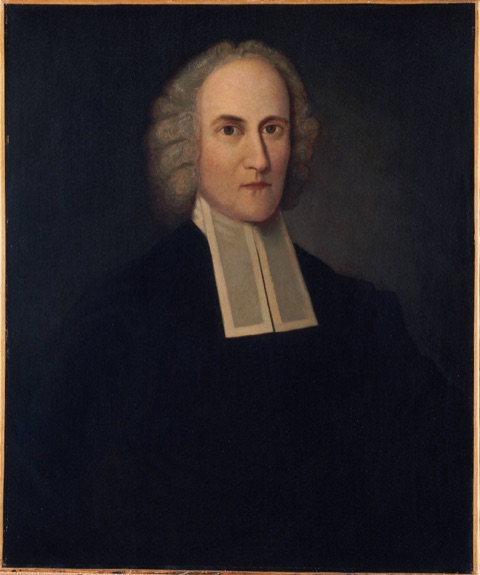
About the author
Jonathan Edwards
Jonathan Edwards (1703 to 1758 AD) was born in East Windsor, Connecticut, the only son among the eleven children of the Congregational minister Timothy Edwards. He entered Yale College at thirteen and graduated in 1720. In 1727 he became assistant to his grandfather Solomon Stoddard at Northampton, Massachusetts, and succeeded him as pastor in 1729. His preaching sparked a local revival in the mid-1730s, and he preached at Enfield in 1741 during the Great Awakening. Dismissed from Northampton in 1750, he served the frontier mission at Stockbridge, where he wrote Freedom of the Will (1754). He was elected president of the College of New Jersey in 1758 and died that March after a smallpox inoculation. In this work he refers to his own discourse on the prophecies of the Messiah.