Modernized edition · Full text · Free PDF/EPUB
Miscellaneous Observations on Important Theological Subjects in Modern English
Summary
- Published
- 1793 AD, after Edwards's death
- Type
- Theological notebook entries on apologetics and doctrine
- Length
- 126,000 words · 8 hours
- Collection
- Puritan
What is Miscellaneous Observations on Important Theological Subjects about?
Miscellaneous Observations on Important Theological Subjects collects Jonathan Edwards's notebook entries, published in 1793. Edwards argues against the deists that reason cannot replace revelation, defends the mysteries of Scripture and the full divinity of Christ, explains the fall and confirmation of the angels, and describes heaven as a state of ever-increasing knowledge, love and joy.
Read the full summary (8 points, quotes, key themes)Show less
How the argument unfolds
- 01
Facts and Evidences of Christianity. Ten chapters on the need for revelation, Christ's return, prophecy and miracles, judgment, Scripture, the limits of reason, Islam and the Jewish nation.
- 02
The Mysteries of Scripture. Twenty-seven observations showing that mysteries are to be expected in a revelation from God.
- 03
The Divinity of Christ and the Trinity. Sixty-four sections setting the names, works and worship reserved for God beside the same given to Christ.
- 04
Angels. How angels act on matter, why the highest serve the lowest, and how they depend on Christ.
- 05
The Fall of the Angels. Lucifer refused to serve a Head in human nature and fell, and Jesus was exalted into his place.
- 06
The Devil. Satan's folly, why no Savior is offered to devils, and how their fall heightens the angels' joy.
- 07
Confirmation of the Angels. The elect angels were confirmed by Christ at his ascension, after their last trial in serving him.
- 08
Heaven. Union with Christ, degrees of glory, eternal growth, the risen senses, the saints' view of earth, and the renewal of heaven.
Notable images & quotes
- The silent monument. A dearest friend who left a marvelous work but never spoke again could not satisfy friendship: “a silent monument alone cannot fulfill the ends of friendship”.
- The naked eye and the telescope. Setting reason above revelation because reason judges it is like claiming to see the planets better “with the naked eye than with a telescope”.
- The covering cherub. Lucifer knelt beside the mercy seat, while “Jesus is admitted to sit down forever with God on the throne itself”.
- The angels sent back to school. Quoting Thomas Goodwin, Edwards calls the gospel a mystery hidden even from the angels, which would “put the angels to school again”.
- Spring in heaven. “The face of the earth rejoices at the sun’s return in spring”, and heaven will put on new beauty when Christ returns after the judgment.
Key themes
- Revelation and reason. Reason can confirm many truths once revealed, but never found them alone, and cannot say how a sinner may be forgiven.
- One design in all God's works. Heaven, earth and hell serve redemption: “How many wise designs are carried forward across different worlds by the turning of a single wheel!”
- A Redeemer who is God. Only a divine Redeemer could safely receive the love his benefits draw from us: “Because of this, we are in no danger of loving and adoring him too much.”
- Heaven as growth. Heaven reverses earthly decay: there “things grow ever more youthful, that is, more vigorous, active, tender, and beautiful.”
Why read it today
Read it to watch Edwards think. These are working notes that test arguments against the deists and reach for homely illustrations: a boy and two cubes, a blind man told about color, a friend who never writes again.
It gathers his case for the full divinity of Christ, built passage by passage from Scripture, against the Arian views of his time.
It also gives an extended account of heaven, where Christ meets his people as friends, the saints watch the church on earth, and joy keeps growing until the marriage of the Lamb.
Source edition: Edward Hickman's 1834 Works of Jonathan Edwards, volume 2, in modern English
Reader questions (10)Hide the questions
Questions about Miscellaneous Observations on Important Theological Subjects
Is there a modern English version of Miscellaneous Observations on Important Theological Subjects?
Yes. This is Miscellaneous Observations on Important Theological Subjects by Jonathan Edwards in modern English. The language is modernized and the author's order and argument are kept. The full modernized text is free to read on this page.
Can I read Miscellaneous Observations on Important Theological Subjects online for free?
Yes. The complete text of this modern English edition is on this page, with no sign-up or paywall.
Is there a free PDF of Miscellaneous Observations on Important Theological Subjects?
Yes. The PDF and EPUB of this edition are free with an Updated Works account. Sign in with Google or an email link; no card is needed.
What is Miscellaneous Observations on Important Theological Subjects by Jonathan Edwards about?
It gathers Edwards's notes on the evidences of Christianity, the mysteries of Scripture, the divinity of Christ and the Trinity, the angels and their fall, and heaven, each part a series of separate observations on one subject.
Did Edwards write this as a single book?
No. The entries keep his own observation numbers and refer to his notes on particular verses, his sermons and his Blank Bible. They were arranged by subject and published in 1793, thirty-five years after his death.
Who is Edwards arguing against?
Chiefly deists who held natural reason a sufficient guide in religion. He names Tindal's Christianity as Old as the Creation, Bolingbroke and Shaftesbury, and in the parts on Christ he answers the Arians.
Why does Edwards think the angels fell?
He judges it probable that God revealed that one in human nature, united to his Son, would be their Head, and Lucifer thought it beneath him. He cites Goodwin, Zanchius and Suarez as holding a similar view.
What does Edwards say about the devil's cunning?
That sin stupefies the mind, so that for all his craft “he is still one of the greatest fools and blockheads in the world”.
Do the saints in heaven know what happens on earth?
Yes. They are with Christ, who rules the church, and with the angels who serve it. Edwards answers objections from Simeon's prayer and Ecclesiastes 9, which he reads as speaking of the body in the grave.
Is heaven's happiness fixed and unchanging?
No. The saints receive new joys on new occasions, gained greatly at Christ's ascension, will gain more at the resurrection, and grow in knowledge and love forever.
Miscellaneous Observations on Important Theological Subjects in Modern English · Full text
Part 1
Facts and Evidences of Christianity and Objections of Unbelievers
Chapter 1: General Observations
1. I suppose deists will admit that the Christian religion is the most rational and pure ever established in any society of men. They will exclude only themselves, claiming to serve God more according to his will than Christians do. Yet can anyone believe that God has so wholly cast off humanity that there has never yet been a society of people who rightly paid honor to their Creator?
It is easily proved that humanity’s highest end and happiness is to view God’s excellence, to love him, and to receive expressions of his love. We express this love, along with all the other affections that depend on it and are necessarily connected with it, in worship. The highest end of human society, therefore, must be to help one another and join together in this calling. Yet how does it happen that this end of society has never once been reached among deists? Where have they ever regularly practiced corporate worship? Even if they were inclined to express their love and honor together, how would they go about it? They have nothing from God to direct them. Surely there would be endless disagreements about it, unless they were willing to adopt the Christian model. We may conclude, therefore, that revelation is necessary for right social worship.
2. No religion except the one we profess, and those formed from it, has ever claimed to tell us the nature of God, that there is only one God, how the world came into being, and how God governs it. What other religion has revealed God’s great designs, his will, and how he should be served? What other religion has declared the reward of obedience and the punishment of disobedience, the nature of human happiness, and the end for which we were made?
What other religion has given us sound moral rules, told us what will become of the world hereafter, and explained how we became sinful and miserable and how we may escape sin and misery? What other religion has traced the great revolutions of the world and the unfolding sequence of God’s works in the universe? What other religion has shown where his true worshipers have been and what befell them, or explained how the world fell away from the true worship of God? Christianity is also the only religion that has ever claimed that a time will come when it will be the religion of the whole world.
3. The Jewish religion, as currently practiced, certainly differs from what reason clearly declares to be the essence of religion. It does not rightly state humanity’s highest end and happiness, our chief business and greatest misery, or the true worship of God. Without question, the Messiah was to come to advance the highest good and true happiness of humanity. That good certainly consists in what the gospel declares our Jesus advanced, and not in what the Jews expect the Messiah will do.
4. Christ performed his miracles for three and a half years, and he did so publicly all across Judea. Soon afterward, violent opposition arose there against Christians. In light of these facts, I think it is certain that if those events had been false, the Jews generally would have denied them, and we would have known about it. The Jews afterward would have denied them even more forcefully, yet it is clear they did not. If they had denied them, the pagans who wrote against Christians would have denied them too. Yet they did not. It is impossible that the whole world would have turned Christian within three hundred years after such public events if those facts had been generally false.
If the Jews had denied the facts at first, they would surely still deny them today, since they hold so tightly to the traditions of their ancestors. Christ’s resurrection was openly proclaimed within a few days of his death, on the day of Pentecost. Beyond question, the number of Christians grew rapidly everywhere from that time on, swiftly producing a major change across the world. Whether the events were written down at once or not, everyone was talking about them. The conversion of the Roman Empire to Christianity was the most remarkable event that ever occurred among the nations of the world. It would be inexplicable for that to happen on the word of a few obscure men without people investigating the facts they reported.
5. I am convinced of the necessity of revelation when I consider how negligent, dull, and careless I would be about future happiness if left to discover it by unaided reason. This is especially true if there were no revelation at all about what pleases God, how he accepts our service, how he loves his servants, how he pardons sin, and the like.
6. Jesus Christ certainly had none of the advantages of formal education for gaining learning and knowledge. Yet it is equally certain that everywhere in his teaching he displayed an extraordinary insight into reality, a deep knowledge of the true nature of virtue and morality, and a clear grasp of what is most acceptable to God. In this he went vastly beyond the rest of his nation, scribes and Pharisees included. How did he come by such knowledge? How did he acquire it in Nazareth? Today, people without a formal education can still learn a great deal from books, which are so widely available. Books of learning were not to be had then.
Indeed, Christ clearly knew far more than any of the philosophers and wise men in the entire world. We see this in his rational descriptions of God and his attributes, his government and providence, and human nature, calling, purpose, and happiness. We see it as well in what he taught about what pleases God, the immortality of the soul, and the future state. How did he know with such precision truths that reason might perhaps prove, yet had never discovered before?
7. Many considerations show that Christ was truly dead. It is completely unreasonable to imagine that he only pretended to be dead. What reason would he have had to think such a scheme could succeed, or to expect that they would take him down from the cross before he was fully dead? Even if he had formed such a plan, it would have been impossible to play the part so convincingly as to escape all detection or suspicion.
Besides, if he was not already dead when they took him down from the cross, he was very close to it. His severe wounds, heavy loss of blood, and long fasting would surely have ended his life before the third day. And if he merely revived from a faint, how could he suddenly be completely healthy and whole? His hands and feet must have been badly torn from bearing his weight so long on iron spikes driven through them. Finally, if he rose from the dead in no supernatural way, where did he go afterward? What became of him? We have no record of his dying again, and yet after a few weeks he was nowhere to be found.
8. If Christianity were not true, it would never provide so much rich material to engage rational and penetrating minds. If it were false, such minds would find it hollow. It would force violence on the intellect to keep meditating on something whose parts had no real order, foundation, or mutual dependence beyond mere accident. A strong, piercing mind would feel severely cramped and obstructed by it. In reality, however, the study of Christianity brings as much intellectual freedom and mental growth as the study of natural science or any other discipline, and indeed far more. Whatever anyone may say about Islamic theology, I cannot help thinking that a mind trained in clear and exact reasoning would find nothing but chains, fetters, and confusion if it tried to apply its reason to it.
9. The beauty of the physical world consists chiefly in reflecting spiritual beauties, and the beauties of minds are infinitely greater. We may therefore conclude that when God created the world, he displayed his own perfections and beauty most wonderfully and clearly in the spiritual realm. Yet spiritual beauty consists primarily in virtue and holiness, and very little of that beauty is now visible on earth. From this we may fairly conclude that there has been a great fall and defection in this part of the spiritual world from its original beauty and splendor.
Corollary: This conclusion agrees closely with the account Christianity gives of the matter. Furthermore, many arguments show that God does not intend to abandon humanity as lost, but mercifully purposes to restore us to our original beauty. Christianity alone tells us of this restoration and explains how it is accomplished, and its account is thoroughly rational. All of this strongly confirms the truth of Christianity.
10. It is a compelling argument for the truth of Christianity, and for the rock-solid foundation on which it stands, that no one has ever been able to prove it false. Many people of every kind, including brilliant minds and scholars of great learning, have worn themselves out and searched the whole world for arguments against it, and they have done so for many ages.
11. It is exceedingly unlikely that it would ever occur to any mortal to invent such a strange system of visions as the Revelation of Saint John, when he himself could not explain its meaning or purpose and never claimed to do so. What purpose could he possibly have had in inventing it? Yet even if he had some purpose, the structure of the vision looks nothing at all like a random invention lacking an intentional design for its interpretation.
12. It seems completely unlikely to me that anyone among the Jews, so long ago, had such a thorough grasp of human nature and the hidden springs of human affections. No one back then could have fabricated anything so perfectly and exquisitely true to life as the events in the story of Joseph and the other narratives of the Bible, especially the book of Genesis.
13. Miracles such as healing the sick, the blind, the deaf, the mute, and the lame, creating bread and fish, and turning water into wine are greater than far more spectacular wonders, such as causing universal darkness, dividing the sea, or shaking and setting fire to Mount Sinai. Healing the sick and the deranged displays divine power in a special way. We have good reason to conclude that humanity is uniquely under God’s providence, that human health and sanity rest in his hands alone, and that no evil spirit has power to give or take them away at will, however much power such a spirit might be supposed to have over inanimate creation.
When a person appears who visibly holds the entire course of nature under his command at all times, able to alter it whenever and however he pleases, we have the strongest reason to conclude that that person has divine authority. We have every reason to believe that the Author and Upholder of nature favors him and endorses what he claims through those works. For we know that the course of nature is God’s established way of acting on created things, and we cannot believe he would hand over power to any evil spirit to alter it at will for evil ends. Yet Christ clearly held the course of nature under his will and command in just this way.
14. It would not have been proper for Christ to live continually among people after his resurrection. People would have been strongly tempted to fall into idolatry, and because they saw the man Christ Jesus, they would have been prone to direct their worship to his human nature. Therefore we are not to see the man Christ Jesus until we are made perfect and are no longer vulnerable to such temptation. For this same reason, it was probably not fitting for Christ to appear in great majesty and glory while on earth, but rather the opposite. For this reason he sought to conceal his transfiguration and many of his other miracles until after he had risen. And for this reason he did not live and associate continually with his disciples after his resurrection as he had before. All of these things were arranged in the wisest and most fitting way imaginable.
15. Suppose human reason has been deeply corrupted by something that happened since the creation. Suppose also that God is still gracious, has not cast us off, and still reserves us for the purpose for which he made us. In that case, we cannot imagine that he would leave us to reason as our only guide in the highest business of life. Reason cannot be trusted to do that, and yet we desperately need something dependable regarding our eternal welfare. Nor does it seem reasonable to suppose that if God shows mercy after we have forfeited his favor, he will show it only through partial mitigations of the misery into which we have plunged ourselves, leaving us inevitably to endure the rest. Rather, he will fully restore us if we accept his offered favor.
16. It seems far more reasonable to suppose that the universal law governing humanity should be a written law. If the rule by which God intends to regulate the world and keep it in decent, happy order were expressed only through nature, human bias would make it deeply uncertain in countless situations.
As Ditton writes in his work on the resurrection, “It must be granted that men who are willing to transgress may abuse written as well as unwritten laws, and expound them as may best serve their turn on occasion; yet it must be allowed that, in the nature of the thing, revelation is a better guard than a bare scheme of principles without it. For men must take more pains to conquer the sense of a standing, written law, which is ready to confront them on all occasions. They must more industriously tamper with their passions and blind their understandings before they can bring themselves to believe what they have a mind to believe, in contradiction to the words of an express and formal declaration of God Almighty’s will, than there can be any pretense or occasion for when they have no more than their own thoughts and ideas to manage. These are flexible things, and a man may much more easily turn and wind them as he pleases than he can evade a plain and positive law, which determines the kinds and measures of his duty, and threatens disobedience in such terms as require long practice and experience to make plausible evasions and distinctions to get around.”
There is another reason as well. Whenever a law is made known, it is fitting that its sanctions, its rewards and punishments, should be made known at the same time. Nature could never have determined these with any certainty.
17. Raising the dead to life is given in the Old Testament as a sure proof of a prophet’s authority and mission, and of the truth of what he speaks. “And the woman said to Elijah, By this I know that thou art a man of God, and that the word of the Lord in thy mouth is truth” (1 Kgs 17:24). If the Old Testament is the word of God, then Jesus was a true prophet.
18. The existence of God is evident from the Scriptures, and the Scriptures themselves prove their own divine authority, in the same way that the existence of a thinking human being is evident from the movements, behavior, and speech of a body animated by a rational mind. We know a rational mind is present only through the consistency, harmony, and unified direction of a sequence of actions and sounds, and their agreement with everything we know belongs to a rational mind. These give clear proof of the understanding and design behind those actions.
In the Scriptures, there is that same universal harmony, unity, and unified direction of purpose. Everywhere there appears a wonderful and glorious design, bearing unmistakable stamps of exalted wisdom, majesty, and holiness in substance, manner, structure, and aim. To someone thoroughly acquainted with the Scriptures, the evidence that they are the word and work of a divine mind is just as clear as the evidence that an intelligent person’s words and actions come from a rational mind. When an infant first enters the world, it watches people move and hears their voices before it has enough comprehension to notice their consistency, harmony, and purpose. It draws no distinction between their bodies and other objects, or between their movements and sounds and those of inanimate things. As its comprehension grows, however, understanding and design begin to appear. It is the same with people who know as little of the Scriptures as infants know of human actions. They cannot see any evidence of a divine mind behind them because they lack the comprehension needed to grasp their harmony, wisdom, and design.
19. Without divine revelation, I am convinced that not a single doctrine of what we call natural religion would escape endless darkness, doubt, controversy, and dreadful confusion, despite all philosophy and learning. Many truths seem very plain now that they have been revealed. It is one thing to see that a truth agrees closely with reason after it has been explained to us and its grounds pointed out. It is quite another to discover it and explain it clearly and reliably by unaided reason. It is one thing to prove a truth after someone shows us how, and quite another to discover and prove it on our own.
If there had never been any revelation, I believe the world would have been filled with endless disputes about the very existence of God, whether the world existed from eternity or not, and whether the world’s form and order arose merely from the nature of matter. Ten thousand different theories would have been invented about it. Even if people agreed there was a first cause of all things, there would have been endless debates and deep uncertainty over what sort of thing that first cause was. Some might have thought it was truly an intelligent mind and a voluntary agent, while others would have called it some principle of existence of which we can form no clear idea. Some would have called it a voluntary agent, and others a principle acting by natural necessity.
Many competing systems would have been devised, with different people favoring different ones. Even among those who held that the source of all things was a superior intelligence and will, there would probably have been perpetual doubts and disputes over whether there was only one or more. Some might have said there was one, others that there were two, one a principle of good and the other a principle of evil, and still others that there was a whole society or world of them.
Even among those who held there was only one mind, there would have been immense uncertainty about what kind of being he was. People would wonder whether he was good or evil, just or unjust, holy or wicked, gracious or cruel, or partly good and partly evil. They would wonder how far he concerned himself with the world after making it, and whether events owed anything to his providence at all. They would debate how far he cared about humanity, what pleased or displeased him in us, and whether he cared at all. They would argue over whether he delighted in justice and order, whether he would reward what pleased him and punish what displeased him, and if so, how, when, where, and to what degree.
There would also have been immense doubt and dispute about what this mind expected from us and how we ought to behave toward him, or whether he expected us to concern ourselves with him at all. People would question whether we should approach him in any way or speak to him expecting him to take notice. They would wonder how to show him respect, whether to praise and honor him in our prayers, and whether to ask him for what we need. They would not know whether he would forgive anyone who offended him, how they could know they were forgiven, what they must do to obtain forgiveness, or whether people who offend so often should even bother trying.
They would wonder whether some sins were so great that God would never forgive them on any terms, and how great a sin had to be for that. People would be completely at a loss to know when they stood in his favor and on what terms they could gain it. They would live in dreadful uncertainty about a future state, wondering whether any exists, and if it does, whether it is a state of rewards and punishments. They would not know what kind of state it is, or how people will be rewarded or punished, to what degree, and for how long. They would not even know whether the human soul is eternal, and if it is, whether it remains in a fixed condition in the next world or constantly changes.
Everyone would argue for the lawfulness of whatever practice suited his fancy and aligned with his self-interest and appetites. Even among the most thoughtful and impartial thinkers, there would be vast uncertainty and disagreement. In countless cases, it would be unclear what was just and what was unjust. People would be unsure how far self-interest should govern them and how far love for their neighbor should, how far revenge was right, and whether or for what reasons a person might hate his neighbor. They would debate what level of anger and ambition was justifiable and praiseworthy, what bodily pleasures were lawful and what were not, how far we should honor, respect, and submit to parents and other authorities, and how far it was lawful to disguise our intentions and deceive others. It seems to me there would be endless confusion in all these matters, and that there would scarcely be any such thing as conscience left in the world.
The world has had ample experience of the need for revelation, as we can see in every age that has lacked it. What gross darkness and brutal stupidity have always overwhelmed such places in these matters! What huge, foolish mistakes, and what endless uncertainty and disagreement, have existed even among the most learned and philosophical! Yet humanity has never actually been tested to see what its condition would be without any trace of revelation at all.
I believe most of the truths of natural religion held by pagans before Christ came from tradition handed down from ancestors who had the light of revelation. Because many of those truths agreed so clearly with reason, they were more easily preserved and passed on. Many of their wise men who held influence and authority saw their rightness and reasonableness more clearly than others. Some traveled widely and brought back to their own countries the ideas that seemed most reasonable. Judea served as a kind of light among the nations, even though they did not realize it. The practices and principles of that land reminded neighboring nations of traditions they had received from their ancestors, keeping them from degenerating as far as they otherwise would have. In fact, the philosophers drew the foundation of most of their truths from the ancients, from the Phoenicians, or from fragments of revelation they picked up here and there.
How did all the pagan nations come to share the custom of offering sacrifices? The light of nature did not teach them that. No doubt they received it through tradition. It should not seem strange, then, that whatever natural religion they possessed came by the same route. I am convinced that humanity would have been like a herd of beasts in its knowledge of all vital truths if there had never been revelation in the world, and that people would never have risen out of their brutishness. We see that those who live farthest from revelation are by far the most uncivilized. The pagan peoples in America and in some of the remotest parts of Asia and Africa are far less civilized than those who once lived in Rome, Greece, Egypt, Syria, and Chaldea, because their traditions have worn thinner and they are farther from lands enlightened by revelation. The Chinese, probably descended from the people of that holy man Noah, retained more tradition from him than other nations and have therefore been a more civilized people.
The growth of learning and philosophy in the Christian world is owed to revelation. The doctrines of revealed religion are the foundation of all useful and noble knowledge. The word of God leads uncivilized nations into using their minds. It trains them in reflection and abstract reasoning, and it frees them from uncertainty about first principles, such as the existence of God, the dependence of all things on him, their subjection to his influence and providence, and their ordering by his wisdom. Principles like these form the basis of all true philosophy, as becomes clearer and clearer as philosophy advances. Revelation rescues humanity from the distraction and confusion that discourage every effort to grow in knowledge. It gives people a thoroughly rational account of religion, morality, the highest philosophy, and all the greatest subjects of learning regarding God, the world, human nature, spirits, providence, time, and eternity. Revelation not only supplies the foundation and first principles of all learning, it also supplies the end, the only purpose sufficient to motivate humanity to pursue it.
Revelation also redeems nations from a corrupt, sinful, and brutish way of life that effectively shuts out learning. It is therefore unreasonable to suppose that philosophy could make up for the lack of revelation. Knowledge comes easily to us who understand through revelation, and we do not realize what brutes we would have been if revelation had never existed.
20. Because Moses was so intimately acquainted with God and so continually under divine guidance, it is unthinkable that he would have been left without divine direction when writing the history of the creation and fall of humanity and the history of the church from the beginning.
21. It is certainly necessary that God’s word give us a history of Christ’s life, his incarnation, death, resurrection, ascension, works, and teachings to the world.
If God expects us to receive any New Testament at all, we must assume his providence was active in preserving it. God took such care with the books of the Old Testament that the Jewish church received and handed down in the Old Testament canon only what was truly his word and acknowledged by Christ. We may therefore conclude that he would take the same care of his church regarding the New Testament.
22. It strikes me as an inexplicable dullness that intelligent people can read David’s Psalms and the other prayers and songs of the Old Testament and not be immediately convinced that the Jews possessed the true worship of, and communion with, the one great and holy God, while no other nation on earth did. This is as clear as the sun at noonday, and the same is evident from all the histories and prophecies of the Old Testament.
23. We need not be surprised at all that God so often revealed himself through prophets and miracles to the nation of Israel, while we see nothing of that sort today. That method of revelation is simply not suited to the present state of the church. The church was then confined to one single nation, which God chose specifically to serve as the vessel of his revelation and the channel to convey it to the rest of the world. I can think of no other way this could have been done effectively except through a specially chosen, distinct nation that alone would be God’s people and keep the true religion among them. Therefore, that direct manner of communication with such a nation was both highly fitting and necessary.
It was also necessary during the first transition of this revelation from the Jews to the wider world, in the days of the apostles. The nations receiving it from them needed to see God still revealing himself, so that they might receive it from God in the same way Israel had. For God to reveal himself in that manner to his church now, however, is neither necessary nor suited to the gospel age. Today the church is no longer a single enclosed nation, but is spread throughout the entire world. How could God deal with the church today in the same localized way he dealt with that one distinct nation?
Besides, even if it were workable, it would be unwise. What need is there for new revelations until the end of the world? Is it not far better for God to give the world a single book summarizing his will, to which all nations in every age may turn? Prophecy and miracles are nothing without love, like a shadow without its substance. Now that the substance has come, why should the shadow continue? Now that the goal has been reached, it would be pointless to keep using the temporary means. The church today enjoys a glory so great that, compared with it, all the glory of prophecy and miracles, even those of that extraordinary prophet Moses, has no glory at all (2 Cor 3:10).
24. If it is necessary or even fitting for God to reveal himself to humanity, it is perhaps impossible for him to do so in any better way or with any stronger kind of evidence than he has already used. No kind of miracle can be imagined that would carry stronger proof than those that confirmed Christianity.
25. It is no argument against the reality of the incarnation of Jesus Christ, in which God became one person with a human being, that nothing else like it can be seen anywhere. God’s clear purpose was to display his wisdom by doing something that was, and forever would have been, far beyond the imagination of any creature. Humanity’s fall was God’s opportunity to show how infinitely his wisdom and plan surpass those of all created beings.
26. It was often prophesied among the people of Israel that the gods of the surrounding nations would perish from the earth and cease to be acknowledged and worshiped, while the worship and acknowledgment of their God would endure forever and in due time replace all the others. “The gods that have not made the heavens and the earth, even they shall perish from the earth, and from under these heavens” (Jer 10:11). This came to pass through the Christian religion. Christ’s appearing and the preaching of his teaching in the world have brought all of it about. Through these means the Muslim parts of the world came to acknowledge the one God, and through these same means even the deists have come to it. Likewise, it is solely through the appearing and teaching of Jesus Christ that the world ever arrived at clear, distinct, and rational ideas about a future state, ideas that agree in every way with reason.
Another confirmation that God designed Christianity to succeed the Jewish religion is that, shortly after Christianity was introduced, God’s providence made the Jewish system impossible to practice through the destruction of the temple and the scattering of the Jewish nation. It was prophesied long ago that other nations would acknowledge and worship God and become his people. Therefore, a religion very different in its outward worship had to succeed the Jewish one. The Jewish system was fitted only for a single nation and cannot be practiced by the world at large, whereas Christianity is remarkably suited for universal practice.
27. Several remarkable details stand out in Christ’s raising of Lazarus from the dead (John 11). Before performing the miracle, he called on God to do it for him, thanked him for hearing him, and told him he knew God always heard him. When he spoke to God, he called him Father, and he explicitly stated that he spoke aloud so that the bystanders, seeing God grant his request in such an extraordinary work, might believe that God had sent him. Can anyone imagine that God would answer an impostor in this way?
28. The vast and immediate change in the apostles right after Pentecost proves that they received their teaching by inspiration from an invisible Guide and Instructor. Before that day they were uneducated, simple, uncalculating, and uninformed men. Afterward, how powerfully they express themselves in their sermons and letters! They show not the slightest uncertainty about the plan of salvation or the mysteries of the gospel. With what authority they teach, and in how learned and intelligent a manner! And how did Saul gain his entire grasp of Christian doctrine and its mysteries immediately upon his conversion?
29. Christ joined the forgiveness of sins with healing the sick. When a paralyzed man was brought to be healed, Jesus first told him that his sins were forgiven. When the Jews objected to his claiming to forgive sins, he immediately healed the man’s disease so they might believe he had authority to forgive sins, and he told them he did it for that very purpose (Matt 9:2; Mark 2:3; Luke 5:18). Now, if Christ were an impostor, could anyone believe that God would endorse such terrible blasphemy by enabling him to cure a disease with a spoken word? God claims that very work exclusively as his own (Ps 103:3). Would God grant an impostor that kind of confirmation for a blasphemous lie, right when he claimed it as proof of his divine mission?
30. By the works he performed, Christ demonstrated an absolute and sovereign power over the course of nature, the spiritual and invisible world, and human bodies and souls. It was not that way with earlier prophets. They could not work whatever miracles they chose whenever they pleased. They could perform miracles only when stirred and directed to do so by a special command or impulse from heaven. Christ, however, performed miracles by his own power at all times. People came to him believing that he was able, and Christ required them to believe in his power in order to be healed, something no prophet ever claimed. Moses was barred from the land of Canaan partly for performing a miracle in his own name and failing to honor the Lord God: “Must we fetch water out of this rock?” (Num 20:10).
The prophets never claimed that they themselves possessed any real power to work miracles; instead, they disclaimed it. God never placed the course of nature under their control so that they could work miracles at their own word and command on every occasion. In every miracle worked by the prophets, care was taken to make it visible that God alone did the work, and that whatever the prophet said or did to initiate it came from a specific revelation from heaven.
Those who came to Christ for miracles came believing that by his own power and holiness he was able to act for them. The leper said, “Lord, if thou wilt thou canst make me clean” (Matt 8:2). He believed Christ could work miracles whenever he chose, and Christ approved of that faith. Others spoke in the same way: “But speak the word only, and my servant shall be healed” (Matt 8:8). “My daughter is even now dead; but come and lay thine hand on her, and she shall live” (Matt 9:18). “Believe ye that I am able to do this? they said unto him, Yea, Lord” (Matt 9:28). “If I may but touch his garment, I shall be whole” (Matt 9:21). In Matthew 16:9, Christ rebukes his disciples for fearing they would lack bread, forgetting how he had fed crowds in the wilderness, which implies he could do the same again whenever he pleased.
He also cast out demons by his own power and authority: “With authority commandeth he even the unclean spirits, and they do obey him” (Mark 1:27). Because Christ possessed miraculous power of his own, he also granted that power to his disciples (Matt 10; Mark 3:14; Mark 6:7; Luke 9-10). Thus the apostles and many other disciples worked miracles in Christ’s name. Moses never claimed anything of the sort, yet Christ did, even declaring himself equal with God in his working: “My Father worketh hitherto, and I work” (John 5:17).
31. If there must be a divine revelation, it is compelling proof that the Christian revelation is the true one when we observe that through it, and through it alone, the world has come to know the one true God. Until Christianity arrived, the entire world lay in ignorance of him. When it arrived, it succeeded in bringing the world to acknowledge him. If a true revelation exists, we cannot suppose that a false religion, a mere imposture, would be what brings the world to know the true God. If the Christian revelation were not the proper means of bringing humanity to know the true God, it would be astonishing that a world formerly ignorant of him was brought to know him through it, and that no part of the world has ever come to know him by any other means.
32. Another argument for the truth of Christian revelation is that nothing else tells us what God intends by the whole sequence of upheavals and events taking place in the world, what goal he is pursuing, and what plan he has laid out. This matches the challenge God issues to the gods, prophets, and teachers of the pagan world (Isa 41:22-23). It is wholly fitting that the intelligent beings of the world should be told what that plan is. God’s great design directly concerns them, and the upheavals that bring it about are changes among them and in their condition. The inanimate, unperceiving part of the world matters only as it serves the perceiving and intelligent part. It is therefore most reasonable to suppose that God would reveal his ongoing design to his rational creatures, so that, since he has made them capable of it, they may actively join in and advance it as his loyal subjects and friends. The Christian revelation sets forth a design wholly worthy of an infinitely wise, holy, and perfect Being.
33. The doctrine of the general resurrection at the end of the world seems to me entirely credible for many reasons. Nature and providence are full of analogies to it, which I do not doubt were designed to foreshadow it. It is also credible because the Redeemer’s work is completely a work of restoration from start to finish, repairing every ruin that sin has brought into the world.
34. If the New Testament is not a divine revelation, then God has never yet given the world any clear revelation of a future state. Yet if revelation is needed for anything, it is so that we may have reliable, clear knowledge of the invisible world to come. If God intended to give a true revelation, it is unlikely he would allow a false one to arrive first and accomplish the work ahead of time. And for many other reasons that could be named, it is unbelievable that the true revelation would still be delayed.
35. It is completely unreasonable to object to Christian revelation on the ground that it contains deeply mysterious truths that strain our understanding and appear impossible to us. If God gives us a revelation from heaven of the actual truth about his own nature, acts, counsels, and ways, as well as the spiritual and invisible world, we have no right to expect anything other than that much of it will lie completely beyond our grasp. Consider scientific truth about created things, which are vastly lower in nature and presumably far better matched to our minds. Was there ever an age in which a revelation of the true facts of nature would not have struck both ordinary people and the learned of that era as absurd and impossible? If many scientific principles now accepted by scholars as undeniable facts had been revealed from heaven in earlier ages, they would have seemed just as impossible as the most mysterious Christian doctrines seem now.
I believe that even today, if a revelation came from heaven declaring the exact truth about such matters without bending to fit our accepted theories and assumptions, many things in it would appear absurd and contradictory. I myself now accept as certain several principles that, if someone had told me earlier, I would have found just as hard to accept as any mystery in the Bible. No doubt much of our difficulty with Christian doctrine stems from false assumptions we already hold. We constantly see ideas accepted without question in one age overturned in another as knowledge advances. If God gives us a revelation, he must reveal the truth as it really is, without altering it to match our assumptions. Doing so would be impossible anyway, since the accepted ideas of one age contradict those of another, and the word of God was not given for a single era, but for all ages. Surely it befits us to receive what God reveals as truth and treat his word as sufficient proof, whether it squares with our preconceived notions or not.
In fact, I wonder why God’s word does not contain even more mysteries. I believe it is because God is so gentle with us, revealing only what he sees a weak human mind, if humble and honest, can reasonably bear. We see that same gentleness in Christ toward his disciples: he had many things to tell them, yet held back because they could not bear them yet. While God never departs from truth to match our way of thinking, I believe he does accommodate himself to our way of understanding in how he expresses and illustrates things, just as we naturally do when teaching small children.
36. What could be more reasonable than to believe a man who tells us he is sent from God to heal the diseases of our souls, and proves his claim by healing every sort of person of every kind of illness with a touch or a word? He plainly shows he can do it whenever he chooses, whatever the disease may be. He tells us he will rescue us from spiritual and eternal death, raise us from the dead, and give us eternal life so that we will live forever and never die. To prove this, he demonstrates power over human life by restoring the dead and by rising from the dead himself.
He tells us he will bestow heavenly glory on us and bring us into heaven, and to confirm our faith, he tells us we will see him ascend into heaven after his death. What more could we ask? He tells us he will act as our advocate and appear before God on our behalf, so we need not doubt that his pleading will win us acceptance. To show that this is true, he asks God to bring a man back to life who has been dead four days, explicitly telling God he asks this so we may see that the Father always hears him and grants his requests. Accordingly, at his prayer, the dead man comes back to life.
37. “What argument could be more proper,” says Dr. Tillotson, “to convince them of another life after this, than to see a man raised from the dead and restored to a new life? What could be fitter to satisfy a man concerning heaven and the happy state of those there, than to see one visibly taken up into heaven? And what could be more fit to assure us that the promises of the gospel are real, and shall be made good to us, than to see him who made those promises to us raise himself from the dead, go up into heaven, and from there dispense miraculous gifts abroad in the world as evidences of the power and authority with which he is invested? All the philosophical arguments a man can bring for the soul’s immortality and another life will have no force upon ordinary minds, in comparison with these tangible demonstrations, which give actual proof of the thing, and furnish us with an instance of something of the same kind, and of equal difficulty with that which is proposed to our belief.”
38. Why did Christ, after rising from the dead, not remain constantly with his disciples during his stay on earth as he had before? The vastly different conditions Christ and his disciples were now in would not allow it. Before his death, in his state of humiliation, Christ shared their condition. He felt hunger and thirst as they did, needed sleep as they did, and needed the same shelter from the weather as they did. Once he rose from the dead, however, everything changed dramatically, for his exaltation had begun. He laid aside mortality and every bodily weakness. The nature of his body differed from theirs as heavenly things differ from earthly things. Mortal beings are not suited to dwell together with the immortal, nor the earthly with the heavenly, nor the perishable with the imperishable. God will not mix and blur heaven and earth in that way.
39. Much of Scripture can seem flat to us today, as though it offered no great instruction, simply because its clearest teachings are familiar to us and have been taught to us since childhood. Its doctrines are so obvious to us now that there seems to have been no need for a special revelation of them, let alone for stressing them so repeatedly. Yet how vastly different they would have seemed if we had lived when the revelation was first given, when these truths were largely new, at least in the clarity and directness with which they were revealed! If we truly pictured the state of the world when God spoke, those passages would shine as glorious instruction, pouring brilliant light into the world and proving wholly worthy of God.
40. Under the Old Testament, people were not permitted to hate personal enemies, wish for revenge, or pray for their harm, except when speaking prophetically in the name of the Lord. There is therefore no contradiction between Old Testament religion and New Testament religion on this point. The apostle Paul himself calls down divine judgment on his enemies: “Alexander the coppersmith did me much evil; the Lord reward him according to his works” (2 Tim 4:14). Revenge, and even the desire for it, was forbidden by the law of Moses (Lev 19:18), where love for our enemy is implicitly commanded. Doing good to enemies is explicitly required: “If thou meet thine enemy’s ox or his ass going astray, thou shalt surely bring it back to him again. If thou seest the ass of him that hateth thee lying under his burden, and wouldst forbear to help him, thou shalt surely help with him” (Exod 23:4-5).
This also matched the conviction of Old Testament believers. Job says, “If I rejoiced at the destruction of him that hated me, or lifted up myself when evil found him” (Job 31:29). Proverbs teaches, “Rejoice not when thine enemy falleth, nor let thine heart be glad when he stumbleth” (Prov 24:17), and again, “He that is glad at calamities, shall not go unpunished” (Prov 17:5). We cannot suppose that the imprecations in the Psalms and Prophets sprang from personal spite. Cursing is condemned as a dreadful sin in the Old Testament. And David, whom we hear praying for vengeance on his enemies more often than anyone else, was shown throughout the history of his life to have a spirit far removed from spite or revenge. In the Psalms themselves, he tells of wishing well to his enemies and doing good to them (Ps 7:4), and of praying for them and grieving over their troubles (Ps 35:13-14).
Moreover, some of the most severe imprecations in the entire Old Testament, including those in Psalm 109, are explicitly treated in the New Testament as prophetic (Acts 1:20; Jer 12:3). We find examples of the same kind even among the apostles and disciples of the Lamb of God (2 Tim 4:14). Peter says to Simon Magus, “Thy money perish with thee” (Acts 8:20). They pronounce harm on such people not as personal rivals, but as public enemies of God’s church. At times they speak in the name of the church itself (Jer 51:34-35). Consider also Joseph: “Then Joseph her husband, being a just man, and not willing to make her a public example, was minded to put her away privily” (Matt 1:19). That is a striking and noble example of a Christian spirit, and this verse proves that that meekness, gentleness, forgiveness, and kindness toward enemies prescribed by the gospel were already duties under the law before Christ came.
41. I once told a boy about thirteen years old that a block of matter two inches on each side is eight times as large as a one-inch cube, meaning it could be cut into eight pieces each the size of a one-inch cube. At first he did not think I was serious and suspected I was only teasing him. When I took considerable trouble to convince him I was in earnest and knew what I said was true, he looked astonished at my certainty. He protested that it was impossible and absurd, arguing, “How can two inches be eight inches?” Nothing I said could persuade him to believe it. To him, the idea that something only twice as long, twice as wide, and twice as thick could be eight times as large seemed just as glaring a contradiction as saying two times one equals eight, or any other absurdity.
Later, I proved it to him by cutting out two cubes, one an inch on each side and the other two inches on each side. I let him check the measurements to see that they were exact and that there was no trick. Then I cut the two-inch cube into eight equal parts. He counted the pieces over and over, picked them up one by one to compare them with the one-inch cube, and spent some time counting and checking. Even then, he looked amazed, as if some witchcraft were involved, and could hardly believe his eyes, because he still could not grasp the reason behind it. I believe that was a far harder mystery to him than the Trinity ordinarily is to adults, and seemed to him a far clearer contradiction than any mystery of religion seems to a Socinian or a deist.
42. Some may object against Christianity that it appears to involve countless difficulties and inconsistencies, and that only because so many minds have labored for ages have somewhat plausible answers been devised for many of them.
To this I reply that just as there has been a long time to answer objections, there has been just as long a time to sharpen them. As many ages have been spent solving difficulties, just as many have been spent hunting for difficulties and inconsistencies. Furthermore, all this time has also served to make real difficulties clearer, bring real inconsistencies into the open, and expose them more plainly through thorough, careful scrutiny. Time has a remarkable way of bringing truth to light and gradually wearing away false veneer and disguise. Truth always gains the greatest advantage from time. If apparent inconsistencies are well-founded, they grow plainer and plainer, and difficulties become more and more obvious. Time uncovers more facts to strengthen and confirm them, making attempted solutions look increasingly absurd and ridiculous.
When opposing sides contend through argument and investigation, time greatly helps the side that has truth and steadily weakens the other. It gradually erodes a sandy foundation and rots away a building made of flimsy materials. In every age, Christianity has had enemies, including learned ones. Indeed, some of the sharpest minds have routinely examined the Christian system to uncover objections against it, doing so with every desire to overthrow it. That was true in Judea during the infancy of the church, when the scribes, Pharisees, and wise men of the Jews used all their learning against it. In the early centuries of the church, not many wise, not many mighty, and not many noble were called, while Christianity faced the combined wisdom, learning, and subtlety of the world. And in recent centuries, how many learned and brilliant thinkers have done their utmost against Christianity! Thus the long stretch of time available to strengthen each side in this debate, far from being an objection against Christianity, is a powerful argument in its favor.
43. If God gives a revelation to the world, it is wholly reasonable to suppose and natural to expect that he will reveal not only what kind of being he is, but also lead humanity to understand his works of creation and providence. Christian revelation opens these things to us in just the way we would expect. It alone gives any adequate account of creation, reveals the plan of providence, and discloses God’s overarching purpose in the whole, a purpose worthy of himself. We are shown how all events point toward this supreme work of power, wisdom, and grace. We are given a detailed account of how this greatest work was actually accomplished in the fullness of time in its foundational acts, and how it was foretold across the successive ages of the world.
All of this fits completely with what reason would expect if God reveals himself to humanity. On the other hand, if the Scriptures are not a revelation from God, then humanity, the chief creature God has made on earth and the only intelligent creature to whom he has subjected this lower creation, is left completely in the dark about God’s works of both creation and providence. We have nothing by which to judge what God’s plan is in all the great changes we see taking place in the world, or what he aims to accomplish. Everything lies before us in darkness and confusion, with no way to make sense of it, no guidance on what to think of the works of God we witness, and no direction on what affections we should exercise toward the Supreme Governor in response to them.
Chapter 2: The Apostles’ View of Christ’s Second Coming
1. Consider the objection against Christianity that the apostles often seem to speak of Christ’s coming to judgment as if they thought it were right around the corner. I will begin with the statements of the apostle Paul that may create that impression. In his first letter to the Thessalonians, which is regarded as the earliest of his letters in chronological order, he writes, “For this we say unto you by the word of the Lord, that we which are alive, and remain unto the coming of the Lord, shall not prevent them which are asleep: for the Lord himself shall descend from heaven with a shout, with the voice of the archangel, and with the trump of God; and the dead in Christ shall rise first: then we which are alive and remain, shall be caught up together with them in the clouds, to meet the Lord in the air: and so shall we be ever with the Lord” (1 Thess 4:15-17).
Notice that Paul speaks of those who will then be alive in the first person plural, and of those who will be asleep in the third person. It might have seemed more natural for him to say, “They who are alive and remain until the coming of the Lord will not go before us, who will then be asleep,” and in the seventeenth verse, “Then they who are alive and remain will be caught up together with us.”
2. Considering the apostle’s purpose in these verses, all that can be inferred from this way of speaking is that, for all that had been revealed at that time, Christ’s return might happen during their lifetime. Paul’s purpose was to comfort the Thessalonians about their friends who had already died, assuring them that they would certainly meet them again on the day of the Lord’s coming. It was therefore completely natural and fitting for him to refer to the dead in the third person.
We should also conclude that Paul spoke this way solely because the time was uncertain, since in the very same context he describes the timing as completely unknown. Immediately at the start of the next chapter he continues, “But of the times and seasons, brethren, ye have no need that I write unto you: for yourselves know perfectly, that the day of the Lord so cometh as a thief in the night,” and so on (1 Thess 5:1-2). By using that phrase, Paul probably had in mind Christ’s own words: “It is not for you to know the times and seasons, which the Father hath put in his own power” (Acts 1:7).
3. We see a similar way of speaking in Joseph’s words to his brothers: “God will surely visit you, and ye shall carry up my bones from hence” (Gen 50:25). He does not say, “God will visit your posterity, and they will carry up my bones from here.” Yet no one could argue from this that Joseph concluded the deliverance from Egypt would happen in that generation.
In the same way, the nature and purpose of Paul’s discussion required him to distinguish between those who would be alive at Christ’s coming and the deceased loved ones of the Thessalonian Christians. He speaks of those loved ones as already dead, and of their currently living friends meeting them when they rise from the dead.
4. That Paul did not mean to imply it was certain Christ would return in their lifetime is proved by his own explicit explanation of those very words. He flatly denies that he meant any such thing or supposed Christ’s coming was certainly near in that sense.
In 2 Thessalonians 2:1-3, he earnestly warns them not to misunderstand him that way: “Now we beseech you, brethren, by the coming of our Lord Jesus Christ, and by our gathering together unto him, that ye be not soon shaken in mind, or be troubled, neither by spirit, nor by word, nor by letter, as from us, as that the day of Christ is at hand. Let no man deceive you by any means; for that day shall not come, except there come a falling away first, and that man of sin be revealed, the son of perdition,” and so on.
5. Clearly Paul is not writing to them this second time to retract anything he wrote before. He writes this way because he truly never meant that in the first place. He sent the second letter soon after the first, while the same fellow workers were still with him, and according to the postscripts both were supposedly written while he stayed in Athens. When we carefully compare the contents of both letters, the main occasion for writing the second so soon after the first appears to have been a report that his earlier letter had been misunderstood on this point. Deeply concerned and fearing the harm such a misunderstanding could cause, he writes to protect them from the damage of that error and to establish them in the truth that the time of the Lord’s coming is uncertain, just as he had already told them in his first letter. He then argues how uncertain it was whether that day would come in their age or not, pointing to what the Holy Spirit had revealed about the coming of the Antichrist.
6. Further evidence that Paul did not expect Christ’s return in that generation is that he speaks as though those then alive would rise from the dead at Christ’s second coming. “And God hath both raised up the Lord, and will also raise up us by his own power” (1 Cor 6:14). And again: “Knowing that he which raised up the Lord Jesus, shall raise up us also by Jesus, and shall present us with you” (2 Cor 4:14).
7. From what Paul says in the second chapter of 2 Thessalonians, there is a clear necessity to understand any passages in his other letters that might look as if he expected Christ to return in that age in some other sense. He clearly did not mean what a hasty reading of his words might suggest, because here he states so plainly, thoroughly, and earnestly that he refuses to be understood that way. Another proof that those other passages must carry a different meaning is that the first chapter of this very same letter contains expressions we might easily take that way, except that Paul immediately denies any such meaning in the second chapter.
8. We must read in this same light the passages describing it as a Christian duty to look and wait for the coming of the Lord Jesus (Titus 2:13; 1 Cor 1:7; Phil 3:20). We must likewise understand the following passages, all written after this letter to the Thessalonians. In Romans 13:11-12, Paul writes, “And that knowing the time, that now it is high time to awake out of sleep; for now is our salvation nearer than when we believed. The night is far spent; the day is at hand. Let us therefore cast off the works of darkness, and let us put on the armor of light.”
We cannot take this to mean Paul thought judgment day would arrive in their lifetime, because he had already explained himself otherwise. He meant only that the day of Christ’s kingdom, the day of the church’s deliverance, was at hand. The same applies to Philippians 4:5, “Let your moderation be known to all men: the Lord is at hand,” and Hebrews 10:25, “Exhorting one another, and so much the more as ye see the day approaching.”
9. Christ’s coming truly was at hand in several senses, and in ways fully capable of having the practical impact Paul intended on his readers. Christ’s coming in the overthrow of the pagan empire could rightly be called near. And even Christ’s final coming to judgment, all things considered, could rightly be called near, as the apostle Peter notes, even if thousands of years intervened. Paul himself speaks of “ages to come” (Eph 2:7), showing it would not occur until many generations had passed. Yet it was still “at hand” in a sense fully consistent with the ordinary language of the Holy Spirit.
In the same way, Christ’s first coming was spoken of long beforehand as very near. “For thus saith the Lord of hosts, Yet once, it is a little while, and I will shake the heavens, and the earth, and the sea, and the dry land, and I will shake all nations; and the desire of all nations shall come; and I will fill this house with glory, saith the Lord of hosts” (Hag 2:6-7). Yet more than five hundred years still remained before it happened. When about four hundred years remained, Scripture said, “The Lord whom ye seek, shall suddenly come to his temple; even the messenger of the covenant, whom ye delight in” (Mal 3:1).
When about seven hundred years remained before the gospel era, it was called a very little while: “Is it not yet a very little while, and Lebanon shall become a fruitful field, and the fruitful field shall be esteemed as a forest? And in that day shall the deaf hear the words of the book, and the eyes of the blind shall see out of obscurity, and out of darkness” (Isa 29:17-18). Similarly, God speaks as though he would very quickly fulfill everything prophesied through Jeremiah, though parts of it would not be fulfilled for many ages (Jer 1:10-12). Likewise, the time is said to be at hand for fulfilling all the prophecies of Revelation and Christ’s final coming at their close (Rev 1:3; Rev 22:7, 10, 12, 20), even though the book clearly traces a sequence of events across many ages.
10. Furthermore, when Peter explains why Christ’s final coming is called at hand by saying that “a thousand years in God’s sight are but as one day,” this is no clever excuse invented to save face. God’s own ancient manner of speaking backs him up. Nor did the apostles’ language about the nearness of Christ’s return lead God’s people into disappointment. Christ’s coming to reward believers at death truly was close at hand, when they would gain such a comforting and full view of their complete reward at his final return that they would anticipate it and, in a sense, already possess it. Although the intervening time seems long to us in our dim-sighted condition, it will seem like nothing to them. Christ’s second coming was near enough that God’s church could rightly draw all the comfort meant by those words. In the same way, Christ’s first coming was often announced to comfort Old Testament believers under heavy afflictions, even though they were never going to witness it in their lifetime, as with Zerubbabel, Joshua, and Daniel.
11. Consider Paul’s words in 1 Corinthians 10:11: “And they are written for our admonition, upon whom the ends of the world are come.” The context and the apostle’s train of thought make his meaning clear. His only point is that what happened to Israel in the wilderness happened to them as examples and was written down for our sake. That holds true even though those events occurred so long ago and we live so long after them, in what by comparison are the ends of the world, the latter period of the world’s duration known as the latter days.
12. As for 1 Peter 4:7, “The end of all things is at hand,” how did Peter himself explain this nearness? He wrote, “But the heavens and the earth which are now, by the same word are kept in store, reserved unto fire, against the day of judgment and perdition of ungodly men. But, beloved, be not ignorant of this one thing, that one day is with the Lord as a thousand years, and a thousand years as one day” (2 Pet 3:7-8). We should also remember that Peter felt no pressure to change his tune because any predicted event had failed to occur. He had not lived long enough to see time rule out the literal reading of Christ’s words, from which some might suppose he would return before that generation passed away and before some then present tasted death.
13. There is clear proof that no general belief existed among the disciples that Christ would return while most of them were still alive. When the disciples misunderstood Christ’s words, “If I will that he tarry till I come, what is that to thee?” (John 21:22), and briefly thought that that disciple would not die before Christ returned, even under that mistake they treated it as a special privilege belonging uniquely to him, which none of the rest expected. It is equally clear that John himself held no expectation that Christ would come in his lifetime, since he points out that the other disciples’ rumor about him was groundless.
14. Another proof shows that when the apostles used expressions like “the Lord is at hand,” they did not mean it would happen in that age or the next. The apostle John, who was steeped in their way of speaking, keeps using the exact same language even after prophesying many major events that plainly unfold over many successive ages. He writes, “Behold, I come quickly” (Rev 3:11), and repeats it at the end of the book after describing all those future ages: “Behold, I come quickly” (Rev 22:7), “Behold, I come quickly” (Rev 22:12), and “He that testifieth these things, saith, Surely I come quickly” (Rev 22:20). Revelation 17 alone is enough to convince anyone that John could not have supposed his prophecies would be fulfilled except across several successive ages.
15. The continued growth of the church when Christ did not immediately return is another argument that the apostles never taught the kind of immediate nearness the objection alleges. If Christians everywhere had held that expectation based on repeated promises from Christ and his apostles, the disappointment would have dealt Christianity a devastating blow. Christians would likely have lost immense ground and dwindled away. The actual historical outcome was the exact opposite.
16. In fact, Christ often speaks of his final coming as something long delayed. “While the bridegroom tarried, they all slumbered and slept” (Matt 25:5). “A certain man planted a vineyard” (Luke 20:9). “After a long time, the Lord of those servants cometh and reckoneth with them” (Matt 25:19). “My Lord delayeth his coming” (Matt 24:48; see also Luke 17:22).
17. Clearly, when Christ speaks of his coming, his being revealed, his coming in his kingdom, or his kingdom coming, he often refers to his appearing in the great works of power, justice, and grace involved in the destruction of Jerusalem and the extraordinary providential events surrounding it. For instance, in Luke 17:22-37 and Luke 18:1-8, Christ speaks of the kingdom of God coming, the days of the Son of man being revealed, and the Son of man coming. Yet it is unmistakable that he refers to the destruction of Jerusalem from his words in Luke 17:37: “And they answered and said unto him, Where, Lord? and he said unto them, Wheresoever the body is, thither will the eagles be gathered together.” (See also Luke 19:13-15.)
Similarly, when the disciples were admiring the magnificence of the temple, Christ said to them, “Verily I say unto you, There shall not be left one stone upon another, that shall not be thrown down” (Matt 24:2). Referring to that destruction of Jerusalem, the disciples asked him when these things would happen, and what would be the signs of his coming and of the end of the age. By Christ’s coming, they plainly meant the time of the temple’s destruction that Christ had just announced. That is why Mark records their question this way: “Tell us, when shall these things be, and what shall be the sign when all these things shall be fulfilled?” (Mark 13:4; see also Luke 21:7).
Much of Christ’s answer directly matches that sense of their question. He warns them to watch out for impostors coming in his name (Matt 24:4-5). Next he tells them what will precede the end, that is, the end of the age the disciples asked about, and gives the signs of its approach (Matt 24:6-16). He then describes the desolation of Jerusalem and the land as that end and that coming of his about which they had asked (Matt 24:15-21, 28; even more plainly in Luke 21:20-24).
18. From these facts it follows that when Christ speaks of his coming, or coming in his kingdom, as happening in that generation and before some then alive would taste death, there is no need to take him as speaking of his coming to the last judgment. He can naturally be understood to mean his coming in the destruction of Jerusalem, which, as we have shown, he calls by those very names and also distinguishes from his coming to the final judgment and the end of all things.
19. Indeed, it is evident that Christ did not expect his coming to the final judgment and the consummation of all things to occur until a long time after the destruction of Jerusalem. The calling of the Gentiles in place of the Jews is described as happening chiefly after Jerusalem’s fall (Matt 21:41, 43; Luke 20:15-16; Matt 22:7-10). Yet Christ himself portrays that spread of his kingdom as a gradual work in the parables of the mustard seed and the yeast hidden in three measures of flour (Matt 13:31-33; Luke 13:19-21; Mark 4:26-32). Moreover, it is completely clear that Christ did not expect the end of all things until long after Jerusalem’s destruction from Luke 21:24, where he says the Jews will be led away captive among all nations and Jerusalem will be trampled by the Gentiles until the times of the Gentiles are fulfilled.
Chapter 3: Jesus’s Prophecies as Proof of His Messiahship and Deity
1. Just as Christ worked miracles in a completely different manner from the prophets, acting in his own name and by his own power and will, he also delivered prophecies in a manner entirely distinct from the ancient prophets. When the ancient prophets announced their predictions, they customarily introduced them with “Hear ye the word of the Lord” or “Thus saith the Lord,” showing they did not speak from their own knowledge, but by special revelation and command from God.
Christ foretold the future in a strikingly different style, introducing his predictions not with “Thus saith the Lord,” but with “Verily, verily, I say unto you” (Matt 23:36; Matt 24:34-35; Matt 26:13, 21; Mark 14:30; Luke 21:31-32; John 13:38; John 14:12; John 16:20-22). One passage is especially remarkable for the supreme authority Christ attaches to his own word in his predictions: “Verily I say unto you, this generation shall not pass, till all these things be fulfilled. Heaven and earth shall pass away, but my words shall not pass away” (Matt 24:34-35). These words seal the greatest prophecies Christ ever delivered, recorded in Matthew 24 (see also Luke 21:31-32).
2. Christ foretold future events, including events to take place after his death, not merely as things he knew by his own foresight, but as things he himself would bring about. This included both future blessings for his church and people and future calamity and ruin for his enemies.
3. First, he foretold great events for the benefit of his church that he himself would accomplish. “Verily, verily, I say unto you, He that believeth on me, the works that I do, he shall do also; and greater works than these shall he do, because I go to my Father. And whatsoever ye shall ask in my name, that I will do, that the Father may be glorified in the Son. If ye shall ask any thing in my name, I will do it” (John 14:12-14).
Again, he says, “Nevertheless I tell you the truth; It is expedient for you that I go away; for if I go not away, the Comforter will not come unto you; but if I depart, I will send him unto you. And when he is come, he will reprove the world of sin, and of righteousness, and of judgment: of sin, because they believe not on me; of righteousness, because I go to my Father, and ye see me no more; of judgment, because the prince of this world is judged” (John 16:7-11). And later in the same chapter: “Verily, verily, I say unto you, That ye shall weep and lament, but the world shall rejoice: and ye shall be sorrowful. But your sorrow shall be turned into joy. And ye now therefore have sorrow: but I will see you again, and your heart shall rejoice, and your joy no man taketh from you” (John 16:20-22; see all of John 13-16).
He spoke the same way in Luke’s Gospel: “For I will give you a mouth and wisdom which all your adversaries shall not be able to gainsay or resist. And ye shall be betrayed both by parents and brethren, and kinsfolks and friends; and some of you shall they cause to be put to death: and ye shall be hated of all men for my name’s sake. But there shall not an hair of your head perish” (Luke 21:15-18). And again: “And behold, I send the promise of my Father upon you. But tarry ye in the city of Jerusalem, until ye be endued with power from on high” (Luke 24:49).
In the same way, he foretold his own resurrection from the dead as something he would accomplish by his own power. “Destroy this temple, and in three days I will raise it up” (John 2:19). “I lay down my life, that I may take it again. No man taketh it from me. I have power to lay it down, and I have power to take it again” (John 10:17-18). And after rising, he promised, “And these signs shall follow them that believe: in my name shall they cast out devils; they shall speak with new tongues; they shall take up serpents; and if they drink any deadly thing, it shall not hurt them; they shall lay hands on the sick, and they shall recover” (Mark 16:17-18).
4. Second, he foretold many great events bringing dreadful calamity and ruin on his enemies, again as things he himself would carry out. He speaks of the terrible destruction of the Jewish nation by the Romans as something from which he would have sheltered them if they had believed in him: “Verily, I say unto you, all these things shall come on this generation. O Jerusalem, Jerusalem, thou that killest the prophets, and stonest them that are sent unto thee; how often would I have gathered thy children together, even as a hen gathereth her chickens under her wings, and ye would not! Behold, your house is left unto you desolate” (Matt 23:36-38).
He also describes this destruction as a punishment he himself would inflict for their rejection and contempt of him: “He said therefore, A certain nobleman went into a far country to receive for himself a kingdom, and to return. And he called his ten servants and delivered them ten pounds, and said unto them, Occupy till I come. But his citizens hated him, and sent a message after him, saying, We will not have this man to reign over us” (Luke 19:12-14). And he concludes: “But those mine enemies which would not that I should reign over them, bring hither, and slay before me” (Luke 19:27).
5. Christ not only foretold future events as one having power in himself to fulfill them, he also promised to give others ability to foretell future events by his Spirit. In doing so, the Spirit would honor him as sharing the very same honor as the Father in foreknowing the future. “If I go not away, the Comforter will not come; but if I depart, I will send him unto you” (John 16:7). “When the Spirit of truth is come, he will guide you into all truth. For he shall not speak of himself, but whatsoever he shall hear, that shall he speak; and he will show you things to come. He shall glorify me, for he shall receive of mine, and shall show it unto you. All things that the Father hath are mine. Therefore said I, that he shall take of mine and shall show it unto you” (John 16:13-15).
6. Notice also that no prophet ever gave so many wide-open opportunities to test and verify whether he was a true prophet. He delivered a great number of predictions to be fulfilled within his own lifetime and within the very next generation after his death. Furthermore, his predictions were delivered with remarkable clarity, most of them not wrapped in dark symbolic visions, but spoken in plain language anyone could understand.
7. It is therefore completely unreasonable to suppose that if Christ were an impostor, God would arrange for all these predictions, many of them so astonishing and intrinsically unlikely, to come true to the letter, confirming his words in providence far beyond those of any prophet who ever lived. This becomes even clearer when we consider the following three points.
8. First, God had established long ago a specific test by which his people could recognize a true prophet, namely, whether the things he foretold actually came to pass. Moses attached this very rule to God’s great promise of the Messiah in Deuteronomy 18:15-22: “The Lord thy God will raise up unto thee a Prophet from the midst of thee of thy brethren, like unto me; unto him ye shall hearken; according to all that thou desiredst of the Lord thy God in Horeb in the day of the assembly, saying, Let me not hear again the voice of the Lord my God, neither let me see this great fire any more, that I die not. And the Lord said unto me, They have well spoken that which they have spoken. I will raise them up a Prophet from among their brethren, like unto thee, and will put my words in his mouth, and he shall speak unto them all that I shall command him. And it shall come to pass, that whosoever will not hearken unto my words which he shall speak in my name, I will require it of him. But the prophet which shall presume to speak a word in my name, which I have not commanded him to speak, or that shall speak in the name of other gods, even that prophet shall die. And if thou say in thine heart, How shall we know the word which the Lord hath not spoken? When a prophet speaketh in the name of the Lord, if the thing follow not, nor come to pass that is the thing which the Lord hath not spoken but the prophet hath spoken it presumptuously: thou shalt not be afraid of him.”
Since Jesus claimed to be the Messiah, the great Prophet promised in this very passage, and uttered so many vast and astonishing prophecies, we would expect that if he were a false claimant speaking presumptuously what the Lord had not spoken, God would never have confirmed his prophecies in providence. Instead, God would have given his people the means to expose his claims by this very test.
9. Second, God speaks of foretelling the future as one major mark distinguishing the Messiah from false gods, false prophets, and empty pagan claimants. Throughout that great prophecy of the Messiah’s kingdom running from Isaiah 40 to the end of the book, foretelling the future in a way that proves genuine foresight is repeatedly called a divine prerogative, and thus clear proof that the speaker is divine or speaks with divine authority. For that reason, pagan gods and prophets are repeatedly challenged on this point, and the test of their authority is made to hang on this very issue (Isa 41:21-28; Isa 42:8-9; Isa 43:9-12; Isa 44:6-8; Isa 45:3, 21; Isa 46:10; Isa 48:14).
The same prophecy declares that in this very respect the Messiah would stand apart from all empty claimants (Isaiah 41:27 and the opening of Isaiah 42, compared with Isaiah 41:21-29). Is it believable, then, that God would arrange for someone who falsely claimed to be the Messiah to enjoy to such a towering degree the very honor God named as the great distinguishing mark of his true Messiah, his chosen one in whom his soul delighted?
10. Third, God describes foretelling future events from one’s own knowledge, and as events one will accomplish by one’s own power, as his own supreme prerogative and a decisive proof of the deity of whoever can do it. He says this in the very passages foretelling the Messiah’s coming. “Produce your cause, saith the Lord; bring forth your strong reasons, saith the King of Jacob. Let them bring forth, and show us what shall happen. Show the things that are to come hereafter, that we may know that ye are gods” (Isa 41:21-23).
He continues, “Who hath declared from the beginning, that we may know? and before-time, that we may say, He is righteous? Yea, there is none that showeth; yea, there is none that declareth; yea, there is none that heareth your words” (Isa 41:26). Then, in the very next words, God promises the Messiah: “The first shall say to Zion, Behold, behold them: and I will give to Jerusalem one that bringeth good tidings” (Isa 41:27), meaning one who announces beforehand the glorious things God is about to do for his people.
11. God treats foretelling future events in this way as an unmistakable mark of deity and a distinguishing honor reserved for the Messiah, his chosen one in whom his soul delights. Is it credible, then, that God would bestow this honor in such immense measure on someone who falsely claimed to be the Messiah and God’s beloved? This is all the more unbelievable because Jesus claimed in this very area to share the honor belonging to God: “He will show you things to come. He shall glorify me; for he shall receive of mine, and shall show it unto you. All things that the Father hath are mine: therefore said I, that he shall take of mine, and shall show it unto you” (John 16:13-15). He also spoke of his knowledge of divine secrets and future events as the fruit of God’s special love for him: “The Father loveth the Son, and showeth him all things that himself doth” (John 5:20).
12. God himself repeatedly cites great upheavals in kingdoms and nations occurring just as he predicted as major proof that he is the only true God. In particular, he insists on his prediction of Babylon’s fall under Cyrus as compelling proof of his deity, setting him decisively apart from all false claimants to divinity (Isa 41:21-27; Isa 44:25-28; Isa 46:10). Yet Jesus, who claimed deity, foretold national upheavals just as vast and astonishing, and indeed far more extraordinary. He foretold the destruction of Jerusalem, which had been the holy city, and of the Jewish nation, who had been God’s own people, specially protected and governed by his most unique providence. He also foretold the escape and deliverance of the Christians inside Jerusalem. It was a far greater and less predictable event for such a city and nation to be destroyed than for ruin to strike a nation of outsiders. Foretelling that destruction in all the detailed circumstances that actually unfolded is therefore an even stronger proof of divine foreknowledge than predicting the fall of a foreign nation.
13. Turning the wilderness into a fruitful field is also described by God as his own distinctive work and a sure sign of a divine hand: “I will open rivers in high places, and fountains in the midst of the valleys. I will make the wilderness a pool of water, and the dry land springs of water. I will plant in the wilderness the cedar, the shittah-tree, and the myrtle, and the oil-tree. I will set in the desert, the fir-tree, and the pine, and the box-tree together, that they may see and know, and consider and understand together, that the hand of the Lord hath done this” (Isa 41:18-20).
Clearly this is not meant literally. Rather, it pictures the happy transformation of humanity from a barren condition, compared to briers, thorns, and wild beasts, into a morally noble and blessed state, as the frequent use of such imagery throughout biblical prophecy shows. Yet it is plain that this very transformation was remarkably accomplished, just as Christ foretold, by Christ, his apostles, and his followers. They turned the world from paganism to the knowledge and worship of the true God, to right views of his moral government, and from every form of vice to virtue.
14. It is also striking that Isaiah 42 foretells that the Messiah would establish justice on earth and spread his law and religion among the nations, especially the isles, or Europe, in the face of fierce opposition and deep suffering. Under those trials his church would seem on the verge of being snuffed out or crushed like a smoldering wick or a bruised reed, yet in the end he would bring justice forth to victory.
Chapter 4: The Fitness of a General Judgment and a Future State
1. Scripture teaches that at the end of the world all humanity will stand together before the judgment seat of the supreme Lawgiver and Judge. There the infinitely wise, holy, and just Head of the moral universe will visibly set everything right and openly execute justice regarding every person, action, and affair of the moral world. This is a most reasonable doctrine. It strongly commends itself to our belief from the very nature of things, once we accept that the Creator exercises moral government over the world. That implies he rules as lawgiver and judge and treats human beings as accountable creatures.
God’s moral government requires not only that there be divine laws enforced by rewards and punishments, but also that both be made visible. Every subject needs proper means of knowing the laws that bind him and the reasons behind those obligations, and his fellow subjects need to know his obligations as well. Because people are made to live in society, society cannot function properly unless we know one another’s duties and can judge the right or wrong of one another’s actions.
Likewise, when the law is enforced, the subject must be able to know the grounds of his reward or punishment. It must be made clear to his own conscience why he is rewarded or punished and on what basis the Judge assigns that sentence. When he sees others punished or acquitted, the grounds must be shown to him so he can recognize the justice of it. Some public judicial proceeding therefore seems absolutely necessary to display the reasons for every reward and punishment and to manifest the Judge’s justice to each person’s conscience, as is required when dealing with rational moral agents.
2. Consequently, every human being must necessarily face a dealing from God that may rightly be called appearing before God’s judgment seat. It is also wholly reasonable to suppose that this trial will not be held in secret, with each individual judged out of the sight and knowledge of everyone else. Rather, truth and righteousness will be visibly established after a long reign of wrong, wickedness, and disorder in violating a public divine law, the very law meant to unite and order human society. Many of those violations are openly visible to others, and others are directly involved in them, either by joining in the wickedness as accomplices or by suffering the harm it inflicts.
3. Rational creatures are the eye of the world. They are able to behold the beauty and excellence of the Creator’s handiwork and the displays of himself embedded in his works. It is therefore fitting that the beauty and excellence of the world as God has ordered it should not remain hidden in secret. Now, the beauty of God’s ordering of the world consists primarily in its intelligent part, which is the head and purpose of all the rest, and indeed equivalent to all the rest combined. And the beauty and order of the intelligent world consist chiefly in God’s moral governance of it. God has made the beauty and regularity of the physical world openly visible to everyone. It is far more fitting, then, that the moral beauty and order of his dealings in the intelligent world should be openly visible as well. After all, the beauty of God’s works lies a thousand times more in the moral realm than in the physical.
We may reasonably expect this moral order to be displayed as publicly as the brilliance and ordered motions of the heavenly bodies, the steady cycle of the seasons, and the beauties of nature in the sky and across the earth. The moral ugliness and chaos of the world are completely public, standing openly in view through every age. It is therefore fitting that the setting right of this deformity and disorder, and the bringing of light out of darkness, should be just as publicly displayed before the creatures designed to be the eye of creation, made to behold its beauty and the Creator’s glory in it. God has given humanity a nature that, whenever guided by true virtue, longs above all else to see this kind of moral order and beauty. When people witness a hideous crime, some glaring act of injustice or cruelty, our rational nature craves and demands to see justice done and right prevail. The mind and heart sink when we neither see it nor have hope of seeing it.
4. If judgment ought to be public, with many standing together before the judgment seat, the same reasoning makes it wholly sensible that the entire world should gather together in one grand assembly before the judgment seat. The whole world forms one commonwealth and kingdom, all made of one blood, all under one moral Head, one law, and one government, with all its parts connected in interaction with one another. All are sinners, yet God shows himself willing to be reconciled to all. All share one dwelling place, this earth, beneath the same canopy of the visible sky, lit by the same sun.
Furthermore, many of the cases and disputes the Supreme Judge must settle are of the most public kind: disputes between rulers of great kingdoms and empires and their peoples, and disputes between one nation and another. Indeed, the Supreme Judge must resolve many cases involving the greater part of the world. When a dispute between two parties is judged, both sides must appear together before the bench. The Roman emperors had dealings with nations far beyond the borders of their empire, to the farthest ends of the earth, including the Scythians, Persians, Arabians, Indians, Chinese, Germans, Cimbrians, and Africans. When they appear for judgment, not only the peoples of the Roman Empire, but all those other nations too must stand with them. In the same way, all the nations of Europe continually interact with one another, and those European nations have dealings with nearly every other nation across Asia, Africa, and America.
5. It is therefore necessary that all nations be gathered together before the judgment seat of the Supreme Lawgiver and Judge, so that he may adjudicate between them and settle everything by his wise, righteous, and infallible verdict. Even many good and evil deeds in which the wider world is not directly a legal party are still public across the globe. They are performed in full view of the world and powerfully capture human attention, so it is fitting that they be judged just as publicly. Notice too that the longer the world continues, the more closely its different regions become connected. By the end of the world, there will probably be the strongest reason of all for every nation then living on earth to be summoned together before God’s judgment seat.
6. Just as it is fitting that everyone alive on earth at the same time should appear together before the judgment seat, it is equally fitting that all successive generations appear together. Many moral actions, both good and evil, are public not only because they become known across much of the earth in their own day, but also because tradition and history broadcast them to every later generation. Even if the deeds of one generation are not immediately visible to all, they are clearly visible to the generation right after them, and theirs to the next, so in this sense every generation stands in view of the others. And just as all nations of the earth are morally linked, not because every single nation interacts directly with every other, but because all are linked in a continuous chain where one nation affects the next and that one the next, so all need to stand together to be judged.
7. Every generation of humanity, from the beginning of the world to its end, is morally linked with the others. The first generation affects the next, that one the next, and so on until the end of time. Therefore it is fitting that all appear together for judgment. Parents can wrong their children and children can wrong their parents, making them two parties to a single case that the Supreme Judge must decide. Both parties must therefore appear together when their case is tried. Parents and children, or an older generation and a younger one, can be accomplices in one another’s crimes or partners in one another’s virtuous deeds, so it is fitting that they be judged together. Indeed, the present generation can become an accomplice to an injustice committed by its ancestors ages ago, because in many ways descendants stand in their ancestors’ place, act on their behalf, and possess the power either to perpetuate the wrong or to put an end to it.
8. Posterity is bound up with the actions of its ancestors and predecessors in families, nations, and most human communities, standing in a real sense in their place. Some individuals injure not only a large portion of their own generation, but also bring ruin on countless future generations of individuals, families, or whole societies. Thus people alive today may have a valid grievance against people who lived a thousand years ago, creating a case the Judge of the world must decide between members of the present generation and people from a millennium past.
Rulers who devastate nations through plunder and cruelty are accountable for the poverty, slavery, and misery of those nations’ descendants. The same is true of those who introduce and entrench beliefs and principles that tear down virtue, spread vice, and violate the common rights and freedoms of humanity. In this way Muhammad has harmed every succeeding generation and is accountable, at least in measure, for undermining the virtue of his followers in many respects, and for the plunder, violence, and terrible devastation his followers have inflicted on the nations of the world, driven by the principles he taught them. Likewise, whoever first drew humanity away from the true religion and established idolatry has harmed every nation that has shared in that contagion down to the present day.
9. In the same way, people can through their virtue become immense benefactors to humanity across all succeeding generations. Surely the apostle Paul, his fellow workers, and the generations that followed them may fittingly be part of a single judicial review regarding that great religious transformation across the nations of the Roman Empire, when pagan idolatry was overthrown and Christianity established in its place.
10. The goal of divine judgment is to display divine justice. How fitting it is that the justice of the universal and supreme Head and Judge of all humanity in governing his kingdom should be publicly displayed before his entire kingdom! This doctrine of the day of judgment is wholly worthy of the universal moral Head of the world, who rules across every generation.
11. If there is ever to come a time when the Lawgiver and Judge of the world publicly sets right the moral condition of all generations, the end of the world, when all further testing ceases, is clearly the proper time for it. If divine wisdom and righteousness are ever to bring a holy, just, and glorious conclusion out of the world’s confusion, it will be when this world comes to an end. Just as the right time to judge an individual is when that person’s time of testing is over, the right time for the public judgment of the world is when this world of testing reaches its end.
12. We have every reason to believe that the wicked will be punished together in a place appointed for them, where they will endure divine vengeance in sight of one another, and that the righteous will likewise be rewarded together. If so, it is completely fitting that they be judged together, so that everyone may understand the grounds and justice of the punishment or reward they witness in others.
13. It agrees completely with reason that there is a future state of rewards and punishments in which God will reward good people with happiness and bring misery on the wicked. And if there is a future state of happiness for those God favors, reason tells us it must be eternal. Otherwise, God’s most favored servants, to whom he gives the richest rewards in the next world, would in one respect suffer the keenest torment: the dreadful prospect of that sweet happiness ending forever. The sweeter and happier life is, the more terrifying death and the expectation of it become. It is unthinkable that God would plant such a sting inside the sweetest joys and rewards of his dearest servants. Reason therefore concludes that the life he gives them after death is eternal life, a life never cut short by a second, worse death that destroys not just the body, but the soul itself. God did not make us like animals, which cannot contemplate the future and therefore feel nothing spoiling their present pleasure at the thought of death.
If such an eternal state of happiness in another world truly lies before us to pursue, how reasonable are the Christian teachings and commands! How sensible it is to set our affections on heavenly things, to grow detached from this world, and to live as pilgrims and strangers on earth! How wise it is to lay up treasure not on earth but in heaven, to sell everything for the kingdom of heaven, and to fix our eyes not on what is seen and temporary, but on what is unseen and eternal! This also shows the complete reasonableness of the Christian command to be patient under suffering, since our present afflictions last only a moment compared with the eternal weight of glory ahead.
14. The gospel teaching about an invisible world to which good people will be carried, and where they will have their lasting inheritance and permanent home, is wholly reasonable for another reason: this visible world is perishable by its very nature. Its constitution is such that it must eventually end. Yet it is unreasonable to suppose that the Creator would leave it to decay slowly, lingering in a broken, crumbling, miserable state for thousands of ages and growing steadily worse before finally vanishing. It is far more reasonable to expect a time when its Creator will intervene directly to bring the world to a sudden end. At that moment, all living inhabitants who are not removed from it and carried to another home must perish, destroyed in a dreadful and awe-inspiring way by God’s direct hand, amid indescribable displays of his mighty power and supreme majesty.
Who can believe that when God intervenes in this way, he will make no distinction between the virtuous and his enemies, letting this terrible destruction and wrath fall on everyone alike? Nothing in the course of nature would require that, because by supposition God is bringing the course of nature to an end. He will intervene directly and miraculously. The entire event will be miraculous and carried out by God’s immediate hand, so a miraculous rescue of the righteous will fit right in with his manner of action at that time. He can miraculously rescue the virtuous just as easily, and with no greater departure from the ordinary order of things, as he can miraculously destroy the wicked.
15. We may therefore rightly suppose that when God brings the structure of this visible universe to an end, the virtuous will be carried into another world beyond the boundaries of this visible one. And if God plans to treat all the righteous still living on earth at that time in this way, how reasonable it is to conclude that he treats the righteous of every generation in the same way, carrying them all into that distant invisible world! Surely the world into which God welcomes his favored people when this perishable world ends will be imperishable. He will not move them from one perishable world into another perishable one, rescuing them from a doomed world only to place them in another doomed world. They will therefore be immortal and possess eternal life. Surely that world will be incomparably better than this one, free from all decay and from the fleeting, fading, perishable emptiness that marks everything here. Their bodies too will be immortal, as safe from decay as the world to which they are brought.
16. This makes it wholly reasonable to believe that good people of every age are carried to that world. Why would such an enormous difference be made between the virtuous of the final generation and the virtuous of all earlier generations? Since a distant, invisible world is prepared for some of the virtuous inhabitants of this earth, reason tells us that all the righteous will share their home and inheritance together there as one society, partaking of the same reward. They belonged to the same human race and loved, served, and followed God in the same condition here below, performing the same duties and work amid similar trials and hardships.
17. From this it is also reasonable to conclude that there will be a resurrection of the bodies of the saints of all past generations. As we have just seen, the bodies of the saints of the final generation will be preserved from perishing with the world and will be transformed and carried away. Surely, if all the righteous of every generation are to share the same reward and live together as one society in the same world, they will share the same embodied condition and partake of the same reward.
18. The reasonableness of the resurrection also shines clearly if we recognize that union with a body is the most fitting state of perfection for the human soul. We can argue this from the fact that God originally created the human soul in that embodied condition. Separation from the body is no upgrade to its state; it was a disruption brought on by sin, inflicted as an evil and explicitly as a punishment for forfeiting a privilege. We must conclude that the original state of union with the body was better than the separation threatened as a penalty. Sin brought in that death which consists in separating body and soul. The state of innocence was embodied, while the state of guilt was disembodied. Because Christ came to undo all the calamities introduced by sin, it is completely reasonable to conclude that he will restore the union of soul and body.
Chapter 5: Jesus’s Miracles Uncounterfeited and Superior to Old Testament Miracles
1. Another fact strengthens the evidence given to Christianity by the multitude of miracles performed by Christ, his apostles, and his followers in the first century. There were no claims of inspiration or miracles among the Jews, at least none worth notice, either in Judea or anywhere else in the world. If all those countless miracles, continuing across so long a span in confirmation of Christianity, were mere fictions, empty claims, or fanatical delusions, why did no similar claims or delusions appear on the other side among the Jews opposing them?
The Jews who opposed Christianity made up by far the larger part of the nation. They held the honor of prophecy and miracles in just as high esteem as Christians did. Everything in their beliefs and temperament inclined them to covet that honor for their own side. They took immense pride in their special relationship with God and their high status as heaven’s special favorites, viewing themselves as exalted far above the rest of the world. As we see everywhere, that very frame of mind pushes people above all else to make claims of this kind.
2. There was nothing distinctive in the makeup of the first Christians that leaned toward religious fanaticism more than the rest of the Jews, for they were of the same blood, race, and nation. Nor can the absence of Jewish counterclaims be explained by a lack of zeal against Christianity, a lack of desire to oppose and destroy it, or a lack of envy and bitter hostility toward any Christian claim to surpass them in God’s favor or in spiritual gifts and privileges. They had such zeal and envy to the point of madness and fury.
3. The true reason, therefore, why so vast a multitude of miracles were reported and believed to have been openly performed among Christians for so long, even for a whole generation, while none occurred among the Jews, must be this. The state of affairs in that age made it impossible to pass off false claims of that kind on the public. Even those most puffed up with pride and most ambitious for such honor saw no hope of succeeding with fake claims. Meanwhile, Christians truly were inspired, truly were enabled to work miracles, and actually worked them, just as was claimed and believed, in great numbers and continuously over a long period. God never granted their opponents any such power.
4. When Moses objected in Exodus 4 that the people might not believe his mission, God instructed him to work two miracles to convince them: first, turning his staff into a serpent and back again, and second, making his hand leprous and healing the leprosy. Notice that God gives priority to the second miracle as especially strong proof of Moses’s divine mission: “And it shall come to pass, if they will not believe thee, neither hearken to the voice of the first sign, that they will believe the voice of the latter sign” (Exod 4:8). This makes it plain that the very kind of miracles Christ worked most abundantly, healing diseased human bodies, were a fitting and solid proof of a divine mission.
5. Moses tells Pharaoh, “The frogs shall be removed, that thou mayest know that there is none like the Lord our God” (Exod 8:10). Pharaoh’s magicians could bring up frogs, yet could not remove them; they brought plagues, yet took away none. If driving out frogs was such clear proof of the Almighty’s matchless power, how much greater proof was driving demons out of human bodies and souls! Christ silenced their oracles, drove them from their temples and from those who practiced magic arts, as at Ephesus, and finally abolished their worship across the entire Roman Empire. For the gods worshiped throughout the pagan world were demons (Ps 106:37; Deut 32:17; Lev 17:7).
Through the advance of Christianity, Christ drove those very demons out of Egypt itself. Which was the greater work: driving frogs out of Egypt, or driving out the impure spirits that were the gods of Egypt? Isaiah 19:1 speaks of it as a glorious display of God’s majesty that he would ride on a swift cloud into Egypt and make the idols of Egypt tremble at his presence (see also Jer 43:12). When Christ entered Egypt through the preaching of his gospel, he shook, dispossessed, and banished the idols of Egypt, wiping them from the earth.
Nor did he drive out those demons and false gods only from Egypt. He expelled them from every nation around Canaan known to Israel, right to the farthest borders of the known pagan world. Christ evicted those gods from the ancient dwellings they had held age after age from time immemorial. They were utterly overthrown, so that for many centuries now they have had no worshipers, no temples, no sacrifices, and no honors paid to them. They are dead, obsolete relics completely ignored by the world. The Old Testament repeatedly foretells it as a glorious future work of God, magnificently displaying his power and majesty, that he would triumph over the pagan gods, destroy them, and end their worship. Our Jesus holds the honor of that glorious triumph.
6. Again, when Korah and his followers accused Moses and Aaron of taking too much authority on themselves, Moses declared, “Tomorrow, the Lord will show who are his, and who is holy, and will cause him to come near unto him; even him whom he hath chosen, will he cause to come near unto him” (Num 16:5). He added, “Hereby ye shall know that the Lord hath sent me to do all these works; for I have not done them of my own mind: if these men die the common death of all men,” and so on (Num 16:28-30). If miraculously taking away human life was such powerful proof of Moses’s and Aaron’s divine mission, holiness, and divine appointment, how much stronger proof is raising people from the dead! Which is the greater work: taking life away, or restoring life after death, or even miraculously rescuing people from death when struck with fatal diseases?
Likewise, God’s opening the earth to swallow those wicked men is no clearer sign of a divine hand than Christ’s keeping the sea from swallowing those in the boat by instantly calming the wind and waves with a spoken word when the boat was already swamped by the violent storm. On another occasion, he upheld Peter from sinking and being swallowed by the stormy sea while walking on the water. Elisha’s making iron float is recorded in the Old Testament as a great miracle, yet it was no greater than Christ’s walking on the water and enabling Peter to walk on it too. When Elijah restored the widow’s son to life, she said, “By this I know that thou art a man of God, and that the word of the Lord in thy mouth is truth” (1 Kgs 17:24). Christ performed miracles of this very kind, and besides that, rose from the dead himself.
7. Moses speaks of God’s calming the storm in Egypt and stopping the thunder and hail as what would convince Pharaoh that the earth belonged to the Lord (Exod 9:29). By the exact same reasoning, Christ’s calming the tempest and making the winds and seas obey him proves that the seas and the earth belong to him. To convince the people of his divine mission, Moses took water from the river, poured it on dry ground, and turned it into blood (Exod 7:17-20). Yet that work was neither greater nor more glorious than Christ’s turning water into wine.
8. Abraham’s defeat of the four kings and their armies with his armed servants and allies deeply moved Melchizedek, king of Salem, convincing him that Abraham was God’s chosen friend, chosen so that he and his descendants might be blessed as God’s people. Yet what is that compared with Jesus conquering the world at the height of its strength, when united under what the prophet Daniel describes as the greatest and by far the strongest empire, using only a handful of poor, weak, uneducated disciples?
9. Christ’s victory over the false gods of the nations in this conquest was all the more striking because the battle was aimed directly at them. Christ’s avowed goal in the conflict was the total overthrow of those false gods, uprooting them completely and wiping their worship from the face of the earth. And that exact victory was won. Those false gods were abandoned, their oracles fell silent, their temples were torn down, their images were burned everywhere, and their memory was erased, so that for many ages now they have been remembered only as monuments to the blindness and folly of their devotees.
10. Notice how often the miracles in Egypt are cited as unmistakable proof that the one who performed them was the Supreme God and the only true God (Exod 7:3-5; Exod 8:10, 19, 22).
11. Gideon’s defeat of the Midianites and the vast armies allied with them, using only three hundred men with torches and trumpets, is celebrated as a mighty work of God’s power (Judg 6:14; Judg 7:2, 7). Yet that victory was merely a foreshadowing of Christ conquering the world through the preaching of the gospel. Scripture itself points to that victory over Midian as a picture of the Messiah’s conquests (Isa 9:4).
Chapter 6: The Authority and Necessity of Scripture
1. Some may ask why Scripture expresses certain truths in language that seems hard to grasp. It tells us of Christ living in us, of our being united to him, of being one spirit with him, and uses many similar expressions. Why does it not simply name directly, in plain terms, the realities behind those figures? I answer that it would take a hundred pages to spell out everything implied in the words “ye are the temple of the Holy Ghost,” and even then not even a quarter of humanity would understand it.
As Scripture states it, however, it serves practical faith just as well. If we believe what God says, that in a real way we are inhabited by the Holy Spirit as a temple, then we know we must keep ourselves holy and pure. Similarly, we are united to Christ as closely as limbs are to the head, so we should rejoice, knowing this union springs from his love for us and produces joy, happiness, and spiritual and eternal life. Through such comparisons, an entire volume of truth is conveyed to our minds in three words, and realities we cannot gaze on directly are set before us in vivid pictures.
2. There is a strange and inexplicable enchantment, if I may call it that, in biblical narrative. Though stripped of all rhetorical ornament, it is vastly more pleasing, engaging, effortless, and natural than any other history ever written. It shines with the winsome simplicity of truth. Something in the telling both delights and holds the reader while testifying to the truth of the events. It is impossible to explain fully what I mean to someone who has never noticed it before.
One reason, no doubt, is this: Scripture recounts events exactly as they happened, weaving in small details of time, place, setting, gesture, and dress so naturally that we feel physically present. Without realizing it, we feel not like readers, but like eyewitnesses, even participants in the scene. Those small details wonderfully illuminate the main parts of the story. And although Scripture surpasses other histories in noting such touches, it includes only details that brighten the whole. The narrative unfolds fully, never crowding new events in before the mind has absorbed the last, yet it takes far less space than anyone else would need to tell it.
Even with all those fine details other historians omit, it carries our thoughts along so smoothly and naturally that the pace feels neither too fast nor too slow. We feel we know what happened as vividly from the telling as if we had seen it ourselves. The mind is drawn forward so effectively that we sometimes feel we have read a long, thorough history covering an extended stretch of time. If we shut the book without checking, we would never guess the story took so little space, and yet a rich sequence of impressions has been conveyed. Even when certain facts are left unstated, the story is told in a way that lets our minds trace the whole episode effortlessly. And for all that masterly skill, everything is told with such plain simplicity that the youngest child can understand it. This is a perfection in the sacred writers that no other authors can match.
3. To my mind, the fact that the church has not yet made greater progress in understanding the mysteries of Scripture is an argument that the world is not yet very near its end. Every part of Scripture was written for the church’s benefit here on earth, and it is reasonable to expect that God will gradually unfold its meaning to his church. Many parts were made mysterious and challenging precisely to give his people scope for devout wisdom and study, so that the church might grow in understanding Scripture just as natural science grows in understanding the book of nature and uncovering its secrets. Divine wisdom shines in arranging things this way. How much better it is for divine truth and light to break forth gradually like this than to have flashed out all at once to everyone without any mental effort or study! Had it been effortless, it would have been less delightful, less treasured and marveled at, far less powerful on human hearts, and less glorifying to God.
4. It seems clear that the church has not yet reached the highest level of biblical understanding God intends for it. Countless things in the Old Testament were not understood by the church back then, but were reserved to be unfolded in the Christian church, including most of the types, shadows, and prophecies that make up the largest share of the Old Testament. In the same way, I believe many truths still remain to be uncovered by the church in the glorious times ahead.
5. Another consideration leads to the same conclusion: God’s consistent way is to keep his church on earth living in hope of an even more glorious era ahead. That hope energizes believers’ prayers when they ask that the cause of true religion may advance and God’s kingdom may come. Under the Old Testament, God kept the church hoping for the days of the Messiah. Christ’s early disciples were kept hoping for the conversion of the Roman Empire, which came about roughly three hundred years later. It seems unlikely to me that from that point onward the church would have nothing further to hope for from God’s word, no higher advancement, until the end of all things. True, there will be a severe though brief apostasy shortly before the world ends. At that time, the church will probably hope and long for Christ’s final return to bring his church into its highest, everlasting glory, because that will then appear as the only remedy, the church expecting nothing further from the clear light and truth already displayed so gloriously during the millennium.
God also has a second purpose in keeping his church in hope: to stir up and energize believers’ efforts to spread the gospel and advance the kingdom of Jesus. It greatly encourages those efforts to know that a day is coming when Christianity will triumph over every enemy. By contrast, it would deeply discourage the labors of nations, godly rulers, and ministers striving to advance Christ’s kingdom if they believed it was never going to advance further. Indeed, keeping such hopes alive in the church tends to invigorate all piety and true religion among God’s people everywhere.
6. When we ask whether we have scriptural grounds for a doctrine, the real question is whether Scripture presents it in any clear way to the eye of the mind and reason. We have no basis to insist that God intended to spell out in so many words every doctrine he wants us to believe. Scripture may take for granted many truths we already know. Whenever what Scripture says, combined with what is plain to reason, leads us to believe a doctrine, we should regard ourselves as taught that doctrine by Scripture. God is free to reveal truth in Scripture in whatever manner he chooses. If what he reveals there clearly discloses a truth to our understanding, it is our duty to receive it as his revelation.
7. The vast majority of Christians agreed very early on which books belonged in the canon and served as the rule of their faith. By the very nature of things, some churches inevitably received certain books much later than others, because they lay farther from where those books were written or had less convenient communication with them. Furthermore, because Christianity long endured constant persecution, no general councils could meet to issue a formal public declaration of universal agreement. Yet despite all those obstacles, it is still clear that as quickly as could reasonably be expected after the books were written, Christians across every country remarkably agreed in receiving them as canonical.
8. Several of the earliest Christian writers preserved catalogs of the sacred New Testament books in their works. Although compiled in lands far apart from one another, those lists differ very little. Those early Christians took immense care and trouble to verify which writings genuinely came from the apostles, distinguishing them from every claimed revelation of scheming men and every forgery published under sacred names. For example, when a presbyter in Asia published a forged work under Paul’s name, he was promptly exposed, and word of the forgery was quickly sent to Carthage and the churches of Africa.
9. It follows that the early Christians are reliable witnesses for determining which books are canonical and which are not. Nothing could be more absurd than imagining such universal agreement in those early centuries without a solid foundation. In other words, it is nearly impossible that so many people either conspired in a fraud or were all taken in by one. Specific circumstances make this conclusion even stronger for the Christian Scriptures than for any other ancient books: the extraordinary reverence with which they were received from the start, their constant public use in worship assemblies, their very early translation into other languages, and the like.
10. Leaving a book out of one or two individual catalogs cannot reasonably be used against its canonical authority if it appears in all or most other catalogs and a solid reason explains the omission. For instance, Revelation was occasionally omitted either because the compiler did not know of it, or because its standing was not yet fully established in his region, or, just as likely, because it was so filled with mysteries that few people were considered able to read it profitably. That was certainly the case in England, where Revelation was left out of the public lectionary for reading Scripture aloud even though it was fully accepted in the canon. Whenever such sound reasons explain a book’s absence from a single list, it is wholly unfair to conclude the book is apocryphal, especially when many or most other lists include it.
11. The catalogs compiled by Athanasius, bishop of Alexandria (AD 315), Epiphanius, bishop of Salamis (AD 370), Jerome of Dalmatia (AD 382), Rufinus, presbyter of Aquileia (AD 390), Augustine, bishop of Hippo (AD 394), and forty-four bishops gathered at the Third Council of Carthage (AD 416) match our current New Testament canon exactly.
12. Two factors working together would naturally move the apostles to write an early history of the deeds, teachings, and sufferings of Christ, their great Lord and the head of the Christian church. First, they had inescapable, firsthand experience of how badly such a record was needed. Second, they had the example of the Old Testament writers, who recorded the lives of Abraham, Moses, David, Solomon, and others. Yet the apostles regarded those men and their deeds as vastly inferior to the Son of God, who was greater than Jonah, David, Solomon, Moses, or Abraham.
13. A strong proof that genuine Gospels, authentic histories of Christ’s life and death, circulated in the Christian church under the name of Gospels is the sheer swarm of forged, legendary accounts of Christ also circulating under that very name. Those fictions are clearly counterfeits and imitations of something everyone already recognized as genuine and established. So many counterfeits prove not only that genuine Gospels existed, but also how highly valued, important, and widely respected those authentic Gospels were across the Christian churches.
Mr. Jones lists the following forged gospels, no longer surviving, that early church writers mention. Writers of the second century mention the Gospel of Judas Iscariot, the Gospel of Truth, the Gospel of the Egyptians, the Gospel of Valentinus, and the Gospel of Marcion. Writers of the third century mention the Gospel of the Twelve Apostles, the Gospel of Basilides, the Gospel of Thomas, and the Gospel of Matthias. Writers of the fourth century mention the Gospel of Scythianus, the Gospel of Bartholomew, the Gospel of Apelles, the Gospel of Lucianus, the Gospel of Hesychius, the Gospel of Perfection, the Gospel of Eve, the Gospel of Philip, the Gospel of the Ebionites, the Gospel of Jude, the Gospel of the Encratites, the Gospel of Cerinthus, the Gospel of Merinthus, the Gospel of Thaddeus, the Gospel of Barnabas, and the Gospel of Andrew. He also mentions several that still survive, such as the Gospel of Our Savior’s Infancy and the Gospel of Nicodemus.
14. Public societies cannot survive without trials and witnesses. Yet if witnesses are not firmly convinced that the one who holds supreme authority over them is all-knowing, just, and mighty, and will punish falsehood, no one can rely on their oaths or most solemn promises. God must therefore be the supreme magistrate. Society depends absolutely on him, and all kingdoms and communities are merely provinces of his universal kingdom, who is King of kings, Lord of lords, and Judge of judges.
Since humanity cannot survive outside society, and society cannot survive without religion, meaning faith in God’s infinite power, wisdom, and justice and in a coming judgment, religion cannot be a falsehood. It is unbelievable that all human happiness, the entire civil order, and peace, safety, justice, and truth itself would have nothing to rest on except a lie. We cannot imagine God giving the world no other foundation. Religion is therefore strictly necessary and must rest on a solid foundation. Yet religion can have no sound, sure foundation unless humanity holds a right idea of God and some clear, reliable knowledge of him and of our dependence on him. Lord Shaftesbury himself admits that wrong ideas about God damage society as much as, if not more than, ignorance of him does.
15. The real question now is this: “Whether nature and reason alone can give us a right idea of God, and are sufficient to establish among mankind a clear and sure knowledge of his nature, the relation we stand in to him, and his concern with us? It may well be questioned whether any man has this from the mere light of nature. Nothing can seem more strange than that the wisest and most sagacious of all men, I mean the philosophers, should have searched with all imaginable candor and anxiety for this, and searched in vain, if the light of nature alone is sufficient to give it to, and establish it among, mankind in general.”
No one has ever been known or heard of who formed an idea of God without being taught it. Entire schools of philosophers denied God’s very existence, and some even died as martyrs to atheism, such as Vanini, Giordano Bruno, Casimir Liszinski, and Mahomet Effendi. A person locked in a dungeon his entire life and cut off from all human interaction would probably never once wonder who made him, or whether he was made at all, nor entertain the slightest notion of God. There are many recorded cases of people born completely deaf and blind who never showed the least awareness of religion or knowledge of God.
16. It is one thing to work out a proof for a proposition once it has been suggested, and quite another to hit upon the proposition in the first place. I cannot say whether anyone would ever have viewed the works of creation as effects if he had never been told they had a cause. We know well enough that even after the existence of such a cause was widely discussed and generally believed across the world, many great philosophers still held that the world was eternal, while others attributed what we call creation to an infinite chain of causes. If the sharpest philosophers could think that after hearing so much about a first cause and creation, what would they have thought if nothing had ever been taught about God and the origin of things? And what would the inattentive, uneducated mass of humanity have thought, if every person had been left solely to whatever hints his own senses and reason could supply?
We find that earlier ages did not concern themselves with whether God’s existence could be proved by reason. They either never investigated the question or simply took their views on it from tradition. Even if we grant that every person could prove to himself that the world and everything in it are effects that had a beginning, which I consider an absurd assumption and nearly impossible for unaided reason, a further difficulty arises. If effects must be traced to similar causes, so that a good and wise effect implies a good and wise cause, the exact same reasoning forces us to trace all the evil and disorder in the world to an evil and unwise cause.
Either the first cause must be both good and evil, wise and foolish, or else there must be two first causes, an evil and irrational principle alongside a good and wise one. Left to himself, a person would naturally reason, “If cause and effect must match and resemble each other, then matter must have a material cause, since nothing is harder for us to conceive than how matter could be produced by spirit or by anything other than matter.” Trying to deduce the causes of things purely from the things themselves, the finest reasoner on earth could easily fall into the grossest errors and contradictions and end up in desperate need of a teacher.
17. In every country we know, knowledge grows in exact proportion to instruction. Why does the learned, well-educated person reason better than an ordinary townsman? Why does the townsman reason better than the peasant? Why does the English peasant reason better than the Spanish, the Spanish better than the Moorish, the Moorish better than the Negro, and he better than the Hottentot? If reason walks hand in hand, step for step, with education, what would happen if there were no education at all?
No fallacy is cruder than imagining that completely untaught, undisciplined reason can reach the same level of knowledge as refined, well-instructed reason, or supposing that reason can just as easily invent its own first principles to argue from as draw conclusions once those principles are supplied, especially regarding realities our senses cannot perceive. In ordinary areas of knowledge, our senses and experience hand reason ideas and principles to work with, and continual discussion and debate exercise reason and sharpen its vigor and agility. Regarding God, however, reason has no accurate idea or starting axiom until he is pleased to reveal it.
18. Can anyone point to a single nation in all of history that climbed out of atheism or idolatry into the knowledge and worship of the one true God without the help of revelation? The Americans, Africans, Tartars, and ingenious Chinese have surely had time enough to discover the true and right idea of God. Yet after more than five thousand years of progress and full use of reason, they have advanced no further toward true religion today than worshiping blocks of wood, stones, and demons. How many more thousands of years must these nations be given to reason themselves into true religion? What the light of nature and reason can accomplish in uncovering the knowledge of God is best judged by what they have actually done. No argument rests on a more convincing foundation than known, undeniable facts.
19. Le Comte and Du Halde assure us that the Chinese, after making generous offerings to their gods and receiving no help in return, sometimes sue them for damages and win judgments against them from the magistrate. When their houses catch fire, putting their wooden gods in imminent danger, these ingenious people hold the idols right up to the flames in hopes of putting out the fire with them. The Tyrians were a shrewd people; when Alexander besieged their city, they chained the statue of Apollo to Hercules to keep him from slipping away.
20. Revenge and suicide were not merely tolerated, but admired as heroic by the very best of the pagans. In all of secular history, I know of no six more celebrated figures than Lycurgus, Timoleon, Cicero, Cato of Utica, Brutus, and Germanicus. The first encouraged trickery and theft by explicit law. The second murdered his own brother on principle. Cicero, for all his lofty talk about religion and virtue, had very little of either. We see this from what he wrote, I believe in a letter to Atticus, upon the death of his daughter Tullia: “I hate the very gods, who hitherto have been so profuse in their favors to me.” We see it as well when he abandoned his friends and his country to become a fawning flatterer of Caesar.
Brutus crowned all his grand heroism with the cry, “Virtue, I have pursued you in vain, and found you to be but an empty name,” and then killed himself. Cato’s virtue was neither strong enough to stop him from becoming a public plunderer and oppressor, as his Cyprus expedition shows, nor strong enough to endure life’s hardships, so he stabbed himself and fled like a coward from his country and the world. Germanicus, who surpassed everyone in natural gentleness of temperament, called his friends to his deathbed and spent his final moments urging them to take revenge on Piso and Plancina for poisoning or bewitching him, instructing them how best to carry it out and making them swear oaths to fulfill his demand. On that occasion he summed up his view of religion in these words: “Had I died by the decree of fate, I should have had just cause of resentment against the gods, for hurrying me away from my parents, my wife, and my children, in the flower of my youth, by an untimely death.”
21. Socrates, Plato, and Cicero, who leaned more toward believing in an afterlife than other philosophers, defended it with feeble arguments, spoke of it with deep uncertainty, and were therefore afraid to build their system of duty and virtue on the hope of it. Their morality was of a piece with their religion, resting on little more than vainglory. Cicero, in his treatise On Friendship, says that virtue aims at glory as its goal and has no other reward. Consistently with that view, he argues that wars fought for glory are lawful as long as they avoid the usual cruelty. Diogenes and the Cynic school held that parents have a right to sacrifice and eat their own children, and that there is nothing shameful in committing the grossest acts of indecency openly before everyone.
The noble sentiments these philosophers expressed on other occasions can neither excuse such monstrous principles nor allow us to regard anyone who defended them as a fit teacher for humanity. Zeno, Cleombrotus, and Menippus all committed suicide, the last because he had lost a large sum of money, which, since he was a moneylender, cut a bit too close to his heart. Anyone who wants to verify that I am not attributing worse beliefs and actions to these philosophers than they themselves championed and their own pagan historians recorded need only consult Diogenes Laertius, Sextus Empiricus, Lucian, Plutarch, and the writings of Plato, Aristotle, and Cicero.
22. Whether we consider what the human mind was capable of doing or what it actually did, it is clear it could never have attained an adequate knowledge of God without revelation. Thus the proof for needing some religion ends as a proof for revealed religion. When we examine human nature carefully, we see that humanity must have some religion. When we consider God’s nature, we must conclude he would never have made a falsehood essential to the happiness of his rational creatures, so there must be a true religion.
Consider also the facts of history. Our natural faculties find it extraordinarily difficult to reach a right idea of God until he reveals it. The entire Gentile world plunged into the grossest theological errors and consequently into horrifying customs and crimes. No lawgiver ever built a civil government on supposed religious dictates of nature, always relying instead on real or claimed revelations. Weighing all this, we cannot help tracing all true religion in the world to divine instruction. Conversely, we must trace the appalling variety of religious errors to human invention and to that dark, fallen nature by whose imaginary light deists claim everyone can easily discover a true knowledge of God.
23. Socrates, who never traveled outside Greece, had nothing on which to build a system of religion or morality except scattered fragments of truth passed down from ancient times among his countrymen or brought home by Pythagoras, Thales, and others who had visited Egypt and the East. Sorting these out from the huge pile of absurdities and errors burying them, and applying his extraordinary mind to compare them with the nature of things and trace their implications, he found ample reason to question Greek religion and morality. Yet that is as far as he seems to have gone. He argued brilliantly against the prevailing errors of his day, yet could construct no system of religion or morality of his own. That task lay beyond his natural strength and the light he possessed. He instructed his disciples to worship the gods and to base the distinction between right and wrong on the laws of their country. On that point he echoed his teacher Archelaus, who taught that what is just and what is dishonorable are defined by law, not by nature.
24. Plato’s ideas about the divine nature were far loftier and closer to the truth than those of his teacher Socrates. He did not stop at dismantling errors; he ventured to build a system. He maintained that virtue is a science and that God is the object and source of duty. He taught that there is only one God, the fountain of all being and superior to all essence, and that he has a Son called The World. He held that a judgment is coming in which the righteous who suffered in this life will be rewarded in the next and the wicked punished forever. He also taught that God is everywhere present, so that even if a wicked person dove into the deepest caverns of the earth or grew wings and flew into the heavens, he could not escape him. He affirmed that humanity is made in the image of God, and that to establish laws and government, we must consult accounts preserved by true traditions and ancient oracles.
These truths that Plato stressed so heavily did not grow on Greek soil and were not his own invention. He drew them from Eastern traditions, traveling at least as far as Egypt to gather them. He was wiser than his teacher, though Socrates was by far the greater genius, simply because Plato had better light. Because that light was still inadequate, however, he fell into serious errors, speaking plainly at times as if he believed in many gods and proposing that property, women, and children be held in common.
25. People’s natural mental abilities are the same in every nation. If nature by itself supplied everyone with the tools and raw materials of knowledge, philosophy would never need to travel abroad either to educate itself or to share its insights with the world. Why did Scythia not produce as many great philosophers as Greece? The enormous gap in learning and instruction between those two regions clearly had a straightforward cause. Greece benefited from trade with the Phoenicians, from whom it acquired the alphabet and probably navigation, and with the Egyptians, from whom it learned most of its theology, politics, arts, and sciences. The Scythians lacked those advantages, so even though their natural abilities matched those of the Greeks, they could make no progress in philosophy.
Why are the Asian Scythians as uneducated today as ever, while the European Scythians lag little behind the other nations of Europe in arts and refinement? And why do we today confidently prefer the philosophy of Socrates and Plato over that of Epicurus and Aristippus? The Greeks themselves were divided, some siding with the former and others with the latter. Why did unaided reason not settle the matter back then, or soon afterward? The endless contradictions and uncertainties among the ancient philosophers gave rise to the schools of the skeptics. Where religion was concerned, Socrates and Plato either were skeptics or professed to be, tearing down other people’s absurd notions while rarely building anything of their own, and when they did, building only on guesses or arguments they themselves doubted.
26. If someone replies that discovering truth by the light of nature takes time, remember that time has still taught the Tartars, Africans, and Americans little or nothing of true theology or morality. Time by itself searches out nothing. It was Christianity that opened the eyes of the cultured nations of Europe, and even of today’s deists, to the extent their eyes are open at all. Christianity gave them whatever true principles they use to evaluate ancient philosophy, compare its competing opinions against one another and against truths drawn from Christian revelation, and decide in favor of some over the rest.
27. Take the doctrine of the immortality of the soul. Once proposed and thoroughly examined, nothing agrees more closely with reason. At the same time, there is no probable belief in the world that humanity, left wholly to itself, would have been less likely to think up on its own. Without assurance from reliable authority, who would ever get it into his head that a human being, who dies, decays, and disappears forever just like every other animal, somehow still goes on existing? It is hard enough to believe this even after it is proposed, and coming up with the idea from scratch is, I fear, too high and difficult for human ability.
The only natural argument of real weight for the soul’s immortality starts from the observation that justice is neither rewarded to the good nor executed on the wicked in this life, and since the Governor of the world is just, people must live on afterward to be judged. Yet this single argument available to unaided reason, whether to discover our immortality or to defend it once proposed, rests entirely on knowing God and his attributes. Since we have already seen that such knowledge is virtually unreachable by the present light of nature, this argument, which could not even have been conceived before the fall, has since the fall been tangled in all the same difficulties unaided reason faces in forming a right idea of God.
Moreover, the argument carries zero force on the premises of our own age’s deists, because they insist that virtue fully rewards itself and vice fully punishes itself right here. It is no surprise that many pagan nations believed in an afterlife, having received it by tradition from their ancestors. Still, the fact that so many did not believe it proves that humanity did not derive the doctrine from plain, effortless dictates of nature and reason.
28. Socrates says in Plato’s Phaedo that most people believed the soul dissolves into nothing when separated from the body. Cicero, in his first Tusculan Disputation, states that Pherecydes of Syros, teacher of Pythagoras, was the first person known to the learned world who taught the soul’s immortality. Aside from the moral argument just mentioned, the other proofs Plato and Cicero offer for immortality are very weak, and they knew it themselves. In the Phaedo, Plato has Socrates speak hesitantly about his own arguments, and has Simmias reply after hearing Socrates’s main reasonings: “We ought to lay hold of the strongest arguments for this doctrine that either we ourselves or others can suggest to us. If both ways prove ineffectual, we must however put up with the best proofs we can get, till some promise or revelation shall clear up the point to us.”
One of Plato’s arguments for immortality is this: “Every cause produces an effect contrary to itself; and therefore, as life produces death, so death shall produce life.” To prove that the soul exists after leaving the body, Cicero tries to prove it existed before entering the body, insisting “that what we call aptness in children to learn is nothing more than memory.” Another of Plato’s arguments is this: “That alone which moves itself, inasmuch as it is never deserted by itself, never ceases to move; but the mind moves itself, and borrows not its motion from anything else, and therefore must move, and consequently exist, forever.”
Thus the combined wisdom of Socrates and Plato produces arguments for a favorite belief that leave even them dissatisfied and crying out for more than human help.
29. Cicero was so attached to this belief that he said he would rather be wrong with Plato in holding it than be right with those who deny it. Yet he weakly repeats Plato’s arguments, adds little of his own, and in the end practically gives up the case along with every proof for it, trying to comfort himself and others facing death by arguing that death is no evil even if the soul perishes with the body. With all his learning, this great philosopher assigns only one single fate to both good and evil people in the next life. His opinion was, If the soul is immortal, it must be happy; if it perishes with the body, it cannot be miserable. He hands out this comfort equally to everyone without distinction, leaving moral obligation on a purely earthly footing, which in practice is not a bit better than outright atheism.
Admittedly, in his Dream of Scipio, where he is neither arguing rigorously nor formally teaching doctrine, he depicts the elder Scipio speaking to the younger in a dream. There he says that those who served their country and practiced justice and other virtues will go to heaven after death, whereas the souls of those who broke the laws of gods and men will be tossed about on earth after leaving their bodies and not return to heaven for many ages. Now, someone of Cicero’s brilliance and learning could construct from the light of nature no better framework than this, which leaves the afterlife nearly useless for enforcing moral duty. How much farther from truth and reason, then, must the vast mass of humanity wander if each uneducated person is left solely to his own thoughts and discoveries regarding the future rewards of virtue and punishments of vice?
30. Thus, when we weigh the reach and strength of our human faculties, we find them utterly incapable at present of arriving at any adequate grasp of divine law when left wholly to themselves. History overwhelmingly confirms this. Far from being able to discover a right idea of God and his laws across long ages by the light of nature alone, humanity, after surely knowing both well at the beginning, gradually and at last almost universally lost sight of both. As a result, idolatry as bad as atheism and wickedness worse than animal behavior became established as religion and law in every nation. The philosophers who lived in the most enlightened lands and searched for religious and moral truth, yet searched in vain as the wisest of them admitted, make this argument even more compelling and conclusive.
31. As the apostle Paul observes in Romans 1, people did not care to retain God in their knowledge. Claiming to be wise, they became fools and exchanged the glory of the immortal God for images resembling mortal humans, birds, four-footed animals, and reptiles. Their foolish hearts were darkened, and God handed them over to a depraved mind and gave them up to uncleanness and to sins of every kind, even sins utterly against nature. Saint Chrysostom, commenting on this passage, says, “The Gentiles fell into a kind of madness, so much so that having deprived themselves of the light, and involved their minds in the darkness of their own thoughts, their attempt to travel toward heaven ended in a miserable shipwreck, as his must do, who, in a dark night, undertakes a voyage by sea.” Guided by conceit and an excessive attachment to things of sense, they set out on the wrong road. The longer they traveled, the farther they wandered from the knowledge of the true God and right religion.
Paul’s teaching on the blindness into which the Gentiles fell is confirmed by the state of religion in Africa, America, and even China. To this day, no advances toward true religion have been made in those regions. We can therefore no longer be at a loss to judge how insufficient unassisted reason is to dispel the prejudices of the heathen world and open their eyes to religious truth.
32. Raising a proposition is one thing; proving it is quite another. Every branch of knowledge has its proofs grounded in the nature of things. Yet every discipline still has to be taught, especially those whose first principles lie somewhat beyond ordinary capacity. Being high and spiritual in nature, the first principles of religion are harder to discover than those of any other discipline, because human minds are dull and earthly, accustomed to objects of sense. Moreover, our depraved appetites and corrupt dispositions oppose true religion by nature. They deepen the natural weakness of our reason and clip the wings of contemplation whenever we try by our own strength to soar toward God and heavenly things.
No one in his own day, and scarcely anyone in any other age, had better opportunities than Plato or knew better how to lay hold of the evidences of divine truth revealed in the works of creation. Yet with all the help he drew from both foreign and domestic instruction, he finds himself at a loss at every turn. When he speaks of God and divine matters, he relies on oracles, traditions, and revelations. Having tasted a little of that instruction, he repeatedly confesses his lack of more and longs for it with the deepest anxiety. Finding the traditions he knew insufficient, he speaks of a future instructor sent from God to teach the world a fuller knowledge of religious duty.
In the first book of his Laws, speaking of future rewards and punishments, he says, “The truth is, to determine or establish anything certain about these matters, in the midst of so many doubts and disputations, is the work of God only.” In his Phaedo, one of the speakers says to Socrates about the immortality of the soul, “I am of the same opinion with you, that in this life, it is either absolutely impossible, or extremely difficult, to arrive at a clear knowledge in this matter.” In the Apology he wrote for Socrates, he places these words in his mouth concerning the reformation of morals: “You may pass the remainder of your days in sleep, or despair of finding out a sufficient expedient for this purpose, if God, in his providence, does not send you some other instructor.” And in his Epinomis, he writes, “Let no man take upon him to teach, if God does not lead the way.”
33. In the treatise On the Universe, ascribed to Aristotle, we find a remarkable passage to the same effect: “It is an old tradition, almost universally received, that all things proceeded from God, and subsist through him; and that no nature is self-sufficient, or independent of God’s protection and assistance.” In his Metaphysics, Aristotle attributes both the belief in the gods and the conviction that the Deity encompasses and comprehends all nature to a traditional manner of speaking handed down from the first human beings to later ages.
Cicero, in his treatise on the nature of the gods, introduces Cotta criticizing those who tried to prove the existence of the gods by argumentation. Cotta affirms that this only made doubtful a point that had already been sufficiently made known and established by the instruction and traditions of their forefathers. Likewise, Plutarch, speaking of the worship offered to a certain imaginary deity that his friend had questioned, says, “It is enough to believe pursuant to the faith of our ancestors, and the instructions communicated to us in the country where we were born and bred; than which, we can neither find out, nor apply, any argument more to be depended on.”
34. It is also worth observing that human thoughts about any inward law are always chiefly governed by what people believe to be their chief good. Whatever force or power may do to control a person’s outward actions, nothing can compel him to think or act against what he considers his chief good or true interest whenever he is free to choose. No law or system of laws can truly fulfill the purpose of law until that grand question, what is the chief happiness and end of man, is settled and made so clear that everyone can be fully satisfied about it.
Before our Savior’s time, the world was endlessly divided on this crucial point. The philosophers were hopelessly bewildered in all their inquiries into the chief good. Every school, and every subdivision within a school, chose a chief good of its own and rejected all the rest. As Varro reports, they put forward no fewer than 288 opinions on the subject. That fact provides a decisive practical test showing that the light of nature was completely unable to settle the question.
Left to the bent of his own nature, each person selects a chief good for himself and directs all his thoughts and actions toward it. Now if a person’s supposed chief good leads him, as it often does, to break society’s laws, harm others, and work against the general good of mankind, he becomes thoroughly unfit for society. And because he cannot survive apart from society, he becomes an enemy to himself.
35. If Christianity came too late into the world, what is called natural religion came just as late. Indeed, no traces of natural religion, in any sense of the term, are to be found today except where Christianity has been planted. Everywhere else, religion conforms neither to reason nor to truth. That is how far the light of nature falls short of giving sufficient help. It is astonishing that the supposed light of nature should be called so clear, and yet the actual darkness of nature be so deep that in every unassisted land the most monstrous forms of religion, dishonoring to God and harmful to mankind, are invented by some and swallowed by the rest with eager credulity.
I could wish with all my heart that every nation were Christian. Yet since things stand otherwise, we gain at least this advantage: we have a living, contemporary demonstration of what nature can accomplish when left to itself. Had the whole world been Christian for ages past, modern libertines would insist that Christianity had done mankind no real service and that nature could have guided itself well enough. They would claim that every account in sacred or secular history of ancient idolatry and grotesque religious practices was fabricated by Christian priests to make the world believe revelation was necessary and natural reason incapable of teaching right religion. As things actually stand, however, we have proofs of the insufficiency of unassisted reason that all the subtlety of libertines cannot evade.
36. Everything that the Greeks, the Romans, and the present Chinese know of true religion came to them through tradition. Their corrupt ideas and idolatries were their own invention. The Greeks, by far the most learned of the three, remained as gross idolaters as the rest until Plato’s time. Plato traveled to the East and rose closer to truth in his religious views than others did, yet he still worshiped the gods of his country and dared not speak aloud everything he knew. Still, he founded a great school and, through both his writings and his disciples, taught his countrymen a religious philosophy that tended far more directly and powerfully toward moral reform than either their own unaided reason or the teaching of other philosophers.
All the philosophy of the Gentile nations, except that of Socrates and Plato, sprang from a spirit of self-sufficiency. Only those two acknowledged the blindness of human nature and the need for a divine instructor. No other heathen philosopher grounded morality on a sense of religion, or ever imagined that human beings are unable to make themselves happy.
Chapter 7: The Insufficiency of Reason as a Substitute for Revelation
1. By reason, I mean the power or faculty an intelligent being possesses to judge the truth of propositions. It does this either immediately, by simply looking at a proposition and judging by intuition and self-evidence, or by putting together several propositions that are already self-evident or whose evidence traces back to intuition.
A great part of Tindal’s argument in Christianity as Old as the Creation rests on a single premise. Because reason must judge whether there is any revelation and whether a claimed revelation is genuine, he concludes that reason without revelation, or unguided by revelation, must judge every particular doctrine and proposition contained in that revelation. This is an unreasonable line of argument. It is the same as saying that because reason judges the truth of a general proposition, reason alone, disregarding that general proposition, must separately and independently judge every particular proposition implied in or following from it.
Whether a claimed divine revelation is truly from God is a general proposition. The particular truths delivered in it are particular propositions implied in and following from that general one. Tindal assumes that each of those particular truths must be judged on its own, apart from our judgment of the general truth that the revelation declaring them is the word of God. He evidently supposes that if any of those particular propositions cannot be shown agreeable to reason on its own, or if unaided reason cannot prove them true, then the general proposition on which they depend, namely that the book declaring them is a divine revelation, must be rejected.
That assumption is thoroughly unreasonable. It contradicts every rule of common sense and the universal practice of mankind in reasoning and judging across all areas of life. One thing is certain: a general proposition may be evidently true, and we may have solid grounds to accept it, even though our reason cannot see the truth of the particular propositions that follow from it by considering them independently. Often our reason can recognize a particular truth in no other way than by first establishing the general truth on which it depends. Otherwise, there would be an end to all use of our reasoning powers and all arguing from one proposition to another. Nothing could be judged true except what appears true at a direct, immediate glance, without the help of any prior established truth. Yet all reasoning and argumentation consist precisely in discovering the truth of a proposition that does not appear true to reason when viewed alone, by means of some other established proposition on which it depends.
2. If this principle is denied, we must believe nothing at all except self-evident propositions. We must then abandon arguments altogether, and all argumentation, including Tindal’s own arguments, becomes absurd. Throughout his entire book, Tindal relies on the very method his principle destroys: he argues for one proposition and tries to prove it by appealing to another proposition already established.
There are certain general propositions whose truth can be known only by reason. From them, an immense multitude of other propositions are inferred and rightly accepted as true on the basis of that general proposition. All mankind agrees in doing this, guided by the common and universal sense of the human mind. Yet not one of those particular propositions could be known by reason if reason examined them by themselves, apart from the general proposition.
Consider, for example, how many countless truths we know solely as consequences of one general proposition: that the testimony of our senses can be trusted. Countless particular truths cannot be known by reason considered independently of sensory testimony, without an implicit trust in that testimony. Likewise, the general truth that the testimony of our memories deserves credit can be established only by reason. Yet how many countless truths do we know in no other way, truths that reason could never establish on their own apart from implicit trust in memory! Again, the general proposition that the consistent testimony of everyone we see and interact with continually is to be believed can be known only by reason. Yet how many endless particular truths do people accept that reason could never verify apart from such testimony? This includes all the events, facts, people, places, actions, works, and circumstances reported to us from our own neighborhood, our own country, or any other part of the world we have not seen for ourselves.
3. That the testimony of history and tradition is trustworthy when accompanied by credible circumstances is another general proposition known only by reason. Yet how countless are the particular truths about everything that happened before our own age? Reason could never discover them by examining them in isolation from historical testimony, yet all mankind relies on them, always has, and always will.
Similarly, no one doubts the general proposition that human experience is to be trusted, or that what the world finds to be true by experience deserves to be judged true. What the world finds true by experience means nothing other than what is known through one or more of the kinds of testimony just mentioned: the testimony of history and tradition, the testimony of people we see and speak with, the testimony of our memories, and the testimony of our senses. Every truth known by human experience rests on one or more of these testimonies, except only the existence of the single idea, or few ideas, present in our minds at this exact moment as the immediate objects of present consciousness. How unreasonable it would be to claim that we must first prove these things by unaided reason before trusting our experience of them!
There is more. Not only do we rightly accept innumerable truths flowing from such general propositions that reason could never discover on its own; we also accept many truths, by the universal agreement of rational minds, that remain difficult and incomprehensible even after we discover them from those general propositions. Their harmony with reason is not easy to see and remains beyond our grasp, so that most people, if not all, cannot explain or even conceive how they square with reason.
4. Take, for example, a truth resting on the general proposition that sensory testimony is to be credited: our souls and bodies are so united that they act on one another. Reason could never have discovered this on its own. Even now that our senses reveal it, reason cannot comprehend how something immaterial, lacking solidity and spatial extension, can act upon physical matter. If someone prefers to say that the soul is material, equally great difficulties immediately arise. Reason cannot imagine how a solid mass of matter, whether at rest or in motion, could perceive, understand, think, will, love, or hate. And if someone explains that spirit acts on matter and matter on spirit by an established law of the Creator, which is simply a fixed method by which he produces effects, the how remains just as inconceivable. We can form no conception of any way in which God, who is pure Spirit, can act upon matter and set it in motion.
In mechanics and hydrostatics, too, there are many facts proven true by sensory testimony that reason never discovered beforehand. Even now that they are known, they seem like massive paradoxes. If proposed without demonstration, they would appear contrary to reason, at least to most people who are neither mathematicians nor unusually sharp thinkers, and they remain unable to reconcile them with their own reason. Yet God has given reason to ordinary people to serve as their guide and rule just as much as he has given it to mathematicians and philosophers.
5. Even the very existence of a physical world perceived by the senses, which we accept as certain on sensory testimony, brings difficulties and seeming contradictions to reason that are insurmountable for at least most human minds. If such a sensory world exists, it exists either in the mind alone, or outside the mind, independent of its perception or imagination.
If it exists outside the mind, then that world must be some material substance entirely different from all the ideas we receive through our senses. By sight we receive color, along with visible extension and shape, which are simply the amount and boundaries of color. By touch we receive solidity, along with tactile extension and shape, which are simply the amount and boundaries of solidity. The same holds for every other sensory quality. Yet a substance wholly distinct from any and all of these qualities is utterly inconceivable. Exclude all color, solidity, and conceivable extension, dimension, and shape, and what remains for the mind to conceive? Does it not leave an emptying of all existence in our minds, a total void?
On the other hand, if the sensory world exists only in the mind, then the sense organs themselves, through which sensory ideas enter the mind, exist only in the mind. Since those organs are part of the sensory world, they have no existence except what is conveyed into the mind by those very organs. It would then follow that the sense organs owe their existence to the sense organs, making them prior to themselves as the causes or occasions of their own existence. That is an apparent contradiction to reason which, I imagine, the combined reason of all mankind cannot resolve.
6. Countless propositions that we rightly accept from the testimony of experience, all resting on the general principle that experience is to be trusted (in the sense already explained), are nevertheless entirely above reason. They are paradoxes accompanied by seeming contradictions that reason can neither clear up nor fully explain.
By experience we know that thought, love, hatred, and similar realities exist. Yet this fact carries baffling difficulties. If thought and affection exist, where are they? If they exist at all, they must exist either in some place or in no place. That they should exist and yet exist in no place surpasses our comprehension; it seems contradictory to say something exists and yet exists nowhere. Yet if they exist in some place, then they are not in other places or in all places. They must therefore be confined at any given moment to a specific location with definite boundaries. From that it would follow that thought, love, and similar acts have a physical shape, whether round, square, or triangular. That seems wholly contrary to reason and utterly incompatible with the nature of thought and the affections of the mind.
7. Experience makes it evident that something now exists. Yet this simple truth brings with it realities that reason cannot comprehend, paradoxes that appear contrary to reason. If something now exists, then either something has existed from all eternity, or something began to exist without any cause or reason for its existence. The second option seems wholly contrary to natural common sense. The first, that something has existed from all eternity, implies a past duration with no beginning, an infinite duration. That is completely inconceivable and filled with difficulties that seem to contradict reason.
We cannot conceive how an infinite duration can be made greater, any more than how an infinitely long line can be made longer. Yet we see that past duration is continually being added to. If there was already a beginningless past duration a thousand years ago, then that past infinite duration now has a thousand years added to it. If so, it is greater than it was before by a thousand years, because the whole is greater than a part. Past duration now consists of two parts: everything before the last thousand years, and the last thousand years since. Apparent contradictions are thus built right into the idea of an infinite past duration.
Furthermore, if something has existed from eternity, there are only two possibilities. One possibility is an endless chain of causes and effects, such as an endless succession of fathers and sons or something equivalent, which involves many obvious contradictions. The other is an eternal, self-existent being, either having the reason for his existence within himself, or existing from eternity with no reason for his existence at all. Both alternatives baffle comprehension. That anything should exist from eternity with no reason why it exists rather than not is utterly inconceivable and seems quite repugnant to reason. Yet why a being should be self-existent and carry the ground of his existence within himself also seems inconceivable and, as far as I can tell, has never been explained.
Again, if anything has existed from eternity, that past eternity is either an endless series of successive parts, like successive hours and minutes, or an eternal duration without succession. Duration without succession seems repugnant to reason and incompatible with any faculty of understanding we possess. On the other hand, an infinite number of successive parts brings back the very same contradictions as an eternal succession of fathers and sons.
That the world has existed from eternity without a cause seems wholly inconsistent with reason. First, it is inconsistent with reason that it should exist without a cause, because its nature and arrangement are obviously not necessary in themselves; it therefore requires a cause or reason outside itself explaining why it is as it is and not otherwise. Second, if it has existed from eternity, then succession has existed from eternity, bringing back the contradictions already mentioned. Yet if it does not exist from eternity and is not without a cause, then it was created out of nothing. Creation out of nothing is completely inconceivable; reason cannot show how it is possible, and many of the greatest philosophers have considered it plainly inconsistent with reason. Many other difficulties, insurmountable to reason, follow from the simple truth that something now exists.
8. Experience also makes it clear that great evil, both moral and natural, abounds in the world. Great injustice, violence, treachery, faithlessness, and extreme cruelty toward the innocent are visibly widespread. Countless intense sufferings, ending at last in destruction and death, are common across the entire earth in every age. Reason could never have known this apart from experience. Even now, it poses difficulties that many, indeed most, of the world’s most learned thinkers and greatest philosophers have never been able to overcome. That such evil should be ordered or permitted in a world wholly and perfectly under the care and government of an infinitely holy and good God presents an apparent contradiction to reason that few, if any, have been able to remove completely.
9. That people are rightly blamed or praised for their good or evil voluntary actions is a general proposition accepted with good reason by the natural, common, and universal moral sense of mankind across all nations and ages. This moral sense is part of what Tindal means by reason and the law of nature. Yet many aspects of this truth involve difficulties and seeming contradictions to reason that have proved wholly insurmountable to many of the greatest and most learned minds in history.
10. I observe further that when a general proposition is supported by testimony or evidence that seems sufficient in itself, with no contrary evidence to outweigh it, difficulties attending that proposition may lose all force as objections. If those difficulties are no greater and of no different kind than what one would reasonably expect in true propositions of that sort, then they are not merely insufficient objections against the proposition; they are no objection at all.
For example, I hear many reports about the effects of electricity, magnetism, and similar phenomena, along with many accounts recorded in the Philosophical Transactions of the Royal Society. I have never seen these things myself, and they are deeply mysterious. Yet because they are well attested, their mysteriousness is no objection at all to my believing the accounts. From what I already observe and know, such mystery is exactly what we should expect whenever nature is examined closely and its operations are traced carefully. The deeper we look into nature, the more mysteries we expect to find.
Apply this principle to the matter before us. Suppose a claimed divine revelation comes to us backed by strong proof and testimony. If the difficulties attending it are no greater and of no different nature than what, all things considered, we would reasonably expect in a revelation of this kind, dealing with subjects of this nature, given for these purposes, and delivered under these circumstances, then those difficulties cannot outweigh the proof supporting it. In fact, they carry no weight at all as objections against the revelation. Rather than counting as arguments against it, they may rightly be viewed as confirmations and arguments in its favor.
11. This is completely clear, and the reason is plain. Whatever we reasonably expect to find in a truth while searching for it cannot turn into an objection against that truth once we find it. If reason expects a certain feature in a truth beforehand, then reason links that feature to the truth as one of the properties belonging to truths of that kind. Once the truth is found, reason still links that property to it. Whatever reason judges to be a property of a certain kind of truth rightly counts, to some degree, as one of its identifying marks and evidences, because things are known by their properties. Reason identifies truth by the properties it recognizes as belonging to truth.
Conversely, failing to find features that were reasonably expected in a truth of that kind would be an objection against it, rather than finding them. Reason is challenged when its reasonable expectations are disappointed, not when they are fulfilled. If an expectation is reasonable, failing to meet it appears to that extent unreasonable, and thus becomes an objection in the eyes of reason.
Suppose someone is searching for a thing of a certain kind and reasonably expects beforehand that if he succeeds, the object he finds will have specific properties. When he actually finds something possessing every property and circumstance he expected, he accepts it and rests in it all the more confidently as the very thing he was seeking. Certainly it would not reassure him that his discovery was genuine if features he reasonably expected were missing. On the contrary, their absence would raise an objection in his mind.
12. To judge what kinds of difficulties we should expect in a revelation from God to mankind, such as Christians believe the Scriptures to be, we must remember what it reveals. It reveals what God knows to be the exact truth about his own nature, and about the acts and operations of his mind toward his creatures. It reveals the grand design of infinite wisdom in his works, especially regarding the intelligent and moral world. It reveals the spiritual and invisible world, including the unseen state to which human beings belong after this life. It reveals the greatest works of God, the manner in which he created and governs the world, especially its highest and most important parts. And it is a revelation delivered in ancient languages.
Difficulties and incomprehensible mysteries are reasonably to be expected whenever God declares the exact truth as he knows it concerning spiritual realities. We already see that invisible things, which lie outside the reach of our external senses, are far darker, more mysterious, and harder for the understanding to grasp than physical things. This is true even of our own souls, which are closer and more intimately present to us than any other spiritual reality.
Moreover, the farther a subject lies from what human language was chiefly formed to express, the harder it is to state clearly in words. Language was shaped mainly for the common business and everyday affairs of life, for things obvious to the senses and direct, ordinary observation without speculation, reflection, or abstraction. When we speak of realities far removed from these, our expressions naturally become more obscure, difficult, and seemingly inconsistent, because words and phrases were not built for that purpose. References to physical, everyday things inevitably creep in, confusing the mind and wrapping the subject in darkness.
13. If God gives a revelation of religious truth, it must deal chiefly with the moral and intelligent universe, that grand system of spirits. Its main subject must be God himself and intelligent creatures. We may well expect that a revelation about another, invisible world, a future state we enter when separated from the body, will contain deep mystery. The realities of such a world are vastly different from the things of this world, the objects of sense, and all the affairs earthly language was created to describe. They do not match the notions, images, and habits of thought that grow up with us from infancy, shaped by our daily familiarity with this world.
We could form no idea of sensory things if we had never possessed our external senses. Even if we had some senses and lacked others, say if we had only the sense of touch without sight or hearing, how mysterious any account of sight and sound would seem! Or if we had touch and hearing, yet had been born without eyes or optic nerves, many truths about light would remain wrapped in mystery and appear utterly strange to us even after they were explained.
14. Imagine people born without the sense of sight, though possessing all the other senses. Everyone around them might tell them that seeing people can perceive objects at a distance, and perceive them as plainly, and in some ways more plainly, than by touching them. Indeed, they might be told that people can see objects so distant that it would take ages to travel to them. They might hear many things about colors that would be completely incomprehensible to them, yet still believable. No one could fairly claim that nothing was being proposed for their belief simply because they had no mental picture of color.
They might be told that sighted people perceive a kind of extension, a length and breadth of color with edges, boundaries, and shapes, and yet nothing that can be felt by hand. To the blind, this would seem thoroughly mysterious and contradictory, since their only concept of length, breadth, boundaries, and shape comes from touch. They might be told that sighted people can take in at once the full size and shape of something as large and complex as a tree without touching it. That would seem bizarre and impossible. They might hear that to seeing eyes, some objects appear a thousand times larger than other objects that actually contain far more visible parts. That too would seem deeply mysterious and completely contrary to reason.
These and many other facts about visible objects would remain an impenetrable mystery to people born blind. They could never fully see how to reconcile them with reason, at least not without very long, detailed, step-by-step instruction. Even then, they would never fully comprehend them or clearly see how the ideas joined in those statements fit together. Yet in such a situation, the most rational people would fully trust truths they did not know by unaided reason, solely on the testimony of those who see. A person born blind in this way would surely trust the united testimony of the seeing world about light and colors, and rest entirely on their word.
15. Suppose God gives us a revelation of truth not only about human spirits in an unseen state, but also about spiritual beings of a superior kind. Such beings belong to an order we have never experienced, completely different from anything we know now or could ever be conscious of in any state. In such a revelation, mysteries are to be expected all the more.
The truth about any perceiving being of a different nature from ours, even an inferior kind, would understandably carry difficulties because it differs from what we experience in ourselves. How much more when that being is superior in nature and kind! A superior perceiving nature may in some ways encompass and understand what belongs to an inferior one, as the greater includes the less and the whole includes the part. Its own experience therefore gives it an advantage in conceiving the nature of the inferior. An inferior nature, however, does not include what belongs to a superior one. When a lower being considers realities belonging to a nature wholly above his own, there is something in them completely beyond everything his own consciousness contains.
Great superiority even among beings of our own kind places them so far above our reach that many of their affairs become incomprehensible and puzzling. Many doings of adults are baffling and strangely mysterious to little children. Likewise, many matters familiar to scholars, great philosophers, and mathematicians lie far beyond the reach of ordinary people, striking them not only as unintelligible, but as absurd, impossible, and full of contradictions.
How much more should we expect this when the superiority lies not merely in better-developed faculties within the same species, but in the nature itself! If there are created perceiving beings vastly superior to human nature, which no one will deny is possible, and God gave us a revelation about their nature, acts, and operations, it would be no wonder if that revelation contained matters far beyond our reach and deeply puzzling to our reason. No improvement our minds are capable of could ever bring us to experience anything like them. Above all, consider a revelation concerning that Being who is uncreated and self-existent. In his nature he is infinitely different from and infinitely above all others, far beyond anything any advancement of our nature could ever let us experience. It would be astonishing indeed if such a revelation did not contain profound mysteries wholly beyond our comprehension and difficulties we can never fully solve or explain.
16. We should equally expect that a revelation of truth about an infinite Being will be filled with mystery. We already find that the conclusions of the sharpest metaphysicians and mathematicians concerning infinites are full of paradoxes and seeming contradictions. This happens even with external, physical infinites such as infinite lines, surfaces, and solids. How much more should we expect it in infinite spiritual realities, such as infinite thought, infinite perception, infinite reason, infinite will, love, and joy, and infinite spiritual power and agency!
Nothing is more certain than that there must be an unmade and unlimited being. Yet the very idea of such a being is pure mystery, packed with incomprehensible paradoxes and apparent contradictions. It involves the idea of a being who is self-existent and without any cause, which is completely inconceivable and runs counter to all our ordinary ways of thinking. An infinite spiritual being, possessing infinite understanding, will, and spiritual power, must be omnipresent without physical extension. That too is nothing but mystery and apparent contradiction.
The idea of an infinite, eternal being also implies absolute immutability. Whatever is infinite in every respect, utterly perfect to the highest degree at all times, cannot change in any way. Because this immutability is constant from eternity, it implies duration without succession, which is wholly mysterious and seemingly contradictory. It sounds like speaking of an infinitely long duration existing all at once, all in a single moment. It is as if one spoke of an infinitely great contained in an infinitely small, or an infinitely long line packed into a dimensionless point.
17. Infinite understanding, which means knowing all things past, present, and future along with every truth, reason, and argument, implies infinite thought and reason. Yet how this can exist with zero change or succession of mental acts seems both mysterious and absurd to us. We can conceive of no thinking without successive acts of the mind moving from idea to idea. Likewise, perfect knowledge of all things, including every external sensory reality, without any sensation or reception of ideas from outside, is an inconceivable mystery.
Infinite knowledge also implies a complete, comprehensive grasp of an entire future eternity, which seems utterly impossible. How can a mind reach the whole of something to comprehend it without reaching its farthest limits? Yet there are no farthest limits to eternity. Again, if God perfectly sees an eternal succession or chain of events, then he perfectly sees every individual link, with not a single link hidden from his sight. Yet there is no link in an endless chain that does not have countless links beyond it. From that it would seem to follow that there is a link beyond every link he sees, and thus countless links he does not see, since countless links lie beyond any link he sees. Many other apparent contradictions of this sort attend the truth of God’s omniscience.
Again, if God is absolutely immutable, then no new act or new exertion ever arises within God. Yet new effects continually arise in the world, which seems an utter contradiction. Innumerable mysteries and paradoxes like these are bound up in the very notion of an infinite, eternal, intelligent being.
Indeed, had there never been any revelation in which God made himself known by his word to mankind, even the most speculative thinkers would surely have remained forever deeply perplexed about the nature of the Supreme Being and First Cause of the universe. That some of the ancient philosophers and wiser heathens held notions of God as sound as they did seems to owe far more to tradition, originating in divine revelation, than to their own invention. Human reason served mainly to keep those traditions alive and led the more thoughtful minds to embrace and preserve whatever imperfect remnants of tradition survived, once they were presented and seen to agree with reason.
18. Consider further what happens when God reveals the central plan of his moral kingdom. Here the supreme and infinitely wise Ruler displays his all-sufficient wisdom in the hour of that kingdom’s greatest crisis. He orders and guides his moral kingdom toward its highest ends under the most difficult conditions, rescuing it from the extreme calamities brought on by the malice and craft of the chief and subtlest of all God’s enemies. Should we expect no mysteries in such a revelation?
This is the chief work of him whose wisdom is unsearchable and absolutely infinite. It is his deepest plan, the very means by which the grand purpose of his universal, incomprehensibly complex system of operations and endless series of providential dealings is most happily, completely, and gloriously achieved. It is the work in which God’s wisdom is chiefly exercised and displayed. We may therefore reasonably expect that a revelation of it will contain many mysteries.
We see the same thing even in many works of human wisdom and skill. They look strange, paradoxical, and incomprehensible to people far inferior in insight or entirely lacking that craft. How many products of human ingenuity seem baffling and utterly beyond understanding to children! Many appear to go beyond or even against nature. Often the result seems not only beyond any visible means, but flatly opposed to them, producing the opposite of what one would expect, so that the means seem to contradict the end.
19. If God reveals the exact truth on matters that ancient sages called philosophy, especially the nature of God and the nature of man in relation to God, we may very reasonably expect many mysteries and paradoxes. Think of how many mysteries the teachings of the greatest and best philosophers of every age have contained on these subjects, or at least how deeply mysterious and seemingly absurd they look to ordinary people of lesser understanding. Think also of how mysterious the established principles of modern science, even on far lower subjects, would have sounded in any earlier age if revealed ahead of time, though today they are accepted as the most certain truths.
Suppose, moreover, that God gives mankind his word in a large book made up of a vast variety of parts: many books, histories, prophecies, prayers, songs, parables, proverbs, doctrines, promises, sermons, letters, and discourses of many different kinds. All of them are connected together and united in one grand drift and design, each part bearing manifold relationships to the others, so that together they form one great work of God and one grand system, just like the system of the universe with its vast variety of interconnected parts. In such a book, we may well expect mysteries, things incomprehensible and deeply difficult to our understanding. They will be analogous to the mysteries found in all the other works of God, in creation and providence, and especially to the mysteries visible in the natural world and in the structure of our own human nature.
20. Someone may still object that mysteries are especially unreasonable in a revelation given to mankind. After all, the direct and primary purpose of a revelation must be to teach people and inform their understandings. Delivering things they cannot understand, things that do not enlighten the mind but only puzzle and confound it, seems to contradict that very purpose. To this I answer in three ways.
(1) People are capable of understanding as much as is actually claimed to be revealed, even though they cannot understand everything that belongs to the realities revealed. For example, God may reveal that there are three who share the same divine nature, whom we rightly regard as three persons, without revealing the exact manner of their distinction or how they differ. He may reveal that the Godhead was united to man so as to be truly regarded as one person, without revealing how that union was brought about.
(2) This objection makes no allowance for what may be understood from the word of God in future ages that is not understood now. We must remember that divine revelation was not given solely for past ages or for our own present age.
(3) The seeming force of this objection rests entirely on one assumption: that everything God does must serve the end for which he does it, and that parts of a revelation we cannot understand fail to serve that end, since informing our understandings is the very goal of revelation, if there is any such thing.
21. Yet this objection is identical to an objection that could be raised against many parts of creation, especially of this lower world. Clearly, the most direct and primary purpose of this earth was to serve as the home, resource, and benefit of mankind, the head of this lower creation. Yet some parts of the earth seem to be of no use to man and are even inconvenient and troublesome, such as the countless stones and rocks covering so much of the ground. So far as we can tell, they serve no purpose and often prove more of a hindrance than a help.
It is therefore reasonable to expect that a divine revelation will contain many things plain and easy to understand, and that it will be clearest precisely where understanding is most essential to guide us on the path to happiness. At the same time, we should expect it to contain many incomprehensible mysteries and many truths understood only in part, leaving vast room for growth in knowledge until the end of the world. We should expect the case to match the works of nature: many things that were once insurmountable difficulties and dark mysteries have now, through further study and progress, been cleared up and ceased to be difficulties, while other difficulties have been greatly reduced even if not yet fully resolved.
We may expect that in the system of revelation, just as in the system of nature, there will be many parts whose purpose is little understood, many that seem wholly useless, and even some that seem to do more harm than good. I might add that when a revelation is given in ancient languages among a people whose customs and idioms are only imperfectly known to us, many difficulties naturally arise from that alone. And when a history is very concise, recording only the specific facts and details that serve the special aims of the revelation while omitting countless others that would be included in a full, continuous national history, it is no wonder that many questions and difficulties arise.
22. Tindal’s central argument against any need for revelation is that the law of nature is absolutely perfect. Yet how weak and irrelevant is the argument that because the law of nature (meaning natural moral rightness and obligation) is perfect, the light of nature must therefore be sufficient! To say that the law of nature is perfect, even absolutely perfect, is only to say that what is naturally fitting and right in itself is indeed right, and that what is in its own nature completely right is completely right. That is an empty, tasteless kind of doctrine. It is a waste of time, ink, and paper to labor at proving that what is naturally and perfectly true is perfectly true, that what is naturally and perfectly good is perfectly good, or that what is, is, and is just what it is. Yet that is all that can be meant by saying the law of nature is perfect.
How far removed is that truism from the real question! The real question is whether, by mere nature without instruction, we possess all the light and help we need to know clearly and fully what is right, and everything we need to be and do in our condition as sinners to obtain forgiveness of sin, the favor of God, and our own happiness. What is fittest and best according to the nature of things may be utterly perfect, while our natural knowledge of it remains utterly imperfect.
Suppose Tindal or any other deist insists that mankind ought to believe the light of nature is so sufficient to teach everyone all they ought, or in any way need, to be, believe, and practice for their good that all additional instruction is needless and useless. On that basis, all instruction in families and schools is needless and useless. So is all teaching by parents, tutors, and philosophers. So is everything ever spoken or written in books to spread knowledge that makes people good and happy, including everything written by ancient and modern philosophers and scholars. And on that same basis, all the effort deists spend talking and writing to enlighten mankind is completely needless and futile.
23. When people claim that the light of nature (the means and advantages all mankind possesses by pure nature to learn the path of duty and happiness) is completely sufficient without any further help, the claim can mean only one of two things, if it means anything at all. Either these natural means are sufficient to provide a bare possibility of gaining all needed knowledge in these vital matters, or they have a sufficient tendency actually to produce that result, whether universally, generally, or at least in a prevailing degree, given the actual state of mankind.
Suppose the first is meant, namely that what all people possess by mere nature is sufficient to create a bare possibility of gaining this knowledge. Even if that were granted, it would not prove in the least that mankind does not desperately need further light. A bare possibility may exist even when there is no tendency or probability that the goal will ever actually be reached, however vital it is and however dreadful the consequences of missing it. There may be no likelihood of reaching it in even a single case across the whole human race from the beginning of the world to its end, even if the world lasted millions of ages.
On the other hand, if sufficiency means a sufficient tendency actually to reach the goal universally or in a prevailing degree, taking into account everything in human nature and circumstances, then saying so is the exact same as saying it actually achieves the goal. If a cause, all things considered, has a sufficient tendency to produce an effect, it surely produces that effect. What could prevent a cause from producing an effect that, all things considered, it has a sufficient tendency to produce? The question we have to examine, then, is whether that effect is actually achieved in the world. Has mankind actually been brought to all necessary or deeply important religious knowledge merely by the means nature provides? History, observation, and experience must settle that question.
24. To judge more clearly whether the light of nature suffices to teach what we must know of religion for our happiness, we must identify the two things that need to be known:
(1) The religion of nature, or the religion fitting and necessary given our state and relationships as creatures.
(2) The religion of a sinner, or the religion and duties fitting and necessary for us given our state as depraved and guilty creatures who have incurred the displeasure of our Creator.
As for the first, it is obvious from fact that nature alone is not sufficient to discover the religion of nature in the second sense of sufficiency. That is, the means we have by mere nature, without instruction, fail to bring people to know God’s nature, our natural relationship to and dependence on him, our resulting relationships to our fellow creatures, and the duties fitting those relationships. They never prove sufficient to achieve that result universally, generally, or even in a prevailing degree. In fact, it does not appear to have proved sufficient in even a single instance. Being able to see the reasonableness of these truths once they are pointed out is not the same as being able to discover them on our own. Only utter fools or the stubbornly willful would deny that there is a vast difference between the two.
As for the second, the religion of a sinner, or the duties fitting and necessary for us as depraved, guilty, and offending creatures, it is completely evident that the light of nature cannot inform us by any means or in any sense whatever. Nor can the law of nature either prescribe or establish this religion. The light of nature is in no sense sufficient to reveal it. It has no sufficient tendency to do so, and indeed no tendency at all to reveal it to a single person in any age. Not only does it lack any tendency to bring us to this knowledge by natural means; it offers no possibility of doing so. Not only is the light of nature unable to reveal this religion, the law of nature itself cannot establish it or even leave room for it.
Chapter 8: Conversation as the Medium of Moral Government
1. By conversation, I mean intelligent beings expressing their minds to one another through words or other signs intentionally directed to us for our notice, whose immediate and main purpose is to convey the mind of the one giving them. Such signs are distinct from works a person performs, from which we might indirectly infer his thoughts. The primary and immediate design of a work is something other than merely communicating the maker’s mind to us. In this way, I distinguish God’s communicating his mind to us through speech or conversation from his giving us opportunities to infer his mind through philosophical reasoning or through the works we observe in the natural world.
2. There is a vast difference between God’s moral government over creatures who possess understanding and will, and his general government of providential arrangement. The nature and purposes of general providence do not require God to lay open his methods, rules, specific aims, and designs by revelation. Those are secret things belonging to God, in which human understandings and wills play no active part. Providence does not address those faculties directly, nor are they involved in it any differently than the properties of lifeless, senseless objects.
It is entirely different with God’s moral government over a kingdom or society of intelligent, willing creatures, to whom he is united as head, ruling for their good. By its very nature, such government must be declared, open, and visible. Moral government in a kingdom of intelligent agents consists in setting forth, prescribing, and enforcing the methods, rules, and goals of their own intelligent, voluntary actions. How could such a government ever be properly established and maintained without declaring and clearly making known those methods, rules, and sanctions to their understandings? The moral government of a society, by definition, involves addressing the minds of its members, guiding their intelligent wills, and backing that guidance with clear declaration.
3. Proper moral government requires a ruler to enforce the laws of society by threatening just punishments and promising fitting, wise rewards. Without words or voluntary declaration, however, there is neither threatening nor promising in any strict sense. Leaving subjects to figure out what reward would be wise, even if circumstances let each person guess at it to some degree, is altogether different from promising it. Likewise, leaving people to their own reason to figure out what punishment would be just, deserved, and wise, even supposing everyone’s reason were up to the task, is altogether different from threatening it.
In a moral kingdom that is not ruined and abandoned, where the union between head and members still stands, there must be conversation between the governors and the governed. Rulers must communicate with their subjects in a manner suited to their nature, namely through the voluntary expression of their minds to the governed, just as the governed voluntarily express their minds to one another. There must be something equivalent to conversation between rulers and ruled, through which rulers make themselves visible.
The aims and purposes of government must be made known. Subjects must be able to see what is being pursued and what great outcomes are in view, and the rulers must declare their mind regarding the rules, measures, and methods the society is to follow. Where rulers hold sovereign, absolute authority, they must clearly declare their will concerning the good and bad consequences of obedience and disobedience. Those consequences serve as moral sanctions to persuade the will to comply, and they can reach or move the will no further than they are made known. Something specific must therefore be revealed about the nature, weight, and degree of rewards and punishments, as well as their time, place, and duration.
4. Accordingly, it needs to be declared why God made us and made the world, why he sustains it, provides for it, and directs its events. We need to know why mankind in particular was created, what our main calling is meant to be, and what we should chiefly aim at in all we do on earth. We must know how far God the Creator is our ultimate end, and what we are to aim at with respect to God, who needs nothing from us and cannot depend on us in the slightest.
We also need to know how far and in what respect we are to make God our highest end, and in what way we are to make ourselves or our fellow creatures our end. We must know what benefits come from fulfilling our purpose, and what evils follow from refusing or failing to do so in greater or lesser degree. And if we have offended and deserved punishment, we must know on what terms, if any, we may be forgiven and restored to favor, and what blessings await us if we are reconciled.
Clearly, in humanity’s present darkness and weakness, there would be no hope of settling these questions without revelation. Without a revelation existing now, or once given and still exerting some influence through tradition, people would surely remain forever at a loss. They would not know what God expects from us or what we may expect from him, what we can rely on in our dealings with God, or what footing to stand on in our conduct toward him. They would not know what goal to aim for, what rule to follow, or what good or harm to expect from right or wrong behavior.
Indeed, without revelation, people would be deeply confused about God himself: what he is, what kind of being he is, and whether he is truly intelligent and willing, possessing purpose and exercising an intelligent, voluntary rule over the world. Ideas of the First Being like those of Hobbes and Spinoza would dominate. People would be especially at a loss regarding the moral perfections God exercises as a moral governor. We see proof of this in certain deists who, even after learning of those perfections from revelation, cast revelation aside and visibly doubt them all. Lord Bolingbroke, in particular, insists that we have no evidence for them.
5. Once a revelation has clearly set forth God’s perfections, given a rational account of them, and shown their consistency, many people find their reason resting satisfied in them. Yet that does not show that we had little need for God to tell us about them. On the contrary, it is deeply necessary that God should declare to mankind what kind of being he is. Reason may be able to confirm such a declaration once it is given, and see its harmony, consistency, and reasonableness in many respects, while still being utterly unable to discover these truths in the first place.
Even with the clear and infinitely abundant proofs of his existence, we still need God to tell us that there is a great Being who understands, who wills, and who created and governs the world. It is an unspeakable advantage to our knowledge of this truth that God has spoken it to us. There is strong reason to believe that the very idea of a Deity held by mankind across the ages originally owes a great deal to revelation.
Suppose that God has a moral kingdom in the world, and that he stands as head of a moral society made up of part or all of mankind. In what deep darkness would the affairs of that kingdom be carried on if there were no communication between the head and the body, and if the ruler never made himself known to the society by any word or equivalent expression, either directly or through mediators and messengers!
6. As far as our observation reaches, all moral agents are capable of conversation. This fits the nature of moral agents and their place in the universal order so closely that we never find one without it. Even creatures with only the faintest semblance of intelligence and will possess a capacity for communication, including every kind of bird, beast, and even insect. Wherever there is any trace of something like a mind, creatures convey signs of their minds to one another in a way that resembles conversation among rational beings.
As we climb higher in the scale of beings, greater perfection does not reduce the need or fitness of such communication; it increases it. Accordingly, we find the richest communication among the highest creatures. We see conversation through voluntary, direct signs of one another’s minds carried on far more fully, richly, and variably among human beings than among any other earthly creatures. And if there are beings superior to mankind united in society, voluntary communication among them is surely fuller and more perfect still.
We find conversation especially fitting and necessary among intelligent beings when it comes to moral affairs, which are the most important of all. These are the very affairs that concern moral agents as members joined in society, sharing union and fellowship with one another. In merely personal and physical matters, where we act more separately and individually rather than as members of a community, there is not the same need for conversation.
7. Moral agents are social agents, and moral affairs are affairs of society. Our whole discussion concerns moral agents united together in a commonwealth or kingdom. Individual moral agents united in this way need conversation; the business of their social union cannot be sustained without it. If that is true, what possible reason could be given for saying there is no need for conversation with the head of the society?
So far as the head of a society is united to it on a moral basis, he is a social head. The head belongs to the society just as the natural head belongs to the body. In fact, the union of the members with the head is closer, stronger, and more vital than their union with one another. If their union with fellow members requires conversation, how much more does their deeper union with the head! By everything we see and experience, the moral world and the communicative world are one and the same. It was never meant that the social life of any community of intelligent beings should be maintained without conversation.
There is no more reason to deny God conversation with his moral kingdom in giving laws and enforcing them with promises and threats than to deny him conversation with them in the next world when he judges them. Can anyone who believes in a future state rationally suppose that when people enter the next world to be judged by their Supreme Governor, nothing will happen by the direct action of the Judge? Could anyone imagine that everything runs solely by physical laws established at creation, so that souls drop into another state by a law of nature the way a stone shaken loose from a building falls by gravity, with no miraculous sign or word from God? Yet there is just as much reason to suppose that as to deny any miraculous intervention in giving and establishing the laws of a moral society. If judgment and the execution of law take place by direct intervention and declaration, why not legislation?
8. The foundation of moral conduct and of all moral government and order is society, meaning mutual fellowship and social relationships. The distinctive medium of union and communication among society’s members, and of society’s very existence as society, is conversation. The well-being and happiness of society is friendship. Friendship is the highest happiness of all moral agents, and friendship, above everything else in social life, demands conversation. It is what friendship most naturally and directly longs for. Through conversation, friendship is not only preserved and nourished, but its joy is actually tasted and enjoyed. The happiness of God’s moral kingdom consists, in a lesser degree, in the members’ enjoyment of one another’s friendship, and infinitely more in enjoying their Head. Here, therefore, above all else, conversation is essential.
9. Conversation between God and mankind in this world is carried on through God’s word on his part, and through prayer on ours. Through his word, he speaks and expresses his mind to us; through prayer, we speak and express our minds to him. Sincere friendship toward God, in everyone who believes him to be a genuinely intelligent, willing being, strongly and directly moves the heart to pray. Just as strongly, it moves the heart to long for our infinitely glorious and gracious Friend to express his mind to us through his word so that we may know it. The very same light that has led the nations of the world to pray has led them to believe that God, or the gods, have spoken to mankind. And we observe that the very same unbelief that leads people to deny divine revelation also leads them to dismiss the duty of prayer as absurd.
10. Some deists claim to believe that God’s moral kingdom, the society of his friends and willing subjects, will enjoy the highest happiness in the next world, living in complete friendship and perfect union with God their Head. If so, is it reasonable to imagine anything other than that they will fully enjoy the sweetness of their friendship with one another through the most perfect conversation, whether by words or by some even better medium for sharing their minds? Could they possibly have no conversation at all with their glorious Head, the fountain of all the society’s perfection and joy, in whose friendship their happiness chiefly consists?
That friendship, and the happiness found in it, begins in this world, which is the training ground for that fuller state. Shall they nevertheless live here entirely without any communication of this kind with God, even though their union with him as their moral Head and great Friend begins here, and even though their happiness in friendship with him, along with the subordinate joy of holy and virtuous fellowship with one another, begins here?
We can clearly see how necessary conversation is to uphold the affairs of society by seeing how necessary it is to fulfill the purposes of friendship, which is one of society’s chief concerns and in some respects its highest end.
Suppose a friend dearer to us than anyone else, in whose friendship the chief comfort of our lives consisted, left us in possession of some remarkable, intricate work he had designed and built, which we could keep always before our eyes. Suppose this work gave abundant, unmistakable proof of our friend’s brilliant mind and his deep, steadfast kindness toward us. Now suppose he withdrew forever and never spoke with us again, so that no word ever passed between us, no written message was left behind, and no spoken word remained in our memory. Would that work alone fully satisfy the aims and longings of so great a friendship, or adequately sustain this highest purpose of society?
Every sober, thoughtful person will answer at once that it would fall far short. It would fail to give us the kind of direct fellowship needed to support and enjoy friendship in a way suited to intelligent, willing, communicative beings. It would lack that immediate personal presence and could never move and impress the heart with the same power and sweetness. And for the exact same reasons that a silent monument alone cannot fulfill the ends of friendship, neither can it fulfill the other purposes of society.
11. Since God governs the moral kingdom he has mercifully established among mankind in a way suited to our nature, we may reasonably expect him to make his moral government visible. He will do this not only by declaring the general aims, methods, and rules of his rule, but also by revealing his chief particular designs.
Consider human kingdoms. For the wisdom, justice, and goodness of an administration to be clearly visible enough to encourage and motivate its citizens, and to serve the well-being, satisfaction, and good of the whole society of intelligent subjects, it is not enough that people know the general goal, namely the public good. They also need to know the specific aims of major acts of government: important negotiations, treaties, shifts in public affairs, the causes and goals of wars, the basis of peace and trade agreements, the purpose of major political changes, and the like. Otherwise, the society is not governed in a way befitting its rational, active nature. Affairs are conducted in the dark. Citizens have no opportunity to consent or concur, to approve or disapprove, to rejoice in the wisdom and goodness of the administration, or to offer fitting respect to those who govern. Such openness is vital to establish and strengthen government.
In the same way, God’s moral government over his kingdom on earth cannot be carried on visibly and in a manner suited to our nature without divine history and prophecy. Without divine history, we cannot properly see the foundation of God’s dealings, the original founding of his moral kingdom, or the nature of the great turning points it has passed through, which form the basis of future plans and shape coming events. Knowing those past events is also essential if we are to understand the wisdom and goodness of the kingdom’s present condition and of God’s current dealings with it. Prophecy, meanwhile, is needed to reveal the future aims of his government and the good things we are to expect.
Both are necessary for the stability, health, and flourishing of God’s moral, intelligent kingdom. Without them, the rule of an infinitely wise and good Head cannot be perceived. There is no way to observe the results and success of his administration or to confirm it by experience. Neither the designs of government nor their fulfillment can be felt or recognized, and the government itself, as a living reality, remains invisible.
12. Suppose someone replies that reason and the light of nature, apart from revelation, are enough to show that the goal of God’s moral government must be to promote two things among mankind: virtue and happiness.
In reply, I ask: what satisfaction can people without revelation possibly have regarding the design, wisdom, and success of God’s government in achieving those goals? Throughout all ages so far, wickedness has prevailed and reigned over the vast majority of the earth. The world at every moment is filled with calamities, miseries, and death. Suppose we had no prophecies pointing to a better state of things in which all history will culminate in the latter ages of the world, and no assurance that Infinite Wisdom is guiding all these painful changes and great confusions toward that glorious final outcome. Without that, and without any revelation of a future state of happiness for the city of God in the world to come, what confidence could anyone possibly possess?
13. Objection: God exercises moral government over all mankind, yet in fact most of the world has lived without divine revelation. This shows that God does not regard conversation as necessary to his moral government over human beings, since God judges for himself and acts according to his own judgment.
Answer 1: What I have been describing is God’s moral government over a society of moral agents that forms his kingdom, a people who take God as their King and remain united to him as the Head of the society. It is like an earthly king ruling his loyal kingdom, where the bond between sovereign and subjects has not been broken and dissolved.
I am not speaking of a country of rebels who have forsaken their rightful sovereign, withdrawn from subjection to him, and thrown off his rule. Such rebels still remain under the king’s power and moral authority in a certain sense, because it lies within his power and purpose to conquer, subdue, judge, and punish them for their rebellion. Yet the sense in which a rebel nation stands under the king’s moral rule, or can be called his kingdom and people, is vastly different from a loyal kingdom remaining in union with its king. When a people has broken away from its king, ongoing conversation is by no means required in the same way. The reasons for personal communication that hold in the first case do not hold here.
In rebellion, society ceases. That is, the union between God and man that makes them one society ceases, and where society ceases, the argument for conversation ceases with it. If an individual member is completely cut off from the society, with the union entirely broken, the case for conversation, the great medium of social life, ends. Likewise, if a body is severed from its head, communication stops. Moral government within a society is a social relationship involving ongoing exchange between superior and inferior members, between the ruling source and those dependent on it, between the one directing and those being directed.
In the case of rebels, it is fitting that they have adequate means to know the evil of their rebellion and to recognize their duty to submit to their king, seek reconciliation, and inquire after his will. Yet as long as they remain stubborn in rebellion and the king has not restored them to favor, nothing requires him to lay open his intentions to them or explain the plans and methods of his administration. He is under no obligation to publish among them the terms of reconciliation, reveal his wisdom, goodness, and the rich benefits of his rule, converse with them as their friend, open the way for them to find joy in his friendship, or issue special statutes for their flourishing as a loyal moral society. When the union is completely broken, conversation in this sense is neither expected nor required, even though judgment and condemnation still apply.
Answer 2: Insofar as the union between God and the heathen world has not been completely severed, they have not been left utterly without any benefit of divine revelation. They are not wholly and irrevocably cast off; there is still a possibility of their being reconciled, and God has ordered matters so that there is an equal possibility of their receiving the benefit of divine revelation.
Moreover, to the extent that the heathen world, or parts of it, has possessed not merely a bare possibility of restoration to favor, but actual opportunities for it, a large part, indeed usually the greater part, of the heathen world has not been left purely to the light of nature. Especially during Old Testament times, they possessed many truths originally given to mankind by revelation in the earliest ages and passed down from their ancestors by tradition, along with many truths borrowed from the Jews.
Throughout those ages, through striking and public acts toward Israel in which God openly displayed himself and showed his mighty hand, the world received repeated notices sufficient to convince them that a divine revelation existed and to move them to seek it out. And in later times, the means for making revelation public, spreading it abroad, extending its fame and effects to the farthest ends of the earth, and drawing human attention to it have been vastly greater and more abundant than in those earlier ages.
Answer 3: Nations separated from the true God that live in open, stubborn, complete rejection of him as their supreme moral Governor reject all friendly fellowship while they remain in that state. They are open enemies. As long as God treats them as enemies, he does not exercise a friendly moral government over them. And for the only other kind of moral government and dealing besides friendly rule, namely judging and condemning them, they already have sufficient light without revelation. They possess enough light for the judgment and condemnation they will actually face, because their condemnation will go no further than the proportion of their light. They will be judged for breaking the law of nature and of nations, and the degree of their condemnation will strictly match the degree of the means and advantages they had to know the duties of that law and their obligation to keep them.
Answer 4: Far from proving that revelation is unnecessary, what has happened in the parts of the world lacking revelation provides the clearest proof that revelation is necessary. In the very nations and ages most deprived of revelation, the need for it has shone out most unmistakably through the extreme blindness and delusion that have reigned without remedy and without any power in those nations to free themselves from their darkness.
14. A little sober reflection on the opinions found among the deists, weighed against the nature of things, may convince us of a sobering truth. If nations that have enjoyed divine revelation were generally to renounce it, they would soon become more absurd, brutish, and monstrous in their beliefs and practices than the ancient heathens ever were before the gospel reached them. Four reasons show why.
(1) Ancient heathen nations preserved many truths originally derived from revelation through ancestral tradition from the earliest founders of nations or borrowed from the Jews. This led them to accept many truths taught in Scripture, and they prized such traditions. On the whole, it was not their habit of mind to despise doctrine because it traced back to divine revelation; rather, they valued it all the more on that account. They had no notion of throwing all tradition aside in order to spin every belief out of their own unaided reason. As a result, they retained far more truth in religion and morality than human reason would ever have discovered without outside help. By contrast, the bent of modern deists is to reject everything coming from claimed revelation or any tradition whatsoever, accepting nothing unless they can see it clearly and prove it from the spring of their own unassisted reason.
(2) Through tradition, the heathens accepted and believed many great and vital truths that were incomprehensible. They did not treat the fact that a truth exceeded their comprehension as a reason to reject it. Today, however, freethinkers live by the maxim that nothing is to be believed unless it can be comprehended. That principle drives them to reject every doctrine of so-called natural religion right alongside revealed religion, because not a single truth of natural religion, not a single perfection of God, not even his eternal existence, is free from incomprehensible mysteries.
(3) In their reasoning, the ancient heathens did not display the towering arrogance and total reliance on their own private understanding, scorning all dependence on instruction, that characterizes our deists. Such pride leads people to discard nearly every vital truth just to put on a show of free, independent, and original thinking. Some of the heathens openly confessed their deep need for instruction, even for divine instruction.
(4) The heathens did not approach moral and divine truth with the same bitter hostility, never having been provoked by it in the same way. They were willing to gather up fragments of truth that came from revelation, whereas our deists sweep the whole of it away in one lump.
15. Suppose we claim that God never speaks to or converses with mankind at all, and has never said a single word to us from the beginning of the world, leaving us wholly alone without any voluntary, direct expression of his mind to teach, command, promise, threaten, counsel, or answer us. Once established, that idea would pull powerfully toward atheism. It would naturally lead people to think there is no being who created and governs the world.
Even if someone still supposed there is some being who somehow originated all other beings, this idea would naturally breed doubt as to whether he is truly an intelligent, willing being. It would cast doubt on every duty toward him that implies personal fellowship, such as prayer, praise, or any outward or inward address to him, or any attitude toward him comparable to how we relate to rulers, friends, or other intelligent beings we see and know. In this way it would overturn every doctrine and duty of natural religion. On this score, deism tends toward far deeper error and brutishness in religion and morality than ancient heathenism ever did. Most heathens never imagined that the Deity refused all communication with mankind; on the contrary, they accepted many traditions, rules, and laws believing they came from God, or the gods, by revelation.
16. Many recent freethinkers deceive themselves through the ambiguity and double meaning of the word reason. They argue that we must make reason our highest rule for judging everything, including the doctrines of revelation, because reason is what we use to judge revelation itself. Since reason determines whether a revelation is true, they claim it must also be the rule by which every particular doctrine inside that revelation is judged.
They fail to notice that they are using the word reason in two completely different senses. In the first case, judging whether a claimed revelation is divine, reason means the faculty of reason operating across its full scope. In the second case, reason means the opinion of our reason, or particular conclusions that have seemed rational to us on our own. There is an enormous difference between the two.
Certainly the faculty of reason is the means by which we judge everything, because it is the eye by which we see all truth. Even after we accept revelation, we still receive its particular doctrines by the faculty of reason, including those hardest to comprehend. By the faculty of reason we establish the principle that God knows better than we do and that whatever God declares is true. Yet that is vastly different from taking an opinion we first formed without revelation, by unaided reason alone, and using it as our standard to judge particular doctrines that revelation declares.
An illustration makes this clear. Suppose we know a man thoroughly and have long recognized him as a person of the soundest judgment and highest integrity. He travels to a distant land we have never visited, and on his return he reports strange sights and events he witnessed with his own eyes. We would never have believed such things on our own, yet we believe them now because we trust his testimony. How ridiculous it would be for someone to claim it is unreasonable to believe him because his report disagrees with reason, meaning the private opinion we would have held without his testimony! It would be even more absurd to insist that reason must remain our highest rule rather than his testimony, simply because we judge the man’s credibility by the faculty of reason.
That would be just as absurd as a man declaring he will never trust any view given by the finest microscope or telescope whenever it differs from what he sees with his naked eye. Suppose he argued that his eye is the rule by which he even inspects the lens itself to judge whether it is properly ground to show objects truly, so his eye must remain his highest standard, and therefore he will believe nothing the glass shows where it differs from his eye. On that logic, he would refuse to believe that blood consists partly of red particles and partly of a clear fluid, because it looks solid red to the naked eye. He overlooks the shift in his own meaning of the word eye. When judging the quality of the lens, eye means the sense or organ of sight. When rejecting the lens’s image because his eye is the highest rule, eye means the particular image his naked eye sees without the lens.
17. They blunder just as badly by failing to distinguish between reason and a rule of reason. They declare that reason is our highest rule for judging everything, and therefore they must judge the doctrines of revelation by it. Yet they never stop to examine what it means to call reason the highest rule.
Certainly our reason, or understanding, is the only judging faculty by which we distinguish truth from falsehood. Yet it is not properly our highest rule of judging truth and falsehood; in fact, it is not a rule at all. The judge and the rule by which he judges are two different things. A power to discern truth and a rule that guides and regulates the use of that power are entirely distinct. That rule may well be divine revelation, especially in religious matters. Look again at the organ of sight: the eye is not properly the highest means, but the only immediate means we have of perceiving visible objects. Yet if people were discussing rules for using their eyes to the best advantage, so as to see most clearly and accurately and observe the most distant or tiniest objects for the fullest information, it would be absurd for anyone to claim his eye was the highest rule governing his sight.
18. Sometimes the word reason is used to mean argument or evidence, which the faculty of reason uses in judging truth. That is what we mean when we say we should believe nothing without or contrary to reason: we should not give our mental assent without or against evidence, or something showing a claim to be true.
If that is what people mean when they claim reason is a rule superior to revelation, then setting reason in opposition to revelation is absurd. Saying that argument or evidence is a higher rule than revelation separates evidence from divine revelation altogether, implying that divine revelation is not a form of evidence or argument at all. Those who claim evidence is superior to the evidence we receive through divine revelation owe us an explanation.
Divine testimony is not identical with argument or evidence in general, simply because it is one specific kind of evidence. There are many other specific kinds of evidence, and people might speak just as sensibly if they singled out any one of them and claimed reason or evidence was superior to it. One kind of evidence is the testimony of credible human eyewitnesses. Another is trustworthy history. Another is memory. Another is present experience. Others are geometrical measurement, arithmetical calculation, and strict metaphysical distinction and comparison. Would it not be clumsy and meaningless to ask whether evidence stands higher than experience, or whether argument stands higher than measurement or calculation?
If those who claim reason is a higher rule than revelation mean by reason whatever evidence properly moves the faculty of reason, they forget that evidence in general includes divine testimony alongside all other kinds of evidence, unless they intend to throw out divine revelation completely as carrying no evidence at all. If that is what they really mean, they are being deceitful. That is not what they claim to be arguing, and it would completely change the point in dispute and alter the entire controversy.
Alternatively, when they say reason is a higher rule than revelation, they may mean reason apart from revelation, meaning that whatever arguments for truth we have without revelation are better than divine testimony. That amounts to saying that all other arguments are better than divine testimony, because reason or argument without divine testimony covers every other argument besides divine testimony. In that case, they are claiming that divine testimony is the very lowest and weakest of all possible arguments that could ever enter the human mind to influence judgment, a position they will hardly admit. Turn their wording whichever way we please, all the boasted proof of their claim comes down to sheer confusion and ambiguous language. It is talking without clear ideas and making sounds without fixed meaning.
19. Perhaps someone will bristle at this charge and reply, “I see no reason to think our claim is so unreasonable or meaningless. By reason, we mean that evidence seen by reason simply on its own, without relying on the dictates of another, viewing things as they are in themselves.”
Such an objector is mistaken if he thinks he has escaped the difficulty. Every kind of evidence, including divine revelation, fits right inside his definition of reason. It is by viewing things as they are in themselves, and judging by our own reason rather than someone else’s, that we determine a divine revelation exists and that divine revelation must agree with truth. Reason does not stop viewing things as they are in themselves just because it uses a medium of judgment. When reason uses divine testimony as a medium of judgment, it views things as they are in themselves just as genuinely as when it uses any other instrument, such as a measuring rod to judge distances, a compass to determine directions and courses, or numerals and symbols to calculate numbers.
Consider what would happen if someone declared that in our search for truth, reason must be treated as a rule superior to experience. Judging by the most natural impression such a statement makes and the ordinary meaning of the words, that would be a foolish claim. Setting reason and experience side by side in comparison puts reason in opposition or contrast to experience. The statement would therefore have to mean that our highest rule is whatever reason suggests on its own, apart from experience, even in matters open to experience, or that whatever reason leads us to assume before experience must overrule what is later tested by experience. Thoughtful people would hardly call someone wise who pursued truth that way.
20. Yet in one sense it really is true that our reason is our highest rule, by which we must test and judge everything, including our own experience and senses. We have no other faculty besides reason to judge truth and falsehood through any argument or medium whatsoever. Whether the argument comes from testimony, experience, or anything else, we must evaluate its soundness and strength by reason. That is how we determine that experience is such a reliable medium of proof: we examine its nature, and reason readily shows us its necessary link to truth. In the same way, we judge how far to trust our senses by reason, comparing how one sense agrees with another and how sensory testimony consistently aligns with other tests of truth, thus rationally weighing its value.
If that is what someone means by saying reason is a surer rule than experience, it is an improper way of speaking and an abuse of language. Taken in that sense, reason and experience cannot be placed in opposition or compared against each other, because the first includes the second as a genus includes a species, or as a whole includes the particular kinds contained within it. Judging by experience is simply one way of judging by reason; more precisely, experience is one kind of argument reason uses when judging. To say reason is a surer rule than experience is like saying arguing is a surer rule than one particular way of arguing, or that argument in general is a surer rule than the specific kind of argument called experience.
If by reason one means the faculty of reason, the mind’s power to see the force of arguments, the claim becomes even more nonsensical. It amounts to saying that the mind’s ability to weigh arguments is a surer standard for judging truth than the particular argument of experience. That is like saying an ability to weigh arguments is a stronger argument than experience, or that a person’s understanding is a better rule for understanding than a specific tool or method of understanding.
Everything just said about comparing reason and experience as rules of truth applies directly to comparing reason and revelation, or divine testimony, as competing rules of truth. Insisting that human reason is a rule superior to divine revelation on the pretext that reason must judge the authority of revelation, test all claimed revelations, and decide whether they are authentic, is just as foolish as claiming on the same grounds that human reason is a test of truth superior to experience. The exact same fallacy runs through the arguments for both foolish claims, and both are, for equally solid reasons, either thoroughly false or utterly nonsensical.
21. If the claim that human reason is a higher test of truth than divine revelation makes any sense at all, it must compare different sorts of arguments or evidences for truth. Its real meaning must be that the evidences people find before receiving divine revelation form a better test of truth than anything discovered through revelation. And their grand argument to prove this is that the faculty of reason, by which the mind discerns the force of truth, is the only faculty by which we can judge the value and force of revelation itself.
That is just like trying to prove that a person can discern the shape and features of the planets more accurately with the naked eye than with a telescope, simply because the eye is the organ by which we see all visible things, including how to use telescopes and judge their quality!
In the argument these thinkers use to prove that reason is a better test of truth than revelation, they badly deceive themselves by sliding from one meaning of the word reason in their premise to a completely different meaning in their conclusion. In their premise, when they say reason is what we use to judge everything, including revelation itself, they mean either the power of discerning evidence or the act of reasoning in general. The conclusion they draw is: therefore reason is a higher test of truth than revelation. Had they kept the same meaning of the word from their premise, their conclusion would be pure nonsense: The power or act of discerning evidence is a better evidence of truth than divine revelation. Clearly, that is not what they want us to hear. What they actually intend in their conclusion is that the evidence we possess before revelation, or independently of it, is better and more certain than revelation itself.
22. The outward provision God makes across the ages for the temporal good and comfort of mankind, causing his sun to shine and his rain to fall upon them along with countless other blessings, is a powerful argument that God has not resolved to be their everlasting, irreconcilable enemy. If God is open to reconciliation, it follows that he must give mankind a revelation to make known the terms and means of reconciliation. Only God, the one we have offended, can tell us on what terms he is willing to be reconciled, how he will be at peace with us, and how he will restore us to his favor. And certainly nothing in the world can seriously claim to be such a revelation if Holy Scripture is not.
23. Objection: The Scriptures reach only a small part of mankind. If a revelation of the way of reconciliation is necessary, then a vast number of people who enjoy the outward blessings and bounties of divine providence still have no opportunity to be reconciled to God, because they lack that revelation. Despite those outward signs of kindness and willingness to forgive, it is all the same to them as if God were irreconcilable. For lack of knowing the way of reconciliation, it is just as if no such way existed and reconciliation were impossible.
To this I give two answers.
(1) The condition of mankind is not the same as if there were no reconciliation for humanity or as if reconciliation were utterly impossible. Even though the circumstances of a large part of the world make their reconciliation very improbable, it is not utterly impossible. A way of reconciliation exists and is publicly known in the world. Across the habitable earth generally, God has given people enough opportunity that if their minds had been as earnest in seeking divine truth as they ought to have been, they might have felt after God and found him, and might very likely have come to know divine revelation.
(2) Even if there have been some peoples in some ages for whom it was nearly impossible ever to learn of God’s revelation, that does not weaken the argument for God’s willingness to be reconciled to sinners or the existence of a revealed way of reconciliation. The common favors of providence prove that God intends favor to some among mankind, without proving that he intends all to actually receive the benefits of his favor.
No one will deny that the outward gifts of God’s goodness were meant for the temporal benefit of mankind, yet great numbers of people never actually receive temporal benefit from many of them. No one doubts that God aimed at human outward good in creating grain, grapes, and other fruits of the earth for our food and comfort, along with the most useful animals. Yet a huge part of the world lived for ages completely without the most valuable of them. All the countless nations living on this American side of the globe were, from age to age until Europeans arrived, completely without wheat, rye, barley, peas, wine, horses, cattle, sheep, goats, swine, poultry, and many other useful animals and crops that abounded on the other continent.
In fact, some of the most useful gifts of nature and providence were probably absent from all mankind for many ages, such as metals, wine, and many essentials of food, clothing, and shelter. The lodestone, with its polar direction, was surely intended for human use, yet only recently have people gained any benefit from it. Glass is a great gift of providence, yet only recently enjoyed, along with some of the most valuable medicines. Even with the most universal blessings, such as the sun’s warmth and plant growth, some peoples enjoy them in far smaller measure than others.
24. Objection: Someone may object further that if God’s true aim in these outward providential blessings, which bear the marks of favor, were genuine favor resulting in human happiness, one would expect them to produce that same effect everywhere they are given.
Answer: That does not follow. God may bestow gifts across all parts of the world whose primary purpose is clearly human benefit, without their producing that effect in every place they fall. For instance, the main purpose of him who sends rain on the earth is to make the land fruitful. Yet it does not follow that he intended rain to produce fruit everywhere it falls. Rain falls on the sea as well as on dry land, covering more than half the globe, even though there it cannot fulfill that purpose.
25. Reason alone cannot determine with certainty that God will not require some satisfaction for the wrongs done to him. Looking at what mankind has actually believed apart from revelation, we find good cause to think that the human mind has leaned the other way, believing that the Deity will demand some satisfaction.
Repentance makes a measure of satisfaction for many wrongs people commit against one another, because it bears some proportion to the size of the offense. Yet reason cannot certainly decide that it is fitting for God to accept repentance as satisfaction for an offense when that repentance is infinitely out of proportion to the enormity of the sin and the injury offered. Nor can reason certainly determine that forsaking and rejecting God in our hearts, and treating him with such indignity and contempt as to rank him below the lowest and vilest things, is not immeasurably greater and more heinous than any wrong done to a fellow human being. If it is, then all our repentance and sorrow fall infinitely short in both measure and degree.
Suppose someone claims we may reasonably conclude, with complete assurance, that a good God will forgive our sin upon repentance. I ask: what can repentance mean in the case of people who have no love or genuine gratitude toward God in their hearts, and whose lives display such a settled disregard and contempt for God that they treat created things of the lowest value with greater respect than him?
If the reply is that repentance simply means being sorry for the offense, I ask: is a sorrow that springs from no change of heart, and no better mind more inclined to love and honor God and less given to despising him, truly worthy to be accepted as genuine repentance? Can we be certain God will accept sorrow arising solely from fear and self-love while the heart remains in rebellion against him?
If not, how can a person who currently has no better heart, yet is deeply worried for himself out of fear, learn how to obtain a better heart? How can we know that by trying solely out of fear and self-love, he can make himself better and make himself love God? What real tendency can an evil heart have to improve itself until it sincerely repents of its present evil? And how can a heart sincerely repent of its present evil until it has already begun to grow better, forsaking its evil by genuinely disapproving of it out of a good disposition or better inclination arising within it?
If the heart’s disposition stays unchanged, no sincere disapproval can arise. Instead of destroying itself, the ruling disposition approves and reinforces itself. The heart can have no inclination to make itself better until it begins to have a better inclination, because its very badness consists in having no good inclination. And beginning to have a good inclination, or beginning to feel a sincere desire to be better, is the exact same thing as already beginning to be better.
It follows, then, that those who are currently under the ruling power of an evil heart have no ability to rescue themselves, however deeply aware they may be of their misery and however anxious out of fear and self-love to be delivered. They need this gift from God as part of their salvation: God must give them sincere repentance, as well as pardon and deliverance from the evil consequences of sin. Yet without revelation, how could they ever know that God will grant sinners a better heart to enable them to repent truly, or in what way they could have any hope of receiving it from him?
Even supposing people could attain some sincere repentance for being wholly without the love of God they owe him, how could reason determine that God will forgive their sin before they completely forsake it, or before their repentance is perfect? How could reason prove he will forgive before they abandon all their sinful contempt, ingratitude, and disregard for God, returning completely to their duty, that is, to the full measure of love, honor, gratitude, and devotion they owe him? If they have robbed God, who can say with certainty that God will forgive them until they restore everything they have stolen from him and render him the entire devotion he claims by absolute right?
Where is the person who repents with such perfect repentance? Even if any examples of it ever existed in this world, who would dare say it lies within every person’s power to attain it? Or who can be certain there are lower terms of forgiveness? If lower terms exist, who can draw the line with certainty and state the exact degree to which a person must repent, or how deep his sorrow must be in proportion to his sins? Who can say how long a person’s time of testing will last?
Suppose a man persists presumptuously for a long time in contempt, rebellion, and insults, taking advantage of God’s goodness. He tells himself that no matter how long he abuses God’s grace, God will forgive him whenever he chooses to repent, pardon all his aggravated rebellion, ingratitude, and provocation, and welcome him into the arms of his love. Can unaided reason assure us of that? Can reason alone fully convince the mind that God stands ready to forgive and welcome such a sinner after a long course of shocking presumption and vile ingratitude?
Or can reason assure us that God will do so if people presumptuously waste their youth, the best years of their lives, in stubborn, ungrateful wickedness, counting on God’s readiness to pardon them later? In short, how can reason alone draw the boundary and declare how long God will bear with and wait upon presumptuous sinners, how many acts of ingratitude and presumption he will forgive, and on what terms? How can reason fix these limits with clear enough proof to give the mind settled peace and assurance?
Therefore, if there is any such thing as the forgiveness and salvation of sinful human beings, new relationships between God and humanity, new dealings of God with us, and a new dependence of humanity on God must arise. These will be no less important, and probably far more important, than the relationships between God as our Creator and the Author of our natural good. God must reveal his perfections in a new work of redemption and salvation, planned and ordered by his infinite wisdom and carried out by his power in complete harmony with his justice and holiness, displaying his goodness even more brightly than in his works as the Author of nature.
These truths must then become the foundation of new attitudes toward God, new duties, and a new religion. That religion rests on those displays of his perfections in salvation, on the new relationships God bears toward us, on our new dependence on him, and on the new obligations laid upon us by that work. This may rightly be called revealed religion, distinct from the natural religion grounded in God’s works as Creator and Author of nature, though in no way opposed to it.
The light of nature teaches the religion needed to remain in the favor of the God who made us, but it cannot teach us the religion needed to be restored to God’s favor once we have forfeited it.
Chapter 9: The Spread of Islam Compared with Christianity
1. The following observations show how far the spread of Islam is from being parallel to the spread of Christianity. First, the revolution brought about in the world by the spread of Islam was not nearly as great as the revolution caused by the spread of Christianity; indeed, in this respect it is not worthy to be compared with it.
Consider the state of the world before Christianity spread: how dark, ignorant, barbarous, and wicked it was; how deeply those evils were entrenched by ancient, universal, immemorial custom; how firmly fixed they were in human hearts; and how strongly they were backed by every form of human authority, power, and inclination. Now consider the vastness of the change when Christianity entered and became established. Think of the scale of the overthrow of what had been built up for ages, how massive and strong that old structure was, how complete its demolition proved to be, and how great was the new structure raised in its place, utterly different from and opposite to everything that had stood on that ground before.
2. By contrast, the change brought about by Islam took place either among the barbarous heathen peoples originally from Arabia and Scythia, or among professing Christians. In neither case was the change remotely comparable to the Christian revolution.
Among those heathens, people had long held some dim notions of the true God and had already absorbed many great truths of so-called natural religion from the glimmerings of gospel light diffused across a large part of the world, even in regions that had not fully embraced Christianity. Islam carried them very little further in these truths and produced only a tiny gain in light and knowledge. Among Christians, Islam brought no advance at all in knowledge or in anything good. And as for religious customs, those Christians had already degenerated so far into superstition that the outward shift was scarcely noticeable.
3. The difference between the two revolutions was immense with respect to goodness. The change made by the spread of Christianity was a tremendous advance in light and knowledge. It was a passage from deep darkness into glorious, marvelous light. Through the preaching of the gospel, the dayspring from on high visited the earth, and the sun rose after a long night of the thickest darkness.
In Christendom, however, the spread of Islam brought no increase of light at all. On the contrary, it was plainly a change from light to darkness, a spread of ignorance rather than knowledge. Among the heathens, as noted earlier, there was only a slight increase of light, and every bit of it was borrowed from Christianity. Any gain in knowledge came solely from Muhammad and his followers passing along truths they had already received from Christian teaching. There can be no claim of even the smallest addition beyond what they had already learned from the gospel. As for moral rules, examples, promises, or incentives to virtue of any kind, nothing was added. Whatever change occurred was entirely for the worse: the examples, stories, portrayals, and promises of the new Islamic religion tended strongly to debase, corrupt, and degrade the minds of those who embraced it.
4. The revolution brought about by the spread of Christianity was an infinitely greater and more astonishing achievement when we consider the opposition it overcame. Christianity spread in the face of all the resistance that human carnal inclinations could muster, strengthened by entrenched general custom, principles, habits, and practices sweeping along like a mighty flood. Islam spread not by opposing those inclinations, but by complying with them and gratifying them in its examples, commands, and promises.
As Stapfer observes when speaking of Muhammad’s laws, “The law which he published was, above all others, accommodated not only to the opinions of men, but also to the depraved nature, manners, and innate vices of those nations, among whom he propagated it; nor did it require much more than external exercises, which, to a carnal man, are much more easy to be performed, than those spiritual exercises which the sacred pages prescribe. He allowed of revenge for injuries; of discarding wives for the slightest causes; of the addition of wives to wives, which must have served only as so many new provocatives to lust. At the same time he indulged himself in the greatest excess of promiscuous and base lasciviousness. He placed the true worship of God in such external ceremonies, as have no tendency to promote true piety. In short, the whole of that religion which he instituted, was adapted to no other end, than the shedding of human blood.”
5. Islam is especially tailored to a self-indulgent and sensual disposition. Christianity ran directly counter to the most cherished, settled beliefs of the world, whereas Muhammad shaped his teaching to suit the notions most popular in his day among heathens, Arabians, Jews, and the leading Christian sects.
As Stapfer writes, “Muhammad retained many of the opinions of the ancient Arabians; he mixed his doctrine with the fables of the Jews, and retained many of the ceremonies of the other religions prevalent at that time. The religion of Muhammad favored the prejudices of the Jews and of the heathens; and was suited to the desires of the flesh, and to the allurements of the world. But the religion which Christ taught, did not, in the least instance, favor the depraved affections of men, and the indulgence of the flesh; but was diametrically opposed to them: nor was it suited to the prejudices of either Jews or Gentiles; but it was plainly contrary to the preconceived opinions of men. Therefore the apostles, in preaching this religion, immediately opposed both the religion of the Jews and of the Gentiles.”
Furthermore, Christianity spread under the fiercest, most widespread, and cruelest persecution from all the powers of the earth. Islam did not; it never made any remarkable headway in the face of persecution.
6. The contrast is equally striking when we consider the time when each religion spread. Christianity spread at an era when human learning and scholarship stood at their peak in the ancient world. Islam was introduced and spread in an age of deep darkness, after learning had sharply decayed and was nearly extinguished across the earth.
7. The difference appears even more clearly when we look at the places from which each religion spread. Christianity began in a land of great light, indeed the brightest center of religious knowledge then on earth, and in a highly public region of the globe. Three times every year, vast crowds traveled there from nearly every part of the known world. Beyond the huge gatherings of Jews and proselytes, Judea was then under Roman administration and oversight, with a Roman governor and other public officials permanently stationed there.
Christianity spread especially from Jerusalem, the capital of that country and one of the greatest, most public cities in the world, second only to Rome itself and in some respects surpassing even Rome. The peoples among whom it first spread after the Jews were not the most ignorant and barbarous tribes, but the most learned and cultivated nations on earth, especially the Greeks and Romans. The cities that received it earliest and sent it out to other lands were the greatest, most public, and most cultured centers of civilization, such as Antioch, Ephesus, Alexandria, Corinth, Athens, and Rome, several of which were the foremost seats of learning and philosophy in the world.
Islam, by contrast, was launched in a dark corner of the earth, Arabia. The peoples among whom it first grew strong, and who sent out armies to spread it over the globe, were ignorant and barbarous peoples, such as the Saracens and the Turks, who came originally from Scythia.
8. The contrast stands out just as sharply in the means and method of propagation. Christianity spread through light, instruction, knowledge, reasoning, and open inquiry. The gospel encouraged all of these, and by these very means it prevailed. Islam did not spread through light and instruction, but through darkness. Far from encouraging reasoning and investigation, it discouraged learning and scholarship, shut out inquiry, and kept humanity’s eyes blinded. It also spread by the power of the sword, through mighty sultans, absolute tyrants, and massive armies.
Christianity was carried forward by the weakest of men, armed with nothing except meekness, humility, love, miracles, clear evidence, and lives of eminent holiness and beauty. Its only weapons were the quiet strength and appeal of genuine virtue, joined with deep conviction of the truth, self-denial, and patient suffering for truth and holiness. With such weapons alone it triumphed over the power, authority, wealth, and armor of the world. It overcame the greatest rulers and the cruelest absolute tyrants, along with their craftiest schemes, fullest military force, fiercest rage, and iron determination to stamp it out. It spread in the teeth of the full might of the strongest empire the world has ever known.
9. One major reason the spread of Christianity proves its truth is that it confirms the historical facts on which Christianity rests. Christianity is built on great, public, visible facts, such as Christ’s resurrection from the dead and the countless mighty miracles performed by him, his apostles, and other followers in Judea and across many lands. Those facts were always cited as the foundation of the whole faith, and Christianity always claimed to stand on them. Because Christianity is essentially the belief in those facts, its rapid and wide spread in and near the very places and time when those events were said to have happened, when and where people had every opportunity to verify the truth, stands as a permanent, unshakable proof that those facts really occurred.
Islam, by contrast, offers no public facts as its proof or foundation, only Muhammad’s private claims to communication with heaven and his military success in plunder, murder, and violence. Belief in visible miracles or public heavenly attestations to Muhammad’s authority and message formed no part of his religion and played no role in spreading it.
10. Viewed as a faith resting on mighty divine facts, Christianity is not actually opposed by Islam, because Islam itself acknowledges the central facts of Christianity while having none of its own to offer. In this way Islam confirms rather than weakens Christianity. Indeed, the spread of Islam may even be viewed as belonging in a sense to the spread of Christianity, insofar as it spreads a professed belief in those very facts. To that extent, it spreads the foundation of Christianity, which proves all the rest.
The Quran acknowledges Jesus as a great prophet, “the messenger of God” (Surah 5:84). It acknowledges that he performed miracles, healing a man born blind and the leprous (Surah 5:119), and raising the dead, and that Jesus himself, as born of Mary, was a miracle (Surah 23:52). It repeatedly calls Jesus the servant and messenger of God (Surah 4:158; 3:152; 4:169–170; 5:84). Admitting this is in effect admitting the whole, since this is the foundation that establishes all the rest.
The Quran acknowledges that Jesus was miraculously conceived and born (Surah 3:47; 19:20–21) and was without sin (Surah 3:36; 19:19). Muhammad acknowledges Jesus and attributes Christ’s conception solely to the power of God and the breathing of his Spirit. In Surah 21:91 we read these words as spoken by God: “And Mary was a chaste virgin, and we inspired her with our Spirit, and set up her and her son as a miracle to all ages.” Muhammad acknowledged Jesus to be the Messiah foretold in the law and the prophets. Surah 3:45 says, “When the angels said, O Mary, certainly God declares to you his own word; his name shall be Jesus Christ, the son of Mary” (see also Surah 19:29). Surah 4 says, “Certainly Christ Jesus, the son of Mary, is the ambassador of God and his word.”
He also acknowledged Christ’s ascension into heaven: “God raised him (Christ) to himself” (Surah 4:157). Concerning Christ’s miracles, Muhammad writes in Surah 3:45 and Surah 5:119, “God says, O Jesus, the son of Mary, I have strengthened you by the Spirit of holiness; and you shall, by my permission, heal a man blind from his birth; and by my permission you shall raise the dead from their graves.”
11. In this respect, the vast spread of Islam serves as a confirmation of revealed religion, and thus of Christianity in particular, which alone can plausibly claim to be a religion revealed by God. It vividly demonstrates the extreme darkness, blindness, weakness, childishness, folly, and madness of mankind in religious matters, showing how desperately we need a divine guide and divine grace and strength such as the gospel reveals. That so gross a delusion has lasted so long across so wide a region proves how helpless human beings are under religious ignorance and deception, and how completely we need extraordinary divine intervention to rescue us. Moreover, this miserable, blind, helpless condition of mankind matches the exact picture painted by Christian revelation.
Chapter 10: The Jewish Nation as Standing Evidence of Revealed Religion
1. When every other nation under heaven had forsaken the true God and lay buried in heathen darkness, the Jews preserved the knowledge and worship of the true God. They held sound and true beliefs about his being, attributes, and works, his relationship to mankind, our dependence on him, and the worship and honor due to him. They alone maintained this for many centuries down to the coming of Christ, surrounded on every side by nations completely unlike them who were the worst of idolaters.
The entire rest of the world had forgotten the true God, abandoned his worship, and sunk into gross paganism. Yet the Jews did not live cut off from humanity on an island or peninsula, nor were they fenced off by vast deserts or impassable mountains. They lived on the mainland, right in the middle of the inhabited world, bordered by populous countries on almost every side. And the nations bordering them on every side were stubbornly gross pagans and some of the most barbarous idolaters on earth.
2. The Jews were not a nation devoted to philosophy. They had no philosophical schools training students in human science. Yet they plainly possessed far better, loftier, and purer views of God, religion, human duty, and divine truth than the finest heathen philosophers. Nor did they appear to stand out above other nations in native genius or natural talent. They were a comparatively small people, not a vast empire or a mighty, expansive commonwealth.
3. Furthermore, the frequent upheavals in their history and their unique circumstances from age to age left them deeply exposed to corruption by heathen ideas and idolatrous customs, tempting them to blend in with the rest of the world.
They spent more than two hundred years in Egypt, which may well be regarded as the second nation on earth, if not the very first, as a fountainhead of idolatry. And they lived there under conditions as conducive to corrupting them with idolatry and assimilating them to Egyptian ways as anyone could imagine. They were in Egypt at the very birth and beginning of their nation. There the nation took shape, growing from a single family of about seventy people under its founding father to more than a million, and very likely (counting men and women together) around two million. They did not live isolated from the Egyptians, but had constant daily contact with them. Even worse, they lived there as inferiors in subjection to the Egyptians, as their slaves, while the Egyptians they dealt with every day were their masters.
4. After entering the land of Canaan, the Jews lived for several centuries alongside remnants of the ancient heathen inhabitants, who were numerous and powerful enough to conquer them at times and hold them in long subjection, as their idolatrous neighbors also repeatedly did. After they had lived long in the land, ten of their tribes were carried off into permanent captivity and heathen settlers were planted in their place, exposing the religion of the remaining two tribes even more sharply.
At last those two remaining tribes, along with the Levites and the remnant of the ten tribes who had mingled with them, were carried away to Babylon, the capital of Chaldea, the country that above all others in the world (with the possible exception of Egypt) was the chief fountainhead of idolatry. There they stayed for the span of a full generation. Before any of them returned, the body of the people was a new generation born and raised in that land of darkness among idolaters who were their superiors and masters, and among the most honored men then alive. A large portion, perhaps the greater part, of the nation never returned at all, but remained scattered in heathen lands until Christ came. As for the nation as a whole, both those in Canaan and those outside it lived under three successive heathen empires, the Persian, the Greek, and the Roman, and heathen subjects of each empire constantly moved through their land.
5. From their very beginning until the Babylonian captivity, the people appeared intensely prone to idolatry. They were eager to adopt the customs of their heathen neighbors, inclined to consider conformity honorable and distinctiveness a disgrace. This is proven by how often they actually fell away into idolatry, embraced heathen gods, neglected the worship of the true God, and sometimes remained conformed to their heathen neighbors for long stretches of time. Yet again and again they were marvelously reclaimed, so that they were never allowed to apostatize permanently as every other nation in the world had done, nor were they left in apostasy for an unbroken stretch of ages.
6. All of this is even more remarkable when we notice that not only the true God and his spiritual worship stood infinitely apart from heathen gods and religion, but even the outward institutions, ceremonies, and laws of Jewish worship were sharply distinct from and opposed to the religious rites of their heathen neighbors. They stood directly contrary to the rites of the Egyptians, among whom they lived so long and first grew into a nation. They were equally contrary to the rites of the ancient Canaanites, the Philistines, the Moabites, the Ammonites, and the surrounding peoples.
7. The Jews also stand as a striking proof of the truth of revealed religion in that they have been preserved for so long as a distinct nation from every other people, from the days of their father Jacob down to the present day. They have neither been destroyed, nor wiped out, nor lost by dissolving into other nations.
Jacob himself was in danger of being killed by his brother Esau before he ever married. His family faced grave danger of destruction, or at least of losing any lasting distinction as a separate people, when Laban chased after him. Laban likely intended to kill him and drag his wives and children back to Padan-aram to keep them there, or at least to carry his family back and prevent them from ever reaching Canaan. He and his family stood in immediate danger of annihilation when Esau marched out to meet him with four hundred men. Again, his family faced severe danger from the inhabitants of Canaan after his sons provoked them by slaughtering the Shechemites. Only a chain of remarkable and miraculous providences centering on Joseph preserved the family. Without them, Jacob’s household would likely have either perished in the famine or wandered away from Canaan during the famine into such obscurity and hardship that they would never have returned, and the family line would have been broken up.
8. In Egypt they faced utter destruction when Pharaoh set out to wipe them out by drowning every newborn boy. After living so long in Egypt in such crushed, helpless bondage, nothing short of a series of the greatest miracles could ever have separated them from that people and country, enabling them to leave, dwell by themselves, and remain a distinct nation. They faced imminent annihilation from Pharaoh and his army at the Red Sea, or at least a crushing blow that would have ended any prospect of reaching Canaan to settle there. They faced another blow that could have halted their march when the Amalekites came out and fought them.
9. Nothing less than forty years of astonishing miracles could have kept them from dying in the wilderness, or being forced back into Egypt, or suffering captivity, scattering, and ruin at the hands of the nations surrounding that wilderness. They faced grave danger of destruction as a people from the resistance of the Moabites, Midianites, Amorites, and Og, king of Bashan. That they ever gained possession of Canaan, which was then held by many nations larger and stronger than themselves, was due solely to a series of mighty miracles, without which they would inevitably have perished as a nation.
10. Even after taking possession of the land, they were repeatedly exposed to total ruin during the period of the judges, when neighboring enemies who burned with fierce hatred against them overpowered and dominated them. Nothing but the special providence of God prevented those enemies from seizing the advantage already in their hands to destroy them utterly, or at least drive them out and carry them captive from the land. This was true of the provoked Canaanites before the deliverance under Deborah and Barak, the Midianites and the peoples of the East before the deliverance under Gideon, and afterward the Philistines.
11. Later, in the period of the kings, Israel’s enemies made repeated attempts to annihilate the entire nation, cutting them off from being a people and blotting out their very name from under heaven, just as Psalm 83:3-8 describes: “They have taken crafty counsel against thy people, and consulted against thy hidden ones. They have said, Come, let us cut them off from being a nation, that the name of Israel may be no more in remembrance. For they have consulted together with one consent. They are confederate against thee. The tabernacles of Edom and the Ishmaelites, of Moab and the Hagarenes, Gebal, and Ammon, and Amalek, the Philistines with the inhabitants of Tyre: Assur also is joined with them; they have holpen the children of Lot.”
In David’s day, so vast a coalition of enemies united against Israel and raised so mighty a force that one would have thought it enough to swallow the nation whole. After Solomon’s reign, the nation was severely weakened and far more vulnerable to ruin by splitting into two kingdoms that frequently fought and rarely lived at peace with one another. The nation stood on the brink of being swallowed up by Shishak, king of Egypt, in Rehoboam’s reign; by the huge army of the Ethiopians in Asa’s reign; and again by the vast combined army of the Moabites, Ammonites, and Edomites in Jehoshaphat’s reign (2 Chr 20). When the kings of Assyria overran and wiped out the ten northern tribes, it was a wonder that the remaining two tribes were spared, and they stood on the edge of final destruction before Sennacherib’s army, which intended nothing less.
12. When Nebuchadnezzar carried the people captive to Babylon and laid the entire land waste, it was a wonder that this did not put a final end to them as a people. It was a wonder that they remained distinct throughout their captivity, and a wonder that they were freed. After staying in exile so long that nearly everyone who had once lived in Canaan was dead and a new generation born in Chaldea had grown up, it was astonishing that they were brought back, settled once more in their own land, and reestablished as a nation there. It was a wonder that the land lay waiting and vacant for them, and a wonder that the fierce opposition of the Samaritans did not stop them from resettling it.
13. The people were marvelously saved from being blotted out from under heaven by Haman in the days of Esther and Mordecai. They were wonderfully preserved in the days of Antiochus, who was fiercely determined to wipe them out completely as a people. Indeed, throughout the entire Old Testament era, no nation on earth was the object of such widespread hostility from surrounding nations as the Jews, making them far more likely to be destroyed than any other people.
14. They also lived in a region of the globe where they were far more exposed to being overrun by foreign powers, trampled down, or torn from their homeland and scattered across the earth than if they had lived anywhere else. They sat, as it were, at the crossroads of the world, right between three great continents: Asia, Africa, and Europe. Their country lay directly along the main highway between Asia and Africa, between Egypt and the great eastern and northern empires, which for centuries were the largest, strongest, and most aggressive kingdoms in the world. Every other small nation in that region appears to have been wiped out as a distinct people before Christ’s time, including the Midianites, Moabites, Ammonites, Amalekites, the seven nations of Canaan, and the Philistines.
15. It is also striking that during a long stretch of Old Testament history, from the Babylonian captivity down to Christ, a huge portion of the Jews lived scattered among foreign nations. Both those living in dispersion and those living in their own land remained throughout that entire period under the domination of the four great heathen empires.
16. Since the coming of Christ, their preservation as a distinct nation has been in many ways even more extraordinary. It was astonishing that the catastrophe under Titus Vespasian, when most of the nation was slaughtered and the survivors were scattered across the world in miserable conditions, did not end their existence as a people.
The disasters that struck the remnant soon afterward make their survival as a distinct people even more amazing. Within half a century of their destruction by Titus, during the reigns of Trajan and Hadrian, the Jews rose up everywhere in rebellion against Rome and were completely crushed on every front. In those wars, a thousand Jewish cities and fortresses were destroyed and about five hundred and eighty thousand men were slain. Ever since, the survivors of this people have remained totally scattered across the entire earth, living mixed everywhere among other nations, without any government or civil state of their own, and frequently subjected to harsh persecution. Yet through it all, they still remain a clearly and unmistakably distinct nation from every other people on earth.
Part 2
Observations Concerning the Mysteries of Scripture
1. Clearer Light Removes Apparent Impossibilities
When we search for something in the dark using so limited a sense as touch, or using sight in a very dim light, we sometimes cannot find it. Even though it is right there, it seems impossible to us that it could be. Yet when a bright light shines into the room and we look with a better faculty, or with the same faculty under clearer light, the object becomes completely plain. In the same way, many truths that are now wrapped in mystery and darkness will surely appear plain when we look upon them in the bright light of heaven.
2. Trusting Superior Testimony on Mysterious Matters
How readily we trust the conclusions of someone universally respected as a person of great genius, deep insight, and sharp judgment, even when he speaks with certainty about something that looks deeply mysterious to us and directly contradicts what we once thought clear and settled! In such a case, how quickly we question our own judgment, especially when it is a field he has studied thoroughly, had far more opportunity to examine than we have, and stood in a much better position to know the truth! How much more readily would we trust him if he asserted something he had clearly and undeniably seen to be true, and if he possessed ten times greater genius and deeper insight than anyone who has ever lived!
And in matters of fact, suppose someone we have long known to be a person of sound judgment, discretion, justice, integrity, and faithfulness, universally respected by everyone for those qualities, tells us that he has personally seen and known something to be true. Even if it strikes us as bizarre, mysterious, and impossible to explain, how ready we would be almost to doubt our own faculties! We would accept his testimony on a matter we would have dismissed as utterly unbelievable and absurd had he not firmly insisted on it.
3. Earthly and Heavenly Mysteries in John 3:12
From John 3:12, “If I have told you earthly things, and ye believe not, how shall ye believe if I tell you of heavenly things?” two important truths become clear about mysteries in religion.
1. The doctrines Christ came into the world to teach contain realities that are not only far above human comprehension, so that people cannot easily grasp everything about them, but also difficult for human judgment and belief to accept: “How shall ye believe if I tell you of heavenly things?” They are difficult for the very same reason the doctrine of the new birth was difficult for Nicodemus, namely because it sounded so strange and seemingly impossible.
2. We may infer from Christ’s words that the higher beings stand above us in their own nature, the more mysterious, incomprehensible, and hard to believe the truths concerning them become, and the more those real truths appear to contain seeming contradictions and impossibilities.
In the verses just before this, Christ had been speaking of something true about human beings, who share our own nature and live in our own world, which is why Christ calls it an earthly thing. Even that sounded deeply mysterious, impossible, and full of apparent contradictions to Nicodemus: “How can a man be born when he is old?” (John 3:4). Even after Christ explained himself further, the teaching still seemed strange and impossible: “How can these things be?” (John 3:9). Nicodemus still viewed it as unbelievable and therefore did not believe it at that moment, as Christ’s words imply: “If I have told you earthly things, and ye believe not” (John 3:12).
Yet Christ here clearly indicates that he had other truths to teach, not about man, an earthly inhabitant, but about a person vastly above humanity, even about himself, who is from heaven and in heaven. He states this in the very next verse: “And no man hath ascended up to heaven, but he that came down from heaven; even the Son of man which is in heaven” (John 3:13). Truths about him would naturally be far harder for human understanding and judgment to accept, appearing to contain even greater impossibilities and contradictions. Immediately after, Christ goes on to declare to him a heavenly thing, as he calls it, namely that Christ, a heavenly and divine person, should die (John 3:14-15). That a divine person should die is a far stranger, more mysterious, and seemingly more impossible doctrine than that human beings should be born again.
Therefore, theologians argue soundly when they reason from the mysterious nature of everyday earthly things that we should expect far greater mysteries concerning God. When they conclude that it is unreasonable to reject the doctrines of the Trinity, the Incarnation, and similar truths because they are mysterious, they argue in the exact same way Christ argued.
4. Ancient Pagan Recognition of Divine Mysteries
The wiser heathens recognized that the things of the gods stand so high above us that whatever pertains to them must look deeply mysterious and astonishing to us, making it unreasonable to disbelieve what we are taught about them on that account. Pythagoras states this clearly, as quoted by Gale in The Court of the Gentiles: “Concerning the gods, disbelieve nothing wonderful, nor yet concerning divine things. This, says Iamblichus, declares the superlative excellency of God instructing us, and puts us in mind, that we ought not to estimate the divine power by our own judgment. The Pythagoreans stretched this rule beyond the line of divine revelation, to the belief of every oriental tradition.”
5. Rational Conviction Without Clear Ideas
People do not need to have clear ideas of the subject of a proposition in order to be rationally convinced that the proposition is true. Mathematicians are convinced by strict proof of many truths about various kinds of quantities, such as surd quantities and fluxions, even though they have no clear ideas of them.
6. How Limited Capacities Judge Higher Knowledge
Suppose mankind as a whole were a species of far lower intellectual capacity than we are, so much lower that even when adults reached full maturity of judgment and ability, they rose no higher than the level children ordinarily reach at seven years of age. Now suppose a revelation were given to humanity in that state, declaring many principles of modern science that we now regard as undeniable truths, while those people possessed the exact same level of pride and self-confidence that humans have today. What nitpicking and objecting there would be!
Or suppose a revelation of those same scientific truths had been given to people with our present natural intelligence, but back in some ancient generation, say in Joshua’s time, with the level of acquired knowledge and learning the world had reached then. How incredible those truths would have sounded!
7. Known Realities Would Be Disputed if Only Revealed
If realities that plain fact and experience prove beyond doubt, such as the intense miseries infants sometimes suffer in this world, had been disclosed to us solely through a revelation concerning an unseen state, they would be disputed just as fiercely as the Trinity and the other mysteries revealed in the Bible.
8. Nothing Absurd in the Doctrine of the Incarnation
There is nothing impossible or absurd in the doctrine of the incarnation of Christ. If God can join a physical body and a rational soul together, even though their natures are so unlike and opposite that they cannot act on one another by themselves, may he not also be able to join two spirits together, whose natures are far more alike? And if so, for all we know to the contrary, he may join a human soul or spirit to himself.
Had reason been as clear as many claim that God cannot become incarnate, it could never have allowed such a belief to gain ground and take hold of the minds of so many nations. Even Julian himself writes that “Jupiter begot Aesculapius out of his own proper substance, and sent him down to Epidaurus, to heal the distempers of mankind.” Reason did not stop Spinoza, Blount, and many other modern philosophers from asserting that God may have a body, or rather that the universe, or the matter of the universe, is God. Many nations believed in the incarnation of Jupiter himself. Far from being utterly hostile to the idea of a divine incarnation, human reason has accepted it easily enough and let it pass almost unchallenged among the most philosophical nations of the world.
9. Unavoidable Mysteries in Creation, Foreknowledge, and Infinity
As Deism Revealed puts it, “In thinking of God’s raising so many myriads of spirits, and such prodigious masses of matter, out of nothing, we are lost and astonished, as much as in the contemplation of the Trinity. We can follow God but one or two steps in his lowest and plainest works, till all becomes mystery and matter of amazement to us. How, then, shall we comprehend himself? How shall we understand his nature, or account for his actions? In that he contains what is infinitely more inconceivable than all the wonders of his creation put together.”
Those who deny the Trinity because of its mystery and apparent inconsistency still generally affirm God’s certain foreknowledge of human free actions. Yet they suppose those actions are free in a sense that excludes necessity, so that we may either do or not do what God certainly foresees. As Deism Revealed puts it:
“They also hold that such a freedom without necessity is necessary to morality, and that virtue and goodness consist in anyone’s doing good when he might do evil. And yet they suppose that God acts by the eternal law of nature and reason, and that it is impossible that he should transgress that law and do evil, because that would be a contradiction to his own nature, which is infinitely and unchangeably virtuous. Now this seems a flat contradiction. To say that the infinite goodness of God’s nature makes it utterly impossible for God to do evil is exactly the same as to say he is under a natural necessity not to do evil. And to say he is morally free is to say he may do evil. Therefore, the necessity and freedom in this case being both moral, the contradiction is flat and plain, and amounts to this: that God, in respect to good and evil actions, is both a necessary and free agent. Dr. Clark, in his treatise on the Attributes, labors to get clear of this contradiction upon these principles of liberty, but without success, and leaves it just where all men who hold the same principles must be forced to leave it. Therefore, they hold such mysteries, in respect to Deity, that are even harder to be conceived of, or properly expressed and explained, than the doctrine of the Trinity.
“When we talk of God, who is infinite and incomprehensible, it is natural to run into notions and terms which it is impossible for us to reconcile. And in lower matters, that are more within our knowledge and comprehension, we shall not be able to keep ourselves clear of them. To say that a curve line, setting out from a point within a hair’s breadth of a right line, shall run toward that right line as swift as thought, and yet never be able to touch it, seems contrary to common sense, and were it not clearly demonstrated in the conchoid of Nicomedes, could never be believed. Matter is infinitely divisible, and therefore a cubical inch of gold may be divided into an infinity of parts, and there can be no number greater than that which contains an infinity. Yet another cubical inch of gold may be infinitely divided also, and therefore the parts of both cubes must be more numerous than the parts of one only. Here is a palpable contrariety of ideas, and a flat contradiction of terms. We are confounded and lost in the consideration of infinites, and surely most of all in the consideration of that Infinite of infinites. We justly admire that saying of the philosopher, that God is a Being whose center is everywhere, and circumference nowhere, as one of the noblest and most exalted flights of human understanding. And yet not only the terms are absurd and contradictory, but the very ideas that constitute it, when considered attentively, are repugnant to one another. Space and duration are mysterious abysses, in which our thoughts are confounded with demonstrable propositions, to all sense and reason flatly contradictory to one another. Any two points of time, though ever so distant, are exactly in the middle of eternity. The remotest points of space that can be imagined or supposed are each of them precisely in the center of infinite space.”
To this might have been added the mystery of God’s eternal duration. It is without succession, so that present, before, and after are all at once: the whole, simultaneous, and perfect possession of unending life.
10. Rejecting Mysteries Leads to Skepticism
Rejecting everything unless we can first see that it agrees with our reason gradually brings all of religion into doubt. This applies not only to revealed religion, but even to natural religion. It makes every doctrine appear with dim evidence, like a shadow or the images of a dream, until people neglect them all as unworthy of regard.
This habit leads people to doubt the several attributes of God, and so in every respect to doubt what kind of being God is. It leads them to doubt the forgiveness of sin and the duties of religion, such as prayer, thanksgiving, social worship, and the like. In the end, it makes people view the study of religion as worthless and abandon it altogether. Step by step, it leads to skepticism, atheism, and at length to barbarity.
11. Inclination Mistaken for Common Sense
Concerning common sense, we should observe that common inclination, or the common dictates of inclination, is often called common sense. Whenever something shocks the common dispositions or inclinations of mankind, people call it a contradiction of common sense. Thus, the doctrine of the extreme and everlasting torments of hell runs counter to human folly and spiritual dullness, so people often claim it contradicts common sense. Through spiritual dullness, people are insensible to the great evil of sin. Because the punishment of sin threatened in the Word of God clashes with that insensibility, they declare it contrary to common sense. In such cases, a turn of mind arising from a wicked disposition passes for common sense.
As Ramsay observes in his Philosophical Principles of Religion: “We ought never to deny because we cannot conceive. If this were not so, then a man born blind would reason right when he forms this syllogism: ‘We know the figure of bodies only by handling them; but it is impossible to handle them at a great distance; therefore, it is impossible to know the figure of far distant bodies.’ To undeceive the blind man, we may prove to him that this is so from the concurrent testimony of all who surround him. But we can never make him perceive how this is so. It is therefore a fundamental maxim in all true philosophy that many things may be incomprehensible and yet demonstrable; that though seeing clearly be a sufficient reason for affirming, yet not seeing at all can never be a reason for denying.”
12. The Value of Careful Distinctions in Religion
One method people use to discredit everything in religion that is at all difficult for the understanding is to ridicule all distinctions in theology. The unreasonableness of this appears from what Mr. Locke observes concerning discernment and judgment in his Essay Concerning Human Understanding:
“Accurately discriminating ideas one from another is of that consequence to the other knowledge of the mind, that so far as this faculty is in itself dull, or not rightly made use of for distinguishing one thing from another, so far our notions are confused, and our reason and judgment disturbed or misled. If in having ideas in the memory ready at hand consists quickness of faculties, in this, of having them unconfused and being able precisely to distinguish one thing from another where there is but the least difference, consists in a great measure the exactness of judgment and clearness of reason which is to be observed in one man above another. Judgment lies in separating carefully one from another ideas wherein can be found the least difference, thereby to avoid being misled by likeness, and by affinity to take one thing for another.”
Dr. Turnbull speaks to the same effect in his Principles of Moral Philosophy: “Judgment is rightly said to lie in precisely distinguishing the disagreements and variances or differences of ideas, those especially which lie more remote from common observation and are not generally noticed. The man of judgment or discretion (for so discretion properly signifies) may be defined to be one who has a particular aptitude to discern differences of all kinds between objects, even the most hidden and remote from common eyes.”
13. Why Doctrinal Truths Matter for Regard to God and Christ
If any regard for the Divine Being is important, then doctrinal truths are important. The only way we know what God is comes through intellectual contemplation and doctrine. If our doctrines concerning him are not right, our regard is directed not toward the true God, but toward some other being.
The same holds true for our regard for Christ. If our doctrines concerning him, such as his divinity, are false, then we do not honor the Christ of whom the Scriptures speak. Instead, we honor an imaginary person who is infinitely different. Some say that the only fundamental article of faith is that Jesus is the Messiah. If they mean only that a person called by that name, or who lived at a certain time and place, was the Messiah, without that name implying any properties or qualities of his person, their position is utterly unreasonable. Surely the name and the place are not as important as the essential attributes of his person. They do not determine the identity of the object of our thoughts and devotion the way the true person revealed in the gospel does. One major reason people treat doctrinal truths as unimportant is that modern religion consists so little in regard for the Divine Being, and almost entirely in benevolence toward humanity.
14. In What Sense Saving Truths Are Plain
Many people say that everything necessary to salvation is plain and clear. Let us consider in what sense this is true, and in what sense it is not true.
1. It is true that everything necessary to salvation is clearly and plainly revealed. Yet it does not follow that these truths will appear plainly revealed to all people. No divine truth can carry enough evidence to appear obvious to everyone, no matter how deep their prejudices or how perverse their dispositions.
2. If people mean that everything necessary to be believed is easily comprehended, there is no reason in such a claim, nor is it true.
Some recent writers insist that for something to be revealed and yet remain mysterious is a contradiction. They argue it is the same as saying a thing is both revealed and hidden. I answer that what is revealed is the truth of the doctrine, so its truth no longer remains hidden, even though many things about the manner of it may stay hidden. Likewise, many things about the nature of revealed truths may be clear, while many other aspects of their nature remain hidden. God requires us to understand no more than he has intelligibly revealed. What he has not distinctly revealed, we are not required distinctly to understand. It may be necessary for us to know a thing in part without needing to know it completely.
15. Christ’s Satisfaction as the Hinge of Revealed Doctrine
Denying the importance of all Christian doctrines naturally follows from denying one central truth: the necessity of Christ’s satisfaction to divine justice. It follows just as naturally from maintaining doctrines that establish human righteousness as the ground on which people are accepted by God. That great Christian doctrine of Christ’s satisfaction, his substitutionary sufferings and righteousness by which he offered an infinite price to God for our pardon and acceptance to eternal favor and happiness, stands in direct relation to every evangelical doctrine beyond the truths of natural religion. Those doctrines have comparatively little importance except as they relate to this. It is, so to speak, the center and hinge of every doctrine of pure revelation.
16. Zeal for Doctrine Without Saving Faith
Admittedly, the papists are far removed from this concept of evangelical faith, which is the special condition of salvation in opposition to works, and they have forsaken the gospel understanding of true saving religion. Yet with fiery zeal they insist on professing a great many doctrines, including several doctrines of pure revelation such as the Trinity and the like. In them, however, this zeal does not spring from any concern for the influence of these doctrines in inward, saving religion. It comes from a very different motive, namely, to uphold their tyranny.
These doctrines have been handed down among them by their church from ancient tradition. To maintain the credit of their hierarchy’s infallibility, divine authority, and dominion over human faith, they must fiercely oppose anyone who presumes to deny Christ’s doctrines, viewing any denial as an attack on the high authority they claim. Some Protestants likewise display a zeal for doctrines from similar motives, even though they place little real value on those doctrines in themselves.
17. Why Knowing Christ’s Person Is Essential
It is not enough merely to believe one article, that a person named Jesus came from God to reveal his will to humanity, without knowing or deciding what kind of being he was, or what his nature and qualities are. This is evident because Scripture so often speaks of knowing Christ as necessary. As it says, “This is eternal life, to know thee, and Jesus Christ whom thou hast sent” (John 17:3).
18. Why Fashionable Theologians Minimize Revealed Doctrine
Two mistakes in particular lead fashionable modern theologians to treat the doctrines of revealed religion as unimportant. First is their error about the conditions of salvation. Second is their error about the nature of true virtue, placing it chiefly and most essentially in benevolence to fellow humans, with very little place given to regard for God and Christ.
If Christian virtue consists largely in a proper regard for Christ, then it certainly matters greatly to know what sort of person he is, at least in the respect where his excellence and worthiness of honor consist. If he is a divine person, that excellence is surely his divinity. Another foundation for proper regard to him is his relation to us and our dependence on him. If he has satisfied divine justice and merited salvation for us, our dependence rests chiefly on his satisfaction and merits. The grounds of the love and honor required of us toward Christ consist mainly in two things: (1) what he is, and (2) what he has done for us. Concerning the second, it deeply concerns us to know at least the principal things he has done. If he has satisfied for our sins, suffered in our place, truly purchased eternal life and happiness for us, and redeemed us from an utterly sinful, miserable, and helpless state where we deserved no mercy but eternal misery, then these are principal things indeed.
Another reason doctrines are considered unimportant is a mistaken notion of sincerity. Some suppose that the sincerity in which true virtue consists can exist prior to any means God grants, as though every person possessed it within his own power independently of all means. Consequently, they regard the means as unimportant. The absurdity of this view is easily shown. If sincerity were independent of all means, it could be independent of natural information and the truths of the light of nature, just as much as revealed religion. People could sincerely regard and honor they know not what. On that basis, even the truths of natural religion, which distinguish Christians from the most ignorant, brutish idolaters and the most savage, cruel pagan nations, would be of little importance.
People hold this view of sincerity prior to and independent of means because they imagine sincerity is independent of God, except insofar as they depend on him for their creation. They conceive of it as independent of his sovereign will and good pleasure. If they were truly aware that they depend on God to bestow sincerity according to his own pleasure, they would easily and naturally acknowledge that God gives it in his own way and by his own appointed means.
19. The Infinite Difference Between God and a Mere Creature
If any article of faith concerning Jesus Christ matters at all, it must matter to know and believe something about his person, what kind of person or being he was. And if anything about him is worth knowing and believing, it must be something in which his excellence and worthiness of regard consist. Nothing about him could be important to know or believe except as it leads to proper regard and affection of heart.
Most certainly, then, if anything about his excellence and dignity matters, it must at least matter to know whether he is God or a mere creature. This is the greatest difference in dignity that could possibly exist. Indeed, the difference is infinite. If it matters to know how worthy he is, it surely matters that we do not remain ignorant of his dignity, or deny virtually all of it so that what remains is as nothing compared with what is denied. It is essential that we love Christ and regard him as excellent and worthy of esteem and love. The apostle declares, “If any man love not the Lord Jesus Christ, let him be anathema maranatha” (1 Cor 16:22). No doubt true love for Christ must correspond in some measure to the worthiness and excellence of his person. Therefore, it is vital to believe, and never deny, the doctrines that display his worthiness. We must never in effect deny the whole of his worthiness.
20. Ancient Philosophers Accepted Mysteries
Consider how many things the ancient philosophers believed about divine matters, even the most rational among them, that were more mysterious than the doctrine of the Trinity. They accepted them chiefly because they were handed down from the Phoenicians, Egyptians, Chaldeans, or Persians, or on the authority of some great master. Yet they took in these teachings without much difficulty. The incomprehensibility of a doctrine posed no objection to receiving it.
21. Paradoxes in the Nature of Our Own Souls
There are truths plainly evident about the nature of our own souls that appear like strange paradoxes and seeming contradictions. For instance, our souls occupy no place and yet exist. Or if they are supposed to exist in a place, they are still not confined to a place or limited to a definite space. Or if they are so limited, they still have no definite shape. And if they did have a shape, the puzzle would remain whether their properties, faculties, and actions would also have shape or not.
22. Experience Silences Objections That Revelation Would Provoke
Consider many facts we all see and know: human mortality, the extreme sufferings of infants, and countless other realities in the condition of mankind. Suppose these were merely matters of doctrine known to us only by revelation, rather than by fact and experience. From what we see of the temper of this age, do we not have every reason to think people would fiercely quarrel with them? They would object mightily against them as inconsistent with God’s moral perfections, incompatible with attractive ideas of the Godhead, and the like.
23. Stapfer’s Definition of a Mystery
According to Stapfer, a mystery is a religious doctrine that must be made known by immediate revelation and cannot be discovered or demonstrated from the principles of reason. It stands above reason and has nothing like itself in the entire universe, differing from all the truths we discover in this system of the world. From this definition, it follows that whatever is known by divine revelation and cannot be established from the principles of reason is a mystery. Otherwise it could not properly be called revealed. Mysteries are therefore the first thing we conceive when we think of revelation. No revelation can be conceived without mysteries, and thus they form the sum and essence of revelation.
24. Immediate Inspiration Versus Direction of the Holy Spirit
We should distinguish between what was written in the sacred books by the immediate inspiration of the Holy Spirit and what was committed to writing under the Spirit’s direction. To the first class belong all the mysteries of salvation, all the truths taught in the gospel concerning the means of our deliverance, which could never be known from the principles of reason and therefore had to be revealed.
To the second class belong two kinds of material. First are truths already known from natural religion, yet useful to press duty upon mankind and demonstrate the necessity of revealed means of salvation. Second are historical accounts, which illustrate and assure us of the revealed doctrines, trace the progressive degrees of revelation, display the different dispensations of salvation, and show the various ways God governs his church. All of these are necessary for the fuller explanation of divine mysteries.
25. Mysteries as the Criterion of Divine Revelation
Mysteries form the true criterion of divine revelation. How absurdly, then, do those people act who admit a revelation yet deny mysteries, or who reject revelation precisely because it contains mysteries! The sum and essence of revealed religion are clear from its purpose, which is to show sinful humanity the way to obtain salvation and recover divine favor. That way is that Jesus Christ is the only and most perfect cause of salvation, to be received by true faith. Yet this doctrine is a mystery of godliness that is manifestly great (1 Tim 3:16).
Thus, that great mystery constitutes the sum and essence of revelation. The heart of revealed religion is that people receive by true faith this doctrine, which the apostle calls a manifestly great mystery. Therefore, knowing the greatest mystery belongs to the very essence of a sinner’s religion. After all, how absurd do many doctrines of mathematicians and astronomers appear to ignorant people who cannot see the reason behind them, even though those truths are completely certain and clear, leaving not the slightest doubt in the mind of a thorough mathematician!
26. Primary and Secondary Fundamental Articles
In religion, some truths are primary, while others are more remote, deduced from the primary truths by reasoning, and therefore secondary. A person may remain unaware of these secondary truths even while knowing the primary ones, though once the secondary truths are known, they cannot be denied. It follows that the fundamental articles constituting religion must be distinguished into primary and secondary.
Primary articles are those of which a person cannot be ignorant while still possessing true religion and salvation. They are necessary as indispensable means. Secondary articles are those of which a person may be ignorant while still resting on the foundation of true religion and attaining salvation. These are necessary by way of divine command. Consequently, certain doctrines may now be fundamental for a given person that were not fundamental for him before he came to know them.
Kirchmeyer, in his dissertation on fundamental articles, says: “They may be either reduced to fewer, or extended to more; as often one article may include the rest, and so all may be reduced to that one; and, on the other hand, that one, according to the various truths contained in it, may be divided into several. Therefore, authors do not contradict themselves who reduce all fundamental articles to one; for they cannot well be determined by their number, because as many fundamental truths are contained in one fundamental truth as there are essential properties belonging to the truths thus contained. Therefore the Holy Scripture often sums up all fundamental articles in one, as in John 17:3, ‘This is life eternal, that they might know thee the only true God, and Jesus Christ whom thou hast sent.’ Sometimes it distinguishes them into several, as in 1 Timothy 1:5, ‘Now the end of the commandment is charity, out of a pure heart, and of a good conscience, and of faith unfeigned.’”
27. Fundamental Articles Vary With Capacity and Dispensation
Because human capacities and historical circumstances vary so widely, one person may know truths that another cannot know. Consequently, the exact same set of articles is not fundamental for every person. Different articles are, and have been, fundamental for different people depending on how complete revelation has been, the dispensation under which they lived, their natural abilities, and their circumstances in life.
This is unmistakable from the different degrees of knowledge before and after the coming of Christ. Before his coming, many truths remained hidden that now stand in the clearest light. The example of the apostles proves this abundantly. Although they were already in a state of grace and their salvation was assured, for a time they remained ignorant of the necessity of Christ’s sufferings and death and of the true nature of his kingdom. Today, however, anyone who refuses to acknowledge the necessity of Christ’s death must certainly be regarded as holding fundamental error.
Therefore, the number of articles to which a person must give assent corresponds to the greater or lesser natural abilities God has given him. Likewise, the clearer or more obscure the revelation and instruction given to someone, the more or less is required of him in proportion. In our own case, then, we should guard against even the smallest errors and aim at the highest knowledge of divine truth. In the case of others, we should judge with the greatest prudence, gentleness, and benevolence. From all this, we see that no fixed, exact number of articles can be laid down as necessary and fundamental for every person alike.
Part 3
The Divinity of Christ and the Doctrine of the Trinity
1. The Bronze Serpent and the Danger of Idolatry
Consider how strong the temptation was for the children of Israel to idolize the bronze serpent, a lifeless piece of metal, simply because some of their ancestors had received temporal deliverance by looking at it. How much greater, then, would the temptation to idolatry be in worshiping Christ if he were a mere creature, when humanity receives such immense benefits from him! That bronze serpent had to be broken into pieces to remove the temptation to idolatry (2 Kgs 18:4). Would God, then, place so massive a temptation before the entire world to idolize a mere creature, by presenting him in the way Christ is presented in Scripture?
2. The Concealed Body of Moses Compared With Christ’s Exaltation
Did the body of Moses have to be concealed so that the children of Israel would not worship the remains of the man God had used as the instrument of such great wonders? Would God then openly and publicly display another mere creature, whom people have infinitely greater temptation to worship because of his works, as exalted to heaven, seated at God’s own right hand, made Head over all things, and Ruler of the universe, in the way Christ is portrayed?
Was this not the very temptation that drew all nations into idolatry, namely, that certain men stood out as great conquerors, deliverers, and instruments of great good? Would God make a mere creature the instrument of far greater benefits, and in the extraordinary manner Scripture attributes to Christ, without creating an infinitely greater temptation to idolatry?
3. Christ’s Divine Titles and His Prerogative as Universal Savior
When the rich young man called Christ Good Master, not supposing him to be God, Christ rejected the title and reproved him for using it. He replied, “There is none good but one, that is God” (Matt 19:17), meaning that no one else possessed the kind of goodness to be trusted. Yet if this same Jesus were not indeed that God who alone is to be called good and trusted as such, why would Scripture call him he that is holy and he that is true? Why call him the Amen, the faithful and true Witness, the Mighty God, the Everlasting Father, and the Prince of Peace? Why call him the blessed and only Potentate, the King of kings and Lord of lords? Why call him the Lord of life, who has life in himself so that all people might honor the Son just as they honor the Father? Why call him the Wisdom of God and the Power of God, the Alpha and Omega, the beginning and the end, God, Jehovah, Elohim, and the King of glory?
Compare Isaiah 42:8, Psalm 83:18, and Isaiah 45:20-21: “They pray unto a God that cannot save. Tell ye and bring them near; let them take counsel together … There is no God else beside me, a just God and a Savior; there is none beside me.” Yet Scripture says of Christ that “he is able to save unto the uttermost” (Heb 7:25). In fact, in this very book of Isaiah, the Messiah is described as mighty to save, saving by his own arm and by the greatness of his strength (Isa 63:1-6; compare Rev 19:15). Plainly, his supreme distinction is to be the Savior of God’s people in what is infinitely the highest and greatest work of salvation: delivering them from the most dreadful evil and from the greatest, worst, and strongest enemies, and bringing them to the highest happiness.
Isaiah immediately continues: “Look unto me, and be ye saved, all the ends of the earth; for I am God, and there is none else” (Isa 45:22). Here it is declared to be God’s great and unique glory that he is a universal Savior, not of the Jews only, but of all nations. Yet this is the distinctive character of Jesus: he is the Savior of all nations. The glory of calling and saving the Gentiles belongs uniquely to him. Thus he possesses this divine prerogative, which Isaiah assigns exclusively to the one true God and to no one else.
Even more than this, the New Testament applies these very words directly to Christ: “That at the name of Jesus every knee should bow, of things in heaven, of things in earth, and things under the earth” (Phil 2:10-11). Likewise, what the following verses of Isaiah present as the unique prerogative of God as the only Savior, namely, having righteousness and being justified in him, is everywhere in the New Testament ascribed preeminently to Christ as belonging to him in a most special way.
4. Being the Savior and Object of Trust Belongs to God Alone
Throughout the Old Testament, being the Savior of God’s people is presented as the unique work of Deity. The pagans are mocked for worshiping gods that cannot save, and God tells the idolatrous Israelites, “Go to the gods whom ye have served, let them deliver you.” Look at Isaiah 43:3, 10-15, which offers another clear demonstration of Christ’s divinity (see also Hos 13:4; Isa 49:26; Deut 33:29; Jer 3:23; Jonah 2:8-9; Ps 3:8; Isa 25:9).
Trusting is repeatedly presented as a central part of the unique honor due to God alone, belonging to the very essence of divine worship. Yet Christ is set forth as the special object of faith and trust for all God’s people of every nation, possessing all-sufficiency for them. Meanwhile, Scripture fiercely condemns trusting in anyone else, treating it as one of the most dangerous sins, deeply provoking to God and bringing his curse upon humanity.
5. The Title of Redeemer Joined With the Highest Divine Names
How often Scripture describes being the Redeemer of God’s people as the distinctive title of the Mighty One of Jacob, the First and the Last, the Lord of hosts, the only God, and the Holy One of Israel (Isa 41:14; Isa 43:14; Isa 44:6, 24; Isa 47:4; Isa 48:17; Isa 49:7, 26; Isa 54:5; Isa 60:16)!
Notice also that whenever God receives the title of the Redeemer of Israel in these passages, it is paired with other unique and exalted names of the Most High God. He is called the Holy One of Israel (Isa 41:14; Isa 43:14; Isa 47:4; Isa 48:17; Isa 49:7), the Mighty One of Jacob (Isa 49:26; Isa 60:16), the Lord of hosts (Isa 47:4; Isa 44:6), and the God of the whole earth (Isa 54:5). He is likewise named the First and the Last, beside whom there is no God (Isa 44:6), and the Jehovah who makes all things, who stretches out the heavens alone and spreads out the earth by himself (Isa 44:24). Yet in this very book, the Messiah is spoken of as the Redeemer of God’s people in the highest possible sense (Isa 63:1-6).
6. Redemption From Egypt as God’s Exclusive Claim to Worship
God took great care that his people should understand that all honor, love, and praise for their redemption from Egypt belonged to him alone. Therefore, he repeatedly informed them that he alone redeemed them from Egypt, with no other god beside him, and used this as a primary reason why they must have no other gods before him (Deut 32:12; Exod 20:3; Ps 81:8-10; Hos 13:4).
The words in Hosea are striking: “Yet I am the Lord thy God from the land of Egypt; and thou shalt know no God but me; for there is no Savior besides me” (Hos 13:4). If God insisted on his sole work of saving Israel from Egypt as a decisive reason why his people must know no God beside him, would he afterward appoint another being to be their Savior in an infinitely greater salvation?
7. Creation and New Creation Ascribed to Christ
The works of creation being ascribed to Christ provide the clearest proof of his true divinity. God declares that he is Jehovah who stretches out the heavens alone and spreads abroad the earth by himself (Isa 44:24; see also Isa 45:5-7, 12). Scripture not only ascribes the creation of the world repeatedly to Christ, but it also ascribes to him in a unique and distinguishing way what Isaiah calls the new creation. Isaiah presents this new creation as an immensely greater and more glorious work than the old creation, namely, the work of redemption, as the prophet himself explains (Isa 65:17-19).
Consider also 2 Peter 1:1, “Through the righteousness of God and our Savior Jesus Christ,” and Titus 2:13, “Looking for the blessed hope and glorious appearing of the great God, and our Savior Jesus Christ.” In both passages, it accords with the apostle’s manner of expression to intend one and the same person, namely Christ, under two titles. This matches how Paul speaks of God the Father in Ephesians 1:3: “Blessed be the God and Father of our Lord Jesus Christ.”
8. Parallel Passages Comparing God Alone With Christ
The passage in Isaiah 40:13-14, “Who hath directed the Spirit of the Lord?” also proves Christ’s divinity, because Christ directs the Spirit of the Lord (John 16:13-15, among many other places).
Compare the paired passages below. The first passage in each pair attributes a name, perfection, work, or act of worship to God alone, yet the paired passage gives that very same honor to Christ:
The Name God: Isaiah 45:5 with John 1:1; Isaiah 44:8 with Hebrews 1:8; Isaiah 46:9 with Romans 9:5.
The Name Jehovah: Psalm 102:25 (and following) with Hebrews 1:10; Zechariah 11:12 with Matthew 27:9-10; Zechariah 12:10 with John 19:37; Isaiah 40:3 with Mark 1:3; Hosea 1:7 with Luke 2:11.
Divine Perfections: 1 Kings 8:39 with John 2:24, John 16:30, and Acts 1:24; Jeremiah 17:10 with Revelation 2:23; Isaiah 44:6 with Revelation 1:17; Revelation 1:8 with Revelation 22:13; 1 Timothy 6:15 with Revelation 17:14 and Revelation 19:16; Isaiah 10:21 with Isaiah 9:6; Romans 10:12 with Acts 10:36 and Romans 9:5; Psalm 90:2 with Proverbs 8:22 (and following).
Divine Works: Nehemiah 9:6 with John 1:3 and Colossians 1:16-17; Genesis 1:1 with Hebrews 1:10.
Divine Worship: Exodus 20:3 with Hebrews 1:6; Matthew 4:10 and Galatians 4:8 with John 5:23.
9. Christ’s Eternity Proved From Creation
If Christ created the heavens and the earth in the beginning, he must exist from eternity. He was before the beginning, which must mean the beginning of time, the beginning of that kind of duration that has beginning and following, before and after. It means the beginning of created existence, or “the beginning of the creation which God created,” as Mark puts it (Mark 13:19).
In Proverbs 8:22, wisdom declares, “The Lord possessed me before his works of old,” and therefore before those works that Genesis 1:1 says were made in the beginning. God’s eternity is expressed in the very same terms in Psalm 90:2: “Before the mountains were brought forth, or ever thou hadst created the earth and the world, even from everlasting.” So too Proverbs 8:22-23 declares, “The Lord possessed me in the beginning of his way, before his works of old. I was set up from everlasting, from the beginning, or ever the earth was,” and so on.
10. The Kingdom of Heaven as God’s Direct Reign in Christ
The fact that the Messiah’s kingdom is so commonly called the kingdom of heaven provides strong evidence that the Messiah is God. By the kingdom of heaven is clearly meant a kingdom in which God himself reigns as King. The phrase seems drawn chiefly from Daniel 2:44: “And in the days of these kings shall the God of heaven set up a kingdom.” The plain meaning is that after the heads of the four great monarchies have each had their turn and erected kingdoms for themselves, and after the final monarchy is divided among ten kings, the God of heaven will finally take dominion from them all and set up a kingdom for himself. He will take the kingdom and rule forever.
Later in the same book, Daniel says, “After that thou shalt have known that the heavens do rule” (Dan 4:26). The preceding verse explains what this means: “Until thou know that the Most High ruleth in the kingdom of men” (Dan 4:25). Therefore, the kingdom of heaven that is to be set up is a kingdom in which God himself is king. He will not merely reign and administer through other kings or judges, as he did in the time of the judges, or under David, Solomon, Hezekiah, Josiah, and other good kings. Rather, he will establish his kingdom in distinction from all earthly kingdoms and states, a kingdom where the heavens rule and God himself is king. For this reason, the New Testament often calls the kingdom of heaven the kingdom of God.
The Old Testament abundantly prophesies that in the days of the Messiah, God will take the kingdom to himself and reign as king, in direct contrast to subordinate human rulers. Many prophecies make it clear that God himself will reign on earth as king among his people (Ps 93:1; Ps 96:10; the beginning of Ps 97; Ps 99:1; Isa 33:22; Isa 40:9-11; Zeph 3:14-15; Mal 3:1-3). Yet in Daniel 7, where this very same kingdom set up by the Lord of heaven is described more fully, it is unmistakably the Messiah who is King in that kingdom, reigning with full power and complete royal authority (see also Dan 9:25; Gen 49; Ps 2; Ps 110; Ps 89; Ps 45; Isa 9; Zech 6; Jer 23:5; Jer 30:9; Jer 33:15; Ezek 34:23; Ezek 37:24; Hos 3:5; Zech 6:12, and many other passages).
11. Christ Called the Glory of Israel
Several times in Scripture, God is called the Glory of Israel, or the glory of God’s people. This title belongs uniquely to him and sets him apart from false gods. Jeremiah asks, “Hath a nation changed their gods, which yet are no gods? but my people have changed their glory for that which doth not profit” (Jer 2:11). Likewise the psalmist writes, “Thus they changed their glory into the similitude of an ox that eateth grass” (Ps 106:20). Yet in the New Testament, Christ is explicitly called “the glory of God’s people Israel” (Luke 2:32).
12. Job’s Redeemer Standing on the Earth
What Job declares in Job 19:25-27, “For I know that my Redeemer liveth,” and so on, also proves the divinity of Christ. Here the one whom Job calls his Redeemer, his kinsman-redeemer, is God: “Yet in my flesh shall I see God.” Yet it is completely clear that Christ is most properly and preeminently our Redeemer and kinsman-redeemer. Job states that God will stand on the earth at the latter day, at the general resurrection, when Job will see him in his flesh. We know, however, that the person who will then stand upon the earth is none other than Jesus Christ. How often both the Old and New Testaments speak of Christ’s coming to judgment as God’s coming to judgment, Christ’s appearing as God’s appearing, and our standing before the judgment seat of Christ as our standing before God’s judgment seat!
13. John the Baptist Preparing the Way for the Lord God
Consider Luke 1:16-17: “And many of the children of Israel shall he turn to the Lord their God; and he shall go before him in the spirit and power of Elias, to turn the hearts of fathers to the children, and of the disobedient to the wisdom of the just; to make ready a people prepared for the Lord.” Here John the Baptist goes before the Lord, the God of the children of Israel, to prepare his way, in fulfillment of the prophecies, especially Malachi 3:1 and Malachi 4:5-6.
Who, then, is this person called the Lord, the God of Israel, whose way John the Baptist came to prepare? Nothing could be clearer than that he is Jesus Christ. Look at Mark 1:1-3: “The beginning of the gospel of Jesus Christ, the Son of God: as it is written in the prophets, Behold, I send my messenger before thy face, who shall prepare thy way before thee. The voice of one crying in the wilderness, Prepare ye the way of the Lord, make his paths straight.” Mark alludes to two prophecies, Malachi 3:1 and Isaiah 40:3. Notice the distinction of two persons here. One speaks in the first person singular, “Behold, I send my messenger,” while the other is addressed in the second person, “before thy face, which shall prepare thy way before thee.” This proves that the person addressed, for whom John the Baptist prepared the way, was Jesus Christ (see also Matt 11:10; Luke 7:27).
The same truth shines clearly in John 1:19, 23: “And this is the record of John … I am the voice of one crying in the wilderness, Make straight the way of the Lord, as said the prophet Esaias.” Read the following verses as well, especially verse 31: “And I knew him not, but that he should be made manifest to Israel: therefore am I come baptizing with water” (John 1:31). Thus Christ is unmistakably the one called in Luke 1 the Lord, or Jehovah the God of Israel, as the phrase stands in the original Old Testament passages from which Luke draws it. It follows that Christ is one God with the Father, for Scripture states explicitly that Jehovah, the God of Israel, is only one Jehovah: “Hear, O Israel, Jehovah our God is one Jehovah” (Deut 6:4).
14. The Old Testament Forerunner Prophecies Speak of the Supreme God
If we examine the Old Testament prophecies cited by the evangelists, it is clear that they foretell a forerunner who prepares the way for the one true and supreme God. Isaiah 40:3 declares, “The voice of him that crieth in the wilderness, Prepare ye the way of Jehovah; make straight in the desert a high way for our God.” This is unmistakably the same God described in the verses that follow, starting at verse 9:
“Say unto the cities of Judah, Behold your God; behold, Jehovah God will come. He shall feed his flock like a shepherd. Who hath measured the waters in the hollow of his hand, and meted out heaven with a span, and comprehended the dust of the earth in a measure, and weighed the mountains in scales, and the hills in a balance? Who hath directed the Spirit of the Lord, or, being his counselor, hath taught him? With whom took he counsel, and who instructed him, and taught him in the path of judgment? Behold, the nations are as a drop of the bucket, and are counted as the small dust of the balance. Behold, he taketh up the isles as a very little thing. And Lebanon is not sufficient to burn, nor the beasts thereof sufficient for a burnt-offering. All nations before him are as nothing, and they are counted to him less than nothing and vanity. To whom then will ye liken God? or what likeness will ye compare unto him?” (Isa 40:9-18).
Isaiah continues in verse 22: “It is he that sitteth on the circle of the earth, and all the inhabitants thereof are as grasshoppers; that stretcheth out the heavens as a curtain, and spreadeth them out as a tent to dwell in; that bringeth the princes to nothing, and maketh the judges of the earth as vanity” (Isa 40:22-23). If the supreme God is not spoken of here, where in all of Scripture shall we find him spoken of? If this described an infinitely inferior being, where would God’s distinguishing greatness and infinitely superior majesty be?
Then comes verse 25: “To whom then will ye liken me, or shall I be equal? saith the Holy One” (Isa 40:25). No created being could ever speak such words or issue such a challenge. One who was himself created could never say what follows in the next verse: “Lift up your eyes on high; behold, who hath created those things?” (Isa 40:26). Thus it is undeniable that John was the forerunner of the one true God. Malachi 3:1 confirms this: “Behold, I will send my messenger, and he shall prepare the way before me. And Jehovah, whom ye seek, shall suddenly come into his temple.” And Luke 1:76 applies it directly to John: “And thou, child, shall be called the prophet of the Highest; for thou shalt go before the face of the Lord, to prepare his way.”
15. The Spirit of God Is the Spirit of Christ
Another compelling proof that Christ is one being with the supreme God is that the Spirit of the supreme God is called his Spirit, proceeding from him, sent by him, and directed by him. The Spirit who inspired the prophets of old is called the Spirit of Christ: “Searching what, or what manner of time, the Spirit of Christ, which was in them, did signify; when it testified beforehand the sufferings of Christ, and the glory that should follow” (1 Pet 1:11). Yet this was unquestionably the Spirit of the one living and true God, so that we must recognize the word written by the prophets as the word of the supreme God (2 Pet 1:21; 2 Tim 3:16). That they spoke by the inspiration of the supreme God’s Spirit is plain from Luke 1:69-70: “And hath raised up an horn of salvation for us, in the house of his servant David; as he spoke by the mouth of his holy prophets, which have been since the world began.”
The word Spirit in the original languages means wind and is sometimes used to mean breath. Accordingly, Christ breathed on his disciples when he wished to signify that he was giving them the Holy Spirit: “And when he had said this, he breathed on them, saying, Receive ye the Holy Ghost” (John 20:22). This plainly teaches us that the Holy Spirit was Christ’s own Spirit, just as truly as a person’s breath is his own breath.
Furthermore, the Spirit of God is just as truly the Spirit of Christ as a person’s eyes are his own eyes. Revelation 5:6 declares, “And I beheld, and lo in the midst of the throne stood a Lamb as it had been slain, having seven horns and seven eyes, which are the seven Spirits of God sent forth into all the earth.” This alludes to Zechariah 3:9, “Upon one stone shall be seven eyes.” In the next chapter, Zechariah identifies these seven eyes as representing the Spirit of God and the eyes of Jehovah: “Not by might nor power, but by my Spirit, saith the Lord” (Zech 4:6), and, “And shall see the plummet in the hand of Zerubbabel, with those seven. They are the eyes of the Lord, which run to and fro through the whole earth” (Zech 4:10).
Scripture also speaks of Christ sending the Holy Spirit and directing him. Jesus says, “I will send him unto you” (John 16:7), and again, “Howbeit, when he, the Spirit of truth, is come, he will guide you into all truth, for he shall not speak of himself; but whatsoever he shall hear, that shall he speak; and he shall show you things to come. He shall glorify me, for he shall receive of mine, and shall show it unto you. All things that the Father hath are mine; therefore said I, that he shall take of mine, and shall show it unto you” (John 16:13-15). Yet directing God’s Spirit is declared to be the unique prerogative of God alone: “Who hath directed the Spirit of the Lord?” (Isa 40:13; see section 8).
16. Creatures Called Gods Only in a Subordinate Sense
It is true that creatures are sometimes called god. The kings and judges of Israel, the ancient church, are called gods, though only as types of Christ. Angels are also called gods. Yet it is deeply striking that in the only passage where God calls the angels gods, he commands them to worship Christ, and in that very same verse pronounces a curse upon all who commit idolatry (Ps 97:7; compare Heb 1:6).
17. The Jealous God and the Husband of the Church
God repeatedly speaks of himself as a jealous God, signifying that he will never tolerate any other husband for his church. This provides clear proof that Jesus Christ is the same God as the Father, because Christ is often called, in the most preeminent and special sense, the Husband and Bridegroom of his church.
The God who is the Holy One of Israel is the Husband of the church, as Isaiah 54:5 declares: “Thy Maker is thy Husband, the Lord of hosts is his name; and thy Redeemer, the Holy One of Israel.” Or, as the original words read, “Thy Goel, the Holy One of Israel.” The goel was the near kinsman who married the widow who had lost her husband, as we see in Ruth 3:9-12. Yet this title, the Holy One of Israel, is the name of the God who is the Father (Isa 49:7; Isa 55:5), and so is the Lord of hosts (Isa 44:6).
18. Calling on the Name of the Lord Applied to Christ
Christ is the Lord mentioned in Romans 10:13: “For whosoever shall call upon the name of the Lord, shall be saved.” That Christ is the one spoken of is clear from the two preceding verses and from verse 14. Yet these words are taken from Joel 2:32, where the word translated Lord is Jehovah (see also 1 Cor 1:2).
19. Tempting Christ and Provoking the Lord to Jealousy
Consider 1 Corinthians 10:9: “Neither let us tempt Christ, as some of them also tempted.” This shows that Christ was that God, the Holy One of Israel, whom Israel tested in the wilderness. Again, 1 Corinthians 10:22 asks, “Do we provoke the Lord to jealousy? are we stronger than he?” From the preceding context, the Lord here clearly means Jesus Christ. Therefore, he is the very Being who declares, “I the Lord thy God am a jealous God” (Exod 20:5).
20. Christ Searching Hearts and Minds
In Revelation 2:23, Christ declares, “I am he that trieth the reins and the heart, and will give to every one of you according to his works.” The speaker is the Son of God, as verse 18 makes clear. Compare this with other passages of Scripture where searching hearts and repaying each person are declared to be the prerogative of the supreme God. Parallel to this is Peter’s confession in John 21:17: “Lord, thou knowest all things; thou knowest that I love thee.”
21. The Divine Figure on the Throne in Ezekiel’s Visions
It would be unreasonable to suppose that one Being exists who is infinitely greater than all other beings, so that all others are as nothing before him and infinitely beneath him in power, and yet that he has no unique kind of work or effect of his power. Surely there must be works that clearly distinguish him from every other being.
The one who appeared sitting on the throne above the cherubim and wheels in Ezekiel’s visions (Ezek 1:27 and elsewhere) was unquestionably Christ, because he appeared in the likeness of a man, which God the Father never did. “No man hath seen God” (that is, the Father) “at any time.” Yet the person who appeared to Ezekiel was unquestionably God. He is portrayed as having heaven for his throne and sitting as supreme Ruler of the universe. He is unmistakably the same God who rides upon the heavens to help his people and in his majesty upon the skies, who rides upon the heaven of heavens by his name Jah, or Jehovah.
This vision is called the appearance of the likeness, or image, of the glory of the Lord (Ezek 1:28; Ezek 3:23; Ezek 8:4). While this proves him to be truly divine, it also shows him to be Christ. What can this image of the Lord, surrounded by brightness (Ezek 1:27-28), be but the very one of whom the apostle speaks as “the brightness of God’s glory, and the express image of his person”? He is evidently the same one who sat upon the throne in the temple, called the Chariot of the Cherubim. This person is explicitly called the God of Israel (Ezek 10:20), and everything he says to Ezekiel from time to time demonstrates that he is truly God.
22. The Subjection of the Holy Spirit to Christ Proves His Divinity
Another strong proof of Christ’s divinity is that the Holy Spirit is placed in subjection to him so as to serve as his messenger. Yet the Holy Spirit is often called the Spirit of God, or the Spirit of the Father, as in Matthew 10:20. The very same Spirit called the Spirit of the Father there is called the Holy Spirit in Mark 13:11. Certainly it is unreasonable to imagine that the Spirit of the supreme God would be placed under the direction and command of a mere creature, one infinitely below God.
The only way to evade this argument is to claim that the Holy Spirit is also a created spirit inferior to the Son. If Christ were a mere creature, no other supposition could make it reasonable for him to have the Spirit of God subjected to him, whether one views the Spirit as merely the power and energy of the Most High or as a higher created spirit.
Yet how could the Holy Spirit be a creature inferior to the Son, when Christ was conceived by the power of the Holy Spirit? How could that square with Christ being honored by the Spirit’s descent upon him, being anointed with the Spirit, working his greatest miracles by the power of the Holy Spirit, and receiving great honor because the Spirit was given to him without measure?
Moreover, claiming that the Holy Spirit is a creature, not only infinitely below God but even below the Son, directly contradicts almost everything Scripture says about him. The Spirit is called the Power of the Highest. He searches all things, even the deep things of God, knowing the things of God in the most intimate way, just as a person’s spirit knows the things of a person. The Scriptures are the Word of God precisely because they are the word of the Holy Spirit. Christians are the temple of the living God because they are the temple of the Holy Spirit, and lying to the Holy Spirit is called lying to God.
The greatest works of God are ascribed to the Holy Spirit, such as creation and forming humanity in the womb (Eccl 11:5; Job 33:4). He gives the highest kind of wisdom, namely spiritual understanding. He formed the human nature of Christ. He is the author of regeneration and sanctification, creating a new heart and thus authoring the new creation, which Scripture calls vastly greater than the old.
In addition, blasphemy against the Father is pardonable, whereas blasphemy against the Holy Spirit is not. Nor is it reasonable to imagine that only the body of Christ was formed by the Holy Spirit. Clearly his entire human nature, the holy thing born of the virgin, came from the Holy Spirit (Luke 1:35). The virgin’s Son was a holy thing especially with respect to his soul.
Adam’s soul came from the Spirit of God when God breathed into him the breath of life. That breath of life signifies the Spirit of God, as shown when Christ breathed on his disciples after his resurrection and said, “Receive ye the Holy Ghost” (John 20:22). Scripture directly calls the Spirit of God the breath of God: “The Spirit of God hath made me; the breath of the Almighty hath given me life” (Job 33:4). If God’s Spirit gives life to other people, and to mankind in general, surely he gave life to Adam. And if the Spirit of God who gives life to mankind generally is called the breath of God in doing that work, we may well conclude that what gave life and soul to Adam, called God’s breath, was the Spirit of God.
23. The Absurdity of Creation on Arian Principles
How unreasonable our view of creation becomes on Arian principles! Scripture makes it clear that the world was made by the Spirit of God as well as by the Son of God. According to the Arians, however, the Son of God is a created spirit, and therefore the Spirit of God must be an even lower created spirit beneath him. We would then have to suppose that the Father created the world through the Son, and that the Son did not create it directly, but used the Spirit of God as his minister or instrument. Thus the Spirit of God would act as the instrument of an instrument!
24. Christ Upholds and Governs the World He Created
The same Word, the same Son of God who made the world, also upholds it in existence and governs it. Reason itself partly confirms this. Upholding the world in being and creating it are not fundamentally different works. Upholding the world in existence is simply a continued creation. Creating the world is, so to speak, the beginning of upholding it, beginning to give it a supported and dependent existence, while preservation is simply continuing to give it that supported existence. Strictly speaking, giving the world existence at the beginning differs no more from preserving it through each succeeding moment than giving it existence the last moment differs from giving it a supported existence this moment.
Scripture is just as explicit that Christ upholds the world as that he created it: “For by him were all things created, and by him all things consist” (Col 1:16-17). Again, it speaks of him “By whom also he made the worlds, and upholding all things by the word of his power” (Heb 1:2-3). He is also the one who will bring the world to its end: “Thou, Lord, in the beginning, hast laid the foundations of the earth,” and so on. “They shall perish, but thou shalt endure. As a vesture shalt thou change them, and they shall be changed. But thou art the same, and thy years shall not fail” (Heb 1:10-12).
If these things are true, what are we to think of the upholding and governing of the world while Christ was in his humbled state? What about when he was an infant, or when we read that he grew weary from his journey and spent some of his strength merely governing the motions of his own body? Who upheld and governed the universe during that time?
No doubt opponents will say that God the Father took the world out of the Son’s hands for that period to uphold and govern it, and returned it to his hands at his exaltation. Yet is there any ground for supposing so massive a shift in the author of the universe? Could the universe have had a different author of its being, its properties, its natural laws, its motions, changes, and events, in both bodies and all created minds, for thirty-three or thirty-four years than it had before or since? Do we have the slightest hint of such a thing, or any revelation of anything comparable? Has God ever taken a creature’s assigned work out of its hands in the ordinary course of things?
25. God’s Distinguishing Glory Is Manifested by His Works
Surely the supreme God is distinguished by certain works of his own. Since he is infinitely distinct from all other beings in his nature, there must be manifestations of this vast superiority over every other being. Yet we can have no real manifestation of the divine nature except through its effects. The invisible things of God are seen through the things that are made. Even the Word of God does not demonstrate the superior, distinguishing glory of the supreme God apart from his works, and that for two reasons.
1. We must first have God’s perfections proved by his works in order to know that his word can be trusted.
2. The works of God, appealed to and declared in his word, provide the evidence for the divine greatness and glory that his word proclaims. There is a clear difference between declaration and evidence. The word declares; the works are the proper evidence of what is declared.
Undoubtedly, then, the supreme God displays his vastly superior glory through distinctive works uniquely his own. Scripture makes it certain that God distinguishes himself strikingly and unmistakably from all other beings by his works. It repeatedly declares that he most plainly displays his surpassing majesty, power, wisdom, and infinite superiority to other beings by works placed openly before the eyes of humanity.
So Psalm 86:8 declares, “Among the gods there is none like unto thee, neither are there any works like unto thy works” (see also Ps 86:10). Again, Psalm 89:5, 8-10 says, “The heavens shall praise thy wonders: for who in heaven can be compared to the Lord? who amongst the sons of the mighty can be likened unto the Lord? O Lord of hosts, who is a strong Lord like unto thee, or to thy faithfulness round about thee? Thou rulest the raging of the sea; when the waves thereof arise, thou stillest them.”
Moses asks in Deuteronomy 3:24, “What God is there in heaven or in earth, that can do according to thy works, and according to thy might?” And Psalm 72:18 cries, “Blessed be the Lord God, the God of Israel, who only doth wondrous things.” Scripture frequently adds to the announcement of God’s works, “That ye may know that I am the Lord,” or “that I am Jehovah,” and “That ye may know that there is none like unto me,” and similar words (Exod 8:10, 22; Exod 9:14, 16; Exod 10:2, and countless other places).
26. Every Distinguishing Work of God Is Ascribed to Christ
What, then, are these distinguishing works of God, the works that clearly manifest his supreme dignity and glory? Name any work you can think of. Is it creating the world? Or is it creating the spiritual, intelligent world, which is undoubtedly an unspeakably greater work than creating the material world? Is it preserving and upholding the world, or governing it? Is it redemption and salvation, or some particular great deliverance? Was it redeeming Israel out of Egypt, leading them through the wilderness, and giving them Canaan? Or is it the greatest work of redemption, saving souls from total, spiritual, and eternal destruction and bringing them to eternal holiness and glory?
Is it conversion and regeneration, restoring a fallen, sinful creature, making people new creatures, and giving them holiness and the image of God? Or is it giving wisdom to the heart, the truest and greatest wisdom? Is it converting the Gentile world and renewing all of humanity, both Jews and Gentiles? Is it conquering Satan and all the powers of darkness, overcoming all evil and even the strongest fortresses of sin and Satan, defeating all God’s enemies in their united strength?
Is it searching the hearts of men and women? Is it working any special kind of great miracles? Is it raising the dead to life, or raising all humanity at the last day? Is it judging the world, both angels and human beings, in the last and greatest judgment? Is it bestowing upon God’s favored ones, both people and angels, their highest, consummate, and eternal glory? Is it destroying the visible creation and bringing everything to its final end, consummation, and most perfect, eternal state? Can any works greater than these be imagined, works appealed to as clearly displaying the unique, distinguishing glory of the supreme God, compared with whom all other beings are absolutely as nothing? Yet every single one of these works is ascribed to Christ.
27. Creation as the Exclusive Work of the Supreme God
The creation of the world in general is repeatedly called the unique work of the supreme God, a work in which he reveals his glory as supreme and set apart from every other being. Paul writes in Romans 1:19-20, “Because that which may be known of God is manifest in them; for God hath shown it unto them. For the invisible things of him from the creation of the world, are clearly seen, being understood by the things which are made, even his eternal power and Godhead.”
Surely Paul is speaking of the supreme God here. What godhead can be clearly seen through the creation of the world except the supreme Godhead? What can the invisible glory and power of this God be except what distinguishes him from all other beings and makes him known for who he is? Paul says that “that which may be known of God” is clearly manifested by his works. Surely the single most important thing that can be known about God is his supreme dignity and glory, the glory belonging to him as supreme God. Yet if creating the world is not a work unique to him, how could these things be so clearly manifested by it?
Creation is celebrated as one of the great wonders performed by him who is God of gods and Lord of lords, who alone does great wonders: “O give thanks unto the God of gods. O give thanks to the Lord of lords. To him who alone doth great wonders. To him that by wisdom made the heavens. To him that stretched out the earth over the waters. To him that made great lights, The sun to rule by day,” and so on (Ps 136:2-9). This is the work of the supreme God, which he performed alone: “Which alone spreadeth out the heavens” (Job 9:8). So Hezekiah prays, “O Lord God of Israel, which dwellest between the cherubims, thou art the God, even thou alone, of all the kingdoms of the earth: thou hast made heaven and earth” (2 Kgs 19:15).
David likewise sings, “Declare his glory among the heathen, his marvelous works among all nations. For great is the Lord, and greatly to be praised. He is also to be feared above all gods. For all the gods of the people are idols: but the Lord made the heavens” (1 Chr 16:24-26). Isaiah proclaims, “To whom then will ye liken me, or shall I be equal? saith the Holy One. Lift up your eyes on high, and behold who hath created these things” (Isa 40:25-26). How plainly creation is held up here as the work of the supreme God, proving beyond doubt that none is like him or comparable to him (see also Isa 40:12 compared with Isa 40:18)!
God explicitly claims creation as his own work in terms that exclude any partner or instrument: “Thus saith Jehovah, thy Redeemer, and he that formed thee from the womb, I am Jehovah that maketh all things, that stretcheth forth the heavens alone, that spreadeth abroad the earth by myself” (Isa 44:24). Again he says, “I am Jehovah, and there is none else; there is no God besides me: that they may know from the rising of the sun, and from the west, that there is none besides me; I am the Lord, and there is none else; I form the light, and create darkness” (Isa 45:5-7).
He continues, “I have made the earth, and created man upon it: I, even my hands, have stretched out the heavens” (Isa 45:12). Likewise he says, “Thus saith Jehovah that created the heavens, God himself that formed the earth and made it” (Isa 45:18), and “I am Jehovah, and there is no God else beside me: a just God and a Savior, there is none beside me” (Isa 45:21). Yet these very works are applied to Christ.
28. Creation as the Reason to Worship God Alone
God’s creating the world is also used as the argument to show all nations why they must forsake every other god and worship the one true God alone. The angel cries in Revelation 14:7, “Saying with a loud voice, Fear God, and give glory to him, and worship him that made heaven and earth, and the sea, and the fountains of waters” (see also Acts 14:15; Rev 10:6).
Creation stands as the distinguishing work of the supreme, only living and true God, proving that he alone deserves worship. As Jeremiah 10:6-12 proclaims, “Forasmuch as there is none like unto thee, O Lord, thou art great, and thy name is great in might. Who would not fear thee, O King of nations? for to thee doth it appertain. Jehovah is the true God, he is the living God, and an everlasting King. Thus shall ye say unto them, The gods that have not made the heavens and the earth, even they shall perish from the earth, and from under these heavens. He hath made the earth by his power: he hath established the world by his wisdom, and hath stretched out the heavens by his discretion.”
29. Creation of Both Visible and Spiritual Worlds Ascribed to Christ
Yet the creation of the world is explicitly ascribed to Jesus Christ (John 1:3; Col 1:16; Heb 1:10). It is ascribed to him as accomplished by his own power and as the work of his hands (Heb 1:10). It is his work in such a full sense as to manifest his own greatness and glory and prove him to be God (John 1:1-3).
Is creating the spiritual, intelligent world, consisting of angels, human souls, and the world of glory, a unique work of the supreme God? Surely it is. Nehemiah 9:6 declares, “Thou, even thou, art Lord alone. Thou hast made heaven, the heaven of heavens, with all their host: and the host of heaven worshippeth thee.” And Psalm 104:4 speaks of him “Who maketh his angels spirits, and his ministers a flame of fire.”
Yet every part of creating the spiritual and intelligent world is ascribed to Christ. John 1:3 states, “The world was made by him, and without him was not any thing made that was made.” In particular, Scripture expressly attributes to him the creation of the invisible world, the angels, even the highest and most exalted among them, and every glorious reality in the invisible heaven, the noblest part of God’s creation. As Colossians 1:16 says, “By him were all things created that are in heaven and that are in earth, visible and invisible” (which includes invisible realities on earth as well as in heaven, even human souls), “whether they be thrones, or dominions, or principalities, or powers; all things were created by him.”
30. Preserving the Creation Ascribed to Jehovah and to Christ
Preserving the creation is declared to be the work of the one only Jehovah. Nehemiah 9:6 says, “Thou, even thou, art Jehovah alone. Thou hast made heaven, the heaven of heavens, with all their host; the earth, and all things that are therein; and thou preservest them all.” Isaiah writes, “Lift up your eyes on high, and behold who hath created these things, that bringeth out their host by number. He calleth them all by names, by the greatness of his might; for that he is strong in power, not one faileth” (Isa 40:26). Job asks, “But ask now the beasts, and they shall teach thee; who knoweth not in all these, that the hand of Jehovah hath made this, in whose hand is the soul of every living thing, and the breath of all mankind?” (Job 12:7-10; see also Ps 36:6-7).
Yet preserving the creation is likewise ascribed to Christ. Hebrews 1:3 calls him the one “Who being the brightness of his glory, and the express image of his person, and upholding all things by the word of his power.” And Colossians 1:17 declares, “By him all things consist.”
31. Governing the Universe Ascribed to God Alone and to Christ
Governing the creation is another work frequently called the unique prerogative of God. In Isaiah 40:21-31, governing the world is the clear, distinctive work of him to whom none is like and none is equal. Likewise, in Isaiah 45:1-13, governing the world, orchestrating the rise and fall of nations, and the like are declared to be the unique works of him who is Jehovah alone (see also 2 Chr 29:11-12; Ps 22:28; Ps 47:2). Yet the New Testament frequently portrays Christ as the Governor of the world, prayed to as such, whose sovereign will directs all events.
Sitting as king in heaven, holding his throne there, and ruling the universe for the salvation of his people are all spoken of as unique to the supreme God. Yet how often and how preeminently Scripture attributes these very honors to Christ! He has his throne in heaven, is exalted far above all heavens, has thrones, dominions, and all powers subjected to him, and is appointed head over all things for the church.
32. Judging the World Belongs to God Alone and to Christ
Judging the world is another work presented as uniquely and distinctively belonging to the supreme God (1 Sam 2:3, 10; Job 21:22; Ps 11:4-5; Ps 75:6-7; Ps 82:1, 8; Judg 11:27; Ps 94:2). Consider Psalm 50:1-7: “The mighty God, even Jehovah, hath spoken, and called the earth from the rising of the sun unto the going down thereof. Our God shall come; a fire shall devour before him. He shall call to the heavens from above, and to the earth, that he may judge his people: and the heavens shall declare his righteousness; for God is Judge himself. Hear, O my people, and I will speak; O Israel, I will testify against thee. I am God, even thy God.”
This fiftieth psalm opens with the Hebrew words El Elohim Jehovah, meaning “The God of gods, Jehovah,” or “the most mighty God, even Jehovah.” Who could possibly believe that these three most magnificent names of the Deity are united here to signify anyone other than the supreme God? (See also Ps 9:7-8; 1 Chr 16:25-33; Ps 96:4-13; Ps 98.)
Yet Scripture abundantly declares that Christ is preeminently the Judge of all nations and all ranks, both the living and the dead, angels and human beings. We are plainly and fully taught that judging the world is his distinctive office (John 5:22; 2 Tim 4:8; Rev 19:11, and many other passages).
33. Destroying the World at the End of Time
Destroying the world at the consummation of all things is likewise declared to be a unique work of God, even of Jehovah (Ps 102:1, 12, 16, 18, 21-22), the Creator of the world (Ps 102:24-25, 28; see also Ps 97:1-6; Nah 1:4-6; Jer 10:6-7, 10; Ps 46:6; Ps 104:32; Ps 144:5; Isa 64:1-3; Job 9:4-7). Yet the closing verses of Hebrews 1 explicitly ascribe this very work to the Son of God.
34. Miracles of the Exodus Overshadowed by Christ’s Final Work
The dramatic alterations wrought in the natural world at the exodus from Egypt, the giving of the law, and the entry into Canaan are often celebrated as unique works of God, clearly displaying his divine majesty as infinitely above all other gods. Among these were dividing the sea, drowning Pharaoh and his armies, making the earth tremble and the mountains quake at his presence, causing the heavens to drop and the hills to skip like rams and lambs, driving back the Jordan, and making the sun and moon stand still.
Yet these wonders were infinitely small compared with what will be accomplished at the end of the world. Then the mountains and hills will be cast into the midst of the sea. Not merely a few mountains will quake, but the entire earth, indeed the whole visible universe, will be terribly shaken to pieces. Not only will Mount Sinai burn as if melting, but all the mountains, the whole earth, and the heavens will melt with fervent heat, and the earth will be dissolved to its very center.
Not merely will the Red Sea and Jordan dry up for a few hours along a small stretch of their channels, but every sea, ocean, and river across the world will dry up forever. Not merely will the sun and moon pause for a single day, but they, along with all the countless mighty globes of the heavens, will be halted in their courses forever. Instead of drowning Pharaoh and his army in the Red Sea, the devil and all the wicked will be plunged into the eternal lake of fire and brimstone.
Those earlier wonders were only faint, small shadows of these final works. The earlier ones are declared to be the unique, unmistakable, glorious works of the one supreme God, clearly displaying his singular majesty and glory. Yet the far greater final works are the works of Jesus Christ, the Son of God, as Hebrews 1:10-12 proves. Notice also that although Scripture teaches that Christ’s majesty will shine forth so greatly when he comes in power and great glory on the last day, it still declares that when those things happen, God alone will be exalted, in contrast to men and to other gods (Isa 2:10-22).
35. Salvation Claimed as the Exclusive Prerogative of God
The work of salvation is continually spoken of as unique to God. Scripture declares that the salvation of the righteous is from the Lord (Ps 37:39) and that salvation belongs to the Lord (Ps 3:8; Jonah 2:9). God’s people acknowledge him as the God of their salvation (Ps 25:5; Ps 27:1; Isa 12:2). Saving effectively is claimed as his prerogative: “Heal me, and I shall be healed; save me, and I shall be saved: for thou art my praise” (Jer 17:14); and “He that is our God, is the God of salvation, and to the Lord our God belong the issues from death” (Ps 68:20).
Salvation is said to belong to God in direct contrast to humanity and to every creature helper. Jeremiah confesses, “Truly in vain is salvation hoped for from the hills, and from the multitude of mountains: truly the Lord our God is the salvation of Israel” (Jer 3:23). The psalmist prays, “Give us help from trouble, for vain is the help” (in Hebrew, salvation) “of man” (Ps 60:11). Isaiah declares, “I Jehovah am thy Savior” (Isa 60:16). Another psalm warns, “Put not your trust in princes, nor in the son of man, in whom is no help” (or salvation). “Happy is he that hath the God of Jacob for his help, whose hope is in the Lord his God” (Ps 146:3, 5). Salvation in or through anyone else is flatly denied in Isaiah 59:16: “And he saw that there was no man, and wondered that there was no intercessor. Therefore, his arm brought salvation unto him, and his righteousness it sustained him.”
Being the rock of salvation, the one to be trusted in by humanity, is also God’s unique prerogative. “Let us make a joyful noise to the rock of our salvation” (Ps 95:1). Again, “He only is my rock and my salvation; he is my defense” (Ps 62:2).
The psalm continues: “My soul, wait thou on God alone, for my expectation is from him. He only is my rock and my salvation: he is my defense; I shall not be moved. In God is my salvation and my glory; the rock of my strength, and my refuge, is in God. Trust in him at all times; pour out your heart before him: God is a refuge for us. Surely men of low degree are vanity, and men of high degree are a lie: to be laid in the balance, they are altogether lighter than vanity” (Ps 62:5-9; see also Deut 32:4; 2 Sam 22:1-2, 31-32; 2 Sam 23:3; Ps 18:2, 30-31, 46; Isa 26:4; Hab 1:12).
Scripture explicitly declares that there is no other Savior besides the one only Jehovah. “I am Jehovah thy God, the Savior of Israel” (Isa 43:3); “I, even I, am Jehovah, and besides me there is no Savior” (Isa 43:11; see also Isa 47:4; Isa 54:5); and “O God of Israel, the Savior” (Isa 45:15). In Isaiah 45:21-22, God declares, “I am Jehovah, and there is no God else besides me. Look unto me, and be ye saved, all ye ends of the earth, for I am God, and there is none else.”
Notice carefully why all nations on earth are summoned to look to him only for salvation: because he only is God. The text takes it for granted as a universally established truth that none but God can be a Savior. Salvation is claimed here as the prerogative of the one only God, excluding any secondary or subordinate god. The passage immediately continues: “I have sworn by myself, the word is gone out of my mouth in righteousness, and shall not return, That unto me every knee shall bow, and every tongue shall swear. Surely shall one say, In Jehovah have I righteousness and strength. Even to him shall men come, and all that are incensed against him shall be ashamed. In the Lord shall all the seed of Israel be justified, and shall glory” (Isa 45:23-25). Hosea sounds the same note: “Yet I am Jehovah, thy God from the land of Egypt: and thou shalt know no God but me; for there is no Savior besides me” (Hos 13:4).
God is so completely the only Savior of his people that others are not even admitted to share in this honor as mediate or subordinate saviors (Hos 1:7). For this reason, when the heavenly hosts praise God, they ascribe salvation to him as his unique and distinguishing glory: “I heard a great voice of much people in heaven, saying, Alleluia; salvation, and glory, and honor, and power, unto the Lord our God” (Rev 19:1).
36. Jesus Christ Preeminently Called the Savior
Yet nothing is clearer from the plain and abundant teaching of Scripture than that Jesus Christ is most preeminently and uniquely the Savior of God’s people and the Savior of the world (John 4:42). His very name is Jesus, Savior. He is called the Author of eternal salvation (Heb 5:9), the Captain of his people’s salvation (Heb 2:10), and a Prince and a Savior. He is called Zion’s salvation: “Behold, thy salvation cometh” (Isa 62:11).
Christ is portrayed as saving by his own strength, able to save to the uttermost, mighty to save, and thereby set apart from all others. As Isaiah 63:1, 5 proclaims, “I that speak in righteousness, mighty to save … I looked and there was none to help; and I wondered that there was none to uphold. Therefore mine own arm brought salvation unto me, and my fury it upheld me.” Comparing verse 3 with Revelation 19:15 proves that these words speak of Christ.
Indeed, the very declarations made about Jehovah as the only God and only Savior in whom humanity must trust (Isa 45:21-25) are repeatedly applied to Christ in the New Testament. Peter states expressly, “There is salvation in no other, neither is there any other name given under heaven amongst men, whereby we must be saved” (Acts 4:12). Likewise, in their praises, the heavenly hosts ascribe salvation to Christ in the very same manner as to God the Father: “Salvation to our God, which sitteth upon the throne, and to the Lamb” (Rev 7:10; see also Rev 5). Christ is a rock completely sure and wholly worthy of our trust (Isa 28:16-17; 1 Cor 10:4).
37. The Exodus Celebrated as the Exclusive Work of Jehovah
Redeeming Israel from Egypt and leading them through the wilderness into Canaan is often celebrated as a great salvation that was unmistakably the unique work of the one only Jehovah, vividly displaying his unmatched power and majesty. David prays in 2 Samuel 7:22, “Wherefore thou art great, O Lord God, for there is none like thee; according to all that we have heard with our ears,” referring to the great fame and name God won through his mighty works in delivering Israel from Egypt. The next verse confirms this: “And what one nation in the earth is like thy people, even like Israel, whom God went to redeem for a people to himself, and to make him a name, and to do for you great things, and terrible for thy land, before thy people which thou redeemedst to thee from Egypt, from the nations and their gods?” (2 Sam 7:23).
The same deliverance is repeatedly cited as proof that the one who performed it is Jehovah, that there is none like him, and that it spreads God’s name throughout the earth (Exod 8:10, 22; Exod 9:14, 16; Exod 10:2; see also Exod 15:6-11; Exod 18:11; Exod 34:10; Deut 3:24).
38. Jesus Christ Was the One Who Wrought the Exodus
Yet it was Jesus Christ who accomplished that salvation! Isaiah 63:9-10 declares, “The angel of his presence saved them: in his love and pity he redeemed them, and he bore them, and carried them all the days of old. But they rebelled and vexed his Holy Spirit.” This rebellion and grieving of his Holy Spirit is plainly the same event described in Psalm 95:8-10: “As in the provocation, and as in the day of temptation in the wilderness, when your fathers tempted me, proved me, and saw my works. Forty years long was I grieved with that generation.”
Clearly, the one they tested, provoked, and grieved was the God whose mighty works they saw, the very God who performed those wonders in Egypt and the wilderness. Verse 3 of the same psalm calls him “Jehovah, a great God, and a great King above all gods.” Yet it is equally clear from Isaiah 63:9 that this was the angel of God’s presence, and from 1 Corinthians 10:9 that it was Christ: “Neither let us tempt Christ, as some of them also tempted.”
Just as Isaiah 63 states that the angel of God’s presence saved them, Exodus 23:20-33 shows that God’s angel, a distinct person from the one who acts as first in the affairs of the Deity, brought Israel into Canaan. Moreover, the person who appeared in the burning bush, declaring his name to be Jehovah and I am that I am, was the angel of Jehovah (Exod 3:2, 14; Exod 6:3; Acts 7:30). Nothing is plainer throughout the whole history than that this very same person brought Israel out of Egypt, appeared and delivered the Ten Commandments at Mount Sinai, spoke there with Moses, and revealed himself repeatedly to the congregation in the wilderness. Stephen confirms this in Acts 7:38: “This is he that was in the church in the wilderness, with the angel which spake to him in the mount Sinai, and with our fathers; who received the lively oracles to give unto us.”
That angel was surely the same one called the angel of the covenant in Malachi 3:1: “Behold, I will send my messenger, and he shall prepare the way before me; and the Lord whom ye seek shall suddenly come into his temple, even the messenger of the covenant, whom ye delight in. Behold he shall come, saith the Lord of hosts.” Without doubt, this messenger was Christ. And Hebrews 12:25-27 makes it plain that the one who spoke at Mount Sinai was Christ: “See that ye refuse not him that speaketh,” and so on.
39. The Far Greater Spiritual Salvation Ascribed to Christ
Thus we see that although the work of salvation is repeatedly called unique to God, even the deliverance from Egypt so celebrated in Scripture was not unique to God the Father. The Son performed it as well as the Father. Moreover, Scripture speaks abundantly of an infinitely greater and more glorious salvation than the exodus from Egypt: saving humanity from sin, Satan, eternal death, and ruin, and bringing them to the heavenly Canaan to enjoy eternal life and happiness.
This spiritual salvation is so much greater than the exodus that, in comparison, the exodus is scarcely worth remembering or mentioning: “It shall no more be said, The Lord liveth,” and so on (Jer 16:14-15; see also Jer 23:6-8), and “Remember ye not the former things,” and so on (Isa 43:18-21). I hardly need to pause to show the reader how Scripture ascribes this great salvation in a unique way to Christ as its author.
40. The New Creation as Christ’s Supreme Work
Scripture tells us of two creations. The first is the one Moses describes in the first chapter of Genesis. The other is a spiritual creation, consisting in restoring the moral world, bringing it to its highest perfection, and establishing it in eternal happiness and glory. Scripture declares this second creation to be incomparably the greater work (Isa 65:17-18; Isa 66:22). Since creation is so heavily emphasized as the unique work of the supreme God, we may surely conclude that if the first creation were not exclusively divine, the second certainly is, being so much greater and plainly the greatest of all God’s works.
Yet this new creation, which is identical with the work of redemption, is spoken of in the most special way as the work of Jesus. He is constantly presented as the great Redeemer and restorer. This work is entrusted to him with a full commission. It is placed in his hands. All things are committed to him, and all power in heaven and on earth is given to him so that he may complete it and bring it to absolute perfection.
For this purpose, thrones, dominions, principalities, and powers are subjected to him, and he is made head over all things. For this purpose, the world to come, meaning all the affairs of this new creation, is placed in subjection under him. With respect to every event belonging to this new creation recorded in the book of God, he is the Alpha and Omega, the First and the Last. Christ built the house. He built all things, especially in this new creation, and therefore he is God.
Hebrews 3:3-4 states this plainly: “For this man” (or rather, this person) “was counted worthy of more glory than Moses, inasmuch as he who hath builded the house hath more honor than the house. For every house is builded by some man: but he that built all things is God.” Thus the work of redemption, which is both the greatest work of salvation and the greatest work of creation (the two kinds of works Scripture chiefly declares to be divine), is accomplished by the Son of God.
41. Giving Spiritual Light Ascribed to God and to Christ
Giving spiritual and saving light is a central part of the new creation, just as creating physical light was a central part of the old creation. Producing this spiritual light is spoken of as the unique work of God: “For God, who commanded the light to shine out of darkness, hath shined in our hearts, to give the light of the knowledge of the glory of God in the face of Jesus Christ,” and so on (2 Cor 4:6).
Yet giving this light is specially ascribed to Christ as its author and fountain. He is called the Light of the world, the Light of life, the true Light who enlightens everyone coming into the world, and the Sun of righteousness. No one knows the Father except the Son and anyone to whom the Son chooses to reveal him.
42. Effectual Calling Ascribed to Both God and Christ
Calling people into Christ’s fellowship and kingdom is likewise ascribed to God. “Whom he did predestinate, them he also called” (Rom 8:30). “As many as the Lord our God shall call” (Acts 2:39). “God is faithful, by whom ye were called unto the fellowship of his Son Jesus Christ our Lord” (1 Cor 1:9). “That ye would walk worthy of God, who hath called you unto his kingdom and glory” (1 Thess 2:12). “God hath from the beginning chosen you to salvation; whereunto he called you by our gospel” (2 Thess 2:13-14). “According to the power of God, who hath saved us, and called us with an holy calling, not according to our works, but according to his own purpose and grace” (2 Tim 1:9). “The God of all grace, who hath called us unto his eternal glory” (1 Pet 5:10).
Yet this very calling is also ascribed to Jesus Christ. “Among whom also ye are the called of Jesus Christ” (Rom 1:6). “As the Lord hath called every one” (1 Cor 7:17). “And he calleth his own sheep by name, and leadeth them out” (John 10:3), and “Other sheep have I, which are not of this fold, them also I must bring in; and they shall hear my voice” (John 10:16). And again, “That ye may know what is the hope of his calling” (Eph 1:18).
43. Regeneration Ascribed to God and to Christ
Regeneration, the changing and renewing of the heart, is spoken of as the unique work of God. John says of believers, “Which were born, not of blood, nor of the will of the flesh, nor of the will of man, but of God” (John 1:13). James writes, “Of his own will begat he us with the word of truth, that we should be a kind of first-fruits of his creatures” (Jas 1:18).
Regeneration is likewise ascribed to Christ. Saints are born of him in their spiritual birth, and therefore they are called his offspring (Gal 3:29). It is Christ who baptizes people with the Holy Spirit, which is called the washing of regeneration, the renewing of the Holy Spirit, and being born of water and of the Spirit. Christ sanctifies and cleanses human souls by the washing of water through the word (Eph 5:26).
44. Justification and Forgiveness of Sins Belong to God and to Christ
Justification, washing from sin, delivering from guilt, forgiving sin, and admitting people into favor and the glorious blessings of righteousness in God’s sight are frequently declared to belong uniquely to God. Paul speaks of God “That he might be just, and the justifier of him that believeth in Jesus” (Rom 3:26), and “Seeing it is one God that justifieth,” and so on (Rom 3:30). Again he writes, “Whom he called, he also justified” (Rom 8:30), and “It is God that justifieth” (Rom 8:33). Isaiah declares, “I am he that blotteth out thy transgressions for mine own sake” (Isa 43:25). David prays, “Wash me throughly from my iniquity, and cleanse me from my sin: against thee, thee only, have I sinned” (Ps 51:2-4). For this reason, the Jews asked, “Who can forgive sins but God only?” (Luke 5:21).
Yet Christ has authority to forgive sin, as the very next verses declare: “But that ye may know, that the Son of man hath power on earth to forgive sins,” and so on (Luke 5:24). He washes us from our sins in his own blood (Rev 1:5), and he justifies all who know and believe in him (Isa 53:11).
45. Conquering Satan Ascribed to God and to Christ
Overcoming Satan, delivering humanity from his grasp, and granting victory over him are presented as the unique works of God’s glorious power. Isaiah 27:1 proclaims, “In that day, Jehovah, with his great and strong sword, shall punish Leviathan the piercing serpent, even Leviathan, that crooked serpent; he shall slay the dragon that is in the sea.” Likewise, Psalm 8:1-2 sings, “O Jehovah, our God, how excellent is thy name in all the earth, who hast set thy glory above the heavens! Out of the mouth of babes and sucklings hast thou ordained strength, because of thine enemies, that thou mightest still the enemy and the avenger.”
Yet it is the special work of Christ to crush the serpent’s head and destroy the works of the devil by his own strength. Scripture portrays him as conquering Satan because he is stronger than the strong man armed, overpowering him, stripping away all the armor in which he trusted, and dividing his spoil. Christ is the one who disarmed principalities and powers, making a public spectacle of them and triumphing over them.
He is the spiritual Samson who tore the roaring lion as easily as a young goat, and the spiritual David who rescued the lamb from its mouth and slew that great Goliath. He is Michael, who fights the dragon and casts him out. At last, he will judge Satan, utterly overthrow him, and inflict upon him the everlasting torments described in Revelation 20:10. Even now Satan trembles at the dread of that doom, just as he trembled in terror that Christ would inflict those torments on him when he cried out and fell down before him, saying in Matthew 8:29, “Art thou come to torment me before the time?” and in Luke 8:28, “I beseech thee, torment me not.”
46. Christ Accomplishes the Heavenly Consummation of Redemption
Some might imagine that the initial, less complete stages of redemption carried out in this world could be performed by the Son of God, while the glorious perfection of redemption accomplished in heaven belongs exclusively to God the Father. Against this, Scripture shows that it belongs to Christ to care for the souls of his saints after death, to welcome them into the heavenly state, and to grant them possession of heaven. Scripture declares that he redeems his saints to God and makes them kings and priests.
He holds the key of David, the key of the palace, and the keys of Hades (the state of departed souls) and of death. He opens and no one shuts, and shuts and no one opens. He has gone into heaven as the forerunner of his saints. In their name, he has taken possession of the inheritance he purchased for them so that he may bring them into possession of it in due time. He has gone to prepare a place for them so that he may return, take them to himself, have them with him where he is, and seat them with him on his throne. For this reason, Stephen, as he was dying, committed his spirit into Christ’s hands.
Or suppose someone claims that the far more glorious salvation accomplished at the end of the world, when all things reach their supreme consummation, must be the exclusive work of God the Father. I answer that Scripture abundantly teaches that the consummation of all things will be carried out by Christ. He will raise the dead by his voice as one who has power and life in himself. He will raise the bodies of his saints in a glorious resurrection, transforming their bodies to be like his own glorious body (John 5:25, 29; John 6:39-40).
As the universal and final Judge, Christ will set everything completely right and bring all things to their final, most perfect state. He will bestow the great gift of eternal life, in both soul and body, upon the whole church and every individual member in supreme glory, the very goal toward which every preceding step of redemption pointed. He will present the church to himself and to his Father as a glorious church, without spot or wrinkle or any such thing, shining in complete purity, beauty, and glory. The glory the Father gave him, he will give to them in the fullest measure, so that they may reign with him forever and ever.
Thus Christ will bring forth the New Jerusalem in its brightest splendor, like a bride adorned for her husband. He will perfect the new creation and make the new heavens and new earth shine in their consummate, eternal beauty and radiance, when God proclaims, “It is done; I am Alpha and Omega, the First and the Last” (John 11:25; John 5:22-23, 27; Eph 5:27; 1 Cor 15:20-28; Matt 25:34; 2 Tim 4:8; Luke 22:29-30; Matt 24:47; Rev 2:7, 10; Rev 3:21; Rev 22:11, 17). Indeed, Christ himself is portrayed as the very light and glory that illuminates the New Jerusalem, filling the church of God with brightness and splendor in its final, consummate, and eternal glory (Rev 21:23).
47. Jehovah as the Exclusive Name of the Supreme God
Consider what Scripture says about the name Jehovah. “Thou art Jehovah alone; thou hast made heaven and earth; the heaven of heavens, with all their host; the earth,” and so on (Neh 9:6). “Hear, O Israel, Jehovah our God is one Jehovah” (Deut 6:4). “Who is God, save Jehovah? who is a rock, save our God?” (2 Sam 22:32; see also Ps 18:31). “Jehovah, he is the God; Jehovah, he is the God” (1 Kgs 18:39).
When God proclaimed his name on Mount Sinai, “He passed by and proclaimed, Jehovah, Jehovah” (Exod 34:5-6). Jeremiah writes, “Jehovah is the true God; he is the living God, and an everlasting King” (Jer 10:10). Moses sings, “Who is like unto thee, O Jehovah?” (Exod 15:11). David prays, “O Jehovah, there is none like unto thee” (1 Chr 17:20; see also Ps 86:8).
We might well expect that in God’s abundant revelation of himself, he would make himself known by at least one name expressly given as the unique, distinguishing name of the Most High. And so we find it. With great solemnity, God has declared one particular name as his most distinctive name, expressly and repeatedly stating that it belongs to him uniquely, belongs to the Supreme Being alone, and belongs to no other. Yet despite all this, the Arians, to serve their own system, reject this name as not being the distinguishing name of the supreme God.
48. King of Kings and Lord of Lords
King of kings and Lord of lords are titles belonging exclusively to the Supreme Being. Moses writes, “For the Lord your God is God of gods, and the Lord of lords” (Deut 10:17). The psalmist sings, “O give thanks to the Lord of lords, for his mercy endureth for ever” (Ps 136:3). Nebuchadnezzar confesses, “Of a truth it is that your God is a God of gods, and Lord of kings” (Dan 2:47).
Paul writes, “Until the appearing of our Lord Jesus Christ, which in his times he shall show, who is the blessed and only Potentate, the King of kings, and Lord of lords; who only hath immortality, dwelling in light which no man can approach unto, whom no man hath seen, nor can see; to whom be honor and power everlasting, Amen” (1 Tim 6:14-16). Yet Revelation 19:11-16 declares of Christ: “He whose name is called the Word of God, hath on his vesture and on his thigh a name written, King of kings, and Lord of lords.”
49. Christ’s Eternity Abundantly Asserted
Christ’s eternity is abundantly affirmed in Scripture. “Of old hast thou laid the foundations of the earth; and the heavens are the work of thy hands: but thou art the same, and thy years shall have no end” (Ps 102:24-27). Scripture speaks of “The incorruptible God” (Rom 1:23), “The King eternal, immortal” (1 Tim 1:17; see also Rev 4:9-10; Rev 5:14; Rev 10:5-6; Rev 15:7), and of the Son as “Having neither beginning of days, nor end of life” (Heb 7:3).
50. The Distinct Kind of Worship Due to God Alone
Because there is an infinite difference between the supreme God and every other being, there must be a vast difference not merely in the degree, but in the very kind, of regard and worship due to him. There is a profound difference in the kind of devotion a wife rightly owes her husband and the respect she properly shows other men. So it is with the worship due to God. Otherwise there would be no basis for the jealousy God expresses whenever his professing people worship other beings.
Alongside what we have already noted about the works and worship of God, consider these sayings of Christ. “My Father worketh hitherto, and I work” (John 5:17). “What things soever the Father doth, these also doth the Son likewise” (John 5:19). “That all men should honor the Son, even as they honor the Father” (John 5:23). Clearly God is jealous in this regard: no other being may share his honor, so that he alone may be exalted.
Every other being is expected to humble itself, be brought low, deny itself for God, and count itself as nothing before him. Since God requires all creatures to abase themselves, he would never elevate a creature into rivalry with himself. If people may pray to Christ, adore him, surrender themselves to him, trust in him, praise him, and serve him, what kind of worship remains due to the Father that is completely different in nature and kind?
When Satan tempted Christ to fall down and worship him as one who could bestow the kingdoms of this world and their glory, Christ replied, “It is written, Thou shalt worship the Lord thy God, and him only shalt thou serve” (Matt 4:10). Yet Arians must claim that we are required to worship and serve a being other than the Lord God Christ spoke of, as the disposer not merely of the kingdoms of this world, but of the kingdom of heaven and its glory. If Christ were merely a creature, he would far more rightly be ranked solely with creatures, never with God by sharing his names, titles, attributes, and dominion. No matter how great a creature he might be, he would still stand infinitely below God.
51. Addressing the Objection From Mark 13:32
Consider the major objection drawn from Mark 13:32: “Of that day and hour knoweth no man, nor the angels in heaven, nor the Son, but the Father.” Notice that even the Arians themselves must distinguish between Christ’s power or knowledge in his lower and higher natures when reading certain statements about him. Or if they deny two natures, they must at least distinguish between his humbled state on earth and his state before and after his humiliation.
Look, for example, at Mark 7:24: “And would have no man know it, but he could not be hid.” That cannot mean that the one who created the entire universe, visible and invisible, and by whom all things hold together and are governed, lacked the power to arrange circumstances so that he might remain hidden.
52. Christ Called God Absolutely and the Ancient Opposition to Arianism
It is notable that Christ is frequently called God in an absolute sense, a title by which even the pagans themselves always understood the supreme God. Dr. Cudworth, in his Intellectual System, demonstrates abundantly that the pagans generally worshiped one supreme, eternal, universal, uncreated Deity, while their best philosophers maintained that this Deity subsisted in three hypostases, even though they also had many created gods.
As Cudworth writes:
“It now appears, from what we have declared, that as to the ancient and genuine Platonists and Pythagoreans, none of their trinity of gods, or divine hypostases, were independent; so, neither were they creature-gods, but uncreated, they being all of them not only eternal, and necessarily existent and immutable, but also universal, that is, infinite and omnipotent causes, principles, and creators of the whole world. From whence it follows, that these Platonists could not justly be charged with idolatry, in giving religious worship to each hypostasis of their trinity. And one grand design of Christianity being to abolish the pagan idolatry or creature worship, it cannot justly be charged with it, from that religious worship given to our Savior Christ and the Holy Spirit, they being none of them, according to the true and orthodox Christianity, creatures, however the Arian hypothesis made them such. And this was indeed the grand reason why the ancient fathers so zealously opposed Arianism. We shall cite a remarkable passage out of Athanasius, fourth oration against the Arians, to this purpose, as follows:
“‘Why, therefore, do not these Arians, holding this, reckon themselves among the pagans or Gentiles, since they do, in like manner, worship the creature besides the Creator?’ Athanasius’s meaning here could not well be that they worshiped the creature more than the Creator, since the Arians constantly declared that they gave less worship to the Son than to the Father.
“‘For though the pagans worship one uncreated and many created gods, but these Arians only one uncreated, and one created, namely, the Son, or Word of God; yet will not this make any real difference between them; because the Arians’ one created god is one of those many pagan gods; and these many gods of the pagans or Gentiles have the same nature with this one, they being alike creatures.’”
53. Christ’s Glory Paired With Warnings Against Idolatry
It is striking how often in both the Old and New Testaments, whenever Christ’s glory and prerogatives are set forth and devotion to him is urged, the vanity of idols is exposed and idolatry is condemned in the very same passage. Consider Psalm 16:4, where it is clearly the Messiah speaking, as well as many prophecies in Isaiah and the other prophets, along with 1 John 5:20-21 and 1 Corinthians 10:19-22.
As the Letter to the Dedicator of Mr. Emlyn’s Inquiry observes: “There is not the least intimation, where Christ is styled God, either in the texts themselves, or contexts, that this is to be understood of his office, and not of his person; as is the case where magistrates are styled gods, where the very next words explain it, and tell us what is to be understood by it. And when Moses and angels are called gods, no one who attends to the whole discourse could easily mistake the meaning, and not see that this term God was there used in an inferior and metaphorical sense.”
On Matthew 19:17, “Why callest thou me good? there is none good but one, that is God,” the same author writes: “Mr. Emlyn affirms it to be evident, that Christ here distinguishes himself from God, and denies of himself what he affirms of God. But the truth of his interpretation entirely depends upon the opinion which the young man had of Christ, who received this answer from him.”
54. Christ’s Divine Omniscience in Revelation 2:23
Christ’s divine omniscience is evident from his own words in Revelation 2:23: “And all the churches shall know that I am he which searcheth the hearts and the reins.” Solomon declares in 1 Kings 8:39, “Thou, even thou only, knowest the hearts of all the children of men.” Likewise, in Jeremiah 17:10, God says, “I, the Lord, search the heart; I try the reins.”
Notice that Christ does not merely say, “The churches shall know that I search the reins and the heart,” but “that I am he,” and so on. If words carry any force at all, indeed if the expression is not completely meaningless, it implies: “I am he who is distinguished by this character; the churches shall know that I am the God who searches hearts and minds.”
55. Subordination in Office Does Not Imply Inferiority of Nature
It is not strange that the eternal Word should be subordinate to the Father without being inferior in nature, or that Christ in his office should be subject to the Father and less than he, while in his higher nature not inferior at all. Even among human beings, it is entirely fitting for a son to be subordinate to his father, and subject to him in many respects, even though they share the exact same human nature and the son is in no way inferior in natural ability. It was fitting for Solomon to stand under his father David, to be appointed king by him, and to receive charges and instructions from him, even though Solomon in his youth was probably not inferior to his father.
Moreover, while Christ was on earth, his disciples and those who trusted in him approached him not only as able to heal every bodily disease and raise the dead. They also placed their souls in his hands, trusting him to heal the diseases of their minds as the author and fountain of all virtue. Thus “The apostles said unto the Lord, Increase our faith” (Luke 17:5). And the father of the demon-possessed boy cried out, “Lord, I believe, help thou mine unbelief” (Mark 9:24).
56. Christ’s Divinity Proved by Raising the Dead
Another solid argument for Christ’s divinity is that he will be the author of the resurrection. The atoms and particles in a single little finger undergo so many transfers and dispersions that it would exceed any finite mind, after two or three thousand years, to identify which distinct particles in the universe once belonged to it.
It would take immense power and sharpness of mind to trace even a single atom closely enough to recognize that exact individual atom after so long a time. Imagine following it after it had become a particle of air, water, oil, or animal spirit, carried back and forth with astonishing speed millions of times among countless identical particles. It would be harder still to keep close track of two such atoms at once. What, then, must it take to track every atom of one human body, indeed of every human body that has ever died or will ever die? And imagine doing so while simultaneously exercising the mind in full vigor upon countless other matters requiring equal depth of understanding, all with such ease that it costs the mind no effort!
57. Why Only the Supreme God Could Safely Be Our Redeemer
God would never have given us any person to be our Redeemer unless he possessed divine, absolutely supreme dignity and excellence, and was himself the supreme God. Otherwise, we would face a powerful temptation to give him too much honor, paying him the devotion that belongs to the Supreme Being alone, which God, who is a jealous God, will never permit to be paid to an inferior being.
People are strongly tempted to value too highly those from whom they receive great benefits, and they easily offer them the honor and worship belonging to God alone. In this way, the Gentile nations deified and worshiped kings who achieved great deeds for them and other benefactors. Even Cornelius was tempted to show excessive reverence to Peter because God had chosen Peter as his teacher and guide in eternal salvation. Likewise, the apostle John could scarcely keep himself from worshiping the angel who showed him his visions. He fell down to worship the angel not once, but twice, even after being strictly warned against it the first time, so strong was the temptation (Rev 19:10; Rev 22:8).
Because people are so prone to this temptation, God strongly opposed it. When Cornelius fell at Peter’s feet, Peter lifted him up and said, “Stand up; I myself also am a man” (Acts 10:26). When the people of Lystra prepared to offer divine worship to Paul and Barnabas, the apostles tore their clothes, rushed into the crowd, and shouted, “Sirs, why do ye these things? We also are men of like passions with you, and preach unto you, that ye should turn from these vanities unto the living God, which made heaven, and the earth, and the sea, and all things that are therein” (Acts 14:15). When John fell down to worship the angel, how sternly the angel rebuked him: “See thou do it not, for I am thy fellow-servant, and of thy brethren the prophets, that have the testimony of Jesus Christ: worship God” (Rev 19:10). God has always guarded so carefully against this danger that he even hid the body of Moses so it would not become a temptation to idolatry.
Yet if anything could ever tempt us to give supreme honor and worship to someone who is not the Supreme Being, it would be having a non-divine Redeemer. Think of what it would mean to have such a one endure terrible sufferings out of love for us, rescue us from extreme and eternal misery, and purchase for us immense and eternal happiness. In his wisdom, therefore, God has appointed a Redeemer of absolutely supreme glory and excellence. Because of this, we are in no danger of loving and adoring him too much. We may prize him and exalt him for all he has done for us as highly as we possibly can, as far as his love, his sufferings, and his benefits can draw us, without any danger of going too far.
Christ has done as great things for us as the Father ever did. His mercy and love are equally great and wonderful, and we receive as much benefit from them as from the love and mercy of the Father. The Father never did anything greater for us than redeem us from hell and bring us to eternal life. If Christ were not a person equal with the Father and worthy of equal honor, God would never have arranged redemption so that our motives to love and honor the Son for his kindness are fully equal to our motives to love and honor the Father.
58. Objections to Dr. Watts’s View of Christ’s Pre-Existent Human Soul
I will now offer several reasons against Dr. Watts’s view that Christ’s human soul pre-existed his incarnation. First, if the pre-existing soul of Christ created the world, then surely he also upholds and governs it. The same Son of God who did the one does the other: he created all things, and by him all things hold together. If that is true, how could his dominion have been limited to the Jewish nation before his incarnation, and only extended to all nations afterward? Furthermore, in the very Old Testament passages that Dr. Watts himself applies to the Son of God, many things are attributed to him that imply his rule over the entire world and all nations. The same person called King of Israel is also presented as Governor of the world.
Second, on Dr. Watts’s scheme, the greatest work of the Son in his created nature, implying his highest exaltation, would have been his very first work: creating all things, all worlds, visible and invisible, whether thrones, dominions, principalities, or powers, before he had ever undergone any trial of his obedience. At the very least, creating the universe appears far greater than judging the world on the last day. Yet Scripture often calls judging the world one of the highest honors of Christ’s exaltation, granted as a reward for his obedience and sufferings, and Dr. Watts himself agrees that Christ’s honors after his humiliation are far greater than before.
59. The Covenant of Redemption Requires a Free Divine Person
On Dr. Watts’s scheme, it would also follow that the covenant of redemption was made with a person who was not his own master, not free to act by his own sovereign good pleasure in undertaking to die for sinners. Instead, as a creature, he would have been obligated to comply at the first hint that such an undertaking would please God and was what God chose.
60. Christ’s True Sonship and Distinct Divine Personhood
According to that same scheme, the man Christ Jesus would not truly be the son of the virgin, and thus not truly the son of man. To be the son of a woman means receiving one’s being, in both soul and body, through conception in her womb. The soul is the principal part of a human being, and sonship implies the derivation of the soul as well as the body by conception.
Although the soul is not physically part of the mother and is immediately given by God, that does not prevent it from being derived through conception, since it comes into being consequent upon conception according to a law of nature. By a law of nature, when a complete human body is conceived in a woman’s womb and properly nourished and developed, a human soul comes into existence. Conception may just as truly be called the cause from which it derives as many other natural effects are derived from natural causes or antecedents, for it is God’s power that produces all these effects according to an established law. Since the soul is by far the principal part of a person, deriving the soul through conception is the chief element in a person’s being the son of a woman.
Moreover, according to what appears to be Dr. Watts’s scheme, the Son of God is not a divine person distinct from the Father. Insofar as he is a divine person, he is the very same person as the Father. That would mean that in the covenant of redemption, the Father covenants with himself and takes satisfaction from himself. The only alternative would be to say that one nature covenanted with the other, so that two natures in the same person covenanted together and one nature took satisfaction from the other in the same person. How utterly that confuses our minds, rather than clarifying our thoughts or making them more intelligible!
61. A Finite Soul Could Not Create or Govern All Things
The Son of God existed from eternity as a distinct person. Micah 5:2 says, “His goings forth were of old from everlasting.” Proverbs 8:23 declares, “I was set up from everlasting, from the beginning, or ever the earth was.” And Isaiah 9:6 calls him “The everlasting Father.” I know of no expressions in Scripture stronger than these to declare the eternity of the Father himself.
Dr. Watts supposes that the world was made by Christ’s pre-existent human soul, and thinks this may properly be said even if that soul’s knowledge and power could not reach down to the smallest particles and every atom. Yet Scripture clearly intends to assure us that Christ made absolutely everything without exception. John 1:3 declares, “All things were made by him, and without him was not any thing made that was made.” Colossians 1:16-17 adds, “For by him were all things created, that are in heaven, and that are in earth, visible and invisible, whether they be thrones, or dominions, or principalities, or powers; all things were created by him, and for him: and he is before all things, and by him all things consist.”
If matter is infinitely divisible, then no matter how vast a finite being’s wisdom and power might be, only a tiny fraction of the individual things made could be the direct work of his power and wisdom. In fact, the things made by him would be so few as to bear no proportion at all to the rest that never came under his immediate notice. Ten thousand times more, indeed infinitely more, things would be not made by him than made by him, and infinitely few of their circumstances would be ordered by his wisdom.
Scripture also declares, “Thou hast put all things in subjection under his feet. For in that he put all in subjection under him, he left nothing that is not put under him” (Heb 2:8). Here God the Father has placed every individual thing under the power and governance of another person distinct from himself. Yet this cannot be true of Christ’s human soul, as Dr. Watts’s scheme requires, however great its powers might be, so long as they are not infinite. The things, circumstances, dependencies, and consequences in the universe are infinite in number. A finite mind and finite power cannot encompass them. Indeed, they can reach only an infinitely small fraction of all individuals and their circumstances and outcomes. Even to direct a small number of things through their motions and successive changes to an exact outcome requires infinite precision, and therefore infinite power and wisdom.
62. Creation Cannot Properly Belong to Any Created Nature
Creating all things, and upholding all things in being, can in no sense be truly called the work of a created nature. Even if a created being speaks the word, as Joshua did when he said, “Sun, stand thou still” (Josh 10:12), it is not the created nature that performs the act. A being who depends on creating power for his own existence does nothing toward creation, just as Joshua himself did nothing to halt the sun in its course.
Thus, on Dr. Watts’s scheme, it cannot be true that the Son of God, as a person distinct from God the Father, truly created the world, or upholds and governs it. Nor could Christ’s own repeated claims be true, such as “The Father worketh hitherto, and I work” (John 5:17) and “Whatsoever the Father doth, those doth the Son likewise” (John 5:19). Clearly, the works of creating, upholding, and governing the world are ascribed to the Son as a person distinct from the Father.
63. Plural Divine Names and Verbs in the Old Testament
Not only is the Hebrew word Elohim plural in form, it is also joined with a plural verb in Genesis 20:13: “When God caused me to wander from my father’s house.” The Hebrew word hith’u, meaning caused to wander, is plural. This matches the use of plural verbs, adjectives, and pronouns for God in Genesis 1:26, Genesis 3:22, and Genesis 11:7 (see also Gen 35:7; Exod 32:4 compared with Neh 9:18; and Isa 16:6).
Even more striking is how often the plural word Elohim is joined with the singular name Jehovah throughout the Old Testament, wherever English Bibles read Lord God, Lord his God, Lord my God, Lord our God, Lord their God, Lord thy God, or Lord your God. This strongly indicates a union of several divine persons in one essence. The name Jehovah signifies Essence, and is God’s proper name expressing his self-existent, eternal, all-sufficient, perfect, and unchanging essence.
Moses appears to highlight something significant when he so often pairs the plural Elohim with the singular name Jehovah, especially in the declaration he sets before Israel for their careful attention in Deuteronomy 6:4: “Hear, O Israel, The Lord our God is one Lord.” In Hebrew, it reads Jehovah Elohenu Jehovah Ehadh, which is more accurately translated, Jehovah our God is one Jehovah. The verb is is understood and rightly supplied between Jehovah Elohenu and Jehovah Ehadh, yielding Jehovah Elohenu is Jehovah Ehadh. Rendered most literally, it means: Jehovah Our Divine Persons is one Jehovah. Moses seems to have the plural form of Elohim specifically in mind, guarding the people against imagining a plurality of essences or beings among whom they might divide their love and worship.
Further proof that Elohim implies plurality when applied to the true God is that this very same word is routinely used throughout the Hebrew Bible for the gods of the pagans when speaking of many gods. Look at Exodus 20:2-3. When verse 3 commands, “Thou shalt have no other gods before me,” it uses the exact same word as verse 2, “I am the Lord thy God, which brought thee out of the land of Egypt” (see also Deut 5:6). Both verses use Elohim: “I am Jehovah, thy Elohim; thou shalt have no other Elohim.” Yet in verse 3, Elohim is paired with a plural adjective, which would naturally lead the Israelites who heard these words to recognize a plurality within the Elohim who delivered them from Egypt, united in the singular name Jehovah.
Likewise, Psalm 58:11 declares, “Verily there is a God that judgeth in the earth,” in Hebrew Elohim Shophetim, literally “Elohim, judges” (in the plural). Notice also the unmistakable distinction between Jehovah sending and Jehovah sent to his people and dwelling among them in Zechariah. “For thus saith the Lord of hosts, after the glory hath he sent me unto the nations which spoiled you: for he that toucheth you, toucheth the apple of his eye” (Zech 2:8). “For behold, I will shake mine hand upon them, and they shall be a spoil to their servants: and ye shall know that the Lord of hosts hath sent me” (Zech 2:9). “Sing and rejoice, O daughter of Zion: for, lo, I come, and I will dwell in the midst of thee, saith the Lord” (Zech 2:10).
Zechariah continues in the same vein: “And many nations shall be joined to the Lord in that day, and shall be my people: and I will dwell in the midst of thee, and thou shalt know that the Lord of hosts hath sent me unto thee” (Zech 2:11). Again, “Moreover the word of the Lord came unto me, saying, The hands of Zerubbabel have laid the foundation of this house; his hands shall also finish it; and thou shalt know that the Lord of hosts hath sent me unto you” (Zech 4:8-9). And then, “Then answered I, and said unto him, What are these two olive-trees upon the right side of the candlestick, and upon the left side thereof?” (Zech 4:11).
Again, in Joshua 24:19, “And Joshua said unto the people, Ye cannot serve Jehovah; for he is a holy God,” the Hebrew reads Elohim Kedhoshim, literally “He is the holy Gods.” Not only is Elohim properly plural, the very same word used in verse 15 for “the gods which your fathers served,” but the adjective holy is plural as well. A plural noun and plural adjective are applied to the true God in the very same grammatical form as in 1 Samuel 4:8, “Who shall deliver us out of the hands of these mighty Gods,” and in Daniel 4:8, “In whom is the Spirit of the holy Gods” (see also Dan 4:9, 18; Dan 5:11). That the plural is used with the title Holy harmonizes fittingly with the threefold praise of the angels, “Holy, holy, holy, Lord God of hosts” (Isa 6; Rev 4).
64. Ancient Jewish Recognition of Plurality in the Septuagint
There is further evidence that the ancient Jews recognized a plurality of persons in the Godhead, and specifically that when the cherubim in Isaiah 6 cried, “Holy, holy, holy, Lord of hosts,” they had three persons in view. In several places where Scripture speaks of “the Holy One of Israel,” the seventy translators of the Septuagint use the plural form. Thus in Isaiah 41:16, “Thou shalt glory in the Holy One of Israel,” the Septuagint renders Holy One in the plural. It does the same in Isaiah 60:14, “The Zion of the Holy One of Israel,” and in Jeremiah 51:5, “Filled with sin against the Holy One of Israel.”
Part 4
Angels
How Angels Influence Matter
I cannot see why it should be thought more contrary to reason that angels may influence matter, producing changes beyond the ordinary laws of matter, than that our own spirits have such influence. Nor do I see why other spirits should not act on matter according to other laws, or why, if spirits act on matter at all, they must necessarily do so under the exact same rules as human spirits.
We observe that certain motions of our minds are followed by corresponding changes in specific parts of matter, according to established rules, and those rules rest entirely on the good pleasure of the God who establishes them. Why we should not suppose that God establishes different rules for other spirits, I cannot imagine. Suppose that angels, according to established laws, produce changes in the hidden springs of bodies, and thereby of minds, that would not otherwise occur. I see no reason why that should be counted any more of a miracle than the fact that our souls can move the matter of our hands and feet in ways that would not otherwise happen.
Confirmation of the Elect Angels
The angels who stood faithful are surely confirmed in holiness and allegiance to God, so that they will never sin and are beyond every danger of falling. Yet I believe God uses means to confirm them. They were confirmed by witnessing the terrible destruction God brought upon the angels who fell, seeing what a dreadful thing rebellion is. They were further confirmed by God’s display of his displeasure against sin in the eternal damnation of reprobate human beings, and by the astonishing revelation of his holy jealousy and justice in the sufferings of Christ.
They are also confirmed by experiencing their own happiness in standing faithful and by discovering the fatal error of the fallen angels regarding their temptation. Above all, they are confirmed by new and greater displays of God’s glory revealed successively in heaven, in his dealings with the church, and supremely in the work of redemption by Jesus Christ (Eph 3:10; 1 Tim 3:16; 1 Pet 1:12).
Corollary: Hence we learn that the angels were not concerned in the work of redemption by Jesus Christ.
In the same way, I believe the saints in heaven are made perfectly holy and incapable of sin by means. Those means include the beatific vision of God in Christ in glory, deeply experiencing the happiness of holiness in its blessed nature and outcome, witnessing the wrath of God upon the wicked, and the like.
The Exalted Ministry and Humility of Angels and Saints
Although the angels of heaven belong to a higher order of beings with far nobler nature and faculties than human beings, they are all ministering spirits sent out to serve those who will inherit salvation. In this respect, they are placed below the saints in honor. Likewise, the angels of the churches, the ministers of the gospel who hold a higher office than other believers, are by Christ’s appointment servants to others and least of all.
Jesus taught this plainly in Matthew 20:25-27: “Ye know that the princes of the Gentiles exercise dominion over them, and they that are great exercise authority upon them. But it shall not be so among you: but whosoever will be great among you, let him be your minister; and whosoever will be chief among you, let him be your servant.” Again he says in Matthew 23:8-12: “But be not ye called Rabbi: for one is your Master, even Christ; and all ye are brethren. And call no man your father upon the earth: for one is your Father, which is in heaven. Neither be ye called masters: for one is your Master, even Christ. But he that is greatest among you shall be your servant. And whosoever shall exalt himself shall be abased; and he that shall humble himself shall be exalted.” And in Mark 9:35: “If any man desire to be first, the same shall be last of all, and servant of all.”
It works just as in the natural body, where the parts we consider more noble and honorable serve and guard the humbler parts. As the apostle observes in 1 Corinthians 12:23-24, “And those members of the body, which we think to be less honorable, upon these we bestow more abundant honor; and our uncomely parts have more abundant comeliness. For our comely parts have no need: but God hath tempered the body together, having given more abundant honor to that part which lacked.”
God’s ways are everywhere consistent, and his dispensations harmonize with one another. Just as it stands between the saints (an inferior order of beings) and the angels (of higher nature and rank), and between ordinary Christians on earth and ministers of Christ, so without doubt it stands in heaven between those in lower and higher degrees of glory. There, the ones most exalted in honor and happiness, though above the least, are in some respects the least, serving as God’s instruments to minister to the good and joy of others.
Christ spoke those words in Matthew 20:25 and Mark 9:35 when his disciples displayed ambition to be greatest in his kingdom, meaning his state of exaltation and glory. The same principle even holds true in a sense for the man Christ Jesus himself, the very highest and most exalted of all creatures and the head of all. To prepare for that exaltation, he descended lowest of all, was humbled more deeply than any other, and in some respects became least of all.
Therefore, when Christ commands those who wish to be greatest among his disciples to become the servants of the rest, and thus in some respects least, he enforces the lesson by his own example: “Whosoever will be great among you, let him be your minister, and whosoever will be chief among you, let him be your servant. Even so the Son of man came not to be ministered unto, but to minister, and to give his life a ransom for many” (Matt 20:26-28). Likewise, in Luke 22:26-27: “He that is greatest among you, let him be as the younger, and he that is chief as he that doth serve, for whether is greater, he that sitteth at meat, or he that serveth? is not he that sitteth at meat? But I am among you as he that serveth.”
No one in the kingdom of heaven ever descended as low as Christ, who descended, as it were, into the depths of hell. He endured shame and wrath and was made a curse. He went lower in suffering than anyone else ever did, and he did so as a servant not only to God, but to humanity. He took on the dreadful labor of serving us while we sit at the table in quietness and rest, feasting on the delicacies he provides. Christ humbled himself to perform the lowest service for us, symbolizing and picturing it when he washed his disciples’ feet for that very purpose. Thus Christ himself seems to be the one meant in Matthew 11:11 by him “that is least in the kingdom of heaven,” who is declared to be greater than John the Baptist.
God’s purpose in ordering things this way is to demonstrate that he is all, that the creature is nothing, and that all true exaltation and dignity belong to him alone. For this reason, the creatures who are most exalted are in other respects made least and lowest. Though the angels excel in wisdom and strength, are raised to glorious dignity, and are principalities, powers, and rulers over the earth, God makes them all servants to those far beneath them in nature and rank. In the same way, the saints most exalted in glory become servants to others.
The angelic nature is the highest created nature, yet God was pleased to place greater honor on our lower human nature. He made the Head and King of all creation a human being, and he exalted the saints in Christ above the angels in many respects, so that the angelic nature could never boast over the human. Meanwhile, the man Christ Jesus, the creature exalted above all, owes his supremacy and dignity not at all to himself as a creature, but solely to God, through his union with a divine person. Though he is above all, he is in some respects lower, because he took not the highest created nature, but human nature, which is lower than the angelic. Moreover, to prepare for his supreme exaltation, he was first brought lowest of all in suffering, humiliation, and the lowly offices he fulfilled on earth.
Similarly, though the saints are raised to glorious dignity, even to union and fellowship with God himself, becoming in a sense divine in glory and happiness and exalted above the angels in many ways, God ensures that this glory is not in themselves, but in a person who is God. To receive it, they must be completely emptied of themselves. And while the angels are exalted in their own created nature, they minister to those who have no exaltation in themselves, but only through union with a divine person who shares his glory with them by free grace.
How wisely God has ordered everything for his own glory! No matter how astonishing his grace, love, and condescension to creatures may be, he alone is exalted and remains all in all. Even though God’s grace raises creatures to unspeakable honor, it does so in a way that humbles them even in their exaltation, displaying their nothingness before God and their utter dependence on and subjection to him.
Yet this humbling joined with the creature’s exaltation takes nothing away from its privilege or happiness. Everything in exaltation that truly befits a creature and brings genuine blessing and joy is freely given, with nothing held back. God removes only what might cast any shadow over what belongs to the Creator alone, or obscure the infinite difference between Creator and creature and the creature’s absolute dependence on him. The only humility joined to exaltation is the deep humility that rightly belongs to a creature before its Creator.
Far from lessening the joy of holy, elect creatures, this humility actually increases it, because it satisfies their own humble hearts. It is deeply sweet and delightful for them to bow low before God, to cast their crowns at his feet as the twenty-four elders do in Revelation 4:10, to count themselves as nothing, and to ascribe all power, riches, wisdom, strength, honor, glory, and blessing to him. They take greater delight in seeing God exalted than themselves. They do not feel less honored because God appears as all in all even in their exaltation; they feel all the more honored.
The creatures who are most exalted delight the most in humbling themselves before God, because they excel in humility just as much as in dignity and glory, as observed elsewhere. The man Christ Jesus, the head of all creatures, is the humblest of all creatures. Christ’s words in Matthew 18:4, “Whosoever therefore humbleth himself as this little child, the same is greatest in the kingdom of heaven,” hold true of humility exercised both in this world and in the world to come. Those who have the deepest humility here will continue to excel in humility in heaven. The truth works both ways: those who possess the greatest humility will be most exalted and greatest in the kingdom of heaven, and those who are greatest in the kingdom of heaven are the most humble.
Corollary 1. What has been said confirms that some in heaven will serve as a kind of ministers in that society: teachers, helpers of others’ knowledge and love, and promoters of their joy, just as ministers of the gospel serve here on earth.
Corollary 2. From this we also learn the sweet, perfect harmony that will reign throughout that glorious society. The lowest will be completely free from envying the highest, and the highest will never despise the lowest. The highest will serve to increase the happiness of the lowest and will even stand below them in humility. Meanwhile, the lowest will feel the deepest love for the highest because of their superior excellence and the greater blessings received through their ministry, just as believers love and honor their faithful pastors in this world.
Why Angels Are Called Thrones, Dominions, Principalities, and Powers
Angels were created to serve as ministers of God’s providence in governing the world. Because they are finite beings of limited understanding, they are not equally suited to grasp and manage the affairs of the entire universe, or the full sweep of divine providence, or any random part indiscriminately, the way they can oversee a specific sphere, system, sequence of events, or region of creation. Every finite mind is naturally better suited to care for and direct affairs within a defined sphere than to handle everything indiscriminately without fixed bounds.
It is therefore entirely reasonable to conclude that different angels are assigned to different kinds of work, and that their ministry focuses on specific bounded realms of creation committed by God to their care. Over these realms they exercise a ministerial dominion, some over wider spheres and others over smaller ones, some in higher stations and others in humbler ones. Thus they serve as princes under God over particular provinces of creation or within appointed spheres.
Although their dominion is purely ministerial (like that of gospel ministers, the angels of the churches), it is highly honorable and exalted. Their work reflects the office of the Son of God as the God-man, who holds vicegerency over the entire universe. For this reason, angels, like the rulers of Israel, are called gods, Elohim, in Psalm 97:7: “Worship him, all ye gods,” which the apostle renders, “Let all the angels of God worship him.” They are also called “the sons of God,” as in Job 38:7: “When the morning stars sang together, and all the sons of God shouted for joy.”
On this same account, angels are fittingly compared to stars, both in Job and in the song of Deborah (“The stars in their courses fought against Sisera”). They resemble stars not only in their radiant wisdom and holiness, as native citizens of heaven who obey God’s commands just as the stars do. They also resemble stars because they hold an appointed dominion over the lower universe, as the stars do (“Canst thou set the dominion thereof in the earth?” Job 38:33), and because each moves within its appointed sphere and course in heaven.
They also seem to be partly signified by the kings of the earth who bring their honor and glory into the church. Angels were created chiefly for ministerial governance and oversight of the world of humanity on earth as ministering spirits to Christ. Because of their honorable station and trust in heaven, they may be called ministers of the new earth spoken of in that chapter. God has concealed the specific spheres of angelic dominion and ministry so that we would not be tempted into idolatry. Therefore, those who worship angels under the notion that particular angels preside over specific individuals or affairs intrude into things they have never seen.
Nor is it reasonable to think angels are called thrones, dominions, principalities, and powers merely because of the honor of their great abilities and noble qualities. Those terms properly denote rule and authority. Earthly rulers are likewise called principalities and powers: “Put them in mind to be subject to principalities and powers, and to obey magistrates” (Titus 3:1).
The Elect Angels’ Dependence on Christ
Two questions may be asked concerning the elect angels.
Question 1: How far are the elect angels dependent on Christ for eternal life?
Answer:
1. Probably the service appointed to them as the great test of their obedience was serving Christ and ministering to him in the great work he had undertaken for mankind.
2. When Lucifer rebelled, setting himself up as a rival head in opposition to God and Christ and drawing a great host of angels after him, Christ the Son of God revealed himself as the opposing head. He stepped forward graciously to dissuade and restrain the elect angels by his grace from listening to Lucifer’s temptation. Thus they were upheld and preserved from eternal ruin at that moment of extreme danger by the free, sovereign, distinguishing grace of Christ.
In this sense, Christ was the Savior of the elect angels. Although he did not save them as he saved elect human beings, from a ruin they already deserved, were condemned to, and lay trapped in, he saved them from an eternal destruction they were in grave danger of and would otherwise have fallen into alongside the rebellious angels. The elect angels rallied around him, the glorious Michael, as their captain, while the rest listened to Lucifer and joined his revolt. Then was literally fulfilled what later took place figuratively in Revelation 12:7-9: “When there was war in heaven: Michael and his angels fought against the dragon; and the dragon fought and his angels, and prevailed not; neither was there place found any more in heaven. And the great dragon was cast out, that old serpent, called the Devil, and Satan, which deceiveth the whole world: he was cast out into the earth, and his angels were cast out with him.”
3. The elect angels depended on the sovereign grace of Christ to uphold and strengthen them in their service and keep them from ruining themselves as the fallen angels had done. The fall of the angels, especially of Lucifer, the greatest, brightest, and most intelligent of all creatures, taught them their own emptiness and insufficiency. It led them in humble self-distrust to look to Christ, seek his help, and lean on him, in whom the Father was pleased for all fullness to dwell, to keep them safe.
Throughout the entire course of their probation, they hung continually upon him. Unlike believers among mankind, they had no absolute promise securing perseverance from a single act of faith. God the Father had simply revealed to them that if they were to be preserved, it must be through the influence and help of his Son. He made known to them the infinite riches and sufficiency of his Son’s grace, gave them firsthand proof of it when he preserved them while the other angels fell, and directed them to seek his Son for help.
This humble dependence was part of the obedience by which they were to obtain eternal life. Unlike redeemed human beings, it was not the fruit of a life already purchased for them, where the first act of faith entitles them to every remaining fruit of that purchase forever. Still, the angels depended on Christ and were sustained by strength and grace freely imparted by him. It was sovereign grace, which he was under no obligation to give them, any more than he was obligated to give it to the angels who fell. Thus it can truly be said of the angels that they possess eternal life by sovereign grace through Christ, in a way of self-emptiness, self-distrust, and humble dependence on him. To that extent, the way elect angels receive eternal life resembles the way elect human beings receive it.
4. Christ is their Judge, and they receive their reward directly from his hands as their Judge, as I have shown elsewhere.
5. Not only is eternal life awarded to them by Christ, but they actually, continually, and eternally derive it from him as their head of life and divine influence. The Spirit is given to them through him.
6. They find their happiness in him, in this brightness of God’s glory and express image of his being. In him they behold the glory and love of God, and thus enjoy eternal life in the enjoyment of God. In this way Christ is the tree of life in paradise, on whose fruit all its inhabitants feed forever, and the Lamb is the light of that glorious city.
Question 2: How far are the angels dependent on Christ as the God-man, and what benefit do they receive from his incarnation, sufferings, exaltation, and the work of redemption he accomplished for mankind?
Answer:
1. The work of redemption is their ultimate purpose. They were created to serve Christ in this great undertaking.
2. The work and service appointed to them as the test of their obedience was serving Christ and his elect people in this work of redemption. By obeying Christ as his servants in this affair, they actually obtained eternal life.
3. Above all, the angels obtained eternal life by attending on Christ and remaining faithful to him during his humiliation on earth, which was the final and most testing part of their obedience.
4. The Lord Jesus Christ, the God-man, is the Judge of the angels who grants them the reward of eternal life. They did not enter into perfect rest until he ascended and confirmed them, so that angels as well as human beings find their rest in Christ the God-man (as will be shown below).
5. Through Christ’s incarnation, they gain this immense blessing: God is directly united with a creature and thus brought closer to them, placing them at an infinitely greater advantage for the full enjoyment of God.
6. Jesus Christ, the God-man, is the one through whom and in whom they enjoy the blessedness of eternal life, both as the Head of spiritual influence through whom they receive the Spirit, and as the one in whom they behold God’s glory and experience the displays of his love.
7. God’s perfections are revealed to all creatures, both human beings and angels, through the fruits of those perfections, namely God’s works. God’s wisdom shines in his wise works, his power in his mighty works, his holiness and justice in his holy and just acts, and his grace and love in his acts of grace and love. Therefore, the glorious angels receive their highest revelation of God’s glory from what they witness in the redemption of mankind, and above all in the sufferings and death of Christ.
The Growth of the Elect Angels in Holiness
The elect angels have grown immensely in both holiness and happiness since the fall of the rebellious angels, and they are now vastly holier than Lucifer and his angels ever were. Sinless perfection in finite creatures is never such that it excludes infinite degrees of growth. The fall of the angels laid the groundwork for greater holiness in the elect angels by deepening their knowledge of God and themselves, giving them experiential knowledge of good and evil, and emptying them of self so they were brought low in humility. They also grew in holiness through persevering obedience.
What they behold of the glory of God in the face of Christ as humanity’s Redeemer, and especially in Christ’s humiliation, greatly increased their holiness. Above all, their faithful obedience during that final and greatest trial contributed more than anything else to their growth in holiness. This further demonstrates how deeply the elect angels depend on Christ the God-man.
How Christ’s Humiliation Humbles Angels and Saints
Christ’s humiliation laid the foundation in many ways for the deep humility of all elect creatures. Watching one infinitely above them descend so low and abase himself so utterly convinces them completely that no self-abasement could ever be too great for them. Lucifer thought what God asked of him was too great a humiliation for so exalted and noble a creature as himself. Yet in Christ Jesus, the angels see one infinitely higher than Lucifer stooping far lower than was ever asked of Lucifer.
This humbles the angels deeply, removing them forever from the slightest thought that anything God requires could ever be beneath them. It humbled them further because this very person who appeared in such lowliness and in so despised a condition was appointed to be their Lord and their God, and they were commanded to minister humbly to him in his deepest abasement.
Christ’s humiliation also humbles elect human beings in two ways:
1. It sets before them the example of the voluntary humiliation of one infinitely worthier than themselves.
2. It displays most vividly the dreadful evil of sin, and especially the terrible effects of their own sin. Here the venomous nature of their corruption is laid bare, aiming at the very life of God, and here the infinite weight of its guilt appears in the sufferings of a person of infinite glory.
Thus all elect creatures are, as it were, humbled and brought low in their head. This shows yet again how the elect angels depend on Christ the God-man.
How the Elect Angels Know Good and Evil
People often assume without proof that the glorious inhabitants of heaven never experienced any trouble or uneasiness of any kind. Their present innocence and holiness do not prove this, for God may allow innocent creatures to experience distress for the sake of their greater happiness. Nor does the nature and purpose of that glorious dwelling prove it. If heaven’s glory did not keep sin from entering, neither would it necessarily keep trouble from entering there.
The elect angels probably felt great fear at the time of Lucifer’s revolt and the rebellion of the angels who followed him. They were then probably filled with great surprise and a deep sense of their own danger of falling as well. When they saw the wrath of God executed on the fallen angels, it probably struck them with fear. Since they were not yet confirmed, they had no certain promise that they would not also suffer that wrath through their own disobedience.
The highest heaven was not a place of such happiness and rest before Christ’s ascension as it was afterward, because the angels were not confirmed until then. It was in Christ the God-man that the angels found rest. Therefore, they have this to sweeten their safety and rest: they possess it after having known what it is to be in great danger and to be distressed with fear.
Observation 1098: The Angels’ Limited Knowledge of Redemption
That the angels in Old Testament times did not fully understand God’s counsels and designs for human redemption may be argued from Isaiah 64:4: “For since the beginning of the world they have not heard” (the word “men” is not in the original), “nor perceived by the ear, neither hath the eye seen, O God, beside thee, what he hath prepared for him that waiteth for him.” In the original, it reads, what “he hath made or done for him that waiteth for him.” The margin translates it, “hath seen a God besides thee which doth so for him that waiteth for him.” Yet our translation gives the sense that agrees better with the apostle’s quotation of it (1 Cor 2:7-9).
If we take this text in a sense agreeable to the apostle’s understanding, it is clear that no one of old understood the mystery of human redemption by Jesus Christ. It had never entered into the heart of any creature. If this is the sense, it follows from the words of the text that it had not entered into the hearts of any of mankind, nor of the angels either. All are expressly excluded except God himself: none have heard, seen, or perceived, O God, beside thee.
The meaning is not merely that no past works had ever been seen or heard of that could rival this work. If the meaning were simply that no past works like this had ever been seen or heard of, the words O God, beside thee would not be added. On that reading, those words would imply that although others had not seen any past works equal to this, God had. That would not be true, because God himself had not seen any past works equal to this.
The same point may also be argued from Ephesians 3:9-11, compared with Romans 16:25-26 and Colossians 1:26. Not only do the words of Ephesians 3:10 clearly serve my present purpose, but the words in the preceding verse are also worth noting: “The mystery, which from the beginning of the world hath been hid in God.” This plainly implies that it was a secret God kept within himself. It was hidden and sealed up in the divine understanding and had never yet been divulged to anyone else. Because it lay hidden in God’s secret counsel, no other being had ever been acquainted with it. Those words therefore imply as much as the passage in Isaiah: no one had perceived it besides God.
Observation 1247: Angels as Nobles of Heaven’s Court
That the angels are like the nobles and barons of the court of heaven, dignified servants in the palace of the King of kings, is clear from Matthew 18:10 (see my notes on that verse). The same is evident in their being called thrones, dominions, principalities, and powers.
Observation 1276: The Angels’ Ignorance of the Gospel Until Christ Came
“Even the mystery which hath been hid from ages and generations, but now is made manifest to his saints, to whom God would make known what is the riches of the glory of this mystery among the Gentiles: which is Christ in you the hope of glory” (Col 1:26-27).
Dr. Goodwin says, “This doctrine of the gospel he kept hid and close in his own breast; not a creature knew it; no, not the angels, who were his nearest courtiers and dearest favorites. It lay hid in God (Eph 3:9), even hid from them (verse 10). It was a mystery which, when it should be revealed, should amaze the world and put the angels to school again, as if they had known nothing in comparison of this, in which they should know over again all those glorious riches which are in God, and that more perfectly and fully than ever yet. And so, after they had a little studied the catechism and compendium, there should come out a large volume, a new system of the riches of the glory of God, the mystery of Christ in the text, which is the last edition also, now set out enlarged and perfected, in which the large inventory of God’s glorious perfections is more fully set down with additions.”
Part 5
The Fall of the Angels
Observation 438: The Angels’ Pride and Revolt
So it was also with the angels: their judgment was likewise decreed. Probably they thought it would be degradation and misery to serve as ministers to a creature of an inferior nature whom God was about to create, and to be subjects and servants to one in that nature. They did not know in detail how this was to be, since God had revealed it to them only in general terms.
They thought it would be best for themselves to resist and try to become independent of God’s government and ordering. Having an appetite for their own honor, that desire overcame their holy dispositions. Once those holy dispositions were overcome, they were immediately left wholly to the full, unrestrained rage of the evil principles that had prevailed. Moreover, their holy inclination to submit was greatly dampened by their opinion of God, as though he intended to treat them unbecomingly by subjecting them to one of such a nature. In that way, their submission was all the more easily overcome.
Observation 320: Satan’s Temptation, Rebellion, and Overthrow
It seems probable to me that the temptation of the angels, which occasioned their rebellion, arose when God was about to create man, or had just created him. At that time, God declared his decree to the angels that one of human nature would be his Son, his best beloved, and his greatest favorite, united to his eternal Son. He declared that this one would be their Head and King, that they would be given to him, and that they must worship him and serve as his attendants and ministers. Having thus declared his great love for the human race, God gave the angels the charge of mankind as ministering spirits to men.
Satan, also called Lucifer or Beelzebub, being the archangel and one of the highest of the angels, could not bear it. He thought it beneath him and a great degradation. So he conceived rebellion against the Almighty and drew away a vast company of the heavenly hosts with him. For this he was cast down from the highest pitch of glory to the lowest hell.
Yet Satan himself was made the occasion of bringing about the very thing his spirit rose up against. Indeed, his spite and malice became the instrument of it, through the very act by which he thought he had completely overthrown God’s design. That very person in human nature, whom the rebel angels could not bear to have rule over them in glory as their King and Head to impart happiness to them, by this means proves to be their King in spite of them and becomes their Judge. Though they refused to be his willing subjects, they shall be his unwilling captives. He shall be their sovereign to make them miserable and pour out his wrath upon them. Meanwhile, mankind, whom they so envied and scorned, are by means of their malice advanced to higher glory and honor, greater happiness, and closer union with God. Though the fallen angels disdained to be ministering spirits to men, they shall now be judged by them as associates in judgment with Jesus Christ.
Observation 833: Christ’s Delegated Dominion from Creation
Christ had his delegated dominion over the world committed to him as soon as the creation of the world was finished. Although Christ did not actually begin the work and office of a Mediator until man had fallen, the world was designed in its very creation to serve Christ’s use in the great affair of redemption. His purpose in that work was the end of creation and of all God’s providences in it from the beginning.
Therefore, the government of the world was committed into his hands from the very start. Even the creation itself was committed to him for that reason, as the apostle intimates (Eph 3:9-10). Much more do we have reason to think that the disposal of the world was committed to his hands once it was made, because it was created for his disposal and use.
It was therefore most fitting that the world should be committed to him not only in the actual accomplishment of his great work of redemption, but also in those earlier dispensations that prepared the way for it during the brief interval before redemption actually began. It was most appropriate that Christ should direct the things that prepared the way for his own work, for otherwise the work would not be wholly in his hands. Accomplishing the work itself in the way that best suits his own purpose and pleasure depends greatly on the preparation made for it. Thus there is the same reason for the preparation to be in his hands as for the work itself.
There is also the same reason why things outside the boundaries of the work of redemption in time should be in Christ’s hands, because of their relation to that work, as why things outside its boundaries in place, nature, and order of being should be in his hands, such as the angels in heaven. Indeed, all the works of God before the fall of man were parts of the preparation for redemption. Creation itself was such a preparation, which is why the creation of the world was committed to Christ’s hands. There is no reason to think that one part of this preparatory work was placed in his hands because it prepared for his work, while other parts of the same preparation were not.
All things exist for Christ and for his use. God therefore left it to him to prepare all things for his own use, so that in everything he might have the preeminence and that in him all fullness might dwell, a perfect sufficiency in every way for the design he had to accomplish. By the will and ordering of the Father, all things were made by him and all things hold together by him, and he was made Head over all things for the church and for the purposes of the redemption he was to accomplish for the church.
As Scripture says, “For by him were all things created that are in heaven, and that are in earth, visible and invisible, whether they be thrones, or dominions, or principalities, or powers; all things are created by him and for him: and he is before all things, and by him all things consist. And he is the head of the body, the church: who is the beginning, the first-born from the dead; that in all things he might have the pre-eminence. For it pleased the Father that in him should all fullness dwell” (Col 1:16-19). Again, “And hath put all things under his feet, and given him to be head over all things to the church” (Eph 1:22).
It is clear from these passages that not only the creation of the world, but also its upholding and government, were committed into Christ’s hands, and no doubt this was true from the beginning. Christ’s delegated dominion over the world will not end until his use of it is finished, when he has completed the work in which its chief purpose consists and fully achieved his goal at the end of the world, when he will deliver up that kingdom to the Father. In the same way, his delegated dominion over the world surely began when his use of it began, at the beginning of the world, as soon as creation was finished. Then the kingdom was committed to him by the Father.
Observation 936: Satan as the Prince of the Devils and His Pre-Fall Eminence
It seems clear from Scripture that one of the devils is vastly superior to all the rest. His vast superiority appears in his being spoken of so often singly, as the grand enemy of God and mankind, the grand adversary, the accuser of the brethren, and the great destroyer. Scripture speaks of him singly far more frequently than it speaks of devils in the plural, as though he were more than all the rest combined. Indeed, Scripture commonly speaks of him as standing for the whole body of evil spirits.
It is apparently because of his great superiority over all the rest that he is so often called by distinctive names never found in the plural: Satan, Diabolos, Beelzebub, Lucifer, the Dragon, the Old Serpent, the Wicked One, the God of this world, the Prince of this world (John 12:31), the Prince of the power of the air, the Accuser of the brethren, the Tempter, the Adversary, Abaddon, Apollyon, the Enemy, and the Avenger.
His strength and subtlety are truly immense. He is so far superior to the other devils that he maintains dominion over them and is able to govern and direct them, so that they dare not rebel against him. This agrees with what is said in Job 41:25: “When he raiseth up himself, the mighty are afraid.” He is king in hell, the prince of the devils, just as Leviathan is called “king over all the children of pride” (Job 41:34; see also Rev 9:11).
All the other devils are his servants and wretched slaves. They are spoken of as his possession: “Depart from me, ye cursed, into everlasting fire, prepared for the devil and his angels” (Matt 25:41). They are his attendants and possession, just as the good angels are Christ’s attendants and possession: “And there was war in heaven: Michael and his angels fought against the dragon; and the dragon fought and his angels” (Rev 12:7).
Before his fall, this angel was the chief of all the angels. He had the greatest natural capacity, strength, and wisdom, and stood highest in honor and dignity, the brightest of all the stars of heaven. This is signified by what is said of him under that type of him, the king of Babylon: “How art thou fallen from heaven, O Lucifer, son of the morning!” (Isa 14:12). That title signifies his outshining all the other stars, just as the morning star outshines the rest.
This is even more evident from what is said of the king of Tyre as a type of the devil in Ezekiel 28:12-19. Here I would observe several things (see my note on that passage).
1. It is exceedingly clear that the king of Tyre is spoken of here as a type of the devil, the prince of the angels or cherubim that fell.
(1) He is expressly called an angel or cherub more than once (Ezek 28:14, 16), and is spoken of as a fallen cherub.
(2) He is described as having been in heaven under three different names that Scripture often uses for heaven: Eden, the Garden of God or the Paradise of God (Ezek 28:13), the Holy Mountain of God (Ezek 28:14, 16), and the Sanctuary (Ezek 28:18).
(3) He is described as having lived in a most happy state in the paradise of God and the holy mountain of God, in great honor, beauty, and pleasure.
(4) He is described as having been completely free from sin in his original state, the state in which he was created, yet afterward falling by sin: “Thou wast perfect in thy ways from the day that thou wast created, till iniquity was found in thee” (Ezek 28:15).
(5) The iniquity by which he fell was pride, being lifted up because of his extraordinary beauty and brightness: “Thine heart was lifted up because of thy beauty, thou hast corrupted thy wisdom by reason of thy brightness” (Ezek 28:17).
(6) He is depicted as being cast out of heaven and thrown down to the earth for his sin: “Therefore I will cast thee, as profane, out of the mountain of God, and I will destroy thee, O covering cherub, from the midst of the flames of fire” (Ezek 28:16), and again, “I will cast thee to the ground” (Ezek 28:17).
(7) He is depicted as being destroyed by fire here in this earthly world: “I will bring forth a fire from the midst of thee: it shall devour thee; and I will bring thee to ashes upon the earth in the midst of all that behold thee” (Ezek 28:18).
(8) His great wisdom is described as corrupted by sin, that is, turned into wicked craftiness: “Thou hast corrupted thy wisdom because of thy brightness” (Ezek 28:17). Even if the king of Tyre were not expressly called “a cherub,” “in the paradise of God,” and “in God’s holy mountain” (which makes it unmistakable that he is spoken of as a type of a cherub in the paradise of God), the matter would still be very plain. The things spoken here cannot be applied to the king of Tyre with any beauty, nor without the utmost straining, in any way other than as a type of the devil who was once a glorious angel in paradise.
How else could it be said of the king of Tyre, except as a type of the anointed angel, that he had been in God’s holy mountain, in Eden the garden of God, and in God’s sanctuary, and had at first been perfect in his ways? The original word is an expression always used in Scripture to signify holiness or moral perfection. And in what other sense was he afterward cast as profane out of the mountain of God?
2. It is evident that this cherub or angel is spoken of as the highest of all the angels. Several things show this.
(1) He is called the anointed cherub. This expression alone shows that he sat higher than every other cherub, because being anointed must signify that he was set apart from all others. In ancient times, anointing was used as a mark of distinction, showing that a person was singled out from the rest for a higher dignity. The Lord’s anointed in Israel was the one whom God, of his mere good pleasure, had appointed to the chief dignity in Israel. Likewise, the Lord’s anointed among the cherubim is the cherub whom God had appointed to the highest dignity of all. Thus it is said, “Thou art the anointed cherub that covereth; and I have set thee so” (Ezek 28:14). That plainly means, “It has been my pleasure to set you, by my anointing, in the highest dignity of all.”
(2) He is called “the cherub that covereth” on God’s holy mountain (Ezek 28:14) and “the covering cherub” in the midst of the flames of fire (Ezek 28:16). This seems to allude to the cherubim in the Holy of Holies of the temple, next to the throne of God, which covered the throne with their wings (Exod 25:19-20; Exod 37:9). From this it appears that the covering cherub means the cherub next to the throne of God himself, holding a place in the very Holy of Holies. Two cherubim were represented covering the mercy seat in the temple, which the apostle calls “cherubim of glory shadowing the mercy-seat” (Heb 9:5). They represent the great dignity and honor of the cherubim who stand next to God’s throne and serve as covering cherubim. Before his fall, however, this cherub is spoken of as alone entitled to this great honor and nearness to God’s throne in heaven, anointed above his fellows (see my note on Matthew 18:10).
(3) This covering cherub is described as the summit of all creation, the height of all creaturely perfection in wisdom and beauty: “Thou sealest up the sum, full of wisdom and perfect beauty” (Ezek 28:12). He is pictured not merely as standing among many bright and beautiful things and walking up and down in their midst (Ezek 28:13-14), but as having the sum of all their beauty completed, perfected, and sealed up in himself. Scripture also seems to imply that no being is stronger than Beelzebub and able to bind him except God himself (Matt 12:29 and its context).
Corollary 1. From this we learn that Satan before his fall was, in a sense, the Messiah or Christ, since he was the anointed. The Hebrew word for anointed is radically the same as the word Messiah. In this respect, our Jesus is exalted into the place Satan once held in heaven.
Corollary 2. These things show another respect in which Jesus is exalted into Lucifer’s place. Just as Lucifer had the honor of dwelling continually in the Holy of Holies, so Jesus has entered there, not briefly like the high priests of old, but to remain there continually. Yet in this respect Jesus is exalted far higher than Lucifer ever was: Lucifer stood only near the throne, kneeling on the mercy seat in a humble posture and covering it with his wings, whereas Jesus is admitted to sit down forever with God on the throne itself.
Corollary 3. From this passage of Scripture we may also learn that the angels were created in time. Although Moses gives no detailed account of their creation, we read here more than once of the day when this anointed cherub was created (Ezek 28:13, 15). This is also implied in Genesis 2:1: “Thus the heavens and the earth were finished, and all the hosts of them.” Scripture often calls the angels the host of heaven, and it expressly speaks of them as created by Christ: “For by him were all things created that are in heaven and that are in earth, visible and invisible, whether they be thrones, or dominions, or principalities, or powers; all things were created by him, and for him” (Col 1:16). Likewise, Psalm 104:4 says, “Who maketh his angels spirits, and his ministers a flame of fire,” which refers to literal angels, as Hebrews 1:7 shows. This appears further from their being called the sons of God in Job 38, which cannot mean by eternal generation, since Christ is God’s only-begotten Son (see Ps 148:2-5).
Corollary 4. Jesus succeeds Lucifer in still another respect, namely, in being the covering cherub. The Hebrew word translated cover very commonly means to protect. To this archangel was especially committed the care of protecting the beloved race, elect mankind, who were God’s jewel, his firstfruits, and his precious treasure laid up in God’s ark or cabinet, hidden in the secret of his presence. That was the great work for which the angels were made, and therefore it was especially entrusted to the head of the angels. Yet he fell from his innocence and dignity, and Jesus in his place becomes the Cherub who covers, the great Protector and Savior of elect mankind, who gathers them as a hen gathers her chicks under her wings.
Corollary 5. While he was a holy angel, Lucifer had the excellence of all the glorious things around him summed up in himself, and in that way he was a type of Christ. In Christ, all the glory and excellence of all elect creatures is far more truly summed up as the head and foundation of all, just as the brightness of everything that reflects the sun’s light is summed up in the sun.
Because the devil was the highest of all the angels, he was the very highest of all God’s creatures. He was the top and crown of the whole creation, the brightest part of the heaven of heavens, and the head of the angels, that noblest rank of created beings. Therefore, when spoken of under another type, Behemoth, he is called “the chief of the ways of God” (Job 40:19).
Scripture reveals that there is a certain order and government among the angels, with superior angels exercising some authority over those of lower rank. Since Lucifer was chief of them all, we may suppose he was the head of the whole society and captain of the entire host. He was the archangel, the prince of the angels, and all paid homage to him. Moreover, as ministers of God’s providence, the angels exercise a certain superintendence and rule over the world, or at least over parts of it entrusted to their care, which is why they are called thrones, dominions, principalities, and powers.
Seeing, then, that Lucifer was the head, captain, and prince of all, and the highest creature in the entire universe, we may suppose that as God’s chief servant, grand minister of his providence, and crown of creation, he had some measure of power, dominion, and principality over the whole creation and the kingdom of providence. As all the angels are called the sons of God, Lucifer was his firstborn, the firstborn of every creature.
Yet when it was revealed to him, high and glorious as he was, that he must serve as a ministering spirit to the newly created human race, he could not bear it. Mankind appeared so feeble, lowly, and insignificant, vastly inferior not only to him as prince of the angels and head of the created universe, but even to the lesser angels, and yet he was told he must submit to one of that race who would afterward be born. That occasioned his fall. Now he and the other angels he drew away with him have fallen, and elect men are brought up to fill their places and are exalted vastly higher in heaven than they ever were.
In his place, the Man Jesus Christ, the Chief, Prince, and Captain of all elect men, is brought up and seated on the throne that Lucifer left. Christ is made head of the angels in Lucifer’s stead, head of all principality and power, so that all the angels pay homage to him. For God said, “Let all the angels of God worship him” (Heb 1:6). God made him his firstborn instead of Lucifer, higher than all thrones, dominions, principalities, and powers. Indeed, God made him in Lucifer’s stead the firstborn of every creature and of the whole creation, the bright and morning star, and the head and prince of the universe. God gave him this honor, dignity, and power in an unspeakably higher and more glorious way than he had ever given it to Lucifer, and appointed him to conquer, subdue, and execute vengeance on that great rebel.
Lucifer aspired to be “like the Most High.” In response, God exalted one of mankind, the very race Lucifer envied and out of envy toward whom he rebelled against God, to be truly like the Most High, brought into personal union with the eternal Son of God. God exalted him in this union to true divine honor and dignity, seated him at his own right hand on his own throne, and committed to him true divine power and authority. God constituted him as God-man to be the supreme, absolute, and universal Lord of the universe, the Judge of every creature, the darling of the whole creation, the brightness of God’s glory, and the express image of his person, just as in his divine nature he is the natural image of God.
In his providence, God was pleased by this means to show the emptiness and vanity of the creature. He allowed the insufficiency of the highest and most glorious of all creatures, the head and crown of the entire creation, to appear through his sudden fall from his glorious height into the lowest depth of hatefulness, deformity, and misery. God’s design was first to expose the creature’s emptiness in itself, and then to fill it with himself in eternal, unchangeable fullness and glory.
To display the emptiness of the creature, the old creation, the old heavens and earth, had to fall into ruin and perish in some sense, or at least be thoroughly emptied. A great part of the old creation actually sank into total and eternal perdition, namely, the fallen angels and many fallen men. All mankind was in a sense to be totally ruined, though some would be restored after being keenly emptied of themselves.
Although the highest heaven was never to be destroyed, before it received its consummate and unchangeable glory, its highest and most glorious part had to perish, along with a large number of its glorious inhabitants. By this, the remaining angels were brought to see their own emptiness and utter insufficiency. In a sense, they died to all self-dependence and self-sufficiency, and were brought into complete dependence on the sovereign grace and all-sufficiency of God imparted to them through his Son as their head.
Thus the whole old creation, both heaven and earth, was torn down in all its natural glory and creaturely fullness. In that way, room was made for the creation of the new heavens and new earth: the presentation of the whole elect universe in its consummate, everlasting, immutable glory in the fullness of God. There it stands in conspicuous, immediate, and universal dependence on his power, his sovereign grace, and his glorious, infinitely excellent nature as the infinite fountain of glory and love. Beholding, enjoying, and being united to him is the elect creature’s all in all, all its strength, beauty, life, fruit, honor, and blessedness.
Corollary 1. From the preceding discussion, we may see the necessity of a work of humiliation in human beings: a person must be emptied of himself in order to share in the benefits of the new creation and the redemption of Jesus Christ.
Corollary 2. This also shows that even the elect angels receive their eternal life by way of humiliation and dependence on sovereign grace, just as elect men do, though not through the exact same kind of humiliation and dependence in every respect.
To show the emptiness of all creatures in themselves, the ruin of creation began in heaven, in the very best and highest part of creation, and in the highest creature in it, the crown and glory of the whole creation. God willed that no mere creature should be the head of creation, but a divine person, so that he alone would be its crown and glory. Heaven was the first part of creation touched by ruin, and it will be the last part to be renewed by a new creation.
Two parts of creation are bound up with the work of redemption: the world of men, which is this visible world, and the world of angels, which is heaven. Both are to be changed. The visible world will be destroyed because all men fell and only an elect number are saved out of it. Heaven will not be destroyed because not all the angels fell. Those who stood upheld it; a blessing remained in it, and therefore God said, “Destroy it not.” Consequently, the change to be made in heaven is the opposite of destruction: it is to be made infinitely more glorious through a new creation.
God’s dealings with the world of angels are therefore the reverse of his dealings with the world of men. Because the world of men is to be destroyed, elect men are taken out of it and carried into the world of angels, while reprobate men are left in it to perish and sink with it. Because the world of angels is not to be destroyed, but renewed and glorified, reprobate angels are cast out of it into the world of men, while elect angels are kept in it to be renewed and glorified with it.
Because God’s design was to expose the emptiness and utter insufficiency of the creature, he allowed both angels and men to fall quickly, and the old creation quickly to fall into ruin.
Some may be inclined to think it incredible, and something the Creator’s wisdom would not allow, that the most glorious of all his creatures should fall and be eternally ruined, or that none of the elect angels beloved of God should equal the devil in strength and breadth of capacity. To this I answer two things.
1. The man Christ Jesus, who is exalted into Lucifer’s place in heaven, belongs by human nature to a rank of creatures far lower in capacity than the angels, and especially far below the highest angel. Yet God can exalt, and has exalted, that little worm of smallness and weakness to an immensely greater capacity, dignity, and glory than Lucifer ever possessed.
2. God can reward the elect angels who were originally inferior to Lucifer, and he can enlarge their capacity and strength. There is no reason to doubt that he has rewarded, or will reward, elect angels as well as elect men with a great exaltation of their nature. Probably Christ at his ascension exalted the natures of at least some of them so that they surpass everything Lucifer ever had, as seems likely from the opening of Revelation 20. And probably at the day of judgment, the natures of all the elect angels will be so exalted that they surpass the devil in capacity.
Remember what the devil once was: head of creation, captain and prince of the angels, holding a kind of superintendence over the whole universe. Remember too that his sin was pride and aspiring to be like the Most High. It is no wonder, then, that he tries to reign as god of this world and longs to be worshiped as God.
Why does the devil so restlessly try to set himself up in this world and maintain his dominion here, opposing and fighting against God even though it brings him only continual disappointment and frustration, works out his own misery, and will finally bring down on his own head his greatest, everlasting, and consummate torment? It is the fruit of a curse God has laid upon him for his first ambition, envy, and opposition to God in heaven. He is therefore made a complete slave to the very lusts that rule over him, torment him, and will pull down eternal destruction upon him.
Observation 930: The Special Service of Angels and the Occasion of Their Fall
We must surely suppose that God made known to the angels, at their first creation, that they were to be ministering spirits to men and serve the Son of God by ministering to those whom he specially loved. That was the proper business for which they were made; it was the purpose of their creation.
Because they were intelligent creatures meant to fulfill the end of their existence as voluntary agents, willingly joining in their Creator’s design, we cannot imagine that God would make them and leave them ignorant of why they were made when he entered into covenant with them and established the terms of their eternal happiness. Still less would he keep this from them when they were marveling spectators of the creation of this beloved creature for whose good they were made, and of this visible world God built as his home.
Since God created the angels for a special service, it is reasonable to suppose that their faithfulness in that special service was the condition of their reward or wages. And if that was the great condition of their reward, we may infer that violating this law and refusing that condition was how they fell. Therefore, the occasion of their fall must have been God’s revealing this end and special service to them, and their refusal to comply with it.
Corollary: Confirmation of the angels at Christ’s ascension. From this it becomes exceedingly probable that the angels were not confirmed until Christ’s ascension. As we have just seen, the proper condition of their reward must have been faithfulness in the special service for which God made them, which was the end of their being. That service was to be ministering spirits to Christ in his great work of exalting and glorifying beloved mankind.
Yet the angels had no great opportunity to carry out this work until Christ’s glorifying of mankind had been advanced substantially in the world. Nor did they face the chief and proper test of whether they would submit to serve Christ in redeeming fallen men until that work of redemption was actually accomplished. Only when Christ passed through his humiliation was it fully seen whether they would submit to serve, obey, and adore their appointed Head and King in his abject lowliness, when he was despised and brought down to the depths of hell for beloved yet sinful, vile human beings.
Observation 1057: The Agreement of Other Divines on the Angels’ Fall
Many divines agree that the angels fell by refusing to be ministering spirits to beings of an inferior rank and refusing to submit to Jesus Christ in our human nature. This happened when the design of his incarnation was first revealed in heaven, along with the truth that as man he would be the head of the angels. On this subject, see Mr. Charles Owen’s Wonders of Redeeming Love, and also Mr. Glass’s Notes on Scripture Texts.
Observation 1261: Thomas Goodwin on the Angels’ Rejection of Christ’s Kingdom
Some suppose, with great reason and probability, that the angels’ first sin occurred upon the first setting up of a kingdom for the man Christ Jesus predestined to come, or at least upon the first notice they received of it. Both Zanchius (whom I regard as the best of Protestant writers in his judgment) and Suarez (the best of the Schoolmen) hold this view. Whether this kingdom was predestined apart from the fall, as some suppose, or upon the supposition of the fall, as others hold, this much might still be revealed to them.
It was revealed to them that God purposed for human nature to be assumed by and united to the second person of the Trinity, so that he would be the head of all principality and power and both angels and men would receive their grace from him. Those writers suppose that upon this being declared to be God’s will, the rejection of this kingdom by many of the angels, and their refusal to submit to Christ as man thus assumed, was their first sin. In opposition to this, they set up another kingdom against him.
This is what those writers think, and they appeal to Jude 6, where the sin of the angels is described by saying that they did not keep their first estate, but left their own habitation. That leaving, they say, is not introduced there as their punishment. Rather, they left the station God had placed them in and left their dwelling in heaven to set up a kingdom here below in opposition to Christ, so as to hold an independent kingdom of their own. For this God has condemned them to eternal torments and to hell, and delivered them into chains of darkness to be reserved for judgment (2 Pet 2:4). Setting up this great kingdom is now their business, and therefore they band together not out of love, but as rational creatures do when driving forward a shared scheme and design.
These writers rely not only on this passage in Jude, but also on John 8:44, where Christ lays open both the devil’s sin and the sin of the Jews. The sin of the Jews was that they would not receive the truth Christ had delivered to them, as he tells them in verse 45: “Because I tell you the truth, ye believe me not.” Rejecting it, they sought to kill him.
If you ask what that truth was which Christ had pressed so strongly upon them, you see what it is in verse 25. They asked him who he was. “Even the same,” he says, “that I have told you from the beginning,” the Messiah, the Son of God. And in verse 36: “If the Son make you free, you shall be free indeed.” That was the great truth those Jews refused to receive.
Now he tells them likewise in verse 44 that Satan, their father, the devil, did not abide in the truth. He was the first, Christ says, to oppose and contradict this great truth. He would not submit to God who revealed it, nor would he accept, embrace, continue, or stand in it; he would quit heaven first. From this he became a murderer, a hater of this man Christ Jesus, of his kingdom, and of mankind. For whoever hates God or hates Christ is, as far as lies in him, a murderer of him, and Satan showed it by attacking man.
Those writers support this interpretation with this reason: otherwise, the devil’s sin to which Christ compares the Jews would not have been as great as theirs, nor would there have been a real likeness between the two sins. The devil’s sin would have been merely telling a lie in speech, while theirs was refusing that great truth that Jesus Christ is the Messiah and Head, making the devil’s sin less than theirs. Instead, he is presented as the great father of this great lie, this stubborn refusal to receive Christ and contradiction of this truth. This, Christ says, Satan has opposed from the beginning with all his might, and he sets your hearts to work to kill me.
Yet I will not insist on this, because I offer it only as the opinion of some that has some probability. This much, however, is certain: whatever his first sin was, now that he has fallen he has set up his kingdom especially against Christ. Thus Christ has been the great stumbling-stone: angels fall upon it, and men fall upon it.
Indeed, the first quarrel began here, and God himself proclaimed it at the very beginning: “The seed of the woman shall bruise the serpent’s head.” Though spoken to the serpent, this comes as a curse striking at the very spirit of the devil’s sin. “He shall crush your head,” God says. “You tried to lift yourself up, and he shall crush you.” God himself proclaimed the war, and the quarrel has continued from the beginning of the world to this day, and will continue until Satan is cast out of the air. For so long he is to hold his kingdom, though Christ beats him out of it every day in the world, and will keep doing so until he has won the world from him and chained him in the bottomless pit. (This is from Dr. Goodwin.)
Observation 1266: Goodwin on the Devil’s Pride Against the Incarnation
The same Dr. Goodwin, in his Discourse on the Knowledge of God the Father, and of His Son Jesus Christ, speaking of the pride of some people, has these words: “A lower degree of accursed pride fell into the heart of the devil himself, whose sin in his first apostatizing from God is conceived to be a resenting that man should one day be advanced to the hypostatical union and be one person with the Son of God, which his proud angelical nature (then in actual existence, the highest of creatures) could not endure.”
Part 6
The Devil
Observation 48: The Paradox of Satan’s Cunning and Folly
Since the devil is so cunning and subtle, it may seem a paradox why he tries to frustrate the designs of an omniscient Being, or presumes to oppose one who is omnipotent and will allow nothing except what serves his own glory. God turns everything the devil does to the greater and more brilliant advancement of his own honor. Moreover, the devil has experienced this for so long: all his deep-laid schemes have ended in his own overthrow, producing the exact opposite of what he intended.
To this I answer that although the devil is exceedingly crafty and subtle, he is still one of the greatest fools and blockheads in the world, just as the shrewdest wicked men are. Sin has such a nature that it strangely befuddles and stupefies the mind. Men deliberately choose eternal torments rather than give up a few days of pleasure. Valuing a little silver and gold above eternal happiness leads them to choose a few minutes’ pleasure, even though eternal misery is tied to it, rather than go without it. The most cunning wicked men act this way.
Sin has the same effect on the devils, making them act like fools, and all the more so because sin is greater in them than in others. Here the devil acts according to his deliberate judgment, driven headlong into his own inexpressible torment by the fury of sin, malice, revenge, and pride. He is so completely governed by malice that even though he has never attempted anything against God without being frustrated, he still cannot bear to stay quiet. He cannot stop exerting all his strength and cunning against the increase of holiness, even though, if he paused to consider, he could know it will only turn to holiness’s advantage.
Observation 220: Why Men Are Offered a Savior and Devils Are Not
It is probable that one reason mankind received the offer of a Savior while the devils never did is that the devils’ sin was accompanied by malice, spite, and haughty scornfulness equivalent to the sin against the Holy Spirit. Their sin was a downright spiteful rebellion and a direct, malicious war against God, a scorn of subjection and a proud grasp at his throne.
Observation 353: How the Fall of Rebel Angels Increases the Joy of Faithful Angels
The fall and misery of the rebel angels contributes greatly to the happiness of the faithful angels. It lifts up and enlivens their joy, love, wonder, and praise. They do not take pleasure in the rebels’ misery itself, of course. Rather, seeing the wretched state of beings of their own kind, from whom they have been distinguished by God’s electing love, leads them to reflect on the dreadful evil they escaped by withstanding the temptation of the chief of the rebel angels.
Part 7
Confirmation of the Angels
Observation 515: How and When the Elect Angels Were Confirmed
The fall of the angels who sinned served as a great establishment and strengthening for the angels who stood. They resisted a powerful temptation by which the rest fell, whatever that temptation was, and they withstood the entreaties of the ringleaders who drew away multitudes. Resisting and overcoming great temptation naturally tends to confirm a creature strongly in righteousness.
Probably they also stood on God’s side in fighting against those who fell when war and rebellion broke out in heaven. All the hosts of heaven soon divided, some on one side and some on the other, and standing for God in active opposition against his enemies naturally strengthened their loyalty to him. Then they witnessed the dreadful outcome of the fallen angels’ rebellion and how total their loss was. Seeing how terrible the wrath of God is led them to dread rebellion and guard carefully against it. They learned to prize God’s favor more highly by seeing the terror of his displeasure, and they saw more of the beauty of holiness now that they had the deformity of sin to compare with it.
When their time of probation ended, and when they received the reward of certain confirmation by having eternal life made absolutely sure to them, is somewhat uncertain. Yet many considerations make it exceedingly probable to me that whenever this happened, it happened through the Son of God. He was the immediate dispenser of this reward, and they received it from the Father through him.
1. We showed earlier, in Observation 320, that the fallen angels rebelled out of contempt for the Son of God, because they refused to have one in human nature rule over them. How fitting it is, then, that the angels who stood should depend for their reward of confirmation on the very one whom the others despised. It was fitting that Christ, who was despised and rejected by a great host of angels, should become the foundation on which the rest are established for eternal life: “The stone which the builders rejected, the same is become the head of the corner” (Ps 118:22). That God should thus honor his Son in the sight of the angels, after he had been so condemned by the fallen angels in their sight, makes it probable to me that the time of their confirmation was when Jesus Christ ascended into heaven.
(1) It was Jesus Christ in human nature who was despised and rejected by the rebelling angels. It was fitting, therefore, that Jesus Christ in human nature should be the one to confirm those who stood.
(2) It was also fitting that their confirmation be delayed until that time so they might first undergo a thorough test of their obedience in the exact point where the rebelling angels failed, namely, submission to Jesus Christ in human nature. Therefore their confirmation was properly deferred until they had actually submitted to Christ in human nature as their King, which they had the opportunity to do when Christ in human nature ascended into heaven.
(3) It seems very fitting that this should be reserved as part of Christ’s exaltation. We often read of Christ being set over the angels when he ascended, seated at the right hand of God, and made head of all principality and power, with all things placed under his feet. It was then that God the Father said, “Let all the angels of God worship him” (Heb 1:6). It was entirely fitting that Christ should receive this honor immediately after such deep humiliation and suffering.
(4) It was appropriate for the angels to be confirmed after they had seen Christ in the flesh, because that was the greatest test of angelic obedience ever known. The other angels rebelled merely at hearing it foretold that one in human nature would rule over them, and that trial alone was severe enough to bring down so many mighty angels. How much greater, then, was the trial when the faithful angels actually saw a poor, obscure, despised, afflicted man whom they had just watched being mocked, spit upon, crucified, and put to death like a common criminal! That was a tremendous test for those thrones, dominions, principalities, and powers, those mighty, glorious, and exalted spirits, to prove whether they would submit to such a one as their sovereign Lord and King.
It was also very fitting that God should honor the day of his Son’s ascension and glorious exaltation, a day of such joy to Christ, by joining to it an occasion of great joy for the angels in receiving their reward of eternal life. When Christ rejoiced after enduring so much sorrow, the heavenly hosts rejoiced with him.
Objection 1: Someone may object that it was a very long time for the angels to remain in a state of probation, from the beginning of the world until Christ’s ascension. Yet a longer period of trial was entirely appropriate for such mighty spirits than for lesser creatures.
Objection 2: Others may object that the angels could not have enjoyed quiet, undisturbed happiness throughout all that time if they remained unconfirmed and could not be certain they would never fall.
Answer: There was no reason for them to suffer distressing fears. They could never commit rebellion without knowing, as they were about to do it, that it was rebellion and that by it they would forfeit eternal life and expose themselves to wrath under the threat of God’s covenant. They could not fall except by their own voluntary act. They enjoyed a mind completely free from any sinful lust, they had been thoroughly warned, and they had been greatly strengthened when the other angels fell. Thus there was a strong probability that they would not fall, even though God had not yet given an absolute promise that they would not. They did not yet have absolute certainty; that joy was reserved for the glorious day of Christ’s ascension.
(5) The angels are now confirmed, and have been since Christ’s ascension. Since appearing in the flesh, Christ has gathered and united into one society, one family, and one body all the angels and saints in heaven together with the church on earth. We cannot suppose that one part of this body is in a confirmed state while another part remains on probation.
2. The second argument that the angels are confirmed by Christ comes from what Scripture teaches about Christ being the head of the angels, with the angels united to him as part of his body. This shows that he is not only their head of government, but also their head of impartation. Christ is the head from whom the angels receive the impartation of every good. How well this agrees with their receiving the reward of their obedience from him! In making Christ the head of both angels and men, God has made him the universal dispenser of his benefits to all. It is therefore most probable that he who now dispenses the blessings of the angels’ reward is the very one from whom they first received that reward, and that God first bestowed it through his hands. This also confirms that the time of their confirmation was Christ’s ascension, for it was then that he was made head of the angels and all things were put under his feet.
3. It is most fitting that the person who will judge the angels at the last day, publicly declaring the unalterable condemnation of those who fell and the unalterable confirmation of those who stood, should be the same person who acted as Judge when they were first confirmed. The one who will stand as Judge of the angels publicly before heaven, earth, and hell is probably the same one who was their Judge when they were first confirmed in heaven. The Father has committed all judgment to the Son, and he committed it to Christ the God-man. That transfer of all judgment took place at Christ’s first exaltation, and its firstfruits were probably his confirming the angels as their Judge.
4. Christ is called in Revelation 2:7 “the tree of life, that groweth in the midst of the paradise of God.” Consider the purpose of the tree of life that grew in the midst of the earthly paradise: it was to confirm man in life upon obedience. Had Adam stood, he would have received his reward by eating the fruit of that tree. Christ, as the tree of life in the heavenly paradise, serves the same purpose for all who dwell in that paradise.
Observation 570: Christ’s Preeminence Over the Angels
We learn from Colossians 1:16-20 that it was the Father’s design for his Son to have preeminence in all things, not only with respect to men, but also with respect to angels, thrones, dominions, principalities, and powers. Several things are named there in which he has preeminence: they were created by him and for him, they hold together by him, and every creature has all fullness in him. Why, then, should Christ not also have preeminence over the angels as the dispenser of God’s benefits to them, so that they have all their fullness in him, and especially receive the gift of eternal life from his hands?
One point mentioned in that passage, showing God’s will that his Son have preeminence in all things and that all fullness dwell in him, is that through him God reconciles all things to himself, whether things in heaven or things on earth. Even if reconciliation itself applies only to men, consider the principle: if one way God gives his Son preeminence in all things is that men are brought into union with God through him, why should it not be another way that angels are brought into their confirmed union with God through him? The apostle plainly implies that it is the Father’s design for Christ to have preeminence in all things over angels as well as men, and for both angels and men to have all their fullness in him. If the angels have their fullness in him, I do not see how they could receive their reward, eternal life, and blessedness anywhere else than in him.
Again, 1 Corinthians 8:6 declares that all things are of God the Father, and all things by Jesus Christ. God gave the angels their being by Jesus Christ. I do not see why his giving them eternal life by Jesus Christ should not be another instance of all things being by him. Giving eternal life is certainly one instance of men’s being by him, intended in the words that follow: “and we by him.”
Observation 591: Confirmation as an Act of Christ the Universal Judge
Another argument that Christ confirmed the angels and awarded them their reward is that confirmation was an act of judgment. It was the proper act of a judge determining whether they had kept the law and were worthy of the reward promised by its terms. Now Christ is appointed universal Judge of all, both angels and men: “For the Father judgeth none, but hath committed all judgment to the Son” (John 5:22).
Christ is appointed Judge not only of men, but also of angels. As Paul asks, “Know ye not that we shall judge angels?” (1 Cor 6:3). Even if that text refers only to evil angels, it still proves that Christ’s judicial authority extends beyond mankind to the angelic nature. And if he is appointed Judge of the evil angels, that confirms to me that he is Judge of the good angels as well, just as he is Judge of both the righteous and the wicked among men. Christ himself tells us that all power is given to him in heaven and in earth (Matt 28:18). Moreover, we are often specifically told regarding the good angels that he is made their Lord and Sovereign and that they are placed under him.
In Romans 14:10-12, speaking of Christ as universal Judge before whose judgment seat all must stand and to whom all must give an account, the apostle applies those Old Testament words to him: “As I live, saith the Lord, every knee shall bow to me, and every tongue shall confess to God.” Paul refers to the same Old Testament passage in Philippians 2:9-11: “Wherefore God also hath highly exalted him, and given him a name above every name, That at the name of Jesus every knee should bow of things in heaven, and things in earth, and things under the earth, and that every tongue should confess, that Jesus Christ is Lord, to the glory of God the Father.”
These things are spoken of Christ as God-man. In Philippians, his exaltation is explicitly presented as the reward of his “being found in fashion as a man” and humbling himself. Likewise, in Romans, his being universal Judge to whom every knee bows and every tongue confesses is spoken of him as God-man, for it says he “died, rose, and revived” so that he might hold this honor and authority. Similarly, John 5:27 states that the Father has given him authority to execute judgment also, because he is the Son of man. Therefore, if he has acted the part of a Judge toward the elect angels, it must have been since his incarnation. And we know that at the last day he will judge the angels as God-man.
Corollary 1. From this we see that Christ is the tree of life in the heavenly paradise to all its inhabitants. If our first parents had stood firm in obedience and been found qualified for the reward of eternal life, they would have been brought to the tree of life to receive it by eating its fruit, since eternal life was represented as the fruit of that tree. So it was in the earthly paradise, the home of men. There is also a tree of life in the heavenly paradise, the home of angels. When they stood firm in obedience and were judged by God worthy of eternal life, they were brought to Jesus to receive the reward from his hands. In God’s eyes, they became especially worthy of it through their willingness to submit to him as God-man and depend on him as their absolute Lord and supreme Judge.
Corollary 2. Here we may notice the wonderful analogy in God’s dealings with angels and with men.
Corollary 3. Here we may also admire the manifold wisdom of God. What glorious and wonderful purposes are accomplished in heaven, earth, and hell by the very same events, especially by those dispensations of providence in Christ’s incarnation, death, and exaltation! How many wise designs are carried forward across different worlds by the turning of a single wheel!
Corollary 4. Here we see how closely the affairs of the church on earth and the blessed assembly in heaven are linked together. When the joyful days of the gospel began on earth with Christ’s exaltation, joyful days began at the same time among the angels in heaven, and by the very same means. When we are given a glorious occasion to rejoice, they receive one too.
As long as the church remained under a legal dispensation, the angels likewise remained under law, for since their confirmation the angels are no longer under law (as I have shown in my notes on Galatians 5:18). No doubt at the same time there was also a great addition to the happiness of the disembodied spirits of the saints, as the resurrection of many of them at Christ’s resurrection indicates. In general, whenever God advances his designs of grace in this world by doing glorious things in the church below, a new occasion of joy and glory comes to the church in heaven. This is how the book of Revelation portrays it, and it is fitting that it should be so, since both are one family.
Observation 744: Confirmation Argued from Christ Filling All Things
That Christ at his ascension into heaven gave the angels their reward of eternal life, or confirmed and unchangeable happiness, may be argued from Ephesians 4:10: “He that descended is the same also that ascended up far above all heavens, that he might fill all things.” That means all things not only on the face of the earth, where he dwelt before descending into the lower parts of the earth (as mentioned in the preceding verse), but also all things in the lower parts of the earth to which he descended, and all things in heaven.
By “all things,” following the apostle’s usual way of speaking, he means all persons or intelligent beings, as in Philippians 2:9-10: “Wherefore God hath highly exalted him, and given him a name which is above every name, that at the name of Jesus every knee should bow, of things in heaven, and things in earth, and things under the earth.” Just as in Philippians, here in Ephesians the apostle speaks of things in heaven, things on earth, and things under the earth, as becomes clear when we compare verse 10 with verse 9. Paul mentions these three divisions in Philippians to include everything in existence, since whatever exists must be either in heaven, on earth, or under the earth. Surely the “all things” included in those three divisions in Philippians are the same as the “all things” included in the same three divisions of the universe here.
In Philippians, “things” clearly means persons or intelligent creatures, for they are the ones who will bow the knee to him and whose tongues will confess him. There God is said to have highly exalted Christ and given him a name above every name, that is, above the highest angels in heaven as well as above the highest prince on earth. Likewise, here he is said to have ascended far above all heavens, or above the highest part of heaven, and thus above the seat of the highest angel. He did so in order to fill all universally, the highest as well as the lowest, so that all might depend on him and receive their fullness from him.
By things in heaven in Philippians, and surely here as well, are meant the angels. By things in earth are meant elect men living on earth. And by things under the earth, or in the lower parts of the earth, are meant the souls of departed saints whose bodies lie beneath the earth, especially the saints who died and were buried before Christ came, or before he descended into the lower parts of the earth. Christ died and was buried so that he might fill those who were dead and buried: “For to this end Christ both died, and rose, and revived, that he might be Lord both of the dead and of the living” (Rom 14:9).
That things or creatures under the earth refers to the souls of buried saints, and not to devils and damned souls in hell, is clear from Revelation 5:13: “And every creature which is in heaven, and on the earth, and under the earth, and such as are in the sea, and all that are in them, heard I saying, Blessing, and honor, and glory, and power, be unto him that sitteth upon the throne, and unto the Lamb for ever and ever.” This could never be said of devils and wicked, damned souls, who are far from praising and extolling God and Christ with such exultation; instead, they continually blaspheme them.
Again, “all things” means all elect intelligent creatures in Ephesians 1:10: “That in the dispensation of the fullness of times he might gather together in one all things in Christ, both which are in heaven, and which are on earth; even in him.” If Paul means all elect intelligent creatures by “all things in heaven and earth” in chapter 1, he surely means the same in chapter 4 of the same letter when he speaks of all things in heaven, on earth, and in the lower parts of the earth. There he is treating the very same theme, namely, the glory of Christ’s exaltation.
So again in Colossians 1:20: “And having made peace through the blood of his cross, by him to reconcile all things to himself, by him, I say, whether they be things in earth, or things in heaven.” These last two passages mention only things in heaven and things on earth. Those elsewhere called things under the earth are ranked here among things in heaven because their souls are in heaven even though their bodies lie in the lower parts of the earth.
Christ is said to have descended and ascended so that he might fill all things, not only on earth and under the earth, but in the highest heavens. According to the apostle’s regular usage, filling all things, or all elect creatures, must mean filling them with life and the enjoyment of their proper good, giving them blessedness, and perfecting their blessedness by making them complete in a happy state. Thus Paul writes in Ephesians 3:19, “And to know the love of Christ which passeth knowledge, that ye might be filled with all the fullness of God.” Likewise, “Ye are complete in him” (Col 2:10), and “Now if the fall of them be the riches of the Gentiles, how much more their fullness!” (Rom 11:12).
When we are reminded, then, that Christ once dwelt on earth, descended into the lower parts of the earth, and then ascended far above all heavens to fill all things, this is the meaning. Christ came down from heaven and dwelt among us on earth. The Word became flesh and dwelt among us, full of grace and truth, so that we might partake of his fullness and be made happy by him and in him, as John writes: “And the Word was made flesh, and dwelt among us, and we beheld his glory, the glory as of the only-begotten of the Father, full of grace and truth: and of his fullness have all we received, and grace for grace” (John 1:14, 16).
Next, Christ descended into the lower parts of the earth in death so that he might bless those in the state of death, agreeing with Romans 14:9: “For to this end Christ both died, and rose, and revived, that he might be Lord both of the dead and of the living.” Thus we read that when he died, the graves of many saints opened, and many bodies of sleeping saints arose after his resurrection, entered the holy city, and appeared to many. Finally, Christ ascended into heaven and filled the angels, bestowing eternal life and blessedness upon them, so that every angel in heaven might receive the reward of confirmed, eternal glory from him and in him.
That Christ at his ascension thus filled the angels of heaven is also plainly taught in the closing verse of the first chapter of Ephesians: “Which is his body, the fullness of him that filleth all in all” (Eph 1:23). Here the apostle has special regard to Christ’s filling the angels and to their being subjected to him at his ascension to receive their fullness from him as their head and Lord. In the immediately preceding verses, Paul speaks of Christ being made Lord and head of the angels at his ascension: “Which he wrought in Christ when he raised him from the dead, and set him at his own right hand in the heavenly places, far above all principality, and power, and might, and dominion, and every name that is named, not only in this world, but that which is to come, and hath put all things under his feet, and given him to be head over all things to the church” (Eph 1:20-22).
Here, as in chapter 4, all things means especially all intelligent creatures, men and angels. God has made Christ head over the angels for the sake of the church, agreeing with Hebrews 1:14: “Are they not all ministering spirits, sent forth to minister to them that shall be the heirs of salvation?” The very same “all things” over which Christ is made head in verse 22, he is said to fill in verse 23.
This shows that at Christ’s ascension the angels received their fullness, that is, their entire reward and all their confirmed life and eternal blessedness, from Christ as their Judge, because they received it from him as their Lord and head of government (since they are placed under his feet). It also shows that they received it in him as the fountain of impartation. He did not merely award it to them; he gives it to them, and they possess it in union with him and in constant dependence on him. They now enjoy God more fully than before, beholding God’s glory in Christ’s face and enjoying God in him. By comparing the last two verses of Ephesians 1 together, we see that he is described not only as their Lord, but as their Head, like a natural head to a body.
This is confirmed again by Ephesians 1:10: “That in the dispensation of the fullness of times he might gather together in one all things in Christ, both which are in heaven, and which are on earth; even in him.” Paul adds even in him at the end of the verse because it might seem astonishing that not only things on earth, but even things in heaven, the angels themselves, should be gathered together in one who existed in human nature. Gathering together in one means making happy together in one head, or uniting all in one fountain of life and happiness, as John 17:20-23 shows.
The same truth is taught in Colossians 2:9-10: “For in him dwelleth all the fullness of the Godhead bodily, and ye are complete in him, who is the head of all principality and power.” The phrase translated complete in him properly means in the original filled up or filled full in him. He is the one in whom all the fullness of the Godhead dwells and in whom the creature receives that fullness. He is the head of impartation from whom we receive fullness, or in whom we are filled full, and he is the very same person who is the head in whom the angels receive their fullness, as Paul adds: “who is the head of all principality and power.”
This agrees closely with what the apostle says in Colossians 1:18-19: “And he is the head of the body, the church, who is the beginning, the first-born from the dead, that in all things he might have the pre-eminence, for it pleased the Father that in him all fullness should dwell.” From this we see that God’s design was to exalt and glorify his Son so highly that every intelligent creature would in every respect stand after him, below him, subject to him, and dependent on him, receiving all their fullness and supplies from him and in him. This becomes even clearer when we compare this verse with its context and with many other passages in the New Testament.
That the angels receive their fullness, their eternal good and happiness, not only from Christ’s hands, but also in him as its head and fountain, enjoying God in him and holding their confirmation in and through him, is further confirmed by Christ’s being called angels’ food. Speaking of manna, the psalmist says, “Man did eat angels’ food” (Ps 78:25). This can only mean that what manna pointed to as a type was angels’ food. And in John 6:31-32, Christ tells us that the bread from heaven spoken of in this very psalm is himself.
In that passage, the Jews quote the opening of the psalm’s account, the verse immediately before verse 25: “Our fathers did eat manna in the wilderness, as it is written, he gave them bread from heaven to eat” (John 6:31). Then we have Christ’s reply in the next two verses: “Moses gave you not that bread from heaven” (that is, that bread from heaven spoken of in that place that you cite), “but my Father giveth you the true bread from heaven; for the bread of God is he which cometh down, and giveth life unto the world” (John 6:32-33).
Christ is also called the tree of life growing in the midst of the paradise of God. We know the purpose of the tree of life in paradise was that those who ate its fruit would receive confirmed life, never die, and live forever. The very same thing is signified when Christ is called the bread of life in John 6: whoever eats this bread receives confirmed life, will never die, and will live forever.
Christ himself teaches this in John 6:48 and the following verses: “I am the bread of life; your fathers did eat manna in the wilderness, and are dead. This is the bread which cometh down from heaven, that a man may eat thereof and not die; I am the living bread which came down from heaven; if any one” (for so the original signifies) “eat of this bread he shall live for ever.” Since Scripture teaches us that this is the angels’ bread of life as well as ours, it is the bread by which they have eternal life, eating of it and living forever. Christ is a tree of life to them just as he is to us, a tree whose fruit both they and we eat and live forever.
Corollary 1. Here we may pause to admire the sweet harmony among God’s dispensations, and especially the striking parallel between his dealings with angels and with mankind. Although one group is innocent and the other guilty, the one receiving eternal life under a covenant of works and the other under a covenant of grace, both receive eternal life through his Son Jesus Christ, the God-man. Both receive it, though in different ways, through the humiliation and sufferings of Christ: for men, his sufferings are the price of life; for angels, they were the greatest and final test of their steadfast, persevering obedience.
Both receive eternal life, in their respective ways, through their loyalty, voluntary submission, and self-dedication to Christ crucified. He is made Lord and King of both, head of impartation, influence, and enjoyment to both, and head of confirmation to both. Just as the angels have confirmed life in and through Christ, so do the saints: all who are united to this head have in him an assurance of perseverance. Thus Christ is the tree of life growing in the paradise of God for everyone who belongs to that paradise and eats its fruit.
Had Adam persevered through his trial, he would have eaten from the tree of life and afterward been confirmed and guaranteed perseverance. So it is with all who taste the fruit of this tree, this branch springing from the stem of Jesse, this tender plant and root out of dry ground, this branch of the Lord and fruit of the earth, this bush in which God dwells, this low tree that God exalts. Since saints and angels are formed to be one society dwelling together as one company forever, it was fitting that they be united in one common head and that their highest interests and everlasting happiness be bound together. It was equally fitting that they share in the same great events by which God chiefly reveals himself to them and brings them into possession of their eternal reward.
Corollary 2. We may also observe here that God’s work from the beginning of the universe to its end, and across every part of the universe, is really one single work. One unified design is carried forward and one great purpose is worked out in all of God’s dealings with intelligent beings: glorifying and imparting himself in and through his Son Jesus Christ as God-man, by the redemption of fallen mankind. The angels who fell are destroyed for opposing God in this work, and are overthrown, condemned, and destroyed by the Redeemer. The angels who stood are confirmed for submitting and cleaving to God in this same great work. Viewed in all its parts, what happened in heaven, on earth, and in hell, in the beginning, across all ages, and at the end of the world, God’s work is one.
Corollary 3. From this we see that the angels have a vital share in Jesus Christ the God-man as well as elect men, and that Christ’s incarnation was not solely for our sake (though chiefly for ours), but also for the sake of the angels. From eternity, out of his infinite goodness, God designed to impart himself to creatures. The way he chose to impart himself to all his beloved elect creatures was to unite himself to a created nature, become one of the creatures, gather all elect creatures together in that creature whom he assumed into personal union with himself, and reveal himself and maintain fellowship with them through him.
All elect creatures gain this benefit from Christ’s incarnation: by it, God has as it were come down to them from his infinite height above them and become a fellow creature. All elect creatures thus gain the opportunity for freer, more intimate fellowship with God and fuller enjoyment of him than could otherwise exist. Although Christ is not the Mediator of the angels in the exact same sense in which he is Mediator of men, he is still a middle person between God and them, through whom all their fellowship with God and all their blessings from him flow.
Corollary 4. Consider the person who is the head of all elect creatures, in whom all are gathered into one and through whom all receive their eternal fullness and glory. That very person, the common fountain of all their good and the common medium through whom God imparts himself to all, is far nearer in nature to men than to angels. This confirms that the saints are higher in glory than the angels.
Corollary 5. This also confirms that the church, the blessed assembly in heaven, is in a progressive state just like the church on earth. At the very time the church in this world was lifted into new light and glory by the dawning of the gospel day, the angels in heaven were lifted into a new state of glory and happiness. Nor was that all: the souls of the saints who died under the Old Testament were also raised much higher in glory at Christ’s resurrection and ascension.
As Ephesians 4:10 teaches, at that manifestation of Christ the God-man in the universe, all three groups were raised to new blessedness: the church on earth, the departed souls of saints whose bodies lay in the lower parts of the earth, and the angels in heaven. Christ came and dwelt on earth among us, and we beheld his glory and received of his fullness. When he rose from the dead, he gave the church new birth into a living hope, raising the church with him as it were, and advancing the church here to such higher glory that her former glory seemed no glory at all compared to the surpassing glory that followed.
Then he descended into the lower parts of the earth and filled those who were there, advancing the souls of departed saints in glory as he became Lord of the dead. As a token and first example of this, he granted resurrection to many of them, anticipating in part the future glory of the general resurrection. Surely those saints who rose with Christ ascended in triumph with him into heaven, entering new glory and blessedness.
These things confirm that the assembly in heaven has all along moved in a progressive, preparatory state alongside the church on earth. From the beginning of the world until now, everything there has been moving toward one great goal, glorious outcome, and consummation at the end of the world, just as it is here.
At first, the church of angels and saints in heaven was in a state of infancy compared to what it is now, just as the church on earth was. Both have been brought forward to greater fullness and perfection through great events of providence, and both will reach their consummation together in the same great event at the end of the world. The church in heaven gained a great increase of happiness at Christ’s exaltation, when the gospel day dawned for the church on earth. In the same way, the church in heaven will receive another still higher advancement in glory at the fall of Antichrist, as several passages in Revelation plainly show (Rev 18:20; Rev 19:1-9; Rev 20:4). Finally, both the church on earth and the church in heaven will receive their highest advancement in glory together, alongside the consummation of Christ’s exaltation at the day of judgment (see Observation 777, Corollary 3).
Observation 942: The Angels’ Natural Preparation for Judicial Confirmation
Before the angels were judicially confirmed in holiness so that they were certain never to fall away, they were first strongly prepared for it by having their hearts deeply strengthened in holiness in a natural way. That is, their holiness was greatly reinforced by the tendency and influence of the means God used with them for that purpose.
First, they were strongly confirmed by what they saw of evil: the knowledge they gained of the evil of sin and its punishment in the fall of the rebel angels, and the dreadful ruin sin brought. They were also strengthened by seeing their own weakness, changeableness, and insufficiency in themselves, as well as the distinguishing grace of Christ in preserving them when others fell. Afterward, they were further confirmed by what they witnessed in the fall of man and its consequences, by God’s grace toward man, by what they saw in God’s providential dealings for his church and against his enemies from age to age, and by the many tests of their obedience throughout the Old Testament era.
Yet their natural strengthening, and thus their preparation for judicial confirmation, received its finishing stroke through what they witnessed and did during Christ’s humiliation, and above all during his final sufferings. What took place then strengthened their hearts in holiness more than anything else, ripening and crowning their readiness for judicial confirmation.
Their hearts were confirmed by the supreme manifestation of God’s glory they witnessed then, and by the far greater display of the evil and dreadfulness of sin they saw in what Christ did and suffered for sin and sinners than they had seen even in the sin and punishment of fallen angels. They saw one as infinitely great and glorious as Jesus Christ put the highest honor on God’s authority and law, show such intense hatred of sin, and willingly humble himself so infinitely to honor God and secure the happiness of his tiny, unworthy, sinful creatures. Their hearts were further strengthened by their own steadfast, universal, and perfect obedience to God and thorough submission to Christ under such a test, and by seeing Christ’s exaltation, the triumph of his humble obedience, and the infinite fruit of complete obedience to God through deep humiliation and self-denial.
This strengthening of the elect angels’ hearts, preparing them for judicial confirmation, consisted of five elements:
1. The warning they received, making them deeply aware of the evil nature and dreadful consequences of sin, and thus moving them to fear God.
2. Their humiliation, as what they witnessed made them deeply aware of their own emptiness, their insufficiency in themselves, and their dependence on the grace of Christ.
3. Their clearer sight of God in the displays of his glorious excellence, goodness, and grace toward them, increasing their love for God and Christ.
4. The example of obedience set before them by Christ, whose obedience was rendered by a person infinitely greater than they, with infinite self-abasement. It was an abasement of the very same kind required of them (only infinitely greater), namely, humbling himself to minister to a creature as lowly and unworthy as man, showing infinite love to God and regard for his authority.
5. The strengthening of habit and practice, since they had long persevered in perfect obedience and repeatedly triumphed under trial.
Beyond the natural influence of everything that happened while they were still being prepared for judicial confirmation, judicial confirmation itself also had a powerful natural effect in strengthening them. Bestowing this infinite reward upon them revealed God’s eternal, electing, distinguishing love and his sovereign, infinite grace toward them. Receiving the sweet, infinitely precious fruit of that love and grace must forever bind their hearts strongly to God in love and move them with deep devotion to make an everlasting dedication of themselves to God and Christ.
Observation 935: How Angelic Service Changed at Christ’s Ascension
After Christ’s ascension, the service of the angels in heaven changed from what it had been before, in parallel with the change in the service of the church on earth. Before Christ’s ascension and the establishment of the gospel dispensation that followed it, the service of the church on earth was more legal and mercenary, driven more by a spirit of bondage, and not as free and wholehearted. Afterward, when faith was more fully revealed as the great condition and God made the saints’ infallible perseverance clearer, the church’s service became more the service of those who are not under law but under grace, springing from a free spirit, a spirit of adoption, which is a spirit of love.
In the same way, until the angels were confirmed at Christ’s ascension, they served God more from a spirit of fear, because they were still on probation. Since their eternal happiness or eternal damnation still hung on their perfect obedience, which was not yet complete, their service was more self-interested. Once Christ ascended and they were confirmed, however, their service became far more selfless, a pure service of love, because they were no longer on probation, but completely assured of eternal life by God’s infallible promise.
Observation 947: Angelic Confirmation Before the Last Judgment
The service of the angels will not end until the end of the world, when the work of redemption is finished and Christ, whose servants they are, completes his mediatorial work by bringing home and glorifying all his elect, to whom the angels minister. Therefore, their most solemn judgment and final reward will take place then.
Yet God is pleased to confirm them before the last judgment, granting them an anticipation of their reward, and in this he deals with them just as he deals with mankind. A believer is confirmed when he first believes in Christ, even though his work is not finished until death and the full reward is not bestowed until then. However fully confirmed and assured a saint may be beforehand, it is still fitting that judgment follow the completion of his work, because granting a reward for completed work is properly an act of judgment.
Observation 994: The Angels’ Trial of Obedience in Partial Darkness
One trial of the angels’ obedience before Christ’s exaltation was that until then they were kept largely in the dark about God’s ultimate aim in the great works where they served as his ministers from age to age. The grand design and plan of infinite wisdom running through God’s successive works and providential dealings from one age to another was not opened to them until Christ’s exaltation, as Ephesians 3:9-10 shows. In the same way, the obedience of God’s church during its childhood was tested by prescribing a complex and burdensome ceremonial service whose meaning and design the people did not fully understand.
Observation 1329: Christ as Head of the Unshakable New Creation
Another argument that the angels were not confirmed until Christ ascended into heaven is that Jesus Christ the God-man, risen and ascended, is appointed the head of the new creation, which alone cannot be shaken. Everything belonging to the old creation is subject to passing away. Even Christ himself, while in the flesh, belonged in some respects to the old creation that passes away. Yet in rising again to a glorious, immortal life, and thus becoming the firstborn from the dead, he is the beginning of the creation of God, the firstborn of every creature, the Beginning and Head of the new creation.
Part 8
Heaven
The Death of a Saint
When a saint dies, he has no reason at all to grieve over leaving the friends and relatives he dearly loves. He does not truly leave them, for he still enjoys them in Christ. Everything we love in them, and every reason we love them, exists in Christ in an infinite degree, whether it is closeness of relationship, any perfection or received good, love in us, likeness of disposition, or any other rational ground of love.
Union with Christ
By virtue of the believer’s union with Christ, he truly possesses all things. We know this plainly from Scripture. Yet someone may ask how he possesses all things, how he is any better off for it, and how a true Christian is so much richer than other people.
To answer this, I will tell you what I mean by possessing all things. I mean that God, three in one, all that he is, all that he has, all that he does, and all that he has made or done, belongs to the Christian. The whole universe belongs to him: bodies and spirits, light, heaven, angels, men, and devils, sun, moon, and stars, land and sea, fish and birds, all the silver and gold, and all beings and perfections, as well as mere humanity. All of these are as truly the Christian’s as the money in his pocket, the clothes he wears, the house he lives in, or the food he eats.
Indeed, all of it is more truly his, more advantageously his, and more completely his by union with Christ than if he could command every one of these things to be just as he pleased at any moment. Because Christ, who undeniably possesses all things, is entirely his, the believer possesses it all more fully than a wife possesses the property of the best and dearest of husbands, and more than the hand possesses what belongs to the head.
The whole universe is his, without the burden of managing it. Christ, for whom managing it is no burden at all, manages it for him a thousand times more to his advantage than he ever could himself, even if he controlled every atom in the universe. Christ orders everything for the Christian’s greatest good, every particle of air and every ray of the sun. In the world to come, when the believer sees this clearly, he will sit and enjoy this vast inheritance with astonished, overwhelming joy. How could anyone possess something more fully than to have it ordered wholly for his greatest advantage?
Beyond this, the Christian will have everything managed exactly according to his will. His will will be so lost in the will of God that he would rather have everything ordered according to God’s will than in any other way in the world. And who could desire to possess all things more completely than to have everything ordered exactly according to his own will?
Beyond that as well, he himself will make use of all these things in his thoughts, meditations, and the like in the way that serves his greatest good. How could anyone possibly possess something more fully than to have it managed as completely as possible according to his will, as completely as possible for his advantage, and to use it himself as completely as possible for his own good?
It is certain that the true Christian possesses all things to this very extent. This is no mere probable theory, but an absolute certainty. We know that all things will be ordered to agree completely with his will, that all will work for his greatest advantage, and that he will use them for his greatest good. None of these points can be denied. This is the kingdom Christ so often promised: in this sense believers will be kings indeed. This is what it means to sit on Christ’s throne and inherit all things, as promised to the overcomers in Revelation and in many other places.
Saints Exalted Above Angels
Is it not very improper for saints to be exalted above angels in some respects, since angels possess more excellent natural faculties? I answer: no more improper than for the queen to be exalted in some respects above nobles and barons who have far stronger natural abilities.
Observation 5: Degrees of Happiness and Humility in Heaven
There is no more reason why it should dampen the happiness of some in heaven that others are happier than why their happiness should be dampened by the bare possibility of greater happiness if everyone were equal. Even if all saints were equal and all full of happiness, each would still know that greater happiness is possible in itself, and would have been possible for him if God had enlarged his capacity. Why would beings guided by pure reason not desire that greater happiness just as much when it is merely possible as when others actually enjoy it? The bare fact that other beings enjoy it cannot possibly make those governed by pure reason, whose desires align completely with reason, crave it any more than if it were merely possible and enjoyed by no one.
Far from the greater happiness of some dampening the joy of those who have less, there is clear reason why it will actually add to their happiness, and why it would diminish their happiness if things were otherwise. Between glorified saints there is a pure, ardent, and unimaginably intense mutual love, proportioned to the perfection and loveliness of the person loved. Since their love for higher saints matches those saints’ loveliness, it must fill them with delight to see those saints’ happiness match their loveliness and match the love they bear them.
Nor will it dampen anyone’s joy to see others loved more than himself. Every saint will have as much love as he desires and as rich a display of love as he can bear. Moreover, each will love those higher in holiness just as warmly as anyone else does, and will delight to see others love them as deeply as he himself does.
We easily imagine that those who are holier and happier than others in heaven will feel elevated and lifted up above them. In reality, being higher in holiness means being higher in humility, possessing the deepest humility of all. Humility is a part of holiness that admits of degrees in the perfection of heaven, just like every other grace. Not that the holiest will think more lowly of themselves than the least holy do, for all will be perfectly humble and completely free from pride, and no one will think more highly of himself than he ought to think. Yet because the holiest see deeper into the divine perfections than others, they will also see deeper into the vast, infinite distance between themselves and God, and their delight in emptying themselves so that God may be all will be all the greater.
Furthermore, those who stand highest in holiness, and therefore highest in happiness (for holiness and happiness are one in heaven), will be far from looking down on those who are less holy and happy. Instead, they will love those below them even more than they would if they themselves had less holiness and happiness, more than if they were only equal to them, and more than those who are equal to them do.
This is certain, because the foundation of the saints’ love for one another is their love for the image of God they see in one another. Surely, the holier a person is, the more deeply he loves the same degree of that image. Thus the holiest saint in heaven will love the image of God he sees in the least holy saint more intensely than less holy saints do. What puts it beyond any doubt that superior happiness will never dampen others’ joy is that this superior happiness consists in greater humility and greater love toward those lesser saints, toward God, and toward Christ, whom all saints regard as one with themselves.
All this holds in addition to the fact that every saint will be completely satisfied and full of happiness, having as much as he is capable of enjoying or desiring. It also holds in addition to their complete surrender to God, for God’s will becomes so wholly their own that seeing his will fulfilled, whatever it may be, fills them with unimaginable satisfaction.
Observation 105: Eternal Growth in Knowledge, Holiness, and Happiness
That glorified spirits will grow in holiness and happiness throughout eternity I argue from this foundation: the number of their ideas will increase forever. However vast the number of their ideas when they are first glorified, that number is still finite. Therefore, the time will inevitably come when they have lived in glory so long that the number of spans of time they have lived, each equal to a million million ages, will exceed the number of ideas they had at first.
Now we cannot imagine that they will ever completely forget everything that took place in heaven and in the universe over an entire million million ages. Without doubt, they will never forget what happened during their earthly lives: the sins they were saved from, their regeneration, the circumstances that heightened their mercies, the good works that follow them, their death, and so on. They will surely retain countless ideas from their first seventy years, and they will retain forever their ideas of what occurred across the ages of the world regarding God’s church and his wondrous providence over mankind. Can we think, then, that an entire million million ages of the great and glorious events passing in heaven will be completely erased from their minds?
Yet if they retain even a single idea from each such vast span of time, their ideas will multiply millions of times over compared to when they first entered heaven, since by assumption the number of such vast spans will be millions of times greater. Therefore, their knowledge will increase eternally. And if their knowledge increases, so will their holiness. As they grow in the knowledge of God and his works, they will see more of his excellence. All other things being equal, the more they see of his excellence, the more they will love him. And the more they love God, the greater delight and happiness they will have in him (see my note on Psalm 89:1-2).
Someone may object that by this reasoning we could prove that the damned also grow in perfection. I answer: no. Although the damned will indeed increase in knowledge, they will increase in wickedness and odiousness in the same proportion.
Observation 112: Christ Walking Among His Saints in Heaven
As an addition to the second corollary of Observation 108: what beautiful and fragrant flowers these saints will be, reflecting all the sweetness of the Son of God! How Christ will delight to walk in the garden among those beds of spices, to feed in the garden, and to gather lilies!
Observation 152: Eternal Contemplation Without Error
The saints in heaven will no doubt occupy themselves eternally in contemplation. They will never lack employment of this kind. They will not have to labor over perplexities and seeming contradictions to unravel them and work their way step by step to further truths, as we do here. Instead, they will view one truth after another in their minds, naturally led and sweetly drawn by love and delight, with all the intensity that the natural bent of their hearts produces.
Their sight will reach further and further, and new truths will present themselves plainly to their minds without any mixture of error. Perplexity and seeming contradiction always spring from error, never from mere ignorance.
The great object of their thoughts will be the glory of God, which they will contemplate in creation as a whole, in its marvelous design, especially in the highest heavens, and in the wonders of God’s providence. That glory will be displayed most clearly and delightfully in the church of saints and angels, which they will explore more and more through fellowship, helping one another make fresh discoveries in other things as well. Above all mediated displays, they will behold that glory in the man Christ Jesus. They will spend eternity singing God’s praise, pouring out their thoughts to God and Christ and to one another, and traveling from one part of heaven and the universe to another to behold the glories of God shining across its many realms.
Observation 143: Mutual Joy and Heavenly Harmony
In the world to come, the saints’ love for one another will be so deep that it will fill them with delight simply to know that Christ Jesus dearly loves the other saints, and to watch him express his love to them. In turn, they will see the other saints rejoicing that Christ loves and delights in them.
Singing is lovely because of the harmony and proportion we perceive in it. Singing in divine worship is both beautiful and beneficial because it expresses and deepens the harmonious movement of the soul. No doubt in the world to come there will be something that expresses an infinitely greater, more excellent harmony of mind. It will be a far more vivid expression of that inward harmony and will itself be vastly more harmonious than our air or ear could ever produce by any modulation of sound. That expression and its harmony will be directly perceptible, striking our awareness far more vividly than earthly sound ever could.
Observation 182: Exquisite Harmonies and Immediate Sight of Minds
How ravishing are the proportions in reflected rays of light and in vibrations of the air! Surely God can design matter so that there are entirely different kinds of proportion, awakening new kinds of sensory delight in ways we cannot now imagine, vastly more ravishing and exquisite than anything we know. In all likelihood, God will design the saints’ dwelling after the resurrection so that external beauties and harmonies exist of an entirely different order from what we perceive here, and these beauties will probably shine chiefly in the glorified bodies of the man Christ Jesus and the saints.
Our vital spirits will also be capable of infinitely finer and more exquisite proportions in their movements than they can manage now in this gross body. Yet how much more ravishing will be the spiritual proportions perceived directly in minds! We will perceive the harmony between one spiritual act and another, between one disposition and another, between one mind and another, and between all their minds and Christ Jesus. Above all, we will behold the harmony between the man Christ Jesus and the Deity, and among the persons of the Trinity, the supreme harmony of all!
I have no doubt that there will be immediate intellectual perceptions of minds, of one another and of the Supreme Mind, clearer, more direct, and more vivid than our sight of physical objects with bodily eyes. In this world, we perceive spiritual beauty only indirectly through our senses, by observing external actions that are the outward effects of spiritual harmony. That indirectness dims the beauty’s splendor and flattens and dulls our sense of it. When we behold the beauties of minds more directly than we now see the colors of the rainbow, how ravishing it will be! All that is needed for such an intellectual sight is for a clear, vivid perception of what exists in another mind to be awakened steadily in our own mind according to fixed laws, for that is the exact way we perceive anything with our bodily eyes or any other sense.
Our mental capacities will also be vastly enlarged, enabling us to grasp far wider and more complex harmonies. We see that the narrower a creature’s capacity, the simpler a beauty must be to delight it. In sound, birds and animals delight most in simple notes and ratios limited to a few tones. Small children cannot appreciate the sweetness of intricate music where one must hold together the proportions of many notes at once to hear the beauty of the melody. In heaven, perhaps we will easily and fully grasp beauties composed of thousands of simultaneous ratios working together in harmony. Beauties of that kind, once fully perceived, are by far the sweetest.
Observation 188: Music and Higher Expressions of Soul Concord
The best, most beautiful, and most complete way we have on earth to express sweet harmony of mind to one another is music. When I try to picture a society happy in the highest degree, I imagine them expressing their love, their joy, and the inward concord, harmony, and spiritual beauty of their souls by sweetly singing to one another.
If in heaven minds have an immediate view of one another’s dispositions without needing any outward medium, how much sweeter that will be! Still, it seems probable to me that after the glorified saints receive their bodies again, they will have ways of expressing their harmony of mind through emanations other than sound, of a kind we cannot now conceive. Those expressions will be vastly more proportionate, harmonious, and delightful than sound can ever be, capable of modulations infinitely finer, more delicate, and more exact than our heavy air allows, received by organs equally suited to such fine proportions.
Observation 95: The Bodily Delight of the Resurrected Saints
When the human body enjoys full health and strength, the movements of its vital spirits are not only brisk and free, but harmonious. A steady proportion runs through the body’s motions, awakening delight in the soul and making the whole body feel pleasant all over. God has wonderfully designed the nerves and organs of the human body.
Yet few people since the fall, and especially since the flood, have enjoyed health perfect enough to experience much of this harmonious motion. Whenever it is enjoyed, a person whose nature is not deeply corrupted is greatly aided by it in every exercise of body and mind; like music, it prepares the soul to contemplate higher spiritual beauties and harmonies.
We need not doubt that this harmony will exist in full perfection in the bodies of the saints after the resurrection. Just as every part of the bodies of the wicked will be racked with unbearable pain, so every part of the saints’ refined bodies will be filled with as much pleasure as it can hold. Far from distracting the mind from spiritual delight, this bodily pleasure will prompt and assist it, even though the delight of their spiritual bodies will be only a shadow compared to their spiritual joy.
Observation 98: Eternal Progress in Heavenly Love
How quickly earthly lovers come to the end of discovering each other’s beauty! How soon they have seen everything there is to see! Even if they are united as closely as possible and share the most intimate communion possible, how quickly they reach the most endearing expressions of love anyone can give, until no new way can be invented, given, or received!
How happy, by contrast, is that love in which there is eternal progress in all these things! There new beauties and ever deeper loveliness are continually discovered, and we ourselves grow forever in beauty. There we become ever more capable of discovering and giving, and ever more ready to receive, sweeter and more endearing expressions of love forever, as our union grows closer and our communion more intimate!
Observation 206: Growing Forever Younger in Heaven
In heaven the exact reverse of earthly life holds true: there, as time goes on, things grow ever more youthful, that is, more vigorous, active, tender, and beautiful.
Observation 263: Glorified Senses and the Light of Heaven
If the saints after the resurrection see by light and speak and hear by sound, the medium will probably be infinitely finer and far better suited to distant, exact transmission. Even though sound vibrations decrease proportionally with distance from their source, they may travel infinitely farther with complete precision before becoming blurred or lost through any sluggishness, bulk, roughness, or resistance in the medium, and they may travel far faster as well.
Our sensory organs will also be infinitely more sensitive and perceptive. Perhaps a vibration a thousand times fainter than the human ear can now detect will be heard clearly and effortlessly, while at the same time the organs will be far better able to bear an intensely powerful vibration than ours are now. Because of the extraordinary precision of the ear, saints will distinguish individual voices amid a vast multitude of sounds by distance and direction more accurately than we now distinguish visible objects by sight. We have no idea how far away they may clearly hear one another’s conversations.
In the same way, the eye may be so much more sensitive, and the medium of vision so much finer, that for all we know the saints may clearly see the beauty of one another’s faces and smiles and enjoy warm, intimate fellowship across a distance of a thousand miles.
The light of the heavenly realms will be the radiance of glorified bodies, shining especially from their faces, above all from the face of the man Christ Jesus, together with the glory of God if any visible splendor represents the presence of the Deity. For the reasons just given, the light of Christ’s face will be an infinitely more excellent and delightful radiance than the light of this world. The brightness of the saints will far surpass earthly light, yet the splendor of the Sun of righteousness will be infinitely sweeter and more glorious, except insofar as the light of the saints’ bodies is itself a sharing of Christ’s light. In that case, the difference will be one of degree rather than kind, just as the light reflected from a lily is the same light as the sun’s, only less bright.
This world is pleasant to us because light is sweet and the sensation pleases the mind. How delightful a place heaven must be, then, with light so much finer, more harmonious, and brighter, yet gentle and pleasant to look upon! (See my note on Revelation 21:11, and see also Observations 721, 95, and 182.)
Observation 264: Disembodied Spirits and the Physical World
We do not know with certainty whether separate spirits can properly be said to occupy any place, since a spirit can be said to be in a place only in relation to direct mutual interaction with a body. Nor do we know whether separate spirits have any direct interaction of that kind, or whether physical impressions are awakened directly in them, rather than only as they perceive them in minds united to bodies or recall them from past experience.
Even though we cannot be certain of this, it does not seem likely that their way of existing and receiving ideas is utterly alien from what it is here and from the church on earth, with whom they form one family. Nor does it seem likely to be wholly alien from what it will be after the resurrection, or completely unlike the existence of their head, the man Christ Jesus, or of Enoch and Elijah, who belong to their number and live right now in that same glorified society.
No doubt separate spirits are no more cut off from the physical world than the angels, who were never united to bodies. Yet it seems very unlikely to me that the physical world does not exist for the angels, who have so much to do with the church on earth and will converse closely with the saints after the resurrection. I therefore cannot believe that the moment a spirit leaves its body, the physical world vanishes for it; rather, physical perceptions are awakened in separate spirits according to some divine law. Why else is Christ’s body glorified right now in heaven, if there were no one in heaven to behold his glory, or if separate spirits could not perceive the beauty of bodies?
Observation 272: Comprehension of Creation in Heaven
Is it not simply for lack of sufficient accuracy, strength, and comprehension of mind that, from the motion of a single atom, we cannot deduce everything that has ever been, everything that now exists throughout the whole extent of creation (in quantity of matter, shape, size, motion, and distance), and everything that ever will be?
Observation 371: The Great Addition of Glory at the Resurrection
From the general drift of Scripture whenever it speaks of these matters, it seems evident to me that the addition of happiness and glory given to the saints at the resurrection will be exceedingly great. That is the marriage of the Lamb and the church. That state is the state of full perfection; everything in the church’s history before it, both on earth and in heaven, is a growing state.
To be sure, the spirits of righteous people made perfect are already completely free from sin and sorrow, enjoying inexpressible, unimaginable happiness and full contentment. Yet part of their happiness consists in hopeful anticipation of what is still to come. They enjoy as much happiness as they desire in their present state, because they gladly choose to receive that coming addition at the time and in the order God has appointed. Everything about God’s timing is wholly pleasing, satisfying, and fulfilling to them.
Their having perfect happiness neither excludes future increase nor excludes hope, for they may well increase in happiness forever. Disembodied saints right now have all the happiness they desire in their present state, a happiness that so completely satisfies their nature as to leave no trace of restlessness or unease. Yet part of that very happiness, part of that sweet rest and fulfilling joy, consists in looking forward to what is still ahead. They do not wish that addition to arrive prematurely; they know it is most beautiful, most glorifying to God, most joyful for themselves, most glorious for the church, and in every way best that it come in God’s appointed order.
Still, the more truly complete and consummate state of God’s people will begin after the resurrection. Everything now is growing and preparing for that day; everything happening in the world today is preparation for it.
That great increase of happiness will consist partly in five things:
1. The saints will then return to their natural state of union with bodies, now glorified bodies perfectly suited to serve a holy, glorified soul.
2. The body of Christ will then be complete, the whole church perfected. Every member will exist in glory, no part remaining under sin or affliction, every part in a perfect state, and all gathered together, never again mingled with the ungodly. The church will stand as a bride adorned for her husband, and therefore the church will rejoice exceedingly.
3. The Mediator will then have fully completed his work, having destroyed and triumphed over all his enemies. Christ will have received his full reward and perfected the entire design that rested on his heart from eternity. Then Jesus Christ will rejoice, and his members must inevitably rejoice with him.
4. God will then have achieved the goal of all the great works he has carried out from the beginning. All his deep purposes will be unfolded in their final outcomes. The wisdom of his marvelous plans in hidden, intricate, and once mysterious works will shine clearly now that their ends are reached. Because his works are complete, God’s glory will shine far more abundantly in them, bringing a vast increase of joy to the saints who behold it. God will have fully glorified himself, his Son, and his elect; he will look upon everything as very good and rejoice in his own works, and his joy will be the joy of all heaven. God will rest and be refreshed, and from that day forward heaven’s inhabitants will keep an eternal Sabbath, of which every earlier Sabbath was only a shadow.
5. God will then give far fuller displays of his own glory and the glory of his Son, pour out his Spirit more abundantly, and grant matching increases of glory to the saints. These gifts will be worthy of the dawn of the final, perfected order of things and worthy of such a joyful occasion as the completion of all things and the marriage of the Lamb. At the same time, the glory of the angels will receive matching additions. Just as the evil angels then receive the full measure of their sentence, the good angels will receive the consummation of their reward. This will be the day of Christ’s triumph, and that day will last forever. It will be the wedding day of Christ and his church, a wedding day without end, whose feast, splendor, fellowship, holy gladness, and joy will continue to all eternity.
Observation 372: New Joys on New Occasions in Heaven
It seems quite mistaken to suppose that the happiness of heaven is unchangeable in the sense of admitting no new joys on new occasions. Scripture tells us there is joy in heaven and among the angels of God over a single sinner who repents; why not among the saints as well? And if they feel fresh joy over one conversion, how much greater must their joy be over the conversion of nations and the spiritual flourishing of the whole church on earth!
It seems clear to me that the church in heaven has received fresh joys from time to time on new occasions ever since the first saint entered glory. Their joy steadily grows as they watch God’s gracious purposes unfold in his wondrous providence toward his church. Their happiness also grows as their numbers grow; just as completing Christ’s body at the resurrection will greatly heighten their joy, so their joy increases as that body grows toward completion.
I believe the coming of Jesus Christ brought an exceedingly great addition to the happiness of the Old Testament saints already in heaven, and the day of his ascension was especially joyful among them. Then Abraham, David, and all the holy men of the Old Testament “received the promise” that had been the object of such joyful expectation during their lives on earth. When Christ rose, many bodies of sleeping Old Testament saints rose and went into heaven with him, for it makes no sense to think they rose only for a few days just to die again.
The saints must have gained fresh discoveries of God’s glory at that time, just as the angels did (Eph 3:10; Luke 2:14; 1 Pet 1:12). Those passages prove that the angels saw far more of God’s glory through these events, and if the angels did, surely the saints did too. Having Jesus Christ the God-man made their head was a vast addition to heaven’s glory. Through him they gained far closer access to God and warmer fellowship with him, increasing their happiness in countless ways, so that their joy has been immeasurably greater ever since.
For this reason, I believe the Old Testament prophecies of the glory and blessedness accompanying the Messiah’s coming were aimed not only at the glory brought to the church on earth, but also at the part of the church already in heaven. In that way, the church of Israel, the very saints to whom those promises were given, actually receive them in heaven.
I also believe it greatly adds to the happiness of the saints in heaven to see the gospel’s triumph after Christ’s ascension, including its conquest of the Roman Empire. They greatly rejoiced at the Reformation from the papacy, and they will rejoice exceedingly at the fall of Antichrist and the conversion of the world to Christianity. Many passages in Revelation make this clear to me: their joy is growing, and will keep growing, as God gradually unveils his glory in providence until the last day.
Observation 413: Why Paul Emphasized the Resurrection
One reason the apostle laid such heavy stress on the resurrection of the dead, rather than on the blessedness of the disembodied state, to encourage Christians was that believers in those early days viewed Christ’s return, and therefore the resurrection, as close at hand.
Observation 421: Progressive Light and Joy in Heaven
It seems probable to me that the church in heaven has progressed in light and happiness from the beginning of the world just as the church on earth has, and that much of its happiness has come from watching God’s unfolding, marvelous works for his church here below. Thus Moses watched with great joy as God fulfilled his promises by bringing Israel into Canaan, with far deeper satisfaction than he would have known on earth, because from heaven he could see far more clearly the glorious goals God had in view and his marvelous wisdom in that work.
In the same way, saints who die today before the fulfillment of the far greater glories God has foretold for his church, for which they have prayed and waited, will witness their fulfillment with greater satisfaction than if they had lived on earth until those days arrived. The church in heaven and the church on earth are far more one people, one city, and one family than people usually imagine.
Observation 430: Diverse Gifts and Offices in Heaven
Just as there will be members of different degrees of glory in Christ’s body in heaven, it seems probable to me that there will also be members of different kinds and different offices, just as in the church on earth (1 Cor 12). Some will be especially distinguished for one grace, others for another; some will exercise grace in one distinctive way, others in another; some will be fitted for one kind of service, others for another.
Each will possess his own distinguishing gift, one after this manner and another after that. The perfection of the saints in glory poses no obstacle to this, because heavenly perfection does not prevent one saint from surpassing another in grace, nor prevent saints from growing to higher degrees, nor keep one grace in a given saint from shining more prominently than others.
If this is so, saints will probably excel most in the very grace and kind of service that most distinguished them on earth. God will reward their graces and works by granting them more abundant grace of the same kind, fulfilling Christ’s promise that “to him that hath shall be given.” This variety will serve both the beauty and the benefit of the whole body. They will enrich one another through their distinguishing graces, never moving beyond being helped as well as delighted by one another, while remaining actively employed and continually growing.
Observation 431: Degrees of Glory Increase Everyone’s Joy
The exaltation of some saints in glory above others will be so far from lessening the full happiness and joy of those below them that it will actually make them happier. Their union will be so deep that all will share in one another’s glory and happiness: “If one of the members are honored, all the members rejoice with it” (1 Cor 12:26).
Observation 432: Remembering Past Sins Without Sorrow
Although the saints in heaven will see the extreme folly and vileness of much of their conduct in this world, perceiving the evil and folly of sin a thousand times more clearly than they do now, they will feel no real sorrow or grief over it. The reason is that at the very same moment they will clearly see, or completely know, how God has turned it all to the very best for his own glory. In particular, they will feel such a wondering, joyful sense of God’s grace in pardoning them that remembering their sins will instead become an indirect occasion of joy.
On earth, sorrow and grief for sin are our duty because we are not capable of seeing things so completely. Yet it is not at all clear that a true sense of the vileness and folly of sin must under every circumstance produce grief. A clear sense of the great evil of sin is good in itself, absolutely considered; grief for sin is good only within a particular state and set of circumstances.
Observation 435: Heaven as a Preparatory State Before the Consummation
The church now in heaven is not yet in its fixed, final state, but in a progressive, subordinate, and preparatory state. Its present state looks forward to another. In all their present employments, the saints look ahead to what is still future, to the consummate state they have not yet reached. Their current happiness is in many ways subordinate to what is coming, and God’s dealings with them keep constantly in view the great consummation of all things.
This is true of both saints and angels. Everything in heaven, on earth, and throughout the universe is moving in preparation for that final consummation. All the wheels are turning, none of them stops, and all move steadily toward the last and most perfect state. Just as the church on earth is preparing for the resurrection state, so is the church in heaven. It is God’s way to keep things progressing in a preparatory state as long as a further change to a more perfect state still lies ahead.
Saints in this world are progressive, and everything about their lives is subordinate and preparatory to the more perfect state of heaven. Heaven is indeed a perfect state in being completely free from sinful or painful imperfection. Yet once saints reach heaven, another great change still lies ahead: that fixed, ultimate, and most perfect state for which the whole general assembly in heaven and earth is designed. Therefore they remain progressive.
I certainly believe the saints will continue progressing in knowledge and happiness forever. Yet when I say the church is progressive before the resurrection, I mean a progression of preparation for a higher state. Their present condition is a state of journeying, a traveler’s state; their condition, their activities, and their glory and happiness are all subordinate and preparatory to a future, still more glorious state.
The state of the devils and damned spirits is likewise subordinate, pointing toward a future state of fuller misery. A criminal in prison or a dungeon already suffers, yet his suffering is subordinate, leading up to his coming execution. So they are spirits in prison, bound in chains of darkness until the judgment of the great day. Much of the misery of devils and damned souls consists in fear. The devil is terrified of his coming punishment, as we see when he cried out, afraid that Christ was about to execute it right then; he begged Christ not to torment him, saying, “Art thou come to torment me before the time?” (Matt 8:29).
In the same way, much of the happiness of saints and angels in heaven consists in hope. Compared to its ultimate happiness, the church in heaven right now is like a betrothed bride. The dawning of the glorious state after the resurrection is the marriage of the Lamb. Glorification of the separated soul at death is like a marriage compared with life in this world. Christ’s coming and the gospel age were like a marriage compared with the Old Testament church. Christ’s entrance in human flesh into heaven at his ascension, with the great surge of glory it brought, was like a marriage compared with the earlier state of the heavenly church. Even the glorious days of the church on earth after Antichrist’s fall will be like the marriage of the Lamb. Yet all these are lower steps. Compared with the final consummation, they are only betrothals leading to the everlasting marriage of the church and the Lamb at the end of the world.
Much of the saints’ happiness right now consists in beholding and contemplating God’s marvelous works leading toward that consummation, his works in the church both on earth and in heaven.
Observation 477: The Happiness of Heaven
On the happiness of heaven, see my notes on John 4:14.
Observation 499: Separate Spirits Before the Last Judgment
Our first parents enjoyed great happiness in paradise, surrounded by a rich stream of spiritual and outward blessings and delights, before they had even fulfilled the condition of eternal life or completed their trial for it. We should not be surprised, then, that the disembodied spirits of saints enjoy a very happy state before they are judged at the last day, and that the wicked already experience great misery.
Observation 529: How Saints in Heaven View the Church on Earth
There can be no doubt that the saints in heaven see the flourishing and prosperity of the church on earth. How could they miss it, when they are with the King himself, whose kingdom this church is, and who as King directs all its affairs? Will the royal family be kept in the dark about the progress of the kingdom’s affairs? They are also with the angels, the very ministers through whom the King carries out his work.
Much of Christ’s mediatorial glory, and much of the reward the Father promised him for his redemptive work on earth, consists in the flourishing of his kingdom here below. And much of the saints’ happiness in heaven consists in being with Christ and sharing in his glory and reward. The saints are not merely with the King who rules this kingdom; they reign with him in the same kingdom and sit with him on his throne. That is why Scripture says they shall reign on earth: when the season arrives for Christ’s kingdom of grace to flourish gloriously on earth, they reign with him, and so they are said to reign with him a thousand years. Surely, then, they are not ignorant of how the church flourishes on earth.
Can anyone suppose that the saints in heaven heard nothing of Christ’s incarnation and knew nothing of what he did on earth, or had no word when he was crucified, buried, and raised again? And if they knew all that, why would they be ignorant of what followed: the outpouring of the Holy Spirit at Pentecost and the flourishing of the kingdom whose foundation Christ had just laid? Why would their knowledge of Christ’s earthly kingdom suddenly cease the moment Christ ascended?
In fact, the saints in heaven are in an infinitely better position to delight in the flourishing of Christ’s kingdom than if they were still on earth. From heaven they see and understand far better the marvelous steps divine wisdom takes in every event, the glorious ends God achieves, the opposition Satan mounts, and how Satan is outwitted and overthrown. They see the wise connection linking one event to another and the beautiful order running through everything that happens in the church across the ages, things that down here look like pure confusion. They behold the glory of God’s attributes in his works of providence infinitely more clearly than we can.
The strongest objection I can think of against this is Simeon’s prayer. It had been revealed to him that he would not see death before seeing the Lord’s Messiah. When he saw him, he said, “Now lettest thou thy servant depart in peace, for mine eyes have seen thy salvation” (Luke 2:29-30), as if he would have missed the joy and satisfaction of seeing this salvation had he died earlier. Yet should we conclude from this that if Simeon had died sooner, he would never have known of Christ’s birth? Surely he would at least have seen this salvation when Christ ascended into heaven!
Rather, the point was this: Simeon was now far more willing to die, more ready to launch his soul into the next world, and able to die in much stronger hope, because seeing Christ abundantly strengthened his faith in God’s salvation. He had fuller assurance that when he departed, he would depart in peace, for his own eyes had seen the salvation God had provided for souls, persuading him all the more deeply that his soul would be safe and happy in the world to come. Or if he meant more than that, it was simply because the exact state of disembodied souls in that respect had not been revealed to him.
Still, living to see the flourishing of God’s church on earth is genuinely desirable for this reason: saints who live in those times will share directly in that spiritual prosperity. Their souls will receive a rich portion of the Spirit then poured out abundantly, growing in grace and holiness as they partake personally in the church’s revival. Besides that, they will have a glorious opportunity to do good by playing an active part in advancing that public blessing.
An objection may also be raised from Ecclesiastes 9:6, where the dead “have no more a portion for ever in any thing done under the sun.” For an answer, see my notes on that verse.
Observation 546: Why the Wicked Suffer Before the Final Judgment
It may seem strange that the torments of the wicked should be so intense while they are only in prison awaiting their judgment and final sentence. Yet God’s dealings with sinners differ from how human judges treat criminals only in ways that naturally follow from the difference in the judges’ nature and qualifications, and the different purpose of the judgment.
Human rulers lock up suspected criminals in order to determine whether they are guilty, because the case has not yet been settled. God, however, who imprisons wicked men, already knows with absolute infallibility whether they are guilty. They are not imprisoned to find out whether they are guilty, but because it is already settled and known that they are. The goal of a human trial is to discover whether a person is guilty; the goal of divine judgment is simply to declare their guilt publicly and display God’s righteousness in punishing them.
The guilt of wicked people is infallibly settled the moment they die. It is therefore fitting that they be bound in chains of darkness and misery. It is fitting that God’s enemies, rebels against him and objects of his eternal wrath, be held in dark, dismal recesses while awaiting execution; it is fitting that the prison holding the objects of divine wrath be a grim, dreadful abode.
By the same token, it is fitting that God’s elect, whom he has chosen as objects of his love, be kept in paradise until the final consummation. It is fitting that the church, the bride and Lamb’s wife, be kept in a blissful home before the wedding day, enjoying blessed communion and fellowship with God in the meantime. The glorification of a saint’s soul at death is like a marriage compared with conversion and the life of grace on earth, yet it is still only a betrothal compared with the glory that follows the resurrection. Likewise, the state of damned disembodied spirits, though unbearably grim, is still only confinement in chains in a dark dungeon awaiting execution compared with their misery after the day of judgment (see my note on Matthew 18:34).
Observation 555: Angels and Saints as Spectators of God’s Providence
The saints in heaven are spectators of God’s providential works for his church here below (see my notes on Hebrews 6:15). One reason God created the angels and endowed them with such vast understanding was to make them fitting witnesses and spectators of his works below, able to view every part of the divine plan and watch it unfold in his works and revelations from age to age.
Mortal men see very little. While we live on earth, we catch only a fragmented glimpse of God’s providence, and we do not live long enough to watch more than a tiny piece of the plan. God saw fit that there should be creatures of keen discernment and wide comprehension to watch the entire unfolding series of his works. For that reason, the angels were created at the dawn of creation so they could witness the whole sequence from the beginning to the consummation of all things. Thus we read that they sang together and shouted for joy when they watched God form this lower world (Job 38:7). Likewise, Scripture teaches that they are spectators of the work of redemption and its progress (1 Tim 3:16; Eph 3:10). And to keep their minds all the more engaged and delighted in these great works of divine wisdom and power, God lets them play a subordinate part in them, employing them as his messengers and servants in bringing them to pass.
From this I argue that the souls of departed saints are undoubtedly spectators of the very same things, because they go to live in heaven with the angels. The angels carry them to paradise, and we cannot imagine that the angels drop them off there, leaving them no chance to converse with angels from death until the end of the world except on the journey from earth to Abraham’s bosom. Even on earth, saints have from time to time conversed with angels; will they not do so far more warmly when they go to be with Christ in paradise?
The spirits of righteous men made perfect are counted as members of the same society with the angels, dwelling with them in Mount Zion, the city of the living God, the heavenly Jerusalem, which the apostle elsewhere calls “Jerusalem which is above” (Gal 4:26), plainly meaning heaven. Why would saints not go to live with the angels upon leaving their bodies, when they belong to the very same family? The angels are their brothers; why should they be kept apart from their own brothers in the same family?
Indeed, the angel in Revelation tells John that he is one of his brothers (Rev 22:9). And if anyone takes that speaker to be not a literal angel, but the departed soul of one of the saints, that supports my argument even more strongly: if one of them was sent to reveal to John God’s providences for the church on earth, departed saints are certainly well acquainted with them.
That departed saints dwell in heaven with the angels is unmistakable from Ephesians 3:15, which tells us the whole family is in heaven and on earth. Departed saints certainly belong to that family, and so do the angels; saints and angels are all gathered together in one in Christ (Eph 1:10; Col 1:20). And no one doubts that heaven is the home of the angels.
It is no special privilege to remain on earth in order to watch the success of the gospel and the great works God accomplishes in the church. If that were a privilege, the man Christ Jesus would have been given it. While on earth, he saw very little fruit from all he did and suffered; the great harvest came after he returned to heaven, where he sees it far better than he could here. Indeed, part of his promised glory is that from heaven he sees the triumph of his redemption and the flourishing of his kingdom in this world (Isa 53:10-12). And it is Christ’s will that departed saints be with him where he is, to behold this glory the Father gives him and share in it with him (John 17:24).
Observation 565: The Anticipatory Joy of Separate Spirits
The happiness that the departed souls of saints enjoy with Christ before the resurrection is anticipatory, a foretaste in advance. This is not yet the proper season of their full reward. The proper time for the saints’ reward and glory comes after the end of the world, when the world’s period of trial ends and the state of final recompense begins.
When all the present dispensations of the covenant of grace have closed, when Christ has placed every enemy under his feet, fulfilled every goal of his mediatorial kingdom, entered into his full glory, and completed God’s plan across all the turnings of divine providence, then will come the time of Christ’s triumph and joy. Then will be the proper time of judgment and recompense, and the proper time for the reward and glory of Christ’s followers.
The state righteous spirits occupy now is not the full state of reward, but a state in which they are kept in reserve until the time of reward. It is the season in which the pure, chosen, betrothed virgin is kept in the King’s house awaiting the wedding day. The joy and blessedness they now share in fellowship with Christ, though unspeakably great to us, is only a foretaste of what is coming, and thus falls far short of it. Yet such is God’s overflowing love for them that while they wait for their appointed glory, they are kept in blessed homes, just as a king who loves his betrothed with deep, ardent love entertains her in no meager way, but in a manner worthy of his love for her and his plans for her.
The state of blessed souls in heaven is not merely quiet rest, but a glorious foretaste of their reward, as Hebrews 6:12 shows (see my notes on that verse). Out of his overflowing goodness, God loves to give his people a foretaste of blessings before their appointed season. The Old Testament church received an anticipation of gospel blessings before Christ came and the gospel age began.
Likewise, the saints in heaven now are permitted to anticipate in part the blessedness that will follow the fall of Antichrist: “I saw under the altar the souls of them that were slain for the word of God, and for the testimony which they held, and they cried with a loud voice, saying, How long, O Lord, holy and true, dost thou not judge and avenge our blood on them that dwell on the earth? And white robes were given to every one of them; and it was said unto them that they should rest yet for a little season, until their fellow-servants also, and their brethren also, which should be killed as they were, should be fulfilled” (Rev 6:9-11).
Those white robes were the glory and reward God gave them in advance, the pledge of what would follow Antichrist’s fall. Similarly, the light, holiness, and joy saints experience in this world are a foretaste and pledge of what awaits them in heaven. And what they enjoy right now in heaven is still only a pledge of what awaits them at the consummation of all things, when everything is settled in its fixed, eternal state. That is why the apostle so often points Christians to the reward and glory awaiting them at Christ’s second coming, encouraging them with that hope without even mentioning the glory they will receive before then.
Observation 571: Christ’s Warm Familiarity with the Saints in Heaven
When the saints arrive in heaven, they will not merely see Christ and deal with him as subjects and servants before a glorious, gracious Sovereign. Instead, Christ will fellowship with them most freely and warmly as friends and brothers.
We can learn this from the way Christ interacted with his disciples on earth. Although he was their supreme Lord and not only accepted but required their highest reverence and worship, he did not treat them the way earthly monarchs treat their subjects. He did not hold them at a forbidding distance, but lived among them in the warmest, friendliest closeness, like a brother among brothers or a father surrounded by his children. So he dealt with the Twelve, and so he dealt with Mary, Martha, and Lazarus. He told his disciples that he did not call them servants, but friends. Neither will he call his disciples servants, but friends, in heaven.
Although Christ is now exalted at God’s right hand and shines in an unimaginable height of glory, that will never hinder him from conversing with his saints in the warmest, most intimate way. He will not hold his disciples at arm’s length because he is exalted; instead, he will draw them up into exaltation with himself. That is the very use Christ will make of his glory: he will share it with his beloved friends and glorify them in his own glory. As he prayed to his Father, “And the glory which thou hast given me, have I given them, that they may be one, even as we are one, I in them,” and so on (John 17:22-23).
Consider this: though Christ is greatly exalted, he is not exalted as a private individual for himself alone. He is exalted as his people’s head, in their name, on their behalf, as one of them, as their representative and firstfruits. He is not exalted to tower farther above them and widen the distance between them, but so that they may be exalted with him. Honoring the head does not separate the head from the body’s members; head and members keep the very same bond and union as before, and the members are honored along with the head.
When believers arrive in heaven, Christ will conform them to himself and share his glory with them. In their measure, they will be made like him, and after the resurrection their bodies will be conformed to his glorious body.
When Christ was about to ascend to heaven, he comforted his disciples with the promise that after a little while he would return and take them to himself so they could be with him again. We must never imagine that when the disciples arrived in heaven and saw their Lord in infinite exaltation, they found him any more reserved or distant than he had been on earth. No! He embraced them as friends and welcomed them home to their common Father’s house and their common glory. They had been his friends in this world, lived together with him, and shared sorrows and hardships with him; now he welcomed them into their rest to share glory with him.
He took them and led them into his chambers and showed them all his glory, answering his own prayer: “Father, I will that they also, whom thou hast given me, be with me where I am, that they may behold my glory which thou hast given me” (John 17:24). Surely a most joyful, unrestrained conversation unfolded between Christ and his disciples when they met again in their shared rest and glory.
Christ did not act more distantly toward his disciples after they witnessed his transfiguration than before, nor after his resurrection; neither will he do so in his highest exaltation in heaven.
Christ took human nature upon himself for this very purpose: to place himself in a position for closer, warmer fellowship than the infinite distance of the divine nature alone would allow. Such intimate communion fits every relationship Christ holds toward believers as their representative, their brother, and the husband of the church. That the church is so often called Christ’s bride signals the deepest closeness, intimacy, and communion with God.
Christ will conform his people to himself and give them his own glory, the glory of his person. Their souls will be made like his soul, and their bodies like his glorious body. They will share his riches as co-heirs and share his pleasures; he will lead them into his banqueting house, and they will drink new wine with him. They will share his dominion, sitting with him on his throne and ruling over the nations. They will even share his honor in judging the world on the last day. When Christ descends from heaven in the glory of his Father, in such awe-inspiring and dreadful majesty, with all his holy angels, and all nations are gathered before the saints, they will still be as familiar with Christ as his disciples were on earth. They will sit with him to judge alongside him. Christ died as the head of believers and in their name, and he was exalted in their name. In the same way, he will judge the world as their head and representative.
God designed this to confound and triumph over Satan by making man his judge, the very creature Satan so despised and envied. Satan expected to hold humanity as slaves to lord it over. He hoped to glut his pride, malice, and envy with human blood and everlasting misery. Instead, God purposed that the elect of mankind should be Satan’s judge. Therefore the head of the elect, their elder brother, is appointed to this work in place of the rest, and the rest will join him in it. Partly for this reason, God gave Christ “authority to execute judgment, because he is the Son of man” (John 5:27).
The fellowship of Christ’s disciples in heaven will in many respects be vastly more intimate than it was when he was on earth (see my notes on John 20:17). In heaven that union will be perfected. Here in this world, the union has only begun, and much remains to separate and divide them. There, however, every barrier to close union and deep communion will be removed. When the church enters her consummate glory, that is her marriage with Christ. Surely, then, her fellowship and enjoyment will be far more intimate. This present life is not the season for that full acquaintance, nor for those displays of love that Christ reserves for his people.
When the saints behold Christ’s divine glory and exaltation in heaven, the sight will indeed fill their hearts with deeper wonder and adoring reverence. Yet this will not keep them at a distance. Instead, it will only heighten their amazement and delight when they find Christ stooping to treat them with such familiar tenderness.
Because the saints are united to Christ, they will enjoy a far more glorious union and communion with the Father than could otherwise exist. Through Christ, their relationship becomes much closer, making them children of God in a higher way. As members of God’s own Son, they share in his relationship to the Father, that is, in his Sonship. They also share in the Father’s love for the Son and his delight in him.
Christ prayed, “I in them, and thou in me: thou hast loved them as thou hast loved me” (John 17:23). Again he prayed, “That the love wherewith thou hast loved me may be in them” (John 17:26). He also told his disciples, “The Father himself loveth you, because ye have loved me, and have believed that I came out from God” (John 16:27). In this measure, believers share in the Son’s enjoyment of his Father and have this joy fulfilled in themselves. By this means they enter a more familiar, intimate fellowship with God the Father than could ever have been possible otherwise. Surely an infinite intimacy exists between the Father and the Son. Because the saints are in him, they will share with him in it and in all its blessedness.
Such is the marvelous design of our redemption. Through it we gain an immensely more glorious union with God, and a deeper enjoyment of both Father and Son, than could otherwise have existed. Because Christ is united to human nature, we can enjoy a far more intimate union and fellowship with him than if he had remained solely in the divine nature. Likewise, because we are united to a divine person, we can enjoy in him a closer fellowship with God the Father, who exists only in the divine nature, than could otherwise be possible.
Christ, a divine person, took our nature upon himself. He stepped across the infinite distance between God and us and drew near so we might commune with him. On the other hand, by being in Christ, a divine person, we ascend nearer to God the Father and gain access to commune with him.
This was Christ’s very purpose: to bring himself, his Father, and his people into the closest possible union and communion. As he prayed, “That they all may be one, as thou, Father, art in me and I in thee, that they also may be one in us, that the world may believe that thou hast sent me; and the glory which thou hast given me have I given them, that they may be made perfect in one” (John 17:21-23). Christ has brought those whom the Father gave him into the household of God. He, his Father, and they become one society and one family, so that his people are in a sense admitted into the fellowship of the three persons of the Godhead. In that household, God is the Father, Jesus Christ is his only-begotten and eternal Son, and the saints are children in the family as well. All share communion in the same Spirit, the Holy Spirit.
Corollary 1. Since God designed human beings for such extraordinary exaltation, it was thoroughly fitting for his wisdom to bestow it in a way that humbles humanity and exalts his own free grace. In this way, our complete, absolute, and universal dependence on God stands out unmistakably.
Corollary 2. God’s wisdom shines here as well. Because he destined humanity for such a height of glory, he ordered things so that we would be lifted to it from the lowest depths of wretchedness and misery.
Corollary 3. From this we begin to see how vastly greater the glory and happiness Christ gives the elect is than what was lost in the fall. It even surpasses what humanity would have attained had Adam never fallen. In that case, humanity would never have enjoyed such an advantage for intimate union and fellowship with the Father or the Son. Christ would have remained at an infinite distance from us in the divine nature alone. And we would have remained at an infinite distance from the Father, never brought near through union with a divine person.
Corollary 4. Here too we see how God confounded Satan by actually fulfilling the very lie with which the devil deceived poor humanity and caused the fall, namely, that they would be as gods. When Satan spoke those words, he never imagined this would be the real result. He aimed at the exact opposite: humanity’s deepest downfall, degradation, and ruin. Yet God utterly frustrated him. He turned the outcome of eating that fruit into the advancement of the elect into union with the persons of the Trinity and communion with them in divine honor and blessedness.
In particular, God united one of them, the head and representative of the rest, in perfect union with the Godhead. He brought that man into the honor, dominion, and work of God in ruling the world, judging it, and especially judging the devils. In all of this, the rest of the elect share with him according to their measure.
Observation 576: The Credibility of Heaven’s Happiness
If nothing was too much to give to humanity, and nothing too great to do for us as the means of securing our happiness, then nothing will be too much to give as the end. No degree of happiness is too great for the redeemed to enjoy.
When I reflect on how immense this happiness is, it can sometimes seem almost unbelievable. Yet the death and sufferings of Christ make everything belonging to this blessedness wholly credible. If God planned such an astonishing display of love in the means of securing our happiness, then nothing in the degree of that happiness itself can exceed belief. If all God’s work here is of a piece, he will likewise put infinite wisdom to work to make the saints’ happiness and glory immeasurably great. If God did not spare his own Son, but delivered him up for us all, how will he not also with him freely give us all things? Nothing could have confirmed their future blessedness as decisively as this.
Observation 585: Why Great Happiness Is Reserved for Heaven
It has sometimes seemed strange to me that human beings should ever reach such surpassing happiness as heaven promises. After all, we observe that providence does not allow any great degree of happiness here. Whenever people find something in which they hope for deep joy, something always arrives to spoil it. Providence seems to watch carefully so that we do not attain surpassing joy and satisfaction in this world.
Yet far from arguing against the greatness of heaven’s happiness, this fact actually argues for it. We cannot suppose providence withholds great happiness here because God opposes his creatures’ joy. Rather, this is simply not the time for it. To everything there is an appointed season and time. It accords with God’s method of administration that anything sought outside its appointed time is sought in vain. God reserves happiness to be bestowed hereafter. That is its appointed season, which is why he does not give it now.
No person, however strong or wise, can alter this divine arrangement by seizing happiness before its appointed time. The same principle governs all human affairs. Sometimes an appointed season arrives for a person’s prosperity on earth, and then nothing can hinder it. When that season passes, an appointed time of adversity arrives. Then everything conspires toward ruin, and no strength or skill can help.
History confirms this in the lives of many kings, generals, and great leaders. For a season they conquer all, and nothing can stand before them. Everything conspires for their rise, and all who oppose them are confounded. Then, after a time, everything reverses completely. So it has been with the kingdoms and monarchies of the world. For one season they flourish, while God delivers all into their hands and destroys whoever resists them. Afterward comes the season of their decay and ruin, when everything runs backward and every ally proves vain (Jer 27).
Observation 639: Meeting Godly Friends Again in Heaven
Will the saints, when they enter heaven, find special comfort in meeting those who were their godly friends on earth? I think this is clearly shown by 1 Thessalonians 4:13-14 and the verses that follow: “But I would not have you to be ignorant, brethren, concerning them which are asleep, that ye sorrow not even as others, which have no hope. For if we believe that Jesus died and rose again, even so them also which sleep in Jesus will God bring with him.” Two things stand out here.
1. What Paul offers as comfort to mourners is not merely that their departed friends, though dead, will be happy. Nor is it only that they are not as wretched in death as people tend to imagine because they will rise again. Rather, the very phrasing implies that they will meet and see them again, as though he said, “God will bring them back to them.” Christians grieve when close friends die because they are gone and parted from them. When they rise, however, God will bring them together again.
The following verses confirm this, especially verses 17 and 18: “Then we which are alive and remain shall be caught up together with them in the clouds to meet the Lord in the air; and so shall we ever be with the Lord: wherefore comfort one another with these words” (1 Thess 4:17-18). Here the apostle may rightly be understood as urging mourners to comfort one another with the assurance that they will again be with their departed friends, in a glorious and happy state.
2. This passage also makes clear that meeting those friends in the future state will bring a distinct comfort beyond seeing other saints. Surely Paul presents it as a comforting thought that they will again see and converse with the very same persons. That implies a different kind of comfort in seeing them than in seeing other believers. Otherwise, why would he comfort them with the promise of seeing them again, rather than any other saints they had seen or heard of?
By speaking this way, Paul gave the Thessalonians sound reason to expect that the uniquely dear affection they had cherished for their departed friends, thwarted by death, would once more be fulfilled at their reunion. After all, the thwarting of that affection was the very cause of their grief. Suppose they had known that seeing their friends in the next world would bring no fulfillment to their friendship, and never imagined it that way. Then thinking of that reunion would have brought no more comfort, and no better remedy for grief, than expecting to see some other saint from a distant land or bygone age.
It would not have answered the actual root of their mourning, namely, the thwarting of their affection for those specific friends. And if thinking of it offered no remedy for grief, Paul would never have urged it as a ground of comfort or a reason not to mourn. What they grieved was losing the fulfillment of their affection in seeing them, conversing with them, and the like. That was why the unbelievers mentioned here, who had no hope, mourned so excessively. They believed that affection would never be fulfilled again. Paul writes to assure believers they do not share that cause for grief, because their affection will be fulfilled once more.
It follows, then, that the special affection saints bear in this world toward other saints who are their friends will in some respect endure in the next world. I see no reason to deny that saints who lived together on earth, did good to one another’s souls, and helped promote one another’s true happiness will love one another with gratitude in the world to come. Indeed, the joy of meeting such friends and seeing their happiness forms part of the joy Paul describes: “As also ye have acknowledged us in part, that we are your rejoicing, even as ye also are ours in the day of the Lord Jesus” (2 Cor 1:14). He speaks the same way to the Thessalonians: “For what is our hope, or joy, or crown of rejoicing? are not even ye in the presence of the Lord Jesus Christ at his coming? For ye are our glory and joy” (1 Thess 2:19-20).
Why should those who loved one another with virtuous love, and showed kindness from that love, not love one another the more for it in the next world? God and Christ will reward and favor them the more for such love and all its fruits throughout eternity. I see no reason why they should not love one another the more for it as well. Nor does it suggest any weakness for a saint in glory to feel special regard for another because God used that person as the instrument to bring him into being, making him the remote occasion of his eternal blessedness. The same holds true when he himself was the instrument of bringing the other into being.
Likewise, the same harmony of temperament that builds special friendship here may continue to do so in the next world. Even a prior acquaintance with people and their virtues may produce a particular regard in heaven. Believers may enter heaven eager to see those friends on that very account. The vivid knowledge they gained through earthly acquaintance may stay with them in heaven. Having such an impression of a worthy object of love naturally stirs up exercises of love toward that person even more than toward someone we have never known.
All of this should move us to lay true religion and virtue as the foundation of every friendship. We should strive that our love for our friends be a virtuous love, rightly subordinated to our love for God. To the extent that it is, it will last forever. Death cannot end such a friendship, nor can it end such friends’ enjoyment of one another.
Observation 666: Scripture Proofs for the Intermediate State
Dr. Watts uses the following texts in his essay to prove an intermediate, separate state of the soul after death: Psalm 73:24, 26; Ecclesiastes 12:7; Isaiah 57:2; Luke 9:30-31; Acts 7:59; and 2 Corinthians 5:1-2. He also cites 2 Corinthians 12:2-3, which shows that Paul believed a soul could exist, think, know, and act in paradise while separated from the body (see my notes on this passage). To these he adds Philippians 1:21; 1 Thessalonians 4:14; 1 Peter 3:18-20 (the spirits in prison); Jude 7; Revelation 6:9; and Hebrews 11:14.
The Jews generally believed in separate spirits, and Christ did not correct them (Matt 14:26; Luke 24:36 and following; Acts 23:8-9). Even clearer proofs include Matthew 10:28; Luke 16:22 and following; Luke 20:37-38; Luke 23:42-43; 2 Corinthians 5:6, 8; Philippians 1:23-24; Hebrews 12:23; and 2 Peter 1:13-14. To these may be added Acts 1:25. See also my note on Hebrews 12:1 in my Blank Bible.
Observation 678: The Beatific Vision
Is there any visible appearance or glory serving as the symbol of the divine presence in heaven, apart from the glorified body of Christ? For this question, see my discussion of the beatific vision in my sermon on Romans 2:10: “But glory, honor, and peace, to every one that worketh good.”
Observation 679: God’s Delight in the Holiness and Happiness of the Saints
God stands in no need of his creatures and gains no profit from them. Nothing they do can add to his happiness. Yet God still takes a real and genuine delight in the excellence and happiness of his creatures. He truly delights in the beauty and loveliness of the creature, that is, in his own image within the creature, because it manifests, expresses, and radiates his own loveliness. God genuinely delights in his own beauty, and he also genuinely delights in seeing it shine forth and be glorified. Because it is fitting and suitable that God’s glory should shine forth, God delights in its shining.
Therefore God has a real delight in the spiritual loveliness of the saints. Yet this delight is not something apart from his delight in himself. Rather, it resolves back into his delight in himself, because he delights in his image in the creature as he delights in his own glory shining forth. In the same way, he takes a real, genuine delight in his creatures’ happiness, and this too is not distinct from his delight in himself. It resolves into his delight in his own goodness. Because he delights in his own goodness, he delights in exercising it. Consequently, he delights to make the creature happy and to see the creature made happy, just as he delights in exercising goodness and imparting happiness.
None of this adds anything to God’s happiness, because he possessed it eternally and unchangeably. God feels no new delight when he beholds his glory shining in a creature, or sees a creature made happy through his goodness. All things are equally present to God from eternity. Nor can this delight rightly be said to come from the creature, since it consists purely in a delight in giving to the creature. It also never implies that God depends on the creature for any part of his joy. His delight depends solely on his own act, whereas the creature depends completely on God for the very excellence and happiness in which God delights.
God cannot be said to be happier because of the creature. He is infinitely happy in himself, depends on the creature for nothing, and receives no addition from it. Still, in one sense it can truly be said that God has greater delight on account of the creature’s loveliness and happiness. That is, God would be less happy if he were less good, or if anything could hinder him from exercising his goodness or glorifying himself. God gains no increase of happiness when he performs an act of holiness toward his creatures. Nevertheless, he takes real delight in exercising his holiness, and he would be less happy if he were less holy or could ever be prevented from acting in holiness.
Corollary 1. When the saints arrive in heaven, this truth will fill them with joy and heighten their blessedness: God himself takes real delight and joy in them, in their holiness, and in their happiness.
Corollary 2. God’s love for the saints is real, genuine love. Those writers have been much to blame, and have harmed true religion, who portray God’s love for creatures as nothing more than a bare resolve to act the way a creature acts when it feels love.
Corollary 3. From this we learn how all of God’s love resolves into his love for himself and his delight in himself. His love for the creature is simply his inclination to glorify and impart himself, together with his delight in himself glorified and imparted. There is his delight in the act and in the fruit. The act is the exercise of his own perfection, and the fruit is himself expressed and imparted.
Observation 701: Increasing Knowledge in Heaven
It is certain that the inhabitants of heaven grow in knowledge. As Ridgley writes in his Body of Divinity, “the angels know more than they did before Christ’s incarnation, for they are said to know by the church, that is, by the dealings of God with the church, the manifold wisdom of God: and to desire to look into the account the gospel gives of the sufferings of Christ, and the glory that should follow.”
Observation 710: How Resurrection Glory Exceeds the Present State in Heaven
How will the happiness of the resurrection state surpass the present happiness of heaven? It seems probable to me that the glory of the church after the resurrection will exceed the present glory of the spirits of just men made perfect by as much as the gospel dispensation exceeds the Mosaic dispensation. Indeed, the gap will be as great as that between the church under the law and the church in its first or purest state, or rather in the Millennium (when alone the full glory of the gospel age will shine). And it will be as great as the difference between that earthly state and the company of glorified souls now in heaven.
Under the Mosaic dispensation of old, the church saw things very dimly. Believers saw as if by reflected light, the way we see sunlight reflected off the moon. They beheld gospel truths only through obscure types, shadows, and dark sayings that functioned like riddles or enigmas. The glory of that former dispensation was no glory at all beside the surpassing glory of the gospel age. Under the gospel, however, those dim shadows have ended. Instead of riddles or dark sayings, the apostle uses great plainness of speech (2 Cor 3:12).
The night in which we saw only by reflected light has passed. Christ has actually come, and we enjoy daylight. John the Baptist was the morning star ushering in the day. At his birth, the dayspring from on high visited us, as his father Zechariah sang (Luke 1:78-79). When Christ himself appeared, the sun rose, especially when he rose from the dead and poured out his light and warmth at Pentecost. Now we see the sun by its own direct light. We behold him immediately; the veil is taken away, and we all see with unveiled face (2 Cor 3:18).
Yet even under the gospel dispensation, we still see by reflected light. We behold only an image in a mirror compared with what we will see in the world to come (1 Cor 13:12). We do not grasp heavenly things through plain speech and direct declaration, but as in a riddle, as the same verse says, because heavenly realities cannot be put into human language as they truly are. When Paul was caught up there, he said it was neither lawful nor possible to utter them.
When the souls of the saints leave their bodies, however, they will no longer view heavenly things in a riddle or dark saying. They will enter heaven themselves to dwell there. They will directly see and hear what cannot be spoken plainly or known directly in this world. They will no longer see Christ merely by reflection in a mirror, because they will be where Christ himself is immediately present. Those who depart are with Christ; those absent from the body are present with the Lord. When that which is perfect arrives, we will no longer see through a mirror or riddle, but face to face, as Paul teaches (1 Cor 13:10, 12).
That phrase, “when that which is perfect is come,” refers to the separate souls of the saints. Hebrews 12:23 confirms this by calling them the spirits of just men made perfect. Therefore, when a saint’s soul leaves the body and enters heaven, it will be like stepping out of the dimness of night into broad daylight. Our present condition is a dark, benighted state. Entering heaven, by contrast, is like sunrise. Believers will behold the Sun of righteousness by his own direct light because they will be with him. They will be spirits made perfect in that sense, enjoying perfect day (Prov 4:18).
In our present state we cannot see clearly because a veil hangs before us, the veil of the flesh. The church is the mystical Christ. Under the Old Testament, the church was represented by Christ in his fleshly state before his death. Christ was the head of that church then, submitted to the same ordinances, and lived under the same dispensation until he died. His flesh served as a veil hindering direct access to heavenly realities and immediate sight of them.
When Christ died, that veil was torn from top to bottom, opening the Holy of Holies and the ark of the covenant to view. This will be fulfilled most fully in the glorious era of the gospel age, when the kingdoms of this world become the kingdoms of our Lord and of his Christ (Rev 11:15, 19). Yet the church on earth still has a veil before her that prevents immediate sight of the Holy of Holies. That veil is our flesh, which is mystically the flesh of Christ. Christ in his members still remains in his fleshly state. When saints die, however, that veil is torn from top to bottom, and a glorious vista opens before them.
Daytime is a season of glory compared with night because the sun is visible then, shining as the glory of the visible universe and filling the world with splendor. In the same way, Scripture calls the gospel age a state of glory compared with the Old Testament era: “Searching what, or what manner of time the Spirit of Christ which was in them did signify, when it testified beforehand the sufferings of Christ, and the glory that should follow” (1 Pet 1:11). Again Paul writes, “For even that which was made glorious had no glory in this respect, by reason of the glory that excelleth” (2 Cor 3:10).
That gospel age was foretold of old as a state of glory. Yet the state of holy, separated souls in heaven is a state of glory compared with our present life: “Thou shalt guide me with thy counsel, and afterwards receive me to glory … my flesh and my heart faileth, but God is the strength of my heart, and my portion for ever” (Ps 73:24, 26). Likewise, Moses and Elijah, who already shared the heavenly state the saints now enjoy, appeared in glory at Christ’s transfiguration (Luke 9:30-31).
Even so, although the glorified souls now in heaven cannot properly be said to see in a riddle, they still see dimly compared with what they will behold after the resurrection. We see with unveiled face compared with Old Testament saints, and departed souls in heaven see face to face compared with us now. Nevertheless, Scripture speaks of the sight the saints will receive at the resurrection as though it were the very first time they truly see him as he is: “Beloved, now are we the sons of God, and it doth not yet appear what we shall be; but we know that, when he shall appear, we shall be like him, for we shall see him as he is” (1 John 3:2).
Christ’s glory will then appear, as it were, for the first time to the entire church, both to those lifting their heads from their graves and to those still alive on earth. With reference to both companies of the church, Scripture calls it the blessed hope and glorious appearing of our great God and Savior Jesus Christ. Paul speaks of it to living Christians as a glorious appearing (Titus 2:13), implying something revealed anew, as if Christ had remained unseen until then. That appearing will be like sunrise for everyone, both the living and the rising dead. To both alike, it will be the morning breaking after the dimness of night: “The upright shall have dominion over them in the morning” (Ps 49:14).
Although there is no true darkness in the saints’ present heavenly state, since no evil exists there, their present light is still dim like night beside the blazing light of that morning. Their present joy in heaven resembles the peaceful rest a person enjoys in bed before a wedding day or some other joyful celebration, compared with the light and joy after the resurrection. As Isaiah writes, “The righteous perisheth, and no man layeth it to heart, and merciful men are taken away, none considering that the righteous are taken away from the evil to come. He shall enter into peace. They shall rest in their beds, each one walking in his uprightness” (Isa 57:1-2).
Paul uses the same image: “Them which sleep in Jesus will God bring with him. For this we say unto you by the word of the Lord, that we which are alive, and remain unto the coming of the Lord, shall not prevent them which are asleep” (1 Thess 4:14-15). The dawn of a natural day, when the sun rises, people wake from sleep, and the whole earth revives, is a fitting type of the resurrection. Then the saints will wake from sweet repose into full glory.
Compared with how they will behold God after the resurrection, the saints now in heaven still see the divine nature by a reflected light. They see him now through the mirror of Christ’s glorified human nature and through the mirror of his works, especially those belonging to redemption, as was noted in Observation 702.
Under the Old Testament, the church of Christ was like a child (Gal 4:1). Even now under the gospel, the church on earth remains like a child compared with the church of glorified souls in heaven, where perfection has come: “But when that which is perfect is come, then that which is in part shall be done away. When I was a child, I spake as a child, I understood as a child, I thought as a child; but when I became a man, I put away childish things” (1 Cor 13:10-11).
Yet in another sense, the church remains a child and does not reach full maturity until the resurrection: “He that descended is the same also that ascended far above all heavens, that he might fill all things; and he gave some apostles, and some prophets, and some evangelists, and some pastors and teachers, for the perfecting of the saints, for the work of the ministry, for the edifying the body of Christ, till we all come in the unity of the faith, and of the knowledge of the Son of God, unto a perfect man, unto the measure of the stature of the fullness of Christ” (Eph 4:10-13). That will not take place until the work of those ministerial offices ends at the close of the age, when there is no longer any need for them (Matt 28:20). It will not happen until he who ascended descends again. Nor will it arrive until the church has all her members, every member is freed from all remaining corruption, and all are brought together into consummate glory.
Of old, the church stood in a preparatory state, like a woman preparing for marriage. Christ’s coming, his ending of the Jewish polity and temple, and his establishing of the gospel dispensation are compared to the bridegroom’s arrival and his marriage to the church. The gospel era is likened to a wedding day, the provisions of God’s house to a wedding feast, and gospel ministers to servants sent out to invite guests (see the beginning of Matthew 22 and Isaiah 61:10). In particular, the most glorious season of the Christian church on earth, when gospel splendors shine brightest, is called the marriage of the Lamb: “Let us be glad, and rejoice, and give honor to him; for the marriage of the Lamb is come, and his wife hath made herself ready” (Rev 19:7), and so on.
Yet the soul’s transition from earth to heaven at death is also portrayed as its marriage to Christ. For that reason, Christ’s coming at death is called the coming of the bridegroom at the start of Matthew 25. One key event Christ has in view there is his coming at death, as his own application in verse 13 makes plain. He describes the bridegroom’s arrival as sudden and unexpected, coming as it were at midnight for the very people listening to him. Therefore they must watch and wait continually, rather than be caught slumbering like the foolish virgins: “Watch therefore, for ye know neither the day nor the hour wherein the Son of man cometh” (Matt 25:13). That warning does not apply to Christ’s hearers in their own lifetime regarding his final coming at the end of the world, yet it applies directly to his coming for them in death.
Even beyond that, however, the glorification of the whole church after the last judgment is portrayed as the proper and ultimate marriage of the Lamb: “I John saw the holy city, new Jerusalem, coming down from God out of heaven, prepared as a bride adorned for her husband” (Rev 21:2). Again the angel says, “Come hither, I will show thee the bride the Lamb’s wife” (Rev 21:9). See Luke 14:14-16 and following, compared with the beginning of Matthew 22; see also Observation 774, Corollary 5.
Observation 721: The External Blessedness of the Resurrected Saints
After the resurrection, the saints will have an external part, an outward body distinct from their souls. It necessarily follows that they will also have external perception and bodily senses. No doubt every sense and every faculty of perception they possess will then be delighted and filled with happiness. Every perceptive power will become an inlet of joy. Above all, they will surely possess sight, the noblest of all external senses. Without question, this noblest sense will receive the greatest pleasure and delight.
Their sight will be immeasurably sharper and more perfect than it is now. Moreover, heaven’s external light will be an entirely different kind of light from sunlight or any light known on earth. It will awaken sensations and impressions completely unlike anything we experience today. We can no more imagine it than we can picture a color we have never seen, or than a person born blind can imagine light and colors. It will be a light immeasurably sweeter and more glorious, beside which our sun is a shadow and its rays mere darkness.
Even flooded with sunlight, this world is wrapped in night compared with that world of light, which pours inexpressible pleasure into its beholders and surpasses every sensory delight on earth. That heaven’s light, radiating from the brightness of Christ’s glorious body, will be a wholly different kind of light seems clear from Revelation 21:11. That it will also be ravishingly sweet to the eye is evident from Christ’s transfiguration (see my note on 2 Peter 1:11 to the end) and from Moses’s vision of God on the mountain (see my note on Exodus 33:18 to the end, and Observation 266).
Yet this delight of external perception will in a real sense have God himself as its object. It will consist in beholding Christ’s outward glory. Its measure and circumstances will be ordered so as to remain wholly subservient to the spiritual sight of that divine spiritual glory of which it is an outward likeness. It will serve the saints’ higher spiritual joys, just as the resurrected body will be in every respect a spiritual body serving the happiness of the spirit. There will be no tendency toward disorder or excess, and no danger of dominating the soul. That visible glory will serve our perception of spiritual glory the way the music of God’s praises serves the holy joy of the mind, only even more directly. What the bodily eye beholds will be God’s own glory itself, whereas that music will not be so immediately God’s own harmony.
Observation 741: The Measureless Intimacy of the Saints with Christ
There is scarcely anything we can imagine or express about the saints’ happiness in heaven, their intimacy of union and communion with Christ, and their full enjoyment of God that the nature of our redemption does not permit and encourage us to hope for. This redemption leaves nothing standing in the way of our highest exaltation, deepest intimacy, and fullest enjoyment of God.
Our guilt as sinful creatures cannot hinder it. Christ’s blood has completely removed that guilt, and his obedience has secured the opposite for us in the highest perfection and glory. Nor need the lowliness of our nature hinder it, because Christ shares our nature. An infinite distance separates human nature from the divine nature. The divine nature possesses such infinite majesty and greatness that we could never approach or commune with it as intimately as we can with someone sharing our own nature. Job longed for a close approach to God, yet he lamented that his lowly nature did not allow the nearness he desired. God’s majesty was too overwhelming for him (Job 9:32 and following).
Now, however, that barrier no longer keeps us from the closest access and deepest communion with Christ. To remove this obstacle completely, Christ came down and took our nature upon himself. He is what Elihu told Job he was according to Job’s wish: a man like us, formed out of the clay. The church of old longed for this before it happened, precisely so she might gain greater nearness and intimacy: “O that thou wert my brother, that sucked the breasts of my mother, when I should find thee without I would kiss thee, yea, I should not be despised” (Song 8:1).
Christ’s stooping so low to unite himself to our nature invites us to rise to the most intimate fellowship with him. It assures us that we will be welcomed and not despised. After all, no matter how boldly we ascend to him, his welcoming us will never be a greater condescension than taking our nature upon himself. Christ became flesh and dwelt among us in a nature infinitely below his original nature for this very purpose: that we might have, as it were, the full possession and enjoyment of him.
Furthermore, God showed how deeply he meant to impart himself to humanity by imparting himself to the first and chief of elect men, our elder brother, head, and representative. He united this man so closely that he is the very same person as one of the persons of the Trinity. This reveals God’s design to admit humanity into the inmost fellowship with the Deity. From eternity there was a divine society within the Godhead, in the Trinity of persons, and God purposed to admit the church into that divine family. Thus the very temptation Satan used against our first parents, “Ye shall be as gods” (Gen 3:5), will be fulfilled in direct defiance of his intent.
The saints’ enjoyment of Christ will resemble the Son’s own intimate enjoyment of the Father. As Christ prayed, “That they may be all one, as thou, Father, art in me, and I in thee, that they also may be one in us, that the world may believe that thou hast sent me. And the glory which thou gavest me have I given them, that they may be one even as we are one; I in them, and thou in me, that they may be made perfect in one, that the world may know that thou hast sent me, and hast loved them, even as thou hast loved me. Father, I will that they also whom thou hast given me be with me where I am, that they may behold my glory which thou hast given me, for thou lovedst me before the foundation of the world” (John 17:21-24).
He added, “That the love wherewith thou hast loved me, may be in them, and I in them” (John 17:26). The Son’s intimate enjoyment of the Father is pictured by saying he is in the bosom of the Father, just as we read that one of Christ’s disciples leaned on his bosom (John 13:23). These truths imply not only that the saints will enjoy such intimacy with the Son, but also that through the Son they will enjoy the closest intimacy with the Father. This follows from how God planned to bring them to happiness. He united them to the Son as members of his body so they might share with their head in his blessedness. As John writes, “our fellowship is with the Father, and with his Son Jesus Christ” (1 John 1:3).
We have every reason to conclude that no degree of intimacy is too high for Christ’s humanity, since the divine Word assumed that human nature into his very person. We may therefore conclude as well that no degree of intimacy is too great for the rest of the redeemed, according to their capacity, since Christ is their head and chief. God’s exaltation of Christ’s humanity serves as a pattern of his love for mankind. He honored the head of mankind to display the honor and happiness he intends for the rest. Indeed, God assumed this particular human nature for the very sake of their honor and happiness. Surely, then, we may reason from Christ’s exaltation to the greatness of the saints’ joy. Assuming Christ’s humanity served as the means toward the honor of the rest, and we may justly infer the greatness of the end from the greatness of the means, and the excellence of the one from the excellence of the other.
Christ took our nature so he might become our brother and companion. Scripture calls the saints Christ’s brethren (Heb 2) and his fellows: “God hath anointed thee with the oil of gladness above thy fellows” (Heb 1:9; Ps 45:7). The Hebrew word properly means a companion, and it comes from a root that properly signifies to associate, or to be joined with. This teaches both the saints’ intimate fellowship and enjoyment of Christ, and their union with him in sharing his glory and happiness.
Yet nothing confirms these truths as powerfully as the death and sufferings of Christ: “He that hath not withheld his own Son, but hath freely delivered him up for us all in death, how shall he not with him also freely give us all things?” (Rom 8:32). If Christ’s condescension in taking our nature invites us to deep intimacy and assures us of his welcome, how much more does his humbling himself in his final sufferings! No degree of enjoying God that we can imagine could require greater grace or condescension than giving Christ to die, nor could it express greater love.
Christ will not stoop lower, nor will we rise higher, when he gives himself to us in full enjoyment than when he gave himself as our sacrifice in such suffering. It is certainly just as great a thing for God to give his Son to bear his wrath toward us as to admit us to share his love toward his Son. The latter seems in no way more excessive for a lowly, worthless creature than the former. Surely the majesty of God that did not prevent the one will not prevent the other, especially since the one is the very purpose of the other.
In fact, we can more easily imagine God going far to bestow happiness on an inferior nature than going far to bring suffering on an infinitely superior divine person. Bestowing happiness directly matches his attribute of goodness, whereas inflicting suffering and anguish on an innocent, glorious person is in some sense contrary to his nature. If God has done the latter so astonishingly for inferior creatures, how will he not freely do the former? It will never be a greater gift for Christ to give himself to us in enjoyment than it was to give himself for us in suffering.
Christ’s sufferings for believers also prove how deep their intimacy and enjoyment will be by showing the fullness of ownership they have in him, that is, the right they have to him. Ownership in any person is a just ground for bold access and freedom in enjoyment. The beloved disciple John would never have felt free enough with Jesus Christ to lean on his bosom had he not regarded Christ as his own.
In effect, Christ gave himself to the elect to be theirs from eternity, in the same covenant in which the Father gave them to him to be his. Because of this, Christ always viewed himself as theirs and them as his. He considered himself so completely theirs that he spent himself, as it were, for them. While on earth, having already given them his life in the eternal covenant of redemption, he regarded his life as theirs and laid it down when their good required it. He looked on his blood as theirs and shed it when their happiness demanded it. He looked on his flesh as theirs and gave it for their life: “The bread I will give is my flesh” (John 6:51).
His heart was theirs by that eternal covenant, so he surrendered it to be broken for them and to pour out his heart’s blood, pierced by God’s wrath for their sins. He regarded his soul as theirs, and so he poured out his soul to death and made his soul an offering for their sins. Thus he gave himself to them from eternity and recognized their rightful claim in him as so complete that he spent and was spent for them. Just as he gave himself to them from eternity, he is theirs to eternity. Their right to him is everlasting. He is theirs and will be forever theirs. What stronger ground could believers have to approach Christ boldly and enjoy the utmost liberty with him? Would admitting them to the fullest, most intimate enjoyment of Christ prove him to be theirs in any higher degree than his being completely spent for them in the furnace of God’s wrath?
Consider this as well: Christ let his enemies be completely free with him in persecuting and afflicting him. He yielded himself wholly into their hands to be mocked and spit upon. He let them be as bold as they pleased in deriding and trampling on him and venting their utmost malice and cruelty, all to open the way for his friends to enjoy him. Surely, then, his friends, for whose sake all this was done, will be granted equal freedom in enjoying him. He will yield himself just as freely to his friends for their joy as he did to his enemies for their abuse, since the former was the very purpose of the latter. Christ will certainly give himself to his saints as fully as he has given himself for them.
The one whose arms were stretched wide to suffer and be nailed to the cross will surely open them just as wide to embrace those for whom he suffered. The one whose side, inner parts, and heart were opened to his enemies’ spear, giving entry to their malice and letting out his blood, will surely open his heart to welcome the love of his saints. They may freely enter into the very innermost heart of Christ, from which that blood flowed for them, because his blood has opened the way. God and Christ, who withheld nothing as too great to do or too good to give as the means of the saints’ happiness, will withhold nothing in the enjoyment itself.
God’s awe-inspiring majesty will no longer block perfect freedom and intimacy in enjoying him, any more than if God were our equal. That majesty has already been fully displayed, vindicated, and glorified in Christ’s blood. Everything the honor of God’s solemn majesty requires has been abundantly satisfied by the immense sufferings of so great a person. A vivid sense of Christ’s astonishing sufferings for their sins will remain forever fixed in the saints’ minds, along with a deep awareness of their dependence on those sufferings for their happiness.
God has taken ample care in the plan of salvation that all who receive Christ’s benefits, comforts, and joys should experience them consciously on that foundation. Along with their comforts, they feel their dependence on Christ’s sufferings and their worth, so their joys grow directly from that awareness. Just as God begins giving comfort this way on earth, he will continue in heaven. The joy and glory of heaven will be enjoyed in Christ, as members of the Lamb who was slain, and divine love and glory will shine through him.
This continual awareness will combine with the ongoing sight of the punishment inflicted on those of the same nature and circumstances who affronted God’s majesty. Together, these will preserve a right sense of God’s infinite, awe-inspiring majesty without keeping the saints at a distance, even when all possible nearness and liberty are granted. Every purpose of divine majesty has already been fully met, clearing the way for complete union and communion without the slightest harm to the honor of that majesty.
It might once have seemed that admitting creatures to such fellowship with God could never happen unless God himself suffered. Yet now that Jesus Christ, a divine person united to our nature, has been slain, the way is open precisely because he has died. The veil is torn from top to bottom by Christ’s death. No solemn distance toward the believer serves any purpose now. The way lies wide open to the boldest and closest access. He who was dead and is alive again is wholly and freely ours to enjoy.
We may also argue from the opposite case, the misery of the damned. God will show no regard for the welfare of the damned, no pity, and no merciful restraint for fear they might become too miserable. They will be utterly lost and cast off from every care for their good or protection from any degree of misery. There will be no merciful limit to God’s wrath. By contrast, with the saints, no happiness will ever be too much for them. God will never withhold anything as too good for them. There will be no limit to his love and no limit to their enjoyment of himself. Nothing will be too full, too inward, or too intimate for them to enter. Rather, Christ will say to his saints, “Eat, O friends; drink, yea, drink abundance, O beloved” (Song 5:1).
Corollary 1: Humiliation. Here we see why humiliation is required as a condition for receiving these blessings, and why God has worked with such abundant love throughout his dealings with fallen humanity to cultivate humility, distrust of self, and self-emptiness. Salvation is ordered not by our own righteousness, but wholly by the righteousness of another. That provides an effectual safeguard to keep the creature humble and in a creature’s proper place amid such surpassing exaltation, upholding the honor of God’s majesty above us in all things. We also see how essential it is to believe these truths, how fundamental and vital the doctrines promoting them are, and how sharply contrary doctrines oppose God’s entire purpose in redemption.
Corollary 2. From this we learn that a believer has greater warrant for bold, free access to Christ than to any other person in heaven or on earth. Roman Catholics worship angels and saints as intercessors between themselves and Christ, claiming it is too bold to approach Christ without a mediator. Yet we have far more to embolden us to go freely and directly to Christ than we could ever have with any angel. None of the angels is as near to us as Christ is, nor do we hold the same rightful claim in them. Indeed, we have far stronger invitation to free access and communion with Christ than with any fellow human worm. Not a thousandth part as much draws us into freedom and nearness with them as with Christ. Even though Christ is infinitely above us, he is nearer to us than the saints themselves, because our very nearness and relationship to them exist only through him.
Observation 743: Heaven as the Eternal Abode of God, Christ, and the Church
The place of God’s eternal residence, and the everlasting residence and reign of Christ and his church, will be heaven, not this lower world purified and refined. Everywhere in Scripture, heaven is presented as God’s throne, that part of the universe serving as his fixed dwelling-place, set apart forever for that use.
Scripture does mention other places where God dwelt for a time, such as Mount Sinai, the land of Canaan, the temple, and the Holy of Holies. Even so, God dwelt in heaven before he ever dwelt in those places (Gen 19:24; Exod 3:8; Job 22:12-14; Gen 28:12). Whenever Scripture speaks of God dwelling in earthly places, it portrays him as coming down out of heaven. He descends onto Mount Sinai (Exod 19:11, 18, 20; Exod 20:22; Deut 4:36; Neh 9:13) and comes down to the temple (2 Chr 7:3). When the cloud of glory first settled on the tabernacle (Exod 40:34), it was surely the same cloud that had previously rested on Mount Sinai, where God had first come down from heaven.
Moreover, even while God dwelt in the tabernacle and temple, Scripture still represents heaven as his original, proper, and everlasting abode, while he dwelt in those earthly sanctuaries in a far lower sense. As Solomon prayed, “When they shall pray towards this place, then hear thou in heaven, thy dwelling-place” (1 Kgs 8:30; see also 1 Kgs 8:32, 34, 36, 39, 43, 45, 49).
Likewise, Scripture declares, “The Lord is in his holy temple, the Lord’s throne is in heaven” (Ps 11:4). Moses sang, “There is none like the God of Jeshurun, who rideth on the heavens in thine help, and in his excellency on the sky” (Deut 33:26). David affirmed, “Now know I that the Lord saveth his anointed: he will hear him from his holy heaven” (Ps 20:6). Many other passages state the same truth (Deut 26:15; Isa 63:15; Lam 3:50; 1 Chr 21:26; 2 Chr 6:21, 23, 27, 30; 2 Chr 7:14; Neh 9:27-28; Ps 14:2; Ps 53:2).
Again we read, “The Lord looketh from heaven, he beholdeth all the sons of men from the place of his habitation, he looketh on all the inhabitants of the earth” (Ps 33:13-14). Elsewhere too (Ps 57:3; Ps 76:8; Ps 80:14), Scripture says, “For he hath looked from the height of his sanctuary, from heaven did the Lord behold the earth” (Ps 102:19). Solomon reminds us, “God is in heaven, and thou on the earth” (Eccl 5:2). When the Lord “would take up Elijah into heaven” (2 Kgs 2:1), Scripture records his ascent there (2 Kgs 2:11; see also 2 Chr 30:27; Ps 68:4, 33).
The psalmist prays, “Unto thee lift I up mine eyes, O thou that dwellest in the heavens” (Ps 123:1). He asks, “Wherefore should the heathen say, Where is now their God? Our God is in the heavens: he hath done whatsoever he pleased” (Ps 115:2-3). Numerous other texts use the same language (Lam 3:41; 2 Chr 20:19; Job 31:2; Ps 113:5; Isa 33:5; Jer 25:30; Isa 57:15).
God’s manner of dwelling in heaven is so vastly superior to his dwelling on earth that heaven is called his throne and earth his footstool: “Thus saith the Lord, The heaven is my throne, and the earth is my footstool: where is the house that ye build unto me? and where is the place of my rest?” (Isa 66:1). Even the holy places on earth where God dwelt are called his footstool: “And remembered his footstool in the day of his anger” (Lam 2:1); “As for me, I had in mine heart to build an house of rest for the ark of the covenant of the Lord, and for the footstool of our God, and had made ready for the building” (1 Chr 28:2); and “We shall go into his tabernacle, we will worship at his footstool” (Ps 132:7). God’s sanctuary is also called the place of his feet: “To beautify the place of my sanctuary, and to make the place of my feet glorious” (Isa 60:13).
The lower manner in which God dwelt in the Jewish sanctuary was expressed by saying he placed his name there. Earthly holy places called God’s house bore that name in a way so far below heaven’s status as God’s house that they are depicted merely as outworks or gates of heaven: “This is none other but the house of God, this is the gate of heaven” (Gen 28:17). Even though God was said to dwell in those earthly holy places, he never dwelt there as he dwells in heaven. Whenever he appeared in them, he is described as coming down from heaven. Heaven remained his fixed abode, whereas Mount Sinai, the tabernacle, and the temple were places into which he occasionally turned aside to appear.
Thus God descended in a cloud and appeared to Moses when he passed by and proclaimed his name, even though he had often appeared there before as the mountain of God and Moses had long been conversing with him on the mount (Exod 34:5). In the same way, God descended from time to time onto the tabernacle (Num 11:25; Num 12:5). Heaven is always God’s proper, permanent abode, and earthly dwelling-places only temporary ones.
When the wise man speaks of worshiping God in his house, he wants worshipers to remain keenly aware that God is in heaven and not on earth: “Keep thy foot when thou goest to the house of God. Let not thy heart be hasty to utter anything before God; for God is in heaven, and thou upon the earth” (Eccl 5:1-2). Likewise, when God withdrew from Israel, he spoke of returning to heaven as “my place,” as though Israel were not his true home: “I will go and return to my place” (Hos 5:15). During the captivity as well, God is spoken of as dwelling in heaven, both in Daniel’s prophecy (Dan 4:37; Dan 5:23) and in his visions (Dan 4:13, 23, 31).
The New Testament likewise presents heaven everywhere as God’s dwelling-place. Christ tells us that heaven is God’s throne (Matt 5:34). After all the ceremonial ordinances regarding holy times and places ended, the New Testament teaches us to view heaven as God’s true temple: “Howbeit the Most High dwelleth not in temples made with hands, as saith the prophet, Heaven is my throne, and the earth is my footstool, what house will ye build me saith the Lord, and where is the place of my rest?” (Acts 7:48-49). This is the true temple and the true Holy of Holies, as the epistle to the Hebrews teaches.
Heaven is the place from which Christ came down and to which he ascended. From there the Holy Spirit descended on Christ, the voice declared, “This is my beloved Son, in whom I am well pleased,” and the Holy Spirit was poured out at Pentecost. Whatever comes from God is said to come from heaven (Matt 16:1; Mark 8:11; Luke 11:16; Matt 21:25; Luke 9:54; Luke 21:11; John 3:27; John 6:31; Acts 9:3; Acts 11:5, 9; Rom 1:18; 1 Cor 15:47; 1 Pet 1:12; Heb 12:25; Rev 3:12, and elsewhere).
In the New Testament, angels repeatedly come from heaven, visions of God are depicted as heaven opening, and prayer and worship are directed toward heaven. We are taught to pray to “our Father which is in heaven,” a title often given to God in the New Testament, and to lift our eyes and hands toward heaven in prayer. Everywhere in the New Testament, heaven is the dwelling of God, Christ, and the angels, the home of blessedness. Every divine good is called heavenly. And heaven is always described as the true homeland of the saints, the appointed dwelling of all that is holy and blessed.
Whenever God comes out of heaven into this world, Scripture depicts him as bowing the heavens. Heaven is so completely God’s proper home that his appearing among his people on earth is something extraordinary. It is as though heaven itself must be torn open or bowed down in part toward earth to make way for him (2 Sam 22:10; Ps 18:9; Ps 144:5; Isa 64:1). God is accordingly titled the God of heaven, the Lord of heaven, and the King of heaven (Dan 5:23; Dan 4:37; Dan 2:44).
Indeed, heaven is so thoroughly God’s proper abode that by metonymy “heaven” stands for God himself: “And for this cause, Hezekiah the king, and the prophet Isaiah, the son of Amoz, prayed, and cried to heaven” (2 Chr 32:20). The psalmist writes, “They set their mouth against the heavens” (Ps 73:9). Whenever Scripture calls something “from heaven,” it means “from God.” Thus the prodigal son confesses, “I have sinned against heaven,” meaning against God (Luke 15:21).
Heaven is that part of the universe which God, at the first creation and ordering of all things, set apart for himself as his own residence, while assigning other parts to other uses: “You are blessed of the Lord, who hath made heaven and earth. The heaven, even the heavens, are the Lord’s, but the earth hath he given to the children of men” (Ps 115:15-16). Having claimed this region of the universe as his dwelling-place at the start of creation, God will retain it as long as creation endures.
When humanity lived in innocence, before the world was polluted and plunged into utter confusion, God dwelt in heaven. We know heaven was God’s dwelling-place then because the angels fell from there; Scripture says God cast them down from heaven when they sinned. Therefore, when this polluted, disordered state of the world ends and elect humans are completely restored from the fall to innocence and perfect happiness after the resurrection, heaven will still be God’s dwelling-place.
This lower world originated from God in heaven. He dwelt in heaven when he made it and brought it out of chaos into its present form. We know this because when God did so, the morning stars sang together and all the sons of God, the angels, shouted for joy. Without question, the angels’ home from the beginning was that high, holy place where God dwells, and their home was heaven at creation, since the fallen angels were cast down from there. If this lower world came from God in heaven at its beginning, surely it will return to him there at its end. Just as he dwelt in heaven before and during its creation out of chaos, he will dwell in heaven when and after it is destroyed and reduced to chaos once more.
Heaven is the throne from which God exercises dominion, not merely over certain parts of creation, as the psalmist declares: “The Lord hath prepared his throne in the heavens, and his kingdom ruleth over all” (Ps 103:19). That means over all his works, everything he has made, as verse 22 confirms: “Bless the Lord, all his works in all places of his dominion” (Ps 103:22). Because it is the throne from which God governs the entire universe, it occupies the uppermost region of the universe, above all things. Clearly the heaven where God dwells lies far above these lower skies; Scripture says it is far above all heavens.
Just as heaven is the throne of his universal kingdom in extent, it is the throne of his everlasting kingdom in duration. In that same psalm, David speaks of the fruits of God’s everlasting reign, especially his everlasting mercy to his people, which will shine most fully after the day of judgment. The two preceding verses show this: “But the mercy of the Lord is from everlasting to everlasting upon them that fear him” (Ps 103:17-18), and so on. The Hebrew word translated prepared also means established, highlighting its firmness and permanence. Because God’s kingdom is everlasting, its throne should also be everlasting and never shifted, for whatever moves is ready to vanish away. The permanence of God’s kingdom is expressed by the same original word in Psalm 93:2: “Thy throne is established of old, thou art from everlasting,” along with its context.
Suppose God moved his dwelling-place and throne from heaven to another part of the universe. Then what has always been God’s chief throne, his metropolis and royal city, would either have to be destroyed or put to a far lower use and stripped of so much glory as to equal destruction. That would be unseemly for the chief city, palace, and throne of the eternal King, whose royal throne will never be destroyed: “Thy throne, O God, is for ever and ever” (Ps 45:6).
This heaven, called so often God’s proper and settled abode, is a real, local heaven, a distinct region of the universe, and its highest or outermost part. Scripture calls it the heaven of heavens, the third heaven, and the place far above all heavens to which Christ’s body ascended. Is it likely that God would relocate his eternal dwelling to another part of the universe, rather than gather his people home to himself as their great end and center, toward which all things move and in which all come to rest? It is wholly fitting that an unchanging God with an everlasting, unchangeable dominion should never move the seat of his throne.
Even when John describes the church’s state after the resurrection, he still portrays God’s dwelling as being in heaven, for he saw the New Jerusalem descending from God out of heaven. Likewise, Scripture declares that the saints’ dwelling-place is eternal in the heavens: “For we know that if our earthly house of this tabernacle were dissolved, we have a building of God, an house not made with hands, eternal in the heavens” (2 Cor 5:1). If someone insists that this earth will become heaven after the judgment, is it not just as easy to say that after the resurrection, heaven will be the new earth? Does one statement strain language any more than the other?
Moreover, the natural emblems built into creation point to heaven as the realm of light, happiness, and glory, such as the serenity and brightness of the visible skies, as I have discussed elsewhere. There is also a physical argument against supposing this globe we inhabit will be refined into God’s everlasting abode. It is a moving globe, and it must keep moving as long as the laws of nature remain in force. Being so small, it cannot maintain its distinct place among neighboring bodies in the universe without motion. Yet it does not seem fitting that God’s eternal, glorious dwelling and fixed, everlasting throne should be a moving part of the universe.
Just as heaven will forever remain God’s highest and most glorious abode, it will surely remain Christ’s everlasting residence, and therefore the place to which he returns after the day of judgment. He who has enjoyed the honor of dwelling in God’s radiant abode until now will certainly not have his honor lessened after completing all his work as God’s appointed Mediator by going to live far from God’s dwelling. He returned in triumph to heaven, entering the royal city after his first victory in his dreadful conflict of suffering. How much more will he return there after his final, complete victory, when every enemy lies under his feet after the judgment! And if Christ returns to heaven to dwell there, surely all his saints will go with him. He will invite them to come with him and inherit the kingdom prepared for them before the foundation of the world.
Heaven will be the everlasting home of both Christ and his church. When Christ rides out at the day of judgment with the armies of heaven, attended by saints and angels, he will go forth as it were on a white horse to glorious victory. Roman generals, after their victories, returned in triumph to Rome, the capital of the empire, and surrendered their command back to the authority that sent them. In the same way, Christ will return in triumph to heaven with all his armies following him, and there deliver up his delegated authority to the Father. Just as he returned to heaven after his first victory, following the resurrection of his natural body, he will return there again after his second victory, following the resurrection of his mystical body.
Observation 745: Heaven as the World to Come
It is plain that the world of the blessed, the new world, the new heavens and new earth, the coming world that will replace this one as the church’s home, is heaven itself, the very world now inhabited by the angels. After all, heaven, the realm of the angels, is explicitly called “the world to come”: “Which he wrought in Christ, when he raised him from the dead, and set him at his own right hand in the heavenly places, far above all principality, and power, and might, and dominion, and every name that is named, not only in this world, but also in that which is to come; and hath put all things under his feet” (Eph 1:20-22).
Heaven, the dwelling of principalities and powers, is what Paul calls the world to come, because it is the world destined to succeed this present world as the church’s habitation. These words cannot be taken merely to mean that Christ would head the new world whenever it eventually came into being. Rather, Paul describes what already happened at Christ’s ascension, an accomplished effect of God’s mighty power, according to the working of the exceeding greatness of his power which he wrought in Christ Jesus when he raised him from the dead, and set him at his own right hand in the heavenly places.
Observation 775: The Present Rewards of Departed Saints
The proper time for Christ’s full reward does not arrive until after the end of the world, because he will not have finished his work as Mediator until then. Yet he already enjoys glorious rewards in heaven before that day. Likewise, the proper time for the angels’ full reward does not arrive until the end of the world. Their work of attending and ministering to Christ in his humbled, militant state, both in himself and in his mystical body, continues until then. Still, they are already confirmed and receive a surpassing reward beforehand.
In the same way, the proper time for the saints’ reward is not in this world, nor do their hard labor, trials, and sufferings end until death. Yet they are confirmed as soon as they believe and already receive a pledge of their future inheritance, the firstfruits of the Spirit, right now. So too, although the proper time for final judgment and full reward for all elect creatures comes at the end of the world, the saints still enter glorious rewards in heaven immediately after death.
Observation 889: Why Heaven Remains the Church’s Permanent Home
Scripture calls our future dwelling “an house not made with hands, eternal in the heavens.” If the saints’ stay in heaven were only temporary, like their stay on earth, Scripture would not speak of it that way. Their dwelling there would be a mere tabernacle, just as it is here. Moreover, the phrase house eternal in the heavens clearly points in part to the resurrection body. That proves the saints will dwell in heaven after the resurrection as well as before it.
If the saints stayed in heaven only until the resurrection, they would be pilgrims and strangers in heaven just as they were on earth. That heavenly country which the saints of old plainly declared they sought, even while living in earthly Canaan, would turn out to be merely a temporary Canaan like the earth. In some ways it would be even more temporary, if this earth, though renewed, were to be their eternal home instead of heaven.
We are commanded to lay up treasure in heaven as in a secure vault where it will never suffer change or removal. The saints’ names are enrolled in heaven, and their citizenship is in heaven, as their proper, permanent home where they belong and will settle forever. Their incorruptible inheritance is reserved in heaven for them, and they are kept by God’s power for a salvation ready to be revealed in the last time, at the day of judgment.
Thus the inheritance in heaven is the saints’ proper, incorruptible, everlasting inheritance. Far from trading their heavenly home for a renewed earth on judgment day, that very day is the appointed time when the whole church will enter that incorruptible heavenly inheritance. Then the entire army of Israel will cross the Jordan into its promised possession, for that is the last time when this salvation will be revealed.
The Lord from heaven does not return merely to hand his elect the land of the earthly Adam restored to its original Edenic state. Paul speaks of “the hope which is laid up for you in heaven” (Col 1:5). The proper time for the saints’ reward is after the resurrection, as Jesus says: “But thou shalt be recompensed at the resurrection of the just” (Luke 14:14). And the proper place of that reward is heaven: “Rejoice and be exceeding glad, for great is your reward in heaven” (Matt 5:12), and “Ye have in heaven a better and an enduring substance” (Heb 10:34). As the three verses immediately following Hebrews 10:34 show, the time when the apostle assures believers they will receive this enduring substance in heaven is when Christ comes to judgment.
Christ has entered the Most Holy Place and sat down forever at God’s right hand in heaven. He will not permanently leave heaven to dwell in this lower world, even in a renewed state. He ascended into heaven as the forerunner of the church, which means the entire church will enter there, including those still alive on the day of judgment. Christ entered heaven in his risen, glorified body as a pledge of the same resurrection and ascension for the bodies of his saints. Therefore, when the saints’ bodies rise, they too will ascend into heaven. See Observations 743 and 1184.
Observation 917: The Saints’ Knowledge of Gospel Wonders on Earth
The blessed inhabitants of heaven are deeply engaged in observing the wonders of the gospel carried out on earth, and their joy in seeing God consists largely in beholding his glory displayed in those wonders. This is evident not only from Revelation, but from many other Scriptures. Consider Psalm 89, which celebrates these very wonders: “And the heavens shall praise thy wonders, O Lord; thy faithfulness also in the congregation of the saints” (Ps 89:5). Consider also Psalm 19:1-2 in light of its subject, and Psalm 149:5-9, along with my notes on verses 5 and 9. See also Matthew 19:29, Mark 10:30, and Luke 18:29.
Observation 952: The Exaltation of Heaven at the Consummation of All Things
Heaven itself will be changed and exalted to higher glory at the end of the world. Creation consists of two parts, upper and lower. Thus Scripture speaks of the “worlds” in the plural as having been made at creation (Heb 1:2). In the next chapter, the apostle divides them into two: this world and the world to come (Heb 2:5; see also Eph 1:21). The upper world is called the world to come both because it is still future to us now, and because for the whole elect church it will succeed this present world once this one is destroyed, as well as for another reason we will soon note.
God made one of these worlds for his own Son and for his attendants and ministers, the angels, and the other for humanity: “The heaven, even the heavens, are the Lord’s, but the earth hath he given to the children of men” (Ps 115:16). Corresponding to the two kinds of intelligent creatures God made, angels and humans, there are two worlds. One is corruptible, while the other is incorruptible. One can be shaken, whereas the other cannot be shaken and will remain forever.
Yet both worlds are changeable in their own nature. Heaven is incorruptible by God’s will and grace, not by the inherent necessity of its own nature. If the angelic nature, heaven’s highest and noblest part, is corruptible and capable of being shaken and ruined (as the outcome proves), then surely the inanimate place of heaven is also capable of destruction in itself. Heaven is not so unchangeable by nature that it cannot be exalted. Whatever part of the universe is capable of ruin is not so fixed in its nature as to be incapable of higher excellence. And the highest heaven proved capable of ruin in its very noblest part, in the head of that part of creation and indeed of the whole creation, namely Lucifer.
God alone is incorruptible by nature. One of these two worlds is appointed to fall and be ruined, becoming the eternal seat of those creatures that fell and are ruined. The other is appointed to stand, to be raised to higher excellence, perfection, and glory, and to serve as the eternal home of those creatures that stand and are elevated. Every intelligent creature God created across the universe, the entire spiritual world (the chief part of the universe, standing for the whole), is changeable and destined for transformation, either through ruin or through elevation to vastly higher perfection. In the same way, the entire physical universe, the lower and inanimate dwelling of those creatures, is changeable and destined either to suffer ruin or to be gloriously exalted.
This universal change will occur at the end of the world, immediately after the day of judgment. Then the great change will come upon the inhabitants: some will perish, while others will be raised to an immeasurably higher excellence and glory. The same will happen to the two worlds themselves. This lower world, destined to be the seat of those who perish, will be destroyed by fire. By contrast, the upper world, destined to be the home of the elect, will be wonderfully exalted in its very nature.
That is the new creation as it pertains to the external, inanimate universe: the external new heavens and new earth. Just as there are two spiritual worlds, the elect and the reprobate, there are two natural worlds serving as their everlasting dwellings. One spiritual world will be consumed as in a spiritual furnace of fire, while the other is elevated far above its original excellence, which will hold true even for the angels, heaven’s original inhabitants. There is every reason to expect the exact same outcome for the two external worlds tied to them.
When God created this lower world, he formed different ranks and orders of creatures, with humanity as the noblest among them. Likewise, when he made the upper world, he formed different parts, with the angelic nature as the noblest and most exalted and the parts composing their habitation as subordinate. Surely the angels, the highest part of the upper creation, will be transformed and vastly exalted in splendor. Their glory will increase in proportion to the immense change in the glory of the saints, since the day of judgment is the appointed time of reward for angels as well as saints. There is no reason, then, to think the lower parts of heaven will not be exalted in proportion.
God built heaven chiefly as a dwelling for Christ, his dear Son. The angels themselves were made for him and form parts of his house or habitation, just as Scripture says of the church (Heb 3:6). Everything in heaven is a dwelling for God’s beloved Son. The angels are simply the noblest parts of that structure, the chief ornaments of the building. Heaven’s inanimate parts serve as a habitation for the angels, while its intelligent inhabitants serve as a habitation for Christ. Just as the angels are called his chariots, the seat on which he rides, so they are his throne, the seat on which he reigns.
The throne is the noblest part of a palace, and God built the entire upper world as a home for his beloved Son. Consider, then, what will happen when the time arrives for God to reward his Son for his perfect obedience and completed work. At the end of the world, when Christ’s mediatorial office is finished, he will receive his full reward. Glorified with his supreme splendor in both head and members, he and all his people will enter heaven together at his final, greatest ascension.
On that occasion the house will be magnificently adorned and beautified to welcome him in his supreme glory. The glorious angels who serve as his chariot will ascend in far greater splendor than when they descended, having now received the glory of their reward. They will serve as his throne and the noblest pillars of the building, appearing as it were made new in fresh glory. So too will every subordinate part of the heavenly dwelling. The house will be adorned to welcome the glorious Bridegroom entering with his blessed bride in her complete, spotless beauty, as they celebrate the solemnity and joys of an eternal wedding. It will be like King Ahasuerus’s great feast, when he displayed the riches of his glorious kingdom and the honor of his majesty, and adorned the palace lavishly to display his queen’s beauty (Esth 1:6).
Nothing in Scripture even hints that the external heaven or paradise is unchangeable or incapable of higher glory. Nothing is unchangeable in that sense except the divine nature itself. It gives too much honor to any created thing to suppose it is already so perfect that no occasion, not even the reward of the infinite merits of God’s infinitely beloved Son, warrants further adornment.
The only truly unchangeable heaven is the state of God’s own infinite, immutable glory, the heaven in which God dwelt from all eternity, infinite in height and splendor. Metaphorically, that is the eternal abode of the blessed Trinity and the joy and glory the three persons share in one another. That heaven is uncreated, and from it God stoops infinitely low even to behold what occurs in the created paradise. What we imagine as the infinite, unchanging expanse of space extending above and beyond the universe and encompassing it all is merely its shadow. This is the meaning of Isaiah 57:15 (see my notes on that passage).
True, the realities of the highest heaven cannot be shaken, because they abide forever through divine grace. Heaven is God’s throne, and his throne is established forever. Therefore it will endure forever and ever, and the saints receive a kingdom that cannot be moved (Heb 12:28). Heaven is a city with foundations, whose builder and maker is God, a house not made with hands and therefore eternal. It is an inheritance incorruptible, undefiled, and unfading. Scripture portrays what is reserved in heaven as far beyond the reach of any temporal change that could harm it, calling the palace gates everlasting doors (Ps 24). Yet none of these passages implies that heaven is unchangeable in any sense other than being safe from everything that could destroy it, mar it, dim its glory, or expose it to danger.
Heaven stands beyond damaging change in the exact same way as the precious jewels kept within it: the angels, the spirits of just men made perfect, and the man Christ Jesus. He is the brightest and most precious jewel God has ever made, the firstborn of all creation, the crown and glory of heaven and humanity, the sun of that world of light. Yet every one of these is open to change in this sense, that they will be raised to vastly higher glory.
Christ’s own glory after the day of judgment will surpass what it was before, just as the devil who waged war against him will then be punished for all his evil. Christ is God’s General, the Captain sent forth in this great war against his foes. Once he has completely conquered and put down every rival power, having marched out from heaven with all his hosts and gloriously finished his Father’s commission, he will be exceedingly rewarded. Returning with a complete victory, he will enter the city in grand triumph to receive a great reward from the Supreme Authority of the city.
Consider Christ the God-man. He is the King of heaven and its brightest jewel, the firstborn of every creature, the head, crown, ornament, and glory of heaven. He is its radiant and sole luminary, the Sun of heaven whose splendor and sweetness form the fullness, glory, and happiness of that entire world, the Alpha and Omega and sum of all that is there. If even he will be exalted to higher glory, why not the place itself, the external dwelling that forms the lowest part of that world? Surely the dwelling does not hold a higher immutability than the King, goal, and glory of heaven himself.
The man Christ Jesus became immortal and eternal at his resurrection, yet that did not prevent him from being further glorified to infinitely higher degrees at his first and second ascensions. That the highest heaven undergoes such an elevating change at the end of the world no more implies that it grows old like a worn garment than the glorification of Christ’s body at his ascension, or of the bodies of Enoch, Elijah, and those who rose with Christ, implied any decay.
If even the highest heaven, though it is God’s throne, could be bowed and torn open so that the eternal Son of God might descend to earth for his humiliation, surely it is equally capable of being newly adorned and lifted higher and higher for his glorification.
The external heaven and Christ’s human nature are God’s external house and temple in different senses. Christ’s human nature or body, uniting both head and members, his human nature joined with his church, is God’s house and temple in the highest sense. It is immeasurably the noblest temple of God. Yet if this, God’s palace in the supreme sense, will undergo a glorious transformation, why should not the external house, which is God’s temple in a far lower sense and exists simply as a house for this house, undergo a glorious transformation too? If the inner sanctuary, the highest and holiest part of the temple, is so greatly exalted, why should we not expect the outer temple, outer courts, and outer curtains of the tabernacle to become proportionally more beautiful?
Likewise, the mystical Christ (Christ and his church) and the external heaven are each called the city of God, or the New Jerusalem, in different senses, though the church bears that name in vastly the highest and noblest way. If the city of God in the supreme sense will be exalted and adorned with fresh glory at the summit of the universe, why not that external New Jerusalem, which stands as far below the church as the body stands below the soul? If the soul is glorified and made better, why not the body? If the body, why not the garment? If the inhabitants, why not the house?
Christ’s body is the dwelling-place of his soul. Therefore, when God the Father glorified Christ’s soul, he also glorified his body, judging it fitting that the change in the house should match the change in the inhabitant. For the exact same reason, the bodies of the saints will be glorified along with their souls. And the same reason explains why heaven, the house of Christ and his saints, the house of the mystical Christ, will be lifted to higher glory at the very moment the mystical Christ, its inhabitant, is lifted to higher glory.
The church is Christ’s temple, and Scripture speaks of Christ as dwelling in the saints. At the end of the world, when Christ comes to receive his full reward, this temple of Christ, the New Jerusalem, will be lavishly adorned to fit it for his indwelling (Rev 21:2). Why then should Christ’s other temple, his temple in a lower sense, not be adorned in proportion at the same time? Is it not wholly reasonable that the entire tabernacle should be proportionally beautified, the outer curtains matching the inner curtains of blue, purple, scarlet, and finely twisted linen?
The shedding of the blood of God’s infinitely glorious and beloved Son, and his enduring such extreme sufferings in obedience to his Father’s will, was great enough to earn even this: that the very heaven of heavens should be made new with fresh glory for him. It was great enough to lay the foundation for a universal refreshing, renewal, and new creation of all elect things, raising everything both spiritual and external to immense perfection, beauty, and glory.
Indeed, it seems impossible for all of heaven not to put on new glory at the moment Christ puts on new glory. Everything there must stay in proportion, because Christ is the glory of heaven, the beauty, ornament, life, and soul of all. No glory exists in heaven except the reflection of his glory, the radiation of his brightness and life, and the outpouring of his sweetness. Every form of beauty or excellence there depends directly on him. No luster or radiance, no fineness or purity, no vitality or pleasantness exists in anything there except in direct dependence on him, visibly flowing immediately, every moment, from him. It spreads like a diffusion of his glory and sweetness upon, into, and through all things, so that the inmost nature of everything there receives all its excellence, purity, preciousness, and sweetness directly from him.
In heaven, Christ appears and acts most visibly and perceptibly as the Creator, Life, Soul, and Fountain of all being and perfection. He is the one of whom, through whom, and in whom all things immediately hold together. Thus the glory of the latter house will surpass the glory of the former house in every respect, because Jehovah, the angel of the covenant, will enter his temple and fill the house with his glory. Christ’s appearing in glory is what will glorify the bodies of his saints, as if through an immediate, visible flow of glory and life from the head to the members. Nothing other than his presence in such surpassing glory brings this about, and the very same will hold true for everything else that is external in heaven.
The face of the earth rejoices at the sun’s return in spring, undergoing a great change as it puts on fresh, lovely garments of joy and gladness to welcome the sun. It draws all its renewed beauty from the sun’s diffused radiance and sweet, life-giving warmth. So it will be in heaven. When Christ returns there in his supreme glory after the day of judgment, all heaven will rejoice and put on new life, new beauty, and new glory to welcome him home.
Observation 1122: How External Heaven Reflects Christ’s Glory
The external heaven does not surround Christ merely as a house surrounds its resident or a palace surrounds a prince. Rather, it surrounds him as plants and flowers stand before the sun, drawing their very life, beauty, and existence from that luminary. Or it is like the sun encircled by reflections of its own brightness, just as the cloud of glory on Mount Sinai surrounded Christ there.
Observation 1126: The Renewal of Heaven After the Day of Judgment
Solomon’s temple was a great type of heaven. The prophet Haggai foretold that the glory of the latter temple would surpass the former because the Messiah, “the desire of all nations,” would enter it: “For thus saith the Lord of hosts, Yet once, it is a little while, and I will shake the heavens, and the earth, and the sea, and the dry land; and I will shake all nations, and the desire of all nations shall come: and I will fill this house with glory, saith the Lord of hosts. The silver is mine, and the gold is mine, saith the Lord of hosts. The glory of the latter house shall be greater than of the former, saith the Lord of hosts. And in this place will I give peace, saith the Lord of hosts” (Hag 2:6-9).
I believe what was foretold here about that symbolic temple was fulfilled far more truly and amply in heaven itself when the Messiah entered it at his first ascension. It will be fulfilled to an even more glorious degree at his second ascension. Then Christ will enter that heavenly temple with his glorified, complete mystical body as well as his natural body, after God has literally shaken the heavens, the earth, the sea, the dry land, and all nations.
The lavish beautifying and adorning of the Jerusalem temple shortly before Christ entered it seems to be a shadow of this. I believe it was intended as a type of it, even though not parallel in every detail (such as the timing of that renovation not coinciding with the exact instant of Christ’s first entry). This truth also seems typified by the immensely more glorious home the ark received in Solomon’s reign compared with David’s. Carrying the ark up to Mount Zion in David’s time was clearly a type of Christ’s first ascension into heaven, as Scripture indicates. Carrying it up to Mount Moriah into Solomon’s magnificent temple was a type of his second, far more glorious ascension into a more glorious dwelling at the end of the world.
David’s militant reign, lasting until all Israel’s enemies were subdued, typified Christ’s present militant reign in heaven over his church until the resurrection. Until the end of the world, Christ continues waging war until every enemy is made his footstool. We do not yet see everything placed under him, and the last enemy to be conquered is death, at the end of the world.
Solomon’s glorious reign in complete peace and tranquility, with every foe subdued and settled in subjection, typifies Christ’s reign after the end of the world, when all enemies are conquered. And the ark’s dwelling during Solomon’s reign in that magnificent temple typifies Christ’s dwelling in heaven in its elevated glory at the consummation of all things. It remains the same heaven, only refined and raised to vastly greater splendor. This was symbolized by the temple mount bearing the same name after the ark moved there as its former resting place, namely Mount Zion, so that the ark is spoken of as never leaving Mount Zion. When it was brought to Mount Zion, God declared, “This is my rest for ever, here will I dwell; for I have desired it” (Ps 132:13-14).
Somewhere in the universe (perhaps in the central parts of the earth) there is a place called hell. Yet hell will become immeasurably more terrible after the day of judgment, when instead of that fire at the earth’s center, the entire visible universe turns into one vast furnace. In all likelihood, heaven will become just as much more glorious after the day of judgment as hell becomes more terrible.
Thus the external New Jerusalem, the glorious eternal home of God’s church, will come down from God out of heaven. It cannot be excluded from the vision in the last two chapters of Revelation, since that description repeatedly distinguishes between the city and the saints who inhabit it. That is, heaven in this new creation will descend from the infinitely high and uncreated heaven in which God has dwelt from all eternity, from which he stoops and humbles himself to behold the things in created heaven.
In this way the proclamation of Revelation 21:5 will be fulfilled: “And he that sat upon the throne said, Behold, I make all things new.” The entire creation, external and spiritual, will be altered and formed anew. Thus the new creation will run parallel to the first creation recorded by Moses, with which Scripture compares it. All the elect creation, comprising everything elect in heaven and on earth, will be gathered in Christ and made completely new, both spiritually and externally. This includes not only elect spirits, but also their external dwellings: both their bodies (the microcosm, their individual habitations) and the macrocosm (their shared universal habitation).
Everything elect in heaven or on earth will be gathered, completely purified by fire, freed from any mixture with the reprobate world, and made wholly new. Therefore it is rightly called “the new heaven and new earth.” There will be new angels and new humans, new bodies and new spirits: creatures originally of earth made new, and creatures originally of heaven made new as well. Although the dwelling of Christ’s church (for whose sake chiefly heaven and earth were made) will differ from before, as she inhabits a renewed realm rather than her former heaven and earth, it will still carry the same name, only new. In the same way, when the ark moved from Zion to Mount Moriah, it carried the name with it as a New Zion.
Eventually God will achieve his purpose for the universe he created at the beginning. All things will reach their appointed goal at the consummation, and God will reveal himself in the final outcome as the Omega just as he was the Alpha. Then he will display his mighty power a second time toward the whole creation: toward the reprobate part by terribly destroying it, and toward the elect part by bringing it to its highest perfection.
Elect creatures, who serve as the eyes and voice of creation, made to behold God’s works and give him glory for them, did not witness the first creation. The angels did not witness the initial creation of heaven, that most glorious part of creation, nor did they see their own creation. Humans witnessed no part of God’s work in producing the universe. Yet the day will come when God makes all things new in a new creation where his power over the whole shines far more brightly than in the first. When God brings about this new creation, both humans and angels will watch him perform it. They will see God produce the new heaven and new earth by his almighty power. Humans, who witnessed none of the first creation, will witness the creation of all things, even their own renewal, and angels will witness the renewal of heaven and of themselves. All will behold a creation so much greater and more marvelous than the first that the former will no longer be remembered or come to mind.
Conflagration. Many people suppose that the fire of the final conflagration will be a purifying fire refining the heavens and earth so they emerge in new perfection and beauty. That is very true, though not in the way many imagine. It will indeed be the fire by which the entire universe is purified, meaning purged of its reprobate parts. Every trace of filthiness across the universe will be gathered into it to be consumed. The reprobate portion of heaven was cast out to be thrown into this fire, so the defilement that once existed there is consumed here, along with everything reprobate and defiled on earth.
It is a purifying fire because it is the fire of God’s justice and holiness. God’s justice and holiness will completely purify heaven and earth, cleansing the entire elect creation from every defilement or mixture with what is reprobate and fitting it for its highest beauty and glory. More than that, such an astonishing, terrifying display of God’s holiness and justice will powerfully deepen the sanctification of the entire elect universe. It will set them at an immeasurably greater distance from sin against this holy God and lift the purity and sanctity of their minds to new heights.
Many have also supposed that the saints’ dwelling after the day of judgment will be a different place from where they dwell before it. They imagine that the paradise now holding departed souls is distinct from the heaven they will enter after judgment, serving merely as a resting place until that day. There is a mixture of truth and error here. It is true that the saints’ habitation after the day of judgment will be new and exceedingly different from before, yet not in the way they suppose. The place or location need not change at all. Rather, the habitation itself will be created anew and will shine with a wholly new and transcendently higher glory.
Objection: Someone may object to what has been proposed here by pointing out that at the day of judgment Christ will invite his saints to “inherit the kingdom prepared for them from the foundation of the world.” Does this not sound as though it were the very same heaven built and prepared for them at the first creation that they were now entering?
Answer: It is indeed the same house built back then, never torn down, shaken, or moved, only made far more glorious. In the same way, they are the very same angels of heaven made for the saints from the foundation of the world, even though they will be so much more glorified as to seem new creatures. What is true of the angels of heaven, who are the principal part of that kingdom, holds equally for the external habitation. It was prepared for them at the foundation of the world. Its foundation was laid then, and it has been in preparation from the foundation of the world ever since, through everything done to it, in it, and around it.
Moreover, the kingdom was prepared from the foundation of the world not only in creating heaven and in all that has happened there since then. The creation of the whole universe was designed to prepare a kingdom for them and lay the foundation of their dominion. And all that has been done in providence ever since has been preparing that kingdom for them. Christ’s words are a powerful proof that the work of redemption is the end and sum of all God’s works. It was the goal of creating the entire universe and of all God’s providential governance within it.
Question: By whom and at what time will this glorious work of making the highest heavens new be accomplished? Will God the Father perform it while his Son is absent, busy here in this lower world with the affairs of the last judgment, so as to adorn and prepare heaven for the Son and his blessed bride before they arrive? Or will the Son himself accomplish it when he returns to heaven with his church?
Answer: Not the former, but the latter, for the following reasons.
1. All glory imparted to the creature must come through the Son of God, who is the radiance and shining forth of his Father’s glory. Therefore, when the eternal world receives its highest radiance and splendor, it will surely receive it through him, and through him as God-man. Ever since Christ became God-man, or at least since he was glorified and enthroned as God-man and Lord of the universe, God does everything through him as the mediator between himself and creation. He acts through Christ as God-man, in whom it pleased the Father that all fullness should dwell and that he should hold preeminence in all things. Just as he glorifies the angels and saints who inhabit heaven, surely he will also be the one who glorifies their habitation.
2. The old creation was made by him, and the highest heavens were created by him, for without him nothing was made that was made. Of him Scripture says, “Thou, Lord, in the beginning hast laid the foundations of the earth, and the heavens are the work of thine hand” (Heb 1:10). Not only the visible heavens, but the invisible heavens too were created by him. He is the image of the invisible God, the firstborn of every creature, and the beginning of the creation of God. By him all things were created, in heaven and on earth, visible and invisible, whether thrones, dominions, principalities, or powers. All things were created by him and for him; he is before all things, and in him all things hold together.
In the exact same way, the new creation will be his work. Through him God makes the worlds, not only the visible world but the invisible, not only the present world but the world to come, that new world, the new heavens and new earth. God has given him a name above every name that is named, not only in this world, but also in that which is to come (Eph 1:21). By “the world to come” in that passage, Paul appears to mean the new world that will follow when the age of this one ends, for the Greek word means “age”: this age, and that which is to come. And God has placed the world to come in subjection to Christ.
If God entrusted the creation of the old world to him, how much more will he entrust the creation of the new world to him, since renewing all things is his special work! Creating the new heavens and new earth belongs to the work of redemption, which is his work as God-man. Therefore, as God-man he will make the heavens new. All new things come by Christ: the new creature, the new name, the new covenant, the new song, the New Jerusalem, and the new heavens and new earth are all the work of Christ the God-man.
3. Destroying this lower world, the reprobate part of creation, is committed to him. How much more, then, will glorifying the elect part of creation be his work! That is his most proper and direct task, whereas destruction is secondary and subordinate to it.
4. The new creation is unquestionably his work in its principal parts, namely, glorifying the saints and angels. He builds the inner temple, so without doubt he will build the outer temple as well. Because glorifying what is his temple and city in the highest sense is entrusted to him, surely glorifying what is his temple and city in a subordinate sense will be entrusted to him too.
5. If Christ as God-man is the author of this work, he will surely perform it visibly, because the Father commits it to him for his own honor, as a reward for all he has done and suffered. It will therefore be visibly performed by Christ as God-man, not completed in his absence while he is in this lower world. He will be present when it takes place, visibly exercising his power and imparting his influence and glory to accomplish it.
6. If this renewal took place while Christ was down in this lower world judging mankind, neither humans nor angels would witness the new creation, which is unthinkable.
7. If this work were accomplished in Christ’s absence, that world would not be glorified by the presence of the Sun of righteousness, as the face of the earth is renewed and glorified by the return of the sun in spring.
The Lamb is the light, glory, and sun of the New Jerusalem. Therefore the fresh brightness, life, vigor, bloom, beauty, fragrance, and joy of that world will flow directly from him and from his presence.
After the curse has been carried out on the universe of the ungodly, and all angels and saints have witnessed that terrible execution, Christ with his entire elect church, now made perfect, will ascend to heaven. There Christ will present his perfectly redeemed church to the Father, saying, “Here am I, and the children whom thou hast given me.” Having finished all the work the Father gave him to do, he will deliver up the kingdom to the Father. Then the Father, with infinite expressions of endearment and joy, will testify his acceptance of Christ and of the church presented to him. He will display his infinite satisfaction in what his Son has accomplished and his deep delight in both Christ and his church. In reward, the Father will grant them the joy of their eternal marriage feast and will himself clothe his Son in his wedding garments.
Christ’s human nature, Christ as God-man, will then experience a new glorification as he receives those smiles of the Father and those infinitely sweet expressions of acceptance and delight upon presenting his redeemed church and delivering up the kingdom. Through those displays of the Father’s delight, the Son himself will become radiant with the same image of delight and love. He will put on that divine splendor, the glory of infinitely sweet divine love, grace, gentleness, and joy. He will shine with this special light far more brightly than ever before, arrayed in those sweet robes more gloriously than ever before. Then Psalm 21:6 will reach its highest fulfillment: “For thou hast made him most blessed for ever; thou hast made him exceeding glad with thy countenance,” along with the preceding verses.
Thus God the Father will grant the Son his heart’s desire, as verse 2 of that psalm says. His heart’s desire was to pour out his infinite love upon his elect church fully and freely. To that end, the Father will crown him with a crown of love and clothe him in the brightest robes of love and grace as his wedding garments. In those robes he will embrace his redeemed church, now brought home to her eternal rest in the house of her spiritual husband.
Earlier, when Christ came into this cursed world in his Father’s glory, the Father arrayed him chiefly in majesty, power, justice, omnipotence, and holiness. Those attributes are terrifying to God’s enemies, because his errand into this reprobate part of the universe was to destroy it. Now, however, he has returned and entered the elect and blessed world to receive with his church the joy that was set before him. Now he receives especially the glory of his Father’s gentle and sweet attributes, shining in the infinitely bright robes of love, grace, holiness, and ravishing beauty and delight, so he may bless and glorify the elect world with the beams of this light.
As the Son is thus glorified with infinite sweetness by the light of the Father’s countenance, that glory will flow from him to his church. She will be transformed into his likeness by beholding him, bathed in the shining, smiling light of his glory and love. At that very moment all of heaven will be transformed into a new heaven. The beams of the Son’s new glory of grace and love will lift that entire world into fresh splendor and sweetness.
Thus Christ and his saints together will receive their consummate blessedness and full reward, inaugurating that eternal feast of love and the endless joys of the marriage supper of the Lamb. The saints do not receive their fullest happiness until that moment. True, they are glorified on earth when raised and transformed at the first sight of their glorious Redeemer coming in the clouds, and glorified further when seated with Christ on his throne of judgment. Yet Christ still speaks of their highest happiness as future when he says at the close of the judgment, “Come, ye blessed of my Father, inherit the kingdom prepared for you,” and so on. Now at last they inherit it. Now they are put in full possession of it.
Consequently, although heaven’s new glory flows from the imparted radiance of the Sun of righteousness returning from judgment, it will not burst forth the instant his returning beams touch that world. Instead, Christ with all his saints and angels will first enter heaven and have the opportunity to view its splendor in its former state. Then the presentation to the Father will take place, his acceptance will be displayed, and the purchased glory will be bestowed from his hands.
In this way both saints and angels will witness the entire work of the new creation, first beholding heaven in full before its renovation and then watching the transformation unfold. The same pattern holds for the destruction of the reprobate world. That world, as it were, collapses of itself, flees away, and shatters before the display of Christ’s awe-inspiring majesty and wrath. The blazing forth of infinitely pure, mighty holiness, justice, and wrath seems of itself to set everything ablaze. Yet that actual destruction occurs not at Christ’s first terrifying appearance in the lower world, but at its supreme climax when he pronounces the curse upon the ungodly.
How immeasurably will it heighten the value of Christ’s love and gentleness in the saints’ eyes to see him clothed in such tenderness right after witnessing those overwhelming displays of his infinite majesty and the terror of his wrath! And how deeply will it heighten their wonder and joy in his love when Christ himself, that glorious King, resigns the kingdom back to the Father! Although he now receives his reward and new glory from the Father, he will no longer act from then on as the Supreme Head of delegated dominion governing a contested world. Instead, he will act as the head and grand medium through whom the saints enjoy the Father. Christ himself will enter a higher enjoyment of the Father than ever before, and in Christ the saints will enjoy the Father.
The Son himself, as God-man, will now be subject to the Father. After the saints have seen him in infinite majesty at the judgment, where his glorious divine dignity shone forth, and now behold him in his indescribable gentleness and love, they will also behold his transcendent humility as he adores the Father. What an overwhelming impression of the Father’s honor it will give them to see Jesus Christ, the God-man, a person of such supreme dignity as they witnessed at the judgment, bowing in humble adoration before the Father!
How powerfully that example will shape their own worship of God! It will preserve their reverence amid the infinite nearness and freedom granted to them. In the same way, the memory of Christ’s awesome majesty at the judgment will keep their reverence toward him alive amid their closest communion with him, even while they dwell, as it were, in his arms and on his lips! Regarding the new glory brought to the highest heavens at Christ’s first ascension, see my note on John 14:2, “I go to prepare a place for you.”
Observation 934: The Royal Magnificence of Heaven’s Feast
God will surely entertain his saints in a manner worthy of the King of heaven when he welcomes them to the feast he has prepared with such profound design and astonishing exercises of infinite, mysterious wisdom. In preparing this banquet, he has displayed the bottomless depths and boundless riches of his wisdom, accompanied by mighty undertakings and countless wonders of his power. To provide this feast, he created heaven and earth, governed all events across all ages, and brought about vast revolutions in an amazing sequence. Beyond all that, he stepped down from his infinite height to become man and paid for the feast at the infinite cost of his own blood.
Consider King Ahasuerus in Esther 1. When that great king gave a feast for all his princes and servants, he displayed the riches of his glorious kingdom and the splendor of his excellent majesty. He served drinks in golden vessels and poured out royal wine in abundance according to the bounty of the king. Surely, then, the happiness of the saints in heaven will be so vast that the very majesty of God will shine forth in the greatness, magnificence, and fullness of their enjoyments and delights.
Observation 1059: Heaven’s Joy in God’s Mercy Toward the Church on Earth
That the happiness of the saints in heaven consists largely in beholding the displays of God’s mercy toward his church on earth can be strongly argued from several lines of Scripture. First, Scripture speaks of the righteous and the meek inheriting the earth, receiving even in this present age far more of this world’s houses, lands, and blessings than they gave up during the church’s suffering state. Second, when Christ was about to leave his disciples, he comforted them with a promise. Though they would weep and lament while the world rejoiced, their sorrow would turn to joy, like a woman in labor whose pain is more than outweighed by joy once her child is born.
Third, the godly person is promised in Psalm 128 that he will see the prosperity of Jerusalem and peace upon Israel. Finally, consider how God gave promises of the church’s future prosperity to the church already living in earlier ages, and how those saints embraced them as all their salvation and all their desire, hoping and waiting for their fulfillment across the generations.
Observation 1061: David’s Delight in His Eternal Kingdom
Another proof that heaven’s happiness consists largely in beholding God’s works toward his church on earth appears in God’s promise to David in 2 Samuel 7: “Thine house and thy kingdom shall be established for ever before thee. Thy throne shall be established for ever.” The promise in the same context regarding Solomon must be understood in the same way: “And when thy days be fulfilled, and thou shalt sleep with thy fathers, I will set up thy seed after thee, which shall proceed out of thy bowels, and I will establish his kingdom. He shall build an house for my name, and I will establish the throne of his kingdom for ever” (2 Sam 7:12-13).
This promise that his kingdom and the kingdom of his Son would be established forever after his death is what David focuses on most and feels most deeply as his greatest blessing. He calls every blessing given him during his own lifetime a small thing by comparison: “And this was yet a small thing, in thy sight, O Lord God; but thou hast spoken also of thy servant’s house for a great while to come. And is this the manner of man, O Lord God? And what can David say more unto thee? for thou, Lord God, knowest thy servant” (2 Sam 7:19-20). He dwells chiefly on this promise throughout his prayer in the verses that follow. Elsewhere he calls it all his salvation and all his desire, the thing on which he sets his heart above everything else.
God renewed the same promise to Solomon: “I will establish the throne of thy kingdom upon Israel for ever, as I promised unto David thy father; there shall not fail thee a man upon the throne of Israel” (1 Kgs 9:5). Yet this very same Solomon knew well how little benefit a person gets from thinking or hoping about what will happen on earth after he dies, if he will never see or enjoy any of it. Indeed, Solomon calls it sheer folly and vanity to set one’s heart on such things and deprive oneself of present good for their sake.
Listen to Solomon’s own words in Ecclesiastes: “There is nothing better for a man than to eat and drink, and that he should make his soul enjoy good in his labors” (Eccl 2:24). Again he writes, “I know that there is no good in them but for a man to rejoice, and to do good in his life. And also that every man should eat, and drink, and enjoy the good of all his labors; it is the gift of God” (Eccl 3:12-13). He adds, “Wherefore I perceive that there is nothing better, than that a man should rejoice in his own works; for that is his portion: for who shall bring him to see what shall be after him?” (Eccl 3:22). And later he says, “A living dog is better than a dead lion … for the dead have no more a reward … neither have they any more a portion for ever in anything that is done under the sun. Go thy way” (Eccl 9:4-7).
The saints in heaven will be positioned to see far more of God’s work on earth than the saints still on earth can see. They will be more directly, fully, and thoroughly acquainted with everything belonging to it and everything displaying its glory, including the splendor of God’s wisdom and all his other perfections shining in it. The blessed outcome and goal of that work will stand daily before their eyes in the eternal glory and joy of every believer arriving in heaven out of a dying body. Moreover, the church in heaven will care far more deeply about that work than one part of the church on earth cares about the prosperity of another.
Indeed, the blessedness, joy, and glory of the church triumphant in heaven will consist in beholding the success of Christ’s redemption on earth in as great a measure as the joy set before Christ himself consists in it, or as Christ’s own glory and reward as God-man and Mediator consists in it.
Observation 1072: Possessing God and All Things in Christ Our Head
The saints in heaven will enjoy God as their portion and possess all things in the most excellent manner possible, because they possess everything in Christ their head. Christ their head is, as it were, their organ of enjoyment. The capacity of enjoyment belonging to this organ is infinitely greater than the capacity of any of Christ’s members taken separately. In the same way, the head of a human body, with its wide-ranging and noble senses, has a far greater capacity for enjoyment than the lower limbs could ever possess on their own.
If the saints were not united to Christ, they could never enjoy God the Father in so exalted a way as they will in heaven, where they share with Christ in his own enjoyment of the Father. Nor could they ever possess all the works of God in so glorious a manner as they do in their head, who holds absolute possession of all things, rules over all, and directs everything according to his will. Through their union with Christ, they too will rule over all. They will sit with him on his throne, reign over the same kingdom as his body, and see all things ordered according to their will, because the will of the head will be the will of the entire body.
Because Christ is their head, the fulfillment of his will will bring them as much happiness as if it were their own separate will being fulfilled. Indeed, they will have no other will, just as head and members in a natural body share a single will. Conversely, the holy desires of the saints (and they will have no other desires) will always match Christ’s will. The longing of the members will always be the will of the head.
If the entire universe were handed to a saint on his own, he could not truly possess it, because his capacity would be far too small. He would not know how to govern it for his own good, just as the lower limbs of a body could not manage what belongs to the body without the eyes and the head. Even if the saints did know how, they would lack the strength. Yet in Christ their head they possess perfect knowledge and infinite strength.
Observation 1089: The Glorified Church’s Communion with Christ’s Reign on Earth
The man Christ Jesus is the head of the glorified saints in heaven. He leads that glorious assembly in all their worship and praise and serves as their living head. In a real sense, they are the glorified body of Christ, united with him in all things and sharing with him in everything: in all his exaltation and glory, all his reward, all his enjoyment of God the Father, and all his joy in obtaining the reward set before him.
They share in his reign here on earth, the splendor of his rule in his kingdom of grace, and the bestowal of his promised reward in what God does for the elect here. They share his delight in redemption’s success, his seeing his offspring, and the pleasure of the Lord prospering in his hand. They share his joy in justifying many by his righteousness, conquering his foes, and subduing and triumphing over Satan, the Antichrist, and every other enemy.
What Christ sees of God, they see in their measure. What he sees of the church on earth and the flourishing of true religion here, they see according to their capacity. What he sees of the punishment of his enemies in hell, they see in him. That is why the condemnation of Christ’s enemies in the presence of all heaven (Christ, saints, and angels) is expressed this way: “They shall be tormented with fire and brimstone in the presence of the holy angels, and in the presence of the Lamb” (Rev 14:10). It does not mention the glorified saints separately because they are included in the name of the Lamb. Christ and his glorified mystical body form one mystical person, for he is the head of that glorified body. Just as the eyes in the head see for the whole body, whatever he enjoys they enjoy.
They share with him in his honor and advancement, in his pleasures, and in his enjoyment of the Father’s love. The very love with which the Father loves him is in them, and he is in them. They share with him in the joy of his triumph on earth, including his joy over the conversion of a single sinner. When the good shepherd finds the lost sheep, he calls his friends and neighbors together, saying, “Rejoice with me, for I have found my sheep that was lost” (Luke 15:5-6).
They also share his joy over the conversion of nations and the world. The day of Christ’s espousals is the day of the gladness of his heart (Song 3:11), and the day of the marriage of the Lamb is the day of Christ’s rejoicing (Isa 62:5; Zeph 3:17). Therefore it is also the day of gladness and rejoicing for the saints in heaven (Rev 19:1-9). When Christ rides out into this world in glory and majesty, girding his sword on his thigh to battle the Antichrist and his other foes, the saints are pictured riding out in glory alongside him (Rev 19). In his triumph they triumph. They stand on Mount Zion with him holding palms of victory, and just as Satan is crushed under his feet, he is crushed under their feet as well.
Therefore, leaving this world and ascending into heaven does not mean the saints are finished with the affairs of the church and kingdom on earth, any more than Christ himself was finished with them when he ascended into heaven. Far from disconnecting Christ from direct concern for his church’s prosperity here, his ascension took place for the very purpose of deepening his engagement. He ascended so he might receive the glory and reward of expanding and prospering his church and subduing his foes on earth. He ascended to reign over this kingdom from the highest vantage point and enjoy its glory to the full, just as a king ascends a throne to govern his people and enjoy the splendor of his rule.
Christ came with the clouds of heaven to the Ancient of Days and was brought before him for this very reason, to receive dominion, glory, and a kingdom, so that all peoples, nations, and languages should serve him (Dan 7:13-14). God the Father invited him to sit at his right hand until his enemies were made his footstool, to rule in the midst of his foes, and to enjoy that glorious reward described as receiving the dew of his youth, judging among the nations, and shattering kings across the earth (Ps 110). God the Father set Christ on his holy hill of Zion so he might receive the nations as his inheritance and the ends of the earth as his possession.
When the saints depart this lower world through death and ascend to heaven, they simply follow their forerunner. They ascend, as it were, with him, are seated with him in heavenly places, and are exalted to share his exaltation. They bear the name of the city of his God and his own new name. They sit with him on his throne, just as he sat down with the Father on his throne upon ascending, to rule with him over the same kingdom and share his reward, honor, victory, and triumph over his foes. They share in the joy set before him: the joy of redemption’s success, of seeing his offspring, of finding his lost sheep, and of seeing the fruit of the travail of his soul.
Here on earth they travailed with him for that very cause. They were crucified with Christ and denied themselves to advance his kingdom and glory in the world. Many of them suffered and died with him in that same cause, their sufferings being called a filling up of the afflictions of Christ. Because they suffered with him on earth for this cause, they will reign with him as well. They will enjoy with him the triumph of the very cause they pursued through their labors and sufferings, just as he pursued it through his own labors and sufferings on earth.
The saints share with Christ in the glory of his present reign over his kingdom of grace on earth just as truly as they will share with him in the glory of judging the world. True, earth’s inhabitants do not visibly see them reigning with Christ over his kingdom of grace now, whereas they will visibly see them judging the world with Christ later. Yet neither is Christ himself visibly seen by earthly inhabitants reigning here now, as he will be seen judging on the last day. Yet that invisibility does not prevent him from truly reigning here now, and possessing and enjoying the glory of his dominion, just as truly as he will judge at the end of the world.
In leaving this world and ascending to heaven, the saints do not move out of sight of Christ’s kingdom and church here, nor of the great work of redemption unfolding below. On the contrary, they rise out of obscurity, ascending above the mists and clouds into bright light, onto a high vantage point at the very center of light where everything lies open to view. Saints in heaven enjoy a far better vantage point to observe Christ’s kingdom on earth and the works of the new creation than they ever had here. They are like someone climbing to the summit of a high mountain who gains a far wider view of the landscape than he had down in a deep valley or dense forest hemmed in on every side.
For this reason, among others, both Christ and his saints are beautifully pictured as ascending and reigning upon a mountain: Mount Zion, God’s holy mountain, the lofty mountain of Israel, and the like. From that mountain they look out over their entire kingdom, just as David, dwelling and reigning on Mount Zion, had all Jerusalem in view. And just as the saints in heaven have a clearer view of these things, they also have a far greater capacity to enjoy them, perceive their glory, and draw joy and comfort from them. They hold full advantage to possess them as their own because they are with Christ who possesses them. In communion with him they enjoy their infinite portion, their entire heavenly inheritance and kingdom, just as the whole body enjoys music through the ear, food through the mouth and stomach, and refreshing air through the lungs.
That is why the saints in heaven sing to the Lamb, “Thou art worthy, … for thou hast redeemed us to God by thy blood, and hast made us kings and priests, and we shall reign on the earth” (Rev 5:9-10). In this way “the meek shall inherit the earth.” Christ is the heir of the world. He purchased the kingdom, the Father promised it to him, and it will at last be given wholly to him when all rival kingdoms are destroyed (Dan 7:14). And the saints are co-heirs with Christ, inheriting and reigning in that very same kingdom and sharing in his victory. He binds kings in chains, and all the saints share that honor with him (Ps 149:5 to the end). When the time comes for Christ to shatter his enemies with an iron scepter, they too will have authority over the nations and rule them with a rod of iron (Rev 2:26-28).
In this same way, the souls of the martyrs of Jesus live and reign with Christ a thousand years (Rev 20). They will have the deepest personal share in that great revival or spiritual resurrection of the church. That revival will in a sense be Christ’s own resurrection, just as establishing Christ’s kingdom in the world is pictured as Christ’s birth (Rev 12). They will possess the joy and blessedness of that revival of the church. It will belong to them as fully as, and in some respects even more fully than, to the saints still on earth (see the first part of Revelation 19). Thus Abraham, who is called the heir of the world, truly inherits it, possesses his inheritance, and enjoys the great promise made to him long ago.
Just as the saints in heaven have a far greater advantage to see and enjoy God than they did on earth, they have a proportionally greater advantage to see and enjoy God’s works, especially those belonging to redemption. Redemption is the supreme work through which God reveals himself to heaven’s inhabitants, and especially to the redeemed. Saints and angels see God by beholding displays of his perfections, and God’s perfections are displayed chiefly through their effects. God’s wisdom is seen primarily in his wise deeds and workings, and the same holds for his power, mercy, justice, and every other attribute. Even the angels themselves see these perfections chiefly through what God accomplishes in redemption: “To the intent that now unto the principalities and powers in heavenly places, might be known by the church the manifold wisdom of God” (Eph 3:10).
Corollary. From this we see one reason why Scripture dwells so often on promises of the church’s future glory in this world, delivering them to God’s people ages before their fulfillment.
Objection: In Ecclesiastes 9:5-6 it says of the dead that they know nothing, nor do they have any longer a portion forever in anything done under the sun.
Answer: Two points resolve this objection.
1. Saying that they no longer have a portion in what is done under the sun means simply that they have no further share in earthly, temporal affairs or worldly concerns. It does not mean they have no share in the spiritual and heavenly affairs of God’s family, which is not of this world, being chosen and called out of the world and redeemed from the earth. As the apostle teaches, believers do not truly belong to this world, for their life and citizenship are in heaven.
2. The context makes clear that Solomon is speaking of physical death considered purely in itself, not as transformed by redemption into an entrance into a happier state for those rescued from death and the power of the grave. After all, the dead are described here as having no further reward and being in a far worse condition than the living (Eccl 9:4). Solomon’s whole line of thought addresses temporal death strictly in relation to visible, earthly things, leaving out any consideration of a future life.
All that is meant, therefore, is that the dead body knows nothing, that those lying in their graves know nothing. It does not deny that the immortal soul, which never dies, knows things. Indeed, the soul knows its body will rise again just as surely as the living know they must die. It is in this sense alone that all things happen alike to all and one outcome meets both the righteous and the wicked (Eccl 9:3 and the preceding verses). The outcome is identical only insofar as physical death is the same for all. In that sense, just as the wise person dies, so does the fool (Eccl 2:16).
Additional Scriptures showing that the saints in heaven see, care about, and share in the prosperity of the church on earth include Matthew 19:27 to the end, Proverbs 10:30, and Psalm 25:13.
Observation 1095: How the Saints in Heaven Reign on Earth
When Christ promises a kingdom to his faithful followers, especially in Luke 22:29-30, it is clear that one key thing he has in view is their rejoicing with him in his kingdom of grace on earth. Listen to his words: “And I appoint unto you a kingdom, as my Father hath appointed unto me, that ye may eat and drink at my table in my kingdom, and sit on thrones judging the twelve tribes of Israel.”
This also shows that the phrase used here and elsewhere, sitting on thrones, judging the twelve tribes of Israel, does not refer merely to judging the world with Christ at the day of judgment. Indeed, it would be unreasonable on other grounds to think that was its main sense, because the saints’ judging the world on the last day will not consist in judging the church of God. All believers will receive the blessed verdict together and sit down together at Christ’s right hand as associate judges with him in judging others. After that day they will never judge one another again. Rather, their judging the world will consist in judging fallen angels and wicked human beings.
Observation 1119: Heaven Called to Witness God’s Dealings on Earth
Another proof that the saints in heaven know what takes place on earth is that God so frequently summons the heavens to witness his dealings with humanity below (Deut 31:28; Deut 32:1; Deut 4:26; Deut 30:19; Ps 50:4; Isa 1:2).
Observation 1121: The Heavenly Assembly Praising God’s Covenant Faithfulness
In Psalm 89, the psalmist reflects on the work of redemption and the covenant God made with his chosen one. He traces how God carries forward the purposes of his mercy and covenant faithfulness toward his church from age to age, gradually bringing them to completion like an architect raising and finishing a building (Ps 89:1, 5). In verse 5 he declares, “The heavens shall praise thy wonders, O Lord, thy faithfulness also in the congregation of thy saints,” or holy ones (Ps 89:5).
This cannot be merely a poetic figure of speech, like those passages calling upon earth, seas, rocks, mountains, and trees to praise the Lord. Instead, it is a genuine prediction of an actual event: that the inhabitants of heaven will take notice of these specific wonders of God’s mercy and faithfulness and celebrate them in praise within the assembly of God’s holy ones. What assembly could that be other than the heavenly gathering described in Hebrews 12:22-23? The praise of heaven spoken of here is the very praise portrayed throughout Revelation (Rev 5:8 to the end; Rev 7:9-11, 15-17; Rev 12:10-12; Rev 14:3; Rev 18:20; Rev 19:1-7).
Observation 1134: Christ Our Forerunner into the Father’s House
That the saints will enter heaven after the day of judgment, rather than remain with Christ here below, is clear from John 14:2-3: “In my Father’s house are many mansions: I go to prepare a place for you. And if I go and prepare a place for you, I will come again, and receive you unto myself; that where I am, there ye may be also.” Surely those words, “I will come again, and receive you unto myself; that where I am,” and so on, will find their highest fulfillment at Christ’s second coming at the end of the world, the second appearing spoken of in Hebrews 9:28. When Christ promises to receive them to himself to be where he is, his meaning is plain. He is saying, “I will bring you to the place where I am going now, to my Father’s house to which I am ascending to prepare a place for you. At my second coming, I will welcome you into those very dwellings I am going now to prepare in my Father’s house.”
It is equally clear that at his first ascension Christ entered the highest heaven, the third heaven, far above all heavens, as the forerunner of his people, which implies that they will all follow him there in turn. Surely he went as their forerunner regarding their receiving their proper reward and complete happiness, which arrives on the last day. He also went as their forerunner in bodily ascension and translation, when the saints’ bodies will be made like Christ’s glorious body and ascend just as his did. Yet believers do not receive glorified bodies until that day.
Moreover, Christ is certainly the forerunner of the whole church in entering heaven. He would not be so if the saints stayed on earth after the judgment, because those alive at his coming would never ascend into heaven at all. Finally, it is thoroughly reasonable that Christ is the firstfruits in his ascension just as he is in his resurrection. And Christ is the firstfruits in his resurrection with reference to what happens to his people at his second coming: “Christ the first-fruits; afterwards they that are Christ’s at his coming” (1 Cor 15:23).
Observation 1137: Beholding God’s Glory in the Work of Redemption
When God finished the work of creation, Scripture portrays him as resting, refreshed, and rejoicing in his works. The apostle compares Christ’s entering into happiness after finishing his labors and sufferings in redemption to that divine rest (Heb 4:4, 10). We may rightly infer that a vast share of Christ’s happiness in heaven consists in beholding God’s glory shining in the work of redemption, rejoicing in his own completed work, and reaping its sweet fruit and glorious success, which was the joy set before him.
Because the apostle likewise portrays the future happiness of the saints as sharing in God’s rest and Christ’s rest from their works (Heb 4:4-11), two conclusions follow.
1. The saints’ happiness in beholding the glory of God will consist largely in beholding the glory of his perfections displayed in his works.
2. Especially since Christ’s ascension, the saints’ heavenly joy in beholding God’s glory consists largely in seeing his glory in the work of redemption. Under the Old Testament, the happiness of departed saints centered heavily on beholding God’s glory in the works of creation, at the sight of which “the morning stars sang together, and all the sons of God shouted for joy” (Job 38:7). Since Christ’s ascension, however, their joy centers far more on beholding God’s glory in the work of redemption, beside which the old creation is no longer remembered or brought to mind. In this work they will be glad and rejoice forever.
Indeed, the beatific vision of God in heaven consists primarily in beholding the glory of God in the face of Jesus Christ, both in his work of redemption and in his person appearing in glorified human nature.
Observation 1246: The Saints’ Higher Station of Glory Than the Angels
The song of the twenty-four elders in Revelation proves that they represent the church, the company of glorified saints: “Thou art worthy to take the book, and to open the seals thereof: for thou wast slain, and hast redeemed us to God by thy blood out of every kindred, and tongue, and people, and nation; and hast made us unto our God kings and priests: and we shall reign on the earth” (Rev 5:9-10).
Yet these elders are repeatedly pictured sitting in a station of high honor, clothed in white robes with golden crowns, seated on thrones of dignity and glory right next to the throne of God and the Lamb. They form the innermost and most prominent circle around God, Christ, and the four living creatures: “And round about the throne were four and twenty seats, and upon the seats I saw four and twenty elders sitting, clothed in white raiment, and they had on their heads crowns of gold” (Rev 4:4). Again John writes, “And I beheld, and lo, in the midst of the throne, and of the four living ones, and in the midst of the elders, stood a Lamb, as it had been slain” (Rev 5:6).
By contrast, the angels are pictured standing farther from the throne than the elders, forming an outer circle around the throne, the living creatures, and the elders, numbering ten thousand times ten thousand and thousands of thousands: “And all the angels stood round about the throne and about the elders, and fell down before the throne on their faces and worshiped God” (Rev 7:11). These visions make the superior privilege of the saints in heaven unmistakable.
Observation 1281: Inheriting the Promises Before the Resurrection
Three truths stand out clearly from Hebrews 6:12: “That ye be not slothful, but followers of them who through faith and patience inherit the promises.”
1. The souls of the saints enter a state of reward and glorious happiness before the resurrection. Although the resurrection is indeed the proper season for their full reward, and their happiness beforehand is small compared with what will follow, they are still welcomed into such blessedness beforehand that they may truly be said to be in possession of the promises of the covenant of grace. When the apostle speaks of those who now inherit the promises, he refers to the Old Testament saints and especially the patriarchs. This is evident from the verses immediately following, where he cites Abraham, the promise given to him, and his patiently enduring and then obtaining the promise.
Moreover, the blessings promised to Abraham that the apostle has in view were not fulfilled until after Abraham’s death. Later in this same letter, he explicitly states that Abraham and the other patriarchs did not receive the promises during this earthly life: “Those all died in faith, not having received the promises” (Heb 11:13). Here, however, he describes them as now inheriting the promises. Throughout both the New Testament and the Septuagint, this Greek verb signifies actual possession of an inheritance, lot, estate, or portion.
That the apostle means they are now actually enjoying the promised happiness is placed beyond doubt by his immediate explanation: after Abraham patiently endured, he obtained the promise. He did not merely hold an heir’s legal right to the promise, which he already had while alive. He actually obtained it, even though he died without having received it on earth. This accords with the apostle’s later words: “For ye have need of patience, that after ye have done the will of God, ye might receive the promise” (Heb 10:36).
Nor can Abraham’s obtaining the promise after patient endurance be reduced to a mere figure of speech, as though the promise of multiplying his physical descendants simply came true after his death while his soul lay asleep and unaware. The verb is in the present tense, inherit the promises. Abraham not only did obtain them, but continues still to possess and enjoy them. That held true even at the very time Hebrews was written. By then Abraham’s physical offspring had been sharply reduced, and the promised land stood under pagan rule. The majority of the nation had been broken off through unbelief and rejected as God’s people, while their city, land, and people stood on the brink of the most dreadful destruction and desolation ever to befall a nation.
2. Comparing this passage with the rest of the epistle makes clear that these saints inherit the promises in heaven, not in some subterranean cavern in the bowels of the earth or any other realm called Hades. The promised inheritance they sought, whose promises they believed and embraced by faith and which drew their hearts away from this world, was in heaven: “These all died in faith, not having received the promises, but having seen them afar off, were persuaded of them, and embraced them, and confessed that they were strangers and pilgrims on the earth. For they that say such things declare plainly that they seek a country. And truly, if they had been mindful of that country from whence they came out, they might have had opportunity to have returned. But now they desire a better country, that is, an heavenly; wherefore God is not ashamed to be called their God, for he hath prepared for them a city” (Heb 11:13-16).
That heavenly inheritance in the heavenly Canaan, the land of rest Christ has entered, is the great substance of God’s promises throughout this epistle. Again and again the apostle presents it as what the saints obtain through faith and patience (Heb 3:11, 14; Heb 4:1, 3, 9-11; Heb 8:6; Heb 9:15; Heb 10:34; Heb 12:1-2, 16 to the end).
3. This passage also strongly supports the truth that the happiness of the separate souls of saints in heaven consists largely in beholding God’s redemptive works carried out here below. They watch the unfolding displays of infinite grace, wisdom, holiness, and power as he establishes and builds up the church of God on earth. What specific promise does the apostle single out here as the one Abraham obtained after patient endurance? It is the promise God confirmed with an oath, in which we Christians and all heirs of promise share with Abraham, and from which we draw strong encouragement and steadfast hope.
The apostle quotes it in the very next verses: “For, when God made promise to Abraham, because he could swear by no greater, he sware by himself; saying, Surely blessing I will bless thee, and multiplying I will multiply thee” (Heb 6:13-14). This promise finds its primary fulfillment in the vast expansion of God’s church through the Messiah, especially in the calling of the Gentiles, fulfilling God’s pledge to Abraham that in his offspring all the families of the earth would be blessed (Rom 4:11, 13, 16-17; Heb 11:12).
When the apostle speaks of the patriarchs inheriting the promises, he seems to have specially in mind the glorious fulfillment of the great promises concerning their offspring now unfolding in the days of the gospel. This is strongly confirmed by Hebrews 11:39-40: “And these all having obtained a good report through faith, received not the promise, God having provided some better thing for us, that they without us should not be made perfect.” This plainly means that they did not receive the promise during their earthly lifetime, because the promise looked forward to that better reality accomplished in the age of the apostle and his readers. The promise they trusted was not brought to completion, nor were their faith and hope in it crowned, until they saw that better reality fulfilled.
So too in Revelation 14:13: “They rest from their labors, and their works do follow them.” As Baxter observes (and Doddridge notes on this verse), the Greek phrase means that their works follow with them, rather than arriving many thousand years later.
Finis
Keep this book
Free PDF/EPUB
It stays free to read here. Choose how you would like to take it with you.
One free account opens 550+ books and saves your place on every device. Google sign-in or an email link. No card.
Theme
Typeface
Size
Save your place
A free account remembers where you stopped, on your phone or at your desk, and adds the PDF/EPUB to your library.
Create a free accountAlready have one? Log in
Readers like you keep these books free
Every edition takes real work to modernize and record. One gift funds the next classic, with no subscription.
Supporters receive
All 153 audiobooks, now and future
The whole ebook library as one download
Support the work Copied words
Take the whole book with you
Your passage is on your clipboard. If you want the full text to quote, print or read offline, the PDF/EPUB is free with an account.
Get the free PDF/EPUBGoogle sign-in or an email link. No card.
You are reading Miscellaneous Observations on Important Theological Subjects, free
Readers like you keep these books free
Every edition takes real work to modernize and record. One gift funds the next classic. No subscription.
- All 153 audiobooks, now and future
- The whole ebook library as one download
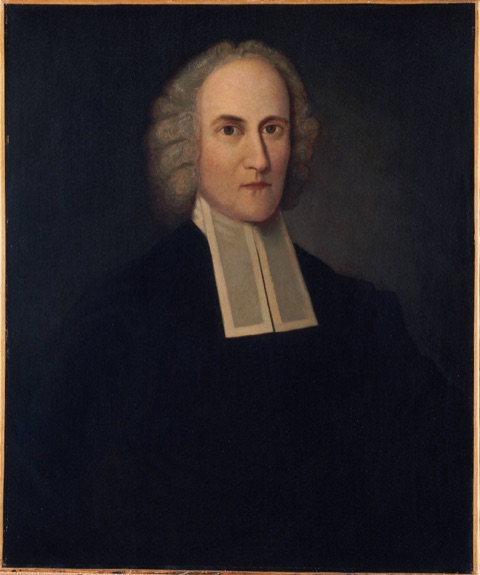
About the author
Jonathan Edwards
Jonathan Edwards (1703 to 1758 AD) was born in East Windsor, Connecticut, the only son among the eleven children of the Congregational minister Timothy Edwards. He entered Yale College at thirteen and graduated in 1720. In 1727 he became assistant to his grandfather Solomon Stoddard at Northampton, Massachusetts, and sole pastor there in 1729. A revival followed his preaching in the mid-1730s, and during the Great Awakening he preached Sinners in the Hands of an Angry God at Enfield in 1741. He published Religious Affections in 1746. Dismissed from Northampton in 1750, he served the frontier mission at Stockbridge, where he wrote Freedom of the Will. Elected president of the College of New Jersey, he died at Princeton in March 1758 after a smallpox inoculation.