Modernized edition · Full text · Free PDF/EPUB
Notes on the Bible in Modern English
Summary
- First printed
- 1829 AD, after his death
- Type
- Exegetical notes on chosen passages of Scripture
- Length
- 202,000 words · 13 hours
- Collection
- Puritan
- Topics
- TheologyChristApologetics
What is Notes on the Bible about?
Notes on the Bible is Jonathan Edwards's collection of notes on Scripture, first printed in 1829. It opens with an argument that Moses wrote the whole Pentateuch and then works from Genesis to Revelation, settling hard passages, tracing pagan myths to the Bible, and above all showing how Old Testament history pictures Christ, his church and its future.
Read the full summary (8 points, quotes, key themes)Show less
How the argument unfolds
- 01
The Pentateuch. Moses wrote the five books, history and law together, and no later hand forged them.
- 02
Genesis. Creation, Eve's name, the table of nations, the rainbow and the patriarchs, read largely as types.
- 03
Exodus. Pagan witnesses to Moses, Pharaoh's half measures, the tabernacle, and God's goodness passing by.
- 04
Leviticus to Esther. The new moon, the red heifer, the standing sun, Achan, Jephthah's daughter, Naaman and Esther.
- 05
Job to Song of Solomon. Who wrote Job, the inspiration of the Psalms, Psalm 68 as the ascension, and the Song as Christ and the church.
- 06
The prophets. Isaiah's ensign, Ezekiel's wheels, Gog and Magog, Daniel's abomination, Micah 5:2 and Zechariah's Feast of Tabernacles.
- 07
The Gospels. The kingdom coming by degrees, the great tribulation in sixteen sections, resurrection harmonies, Gethsemane and Cana.
- 08
Acts to Revelation. Goods in common, justification, judging others, freedom from the law, Hebrews 6, the transfiguration and the close of Revelation.
Notable images & quotes
- The tree of life in blossom. The tree had not yet fruited in Eden; its fruit was Christ, ripened in his sufferings: “Christ, like fully ripe fruit, was gathered into God’s storehouse”.
- Lot's wife. “She became a senseless statue, signifying the spiritual numbness that people bring on themselves by backsliding.”
- The gates of Jericho. Hiel laid the city's foundation in his firstborn and hung its gates in his youngest son: the church is founded in Christ's blood and finished in the martyrs'.
- Ezekiel's chariot. Planets, tides, lives and empires turn and return, yet roll forward like a chariot toward one end: “The whole system is nothing but wheels within wheels”.
- The street like glass. Earthly streets are always soiled, but the heavenly gold is clear as crystal, since no foot there stains it.
Key themes
- Types and figures. Persons, places and objects, from Noah's ark to the red heifer, become signs of Christ, his church and the soul, for “Types are a kind of words.”
- Scripture among the nations. God fixed Israel's place and history so that the Gentiles always had light from the true God within reach.
- The church's night and day. From Nero to the fall of Antichrist the church suffers under Rome, with intervals of rest; then comes her glory on earth.
- Law and grace. The old covenant required obedience while the new one promises it, and those led by the Spirit stand as sons, not servants: “Laws are not made for children or intimate, dear friends, but for servants.”
Why read it today
Read it to watch Edwards think. These are working notes, moving between Hebrew roots, ancient historians, newspaper reports and the plain sense of the text, then turning all of it toward Christ.
It is a full school of typology, from the brooding dove of Genesis 1 to the emerald rainbow round the throne, and its second half reads church history from Nero to the millennium.
It also searches the reader, pressing home half measures with sin, the danger of judging others, and the comfort that “There was only one ark in the whole world to which anyone could turn for refuge.”
Reader questions (10)Hide the questions
Questions about Notes on the Bible
Is there a modern English version of Notes on the Bible?
Yes. This is Notes on the Bible by Jonathan Edwards in modern English. The language is modernized and the author's order and argument are kept. The full modernized text is free to read on this page.
Can I read Notes on the Bible online for free?
Yes. The complete text of this modern English edition is on this page, with no sign-up or paywall.
Is there a free PDF of Notes on the Bible?
Yes. The PDF and EPUB of this edition are free with an Updated Works account. Sign in with Google or an email link; no card is needed.
What is Notes on the Bible by Jonathan Edwards about?
It is a set of notes on chosen passages, arranged from Genesis to Revelation. Edwards explains Hebrew words, settles history and chronology, harmonizes parallel accounts, and shows how Old Testament events foreshadow Christ and the church.
Is it a commentary on every verse?
No. Some books receive dozens of notes and others a few, and a note can run from one sentence to many pages.
Why does Edwards discuss pagan myths?
He holds that ancient fables preserve garbled memories of real events: Iris from the rainbow covenant, Pan from God's presence with Israel, Phaeton from the day the sun stood still.
What does Edwards learn from Pharaoh?
Pharaoh is the pattern of a convicted sinner who offers God part of what he asks while keeping the rest. Edwards insists that all must be given up, since a parting with sin that is forced is “neither sincere nor likely to last.”
Did Jephthah sacrifice his daughter?
No. The law redeemed vowed persons, human sacrifice was an abomination, and the words “she knew no man” show the vow was kept by devoting her to God as a lifelong virgin.
Can Christians tell who is truly converted?
Edwards says judging another's spiritual state belongs to God and the day of judgment. David never saw through Ahithophel, and Shibboleth means an ear of grain: fruit is the test.
Does Edwards expect miraculous gifts to return?
No. Tongues and prophecy belonged to the church's childhood before the canon was complete, and will not return even in her later glory, which will be an age of love.
Notes on the Bible in Modern English · Full text
The Pentateuch
The Pentateuch Written by Moses
That Moses wrote the Pentateuch is the unanimous testimony of antiquity. From ancient times to this day, both Jews and Christians have received this view. They have held that Moses, commanded and inspired by God, wrote the five books called the Pentateuch, except for a few particular passages inserted later by divine direction to help readers understand the history.
We read in Exodus 24:4, 7-8 that Moses wrote all the words of the Lord delivered up to that time from Mount Sinai in a book called the Book of the Covenant. Later, when God added further commands, he again instructed Moses to write them down: “And the Lord said unto Moses, Write thou these words; for after the tenor of these words have I made a covenant with thee and with Israel” (Exod 34:27).
Nearly forty years later, Moses was commanded to record all the commands God had given the people, along with the revelations God had made of himself to them. This book was to be placed beside the ark of the covenant as a testimony against Israel: “And it came to pass, when Moses had made an end of writing the words of this law in a book, until they were finished, that Moses commanded the Levites, which bare the ark of the covenant of the Lord, saying, Take this book of the law, and put it in the side of the ark of the covenant of the Lord your God, that it may be there for a witness against thee” (Deut 31:24-26).
The original copy of this book of the law remained in existence until the days of Josiah, as we explicitly read (2 Kgs 22; 2 Chr 34), and no doubt until the Babylonian captivity. Moreover, the book Moses placed beside the ark did not include only the preceding chapters of Deuteronomy, where parts of the law were repeated. It contained the entire system of divine law that God gave the children of Israel, setting forth the whole duty he required of them.
This is clear from Joshua 1:7-8: “Only be thou strong and very courageous, that thou mayest observe and do according to all the law which Moses, my servant, commanded thee; turn not from it to the right hand or to the left, that thou mayest prosper whithersoever thou goest. This book of the law shall not depart out of thy mouth, but thou shalt meditate therein day and night, that thou mayest observe to do according to all that is written therein,” etc. For this reason, when Jehoshaphat sent the Levites to teach the people their duty, they taught strictly from the book of the law: “And they taught in Judah, and had the book of the law of the Lord with them, and went about, throughout all the cities of Judah, and taught the people” (2 Chr 17:9).
It is further evident that the book of the law Moses entrusted to the Levites to place beside the ark (Deut 31) contained far more than what had just been delivered in the preceding chapters of Deuteronomy. That book included the regulations for burnt offerings and sacrifices, as well as the office and duties of the priesthood. Those instructions appear far less in Deuteronomy than in Leviticus and Numbers. This is clear from 2 Chronicles 23:18: “Also Jehoiada appointed the officers of the house of the Lord, by the hands of the priests, the Levites, whom David had distributed in the house of the Lord to offer the burnt-offering of the Lord, as it is written in the law of Moses” (see also 2 Chr 35:12; Neh 10:34-36; Hag 2:11; Josh 8:31; Ezra 6:18; Neh 8:14-15; 2 Chr 30:5; 31:3).
Furthermore, the book of the law contained not only the commands God delivered to Moses, but also their sanctions and enforcements, including both promises and warnings. We see this in Deuteronomy 29:20-21: “The Lord will not spare him, but then the anger of the Lord, and his jealousy, shall smoke against that man, and all the curses that are written in this book shall lie upon him; and the Lord shall blot out his name from under heaven; and the Lord shall separate him unto evil, out of all the tribes of Israel, according to all the curses of the covenant, that are written in this book of the law.”
See also Deuteronomy 29:27 and Deuteronomy 28:61: “Also every plague, and every sickness, which is not written in the book of this law, will the Lord bring upon thee, until thou be destroyed.” See also 2 Kings 22:13, 16, 19 and the parallel passages in 2 Chronicles 34, as well as Daniel 9. Look also at Joshua 8:34-35: “And afterwards he read all the words of the law, the blessings and the cursings according to all that is written in the book of the law. There was not a word, of all that Moses commanded, that Joshua read not” (see Ps 105:8-10).
Nor did the book of the law stop with promises and warnings. It contained every revelation God gave to enforce the law or connected in any way with it, including the prophecies of what would happen to the people if they sinned or repented. This appears from Nehemiah 1:8-9: “Remember, I beseech thee, the word that thou commandest thy servant Moses, saying, If ye transgress, I will scatter you abroad among the nations. But if ye turn unto me, and keep my commandments, and do them, though there were of you cast out unto the uttermost part of the heaven, yet will I gather them from thence, and will bring them unto the place that I have chosen to set my name there.”
In addition, we read that Moses was expressly commanded to write histories of the Lord’s acts toward his people, as well as the revelations he gave them. For example, Moses was ordered to write an account of Israel’s war with Amalek and its surrounding events, so that future generations might know the reason for the perpetual war God declared against Amalek: “And the Lord said unto Moses, Write this for a memorial in a book, and rehearse it in the ears of Joshua; for I will utterly put out the remembrance of Amalek from under heaven” (Exod 17:14). Yet Moses could not give a full account of that conflict without recording much of Israel’s earlier history. The record had to explain why and how the children of Israel reached the border of the Amalekites, and what caused the hostility and war between them and Israel. Telling that story would take up no small part of the history in Exodus.
We are also told explicitly that Moses recorded the journeys of the children of Israel at God’s command: “And Moses wrote their goings-out according to their journeys, by the commandment of the Lord” (Num 33:2). Could anyone reasonably suppose he would write down their travel stages for future generations, yet fail to write down the Lord’s mighty acts toward Israel in Egypt, at the Red Sea, at Mount Sinai, and in the wilderness? Those mighty deeds were a thousand times more worthy of a written record for posterity than a bare travel log without them.
It is completely unbelievable that Moses, who is so often said to have written God’s commands, warnings, promises, revelations, and early histories of mankind, would fail to record those great acts of the Lord for the congregation of Israel. This is especially unlikely because Moses took such great care that future generations would never forget them: “Only take heed to thyself, and keep thy soul diligently, lest thou forget the things which thine eyes have seen, and lest they depart from thine heart all the days of thy life, but teach them thy sons, and thy sons’ sons specially, the day when thou stoodest before the Lord thy God in Horeb,” etc. (Deut 4:9-11). Here Moses gives the very same charge to preserve the memory of the Lord’s deeds as he gives to preserve the memory of God’s commands (Deut 6:7; 11:18-19).
Job speaks of writing words in a book as a proper means to preserve their memory, and God speaks the same way to Isaiah: “Now go write it before them in a table, and note it in a book, that it may be for the time to come for ever and ever” (Isa 30:8). Moses did not trust God’s commands to oral tradition alone. Although he strictly charged the people to teach their children, he knew oral tradition by itself was not enough. When God saw it necessary to hand down the memory of the war with Amalek, he did not leave it to oral tradition, but commanded Moses to write it down so later generations would know it. In the same way, when Israel’s wilderness travels needed to be remembered, they were not left to oral tradition, but preserved in a written record.
Great care was also taken to commemorate these events by establishing memorials of them. The Passover was instituted as a perpetual memorial of Israel’s redemption from Egypt, and the beginning of the year was fixed to commemorate it. Firstborn sons were consecrated to God in memory of his striking down the firstborn of Egypt. Specific laws concerning foreigners, the poor, and servants were enacted in remembrance of Israel’s sojourning and slavery in Egypt (Deut 24:17-18, 22; 16:11-12; 15:15; Lev 25:42, 55). It would be absurd to imagine that such care was taken to write down the laws created specifically to preserve the memory of those events, while no care was taken to write down the events themselves. Under that assumption, remembering the events is so vital that the very existence and remembrance of the laws depend on it as their goal.
In Nehemiah 13:1-3, a command is cited together with the piece of history that explains it, and both together are said to be read in the book of Moses. Many other physical memorials served the same purpose. The manna was preserved as a memorial of Israel’s life in the wilderness and God’s miraculous provision there. The Feast of Tabernacles kept alive the memory of how they dwelt in the wilderness (Lev 23:43). Aaron’s rod that budded was laid up to commemorate the wonders done through it in Egypt, at the Red Sea, and in the wilderness, especially the conflict with Korah and his company. The rebels’ censers were hammered into broad plates to cover the altar as a reminder of Korah’s rebellion.
In addition, the fire from heaven was kept burning without ever going out as a perpetual memorial of its miraculous descent and the occasion of it. The bronze serpent was preserved to commemorate the plague of fiery serpents and the miraculous healing of those who were bitten. The tabernacle built in the wilderness stood as a monument to God’s great manifestations of himself there and to the events surrounding its construction. The two stone tablets inside the ark commemorated the awesome events when they were given.
The rest of the Jewish Sabbath served as a memorial of Israel’s deliverance from slavery. The laws regarding the Moabites and Ammonites acted as memorials, and the gold captured in the war with Midian was laid up to commemorate that victory (Num 31:54). Many places were also given names to recall notable events in the wilderness. Who can imagine that all this care was taken to preserve the memory of these events, yet no written history was attached to explain those many memorials by the very man who appointed them? Moses was a prolific writer who took pains to record events in writing whenever we have explicit mention of his work.
Another proof of Moses’s deep concern that these great acts never be forgotten is his assembling the congregation shortly before his death to recount them, as recorded in Deuteronomy. He also left commands requiring the Israelites themselves, from time to time, to recite a summary of the history of their ancestors the patriarchs, recorded in Genesis, along with the nation’s history from that point on. We see this in the law for the one who brought the offering of firstfruits (Deut 26).
We also find that great care was taken after Moses’s death to set up monuments to God’s mighty deeds, such as Israel’s crossing the Jordan, even though that event was less memorable than some earlier ones. Indeed, the fact that monuments were expressly appointed to preserve the memory of many events in Moses’s time, while none were appointed for certain even greater ones, argues that Israel had a written history in place of physical monuments. Consider Israel’s crossing the Red Sea and the destruction of Pharaoh and his army there. No act of God toward Israel is celebrated more often across Scripture than this. Yet we have no record of any physical monument or ordinance expressly instituted to commemorate it, even though a monument was erected for crossing the Jordan, a similar event that is less remarkable and far less celebrated in Scripture. The only explanation is that the history and song Moses wrote and placed in the book of the law served as its monument.
So intense was the concern that God’s acts toward Israel be remembered that the memorials were explicitly meant to keep them perpetually before the people’s minds, like a sign on their hand and frontlets between their eyes. We see this in the law consecrating the firstborn to preserve the memory of God’s slaying the firstborn of Egypt (Exod 13:15-16). One of the very commands in the book of the law was that the people must take care never to forget the mighty works of God they had seen, and never allow future generations to forget them (Deut 4). How unreasonable, then, to suppose that no history was attached to those laws, and that while God strictly commanded them to preserve the memory of those events for future generations, he left them without the necessary means to do so!
Another command required the people never to forget their own conduct and failures along the way (Deut 9:7; see also Deut 8:14-16; 5:15). They were strictly commanded to remember their slavery in Egypt (Deut 16:12; 24:18, 22), as well as what God did to Pharaoh and all Egypt, including all his great signs, wonders, and the manner of their deliverance (Deut 7:18-19). They were likewise charged to remember their entire journey, the path they traveled, and all the events along the way (Deut 8:2-5, 14-20). They were told to know and bear in mind God’s mighty acts in Egypt and afterward (at the beginning of Deuteronomy 11), and they were specifically commanded to remember what God did to Miriam (Deut 24:9).
Writing down works of God worthy of remembrance and praise is described as a proper way to transmit their memory to posterity in Psalm 102:18: “This shall be written for the generation to come, and the people which shall be created shall praise the Lord.” The duty of remembering the works of God narrated in the Pentateuch is emphasized not only in the Pentateuch itself, but also elsewhere in Scripture. Thus Psalm 105:5 declares, “Remember his marvelous works that he hath done, his wonders, and the judgments of his mouth.” As the rest of the psalm shows, those marvelous works and wonders are the deeds God performed for Abraham and his descendants, from the call of Abraham to Israel’s entrance into Canaan. Notably, the psalmist links God’s wonderful works and the laws or judgments of his mouth together as equally worthy of remembrance (see also 1 Chr 16:12 with the rest of that song).
In the same way, the law, the covenant, and God’s wonderful works are joined together as things never to be forgotten in Psalm 78:10-11. In Psalm 111, the psalmist implies that God took special measures to preserve the memory of those works: “He hath caused his wonderful works to be remembered” (Ps 111:4). As the rest of the psalm makes clear, these are the works recorded in the Pentateuch. How else can we suppose God did this, except by the same means by which he preserved his covenant and commands mentioned in the following verses, namely by having them written down?
Works and commands are linked directly: “The works of his hands are verity and judgment, all his commandments are sure” (Ps 111:7), and again, “He hath sent redemption to his people, he hath commanded his covenant for ever” (Ps 111:9). No doubt they stood side by side in the written record (compare Ps 147:19; 103:7). In Psalm 78, after describing Moses’s great care to ensure that the history of God’s mighty deeds in Egypt and the wilderness would be remembered and passed to future generations (Ps 78:4-7), the psalmist recounts the main events in rich detail. He outlines the entire history with so many exact particulars that it is plainly drawn from the written narrative of the Pentateuch.
It is all the more likely that the history of the Pentateuch formed part of what was called the law of Moses because ancient terms such as law, doctrine, statute, and ordinances did not mean commands alone. They also covered promises, warnings, prophecies, memorials, histories, and everything revealed, proclaimed, and established to guide people in their duty to God or enforce that duty upon them. Thus the blessings and curses written by Moses are included in the phrase “all that Moses commanded” (Josh 8:34-35). Promises are called a law and the word God commanded (Ps 105:9; 1 Chr 16:15). Both promises and warnings are called the word God commanded his servant Moses (Neh 1:8-9), and they are termed statutes and judgments in Leviticus 26:46.
Similarly, we read in Exodus 15:25-26 that at Marah God made a statute and an ordinance for the people, yet what is called by those names is simply a promise. In Joshua 24:25, Joshua makes a covenant with the people and sets them a statute and an ordinance in Shechem, which, as the context shows, consisted simply of confirming what had been spoken through a written record and a stone monument. When God, in the song of Moses (Deut 32), calls on heaven and earth to hear his doctrine, which he says will distill as the rain, that doctrine includes both history and prophecy, as the rest of the song proves. What Psalm 78:1 calls a “law” is purely a history, an abridgment of the Pentateuch’s narrative, those dark sayings of old that the psalmist goes on to recount. That makes it easy to see why the original, fuller history from which this summary was drawn was also called a law among the Israelites.
Likewise, when Scripture speaks of the “great things” of God’s law (Hos 8:12) and the “wondrous things” of God’s law, those phrases probably refer not only to commands and sanctions, but also to the great and wondrous works of God recorded in the law. History enforces the commands just as powerfully as warnings, promises, and prophecies do, and Scripture uses it that way. Why, then, would it not be included under the name of the law just as they are? Even what is preeminently called the Law, the Decalogue, contains history, a declaration of God’s mighty works. It proclaims the two greatest works narrated in the Pentateuch: the creation of the world and Israel’s redemption from Egypt, out of the house of bondage. The latter stands in the preface to the Ten Commandments, and both appear in the fourth commandment in Deuteronomy.
Yet nothing proves more plainly that history belonged to what was called the law than Moses’s own records. In Deuteronomy 1:5 we read, “On this side Jordan in the land of Moab, began Moses to declare that law, saying,” and what follows in that chapter and the ensuing chapters is called “this law.” Yet a large portion of it is history, a rehearsal and summary of the earlier books of the Pentateuch. In fact, what immediately follows in Deuteronomy 1 and the next two chapters is almost entirely history, which we have every reason to see as directly intended by the words, “Moses began to declare the law, saying” (see also Deut 4:44-45; 31:9, 24-26; 5:1).
Again, “the book of the law” and “the book of the covenant” were synonymous expressions (see, among other places, Ps 105:8-10). And the word covenant, as used then, included history. Deuteronomy 29 opens with the words, “These are the words of the covenant which the Lord commanded Moses,” and what immediately follows is history. It is history that introduces, accompanies, or confirms the commands, warnings, and promises that follow, and all the history of the Pentateuch is of that character. It is abundantly clear that Moses’s way of composing and writing laws in the wilderness was to weave history together with commands, counsels, warnings, threats, promises, and prophecies.
Notice also that from very early times Israel kept official records of public national affairs, viewing the task as important enough to appoint men specifically to that office. We find this practice in the days of Solomon and David, and during the period of the Judges as early as Deborah: “Out of Zebulun, they that handle the pen of the writer” (Judg 5:14). From the context, these were probably rulers or chief officers responsible for recording public affairs. Even earlier, we have explicit accounts of Joshua and Moses keeping records of public transactions (see Josh 24:26 and the passages already cited on Moses’s writings). Now the events connected with bringing Israel into covenant with God and redeeming them from Egypt were always celebrated above all others as the greatest, most memorable events in their history. Is it credible that a nation whose settled custom, from the very time of those great events, was to keep written records of public affairs would have left these supreme transactions without a written record?
There is no other natural way to write down a divine law given by God in an extraordinary manner, amid astonishing events and mighty displays of his presence and power. One naturally introduces such a law by stating that God gave it, and then by recording when, how, on what occasion, and in what manner it was given. That brings in the entire history from the opening of Exodus to the end of Deuteronomy. Who can believe that Moses wrote the law God gave at Mount Sinai without recording how it was given there? The manner of its giving was extraordinarily remarkable and left a deep impression on Moses’s mind, as we see in much of what he wrote in Deuteronomy. And those very chapters are explicitly called a law, written by Moses in the book of the law and delivered to the priests to be laid up in the sanctuary.
Furthermore, many of the commands and sanctions explicitly called the law, and explicitly said to be written in the book of the law and kept in the sanctuary, depend so tightly on the history that they cannot be understood without it. As noted earlier, many commands were instituted specifically to keep historical events in memory, and the text of the laws says so plainly. Obviously, such laws make no sense without the history. For instance, the Feast of Tabernacles was appointed so that the children of Israel would remember how they lived in booths in the wilderness (Lev 23:43). That requires the history of their travels and sojourning there. Likewise, the laws concerning the Amalekites, Moabites, and Amorites, commemorating what passed between those nations and Israel in the wilderness, cannot be understood without the history of those events. Those events, in turn, require the history of Israel’s wilderness journey and everything that led up to them.
The great law of the Passover is likewise said in the law to commemorate Israel’s redemption from Egypt, and its many specific rites commemorate particular details of that deliverance. It is impossible to understand all those detailed Passover regulations without a history of the Exodus. That history requires an account of Israel’s slavery in Egypt and how they fell into bondage, which in turn brings in the history of the patriarchs. Nor can the preface to the Ten Commandments be understood without the history of Israel’s redemption from Egypt, out of the house of bondage. Neither can one of the reasons given for the fourth commandment in Deuteronomy be understood without knowing how Israel served as slaves in Egypt and how they were set free.
Again and again, commands are enforced by appealing to God’s deliverance of his people from Egypt, out of the house of bondage and the iron furnace (see Lev 18:3; 19:34; 22:33; 25:42, 55; 23:43; 26:13, 45; Num 15:41; Deut 4:20; 6:12; 7:8; 8:14; 13:10; 20:1). This shows how indispensable the history is to understanding the law. The many laws protecting the poor, the bondservant, and the foreigner are explicitly grounded in Israel’s experience in Egypt and demand an account of their life there. In the sanctions of the law, there are also frequent references to the plagues and diseases of Egypt, with warnings of inflicting them or promises of sparing Israel from them. None of these can be understood without the history of those plagues.
Similarly, the command never to return to Egypt (Deut 17:16) requires the history of Israel’s departure from it. The law barring Moabites and Ammonites from the congregation of the Lord because of how they treated Israel along the way cannot be understood without the story of that treatment, which requires an account of the journey. Even the law concerning sins of ignorance (Num 15:22-24) depends on the history to be intelligible: “and if ye have erred, and not observed all these commandments which the Lord hath spoken unto Moses, even all that the Lord hath commanded you by the hand of Moses, from the day that the Lord commanded Moses, and henceforward among your generations, then it shall be, if aught be committed by ignorance,” etc. This presupposes a long series of divine revelations given to Moses over time, which cannot be understood without the narrative.
The law was also written as a covenant, or as the record of a covenant, between God and the people. That is why “the tables of the law” and “the tables of the covenant,” as well as “the book of the law” and “the book of the covenant,” are synonymous in Scripture. Speaking of the covenant God made with the patriarchs, the psalmist says that God confirmed it to Jacob for a law and to Israel for an everlasting covenant (Ps 105:8-10). Notice that the promise to Abraham is what is especially called “the law” and “the word which God commanded.”
Likewise, the warnings of the law are called “the words of the covenant” God made through Moses (Jer 11:8). Because Moses wrote the book of the law as a record of the covenant between God and Israel, he had to record the people’s consent and what took place on both sides, since the covenant was a mutual transaction: “Thou hast avouched the Lord this day to be thy God, and to walk in his ways,” etc., “And the Lord hath avouched thee this day to be his peculiar people as he hath promised thee, and that thou shouldest keep all his commandments” (Deut 26:17-18). The accounts in Exodus 19:8; 24:3-8 and Deuteronomy 5:27; 26:17 agree completely with this.
Consider how the discourse in Deuteronomy 29 and Deuteronomy 30 is introduced: “These are the words of the covenant which the Lord commanded Moses to make with the children of Israel in the land of Moab, beside the covenant which he made with them in Horeb” (Deut 29:1). Yet the discourse that follows, called “the words of the covenant,” consists of a wide variety of elements. It begins with a history of the transaction, as Moses reviews past events and God’s wonderful dealings with Israel, rebuking their dullness and hard-heartedness to prepare for what comes next.
He then charges them to serve the true God and shun idolatry. He enforces that charge with fearful warnings and predictions of judgments that will fall on them if they rebel, detailing the circumstances of those judgments, alongside promises of forgiveness if they repent. He closes with varied arguments, urgent pleas, solemn appeals, earnest entreaties, and exhortations to press home their duty. If such a varied collection is called “the words of the covenant,” we should not be surprised that the entire volume called “the book of the law” has the same varied character.
A record of a covenant between God and the nation of Israel necessarily had to tell the story of that transaction. Told in full, that story brings in a great deal of the Pentateuch’s history, which largely recounts what God did to bring Israel into covenant with himself and how they became his covenant people. That is why the psalmist in Psalm 105, after naming the covenant and law God established with Israel, immediately reviews the whole chain of covenant events, from God’s covenant with the patriarchs to Israel’s entrance into Canaan.
In particular, when Moses set out to write a record of God’s covenant with Israel and explain how he brought them into covenant relation with himself, it was essential to show its beginning with the patriarchs. With them that covenant was first established. With them was laid the foundation of the whole transaction and of that great dispensation by which the Lord of heaven and earth separated Israel from all other nations to be his special covenant people. The beginning and groundwork of the entire work lay with the patriarchs. Everything God later did through Moses merely carried out what he had already promised and repeatedly confirmed to them, and what he had prepared through his acts and revelations to them. In the words expressly called the law, and throughout the Old Testament, what God said and did for the patriarchs is repeatedly treated as the foundation of everything that followed. We see this most explicitly in Psalm 105:8-10 and Joshua 24:3, along with many parallel passages.
Indeed, the law strictly so called very often makes explicit reference to God’s covenant with Abraham, Isaac, and Jacob (Lev 26:42; Deut 4:31, 37; 6:10, 18; 7:8, 12; 9:5, 27; 10:11, 15; 19:8; 26:3, 15; 30:20). All those passages are unintelligible without the history of the patriarchs. Many other passages in the law refer to the same covenant implicitly, whenever God speaks of the land the Lord their God gave or promised them, naming the land of the Amorites, Hittites, Canaanites, and the rest. Those statements point directly back to God’s promise to Abraham from Genesis 15:18 to the end of the chapter, where God promises him the land of those nations by name.
These considerations must at least convince us that Moses wrote the history of Israel’s redemption from Egypt, at least from the point where he was personally involved and called by God to be its chief instrument. Yet that history naturally draws us further back, straight to what God said and did to the patriarchs. The opening of Exodus points directly to them as the foundation of the great work for which God called Moses. When God first appeared to Moses in the bush at Mount Sinai and commissioned him, he declared, “I am the God of Abraham, the God of Isaac, and the God of Jacob” (Exod 3:6).
God repeated the same grounding in Exodus 3:13-16: “And Moses said unto God, Behold, when I come unto the children of Israel, and shall say unto them, The God of your fathers hath sent me unto you, and they shall say to me, What is his name? What shall I say unto them? And God said unto Moses, I AM THAT I AM: and he said, Thus shalt thou say unto the children of Israel, I AM hath sent me unto you. And God said, moreover, unto Moses, Thus shalt thou say unto the children of Israel, The Lord God of your fathers, the God of Abraham, the God of Isaac, and the God of Jacob, hath sent me unto you: this is my name for ever, and this is my memorial unto all generations. Go and gather the elders of Israel together, and say unto them, The Lord God of your fathers, the God of Abraham, of Isaac, and of Jacob, appeared unto me, saying, I have surely visited you, for that which is done to you in Egypt.”
We see the same words again in Exodus 4:5: “That they may believe that the Lord God of their fathers, the God of Abraham, the God of Isaac, and the God of Jacob, hath appeared unto thee.” And again in Exodus 6:2-4: “And God spake unto Moses, and said unto him, I am the Lord, and I appeared unto Abraham, unto Isaac, and unto Jacob, by the name of God Almighty; but by my name JEHOVAH was I not known to them. And I have established my covenant with them, to give them the land of Canaan, the land of their pilgrimage, wherein they were strangers.”
For many reasons already given, it is unreasonable to doubt that Moses wrote this history. Above all, it is wholly believable because those first extraordinary appearances of God must have made the deepest impression on his mind. If he wrote any history at all, he certainly wrote this. Yet these passages show that the history of the patriarchs lays the entire foundation for Israel’s redemption from Egypt and God’s covenant with them. The Exodus cannot be understood without the patriarchal history. Would it not have been a fatal defect for Moses to write that history while leaving Israel with no record of its foundation?
Moreover, the part of the Pentateuch explicitly called the law frequently names the tribes of Israel and the patriarchs who fathered them (Deut 3:12-13, 15-16; 27:11, 13, and elsewhere). Moses was also commanded to engrave the names of the twelve patriarchs on the stones of the high priest’s breastplate. None of this makes sense without the history of Jacob’s family. In Deuteronomy 10:22, there is an explicit reference to Jacob’s going down to Egypt with seventy persons, which cannot be understood without that narrative.
Likewise, the law for the one who brings the offering of firstfruits cannot be understood without the surrounding history. It requires knowing Jacob’s hardships in Padan-aram, his descent into Egypt, and the vast growth of his descendants there. It also requires knowing their cruel slavery, their deliverance, and God’s wondrous acts in Egypt, at the Red Sea, and in the wilderness until they reached Canaan. If Moses had left no written record of these events, then his law would have required every householder in Israel, generation after generation, to make an explicit confession and declaration of events he did not understand.
What the law says about the Edomites as Esau’s descendants, the territory God gave Esau, and the favor God showed him (Deut 2:4-8, 22), along with the law requiring Israel to treat Edomites kindly because Esau was their brother (Deut 23:7-8), cannot be understood without the history of Isaac’s family. The way Deuteronomy 2 speaks of Moab and Ammon as founders of their nations, favored for their father Lot’s sake, presupposes the history of Lot and his family and is unintelligible without it. Similarly, the law’s reference to the overthrow of Sodom and Gomorrah (Deut 29:23) cannot be understood without the narrative of that judgment.
All of these facts carry us back to within less than eleven chapters of the very beginning of the Pentateuch. By everything just shown, Moses must have delivered all the rest of the Pentateuch to Israel, and it is unreasonable to suppose that this tiny opening portion came from a different hand rather than as part of the same work. Abraham’s history begins at Genesis 11:26. Its opening is so tightly joined to, and grows so organically out of, the preceding history of Noah and his descendants that supposing they did not belong to the same original record by the same author is completely unreasonable. Anyone who simply reads the opening chapters can see the error of claiming that Moses’s history began somewhere between Genesis 1:1 and Genesis 11:26, or that those first eleven chapters were patched together from several writers.
Not attributing those opening chapters to Moses becomes even more unreasonable when we notice not only how Abraham’s history connects to them, but also how much in the later history and in the law strictly so called depends on them. Both the law and the later narrative repeatedly mention the descendants of Ham’s sons, Mizraim and Canaan, calling them by the names of those ancestors (Gen 10:6). They mention the descendants of Mizraim called Caphtorim (Gen 10:14; Deut 2:23) and the descendants of Canaan’s sons by their names (Gen 10:15). The later history also mentions Ham, the son of Noah (Gen 14:5), along with Elam and Shinar (Gen 14:1), whose origins are explained in Genesis 10. Frequent mention is made of the land of Cush (translated Ethiopia in our English Bible), named after Cush the son of Ham, whose account appears in Genesis 10:6-8. There is also frequent reference to the land of Aram, the son of Shem. In Balaam’s prophecy, which is referenced in the law in Deuteronomy, Asshur, Chittim, and Eber are named (Num 24:22, 24).
The central event of Moses’s history, occupying the entire historical portion of the Pentateuch from Genesis 11:26 to the end of Deuteronomy, is God’s separating the descendants of Abraham and Israel from all other nations and drawing them near as his special people. To understand that event well, readers needed to know the origin of the nations, how the earth was populated, and how the Most High divided the nations’ inheritances. Chapters 9, 10, and 11 of Genesis therefore form the fitting introduction to that grand theme.
In the song of Moses, which the law required Moses to write and the people to preserve, learn, and recite often, there is an explicit reference to separating the sons of Adam and God’s dividing the earth among its peoples. That reference is unintelligible without Genesis 10 and Genesis 11. The song also clearly connects that division of the nations with God’s separating Israel to be his special people, the very subject of most of the Pentateuch.
The passage explicitly commands Israel to remember both connected events, which obviously assumes a written history of both: “Remember the days of old, consider the years of many generations. Ask thy father, and he will show thee; thy elders, and they will tell thee; when the Most High divided to the nations their inheritance; when he separated the sons of Adam, he set the bounds of the people according to the number of the children of Israel. For the Lord’s portion is his people, Jacob is the lot of his inheritance” (Deut 32:7-9). By the way, I would also observe that the verses immediately following contain references to other historical facts in the Pentateuch that cannot be understood without the narrative.
In the fourth commandment, the creation of heaven, earth, the sea, and all that is in them, together with God’s resting on the seventh day, is summarized in a way that condenses Genesis 1 and the opening of Genesis 2 and is unintelligible without that history. Deuteronomy 4:32 refers to God’s creation of man, and Moses’s prophetic song names Adam as the great ancestor of mankind (Deut 32:8). There is also a reference to the garden of God, or Paradise, in Genesis 13:10. Before leaving this argument from historical references, I should add that a huge portion of the first thirty-one chapters of Deuteronomy, which clearly belonged to the law of Moses laid up in the holy of holies, consists entirely of summaries, brief reviews, allusions, and counsels drawn from earlier historical events. None of it can be understood without knowing that history.
Not only does the law of Moses depend on the history and refer constantly to it, but the very way the law is written proves that law and history were composed together. They are so tightly joined, interwoven, blended, and fused in the text that history forms an integral part of the law. Time and again, narrative serves as a preamble introducing a statute. There are constant transitions from history to law and from law back to history, with such close connection and mutual dependence that everything grows together like the parts of a single tree. The laws stand inside an ongoing narrative, and the narrative functions as the introduction, preamble, reason, and enforcement of the laws. Everything flows in one continuous stream, forming a single body. Simply inspecting the text as it stands is enough to convince anyone that the same author wrote both together.
Look at how the laws of the Passover, the chief of all ceremonial observances, are written in Exodus 12, along with the law of the firstborn in Exodus 13, and the statute and ordinance in Exodus 15:25-26. Notice how the law identifying which day is the Sabbath is woven into the narrative of Exodus 16:23. Even the Decalogue itself, which in the highest sense is called the law of Moses, is presented in Exodus 20 in a way that makes it unreasonable to think Moses recorded it without the surrounding history and the words in Exodus 20:22-23. The same is true of the commands detailing the design of the tabernacle, ark, anointing oil, incense, and priestly garments, paired with the history of their construction.
Consider also the revelation to Moses when God proclaimed his name (Exod 34:6-7), an important part of the law, together with Exodus 34:10-11, 30-31. Look at the laws given on the occasion of Nadab and Abihu’s death by fire (Lev 10; Lev 16:1-2, taken with what follows and the closing words of the chapter; see also Lev 21:1, 24; 22:1-3, 17-18). Look at the law against blasphemy alongside the story of Shelomith’s son (Lev 24); the law of the Levites’ service paired with their census, consecration, and acceptance in place of the firstborn (Num 3; 4; 8); and the law placing lepers outside the camp (at the beginning of Numbers 5).
The same pattern continues throughout Numbers. Look at the law allowing ritually defiled persons to keep the Passover, paired with the incident that prompted it (Num 9:6), and the making of the silver trumpets alongside the rules for their use (Num 10). Look at the institution of the seventy elders, given solely as a history of their first appointment (Num 11), and the law of the presumptuous sinner, joined to the story of the Sabbath-breaker (Num 15:30). The law for the priests in Numbers 18 presupposes Korah’s rebellion (see Num 18:5, 22 compared with Num 17:13). Likewise, the law of daughters’ inheritance is woven into the case of Zelophehad’s daughters, and the law of the cities of refuge east of the Jordan is joined to the history of conquering that region.
Everywhere, history and law are grafted into each other so deeply, growing out of one another and flowing together in one uninterrupted current, that they bear every mark of having grown together originally, and not the slightest sign of being artificially pieced together later. It seems impossible to examine their connection carefully and impartially and come to any other conclusion.
Another proof that Israel took the same care to preserve a public record of these historical events in the sanctuary as they took to preserve the commands of the law comes from the law itself. It explicitly declares that the entire law was written and passed down to posterity as a memorial of those historical events, specifically so future generations would remember them.
As Deuteronomy 6:20-25 states: “And when thy son asketh thee in time to come, saying, What mean the testimonies, and the statutes, and the judgments which the Lord our God hath commanded you? Then thou shalt say unto thy son, We were Pharaoh’s bondmen in Egypt, and the Lord brought us out of Egypt with a mighty hand, and the Lord showed signs and wonders great and sore upon Pharaoh and upon all his household before our eyes, and he brought us out from thence, that he might bring us in to give us the land which he sware unto our fathers. And the Lord commanded us to do all these statutes, to fear the Lord our God, for our good always, that he might preserve us alive, as it is at this day: and it shall be our righteousness if we observe to do all these commandments before the Lord our God, as he hath commanded us.”
Another clear, decisive proof that the Jews always possessed standing public records of the events in the Pentateuch is how abundantly and specifically those events are mentioned throughout the rest of the Old Testament. Scarcely any part of the narrative from the start of Genesis to the end of Deuteronomy goes unmentioned in later Old Testament books. Many events are recalled repeatedly, complete with names of people and places and fine details. This is true not only of Israel’s redemption from Egypt and wilderness journey, but also of the introductory history, including both the Jewish patriarchs and the earliest chapters of Genesis from the very beginning.
In those later books, God’s creation of the heavens and the earth is mentioned constantly (Isa 65:17; 66:22; 40:21-22, 28; 51:13; 42:5; 44:24; 45:12; 37:16; 66:1-2; Jer 10:11-12; 32:17; 51:15; 14:22; 2 Kgs 19:15; Ps 89:11-12; 102:25; Zech 12:1; Ps 115:15; 121:2; 124:8; 134:3). They recall how God created by speaking his word (Ps 33:6, 9; 148:5). The earth’s first state as without form and void, covered in darkness (Gen 1:2), is echoed in Jeremiah 4:23. God’s creation of light is noted (Ps 74:16), along with his creating light and darkness (Isa 45:7, matching Gen 1:3-4), the firmament (Ps 19:1), and the waters above the heavens (Ps 148:4, 6, matching Gen 1:7).
Later writers also recall God’s gathering the waters together (Ps 33:7), making the sea and dry land (Ps 95:5), spreading out the earth above the waters (Ps 136:6), and setting fixed bounds for the sea (Jer 5:22; Prov 8:29; Ps 104:9). They mention his creating the sun (Ps 19:1, 4; 74:16), appointing the sun to give light by day and the moon and stars by night (Jer 31:35; Ps 148:3, 6), and making the great lights, the sun to rule the day and the moon and stars to rule the night (Ps 136:7-9; see also Ps 104:19, 24). They celebrate his making the sea, the countless creatures moving in it, and the whale in particular (Ps 104:25-26), as well as creating heaven, earth, the sea, and all they contain (Ps 146:6; see many parts of creation recounted in Prov 8:22-29).
Turning to humanity, later Scriptures record God’s creation of man and beast (Jer 27:5), his creation of man (Ps 8:5), and man’s being formed from the dust of the earth (Eccl 12:7). They note the dominion given to man at creation over the fish of the sea, the birds of the air, and the beasts of the earth (Ps 8:6-8), and the gift of the earth’s herbs and plants for food (Ps 104:14-15, matching Gen 1:29; 3:18). The first marriage, in which God made Adam and Eve one, is cited in Malachi 2:15. Adam is mentioned by name, together with his violation of the covenant, in Hosea 6:7. The garden of Eden is frequently named with its pleasures and delights (Isa 51:3; Ezek 28:13; 31:8-9, 16, 18; 36:35; Joel 2:3). The curse on Adam, that as dust he must return to dust, is echoed in Ecclesiastes 12:7, and the curse on the serpent, that he must eat dust all the days of his life, is recalled in Isaiah 65:25 and Micah 7:17.
The flood of waters standing above the mountains, and God’s rebuking and removing it, appear in Psalm 104:6-7. Noah is named, with his righteousness and great favor before God (Isa 54:9; Ezek 14:14, 20). The waters of Noah’s flood covering the earth and God’s covenant never again to destroy the earth by a flood are recalled in Isaiah 54:9. Many descendants of Noah listed in Genesis 10 appear elsewhere in the Old Testament, often repeatedly, and always in full harmony with Genesis (Ps 78:51; 105:23, 27; 106:22; 83:8; Isa 11:11; 23:1-2, 12-13; Jer 2:10; 25:20-25; 49:34-39; Ezek 27:5-15, 20-25; 30:4-5; 32:24, 26; 38:2-6, 13; Mic 5:6, and many other passages).
Other founders of nations named in the Pentateuch before Moses’s birth, apart from Israel’s own patriarchs, are likewise mentioned frequently in full agreement with the Mosaic narrative (Ps 83:6-7; Isa 11:14-15; 60:6-7; Jer 2:10; 25:20, 25; Jer 49, and many other places). The Philistines’ origin from Caphtor is cited in Amos 9:7 and Jeremiah 47:4 (compare Gen 10:14; Deut 2:23). The name Babel occurs often. Joshua 24 specifically mentions Israel’s ancestors dwelling beyond the Euphrates River, naming Terah, the father of Abraham and Nahor.
Later Scriptures trace Abraham’s life in detail. They recall God’s bringing him from the East, from beyond the river, his coming at God’s call, and God’s leading him into Canaan (Josh 24:3; Isa 41:2). They mention his being called together with Sarah his wife (Isa 51:1-2), God’s leading him throughout Canaan (Josh 24:3, matching Gen 12:6; 13:17), and God’s blessing him (Isa 51:1-2). Abraham is called a righteous man and God’s servant and friend (Isa 41:2, 8; Ps 105:42). God’s covenant with Abraham, Isaac, and Jacob, promising them Canaan, is celebrated in Psalm 105:8-11, 42. That same psalm recounts how small God’s church was in those patriarchal households, how they wandered as strangers and sojourners in Canaan from nation to nation and kingdom to kingdom, how God wonderfully restrained others from harming them, rebuked kings for their sake, and called them prophets (Ps 105:12-15).
Scripture also recalls God’s giving Abraham an easy victory over great kings and rulers of prominent nations (Gen 14:14, cited in Isa 41:2-3). Melchizedek is named as a great priest of the true God, both king and priest (Ps 110:4). God’s fixing the border of Abraham’s descendants at the Euphrates, as promised to Abraham (Gen 15:18) and repeated to Israel, is echoed in 2 Samuel 8:3.
The destruction of Sodom and Gomorrah receives repeated attention. Later prophets mention the rich fertility of Sodom’s land (Ezek 16:49), the great wickedness of Sodom and Gomorrah (Ezek 16:46-56; Isa 1:10), their notorious sexual immorality (Ezek 16:50; 1 Kgs 14:24; 15:12; 22:46; 2 Kgs 23:7), and their proud, haughty spirit (Ezek 16:49-50, matching Gen 19:9). They cite their open, brazen, shameless sin (Isa 3:9), their terrible and utter overthrow (Isa 1:9; 13:19; Jer 49:18), and the suddenness of their ruin (Lam 4:6). They record God’s overthrowing them with fire (Amos 4:11), their perpetual desolation never to be rebuilt or inhabited again (Jer 49:18; 50:40; Ezek 16:53, 55; Zeph 2:9), and the overthrow of their neighboring cities along with them (Jer 49:18; 50:40).
The history of Isaac and Jacob is just as thoroughly cited. Later texts record Isaac’s birth as God’s special gift to Abraham (Josh 24:3) and the birth of Isaac’s sons, Jacob and Esau, as a special gift of God (Josh 24:4). Esau is mentioned under both names, Esau and Edom, as Jacob’s brother in the book of Obadiah and often elsewhere. Jacob’s grasping Esau’s heel at birth is noted in Hosea 12:3, and God’s electing Jacob over his brother appears in Psalm 105:6, Isaiah 41:8, and Malachi 1:2-3. God’s appearance to Jacob at Bethel is cited in Hosea 12:4, and Jacob’s flight to Syria, where he served as a shepherd keeping sheep for a wife, is recalled in Hosea 12:12.
Jacob’s two wives, Rachel and Leah, are honored as the two who built the house of Israel (Ruth 4:11). Jacob’s wrestling in strength, prevailing with God and having power over the angel, is recorded in Hosea 12:3-4. The names of Jacob’s twelve sons appear in Ezekiel 48 and repeatedly elsewhere. Esau’s receiving Mount Seir is cited in Joshua 24:4 (matching Gen 36:8). Ishmael and his descendants, Abraham’s sons by Keturah, Lot’s sons, and Esau’s sons are all frequently mentioned in full harmony with Genesis. Even Tamar’s bearing Perez to Judah is recalled in Ruth 4:12.
Joseph’s story is recounted step by step. Later Scriptures record his being sold into Egypt as a servant (Ps 105:17) and providentially sent ahead of Israel to preserve life (Ps 105:16-17, matching Gen 45:5; 50:20). They mention his being bound in an Egyptian prison (Ps 105:18, as in Gen 39:20), receiving divine revelations there, and foretelling events that came to pass, leading Pharaoh to release him (Ps 105:19-20). Upon his release, Joseph was exalted over all Egypt, made lord of Pharaoh’s house and ruler of his wealth, next to the king in power and honor, serving as Pharaoh’s deputy with authority over Egypt’s princes and nobles (Ps 105:21-22). The famine in Canaan that forced Jacob and his household to seek bread elsewhere is likewise noted (Ps 105:16).
Israel’s descent and bondage in Egypt are documented with equal precision. Later books note Jacob’s going down to Egypt with his family (Josh 24:4; 1 Sam 12:8; Ps 105:23), Israel’s vast increase until they outnumbered and grew stronger than the Egyptians, and the Egyptians’ crafty plots to diminish them (Ps 105:24-25, matching Exod 1:9-10). They note how the Egyptians first welcomed Israel and later turned to hate them (Ps 105:25), how Israel became slaves in Egypt (Mic 6:4; Jer 2:20; Judg 6:8), and how cruel their bondage was, like an iron furnace (as Deuteronomy 4:20 calls it; echoed in 1 Kgs 8:51; Jer 11:4; Judg 6:9). Even the exact kind of labor they endured, handling pots in which they carried mortar and working at brick kilns, is recalled (1 Kgs 8:51; Jer 11:4; Ps 68:13; 81:6).
God’s response is traced with the same fidelity. Later writers recall God’s noticing Israel’s cruel bondage with compassion and shared sorrow (Isa 63:9, matching Exod 2:23-25; 3:7, 9, 16), revealing himself to them in Egypt (Ezek 20:5, matching Exod 3:1-6, 13-16; 4:29-31; 6:2-6), and making himself known as “JEHOVAH your God” (Ezek 20:5, matching Exod 6:2-3, 6-7, especially verse 7). They recall his sworn promise in Egypt to bring them out into a land flowing with milk and honey (Ezek 20:6, matching Exod 3:8, 10, 12, 14, 17; 6:2-8, where he swears by his great name JEHOVAH and I AM THAT I AM). They note his using Moses, a great prophet, as his chief instrument in leading Israel out (Isa 63:11-12; Hos 12:13), with Aaron joined beside him (Josh 24:5; 1 Sam 12:6-8; Ps 77:20; 105:26) and Miriam included as well (Mic 6:4).
The plagues and Exodus receive extensive witness. Later Scriptures celebrate God’s mighty wonders in the days of Moses and Aaron (Ps 77:11-14) and specifically in Egypt (Ps 78:12, 43; 81:5; 105:27; 135:9; 106:9; Josh 24:5), including great signs and wonders against Pharaoh and all his servants (Ps 135:9). Israel’s redemption from Egypt is proclaimed everywhere (Judg 6:8-9; 11:16; 1 Sam 12:6-8; Ps 81:10; 74:2; 77:15; 78:42; 114:1; 111:9; Jer 2:6, 20; 11:4; 1 Kgs 8:51; Jer 16:14; Ezek 20:10; Hos 12:13; Amos 9:7; Mic 6:4, and many other passages).
Individual plagues are enumerated as well. God turned Egypt’s rivers and pools to blood so no one could drink and the fish died (Ps 78:44; 105:29). Swarming frogs filled even Pharaoh’s chambers (Ps 78:45; 105:30). He sent the plague of lice (Ps 105:31) and swarms of diverse flies (Ps 105:31; 78:45). Hail, thunder, lightning, and fire mingled with hail shattered trees and killed livestock (Ps 78:47-48; 105:32, matching Exod 9:22). Locusts devoured every crop in the field (Ps 78:46; 105:34-35). He brought the plague of darkness (Ps 105:28), and finally pestilence struck down all Egypt’s firstborn, both human and animal (Ps 78:50-51; 105:36; 135:8; 136:10).
Then follow Israel’s departure and crossing of the Red Sea: Israel leaving Egypt after that final plague (Ps 78:52; 136:11; Josh 24:5), carrying silver and gold (Ps 105:37), while the Egyptians rejoiced to see them go (Ps 105:38, matching Exod 12:33). They were brought out with a mighty hand and an outstretched arm (Ps 136:12), guided by a pillar of cloud by day and a pillar of fire by night (Ps 78:14; 105:39; Isa 4:5), and led into the wilderness (Ps 68:7; 78:40, 52; 95:8; 106:9, 14; 136:16; Jer 2:2, 6; Ezek 20:10; Judg 11:16). They came to the Red Sea (Judg 11:16), pursued by Egypt’s chariots and horsemen (Josh 24:6), and cried out to the Lord (Josh 24:7). Yet that stubborn generation (Ps 106:6-7; 95:8; 78:8; Isa 63:10; Ps 81:11) provoked God even at the Red Sea (Ps 106:7, matching Exod 14:11-12).
God placed darkness between Israel and the Egyptians (Josh 24:7). He divided the Red Sea, piled the waters into a heap, and turned the sea into dry land so Israel walked across dry-shod (Ps 78:13; 66:6; 74:13; 77:16, 19-20; 114:3-4; 136:13-14; 106:8-9; Isa 10:26; 51:10; 63:11-13; Hab 3:8-10, 15; Ps 77:10-20). He drowned Pharaoh, his army, his chariots, and his horses beneath the returning waters so not one survived (Ps 74:13-14; 76:5-6; 78:53; 136:15; 106:10-11; Isa 10:26; 51:9-10; Josh 24:7). He worked these wonders through the lifting of Moses’s staff (Isa 10:26), crushing Egypt with irresistible power (Ps 89:10; Isa 51:9), doing all this to preserve a people for the glory of his name and to display his mighty power (Ps 106:8, matching Exod 9:16). The people then sang God’s praises at the Red Sea (Ps 106:12; Hos 2:15; Ps 66:6; 105:43; compare Exod 15), and news of Egypt’s ruin spread far across the earth (Isa 23:5).
Events in the wilderness prior to Sinai are recalled with the same accuracy. Israel soon grumbled for lack of bread (Ps 78:17; 106:14), quickly sinning and provoking God after singing his praises by craving and testing him (Ps 106:13-15). They lived in tents (Ps 106:25) and encamped like an army (Ps 78:28; 106:16). God rained down manna, bread from heaven, to feed them (Ps 78:23-25; 105:40). He revealed his holy Sabbath to them, as recorded in Exodus 16 (Ezek 20:12; Neh 9:14). He gave them abundant water for the whole congregation from the rock of Meribah by striking the rock so waters gushed out (Ps 78:15-16, 20; 81:7; 105:41; 114:8). Amalek attacked Israel along the way as they came up from Egypt (1 Sam 15:2), and what Jethro the priest of Midian said and did in Exodus 18 is recalled in 1 Samuel 15:6.
Mount Sinai and the golden calf are likewise thoroughly attested. Later books recall God’s entering into covenant with Israel at Mount Sinai, or Horeb, after leaving Egypt, and giving his law, statutes, and judgments there (1 Kgs 8:9; Ps 76:8; Ezek 20:10-11; Mal 4:4). He delivered the law in a terrifying, majestic voice from heaven (Ps 76:8), appearing in blazing brightness and beams of glory across heaven and earth, while deadly peril like a pestilence threatened anyone who transgressed (Hab 3:3-5). The earth trembled and the mountains quaked violently (Judg 5:4-5; Hab 3:6-7, 10; Ps 114:4; 68:8), especially Mount Sinai itself (Judg 5:5; Ps 68:8). Israel forged a molten calf at Sinai and worshiped it as representing the God of Israel (Ps 106:19-20; Ezek 20:8). When God declared he would destroy them, Moses stood before him as intercessor to turn away his wrath, and God spared them (Ps 106:23). Moses then placed the two stone tablets inside the ark at Sinai when God made his covenant with Israel after bringing them out of Egypt (1 Kgs 8:9).
The rebellions and judgments that followed Sinai are also recorded throughout later Scripture. Israel craved meat and tested God by demanding food for their appetite (Ps 78:17-19), provoking God’s anger (Ps 78:21). God drove in vast flocks of quail by a wind, letting them fall right in the middle of the camp around their tents (Ps 78:26; 105:40; 106:15), and then his wrath struck them with a severe plague while the meat was still in their mouths (Ps 78:30-31; 106:15). Despite all God’s wonders, the people still refused to believe. They despised the pleasant land, doubted his promise to bring them into it, grumbled at the spies’ report, and talked of returning to Egypt (Ps 78:32, 41; 106:24-25).
On that occasion God appeared ready to pour out his fury and destroy the whole congregation, yet he spared them for his mercy’s sake, so that the Egyptians and surrounding nations would not hear of it and reproach his name (Ezek 20:13-14, 17). Nevertheless, he swore in anger against that stubborn, perverse generation that they would never enter his rest, but would perish in the wilderness because they had seen his miracles and yet continually provoked and tested him (Ps 95:8-11; 106:26; Ezek 20:15-16). Meanwhile, God promised Caleb the land on which he had walked (Judg 1:20).
Later passages also recount Korah and his company envying Moses and Aaron in the camp, the earth opening its mouth to swallow Dathan, Abiram, and their followers, and fire from the Lord consuming others among them (Ps 106:16-18). What Moses told the Levites about their inheritance (Num 18:20) is echoed directly: “But unto the tribe of Levi Moses gave not any inheritance; the Lord God of Israel was their inheritance, as he said unto them.” They recall the people angering Moses at the waters of Meribah, provoking his spirit so he spoke rashly with his lips, and how it went badly for Moses on their account (Ps 106:32-33).
Israel’s final marches toward Canaan appear in vivid detail. Israel sent messengers to the king of Edom saying, “Let me, I pray thee, pass through thy land,” and the king refused (Judg 11:17). The people skirted Edom’s border through the wilderness (Judg 11:18, matching Num 21:4; Deut 2:1-8), traversing a vast, terrifying desert, a barren land of pits and drought (Jer 2:2, 6; Hos 13:5). They went around Moab on its eastern side and camped beyond the Arnon, which formed Moab’s border (Judg 11:18, matching Num 21:11, 13; 22:36), because they were not allowed to pass through Moab (Judg 11:17-18).
From their camp on Moab’s border, Israel sent messengers to Sihon, king of the Amorites, saying, “Let us pass, we pray thee, through thy land.” Sihon refused, gathered his army, and marched to Jahaz to fight Israel (Judg 11:18-20). God delivered Sihon and all his people into Israel’s hands, and Israel took possession of their land from the Arnon to the Jabbok and from the wilderness to the Jordan, settling in Heshbon, Aroer, and all Sihon’s towns, exactly matching the Pentateuch’s narrative (Judg 11:21-26; Josh 24:8; Ps 135:10-11; 136:17-22). Afterward, Israel defeated Og, king of Bashan, and took his land (Josh 24:8; Ps 135:10-11; 136:17-22). Seeing this, Balak king of Moab dared not march out against Israel and never engaged them in battle until Israel moved against Moab (Judg 11:25-26, matching Num 22:2 and the rest of the story).
Still more events appear in later books. Balak hired Balaam son of Beor to curse Israel, and God turned the curse into a blessing while Israel stayed at Shittim (Josh 24:9-10; Mic 6:5). Israel sinned by yoking themselves to Baal-peor and eating sacrifices offered to dead gods; God was provoked and sent a plague on the congregation, until Phinehas executed judgment, an act credited to him as righteousness for all generations (Ps 106:28-31). Israel’s conflict and victory over Balak are recalled (Josh 24:9-10), as is their long wandering in the wilderness (Josh 24:7; Isa 63:9). God spoke repeatedly to Moses and Aaron from the pillar of cloud (Ps 99:6-7), and Moses proved faithful in his office (Ps 99:7, matching Num 12:7).
Finally, later Scripture summarizes the whole forty-year wilderness era: the stubbornness and hard-heartedness of that generation, their repeated rebellions, and their grieving God’s Spirit and testing him for forty years (Ps 78, especially Ps 78:40-41; Ps 81:11-12; 95:8-11; Isa 63:10; Ezek 20:13). It records God’s repeated judgments sweeping them away in deadly plagues under clear signs of divine wrath (Ps 90; Isa 63:10), yet also his frequent mercy in pardoning and sparing the whole congregation at Moses’s intercession, while still punishing their sinful deeds, just as Moses ground their calf to powder (Ps 78:38; Ps 99). It describes the people promising time and again to repent whenever terrible judgments struck them, yet quickly turning back to sin and failing to stay faithful to God’s covenant (Ps 78:31-37). And at last it records God’s great favor to the rising generation (Jer 31:2) and his renewing his covenant a second time with that younger generation (Jer 2:2-3; Ezek 20:18-20).
Anyone who observes how thoroughly the Pentateuch’s history is cited across every era of Israel’s writings, and yet refuses to believe Israel possessed a great standing record of these events, indeed this very history, can swallow the grossest absurdity. Without this history, or one matching it in every detail, it would have been morally impossible for so many writers across so many centuries, mentioning such a vast web of particulars, to avoid contradicting both the narrative and one another. Any later writer trying to invent a history that harmonized seamlessly with hundreds of scattered citations and summaries across centuries of literature would have been utterly confounded. Without a shared written record guiding those writers, such harmony would be completely impossible.
It was likewise impossible for such a vast mass of events, names of people and places, and minute details to remain clear, exact, and consistent over centuries without a written record. How quickly oral tradition entrusted to a multitude shifts, takes on a thousand shapes, blends together, and dissolves into confusion! Yet here we see exact, consistent memory preserved across generations, proving there was a standing written record. Comparing the Pentateuch with these countless citations proves that the Pentateuch was that very record.
Furthermore, these events are often recounted in the exact order and manner of the Pentateuch. Many passages review large sweeps of the narrative, even condensing most of it into an abridgment (Josh 24; Ps 78; 105; 106; 136; Ezek 20:5-23). Sometimes earlier events from Genesis introduce the Exodus and wilderness journey, and occasionally the summary begins with creation itself, just as the Pentateuch does, as we also see after the exile in Nehemiah 9.
Moreover, these events are normally mentioned in a way that plainly assumes a full, well-known, established written account already exists. Consider the words, “Though Noah, Daniel, and Job stood before me.” That assumes the histories of those men were already written and widely known among the people. The same is true of “We should have been like Sodom, and like unto Gomorrah,” which assumes readers already knew the story of those cities’ destruction. Likewise, Psalm 78:40, “How oft did they provoke him in the wilderness, and grieve him in the desert,” clearly points back to an existing narrative detailing those events.
This pattern appears again and again across the Old Testament. Look at Ruth 4:11: “The Lord make this woman that is come into thine house like Rachel, and like Leah, which two did build the house of Israel.” Look at Joshua 13:33: “But unto the tribe of Levi Moses gave not any inheritance, the Lord God of Israel was their inheritance, as he said unto them.” Those words plainly read like a citation. So too Judges 1:20, “And they gave Hebron unto Caleb, as Moses said,” and Psalm 110, “Thou art a priest for ever after the order of Melchizedek,” which assumes an existing account of Melchizedek. The same holds for 2 Samuel 8:3, Isaiah 13:19, Jeremiah 49:18; 50:40, Ezekiel 16:46-56, Amos 4:11, Zephaniah 2:9, Isaiah 41:1-8; 51:1-2, 9-10, Micah 6:5, and countless other passages too numerous to list. Sometimes the later account even borrows the Pentateuch’s exact phrasing so closely that a written history had to be the guide, as in Jephthah’s historical review in Judges 11:15-28.
That Israel possessed a great sacred record of these events is clear from Psalm 111:4. Speaking of these works (plainly the works recorded in the Pentateuch, as verses 7 and 9 show), the psalmist says that God “hath made his wonderful works to be remembered.” The original Hebrew words translated “he hath made to be remembered” mean literally “he hath made a record.” The Hebrew word zeker means a memorial or record. The word translated “recorder” (2 Sam 8:16; 1 Kgs 4:3; 2 Kgs 18:18; Isa 36:3, 22, and elsewhere) is mazkir, a word from the same root. The Hebrew words zeker and mazkir are related to each other in just the same way as the English words record and recorder.
In the same way, the history of these events is called God’s “report” in the original Hebrew of Habakkuk 3:2: “I have heard thy report, and was afraid.” The verses that follow show what that report was: it was the account of the mighty works mentioned in that chapter, which the prophet prays God to revive. In verses 15 and 16, Habakkuk states even more plainly what report filled him with awe: the account of God marching through the Red Sea, along with the other mighty works described earlier in the chapter.
We can also see from how Old Testament writers cite these events that this great historical record stood inside the book of the law. When the psalmist introduces his retelling of the Pentateuch’s story in Psalm 78:1, he calls that story a “law.” He links commands and history together, noting that God commanded Israel to guard the memory of that history carefully so it would enforce obedience to his laws (Ps 78:6-7). Because God gave the history to enforce the law’s commands, it belonged to the law just as truly as the prophecies and appeals in Deuteronomy and elsewhere.
Psalm 105 introduces its narrative the same way, opening with the covenant and law God established with Israel (Ps 105:5, 8-10) in a manner that naturally implies the ensuing history comes straight out of the book of the law. God’s wonderful works and legal commands are paired as equally to be remembered: “Remember his marvelous works that he hath done, his wonders, and the judgments of his mouth” (Ps 105:5). They are linked repeatedly in Psalm 111, and again in the opening of the historical summary in Psalm 106:2-3. In Psalm 103:7, law and history stand side by side as equally divine revelation: “He made known his ways unto Moses, his acts unto the children of Israel.” And in Psalm 81, commands and history are cited together, interwoven just as they are in the Pentateuch.
Secular history shows that ancient nations commonly stored their national histories, genealogies, and accounts of their gods inside their temples under the sacred care of their priests. In all likelihood, they imitated Israel’s practice of preserving Moses’s history under the priests’ care in the sanctuary. Indeed, ancient records of neighboring pagan nations, especially the Phoenicians, show that Israel’s priests already held a written history of creation and early times as far back as the era of the Judges. This is evident from Sanchoniathon’s history, where he recounts many of the same facts and admits he obtained them from a priest of the god Iao. Ancient pagan writers also explicitly name Moses as the author of the events recorded in the early part of Genesis.
Another decisive proof confirms that the Pentateuch’s history, as well as its commands, belonged from the beginning to the sacred book of the law laid up in the sanctuary since Moses’s day. When the Jews first returned from the Babylonian captivity, the book they called “the book of the law” and “the law of Moses” was the very Pentateuch we now possess, containing both history and commands. They treated it as their binding law, the same standing record and rule their nation had always kept as sacred in the sanctuary.
This was the book of the law Ezra used, which he and the Levites publicly and solemnly read and explained to the people (Neh 8), and which was deposited in the second temple just as the law of Moses had been in the first. That this book was identical to our Pentateuch is abundantly clear from the genealogies and historical references in 1 Chronicles, written when all Israel was enrolled by genealogies after the exile (see 1 Chr 9:1). No one who reads those genealogies and historical references would make himself so ridiculous as to doubt they came directly from the Pentateuch’s narrative, a history the Jews already revered as their nation’s ancient, established record.
Furthermore, if the Jews had possessed some different book of the law when they first returned from exile, it could not possibly have disappeared. They held the book of the law in the highest reverence as the sacred rule preserved by the priests in the holy of holies beside the ark of God through every past age. Even the writings of the prophet Jeremiah survived the exile (Dan 9:2). How much more carefully would they have preserved the law of Moses! Yet the Jews preserved no other book of the law. They have no other now and have had no other in every age since. They had no other in Christ’s time, nor do we find any mention of another in all our records of the nation from Christ back to the exile.
Think of how remarkable that silence is. Throughout those centuries, a great deal was written about the book of the law. There were frequent debates over it, countless copies of it, and scores of scholars devoted to studying, copying, and teaching it. Synagogues were established across Palestine and everywhere the Jews were scattered throughout the world, a custom that began near the first return from exile, as Prideaux notes. Yet nowhere in all Jewish history is there any mention of another book of the law, nor the slightest memory or suspicion that a different book of the law had ever existed. Clearly the book of the law in Ezra’s time was widely and publicly known, thanks to the immense care Ezra and others took to teach it thoroughly to the people.
It would therefore have been impossible to make so drastic an alteration in a sacred volume the people revered so deeply, kept in the holy of holies, and soon after the exile came to guard with an almost superstitious devotion. Turning a simple code of commands into a vast historical narrative interwoven with laws could never have happened without anyone noticing, without fierce disputes and controversies, and without leaving some trace of the change or memory of the earlier, unmixed volume. Trying to list all the absurdities of such a theory would be endless.
In Palestine, many Jewish sects argued constantly and differed sharply over the law of Moses, yet not one ever disputed whether this Pentateuch was the genuine book of the law. And not only the Jews in Palestine, but also Jews scattered across the entire world, already widely dispersed by Esther’s time, unanimously accepted this same book as the sole book of the law. It was read in every synagogue across the earth and acknowledged even by the Samaritans (as we will see shortly). None of this could have happened if our Pentateuch differed radically from the book publicly known in Ezra’s day.
Consider the Sadducees. Many of them were learned men who prided themselves on independent thinking, took great liberty to dissent from other Jews, acted almost like skeptics, and rejected most other books the Jews held sacred. Yet even the Sadducees accepted our Pentateuch without dispute as the genuine law of Moses and the record of God. So did the Samaritans, even though they hated the Jews, differed sharply from them on other matters, and were so hostile after the exile that they were inclined to reject a custom simply because the Jews observed it. Yet they too accepted this Pentateuch as the genuine law of Moses. It is utterly absurd to imagine they would have done so if the book had been newly fabricated with all its history inserted after Ezra. Beyond all doubt, then, our Pentateuch was the book of the law the Jews possessed, used, and revered as the true law of Moses in Ezra’s day.
Now notice what follows. If the Pentateuch with its history was the book of the law used by the Jews immediately after the exile, then it was also their book of the law before the exile. If any massive change had been made to it, either Ezra did it or some Jews in Judea did it before Ezra arrived in Jerusalem.
Ezra did not do it, because the priests in Jerusalem already possessed the book of the law before Ezra came, right when they first returned from exile. We see this in Haggai 2:11-13: “Thus saith the Lord of hosts, Ask now the priests concerning the law, saying, If one bear holy flesh in the skirt of his garment, and with his skirt do touch bread, or pottage, or wine, or oil, or any meat, shall it be holy? And the priests answered and said, No. Then said Haggai, If one that is unclean by a dead body touch any of these, shall it be unclean? And the priests answered and said, It shall be unclean” (see also Ezra 2:62-63; 3:2-8; 6:18).
Had Ezra altered the book, every Jew would have known it; he could never have fooled them into thinking his rewritten volume was the true law of Moses. Yet neither the priests, nor the Levites, nor a single person among the people raised the slightest objection to Ezra’s copy. Everyone accepted it as an unquestioned copy of the law of Moses (Neh 8). Moreover, the writing style of the Pentateuch’s history is unmistakably different from Ezra’s own style in 1 and 2 Chronicles and the book of Ezra, whose historical prose stands out sharply from all earlier Old Testament histories.
Besides, when Ezra traveled up from Babylon to teach the law, the book of the law of Moses was not some lost or hidden document that Jews abroad lacked and were searching for. Multitudes already knew it well, and even pagan rulers knew this publicly. Look at Artaxerxes’s letter in Ezra 7:25: “And thou, Ezra, after the wisdom of thy God, that is in thine hand, set magistrates and judges, which may judge all the people that are beyond the river, all such as know the laws of thy God; and teach ye them that know them not.” That made it impossible for Ezra to pass off a book of his own invention as the ancient law of Moses, the supreme rule of their nation and the foundation of both their civil and religious constitution, their privileges, and their very existence as a separate people.
It is also clear that shortly after Ezra’s arrival in Jerusalem, roughly ten or twelve years later, Nehemiah, the king’s cupbearer far away in Susa in Persia, knew the book of the law of Moses thoroughly (Neh 1:7-9). That refutes any claim that the Jews had no book of the law other than one Ezra forged and published. Nothing could be more absurd than imagining a freshly forged book could be published, mastered, accepted, and established not only in Jerusalem and Judea, but among Jews scattered across the empire as far as Susa in so short a span.
Nor could Jews in Judea have forged this book after the exile and imposed it on the priests and people before Ezra arrived. That would have produced an immediate clash between Ezra and the people in Judea. Ezra knew the true law thoroughly long before he left Babylon for Jerusalem. He was already a renowned scribe of the law of Moses in Babylon (Ezra 7:6), famous for it even among the Gentiles, and repeatedly titled by the king of Persia himself, “Ezra the scribe of the law of the God of heaven” (Ezra 7:11-13). Ezra’s whole mission in going up to Jerusalem was to teach this law of Moses (Ezra 7:6, 10, 14, 21, 23, 25-26). He did not receive his copy from priests in Jerusalem; he carried it up in his own hand (Ezra 7:14, 25; Neh 8:1-2).
Such a vast forgery, substituting a book like the Pentateuch for the law of Moses, could never have been carried off at any time soon after the return from captivity. As we have already seen, the very same book of the law was widely known and universally accepted both by Jews who returned to Judea and by Jews who stayed in the land of their exile. That unity could only come from inheriting the book together from their ancestors who lived before the exile. No forgery could spread so quickly, effortlessly, and unanimously, without a single protest or faction, across so large a people scattered across different lands.
Above all, no forgery would have been harder to slip past the Jews than a counterfeit book of the law of Moses, their supreme sacred constitution and foundation. Never did any nation depend so deeply and in so many ways on a single body of laws as the Jews depended on this book. Solely for the sake of the laws commanded and privileges promised in this book, they abandoned their homes and property in exile, endured a difficult journey back to Palestine, and shouldered the immense labor of rebuilding their city and temple and reestablishing their state. We may be sure they guarded that book above everything else.
In the days of Haggai and Zechariah, before the second temple was even finished, the people already possessed this book, as noted earlier. At that very time, many elderly survivors who had seen the first temple were still alive and knew exactly what kind of volume the law of Moses had been before the exile, when it rested in the first temple. The dearest ambition of the returning exiles was to restore their ancestors’ religious privileges. They strove to build a temple as much like the first as possible, and those who remembered the first temple wept bitterly that the new one fell short of it. Surely they insisted on keeping the exact same book of the law.
Those who remembered the first temple knew the book of the law well, because the prophet Jeremiah had sternly rebuked and warned them again and again for failing to obey it. “The priests said not, Where is the Lord? And they that handle the law knew me not: the pastors also transgressed against me, and the prophets prophesied by Baal, and walked after things that do not profit” (Jer 2:8). “Come and let us devise devices against Jeremiah, for the law shall not perish from the priests” (Jer 18:18).
Jeremiah pressed the same charge again: “How do ye say, We are wise, and the law of the Lord is with us? Lo, certainly in vain made he it, the pen of the scribes is in vain” (Jer 8:8; see also Jer 44:23; 6:19; 16:11; 44:10; 26:4; 32:23; Lam 2:9; Ezek 7:26; 22:26). Indeed, the entire book of Jeremiah assumes the book of the law was publicly available and familiar among the people. Returning exiles would never have accepted a completely different volume as their sacred rule for the sanctuary in place of the one their fathers kept in the holy of holies of the first temple.
Nor was the law of Moses lost during the captivity. It was well known among the Jews in Babylon (Dan 9:10-13), and even the Gentiles publicly knew the Jews still kept the law of their God during the exile (Dan 6:5; Ezra 7:12, 21, 25). It was certainly in their hands right before the return: “Yea, all Israel have transgressed thy law, even by departing, that they might not obey thy voice; therefore the curse is poured out upon us, and the oath that is written in the law of Moses, the servant of God” (Dan 9:11). Several prophecies of Daniel likewise assume the book of the covenant existed (Dan 11:22, 28, 30, 32). All of this makes it even clearer how impossible it was to substitute a radically different book across both Babylon and Judea right after the exile. During the captivity the Jews carefully preserved even the writings of Jeremiah (Dan 9:2). How much more carefully did they preserve copies of the law of Moses, which they revered as the foundation of everything!
Notice also how the Jews relied on our very Pentateuch records when they first resettled Palestine. They treated them as the ancient, unbroken, unquestioned sacred records of their nation. When they registered the people by genealogy, they built their entire enrollment on these records, tracing every family back to the forefathers and origins recorded in the Pentateuch. They made this record their absolute standard for deciding who was a true Israelite and who was a genuine priest. Anyone who could not prove descent from the priestly line or from Israel according to this record was excluded, as we see in the genealogies of 1 Chronicles (especially 1 Chr 9:1) and in Ezra 2:59, 62-63. To prove genuine priestly descent, a man had to trace his line all the way back to Aaron; proving descent from some later figure meant nothing unless that figure was also proved to descend from Aaron. Likewise, to prove Israelite lineage, a man had to trace his ancestry back to Israel himself.
This very record already carried such supreme, settled authority that the whole community unanimously built their restored nation and church entirely upon it. That proves it was no recent invention unfamiliar to them before. Likewise, in Esther’s day, it was publicly known among the Gentiles that Jews scattered across the vast Persian Empire, from Judea to Ethiopia, all followed one established law quite different from the laws of every other nation (Esth 3:8).
Moreover, the Zend-Avesta, the book written by Zoroaster, confirms that the Pentateuch’s history existed during or before the Babylonian captivity and already enjoyed high renown, because Zoroaster borrowed much of it from the Pentateuch. He speaks of Adam and Eve as the first parents of mankind, gives essentially the same account of creation and the flood as Moses, and writes of Abraham, Joseph, and Moses in the same way Scripture does. Out of special reverence for Abraham, he even titled his work The Book of Abraham, as Prideaux observes. Zoroaster must have taken these accounts from the Jews either during or before the exile.
Still another proof that Israel possessed our Pentateuch with its history as the law of Moses before the captivity is that the Samaritans held this very Pentateuch, history and all, under the name “the book of the law of Moses.” One compelling proof that the Samaritan Pentateuch originated before the exile is its script. It is written in the ancient Phoenician or old Hebrew characters, whereas the Jewish copy is written in Chaldean letters, which became familiar to the Jews during their Babylonian exile.
Had the Samaritans taken their Pentateuch from the Jews after the exile, they would naturally have copied it in the Chaldean script the Jews were then using. Finding it among them instead in the pre-exilic Hebrew script is strong evidence they obtained it from the Jews before the captivity, not afterward. Where else could the Samaritans have gotten those ancient Hebrew characters? They were not native to the Samaritans’ homeland. Living near Chaldea, they would far more naturally have used Chaldean script. If they had borrowed the Pentateuch after the exile, why would they have written it in characters neither native to themselves nor in use among the Jews at that time?
Besides, it is completely unlikely that the Samaritans would ever have been eager to imitate the Jews after the exile by adopting their laws and constitution. From the very first return from captivity, deep and bitter hostility divided the Samaritans and the Jews.
Just as no one could have silently altered the book of the law after the exile, neither could anyone have done so at any time before it, even in Israel’s most corrupt and ignorant periods. Enough knowledge of the book always remained to make such a fraud impossible. The nation’s entire civil and sacred constitution, every family’s legal title to its land inheritance, and countless distinctive customs rested squarely on this law. Many in the nation therefore knew it well enough to spot the difference between a massive historical volume like the Pentateuch and a bare collection of Mosaic statutes.
Although the original copy of the law was laid up in the sanctuary, the book was never locked away from the priests’ daily use. Priests are called “they that handle the law” (Jer 2:8; see also Jer 18:18; Ezek 7:26; Hag 2:11; Mal 2:7). The law of Moses appointed the priests to teach it to the people, requiring them to master it thoroughly. The vast array of ceremonies, minute details of priestly service, and numerous laws they had to teach made it practically necessary for them to know the law almost by heart. Therefore, priests and Levites throughout all their towns and villages across the land must have kept personal copies of the law in their hands.
Furthermore, this book served as the nation’s civil and political law, guiding magistrates and judges in every civil and criminal case and securing every citizen’s property and legal rights. Consequently, civil magistrates and elders judging at the city gates also needed copies of the law in their hands. An explicit statute required every king to write out a copy of the law with his own hand, and the whole law was commanded to be read aloud to the entire congregation of Israel once every seven years.
Devout individuals were also accustomed to keeping copies of the law, for Scripture describes the godly person as one who meditates on God’s law day and night (Ps 1; 37:31). All Israelites were commanded to meditate on the law continually, keeping it as their constant companion day and night, like a sign on their hand and frontlets between their eyes, and making it the ongoing subject of their conversation at home and along the road. It was never meant to be sealed up out of reach inside the holy of holies, but kept near to everyone, in every person’s heart and mouth (Deut 30:11-14; see also Deut 6:6-9; 11:18-20; 4:9).
Admittedly, in eras of severe spiritual decline, such as Manasseh’s reign, the law was badly neglected, less widely known, and copies grew rarer. The original manuscript Moses placed in the sanctuary fell into neglect and was lost beneath rubble just as the temple itself was neglected. When the high priest rediscovered it, the event drew intense attention and stirred the king and people to examine its contents. The Spirit of God worked powerfully on that occasion to impress the king’s heart, and reading that very copy written by Moses’s own hand naturally moved him deeply. Yet we must not imagine that during those dark years no copies of the law remained in use anywhere among the people. Just as seven thousand faithful worshipers of the true God remained hidden even in Israel’s darkest days, so during Manasseh’s reign many faithful priests, Levites, and godly laypeople surely kept copies of the law to guide them in God’s worship.
As for passages in the Pentateuch that clearly reflect a later hand than Moses’s, they are very few, as Witsius observes in his Miscellanea Sacra. Two of them are simply updated place names: the city of Hebron, and the place called Dan to which Abraham pursued the invading kings. The event recorded is the exact history Moses wrote, and the place is the exact place Moses named; a later hand merely translated the ancient place name into the name familiar to readers of a later day. Among all the passages Le Clerc points to, those two are the only ones that appear plainly later to me, aside from the account of Moses’s death and burial.
In fact, even the name Hebron, used so often in the Pentateuch, probably does not come from a later hand than Moses. Although the city was first called Arba, it seems to have received the name Hebron (which means “fellowship”) from Abraham’s covenant fellowship there with Mamre, Eshcol, and Aner (compare Gen 13:18 with Gen 14:13). Abraham may well have named that place from his fellowship with those men, just as he named the place of his covenant with Abimelech Beer-sheba from that covenant (Gen 21:31-32). Or Hebron (“fellowship”) may have been given to commemorate the extraordinary communion Abraham enjoyed there with angels, eating, drinking, and conversing familiarly with them under an oak, while also speaking intimately with God concerning the destruction of Sodom, a fellowship remarked on by both Abraham and God himself (Gen 18:17, 27).
Perhaps Abraham first named it from his alliance with Mamre, Aner, and Eshcol, and later confirmed the name from his communion with God and the angels, just as Beer-sheba was first named from Abraham’s covenant with Abimelech and later confirmed by Isaac’s covenant on the same spot (Gen 26:30-33). After Abraham’s descendants left Canaan and settled in Egypt, the city apparently stopped going by the name Hebron in Canaan; then, when Israel returned and Caleb took possession of the place, he simply restored the name Abraham had originally given it. For more on passages inserted after Moses’s death, see the note on Numbers 21:14.
As for the account of Moses’s death and burial, Ezra did not add it. The Samaritan Pentateuch, taken from the Jews long before Ezra, already contains that passage along with every other supposed addition. In all likelihood, Joshua added the account of Moses’s death. Joshua was clearly an inspired writer of sacred Scripture and Moses’s appointed successor. He alone accompanied Moses on the mountain for forty days and forty nights, inherited Moses’s authority and most of his divine privileges and communion with heaven, and had Moses lay hands on him to entrust the entire congregation, the law, and the tabernacle to his care. Joshua succeeded Moses as leader and judge of the congregation and as the mediator through whom Israel dealt with God. He oversaw setting up the tabernacle at Shiloh, settling the church of Israel, and establishing God’s worship in Canaan. He was also recognized as guardian of the book of the law of Moses, with divine authority even to add words to it, as Joshua 24:26 demonstrates.
Passages in the New Testament that assume Moses wrote the Pentateuch include John 5:46-47; Mark 12:26 (compared with Exod 3:6); Acts 15:21; 2 Corinthians 3:14-15; and Hebrews 12:21.
Genesis
Genesis 1:2: Without Form and Void
“The earth was without form and void” (Gen 1:2). The earth’s first state, the state of this lower world, foreshadowed what it would later become: a world of confusion and emptiness, full of evil, vanity of vanities. In the same way, a person’s first state in infancy pictures what human beings always are in themselves: poor, defiled, helpless worms.
Genesis 1:2: The Spirit Brooding Over the Waters
“And the Spirit of God moved upon the face of the waters” (Gen 1:2). The original Hebrew word translated “moved” is merachepheth, which, as Buxtorf notes, properly means to hover like a bird, or to brood over her young or her eggs while sitting on them. Both Grotius and Buxtorf observe from the writers of the Talmud that it specifically denotes a dove brooding over her eggs. In De Veritate, Grotius also asserts more than once that merachepheth signifies love.
From this sprang the many pagan fables about the world being formed by love and by the brooding of a dove. Macrobius compares the world to an egg in his Saturnalia. For the same reason, Arnobius calls the Syrian gods (by which he means the stars) the offspring of eggs. Orpheus drew his views from the Phoenicians, one of which Athenagoras reports as saying that mud came from water, followed by a great egg that split into two halves, heaven and earth.
In the Argonautica, ascribed to Orpheus, we read these lines:
In verse he sung the origin of things:
How Love, the cause of all things, by his power
Creating everything, gave each his place.
And Grotius cites Aristophanes in his play The Birds, from a passage preserved by Lucian in Philopatris and in the Suda: “First of all was Chaos and Night, dark Erebus and gloomy Tartarus. There was neither earth, nor air, nor heaven, till dusky night, by the wind’s power on the wide bosom of Erebus, brought forth an egg, of which was hatched the god of love (when time began), who with his golden wings fixed to his shoulders flew like a mighty whirlwind, and mixing with black Chaos in Tartarus’s dark shades, produced mankind, and brought them into light. For before love joined all things, the very gods themselves had no existence. But upon this conjunction all things being mixed and blended, ether arose, and sea, and earth, and the blessed abodes of the immortal gods.”
Genesis 1:2: The Creature’s Emptiness Without God’s Spirit
“And the earth was without form and void” (Gen 1:2). The Hebrew words are tohu and bohu, terms signifying vanity and emptiness. God was pleased, in the opening state of creation, to show what the creature is in itself. Left to itself, it is wholly empty and vain. Its fullness and goodness do not lie in itself, but in God and in the outpouring of his Spirit, who animates, gives life to, adorns, fills, and blesses all things.
The emptiness and vanity described here stand in direct contrast to the goodness declared afterward. Through the brooding of the Spirit of God (as the word translated “moved” signifies), the Spirit is pictured giving form, life, and perfection to this empty, unformed mass, just as a brooding dove infuses life and brings the unformed mass of an egg to shape and completeness. Thus all the creature’s fullness comes from God’s Spirit. If God withdraws from the creature, it instantly becomes empty and void of all good. In itself the creature is an empty vessel with capacity, and what fills that emptiness is the Spirit of God.
Because the Spirit of God is pictured here hovering or brooding like a dove, it is likely that when the Spirit appeared in bodily form descending on Christ like a dove, he hovered above Christ’s head. That symbolized how not only Christ personally, but every individual member of his mystical body, is filled with the fullness of God. Here, then, is one instance in which the old creation prefigured the new. See the note on Ephesians 3:19.
Genesis 1:27-30: The Covenant with Adam
“So God created man in his own image, in the image of God created he him, male and female created he them; and God blessed them, and God said unto them, Be fruitful, and multiply, and replenish the earth, and subdue it: and have dominion over the fish of the sea, and over the fowl of the air, and over every living thing that moveth upon the earth. And God said, Behold, I have given you every herb bearing seed which is upon the face of all the earth, and every tree, in the which is the fruit of a tree yielding seed; to you it shall be for meat. And to every beast of the earth, and to every fowl of the air, and to every thing that creepeth upon the earth, wherein there is life, I have given every green herb for meat; and it was so” (Gen 1:27-30).
These verses sum up all the blessedness man enjoyed in his original state. First, we see his inward spiritual good, which consisted in being created in God’s image. Next, we see his happiness in God’s favor, proven by God’s blessing him. We also see his happiness in fellowship with God, shown by God’s speaking to him in such a friendly, familiar way. Finally, we see all his outward good, which consisted of two parts: first, human society, implied in “Male and female created he them” and “Be fruitful, and multiply”; and second, the enjoyment of earthly good, seen in possessing the earth, enjoying its produce, and exercising dominion over the lower creatures.
God clearly bestowed these blessings on Adam as the public head of mankind. In blessing Adam and Eve, God addresses them as the head of the human race. The blessings he pronounces are given to Adam in the name of all humanity, so the favor shown in blessing them is implicitly extended to him as the race’s representative. Furthermore, God’s creating them in his image and then blessing them implies that he bestowed those blessings on the condition that man remain the excellent creature God had made, standing in the same happy capacity to receive and enjoy them.
Otherwise, the blessing would largely have come to nothing. For human beings to be truly happy in a blessing, two things are essential: first, the gifts bestowed must be good; and second, the recipient must be good, in a fit spiritual condition to receive and enjoy them. Both, therefore, are certainly implied in the blessing pronounced on Adam in the name of the entire human race. For the same reason, when God warns Adam that disobedience will strip him of all these blessings, Adam must understand that calamity as falling on the entire race. Consequently, the implicit promise of life, as the confirmation and increase of that blessing, also applies to the entire race. The covenant was therefore made with Adam not merely for himself, but for all his descendants.
Genesis 2:2: God Ended All His Works
“And on the seventh day God ended all his works” (Gen 2:2). The original Hebrew word translated “work” comes from the same root as the Hebrew word for “angel” or “messenger.” Therefore it most properly signifies a work performed in carrying out an appointed office, as the angel, messenger, officer, or craftsman of another. That makes it a fitting term for the work of creation, which was performed by the Son of God, often called the angel of the Lord. He is the Father’s great officer and master workman, through whom the Father performs all his work and carries out his eternal counsels and purposes.
Genesis 2:5: Life Immediately from God
“And every plant of the field before it was in the earth, and every herb of the field before it grew; for the Lord God had not caused it to rain upon the earth, and there was not a man to till the ground” (Gen 2:5). Scripture appears to note this to teach that all life in creation comes directly from God and not from the creature itself, which in itself is wholly lifeless, empty, and devoid of perfection. The plant life of this lower world came immediately from God. Every single one of the countless principles of life now visible in nature came straight from him. Although soil, rain, and human cultivation are now used as instruments, those living principles did not first owe their existence to them, for they existed before them. The same is true of every principle of spiritual life in the spiritual creation.
Genesis 2:9 and 3:22-24: The Tree of Life
The tree of life in Genesis 2:9 and Genesis 3:22-24 was clearly designed as a seal confirming Adam in eternal life if he had stood firm. Two reasons show this: first, its distinctive name is “the tree of life”; and second, what is said at the close of Genesis 3 reveals a divinely appointed connection between eating from that tree and living forever in assured, everlasting life.
Yet a real difficulty arises from this view. If this fruit was meant to seal Adam’s confirmation in life and was tied by God’s appointment to confirmed life, then it must have been held in reserve as the reward of his obedience and victory over temptation once his period of probation ended. Revelation 22:14 seems to allude to this: “Blessed are they that do his commandments, that they may have right to the tree of life.” So does Revelation 2:7: “To him that overcometh will I give to eat of the tree of life.” Adam could not have eaten from it before his testing ended. If he had eaten from it beforehand, confirmed life would surely have followed just as much as after the fall, defeating God’s purpose that Adam not receive confirmed life until his obedience was proved.
If so, why were cherubim and a flaming sword not needed to guard the tree before Adam fell, just as they were afterward? Nothing seems to have barred him from it before the fall. The tree was not forbidden to him, for he had permission to eat from every tree except the tree of the knowledge of good and evil. Just as there was no moral prohibition, neither does any physical barrier appear to have kept him away. The tree was not out of his reach; otherwise, why place cherubim and a flaming sword there after he fell?
Nor was it hidden from him, for if hiding it kept him away before the fall, it would have done so afterward as well, leaving no need for cherubim and a flaming sword. In fact, Moses’s statement that the tree stood in the midst of the garden makes it likely that it occupied the most prominent spot in Eden, just as the tree of life grows in the middle of the street of the heavenly paradise (Rev 22:2). A city’s main street is its most public place, and God likely placed the tree in full view so Adam would always remember the glorious reward promised to his obedience and stay watchful so he would not fail.
The most probable explanation is that the tree of life had not yet borne fruit. God had revealed to Adam that after a time the tree would yield fruit whose eater would live forever. Adam would eat of it if he persevered in obedience, whereas if he failed to persevere, he would bring death upon himself before that time arrived and cut himself off from ever tasting it. The tree probably presented a lovely, noble sight, gave off a sweet fragrance, and perhaps was radiant in blossom, promising the finest fruit. Just as it grew in the middle of the garden, it also probably grew beside the river running through the center of Paradise (see Rev 22:2; Ezek 47:12).
Genesis 2:9 and 3:22-24: The Fruit of the Tree of Life
On the tree of life in Genesis 2:9 and Genesis 3:22-24, it is highly unlikely that every fruit tree in Eden was loaded with ripe fruit all at once. If they had been, there would have been no ongoing provision for Adam’s food throughout the year under the natural laws God established when creating the trees. By those laws, fruit was not meant to hang on the branches forever. Once ripe, it had to fall so its seed could reach the ground for new growth, according to Genesis 1:11-12: “God said, Let the earth bring forth grass; the herb yielding seed after his kind, and the tree yielding fruit after his kind, whose seed is in itself upon the earth, and it was so.”
It is far more likely that Eden’s trees resembled those growing on the banks of Ezekiel’s river of living water. There, all kinds of fruit trees grow, some bearing ripe fruit in one month and others in another, providing fresh ripe fruit every month of the year. That produced a perpetual summer and a perpetual spring, with some trees heavy with ripe fruit and others in blossom every month. John’s vision in Revelation 22 can be understood to mean that each individual tree bore twelve kinds of fruit on different branches, though it need not be taken that way. Under that view, one kind ripened in one month and another in the next, keeping the same tree in blossom on one branch while loaded with ripe fruit on another. In Ezekiel’s vision, however, the variety of fruits appears to grow on different trees, because it says there will grow all trees for food.
Corollary: This confirms the view that the angels were not confirmed in holiness until Christ finished his humiliation and ascended into glory. Christ is the tree of life in the heavenly paradise, the angels’ native country, just as the tree in Eden was the tree of life on earth, mankind’s native country. Scripture also indicates that this person, the tree of life in heavenly paradise, is “angels’ food.” From this we may infer that the fruit of this tree is the food by which angels receive eternal, confirmed life.
Now, just as man, placed under a covenant of works like the angels, would not have been confirmed even had he obeyed until the tree of life produced ripe fruit, so the angels were probably not confirmed until Christ, the tree of life in heaven, brought forth his fruit. And what is the fruit growing on this heavenly tree, the second Person of the Trinity, except the fruit of the Virgin Mary’s womb, the “fruit of the earth” foretold in Isaiah 4:2 and Isaiah 9:6? “In that day shall the branch of the Lord be beautiful and glorious, and the fruit of the earth shall be excellent and comely, for them that are escaped of Israel.” “For unto us a son is born, and unto us a child is given,” etc. (How often Scripture compares children born in a family to fruit growing on a tree!)
When this holy child had completed all his labors and sufferings, fulfilled all righteousness, and been made perfect (as expressed in Luke 13:32; Heb 2:10; 5:9), he was seen by angels and received up into glory. Then the fruit was harvested. Christ, like fully ripe fruit, was gathered into God’s storehouse, into heaven, the angels’ homeland, and so became angels’ food. Then the angels feasted on the fully ripe fruit of the tree of life and received from the Father the reward of everlasting life. Christ did not become the author of eternal salvation for human beings until he was made perfect, nor did he become the author of confirmed eternal life for angels until he was made perfect. Thus the fruit of this tree of life did not become life-giving food for either men or angels until it was ripe.
This tree of life blossomed, as it were, in the sight of the angels when man was first created in an innocent, holy, pleasant, and happy state. Man was the creature from whom this future fruit of the tree of life was to spring, the blossom out of which the fruit would grow. It was a fair and lovely blossom, though frail and fleeting like a flower. When man fell, the blossom faded and dropped; man came forth like a flower and was cut down. Yet the blossom fell to make way for the coming fruit. Man’s fall opened the way for Christ’s incarnation, giving occasion for that fruit to grow, ripen, and yield all its blessed results. Thus, although Christ the God-man is not the Savior of angels as he is of men, he is the tree of life and the bread of life to angels just as truly as he is to mankind.
Genesis 2:17: The First and Second Death
“In the day that thou eatest thereof, dying thou shalt die” (Gen 2:17). This phrasing expresses not only the certainty of death, but also its utmost extremity. “Thou shalt die” in the superlative, to the fullest degree. It therefore reaches all the way to the second death, the death of the soul, for damnation is simply extreme death. I am inclined to think that by repeating the word die twice, God had both deaths in view, the first and the second, and that the apostle John refers back to these very words in Revelation 20:14 when he writes, “This is the second death.” It is the same kind of backward glance John makes in Revelation 20:2, where he explains who the serpent was that deceived Eve: the dragon, that ancient serpent, who is the devil and Satan. In the same way, here he identifies the second of the two deaths threatened to Adam. See the notes on Revelation 20:14.
Genesis 2:17: The Hebrew Emphasis in “Dying Thou Shalt Die”
“Dying thou shalt die” (Gen 2:17). Sometimes we find this kind of doubled expression, even the exact phrase “dying thou shalt die,” as in Solomon’s warning to Shimei, where only the certainty of the event is meant. Yet that does not prove it means nothing more than certainty here; it can express both extremity and certainty. In Hebrew idiom, doubling a word functions just like our speaking a single word with extraordinary emphasis. And heavy emphasis in our speech carries different shades of meaning: sometimes it stresses certainty, sometimes extremity, and sometimes both.
Genesis 2:17: Adam’s Ruin on the Day He Sinned
“In the day that thou eatest thereof, thou shalt surely die” (Gen 2:17). Besides this, Adam actually died that very day, because he was ruined and undone that day. His entire nature was ruined. His soul’s nature was ruined, a ruin Scripture explicitly calls death (Eph 2:1, 5; Col 2:13; Matt 8:22; John 5:25). His body’s nature was ruined that same day as well, becoming mortal and beginning to die. His whole person fell under the sentence of condemnation to death, standing guilty of death.
Yet the fact that the entire sentence was not carried out that day served as a token of his deliverance. Reconciling God’s truthfulness with Adam’s not dying physically that day is no harder than reconciling it with his never suffering at all the death principally threatened, namely eternal damnation. Moreover, animals were probably slain that very day by God’s appointment in Adam and Eve’s place, from which God made them coats of skins, for God likely did not wait long to clothe them once they saw they were naked.
Genesis 2:21: Adam’s Deep Sleep
In Genesis 2:21, Adam received Eve as he awoke out of a deep sleep; in the same way, Christ receives his church as he rises from the dead. Dr. Goodwin likewise speaks of Adam’s deep sleep as a type of Christ’s death.
Genesis 3:1: The Serpent in Heathen Worship
“Now the serpent was more subtle,” etc. (at the beginning of Genesis 3). As Nicholls writes in A Conference with a Theist: “What is an argument from the effects of the devil’s having assumed the form of a serpent in his temptation of our first parents, is the pride he has ever since taken in being worshiped under that form, to insult, as it were, and trample upon fallen man. To this purpose we may observe that the serpent has all along been the common symbol and representation of the heathen deities, as Julius Firmicus notes. That the Babylonians worshiped a dragon we may learn from the Apocrypha, and Diodorus Siculus informs us that they had images of serpents in the temple of Belus.
“Grotius, drawing from several ancient authors, has shown that in the old Greek mysteries they used to carry about a serpent and cry “Eva,” with the devil thereby expressing his triumph in the unhappy deception of our first mother. As Origen writes against Celsus, the story of Ophis among the heathen was taken from the devil’s assuming the body of a serpent in tempting Eve. And to name no more, what Philip Melanchthon tells us of some priests in Asia is very wonderful: they carry about a serpent in a bronze vessel, attended with a great deal of music and many choruses in verse, while the serpent every now and then lifts himself up, opens his mouth, and thrusts out the head of a beautiful virgin (as having swallowed her), to show the devil’s triumph in this downfall among those poor deluded idolaters.”
Genesis 3:14: The Curse Upon the Serpent
“Upon thy belly shalt thou go, and dust shalt thou eat all the days of thy life” (Gen 3:14). This curse surely applies not only to the animal the devil used as his tool, but chiefly to the devil himself, that ancient serpent, to whom God is speaking, as the very next words prove. Applied to the devil, “On thy belly shalt thou go” points to the low, degrading pursuits he will follow. It signifies that he would stoop to the lowest, most sordid tactics to accomplish his schemes, with nothing too base or vile for him to attempt in order to reach his goals.
The words “Dust shalt thou eat all the days of thy life” refer to the wretched gratifications Satan would henceforth have as his highest pleasure, in place of the lofty, glorious joys he once possessed in heaven. Even in those miserable gratifications, he would meet bitter disappointment. Everything he gains for as long as he lives will turn again and again to grief and torment, matching the parallel proverb in Proverbs 20:17: “Bread of deceit is sweet to a man, but afterwards his mouth shall be filled with gravel.”
When someone eagerly pops what he thinks is a sweet morsel into his mouth and discovers it is full of grit, he spits it out at once, scrambling to clear his mouth just as eagerly as he took it in. In the same way, Satan is repeatedly made sick of his own morsels and forced to spit them out and vomit up what he swallowed. It is just as the great fish vomited up Jonah, and just as the devil vomited up Christ when he found he had swallowed what dealt him a mortal wound in his vitals.
Genesis 3:14-15: Type and Antitype in the First Prophecy
“And the Lord said unto the serpent,” etc. (Gen 3:14-15). This first prophecy ever spoken on earth gives a clear example of a pattern common throughout biblical prophecy: one thing is addressed more immediately in the opening words, while another, the antitype, is principally intended. Some phrases fit only the first and others only the second. God begins in language suited to the type, then immediately leaves the type behind, as it were, and focuses wholly on the antitype.
Here in verse 14, the words properly fit only the literal serpent among the beasts of the field: “Thou art cursed above all cattle.” That shows the prophecy has some reference to the physical creature serving as Satan’s type. Yet in the very next verse, the animal called a serpent disappears almost completely, and God speaks solely of the devil. The enmity foretold there lies between him and the Seed of the woman, and that Seed is a single specific person. For the words in the original are, “He shall bruise thy head, and thou shalt bruise his heel.” It is the masculine pronoun “he” in Hebrew, and the same masculine pronoun in the Septuagint, as Shuckford observes.
Genesis 3:20: Eve as the Mother of All Living
“And Adam called his wife’s name Eve, because she was the mother of all living” (Gen 3:20). In giving this name, Adam was surely looking back to what God had just revealed in verse 15: Eve would be the mother of the Seed who would crush the head of the serpent, the great enemy of humanity who had brought death upon them and held the power of death. That Seed would thus become the author of life to all who truly live, that is, all who escape that death. Eve was therefore the mother of all the living because everyone who has spiritual and eternal life belongs to Christ, and so is the woman’s seed, since Christ came from the woman.
When Adam ate the forbidden fruit and his conscience struck him, he remembered with terror the dreadful threat, “Dying, thou shalt die.” He therefore clung eagerly to God’s promise that Eve’s seed would bruise the serpent’s head. That promise brought relief from his terror. He considered it the most remarkable truth revealed about Eve, the truth most worthy of remembrance and able to bring him greater joy and comfort than anything else about her. Above all else, he wanted her very name to serve as a constant memorial of it.
The name itself proves that Adam was not thinking of her merely as the universal mother of humanity, the sheer universality of her motherhood, but of the quality of those she would mother, namely living ones. The Hebrew word Chavah, which we translate Eve, means Life. It expresses the quality of her offspring, not the universality of her motherhood. Adam would scarcely have chosen that name if this quality of life did not distinguish her offspring from every other mother’s. If “mother of all living” meant merely mother of those who would live biologically in this world, every other mother could equally be called Chavah or given a name expressing life. A name is given to distinguish someone. If Adam meant only that she was the mother of all humanity, then what distinguished her was purely the universality of her motherhood, not the quality of her children. Why, then, would he name her after a quality that did not distinguish her at all, rather than after the universality that did?
Moreover, Adam would hardly have given her a name based on something that did not even distinguish her from himself. Even if a person’s name does not distinguish them from everyone else on earth, it should at least distinguish them from the person with whom they live every day and from whom there is the greatest need to distinguish them. Yet if Adam was thinking merely of the universality of her parentage of mankind rather than the spiritual quality of her seed, that universality belonged to Adam just as much as to Eve.
Furthermore, if Adam had meant only that she would be the mother of all mankind, he would far more naturally have given her this name when she was first created and brought to him, right after the blessing, “Be fruitful and multiply.” Yet he did not give her this name then. At creation, he gave her a different name (Gen 2:23): he called her Ishah, because she was taken out of man. He gave her the name Chavah, mother of all living, on a completely different occasion: right after God promised that the Seed of the woman would crush the serpent’s head, and immediately after God pronounced the sentence of death on Adam in the very preceding verse, “till thou return to the ground, for dust thou art, and unto dust thou shalt return.”
While trembling under that sentence of death, Adam comforted himself with the promise of life wrapped inside God’s words to the serpent. He gave Eve a new name to mark the new revelation given about her after the fall. Just as her first name came from the manner of her creation, her new name came from Christ’s redemption. Adam named her from the promise that comforted him amid the curse God had pronounced on him and the ground, just as Lamech later named Noah: “And he called his name Noah, saying, This same shall comfort us concerning our work, and the toil of our hands, because of the ground which the Lord hath cursed” (Gen 5:29).
It was common for Christ’s ancestors to receive names tied to him, his redemption, or his blessings; Seth, Noah, Abraham, Sarah, Israel, Judah, and others were all named this way. Besides, no parallel passage anywhere in the Bible supports taking the expression all living to mean all human beings who will ever live on earth, combining future generations with those currently alive.
Genesis 3:20: Further Arguments on the Name Eve
There are further arguments confirming that Adam named his wife Eve (which means Life) in Genesis 3:20 not simply because she was the mother of all humanity, but because she was the mother of Christ and of his living seed, the woman’s seed of whom God had just spoken.
1. This name fits that spiritual meaning remarkably well because “in Adam all die, but in Christ shall all be made alive; by man came death, so by man also came the resurrection of the dead”; “the second Adam is made a quickening Spirit”; “in him was life, and he is the life.” Through the first Adam, all humanity lies in a state of death, dead in trespasses and sins. Christ, however, is the bread of life, of which whoever eats will live forever. He becomes the fountain of life to humanity by crushing the serpent’s head and destroying the one who holds the power of death, the devil, which God had just promised would happen through the Seed of Ishah, the name Adam first gave his wife.
2. Adam would hardly have chosen the title Living One to distinguish human beings from other creatures, because the very same Hebrew root is applied repeatedly to animals in the preceding chapters (Gen 1:21, 24, 28; 2:19) and frequently afterward (Gen 6:19; 7:4, 23; 8:1, and many other passages). Even more importantly, he would not have picked life as humanity’s distinguishing mark right after the fall, when man was ruined, had incurred the sentence, “In the day that thou eatest thereof, thou shalt surely die,” and had just been told by God that he was already as good as dead: “dust thou art, and unto dust thou shalt return.”
Adam could not have used all living in the loose way we sometimes use it to mean “mankind.” When we use that phrase, we do not mean everyone who has ever shared human nature, as if life were humanity’s defining trait. We simply mean those currently alive, distinguishing them from the dead or the unborn. It is utterly improbable that Adam would first invent such a title for humanity, including unborn people who did not yet exist, treating life as human nature’s defining dignity at that exact solemn, tragic moment. Death had just broken into the world to waste, destroy, and spread terrible havoc across all Eve’s descendants, and originally through her own act.
Moreover, if Adam meant everyone then alive on earth, the title would not even fit her, because the only other human being alive, Adam himself, was the one person she did not mother; rather, he was in a sense the father of her. In the spiritual sense, however, the statement is universally true: Eve was the mother of every living one, as the Hebrew literally reads. Not a single person with spiritual and eternal life is excluded, not Adam, not Christ, and not even Eve herself, for as the mother of Christ, she was her own mother.
3. It is striking that Adam had already named his wife Ishah when she was first created and brought to him, yet now, immediately after the fall and God’s words upon it, he changes her name to Life because she will be the mother of every living one. That would be bizarre and inexplicable if he meant only that she would be the mother of humanity. Had that been his meaning, he would far more likely have given her the name at creation, right after God blessed them with “Be fruitful and multiply,” by which she became the mother of mankind, while humanity still stood in life and death had not yet entered the world. He called her Ishah then, yet waited to rename her Life until the very moment they lost their life and glory and fell under a sentence of death with all their descendants. Death’s dark, mournful shadow had just fallen across the entire world through Eve’s folly. Calling her Life at that moment makes no sense at all if he only meant she was the mother of mankind.
4. Adam’s changing her name to Life after already naming her must have stemmed from some remarkable new truth revealed about her, and Scripture surely tells us what that revelation was. The biblical record is not so defective as to report a change of name without recording its cause. Everywhere else in Scripture when someone’s name is changed, we are told why. Yet Scripture records nothing new about Eve that could prompt Adam to rename her Life except what God had just promised about her and her seed after the fall. The change of name is recorded immediately after that promise, so we must understand the promise as its occasion. And what a fitting occasion it was! It is completely natural that Adam’s heart, deeply shaken by the curse of death just pronounced and lifted by the promise of life through Eve, moved him to change her name from Ishah to Life.
5. Adam most likely named Eve after her highest honor, since he clearly meant the name to honor her. The name Life is itself honorable, and his calling her the mother of every living one obviously highlights what honored her most. Because he changed her name out of regard for her honor, he would naturally commemorate her supreme distinction. And the highest honor that ever came or ever would come to Eve was God’s promise that she would be the mother of the Seed who would crush the serpent’s head. In the same way, other names in Scripture were changed to signify a person’s special honor, such as the new names given to Abraham, Sarah, and Israel.
6. Every new name given prophetically in Scripture relates to some great privilege a person receives through a special relationship to Christ or a share in him and his redemption. God gave Abraham and Sarah their new names when promising that in their seed all the families of the earth would be blessed. Jacob received his new name Israel because as a prince he prevailed in wrestling with Christ, securing the confirmation of Abraham’s and Isaac’s blessing for himself and his descendants when they faced destruction from Esau.
Genesis 3:20: The Living as True Christians
“And Adam called his wife’s name Eve, because she is the mother of all living” (Gen 3:20). Taking “the living” here to mean those restored to spiritual life, saved from death, and granted everlasting life agrees with the title the apostle Paul gives true Christians in 2 Corinthians 4:11, calling them “the living,” or “those who live,” and again in 2 Corinthians 5:15.
Genesis 4:1: The Birth of Cain
“And Adam knew his wife, and she conceived and bare Cain, and said, I have gotten a man from the Lord” (Gen 4:1). When Eve spoke these words, she probably had her eye on God’s promise that her seed would crush the serpent’s head. Seeing that she now had a son, her faith and hope grew stronger that the promise would be fulfilled.
Genesis 4:3-4: Cain’s and Abel’s Sacrifices
In Genesis 4:3-4, when Abel comes before God, he is deeply aware of his own unworthiness and sinfulness, like the tax collector in the temple. Conscious of his need for an atonement, he brings blood sacrifices, testifying to his faith in the great promised sacrifice. Cain comes trusting in his own righteousness, like the Pharisee who reminded God that he paid tithes of everything he possessed. He comes without any propitiation, bringing the fruit of the ground and the produce of his own labors, as if he could add something to the Most High by gifts from his own substance.
Consequently, Cain had no share in any atonement, because he neither felt his need for one nor trusted in one. Being a sinner who had not perfectly kept God’s commandments, his sin remained unremoved at the door, and his offering could not be accepted because guilt still stood in the way. God hints at this exact reason for rejecting his offering in what he says to him in verse 7: “If you do well, if you keep my commandments, you and your offerings will be accepted. But since you do not do well, as your own conscience testifies that you have offended in many ways, the guilt of sin remains to prevent your acceptance without an atonement. Your righteousness cannot be accepted, whatever offering you may bring to me.”
Genesis 4:7: Why Cain Was Not Accepted
“If thou doest well, shalt not thou be accepted; and if thou doest not well, sin lieth at the door” (Gen 4:7). Cain was not accepted in his offering because he did not do well, for the following reasons:
1. He was a wicked man who lived an evil life under the reigning power of the world and the flesh. His sacrifice was therefore an abomination to the Lord (Prov 15:8), a vain offering (Isa 1:13). God had no regard for Cain himself, and therefore no regard for his offering, as the wording of Genesis 4:5 implies. But Abel was a righteous man; he is called righteous Abel (Matt 23:35). His heart was upright, and his life was pious. He was one of those whom God’s countenance beholds (Ps 11:7), and whose prayer is therefore his delight (Prov 15:8). God had regard for him as a holy man, and therefore for his offering as a holy offering. The tree must be good, or else the fruit cannot please the heart-searching God.
2. There was a difference in the offerings they brought. It is expressly said that Abel’s was a more excellent sacrifice than Cain’s (Heb 11:4). This was true in two ways:
(1) In the nature of the offering. Cain’s was only a sacrifice of acknowledgment offered to the Creator. Grain offerings from the firstfruits of the ground were nothing more than that, and for all I know they might have been offered in innocence. Abel, however, brought a sacrifice of atonement, whose blood was shed for the forgiveness of sins. By this he confessed himself a sinner, pleaded to turn away God’s wrath, and implored his favor in a Mediator.
(2) In the quality of the offering. Cain brought of the fruit of the ground, whatever came closest to hand, what he had no need for himself, or what was not marketable. Abel, on the other hand, was careful in choosing his offering. He brought not the lame, the lean, or the refuse, but the firstborn of the flock, the best he had, and the fat of it, the best of the best.
3. The great difference was that Abel offered in faith, and Cain did not. As Matthew Henry writes on verses 3 through 5, “Abel was a penitent, like the publican that went away justified; Cain was unhumbled, and his confidence was in himself, like the Pharisee who glorified himself, but he was not so much as justified before God.”
“If thou doest not well, sin lieth at the door.” Not at Cain’s door, but at God’s door. His wicked deeds lay, as it were, at the door of God’s temple to bar his entrance and acceptance with God. They stood as a dividing wall between God and him. Wicked people’s sins are a cloud through which their prayers cannot pass, hindering their offerings from entering the holy place. They are a thick veil before the door of the Most Holy Place, blocking access to God. As John writes, “Beloved, if our heart condemn us not, then have we confidence towards God, and whatsoever we ask, we receive of him, because we keep his commandments, and do those things that are pleasing in his sight” (1 John 3:21-22).
Genesis 4:14 (Note 51)
It seems to me by no means unlikely that Cain’s curse was intended here, and understood by him to include not only himself personally but also his descendants. He could have learned this from his father Adam, since the covenant made with Adam was made not only for himself but also for his posterity. If Cain understood these words only of himself personally, it seems somewhat strange that he should speak in such terms. The inhabited earth was not broad enough for such expressions. The phrase from thy face may carry the same sense as when David was shut out from the face of God while living in Ziklag, cut off from God’s altar where his people sacrificed and worshiped him, and where he especially revealed himself. No doubt there were such places of worship then as well as afterward.
Genesis 5:29 (Note 323)
“And he called his name Noah, saying, This same shall comfort us concerning our work, and the toil of our hands, because of the ground which the Lord hath cursed.” Noah comforted God’s people concerning the labor and fatigue that resulted from God’s curse on the ground.
1. Chiefly, the Redeemer was to descend from him. That Redeemer would deliver his people from all their labors and sorrows and secure for them everlasting life in the heavenly Canaan, a better paradise than the one that was lost. There the ground is not cursed and will yield its rich fruit spontaneously every month. There a rest remains for the people of God, who will rest from their labors, and their works will follow them.
2. Noah first discovered wine, which comforts the one who is faint and weary from fatigue and the toil of his hands, and makes glad the human heart. It is a remarkable type of the blood of Christ and his spiritual benefits.
3. To Noah was given permission to eat meat as relief from the effects of the curse on the ground, which had made its fruits less pleasant and wholesome. God gave Noah permission to feed on the flesh of other animals to comfort him in the toil of his hands in tilling the soil. This is also another type of our feeding on Christ and receiving spiritual life and refreshment in him. In feeding on the flesh of animals, our food and the nourishment of our lives are obtained at the cost of their lives and the shedding of their blood, just as we come to feed on Christ through his laying down his life.
These sources of comfort under God’s curse are especially noted in Noah because in his time the curse on the ground was to be carried out more fully than ever before. The good constitution of the earth was to be overthrown by a flood, and its wholesomeness and fertility greatly diminished. Thus the toil of human hands would have been greatly increased, were it not for the relief just mentioned.
4. Before Noah, God’s people did not know how far this curse would go. They probably foresaw that God intended to execute the curse on the ground to a much greater degree than he had yet done. God had not comforted his people by setting any limits in a promise to them. To Noah, however, God made a gracious promise setting boundaries to the curse. He promised in some respects a reliable measure of success to the labor of their hands, assuring them that seedtime and harvest, and the other seasons, would not cease.
Genesis 6:4 (Note 5)
The monstrous offspring that arose from the union of the sons of God with the daughters of men typify to us what a hateful monster results from joining holy things with wicked ones, such as a holy profession with a wicked life in hypocrites. They also show what powerful enemies against religion such people are, whether as individuals or as churches. Look at the church of Rome, that monstrous beast in which the profession of Christ’s name and many of his doctrines are joined with the most hateful devilishness, having horns like a lamb yet speaking like a dragon. Their bulk and huge stature signify their pride, for none are so proud as hypocrites. See Note 257.
Genesis 6:4 (Note 257)
Consider further their great bulk, strength, and renown. This goes beyond the pride of individuals and churches that combine the religion, doctrine, worship, and profession of Christ’s church with the deluding glories and bewitching pleasures of this world, and of its pagan, human, and carnal churches and societies, typified here by the beauty of the daughters of men. Beyond the pride of such churches, these traits seem to signify the earthly pomp and splendor, worldly renown and glory, and great temporal power that such churches aspire to and are commonly allowed in providence to attain, as in the church of Rome and others.
Genesis 6:4 (Note 428)
“And there were giants in the earth in those days,” etc. Pausanias, in his Laconics, mentions the bones of men of more than ordinary size shown in the temple of Aesculapius at the city of Asopus. In the first book of his Eliacs, he speaks of a bone taken out of the sea, formerly kept at Pisa and thought to have belonged to Pelops. Philostratus, at the beginning of his Heroics, informs us that many bodies of giants were uncovered in Pallene by rainstorms and earthquakes.
Grotius collects further testimonies in his notes on De Veritate (On the Truth of the Christian Religion). Pliny says, “That upon the bursting of a mountain in Crete, there was found a body standing upright, which was reported by some to have been the body of Orion, by others, the body of Aetion. Orestes’s body, when it was commanded by the oracle to be dug up, is reported to have been seven cubits long. And almost a thousand years ago, the poet Homer continually complained, ‘that men’s bodies were less than of old.’ And Solinus inquires, ‘Were not all that were born in that age less than their parents?’ And the story of Orestes’s funeral testifies the bigness of the ancients; whose bones when they were dug up in the 58th Olympiad at Tegea, by the advice of the oracle, are related to have been seven cubits in length. Other writings, which give a credible relation of ancient matters, affirm this, that in the war of Crete, when the rivers had been so high as to overflow and break down their banks, after the flood was abated, upon the clearing of the earth, there was found a human body of three and thirty feet long: which L. Flaccus, the legate, and Metellus himself, being very desirous of seeing, were much surprised to have the satisfaction of seeing what they did not believe when they heard.”
Le Clerc, in his notes on Grotius’s De Veritate, adds other accounts. Josephus writes in his ancient history, “There remains to this day some of the race of the giants, who by reason of the bulk and figure of their bodies, so different from other men, are wonderful to see or hear of. Their bones are now shown far exceeding the belief of the vulgar.” Gabinius, in his history of Mauritania, stated that the bones of Antaeus were found by Sertorius and, when joined together, measured sixty cubits long. Phlegon of Tralles, in his Wonders, mentions the digging up of the head of Ida, which was three times as large as that of an ordinary woman. He also adds that many bodies were found in Dalmatia whose arms exceeded sixteen cubits. The same writer reports from Theopompus that a collection of human bones twenty-four cubits long was found in the Cimmerian Bosporus.
Almost everywhere in the Greek and Latin historians we encounter the savage life of the giants mentioned by Moses. Among the Greeks, we find it in Homer’s Iliad (book 9) and Hesiod’s Works and Days. To this may also be referred the Wars of the Gods mentioned by Plato in the second book of his Republic, and the distinct, separate governments noted by Plato in the third book of his Laws. Among the Latin writers, Grotius cites the first book of Ovid’s Metamorphoses, the fourth book of Lucan, and the third book of Seneca’s Natural Questions, where Seneca says concerning the flood “that the beasts also perished, into whose nature men were degenerated.”
Genesis 6:14 (Note 199)
“Make thee an ark of gopher wood.” The Hebrew word seems to imply that the wood was bituminous or pitchy, and therefore better able to resist water and moisture. Chrysostom specifically calls it square wood not liable to rot. The learned Fuller rightly concludes that it was cypress, from its likeness to the Greek word for cypress. When the ending is removed, Cuphar or Gopher consists of letters that are often interchanged. Moreover, as all writers agree, no wood is less subject to rot and worms than cypress.
Pliny says that cypress wood is not susceptible to rot or decay with age, that it never splits or cleaves apart except by force, and that no worm will touch it because of its distinctive bitter taste. For this reason Plato advised that all records meant to be preserved for future generations should be written on tablets of cypress. Martial says it will last a hundred ages and never decay. Thucydides states that the chests in which the Athenians carried home the bones of those who died in war for their country were made of cypress, and the scholiast explains that this was because it never decays. The Pythagoreans refrained from making coffins of cypress because they were convinced Jupiter’s scepter was made of this tree. No reason can be given for such a poetic fiction except that cypress was the most fitting symbol of the eternal power and authority they attributed to him.
Theophrastus, discussing the trees least subject to decay, concludes that the cypress seems to be the most durable of all, and notes that the folding doors of the temple of Ephesus, made of it, had lasted without damage for four generations. Pliny is even more specific, saying that those cypress doors had lasted down to his own time, nearly four hundred years, and still looked new. Vitruvius writes of both the cypress and the pine that they last a long time without the least defect, because the sap present throughout the wood has such an intensely bitter taste that no worm or other destructive creature will touch it. He adds that works made of such wood will last forever, and therefore advises that the beams of all churches should especially be made of cypress, since those made of fir are soon consumed by worms and rot.
Just as it was a lasting wood, cypress was also very well suited for building ships. Peter Martyr, as cited by the learned Fuller, says that cypress trees were so abundant in Crete that the inhabitants made the beams of their houses, their rafters, rooms, and floors, as well as their ships, from this wood. Plutarch notes that the shipwright uses pine from the Isthmus first, and cypress from Crete. Vegetius adds that galleys are built chiefly of cypress and pine, or of larch and fir. In the letter of Theodoric to the prefect Abundantius, commissioning him to build a thousand vessels to haul provisions or grain, he commands him to search all Italy for skilled craftsmen and wood for the work, and wherever he finds cypress or pine trees near the shore, to buy them at a reasonable price.
This was true not only in Crete and Italy. Diodorus shows that Phoenicia had ample timber for shipbuilding because Lebanon, near Tripoli, Byblos, and Sidon, was full of cedars, larches, and cypresses, remarkable for their beauty and size. Plato, listing the trees fit for shipwrights, ranks cypress right after pine and larch. Even in later ages, we are told, the Saracens hurried from Alexandria to Phoenicia to cut down cypress wood and prepare it for ships. Not only was cypress well suited for this purpose, it also grew abundantly in Assyria and Babylonia. Arrian and Strabo mention it specifically, noting that the large fleet Alexander the Great built in those regions was made from cypress he cut down in Babylonia. As they report, there was a great abundance of these trees in Assyria, and no other timber in the country was fit for the task.
Bedford, in his Scripture Chronology, observes that the chief reason they needed a wood immune to rot and decay was that the ark took so long to build. Had it not been made of extraordinarily durable wood, it would have decayed and spoiled while exposed to the weather in far less than 120 years.
Note 259
The region where Noah built the ark was probably Babylonia or the surrounding area, which abounds with cypress or gopher trees. The Gordyaean mountains in Armenia appear to be at a fitting distance. Since they are acknowledged to be the highest in the world, there is no reason to depart from the commonly held view that these were the hills on which the ark came to rest. Here the majority of geographers place the ark, here nearly all travelers have found reports of it, and here the local inhabitants still show some relics of it and call places by its name to this day (as noted in the Complete Body of Divinity).
As the Historia Orientalis reports, “In Armenia there is a mountain higher than any in the whole world, commonly called Arath. On the summit of that mountain Noah’s ark first rested after the flood. Although no one is able to climb it because of the abundance of snow always found on that mountain, something black always appears on its summit, which people say is the ark.”
Mount Gordion, which the Turks call Ardagh, is the highest in the world. According to La Boulaye’s Voyages, the Jews, the Armenians, and the Muslims all affirm that Noah’s ark rested on this mountain after the flood. Tavernier’s Travels likewise tells us that the city of Nahsivan, about three leagues from Mount Ararat, is the oldest in the world, and that Noah lived there after coming out of the ark. The name Nahsivan is said to come from Nah, meaning a ship, and sivan, meaning to stop or stay, because the ark stopped at that mountain.
Genesis 7:1-7 (Note 297)
The company in Noah’s ark was in many ways a type of the church of Christ. Literally, the ark contained the church of God, for all flesh had corrupted its way before God, and true religion and piety seemed confined to Noah and his family. The ark was built for the salvation of the church, to rescue it from the doom awaiting the world, when all the rest of mankind would perish in an overflowing deluge of God’s wrath. In the same way, Christ, the God-man and Mediator, was appointed for the salvation of his church, to save it from the destruction and woe pronounced against this wicked world and from the flood of wrath that will overwhelm all others.
People were saved by the ark by heeding the warning of Noah, the preacher of righteousness, to flee from the wrath to come, answering the call, fleeing to the ark for refuge, and entering it. So also we are saved by Christ by fleeing from the flood of God’s wrath, taking refuge in Christ, and being in him.
The ark was a refuge from storm and wind. The rain that poured down from heaven in a terrifying manner did not harm those inside the ark. Likewise Christ is a hiding place from the wind and a shelter from the tempest (Isa 32:2). He is a place of refuge and a shelter from storm and rain (Isa 4:6). He is to his church “a refuge from the storm, when the blast of the terrible ones is as a storm against the wall” (Isa 25:4). Whoever is built on Christ will not fall, even when the wind blows, the rain descends, and the floods come and beat upon that house.
The company in the ark was safe during the greatest catastrophe, when the world was, as it were, dissolved. In the same way, those who have Christ as their refuge and strength need not fear, even though the earth be removed and the mountains be carried into the midst of the sea. That is indeed what happened in the flood, when the sea surrounded and overwhelmed the mountains. They need not fear even though its waters roar and foam, and the mountains shake with its swelling (Ps 46:1-3). Though the waters were exceedingly great and overwhelming, those in the ark did not sink in them.
Though the waters rose above the highest mountains, they could not overwhelm the ark. Even though the ark was a low structure on the ground compared with other things the waters covered, the flood could not rise above it. No matter how high the waters climbed, the ark stayed on top of them. This clearly represents the safety of the church in Christ in the greatest danger, so that “when thou passest through the waters, I will be with thee; and through the rivers, they shall not overflow thee” (Isa 43:2). Concerning those who belong to Christ’s church, it is promised, “For this shall every one that is godly pray unto thee in a time when thou mayest be found; surely in the floods of great waters they shall not come nigh unto him” (Ps 32:6).
Even though the church often looks small and low, as if the mighty waters rushing against it could immediately swallow it up, the church is kept above water no matter how fiercely they surge or how high they rise. If the Lord were not on their side, their enemies would often swallow them up alive.
This also represents how Christ was kept from sinking beneath his sufferings. It was impossible for Christ to fail in the great work he undertook. Though his sufferings were immense, though the flood that came upon him was overwhelming, with billows of wrath mighty enough to drown a whole world, submerge the highest mountains, and overpower the strongest and mightiest, yet Christ did not sink or fail. He stayed above the waters, rose above all, and in the end triumphed over all. So too his church in him will win the victory over all her enemies and finally stand above them, no matter how high they rise or how proudly they act, just as the ark rode above the water when the flood mounted even to heaven.
The boat in which Christ was could not sink: “And behold, there arose a great tempest in the sea, insomuch that the ship was covered with the waves; but he was asleep, and his disciples came to him, and awoke him, saying, Lord, save us; we perish. And he said unto them, Why are ye fearful? O ye of little faith! Then he arose and rebuked the winds and the sea, and there was a great calm” (Matt 8:24-26).
Those who entered the ark were saved while thousands and millions of others perished. So too for those who dwell in the secret place of the Most High, making Christ their refuge and the Most High their habitation: a thousand will fall at their side and ten thousand at their right hand. Only with their eyes will they behold and see the reward of the wicked, while no evil befalls them and no plague comes near their dwelling (Ps 91).
There was only one ark in the whole world to which anyone could turn for refuge. So there is no other name under heaven given among men by which we must be saved, except the name of Christ. There was no other refuge besides the ark. If people climbed to the roofs of their houses or to the tops of the highest mountains, it was in vain, for the waters rose above them. So if people trust in their carnal confidences, their own strength, and their own works, climbing high in a towering conceit of their own righteousness, it is all in vain. Salvation is looked for in vain from the hills and the multitude of the mountains, for safety is found in the Lord alone.
People back then probably looked for other refuges that seemed more likely to save them than the ark, since they could hardly imagine finding safety in such a structure floating on the waters, shipbuilding not having been invented before that time. In the same way, people’s own righteousness looks more likely to save them than Christ does. They are ready to say of the Lord’s anointed, “How shall this man save us?”
Only a few were saved while all the rest of the world was destroyed. So too the church of Christ is only a little flock.
The door of the ark stood open to receive every sort of creature: tigers, wolves, bears, lions, leopards, serpents, vipers, and dragons, creatures people would never admit through the doors of their houses, and would quickly beat out again if they entered. In the same way, Christ stands ready to receive all, even the vilest and worst, for he came to save the chief of sinners. All kinds of creatures were in the ark; likewise in the Christian church are gathered people of all nations, kindreds, tongues, and peoples, of every rank, temperament, and custom. In the ark the wolf dwelt with the lamb and the leopard lay down with the young goat. All lived peacefully together inside the ark, even those that had been the bitterest enemies and had been accustomed to devouring one another, just as prophecy foretells for the Christian church (Isa 11:6; Isa 65:25).
Everything in the ark was subject to Noah, just as the church is subject to Christ. All were saved by his righteousness (“And the Lord said unto Noah, Come thou and all thy house into the ark: for thee have I seen righteous before me in this generation,” Gen 7:1), just as the church is saved by Christ’s righteousness. There is no rest anywhere for God’s people except in Christ. So the dove Noah sent out found no rest for the sole of her foot except in the ark; when she wandered from the ark, she found no rest until she returned. In this the dove was a type of a true saint, while the raven was a type of a false professor of faith who leaves Christ and never returns to him.
The ark was lifted up from the earth. After being tossed back and forth on the waters for a long time, not steered by Noah’s wisdom but kept solely under the care of providence, it came to rest on the summit of an exceedingly high mountain, as if in heaven, and was brought into a new world. So the church of Christ in this world is tossed to and fro like a vessel on the sea, passes through great tribulation, and seems on the brink of being overwhelmed: “O thou afflicted, tossed with tempest, and not comforted! behold, I will lay thy stones with fair colors, and will lay thy foundations with sapphires” (Isa 54:11). At last, through God’s care and mercy, it rests in heaven. In the midst of the flood, the ark rested on a strong, high mountain; so the church, when ready to be overwhelmed, rests on a rock higher than herself.
Genesis 7:8-9, 14-16 (Note 354)
Consider the gathering of all kinds of birds, beasts, and creeping things to the ark before the flood. The particular animals brought into the ark and saved there, while all the rest of their kind perished, were the ones God had singled out and chosen in his sovereign pleasure out of many thousands and millions of their kind. Yet they were of every kind, as it were of every nation of birds and beasts.
Here, then, was a vivid image of the gathering of the elect from the four winds, from one end of heaven to the other. Such a gathering took place before the destruction of Jerusalem, and before the terrible judgments of God that fell on the earth at and before Constantine’s time. It will take place again before the great destruction of God’s enemies around the fall of the antichrist, when the harvest of the earth will be gathered in before the vintage. And it will take place in the final gathering to Christ before the great, universal, and last destruction of the wicked in the general conflagration, when the world will be destroyed by a deluge of fire.
There are elect from every nation who will be gathered in before the final destruction of the wicked world, as Scripture often declares, especially in the book of Revelation. The doves and other birds flocked to the windows of the ark, picturing the flocking of souls to Christ like doves to their windows. They flocked together, the eagle, the vulture, and other birds of prey alongside doves and other gentle birds, without preying on them. This pictures times of great ingathering of souls to Christ, when the wolf dwells with the lamb and the leopard lies down with the young goat.
Genesis 8:7-8 and following (Note 346)
Concerning the raven and the dove that Noah sent out, the dove is an emblem of a gracious soul. Finding no rest for its foot, no solid peace or satisfaction in this deluged, defiling world, it returns to Christ as to its ark, its Noah. The carnal heart, like the raven, contents itself with the world and feeds on the carrion it finds there. Yet return to your rest, O my soul, to your Noah, for that is what the word means (Ps 116:7). “O that I had wings like a dove” (Ps 55:6) to flee to him! The olive branch, an emblem of peace, was brought not by a raven, a bird of prey, nor by a showy, proud peacock, but by a mild, patient, humble dove. It is a dovelike disposition that brings to the soul foretastes of rest and joy.
Genesis 8:21 (Note 166)
“And the Lord smelt a sweet savor, and the Lord said in his heart, I will not,” etc. It was not the acceptableness of that sacrifice itself that moved God to promise he would never again curse the ground, but the acceptableness of Christ’s sacrifice, which it represented.
Genesis 9:5 and following (Note 347)
“And surely your blood of your lives will I require … Whoso sheddeth man’s blood, by man shall his blood be shed.” We have accounts of murders before the flood, yet nothing suggests that murder was normally avenged with death by human hands in an established system of public justice. Lamech, after committing murder, does not appear to have been executed by men. From the story of Cain, it seems that God then kept the punishment of murder in his own hands.
In all likelihood, shortly before the flood, when we read that the earth was filled with violence, it was filled with murders. Those giants who became such mighty men and men of renown were no doubt guilty of many murders. Conditions on earth were like those in corrupt times in Israel, when the land was filled with oppression and violence, and people’s hands were full of blood (Isa 1:15; Jer 2:34), “And the land was full of blood” (Ezek 9:9). By swearing, lying, killing, stealing, and committing adultery, they broke all bounds, and bloodshed followed bloodshed, as in many other passages. Because there were no human laws putting murderers to death, God took that work strikingly into his own hands by destroying those murderers in the waters of the flood. Now, however, he establishes it as a rule to be observed from this point on, that murder must be avenged through a regular course of public justice.
Another reason God now expressly establishes and emphasizes this rule is that he had just given people permission to shed the blood of animals for food, a liberty never granted until now. Without this boundary set up by God, people would have been in danger of abusing that liberty, coming to view the shedding of blood as a less dreadful thing and thus feeling emboldened to shed human blood more lightly.
Genesis 9:12-15 (Note 238)
Concerning the rainbow that God gave Noah as a token of the covenant, the author of Revelation Examined with Candour supposes that the rainbow had never been seen before Noah saw it when God revealed his covenant to him. He writes: “The tradition of antiquity concerning the rainbow seems strongly to confirm this opinion; for Iris, which is the name of the rainbow with the Greeks, is said to be the daughter of Thaumas, that is, Wonder, and the messenger of Jupiter, to carry his great oath to the other gods when they had offended. Now this seems to be a fable plainly founded upon the solemn covenant now mentioned, which God made with men after the deluge: the covenant of God on this occasion plainly implies the oath of God, as you may learn from Isaiah 54:9, where God, declaring his resolution of mercy to the Gentiles, uses these words, ‘For this is as the waters of Noah unto me, for as I have sworn that the waters of Noah should no more go over the earth, so have I sworn that I would not be wroth with thee, nor rebuke thee.’”
Genesis 9:12 and following (Note 348)
The rainbow, the token of the covenant, is on many accounts a fitting token of God’s covenant of grace, and in particular of his special promise never again to overthrow the earth with a flood.
It was a most fitting token of the covenant of grace, of which this particular covenant was both a part and an image, as appears from Isaiah 54:8-10. Tokens of things belonging to God’s covenant confirm this promise just as fittingly as they confirmed the promise mentioned in Isaiah 7:14. The rainbow is light, which is the symbol of God’s favor and his blessed gifts to those who enjoy his favor, as well as a symbol of hope, comfort, joy, excellence, and glory. It is a very pleasant light, admirably representing the grace and love revealed in the covenant of grace, along with the sweet comfort, peace, excellent grace, and glory that flow from that love.
It is light displayed in all the variety of its beautiful colors. As has been shown elsewhere, these colors represent the beauty and sweetness of the divine Spirit of love, together with the lovely, sweet graces and happy influences that come from that Spirit.
It is a pleasant, sweet light in a cloud. A cloud is the symbol of the divine presence, and especially of God manifested in the flesh, or in the human nature of Christ. It therefore fittingly represents the pleasant grace and sweet love of God as they appear in Christ, the God-man. Sunlight is more beautiful and pleasant to our weak eyes when it appears in a cloud, where its dazzling glare is softened while its pleasantness is preserved and displayed, than when we look directly at the sun. In the same way, the divine perfections appearing in Christ the God-man are brought down to our capacity to grasp them and presented to the greatest advantage for weak creatures like us. They appear not glaring and terrifying, but approachable, sweet, and inviting. The light of the rainbow in a cloud teaches the same mystery as the fire in the pillar of cloud in the wilderness, namely the union of the divine nature with human flesh, God dwelling in flesh.
It is a pleasant light in the bosom of a dissolving cloud that is wearied with watering, spending itself for the sake of mankind in order to pour down its richness and its nourishing, kind, refreshing influences on the earth. In this way it fittingly represents the beauty, love, and excellent fullness of Christ as manifested in his dying for humanity. The drops of rain fittingly picture Christ’s blood, as well as his word and the blessed outpourings of his Spirit, which come through his death and are compared to rain in Scripture.
Just as the cloud fittingly represents the human nature of Christ’s person, it also represents Christ mystical, the human nature of the church. In the rainbow, sunlight is imparted to and sweetly reflected from a cloud, which is only a vapor that lasts for a little while and then vanishes away, an empty, unsubstantial, fleeting thing driven back and forth by the wind, dark in its own nature and having no light or beauty of its own.
The multitude of drops from which the sun’s light is so beautifully reflected signifies the same thing as the multitude of dewdrops reflecting the morning sun in Psalm 110:3 (see the notes on that passage). They are all God’s jewels. Because they are all in heaven, each drop by its reflection becomes a little star, and so they represent the saints even more fittingly than drops of dew. These drops are all from heaven, just as the saints are born from above. They all come from the dissolving cloud, just as the saints are the children of Christ, receiving their new nature from him and through his death. They come from the womb of the cloud, the church, for the Jerusalem above is the mother of us all. The saints are born of the church, which is in labor with them, enduring great toil, suffering, and carnal persecutions; in the same way, those jewels of God emerge from the dissolving cloud.
These drops receive and reflect the light of the sun just breaking forth and shining out from behind the thick clouds that had darkened and hidden it until now. So the saints receive grace and comfort from Christ’s rising out of his state of humiliation, suffering, and death, in which his glory was veiled and he who is the brightness of God’s glory seemed extinguished, as was signified at the time by the darkening of the sun. The light that is single and unvaried in the sun, its fountain, appears in great variety when reflected from the cloud; likewise the simple glory of God is reflected from the saints in diverse graces.
The whole rainbow is composed of countless shining, beautiful drops all united into one and arranged in admirable order, some higher and others lower, with the different colors layered one above another in exact sequence. This beautifully pictures the church of the saints with their different ranks, gifts, and offices, each in its proper place and each with its own distinctive beauty. Every drop may be beautiful on its own, yet the whole united together is far more beautiful: “How goodly are thy tents, O Jacob! and thy tabernacles, O Israel! as the valleys are they spread forth, as the gardens by the river’s side; as the trees of lign-aloes which the Lord hath planted, and as the cedar-trees beside the waters” (Num 24:5-6). “Beautiful for situation, the joy of the whole earth, is mount Zion” (Ps 48:2). “Out of Zion, the perfection of beauty, God hath shined” (Ps 50:2). “Jerusalem is builded as a city compact together” (Ps 122:3).
Part of this bow is on earth, and part is in heaven; so it is with the church. The bow rises gradually higher and higher from earth toward heaven, just as the saints from their first conversion travel on the road to heaven and gradually climb the hill until they reach the summit. In this respect the bow is a covenant token like Jacob’s ladder, which pictured the way to heaven by the covenant of grace, along which the saints go from step to step and from strength to strength until they reach the heavenly Zion. In this bow the ascent toward the summit is gradual. The beginning of the climb is steepest and hardest, and the higher one climbs, the easier the ascent becomes.
On earth this bow is divided, its lower ends standing at a distance from one another, yet in heaven it is united and perfectly joined together. So different parts of the church on earth may be divided, separated by geography, unacquainted with one another, differing in forms of worship and many opinions, and divided in affection, yet they will be perfectly united in heaven. The higher one looks up the rainbow, the closer its sides draw together. Likewise, the more eminent saints grow in knowledge and holiness, the closer they draw toward unity in judgment and affection, though perfect union is not to be expected until heaven.
This beautiful, pleasant light appears after the heavens have been covered with blackness and have poured rain on the earth as though threatening to destroy it with a flood. Thus it is a fitting symbol of God’s mercy after his anger, the turning away of his wrath, and his mercy appearing in the forgiveness of sins. In the same way, the glorious gospel follows the law, Christ’s glory follows his sufferings, and comfort in the hearts of the saints follows sorrows of conscience. Indeed, this light is light in darkness, a beautiful radiance reflected from the dark cloud, displaying God’s love in his anger, his love shining through his frowns. God’s love never appeared so greatly as in the sufferings of Christ, which were the greatest display of his anger against sinners. Likewise, once the storm is over, his love appears in the past threatenings, convictions, and terrors of conscience that the saints have experienced.
If completed, the rainbow would form a perfect circle, the most perfect figure, united in every part, fittingly picturing the supreme order and perfect union that will belong to the church of Christ. Scripture sometimes depicts the rainbow as a circle: “And a rainbow was upon his head” (Rev 10:1). The reason the circle is not complete now is that part of it is, as it were, below the earth. If we stood on a high mountain or otherwise saw it wholly raised above the earth, we would see a complete circle.
In the same way, the church of Christ is now incomplete, since part of the elect church lies buried beneath the earth and another part has not yet come into existence. After the general resurrection, however, when the part of the church now under the earth is raised above it, the church of Christ will stand in its complete state. If we could view the resurrection church from a high mountain, as the apostle John viewed it and saw it gleaming with the colors of the rainbow reflected from precious stones, we would see the circle complete with no part missing, all arranged in the most perfect union and beautiful order.
Taking the drops of the rainbow to represent the saints and the sun to represent Christ, the arrangement of the drops is the most fitting, well-suited, and beautiful possible, both in relation to the sun and to one another. In relation to the sun, they all face directly opposite him, placed in the ideal position to behold him and to receive and reflect his rays. All are at an equal distance from the sun, arranged in a sense round about him to show him honor, yet none stand behind him; all are before his face. They are also placed in the ideal arrangement to see and reflect light upon one another, to enjoy fellowship together, and to help and gladden each other. Taken as a whole, here is an image of the most pleasant and perfect harmony, of a great and blessed society dependent on, blessed in, and honoring the fountain of all light and love.
The sun stands, as it were, at the center of this beautiful circle of little jewels or stars, just as the sun stands at the center of the planetary orbits. So too the ark, the mercy seat, and the seven lamps stood in the midst of the tabernacle draped in blue, purple, and scarlet, those colors of the rainbow. So Christ walks in the midst of the seven golden lampstands. So the throne of the Lamb stands in the midst of the saints of heaven, who surround that throne, with a rainbow round about the throne (Rev 4:3-4). And so the Lamb, who is the light of the New Jerusalem, has that city adorned with the colors of the rainbow surrounding him.
Each drop holds within itself a beautiful image of the sun reflected in its own way, according to whichever aspect of the sun’s glory is most prominent in it: one holds a red image of the sun, another yellow, another green, another blue, and so on. In the same way, each saint reflects the image of Christ, though each has his own particular gift and some specific grace or spiritual beauty shines most prominently in him. Taken together, the entire bow completed into a circle, or that whole multitude of shining jewels and stars united in such admirable form and order, constitutes one complete image of the sun. Yet the image differs from the sun itself in three respects:
1. While the disk of the sun is full within its own circumference, the image is hollow, an empty ring left open to be filled by the sun. So Christ possesses all fullness in himself, whereas the church is in itself an empty vessel, and Christ is her fullness.
2. While light is single in the sun, in the rainbow it is diversified and reflected in rich variety, the distinct glories of the sun divided and separately reflected, each beauty by itself, just as it is with Christ and his church.
3. Though there are so many drops that each reflects a little image of the sun, and though the whole bow or circle is so vast and beautiful, yet the sun infinitely surpasses the whole in brilliance, for the whole reflects only a small part of the brightness of its source.
A drop of rain fittingly represents humanity. It is a tiny thing of little worth or consequence; a drop in a bucket and fine dust on the scales are mentioned together as negligible and unworthy of regard. It is frail, changeable, and unstable, easily lost, quickly falling and scattering, never to be gathered up again. A raindrop lasts only briefly. It is a fleeting, hurrying thing, swift in its course, sinking into the earth in a moment and disappearing. This aptly represents the frailty and mortality of human beings, whose days fly faster than a weaver’s shuttle, who are momentary creatures hastening swiftly to the grave. Human death and sinking into the grave are compared to this very thing: water spilled on the ground, soaking into the earth, and irrecoverably gone (2 Sam 14:14).
Raindrops reflecting sunlight in the rainbow fittingly picture the saints, for in them fire and water are mingled together, just like the opposing principles of flesh and spirit within the saints. Inside those drops glows a bright spark of heavenly fire in the midst of water, yet it is not quenched; it is kept alive by the sun’s influence. Just so, the heavenly seed and divine spark are kept alive in the saints amid corruption and temptation that often seem about to overwhelm and extinguish them. Thus God does not allow the smoldering wick to be quenched.
In itself, the drop is nothing but water, just as human nature in itself is wholly corrupt. In the saints, that is, in their flesh, dwells no good thing. They have no light or brightness of their own, only what comes directly from heaven, from the Sun of righteousness. The drops of the rainbow picture both the saints’ descent to the grave through the flesh and their ascent to heaven through the spirit of holiness. The water drops swiftly to be buried in the earth, yet through the fire, the beautiful light within them, an upward climb is pictured, as though ascending a hill from earth to heaven.
These drops also represent the saints in another way, much as Mary’s alabaster jar of precious ointment represented the heart of a saint. Though this drop is weak and fragile in itself, it is clear and pure as alabaster and holds within it a spark or gleam of lovely heavenly light, picturing the same divine grace that Mary’s precious ointment did.
Genesis 10-11 (Note 419): The Dispersion and First Settlement of the Nations
By the descendants of Japheth were the isles of the Gentiles divided (Gen 10:5). By “the isles,” the Hebrews meant not only lands surrounded on all sides by water, but also countries separated from them by the sea so that they could not easily be reached, or at least were not normally reached, except by sea. In short, they called all countries across the sea islands, and called islanders all the peoples who normally traveled by sea to them and to the Egyptians. The Jews lived among the Egyptians for a long time and therefore called things by the same names, at least in Moses’s day when the people had recently left Egypt.
Such lands include not only Cyprus, Crete, and the other Mediterranean islands, but also Asia Minor and the countries of Europe. Indeed, as many of those regions as were then inhabited and known to the Jews were not only across the sea, but were peninsulas largely surrounded by water, such as Asia Minor, Greece, Italy, and Spain. That not only Europe but also the countries of Asia Minor were called isles seems clear from Isaiah 11:10-11: “The Lord shall recover the remnant of his people from Assyria, Egypt, Pathros, Cush, Elam, Shinar, Hamath, and from the islands of the sea.” Asia Minor is either included here under “the islands of the sea” or left out altogether. It is unlikely that so many Asian lands to the southeast and north of Judea, both far and near, would be named along with European lands beyond Asia Minor, while all the countries of Asia Minor were passed over completely.
The sons of Japheth were seven: Gomer, Magog, Madai, Javan, Tubal, Meshech, and Tiras. The sons of Gomer were Ashkenaz, Riphath, and Togarmah. The sons of Javan were Elishah, Tarshish, Kittim, and Dodanim (Gen 10:2, 4).
We may begin with Gomer and his sons, to whom we can assign the greater part of the northern tract of Asia Minor for their first settlements. Josephus expressly tells us that the Galatians who lived in this region were called Gomerites, and Herodotus states that a people called Cimmerii dwelt in those parts. Pliny mentions a town in the Troad, a part of Phrygia, called Cimmeris. The Greeks anciently called the entire northern part of Asia Minor Phrygia, a Greek word signifying a scorched or burnt country. Likewise Gomer in Hebrew comes from the root Gamar, meaning “to consume,” and its derivative Gumra or Gumro means “a coal.” Indeed, one part of this country was specifically called by the Greeks Burnt Phrygia.
Ashkenaz, the first of Gomer’s three sons named by Moses, settled in the western part of Gomer’s territory, that is, in northwestern Asia Minor. This can hardly be doubted, given the clear traces of his name in those parts. In Bithynia there is a bay formerly called the Ascanian Bay, along with a river and lake of the same name. In Lesser Phrygia, or the Troad, both a city and a province were anciently known as Ascania, and off the coast lay islands called the Ascanian Isles. Nor is it at all unlikely that kings and great men of those parts took the name Ascanius in honor of this Ashkenaz. Besides Ascanius, the son of Aeneas, we find a king of that name in the second book of Homer’s Iliad who came to Priam’s aid at the siege of Troy.
From this family of Ashkenaz, living along the coasts that border the entrance to that sea, probably came the name the Greeks gave it, the Euxine Sea, with some shift in sound naturally introduced over time. When the prophet Jeremiah foretells the capture of Babylon by Cyrus, he writes in Jeremiah 51:27, “Call together against her the kingdoms of Ararat, Minni, and Ashchenaz.” By the kingdom of Ashkenaz we may very well understand the inhabitants of the region we are discussing. As Bochart has rightly observed, Xenophon tells us that after Cyrus took Sardis, he sent Hystaspes with an army into Phrygia on the Hellespont. Once Hystaspes subdued the country, he brought from there many Phrygian cavalry and other soldiers, whom Cyrus took along with the rest of his army to Babylon.
Riphath, the second son of Gomer, is plausibly supposed to have settled his family in the region adjoining the settlement of his brother Ashkenaz to the east. This view is confirmed by Josephus, who expressly states that the Paphlagonians, who inhabited part of this tract, were originally called Riphateans, from Riphath. Other traces of his name also appear in ancient Greek and Latin writers. In Apollonius’s Argonautica mention is made of a river called the Rhebaeus, which rises in this tract and empties into the Euxine Sea. Dionysius Periegetes and others call it the Rhebas. Stephanus tells us not only of the river but also of a region of the same name whose inhabitants were called Rhebaei, and Pliny places here a people called Riphaei and another called Arimphaei.
The third and last son of Gomer named by Moses is Togarmah, whose family settled in the remaining and therefore easternmost part of Gomer’s territory. This location agrees with both Scripture and secular writers. In Scripture, Ezekiel writes in Ezekiel 38:6, “Gomer, and all his bands, the house of Togarmah, of the north quarters, and all his bands.” Again, in Ezekiel 27:14, he says of Tyre, “They of the house of Togarmah traded in thy fairs” (that is, the fairs of Tyre) “with horses, and horsemen, and mules.”
The territory we assign to Togarmah lies almost due north of Judea. Cappadocia, the name by which a large part of Togarmah’s lot later became known to the Greeks, was well stocked with an excellent breed of horses and mules, and its inhabitants were famed as skilled horsemen, as several ancient pagan writers attest, including Solinus, Dionysius Periegetes, Claudian, and Strabo. Traces of the very name Togarmah also survive in the names by which ancient authors knew some inhabitants of this region. Strabo tells us that the Trochmi dwelt on the borders of Pontus and Cappadocia, and Ptolemy assigns them several towns east of the Halys River, in Cappadocia. Cicero calls them Trogmi, Stephanus calls them Trachmeni, and at the Council of Chalcedon they are called Trocmades or Trogmades, where frequent mention is made of Cyriacus, bishop of the Trogmades.
We next turn to the colonies that went out from the nation of Gomer and spread over time into several parts of Europe. Herodotus tells us that a people called the Cimmerii formerly dwelt in the tract of Asia Minor we have assigned to Gomer. He also relates that these people sent a colony to Palus Maeotis, north of the Euxine Sea, giving the name Bosporus Cimmerius to the strait between the Euxine Sea and the Maeotic Lake, now commonly called the Strait of Caffa.
As this Cimmerian colony grew over time, it sent out new colonies farther west, advancing along the Danube and settling in the land that took from them the name Germany. As for ancient testimony, Diodorus Siculus (as Mede observes) affirms that the Germans descended from the Cimmerians, and the Jews to this day (as the same scholar remarks) call them Ashkenazim, from Ashkenaz. Indeed, the Germans themselves preserve clear marks of their descent in both the name Cimbri and their common name Germans (or, as they call themselves, Germen). That word varies only slightly from Gemren or Gomren, which easily contracts from Gomerin, meaning Gomerites. In German, -en is a plural ending, so from the singular Gomer is formed Gemren by the same pattern that forms brethren from brother. The other name, Cimbri, is easily formed from Cimmerii. By that name both ancient and later writers knew the inhabitants of the northwest peninsula of old Germany, now called Jutland, and from them modern authors frequently call that peninsula Cimbrica Chersonesus.
From Germany, the descendants of Gomer spread into Gaul, or France. To prove this, Camden cites Josephus’s statement that those whom the Greeks called Galatae were originally called Gomerites. That statement may apply either to the Asian Galatae, whom we call Galatians, or to the European Galatae, whom we call Gauls. Taken in the former sense, it supports Gomer’s first settlement in the tract of Asia Minor we assigned him, as noted earlier. Camden also adduces other writers to show that the Gauls came from Gomer. Appian, in his Illyrian Wars, expressly states that the Celts, or Gauls, were otherwise called Cimbri. Cicero plainly calls the barbarians whom Marius defeated Gauls, though all historians agree they were the Cimbri. The armor of their king Beleus, dug up at Aix in Provence where Marius routed them, proves the same point, for the words Beleos Cimbros were engraved on it in strange characters. Again, Lucan calls the assassin hired to kill Marius a Cimbrian, while Livy and others affirm he was a Gaul, and Plutarch calls the Cimbri Gallo-Scythians.
From this we conclude that the ancient inhabitants of Britain descended from Gomer, since the island was unquestionably first peopled from the nearest countries of the European continent, namely Germany or Gaul. The name by which the descendants of those ancient Britons, the Welsh, call themselves to this very day is Kumro or Cimro and Kumri; similarly, they call a Welsh woman Kumraes and their language Kumeraeg. Moreover, since the Saxons and Angles were Germans, who as already noted descended from Gomer and were near neighbors to the people specifically called Cimbri, it follows that our ancestors who succeeded the old Britons also descended from Gomer.
Turning now to the other sons of Japheth, just as the nation of Gomer first settled in the northern tract of Asia Minor, so the nation of Javan settled in its southern tract. This is evident not only from the region in that tract called Ionia, but also from the locations of the four families of Javan’s sons within it. Moses lists them in this order: Elishah, Tarshish, Kittim, and Dodanim (Gen 10:4).
Tarshish probably settled in the eastern part of this tract, for several reasons. Tarsus is a chief city of Cilicia, and Josephus expressly affirms that Cilicia and the surrounding country were originally known as Tarshish. There is scarcely any doubt that this was the Tarshish to which the prophet Jonah intended to flee from the presence of the Lord, and that this was chiefly the Tarshish so often mentioned by the prophets for its trade with Tyre.
West of Tarshish lay the portion belonging to Kittim, or Cittim. Because that word has a plural ending, it almost certainly means the descendants of Keth, or the Ketians. Ptolemy mentions a district here called Cetis, and Homer in book 4 of the Odyssey mentions a people called the Cetii, thought to have taken their name from a river Cetius in the same region. This agrees remarkably with the name in Homer. Josephus takes the island of Cyprus to be the seat of the Cittim because it had a notable town called Citium. Yet the mainland was undoubtedly settled before the island, so the Cittim first established themselves on the continent and likely sent a colony over time to the neighboring island of Cyprus.
The remaining two families of Javan, Elishah and Dodanim, settled along the western coast of southern Asia Minor. To the north along this coast anciently dwelt the Aeolians. Just as their name carries marks of their ancestry, Josephus expressly affirms that they descended from Elishah and took their name from him. Since the region specifically called Ionia in later ages bordered on the south what was specifically called Aeolia, it is likely that Ionia (perhaps so named because Javan lived there with his son Elishah) was originally held by the sons of Elishah, or partly by them and partly by the Dodanim, whom we consider next.
On the same western coast, south of Elishah’s family, the family of Dodanim likely made its first settlement. There ancient writers locate a country called Doris, a name plausibly derived from Dodanim. If Dodanim is plural, as its ending indicates, the singular was Dodan. Softened to Doran, this easily gave the Greeks Dorus, whom they claim as the father of the Dorians. Greek writers themselves make clear that the Dores, or Dorians, were a major branch of the Greeks, so much so that Virgil uses Dorica castra (the Doric camp) to signify the entire Greek camp. It is therefore very likely that they sprang from one of the sons of Javan, the father of the Greek nation, and distinguished themselves from Javan’s other families by taking the name of their own ancestor, calling themselves Dodanim, which the Greeks over time shaped into Dores.
The Greeks say that Dorus, father of the Dorians, was the son of Neptune, who was clearly the same person as Japheth (see Note 405). Although Dodanim was Japheth’s grandson, according to common Hebrew usage he could be called Japheth’s son. The shift from Dodan to Dorus is all the more plausible given the close resemblance between the Hebrew letters D and R. From Doris some likely crossed to the island of Rhodes, which may have taken its name from these Dodanim, a name sometimes written Rodanim because of the similarity of those letters. That appears to have been the view of the Seventy translators, who rendered the Hebrew word Dodanim as Rhodii (the Rhodians).
I now turn to the colonies established over time by Javan’s descendants from their first settlements, beginning with the last two just mentioned, Elishah and Dodanim. Living along the western coast of Asia Minor, they multiplied and gradually peopled the many islands in the adjoining sea, eventually spreading onto the European mainland. Elishah’s family seems to have taken possession of most, or at least the most important, islands in the sea between Europe and Asia, since the prophet in Ezekiel 27:7 calls them “the isles of Elishah.” What Ezekiel says there about blue and purple coming from the isles of Elishah fits the islands of that sea well, for they abounded in this commodity, were celebrated for it by secular authors, and some of them even took their names from it.
The sea itself where these islands lie seems originally to have been called the Sea of Elishah. Though that name faded over time elsewhere, it appears to have been preserved in the strait still commonly called the Hellespont, as if to say Elisae Pontos, the Sea of Elishah. This derivation of Hellespont looks even more probable when we note that Elishah’s descendants, crossing into Europe, later came to be called Hellenes and their country Hellas, a name that eventually encompassed all of Greece. Other traces of Elishah’s name formerly appeared in Greece as well: the city and province of Elis in the Peloponnesus, the city of Eleusis in Attica, and the river Elissus or Ilissus in the same province. Some think the Elysian Fields (Campi Elisii), so famed among the Greeks, were also named after Elishah.
As for Dodanim, or the Dorians, the Spartans, or Lacedaemonians, considered themselves of Doric descent, and traces of the name formerly survived in those parts of Greece. In the province of Messenia in the Peloponnesus stood a town called Dorion. In the other part of Greece, above the isthmus of the Peloponnesus, a large region was called Doria, Dorica, or Doris, to say nothing of Dodona. As noted earlier from Virgil, the entire Greek nation is sometimes called Dores.
As for Kittim, or the Cittim, they probably sent their first colony to the neighboring island of Cyprus, which appears to be called the land of Chittim (Isa 23:1-12). Over time, needing more room and finding the southern parts of Greece already inhabited by the descendants of Elishah and Dodanim, they pressed onward, sailing along the western shores of Greece until they reached its upper, northern regions. Finding those lands uninhabited, some settled there, while others caught sight of the coast of Italy and crossed over to settle in that country.
For this reason, it is likely that both Macedonia in Greece and Italy are designated in Scripture by the name Cittim or Kittim. The author of 1 Maccabees clearly refers to Macedonia as the land of Chetiim when he states that Alexander, son of Philip the Macedonian, came out of the land of Chetiim (1 Maccabees 1:1), and again when he calls Perseus, king of Macedonia, king of the Citims (1 Maccabees 8:5). The older name of Macedonia was Macetia, and the Macedonians themselves were also called Macetae.
The Scripture passage where Chittim, by the agreement of almost all interpreters, refers to the Romans is Daniel 11:29-30. By “the ships of Chittim” mentioned there is understood the Roman fleet, whose arrival forced Antiochus to abandon his designs against Egypt. Several traces of the name Chittim or Cheth also appear in Italy in prominent writers: a city of Latium called Cetia, mentioned by Dionysius of Halicarnassus; another city among the Volsci called Echetia, mentioned by Stephanus; and a river near Cumae called Cetus. Indeed, there is no lack of authors who explicitly state that the Romans and Latins descended from the Citii or Cetii, including Eusebius, Cedrenus, and Suidas, whose testimonies Bochart collects. Bochart further observes that in Arabic the word Chetim means “a hidden thing,” suggesting that the name Latins may originally have been simply a translation of the older eastern name Chetim.
Only the colonies of Tarshish remain to be discussed. Wherever else they settled, it is highly probable that Tartessus, a city and adjoining district in Spain famed among the ancients for its wealth, was a colony of Tarshish. Bochart notes that Polybius, quoting a treaty between Rome and Carthage, mentions a place named Tarscium, and Stephanus expressly locates Tarscium near the Pillars of Hercules, a position matching Tartessus well. Moreover, what Ezekiel writes in Ezekiel 27:12 agrees closely with this Tarshish: “Tarshish was thy merchant by reason of the multitude of all kinds of riches; with silver, iron, tin, and lead, they traded in thy fairs” (that is, in the fairs of Tyre). As already noted, Tartessus was celebrated in antiquity for its abundant wealth, and Spain formerly abounded in the very metals the prophet lists. Some also think the Etrusci of Italy, otherwise called Tyrrheni and Tusci, were a colony of Tarshish, since the word Etrusci, without the initial E (often added to derived names), contains the root letters of Tarshish.
The descendants of Tarshish were the most skilled seamen and therefore the foremost merchants of the early ages of the world. Eventually the entire Mediterranean Sea seems to have been included under the name the Sea of Tarshish. Because the people of Tarshish routinely made longer voyages and ventured farther into the open sea than others in those days, they likely built ships specially designed for the purpose, differing somewhat in size and shape from ordinary vessels. From this it is probable that all ships built for long voyages and heavy cargoes came to be called “ships of Tarshish,” because they were built on the model of the ships of Tarshish itself.
Having noted these points about the settlements and colonies of Javan’s four families, I would add a remark about Javan himself, the father of this whole nation. It is likely that the colonies crossing over time into Europe, though distinguished by separate names according to their particular families, were all at first grouped under the name Ionians. Indeed, the scholiast on Aristophanes (as Bochart notes) expressly states that foreigners called all Greeks Iaones, that is, Ionians. Thus the Ionian Sea was anciently reckoned as extending along the western coast of Greece as far north as western Macedonia.
Now it is clear that the name Ionians came from the founder of the nation, Javan. Setting aside the Hebrew vowel points, whose authority is disputed, the Hebrew word may be read Ion or Jaon. Even assuming it was always pronounced with the vowels now found in the Hebrew text, Hebrew scholars agree that the true sound of the vowel kamets blends our vowels o and a, so that the Hebrew Javan regularly becomes the Greek Jaones, from which Iones is formed by contraction. Since not only that scholiast but Homer himself calls those commonly known as Iones by the name Jaones, there is no doubt that the Ionians took their name from Javan, their nation’s founder. Accordingly, we find Greece repeatedly called the land of Javan in the book of Daniel (Dan 8:21; Dan 10:20; Dan 11:2) and also in Joel 3:6. Although the Athenians claimed that the Asian Ionians were their colony, Hecataeus in Strabo affirms that the Athenians, or European Ionians, came from those of Asia.
Having spoken at some length about the descendants of Gomer and Javan, because Europe seems to have been peopled chiefly by them, we now turn to the remaining sons of Japheth. First among these I will speak of Tubal and Meshech, who are mentioned together so often in Scripture that their settlements clearly adjoined one another.
Meshech bordered the nation of Gomer to the east, settling originally in parts of Cappadocia and Armenia. What is read Meshech with the present Hebrew vowels was read Mosoch by the Seventy translators and others. It is therefore very likely that they are the same people whom the Greeks called Moschi, who lived in those parts and undoubtedly gave their name to the nearby mountain range called the Moschian Mountains (Montes Moschici) by ancient geographers.
Immediately north of Meshech lay the first settlement of Tubal, whom Josephus expressly names as the father of the Asian Iberians. Josephus states that the people whom the Greeks called Iberi were originally called Theobeli from Tubal, and Ptolemy locates a city called Thabilica in those parts. Bochart suggests that the Tibareni, mentioned by ancient authors in this same region, were likewise named after Tubal by the very common shift from L to R.
That Meshech and Tubal settled in these areas is placed virtually beyond dispute by Ezekiel 27:13: “Tubal and Meshech were thy merchants; they traded in slaves and vessels of brass in thy market.” Secular writers clearly testify that the Pontic region, especially Cappadocia, was once famous for slaves, and that the finest brass came from Iberia and the land of the Tibareni. Bochart observes that the Hebrew word translated brass here is sometimes rendered steel. Just as a piece of iron or brass is called Tubal in Arabic, likely because it came from Tubal’s country, so it is probable that because of the fine steel made in their land, some of its inhabitants were called Chalybes by the Greeks, since chalybs in Greek means “steel.” It is also very likely that the Muscovites in Europe were originally a colony of Meshech, or Mosoch, called Moschi by the Greeks.
Magog, by the testimony of Josephus, Eustathius, Jerome, Theodoret, and, as Mede puts it, by general agreement, is placed north of Tubal and regarded as the father of the Scythians who dwell east and northeast of the Euxine Sea. Scripture itself confirms this location in Ezekiel 38:2: “Set thy face against Gog, in, or of, the land of Magog, the chief prince of Meshech and Tubal.” Bochart conjectures that the mountain the Greeks called Caucasus took its name from Gog. In any case, the name Gog was preserved intact in Gogarene, the ancient name of a district in that region mentioned by both Strabo and Stephanus. From this, perhaps, developed in time the name Georgia, or Gurgistan, which still designates a large territory in that area.
That Gog represents the Scythians in Ezekiel’s prophecy may reasonably be inferred from Ezekiel 39:3, where God says to Gog, “I will smite thy bow out of thy left hand, and will cause thine arrows to fall out of thy right hand.” It is too well known among scholars to need proof that the Scythians were famous in antiquity for their skill with bow and arrow. Indeed, their habit of closing one eye while shooting is said to have earned some of them the name Arimaspi, or “one-eyed.” Some even think, not without reason, that the very name Scythians came from shooting, since archers in German are called Scutten.
Turning to the colonies of Magog, in Tibullus’s panegyric to Messala the poet mentions a people near the river Tanais called Magini, who probably sprang from Magog. It is even plausible that the Maeotic Lake, into which the Tanais flows, took its name from Magog’s descendants, since the Greeks could naturally soften Magogitis or Magotis into Maiotis, which the Latins and we render Maeotis. We read in Pliny that the Syrian city of Hierapolis was called Magog by the Syrians, a name most likely acquired when the Scythians raided Syria and captured the city, just as the Judean city of Beth-shan was later called Scythopolis for a similar reason. Because Hierapolis was called Magog, the adjoining part of Syria may plausibly have been called Magagene, which later became Gomagene and then Comagene, the Greek and Latin name for northern Syria.
The next son of Japheth is Madai, almost universally regarded as the father of the Medes, who are consistently called Madai in the Hebrew text. Bochart thinks the Samaritans were a colony from them, conjecturing that the name Samaritans was originally Sear-Madai, which in the original language means “the remnant,” or posterity, of the Medes. (For objections to this view and an alternative region assigned to Madai, see Poole’s Synopsis.)
Tiras, or Thiras, the last son of Japheth, is universally acknowledged as the father of the Thracians. The name given to Thrace by eastern writers clearly shows that the Greek name Thrace came originally from Thiras, the founder of the nation. Ancient writers also mention a river, a bay, and a harbor there each named Athyras, a city in the Thracian peninsula named Tyristasis, a district called Thrasus, and a people called Trausi. We also learn from them that one of the names of Mars, the god of the Thracians, was Thurus, which is why Homer calls Mars by the epithet Mars Thurus. Old authors also tell of Tereus, son of Mars and first king of the Thracians, and of Teres, king of the Odrysae, a Thracian people said to take their name from a great leader named Odrysus, whom the Thracians later worshiped as a god.
As for the colonies of Tiras, there is little doubt that some of them settled across from Thrace on the north side of the Euxine Sea. Both Greek and Latin writers mention a major river there called the Tiras, the exact name of the father of the Thracians, a river now called the Dniester. A city named Tiras also stood on its banks. The inhabitants of that region were formerly called Tyritae or Tyragetae. Probably the Tyritae were the pure descendants of Tiras, while the Tyragetae were a mixed people formed when the Tyritae intermarried with the neighboring Getae, descendants of the Cittim who had settled in Macedonia.
It is not unlikely that Tiras first settled with his family in Asia Minor, in the territory of Troy, which is separated from Thrace only by the narrow strait of the Hellespont. The ancient king Tros, from whom the country took its name, was probably none other than Tiras. It is indeed the common opinion and tradition among Greek writers that the inhabitants on the eastern side of the Hellespont and Propontis were originally Thracians.
We move next to the first settlements of the sons of Shem. Moses names five sons of Shem: Elam, Asshur, Arphaxad, Lud, and Aram.
I will begin with the settlement of Aram, since it was the first nation of Shem’s line bordering the nations of Japheth already discussed. The territory that fell to Aram lay in the lands the Greeks called Armenia, Mesopotamia, and Syria. Armenia probably took its name from Aram. Mesopotamia, so named by the Greeks from its position between the Euphrates and Tigris rivers, was called by the Hebrews Aram-naharaim, meaning “Aram of, or between, the two rivers.” Because the northern part of this region, next to Armenia, was very fertile while the southern part was barren and much like Arabia Deserta, which it bordered, Scripture distinguishes the northern part as Paddan-aram, equivalent to “Fruitful Aram.”
Aram had four sons: Uz, Hul, Gether, and Mash. By broad ancient agreement, Uz is said to have built the city of Damascus, and his descendants are thought to have settled the surrounding country (see Poole’s Synopsis on Genesis 10:23).
The family of Hul, or Chul in the original, may with high probability be placed in Armenia, specifically Greater Armenia. There we find several place names beginning with the root letters of Chul, such as Cholva, Cholvata, Cholimna, Colsa, Calura, and above all Cholobatene. That last name seems formed from the eastern Cholbeth, meaning “the house or dwelling of Chol.” Since Cholobatene was the name of a province in Armenia, it strongly suggests that Hul settled with his family in those parts.
Between Hul to the north and Uz to the south settled their brother Mash, around Mount Masius. From this mountain flows a Mesopotamian river that Xenophon calls the Masca, probably derived from this son of Aram, who is elsewhere in Scripture called Meshech, whose root letters appear clearly in Masca. Stephanus calls the people living near Mount Masius Masieni or Masiani.
Gether probably settled east of his brother Hul, on the eastern borders of Armenia, where some note in Ptolemy a former city called Getarae and a river of the same region called Getras.
We turn next to the nation of Asshur, lying east of Aram in the country called Asshur in eastern tongues, which is Assyria properly and originally so called. It lay east of the Tigris and contained the city of Nineveh. Later it was called Adiabene, and earlier it was sometimes called Attyria by changing S into T. The most ancient king of Assyria was said to be the son of Zames, that is, Shem, and is called Thuras in Suidas and others, a corruption of Atthuras, or Asshur, since Asshur in Chaldee is Atthur or Atther. This Thuras, son of Zames, was worshiped by the Assyrians as their Mars, or god of war.
That Elam settled in the southern tract beyond the Euphrates is beyond dispute, not only from Scripture, which plainly and frequently calls the inhabitants of that region Elam, but also from secular writers, who speak of a country there called Elymais and a city of the same name.
To the lot of Arphaxad scholars assign the southern part of Mesopotamia, where the plain or valley of Shinar lay along the Tigris, together with the land of Eden and the region east of the Tigris called Arapachitis, a name plainly derived from Arpachshad, the Hebrew form of Arphaxad. That the valley of Shinar and the land of Eden formed part of Arphaxad’s first settlement rests on five probable grounds:
1. After the flood, Noah likely returned and settled again in those parts, knowing well the richness of the soil and the pleasantness of the land, a point supported by a town there named Zama after Shem.
2. At the dispersion of humanity and the confusion of tongues, just as the original Hebrew language was preserved in Arphaxad’s family, so this family remained in the very region where they then lived, alongside their forefathers Noah and Shem.
3. This view is supported by Genesis 10:30: “And their dwelling was from Mesha, as you go unto Sephar, a mount of the east.” The Mesha mentioned here is plausibly thought to be the same mountain noted earlier under the name Mash, or Masius, in western Mesopotamia. If this verse applies to the descendants of Arphaxad (as several scholars and the historian Josephus believe), it indicates that southern Mesopotamia, east of Mount Mesha or Masius, was first peopled by Arphaxad’s descendants, where accordingly we find Phalga, a town probably named after Peleg, or Phaleg, who settled there. From there their territory stretched eastward as far as Sephar, a mountain of the east. Mount Sephar is likely the mountain adjoining Siphare, a city in Aria lying directly east of Mesha. Although this is a vast stretch of land, it matches the numerous descendants of Arphaxad, especially through Joktan, whom we will discuss shortly.
4. It is the ancient tradition of Eustathius of Antioch and Eusebius that Salah, the son of Arphaxad, settled in Susiana, and accordingly old writers mention a town there called Sela. Susiana included part of the land of Eden, which bordered or in all probability formed part of the broader valley of Shinar.
5. Arphaxad’s settlement in the valley of Shinar is further confirmed by the fact that Terah and his son Abraham came from those parts: “And Terah took Abram his son, and went forth with them from Ur of the Chaldees, to go into the land of Canaan” (Gen 11:31). Everyone agrees, I think, that Chaldea included at least a large portion of the valley of Shinar, and it certainly included all of the land of Eden west of the combined channel of the Euphrates and Tigris. On this text seems to rest Josephus’s statement that the Chaldeans were called Arphaxadeans.
Having seen the first settlements of Arphaxad’s descendants, let us briefly consider their later colonies, especially those descended from Joktan, of whom Moses lists no fewer than thirteen sons. Just as Moses locates their dwelling from Mesha to Mount Sephar, scholars have noticed several place names in that tract whose similarity to the names of Joktan’s sons seems to mark their respective locations.
Nothing is certain concerning Lud, the remaining son of Shem, except that he did not settle in the country of Asia Minor called Lydia.
Ham was the youngest of Noah’s three sons. He had four sons: Cush, Mizraim, Phut, and Canaan. In the book of Psalms we find Egypt called “the land of Ham” two or three times, which makes it likely that Ham went there himself and settled with his son Mizraim. There is scarcely any doubt that the figure the Greeks called Jupiter Ammon, in whose honor a temple famed for its oracles was built in the part of Libya bordering Egypt, was none other than Ham.
It is well known that the nation of Canaan settled in the country so often called the land of Canaan in Scripture. At the dispersion of humanity, the land lying east and southeast of the Mediterranean Sea fell to Canaan. Thus he was situated between Aram to the north and east, his brother Cush to the south and southeast, and his brother Mizraim to the southwest, with the Mediterranean Sea as his western boundary. Moses lists his descendants in Genesis 10:15-18: “Canaan begat Sidon his first-born, and Heth, and the Jebusite, and the Amorite, and the Girgasite, and the Hivite, and the Arkite, and the Sinite, and the Arvadite, and the Zemarite, and the Hamathite.”
From Sidon came the inhabitants of the city of Sidon and its surrounding country. As both Scripture and ancient secular writers make clear, in the earlier ages of the world Sidon was far more important than Tyre. Sidon is called “Great Sidon” (Josh 19:28), whereas Tyre does not appear to have grown prominent until about David’s time. Homer never once mentions Tyre, though he often mentions the Sidonians, and Tyre is expressly called the daughter of Sidon (Isa 23:12).
The second family of Canaan named by Moses is that of Heth, whose descendants settled in southern Canaan around Hebron, as appears from Abraham’s dealings with them there (Gen 23). We also read that while Isaac lived at Beer-sheba, Esau took wives from the daughters of Heth (Gen 26).
The Jebusites settled around Jerusalem, which was originally called Jebus (1 Chr 11:4), so they bordered the Hittites in the mountains to the north. Like the Hittites and Jebusites, the Amorites also lived in the mountainous or hilly region of Canaan, as appears from Joshua 11:3. The spies gave this report in Numbers 13:29: “And the Hittites, and the Jebusites, and the Amorites dwell in the mountains, and the Canaanites dwell by the sea, and the coast of Jordan.”
While the Hittites seem to have held the hill country west and southwest of Hebron and the Jebusites the hills to the north, the Amorites likely first settled the hill country east and southeast of Hebron. This is probable because the mountain range nearest Kadesh-barnea is called the mountain of the Amorites (Deut 1:7). Moreover, we are told in Genesis 14:7 that Chedorlaomer defeated the Amorites living in Hazazon-tamar, which was the same place as En-gedi (2 Chr 20:2), located in the hilly part of Canaan to the east, toward the Jordan. Their closeness to the land beyond the Jordan may explain how the Amorites eventually drove the Moabites from that territory. Thus the region east of the Jordan came to be called the land of the Amorites, and its king, Sihon, is always called king of the Amorites.
The Girgashite is the next family named by Moses. They probably settled first along the upper Jordan, where on the eastern shore of the Sea of Tiberias, or Galilee, we find in our Savior’s time a city called Gergesa.
The Hivites settled in the northern parts of Canaan, adjoining their brother Sidon. As we read in Judges 3:3, “the Hivites dwelt in mount Lebanon from mount Baal-Hermon unto the entering in of Hamath.” Over time these families mingled with one another, which is why we read of Hivites, Amorites, and Hittites in other places besides their first settlements. Because the Amorites eventually became the most powerful of these nations, their name is often used to denote any one or more of the other Canaanite nations.
Many descendants of Canaan from various families, either originally or later (perhaps after being driven from their first homes by the Philistines or by other means), settled mixed together so thoroughly that their distinct family names were not preserved, and they were called by the general name Canaanites. Thus, in the verse cited earlier (Num 13:29), the Canaanites dwelt by the sea and along the Jordan.
Among the remaining families of Canaan listed by Moses, the first is the Arkite, who probably settled in the part of Mount Lebanon where Ptolemy and others place a city called Arce. Not far from the Arkites settled the Sinites, for Jerome tells us there was once a city called Sin nearby. As for the Arvadites, the small island of Aradus, farther north off the coast of Syria, is thought to have taken its name from the founder of this family. Nearby on the mainland the Zemarites probably settled, since on that coast we find a town called Simyra, not far from Orthosia, and Eusebius expressly traces the origin of the Orthosians to the Samareans. The only remaining family is the Hamathites, the inhabitants of the land of Hamath, often mentioned in Scripture, whose chief city was Hamath. This territory lay north of all the other descendants of Canaan.
The nation of Cush made its first settlement directly south of his brother Canaan, that is, in Arabia. That Cush in Scripture denotes Arabia rather than Ethiopia in Africa is clear everywhere in the Bible, especially from Numbers 12:1 compared with Exodus 2:15-21, as well as Habakkuk 3:7, 2 Kings 19:9, 2 Chronicles 14:9, and Ezekiel 29:10: “I will make the land of Egypt desolate, from the tower of Syene even unto the borders of Cush.” Anyone familiar with ancient geography knows that Syene marked Egypt’s border toward African Ethiopia. Therefore Cush, standing as the opposite boundary, cannot be Ethiopia in Africa, but must be Arabia.
The sons of Cush were Seba, Havilah, Sabtah, Raamah, and Sabtecha. To these Moses adds the two sons of Raamah, Sheba and Dedan, and then notes last of all that Cush fathered Nimrod, who began to be a mighty one on the earth (Gen 10:7-8 and following). We will find all of these except the last settled in Arabia.
Seba, the first son of Cush, probably settled in southwestern Arabia, where we find a city called Sabe. On the southeastern side we find another city called Sabana, where we may place Sheba, the grandson of Cush through Raamah. We place him here rather than on the opposite side of Arabia because his father and brother were situated on the eastern side, and he likely settled near them. For this reason he is regularly mentioned alongside his father and brother, as in Ezekiel 27:22, “The merchants of Sheba and Raamah were thy merchants,” and Ezekiel 38:13, “Sheba and Dedan, and the merchants of Tarshish,” etc. Because the two names Sheba and Seba sounded so much alike, the Greeks confused the two distinct families and lumped them together as Sabeans. Thus Pliny says that the Sabean nation stretched from sea to sea, that is, from the Red Sea to the Persian Gulf. The biblical writers, however, carefully distinguish them: “The kings of Sheba and Seba shall offer gifts” (Ps 72:10).
On the same eastern side of Arabia with Sheba settled both his father Raamah and his brother Dedan. For Raamah, Ptolemy records a city on this shore of the Persian Gulf called Rhegma, undoubtedly named for him, since the Hebrew name we translate Raamah is rendered Rhegma in other versions, notably the Septuagint, matching its root consonants closely enough. Not far east of Rhegma along the same coast we find another city called Dedan, now Dadaen, from which the surrounding district takes its name, as Bochart noted from Barbosa, an Italian writer describing the kingdom of Ormuz.
Farther north along the same shore of the Persian Gulf, Ptolemy locates a city called Saphtha, making it likely that Sabtah, son of Cush, settled there.
Still farther north settled Havilah, or Chavilah, along the river Pishon, the western branch of the two channels into which the combined stream of the Tigris and Euphrates divides again before emptying into the Persian Gulf. This location is confirmed by Moses’s statement that Havilah lay on a branch of the same river system to which the Euphrates and Hiddekel belonged. Moreover, in this region where we place Havilah there was, just as Moses says, abundant gold, and good gold, which agrees with what ancient writers say of Arabia.
Moses adds that in Havilah was Belodach, which some take to mean pearls and others bdellium gum. Pearls are by far the more likely meaning. When Moses describes manna, he says it was like coriander seed and its color was like the color of Belodach. Another passage makes clear that manna was white (Exod 16:31), which fits pearls well, as does the round shape of manna, whereas neither fits bdellium gum at all. Hence the Talmudists, citing this description of manna, say its color was like pearls rather than bdellium gum.
It is also certain that no waters in the world yield pearls so fine and in such abundance as the sea along the coast where we place Havilah. This is attested by Nearchus, one of Alexander’s captains; Isidorus of Charax, who lived shortly after; Pliny, Aelian, and Origen; Benjamin of Tudela, a Navarrese, who lived five hundred and fifty years ago; Teixeira, a Portuguese traveler; and Balbyn, Linscot, Vincent Le Blanc, Tavernier, and Thevenot. Even if Belodach meant bdellium gum, that too abounded in Arabia, especially near the Persian Gulf, according to many ancient writers. As for Schoham, which Moses says was found in Havilah and which we translate onyx stone, it certainly refers to some precious stone, and both sacred and secular writers confirm that Arabia anciently abounded in precious stones (Ezek 27:22-23).
That this very region was the land of Havilah is plain from Genesis 25:18, where the Ishmaelites dwelt “from Havilah unto Shur, that is before Egypt,” and from 1 Samuel 15:7, where Saul struck the Amalekites “from Havilah until thou comest to Shur, that is over against Egypt.” In both passages, “from Havilah unto Shur” evidently signifies the full breadth of that part of Arabia from east to west. That Shur was the western boundary of Arabia is clear from those texts and from Exodus 15:22, where Moses led Israel from the Red Sea into the wilderness of Shur. It is therefore equally clear that Havilah lay at the eastern end of Arabia opposite it, right where we have placed it. There secular authors locate a people whose name visibly preserves the name of their ancestor Havilah, or Chavilah in the original: Eratosthenes places the Chavlothi there, Festus Avienus the Chaulosii, Dionysius Periegetes the Chablasii, and Pliny the Chavelaei.
There remains Sabtecha, who no doubt settled alongside his brothers, especially since plenty of room remained for him in northern Arabia. His descendants could naturally have been called Sabsaceni by the Greeks, a name later softened to Saraceni, by which the people of this region were well known in antiquity. This is all the more probable because Stephanus mentions a district in those parts called Saruca.
The reason Scripture makes no mention of the Sabtaceans may be that the sacred writers refer to the parts of Arabia bordering the Holy Land by the name of the whole land of Cush, or Arabia. That region stood for the whole to them because it was the only part of Cush with which they usually had contact. They probably first picked up this usage in Egypt from the Egyptians, who, following their ancestor Mizraim, called the country the land of Cush, since it was natural for him to name it after his brother rather than after one of his brother’s sons.
After listing the other sons and grandsons of Cush, Moses adds, “And Cush begat Nimrod” (Gen 10:8). By singling Nimrod out after the rest of his brothers, the sacred historian is thought to indicate that Nimrod was the youngest of Cush’s sons, yet the most notable among them. Accordingly, the text immediately continues, “He began to be a mighty one upon the earth.”
Moses seems to explain how Nimrod became so mighty in the words, “He was a mighty hunter before the Lord.” He probably devoted himself to hunting in order to destroy the wild beasts that were multiplying and heavily infesting the lands bordering Cush. Through his skill and courage in killing wild beasts, he toughened himself and his companions to endure hardship and fatigue while gaining dexterity with various offensive weapons. Accidentally trained in the art of war in this way, and sensing at last that his skill and strength were sufficient, he began to turn his arms against human beings.
The territory first assigned to Nimrod, the youngest son of Cush, was probably the land east of the Gihon, the eastern branch of the combined channel of the Euphrates and Tigris after its second division before emptying into the Persian Gulf, right next to his brother Havilah, while his brothers held Arabia. Because this land bordering Arabia fell to one of Cush’s sons, it was called the land of Cush, as Moses says of the river Gihon: “The same is it which compasses the whole land of Cush.” The Greeks and Latins formerly called this region Susiana, and today it is called Khuzestan (the Nubian geographer and some other Arabians call it Churestan). According to Marius Niger, its inhabitants call it simply Chus.
The same region is called Cuthah in 2 Kings 17:24, speaking of the people Shalmaneser deported from there to Samaria. The name Cuthah or Cuth undoubtedly came from Cush or Cus, whose final letter the Chaldeans often changed into T or Th, as Dio observed; thus they said Theor for Sor, and Attyria for Assyria. Many other traces of Cush survive in that province. Pliny, Ptolemy, and Arrian place the Cassians there, neighbors to the Uxians. Susiana also had a small province called Cissia, inhabited by the Cissians, and the poet Aeschylus mentions a city of that name in the same land, notably distinguishing it for its antiquity.
This land was probably named Cush before Nimrod was born, or while he was still young and had not yet made a name for himself, because his father Cush lived there. Of all the territory falling to Cush and his descendants, this district lay nearest the original settlement of Noah and his sons and was the pleasantest and most beautiful, much like Eden on which it bordered. While Cush sent out his older sons to settle Arabia, he likely stayed here himself with his youngest son, who was probably still very young when the earth was divided.
Once Nimrod discovered his strength and talent for war, however, and grew famous for his extraordinary courage in hunting wild beasts, he was no longer content with his allotted territory. He first invaded the neighboring land of Shem, which had fallen to Arphaxad’s family at the division of the earth, and seized the lower part of Shinar, a very pleasant and fertile land. Fixing on the very spot where the city and tower of Babel had stood, he began building the capital of his kingdom. As Moses says, “The beginning of his kingdom was Babel, and Erech, and Accad, and Calneh, in the land of Shinar.”
Erech is probably the city Ptolemy calls Arecca, located at the southernmost bend of the combined Tigris and Euphrates channel. Tibullus mentions its fields for their springs of naphtha, and the Archevites of Ezra 4:9 are thought to have been people moved from Erech to Samaria.
What is Acchad in Hebrew was written Archad by the Seventy translators. Traces of that name are plausibly preserved in the river Argades, mentioned by Ctesias as flowing near Sittace at some distance from the Tigris and formerly giving its name to Sittacene, a district between Babylon and Susa. Because rivers in that area commonly took their names from a major city along their banks, it is plausibly conjectured that Sittace was once called Argad, or Acchad, and later took the name Sittace from the abundance of pistachios (psittacias or pistacias), a kind of nut growing there. Strabo also mentions a region in those parts called Artacene, which may derive from Archad.
The remaining city of the beginning of Nimrod’s kingdom is Calneh, called Calno in Isaiah 10:9 and Canneh in Ezekiel 27:23. It is mentioned as a notable place in Amos 6:2: “Pass ye up into Calneh and see.” The Chaldee interpreters, as well as Eusebius and Jerome, identify it with Ctesiphon on the Tigris, about three miles from Seleucia and for a time the Parthian capital. This location for Calneh is strongly confirmed by the fact that the Greeks called the district around Ctesiphon Chalonitis. Since Ammianus Marcellinus expressly tells us that Pacorus, a Parthian king, changed the city’s name when he called it Ctesiphon, we may reasonably suppose that its older name was Calneh, or Cholone, from which the surrounding district took the name Cholonitis.
In Genesis 10:11-12, our translation reads, “Out of this land went forth Ashur, and built Nineveh, and the city of Rehoboth, and Calah, and Resen, between Nineveh and Calah, the same is a great city.” This might have been translated just as faithfully to the original, and much more in keeping with the preceding verses and the historian’s drift, as: Out of that land he went forth into Asshur, and built Nineveh, and so on. Having just described the beginning of Nimrod’s kingdom in Shinar, Moses goes on to tell how Nimrod expanded it afterward into other cities beyond Shinar, in the land of Asshur.
Nineveh lay on the Tigris slightly above where the Lycus River empties into it. Rehoboth is a Hebrew word meaning “streets.” Because Ptolemy records a city or town named Birtha, and that word means the same thing in Chaldee as Rehoboth does in Hebrew, it is thought to be the same city. There is no doubt that Ptolemy’s Birtha is the same city Ammianus Marcellinus calls Virta, standing on the Tigris near the mouth of the Lycus.
As for Calah, or Calach, Strabo records a district near the head of the Lycus River called Calachene, which very likely took its name from Calach, once its capital. Ptolemy also mentions a district called Calacine in those parts, and the people Pliny calls Classita, through whose territory the Lycus flows, are likely a corruption of Chalachita. It was in all probability to this city and district that Shalmaneser deported part of the ten tribes (2 Kgs 17:6), placing them in Chalach, as the original text reads.
Resen, the last city named by Moses, is thought to be the city Xenophon calls Larissa, situated on the Tigris between Nineveh and Calah just as Moses says. Xenophon describes it as strong and great (though then in ruins), measuring two parasangs, or eight miles, in circumference, with walls a hundred feet high and twenty-five feet thick. This matches Moses’s remark about Resen: “The same was a great city.” Larissa was a Greek name, found in Thessaly and also given by the Greeks to a Syrian city that the Syrians themselves called Sizora. Thus the Greeks could easily have turned Resen into Larissa. When the Greeks asked what city those ruins belonged to, the Assyrians likely answered Laresen, meaning “of Resen,” which Xenophon rendered Larissa, like the names of several Greek cities.
We move next to Mizraim, named second among Ham’s sons by Moses. There is no doubt where he first settled, since the Hebrew text regularly calls Egypt “the land of Mizraim,” or simply “Mizraim.” I proceed therefore to Mizraim’s descendants, whose names in Moses’s account are all plural: “Mizraim begat Ludim, and Anamim, and Lehabim, and Naphtuhim, and Pathrusim, and Casluhim, (out of whom came Philistim,) and Caphtorim.”
We begin with Ludim, which designates the Ethiopians in Africa, the only people commonly called Ethiopians by both ancient and modern writers. The learned Bochart has proved at length, by no fewer than ten distinct arguments, that Scripture calls these Ethiopians Ludim and their country Lud. I will cite only the biblical arguments, from Isaiah 66:19 and Jeremiah 46:9, where Lud or the Ludim are described as highly skilled in drawing the bow, which agrees precisely with the reputation given to the Ethiopians by many ancient writers.
As for Anamim, Bochart thinks this name may designate the inhabitants of the region around the temple of Jupiter Ammon. The same scholar suggests that the Nasamones took their origin and name from them, as did the Amantes, Garamantes, and Hammomantes mentioned by ancient writers in the adjoining districts.
The Lehabim come next in both the biblical list and geography. It is very probable that Lehabim and Lubim are the same name, and that from it came the name Libya. Though later extended to the entire African continent, Libya originally belonged only to the region of Cyrenaica. Because Cyrenaica lay directly across the sea from Greece, the name Lehab or Lub, belonging originally to that district alone, was shaped into Libya and applied to the whole continent opposite them across the Mediterranean. In the exact same way, the name Africa, properly belonging only to the part of the continent opposite Italy, was extended by the Romans to the entire continent. Or, to take an example from our own day, we extend the name Holland to all the Dutch provinces and Flanders to all the Spanish provinces in the Netherlands, even though they properly designate only the two specific provinces facing Great Britain.
Bochart plausibly places the Naphtuhim in Marmarica, the region bordering Cyrenaica (or Libya proper) toward Egypt. There Ptolemy preserves a trace of the name in a place called Aptuchi Fanum (the shrine of Aptuchus), and pagan myths say that Aptuchus (or Aphtuchus, or Autuchus) was the son of Cyrene, from whom the city and district of Cyrene took their name.
Moses mentions next the Pathrusim, or descendants of Pathros. These are the inhabitants of Upper Egypt, or the Thebaid, where Ptolemy places Pathyris, an inland town not far from Thebes; accordingly, the Septuagint translates the Hebrew Pathros by the Greek Pathyris.
The Casluhim are thought to have settled first in the district on the other side of Egypt called Casiotis, where Mount Casius stands. This location is confirmed by Moses’s remark that from them came the Philistines, who eventually made themselves masters of the adjoining strip of Canaan.
That the Caphtorim lived near the Casluhim is inferred not only from Moses placing them side by side in Genesis 10, but also from the fact that the Philistines, who in Genesis 10:14 are said to descend from the Casluhim, are elsewhere called Caphtorim (Deut 2:23; Jer 47:4; Amos 9:7). This is perhaps best explained by supposing that the Casluhim and Caphtorim were neighbors who over time intermarried or came to be regarded as one people.
The name Caphtor seems preserved in an old Egyptian city called Coptus. Just as Egypt’s Christians are still called Coptites (whence their Bible translation is called the Coptic version), it is not unlikely that the common name of Egypt itself came from it, being called Aegyptus (for Aegoptus), as if to say in Greek “the land of Koptus.” Mede makes the good observation that the Greek word Aea is likely derived from the Hebrew ai or ei. To this we may fittingly add that in Jeremiah 47:4, what we translate “the country of Caphtor” is called Ai Caphtor in the Hebrew text, the very two words we suppose the Greeks shaped into the name Aegyptus. Our translators note on that verse in Jeremiah that the Hebrew word translated country in the text also means island, as given in the margin. Fittingly, the city of Coptus stood on a small island, so on the whole we need not hesitate to place the first settlement of the Caphtorim there.
Of the four original nations descended from Ham, only Phut remains. His first settlement is reasonably placed in the part of the Libyan or African continent bordering the lands held by Mizraim’s descendants. In Africa proper, below Adrumentum, stood a city named Putea mentioned by Pliny, and in Mauritania Ptolemy records a river named Phut. Jerome is very explicit on this point, telling us that a river in Mauritania was still called Phut in his own day, from which the adjoining land was called Regio Phytensis, the country of Phut. Bedford suggests that this river was the Niger, and that Phut’s descendants settled chiefly along its banks (since the earliest inhabitants of the earth routinely chose riverbanks for their settlements) and spread from there into other regions.
Genesis 10:1 (Note 415)
The following facts serve as evidence that all humanity sprang originally from one head or fountain and is of one blood:
1. All nations shared the same custom of offering sacrifices, which could come only from a tradition handed down by their earliest ancestors.
2. All agreed in counting by tens, stopping at ten in their numerical systems, a practice Aristotle says all people, both Greeks and barbarians, used.
3. Anciently, nations everywhere had the same number of letters in their alphabets and the same, or nearly the same, names for them.
4. All ancient languages show a remarkable affinity with one another.
5. All divided time into weeks, or cycles of seven days, a practice whose widespread use is supported by many clear testimonies.
6. All began the twenty-four-hour day with the night. Indeed, if one considers it, the whole institution of marriage points the same way. So argues Dr. Barrow in his Works.
Genesis 10:1-2 (Note 405)
Concerning Japheth, the son of Noah, Neptune is the same person as Japheth. He is called the god of the sea because maritime places, islands, and the great peninsulas of Asia Minor, Greece, Italy, and Spain were settled by his descendants. The name Neptune comes from the same Hebrew root as Japheth, meaning “to enlarge,” from which come Japheth and the passive niphal form Nephta, echoing Noah’s wordplay, Japht Elohim Japhet, “God shall enlarge Japheth” (Gen 9:27).
Correspondingly, the Greeks called Neptune Poseidon, a name grammarians try in vain to derive from the Greek tongue, since, as Herodotus asserts in his Euterpe, the name Poseidon was first used solely by the Libyans or Africans, who always honored this god. Poseidon is the same as the Punic word Pesitan, meaning “expanse” or “broad,” from Pasat, meaning “to dilate” or “expand.” Japheth’s name and the blessing “God shall enlarge Japheth” match Neptune’s character among the pagans, who call him “Wide-Ruling” and “Wide-Sounding,” and describe him as broad-chested. Neptune’s genealogy confirms that he is Japheth, for he is the son of Saturn, that is, Noah (see the note on Genesis 1:27, and Gale’s The Court of the Gentiles).
Genesis 10:6 (Note 400)
What the pagans said about Jupiter was clearly drawn from Ham, the son of Noah. Noah is the Saturn of the pagans, as shown in the note on Genesis 1:27. Myth says Saturn had three sons, Jupiter, Neptune, and Pluto, who divided the world among them. Sanchoniathon says, “The son of Saturn was Zeus Belus, or Baal, the chief god among the Phoenicians.” It was a name assumed by Jehovah, the God of Israel, before it was corrupted to superstition, as appears from Hosea 2:16. Elsewhere it is written Beel, or Beelsamen, answering to the Hebrew Baal Shamaiim, the Lord of heaven. The Greek name Zeus comes from zeo, meaning “to be hot,” answering exactly to the Hebrew Cham, from the root Chamam, “to grow hot.”
Herodotus tells us that the Egyptians called Jupiter Ammon, after their ancestor Ham, which is why Egypt is called “the land of Ham” (Ps 105:23, 27). Plutarch also testifies that in the sacred rites of Isis, Egypt was called by a name derived directly from Cham. Africa was anciently called Hammonia, and the Africans used to worship Ham under the name Hammon. (Cudworth treats these matters more fully.)
Again, Sanchoniathon calls Jupiter Sydyk, or as Damascius in Photius writes it, Sadyk. This name is plainly taken from the Hebrew Saddik, “the just,” a title given both to God and to the earliest patriarchs, whence comes Melchizedek. The name Jupiter is clearly the same as Ia Pater, that is, “Father Jah” or “Jeu.” That God’s name Jah was well known to the Phoenicians, who passed it to the Greeks, is evident from Porphyry’s statement that Sanchoniathon drew the materials of his history from Jerombalus, the priest of the god of that name. Likewise Diodorus tells us that Moses dedicated his law to the god called Jao. The oblique cases of Jupiter (Jovi, Jove, and so on) also come from God’s name Jehovah. The same name, Jai, is given to Bacchus in the oracle of Clarian Apollo. Furthermore, Jupiter was called Sabasius, from God’s title Jehovah Sabaoth (which Cudworth also notes).
The myth of Jupiter castrating his father seems to have arisen from Ham seeing his father’s nakedness. Again, in the Egyptian transformations of the gods, Jupiter is said to have been turned into a ram. Bochart suggests this fable sprang from the similarity between the Hebrew word El (“God”) and the Hebrew word Ayil (“a ram”), since both share the same plural form, Elim. And the myth of Bacchus being born from Jupiter’s thigh seems to come from the familiar biblical expression for natural descent from a father, “coming out of his loins” (see Gale’s The Court of the Gentiles).
Genesis 11:3-4 and following (Note 410)
Concerning the building of Babel and the confusion of tongues, Bochart says near the middle of the preface to his Phaleg: “What follows concerning the tower of Babel, its structure, and the confusion of tongues ensuing thereon, also of its builders being dispersed throughout various parts of the earth, is related in express words by Abydenus and Eupolemus in Cyril and Eusebius.” In his Phaleg, Bochart gives a description of the tower of Babel from Herodotus that parallels Scripture, where Genesis 11:9 states that it was called Babel because the Lord confused their language. From this event pagan writers called the people of that dispersion and their descendants men of divided tongues, and Homer in the Iliad speaks of generations of men having divided tongues. Abydenus affirms that it was commonly believed that the men brought forth by the earth gathered together and built a great tower, which was Babel, and that the gods, angered by it, threw it down (see Gale’s The Court of the Gentiles).
Genesis 11:3-4 and following (Note 430)
Concerning the tower of Babel, Cyril, in his first book against Julian, quotes these words from Abydenus (as cited in Grotius’s notes on De Veritate): “Some say that the first men that sprang out of the earth grew proud upon their great strength and bulk, and boasted they could do more than the gods, and attempted to build a tower where Babylon now stands; but when it came near the heavens, it was overthrown upon them by the gods with the help of the winds; and the ruins are called Babylon. Men, until then, had but one language, but the gods divided it, and then began the war between Saturn and Titan.”
Dr. Winder suggests that the crime of the builders of Babel was stubbornly renouncing the orders earlier given by Noah and agreed to by his sons under divine direction for a general dispersion and division of the earth among the families of humanity. He thinks the builders of Babel were not all of mankind, but that portion who, under those arrangements, were meant to settle west of Noah’s original homeland. After settling in Shinar, ambition may have inspired some of their leaders to think of founding a great empire. That presupposes, however, that other tribes already lived elsewhere against whom they could direct their ambitious designs. As Winder notes, ambition for power, fame, or both clearly lay behind their plan, for they said, “Let us make us a name.”
“There is,” says Dr. Winder, “a most noble authenticated confirmation of the Mosaic history, by this city or country retaining the name Babel, or Confusion, by which every age and nation called this great city, the supposed seat of the first empire, even according to heathen writers, which seems to be a name of infamy and reproach, which its own princes or inhabitants would not have given it without some such notorious undeniable circumstances obliging them to it. What a signal defeat,” he continues, “was here given by Providence to this ambitious plan, ‘Let us make us a name,’ for what they aimed to erect as a monument of their grandeur and glory, God indeed allowed to stand long, but then it was as a monument of their own infamy and folly, the impotency of their rebellion, and their decisive defeat.”
Genesis 11:7 (Note 240)
Concerning the confusion of languages, the condition of humanity with respect to the variety of languages, both now and in all past ages known to history, strongly confirms this biblical account. Without it, it is very hard to explain how so great a variety of languages could arise in so short a time, or indeed ever at all.
On this subject, the author of Revelation Examined with Candour observes: “It is true that the English and all living languages are in a perpetual flux; new words are added, and others die, and grow obsolete. But whence does this arise? Not at all from the necessary mutability of human things, but most evidently from the mixture of other tongues. Scholars add new words or terminations from the learned languages, either through affectation of learning or desire of adorning their native tongue with some words of more elegance or significance; and others from a commerce with other countries of different languages naturally adopt some of their phrases and expressions into their own. And so our language varies; and what then? How does this affect the question concerning the continuance of the same language, where no other was ever taught or heard? The Jews spoke the same language from Moses to the Babylonish captivity: if their polity had continued, would they not speak the same language to this day?”
Here I would add what Bedford observes in his Scripture Chronology, namely, that “the Arabic continued the same from the time of Job till later ages. The Arabic spoken by Christians in Asia at this day is the same with that spoken by Mahomet, the impostor, which was much the same with that used in Job’s time; and the Chaldee remained the same from the time of Jacob till the date of the Babylonish Talmud; and the Greek continued the same from the days of Homer to Chrysostom.”
The author of Revelation Examined with Candour continues: “Some of the inland inhabitants of Africa are found to speak the same language now which they spoke two thousand years ago (and in all probability the same observation is true of our neighbors, the Welsh). Could they keep to one language for two thousand years, and could not the descendants of Noah keep to one language two hundred years? Could they keep their language amidst a variety of so many others about them, and when it is scarcely possible that they should be clear of all commerce with people of different tongues; and could not these keep their language, when it was impossible that they should have any commerce but with one another? Those Africans, to say nothing of the Welsh, now keep their own tongue, though there are so many others in the world to taint, and by degrees to abolish it. If there were no other language in the world but theirs, does any man believe they would not continue to speak it for two thousand or ten thousand years more, if the world lasted so long? It is true, as arts increased, and customs changed, new terms and phrases might be added; when then new words would increase and adorn the tongue; but sure no man would say it would destroy it, unless it be believed that new branches, or fruit, or flowers, do daily destroy the tree they shoot out from.”
“The learned author of the letter to Dr. Waterland seems to think that all other languages sprang as naturally from the Hebrew as many shoots from the same root, or many branches from the same stock: but I am confident, whoever carefully considers the genius of each of the ancient languages now extant will find as little reason to believe that they all had their original from the Hebrew, as that all the variety of the forest and fruit-trees in the world were originally but so many shoots and branches from the palm-tree of Judea.”
“Besides all this, if we consider that the language of Adam (if we could suppose it imperfect in him, when it was demonstrably inspired by God, yet) had time enough to arrive at full perfection in 1656 years; and that Noah and his sons had time enough to learn it in perfection before the flood, the youngest of his sons being about 100 years old at that time, and himself 600, we cannot with any color of reason imagine that there could be any necessity of adding so much as one word to it before the building of Babel.” Thus far the author of Revelation Examined with Candour.
Besides all this, the remarkable excellence and regularity of some ancient languages at such an early date, when the arts were only in their infancy, seems to point to something divine in their origin. Latin and Greek are clear examples, Greek having already reached great perfection by the days of Homer. If human arts and learning alone had brought their language to such perfection so early, they would have made infinitely greater progress in language than in every other area of human life.
The way God confused the languages of Noah’s descendants seems to have been by scrambling their memory of their former language without utterly erasing it. They still retained some recollection of many words and phrases from their original tongue, which is why other languages share an affinity with Hebrew in so many words.
Genesis 13:10 (Note 275)
“And Lot lifted up his eyes and beheld all the plain of Jordan, that it was well watered every where, before the Lord destroyed Sodom and Gomorrah, even as the garden of the Lord, like the land of Egypt as thou comest unto Zoar.” Zoar here is probably the same city elsewhere called Zoan, which in ancient times was the chief city of Egypt (see Note 254). The Hebrew letter Nun is easily interchanged with Resh, as in Achon and Achor, or Nebuchadnezzar and Nebuchadrezzar. At this time Zoan was probably the most famous and royal city of Egypt. It stood in the Nile Delta, the region near the sea through which the Nile divided into many branches, making it well watered everywhere, just as the land around Sodom is described here.
As the Complete Body of Divinity notes, “it had not only the river Jordan running through it, but the river Arnon from the east, the brook Zered (Num 21:12), and the famous fountain Callirhoe (Pliny) from the south, falling into it.” This spring is probably the same as the well that the princes of Israel dug with their staffs (Num 21:16-18). Moreover, because it was a low, flat region, called sometimes a plain and sometimes a valley (Gen 14:10), it was probably flooded when the Jordan overflowed its banks, just as Egypt was flooded by the Nile.
Genesis 14:15-16 and following (Note 302)
In conquering the great kings and princes of the earth and their combined armies, Abraham is a type of Christ and of the church. God seems to have granted Abraham this remarkable victory as a pledge of the great blessings he had promised him, promises that were so hard to believe. Here was a sample of what Abraham’s promised seed, including both Christ and his church, would accomplish. Abraham could well represent Christ because Christ is Abraham’s seed, and he could well represent the church because he is the father of the church, the father of all who believe, as the apostle testifies. Besides, Abraham and his household were then, in effect, God’s visible church. God had separated Abraham from the rest of the world so that his church might be preserved in his family. Although some other true worshipers of God still lived outside his family, soon afterward the church was confined to his descendants.
No doubt this victory of Abraham was meant as a sign and pledge of the triumph Christ and his church would win over their enemies and over the nations of the world, because God himself uses it for that very purpose in Isaiah 41:1-3: “Keep silence before me, O islands, and let the people renew their strength; let them come near, then let them speak; let us come near together in judgment: who raised up the righteous man from the east, called him to his foot, gave the nations before him, and made him rule over kings? He gave them as the dust to his sword, and as driven stubble to his bow. He pursued them and passed safely; even by the way that he had not gone with his feet.” It is unlikely that Abraham’s victory would be described in such lofty language, so closely matching the words used elsewhere for Christ’s glorious victories over the powers of earth and hell, if the one were not a type of the other.
Abraham’s victory is recalled there so that the church, Abraham’s seed, might take it as a sign and proof that they would not be conquered, but would subdue and conquer the world. This is clear from what follows: “But thou, Israel, art my servant, Jacob whom I have chosen, the seed of Abraham my friend” (Isa 41:8). “Fear thou not, for I am with thee; be not dismayed, for I am thy God: I will strengthen thee; yea, I will help thee; yea, I will uphold thee with the right hand of my righteousness. Behold, all they that were incensed against thee shall be ashamed and confounded: they shall be as nothing, and they that strive with thee shall perish” (Isa 41:10-11). “Behold, I will make thee a new sharp threshing instrument, having teeth, thou shalt thresh the mountains, and beat them small, and shalt make the hills as chaff” (Isa 41:15).
Abraham conquered the chief nations and princes of the world, which was a seal of God’s promise that he would be the heir of the world: “For the promise that he should be the heir of the world, was not to Abraham or to his seed, through the law, but through the righteousness of faith” (Rom 4:13). He defeated them not with a hired army, but solely with the armed men of his own household. In the same way, the armies that go out with Christ to battle to subdue the world are his church, his own household: “And the armies which were in heaven followed him upon white horses, clothed in fine linen, white and clean” (Rev 19:14).
Abraham defeated the kings of the earth and their allied armies combining all their strength, and in this his victory was a type of Christ’s victory. Speaking of this very event in Isaiah 41:6-7, Scripture says, “They helped every one his neighbor; and every one said to his brother, Be of good courage. So the carpenter encouraged the goldsmith, and he that smootheth with the hammer him that smote the anvil, saying, It is ready for the soldering: and he fastened it with nails that it should not be moved.” By his victory Abraham rescued his kinsman Lot; so Christ, our near kinsman, delivers us by conquering the enemies who held us captive. Abraham redeemed Lot and the other captives freely and refused to take any reward for his trouble; so Christ redeems us freely. Abraham even rescued the wicked people of Sodom and Gomorrah, which is a type of Christ redeeming sinners.
Genesis 15:17 (Note 129)
“Behold a smoking furnace and a burning lamp passes between those pieces.” I am inclined to think that the smoking furnace signified the same thing as fire from heaven consuming a sacrifice, namely, the wrath of God in the midst of Jesus Christ. The furnace passed between the pieces, that is, as it were, right through the middle of them. The burning lamp that followed was a fire of a different kind, a clear, bright light, whereas the furnace, though intensely hot, was full of smoke. This lamp signified the Holy Spirit, who is often compared to fire, and it pictured the light, glory, and blessedness that followed Christ’s endurance of wrath and were purchased by it, both for himself and for his people.
No doubt this vision also pointed to Abraham’s descendants as the church in Egypt, symbolizing what God was revealing to Abraham during his deep sleep. The smoking furnace represented their harsh persecutions and afflictions in Egypt, which Scripture calls “the iron furnace.” The shining lamp represented their glorious deliverance in the fourth generation and their entry into Canaan: “And the salvation thereof shall be as a lamp that burneth” (Isa 62:1). The birds of prey that swooped down and that Abraham drove away typified the devils and their efforts to devour Jesus Christ and the church. This scene may also picture the terrors and consolations that accompany the work of conversion and deliverance out of spiritual Egypt.
Genesis 15:17 (Note 363)
“And it came to pass, when the sun went down, and it was dark, behold, a smoking furnace, and a burning lamp that passed between those pieces.” Here were four things occurring all at once that signified the death and final sufferings of Christ:
1. The slain sacrifices lying dead and divided. When Christ’s final passion drew near, he feared that Satan might utterly devour and swallow him up in that trial. He cried out to God and was heard concerning what he feared, and those birds of prey that sought to devour the sacrifice were driven away, just as Abraham drove away the birds that tried to devour this sacrifice as it lay on the altar.
2. The smoking furnace passing through the midst of the sacrifices.
3. The deep sleep and the horror of great darkness that fell on Abraham.
4. The sun, the greatest of all natural types of Christ, going down beneath the earth so that darkness covered the scene.
As Matthew Henry observes, “It is probable this furnace and lamp which passed between the pieces burned and consumed them, and so completed the sacrifice, and testified God’s acceptance of it (Judg 6:21; Judg 13:19-20; 2 Chr 7:1). This was of old God’s manner of manifesting his acceptance of sacrifices, namely, kindling a fire from heaven upon them; ‘and by this we may know that he accepts our sacrifices, if he kindle in our souls a lively fire of divine affections in them.’”
Genesis 16:10-12 (Note 241)
“I will multiply thy seed exceedingly, that it shall not be numbered for multitude. … and shalt call his name Ishmael, because the Lord hath heard thy affliction. And he will be a wild man; his hand will be against every man, and every man’s hand against him; and he shall dwell in the presence of all his brethren.” The following observations are taken mainly from the book Revelation Examined with Candour.
This prophecy is remarkably fulfilled in the Arabs, who are the undoubted descendants of Hagar and Ishmael. Ishmael was circumcised at thirteen years of age, and so were all his sons down to the rise of Islam, and many of them still are to this day. Although some circumcise without distinction in any year from the eighth to the thirteenth, all claim to derive the practice from their father Ishmael. Ishmael was an archer in the wilderness, and his descendants the Arabs have been the most famous archers in the world and remain so today, living in the wilderness where cultivation is unknown. Hagar was a concubine and a hired servant, and while she lived with Abraham, he dwelt in tents and moved constantly from place to place; Ammianus Marcellinus notes of the Arabs that they had mercenary wives hired for a set term.
The learned Dr. Jackson proves convincingly that the Arabs and Saracens descended from Ishmael, as do biographers of Muhammad and countless writers of travels and voyages. In short, this is universally agreed across the East and South. Just as the Ishmaelites lived under twelve princes according to Moses’s account, those twelve principalities lasted into later ages, bearing the names of Ishmael’s twelve sons, as Le Clerc clearly demonstrates.
The first part of the prophecy, “I will multiply thy seed exceedingly, that it shall not be numbered for multitude,” is fulfilled in them. The Hagarenes mentioned in Scripture and the Arabs, especially the Scenitae, were very numerous, and the Saracens were more numerous still. Most unmistakably, this promise was fulfilled in the vast empire the Saracens established in the world.
The next part of the prophecy states that he would be a wild man. The Hebrew word translated wild here means a wild ass; the literal wording is, “He shall be a wild-ass man.” Above all other nations, the Arabs are a wild people and have remained so across every age and hundreds of generations. They deviate no more from the wild, fierce traits of their forebears than forest plants untouched by human cultivation deviate from the trees from which they grew. The dwelling place of these Arabs and of the wild ass is the very same (see Job 39:6).
Next comes the prophecy: “His hand will be against every man, and every man’s hand against him; and he shall dwell in the presence of all his brethren.” This seems to mean that they would live in perpetual hostility with all mankind and yet survive right before the face of the world. Such a sense agrees closely with biblical idiom. When Scripture speaks of “brethren” in reference to nations, it often means simply the surrounding nations. Thus when it is said of Canaan, “A servant of servants shall he be unto his brethren” (Gen 9:25), it does not mean solely or chiefly, or perhaps at all, that he would serve his literal brothers Cush, Mizraim, and Phut, the other sons of Ham. Rather, it means he would serve other nations, and it was fulfilled especially when his descendants were subdued by the descendants of Shem and Japheth.
When the text says, “He shall dwell,” it means they will endure as a nation and keep their own land and home without being cut off or carried away captive. The word carries this sense in Psalm 37:27: “Depart from evil and do good, and dwell for evermore.”
Other verses in the same psalm explain the phrase: “Trust in the Lord and do good, so shalt thou dwell in the land” (Ps 37:3); “Evil-doers shall be cut off, but those that wait on the Lord shall inherit the earth” (Ps 37:9); “Yet a little while and the wicked shall not be: yea, thou shalt diligently consider his place, and it shall not be. But the meek shall inherit the earth” (Ps 37:10-11); “The Lord knoweth the days of the upright, and their inheritance shall be for ever” (Ps 37:18); “For such as be blessed of him shall inherit the earth, and they that be cursed of him shall be cut off” (Ps 37:22); “The righteous shall inherit the land, and dwell therein for ever” (Ps 37:29); and “He shall exalt thee to inherit the land; when the wicked are cut off thou shalt see it” (Ps 37:34).
It also agrees with biblical idiom to understand “He shall dwell in the presence of all his brethren” to mean that despite all their opposition, they will see him still surviving and holding his own home in spite of them. The phrase in the presence of clearly carries that force in Psalm 23:5: “Thou preparest a table before me in the presence of mine enemies.”
This too has been remarkably fulfilled in the Arabs. They have always lived in open enmity with all mankind, and all mankind in enmity with them. They have remained in continual hostility with the rest of their fellow nations, yet have endured perpetually right before their faces and in spite of them all. They have neither been destroyed nor absorbed by mingling with other peoples, for they marry only within their own nation and disdain alliances with others. The fact that their language remained largely unchanged through the ages (as Bedford observes in his Scripture Chronology, staying much the same from Job’s day down to later times) shows how little this nation has mixed with others. They and the Jews alone have survived from the remotest records of antiquity as distinct peoples, unmistakable descendants of a single ancestor. Yet the Arabs were never conquered and carried into captivity as the Jews were.
Alexander the Great planned an expedition against them but was stopped by death. Antigonus, the greatest of his successors, attempted what Alexander had planned, but failed. Driven back in disgrace with the loss of over eight thousand men, he launched a second and larger campaign, again without success.
Afterward they fought wars with both the Romans and the Parthians, yet were never conquered or tamed. In this they resemble the only comparison in nature that fits them, the wild ass of the desert, set free by the same hand, whose home is the wilderness and the barren land his dwelling, scorning bondage, the uproar of the city, and the shouts of the driver alike. Pompey waged war against them, and some made a show of submission, yet they never remained subject to him at all. Later they misled and drew Crassus to his ruin. After that, Antony sent his cavalry to plunder Palmyra, only to find the city defended by archers who were probably Arabs.
Later still, their chief city was besieged by Trajan, one of the most warlike and powerful Roman emperors. He marched against them in person with firm resolve to subdue them, but his soldiers were strangely battered by lightning, thunder, whirlwinds, and hail, and frightened and dazzled by the appearance of rainbows, forcing him to abandon the siege. After him, Severus, a great conqueror who had subdued all his other foes, marched in person with his utmost strength and warlike preparations determined to conquer them. He besieged the city twice and was twice beaten back with heavy losses. Even after his forces had actually breached the wall of the chief city, they were strangely kept from entering by unaccountable discontent breaking out among the troops, so they withdrew baffled and defeated. Even with their wall broken down, these Ishmaelites disdained to accept the emperor’s offer of a treaty. Afterward the Saracens built a vast empire, fulfilling most conspicuously the prophecy that they would become a great nation beyond counting.
They have also dwelt in the presence of all their brethren in another sense. All their kinsmen, the descendants of all Abraham’s other sons and even of Isaac and Jacob, have watched them endure unconquered and keep their own land. Meanwhile, all the rest, including Isaac’s and Jacob’s own descendants, were conquered and carried away from their homes.
Genesis 17:10 (Note 301)
Circumcision symbolized the mortification, or putting to death and denial, of our lusts, which is the condition of obtaining the blessings of the covenant. Completely renouncing a lust is pictured in Scripture as cutting off a part of the body. Cutting off a right hand or right foot stands for renouncing a deeply cherished lust; likewise, cutting off the flesh of the organ most prone to fierce lust signifies the total denial of our lusts. A chief reason why lust, or our natural corruption, is represented by the organ of generation is that we inherit all our natural corruption by generation, that is, by being born as the natural offspring of humanity’s corrupt first parents. Therefore, when God wished to signify that our original, natural corruption must be put to death, he appointed that the flesh of that specific part be cut off.
Another reason God appointed the seal of his covenant with Abraham to be placed on this part of the body seems to be that he made this covenant not solely with Abraham and for him, but with him and his offspring. It focused primarily on his seed, as the wording of the covenant repeatedly makes clear whenever God revealed it. Therefore the seal was placed on the part of the body from which his seed came. The covenant was made not with one individual, but with a lineage ordinarily continued by natural birth, so the covenant sign was affixed to the organ of generation. The sign was a cleansing of the organ through which offspring are produced, serving as a sign of the purification of the offspring. God seeks a godly seed and children who are holy.
Corollary: From this we learn that Gentiles in gospel times are now admitted to Abraham’s seal just as the Jews were, and are granted a share in Abraham’s covenant and blessing. Thus Abraham has become the father not of one nation, but of many nations under that covenant, as the apostle Paul repeatedly teaches. Consequently, the natural offspring of Christians are now God’s people and a holy seed under Abraham’s covenant, just as the Israelites were of old. There are only two ways anyone can enter Abraham’s covenant, lineage, or family. One is by natural birth through the organ of generation to which the covenant seal was affixed, carrying the covenant from root to branches. The other is by grafting a new branch into that stock, which afterward grows, puts out branches, and bears fruit on that stock just like the original branches cut off to make room for it. In this way many nations and generations now belong to Abraham’s lineage, rather than a single nation or family.
Genesis 18 (Note 355)
Isaac, whose name means Laughter, was conceived around the time Sodom and the other cities of the plain were destroyed, and he was born shortly after their overthrow. In the same way, the terrifying destruction of God’s enemies and the glorious prosperity of his church normally go hand in hand, as in Isaiah 66:13-14: “As one whom his mother comforteth, so will I comfort you; and ye shall be comforted in Jerusalem; and when ye see this, your heart shall rejoice, and your bones shall flourish like an herb; and the hand of the Lord shall be known toward his servant, and his indignation toward his enemies.”
First the church’s enemies are destroyed, and then Isaac is born, picturing that flourishing state of the church when their mouths are filled with laughter and their tongues with singing. Thus the Egyptians were first overthrown in the Red Sea, and then Moses and the Israelites rejoiced in peace and liberty and sang that glorious song of triumph. First Babylon fell, and then Israel’s exiles returned and Jerusalem was rebuilt. When the pagan Roman Empire was overthrown, the prosperous and joyful era of the church under Constantine began. Likewise, when the antichrist is destroyed, the joyful, glorious state of the church for which we wait will follow.
Isaac was the promised seed of Abraham, the father of all believers, the blessing he had long awaited. When Sarah gave birth to him, it pictured the same event as the woman in Revelation 12: “And there appeared a great wonder in heaven, a woman clothed with the sun, and the moon under her feet, and upon her head a crown of twelve stars; and she, being with child, cried, travailing in birth, and pained to be delivered.”
Scripture often compares the arrival of the church’s flourishing state to a woman giving birth to a child after labor pains. Our Savior himself uses this image in John 16:19-22: “Now Jesus knew that they were desirous to ask him, and said unto them, Do ye inquire among yourselves of that I said, A little while, and ye shall not see me; and again a little while, and ye shall see me? Verily, verily, I say unto you, That ye shall weep and lament, but the world shall rejoice; and ye shall be sorrowful, but your sorrow shall be turned into joy. A woman when she is in travail hath sorrow, because her hour is come; but as soon as she is delivered of the child, she remembereth no more the anguish, for joy that a man is born into the world. And ye now therefore have sorrow; but I will see you again, and your heart shall rejoice, and your joy no man taketh from you.” This especially pictures the fulfillment of the church’s glory, joy, and laughter following the overthrow of the antichrist, the throne of Rome, which is spiritually called Sodom.
Genesis 18 (Note 431)
Concerning the burning of Sodom and the surrounding cities, Grotius collects several classical accounts in his notes on De Veritate. Diodorus Siculus, describing Lake Asphaltites in book 19, says, “The neighboring country burns with fire, the ill smell of which makes the bodies of the inhabitants sickly, and not very long-lived.”
Strabo, in book 16 after describing Lake Asphaltites, says, “There are many signs of this country being on fire, for about Mastada they show many cragged and burnt rocks, and in many places caverns eaten in, and the ground turned into ashes, drops of pitch falling from the rocks, and running waters stinking to a great distance, and their habitations overthrown; which give credit to a report amongst the inhabitants that formerly there were thirteen cities inhabited there, the chief of which was Sodom, so large as to be sixty furlongs round; but by earthquakes and fire breaking out, and by hot waters mixed with bitumen and brimstone, it became a lake, as we now see it. The rocks took fire, some of the cities were swallowed up, and others forsaken by those inhabitants that could flee.”
Tacitus, in the fifth book of his Histories, writes: “Not far from thence are those fields which are reported to have been formerly very fruitful, and inhabited by a large city, but were burnt by lightning, the marks of which remain, in that the land is of a burning nature, and has lost its fruitfulness; for every thing that is planted or grows of itself, as soon as it comes to an herb or flower, or grown to its proper bigness, vanishes like dust into nothing.” Solinus, in chapter 36 of Salmasius’s edition, says: “At a good distance from Jerusalem, a dismal lake extends itself, which was struck by lightning, as appears from the black earth burnt to ashes. There were two towns there, one called Sodom, the other Gomorrah; the apples that grow there cannot be eaten, though they look as if they were ripe, for the outward skin encloses a kind of sooty ashes, which, pressed by the least touch, flies out into smoke, and vanishes into fine dust.”
Genesis 19:23-24 (Note 359)
“The sun was risen upon the earth when Lot entered into Zoar. Then the Lord rained upon Sodom and upon Gomorrah brimstone and fire from the Lord out of heaven.” This signified that the dreadful overthrow of the wicked comes at the dawn of the glorious day when the Sun of righteousness rises on the earth, when Christ, Lot’s antitype, comes and visits his church, the antitype of that little city. So it was in the days of the apostles, at the dawn of the gospel day, when Judea and Jerusalem suffered such terrible destruction. So it was in the days of Constantine, so it will be at the fall of the antichrist, and so it will be at the end of the world (see the note on Job 38:13).
Note 336
In the same way, Dagon fell twice before the ark early in the morning. After the disciples had toiled all night and caught nothing, Christ came to them in the morning and they brought in a huge catch of fish. Christ himself rose from the dead early in the morning. As it is said of God’s church, “weeping may continue for a night, but joy will come in the morning.”
The Israelites were pursued by their enemies all night at the Red Sea. Through the night they walked in the sea amid a fierce, terrifying east wind, yet in the morning watch the Lord looked through the pillar of cloud and fire and threw the Egyptian army into panic. In the morning the Israelites came up out of the sea, the Egyptian army was destroyed, and Israel rejoiced and sang. Jacob, after wrestling with the angel through the night, received the blessing at daybreak. “He that ruleth over men shall be as the light of the morning, when the sun riseth, even a morning without clouds: and as the tender grass springing out of the earth by clear shining after rain” (2 Sam 23:4). And in Psalm 49:14: “The upright shall have dominion over them in the morning, and their beauty shall consume in the grave from their dwelling.”
In the morning, when the Sun of righteousness rises with healing in his wings, the day comes that will burn like an oven (just as that day burned when Lot entered Zoar). All the proud and all who do wickedly will be stubble, and the righteous will trample down the wicked, who will be like ashes under the soles of their feet (Mal 4:1-3). In Psalm 59:16, after describing her severe troubles from her enemies and declaring how God will destroy them, the church says, “But I will sing of thy power; yea, I will sing aloud of thy mercy in the morning, for thou hast been my defense and refuge in the day of my trouble.” Likewise, speaking of her troubles in Psalm 143:8, the church prays, “Cause me to hear thy loving-kindness in the morning, for in thee do I trust; cause me to know the way wherein I should walk, for I lift up my soul unto thee.”
It is said of the church in Psalm 46:5, “God is in the midst of her, she shall not be moved; God shall help her, and that right early.” Then in Psalm 46:8 it adds, “Come, behold the works of the Lord, what desolations he hath made in the earth.” And in Hosea 6:1-3: “Come, and let us return unto the Lord, for he hath torn, and he will heal us; he hath smitten, and he will bind up. After two days will he revive us; in the third day he will raise us up, and we shall live in his sight. Then shall we know if we follow on to know the Lord: his going forth is prepared as the morning, and he shall come unto us as the rain, as the latter rain and the former rain unto the earth.”
Genesis 19:24-28 (Note 276)
Concerning the destruction of Sodom and the surrounding region, a large part of the very ground itself seems to have burned up. It consisted largely of bitumen, or what Scripture calls slime: “And the vale of Siddim was full of slime pits; and the kings of Sodom and Gomorrah fled, and fell there; and they that remained fled to the mountain” (Gen 14:10). Because of the abundance of bitumen in the lake of Sodom, it was called in antiquity, and is still called, Lake Asphaltites. It is full of bitumen, which at certain seasons bubbles up from the bottom like boiling water. This bitumen is highly combustible. In some places it is liquid, in others solid, and it lies not only near the surface of the earth but also deep underground, where it is dug from the depths of the earth.
Thus the streams of fire falling from heaven set the very ground ablaze. That is why in verse 28 Lot looked down toward Sodom and Gomorrah and all the land of the plain, and saw the smoke of the country rising like the smoke of a furnace. The burning countryside was a vivid picture of the final conflagration, and the melting of the bituminous soil in many places likely created a burning lake, a vivid image of hell, which Scripture often calls the lake of fire and the lake burning with fire and brimstone. Note that bitumen is a sulfurous substance (see Bailey’s Dictionary), which makes it a fitting image of hellfire in Scripture: “Even as Sodom and Gomorrah, and the cities about them in like manner, giving themselves over to fornication, and going after strange flesh, are set forth for an example, suffering the vengeance of eternal fire” (Jude 7).
There seems to be a clear allusion to how this region was destroyed in Isaiah 34:9-10: “And the streams thereof shall be turned into pitch, and the dust thereof into brimstone, and the land thereof shall become burning pitch. It shall not be quenched night nor day: the smoke thereof shall go up for ever; from generation to generation it shall lie waste; none shall pass through it for ever and ever.” Again, Deuteronomy 29:23 says, “And the whole land thereof is brimstone, and salt, and burning, that it is not sown, nor beareth, nor any grass groweth therein, like the overthrow of Sodom and Gomorrah, Admah and Zeboim, which the Lord overthrew in his anger, and in his wrath.” Here we are explicitly told that the very ground of this country was burned.
The burning away of the ground caused the land to sink and deepened the valley, so that afterward the waters of the Jordan continually flooded it. In addition, an earthquake probably struck at the same time, causing the ground to subside, as pagan tradition also held. It is likely that at the same moment the fiery meteors in the air ignited, the bitumen and other combustible matter deep within the earth caught fire as well. Or the fire kindled on the surface may have raced down through bituminous and sulfurous veins deep into the earth; pent up there after the cities and their people were consumed, it could have triggered earthquakes that made the region collapse and turned it into a bituminous, intensely salty lake.
The ground there was no doubt especially prone to collapse in an earthquake because it was hollow. That it remains hollow is evident from the fact that even though the earth’s surface opened to receive the waters of the Jordan and other streams, the lake has no aboveground outlet; the waters must escape through a hidden underground passage. Moreover, the bitumen there is mixed with large amounts of niter and salt, whose conflicting properties could have produced an even more violent subterranean struggle as the fire burned down into the earth’s caverns, triggering an earthquake. (Many of these points appear in the Complete Body of Divinity.)
Genesis 19:26 (Note 239)
Concerning Lot’s wife, Revelation Examined with Candour comments: “The unreasonable delay of Lot’s wife was without question occasioned by her solicitude for her children, which she left behind her. The story of Niobe weeping for her children, and being stiffened into stone with grief, is doubtless founded upon this history. Possibly, too, the fable of Orpheus being permitted to redeem his wife from hell, and losing her afterwards by looking unseasonably back, contrary to the express command given him, and then through grief deserting the society of mankind and dwelling in deserts, might be derived from some obscure tradition of this history. Sodom was now the most vivid emblem of hell that can be imagined. It was granted to Lot by a special privilege to deliver his wife thence. He was expressly commanded (Gen 19:17), ‘Look not behind thee, neither stay thou in all the plain; escape to the mountain, lest thou be consumed.’ By her looking back, contrary to this command, his wife was lost; after which he quits the city, and dwells alone in the mountains. Here are all the main circumstances of the fable, and the poets had nothing to do but to vary and embellish as they liked best.”
Note 380
“But his wife looked back from behind him, and she became a pillar of salt” (Gen 19:26). What happened to Lot’s wife when she looked back while fleeing from Sodom is typical of what commonly happens to those who fall into backsliding after they have begun to seek deliverance out of a state of sin and misery and an escape from the wrath to come. The woman was stiffened into a hard substance there, signifying how backsliding hardens the heart. She became a senseless statue, signifying the spiritual numbness that people bring on themselves by backsliding. There she remained fixed and never went any further, typifying how backsliding keeps people from ever escaping eternal wrath.
Genesis 21:10–11 (Note 361). “Wherefore she said unto Abraham, Cast out this bond-woman and her son; for the son of this bond-woman shall not be heir with my son, even with Isaac.” The son of the bondwoman is human self-righteousness, the offspring of the first covenant given at Mount Sinai, which is Hagar. Isaac, the son of the free woman, is Christ as applied to the soul by faith. He is the child of promise and the son of the free woman; at least, this is part of the meaning. Sarah, the mother of Isaac, is the one who urges casting out the bondwoman. In the same way, the church in its ministry and ordinances, which is the mother of Christ in the souls of believers, urges us to cast out our own legal righteousness.
Christ alone is the heir of the covenant’s blessings, and only through his merits do we have any right or title to them. We must cast out our own righteousness and have no regard for it at all, as though it held a right or as though any right could come by it. “And the thing was very grievous in Abraham’s sight, because of his son.” This signifies how hard and grievous it seems to people to cast out their own righteousness completely, the son of the legal covenant from Mount Sinai. Our own works are our own offspring, and they are as dear to us as Ishmael was to his father Abraham.
Genesis 21:8 (Note 138). “And Abraham made a great feast the same day that Isaac was weaned.” This typifies the weaning of the church from its milk of fleshly ordinances, ceremonies, shadows, and weak elements. Before the coming of Christ, the church under the Old Testament is pictured as being in its childhood, and the apostle tells us that infants must be fed with milk, not solid food. Christ therefore dealt with his disciples just as a tender mother deals with her child when she wants to wean it from the breast. A great feast was provided, representing the glorious gospel feast prepared for souls when the legal dispensation ended at the coming of Christ. It may also signify the weaning of souls from worldly enjoyments at conversion, and the spiritual feast they find in their place.
Genesis 22: Abraham’s Offering Up of Isaac (Note 362)
God’s command to Abraham to offer up his son Isaac, considered in all its circumstances, was an extraordinarily great trial. Abraham had already left his own country, his father’s house, and all that was dear to him, following God without knowing where he was going. First, he left Ur of the Chaldeans with his father. That was a great trial, yet it was not enough. After this he was required to leave Haran and his father’s house there as well, after settling down in hope of the blessing God had encouraged him to expect in his descendants.
When he reached Canaan, he found a famine in the land and was forced to leave the country and go down into Egypt for food. God appeared to him time after time, promising great things for his descendants. Abraham waited a long while and saw no sign that the promise would be fulfilled, for his wife remained barren, and he brought his complaint to God. God then renewed and solemnly confirmed his promise, yet he did not tell him that the child would be born to his wife. After waiting still longer, Abraham went in to his servant, but God rejected her son. Abraham waited thirteen more years, until he was a hundred years old, before receiving the promised son. Even then God gave him only one, with no hope of having another.
After this, at God’s command, he cast out his son Ishmael, though it grieved him deeply, encouraged by the promise of great blessings in Isaac and his descendants. Now, at last, God commands him to take Isaac and offer him up as a burnt offering. God does not merely call Abraham to watch him die, though that alone would have been a severe trial under such circumstances. He must slit his throat with his own hands and then burn his flesh on the altar as an offering to God, to the very God whom fleshly reason would have said had treated him so badly.
This command came after Isaac had lived long enough to take deep hold of Abraham’s affections, after Abraham had been weaned from Ishmael and had set his whole heart on Isaac, and after there had begun to be the brightest prospect of God’s fulfilling his promises through him. Moreover, God gave him no reason for it. When Ishmael was to be cast out, the reason given was that through Isaac Abraham’s offspring would be named. Now, in apparent contradiction to that very reason, Isaac must die, and Abraham himself must kill him, while neither of them is told why or for what purpose. As Mr. Henry observes, how could Abraham ever look Sarah in the face again? With what face could he return to her and his household with Isaac’s blood sprinkled on his clothes? “Surely a bloody husband hast thou been to me,” Sarah would say to him, just as Zipporah said to Moses (Exod 4:25-26).
Genesis 22:8 (Note 7). “My son, God will provide a lamb for a burnt-offering.” This was fulfilled in Christ.
Genesis 23: Abraham’s Purchase of a Burial Place in Canaan (Note 350). Canaan is the land God made over to Abraham by covenant, yet he gave him no inheritance in it to live on, as Stephen observes, not even enough to set his foot on (Acts 7:5). The first possession Abraham had in it was a burial place, a possession for him to occupy after he and his family were dead. This signifies that the heavenly Canaan, the land of promise and the rest that remains for the people of God, is a land for them to possess, abide in, and rest in after death. They do not enter into the possession of it until after they die, and then they are gathered to their inheritance in Canaan. For this reason it was so arranged that Jacob and Joseph insisted so strongly on being buried in that land.
Genesis 24:15 (Note 161). Rebekah, Rachel, and Zipporah, the wife of Moses, who were all types of the church, each found her husband, a type of Christ, when coming out to a well to draw water. This typifies that Christ is found by believers in the path of using the means of grace. In the same way, the woman of Samaria found Christ when she came out to draw water.
Genesis 25:22 (Note 71). “And the children struggled together in the womb.” I believe this pointed to the spiritual warfare inside the soul of the believer, Christ’s bride, between the flesh and the spirit: the flesh lusts against the spirit, and the spirit against the flesh, and these two are contrary to one another.
Genesis 27:29 (Note 35). “Let the people serve thee, and nations bow down to thee; be lord over thy brethren, and let thy mother’s sons bow down to thee. Cursed be every one that curseth thee, and blessed be he that blesseth thee.” From this we learn that the prophets themselves may not understand their own prophecies, for Jacob thought this would be fulfilled in Esau.
Genesis 28:18–19: Jacob’s Pillar and the Heathen Baetylia (Note 406)
“And Jacob rose up early in the morning, and took the stone that he had put for his pillow, and set it up for a pillar, and poured oil upon the top of it, and he called the name of that place Bethel,” etc. See also Genesis 31:13, 45 and Genesis 35:14. From this arose the heathen Baetylia, mentioned by Philo Byblius from Sanchoniathon, who says that the god Uranus devised Baetylia, fashioning them into living stones. Bochart thinks that Sanchoniathon wrote anointed stones rather than living stones, deriving the word from the Syriac root shuph, meaning to anoint. Philo Byblius misread the word and therefore changed anointed into living stones. Damascius similarly tells us, “I saw a Baetylus moved in the air.”
The Phoenicians, imitating Jacob at Bethel, first worshiped the very stone that the patriarch had anointed. As Scaliger notes in his commentary on Eusebius, “the Jews relate so much, that although that Cippus, or stone, was at first beloved of God in the times of the patriarchs, yet afterwards he hated it, because the Canaanites turned it into an idol.” Nor did the Phoenicians worship only this stone at Bethel. In imitation of this rite, they erected several other Baetylia on occasions similar to Jacob’s setting up his stone pillar as a memorial of God’s appearing to him.
In the same manner, both the Phoenicians and the Greeks, upon some imaginary apparition of a god, or mere dust rather, would erect their Baetylia, or pillars, to commemorate the event. Photius, citing Damascius, relates that near Heliopolis in Syria, Asclepiades climbed Mount Lebanon and saw many Baetylia, or Baetyli, concerning which he reports many miracles. He also notes that these Baetylia were consecrated, some to Saturn, some to Jupiter, and some to other deities. Favorinus likewise writes that a Baetylus is a stone standing at Heliopolis near Mount Lebanon. Some also called this stone by the very same Greek word that the Septuagint uses to translate Jacob’s pillar, as Theophilus Gale records in The Court of the Gentiles.
Genesis 28:18–22: The Anointed Pillar as a Type of Christ (Note 169)
“And he took the stone that he had set for his pillow, and set it up for a pillar, and poured oil upon the top of it. And this stone which I have set up for a pillar shall be God’s house.” This anointed pillar is a type of the Messiah, the Anointed One, who is often called a stone or a rock and is the house of God, where the Godhead dwells and tabernacles. He was signified by the tabernacle and temple, as Christ tells us when he says, “Destroy this temple,” etc. We are also told that he is the temple of the New Jerusalem.
This is the very stone that served as Jacob’s pillow. It signified the dependence the saints have on Christ, showing that in him they find rest and repose, just as Christ invites the weary to come to him and find rest. The psalmist says he will lie down and sleep, and wake again, for the Lord sustains him. As the stones of the temple rested on the foundation, so the saints, as living stones, rest on Christ, building and resting on that rock. This stone signified the same thing as the other pillar Jacob built there when he returned: “And he built there an altar, and called the place El-beth-el, because there God appeared unto him, when he fled from the face of his brother” (Gen 35:7). “And Jacob set up a pillar in the place where he talked with him, even a pillar of stone; and he poured a drink-offering thereon, and he poured oil thereon” (Gen 35:14).
Genesis 33:1–7: Jacob’s Return to Canaan and the Return of the Church (Note 417)
Just as Jacob’s family returned to the land of Canaan after Jacob had been long banished from it, so in all likelihood will the spiritual Israel return to God, its resting place. It will come, as it were, to the promised land flowing with milk and honey, to a state of glorious rest, plenty, prosperity, and spiritual joy and delight in the latter days. The prophets often portray this as bringing God’s people into the land of Israel and recovering them from the foreign lands where he had driven them.
At his first entrance, Jacob meets fierce opposition from those who profess religion externally and are often represented in Scripture by the elder brother. Such figures include Cain, Ishmael, Zerah the son of Judah (who first put out his hand), David’s eldest brother, and the elder brother of the prodigal son. Yet Jacob’s meek and humble conduct toward his opposing brother, aimed at softening and turning his heart, teaches Christians their duty.
Jacob’s family was divided into several companies, one going ahead of another with a space between them. In the same way, the return of God’s church will take place in several companies, coming in one after another in successive seasons of the outpouring of the Spirit of God, with an interval between them. In Jacob’s family, the lowest and humblest went first, followed by those who were more honorable, lovely, and dearly loved. So too, in the spiritual return of Christ’s church, God will first bring in the humbler sort of people. He will save the tents of Judah first, in keeping with the prophecy: “The Lord also shall save the tents of Judah first, that the glory of the house of David, and the glory of the inhabitants of Jerusalem, do not magnify themselves against Judah” (Zech 12:7).
The first outpouring of the Spirit will be the least glorious. Those who are brought in first will not only be of lower standing among people, but also the least pure, beautiful, and lovely as Christians in their spiritual experience and practice. In Jacob’s family, the maidservants and their children went first. That points to the blemish of the first children of Christ brought in at the glorious day of the church: though they will be true children of Jacob, they will be like children of the maidservants, carrying much of a legalistic spirit, that is, spiritual pride and self-confidence.
After them came Leah and her children, who were more honorable and better loved than the first group. She was a true wife, yet less beautiful and less loved than his other wife. Likewise, after the first outpouring of the Spirit, a work of God will break forth that is more glorious and pure than the first. Last of all in Jacob’s family came the beautiful Rachel and Joseph, Jacob’s most beloved and dearest child of the whole household. So it will be in the church of God in the days ahead. Jacob goes before them all, leads them all, and defends them all; in the same way, Christ goes before his church as their leader and defense.
Genesis 37:28 (Note 126). “And they lift up Joseph out of the pit.” Joseph was here a type of Christ. His own brothers plotted his death, just as Christ’s did. He was thrown into a pit, signifying Christ’s death and burial. He was then lifted out again, and his resurrection became the means of their salvation from famine and death.
Genesis 38:28 (Note 127). Zerah put his hand out first, but Perez, from whom came Christ, broke forth before him. This carries much the same meaning as Isaac’s casting out Ishmael, Jacob’s grasping Esau’s heel at birth and later obtaining his birthright, and David’s receiving the kingdom from Saul.
Genesis 41: Joseph’s Advancement in Egypt and the Egyptian Apis (Note 407)
As Theophilus Gale writes in The Court of the Gentiles concerning Joseph’s advancement in Egypt: “The Apis and Serapis of the Egyptians seems to signify Joseph, for three reasons:
1. “It was the mode of the Egyptians to preserve the memories of their noble benefactors by some significative hieroglyphics, or symbols; and the great benefits which the Egyptians received from Joseph in supplying them with bread-corn is aptly represented under the form of an ox, the symbol of a husbandman. Thus Suidas (under Serapis) tells us ‘that Apis, being dead, had a temple built for him, wherein was nourished a bullock, the symbol of a husbandman.’ According to which resemblance also, Minutius, a Roman tribune, was in very like manner honored with the form of a golden ox, or bull.
2. “Joseph is compared to a bullock in Scripture: ‘His glory is like the firstling of his bullock, and his horns are like the horns of unicorns: with them he shall push the people together to the ends of the earth; and they are the ten thousands of Ephraim, and they are the thousands of Manasseh’ (Deut 33:17).
3. “The same may be evinced from the names Apis and Serapis, for Apis seems evidently a derivative from the Hebrew word for father, as Joseph styles himself: ‘So now it was not you that sent me hither, but God; and he hath made me a father to Pharaoh, and lord of all his house, and a ruler throughout all the land of Egypt’ (Gen 45:8). As for Serapis, it was the same with Apis, and also a symbol of Joseph, which Vossius collects from this: (1) It had a bushel on its head, as a symbol of Joseph’s providing corn for the Egyptians. (2) From the etymology of Serapis, which is derived either from the Hebrew word for an ox, or from the word for a prince, and Apis, both of which are applicable to Joseph.”
Genesis 41:14 (Note 128). “And they brought Joseph out of the dungeon.” Joseph’s being cast into the dungeon signifies the death of Christ, and his deliverance signifies Christ’s resurrection. Joseph’s rapid exaltation that followed, raising him to be second only to the king, signifies Christ’s exaltation at the right hand of the Father. Joseph rose from the dungeon and was exalted to bring salvation to the land of Egypt and to his brothers, just as Christ was exalted to save his people.
Genesis 44:32–33 (Note 103). “For thy servant became surety for the lad unto my father, saying, If I bring him not unto thee, then I shall bear the blame to my father for ever. Now, therefore, I pray thee, let thy servant abide instead of the lad, a bond-man to my lord; and let the lad go up with his brethren.” In this Judah is a type of his descendant, Jesus Christ.
Genesis 48:21: God’s Presence Through the Death of the Patriarchs (Note 382)
“And Israel said to Joseph, Behold, I die, but God shall be with you.” When Joseph was near death, he spoke to his brothers in the same way: “And Joseph said unto his brethren, I die; and God will surely visit you, and bring you out of this land unto the land which he sware to Abraham, to Isaac, and to Jacob” (Gen 50:24). Thus the blessing of God’s presence with the children of Israel, along with his favor and salvation, follows upon the death of their father, their brother, and their savior. This foreshadows that God’s favor, presence, and salvation come through the death of Christ.
When Christ was near death, he told his disciples: “It is expedient for you that I go away; for, if I go not away, the Comforter will not come unto you, but if I depart, I will send him unto you” (John 16:7). Elsewhere he promises that the Father and the Son will come to them and make their home with them. Isaac’s and Jacob’s blessing of their children before death, handing over their future inheritance to them, is probably also a type of our receiving the blessings of the covenant of grace from Christ as by his last will and testament. Scripture presents the covenant of grace as his testament. In chapters 14, 15, and 16 of John, Christ, as it were, makes his will and conveys to his people their inheritance before his death, especially the Comforter, the Holy Spirit, who is the sum of the purchased inheritance.
Genesis 49:10: Shiloh and the Poets’ Silenus (Note 403)
“Until Shiloh come.” Silenus, so famous among the ancient poets, whom they rank among their gods, is derived from this name. Diodorus, in his third book, says that the first who ruled at Nisa was Silenus, whose genealogy is unknown to all because of his great antiquity. This matches what Scripture says of the Messiah: “Who shall declare his generation?” (Isa 53). Elsewhere Scripture says, “To us a child is born, to us a son is given, and his name shall be called Wonderful, Counselor, the everlasting Father,” along with other similar passages.
As for Nisa, where Silenus reigned, it appears to be the same place as Sinai, as is shown elsewhere (see Note 401). The Messiah dwelt there. It was he who dwelt there in the burning bush, and there he revealed himself and spoke with Moses and the children of Israel. Sinai is described several times in Scripture as his dwelling place. Therefore, when God redeemed the children of Israel from Egypt and brought them to Sinai, he is said to have brought them to himself. Near this mountain stood the altar called Jehovah-Nissi, a name Moses gave to the Messiah.
Of Shiloh it is said that to him shall be the gathering, or the obedience (as the Hebrew word signifies), of the people. Accordingly, the poets portray Silenus as the greatest teacher of his age and call him the instructor of Bacchus. According to Vossius’s account, Bacchus was Moses (see Note 401), and Silenus, that is, Shiloh or Christ, instructed Moses on Mount Sinai, or Nisa, the very place where Bacchus and Silenus were said to have been. The poets also make Bacchus and Silenus inseparable companions.
Another trait given to Silenus is that he usually rode on a donkey, which Bochart traces to Genesis 49:11: “Binding his foal unto the vine, and his ass’s colt unto the choice vine; he washed his garments in wine and his clothes in the blood of grapes.” The mythologists also invent the story that Silenus was Bacchus’s companion in treading out grapes. Bochart links this to Genesis 49: “He washed his garments in wine, and his clothes in the blood of grapes.” It also agrees with what is said of the Messiah elsewhere in Scripture: “I have trodden the wine-press alone, and of the people was none with me.”
They further depict Silenus as always drunk, supposedly from the next verse: “His eyes shall be red with wine, and his teeth white with milk” (Gen 49:12). Solomon gives redness of eyes as the mark of someone overcome by wine: “Who hath woe? who hath sorrow? who hath contentions? who hath babbling? who hath wounds without cause? who hath redness of eyes? They that tarry long at the wine; they that go to seek mixed wine” (Prov 23:29-30). They also assign cow’s milk to Silenus as his food, which Bochart believes was derived from the same verse: “And his teeth white with milk” (Gen 49:12). That Silenus is the same as Shiloh appears further from Pausanias in his Description of Elis, who states that the monument of Silenus remains in the country of the Hebrews. All this is drawn from Gale’s The Court of the Gentiles.
Exodus
Exodus 1:6–7: Israel’s Multiplication After Joseph’s Death (Note 383)
“And Joseph died, and all his brethren, and all that generation; and the children of Israel were fruitful, and increased abundantly, and multiplied, and waxed exceeding mighty, and the land was filled with them.” After the death of Christ, our Joseph, his spiritual Israel began to increase abundantly, and his death itself produced that increase. It was like sowing a grain of wheat, which, if it dies, brings forth much fruit: “Verily, verily, I say unto you, except a corn of wheat fall into the ground and die, it abideth alone; but if it die, it bringeth forth much fruit” (John 12:24).
From the call of Abraham, when God first told him he would make him a great nation, to the deliverance of his descendants from Egypt was 430 years. During the first 215 years they grew to only 70 people, yet in the second half those 70 multiplied into 600,000 fighting men. In the same way, God’s providence may sometimes seem for a long while to thwart his promises and work against them, so that his people’s faith may be tested and his own power magnified all the more. Even though the fulfillment of God’s promises is sometimes slow, it is always sure; “at the end it shall speak, and not lie” (Hab 2:3).
Exodus 2: Ancient Pagan Testimonies Concerning Moses (Note 432)
Clement of Alexandria, in the first book of his Stromata, reports from the books of the Egyptian priests that an Egyptian was slain by the words of Moses. In the fifth book he relates several details about Moses taken from Artapanus, though not very accurately. Justin, drawing from Trogus Pompeius, says of Moses: “He was leader of those that were banished, and took away the sacred things of the Egyptians; which they, endeavoring to recover with arms, were forced by a tempest to return home; and Moses being entered into his own country of Damascus, he took possession of mount Sinai.” What follows in Justin is a mixture of truth and falsehood. Where we find the name Arvas written in his text, it should be read Arnas, meaning Aaron, not the son of Moses as Justin imagines, but his brother and a priest.
The Orphic verses explicitly mention Moses’s being drawn out of the water and the two tablets given to him by God. The lines run thus:
So was it said of old, so he commands,
Who’s born of water, who received of God
The double tables of the law.
In these verses, the great scholar Scaliger, with only a tiny change in the shape of one letter, reads hudogenes, meaning “born of the water,” instead of hulogenes. Whoever the ancient author of the Orphic verses was, he added these lines right after stating that only one God is to be worshiped, the Creator and Governor of the world.
Polemon, who seems to have lived in the time of Antiochus Epiphanes, writes: “In the reign of Apis the son of Phoroneus, part of the Egyptian army went out of Egypt and dwelt in Syria, called Palestine, not far from Arabia.” Several accounts of the departure from Egypt are preserved from the Egyptian writers Manetho, Lysimachus, and Chaeremon. Josephus quotes these passages in Against Apion, filled with many falsehoods because they came from people who hated the Jews, and from them Tacitus drew his own account. Yet when all these testimonies are compared together, it emerges that the Hebrews descended from the Assyrians, occupied a large part of Egypt, and lived as shepherds. Afterward, burdened with hard labor, they left Egypt under the leadership of Moses, with some Egyptians accompanying them, passed through the country of the Arabians into Palestine and Syria, and there established religious rites contrary to those of the Egyptians.
Diodorus Siculus, in his first book, where he discusses lawgivers who claimed the gods as the authors of their laws, writes: “Among the Jews was Moses, who called God by the name Jehovah.” That name was pronounced in the same way by the oracles, in the Orphic verses cited by the ancients, and by the Syrians.
Strabo, in his sixteenth book, speaks of Moses as an Egyptian priest (an idea he took from Egyptian writers, as appears in Josephus). He writes: “Many who worship the Deity agreed with him, for he has said that the Egyptians did not rightfully conceive of God, when they likened him to wild beasts and cattle; nor the Libyans, nor the Greeks, in resembling him to a human shape; for God is no other than the Universe which surrounds us, the earth, and the sea, and the heaven, and the world, and the nature of things, as they are called by us. Who, says he, that has any understanding, would presume to form any image like to those things that are about us? Therefore we ought to lay aside all carved images, and worship him in the innermost part of a temple worthy of him, without any figure.”
Strabo adds that this was the view of good men. He also notes that Moses instituted sacred rites that were neither burdensome in expense nor hateful as the product of madness. He mentions circumcision, forbidden foods, and similar laws. After showing that human beings naturally desire civil society, Strabo observes that it is promoted by both divine and human precepts, though more effectively by divine ones.
Pliny says, “There is another party of magicians which sprung from Moses.” Juvenal has these lines:
They learn, and keep, and fear the Jewish law,
Which Moses in his secret volume gave.
Tacitus, following the Egyptian fables in the fifth book of his Histories, calls Moses one of those who were banished.
Dionysius Longinus, who lived in the time of Emperor Aurelian and was a favorite of Zenobia, queen of the Palmyrenes, writes in his book On the Sublime that those who speak of God ought to take care to represent him as great, pure, and unmixed. He then adds: “Thus does he, who gave laws to the Jews, who was an extraordinary man, who conceived and spoke worthy of the power of God, where he writes in the beginning of his laws, God spoke, What? Let there be light; and there was light. Let there be earth; and it was so.”
Chalcidius borrowed many things from Moses, of whom he writes: “Moses was the wisest of men; who, as they say, was enlivened, not by human eloquence, but by divine inspiration.”
Numenius, as Eusebius quotes him, says: “Afterward Jamnes and Mambres, Egyptian scribes, were thought to be famous for magical arts, about the time that the Jews were driven out of Egypt, for those were they that were chosen out of the multitude of the Egyptians, to contend with Musaeus the leader of the Jews, a man very powerful with God by prayers, and they seemed to be able to repel those sore calamities which were brought upon Egypt by Musaeus.” Origen in Against Celsus refers us to the same passage of Numenius. Artapanus, quoted in the same work of Eusebius, calls them the priests of Memphis, whom the king ordered to be put to death if they did not match the deeds of Moses.
Strabo, in his fourteenth book, following his account of Moses, remarks “that his followers for a considerable time kept his precepts, and were truly righteous and godly.” A little later he adds “that those who believed in Moses worshiped God and were lovers of equity.” These accounts concerning Moses are taken from Grotius’s De Veritate (On the Truth of the Christian Religion).
Exodus 2: Moses in the Ark Upon the Waters (Note 154)
Moses in the ark upon the waters is a type of the church. God’s church is like a baby in its frailty and weakness, helpless in itself, dependent on a higher help, and made up of members who have all become like little children in a spiritual sense. It is like an infant on the waters, floating through every kind of change, danger, and trouble, yet upheld and preserved in Christ the ark.
Moses was especially a type of the Jewish church in its oppressed condition in Egypt. It was a wonder that Israel was not swallowed up by its enemies, drowned and lost in its afflictions and the multitude of its adversaries. Moses in the water without drowning is much the same kind of type as the bush burning in flames without being consumed. In this he was also a type of every elect soul, who by nature is wholly overwhelmed in sin, misery, and danger, and is redeemed and delivered just as Moses was drawn out of the water.
Exodus 2: Moses and the Egyptian Osiris (Note 408)
Moses is the same figure as the Egyptian Osiris, as shown by several parallels from Gale’s The Court of the Gentiles:
1. Moses is the same as Bacchus, as was shown earlier (Note 401), and Diodorus tells us that the Greeks called Osiris by the name Dionysus, which is the name of Bacchus.
2. Diodorus tells us that Hercules was the chief commander of Osiris’s army, and Hercules corresponds to Joshua, as has been shown (Note 402).
3. Diodorus says that Osiris had Anubis in his army, clothed in a dog’s skin, who was therefore pictured with a dog’s head and called the dog keeper. All this seems to point to Caleb’s name, which means a dog.
4. Pan is said to have fought alongside Osiris. Pan represents Christ, whom God promised would go with Moses when he said, “My presence shall go with him” (see Note 404).
5. Osiris is pictured with horns because of a misunderstanding of Moses’s appearance, who is likewise depicted with horns on account of the beams of light radiating from his face, since the Hebrew word for horns and beams is the same.
6. Moses, together with the leaders of the tribes, carried the bones of Joseph up into Canaan, which gave rise to the poets’ fable concerning the bones of Osiris.
Exodus 2:5 (Note 159). Pharaoh’s daughter became the mother of Moses. This typified the calling of the Gentile church, which by nature is the daughter of Satan, the spiritual Pharaoh, yet becomes the church of Christ and therefore his mother. It also shows that all the saints who make up the whole church are by nature children of the devil, yet through conversion they become the spiritual mother of Christ, just as Christ says that whoever does the will of his Father in heaven is his mother, and so on. The whole church, often represented as the mother of Christ, is in its individual members naturally an Egyptian and a daughter of Pharaoh.
She found Moses when she came down to wash herself in the river. The river here represents the Holy Spirit, and the washing represents the washing of regeneration by which souls are brought to Christ. This is signified by baptism, through which their admission into the Christian church is declared and sealed. Pharaoh’s daughter is used more than once in Scripture to signify the church, especially the Gentile church. The same is true of Pharaoh’s daughter who became Solomon’s wife, for figuratively the church is both the wife and the mother of Christ.
Exodus 2:5 (Note 384). Pharaoh’s daughter came to Moses herself, entering the very same river into which Moses had been cast. In the same way, if we would find Christ and become his spiritual mother, we must die with Christ, be conformed to his death, and be buried with him by baptism. We must die to sin, be crucified to the world, die to the law, and be willing to suffer affliction and persecution with him. Through such putting to death of sin and humbling of self, the soul is washed in the river into which Christ was cast.
Exodus 2:6 (Note 439). “And behold, the babe wept.” Moses in the water was a type of the church in affliction. Likewise, his weeping shortly before being drawn out of the water typifies the spirit of repentance, mourning, and supplication often spoken of in the prophets, which God gives to the church shortly before her deliverance from adversity.
Exodus 3:14: “I Am That I Am” and the Ancient Philosophers (Note 412)
“I am that I am,” etc. Some of the heathen philosophers appear to have derived their ideas of the Deity from this passage. Plato and Pythagoras make the great object of philosophy to be “that which is,” “that which truly is,” and “being itself.” The Septuagint renders this verse in Exodus in the same terms of essential being.
Now, that the philosophers meant God by these terms is clear from what Iamblichus says of Pythagoras: “By beings, he understood sole and self-acting agents, immaterial and eternal. Other beings indeed are not beings, but yet are equivocally called such by a participation with these eternals.” In the same way Plato, in his Parmenides (for Parmenides was a Pythagorean), treats of that true Being whom he makes the first principle of all things, and understands God by it. Likewise, in Timaeus Locrus he says, “Being is always; neither has it beginning.” Again in his Timaeus he proves that nothing properly is except God, the eternal essence, “to which,” says he, “we do very improperly attribute those distinctions of time, was, and shall be.” Plutarch says, “The true Being is eternal, ungenerated, and incorruptible, to which no time ever brings mutation.” For the same reason, in the Delphic temple there was engraved the title signifying “Thou art,” as Theophilus Gale records in The Court of the Gentiles.
That Plato meant God by this title of true Being appears from his own words in his sixth epistle: “Let there,” says he, “be a law constituted and confirmed by oath, calling to witness the God of all things, the Governor of beings present, and things to come, the Father of that governing cause whom, according to our philosophy, we make to be the true Being,” etc. This is the very same Person who revealed himself to Moses out of the burning bush by the name I am that I am, namely, the Son of God. Plato seems clearly to have heard of this revelation God made of himself to Moses by the name I am out of the burning bush on Mount Sinai, and to make a plain reference to it in his Philebus. There he confesses that the knowledge of the divine Being came from the gods, who communicated it to mankind through a certain Prometheus together with a bright fire, as Gale notes in The Court of the Gentiles.
Exodus 3:14: The Delphic Inscription and Essential Being (Note 457)
“And God said unto Moses, I am that I am; and he said, Thus shalt thou say to the children of Israel, I am hath sent me unto you.” As Samuel Shuckford observes in his Connections: “We are informed that there was an ancient inscription in the temple at Delphi, over the place where the image of Apollo was erected, consisting of these letters, Ei; and Plutarch introduces his disputants querying what might be the true signification of it.
“At length Ammonius, to whom he assigns the whole strength of the argumentation, concludes that this word was the most perfect title they could give the Deity, that it signifies thou art, and expresses the divine essential Being. It imports that, though our being is precarious, fluctuating, dependent, subject to mutation, and temporary, so that it would be improper to say to any of us, in the strict and absolute sense, thou art, yet we may with great propriety give the Deity this appellation, because God is independent, uncreated, immutable, eternal, always and everywhere the same, and therefore he only can be said absolutely To Be. Plutarch would have called this Being the truly existent one. Plato would have given him a title implying to be essentially, or self-existent.”
Exodus 3:18: The Request for a Three Days’ Journey (Note 505)
“And you shall say unto him, The Lord God of the Hebrews hath met with us, and now let us go, we beseech thee, three days’ journey into the wilderness, that we may sacrifice to the Lord our God.” That is, inform Pharaoh that the God who has met with you has instructed you to ask this of him. Pharaoh was not treated with any falsehood or unjust deceit here. The most an objector can suppose is that this contains an implicit promise that if Pharaoh let them go three days’ journey into the wilderness, they would return after serving their God there and receiving the revelation of his will.
Yet even if there had been not merely an implicit promise, but an express one, it would still have been consistent with God’s real design and with the revelations he had made to Moses and the people, without any false or unjust dealing. God knew that Pharaoh would not grant the request, and that his refusal would become the very occasion of Israel’s final deliverance. Because God knew he would direct events in that way, he could rightly reveal this as the outcome that would finally come to pass and promise it to his people, while not revealing to them the exact timing or the particular means by which it would be accomplished.
Conditional promises or warnings concerning outcomes that God knows will never happen, and has even revealed will not happen, are entirely consistent with his perfect justice and truth. Thus in Jeremiah’s time, God promised the king and people of Judah that the city would surely be preserved and never destroyed by its enemies if they repented, turned to God, and clung to him, even though he had already foretold most expressly and unconditionally that Jerusalem would be destroyed by the Chaldeans. In the same way, the apostle Paul warned the sailors who were about to abandon ship that if they left, the ship’s company would perish, even though he had already foretold and promised in the name of God that not a single life would be lost, only the ship.
Exodus 4:6–7: Moses’s Leprous Hand (Note 443)
“And the Lord said furthermore unto him, Put now thine hand into thy bosom. And he put his hand into his bosom: and when he took it out, behold, his hand was leprous as snow. And he said, Put thine hand into thy bosom again. And he put his hand into his bosom again; and plucked it out of his bosom, and, behold, it was turned again as the other flesh.” This sign is much like the preceding one of casting the rod on the ground so that it became a serpent. It signifies much the same truth, yet this second sign signifies even more than the first.
Moses’s hand represents the hand or arm of the Lord, which often signifies the Messiah in the Old Testament. God’s plucking his hand out of his bosom means his appearing for the salvation of his people. While God long holds back from appearing to save his church as they long and wait for him, he hides his hand in his bosom, as it were: “Why withdrawest thou thine hand, even thy right hand? Pluck it out of thy bosom” (Ps 74:11). There are two remarkable appearances of God in the world for the salvation of his people, both accomplished through the coming of the Messiah, and both long desired and waited for before they take place.
The first is God’s appearing in the world for the redemption of the church by laying the foundation of her salvation at the Messiah’s first coming, after the church had long waited for him while God kept his hand hidden in his bosom. At last the arm of the Lord is laid bare and the Messiah appears, yet in such a way as to surprise and astonish those who saw him. Many were astonished at him; his appearance was marred more than any man, and his form more than the sons of men. They took offense at him. He had no form or majesty, and when they saw him, there was no beauty that they should desire him. He appeared in the likeness of sinful flesh. He was, as it were, afflicted with leprosy, because he himself took our infirmities and bore our sicknesses. He was made sin for us, as though he had been covered all over with leprosy or sin.
God’s second remarkable appearance will be in the Messiah’s second coming for the actual, completed salvation of his people. Then he will appear without sin to bring salvation, free from the leprosy of our sin, and will shine in the glory he had with the Father before his humiliation, which he emptied himself of at his first coming. God will have answered his prayer by glorifying him in his own presence with the glory he had with him before the world existed. In the same way, the second time Moses pulled his hand out of his bosom, it was restored as healthy as before.
This type of the Messiah’s redemption was fittingly given on this occasion as a sign of Israel’s redemption out of Egypt and their passage through the Red Sea, the wilderness, and the Jordan into Canaan. That great work of God prefigured the Messiah’s redemption, both in its foundation and in its full completion, in many different ways.
Exodus 4:20: Moses’s Rod as the Word and Christ (Note 195)
“And Moses took the rod of God in his hand.” This rod typified the Word, both the personal Word and the revealed Word. The word of God is called the rod of God’s strength (Ps 110:2), and it is called the rod of Christ’s mouth (Isa 11:4). It is explicitly represented by the rod of an almond tree (Jer 1:11), and Moses’s rod was itself a rod from an almond tree. Jesus Christ is also called a rod: “There shall come forth a rod out of the stem of Jesse, and a branch shall grow out of his roots.” He is frequently called a branch, a sprout, a tender plant, and similar names.
If we view this rod as representing the revealed word of God, then Moses or Aaron, who held and used the rod, represents Christ. A rod is a shepherd’s instrument, with which he governs, guides, defends, and orders his flock. This very rod was the staff Moses used to tend sheep, the one he held while feeding his father-in-law’s flock when God appeared to him in the burning bush. What a rod or staff is to a shepherd and his flock, the word of God is to Christ and his spiritual flock.
Just as Moses used it to lead Jethro’s sheep, so he used it to lead God’s people Israel. As the word of God is the instrument Christ uses to save his people, destroy their enemies, and work the wonders involved in applying redemption and bringing them to salvation, so Moses used this rod in Israel’s temporal deliverance. It is the word of God that removes every obstacle and overcomes all opposition in the path of a sinner’s conversion and growth in holiness, just as Moses’s rod was used to divide the Red Sea.
If instead the rod is viewed as representing Christ, then Moses or Aaron represents God. Moses cast his rod on the ground and it became a serpent. Then he picked it up and it became a rod again. This signifies how Christ, when sent down to earth by God, was made sin for us, became guilty for our sakes, was accursed, and appeared in the likeness of sinful flesh. He stood in our place, bearing the imputed guilt of us who are a brood of vipers. For the same reason, when the children of Israel were bitten by fiery serpents, Christ was represented by the bronze serpent.
The rod, having become a serpent, swallowed up the magicians’ rods or serpents. Likewise Christ, by being made sin for us, destroyed sin and Satan. When Moses picked up his rod from the ground, it was no longer a serpent, but became a rod again. In the same way, when God raised Christ up from his state of humiliation, he was acquitted and justified, no longer bearing imputed guilt and no longer appearing in the likeness of sinful flesh. Rulers and princes are compared to rods (Ezek 19:11-12, 14) and to branches (Ps 80:15, 17), and Christ himself is often called a rod and a branch.
It is by the word of God, or by Christ, that God works all his wonders in and for the church, just as Moses worked wonders by his rod. Through Christ all obstacles and difficulties are cleared away for our salvation. As the Red Sea was divided by Moses’s rod, so it is by Christ and in his name alone that God’s people triumph over their enemies. The children of Israel prevailed while Moses held up his rod, and when he let it down, Amalek prevailed. Moses held up the rod in that battle as the banner or standard of Israel’s armies, as is clear from Exodus 17:15, and Christ is lifted up as a banner for the nations (Isa 11:10).
When this rod budded, blossomed, and bore fruit, what it produced was almonds. This intimates that the spreading of the word of God in producing its effects in the world will be swift. The almond tree grows very suddenly and rapidly brings its fruit to ripeness (Jer 1:11-12). So the word of God is living and powerful, and its power is displayed in the suddenness with which it produces its great effects: “Before she travailed she brought forth; before her pain came, she was delivered of a man child: who hath heard such a thing? who hath seen such things? shall the earth be made to bring forth in one day? or shall a nation be born at once? for as soon as Zion travailed she brought forth her children” (Isa 66:7-8).
When Moses and Aaron represent God, the rod represents Christ. When Moses and Aaron represent Christ, the rod represents the word. When they represent ministers, the rod represents two things: the word of God they preach, and their faith. This rod was Moses’s staff, and this staff signifies the same thing as the staffs of Jacob and Elisha (see the note on Numbers 21:18).
Exodus 4:20: Moses’s Rod as a Type of Faith (Note 442)
One thing at least typified by Moses’s rod is faith. It signifies the same thing as Jacob’s staff, with which he crossed the Jordan and on which he leaned in his final illness, as the apostle mentions in Hebrews 11. It also corresponds to Elisha’s staff that he told his servant to lay on the dead child, the staffs with which the princes dug the well, and the staff David took in his hand when he went out against Goliath. The Hebrew word properly means a staff as well as a rod, the kind of staff people walk with or lean on. It comes from a root one of whose meanings is to lean.
The word translated bed in Genesis 47:31 (“Jacob bowed himself upon the bed’s head”) comes from the same root, which is why the apostle renders it staff in Hebrews 11. The word is not the same in the original Hebrew as the one used for Elisha’s staff laid on the child, yet both words have the same meaning. For that reason both are used for the stay or staff of bread, the latter in Isaiah 3:1 and the former in Leviticus 26:26. This same word is also used for Judah’s staff that he gave to Tamar as a pledge (Gen 38:18).
Exodus 5–14: Pharaoh’s Hardness of Heart and God’s Dealings with Him (Note 390)
Pharaoh’s conduct vividly portrays how unrepentant sinners behave when they face reproof and discipline for their sins, experience conviction of conscience, receive warnings, and dread future wrath, yet refuse to part with their sins or let go of the objects of their lusts. In fact, Pharaoh is an actual example of this very behavior. By refusing to let the people go, he refused to give up the objects of his own lusts; by keeping Israel in bondage, he kept his sins. His pride was fed by ruling over that nation, so he was loath to let them go because he was loath to give up his pride. His greed was also fed by the profits of their slavery, so he would not release them because he would not part with the object of his greed.
God commanded him to let the people go, sending his commands time after time through Moses and Aaron and warning him of the evil consequences if he refused. In the same way, God counsels and warns sinners through his word and his ministers. At first God made his will known to Pharaoh gently and mildly, at the beginning of chapter 5, yet that was so far from taking effect that Pharaoh only grew worse because of it. Instead of releasing the people, he increased their burdens. So God ordinarily uses gentle means with sinners first, yet unrepentant sinners are made not better, but worse, by the gracious calls and counsels of God’s word. They sin with even greater contempt, just as Pharaoh scorned God’s command, saying, “Who is the Lord, that I should obey his voice?”
Then God placed stronger evidence of conviction before Pharaoh and warned him of the ruin his refusal would bring, by turning the rod into a serpent (see the notes on that miracle in Exodus 7). When Pharaoh still hardened his heart, God began to discipline him by turning the water into blood. This was not only a punishment, but also a clear, loud warning of the destruction his stubbornness would bring upon him (see the notes on that plague). In the same way, God ordinarily gives sinners fair warning of the misery and danger of their sins before he destroys them.
After this, when God’s hand pressed hard on Pharaoh and he was troubled by fear of future wrath, he considered letting the people go and promised he would do it. Yet time and again he broke his promises as soon as he saw relief. Sinners often act the same way under conviction of conscience and fear of wrath. They have many thoughts of parting with their sins, yet no true divorce is ever made between them and their lusts. It is common for sinners under affliction and threatening providences, such as severe illness or the nearness of death and damnation, to promise reform, only to forget those promises as soon as God lifts his hand and future damnation seems further off.
In such times, sinners habitually beg ministers to pray that God would remove his hand and restore them, just as Pharaoh begged the prayers of Moses and Aaron: “Then Pharaoh called for Moses and Aaron, and said, Entreat the Lord that he may take away the frogs from me, and from my people, and I will let the people go that they may sacrifice unto the Lord” (Exod 8:8; see also Exod 8:28; Exod 9:27-28; Exod 10:16-17).
God’s judgments and terrors brought Pharaoh to confess his sin with apparent humility: “And Pharaoh sent and called for Moses and Aaron, and said unto them, I have sinned this time, the Lord is righteous, and I and my people are wicked” (Exod 9:27). This happened during mighty thunderings, and the next verse adds, “Entreat the Lord that there may be no more mighty thunderings” (Exod 9:28). Similarly we read, “And he said, I have sinned against the Lord your God and against you; now therefore forgive, I pray thee, my sin only this once” (Exod 10:16-17). So sinners under affliction, dread of future wrath, and the thunder of God upon their consciences often appear deeply penitent and humble, confessing their sins freely, yet their hearts are not divorced from their lusts and they have no settled will to forsake them.
In the struggle between his conscience and his lusts, Pharaoh tried to devise a way for God to be served while he still kept the lusts fed by Israel’s slavery. Moses insisted that God must be served and offered sacrifices. Pharaoh was willing to agree to that, provided it could be done without his letting the children of Israel go: “And Pharaoh called for Moses and Aaron, and said, Go ye, sacrifice to your God in the land” (Exod 8:25). So it often is with sinners under fear of divine wrath. They try to scheme a way to serve God and keep enjoying their lusts at the same time. They are willing to be very devout in many religious duties so long as they do not have to part with their favorite sins.
How some wicked people among the papists and elsewhere seem to abound in acts of devotion! What pains they take, and what trouble and expense they put themselves to! They are like the Samaritans who worshiped the God of Israel while serving their own gods too. The Jews did the same: “Will ye steal, murder, and commit adultery, and swear falsely, and burn incense unto Baal; and come and stand before me in this house?” (Jer 7:9-10). And again: “For when they had slain their children to their idols, then they came the same day into my sanctuary to profane it, and lo, thus have they done in the midst of mine house” (Ezek 23:39).
Moses objected to complying with Pharaoh’s concession and pointed out that serving God and remaining enslaved among the Egyptians in Egypt did not fit together and were incompatible. The Egyptians, their taskmasters, would detest the worship God required, would not tolerate it, and would kill God’s worshipers. A separation between the Israelites and the Egyptians was therefore necessary if God was to be served. In the same way, serving God and continuing in the service of our lusts are utterly incompatible. As Christ says, “ye cannot serve God and Mammon.” We must forsake one in order to cling to the other. If we keep our sins and refuse to part with them, they will destroy the very duties by which God is served.
When Pharaoh saw that Moses would not agree to the people merely sacrificing to their God in the land, he agreed to let them go so long as they did not go very far away. He was unwilling to part with them permanently, so he would not let them get completely clear, wanting them kept within reach so he could bring them back. Sinners often treat their sins the same way. They will abstain from them for a while, yet refuse to break with them completely, take a final farewell of them, and give up all hope or expectation of ever having anything more to do with them.
Afterward, when God’s plagues struck Pharaoh even harder, he agreed to let the men go if they would leave the women and children behind (Exod 10:8-10). Then, when God’s hand pressed him still more severely, he consented that women and children could go too, provided they left their livestock behind; he was still unwilling to let them go with all they possessed (Exod 10:24). So it often is with sinners pressed by God’s judgments or fears of future wrath. They are brought to give up some of their sins, yet not all. They part with the grosser acts of sin, yet will not let go of their lusts in smaller indulgences. We, however, must part with every sin, small and great, and everything belonging to it: women, children, and cattle alike. All must go, young and old, sons and daughters, flocks and herds. Not a single hoof may be left behind.
At last, when brought to desperation, Pharaoh agreed to let all the people go with everything they had. Yet he did not remain steadfast in that mind. He soon regretted it and pursued them again. When he fell into such backsliding, he was destroyed beyond recovery, which is often the fate of sinners. Observe that when a parting with sin is forced, even if it appears total, it is neither sincere nor likely to last.
God showed abundant patience toward Pharaoh before destroying him. The warnings sent to him grew louder and louder, God’s judgments grew heavier and heavier, and God’s hand and purpose in them became increasingly unmistakable. First, God simply sent a command through Moses accompanied by humble entreaties, paying Pharaoh the honor due to a king (Exod 3:18; Exod 5:3). After that, Moses spoke with greater authority. God made him like a god to Pharaoh, so that he no longer pleaded with him as a subject (Exod 7:1), and his word was confirmed by miracles.
At first, the miracles did not harm the Egyptians, but merely warned them, like turning the rod into a serpent. Then God moved to miracles that caused harm, though the magicians still imitated them. Next, God went further and performed wonders the magicians could not copy, forcing them to confess that these manifested the finger of God. Then, to make the evidence still clearer and God’s purpose in the plagues plainer, God separated the land of Goshen, where the children of Israel lived, from the rest of Egypt. In the next plague he even distinguished between Israel’s livestock and Egypt’s livestock.
The next plague, boils and sores, not only surpassed what the magicians could do, but struck the magicians themselves, tormenting them so severely that they could not even stand before Moses. Moreover, this plague was brought upon them by ashes from the furnace where they forced the Israelites in slavery to bake bricks, so that Pharaoh might plainly see why God was angry and why he punished him in that way. After this, God warned Pharaoh through his word more directly and fully than ever before, telling him in advance what those plagues would finally bring if he remained stubborn (Exod 9:13 and following).
Then God sent the plague of hail and thunder, more terrifying and threatening than anything before. To finish the ruin caused by the hail, locusts were sent to devour whatever remained. Next came the plague of darkness, attended by terrifying apparitions of evil angels (see the note on this plague), more dreadful than anything earlier, with an even sharper distinction between Israel and Egypt, for the Israelites had light in their dwellings even where they lived mixed among the Egyptians. Before the great destruction of the final plague, Pharaoh was warned yet again, far more fully and specifically than ever, about what was coming, when it would strike, and how it would happen (Exod 11:4 and following). Then fell the last and greatest plague preceding Pharaoh’s own ruin, marked by the highest tokens of God’s wrath and a striking distinction between Israel and Egypt. Last of all, Pharaoh himself, with all the flower of Egypt, was destroyed in the Red Sea.
Exodus 7:9–12: Moses’s Rod Swallowing the Magicians’ Serpents (Note 385)
Moses’s rod, when cast to the earth, became a serpent. In the same way Christ, when sent down to earth, appeared in the likeness of sinful flesh and was made sin for us. For this reason Christ was represented by the bronze serpent, made in the likeness of the fiery serpents that bit the people. While on the ground in the form of a serpent, Moses’s rod swallowed up the magicians’ serpents. So Christ, by being made sin, swallowed up the devils, the authors of sin. Appearing in the likeness of sinful flesh, he condemned sin in the flesh for sin. By being made a curse he destroyed the curse, and by suffering the punishment of sin he abolished the punishment of sin. Thus, by being made sin, he destroyed both sin and the devil, swallowing the serpents in that sense.
In another sense, he received and embraced sinners, who are serpents in themselves, through his love and grace, so that they became, as it were, his pleasant food, and thus he swallowed down serpents. In this sense God’s people are represented as his pleasant food, as wheat in contrast to weeds, and as his good grain in contrast to chaff. Compare Isaiah 6:13: “But yet in it shall be a tenth, and it shall return and shall be eaten; as a teil-tree, and as an oak, whose substance is in them when they cast their leaves, so the holy seed shall be the substance thereof.”
Exodus 7:9–10: The Shepherd’s Staff Turned into a Serpent Against Egypt (Note 385)
Moses’s rod had been a shepherd’s staff used to lead, protect, and comfort a flock of sheep, and by it Moses led and comforted Israel as a flock. Yet when cast down on the land of Egypt, it became a serpent, a terrifying, harmful, and destructive creature. So Christ, who is a shepherd to his people, their protection and comfort, is destructive to unbelievers, a stone of stumbling and a rock of offense. His salvation becomes poison to them because they reject it. They suffer a greater fall through the second Adam than through the first, and in the end Christ will be a lion to tear them apart, just as the pillar of cloud and fire that gave light to Israel was cloud and darkness to the Egyptians. In the same way, the word of God (another thing signified by the rod), which is the means of Israel’s salvation, is a sword to destroy the Egyptians.
Christ was represented by a serpent in the wilderness because he was made sin for believers, yet he will be made sin to unbelievers. He was made a curse for Israel and a serpent for them, yet he will be the greatest curse to sinners and a terrible serpent to the Egyptians. Thus the Savior of Israel proved the most dreadful destroyer of the Egyptians, and the word of God spoken by Moses, which brought salvation to his people, brought Egypt’s ruin.
This seems to be one purpose of the miracle, for it carried a real threat to the Egyptians. The serpent had a terrifying look and movement, as shown by Moses fleeing from it when he first tested the sign at Mount Sinai. It stood as a warning of the plagues to come. God chose first to warn the Egyptians and announce approaching judgments before he began to carry them out.
Exodus 12:2: The New Beginning of the Year in Spring (Note 471)
“This month shall be unto you the beginning of months. It shall be the first month of the year unto you.” God appointed this because in this month he accomplished for Israel that great typical redemption out of Egypt, representing the redemption of Jesus Christ. He also did it because he intended at that very same time of year to complete the actual spiritual and eternal redemption of his church through the death, resurrection, and ascension of the great Redeemer.
Until this point, Israel and other nations had probably begun the year in autumn, around the autumnal equinox, which is likely the season when the world was created. Just as God changed the day of their Sabbath at the time of redemption (as Mr. Bedford shows to be probable in his Scripture Chronology), so he moved the start of the year from the autumnal equinox, when the old creation was made, to the spring around the vernal equinox, the time of the new creation.
The old creation was made in the fall, when nature is about to decay and decline and winter is coming on, sealing up the face of the earth as though in death. By this the Orderer of all things probably signified that the old creation was not meant to endure. The heavens and the earth that then existed would be shaken and soon begin to decay, as happened through the sin of man. The curse that sin brought was in effect its ruin, reducing everything, as it were, back to chaos and laying the foundation for its eventual total destruction. The work of redemption, however, was accomplished in spring. Just as in spring the world seems to revive from death, everything is made new, and all nature appears in blooming beauty and joy, so through the redemption of Christ a new world would be created. The spiritual world, the elect creation, would be raised from death and brought into a new, glorious, and happy life.
Exodus 12:15: Leaven as a Type of Sin (Note 280)
Leaven was a most fitting type of the corruption of the human heart. It represents sin by its sourness and by its infecting, spreading nature, since a little leaven leavens the whole lump (which also makes it a fitting type of false doctrine, as in Matthew 16:6, 11-12). It also represents sin by its swelling nature, for corruption puffs up the self, has its root in inordinate self-love, and shows itself primarily in pride and self-exaltation. Thus the swelling quality of leaven pictures corruption in its root principle, namely inordinate self-love, while its sourness pictures corruption in its tendency, which is enmity.
Above all, leaven is a fitting type of original sin because of how it spreads. Just as original sin is passed down from father to son and from generation to generation, so it is with leaven: one lump leavens the next, and that one the next, passing continually from lump to lump. The old lump leavens the new, which is why it is called the old leaven.
Exodus 12:35–36: Plundering the Egyptians and the Spoils of Satan (Note 351)
“And they borrowed of the Egyptians jewels of silver, and jewels of gold, and raiment, and the Lord gave the people favor in the eyes of the Egyptians, so that they lent unto them such things as they required, and they spoiled the Egyptians.” By this means the children of Israel carried vast treasures out of Egypt, largely emptying Egypt of its wealth and enriching Israel: “He brought them forth also with silver and with gold” (Ps 105:37); “They shall come out with great substance” (Gen 15:14).
When a person is redeemed by Christ from spiritual bondage, he is enriched at the very same time he is set free. He receives great wealth, like gold refined in fire, and those riches are the spoils taken from his enemies. All that spiritual wealth, glory, and blessedness, and even heaven itself, is in a sense the spoil of Satan, taken from him by God and given to the saints, just as earthly Canaan was taken from the Canaanites and giants, Israel’s enemies, and given to Israel.
In the same way, heaven was taken from the fallen angels, who were driven out by the spiritual Joshua to make room for the saints. In all probability, the devils lost heaven through their envy and opposition toward the saints, rising in open hostility against Christ as their head when this was revealed in God’s decrees. Out of hostility against the spiritual Moses and Joshua and their offspring, trying to keep them down, these spiritual Egyptians and Canaanites forfeited their heavenly possessions, riches, honors, and inheritance. God took it all from them and gave it to the very ones they opposed and sought to impoverish and destroy, impoverishing them so as to enrich those they hated.
Indeed, even though they are enemies, they are made in a sense to hand over their own wealth to enrich the saints and impoverish themselves, because divine providence makes them the very occasions of bringing the saints to spiritual and eternal riches and glory. Satan became the occasion of the saints’ heavenly riches and glory by tempting man to fall and so giving occasion for the work of redemption, and afterward by bringing about the death of Christ. He is often made the occasion of special blessings the church receives in age after age, and his opposition to the nature of individual elect souls is always turned into an occasion of their riches and fullness. Thus all the wealth and glory the church possesses comes in a sense, and in many ways, from Satan, even though he seeks nothing but her ruin.
Another truth signified here is that when Christ’s church is delivered from her enemies and oppressors, especially from Rome (both pagan and antichristian, spiritually called Egypt), their wealth and glory will be delivered into her hands. The prophets foretold this: “Rebuke the company of spearmen, the multitude of the bulls, with the calves of the people, till every one submits himself with pieces of silver” (Ps 68:30). And again: “And Judah also shall fight at Jerusalem, and the wealth of the heathen round about shall be gathered together, gold, and silver, and apparel in great abundance” (Zech 14:14; see also Isa 60:5-6, 9-10, 13, 16-17; Isa 61:6). This was fulfilled in the days of Constantine the Great and will be fulfilled even more gloriously at the fall of Antichrist. Thus the wealth of the sinner is laid up for the righteous, and Christ will have a portion divided to him with the great and will divide the spoil with the strong.
Notice also that the tabernacle in the wilderness was made out of these very spoils taken from the Egyptians: their silver, gold, and fine cloth. From them were fashioned all the furnishings and sacred vessels of the tabernacle, including the ark, the mercy seat, the cherubim, the lampstand, the table of showbread, the altar of incense, the laver and its base, and also the priests’ vestments and the twelve precious stones of the breastplate. Later the temple too was built mainly from the vast treasures David captured from his enemies. Several truths are signified by this:
1. God’s church, represented in Scripture as Christ’s house or temple, his clothing and ornament, and a golden lampstand, is made up entirely of those saints who are his jewels. They are the spoils of his enemies, once held in enemy hands, whom he has redeemed as precious gems worn close to his heart like his breastplate.
2. Christ himself, who is the fulfillment of the tabernacle and temple, and especially of the ark and altar, was rescued from Satan’s hands. He becomes an ark and an altar solely through his resurrection and ascension, by which he was delivered from captivity to Satan.
3. This signifies that when the church of Christ is fully delivered from the tyranny of Rome, spiritually called Egypt, she will be adorned and beautified with the wealth of her enemies. The vast riches previously used to gratify the greed and pride of the church’s foes will then be put to holy use: to build up Christ’s church, beautify God’s sanctuary, and make the place of his feet glorious, as the kings of the earth bring their glory and honor into the church. Thus Satan will be stripped of his wealth and glory. What was once employed in his service will be taken from him and used in the service of Christ, so that what he has swallowed down he will vomit up again.
Exodus 13:21: The Pillar of Cloud and Fire (Note 463)
The pillar of cloud and fire, along with the cloud of glory on Mount Sinai and in the tabernacle and temple, was a type of Christ in his human nature. A cloud is a fitting picture of human nature. In itself it is a dark body, a vapor, a weak and weightless thing easily blown back and forth by every wind or the slightest breath of air. While it lasts, it is constantly changing, now larger and now smaller, shifting form and taking on a thousand shapes. It quickly vanishes, easily scattered and reduced to nothing. A slight shift in the air destroys it: a little cold condenses it and makes it fall and sink into the earth (see 2 Samuel 14:14), while a little extra heat thins it out and makes it disappear completely. A cloud is also a most fitting symbol of Christ’s human nature because it rises from the earth, yet is a heavenly thing.
The bright, glorious, matchless fire or light inside the cloud represented the divine nature united to the human. The cloud acted like a veil over that fire, just as Christ’s flesh was a garment veiling the glory of his deity. When Christ took human nature upon himself, he veiled his glory. The dazzling light of the glory within, which otherwise would have been too bright for our weak sight and frail mortal eyes, was tempered, softened, and restrained so that human beings could bear to behold it. In this way God’s glory is displayed in our incarnate Savior so as to soften and sweeten its rays, giving us freer access to God and fuller enjoyment of him.
Exodus 13:21: The Mystery of God’s Appearing in a Cloud (Note 456)
Another truth signified by God’s glorious appearing in a cloud was probably the mystery of the divine essence and subsistence, of the person of Christ, and of the divine works. Thus Scripture says: “Clouds and darkness are round about him, righteousness and judgment are the habitation of his throne” (Ps 97:2). “The Lord said that he would dwell in the thick darkness” (1 Kgs 8:12). “He made darkness his secret place. His pavilion round about him were dark waters and thick clouds of the skies” (Ps 18:11). “What is his name, and what is his Son’s name, if thou canst tell?” (Prov 30:4). “His name shall be called Wonderful” (Isa 9:6). “Why askest thou thus after my name, seeing it is secret?” (Judg 13:18).
God’s nature is unsearchable. It is as high as heaven. What can we do? It is deeper than hell. What can we know? His judgments are a great deep we cannot fathom and a cloud we cannot see through, and “we cannot order our speech by reason of darkness” (Job 37:19). In the cloud of glory there was a magnificent luster, yet it was veiled in cloud. Glorious light and matchless brightness flashed forth from it, yet if any overly inquisitive eye tried to peer into it, it found itself lost in cloud. God clothes himself with light as with a garment, yet he makes darkness his canopy. Thus the blessed and only Sovereign dwells in unapproachable light, whom no eye has seen or can see (1 Tim 6:16).
Exodus 15:25-26 (Note 130). “And the Lord showed him a tree which when he had cast into the waters, the waters were made sweet,” etc. “I am the Lord that healeth thee.” This tree is the tree of life and signified Jesus Christ; it signifies God himself, and the waters are God’s people, as explained in verse 26. The tree’s being cut down represented the death of Christ, and its being cast into the water represented his uniting himself to his people by coming down from heaven, taking our nature, and giving his Spirit.
Exodus 15:27: The Twelve Wells and Seventy Palm Trees of Elim (Note 172)
“And they came to Elim, where were twelve wells of water, and threescore and ten palm-trees; and they encamped there by the waters.” These twelve wells of water and seventy palm trees represent the church. The twelve wells correspond to the twelve tribes, twelve patriarchs, twelve tribal heads, and twelve apostles. Viewed as signifying the church itself, they correspond to the twelve tribes. Scripture compares the church to a spring or fountain of water (Song 4:12), and the hearts of believers are like wells of living water, the water being the grace of the Spirit.
Alternatively, they signify the ministry of the church, corresponding to the twelve patriarchs and twelve apostles. The twelve patriarchs were the fathers and fountains of Israel according to the flesh, while the twelve apostles and gospel ministers are the spiritual fathers of Israel. Through the twelve apostles Christ delivered his pure doctrine to the world as through twelve fountains of pure water, and through gospel ministers in general Christ imparts the living water of his Spirit to the church as through springs, pipes, or channels (Zech 4:12).
The twelve fountains also signify Christ himself. He is represented by twelve fountains just as the Holy Spirit is represented by seven lamps (Rev 4), and he is pictured as twelve wells according to the number of the instruments through which he imparts himself. In whichever sense we take it, however, the water represents the Holy Spirit. Christ imparts himself to his church only through his Spirit. He dwells in their hearts by his Spirit, gospel ministers are the instruments that convey the Spirit, and the hearts of individual believers are fountains of living water, that is, of the Spirit.
The seventy palm trees signify the church, which is compared to a palm tree (Song 7:7-8). Deborah, a type of the church, dwelt under a palm tree. Believers are compared to palm trees: “And he carved all the walls of the house round about with carved figures of cherubims, and palm-trees, and open flowers, within and without” (1 Kgs 6:29), which represented saints and angels. The number seventy corresponds to the seventy elders who represented the whole congregation of Israel and are themselves called the congregation (Num 35:12; Josh 20:6), or church, which means the same thing. Probably the palm trees grew around these twelve fountains so that their roots were watered and nourished by them.
Exodus 16:19-20 (Note 59). “Let no man leave of it till the morning,” etc. Perhaps this is meant to teach us our complete daily dependence on God for supplies of grace and spiritual food. We do not depend on him only for our first conversion; we depend on him daily for grace afterward as well. This manna must be given to us each day, or we would have no food. We are taught not to rest in past attainments or try to live on them, but to look continually to God and draw fresh supplies from him by faith. We must not hoard today’s grace for tomorrow so as to spare ourselves the effort of seeking and gathering more. We never have any to spare. If we try to store it up, we turn what we receive and do into a self-righteousness, and when we use grace that way, it becomes like manna that breeds worms and stinks.
Exodus 17:9: Moses on the Hilltop with the Rod of God (Note 473)
“I will stand on the top of the hill, with the rod of God in my hand.” As noted elsewhere, Moses’s rod signifies three things, and each of them applies here.
1. It signifies faith, by which God’s people overcome their enemies: “for this is the victory that overcomes, even our faith.” Mr. Henry remarks that this rod was held up to God as an appeal to him: “Is not the battle the Lord’s? Is not he able to help, and engaged to help? Witness this rod, the voice of which thus held up was that of Isaiah 51:9-10: ‘Put on thy strength, O arm of the Lord. Art thou not it that hath cut Rahab?’”
2. It represents the word of God, the rod of his strength, the weapon by which Christ, the antitype of Moses, conquers his church’s enemies. This is the sword that proceeds from his mouth.
3. It represents Christ himself, lifted up as the banner of his church militant. In Isaiah 11, Christ is prophesied of as a rod, “a rod out of the stem of Jesse.” In the same chapter it is said, “He shall stand for an ensign of the people,” their banner as an army brought out of Egypt to fight and conquer its enemies, with the people of Edom mentioned specifically (Isa 11:1-12, 14-16). This ensign and banner is Jehovah-Nissi, “Jehovah our banner,” matching the name of the altar Moses built on this occasion (Exod 17:15).
Moses stood on the top of a hill and lifted up this banner, the wonder-working rod that had brought such plagues on their enemies and such marvelous deliverance for Israel before, so that the sight of it would put courage into the people in battle. Christ himself was lifted up on a hill when he was lifted up on the cross to draw all people to himself. He stood and cried out on the top of a hill, the temple mountain, at the Feast of Tabernacles. God has exalted him to heaven and set him on his holy hill of Zion, causing him to ascend a high hill like the hill of Bashan and setting this rod on the high mountain of Israel.
From there his glory is displayed to gather people to himself and inspire his church to fight his battles. From there his glory was manifested on the day of Pentecost after his ascension, and from there it will shine out to his church when she goes forth to triumph over Antichrist and all her foes. He will shine forth on that mountain of the house of the Lord, from behind the veil, from between the cherubim. All flesh will behold it, and all nations will flow together to the mountain of the Lord and be gathered to this banner. Then the prophecy will be fulfilled: “At that day there shall be a root of Jesse, which shall stand for an ensign of the people; to it shall the Gentiles seek” (Isa 11:10); “And he shall set up an ensign for the nations, and shall assemble the outcasts of Israel, and gather together the dispersed of Judah, from the four corners of the earth” (Isa 11:12).
Exodus 17:15: The Altar Called Jehovah-Nissi (Note 205)
“And Moses built an altar, and called the name of it Jehovah-Nissi” (that is, The Lord my banner). Altars were types of Christ and were therefore sometimes called by the name of God. In the same way, Jacob called the altar he built at Bethel El-bethel, or “the God of Bethel.” The specific reason Moses called this altar, built after Israel’s victory over Amalek, The Lord my banner was that Christ had been represented in that battle by a special type as his people’s banner. Under him they fought their enemies, to him they were to look, and by him they were to be guided as an army is guided by its standard or banner, namely through Moses holding up the rod of God on the hilltop (Exod 17:9-12). That rod was a type of Christ, as shown in Note 195. While Israel fought Amalek, Moses held up this rod as the banner under which they fought: while he held it up, Israel prevailed, and when he lowered it, Amalek prevailed.
This agrees with God’s command when the children of Israel were bitten by fiery serpents: “Make thee a fiery serpent, and set it upon a pole” (Num 21:8). In the original Hebrew it reads “set it for a banner,” or “for an ensign,” or “upon an ensign.” In all likelihood the bronze serpent was mounted on one of the poles carrying the standards of the camp, probably the standard of the tribe of Judah, whose emblem was a lion, a type of Christ, the Lion of the tribe of Judah. In the same way it is prophesied that Christ would stand as a banner: “And in that day there shall be a root of Jesse, which shall stand for an ensign of the people; to it shall the Gentiles seek. And he shall set up an ensign for the nations, and shall assemble the outcasts of Israel” (Isa 11:10, 12).
Exodus 20:24–26: The Rule for Plain Altars (Note 474)
“An altar of earth thou shalt make unto me. And if thou wilt make an altar of stone, thou shalt not build it of hewn stone; for if thou lift up thy tool upon it, thou hast polluted it: neither shalt thou go up by steps unto mine altar.” These regulations concerned what Israel was to do right away: the altars they were to build and the sacrifices they were to offer in the wilderness before the tabernacle was erected. God’s altar was to be very plain and very low, so that they would have no need to climb up to it by steps.
Pagan nations decorated their altars lavishly with the intricate work of their own hands, worshiped on high places, and built their altars very high, thinking this put great honor on their gods and made their worship more acceptable. God, however, lets his people know that their attempts to adorn his altar with their own skill and handiwork will only pollute it, and trying to commend themselves by high altars will only bring shame on themselves and expose their nakedness. Perhaps this typifies that whenever people climb high and exalt themselves through their own works or righteousness in God’s service, they expose their own nakedness, pollute his worship, and make their offerings detestable to God.
Mr. Henry makes this observation on the rule for plain altars: “This rule being prescribed before the ceremonial law was given, which appointed altars much more costly, intimates that after the period of that law, plainness should be accepted as the best ornament of the external services of religion, and that gospel worship should not be performed with external pomp and gaiety.”
Exodus 23:20 (Note 63). “Behold, I send an angel before thee,” etc. This does not appear to be the same angel mentioned in chapter 33, who was a created angel, but rather the Son of God, for what was spoken just before here was spoken in the name of the Father.
Exodus 24:18 (Note 112). “And Moses was in the mount forty days and forty nights.” Moses’s long stay on the mountain with God to receive his mind and will to reveal to Israel represents Christ’s dwelling in heaven with his Father from all eternity, in the bosom of the Father, to receive his mind and will to reveal to his church. The period may specifically be forty days because Christ came down from heaven (signified by this mount) four thousand years from the beginning of time, from creation and the fall, when the covenant of grace first took effect and Christ actually became the Mediator between God and man. Reckoning ten centuries for a thousand years, and each century as a day, four thousand years answers to forty days. That mountain, while Moses was there with God, typified heaven, as the apostle teaches (Heb 8:5).
Exodus 25:10: The Ark of the Covenant as a Type of Christ (Note 285)
“And they shall make an ark of shittim-wood,” etc. For many reasons, the ark was a vivid type of Jesus Christ. The ark was united to the Godhead, with the cloud of glory resting above and upon it as the symbol of God’s immediate presence. The ark was God’s throne (Jer 3:17), meaning it was his immediate seat, where he was present in a higher and more direct way than anywhere else.
God was present in the land of Canaan, the holy land, more than in any other region of the earth. He was present in Jerusalem, the holy city or city of God, above every other place in Canaan. He was present in his temple above every other place in that city, just as a king is more immediately present in his own palace than anywhere else in the royal city. Yet God was present at the ark, his throne, more than in any other part of his house. In the same way, the human nature of Christ is, as it were, the throne of God, where God is present more than in any other part of the entire universe. Of all created things, it is the highest and most immediate seat of the divine presence, in which God dwells in a higher and more eminent manner than in any other part of the highest heaven itself, which is his temple.
In itself, the ark was in some respects a humble thing to serve as God’s throne and the symbol of his immediate presence. It was only a wooden chest, lacking the outward show and grandeur of pagan idols. For that reason the pagan nations despised it, and the Israelites were often ashamed of it, wanting images in its place like the nations around them. So too, the human nature of Christ is in itself a humble thing. Man is only a worm. Human nature has no glory of its own, but is simply a vessel that must receive its fullness from another. Just as this chest was empty in itself and its fullness was what was placed inside it, so Christ, when he walked on earth, appeared without outward form or majesty, without external pomp and splendor. When the Jews saw him, they saw no beauty that they should desire him, and the Gentiles despised him. He was a stumbling block to Jews and foolishness to Greeks.
Yet though the ark was humble in one respect, it was extraordinarily precious. Though made of wood, it was overlaid with gold. Likewise, the man Jesus Christ was supremely excellent. Though he was a man, belonging to the lowly race of mankind, he was a holy man, completely holy, endowed with surpassing graces and virtues. Christ, the God-man and Mediator, is wonderful. His name is secret, and his person and offices are full of unfathomable mysteries. Hence the prophet Isaiah calls his name Wonderful. The angel who wrestled with Jacob asks, “Why askest thou after my name, seeing it is secret” (or wonderful)? Isaiah asks, “Who shall declare his generation?” (Isa 53). And Proverbs asks, “What is his Son’s name, if thou canst tell?” (Prov 30). Because an ark is a closed chest, what lies inside it is hidden, which is why secret things are called arcana. The mercy seat rested on the ark and was never separated from it, showing that God’s mercy comes only in and through Jesus Christ.
The ark was God’s chest, or treasure cabinet. People keep their most precious treasures in a cabinet. This signifies the infinite dignity and preciousness of Christ in the sight of God the Father, along with the Father’s infinite love for him and delight in him. The beloved Son of God is the Father’s greatest treasure, in whom God’s infinite riches, happiness, and joy consist from eternity to eternity.
Because cabinets are made to hold treasure, the ark held the precious treasure of the law of God and the pot of manna. The law signified divine holiness, of which God’s law is an expression and radiance; the manna signified divine happiness, since manna was spiritual, heavenly bread or food, and food is the regular figure in Scripture for happiness, delight, and satisfaction. Or, to put both in a single phrase, those two things placed inside this cabinet signified the Holy Spirit, who is the divine good and fullness of God, his infinite holiness and joy. Christ is the one in whom the Spirit of God dwells, which is why he is called the Anointed. In him dwells this fullness of the Godhead. He is the Father’s cabinet containing all his treasure. In him the Father beholds infinite beauty (that is, holiness, which is the beauty of the divine nature), and in him the Father has his food, his infinite delight and satisfaction.
The ark in the temple was not only God’s cabinet holding his treasure. It was Israel’s cabinet too, containing the greatest treasure of the children of Israel (see the note on Isaiah 4:5). So Christ is the greatest treasure of his church, her pearl of great price, her portion and chief good. All the church’s fullness is contained in him, and from his fullness she receives grace upon grace. All her happiness and every covenant blessing she possesses are bound up in Christ. The church receives the Holy Spirit, the sum of all her good, in no other way than in and through Christ. God has given the Spirit to him without measure, and from him it flows down to his members like the oil poured on Aaron’s head that ran down to the edges of his robes. In particular, it is only in and through Christ that the church possesses holiness (expressed in the law of God) and happiness (expressed in the pot of manna).
Considered apart from what it held, the ark itself was merely a container and vehicle for things far more precious than itself. In the same way, Christ’s human nature is a repository and vehicle to contain and convey what is infinitely excellent and precious. God himself dwelt in this human nature of Christ. The divine Word dwelt in it by his Spirit, signified by the law and the manna. God’s Spirit never dwelt in any other creature in any way comparable to how he dwells in the man Christ Jesus, for in him the Spirit dwells without measure, which is why he is called Christ, or the Anointed One.
Through the Spirit of God dwelling in him in so high and transcendent a way, the human nature is united to the divine in one person. Just as Christ’s human nature is the container or repository of the Deity, a vessel full of the divine nature, so it is also the vehicle through which the Deity is conveyed to us, so that God may become our possession. It is through the Godhead being united to human nature that God becomes the portion of mankind, just as the ancient ark was the vehicle of the Deity to the children of Israel. Through it they had the God whose dwelling place is heaven living among them as their God and maintaining gracious communion with them.
Christ’s human nature had the Logos, or Word of God, dwelling in it, as the eternal divine person of the Son is often called. This was typified by the ark containing the word of God written on stone tablets and in the book of the law. Christ is the light of the world, just as the law kept in the ark is pictured as the light of Israel’s congregation: “From his right hand went a fiery law for them” (Deut 33:2). Christ is also the bread of life that came down from heaven, the very reality signified by the manna in the wilderness, as Christ teaches in John 6. He is this bread through the Spirit who dwells in him and whom he imparts, typified by the ark holding manna, the bread from heaven.
The law placed inside the ark signified the righteousness of Christ, including both his atoning sacrifice and his obedience. Christ’s readiness for both is indicated in Psalm 40 by the words, “Thy law is within mine heart.” God’s law was placed inside Christ’s heart just as the law was placed inside the ark. Out of regard for the honor of God’s law, he satisfied it by his sufferings. When he determined to save those who had broken it, he chose to bear its penalty himself rather than let their salvation conflict with the law’s honor. Likewise, it was because God’s law was within his heart that he obeyed it completely.
God regularly manifested his glory from above the ark in the Holy of Holies. Likewise, it is only through Christ that God manifests his glory to his church. Believers see the glory of God in the face of Jesus Christ, for he is the radiance, the shining forth, of his Father’s glory. God also used to meet the children of Israel above the ark, speaking with them there and giving his oracles and answers. In the same way, God reveals himself to his church only through Christ: “No man hath seen God at any time; the only-begotten Son that is in the bosom of his Father, he hath declared him.”
The ark is called the ark of the covenant because the covenant God made with his people was kept inside it. The covenant God has made with mankind is made in Christ. It was made with him from eternity, and then committed to him on our behalf. The promises were given to us in Christ. He is the one who reveals the covenant, and he is its Mediator and surety. The book of the covenant was shut up inside the ark, signifying the mystery of the truths contained in this covenant, as noted earlier, since things closed up in an ark are hidden, or arcana.
Above all, this seems to signify that the great truths of the covenant were largely hidden under the Old Testament, covered as if by a veil. Just as Moses put a veil over his face, he hid the covenant inside the ark. The ark itself was concealed behind the temple veil, and the book of the covenant was hidden beneath the lid of the ark. That is, they were hidden, as it were, under Christ’s flesh. The physical, typical ordinances of the Old Testament are represented in Scripture as Christ’s flesh (Rom 2:1-4; Col 2:14). The veil signified Christ’s flesh (Heb 10:20), and so did the lid of the ark, or the ark considered apart from its contents.
The covenant of grace and the glorious truths of the gospel were contained in that book laid up inside the ark, yet they were locked away as in a cabinet, hidden under types and shadowy figures. When Christ tore the veil from top to bottom, he opened the cabinet of the ark. The faces of the cherubim looked down toward this ark and the mercy seat upon it, peering into the mysteries of Christ’s person and of this covenant of grace. For “these things,” as the apostle Peter says, “the angels desire to look into” (1 Pet 1:12).
The ark was carried on poles resting on the Levites’ shoulders. In the same way, Christ is carried to his church and people through the labors of gospel ministers.
From Jeremiah 3:16-17, it seems as if the ark were a type of the church as well as of Christ. That is no wonder, for the church has such union and communion with Christ that almost everything said of Christ is also in some sense said of the church. Christ is the temple of God, and so is the church. Believers are called his temple and are built together into a spiritual house, and so on. The law is in Christ’s heart (Ps 40), and just as the law was in the ark, God promises to put his law into the hearts of his people. Christ is the pearl of great price, the Father’s treasure and chief delight. Likewise, the church is his cabinet, and believers are his jewels. The ark especially represents Christ’s human nature, or his body, and the church is called the body of Christ.
Exodus 25:23–40: The Table of Showbread and the Golden Lampstand (Note 475)
Both the table of showbread and the golden lampstand were to stand continually in the holy place before the veil of the Holy of Holies, one on the north side and the other on the south. Each seems to represent both a divine Person and the church.
First, each represents a divine Person. The showbread represents Christ and was placed on the south side, at God’s right hand, just as Christ is frequently described as seated at God’s right hand in heaven, next to God the Father in his office and above the Holy Spirit in the order of operation among the persons of the Trinity. The lampstand, or at least its oil and lamps, represents the Holy Spirit and stands on the left side of God’s throne.
Christ is, as it were, the bread of God. He is called so directly in John 6:33. He is the portion of God the Father, in whom the Father finds infinite delight and happiness, and he is also our Mediator and sacrifice. He is the bread of God in the same way the ancient sacrifices, which were only types of Christ, are often called the bread of God. This bread is called the showbread, in Hebrew literally “the bread of God’s face, or presence.” In the same way, using the same Hebrew word, Christ is called the angel of God’s face, or presence (Isa 63:9).
Pure frankincense was placed on this bread, which certainly signifies the merits of Christ and proves that the bread topped with pure frankincense was a type of Christ. Furthermore, the bread and frankincense are called an offering made by fire to the Lord (Lev 24:7, 9), providing another proof that they typified Christ offered in sacrifice to God. The bread was prepared as the food of God by being baked in fire, and the frankincense, when removed so fresh incense could be set out, was probably burned on the altar of incense.
There were twelve loaves of showbread, matching the twelve tribes of Israel. This signified that when Christ is offered in sacrifice to God, he is offered as representing his church and people, presenting himself to God in their name. This bread represents Christ not only as presented before God, but also as the bread of the saints, because the priests ate it in the temple (Lev 24:9). Thus Christ is often spoken of as the bread of the saints. He is the bread they will feed on in heaven, the holy temple of God where all the saints are kings and priests.
This bread also represents the church, for believers are described not only as partaking of Christ, the divine bread, but as being themselves the bread of God (1 Cor 10:17). In both the Old and New Testaments, God’s people are frequently called God’s food, his fruit, his harvest, his good grain, his portion, and similar names. This seems to be one reason the showbread consisted of twelve loaves, representing the twelve tribes of Israel, because the bread represented the church just as the twelve precious stones on the breastplate did. Frankincense was placed on the loaves to show that God’s people are acceptable food to God only when made so by the incense of Christ’s merits. The loaves of showbread were to be set on the table fresh every Sabbath, representing six things:
1. When God finished the work of redemption, or when Christ finished it and rested from it, Christ became in a special way the bread or sweet food of God, in whom God was refreshed. If God is said to have rested and been refreshed when he finished the work of creation, how much more when Christ finished the work of redemption!
2. Because the Sabbath is especially the day for the worship of Christ’s church, on that day Christ especially presents himself as their Mediator, offering his merits as sweet food and incense to God to commend them and their worship to the Father.
3. On the Sabbath day Christ is especially set forth as the bread of his church in the preaching of the word and the administration of the sacrament. On that day the disciples gathered to break bread, and it is then especially that his saints feed on him through meditation, hearing his word, and partaking of the Lord’s Supper, just as the priests ate the showbread on the Sabbath.
4. The Sabbath is the time when God’s people especially present themselves to God as his portion through Christ.
5. The time when they will be presented by Christ and will present themselves to God as his portion in the highest degree is the time of their eternal rest in heaven, the fulfillment of the Sabbath.
6. That is also the time when they will feed and feast on Christ as their bread in the highest measure, just as the priests ate the showbread in the temple on the Sabbath.
The golden lampstand standing before the throne on the left side likewise represented both the Holy Spirit and the church. The pure olive oil feeding the lamps is unquestionably a type of the Holy Spirit, as is clear from Revelation 4:5 compared with Revelation 1:4 and Revelation 5:6, and from Zechariah 3:9 and Zechariah 4:2, 6, 10. The burning of the lamps represents that divine, infinite, pure energy and ardor in which the Holy Spirit consists.
The tabernacle had no windows and no light apart from those lamps. Their light filling it represents the divine, blessed communication and influence of the Spirit of God, filling the church and filling heaven. It shines with the light of divine knowledge against the darkness of ignorance and delusion, with the light of holiness against the darkness of sin, and with the light of comfort and joy against the darkness of sorrow and misery. Because this light comes from a lampstand, it represents the channel through which these blessings are conveyed to the church, namely God’s ordinances, which are called a candlestick (Rev 2:5).
That the lampstand represents the church is evident from Zechariah 4, Revelation 1, Matthew 5:13-15, and 1 Timothy 3:15. Its material was gold, because the church is made up of saints, God’s precious ones. The lampstand resembled a tree with many branches bearing flowers and fruit, matching Scripture’s frequent depictions of the church as a tree, an olive tree, a vine, a mustard seed that grows into a tree, the branch of the Lord, and a tree whose substance remains in it. The continuance and spread of the church is compared to branches shooting out from a common trunk and root, and to plants growing from seed.
On this lampstand every flower was accompanied by a knop, apple, or pomegranate, representing a sound profession of faith accompanied by matching fruit in true saints. Rows of knops and flowers followed one another, beautifully picturing the saints’ growth in spiritual maturity as they go from strength to strength. True grace and holy fruit have this quality: they produce blossoms that promise further fruit, for the flower holds within it the beginnings of new fruit, and through this growth in holiness the saint shines as a light in the world. The fruit crowning the highest flower is the burning, shining lamp, representing three things:
1. The fruit of a true saint, meaning his good works and holy life, is a light by which he shines before others (Matt 5:13-15).
2. Through holy living and growth in holiness, the saints obtain the light of spiritual comfort.
3. By going from strength to strength and advancing in holiness, they arrive at last at the light of glory.
The lamps were fed entirely by oil continually supplied from the olive tree, signifying that the saints’ holiness, good fruit, and comfort come wholly from the Spirit of God flowing continually from Christ. The oil burned in the lamps before God was an offering to God. In the same way, God is the primary object of the saints’ grace and holiness. Their divine love flows out chiefly to him, just as Mary’s precious ointment was poured on Christ’s head and ran down to the hems of his garments.
Their good works are acceptable sacrifices to God through Christ, and they do not even have the nature of Christian works unless they are offered to God with a gracious regard for him. The saints’ light shines before God. Their gracious, holy deeds are pleasant to him and of great value in his sight, just as light is sweet. Moreover, the light shone all around and filled the temple, just as the fragrance of Mary’s jar of ointment filled the house. Those who dwelt in the temple enjoyed the light of the lampstand, just as God’s saints especially benefit from the good works of fellow saints.
Scripture sometimes represents the spread of the church through successive generations by the gradual growth of a tree putting forth its branches. When the church is pictured as a fruit-bearing tree, her fruit sometimes means her children, or converts. Accordingly, one thing intended by fruit and flowers succeeding one another on this lampstand may be the church’s endurance and steady growth, bearing fruit in order to bear still more fruit, until she reaches the glory of the latter days. Then God will bring forth her righteousness as the light and her salvation as a burning lamp, and she will enter a state of glorious light, truth, knowledge, holiness, and joy.
Exodus 28:30 (Note 143). “And thou shalt put in the breastplate of judgment, the Urim,” etc. It was called the breastplate of judgment because in judicial cases too difficult for the judges, they were to come to the priest, who would inquire of God through the Urim and Thummim in the breastplate for a decision, according to Deuteronomy 17:8-9.
Exodus 30:7–8: The Lamp and the Golden Altar of Incense (Note 476)
Whenever the high priest tended and lit the lamps, he was to burn incense on the golden altar of incense. This signified that the sweet, infinitely acceptable incense of Christ’s merits was offered through the Holy Spirit, represented by the lamp (see Note 475). It was through the eternal Spirit that Christ offered himself without blemish to God.
This was true in many ways. It was by the Holy Spirit that Christ’s human nature was united to the divine Logos, and from that union comes the infinite value of his blood and righteousness. It was by the eternal Spirit that Christ fulfilled all righteousness, for by the Spirit of God he was completely holy and performed perfect obedience. Not only was his obedience perfect through the Holy Spirit, it was also rendered with transcendent love. By this same Spirit his self-sacrifice was sanctified, offered to God in the pure, fervent flame of divine love burning in his heart, even while he was cast into the flame of God’s retributive justice and wrath. Finally, it was through the Spirit that his obedience and sacrifice were offered with such love for the people for whom he died as implied a complete union with them, by which his offering was accepted on their behalf.
Exodus 32–34: The Second Giving of the Law and the Covenant of Grace (Note 441)
Many circumstances in this second giving of the law recorded in chapters 32 through 34 show that the two transactions represented God’s two great dealings with mankind: the covenant of works and the covenant of grace.
It was especially in this second covenant with Israel that Moses acted as a mediator, which is what the apostle refers to in Galatians 3:19. The law was ordained through angels by the hand of a mediator after the people had broken the covenant first given with thunder and lightning, and the law was then used as a schoolmaster to convict them of sin.
God threatened to abandon them and not go up with them. When the people were crushed by this and mourned at the bad news, God awakened and terrified them still further with this message: “Ye are a stiff-necked people; I will come up into the midst of thee in a moment, and consume thee; therefore now put off thy ornaments from thee, that I may know what to do unto thee.” Yet even this solemn warning carried a ray of hope and encouragement that perhaps they might live, found in the closing words, that I may know what to do unto thee. By applying the terrors of the law in this way, God brought the people to strip off their ornaments, which typified their own self-righteousness (Exod 33:5-6).
Moses now acted as a true mediator, not merely as a messenger passing between God and the people as in the first giving of the law. He offered his own life for theirs, offering to be accursed and blotted out of God’s book for their sake, after telling the people that they had sinned a great sin and that perhaps he could make atonement for them, which is the work of a mediator (Exod 32:30-32).
On this occasion the Lord spoke to Moses face to face, as a man speaks to his friend, when Moses came to intercede for the people, fittingly portraying our Mediator’s communion with the Father (Exod 33:11). On this occasion too, God made all his goodness pass before Moses and proclaimed himself “the Lord, the Lord God, gracious and merciful, forgiving iniquity,” etc. (Exod 33:19; Exod 34:5-7).
The first time, the covenant was written on tablets made by the workmanship of God, just as the soul and heart of man were in innocence. That workmanship of God was shattered by human apostasy, and so upon Israel’s apostasy Moses broke the tablets made by God’s hand. Now, however, the covenant was written on tablets shaped by Moses the mediator, just as after the fall the law of God is written on the fleshy tablets of the heart renewed by Christ.
God also promised that in fulfilling this second covenant he would perform wonders never yet seen in all the earth, so that all the people would see the work of the Lord. In the same way, under the new covenant God made with Christ, he accomplished through Christ in the work of redemption those mighty deeds that Scripture so often celebrates as surpassing wonder.
God made this covenant with Moses, the typical mediator, as the head and representative of the people, and with the people in him and under him as those to whom he showed mercy for Moses’s sake: “And the Lord said unto Moses, Write these words, for after the tenor of these words I have made a covenant with thee and with Israel” (Exod 34:27). Earlier he said, “Behold, I make a covenant before all thy people; I will do marvelously” (Exod 34:10).
Before, Moses had come down from the mountain in wrath with the broken tablets, just as Christ comes as God’s messenger to execute wrath for the breaking of the covenant of works. Now he comes down carrying the tablets of the testimony with his face shining, typifying the light of grace with which Christ’s face shines upon God’s Israel (see the notes on Exodus 32:19 and Exodus 33:1).
Exodus 33:14–15: God’s Presence and the Heathen God Pan (Note 404)
“And he said, My presence shall go with thee. And he said, if thy presence go not with us, carry us not up hence.” From the Hebrew word for presence (panim) here probably came the heathen gods Pan and Faunus, the god of shepherds. The shepherds were the Israelites, whom the Egyptians called shepherds because shepherds were foreign and detestable in Egypt. For the same reason Pan is said to be one of Bacchus’s chief commanders, because God’s presence is promised here to go with Moses and the people to aid them in their wars.
Pan, marching to war with Bacchus, is said to have struck astonishing terror into all their enemies. That legend grew out of the great terrors with which the God of Israel (their shepherd) brought Israel out of Egypt. He terrified the Egyptians, Israel, and all surrounding nations when he gave the law, and he sent dread into the hearts of their enemies in Canaan, as Scripture so often records (Gen 35:5; Exod 15:14-16; Deut 2:25; Deut 11:25; Deut 34:12; Josh 2:9; Exod 34:10; Ps 106:22; Deut 7; Deut 10:17, 21; Deut 26:8; Exod 23:27). God never displayed himself to the pagan nations in such fearful terrors as when he led Israel like a shepherd out of Egypt, through the wilderness, into Canaan, and settled them there.
Those fears and terrors are explicitly said to come from the presence of the Lord: “O God, when thou wentest forth before thy people, when thou didst march through the wilderness; Selah: The earth shook, the heavens also dropped at the presence of the Lord” (meaning the Pan or Faunus of the heathen), “even Sinai itself was moved at the presence of the God of Israel” (that is, of the shepherds) (Ps 68:7-8). And again: “His lightnings enlightened the world; the earth saw and trembled. The hills melted like wax at the presence of the Lord, at the presence of the Lord of the whole earth” (Ps 97:4-5).
Terror and trembling are often described as arising directly from the presence of the Lord: “O that thou wouldest rend the heavens, that thou wouldest come down, that the mountains might flow down at thy presence, as when the melting fire burneth, the fire causeth the waters to boil, to make thy name known to thine adversaries, that the nations might tremble at thy presence! When thou didst terrible things which we looked not for, thou camest down, the mountains flowed down at thy presence” (Isa 64:1-3; see also Isa 19:1; Jer 5:22; Ezek 38:20).
From this came the proverbial phrase panic fears. Bochart notes that Faunus among the Latins is the same deity, with the same origin, as Pan. Pan is said to be an Egyptian god who came up with Bacchus (that is, Moses) to fight against the giants. What God promised Moses when he said, “My presence shall go with thee,” was his Son, the very same as the angel of his presence spoken of in Isaiah 63. Therefore, when Christ was crucified, there arose Plutarch’s famous account of demonic spirits mourning the death of their great god Pan, followed by the silencing of their oracles. As Bochart writes, the Hebrew term behind Pan means “one that is struck, or strikes with astonishing fears,” as recorded in Gale’s The Court of the Gentiles.
Exodus 33:18–23: Moses’s Request to See God’s Glory (Note 266)
When Moses pleads with God to show him his glory, he seems to have in mind a visible glory, something to be seen with his bodily eyes. Yet this does not exclude an inward, sweet sense of those glorious perfections of which the outward glory is a reflection. Such an inward perception ordinarily accompanied the outward revelations of divine glory God granted to the prophets, since the accompanying Spirit of God used the external glory as a means of conveying a sense of spiritual glory, just as the music of a song of praise conveys a sense of the beauty of divine things. Still, the context makes clear that it was a visible glory Moses most immediately had in mind.
From the visible manifestations God had already given him, and perhaps also from what earlier holy men had understood through God’s revelations to them, Moses seems to have grasped a greater reality. He perceived that there existed some transcendent external majesty and beauty, an immensely sweet and ravishing brightness far surpassing anything he had yet seen, whose sight would fill the soul with overwhelming delight. In his reply to Moses and in what he did to grant his request, God seems to affirm that Moses’s expectation was right. That was probably because it was God’s eternal design to appear to the bodily eyes of his saints in just such an outward glory in the person of Christ, the God-man, and Moses had gained a glimpse of this through the visible manifestations God had already given.
Those earlier appearances were intimations that such a transcendent outward glory belonged in a real sense to God, specifically to the second person of the Trinity. It was settled in God’s gracious decree and in the eternal covenant of the Trinity (the foundation of all God’s dealings with Israel) that Christ would be united forever to a physical nature and be manifested to his church in outward glory. The visible appearances he had granted to Moses and other holy men were previews and foretastes of this, and Moses longed to see and enjoy the full reality of which they were samples and foretastes. Christ is the glory of God in his image; no one has ever seen God, yet it is he who always revealed himself in visible appearances.
God allowed Moses to see something of this glorious brightness as he passed by, a glimpse as it were of his back, though not of his face. Probably, as he passed by in visible form, he shone with an inexpressibly sweet and glorious radiance, far outshining every brightness ever seen on earth in splendor and delightfulness (see Note 265). Yet God told him he could not see his face, for no one could see him and live. That did not mean only that mortals could not behold the spiritual glory in which God reveals himself in heaven; it clearly referred to an outward glory as well. No living mortal could behold that outward glory of God’s face in which God intends to display himself to his saints in heaven forever, in the face of Jesus Christ.
Corollary: Therefore the glory of Christ at his transfiguration was not the glory in which Christ’s human nature appears in heaven, and still less the glory in which it will appear after the day of judgment. It was only a shadow and faint likeness of it, for God says that glory is such as no human being can see and live. The same holds true of the visible appearances of Christ’s glory seen by Isaiah, Ezekiel, Daniel, Paul, and John.
Exodus 33:18–19: God’s Goodness Passing Before Moses (Note 267)
“And he said, I beseech thee, show me thy glory. And he said, I will make all my goodness pass before thee, and I will proclaim the name of the Lord before thee, and will be gracious to whom I will be gracious, and will show mercy on whom I will show mercy.” Moses had just experienced extraordinary acceptance and favor with God in the power his prayers and intercessions held to turn away God’s fierce wrath against Israel for making the golden calf. Through prayer he had obtained the promise of a great favor, that God’s presence would go with them, accompanied by the gracious assurance, “For thou hast found grace in my sight, and I know thee by name.” Throughout all this, God had spoken to Moses as a man speaks to his friend. This great mercy of God produced two effects on Moses:
1. It gave him a deep sense of God’s excellence and glory, especially the excellence of his mercy and free goodness, displayed to him and his people after their grievous sin, and made him long for a full sight of the glory of so excellent and good a Being.
2. It encouraged him to ask for the still greater mercy of seeing God’s glory. God’s past mercy and favor were so vast that they emboldened Moses to ask for even further, greater favor. Notice that God does not rebuke Moses as forward or presumptuous, or as discontented with the great mercy already given. On the contrary, he seems to approve of Moses making such good use of mercy already received, for he grants his request as far as Moses’s present mortal state allows.
Several features are noteworthy in the way God showed Moses his glory, for even though the experience was extraordinary, it matches the way God reveals himself to the souls of his people in this world:
1. It was not face to face, which is reserved for the heavenly state (1 Cor 13:12), but rather a view of his back instead of his face.
2. It was as passing by. Here lies a great difference between how the saints receive revelations of God’s glory now and how they will see him hereafter. Hereafter they will dwell in his presence, fixed in an everlasting gaze upon his glory, their eyes perpetually feasted with a full vision of his face. Here, however, when the saints receive extraordinary revelations of God’s glory, they are brief and fleeting, sometimes only a glance. For the most part Christ stands behind the wall, and when he shows himself it is through the lattice, like someone passing by a window. Hereafter they will be inside his presence chamber with him, whereas here they see God as passing by before them, and then he is gone.
3. This accurately represents how imperfect the saints’ spiritual visions of God are in this life. They see God, as it were, just after he has passed by. They catch some sight of him, yet very imperfectly, like seeing the back of one who has just gone past, giving them a sense that he is indeed an infinitely glorious Being if only they could have a full sight of him. They see enough to glimpse what might be beheld if they could reach it. They seem to stand on the very borders of seeing it, and their appetite is stirred to behold it, yet even while they are marveling, longing, and reaching out for it, it passes by and is gone.
4. The revelation of God’s spiritual glory does not come by immediate intuition; the word of God is the medium through which it is revealed, by God proclaiming his name. In this way God reveals himself to his saints in this world, by proclaiming his name in the joyful sound of the gospel.
5. It comes by causing his goodness to pass before him. This agrees with how God reveals himself to his saints in the gospel, which is in a special way a display of the glory of divine grace and goodness. Divine grace is the leading attribute in God’s gospel revelation of his glory, where his goodness shines more brightly than any other perfection, and especially as free and sovereign goodness. Another distinctive glory of the gospel is that it is a manifestation of free, infinite grace working in full harmony with strict justice in punishing the Son. For that reason both mercy and justice are joined together when God proclaims his name to Moses in verses 5, 6, and 7 of the next chapter.
6. While God draws near and Moses stands in his presence, Moses is told to hide himself in the cleft of the rock. This is so that God will not be a consuming fire to him, and so that he may be shielded from destruction while “the burning blaze” of God’s glory passes by (as Watts puts it). This typifies the same Redeemer who is a fortress of rocks, a strong rock, and the hiding place of his people, compared to the shadow of a great rock sheltering travelers from the scorching sun, and typified by the rock from which water flowed for Israel. When God’s people stand in his presence and draw near in communion with him, there is no other way to be kept safe from destruction than by being in Christ, sheltered by him from being consumed by the flames of God’s pure, spotless holiness.
7. God covered Moses with his hand while passing by. He did this not only so Moses would not see more of God’s glory than he could bear, but also so his own deformity and defilement would not be exposed to bring destruction upon him from that infinitely pure, holy God and from the glory of the power passing by. In the same way, God covers our deformity and defilement in Jesus. He beholds no iniquity in Jacob and sees no perverseness in Israel. He turns his eyes away from our transgressions, and that is why we are not consumed in our fellowship with God.
8. Moses beheld God’s glory through a crevice in the rock, as through a window he looked out of. This represents how God reveals himself to his people in this world, as standing behind a wall and showing himself through the lattice.
Another reason God makes all his goodness pass before Moses seems to be that goodness was the very attribute God had just been exercising so wonderfully toward Moses and the congregation of Israel. Moses’s heart was therefore especially moved by that attribute, and he longed especially to see its glory, as noted earlier. At the same time, God tells Moses that he will be gracious to whom he will be gracious and show mercy on whom he will show mercy. He speaks this because he had just displayed the sovereignty of his mercy so strikingly in forgiving a people who had sinned as grievously as Israel had with the golden calf.
He also spoke this so that Moses would not be lifted up with pride by the unspeakable favors God had bestowed on him and now promised in answer to his prayer, but would remain aware that it was not because of his own worthiness, only God’s sovereign good pleasure. A further reason is that the glory of God’s goodness is the part of his glory that a poor, feeble, corrupt creature like man can best bear to look upon while living in this mortal state. It is the mildest and gentlest attribute, and the sight of it brings a reviving comfort and support that enables him to endure it.
Leviticus to Deuteronomy
Leviticus 12:6 (Note 88). “She shall bring a young pigeon or a turtle dove.” This typifies repentance as well as love: “They shall be as doves in the valleys, each one mourning for his iniquity” (Ezek 7:16). It is a fitting sacrifice for the original sin that the child brought into the world through its parents, serving as a sacrifice for both the parents’ sin and the child’s.
Leviticus 23:34–36; Matthew 1; Luke 2: The Feast of Tabernacles, the Birth of Christ, and the Lord’s Day (Note 204)
In his Scripture Chronology, Bedford makes it appear highly probable that Christ was born during the Feast of Tabernacles, as does Mather in his work on the types. Besides what Mr. Mather observes concerning this feast and the time of Christ’s birth, Mr. Bedford notes the following points:
1. He shows that the world was created in this same month, around the same time of year that Christ was born. Thus the beginning of the new creation and the old, the creation of the first Adam and of the second, fall at the same time of year.
2. Moses, this type of Christ, came down from Mount Sinai (a type of heaven) on the first day of this month and declared that God was appeased and the people pardoned. His face shone as if deity inhabited humanity, so that the Israelites could not look at him. He then instructed them to begin building the tabernacle immediately (work that had been delayed because of the golden calf), since God would now dwell among them and never forsake them. Upon this the people brought their offerings, which were examined and found sufficient. Immediately they pitched their tents, knowing they would not leave that spot until the divine tabernacle was finished, and they threw themselves into this great work with all their might at this time of year. Hence the fifteenth day of this month, together with the seven days following, was appointed for the Feast of Tabernacles to commemorate their dwelling in tents in the wilderness while God dwelt in their midst.
3. Christ was born at the Feast of Tabernacles and was therefore circumcised on the last, or eighth, day of that feast (a great day, probably appointed with an eye to Christ’s circumcision on that day). Moreover, the Feast of Tabernacles in which Christ was born fell on the first day of the week, so the eighth day, when he was circumcised, also fell on the same day of the week.
4. The feast of the dedication of Solomon’s temple (which, like the tabernacle, was a type of Christ’s body) was also held at the Feast of Tabernacles, the very feast on which Christ was born. In addition, that feast happened to begin on a Sunday, just as the day of Christ’s birth did, so the last and great day of the feast was likewise held on a Sunday.
5. I would add further that on that day the Godhead descended in a visible, perceptible manner in a pillar of cloud to inhabit the temple, just as in Christ’s incarnation the Godhead descended to dwell in human flesh (see Note 396, on Zechariah 14:16 and following).
Numbers 10:10: The Festival of the New Moon (Note 315)
The change of the moon at its conjunction with the sun seems to be a type of three things:
1. It typifies the resurrection of the church from the dead through her union with Christ at his coming. Just as the moon at its change has lost all its light, goes dark, and seems to die, yet revives again after its conjunction with the sun, so does the church.
2. It typifies the conversion of every believing soul, which is its spiritual resurrection. In conversion the soul comes to Christ and embraces him, just as the moon comes into conjunction with the sun. The soul dies to sin and to the world, crucifies the flesh with its passions and desires, and dies to its own worthiness and righteousness (which Scripture calls being dead to the law). It dies in this way so that it may receive new life, just as the moon’s former light is extinguished at its conjunction with the sun so that it may receive new light.
To come to Christ rightly, we must not come with our own brightness and glory, with any fullness, strength, light, righteousness, or happiness of our own. We must come stripped of all our glory, empty of all good, wholly dark, sinful, destitute, and miserable. Just as the moon is completely stripped of all its light at its conjunction with the sun, we must come to Christ wholly sinful and miserable, as the moon approaches the sun in total darkness. As the moon draws nearer the sun, it grows darker and darker; so the more the soul is prepared for Christ, the more it is emptied of itself so that it may be filled with Christ. As the moon darkens in its approach to the sun, so the soul sees more and more of its own sinfulness, vileness, and misery, so that it may be swallowed up in the rays of the Sun of righteousness.
3. The change of the moon at its conjunction with the sun signifies the change in the state and administration of the church at the coming of Christ.
The sun is sometimes eclipsed during its conjunction with the moon, which signifies two things:
1. It signifies the veiling of Christ’s glory in his incarnation. Just as the sun’s light is veiled by its conjunction with the dark moon, so Christ’s glory was veiled by his union with our nature in its lowly, broken state. As the moon acts as a veil hiding the sun’s glory, so Christ’s flesh was a veil hiding his divine glory.
2. It signifies Christ’s death. The sun is sometimes totally eclipsed by the moon at her change. Likewise Christ died at the time of the church’s transition from the old dispensation to the new. The sun is eclipsed when joined with the moon in her darkness. So Christ, taking our nature upon himself in its lowly, broken state, died in it. Christ took his church and people in their guilt and misery, in their condemned, cursed, dying condition, into a most intimate union with himself so as to become one with them. In doing so he takes their guilt upon himself, becomes subject to their sin, their curse, and their death, and is even made a curse for them. Just as the sun takes the moon in her total darkness into close union so that they become one, centered within a single circumference, and thus takes her darkness on himself and goes dark in union with her, so Christ did with his people.
Notice that the moon, which receives all its light from the sun, eclipses the sun and takes away its light. In the same way, Christ was put to death by those he came to save. He is put to death by the sins of those to whom he came to give life. He was directly crucified by the hands of some of them, and all of them have pierced him in the bent and tendency of their sin, for all have shown mortal enmity against him. One strong argument that an eclipse of the sun is a type of Christ’s death is that the sun miraculously suffered a total eclipse at the very time Christ died.
The sun can remain in total eclipse only for a very short time, far shorter than the moon, though neither can stay eclipsed forever. Likewise Christ, because of his divine glory and worthiness, could not be held long by death, nothing like as long as the saints may be, though neither he nor they can be held by it forever.
The sun emerging from eclipse is a figure of Christ’s resurrection from the dead. As the sun’s light is restored, the moon that eclipsed it begins to receive light from it again and share in its restored radiance. So the church, for whose sins Christ died and who pierced him, rises with Christ. She is born again to a living hope through Christ’s resurrection from the dead, shares in the life and power of his resurrection and the glory of his exaltation, and is raised up and seated with him in the heavenly places. Believers live, yet not they, but Christ lives in them, and they are married to him who rose from the dead. Because God raised Christ, Christ brings to life those who were totally dark and dead in trespasses and sins, reviving them according to the exceeding greatness of the power that worked in Christ Jesus when God raised him from the dead.
The moon is eclipsed when it is full and at its greatest brightness, which may signify two things:
1. God often brings some great calamity upon his visible church when it stands at the height of its glory and prosperity. He did so in the Old Testament church at the peak of its glory under David and Solomon. Under David came his adultery and murder, followed by bitter troubles in his household and across Israel through Amnon and especially Absalom. Later came Solomon’s idolatry and the severe calamities that followed, especially the division of Israel’s kingdom. He did the same to the New Testament church after Constantine through the Arian heresy and similar evils. God acts this way to stain the pride of all human glory, so that his people will not exalt themselves against him and he alone may be exalted.
2. God often brings some grievous affliction upon his saints at times when they have received the greatest light and joy and have been lifted highest by the smiles of heaven. Thus Jacob was made lame at the very moment he was granted the extraordinary privilege of wrestling with God, prevailing, and receiving the blessing. Likewise Paul, after being caught up to the third heaven, received a thorn in the flesh, a messenger of Satan to torment him, so that he would not be exalted above measure. So grievous was the affliction he suffered under that he pleaded with the Lord three times for it to be removed. Sometimes extraordinary light and comfort are given to prepare believers for heavy trials, and sometimes for death, which God sends soon afterward. Similarly, when God grants his people great earthly prosperity, he often sends some trouble to eclipse it, keeping them from growing proud in their prosperity and putting their trust in it.
Numbers 11:10–12, 15: The Meekness of Christ Surpassing Moses (Note 337)
“Then Moses heard the people weep throughout their families, every man in the door of his tent, and the anger of the Lord was kindled greatly. Moses also was displeased; and Moses said unto the Lord, Wherefore hast thou afflicted thy servant, and wherefore have I not found favor in thy sight, that thou layest the burden of this people upon me? Have I conceived all this people; have I begotten them, that thou shouldest say unto me, Carry them in thy bosom, as a nursing father beareth the sucking child, unto the land which thou swarest unto their fathers?” And in verse 15: “If thou deal thus with me, kill me out of hand, and let me not see my wretchedness.”
Even though God himself testifies that Moses was humbler than anyone else on the face of the earth, Moses still could not bear the stubborn perverseness of God’s congregation. How far, then, does Christ’s meekness surpass that of Moses! Moses was unwilling to carry the burden of all that people, yet Christ, the angel of God’s presence, willingly bears them all despite all their waywardness and perverseness. Moses asked, “Have I conceived this people, have I begotten them, that thou shouldest say, Carry them in thy bosom, as a nursing father beareth a sucking child, unto the land which thou swarest unto their fathers?” Christ, however, willingly carries his people in his bosom all the way to the promised land, because they are his children. He has begotten them, and he never casts them off for their waywardness.
He gladly obeys his Father’s command to carry this people: “For he said, Surely they are my people, children that will not lie; so he was their Savior. In all their affliction, he was afflicted; and the angel of his presence saved them; in his love and in his pity he redeemed them, and he bare them, and carried them all the days of old” (Isa 63:8-9). So also Deuteronomy 1:31: “And in the wilderness, where thou hast seen how that the Lord thy God bare thee, as a man doth bear his son in all the way that he went, until ye came into this place.” And Isaiah 40:11: “He shall feed his flock like a shepherd; he shall gather the lambs with his arms, and carry them in his bosom, and shall gently lead those that are with young.”
Moses asked, “Wherefore hast thou afflicted thy servant?” Christ, by contrast, was willingly afflicted and tormented for the sake of a perverse people, his own enemies. Moses asked to be killed so he might escape the burden of carrying the people to the promised land rather than bear it. Christ loved them so deeply that he chose to be killed so that he might carry them to the promised land.
Numbers 12:6-8 (Note 118). “If there be a prophet among you, I the Lord will make known myself to him in a vision, and will speak to him in a dream: my servant Moses is not so; with him will I speak apparently, and not in dark speeches.” This makes clear that it was God’s regular way to speak to the prophets in words they themselves did not fully understand. Therefore, when reading the prophets, we do not look for only such an interpretation as would naturally have occurred to the prophets themselves. The Holy Spirit spoke in whatever words he chose to use and intended whatever meaning he pleased, without always revealing his full meaning to the prophets. No prophecy of Scripture comes from the prophet’s own private interpretation; rather, they spoke as they were carried along by the Holy Spirit.
Numbers 19: The Red Heifer as a Type of the Suffering Church (Note 307)
Because the red heifer, whose ashes made the water of separation to purify the ceremonially unclean, was female, it no doubt signifies the church of Christ more directly than Christ himself. She had to be a heifer without spot or blemish, representing the church of pure and upright saints, undefiled by any stain of hypocrisy or lack of evangelical perfection. They are true Israelites in whom there is no deceit, in whom God sees no iniquity or perverseness.
The slaying and burning of this heifer signify the sufferings and persecutions of Christ’s church, the fiery trial she was appointed to undergo. Persecution against Christ’s church has been carried on largely by burning. Purification through the heifer’s ashes signifies that God’s church and people would be purified by her sufferings and, as it were, by the ashes of the martyrs. Purifying God’s people, removing their sins, refining them like silver, and making them white are often declared to be the purpose of their sufferings and persecutions.
This is the way God chose to lay the foundation of his church’s purity: by keeping her through many ages under severe persecutions, first under pagan Rome and next under Antichrist, so as to fill up, as the apostle puts it, what is lacking in Christ’s afflictions. Christ, as it were, suffers in his members, and in all their affliction he is afflicted. Because the church is his body, the slaying and burning of this heifer represent Christ’s sufferings insofar as they represent his people’s sufferings, through which they are conformed to his death and share in his afflictions. God chooses to lay the foundation of his church’s spiritual purity and prosperity first in his eldest Son, Jesus Christ, and secondarily in the blood of the martyrs, Christ’s younger brothers, who are as it were God’s youngest son (see the notes on Joshua’s prophecy concerning the rebuilding of Jericho).
It was not to be a cow, but a young heifer without spot or blemish, matching the portrait of Christ’s church in Revelation during her time of persecution: “These are they which were not defiled with women, for they are virgins. And in their mouth was found no guile, for they are without fault before the throne of God” (Rev 14:4-5).
It also had to be a red heifer, signifying the church’s militant condition under those sufferings as she battles her enemies. Scripture often uses the color red in this way. Christ, while warring against his enemies, is pictured as red in his apparel (Isa 63) and clothed in a robe dipped in blood (Rev 19:13). Likewise God’s saints wear red until they have come through their sufferings into triumph; then they are pictured as having washed their robes and made them white in the blood of the Lamb (Rev 7:14).
It had to be a heifer on which a yoke had never come. This fittingly represents the spirit and conduct of God’s true church during persecution. She refuses to submit to the yoke her enemies try to impose, no matter what cruelties they inflict. She will call no person on earth master or lord, will not yield to human impositions, and will neither forsake God’s commands nor bow to the commandments of men. She will follow the Lamb wherever he goes and will not worship the beast or his image, nor receive his mark on her forehead or hand. Believers stand firm in the freedom for which Christ has set them free, refusing to submit to a yoke of slavery (Gal 5:1).
This heifer was sacrificed to God, and the martyrs are likewise described as sacrifices. They offer themselves to God through the Holy Spirit, and the souls of the martyrs appear as souls beneath the altar. The heifer was to be burned outside the camp, just as the martyrs, especially those who suffered under Antichrist, are rejected and cast out of the fellowship of their persecutors as though they did not belong to Christ’s church. Her skin, flesh, blood, and dung were all to be burned: the martyrs’ sufferings burn away their carnality and corruption and cleanse away all their filth.
The particular purpose of the red heifer’s ashes was to cleanse from defilement caused by dead bodies. In the same way, God designs the sufferings and persecutions of his church to rouse his people from spiritual coldness and deadness, and from carnality and fleshly-mindedness, by which some become like dead corpses; for whoever lives in pleasure is dead even while alive. Fleshly things are rightly compared to dead bodies, because they are carnal, filthy, and loathsome like rotting flesh.
Numbers 23:23 (Note 73). “According to this time shall it be said of Jacob, and of Israel, What hath God wrought?” That is, God will perform an astonishing and wonderful work for Jacob and Israel. Questions of this sort express the wonder of what is being asked about, as in Isaiah 63 (“Who is this that cometh from Edom?” etc.) and Psalm 24 (“Who is this King of glory?”; see the notes on that psalm). “According to this time” means that what God has done now is a shadow and preview of what is to come. He has now redeemed Israel from Egypt with the strength of a wild ox, and no enchantment can prevail against them, as the preceding words state. Hereafter he will send Jesus Christ to redeem them from spiritual Egypt, delivering them from the power of the devil with even greater strength.
Numbers 24:17: The Children of Sheth (Note 418)
“And shall smite the corners of Moab, and destroy all the children of Sheth.” On many grounds it would be unreasonable to suppose that this Sheth is Seth, the son of Adam, as though “the children of Sheth” meant all mankind. Instead, the Sheth mentioned here is the founder of one of the leading families of the Moabites, probably one of the sons of Moab and the ancestor of the people named after him Shittim, just as the descendants of Heth are called Hittim in Hebrew, which we translate Hittites.
From him that district where those people lived was called Shittim, the very territory where Israel was encamped when Balaam looked out on them and blessed them. He saw them in the territory of the people of Sheth, the land of the Shittim or Shittites, as is clear from the first verse of the next chapter, as well as Joshua 2:1, Joshua 3:1, and Micah 6:5. All that makes this uncertain is that the root letters of Sheth and Shittim are not the same in Hebrew, since one uses a different consonant from the other.
Deuteronomy 6:13: Swearing by the Name of the Lord as a Public Profession of Faith (Note 468)
“Thou shalt fear the Lord thy God, and serve him, and swear by his name.” This could have been translated swearing in the name, or into the name (in the original Hebrew, “in his name” or “into his name”). What is chiefly meant here seems to be making a public, solemn profession of faith in God’s name, declaring that we belong to the Lord and are dedicated to his honor and glory. That covenanting and avowing to be the Lord’s and to serve him is very often called swearing in Scripture.
A public profession of religion looks to two things. It looks to something present, namely a person’s belief or faith; this is the profession God’s people make of their faith. It also looks to something future, namely their future conduct in the promises and vows made in a public profession.
It is obvious that the second part, consisting of covenant promises and vows, is often called swearing, yet the first part, concerning their faith, is no less solemn a profession. In publicly professing religion, people affirm what is present with the same solemnity with which they promise what is future, declaring what they believe just as solemnly as they declare what they intend to do. Both are affirmed by an oath: one is an assertory oath, and the other is a promissory oath, and the entire profession is called swearing in, or into, the name of the Lord.
In the first part they swear their faith in the name of the Lord, declaring that they belong to God and that their hearts are his and devoted to him. In the second part they swear to live for his honor and glory, which is often called his name. Through the whole act they appear publicly as God’s people, which Scripture frequently expresses as being called by God’s name. Thus by this swearing they enter into the name of God, just as those who profess their faith in baptism are said to be baptized into the name of the Father, the Son, and the Holy Spirit.
The first part of this profession of religion, namely professing faith in God, is called saying, or swearing, “The Lord liveth.” Thus we read: “And though they say, The Lord liveth, surely they swear falsely” (Jer 5:2). They had sworn by those who are no gods, meaning they had openly professed idol worship. Again: “And thou shalt swear, The Lord liveth in truth, in judgment, and in righteousness; and the nations shall bless themselves in him, and in him shall they glory” (Jer 4:2).
That saying “The Lord liveth” belonged to professing faith in the true God when publicly professing his name is confirmed by Jeremiah 44:26: “Behold, I have sworn by my great name, saith the Lord, that my name shall no more be named in the mouth of any man of Judah in all the land of Egypt, saying, The Lord liveth.” That means they will never again make any profession of the true God and true religion, but will be wholly given over to paganism. Likewise Jeremiah 12:16: “And it shall come to pass if they will diligently learn the way of my people, to swear by my name, The Lord liveth, as they taught my people to swear by Baal, then shall they be built in the midst of my people.” Here is a promise to the pagan nations that if they forsake their paganism, turn to the true God and true religion, and make an open, sincere profession of faith, they will be received into God’s visible church.
So also Jeremiah 16:14-15: “Therefore, behold the days come, saith the Lord, that it shall no more be said, The Lord liveth that brought up the children of Israel out of the land of Egypt; but, The Lord liveth that brought up the children of Israel out of the land of the north.” That means God’s people, in publicly professing their faith, will no longer focus primarily on the redemption out of Egypt, but on a far greater redemption yet to come. We find the same again in Jeremiah 23:7-8, and in Hosea 4:15: “Though thou, Israel, play the harlot, yet let not Judah offend; and come not ye into Gilgal, neither go ye up to Bethaven, nor swear, The Lord liveth.”
This refers to the public profession of religion the ten tribes made at Bethel (here called Bethaven), their place of public worship before the golden calf set up there, through which they professed to worship Jehovah. Compare Amos 8:14: “They that swear by the sin of Samaria, and say, Thy god, O Dan, liveth; and, The manner of Beersheba liveth.” They also maintained centers of public worship at Dan, where one of their calves stood, and at Beersheba (see Amos 5:5).
The words Jehovah liveth summed up what they affirmed in their public profession of religion. By them they signified their belief in and dependence upon the all-sufficiency and faithfulness implied in the name Jehovah, as appears from the following passages: “Hereby ye shall know that the living God is among you” (Josh 3:10). “Who is this uncircumcised Philistine, that he should defy the armies of the living God?” (1 Sam 17:26). “Seeing he hath defied the armies of the living God” (1 Sam 17:36). “It may be the Lord thy God will hear all the words of Rab-shakeh, whom the king of Assyria hath sent to reproach the living God” (2 Kgs 19:4; see also 2 Kgs 19:16; Isa 37:4). “The stock is a doctrine of vanities. But the Lord is the true God (in Hebrew, the God of truth). He is the living God.” “He is the living God, and steadfast for ever.” “The Lord liveth, and blessed be my Rock; and let the God of my salvation be exalted” (Ps 18:46; see also 2 Sam 22:47). Many other passages likewise show that Jehovah’s living, and his being called the living God, signify his all-sufficiency, immutability, and faithfulness (Deut 5:26; Josh 3:10, compared with Exod 3:14 and Exod 6:3 in context; 1 Sam 17:26, 36; 2 Kgs 19:4, 16; Ps 42:2; Ps 84:2; Isa 37:4; Jer 10:10 in context; Jer 23:36; Hos 1:10; 2 Sam 22:47; Ps 18:46; Job 19:25; Matt 16:16; John 6:69; Acts 14:15; Rom 9:26; 2 Cor 3:3; 2 Cor 6:16; 1 Tim 3:15; 1 Tim 4:10; 1 Tim 6:17; Heb 10:31; Heb 12:22).
Two things are declared in a public profession of religion: faith and obedience. The faith thus professed was called believing in God and believing in the name of God (using the Hebrew prefix Beth, as in beshem, “in the name”). Scripture uses this expression repeatedly: “And he believed in the Lord, and he counted it to him for righteousness” (Gen 15:6). “And the people believed the Lord” (Exod 14:31), which in the original is “believed in the Lord.” “Did not believe in the Lord their God” (2 Kgs 17:14). “Believe in the Lord your God, so shall ye be established” (2 Chr 20:20). “They believe not in God” (Ps 78:22). “Because he believed in his God” (Dan 6:23).
The second thing professed is a believing obedience. Scripture calls this walking in the name of God, again with the prefix Beth: “All people will walk every one in the name of his God, and we will walk in the name of the Lord our God for ever and ever” (Mic 4:5), where the original has beshem, “in the name.” By a similar idiom, the solemn profession or oath in which both faith and obedience were declared was called swearing in the name (beshem) of the Lord.
In keeping with this way of speaking, New Testament believers who solemnly profess the name of God the Father, Son, and Holy Spirit, and are devoted to them in baptism, are said to be baptized in the name of the Father, and the Son, and the Holy Spirit.
Making a public profession of religion, or of faith in God, is also often called making mention of the Lord or of the name of the Lord. In the original Hebrew, this is commonly expressed as making mention in the Lord, or in the name of the Lord, with the same prefix Beth used for swearing in the Lord’s name. Thus Amos 6:10 says, “Hold thy tongue, for we may not make mention of the name of the Lord” (in the original, beshem, “in the name”). That means they may not openly profess their God while under heathen dominion. So too in Psalm 20:7: “Some trust in chariots, and some in horses, but we will remember the name of the Lord our God.” In the original, it reads “we will remember” or “make mention” (the same Hebrew word as before) in the name of the Lord our God, using the prefix Beth. The sense is that we will openly profess and declare our faith and trust in the Lord, and so on.
Again, Isaiah 26:13 says, “O Lord, other lords besides thee have had dominion over us, but by thee only will we make mention of thy name.” Here “by thee” is literally “in thee” in the Hebrew, meaning that we will forsake all other lords, renounce idolatry, and profess and worship you alone. Likewise, those who professed the worship of false gods are said to make mention in their name. “I will take away the names of Baalim out of her mouth, and they shall no more be remembered by their name” (Hos 2:17). Here “remembered” is still the same Hebrew word for “mentioned,” and “by their name” is literally “in their name,” meaning their name and worship will no longer be professed. In the same way, Joshua 23:7 forbids Israel either to make mention of the name (in the original, in the name) of the nations’ gods or to swear by them.
This abundantly confirms that swearing by or in a god signifies what was done in publicly professing his name and worship, which is also signified by making mention in his name. The same appears clearly in Isaiah 48:1-2: “Hear ye this, O house of Jacob, which are called by the name of Israel, and are come forth out of the waters of Judah, which swear by the name of the Lord, and make mention of the God of Israel, but not in truth and in righteousness, for they call themselves of the holy city.” In the original, “by the name” is beshem (“in the name”) and “of the God” is literally “in the God.” By their profession they belonged visibly to the church of God, bore the name of Israel, and called themselves members of the church.
The profession that Moses’s law and many other passages call swearing by or in the name of the Lord, with the Hebrew prefix Beth, is plainly the same as swearing to the Lord, with the Hebrew prefix Lamed. Thus Isaiah 19:18 says, “In that day shall five cities in the land of Egypt speak the language of Canaan, and swear to the Lord of hosts,” where “to the Lord” uses the prefix Lamed (Laihovah). In 1 Kings 18:32, Elijah built an altar in the name of the Lord (beshem), that is, to the name of the Lord. Here the prefix Beth clearly has the same force as Lamed in 1 Kings 8:44: “The house that I have built for thy name,” or “to thy name.” In speaking of building a house to God, leshem plainly carries the same meaning as beshem does in the other passage, which speaks of building an altar to God.
In the very same sentence of Zephaniah 1:5, “in” and “to” (the prefixes Beth and Lamed) are manifestly used with identical meaning in reference to swearing to a god or an object of religious worship: “That swear by the Lord, and that swear by Malcham.” Literally the words are “that swear to the Lord” (Laihovah) and “that swear in Malcham” (bemalcam). Similarly, in Genesis 23:8, “Entreat for me to Ephron, the son of Zohar,” the phrase “to Ephron” in the original is be-Ephron, with the prefix Beth.
What is meant by swearing to the Lord (Laihovah) we learn from 2 Chronicles 15:12-14 in context, namely, publicly and solemnly acknowledging God and devoting oneself to him by covenant (compare Deut 29:10-15). As Chronicles records, “And they entered into a covenant to seek the Lord God of their fathers with all their heart and with all their soul and they sware unto the Lord with a loud voice” (2 Chr 15:12, 14).
We also learn what swearing to the Lord means from Isaiah 45: “Unto me every knee shall bow, and every tongue shall swear. Surely, shall one say, in the Lord have I righteousness and strength.” Consider this alongside the apostle’s quotation and explanation of the passage in Romans 14:11 and Philippians 2:10. Instead of the word “swear,” Paul uses “confess,” which in the apostle’s language means making an open and solemn profession of Christianity: “If thou shalt confess with thy mouth the Lord Jesus, and shalt believe with thine heart that God hath raised him from the dead, thou shalt be saved; for with the heart man believeth unto righteousness, and with the mouth confession is made unto salvation” (Rom 10:9-10).
In Isaiah 45:24, the speaker says, “Surely, shall one say, in the Lord have I righteousness and strength.” This is the profession of their faith in Christ, and it is the same as making mention of God’s righteousness: “I will go in the strength of the Lord God, I will make mention of thy righteousness, even of thine only” (Ps 71:16). As observed earlier, the phrase “make mention” refers to making a public profession. Here in Isaiah, glorying in God and blessing oneself in him (that is, in his righteousness and strength) are joined with swearing to him. They are joined in the same way in Jeremiah 4:2: “And thou shalt swear, The Lord liveth in truth, in judgment, and in righteousness, and the nations shall bless themselves in him, and in him shall they glory.” Compare also Psalm 63:11: “The king shall rejoice in God, every one that sweareth by him shall glory.”
The prefix Beth is also used for “into” as well as “in.” You can see countless instances of this in a concordance under the words “enter,” “put,” and “brought.” In Judges 9:26, “went over to Shechem” is beshechem in the Hebrew. In Judges 10:14, choosing other gods is expressed as choosing in them, with the prefix Beth. In keeping with this Hebrew idiom, confessing Christ before men in Matthew 10:32 is literally confessing in him in the original: “He that shall confess in me before men, I will confess in him, before my Father, and before his angels.” Likewise, in Judges 18:5, “Ask counsel now of God” uses belohim, with the prefix Beth.
Deuteronomy 12:20. “When the Lord thy God shall enlarge thy borders and thou shalt say, I will eat flesh, because thy soul longeth to eat flesh, thou mayest eat flesh, whatsoever thy soul lusteth after.” That is, you may eat it at home without bringing it to be sacrificed, as the context makes clear.
Deuteronomy 21:23. “For he that is hanged is accursed by God.” The biblical instances of those who were hanged match this declaration. The leaders of the people who joined themselves to Baal-peor were hung up before the sun so that the fierce anger of God might turn away (Num 25:3-4). The seven sons of Saul were hanged to remove God’s wrath from the land. Ahithophel, whom David cursed in God’s name, hanged himself. Absalom was hanged in an oak for rebelling against his father, “For it is written, Cursed is every one that setteth light by father or by mother.” The kings of the cursed cities of Canaan were hanged. Haman was hanged, for he was a type of the Antichrist. Judas hanged himself after Christ had already declared him accursed.
Deuteronomy 32:50. “And die in the mount whither thou goest up, and be gathered unto thy people; as Aaron thy brother died in mount Hor, and was gathered unto his people.” God commanded Aaron and Moses to climb to mountaintops to die in order to signify that the death of godly men is simply an entrance into the heavenly state. Comparing Hebrews 8:5 with Hebrews 12:22 shows that mountaintops sometimes typify heaven. In the same way, Christ was transfigured on the mountain, appearing in glory with both Old Testament and New Testament saints and the glory of God in a cloud, as a type of the heavenly state. (See the note on Exodus 24:18.)
Joshua
Joshua 6:26 and 1 Kings 16:34. “And Joshua adjured them at that time, saying, Cursed be the man before the Lord that riseth up and buildeth this city Jericho: he shall lay the foundation thereof in his firstborn, and in his youngest son shall he set up the gates of it.” In this event, Jericho was a remarkable type of the church of the elect. Jericho was a cursed city devoted to utter and eternal destruction. It was devoted to complete destruction in that every man, woman, child, ox, sheep, and donkey was destroyed by God’s command, and it was forbidden ever to be rebuilt. In the same way, the elect are naturally under the curse of the law, which devotes all who break it to complete and eternal destruction.
Yet Jericho could indeed be redeemed from that curse, though only by having the curse transferred to the man who rebuilt it. Likewise, the church of the elect could have the curse removed in no other way than by having it laid upon Christ, who undertook to restore her. Thus Hiel the Bethelite represented Christ, who comes from the true Bethel, the house of God, namely heaven. Hiel was to lay the city’s foundation in his firstborn and set up its gates in his youngest son. His eldest son represented Christ, who is the firstborn of every creature and our elder brother. The foundation of the redeemed and restored church is laid in the blood of the first and only-begotten Son of God.
The city’s gates, however, were to be set up in Hiel’s youngest son. In the same way, after Christ redeems the church, its gates are set up in the blood of the martyrs. Through the sufferings and persecutions of believers, the church is built, completed, and brought to its appointed glory and prosperity in the world. Moreover, though Jericho had once been an accursed Canaanite city, once redeemed from the curse it became a school of the prophets (2 Kgs 2; 2 Kgs 4:38; 2 Kgs 6:1-2).
Joshua 10:12-14. The Sun and Moon Standing Still. This great event was no doubt typical. The sun was created to be a type of Christ, and it is the most prominent type of him in all inanimate creation. Scripture itself uses the sun this way, calling Christ the “Sun of righteousness” and “the light of the world,” and so on. Surely, then, when the sun stands still here to give the children of Israel light against their enemies, it typifies Christ.
The sun, so to speak, fought for the Israelites by its light. Christ fights for his people in the same way, chiefly by giving them light. By this light he aids them against the powers of darkness and overthrows the kingdom of darkness. Indeed, Christ was actually fighting for Israel at that very moment as the captain of their host. Shortly before, he had appeared in visible form with a drawn sword in his hand, telling Joshua that he had come as the Captain of the host of the Lord (Josh 5:13-14).
There was thus a double type of Christ fighting for his people against their spiritual enemies. Joshua, who bore the name of Christ (for Joshua is the same name as Jesus) and was an eminent type of him, was fighting as captain of Israel’s army. At the very same time, the sun stood over Joshua, fighting for Israel against their foes. While Joshua, or Jesus, fought on earth, the sun appeared fighting in the same battle as a type of the true Joshua, or Jesus.
It was a great thing for the sun to stand still to fight for Israel and help them take possession of Canaan. Yet it was not nearly so great a thing as what Christ did. He is the brightness of God’s glory, the express image of his person, and the Creator and Upholder of the sun. Even so, he appeared as he did to deliver his people from their spiritual enemies and open the way for them to inherit the heavenly Canaan.
Though so vast and glorious a heavenly body, and set so high above the earth, the sun gave up its natural course for Israel’s sake. It was turned far out of its way and deprived of what naturally belonged to it. It laid aside its glory as king of heaven and was stripped, as it were, of its dominion over heaven and earth, which it exercises by running its circuit through all heaven and around the earth. By that course, nothing is hidden from its light and heat, and through them it influences and rules over all things (Ps 19:6). Scripture calls this influence of the heavenly bodies their “dominion” (Job 38:32-33).
Yet the sun laid aside this royal glory over heaven and earth to serve and minister to Israel. Even that, however, was not so great a thing as what the eternal Son of God did. He is the infinite fountain of all light, infinitely above every creature, the Sun of righteousness, next to whose brightness the physical sun is mere darkness and will therefore be turned into darkness when he appears. It was a far greater thing for him to lay aside his glory as King of heaven and earth, take the form of a servant to serve men, come not to be ministered to but to minister, and even give his life to destroy and defeat our enemies and win for us the heavenly Canaan.
The sun, accustomed by its daily course to fill heaven and earth, confined itself to the land of Canaan for Israel’s sake. In the same way, Christ, who in heaven filled all things (Eph 4:10), confined himself by his incarnation to the land of Canaan and a tabernacle of flesh. It is therefore neither incredible nor surprising that God should perform such a miracle for the Israelites, making nature yield in so striking a way for Israel’s good. After all, the God of nature deprived himself, as it were, of the glory he had from the beginning of the world, indeed before the world existed, from all eternity (John 17:5). He gave up the glory that naturally belonged to him, surrendered everything for mankind, became incarnate, and delivered himself to death for the spiritual Israel.
The moon, which is a type of the church, also stood still at that time to fight against the Amorites for the church. For the church fights alongside Christ against the spiritual Amorites. The church militant is Christ’s army. Believers go forth with Christ and under Christ as soldiers of Jesus Christ to fight the good fight of faith. Scripture depicts Christ and the church marching out to battle together (Rev 19:11 and following). Both the sun and the moon stood still so that heaven might mirror what was taking place on earth. Joshua and Israel fought God’s enemies below while the sun and moon fought against them above, and both scenes represented Jesus and his church battling their spiritual foes.
Joshua 10:12-14. Historical Echoes of the Sun’s Standing Still. This miracle is thought to have given rise to the myth of Phaeton, the son of Sol and Clymene, who asked his father to let him drive the chariot of the sun for a single day and set the world on fire. Scripture tells us that the sun stood still for about a whole day, and in all likelihood this caused extraordinary, scorching, and distressing heat in many parts of the world.
Bedford notes in his Scripture Chronology that Chinese history records a similar event. During the reign of their seventh emperor, Yao, the sun did not set for ten straight days, and the earth’s inhabitants feared the world would burn up because great fires broke out at that time. This occurred in the sixty-seventh year of that emperor’s reign, and Bedford observes that, by their chronology, the date matches Scripture history exactly. He adds that people naturally exaggerate accounts of great antiquity beyond the truth. Still, what Chinese history reports about widespread fires agrees with the story of Phaeton setting the world on fire.
Indeed, a day lasting more than twenty-four hours would naturally produce such effects. Beyond the twelve hours during which the sun stood still, its normal course above the horizon was likely longer than twelve hours, since the event probably took place after the spring equinox. Having the sun remain above the horizon for so long, and for twelve straight hours unusually near the meridian, shining straight down with perpendicular rays the entire time, must inevitably have caused extreme heat across many regions.
Joshua 10:13. “And the sun stood still and the moon stayed.” By this miracle God showed that all things exist for his church. Everything belonged to them: the entire earth, together with the sun, moon, and stars, was made for them.
Joshua 10:13. “The sun stood still and the moon stayed.” The moon stayed, not because the moon’s stopping helped the Israelites, but because the earth itself was stopped. As a result, all the heavenly bodies halted in place, keeping their position relative to the horizon.
Joshua 11:8. “And the Lord delivered them into the hand of Israel, who smote them, and chased them even unto great Zidon.” In his Scripture Chronology, Bedford supposes that large numbers of the Canaanites escaped by ship from Zidon and neighboring seaports to all the coasts around the Mediterranean and Aegean Seas, and even to other parts of Europe, Asia, and Africa. On this subject, he says, the learned Bochart has given us a full account in his incomparable Canaan, demonstrating in particular that the names of most of those places are of Phoenician or Hebrew origin.
Around this time, Bedford notes, these refugees erected two pillars at Tangier bearing this Phoenician inscription: “We are they who fled from the face of Joshua the robber, the son of Nun.” Around this time also they founded Carthage, which they originally called Carthada, meaning “The New City” in the Chaldee and Syriac languages. This founding of Carthage, Bedford writes, is confirmed not only by the shared testimony of all historians, but also by the surviving specimens of the Carthaginian language in Plautus, where a Carthaginian youth speaks in a tongue that many scholars have proved to be Hebrew, the language of Canaan. The Carthaginians are also frequently called Phoenicians and Tyrians because they came from that region. Accustomed to seafaring and commerce, they soon built up a wider trade and planted other colonies near Gibraltar in both Europe and Africa. Bochart computes that these expeditions took place in the age of the ancient heroes.
Bedford adds that this proves Virgil’s story of Dido and Aeneas to be false and groundless. As he remarks, it is hardly likely that a priest’s widow fleeing her country without the king’s knowledge could bring enough men with her to a new colony to build so great a city. Rather, she did not bring inhabitants there, but found them already settled, and she did not so much found the town she arrived at as repair and enlarge it. She built the citadel called Bozrah, meaning “A Fort” in Hebrew. In Greek, this became Byrsa, meaning “A Hide,” which gave rise to the legend that Dido purchased the site of the city with small marked pieces of leather once used as money.
Others tell the tale differently: when Dido landed on the African coast, King Hiarbas forbade her to stay for fear that she and her company would seize a large part of his realm. She therefore cleverly asked to buy only as much land as an ox hide could enclose. Once he agreed, she cut the hide into thin strips and encircled twenty-two furlongs, on which she built the city afterward called Carthage and named its fortress Byrsa, or “Hide.” All of this, Bedford notes, we owe to the fertile imagination of the Greeks, who tried to trace everything back to themselves. In reality, Dido came from Tyre and knew nothing of the Greek language. Besides, the ancient Carthaginian tongue was Phoenician or Hebrew, as its remains in Plautus’s Poenulus show.
It seems extremely likely that when Joshua defeated the massive army of Hazor and its allied kings and pursued them to Zidon, everyone who could would flee by ship. Zidon was a major seaport, giving them the means to escape that way, and they had more than enough to terrify them into doing so. They had heard how Jehovah, the God of Israel, had brought his people out of Egypt with a mighty hand, divided the Red Sea, and drowned the Egyptians there, so that fear and dread fell upon the Canaanites and their hearts melted at the news (Exod 15:14-16). They had heard that God walked among Israel in the wilderness, appeared face to face, hovered over them in his cloud, and went before them in a pillar of cloud by day and a pillar of fire by night (Num 14:14).
Their dread and astonishment were renewed when they heard how Israel had destroyed Sihon, king of the Amorites, and Og, king of Bashan. Trembling and anguish seized them at the report (Deut 2:25). As Rahab told the spies, terror had fallen upon them, and all the inhabitants of the land fainted and melted away, with no courage left in any man because of Israel (Josh 2:9-11). God kept his promise: “I will send my fear before thee, and I will destroy all the people to whom thou shalt come, and I will make all thine enemies turn their backs unto thee” (Exod 23:27).
Their terror grew still greater when God dried up the Jordan (Josh 5:1), brought the walls of Jericho crashing down flat, made the sun stand still, and miraculously destroyed the five Amorite kings in a storm of thunder, lightning, and hail, while Israel utterly destroyed the cities throughout southern Canaan. They had heard that Joshua had strict orders to strike them down, destroy them completely, make no covenant with them, and show them no mercy, and that he had given no quarter to their neighbors.
Now the king and people of all northern Canaan had assembled a vast force as numerous as the sand on the seashore, with countless horses and chariots (Josh 11:4). Yet they were suddenly routed. Joshua pressed the pursuit, intent on destroying them completely as commanded, chasing them all the way to great Zidon. Arriving there, they must have been in utter panic. If ships lay in the harbor, it was inevitable that all who could would flee in them. They would not trust Zidon’s walls, not knowing whether those walls might collapse flat just as Jericho’s had done. That many were driven away to the ends of the earth, rather than only slain on the spot, also fits best with Scripture’s frequent expression that God “drove them out” before the children of Israel.
Besides, Zidon and a few neighboring towns could never have held such multitudes. Together with those Joshua had already slain, these people had filled all of Canaan north of Ephraim, all the way to Mount Hermon and Zidon. They were therefore forced to seek new settlements abroad wherever they could find them.
Joshua 7. Achan, the Troubler of Israel. What Achan was to the congregation of Israel, an indulged and tolerated lust or sinful habit is to an individual professing believer. Sinful pleasures are accursed things, and wherever they are harbored, God’s curse follows them. The accursed items Achan took were a handsome Babylonian garment, two hundred shekels of silver, and a wedge of gold weighing fifty shekels, which he coveted the moment he saw them. In the same way, the objects of men’s lusts, which they seize and indulge themselves in, are deeply alluring, looking both beautiful and precious.
Achan took these things and buried them underground inside his tent so that no sign of them showed above the surface. They were hidden with the utmost secrecy. In just the same way, the sins that most commonly trouble professing Christians, provoke God’s displeasure, and bring spiritual and temporal calamities upon them are secret sins, as David calls them, buried underground by some lust like Achan’s. Lust is intensely deceitful. It conceals iniquity and covers it over with such plausible pretexts and excuses that people find it very hard to detect their sin and fully recognize and admit their guilt.
The silver and gold lay hidden beneath the handsome Babylonian garment (as Scripture notes, the silver was underneath it). Just so, people commonly cloak their secret wickedness with a very attractive, hypocritical profession of religion. A hypocritical profession is a Babylonian, or antichristian, garment. It is the robe of the false church.
When Israel transgressed regarding the accursed thing, God charged them not only with stealing, but with dissembling. God was no longer among them. Yet they grew carnally complacent and self-confident, thinking a small force was enough to conquer Ai. That mirrors the spiritual state professing believers usually fall into when they indulge some secret sin. Yet Israel could not stand before their enemies and were cut down before them. Likewise, when professing Christians secretly indulge even one lust, it weakens them everywhere, leaving them terribly exposed to their spiritual enemies so that they easily fall.
The congregation seemed baffled as to why God was hiding himself from them. Christians often react the same way when they continue in an evil course concealed by the deceitfulness of sin, wondering why God withdraws his presence. Israel lay long on their faces, crying out to God without receiving an answer. Whenever people harbor iniquity, it blocks any gracious answer to their prayers. Their prayers are hindered, for their sin forms a cloud that their prayers cannot pierce.
When troubled and defeated, Israel took the wrong approach. They turned to praying and crying out to God as though they had nothing else to do. Yet their first and main task should have been to search diligently for whatever sin was lurking among them, as Joshua 7:10 implies. Christians routinely do the same when God deeply afflicts them, hides his face, and shows his anger. They cry out to God again and again as if nothing else were required, while still secretly sheltering the troubler. It never enters their minds to ask, “Am I not deeply guilty in some habit or way I allow myself, whether in my covetousness or in my proud, contentious, sensual, peevish, or stubborn conduct?”
God pointed out, as an aggravation of Israel’s sin through Achan, that they had even put the accursed thing among their own belongings. In the same way, when professing believers allow themselves some unlawful gain or pleasure, they routinely place it among the lawful things they feel entitled to enjoy and use. Yet if people persist in such evil ways and refuse to leave them, those ways will ruin the soul, no matter how earnestly they plead that they see no harm in them. There is a way that seems right to a man, but its end is the way of death. Thus God warned Israel, “Neither will I be with you any more, except ye destroy the accursed thing from among you” (Josh 7:12).
God directed the congregation of Israel to conduct a thorough search to uncover the troubler. Everyone had to be examined, tribe by tribe, family by family, and man by man. So when God hides his face and frowns upon us, we must examine all our ways diligently and thoroughly, taking care that nothing escapes scrutiny. We should first inspect them by their general categories, classified by their objects, motives, and aims, and then move to a closer, more specific inquiry. We must never stop until we have examined every particular habit and practice, act by act, bringing everything before God to be tested by him, by his Word and Spirit, just as all Israel was brought before the Lord for inspection.
By this method Achan was fully exposed and brought to confess his wickedness. Likewise, if we are thorough in testing our ways and bringing everything to the standard of God’s Word, seeking the guidance of his Spirit alongside his Word, we will uncover the sin that troubles us, thoroughly convict our conscience, and bring it to confess the iniquity plainly.
Once the congregation discovered the accursed thing, they dug it out of the earth, carried it out of the tent, and spread it out before the Lord. In the same way, once we have identified the sin that has troubled us, we must confess it and lay it open before the Lord. Yet we must not stop at merely confessing the sin to God. We must deal with it just as Israel dealt with Achan. We must treat it as a deadly, hateful, destructive enemy. We must become its sworn, relentless foes, showing it no mercy, refusing to spare it at all, and never fearing we might be too harsh with it. We must aim at nothing less than its life, resolved to destroy and root it out completely, stoning it with stones and burning it with fire, as it were. In the same spirit, Samuel hacked Agag to pieces before the Lord. (See the notes on 1 Sam 15:32-33; see also 2 Cor 7:11.)
Nor may we destroy only that sin itself; we must destroy all its offspring, its entire household, its oxen and donkeys, and everything belonging to it. Every evil that accompanies or springs from it must receive the same treatment. And just as Achan was executed not by one individual alone, but by all Israel, so we must act with our whole heart and soul. We must be undivided in the work, leaving nothing inside our hearts that favors the troubler or holds back a hand from its death.
After slaying the troubler, Israel piled a great heap of stones over him as a lasting monument to what had happened. In the same way, once we have put the troubling sin to death, we must keep a clear memory of the damage it caused us, so that it serves as a constant, lifelong warning to avoid that sin and everything like it in the future. This is the way for the Lord to turn from the fierceness of his anger.
Joshua 20:6. “And ye shall dwell in that city until ye stand before the congregation.” Here the seventy elders are called “the congregation,” or church, which are words of the same meaning. In the same way, the elders of the church are called “the church” in the New Testament.
Judges to 2 Chronicles
Judges
Judges 1:12-15. Othniel and Caleb’s Daughter. In this account, Othniel is a type of Christ. As Caleb’s nephew, Othniel won Caleb’s daughter, his first cousin, as his wife through warfare, defeating Caleb’s enemies and capturing a city from them to become a possession for Caleb and his heirs. In the same way, Christ, closely related to both God and us and therefore fitted to be Mediator between us, has won the church, God’s daughter, through war against God’s enemies. By conquering them and redeeming a city, the spiritual Jerusalem or Zion, out of their hands, he secured it as a possession for God and his heirs.
Achsah, Othniel’s wife, urges her husband to ask her father for a blessing and an inheritance. Likewise, it is through Christ’s intercession that the church receives from God the blessings and inheritance she needs. She complains to her father that she inherited a south land, that is, a dry desert region, and asks him for springs of water. Caleb granted her request freely and generously, giving her both the upper springs and the lower springs. And if human parents, though evil, know how to give good gifts to their children, how much more will our heavenly Father give good things to those who ask him!
When Caleb’s daughter lived in a south land and dwelt in the parched places of the wilderness, she asked for springs of water, both the upper and the lower springs. So too, when the souls of God’s people find themselves in a dry, pining, languishing state, it is nothing unusual for them to go to their heavenly Father through Christ’s mediation for every supply they need. He will give them springs of water like the upper and lower springs. Godliness holds the promise both for this life and for the life to come. God will give grace and glory, and he will withhold no good thing from those who walk uprightly. Achsah seized the moment she came to her husband to urge him to intercede for her. This should teach us that whenever we are brought especially near to Christ and enjoy special seasons of communion with him, we must be diligent to make good use of our share in him and seek his intercession with the Father for all the blessings we need.
This passage probably also points specifically to certain special seasons of God’s blessing on the church, when he brings about a glorious change in her condition, particularly two seasons:
1. The glorious change accomplished at and after Christ’s first coming. Before then, the church dwelt, as it were, in a dry south land, held under weak and beggarly elements and under the ministry of death, the letter rather than the Spirit. Yet when Christ drew near to the church, he took her nature upon himself, came and dwelt among us, and brought his church into far greater nearness to himself. Through his mediation, a far more glorious dispensation was obtained from God, bringing abundant springs of water and the ministry of the Spirit. The Spirit was poured out richly upon her, and her inheritance was vastly enlarged. Instead of being confined to the land of Canaan, she received the Roman Empire with all its wealth and glory, gaining the lower springs as well as the upper.
2. The glorious change that will be accomplished for the church at the fall of the Antichrist. Today the church of Christ again inhabits a dry land, as it were, and has done so for a long time, dry in both spiritual and temporal respects, lacking both the upper and lower springs and greatly restricted in her inheritance. Yet the days will soon come when Christ will arrive in a spiritual sense, and the church will forsake worldly vanities and her own righteousness to come to Christ. Then God will gloriously enlarge her inheritance and lavish both spiritual and temporal blessings upon her in abundance.
Judges 5:20. “They fought from heaven, the stars in their courses fought against Sisera.” In his Scripture Chronology, the learned Bedford suggests that Sisera and his army had crossed the river Kishon when Barak came to engage them, and that God appeared against Sisera in a terrifying storm of thunder and lightning. The battle lasted all day, and when Sisera’s army was finally routed, the Israelites pursued them into the night. Bedford believes the stars fought for Israel by shining with extraordinary brightness to light their pursuit. When the fleeing enemy reached the river Kishon and plunged in, the storm-swollen torrent swept them away.
Bedford argues that thunder and lightning were present from Judges 4:15, which says that “the Lord discomfited Sisera, and all his chariots, and all his host.” He observes that the original Hebrew word signifies striking terror through the roar of thunder and lightning. In fact, whenever Scripture uses this word to say that God discomfited the enemies of his people, it always appears that God fought against them with thunder and lightning (1 Sam 7:10; Josh 10:10, see the notes on Hab 3:11; 2 Sam 22:15; Ps 18:14).
Several considerations make Bedford’s view very probable. First, this song makes clear that God intervened in an extraordinary way against Israel’s foes, and this verse in particular hints at something miraculous. A miraculous intervention is all the more likely because a prophetess stood at the head of Israel’s army. Moreover, God had repeatedly intervened in just this manner to fight against his people’s enemies. He fought the Egyptians that way at the Red Sea. He terrified the surrounding nations with awesome thunder and lightning when he entered into covenant with Israel at Sinai. He fought against the Amorites before Joshua, against the Philistines in Samuel’s day (1 Sam 7:10), and for David (see the notes on Ps 18:7 and following). He seems to have fought the same way against Sennacherib’s army in Hezekiah’s day (Isa 30:30). Hannah likewise prophesied that God would appear this way against the enemies of his people (1 Sam 2:10).
Why does Deborah open her song by recalling how God appeared with thunder and rain for his people in the wilderness, as he had at the Red Sea and Mount Sinai (Judg 5:4-5)? Most likely because God had now appeared in the very same way for them in the deliverance this song celebrates. God had appeared thus when he first took them into covenant and made them his people, and now he had appeared in the same manner again, showing himself to be the same unchanging God. She therefore mentions it to celebrate his covenant faithfulness.
Furthermore, the Kishon, which Psalm 83:9 calls a brook, could never have swept away and drowned an entire army unless extraordinarily swollen by rain. Another strong reason is that the great final battle in Revelation 16, in which the church’s enemies are destroyed to usher in the church’s glorious times, is depicted as accompanied by thunder, lightning, and hail. Scripture compares that battle to this battle at Megiddo, calling its site in Hebrew Armageddon, that is, the mount of Megiddo.
It is also likely that the stars fought against Sisera in the exact way Bedford describes, namely, in the same way the sun fought against the Amorites, by giving Israel light to take vengeance on their enemies (Josh 10:13). God’s intervention here already parallels Joshua’s battle in that God fought Israel’s enemies in a storm of thunder and lightning. If the stars also shone at night with miraculous brilliance to aid Israel’s pursuit, it forms a striking second parallel. In Joshua’s day, daylight was lengthened by the sun standing still; here, the day was lengthened, as it were, by making the stars shine miraculously to make up largely for the lack of daylight. The sun fought then, and the stars fought now, both by giving light. The only difference is that the sun fought standing still, whereas the stars fought in their courses, or paths, as the original reads.
This event also closely parallels the Red Sea. There God fought Israel’s enemies with thunder and lightning and drowned them in the Red Sea; here God fought them with thunder and lightning and drowned them with their horses and chariots in the river Kishon.
This may explain why the great destruction of God’s enemies before the church’s glorious times is compared to this instance rather than to either of those other two great deliverances. This event parallels both and combines what is unique to each. The drowning of the Egyptians in the Red Sea has its counterpart here in the drowning of Sisera’s army in the Kishon, while the sun standing still to fight is matched here by the stars fighting in their courses.
In addition, the Holy Spirit may have preferred this comparison because the sun’s standing still represented Christ’s humiliation (see the note on Josh 10:12-14). Yet Christ will not be fighting in a state of humiliation when he ushers in the church’s glorious times. He will not then appear personally fighting as he did in his humiliation, but will fight through his Spirit in his saints, who are called the stars of heaven. Christ will fight by increasing their light, and thus their enemies will be destroyed as believers fight in their courses and run the race God has set before them. And it is compared to this victory rather than to the Red Sea because Israel, Moses, and the pillar of cloud passing through the Red Sea also typified Christ’s humiliation.
Nor is it strange that thunder, lightning, and miraculous starlight occurred in the battle against Sisera without being detailed in the prose narrative of Judges 4. The same was true at the Red Sea, on the day the sun and moon stood still, and at Baal-perazim: thunder and lightning accompanied all of them, though not explicitly mentioned in the historical narrative.
Judges 6:37-40. Gideon’s Fleece. First there was dew on the fleece while all the ground around it remained dry, and then there was dew on all the ground while the fleece remained dry. This typified the Jews being God’s special people at first, uniquely favored with spiritual blessings while the rest of the world was destitute, and afterward the Jews being rejected and left destitute of spiritual blessings while the Gentile nations all around them received them.
Gideon was a type of Christ. His defeat of that vast multitude of Gentile nations with trumpets, lamps, and clay jars typifies Christ conquering the Gentile world through the trumpet sound of the gospel, carried as a light by ministers who are like clay jars. That victory was paired with the sign of the fleece. A sheep is often used as a type of Christ, and the Jewish nation was, as it were, Christ’s clothing, an image Scripture sometimes uses. At first they alone possessed the Word, the ordinances, and the blessing of the Holy Spirit, which was poured out remarkably upon them on the day of Pentecost, yielding a bowl full of dew while the Gentile nations lay dry. Afterward, however, the Gentile nations embraced the gospel and received the outpouring of God’s Spirit, while the Jews were rejected and have remained dry for many ages.
Judges 11:30-40. Jephthah’s Vow and His Daughter. Several strong considerations prove that Jephthah did not put his daughter to death and burn her as a sacrifice.
1. The wording of his vow, assuming it was a lawful vow, did not require him to kill her. He promised that whatever came out of the doors of his house to meet him would surely be the Lord’s, and he would offer it up as a burnt offering. This vow bound him to nothing more than treating whatever came out to meet him in the manner God’s own law prescribed for things holy to the Lord, which by right belonged to God as burnt offerings.
Suppose a donkey or some other unclean animal had come out to meet him, as Jephthah had no way of knowing it would not. His vow would never have obliged him to offer it on the altar as an actual burnt sacrifice. Instead, he would have had to deal with it as God’s law directed for an unclean animal that was holy to the Lord, one that would otherwise have been offered as a burnt offering except for its legal incapacity due to the uncleanness of its nature. Every consecrated living creature was, as it were, a burnt offering to God: it had to be actually sacrificed by fire unless its nature disqualified it, in which case something else appointed by God had to be done in place of burning it.
God’s law states this rule in Leviticus 27:11-13: “And if it be any unclean beast of which they do not offer a sacrifice unto the Lord, then he shall present the beast before the priest, and the priest shall value it whether it be good or bad; as thou valuest it who art the priest, so shall it be. But if he will at all redeem it, then he shall add a fifth part thereunto of the estimation.” That is, the priest was to assess its value, and the owner would then decide whether to redeem it. If he did not redeem it, he had to break its neck if it was a donkey (Exod 13:12-13), or sell it at the priest’s valuation if it was another unclean beast (Lev 27:27; compare Exod 34:20 regarding unclean animals holy to the Lord). If he chose to redeem it, he redeemed a donkey with a lamb (Exod 13:12-13), or for any other unclean beast he paid the priest’s valuation plus one fifth.
Had an unclean animal met Jephthah and had he followed this procedure, he would have kept his vow. Had he attempted to burn an unclean animal as a sacrifice, he would have terribly provoked God. His vow could only have bound him to treat a consecrated unclean animal as God’s law directed in place of a burnt offering.
In the exact same way, when his daughter came out to meet him, he could fulfill his vow without sacrificing her by fire. He simply had to do with her what God’s law required for a dedicated human being instead of an actual burnt offering, since by God’s mercy human beings are legally disqualified from being burnt sacrifices. Scripture couples the sacrifice of a human being with that of an unclean beast as a great abomination universally known to be detestable to God: “He that killeth an ox is as if he slew a man; he that sacrificeth a lamb, as if he cut off a dog’s neck; he that offereth an oblation, as if he offered swine’s blood” (Isa 66:3).
To clear up the remaining difficulties surrounding this question, I will carefully note six points about the Mosaic laws governing persons consecrated as holy to the Lord.
(1) Every living creature that was holy to the Lord, whether human or animal, was by right a burnt offering to God. It had either to be offered as an actual burnt sacrifice, or else to undergo whatever substitute God appointed in place of burning it. Thus the firstborn of both people and animals were all holy to the Lord and had either to be sacrificed or redeemed, with the firstborn of humans and unclean animals required to be redeemed.
(2) Persons devoted to God by a special vow (except those devoted to destruction under the ban, discussed in Lev 27:28-29) were to be brought before the Lord so the priest could assess their value, and they were to be redeemed at the priest’s valuation. Only clean animals fit for sacrifice were actually sacrificed (Lev 27:7-9).
(3) Persons thus devoted to God by their parents’ vow still remained set apart and separated for God even after they were redeemed. Several facts prove this.
[1] The redemption only redeemed them from being slain in sacrifice; it did not redeem them from being holy to the Lord or from being set apart and consecrated to him.
[2] God commanded that the firstborn be given and consecrated to him (Exod 13:2; Exod 22:29). Under God’s law, they were holy to the Lord in the exact same way as persons devoted by a special vow, as is shown by the fact that they were redeemed in the same manner and at the same price. Comparing the opening of Leviticus 27 with Numbers 18:15-16 makes this plain: in setting the rule for redeeming the firstborn, God clearly refers back to what he had already established for persons devoted by a special vow. Likewise, the firstborn of unclean animals were redeemed in the same way as vowed unclean animals (compare Lev 27:11-13 with Lev 27:27). Yet the firstborn still remained separated to God as his special possession after being redeemed. That is why God accepted the Levites in place of the firstborn as a tribe separated to him after the firstborn had been redeemed.
[3] Persons dedicated to God by their parents’ vow were Nazarites, just as much as those separated by their own vows. The word Nazarite means “one who is separated,” and a person could be separated either by a parent’s vow or by their own. Scripture gives clear examples. Samuel was a Nazarite by his mother’s vow: “And she vowed a vow, and said, O Lord of hosts, if thou wilt indeed look on the affliction of thine handmaid, and remember me, and not forget thine handmaid, but wilt give unto thine handmaid a man child, then I will give him unto the Lord all the days of his life, and there shall no razor come upon his head” (1 Sam 1:11). The same was true of Samson (Judg 13:5). And a Nazarite had to remain separated to God for the entire duration of the vow.
(4) Those devoted to God as Nazarites were required to abstain to the utmost of their ability from all ceremonial defilement (Lam 4:7). Regarding defilement from dead bodies, they were held to stricter purity than ordinary priests and were bound to the same strictness as the high priest himself (compare Num 6:6-7 with Lev 21:10-11). Although only certain ceremonial impurities are explicitly named for the Nazarite to avoid, it is clearly implied that he must separate himself to the utmost from every legal defilement, in keeping with his name, Nazarite, a separated person. The Nazarite observed the same ceremonial purity as the priests and even the high priest, receiving parallel instructions. The high priest could on no account defile himself with the dead and was forbidden wine or strong drink when entering the tabernacle (Lev 10:9). Likewise, the priests were to keep free from all ceremonial defilement as far as possible (see the beginning of Leviticus 21).
If anyone objects that the Levites, who were accepted as the Lord’s in place of the firstborn, were not bound to such strictness, I answer that this may be one reason why God did not count the firstborn as fully redeemed merely by substituting the Levites. Israel was still required to pay extraordinary dues for supporting the Levites, far beyond what was proportionate to the size of the tribe. God may have accepted this as an equivalent for their less strict separation, just as he accepted extra redemption money for the surplus firstborn who outnumbered the Levites (Num 3:46-47; Num 18:15-16).
(5) Those devoted to God as Nazarites by a special vow had to give themselves wholly to religious devotion and spend their lives in the direct service of God. Although Scripture explicitly lists only certain things they must abstain from, full devotion to God’s service is implied in their belonging to God, being separated to the Lord (Num 6:11), and being holy to the Lord (Num 6:6): “All the days that he separateth himself unto the Lord, he shall be holy,” and “all the days of his separation he shall be holy unto the Lord” (Num 6:8).
This works the same way as the fourth commandment. Only certain activities are explicitly forbidden on the Sabbath, and it is not explicitly spelled out that the day must be spent in religious worship, yet that duty is implied in the declaration that the seventh day is the Sabbath of the Lord our God and that we are commanded to keep it holy. That was clearly Hannah’s intent when she devoted Samuel as a Nazarite, as her own words and actions confirm: “Therefore also I have lent him to the Lord, as long as he liveth he shall be lent to the Lord” (1 Sam 1:28). Accordingly, she brought him and left him in the sanctuary to live there continually and devote his time to sacred service: “And Elkanah went to Ramah to his house, and the child did minister unto the Lord before Eli the priest” (1 Sam 2:11), and “But Samuel ministered before the Lord, being a child girded with a linen ephod” (1 Sam 2:18).
(6) A woman devoted as a Nazarite (for a woman could be a Nazarite, Num 6:2) had to abstain from marriage and all sexual relations with men from that point on. If she was a virgin when devoted, she had to remain a virgin until her vow ended; if devoted for life, she had to remain a virgin forever. If she was a widow, she had to remain in widowhood. There were two reasons for this.
[1] Marriage would conflict with the Nazarite’s strict obligation to avoid every ceremonial defilement. Marriage unavoidably exposed a woman to major and lengthy ceremonial impurities (see Leviticus 12). Aside from leprosy, scarcely any legal impurity in Israel was greater than what marriage and childbirth brought upon women. Devoted to God to remain holy in the highest possible ceremonial purity, she had to avoid marriage.
Moreover, those impurities disqualified her from engaging in holy things or approaching God in the ordinances, just as touching a corpse disqualified a priest from his office: “And she shall then continue in the blood of her purifying three and thirty days: she shall touch no hallowed thing, nor come into the sanctuary until the days of her purifying be fulfilled” (Lev 12:4). In total, that meant forty days for a son and eighty days for a daughter, which was thoroughly incompatible with the calling of a Nazarite wholly devoted to attending upon God in the Jewish ordinances. A male Nazarite’s marriage did not expose him to such impurities. Yet even the high priest, whose standard of purity matched the Nazarite’s, was permitted to marry only a virgin; surely, then, a woman who was herself a Nazarite was required to remain a virgin.
[2] Marriage would completely defeat the main purpose of dedicating her under a Nazarite vow, which was that she be wholly given to the immediate service of God in sacred things. A married woman’s time is unavoidably consumed by household affairs and cares, raising children, and looking after a family. Those responsibilities fill a married woman’s hands and heart and clash directly with the purpose of a Nazarite vow.
For this same reason, women devoted to the special service of God’s house in the early church (though not vowed as solemnly or strictly as Nazarites) had to be unmarried and unlikely ever to marry. Indeed, the apostle spoke of it as sinful for them to marry: “But the younger widows refuse, for when they have begun to wax wanton against Christ, they will marry” (1 Tim 5:11). They were to be widows likely to remain single and free from worldly cares so they could be wholly free for religious duties: “Honor widows that are widows indeed. But if any widow have children or nephews, let them learn first to show piety at home, and to requite their parents; for that is good and acceptable before God. Now she that is a widow indeed, and desolate, trusteth in God, and continueth in supplications and prayers night and day” (1 Tim 5:3-5).
Those widows in the early church seem in some measure modeled on the Nazarites of the Jewish church. Anna the prophetess was in all likelihood a Nazarite, or someone who after her husband’s death had devoted herself to God’s service by just such a vow. That is why she remained a widow to so great an age: her vow bound her to it, and laying aside all worldly care, she gave herself wholly to the direct service of God. “And there was one Anna a prophetess, the daughter of Phanuel, of the tribe of Aser: she was of a great age, and had lived with a husband seven years from her virginity; and she was a widow of about fourscore and four years, which departed not from the temple, but served God with fastings and prayers night and day” (Luke 2:36-37). Notice that Luke uses nearly the same language that Paul uses for widows in 1 Timothy 5:5.
Therefore, when Scripture reports that Jephthah’s daughter was given two months to roam the mountains with her companions mourning her virginity, and that she then returned to her father, “who did with her according to his vow,” we can see what he actually did. He brought her up to the sanctuary before the Lord, presented her to the priest for valuation, and paid the redemption price. (In the same way, the Jews returning from exile vowed to offer the firstborn of their sons, Neh 10:36.) By this payment she was redeemed from being made a burnt sacrifice according to the law. By presenting her in the sanctuary and offering what God accepted instead of her blood, she was formally set apart under the vow.
From that moment her separation began, and she entered upon strict abstinence from all ceremonial impurity and a life spent in sacred service. Most likely Jephthah left her in the sanctuary to dwell there for life, just as Hannah did with Samuel after devoting him as a Nazarite: “I will not go up till the child be weaned, and then I will bring him, that he may appear before the Lord, and there abide for ever” (1 Sam 1:22). It was likewise what the other Hannah, or Anna, did when she devoted herself to lifelong widowhood as a Nazarite, of whom we read “That she was a widow of fourscore years old, and departed not from the temple” (Luke 2:37).
There Jephthah’s daughter probably continued in prayers and supplications night and day. The remarkable piety shown in her willing submission to her father’s vow shows how deeply suited she was for such devotion. Whatever time she did not spend in direct worship, she could spend making priestly garments (Exod 35:25-26) and doing other work supporting the service of the sanctuary, of which there would have been plenty for a woman to do.
2. The nature of the case forbids us to suppose that anything so horrific and contrary to God’s mind and will took place as putting her to death and burning her as a sacrifice. God took the greatest care that no human sacrifice should ever be offered to him. Although he commanded Abraham to offer his son, he would by no means allow it to be carried out, providing a substitute to redeem him. Although God claimed the firstborn of all living things as his own, he commanded that the firstborn of humans be redeemed. In every case where people were holy to the Lord, the law provided that they be redeemed, never slain.
The law of Moses explicitly and strictly forbade the Israelites from worshiping God by sacrificing their children (Deut 12:30-31). There God warns them not to worship him as the Canaanites worshiped their gods, singling out the burning of children as burnt offerings as the most abominable practice in Canaanite worship. Through the prophet Isaiah, God again condemns such sacrifices as detestable in Isaiah 66:3, quoted above (see also Jer 7:31 and my note on that text). Killing his daughter would have imitated the foulest customs of the surrounding heathen nations, especially offering human sacrifices to Moloch, a practice God always expressed particular loathing for (note especially Deut 12:29-32).
The circumstances make it unthinkable that Jephthah committed such an abomination. Since he was a pious man, commended by the apostle in Hebrews, God would surely have restrained him from it. Moreover, what was done was clearly pleasing to God’s mind and will, for otherwise God would never have helped Jephthah’s daughter resign herself to it so swiftly and readily. An extraordinary divine influence clearly worked on her mind. Her submission did not stem from numbness or indifference, since she asked for time to mourn what awaited her. Yet if she had been facing slaughter, it would have been impossible without extraordinary divine grace to submit so peacefully.
Her submission sprang from pious motives and holy, noble principles, as her own words reveal when she saw her father bitterly grieving the outcome of his vow: “And she said unto him, My father, if thou hast opened thy mouth unto the Lord, do to me according to that which hath proceeded out of thy mouth, forasmuch as the Lord hath taken vengeance for thee of thine enemies, even of the children of Ammon” (Judg 11:36).
Had her father vowed something so abominable as murdering her in sacrifice, it would not have been her duty to say, “Do to me according to that which hath proceeded out of thy mouth.” Instead, the Spirit of God evidently moved her to speak those words, and Scripture records her resignation as an admirable virtue.
3. The idea that she was to be slain in sacrifice clashes with her request to roam the mountains mourning her virginity. Had she been facing execution, she would have mourned her untimely death instead.
4. Judges 11:39 makes it plain that she was not killed. It says that at the end of two months she returned to her father, “who did with her according to his vow which he had vowed,” and immediately adds the result: “and she knew no man.” This closing clause clearly explains the clause before it, showing exactly what it meant that he fulfilled his vow toward her, namely, that he devoted her to God in lifelong virginity.
Had she been put to death, there would have been no reason to add that “she knew no man.” That she was a virgin beforehand had already been stated when she went to the mountains to mourn her virginity. Nobody would imagine she married and had children after being marked for execution once both father and daughter had resolved to carry it out. Besides, the moment the two months of mourning ended and she returned from the mountains, the vow was carried out immediately, leaving no occasion to mention her not knowing a man unless lifelong celibacy was the very fulfillment of the vow.
5. Jephthah’s intense grief when his daughter met him does not prove he thought he had to kill her: “And it came to pass when he saw her, that he rent his clothes, and said, Alas! my daughter, thou hast brought me very low, and thou art one of them that trouble me, for I have opened my mouth unto the Lord, and I cannot go back” (Judg 11:35). Because she was his only child, devoting her as a Nazarite completely extinguished his family line. He would have no descendants to inherit his estate or keep his name alive, which in those days was viewed as a devastating calamity. “Thou hast brought me very low” means, “You have quenched my remaining coal and brought lifelong childlessness upon yourself.” (See Poole’s Synopsis on Judg 11.)
Judges 13:20. “For it came to pass when the flame went up toward heaven from off the altar, that the angel of the Lord ascended in the flame of the altar.” By stepping into the flame in which the young goat was sacrificed and ascending in it, Christ signified that he himself was the great sacrifice to be offered to God, ascending from the altar as a sweet savor to God in the flame of his holy wrath. He was the true substance represented by all those shadows, the sacrifices of goats, lambs, and the like.
Judges 13-15. The History of Samson. Samson was captivated by the daughters of the uncircumcised Philistines and, as it were, bewitched by them. These women represent the lusts, or objects of lust, that enchant and infatuate people. Samson’s entanglements with these Philistine women proved his ruin, even though he received ample warning to stay away from them before they finally destroyed him.
First, he was deceived and suffered heavy loss through the treachery of the woman of Timnah. Though he loved her, she acted as his enemy, deceitfully costing him thirty linen garments and thirty changes of clothing, and then she was taken from him, proving false and abandoning him. She treated him just as the objects of human lust often treat people. They promise much yet yield nothing. They are like an inviting mirage in the distance that inflicts great damage on us during the chase, and when we draw close hoping to embrace them and be repaid for our losses, they give us nothing but bitter disappointment.
Being treated this way by a Philistine woman should have warned Samson to have nothing more to do with them. Yet afterward he was ensnared again, going in to a prostitute at Gaza, which instantly put his life in mortal danger so that he barely escaped (at the start of Judges 16).
Even after that, he joined himself to Delilah. Time after time she gave him more than enough proof that she was his enemy, had he not been completely infatuated and bewitched. Still he refused to take warning, until at last she shaved off the seven locks of his head. Those locks signified mental watchfulness and sound judgment, and losing them reduced him to a dull, senseless state. (See the notes on Num 6:5 regarding the Nazarite not shaving his head.) Once people lose spiritual awareness, reflection, and watchfulness, their strength soon vanishes. Then the Lord departed from Samson. He became the wretched, condemned captive and slave of the Philistines, who tormented him, mocked him, made sport of his misery, and finally brought about his death.
Judges 16:25. When the Philistines had overpowered Samson and were making sport of him, he brought them crashing down. The devils expected to make fine sport of God’s people once they held mankind captive. Yet that captivity became the occasion for one who represented his brethren, namely Christ, to deal the devils a devastating overthrow.
Even when they held Christ himself captive and thought they would triumph and gloat over him, the same pattern unfolded. For a time he was in a sense their captive, held by Satan’s agents and handed over especially to Satan’s power to tempt and afflict, just as the Philistines treated Samson: “This is your time, and the power of darkness” (Luke 22:53). While they thought to make sport of him, indeed at the very moment they led him out and mocked him through their human instruments (with the devil no doubt joining in), Christ dealt them a crushing defeat by his death, just as Samson did. He destroyed Satan’s kingdom and toppled Dagon’s temple.
Ruth
The Book of Ruth. The story of Ruth leaving her own people for the land and people of Israel typifies the calling of the Gentile church. Naomi is a type of the Jewish church, the mother of the Gentile church, meaning not the rejected Jewish nation, but the true church of God within Israel. To her Ruth says, “Whither thou goest I will go, and where thou lodgest I will lodge: thy people shall be my people, and thy God my God” (Ruth 1:16). Naomi laid out for her daughter-in-law the real cost of going with her and the earthly advantages of staying in her homeland. Christ did the same when laying out the cost of discipleship, and his ministers in the church do the same.
This story also typifies the universal church and the conversion of every believer. We are all born in sin, just as Ruth was born in Moab as a Moabitess. A state of sin is, as it were, our father’s house, and fellow sinners are our own people. When we are converted, we forsake our own people and our father’s house, just as the church is called to do in Psalm 45.
1 Samuel
1 Samuel 1-2. From Hannah’s song after Samuel’s birth, I am inclined to think that Peninnah and Hannah were meant as types of the Jewish church and the Gentile church. Hannah’s expressions closely resemble the language of the prophets when foretelling the calling of the Gentiles. The entire song, and especially its closing verse (1 Sam 2:10), clearly points to gospel times, particularly these words: “The Lord shall judge the ends of the earth, and shall give strength unto his king, and exalt the horn of his anointed.” By God’s king and anointed, she could not have meant any king then ruling over Israel, for there was none, nor was it even known that Israel would ever have a king, since no such plan existed at that time.
1 Samuel 6:14. “And the cart came into the field of Joshua, a Bethshemite, and stood there, where there was a great stone. And the Levites took down the ark of the Lord, and set it on the great stone.” The cart appears to have stopped purposefully in this field because its owner bore the same name as Christ, who was signified by the ark, and because of the great stone, which also represented Christ.
1 Samuel 17:25. David won the king’s daughter by his victory over Goliath. In the same way, Christ wins the church by his victory over Satan.
1 Samuel 22:2. “And every one that was in distress, and every one that was in debt, and every one that was bitter of soul, gathered themselves to him, and he became captain over them.” In this respect David was a type of Christ.
1 Samuel 25:41. “And she arose, and bowed herself on her face to the earth, and said, Behold, let thine handmaid be a servant to wash the feet of the servants of my lord.” Abigail was a type of the church, and her words express the humble disposition of a true Christian, in keeping with Christ’s command and example (John 13).
2 Samuel
2 Samuel 12. It is worth observing the striking parallel between David’s sin in the matter of Uriah and the judgments that followed. David was guilty of shedding blood, and he was punished with bloodshed inside his own household, one of his children shedding the blood of another. Absalom shed Amnon’s blood, and afterward Absalom, though David’s own son, sought to shed his father’s blood. Along with Absalom, most of David’s subjects, who had once been loyal and deeply affectionate toward him, turned their hearts against him, became his enemies, and sought his blood. Afterward, Absalom’s own blood was shed, to the bitter grief of his father David.
David was also guilty of deeply aggravated uncleanness in his adultery with Bathsheba, and he was punished with uncleanness in his own household in the most aggravated way. One of his sons committed horrific incest and rape against David’s own daughter. Afterward, Absalom, a son very dear to him, went in to many of David’s own concubines on the palace roof in broad daylight and in the sight of all Israel, deliberately aiming to make his father as odious and contemptible as possible.
2 Samuel 23:1-5. These last words of David appear to be entirely a prophecy of the Messiah. He opens the way the prophets usually opened their mystical utterances about things to come: “The Spirit of the Lord spake by me, and his word was in my tongue; the God of Israel, the Rock of Israel spake to me.” He begins much as Balaam began his last two prophecies in Numbers 24, where Balaam foretold Israel’s future happiness and spoke specifically of Christ.
What our translation renders “he that ruleth over men must be just” might better be translated “he that shall rule over men shall be just.” In the Hebrew, the first two words literally mean “the ruler over men,” or “the person ruling over men,” without being restricted to present, past, or future time. The words “must be” are supplied by the translators; only the word “just” stands in the original. We may just as well, and even better, supply “shall be just” instead of “must be,” since the verb “to be” in any tense is far more commonly understood in Hebrew than “must be” or “ought to be.”
That he will rule in the fear of the Lord matches the Messiah’s character in Isaiah 11:1-3, where he is likewise prophesied of as a branch from the stock or house of David. That prophecy closely parallels this one: “And there shall come forth a rod out of the stem of Jesse, and a branch shall grow out of his roots. And the Spirit of the Lord shall rest upon him, the spirit of wisdom and understanding, the spirit of counsel and might, the spirit of knowledge, and of the fear of the Lord, and shall make him of quick understanding in the fear of the Lord.” He is called he that is to rule over men, rather than he that is to rule over Israel, because when he comes, his kingdom will not be confined to that one nation. He will reign over all nations to the farthest ends of the earth; to him the gathering of the peoples will be, men will be blessed in him, and all nations will call him blessed.
It is the Messiah who is intended to be “as the light of the morning, when the sun riseth, even a morning without clouds; as the tender grass springing out of the earth by clear shining after rain.” Christ is both like the rain and sun that make the grass grow, and like the grass itself flourishing under their gentle influence. Christ’s own person as head of the church is like the morning sun rising after a dark night, or like the bright sun breaking out from a thick cloud, while the tender grass portrays Christ mystical. That is, Christ in his members is like the tender grass springing from the earth under clear sunshine after rain. This imagery signifies both the glory and the blessedness of his reign.
1. It signifies his prosperity and glory as king. Springing and flourishing grass is a simile Scripture uses elsewhere for glory and prosperity: “Though the wicked do grow as the grass, and all the workers of iniquity do flourish,” etc. (Ps 92:7), and “Thou shalt know that thy seed shall be great, and thine offspring as the grass of the earth” (Job 5:25). Here the same prosperity is promised to David’s seed or offspring.
In his state of humiliation, Christ was a tender plant and a root out of dry ground, with no form or comeliness. Yet when he rose from the earth, God made him spring up like grass from the ground, and after his resurrection he became a glorious, flourishing, and abundantly fruitful branch, just as prophesied of the branch of David’s house. “In that day shall the branch of the Lord be beautiful and glorious, and the fruit of the earth shall be excellent and comely” (Isa 4:2). “Behold, the days come, saith the Lord, that I will raise unto David a righteous Branch, and a King shall reign and prosper” (Jer 23:5). Many other passages that foretell Christ under the title of the Branch likewise portray him as a flourishing branch. Here, in his dying words, David comforts himself with the prospect of the glorious prosperity of his offspring.
2. It also signifies the happiness of his kingdom, not only the glory of the King, but the blessedness of all who enjoy his reign, which is still the prosperity of Christ’s mystical body: “He shall come down like rain upon the mown grass, as showers that water the earth. In his days shall the righteous flourish” (Ps 72:6-7).
In 2 Samuel 23:5, David adds, “Although my house be not so with God, yet he hath made with me an everlasting covenant, ordered in all things, and sure; for this is all my salvation, and all my desire, although he make it not to grow.” By “my house,” David means his offspring, his posterity, those of his family who will succeed him on the throne, for David’s descendants are frequently called the house of David. In saying “although my house be not so with God,” David means that his royal successors are not just and do not rule in the fear of God (as David foresaw by the Spirit they would not), and that they are not like the morning light or the tender grass springing from the earth. And “although he make it not to grow” refers to that same house. It repeats in other words the opening clause of the verse, “although my house be not so with God,” looking straight back to the close of verse 4, where the Messiah is foretold as the tender grass springing from the earth.
Even though David’s house or lineage is not made to grow like the grass, Scripture often portrays a family or dynasty under the figure of a plant’s root or shoot. “Out of Ephraim was there a root of them against Amalek” (Judg 5:14). “Out of the serpent’s root shall come forth a cockatrice” (Isa 14:29), meaning the serpent’s lineage or offspring, followed by “I will kill thy root with famine, and he shall slay the remnant” (Isa 14:30). “Out of a branch of her root shall one stand up” (Dan 11:7), that is, from her descendants. “Ephraim is smitten, their root is dried up; they shall bear no fruit; yea, though they bring forth, yet will I slay even the beloved fruit of the womb” (Hos 9:16). In messianic prophecies especially, the family of Jesse or David is compared to a plant’s root or stem, as in Isaiah 11:1-2, quoted above: “There shall come forth a rod out of the stem of Jesse, and a Branch shall grow out of his roots.”
All the prophets appear to look back to these last words of David when they prophesy of Christ as the Branch. Here Christ is foretold as the tender grass springing from the earth, and David’s lineage is pictured as a root or stock. Moreover, when David says, “Although he make it not to grow,” the Hebrew verb means to sprout or grow as a branch, so it could be translated “although he make it not to branch forth.” The Hebrew verb used here (tzamach, “to sprout” or “grow”) comes from the exact same root as the noun translated “Branch” (tzemach) in the prophecies of Christ.
David foresaw that God would not make his royal stock sprout forth in his ordinary successors on the throne of Judah. Referring directly to this, Jeremiah foretells Christ: “In those days and at that time I will cause the Branch of righteousness to grow up unto David, and he shall execute judgment and righteousness in the land” (Jer 33:15). Calling him a righteous Branch who executes judgment and justice in the land echoes David’s last words, “He shall be just, ruling in the fear of the Lord.” Compare also Jeremiah 23:5: “Behold, the days come, saith the Lord, that I will raise up unto David a righteous Branch, and a King shall reign and prosper, and shall execute judgment and justice on the earth.”
2 Samuel 23:4-5. “As the tender grass springing out of the earth by clear shining after rain … although he make it not to grow.” It is likely from this passage, where David speaks of the Messiah, that Christ is called the Branch or the Sprout, and that Isaiah compares him to a tender plant.
2 Samuel 23:16. “And the three mighty men brake through the host of the Philistines, and drew water out of the well of Bethlehem, that was by the gates, and took it and brought it to David; nevertheless he would not drink thereof, but poured it out before the Lord.” No doubt this event was arranged as a type of something in the gospel. Otherwise it is hard to explain why David should have longed specifically for the water of that one well, and why he should have judged it unlawful to drink it.
Since Bethlehem was Christ’s birthplace, its waters may signify the same thing as the water of the sanctuary, the water of the New Jerusalem, or the water of life. That water was bought at the risk of the blood of those three mighty men, just as the water of life is the price of the blood of the mighty Son of God. They won it by breaking through Israel’s enemies, just as Christ wins it by conquering the enemies of his spiritual Israel. David refused to drink it and poured it out before the Lord; likewise, we must give God all the glory for our salvation. Just as God gives it to us through Christ’s blood, we must pour it all back to God in praise.
2 Samuel 24:9. Regarding the apparent difference in the census numbers of Israel when David numbered them in Samuel and in Chronicles, see Bedford’s Scripture Chronology.
The book of Chronicles puts the total for all Israel at one million one hundred thousand men (1 Chr 21:5), while Samuel gives only eight hundred thousand (2 Sam 24:9), a difference of three hundred thousand. On the other hand, Samuel counts five hundred thousand men of Judah (2 Sam 24:9), whereas Chronicles counts only four hundred and seventy thousand, a difference of thirty thousand.
To reconcile this double discrepancy, note that twenty-four thousand soldiers and officers attended David on rotation every month (1 Chr 27:1-16), totaling two hundred and eighty-eight thousand across the twelve months. They served as a standing guard around the king each month, ready for any sudden campaign. In addition to these men were the tribal rulers and the officers under them. Allowing a thousand officers for every twenty-four thousand men (and we can hardly allow fewer) gives the remaining twelve thousand. Added to the two hundred and eighty-eight thousand, they make exactly three hundred thousand, which Samuel did not include in its total.
Similarly, in the tribe of Judah, adding twenty-four thousand standing soldiers and one thousand officers over them to the four hundred and seventy thousand leaves only five thousand unaccounted for. Because Judah was David’s own tribe, loyal to him through every hardship and crisis, it is no surprise that so many of them served in other special offices. Joab left these standing troops out of the count in one record because their roster was already long known, and because the king would not levy a tax upon his own servants.
2 Samuel 24:18-25, 1 Chronicles 21:18-30, and 1 Chronicles 22:1. By God’s command, the temple and altar where the sacrifices typifying Christ’s sacrifice were to be offered were built on a threshing floor, a place where wheat was regularly threshed so it could become bread to sustain human life. The wheat threshed there, or the bread made from it, seems to typify Christ, the bread that came down from heaven, who is frequently represented by bread, flour, and wheat. (See the note on 2 Kgs 4.) The threshing of this wheat to prepare it as food represents Christ’s sufferings, by which he was prepared to become our spiritual food. Fittingly, the very wheat threshed on that floor became the first grain offering offered to God on the altar built there.
The threshing sledges, which typified the instruments of Christ’s sufferings by threshing the grain, were used as firewood for the altar where David offered sacrifice and burned that very wheat. Likewise, the oxen that had labored there treading out the grain were the first sacrifice offered on that altar. Before they were sacrificed, their labor in that place typified Christ, who endured such great labors to win bread for our souls. They were sacrificed for people on the very spot where they had labored for human good. In the same way, Christ was crucified in the very land where he had spent his life laboring for mankind and where his goodness had been uniquely shown for ages. He suffered in the very city of Jerusalem where he had especially labored, a city long distinguished by his goodness above every other city in the world. Those oxen were sacrificed upon a fire built from their own yokes and equipment (2 Sam 24:22), just as Christ carried his own cross.
1 Kings
1 Kings 3:1. Solomon’s marriage to Pharaoh’s daughter seems to typify two things.
1. It typifies the calling of the Gentile church. The Egyptians were foreigners outside the nation of Israel, yet this Egyptian woman is not only made an Israelite, but crowned queen in Israel. In the same way, when the Gentile church was called, she was admitted not merely to the same privileges the Jewish church had enjoyed, but to far greater privileges.
2. It typifies Christ’s union with his whole church across every age. The church is composed entirely of those who were sinners by nature, alienated from God and Christ, and children of the devil. Scripture often uses Pharaoh as a type of the devil, so she who becomes Christ’s church and bride is naturally the daughter of the spiritual Pharaoh.
This event seems especially to typify what will take place in the church’s final and most glorious era, since Solomon’s reign particularly foreshadows those times. Then above all there will be a vast ingathering of the Gentiles to Christ. Multitudes of nations that until then lived in gross paganism will be wedded to Christ, and his grace and love will be displayed remarkably toward great sinners, those who once stood out as children of the devil. Many nations that were previously the church’s fiercest enemies will be brought into her fold, just as Pharaoh was a great enemy of God’s people, yet his daughter was wedded to Israel’s king.
In particular, the nations once subject to the Antichrist, who is spiritually called Pharaoh, will then be espoused to Christ. This type reaches fulfillment alongside the prophecy of Isaiah 19:24-25: “In that day shall Israel be the third with Egypt, and with Assyria, even a blessing in the midst of the land, whom the Lord of hosts shall bless, saying, Blessed be Egypt my people, and Assyria the work of my hands, and Israel mine inheritance.” Both Egypt and Assyria were notorious enemies of Israel, and each in turn held Israel in bondage and slavery. See also the other prophecies foretelling the calling of Egypt.
1 Kings 6. The temple clearly typified Christ, since Christ is called the temple of the New Jerusalem in Revelation and calls his own body “this temple.” The same was true earlier of the tabernacle. That explains why Israel was forbidden to sacrifice anywhere else, why they were instructed to face the temple in prayer, and so on.
1 Kings 6:7. “And the house, when it was in building, was built of stone made ready before it was brought thither; so that there was neither hammer, nor axe, nor any tool of iron, heard in the house while it was in building.” This temple represents the church of God, called God’s temple or spiritual house, with Jesus Christ as the chief cornerstone and all the saints as stones in the structure. More specifically, Solomon’s temple represents the church triumphant, just as the tabernacle represents the church militant. The precise finishing, squaring, and smoothing of the stones before they arrived at the site pictures the perfection of the saints in glory.
Heaven is not a workshop to prepare them; they are fully prepared before they arrive, entering heaven completely sinless and holy. This world is where God hews and squares them through his prophets and ministers, through the rebukes and warnings of his Word (which God compares to a hammer), and through persecutions and afflictions. No sound of those tools will ever be heard in heaven, for every living stone of this glorious spiritual building is precisely fitted, shaped, and polished before it reaches that place.
1 Kings 7:15. The Bronze Pillars Jachin and Boaz. These pillars stood in the porch, or entrance, of the temple, which typified heaven. They demonstrated how firmly the entrance of God’s elect and covenant people into heaven is secured by God’s unchanging decree and almighty power, and how certain their happiness will be once they enter. Their blessedness, upheld by those pillars, will be as lasting and unshakable as the pillars themselves: “Him that overcometh will I make a pillar in the temple of my God, and he shall go no more out” (Rev 3:12).
Jachin, meaning “he shall establish,” signifies both God’s decree and his promise, which become one and the same through the covenant of redemption. God’s decree of election in Christ is an eternal promise and oath, and the promise given in time is simply its outward expression for the saints’ assurance and comfort. It is, as it were, a temporal decree, for a promise is merely a purpose put into words, just as a purpose is a promise held in the heart.
The capitals of the pillars were decorated with lilies and pomegranates. The lilies especially denote the honor, glory, and beauty of the saints, as lilies and flowers represent honor, glory, and beauty in Scripture: “Woe to the crown of pride, to the drunkards of Ephraim, whose glorious beauty is a fading flower, which are on the head of the fat valleys,” etc. (Isa 28:1), and “I am the rose of Sharon, and the lily of the valley; as the lily among thorns, so is my love among the daughters” (Song 2:1-2). The pomegranates signify the sweet fruit the saints both produce and enjoy, namely, the fruit of holiness they bring forth and the fruit of happiness, pleasure, and satisfaction they experience. Spiritual fruits are compared to pomegranates more often than to any other fruit in the Song of Solomon (Song 4:3, 13; Song 6:7, 11; Song 7:12; Song 8:2).
Great numbers of pomegranates adorned those capitals to signify the abundant happiness stored up for the saints. They hung on network and chainwork to show how the graces of God’s Spirit and the spiritual fruits of holiness and joy are interwoven, joined together, and interdependent like a linked chain.
1 Kings 11:3. “And he had seven hundred wives, princesses, and three hundred concubines.” Solomon could not have been ignorant of the Mosaic law governing Israel’s king: “But he shall not multiply horses to himself, nor cause the people to return to Egypt, to the end that he should multiply horses, forasmuch as the Lord hath said unto you, Ye shall henceforth return no more that way, neither shall he multiply wives to himself, that his heart turn not away, neither shall he greatly multiply to himself silver and gold” (Deut 17:16-17).
No doubt Solomon either twisted the meaning of this law or, for some reason, imagined himself exempt from it. Perhaps it was because when God appeared to him and asked what he desired, Solomon asked for a wise and understanding heart instead of the earthly splendor other kings coveted. God then promised to give him riches and honor as well, so that no one among the kings would equal him all his days, granting him outward splendor beyond anything other monarchs prided themselves on. In that era, earthly monarchs counted a vast number of wives, concubines, and horses, alongside huge stores of silver and gold, as essential marks of royal majesty and grandeur. Solomon may have treated God’s promise to him as an exemption from the entire Mosaic law meant to curb the ambition and limit the earthly splendor of Israel’s king.
1 Kings 17:6. “And the ravens brought him bread and flesh in the morning,” etc. This typified the same truth as Samson taking honey from the lion: “Out of the eater came forth meat.” It was all the more miraculous that so ravenous a bird should bring Elijah food without eating it itself.
2 Kings
2 Kings 2:11-13. Elijah’s Ascension. Elijah’s ascension into heaven seems to typify the ascension of Christ. Before ascending, Elijah asked his disciple Elisha what he should give him; likewise, when Christ ascended, he gave gifts to men. As Elijah rose, his cloak fell from him, typifying Christ’s righteousness, which Scripture frequently pictures as a garment. Although Christ departed in person, he left his righteousness for his church and people on earth. The power of what he did and suffered remained here below for the justification of sinners even after he was gone, and its saving fruits and benefits were imparted even more richly after his ascension than before. God exalted him to his own right hand as Prince and Savior, to grant repentance to Israel and forgiveness of sins.
When Elijah ascended, Elisha received a double portion of his spirit; similarly, when Christ ascended, he poured out abundant measures of his Holy Spirit upon his disciples and followers. The condition of Elisha receiving that double portion was seeing Elijah as he ascended. In the same way, it is by faith in the ascended Savior that we receive the Holy Spirit from him. We can receive no spiritual blessings from him except by beholding him in his glorious exaltation with the eye of faith.
2 Kings 5:19. “And he said unto him, Go in peace.” These words do not imply at all that Elisha approved of Naaman’s just-stated plan to bow in the temple of Rimmon. At first glance there seems to be a difficulty, as if the prophet’s farewell expressed approval of what Naaman had said. Yet carefully examining the surrounding circumstances removes the difficulty completely and makes clear that Elisha implied no approval whatever.
Consider first that Syria and Israel were actively at war. Shortly before this, 1 Kings 22 describes a major battle between the king of Syria with his thirty-two captains and the two kings of Israel, and Scripture records no peace treaty afterward. On the contrary, 2 Kings 5:2-3 and 2 Kings 6 show that the war was still raging. Naaman was the chief figure in that war and the main agent of the harm Syria had inflicted on Israel. As commander of the Syrian king’s army, he was a bold, highly successful general who had won Syria’s chief military exploits, as 2 Kings 5:1 notes. Under the king, he was probably the commanding general who led the Syrians in the battle just mentioned, inflicting that crushing defeat in which Israel’s king was killed. Indeed, 2 Kings 5:1 likely refers to that very battle when it says that by him the Lord had given Syria deliverance, or victory (as the margin reads).
Those events were still fresh in everyone’s mind, having happened only two or three years earlier. Naaman knew well how remarkable it would be for so formidable an enemy of Israel to walk into the heart of the land and still return home safely. Israel had suffered grievously at his hand and still had more reason to fear him than any other foe on earth while war continued. To come straight to the great prophet who was like a father to that nation, and then be allowed to depart unharmed, was extraordinary. There is every reason to think Naaman came and went in trembling dread that he might face retaliation on that account.
As the Syrians well knew, pagan nations in that era expected their augurs, diviners, magicians, and prophets (those who dealt directly with their gods) to intervene in national affairs and relied heavily on them in wartime. The Syrians had surely heard of the mighty deeds Israel’s prophets had done against Israel’s foes, from Moses and Samuel down to prophets who had aided Israel against Syria in that very generation (see 1 Kgs 20). The Syrians were also quick to recognize how this very prophet Elisha aided Israel’s king in war (see 2 Kgs 6).
Naaman therefore viewed the prophet who had cured his leprosy as a man of awesome power who could just as easily destroy him. Even though he had experienced only kindness from Elisha’s power so far, he remained full of fear and suspicion. We see this clearly in what followed: even after Elisha told him to go in peace, reassuring him that no harm would come to him because of the Syrian war or his past enmity against Israel, the moment Naaman saw Gehazi running after him, his fears flared up again. Afraid that the prophet had some reckoning to demand of him, Naaman immediately stepped down from his chariot to meet Gehazi, and his very first question was, “Is there peace?” (so the Hebrew literally reads in 2 Kgs 5:21).
Elisha was well aware of Naaman’s fears. He probably knew that Naaman had offered him a lavish gift partly to win his favor and friendship so that Elisha would not harm him, and that refusing the gift had only deepened Naaman’s anxiety. Naaman worried that the refusal meant Elisha would not be on friendly terms with him, since accepting a gift was regarded as a token and pledge of friendship and peace. For that reason Manoah’s wife said, “If the Lord had been pleased to kill us, he would not have accepted an offering at our hands,” and Jacob pressed Esau to accept his gift because he wanted a pledge of peace and reconciliation. When Naaman followed Elisha’s firm refusal by professing an intention to change his religion, one of his aims was likely still to reconcile this mighty prophet fully to himself.
Fully aware of Naaman’s situation and fears, Elisha says, “Go in peace.” He means nothing more than a courteous farewell, assuring Naaman that even though he refused his gift, Naaman need not fear any retaliation or harm while in Israel because of the war between Israel and Syria or his past devastation of the country. Elisha deliberately avoids replying at all to what Naaman had just said, whether his request for two mules’ burden of earth to build an altar or his stated plan to bow in the temple of Rimmon. He neither grants permission to take the earth nor orders it given, says nothing whatever about it, and makes no comment on Naaman’s proposed compromise. He simply takes his leave, letting Naaman know he may depart safely without fearing the retaliation he was trying to ward off.
Naaman himself understood Elisha this way. When the prophet spoke of peace, Naaman took it in the exact sense he himself used moments later when he asked Gehazi, “Is there peace?” fearing the prophet had decided to move against him as an enemy. Nor did the phrase itself carry any wider meaning in ordinary biblical usage. When the silver cup was found in Benjamin’s sack and Judah told Joseph, “Behold, we are my lord’s servants, both we and he also with whom the cup is found,” Joseph replied, “God forbid that I should do so; but the man in whose hand the cup is found, he shall be my servant, and as for you, get you up in peace unto your father” (Gen 44:17). He meant simply, “I have no quarrel with you for your brother’s offense, and I will let you go unharmed.”
Similarly, Abimelech said to Isaac, “Let us make a covenant with thee, that thou wilt do us no harm, as we have not touched thee, and as we have done thee nothing but good, and have sent thee away in peace” (Gen 26:28-29), and “Isaac sent them away, and they departed in peace” (Gen 26:31). So too with Abner, after he had waged war against David on Ish-bosheth’s behalf: he met with David, and David sent him away, and “he went in peace” (2 Sam 3:21), meaning David did him no harm for his former hostility. Likewise, after Israel waged war against the Amorites and struck them with a great slaughter, the people “returned to the camp in peace,” and none moved his tongue against the children of Israel (Josh 10:20-21).
Many other passages use the same expression, though I will cite just one more. At the opening of 2 Chronicles 19, after Jehoshaphat went to war alongside Ahab against the Syrians, he “returned to his house in peace.” That means only that he escaped being killed like Ahab and returned unharmed from battle, certainly not that he returned with God’s smile and approval. On the contrary, the moment he arrived, he met a sharp rebuke from God and a pronouncement of divine wrath for what he had done.
Someone might object that it is hard to believe Elisha would make no reply to Naaman’s words, when the moment so naturally invited one and duty required him to condemn the practice if it was sinful.
As for his staying silent when the moment seemed to invite a reply, notice that the first part of Naaman’s speech invited a response much more directly. There Naaman makes an explicit request to Elisha: “Shall there not then, I pray thee, be given unto thy servant two mules’ burden of earth,” etc. Regarding bowing in the house of Rimmon, Naaman states his plan, but makes no request of the prophet. He does not ask Elisha’s permission, opinion, or counsel, nor does he pose a question or act as if he expects an answer.
Yet Elisha plainly gives no reply even to the first part of Naaman’s speech, which was explicitly framed to elicit one. He consecrates no soil for an altar, tells no servant to load two mules with earth, and speaks not a word consenting to Naaman taking it or approving his altar scheme. He simply bids him farewell without answering at all. It is therefore not surprising in the least that he left unanswered an incidental remark that far less naturally called for a response.
As for the second part of the objection, that duty obliged Elisha to forbid Naaman’s stated plan or express disapproval if it was unlawful when given so clear an opening, I offer three answers.
1. The prophets spoke under the direct guidance of heaven. Their task was to deliver God’s messages, acting solely as instruments to utter his words. Throughout this entire encounter with Naaman, Elisha acted in his official role as prophet, and Naaman addressed him as such, yet God was not pleased to put any reply into his mouth.
2. Here God dealt with Naaman as he commonly deals with hypocrites who claim to serve him while clinging to idols: “Ephraim is joined to idols, let him alone” (Hos 4:17), and “Let them alone, they be blind leaders of the blind” (Matt 15:14). Naaman stood in the exact same position as the elders of Israel exiled in Chaldea. They claimed to worship Israel’s God alone, yet living in subjection among idolaters, they thought they might join in some of their masters’ idolatrous customs to avoid making themselves hated by refusing. When they came to Ezekiel to inquire about this, God answered through the prophet, “Son of man, these men have set up their idols in their heart, and put the stumbling-block of their iniquity before their face, should I be inquired of at all by them?” (Ezek 14:3).
Again, in Ezekiel 20:1, certain elders of Israel came to inquire of the Lord and sat before Ezekiel. God replied, “Thus saith the Lord God, Are ye come to inquire of me? as I live, saith the Lord, I will not be inquired of by you” (Ezek 20:3), and later explained why: “For when ye offer your gifts, when ye make your sons to pass through the fire, ye pollute yourselves with all your idols, even unto this day; and shall I be inquired of by you, O house of Israel? as I live, saith the Lord God, I will not be inquired of by you” (Ezek 20:31).
God’s special reason for treating them with such abhorrence and refusing all dealings with them was their blending of idolatry with a professed worship of his name, or their readiness to do so. That is clear from Ezekiel 20:39: “As for you, O house of Israel, thus saith the Lord God, Go ye, serve every one his idols, and hereafter also, if ye will not hearken unto me: but pollute ye my holy name no more with your gifts and your idols.” Furthermore, Ezekiel 20:32 makes plain what question was in their minds. They wondered whether they could conform outwardly to their neighbors’ idolatrous customs while claiming in their hearts to serve only the true God: “And that which cometh into your mind shall not be at all that ye say, We will be as the heathen, as the families of the countries, to serve wood and stone.”
3. Even though Elisha made no direct reply to Naaman’s remark about bowing in Rimmon’s temple, his courteous yet pointed manner of dismissing Naaman, if thoughtfully weighed by Naaman, was enough to signal the prophet’s disapproval, and in a way more likely to convict and move him than a direct rebuke. Naaman proposed taking two mules’ burden of Canaan’s soil (as though he prized the very dust of Israel) to build an altar to Elisha’s God, fully expecting Elisha to be delighted and asking to receive the earth as Elisha’s gift and consecration. Instead, Elisha neither grants the request nor acknowledges it, signaling that he counts Naaman’s professions unworthy of attention. Without uttering a single word in response to what Naaman said, he promptly takes his leave and dismisses him, considering it beneath him to discuss such a hybrid worship or to prolong unnecessary fellowship with such an idolater.
2 Kings 6:6. “And he cut down a stick and cast it in thither, and the iron did swim.” The iron that sank beneath the water represents the human soul, weighed down like iron with sin and guilt, prone to sink into destruction and be engulfed by misery, which Scripture often compares to deep waters. The piece of wood thrown in represents Christ, who had a contrary nature, buoyant and tending not to sink, but to rise and float on the water. Because Christ possessed a divine and perfectly holy nature, even when plunged into affliction, misery, and death, he naturally tended to rise out of it, for death could not possibly hold him. Christ plunged into the woe, misery, and death we deserved in order to lift us out of it.
When the wood rose, it brought the iron up with it; likewise, when Christ rose, he raised believers with him, so that they are risen with Christ to walk in newness of life. Christ is the firstfruits, and afterward those who belong to him. He rose again for our justification and has thereby given us new birth into a living hope.
2 Chronicles
2 Chronicles 22:1-2. “So Ahaziah, the son of Jehoram, king of Judah, reigned; forty and two years old was Ahaziah when he began to reign.” A major difficulty arises here. Joram was thirty-two when he began to reign and reigned eight years in Jerusalem, dying at forty. Immediately the inhabitants of Jerusalem placed his youngest son Ahaziah on the throne, yet this text calls Ahaziah forty-two when he began to reign, making him two years older than his father.
Answer: Chronicles does not mean that Ahaziah was forty-two years old when he took the throne, for the book of Kings states plainly that he was twenty-two. Those forty-two years refer to something else, namely, the dynasty of Omri rather than Ahaziah’s personal age. Counting from the start of Omri’s reign, Ahaziah came to the throne in the forty-second year of that house. The Hebrew phrase should therefore not be translated “Ahaziah was forty-two years old,” but “Ahaziah was the son of the forty-two years.” This was noted long ago in the ancient Jewish chronicle called Seder Olam, or “The Order of the World.”
The reason Ahaziah’s reign is dated differently from every other king of Judah is that he followed all the wickedness of Omri’s house. His mother Athaliah was Ahab’s daughter, and she both corrupted her husband Joram and raised her son Ahaziah in all the idolatry of that wicked dynasty. Consequently, Ahaziah was not deemed fit to be reckoned by the royal line of Judah, David’s house, and Christ’s ancestors, but rather by the house of Omri and Ahab.
A similar mark of disgrace is placed on Joram by the evangelist Matthew, who skips three succeeding generations (Ahaziah, Joash, and Amaziah) and jumps directly to Uzziah. Those three generations are blotted out in keeping with the psalmist’s words: “The seed of the wicked shall be cut off” (Ps 37:28). Notice how the Hebrew letter Ayin, the last letter of the Hebrew words for “seed” and “wicked,” is cut out of that acrostic and alphabetical psalm in that very place. Dr. Lightfoot remarks that this omission was most divinely arranged in keeping with the threat of the second commandment: “You shall not commit idolatry, for I will visit the sins of the fathers upon the children to the third and fourth generation.”
Scripture frequently omits people’s names from records and lists to mark God’s displeasure at some evil in them. Thus all of Cain’s descendants are omitted from Chronicles, just as they were blotted off the earth by the flood. Simeon is omitted from Moses’s blessing (Deut 33) for his cruelty at Shechem and toward Joseph. Dan and Ephraim are omitted from the sealing of the Lord’s people (Rev 7) because of idolatry, which began in Dan (Judg 18) and later had its main center in Ephraim. Joab is omitted from David’s mighty men (2 Sam 23) for his bloodshed against Abner and Amasa. We see a similar subtle mark of God’s displeasure at Joram’s wickedness in 2 Chronicles 22:1-2, where his son Ahaziah’s reign is dated not by the standard reckoning of Judah’s kings, but by the duration of Omri’s house.
Moreover, Ahaziah alone among the kings could be reckoned this way because during his reign the entire house of Ahab was cut off by Jehu after the encounter at the field of Naboth the Jezreelite. There Joram, the last king of Israel from the house of Ahab and Omri, was killed, Ahaziah was killed alongside him, and forty-two of his relatives perished with Ahab’s house. (This account, I suppose, comes from Bedford.)
It is not unusual in Scripture to state a number of years as a date without naming the starting point (see Ezek 1:1; Ezek 8:1; Ezek 20:1; Ezek 24:1; Ezek 26:1; Ezek 29:1, 17; Ezek 30:20; Ezek 31:1; Ezek 32:1). Nor does the Hebrew idiom “the son of (so many) years” always signify a person’s age. For example, in 1 Samuel 13:1, “Saul reigned one year” reads literally in the Hebrew, “Saul was the son of one year.” Notice further that when Scripture dates royal events, it does not always count from the person’s birth, as in the case of Absalom (2 Sam 15:7). (See also the notes on 2 Kgs 24:8.)
2 Chronicles 25:9. “And Amaziah said to the man of God, But what shall we do for the hundred talents which I have given to the army of Israel? And the man of God answered, The Lord is able to give thee much more than this.” Amaziah felt it was hard to lose so large a sum. Yet the prophet’s words were no empty promise. God richly rewarded Amaziah for obeying his command in this matter.
God gave him victory over the enemies he was marching against, enabling him to defeat the Edomites (2 Chr 25:11-12). He thus achieved the exact goal he had hired Israel’s army for without their help, losing nothing by sending them home, and he was probably repaid far more than his hundred talents in enemy plunder. Yet God’s reward for obeying the prophet went even further. Although Amaziah later behaved very wickedly and brought God’s judgments on himself during his own lifetime, God seems to have remembered this act of obedience in the days of his son Uzziah. Indeed, Amaziah’s victory in this very campaign against Edom became the means of vastly enriching Uzziah.
In earlier times, the chief source of wealth for the kings of Judah had been their Red Sea trade to Ophir for gold, conducted through two Red Sea ports, Elath and Ezion-geber, both located in Edom: “And king Solomon made a navy of ships in Ezion-geber, which is beside Elath, on the shore of the Red sea, in the land of Edom” (1 Kgs 9:26-27). It was largely through this trade, in all likelihood, that Solomon so enriched his kingdom that silver became as common as stones. Until Jehoshaphat’s reign, Ezion-geber served as the main port. After Jehoshaphat lost his fleet prepared for Ophir there, his ships having been smashed on the rocks (1 Kgs 22:48), Judah appears to have switched to Elath as a safer harbor.
Judah’s kings kept this Ophir trade as long as they controlled Edom, where those ports lay, down to the reign of Jehoshaphat’s son Jehoram. During Jehoram’s reign, however, Edom revolted from Judah and set up a king of its own (2 Kgs 8:20). From then on, Judah’s kings lost both Elath and the Ophir trade until Amaziah conquered Edom and subdued them again in the very campaign for which he had paid a hundred talents to hire Israel’s troops. God granted him such success without that hired army that he brought Edom back under Judah’s control and recovered Elath.
His son Uzziah then rebuilt the port and restored the Ophir trade from there, as the next chapter reports: “Then all the people of Judah took Uzziah, who was sixteen years old, and made him king in the room of his father, Amaziah. He built Elath, and restored it to Judah” (2 Chr 26:1-2). Through this recovery, Uzziah became an extraordinarily wealthy king and filled the land with riches, which is why Isaiah, who began his ministry during Uzziah’s reign, declared, “The land also is full of silver, and there is no end of their treasures” (Isa 2:7).
As Henry observes, “This king lost one hundred talents by his obedience, and we find just that sum given to his grandson, Jotham, as a present (2 Chr 27:5). Then the principal was repaid, and for interest, ten thousand measures of wheat, and as many of barley.”
Nehemiah and Esther
Nehemiah
Nehemiah 9:14. “And madest known unto them the holy sabbath.” Before this time, Israel appears to have lost track of the Sabbath, having lost the exact beginning and ending of the week counted from creation. God made it known to them again when he brought them out of Egypt on that same day of the week, which also gave them a new reason to keep that day holy.
Esther
The Book of Esther. It seems very probable to me that the book of Esther is a history foreshadowing gospel realities and times, given how closely it matches those events and how well it agrees with other typical histories of the Old Testament.
The great feast Ahasuerus held represents the gospel feast. Both the Old and New Testaments frequently picture Christ’s incarnation, life, death, and their benefits as a banquet. The feast is prepared for both great and small (Esth 1:5), matching the universal offer of the gospel. It is held in the king’s palace, just as the gospel feast is prepared in God’s house. It is a rich and splendid feast (Esth 1:6-7), matching the excellence of gospel blessings. No one is forced, but every guest eats and drinks as he pleases; in the same way, gospel blessings are freely offered to all, yet each person is left to his own choice, and no one is compelled.
Queen Vashti represents the church, or God’s people, elsewhere called the queen in gold of Ophir. Vashti is summoned to appear before the king at this feast. Likewise, when the gospel feast was made ready, the invitation went out first and especially to the Jews, who had up to then been God’s people. They were long urged and earnestly invited before God left them and turned to the Gentiles. Yet Vashti, though the king’s own wife, refused to come because she was holding a feast of her own. In the same way, though the Jews were God’s chosen people, they refused his glorious feast out of pride and vanity. They trusted in their own righteousness and wisdom, foolishly enamored and proud of their own ceremonies, temple, and superstitions, puffed up because they were Abraham’s seed and God’s favored nation, just as Vashti’s high rank made her too proud to obey the king.
Upon her refusal, Ahasuerus puts Vashti away and gives her royal estate to another. Scripture similarly compares the rejection of the Jews and the calling of the Gentiles to God putting away his ancient church and taking another better than she. Esther was remarkably lovely and beautiful, and the king delighted in her; likewise, Christ’s heart is captivated by the beauty of his church.
Mordecai represents the gospel ministry. He raised and cared for Esther like a father (Esth 2:7), just as God’s ministers nurture the church. He brought her to Ahasuerus, just as gospel ministers present the church as a chaste virgin to Christ (2 Cor 11:2). Esther had to undergo purification before marrying the king, six months with oil of myrrh and six months with sweet spices. So too God’s people must be prepared, purified, and sanctified with the sweet graces of God’s Spirit before being admitted to the full enjoyment of his love. Similarly, the Christian church spent three centuries in preparation before the royal crown was set on her head in the time of Constantine the Great.
When the king placed the royal crown on Esther’s head and made her queen in Vashti’s place, he gave a great banquet for all his officials and servants, Esther’s feast, proclaimed a release for the provinces, and distributed gifts with royal generosity (Esth 2:18). Likewise, when God’s people are fully prepared, they will enter the glory pictured as a feast and receive gifts suited to the majesty of the King of kings. Constantine’s era too was a time of joy and celebration for Christians, like a banquet and a season of glorious liberty. Mordecai sat at the king’s palace gate, and the proper post of God’s ministers is in God’s house, the very gate of heaven, which is God’s palace.
Afterward, God elevated Haman, the great enemy of God’s people, above everyone else (Esth 3). Haman clearly typifies the Antichrist, as many parallels confirm, whom God in his providence allowed to rise above all others and hold sway over the world. Haman was intolerably proud and arrogant; likewise, the Antichrist is the greatest son of pride ever known, exalting himself above everything called God or worshiped, presenting himself as God, and speaking arrogant boasts. Like the Antichrist, Haman loved to have everyone bow down to him and could not bear that Mordecai refused to bow or pay him homage, just as God’s true ministers refuse to bow to the pope and his haughty clergy, which has always filled them with fierce rage.
Like the Antichrist, Haman had a deeply malicious, persecuting spirit and sought to wipe out all of God’s people: “And he thought scorn to lay hands on Mordecai alone; for they had showed him the people of Mordecai: wherefore Haman sought to destroy all the Jews that were throughout the whole kingdom of Ahasuerus, even the people of Mordecai” (Esth 3:6). The king gave him power to do as he pleased with them: “And the king said unto Haman, The silver is given unto thee, the people also to do with them as seemeth good to thee” (Esth 3:11). In the same way, God granted the Antichrist power over his people: “And it was given unto him to make war with the saints, and to overcome them; and power was given him over all kindreds, and tongues, and nations” (Rev 13:7), and “For God hath put it into their hearts to fulfill his will, and to agree and give their kingdom unto the beast” (Rev 17:17).
Deliverance comes to the Jews through Esther’s humble prayer. Likewise, God’s people will be delivered from the Antichrist through the earnest prayer of the church, and God will extend the golden scepter of his grace as the king did to Esther. At that time the faithful deeds of God’s people and ministers will be brought to remembrance, just as Mordecai’s were, and God will not rest until he has delivered them, just as the king could not sleep until Mordecai’s good deeds were read from the chronicles.
Haman eagerly craved pomp and royal dignity. He wanted to wear the king’s own robe, ride the king’s horse, wear the king’s crown, and be honored as the king himself. So the Antichrist demands to be honored and obeyed as God, seizing authority that belongs to God alone, reaching for Christ’s own crown, usurping his throne, and presenting himself as God. Yet to Haman’s bitter humiliation, he sees Mordecai elevated to that very honor, and what is even more humiliating, he is forced to confer it himself, subjected to Mordecai and made to walk ahead of him like a servant. He brought this disgrace upon himself by the very scheme he invented to exalt himself.
This is how God characteristically deals with his people’s enemies: the exact means they use in pride to elevate themselves, God turns into their downfall. So God has dealt, and will deal, with the Antichrist. God will exalt his people, make them reign with Christ, seat them with him on his throne, and let them share his glory. They will be clothed in holiness, Christ’s own royal robe. Christ’s delight in honoring them will be publicly displayed, his saints will reign on earth, and the Antichrist and all their enemies will be placed under their feet and gnaw their tongues in anguish.
At last Haman was hanged on the very gallows he had built for Mordecai. In the same way, God habitually brings upon his people’s foes the exact evil they plotted, causing them to fall into the pit they dug themselves. So it will happen to the Antichrist: “He that leadeth into captivity, shall go into captivity; he that killeth with the sword, must be killed with the sword” (Rev 13:10), and “Reward her even as she rewardeth you, and double unto her double according to her works; in the cup which she hath filled, fill to her double” (Rev 18:6). Haman planned to hang Mordecai in an accursed death; likewise, the pope hands out God’s curses, yet at last falls under the curse himself.
Then, in Esther 8, Haman’s estate is given to Queen Esther and Mordecai is placed in his office. So it will be with the saints: Europe, which has been the house of the Antichrist, will pass into the hands of Protestants, and all his power and dominion will be given to the saints. The Jews’ decisive victory over all their enemies afterward, Mordecai’s growing greatness and honor, the gladness and feasting of the Jews, and their ensuing peace and prosperity all picture the glorious peace and prosperity of the church after the final overthrow of the Antichrist.
Job
The Book of Job. Among those regarded as wise men in the early ages of the world, it seems to have been customary, whenever they discussed any topic of wisdom or shared their thoughts on moral, spiritual, or philosophical subjects, to address one another in extended formal speeches. They spoke in a style at once lofty and poetic, dark and mysterious, which was their established way of teaching and conversing.
Job was one of those wise men who devoted himself deeply to contemplation and instruction, and those who answered him were evidently other wise men who had long been his companions in discussing matters of wisdom. That is why we have so many speeches of this kind exchanged with Job on this memorable occasion.
Such discourses were called parables. Thus Balaam “took up his parable,” and Job “continued his parable” (Job 27:1; Job 29:1). The Old Testament frequently refers to speeches of this sort under the name of parables: “The legs of the lame are not equal, so is a parable in the mouth of fools. As a thorn goeth into the hand of the drunkard, so is a parable in the mouth of fools” (Prov 26:7, 9). Only those who were wise men, or wished to be accounted wise, uttered their thoughts in such parables: “My mouth shall speak of wisdom, and the meditation of my heart shall be of understanding. I will incline mine ear to a parable, I will open my dark saying upon the harp” (Ps 49:3-4), and “I will open my mouth in a parable, I will utter dark sayings of old” (Ps 78:2).
The Book of Job. Origin and Authorship. An extract from Bedford’s Scripture Chronology:
“The place where Job lived is generally supposed to be Idumea, because we meet with a person called Uz among the sons of Esau (Gen 36:28), from whom a part of Idumea was anciently called the land of Uz (Lam 4:21). We meet also with Eliphaz the son of Esau, and Teman his son (Gen 36:15); and therefore it is probable that Eliphaz the Temanite, the friend of Job, might be Jobab, one of the kings that reigned in the land of Edom (Gen 36:34).
“But in answer to all this it may be considered that there is another Uz, the son of Nahor, Abraham’s brother (Gen 22:20-21), who married Milcah, of the same family from which Isaac and Jacob took wives by the direction of their parents, and consequently most likely to be a family in which religion might be kept up in that purity as we find it to be in Job.
“As to the land of Uz, the Septuagint calls it Ausitis, but never calls that Uz in the land of Edom by this name. Nahor lived at Haran, on the south of the Euphrates, and no doubt his son might live with him, and his family give a name to this country. And we find in Ptolemy a people called Aisitae, which the learned Bochart supposes should be written Ausitae, who extended themselves from the river Euphrates southward into Arabia Deserta, and here both he and Bishop Patrick, our excellent commentator, suppose Job to have been born.
“Besides, Job is said to be one of the greatest of all the men of the east. Now the land of Uz in Idumea can in no respect be called the east. It lay almost north from Egypt, and south from Canaan, and southwest from the country of Midian, where Jethro, the father-in-law of Moses, lived. But the south part of the country of Ausitis or Uz lay not only east from Canaan, but eastward from all the countries in which the Israelites traveled while they were in the wilderness.
“As for the name of Eliphaz, it is not impossible that two men in different countries might have the same name, and then Eliphaz, the friend of Job, might not be the son of Esau from Teman, but the son of Ishmael from Tema (Gen 25:13, 15), whom Abraham in his lifetime sent eastward to inhabit the east country (Gen 25:6), and where we find them in the neighborhood of Uz. In those parts it is probable that Bildad the Shuhite, a son of Abraham from Shuah by Keturah (Gen 25:1-2), might live, who was sent there with the rest of his brethren (as in Gen 25:6).
“And as Buz was the brother of Uz (Gen 22:20-21), so Elihu the Buzite, being of that family, might well live in those parts, especially since he seems to be of a religious family, the son of Barachel, that is, ‘he blesseth God,’ or ‘God blesseth.’ Besides this, Elihu was of the kindred of Ram, or Aram, that is, a Syrian, as Laban was also called (Gen 28:5), who dwelt with his ancestors in Padan-aram, or the country of Aram. (But it is more probable that the Ram here mentioned is the Aram mentioned in Gen 22:21.)
“To this may be added that the Sabeans who took away Job’s oxen, and the Chaldeans who took away his cattle, were near neighbors to this part of the country of Uz, the son of Nahor, but lay so remote from Uz in Idumea that they could not make an excursion there. It is allowed also that Job spoke the Arabic language in perfection, from which he is called the divine of the Arabians, and the book which goes under his name is full of Arabic words and phrases; and we may more rationally expect this language to be spoken in Arabia itself than in Idumea. And therefore there is little reason to think that Moses would call him Job in one place and Jobab in another, where the difference of words is not only evident in every translation, but in the Hebrew language they do not begin with the same letter, the one being Iyov, and the other Yovav.”
So much from Bedford. It also seems likely that Job’s land of Uz was this latter Uz, the Ausitis of the Septuagint, for another reason. We are far more likely to find such deep religion, piety, and the presence of God among the descendants of Nahor than in Idumea among the descendants of Esau. Nahor is spoken of as a holy worshiper of the true God, whose covenant God was “the God of Abraham, and the God of Nahor” (Gen 31:53). Esau, by contrast, is branded in Scripture for folly and impiety. Scripture records that God hated him and his descendants. He was undutiful to his parents and a persecutor, struggling against Jacob even in the womb to signify that he and his line would oppose the church. His descendants are always spoken of as the church’s enemies, so much so that the children of Edom often stand for all enemies of the church.
In general, piety is far more likely to be found among Ishmael’s descendants than among Esau’s, since Esau received no promise that he would “live before God” like the promise given for Ishmael. Fittingly, we find Eliphaz in this book as a godly man of Ishmael’s line. Esau’s descendants, moreover, not only sprang from a wicked father, but came largely through Esau’s Canaanite wives from accursed nations, making it all the more likely that wickedness and God’s curse would be passed down to them.
As to who wrote the book of Job, Bedford believes it was originally written by someone native to Arabia, where these events took place and these words were spoken. He notes that its style differs from the rest of Moses’s books and indeed from every other part of the Old Testament, being more concise and obscure and packed with Arabic idioms and vocabulary. Several scholars have observed that Job abounds in Arabisms, earning Job the title the Arabian divine.
Bedford thinks the body of the book was originally written by Elihu, one of its speakers, for two reasons. First, when Job’s friends who came to mourn with him and comfort him are listed, Elihu is not named among them, because he himself was the historian and writer giving the account and therefore left himself out when naming the others. Second, Bedford feels Elihu speaks of himself as the narrator in Job 32:15-17: “They were amazed, they answered no more, they left off speaking when I had waited, for they spake not, but stood still, and answered no more. I said, I will answer also; I also will show mine opinion.”
This view seems probable to me, mainly on the first ground. If the book was originally written by an inhabitant of that region, as its Arabic style strongly suggests, no one appears as likely as Elihu. Since it was surely written first by an inspired man, its author would naturally be someone in that country of outstanding piety and wisdom, for such were the men God typically inspired and used to write sacred Scripture. He also must have lived near the time of the events, because true religion vanished from Arabia not long afterward, leaving no such men there. Nor is it likely that any other people in that land matched the eminent piety and wisdom of the men featured in this book. Among them, surely no one was more fitting to be the author than Elihu, who stood most impartial in the dispute and received God’s highest approval for what he said and did.
Bedford also suggests it is likely that Moses came across this book while tending the flock of Jethro, the priest of Midian. That seems all the more probable because in the most ancient times priests across all nations served as the keepers of books and sacred records. A priest of Midian was especially likely to possess this book. The Midianites were kin to the people of Job’s region and specifically to one of the speakers, Bildad the Shuhite. Shuah and Midian were brothers, both sons of Abraham by Keturah (Gen 25:1-2), and in those early days the family tie was still fresh in memory. It is even more likely that Jethro would hold such a book because he was a priest of the true God, like Melchizedek.
Moses would naturally pay close attention to it, finding it so well suited to his own spiritual benefit in his exiled, afflicted circumstances, as well as to the plight of his fellow Israelites suffering deeply in Egypt. Bedford suggests Moses translated it into Hebrew for their sake to teach them patience under affliction, and either added the historical narrative sections or adapted their phrasing with explanations that made the story clearer to his own people, explanations unnecessary in the region where the events occurred.
Job 8:8. “For inquire, I pray thee, of the former age, and prepare thyself for the search of the fathers.” Before any written revelation existed, God’s people relied heavily on the teaching and oral tradition of their forefathers. Those living soon after the flood were only a few generations removed from Adam and could receive Adam’s own teachings without them passing through many hands. Those living in Job’s day surely possessed a wealth of traditions from the pre-flood patriarchs, who could have been instructed directly by Adam and who, through their extraordinary lifespans, had ample opportunity to amass deep knowledge and experience.
In all likelihood, much of the wisdom found in the ancient pagan world consisted of corrupted remnants of what was handed down to humanity by those who came out of the ark. Job lived in the early centuries after the flood, and this book contains an abundance of wisdom probably passed down by tradition from the fathers. It is quoted here and in Job 15:10, 18-19, which plainly appeal to tradition from the beginning of the world or from humanity’s second beginning after the flood. As Job 15:19 makes clear, they cited the forefathers then just as we cite the Scriptures today.
Job 26:7. “He stretcheth out the north over the empty place, and hangeth the earth upon nothing.” “Stretching out the north over the empty place” in the first half of the verse appears to mean extending the northern expanse of the wide plain of the earth (as people then pictured it) out over an empty abyss of space. It expresses much the same idea as “hanging the earth upon nothing” in the second half.
Job 33:14-16. “For God speaketh once, yea, twice … In a dream, in a vision of the night” (compare Job 4:12-13 and following). Before written Scripture existed, God commonly revealed himself to godly people through visions and dreams (Num 12:6; Gen 15:1, 12-21; Gen 46:2). Verse 16 adds, “Then he openeth the ears of men, and sealeth their instruction.” God does this through affliction: when people refuse to listen to his warnings and instruction in his word (which in those days was given through visions and handed down from father to son), he disciplines them in his providence to make them hear.
Job 36:30. “Behold, he spreadeth his light upon it, and covereth the bottom of the sea.” Literally in the Hebrew, “the roots of the sea,” meaning the farthest edges of the sea where clouds and water meet at the horizon, along with the parts of the sea beyond the horizon, which the ancients imagined curving downward. This fits the metaphor of the preceding verse, where the clouds blanketing the sky are pictured as the curtains of a tent. “He spreadeth his light upon it” means upon his tent, upon those cloud-curtains, which shine like a bright lining on the inside.
Psalms
The Book of Psalms. Divine Inspiration of the Psalms. The following five considerations confirm that the writers of the Psalms claimed to speak and write by the inspiration of God’s Spirit just as much as the prophets did when writing their prophecies.
1. Singing sacred songs was in ancient times one recognized fruit of the Holy Spirit’s inspiration in the prophets, so much so that such singing was itself called prophesying: “Thou shalt meet a company of prophets coming down from the high place, with a psaltery, and a tabret, and a pipe, and a harp before them, and they shall prophesy, and the Spirit of the Lord will come upon thee, and thou shalt prophesy with them” (1 Sam 10:5-6; see also 1 Chr 25:1-3).
Indeed, this appears to have been the oldest form of prophesying. Ancient inspired men commonly spoke in a parable, as it is sometimes called, or a kind of song. That is how Miriam spoke when acting as a prophetess: “And Miriam, the prophetess, the sister of Aaron, took a timbrel in her hand, and all the women went out after her, with timbrels and with dances, and Miriam answered them, Sing ye to the Lord, for he hath triumphed gloriously, the horse and his rider hath he thrown into the sea” (Exod 15:20-21). When Miriam later boasts in Numbers 12:2 that God spoke through her as well as through Moses, she seems to be pointing back to this occasion, for Scripture never records God speaking through her at any other time. It was likely because she was inspired on this occasion (or at least primarily for this) that she was called a prophetess.
Moses likewise delivered his chief and fullest prophecy concerning the future of Israel, the church of God, and all mankind in the song of Deuteronomy 32, whose words were all dictated by God, as Deuteronomy 31:19-21 shows. Moses’s blessing of Israel and prophecy of their future in Deuteronomy 33 is also cast in poetic song, especially evident at its opening and close. The same is true of Balaam’s prophecies, or parables. Jacob’s blessing and prophecies regarding the future of his twelve sons’ descendants (Gen 49) follow the same poetic style, as any attentive reader can see. Likewise, Zechariah is said to “prophesy” when uttering a song (Luke 1:67).
2. Singing these very psalms in the sanctuary by the musicians David appointed is explicitly called prophesying (1 Chr 25:1-3). Moreover, Asaph is called a seer, or prophet, and described as speaking in that role when composing his psalms (2 Chr 29:30).
3. Scripture explicitly states of David, in a standout passage where he speaks distinctly as “the sweet psalmist of Israel,” that he professed to speak by the direct inspiration of God’s Spirit (2 Sam 23:1-3). “Now these be the last words of David.” (David’s own words begin immediately after this introduction, as comparing Num 24:3-4, 15-16 confirms.) “David, the son of Jesse, hath said, and the man who was raised up on high, the anointed of the God of Jacob, and the sweet psalmist of Israel, said: The Spirit of the Lord spake by me, and his word was in my tongue. The God of Israel said, the Rock of Israel spake to me.”
Calling these “the last words of David” implies there had been many earlier words he had uttered as Israel’s sweet psalmist. When David declares in these final words, “The Spirit of the Lord spake by me,” it encompasses all the words here in view, whether quoted or alluded to, every song he had ever uttered as the sweet psalmist of Israel. Indeed, no other compelling reason explains why he is introduced specifically as “the sweet psalmist of Israel” here rather than anywhere else in his history. These were his final utterances in that role, forming the summation of all his preceding psalms. They capture the main thrust and substance of the sacred songs he had sung by the Spirit’s inspiration throughout his life, as well as the ultimate goal, the chief reality, he had in view in all of them.
4. The writers of the Psalms plainly claimed to speak by a spirit of prophecy, because the Psalms are filled with predictions of future events (Ps 11:6; Ps 22:27-31; Ps 37:9-11; Ps 60:6-8; Ps 64:7-10; Ps 68:31; Ps 69:34-36; Ps 72; Ps 86:9; Ps 96:13; Ps 102:13-22; Ps 108; Ps 138:4-5; Ps 149:7-9). Many other passages in the Psalms are also delivered in an unmistakably prophetic style and voice.
5. It is equally clear that the psalmists claimed to speak by the Spirit and in the Lord’s name just as the prophets did, because God himself is frequently represented as speaking directly in the Psalms, with the words plainly presented as his own, exactly as in the prophetic books (Ps 2:6-12; Ps 14:4; Ps 32:8-11; Ps 45:16-17; Ps 50:7-14; Ps 53:4; Ps 60:6-8; Ps 68:13; Ps 81:6-16; Ps 82; Ps 87; Ps 89:3-4, 19-37; Ps 91:14-16; Ps 95:8-11; Ps 108:7-9; Ps 110:1, 4; Ps 132:14-18).
The Book of Psalms. David’s Early Prophetic Gift. All of this is further confirmed by the fact that David was endowed very early with the spirit of prophecy and miracles. He performed a miracle when he killed the lion and the bear, and he acted and spoke by that prophetic spirit when he marched out against Goliath, as the narrative makes plain.
The Book of Psalms. The Songs of Zion. The divine inspiration of the Psalms may be argued further from the fact that what Psalm 137:3-4 calls “the songs of Zion” and “the Lord’s song” are almost certainly songs contained in this book. Clearly Zion, God’s church, possessed sacred songs famous throughout the world, properly titled “the Lord’s songs.” That title implies that God was their author and consecrated them by his authority, just as calling a message “the word of the Lord” implies it came from God, and calling a building “the house of the Lord” means it was consecrated to God by divine authority. The same holds for the Lord’s day, the city of God, the altar of God, and so on.
When every temple utensil was designed down to the smallest detail by divine instruction, it would be strange indeed if the temple songs, which are vastly more central and vital in worshiping God, were not composed by divine direction. Unlike the furnishings, these songs were not merely external trappings of worship, but the very substance of worship itself. David received divine instruction for the temple’s location, design, and furnishings, as well as every new regulation governing the courses and duties of the priests, the Levites, and especially the singers. It would be baffling if the songs those singers were to sing, the most essential and powerful element of all, lacked divine appointment and were left wholly to human skill and invention. (See 1 Chr 6:31; 1 Chr 16:4-7, 25-43; and 1 Chr 28, especially verses 19 and 21.)
Scripture records that David and Samuel the seer collaborated in organizing the Levitical gatekeepers (1 Chr 9:22), and how much more the Levitical singers. Moreover, some of the Levites whom David appointed as chief musicians and singers were themselves seers, or prophets. This is noted of Heman (1 Chr 25:5), and the language of that verse and its context indicates that he acted in a prophetic role in helping David compose psalms and organize the singers.
Indeed, Scripture expressly states that David organized the singers with the help of the prophets by the Lord’s direct command: “And he set the Levites in the house of the Lord with cymbals, with psalteries, and with harps, according to the commandment of David, and of Gad the king’s seer, and of Nathan the prophet: for so was the commandment of the Lord by his prophets” (2 Chr 29:25). Asaph, another of the chief musicians and author of many psalms, is explicitly recognized as acting as a seer, or prophet, in this work: “Hezekiah the king commanded the Levites to sing praise unto the Lord, with the words of David and of Asaph the seer” (2 Chr 29:30; see the same regarding Jeduthun in 2 Chr 35:15).
Psalm 8:2. “Out of the mouth of babes and sucklings hast thou ordained strength, because of thine enemies, that thou mightest still the enemy and the avenger.” It seems to me that “babes and sucklings” refers chiefly to human beings, since the psalmist is celebrating God’s lovingkindness toward mankind right through to the end of the psalm, while “the enemy and the avenger” means the devil. Human beings are like infants and nursing babies compared with the angelic nature. By exalting human nature so highly, God frustrates and triumphs over the devils.
Psalm 17:4. “Concerning the works of men, by the word of thy lips, I have kept me from the paths of the destroyer.” By “the destroyer” here is surely meant the devil, the same figure called Abaddon and Apollyon in Revelation. God’s people under the Old Testament were well aware that an evil, malignant spirit, an unseen agent, sought human ruin, just as even the pagan nations had a concept of evil demons. The Hebrews commonly called this evil spirit by several names. One was Satan, or the adversary, as when Scripture says Satan stood up against Israel and moved David to number the people, and in several other Old Testament passages. Another name was the destroyer, and thus devils are called destroyers in Job 33:22: “Yea, his soul draweth nigh unto the grave, and his life to the destroyers.”
Psalm 19:4-6 (Note 328). “In them hath he set a tabernacle for the sun, which is as a bridegroom coming out of his chamber, and rejoiceth as a strong man to run a race: his going forth is from the end of the heaven, and his circuit unto the ends of it, and nothing is hid from the heat of it.” It seems very likely to me that the Holy Spirit, while speaking most directly here of the rising of the sun, has the rising of the Sun of righteousness from the grave in view, and shapes his language accordingly.
In Scripture, Old Testament times are represented as night compared to the gospel day. Because of this, the approach of the New Testament dispensation at Christ’s birth is called the dayspring from on high visiting the earth: “Through the tender mercy of our God, whereby the dayspring from on high hath visited us” (Luke 1:78). Likewise, the beginning of the gospel dispensation introduced by Christ is called the rising of the Sun of righteousness (Mal 4:2).
That gospel dispensation begins with Christ’s resurrection. In rising from the dead, the Sun of righteousness rises from beneath the earth, just as the sun appears to do in the morning, and comes forth as a bridegroom. He rose as the joyful, glorious bridegroom of his church. As the apostle teaches, Christ is in a special sense the bridegroom or husband of his church as risen from the dead: “Wherefore, my brethren, ye also are become dead to the law by the body of Christ, that ye should be married to another, even to him who is raised from the dead, that we should bring forth fruit to God” (Rom 7:4).
The one who was covered with contempt and overwhelmed in a flood of sorrow has purchased and won his bride, for he loved the church and gave himself for it so that he might present it to himself. Now he comes forth as a bridegroom to bring his purchased spouse home to himself in spiritual marriage. He began to do this soon afterward in the conversion of multitudes, making his people willing in the day of his power. He has done it many times since, and he will do it again in an even more glorious degree. Just as the sun rises like a bridegroom gloriously adorned, so Christ entered his state of glory at his resurrection. After his sufferings, he rose to shine forth in indescribable glory as the King of heaven and earth, becoming a glorious bridegroom in whom his church might be unspeakably happy.
Here the psalmist says that God has set a tabernacle for the sun in the heavens. In the same way, God the Father prepared a dwelling place in heaven for Jesus Christ and set a throne for him there, to which he ascended after rising. After the sun rises, it climbs to the height of heaven and then, at the end of its course, descends again to the earth. So Christ, after rising from the grave, ascended to the height of heaven, far above all heavens, and at the end of the gospel day he will descend to the earth again.
The psalmist also says that the risen sun rejoices as a strong man to run his race. So Christ rose as a man of war, as the Lord strong and mighty, the Lord mighty in battle. He rose to conquer his enemies and display his glorious power in subduing all things to himself throughout the race he had to run, from his resurrection until the end of the world, when he will return to earth.
The going forth of the sun is from one end of heaven, its circuit reaches to the other end, and nothing is hidden from its heat. So Christ rose from the grave to send his light and truth, previously confined to one nation, to the farthest ends of the earth, and to rule over all nations in the kingdom of his grace. Thus his line goes out through all the earth, and his words to the end of the world, so that there is no speech or language where his voice is not heard.
This is what the two preceding verses say of the line and voice of the sun and heavenly bodies, and the apostle interprets those words of the gospel of Jesus Christ: “But they have not all obeyed the gospel; for Esaias saith, Lord, who hath believed our report? so then faith cometh by hearing, and hearing by the word of God. But I say, Have they not heard? Yes, verily, their sound went into all the earth, and their words unto the ends of the world” (Rom 10:16-18).
The verses that follow confirm that the Holy Spirit has a spiritual meaning here and refers to the light of the Sun of righteousness, not merely to the natural sun. The psalmist himself seems to apply them to the word of God, which is the light of that Sun, even Jesus Christ, who revealed the word of God. Consider the very next words: “The law of the Lord is perfect, converting the soul; the testimony of the Lord is sure, making wise the simple.”
Psalm 40:6-8 (Note 171). “Sacrifice and offering thou didst not desire; mine ears hast thou opened (or bored): burnt-offering and sin-offering hast thou not required. Then said I, Lo, I come: in the volume of the book it is written of me; I delight to do thy will, O my God; yea, thy law is within my heart.” God often declared that willing obedience is better than sacrifice. Here the psalmist declares that he gives willing obedience the same preference in his own practice, in keeping with God’s mind. He did not rest in sacrifices or treat his duty as consisting mainly in them. Instead, he obeyed willingly, delighted to do God’s will, and loved his service.
God had bored his ear, an allusion to the law in Exodus 21:5, which appointed that if a servant loved his master’s service and freely chose it, his master should bore his ear with an awl. “Burnt-offering and sin-offering hast thou not required; then said I, Lo, I come,” just as a willing servant answers his master when called. “In the volume of the book it is written of me” means that it is recorded in the public registers that I voluntarily chose my master’s service and had my ears bored, still alluding to that law and custom.
When a servant loved his master and chose his service, he was brought before the judges to declare his choice, and his ear was bored in their presence. Because the purpose of bringing him before the judges was so they might take official notice and serve as witnesses, binding the servant to his act afterward, we may conclude that a written record was kept. It was not left merely to memory, for if the judges forgot or died, the servant might go free. Even if recording it was not customary at first, it very likely was by David’s time. At first, land seems to have been transferred without written deeds (Ruth 4:7), but later written records were used: “I subscribed the evidence,” or as the Hebrew says, “I wrote in the book” (Jer 32:10).
Yet the psalmist also speaks prophetically here, representing Christ. Christ freely and willingly became God’s servant by taking on human flesh. For this reason, instead of the words “Mine ear hast thou bored,” the New Testament reads, “A body hast thou prepared me.” Just as the servant whose ear was bored proved his genuine desire to serve by being willing to endure that pain, so Christ learned obedience through what he suffered in the sacrifice of his body. When he says, “Sacrifice and offering thou didst not desire, but a body hast thou prepared for me,” it is as though he said, “These sacrifices of beasts and the like mean nothing in themselves, but my crucifixion is the true sacrifice in which God delights.”
Psalm 45 (Note 507). There is a remarkable agreement between the Song of Solomon and the forty-fifth Psalm. The New Testament gives clear, full testimony to the authority and divine inspiration of this psalm in particular, and affirms that the bridegroom spoken of here is Christ, whose bride the New Testament abundantly teaches is the church. Together, this agreement and those testimonies strongly confirm the constant tradition of the Jewish church and the universal, unbroken consent of the Christian church regarding the divine authority and spiritual meaning of the Song of Solomon as a portrayal of the union and mutual love of Christ and his church. They also strip the main objection against that book of its force. The two songs agree in every significant detail, leaving no more reason to object against one than against the other.
Both are songs of love.
In both, the lovers are compared to a man and a woman, and their love is compared to the love between man and woman among mankind.
Both songs speak of these lovers in terms of their betrothal to one another, picturing their union as that of a bridegroom and bride.
In both, the bridegroom is pictured as a king, and the bride as a king’s daughter: “The king’s daughter is all glorious,” etc. (Ps 45:13). Compare the Song: “How beautiful are thy feet, O prince’s daughter!” (Song 7:1).
In both, the bridegroom and bride are described as exceedingly fair and beautiful. Of the bridegroom, the psalm says, “Thou art fairer than the sons of men” (Ps 45:2), and the Song says, “My beloved is white and ruddy, the chiefest among ten thousand” (Song 5:10).
In both, the bridegroom is pictured as taking great delight in the beauty of the bride: “So shall the king greatly desire thy beauty” (Ps 45:11). And in the Song: “Thou hast ravished my heart, my sister, my spouse: thou hast ravished my heart with one of thine eyes, with one chain of thy neck” (Song 4:9).
In both, the bridegroom’s speech is described as supremely excellent and pleasant: “Grace is poured into thy lips” (Ps 45:2). Likewise, “His mouth is most sweet” (Song 5:16).
In both, the bride’s adornments are pictured as costly, beautiful, and splendid clothing, and she is adorned with gold: “Upon thy right-hand did stand the queen in gold of Ophir” (Ps 45:9), and “Her clothes are of wrought gold. She shall be brought unto the king in raiment of needle-work” (Ps 45:13-14). Compare this with the Song: “Thy cheeks are comely with rows of jewels, and thy neck with chains of gold. We will make thee borders of gold with studs of silver” (Song 1:10), and “How beautiful are thy feet with shoes, O prince’s daughter!” (Song 7:1).
In both, the bridegroom’s excellencies and lovely, honorable endowments are pictured by perfumed ointment: “Hath anointed thee with the oil of gladness above thy fellows” (Ps 45:7). Compare the Song: “Because of the savor of thy good ointments, thy name is as ointment poured forth; therefore do the virgins love thee” (Song 1:3).
In both, the excellent gifts and qualities that endear the lovers to one another and give them delight are compared to spices such as myrrh and aloes. Moreover, in both, their awareness of this loveliness, and the comfort and joy they draw from it, are pictured through the sense of smell: “All thy garments smell of myrrh, and aloes, and cassia whereby they have made thee glad” (Ps 45:8).
Compare the Song: “A bundle of myrrh is my well-beloved unto me. My beloved is unto me as a cluster of camphire” (Song 1:13-14). Again, “While the king sitteth at his table, my spikenard sendeth forth the smell thereof” (Song 1:12). Again, “Let us see whether the vines give a good smell” (Song 2:13), and “Who is this that cometh up out of the wilderness like pillars of smoke perfumed with myrrh and frankincense, with all powders of the merchant?” (Song 3:6). And again, “Spikenard and saffron; calamus and cinnamon, with all trees of frankincense; myrrh and aloes, with all the chief spices” (Song 4:14).
In some passages, the psalmist uses even grander imagery for the bridegroom’s excellence: “Gird thy sword upon thy thigh, O most mighty, with thy glory and thy majesty, and in thy majesty ride prosperously” (Ps 45:3). We find the same kind of imagery used for the bride: “Who is it that looketh forth as the morning, fair as the moon, clear as the sun, and terrible as an army with banners?” In both passages, the excellencies of these lovers are pictured as martial greatness, the glorious endowments of warriors.
In both songs, the bride is attended by a company of virgins who share in her royal honors: “She shall be brought in unto the king. The virgins her companions that follow her shall be brought unto thee.” Likewise, in many places in the Song of Solomon, the bride converses with the daughters of Jerusalem who seek the bridegroom with her, and therefore she speaks in the plural: “Draw me, we will run after thee, we will be glad and rejoice in thee, we will remember thy love more than wine” (Song 1:4).
Both songs depict the joyful bringing of the bride and her companions into the king’s presence in the very same way. The psalm says, “She shall be brought in unto the king in raiment of needlework. The virgins her companions that follow her shall be brought unto thee, with gladness, and with rejoicing shall they be brought unto thee; they shall enter into the king’s palace” (Ps 45:14-15). Compare this with the Song: “The king hath brought me into his chambers, we will be glad and rejoice in thee” (Song 1:4).
In both songs, the bridegroom’s friends, who are united to him and share his tender love, are depicted as gracious and holy people: “In thy majesty ride prosperously, because of truth, meekness, and righteousness” (Ps 45:4). Likewise, “We will remember thy love more than wine. The upright love thee” (Song 1:4).
To portray the excellence of the bridegroom’s dwelling, Psalm 45:8 mentions the precious materials of his palace, describing it as made of ivory. In the same way, Song of Solomon 1:17 describes the choice materials of his palace: “The beams of our house are cedar, and our rafters of fir.” Elsewhere, the materials of his chariot are named: wood of Lebanon, gold, silver, and purple (Song 3:9-10).
Some object to the Song of Solomon because certain expressions seem to allude to the conjugal embraces of the bridegroom. Yet nothing in it suggests this more directly than Psalm 45:14-16. Verses 14 and 15 clearly allude to the Israelite custom of leading the bride into the bridegroom’s bedchamber at night, attended by her bridesmaids. Then immediately, in the next verse, we read of the happy fruit of that union in their offspring: “Instead of thy fathers shall be thy children.”
Many also think that the descriptions of the various parts of the bride’s body in the Song of Solomon are easily open to a base interpretation. Yet they are no more open to a base interpretation than Psalm 45:13, which speaks of the beauty of the bride’s clothing and of her being glorious within. Setting aside the allegory or spiritual meaning of the song, the most direct, natural sense of those words would seem to be that she had not only glorious garments, but was even more glorious in the parts of her body hidden beneath those garments.
Psalm 45:7 (Note 163). “Thou lovest righteousness, and hatest wickedness, therefore God, thy God, hath anointed thee,” etc. The display of Christ’s love for righteousness and hatred of wickedness that received this reward was his humiliation and death. By suffering so much, he showed an extraordinary regard for God’s holiness and law. Though he desired that sinners be saved, he freely chose to endure all that suffering rather than have their salvation accomplished at the expense of any injury to God’s holiness and law.
Psalm 48:7 (Note 16). “Thou breakest the ships of Tarshish with an east wind.” It was by the gospel, which came like lightning out of the east and shone to the west, that Satan’s pagan kingdom in Europe was overthrown.
Psalm 49:3-4 (Note 17). “My mouth shall speak of wisdom, and the meditation of my heart shall be of understanding. I will incline mine ear to a parable. I will open my dark sayings upon the harp.” The psalmist is about to speak of a future life and the resurrection, which were great mysteries in Old Testament times. Indeed, a future state may be spoken of more plainly here than anywhere else in the Old Testament.
He speaks completely plainly through verse 14, showing how impossible it is for strength, riches, or wisdom to escape death. Good and bad alike die, and he points out the folly of setting one’s heart on wealth. “Like sheep they are laid in the grave,” he says, “and the upright shall have dominion over them in the morning,” etc. Yet despite the certainty and inevitability of death, he declares in verse 15, “God will redeem my soul from the power of the grave, for he shall receive me” (Ps 49:15). He then continues to the end of the psalm, contrasting the misery of the wicked with the blessedness of the godly.
Psalm 65:8 (Note 54). “Thou makest the outgoings of the morning and the evening to rejoice.” The outgoings of the morning and evening may mean the east and the west, signifying the same thing as the ends of the earth in the first half of the verse.
Psalm 68 (Note 319). This psalm was written when the ark of God was brought up from the house of Obed-edom the Gittite into the city of David on top of Mount Zion. That event was the most remarkable Old Testament type of Christ’s ascension. Then Christ rode upon the heavens by his name JAH. Beforehand, his divinity was veiled. He appeared as a mere man, even as a worm and no man, having, as it were, laid aside his glory as a divine person and emptied himself of the name and form of God. Now, in his ascension, he appears as God in the glory of his divinity, in the name and glory of the great JAH or Jehovah (Ps 68:4). “Then he rode upon the heaven of heavens, which were of old” (Ps 68:33). As the apostle says, he ascended far above all heavens.
Just as the inhabitants of Canaan gathered to escort the ark in its ascent to Mount Zion (2 Sam 6:15; 1 Chr 15:3, 25, 28; 2 Sam 6:19; 1 Chr 16:2), so no doubt the inhabitants of the heavenly Canaan gathered to escort Christ into heaven at his ascension. He ascended into heaven in the same manner as he will descend at the last day, with the same glory, magnificence, and escort (Acts 1:11). At the last day he will come in the glory of his Father. So no doubt he ascended in that glory after his human nature was transformed as he passed out of our atmosphere. That he entered heaven in divine glory is plain from the words, “Lift up your heads, O ye gates, that the King of glory may come in,” etc. Christ will descend at the last day with the clouds of heaven, and so he ascended into heaven (Acts 1:9; Dan 7:13, with my notes on those passages).
Christ will descend to judge, and likewise he ascended to judge and confirm the angels, to grant repentance and forgiveness of sins to Israel, by his knowledge to justify many, to judge the prince of this world, and to execute judgment on the wicked. Just as he will descend with all the heavenly hosts of saints and angels, so he ascended with them. They came out of heaven to meet the King of glory as he rose. When Roman generals returned in triumph after a decisive victory in a distant land, great multitudes escorted them. That triumph is a striking type of Christ’s ascension, and as Mastricht notes, Roman triumphs resembled Christ’s ascension in many respects. Furthermore, just as Christ’s descent will be accompanied by the general resurrection, his ascension was accompanied by the risen bodies of many saints and followed by a great spiritual resurrection across the world.
When the ark ascended Mount Zion, it was escorted by the princes of the people (Ps 68:27; Ps 47:9), the captains of their armies (1 Chr 15:25), and the ministers of the sanctuary (1 Chr 15:4 and following). In the same way, Christ was escorted in his ascension by the angels, who are called the principalities and powers of heaven, the mighty champions of God’s armies, and the ministers of the heavenly sanctuary, as they are pictured in Revelation. If a departing saint’s soul ascends to heaven escorted by angels and carried into Abraham’s bosom, shall not the King of saints and angels be attended by myriads of angels when he ascends?
That multitudes of angels attended Christ in his ascension is clear from Psalm 68:17-18: “The chariots of God are twenty thousand, even thousands of angels; the Lord is among them, as in Sinai the holy place. Thou hast ascended on high; thou hast led captivity captive: thou hast received gifts for men; yea, for the rebellious also, that the Lord God might dwell among them.” These are the chariots in which Christ ascended. Even Elijah did not ascend into heaven without chariots and horses of fire to escort him. Those fiery chariots symbolized the angelic escort conducting him into heaven, just as the chariots and horses of fire that protected the city where Elisha stayed from the Syrians did (2 Kgs 6:16-17).
In Christ’s triumphant entry into heaven, these chariots correspond to the triumphal chariot in which a Roman victor entered the city. Christ was also attended by the princes, rulers, captains, and ministers of his sanctuary, meaning the patriarchs, prophets, holy princes, martyrs, and other eminent believers of the Old Testament, the church that existed before his ascension, many of them in their risen bodies.
Although many angels accompanied Christ from the top of Mount Olivet, it seems likely to me that the full multitude of the heavenly hosts, both saints and angels, met him in the upper reaches of the earth’s atmosphere, beyond the clouds. That was the place where a cloud received him out of the disciples’ sight as they stood watching him ascend. That cloud was itself a symbol of the glorious host of saints and angels, for Scripture calls a heavenly multitude a cloud (see Hebrews 12:1 and my notes on it). A host of angels also seems to be represented by the cloud of glory in which God appeared on Mount Sinai, mentioned in Psalm 68:17. Speaking of the thousands of angels who escort Christ to heaven, the psalmist adds, “The Lord is among them, as in Sinai, his holy place” (see the cross-references cited in the margin there).
Once Christ passed beyond the sight of earth’s inhabitants, he joined the inhabitants of heaven. The lower atmosphere belongs to this earthly world. Satan’s dominion extends that far, since he is the god of this world and the prince of the power of the air. When Christ passed out of this world, heaven met and received him. It is probable that his human nature was transformed into its glorified state at that moment. It was not transformed at his resurrection, for he appeared as he had before, and talked, ate, and drank with his disciples. Nor was it transformed when he first lifted off from the earth, for the disciples watched and recognized him as he went up, seeing his familiar form. They watched him until he was transformed, because they could behold him up to that point.
Once he was transformed into his heavenly glory, however, it was not fitting for them to look upon him any longer in their mortal state. This mortal life is not the state appointed for us to see Christ in his glory, nor could they have seen him so and lived. Therefore, when he was transformed, a cloud hid him from them. As long as Christ remained within the bounds of this earthly world, it was fitting that he remain in his earthly state. Once he passed out of this world and met heaven, it was fitting that he be transformed into his heavenly state. An earthly body could subsist up to the region of the clouds, but no farther.
From that point on, Christ ascended to heaven in his glorified state with all his holy angels. At the last day, he will descend from heaven in that same glorified state with all the holy angels, and come no farther than the clouds. There the saints on earth will be caught up in the clouds to meet the Lord in the air, and from there Christ will be seen in his glory by everyone remaining on earth. When Christ met the heavenly hosts in their glory and stood in their midst, it was no longer fitting for him to remain in his earthly state, for flesh and blood cannot inherit the kingdom of God. Up to that point, he rose slowly and gradually, as earthly bodies move, so the disciples could watch him ascend. From there, no doubt, he mounted with unimaginable swiftness, suited to the vigor of a glorified heavenly body.
Israel escorted the ark in its ascent with great joy, shouting, trumpet blasts, all kinds of music, and songs of praise (2 Sam 6:15; 1 Chr 15:28, along with the surrounding context in that and the following chapters). This pictures the glorious joy and praise with which the heavenly hosts attended Christ’s ascension: “God is gone up with a shout, the Lord with the sound of a trumpet” (Ps 47:5), the very language used of the ark’s ascent in 2 Samuel 6:15. That was an exceedingly joyful day in Israel. Scripture says they brought up the ark with joy (1 Chr 15:25), and “David danced before the Lord with all his might.”
In the same way, Christ’s ascension is depicted as an occasion of supreme joy. On that occasion, says the psalmist, “Sing praises to God, sing praises, sing praises to our King, sing praises,” etc. (Ps 47:6). In this sixty-eighth Psalm we read, “Let the righteous be glad; let them rejoice before the Lord; yea, let them exceedingly rejoice” (Ps 68:3). And again, “The singers went before, and the players on instruments followed after, among them were the damsels playing with timbrels” (Ps 68:25).
Once the ark ascended and was placed on the throne of God’s mercy seat, David distributed gifts to the entire multitude of Israel, women as well as men, giving everyone a cake of bread, a generous portion of meat, and a flagon of wine (2 Sam 6:19; 1 Chr 16:3). Speaking of Christ in verse 18 of this psalm, the psalmist says, “Thou hast ascended on high, thou hast led captivity captive, and received gifts for men, yea, for the rebellious also” (Ps 68:18).
David brought the ark into the tabernacle on Zion with sacrifices offered to God. After offering the sacrifices, he blessed the people in the name of the Lord and gave them gifts (1 Chr 16:1-3; 2 Sam 6:17-19). So when Christ ascended, he entered heaven with his own blood, the blood of the sacrifice he had offered. In doing so, he obtained the blessing for mankind and gave it to them by sending down the Holy Spirit.
After the ark ascended, David returned to bless his household. Likewise, after Christ ascended, he returned by his Spirit to bless his church, which is the household of God and Christ’s own house, as the apostle calls it in Hebrews 3.
When David returned to bless his household, Michal, who had previously been his wife, despised him because he exerted himself so much and made himself look so lowly. For that reason Michal was rejected, while David was held in honor by the maidservants whom Michal looked down upon. In the same way, the Jewish church had been Christ’s church before his ascension. Yet because Christ humbled himself so deeply and made himself so lowly, they despised and rejected him, calling him “king of the Jews” in contempt, just as Michal called David “king of Israel” in contempt.
Therefore, when Christ returned by his Spirit after his ascension to bless his household, the Jewish church was rejected and became barren. Meanwhile, Christ was held in honor by the Gentile nations, whom the Jewish church had despised as poor slaves while boasting that they themselves were free and the children of God. Michal was the daughter of Saul, David’s persecutor, who had been at the head of affairs in Israel before David, and David reminded Michal that God had chosen him over her father. So the priests, elders, and scribes were the fathers of the Jewish church, had stood at the head of God’s church before Christ, and persecuted Christ, yet God chose him over them.
This psalm and other sacred songs written for the moving of the ark vividly depict the glorious events attending and following Christ’s ascension. In particular, they portray Christ’s glorious victory over his enemies (Ps 68:1-2, 18) and the resulting overthrow of Satan’s kingdom and the church’s foes (Ps 68:12, 14, 16, 23-30). They depict a terrible display of wrath against stubborn sinners (Ps 68:6, 21), the proclamation of the gospel throughout the world (Ps 68:11, 33), and a remarkable outpouring of the Spirit (Ps 68:9). They also herald a vast increase in the church’s privileges and spiritual blessings (Ps 68:3, 10, 13, 18-19, 24, 28, 34-35), the calling of the Gentiles (Ps 68:6, 29, 31-32), and a glorious deliverance from slavery and misery for captive sinners (Ps 68:6, 13, 20, 22). The same could be noted in other songs written for this occasion, such as Psalm 47 and the song recorded in 1 Chronicles 16.
Psalm 68:8-9 (Note 210). “The earth shook, the heavens also dropped at the presence of God, even Sinai itself was moved at the presence of God, the God of Israel. Thou, O Lord, didst send a plentiful rain, whereby thou didst confirm thine inheritance when it was weary.” Taken together with Judges 5:4, this passage makes it clear that a heavy shower of rain fell on Israel’s camp at Mount Sinai when the law was given there.
The sequence of events appears to have been this. On the day the law was given, which was the day of Pentecost, a thick cloud appeared on Mount Sinai. It was the same cloud that had gone before Israel and led them, now resting on the mountain, only expanded and gathered into great density. Mighty thunders and flashes of lightning came out of that cloud, along with an exceedingly loud trumpet blast, so that all the people in the camp trembled. When God descended on the mountain, it quaked violently. The earthquake reached far-off lands (Hag 2:6-7) and was so powerful that it shook mountains and tore down rocks and large sections of the hills. From this come the poetic expressions about the mountains skipping like rams and the little hills like lambs, and so on.
Then Mount Sinai appeared completely ablaze with fire burning up to the midst of heaven. The trumpet sounded long, growing louder and louder, and the Ten Commandments were spoken with a voice of solemn majesty out of the midst of the fire. Once that ended, the most astonishing thunders and lightnings broke from the thick cloud of glory on the mountain. The cloud spread wider and wider until it covered the whole sky, pouring down a great shower of rain with thunder and lightning. The storm spread abroad to distant nations, terrifying them with violent thunder and lightning. Drawing from this passage, the apostle speaks of a tempest occurring at that time (Heb 12:18).
Thus, when the Lord gave the word, great was the company of those who published it (Ps 68:11). When God uttered his voice at Mount Sinai and thundered through the ministry of angels, the report was carried, as it were, into all surrounding nations, and answering thunders echoed across every region of the world, or at least the neighboring lands.
Speaking of this event, the prophet Habakkuk says, “His glory covered the heavens” (Hab 3:3), meaning the cloud called the cloud of glory. The glory of the Lord appeared in that cloud and lit up the skies with almost continual flashes of lightning, as the next verse adds: “And his brightness was as the light” (Hab 3:4). Verses 6 and 7 describe it this way: “He stood and measured the earth; he beheld and drove asunder the nations; the everlasting mountains were scattered, the perpetual hills did bow. I saw the tents of Cushan in affliction, and the curtains of the land of Midian did tremble” (Hab 3:6-7). And Hebrews 12:18 says there was not only fire, blackness, and darkness on that occasion, but also tempest.
Corollary 1. From this we see even more clearly how vividly the events of that day foreshadowed what took place later on the same day of Pentecost in gospel times. At Sinai, God descended from heaven onto Mount Sinai; at Pentecost, he descended from heaven onto Mount Zion, that is, on his church assembled in Jerusalem. At Sinai, God revealed the law; at Pentecost, he revealed the mysteries of the gospel in an extraordinary way by his Spirit.
At Sinai, God’s voice spoke in thunder, a great company published it, his thunder went out into all the world, and lightning illuminated the earth. At Pentecost, God’s voice spoke through his word and glorious gospel in spiritual Mount Zion, and the light of that gospel began to shine forth from Jerusalem. Thunder and lightning are fitting types of that voice and light, for the word of God is living and powerful, sharper than any two-edged sword, piercing to the dividing of soul and spirit, of joints and marrow, and is like fire and like a hammer that breaks the rock in pieces.
That thunder and lightning came from the cloud of glory, the symbol of God’s presence. Likewise, the voice of the gospel is the voice of Christ, a divine person, and its light is the light of his glory. Then, and in the years that followed, what was foreshadowed by God’s voice and light spreading from Sinai into surrounding nations was first fulfilled. Then the powerful voice of God’s word and the glorious light of truth first went out and spread among the Gentile nations, so that Christ’s coming in the gospel was like lightning coming from the east and shining even to the west. The trumpet of Mount Sinai typified the trumpet of the gospel.
Just as a great earthquake occurred on the day of Sinai, so the outpouring of the Spirit on the day of Zion produced the greatest upheaval and overturning of things on the face of the earth that had ever happened. Earthquakes often signify great revolutions in Revelation and elsewhere in Scripture. God’s voice at Sinai shook heaven, earth, and all nations (Heb 12:26-27; Hag 2:6-7). Just as that earthquake toppled towers, palaces, and heathen buildings, and even tore down rocks and mountains, so God’s voice in the gospel after Pentecost overturned Satan’s pagan kingdom. It brought down all its splendor, the mighty structure Satan had been building for ages, overthrowing institutions that had stood in the pagan world from time immemorial, seemingly as immovable as the everlasting hills and mountains.
God’s enemies in the pagan world were terrified, scattered, and many of them destroyed on the day of Sinai. This typified the terror that seized Satan and the powers of darkness at the sudden, astonishing spread of the gospel, and the scattering and overthrow of God’s enemies by it.
Likewise, God’s pouring down a heavy, plentiful rain on Israel’s camp on the day the law was given was a vivid type of the great outpouring of the Spirit on the Christian church on the day of Pentecost and on the world afterward. That refreshing shower fittingly pictured the divine instruction God was giving them: “My doctrine shall drop as the rain, my speech shall distill as the dew, as the small rain upon the tender herb, or the showers upon the grass” (Deut 32:2). Scripture often compares the outpouring of the Spirit to showers of rain. This shower was an especially fitting type of the outpouring of the Holy Spirit because it greatly refreshed the congregation of Israel, as verse 9 of this psalm states: “Thou didst send a plentiful rain, whereby thou didst confirm thine inheritance when it was weary” (Ps 68:9).
They were in a weary land, an intensely dry and parched wilderness where rain almost never falls. Horeb, another name for Mount Sinai, means dryness, and Scripture calls it a land of drought. It lay far to the south, and it was a hot season of the year, near the summer solstice around the end of May. Cooling and freshening the air, that shower brought deep relief, making it a still clearer type of the sweet influences of God’s Spirit on human souls.
It was an even more vivid type of the Spirit’s outpouring because it fell from the cloud of glory, the symbol of God’s presence, so that it was refreshment directly from God, just as the fire from heaven on the altar came out of the pillar of cloud and fire (Lev 9:24). Similarly, their daily bread, the manna, came down upon the camp out of the pillar of cloud and fire, vividly picturing the true bread from heaven, Jesus Christ, a divine person who dwells in the bosom of the Father. As with their food, so with their water: the refreshing rain, signifying another divine person, the Holy Spirit, came directly from the cloud of glory.
Note also that when this psalm speaks of God sending a plentiful rain to strengthen his inheritance when it was weary, it probably also alludes to a refreshing shower that fell on the Israelites at the very time destructive hail struck their enemies on the day the sun and moon stood still. As I observed in my notes on Habakkuk 3:11 (Note 208), that hailstorm did not begin until the end of the twelve hours during which the sun stood still. The sun probably stood near noon, and Joshua had started the battle very early in the morning after marching all night. After a sleepless night of marching, Israel had fought and pursued their foes for about eighteen hours, much of that time under intense heat from a sun standing motionless directly overhead and beating down with vertical rays.
By then, Israel’s army must have been exhausted and faint. The clouds covering the sky sent no hail on them, but very likely poured down a heavy, cool rain where they stood, cooling and freshening the air and reviving them after such toil and extreme heat. Even if the rain froze in other places, no doubt it fell as a cool rain on Israel, just what was needed after such scorching heat. That cloud acted just as the pillar of cloud and fire had at the Red Sea. At the Red Sea, the pillar brought darkness, thunder, and lightning to throw their enemies into confusion (Ps 77:16-19), while giving light to Israel. Here too, the rising cloud rained destructive hail and thunder upon the Amorites, while sending a most refreshing rain upon Israel to revive them after the sun’s heat and the labor of battle.
Corollary 2. From this we can also understand what the apostle Paul meant in 1 Corinthians 10:2, where he says that “their fathers were all baptized unto Moses in the cloud, and in the sea.” He means they were baptized in the cloud because the cloud showered water abundantly upon them. This appears to have happened especially on two occasions.
The first was while they passed through the Red Sea. There seems to have been an extraordinary storm of rain, thunder, and lightning from the cloud of glory during their crossing (Ps 77:16-19). In this way God looked down through the pillar of cloud and fire during the morning watch and threw the Egyptian host into panic. He confounded them with relentless thunder and flashes of lightning that terrified their horses, causing them to bolt and collide with one another, overturning and smashing the chariots and knocking off many wheels. Yet on the Israelites, it fell only as a plentiful shower. Thus they were baptized by water coming from the pillar of cloud, picturing the blood that came from Christ and the Spirit who proceeds from him. As they were leaving Egypt, since the Red Sea marked its border, God baptized them to wash and cleanse them from Egypt’s defilements and consecrate them to himself.
The second occasion was at Mount Sinai. Having brought them to himself there, God first entered into covenant with them so that they became his people and he became their God. He consecrated them to himself and sealed that covenant by baptizing them with water from the cloud.
This provides a clear argument for baptism by sprinkling or pouring. The apostle calls this pouring or sprinkling “baptism,” comparing it to Christian baptism. When God himself directly baptized his people with a rite meant to signify the very same reality that Christian baptism signifies, he baptized them by pouring and sprinkling.
Psalm 78:43 (Note 254). “How he had wrought his signs in Egypt, and his wonders in the field of Zoan.” From this verse, Wells in his Sacred Geography very plausibly infers that Zoan was the royal city, the seat of the Pharaohs, when Moses performed those miracles in Egypt. We know Moses worked those miracles in Pharaoh’s presence, so they must have taken place near the city where Pharaoh lived, or in the fields around it. Zoan was likely the seat of Egypt’s kings from the beginning. Its prominence, and Israel’s familiarity with it from their bondage under the Pharaoh who reigned there, explains why Numbers 13:22 takes special note of it: “Now Hebron was built seven years before Zoan in Egypt.”
Dr. Wells further notes that Zoan seems to have remained a royal seat long afterward, even down to Isaiah’s day, though Egypt’s kings also sometimes resided at Noph and Hanes. “Surely the princes of Zoan are fools, the counsel of the wise counselors of Pharaoh is become brutish; how say ye unto Pharaoh, I am the son of the wise, the son of ancient kings?” (Isa 19:11). Again, “The princes of Zoan are become fools, the princes of Noph are deceived; they have seduced Egypt, even they that are the stay of the tribes thereof” (Isa 19:13). And again, “For his princes were at Zoan, and his ambassadors came to Hanes” (Isa 30:4). Zoan is the same place as Tanis. According to the Seventy interpreters, Noph is Memphis, and Hanes is Tahapanes (Jer 2:16). This is the Tahapanes where Pharaoh had a house (Jer 43:9), called Tehaphnehes in Ezekiel 30:18, and known as Daphne to the Greeks. Soon after Isaiah’s time, Noph, or Memphis, became the capital city (Ezek 30:13).
Psalm 84:3 (Note 349). “Yea, the sparrow hath found an house, and the swallow a nest for herself, where she may lay her young, even thine altars.” The supplied word even, which is not in the original, spoils the sense. “Thine altars, O Lord of hosts, my King, and my God!” seems to be a separate sentence from what precedes it. It bursts out as an ardent exclamation expressing David’s deep longing for God’s altars, and it connects more closely with the previous verse: “My soul longeth, yea, even fainteth for the courts of the Lord; my heart and my flesh crieth out for the living God.”
David’s thought about the birds having nests comes in like a parenthesis, contrasting their settled life with his own lot as a poor exile driven from home, with nowhere to lay his head, and banished from God’s house (the worst part of his exile). Then follows the exclamation: “Thine altars, O Lord of hosts, my King, and my God!” Such a reading fits the context and the psalmist’s frame of mind remarkably well.
Psalm 90:10 (Note 203). From Bedford’s Scripture Chronology: When God solemnly declared that the Israelites would wander forty years in the wilderness and that all of them except Joshua and Caleb would die there, cutting short the human lifespan to what it is today, Moses composed a sorrowful psalm. In it, he tells how they were consumed by God’s anger for their impieties, and how human life was reduced to seventy or eighty years, after which there is only labor and sorrow, instead of the centuries people had lived before.
Here we may observe that just as sin first brought death into the world, so sin later shortened the human lifespan. Before the flood, the patriarchs lived nearly a thousand years. The sin that brought the flood cut human life in half, so that no one born afterward reached five hundred years. At the confusion of Babel it was halved again, so that no one born after that time lived to two hundred and fifty, as is easy to see by calculating their ages. After the death of the patriarchs, when true worship declined sharply in their families and the rest of mankind fell into superstition and idolatry, human life was shortened once more, so that we read of no one born since who exceeded a hundred and twenty-five years.
Nor did the human lifespan remain even at that measure. Because of Israel’s repeated murmurings and provocations in the wilderness, roughly another third was cut off, bringing the ordinary limit of human life down to seventy or eighty years, or more specifically eighty-three or eighty-four years, which very few exceeded. That is what Moses speaks of in this psalm, written on that very occasion. Although mankind’s sins have remained great and widespread since then, the human lifespan has not been shortened further, because a shorter span would scarcely suffice for discovering and advancing the arts and sciences, among other reasons.
Psalm 91:11 (Note 168). “He will give his angels charge concerning thee, and they shall bear thee up in their hands, lest at any time thou dash thy foot against a stone.” This is like a father putting his older children in charge of the younger ones, to guide them, hold them up, and keep them from falling.
Proverbs to Song of Solomon
Proverbs
Proverbs 4:23 (Note 65). “Keep thy heart with all diligence, for out of it are the issues of life.” This probably alludes to the blood flowing from the heart. The heart is the fountain of the blood, which Scripture calls the life (Gen 9:4 and other passages). Solomon was so great a philosopher that he surely understood the heart to be the fountain of the blood.
Proverbs 30:27 (Note 462). “The locusts have no king, yet go they forth all of them by bands.” The following is taken from The Evening Post of January 4, 1748, an extract of a letter from Transylvania dated August 23, concerning locusts that had lately appeared there:
“These dreadful creatures with which we are afflicted move in two columns. The first places they invaded were the territories of Bellegisch and Banoize, where they passed the night. The next morning they directed their flight toward Peekska, Maradick, etc., and the day following toward Irriga, where they have eaten the leaves, the grass, the cabbages, the melons, and cucumbers to the very roots. Yesterday they were in motion toward Schuliom, bending their flight manifestly toward Zealmo and the parts thereabouts. They continue in the air, or if one may use the expression, they march generally two hours and a half at a time. They form a close, compact column about fifteen yards deep, in breadth about four musket shot, and in length near four leagues. They move with such force, or rather precipitation, that the air trembles to such a degree as to shake the leaves upon the trees. They darken the sky in such a manner that when they passed over us, I could not see my people at twenty feet distance.
“P. S. At this instant we have notice that two swarms more are approaching, which, after having settled in the neighborhood of Warasch, have returned back by Nerraden and Iasack, making a prodigious buzz, or humming noise, as they passed.”
The same account also appeared in The Boston Gazette of January 26, 1748.
Ecclesiastes
Ecclesiastes 1:6 (Note 90). “The wind goeth towards the south, and turneth about unto the north, it whirleth about continually, and the wind returneth again according to his circuit.” Whenever the wind blows from one direction for a long time, there must necessarily be a circulation in the atmosphere. When the wind blows from the north, there must at the same time be a return wind from the south, or elsewhere. Otherwise, long, strong winds would empty some regions of air and heap it up enormously in others. This is what I take to be meant here.
Ecclesiastes 2:16 (Note 91). “There is no remembrance of the wise more than of the fool.” Human reason naturally expects a future reward, and expects that all the good which wise and godly people gain from their labor will not be confined to this brief life.
Ecclesiastes 6:3 (Note 316). “So that the days of his years be many and his soul be not filled with good, and also that he have no burial. I say that an untimely birth is better than he.” To have no burial means to be one whom God does not care for in death or honor in any way, showing no value or regard for his soul, his body, or his memory. The wise man is speaking of the wicked here, the same persons described in Ecclesiastes 8:12-13, a closely parallel passage. This becomes even clearer when we compare this verse and the next with Ecclesiastes 5:13-17.
Burial is the respect that friends show to the memory and remains of the dead. God will show no regard for anything that remains of wicked men after death. He treats their souls at death, and will treat their bodies at the resurrection, with contempt, the way people treat the dead bodies of loathsome creatures they despise, such as the carcasses of unclean beasts: “He shall be buried with the burial of an ass, drawn and cast forth beyond the gates of Jerusalem” (Jer 22:19). And again: “But thou art cast out of thy grave like an abominable branch, and as the raiment of those that are slain, thrust through with the sword, that go down to the stones of the pit; as a carcass trodden under feet. Thou shalt be joined unto them in burial, because thou hast destroyed thy land” (Isa 14:19-20).
God cares for the righteous when they die. He provides a place of rest for their souls, and their dust is precious to him. Just as God buried Moses on the mountain, they are gathered to their fathers and received into Abraham’s bosom. Yet God treats the souls of the wicked at death as men treat the decaying carcass of a donkey or a dog: they are thrown outside the city of God’s Jerusalem and shut out from it forever.
Song of Solomon
Song of Solomon (Note 147). The title Solomon gives this song confirms to me that it is far more than an ordinary love song, and that it was designed as a sacred song of divine authority. We read in 1 Kings 4:32 that Solomon wrote a thousand and five songs. This one he calls the Song of songs, meaning the most excellent of all his songs. It seems very likely that he named it so because it treats the most excellent of subjects: the love, union, and communion between Christ and his church, of which human marriage and conjugal love are only a shadow. These are the most excellent lovers, and theirs is the most excellent love.
Mr. Henry, in the introduction to his exposition of this book, says, “It appears that this book was taken in a spiritual sense by the Jewish church, for whose use it was first composed, as appears by the Chaldee paraphrase, and the most ancient Jewish expositors.” In the same place he adds, “In our belief both of the divine extraction and spiritual exposition of this book, we are confirmed by the ancient, constant, and convincing testimony, both of the church of the Jews, to whom were committed the oracles of God, and who never made any doubt of the authority of this book, and of the Christian church, which happily succeeded them in that trust and honor.”
Song of Solomon (Note 231). The divine character of this song is also confirmed by the New Testament’s apparent allusions to it. In particular, when Christ speaks of a well of living water (John 4:10, 14), he seems to allude to Song of Solomon 4:15: “a fountain of gardens, a well of living water.” Likewise, Ephesians 5:18 seems to look back to Song of Solomon 5:1 (see my notes on that passage in Ephesians).
Song of Solomon (Note 336). One argument that the Song of Solomon is no ordinary love song is that the bridegroom so often calls his beloved, “My sister, my spouse.” This fits Christ’s relationship to believers remarkably well. He became our brother and near kinsman by taking our nature upon himself. Through his incarnation, he became our brother and the son of our mother, since he became a son of the church, observed its appointed ordinances, and thus drank from our mother’s breasts. We have also become his brothers through adoption by his Father.
This title, however, would not fit an ordinary bride among the Jews, who were strictly forbidden to marry close relatives, and especially a sister: “The nakedness of thy sister, the daughter of thy father, or the daughter of thy mother, whether she be born at home or born abroad, even their nakedness thou shalt not uncover” (Lev 18:9). It is neither likely that Jews married sisters in Solomon’s day nor that it was customary to compare a bride to one. Still less would they dwell on such a title as though having a sister for a wife were something lovely, delightful, and pleasant to mention, when God’s law taught them to dread and abhor the very thought.
Song of Solomon (Note 436). The following passages in the Psalms confirm that the one whom the bridegroom calls “My love,” “My dove,” “My sister,” “My spouse,” and the like in this book is the church: Psalm 22:20; Psalm 35:17; Psalm 60:4-5; Psalm 108:6; Psalm 127:2; and Psalm 74:19.
Song of Solomon (Note 460). The Song of Solomon is no ordinary love song, but a divine song about the union between the Messiah and the church. One strong proof of this is that it repeatedly uses the very same figures of speech that Scripture uses elsewhere for the Messiah and his church.
In Song of Solomon 1:3, grace is compared to ointment, as it is elsewhere. The plea “Draw me” (Song 1:3-4) parallels Jeremiah 31:3, where the Lord addresses the church of Israel as the virgin of Israel: “I have loved thee with an everlasting love, therefore, with loving-kindness have I drawn thee.” Verse 4 says, “The King hath brought me into his chambers” (Song 1:4), just as elsewhere the saints are described as dwelling in the secret place of the Most High. Compare also Hosea 11:4: “I draw them with the bands of love.” Picturing the bridegroom as a shepherd and the bride’s children as young goats and lambs (Song 1:7-8) matches frequent Old Testament portrayals of the Messiah and the church.
The bride’s adornments are pictured as jewels and chains of silver and gold (Song 1:10-11; Song 4:1-9; compare Ezek 16:11-13). The excellencies of both bridegroom and bride are compared to spices (Song 1:12-14; Song 4:6, 10, 13-14, 16; Song 5:5, 13; Song 8:2) and to ointment perfumed with spices (Song 1:3; Song 4:10). Those same spices represented spiritual excellencies in the incense, the anointing oil, and the lamp oil of the tabernacle and temple (Exod 35:28).
The words “Our bed is green” (Song 1:16) match imagery often used for the church. The comfort the bride enjoys in her bridegroom is compared to shade and the fruit of a tree. Song of Solomon 2:2 accords with Isaiah 35:1-2, Isaiah 55:13, and Hosea 14:5. Song of Solomon 2:3, 5 accords with Proverbs 3:18 (“She is a tree of life to them that lay hold upon her, and happy is every one that retaineth her”) and Proverbs 8:19 (“My fruit is better than gold”). In the prophets, too, the Messiah is often compared to a tree and a branch.
The joy that bridegroom and bride find in each other is often compared to wine (Song 1:2; Song 2:5; Song 5:1). In the same way, wine was used in tabernacle and temple worship to symbolize both the comforts the church enjoys in Christ and the gracious actions and good works the saints offer to God (see also Prov 9:2; Isa 27:2; Hos 14:7; Zech 9:15; Zech 10:7). Their mutual comforts are also compared to wine and milk, matching Isaiah 55:1, and to honey and the honeycomb, matching Scripture’s frequent imagery for spiritual delights.
The bride is pictured feasting with the bridegroom (Song 2:4; Song 5:1). Likewise, God’s church is pictured feasting with him in the sacrifices and feasts appointed by Moses and in the prophets (Isa 25:6; the beginning of Isaiah 55). God’s saints are called priests of the Lord (Isa 61:6), and priests eat the bread of God. What the bride serves her lover is called fruits (Song 4:16; Song 7:13; Song 8:2), just as the good works of the saints are repeatedly pictured elsewhere as fruit the church brings and offers to God.
The bride is compared to fruitful trees (Song 4:13 and following; Song 7:7-8), as the saints are in Psalm 1:3, Jeremiah 17:8, Isaiah 27:6, and countless other passages. She is compared to a flourishing, fruitful vine (Song 2:13; Song 7:8), a common biblical image for God’s church. Her excellence is compared to the fragrance of Lebanon (Song 4:11), just as the church’s is in Hosea 14:6-7: “His branches shall spread, and his beauty shall be as the olive-tree, and his smell as Lebanon. They that dwell under his shadow shall return, they shall revive as the corn, and grow as the vine, the scent thereof shall be as the wine of Lebanon.”
Her fruits are often compared to pomegranates (Song 4:3, 13; Song 6:7; Song 8:2), which likewise represented the spiritual fruits of God’s church in the tabernacle and temple. She is compared to a palm tree (Song 7:7-8). In the same way, Israel’s church, represented by its seventy elders, was typified by seventy palm trees (Exod 15:27), and the walls of Solomon’s temple were covered everywhere with cherubim and palm trees representing saints and angels (1 Kgs 6:29, 32, 35; 1 Kgs 7:36; 2 Chr 3:5), as was Ezekiel’s temple (Ezek 40:16).
The bride is compared to a garden and orchard, specifically a garden of spices and aloes (Song 4:12-16; Song 5:1; Song 6:2). This echoes the portrayal of the church in Numbers 24:5-6: “How goodly are thy tents, O Jacob, and thy tabernacles, O Israel. As the valleys are they spread forth, as gardens by the river’s side, as the trees of lign-aloes which the Lord hath planted, as the cedar-trees beside the waters.”
She is compared to a fountain (Song 4:12-13), as is the church (Deut 33:28; Ps 68:26), and the twelve tribes of Israel were pictured by twelve springs of water (Exod 15:27). She is called a fountain of gardens (Song 4:15), just as God’s church is pictured as a fountain in a land of grain and wine (Deut 33:28), as a stream among trees with unfading leaves and living fruit, and as a watered garden (Isa 58:11; Jer 31:12). She is called a well of living waters (Song 4:15), the very image used for blessings granted to and flowing from the church: “Living waters shall go out of Jerusalem” (Zech 14:8). Compare Ezekiel 47, where waters flow out from the temple and city of Jerusalem, giving life to everything and running among the trees of life.
Another compelling proof that this song is spiritual, and that the bride signifies not an individual woman but a community, specifically God’s church, is that she is compared to a city, and to Jerusalem in particular: “Thou art beautiful, O my love, as Tirzah, comely as Jerusalem” (Song 6:4). Even parts of her body are compared to massive structures like towers and walls. “Thy neck is like the tower of David, builded for an armory whereon they hang a thousand bucklers, all shields of mighty men” (Song 4:4). “Thy neck is like a tower of ivory. Thy nose is as the tower of Lebanon, which looketh towards Damascus” (Song 7:4). And “I am a wall, and my breasts like towers” (Song 8:10). Elsewhere in Scripture, peoples and communities are represented by buildings, houses, and cities, but never individual persons. God’s church is a community frequently portrayed by such images, especially as a city with strong towers and bulwarks, and above all as Jerusalem, noted for its many fortifications.
It further confirms that the bride is a people, and specifically the church of God, that she is compared to an army, “terrible as an army with banners” (Song 6:4, 10), and “as a company of two armies,” or “the company of Mahanaim.” When God led his church out of Egypt through the wilderness to Canaan, he marshaled them as an army with banners. The Psalms and prophets often picture the church marching to battle under a standard, gloriously conquering its enemies and subduing the nations. Likewise, Jacob’s company, which was the church of Israel at that time, joined by the host of angels who came to help them against Esau’s force, formed the company of Mahanaim, or two armies, and Jacob named the place Mahanaim for that very reason (see the beginning of Genesis 32).
Equally telling is the comparison of the bride to warhorses (Song 1:9 and following). It is scarcely conceivable that anyone would use warhorses to depict a bride’s beauty in an ordinary wedding poem or love song. Yet it matches Scripture’s imagery for the church of God: “The Lord of hosts hath visited his flock, the house of Judah, and hath made them as his goodly horse in the battle” (Zech 10:3). Again, “And they shall be as mighty men which tread down their enemies, as the mire of the streets in the battle. And they shall fight because the Lord is with them” (Zech 10:5). And again, “And they of Ephraim shall be like mighty men” (Zech 10:7).
Other expressions also mark this song as spiritual, such as “My mother’s children were angry with me” (Song 1:6). Applied to the church, such words are easily explained. They echo the biblical history of Cain’s hostility toward Abel, Esau’s toward Jacob, and their descendants’ enmity against Israel, as well as the prophecies of the church’s future persecutions by false brethren.
Another proof that this is no ordinary love song is that the bride seeks companions in loving the bridegroom. She tries to draw other women to join her in loving him and rejoices in sharing the love and enjoyment of her beloved with them. “Therefore the virgins love thee.” “Draw me; we will run after thee.” “The king hath brought me into his chambers; we will be glad and rejoice in thee.” “We will remember thy love more than wine.” “The upright love thee” (Song 1:3-4). Again: “Whither is thy beloved gone, O thou fairest among women; whither is thy beloved turned aside, that we may seek him with thee? My beloved is gone down into his garden,” etc. (Song 6:1-2). And again: “Thou that dwellest in the gardens, the companions hearken to thy voice” (Song 8:13).
Finally, the bridegroom speaks of his willing people (Song 6:12), echoing the language used for the Messiah’s people in Psalm 110:3 (see Note 507 on Psalm 45).
Song of Solomon 1:5 (Note 86). “As the tents of Kedar, as the curtains of Solomon.” Kedar was a region famous for shepherds who pitched their tents and grazed their flocks there, as seen in Isaiah 60:7 (“All the flocks of Kedar shall be gathered unto thee”) and Jeremiah 49:28-29, where God says concerning Kedar, “Their tents and their flocks; they shall take to themselves their curtains.” The people of Kedar evidently lived in movable tents and made their livelihood by tending sheep. The church is very fittingly represented by them, matching many other Scriptures where God’s people are called his sheep and flock, Christ and his ministers are called shepherds, and the church is compared to a tabernacle or tents. Movable tents picture the church well, because here we are pilgrims and strangers with no permanent dwelling. These are the shepherds’ tents referred to in verse 8 (Song 1:8).
Song of Solomon 1:5 (Note 458). “As the tents of Kedar, as the curtains of Solomon.” Comparing the bride to a tent and to the curtains of the tabernacle and temple proves that this is no ordinary love song, and that the bride is not an individual woman but a community, the holy society of God’s church. The Old Testament frequently portrays the church as a tent or tents, a house, and a temple, but never portrays an individual person that way (see Isa 54:2; Zech 12:7; Isa 33:20; Lam 2:4, 6; Isa 1:8). Both the tabernacle and the temple were recognized types of the church, and the curtains of both were embroidered with palm trees, a frequent symbol of the church. God’s church is called a house in too many places to list, it was called the temple of the Lord (Jer 7:4), and it is clearly represented by the temple in Zechariah 4:2-9.
Ecclesiastes 1:9 (Note 461). “The thing that hath been is that which shall be, and that which is done is that which shall be done, and there is no new thing under the sun,” etc. The connection with the preceding verses shows what the wise man intends here. Even though the world is full of toil, and generation after generation strives endlessly and tirelessly for happiness and lasting satisfaction in some perfect good where they can rest, mankind never attains it and never even makes progress toward it. Individuals spend their whole lives chasing it, yet only go round and round without ever finding the satisfying good they seek: “The eye is not satisfied with seeing, nor the ear with hearing” (Eccl 1:8).
As one generation passes away and another arrives (Eccl 1:4), each new generation labors on after some satisfying rest, undeterred by the disappointment of earlier generations, yet makes no real advance. They achieve nothing new beyond their forefathers. They only trace the same circle over again, like the sun restlessly repeating its ancient circuit, and like the wind and rivers that get no farther after all their rushing and flowing because they continually return to where they began. The sea is no fuller now than in ages past, though the rivers have poured out their waters in ceaseless, tireless effort to fill it. Whatever moves around in a circle, no matter how swiftly or how long it moves, makes no forward progress and reaches nothing new.
Song of Solomon 2:7 (Note 395). “I charge you, O ye daughters of Jerusalem, by the roes, and by the hinds of the field, that ye stir not up nor awake my love till he please.” Verse 2 of this chapter depicts the church under persecution (Song 2:2), and verses 3 through 6 depict the comforts and supports Christ gives her during that distress (Song 2:3-6). This seventh verse sets out her duty in the midst of suffering: patience, meekness, love for her enemies, and humble, patient waiting for Christ’s deliverance during the trial he appoints. Then the next five verses picture Christ coming to deliver her, ending her suffering state and ushering in her prosperous and glorious day.
Here all professing Christians are strictly charged not to stir up or awaken Christ until he pleases. That is, they must not resort to unlawful or devious schemes to deliver themselves while the church is afflicted and Christ seems to overlook her, as though he were asleep. Instead, they must wait patiently on him until his appointed time arrives to awake for his church’s deliverance. He who believes will not act in haste. Those who try to force their own deliverance through improper means, rising up against authority and fighting back against their persecutors, are guilty of testing Christ. Rather than waiting for his time, they try to rouse him and compel deliverance before he chooses.
They are charged by the gazelles and does of the field, which are gentle, harmless creatures, not beasts of prey. They do not devour one another or fight their enemies, but flee from them, and they have a gentle, loving nature (Prov 5:19). In the same way, Christians should flee when persecuted rather than growing fierce to resist and fight. They should keep a gentle, loving spirit and wait for Christ to awake.
The same theme appears in Song of Solomon 3:5. Verse 1 depicts the church’s fruitless seeking during the sluggish, drowsy, dark period preceding the church’s glorious day (Song 3:1). Verse 2 shows her seeking him more earnestly once she is more awakened (Song 3:2), followed by the dawn of light and comfort through the extraordinary preaching of God’s word by gospel ministers. Then verse 5 instructs the church to wait patiently for Christ’s appearing without resorting to improper, indirect means to secure comfort ahead of his time (Song 3:5). The verses that follow describe more fully the church’s joyful state after Christ awakens and comes out of the wilderness where he had hidden himself. We meet the same charge again in Song of Solomon 8:4, where the same sense fits the context equally well.
Song of Solomon 2:14 (Note 444). “O my dove, that art in the clefts of the rock, in the secret places of the stairs, let me see thy countenance, let me hear thy voice.” This probably alludes to the rock of Mount Zion, on which Solomon’s palace was built, or to the temple mount, and to the stairs climbing that steep rock up to Solomon’s palace (see Neh 3:15; Neh 12:37) or ascending through the narrow courts into the temple. It comes to much the same thing whether the rocks and stairs belong to Solomon’s palace or to the temple, since both typified the same reality and both heights seem to have been called Mount Zion.
In her low condition, before the glorious springtime described in the preceding verses, the church does not yet enjoy the high privileges, nearness to God, and intimacy with him that she will know later. She is kept at a greater distance, not only by God’s providence, but also by her own darkness, unbelief, and lingering legalistic spirit. Because of that spirit, she feels more of the terrors of God’s majesty displayed at Mount Sinai under the legal dispensation, where Moses hid himself in the cleft of the rock as God passed by.
Her love for the spiritual Solomon keeps her hovering near his house, around the mountain where his palace stands, watching at his gates, waiting at his doorposts, and lingering beside the stairs by which he goes up to his house. Yet she hides herself, feeling ashamed, afraid, and unworthy to appear before him, like the woman who came up behind Christ to touch the hem of his garment. She has not yet reached the glorious privilege foretold in Psalm 45:14-15 and Revelation 19:7-8, which she will receive in the glorious day to come when she enters the king’s palace. For now, she waits at the foot of the stairs leading up to the house, just as Jacob lay at the foot of the ladder where he said, “This is the house of God, this is the gate of heaven.” There she hides in the secret places of the stairs. Yet one day she will be called to ascend with joy and go boldly, with open face, to the king in his palace.
Song of Solomon 4:3 (Note 486). “Thy lips are like a thread of scarlet.” This probably refers especially to the speech of the saints in prayer. Dyed in the blood of Christ, their prayers become lovely and acceptable, exercising a drawing power like a scarlet cord that pulls down blessings. The prayers of the saints are lovely and effective only through the incense of Christ’s merits.
Song of Solomon 4:4 (Note 487). “Thy neck is like the tower of David, builded for an armory, whereon there hang a thousand bucklers, all shields of mighty men.” This probably represents faith, because faith is what unites the church to her head. Christ is her head. Even if we view ministers as a subordinate head, they hold that role only insofar as they represent Christ and act as his servants. The very same faith that unites believers to Christ unites them to his ministers, for in receiving them they receive him. By the same faith through which they receive Christ and obey his word, they receive and obey the teaching of ministers, whose teaching is simply Christ’s word delivered through them. Faith is the church’s life, strength, steady support, and channel of supply, just as the neck is to the body. Faith is also the church’s shield (Eph 6:16), and it serves as her armory stocked with shields because it draws them from Christ’s fullness stored in the promises.
Song of Solomon 4:5 (Note 488). “Thy two breasts are like two young roes that are twins, which feed among the lilies.” Like two young gazelles, they are fair, loving, and pleasant (see Prov 5:19). Gazelles feeding among lilies are not roaming a barren wilderness, but grazing in rich pasture or a lovely garden, thriving and fair. Their feeding on white, spotless lilies may also symbolize the bride’s chastity and purity, showing that her breasts are undefiled by any impure love.
The church’s breasts signify the means of grace (see Song 8:1, 8; Isa 66:11; 1 Pet 2:2). These two breasts may also correspond to the two olive trees with golden pipes pouring out golden oil and the two anointed ones (Zech 4:3, 11-12, 14), as well as the two witnesses in Revelation, representing the two testaments and the two sacraments. Another reality signified here is love: the two breasts are love to God and love to mankind.
Song of Solomon 4:8 (Note 428). “Come with me from Lebanon, my spouse, come with me from Lebanon, look from the top of Amana, from the top of Shenir and Hermon, from the lions’ dens, from the mountains of the leopards.” This call and invitation from Jesus Christ may be seen as addressed either to one who is already actually his bride, or to one who is invited to become his bride and is already his in his gracious election. Similarly, the Gentiles are called a sister in the final chapter of this song even before they were brought into a church state and before she had any breasts. Likewise, in Isaiah 43, speaking of the calling of the Gentiles, God calls those his sons and daughters who were as yet his only in his decree of election: “I will say to the north, Give up; and to the south, Keep not back: bring my sons from far, and my daughters from the ends of the earth” (Isa 43:6).
Lebanon, Amana, Shenir, and Hermon were well-known wilderness mountains on the borders of Canaan, wild and uninhabited. For that reason, God’s marvelous work in converting barbarous, pagan nations to Christianity is compared to turning a wild forest like Lebanon into a fruitful field: “Is it not yet a very little while, and Lebanon shall be turned into a fruitful field, and the fruitful field shall be esteemed as a forest?” (Isa 29:17). Those mountains were haunts of wild beasts, and some of them were evidently frequented by lions and leopards, the fiercest and most terrifying predators. Lions had their dens there, and these or neighboring wilderness peaks swarmed so thickly with leopards that they were called the mountains of the leopards.
It is from such places that the bride, or the one invited to become the bride, is called to look to Jesus Christ. She stood outside the borders of the pleasant land of Canaan, lost and wandering in a howling wilderness, in constant danger of being torn apart and devoured by those fearsome beasts. Christ graciously calls her to look to him from the tops of those desolate mountains toward the land of Canaan and the holy city of Jerusalem where he dwells, even from afar. More than that, he bids her come with him, for Christ has come into this wilderness to seek and save the lost. He invites her to leave those dreadful haunts and come dwell with him in the pleasant land, in the city of Jerusalem, the perfection of beauty and the joy of the whole earth. Even if the lions had already seized her and dragged her into their dens to make a meal of her, Christ still calls and encourages her to look to him from the lions’ dens.
David pictured his praying to God in exile and deep distress as remembering God from the land of the Hermonites (Ps 42:6). Christ rescues souls from the lions’ dens, as he rescued Daniel, and snatches them from the jaws of wild beasts, as David rescued the lamb from the mouth of the lion and the bear. He invites sinners who lie by nature under the tyranny of Satan, that roaring lion who prowls about seeking whom he may devour, and he invites saints caught in the deepest darkness, distress, temptations, and assaults of Satan, to look to him.
Song of Solomon 4:9 (Note 435). “Thou hast ravished my heart with one of thine eyes, with one chain of thy neck.” We can learn from Psalm 45:10-11 what that one chain on the bride’s neck is that so uniquely captivates Christ’s heart: “Forget thine own people, and thy father’s house; so shall the king greatly desire thy beauty.” What is urged upon the bride so that the king will greatly desire and be captivated by her beauty is poverty of spirit.
Many Scriptures confirm that poverty of spirit uniquely delights and draws the heart of Christ: “Whose adorning, let it not be that outward adorning of plaiting the hair, and wearing of gold, and putting on of apparel; but let it be the hidden man of the heart, in that which is not corruptible, even the ornament of a meek and quiet spirit, which is in the sight of God of great price” (1 Pet 3:3-4). This is in a special way a sweet fragrance to God (Ps 51:17), draws God’s eye (Isa 66:2), and attracts his presence (Isa 57:15; Ps 34:18). Or perhaps the image points to the eye of faith, which embraces both poverty of spirit and love. Exercised in faith, these graces are uniquely pleasing to Christ, because faith draws its beauty from Christ’s righteousness, which covers every trace of deformity.
Song of Solomon 5:14 (Note 489). “His belly is as bright ivory, overlaid with sapphires.” The Hebrew word here is the same one translated “bowels” in verse 4 (Song 5:4). Wherever it is attributed to God, it denotes deep affection and is translated “bowels” (Isa 63:15; Jer 31:20). His inner affection is compared to bright ivory overlaid with sapphires, picturing the justice and mercy that are both so perfectly exercised and displayed in him in the work of redemption. Bright, pure white ivory represents his spotless justice. Solomon’s throne of justice was made of ivory, very likely chosen because it fittingly symbolized justice, just as Christ’s judgment throne in Revelation 20 is depicted as a great white throne. His belly is overlaid with sapphires, precious stones of a lovely sky blue, the softest of all colors, representing mercy. Likewise, God’s throne had the appearance of sapphire in Ezekiel 1:26, signifying that he sits on a throne of grace.
Song of Solomon 6:13 (Note 85). “What will ye see in the Shulamite? As it were the company of two armies,” or, “the company of Mahanaim.” The two armies that make up the company of Mahanaim are God’s church on earth and in heaven, like Jacob’s company and the company of angels (see Gen 32:2), or the church militant and the church triumphant. Together, both armies form the one bride of Jesus Christ.
Song of Solomon 7:1 (Note 490). “How beautiful are thy feet with shoes, O prince’s daughter!” This signifies the loveliness of her conduct, showing that her way of life is not lovely by nature, but that this beauty of conduct is placed upon her. It also implies that she is ready to travel, just as Israel in Egypt had to have sandals on their feet (Exod 12:11). In the same way, the apostle instructs Christians to have their feet shod with the preparation of the gospel of peace (Eph 6:15), meaning readiness for the journey according to the gospel and by means of the gospel of peace.
The next words carry the same idea: “The joints of thy thighs are like jewels, the work of the hand of a cunning workman.” The joints, knees, and hips are the primary seat and instruments of motion in walking. Saying that the joints of her thighs are the work of a skilled craftsman matches the apostle’s words in Ephesians 2:10: “We are his workmanship, created in Christ Jesus unto good works, which God hath fore-ordained that they should walk in them.” The entire body of the church is knit together by joints and ligaments, and those joints are kept firm and ready for proper movement and action through mutual Christian love, holy affection, union, and the communion of the saints.
Song of Solomon 7:2 (Note 491). “Thy navel is like a round goblet; which wanteth not liquor.” According to ancient ideas of the body, the navel was the seat of health and vitality: “It shall be health to thy navel” (Prov 3:8). Compare also Job 40:16: “His force is in the navel of his belly.” Most likely, then, this symbolizes the church’s spiritual health. Her navel is compared to a goblet that never lacks wine, that enlivening, invigorating drink. The original word means a mixture or blend, referring to mixed or seasoned wine prepared to make it most pleasant and wholesome (see Prov 23:30; Prov 9:2). It probably refers to the same drink called spiced wine in Song of Solomon 8:2.
Song of Solomon 7:4 (Note 492). “Thine eyes are like the fish-pools in Heshbon, by the gate of Bath-rabbim.” Evidently there were two or more famous fish-pools near Heshbon, the chief city of Moab, beside a gate called Bath-rabbim, meaning the gate of the house of the multitude. It was probably given that name because a building stood by that gate for the crowds who came there for water, for fishing, and for washing. Perhaps those pools were also noted for clear water capable of reflecting a sharp, accurate image of the people who gathered around them, letting them see themselves as they really were, spot the dirt they needed to wash away, and see true reflections of surrounding objects.
Accordingly, the bride’s eyes may represent the church’s spiritual knowledge and discernment, through which she clearly recognizes herself and her own defilements and forms a true grasp of other things. They may also signify the generosity and kindness of a true saint’s eyes, which supply food and drink, as it were, to a multitude, just as those fish-pools likely did (Prov 22:9).
Song of Solomon 7:4 (Note 493). “Thy nose is as the tower of Lebanon, which looketh towards Damascus.” This tower was probably a frontier watchtower built in Lebanon facing the kingdom of Damascus to keep watch over that territory and defend Israel against its people. According to historical accounts, Damascus was a magnificent city in an extraordinarily pleasant, delightful setting, like a vast pleasure garden. That is why Scripture calls it the city of praise and joy (Jer 49:25) and Beth-eden, the house of Eden (Amos 1:5). Carnally minded people would prefer that land over Israel, which God calls the pleasant land and the glory of all lands. Naaman the Syrian looked down on Israel’s waters compared with Abana and Pharpar, the rivers of Damascus.
Their religion and worship also appear to have been exceedingly grand and showy, appealing strongly to a vain, carnal mind that relishes human things more than the things of God. King Ahaz was so captivated by the intricate design and craftsmanship of the altar he saw there that he sent a pattern of it to Urijah the priest to build a copy in the courts of God’s house. He even chose to offer his sacrifices on this new altar rather than on the altar of the Lord (2 Kgs 16:10 and following).
Because the nose is the organ of smell, the church is praised here for her spiritual sense of smell. That discernment serves as a strong defense against corrupt doctrine and false, humanly invented worship, no matter how impressive and attractive those inventions look or how much better they suit a carnal taste than the true religion of Jesus Christ. Pomp, grandeur, elaborate human inventions, and the teachings of human wisdom appeal to corrupt minds. Yet a true saint, guided by a spiritual taste and scent, finds them repulsive and is guarded against them. This spiritual discernment is the church’s best protection against anything that would corrupt her mind from the simplicity that is in Christ.
Song of Solomon 7:5 (Note 494). “Thine head upon thee is like Carmel, (or crimson, as it is in the margin,) and the hair of thine head like purple.” If head here means the eldership of the church, then comparing it to Carmel likely points to Carmel as a high, fruitful mountain whose produce could be seen from afar. Similarly, Christ compares his disciples to a city set on a hill whose works cannot be hidden (see my note on Song of Solomon 4:1). Hair is the growth of the head and may represent both the teaching and the conduct of faithful ministers, who know nothing and relish nothing in doctrine or life except Jesus Christ and him crucified, so that their preaching and walk are, as it were, colored with his blood. It may also signify that the holy doctrine and conduct of ministers are a royal ornament to them, since purple is the color of princes’ robes.
Alternatively, the bride’s head may mean the doctrine she holds, the doctrine of the gospel, pictured as a glorious crown on her head in Revelation 12:1. It may be compared to Carmel, that fruitful mountain, because it is doctrine that produces godliness, or to crimson, because Jesus Christ and him crucified, the shedding of his blood, is its sum and substance.
Song of Solomon 7:7 (Note 495). “And thy breasts to clusters of grapes.” Her breasts here most likely signify the grace of love, or spiritual delight and affection toward her husband and his children. The bosom stands for love, just as Christ is said to be in the bosom of the Father. This agrees with Proverbs 5:19: “Let her breasts satisfy thee at all times, and be thou ravished always with her love.” Christ’s love is compared to wine (Song 1), and so is the bride’s love: “How much better is thy love than wine!” (Song 4:10). Here her breasts are compared to clusters of grapes (see Note 488).
Song of Solomon 7:8 (Note 496). “And the smell of thy nose like apples.” In the next verse, “the roof of thy mouth” does not mean simply the palate itself, as though a hidden part of the body were especially pleasing to the bridegroom, but rather the speech that comes from the mouth. In the same way, “thy nose” here means not the nose itself, but the breath. The bridegroom signifies that her breath smells sweet because her inner life is sound, pure, and sweet, nourished by the food she eats, namely apples. That is the food she continually longs to be refreshed with, the fruit yielded by him who is like an apple tree among the trees of the forest, whose fruit was sweet to her taste. A person’s breath ordinarily smells of the food they eat, and thus the bride’s breath is pictured as smelling like apples.
Song of Solomon 7:9 (Note 497). “And the roof of thy mouth like the best wine for my beloved, that goeth down sweetly, causing the lips of those that are asleep to speak.” The roof of the mouth probably means her conversation, which is like choice wine going down smoothly. It so refreshes and revives other saints, whom Christ here calls his beloved, that it moves even those who are asleep and in the dullest frame of mind to speak, awakening their hearts and tongues to divine things.
Song of Solomon 8:1 (Note 8). “O that thou wert as my brother, that sucked the breasts of my mother! when I should find thee without, I would kiss thee, yea, I should not be despised.” This longing of the church is now fulfilled through Christ’s incarnation. The Son of God, infinitely above us, has come down to us in our own nature and drawn close to us as one of us.
Isaiah
Isaiah 7:17 (Note 242). “The Lord shall bring upon thee, and upon thy people, and upon thy father’s house, days that have not come, from the day that Ephraim departed from Judah, even the king of Assyria.” This does not appear to be spoken of the king of Israel mentioned in the preceding verse, but of Ahaz, king of Judah, whom the prophet was addressing. It could not refer to Pekah, king of Israel, because it speaks of bringing the king of Assyria upon his father’s house. Pekah’s family was not cut off by the king of Assyria, but by Hoshea son of Elah, who conspired against him, killed him, and reigned in his place (2 Kgs 15:30).
Through the prophet, God had offered great encouragement to Ahaz in his distress and fear of Pekah and Rezin, and had given him a glorious sign, which Ahaz refused to heed (Isa 7:12). Instead of trusting God for help, Ahaz placed his confidence in the king of Assyria, hiring him with treasures from both temple and palace and shamelessly promising to become his servant (2 Kgs 16:7-8). Because he refused to believe God’s promises or take heart from his signs, he would not be established.
Although God would do great things for his people through the Immanuel to be born in Ahaz’s line, Ahaz himself would gain no benefit from it. And though it was true, as the prophet assured him, that he would not be harmed by Syria and Ephraim who were plotting his ruin, his unbelief meant he would be none the better for it. A worse calamity would fall on him than Judah had ever suffered from Israel, indeed worse than anything they had suffered since the two kingdoms split and became hostile to one another. Worse still, it would come from the very king of Assyria whom he had trusted for help against Israel. That calamity fell partly upon Ahaz in his own lifetime, as this verse says, “upon thee,” for when the king of Assyria marched up, he distressed Ahaz rather than helping him (2 Chr 28:20-21). Afterward it fell upon his father’s house and upon his people.
Isaiah 8:7–8 (Note 293). “Now, therefore, behold, the Lord bringeth up upon them the waters of the river, strong and many, even the king of Assyria and all his glory: and he shall come up over all his channels, and go over all his banks; and he shall pass through Judah; he shall overflow, and go over.”
The Euphrates River was the ancient border God had set for Israel’s inheritance and the dominion of its kings. It is repeatedly named as their eastern boundary in the books of Moses, and the kings of Judah and Israel had formerly ruled over everything on this side of the river. When their lands were overrun by the people living along that river, it is vividly pictured as if the Euphrates, their ancient boundary, burst its banks, not merely encroaching on them to narrow their borders, but flooding across their entire territory. By God’s grant, they owned nothing beyond this side of the Euphrates. Therefore, once those waters overflowed everything, nothing was left to them (see my note on Isaiah 28:17).
Isaiah 9:9–10 (Note 243). “And all the people shall know, even Ephraim, and the inhabitants of Samaria, that say in their pride and stoutness of heart, the bricks are fallen down, but we will build with hewn stones; the sycamores are cut down, but we will change them into cedars.” They ignored the dreadful, repeated judgments God had recently sent upon them, which had already sharply reduced their population, wealth, and territory. Pul, king of Assyria, had invaded and exacted a thousand talents from the land (2 Kgs 15:19), and later Tiglath-pileser, during the reign of their current king Pekah, had devastated much of the land east of the Jordan and in the north (2 Kgs 15:29; 1 Chr 5:26).
Yet they remained callous and unhumbled under these terrible rebukes from heaven: “For the people turneth not unto him that smiteth them” (Isa 9:13). Even while heaven’s hand was so plainly set against them to bring them low, they were full of schemes and grand expectations of conquest and expansion, as seen in Pekah’s plot with Rezin, king of Syria, to invade and conquer Judah, described in the two preceding chapters. Right in the midst of God’s fearful judgments, they nursed proud, ambitious plans to enlarge themselves and grow greater than before. Even though they had lost their eastern and northern regions, they hoped to seize the kingdom of Judah and more than make up for their losses. Thus they boasted, “Though the bricks are fallen down, we will build with hewn stone,” etc.
Isaiah 10:26 (Note 246). “And the Lord of hosts shall stir up a scourge for him, according to the slaughter of Midian at the rock Oreb.” Here the prophet speaks of the destruction of Sennacherib’s army and of Sennacherib himself afterward. There was a striking parallel between the destruction of his army and that of the vast Midianite host, which fell without the Israelites striking a blow (Judg 7:20 and following). Furthermore, just as Oreb, one of the Midianite princes, was captured and killed after the battle while retreating toward his own land, so Sennacherib fled home only to be murdered in the temple of his god Nisroch (Isa 37:38). Thus the prayer against the church’s enemies, “Make their nobles like Oreb, and like Zeeb” (Ps 83:11), was fulfilled in Sennacherib.
Isaiah 11:10 (Note 503). “And in that day there shall be a root of Jesse, which shall stand for an ensign of the people; to it shall the Gentiles seek: and his rest shall be glorious,” or as the Hebrew reads, “His rest shall be glory.” These words clearly allude to God’s redemption of Israel from Egypt, his leading them through the wilderness, and his bringing them into Canaan. That allusion is unmistakable from the words immediately following and from the rest of the chapter. This is a prophecy of a second, greater work of salvation in which not only Jews, but Gentiles and all nations, will share.
When God redeemed his people from Egypt to lead them to Canaan, which was God’s rest, they were marshaled under ensigns, the standards of the four divisions of the camp: Judah, Reuben, Ephraim, and Dan. The standard for the whole host, placed at the center of the congregation, was the tabernacle and ark, along with Moses, the captain and leader of the entire people. His rod served again and again as the congregation’s banner or ensign, especially when he held it up over Israel during the battle with Amalek, where they won a decisive victory under it. On that occasion Moses built an altar and named it Jehovah-Nissi, “The Lord my Banner,” or Ensign, using the very same Hebrew word that appears here in Isaiah.
Both the rod and the altar were types of Christ, who is Jehovah. He stood then as the ensign of his church, and would be displayed even more gloriously as such in gospel times, as Isaiah foretells here. Just as a rod was lifted up as an ensign for the people then, so Isaiah 11 speaks of Christ as a rod in verse 1: “And there shall come forth a rod out of the stem of Jesse, and a Branch shall grow out of his roots.” So too in verse 10: “And in that day there shall be a root of Jesse, which shall stand for an ensign.” This clearly means a shoot or plant springing from a root of Jesse, though the phrase Root of Jesse may also point to something deeper.
While Moses’s rod served occasionally as the people’s ensign, the tabernacle and ark served more constantly in that role. They were positioned in the center of the camp, and the entire nation pitched around them in exact order and at the proper distance, all looking equally toward them. The ark is described as going before the people on their marches (Num 10:33). Even though it traveled in the middle of the host, they looked to it as their guide and banner, watching all its movements. When they crossed the Jordan into Canaan, their rest, the ark served in a striking way as the people’s ensign. It was carried ahead of them at a set distance so every leader could see it clearly, and they were to watch its movements with the utmost care and follow wherever it led (Josh 3:3-4).
Above all, however, the pillar of cloud and fire was the congregation’s ensign on their march from Egypt to Canaan, their rest. A banner or ensign is lifted high so the whole company can see it. The ark and tabernacle could not be seen by every person in the camp, but the pillar of cloud and fire resting on the tabernacle and never departing from it rose high into plain sight, visible to every single individual.
That was the banner under which the people were enlisted. They were to stay closely bound to it, watch it diligently, follow it steadfastly, never stray from it, and let it direct every step. When it moved, they moved; when it rested, they rested (see Numbers 9:15 to the end of the chapter). This pillar of cloud and fire was the special symbol of Christ’s presence, so that as it stood for an ensign, Christ stood as an ensign of the people. Moreover, it was clearly a remarkable type of Christ incarnate, the Son of God in human nature, of whom it is prophesied here that he would stand as an ensign for the nations.
When the text says, “his rest shall be glory,” it surely alludes to Canaan, the promised rest to which the ark and the pillar of cloud and fire guided Israel, while ultimately pointing to heaven. Numbers 10:33 states that the ark of the covenant of the Lord, over which the pillar of cloud hovered as the next verse notes, went ahead of the people to search out a resting place for them. That was the purpose of the ensigns around which Israel gathered: to guide them to their rest. Here that rest is called Christ’s rest, matching the way Scripture speaks of the rest toward which God led Israel in the wilderness: “To whom he sware in his wrath that they should never enter into my rest” (Ps 95:11).
Yet the rest to which Jesus Christ, the God-man, brings Gentiles as well as Jews after his incarnation is spoken of as another rest, distinct from the one God gave Israel of old. This accords with the apostle’s observation in Hebrews 4:8-10: “For if Joshua had given them rest, then would he not afterwards have spoken of another day: there remaineth therefore a rest to the people of God. For he that is entered into his rest, he also hath ceased from his own works, as God from his.” Taking these words with their preceding context, it is striking that the apostle suggests that what the Old Testament promises call God’s rest, or Christ’s rest, is named so not merely because God provides and promises it, but because it is his, personally. The rest remaining for God’s people, which Christ gives them, is spoken of as Christ’s own rest and blessedness that he has entered.
In the same way, Canaan was described in old times as God’s own dwelling place, his inheritance, his mountain in the field, and so on. Thus when God brought Israel out of Egypt into Canaan, he is said to have brought them to himself. In particular, the spot in Canaan where God chose to place his name, namely Jerusalem, Mount Zion, and the temple, was represented as God’s or Christ’s rest. “Arise, O Lord, into thy rest, thou and the ark of thy strength” (Ps 132:8). “The Lord hath chosen Zion; he hath desired it for his habitation. This is my rest for ever; here will I dwell, for I have desired it” (Ps 132:13-14). And “It was in my heart to build an house of rest for the ark of the covenant of the Lord” (1 Chr 28:2).
Solomon’s temple became the resting place for the ark and for the cloud of glory resting above it, which had previously wandered long in the wilderness, moving in a tent and tabernacle (2 Sam 7:6). Once the temple was built in the place God chose, the glory of the Lord found rest and took up its settled home where it delighted to dwell. Mount Zion and the temple are often pictured in Scripture as the peaceful, delightful home for which God’s people long, unable to rest until they come to live there permanently. How often the psalmist, speaking for the whole church as well as himself, voices his longing and yearning for God’s courts, his lovely tabernacles, and his altars, eager to make that place his rest, like the swallow and sparrow finding their nest! And how often the prophets foretell a future deliverance of God’s people from captivity, bondage, and the grip of their enemies to dwell in Mount Zion and on God’s holy mountain!
At the same time, the prophets sometimes make clear that no temple built by human hands is God’s true rest, pointing instead to heaven itself. “Thus saith the Lord, Heaven is my throne, and the earth is my footstool; where is the house that ye build unto me, and where is the place of my rest?” (Isa 66:1). And again, “For thus saith the high and lofty One that inhabiteth eternity, whose name is Holy, I dwell in the high and holy place,” etc. (Isa 57:15).
The rest of this Root of Jesse, standing as an ensign, is said to be glory. Likewise, Canaan, Zion, and the temple are called the rest of the one who stood as the people’s ensign in the pillar of cloud and fire. Canaan is called the glory of all lands (Ezek 20:6, 15), the glorious land (Dan 11:16), and the glorious holy mountain (Dan 11:45). Mount Zion is described as beautiful for elevation, the joy of the whole earth, and elsewhere as the perfection of beauty.
The temple is spoken of as exceedingly magnificent, famous, and glorious throughout all lands (1 Chr 22:5). Psalm 29:2, as the words might well (and probably better) be translated, says, “Worship the Lord in his glorious sanctuary.” Compare Psalm 96:6 (“Honor and majesty are before him, strength and beauty are in his sanctuary”) and Jeremiah 17:12 (“A glorious high throne from the beginning is the place of our sanctuary”). The temple was truly glorious in Solomon’s day, when the people first began to enjoy their promised rest in Canaan in full after David had subdued the land’s inhabitants and surrounding foes. Then the land was indeed happy and glorious.
All of this proves plainly that Isaiah is alluding to God’s ancient redemption of Israel, when they were delivered from Egypt and led through the wilderness to Canaan under Christ as their ensign, manifested through Moses’s rod, the tabernacle, the ark, and especially the cloud of glory above them. It proves that the Rod of Jesse named here is the very person displayed in those types and symbols.
It also shows clearly that the Messiah would accomplish another redemption far surpassing the Exodus, saving both Jews and Gentiles, gathering them into one great congregation, and leading them to another, far more glorious rest than Canaan, Jerusalem, and the temple even at the height of Solomon’s splendor. That rest is Christ’s own land, dwelling place, and temple, where his people share in his rest, joy, and glory. Thus, as the apostle declares, a rest still remains for the people of God beyond the one Joshua brought Israel into, and heaven is that rest. (For further description of the comfort and happiness of the rest to which this Ensign guides God’s people, see Note 504 on Ephesians 2:7.)
Isaiah 13:20–22 (Note 175). “It shall never be inhabited. But wild beasts of the desert shall lie there, and their houses shall be full of doleful creatures, and owls shall dwell there, and satyrs shall dance there. And the wild beasts of the islands shall cry in their desolate houses, and dragons in their pleasant palaces.” See also Isaiah 34:11-15. Babylon represents the entire assembly or congregation of the wicked. Its utter destruction, never to be rebuilt or inhabited again, pictures the eternal ruin of the wicked. The mournful creatures that occupy Babylon represent the demons to whose possession the company of the wicked will be abandoned forever. Desolate Babylon swarming with these creatures pictures the congregation of the wicked in its state of punishment. Accordingly, when the apostle John describes the fall of mystical Babylon and echoes what was said of ancient Babylon, he states plainly, “She is become the habitation of devils, the hold of every foul spirit, and a cage of every unclean and hateful bird” (Rev 18:2).
Isaiah 25:11 (Note 87). “And he shall spread forth his hands in the midst of them, as he that swimmeth spreadeth forth his hands to swim.” This was the very posture in which Christ was crucified.
Isaiah 30:27–33 and 31:9 (Note 218). Bedford supposes in his Scripture Chronology that this passage refers to the time when Rabshakeh marched against Jerusalem and God intervened so marvelously to defend the city, miraculously striking down a vast host of their enemies in a single night. Isaiah 30:28 says that his breath, like an overflowing stream, would reach to the midst of the neck, meaning it would bring them to utter extremity. This fits very closely with how Dr. Prideaux plausibly suggests Rabshakeh’s army was destroyed, namely, by God sending a scorching, pestilential wind upon them. Likewise, the statement that there would be a bridle in the jaws of the peoples causing them to go astray agrees with what is said of Rabshakeh and his army in Isaiah 37:29.
Verse 29 says they would have a song as in the night when a holy festival is kept, and gladness of heart like one marching with a flute to the mountain of the Lord, to the Mighty One of Israel (Isa 30:29). God brought about this great deliverance by slaying Sennacherib’s army at night, just as he had earlier slain the firstborn of Egypt at night, giving Israel reason to observe the Passover night with joy and songs of praise. Bedford thinks the prophet had that very festival especially in mind.
What verses 30 and 32 say of battles with shaking makes it likely that an earthquake accompanied this judgment, along with thunder, lightning, and hail (Isa 30:30, 32). That was God’s usual way when he fought miraculously against his people’s foes. He did so against Pharaoh and the Egyptians at the Red Sea (the end of Psalm 77), and against the Amorites in Joshua’s day, not only with hail but with thunder and lightning (Hab 3:11). He appears to have fought the same way against Sisera and his army (see my notes on Judges 5:20), against the Philistines in Samuel’s day, and sometimes for David against his enemies, especially at Baal-perazim (see my note on Psalm 18:7 and following).
So Hannah prophesied that God would appear against his people’s enemies (1 Sam 2:10). Thunder, lightning, hail, and rain are God’s artillery whenever he goes out to battle: “Hast thou entered into the treasures of the snow; or hast thou seen the treasures of the hail, which I have reserved against the time of trouble, against the day of battle and war?” (Job 38:22-23). Very likely the majority of the Assyrians were struck down in their sleep by that sudden, extraordinary pestilence, while God pursued the rest who awoke and escaped the plague with a tempest of thunder, lightning, and hail until most of them perished.
Verse 32 seems much better rendered in the margin: “In every passing of the rod founded which the Lord shall cause to rest upon him, it shall be with tabrets and harps” (Isa 30:32). That is a word-for-word translation of the Hebrew, referring to the rod of God’s anger falling on Assyria. The preceding verse and this one foretell that the Assyrian, who beat others down with his rod, will be beaten down in turn by God’s rod. Calling an appointed judgment a rod that God has founded or established, describing their subjection to it as God causing the rod to rest upon them, and calling each blow of the rod its “passings” all match Scripture’s idiom (compare Isa 28:18-19).
Saying it will be with tambourines and harps means that when God’s people witness the judgment he brings on Assyria, it will fill them with joy and song, echoing verse 29. They will lift up music and rejoicing at every blow as they hear the sound of God’s avenging rod falling on their enemies, just as Isaiah 37:22 describes regarding this very judgment on Rabshakeh’s army. Furthermore, verse 33 matches the location of that slaughter, namely Tophet, or the valley of the son of Hinnom, just south of Jerusalem (Isa 30:33). As Bedford notes, Rabshakeh came there from Lachish, Libnah, and Cush and camped there before he could lay siege to the city.
At the time Sennacherib and Rabshakeh threatened them, Judah was relying on Egypt for help, as Rabshakeh’s words in Isaiah 36:6-9 reveal, which matches the opening of Isaiah 31. What Isaiah 31:4-5, 8 say fits remarkably with how God defended and fought for Jerusalem directly by himself, without using a human sword. And what verse 9 says about the Assyrian fleeing to his stronghold in terror agrees with Isaiah 37:7, 29, 34, 37.
Isaiah 31:9 (Note 378). “Saith the Lord, whose fire is in Zion, and his furnace in Jerusalem.” That is, there God has his throne of judgment, where he sits to judge the nations, testing mankind as in a refiner’s fire to prove and vindicate the righteous while consuming the wicked. Scripture often portrays God as a refiner of metals when he judges: “But who may abide the day of his coming, and who shall stand when he appeareth; for he is like a refiner’s fire, and like fuller’s soap, and he shall sit as a refiner and purifier of silver” (Mal 3:2-3).
A refiner purifies metals where he keeps his furnace. Likewise, the place from which God judges the nations and executes justice on earth is where he has set his throne, namely in Zion. Scripture portrays God’s throne as standing there, with all his earthly judgments issuing from it. In Amos 1, God’s judgments on Syria, the Philistines, Tyre, Edom, and the Ammonites proceed from Zion and Jerusalem: “The Lord will roar from Zion and utter his voice from Jerusalem” (Amos 1:2), followed by the rest of the chapter. In the final chapter of Joel, God judges all nations from the same place. “The Lord also shall roar out of Zion, and utter his voice from Jerusalem, and the heavens and the earth shall shake” (Joel 3:16). “So shall ye know that I am the Lord your God, dwelling in Zion, my holy mountain” (Joel 3:17). And “For the Lord dwelleth in Zion” (Joel 3:21), along with the rest of the chapter.
Compare also Psalm 76:2-3: “In Salem also is his tabernacle, and his dwelling-place in Zion. There brake he the arrows of the bow, the shield, and the sword, and the battle.” Similarly, God judges the nations out of Zion at the opening of Psalm 50: “The mighty God, even the Lord, hath spoken, and called the earth, from the rising of the sun unto the going down thereof. Out of Zion, the perfection of beauty, God hath shined. Our God shall come, and shall not keep silence: a fire shall devour before him. He shall call to the heavens from above, and to the earth, that he may judge his people.” And again in Isaiah 2:3-4: “For out of Zion shall go forth the law, and the word of the Lord from Jerusalem. And he shall judge among the nations, and shall rebuke many people.”
Here too, God is depicted as judging the Assyrians from Mount Zion. Sitting in Zion as a refiner, he brings their valiant young men to his furnace there and melts them in the fire, as the preceding verse states literally in Hebrew: “his young men shall be for melting.” In Isaiah 33, he destroys Israel’s foes as the one who dwells on high and fills Zion with justice and righteousness. And just as God’s judgments against his enemies issue from Zion, so does his people’s salvation (Ps 14:7; Ps 53:6; Ps 20:2; Ps 110:2; Ps 128:5; Ps 134:3). The Assyrians besieging Jerusalem are pictured as consumed by fire in Isaiah 9:5: “Every battle of the warrior is with confused noise, and garments rolled in blood, but this shall be with burning and fuel of fire.”
Isaiah 32:2 (Note 213). “As rivers of water in a dry place, and as the shadow of a great rock in a weary land.” This alludes to the Arabian deserts, an intensely hot and arid region where a traveler might journey for days without seeing any sign of a river, brook, or spring, nothing but parched wasteland. Travelers there were in danger of dying of thirst, just as the Israelites grew faint in that wilderness when there was no water. When a person finds Jesus Christ, he is like someone who has crossed those deserts until nearly perishing of thirst and at last discovers a river of cool, clear water: it is unspeakably refreshing.
Christ was once literally typified by a river of water miraculously brought forth in the dry Arabian wilderness to refresh and satisfy God’s people when they were nearly dying of thirst. That was the stream pouring from the rock, for as the apostle says, that rock was Christ. That stream flowed from the rock in Horeb, a name meaning dry place, so it was truly a river in a dry place: “He opened the rock and the waters gushed out, they ran in the dry places like a river” (Ps 105:41). Scripture calls it a land of great drought (Hos 13:5; see also Deut 8:15). Christ is like a river of water because he holds such fullness to satisfy needy, thirsty souls, enough not merely for one person but for the whole multitude of God’s people, just as the water from the rock sufficed for the entire congregation, surely more than two million people along with their livestock.
Calling Christ “the shadow of a great rock in a weary land” continues the allusion to the Arabian deserts. It does not say the shadow of a tree, because those vast wastes have no trees, nothing to shade travelers except an occasional massive rock. Christ is to the weary soul like the cool shade of a great rock or steep craggy mountain in the scorching deserts of Arabia.
Isaiah 32:2 (Note 261). “And a man shall be an hiding-place,” etc. Here Christ is compared to three things corresponding to three types of Christ present with Israel in the wilderness.
1. Christ is called “An hiding-place from the wind, and a covert from the tempest,” corresponding to the tabernacle. Tents and tabernacles shelter travelers in a foreign land, where they have no permanent home, from harsh weather. A tabernacle is also a hiding place, and Scripture speaks especially of the secret shelter of God’s tabernacle: “In the time of trouble he shall hide me in his pavilion; in the secret of his tabernacle” (Ps 27:5; see also the marginal cross-references there and the end of Isaiah 4). Christ is explicitly compared to a tabernacle in both senses, as a shelter and as a hiding place or refuge.
2. Christ is compared to a river of water in a dry place, corresponding to the rivers of water that flowed from the rock in that land of great drought (see Note 213).
3. Christ is compared to the shadow of a great rock in a weary land, corresponding to the pillar of cloud that shaded Israel in that parched wilderness, to which Christ is compared in Isaiah 4:5, Psalm 121:5, and Isaiah 25:4-5. And although that shade did not come from a rock, it was indeed a rock that refreshed them in another way, with its cool, reviving waters.
Isaiah 33:17 (Note 214). “Thine eyes shall see the King in his beauty; they shall behold the land that is very far off.” This verse speaks of two distinct kinds of people living in Zion. First, there are the true citizens of Zion described in the two preceding verses, much as they are in Psalm 15 and Psalm 24:4-5. Second, there are the sinners in Zion mentioned in verse 14 (Isa 33:14). Of the first group, the immediately preceding subjects, it says, “Thine eyes shall see the King in his beauty.” Of the second group, those mentioned earlier, it says, “They shall behold the land that is very far off.”
There is a clear contrast here. Because opposite kinds of people are described, opposite fates are assigned to them. The wicked will “see the land that is very far off,” meaning they will be led away there as captives. God had threatened that if Israel disobeyed, they would be driven from their own land and carried into a distant country: “The Lord shall bring a nation against thee from far, from the end of the earth” (Deut 28:49). Again, “And the Lord shall scatter thee among all people, from one end of the earth, even unto the other” (Deut 28:64). The prophets frequently threatened wicked Israelites with this judgment, and Isaiah in particular: “They came from a far country, from the end of heaven, even the Lord, and the weapons of his indignation, to destroy the whole land” (Isa 5:26; Isa 13:5).
By contrast, the righteous will “see the King in his beauty,” which stands in direct opposition to being exiled to a distant land. The immediate, literal sense seems to be this: the sinners in Zion are cast out of Zion and their homeland to the ends of the earth as slaves to a foreign ruler. Meanwhile, you will live peacefully and securely in Israel and in Zion (for the true citizens of Zion will abide there, Ps 15:1), under the peaceful, prosperous rule of your own prince, the King of Zion who sits on David’s throne and has his palace in Zion. You will see the King reigning in Zion in his beauty, ruling his people in great splendor and prosperity, and you will enjoy the blessings of his glorious reign.
Beauty often stands for glory and prosperity (Isa 28:1; Ezek 27:3-4, 11; Ezek 28:12, 17). Likewise, verse 20 in this same context says, “Thou shalt see Jerusalem a quiet habitation” (Isa 33:20), meaning you will enjoy the blessings of its safe, peaceful state, just as Psalm 128:5-6 promises, “Thou shalt see the good of Jerusalem” and “thou shalt see peace upon Israel.” The blessing promised here to the righteous in Israel resembles what the queen of Sheba admired in Solomon’s servants: “Happy are thy men, and happy are these thy servants which stand continually before thee” (2 Chr 9:7).
Yet although the prophet alludes to the Babylonian captivity for the sinners’ punishment, and to living under the secure, prosperous reign of their own king on David’s throne in Zion for the righteous’s reward, the chief realities intended are spiritual things typified by these earthly ones. Literally speaking, no such separation was ever made between wicked and righteous Israelites. When the Jews were carried away to Babylon, no king remained reigning in peace and prosperity in Zion, for universal ruin swept the entire land.
Therefore, being carried captive to a distant land points chiefly to the eternal rejection and banishment of hypocrites. Though they dwell for now in Zion, within God’s visible church among his people, the day will come when they will be removed to the farthest distance from it and sent into eternal exile. And the King whom Zion’s true citizens will see in his beauty is Jesus Christ, “David their king” (Jer 30:9; Hos 3:5), the King heralded at the start of the preceding chapter and throughout this book. They will behold him in his beauty, enjoy the blessings of his kingdom of grace here, and hereafter dwell forever in his presence, see his face, and rejoice in his kingdom of glory.
Isaiah 40:1–2 (Note 317). “Comfort ye, comfort ye, my people, saith your God; speak ye comfortably to Jerusalem; and cry unto her that her warfare is accomplished, that her iniquity is pardoned; for she hath received of the Lord’s hand double for all her sins.” God often brings very severe judgments on his visible church for its sins. Although her punishment is never double what she deserves, or even more than she deserves, she still often suffers double in two respects.
1. Double the suffering that her sins, her violations of the duties of the second table of the law, inflicted on others. In this sense, the false church is ordered to be repaid: “Reward her even as she rewarded you, and double unto her double; in the cup which she hath filled, fill to her double” (Rev 18:6).
2. Double all the pleasure, profit, wealth, or worldly advancement she gained or sought through her sins. So the next verse in Revelation continues: “How much she hath glorified herself, and lived deliciously, so much torment and sorrow give her” (Rev 18:7). Double here does not mean exactly twice as much, but vastly more. God punishes not only Babylon, the false church, in this way, but also his own visible church when it corrupts itself and largely turns into a false church, as Jerusalem and Israel did of old. God punished them severely, punishing them doubly: “I will recompense their iniquity and their sin double, because they have defiled my land” (Jer 16:18).
God made all the idolatrous nations drink the cup of his wrath, especially Sheshach, or Babylon, yet he handed it first to Jerusalem (Jer 25). God takes special notice here of how severely he had punished Jerusalem, for these are clearly the words of compassion. While a father corrects his child in anger, he thinks little of the child’s pain. Once his heart relents and tender compassion stirs within him, the child’s sufferings look great in his eyes. Scripture often depicts God showing the tender compassion of a merciful father toward his people after severe chastening (see Judg 10:16; Jer 31:20; Neh 9:32).
Isaiah 40:15 (Note 485). “He taketh up the isles as a very little thing.” That learned, discerning, and devout expositor Vitringa makes a very fine observation and solid correction of the common translation here. He notes that the common translation neither matches the force of the Hebrew nor fits the flow of the passage. The prophet had no intention of telling mankind what the Almighty could do with the islands if he chose to exert his power. Rather, his aim was to show how insignificant, indeed what mere nothings, they are in God’s eyes and before his majesty.
The islands, Vitringa observes, are spacious enough to hold entire kingdoms and nations, and strong enough to withstand the raging, relentless assaults of the whole ocean for thousands of years. Yet before the adored Jehovah, they are as tiny as the smallest grain the eye can scarcely see, and as light as a feathery speck swept away by the slightest breath as by a tempest. As Vitringa renders the Hebrew, the islands are like a light thing that flies away: “The deep-rooted islands are as the volatile atom, which, by the gentlest undulations of the air, is wafted to and fro in perpetual agitations” (quoted in Hervey’s Meditations).
Isaiah 41:18–20 (Note 437). “I will make the wilderness pools of water … I will plant in the wilderness the cedar … That ye may see, and know, and consider, and understand together that the hand of the Lord hath done this, and the Holy One of Israel hath created it.”
God will make waters flow in the dry desert and turn the barren wilderness into a lovely garden. He will produce these glorious results in the most unlikely places, the farthest removed from anything of the sort, where there is the least prior readiness, preparation, or groundwork for them. He does this so that his hand will be unmistakable and his power undeniable, just as of old he spread a table in the wilderness and brought water from a flinty rock. That is why it says, “The Holy One of Israel hath created it.” In Scripture, to create means either to make out of nothing, or what amounts to the same thing, to make out of what has in itself no natural fitness, tendency, proportion, or foundation for such a result.
Isaiah 41:22 (Note 438). “Let them bring forth and show us what shall happen: let them show us former things, what they be, that we may consider them, and know the latter end of them; or declare us things for to come.” See also Isaiah 41:4, 23, 26; Isaiah 42:9; Isaiah 43:9-12; Isaiah 44:6-8; Isaiah 45:21-22; Isaiah 46:9-10; and Isaiah 48:3-8, 14-16.
By former things in these prophetic passages, Isaiah means earlier predictions of future events, or ancient dispensations and works that pointed ahead to future events, either by foreshadowing and typifying them or by preparing the way and arranging matters with clear reference to them. More briefly, former things means words or deeds that pointed so clearly to future events as to prove that the one behind them possessed foreknowledge and sovereign control over those events.
That former things means earlier signs of future events is clear right here in Isaiah 41:22: “Let them show us former things, what they be, that we may consider them, and know the latter end of them.” That is, let them produce their ancient predictions or dispensations pointing to future events so we can examine them, compare them with the outcome, and see how they turn out in the end. Verse 26 confirms this: “Who hath declared from the beginning, that we may know? and before time, that we may say, He is righteous?” (Isa 41:26). That is, so we may acknowledge that his case stands and that his claims are vindicated. Here God summons the idols to come to court with him, to test who can best prove their claims to divinity and divine honors (see Isa 41:1, 21).
Isaiah 42:9 makes this clearer still: “Behold, the former things are come to pass, and new things do I declare: before they spring forth I tell you of them.” So too Isaiah 43:9-10: “Let all nations be gathered together, and let the people be assembled, who among them can declare this and show us former things? Let them bring forth their witnesses.” Let them produce witnesses that they foretold specific events or signaled their foreknowledge through some prior work, and that the outcomes matched their prediction exactly. Producing witnesses to be vindicated continues the courtroom imagery of coming together in judgment (see also Isa 43:10-12; Isa 44:6-8; Isa 45:21-22; Isa 46:9-10; Isa 48:3-4 and following).
Isaiah 41:25 (Note 331). “I have raised up one from the north, and he shall come; from the rising of the sun shall he call upon my name; and he shall come upon princes as upon mortar, and as the potter treadeth clay.” Probably there is some reference here to Cyrus, who came from the northeast when sent by the king of Media to overthrow Babylon. In that sense, this verse parallels Isaiah 44:28 and Isaiah 45:1, 13.
Yet the Holy Spirit seems chiefly to have in view another ruler, an antitype of Cyrus, who will come from the northeast to destroy spiritual Babylon, the antichristian church, raised up when the glory foretold for God’s church in this chapter and the surrounding chapters is fulfilled. He is the chief among those called the kings of the east, pictured as coming to overthrow spiritual Babylon when the Euphrates dries up (Rev 16:12), just as the way was cleared for Cyrus and the eastern princes to destroy literal Babylon when the literal Euphrates was dried up. Very likely this ruler is the emperor of Muscovy.
This interpretation fits the context better, since the passage clearly speaks of the church’s glorious era. It also fits the wording better, because it describes the ruler raised up as one who will call on God’s name. That was never fully realized in Cyrus. Though he showed great respect for the true God, he never truly became a worshiper of the true God, but lived and died an idolater. It likewise fits the following verses better, which celebrate God’s glory in foretelling this event so long in advance.
The princes upon whom the emperors of Muscovy will likely trample like mortar are the two great rulers the devil has set up against Christ: the emperor of the Turks and the pope. First will come the Turkish emperor, thus drying up the Euphrates, and then the pope, once the way is prepared. The rulers of the very lands whose ancient princes overthrew literal Babylon will join the princes of Muscovy, just as they have recently joined forces in war against the Turks.
Isaiah 42:3 (Note 79). “A bruised reed shall he not break, and the smoking flax shall he not quench; he shall bring forth judgment unto truth.” The primary point intended here seems to be the perseverance of the Christian church and of individual believers. The church will never become extinct. Though severely oppressed and persecuted until it resembles a bruised reed, it will never be completely snapped.
Once the fire is lit, it will never be put out. Even if it only smolders at first, it will later burst into flame. It will be like a mustard seed that gradually grows into a great tree, like the bit of leaven hidden in three measures of flour until the whole batch is leavened, or like the stone cut from the mountain. Even when the church is so beaten down as to be barely visible, so that we can hardly tell whether any flame remains or only smoke, it will never be utterly destroyed. The same holds true for individual saints, for he who has begun a good work in them will carry it on until the day of Christ.
Isaiah 42:8 (Note 479). “I am the Lord Jehovah, that is my name, and my glory I will not give to another, neither my praise to graven images.” Several points may be observed from this verse confirming the divinity of Christ.
1. The name Jehovah belongs uniquely to the true God. See also Psalm 83:18: “That men may know that thou, whose name alone is Jehovah, art the Most High over all the earth.”
2. This very name Jehovah is repeatedly and unmistakably given to Christ, as even Arians themselves admit. It is given to him in this very book (see Isa 6:1 and following, compared with John 12:41).
3. God explicitly says of Christ, who is called the Angel of the Lord, “My Name is in him,” and on that basis commands Israel to obey his voice.
4. Christ is often called “the Name of God.”
5. The glory of the Lord was given to him, so that the glory in which the Angel of the Lord used to appear was specifically called the glory of the Lord.
6. He is himself often called the glory of the Lord. The apostle expressly declares that he is “the brightness of God’s glory.”
Isaiah 51:9 (Note 255). “Art thou not it that hath cut Rahab, and wounded the dragon.” The word Rahab here is not the same as Rahab the harlot in Joshua. That name is Rachab, spelled with the Hebrew letter cheth, whereas this word is Rahab, spelled with he. It means pride, probably given to Egypt because of the extreme arrogance the Egyptians displayed at the time mentioned here, when God struck and broke that land and wounded the dragon. Israel’s taskmasters and Pharaoh the dragon showed extraordinary haughtiness in defying God even as he appeared against them in such fearful judgments. For this reason, Egypt is an even more fitting type of the antichristian church, spiritually called Sodom and Egypt, and Pharaoh the dragon is an even more fitting type of the great red dragon with seven heads and ten horns, and of the pope his image.
Isaiah 52:7 (Note 108). “How beautiful upon the mountains are the feet of him that bringeth good tidings!” Jerusalem was surrounded by mountains, so any messenger bringing news to Zion had to come over the hills and could be seen from the city as he approached. A similar expression appears in Nahum 1:15.
Isaiah 53:1–2 (Note 78). “To whom hath the arm of the Lord been revealed? for he shall grow up before him as a tender plant,” etc. Most naturally, the “he” of whom the prophet speaks is the arm of the Lord mentioned in verse 1 and in the two preceding chapters (Isa 51:5, 9; Isa 52:10), who is the same as God’s servant spoken of in the last three verses of chapter 52. Two conclusions follow clearly from this:
1. The subject of this chapter is no mere human being, as the Jews suppose. This is clear from Isaiah 51:9-10.
2. From the same passage it is clear that it was Christ, the second person of the Trinity, who went before Israel when they came out of Egypt. God calls his Son his arm, just as Jacob called his son his right hand (Gen 35:18).
Isaiah 53:12 (Note 15). “Therefore will I divide him a portion with the great, and he shall divide the spoil with the strong.” This signifies, at least in part, that Christ’s inheritance will include the noblest and most glorious kingdoms of the earth, the wisest, wealthiest, and most learned nations of the world. “And the daughter of Tyre shall be there with a gift, even the rich among the people shall entreat thy favor” (Ps 45:12). “The glory of Lebanon shall come unto thee, the fir-tree, the pine-tree, and the box together, to beautify the place of my sanctuary; and I will make the place of my feet glorious” (Isa 60:13). And “The kings of Tarshish and of the isles shall bring presents: the kings of Sheba and Seba shall offer gifts” (Ps 72:10).
Jeremiah
Jeremiah 1:5 (Note 13). “Before I formed thee in the belly, I knew thee; and before thou camest forth out of the womb, I sanctified thee; and I ordained thee a prophet unto the nations.” In the same way that God is said to sanctify Jeremiah as a prophet before he existed, having elected him to that office, he says he foreknew the elect, or saints, as children and heirs of life (Exod 33:12, 17).
Jeremiah 2:2–3 (Note 282). “I remember thee, the kindness of thy youth, the love of thine espousals, when thou wentest after me in the wilderness, in a land that was not sown.” “Israel was holiness to the Lord, and the first-fruits of his increase.” See also verse 21: “Yet I had planted thee a noble vine, wholly a right seed” (Jer 2:21; compare Ps 68:14).
This does not refer to the generation that came out of Egypt, whose carcasses fell in the wilderness, for that was a very corrupt generation. Rather, it refers to the generation of their children spoken of in Numbers 14:31: “But your little ones which ye said should be a prey, them will I bring in, and they shall know the land which ye have despised” (see also Deut 1:39). It refers to those mentioned in Jeremiah 31:2, the people who survived the sword and found grace in the wilderness. This was the generation that entered Canaan with Joshua and took possession of the good land, the very generation God planted in Canaan, as verse 21 makes clear.
Likewise, following God in the wilderness does not mean Israel’s march from Egypt to Sinai, but their following God through that dreadful wilderness where the congregation wandered long after turning back from Kadesh-barnea: “Who led thee through the great and terrible wilderness, wherein were fiery serpents, and scorpions, and drought; where there was no water; who brought thee forth water out of the rock of flint” (Deut 8:15).
Although this younger generation endured a far harsher trial than their fathers had faced before reaching Kadesh-barnea, they never murmured against God as their fathers had. Instead, their trials produced the opposite effect, humbling them and preparing them for great mercy: “And thou shalt remember the way which the Lord thy God led thee these forty years in the wilderness, to humble thee, and to prove thee, and to know what was in thine heart, whether thou wouldest keep his commandments or no. And he humbled thee,” etc. (Deut 8:2-3). And again: “Who led thee through that great and terrible wilderness,” etc., “that he might humble thee, and that he might prove thee, to do thee good in thy latter end” (Deut 8:16). For that reason God says, “I did know thee in the wilderness, in the land of great drought” (Hos 13:5).
This generation was renowned for piety, as many passages in Numbers and especially Joshua show (see Josh 23:8; Josh 22:1-2; Deut 4:3-4; see also my notes on Hos 11:1; Jer 31:2-3; Hos 9:10; Jer 2:21; Ps 68:14; Josh 1 and its last three verses; Judg 2:7, 17, 22). Even though there were some wicked men among them, they were not an unbelieving generation like their fathers. They trusted God, followed him, and by faith defeated Sihon and Og along with the giants and mighty nations of Canaan. They showed praiseworthy, fervent zeal for God on several occasions, such as over Achan’s sin, and especially when they suspected the two and a half tribes of building an altar to rival the altar of burnt offering before the tabernacle. Israel feared and served the Lord all the days that the men of that generation lived (see my notes on Judges 2:7).
Jeremiah 2:2–3 (Note 296). “I remember thee, the kindness of thy youth,” etc. It is probable that all the open rebellions in Israel’s congregation during the entire forty years in the wilderness were led mainly by men of that stubborn older generation who had been adults when they left Egypt. This is plainly true of the rebellion of Korah and his company (Num 16), since it was led by prominent men in the congregation, who were normally elders or older men (see Num 16:2). Their challenging Moses and Aaron, elderly men, as equals, along with other details of the account, confirms this.
The same was likely true of the rebellion where God sent the fiery serpents (Num 21) and of the wicked rebellion at Peor (Num 25). The survivors of that wicked older generation seem to have led it, for the heads and chiefs of the people, who were no doubt among their elders, took a leading part and were consequently hanged in broad daylight (Num 25:4). That rebellious generation kept rebelling even after God swore in his wrath that they would not enter his rest. Psalm 81:12 implies this: “So I gave them up to their own hearts’ lust, and they walked in their own counsels.” This must refer to events in Moses’s history, as all other references in the Psalms to Israel in Egypt and the wilderness do, and there is nothing else in that history it can point to except these very rebellions.
We may reason the same way from Acts 7:41-43: “And they made a calf in those days, and offered sacrifice unto the idol, and rejoiced in the work of their own hands. Then God turned and gave them up to worship the host of heaven, as it is written in the book of the prophets, O ye house of Israel, have ye offered to me slain beasts and sacrifices by the space of forty years in the wilderness? Yea, ye took up the tabernacle of Moloch,” etc. Whenever God was grieved by the congregation during those forty years in the wilderness, it seems to have been chiefly by that older generation, as Psalm 95:10-11 states: “Forty years long was I grieved with this generation unto whom I sware in my wrath,” etc. It was mainly their carcasses that fell in Korah’s rebellion and under the fiery serpents, and their destruction at Peor appears to have completed the sentence and purged the congregation of the last remnants of that wicked generation (Jer 31:2).
The Faith of the Younger Generation (Note 478). Comparing Nehemiah 9:20-21, Deuteronomy 32:10, Deuteronomy 8:2-5, 15, Numbers 31:48 to the end of the chapter, and Deuteronomy 34:9 confirms that the younger generation experienced a remarkable work of God’s Holy Spirit during the forty years of wandering.
A striking example of that generation’s faith and obedience was how readily they obeyed God’s command through Joshua to undergo the painful rite of circumcision, which had been neglected for more than thirty-eight years. They submitted to it just as they entered Canaan, a land filled with strong enemies, with the Jordan cutting off their retreat. It was remarkable not only for an entire generation of men under forty to undergo something so painful and unpleasant all at once, but also to leave themselves so vulnerable to attack.
Apart from divine protection, they would have been easy prey if their enemies had struck immediately, as the Shechemites were to Simeon and Levi. Having just entered the territory of gigantic, numerous foes about whom they had heard terrifying reports, and not knowing what preparations those foes had made or how soon they might attack, they had every natural reason to be fearful and cautious. Yet they obeyed God and trusted his protection without murmuring against God or Joshua, unlike Zipporah, who murmured against Moses, saying, “Surely a bloody husband art thou to me” (Exod 4:25).
The Taking of Jericho (Note 500). What Israel was commanded to do in taking Jericho was meant to test their faith, obedience, and patience, proving whether they would obey and trust a promise that seemed humanly impossible to fulfill. It also tested whether they could endure their enemies’ taunts patiently and wait quietly for the salvation of the Lord. Thus by faith the walls of Jericho fell down (Heb 11:30).
They were ordered to keep silent, not speaking a word or making a sound (Josh 6:10), expressing reverent expectation of what God would do: “Be silent, O all flesh, before the Lord” (Zech 2:13). Compare Exodus 14:14: “God shall fight for you, and you shall hold your peace.” They were to march around the city blowing trumpets for six straight days, and seven times on the seventh day (Josh 6:14). God could have brought Jericho’s walls down on their very first circuit, yet they had to circle them thirteen times before they fell, keeping them waiting patiently for the Lord. Even though they had just entered Canaan and time was precious, with so much work ahead of them, they had to linger around Jericho for days, appearing to accomplish nothing and make no headway. He who believes does not act in haste. As Henry observes, they had to go yet seven times before anything appeared (1 Kgs 18:43).
Their faith was tested further because one of those seven days was necessarily the Sabbath, on which they were commanded to rest. An unbelieving heart would have objected on that ground, just as the unbelieving Jews objected when Christ healed on the Sabbath and told the man to carry his bed. Notably, it was the very same person, Jesus Christ, who commanded Israel to march around Jericho and the priests to keep blowing trumpets on the Sabbath, and who later commanded the disabled man to carry his bed on the Sabbath (John 5:11; compare Josh 5:13-15; Josh 6:2 and following).
A further test of the people’s faith was that all the fighting men, while marching around the city, had to leave their camp, their belongings, and their wives and children undefended each day, with no guard except divine protection.
This pattern also reflects how God acts in the course of his providence, in the cycles of the natural world and in human history. Events often seem merely to go round and round, returning to where they started as if no progress were being made, until God’s appointed time arrives. That impression comes only from the narrowness of our perspective. Someone looking only at a chariot wheel and nothing beyond it sees nothing but circles, the same spoke rising and falling back to the same spot. Someone who looks beyond the wheel to the surrounding landscape sees steady progress toward an appointed destination.
This generation did not fail their duty under temptations like the one that tripped up Saul when he was sent to destroy Agag. They devoted to destruction all the inhabitants, livestock, and plunder of Jericho, the very first city they captured, even though they faced intense temptation to keep those goods for themselves after being deprived of such things for so long in the wilderness. No one transgressed except Achan, and once he was exposed, no one defended him. Instead, all Israel stoned him. Notice also how Joshua commends the soldiers of the two and a half tribes in Joshua 22:1-3.
Jeremiah 2:32 (Note 14). “Can a maid forget her ornaments, or a bride her attire? yet my people have forgotten me days without number.” All our holiness is the righteousness of God. All the soul’s beauty is wholly and solely divine light reflected. All grace is simply the Holy Spirit dwelling within us. Every grace and spiritual beauty, which are to the soul what jewelry and fine clothing are to the body, are Christ in the soul and nothing else. That is why we are commanded to put on Christ.
Jeremiah 5:22 (Note 294). “Fear ye not me, saith the Lord? will ye not tremble at my presence, which have placed the sand for the bound of the sea by a perpetual decree that it cannot pass it; and though the waves thereof toss themselves, yet can they not prevail; though they roar, yet can they not pass over it?” The folly and unreasonableness of not fearing God stand out clearly when we consider his greatness and majesty displayed in his works. God singles out his restraining of the ocean’s raging waves because Judah’s wickedness, described earlier in the chapter, closely resembles stormy, raging waves. Isaiah 57:20 tells us that the wicked are like the troubled sea when it cannot rest, whose waters cast up mire and dirt.
God holds back the waves of the tempestuous sea, no matter how proudly they heave or how violently they roar, as if they would sweep everything away and scorn every boundary. In the same way, the mighty God could check the rage and violence of their wickedness described in verses 3, 5, 7, 8, and 12 (Jer 5:3, 5, 7-8, 12). No matter how headstrong, stubborn, and violent they were in sin, God could curb and tame them with his almighty hand. He who looks on every one who is proud and humbles him could bring down their pride, by which they toss themselves up against the heavens like the waves of the sea. He could break their power and subdue their spirits. He could bring them down with a strong hand, however set they were in their way. He could do it easily by weak and despised means, crushing them before the moth. He could show them that his weakness was stronger than they were, and could say concerning their wickedness, “Hitherto shalt thou come and no further, and here shall thy proud waves be stayed” (Job 38:11). In the same way, the highest and most raging waves of the sea are brought down, broken, and reduced to nothing by something as lowly as sand. Thus God often pours contempt on wicked people, even on the greatest princes.
Such was the obstinacy and violence of the people of Judah and Jerusalem that human power and ordinary means could do nothing with them. The prophets had tried and used their utmost efforts to counsel them, yet it was like preaching to the raging waves of the sea (Jer 5:3-5, 12-13). Therefore God would take the work into his own hands.
Scripture speaks of God’s subduing the rage of the sea and his subduing the rage of human spirits and the wickedness of his enemies as parallel works. “Who stilleth the noise of the seas, the noise of their waves, and the tumult of the people” (Ps 65:7). And again, “Thou rulest the raging of the sea; when the waves thereof arise, thou stillest them. Thou hast broken Rahab in pieces, as one that is slain; thou hast scattered thine enemies with thy strong arm” (Ps 89:9-10). For a while, and at times, wicked people may seem to sweep everything before them, and their wickedness may rage without restraint. Yet fixed limits are set to it, as unalterable as the sand on the seashore, which is placed here as the boundary of the sea by a perpetual decree.
Jeremiah 7:33 “And the carcasses of this people shall be meat for the fowls of heaven, and for the beasts of the earth, and none shall fray them away.” Just as Tophet here represents hell, so the birds and wild beasts that feed on the carcasses of these people represent the devils who will feed on the souls of the wicked. We know that devils are compared to birds of the air in the parable of the sower and the seed, as Christ himself explains it. The birds that devoured these carcasses were ravens, eagles, and other unclean, ravenous birds, which fittingly represent the impure spirits of the air. Likewise, those ravenous beasts well represent him who is a roaring lion, going about seeking whom he may devour.
Jeremiah 10:16 “Israel is the rod of his inheritance.” In Deuteronomy 32:9, Israel is called the cord of his inheritance, which our translation renders “the lot of his inheritance.” That is, Israel is God’s inheritance as though measured out by a cord or by a rod. People used to lay out and measure land sometimes by a cord, and sometimes by a rod or pole.
Jeremiah 11:20 “Let me see thy vengeance on them, for unto thee have I revealed my cause.” Compare Jeremiah 18:21: “Therefore deliver up their children to the famine,” etc. From these passages we learn that the imprecations found in Scripture are not to be understood as expressions of a private desire for evil against one’s enemies, contrary to the precepts of the gospel. It is evident that Jeremiah did not hate his country, nor did he desire or rejoice in its overthrow.
Jeremiah 12:3 “But thou, O Lord, knowest me; thou hast seen me, and tried mine heart toward thee; pull them out like sheep for the slaughter, and prepare them for the day of slaughter.” Here the prophets pray for judgment upon their enemies. When we encounter passages of this kind in the Psalms or the prophets, we should regard them as prophetic curses. They pronounce a curse in the name of the Lord, just as Elisha cursed the youths who mocked him and as Noah cursed Canaan.
We find examples of this even among the apostles and the disciples of the Lamb of God. Paul pronounces a curse on Alexander the coppersmith (2 Tim 4:14), and Peter says to Simon Magus, “Thy money perish with thee.” Moreover, they call down judgment on them not as personal enemies, but as public enemies, the enemies of the church. At times they speak in the name of the church itself (Jer 51:34-35).
Jeremiah 13:11 “For as a girdle cleaveth to the loins of a man, so have I caused to cleave unto me the whole house of Israel, and the whole house of Judah.” Just as a person’s body is incomplete and lacking without clothing, so Christ regards himself as incomplete without his church.
Jeremiah 13:12 “Therefore thou shalt speak unto them this word, Thus saith the Lord God of Israel, Every bottle shall be filled with wine; and they shall say unto thee, Do we not certainly know that every bottle shall be filled with wine?” Their reply means that bottles were made and prepared to be filled with wine. They are fitted for it, so you tell us no news in saying so. In the same way, wicked people are vessels fitted to be filled with the wine of God’s wrath, just as bottles are fitted to be filled with wine. They are vessels of wrath fitted to destruction.
Jeremiah 16:15 “But, The Lord liveth that brought up the children of Israel from the land of the north, and from all the lands whither he had driven them; and I will bring them again into their land that I gave unto their fathers.” This does not refer merely or primarily to the return of the Israelites from captivity in Babylon. Rather, it points to the gathering of the gospel church, the gathering together of the elect, the spiritual Israel, from the four winds and from one end of heaven to the other, into the church as their own land, from which Satan had taken them captive (Matt 24:31). This is one meaning of all those Old Testament prophecies that speak of the regathering of the Jews.
Jeremiah 30:21 “Their nobles shall be of themselves, and their Governor shall proceed from the midst of them; and I will cause him to draw near, and he shall approach unto me; for who is this that engaged his heart to approach unto me?” As Dr. Ridgley observes in his Body of Divinity, this seems to be a prophecy of Christ. The chapter is clearly a prophecy of the gospel era of the church, the time when the spiritual David would be their Noble and Governor. This appears from verse 9: “They shall serve the Lord their God, and David their King, whom I will raise up unto them.”
Furthermore, the word translated nobles in this verse is singular in the Hebrew: their noble. It is all the more probable that this refers to Christ, and not to Zerubbabel or any other governor after the Babylonian captivity, because Israel very rarely had a supreme governor from among themselves after the captivity, even down to their destruction by the Romans. They scarcely ever enjoyed this privilege in a political sense to the same degree they had before the captivity. Yet when we read this chapter, we cannot suppose it prophesies less prosperity for God’s people than they already enjoyed.
What is said here of this Governor or Noble uniquely fits Christ, especially the clause, “For who is this that hath engaged his heart to approach unto me!” The Hebrew word translated engaged means to become or act as a surety for someone, to mingle or unite oneself with another as a surety. It is commonly used this way in Scripture, as Buxtorf notes (Gen 43:9; Gen 44:32; Prov 11:15; Job 17:3; 2 Kgs 18:23). Thus the words might well have been translated, “Who is this that hath mingled or united his heart as a surety to approach unto me!”
The question is asked with a note of wonder, “Who is this that hath engaged his heart in suretyship to approach unto me!” Probably for two reasons: because of the wonder of his person, and because of the greatness of his undertaking. Whether we understand the Israel whose prosperity is prophesied here to be the Israelite nation or God’s spiritual Israel, Christ their Governor is still from among themselves. He has taken human nature upon himself. He belongs to the human race and is our brother. He is a child of the church and has nursed at the breasts of our mother. He is one of the holy nation, the spiritual offspring of Abraham, and he also belongs to the Israelite nation, having taken upon himself the seed of Abraham in a literal sense. In the very next verse, the result of Christ’s approaching God as his people’s surety is stated, namely, their covenant share in God: “And ye shall be my people, and I will be your God.”
Jeremiah 31:33 “But this shall be the covenant that I will make with the house of Israel; after those days, saith the Lord, I will put my law in their inward parts, and write it in their hearts, and will be their God, and they shall be my people.” I think the difference pointed out here between these two covenants lies plainly in this: in the old covenant, God promised to be their God on the condition of hearty obedience. Obedience was required as a condition, not promised. In the new covenant, however, this hearty obedience is itself promised to anyone who belongs to the house of Israel, which a person enters by faith. God expressly promises in this new dispensation that such a person will render hearty obedience and so have God as his God.
That old covenant they broke, as the previous verse says. The house of Israel, as those people were called under the Old Testament, could break it. The new covenant, however, cannot be broken by the spiritual house of Israel, because obedience is one of the very things God pledges and promises. On this account it is called an everlasting covenant, as is clear from Jeremiah 32:40. True saints in the Old Testament could no more fall away than they can now, yet they were not the whole of Old Testament Israel. Although God had pledged in his covenant with Christ that they would not fall away, he had not expressly revealed that to them. In those days, God had not so plainly revealed the primary and fundamental condition of the covenant of grace, namely, faith. Instead, he insisted more upon the secondary condition, universal and persevering obedience, which is the genuine and certain fruit of faith.
Ezekiel
Ezekiel 1: Ezekiel’s Wheels
Divine providence is most fittingly represented by the revolution and course of these wheels. Events in their sequence and course under providence move round, as it were, like a wheel turning on the earth. Whatever turns like a wheel moves away from a given point or direction until it gradually returns to it again. So it is with the course of events in providence.
God’s providence over the world consists partly in governing the natural world according to the course and laws of nature. This consists entirely, as it were, in the revolution of wheels. The annual changes in the natural world happen through the revolution of a wheel, the sun’s course through that great circle the ecliptic, or the ring of that great wheel the zodiac. Monthly changes happen through the revolution of a smaller wheel within that greater annual wheel. Because it is smaller, it must turn more often to make the same progress. Ezekiel’s vision was of wheels within wheels, smaller wheels inside larger ones, all turning as though running on parallel planes. Each touched the rim of its respective wheel, and all made the same forward progress, keeping pace with one another. Therefore the smaller wheels had to turn that much more often in proportion to their smaller circumference.
Likewise, daily changes in the natural world come from the revolution of a wheel still inside the monthly wheel, turning about thirty times during one revolution of the monthly wheel. The entire system of the universe closely matches what is said here of these wheels, and vividly represents God’s providence in governing the moral world. There is, as it were, a wheel within a wheel. The whole system is nothing but wheels within wheels, smaller wheels inside larger ones, revolving more frequently.
There is the sphere of the fixed stars, which is the largest wheel, enclosing all the others and taking many thousand years to complete its revolution. That encloses the orbit of Saturn, a smaller wheel inside it, finishing its revolution in about thirty years. That encloses the orbit of Jupiter, a smaller wheel revolving in about twelve years. That encloses the orbit of Mars, then that of the Earth, then Venus, then Mercury, and then the Sun, which revolves on its own axis. Some of the larger wheels also include smaller ones of various kinds. The great wheel of Saturn, besides enclosing the inner planets, has joined to it the smaller wheels of its moons one within another, then its ring, and then its own body turning on its axis. The same is true of Jupiter, and of the earth and moon.
In just the same way, certain grand cycles of providence that form parts of the overarching system of providence have a distinct system of their own. In them, a major revolution contains smaller revolutions that do not run continuously from the beginning to the end of time, but begin their various turns with that particular great wheel to which they are attached, and end with it. So it is with that great wheel, the duration of the Jewish state. So it is with the duration of the Christian church, and with the course of particular kingdoms and empires.
So it is also with the movement of the air in the winds, which go and return along their circuits. So it is with the movement of water in the tides, and in its cycle from the sea into the clouds, springs, and rivers, and back into the sea again. So it is with the circulation of blood in the human body and in the bodies of other animals.
Human life itself is like the revolution of a wheel. A person comes from the earth, gradually rises, and then gradually falls and returns to the earth again. Dust we are, and to dust we return. We came naked from our mother’s womb, and naked we must go and return. The dust returns to the earth as it was, and the spirit returns to God who gave it.
The whole human race is likewise like a wheel. It sinks down to the earth in one generation and rises in another, just as one side of a turning wheel falls toward the ground while another part rises from it. Solomon notes these very things: “One generation passeth away, and another cometh: but the earth abideth for ever. The sun also ariseth, and the sun goeth down, and hasteth to the place where he arose. The wind goeth toward the south, and turneth about unto the north; it whirleth about continually, and the wind returneth again according to his circuits. All the rivers run into the sea; yet the sea is not full; unto the place from whence the rivers come, thither they return again. All things are full of labor; man cannot utter it” (Eccl 1:4-8).
The same holds true in the course of God’s providence over the intelligent and moral world. Everything is the motion of wheels. They turn around and come back to the same point again. The entire series of divine providence, from beginning to end, is nothing else than the revolution of larger and smaller wheels, with the smaller contained within the larger. What happens in the natural world is in this respect a type of what happens in the moral and intelligent world. Solomon seems to indicate this in the passage just cited from Ecclesiastes, for the very next words after those about the natural world address the intelligent world: “The thing that hath been, it is that which shall be; and that which is done is that which shall be done; and there is no new thing under the sun,” etc. (Eccl 1:9-10).
Events in their providential course return, as it were, to the same point or place where they began, just as in the turning of a wheel. Yet they do not return without achieving a further purpose than at first, or achieving the same purpose to a far greater degree. Thus on the whole there is forward progress toward a definite final goal, and every revolution brings things nearer to that outcome. It is like the motion of a wheel rolling along the earth, like the wheels of a chariot, not like a wheel spinning in place on its axle, for that motion would achieve nothing.
The entire course of events through the age of the visible universe may fittingly be pictured as one great wheel, exceedingly high and awe-inspiring, completing a single vast revolution. At the start of this revolution, all things come from God and are formed out of chaos. At the end, all things will return into chaos again and return to God, so that he who is the Alpha will be the Omega. This great wheel contains a smaller wheel that makes two revolutions while the great one makes one. The first begins at the creation of the world and ends at the coming of Christ and the close of the Old Testament dispensation, which Scripture often portrays as the end of the world. Just as the first revolution began with the creation of the world, so the second began with the creation of new heavens and a new earth.
The course of history from the beginning of the world to the coming of Christ may itself be pictured as one great wheel completing a single revolution. At its beginning, all things came from Christ, the Creator of humanity, and the whole movement from then until Christ came was directed toward bringing things round to Christ again, preparing the way for his coming and introducing him as the Redeemer of humanity. This wheel contains a smaller wheel that makes two revolutions while the larger one makes one. The first revolution ended at the calling of Abraham, when God, as it were, planted the tree of his church anew, which he had first planted in revealing the covenant of grace to Adam. The second ended at the coming of Christ, the promised offspring of Abraham and his antitype, in whom all the families of the earth are blessed and in whom the church was planted anew in a far more glorious way.
The span from the beginning of the world to the flood may be viewed as the revolution of a wheel. At its start, God created the world, the face of the earth was covered with water, and all humanity came from one man and his descendants. At its end, the world was destroyed and brought back to that same condition: the earth was again covered with water, and humanity began anew with one man and his descendants.
The span from the flood to Abraham was another wheel, or another revolution of the same wheel. At its start, the world was corrupt, so one man and his family were set apart to be the father of the church. It was the same again at its end.
The span from Abraham to Moses was another revolution of the same wheel. At its start, God established his covenant with Abraham and separated his church from the heathen by calling Abraham out of Chaldea and Syria. At its end, he renewed his covenant and again separated his church from the heathen world by bringing them out of Egypt.
From Moses and Joshua to Samuel, David, and Solomon was another revolution of the same wheel. At its start, God gave the spirit of prophecy to Moses, and he renewed it in Samuel. At its start, God gloriously conquered Israel’s enemies and settled them peacefully in Canaan by the hand of Moses and Joshua. At its end, God gloriously subdued Israel’s enemies, conquered the remaining inhabitants of Canaan and the surrounding nations, and gave Israel full, peaceful possession of the promised land to its widest borders, from the Euphrates River to the river of Egypt.
The span from David and Solomon to the return from captivity is another revolution of the same wheel. At its beginning the temple was built, and at its end it was built again. The temple, its worship, and the divisions of the priests and Levites that David and Solomon had established were restored, and the church state of the Jews as settled by David and Solomon was renewed.
From the return out of captivity until Christ came and established the Christian dispensation is yet another revolution of the same wheel. At its beginning God redeemed the church out of Babylon, and at its end he redeemed his church from sin and Satan, accomplishing the great redemption of which the deliverance from Babylonian captivity was a great type.
The course of events during the Jewish state was likewise like the revolution of a great wheel. Considered as a nation, that people began with Abraham, Isaac, and Jacob, the fathers of the nation. Their national life was then in its infancy. The wheel began to rise from the ground, and it reached its height in Solomon’s day, when the temple was built and Solomon’s kingdom enjoyed its greatest prosperity. That stood roughly at the midpoint between the birth and calling of Abraham and the coming of Christ and the destruction of Jerusalem. From then on they declined in numbers, wealth, and strength until they came down to the ground again when Christ came and Jerusalem was destroyed by the Romans.
With respect to their ecclesiastical order, their state began in Moses, the first prophet, reached its height in the time of Isaiah, that most evangelical prophet, who lived roughly midway between Moses and Christ, and returned to the ground in Christ’s time. In this respect the Jewish state resembled human life, which I showed earlier is like the turning of a wheel that starts at the ground, gradually rises to its height, and then gradually returns to the ground.
So it is with kingdoms and empires. Their condition and history closely resemble the revolution of a wheel, starting at the ground, rising to the height, and coming back to the ground again. This was true of the four great empires of the world, and it is true of the reign of antichrist, the duration of the Islamic empire, and other states and kingdoms. When one nation or kingdom sinks to the ground, another reaches its greatest height that had previously been on the ground, just like different parts of a wheel in motion.
The span of time from Christ to the end of the world is also like the revolution of a great wheel. At its beginning, Christ comes into the world, the wicked Jews are judged at the destruction of Jerusalem, and after them the wicked heathen world is judged in Constantine’s time. The old world comes to an end, and the glory of the church follows. Then things in the Christian church gradually decline until they sink to the ground in the darkest times of antichrist. From there they gradually rise again until Christ returns, judges the world, destroys the church’s enemies, and destroys the old heavens and earth, and then the church’s glory follows.
The entire series of events through the age of the world may also be pictured as a wheel made of several rings, one within another, some smaller than others. Each ring turns only once, with the smaller ones finishing their revolution first. Each begins at the creation of the old heavens and earth, which in some respects had several beginnings: one when Adam was created, another in Noah’s time and the settling of the world after the building of Babel, and another at the founding of the Jewish state. The revolution of each wheel ends in an end of the world, a day of judgment, and a creation of new heavens and a new earth.
The smallest wheel finishes its revolution at the coming of Christ, the destruction of Jerusalem, and the overthrow of the heathen empires that followed, when the world in a sense came to an end and a day of judgment took place. This wheel began at the founding of the Jewish state in the days of Abraham, Isaac, Jacob, Moses, and Joshua, along with the complete apostasy of the Gentile world into heathenism.
The next wheel, which is larger, began its revolution when Noah left the ark, at the building of Babel, the scattering of the nations, and the settling of the world from that point, which was a kind of second beginning of the world. It ends at the destruction of antichrist, or spiritual Babylon, and Satan’s visible kingdom on earth (which began at the building of Babel), and the dawning of the glorious times of the church. This is another end of the world, day of judgment, and building of new heavens and a new earth.
The third and greatest wheel begins its revolution at the creation and finishes it at Christ’s second coming to judge the world and destroy heaven and earth in a literal sense.
Every wheel and every revolution begins and proceeds from God and returns to God. In Ezekiel’s vision, God appears above the wheels, so that they continually returned to him. God remarkably manifests himself at both the beginning and the ending of each of the wheels just mentioned, especially those concerning the state of God’s church. Human affairs, such as earthly kingdoms and empires, rise from the earth and return to the ground again, but spiritual realities begin their revolution from God on high, and to him they return again.
Even the changes in the world concerning the profession of the truth and the rise and fall of heresies closely resemble the motion of wheels: they rise and fall, and rise and fall again.
In this vision, these wheels are portrayed as God’s chariot wheels. The world is the chariot of Jesus Christ, the Son of God, in which he advances toward that glory, that glorious marriage with his bride, that eternal feast, and that everlasting kingdom of rest, love, and joy which the Father has appointed for him.
What Ezekiel saw was meant to represent God’s chariot, in which God rode. Those wheels are the wheels of his chariot, and God, seated on his throne above the firmament over these wheels and cherubim, is shown on the seat in which he rides and advances with them. God came to Ezekiel on this chariot to speak to him and give him his commission, as shown in the first chapter. In the second and third chapters we have an account of what he said to him from this seat. In Ezekiel 3:12-13, we read of his departure when he finished speaking, accompanied by a great rustling and noise of the wings of the cherubim and the sound of the wheels.
God rode on these cherubim as those who drew his chariot, as Scripture says, “He rode on a cherub, and did fly” (Ps 18:10), and “The chariots of God are twenty thousand, even thousands of angels” (Ps 68:17). Because God was in that chariot drawn by these cherubim, he is said to be upon the cherub: “And the glory of the God of Israel was gone up from the cherub, whereupon he was, to the threshold of the house” (Ezek 9:3). When God was about to leave the temple, his glory departed from the threshold into this very chariot (Ezek 10:18, with the preceding verses).
Then the cherubim lifted up their wings and rose from the earth in Ezekiel’s sight, the wheels went beside them, and the glory of the God of Israel was over them above. After this, in Ezekiel 11:22-23, God is shown departing in this same way out of the midst of the city, ascending to the top of Mount Olivet, ready to ascend from there into heaven, the very place from which this same person later ascended after his resurrection (see the note on that verse). And when Ezekiel saw in vision how God would later return to the city and temple in those happy days to come, he saw him returning in the exact same way (Ezek 43:2-4).
This chariot represents the world. That is confirmed by the fact that one part of it is called the firmament, which was its upper part and yet its pavement, above which stood the seat of God, who sat and rode in that chariot. This agrees with Deuteronomy 33:26, “Who rideth upon the heaven in thine help, and in his excellency on the sky,” and with Psalm 68:4, “Extol him that rideth upon the heaven of heavens, which were of old.” God appeared here on the same pavement on which he appeared to the seventy elders on Mount Sinai (see the notes on Exodus 24:10). What the wheels signify, being under the firmament yet above us upon the earth, is God’s providence in this visible world, especially representing humanity dwelling on the earth.
Christ was the person who appeared riding in this chariot. This is confirmed by the fact that he appeared in the likeness of a man (Ezek 1:26), and also by the description given of his appearance (see the note on verse 27).
This chariot is drawn on those wheels by the four living creatures, which denote God’s power, wisdom, justice, and mercy. All of them walk on feet like a calf’s foot, because the great work of providence, which is as it were the sum of all providences, is that work of mercy, the work of redemption.
Corollary. From this I would argue that the affairs of heaven surely have a great connection with the affairs of this lower world and with God’s providence here. The church in heaven, in the progress it makes in glory and blessedness, keeps pace with the church on earth, so that the glory of both advances together. Those great acts of providence by which glorious things are accomplished for the church on earth are accompanied by corresponding advances made at the same time in the church in heaven. Moreover, the affairs of the church in heaven depend in some way on God’s providence toward his church on earth, and their progress depends on the progress of God’s providence toward his church here.
For heaven and earth are framed together. It is one and the same chariot. One part relates to another, is connected with it, and moves together with it. The motion of one part depends on the motion of the other. The upper part moves on the wheels of the lower part, because heaven is the chamber and seat of the chariot above the firmament, moving on the wheels beneath the firmament that roll upon the earth. When the cherubim move these wheels, the upper part moves. When they stop, it stops. Wherever the wheels go, it goes.
It is on these wheels that Christ, the King of heaven, sitting on his throne in heaven, advances toward the final goal of all things. Through the wheels of his providence moving on earth, he on his heavenly throne moves toward the ultimate purpose of the creation of both heaven and earth, and the ultimate goal of all the affairs of both. That is the destination of the whole chariot, both wheels and throne, for both are traveling toward the same journey’s end. Since the motion of the whole depends on the wheels on earth, it is surely on these wheels that all the inhabitants of heaven, both saints and angels, are carried toward their ultimate end. All of them belong to Christ’s family: they are either his servants and attendants in the work of redemption, which is the grand movement of the wheels, and the ministers who draw the wheels, or they are his members and parts of his body.
This therefore confirms that the saints and angels in heaven grow in knowledge and happiness through what they see of God’s works on earth. We know that all the happiness of the saints in heaven depends entirely on those great works Christ performed on earth in redemption, since redemption purchased it. And there is good reason to believe that their knowledge and glory are also advanced in other ways through what they witness of these great works of providence, which God carries forward in the world to fulfill his grand design of redemption.
Ezekiel 1:4 “And I looked, and, behold, a whirlwind came out of the north, and a great cloud, and a fire infolding itself, and a brightness was about it, and out of the midst thereof as the color of amber, out of the midst of the fire.” What Ezekiel saw here was the Shekinah, the symbol and representation of the Deity.
Here is a cloud and fire, just as God appeared in the wilderness in a pillar of cloud and fire. “His pavilion round about him were dark waters and thick clouds of the skies” (Ps 18:11). And again, “Clouds and darkness are round about him” (Ps 97:2). There was also a whirlwind, a familiar symbol of the divine presence: “Then the Lord answered Job out of the whirlwind” (Job 38:1; see also Job 40:6), and “The Lord hath his way in the whirlwind and the storm” (Nah 1:3).
The fire that appeared, which in a special way represented the divine essence, is called a fire infolding itself, or catching itself, as the margin reads, meaning receiving or taking itself into its own bosom. This represents the action of the Deity toward itself in the communion of the persons of the Trinity with one another. The Godhead is perceived only by perceiving the Son and the Spirit, for no one has seen God at any time. He is seen through his image, the Son, and felt through the Holy Spirit, just as fire is perceived only through its light and heat, seen by the one and felt by the other. Fire represents the Son of God by its light, and the Holy Spirit by its heat. God is light, and he is love.
In the subsistence of the Father and the Son, this light shines upon itself, receiving its own brightness into its own bosom. In the generation of the Son, the Deity shines forth with infinite brightness toward itself. And in the procession of the Holy Spirit, it receives all its own heat into its own bosom and burns with infinite heat toward itself. The flames of divine love are received and enfolded within the bosom of the Deity.
It is the nature of every other fire to go out from itself, as though fleeing from itself and hastening to scatter. Its flames continually shoot outward from the center into the surrounding air. This fire, however, receives itself back into its own bosom. Ezekiel saw this cloud of glory and fire infolding, or taking in, itself before he saw the chariot of God, the cherubim, wheels, firmament, throne, and the appearance of a man above it, all of which emerged from that cloud of fire. Therefore this fire infolding itself especially represents the Deity before the creation of the world, before this chariot with its wheels came into being, when all of God’s acts were directed solely toward himself, because no other being existed besides him.
This vision appeared coming out of the north, the direction from which whirlwinds usually came in that region, and perhaps also because in the north lies the empty place. The chariot of the world came forth out of nothing.
Ezekiel 26:5 “It shall be a place for the spreading of nets in the midst of the sea,” and verse 14, “And I will make thee like the top of a rock, and thou shalt be a place to spread nets upon.” Mr. Maundrell, a minister of the Church of England who traveled there in A.D. 1697, gives this account of New Tyre, the city built on the island, as Dr. Wells relates in his Sacred Geography: “On the north side it has an old Turkish ungarrisoned castle, besides which you see nothing here but a mere Babel of broken walls, pillars, vaults, and the like, there being not so much as one entire house left. Its present inhabitants are only a few poor wretches harboring themselves in vaults, and subsisting chiefly upon fishing, who seem to be preserved in this place by Divine Providence, as a visible argument how God has fulfilled his word concerning Tyre, namely, that it shall be as the top of a rock, a place for fishers to dry their nets on” (Ezek 26:14).
Ezekiel 38–39: Gog and Magog
This prophecy concerning Gog and Magog clearly points to two events foretold in the book of Revelation.
First, it points to that great army and multitude of enemies of Christ and the church who will gather together to fight against them after true religion has begun wonderfully to revive and prevail in the world, just before the utter destruction of antichrist and of Satan’s visible kingdom on earth (Rev 16:13-21; Rev 19:17-21).
Second, it points to that vast multitude that will gather against the church after the millennium, shortly before the end of the world, whom we read of in Revelation 20 and who are explicitly called Gog and Magog.
That the prophecy refers in part to the first of these, even though they are not explicitly named Gog and Magog there, is clear from many points of agreement. In Revelation 16:14, the kings of the earth and of the whole world are pictured as gathered together to make war against the church of God. So here the kings and nations of the world are pictured as gathering against God’s Israel from the four quarters of the earth, or the four winds of heaven: Magog, Meshech, Tubal, Gomer, and Togarmah from the northern quarters (Ezek 38:2, 6); Persia from the east (Ezek 38:5); Ethiopia or Cush, Libya or Phut, and Sheba and Dedan from the southeast, south, and southwest (Ezek 38:5, 13); and the merchants and young lions (that is, the princes) of Tarshish and those who dwell in the isles from the west (Ezek 38:13; Ezek 39:6).
The great occasion for gathering that countless host in Revelation 16 and Revelation 19 to war against the church is plainly her recent great prosperity in a mighty revival and restoration from her long captivity and desolation under antichrist. So here Gog and his host are stirred up to come and war against Israel because she has been brought back from a long-continued, seemingly perpetual captivity and desolation (Ezek 38:8, 12).
This long desolation and captivity of Israel in the latter days, described as having always been waste, can fit nothing except the laying waste either of Israel according to the flesh or of the Christian church, the spiritual Israel, which has lain waste for many ages in these latter days. Both have been laid waste through the ravages of Rome, the mystical Babylon.
In Revelation 16:18-20, we are told there was a great earthquake, such as had never been since humanity was on the earth, so mighty and so great, and the cities of the nations fell, every island fled away, and the mountains were not found. Similarly, in Ezekiel 38:19-20, it is said, “Surely in that day there shall be a great shaking in the land of Israel; so that the fishes of the sea, and the fowls of heaven, and the beasts of the field, and all creeping things that creep upon the earth, and all the men that are upon the face of the earth, shall shake at my presence, and the mountains shall be thrown down, and the steep places shall fall, and every wall shall fall to the ground.” The passage in Revelation seems directly to echo this very place.
In Revelation 19:21, we read, “And the remnant were slain with the sword of him that sat upon the horse,” and in Ezekiel 38:21, “I will call for a sword against him, throughout all my mountains.”
In Revelation 16:18, we read, “And there were thunders and lightnings,” and in verse 21, “And there fell upon men a great hail out of heaven, every stone about the weight of a talent, and men blasphemed God because of the plague of the hail, for the plague thereof was exceeding great.” Here in Ezekiel 38:22, it is said, “I will rain upon him and upon his bands, and upon the many people that are with him, an overflowing rain, and great hailstones, fire and brimstone.” The passage in Revelation 16 seems clearly to refer to this.
In Revelation 19:17-18, we read, “And I saw an angel standing in the sun, and he cried with a loud voice, saying to all the fowls that fly in the midst of heaven,” etc., and in verse 21, “And all the fowls were filled with their flesh.” Here in Ezekiel 39:4-5, it is said, “Thou shalt fall upon the mountains of Israel, thou and all thy bands, and the people that is with thee; I will give thee unto the ravenous birds of every sort, and to the beasts of the field to be devoured, thou shalt fall upon the open field, for I have spoken it, saith the Lord God,” and in verses 17–20, “And thou, son of man, thus saith the Lord, Speak unto every feathered fowl,” etc. This is expressed in much the same manner as in Revelation, showing a plain reference from one passage to the other.
In Revelation 16:14, the day of that battle is called “the great day of God Almighty,” and in verse 17 we read, “there came a great voice out of the temple of heaven, from the throne, saying, It is done.” So here in Ezekiel 39:8, it is said, “Behold, it is come; it is done, saith the Lord God; this is the day whereof I have spoken.” Here too there seems to be a clear echo.
Second, this prophecy also points to that countless multitude that will gather against the church after the millennium, shortly before the end of the world, described in Revelation 20. This is evident not only because they are explicitly called Gog and Magog in Revelation, but also from many other details that support it.
The church of God is pictured as living in a state of peace, quietness, and great visible prosperity at the time of this invasion (Ezek 38:8, 11-13). That fits the invasion of Christ’s church in Revelation 20 better than the one in Revelation 16 and Revelation 19.
Gog’s multitude is pictured as gathered from the four quarters of the earth. Likewise, Revelation 20:8 expressly states that the devil will go out to deceive the nations in the four quarters of the earth, Gog and Magog.
Just as Revelation 20 says of that multitude that “fire came down from God out of heaven, and devoured them,” so here in Ezekiel 39:6 it says, “I will send a fire on Magog, and among them that dwell carelessly in the isles.”
In Ezekiel 38:16, God says, “Thou shalt come up against my people Israel, as a cloud to cover the land.” This agrees with Revelation 20:9: “And they went up on the breadth of the earth, and compassed the camp of the saints, and the beloved city.”
In Ezekiel 38:8, God says, “In the latter days thou shalt come into the land,” and in verse 16, “and thou shalt come up against my people as a cloud to cover the land, and it shall be in the latter days.” This agrees even more strikingly with the event in Revelation 20, which takes place right before the end of the world.
That invasion in Revelation 20 is described as following the first resurrection, in which the martyrs, God’s people who had been opposed and persecuted by their enemies, live and reign with Christ. This is undoubtedly the same resurrection described in Ezekiel 37, where God’s Israel, who had been taken captive and slain by their oppressing enemies, are brought out of their graves and God’s servant David becomes king over them, an event portrayed as preceding this invasion of Gog and his multitude.
In Revelation, the vision of the New Jerusalem in Revelation 21 and Revelation 22 follows the account of the destruction of Gog and Magog, and it was shown to John from a great and high mountain: “And he carried me away in the spirit to a great and high mountain, and he showed me that great city, the holy Jerusalem, descending out of heaven from God” (Rev 21:10). In the exact same way, a vision of the city of Jerusalem in its renewed state, after its glorious restoration, follows the prophecy of Gog in Ezekiel and is shown to the prophet in the same manner: “The hand of the Lord was upon me, and he brought me thither. In the visions of God brought he me into the land of Israel, and set me upon a very high mountain, by which was as the frame of a city on the south” (Ezek 40:1-2).
There is no doubt a reference in Revelation to this passage in Ezekiel. Likewise, the words in Revelation 21:3, “And I heard a great voice out of heaven, saying, Behold, the tabernacle of God is with men, and he will dwell with them, and be their God,” are drawn from Ezekiel 37:26-27: “Moreover I will make a covenant of peace with them, it shall be an everlasting covenant; and I will place them and multiply them, and I will set my sanctuary in the midst of them for ever more. My tabernacle also shall be with them; yea, I will be their God, and they shall be my people.”
Daniel
Daniel 3:25 “And the form of the fourth is like the Son of God.” Christ redeems from the furnace by entering it himself. In the same way, he redeems from wrath by enduring it himself.
Daniel 7:13 “I saw in the night visions, and behold, one like the Son of man came with the clouds of heaven, and came to the Ancient of days; and they brought him near before him.” Here both Christ’s humanity and his divinity are signified: his humanity, in that it says, “One like the Son of man,” and his divinity, in that he came with the clouds of heaven. Appearing with bright clouds, or with the Shekinah, is a token of divinity, for this is often called in Scripture the glory of the Lord, and sometimes the cloud of glory.
Another thing to observe in these words is that it does not say he descended with the clouds of heaven, nor that he ascended, but that he came with the clouds of heaven and came to the Ancient of days. This applies equally both to his ascension into heaven, when he went to receive his kingdom and be invested with royal dominion and glory, and to his final coming at the day of judgment, which is called his coming in his kingdom. No doubt it includes both, for the one resembles the other and both may well be spoken of together. As the angel told the disciples at Christ’s ascension, “This same Jesus shall come in like manner as he was seen to go into heaven.” He will descend in the same manner as he ascended.
In both, he comes with the clouds of heaven (Acts 1:9). In both, he comes attended by hosts of angels, and probably in both by the entire multitude of the heavenly hosts. In both, he is attended by risen saints, for it is likely that the saints who came out of their graves with him also ascended with him.
In both, he comes to the Ancient of days and is brought near before him. He did so in his ascension, when he ascended to his Father to appear before him. And when he returns on the last day, he will come to the Ancient of days in a deeper spiritual sense. All the glory with which he will be invested on that day will come from his Father, and everything he does on the day of judgment will be done as acting from his Father and in his name. Then, in the most glorious manner of all, he will receive a kingdom from his Father. Then he will be brought near to the Father and sit down on the Father’s throne in the highest way of all. Then he will most fully receive his church, the kingdom of his grace, gathered from all peoples, nations, and languages, as the next verse says.
Both of these are remarkable epochs marking the inauguration of the kingdom of heaven, of which the Messiah is King, and the New Testament speaks of them that way. This prophecy surely refers to Christ’s ascension into heaven, to which it applies most directly and obviously. The New Testament plainly speaks of that event as the time when he went to God, the Ancient of days, to receive his kingdom. Yet it also surely refers to his coming to judgment, for the New Testament often speaks of his coming to judgment with this very prophecy in mind. From this prophecy it is called his coming in his kingdom. The Jews seem to have taken that phrase, the Messiah’s coming in his kingdom, from this text, and with reference to it the New Testament often speaks of the Son of man coming in the clouds of heaven.
Daniel 9:7 “O Lord, righteousness belongeth unto thee, but unto us confusion of faces as at this day.” By confusion of faces, Daniel does not mean shame and repentance so much as punishment. It is an acknowledgment that they were justly punished and brought into the sorrow and ruin they were then suffering. Such ruin is often pictured as being ashamed and confounded. That is why he adds, “As it is this day.” He did not mean that they were then ashamed with the shame of repentance, but that they were then in a ruined condition.
Daniel 9:27: The Abomination of Desolation
“And for the overspreading of abominations he shall make it desolate.” This ought to have been translated, “by or with the overspreading of abominations, he shall make it desolate,” for the Hebrew preposition translated for is sometimes used in this sense, as Buxtorf notes. It is clear that the abomination mentioned here is spoken of as the efficient cause or instrument of the desolation, as shown by other Scriptures that clearly refer to this passage. In Daniel 11:31, we read, “And arms shall stand on his part, and they shall pollute the sanctuary of strength, and shall take away the daily sacrifice, and they shall place the abomination that maketh desolate.” And in Daniel 12:11, “And from the time that the daily sacrifice shall be taken away, and the abomination that maketh desolate set up, there shall be a thousand two hundred and ninety days.”
The wording is also very close to what is said in Daniel 8:11-13: “Yea, he magnified himself even to the prince of the host, and by him the daily sacrifice was taken away, and the place of his sanctuary was cast down. And an host was given him against the daily sacrifice by reason of transgression, and it cast down the truth to the ground, and it practiced and prospered. Then I heard one saint speaking, and another saint said unto that certain saint which spake, How long shall be the vision concerning the daily sacrifice, and the transgression of desolation, to give both the sanctuary and the host to be trodden under-foot?” Compare also Matthew 24:15-16: “When ye therefore shall see the abomination of desolation, spoken of by Daniel the prophet, stand in the holy place, (whoso readeth let him understand,) then let them which be in Judea flee to the mountains,” along with the same words in Mark 13:14.
The great difficulty in understanding these passages seems to lie in two points.
1. The abomination of desolation spoken of in all these places appears to be the same. Several considerations point to this.
(1) The way the abomination that maketh desolate is mentioned in Daniel 11:31 and Daniel 12:11 implies a reference to something already revealed to Daniel and present in his mind. Likewise, Daniel 9:27 seems to refer back to the transgression of desolation in Daniel 8:11-12. Clearly the same thing is spoken of repeatedly, called by the same or a similar name, singled out prominently as the abomination or the transgression marked by the same trait, namely, that it causes desolation. Every passage speaks of it with special reference to the holy city and sanctuary, as comparing the passages and their contexts shows, and every place in Daniel connects it with the ceasing of the daily sacrifice.
(2) When Christ refers to the abomination of desolation spoken of by Daniel the prophet, he seems to have in mind only one abomination of desolation spoken of by Daniel.
(3) Some features Christ mentions about this abomination of desolation seem drawn especially from one passage, and others from another. He speaks of it as the abomination that makes desolate, accompanying the destruction of Jerusalem by the Romans, which seems drawn from Daniel 9:27. He speaks of it as standing, or set up, in the holy place, which seems drawn rather from Daniel 11:31, where it says they will pollute the sanctuary, or holy place, and place the abomination that makes desolate, and from Daniel 12:11, “And the abomination that maketh desolate shall be set up.” And his phrase of desolation seems drawn from Daniel 8:13.
2. Yet the prophecies of the abomination that makes desolate in different parts of Daniel clearly refer to different periods and events. Those in Daniel 8:11-13 and Daniel 11:31 clearly point to what happened in the days of Antiochus Epiphanes. What is spoken of in Daniel 9:27 clearly points to what happened at the destruction of Jerusalem by the Romans. And what is in Daniel 12 points to what comes to pass in the days of antichrist, as is evident from the earlier part of that chapter.
The solution to this difficulty is that all of them are, mystically, one and the same, because they are vivid types of one another. What is ultimately in view is the event in Daniel 12, fulfilled in the days of antichrist, of which the earlier events are vivid foreshadowings. The setting up of the abomination that makes desolate in the sanctuary by Antiochus Epiphanes was a type of what antichrist would do, for Antiochus was a great type of antichrist. The same is true of what happened at the destruction of Jerusalem by the Romans, foretold in Daniel 9:27 and cited by Christ in Matthew 24:15.
As Archbishop Tillotson explains: “Luke explains ‘the abomination of desolation, standing in the holy place,’ by Jerusalem being compassed with the Roman armies (Luke 21:20-21). Jerusalem was the holy city, and so many furlongs about it were accounted holy. Now when the Roman army approached within the limits of the holy ground, then the abomination of desolation might be said to stand in the holy place. But the word abomination seems particularly to refer to the Roman ensigns, upon which were the images of their emperors, which the Romans worshiped, as Suetonius expressly tells us, and Tacitus calls them their gods of war. Now it was an abomination to the Jews to see those idols set up within the limits of the holy city; to which may be added what Josephus tells us afterward, that the Romans, after they had conquered the city, set up these ensigns in the ruins of the temple and sacrificed to them.”
This setting up of the emperor’s image within the borders of the holy city, and afterward in the ruins of the temple, sacrificing to it there, is a vivid representation of setting up the pope in the church of God, the spiritual Jerusalem. He is the emperor of the antichristian Roman empire and the image of the beast, an image of the pagan Roman emperors, who is set up as a god in the temple of God, exalting himself above everything that is called God or is worshiped, even in the temple in ruins. He first effectively destroys the temple of God, and then sets himself up there as God to be worshiped and sacrificed to.
Minor Prophets
Hosea 1:4 “For yet a little while, and I will avenge the blood of Jezreel upon the house of Jehu.” This prophecy was given in the days of Jeroboam, a king of the house of Jehu, not long before that dynasty fell. Zechariah, Jeroboam’s son and successor, was the last of that family to reign, and he reigned only six months.
Jehu’s killing of everyone in the house of Ahab was both rewarded and punished. It was rewarded because, in the substance of the act, it obeyed God’s command (2 Kgs 10:30). Yet it was done in a wicked manner. Jehu did not act from a spirit of obedience so much as from ambition for his own advancement. He cared little for God’s honor in it, as became plain afterward through his idolatry, the very sin for which he had been commanded to kill Ahab and destroy his house. God saw that he acted with a murderous heart, and therefore punished it by the overthrow of his family. Just as Jehu slew Ahab and all his family with a murderous heart, so Jehu’s descendants would be slain and his house overthrown in turn. In the same way, the house of Baasha was wiped out because he did the same to Jeroboam (1 Kgs 16:7).
Because Jehu carried out the substance of God’s command, he was rewarded by having the crown of Israel continue in his family to the fourth generation. Yet because he did it in a wicked spirit, as his later conduct proved, it lasted no longer and was then taken away. Performing the substance of his duty was rewarded, while doing it in a murderous manner was punished. Those two things are not at all inconsistent.
Hosea 7:14 “And they have not cried unto me with their heart, when they howled upon their beds.” In the calamities they suffered, they are compared to sick and wounded people (Hos 5:13). Many of them were no doubt literally sick and wounded, lying in terrible pain on their beds because of the constant wars in which they had recently been embroiled. They howled in pain and distress on their beds and cried out for God to help them. When he struck them down, they sought him, yet it was all hypocrisy. Probably they cried out loudly in their distress, just as they used to cry to Baal and other idols, as if God had to be woken up or could be won over by the sheer volume of their noise. To show his abhorrence of it, God calls it howling.
“They assembled themselves for corn and wine, and they rebelled against me.” They gathered to fast and pray for these blessings when divine judgments cut them short of grain and wine. Yet they sought them in such a spirit that God regarded their worship as rebellion, just as the prophet Isaiah says, “The calling of assemblies I cannot away with, it is iniquity, even the solemn meeting” (Isa 1:13).
Hosea 10:9–10 “O Israel, thou hast sinned from the days of Gibeah; there they stood, the battle in Gibeah against the children of iniquity did not overtake them. It is my desire that I should chastise them,” etc. When the Benjamites committed such wickedness in Gibeah, they stood their ground, defended themselves, and won both the first and second battles fought against them. Even at the end, the battle did not overtake them all, for six hundred escaped. That wicked tribe was not wiped out, and they have stood and continued in their successors in wickedness right down to this very day, until the generation of such wicked people in Israel has grown so large that it has overspread not merely one tribe, but all the tribes of Israel.
That wicked tribe of Benjamin was not overtaken or rooted out by the battle in Gibeah. “But now I intend that the battle shall overtake them; my desire is to chastise them,” as the next verse continues. When the Benjamites committed that atrocity in Gibeah, the other tribes wanted to chastise them by rooting out the tribe completely. They seemed deeply committed to it, yet they failed, and the Benjamites stood and survived nevertheless. “Now I desire to chastise them. I myself will take it in hand, and I will do a more thorough work. I will root out every one of them, and none will be able to stand against me.”
“And the people shall be gathered against them when they shall bind themselves in their two furrows.” That means when they fortify themselves in their two furrows, where they have plowed wickedness and sown iniquity (Hos 10:13), namely, in Dan and Bethel, the sites of their two golden calves, or in the service of their two false gods. They bind themselves to this field, resolved never to leave the two furrows they have plowed. They remain there as though tied to the spot, obstinate in their wicked ways in their two furrows. Their two ways of wickedness, or two wicked works, namely, worshiping the two calves, are compared here to two furrows they have plowed, fitting the rest of the agricultural imagery in the following verses. They persist in these wicked works and imagine they can hold out as the Benjamites did. Yet they will not be able to defend themselves as the Benjamites did. Instead, the peoples will gather against them just as the tribes of Israel gathered against the wicked Benjamites, and with far greater effect.
Hosea 10:11 “I will make Ephraim to ride, Judah shall plow, and Jacob shall break his clods.” In the preceding words, God threatened to put a yoke on Ephraim’s fair neck so that she would be forced to do harder labor than treading out grain, namely, plowing the field. Here the comparison is partly continued and partly shifted from the labor of the oxen in plowing to that of the farmers who plow. One man used to ride to guide the beast pulling the plow, another held the plow, and a third broke up the clods. God says here that he will make Ephraim ride, meaning Ephraim will go first in this hard labor to which God calls them. Judah will plow, meaning Judah will follow in it just as the one holding the plow followed the one who rode. Then Jacob, meaning the entire nation of Israel across all its tribes, will share the same calamity and be reduced to the same slavery, just as the one who broke the clods came last in plowing (see Hos 12:1-2).
Hosea 12:12–13 “And Jacob fled into the country of Syria, and Israel served for a wife, and for a wife he kept sheep. And by a prophet the Lord brought Israel out of Egypt, and by a prophet was he preserved.”
1. Israel is reminded here of their former lowliness, using the very same two examples they were commanded to recall and confess afresh each year when offering the basket of firstfruits: “And thou shalt speak, and say, A Syrian ready to perish was my father, and he went down into Egypt and sojourned there with a few” (Deut 26:5). God reminds them from what small beginnings he raised them. Their ancestor worked and tended sheep to obtain their mothers. He arrived in Syria as a poor fugitive and lived there as a servant. He came to Syria with nothing, having no wealth to pay a bride price, and so was forced to serve for a wife. Then again, they were poor slaves in a foreign land in Egypt.
2. They are reminded of God’s great mercies of old to their forefathers in delivering them twice from exile and servitude (see verse 9). When he brought them out of Egypt and led and preserved them in the wilderness, he did so through a prophet, which exposes their ingratitude in despising and rejecting the prophets, the successors of Moses (see verse 10).
Amos 1:6–13 The cruelty and wrongs committed by the Philistines, Tyrians, and Edomites against the children of Israel, for which the prophet denounces God’s judgments against them here, seem to have occurred at the time of the events recorded in 2 Chronicles 21:8-10, 16-17 and 2 Chronicles 22:1. The judgments pronounced on the Philistines appear to have been partly fulfilled even before the prophecy of Amos, in the events of 2 Chronicles 26:6-7. There King Uzziah of Judah went out to war against the Philistines, broke down the walls of Gath, Jabneh, and Ashdod, and built cities near Ashdod and among the Philistines, because God helped him to succeed. Accordingly, the words of the prophecy may be rendered, “And I have sent a fire upon the wall of Gaza, and have cut off the inhabitants from Ashdod.”
Since the prophets often speak of future events as though they were already past or present, this judgment was further fulfilled in the time of Hezekiah. He struck the Philistines as far as Gaza and its borders, from the watchtower to the fortified city (2 Kgs 18:8), that is, both in town and in the countryside where they built small huts to watch their flocks by night. For this reason, the prophet Isaiah warns the Philistines not to rejoice that the rod that struck them was broken, meaning that Uzziah, who had sorely afflicted them, was dead (Isa 14:29-32). For Hezekiah would come from his root, descending from him, and would afflict them even more severely. It reached an even fuller completion when Sennacherib, king of Assyria, marched against Egypt and, to clear his path into that country, sent his general Tartan ahead of him, who fought against Ashdod and captured it.
Second, the prophet Amos also prophesies against Tyre for the same reason, declaring that God would send a fire on the walls of Tyre to devour its palaces. This too was fulfilled when Shalmaneser, king of Assyria, waged war on Tyre during the reign of their king Elulaeus. Having sent an army that overran all Phoenicia, and taking great offense that the Tyrians alone contested his authority, he sent a large fleet against them. When that fleet was defeated, the king of Assyria returned and stationed guards along the river and at all the springs and aqueducts to cut the Tyrians off from water. That distress lasted five years, during which they were forced to survive by digging wells of their own.
Later, after a long and terrible siege of thirteen years, Nebuchadnezzar conquered the city. Finding little plunder inside to reward his soldiers for their great toil, he was so enraged that he razed the whole town to the ground and killed everyone he found there. From that time on it never regained its former glory. Instead, the city on the island became the Tyre so famous afterward, while the mainland site remained merely a village known as Old Tyre.
Finally, for the same reasons, the prophet foretells the destruction of Edom, declaring that God would send a fire on Teman, their capital city, to devour the palaces of Bozrah, a city on the border of Moab. This seems first to have been fulfilled when Shalmaneser, king of Assyria, marched against Samaria. After conquering Moab, he ravaged and destroyed the neighboring kingdom of Edom to protect himself from any threat on that flank. It was fulfilled further when Sennacherib, king of Assyria, led his army into Egypt. The same motive that led him to send Tartan against Ashdod would lead him to overrun all Idumea, which lay directly across his route and would secure freer communication with his own country. After this, Nebuchadnezzar’s army plundered the land when Tyre fell and when he marched into Egypt, his soldiers being hungry for lack of plunder, just as the prophets Obadiah (throughout his book) and Jeremiah (Jer 49:7-23) had foretold when its fulfillment was close at hand. So Mr. Bedford notes in his Scripture Chronology.
Jonah 1–2 Just as the ship and its crew were saved by Jonah’s being thrown into the sea and his intended, supposed death, so the church, which Scripture several times typifies as a ship, was saved by Christ’s being cast into and overwhelmed by sorrows and troubles (represented by water) and by his death. Jonah’s being swallowed by a whale, or leviathan, represents Christ’s being swallowed, as it were, by the one who has the power of death, the devil, the spiritual leviathan. Yet that only put Christ in a better position to strike at his heart and deal him a more mortal wound.
The whale thought he would make a sweet feast of Jonah, but found him a dreadful medicine, grew sick of him to the core, and vomited him up again (see Jer 51:44). In the same way, the devil thought Christ would be his food, yet Christ proved not his food, but his poison. The devil has deeply regretted putting Christ to death ever since seeing its outcome. Just as Jonah lay buried in the sea three days and three nights, so Christ lay in the grave three days and three nights.
We are told that when Jonah was thrown into the sea, the sea ceased from its raging. Likewise, once Christ was swallowed up in God’s wrath, God’s wrath ceased to rage against the church. The words of Jonah’s song in chapter 2 make this even clearer. He calls the belly of the fish the belly of hell, or the belly of the grave (Jonah 2:2, 4): “I cried by reason of mine affliction, then said I, I am cast out of thy sight.” So Christ cried, “My God! my God! why hast thou forsaken me?” (Matt 27:46).
In verse 3, Jonah says, “The floods compassed me about, all thy waves and thy billows passed over me” (the words of the psalmist in Ps 42:7; see also Lam 3:54), signifying the intense sorrow and distress God brought on him. In verse 5, “The waters compassed me about, even to the soul” (the psalmist’s words for deep trouble and anguish in Ps 69:1). And in verse 6, “Yet hast thou brought up my life from corruption,” matching what is said of Christ, “Thou wilt not leave my soul in hell, nor suffer thine Holy One to see corruption” (Acts 2:27).
Jonah 2:6 “The earth with her bars was about me for ever.” This alludes to the bars of a prison, for Jonah speaks as though he had been in hell itself: “Out of the belly of hell cried I” (Jonah 2:2). Scripture often speaks of hell as located in the depths of the earth, beneath the bottoms or foundations of the mountains. “A fire is kindled in mine anger, and shall burn to the lowest hell, and shall consume the earth with her increase, and set on fire the foundations of the mountains” (Deut 32:22). So here Jonah says, “I went down to the bottom of the mountains.”
Likewise, hell is spoken of as beneath the bottom of the sea: “Dead things are formed from under the waters, and the inhabitants thereof. Hell is naked before him, and destruction hath no covering” (Job 26:5-6; see the notes on that passage). Hell and destruction appear to be synonymous here. Hell is called destruction by metonymy, as in Psalm 88:11, “Shall thy loving-kindness be declared in the grave, or thy faithfulness in destruction?” Compare Proverbs 15:11, “Hell and destruction are before the Lord,” and Proverbs 27:20, “Hell and destruction are never full,” along with other passages.
This prayer of Jonah was inspired by the Spirit of God and is therefore mystical, for in it the Holy Spirit looks ahead to Christ, who as it were went down to hell in our place. Hell is pictured here as a prison in the heart of the earth, with the earth and its rocks and other massive, immovable parts forming its walls and bars. It is therefore a prison no one can break out of, one that securely holds its prisoners forever. That is why Jonah says, “The earth with her bars were about me for ever,” meaning it would have been so forever had it not been for the wonderful delivering power of God, which proved stronger than the walls and bars of that prison.
Micah 5:2: The Messiah’s Eternal Goings Forth
“But thou, Bethlehem Ephratah, though thou be little among the thousands of Judah, yet out of thee shall He come forth unto me, who is to be Ruler in Israel, whose goings forth have been from of old, from everlasting.” Notice concerning these two phrases in the verse, shall he come forth unto me and whose goings forth have been from of old, etc., that the verb come forth in the first and the noun goings forth in the second belong to the same Hebrew root.
To understand this text and clearly uncover the great doctrine it teaches, it is worth examining carefully how these words, and other words from the same root, are used in the Hebrew Bible.
These words are often used to signify the proceeding or flowing forth of water, as from a fountain: “A river went out of Eden” (Gen 2:10); “Fountains that spring out of valleys” (Deut 8:7); “Waters issued out from under the threshold” (Ezek 47:1; also “Waters issue” in verse 8, and verse 12); “Living waters shall go out of Jerusalem” (Zech 14:8); “And the waters came out abundantly” (Num 20:11); “And there came water thereout,” that is, out of the jawbone or out of Lehi (Judg 15:19); “Like a spring of water,” literally in Hebrew, “A going forth of waters” (Isa 58:11); “Water springs,” literally in Hebrew, “Going forth of water” (Ps 107:33, and “Water springs” in verse 35); “The dry land, springs of water” (Isa 41:18).
They are often used to signify the rising of the sun or the light of morning, or the streaming of rays of light from a shining body or luminary: “The sun was risen on the earth” (Gen 19:23); “The morning is gone forth” (Ezek 7:10); “The sun shall be darkened in his going forth” (Isa 13:10); “Go forth, as brightness” (Isa 62:1); “Thy judgments are as the light that goeth forth” (Hos 6:5); “His going forth is from the end of heaven” (Ps 19:6); “The out-goings of the morning” (Ps 65:8).
They are often used to denote the springing or sprouting of plants, or of something that grows like a plant: “He cometh forth like a flower” (Job 14:2); “And there came forth a Rod out of the stem of Jesse” (Isa 11:1); “The hyssop that springeth out of the wall” (1 Kgs 4:33); “All that the field bringeth forth,” literally in Hebrew, “All that goeth forth out of the field” (Deut 14:22); “His branch shooteth forth in his garden” (Job 8:16); “There came forth four notable horns” (Dan 8:8); “Six branches shall come out of the sides of it” (Exod 25:32, and verses 33 and 35; also Exod 37:18, 21); “He that spreadeth forth the earth, and that which cometh out of it” (Isa 42:5).
They are often used to express the proceeding of a word or voice from the one whose word or voice it is: “The word proceedeth from the Lord” (Gen 24:50); “According to that which proceedeth out of thy mouth” (Judg 11:36); “As the word went out of the king’s mouth” (Esth 7:8); “Whatsoever thing goeth forth from my mouth” (Jer 44:17); “Came forth the word” (Dan 9:23); “They went forth out of my mouth” (Isa 48:3); “Do according to all that proceedeth out of his mouth” (Num 30:2); “What is the word that cometh forth from the Lord” (Ezek 33:30).
So too: “Do that which proceedeth out of your mouth” (Num 32:24); “Neither shall my word proceed out of your mouth” (Josh 6:10); “Let not arrogancy, or hard speech, come out of your mouth” (1 Sam 2:3); “The sound that goeth out of his mouth” (Job 37:2); “My word that goeth out of my mouth” (Isa 55:11); “Out of the mouth of the Most High proceedeth not evil and good” (Lam 3:38); “Nor alter the thing which is gone out of my lips,” literally in Hebrew, “Alter the going forth of my lips” (Ps 89:34).
They are very often used for proceeding by generation from both father and mother.
They are very often used for proceeding from a father by generation: “My son, my son, which came forth out of my bowels” (2 Sam 16:11); “Out of whom came Philistim” (Gen 10:14; also 1 Chr 1:12); “Of them came the Zarethites” (1 Chr 2:53); “Are come forth out of the waters of Judah” (Isa 48:1); “Thy son that cometh forth out of thy loins” (1 Kgs 8:19, and the same words in 2 Chr 6:9); “That came out of his loins” (Gen 46:26; also “That came out of the loins of Jacob,” Exod 1:5); “Threescore and ten sons,” phrased the same way in Hebrew (Judg 8:30).
Likewise: “He that shall come forth out of thy bowels” (Gen 15:4); “Thy seed which shall proceed out of thy bowels” (2 Sam 7:12); “And of thy sons which shall issue from thee” (2 Kgs 20:18; also “Thy sons which shall issue from thee,” Isa 39:7); “Kings shall come out of thee” (Gen 17:6); “Kings shall come out of thy loins” (Gen 35:11); “They that come forth out of his bowels” (2 Chr 32:21); “Their nobles shall be of themselves, and their governor shall proceed from the midst of them” (Jer 30:21). In fact, the word offspring in our translation is commonly a Hebrew word from this very root meaning goings forth: “all the glory of his father’s house, the offspring and the issue” (Isa 22:24); “the offspring of thy bowels” (Isa 48:19); “my blessing upon thine offspring” (Isa 44:3; see also Isa 61:9; Isa 65:23; Job 21:8; Job 27:14; Job 31:8).
They are also often used for the proceeding that takes place at birth from the mother: “his brother came out” (Gen 25:25-26); “this came out first” (Gen 38:28, and verses 29 and 30); “out of whose womb came the ice?” (Job 38:29); “as he came forth out of his mother’s womb” (Eccl 5:15; see also Job 3:11; Job 10:18; Job 1:21); “so that her fruit depart from her” (Exod 21:22); “her young one that cometh out from between her feet” (Deut 28:57); “when he cometh forth out of his mother’s womb” (Num 12:12); “as if it had issued out of the womb” (Job 38:8).
From these passages, I would make the following observations.
1. Human generation, a person’s descent from fathers or ancestors or from a particular stock and family, is often compared in the Old Testament to the issuing of water from a fountain (Isa 48:1; Ps 68:26; Deut 33:28, and other places).
2. Human generation is often compared to the springing and shooting forth of plants: “I will pour my blessing upon thine offspring, and they shall spring up as among the grass, and as willows by the watercourses” (Isa 44:3-4); “They of the city shall flourish as the grass of the earth” (Ps 72:16); “He cometh forth as a flower” (Job 14:2), and many other places. In particular, the birth of the Messiah is often compared to the springing up of a plant or branch, as in Isaiah 11:1, “There came forth a Rod out of the stem of Jesse,” and many other passages.
3. The birth of a prince is compared to the rising of a luminary, and the birth of Christ in particular in Balaam’s prophecy: “A Star shall rise out of Jacob.”
4. In Micah 5:2, the words used for the Messiah’s coming forth out of Bethlehem and his going forth from everlasting are the same, or from the same root, as those so often used for water issuing from a fountain, plants sprouting, and a luminary rising. Beyond that, they are abundantly used directly for generation or being born. Since this is the case, it is most reasonable and natural to understand the Messiah’s coming forth and going forth here as speaking of his generation.
5. The word used when it says the Messiah will come forth out of Bethlehem is frequently used for being born of a mother. Moreover, being born unto someone is a biblical expression meaning that the person to whom he is born is his father. In light of these facts, when God says, “Out of Bethlehem shall the Messiah come forth unto me,” it is most natural to interpret it this way: “In Bethlehem the Messiah will be born of a woman who will be his mother, not begotten by any man or having any man for his father, for I alone will be his Father. She will not bear this child to any earthly father, but to me alone.”
6. When the words are added, “Whose goings forth were of old, from everlasting,” and the term goings forth is so often used for generation from a father, it is most natural to interpret the text this way: “In Bethlehem the Messiah will be born of his mother, begotten not by any man, but by me alone as his Father. And this generation of him, by which I am his Father, will not then be something new. It is an eternal generation, which has already been of old, from everlasting.”
7. There is strong confirmation for understanding the goings forth said to be of old, from everlasting, to mean his eternal generation or procession from the Father. In his proceeding from the Father, Christ is represented as the Father’s glory and brightness, as though proceeding from him like brightness from a luminary, and as the Father’s Word. And the Hebrew word used here is repeatedly used both for the going forth of light or brightness and abundantly for the proceeding of a word from the one whose word it is.
Habakkuk 3:2 “Revive the work in the midst of the years; in the midst of the years make known, and in wrath remember mercy.” There was a set number of years that formed, as it were, the appointed day of the church’s trouble and calamity, the day of God’s wrath and anger. The prophet prays that even though God’s anger would not be fully lifted until those years were complete and the day of wrath had passed, God would still remember mercy in wrath. He asks God to grant some revival in the midst of those years, and not hide himself entirely from his people for so long a time, but make himself known to them in some measure before that dark season expired.
When the prophet speaks in his prayer of the appointed years, he is referring to the same appointed time he mentioned in the preceding chapter: “And the Lord answered me and said, Write the vision and make it plain,” etc., “for the vision is yet for an appointed time, but at the end it shall speak and not lie,” etc. (Hab 2:2-3). His most immediate reference is to the appointed time of deliverance from the Babylonian captivity. This entire book appears to concern that captivity and the deliverance from it, which was a time of severe trouble for the church from the captivity until the restoration of Jerusalem.
The appointed time was seventy years. Yet God remembered mercy and granted some revival in the midst of those years through Daniel’s elevation, which no doubt brought great relief and comfort to the Jews. Moreover, the fall of Babylon and Cyrus’s decree took place before seventy years had passed from the destruction of Jerusalem, even though the temple was not rebuilt until the seventy years were completed. True religion also revived among the younger generation in the midst of those years.
In the same way, God is accustomed to remember mercy in the midst of the years during times of the church’s oppression, as in its severe distress under the tyranny and cruelty of Antiochus, when they were helped with a little help by the Maccabees before the appointed time expired (Dan 11:32-34). So too God remembered mercy to his church during the reign of antichrist, granting a revival of his church before that reign and the church’s captivity had expired, and making himself known in the midst of the years at the time of the Reformation.
Habakkuk 3:11: The Sun and Moon Standing Still
“The sun and moon stood still in their habitation; at the light of thine arrows they went, at the shining of thy glittering spear.” This verse makes it clear that there was not only a dreadful hailstorm, but also thunder and lightning with it, on the day the sun and moon stood still, just as we commonly have thunder and lightning with hailstorms in summer. That the light of God’s arrows means the light of his lightning is clear from Psalm 144:6, “Cast forth lightning and scatter them, shoot out thine arrows and destroy them,” and especially from Psalm 18:13-14, “The Lord also thundered in the heavens, and the Highest gave his voice, hailstones and coals of fire: yea, he sent forth his arrows and scattered them, and he shot out lightnings and discomfited them.”
Those lightnings are called God’s arrows. The occasion David referred to was parallel to this one, for it was an instance in which God fought against David’s enemies with a hailstorm just as he fought against Israel’s enemies when the sun and moon stood still. It was probably when God broke out upon David’s enemies before him like a burst of water at Baal-perazim (2 Sam 5:20). What God did for David there is explicitly placed alongside what God did for Israel at Gibeon when the sun and moon stood still (Isa 28:21).
If this needed any further confirmation, the final phrase of the verse provides it: “At the shining of thy glittering spear.” The root of the Hebrew word translated glittering means to flash with lightning, and the word itself properly means lightning, so that the literal translation of the phrase is, “At the shining of the lightning of thy spear.” Besides, we read in Joshua 10:10 that the Lord discomfited them before Israel, and Mr. Bedford observes in his Scripture Chronology that the Hebrew word used there means to strike a terror by the noise of thunder. Wherever that same Hebrew word is used and Scripture says that God discomfited certain enemies, it appears that God fought against them with thunder and lightning, as when Sisera and his army were discomfited (Judg 4:15; see the notes on Judges 5:20), and likewise in 1 Samuel 7:10, 2 Samuel 22:15, and Psalm 18:14.
Here it says that the sun and moon stood still, yet went or walked at the light of God’s arrows and at the shining of the lightning of his spear. This seems to mean that when the lightning began, the sun and moon began moving again after standing still. The course of events appears to have been this: as long as the sun and moon stood still, the air remained clear so that both Israel and their enemies could behold that great and wondrous miracle by which God displayed his power, glory, and wonderful mercy to his people. Then the storm began to gather, appearing first at a distance with thunder and lightning, yet drawing nearer. When the lightning flashed, the sun and moon resumed their motion, and then the dreadful storm broke and destroyed the Amorites.
The lightning flashing and playing in the distance before the storm arrived seems compared here to a warrior brandishing his weapons as he marches to battle. The sun and moon, God’s creatures, had stood still to help Israel against their enemies. Yet when God himself appeared coming to battle with brandished weapons, they withdrew, as though aware that their help was no longer needed now that God himself was advancing. He needed no aid from his creatures and did not need the sun and moon to stand still to give him time, for he could accomplish his work in a short moment.
Although God’s fighting the Amorites with hail is mentioned before the standing still of the sun and moon, it no doubt happened afterward. When the sun stood still, it was to give Israel time to fight for themselves, which would have been unnecessary if God were already fighting for them directly. God did not step in to take the immediate burden of the battle upon himself until they had grown weary. It is not God’s way to intervene like that until others have done their part. Moreover, God must have fought with the hailstorm either before or afterward, not while the sun and moon stood still, because the storm would have hidden the miracle. And it is unreasonable to suppose that the sun stood still after the hailstorm, or that Israel needed twelve extra hours of daylight once God had taken the work into his own hands and so terribly destroyed their enemies with hailstones. God does not need human beings to finish the work after he has taken it in hand; when he begins, he also makes an end.
In all probability, once God began with thunder, lightning, and hail, the Israelites stood still and rested while God fought for them (see Exod 14:13-14; 2 Chr 20:17). By that time the Israelites could not help but need rest. They had been fighting and pursuing for more than eighteen hours after marching all the previous night (Josh 10:9), and the latter part of that time was spent under the scorching heat of a sun that had stood overhead for twelve hours straight (see the note on Joshua 10:12-14). Besides, this destruction by hail surely happened after the Israelites had finished fighting, not while they were mingled in combat with their enemies, because otherwise they themselves would have been exposed to the hail, thunder, and lightning just like their foes (see the notes on Psalm 68:8-9).
The margin of our Bibles notes that the words may be translated, “Thine arrows walked in the light, and thy glittering spear on the shining,” that is, in the shining of the sun while it stood still. Rendered that way, the words read: “in the light thine arrows walked, and in the shining the glittering of thy spear.” Yet that is not as natural a translation, for four reasons.
1. There is an evident contrast in the verse between standing still and walking, so both verbs belong to the same subject, namely, the sun and moon.
2. It is not a natural metaphor to say that a spear walked in the light, because a spear is not a weapon that does its work flying through the air, even though arrows are. Still less natural is it to say that the glittering of the spear walks.
3. The shining mentioned here clearly belongs with the phrase immediately following it, namely, the glittering or lightning of the spear.
4. The Hebrew prefix translated at is lamed, not beth, and is therefore more properly rendered at than in.
Beyond all this, that marginal translation refutes itself. When this verse speaks of God appearing in battle himself with his own weapons on the day the sun and moon stood still, it undoubtedly refers to God fighting against the Amorites and destroying them by the hailstorm. Yet God’s arrows could not be said to walk in the light and shining of the sun, because the storm hid the sun’s light. Furthermore, it is not likely that the storm struck while the sun was still standing motionless, because the storm would have concealed the miracle.
Zechariah 1:8 “I saw in the night, and behold, a man riding upon a red horse, and he stood among the myrtle-trees that were in the bottom; and behind him were there red horses, speckled and white.” The grove of myrtle trees signifies the church. It was a grove down in a low valley, hidden by the surrounding hills so that you would not notice it until you were right upon it. This represents the low, dark, lonely, and sorrowful state of the Jewish church at that time. They were overshadowed by all their neighbors and buried in obscurity, like the woman in the wilderness (Rev 12:6).
Being in a valley clearly signifies lowly, depressed, and afflicted circumstances: “And the city shall be low in a low place” (Isa 32:19). Being set high on a mountain, by contrast, signifies great honor and prosperity: “The mountain of the Lord’s house shall be established in the top of the mountains” (Isa 2:2). That is why Babylon, though built on a plain, is called a mountain (Jer 51:25).
The man on the red horse in the midst of this myrtle grove is none other than Jesus Christ. He is the same one who appeared to Joshua with a drawn sword in his hand as Captain of the Lord’s host (Josh 5:13-14). He also appeared to John as Captain of the armies of heaven, sitting on a white horse and clothed in a robe dipped in blood. Out of his mouth goes a sharp sword to strike the nations; he rules them with a rod of iron, treads the winepress of the fierceness and wrath of Almighty God, and is followed by the armies of heaven on white horses (Rev 19).
Although the church was in a low condition, Christ was present right in the midst of it. He rode like a warrior in haste, riding on the heavens to help his people (Deut 33:26). He rode a red horse, either naturally red or stained red with the blood of battle, just as this same victorious Prince appears red in his clothing from treading down his enemies and staining his garments with their blood (Rev 19; Isa 63:3). Red is a fiery color, expressing what verses 14–15 say: that he was jealous for Jerusalem and Zion with great jealousy, and deeply displeased with their enemies.
Under the law, Christ appeared on a red horse, signifying the terror of that dispensation and the fact that his great conflict still lay ahead, when he would resist to the point of shedding his blood. Under the gospel, however, he appears on a white horse (Rev 19), signifying that he has now won the victory, rides in triumph, and flies the white flag rather than the blood-red banner.
Here too an army on horseback follows him, just as in Revelation 19. Behind him were riders on red, speckled, and white horses, angels attending the Lord Jesus Christ, ready to be sent out by him in acts of judgment, acts of mercy, and mixed providences. They probably appeared in the exact order listed: first red, next speckled, and last white.
The red horses that appeared first signify God’s indignation and just judgments against Israel in their captivity, mentioned in verse 12: “Jerusalem and the cities of Judah, against which thou hast had indignation these threescore and ten years.” The speckled horses, partly red and partly white, signify God’s present mixed dealings with them since their captivity. God had shown great mercy by restoring them from exile to their own land, making their condition far better than before. Yet it was still a time of great hardship for them, represented by the myrtle trees in the low valley, which prompted the earnest intercession of him who stood among the myrtle trees (Zech 1:12).
The white horses that came last signify the glorious prosperity God now promises to his church as the conclusion and outcome of all those troubles (Zech 1:13, 16-17). The color white is sometimes used to signify holiness or purity, and sometimes mercy and prosperity, meaning either freedom and purity from the evil of sin or freedom from the evil of affliction. It is clearly used this way in Revelation 7:14: “These are they which came out of great tribulation, and have washed their robes and made them white in the blood of the Lamb.”
Zechariah 14:6–7 “And it shall come to pass in that day, that the light shall not be clear nor dark. But it shall be one day which shall be known to the Lord, not day nor night; but it shall come to pass that at evening-tide it shall be light.” That is, there will no longer be an alternating cycle of light and darkness, day and night. Instead, it will be one continuous day, and it will be light even in the time of night or evening.
Zechariah 14:16–19: The Feast of Tabernacles
“And it shall come to pass, that every one that is left of all the nations which came against Jerusalem, shall even go up from year to year to worship the King, the Lord of hosts, and to keep the feast of tabernacles. And it shall be, that whoso will not come up of all the families of the earth unto Jerusalem to worship the King, the Lord of hosts, even upon them shall be no rain. And if the family of Egypt go not up, and come not, that have no rain: there shall be the plague wherewith the Lord will smite the heathen, that come not up to keep the feast of tabernacles. This shall be the punishment of Egypt, and the punishment of all nations, that come not up to keep the feast of tabernacles.”
The Feast of Tabernacles spoken of here is the glorious spiritual feast God will provide for all nations in the last ages of the world, in the awaited glorious era of the Christian church foretold in Isaiah 25:6. This feast fell in the seventh month of the year, a kind of holy sabbatical month, just as the seventh day of the week was a holy day, the seventh year a holy year, and the Year of Jubilee came at the end of seven times seven years. In the same way, this glorious era of the church belongs to the seventh age of the world, or seventh thousand years.
The Feast of Tabernacles was the greatest feast of that month, celebrated after Israel had been prepared for it by the Feast of Trumpets and the Day of Atonement earlier in the same month. Likewise, the way will be prepared for the joy of God’s church in its glorious earthly state through the preaching of the gospel, deep repentance, and humbling for its great sins and long-continued deadness and worldliness.
The Feast of Tabernacles was the last feast Israel held in the entire year before winter stripped the face of the earth. Immediately after the Feast of Tabernacles ended, the stormy season began (see Acts 27:9, “Sailing was now dangerous, because the feast was now already past”). So this feast of the church will be the last feast she holds on earth, the final great outpouring of the Spirit before this lower world is destroyed.
The Feast of Tabernacles was kept after the people had gathered in the produce of their land (Lev 23:39), and was called the Feast of Ingathering at the end of the year. Likewise, this great spiritual feast of the church will take place after God’s ingathering of both his harvest and his vintage spoken of in Revelation 14. It will be the season of gathering in all his good fruit before winter, that is, before the destruction of the world, a time when the saints on earth reach their full ripeness.
The Feast of Tabernacles commemorated God’s setting up his tabernacle among the Israelites in the wilderness. In that glorious era, God will above all other times set up his tabernacle among humanity, right in the midst of his spiritual Israel, as prophesied in Ezekiel 37:27 and proclaimed in Revelation 21:3. The world was created around the time of the Feast of Tabernacles (see the note on Leviticus 23:34-36), and so this marks the creation of the new heavens and new earth. Solomon’s temple was dedicated at the Feast of Tabernacles, when God descended in a pillar of cloud and dwelt in the temple. Likewise, this is the time when God’s temple will be raised, beautified, and dedicated, and God will come down from heaven to dwell in his church. God’s church will ascend, as it were, to the mountain of the hill of the Lord, just as Israel did on that great occasion when Solomon dedicated the temple.
Christ was born and came to dwell in flesh at the Feast of Tabernacles. So in that day Christ will be born anew: the woman in labor will bring forth her son who is to rule all nations, and humanity will enjoy the benefits of Christ’s birth above all other times, for Christ will then be born in human souls.
There appear to have been greater expressions of joy at this feast than at any other. The people lived in booths made of green branches, representing the flourishing, beautiful, pleasant state the church will enjoy, rejoicing in God’s grace and love (symbolized by the color green), while still dwelling in temporary tents on this side of heaven, her land of rest. Their palm branches represent the church flourishing like the palm tree and the glorious victory the church will have won. The willows of the brook they gathered represent the thriving souls of God’s people, like a tree planted by streams of water (Lev 23:40; Neh 8:15). The olive branches represent the church’s fullness of the Spirit, the reality foreshadowed by olive oil. At the Feast of Tabernacles, God’s people left their houses to live in booths, symbolizing two marks of those glorious times: their deep detachment from the world and their joy in God.
Thus the two great Jewish feasts that followed Passover represent the two great seasons following the death of Christ (which occurred at Passover) in which the benefits of Christ’s redemption are imparted to his church on earth. The first was in the early ages of the Christian church, beginning on the day of Pentecost. On that day the Holy Spirit was given not only in his ordinary sanctifying and saving influences, but also in extraordinary gifts of inspiration to reveal God’s mind and will and to establish the permanent rule of faith, worship, and conduct for the Christian church. That corresponded to the giving of the law at Mount Sinai, which took place on the Feast of Pentecost.
The second season is the one that will follow the destruction of antichrist, corresponding to the setting up of the tabernacle in the wilderness along with the offerings, sacrifices, and rejoicing on that occasion, which occurred at the same time of year as the Feast of Tabernacles. These three great feasts prefigure the three grand events accomplished for God’s church in the unfolding work of redemption: the death of Christ to purchase salvation for the church, and those two great outpourings of the Spirit to apply it (see the note on Ezekiel 45:25).
Malachi 2:15 “And did he not make one? Yet had he the residue of the Spirit.” God made husband and wife one flesh, so their bodies belong to each other. Yet the rest, or residue, which is the spirit, God reserves for himself. A man is one body with his wife, yet one spirit with Christ (1 Cor 6:16-17).
Using of in this sense is common in Scripture and ordinary speech, as in “thy people of Israel” (Deut 21:8), “the city of London,” or “the city of Jerusalem.” Besides, the Hebrew gives no reason to think the two nouns are in a dependent construction rather than in apposition, so it could be translated the residue, the Spirit. Or if we follow the marginal reading, the excellency of the Spirit, the meaning is that even though God wedded them, and therefore they ought to be most closely united in affection, he still reserved to himself the soul’s highest love, the best of the heart.
Malachi 4:1–2 “For, behold, the day cometh that shall burn as an oven; and all the proud, yea, all that do wickedly, shall be stubble: and the day that cometh shall burn them up, saith the Lord of hosts, that it shall leave them neither root nor branch. But unto you that fear my name shall the Sun of righteousness arise with healing in his wings; and ye shall go forth, and grow up as calves of the stall.”
The day spoken of here is the day of Christ’s coming, the same day described in the first three verses of the preceding chapter: “Behold, I will send my messenger, and he shall prepare the way before me. And the Lord, whom ye seek, shall suddenly come to his temple, even the Messenger of the covenant, whom ye delight in; behold, he shall come, saith the Lord of hosts; but who may abide the day of his coming, and who shall stand when he appeareth? for he is like a refiner’s fire,” etc. (Mal 3:1-3).
With respect to the wicked, this day will burn like an oven. Christ, the Sun of righteousness whose coming and rising usher in that day and who will then be like a refiner’s fire, will search out and consume the wicked like stubble and dry, dead plants, leaving them neither root nor branch. Yet for those who fear God’s name, his beams will not be scorching, but healing, gentle, and life-giving like warm, pleasant sunbeams on living plants and animals, making them grow and flourish like calves from the stall.
As a refiner’s fire, he will only purify the sons of Levi and others who fear God’s name, for they are like gold and silver that are not destroyed in the fire, only refined. The wicked, however, are dross, and he will consume them. Christ will then prune and cleanse the faithful branches, while the dead, barren, dry branches will be cut off, thrown into the fire, and burned. When the Sun of righteousness rises in that day, he will be like the pillar of cloud and fire of old, which gave light and protection to the Israelites, serving as their sun and shield, while consuming and destroying the Egyptians.
So it will be at Christ’s final coming. The light and glory of his appearing will be unbearable to the wicked, like the fire of a furnace to their souls, turning the day into an oven for them. Moreover, his coming will actually be accompanied by a dreadful blaze of the fiercest glowing heat in which they will be burned. Yet the appearing of his glory will be exceedingly pleasant, joyful, and healing to the saints. The sight of this glory will heal them completely, driving away every last remnant of sin and making them perfectly holy. It will banish every frailty and defect from their bodies, transforming them in the twinkling of an eye into glorious health, strength, perfection, vigor, and immortality. It will heal every sorrow and trouble completely and banish all such things forever, however deeply distressed God’s church may be found at that moment.
So it was also at Christ’s first coming. That coming brought infinite blessing to the elect, yet unspeakable misery to the wicked in many ways that could be shown. It ushered in a glorious era for the church, yet brought a most fearful destruction on unbelievers in the fall of Jerusalem and the entire land. So it was again at Christ’s coming in Constantine’s time, and so it will be at his coming in the destruction of antichrist.
Malachi 4:2 “But unto you that fear my name shall the Sun of Righteousness arise with healing in his wings.” Here wings means beams. This resembles other metaphors common among eastern peoples: the sun rises to fly across the heavens, and the bright rays surrounding it are its wings.
Malachi 4:6 “Turn the heart of the fathers to the children, and the heart of the children to their fathers, lest I come and smite the earth with a curse.” By fathers are meant all kinds of fathers: parents, rulers, and teachers. Their hearts will be turned to the children, meaning they will faithfully rule, guide, and teach them, care for them, and seek their true welfare. Likewise, the hearts of the children will be turned to their fathers, meaning they will be obedient, listen to their teachers, and so on. That is how the passage is applied in Luke 1:17: “the disobedient to the wisdom of the just.”
Matthew
Matthew 1:3. “And Judas begat Pharez and Zara of Thamar.” Likewise, verse 5 notes that Salmon fathered Booz by Rachab, and Booz fathered Obed by Ruth, and verse 6 notes that David fathered Solomon by the former wife of Uriah. None of the other mothers are mentioned, only those who were either prostitutes or Gentiles, except the wife of Uriah the Hittite, who was married to a Gentile. These are singled out because Christ’s descent from several prostitutes and Gentiles indicates to us that everyone saved by Christ was a sinner. It shows that the church of Christ is made up entirely of people who were once sinners, that is, spiritual prostitutes, adulterers, and idolaters, and it also foreshadows the calling of the Gentiles.
Matthew 1:16 “And Jacob begat Joseph, the husband of Mary, of whom was born Jesus, who is called Christ.” This genealogy proves that the kingdom of Israel belonged to Christ by right of inheritance. Although Christ was not the biological son of Joseph, he was his legal son. His claim was even stronger than under the law where, when a man married and died without children, the children his brother fathered by his widow were reckoned as his and held the right of inheritance.
Matthew 3:2 “Repent ye, for the kingdom of heaven is at hand.” The following are the Old Testament passages from which the Jews probably derived their main expectation of the kingdom of heaven: Daniel 2:44-45; Daniel 7:9-15, 26-27; Psalm 96 (especially the last four verses); Psalm 50:1-7 (compared with Daniel 7:9-15); Psalm 97 and Psalm 98 (especially the last verse); Isaiah 2:1-6 and verses 15 to the end; Isaiah 9:6-7; Isaiah 11; Isaiah 12; Isaiah 24:23; Isaiah 25 (especially verses 9–11); Isaiah 26; Isaiah 27; Isaiah 32:1-9; Isaiah 35; Isaiah 40:3-5, 10-11; Isaiah 41; Isaiah 42:1-22; Isaiah 49; Isaiah 60; Isaiah 61; Isaiah 62; Isaiah 63:1-7; Isaiah 64:1-2; Isaiah 65:17-25; Isaiah 66; Jeremiah 23:5-9; Jeremiah 30:9; Jeremiah 31; Jeremiah 33 (especially verses 15–16); Ezekiel 21:27; Ezekiel 34:20-31; Ezekiel 37:20-28; Hosea 2:16-23; Joel 2:28-32; Joel 3:9-21; Amos 9:11-15; Micah 4:1-9; Micah 5; Micah 7:8-20; Obadiah 17-21; Nahum 1:15; Zephaniah 3:8-20; Haggai 2:1-10, 21-23; Zechariah 2:11-13; Zechariah 3:8-10; Zechariah 6:9-15; Zechariah 8:20-23; Zechariah 9:9-17; Zechariah 10; Zechariah 12; Zechariah 13; Zechariah 14; Malachi 3:1-7, 16-18; and Malachi 4.
Matthew 3:7 “Who hath warned you to flee from the wrath to come?” This refers primarily to the wrath coming upon those Jews who would reject the Messiah and remain impenitent, both in their rejection as God’s people and judicial hardening, and in the many severe calamities that nation suffered after Christ’s ascension, especially their dreadful overthrow by the Romans.
Matthew 6:13 “And lead us not into temptation.” This includes trials brought upon us by God’s providential hand as well as the temptation of lust. God often leads his children into trials, and always for their good. Even so, we are to pray against them in submission to God’s will, because considered simply in itself, a trial is an evil.
Matthew 8:25 “And his disciples came to him, and awoke him, saying, Lord, save us, we perish.” This boat foreshadows the Christian church, which in fact it contained inside it along with its Head. God commonly allows his people to come right to the brink of destruction before he delivers them, just as here the storm grew so fierce that waves were swamping the boat. God seems to be asleep and leaves them alone, as Christ did, waiting to be roused by the earnest prayers and cries of his people before delivering them. Then they cry out, “Awake! why sleepest thou, O Lord? Arise; cast us not off for ever!” (Ps 44:23; see also Ps 7:6). And again, “Then will the Lord awake as one out of sleep, and like a mighty man that shouteth by reason of wine” (Ps 78:65).
Matthew 9:10 “And it came to pass as Jesus sat at meat in the house, behold, many publicans and sinners came and sat down with him and his disciples.” Jesus arranged or chose for this to happen to reveal the nature of the gospel and the purpose of his kingdom: gospel grace, the feast of rich food, is offered freely to all nations and all kinds of people, pointing ahead to the calling of the Gentiles.
Matthew 9:24 When Christ said, “She is not dead, but sleepeth,” he meant that her soul was not finally separated from her body so as to enter the spiritual and eternal world. Nor had that transition passed over her soul from this intermediate life into perfect holiness or misery. Instead, her soul was held in a state of unconsciousness, as in a sound sleep, so that her return to life would not be unfitting. For the same reason Christ said, “Our friend Lazarus sleepeth.” His state was not changed, nor was his soul purified from sin or altered in any way to fit it for glory; his state was merely intermitted.
Matthew 11:25–26 “At that time Jesus answered and said, I thank thee, O Father, Lord of heaven and earth, that thou hast hid these things from the wise and prudent, and hast revealed them unto babes. Even so, Father, for so it seemed good in thy sight.” Christ does not merely praise God, as God might be praised or glorified for his majesty, greatness, sovereignty, justice, or any other perfection or glorious work. Rather, he thanks him as someone personally involved, as though it were a work of God from which he himself had received a benefit.
And indeed it was. The people to whom his Father revealed these things were already his before God revealed them to them. They had been given to him from eternity, he had set his love on them before the foundation of the world, and he came into the world for their sakes. He knew every one of them by name, their names were written on his heart, and he regarded them as himself. Therefore he thanks the Father for revealing these things to those who belonged to him, whom he loved so deeply and cared for so intensely, even though they were poor, weak, helpless, and despised creatures, while passing by others who were nobler, wiser, and more prudent.
He responds like a loving father who has several poor children, very lowly and despised in themselves. Such a father is all the more moved by God’s goodness and filled with deeper thankfulness when God looks kindly on his poor children and pours infinite blessings on them, while the rich, noble, powerful, and learned are generally passed by. People who see themselves as exceedingly weak and remarkably lowly have the greatest reason to thank God for saving mercy when they consider how they have been set apart from many who are far greater and more prominent than they. Christ felt the very same ground for thankfulness on this account, because since they were given to him from eternity, he looked on them as himself and on himself as them. As the Head of the elect church, Christ here thanks the Father, rejoicing in spirit (as Luke tells us), for the very thing that will fuel the church’s most exalted thanksgivings to all eternity.
Christ thankfully acknowledges God’s kindness here specifically because God acted according to his own sovereign will: “Even so, Father, for so it seemed good in thy sight,” that is, without regard to their lowliness or the greatness of others. Compare this text with Romans 6:17.
Matthew 12:32 “It shall not be forgiven him, neither in this world nor in the world to come.” Some sins are not forgiven in this world that are nevertheless forgiven in the world to come. God does not always manifest his forgiveness in this life. Sometimes the grievous fall of a godly person provokes God to hide his face in great measure for the rest of that person’s life, so that ever afterward they walk with their head bowed down all the way to the grave. At times God inflicts chastisements that last a lifetime, and their former joy and comfort are never restored to their earlier measure until they die.
Matthew 13:33; Luke 13:21 “The kingdom of heaven is like unto leaven, which a woman took and hid in three measures of meal, until the whole was leavened.” The three measures represent the entire world, the descendants of Noah’s three sons, who populated the three parts of the world: Shem in Asia, Ham in Africa, and Japheth in Europe.
Luke 14:13–15 “But when thou makest a feast, call the poor, the maimed, the lame, the blind: and thou shalt be blessed, for they cannot recompense thee; for thou shalt be recompensed at the resurrection of the just. And when one of them that sat at meat heard these things, he said unto him, Blessed is he that shall eat bread in the kingdom of God.”
Christ had told his host not to invite his rich friends and neighbors expecting to be invited back to a feast in return, but to invite those who could not repay him. He assured him that he would be blessed and repaid at the resurrection of the just, implying that his reward would be to feast then. Now the Jews thought the resurrection would take place when the Messiah came, and by the kingdom of God they meant the kingdom of the Messiah. That is why, when Christ told the Pharisee he would be blessed because he would feast at the resurrection, the man replied in agreement, “They shall be blessed indeed, that shall eat bread in the kingdom of God.”
Matthew 15:21–22 “Then Jesus went thence, and departed into the coasts of Tyre and Sidon. And, behold, a woman of Canaan came out,” etc. In my view, casting the devil out of this woman’s daughter foreshadows casting the devil out of the Gentile and antichristian world, since Tyre often represents Satan’s idolatrous kingdom in Scripture.
Matthew 16:28: The Son of Man Coming in His Kingdom
“Verily I say unto you, There be some standing here, which shall not taste of death till they see the Son of man coming in his kingdom.” The disciples saw enough to fulfill this promise. Some of them immediately afterward, as recorded at the start of the next chapter, saw Christ in his glory at the transfiguration, a glory like that in which he will come to judgment, insofar as their frail bodies and weak eyes could bear to see it.
Again, they saw him coming in glory in the descent of the Holy Spirit on the day of Pentecost. That was a coming of Christ in which they saw him, just as he promised in John 14:18-19: “I will not leave you comfortless; I will come unto you. Yet a little while, and the world seeth me no more, but ye see me.” And it was a coming in his kingdom, because he came then to establish the Christian church and inaugurate the gospel dispensation, which is called the kingdom of heaven. John the Baptist and Christ after him no doubt had this in mind when they preached, “The kingdom of heaven is at hand.”
Again, some of them saw him coming in his kingdom at the destruction of Jerusalem, and this event seems to be the chief focus. At that time a complete end was put to the Jewish church and the Jewish dispensation, an event compared to the end of the world. The world that then existed, the old religious order that had lasted so long, was utterly and finally done away, and the kingdom of heaven succeeded it, establishing the gospel dispensation fully so that the state of the church from then on was truly evangelical. Christ then destroyed the enemies of his kingdom in a most solemn and terrible manner with a striking display of his power, and remarkably delivered his people. He came then to judgment, judging his adversaries, rescuing his chosen people, and repaying people according to their works.
It is unmistakable that Christ called his appearing in that great event of the destruction of Jerusalem, together with the events accompanying it, his coming (Matt 24:2-3). When the disciples showed him the buildings of the temple, Christ told them that not one stone would be left upon another. In response, they asked when these things would happen and what would be the sign of his coming and of the end of the world. In his answer, Christ still has the destruction of Jerusalem in view, as Matthew 24:15-20 makes plain.
It is explicitly called the desolation of Jerusalem. Compare these verses in Matthew with Luke 21:20, “And when ye shall see Jerusalem compassed with armies, then know that the desolation thereof is nigh,” and verse 23, “There shall be great distress in the land, and wrath upon that people.” In Matthew 24:27-28, he specifically gives his disciples a sign by which they could recognize both the time and the place of his coming. Speaking expressly of his coming, he says, “So shall the coming of the Son of man be, for wheresoever the carcass is, there will the eagles be gathered together,” pointing to Jerusalem at the time of its destruction by the Romans (see my notes on those verses).
There is no need to suppose Christ meant his coming here in anything other than a spiritual sense, for Christ often spoke of future events when he clearly intended a spiritual fulfillment. He spoke the same way about the resurrection: “The hour is coming and now is, when the dead shall hear the voice of the Son of God, and they that hear shall live.” Here he speaks together of the bodily resurrection at the end of the world and the spiritual resurrection of souls, combining both in the very same words, “the dead shall hear the voice,” etc. He speaks as though he had only one event in mind. Yet when he says “is coming,” he means one thing, the resurrection of bodies, especially at the end of the world. When he says “now is,” he means another, the resurrection of souls through the preaching of the gospel.
That manner of speaking closely parallels this verse and the one before it. In the preceding verse Christ says, “For the Son of man shall come in the glory of his Father, with his angels, and then shall he reward every man according to his works.” There he refers primarily to his coming at the end of the world. Then in this verse he says, “Verily I say unto you, There be some standing here, that shall not taste of death till they see the Son of man coming in his kingdom,” referring chiefly to another event, his appearing in what he would do at the destruction of Jerusalem.
Therefore it is no valid objection against this explanation to say that Christ clearly meant the same coming in this verse as in the preceding one, for we must not argue against plain facts. If we explain the words as I have done, the case is simply an exact parallel to John 5:25. Moreover, it is clearly common in Scripture to speak of prophecies as fulfilled in the same context when they are fulfilled only in their type, rather than in what is ultimately intended. Thus Christ, speaking of his coming and the end of the world, says, “This generation shall not pass till all those things shall be fulfilled.” Likewise, the apostle John, speaking of the predictions of the coming of antichrist, points to their fulfillment in the false teachers of his own day: “Even now,” he says, “there are many antichrists” (1 John 2:18).
Yet perhaps we are not speaking accurately enough when we treat several events as completely separate fulfillments of the frequent prediction of Christ’s coming in his kingdom, understood in different senses. We should not treat his coming in the outpouring of the Holy Spirit at Pentecost as one coming in his kingdom, his appearing at the destruction of Jerusalem as another, his appearing in Constantine’s time as another, his appearing at the destruction of antichrist as another, and his coming at the end of the world as still another. Rather, Scripture seems to speak of them as several parts, or several degrees, of the fulfillment of a single great event.
That great event is the one foretold in Daniel 7:13-14: “And I saw in the night vision, and beheld one like the Son of man come with the clouds of heaven, and came to the Ancient of days, and they brought him near before him: and there was given to him dominion, and glory, and a kingdom, that all peoples, nations, and languages should serve him: his dominion is an everlasting dominion, which shall not pass away; and his kingdom that which shall not be destroyed.” This is what the Jews expected and called the kingdom of heaven. It is what John the Baptist and Christ referred to when they declared, “The kingdom of heaven is at hand,” and it is what Christ has in view here as well as in Matthew 24.
I say this great event is accomplished gradually, by successive steps and degrees. The great events at the descent of the Holy Spirit at Pentecost, at the destruction of Jerusalem, in Constantine’s time, at the destruction of antichrist, and at the end of the world are all successive steps in fulfilling that one great event. When the Holy Spirit descended at Pentecost, it was fulfilled in one degree: then the Son of man came, and his kingdom was gloriously set up in the world. When Jerusalem was destroyed, it was fulfilled in a further, greater step: then he remarkably exercised his royal authority in judging his enemies, ending the old order of things in the church, beginning a new world, and establishing the Gentile church. In Constantine’s time, it was fulfilled in a still higher degree, and in a far more glorious manner at the destruction of antichrist. Finally, it reaches its fullest and most perfect fulfillment at the end of the world.
Thus Christ truly refers here to the very same great event he spoke of in the preceding verse, promising that some present would see its fulfillment before they tasted of death. That is, they would witness what was genuinely the beginning of its fulfillment in a glorious degree, though not in its highest and final degree. Consequently, we should not say that Christ referred solely to the destruction of Jerusalem when speaking of his coming in his kingdom, or merely to that and what came before it, or to the outpouring of the Holy Spirit at Pentecost. Rather, he meant this great event as a whole, unfolding in successive stages. When he promised they would see it before they tasted of death, he did not mean they would see it in all its stages.
Daniel’s prophecy undoubtedly pointed not only to Christ’s coming at the end of the world, but also in an important way to his coming in the events that took place before some of those hearers tasted death (see the note on Daniel 7:13). Christ certainly had Daniel’s prophecy in view when he spoke these words, and the disciples certainly understood him that way. That foretold event was what they and all the Jews eagerly expected, kept their eyes upon, and always meant whenever they spoke of Christ coming in his kingdom. Therefore, all they would understand Christ to be promising was that some of them would see that prophecy fulfilled before they died.
It should pose no difficulty that Christ’s phrasing might have led them to expect a different outward form of fulfillment. The disciples knew Christ often spoke to them in symbolic language, and besides, Christ used this language simply by echoing Daniel’s vision and prophecy. The expressions come straight from that prophecy, and it is no surprise that events in visions and prophecies are pictured symbolically. Nor were the disciples deceived: enough took place within the lifetime of some of them to answer their expectation, even if not in the outward manner they imagined. Because they held poor, mistaken ideas of what Christ’s kingdom actually was, they saw it fulfilled in a far more glorious sense than they had expected.
There is another argument proving Christ did not suppose the end of the world would happen in that generation. While speaking of the destruction of Jerusalem and the end of the world in Matthew 24 and Luke 21, Christ tells his disciples, “Verily, I say unto you, this generation shall not pass away, till all be fulfilled” (Luke 21:32). Yet in the very same discourse, speaking of the terrible devastation of that land, he says, “And they shall fall by the edge of the sword, and shall be led away captive into all nations, and Jerusalem shall be trodden down of the Gentiles, till the times of the Gentiles be fulfilled” (Luke 21:24).
From this it is clear that Christ did not expect the end of the world for many ages. First, all the events he listed as forerunners of Jerusalem’s destruction had to occur: wars, rumors of wars, earthquakes, and famines, and yet Jerusalem’s fall was still not immediate. The gospel had to be preached to all nations, which takes time. Many other events are listed as well, including the rise of false Christs and false prophets, persecutions, and the like, all indicating that considerable time would pass before Jerusalem fell. Then the whole land had to be laid waste by war and terrible distress, and the people scattered among all nations, which also takes time. After that, Jerusalem would be trampled down by the Gentiles until the times of the Gentiles were fulfilled, implying at the very least that Jerusalem would lie in ruins for a long period.
Christ here refers to the “time, times, and half a time” in Daniel 12, which that chapter plainly presents as a long span of time. Furthermore, his words imply that afterward Jerusalem is to be rebuilt, and rebuilt meaningfully, not merely thrown back up only to be destroyed eternally the next moment, before so great a work could fulfill its purpose of restoring the state and bringing peace and prosperity to the people in their own land. His wording implies the people’s restoration from their miserable, trampled condition. And Daniel clearly and repeatedly describes the end of the times of the Gentiles as bringing a comforting restoration of God’s people from long ruin. Being rebuilt for only a few years before eternal destruction would hardly deserve the name of a restoration or an end to their long-standing ruin. Besides, simply rebuilding Jerusalem and restoring the nation after such complete and prolonged devastation must take a great deal of time, just as it took considerable time when the people returned from Babylonian captivity.
Christ’s kingdom arrives by successive steps and degrees, and the end of the world comes about in the same way by successive steps. One step was abolishing the Jewish state and religious system, whose distinctive ordinances the apostle calls the rudiments of the world. Again, Christ’s kingdom was set up and the world came to an end in another step or degree through the conversion of the Roman empire, and so again at the destruction of antichrist. Each of these marks a stage in the fulfillment of Christ’s kingdom, the resurrection, the judgment of the righteous and the wicked, and the end of the world (see the note on Revelation 21:22).
Matthew 17:21 “Howbeit this kind goeth not out but by prayer and fasting.” That means this kind with respect to the mode of possession and control. There were mute devils, unclean devils, and spirits of infirmity. Some merely took advantage of bodily illness and disorders of the mind. Others possessed people in a more extraordinary way, bringing their bodies far more completely under their control and using them as they pleased, sometimes throwing them into fire and sometimes into water, like the boy here, and sometimes using their tongues as though they were their own, as happened with the man possessed by Legion.
Matthew 17:27 “Notwithstanding, lest we should offend them, go thou to the sea, and cast an hook, and take up the fish that first cometh up; and when thou hast opened his mouth, thou shalt find a piece of money: that take, and give unto them for me and thee.” This signifies that ministers of the gospel are to receive material support from those to whom they preach the gospel, whose souls they catch for Christ, because those people are the fish of which gospel ministers are the fishers. Peter was a fisherman by trade, and Christ had commanded him to leave his net and follow him, promising to make him a fisher of men.
Matthew 18:16 “And if he will not hear thee, then take with thee one or two more; that, in the mouth of two or three witnesses, every word may be established.” The very next verse makes clear that the goal of bringing these others is so the offender may listen to them and be convinced of the wrong he has done, not to trap him in his words. They come as witnesses, namely, witnesses to the evil of what he has done, for in biblical usage witnesses do not testify merely to bare facts.
This alone is what is needed. They come because he would not listen to the first person, so that he may listen when two or three voices agree in the matter. This is the main point that needs to be established, and the united voice of several people has the same power to establish such a warning, when they jointly testify to the evil of an action, as it has in testifying to a fact. Their purpose in joining together, therefore, is that every word of their admonition may be heard. This is clearly the meaning of the passage.
Matthew 21:1-3: Christ’s Triumphal Entry into Jerusalem
“And when he drew nigh unto Jerusalem, and was come to Bethphage, unto the mount of Olives, then sent Jesus two disciples, saying unto them, go into the village over-against you, and straightway ye shall find an ass tied, and a colt with her: loose them, and bring them unto me. And if any man say ought unto you, ye shall say, The Lord hath need of them; and straightway he will send them.”
Christ’s solemn entry into Jerusalem recorded here seems to represent his ascension into heaven. That event had previously been remarkably foreshadowed by carrying the ark into Jerusalem and up onto Mount Zion into the sanctuary. Now it is foreshadowed once more by Christ himself, the antitype of the ark, entering that same city of Jerusalem and ascending the temple mount into the sanctuary there. In a Roman triumph, the victorious general entered Rome and went straight to the Capitol, the chief temple of the city. In the same way, Christ literally ascended at this time onto the temple mount, the greatest earthly type of heaven. And Jerusalem itself, the city he entered, was the next greatest type of heaven after the temple, for heaven is called “the Jerusalem which is above.”
In this solemn entry into Jerusalem, Christ set out from the Mount of Olives, the very same mountain from which he ascended into the heavenly Jerusalem. He ascended from the Mount of Olives, the mount of peace, for olive branches were a symbol of peace among the Gentiles, just like the olive branch brought back by Noah’s dove. Christ ascended after making peace and finishing the work of reconciliation, for without making reconciliation he could not have ascended. He entered the most holy place by his own blood. God was, as it were, reconciled to him through his blood, since before that he stood as the target and bearer of God’s wrath for our sins, which he had taken upon himself.
It was on this very mountain that he endured his agony, sweated the blood by which he obtained peace, and was betrayed to suffer the cross. The ascension and glory of Christ, together with the glory of the saints, follow from and are secured by Christ’s sufferings, through which he accomplished reconciliation. The place on Mount Olivet from which he ascended was Bethany (Luke 24:50), the house of affliction, signifying that his exaltation followed his sufferings. Likewise, he entered Jerusalem from Bethany and Bethphage (Mark 11:1; Matt 21:1; Luke 19:29). Bethphage means the house of first-ripe figs, signifying that Christ entered heaven as the firstfruits: Christ the firstfruits, and afterward those who are Christ’s at his coming.
He entered Jerusalem like a king riding on a donkey, for kings in earlier times used to ride on donkeys. In the same way, he ascended into heaven as the King of glory. Riding on a donkey signified two things: royal glory, and profound humility and meekness, matching Zechariah 9:9, which is quoted on this occasion. Just as Christ ascended in great glory, so he also ascended in unmatched humility and meekness, a marvelous union of contrasting qualities in him.
This may even be hinted at by the colt’s being found where two ways met, signifying that two things that seem wholly opposite in direction and tendency meet right here, just as two travelers going opposite ways meet at a crossroads. The path of humility seems to lead in the opposite direction from the path of honor: one appears to slope downward and the other upward. Yet in truth they meet and become one, both carrying a person to the same destination, just as the donkey was a symbol of both royal honor and deep humility. The donkey, the emblem of humility, carries a king on its back, and on a donkey the King of glory ascends into the city and temple of the great King, just as through humiliation Christ ascended into heaven.
The donkey Christ rode was a colt on which no one had ever sat. Likewise, Christ’s humiliation had no parallel and nothing comparable to it, and it lifted him into equally matchless glory.
Zion is summoned to rejoice on this occasion, and so heaven rejoiced at Christ’s ascension. The people cut palm branches, the emblem of victory, and spread them on the road, picturing Christ’s triumphant ascension into heaven after winning the victory in his fierce conflict with his enemies. A huge crowd escorted Christ, just as a vast host of saints and angels escorted him as he ascended into heaven. They spread their garments beneath his feet, like the angels and elders casting their crowns at his feet, dedicating all their honor to Christ’s honor. He sat on their garments and rode over them. He was greeted with loud, joyful acclamations and praises all the way up the temple mount, with children shouting hosanna inside the temple itself. Just as the crowd escorted the ark with joyful songs and shouts all the way into Jerusalem and up Mount Zion (then the mount of the house of the Lord), so the saints and angels escorted Christ with joyful praises and shouts all the way from the upper reaches of our sky into heaven.
When he entered Jerusalem, the whole city was stirred, asking, “Who is this?” In the same way, at Christ’s ascension, the inhabitants of heaven ask again and again, “Who is this King of Glory?” (Ps 24; see the notes on that psalm).
It is striking that one shout from the crowd was, “Peace in heaven, and glory in the highest!” (Luke 19:38). They were wonderfully guided to voice the very joy and glory that would fill heaven, the highest heaven, at the ascension of Christ.
God was pleased to give Christ this foretaste and pledge of the ascension and glory that would reward his sufferings shortly before those sufferings began, in order to strengthen him to go through them, just as he had done earlier in another way at his transfiguration.
Matthew 21:12–16: Cleansing the Temple
The apostate Jewish church of Christ’s day was in many ways a picture of the apostate Christian church, or rather the antichristian church. Among other things, the Jews turning Christ’s Father’s house into a marketplace and a den of thieves typified what the clergy of the Church of Rome do. And Christ overturning their tables and driving them out of the temple typifies what Christ has done, and will yet do further, with respect to that church. It shows how deeply such practices displease and provoke Christ, and how thoroughly he abhors them.
They sold doves in the temple, and in the same way the merchants of the Church of Rome claim to sell the gifts of the Holy Spirit, the heavenly dove. Those gifts are called spirits in Paul’s letters and in Revelation, where the Spirit of God, in his varied gifts and operations, is called “Seven spirits.” They act like Simon the sorcerer, who wanted to buy the power to bestow the gifts of the Holy Spirit on anyone he chose so that he could turn them into merchandise. So the clergy of the Church of Rome sell baptism, regeneration, and salvation. They sell forgiveness of sins, the Eucharist, ordination, consecration, extreme unction, and the like. The Holy Spirit is the chief commodity in their trade.
Christ drove the Jewish merchants out of his temple, and so Christ drives such merchants out of his church. When Christ entered his temple in Jerusalem, this was the result; likewise, when Christ returns to his church after its great apostasy, this is the outcome. At the same time, the blind and the lame came to Christ and he healed them. So when Christ comes to drive the antichristian merchants out of his house, poor, miserable souls will flock to Christ in great numbers to be healed. At the same time, children shouted hosanna in the temple while the priests and scribes grew deeply displeased. All of this typifies what will happen when Christ comes to revive true religion and execute judgment on the Roman church. Then the mouths of God’s people will be filled with praises to Christ, bringing a striking fulfillment of the saying, “Out of the mouths of babes and sucklings thou hast perfected praise” (Matt 21:16), which will greatly anger and provoke the chief priests and scribes of the Church of Rome.
Because this act typified something extraordinary that would surely come to pass in the church, it was repeated, just like Pharaoh’s dream about the years of plenty and famine, for Christ had already driven the merchants out of his temple once before (John 2:13).
Matthew 21:40–41 “When the lord, therefore, of the vineyard cometh.” It is clear here that the destruction of Jerusalem is called the coming of the Lord. This is also called the end of the world: it was the end of the old world, and from this time began the new heavens and new earth spoken of in Isaiah, the shaking of heaven and earth. It brought an end to the Jewish church, polity, nation, law, land, city, sanctuary, and the entire Jewish world.
From that point on, the Gentile church became the chosen people of God, because as soon as those tenant farmers were destroyed, the vineyard was leased to others, according to this passage and this coming of Christ. This was the event the apostles spoke of as very near, and which Christ said would occur within the lifetime of some standing there. This city was begun anew and completed in Constantine’s time, when the heathen world was overthrown just as the Jewish world had been. The calling of the Gentiles is what Matthew 24:31 calls “The gathering together the elect from the four winds, from one end of heaven to the other.”
Matthew 22:31–32: The God of the Living
“But as touching the resurrection of the dead, have you not read that which was spoken unto you by God, saying, I am the God of Abraham, and the God of Isaac, and the God of Jacob? God is not the God of the dead, but of the living.” This argument for the immortality of the soul is exceedingly strong. Consider how often God showed his great favor to those patriarchs during their lifetimes, repeatedly entering into covenant with them, declaring himself to be their God, proclaiming himself God Almighty, all-sufficient, their shield and their exceedingly great reward, and promising to be with them and bless them. Then consider the many severe afflictions they endured while they lived, especially Abraham and Jacob, and how little of those covenant promises they ever saw fulfilled in this life.
God promised them the land of Canaan, yet they lived there as pilgrims and strangers. They had no permanent home in it, but lived in tents, moving from place to place. Other peoples possessed the land and often harassed them, as Abimelech in particular did. Famines drove all three of them out of the land. Abraham traveled from a distant country, left his relatives and his father’s house, and went out not knowing where he was going for the sake of this land. Yet “God gave him none inheritance in it; no, not so much as to set his foot on” (Acts 7:5).
Jacob received the promise of this land, yet he was driven out of it by Esau, who had no promise of it, and lived in exile for twenty years in fear of him, in servitude and abundant trouble. Late in life he was forced to leave it again to go down into Egypt with his whole family, descendants, flocks, and herds, and there he died. Even though Canaan was the promised land, the main season of quiet Jacob enjoyed in this world was in Egypt during the seventeen years he lived there with his son Joseph, not in Canaan.
Another central feature of God’s covenant with them was the promise of blessing in a numerous and happy posterity, yet how little of this did they witness while they lived! How long Abraham waited before having any child! And once he had one, he was forced to send away his firstborn son, to his great grief. He was a hundred years old before he saw the single child through whom his lineage would be counted, and then God gave him only that one, so he saw nothing like a numerous posterity during his lifetime.
Isaac never had more than two sons. Concerning his eldest and best-loved son, God revealed that his lineage would not be reckoned through him, forcing Isaac to disinherit him, and he suffered deep grief from Esau and his wives. As for his other son, the heir, Isaac had to part with him to a distant land and did not see him for twenty straight years.
Jacob had a large family, yet he suffered abundant sorrow and trouble from them. His eldest son committed incest with Jacob’s own concubine. His next two sons were guilty of brutal murders. Judah, through whose descendants Jacob’s line was chiefly to be blessed, behaved very sinfully, no doubt causing his father great grief. For years Jacob mourned Joseph, his most beloved son, as lost and brought to an untimely, tragic end. And the sons of the servant women appear not to have been among his closest favorites.
Meanwhile, Esau’s descendants seem to have reached greater worldly prosperity than Jacob’s, just as Esau himself appears to have been far wealthier and more powerful than his brother. In view of all this, how can we explain God’s speaking so often of being their God as an inestimable, distinguishing happiness to which he had admitted them, and emphasizing his covenant promises to them as exceedingly great and precious? How can we possibly imagine anything other than that God, in speaking and promising this way, had in view blessings they would see and enjoy far beyond anything they ever experienced in this life?
The same point can be argued, and in some respects even more strongly, from God’s still revealing himself as “the God of Abraham, and the God of Isaac, and the God of Jacob,” after they were dead. He said this with reference to the promises made to them while they lived, promises they clearly never saw fulfilled and never received, having instead experienced much of the opposite affliction. If their existence were now permanently extinguished, leaving them incapable of ever seeing or enjoying the fulfillment of any promise, why would God continue to recall and insist on his friendship, love, and promises to them as what still moved him to do great things for their sakes?
Why would God still delight to identify himself as their covenant God and friend when there seemed so little basis for it in any benefit they had ever received or were ever likely to receive? It was because they were still alive and able to receive the benefits of his favor and friendship that he was not ashamed to be called their God: “But now they desire a better country, that is, an heavenly; wherefore God is not ashamed to be called their God; for he hath prepared for them a city” (Heb 11:16). Apart from that, God’s being their God, spoken of so often and as so great a privilege, would amount to a very small thing, scarcely worth mentioning.
From this we may argue not only that the patriarchs continued to exist and enjoy blessedness after death, but also that they lived on to witness and enjoy the fulfillment of the very promises made to them, on the basis of which God calls himself their God both before and after their death. Their happiness consisted largely in beholding the fulfillment of those promises in the course of his providence toward their descendants and in his providential dealings with the church. And from this I would argue that the happiness of departed souls in heaven consists to a very important degree in beholding and contemplating God’s glorious works of providence toward the church in this world, and in seeing his wonderful wisdom, infinite grace, and other perfections displayed in them. The chief employment of one great part of the heavenly world, namely, the holy angels, concerns these very things; that in which the angels chiefly behold the manifold wisdom and other perfections of God is found in these things. It is chiefly in these same things that the souls of departed saints behold God’s glory.
David said that the fulfillment of God’s promises to him, concerning what God would accomplish in and for his offspring and for the church of God after his death, was “all his salvation and all his desire.” Surely, then, a great part of the happiness he enjoyed after his death consisted in seeing that desire fulfilled.
Matthew 23:34–35 “Wherefore, behold, I send unto you prophets, and wise men, and scribes; and some of them ye shall kill and crucify; and some of them ye shall scourge in your synagogues, and persecute them from city to city: that upon you may come all the righteous blood shed upon the earth, from the blood of righteous Abel, unto the blood of Zachariah son of Barachiah, whom ye slew between the temple and the altar.”
In his Scripture Chronology, the learned Bedford speaks of Zechariah son of Jehoiada, whose murder in the temple court is recorded in 2 Chronicles 24:20-22. Bedford notes that some respected authorities view that Zechariah as the person our Savior spoke of here. Yet he argues that just as our Savior began with Abel as the first instance, we may suppose he concluded with the last. Since he speaks here of future events, this murder may be one instance among the rest. Naming both the father and the son is also a display of foreknowledge unlike any ever given by another.
We may therefore conclude that the Zachariah our Savior speaks of was a man whom Josephus mentions during the Jewish wars. Josephus tells us he was the son of Baruch, a man of the first rank, a friend to all good men, and an enemy to the wicked. The zealots regarded this Zachariah as so popular that they felt unsafe unless they took his life. To that end, they brought him before a court of their own making and falsely accused him of conspiring to betray Jerusalem to the Romans and negotiating with Vespasian. When the court, contrary to their expectation, declared him innocent, two of the worst ruffians in the company fell furiously upon Zachariah and murdered him in the middle of the temple. They mocked him with this insolent taunt: “Now we have given you your discharge too, and you are much surer of this than you were of the other.” Then they threw his body down the steep slope of the mountain.
Matthew 24:21–24: The Great Tribulation
“For there shall be great tribulation, such as was not since the beginning of the world to this time, no, nor ever shall be. And except those days should be shortened, there should no flesh be saved: but for the elect’s sake those days shall be shortened. Then if any man shall say unto you, Lo, here is Christ, or there; believe it not. For there shall arise false Christs, and false prophets, and shall show great signs and wonders; insomuch that, if it were possible they shall deceive the very elect,” etc.
Section 1
The days of great tribulation that Christ speaks of here do not refer only to the suffering that accompanied the capture and destruction of Jerusalem by Titus. This is a day of tribulation for the spiritual Jerusalem as well as the literal one. The elect, or true Christians, are directly involved in it, as verses 22 and 23 seem to show. That appears to be part of the reason Christ warns his church to be on guard. In such a time of extraordinary temptation, they must not be too quick to believe anyone who appears in his name, claiming to be Christ returning to deliver them from suffering.
All the early Christians expected that when Christ came a second time, he would deliver his church from its sufferings and tribulations. Christ himself speaks of his second coming at that time as the day of their redemption from tribulation: “Then lift up your heads, for your redemption draweth nigh” (Luke 21:28). Knowing that their great tribulation would make them wait earnestly for his return, he foresaw their temptation to listen to anyone claiming to arise in his name as their deliverer and to lead them into war against their enemies. Therefore, Christ warns them not to listen to or follow such impostors. The Christian church faced this temptation especially during the persecutions of pagan Rome, because in those days an expectation was widespread in the church that Christ would soon appear to deliver them.
Section 2
When Christ says, “Except those days should be shortened, no flesh should be saved; but for the elect’s sake these days shall be shortened” (Matt 24:22), he seems to look back to the days of tribulation he described earlier in the chapter. He refers not only to verse 21, but also to verses 7, 8, 9, and 10. Those earthquakes, famines, and similar calamities (Mark 13:8) are called the beginning of sorrows not merely for the Jews, but for Christians as well. What follows immediately makes this clear: “Then shall they deliver you up to be afflicted, and shall kill you, and ye shall be hated of all nations for my name’s sake; and then shall many be offended, and shall betray one another, and shall hate one another” (Matt 24:9-10).
Section 3
The time of tribulation spoken of here is therefore what the prophet Jeremiah calls the time of Jacob’s trouble: “Alas, for that day is great, so that none is like it; it is even the time of Jacob’s trouble, but he shall be saved out of it” (Jer 30:7). It is the time of trouble for both literal and spiritual Jacob. Literal Jacob will be saved out of it when the time arrives that the apostle speaks of in Romans 11, when all Israel will be saved.
Spiritual Jacob will also be saved out of it, as Daniel’s words show in Daniel 12, where he appears to allude to Jeremiah’s prophecy: “And at that time shall Michael stand up, that great prince which standeth for the children of thy people, and there shall be a time of trouble, such as never was since there was a nation, even to that same time. And at that time thy people shall be delivered every one that are found written in the book” (Dan 12:1). That spiritual Jacob, the elect, will be delivered out of this trouble is also shown by Christ’s words here, where he appears to refer back to both Jeremiah and Daniel.
Old Testament prophecies that speak of Israel, Jacob, Jerusalem, and Zion commonly apply both to the Christian church and to the Jewish nation in matters to be fulfilled for both in the latter days. So it is here in Matthew 24. (See the note on Numbers 24:23-24.)
Section 4
More specifically, the time of tribulation spoken of here means the entire period of suffering endured by both literal and spiritual Israel under the Roman Empire. It is the whole era in which both literal and spiritual Jerusalem are trampled underfoot by Rome, the spiritual Babylon. This period begins with the troubles that both Jews and Christians suffered under Nero, around the time of that beginning of sorrows mentioned in verses 7, 8, and 9. It ends with the time, and times, and half a time of the reign of antichrist. Christ indicates in verse 28 that this tribulation would come from Rome, or spiritual Babylon: “Wheresoever the carcass is, there will the eagles be gathered together.” The tribulation comes through the eagles, that is, the Roman powers preying on the carcasses of Israel.
Section 5
The tribulation of both literal and spiritual Jews under Rome began at roughly the same time. For that reason, the sufferings of the Jews and the persecution of Christians by the Romans are mentioned together earlier in this chapter and called the beginning of sorrows. Both began around the time when troubles from Rome started under Nero, who persecuted Jews and Christians alike. Both will end together as well, namely when the power of Rome, the city that brought this tribulation upon them, comes to an end. Just as the ancient captivity of the Jews ended when Babylon, which carried them captive, was destroyed, so when spiritual Babylon falls, the Christian church will be delivered and the Jews will be called.
Section 6
The tribulation of literal Jerusalem and the Jewish nation that Christ describes in this chapter was no brief affliction that would soon pass. Instead, Christ expressly speaks of it as something continuing for many ages, right up to the dawn of the church’s glorious times in the latter ages of the world: “There shall be great distress in the land, and wrath upon this people, and they shall fall by the edge of the sword, and shall be led away captive into all nations, and Jerusalem shall be trodden down of the Gentiles, until the times of the Gentiles be fulfilled” (Luke 21:23-24).
The calamity or judgment upon the Jews described in Luke is plainly the same tribulation described in Matthew, insofar as the Jewish nation was subject to it. Yet this judgment is the great and severe judgment of God upon the Jews that has now lasted for many ages, beginning with the Roman destruction of Jerusalem: their state of captivity, their dispersion among all nations, and their being trampled down by all nations. That calamity still continues, and these words declare that it will continue until the times of the Gentiles are fulfilled.
This tribulation only began when Jerusalem was destroyed. The calamity did not end when the destruction was finished. It does not end until the Jews are delivered from that ruin, when the state of destruction brought upon them ceases. The calamity of being killed, or brought into a state of death, is not over the moment a person is killed; it is only then brought to completion, and it does not end until the resurrection. In the same way, the tribulation on the Jews cannot be considered over as long as the ruin of their city and the dispersion of their nation remain. Those are the great judgments included in this tribulation, and as long as those judgments remain, the tribulation is not ended.
Section 7
Just as the calamity brought on the Jewish nation by Rome continues through this entire period, so the Christian church is kept in a state of tribulation and oppression throughout this same time. There was indeed a brief pause in their trouble after Constantine came to the throne, yet that was no true end to their day of tribulation. It was only a short breathing spell, which John portrays as silence for half an hour. Soon afterward, the church of Christ began once again to suffer persecution from the power of the Roman Empire, first under the emperors and later under the power of antichristian Rome.
The church is to be persecuted until the end of antichrist’s reign: that time, times, and a half during which the holy city is trampled underfoot, and those forty-two months, or 1,260 days, during which the woman remains in the wilderness and the witnesses prophesy in sackcloth. This entire span of time may be called the time of Jacob’s trouble, or the time of the church’s tribulation. It is a period of far greater outward affliction than the church of God ever saw from the beginning of the world until then, and greater than it will ever see again.
Christ had this long era of his church’s suffering in view when he said he had not come to send peace on earth, but a sword. This whole period is called the time of the mystery of God (Rev 10:7) and the time of these wonders (Dan 12:6), meaning the time of God’s mysterious and wonderful dealings with his own people in their great sufferings. (See the note on Revelation 10:7.) This is properly the time of the church’s labor pains. From Nero’s day until now, the church has been in travail to bring forth the glory of the coming millennium, the establishment of Christ’s kingdom across the earth.
When the millennium begins, the church, which God has redeemed from being an accursed Jericho by the blood of his firstborn, will have its gates set up. From the laying of its foundation in the blood of the firstborn until that time, while this Jericho is being built, it has been built through the shedding of the blood of God’s younger children. This long stretch of time is the time of the slaying of those children, the time of building the city until it is completed by setting up its gates. All of this tribulation has come from a single enemy: spiritual Babylon, the idolatrous empire of Rome.
In one sense, the church in this world is always in a militant state, while the triumphant state is reserved for heaven. Yet when we compare the different earthly eras of the church with one another, one era may be called the militant state and another the triumphant state. The condition of the church from Christ’s time until the downfall of spiritual Babylon may be called its militant state, while afterward, during the millennium, it enters its triumphant state. This intervening era is properly the time of Jacob’s trouble, surpassing everything before or after it.
The church’s sufferings rightly follow Christ’s sufferings, just as the church’s glory follows his glory. The church bears the cross after Christ and thus follows him to the crown. It is conformed to his death so that it may be conformed to his resurrection. The church’s travails come after Christ’s to fill up, as the apostle puts it, what is behind of the sufferings of Christ. The sufferings of the Head are in some ways a forerunner of the sufferings of the members, just as the glory of the Head precedes the glory of the members.
This whole period is the time of the captivity of God’s people in spiritual Babylon.
Section 8
In these words, Christ probably has his eye on what the prophet Jeremiah said in the passage cited earlier, Jeremiah 30:6-7, where he speaks of the church’s travail: “Ask ye now, and see whether a man doth travail with child? Wherefore do I see every man with his hands on his loins, as a woman in travail, and all faces are turned into paleness? Alas! for that day is great, so that none is like it. It is even the time of Jacob’s trouble; but he shall be delivered out of it.”
Here the prophet does indeed seem to look in part to Jacob’s trouble from literal Babylon and the deliverance of the Jews from captivity there. Yet it is clear that his main focus under that picture is something greater: the time of Jacob’s trouble under Rome, the spiritual Babylon. The deliverance out of this trouble that he describes is not what the Jews experienced upon returning from the Babylonian captivity, nor anything before the calling of that nation at the start of the church’s glorious times.
Verse 8 declares that in that day strangers will no longer enslave them, and that Jacob will return, live in rest and quiet, and have no one make him afraid. Their nobles will come from among themselves, and their ruler will arise from their own midst (Jer 30:8, 10, 21). These promises have never yet been fulfilled for that nation. Furthermore, the passage highlights as the special glory of their deliverance that they will serve David their King, whom the Lord will raise up for them. That was not fulfilled when the Jews returned from Babylon. That King did not appear until many centuries later, and when he did appear, they did not serve him but crucified him. His resurrection was followed by the destruction of their land and of Jerusalem, rather than the city being rebuilt upon its own mound (Jer 30:18). Clearly, then, this prophecy has never yet been accomplished.
Section 9
This great tribulation of which Christ speaks was no brief calamity ended when the Romans destroyed Jerusalem. Rather, it lasts until the reign of antichrist ends, and it concerns the sufferings not only of the outward Jerusalem, but also of the spiritual Jerusalem. This becomes even clearer from what the prophet Daniel says in Daniel 12:1: “And at that time shall Michael stand up, the great prince that standeth for the children of thy people, and there shall be a time of trouble, such as never was since there was a nation, even to that same time: and at that time thy people shall be delivered, every one that is found written in the book.” Concerning these words in Daniel, several things are clear.
1. This is plainly a time of trouble and severe trial for the church and people of God. The very same people who first pass through this trouble will be delivered out of it when Michael stands up and appears for them in their distress. Scripture often describes this as God’s way of dealing with his people: first bringing them into deep distress, and then arising to deliver them in their extremity. Daniel probably has his eye on the prophecy of Jeremiah mentioned above, where this season is called the time of Jacob’s trouble and the same Jacob is delivered out of it. Daniel was studying Jeremiah’s prophecies when he received these revelations, as Daniel 9:2 shows. The same point is further confirmed by verse 7, where, speaking of the moment when this time of trouble will end, it says it will be “when he should have accomplished to scatter the power of the holy people” (Dan 12:7).
2. This is plainly a time of trouble to take place in the Christian church after the Messiah has appeared in the world. In the preceding chapter, Daniel traces a long sequence of events stretching from his own day to the coming of the Messiah. Now, at the opening of chapter 12, he proceeds to describe the Messiah’s coming and what will befall God’s church after that: “And at that time shall Michael stand up, the great prince that standeth for the children of thy people,” etc.
3. This time of trouble plainly does not end until the time, and times, and half a time of antichrist has ended. When the angels, feeling tender and deep concern for the church under such severe trouble, ask Jesus Christ, “How long shall it be to the end of those wonders?” Christ answers to comfort them and his church, so that his people will not lose heart under such tribulation. He lifts both his right hand and his left toward heaven and swears by him who lives forever and ever that it will last no longer than a time, and times, and a half (Dan 12:6-7).
4. The time of great tribulation spoken of by Christ in Matthew 24 is plainly the same as that spoken of by Daniel here. One can hardly doubt that Christ alludes to Daniel’s words. His language closely mirrors Daniel’s, he has just explicitly cited Daniel’s prophecy in verse 15, and he refers to it repeatedly throughout the chapter. In particular, he draws on Daniel’s words when he speaks of how long those days of tribulation will last. We will examine that more closely under the next heading.
Section 10
Christ makes all this even clearer, and puts it beyond dispute, when we compare three passages of Scripture together. The first is what Christ says about the duration of these days of tribulation in Luke 21:24: “And Jerusalem shall be trodden down of the Gentiles, till the times of the Gentiles be fulfilled.” The second is what Daniel says in Daniel 12 about this time of great trouble lasting until a time, times, and a half. The third is Revelation 11:2: “But the court which is without the temple, leave out, and measure it not, for it is given unto the Gentiles; and the holy city shall they tread under-foot forty and two months.” Regarding these three passages, I observe four things.
1. No one doubts that these forty-two months of which John speaks, during which the Gentiles tread the holy city underfoot, are the same period as the time, times, and a half of which Daniel speaks, until the end of which the time of great tribulation must last.
2. Both Christ in Luke 21 and John in Revelation speak of trampling down Jerusalem. By the holy city is meant Jerusalem, which was commonly called the holy city, and both passages speak of treading down Jerusalem by the Gentiles. In fact, the passage in Revelation probably alludes directly to Christ’s words.
3. From this we may conclude that when Christ says, “Jerusalem shall be trodden down of the Gentiles, till the times of the Gentiles be fulfilled,” he means by the times of the Gentiles the same period as that forty-two months in which the Gentiles prevail against Jerusalem or the Jews, of which John speaks. He likewise means the same period as the time, times, and half of which Daniel speaks. Probably his very phrase, “times of the Gentiles,” echoes the “time, times,” etc., of Daniel, whose prophecy he had in view. The times of the Gentiles that Christ mentions here are the same time that the angel swears shall be no longer (Rev 10:6; compare Dan 12:7).
4. The Jerusalem Christ speaks of is especially literal Jerusalem, while the Jerusalem or holy city John speaks of is spiritual Jerusalem. Taken together, these points strongly confirm that the time of tribulation Christ speaks of is the very same period Daniel describes, that it covers the ongoing tribulation and trampling of both literal and spiritual Jerusalem, and that it will continue until the fall of antichrist.
Section 11
Verse 22 also seems to imply that the period in itself is very long: “And except those days should be shortened, there should no flesh be saved; but for the elect’s sake those days shall be shortened.” The days are shortened by taking many days out of this long span for intervals of respite and rest. The proper period appointed for Jacob’s trouble runs from Nero’s time until the fall of antichrist, covering many centuries. Yet for the elect’s sake, the tribulation does not continue unbroken through that whole era. If it did, it would wear out the saints and completely uproot and destroy the church.
Therefore, for the elect’s sake, God removes many of those days for respite, making the days of active tribulation far fewer than the whole period. Thus there were intervals of relief between the ten pagan persecutions, and a remarkable season of rest followed the tenth and fiercest persecution when Constantine came to the throne. Likewise, toward the end of the antichristian persecutions, many days are taken out, and many parts of the church enjoy rest after the Reformation, placed beyond the reach of Rome’s persecuting power. This may be what is symbolized by the witnesses rising, standing on their feet, and being caught up to heaven out of their enemies’ reach.
Another proof shows that the tribulation Christ describes is not merely a calamity confined to Judea and Jerusalem, or restricted to that people and land. Look at what Christ calls the beginning of this tribulation in verses 7 and 8: “For nation shall rise against nation, and kingdom against kingdom, and there shall be famines, and pestilences, and earthquakes, in divers places; all these are the beginning of sorrows.” Wars between other nations, and earthquakes and plagues in other countries, cannot reasonably be viewed as signs and forerunners solely of a disaster falling on the Jewish nation and troubles in their land.
Section 12
What has been argued so far is confirmed further by Matthew 24:29: “Immediately after the tribulation of those days, shall the sun be darkened, and the moon shall not give her light, and the stars shall fall from heaven, and the powers of heaven shall be shaken.” That is, immediately after the tribulation of those days, the great events will be accomplished that are signified by the prophetic passages about the sun being darkened, and so forth, which the disciples had often read and heard expounded.
Notice that throughout almost this entire discourse with his disciples, Christ refers back to words spoken by the ancient prophets. What he says does not mean those prophetic images must be taken literally. Rather, he seems to signal the opposite, that their meaning is symbolic and mysterious, when he adds in verse 15, “Whoso readeth, let him understand.”
The prophetic passages using this imagery point to the great events and astonishing upheavals that will take place at the dawn of the church’s glorious times. In particular, they point to the utter overthrow of Satan’s kingdom, the casting down of all powers and authorities that upheld false religion, and the extinguishing of all their glory. Thus in Joel 3:15, we read, “The sun and moon shall be darkened, and the stars shall withdraw their shining.” Immediately afterward, the prophet describes the glorious times of the church: “Jerusalem shall be holy, and the mountains shall drop down new wine,” etc. (Joel 3:18).
Similarly, in Joel 2:30-31, speaking of the time when God will pour out his Spirit on all flesh, the prophet says, “The sun shall be turned into darkness, and the moon into blood, before the great and terrible day of the Lord come.” Again, in Isaiah 13:10-11, we read: “For the stars of heaven, and the constellations thereof, shall not give their light, the sun shall be darkened in his going forth, and the moon shall not cause her light to shine. And I will punish the world for their evil, and the wicked for their iniquity, and I will cause the arrogancy of the proud to cease, and will lay low the haughtiness of the terrible.” Verse 13 adds, “Therefore I will shake the heavens, and the earth shall remove out of her place,” matching Christ’s words, “The powers of the heavens shall be shaken” (Matt 24:29). That prophecy had its first fulfillment in the destruction of Babylon, yet it receives a further and fuller accomplishment in the destruction of spiritual Babylon, of which ancient Babylon was a type.
Again, in Ezekiel 32:7-8, God says of Pharaoh and Egypt: “And when I shall put thee out, I will cover the heavens, and make the stars thereof dark; I will cover the sun with a cloud, and the moon shall not give her light; all the bright lights of heaven will I make dark over thee, and set darkness upon thy land, saith the Lord.” This too will have a further fulfillment in the destruction of the city that Revelation says is spiritually called Egypt. And in Isaiah 24:23, we read: “Then the moon shall be confounded, and the sun ashamed, when the Lord of hosts shall reign in mount Zion, and in Jerusalem, before his ancients gloriously.” Possibly some unusual signs will also appear in the physical heavens right before that time, giving something of a literal fulfillment as well. In the same way, the events signified by pouring out the fourth bowl on the sun had both a figurative and a literal fulfillment. (See Lowman on Revelation.)
Section 13
If we understand these days of tribulation in the sense I have explained, those great events follow them immediately. Take them first in a more limited sense, as the church’s suffering under pagan Rome, which grew fiercest during the last of the ten persecutions. Immediately after the tribulation of those days, this prophecy had a remarkable fulfillment. In the language of scriptural prophecy, the sun and moon were darkened, the stars fell from heaven, and the powers of heaven were shaken. This appears from Revelation 6:12-14, which describes those very times: “And I beheld, when he had opened the sixth seal, and lo, there was a great earthquake, and the sun became black as sackcloth of hair, and the moon became as blood, and the stars of heaven fell unto the earth, even as a fig-tree casteth her untimely figs, when she is shaken of a mighty wind. And the heavens departed as a scroll when it is rolled together, and every mountain and island were moved out of their place.”
Now take the tribulation in its widest and fullest sense: the whole era of Jerusalem’s lying waste and the church’s suffering under the idolatrous, persecuting Roman power. Immediately after those days as well, great events will follow that bring an even greater fulfillment of these words. Those events seem plainly to be what Christ has in view here.
Section 14
Thus the sun is darkened, the moon turns to blood, the stars fall, and the heavens are shaken immediately after the captivity of God’s people in spiritual Babylon. This parallels exactly what happened to the Babylonian Empire as soon as the seventy years of the Jewish captivity ended, which the prophet Isaiah describes in the very same words (Isa 13:10-13).
Section 15
On the other hand, suppose we take Christ’s time of tribulation to mean only the Roman siege and capture of Jerusalem. So far as we have any historical record, none of these things came to pass in any sense immediately after those days. The nearest event afterward signified by such language was the overthrow of the pagan Roman Empire, and that took place about two hundred and fifty years later.
Section 16
After saying that “immediately after the tribulation of those days the sun shall be darkened,” etc. (Matt 24:29), Christ adds in verse 30: “And then shall appear the sign of the Son of man in heaven; and then shall all the tribes of the earth mourn, and they shall see the Son of man coming in the clouds of heaven, with power and great glory.” The phrase then shall appear means after these things are accomplished. It does not imply that his return follows immediately, but rather that it will not happen until all these things are first fulfilled. As the apostle writes in 2 Thessalonians 2:3, “Let no man deceive you by any means, for that day shall not come except there come a falling away first,” etc.
Christ is telling his disciples what major events must unfold before his final coming. First, there must be a time of great tribulation. After that, there will be great signs in the heavens, in the sun, moon, and stars, and distress of nations on earth. In other words, extraordinary, unprecedented events will occur, bringing vast, universal changes in the world’s affairs such as have never been seen before. The next great sign or wonder after that will be the sign of the Son of man.
That means this revolution will be the last great upheaval or transformation in the state of the world before the final judgment. This darkening of the sun and moon, and the rest, will be the last grand step of providence toward closing out the present state of the world and establishing Christ’s heavenly kingdom, except for the personal appearing of the Son of God to judge the world.
In prophetic language, the phrase then shall such or such an event be does not mean it will follow immediately. The prophets often speak this way even when the event lies many ages ahead. When foretelling the Jews’ return from the Babylonian captivity, for example, they often speak of Christ’s coming as occurring at that time or in that day. So here, while speaking of his people’s return from their captivity in spiritual Babylon, Christ speaks of the Messiah’s second coming as happening at that time. It will come at the close of the order of things introduced by that great work of providence, though that era will grow deeply degenerate through an apostasy near its end. In just the same way, Christ’s first coming took place at the close of that state of the Jewish church that began after the return from literal Babylon.
Corollary 1
When Christ speaks in verse 24 of false prophets and false Christs arising during this tribulation and performing great signs and wonders so as to deceive, if possible, even the elect, he probably does not refer only to those who appeared around the time Jerusalem was destroyed. He seems to have special regard to the great antichrist: the pope and his clergy. Revelation repeatedly brands them by the name of the false prophet, specifically the false prophet that works miracles: “And I saw three unclean spirits, like frogs, come out of the mouth of the dragon, and out of the mouth of the beast, and out of the mouth of the false prophet; for they are the spirits of devils, working miracles” (Rev 16:13-14).
Again, he is described as the false prophet who works miracles to deceive the world: “And the beast was taken, and with him the false prophet, that wrought miracles before him, with which he deceived them which had received the mark of the beast,” etc. (Rev 19:20). Likewise in Revelation 13:13-14: “And he doeth great wonders, so that he maketh fire come down from heaven on the earth in the sight of men, and deceiveth them that dwell on the earth by the means of those miracles, which he had power to do in the sight of the beast.” Paul uses the same language in 2 Thessalonians 2:9-11: “Even him whose coming is after the working of Satan, with all power, and signs, and lying wonders, and with all deceivableness of unrighteousness for this cause God shall send them strong delusions.”
Moreover, this great false prophet is also a false Christ. The false Christs spoken of here are those who impersonate Jesus, the true Christ who was crucified. This false prophet claims to be Christ’s vicar, and in that very claim he is antichrist. He insists that he holds all the power and authority of Christ, as if he were Christ or God on earth, and he claims the glory and worship due to Christ alone. Thus he has horns like a lamb (Rev 13:11). “And he sitteth in the temple of God, showing himself that he is God.” In doing so, he presents himself as Christ and exalts himself above Christ (2 Thess 2:4).
Nowhere else does Christ foretell the coming of antichrist if not here. It is hardly likely that Christ would leave out an event as immense as the rise of antichrist, which is the chief subject of New Testament prophecy next to the events surrounding Christ’s own coming. When he was about to leave the world after his first coming and was foretelling to his disciples the major events to befall his church until his return, he would scarcely omit so crucial an event. Indeed, everyone Christ has in mind in this prediction of false prophets and false Christs is either the great antichrist and false prophet himself, or those lesser false prophets and antichrists who were his types and forerunners. Compare 1 John 4:1, “Many false prophets are gone out into the world,” with 1 John 2:18, “As ye have heard that antichrist should come, even so now are there many antichrists.”
Corollary 2
This leads us to interpret the Old Testament passages describing the glory of the Christian church as referring to the church’s state during the millennium, since that is the season of her glory on earth. The entire period before it, apart from certain intervals by which God has graciously shortened those days, is not the time of her prosperity, but the time of her great tribulation.
Matthew 24:22 “But for the elect’s sake those days shall be shortened.”
Inquiry: What does it mean here for those days to be shortened? In Scripture we read of God hastening his people’s deliverance, avenging them speedily, helping his church right early, and similar expressions, even though God allows them to be persecuted for many ages. What is meant is that he will display his wisdom by swiftly turning the wheel of his providence, bringing about with astonishing speed everything that must be done before they can be delivered.
Matthew 27:14 “And he answered him to never a word.”
Why did Christ remain silent and refuse to answer his accusers, who sought his life out of falsehood, malice, unreasonableness, and cruelty? The reason was his wonderful meekness amid all the insults, injuries, afflictions, and provocations surrounding him. He chose not to show the slightest trace of a disturbed or ruffled spirit. He refused to speak in self-defense because he knew it would accomplish nothing, and he wanted no hint of flinching or drawing back. He would not appear unwilling to suffer, eager to avoid the very errand that brought him into the world, or regretful, when the hour arrived, that he had undertaken so great a work for his people.
Matthew 26 Two truths seem to be foreshadowed by what is recorded in this chapter.
1. Christ is betrayed by professed disciples. They are the ones who hand him over to his open enemies. So it has been throughout history. Antichrist is another Judas, who, while claiming to follow Christ, is his worst enemy in the world, just as Judas provoked God’s anger more than Christ’s actual murderers did. Likewise, hypocrites in every age are betrayers of Christ. By a counterfeit embrace of religion, they expose Christ to shame and mockery, just as Judas did with a kiss.
2. This chapter foreshadows what would happen later, that the clergy would become the chief persecutors of Christ, just as the Jewish priests were.
Matthew 27:45 “Now from the sixth hour there was darkness over all the land unto the ninth hour.”
This darkness seems to be a forewarning of the coming destruction of that land for the sin of crucifying Christ. The darkness began at noon, so that the sun, as it were, went down at noon. In Amos 8, foretelling the land’s destruction when the end comes upon Israel, when God will spare them no longer, when the temple songs turn into wailing, and dead bodies lie everywhere, the prophet says in verse 9: “And it shall come to pass in that day, saith the Lord God, that I will cause the sun to go down at noon, and I will darken the earth in the clear day.”
This darkness also seems to be a fulfillment of Jeremiah 2:12-13: “Be ye astonished, O ye heavens, at this, and be ye horribly afraid; be ye very desolate, saith the Lord, for my people have committed two evils, they have forsaken me, the fountain of living waters.”
Matthew 27:51 “And, behold, the veil of the temple was rent in twain from the top to the bottom.”
This was the veil that blocked our access to the throne of grace, the mercy seat in the Holy of Holies. That hiding of the mercy seat and blocking of our access symbolized a twofold barrier keeping us from God.
1. First, there is the barrier that holds all people back while they remain under the first covenant of works. They are barred by their own guilt, and by God’s law and justice.
2. Second, there was the barrier to free access under the old covenant while the church remained in a legal state, in its childhood, under outward, fleshly ordinances. Access was rare and restricted, permitted only to the high priest, and only once a year.
Thus the veil signifies two things. First, it signifies human sin, both guilt and corruption of heart, which in different ways act as a veil hiding the mercy seat and barring our access. Both were typified by Christ’s flesh. The sin of God’s people, the elect church, was typified by Christ’s flesh, because Scripture calls sin flesh, and the elect church is Christ’s mystical body. When Christ took flesh upon himself, he took their sin upon himself. He became sin for us, and when his flesh was crucified and his human nature died, this veil was removed, because his death abolished the sin of the elect church.
Likewise, Christ in the flesh, in his weak and lowly state, signified the church, or Christ mystical, during its Old Testament childhood. At that time it lived in a weak, immature, and fleshly state, under external ordinances and the basic principles of the world. Those outward ordinances and fleshly arrangements under which the church lived were, so to speak, the flesh of Christ. When Christ died, those types and shadows came to an end, because they were then completely fulfilled.
In a third sense, Christ’s human nature was itself a temple, the true fulfillment of the earthly temple, and his flesh, or the weakness of his human nature, was the veil hiding God’s glory, the deity dwelling in his person. So the temple veil also typified Christ’s literal flesh, which had veiled his glory until his state of humiliation ended. Christ himself, our great High Priest, entered the Holy of Holies through the veil of his own flesh. The day Christ died was the great Day of Atonement, foreshadowed by the ancient Day of Atonement when the high priest entered the Holy of Holies. As God-man, Christ could enter heaven in no other way than by tearing this veil. He offered his sacrifice in the outer court, in this world, and at its completion tore the veil so that his blood might be sprinkled within the veil.
Matthew 27:60 “And laid it in his own new tomb.”
Christ was laid in a disciple’s grave. He suffered the death that belonged to us, and he was laid in our grave. He entered the shadow of death in our place and went down into the deep pit where we were bound to go. He had no sin of his own, so he had no death of his own. It was our sin, and our grave. It was a tomb carved out of solid rock. Our state of death and misery was such that escape would have been impossible for us, for the prison toward which we were headed is as strong as solid rock.
Matthew 28: Reconciling the Four Evangelists on the Resurrection
Here is how the accounts of the four evangelists concerning Christ’s resurrection fit together.
First, there was a great earthquake. An angel of the Lord descended from heaven, came and rolled back the stone from the door, and sat on it. His appearance was like lightning and his clothing as white as snow. For fear of him, the guards shook and became like dead men (Matt 28:2-4). Immediately, as soon as they recovered enough from their overwhelming shock, they fled into the city.
Soon after they were gone, Mary Magdalene, moved by her extraordinary love, came to the tomb ahead of the other women while it was still dark. She saw that the stone had been taken away from the tomb, did not find the body, and ran to Simon Peter and the other disciple whom Jesus loved, saying to them, “They have taken away the Lord out of the sepulcher, and we know not where they have laid him” (John 20:2). Peter and John then ran to the tomb, and Mary returned with them or followed as quickly as she could. Peter and John went inside, saw the linen cloths lying there, did not find Christ’s body, and went away again, unsure what to make of it.
Mr. Prince believed that Luke refers to this visit of Peter to the tomb in Luke 24:12, suggesting the verse should be translated, “Now Peter also had risen, and ran to the sepulcher, and stooping down, saw the linen clothes lying by themselves, and departed, wondering in himself at what was done.” When Peter and John left, however, Mary stayed behind and would not leave. She probably waited for the group of women whom she expected to arrive right away with spices to anoint the body.
Standing there weeping, she stooped down, looked into the tomb, and saw two angels in white sitting where Jesus’s body had lain, one at the head and the other at the feet. They spoke to her and asked why she was weeping. She answered, “Because they have taken away my Lord, and I know not where they have laid him” (John 20:13). “And when she had thus said, she turned herself back, and saw Jesus standing, and knew not that it was Jesus” (John 20:14). Probably she did not recognize him because the dawn twilight was still dim.
Jesus asked her why she was weeping. Supposing him to be the gardener, she said to him, “Sir, if thou have borne him hence, tell me where thou hast laid him, and I will take him away” (John 20:15). “Jesus saith to her, Mary” (John 20:16). Then she recognized him and worshiped him. Christ instructed her to go and tell his disciples, and so on. At that, Mary hurried away to tell them without waiting for the other women to arrive with the spices as she had planned (Mark 16:9-11; John 20:1-18).
Meanwhile, the other women who shared in the plan to anoint Jesus’s body set out together for the tomb around daybreak and arrived around sunrise, after Mary Magdalene had already left. Neither saw the other. On the way they asked one another, “Who shall roll us away the stone from the door of the sepulcher?” When they arrived, they found that the stone was already rolled away (Mark 16:2-4; Luke 24:1-2).
“And they entered in,” with the angel no longer appearing on the stone, “and found not the body of Jesus there; and while they were much perplexed thereabout, behold two men stood by them in shining garments.” One of them shone with a remarkable brightness and glorious majesty, being the very same angel whose splendor had terrified the guards. He sat on the right side, dressed in a long white robe (Matt 28:4-5; Luke 24:3-4; Mark 16:5).
This angel on the right spoke to them: “Fear ye not; I know that ye seek Jesus of Nazareth, who was crucified. Why seek ye the living among the dead? he is not here, for he is risen, as he said; come, see the place where the Lord lay; and remember how he spake unto you while he was yet in Galilee, saying, The Son of man must be delivered into the hands of sinful men, and be crucified, and the third day rise again. But go your way quickly; tell his disciples, and Peter, that he goeth before you into Galilee, there shall ye see him as he said unto you. Lo, I have told you” (Matt 28:5-7; Mark 16:6-7; Luke 24:5-7).
“And they remembered his words, and they came out quickly, and fled from the sepulcher, for they trembled and were amazed, nor said they any thing to any one, for they were affrighted, they came out with fear and great joy, as they ran to bring his disciples word” (Matt 28:8; Mark 16:8; Luke 24:8). “And as they went to bring his disciples word, lo, Jesus met them, saying, All hail; and they came to him, and held him by the feet, and worshiped him. Then said Jesus unto them, Be not afraid; go tell my brethren, that they go into Galilee, and there shall they see me” (Matt 28:9-10). “And they returned from the sepulcher, and told all these things unto the eleven, and to all the rest.”
Mark
Mark 1:24. “Saying, Let us alone; what have we to do with thee, thou Jesus of Nazareth? art thou come to destroy us? I know thee who thou art, the Holy One of God.”
The demons were intensely suspicious of Christ. They had known from ancient times that the Son of God would come into the world to destroy them, and they dreaded that destruction. Christ probably came in a way they did not expect, just as the Jews did not expect it. Yet they recognized who he was. They seemed to think Christ appeared in such a humble, obscure way as part of a secret strategy against them, coming in disguise so they would not detect him and so he could gain a better advantage to overthrow them. That is why they were eager to let him know that they knew who he was.
Mark 4:5. “And immediately it sprang up, because it had no depth of earth.”
The weakest minds and people of the least depth are the quickest to embrace whatever is new and outwardly appealing. At first they welcome it with the strongest emotions, guided only by imagination. By contrast, a more solid and substantial mind moves more slowly and deliberately, weighing matters with an even balance and arriving at conviction step by step. Yet once such a mind is settled, it stays firm and unmovable, grows stronger and stronger, and bears lasting, substantial fruit.
Mark 4:25. “For he that hath, to him shall be given; and he that hath not, from him shall be taken away even that which he hath.”
Spiritual and heavenly gifts are not given merely in proportion to a person’s faithful use of what he has, as though someone with little, if he uses it just as faithfully in proportion, receives the same reward as someone who was given much. If that were true, the extra talent would with equal reason have been given to the servant who first received two talents rather than the one who received five (Matt 25:28). Yet it was not. Verse 29 gives the reason: “For to every one that hath shall be given, and he shall have abundance; but from him that hath not, shall be taken away even that which he hath.”
The same holds true for advantages and privileges. Someone who makes good use of great advantages receives a greater reward than someone who makes good use of small ones; otherwise they would not really be advantages at all. Therefore glory, honor, and peace are given to everyone who does good, “to the Jew first” (Rom 2:10).
Mark 4:26-28. “And he said, So is the kingdom of God, as if a man should cast seed into the ground; and should sleep, and rise night and day, and the seed should spring and grow up, he knoweth not how. For the earth bringeth forth fruit of herself, first the blade, then the ear, after that the full corn in the ear.”
In this same way, the kingdom of God comes without outward show, noise, or commotion. It advances quietly and calmly, yet irresistibly. Thus it spread gradually from Christ’s disciples until, in about three hundred years, it filled the world. Still, it grew no one knew how, carried forward by an invisible hand without war, noise, or clamor, simply by working on human understandings and wills. In the same way, God’s kingdom often grows in human hearts: at first like an unseen seed, then the blade, then the ear, and finally the full grain.
Mark 6:44. “And they that did eat of the loaves were about five thousand men.”
The crowd around him on this occasion was not larger than it very often was at other times. From this we see how publicly Christ performed his miracles.
Mark 6:52. “For they considered not the miracle of the loaves, for their hearts were hardened.”
Here and in other passages, hardness of heart is used broadly enough to include blindness of mind, the general corruption of the mind’s faculties, and whatever blocks their proper exercise.
Mark 9:29. “This kind can come forth by nothing but by prayer and fasting.”
From this it follows that fasting, in the sense meant here, remains acceptable to God now under the New Testament.
Mark 9:38-39. “And John answered him, saying, Master, we saw one casting out devils in thy name, and he followed not us, and we forbade him, because he followeth not us. But Jesus said, Forbid him not.”
This condemns the practice of many in our day who will not allow others to do good, strive to save souls, and cast out Satan simply because those people do not follow them.
Mark 9:42. “Whosoever shall offend one of these little ones that believeth in me,” etc.
Christians are mere babes and infants in this world. Christ’s disciples were especially so at that time, and the early church was an infant; the apostle John calls believers little children. Christians must become like little children in humility, innocence, tenderheartedness, and the like. In Scripture, offend means to cause to stumble or sin. Here we learn what a dangerous and dreadful sin it is to try to push weak Christians to act against their consciences.
Mark 10:29-30. “There is no man that hath left house or brethren, etc. but he shall receive an hundredfold now in this time, houses, and brethren, and sisters, and mothers, and children, with persecutions, and in the world to come, eternal life.”
Matthew’s account of this same conversation helps us understand the passage (Matt 19:27). There we read that when Peter asked this question at the same time, Christ told his disciples they would sit on twelve thrones, judging the twelve tribes of Israel. That is, they would be the instruments of the world’s conversion. The world would be placed in their hands and brought to embrace their teaching, and their word would become the standard of faith and the rule of worship and practice.
In this way they received houses, brothers, sisters, mothers, and children a hundredfold. They had the homes of all Christians open to receive and serve them. They had brothers and sisters, because all Christians were such in Christ. They had mothers, because the churches of Christ were mothers to them. Notice that while the previous verse mentions leaving fathers, fathers are not listed here as restored a hundredfold, only mothers, because believers have only one Father, their heavenly Father. They also received children, namely those they converted, and lands, because most regions of the earth were to be given to them. The meek will then inherit the earth. This promise is fulfilled most fully during the glorious times of the church after the fall of Antichrist.
Mark 11:13: The Fig Tree and the Season of Figs
“And seeing a fig-tree afar off having leaves, he came, if haply he might find any thing thereon; and when he came to it he found nothing but leaves, for the time of figs was not yet.”
Here the time of figs seems to mean the fig harvest, the season for gathering figs. The author of the Reply to Woolston argues this with great probability, matching the expression in Matthew 21:34, “When the time of the fruit drew nigh,” and Psalm 1:3, “Yields its fruit in its season.” This explains why Christ went to the tree looking for and expecting figs. The harvest time for gathering them had not yet arrived, so he had good reason to expect figs still hanging on the tree.
The word for does not point only to the final clause, and when he came to it, he found nothing but leaves. Instead, it connects to the whole sentence taken together, explaining that he came looking for and expecting fruit and was disappointed. The words for the time of figs was not yet explain both why he went to the tree and why finding none was a disappointment, both of which are necessarily implied in the preceding words.
Even if we suppose the word for has no connection at all to the immediately preceding words, when he came to it, he found nothing but leaves, and we treat those words as a parenthesis, that creates no difficulty. We have an exact parallel in Luke 19:24-26: “And he said unto them that stood by, Take from him the pound, and give it to him that hath ten pounds. And they said unto him, Lord, he hath ten pounds: for I say unto you, that unto every one that hath shall be given, and from him that hath not, even that he hath shall be taken away from him.” Here it is unmistakably clear that the connecting word for does not refer to the words immediately before it, “And they said unto him, Lord, he hath ten pounds,” but to the words before those. (See also a parallel example in Mark 16:3-4.)
Moreover, as the same author notes, although the fig harvest or general gathering of figs had not yet arrived, it was a time of year when Christ might expect to find some ripe figs fit to eat on the tree. The more common kind of fig tree in those regions yields two crops a year (Hos 9:10), so the early ripe fruit of the first crop might already be expected. Josephus reports that at Passover time, certain Jewish raiders made an expedition from the fortress of Masada and carried off ripe fruit belonging to the town of En-gedi. Describing the fertility of the region of Gennesaret, Josephus also writes, “It affords figs and grapes for ten months without intermission.”
Pliny likewise says that these two fig crops kept pace with the grain harvest and the grape vintage. If so, the first crop would ripen around Passover. In Judea, winter ended and spring began at the latest around mid-February, when the fig tree began putting out green figs, matching Song of Solomon 2:13. Therefore, the words “the time of fruit is not yet” imply that the tree’s barrenness was the reason Christ found no edible figs, and not merely that the usual season for ripe figs had not yet come. If it had merely been too early in the season, the text would never have said he found nothing but leaves, but rather that he found nothing but green figs. Based on all these facts, every fig tree that was not barren must already have borne green figs long before this time.
Mark 12:7. “But those husbandmen said among themselves, This is the heir; come, let us kill him, and the inheritance will be ours.”
This was literally the case with the Pharisees. They were the teachers of the people, and they saw that if Christ were followed, they would be pushed aside. That alarmed them deeply. They feared losing their standing and their ability to rule the nation any longer. Yet they felt sure that if they could somehow succeed in killing him, they would keep quiet possession of their place.
Mark 12:24-25. “And Jesus answering, said unto them, Do ye not therefore err, because ye know not the Scripture, neither the power of God; for when they shall rise from the dead they neither marry, nor are given in marriage, but are as the angels which are in heaven.”
We may therefore conclude that these doctrines of a future state and the resurrection are taught and may be learned in the Old Testament. Indeed, even the general manner of that future state can be learned from it.
Mark 13:22. “For false Christs and false prophets shall rise, and shall show signs and wonders, to seduce, if it were possible, even the elect.”
However we explain election, one of two doctrines is established here. If the election spoken of precedes calling, the doctrine of predestination is established. If it follows calling, meaning people are chosen because of their Christianity, then the doctrine of perseverance is established, since the verse implies it is impossible to lead such people astray.
Mark 16. See the note on Matthew 28.
Luke
Luke 1:35: Mary as a Type of the Church and the Believer
“And the angel answered, and said unto her, The Holy Ghost shall come upon thee, and the power of the Highest shall overshadow thee; therefore, also, that holy thing that shall be born of thee, shall be called the Son of God.”
The Virgin Mary, the mother of Christ, was a type of two things. First, she was a type of the church, which Scripture often portrays as Christ’s mother who travails in birth pains with him and brings him forth. The church brings Christ forth in the hearts of believers, especially through those who serve as ministers in the church and who, as the apostle said of himself, travail in birth with souls. Once Christ is brought forth, he appears and lives in their lives.
The church is also pictured as a chaste, pure virgin, often called his undefiled one in the Song of Solomon. She nourishes Christ, or grace, in the hearts of the saints through the ordinances of religion and the means of grace maintained in the church. She provides the pure milk of the word, by which believers, like newborn babes, are nourished and grow.
Second, in conceiving and bringing forth Christ, the blessed Virgin is an outstanding type of every believing soul, who is Christ’s brother, sister, and mother. Just as Christ was formed in her, so he is formed in every true convert. He was formed in her by the Holy Spirit coming upon her and the power of the Highest overshadowing her, which is a vivid picture of how the new creature is formed in the saints. Christ’s mother was a pure virgin, and Scripture portrays believers in the same way: as chaste virgins presented to Christ, and as those who are not defiled with women, for they are virgins, as Revelation says.
The blessed Virgin brought forth Christ with pain. In the same way, Christ is ordinarily brought forth in believers’ hearts through contrition, repentance, sorrow for sin, self-denial, and putting sin to death, which may rightly be compared to the pains of a woman in labor. As the blessed Virgin nourished her infant at her breast, so Christ in the heart is refreshed by the active exercise of grace in the saints and by their good works. Scripture often speaks of these as food to Christ in the heart, nourishing the principle of grace there, which is like a newborn child, and causing it to grow. The exercises and fruits of grace flowing from the hearts of the saints also nourish Christ’s cause in the world, strengthening and enlarging Christ’s mystical body, which begins small as in infancy.
Mary watched over Christ with devoted care while he was an infant. She tended him lovingly, guarded him so that he would not be harmed, took care to feed and nourish him, healed him when he was hurt, sought to please and comfort him, and did everything possible to promote his health and growth, just as tender mothers naturally do for their little children. The believer should act in the exact same way toward Christ in the heart.
A tender mother’s care for her infant is a vivid image of the love a Christian ought to have for grace in the heart. It is a constant care. The child must be looked after continuously, both day and night. When the mother wakes in the night, her child is there to be tended and nursed at her breast. The baby sleeps at her bosom and must be held and cherished continually in her arms. It needs food and nourishment far more often than adults do, requiring feeding both day and night. It must be cared for and pleased in everything, and the mother must carry it wherever she goes.
This is also a vivid picture of the care the church, and especially ministers of the gospel, ought to have for the cause of Christ entrusted to them: “We might have been burdensome as the apostles of Christ; but we were gentle among you, even as a nurse cherisheth her children. So being affectionately desirous of you, we were willing to have imparted unto you, not the gospel of God only, but also our own souls, because ye were dear unto us. For ye remember, brethren, our labor and travail; for laboring night and day, because we would not be chargeable unto any of you, we preached unto you the gospel of God” (1 Thess 2:6-9). (For why ministers are especially meant when the church is spoken of as a mother, see the note on Song of Solomon 2:11, near the end.)
Luke 8:28, 30. The legion of demons pleaded with Christ not to torment them and not to command them to go out into the abyss. This shows that the demons lived in trembling expectation of having their punishment completed and of being dreadfully destroyed at some appointed time by the Messiah.
Luke 11:44. “Woe unto you, scribes and Pharisees, hypocrites,” etc.
By this time, the Jewish church had fallen into an apostate state. It had become a hypocritical, superstitious, corrupt, proud, persecuting church, very much like the apostate Christian church under Antichrist, though to a far smaller degree. Yet their sins were of the exact same kind. The Jewish church is called a brood of vipers, just as the church of Rome is called the dragon and the beast. Here our Lord was crucified, and the blood of all the prophets shed since the foundation of the world was required of that generation (verse 50). In the same way, the church of Rome is called the city where our Lord was crucified (Rev 11:8), “and that in her was found the blood of prophets, of saints, and of all that were slain upon the earth” (Rev 18:24).
In countless ways, this apostate Jewish church resembled the church of Rome. The scribes and Pharisees were the teachers of the nation, functioning as its clergy, and they were the proudest, most hypocritical, most greedy, deceitful, malicious, and persecuting men in the whole country. Their abuses recorded here and elsewhere correspond astonishingly with those of the Roman clergy and the high church; their temper and behavior were just like theirs.
Luke 10:38-42: Mary’s and Martha’s Ways of Honoring Christ
Martha and Mary seem to be types of different churches, or rather different parts of the Christian church. One shows its regard for Christ through heavy external service and ceremony, just as Martha was burdened with much serving. The other is that part of the church whose worship is purer and more spiritual, just as Mary sat at his feet and listened to his word.
Specifically, Martha represents the Jewish-Christian church in the apostles’ days, made up of Jews and Judaizing Christians who were deeply attached to the ceremonies of Jewish worship. Mary represents the Gentile church, whose worship was more spiritual. What this type signifies is also illustrated in the Church of England, which is burdened with much serving and whose worship consists largely of outward forms and ceremonies. By contrast, the Church of Scotland and the Dissenters in England are like Mary, worshiping Christ according to his own appointments, without the pomp and burden of outward ceremonies.
Martha was the older sister, just as the Jewish church was the older sister in relation to the Gentiles. Likewise, the Church of England is the older sister, holding dominance over the other and governing the house, just as the house where Christ stayed is called Martha’s house (verse 38). Martha complained that Mary did not join her in her external service and wanted Christ to compel Mary to help her. In the same way, churches devoted to ceremony are usually impatient with others who dissent from them. They have an imposing spirit and want everyone else forced into conformity. That was true of the Jewish-Christian church toward the Gentile church in early times, and it is true of the Church of England. Christ declared that Mary’s way of honoring him was by far the most necessary and acceptable, and so is worship that is pure and spiritual.
Luke 14:22-23. This parable represents, first, the rejection of the Jews and the calling of the Gentiles in verse 22. In verse 23, however, another general calling of the Gentiles is clearly spoken of. The first is what Scripture calls the calling of the Gentiles, while the second is what Scripture calls the bringing in of the fullness of the Gentiles. It is clear from this text, therefore, that there still remains another calling of the Gentiles beyond what has already occurred.
Luke 15:21-22. “And the father said to the servant, Bring forth the best robe and put it on him, and put a ring on his hand, and shoes on his feet, and bring hither the fatted calf,” etc.
Just as Christ’s eating with tax collectors and sinners symbolized the calling of the Gentiles, so do the parables of the lost sheep, the lost coin, and the prodigal son. The last of these especially fits that calling in every detail.
Luke 17:20. “And when he was demanded of the Pharisees when the kingdom of God should come, he answered and said, The kingdom of God cometh not with observation.”
This clears up any difficulty that might arise from statements by Christ or the apostles that seem to speak of a bodily descent of Christ from heaven to receive his kingdom within a very short time.
Luke 17:30-37. “Even thus shall it be in the day when the Son of man is revealed.”
This verse and those that follow, especially the last, may convince us that the coming or revealing of Christ that Christ and his apostles so often spoke of as coming very soon took place at the destruction of Jerusalem.
Luke 18:35: Reconciling the Accounts of Healing the Blind Man at Jericho
“And it came to pass that as he was come nigh unto Jericho, a certain blind man sat by the way-side begging.”
Here this healing is said to happen as he came near to the city; in the original Greek, it means in his approaching the city. Afterward, in the first verse of the next chapter, we read of Jesus entering and passing through Jericho. Yet Matthew 20:29 says this happened as they departed from Jericho, or as the original puts it, as they were going out of Jericho. Mark says the same thing, after first mentioning their arrival at Jericho: “And they came to Jericho: and as he went out of Jericho, with his disciples and a great number of people, blind Bartimeus,” etc. (Mark 10:46).
It seems to me that this apparent inconsistency should be resolved as follows. The day before, Jesus crossed the Jordan from the other side, where he had been staying (John 10:40-42; Matt 19:1-2; Mark 10:1), and arrived at the outskirts of Jericho that evening. That arrival is what Mark means when he says they came to Jericho at the beginning of Mark 10:46. Christ did not enter the main city that night, but lodged in the outskirts for quiet rest and to avoid the pressing crowds. The whole context of these passages makes clear that people were eager to flock after him and crowd around him. If he had gone into the heart of a populous city like Jericho that evening, the crowd would inevitably have pressed upon him heavily that night.
There is another reason it seems clear that Christ lodged somewhere after crossing the Jordan into Judea before entering the main city of Jericho. Otherwise we cannot account for the four days Lazarus had been dead before Christ reached Bethany, assuming the day he was raised was the fourth day. We are told that when Christ heard Lazarus was sick, he remained two more days in the same place where he was, beyond the Jordan (John 11:6, compared with verse 7 and John 10:40). Lazarus died before Christ heard the news, as Christ’s words in verse 11 show. It was just as Christ was leaving that region for Judea that he told his disciples, “Our friend Lazarus sleepeth, but I go that I may awake him out of sleep.”
From this, we cannot reasonably suppose Lazarus died earlier than the day before Christ crossed the Jordan, which counts as day one of his being dead. When Christ crossed the Jordan and lodged in the outskirts of Jericho, that made day two. The next day he passed through Jericho and lodged at the house of Zacchaeus (Luke 19:5), making day three. The day after that he arrived at Bethany, which makes four days. We must therefore suppose that Christ spent a night somewhere on this side of the Jordan before reaching Zacchaeus’s house. Yet Luke 19:1-2 makes it clear that he did not stay overnight in the old city of Jericho, but passed straight through it and came to Zacchaeus’s house the very day he entered the city: “And Jesus entered and passed through Jericho, and behold, there was a man named Zaccheus,” etc.
Another fact reinforces the likelihood that Christ spent a night on this side of the Jordan before the day he walked through Jericho to Zacchaeus’s house. If he had walked straight through the city to Zacchaeus’s house on the same day he crossed the Jordan, it is very unlikely such a huge crowd could already have gathered around him; there simply would not have been time. Yet the crowd was enormous, as we see from the blind man noticing the noise of the passing multitude (Luke 18:36) and from Zacchaeus having to climb a sycamore tree to see him.
This resolves the seeming conflict among the evangelists. Mark calls Jesus’s arrival from beyond the Jordan to lodge in the outskirts of Jericho his coming to Jericho (Mark 10:46). When Christ set out the next morning to continue his journey from Jericho toward Jerusalem, Mark describes his departure as going out of that city, even though the main city lay right ahead on his route and he passed through it along the way.
That matches our ordinary way of speaking. Suppose a man belongs to the town of Northampton, living on its northern outskirts, and sets out on a journey to another town south of Northampton, say Hartford. If someone at his destination asks what time he set out from Northampton, everyone understands that to mean when he left his home in Northampton, even though he afterward passed through the center of town. Nor does the case change if he was already traveling, stayed overnight at a house on the far northern edge of Northampton, and resumed his journey toward Hartford the next morning.
The situation here appears to have been the same. Jesus lodged in the eastern outskirts of Jericho, and the crowds gathered around him in the morning before he set out. When he started forward on his journey away from the town on whose edge he had been staying, Matthew and Mark describe him as going out of Jericho. Yet between the place where he lodged and the walls of the main city through which he had to pass, the blind man cried out for mercy, and therefore Luke describes it as happening as he approached the city.
Note that this view of his crossing the Jordan does not agree with Doddridge’s Harmony.
Luke 22:31. “And the Lord said, Simon, Simon, behold, Satan hath desired to have you, that he may sift you as wheat.”
The true meaning of these words seems to be this: it is ordered in providence that Satan should at this time eagerly seek and hope to have you, and it is ordered for this purpose, that through his temptations he may sift you like wheat. That is, a separation will be made between you and your corruptions, your pride and self-confidence, just as sifting separates wheat from chaff. That proved to be the actual result of the trials Peter and the other disciples went through at that time. They were sifted and purified, and came forth far brighter than before, like gold tested in the fire. The passage does not speak of Satan’s goal in wanting them, but of God’s goal in allowing Satan to desire them. Satan’s aim in seeking the saints is never to sift them and separate the wheat from the chaff, but to destroy them.
Luke 22:44: Christ’s Agony and Second Prayer in Gethsemane
“And being in an agony, he prayed more earnestly.”
This took place during Christ’s second prayer. He prayed more earnestly than in his first prayer, yet we cannot rightly suppose he prayed more earnestly than before that the cup might pass from him. This happened after the angel appeared to him from heaven to strengthen him, as the previous verse records. The angel came on that very errand: to strengthen him to take the cup and drink it more willingly, and to go through the dreadful sufferings lying before him. We must therefore suppose that Christ was indeed strengthened by the angel’s visit.
Although Christ appears to have been given an even deeper view of his sufferings after this strengthening than before, which produced such intense agony, he had been strengthened precisely to bear that deeper sight of them. He now had greater strength and courage to wrestle with those terrifying apprehensions than before; his strength to endure suffering increased along with his suffering. Moreover, because this angel came to give him courage to go through his sufferings, and Christ knew it, we must understand that God had in this way answered his first prayer, making clear that it was God’s will for him to drink that cup.
It is therefore unthinkable that immediately afterward he prayed more earnestly than before that the cup might pass from him. That would flatly contradict Matthew’s account of this second prayer. Comparing Matthew’s account with John 12:27-28 and Hebrews 5:7 gives us a clear understanding of what Christ actually prayed.
It is true that when Mark describes this second prayer, he says that “he spake the same words that he did before” (Mark 14:39). Yet Matthew’s record shows we are not to take this as meaning he repeated every single word, but rather the same words as the closing part of his first prayer: “Not what I will, but what thou wilt.” Here is Matthew’s account in Matthew 26:42: “He went away again the second time, and prayed, saying, O my Father! if this cup may not pass away from me, except I drink it, thy will be done.”
In Matthew’s narrative, Christ prays this second time as one who has received an indication from God since his first prayer that the cup will not pass from him. Luke tells us how that indication came: through the angel sent from God to strengthen him. So although Christ now prays more earnestly than before, he prays only that God’s will be done. That means not merely in the act of suffering itself, but in its fruits and outcomes: that God would accomplish his intended purpose through those sufferings, bringing glory to his name, and especially the glory of his grace and mercy in the salvation and happiness of his chosen ones.
Once it was made clear and settled that it was God’s will for him to drink the cup, Christ’s second petition corresponds to the second request he made on the same subject in John 12:27-28. His first request there matched his first prayer here, offered in the same distress: “Now is my soul troubled, and what shall I say? Father, save me from this hour.” Then he settled within himself, just as he did here, that God’s will must be done and that he was not to be saved from that hour: “But for this cause came I to this hour.” His second request immediately follows: “Father, glorify thy name.”
That was the essence of his second petition in Gethsemane, and Matthew tells us he prayed the same words a third time (verse 44). This is when Luke says, “He being in an agony, prayed more earnestly.” These appear to be the strong cries and tears the apostle refers to in Hebrews 5:6-8: “As he saith also in another place, Thou art a priest for ever after the order of Melchizedek: who in the days of his flesh, when he had offered up prayers and supplications, with strong crying and tears, unto him who was able to save him from death, and was heard in that he feared. Though he were a Son, yet learned he obedience by the things that he suffered.”
What was it that Christ feared and prayed to be delivered from in those agonizing prayers to the one able to save him from death, so that the Father’s will might be done and his glory achieved? He prayed to be saved from death in this sense: that though he must drink the cup and pass through death, he might not be swallowed up, and might not fail and sink in so great a trial, but might overcome. We see Christ portrayed praying this way in Psalm 69:14-15. He prayed that his heart would not give way in his final suffering, and that his passion would succeed in accomplishing God’s will and all its glorious ends.
If Christ had failed, everything would have failed, and the whole work of redemption would have collapsed. Faced with such an overwhelming, terrifying sight of the cup he had to drink, the man Christ Jesus did not lean on his own frail human nature to sustain him, but looked to God for strength. Had he not conquered in that bitter trial and dreadful conflict, he would never have been saved from death (for his resurrection was our release from the grave, our token that he had triumphed and satisfied God’s will). Then everything would have been lost, we would never have been redeemed, our faith would have been empty, and we would still be in our sins.
The exact blessings Christ prayed for, and for which he was heard, are the two mentioned in Isaiah 49:8. When Christ prayed to be delivered from death, he did not pray as a private individual, but as a public Head. His deliverance from death is effectively the deliverance of all the elect. Thus our High Priest (as Hebrews explicitly calls him in the preceding verse) offered up prayers and supplications alongside his sacrifice, just as the Jews were accustomed to do. He mingled strong cries and tears with the blood he poured out, falling to the ground in agony as he prayed that the purpose and fruit of his blood would be achieved. Such earnest, agonizing prayers were offered with his blood, and his infinitely precious, meritorious blood was offered with his prayers. How effective such prayers must be! And how certain of salvation may all those be who have a share in those intercessions!
In these strong cries and tears, wrestling with God in a bloody sweat for the success of his sufferings in saving the elect, Christ has given us an example of how we should seek our own salvation and the salvation of those entrusted to our care: by striving, wrestling, and agonizing with God. (See the beginning of Proverbs 2.) When Christ says in Luke 13:24, “Strive to enter in at the strait gate,” the original Greek word for strive literally means agonize.
John
John 1:16. “And of his fullness have all we received, and grace for grace.”
That is, he possesses a fullness of grace, and we receive grace from him corresponding to his grace: grace for grace, meaning grace answering to grace. The original word translated for carries this meaning. Christ has received many gifts from the Father, and we receive gift corresponding to gift.
John 1:31. “And I knew him not; but that he should be made manifest to Israel,” etc.
It may seem surprising that John did not know Jesus, given how closely their families were related. His mother Elizabeth was cousin to the Virgin Mary, and the two were close friends. During their pregnancies, when both children had already been conceived, each knew all the miraculous details of the other’s conception, who the children were, and for what purpose they were coming into the world, and they talked together about these things.
Yet soon after Christ’s birth, his parents secretly took him away to Egypt out of fear of Herod, and probably no one knew where they had gone or what had become of them. He is thought to have remained in Egypt until Herod died. When Herod’s son Archelaus succeeded him in Judea and showed the same tyrannical cruelty as his father through several bloody deeds early in his reign, Joseph and Mary returned from Egypt as quietly as they could to Nazareth, an obscure town in Galilee under Herod Antipas.
As for John the Baptist, when Herod slaughtered the infants at Bethlehem, his malice reached all the way into the hill country. Having heard great reports about John, the son of Zechariah, he sent one of his executioners to kill him. His mother’s vigilance foiled the plot when she fled with him into the wilderness, the uninhabited regions south of the Jordan River. Nicephorus records that John was about eighteen months old when he was carried into that refuge, that his mother died forty days later, and that around the same time his father Zechariah was murdered in the temple court. (Reading also recounts these events in his Evangelical History of Christ.)
In any case, Scripture itself makes this much clear: John’s parents were both old when he was born, so we may well suppose they did not live much longer and could not have brought him into personal acquaintance with Jesus. Scripture also shows that from infancy John lived in the desert, hidden from public view, right up to the day he began his public ministry (Luke 1:80). There he lived so cut off from the rest of the Jews and from human society that he survived on the wild food of the uncultivated desert: his food was locusts and wild honey, and his clothing was nothing but camel’s hair bound with a leather belt (Matt 3:4; Mark 1:6). When he began preaching, it was right on the edge of the wilderness where he had spent his entire life (Matt 3:1, 3; Mark 1:4; Luke 3:2, 4). That is why Christ asked the crowds concerning John, “What went ye out into the wilderness for to see?” (Matt 11:7; Luke 7:24).
Under these circumstances, it is no wonder that John had never seen Jesus, who lived obscurely so far away from him, and that he did not know where Jesus was or how to recognize him until God revealed him.
John 2:1-2: The Wedding at Cana in Galilee
The guests gathered at this wedding may represent the church of Christ, who are often pictured in Scripture as guests invited to a marriage feast. Jesus, his mother, and his disciples were there, just as they are present in the church.
The first stage of the wedding, when they ran out of wine, represents the state of the church before Christ came, or rather before the gospel era was established. The later stage, when they had an abundance of wine, represents the later state of the church after the glorious outpouring of the Spirit at Pentecost, and especially after the fall of Antichrist. The wine represents the spiritual supplies of Christ’s church, the grace and comforts of the Holy Spirit, which Scripture often compares to wine.
Their wine ran low and nearly ran out. In the same way, the Old Testament church once had a supply of wine, yet by the time Christ came into the world it was virtually gone; they had almost no wine left. Once Christ came and ascended to heaven, he soon gave his church abundant wine, far better than the Jewish church had ever tasted, matching the words, “Thou hast kept the best wine until now.”
So it happens again before the glorious times of the church begin. The church’s wine runs very low and is nearly gone. What they dilute it with is mere water: human learning, dry speculations and arguments, and lifeless morality. In earlier times the Christian church had wine, as in the early church and during the Reformation, yet now their wine is almost gone. Once those glorious times dawn, however, their water will be turned into wine, far better wine than they ever enjoyed before.
Jesus’s mother may represent the more prominent ministers of the gospel, or the public authority of the church as exercised in synods, public seminaries, and the like. In a dark and lifeless season of the church, they complain to Christ of their fruitlessness and the lack of wine in the church, looking to him for a fresh supply. Yet they must not expect an answer until Christ’s own time comes. Their prayers are not answered until then, when they will be answered in full. Still, their prayers are not rejected; they rise up with incense. The cries of the souls under the altar asking, “How long, Lord, holy and true!” are not rejected, even though they are told to wait until God’s appointed time arrives.
The servants represent gospel ministers. They receive a command from Jesus’s mother, that is, from the church in its public authority, to do whatever Jesus directs. From this we may learn that the way to see a plentiful outpouring of the Spirit upon God’s word and ordinances is for ministers to be faithful in their duty. They are to fill the stone water jars of purification with water; that is all they can do. In administering the ordinances of God’s house and the appointed means of grace and purification, they can be diligent in season and out of season. They can fill the water jars up to the brim, abounding in preaching the word. Coming only from them, it is mere water, a dead letter, a sapless, tasteless, spiritless thing, yet this is what Christ will bless to supply his church with wine.
John 2:21. “But he spake of the temple of his body.”
It seems to me that Christ spoke of his body in two senses here. In one sense he meant the church, which is called his body and is also called the temple of God, foreshadowed by the temple in Jerusalem. The Jerusalem temple may represent the Jewish church, which Christ brought to an end by his coming, and three ages later erected his spiritual temple, the Christian church.
John 5:45; 8:15; 12:47. “I judge him not, for I am not come to judge the world, but to save the world.”
People are not strictly judged and condemned by the covenant of grace, but by the law, the covenant of works, which is the eternal standard of judgment. The covenant of grace is deliverance from that judgment. Those who belong to Christ are freed from the law and escape its condemnation. The law spent its full force on Christ and can go no further, whereas it still holds its full force against unbelievers.
John 7:38-39. “Out of his belly shall flow rivers of living water. But this spake he of the Spirit.”
The Spirit of God in the saints is called living water for three reasons.
1. Chiefly, it means that this water has life in itself. Ordinary water is mere passive, lifeless matter, whereas this water is alive: it is a living divine person. In the same way, Christ is called a living stone (1 Pet 2:4). This water is not merely something living, but life itself. It is the Spirit who is the very life of God, and thus is divine, infinitely perfect life, action, and energy. Partly for this reason, the Spirit of God is called the water of life at the beginning of Revelation 22: divine life is the very substance of this water.
2. He is living water because he is life-giving water, just as Christ is called the living bread in John 6, and as the Spirit of God is called living bread in verse 63 of that same chapter (see the note on John 6:63). Christ is living bread because he is life-giving bread, as he himself explains in that chapter.
3. It is living water in those who possess it because it is like a spring that never runs dry. Just as it gives life, it will unfailingly preserve life forever. Christ seems to explain it this way in John 4:10-11, 13-14, and especially verse 14. Likewise, Christ is called the bread of life because those who eat of him will never die, but live forever (John 6). Similarly, the hope to which Christians are born again through Christ’s resurrection from the dead is called in 1 Peter 1:3 a living hope, meaning a never-dying, never-failing hope (see the notes on that passage). Even so, this water would probably not be called living water merely because of its permanence if there were no actual life in it, and if life itself were not what endures. It does not appear that springs that never ran dry were already called living springs back then as they are today; that seems to be a metaphor invented later.
John 10:34-36. “Jesus answered them, It is written in your law, I said, Ye are gods. If he called them gods, unto whom the word of God came, and the scripture cannot be broken; say ye of him,” etc.
The rulers of God’s people were called gods because the word of God came to them. That is, God’s law came to them, was entrusted to them, and was placed in their hands to enforce and carry out. In this role they stood in God’s place before the people. Because they upheld God’s law or word, that law was in a sense their law. They served as judges and executors of the law on God’s behalf, for judgment belongs to God (Deut 1:17; 2 Chr 19:6). In this respect they were types of Christ, to whom the Father has committed all judgment.
Accordingly, one ceremony in Israel when crowning a king was to bring out the law and entrust it to him, as in 2 Kings 11:12: “And he brought forth the king’s son, and put the crown upon him, and gave him the testimony, and they made him king, and anointed him, and they clapped their hands, and said, God save the king.” In that way the word of God came to him.
What God said to Moses in Exodus 4:16 confirms this understanding of Christ’s argument: “And he shall be thy spokesman unto the people, and he shall be, even he shall be unto thee instead of a mouth, and thou shalt be to him instead of God.” That is, by speaking God’s word to Aaron, Moses stood in God’s place, because the word of God came to him and was entrusted to him to speak in God’s name. So also in Exodus 7:1: “And the Lord said unto Moses, See I have made thee a god to Pharaoh, and Aaron thy brother shall be thy prophet.” Moses represented God before Pharaoh by carrying God’s word in his mouth, speaking in his name, and performing miracles before him by his word.
These earthly rulers were called gods because the external word of God came to them in this way, making them types and images of the Son of God, the internal word of God. For that reason they are called not only gods, but the sons of God: “I have said, Ye are gods, and all of you children of the Most High” (Ps 82:6). If they were called gods merely for resembling God’s Son in this way, how much more justified is Christ, who is himself the Son of God, in calling himself God!
John 10:34-36. “Jesus answered them, Is it not written in your law, I have said, Ye are gods,” etc.
In Psalm 82:6, to which Christ refers, the very people called sons of the Highest by the word of God that came to them are called gods by that same word. In that passage, therefore, son of the Highest means the same thing as God. Jesus points out that they are called gods and adds that the Scripture cannot be broken, meaning it must prove true. Yet it could not prove fully true in them, because they died like ordinary men and fell like other princes (who were not called gods) from the high office in which they bore that title.
This psalm does not call every human ruler or monarch a god. Those called gods are clearly the princes of Israel, the judges in God’s land who stood and judged among the people in that theocracy. They are clearly set apart from other princes for the very reason they are called gods. In their office as rulers and judges of Israel, they foreshadowed the one who would rule the house of Jacob forever, standing in that office as his types, just as the priests foreshadowed him in his priesthood.
That is why they are called gods, and why the Scripture calling them so is not broken: what is said of these types holds fully true in their fulfillment, who is clearly pointed to in verse 8 of the same psalm: “Arise, O God, judge the earth: for thou shalt inherit all nations.” They will die like men and fall like any other prince, whereas he rises from the dead to judge and inherit the church of all nations. His resurrection proves him to be truly God, the very same God who stood in the assembly of these mighty ones and judged among them, to whom the word of God came: “Ye are gods, and sons of the highest.” (See Glass’s Notes on Scripture Texts.)
They are called gods just as manna is called the bread from heaven and angels’ food, and as Cyrus is called God’s anointed and his beloved (Isa 45:1; 48:14). In the same way, Saul (whom the psalmist especially had in view in Psalm 82) is called the Lord’s anointed even though he fell like the other princes not called gods. Likewise, the rock in the wilderness is said to be Christ, and many things said of Solomon in Psalm 72 hold true only in Christ.
1 Kings 18:31 helps explain the phrase To whom the word of God came: “According to the number of the tribes of Jacob, unto whom the word of the Lord came, saying, Israel (that is, the Prince of God) shall be thy name.” The word of God came to Jacob when he prevailed with God in two ways.
1. God spoke to him directly: “I have called you Israel, Prince of God.” In the same way, in Psalm 82 he tells the princes of Israel, “I have called you gods,” a word of God that had come to them in Exodus 22:28.
2. By a special appointment, God made Jacob a type through what he ordered in his life. Types are a kind of words. They are a language or set of signs by which God reveals, points out, and teaches truth, just as much as spoken or written words, and they are called the word of the Lord in Zechariah 4:6 and Zechariah 11:11. “And thus also the word of the Lord came to the princes of Israel.”
That is, God assigned them a station and circumstances that prefigured the Son of God, acting as God’s word to signify the dignity and office of the Messiah. When God made people the living embodiments of such divine signs, those signs generally pointed to the Son of God, the eternal personal Word. Whenever someone was appointed to embody such a divine type, the word of God was said to come to him. It was, so to speak, the expression or typifying of the word of God, both because God was the speaker of the sign and because the thing signified was the personal Word of God.
John 11:51. “And this spake he not of himself, but being high priest that year, he prophesied that Jesus should die for that nation.”
This shows that God directs events to be acted and spoken in specific ways to point to and portray heavenly realities, without the actors or speakers having the least awareness of it. (See the note on Genesis 22:8.)
John 16:8-11. “And when the Comforter is come he will convince the world of sin, of righteousness, and of judgment.”
He will convince the world of sin, because people must be convinced of their guilt in order to receive Christ. The reason sin and guilt remain upon them is that they do not believe in Christ, and rejecting Christ intensifies their guilt above everything else.
He will convince them of righteousness, meaning the sufficiency of Christ’s righteousness and the way guilt is removed through him. Christ completed his priestly work for removing guilt by ascending into heaven and entering the Most Holy Place with his own blood to intercede for us, thereby proving to the world that what he had done was enough.
Verse 10 says, “Of righteousness, because I go to my Father, and ye see me no more.” He will also convince the world of Christ’s sufficiency and excellence as King and Head of spiritual power and government, as the sanctifier and deliverer of his people from their enemies, and as the one who brings them to eternal life. He frees them from the devil’s power and grip, redeems his captives, and in spite of Satan sanctifies and glorifies them. In redeeming people by his power, Satan is judged (John 12:31-32). Thus verse 11 adds, “Of judgment, because the prince of this world is judged.” This conviction of righteousness and judgment echoes Isaiah 45:24, “In the Lord Jehovah have I righteousness and strength,” and the following verse, “In the Lord shall all the seed of Israel be justified, and shall glory.”
John 16:8-11: Conviction of Sin, Righteousness, and Judgment
“And when he is come he will convince the world of sin, of righteousness, and of judgment. Of sin, because they believe not on me. Of righteousness, because I go to my Father, and ye see me no more. Of judgment, because the prince of this world is judged.”
These words of our Savior display remarkable divine knowledge and wisdom.
The greatest sin in the world is sin against the gospel: despising and opposing Jesus Christ. Likewise, the strongest proof of human sin and wickedness is the world’s mistreatment of Christ, the gospel, and Christ’s followers. Here the poisonous nature of sin stands out most clearly and reveals its true character, especially in the fierce opposition that breaks out whenever the Spirit of God is poured out. Just as the Spirit’s coming triggers this opposition, his coming eventually convicts the world of its wickedness.
Those who are savingly taught by the Spirit are first of all convinced of sin, especially as it shows itself in their sin against Christ, or against God revealing himself in the gospel. Immediately after the Spirit was poured out at Pentecost, the awakened Jews were rebuked for this very sin of rejecting and crucifying Christ. For this they were cut to the heart and cried out, “Men and brethren, what shall we do?” (Acts 2; see also Acts 3:13-14; Acts 4:11; Acts 5:30; Acts 7:51).
When Saul was converted, this above all was the sin for which he was rebuked and convicted (Acts 9:4-5). In most places where the apostles preached, fierce opposition broke out first, yet the gospel eventually overcame it and opponents were converted. In such cases, we may well suppose that what chiefly convicted them of their sinfulness was their opposition to Christ. That seems to have been true of the jailer as well. In every age, those truly humbled by the Spirit of God and brought to repentance are regularly convicted of their sins against the gospel.
The greatest and most glorious righteousness that has ever existed in the world is the righteousness of Christ. Indeed, it was infinitely the finest righteousness ever worked out by any servant of God in heaven or on earth. It was the only true righteousness strictly speaking, fully matching the grand, eternal standard of God’s law, that ever appeared among humanity, and the only righteousness by which any human being is accepted as righteous.
The greatest, strongest, and most convincing proof of the reality, excellence, sufficiency, and completeness of this righteousness was Christ’s going to the Father, to be seen here no more in the lowly state in which his disciples had known him. God’s raising Christ from the dead was already a powerful testimony to the sufficiency and completeness of his righteousness. Yet bestowing upon him so glorious a reward in heaven, exalting him at his own right hand far above all powers, and welcoming this High Priest into the heavenly Most Holy Place with his own blood provided far more striking proof. He did not enter merely to bow humbly before the throne like the old high priests, but to sit down on the throne at the right hand of the Majesty on high, becoming a priest upon the throne.
This was overwhelming evidence of the supreme excellence of his righteousness, its acceptance with the Father, and the Father’s immense delight in it. What makes the proof shine even brighter is that Christ did not merely go to the Father, but went there never to return to earth in a state of humiliation. He needed to suffer no more, to endure no further labors and self-denials to finish his righteousness. He offered up himself, and by one offering perfected forever those who are sanctified. Having completed our redemption by his righteousness, he sat down forever at God’s right hand. He entered the Most Holy Place not like the old high priest, to stay briefly and return once a year, but to remain there permanently. He is seated forever at the right hand of God, always living there to intercede continually for us (Heb 10:12-13; Heb 9:11, 13, 24-26).
Christ’s ascension to heaven to live and reign there forever was the supreme proof of righteousness in every sense. It was the greatest proof of his innocence, showing he had suffered unjustly. It was the greatest proof of the truth and integrity of his words, of his teaching about God, himself, his purpose in coming, life, immortality, and the world to come. It was the strongest confirmation of all his promises to his disciples, especially his promises of eternal life and heavenly glory, particularly when joined with the great result of his ascension: the coming of the Spirit, who seals his people for the day of redemption. Thus Christ’s grand promise, the sum of all his promises, is fulfilled in the Spirit’s pledge within their hearts.
Viewed as the crowning completion of redemption, together with everything leading up to it and revealed by it, especially the deity and infinite dignity of Christ’s person, his ascension stands as the supreme proof of God’s righteousness and holiness in saving sinners, and of his faithfulness in fulfilling the Old Testament promises. In short, it is by far the greatest display and brightest radiance of God’s moral perfection and glory that has ever occurred.
The greatest instance of judgment that has ever happened or will ever happen in the world is Christ’s judging Satan, the prince of this world. God has installed Christ as King on his holy hill of Zion, placed all things under his feet, made him Head of all authority and power, and entrusted all judgment to the Son. Judging Satan is the greatest display of Christ’s ruling and judging power.
Satan is the greatest and highest of all enemies of God, Christ, and his people; he was probably originally the highest and strongest of all created beings. He usurped the throne; as he is called the prince of this world, he set himself up as its god. Overcoming this enemy, stripping him of his throne, casting him down like lightning from heaven, making him his footstool, and crushing his head underfoot is the supreme proof of Christ’s royal power and might as the Captain of his people’s salvation. Judging and condemning this chief rebel, the leader of all rebellion in the universe, and executing vengeance on him is the greatest display of Christ’s high judicial authority.
As the Greek concordance shows, the word judgment in the New Testament most commonly means the exercise of judicial authority, or the display and outcome of it. Sometimes it means the exercise of rule and authority in general, because judging is a primary function of rule, and sometimes specifically a righteous exercise of that authority. When it refers to the outcome of judgment in verdict or enforcement, it usually means a sentence of condemnation or carrying out that sentence. Occasionally, though rarely, it denotes a moral judgment formed in the mind or spoken in words, and sometimes a person’s right in judgment. Thus New Testament usage fully supports the interpretation given here.
Gospel light and knowledge consist in these three realities and everything bound up with them.
Conviction of these three truths forms the substance of the conviction involved in saving faith. Knowing them, God’s people declare, “In the Lord have I righteousness and strength.”
In knowing these three truths lies true self-knowledge and the knowledge of God in Jesus Christ, the light of his glory shining in the face of Jesus Christ. Knowing them is the foundation of every true gospel response in the heart: repentance, faith, hope, love, obedience, and joy.
God permitted the fall so that his elect people might know good and evil. The saving knowledge of good and evil consists in the Spirit’s conviction of these three truths.
These three things are the most important objects of knowledge in the entire world for sanctification and comfort, holiness and happiness.
John 16:16. “A little while, and ye shall not see me: and again, a little while, and ye shall see me, because I go to the Father.”
A little while, and ye shall not see me refers to when I ascend into heaven. And a little while, and ye shall see me means spiritually, when I send the Holy Spirit, who would not come unless I went to the Father. Seeing Christ is used in this same spiritual sense in John 14:19.
John 19:14: Reconciling the Hour of the Crucifixion
“And it was the preparation of the passover, and about the sixth hour.”
Mark says it was the third hour when they crucified him (Mark 15:25), which from the context clearly refers to the time he was nailed to the cross at Golgotha. John’s statement fits together with Mark’s in this way.
Here John is essentially beginning a new section containing his account of our Savior’s final passion, which runs from this point through verse 37. Earlier he gave a detailed account of the events leading up to the passion and preparing the way for it. Now, about to move directly to the event itself, the greatest and most astonishing event of all, he pauses, as it were, and opens the account as a distinct narrative worthy of special attention.
Verse 14 serves as the introduction to this narrative, telling us when this great event took place: on the day of preparation for the Passover, and about the sixth hour, that is, in the middle of the day. Thus the words “it was the preparation of the passover, and about the sixth hour” do not attach specifically to the immediately following sentence, “And he said unto the Jews, Behold your King.” Rather, they introduce the entire narrative running from here through verse 37, identifying the time of the grand event recounted in it, Christ’s final passion.
This becomes clear from the fact that John interrupts the flow of his narrative and pauses to tell us it was the preparation of the Passover. Suppose he meant only that it was the preparation of the Passover at the exact moment Pilate said, “Behold your King.” Why would he stop right here to tell us the day of that particular remark, any more than for any of the many equally important events he had been recounting ever since John 18:28, all of which happened on the exact same day?
Clearly, John is not trying to pinpoint the exact hour Pilate spoke those words. He is giving the general time of the great event of Christ’s final passion, whose story he begins in this verse and carries through verse 37. He says it was about the sixth hour, meaning the middle portion of the day, since it began at the third hour (mid-morning) and ended at the ninth hour (mid-afternoon). If you identify the timeframe of this grand event by naming a single hour around which it centered, the sixth hour is the exact midpoint: it began three hours before the sixth hour and lasted three hours after it.
All three earlier evangelists agree that the darkness caused by the sun withdrawing its light began at the sixth hour. And from how all three tell the story of the crucifixion, it is clear that a considerable stretch of time passed after Jesus was nailed to the cross before that darkness fell. On the whole, therefore, it seems beyond doubt that Christ was nailed to the cross around the third hour and hung there for about six hours before he died.
John 21:25. “And there are many other things which Jesus did, the which, if they should be written every one, I suppose that even the world itself could not contain the books that should be written.”
If the things Jesus did means not only Christ’s outward actions, but also everything achieved and accomplished through those actions, we may take this as literally true: if every one of them were written down, the world itself would not be large enough to hold the books. More belongs to what Christ did than just the visible outward deed or the audible words, and we should assume the evangelist includes all of it. There was his inner spirit in acting, his design, what moved and motivated him, and all the outcomes and purposes brought about through what he did.
The apostle John records some of Christ’s purposes and motives in his Gospel. To record them all, however, would mean setting forth every wise and glorious design of God’s wisdom and grace, along with the love of Christ. It would require laying out all that belongs to the manifold wisdom of God and those unsearchable riches of wisdom and knowledge in the work of redemption described in Scripture. If all of that were written out, the universe itself probably could not hold the books.
Here are the multitudes of God’s mercies we read of in the Psalms (Ps 5:7; 51:1; 69:13, 16; 106:7; 119:156). These works of Christ that John mentions are the very same works spoken of in Psalm 40:5-10: “Many, O Lord my God, are thy wonderful works which thou hast done, and thy thoughts, which are to us-ward; they cannot be reckoned up in order unto thee; if I would declare and speak of them, they are more than can be numbered. Sacrifice and offering thou didst not desire. Then said I, Lo, I come; in the volume of the book it is written of me. I delight to do thy will, O my God; yea, thy law is within my heart. I have preached righteousness in the great congregation: lo, I have not refrained my lips, O Lord, thou knowest. I have not hid thy righteousness within my heart; I have declared thy faithfulness and thy salvation. I have not concealed thy loving-kindness and thy truth from the great congregation.”
So also Psalm 71:15: “My mouth shall show forth thy righteousness and thy salvation all the day: for I know not the numbers thereof.” And Psalm 139:17: “How precious are thy thoughts unto me, O God! how great is the sum of them! If I should count them, they are more in number than the sand: when I awake, I am still with thee.” The wonders designed and effectively accomplished in what Christ did on earth are so vast and many-sided that they will occupy the contemplation of saints and angels for all eternity, who will continually discover more and more of God’s manifold wisdom in them without ever exhausting it.
Acts
Acts 1:15. “The number of the names together were about one hundred and twenty.”
Great importance seems to be attached to the number twelve in matters pertaining to the church. We see this in the description of the New Jerusalem in Revelation, in the twelve thousand sealed from every tribe, in the twenty-four elders around the throne, and here in the number of the church when the Holy Spirit was poured out upon it: one hundred and twenty.
Acts 4:32: Why the Early Church Held All Things in Common
The early Christians of the Jerusalem church appear to have held all things in common for three reasons.
1. A large portion of this church’s members were visitors from abroad, Hellenists or Greek-speaking Jews, as they are called here. The first Christian church was established in Jerusalem, the gathering center for Jews from every nation when they came up for their three great festivals. Because the Jerusalem church was then the only Christian church in the world, it served as a home for receiving and hosting Christ’s people coming from every part of the earth; as we read, this church was made up of Jews from every nation under heaven.
These visitors did not bring their property with them, yet it was vital that they mostly stay together in their new, infant state rather than scatter back to their various countries. It was therefore fitting that the Hebrew Christians should host them and share what they owned. All of them lived off the estates of the Christians who belonged to Judea. That is why a complaint soon arose that the Greek-speaking believers were being neglected in the daily distribution: since the estates had originally belonged to the Hebrews, some of them began to begrudge sharing as freely with the visitors as with themselves. Given these circumstances, it was fitting that the Jerusalem church should serve as a common Father’s house. It was the first Christian church, then the only one, and for a long time like a mother to all other churches. There all the children from the ends of the earth were freely welcomed and provided for, without money and without price, picturing their spiritual provision in their Father’s house.
2. Many of them had to serve continually as teachers. This included the apostles and the entire group of the first one hundred and twenty, on every one of whom the Holy Spirit was poured out in extraordinary gifts, resting on each of them like divided tongues of fire to equip and mark them out as teachers. Accordingly, they all began exercising their teaching gifts, as the opening of Acts 2 shows. Afterward, the same miraculous gifts were given to large numbers of others among them to equip them as teachers too.
That suited the church’s situation at the time, a little flock in the middle of a dark, blind world, and it suited God’s purpose to spread the gospel swiftly across much of the earth. Because large numbers of the first Christians were constantly occupied in teaching, they had to be supported by the resources of others. Having so many teachers made holding all things in common all the more necessary.
3. The church’s perilous position in enemy territory, exposed to fierce persecution and to being driven from place to place, made this arrangement necessary on several grounds.
(1) They needed their property converted into portable wealth so that when persecuted in one city, they could flee to another.
(2) Being exposed to such severe, constant persecution, they could not afford to be entangled in worldly affairs or weighed down with anxieties over estates. They needed to act like a traveler preparing to move to another country, who sells what he owns and carries the proceeds with him. A traveler on the road has no concern except using what he carries to pay his daily way. Or they were like a soldier going to war, whose only concern is fighting while receiving his daily food from a common supply.
(3) Sharing things in common made them less vulnerable to the fury of their persecutors. A community that supports one another out of a shared fund cannot be stripped of all livelihood as easily as someone depending solely on his own property. When goods are held in common, even if persecutors seize one believer and take everything he has on him, others remain to help him. Moreover, portable wealth in money is far easier to hide and keep out of persecutors’ reach than land and houses.
Acts 17:26-27: God’s Providential Ordering of the Nations
“And hath made of one blood all nations of men for to dwell on all the face of the earth, and hath determined the times before appointed, and the bounds of their habitation; that they should seek the Lord, if haply they might feel after him and find him.”
Paul means that God has arranged human history so that, even though humanity is scattered across the face of the earth, providence has made provision in every age for the nations to have means of finding the true God and his ways, if their hearts had only been willing to seek truth sincerely and diligently. God did this partly by making all people of one blood, and partly by carefully ordering the locations and borders of the people who possessed true religion so that they could hold out light to the Gentile nations who lacked it. He also timed the eras, upheavals, and conditions of humanity so that the nations’ borders and the shifting seasons of history always left the Gentile world in a position to receive light from the Jews.
Making all people of one blood gave the world a great advantage for knowing the true God. Through that shared origin, the knowledge of true religion was preserved for a time by tradition. Even though terrible corruptions and apostasies soon crept in and deep darkness overspread most of the earth, enough light remained down to Moses’s time that tradition and the memory of past events gave any honest, sincere, faithful seeker sufficient means to reach the knowledge of true religion. At the very least, tradition combined with pockets of revelation among those who still held to true religion, whose dwelling places were fixed for that very purpose, was enough. Even afterward, right down to Christ’s time, many fragments of truth survived by tradition among pagan nations that could have served sincere seekers as a helpful clue in searching for the truth.
By the time of Moses, the truth preserved by tradition had largely faded as earlier events grew distant, and those professing true religion had almost died out outside Jacob’s descendants. At that point God saw to it that something new occurred: events so public, famous, and widely noticed abroad that they could point sincere seekers to the true God. These were the mighty works God performed for Israel in Egypt, at the Red Sea, and in the wilderness.
These deeds were done in full public view. Egypt, where many of them took place, was one of the most prominent pagan nations in the world. We often read that surrounding pagan nations took direct notice of God’s great miracles, and probably most if not all pagan nations heard of them. As Exodus 9:16 says, “And in very deed, for this cause have I raised thee up, for to show in thee my power, and that my name may be declared throughout all the earth.” At that period, human borders were arranged so that nations did not live nearly as far dispersed as they did later (Gen 41:56-57). Almost all of them were probably within earshot of these mighty acts.
Those reports likely spread even further abroad along with the other great wonders God worked in Canaan, such as the sun standing still, a miracle performed in the sight of the whole world. When Joshua conquered Canaan, crowds of its inhabitants were driven out and fled to Africa, including Carthage and other regions, to the Mediterranean islands, and to many parts of Europe as well as Asia. Wherever they went, they carried news of those events and explained the miracle of the sun standing still. In this way virtually the whole world heard of God’s mighty deeds, as Deuteronomy 2:25 foretold: “This day will I begin to put the dread of thee and the fear of thee upon the nations that are under the whole heaven, who shall hear report of thee, and shall tremble and be in anguish because of thee.”
The memory of these events stayed alive among the nations for a long time, as we see from the occasional references neighboring peoples made to them, until about David’s era, when that memory began to fade. Then God did new works to make Israel, who possessed true religion, famous among the nations. He subdued every nation from the Euphrates to Egypt under David and placed Israel at the head of the greatest empire in the world during the reigns of David and his son Solomon. Many passages in the Psalms refer to this, such as Psalm 98:2, even though they also look prophetically ahead to gospel times.
Solomon’s immense wisdom, prosperity, and achievements spread his fame to the farthest ends of the earth, even though by then God had widened the boundaries of human settlement. 1 Kings 8:41-43 confirms that one purpose of providence in all this was so pagan nations might hear the fame of the God of Israel and have the opportunity to know him. The memory of those glories sustained the fame of Israel and its God for several centuries, lasting until the Jews were carried captive to Babylon, as we see from what the Jews’ enemies wrote to Artaxerxes and from Artaxerxes’s reply in Ezra 4.
When the memory of those days began to fade and pagan nations had spread even wider, God shifted the dwelling place of his people and carried them to Babylon, the mistress of the world. There some of them, especially Daniel and his three companions, spread the fame of the true God across the globe through the mighty wonders God worked for and through them in Babylon, and again through what he did for Daniel in Persia. After that, the appointed dwelling of the Jews was no longer confined to a single country. They were scattered throughout the world, already widely dispersed in Esther’s time, when events concerning them made them famous across the empire, and even more widely scattered afterward right down to Christ’s coming. Thus the pagan world continually had opportunity through them to come to know the true God.
God positioned the Jews’ particular homeland right in the center of the earth, between Asia, Africa, and Europe, so that in the great struggles among the world’s empires they were always right in the middle of events. Moreover, before gospel times, human habitation does not appear to have been nearly as widespread as it has become since; in particular, America was probably peopled entirely after that period. (See Isa 45:19; Ezek 5:5.)
Romans
Romans 1:16-18: Justification and Christ’s Righteousness
“For I am not ashamed of the gospel of Christ,” etc. “For herein is the righteousness of God revealed from faith to faith, as it is written, The just shall live by faith. For the wrath of God is revealed from heaven against all ungodliness and unrighteousness of men.”
In these verses I want to note two things.
1. Here at the outset of Paul’s discourse on the wickedness of the whole world, both Jews and Gentiles, which runs from here through Romans 3:19-21, as well as in his conclusion in chapter 3, he makes his purpose unmistakable. He aims to prove that all people are guilty and stand under condemnation, and therefore cannot be saved by their own righteousness. Salvation must come solely through the righteousness of God in Christ, received by faith alone.
In verse 17 he states that this is the only way people are justified. Then in verse 18 he opens his proof of why: “For the wrath of God is revealed from heaven against all ungodliness and unrighteousness of men, who hold the truth in unrighteousness.” He spends most of these first three chapters laying bare human ungodliness and unrighteousness, and then closes his argument right where he began: since all are under sin, “Therefore by the deeds of the law shall no flesh living be justified in his sight,” but only by the righteousness of God through faith in Christ.
2. The righteousness of God in this passage cannot mean merely God’s method of justifying sinners. Rather, it means the moral, legal righteousness that God has provided for sinners. Two proofs establish this.
(1) It is the righteousness or justice that justified believers possess, by which they are counted righteous or just. This is clear from the Old Testament verse Paul chooses to quote here: “The just shall live by faith.”
(2) It is clear from the contrast Paul draws. In these verses, the righteousness of God, by which God’s people stand just, is directly contrasted with the unrighteousness of men, by which they are unjust in themselves, as Paul’s whole argument shows. It is a righteousness with which believers are clothed, as Romans 3:22-23 and the contrast there make clear. Both proofs appear equally in Philippians 3:9, and they stand out with special clarity in Romans 10:3-4: “For they being ignorant of God’s righteousness, and going about to establish their own righteousness, have not submitted themselves to the righteousness of God. For Christ is the end of the law for righteousness to every one that believeth.”
The contrast here proves that God’s righteousness means a righteousness in having which we are righteous. Verse 4 shows that Christ secured this righteousness for every believer by placing himself under the law: “Christ is the end of the law for righteousness.” The natural sense of this is that where the elect, or believers, are concerned, the Lawgiver, in framing the law and setting it as their standard, looked to Christ alone to fulfill it. The law requiring righteousness looks to Christ alone to supply the righteousness it demands, “who, of God, is made to be righteousness,” and who is “the Lord our righteousness.”
I can find no place in the New Testament where the original word translated end here is ever used for a final cause. Rather, it properly means the final term, finishing, or completion. Thus the verse could be translated, Christ is the finishing and completing of the law, as to the righteousness it requires, for everyone who believes. One passage uses the exact same original word and also speaks of the end of the law or commandment, strongly confirming this reading: 1 Timothy 1:5, “Now the end of the commandment is love,” meaning the accomplishment or fulfillment of the law, just as the same apostle says in Romans 13:8, 10, “Love is the fulfilling of the law.” Clearly, then, the righteousness Paul calls the righteousness of God consists in Christ’s fulfilling and answering the law, making it the very same thing we call the righteousness of Christ.
This righteousness of God, which Paul mentions so often in connection with our justification, is in Christ. As 2 Corinthians 5:21 says, “He was made sin for us, that we might be the righteousness of God in him.” “He was made sin” means sin was imputed to him. What sin was it? The sin that was in us. In the same way, we are made the righteousness of God. What righteousness of God are we made? The righteousness that was in Christ our Mediator.
Why does the apostle not call it Christ’s righteousness? Because the righteousness by which a believer stands just before God consists only partly of what can strictly be called Christ’s righteousness. Strictly speaking, only Christ’s obedience is his righteousness. Yet his obedience alone is not everything by which we stand just before God; his sufferings as our atonement were also necessary. Without his atonement we would not stand righteous, but would still appear guilty before God because our past sins would remain. Apart from the obedience expressed in them, those sufferings were not in themselves Christ’s righteousness, so Scripture does not ordinarily call them that. Instead, it calls the entire provision God made in Christ for us to stand just, combining both his obedience and his atonement, God’s righteousness, and the righteousness of God, which is by the faith of Christ (Rom 3:22; see the note on Romans 10:3).
Romans 2:29: Judging the Hearts of Others
“But he is a Jew which is one inwardly, and circumcision is that of the heart in the spirit, and not in the letter, whose praise is not of men, but of God.”
By that closing phrase, “whose praise is not of men, but of God,” Paul points to human inability to judge whether another person is inwardly a true Jew. He means that God alone has the right to pass verdict in that matter. Paul’s use of the same expression in 1 Corinthians 4:5 confirms this: “Therefore judge nothing before the time, until the Lord come who both will bring to light the hidden things of darkness, and will make manifest the counsels of the hearts, and then shall every man have praise of God.” In the two preceding verses, Paul had written, “But with me it is a very small thing that I should be judged of you, or of man’s judgment; yea, I judge not mine own self, yet am I not hereby justified, but he that judgeth me is the Lord.”
This is confirmed even further by whom Paul addresses in Romans 2. He speaks especially to those who had a high opinion of their own holiness, boasted in God, and felt confident in their own discernment. They believed they knew God’s will and approved what was superior (or tested the things that differ, as the margin reads at verse 18). Priding themselves on being guides to the blind, a light to those in darkness, instructors of the foolish, and teachers of babes, they took it upon themselves to judge others (see Rom 2:1, 17-20). All this shows what a serious error it is for anyone, on the basis of brief casual contact with others who profess godliness, to pronounce them hypocrites, spiritually unexperienced, and unconverted. 1 Corinthians 2:15 confirms the same truth: “But he that is spiritual judgeth (discerneth) all things, but he himself is judged of no man,” or, as the margin puts it, is discerned of no man.
Everything in the Christian that belongs to the spiritual and divine life is described in Scripture as hidden, known only to God and to himself. His life is hidden with Christ in God, to appear and be revealed on the day of judgment when Christ appears (Col 3:3-4). His joy is something no outsider shares. His spiritual food is hidden: “To him that overcometh, will I give to eat of the hidden manna” (Rev 2:17). Likewise, Christ told his disciples he had food to eat that they knew nothing about. Believers’ new name, the name they bear as new creatures born again, is something no one knows except the one who receives it (Rev 2:17). And the heart, which God looks at and where the spiritual graces reside that make a person a sincere Christian, is called the hidden man: “But let it be the hidden man of the heart in that which is not corruptible,” etc. (1 Pet 3:4).
Again, the parable of the wheat and the weeds in Matthew 13:28-30 confirms the same point: “The servants said unto him, Wilt thou that we go and gather them up? But he said, Nay; lest while ye gather up the tares, ye root up also the wheat with them. Let both grow together until the harvest, and in the time of harvest I will say to the reapers, Gather ye together, first the tares, and bind them in bundles to burn them, but gather the wheat into my barn.”
The householder’s servants can best be understood as ministers of the gospel. Ministers are similarly represented by Abraham’s servant, and by the servants of the king who prepared a wedding feast for his son and sent them out to invite guests. They are pictured by the servant of the man who gave a great banquet in Luke 14, and by the householder’s servants entrusted with caring for his household while he traveled to a distant country. They also appear as the servants waiting for their master’s return in Luke 12, the steward in that same chapter who gives everyone his portion of food at the proper time, and the servant who beat his fellow servant. Finally, they are represented by the servants who dressed, adorned, and fed the returning prodigal, and by the servants sent to collect the fruit of the vineyard (Luke 20). The same servants entrusted there with the fruit of the vineyard are here entrusted with the fruit of the field.
The householder’s servants are often quick to imagine themselves able to separate the wheat from the weeds, yet the householder tells them, “Stop.” He sees far more danger of their uprooting the wheat along with the weeds than they do, so he commands them to let both grow together until the harvest, showing that harvest is the proper time for separation. This parable clearly teaches that the proper time to judge which professing believers are sincere and which are not is the day of judgment. Anyone who takes it upon himself to make that separation now acts out of season, falling directly under the prohibition already cited from 1 Corinthians 4:5: “Therefore judge nothing before the time.”
When Scripture so often forbids us to judge so that we will not be judged, it surely applies to judging people’s spiritual state, their sincerity or hypocrisy, their inner motives, and their hearts in general, just as much as judging particular actions. That prohibition plainly means people must not take God’s work out of his hands and try to carry out ahead of time the proper work of judgment day. In 1 Corinthians 4:5, we are forbidden to judge others because it is before the time. In Romans 14:4, we are forbidden for the other reason, because we step out of our place and seize God’s work for ourselves: “Who art thou that judgest another man’s servant? to his own master he standeth or falleth.” And James 4:12 adds: “There is one lawgiver, that is able to save and to destroy; who art thou that judgest another?”
Scripture presents these two reasons as decisive arguments against judging others, and they apply just as forcefully against judging the general condition of people’s hearts as against judging their hearts in individual actions.
1. It is every bit as much God’s proper work and exclusive prerogative to judge the state of people’s hearts in general, deciding whose hearts are good or evil, sincere or insincere, as to judge their hearts in particular actions. When Scripture so frequently attributes knowing human hearts to God as his great prerogative, one primary meaning is his knowing whether people’s hearts are sincerely godly or not. Peter makes this clear before the Jerusalem council regarding the conversion of the Gentiles in Acts 15:7-8: “God made choice among us, that the Gentiles by my mouth should hear the word of the gospel and believe: and God which knoweth the hearts bear them witness, giving them the Holy Ghost, even as he did unto us.”
God often claims it as one of his most glorious prerogatives to search the heart and test the innermost thoughts of humanity. He claims this especially in relation to testing the general state of the hearts of professing believers in Revelation 2:22-23. There Christ warns that he will destroy and finally condemn certain professing Christians unless they repent, adding, “And all the churches shall know, that I am he which searcheth the reins and the hearts; and I will give unto every one of you according to your works.”
Again, 1 Chronicles 28:9 asserts this divine prerogative in relation to judging the heart’s general state, on which eternal salvation or rejection depends: “And thou, Solomon my son, know thou the God of thy father, and serve him with a perfect heart, and with a willing mind; for the Lord searcheth all hearts, and understandeth all the imaginations of the thoughts: if thou seek him he will be found of thee, but if thou forsake him he will cast thee off for ever.” Likewise Psalm 7:9-11: “O let the wickedness of the wicked come to an end, but do thou establish the just. For the righteous God trieth the hearts and reins. My defense is of God which saveth the upright in heart. God judgeth the righteous, and God is angry with the wicked every day.”
Testing hearts is described as God’s own prerogative, just as a furnace distinguishes gold from dross or base metal: “The fining-pot is for silver, and the furnace for gold, but the Lord trieth the hearts” (Prov 17:3). In Psalm 26, the psalmist asks God to vindicate his integrity and trust, to examine and test his mind and heart, and not to sweep his soul away with sinners or his life with bloodthirsty men (verse 9).
Similarly, knowing which of his followers and professed believers could be trusted and which could not belonged to Christ’s own prerogative (John 2:23-25): “Many believed in his name when they saw the miracles which he did. But Jesus did not commit himself unto them, because he knew all men, and needed not that any should testify of men, for he knew what was in man.” It is God’s prerogative to weigh spirits and examine hearts (Prov 16:2; 21:2), and to weigh people in the balances and declare who is found wanting (Dan 5:27). Scripture claims this as God’s prerogative at least as strongly, indeed even more strongly, than taking vengeance. For anyone to take it upon himself to decide which professing believers are sincere and which are not, and to draw a dividing line between them, is just as much an invasion of God’s prerogative as private revenge, and even more so.
2. If the reason we must not judge people is valid, namely that doing so judges them before the time because judgment day is the appointed hour for it, then we have an equally strong reason not to pass judgment on the spiritual state of professing believers. One chief, central work of the final judgment, and a special purpose of that day, is to draw an open distinction between the sincere and hypocrites, separating sheep from goats, wheat from weeds, good grain from chaff, and gold from dross.
We see this clearly in Malachi 3:2: “But who may abide the day of his coming, and who shall stand when he appeareth? for he is like a refiner’s fire, and like fullers’ soap.” And in Matthew 3:12: “Whose fan is in his hand, and he will thoroughly purge his floor, and gather his wheat into the garner; but he will burn up the chaff with unquenchable fire.” Indeed, in most scriptural portraits of judgment day, this separation is the only work mentioned. It is the sole work described in the explanation of the parable of the wheat and weeds in Matthew 13, the sole work in Christ’s famous portrait of judgment day in Matthew 25, and the sole work in Revelation 20, the most famous description of judgment in the Bible besides Matthew 25.
In fact, judging people’s spiritual state, passing sentence on them or condemning them, is what Christ chiefly means when he forbids us to judge. That is judging in the fullest sense, condemning the person himself. We may fault a person for many wrong actions without condemning or sentencing the person. What is chiefly forbidden is usurping the role of the Great Judge of humanity by declaring people righteous or wicked.
What about Judges 12:6? “Then said they unto him, Say now Shibboleth; and he said, Sibboleth; for he could not frame to pronounce it right; then they took him and slew him at the passages of Jordan.” It is undeniably true that a lack of spiritual experience tends to make people stumble, falter, and blunder when talking about experiential religion, which may rightly be compared to the Ephraimite failing to pronounce Shibboleth. Yet we cannot conclude from this passage that we are authorized to judge people’s spiritual state based on how well we think they speak in spiritual, experiential language, any more than we are authorized to execute them as the Gileadites did over mispronouncing Shibboleth.
We cannot press the inference that far. What is primarily foreshadowed here is not how the speech of false professing believers sounds to fellow believers in this world, but how it sounds to their Judge and to the saints sitting as assessors with him at the crossing of the Jordan, when people leave this world for the next and seek to enter the heavenly Canaan. In Christ’s ears, no one can learn the language of Canaan except those who truly belong to Canaan, just as no one can learn the song of the 144,000 except those redeemed from the earth. What they lack is the heart and the life, which are the essence of the song. The language of the heart and daily practice is the essential part of a Christian’s language, and Scripture repeatedly tells us that those are the things by which professing believers will finally be judged by him who searches the heart, tests the mind, and repays every person according to his deeds.
When Christ and his apostles warned so strongly against judging others, they surely had judging people’s hearts especially in view. Early Christians understood that to be the presumptuous practice so strictly forbidden. We see this confirmed in how the apostle James frames his rebuke in James 2:4: speaking of their favoring a man in fine clothing over a man in shabby clothes, he asks, “Are ye not then partial in yourselves, and are become judges of evil thoughts?”
The eleven disciples, though all true converts, never realized that Judas was unconverted. They always assumed he was genuine, despite having such constant daily association with him. Christ himself treated Judas all along as a true disciple and even sent him out to preach the gospel. In doing so, Christ acted as a minister of the visible church rather than exercising his role as Omniscient Judge, leaving an example for his disciples and ministers of how to conduct themselves in the visible church. Likewise, the psalmist, wise as he was, deeply versed in God’s word, and rich in spiritual experience, never discovered that Ahithophel was unconverted despite such long, close intimacy with him. He always regarded Ahithophel as an eminent saint and delighted in him as such: “But it was thou, a man, mine equal, my guide, and mine acquaintance; we took sweet counsel together; we went to the house of God in company” (Ps 55:13-14).
Besides, Scripture never directs us to judge people chiefly by the story they tell of their inner experiences, but chiefly by their deeds. Clearly the apostles did not judge Christians’ sincerity mainly by how they described the work of grace in their hearts, but by their conduct.
The very meaning of the word Shibboleth, which is an ear of grain, points to the same truth. It suggests that the fruit, or ear, is the decisive mark distinguishing Jephthah’s true friends from hypocrites, or wheat from weeds. It is by our fruit that we will finally be judged. Our fruit will be weighed in the balances, and if it is found lacking, we will be struck down at the Jordan and never allowed to cross into Canaan. Probably in Ephraim’s dialect an ear of grain was called Sibboleth, naming the fruit of Jephthah’s enemies, while Shibboleth named the fruit of Jephthah’s friends in the dialect of Gilead. This signifies that if our fruit is found at the end not to be the fruit of Christ’s friends, but that of his enemies, we will perish.
It seems very probable that even the devil, though he sees and hears far more of what people say and do than we do and has incomparably more experience, still does not know who is converted and who is not. He did not know Peter was genuinely converted, and therefore hoped to overthrow him. He did not know Job was, as God declared, a blameless and upright man. Even with so eminent a saint, Satan doubted it and wondered whether Job would fail under testing. (The only exception would be if the devil attacks individual Christians simply as part of his assault on the church of God, which he tries his utmost to destroy even though God has promised it will never be destroyed.)
Romans 4:3-4. “What saith the Scripture? Abraham believed God, and it was counted unto him for righteousness.”
The apostle places emphasis on the word counted, or imputed. If Abraham had possessed a righteousness of his own on account of which the reward was owed as a strict debt, it would not have been expressed this way, as Paul clearly argues in the following verses. Abraham’s believing God was not itself righteousness, but was only imputed for it. By God’s sheer grace, it was counted as taking the place of righteousness.
Romans 4:12. “And the father of circumcision to them who are not of the circumcision only, but also walk in the steps of that faith of our father Abraham,” etc.
The preceding verse explains how Abraham is the father of the uncircumcised if they share Abraham’s faith. In this verse the apostle declares that he is also the father of the circumcised, provided they do not have mere physical circumcision alone, but also walk in the footsteps of their father Abraham’s faith. Putting both verses together, Paul’s point is that Abraham received circumcision as a seal of the righteousness of faith that he already possessed while still uncircumcised. Through it God sealed his promise that Abraham would be the father of all who believe as he did, and only of them, whether circumcised or uncircumcised: the father of all uncircumcised Gentiles who believe as he did, and the father of no more circumcised Jews than those who share his faith.
Romans 5:18. “Therefore as by the offense of one judgment came upon all men to condemnation, even so by the righteousness of one the free gift came upon all men unto justification of life.”
Since the words judgment and the free gift are not in the original Greek, I see no reason why it would not have been a better rendering to translate the verse this way: “Therefore as by the offense of one, the offense came upon all men to condemnation, so by the righteousness of one, righteousness came upon all men to justification of life.” Then the implied word in each clause would match the word already stated. The placement of the same word in verse 16 lends considerable support to this translation.
Romans 6:8-9. “Now if we be dead with Christ,” etc.
These two verses, taken with their context, seem to prove the perseverance of the saints beyond refutation.
Romans 6:14. “For sin shall not have dominion over you, for ye are not under the law but under grace.”
The law, or covenant of works, is not a suitable means to bring fallen creatures to serve God. It was entirely suitable for humanity in a state of innocence, yet it has no tendency to achieve that goal in our present weak and sinful condition. On the contrary, remaining under the law would hinder service to God and stand as a barrier against it, for two reasons.
1. It would discourage people from even trying to serve God. Under such an arrangement, pleasing God and rendering acceptable service would inevitably seem impossible. Anyone despairing of acceptance would be unable to offer cheerful service to God; instead, he would stay far away from every effort to serve him at all. Rather, abandoning himself to wickedness in such a despair, the dominion of sin would have been dreadfully established, and the whole person would have been surrendered to it, just as in the damned in hell.
2. God would necessarily have been regarded as an enemy, which would have driven people away from him and stirred up enmity against him. A fallen creature held under the covenant of works cannot look on God as a father and friend. He must look on him as an enemy, because under that constitution the least failure of obedience, whether past or future, makes him so. This would greatly establish the dominion of sin and enmity against God in the heart. Indeed, it is only the law that makes wicked people hate God. They hate him only as they view him acting as the giver or judge of the law, opposing their sins by the law and thus establishing their hatred of him. Therefore, a person must be brought out from under the dominion of the law in order to serve God willingly.
Corollary: When people are convicted by the law during times of spiritual awakening, and God is presented to them as a strict lawgiver and judge before they are convinced of the gospel, they sometimes experience vividly felt stirrings of enmity against God in their hearts.
Those who are redeemed from the bondage of the law, however, have two great advantages:
1. They have great encouragement to serve God, because their poor and imperfect obedience can be accepted.
2. They have much to incline them to a willing, heartfelt obedience. God now presents himself as a merciful God who is ready to pardon past transgressions and future weaknesses. He promises that if we willingly yield ourselves to serve him as we are able, he will be our friend and treat us as a merciful and gracious father.
If a person performs outward service while under the bondage of the law, it is no real service. It is merely forced by threats and terrors. It is not offered freely and heartily, but is a dead, lifeless obedience. Being delivered from the law and brought under grace, however, tends to win people to serve God from love and with the whole heart. As Paul writes, “But now we are delivered from the law, that being dead wherein we were held; that we should serve in newness of spirit, and not in the oldness of the letter” (Rom 7:6).
Romans 8:15. “For ye have not received the spirit of bondage again to fear; but ye have received the Spirit of adoption, whereby we cry, Abba, Father.” That is, you do not have the spirit of slaves and bondservants, who work out of slavish fear. Instead, you have the spirit of children, so that you are not afraid, but dare to cry, “Abba, Father.” You dare, as children, to approach God with a holy boldness. The two spirits are entirely different: one is the Spirit of God, and the other is not.
1 and 2 Corinthians
1 Corinthians 1:1. “Paul, called to be an apostle of Jesus Christ, through the will of God.” When St. Paul calls himself an apostle, he commonly adds a clause like “through the will of God.” We see this in 2 Corinthians 1:1, “Paul, an apostle of Jesus Christ by the will of God,” and the exact same words appear in Ephesians 1:1, Colossians 1:1, and 2 Timothy 1:1. Likewise, in 1 Timothy 1:1 he writes, “Paul, an apostle of Jesus Christ by the commandment of God our Savior, and Lord Jesus Christ.” In Romans 1:1 he says, “Paul, a servant of Jesus Christ, called to be an apostle, separated unto the gospel of God,” and adds in verse 5, “By whom we have received grace and apostleship” (Rom 1:5).
Paul wrote this way because he continually carried a deep sense of his unworthiness to be an apostle, having been so great a sinner before. He was keenly aware that nothing in himself had earned his promotion to such dignity. It was owed solely to the sovereign will, good pleasure, and free grace of God, who turned a persecutor of the church into an apostle in the church. Therefore, whenever he claims the honor of the name of an apostle, he ascribes it to God’s sovereign pleasure and grace. The root of this habit is the same conviction he expresses in 1 Corinthians 15:9-10: “For I am the least of the apostles, and am not meet to be called an apostle, because I persecuted the church of God. But, by the grace of God, I am what I am.” He expresses it again in Ephesians 3:8: “Unto me, who am less than the least of all saints, is this grace given, that I should preach among the Gentiles the unsearchable riches of Christ.”
1 Corinthians 1:24. “But unto them which are called, both Jews and Greeks, Christ the power of God, and the wisdom of God.” Here “the power of God” answers to the sign or miracle that the Jews sought, and “the wisdom of God” answers to the wisdom that the Greeks sought, as mentioned two verses earlier (1 Cor 1:22).
1 Corinthians 2:15-16. “For he that is spiritual judgeth all things; but he himself is judged of no man.” The person who has the Spirit of God to teach him truth is not subject in those spiritual matters to the judgment or correction of any of the wise men of this world. He has no need of a human master’s instruction, judgment, or correction regarding what he understands and believes through the Spirit of God. In this matter, human judgment has no place and will not sway him. As the apostle says, “Who hath known the mind of the Lord, that he may instruct him? for we have the mind of Christ” (1 Cor 2:16). A person who has the mind of Christ is taught by his Spirit. If he were subject to the judgment and correction of men, that would imply that the mind of the Lord itself was subject to human correction.
1 Corinthians 4:6. “And these things, brethren, I have in a figure transferred to myself and to Apollos, for your sakes, that ye might learn not to think of men above that which is written, that no one of you be puffed up for one against another.” It appears that the Corinthians were not divided specifically over Paul and Apollos. When the apostle says that some claimed to belong to Paul and others to Apollos, he means that some favored one teacher and others favored another. They overvalued their teachers and built their faith upon them.
Paul uses his own name and that of Apollos to represent any human teachers whatsoever. He applied the matter figuratively to himself and Apollos so that the Corinthians would not suspect he was rebuking their attachment to this or that leader out of personal jealousy. He did not want them to put too much stock in human teachers, even if the teacher were himself.
1 Corinthians 9:16. “For though I preach the gospel, I have nothing to glory of.” That is, if I depended on preaching the gospel for my livelihood, then it might be said that necessity is laid upon me, and “yea, woe is unto me, if I preach not the gospel!” The surrounding context makes clear, I think, that this is what the apostle means.
1 Corinthians 11:14. “Doth not even nature itself teach you, that, if a man have long hair, it is a shame unto him?” By long custom, having the head covered had been used to signify subjection. As a mark of subjection in a man, it was plainly against nature itself. The plain light of nature had taught all nations the superiority of man to woman and his right to rule over her. The apostle had argued against a man’s wearing long hair or covering his head solely on this ground: it lowered man below the place God had given him. It was unnatural and shameful, a lowering of man and a confusion of the order of nature, and in that sense contrary to nature.
In this respect, nature teaches the opposite. Whether Greek or Hebrew, it is a disgrace for a man to appear below the woman, a lowering of himself beneath his nature, and therefore nature teaches against it. Yet if having the head uncovered had been the sign of subjection, it would have been just as much against nature for a man to have his head uncovered. Whatever is against nature in this sense is against nature in a proper sense. It is properly against nature to bow down before an idol, because it is against nature to worship an idol, and by universal custom bowing down signifies worship. If universal custom used bowing down to signify contempt, however, it would not be against nature.
1 Corinthians 13:8-12. “Charity never faileth: but whether there be prophecies, they shall fail … For we know in part, and we prophesy in part. But when that which is perfect is come, then that which is in part shall be done away. When I was a child … For now we see through a glass, darkly,” etc. There is a twofold failing or ceasing of these miraculous and other common gifts of the Spirit, and the apostle no doubt has both in view.
First, they fail at the end of the present state of trial, the present imperfect state of God’s people in time. For individual persons who have common gifts, they cease at death; for the church of God taken collectively, they cease at the end of the world.
Second, miraculous gifts fail in the church of Christ even while it still remains in its temporary, militant state on earth. They ceased at or around the close of the apostolic age. That era was the first, less complete, and less settled state of the Christian church, before it was wholly brought out from under the Mosaic dispensation (where it was under tutors and governors) and before the canon of Scripture was completed, collected, and established. Miraculous and other common gifts of the Spirit cease at the end of the church’s imperfect state, when it knows in part and lives in childhood compared with the mature state that follows.
Accordingly, there is a twofold mature state of the church corresponding to these two endings, in which the church stands in manhood compared with the less complete state it replaces. The first state of the church, during its earliest age on earth before the canon of Scripture was completed, was its imperfect state. In that age the church knew in part, was like a child, spoke and understood and thought like a child, and saw through a glass darkly compared with its later ages.
In those later ages, the church reaches manhood, a mature state, and sees face to face compared with its first infant condition. Thus the gifts of prophecy, tongues, and similar signs ceased at the end of the church’s age of childhood. Love, however, remains when the church’s mature age arrives and it puts away childish things. That mature age will be an age of love without miraculous gifts of the Spirit, because those gifts are no longer needed and were better suited as helps for the church in infancy than in manhood.
Again, as long as the church remains in its militant state on earth, it is still in an imperfect state, a state of childhood. It sees through a glass darkly and thinks, speaks, and understands as a child, compared with what it will be in its heavenly and eternal state. When it reaches the measure of the stature of the fullness of Christ, when it sees face to face and knows even as it is known, it will put away childish things like the miraculous gifts of the Spirit, and love will gloriously prevail. Heaven will be a world of love. If we understand the apostle this way, it fully proves that gifts of tongues, miracles, and the like are not meant to continue in the church during the millennium.
1 Corinthians 13:13. “And now abideth faith, hope, charity, these three; but the greatest of these is charity.” The apostle is not comparing these three here as three separate saving graces, but as gifts of the Spirit of God. They cannot properly be three completely separate graces or saving virtues, because charity, or love, is the sum of all saving virtue, as clearly appears from the earlier part of this chapter and from countless other places in Scripture. Love is an essential ingredient in saving faith; it is the very life and soul of faith, and the same is true of hope.
As the last verse of the previous chapter (1 Cor 12:31), the earlier verses of this chapter, and the opening of the next chapter make plain, Paul is comparing gifts of the Spirit rather than graces. What belongs to faith and hope apart from love are principles or exercises of the mind that are also called faith and hope. Even though they are not Christian, saving faith and hope by themselves, they are still principles given by God. These three gifts of the mind, faith, hope, and love, are the three principles into which all Christianity, as a principle in the mind, can be analyzed.
The first, faith, taken as distinct from love, has its seat purely in the understanding. It consists in understanding divine things and grasping their reality. Hope, meaning that hope taken as distinct from love, has its seat in both the understanding and the natural will or inclination. It grasps not only the reality of divine things, but also our own share in them.
Love has its seat in the spiritual will and grasps divine things as lovely and admirable. Together, these three make up the whole relationship that the human mind bears toward divine things, in which the Christianity of the mind consists. When these three are joined together and united as one, they constitute saving faith, the soul’s saving embrace of Christ and Christianity. Yet among these three constituents of justifying faith, love is the greatest. The other two are the body, while love is the soul.
1 Corinthians 15:28. “And when all things shall be subdued unto him, then shall the Son also himself be subject unto him that put all things under him, that God may be all in all.” Christ as Mediator now has the kingdom and government of the world so fully committed to him that, to all intents and purposes, he stands in the place of his Father. He is to be honored just as God himself is, as supreme, absolute, and sovereign Ruler. Ever since Christ’s exaltation, God has placed the government wholly in his hands so that he himself may accomplish and finish the great ends for which he died. He has been made head over all things for the church until the consummation, and in his present state of exaltation he is now king of both the church and the world. He is not merely a subordinate ruler, because God has entrusted the entire government to his wisdom and power.
Once Christ has achieved all the ends of his labors and death, however, there will be no further need for the government to remain in his hands in that specific mediatorial form. He will have accomplished by his reign every purpose he desired. Then God the Father will resume the government, and Christ and his church will spend eternity in mutual enjoyment and in the joint enjoyment of God. This does not mean Christ will stop being the king and head of his church. He will remain their head of spiritual influence and their source of good and happiness just as much as ever. With respect to government, however, God will be honored as supreme orderer, and Christ, together with his church united to him and dependent on him, will share in the blessings of his reign.
1 Corinthians 16:21-23. “The salutation of me, Paul … If any man love not the Lord Jesus Christ, let him be Anathema Maran-atha. The grace of the Lord Jesus Christ be with you.” The apostle closes his letter with both a curse and a blessing. He pronounces a curse on everyone who does not love the Lord Jesus Christ, yet he pronounces a blessing on everyone who belongs to the church of Corinth. This makes it clear that those who are regularly in the communion of the Christian church are visible lovers of the Lord Jesus Christ. In public Christian judgment, they are regarded and treated as truly being such.
2 Corinthians 1:24. “Not for that we have dominion over your faith,” etc. This verse should be connected directly to verse 14 (2 Cor 1:14).
2 Corinthians 2:14-16. “Maketh manifest the savor of his knowledge by us in every place. For we are unto God a sweet savor of Christ, in them that are saved, and in them that perish: To the one we are the savor of death unto death; and to the other the savor of life unto life.” This last verse could be translated more literally and accurately as: “To those indeed we are a savor of death unto death, but to these a savor of life unto life.” That wording makes the sense much clearer.
Ministers are, as it were, vessels carrying the sweet ointment of the name of Christ, whose name is described as ointment poured forth. Christ is the fragrant rose. The knowledge of Christ spread abroad by his ministers is the fragrance of this rose, and this is the savor the apostle speaks of, which in verse 14 he calls “the savor of his knowledge” (2 Cor 2:14).
This fragrance is always sweet to God. The name of Christ is always delightful to him, and the preaching of Christ in the world, whether to the elect or to the reprobate, is acceptable to God because he delights to see the name of his Son glorified. Even Christ’s being made known to those who perish will greatly advance Christ’s glory. God loves to have his Son’s name made known to all people for his Son’s glory, so the knowledge of Christ that the reprobate receive through the preaching of the gospel is still a sweet fragrance to God. Wherever the name of Christ is found, it is pleasing to him.
Yet the gospel is not always a sweet fragrance to those who hear it preached, even though it is to God. To the elect, to those who are being saved, it is indeed a sweet fragrance just as it is to God. It is a fragrance of life. To them we carry the fragrance of a living Redeemer, because they believe he is a risen and glorified Redeemer. He is a savor of life leading to life: not only a sweet fragrance as of a living Redeemer, but a refreshing, renewing, life-giving fragrance.
To those who perish, however, he is a savor of death leading to death. The preaching of Christ crucified is not a sweet fragrance to them, but a foul odor, like that of a slain carcass. They do not believe in his resurrection. They still look upon him as dead, and the doctrine of Christ crucified sickens them. It is a savor of death leading to death.
2 Corinthians 3:17. “Where the Spirit of the Lord is, there is liberty.” This appears to allude to Psalm 51:12, where the Spirit of God is called the “free spirit.”
2 Corinthians 3:17-18. “Where the Spirit of the Lord is, there is liberty.” That is, there is freedom to look. Our sight is not blocked as the sight of the children of Israel was, but we have liberty to see. “But we all, with open face beholding as in a glass the glory of the Lord.” We look with an unveiled face, not covered with a veil as Moses’s face was (2 Cor 3:7, 13). “Are changed into the same image,” just as Moses’s own face shone from beholding God’s brightness. “From glory to glory,” that is, changed from the glory of God, from a sight of his glory, into a glory in ourselves that resembles it.
2 Corinthians 3:18. “But we all, with open face beholding as in a glass the glory of the Lord.” The word in the original Greek signifies beholding as in a reflecting glass, or mirror. Had the meaning been looking through a transparent pane of glass, a different Greek word would have been used, one that signifies seeing through or looking through.
We behold the glory of God as in a mirror in two respects, and both seem to be intended in these words.
1. We behold the glory of God in the face of Jesus Christ, who is the brightness of God’s light and glory, reflected as it were, and the express image of the Deity. He is the perfect image of God, just as the reflection in a plain, clear mirror is the exact image of the person looking into it. This is the only way the glory of God is seen by his church. He is seen in no other way than in this perfect, reflected image, for no one has ever seen God directly at any time; the only-begotten Son of God, who is in the bosom of the Father, has made him known.
He is “the image of the invisible God,” and “he that hath seen the Son hath seen the Father.” The Father is seen in no other way than through the Son. Even in heaven, saints and angels see God only through this image in Christ. Indeed, it is through this image alone that God sees himself, for he beholds himself in his own perfect, substantial idea. Two considerations show that one thing meant here by the image in the mirror is the image of Christ seen in Christ’s face:
(1) The apostle is comparing the glory of God that we see in Christ to the reflected glory of God that the children of Israel saw in Moses. Moses’s face served as a mirror to them, reflecting God’s glory to their view. Yet there was this difference: a veil was placed over the mirror then, standing between their eyes and Moses’s face, because the children of Israel could not bear to look directly at the mirror. Now, however, we all with unveiled face behold the image in the mirror.
(2) The same point is supported by what follows as the apostle continues this subject in 2 Corinthians 4:4. Speaking of this same glory, he calls it the light of God’s glory that we see in Christ as the image of God, just as the image in a mirror is the image of the person it represents. In 2 Corinthians 4:6, he speaks of this same glory as what is seen in the face of Christ, clearly alluding to the children of Israel seeing the reflected light of God’s glory in the face of Moses.
2. We behold the glory of God as in a mirror in a second respect: through the outward means of our illumination and knowledge of God. These are Christ’s ministers, the gospel they preach, and the ordinances they administer, which serve as a mirror to reflect the glory of the Lord. When people read the Holy Scriptures, they can see Christ’s glory there, just as people see images of things by looking in a mirror. In the same way, we see Christ’s glory in the ordinances. Ministers are burning and shining lights, yet they do not shine by their own light. They only reflect the light of Christ. They are called stars held in Christ’s right hand, shining by reflecting his light just as stars shine by reflecting the sun. In this way they are mirrors that bring the light of Christ’s glory into the church’s view. They are lights set upon golden lampstands; by looking at these lights, people see light, namely, the reflected light of Christ.
Clearly the apostle is speaking here of the light of Christ’s glory as ministered and imparted by ministers of the gospel and ministers of the Spirit, who is that light and glory, as we will soon see (2 Cor 3:1-6). The same appears in the opening of the next chapter (2 Cor 4:1-2, 5), and it comes out with special force in 2 Corinthians 4:6.
There Paul expressly speaks of this light of glory as being imparted to people by ministers. It shines first upon them or into their hearts, and is then passed on from them to others, just as light is transmitted from a reflecting mirror: “For God, who commanded the light to shine out of darkness, hath shined in our hearts, to give the light of the knowledge of the glory of God in the face of Jesus Christ” (2 Cor 4:6). In the very next verse (2 Cor 4:7), ministers are called the vessels that carry the treasure. A vessel is to the treasure it conveys what a mirror is to the light it reflects.
What the apostle alludes to here gives further proof that he has ministers and the means of grace in view as a mirror showing the glory of the Lord. He alludes to the children of Israel seeing the Lord’s glory in the face of Moses, and Paul treats Moses here as representing both Christ and gospel ministers. That Moses represents Christ in this matter is clearest from 2 Corinthians 4:6. That Moses also represents gospel ministers, the apostles and others, is equally clear, because Paul explicitly compares Moses holding forth the glory of God in his face to ministers holding forth the glory of Christ (2 Cor 3:12-13).
This also shows how the sight of Christ’s glory that saints have in this world differs from the sight saints have in heaven. In heaven they see directly, face to face. Here they see through a medium, through an intervening mirror, in which the glory is dim compared with the immediate glory seen in heaven. As Paul writes, “Now we see through a glass darkly, then face to face” (1 Cor 13:12). Still, our present sight is very plain and clear compared with what believers had under the law. Compared with that older sight, ours is beholding with an unveiled face, even though the face we see is in a mirror. We see through a medium now just as they did then, yet the medium we now enjoy excels the one used under the law as much as an uncovered mirror excels a mirror covered with a veil.
“Are changed into the same image.” Here there is a similarity between looking into this spiritual mirror and looking into a physical mirror: in both cases there is an exact likeness between the image in the mirror and the person looking into it. Yet there is also a striking difference. When a person looks into an ordinary mirror, the image in the glass is conformed to him, because it comes from him as his own reflection. He impresses his image on the mirror. When a person looks into this spiritual mirror, however, the image he sees conforms him to itself. It is not his image, but the image of God, and it reflects and stamps its own likeness upon the beholder.
2 Corinthians 3:18. “Beholding as in a glass.” What seems especially meant by the mirror here is the figurative representation of gospel realities in the Old Testament, especially in the law of Moses. To the Jews, who did not grasp their meaning or see the image of Christ and gospel realities in them, those ceremonies acted as a veil. To us, however, for whom the image clearly appears once the gospel removes the veil, those types and figurative representations serve as a mirror in which we see the image of Christ’s face.
2 Corinthians 5:1. The “house from heaven” mentioned at the beginning of this chapter means Christ’s resurrection body, as the last clause of verse 4 shows (2 Cor 5:4).
2 Corinthians 5:1. We have further confirmation that by “a house not made with hands, eternal in the heavens” the apostle meant the resurrection body. Christ himself said, “Destroy this temple made with hands, and in three days I will raise another, made without hands,” just as the false witnesses testified, probably speaking truthfully at least on that point.
2 Corinthians 8:10. “Who have begun before, not only to do, but also to be forward a year ago.” It may seem strange that the apostle says “not only to do, but also to be willing,” since actually doing something is more than merely being willing to do it. It is as if he had said, “You have not only begun to act before now, but you have been eager to act for a long time, even a year ago.” Having been eager so long ago was indeed worth mentioning alongside the fact that they had now begun to act.
2 Corinthians 11:4. This ought to have been translated, “You have well borne with me,” or “You might well have borne with me.” At the beginning of the chapter, Paul asks them to bear with him because he was jealous over them, having betrothed them to Christ so that he might present them as a chaste virgin to Christ. He was jealous for fear that they would give their supreme affections to other objects and be defiled. In this verse he tells them that since they were being courted to forsake Christ by someone who came preaching another Jesus, he had good reason to be jealous. They might therefore gladly bear with his boasting to commend himself, or rather to commend Christ appearing, speaking, and working through him to their affections, so that they would not prefer his rivals.
2 Corinthians 11:5. “For I suppose I was not a whit behind the very chief,” etc. And so, right here, he begins to boast.
2 Corinthians 12:3. “Whether in the body, or out of the body, I cannot tell.” When the apostle earlier spoke of being “absent from the body, and to be present with the Lord,” he no doubt meant the same thing by “absent from the body” that he here means by “out of the body,” namely, a real separation of the soul from the body.
2 Corinthians 13:1. “In the mouth of two or three witnesses shall every word be established.” These words seem to be quoted from our Savior’s rule in Matthew 18:16, rather than from the law of Moses in Deuteronomy. This appears not only because the wording matches Matthew, but also from the similarity of the situation. In Deuteronomy, the law concerns only judicial trials. In Matthew, it is a rule for using persuasion to win back offenders by fair means before resorting to the final extreme, which is exactly Paul’s situation here.
The “witnesses” he used to persuade them are his two letters. That Paul means his two letters by these witnesses is clear from how he expresses himself here. He carefully notes that he told them twice: once before in his first letter (1 Cor 4:19), and now a second time in this second letter, saying “as if I were present, the second time.” According to our Savior’s rule, the offended person was to go twice to the offender, and that is what the apostle refers to here. This follows Locke’s exposition.
Galatians to 2 Timothy
Galatians 1:17. “Neither went I up to Jerusalem to them which were apostles before me, but I went into Arabia and returned again to Damascus.” This was probably Arabia Deserta, the part of Arabia lying closest to Damascus, east of the land of Canaan and stretching right up to the immediate neighborhood of Damascus. Since the apostle went from Damascus into Arabia and returned from there to Damascus again, it appears that the Arabia he entered was the region bordering that city. Just as Christ withdrew into the wilderness after his baptism before beginning to preach, it is a likely conjecture that Paul, after his conversion and baptism, withdrew into the deserts of Arabia to receive knowledge of the gospel by direct revelation from Christ. Once that was done, he returned to Damascus and immediately preached Christ in their synagogues (Acts 9:20; see Wells’s Sacred Geography).
This fits the context very well. The apostle’s aim here is to show that he received his gospel not from human beings, but by revelation of Jesus Christ: “For I neither received it of man, neither was I taught it, but by revelation of Jesus Christ” (Gal 1:12). He writes again, “But when it pleased God who separated me from my mother’s womb, and called me by his grace to reveal his Son in me, that I might preach him among the heathen, immediately I conferred not with flesh and blood” (Gal 1:15-16).
Then follow the words of our verse, showing how he did not consult with flesh and blood but was taught directly by Christ: “neither went I up to Jerusalem to them which were apostles before me, but I went into Arabia, and returned again unto Damascus” (Gal 1:17). Arabia Deserta was an uninhabited desert region, which makes it all the more likely that Paul went there to be taught by Christ rather than to preach to any residents. As for the people living in Arabia Felix, under whose king, Aretas, Damascus then stood, they were mainly Gentiles, and preaching to the Gentiles had not yet begun, though there were some Jews living in Arabia at that time, as we read in Acts 2:11: “Cretes and Arabians.”
Galatians 3:16. “Now to Abraham and his seed was the promise made. He saith not, And to seeds, as of many, but as of one, And to thy seed, which is Christ.” Mr. Locke paraphrases this verse as follows: “God does not say, ‘And to seeds,’ as if he spoke of more seeds than one that were entitled to the promise on different accounts, but only of one sort of men, who upon one sole account were that seed of Abraham which was alone meant and concerned in the promise, so that unto thy seed designated Christ and his mystical body, that is, those who became members of him by faith.”
Mr. Locke adds in his notes: “By seeds, Paul here visibly means those of faith and those of the works of the law, spoken of above (Gal 3:9-10), as two distinct seeds or descendants claiming from Abraham. Paul’s argument to convince the Galatians that they ought not to be circumcised or submit to the law, based on their having received the Spirit from him when they received the gospel he preached to them (Gal 3:2, 5), stands thus: The blessing promised to Abraham and to his seed was wholly on the account of faith (Gal 3:7).
“There were not different seeds who would inherit the promise, one by the works of the law and the other by faith, for there was only one seed, which was Christ (Gal 3:16) and those who claim in and under him by faith. Among those there was no distinction of Jew and Gentile. They, and they alone who believed, were all one and the same true seed of Abraham, and heirs according to the promise (Gal 3:28-29). Therefore the promise made to the people of God of giving them the Spirit under the gospel was fulfilled only to those who believed in Christ, giving clear evidence that it was not by putting themselves under the law, but by faith in Jesus Christ, that they were the people of God and heirs of the promise.”
Galatians 3:17-18. “And this I say, that the covenant that was confirmed before of God in Christ, the law which was four hundred and thirty years after, cannot disannul, that it should make the promise of none effect; for if the inheritance be of the law, it is no more of promise, but God gave it to Abraham by promise.” Mr. Locke paraphrases it thus: “This therefore I say, that the law, which was not until four hundred and thirty years after, cannot annul the covenant that was long before made and ratified to Christ by God, so as to set aside the promise. For if the right to the inheritance comes from the works of the law, it is plain it is not founded in the promise to Abraham, as it certainly is. For the inheritance was a donation and free gift of God settled on Abraham and his seed by promise.”
Galatians 3:19-20. “It was added because of transgressions, till the seed should come to whom the promise was made. And it was ordained by angels in the hand of a mediator. Now a mediator is not a mediator of one, but God is one.” The apostle mentions that the law was ordained through a mediator in order to refute what the Jews and Judaizing teachers assumed about the transaction at Mount Sinai between God and the people. They assumed that when the law was given, it was a purely legal transaction in which God acted solely as a sovereign, righteous lawgiver laying down legal terms of life and death. That assumption underlies their whole doctrine of justification by the works of the law.
By pointing out that the transaction took place through a mediator, Paul wants to show the opposite: it was not a purely legal transaction, but a transaction of grace. A purely legal transaction between God and human beings admits no mediator, whereas a transaction of grace does. In a purely legal transaction, an intermediary might indeed be employed to act in God’s name and speak for God to the people, yet such an intermediary does not fit what the apostle means by a mediator. A mediator acts for both parties. He does not merely represent God to humanity and act on God’s behalf; he also represents humanity to God and acts on humanity’s behalf. A mediator is not of one party only, acting solely for one side. “But God is one,” meaning God is only one of the two transacting parties. Someone who acts as an intermediary for only one side does not act as a mediator. A true mediator appears for both parties and acts for each toward the other.
A purely legal transaction could have used an intermediary on one side, from God to the people, but not from the people to God to intercede and plead for them. Yet Moses did just that. Moses is the mediator spoken of here, as Deuteronomy 5:5 confirms. Because the people could not endure the terrors of the law, God condescended to accept Moses as their mediator to stand before him, hear and bear those terrors on their behalf, and act as God’s messenger to them. This shows plainly that Sinai was a transaction of grace. God was willing to provide a way to shield and save the terrified people, both from the dreadful realities they feared and from the terror aroused by the thunderous voice and raging fire.
Therefore, this proves the very point Paul is arguing: in giving the law at Sinai, God was not canceling the transaction of grace, the gracious covenant already established with Abraham. Instead, he was building on the foundation already laid, not overturning it with something that merely had the outward appearance of a legal transaction. Paul draws this inference in much the same way as many other arguments from Old Testament events and passages in the letter to the Hebrews and elsewhere in the epistles. This reasoning is not as far-fetched or obscure as some may imagine.
The passage could be paraphrased this way: “In that transaction at Mount Sinai when the law was given, a mediator was used, and a mediator by definition is someone who appears and pleads for both parties with each other. Therefore this mediator whom God accepted did not act solely for God, who was only one party in the transaction, but also appeared and pleaded with God for the other party. This shows that it was not a merely authoritative, legal transaction, but a gracious one.”
Verse 20 comes in like a parenthesis, a brief explanatory aside defining the word mediator, because the force of Paul’s argument depended on his readers understanding what a mediator is. He wanted them to see that by mediator he meant not merely a messenger acting for God toward the people, but also an advocate acting and pleading for the people before God. His words may therefore also be paraphrased like this: “The law was ordained by angels in the hands of a mediator, that is, a middle person who appeared and pleaded for each party with the other, and not merely for God, who was only one party.”
Galatians 5:18. “But if ye be led by the Spirit, ye are not under the law.” Here we should ask two questions: first, in what sense are believers not under the law? Second, why does Paul say, “If ye be led by the Spirit, ye are not under the law,” or what is the connection between being led by the Spirit and not being under the law?
Inquiry 1. In what sense are Christians not under the law?
Answer: In a word, they are not under the law as servants. This is what the apostle insisted on throughout chapter 4 and the end of chapter 3: Christians are not under a schoolmaster, but under a father (Gal 3:25-26; Gal 4:2). They are not servants, but children (Gal 4:1-7). They are not children of the slave woman, but of the free woman, and therefore they are not in bondage, but in a state of liberty (Gal 4:9-31). The apostle is still pressing that same argument in chapter 5 (Gal 5:1).
The immediate context and the way this verse and the ones between are introduced make it clear that “being under the law” here means being under it as a servant, in opposition to liberty. Paul opens the section in verse 13: “Brethren, ye have been called unto liberty, only use not liberty for an occasion to the flesh,” etc. (Gal 5:13). He contrasts being under the law with liberty at the start of chapter 5 and in the second half of chapter 4, as we see in Galatians 4:21 and the allegory that follows, along with his explanation of it in Galatians 4:25.
There he tells us that Hagar the slave woman represents Mount Sinai, where the law was given. Being under the law is likewise called being under a schoolmaster and under tutors and governors, which Paul contrasts with being children (Gal 3:24-26; Gal 4:2). Indeed, being under the law is expressly contrasted with being children (Gal 4:5) and is called being servants (Gal 4:7).
All of this makes it clear that when Paul says Christians are not under the law, he means simply that they are not under the law as servants or bondmen, or in any sense that contradicts Christian liberty and the status of children.
1. They were not under the ceremonial law at all. That law was a yoke of bondage suited to a servile stage of the church, the church’s childhood, when an heir differs nothing from a servant (Gal 4:1-3). The phrase “the elements of the world” used there shows that Paul has the ceremonial law especially in mind. That his phrase “under the law” has special reference to the ceremonial law is also clear from Galatians 4:9-11, Galatians 5:3, 6, 11, and the occasion and drift of the whole letter.
2. They are not under the moral law as servants. The moral law is included here as well as the ceremonial law, as the context makes clear, especially verses 14 and 23 (Gal 5:14, 23). In a well-ordered family, where a father has the true character and spirit of a father and the children have the spirit of children, the children are not properly under law the way servants are. A father’s instructions to his children in such a home, especially when they are no longer small children, are not called law in the way an absolute monarch’s edicts to his subjects are. Laws are not made for children or intimate, dear friends, but for servants.
In the ordinary usage of the apostles, being under the law was incompatible with liberty; being under the law and enjoying liberty were opposites. That is why the apostle James uses the phrase “the law of liberty” as a deliberate paradox. To be under law is to stand under the declaration of another’s will not merely as an instruction or teaching to guide our actions, but as a rule of judgment, under its justifying or condemning power. That this is what Paul means by being under the law is plain from Galatians 5:4 and from the whole of chapter 3 (see Rom 8:1), for what Paul establishes in chapter 3 lays the groundwork for chapters 4 and 5. People cannot be said to be under the law when breaches of the law are not counted against them. Sin is not imputed where there is no law, and conversely, in a real sense, there is no law, or people are not under the law, where sin is not imputed.
The teaching of God’s holy will, as revealed and directed to those who are in Christ, is only loosely called giving law. Wherever Scripture calls it that, the word is used outside its strict, proper sense. Strictly speaking, giving law means demanding conformity to the lawgiver’s declared will under sanction. There can be a command without a law: declaring another’s will without enforcing it under penalty is not giving law, and being under the law means standing under such enforcement.
God strictly exacts obedience to the commands of the law when he notifies people that they are held bound by his authority either to obey or to suffer the law’s penalty. Those who receive a declaration of God’s will without having it enforced on them under penalty do not receive it as a law, but as instruction and teaching. A superior’s declared will, without any notice or expectation that it will be enforced by penal power, may be called a doctrine, a rule, a precept, or a command, but not a law, except in an extended sense. That is why God’s revealed will to his saints is called “the law of liberty,” a phrase that signals the word law is not being used in its strict sense.
Objection: Still, is not sincere obedience exacted of believers, even if perfect obedience is not? Scripture often teaches that no one can be saved, and that everyone will perish, without sincere obedience.
Answer:
1. Even if sincere obedience were exacted of believers, it is not the law that exacts it.
What the law demands is perfect obedience, not merely sincere obedience. It is a contradiction to imagine that any law demands anything less than conformity to itself, which means completely and fully doing all that it requires. Sincere obedience, or sincerely aiming at obedience, is never demanded by the law except as a part of perfect obedience, a part of full conformity to the law. Therefore it is no more exacted by the law than perfect obedience is.
If the whole is not exacted, a part of it is not exacted either. A part of conformity to the law cannot be exacted by the law any more than full conformity, because it is only ever required as part of full conformity. Consequently, if perfect obedience is not exacted of believers by the law, neither is any part of it. No obedience at all is exacted of believers by the law. They are not under the law in whole or in part, because the law demands full conformity from everyone under it, and Christ has freed believers from the entire law by fulfilling it for them. Thus, if any obedience at all were exacted of believers, it could not be by the law, but would have to be by some other constitution or added law. Yet:
2. Neither is it properly exacted by any other constitution established since the law. In fact, nothing is properly exacted of anyone by any constitution other than the law. Faith, and the sincere obedience virtually included in it, are indeed made the conditions of salvation by a new constitution. Salvation is promised to them, and they are declared the only terms of salvation, so that without them we remain under condemnation and must perish. Yet it does not follow that any new constitution or law exacts faith and sincere obedience, or demands them on pain of perishing or suffering punishment. A person does not perish or suffer in unbelief by virtue of the new constitution, which is solely an offer and promise, but solely by virtue of the law he was already under.
Consider an illustration. Suppose a criminal is condemned to death for breaking the law, and his prince offers him a pardon if he will accept it from his hands and acknowledge his grace in giving it. If the criminal refuses the king’s offer, he is not pardoned; he suffers, and the law is carried out upon him. Still, we cannot properly say that the prince issued a new law or edict exacting that the criminal gratefully accept pardon. The criminal is executed by virtue of the prior law he had broken, not by any new law and not by the prince’s new act of offering pardon. He suffers not because of any threat contained in the offer of pardon, but because of the threat of the law he had already broken.
Even more, suppose that besides suffering for the original crime whose pardon he refused, he receives an additional punishment for insulting the king by contemptuously rejecting his gracious offer. Even then it does not follow that accepting the pardon was exacted of him by a new law. That extra punishment for his insult also comes by virtue of the law he was already under and its own threat, not from any threat built into the king’s offer. The existing law itself may provide that whoever insults or shows contempt for the king will be punished according to the degree of the insult. He would then be punished for rejecting the offer by virtue of that existing law, not by any threat in the king’s gracious offer. Accepting the offer is indeed required of him, yet it is exacted by the law, not by the offer.
In the same way, faith, repentance, and sincere obedience are indeed exacted of sinners on pain of eternal damnation, but not by the gospel. Eternal life is offered on these terms by the gospel, while eternal damnation is threatened for the lack of them by the law.
In the present state of things, unbelief is a grave immorality and as such is forbidden by the law, while faith is strictly commanded and exacted as a duty of the law from all who are under the law. It is by the law, not by the gospel, that unbelief is a sin exposing us to eternal damnation. This is clear because we receive pardon for the sin of unbelief through the death of Christ. That proves Christ died to satisfy for the sin of unbelief as well as for all other sins. Yet Christ came to answer the law and satisfy its demands; in his death he endured the curse of the law (Gal 3:10-13; Rom 8:3-4). It would be absurd to say that Christ died to satisfy the gospel or to bear the punishment of the gospel.
Inquiry 2. Why does Paul say, “If ye be led by the Spirit, ye are not under the law”? What is the connection between being led by the Spirit and not being under the law?
Answer: The connection lies in two things: first, being led by the Spirit is evidence that believers are not under the law; second, it makes them no longer the proper subjects of law.
1. Being led by the Spirit is evidence that believers are in Christ, who has fulfilled the law and delivered them from it. Scripture presents the Spirit as the proper evidence of being in Christ (2 Cor 1:22; 2 Cor 5:5; Eph 1:13-14; Eph 4:30; Rom 8:9; 1 John 3:24; 1 John 4:13). The Spirit is also the proper evidence that they are children, because he is the Spirit of the Son (Gal 4:6). As Paul writes, “As many as are led by the Spirit of God, they are the sons of God” (Rom 8:14), because he is the Spirit of adoption. And children are not under the law as servants.
2. Being led by the Spirit produces an inward change in believers that makes them unsuited to be subjects of law.
(1) By receiving the Spirit, believers are elevated to a status incompatible with subjection to the law. “Where the Spirit of the Lord is, there is liberty” (2 Cor 3:17; see the note on that verse). Through the Spirit they are regenerated, born of God, and made sons of God, becoming like the Son of God in both nature and standing. Because they are sons, it is fitting that they be treated differently. To keep them under the law would be to treat them as servants, as Paul writes in the previous chapter: “And because ye are sons, God hath sent forth the Spirit of his Son into your hearts, crying, Abba, Father. Wherefore thou art no more a servant, but a son” (Gal 4:6-7).
(2) The Spirit of Christ working in and leading Christians, the Spirit of adoption, is an inward principle that supersedes the law and lifts them above it in two ways:
[1] So far as this principle prevails in them, they stand above any need for the law’s compulsion. They are not the sort of people for whom the law was enacted or at whom it is aimed. They possess a spirit of love and truth that fulfills the law, which is the very goal the law aims at (1 Tim 1:9; Gal 5:14, 16). They do not need the coercion of the law to drive them to their duty, because to the extent they are led by the Spirit, they are inwardly inclined to the very things the law requires and draw strength from God according to his promises to fulfill them. The fruits of the Spirit, such as love, joy, and peace, are things the Spirit inclines and enables them to produce without the law, and the law has no charge against them: “Against such there is no law” (Gal 5:22-23).
The childlike Spirit, the Spirit of love and truth, fulfills the law. The law obligates us to nothing beyond what this Spirit already inclines us toward and equips us to do. Law was not made for those who are already fully disposed to everything it contains. As Paul writes, “The law is not made for a righteous man, but for the lawless and disobedient,” etc. (1 Tim 1:9). A childlike spirit is law enough. It is a higher kind of law: the law of the Spirit of life is the best law, and it sets us free from every other law. The Spirit is better than the letter. Those who have the Spirit of Christ in them have the law written on their hearts, just as God promised through his prophets.
The Spirit of Christ is superior to the law and sets a person above subjection to it, because he is a higher principle than the legal principle that law works upon, namely, fear. So far as the Spirit of the Son, the Spirit of adoption, prevails in a believer, he stands above any need for fear and consequently above any need to be under the law.
[2] So far as the childlike Spirit, the Spirit of the Son and of adoption, prevails, he drives out fear and renders the saints incapable of a legal spirit or a spirit of bondage. “Perfect love casteth out fear” (1 John 4:18). He casts it out just as Sarah and Isaac cast out the slave woman and her son in the chapter preceding our text. In Christians, the Spirit is a principle of love, childlike confidence, and hope; as in Galatians 4:6, he cries, “Abba, Father.” He assures them that they are God’s children and produces a trust and assurance incompatible with a legal spirit: “For ye have not received the spirit of bondage again unto fear, but ye have received the Spirit of adoption, whereby we cry, Abba, Father. The Spirit itself beareth witness with our spirits, that we are the children of God” (Rom 8:15-16).
If a person lacks that legal principle of fear, he lacks the very lever that the law, as a system enforcing obedience, was designed to act upon. He is therefore not a proper subject of law. Because he has no such principle in him, the law cannot take hold of him; it finds nothing in him to grip.
Being led by the Spirit of the Son of God as a Spirit of adoption is as incompatible with a state of bondage as sonship is with slavery. “Where the Spirit of the Lord is, there is liberty” (2 Cor 3:17).
Ephesians 1:22-23. “And gave him to be head over all things to the church which is his body, the fullness of him that filleth all in all.” In the apostle’s usage, the word fullness signifies the good of any being, everything that makes it excellent and happy, including its perfection, beauty, riches, joy, and pleasure. Thus Paul asks, “Now if the fall of them be the riches of the world, and the diminishing of them be the riches of the Gentiles, how much more their fullness!” (Rom 11:12). The word fullness in the first part of Ephesians 1:23 is no doubt to be understood in the same sense as the word filleth in the second part.
When Paul speaks of Christ “filling all in all,” he clearly means that Christ supplies every creature in heaven and on earth, angels, blessed spirits, and human beings, with all good. We see this in Ephesians 4:10: “He that descended, is the same also that ascended far above all heavens, that he might fill all things,” that is, supply all intelligent creatures in heaven and earth with good. Similarly, when he prays “That ye might be filled with all the fullness of God” (Eph 3:19), he means that your souls may be satisfied by sharing in God’s own goodness, bounty, and joy; “for our communion is with the Father and with his Son Jesus Christ” (1 John 1:3). And when Paul says that Christ “emptied himself” (Phil 2:7), he means that Christ appeared in this world without his former glory and joy (see John 17:5).
Here, then, the apostle teaches a remarkable truth: Christ, who fills all things, all elect creatures in heaven and on earth, is himself filled by the church. The one who supplies angels and people with all the good that makes them perfect and happy receives the church as that in which he himself is happy. The one from whom and in whom all angels and saints are adorned and perfected in beauty receives the church as his own glorious, beautiful ornament, just as a virtuous wife is a crown to her husband.
The church is Christ’s garment. It was foreshadowed by his seamless tunic, which signified the union of the church’s many members. It was also foreshadowed by the high priest’s garments made “for glory and for beauty” (Exod 28:2), as Psalm 133:2 suggests, and especially by the precious stones on the high priest’s breastplate engraved with the names of the children of Israel. As Isaiah says, “Thou shalt also be a crown of glory in the hand of the Lord, and a royal diadem in the hand of thy God” (Isa 62:3), meaning in God’s possession. Zechariah speaks the same way: “And the Lord their God shall save them in that day as the flock of his people; for they shall be as the stones of a crown lifted up, as an ensign upon his land” (Zech 9:16-17).
Just as all creatures receive their joy and happiness from and in Christ, Christ receives the church as the object of his own surpassing, satisfying delight and joy: “As the bridegroom rejoiceth over the bride, so shall thy God rejoice over thee” (Isa 62:5). This appears to be the very good that Christ sought in creating the world, he who is the beginning of the creation of God, when all things were created by him and for him. He created them in order to obtain the church, “the bride, the Lamb’s wife,” to whom and for whom he might give himself, on whom he might pour out his love, and in whom his soul might eternally delight. Until he had obtained her, he chose to regard himself not as complete, but as lacking something, just as the first Adam was not complete before the creation of Eve (Gen 2:20).
Ephesians 1:23. “The fullness of him that filleth all in all.” The church is not only portrayed as Christ’s ornament. In the Old Testament, God’s people are often called his portion and inheritance, his treasure, his jewels, his garden of pleasant fruits, and his pleasant plant (Isa 5:7). They are called the plant of his pleasures, his pleasant food, like the first ripe figs (Jer 24:2; Hos 9:10), and the first-fruits of all his increase (Jer 2:3). They are also described as a garden and orchard of spices, his bed or field of lilies among which he feeds, and his fountain of gardens and refreshing streams from Lebanon. Indeed, they are a garden where he gathers his myrrh and his spice, and where he eats his honeycomb with his honey and drinks his wine with his milk.
In the same way, the saints in the New Testament are called God’s wheat and good grain, which he gathers into his barn.
Ephesians 2:7. “That in the ages to come he might show the exceeding riches of his grace in his kindness towards us through Christ Jesus.” This implies that this grace was not made known in past ages, but was largely kept hidden. As Paul says in the next chapter, in other ages it was not made known to the sons of men as it has now been revealed to his holy apostles and prophets by the Spirit (Eph 3:5).
The riches of God’s grace in his kindness through Christ Jesus spoken of here are the same “unsearchable riches of Christ” mentioned in Ephesians 3:8-9, which the apostle calls a mystery hidden in God from the beginning of the world. So he writes in Romans 16:25, “According to the revelation of the mystery which was kept secret since the world began.” Likewise, in Colossians 1:26-27 he writes, “Even the mystery which hath been hid from ages and generations, but is now made manifest to his saints, to whom God would make known, what is the riches of the glory of this mystery among the Gentiles, which is Christ in you, the hope of glory.” In our text, the apostle speaks of this grace as now made known for the present and all future ages, brought to light for the final ages of the world, which had just begun.
On second thought, I am inclined to wonder whether the Greek phrase translated “the ages to come” may not mean the world to come. The Greek word used here for “age” is almost everywhere rendered “world,” and when combined with the word for “coming” or “to come,” it is always used for the world to come, even though here it is in the plural. Check Ephesians 1:21 and Ephesians 2:2 in the original.
Ephesians 2:7. “That in the ages to come he might show the exceeding riches of his grace in his kindness towards us in Christ Jesus.” In Dr. Goodwin’s Works, two interpretations of this verse are given:
“1. Some say that what is intended is God’s holding forth, in that kindness which he had shown to the early Christians (whom he had converted out of so desperate and damnable a condition), an assurance of the imparting of the like riches of his grace in all ages to come, to the end of the world, of which they were the patterns and examples. I find most Protestant writers take this view, and the most judicious among the papists.
“2. Others say that this showing forth of the riches of his grace in ages to come extends to eternity, after the resurrection of which he had spoken in the words immediately before, and that these words contain the utmost accomplishment, the manifestation and opening up of the hidden treasure, which will be spent in the world to come and requires an eternity to spend. I find this latter sense to be the one all the ancient interpreters follow, without exception, along with some of our Protestant writers and most of the papists.”
Goodwin adds: “That saying of the apostle in 1 Timothy 1:16 is cited as parallel with these words in the first interpretation: ‘For this cause I obtained mercy, that in me first Jesus Christ might show forth all long-suffering, for a pattern to them which should hereafter believe on him to life everlasting.’”
He continues: “To go on to the second interpretation, which I think to be as much the scope of the apostle here, if not more, than the other; and if both cannot stand together, I would rather exclude the other and hold to this. To confirm this interpretation to you, I will lead you through several reasons.
“I will begin with the phrase In the ages to come, in contrast to this present world, as the apostle calls it in Galatians 1:4. You have the very same phrase in the first chapter of this letter: ‘Far above all principalities, etc., not only in this world, but also in that which is to come’ (Eph 1:21). The Greek word translated there as world to come is the very word used here for ages. And in Hebrews 6:5, believers are said to have tasted of the powers of the world to come, using the exact same word that is translated ages here.
“Someone may object: can ages, in the plural, refer to the state after the day of judgment in eternity, where there is no passing of time? To that, my brothers, I answer that Scripture often expresses eternity in the plural. You read the phrase for ever and ever again and again in Revelation: ‘We shall reign with Christ for ever and ever,’ which literally means for ages and ages. You find the same expression in Romans 16:27, and in the third chapter of this letter you find it in the plural just as here: ‘Unto him be glory in the church by Christ Jesus throughout all ages, world without end’ (Eph 3:21). He means not only this world, but the world that is to come as well. Why? Because the world to come is the age of ages, the ages of ages.
“Next, consider that in these words, ‘That in the ages to come he might show the exceeding riches of his grace,’ we have God’s ultimate and highest purpose in human salvation. Paul speaks of it as the climax of everything, in the language of a final goal. Yet this is accomplished in heaven and nowhere else. The gospel reveals infinite grace to us now, yet the exceeding riches of grace will be opened up in the world to come. A reserve of it is kept for eternity, beyond what we can now comprehend. Therefore, what is meant here is the actual enjoyment that those saints whom God has now made alive and seated in heaven in Christ will have in ages to come of these exceeding riches of grace, which Christ has already taken possession of for them in heaven.
“Observe also the apostle’s order in speaking of our salvation here. He traces salvation through all its gradual steps until it is made completely perfect. First, he shows what is begun in our own persons when God makes us alive. Second, he tells us how heaven and the resurrection are made sure to us, even though we do not yet enjoy them: ‘He hath raised us up together, and made us sit together in heavenly places in Christ Jesus’ (Eph 2:6). Then here in verse 7, as the close of all, he shows that God will spend throughout eternity the utmost, exceeding riches of that grace. There he will display it, and then he will bring it forth. In the world to come he will bring out all his rich treasure, and then salvation will be complete, with the fullest demonstration of it.
“This also matches the parallel the apostle meant to draw between Christ and us. In the first chapter he tells us that the same power works in us who believe that worked in Christ when God raised him from the dead and seated him at his own right hand in the heavenly places. Here in verse 6, right before our text, he brings in the parallel: ‘He hath quickened us,’ he says, ‘and raised us up, and made us sit in heaven in him.’ In chapter 1 it is said of Christ that in heaven he sits far above all principality and power, not only in this world, but also in that which is to come. To complete the parallel on our side, Paul tells us in this chapter that we have worlds to come (the very same word, only plural) in which to sit with Christ, where we will enjoy all the riches of God’s free grace, bringing joy and happiness to feast upon forever.
“Again, the phrase show forth fits this interpretation remarkably well. Right now we see the riches of the glory that Christ has secured for us in heaven only by faith. Yet Paul says that after the resurrection, in the world or ages to come, God will show them forth. This makes it a clear parallel to Colossians 3:3-4, right after Paul says ‘Ye are risen with Christ’ (Col 3:1): ‘Your life is hid with Christ in God, but when Christ, who is your life, shall appear, then shall ye also appear with him in glory.’
“Romans 9:23 is another clear parallel. In the previous verse Paul says, ‘What if God, willing to show his wrath’ (using the same word) ‘and to make his power known, and that he might make known the riches of his grace,’ which he there calls ‘the riches of his glory, on the vessels of mercy before prepared unto glory’ (Rom 9:22-23).
“Likewise, the phrase exceeding riches fits this meaning well. Nowhere else that I know of does the apostle use the phrase the exceeding riches of his grace. Why does he use it here? Because he is speaking of the supreme display and fulfillment of the height of the riches of grace, which will not arrive until that day.
“Here is one more confirmation of this interpretation. We have a continuous discourse of the apostle starting at Ephesians 1:18 and concluding with this verse in chapter 2. He begins by praying that they might know what are ‘the riches of the glory of his inheritance in the saints,’ and he ends by declaring that there is a world to come in which God will show forth the exceeding riches of his grace toward them. The apostle begins and ends his discourse with these riches of grace and glory, enclosing everything belonging to our salvation within this glorious circle.”
Ephesians 1:19-22. “And what is the exceeding greatness of his power to us-ward, etc. According to the working of his mighty power, which he wrought in Christ Jesus, when he raised him from the dead, and set him at his own right hand in heavenly places, far above all principality and power, etc. And hath put all things under his feet,” etc. In the work accomplished and the change made in exalting Christ from the depths of his humiliation to his height of glory, two things must be considered. First, there is the relative change, the change in Christ’s outward circumstances. Second, there is the real change made in his human nature.
This real change did not merely lift Christ’s human nature from a low state of sorrow, weakness of body and mind, comparative lowliness of nature, and narrow capacity up to a high, almost infinite degree of knowledge, power, holiness, joy, and real inherent glory. Here we must consider the change made in both his body and his soul: in his exaltation, Christ received not only power, riches, honor, and blessing, which belong to his change of circumstances, but also wisdom and strength (Rev 5:12). Even more, God exalted him to this height from a far lower state: from a state of death in which he descended into the lower parts of the earth and, as it were, into hell. Raising him from that state involved a far greater difficulty than raising anyone else from the dead, since we may assume all the powers of hell exerted themselves to the utmost to prevent his resurrection.
This real change wrought in Christ in his resurrection and exaltation displays an unspeakably greater power than the work of creation. That is true considering its starting point, a state of death, making it like a creation out of nothing while also overcoming the mightiest created opposition. It is even more true considering its final goal, the fruit of this work, which is infinitely higher, greater, and more excellent than anything accomplished in the old creation.
Furthermore, the apostle does not view Christ here merely as an individual standing alone. He views the whole church as raised and exalted with Christ and in Christ, with him as the head and believers as his sharing members. God’s power is displayed in raising their dead souls from an infinite depth, infinitely lower than nonexistence, and from beneath infinitely strong chains holding them there against the fiercest opposition to their restoration. It is also displayed in raising their bodies from the dead and from corruption, and exalting them with Christ, making their bodies like his glorious body and their souls like his glorious soul. He gives them a share in his elevated nature, his exalted knowledge, strength, holiness, beauty, glory, and joy, each according to their capacity and place.
In this entire work of restoring and exalting the mystical Christ, head and members together, the power of God and the new creation are displayed above all other works.
Ephesians 3:10. “That now unto the principalities and powers might be known by the church the manifold wisdom of God.” That is, God’s wisdom is made known through what is done in the church, through what the heavenly powers witness concerning the church.
Ephesians 4:13. “Till we all come in the unity of the faith, and of the knowledge of God, to the measure of the stature of the fullness of Christ.” That is, until we all agree in the same faith fully conformed to Christ, and reach his standard and measure in faith and perhaps in other graces, the body of Christ is not complete. Only when it is wholly conformed to Christ does it become complete. The church is the completeness of Christ, “the fullness of him that filleth all in all.” Yet this body is not complete and mature until it is perfectly conformed to his mind in faith and to his image in all other graces. Here, as elsewhere, Christ and his church are spoken of as one person, like soul and body, so Paul’s meaning is: until Christ’s body reaches its full stature. The church, the body of Christ, is expressly called a “man” (Eph 2:15).
Ephesians 5:30-32. “For we are members of his body, of his flesh, and of his bones. For this cause shall a man leave his father and mother, and shall be joined unto his wife, and they two shall be one flesh. This is a great mystery, but I speak concerning Christ and the church.” Christ, as it were, left his Father in order to obtain the church and be united to her. He came down from heaven and, as it were, left his Father’s bosom. He left the sweet, joyful manifestations of his Father’s love and submitted to the hiding of his Father’s face, and even to the outpouring of his wrath. He gave himself for his church so that he might be joined to her and present her to himself as a glorious church (Eph 5:25-27).
In the same way, he also left his mother, the Jewish church, to cling to the New Testament church. Christ was born of the Jews, under the ordinances and legal observances of the Jewish church, where he lay hidden like an infant in its mother’s womb. All of God’s dealings with that church, calling them through Moses, giving them those ordinances, and ordering their history from age to age, were aimed at bringing Christ forth into the world. That Old Testament church is pictured by Sarah, Isaac’s mother, while the New Testament church is pictured by Rebekah, whom Isaac loved and in whom he was comforted after his mother’s death (see the note on Genesis 24:67).
The Old Testament church was like Christ’s mother, whereas the New Testament church is like his wife, whom he treats with far greater affection and intimacy. He also left his mother in another sense: he offered up as a sacrifice the flesh and blood, the mortal life, that he received from his mother, the Virgin Mary. “That which is born of the flesh is flesh.” Of course, he did not inherit flesh from his mother in the sense of John 3:6, meaning a corrupt, sinful nature. Therefore he did not leave his mother for the church in the same way the church is urged to leave her father’s house for Christ’s sake, which means forsaking sin and inherited lusts by crucifying the flesh with its passions and desires. Still, Christ did receive flesh from his mother, namely, physical, human nature sharing the frailty and mortality that are the fruit of sin. This Christ gave up, yielding himself to be crucified for the sake of the church.
Philippians 2:11. “And every tongue should confess.” In the Old Testament passage quoted here, the words are “every tongue shall swear” (Isa 45:23). This confirms that swearing by God’s name, so often mentioned in the Old Testament as a great duty of God’s people, means publicly professing the true God and entering into covenant with him.
Colossians 2:11. “In putting off the body of the sins of the flesh, by the circumcision of Christ.” If this refers to the outward circumcision Christ himself underwent, then our sins are put off by Christ’s circumcision in the same way they are by our own baptism. That is, Christ’s circumcision signified the putting off of our sins just as much as our baptism does, because our body of sin was imputed to him. He bore it and put it off in outward sign by his circumcision. Christ represented us: he came into the world without any original sin, and he was circumcised to signify the putting off of our corrupt nature.
2 Thessalonians 2:7. “For the mystery of iniquity doth already work.” Just as Christianity, the great plan for establishing God’s kingdom, advancing his glory, and saving humanity through Christ, is called “the mystery of godliness,” so antichristianism, the plan for establishing the devil’s kingdom and destroying people through Antichrist, is called “the mystery of iniquity.” The Christian plan is called the mystery of godliness largely because all the ancient mysteries, types, shadows, and prophecies concerning the kingdom and cause of godliness find their fulfillment in it.
In the same way, antichristianism is called the mystery of iniquity because the types and prophecies concerning the kingdom and cause of iniquity find their chief fulfillment in it. Here is fulfilled what was foreshadowed long ago by Cain’s murder and his city in the land of Nod, by the building of the tower of Babel and the city of Babylon, by mighty Nimrod and Belus (or Bel), by the city of Sodom, and by Egypt and Pharaoh. The great events that took place in Egypt during the time of Moses and Aaron are types of what is done by and to the church of Rome.
Here is the antitype of Jabin and Sisera, Oreb and Zeeb, Zebah and Zalmunna, the Moabites and the Ammonites, the Philistines, and especially the Edomites. Here is the antitype of proud Nebuchadnezzar, Belshazzar, and Haman. Here is the antitype of the city and king of Tyre, and of Antiochus Epiphanes. Here, too, is the chief fulfillment of the ancient prophecies of Daniel and other prophets concerning the kingdom of iniquity, as well as most such prophecies in the New Testament. For the same reason, the antichristian church is called “MYSTERY, BABYLON THE GREAT.”
2 Timothy 2:18. “Who concerning the truth have erred, saying, that the resurrection is past already; and overthrow the faith of some.” Before Christ came, the Jews generally believed there would be a resurrection, and they thought it would happen when the Messiah arrived. When he came, they expected the saints of old, such as Abraham, Isaac, Jacob, and David, to rise again. In fact, a number of saints did rise when Christ rose, as Matthew informs us. Because of this, some of the people Paul mentions here concluded that no further resurrection was to be expected.
Hebrews to Revelation
Hebrews 3:6-4:11. “Whose house are we, if we hold fast the confidence, and the rejoicing of the hope firm unto the end. Wherefore, as the Holy Ghost says, To-day if ye will hear his voice, harden not your hearts, as in the provocation,” etc. When the psalmist says, “To-day if ye will hear his voice, harden not your hearts,” the apostle takes it to mean: “Even though that rebellion happened long ago and their day has long since passed, still hear his voice and do not harden your hearts now in this your day. Take care never to harden your hearts while your day lasts. If you do not harden your hearts, there is a rest of God that you may enter just as they could have; if you persist in hardening your hearts, your day will soon pass just as theirs did.”
The first part of this meaning, that by “To-day” the psalmist means this present day you now enjoy so long after their day has passed, is clear from Hebrews 4:7. The second part, that he means “Take care that your heart is never hardened at any point during your day,” is clear because in Hebrews 3:8 the words are introduced as a motive to perseverance. It becomes clearer still from how the apostle brings those words back in Hebrews 3:11-12, 14-15, and from the paraphrase he puts on them: “while it is called To-day” (Heb 3:13) and “while it is said, To-day” (Heb 3:15), both of which mean “as long as the day continues.”
The psalmist exhorts us to hear God’s voice today, long after the bodies of the children of Israel fell in the wilderness and failed to enter God’s rest, and long after those who believed entered the temporal rest Joshua led them into. From this the apostle argues that another rest still remains for the people of God to enter. Notice how God spoke to Israel in the wilderness as though a rest of God still lay ahead, even though there had already been a rest of God ages earlier, namely, God’s seventh-day rest or sabbath from the work of creation. Yet another rest of God still remained for believers then, namely, Christ’s rest in Canaan after the Egyptian bondage and after redeeming his people from Egypt, as implied in his swearing in wrath that unbelievers would not enter his rest.
In the very same way, another rest still remains beyond God’s rest after that redemption. This is implied by the psalmist when, speaking long afterward of the unbelievers in the wilderness failing to enter Canaan’s rest, he still urges us, “To-day if ye will hear his voice, harden not your hearts,” as they did. His words imply that it is not too late for us to listen even now: if we listen, we will still enter God’s rest, the very rest Christ entered in heaven after his great bondage on earth and the completion of his work of redemption. Seen this way, the whole force of the apostle’s reasoning in Hebrews 4:3-11 becomes clear.
Hebrews 5:9. “And being made perfect, he became the author of eternal salvation unto all them that obey him.” Here “obeying” does not mean believing, but obedience to the law and commands of God, just as it means in the preceding verse (Heb 5:8).
Hebrews 6:4-6. “For it is impossible for those that were once enlightened, and have tasted of the heavenly gift,” etc. The preceding verses show what is meant by the experiences listed here. The apostle exhorts us, once we have begun in Christianity, to press on toward higher attainments rather than starting all over again. Having laid the foundation, we should build the structure upon it instead of forever re-laying the foundation or needing to lay it a second time.
That foundation, the beginning or first step in Christianity, consists of several elements. First come repentance from dead works and faith toward God, which were laid when people first turned from their mistaken and wicked ways, embraced Christianity, and believed the gospel. Next come the doctrine of baptisms and of laying on of hands, because when new converts first publicly professed the gospel, they were baptized and had hands laid on them to receive the Holy Spirit. By “the doctrine of baptisms, and of laying on of hands,” the apostle means the basic instruction given to prepare converts for baptism and the laying on of hands. Finally come the resurrection of the dead and eternal judgment; the teachings about the resurrection and the future state, or world to come, were the elementary principles of religion with which converts began.
Accordingly, by “those who were once enlightened,” the apostle means those who were once instructed in Christianity and brought far enough to understand and believe it that they gave up their former errors and vicious habits of unbelief (as Hebrews 10:32 makes clear). “Tasting of the heavenly gift” and “being made partakers of the Holy Ghost” mean the same thing: receiving the Holy Spirit through the laying on of hands. As for tasting “the good word of God, and the powers of the world to come,” it is probable that true saints everywhere received the gift of the Holy Spirit through the laying on of hands. Yet I believe that even when that gift was not accompanied by saving grace, it was always accompanied by powerful common illuminations and stirred affections.
It is unlikely that people could have the Holy Spirit dwelling in them through miraculous influences without feeling something of his power in their souls. When the Holy Spirit was given to them, they felt his influence inwardly as well as outwardly, moving not only their minds but also their affections. I doubt anyone ever experienced the extraordinary operations of the Holy Spirit more strongly than Balaam and Saul (Num 23:10; Num 24:5-6; 1 Sam 10:6). Both were unconverted men, yet they felt his influence in this way.
In this manner, such people tasted the good word of God and the powers of the world to come. They tasted the good word of God like the rocky-ground hearers who immediately receive the word with joy, and like the Galatians who considered it such a blessing to hear the word of God that they would have torn out their own eyes and given them to Paul. They also felt within themselves the power of the world to come, that is, the invisible world (see Eph 1:21; Heb 2:5), sensing the working of the invisible agent of that world on their minds.
No one ever exercised miraculous gifts without an extraordinary influence of the Spirit of God convincing his judgment: “Though I have all faith, so that I could remove mountains, and have not charity, I am nothing” (1 Cor 13:2). No doubt there was normally a corresponding effect on the affections matching the effect on the judgment. Just as the faith mentioned in that verse is distinguished from true grace or love and therefore differs in kind from saving faith, so the experiences listed here differ in kind from saving grace.
Hebrews 6:4-6. Some may think the apostle uses expressions here that are too lofty to describe gifts of the Spirit shared by both good and bad people, even miraculous gifts. I answer that the apostle’s aim and argument in these verses led him to highlight the greatness of the privilege such people had received so that he could better expose the extreme guilt of their apostasy. That way, readers would more readily believe his conclusion: that it was impossible to renew them again to repentance. We know for certain that he cites the enormity of their crime as the reason for this impossibility, because he gives that very reason in verse 6: “Seeing they crucify to themselves the Son of God afresh, and put him to an open shame” (Heb 6:6).
Hebrews 11:1. “Faith is the evidence of things not seen.” That is, faith is their being made evident. The verse means: faith is the present reality of things yet to come, and the clear seeing of things unseen. “The substance of things hoped for” could have been translated the subsistence, that is, their presently existing for us.
Hebrews 6:4-6. “For it is impossible,” etc. The people the apostle has in view here must be guilty of the unpardonable sin, and the falling away he describes is an open apostasy from Christianity. In those days, anyone who had been a Christian and then openly renounced Christianity could not avoid openly slandering the Spirit whose miraculous gifts so widely marked Christians then. Those miraculous gifts were well known and extraordinary. They were the main feature of Christians that drew the eyes of the world, the greatest seal God gave to prove publicly that they were his people, and the chief argument that won others to the faith.
When apostates openly renounced the Christianity they had once seemed to embrace, their renunciation carried a huge and public insult. It was a deliberate casting away and rejection of something already received, as though they had tested it and found it worthless and vile. Someone who welcomes another as a wife, husband, lord, or close relation, and then after trying them rejects them and turns them out the door, brings far deeper disgrace on them than someone who never welcomed them at all. How much more is this true of those who once accepted someone as their God! Thus the apostates described here, by renouncing Christianity, publicly cast the deepest reproach upon Christ. That is why the apostle says they “put him to an open shame” (Heb 6:6).
Indeed, an open, declared renunciation of Christianity after embracing it is itself an open slander and verbal blasphemy against it. Anyone who apostatized and openly renounced Christianity in those days, given the circumstances of the early church, inevitably renounced and slandered the Spirit with whom Christians were endowed and confirmed, because that Spirit was the primary and most visible reality in the Christianity they rejected. This was doubly true when people who had personally been endowed with the Holy Spirit openly renounced Christianity. In renouncing Christianity, they necessarily renounced the Spirit, that great seal of Christianity they had experienced.
Having personally experienced such overwhelming evidence of the truth of Christianity, as explained elsewhere, they could renounce it only against clear light and the conviction of their own consciences. What they did therefore amounted to the sin against the Holy Spirit. Moreover, people who apostatized under such circumstances would naturally pour out insults against the religion they had abandoned and the Spirit who confirmed it, in order to justify themselves and avoid looking inconsistent in the eyes of the world. The very same apostates are clearly described in Hebrews 10:25-29, where the apostle speaks of their forsaking Christian assemblies, sinning willfully after receiving the knowledge of the truth, trampling underfoot the Son of God, renouncing the blood of the covenant by which they were sanctified, and insulting the Spirit of grace.
Hebrews 6:4-6. Concerning “those who were once enlightened,” etc. One strong argument that these people were never regenerated is that the apostle compares them to thorny ground. Although thorny ground may seem to receive and nourish seed so that it springs up and looks green for a while, it never produces good fruit. The crop it finally yields is always briers and thorns, because the soil is thorny, packed with seeds and roots of thorns that were never cleared out to prepare it for good seed. No matter what gentle showers fall on it, they only feed the thorns and make them grow faster (Heb 6:8). That picture certainly implies that the soil itself is bad and was never changed so as to bear good fruit.
It is a sound rule, in seeking to understand the mind of God’s Spirit, to compare spiritual things with spiritual and to interpret Scripture by Scripture. Now Christ clearly contrasts the thorny ground with the good ground. The thorny soil itself is bad, unfit to receive and nourish seed so as to bring good fruit to maturity. In Christ’s explanation of the parable, those pictured by the thorny ground are sharply distinguished from those who have good and honest hearts. The defect of the path, the rocky ground, and the thorny ground lay in every case in the nature of the soil itself, while the good harvest in the good ground is credited to the better nature of that soil. Therefore, those pictured here as land that drinks frequent, gentle showers yet always produces briers and thorns are land that has never been cleansed, changed, and made good. It is stubbornly evil and fit only to be burned.
It is not impossible for thorny ground to be made to bear good fruit, yet the ground itself must first be changed, and the very roots of the thorns must be killed or pulled up. Until that happens, good seed may be sown in it and gentle, nourishing rain may fall on it over and over, and it will still produce briers and thorns. This killing or uprooting of the heart’s sinful desires, compared to thorns, happens through regeneration, or the circumcision of the heart, as pictured in Jeremiah 4:3-4: “Break up your fallow ground, sow not among thorns. Circumcise yourselves to the LORD, and take away the foreskins of your heart, lest my fury come forth like fire and burn that none can quench it.” Notice that Jeremiah describes the same fiery end for land that bears briers and thorns as Hebrews 6:8 does. That is the end of all whose hearts produce briers and thorns, precisely because their hearts were never circumcised, that is, never regenerated.
In Luke 8:18, right after finishing the parable of the sower, Christ concludes, “Take heed therefore how ye hear” (meaning, take care that in hearing the word you are not like the path, the rocky ground, or the thorny ground on which the good seed fell). He adds, “Whosoever hath, to him shall be given, and whosoever hath not, from him shall be taken even that which he seemeth to have.” He is still referring to the parable and to the snatching away, withering, and perishing of the seed from the bad kinds of soil. His words imply that such people possess no true spiritual life and no real goodness, and that they will lose even the apparent good they have.
Hebrews 6:19. “Which hope we have as an anchor of the soul, both sure and steadfast, and which entereth into that within the veil.” What is called hope here is the very same grace as faith, viewed specifically in one of its exercises: looking to God’s promises and our own promised future good. It is simply trust in God, or rather faith in God through Christ, for salvation. This fits the surrounding context starting at verse 12 (Heb 6:12), and it fits the description of hope in the verse itself. Faith in Christ is what gives stability to the soul. Faith builds us on the solid rock so that we cannot be overthrown, and faith is the anchor that holds us steady so that winds and storms cannot drive us about until we are shipwrecked and lost.
What is called hope here is the exact same thing called faith elsewhere. Saving, justifying faith is often called hope in the New Testament, as in Romans 8:24-25: “For we are saved by hope: but hope that is seen is not hope; for what a man seeth, why doth he yet hope for? But if we hope for that we see not, then do we with patience wait for it.” How are we saved by hope except as we are saved, or justified, by faith? That hope here means faith is even clearer when we compare “But hope that is seen is not hope,” etc., with Paul’s words in Hebrews 11:1, “Faith is the evidence of things not seen.” We can likewise compare “But if we hope for that we see not, then do we with patience wait for it” (Rom 8:25) with Hebrews 6:12, “That ye be followers of them who through faith and patience inherit the promises.”
We can confirm this further by comparing Hebrews 6:12 with verse 11 right before it, “And we desire every one of you to show the same diligence to the full assurance of hope to the end” (Heb 6:11), and then comparing both with verse 19, our text. That faith sometimes means the same thing as hope for the apostle is also clear from his description in Hebrews 11:1, “Faith is the substance of things hoped for,” and from Galatians 5:5, “We through the Spirit wait for the hope of righteousness, through faith.” Likewise in Colossians 1:23, “If ye continue in faith grounded and settled, and be not moved away from the hope of the gospel,” continuing grounded and settled in faith and remaining unmoved in the hope of the gospel clearly explain each other.
In Hebrews 3:6, “If we hold fast our confidence, and rejoicing of hope firm unto the end,” our confidence and our hope appear to be synonymous. Compare also Romans 4:18, “Who against hope believed in hope,” and 1 Timothy 1:1, “Jesus Christ which is our hope.” The apostle Peter seems to use hope in the same way: “Who by him do believe in God, that raised him up from the dead, and gave him glory, that your faith and hope might be in God” (1 Pet 1:21). He writes again, “Be ready to give a reason of the hope that is in you with meekness and fear” (1 Pet 3:15), meaning to explain the grounds of your faith. The apostle John appears to use hope for faith as well: “Every man that hath this hope in him, purifieth himself, even as he is pure” (1 John 3:3).
The New Testament often speaks of hope as a great Christian grace and virtue, one of the chief marks distinguishing a true Christian. That would be hard to understand or explain if hope meant no more than what people commonly mean by the word today, namely, thinking well of one’s own condition or hoping things will turn out well in the future. That is easy enough to do; fallen human nature is already prone to it. No doubt the apostles meant something far deeper by hope: embracing God’s promises and relying trustfully on them through Christ for salvation. This is the great Christian grace Paul names in 1 Corinthians 13:13 alongside faith and love. Whenever faith is distinguished from hope, as it is there, faith is used in a broader sense: assenting to the truth of whatever God testifies or reveals, without special focus on our own personal share in what he reveals. Hope is our trusting reliance on God’s truth and sufficiency specifically regarding our own future happiness.
Hebrews 8:1. “We have such an high priest who is set on the right hand of the throne of the Majesty in the heavens.” This letter repeatedly highlights this truth (Heb 1:3; Heb 10:12; Heb 12:2). When this High Priest enters the Holy of Holies with his own blood, he does not merely stand before the throne or mercy seat, as the Old Testament high priests used to do once a year with the blood of animals. Instead, he sits down on the throne in the Holy of Holies, at the right hand of God.
This displays the surpassing dignity of the Priest, his nearness and dearness to God, the complete sufficiency of the sacrifice whose blood he brought in, and the royal dignity of how he intercedes there. He does not intercede merely by begging in a humble posture before the throne, but by presenting his will to the Father as one seated with him in glory on the throne, as he prayed in John 17:24: “Father, I will that they that thou hast given me, be with me,” etc.
God’s welcoming and inviting him to sit on the throne shows the Father’s full, perfect satisfaction, delight, and rest in this High Priest once he had offered his sacrifice and entered the Holy of Holies with his blood to obtain what he died for. God receives him at once, accepts him and his plea, and says to him, “Sit thou on my right hand till I make thine enemies thy footstool.”
It also marks Christ’s own complete assurance of the Father’s acceptance and his rest in it, having already virtually secured everything he intercedes for, with all things placed in his hands as head over all things to the church. He does not merely stand before the throne pleading, hoping, and waiting as the Levitical high priests did. He sits down in complete rest, satisfied in his full acceptance and virtual possession of all he seeks. He sits on the throne as a royal priest, a priest upon his throne fulfilling the prophecy of Zechariah 6:13. He is appointed to reign so that he may carry out the purposes of his priesthood according to his own will, for God has given him all authority in heaven and on earth so that he may give eternal life to all whom God has given him.
Hebrews 9:28. “So Christ was once offered to bear the sins of many, and unto those that look for him, shall he appear the second time without sin unto salvation.” The first time Christ appeared, in one sense he did not appear without sin. He bore the sins of many, appearing in a form, in circumstances, and under labors and sufferings that were marks of the imputed sin and guilt laid upon him. Yet through those sufferings he completely freed himself from that imputed sin and completely abolished that guilt, as the apostle argues in the earlier part of this chapter. Therefore, when he appears the second time, it will be without sin, completely free from every mark of imputed guilt that marked his state of humiliation.
He will be infinitely far removed from all of that. The state in which he returns will be unimaginably different from the state of one bearing the marks and consequences of guilt and wrath. He will appear in the glory of his Father with the holy angels, as the Supreme Head and Judge of the universe, clothed in indescribable, inconceivable glory and majesty. If Christ had not made full satisfaction for human sin and completely done away with his imputed guilt, he could never have appeared a second time without sin; he would have remained forever under the tokens of God’s curse for sin. At the day of judgment, however, he will appear infinitely far from any curse.
The glory in which he will appear on judgment day will be the greatest and brightest proof of all that he has fully satisfied for sin. His resurrection is a glorious proof of it, which is why it is called his justification. His ascension into heaven and sitting at God’s right hand is a still brighter proof, being a higher stage of his exaltation. Yet the glory he will display on the day of judgment will be the brightest proof of all, because it reveals his exaltation at its highest pitch and represents the highest reward the Father bestows on him for his work, and thus the highest token that the Father accepts his sacrifice as completely sufficient. Beyond the special glory Christ will display on that day itself, it will mark the beginning of the perfected glory and reward of both Christ and his church, lasting throughout eternity.
Not only the glory in which Christ will appear, but also the very work he comes to do will prove that he has completely put away all the sins of his elect, whose Judge he will be, saving all who have believed in him. God would never have entrusted that office to one who had stood as their surety unless he had made full satisfaction for them.
He will appear “without sin unto salvation.” The first time he came, he appeared with sin to procure salvation. The second time he will appear to bestow salvation, proving in the outcome that salvation has been fully secured.
Hebrews 10:1. “The law having a shadow of good things to come, and not the very image of the things.” Here a shadow is distinguished from an image or portrait as a much less exact representation of what it pictures. The Old Testament types are compared to shadows not only here, but also in Hebrews 8:5 and Colossians 2:17, and the comparison fits in several ways.
First, a shadow is an exceedingly rough outline of an object, yet it still bears enough resemblance to have an unmistakable relation to the thing casting it. Second, shadows are dark likenesses. Even where there is a resemblance, the silhouette comes with darkness, a blocking of the light, because the light lies beyond the solid object and is hidden behind it. So it was with the Old Testament types: they were dim and dark, and the light lay beyond the substance. The light that clearly reveals gospel realities came after Christ, the substance of all the ancient types. The shadow brought darkness and obscurity, while gospel truths remained hidden under a veil.
Hebrews 10:25-29. That the sin against the Holy Spirit is intended here is confirmed by the Old Testament passage alluded to in verses 28 and 29 (Heb 10:28-29). The specific passage in view is Numbers 15:30-31, where God, after speaking of sins of ignorance that could be atoned for by sacrifice, states which sins could not be atoned for: “But the soul that doeth aught presumptuously, whether he be born in the land or a stranger, the same reproacheth the LORD, and that soul shall be cut off from among his people; because he hath despised the word of the LORD, and hath broken his commandment; that soul shall be utterly cut off.” Immediately afterward comes an example of someone sinning presumptuously in that way: the Sabbath-breaker who gathered sticks on the Sabbath, for whom no sacrifice was accepted, and who perished without mercy when the whole congregation stoned him to death (see the margin of the Hebrew Bible).
Several parallels make it clear that the apostle is referring to this passage. Here he speaks of a sin for which no sacrifice remains, and the passage in Numbers identifies the sins that legal sacrifice could not atone for. Paul speaks of one who “despised Moses’ law,” matching the words in Numbers, “Because he hath despised the word of the LORD, and hath broken his commandment.” Just as the reason no sacrifice could be accepted in Numbers was presumptuous defiance, here the reason no sacrifice remains is that the person “sins willfully.”
In Numbers, another reason the offender perished without sacrifice was that he “reproached the LORD.” Here, the reason no sacrifice remains is that he insolently and maliciously reproached the Spirit of grace, which is the exact sense of the original Greek words translated “hath done despite to the Spirit of grace,” as van Mastricht observes. In Numbers, another reason given is that he despised the word of the Lord; here, the reason is that he trampled on the Son of God, who is the Word of God.
Finally, the man gathering sticks died at the hands of the whole congregation, who were commanded to stone him to testify that none showed him mercy, following God’s law for such cases in Deuteronomy 13:8-10: “Neither shall thine eye pity him, neither shalt thou spare him, but thou shalt surely kill him; thine hand shall be first upon him to put him to death, and afterwards the hand of all the people, and thou shalt stone him with stones that he die.” Thus the Sabbath-breaker perished without mercy, dying under the testimony of two or three witnesses, just as the apostle concludes from the law governing such cases.
From this we can determine the meaning of willfully in Hebrews 10:26. The apostle uses it in the same sense as sinning presumptuously in Numbers. The Hebrew phrase literally means “with a high hand,” or rather “a lifted-up hand,” like someone raising his hand to strike another. The same expression is used of Jeroboam: “He lift his hand against the king” (1 Kgs 11:26).
Hebrews 12:21. “And so terrible was the sight, that Moses said, I exceedingly fear and quake.” The passage referred to here appears to be Deuteronomy 9:18-19: “I fell down, for I was afraid of the anger and hot displeasure,” etc. At that time God showed his displeasure by the extraordinary fire blazing on the mountain (see Deut 9:15).
Hebrews 13:12-14. “Wherefore Jesus also, that he might sanctify the people with his own blood, suffered without the gate. Let us go forth therefore unto him without the camp, bearing his reproach, for here we have no continuing city, but we seek one to come.” Christ suffered as someone unfit to live among people or even to die inside a town where people lived. He was therefore led out beyond the gate as an accursed outcast to suffer there.
Such was the disgrace Christ bore, and such was the situation of the Christian church in those days that anyone determined to follow Christ faithfully had to bear a like disgrace. Christians were cast off by the generality of people, viewed as unfit for human society and deserving to be banished from human company: “And ye shall be hated of all men for my name’s sake” (Matt 10:22). If believers clung to Christ, they had to go out with him outside the camp, accept being treated as unclean just as he was, be shut outside the city gates as accursed outcasts, and bear the same reproach he bore. Therefore the apostle urges them to be willing to go out to him outside the camp, bearing his reproach.
Specifically, by going out to Christ “without the camp,” or outside the city gate, the apostle seems to mean exposing themselves to exclusion as unclean from the Jewish congregation, the temple, the city of Jerusalem, and the religious fellowship of the Jews in their synagogues. They would face this rejection by leaving behind the ancient legal sacrifices and ceremonial observances for Christ (Heb 13:9).
James 2:19. “The devils also believe and tremble.” They believe that Jesus is the Christ, and similar truths, and they tremble at the thought of the overthrow he will bring upon them.
1 Peter 1:3. Addressing the Christians in Pontus and the surrounding regions, the apostle notes in the previous verse (1 Pet 1:2) the part each person of the Trinity played in setting them apart from the rest of the world as Christians and saints: “elect according to the foreknowledge of God the Father, through sanctification of the Spirit unto obedience and sprinkling of the blood of Jesus Christ.” Mentioning Christ’s blood pointed to his death, which by itself, apart from what followed, is a sorrowful subject (as Christ says, “The days come when the bridegroom shall be taken from them, and then shall they fast,” Matt 9:15). In verse 3, therefore, Peter turns their thoughts to a more joyful subject: the resurrection.
Christ’s death, without a resurrection following it, might rightly have crushed and killed the hope of all his disciples. His resurrection, however, revives their hearts and renews and permanently establishes their hope so that it can never be crushed again. When Peter wrote this, he likely remembered how he and the other apostles felt while Christ lay dead. Before his death, they had been full of hope about being exalted with Christ in his kingdom; when he died, their hopes seemed shattered and dead with him. When Christ rose to life again, their hopes were renewed and firmly established, and their hearts filled with joy.
By his resurrection, Christ is said to be begotten: “God hath raised up Jesus again, as it is written, Thou art my Son, this day have I begotten thee” (Acts 13:33). When the Father raised Christ from the dead, Christ was, as it were, begotten again by the Father, and his disciples were begotten again with him to a “lively hope,” or as it might better have been translated, a living hope. The phrase “a living hope” seems to signify three things:
1. Just as Christ is alive again after his death, their hope was alive and not dead, as the disciples’ hope had been while Christ lay dead, even though Christians were enduring persecution (1 Pet 1:6-7).
2. Through Christ’s resurrection, their hope was firmly established and made strong and vibrant, so that they greatly rejoiced (1 Pet 1:6), indeed rejoicing with unspeakable joy full of glory.
3. Most of all, the hope begotten and established by Christ’s resurrection is an immortal, never-dying hope. In the same way, the Spirit of grace in believers is called “living water” because it springs up to everlasting life (John 4), and Christ is called “the bread of life” because whoever eats of it will not die, but live forever (John 6). The hope the disciples held before Christ’s death largely died when he died. Now, however, Christ is risen and alive forevermore (Rev 1:18), so the hope born of his resurrection is a living, undying hope. It is now too firmly established by Christ’s glorious resurrection ever to die again the way the disciples’ hope died when Christ died.
God the Father raised Christ incorruptible, never to die again, and thereby begot believers to an incorruptible inheritance. Just as a wealthy father begets a child to inherit his estate, God, the Father of their Lord Jesus Christ and their Father spoken of here, has begotten them to an inheritance that is incorruptible and never fades away. And because the inheritance to which they are begotten is immortal and unfading, their hope is likewise a living, unfading hope (1 Pet 1:4). The same power of God that raised Christ immortal will keep their faith alive so that it can never die: “Who are kept by the power of God through faith unto salvation” (1 Pet 1:5). Thus their faith and hope stay alive even under severe trials, just as pure refined gold endures the fire (1 Pet 1:6-7). For that reason the apostle urges them to hope to the end (1 Pet 1:13), that is, to hope with a living, never-dying hope.
1 Peter 2:7-8. “Unto you therefore which believe, he is precious: but unto them which be disobedient, the stone which the builders disallowed, the same is become the head of the corner, and a stone of stumbling, and a rock of offense,” etc. Stones and rocks are valuable and useful to human beings in several ways, and in each of these Scripture compares Christ to a stone or rock for believers:
1. Certain stones are prized for the rarity of their substance and the beauty of their form, treasured because they enrich and adorn. In this way Christ is called a precious stone to believers, and a pearl of great price. He was also foreshadowed by the costly, precious stones brought for the foundation of the temple.
2. Stones and rocks serve humanity greatly as a solid foundation for a building, and Christ is that foundation for believers.
3. Rocks were widely used for defense against enemies, with fortresses normally built on high cliffs or rocky mountains. Thus Scripture frequently calls Christ the strong rock, high tower, refuge, and sure defense of believers.
4. Rocks provided vital relief to travelers in the hot, parched deserts of Arabia near Canaan through their cool shade. The blessing believers have in Christ is compared to this at the opening of Isaiah 32.
5. During floods, mountains and high rocks offered places of safety to escape being swept away. The safety believers find in Christ is compared to this in Psalm 61:2: “When my heart is overwhelmed, lead me to the rock that is higher than I.”
Conversely, there are several ways stones and rocks are despised by people or prove dangerous to them, and in these ways Scripture compares Christ to a stone or rock for unbelievers:
1. Nothing is normally treated as more worthless than ordinary stones. In the same way, unbelievers despise and reject Christ, like builders tossing aside misshapen stones as useless and worthless.
2. Stones obstruct travelers and cause them to trip and fall. So Christ is “a stone of stumbling” to unbelievers.
3. Rocks are often fatal to sailors, causing shipwrecks. Likewise, those who hear the gospel and enjoy the means of grace, yet fail through unbelief, are compared in Scripture to people shipwrecked at sea: “Concerning faith have made shipwreck” (1 Tim 1:19).
4. Those very high rocks best suited for fortresses also had sheer, dreadful cliffs from which anyone who fell would be dashed to pieces: “And he shall be for a sanctuary; but for a stone of stumbling, and a rock of offense, etc. And many among them shall stumble, and fall, and be broken, and be snared, and taken” (Isa 8:14-15).
1 Peter 4:6. “For this cause was the gospel preached also to them that are dead, that they might be judged according to men in the flesh, and live according to God in the spirit.” That is, they are judged according to what they did while alive among other mortal human beings in the flesh, yet they live according to God in the spirit. In other words, their spirit lives on and continues to exist before God, separated from its physical body as God determines, to have its eternal state fixed according to his pleasure.
2 Peter 1:10. “Wherefore the rather, brethren, give diligence to make your calling and election sure; for he that doeth these things shall never fall.” Earlier, the apostle had urged believers to make every effort to add virtue and other graces to their faith, promising that if we practice these things we will never be barren or unfruitful in the knowledge of Christ. Now he adds another reason, warning that neglecting these things leads to uncertainty about our spiritual state: “He that lacketh those things has forgotten that he was purged from his old sins.”
Therefore, the sense of verse 10 is: “All the more diligently practice those graces so that you may make your calling and election sure.” The next clause confirms this: “for he that doeth these things shall never fall.” Thus “Wherefore the rather” means “all the more for this reason, namely, that you may make your calling and election sure.”
2 Peter 1:11-21.
Verse 11. “So an entrance shall be ministered to you abundantly into the kingdom of our Lord and Savior Jesus Christ.” By “the kingdom,” the apostle appears to have meant, and Christians in those days understood him to mean, the kingdom Christ will set up and establish at his second coming, mentioned in verse 16 (2 Pet 1:16). That was the chief fulfillment of Daniel’s prophecy of the kingdom of the Son of God in Daniel 2 and Daniel 7, and it was the supreme reality Christ had in view when he spoke of coming in his kingdom.
Verse 12. “Wherefore I will not be negligent to put you always in remembrance of these things, though ye know them, and be established in the present truth.” By “the present truth,” Peter seems to mean the doctrine of Christ’s second coming. Certain apostates and false teachers had recently arisen among them (2 Pet 2:3) who denied and opposed it. They denied the Lord who bought them (2 Pet 2:1), and consequently denied Christ’s second coming, as chapter 3 shows (2 Pet 3:3-4). They were scoffers, walking after their own lusts and asking, “Where is the promise of his coming?”
In chapter 3, the apostle speaks of such people not merely as future, but as already present, just as the apostles of the Lord Jesus had foretold (2 Pet 3:2). As his readers knew, the apostles had warned that scoffers would arise before Christ’s return, and Peter treats the false teachers he described in chapter 2 as a partial fulfillment of that prediction. John reasons in much the same way: “Little children, it is the last time; and as ye have heard that antichrist shall come, even now are there many antichrists, whereby we know that it is the last time” (1 John 2:18). In the same way, Peter reminds them in 2 Peter 3:3 that the apostles of the Lord Jesus had foretold that scoffers would come in the last days, so they should not be shaken now that those scoffers had arrived.
That Peter views these scoffers as already present, not merely future, is clear from the rest of that chapter, especially 2 Peter 3:5, 8-10, 15-17. Thus the doctrine of Christ’s second coming was the very truth then under attack by apostates among them, and that is why Peter calls it “the present truth.” Here he indicates that he is writing this letter to establish them and remind them of this present truth. The opening of chapter 3 confirms that this truth is Christ’s second coming, using the very same language of reminding them: “This second epistle I now write unto you, in both which I stir up your pure minds by way of remembrance, that ye may be mindful of the words spoken before by the holy prophets, and the commandment of us the apostles of the Lord and Savior” (2 Pet 3:1-2). What follows shows that the prophetic word and apostolic command he refers to are precisely what they had taught about Christ’s second coming.
Verse 16. “For we have not followed cunningly devised fables, when we made known unto you the power and coming of our Lord Jesus Christ.” We, the apostles, did not follow cleverly invented myths when we taught you this present truth of our Lord Jesus Christ’s second coming, a doctrine the apostles had already taught them earlier (2 Pet 3:2). Those apostates were claiming that everything Jesus had said about his second coming was merely a myth he had cleverly invented. They insinuated he made it up to prop up his earlier claims to be the promised Messiah who would establish the kingdom of heaven, when otherwise his sufferings and disgrace during his lifetime would have discredited him completely. They claimed he also invented it to keep his followers’ zeal, along with his own name and honor, alive after his death.
Verses 16-18. “But were eye-witnesses of his majesty,” etc. The apostles had not merely heard him promise to come in his kingdom with power and great glory. In a real sense they had been eyewitnesses of it, because they witnessed something in Christ that was a remarkable, wonderful pledge and foretaste of it, namely, the glory of his transfiguration. That glory was revealed to Peter, the writer of this letter, and two other disciples for the exact purpose of serving as a pledge of what he had been telling them about coming in his kingdom, and a sample of the glory of his second coming. Indeed, in all three synoptic Gospels, the account of Christ’s transfiguration immediately follows Christ’s prediction of his coming in his kingdom. What the disciples saw in the glory of the transfiguration proved two interconnected truths, both of which these apostates denied.
First, it proved that Jesus was the Son of God, the very truth declared by the voice saying, “This is my beloved Son.” These apostates denied that, “denying the Lord that bought them” (2 Pet 2:1). Christ’s divine sonship was made clear by the glory they witnessed in three ways:
1. The glory in which Christ appeared was divine and wonderfully excellent. It carried such a radiant, unmistakable display of deity, and such a marvelous, indescribable reflection of God’s infinitely glorious perfection, awe-inspiring majesty, purity, and infinitely sweet grace and love, that it plainly marked him as a divine person. The apostle says, “He received from the Father, honor and glory.” He doubles and varies the terms to convey the surpassing excellence of that glory.
No doubt an inward sight, a vivid sense of heart perceiving Christ’s spiritual glory, accompanied Peter’s outward sight of his visible glory. There was an indescribable beauty, majesty, and radiance in his face that naturally expressed the excellencies of his mind: his holiness, heavenly meekness, grace, and love, along with the majesty that proclaimed his union with the Godhead. By the accompanying influence of God’s Spirit, this awakened in Peter and the other two disciples a profound sense of those perfections and of their immense excellence, loveliness, and sweetness. The Spirit of God no doubt also accompanied the voice from heaven that they heard, enabling them to understand and believe it spiritually. Thus Christ’s glory was manifested to the disciples in three ways: to their eyes by rays of light, to their ears by the voice, and to their souls by the Spirit. The last was the most convincing and certain proof to them of Christ’s divinity.
This glory of Christ that the apostles witnessed, both the outward radiance and the spiritual glory it reflected, clearly shone forth as uniquely fitting the only-begotten, dearly beloved, infinitely lovely Son of God. That is why the apostle John, another eyewitness of the event and probably writing with special reference to it, says, “We beheld his glory, the glory as of the only begotten of the Father, full of grace and truth” (John 1:14). It displayed not only divine greatness in the majesty Peter highlights here, but also divine grace and love in all its sweetness.
2. This glory appearing in Christ’s own person exactly resembled the “excellent glory” from which the voice came (2 Pet 1:17). On the mountain there was not only an outward glory on God the Son, but also an outward glory serving as a visible symbol of God the Father’s presence, namely, the bright cloud that overshadowed them. That cloud contained a radiance the apostle calls “the excellent glory.” When the Gospel writers say a bright cloud overshadowed them, they do not mean an ordinary white cloud lit from outside by some other shining body, the way clouds glow by reflecting sunlight. They mean a cloud glowing with an internal light shining out from within it, which Peter calls an excellent glory.
It was probably an indescribably sweet, surpassingly excellent kind of light, wholly different from and far superior to sunlight. All light is pleasant, yet this light seems to have been vastly sweeter than any they had ever seen, conveying an impression we cannot imagine because we have never seen it. We cannot conceive of any kind of light beyond what we have seen; we could never have imagined sunlight, or any color such as blue, red, green, or purple, without seeing it first. God can certainly awaken new ideas of light in our minds beyond any we have experienced and far surpassing them, a light bringing a sweetness and delight to the eye far above every pleasure of the lower senses.
That is why Peter was so transported with delight at the time that he cried, “It is good for us to be here,” and spoke of building shelters and wanting to spend the rest of his days there. Even now, though old and near death (2 Pet 1:13-14), he still retains a vivid sense of the exquisite splendor and sweetness of that light when he speaks of it here as “the excellent glory.” Moreover, there was probably an exact likeness between the glory the disciples saw in Christ’s face and the glory they saw in that cloud, which declared him to be the Son of God, because they saw him to be the Father’s exact image.
The apostle John, who witnessed this event, likely saw the very same kind of light and glory later in his visions as an emanation of God’s glory filling the New Jerusalem, the reality foreshadowed on the mount of transfiguration. He describes it in Revelation 21:11: “Having the glory of God; and her light was like unto a stone most precious, even like a jasper-stone, clear as crystal.”
The light John saw there appears wholly different in nature from any light known in this world, and immeasurably sweeter and more glorious. He clearly lacks words and comparisons strong enough to convey his impression to us, searching for something excellent, sweet, and precious enough to describe it. He says it was “like unto a stone most precious,” knowing nothing brighter or more precious to the eye. Then he calls it “like a jasper-stone,” as resembling that more than anything else, yet finding even that inadequate, he adds “clear as crystal.” From the whole description we gather that he saw something beyond words, unlike anything on earth (see the note on that verse).
It was the same kind of light by which this beloved disciple saw the glory of God represented in Revelation 4:3: “He that sat on it was like a jasper and a sardine stone.” Jasper and sardius are different colors, one green and the other red. How could the light look like both? Clearly it was like neither alone; the apostle could find nothing on earth to match it, because it combined everything excellent in both. The same holds when he sees the street of the New Jerusalem like pure gold and yet like transparent glass (Rev 21:21).
3. The glory the disciples saw in Christ appeared to them as imparted from the glory in the cloud, for Peter says he “received from the Father honor and glory.” The radiance in Christ’s person seemed to them, as it were, kindled or begotten by the radiance in the cloud; the glory in the cloud shone upon Christ and imparted the very same excellent brightness to him. This again proclaimed him to be the Son of God, showing him to be the exact image of the Father and from the Father, as begotten of him. In all these ways, the glory of Christ’s transfiguration proved that he was the Son of God.
Second, it was also a direct, special proof that what Jesus had told them just beforehand about his second coming was true. It gave them a sample of the glory in which he will appear then, proving that he was the very person Daniel foretold would come in a kingdom so glorious that the Jews called it the kingdom of heaven. This was shown by the correspondence between the glory they saw in Christ and Daniel’s description of the one who will establish that kingdom, whose garment is said to be “white as snow” (Dan 7:9), just as Christ’s clothes became white as light, whiter than any launderer on earth could bleach them.
Next, in addition to the visible glory, the apostle mentions the voice speaking out of the excellent glory in the cloud: “This is my beloved Son, in whom I am well pleased; hear him” (though Peter does not quote the final clause, “hear him,” here). Notice that the voice in the cloud declared to the apostles’ ears the very same truth that the glory in the cloud declared to their eyes.
The visible imparting of radiance from that glory to Christ, one glory as it were begetting another, along with the exact likeness of the begotten glory, declared him to be God’s Son. The sweet, perfect harmony between the two and the union revealed through that imparting of glory signified the love between Father and Son, showing that the Father was well pleased in him. And because this glory was given as a sample of the glory of his second coming, it confirmed the truth of what he had just taught them about his return. The voice implicitly confirmed the same thing when it commanded them to “hear him,” that is, to believe what he said, which the disciples who heard it would naturally apply above all to the teaching he had just given them.
Verse 19. “We have also a more sure word of prophecy, whereunto ye do well that ye take heed, as unto a light that shines in a dark place, until the day dawn, and the day-star arise in your hearts.” By “the word of prophecy” Peter means the permanent written revelation God has given his church, as the next two verses show (2 Pet 1:20-21). He speaks of this written word as even more certain than a voice from heaven. Yet he has special regard to the prophetic parts of Scripture, and above all those passages speaking of the glory of Christ’s kingdom, which is the chief subject of biblical prophecy, especially the prophecy in Daniel 7 concerning the kingdom of heaven.
This word of prophecy is like a light that shines in a dark place. The time of Christ’s coming is pictured here as morning, when Christ, who is the Sun, rises and appears, and the blessed kingdom he will then establish is pictured as daytime. The time before his return is pictured as night, a season of darkness, and we who live in it as dwelling in a dark place. The word of prophecy is a light shining in that dark place, like a bright star in the night preceding the day of Christ’s coming, just as the morning star heralds the dawn. The prophecies of that day announce it the way the morning star announces the approaching day; the prophets were forerunners of that blessed season just as the morning star is the forerunner of daylight.
Through the prophecies that go before that day, something of its light shines ahead and is reflected back to us, so that some of the light of the sun is anticipated like the morning star while it is still night. If we pay close attention to those prophecies, we will enjoy this advance light in our hearts, and the morning star will rise within us. Our faith in these prophecies will become the evidence of that glorious Sun not yet seen, bringing his hoped-for light in some measure into this dark world and into our dark hearts. We will experience beforehand a measure of the joy of the morning of Christ’s coming, carrying a light within our hearts that serves as a pledge and forerunner of that day’s full splendor, like dawn breaking before sunrise.
This world is a dark place without Christ, and it remains dark until he comes and sets up his kingdom of glory. That was visibly true in the circumstances of the Christians Peter was addressing: a world full of heresies, sweeping delusions, and terrible wickedness. They lived in a dark place. Not only were they surrounded by pagans and exposed to persecution, as Peter’s first letter to the same Christians shows (2 Pet 3:1), but they were also surrounded by vile heretics and apostates, as noted earlier. Meanwhile Christ delayed his coming, leaving them under heavy temptation to abandon the present truth and lose hope in the sunrise. When someone walks in a dark place, in danger of stumbling, falling, and being lost, and has a lamp held out to guide him, it is vital that he pay close attention to it and keep his eyes fixed on it, so that he does not stray off the path and fall into ruin.
1 John 2:18. “Little children, it is the last time; and as ye have heard that antichrist shall come, even now there are many antichrists, whereby we know it is the last time.” It makes no sense to think the apostle believed his own day was the final stretch of the era between Christ’s ascension and his second coming to the final judgment. His own words show he knew the great Antichrist had to appear before that. If he had thought the great Antichrist had already appeared, he would hardly have written, “even now are there many antichrists.” He would rather have said, “Even now Antichrist has come,” and would have identified him and pointed him out.
We must therefore understand the apostle to mean: “It has been a long time since the apostles foretold the coming of Antichrist, which they told you about during the first age of the Christian church, stretching from Christ’s ascension to the destruction of Jerusalem. Now, since Jerusalem’s destruction, the final state of things has begun, the last age of the world, which continues from the fall of Jerusalem and the complete abolition of the Old Testament dispensation until the end of the world.
“The apostles used to call this period the ‘latter days’ and ‘last times,’ and foretold that Antichrist would appear during it (2 Thess 2:3; 1 Tim 4:1; 2 Tim 3:1). Even now the spirit of Antichrist is plainly at work, and many apostates and corrupters have appeared whom we may recognize as forerunners of Antichrist. Their presence proves that we have now entered that final age in which Antichrist is foretold to arise. This should move you to walk with greater watchfulness, because the apostles often warned you that the last times in which Antichrist appears will be perilous times.”
1 John 3:9. “Whosoever is born of God, doth not commit sin,” that is, he does not relapse or fall away from righteousness back into sin again. “For his seed remaineth in him,” that is, the very seed by which he was begotten and born of God remains in him, and therefore he does not fall back into the settled state and practice of sin out of which that seed brought him to new birth.
Jude 9. “He disputed about the body of Moses.” The event referred to here is the one recorded in Zechariah 3:2. The Jewish church is called “the body of Moses,” just as the Christian church is called “the body of Christ.” In this respect Moses was a type of Christ.
Jude 14-15. “Enoch also, the seventh from Adam, prophesied of these, saying, Behold the Lord cometh with ten thousands of his saints, to execute judgment,” etc. Enoch’s prophecy probably pointed most directly to the destruction of the ungodly of the ancient world by the flood. The sinners Jude is speaking of resembled them, and their destruction would resemble theirs (2 Pet 2:5). It seems very likely that God would reveal his plan to overthrow the world to Enoch, who walked in such close fellowship with him while the world had grown so corrupt in his day. That was probably one reason God took him out of the world: he would not allow someone so dear to him to go on living among such a wicked, detestable generation, having his soul continually grieved by them.
Enoch’s son Methuselah lived until the very year the flood came. That makes it all the more likely that God revealed something of the coming destruction to Enoch. Jude applies this prophecy to those heretics and their judgment in much the same way many Old Testament prophecies are applied in the New Testament to things beyond what they most directly signified. Many biblical prophecies apply to multiple events, just as Christ’s prophecy of the destruction of Jerusalem applies also to the overthrow of paganism in the Roman Empire and to the end of the world: the all-knowing Spirit has many things in view in what he speaks. When Jude says “Enoch prophesied of these,” we may understand him to mean people of this sort, this licentious kind of person.
Jude 14-15. That Enoch prophesied of the flood becomes even more likely from the name he gave his son, Methuselah. The first part, Methu, means “he is dead,” and shelah means “sending.” Thus the name implies: when he is dead, God will send. Most likely a prophecy lay hidden in that name, announcing that once Methuselah died, God would send the great catastrophe Enoch had foretold. And so it happened: the flood came in the very year Methuselah died.
Jude 14. “And Enoch also, the seventh from Adam, prophesied of these, saying, Behold, the Lord cometh with ten thousand of his saints.” Remarkably, Enoch, the very first of all the prophets, prophesied of the very last event that is the subject of prophecy, the greatest subject of biblical prophecy and the goal toward which most Scripture prophecies converge. Although this is not the most astonishing event prophesied (that was the death of Christ), it is the greatest event that flows as the fruit of Christ’s death. In it the purpose of Christ’s death is completed.
Christ’s final coming, together with everything it accomplishes, is in many ways the greatest of all events, because everything God has created, everything Christ has done and suffered, every work of providence from the beginning of the world, and everything God has foretold ultimately terminate in it. For that reason, biblical prophecy both begins and ends with this event. It begins with Enoch’s prophecy, the first prophecy recorded in Scripture, and it ends with the very same event in the final words of the last prophet, John, at the close of Revelation.
Revelation 4:3. “And there was a rainbow round about the throne, in sight like unto an emerald.” As we know, God appointed the rainbow as the sign of his gracious covenant with humanity. God is surrounded by a rainbow, signifying that as he sits, reigns, and reveals himself in his church, he appears encircled with mercy. Just as in ancient times God’s throne in the Holy of Holies, where he revealed himself to Israel, was called the mercy seat, here a rainbow, the sign of God’s gracious covenant, encircles the throne on which he sits.
This rainbow looked like an emerald, a precious stone of an extraordinarily lovely green, so pure a green that the color appears nowhere else so vivid and lovely. Green is a most fitting emblem of divine grace. It is a bright, vivid color, not somber like blue or purple, yet easiest on the eyes, far more restful than fiery yellow or red. It is the color of grass, herbs, trees, and all growing things on earth, and therefore rightly represents life, flourishing, prosperity, and happiness, which Scripture often compares to lush, green growth.
Just as the gentle, life-giving influence of the sun on the earth shows itself through green above all other colors, so God’s grace, kindly favor, and spiritual blessing are fittingly pictured by green. Green is also the color of joy and gladness; the fields are said to shout for joy and sing when they appear in fresh, cheerful green. Just as red is used to signify God’s avenging justice (Zech 1:8 and elsewhere), green is the emblem of divine grace. As Dr. Doddridge observes, this does not mean the rainbow contained no other colors, only that green predominated far more than usual.
Revelation 3:4. “They shall walk with me in white, for they are worthy.” That is, they are fit, in the sense we often use the word.
Note. The moon is a type of the revelation God gave and the ordinances he established under the Old Testament, that is, the whole Old Testament order and administration, as used in Revelation 12:1 (see the note on that verse). Scripture also uses the moon as a type of the church, as in the festival of the new moon (see the note on Numbers 10:10). In the institution of that festival, the Old Testament church is pictured under the emblem of the moon prior to its conjunction with the sun, namely, Christ, the Sun from whom the church borrows all her light. The gospel light given to the Old Testament church across its successive ages closely resembled the phases of the moon throughout its monthly cycle, ending in its conjunction with the sun.
Two great beginnings may each be viewed as the start of this monthly cycle, when the moon sets out toward conjunction with Christ, its Sun, at the cycle’s close. The first is the initial calling of Abraham, father of the nation and founder of the church, whom God set apart from the rest of the world by revealing, establishing, and sealing his covenant with him and his offspring and bestowing its privileges on them. The second is the formal establishment of Israel’s church order through Moses.
Christ’s merciful, remarkable appearances to Abraham may be viewed as the moon’s first conjunction with the sun, with Christ. He appeared to Abraham from time to time as his friend, sometimes in human form as though incarnate, eating and drinking with him, doing great deeds for him and through him, and above all entering into covenant with him as father and founder of this church. From that point the moon began her orbit toward her next conjunction at Christ’s incarnation and resurrection. Abraham was not only the physical father of the nation, but in a real sense the spiritual father of the church (called in the New Testament “the father of all them that believe”). In that role he was a type of Christ, standing as a father in Christ’s place until Christ came.
After Abraham, the nation and church began very small and weak, then gradually grew larger and more prosperous until Solomon’s reign, roughly halfway between Abraham and Christ, the midpoint of the orbit from one conjunction to the next. That was the full moon, when both nation and church stood at the height of their glory. From then on they gradually waned and declined: first when the nation split into two kingdoms, then with the captivity of the ten tribes, then with the captivity of Judah, and afterward through repeated calamities after the exile under the Persian, Greek, and Roman empires. Finally, the scepter departed from Judah, they fell under a Roman governor, and their light was practically extinguished, like the moon just as it reaches conjunction with the sun.
The calling of Abraham, father of the church and nation, marks the start of this cycle with respect to the outward existence and prosperity of the nation and church. In a parallel way, Christ’s revealing himself to Israel through Moses marks the start of the cycle with respect to the light of prophecy and written revelation in the Old Testament. Moses was the teacher of the church and the father of the prophets, who established their legal order and gave them their first written revelation. As already noted, Scripture compares Old Testament revelation to the reflected light of the moon at night, serving in the absence of the sun.
Consider Christ’s coming to the children of Israel in Moses’s day. He appeared first to Moses in the burning bush, then marvelously redeemed Israel out of Egypt in what was, so to speak, the Old Testament redemption. He redeemed them, revealed himself to them, and entered into covenant with them through Moses. Moses was their great prophet, king, and intercessor resembling Christ, standing in God’s place to Pharaoh and in Christ’s place to the people, an Old Testament Christ, which is why that church is called “the body of Moses” in Jude 9.
Christ also came down from heaven to dwell among them, bowing the heavens and descending while the mountains melted at his presence. He spoke to the people with an audible voice, spoke to Moses face to face as a man speaks with his friend, and appeared in human form to the seventy elders, when they saw the God of Israel and ate and drank, an event described as something unprecedented. Afterward he led them into Canaan and performed wonders for them through Joshua, who bore the name Jesus, was called the shepherd and stone of Israel in Jacob’s blessing on Ephraim, and stood in Christ’s place as their leader and captain of salvation. All these events formed, as it were, the moon’s first conjunction with the sun, from which it set out on its course when gospel light, the revelation of Christ and the great truths concerning him, was still very faint and dim, almost wholly hidden under types and shadows.
Afterward, that light steadily grew. The later prophets in Israel taught gospel truth more clearly than Moses had. The succession of prophets began with Samuel, and David received a rich measure of the spirit of prophecy; gospel light shone far more fully and clearly in the revelations given through David than in any revelation the church had enjoyed before. Yet in the revelations given through the prophet Isaiah, gospel light reached its greatest fullness and clarity anywhere in the Old Testament. Isaiah lived roughly halfway between Moses and Christ. In Isaiah, the Old Testament church enjoyed gospel light like the light reflected from a full moon; no later prophet spoke so fully of Christ.
After Isaiah, the spirit of prophecy diminished. It continued in smaller measure until sometime after the exile, then ceased altogether with Malachi or shortly afterward. The minds of the people grew darker and darker regarding Christ and his kingdom until Christ’s own day, when they had become thoroughly corrupt and worldly, expecting an earthly Messiah. They followed blind guides who led them into the ditch, and had largely nullified God’s commandment by their traditions, just as the moon’s light fades away as it draws near its conjunction with the sun.
Revelation 21:21. “And the street of the city was pure gold, like unto transparent glass.” This most vividly pictures the spotless purity of that city and its inhabitants. In the grandest, most magnificent cities on earth, no matter how splendid the buildings are, the streets are dirty and soiled because people walk on them. Yet the very streets of this heavenly city are so pure that calling them pure gold does not capture their purity; they also look like clear glass or crystal. Even the tiniest speck of dirt or stain shows itself immediately in anything transparent, yet those golden streets appeared completely clear, without the slightest speck to cloud their transparency. Christ indicates that even the saints he has washed, though clean, still get their feet soiled in this world and need their feet washed often. In that world, however, their feet will be completely pure, never defiling the streets at all. This proves that the last two chapters of Revelation describe the heavenly state of the church.
Revelation 22:11. “He that is unjust, let him be unjust still,” etc. What these words mean is that now the revelation of God’s mind and will was finished, the great permanent standard of faith and practice was sealed, no further means of grace were to be expected, and no additions to God’s word or new revelations would be given until Christ’s final coming. Therefore, whoever refused to make good use of these means and this revelation, and was not made righteous and holy through them, would remain in a state of sin forever. God would never provide any further means beyond this word, the Holy Scriptures now completed and sealed.
That this is Christ’s meaning is strongly confirmed by the words of the very same glorious Person closing and sealing Daniel’s visions in Daniel 12:9-10: “Go thy way, Daniel, for the words are closed up and sealed till the time of the end. Many shall be purified and made white and tried, but the wicked shall do wickedly, and none of the wicked shall understand, but the wise shall understand.” Daniel wanted further revelation about the matters shown to him in the preceding verses. Yet Christ told him that the vision and revelation allotted to the church of Israel concerning those things was now finished, completed, and sealed. Everything else he eagerly wished to pry into remained hidden and would stay hidden until the time of the end.
Moreover, Christ signifies that the revelation already given was fully sufficient for God’s intended purposes: to impart wisdom and to serve as the means of sanctifying his own people. As for the rest, they will neither understand nor turn from their wickedness. If they refuse to make good use of the revelation already given, they would not profit even if further revelation were granted. Therefore, those who refuse to be made wise and holy by what has been revealed will receive no further revelation and no further means to make them wise or bring them to repentance. Those who are wise and holy will grow in wisdom and be built up in holiness through this revelation; as for those who are foolish, let them remain without understanding, and let those who are unholy and unrighteous go on doing wickedly still.
Finis
Keep this book
Free PDF/EPUB
It stays free to read here. Choose how you would like to take it with you.
One free account opens 550+ books and saves your place on every device. Google sign-in or an email link. No card.
Theme
Typeface
Size
Save your place
A free account remembers where you stopped, on your phone or at your desk, and adds the PDF/EPUB to your library.
Create a free accountAlready have one? Log in
Readers like you keep these books free
Every edition takes real work to modernize and record. One gift funds the next classic, with no subscription.
Supporters receive
All 153 audiobooks, now and future
The whole ebook library as one download
Support the work Copied words
Take the whole book with you
Your passage is on your clipboard. If you want the full text to quote, print or read offline, the PDF/EPUB is free with an account.
Get the free PDF/EPUBGoogle sign-in or an email link. No card.
You are reading Notes on the Bible, free
Readers like you keep these books free
Every edition takes real work to modernize and record. One gift funds the next classic. No subscription.
- All 153 audiobooks, now and future
- The whole ebook library as one download
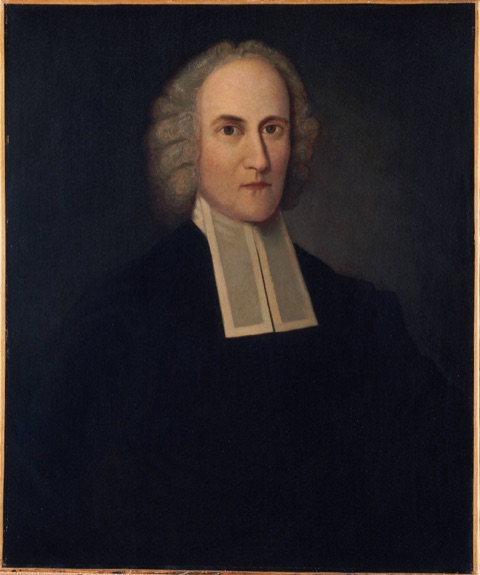
About the author
Jonathan Edwards
Jonathan Edwards (1703 to 1758 AD) was born in East Windsor, Connecticut, the only son among the eleven children of Timothy Edwards, a Congregational minister. He entered Yale at thirteen and graduated in 1720. In 1727 he became assistant to his grandfather Solomon Stoddard at Northampton, Massachusetts, and succeeded him as pastor in 1729. His preaching brought a local revival in the mid-1730s, which he described in A Faithful Narrative, and during the Great Awakening he preached Sinners in the Hands of an Angry God at Enfield in 1741. He published Religious Affections in 1746. Dismissed from Northampton in 1750, he went to the mission at Stockbridge, where he wrote Freedom of the Will. He died at Princeton in 1758, weeks after becoming president of the College of New Jersey.