Volume 3 of 3 · Full text in modern English · Free PDF/EPUB
The Christian and Civic Economy of Large Towns: Volume 3 in Modern English
This volume
- Vol. 1 · Churches, Schools and Church Officers
- Vol. 2 · Pauperism and the Poor Laws
- Vol. 3 · Wages, Savings and Schools
What is in The Christian and Civic Economy of Large Towns, Volume 3?
The Christian and Civic Economy of Large Towns is Thomas Chalmers's three-volume case for meeting urban poverty through the parish rather than the legal poor rate. This third and concluding volume, first published in 1826, holds the Author's Preface and chapters 17 to 24. Where the earlier volumes set out the parish system and a method for returning parishes from compulsory to voluntary relief, this one turns to wages. Chalmers explains how wages are set by supply and demand, shows how English allowances paid from the poor rate drag them down, and commends savings banks as the road to workers' independence. Three chapters on the workers' associations that followed the repeal of the combination laws defend the freedom to strike while demanding stern protection for men willing to work. The volume closes with high wages and foreign trade, and with the case for teaching political economy in schools for workers.
Read the full summary of Volume 3Show less
Volume 3 of The Christian and Civic Economy of Large Towns (1826) is Thomas Chalmers's study of wages. He argues that pay depends on the number of laborers, that poor-rate allowances keep that number too high, and that savings, education and later marriage, not strikes or laws, will raise workers.
How the argument unfolds
- 01
Author's Preface. Why the strikes of the day changed his plan, the continued success of St John's parish, and an Edinburgh Review misprint corrected.
- 02
What Determines Wages. Labor behaves like a necessity in the market, so a slight surplus of workers sinks wages far more than in proportion.
- 03
Wage Supplements and the Poor Rate. Allowances by family size encourage early marriage, idleness and low pay; trial parishes offer a way out.
- 04
Savings Banks and Workers' Independence. A small capital lets workers refuse wretched terms and stop the overwork that prolongs a glut.
- 05
Workers' Associations and the Law. Combining to stop work is innocent, coercing those who will work is criminal, and new hands can break a strike.
- 06
Lasting Improvements in Wages. Neither law nor association fixes wages for long; only fewer laborers can raise them.
- 07
Economic Misconceptions. Legislators prize trade above consumption and fear a flight of capital that would soon repair itself.
- 08
High Wages and Foreign Trade. Exports are paid for by domestic buyers of imports, so Britain can afford higher wages.
- 09
Schools for Workers. Education raises tastes and delays marriage, and plain economic teaching would calm discontent.
Notable images & quotes
- The gentlewoman's nutmeg. Rare spices behave like grain in price because no one economizes on them: “An elderly gentlewoman who likes nutmeg in her tea will not be driven from her cherished aromatic by a doubling or tripling that might cost her another halfpenny a month.”
- The traveling school. The strikes passing from district to district teach their own lesson: “The country is still at school on this subject. It would be a pity to prevent it from finishing its education.”
- Shawls worn, not woven. A trade is worth only what its goods give their users: “Our simple position is that the real good of shawls lies in wearing them, rather than weaving them.”
- The phoenix. Countries laid waste by war recover their people and capital alike: “Indestructible as the phoenix, the country will rise within a few years from its ruins to all the freshness and glory of its proudest days.”
Key themes
- Numbers decide wages. The proportion of laborers to work fixes pay, and workers control one side of it.
- Property as independence. Savings put workers on a level with masters: “We should like them each to have a small capital, not with which to become manufacturers, but with which to control manufacturers.”
- Character and comfort. Education and Christian teaching raise the standard of decent living, which delays marriage: “The higher the standard, the later the marriage.”
- Law that matches conscience. The state should punish only what conscience condemns, leaving men free to strike and guarding those who work.
Why read it today
Read it for a first-hand record of the English allowance system and the strikes of the 1820s. Chalmers prints letters from farmers and overseers and parliamentary evidence, so roundsmen, union delegates, shipbuilders and Dublin constables speak in their own words.
It completes the work. A minister using Smith, Malthus and Ricardo ties the parish method of the first two volumes to the price of labor, savings banks and popular schooling, and argues that the road to higher pay runs through character.
Reader questions (9)Hide the questions
Questions about The Christian and Civic Economy of Large Towns: Volume 3
Is there a modern English version of The Christian and Civic Economy of Large Towns: Volume 3?
Yes. This is The Christian and Civic Economy of Large Towns: Volume 3 by Thomas Chalmers in modern English. The language is modernized and the author's order and argument are kept. The full modernized text is free to read on this page.
Can I read The Christian and Civic Economy of Large Towns: Volume 3 online for free?
Yes. The complete text of this modern English edition is on this page, with no sign-up or paywall.
Is there a free PDF of The Christian and Civic Economy of Large Towns: Volume 3?
Yes. The PDF and EPUB of this edition are free with an Updated Works account. Sign in with Google or an email link; no card is needed.
What is The Christian and Civic Economy of Large Towns: Volume 3 by Thomas Chalmers about?
Wages. Chalmers explains how they are set, shows how poor-rate allowances keep them low, urges savings banks, examines the workers' associations of his day, answers fears about foreign trade, and argues for teaching political economy to workers.
How does this volume relate to the rest of the set?
It is the last of three. Volumes 1 and 2 hold chapters 1 to 16, on the parish system and the return from compulsory to voluntary relief. This volume holds chapters 17 to 24 and applies those principles to wages.
Why does Chalmers oppose wage supplements from the poor rate?
Allowances by number of children reward early marriage and enlarge the surplus of laborers, which lowers wages for everyone, and they loosen the bond between master and servant.
Does Chalmers support the right to strike?
Yes. Leaving work at the end of an engagement, alone or by agreement, is no crime in his view, and he welcomed the repeal of the combination laws. Employers should answer unreasonable demands by hiring other men.
What does he want done about union violence?
Intimidation and assault against willing workers should be punished far more severely than the repeal act allowed, with stronger police. The chief victim, he argues, is the poorest worker, who most needs work at the going rate.
How does Chalmers think wages can rise for good?
Only through fewer laborers in proportion to the work. Education, religion and savings raise the standard families think decent, marriages come later, and competition among employers lifts pay.
The Christian and Civic Economy of Large Towns: Volume 3 in Modern English · Full text
17. What Determines Wages
The difficulties in removing a great national evil like the system of legal poor relief fall into two entirely distinct classes. Much of the question’s obscurity and complexity would disappear if we kept them as separate in thought as they are in reality. The first arise from the economic condition of the lower classes. They lie in the circumstances and needs of the people themselves. Many imagine that abolishing a legal provision for the destitute would abandon a large population to distress and deprivation that humanity could not tolerate. To the extent that this is true, it presents a formidable objection, one that should settle the question against abolition altogether.
The population must not be abandoned in this way. If abolishing the system would leave people worse off in either comfort or character, abolition would cease to be desirable. We believe, however, that no such consequences would follow. If public charitable payments were withdrawn, there would not only be much less actual want in the country; the want that remained would certainly find relief, in a way far more consistent with both the comfort and virtue of families.
In other words, we believe that the first class of difficulties has no real, substantial existence. If any part of British territory were properly subjected to an experiment, all these difficulties would disappear under the test of experience. Chapter 16 explains how to conduct such an experiment in a parish, and Chapter 15 how to obtain permission for it. By a series of separate, successive operations in different districts, the whole country might eventually emerge from this grievous evil. As far as the people’s needs and habits are concerned, we consider the problem manageable, and very easily manageable. Holding this conviction, we have long thought it worthy of our strongest efforts to establish it by argument or, better still, by an actual demonstration.
But no one can pursue this task for long without encountering another, entirely different set of difficulties. These may be called the artificial or political difficulties of the question. Even if, as we believe, there are no essential or natural difficulties, this second class is enough to delay the spread of understanding and sound principles, and still more to delay any sound practical reform. Views may be just and well founded, while those whose cooperation is indispensable to putting them into effect remain unwilling to consent for a very long time.
A person might find no difficulty in freeing a particular district from its system of poor relief once permitted to follow his own course and deal with its families by his own methods. Yet he might find the greatest difficulty in obtaining permission. Those with the constitutional right to stop or authorize his proceedings must first be satisfied. Whether from honest conviction or a stubborn attachment to existing methods, they may resist every innovation. Before he can address the human circumstances of the poor themselves, he may face far greater obstacles in the law and in the obstinate prejudice or willfulness of those empowered to decide claims or administer relief.
We want readers to grasp how utterly different these two sets of difficulties are. The first must be encountered in the parish, among its applicants for relief. The second may arise in the parish vestry, where people assemble to administer the law; in the quarter sessions, where they interpret and enforce it; or in Parliament, where proposals to repeal or amend it are submitted. A system might be extremely easy to operate and overwhelmingly effective in ending dependence on parish relief, while leaving families with less want and misery than before. Yet a weary struggle against the disbelief and perverse misconceptions of influential people might precede permission to try it. A method that proves easy and effective among the poor once established might first encounter years of formidable resistance from their present governors and administrators.
This is enough to make the problem of poor relief difficult. But we must see precisely where the difficulty lies. We must not confuse natural difficulties inherent in administering relief with the political difficulties confronting a philanthropist when he meets the prejudices or preferences of those who currently possess the right or power to administer it.
At the same time, if the natural difficulties really are so slight and surmountable, the political difficulties must eventually subside and disappear. What chiefly produces opposition among influential people is their belief that the essential difficulties are immense. That belief also produces something even less hopeful than active opposition: the listlessness and apathy of despair. If we could prove that nothing in the condition of the lower classes presents an insuperable obstacle to abolishing legal poor relief, the prejudice and dislike felt by the higher classes toward radical change would ultimately give way. Truth may be resisted for a long time, but not forever.
The provisions of law will eventually be brought into agreement with the principles of nature. Whatever experience shows to be most beneficial to the people in their actual human circumstances must, in time, shape the law. Wisdom will rise from the parish to Parliament. Light gained through the details and tested experience of a humble district will ultimately overcome the entrenched attitudes that now barricade the legislature.
Let me give one or two examples of how sound opinion and policy may be defeated, or arrested for a time, by obstacles to which even the most enlightened views on poor relief are particularly exposed.
First comes the disbelief immediately awakened by the mention of so great an achievement as freeing an entire empire from compulsory legal poor relief. The apparent hopelessness of such a vast and marvelous result makes people disregard every explanation offered for it. The proposal looks so utterly impracticable that its announcement seems to refute it. Its apparently fantastic improbability produces a knowing skepticism in the hearer, the most unfortunate attitude imaginable for receiving any demonstration in its favor.
There is indeed so much quackery in the world. The public has repeatedly been assailed by the crude theories, remedies and splendid imaginings of successive adventurers. So many promising theories have passed before British society, only to disappear in complete failure, that we cannot wonder if general disbelief has hardened not merely into determined rejection but into outright indifference. This is the reception we must face at the very opening of our proposals, all the more certainly because the change we seek is so great. Its magnitude gives the whole undertaking an extravagant and visionary appearance. Many therefore consider it deserving of nothing but a rejection as swift and contemptuous as they would give a dream of Utopia.
To overcome this impression and the disbelief founded on it, we can point out that a great achievement may be impossible suddenly but possible gradually. It may be divided into separate, successive steps, each easily practicable. The proposed transition may be far too large to accomplish all at once, yet possible in time, piecemeal and inch by inch, using ordinary instruments and ordinary people. An evil that cannot be destroyed by a single blow may be removed by a process. We ask not for some extraordinary power to strike the blow, but for sober patience to await the process.
This is precisely the character of our proposal for ending the system of poor relief. We offer no mysterious charm to abolish it instantly. We would cover the ground by footsteps, not by flights. A single parish would not be completely freed until its entire existing generation of relief recipients had passed away. The whole empire would not be freed until the same separate operation had been repeated in every parish. We know of no impracticable link or step in the continuous series by which the evil might eventually be swept away to its last traces. What we want to enlist is not enthusiasm for a magnificent act of daring, but diligence in working through a succession of small tasks, patiently awaiting their completion without strain or impetuosity.
But no sooner have we overcome one aversion than another confronts us. The very people who have no faith in great achievements may place no value on gradual ones. When we explain how slowly our process works to overcome their disbelief in its effectiveness, we face an equally difficult struggle against their indifference. One prejudice or perversity replaces another. Escaping the first brings us into conflict with the second.
At first, they believe no more in the possibility of abolishing the whole relief system than in a feat of magic. Then, whatever reform is proposed has no attraction unless it can be accomplished with magical speed. We do not see how any proposal can satisfy people who doubt that relief is possible and simultaneously demand that it be immediate. We cannot devise a scheme modest enough in its aim to suit their narrow expectations and fast enough in its operation to satisfy their extravagant wishes. They reject the promise of complete deliverance as fanciful. When its apparent extravagance is moderated by explaining that deliverance will be very gradual, they reject it as slow.
Doing something great over a long period is no more beyond human strength than doing something small in a short period. Yet they refuse to put these elements together properly. They first object to the achievement’s magnitude as making it hopeless, then to the time required as making it worthless. The more extravagant dreamers, after all, are those who will accept nothing unless it can be accomplished with the speed of a conjuring trick. Their imagination outruns both arithmetic and experience.
The same person may distrust an achievement because its greatness makes it seem marvelous, yet disregard it altogether unless it can be performed at a speed that really would make it marvelous. Disbelief on one side and impatience on the other often belong to the same mind, though perhaps just as often they characterize two different classes of people. Between those who have no hope and those who demand haste, it is difficult to free a nation from the evils of a mistaken domestic economy.
Yet a method that would begin to relieve a great existing burden immediately, even though it could not complete the relief immediately, surely deserves some consideration. Suppose a grievous burden cannot be removed altogether within a year, but can be made lighter next year and lighter in each succeeding year until it disappears. Surely this should not be treated with indifference because impatient spirits will accept nothing short of complete and immediate deliverance. A heavily indebted person is grateful to be freed even by successive installments. That is how we would have the remedy and removal of the poor-relief system proceed.
Relief begins immediately, but it must advance by installments. A whole generation may pass before it is complete. We do not propose to wave an enchanter’s wand and make the evil vanish at once. It must disappear gradually. We believe great things can be done, but we ask for time to do them. We ask for no gigantic exertion of strength, only perseverance in a sober and thoroughly practicable undertaking.
Various methods, themselves gradual, have been proposed for attacking this many-headed evil and, if possible, destroying it inch by inch. For a full explanation of our own method, we must refer to earlier chapters. We now turn to another method that still occupies much of the attention of public figures and members of Parliament.
Destitution may arise from two sources: inability to work, or inadequate wages. England’s original system of poor relief, it is said, was restricted to those whose poverty arose from incapacity. Many regard its extension to able-bodied laborers, to make up deficiencies in their wages, as an abuse or corruption. The great present aim is to restore the system to its original limits by ending this latter use of the poor fund altogether. It would separate the distress caused by age and incapacity from that occasionally caused by fluctuations in the price of labor.
Some would be satisfied with cutting this later addition from the English poor-law system. Others consider a further reform possible and desirable. We believe there is a gradual process for removing both branches of the system, applicable to each from the very outset. Nevertheless, this does not lessen the importance of discussing separately and at some length the effects of a poor rate used to supplement inadequate wages. A few preliminary explanations will be necessary.
We know that several principles advanced in our discussions are obvious to anyone acquainted with the elements of political science. Some may think we should immediately assume them as the basis of further argument, rather than delay readers by arguing again for doctrines they already accept. But we cannot forget that we address practical people as well as students and theorists. Even at the risk of wearying the latter with an excess of explanation, we can scarcely err toward the former by being too simple or too detailed.
The first point to consider is how the price of anything brought to market is affected by changes in supply on one side and demand on the other. Holders of sugar, for example, reserve what they need for themselves and bring the surplus to market, exchanging it for other things they need. If more sugar is offered than buyers demand, the main force of competition will be among sellers trying to dispose of it. Each will try to outdo the others by giving purchasers a stronger inducement to buy from him. He can do this only by offering cheaper terms. Each thus tries to undersell the rest. In other words, a large supply of any article of exchange is certain to bring down its price.
Now suppose the same article is brought to market in such small quantities that buyers demand more than is available. Competition changes sides. It now operates among purchasers rather than sellers. Each tries to outbid his neighbors by offering a greater inducement to the holders of a commodity that is now scarce and therefore more urgently sought than usual. He can do this only by offering a higher price. Each tries to outbid the others. In other words, a small supply of any article of exchange is certain to raise its price.
A commodity’s price therefore falls as its supply increases and rises as its supply diminishes. More briefly, this law of political economy states that the price of every article of commerce varies inversely with its supply.
But supply might remain entirely unchanged. The same quantity of sugar, grain or any other commodity might reach the market each week, while its price nevertheless varied greatly from week to week. Sellers do not always have the same quantities to sell, but buyers do not always have the same need either. Demand can fluctuate as well as supply. Price plainly rises and falls with demand, rather than inversely to it. Hence the fuller maxim: a commodity’s price varies directly with demand and inversely with supply. More loosely and generally, its price depends on the proportion between demand and supply.
Money’s intervention does nothing to alter this process. Its function is merely to facilitate the exchange of commodities. The proportions exchanged remain the same whether money serves as an intermediary or the goods are bartered directly. Sellers of grain may use its price to buy sugar. It is inconvenient to bring both commodities, or perhaps either, in bulk to the place where the transaction is negotiated. The money received for one is therefore paid for the other. But this does not change the proportion between the number of quarters of grain and the number of hundredweights of sugar considered equivalent in the market at that time. That depends on demand and supply alone. It is the same as if money had never been devised to carry out commercial contracts.
Money’s intervention need not, then, prevent a correct understanding of the subject. Remember only that increasing an article’s supply or reducing demand lowers its price, while reducing supply or increasing demand raises it.
Some articles, however, fluctuate in price much more readily than others, and over a much wider range. Everyone knows the fluctuations of the grain market, and the intensity, often the frenzy, of desperate speculation associated with its temptations and losses. Generally speaking, changes in quantity affect the price of life’s necessities far more powerfully than they affect luxuries. Suppose the grain crop falls short by one-third of its usual amount. More precisely, suppose the supply reaching the market, whether from domestic production or imports, is reduced by that proportion. This will raise the price by much more than one-third. It is not an unlikely prediction that a shortage of one-third or one-fourth would more than double the cost.
A luxury behaves differently, especially when something else can be bought as a substitute. Suppose a failure of West Indian production in a particular year reduces the usual supply of rum by one-third. Its price will rise, but nothing like as much as an equal deficiency would raise the price of grain.
Such is the fact, and its cause is easy to understand. People can more easily bear the loss or reduction of a luxury. When its price threatens to rise extravagantly, they can limit their demand. I can substitute another, cheaper drink for rum. Failing that, I can reduce my consumption or abandon it altogether. Scarcity raises its cost on one side, but reduced demand can counteract this to any extent on the other. The point of balance between sellers and buyers shifts. Rum becomes dearer, but not as dear as it would if it were indispensable to human comfort and therefore more urgently sought by purchasers.
This is not true of rum, but it is true of grain. Most families could not reduce their usual consumption to two-thirds without distress or great inconvenience. Each presses forward to secure a larger share of the general stock than his neighbor. This urgent competition among buyers raises the price of necessities far beyond the proportion by which their supply falls short. People can live without luxuries. They will accept less of them for a season rather than pay the price that would follow if demand were as intense as everyone’s demand for the necessities of existence. People cannot live without necessities. They will not accept a reduced allowance as readily as they would accept less comfort or expensive indulgence. The same proportional shortage therefore raises the prices of the two classes of goods very differently. More urgent demand in one case explains the difference.
A reduction by half in the general supply of food would more than quadruple the price of basic necessities and fall with greatly increased severity on the lower classes. An equal failure in all the world’s vineyards would certainly not raise wine prices by anything like that proportion. Rather than pay four times the usual price for Burgundy, its wealthy consumers would generally move down to claret, then to port, then to domestic wines, then to spirits, then to fermented liquors. Nor is substituting one indulgence for another the only defense against an enormous charge. People can also reduce the indulgence or give it up altogether. This refuge is much less available when a population faces famine in the necessities of life.
Families certainly make many substitutions when such a calamity arrives: from meat to vegetable food, from flour to meal, from meal to potatoes. But if the land’s annual produce has fallen short generally, the price of each rises in turn as purchasers flock toward it. Eager demand for every variety of food raises all their prices, far beyond the proportional shortage. At the same time, the higher price is necessary to restrain family consumption enough to make the reduced stock last until the next harvest.
This helps explain how a population survives years of famine in which prices may be tripled. As the preceding explanation shows, this does not mean people must be three times worse fed than usual. For all we know, the country’s food may have fallen by only one-fourth. Families may be receiving, on average, three-fourths of their usual subsistence while its cost is three times greater than usual. To make the larger payment, they must cut back on other purchases for a year. They probably give up comforts altogether and restrict themselves more severely in secondary necessities than they possibly can in basic food. They may forgo the little seasonings that gave relish to their coarse and humble meals, conserve fuel more strictly, and be content for a while with clothes more threadbare and even more tattered than they would choose in better times.
Thus, even when basic necessities triple in price for a season and laborers’ money incomes do not increase at all, they are found to weather the hardship. They still receive food in a much larger proportion than its cost initially seems to indicate. They can also pay that cost because, especially where they have good habits, comfortable circumstances and a fairly high standard of enjoyment in ordinary years, they have more to save by cutting back in a year of severe scarcity. They can release much of the income previously spent on clothes and various dispensable luxuries, leaving more to spend on subsistence.
This explains how roughly a population can be handled by bad seasons and changes in trade, and how its means nevertheless possess a stability that withstands many shocks and fluctuations. To many observers it is mysterious and marvelous that the seemingly frail and precarious circumstances of the laboring classes have the endurance to survive the most fearful reverses in commerce and the seasons. Somehow, after a period of gloomy suffering and still gloomier fears, families emerge with the same sufficiency as before. We know of no study more suitable for the philanthropist than the mechanism producing this gratifying result. Nowhere will he find greater reason to admire the exquisite skill of the adjustments that must be attributed to the providence of Him who formed society and so wisely fitted its elements together.
Nothing seems more variable than the operation of the elements that regulate the nation’s annual food supply. One season differs greatly from another. Between extremes of dryness and moisture, the amount of produce on which human sustenance depends may vary enormously. Even when abundance seems almost assured, a single day’s hurricane passing over ripe but uncut grain, or a few weeks’ rain soaking and rotting the sheaves piled in the harvest field, could destroy the food of millions.
We recognize a compensating effect in differences of soil and exposure: weather adverse to one district may favor another. An autumn storm’s devastation must also be partial, because lowland and upland harvests occur in different months. Yet these balancing causes by no means make the produce of different years equal. Its fluctuations would bring still greater distress and deprivation to families if the laws of nature were not counterbalanced by what may be called the laws of political economy.
The price of food does not depend immediately on how much is produced, but on how much reaches the market. It is therefore good that every year of scarcity immediately sets causes in motion that increase the latter quantity as much as possible, repairing the deficiency in the former. It is good that even a small shortfall in the crop should be followed so certainly by a large advance in prices. This immediately places families on the reduced allowances needed to make the limited supply last throughout the year.
Besides this beneficial restraint on household consumption, high prices encourage farmers to reduce their own consumption and alter their management so as to provide the largest possible surplus for sale to the wider population. The higher price gives a farmer a more urgent interest in taking as much produce to market as possible. To do so, he cuts back at home as far as he can, and he has considerable scope for doing so.
In particular, he can, and does, substantially reduce the feed given to his cattle. Where this formerly consisted of potatoes or grain, an important addition to market supplies becomes available. One must often have noticed the comparative cheapness of meat in a year of scarcity. More cattle are slaughtered to avoid the heavy expense of maintaining them. Besides adding directly to human sustenance, this further reduces farm consumption and releases still more necessities for sale.
We do not deny that this change may disrupt the farm’s management in ways from which it might take years to recover fully. But the evil becomes more tolerable by being spread. The horrors of extreme scarcity are prevented. Adversity is weathered at its worst. The country emerges from the visitation, in all probability without a single person starving. This happens because the causes just explained make market supplies fluctuate within narrower limits than the crop itself. Even if the crop falls short by one-third, market supplies might fall by only one-fifth or one-sixth of their usual amount.
Suspending distillation in years of scarcity greatly strengthens this effect. If supplies nevertheless remain very short, and prices consequently rise far more than proportionally, this will naturally bring grain imports from abroad. Differences of weather and soil may partly balance scarcity on some farms with comparative abundance on others within a single country. The same principle applies much more strongly to a continent or the world at large.
If a small deficiency in domestic grain supplies raises its price more than it would the price of other commercial goods, this itself provides for a more certain and prompt replacement of the deficiency from abroad. Such replacement matters far more for necessities than for comforts or luxuries. The wider and more sensitive fluctuations in grain prices that we have described themselves secure a more equal human distribution across the globe in seasons when nature has distributed unevenly. They spread more certainly and immediately over the earth what heaven has bestowed unequally.
It is good that the corrective force distributing annual food supplies more evenly across the world should be made more effective. A sharp rise in the cost of necessities after even a slight failure of domestic supplies may seem to aggravate a people’s hardship. Yet it certainly strengthens the impulse that brings grain from lands of plenty to a land of famine.
What we have long regarded as the most beautiful part of this operation is the immediate advantage a large inflow of imports gives our export manufacturers. The exchange rate sets a limit to exports from any country. Up to that limit, a class of laborers is employed in preparing the goods. Increased imports affect the exchange rate in a way that extends this limit. Export traders can sell at a larger profit and send out more goods than before, employing more people to prepare them.
Increased imports always stimulate exports, making employment arise in one quarter just when it disappears in another. More precisely, just when domestic demand for a particular commodity weakens, foreign demand strengthens. We have already described how families shift their expenditure in a year of scarcity, devoting a far greater share to basic necessities and proportionally withdrawing it from comforts and even secondary necessities. Cloth may be considered a secondary necessity. It would indeed be grievous if the many workers engaged in making it found employment scarcest in the very year when food was dearest. But in the same proportion that domestic customers abandon them, they find compensation in stronger demand from abroad.
In these various ways a country is found to survive its hardest visitations. Even with basic foodstuffs at three times their usual price, a country has been known to emerge into prosperity again without an authenticated case of starvation among all its families.
To illustrate the principles of our immediate argument further, we may state a case that looks anomalous at first but can be explained consistently with our view. Our general doctrine is that a commodity’s price fluctuates with the quantity brought to market, but that the fluctuations are much larger for a necessity than a luxury. Rare and valuable spices appear to provide an exception. For centuries their monopolists have been known to destroy a large part of their cargoes whenever an oversupply threatened to reach the market, in order to raise the price. They found it profitable to do so.
An article even more entitled to be called a luxury than the one already mentioned, and certainly more luxurious than rum because its use is confined to the wealthy, may resemble grain rather than rum in the size of its price fluctuations. Consider grain, sugar and nutmeg. Suppose each falls short by one-third of its usual supply. Grain may double or perhaps triple in price. Sugar also rises, but nothing like as much. Nutmeg is more of a luxury than sugar: it is enjoyed more rarely and used by a much smaller class of society. In that respect it is further from grain than sugar is. Yet its price fluctuations come much closer to those of grain. A shortfall of one-third may likewise double or triple its price.
The explanation is simple. Sugar is a luxury, but people use so much of it that it forms a substantial item of family expenditure. An attempt to double its price, after the same deficiency that would double grain prices, would immediately meet severe retrenchment and economy among most consumers. With grain, saving matters, but because grain is necessary, economy cannot easily go beyond a certain point. Demand therefore remains intense and the price high. With sugar, saving also matters, and because sugar is a luxury, consumption can be reduced to any extent. Demand slackens, keeping its price down more than in the case of grain.
With nutmeg, the most luxurious of these articles, economy is even more possible than with sugar, but there is no incentive for it. Its consumption does not amount to sixpence a year for each family in Great Britain, and perhaps no family spends more than a guinea a year on it alone. Double or triple its price, and demand will scarcely change. People will pay rather than forgo any of their customary indulgence. An elderly gentlewoman who likes nutmeg in her tea will not be driven from her cherished aromatic by a doubling or tripling that might cost her another halfpenny a month. The same is true of cloves, cinnamon, Cayenne pepper and all the precious spices of the East. Thus, although the prices of necessities generally differ widely from those of luxuries in their range of fluctuation, the most common necessities and the rarest luxuries show a remarkable resemblance.
Wages are the price of labor. Like the price of every other commodity, they are determined by the proportion between supply in the market and effective demand. If supply diminishes or demand increases, the price rises. If supply increases or demand slackens, it falls. Yet some commodities fluctuate far more in price than others even when the proportion between demand and supply changes equally for each.
Take wheat and rum. A government contract for one-twentieth of all the wheat in the country would raise its price far more than a similar contract for one-twentieth of all the rum. A bad harvest reducing the wheat crop by the same amount would raise its price in a much higher proportion than an equally large deficiency in rum caused by a bad West Indian season. The reason is obvious, but its application to our subject requires a little more explanation.
Wheat is a necessity of life. Rum is not. I can go without spirits; I cannot go without bread. Nor can I reduce my consumption of bread as easily as my consumption of rum. I will therefore pay more to avoid the greater inconvenience. This is especially true of the great majority of families. Bread is their staple food. Generally speaking, a person can less readily endure a reduction in his usual food allowance than in his usual indulgence in a luxury.
If rum threatens to rise beyond a certain price, I can refrain from buying it, turn to another spirit, or give up spirits altogether. With grain I have no such freedom of choice. I can neither dispense with it entirely nor substantially reduce my demand without considerable suffering. Sellers of a luxury depend more on purchasers’ tastes and whims. Sellers of a necessity have purchasers in their power. A rise in the price of spirits following reduced supplies may limit consumption enough to prevent an extravagant rise. But when grain is scarce, everyone demands his customary supply far more urgently and will make greater sacrifices to obtain it.
Competition is far more intense in one case than the other. A very small harvest deficiency therefore raises the price of one article more than a similar deficiency in imports raises the other. Grain is consequently among the market’s most sensitive commodities in price, as changeable and responsive as the weather itself. It not only fluctuates over a wider range but does so more readily and frequently than other goods. A crop deficiency of one-tenth raises the price by much more than one-tenth. A deficiency of one-third produces the alarm, and much of the actual suffering, of famine.
Labor may be considered a marketable commodity whose supply is measured by the number of laborers, and whose price, as in other cases, is regulated by the proportion between supply and demand. Like necessities, it is subject to great price fluctuations, on the same principle, but operating in something like the opposite direction. The urgent need for subsistence raises the price of basic necessities even after a very slight shortage in their usual market supply. The same urgent need lowers the price of labor even after a very slight surplus in the number of laborers.
Viewed from one side, the transaction represents the capitalists’ demand for labor. Viewed from the other, it represents the laborers’ demand for employment. This latter demand may have all the urgency and vehemence of a demand for necessities. Employment is the vehicle that brings those necessities to their doors. If there are more hands than are wanted, workers generally cheapen their labor rather than be excluded from competition altogether. Its price falls much further than the proportional excess in their numbers.
People must have subsistence. If employment is the necessary step toward it, they must have employment. When workers are too numerous, capitalists therefore have the same control over them that holders of necessities have over customers when the crop is deficient. The price of labor is thus extremely sensitive and variable, with as wide a range of fluctuation as the price of grain. A very small surplus of laborers creates a much larger proportional reduction in wages.
Suppose twenty thousand muslin weavers, fairly paid, are enough to meet the natural demand in that branch of manufacture. An additional thousand unemployed weavers approaching manufacturers with their requests and offers would bring fearful distress and deprivation upon the whole body. Wages would fall by much more than one-twentieth. A trifling surplus of workers could thus severely and widely depress the comfort and sufficiency of the lower classes.
I discussed this principle some years ago during a period of severe commercial distress in Glasgow, when measures were being considered to relieve the many workers suffering an unprecedented depression in their wages. The following extract comes from a short written explanation I prepared for that immediate purpose and subsequently had published in the Edinburgh Review:
“It ought to be kept in mind that there are particular lines of employment where a given excess of workmen is sure to create a much greater proportional reduction in the rate of their wages. Should twenty thousand laborers, in a given branch of industry, so meet the demand for their services as to afford to each of them a fair remuneration, then an additional thousand coming into competition with those who are already at work may very possibly lower, by much more than a twentieth part, the price of their labor. In other words, the consequent deficiency of wages might go greatly beyond the fractional addition that had thus been made to the number of laborers.
“It is thus that, in certain kinds of work, a very small excess of hands may bring a very heavy distress and depression upon a whole body of operatives. The urgency of a few more than are wanted, soliciting employment and satisfied with any terms rather than be kept out of it, may bring down the terms to the whole profession in a ratio so large that the entire maintenance of these additional applicants for work would not nearly cost so much as is lost, on the whole, by the body of their fellow workmen in the shape of reduced wages. For example, should two shillings a day be a fair remuneration for labor, and should it be the actual remuneration earned by twenty thousand workmen at some particular kind of it, an additional thousand might be maintained at this rate daily for a hundred pounds. But we should not be surprised to find that the effect of their appearance, and of their competition, was to bring down the daily wages to eighteen pence. Now, this would lower twenty-one thousand workmen beneath the average of comfort by sixpence a day to each, or by five hundred and twenty-five pounds a day to them all, taken collectively. In other words, a certain surplus of men might entail a calamity upon their profession which, when measured arithmetically, will be found to exceed by upwards of five times the whole expense either of maintaining them in idleness or of giving them full and adequate wages at another employment.
“The above statement, we are persuaded, will recommend itself to the experience of all practical men; nor do we think it difficult to apprehend the reasoning behind it. Men must have a subsistence for themselves and their families; and if this is only to be had through the medium of employment, men must have employment. If they cannot earn thereby a plentiful subsistence, they will rather put up with a scanty subsistence than have none at all. And thus it is that a surplus thousand laborers may cheapen work by a fraction greatly larger than the excess of their own number over the former number of laborers. Thus, from the necessity of a few, an adverse influence may spread itself over the many; and, with a very slight introduction of more hands into a branch of industry already sufficiently occupied, an evil may be introduced so weighty as to overbear for a time the whole profession, and to call forth from all its members a general outcry of apprehension and distress.
“This view of the subject, if it contains matter of regret that a cause so trivial should produce a mischief so extensive, also contains matter of consolation. As we have already traveled from the cause to the effect, we have only to travel back again from the effect to the cause; and if the cause is trivial, it may be remedied by a trivial exertion. The actual magnitude of any present or existing distress among a body of workmen will not alarm us into a fear of its permanence, if we are right in tracing it to so remediable a cause as a small fractional excess in the number of these workmen. Should the addition of a thousand men to a branch of industry which affords sufficient maintenance to twenty thousand have the effect of reducing their maintenance by one-fourth, then, when a case of such grievous reduction actually occurs, it is fair to infer that the transfer or removal of a single twentieth part of these laborers would operate as a restorative to the comfort and circumstances of them all. And, when one thinks of the many natural safeguards for bringing about an adjustment of those partial and temporary differences that occur between the demand for labor and the number of laborers, he may both admit the severity of an existing pressure and be foremost in every sound and practicable measure for its alleviation, without reading in it the symptoms of any great national catastrophe or losing his confidence in the stability of his country’s wealth and greatness.”
However melancholy this prospect may initially appear, further reflection reveals openings and remedies that might make us more hopeful than ever about humanity’s future. One point is clear. If a small fractional surplus of labor over demand can account for a very great deficiency in wages, a small fractional relief may bring wages back to their proper level and restore a desirable balance between a worker’s pay and his family’s needs.
It is encouraging to know that the misery of an overcrowded trade can be remedied on such easy terms. If the present small surplus of laborers could be employed elsewhere, or their future annual supply slightly reduced, we might again see the cheerful spectacle of well-paid industry in comfortable circumstances. If a way could be found to bring the number of workers more closely into line with the need for them, workers might gain some control over manufacturers, instead of manufacturers exercising such oppressive control over workers.
We would certainly consider it far healthier for the community if workers were sought after instead of having to seek employment; if employers had to search for service rather than laborers having to beg for it. It is most pitiful to see a population prostrate and overwhelmed beneath the weight of its own numbers. We know of no finer object for patriotic wisdom and benevolence than finding a way to rescue the lower classes from this apparent helplessness. This would be accomplished if they were relieved of the competitive pressure by which they now elbow one another out or beat one another down. Nothing is more certain, however, than that workers will be unable to deal more independently with employers, or resist terms that lower their families beneath a decent level of human comfort, until their numbers bear a smaller proportion to the need for them.
A very small surplus of workers over demand causes a much larger proportional depression in wages. This is as true, and rests on the same principle, as the fact that a very small grain-market shortage causes a much larger proportional increase in price. Each is a severe evil traceable to a slight cause, and perhaps therefore curable by a slight corrective.
M’Pherson’s Annals of Commerce shows that average annual grain imports over many years, excluding the two remarkable scarcity years of 1800 and 1801, amounted to no more than eleven days’ consumption. Even the greatest imports ever known did not amount to one-tenth of the island’s consumption. These might appear to be fractional remedies easily dispensed with, leading people to underrate the benefits of imports. But however small these annual supplies appear in themselves, their consequences are momentous. They lower market prices far more than they increase the stock of grain.
The same relationship exists between a country’s population and its comfort. A very small excess in numbers greatly reduces comfort. But just as slight imports may restore the price of necessities to a fair and natural level, a slight emigration removing the surplus, or a slight change of habits preventing it, may raise the lower classes to a condition every generous friend of humanity would rejoice to see.
A people’s circumstances may therefore be greatly depressed without requiring a great remedy. However severe the distress, a slight emigration or a slight preventive restraint, somewhat reducing their numbers, may remove it. These two means of relief are so distinct that many suppose one could entirely replace the other. They imagine that emigration, by removing our surplus population, makes measures to prevent that surplus practically unimportant. There is, however, a relationship between the two expedients that deserves consideration, as do the expedients themselves.
We cannot enter this argument without first referring to Malthus’s celebrated theory of population. One point at least is clear: the very breadth of his views has delayed their practical application to political or domestic economy. He writes about the species and the world. His reader’s mind is continually directed toward the population of the entire globe and its relative capacity to provide subsistence. The reader can escape his conclusions by wandering in imagination through vast unpeopled regions and wildernesses luxuriant with natural wealth but still untrodden by human feet.
Many admit the truth of the theory yet would remain inactive until the earth’s last acre had reached its highest possible cultivation. To an assertion that Britain is overpopulated, they reply that Australia offers an as yet unoccupied space equal to twenty Britains. Until this is fully occupied, they say, emigration is the only expedient requiring our attention. Meanwhile, a preventive check on population growth is wholly unnecessary and may be reserved for an indefinitely distant future. When agriculture has done everything possible in every land, it will be soon enough to consider keeping the human species within the maximum subsistence then attained.
But the world’s population need not wait until food production reaches its maximum before pressing upon its food supply. It is enough that population tends to increase faster than food. A moving body coming into contact with a stationary one exerts pressure. This may represent an increasing population pressing on means of subsistence that have become stationary because they have reached their utmost extent. But if the moving body instead overtakes another moving in the same direction at a lower speed, there is still pressure. It is less than in the first case, but proportionate to the difference in their speeds. This may represent the actual pressure of any population tending to grow faster than its means of subsistence.
Everything depends on the relationship between the tendencies of population and food to increase. The world’s population may therefore press too hard upon subsistence even now. Every moral and beneficial check on human multiplication is consequently desirable today as well as centuries from now. It is an imaginary consolation to suffering English families that tracts of Australia could maintain a population ten times that of the British Empire. They cannot transport themselves there instantly. They cannot immediately raise the means either to emigrate or to cultivate this unbroken territory. If the achievement cannot be immediate, it must take time. To maintain continuous pressure during that time, population need only have a stronger tendency to advance than food supplies.
If a magical wand could cover the earth’s entire cultivable surface with a ripened harvest, every preventive check on human numbers might, at least for the present, be suspended. But if our species must labor toward that achievement for many generations, intervening obstacles may produce pressure throughout the process. Without a preventive check, the great human family may remain in miserable, straitened circumstances all along.
The existence of a country like Australia may lessen this misery, but can no more abolish it than a similar tract on the moon or another planet, to which emigration is impossible. The barrier need not prevent all emigration or close every outlet for our surplus population. It need only impede the full flow required for complete deliverance. Thousands of years may pass before all the necessary facilities are opened and enough capital becomes available to occupy the whole unsettled domain. It is a gradual process carried forward by each year’s emigration. Throughout it, many may be distressed while few can afford to emigrate.
This is the actual condition of every country sending families from time to time to colonize distant territories. Light and adventurous spirits will move at any impulse. But nothing short of actual, felt distress will exile any considerable number of whole families from their homes. Those who move have the means to do so. Others, lacking the means, remain in hardship and suffering. Even government assistance cannot exceed certain limits. After it has done its utmost, there may still be a distressed population because there is still a surplus population.
These successive departures resemble the successive releases of steam through a safety valve. They relieve the pressure within, yet a pressure remains that balances the weight bearing down upon it. It is not desirable for this internal pressure to be so strong that people remain confined and straitened to the point of being driven to emigrate. A country is in a state of violent strain if it resembles a vessel always about to burst unless relieved by a constant outflow or successive discharges. Reducing this strain is always desirable. Surely the community at home would be gentler and happier if, instead of being pressed to the very edge of the country’s ability to maintain it, the population enjoyed ease, ample resources and sufficiency in its native land, remaining well short of the point that drives people to emigrate.
It speaks strongly for the soundness of Malthus’s principles that they become clearer as the field in which they are illustrated narrows, and the inspection therefore becomes closer. When he says premature marriages are harmful to humanity because they make the world’s population press uncomfortably upon its food, one can evade his conclusion by imagining fertile but uncultivated regions that could receive emigrating families for centuries. When he makes the same claim about a kingdom, one can take refuge, even without emigration, in its unreclaimed wastes and imperfect agriculture.
But no one needs his philosophy to feel the full force of his principle within a family. Suppose a son rashly marries before properly establishing himself in the world. His whole family would deplore the event as a calamity, both because of its present expense and because of the future expense of children. It would be no consolation to hear of millions of acres at home and abroad that might still feed millions of people. This may pass as an answer to Malthus’s speculations about the population of the globe or our empire. It carries no weight against the fear that a son’s improvident marriage, when he has no home of his own, will overcrowd the family household.
Here the danger and imprudence are clearly understood. No objection to his theory of population in its abstract and universal form can overturn lessons of practical experience recognized by people of plain but substantial understanding long before his theory was heard of.
In his discussion of checks to population in the South Sea islands, Malthus aptly says of Tahiti:
“The difficulty here is reduced to so narrow a compass, is so clear, precise, and forcible, that we cannot escape from it. It cannot be answered in the usual vague and inconsiderate manner, by talking of emigration and further cultivation. In the present instance, we cannot but acknowledge that the one is impossible, and the other glaringly inadequate. The fullest conviction must stare us in the face, that the people on this group of islands could not continue to double their numbers every twenty-five years; and before we proceed to inquire into the state of society on them, we must be perfectly certain, that unless a perpetual miracle render the women barren, we shall be able to trace some very powerful checks to population in the habits of the people.”
The narrowness of the field makes Malthus’s principle plainly visible within a household, and within a parish too if some barrier to emigration surrounds it. The poor laws have placed just such an artificial barrier around an English parish. There the miseries of a surplus population can be plainly illustrated, without escape through emigration or the further cultivation of distant parts of the world.
In the same way, we ask to be spared the condemnation attached to this theory when, instead of considering and providing for the entire world, we concentrate on one parish. We recall our scattered imagination from other continents and climates to what lies directly and familiarly before us, among the people of our own small neighborhood.
England’s poor laws tend to isolate each parish from the rest of the world, bringing it more clearly before us as a separate object of study. In particular, they place a barrier around each parish. Though not entirely insurmountable, it has been highly effective in confining each population within its boundaries and closing outlets for emigration. This explains why English peasants often resist the most encouraging offers of settlement abroad. They know they have a legal right to relief on their native soil, and they are unwilling to surrender it. They feel they possess property at home that emigration would require them to relinquish. The reasoning that blinds a reader to the truth of the general theory is therefore inapplicable to the present circumstances.
Nor do the poor laws merely impede the departure of surplus population to distant colonies. To some extent they also restrict the free movement of people between parishes. Each parish becomes suspicious of new settlers, while its inhabitants’ natural preference for home is reinforced by the feeling that they have a rightful inheritance there. They can obtain its benefits far more directly and conveniently on the spot than in a distant part of the country. Yet even when they move away, they retain their claim on their own parish. Like nonresident property owners, they can have their rent sent to them, and may in fact burden the parish as much as if they still lived within it.
The vestry that distributes poor relief may thus be regarded as an adhesive center around which a parish’s people gather and settle. Each parish illustrates Malthus’s theory as distinctly as if it were a little world of its own. Yet its affairs and difficulties can be considered without keeping his theory in mind at all. No broad or general speculation need enter the argument.
We regard Malthus’s theory of population as entirely indisputable. Yet we no more make our condemnation of English poor relief depend on it than we would make our condemnation of a hasty marriage in a destitute and unprepared family depend on it. Let his theory be denounced as it may; let its opponents even defeat it in argument. That will overturn neither the maxims of household prudence learned from any ordinary housewife nor the demonstrations of evils in the poor-relief system that, with or without a philosophical treatise, are obvious to the practical judgment of country squires and parish overseers.
18. Wage Supplements and the Poor Rate
Let us turn, then, from Mr. Malthus’s far-reaching speculations to the circumstances and management of a single parish. We can appeal to the everyday experience of plain, practical men who both painfully feel and clearly understand the harm done by their present arrangements. Calculations about population extending beyond their own small community would only bewilder them. In every parish a certain amount of work needs to be done, and a certain number of laborers would be enough to do it. Some workers may come from elsewhere; some local men may go beyond the parish in search of employment. With or without these movements, however, the parish contains a certain number of able or available laborers. If they are barely sufficient for the work required, they will be hired at a fair wage. If there are more than enough, they will gladly accept less rather than have no employment at all. This competition drives wages down. On the principle already explained, a very small surplus of laborers may produce a very large reduction in the price of labor.
It is no answer to say that this surplus will naturally disperse to other places. It would under natural conditions. It always does in those Scottish parishes where compulsory relief is unknown. But in England the established practice is to use the poor rate, the parish tax for relief, to support not only the poverty of the old, sick, and disabled, but also that of able-bodied people whose work is poorly paid. Here the surplus is not so easily dispersed. The system contains a force that holds and fastens it to every parish where it has once arisen. It is very instructive to examine the various expedients used to meet it and the uniform failure attending them.
Low wages first cause hardship to the fathers of large families. Accordingly, they have been the first to benefit from the extension of English legal charity beyond the cases for which defenders of the Elizabethan statute allege that it was strictly and originally intended. If the statute really was framed with any such limitation, that limitation is now very generally disregarded. Especially in the southern counties, nothing is more common than to maintain an able-bodied laborer through a combination of wages and the poor rate. Two questions are generally put to applicants for parish relief and provide the information used to fix their allowance: “What do you earn?” and “How many people are in the family you have to maintain?” If the wages are considered inadequate for the family, the shortfall is usually held to give as firm a claim as the complete helplessness of disability or disease. A weekly payment from the poor rate makes up the deficient wages. A man who would otherwise have been left to support himself as an independent worker becomes dependent on legal charity.
I have been honored to receive communications on this subject from the justly celebrated Thomas Clarkson. He describes two methods used in certain Suffolk villages to provide allowances for parents of large families:
“In some villages they allow handsome and proper wages per week, say nine shillings to every man employed. Now, nine shillings will do very well, as far as a man, wife, and two children go; but will not be enough where the children are from three to six, or more. All, therefore, which the large families may need beyond the nine shillings, they pay out of the poor rates. This is not unjust, because they give to every man a fair and equitable wage, according to the times; that is, as much as he can earn. The family man undoubtedly needs more than the single man, but still he cannot earn more; and, very often, not so much. All, then, have fair wages; and if there are needs beyond what the weekly wages will provide, they belong to the parish in common. The tailor, the shoemaker, etc. is equally bound with the farmer to contribute to the needs of the parish; and what reason have they to complain, when the farmer, after paying his men fair wages for their work, pays also his share toward their extraordinary needs?
“In Playford, again, we do differently. We do not pay all our men alike. We pay nine shillings per week, as far as a man, wife, and two children; but we pay all the family, or rather large-family men, by the piece, so as to make them earn ten, eleven, and twelve shillings per week. We differ again in another respect, for we pay all the surplus beyond nine shillings entirely out of our own pockets. We never go to the poor rates for this surplus, in order, if possible, to promote a spirit of independence among our laborers. Where the surplus is paid out of the poor rates, every laborer knows it; that is, he knows that he gets nine shillings from the farmer, and two or three from the parish: but in Playford, the laborer, when he takes his money home at the end of the week, has the pleasure of reflecting that all the money is of his own earning, unmixed with any parish gift. This is so, except in a few cases; for, where a man has a wife, and seven or eight children, it would be hard upon a farmer to pay him twenty shillings per week, when the laborer could only earn ten or twelve. In such extraordinary cases as these, there is a regular allowance for such a pauper, beyond his wages, out of the parish funds, to do justice both to the man and to the master.”
This, then, is the first application of the poor rate to wages that deserves our attention. Before single, able-bodied men receive its benefits, parents must already have received allowances proportioned to the number of their children. This is a bounty on population and must perpetuate the cause of the harm it is intended to relieve. Throughout England there is a general feeling that something is wrong with this combination of wages and parish allowances. In some places there is also an anxious desire to defend local management against the charge of a practice felt to be discreditable. When asked whether they supplement deficient wages from the poor rate, people very frequently reply that they never do: nothing is given because wages are low, but only because a family is large.
Shifting the grounds in this way makes no practical difference to the system’s effects, but it teaches us much about how the system works. Even if Malthus had never written, no account could explain more fully the effect of English poor relief on population than these answers from uneducated, unsophisticated men. We need not complicate the matter by debating whether his theory is sound. Here are parents paid from a legal and compulsory fund because their families are large. We can safely appeal to the common sense and judgment of the least speculative minds. Must this not increase the number of marriages in a parish? Does it not weaken the prudent restraints that would otherwise check their frequency? Does not the prospect of protection against the worst consequences of many a rash and misguided step largely overcome the hesitation and delay that naturally accompany marriage? Must not marriages become earlier, and therefore produce more children, than they otherwise would?
In other words, could any remedy for the low wages caused by a surplus population be more likely both to maintain that surplus and to make it press still harder on the already strained resources of this small parish community? This way of curing the disease is the most effective way of sustaining it, with increasing strength and severity from one generation to the next. Recall the principle already invoked so often: a very small surplus of laborers can account for a very great shortfall in wages. It makes the conclusion still more certain and serious, since so slight an increase in the frequency of marriage could produce the harm in question.
The abstract of returns to the Committee on Laborers’ Wages, ordered by the House of Commons to be printed on May 10, 1825, shows how widespread allowances to able-bodied laborers according to family size are in the southern and midland counties. From many counties there appears to be a great majority of affirmative answers to the question, “Do any laborers in your district employed by the farmers receive either the whole or any part of the wages of their labor out of the poor rates?” The same is true of answers to the second question: “Is it usual, in your district, for married laborers having children to receive assistance from the parish rate?” Answers to the third question, “If so, does such allowance begin when they have one child or more?” vary considerably. In many cases payments are made to able-bodied laborers without children. Some parishes begin with one child; others with two, three, or four. Frequently they calculate a fixed sum for each member of the family and make up from the poor rate whatever earnings fall short of the total. In many parts of England this allowance is therefore commonly called “head-money.”
Anyone familiar with the everyday details of English parish management can see the practical effect of poor relief on the frequency of marriage. Sometimes no allowance is given until a family has two or three children. Elsewhere, where actual wages have fallen still further and a larger element of poor-rate support is mixed with them, the distinction between laborers with and without allowances begins earlier. Sometimes the formal parish allowance starts immediately upon marriage. Single men refused parish assistance to supplement their miserable wages have even threatened to marry, carried out the threat, and immediately gained a place on the parish relief list alongside others who qualified in the same way. When marriage is made the qualification for an allowance, how can the poor rate escape the charge of being a bounty on marriage? This evil is so widely felt and deplored that some places have abolished the distinction between single and married men and actually pay them all alike. They bear a greatly increased immediate expense to check and lighten, if possible, the coming tide of population that threatens to overwhelm them.
The following questions and replies come from correspondence with Mr. Smoothy, a farmer in the parish of Halsted in Essex:
“Has not the shame of pauperism very much abated of late? Yes.
“Do not young men sometimes marry with the direct object of getting parish relief? It has been threatened, and I believe acted upon.
“Have they not threatened to marry that they may get an additional allowance? Yes.
“To employ idle hands, are you not often obliged to give useless work? And is not this parish work very apt to introduce them into idleness and dissipation? We have expended large sums in useless labor, and the men became idle and dissipated.
“Does not a married man get six shillings a week for working on the road? Yes.
“And is not this often made up to eight, nine, or ten shillings, when there are children? Yes.
“Have you not had occasion to send twenty, thirty, or forty men round with a paper for employment? Yes.
“When you fail, do you not give four shillings a week to a single man whom you keep idle? We do not now give so much; two shillings, or two shillings and sixpence.
“Have you not expended a great deal of money uselessly in finding labor? Yes; large sums.
“And do not all expedients often fail, and then you have to maintain them idle? Yes.
“Are not many of them idling about, and standing in the streets all the day long? Yes.
“Would not many of them be glad to get work at any wages? Yes, in some cases.
“Is there not a strong feeling of the helplessness and difficulty of your state of pauperism? Yes.
“Do not the farmers often refuse to have the work of these men, even though they might have it for nothing? Yes, in some instances.
“Do not the people often marry in very early life? Yes, quite boys.
“And do they not count on the additional allowance for a wife and children? I believe they do.
“Is it not difficult to arrive at the truth in the examination of the circumstances of the applicants? Yes, very difficult. Pauperism is now no shame, and every artifice is practiced to get on the parish.”
This correspondence took place toward the end of 1822. A few months later he added:
“We have, some months past, assigned the surplus hands to different farmers and tradesmen, according to their occupations, and pay them from the rate, yet in some instances they are refused.
“We assign about sixty in the week, and the numbers are increasing.
“We have about eight laborers to a hundred acres, (it seems five laborers are reckoned a sufficient number for a hundred acres,) so that I may safely say we have a surplus of more than one-third, could the farmer find the means of paying his five men to a hundred acres of land.”
But we must not suppose that this compromise between those who pay for charity and those who pay for labor provides employment for every able-bodied man in a parish. Parish work has a limit; under this system the number of parish workers has none. Various ingenious expedients may furnish them with something to do for a time, but eventually they overflow into complete idleness. One expedient is to send those who have not found regular employment around among the farmers, offering their services very cheaply: the parish pays the difference between their low wages and the sum judged necessary to maintain them. Cheap labor undoubtedly benefits a farmer, but what benefit is there if he has no work for them? Every department may already be filled to overflowing with labor. To accommodate idle hands, threshing machines may be suppressed, rougher and clumsier agriculture perpetuated, and every ingenious labor-saving device that the human mind can contrive forbidden, simply to keep human muscles as fully occupied as possible. Yet it all fails. These men sent around for employment, the roundsmen, make many a weary circuit, knocking at every door and being refused everywhere. When all their attempts are exhausted, they place the whole burden of their maintenance on the parish and form a body of surplus workers wholly supported by it.
Mr. Clarkson gives the following striking account:
“I truly believe that every farmer with us takes as many as he can find money to pay, and that he gives his men adequate wages, I mean his regular men, and not the surplus men; for these are laborers to the parish at a very inferior rate. The regular men were seldom better off of late years than they are now. I think that our farmers, if they had money, might employ between them three or four more regular laborers than they do; but I think they could not, even if they had money, find work for all; and, if this is the case now, what will it be in fifty years, if the poor laws remain unaltered, if the poor continue to increase as they have done so far, and if there is no outlet for the surplus population, or if the population will take no pains to seek support for itself? I am sure the Suffolk farmers take as many as they can pay, and almost as many as they could employ, and yet leave a long list of surplus men: but, in some parts of the county, they do not pay their laborers so liberally as we do in ours, not by eighteenpence per week a man.
“We had seven surplus men in October 1822, but we have had more since: we had, in December and January, 1823, thirteen at one time. We have, however, not one at this moment (July, 1823); for the dry, windy weather, which we have had almost incessantly for the last seven weeks, has been the finest season for hoeing wheat, and other crops, almost ever known; and hoeing is a process indispensable in Suffolk. But I understand that five or six are likely to become surplus in a few days; and this number will increase, and be out of regular employment, more or less, till harvest; and that even then, some of them will not have work; but that, after October or November, we shall have from eight to thirteen out of employment till spring again. This will bring a great burden on the parish, and be a great calamity to the poor surplus laborer; because, not having half the wages of the regular man, he will not have enough to support himself with any comfort; and this will probably lead to idleness and crime.”
Playford, the parish Clarkson describes, is very small: the 1821 census gives it only 264 inhabitants.
The devices used to employ these surplus workers have been extremely varied. Sometimes they are collected in workhouses, where parish overseers provide whatever employment they can find. Sometimes they are contracted out to a speculator who turns the workhouse into a factory and obtains their services far below the market price of labor. Sometimes they can be seen working in disorderly bands on parish roads or in sand and gravel pits. What they give in return for their maintenance is generally worth very little. An increasing population cannot be supplied indefinitely with profitable work any more than it can be supplied indefinitely with money or food. These various occupations are imposed more for their moral effect than for the value of the labor. Better to give people something to do than leave them completely idle. Yet even this object is not always achieved. In many agricultural parishes they can be seen lounging in fields or on the highways, leading a life of idleness on a weekly pittance from the parish vestry.
One particularly grievous evil of this system is that it has thoroughly corrupted the relationship between employers and servants. Servants feel less obligation to an employer for taking them on, since the poor rate shelters them from the destitution that accompanies idleness in other countries. They take less care to find work because the law has made them to some extent independent of it. Indeed, the parish’s occupiers of houses and land have a greater interest in their employment than they have themselves. Relieved of responsibility for their own support and of the sober habits and virtues that responsibility calls into action, they become reckless, like difficult or unmanageable dependents in the hands of guardians. The consequences are deeply harmful, particularly in the bitterness and discomfort introduced into every kind of service.
As the system reduces workers’ eagerness to find employment, it also reduces their eagerness to keep it. Employers thus lose a most important means of securing faithful service and good conduct. Workers care little if they are dismissed, and this often makes them idle and insolent. They know that, even in the worst case, they must be maintained. We can readily imagine the harassment and resentment produced by this loose, ill-matched alliance: an employer with no authority and servants under no dependence. One party lives in constant irritation or fear, the other in bold defiance. In effect, the relationship is reversed, with the employer held in subjection by his workers.
Under this perverse and unfortunate arrangement, the employer has little or no choice of servants and gains no benefit from their competition for employment. In a way, it confines the labor market within the narrow boundaries of each isolated parish. Agricultural districts are already overcrowded to the point of pressure. An employer cannot bring laborers from another parish without leaving an equal number completely idle at home. Their whole maintenance must then fall on the poor rate to which he himself contributes. He feels this burden along with the other taxpayers. Farmers are therefore often under a tacit obligation to employ only farm laborers whose legal settlement and right to relief lie in the parish. The workers understand this perfectly. They know their employers have no alternative to keeping them, and it is easy to imagine the utter carelessness this knowledge produces. Nature has established a mutual interest between people. Left to herself, she makes the resulting restraints and mutual influences serve everyone’s welfare beautifully. But this ill-judged human policy has broken that arrangement apart and brought English society into a state of fearful disorganization.
In any case, employment provided to reduce the poor rate is little better than disguised idleness. Roundsmen receive part of their total payment as wages from an employer and part as a parish allowance. Nothing is more common than for them, after working a certain amount or a certain number of hours, to take the rest of the day largely for themselves. Though they still appear to be occupied with an assigned task, they literally do nothing. A familiar saying among them is, “Our employer has now had all the time in the day that he has paid us for. What the parish pays for is our own!” Even if that division is fairly and accurately calculated, it leaves them with a damaging amount of vacant time, often filled with actual mischief. At the very least it thoroughly corrupts and slackens them as laborers. They lose the character and habits of good workers. This artificial system separates their interest from their industry and ends the wholesome discipline of penalties and rewards established by nature. They deteriorate both morally and economically. The foundations of our ancient commonwealth become unsound as the old character of a vigorous, hardworking, well-paid, and well-conducted rural working population disappears.
One especially melancholy process connected with this system must transmit and accumulate the deterioration from one generation to the next. As the children of numerous families formed through premature marriages grow up in a parish, and the boys approach manhood, they further increase the already excessive competition for employment. Admission among a farmer’s regular servants is considered a higher position than employment among the roundsmen. Regular servants are generally better paid. Roundsmen regard a vacancy among them as a promotion to which grown men, perhaps with months or years of service as roundsmen, have a stronger claim than youths seeking employment for the first time. In many parishes, therefore, roundsmen fill the vacancies among regular farm servants, and inexperienced young men from the general population fill the resulting vacancies among roundsmen.
In other words, young men begin their working lives among people who have acquired the idle and dissolute habits to which their situation particularly exposes them. This is ruinous to their future habits and character as workers and directly tends to perpetuate and enlarge the current of corruption as it descends from the present generation to the next. It is also a grievous necessity of their position that they must begin life as paupers, becoming familiar from an early age with parish allowances. Every generous aspiration to independence is smothered before it can develop. A new generation is nurtured and prepared to surpass its predecessors in grasping, meanness, and all the sordid or degrading habits that belong to this miserable condition.
The fourth question in the Parliamentary Abstract already mentioned asks, “Is it usual for the overseers of the poor to send to the farmers laborers who cannot find work, to be paid partly by the employer, and partly out of the poor rates?” The affirmative answers from parishes in the midland and southern counties suggest that this is a very general practice.
The result is the same whether men are sent around as roundsmen or wholly paid and employed by the parish as surplus workers. In the latter case they may work in a workhouse or outdoors. But the difficulty of supplying work, together with the lax supervision into which the system so readily degenerates, makes it a vast nursery of idleness and vice throughout England. We do not hesitate to charge English poor relief with the vast majority of England’s crimes. Its promises keep more families within each parish than can be comfortably maintained there. It lures, as it were, more people into existence than it can properly supply. After bringing them to manhood, it leaves them with unsatisfied appetites and the leisure to exercise their ingenuity in devising ways to gratify them. We cannot imagine a state of society more productive of crime: from the thousand unnoticed and undetectable petty thefts that we fear are practiced daily and widely among the laboring classes to greater villainies, nighttime raids, robbery sealed with blood if necessary, attacks on houses, and highway robbery.
Publishing an account of a neighborhood’s morals is plainly a delicate matter, especially when the information comes from someone living there. But we fear that Clarkson’s following account of the decline of proper independence among the lower classes applies to a great many English neighborhoods:
“The spirit of independence is not entirely, but nearly gone. It is not, I believe, to be found in nine out of ten among the poor. Here and there an old-fashioned laborer remains, who would suffer much rather than ask for relief. I have two of this description, out of fourteen laborers; but I doubt if there are another three of the same sort in the three other farms of the parish. Among the persons born of late years, from the age of ten to thirty, all hang upon the parish for support. No one of these blushes to ask for relief, but, on the other hand, they demand it unblushingly as a right. Poor rates, as you know, were first established for the aged, sick, lame, blind, and disabled. No fault could reasonably be found with this part of the law; but afterward, in the same reign, the parishes were made to find work for the unemployed, however robust, active, and healthy. Here the great evil began; for poor people, after this, would not take the trouble of going to other places to look for work. Why should they travel about for a precarious subsistence, when there was an obligation to maintain them at home? Since this time, the poor have been making, slowly and by degrees, new demands and encroachments; and the magistrates, having been generally men of humanity, and not having foreseen the consequences which have taken place, have generously yielded to them, till their concessions from time to time have grown into customs, and been falsely interpreted into laws.
“When a poor woman, for example, has given birth to a child, the husband generally goes to the overseer and applies for relief for his wife. Some overseers, timid or compassionate, acquiesce: others refuse. But it has now passed into a custom that every woman giving birth should be relieved with her third or fourth child. Let us see what happens next. A young family rises up. The father of this family sometimes hears of a place for his son or his daughter with some farmer of a neighboring or other parish. He then applies to the overseer to fit out his child with clothes. Such applications have passed also into a custom; and it has become a custom to accede to them, on the principle that those who look out for service for their children ought to be encouraged, and that, if the child keeps his service for one year, he belongs to another parish. I have been frequently at vestry meetings when such applications have been made for clothing. I have told the father, ‘The children are yours, and it is your duty to provide for them, or you ought not to have married.’ The answer has always been, ‘The children belong to you (the parish); I cannot get for them what they need; you therefore must.’ No one can beat it into their heads that the children belong to them, not to the parish. I have been quite disgusted with their conversation at such meetings. I have often been inclined to think that they have no natural affection for their children, and I have told them so.
“Certain it is that they do not consider themselves to be under any obligation to bring up their children, at their own expense, beyond a certain age. They will tell you at once, ‘I have brought up the boy so far. I wish to get rid of him. (What an expression this!) He belongs to you.’ If the boy arrives at this age, and his father cannot find a service for him, the father makes no hesitation to demand either a weekly allowance for him, or that work may be found for him, or that he may be apprenticed out at the expense of the parish. Thus the parish is to do everything, and the father nothing. Thus generation follows generation, and the notion is everywhere diffused that the poor man is under no necessity to rely upon his own efforts. In fact, almost all our laborers hang upon the parish for everything.
“This hanging upon the parish is discernible in various ways that may be mentioned. If a man, for example, is turned away by his employer for idleness, negligence, abusive language, supposed theft, etc., he goes directly to the overseer, and, though in some degree a culprit, he has the assurance to ask for money or work. The overseer then sends him round (this is the usual practice) to all the other farmers in the parish (except the man who discharged him) to see if any of these will employ him. Perhaps he is two days in making the inquiry. At length he returns. His report is that no one has a vacancy for him. He demands, therefore, again, either work or money; and, what will appear to you to be most extraordinary, he demands, without blushing, to be paid for the two days he lost in looking out for new work, though he lost his former place of work by his own misconduct. The overseer resists this new demand. The consequence is that the pauper generally pours forth against him a torrent of abuse. The overseer, however, remains firm on this point, and then proceeds to speak to him thus: ‘If you cannot, as you say, get work in your own parish, you must go to the next town or village to seek it.’ What, do you think, is the man’s reply? He talks about his rights. He refuses to go. ‘No,’ says he to the overseer, ‘It is your business to find me work. I will not budge a step out of the parish. You must go yourself, and seek it.’ This, I assure you, insolent as it is, is the general answer. The overseer, after this, is obliged to give him either a weekly allowance or to make him a surplus worker; that is, to set him upon some parish job. Here a new scene takes place between the two. The pauper is usually dissatisfied with his allowance, and therefore abuses the overseer. He threatens to bring him before a magistrate, and proceeds to curses. This is not always, but almost always the case.
“Some overseers have been so timid as to have made the best terms they could with the pauper. Others have taken him before a magistrate, but this seldom happens; and he has been confined a few days in prison for his abuse. Other overseers, being strong men, and also men of great courage, have turned him by main force, or kicked him, out of their premises. These violent scenes have occurred every now and then during the six years I have been in Playford. The surplus workers are still insolent to the overseer, as he happens to come in contact with them, either when he supervises their work or pays them at the end of the week; but they are not in general so grossly or vehemently abusive as they used to be four or five years ago, because the magistrates, having begun to see the evil of the poor laws, have of late leaned more to the side of the farmers than of the paupers, but particularly in confirming lower allowances to the latter.
“In fact, the poor laws have taught the paupers to discard all dependence upon themselves, and to look to the parish for everything they need. During the last three or four years they have been making a new effort at encroachment. Several of them have applied to the overseer to pay their rents for them, that is, the rents of their cottages; and such applications have increased. What will they want next? The more you give them, the more helpless you make them, or the more you lessen their dependence on their own exertions for their support. Let me now mention that, besides all these demands, it is usual, when a man or woman dies, to apply for coffins for them; and it has passed into a custom for the parishes to allow these. The laborer never thinks of making any savings or provision for burying the dead; at least, for any coffin to hold the body. Thus a pauper in England, though he has the finest chance in the world of providing for himself, in consequence of the free scope which the constitution of his government gives him, can neither, as we have seen, come into the world, nor live in it, nor go out of it, without burdening his parish.”
Quite simply, if labor were better paid, things would be different. If there were room and occupation for everyone seeking employment, and that employment provided a comfortable living in return, we would immediately see a more orderly, peaceful, and secure population. When every regular position is filled and workers are still left over, a legal obligation on each parish to shelter those who have not found better employment, as roundsmen or wholly parish-supported surplus workers, looks like kindness to the people. We do not know how grievously even a few such men may depress agricultural wages. If the principle we have explained is true, retaining even a small fraction of surplus workers under the appearance of humanity can bring severe hardship and insufficiency upon the whole body.
In bargaining over wages, a farmer gains an immense advantage simply from the presence of a few men excluded from regular work who would gladly take the place a current worker threatens to leave or refuses to accept on the farmer’s terms. Conversely, suppose there were no surplus workers and no roundsmen, or, better still, a few fewer men in the parish than its farmers and employers could use. How decisively the balance would turn in the workers’ favor! A very small difference in numbers would create this most important difference in their relationship with employers: whether they must seek employers or employers must seek them. The balance is so delicate that a very slight difference will decide it either way. Surely every enlightened and generous friend of humanity would rejoice to see it decided in the people’s favor.
Seen in this light, the cruelty of the poor rate is immediately apparent. First, by encouraging hasty marriages, it increases the population beyond what it would otherwise have been. Second, by offering everyone a right and an entitlement in their native parish, it holds them there, closing, as it were, the routes of migration that might have relieved the competition of a deeply harmful surplus. Third, it provides for these surplus laborers on terms determined by society’s upper classes. Fourth, it gives employers a great advantage over regular workers, enabling them to bring general agricultural wages arbitrarily close to the parish allowance for roundsmen and surplus workers. Under the appearance of kindness to the community’s stragglers, it thus injures the circumstances and comfort of the whole body, grinding the lower classes down to the very edge of starvation. Its malignity is no less provoking because it works through a system whose face is constantly adorned with the smiles of mercy, and in whose support the sweetest poetry has poured its soothing strains into the ear of tearful sentimentalism.
The following notes come from a communication by Mr. Maitland, an intelligent Scottish farmer near Sherborne in Dorsetshire, on Earl Digby’s estate:
“As to the difference between England and Scotland, in that the laborers of the former solicited employment from him in dozens, whereas in Scotland he had to hunt after them? The fact is well known by every Scotsman resident here, and strongly marks the great demand for labor in that part of the kingdom. It also has, in my opinion, a powerful tendency to destroy still further that spirit of independence, the lack of which is already so visible among English laborers.”
“As to the inferior scale of work that is rendered by paupers, so as to make it more profitable that there should be a full wage to regularly paid laborers? It is particularly remarked by every Scotsman resident here how difficult it is to make the laborers do their duty, when regularly employed, not only by the day, but even when piecework is given them; arising from their total lack of honor and gratitude. It need not then surprise that work performed by paupers should cost a great deal more. I believe it may fairly be set down at one-half.”
“As to the effects of poor rates in augmenting the population? An English laborer having no property, nor prospect of acquiring any, and being accustomed from infancy to believing the parish is bound to provide for his family, marries early in life; of course he has a prospect of numerous offspring. It also makes marriages more numerous, and entered into without prudence or forethought.”
“The comparative comfort of English and Scottish laborers? The comparison here is altogether in favor of Scotland. The English laborer, trusting to the parish, lays nothing up for a bad day; his week’s wages are always spent at the week’s end. This produces improvidence in all his affairs; and having no cow, nor even a garden, he accounts beer his highest good. This he takes at the public house by himself, to the great misery of his family; and knows nothing of those social enjoyments so esteemed by the Scottish peasant. The effects of this must be obvious upon the morals too; it blunts every parental and filial affection. Children see their parents go to the parish with the utmost indifference, and without even an effort to prevent it; and fathers, with equal indifference, send their wives and families the same road.”
Clarkson has given some additional examples of the inconvenience suffered by an overpopulated parish:
“We used to employ our surplus workers in raising gravel for the roads, and in repairing the roads also. Since that time we erected a machine for dressing flax, and we bought, and we even grew flax; and we dressed it, and sold it when dressed. But the price for the article was so low during our trial of it that the concern was in all respects a losing one. We were obliged therefore to give it up. Since that time we have raised gravel again; but as nearly all the gravel in our parish has been dug up and sifted, we fear that we shall have no other resource left us, in a short time, than to allow our surplus workers what we call ‘walking passes’; that is, to pay each of them a small weekly pittance, according as he is a boy or a man, or as he has a large or a small family, say, from half a crown to six shillings each per week, and let him walk or go where he will, and earn what he can besides, and take his earnings to himself.
“The poor laws most undoubtedly prevent the benefit of a competition for laborers. I could get more skillful, and better men, and better laborers than I have at present, but I cannot take them: because, if I were to take them, I must pay them, and I should be obliged, besides, to help to maintain those whom I discarded, while they were doing nothing for me. We must maintain those who belong to us, whether we need them or not, whether they are good or bad, industrious or idle, sober or drunken. We have therefore no competition, except at too great an expense, beyond our own parish.”
We do not need anything even half as weighty as a theory of population for the whole human race to know that our agricultural parishes now contain more people than can be maintained comfortably. This is plainly felt throughout England, and no argument for or against a theory can overturn that feeling. Doubt about a speculation should not obscure a clear experience that impresses itself on our senses rather than merely persuading our understanding. Alongside the visible evidence of an overpopulated parish are equally visible habits of utterly unrestrained sexual conduct and improvident marriage. The number of illegitimate children alone adds enough to the rest of the population to cause a great and general reduction in wages.
Surely neither the arguments for Malthus’s philosophy nor the ridicule directed against it can affect a matter so plainly understandable as the unquestionable connection between marrying too early and having too large a family. This is true of a single household and of as many households as constitute a parish. Our argument need go no further. There may be ways of avoiding Malthus’s conclusions about the world, but not about a parish whose people are drawn together and held there by the law of settlement as firmly as if by gravity. The poor rate has largely isolated each English parish and made it a little world of its own. There we can see a model of the truth clear enough even for an uneducated observer. The question before us is not the right management of the globe. Nor, at present, is it even the right management of the whole empire. That will ultimately be reached by entrusting each parish with the management of its own affairs, and that management is all we need now consider.
The latest parliamentary document published on poor relief is the Report from the Select Committee on Poor Rate Returns, ordered by the House of Commons to be printed on May 20, 1825. According to this report, “the expenditure upon the poor in 1823–4 fell short of the amount in 1822–3 by £38,742 only,” or less than one hundred and fiftieth of the entire annual expense.
There is no need to repeat here our observations in volume 2 of this work. We there affirm that expenditure can be greatly reduced by expedients attractive for their novelty and the opportunity for an untried experiment, even when those expedients are entirely superficial and do not reach the principle of this great moral and political disease. The Select Vestry Act is one such expedient. Many parishes have only recently adopted it, and more continue to do so. It is striking that the evil has nevertheless diminished so little. We predict that the vigorous management in parishes where reductions have occurred, so natural at the beginning of any new undertaking and responsible for the temporary reduction in total expense, will soon relax. The disease will then show its native severity again, demonstrating that nothing short of a blow at the root can permanently weaken it, much less eradicate it.
The report includes some interesting notices from parishes in various English counties. They show the harm steadily advancing, although our present bright season of public and political prosperity has temporarily diverted attention from the subject. It waits only for the next of those periodic reversals to which every trading nation is exposed to stand out again as an evil of the first magnitude. Perhaps no force of reasoning can persuade the people of England to abandon their system. Eventually the pressure of urgent, deeply felt necessity will drive them from it.
The following extracts describe the combination of wages and the poor rate, and its demoralizing effects, well:
“Dalby Parva, in the County of Leicester. The custom which has prevailed lately, of allowing laborers their wages according to their families, whether they work or not, tends to encourage idleness and insubordination, and is very hurtful and expensive to parishes.”
“Dalby Magna, in the same County. The method of paying for work from the poor rate is very oppressive to the small occupiers of land; it is a bad custom, and much practiced here. For instance, a good laborer, perhaps with four or five children, is allowed from eightpence to one shilling per day for his work, and goes to the overseer for an additional payment according to his family; the small occupiers get none of the work, but must pay toward the support of his family; indeed, it is now very customary for laborers to idle away their time, and earn no more than the eightpence or one shilling. This is spoiling many a good farmworker, and requires amendment.”
“Laughton, in Lincolnshire. Poor rates in this county are generally low, except in considerable parishes, where the parishioners disagree, and consequent mismanagement arises. Those parishes that employ, or rather place their poor on the roads to do nothing, and allow them to waste their time in idleness or pilfering, and allow them to begin their work and give over when they please, have plenty of destitute poor, as they frequently prefer going to the roads at nine shillings per week to regular labor with the farmers at twelve shillings per week. It is the exorbitant power given to magistrates, and their folly and erroneous conduct, that have in a great degree created an evil which it is now difficult to mitigate.”
“Barton Bendish, in Norfolk. The poor rates gradually increase, from the effects of illegitimate births and other causes of increased population. The county rates rapidly increase, as the proprietors of the soil have the sole control of the money expended in the county, and are but comparatively small contributors. The system of the scale of allowance so tenaciously adhered to by the magistrates is a notorious cause of pauperism, idleness, and theft, and causes a manifest disunion of the interests which ought always to exist between the employer and the employed.”
“Harting, in Sussex. There is at this time scarcely a laborer in the parish who does not receive parish assistance. All the children above two in a family are on the parish books, by an order of the magistrates.”
We think we can discern a glimmer of light in the following observations. They call for a process that parishes would be permitted to adopt. Even the partial form specified here might eventually lead to the more complete and decisive operation we ventured to recommend in chapter 15 of this work.
“Washingley, in Huntingdon. The less magistrates interfere with parishes, the better the poor will be provided for. Let select vestries be appointed, and a fine imposed on those who are too indolent to attend them. The heads of a parish will always be the best judges of who are deserving of relief, from the character they bear. Head-money, as it is called, is only an encouragement of the early marriages of the most profligate; the more children, the more head-money. We know the fact that men, when they have been asked how they could think of marrying when they could not maintain themselves, their answer has been, the laws of the country would provide them a house, maintain their family, and pay the rent.”
“Leybourne, in Kent. We earnestly recommend the adoption of some such measure as that contained in the Report of the Committee of the House of Commons; namely, ‘That the parishioners shall, if they think fit, draw up rules and regulations for the maintenance and employment of the poor; and when such rules are adjusted to the satisfaction of the justices and parishioners, to be parish law for one year.’”
“Barton Bendish, in Norfolk. It would be much better for cultivators of land if the sole management of the poor were taken from the magistrates, and invested in the minister, churchwardens, and other respectable occupants in the parish. It would be a means of saving considerable expense, in that it would deprive the magistrate’s clerk of infamous fees and charges, which only tend to further disputes and contentions on the part of laborers and paupers; the farmworker would be much more contented and happy by being compelled to have recourse to his industry for maintenance, in place of seeking an indolent and fraudulent subsistence from the parish fund.”
Our last extract is from “Holcombe, in Somerset. The poor rate in this parish is still on the advance; and although there is full employment (from the very flourishing state of the country) for everyone, yet the poor say they will not work unless the overseers find it for them at their own doors.”
It would be very crude legislation to give effect to Malthus’s speculation by fixing the earliest age at which people could marry. Postponing the average age of marriage would undoubtedly ease the increase of population. We do not know how few months, or how very few years, of postponement in that average would produce all the relief required. But securing an average does not require every individual case to be rigidly fixed to it. A reliable average can coexist with the greatest freedom and variety in individual cases.
To legislate an age for marriage would merely try to neutralize one legislative blunder with another. It would seek a right result through compensating errors, when surely it would be better to remove both and leave no error needing compensation. The poor law has unduly encouraged marriage; a marriage law has been proposed to restrain that encouragement. Excessive legislation has done the harm. The best way to undo it is simply to cut away the excess, not counteract one foolish law with another.
A tree that would have grown upright may grow crooked because of artificial pressure on one side. Equal pressure on the other side might correct it, but it would have been better to let it grow freely and unencumbered, with no pressure on either side, leaving nature to her own course. So it is here. We need only return to nature’s wisdom what human wisdom should never have meddled with. Nature strikes the right balance between the inclination to marry and the prudence that delays marriage. The desired result comes not from enacting a new law but from repealing an old one. Abolishing the poor law would place the people in different circumstances, and in those circumstances they should be left to act freely.
There can be no doubt that abolishing the poor law would bring a somewhat later average age of marriage. If abolition ever occurs, and the resulting age of marriage becomes a subject of statistical inquiry, its tables will undoubtedly show that women marry at a higher age overall under the new system than under the present one. General experience of human nature would justify this prediction. It is additionally reassuring to have seen so clearly in English parishes the connection between the encouragements of poor relief and the utter rashness and improvidence of marriage among rural workers. Remove those encouragements, and rash and imprudent marriages would still occur, but fewer of them. Even without the poor law people would marry prematurely, but not so prematurely overall. Legal provision plainly tends both to hasten and to multiply marriages. Without it they would be neither as early nor as frequent as they are now.
There would still be many outbreaks of disorder and folly. But any reduction at all would necessarily improve the average age of marriage to some extent. To deny that this must affect parish births and population would fly in the face of arithmetic and lose sight of the principles and properties of numbers altogether. We do not say that abolishing the poor law would eradicate profligacy, but it would check it. And we venture to affirm that withdrawing poor relief from all future illegitimate children would immediately reduce their number. In all these ways the labor market would become less crowded, and laborers would negotiate with their employers from a stronger position. There would be somewhat fewer workers, and that is enough to produce much higher wages. This is a most important compensation awaiting England’s lower classes after poor relief has been withdrawn from them.
In one passage of his The Nature and Causes of the Wealth of Nations, Dr. Adam Smith speaks dismissively of political arithmetic. But he can only mean to criticize the inaccuracy with which its data are often guessed at and assumed, rather than the substantial importance of the data themselves. The average age of marriage may never have been precisely ascertained in any country. Yet such an age exists: definite, though not ascertained, and exerting a definite influence on the increase or decrease of population. Whatever postpones marriage must slow that increase. However obscure the numerical statements offered on the subject may be, the connection between prudence that delays marriage and relief for an overpopulated country is beyond dispute. This is true of each particular household and equally true of all the households making up a population.
We should not lose sight of forces whose real existence in our country is known, even if their numerical extent is unknown. We cannot state the precise proportion between the money the lower classes spend on dissipation and that spent on poor relief. But the former is undoubtedly very large in relation to the latter, and perhaps exceeds it. Even without detailed figures, then, we can legitimately conclude that, if statutory poor relief were abolished, the population as a whole might still have the capacity to support all its families. Given an adequate impulse first toward sobriety and then toward mutual sympathy, there might still be enough among all to guarantee effectively that none would starve.
Abolition plainly tends to stimulate both sobriety and sympathy. It is also reassuring to know, from the general fact of the sums working people spend on intemperance alone, that the means of maintaining them all do, after all, pass through their hands, apart from public charity. What is lacking is the moral character that could distribute those means rightly through the kindness and economy now displaced by poor relief.
We are well aware, however, of the disbelief that greets arguments and assertions framed in such general terms. That makes us all the more eager for an experimental process in a number of individual parishes. Elsewhere we have sufficiently explained how such a process might be obtained to remedy the poor-relief system in general. It would apply equally to the particular abuse we have tried to expose here. A few properly managed trial parishes would soon settle the discussion. A successful experiment would gain everything; a failed one could cause no widespread harm.
All those who were roundsmen or wholly parish-supported surplus workers when the reform began could, like everyone then receiving poor relief, continue to be treated as existing cases. The only innovation would concern new applicants. We must never forget that these applicants would appear very gradually. In many small, manageable parishes the entire inconvenience might amount to no more than three or four men, each having to wait a few months for a regular vacancy. Meanwhile, it would be well for them to have no right to any other provision, to feel that finding work was their own business, and to remain alert and attentive to any openings. In a word, responsibility for finding employment for a parish’s rising generation should rest simply with their respective families.
This would immediately bring all the busy interests and energies of self-interest into play. Under their wholesome influence, families would undoubtedly weather all the feared evils of the transition and finally reach a state of greater comfort and sufficiency than before. If each man were left to face the consequences of his own imprudence, moral necessity would at least diminish that imprudence. If only a few marriages were postponed and a few offenses refrained from, it is mathematically certain that within a very few years the labor market would be less overloaded and wages would provide workers’ families with more adequate support. This benefit would extend increasingly with the wisdom and virtue of our rural workers. They could thus become agents of their own improvement, raised by their own intelligence and worth to greater security and comfort than they now enjoy.
There are many ways to smooth and facilitate the return to natural conditions in rural parishes. Instances could be named of a single gentleman taking on every surplus worker in a parish and employing them for months. If such an effort can ever be expected, it is at the beginning of a reform whose success must interest so many landlords and other parishioners. Indeed, if they wished, they could at such a moment abolish at once the whole system combining wages and the poor rate for able-bodied laborers. They need only convert the workers’ entire existing allowance into wages and reduce each farmer’s poor-rate assessment by exactly the amount he had added to his servants’ pay. In this way every trace even of existing poor relief could immediately be swept away among able-bodied laborers. This would be of incalculable benefit in warding off the corrupting influence that has reconciled and assimilated almost the whole population of many English parishes to dependence on relief.
If existing surplus workers could in many instances be so easily absorbed and provided for, there can be little doubt that new cases, arriving very gradually, could for a time be dealt with just as easily. Meanwhile, the right would be abolished. Employment could be requested, but no longer demanded. It would no longer stand in such certain and unfailing reserve for a family’s surplus members as to displace the need for their own efforts and expedients. In these circumstances, a boy’s hasty marriage, and still more a daughter’s seduction, would be felt much more keenly as a family calamity. A higher standard of virtue would thus arise almost as soon as the necessity compelling it. We do not yet know how quickly the population would adapt to these new conditions, or how soon laborers would attain independent, well-earned comfort simply because there would be fewer laborers.
Emigration to our colonies deserves the government’s fullest support if it is connected with a process for abolishing compulsory poor relief. If the relief system remains, however, emigration will bring England no appreciable relief. It has been compared to a safety valve. But opening such a valve itself implies pressure and force within, and that pressure will remain despite successive escapes of surplus population. The process creating that population will always keep pace with the process removing it. A people must be in distress when the difficulties of home so nearly balance its attractions that they stand on the verge of wishing and deciding to leave it forever.
The poor laws also work against the offers and encouragements of emigration. Yet when emigration is connected with a plan to abolish those laws, we can conceive no better way either to smooth the transition or to keep the country clear and healthy afterward. At the very least, it would offer a ready answer to the complaints and difficulties of able-bodied men who alleged that they could find no employment. Government facilities could enable a parish to help them emigrate on easy terms. This would test the truth of their complaints. We believe that the offer of emigration would be declined in by far the greater number of cases. The parish would at least be cleared of blame, and it would subsequently appear that, after all, only a very small fraction of its laborers needed emigration. For this reason, even very generous government assistance would not be very expensive. And the ability to suggest this expedient to unemployed laborers would shield every parish from the charge of inhumanity.
But we look to the response at home for our best safeguards against any shock or disaster feared for our families from the overthrow of compulsory poor relief. Completely separating charity from the payment of labor would itself protect the spirit of our rural workers from a very widespread and destructive contamination. They would recover the honest pride of independence. That feeling would grow still stronger and more sensitive if they were trained in the habit of saving small but constant amounts.
At this turning point a parish savings bank might wonderfully transform the people’s condition by giving laborers a sense of ownership. Very few philanthropists would be needed to establish it. A few easy expedients at the outset of reform could, in many places, provide everyone with enough employment and sufficiently liberal wages to enable them to make deposits. Once a person has crossed the turning point from receiving relief to possessing property, a new ambition is felt and a new object keenly pursued. This is a better means of delaying marriage than any act of Parliament.
There was a time in Scotland when, during years of virtuous courtship, couples customarily filled the interval with the frugality and labor that provided for their future household. A savings bank could undoubtedly inspire a similar purpose in those who used it. Even if only a few were inspired, the average age of marriage would still shift somewhat for the better. Population growth would be checked to some extent. In a few years the surplus would be somewhat smaller than it would otherwise have been, and wages would rise in a greater proportion. These are the sure steps by which growing virtue among the people leads to an even faster growth in their economic prosperity. A process that guides each family adopting it toward sufficiency and comfort carries a further, wider blessing to the population as a whole.
We have already said that nothing would be easier than adapting the law of settlement to the conditions of a parish where the poor law had been abolished. Acquiring a right of settlement in that parish would be entirely useless when nothing could be acquired through it. Once the object of a right or a distribution has disappeared, the laws relating to it cease to have any significance. The very act releasing either of two parishes from the legal obligation to maintain its own poor therefore virtually repeals the law of settlement between them. Once a parish’s own poor have been left to the free charities of natural human relations, we cannot imagine that poor people coming from elsewhere and choosing to live there should have any other resource provided for them. Thus two trial parishes could freely exchange their inhabitants without either increasing its legal burden, because neither would be under a legal obligation.
The case is different when only one parish has left the old system and the other remains under it. Families could still move freely in both directions. But it would be unfair if families from the unreformed parish acquired no right on entering the reformed parish, while families from the reformed parish acquired a right on entering the unreformed one. People moving into the freed parish impose no burden on it. Conversely, other parishes should incur no burden from people leaving a parish that has exchanged compulsory for voluntary charity. This removes every fear that the rest of England might suffer from those portions freed from the poor rate. Elsewhere we have argued at length for our conviction that people leaving a trial parish, although they have no right to relief from the parish they left and no possibility of acquiring one in the parish they enter, will generally be in a better and more prosperous condition than the population around them.
It is indispensable that parishes still bound by the poor-relief system should suffer no injury from reformed parishes. But without a certain modification of the law of settlement, workers in a reformed parish might suffer injury from the others. Combining the poor rate with wages has depressed the payment made in the name of wages throughout every English parish where the practice operates. Abolishing it in a parish would immediately raise that payment. It is quite possible that a worker in one parish might earn eight shillings a week in wages and receive four in poor relief, while workers in a neighboring parish where the poor rate had been abolished earned the full twelve shillings in wages alone.
The difficulty would then be to protect the reformed parish’s laborers against competition from outside workers who came to live among them while retaining legal settlement in other parishes. Such men might try to combine the high wage of one parish with the vestry allowance of another and might succeed for a time in pocketing both. Meanwhile, incoming workers might underbid local ones. If all England were freed from the poor rate, wages might remain high throughout the country despite the freest movement of people from place to place. But while reform remained partial, there would at least be a tendency for wages to sink toward the low level of parishes still levying the rate.
Perhaps the most effective protection would be a law under which every man capable of working forfeited all right to relief from his own parish for as long as he lived in any trial parish. This would at least give the whole arrangement theoretical consistency and protect against the feared harm in every case where that harm would otherwise occur. In practice, however, we do not think it could ever be felt to any great extent. Parishes beginning reform in a pure and patriotic spirit would strongly prefer to employ their own people. More to the point, the prevalence of this abuse in one part of England has not forced another part to adopt it. The northern counties are comparatively free of the evils of combining poor relief with wages. Though exposed to competition from southern laborers, and perhaps still more formidable competition from Scottish and Irish laborers, they maintain the high wages that largely keep the stigma of pauperism from their healthy, able-bodied population.
After all, however, we would consider it quite safe to abolish immediately the use of the poor rate for the relief of all able-bodied laborers. We have no doubt that an immediate rise in wages would compensate them. In any event, the change in circumstances, however sudden, would cause no distress of either great intensity or long duration.
The following extract comes from the report of Mr. Vivian’s examination before the Select Committee on the Poor Laws in 1817. His parish was Bushey in Hertfordshire:
“Is it not, then, the practice in your parish to advance regularly, weekly, a sum in addition to the wages earned by your laborers? Never: and to that I ascribe, almost as much as anything, a diminution of the rates.
“If a man has six young children, no one of whom can maintain himself, you do not give any permanent relief beyond his wages? Never: occasional presents, and that very seldom.
“How did you prevail on the parish to put an end to that practice? By strong persuasion, and by desiring them to try the experiment: and it answered. They immediately got into task-work, and got twenty-five shillings a week.”
We prefer gradual changes. Yet we remain confident that when a change replaces a wrong system with a right one, even if accomplished at once by a command of authority, the country will always recover its balance surprisingly soon, without great suffering from the transition. On this very subject we have the experience of a sudden change in the condition of all Irish paupers living in England. The great majority chose to remain, without any appreciable inconvenience and certainly without one authenticated case of starvation resulting. We discuss this in volume 2 of this work.
The speed and ease with which people adapt to new conditions suddenly imposed by a great and unexpected change in national circumstances are never more strikingly shown than in the changes of direction in national industry when a country moves from war to peace or from peace to war. Still, we oppose all violent change, even in the course of undoubted improvement. We offer this example only to show that legislators can safely take bolder steps toward economic improvement than they are generally inclined to take.
Certainly, emigration can offer little relief to a country whose poor-relief system continues to give full license and encouragement to population growth. Yet, connected with a scheme to abolish that system, it could be a most useful aid in smoothing the transition of parishes from compulsory to voluntary charity. Emigration cannot adequately relieve the misery of an overpopulated country while legal provision for the destitute continues to sustain families’ recklessness. But it would be an admirable means both of calming public fears that laborers might starve and of meeting those laborers’ complaints and applications when they alleged a lack of employment. Apart from a process directed toward ending compulsory poor relief, it is an entirely superficial remedy for the disorders of excessive population. Attached to such a process, it could hasten and facilitate the whole operation. Only when so attached will an emigration scheme repay, through its blessings to the country, the expense it may impose on government.
19. Savings Banks and Workers’ Independence
Without the cooperation of their own virtuous efforts, there seems no possible way to benefit the laboring classes or help them rise to a more secure and elevated place in the commonwealth. Yet we see a clear way through habits and resources generally within their reach. They alone can regulate the supply of laborers. Because they control this powerful element, the price of labor may be considered the product of their collective voice, pitched high or low according to the worth, intelligence and sobriety spread throughout the population.
Imagine a nation of orderly families with good habits, where neither the folly of premature marriage nor the vice of illicit sexual relationships was known. There would be no troublesome surplus of laborers and no fall of wages below the level of human comfort, or at least none that would not be repaired almost immediately by its effect on the principles and prudence of an enlightened population. Such a nation cannot be born in a day, but in a single day we could at least begin moving toward it. Every additional school for popular education brings it nearer. Every new savings-bank deposit helps us toward it.
Removing the entire system of legal poor relief would remove a serious obstacle from this path. If allowed to remain, that obstacle will, we honestly believe, condemn our country’s laboring population to irrecoverable degradation. So certain do we consider these principles that we would expect visible results within a very few years in any parish that began the process of reversing the system. This makes us so eager for an experiment in England. Comparing two parishes under the old and new systems would bring more conviction to the public mind than a thousand arguments.
Through a savings bank, a worker’s thrift might eventually give him a small capital. One effect of capital in workers’ hands is obvious: it would stand between them and the urgent, immediate necessity that gives employers such an advantage in negotiating wages. A man on the brink of starvation has no power in this negotiation. He gladly accepts the terms offered rather than die of hunger. Thus workers’ improvidence and reckless expenditure in prosperous times leave them, in bad times, at the mercy and command of their superiors.
A capital, not necessarily a large one, possessed by each laborer, or rather by each of a considerable number of laborers, would entirely reverse the character of the negotiation. They could refuse miserable wages. They could afford to remain idle. Meanwhile, the stock of the commodity they produce, which currently gluts the market, would soon diminish, and the price of their labor would quickly return to a fair and comfortable level.
It would be delightful to see the lower classes, through foresight and economy in good times, able not merely to weather bad times but to shorten them enormously by living on their accumulated means and refusing to work for wretched pay. If they continued to work, they would at least not need to overwork. Overwork is what now prolongs periods of poorly paid labor. Low wages drive people to greater exertion in the hope of forcing a subsistence from it for their starving families. Savings-bank capital would prevent this. With the earnings of past years to draw upon, people would not strain themselves unnaturally to make current earnings meet current needs.
As the Edinburgh Review expressed it:
“There cannot be conceived a more cruel dilemma for the poor worker than that, in eking out a subsistence for his family, he should thus overwork himself, and by that miserable effort should only strengthen the barrier that lies in the way of his final deliverance; that for the relief of the present urgencies of nature, he should be compelled to put forth more than the strength of nature, and yet find, as the direct result of his exertion, a lengthening of the period of his distress; that the necessity should thus be laid upon him of what may be called a self-destroying process, accumulating as he does, with his own hand, the materials of his own wretchedness, and so annoying and overwhelming the earth with the multitude of his commodities, that she looks upon his offerings as an offense, rather than an obligation, and refuses to sustain him.”
In any event, the overstocked market would clear its surplus sooner. Stronger demand would quickly bring better pay. This would not only reduce inequalities in workers’ circumstances but somewhat improve their condition as a whole, permanently. Possessing means that lifted them above immediate want, they could negotiate more independently with employers. Instead of being, as now, chiefly the people seeking work, they would more often be sought after. The whole foundation of humble life would stand higher. We repeat that anyone with right feelings would find satisfaction and triumph in seeing a healthy, comfortably situated laboring population.
We know the suspicions this may arouse, and how much capitalists have suffered from unexpected conspiracies among workers. We also know of sums workers have subscribed expressly to support every member of such a conspiracy in idleness until employers yielded to their terms. These considerations have led some to fear that savings banks would arm the country’s skilled workers and laborers with a dangerous power, placing the interests of every other class at the mercy of their whims.
At least this concedes that these institutions are effective for the very purposes for which we advocate them. Those who fear that savings banks might make the lower classes too rich must admit that, with care and good conduct, they can become rich enough to be wholly independent of legal poor relief. We have no doubt that this power lies in their own hands, but we cannot share the fear that they might become too rich.
We would like them to possess some power to dictate their wages. We would like them to take full advantage of everything fairly earned when negotiating with employers. We would like to see substantial, stable and independent property in working-class hands, their interest raised to stand alongside the other great interests of the state. It would be good if education and virtue eventually secured more generous pay for labor, so that wages bore a much higher proportion than at present to land rent and the profit on capital, the other two elements in a commodity’s value.
In this contest between capitalists and workers, we openly take the workers’ side. We would rejoice in every advantage their own industry and sobriety won for them. Rather than have society rest on a dispirited, immoral and impoverished multitude, close to starvation and bowed beneath every humiliation of parish dependence, we would vastly prefer an upright, sturdy, well-paid and principled laboring population, even if they could occasionally lay down their tools and inconvenience their superiors by bringing industry to a standstill.
At the same time, we have no doubt that the fear is extravagant, that the two classes would soon reach a proper adjustment, and that employers in particular would find prosperous, respectable workers far easier to manage than the fiery and unreasonable spirits so plentiful among a dissipated, poorly taught and badly situated population. The strength of the population principle supplies a natural safeguard against carrying prudent restraint on marriage too far. We may therefore always be sure of enough workers for all the country’s essential or important business.
Under the poor laws, however, restraint is not carried far enough, and excessive numbers consequently burden us. Abolishing those laws would simply leave nature to adjust the balance. Legislators hesitate between the alternatives of people becoming too rich or too poor. Left free of their interference, nature will balance animal instincts on one side against the urgencies of self-preservation or the higher principles of the mind on the other, so that people become neither richer nor poorer than they ought to be.
This prejudice against savings banks, and alarm at working-class independence, is largely confined to capitalists of narrow views and limited means. A delightful body of experience, growing and becoming clearer daily, shows how closely employers’ and workers’ interests agree. Generally, the superior value and quality of a well-paid worker’s service more than repay the expense.
Farmers in parishes where poor-rate payments are mixed with wages do not benefit from the arrangement. Labor is cheaper, but disproportionately less valuable. Underpaid work is done so much more carelessly that any advantage the employer might otherwise gain disappears. People of limited means grasp at this supposed advantage because an immediate saving matters to them. But on the larger and more generous scale of a great factory, or an agricultural operation supplied with sufficient capital, the prosperity of employers and workers is best served by well-paid, principled laborers.
The prospect is triumphant and cheering. We cannot help admiring the wisdom of nature’s mechanism. If law would only undo its mistakes, and philanthropy devote itself to extending enlightenment and moral improvement among the lower classes, their greater sufficiency and comfort would impair no other class’s condition. Rather, everything would tend to improve it.
Making up the difference between wages and necessary subsistence from a fund chiefly supplied by the higher classes seems advantageous to the poor. Equitable law rightly boasts that it establishes the poor man’s rights and protects them against encroachment as effectively as it protects those of the richest or highest-ranking person. He has rights to freedom, personal security and property in his wages and whatever he saves from them. Adding a right to levy from other classes the amount by which his wages fall short of supporting himself and his family seems to make him more securely and abundantly privileged.
But this last privilege is entirely canceled if straightforward political economy shows that the law creates the very deficiency it professes to remedy. The right to parish relief makes his property right less valuable by reducing that property at least as much as the relief supplies. Even a very small increase in worker numbers is enough to reduce wages greatly. It would therefore have been better for him if the law had stopped one step earlier in its series of provisions in his favor.
The condition of every English parish makes it undeniable that marriages are much more hasty, and sexual misconduct far less restrained, because legal poor relief softens the consequences of both vice and imprudence. In practice, agricultural districts suffer grievously from a surplus of laborers. The resulting deficiency in wages is made up at the discretion of the upper classes, whose natural tendency is to set allowances as low as possible. Workers’ circumstances are thus submitted to others’ judgment when, under a better arrangement, they might effectively have been under their own control.
The evil of human wisdom attempting to improve or meddle with nature’s wisdom is strikingly displayed here. The rich have suffered in their inherited property, but the poor have also become more helpless and dependent because artificial legislation has violated the original feelings of ownership. People who imagine the law must provide for them will multiply beyond the possibility of being maintained comfortably. People under a law undertaking only to protect their earnings have an open path to raising a permanent barrier against the destitution that direct legal provisions have vainly tried to keep from our country.
A man who relies on the poor laws’ imagined sufficiency to meet his future needs has no inducement to save. He spends as quickly as he earns. When the price of labor turns against him, he can only submit to his employer’s terms. If pay falls glaringly below subsistence, his parish’s legal charity does provide an allowance. Yet when hundreds besides himself lose profitable work during a dreary downturn, we may be sure this provides only meager support for him and his family.
The peculiar hardship is the powerful temptation to overwork in order to improve his household’s diminished comforts. Thousands elsewhere do the same. The excessive supply of their manufactured goods is maintained and expanded just when the surplus most needs to be cleared away. Improvidence thus plainly aggravates an overstocked market and its accompanying depression of wages. Workers without thrift always live from hand to mouth. They must work harder precisely when reducing rather than increasing production would best serve them.
To the extent that a poor rate encourages both improvidence and increased numbers, as it directly and intelligibly does, it increases workers’ helplessness in those melancholy circumstances. Overwhelmed with requests for employment, the manufacturer can dictate his terms and acquire the time, strength and services of a prostrate population for the lowest possible pay.
A different system encouraging thrift could beautifully reverse this process. Instead of relying on the supposed sufficiency of a legal provision, each person would know he had only himself to rely upon. Imagine his small savings accumulated into a fund sufficient to support him for months even if his daily income stopped throughout that period. We need not suppose this universal. Let it approach the general habit and condition of workers to some degree, and they would stand on secure, elevated ground, able not only to endure but to control market fluctuations.
In a commercial depression, heavy accumulations of goods have driven down prices, and manufacturers would certainly lose by bringing more to market for a time. How precisely suited to these circumstances is workers’ simple ability to support themselves for a season without the helpless dependence on daily wages felt by those whose improvidence keeps them always at the edge of their resources. Workers who must either work or starve are a sad burden in such a situation. In their hands the calamity weighing on them must plainly be aggravated and prolonged.
Other workers, with sufficient accumulated means, could afford to work less when pay was scanty, or even take leisure for a season and refuse a single farthing of such miserable wages. More probably, they could sustain themselves through other, less profitable work, which might never have been undertaken except for the low price they were willing to accept. Let them simply withdraw some customary labor from their particular manufacture by any of these means. Production falls while consumption continues at its usual rate, or perhaps faster because the article is cheap. The overloaded market must quickly clear, and the commodity’s price rise to its usual level.
The worker’s ability to maintain himself for several weeks without customary wages brings those wages back to their customary level much sooner than otherwise. He again receives fair pay. His past thrift is the instrument of his present relief, and his future thrift will similarly shield him from the coming adversities of a variable commerce.
But working-class capital would do more than provide occasional relief. It would produce a general and permanent elevation. Workers would not merely avoid periodic descents or make a passage across chasms through which they otherwise struggled hazardously. They could raise the whole level of their circumstances, improving the average as well as smoothing fluctuations.
Let manufacturers negotiate with workers who do not depend on them for tomorrow’s subsistence but can live for weeks or months on the fruits of past industry and good conduct. They will encounter much greater difficulty and resistance in imposing their terms. Workers can negotiate independently. They need not accept the low wage they would gladly submit to otherwise. It will take more to satisfy them. They can achieve this without a poor rate; with a poor rate they never will.
Their own virtuous thrift offers the only open and effective path to a permanent rise in their condition. The poor-law system, with its lying promises, has cheated them away from the only road to stable independence and comfort. Throughout England it has now placed them on the brink of a fearful emergency. Agricultural wages have lamentably fallen below subsistence. The great mass of the laboring population generally turns to scant supplements reluctantly doled out in the shape of beggarly parish assistance. Yet without this accursed law, these same men, simply as honest, hardworking laborers, might have determined their own condition instead of having it determined for them.
No institution is therefore better suited than a savings bank to a parish beginning the process of reversing the system, as I have explained elsewhere. Every effort should then be made to cultivate habits utterly opposed to those now depressing and degrading the people. Influential local men could accomplish much through their encouragement and generosity. At least they could afford to pay every new applicant for work as much more in wages as they withheld in poor-rate support. The nominal price of labor would rise by that amount. With eventual freedom from the whole poor-rate burden before them, some might add a little more, specifically to train the young in saving.
The incentive to deposit would no longer be neutralized by a right to relief, which the new arrangement assumes abolished. Once people exchanged the feelings of relief recipients for those of property owners, another spirit would animate them. The principle so often mentioned by Adam Smith, each person’s immediate effort to improve his condition, would operate freely and fully.
When the general aim is to make the most of a right to parish relief, the result must be an idle, beggarly and worthless population, kept as low as employers and overseers can reduce it. When the general aim is to make the most of a right to one’s own earnings, the result must be a population opposite in every characteristic, attaining higher wages with each addition to working-class capital. The best service to the lower classes is to abolish the former right and make the fullest use of the latter, the only one that can really serve them. The moment they could afford to live for a time without labor, the value of their services would rise in the labor market.
We know that a few savings banks, providing capital to only a tiny fraction of the population, cannot produce generally higher wages. A general effect requires a correspondingly general cause. Workers’ position will not rise generally until saving becomes a general habit. Individuals who save may benefit themselves, but they must form a certain proportion of the whole community before they can appreciably improve working-class circumstances as a whole.
Suppose thrift and good management gave a district’s laborers some independence. If neighboring districts were overpopulated with reckless, improvident families, this would keep wages down even where every laborer had become a small capitalist. Ireland’s proximity will thus delay Britain’s lower classes in reaching a permanently higher state of comfort and sufficiency. The only way to counter that competition is to carry education’s beneficial influence there too, training people in a standard and habit of enjoyment that eventually brings later marriages and a less oppressive population burden. We recognize that the improvement we envisage must come slowly through moral improvement among workers themselves, which we fear will be very gradual. Yet however slow, this is the only way. Nothing in the tumult of the popular combinations recently arising throughout the country can hasten it in the least.
Workers with savings would never need to overwork for immediate subsistence or consequently oversupply any article of consumption. The proportion between supply and demand would generally favor them. Wages would stand permanently higher relative to rent and profit than they ever can among a reckless, improvident laboring population.
Ricardo’s disciples, accepting all his formulas about rent, profit and wages and their relationships, readily understand how wages may rise at profit’s expense. They may be less willing to accept that wages can rise without reducing profit, solely at rent’s expense. But when Ricardo speaks of profit alone falling as wages rise, he temporarily leaves aside the process he describes so well: the successive cultivation of inferior soils. Connected with this movement are not the mutual effects of wages and profit but those of wages and rent, and of profit and rent. As cultivation extends, the landlord gains at the expense of both capitalist and laborer. A reverse process is also possible, in which both can not only hold their ground but gain against the landlord’s encroachments.
What, as Ricardo asks in his Political Economy, “obliges a country to have recourse to land of a worse quality, to enable it to raise its supply of food?” It is “the progress of population.” Worse land returns less for the same amount of labor. Before it was cultivated, better land existed that paid no rent, its larger return going entirely to the wages and profit of the labor and capital applied to it. Land returning less for the same labor was cultivated because either laborers were willing to marry and perpetuate their numbers on lower wages, or capitalists were willing to trade for lower profits. Both causes may have operated.
Certainly, if cultivation of one quality of land was followed by a further “progress of population” forcing cultivation of worse land, the people’s combined standard of ease and enjoyment must have been too low to keep their numbers stationary. For earlier marriages than they would otherwise have made, they were willing to surrender some ease or enjoyment. They thus married early enough to increase population and make it necessary that “land of an inferior degree of fertility should be taken into cultivation.”
If education and other moral or elevating influences had prevented the lower classes from accepting a reduced standard of enjoyment before this overflow onto inferior soil, that alone would have restrained them to later, and therefore less fruitful, marriages. Better soil would, for the time, have marked cultivation’s outer limit. Connecting workers’ standard of enjoyment with the downward extension of agriculture onto inferior soils thus gives wages a direct effect not only on capitalists’ profits but also on landlords’ rents.
Popular tastes might not merely be kept from sinking. Learning and Christianity might humanize and raise them. To the extent that this occurred, cultivation would contract. Worse soils unable to yield the now higher wages of a population less numerous and less excessive would have to be abandoned. After such a change in customary enjoyments, better soil would be required to yield the necessary profit and wages without leaving any rent for the owner. This would reduce rent over his whole estate, making a gain by laborers at the proprietor’s expense.
Capitalists, like the population, can also hold their ground or gain against landed proprietors. Certain neglected analogies between capital and population may sound paradoxical. We know a separate work would be needed to defend the statement fully, yet cannot refrain from stating it now. Later we shall discuss the suddenness and spontaneous ease with which capital, after severe reduction by violence or other causes, replaces itself and springs back, as if elastically, to its former extent. It resembles population, whose losses through war or epidemics are so quickly repaired.
This recovery, combined with population’s tendency to press inconveniently upon food rather than need encouragement, has changed state policy. Population was once anxiously watched as both a precious and precarious element of national prosperity. It is now rightly considered an interest safely left to itself, incapable of remaining permanently below the subsistence available in any given state of the world.
We do not expect all readers to agree fully or immediately when we say that commercial capital similarly tends to reproduce and extend itself until it presses inconveniently upon the business available in any given state of the world. Sustaining it does not require the strenuous thrift Adam Smith urges throughout his work. We need no more fear a lack of capital sufficient for profitable business than a lack of population sufficient for the world’s food. If restraining population is desirable to give each family a more plentiful allowance, restraining commercial capital’s tendency to overgrow may likewise be desirable to give each capitalist a more liberal profit.
Excessive population may compel cultivation of inferior soils by making people accept their scantier produce as the fund for lower wages. Or excessive capital may compel the same extension by making capitalists accept lower profits. A higher standard of enjoyment checks both excesses. It prevents too rapid an accumulation of people in one class and of capital in the other. We confess we would not object to extending Malthus’s moral preventive check from laborers to capitalists. A higher standard of enjoyment puts it into operation in both cases.
Ricardo perceptively foresees a tendency for profits to fall indefinitely, until “almost the whole produce of the country, after paying the laborers, will be the property of the owners of land, and the receivers of tithes and taxes.” The commercial classes can delay, if not prevent, this decline in their condition. Collectively, they can sustain higher profits through more generous spending and a higher standard of family life, devoting more gains to immediate enjoyment and less to expanding capital, whose magnitude proportionally reduces future profits.
An individual merchant may take so liberal a share of present enjoyments that he diminishes his enjoyments later. But if the commercial body’s average habits changed toward more liberal expenditure, this would perpetuate, rather than waste, their means of liberal expenditure for the future. Capital would remain lower and profit higher. Thus the collective will of capitalists, like that of laborers, might limit landlords’ rents, allowing all three classes to share the country’s produce more equally.
The whole philosophy of a subject may be illustrated within a narrow space. Poor relief’s practical effects extend throughout our empire, but its principles and operation can be studied effectively within a small parish. The subject then lies within a more manageable compass. We think this may even give a truer understanding, just as a mechanism is better understood from its model than from the heavy, unwieldy engine itself.
This makes us value the following little account by the overseer of Long Burton, Dorsetshire. With only three hundred and twenty-seven inhabitants, the parish was particularly suited to showing distinctly how its administration affected their circumstances.
The overseer had three able-bodied men unemployed and had to find them work. The farmers, already fully supplied with workers, could not take them. Rather than send them to work on the roads, he approached a local master mason, who agreed to employ them for six shillings a week. The parish would make up the deficiency so that each man received, in total, fifteen pence a week for every member of his family.
The mason already employed seven to ten men at eight or nine shillings each a week. No sooner had he accepted the three additional parish workers at six shillings than he reopened negotiations with his old workers, threatening dismissal unless they accepted lower wages. This would have driven them all onto the parish for the difference between their reduced and present wages. Seeing this, the overseer immediately withdrew the three men and eventually found another way to employ them.
The overseer, Mr. Poole, wrote:
“The facts respecting the three men at Long Burton were as follows: we had three able men out of employment, and rather than send them on the roads to work, we engaged with Mr. Perratt, the mason, for them at six shillings per week each. Mr. Perratt was at that time giving his men (from seven to ten men) eight or nine shillings each. Mr. Perratt then saw he could get men at a lower rate, and informed some of his old hands that he should discharge and lower the wages; therefore, in consequence those men (or many of them) would, at their discharge, become very burdensome to the parish of Long Burton. We immediately saw our error in letting him have men at a low rate (for remember, it was one or two shillings lower than the farmers were giving at that time), and took the men back on the roads at certain prices, so as to make their earnings fifteen pence per head for their families; which, with Mr. Perratt’s six shillings per week, we were obliged to make up from the parish to fifteen pence per head, per week.”
The journeymen masons’ wages then returned to their previous level.
This illustrates the condition of many English agricultural parishes. A reserve of surplus workers is always ready to overflow into every department of regular labor. The moment it does, it drives regular workers to the edge of parish dependence. It is instructive how few additional workers suffice and how a very small surplus can produce a grievously large reduction in wages.
An actual influx into already crowded occupations is not even necessary. Readiness is enough. Awareness of a few idle hands in every neighborhood gives employers an advantage and workers an inferior position in every negotiation. Wages are driven as low as possible, to the borders of beggary and often low enough to reduce most of the population to actual dependence. Even before the surplus workers arrived, the masons’ wretched eight or nine shillings a week was itself an effect of surplus workers existing. This has reduced agricultural wages across much of England and effectively placed workers’ pay under parish overseers’ judgment.
The process would be beautifully reversed if a parish bank replaced the parish vestry and people possessed capital in the one instead of a claim upon the other. Had the masons been free from the presence of surplus workers and possessed a fund sufficient to support them for even a few weeks, they could have faced employers much more firmly and independently. Nine shillings a week would not have satisfied them.
Saying the employer could force his terms by hiring workers from a distance merely evades the argument. It says only that workers’ capital must be generally, not partially, distributed before it can achieve its full effect. A neighboring population with inferior habits, Ireland for example, must undoubtedly delay our working classes’ advance toward greater sufficiency and a higher position in the commonwealth. But this strengthens rather than weakens the conclusion. The road to advancement is accumulating capital that enables workers to weather adverse trade fluctuations and negotiate independently in every season, unlike those who live from hand to mouth, without resources and constantly near starvation.
Even one savings bank begins that progress, although many must be established and operate successfully before their effect on the general economic condition of laborers becomes appreciable. This, however, is the certain path. Its effect on wages will be proportionate to the distance traveled along it.
The following account of distress some years ago in Leicester and its neighborhood is rich in the principles bearing on this question. One of the town’s most respectable citizens supplied and authenticated it.
Stocking manufacture is the district’s principal employment. In 1817 it was severely depressed. At that time the township of Smeaton Westorby, in the parish of Kibworth Beauchamp, asked Mr. Cort to find work for some inhabitants. He obtained places with a Leicester hosier, who agreed to pay each five shillings a week. Their township was grateful to supplement these wages according to the circumstances and size of their families.
A few days later, a man whom Cort knew as a regular worker for this hosier approached him. He complained that he and others had been dismissed immediately after the skilled workers arrived from the country. When they protested and asked their employer how they were to live, he replied that it was not his affair. Harsh as this sounds where legal poor relief is unknown, in many parts of England it may mean no more than referring discharged workers to their legal claim upon parish charity.
Certainly the excess of workers over work produced a melancholy reduction in wages generally. According to our intelligent informant’s estimate, in St. Margaret’s parish, Leicester, alone, stocking-trade wages declined by at least £20,000 a year. At the lowest point an able-bodied skilled worker earned five shillings and sixpence a week, supplemented from the parish according to his family circumstances. For a man, wife and two children, the total was brought up to nine shillings. In some places this is called the allowance system.
The Reverend Mr. Brereton of Little Massingham, Norfolk, published an able and judicious pamphlet, Observations on the Administration of the Poor Laws in Agricultural Districts. It strikingly explains the evils of the allowance system, under which inadequate wages are supplemented from the poor rate. The following extract comes from that work:
“The system of allowances thrusts its ruthless hand into the hearts of the people, and violates the ties of nature. Natural affection between parent and child is the cornerstone of social happiness. In Scotland, it is said, the children and relations of persons in danger of falling upon the parish generally use their utmost endeavors to prevent such a disgrace to the family. This was the case in England until the year 1795. Now it has become necessary to make laws to compel parents to maintain their children, and children to maintain their destitute parents. Such enactments are a lamentable proof that the natural affection of the poor has fallen to a low ebb. There were two cases in this small parish in which the children, though in good business, had neglected their aged parents merely because the parish had been accustomed to find them bread.
“The anxiety of a father to provide for his children would stimulate his industry, sweeten his toil, and endear those children to his heart. But if the law decrees that the father and mother cannot, or need not, provide for their offspring, then you may expect that natural affection will cool, and lust usurp the dominion of virtuous love over the hearts of the people. If children are taught that from the day of their birth they have been sustained by an allowance from the parish; that as soon as they are able to work they are called upon to do so, not to assist their parents but to relieve the parish charge; if as soon, or even before they attain the age of discretion, they are released by a decree of the magistrates from parental authority, and it becomes the interest of parent and child to separate all mutual connection and concern, of course one must not expect filial affection or honor to parents. Who can read without pain, and even indignation, articles like the following, displayed through our villages and cottages with the signatures of the ministers of justice and the ministers of religion in a Christian country?
“‘Every child, 1 shilling 9 pence.’ ‘Every boy, 3 shillings.’
“‘All the earnings of any part to be considered as part of the allowance!’
“When boys of 13, 14, or 15 years of age begin to earn more than their allowance, the parent’s allowance is diminished by that excess; and to avoid that diminution, parents turn their children adrift upon the world, just when they most need advice and protection, and when their industry should contribute to their parents’ comfort. I have seen father, mother, and daughter, pensioners of the parish, preserving their separate allowance, separate purse, and separate cupboard, and quarreling with each other over who shall provide the fire. It would be tedious to multiply illustrations here; but when childish and unnecessary regulations violate the ties of blood and the duties of religion, who can regard without detestation such an unrestricted system of poor relief? The rebuke of Jesus to those scribes and priests who, by their own bylaws, perverted the law of nature and of nature’s God is very pointed: ‘Ye say, if a man shall say to his father or mother, it is Corban, by whatsoever thou mightest be profited by me, he shall be free, and ye suffer him to do no more for his father and his mother, making the word of God of none effect through your traditions, and many such like things do ye.’
“Honor and chastity in every rank, and especially among the poor, are intimately connected with natural affection. On this point, however, I will not enter into details, which could only be painful. It is sufficiently notorious that promiscuous intercourse has become common from an early age; that marriage is seldom contracted with honor, and that illegitimacy has greatly increased since the introduction of this system and the existing laws concerning children born outside marriage.
“I requested the governor of a neighboring district workhouse to furnish me with the number of children born within a certain period, distinguishing those born within marriage from those born outside it. The account was 77 children born: 23 legitimate, 54 illegitimate.
“There is a woman belonging to this parish who has had four illegitimate children and is now pregnant with a fifth. During the last year her children have been supported almost entirely by the parish, partly through the fathers running away, and partly through the negligence of the former and present overseers, who have either lost the orders or neglected to enforce them. The woman has, I believe, received more than the allowance of a widow in similar circumstances, and thus not only is profligacy shielded from punishment, but a bounty is afforded it. If the law concerning children born outside marriage should continue in its present shape, a few simple regulations would correct many abuses attending it.”
The allowance system continued for a considerable time, but was soon found to aggravate the evil it was intended to relieve. It plainly keeps far more people in a depressed manufacture than would otherwise remain there, perpetuating and even increasing the market glut. As parishes extended allowances, manufacturers reduced wages. Yet despite these low wages, families’ scant means still made it worthwhile to press every available hand into the employment and work to the utmost.
Under this management conditions inevitably worsened, until the glut became oppressive to manufacturers and workers alike. They therefore tried a new expedient. Instead of supplementing wages with parish aid, they subscribed money to withdraw a large proportion of workers from the employment altogether. Some would be supported in complete idleness; others would take agricultural work at a much lower wage or even for nothing. Within a single month this acted like a charm. Restricted production soon cleared the glut. Keeping some workers away from their stocking manufacture quickly restored the cheering spectacle of well-paid industry and a well-fed population.
The entire sum required was nine thousand pounds, no more than twelve shillings for each person engaged in stocking manufacture in Leicester and its surroundings. Had each possessed a savings-bank deposit of that amount, the workers would have had the means to free their entire body by supporting some of their number in idleness or other employment.
But that is not how accumulated savings would actually be used once saving became habitual. No combined or corporate movement, no committee plans or expedients, is needed to produce the benefit. It works best when it works naturally. Each person draws on his own savings. When a glut arrives, he spontaneously works less for miserable pay than he would if daily labor alone provided daily subsistence. Many workers ceasing to work, or many more working moderately, would prevent an overstocked market or clear it faster. A savings bank is thus the happiest means of filling gaps, making up deficiencies and shortening the dreary periods of poorly paid work that so often degrade and distress manufacturing populations.
Leicester’s nine-thousand-pound subscription did for its people what savings banks could enable any population to do for itself. The savings-bank system would not, of course, withdraw two or three thousand people from work and maintain them idle or otherwise employed for a month or two. But it would release everyone from the immediate necessity that now forces excessive work. The effect in clearing the glut would be the same. Workers would owe themselves the benefit here bestowed by others. They would soon regain the old, natural level of their prices and even raise that level permanently, achieving a permanently higher position in the commonwealth.
We conclude with the following extract from the Edinburgh Review article already mentioned:
“There is another and a far more excellent way, not to be attained, certainly, except by a change of habit among the workmen themselves, yet such a change as may be greatly promoted by those whose condition or character gives them influence in society. We have always been of opinion that the main use of a savings bank was not to elevate laborers into the class of capitalists, but to equalize and improve their condition as laborers. We should like them each to have a small capital, not with which to become manufacturers, but with which to control manufacturers. It is in this way (and we can see no other) that they will be enabled to weather all the fluctuations to which trade is liable.
“It is the cruel necessity of overworking which feeds the mischief of superabundant stock, and which renders so very large a transfer of hands necessary before the market can be relieved of the load under which it groans and languishes. Now, this is a necessity that can only be felt by men on the brink of starvation, who live from hand to mouth, and have scarcely more than a day’s earnings for the subsistence of the day. Let these men only be enabled, on the produce of former accumulations, to live through a season of depression while they work moderately, or, if any choose it, while they do not work at all, and they would not only lighten such a period of its wretchedness, but enormously shorten its duration. The surplus of manufactured goods, which is the cause of miserable wages, would soon clear away under that restriction of work which would naturally follow among men who did not choose, because they did not need, to work for miserable wages.
“What is now a protracted season of suffering and discontent to the lower classes would, in these circumstances, become to them a short but brilliant course of holiday enjoyment. The report of a heavy downfall of wages, instead of sounding like a knell of despair in their ears, would be their signal for rising up to play. We have heard that there does not exist in our empire a more intellectual and accomplished order of workmen than the weavers of Paisley. It was their habit, we understand, to abandon their looms throughout half or nearly the whole of each Saturday, and to spend this time in gardening or enjoying a country walk.
“It is true that such time might sometimes be viciously spent; but still we should rejoice in such a degree of sufficiency among our workers that they could afford a lawful day of every week for their amusement, and still more, that they could afford whole months of relaxed and diminished industry when industry was underpaid. This is the dignified position they might attain, but only after the return of better times and through their own sober and determined economy. Every shilling laid up and kept in reserve for the evil day would strengthen the barrier against such a visitation of distress and difficulty as that from which we are yet scarcely emerging. The very habits, too, which helped them accumulate in the season of well-paid work would form our best guarantee against the vicious or immoral abuse of this accumulation in the season of entire or comparative inactivity.
“We would expect an increase of reading, the growth of literary cultivation, and the steady advancement of virtuous and religious habits; and, altogether, a greater weight of character and influence among the laboring classes, as the permanent results of such a system. Instead of being the victims of every adverse movement in trade, they would become its most effective regulators.
“This is the eminence that the laborers of our nation are fully capable both of reaching and of maintaining. But it is neither the poor rate of England nor the law of parish aid in Scotland that will help them toward it. These have only deceived them away from the path which leads to independence; and amid all the complaints which have been raised against the system of a compulsory provision for the poor, nothing is more certain than that our poor, because underpaid, workers are the principal sufferers by it. Every other class in society has its compensation. It is paid back again to the manufacturer in the shape of a reduction in the wages of his workmen, and to the landholder by a reduction in the price of all manufactured articles. It is only the worker himself, who appears to receive a pension from it, that is really impoverished. It has deadened all those incentives to accumulation which would have raised him and his fellow laborers to a footing of permanent security in the state.
“And not until their eyes have been opened to the whole mischief and cruelty of this delusion; not until they see where their most powerful and malignant enemy is lying in ambush; not until they have learned that, under the guise of charity, there has been an influence at work for many years which has arrested the march of the lower classes to the elevation that naturally and rightfully belongs to them, and until they come to understand that it is by their own exertion and self-denial alone that they can win their way to it; not, in short, until the popular cry is for the abolition rather than the extension of compulsory poor relief, will our laboring classes have attained their full share of comfort and importance in the commonwealth.”
20. Workers’ Associations and the Law
We fear that the recent conduct of workers throughout the country may have brought savings banks into temporary discredit. People are afraid that a large common fund might give workers complete mastery over their employers. With the means to remain idle, they might exercise power capriciously and cause great inconvenience to other classes of society. Their unbreakable associations might hold manufacturers in bondage. By striking at the most critical and unexpected moments, they might subject the whole organization of human life to shocks and sudden disruptions severe enough to overthrow it. Outrages committed by workers in various parts of the country have recently heightened these fears. Yet we believe that growing experience would soon dispel them. The repeal of the laws against workers’ combinations has not yet had an adequate trial. The excitement following repeal is the natural and, we believe, temporary effect of the previous state of affairs. Nothing was more likely than that people given a power they felt to be entirely new would delight in exercising it and break out into misplaced and extravagant displays. But if one party’s conduct has been extravagant, we think the other party’s alarm has been equally so. We trust that some of this alarm will subside before the government is induced to legislate further or to encroach on the great principle that every man is entitled to make the most of his own labor and to act with his fellows to secure the greatest possible general benefit for the whole body of workers.
The consequences of repealing England’s combination laws strongly remind us of what followed the repeal of France’s game laws after the Revolution. Excited by their new privilege, the entire population poured into the countryside. Equipped in all sorts of ways, they made war on birds and beasts in a grotesque, unpracticed fashion. Within a few months, however, the extravagance subsided and people returned to their old quiet habits and natural occupations. We are confident that this delirium over a newly awakened power among British workers will likewise soon pass. They will eventually use it wisely and moderately. Neither party yet understands how to proceed in the unfamiliar relationship in which they now stand. On one side there are unbounded demands; on the other, distrust and a sensitive dread of encroachment. Their trial of strength is not yet complete. Unaware of each other’s powers, they remain caught in the effort, excitement, and busy rivalry of an undecided struggle. If Parliament would only allow the great principle underlying repeal to operate freely and without restraint, we have no doubt that, after a few swings of the balance, a fair and comfortable adjustment would emerge for everyone. Experience of the harm that excessive ambition brings upon themselves would restrain workers’ obstinacy or daring far more effectively than all the terrors of the statute book. Harmony would soon arise naturally between parties whom state law had only set against each other.
The whole subject seems to fall into three great divisions. First, what law concerning combinations would be right on pure and abstract legal principles? Second, under such a law, would the natural action and reaction of influences operating throughout society and among the parties themselves provide sufficient protection against all the practical harm feared from combinations, without further legislation? Third, what fears and prejudices on this subject arise from economic theories?
1. Law and Moral Responsibility
The great principle of law, on this as on every other subject, is that it should conform as closely as possible to obvious morality. Whatever the legislature declares a crime and makes punishable should, most desirably, be felt as a crime by the natural conscience. Whenever statutory enactments fail to agree with the dictates of natural virtue, a country’s government spends and loses strength by either passing or enforcing them. It is sure to lose ground in public estimation. Arbitrary state regulations that thwart people’s independent feelings and judgments necessarily introduce weakness into the political community. The resentment of the person punished is powerfully reinforced by the sympathy of his fellows. He feels himself a martyr or hero rather than a criminal. Treating him as a criminal only fills his heart with a generous indignation shared by every free and noble spirit in the country. Thus every law that departs from nature’s principles of justice endangers governmental stability and, with it, public order and peace. A strong practical justification would have to be established before something innocent in nature’s eyes should be made criminal in the eyes of the law.
On the other hand, let law support clear and unquestionable morality. Let every uncorrupted conscience regard as wrongdoing what the law treats as wrongdoing. Let the offense against which it directs its penalties be felt as an offense against the natural dictates of humanity and uprightness. Let its rebukes and threats agree with the voice of the heart, so that society’s universal sense of justice echoes every condemnation in the statute book. Every act of such legislation will strengthen its source of authority beyond anything we can conceive. Even if it frustrates a very numerous class in some cherished but unjust design, their discontent will be outweighed by the united feeling of the rest of the community. Nothing could withstand the force of law supported in this way by public opinion. A government whose actions answer to people’s natural sense of equity can surely count on support and sympathy throughout the country sufficient to make its authority irresistible.
We fear that in managing workers’ combinations the government has sometimes violated both principles. First, there seems nothing criminal in a man stopping work when his engagement expires because he is dissatisfied with his wages and wants higher pay. Nor is there anything criminal in men joining together to do the same thing. On the contrary, it seems entirely fair that each should make as much as he can from his own labor. Dealers in the same kind of goods meet and consult to raise the price of their commodity. Workers should be equally free to deliberate and reach any common agreement that is not criminal, in order to raise, if they can, the price of their services. There is really nothing morally wrong in this. However the law treats a man as an offender for doing it, natural conscience certainly does not regard him as one. Because of this discrepancy between nature and law, we welcomed the repeal act’s removal of the offense from the statute book. We hope no later act will restore it. It is true that, although all statutory laws against combinations have been abolished, the latest act of Parliament has again made them liable, as before, to prosecution and punishment under the common law.
The act of 5 George IV, chapter 95, repeals all enactments against combinations, giving a long list of them. It declares that people entering combinations are not “subject or liable to any indictment or prosecution for conspiracy, or to any other criminal information or punishment whatever, under the common or the statute law.”
The act of 6 George IV, chapter 129, repeals that act but reenacts its repeal of all the old statutory enactments against combination. The statute law therefore remains abolished, as it was under the superseded repeal act. But the repeal of the common law has not been reenacted. Its old authority against the simple offense of combination has therefore been restored.
Yet we earnestly hope that even this application of the common law will fall out of use as something unsuited to the spirit of the age, a dying remnant of the barbarity of former times. Accordingly, in almost all prosecutions since the repeal act was modified and partly undone, the charge has concerned not the mere act of combination but obvious and unquestionable crimes alleged against its promoters or agents.
The natural feeling that workers may fairly and legitimately hold out against wages that do not satisfy them often finds open, undisguised expression in the evidence taken by the Select Committee on Combination Laws in the spring of 1825. Employers as well as others feel and acknowledge it. The following comes from the examination of Mr. Eli Chadwick, a manufacturer in Huddersfield:
“Did they finish the work they had in the loom? They stopped out as long as the law would allow them, eight days, then they came and finished the work in their loom.
“Then they gave you notice they meant to leave? Yes.
“Having postponed the finishing that work as long as they could? Yes; eight days.
“You must be aware that, having completed their contract with you, they were under no further obligation? Certainly not.
“It was therefore a matter of option with them, whether they would engage with you for the wages they had previously? Yes.
“And they were perfectly at liberty to ask what they considered a fit remuneration for their own labor? Undoubtedly.
“Since they chose to leave, there was no reason why they should not leave if they thought proper? None whatever.”
“Do you mean to say, that it was your opinion that a rise should not take place, or was that the opinion of the men? It was my own opinion, at least in our own factory.
“In selling your goods, do you decide for yourselves what price you will sell them at? Of course.
“You would not think it right for any other person to interfere and say this price is unreasonable, and you must sell them at a lower rate? It is often done in trade; people are often ready to say we ought to sell them lower.
“Do you, in point of fact, admit the interference of any persons to regulate your prices? Certainly not.
“Do you consider that it would be fair to allow you to regulate the sale of your own wares, and to prohibit the men from selling their own labor as they may think proper? By no means, we do not wish anything of the kind; nor would I allege the shadow of anything that should seem to say so.”
The next question and answer identify precisely the only grievance employers have a right to complain of and the only legitimate object the government should seek to secure:
“Then what is it you wish to suggest to the Committee for them to do in the present case? That if the men in my employ do not choose to work at the wages I can afford to give them, I may be at liberty to obtain other men from the neighborhood about me.”
Second, while the government’s penalties for the simple act of combination have been far more severe than the natural gravity of this alleged offense could justify, its opposition to the real offenses often accompanying combinations has not been clear or rigorous enough. In one direction it has gone far beyond the country’s sympathies; in the other, perhaps for a time it fell just as far short of them. A mere combination of people unwilling to work is not morally criminal. But members commit a very great and undeniable crime when they lay a hand on those willing to work, or even utter ominous and terrifying threats of violence against them. The whole force of legislation should be directed against this. The public cannot support the severe imprisonment and exile inflicted for the bare offense of combination. It will, however, readily support far greater severity than has yet been used against outrages committed on those refusing to join.
An employer’s acknowledgment, as in the example already quoted, shows how strongly public feeling supports workers in every fair attempt to improve their condition. Conversely, workers’ anxiety to disguise or disclaim their outrages shows how strongly public feeling opposes those outrages. From this perspective, the following extracts from the minutes of evidence are valuable.
The first is from the examination of John Swift, a journeyman weaver at Newsome, near Huddersfield.
“They would have been dismissed from the union? Yes; I do not know of any case where a person has been dismissed, but they have invariably left the union.
“And forfeited the money they had paid? Yes, forfeited the threepence they had put in.
“That may have gone on for a considerable time? Certainly.
“They have forfeited all the contribution they have made? Yes; there have been two or three cases in 5,000 men.
“Have they continued to work in the same place? Yes, with the same men.
“You mean now to state, that no arrangements have been made to prevent their continuing to work at those lower wages, for the same men and at the same prices? Yes, I do.
“You never heard of any case of the kind? No.
“Are you sure no instance has occurred within your knowledge, where a man has been willing to work at a lower rate of wages than the union had fixed, and where he had been prevented? I am sure there has not been one.
“Have you ever heard of any brickbats having been thrown through the windows of the workshops when the men had struck? I have.
“In what cases? In one case, in Mr. William Norton’s strike. I went over myself when I heard it, and said, ‘I will give ten guineas to any man who will bring me word who threw that brickbat through the window, whether it was a union man, or not;’ and nothing could be found but a drunken man of one of the master manufacturers; and they said, this man, in a drunken fit, had thrown it at a weaver who was weaving.
“Was any person arrested in consequence of the outrage? Not one.
“During that strike at Mr. Norton’s, was any personal violence or mischief done to any person whom you know? Not one.
“Did you ever hear of any complaint made respecting it? Not one.”
The next is from the examination of Amos Cowgill, a weaver:
“During that strike do you recollect any brickbats being thrown against his premises? I do not remember, nor do I believe there were; I never heard a complaint of the kind, but it was said about that time, that there was a brickbat thrown through a window about two miles from his place, and the members of the union offered a certain reward to any person who would tell who had done it; some said it was a manufacturer’s son, someone, and some another, and we could never get to know who it was.
“Are you prepared to say, that no act of violence has taken place during any of the strikes since the union? I am prepared to say, there has not an act of violence taken place in any part of the West Fancy Union.”
The next is from the examination of Thomas Worsley, a cotton-spinner at Stockport:
“Do you know of the circumstance of a new spinner at Hyde being ill-treated? There was a spinner at Hyde ill-treated; but by whom, it was never in my power to find out. I made strict inquiries among the spinners, if ever they had sanctioned such a thing; and instead of sanctioning it, they declared they had offered a reward for the persons to be brought to justice who had committed the offense.
“What were the circumstances of ill-treatment? The circumstance stated in the newspapers was, that five men met him in disguise and struck him on the head, and persons were arrested for it.
“Who was the man who was struck? I have entirely forgotten his name.
“Had he been in the general business of the trade, previous to his having been struck? I cannot speak to it.
“Do you mean to say, you cannot tell the Committee whether the person who was ill-used and ill-treated by these men, had been engaged in the trade or was a new spinner? He was not a spinner; my belief is, he was an old hand in the trade, a rover.
“Had he refused to comply with the regulations of the union, and worked for less wages? Not to my knowledge.
“Then, in making the inquiries, did you learn nothing on the subject? No further than to inquire whether the spinners had given encouragement for the assault committed on the man.
“What was the result of your inquiry? The result of my inquiry was, that I found the spinners had not concurred in such an act; and to show they had not, they offered a reward for the purpose of bringing to justice those who had done it.”
The next is from the examination of William M’Alister, an operative coal miner at Kilmarnock:
“Do you conceive it right and proper that coal miners should interfere with any individual coming from a distance, working for your master for any wages that he may think fit? No, I do not think the coal miners have any right of interfering.
“You think that Mr. Guthrie, or any other coal-mine operator, might be at perfect liberty to employ any man he pleases, for wages even less than those you have in his coal mine? Yes, he has liberty, and nobody says anything against it.
“Has he ever done that? No, he pays them all alike; but supposing he employs a man for three shillings a day, and gives us four shillings, we have nothing to say against that.”
The next is from the examination of Philip Hardy, a shipwright:
“Have you known any instances where men have been threatened by the union for working since the strike? Never one.
“Are you sure of that? I never heard of an instance of it.
“Are there any at work now in Mr. Young’s yard? Yes, there are several.
“Do they belong to the union? Some do, some do not.”
The next is from the examination of John Gast, a shipwright:
“Then do you mean to state, that the withdrawing from the different yards has been the act of the men themselves, independently of any communication with the union? If the Committee will leave the word union out of the question, because the union is a general term.
“Either with the members of the committee, or with the general meeting of the union? I mean to say, that every man’s act, at least the acts of the shipwrights in the River Thames, as respects the union, has been spontaneous.
“Are there no cases in which the men, after having returned to their work, or when working under any given circumstances in any yards, have been called to an account for it by the committee? I really know of none, I am not in possession of any case at all where they have been at work, and called to any account at all, further than their own application, direct or indirect, as to the nature of the case, and that has been always left to themselves. Whenever they come to the committee upon any business, the committee have invariably said, ‘Why do you trouble us? we have nothing at all to do with it, settle the matter with yourselves; we want to know nothing of your business; whatever there has been, you and your employers are at full liberty to settle it.’”
It is interesting how closely the avowed sentiments of the striking Thames shipwrights agree with natural equity on this point. At least they disclaim any right to interfere with individual workers’ freedom. Our argument does not require this disavowal to be honest. Whatever else it shows, it indicates their awareness that such interference is wrong. The government could therefore safely legislate more rigorously than ever against acts that no class of society can openly defend.
The following is part of a letter from a committee of these shipwrights to the master builders:
“March 1, 1825.
“Sir, In answer to the question proposed to us, whether we concur in rescinding from the rules and regulations of the Shipwrights’ Provident Union, all articles whatever claiming or asserting the right of interfering in the internal regulations of any dock-yard, or claiming control over the freedom of action by which every individual workman should be at liberty to act for himself, as to the terms and conditions on which he will accept employment, we beg leave to state, that there is no such article or regulation in existence amongst us, and we disclaim, on our part, the idea of interfering with the internal regulations of your establishments. It has been impressed on the minds of the shipwrights, that they ought to demand a sufficient remuneration for their labor, but at the same time they have been left at full liberty to act for themselves; the only demand that has been made, is to be paid at the rate of 12 shillings 6 pence per hundred for making stages for stripping or coppering, 2 shillings 6 pence for docking, and 1 shilling 6 pence for undocking.
“Our opinion is, when a man or number of men agree with his master or foreman to perform a certain piece of work, and the master should want more hands on it, that we should have the choice of our mates, instead of having men forced on us against our inclination. It always was the prerogative, and no man doubts the propriety of it, that the master should employ who he pleases; but after he has let a job to any man or set of men, then in that case it is our right, by law and custom, to get those people who are most agreeable to ourselves. We can appeal to most of the respectable builders on this point. The practice has invariably been, with one or two exceptions, when men have been wanted, for the foreman to call one of the people and tell him he wants more hands on the work; the reply generally is, ‘Have you any men you wish to send,’ and if he has, there is no objection. In this manner have we gone on till now, when a single arbitrary foreman says he will have his way, in contradiction to the wishes of upwards of 1,300 men; and we have reason to believe that he is now using his endeavors to set every shipbuilder in the port of London against the people in their employ. In this we hope he will be disappointed. We are not so lost to our interests as not to know that a good understanding ought to exist between master and journeymen, for without it no good can result to either party; and it is our determination to cherish such an understanding as will be of mutual benefit. We further beg to state, that our committee have no power whatever over us; they were appointed to draw up a statement of prices, and submit them to the general body for inspection.”
The shipbuilders answered with a series of resolutions showing an equally sound understanding of natural equity, as the following extract makes clear:
“That disclaiming therefore entirely all intention or wish to exercise any oppressive power over the workman, or to prevent his obtaining, by equitable means, the fair and just remuneration to which his labor is entitled, but anxious alone for the restoration of freedom of individual opinion, and of the open competition of labor consequent thereon, the shipbuilders present at this meeting pledge themselves, individually and collectively, to use their best exertions for the suppression of the union referred to, if, after a decided appeal to the people, they shall refuse to rescind from their regulations and bylaws all articles whatever claiming or asserting the right of interference in the internal regulation of any dock-yard, or controlling the privilege of freedom of individual action among the workmen.”
Workers disclaim any right to interfere with the individual freedom of their fellows, while employers profess acceptance of every equitable effort by their servants to improve their condition. The legislature may therefore safely embody these principles in enactments both declaring and protecting them. It may leave those who wish to combine free to do so in any way not directly criminal. Confident of the nation’s sympathy, it may also strengthen, as far as necessary, every legal safeguard and means of protecting those who do not wish to combine against the outrages of associated workers.
Here, then, is where the legislature should apply its full rigor: protecting people who remain in employment or have newly entered it against the hostility and violence of those who have left. Consistent with their own great and glorious principle of freedom, legislators should guard to the utmost the freedom of those willing to work against the tyranny and violence of those unwilling. The act repealing the combination laws was passed in a spirit of kindness toward the working classes. That spirit seems to have overflowed into an unusual gentleness and forbearance throughout its provisions. The punishment is far too small, whether for violently forcing fellow workers to join combinations or for violently forcing employers to comply with their demands.
In a prosecution under this act, no violence against persons or property, and no destruction of machinery, tools, goods, wares, or work, carries a greater penalty than two months’ imprisonment with hard labor. Subsequent clauses do, it is true, extend the penalty to three months’ imprisonment with hard labor. These offenses are also subject to prosecution and punishment under the more severe laws already in force. Nevertheless, the repeal act presented a milder and more merciful face than the law had ever shown before to the very offenses it was likely to provoke. This may partly explain the recent popular outbreaks. Workers naturally looked to this act and used it to measure both the hardship of punishment and the criminality of any violence they might use to enforce their combinations.
The following illustrates how the repeal act’s treatment of an offense, milder than even natural equity would justify, misled workers into committing it:
“Are you aware of the provisions of the Act of last session? I have understood from the magistrates there is nothing in the Act which would punish a man for leaving his work unfinished.
“Are you not aware that that was provided for by an Act of the year preceding? The magistrates in Dublin do not appear to be aware of that.
“Are you aware whether any prosecution has taken place against men for leaving their work unfinished? No, I am not.
“Do you conceive, from any conversation you have had with the magistrates, that they are not aware of the existence of any such law? I conceive so; I may have misunderstood them.
“Are you aware that by the Act of last session persons entering into combinations, by threats or otherwise inducing men to quit their work, come under the regulations, are punishable by two months imprisonment only? Yes, I am; but the punishment is not one that the men attend to much, because they can be supported during that time, from the friends of their body, in prison; and in the next place, from the difficulty of proving anything like threat, especially by two witnesses.
“Have you observed the 6th section of the Act in which are these words: ‘Provided always, that nothing herein contained shall alter or affect any law now in force for the prosecution and punishment of the said several offenses:’ which offenses, in the 5th and 6th sections, are denominated to be threats or intimidation to force another to leave work, or to prevent any man from going to work, from damaging and spoiling the property, or injuring the person of any one whatever? I was not aware of the effects of such clause.”
We are further convinced that this act was capable of doing what it actually did here: misleading men into thinking that they were not liable to punishment for leaving work unfinished. It imposes too lenient a penalty even on those who tempt others to commit the crime, while saying nothing of the penalty for the offender himself. It was very natural for him to think lightly of an offense whose instigators received so light a punishment. The further actual law departs from natural justice, the more harm it is capable of doing to society.
At first, then, it may be said to have tempted them toward such violence. We should not wonder if, before experiencing the heavier penalties that this act did not bring into view, they heedlessly broke into outrages damaging both their employers and their fellow workers.
The whole problem would become clearer and easier to resolve if we removed the confusion that blends the right and wrong of combinations into a single object of judgment. Shameful outrages committed by associated workers in many parts of the country have greatly inflamed public indignation against workers’ natural liberty. We are thus hurried toward wishing to restrict that liberty by imposing legal penalties on the very act of combination. Yet completing and extending natural liberty is actually the most effective way to neutralize all the harm of combinations.
Legislators themselves share this confusion. Having decided to leave untouched the freedom of those unwilling to work, they forget their remaining duty to protect to the utmost the freedom of those who are willing. In doing so, they need not abandon for a moment the generous character with which their legislation began. They need not withdraw any benefit granted to the laboring classes. They need only add to protection against the alleged tyranny of employers a further protection against the much more severe and substantial tyranny that workers would exercise over one another if unrestrained. Following this course, they will discover how closely sound morality and sound legislation agree. Nothing should be enacted against workers’ individual or joint decisions not to work for their employers below a certain wage, because those decisions contain nothing wrong. But the threats, harassment, and assaults committed against fellow workers are glaring moral evils. To suppress them, the government should bring all its strength and wisdom into action.
These outrages range in atrocity from harassment or threats to deeds of the most fearful gravity. The following are only a few examples among many.
From the examination of Mr. John Buddle:
“In point of fact, have you from the fitters, or any other persons, any knowledge that threats or intimidations have been used by sailors or others to prevent the regular execution of the law? Yes, when I was at Sunderland, on the first of the month, some of Lord Londonderry’s fitters were complaining that they had been threatened, and some of their vessels had been stopped from sailing until they complied with the rules of the Union.
“What was the nature of the compulsion; in what manner were they prevented? By menaces and threats from the body of seamen to the persons navigating a particular vessel.
“Do you know of any particular expressions or any particular act of menace which took place? No, I only heard a general complaint.
“You do not know whether it was from the general fear arising from the known object of the Union, or whether it was from particular threats applied? The case I allude to was, I believe, from particular threats.
“You do not know the names of the parties? No.
“Was it a threat of violence? Yes, to the seamen, if they went on board and navigated the vessel without complying with the rules of the Union.”
From the examination of Mr. Robert Hutton, coachmaker in Dublin:
“Were any precautions taken to protect those men? Yes; we purchased a house in the neighborhood, and had a passage made from another house into our own factory.
“Have those people communicated to you the threats which have been made to them? Yes.
“What was the nature of those threats? Personal violence.
“Did they name any individuals who had made those threats? They never knew the individuals; they said they had always been threatened by persons whom they did not know, and I believe that the persons who make those threats are generally persons unknown to the persons threatened.
“Was any such threat carried into execution? Not in our trade.
“Was it in consequence of that threat, or your apprehension in consequence of it, that you took that house for the men? In consequence of both.”
“During the preceding years you have carried on business, have you ever had any disturbances with your men, on the score of wages, or any other cause? We have never had any, on the score of wages, with our workmen; but we have had disturbances with other workmen on other accounts.
“Were those disturbances of a more serious nature than those you have just stated? One of them was of a more serious nature, because it was accompanied with a loss of nearly the life of an individual.
“In what year, and on what occasion, was that? In 1813.
“How did that originate? From a man whom we brought over from England, of the name of Couchman.
“What was his trade? A painter.
“What was the result? He was assaulted and beaten.
“Was any person punished in consequence? Two men were punished.
“What were their names? Kelly and Conolly.
“What was this man beaten for? The men understood he was introducing a new and improved system, making alterations in the mode of carrying on the business.
“Was he materially hurt? Yes, so as to disable him from working ever afterward; and he is now living in England at our cost.
“You have maintained him on a pension ever since? Yes.
“That happened while the combination laws were in full force? It did.
“During the time you have been in business, have not combinations and strikes, amongst the trades in Dublin, been very frequent? Yes; never, however, so frequent as within the last year.
“What was the character given to those strikes previous to the repeal of the laws, was it attended with outrage or violence, or were they peaceable? In general attended with outrage and violence.
“Have many cases occurred since the repeal of the combination laws? A great number; two men have been murdered, and a great number assaulted.
“In what trade? Chambers, a carpenter; and Daly, a sawyer.
“What were the circumstances attending those murders? Chambers, the carpenter, was an advocate amongst the men for making a gradation of rates, and finding he could not succeed, he withdrew from the body, and worked on piecework, which is one of the things the body have a great objection to, and he was assaulted and murdered.
“Has any person been arrested and punished for that murder? I understand never.
“At what period was that? In October last. Daly, a sawyer, who supported himself and his family at some distance from Dublin, by sawing coffin boards, was attacked and murdered, because it was conceived that the supply of this timber, sawed out of Dublin, interfered with the business of the sawyers.
“How was it known by whom he was murdered? From his having had threatening letters, and there being no hostility to him but on that account, and that having been before expressed.
“Was he a quiet peaceable man? So I understood.
“Have the police been able to apprehend the persons murdering him? I do not know.
“Was this murder accompanied with robbery of the person? No; since those two murders there has been a great accession of numbers to the body, and the knowledge that those murders had been committed has answered the purpose of personal injury.
“There has been no individual injured by attacks of that kind since October last? Oh! yes, a great many; I only meant to say, that it had answered the purpose to a certain degree.
“It has saved them the necessity of taking away more lives? Yes; there have been a great many assaulted; one man of the name of Toole was assaulted a short time ago, I believe not more than six weeks ago.”
From the examination of Mr. Michael Farrell, chief constable of police in Dublin:
“Have they recently increased? The outrages have not been so numerous, but they increased very much lately, since in or about June last; there was not an outrage from in or about March until some time in the middle of June.
“Can you state to the Committee the number of outrages which have been committed since that period, up to the period of your quitting Dublin? Of beating people in the streets I suppose between sixty and seventy from that time.
“Describe the nature of these offenses. Any man who differs from what is called the Body, they watch him in a secluded street, and either six or seven are selected for the purpose of beating him. I have brought one of the weapons with me with which they beat him, [the witness produced a piece of wood of the length of about two feet, and very thick at one end, presenting three edges,], it is only their anxiety that preserves him, that saves his life, but they commonly break his bones. That was got in a seat in a public-house, on which some carpenters were sitting; we had information that they were to beat a man, and sent to see to frustrate it; it is only by the providence of God that any man can escape after getting a blow of that, for they mostly aim at the head; there were two died from the beatings they got.
“Have there been only two individuals since June last who have died in consequence of those attacks? Only two have died.
“What have been their names? One man, the name of Daly, a sawyer; and Chambers, a carpenter.
“If it had been stated to this Committee that twenty people have lost their lives by being attacked in the streets of Dublin since July last, would that be correct? No.
“Do you know how many people have had their skulls fractured? I dare say, roughly speaking, there must have been forty.
“Who have received very serious bodily injury? Yes, very dreadfully, but only two have died; but there are a great many that get severely beaten whom we never hear of, they are afraid to say anything about it, for fear of incurring the displeasure of the Body.
“Of those sixty or seventy cases you refer to, how many have been brought before the police? A great many; I believe there were twelve summarily convicted before the magistrate.
“Under what Act? Under the late Acts for threats and intimidation; I know there were nine in one office, and there were three in our own.
“Have any been tried for their lives in consequence of the death of those individuals? There were three men apprehended for the murder of Daly, but the law officers recommended them not to be tried, as the evidence would not be sufficient to convict, and hereafter evidence might be found.
“What was the nature of the crime committed by those nine or twelve who were found guilty? They were chiefly nailers, going to the workshops of men, and threatening them; in one instance, they threw some acid into a man’s shop, and about the place, and beat his men; there was one man convicted for that.
“Was he convicted under the last Act? Yes; and the proof of the attack was evidence in that; but the others were for threats, when they came to a man’s window and threatened his workmen.
“In this case in which the man was actually beaten, how came it that the offenders were only punished under the late Act? Against one of them there was direct proof of assault, he was sent for trial, and the others were for using threatening language.
“In the cases where beating has taken place, have you ever obtained evidence of the persons by whom it was committed? Yes, and there have been three convictions; one man got eighteen months imprisonment, and another man got six; and what is very extraordinary, the very night after these men were sentenced they beat one man at the Military-gate in Watling-street, and the very next night they beat another man, in the same employment, at the corner of the Circular-road in Clanbrassil-street, and broke his limbs, and mangled him in such a way, that surgeon M’Namara said, that one would imagine they had studied surgery, for they had gone as far as they could without taking his life; that was a man of the name of Butler.
“Do you find any greater difficulty in prosecuting to conviction people guilty of acts of violence, arising out of combination, than you do for other crimes, such as robberies, or common assaults? Oh yes, more so than any other crime.
“If anybody has stated to this Committee, that twenty lives, in the immediate vicinity of Dublin, have fallen victims to the combinations of workmen, since the repeal of the combination laws, would you say that was a correct statement? Certainly not.
“Are you not aware of a man having been found in the canal last week? I was not in Dublin at the time; but I have heard of the circumstance of a man being found in the canal.
“How many actual deaths have you known, arising out of attacks of assaults and combinations of workmen, since July last? Two.
“Have any precautions been adopted by the police, to arrest individuals guilty of acts of violence, arising out of those combinations? Continually. I could give a great many instances where we saved lives; we have people who, in this country, would be called spies, for the purpose of knowing what they are about; they give us information, that a man is to be beaten; the great fear we have is, that we shall not be able to prevent it; we throw men into the neighborhood to watch them, not letting the man know; but they get information of the police being there, and the man, therefore, is not beaten.
“How do you get information of that? By persons we employ to go amongst them.
“Do you think those acts of violence are determined on by the committee of trades, or by individuals? I think some persons among them give the hard word to strike, and then they select the man; they are levied; a proof of that took place six weeks ago. There was a man of the name of Carroll, a dyer, had trained some men in the silk-dyeing business, contrary to the wish of the trade, a body of men rushed into his place looking for him, very luckily they met his son, who was able to bear the beating better than himself; they beat the son in a dreadful way, mistaking him for the father; they then began to break the furniture, and then walked off, which shows the men were hired, they did not know the man Carroll, but mistook his son for him.
“Were not instances of that kind frequent before the repeal of the laws? They were.
“You do not consider that these acts arise immediately out of that repeal? It is a continuation of the same system.
“You do not think it has increased since? No; but that the combination has increased. The death of those two men so terrified all the working men that they complied immediately with what was required by the Body.
“Has it come to your knowledge that the attack upon those two men had been arranged by the committee? Nothing beyond suspicion, and the character of the cases; Daly and his brother lived with their father, an old man, at Maynooth, eleven miles from Dublin, they used to cut up timber, and send it into Dublin for making coffins and car wheels; the sawyers at Dublin thought this was injuring their trade, and they selected a place called Island Bridge, within a mile and a half of Dublin, and at two o’clock in the open day they attacked these two men so severely that one died the next week in Stevens’ Hospital.
“How many men attacked those men? Seven; they leaped over the Park wall and gave two huzzas when they did it.
“Were none of those men arrested? There were two men arrested, but there was not evidence sufficient to send them to trial.
“Did those two men belong to the sawyers trade? They did.
“What was the other case? Chambers was a man of great talent, as a working man; he thought it a hardship that a master should give the same wages to a bad man as to a good one, and he caused a division in the Body, setting a value on men’s labor; they were displeased with him for this, and they watched an opportunity when he went to see a man of the name of Hendrick, who was beaten the night before; he went to give money and relief to him, and just as he came out of the door where Hendrick lived, he was knocked down himself; and from what I can hear, in about half a minute he was so mangled that he died in the hospital in three days afterwards.
“Do you recollect the case of the gas works? Yes; there was a man of the name of Craven convicted for that.
“What sentence was passed upon him? Eighteen months imprisonment.
“Do you recollect an attack on a person of the name of Kennan, of Wine Tavern-street, a tanner? Yes, in his own tan-yard, in the morning, at between eight and nine o’clock.
“By whom was that made? It is not known; they were supposed to be tanners, for he had differed with the body, and taken in strange hands.
“Did not an examination take place at the police office on that subject? There did; and there was a man committed to Newgate, tried before the recorder, and sentenced to nine months imprisonment.
“Who was the man; was he a tanner? He was an old man, who had been a tanner; and it appeared he waited an opportunity and entered into a conversation, and that those men who appeared to have been hired, watched an opportunity and struck the man he spoke to.
“Hired by whom? It is supposed by the journeymen of the trade.
“Did not the tanners trade offer a reward, and come forward themselves to prosecute, denying any cognizance whatever of any part of their trade? I heard the curriers say they would do so; I went to the curriers meeting the next night they met.
“Have not you seen an advertisement to that effect? No, but the magistrates recommended to them to do so; and I heard them say they would do so. Kennan’s supposition was, that they instigated it; for he carried on the tanning and currying business together; and the wish of the trade was, to separate the two, to have them distinct trades.
“Do you know that the magistrates, after an inquiry into that case, returned the curriers thanks for the activity they had shown in discovering the person who attacked Kennan? They showed good disposition, for it was on the information that one of the curriers gave, that we arrested the man that was convicted.
“To what trade did that man belong? He had been a tanner; he was past his labor.
“Are you aware that there is a difference between the tanners and the curriers? Yes, between the master tanners, and the journeymen curriers.
“Was it by a member of the masters or the journeymen, that this man was beaten? He supposed that he was beaten at the instigation of the curriers.
“It was a tanner that marked him out? It was an old tanner that marked him out.
“Have you known any instances of any trade in Dublin refusing to concur with the police to discover any person suspected to have committed acts of violence? They invariably plead ignorance of knowing of any act; they always deny it.”
“You have stated, that on several occasions you have had information of an intended beating, from some persons who were present, and knew of the circumstance? Yes; they were not present when the resolution took place that a man was to be beaten, but they were told that a meeting was to take place: the slang term for it was, Such a man is to be slated such a night; that is understood that he is to be beaten.
“Do you believe that that slating takes place in consequence of a resolution of the committee, or how do you understand it to be determined on? The conduct of the man has displeased the committee, and an observation of displeasure is made upon it, and then someone speaks to those people who are ready to do such a business.
“That is done without a resolution of the committee? Without any resolution at all.”
From the examination of Mr. Chippendale.
“If you were to employ a number of coopers from Ireland, would you apprehend personal violence? They would not allow them to work, I am satisfied.
“What reason have you to suppose there would be personal injury? On this ground: whenever a man has come into the yard, and they can find he has worked under the price, he will be driven out of the yard.”
From the examination of Mr. Thomas Hebblethwaite, near Wakefield.
“When did the men form themselves into an association? I did not know of it till last November: we had heard of it before, but the men would not confess they had joined it till the very last day.
“Are you certain no combination existed among your men previously to the repeal of the combination laws? I believe not.
“You had no reason to suspect it? None at all.
“Do you suppose the repeal of the laws tempted the men to form themselves into an association? I think it did.
“Did they so form themselves into an association shortly after the repeal of those laws was known? I cannot say how long after; but they have got a very large fund: they paid three halfpence a week; they have got a fund which keeps them now for six weeks.
“When did they begin to form that fund? I cannot say.
“Do they keep those matters secret from you? Yes.
“Are there other manufacturers of the same description near you? Not very near; there is about a mile off.
“Have the workmen in those other factories also struck? Some of them have, but none since they turned out with us, because, as we did not submit to them, they have gone on at other places: if we had submitted, they would have turned out in the other two factories.
“What reason have you to believe that? That is what the people in the union say; we have got part of our own family turned in again, and they call them black ones.
“What has become of the men who have left the works? They have been walking about.
“And living upon the funds of their society? Yes.
“Do you know what they receive? Some of them receive nine shillings a week, and three shillings for each child.
“How long have they continued to receive it? There were many of them continued thirteen weeks; then they would not go anywhere else to seek work; then the committee said, that they would not pay them any more money, and then they turned in at their old wages.”
From the examination of Mr. William Willans.
“Are you able to say whether there was any proof what particular men had thrown these brickbats? I am not able to say there was any proof of that. There is also the case of Peter Singleton, who was drinking with some of the union men, at a public-house in Rastrick. They were endeavoring to persuade him to enter into the union. He said, he was satisfied with the wages he was receiving. In consequence of which, they abused him very much: he was knocked down, and so kicked, that he was carried into a room, in a state of insensibility. He had the persons taken before a magistrate, where they were ordered to pay all the expenses, and to allow him 2 shillings per day till the surgeon reported him fit for work.”
From the examination of Mr. Chadwick.
“Have you any facts to state upon which that opinion of him or yourself is founded? I could account for the reasons by which he was actuated; he stood between the men and myself, and, of course, wished to command the approbation and confidence of both parties as much as possible; and, therefore, he was well aware that in giving to me the names of parties, or in standing by me in prosecuting the parties for threats, he was exposing himself. I should have little hesitation in saying he was exposing his life to risk.
“Is it not usual that, where prosecution has taken place in case of combination, the persons prosecuting have been set against? Yes, they are marked objects. In fact, he assured me, if he took the steps I wished him to do, he must quit the neighborhood.
“Do you know any instance of that nature of your own knowledge? I cannot speak to other manufacturers cases on this point.
“Has any circumstance taken place of a person appearing as a witness, or prosecutor, having afterwards suffered for such conduct? I am not aware that there have been more than one or two; I believe there have been one or two taken before the magistrates within the last three or four weeks, but I cannot speak to the circumstances which have occurred as to the result. My foreman, rather than stand by me in the brunt of the opposition, offered, if I would give the advance to the men for two or three months, to get the old hands reconciled to work with the new ones, to pay the advance out of his own pocket.”
From the examination of Lieutenant William Jones.
“Did you hear anything of a person being carried about the town, painted, his face blackened, and insulted? No. A circumstance has happened at Berwick; the company were determined to resist the Berwick union, and went to Dunleary to hire sailors, and one of the masters hired five men, and brought one or two with him into Berwick for his own vessel. The other men were to follow after as they were wanted. The Berwick union men hearing that, walked out on the road to meet them, and met the men coming in a cart; they said, ‘You have come from Dunleary?’ ‘Yes.’ ‘You are going to join the smacks?’ ‘Yes.’ ‘You had better go back, one man has been murdered, we would advise you as friends to go back, and here is money to pay your expenses.’ The men were frightened, and fortunately a ship’s commander foreseeing this, sent men out with a constable, who undeceived them and brought them in.”
From the examination of Mr. Henry Taylor, Ship-owner at Bristol.
“He engaged some men from Plymouth, and paid their expenses to Bristol; during this week the Bristol carpenters had a committee sitting daily, and they got knowledge of these men coming up from Plymouth; they waited for them, and told them they would not be allowed to work in Bristol; that their lives would be in danger if they walked the streets, and they persuaded them to go back immediately. I got some hint of it, and went to the next coach about to start for Plymouth, and I found the strangers on the top of the coach, on their return, and the committee of the Bristol carpenters round the coach. I remonstrated with these strangers on the impropriety of their conduct, in coming up at Mr. Scott’s expense; and I asked them why they were going back. They told me that the carpenters had told them that they should not work in the city, and had sent them back. The Bristol carpenters had supplied them with plenty of spirits during the few hours they were in Bristol, and handed up spirits to them on the coach, desiring them to drink success to the carpenters’ union.
“Did any of those persons whom you had brought, state to you that they were induced to return from having been told that their lives would not be safe, if they remained in Bristol? Yes; and that they were desired by the carpenters to stop the others, if they met them on the road, and support the union.
“They did return accordingly? Yes; they all returned. One gentleman in the coach, who went back with them, told me afterwards, that they told him they were sent back at the expense of the club at Bristol, and that they had sufficient money put into their pockets to send them home.”
From the examination of Mr. Fletcher, Ship-builder, London.
“Have any of these punishments been carried into effect? I do not know how far they have been carried into effect, for such is the system of terror over the minds of the men that they dare not rebel. Many have engaged themselves to go and work on work left by these men, and not a single shipwright dare come; they would do it at the peril of their lives.
“Do you get without difficulty workmen who do not belong to the union? We cannot get any. We have eight or nine at work, some of whom have been obliged to apply to a magistrate. We for protection endeavored to prevail on these to continue, and have succeeded in keeping them from joining the union; but they have been annoyed extremely and assaulted by the people. I was obliged to have one of the men arrested, to ensure peace and protection.
“What protection was afforded? The magistrate told the men, if they were impeded or insulted, or prevented from coming to work, that he would certainly send the offender to the treadmill, and he, the person now charged, was to make that known to the rest of his associates. We have had one instance since, where the men have been abused; I called the man in and told him, that as the second offense would send the offender to the treadmill, and he was sufficiently punished by obeying the law of the committee, I would not punish him for breaking the law of the land, and therefore I forbore.”
From the examination of Mr. William Rose Robinson, Sheriff-depute of Lanarkshire.
“Can you name the persons whom they wished to wound or assassinate? The persons whom they wished to wound or assassinate, subsequently to the Act, were D. M’Fee, Robert Watson, and John Graham; and I may also state, that of the concurring statement of two of the witnesses, who went to be examined on the trial for shooting J. Graham; they were waylaid, and fired at, a few days previously to the time when they were to be brought forward to give evidence against the man who shot Graham.
“You know, as a fact, that these witnesses were fired at? I have the statement of the men themselves, that they were fired at; and next morning, two pieces of lead, seemingly flattened against a wall, or other hard substance, and of the weight of a pistol-bullet, were found near the spot where the said men were fired at. The case of Robert Watson, was as follows. Watson was fired at with a bullet, which grazed his back, underneath the shoulder. This was after having been threatened, and intimidated in a variety of ways. There is reason to suppose, that he was fired at twice, as there were two holes through the back of his jacket.
“By whom? Although it was done in the midst of a considerable number of people, such was the cooperation, or effect of the intimidation existing, that we could not obtain evidence who the person or persons were who did it. The case of Graham was tried, and John Kean was found guilty of having shot Graham with ten pellets of the largest species of shot: eight of these are at present in his body. He is paralyzed in his lower extremities, and there is no chance of his recovering; that is the opinion of the medical gentlemen.
“Why did the prosecution take place before the man was out of danger? Because he was likely to survive for a considerable time; and such is the state of intimidation and actual violence at present existing in Glasgow, that it was necessary to bring forward the trial, lest material evidence should be lost. It was necessary to keep the principal witnesses on the trial in safety; and a subscription is presently going on with a view to removal to some other place of a witness named Bell, who seized Kean, and was the main instrument of his apprehension and conviction.
“Have you any reason to suppose the man had been employed by other people to commit the act? I have no reason to doubt that he was employed by others, namely, the secret committee, and that he was to receive money for doing it; and I state this upon the man’s own authority, being a confession voluntarily given since his conviction of the crime. The import of his confession is, that he, along with several others employed, were to assassinate Graham and some others. Four or five of the masters were particularly pointed out. The assassins were to receive, I think, the sum of £100, and if successful were to get more.
“You are possessed of this confession in writing? I am possessed of the confession, and will produce it.
“Was all this since Mr. Hume’s Act? All the cases which I have recently detailed have taken place within these few months.
“Are there other acts? There are a variety of other assaults and acts of intimidation, of which I am prepared to give the particulars, if required.
“What has been the effect of these acts of intimidation? I think the effect of the acts of intimidation, taken generally, has been to bind together, and to create and give effect to the existing cooperation among these combinations. I think that without intimidation they would individually and collectively more speedily fall to pieces, because it is through the medium of intimidation that they, in a great measure, collect or obtain the funds which they distribute in furtherance of their purposes.
“Have there been acts of assembling round factories to prevent workmen going to work? There have been various instances of that. I have been obliged to issue proclamations, to employ additional constables, and even to call the military, in consequence of persons congregating round the factories, and annoying with missiles and abusive language the new workers. The annoyance was such that they have been obliged to be guided to the work, and protected back again to their own rooms.”
From the examination of Mr. Robert M’Kechnie, Procurator Fiscal of Stirlingshire.
“Did they suffer much injury? Two of the men were most severely cut, one of the name of James Corbet, and another of the name of John Moffat. John Moffat was knocked down by a stone, and fell into a ditch by the side of the road, and while lying in the ditch, the individual who struck him with the stone, and several other coal miners, came up and struck him repeatedly on the head with sticks and paling stakes, and caused various fractures; and at this moment the man is confined in the house, and not able to do anything.
“Was he left for dead at the time? He was. He has been attended daily since the assault by two surgeons, and I believe it is only within these two or three weeks that he has been certified to be out of danger.
“Subsequent to this were any others of those laborers threatened or dealt with in any way by those coal miners? Yes, they were.
“When, and where? What I have stated was, that on March the 14th an attack was made on those laborers. On the following forenoon there was an assembly of coal miners, the Rumford and Park Hall coal miners, the whole of his Grace’s striking coal miners, the coal miners at Quarrol and Kinnaird, and from coal mines from Borrowstoness, took place, to the amount of from six to eight hundred, all armed with bludgeons and sticks. They met at Reading Moor, just by the coal-works, and some of those coal miners got hold of one of the Duke’s laborers.
“One of those men that you spoke of before? Yes, one of the sixty or seventy.
“What was his name? William Bishop. They threatened to cut his throat if he did not instantly go back from where he came; they seized him and threw him on the ground, and some of them took out an instrument from his pocket, and while he was lying on the ground, they said they would save his life, provided he instantly went back to Hamilton, and told the whole of his comrades to do the same; they desired him to tell his comrades, if they did not go back likewise that they would be done for; the consequence was, he did tell his comrades that very day or the next, and they all refused to work, being afraid of their lives. They would have commenced on the Tuesday had not that assault taken place; but in consequence of it, and what happened to Bishop, they all refused to work, and continued the whole of that week without working. Mr. M’Donald, the sheriff-depute of the county, got notice of all this, and came up on Thursday morning the 17th, to his Grace’s coal-works, attended by his fiscal and some sheriff-officers. He was for some weeks after this almost daily at the works; he encouraged the men to go to work, said that he would protect them, and that they (the striking coal miners) dared not meddle with them; and by his daring activity, and arresting various individuals concerned in the assault of those two laborers, the sheriff got them the beginning of the following week, the whole of the laborers, to go to work.”
After such atrocities, who can doubt that, if the government finds it necessary to impose heavier penalties on all interference with workers’ natural liberty, it will carry the country’s entire judgment and virtuous feeling with it?
It is vitally important to direct any future legislation properly. It should not attack workers’ freedom to act individually or together against their employers, in any noncriminal way, to raise wages. It should attack their use of even the slightest violence or the smallest outrage against one another. Any new act should preserve the character expressed by the repeal act, which was framed entirely in honest friendship toward the laboring classes. Its purpose was to protect them from what, in the heat of indignation, they have often called their employers’ tyranny. In truth, they need further protection: full protection against a still more hateful and oppressive tyranny liable to arise among themselves.
We can confidently appeal to many workers’ experience. Have they ever found their free choice so grievously thwarted and overborne as by the terrors of their own association? Its secret and mysterious power has exercised a far more despotic sway over their imaginations than the old law ever did, even with all its powers of enforcement. We venture to affirm that within these few months this new despotism has more often inspired dread of ruin to families and injury to persons than the statutes against combinations did among all the working classes together over an entire century.
From the examination of Mr. Robert Hutton.
“As you conceive the combination is increased, do you conceive the system of intimidation amongst the men has increased? Yes, increased to a very great degree.
“Do you mean threats of violence, or threats of any other consequences? Threats of every kind; a man who came over from Manchester and set up himself as a repairer of machinery has been threatened, his men have left him; he went out on Easter Monday, and his wife and sister were with him, and they were told, you had better let that man, stating his name, leave the country; we have all settled that he, and other Englishmen who come over to interfere with our trade, shall be roasted on a gridiron; those threats to women of course have a very powerful influence.”
From the examination of Mr. J. Fletcher.
“Has Husband, or any other of the men formerly employed in your yard, directly or indirectly intimated to you any feeling of a wish to return, if it were not for a dread of this union? They have said so over and over again, that they should be very glad indeed. They have told me collectively and individually, that if I would give them the smallest pretext on earth, that would be a justification to them, if I would only do anything that would justify them to the committee, they would all return to work; they would leave price and everything else to myself, as they had done, if I would only do anything that would give them a pretext for justification. I said to them at one of the meetings, ‘I will not; if I were capable of doing anything deceptive, I should lose my character with you; if you must do something with your regulations, strike your pen through the printer’s name, that is all I can grant; you must come as you went away; but if you are under the control of the committee, if you dare not act as free agents, you must abide the consequences, and ruin yourselves and families.’ I am convinced of it, I have no more doubt of it than of my own existence, that the only thing that keeps the shipwrights in our employ away, is the dread they are under of the consequences from the union, and the threats the committee have made.”
From the examination of Mr. G. F. Young, a Ship-builder at Limehouse.
“Is there any other circumstance you have to state? A control attempted to be exercised, in numerous instances, over persons who made no complaint whatever, and who had expressed their satisfaction with their wages and their treatment, but who are deterred from remaining in the employ by the apprehensions under which they lie of personal violence, but more frequently by that sort of intimidation which men are naturally averse to expose themselves to. No longer ago than Saturday last, I recollect an excellent workman in our employment came to me himself; he stated, ‘Sir, I have been many years in your employ; I am grateful for all you have done for me; I always found you a kind and a good master; but I am an inhabitant of one of the almshouses belonging to the Shipwrights Heart of Oak Institution, and it has been intimated to me that if I do not leave your employ I shall be expelled from that almshouse.’ I pressed him exceedingly to tell me by whom this intimation had been given, but I could not succeed. I have been told by many other men that they have joined the union because they were treated as so degraded a caste by their fellows, that their lives were rendered wretched and miserable; that they were literally so far compelled by that description of influence which men in that station of life can hardly be expected to be proof against.
“Three or four of the men who were so employed on the Ruth, told me that a meeting had been called, in consequence of its being conceived by the general body of the people that they ought to have demanded an increase of price upon this ship, they having taken it upon the usual price of the yard; I pointed out to them what an outrage it was upon their independence, that they should not be considered capable of making an agreement for themselves. I asked them how they could allow an interference of other persons unconnected with them; they told me they regretted it exceedingly, but that it was impossible for them to control the views of the general body; that they were members of the union, and they must act with the union; but they did return to their work.”
From the examination of Mr. Thomas Carter.
“What has been the nature of these conversations? I had occasion, within this week past, to speak with a man for leaving some work in an incomplete state, and I asked him why he had done it. He said that he had been before the committee to request permission to finish it, and they had told him that he had no right to finish it, though in his own opinion he said he had; in fact, he was under a verbal contract to do it. This same man, when first the union was formed, objected to enter into it, and met with a great deal of ill treatment from his mates in consequence.
“Have you this from himself? Yes.
“What sort of ill treatment? Every time he went to his meals he was attacked. The shipwrights, most of them, work far from home, and consequently they go to a public-house to get their meals; then a man is exposed to the attack of all his mates. This man resisted for some time all the advice of the people respecting his joining the union, and at last they told him, that unless he would enter into the union, every man would leave the ship upon which he was employed. There were a great many men employed on the ship; she was an East Indiaman, and much wanted. I removed the man to another ship, as the owners were pressing to have her finished; I thought it better to take no more notice of it; I removed him to another dock, or else I felt assured the whole of them would strike.
“Did the man afterwards enter into the union? He felt himself compelled; he told me that no man would have worked with him. I have taken frequent and almost hourly opportunities of speaking with the men; he is not the only one, by scores, who have declared to me that fear alone has compelled them to enter into the union. I have men now working in the yard who are intimidated to a degree of which you have no conception, and who, if they dared, would very gladly have nothing more to do with the union. I have taken daily and hourly opportunities of speaking with those whom I thought the most quiet and well-disposed amongst them.”
From the examination of Mr. Joseph Nash:
“Do you conceive that that statement was an invention of his for the purpose of saving himself in the opinion of the union? I do decidedly so, because he stated to me, ‘Nash,’ says he, ‘we would give anything to be at work, if we could get any little measure, so as to justify ourselves in the eyes of our committee.’
“Did Husband at any time express to you that he should be very glad to return to Mr. Fletcher’s work if it was not for the apprehensions he entertained from the union? He never stated that he was kept from going to work by apprehensions; but he has more than once, twice, or thrice, stated to me as a friend, ‘I wish I was at work; for Mr. Fletcher has offered everything necessary for our comfort; but now we are in the union we cannot, unless we could get him to do something to justify ourselves in the eyes of the committee.’
“You stated that you had frequent communication with the shipwrights, is it your opinion that many of them would return to work if they were allowed to do so? I am certain of it; but if they came to work now, they must forfeit the benefit they expect to result from the union.
“In your opinion, are they apprehensive of any insult, or any assault, if they were to return to their work? Several of them stated that they would be glad to go to work, was it not that they should be scoffed at and jeered at by the rest of the union.
“And you believe they would? I am certain they would.
“Has anything of that kind taken place with those men that are at work in your yard? Yes.
“In what way? They have been called as bad as assassins; they have been accused by the people that have left, ‘You are as bad as assassins, to go to work to take the bread out of our mouths when we are remaining out of work for your good.’”
An act giving workers further protection against this rule of terror would be nothing like a revival of the combination laws. It would actually grant additional liberty. Despite all the clamor and suspicion of the obstinately disaffected, workers as a body would substantially feel it to be so. Having done so well by repealing those laws, the government should not forfeit any of the popularity and real strength it has gained. Any further measure found necessary should therefore both appear and actually be a measure for further defending workers’ liberties and interests.
Repeal has given workers full liberty, singly or collectively, to stop work until they obtain whatever higher payment they choose to imagine or demand. But that liberty is incomplete if any of them cannot safely choose to work for less. The man willing to accept lower wages than his fellows is the one who can least afford idleness. His own necessities and those of his family press him most urgently to work for their support. He is therefore the person on whom an association’s restraints, so often enforced through its agents’ persecution and violence, bear most cruelly and oppressively.
Members of workers’ combinations present their cause as that of the poor against the rich, whom they portray as society’s tyrants and oppressors. They do not reflect on the tyranny they themselves exercise over people still poorer and more helpless: members of their own body deepest in debt or with children deepest in destitution. These men would most gladly work for their families at the current wage but for the severity and threats of this worse-than-revolutionary despotism. The greatest harm following repeal can be met by legislation showing friendship and kindness toward the lower classes rather than opposition to them. It would side not with employers against servants, but with the poorest and most helpless servants against a crowd of petty oppressors in somewhat better circumstances. Legislation whose equity commends itself to every conscience can never arouse dangerously widespread disaffection. We therefore repeat our earnest hope that Parliament will find a way to suppress these outrages, which we suspect are at worst temporary, without impairing its generous character. That character agrees as fully with the soundest economic wisdom as it harmonizes happily with the spirit of our age.
The act of 6 George IV, chapter 126, is entirely in this spirit. It will do much to check in Scotland the only evils of combination that are truly formidable or against which the government should ever act. Its title is “An Act to make provision in Scotland, for the further prevention of maliciously shooting and attempting to discharge loaded firearms, stabbing, cutting, wounding, poisoning, maiming, disfiguring, and disabling his Majesty’s subjects.” It specifically names the offense of unlawfully throwing or otherwise applying sulfuric acid or any other corrosive substance to any of his Majesty’s subjects. This and certain other outrages named in the act, when committed with intent to murder, maim, or inflict other grievous bodily harm, are capital offenses and accordingly liable to a death sentence.
With the cry of liberty on their lips, associated workers have flagrantly violated every principle of liberty. They have formed themselves into so many little exclusive trade bodies, displaying all the monopoly and intolerance of that spirit. They have tried to narrow competition for employment by closing entry to their trades against the general population. The petty selfishness formerly characteristic of exclusive merchant companies has descended among our laborers. There it has acquired a still more hideous character through the savage cruelties aggravating it, which have turned every generous and good feeling in the country against their cause. Still, we hope that even such outrageous misconduct will not drive the legislature back to the antiquated prejudices it had escaped. But it may well justify a more decisive voice and a stronger arm than ever before against offenses intolerable in any Christian or civilized land.
Giving our artisans and skilled workers the fullest liberty not to work is no reason for permitting a power to arise elsewhere that encroaches on their liberty to work. The government need only assert itself as the equal protector and defender of both kinds of liberty. Through one it will neutralize all the harm feared from the other. A wise government maintains society in its best and healthiest condition by impartially upholding every principle of natural freedom, rather than by violating any of them.
Far from requiring special delicacy or tenderness in legislation, this subject offers a particular reason why a manufacturing country should punish attempts to harass workers or obstruct the free exercise of their occupations with the very opposite of the leniency shown, at least, in the repeal act. The reason is not the alleged importance of manufacturing to our nation’s public and political strength, an advantage we have long considered entirely imaginary. It is the immense number of people whose interests and safety depend on protecting every worker from aggression by his fellows. We mean the workers themselves. It is as proper to distinguish the crime of coercing or obstructing a laborer from ordinary assault by attaching more severe penalties as it is to distinguish forgery in this way. The severity of punishment for forgery, excessive as it certainly is, has been defended by the widespread harm forgery does to the merchants of a trading nation. Greater severity for coercing workers could equally be defended by the widespread harm it does to the skilled workers and artisans of a manufacturing nation. We need not revive the legislation of barbarous times to erect a barrier against the outrages of associated workers. Better legislation can do it, openly bearing the marks of kindness toward the laborer and enlightened patriotism.
2. How the Law Works in Practice
But a law that looks good in theory on the statute book might prove powerless or inapplicable in society, like a machine that is beautiful and perfect as a model but works badly in a factory. Before completing this inquiry, therefore, we must move from abstract legal principles to living experience. We must go out among actual people, observe the forces and interests at work, and ask whether the law we have defended can control them sufficiently for every right and beneficial purpose. The categories of ethical science alone cannot settle such a question. Studying and reflecting at home might produce a law suited to Plato’s republic or some similar utopia. Only by surveying business and everyday life can we learn when urgent practical considerations require us to modify the generalizations of abstract thought.
Let us now look at this wider field: not the principles of the question within a system of natural law, but its actual workings in living society. Unless we are greatly mistaken, we will find complete harmony between the two. The complex operations of what we may call the economic mechanism agree entirely with the simplicity of theory. We hold that the relationship between employers and servants itself contains natural safeguards for a proper adjustment between them. These should make government interference unnecessary, except to enforce justice between the parties and protect both against every kind of personal violence.
Even the history of some recent misguided ventures by workers can teach us what these safeguards are and how powerfully and effectively they must ultimately work. Better influences inherent in society’s spontaneous workings thus remove the need for government interference with either party’s just and natural freedom.
The great counterweight to the evils of a strike is employers’ power to replace strikers with other workers. We do not deny that a strike may cause employers very great temporary inconvenience. We deny that this justifies legislation violating any principle of obvious or natural equity. Nor should present inconvenience be the measure of inconvenience for all time to come. In many places the struggle is now at its height. Elsewhere it has subsided, while in other districts it remains active and unsettled. We must wait for the various outcomes of the controversy so naturally awakened throughout the country by repeal of the combination laws before its result is fully verified. We remain amid the suspense and uncertainties of the experiment. Though the prospect is gradually becoming clearer, complete experience has not yet been gained. Given patience and sufficient time, however, that experience will undoubtedly bring the greatest reassurance to the contending parties and satisfaction to the public. Meanwhile, even the history already available from places where the struggle has been fiercest and most alarming seems to furnish sufficient reasons against violating the great principles of natural justice and liberty.
First, there have been frequent instances in which a general strike at an industrial establishment was met by replacing the old workers with new ones who became effective within a few weeks. This has ultimately succeeded in coal mines, cotton mills, and many other factories. The Duke of Hamilton’s Redding coal mine, where disturbances became very riotous, offers an example. A series of questions and answers before me shows that, when the old miners left, the manager employed laborers who had previously worked above ground, together with a few outsiders who happened to arrive. Three supervisors and a few other miners, three or four and chiefly elderly, who had not joined the association taught them their new occupation. At first they received two shillings and sixpence a day. Within a few weeks most earned more at piecework, and the good workers very soon earned five shillings a day or even more.
The chief value of this account is its example of a satisfactory end to a strike achieved simply through the county sheriff-depute’s energy and prompt action. We are persuaded that greater spirit and energy among our executive officers could neutralize all the harm of these combinations without reviving an antiquated law. A stronger or more efficient police might be needed to suppress everything genuinely bad in them. That would be far better than calling on legislation that violated any great principle of generosity or justice.
It appears that the sixty or seventy laborers brought in to replace the striking coal miners refused to work after the strikers grievously assaulted some of them. Mr. M’Donald intervened for their protection with courage and determination greatly to his credit, and persuaded them all to work.
A further extract from Mr. Robert M’Kechnie’s examination on this subject follows:
“After Mr. M’Donald, the sheriff-depute, arrived, did the old men, the striking men, return to their work? No.
“Are they still out? I stated before, that during the month of April twenty or thirty of those striking coal miners came to Mr. Johnston, his Grace’s manager, and mentioned that they were willing to begin: they wished him to take them back, which he did, and up to the period that I left Scotland there were parties of them making application to be taken back into the works.
“Those that returned, did they return on any different terms than those that existed in the coal mine when they left? Yes; I know from the information of the manager, they are getting now the wages that his Grace offered them at the time of the strike, a rise of wages not, however, to the extent that they wanted. I believe they were allowed 2 shillings a ton previous to the strike, and at or immediately after the strike they were offered 2 shillings 7 pence which they refused. They wished 3 shillings 6 pence, and I believe now they are getting 2 shillings 6 pence or 2 shillings 7 pence.
“Since the 15th of March, when they threatened Bishop, has there been any disturbance, or act of violence committed by any of them, on any of the men now at work? None at his Grace’s works; but an act of violence was committed at Quarrol and Kinnaird’s works, about three miles to the north of the Redding coal mines.
“What is the other assault that you mention? A family of the name of Hotchkis, who had been among his Grace’s striking coal miners in December, had renewed their engagements with his Grace, and on the 16th day of April last they went to Carron shore, on a visit to some relations there; while in their friend’s house, a number of the Quarrol and Kinnaird coal miners, understanding that they were there, came and surrounded the house, and called upon the family to send them out, etc. this was about ten o’clock at night, and they assaulted the house by throwing stones at the door, going round to the back of it, and breaking the windows, and throwing in at the party of the Hotchkises large paling stakes as thick as my arm, and from two to three feet in length, and which struck some of the party sitting in the room.
“What followed? In consequence of that assault, Mr. M’Donald the sheriff came to Falkirk on Monday, and went to the Redding coal mines along with myself, when we heard of it the first time, we instantly went down to the coal mines at Quarrol, on the Monday evening the 18th, and from the information we got, I drew out a petition and complaint, as the Procurator Fiscal, against the individuals who were alleged to have committed the assault; two of them were that night apprehended, examined, and sent to Stirling jail, and since then, other four or five have been apprehended and sent to jail till they should find bail to answer for the assault.
“How were they repelled from the house? They appeared to have gone off of their own accord; the Hotchkises remained in the house, and kept the door barred as well as they could; they remained there till the Sunday morning; two or three of them slept all night there; one or two went out to another relation’s, and when they went out all was quiet, the parties who made the assault having gone away.
“The laborers? In consequence of Mr. M’Donald’s activity and exertions in making repeated apprehensions of the persons who had been guilty of the assault, and his coming almost daily upon the coal mines, they all returned to their work, but I may mention that his Grace’s manager was obliged to keep up what is called an armed force during the night-time to protect the machinery, he being afraid that a great body of coal miners might have come and destroyed these, but the laborers have been going on from the week following that assault up to the time I left Scotland.
“Since that period when you and Mr. M’Donald were there, have any attacks in fact been made on the machinery, or on those laborers so employed? Not to my knowledge.
“Is there an armed force now kept up? It was kept up partially to the very day that I left Scotland.
“Watchmen? Yes, armed watchmen.”
The next account, especially with its fuller accompanying evidence, shows how much employers’ determination alone can accomplish without help from law or police. It gives an excellent small-scale example of the progress and natural expiry of combinations through the operation of the forces and interests within them. We think it establishes how safely the whole matter can be left to its own outcome once the government has fulfilled its duty to protect against every outrage. It seems hard that the legislature should be asked to face the unpopularity or shoulder the burden of management more properly belonging to the employers themselves.
The following extract comes from a gentleman connected with a coal mine near Ayr:
“Being firmly determined to withstand this system of dictation, we looked about us for the means of counteracting their measures; and nothing appearing to us so effective as the taking or employing of new hands, we instantly set about preparing tools, and engaging every laboring man we could obtain. In about three weeks, we had introduced seventy men into our pits; and the produce of our coal mine daily increasing, it became evident that we were ultimately to prevail in the struggle. The men whom we employed were mostly Irishmen, but were picked up by us about the place. Had we not succeeded in getting them in that way, we had determined to send a person to Ireland to recruit there. Our old hands, at least such as we have chosen to employ, have returned to their work, and have, in a submissive manner, renounced the system of associations. Our new coal miners continue with us, and are doing well.”
The value and importance of Mr. Taylor’s evidence have led us to present it to the reader in full.
“Are you concerned in extensive coal mines in the county of Ayr? I am.
“Have you conducted those coal mines for a considerable period? Yes, for a considerable period; above twenty years.
“Have you occasion to know the number of coal miners in the county of Ayr, occupied in your own and other coal mines? I believe about 1,400; I do not know precisely the number.
“Have you at any period been subjected, in conducting your coal mines, to any inconvenience from associations among your workmen? We have, at various periods.
“At what periods have you experienced such inconvenience? We have frequently had small combinations, but not to a great extent: the first great combination we had, commenced the 15th of November, 1817.
“Can you state to the Committee any particulars respecting the combination in 1817? It was in consequence of a general association of the coal miners about Glasgow, and in Ayrshire; it was principally originated by a weaver of the name of Fallhouse Wilson; in consequence of that association, all the coal miners in Ayrshire resolved to strike work upon a fixed day. When our coal miners told us they should strike at a fortnight’s notice, we told them we would dispense with the fortnight’s notice; that, if they were to strike, they might strike immediately. Accordingly, they did strike immediately. That continued from the 15th of November, to the 1st of December, when they all returned to their employment. We did not, nor ever thought of applying for legal proceedings, or legal measures, to put down combinations; we met it, by endeavoring to engage other workmen to execute the labor which those men had deserted; and it was in consequence of the numbers which were entering our work, and laborers becoming coal miners, that we were enabled to put down that combination.
“What was their demand? I do not remember the demand in 1817; it was for a rise of wages.
“Did they obtain that rise? They did not.
“Was that attended with any acts of violence, or interference with you, to prevent your men working? No, it was not.
“It was amicably settled at the end of that period? It was.
“How many new men had you brought in? About forty at that period.
“How many had you working at that time? Above a hundred.
“Were those, whom you brought in to work, allowed to continue to work, after the old hands returned? They were; such as chose to remain.
“And no acts of violence were committed? No.
“Was there any other occasion, subsequent to 1817, in which the men demanded terms, which you were not disposed to give them? Not any great strike was the consequence. When the coal miners wish to obtain an increase of wages, their general mode is, by continuing to work, and endeavoring, by every way possible, to thwart the masters. When they observe a master has a demand for coals, they limit their supply, and perhaps will only do half work, and for days decline to raise coal altogether; in this way thwarting him so much, that they generally obtain their ends. When they follow that system, they will pursue it for a very long period of time, with a view of obtaining ultimately what they seek for.
“Are the men engaged in this coal mine by the day, or per year, or piecework? They are engaged for piecework.
“For what period are they engaged? We consider them free to go at the end of each fortnight, when they are paid.
“What is the nature of their engagement; by the ton? Yes, by the ton.
“What do you reckon a ton? Our ton weighs about twenty-eight hundredweight; indeed we seldom have occasion to weigh, because our engagement is only to deliver a certain measure.
“Has anything occurred from 1817 up to a late period? No strike at all; occasionally thwarting in the manner I have mentioned, to obtain their ends.
“Has any union or association taken place within the last year, different from what before existed? Yes.
“State the time at which, and the circumstances under which, that association took place, An association of the coal miners in Ayrshire was formed, in which our workmen joined.
“At what period was that? It might be in November last, I should think. The object of that association was to obtain in general a rise of wages, and to exclude other workmen from entering the pits.
“New men? People that were not coal miners before, but laborers.
“Were any demands made of you, on behalf of the men, your refusal to comply with which was stated as a ground of complaint by the association? No; some time about the end of November, we voluntarily gave them a rise of wages, with which they were perfectly satisfied at the time. We deemed it proper, in consequence of the change of circumstances of the country, and the demand for labor, voluntarily to raise their wages.
“What was the rate of wages before such rise was made? It was eight shillings per five wagons of coal; that was increased to nine shillings.
“What is the quantity in each wagon? About twenty-eight hundredweight, I believe.
“Do you keep to the same weight nearly? We sell by measure; we seldom have occasion to weigh them; the measure is regular.
“Can you state the rate of wages which your men were in general able to earn, at the rate of payment which you have mentioned? From twelve to twenty shillings a week, according as they chose to work.
“Before the rise? Yes, I should think so.
“Did the average exceed half-a-guinea? Yes; it greatly exceeded that.
“Did it exceed fifteen shillings? No, I should think fifteen shillings might be about the average before the increase; but at the same time, if the workmen have any discontent hanging upon their minds, they will not work freely, so that we cannot say what it would be if they were giving their minds cheerfully to their work.
“On occasions where there is no discontent, and they are satisfied, and work fairly, what might the fair average earnings of the men be? I conceive, at present, good workmen can earn from four to five shillings a day. Our wages are one ninth part greater than they were at that period.
“How long had that rate of eight shillings continued? It had been for, I should think, about two years.
“How many hours do you reckon that they must work to earn fifteen shillings a week, under the old rate of eight shillings? I should suppose about eight or nine hours. Sometimes the workmen are longer in the pit. The rule is, to relieve the coal miner of his coals in rotation: a coal miner who gets his coals taken first from him today, is second on the day following, and so it goes on till the last; and that last is detained in the pit a considerable period of time.
“What was the date of the voluntary advance? It was about the end of November.
“When did the men express any dissatisfaction after that period? About the 11th of December.
“In what manner did they express to you that dissatisfaction? By a letter written.
“What was the nature of that letter?
[The witness delivered in the same, which was read as follows:]
“Ayr Colliery, December 11, 1824.
“Mr. Dear Sir, this is to inform you that we want our measure made according to the standard, and if not we will not work for you more than fourteen days after this. Dear Sir, we do not think that any man or set of men will think that our demands are unjust, for there is no man or set of men that have goods to sell, either by weight or measure, who would like to see their own goods given away. But that has not been the case with us, for we have been denied that privilege these two or three years back; but, sir, we wish to give you the 32 bushels to the wagon, or 26 hundredweight, as you have marked upon your wagons, but we wish to see the measure ourselves according to the standard, sir; and there is another thing that we will not give in to, and that is, the deduction from the score when you are not stockpiling, sir. As you have the men’s names, you can send for any two men out of each pit that you please, to give them an answer; but there is ninepence which belongs to the cannel pit, on account of their giving 35 to the score, which we wish to obtain; and there is sixpence more which belongs to the wee pit, which they wish to obtain.
“We remain yours, etc.”
(Signed by 84 persons.)
“What is the standard by which you regulate? You state it at twenty-eight hundredweight? No, I stated it to be by measure. The dimensions of the wagons I do not at present bear in mind, but they are all of one size.
“Are not the wagons by law obliged to contain a certain quantity? No.
“Is there any mark on your wagons of the quantity they should contain? There is.
“What is that? It is that stated in that letter. The mark is not put on by us, but by the Custom-house. At one period, the Custom-house marked our wagons twenty-six hundredweight and a half; on a subsequent marking, they marked them twenty-six hundredweight; but I know our coals were always more than twenty six hundredweight, from the manner in which they discharged in Ireland; the Custom-house were not accurate in that.
“What was the nature of the demand the men made for an alteration in the manner in which their work should be measured? By that letter, they intended that the coals should be taken by weight, and that that weight should be twenty-six hundredweight; that we should be obliged to take the inaccurate weight affixed by the Custom-house officers upon our coals.
“They thought that whatever weight was marked upon the wagon should be the rule for you to go by, and that their wages should be regulated by that standard? Yes; but our coals are sold by measure, and not by weight.
“Was there any increase in the measure of your coals at the time they brought forward their complaint, compared with what had been the practice at your coal mine for many years past? I believe there was a small increase of measure. A period of great dullness followed on the repeal of the distillery laws: we were obliged to store our coals; and the other coal mines in the neighborhood increased their measure, by which we were obliged to do the same: and for two years previous to that time, I believe a small increase of measure had taken place.
“Had not that increase extended to twenty-nine hundredweight, by which the men were paid? The men were paid by the same measure at which we sold.
“Did you then sell the coals at twenty-nine hundredweight, the same as you paid the men for? The same as we paid the men.
“If you had not stored the coals in the manner you have stated, would it not have been matter of necessity that you should have discharged a considerable number of your men? It would.
“Is it not a rule with you to store? Only at some coal mines. At others, the men are prevented from working, unless they can sell. Some coal-mine operators will not store coals, because there is a loss upon them, a waste.
“What took place upon the receipt of the letter you have produced? We stated to the coal miners the same as we had said in 1817; that, if they were to strike, they might do it immediately.
“Did you refuse to comply with the demands herein stated? We determined to listen to no demand made under that combination. That demand was made in consequence of directions issued at a general meeting of coal miners at Kilmarnock: the object was, to attack the coal mines in Ayrshire individually, and reduce them one by one to their measures.
“In what way do you know that orders were given by the association to the effect you have stated? I cannot well say how I know it: I know it from the report of the coal miners who had attended at that meeting, and from many of our workmen; the greater part of our workmen were extremely unwilling to strike, but it was forced upon them by the other coal miners of the county.
“Did you understand that your coal mine had been selected by the general meeting at Kilmarnock, as that at which the men had been desired first to strike? I did.
“Why did you prefer an immediate strike to taking time to consider whether an arrangement could be made with the men? Because we resolved on employing other men.
“You stated that part of your men unwillingly acceded to this; what consequences did they apprehend from refusing to join in it? They apprehended personal consequences to themselves.
“Have any acts taken place of personal violence? No.
“Were there any direct threats of personal violence? Very few. There were some, and some few acts of violence; but not to any great extent.
“Were there acts sufficient to induce the men to think that, if they persevered, there would be violence committed? There was, but no act of violence.
“Was there any other object the men had in view but a rise of wages? Yes; the great object was the exclusion of other work-people. I sent for the men to meet me. After receiving that letter, they assembled to meet me; but I was delayed for a very few minutes, by a gentleman on business, and the hour passed at which I had appointed to meet with them: they were waiting not fifty yards from me; and, under the direction of their leaders, when they found the hour had expired, they resolved not to wait one minute longer, but to take me at a minute’s warning, and they went away. I felt very much displeased with them for such conduct, and I gave out that not one of them need return to their work.
“How did you give that out, by a written letter? No, verbally to a few of the men.
“That they should not be allowed to work? Yes.
“Did you mean the whole of them? No: I do not remember the express terms I made use of; I meant all those who adhered to the combination, or the association.
“Was your object, by the conduct then pursued, rather to induce them by your firmness to agree to continue to work than to force them to leave? My intention was, to state to them that I would not agree to any terms made under that combination.
“You had no wish to meet them afterwards? None.
“You did not send to ask them to meet you again? No.
“What took place? They struck work; there was no more work of course by those men, and we set about immediately employing other workmen.
“What occurred in consequence of this? In about a fortnight or three weeks we were enabled to raise very nearly half the quantity of coals which we had been doing previously by new workmen, principally Irishmen, whom we induced to go down to become coal miners.
“Had all your own men left you? Yes; those were all new men.
“The old men were forbidden to work? They were forbidden to work unless they renounced the association; and we continued in this way increasing the number of our men until the 2nd of February, when a number of the association came in and renounced the association, declaring that they would have nothing hereafter to do with it, and that they had been misled and deceived.
“Did you take those men on? We did.
“How many? There were about twenty of them.
“From the time of that strike up to the 2nd of February, had the men who had left you attempted by any acts of violence to prevent the men you had at work from working? No; there were one or two acts of violence, but so trifling as not to be deserving of notice. On the 17th of February a still greater number came in; I may say all of them came in on the 17th of February, all whom we desired to take in, and they were all obliged to declare that they would hereafter join no association.
“Have they worked from that time to this quietly? They have.
“You have had no disturbance and trouble with them? No; and they harmonize very well with the new men; that was part of the obligation under which they were taken back.
“There was no violence to the new men? No; they attempted to lure the new men away, and there is no doubt threats of violence were thrown out, but we showed that we were determined to protect the new men. I have great satisfaction in saying, that there is now great good temper among the men.
“What reason have you for saying that the men had been threatened? It was reported to me by the men: one reported that he had been struck and abused, but that was to so trifling an extent as not to be deserving of notice, and only proceeding from the very worst of our men.
“This difference between you and your men has been amicably settled in consequence of the exertions you made to provide others? Yes.
“Are there any other coal-mine operators in your neighborhood? There are.
“Is there any understanding between you and them in regard either to the rate or manner of working, or the rate you shall pay your men? None.
“Has there never been? Never.
“Has there been no agreement between you on the present occasion, that you would resist the demands of the men? There was a meeting, which took place on the 18th of November.
“Where was that held? At Ayr.
“Was it held by public notice, or by private letters sent about? By private letters.
“Were the letters addressed to all the masters in Ayrshire? I believe to the greater number.
“Who attended? I do not bear a precise recollection now of the names of all who attended; there were about thirteen or fourteen.
“Who took the chair? I did.
“What took place at that meeting? At that meeting it was resolved, that for six months no coal-mine operator should engage those belonging to a neighboring coal mine, unless he brought permission in writing.
“Unless he received a certificate of good conduct? Yes, and of being discharged.
“Have you any copy of those resolutions? I have not; I have only notes of them. It was further resolved, to oppose all interference on the part of the workmen in the management or the conduct of the work; but part of the resolution declared, that that was not to apply or prevent any master from giving such advance of wages as might appear to him to be reasonable in the altered circumstances of the country; it was only to prevent an interference in the regulations of the work, not to prevent a rise of wages.
“But to prevent any man belonging to the coal miners club or association from being employed by you? Those masters agreed not to employ each other’s men.
“Did you come to a resolution, that you would not employ any man belonging to the coal miners club or association? No, we did not come to any resolution of that kind.
“What induced you, as there was no such resolution at that meeting of masters, to declare that you would employ no person belonging to the coal miners association? I said so, from a feeling of my own, that we never could have any satisfaction with our workmen while they were under an association of that kind; I conceived there could be no harmony or good understanding between masters and men where the interference of others was permitted; it was not against any combination of our own workmen that I felt so strongly, but against the interference of strangers, and a committee, sitting perhaps at Kilmarnock, directing the manner in which our workmen should conduct themselves.
“Do you know whether the same regulation was adopted by any other coal-mine operator than yourself? I understand that the Duke of Hamilton has followed the same plan which we did at Ayr, of engaging no men in associations.
“The question was confined to any of those who had been requested to attend, or did actually attend, that meeting in November? There was no other strike took place; the rest of the coal miners of the county waited to see the result of the strike at our work.
“Then the Committee are to understand that the coal miners, save and except that attempt upon you, have been regularly at work all the time? I understand so.
“Was not that attempt upon you in consequence of a general resolution? Yes.
“That was the fruit of a general conspiracy? Yes.
“The conduct of the masters, through you, prevented their carrying their object into effect? It did.
“Have you seen the resolutions of the association at Kilmarnock? I have.
“Can you state that that is a copy of them? [A paper being shown to the witness.] This is a copy of the resolutions, [producing another.]
“When your men were not in work did they receive monetary allowance from the association at Kilmarnock? They did for about six or seven weeks; they received in all about £360.
“Among what number of men was that money distributed? I believe between 140 and 150.
“Do you conceive the arrangements you have now made are such that you have no apprehension of fresh difficulty from your men? I have no apprehension of it.
“Do you conceive, if a similar proceeding took place to that which took place last autumn, you should overcome it in a similar manner? I conceive so.
“Do you know the Act respecting the wages of coal miners that existed in Scotland, the Collier Act as it has been called? There has been no Collier Act in operation for many years; I am not aware of the substance of any Act.
“You are not aware that there was an Act called the Colliers Act, passed in 1799, for regulating wages and disputes between coal-mine operators and their men? No, I am not.
“It never came to your knowledge that that Act had been repealed last year? It did not; it never was acted upon in Scotland to my knowledge.
“The repeal of that Act as regarding coal, not being known to you, could have no effect on the measure which took place? None whatever.
“You knew there were Acts against combinations? No; I believed till lately that the combination laws had not extended to Scotland, and such was the understanding in Scotland till within this very short period, when I believe the Court of Justiciary in Scotland, on a late case, declared combinations to be a crime in Scotland; it was not before imagined to be so, and Scotland has not labored under the idea of being under the combination laws until a very late period indeed.
“Do you speak of a decision in 1810, or the decision in 1817? I believe the decision might be in 1817; indeed I did not know of that decision till very lately.
“In fact the combination laws have never been a matter before your notice? Never; they never influenced me at all.
“Do you think it has ever influenced others? I do not think it has ever weighed upon the minds of the masters, or any operative class in Scotland.
“What has been the price of your coals during the last year, was there any great increase took place in the price last year? The price increased from 9 shillings a wagon to 10 shillings.
“No greater increase? No greater increase.
“Has that been the rate during the last two years? No, it was 9 shillings until December, and since December it has been 10 shillings.
“It continues at that price? It does.
“Did you make any alteration in the mode in which you paid the men for their work, as to the measure or weight of the coals they worked, or did that remain as it was before? We remain as we did before. In winter time we usually stock coals; and in winter time we take one to the score to hold out the measure; after a certain time in spring we give over that, when our demand commences; and we do not exact that from the coal miners in spring, summer or autumn, nor again till the winter time comes round.
“Has that mode of measuring been a subject of complaint on the part of the men to you at any period before the present? I believe the men at all times complain of the measure, they wish the measure always to be smaller, but they are at present in a state of high content; I have never known them so contented or satisfied as they are at present.
“Have not the men been anxious that a fixed rate or measure should be adopted, by which they should know that they are to be paid? There is a fixed measure by which they are paid.
“You stated that it varied? It varied in consequence of that great depression on our trade; circumstances of that kind will always occasion variances; and we were obliged to follow the small increase which was given at the neighboring coal mines, in order to keep those very people in employment, who could not otherwise have been employed.
“Do not you conceive that you have at various times made efforts to keep your men employed, which you could not have been induced to make from your own feelings of interest? Certainly, we had to prevent the imposing on the men the hardship of being discharged.
“Have you never discharged your men in cases of failure of trade? We have sometimes, but not to any great extent; we have had a large stock of coals for two years on our hills.
“If it was stated that the average of the wages of the men in your employ had been before the increase, from 10 to 11 shillings a week, should you consider that as correct? I would not.
“Do not your coals deteriorate considerably from lying exposed to the air? I do not consider that our coals deteriorate much from being exposed to the air.
“Do they waste much? I do not think they do to any great degree.
“Then why do you exact one in twenty from your workmen, if they do not diminish in quality or quantity? Such has been the practice of our work, and such has been the practice of the whole country; it is part of the arrangement under which those men are engaged; a part of the understanding.
“Do you know anything more of the history of the association at Kilmarnock; have they any oaths? Not that I know of. Since our men returned to work we have increased the number of our men greatly.
“The demand for coals has been sufficient to enable you to keep those additional men? Yes. I would never think of applying to legal measures to put down combinations if I could possibly do without.
“Are there any points of your evidence that you wish to explain? There was one point of additional evidence that I wished to give. Formerly, as the law was understood in Scotland, there was a summary process, by which a workman could be called upon to fulfill any engagement which he had entered upon: as the law is now explained, there is no means by which an engagement can be put in force, except through an action for damages, which renders all engagements in the country quite abortive, quite inefficient; there is the expense of an action for damages against a man who has not a shilling to lose. I know only one instance where an action of damages has been brought, and the master incurred an expense of between £40 and £50 in the prosecution of the suit.
“Are you not aware that there is an Act of Parliament, the 34 Geo. 3. giving power to all masters, by summary process before magistrates, to compel the fulfillment of every contract? No, I am not.
“And in point of fact it has not been acted upon in Scotland? No, it has not. An application was made by some people in Kilmarnock to force an engagement, and the matter was sent to the crown lawyers in Edinburgh for their opinion, and their answer was, no proceedings could take place except through an action for damages.
“Had regular articles or engagements been entered into? I know not the species of engagement which had been entered into by these Kilmarnock people, but an engagement of some kind had subsisted, and the answer was, that no redress could be got but through an action of damages; the person I applied to was the procurator fiscal.
“Is it your opinion, that if no law exist it would be convenient to have summary process, compelling the fulfillment on the part of the men of their engagements to their master? I should think so; I think the ordinary redress by an action for damages is wholly useless to the master.
“Is there any other addition you wish to make to your evidence? By an Act of Parliament which was passed in the year 1799, a coal miner is not liable for any debt he may contract to his master; I beg leave only to suggest that for the consideration of the Committee.
“Is that what is called the Collier Act? I do not precisely recollect what the Act is called, but I understand it to have been passed in the year 1799.
“Is that what is called the Collier Act in Scotland? I answered you just now, I do not know what the Act is called. It has been very little acted upon in Scotland, even before it was repealed; as a man was supplied with money, and the master got it in the best way he could.
“Is there any further explanation you wish to make? A very aggravated case of combination occurred two years ago in the neighborhood of Edinburgh.
“State shortly what combination? It was by the coal miners, at a coal mine near Edinburgh; it subsisted for upwards of six months, and the coal miners were maintained by the coal miners belonging to the neighboring coal mine; that was a regular system of combination; the law was not resorted to, to put it down; acts of extreme violence took place; several men’s ears were cut off.
“Was it a combination to resist the reduction of wages, or to demand an increase? To demand an increase.
“How was it put down? The workmen, after six or eight months resistance, gave way.
“During the last year no such acts of violence have taken place? I was informed by the master of the coal mine, the matter was regularly debated which of these coal miners should put him to death.
“Has anything of the kind come to your knowledge in the proceedings of the coal miners during the last year? Nothing of the kind; we never had acts of violence in the western parts of Scotland.”
These are only two examples, selected almost at random from the mass before us. They show how easily inexperienced laborers can become effective, at least in this important branch of industry. Employers have precisely the same resource in many other branches. Rather than burden the main argument with further examples, we present the additional cases in the accompanying evidence.
Second, however, we recognize that in most trades an ordinary laborer cannot become useful as quickly as in coal mining. Even with complete protection for the new workers, time must pass, losses must be incurred, and manufacturing must suffer a highly inconvenient suspension before it can operate as effectively as before. The old strikers cannot all be replaced at once, nor can their replacements immediately acquire their habits and skill. It is certainly reassuring to see how soon an ordinary laborer can become a good coal miner and even be made serviceable in many branches of cotton spinning. Yet trades requiring a long apprenticeship to master their skills could undoubtedly suffer a stoppage that, if prolonged beyond a certain point, would inconvenience manufacturers and inconvenience their customers still more. To consider every possibility fairly and openly, a universal strike of shipwrights or house carpenters could cause very great inconvenience. Perhaps a strike of clothiers and shoemakers would cause still more, as would strikes among all workers who cannot be replaced from the general population as readily as some others.
The nature of the case itself provides sufficient protection even against this seemingly alarming evil, without Parliament’s express intervention. Sooner or later, the strikers must come to terms with their employers. They cannot maintain this self-imposed blockade beyond a certain time. Their means must be rapidly spent. Living without work and therefore without wages, they must soon exhaust their resources. No common fund can long provide indispensable allowances for the men and families of a very numerous combination. Necessity must therefore break it up sooner or later. Workers may endure very great privation and stretch their capacity for suffering to its utmost before returning to negotiations. But stern necessity must eventually overcome their resistance. An initial visit from one or two men breaking ranks, or an offer of new and modified terms, will surely precede the general surrender of the whole body. Except to prevent or punish crime, government interference with such a process is entirely misplaced and unnecessary. The process will surely produce the very result that alone can properly be the government’s object.
Many months ago several of these combinations had already ended in this way, and many more have since given in. We have no doubt they have left an effective lesson that will do more to quiet the working classes than law could possibly accomplish with all its threatening penalties. The Select Committee’s Minutes of Evidence record some earlier instances. They also reveal much about existing combinations that most surely foretells their inevitable and speedy end.
From the examination of Mr. T. Hebblethwaite:
“When did the men form themselves into an association? I did not know of it till last November; we had heard of it before, but the men would not confess they had joined it till the very last day.
“Are you certain no combination existed among your men previously to the repeal of the combination laws? I believe not.
“You had no reason to suspect it? None at all.
“Do you suppose the repeal of the laws tempted the men to form themselves into an association? I think it did.
“Did they so form themselves into an association shortly after the repeal of those laws was known? I cannot say how long after; but they have got a very large fund, they paid three halfpence a week; they have got a fund which keeps them now for six weeks.
“When did they begin to form that fund? I cannot say.
“Do they keep those matters secret from you? Yes.
“Are there other manufacturers of the same description near you? Not very near, there is about a mile off.
“Have the workmen in those other factories also struck? Some of them have, but none since they turned out with us, because as we did not submit to them, they have gone on at other places; if we had submitted they would have turned out in the other two factories.
“What reason have you to believe that? That is what the people in the union say; we have got part of our own family turned in again, and they call them black ones.
“What has become of the men who have left the works? They have been walking about.
“And living upon the funds of their society? Yes.
“Do you know what they receive? Some of them receive nine shillings a week, and three shillings for each child.
“How long have they continued to receive it? There were many of them continued thirteen weeks; then they would not go anywhere else to seek work; then the committee said, that they would not pay them any more money; and then they turned in at their old wages.”
From the examination of Mr. Alexander Guthrie, at Mount, near Kilmarnock:
“Had you many strikes with your men before the year 1824? Yes, I had one strike about ten years ago.
“What was the cause of that strike? They wanted more wages, and I would not give it.
“What was the consequence of that? They lay idle probably about eight or ten days.
“Was there any mischief done by them at that time? No, I do not recollect any.”
From the examination of Mr. William M’Allister:
“Is it the intention of your association to continue and to enforce in future the regulations contained in that printed paper? How long or how short it will continue, I cannot say; it seems in a wavering situation at the present moment; perhaps it is the last meeting that will ever be.
“Do you wish the Committee to understand that the association is at an end? I cannot say that it is at an end, but it is declining fast in numbers.”
“For what purpose do you consider it necessary to have this association, and pay money out of your very small wages towards a fund? It was just for that purpose of getting our wages advanced.
“Is the book you have presented a correct account of the receipts? That is a full account of the whole money we have ever received.
“On the 20th of December there appears the sum of £51 15 shillings received, how was that collected? One shilling was required to make up that amount of every associated member.
“To what purpose was that applied? To Mr. Taylor’s men, to pay a hundred and forty-eight of them eight shillings a week during the time of strike.
“After making that week’s payment, that left in the treasurer’s hands two shillings and ninepence? Yes.
“Was that account examined and settled in the association? Yes, they have been all signed and settled, every one of them: there are the dates of each settlement.
“Is this an account of the ten weeks that Mr. Taylor’s men struck? Yes.
“What is the sum collected in that time? £495 7 shillings 6 pence.
“How was it disbursed? All to Mr. Taylor’s men.
“That is attested by the delegates present, who sign their names? Yes.
“What is the cash in hand? £6.
“What became of Mr. Taylor’s men after that? About sixty of them went to Glasgow.
“Have you had any contribution since that? No.
“You are to have no funds until you require them again? No.
“Do not you think it would be desirable for you to abstain altogether from the association, and to let it drop? I think it was very near dying a natural death if they had let it alone; if the masters had not interfered, by their agitating it, and bringing men up to London, summoning them to London, and so on; that will agitate the men’s minds against their masters.”
From the examination of Adam Brown, one of Mr. Taylor’s workmen:
“Have you returned to the work? Yes.
“Did you get what you wanted? No, we did not.
“How came you to return? I do not know precisely the reason.
“Did you think it best to give up? Yes, I thought it was best to return, and there were many who were of the same notion.
“Is not Mr. Taylor always a good master? I never saw anything else.
“Were you discharged? The whole body was discharged.
“He would not agree to any alteration? No.
“Did you report to the association? Yes.
“Did they make you any allowance? Yes, we received eight shillings a week for a time.
“After that period what did you do? There were a good many went away to different places, and some returned, and I returned.
“Did you return to work in the same manner that you had done before, or was there any alteration made in the measure? There was a little alteration made, but it was on the same footing.
“Had any neutral men come into the pit during the time you were out of it? Yes, there were.
“What were they? The greater part of them were Irishmen.
“When you returned, did those who belonged to the association interfere with those neutral men, or did they allow them to go on working? They allowed them to go on working.
“Had any of them joined the association? No, the works are distinct from the association altogether.”
“Do you think you have got any advantage by having belonged to the association? No, I cannot say that I have.
“Should you not think it would be better for you to refrain from joining yourself again to such an association? I will not think of that till I see better about it.
“Do not you think these associations will soon fall to pieces; that the men will not continue to pay money, unless they see masters likely to take advantage of them? I think if it was let alone, it would die a natural death.
“Has anybody meddled with it? Calling us up here.
“Do you think the stir about the combination laws has tended to keep up these associations? I do not know whether it has not; but I know nothing about the proceedings of the association, I was only a few weeks in it altogether.
“You are all satisfied now, and everything is going on quietly and peaceably? Yes.”
From the examination of John Swift.
“What makes a member? Threepence paid.
“How often? He pays threepence in the commencement, and subscribes threepence a week till he subscribes £1, and then his subscription ceases, except in case of any strike for advance of wages, and then he takes his part of it, but that is kept as a regular fund; £1 each member.
“How many days did the men stand out? Perhaps three days.
“You paid the wages of those three days out of the fund? We did.
“What wages did you pay out of the fund? We allow a married man who has a wife and one child, 9 shillings a week.”
From the examination of Mr. Henry Taylor.
“Do you know whether at any prior period strangers were admitted to come to Bristol and work there without any objection being made on the part of the club? Yes, the last four or five years, but not previously to that; for the last four or five years they had no money.
“Then if there was a long strike, from what source do you apprehend they could get funds to enable them to go on? I have heard they could get it from London. I know they have it not of themselves. They could not stand out long in Bristol.”
From the examination of Mr. Joseph Fletcher.
“Was that combination broken up? It wore itself out by their having no money left. They had accumulated together, some said, as much as £15,000 or £20,000, the loss to the shipwrights on the river at that time could not be computed at less than £90,000, in labor, out of the pockets of the working people.”
From the examination of Benjamin Lomax, Shipwright.
“You collect funds in your association? Yes.
“How are they collected? Men, when at work, pay a penny per day to the funds; if not at work, nothing.
“Do you know the amount of the fund? We have not much fund now, because we have had such very heavy calls upon it. I do not know exactly what balance we have now, but not above £200, or £300.
“You were asked a question just now respecting the amount of funds; can you state what was the largest amount of funds at any one period? I do not think at any time we have had £500, in our possession.”
From the examination of Charles Husband, Shipwright.
“Then, with the exception of those four days, and the fortnight you were at Mr. Castles’, you have been out of employment? Yes.
“What did you receive during that time from the Union? I received one or two weeks at the rate of a guinea, and one I received at the rate of 12 shillings.
“What was the reason of the difference? Because our funds would not allow of it. I got about four or five days work for an owner of a ship; I believe four days and a half.”
These combinations naturally vary in their degree of obstinacy. The following extract from the Commons Committee’s minutes may offer one of the strongest examples of workers’ determination.
From the examination of Mr. W. Richmond, Ship-owner in North-Shields.
“Do you think the ship-owners should be allowed to fix any rate of wages they think proper for the men, and the men should not be allowed to make what demands, or fix what rate they think proper? The men have an undoubted right to demand what they please, and we surely ought to have a similar right to offer what we please; but if we will not give what the men demand, the influence of the committee is so strong, they will endure starvation and hunger, to my knowledge, rather than not carry their point.
“You think it hard that they will rather starve than work on your terms? I am not capable of expressing myself upon that question.”
“Have those resolutions been attended to? No, we found it in vain, because the men are consistent and united in their purpose, even to the extent of starvation to themselves; and I am afraid masters never can or will successfully combine against their workmen.
“Do you mean they would rather starve, than work against the regulations which they thought right for their own protection? I do really think so.”
We are quite certain that in such a case perseverance alone will bring the men to surrender, if they really are demanding more than the fair market price of labor under free conditions.
From the examination of Robert Raven, a Cooper.
“Do you think your funds amount to £500? No.
“£300? No, nor £200, I think.
“How could you pay 18 shillings a week to seven hundred of the trade, even for one week? If it would not amount to that we should not pay them; we could not do more.
“If that fund was exhausted, have you any means to resort to to raise more? No.
“Have you come to any resolution what amount the persons striking on Wednesday are to receive? They are to receive according to the regular rule as long as the stock may last.
“What is the regular rule? 18 shillings, as I have stated.”
What possible need is there to legislate against people so helpless, or to add legal penalties to the still more effective penalties nature imposes on every unfair combination through severe and unavoidable privation?
What we consider especially important is that a result reached naturally has a far more lasting and pacifying effect on workers than one forced upon them by legal restraints and the terror of legal penalties. The outcome of their own experiment will bring much greater quiet and satisfaction. They will become far more manageable after fully testing their own powerlessness than while nursing a sense of the injustice and hostility with which, under the old combination laws, they believed the government opposed their class’s interests and natural rights. Frequent and even fierce outbreaks following repeal were only to be expected. But general experience of the outcome will assuredly heal far more effectively than reviving laws so well calculated to provoke and frustrate them.
Remember also that, if people are left free first to try their experiment and then to experience its failure, every accompanying circumstance discourages repetition. They will not readily trust an association that proved too powerless to fulfill the plans and promises that deceived them. Memories of the misery it caused, the hardships endured while it lasted, and the final humiliation of submitting to their employers will further turn them against another such enterprise. They will remember that, if their employers persevere longer than they do, the employers gain a commanding advantage while the workers are left utterly submissive and helpless. If an employer has replaced even some of the strikers, he may have no room for them all afterward. He may single out the leaders by firmly excluding them and readmit the rest on less favorable terms.
Notice that even one employer’s success against his own particular combination must paralyze other combinations, especially in the same trade. If he has replaced some strikers and rejects an equal number after they give in, those men are left unemployed. They will naturally seek work at establishments like the one that dismissed them, bringing competition to bear on combinations besides the one just broken up. On the principles we have explained, even a very few unemployed men can greatly reduce the wages of a whole body of tradesmen. This increases the natural penalty of combinations by making the reaction still more formidable.
From the examination of Mr. Alexander Guthrie.
“Do you expect that this association will endeavor to carry into effect its regulations, with reference to the workmen employed in coal mines in the county of Ayr? I cannot say exactly; I think that the check they got by Mr. Taylor’s success will have a considerable effect in keeping them quiet for some time.
“You do not apprehend any trouble from them at present? No, not for some time.”
With all these memories, another combination may be proposed in later years, but it will not have the same attractions. We affirm that the lessons of workers’ own experience provide a far better safeguard for their eventual quiet than authority’s laws imposing quiet at once.
Reviving those laws is not really in employers’ interests either. It is much better for them too to have had a trial of strength, after which both parties reach the settled peace following a decisively ended battle. We know the spirit now abroad among workers is passing successively through the country’s manufacturing districts. Yet we regard these outbreaks with no different feelings or expectations than we would the progress of a traveling school, spreading lessons of practical wisdom throughout the country. Wisdom’s peace and gentleness will inevitably follow. Earlier combinations have indeed dispersed, and good relations between workers and employers have been restored, while newer combinations continue. In some places people have learned the lesson; in others they are still learning it. The country is still at school on this subject. It would be a pity to prevent it from finishing its education.
We are confident that Glasgow’s workers now have more peaceful habits, learned from recent experience, than workers in many parts of England. Glasgow’s employers are also more generally convinced, through the same experience, that combinations left alone will soon exhaust themselves, and that no legislative remedy is needed beyond adequate protection against the violence of workers still on strike.
The lesson is also plainly spreading rapidly. In all probability, unless interrupted, it will be fully learned within a very few months. We base this assertion on daily reports such as the following:
“We are happy to state that the proprietors of coal-works in Renfrewshire are defeating, in grand style, the coal miners’ confederation. Mr. Houston’s works are fast filling with new men; and, from the quality of the coal, most of them will become expert coal miners within a month. They are to be allowed at the rate of three shillings per day wages. They are to work from eight to ten hours, according to the work done, and which is to be judged of by the supervisors. Each man to be furnished with what tools may be considered necessary for carrying on the work; which tools are to be sharpened and maintained by Mr. Houston, and to be delivered back upon the men leaving his employment, they paying for what may be deficient.”
“The contest between the master manufacturers and their workmen at Bradford, is happily at an end. The good advice given to the men has been taken. On Saturday, in the afternoon, nearly a hundred of the union men applied to Mr. Wood, one of the principal spinners in the town, for work at the old wages; and this morning, the combers and weavers generally followed their example. On Saturday the weekly allowance was, for the most part, paid to the strikers by the Union Committee, sitting at the Roebuck Inn; but the hopeless nature of the contest, as demonstrated in this paper of the 29th of last month, had diminished the supplies, while the approach of winter was daily increasing the demands upon their funds, which could not be answered by a less sum than twelve or fourteen hundred pounds a week. The danger of losing their work entirely by the introduction of machinery, and the arrival of workmen from other places, had its influence on their decision. The committee, bowing to circumstances, left the workmen to resume their work; and the masters seem disposed to receive as many of them as they can employ, which may be about one-half the number. The town of Bradford is, in the meantime, in a state of considerable excitement. The streets are filled with groups of workmen, some of them deliberating upon the course to be taken, and others reporting the success or failure of their applications to their former employers. The inhabitants generally are congratulating each other very cordially upon the termination of the contest, and anticipating the revival of that prosperity which, for the last twenty years, has rendered Bradford one of the most flourishing and increasing places of its size in the kingdom.”
“The meeting at Fair Weather Green took place this afternoon, John Yester in the chair. After some preliminary explanations relating to the conflicting statements which had been published on the subject of the amount of wages earned by the combers before the strike, the chairman announced, that, having found that the masters could not afford an advance of wages, at the price at which manufactured cloth goods were now selling, a number of men had applied for work at the former prices, and some of them had succeeded; others, it was hoped, would be equally fortunate, and those who could not obtain work would still continue to be paid the usual allowance from the union funds. In conclusion, they were congratulated on the recognition of the union society by the masters, so far as not to require any of their workmen to disown it. With this explanation, and this consolation, the meeting, which consisted of from 1200 to 1500 workmen, seemed satisfied; and a vote of thanks was carried unanimously, on the motion of Mr. Yester, seconded by Mr. Walworth, to Mr. Wood and Messrs. Read, for the readiness they had shown to meet the men on the present occasion, and for their liberal conduct towards their workmen. The meeting dispersed in perfect good humor at nightfall, it having been previously announced from the chair, that no further meetings would be held at this place.”
“We commence the printing of a second edition at a late hour, to announce to the public the gratifying information, that the long existing differences between the master manufacturers of this town and their men are now rapidly drawing to a close. This afternoon a deputation of Mr. Wood’s men waited upon him, and made a tender of their services at the old prices. To this Mr. Wood has acceded; and many of his men have this evening fetched their combs, to be ready to commence their work on Monday morning. Mr. Wood is one of the largest worsted spinners in the town, and, of course, the number of men in his employ is proportionately great; so that, in fact, we may now consider the union at an end, and things in a fair way to revert to their former channel.
“We are glad that Mr. Wood’s men have at length seen their own interests in the proper light; and the manly and handsome manner in which they have come forward to effect this reconciliation, reflects the highest credit upon them. We have no doubt that next week the example will be followed by the men who were employed by other manufacturers; and we trust they will be met in the same handsome manner as they were by Mr. Wood. The lateness of the hour prevents our saying more than that we hope, in our next number, to have the pleasure of announcing that the differences between all the masters and their men are consigned to oblivion, and the men engaged in their work as usual.
“Mr. Wood had previously, in the course of the week, engaged one hundred and twenty combers in the neighborhood of Kildwick, (a village about fifteen miles from Bradford,) and the eighty which have returned to their employment today make the number he has set on this week two hundred.”
“During last week, upwards of a thousand combers, and a number of the Bradford weavers, have obtained work, leaving more than a thousand combers unemployed, and about half that number of weavers. The committee of the union society, now considerably diminished, for the purpose of saving expenses, still continue their sitting at the Roebuck Inn, and their principal endeavors are directed to supplying the unemployed workmen with such sums of money as the funds they have at their disposal enable them to apportion out.”
We are particularly pleased to offer the following extract. It records a generous act by employers, undoubtedly the fruit of the spontaneous kindness so often arising between reconciled parties:
“We hail as a favorable omen the resolution taken by a number of the principal worsted spinners in Bradford, to diminish the hours of labor in the mills. Until now, forty minutes only have been allowed in the day for meals; but, in future, the work-people are to have an hour for dinner, and twenty minutes for breakfast. The honor of originating this improvement is, we understand, due to Mr. John Wood, junior; but the humane suggestion has been cheerfully adopted by Messrs. J. Read and Sons, Messrs. Penison and Whitehead, and Messrs. W. and J. Marshall.”
We consider our concluding extract on this subject especially instructive. It shows the weight of the penalties nature and necessity attach to combinations, penalties that we affirm provide a far more powerful and beneficial restraint than any law can devise.
A Bradford newspaper, referring to the recent disputes between employers and workers there, remarks:
“It is now ascertained, that the number of men, women, and children, out of employment, amounts to no less than 3,280; and, as the Union funds admit of but one shilling a week to each man, and two shillings if there be a large family, it is obvious, that the sufferings and privations of these individuals must be great. Difficulties, no doubt, present themselves in the adoption of any plan for their relief; and yet we are very certain, that there is no humane person, who will not feel disposed to extend relief, in some shape, to the wretched wives and children of these misguided men. Whatever is resolved upon, it seems desirable that relief, if afforded at all, should be by supplies of food, not of money.”
This article concerns men still out of work, either because they persisted in the strike or because replacements now prevented their readmission to their old employment. Surely this severe natural punishment makes any legal punishment unnecessary. Its memory will do more for the community’s future peace than all Parliament’s wisdom could accomplish through law.
We cannot refrain from adding one more notice. It conclusively shows that nature’s and necessity’s punishments for rash combinations are severe enough themselves and need no additional legal punishments.
Disasters of the Bradford Strikers.
“We stated last week,” says the Leeds Intelligencer,
“that about 1,700 of those misguided men found it impossible, on any terms, to obtain employment, and that the resources of the Union were entirely drained. It now appears, that, including the wives and children of the unfortunate beings, the total number at present in a state of the most abject destitution, is nearly 3,000. All hope, too, we believe, of collecting from the working classes sums capable of affording this vast mass of sufferers as much as one penny a week each in future, are vanished. The appalling extremity of distress and despair into which they have fallen, is described by an eye-witness in terms that freeze the soul. They are said to be without fires, without beds, nearly naked, and many of them entirely destitute of food. Two instances are particularized. One, of a family at White Abbey, who have not a bed to lie on; the other, of a family living near the White Sheaf, which a neighbor went to see on Thursday, and found them without either fire or coals, without a morsel of anything to eat or drink, without money, and without employment. This family consisted of a man, his wife, and five small children. Innumerable instances of a similar nature might be produced; but the heart sickens at such details of misery.”
The following extract shows how beautifully trade’s natural mechanism restores even these wretched outcasts to their former comfort and sufficiency. The correction proves temporary, though severe, and thus purifies rather than destroys. We have no doubt that the now brisker demand for work and workers results from a market now largely cleared of its goods.
“The following letter we received last night from our correspondent.
“Bradford, November 23, 1825.
“The number of workmen out of employment is gradually diminishing. A meeting has been called, to be held in the Court-House this afternoon, to devise some means of immediate relief to the suffering unemployed workmen and their families; and I have no doubt but what can be effected by the kind benevolence of the gentlemen and tradesmen of the town and neighborhood, will be done in mitigation of the present extreme distress.”
“We are happy to find that the demand for cloth goods in the Bradford market, on the last two market days, has been nearly equal to that of the five months preceding; and though there is not yet any material improvement in prices, the indications of an improving trade are already too clear to be at all mistaken.”
For ourselves, we are persuaded that lasting peace will result from troubles soon to pass away. But they must be allowed to spend their natural excitement rather than be forcibly suppressed by authority. One consequence is obvious: employers’ natural control and ascendancy will become clearer, and therefore more impressive, to workers. Far from promoting peace, arbitrary laws lead servants to regard an employer as someone armed with a tyrant’s power. Let government and law be kept out of this controversy altogether. Let it become a direct contest between one party’s rightful power to give or withhold employment and the other party’s equally rightful power to give or withhold services. Let Parliament leave the dispute alone. The simple operation of these rival forces must eventually produce a fair adjustment, and solid peace will follow.
Once artificial restraints on combination are removed, workers will learn to understand the real power and operation of natural restraints. They will not be so readily excited by the plausible appeals that now mislead and agitate them. Above all, they will see that the holders of capital possess a natural power quite apart from legal authority. We believe the recent demonstrations of that power in the defeat of many associations will do more to calm workers’ turbulence than all the statute book’s threats and penalties. It is much better for employers to rest their security on this than on hateful, unpopular legislation that alienates their own servants’ respect and gratitude. Remove this hateful legal interference from their negotiations, and both parties will eventually feel the pleasure and the bonds of a natural relationship. They will understand their mutual dependence and obligations much better. Employers will never stand on so secure and friendly a footing with their workers as when painful experience has taught the latter exactly how much they have to fear from schemes hostile to their employers’ interests and how much they owe for being admitted and retained in their service.
Mr. Taylor’s testimony shows that, after the complete defeat of the combination against him, there was “a great good temper among the men.” It accords entirely with human nature that turbulence and discontent should remain unquelled when, instead of firm resistance, there was partial yielding and concessions to the men.
The following comes from Mr. Alexander Guthrie’s examination:
“What answer did you give to the delegates? I told them to work away peaceably, and come to no strike; and that if we could see the means of raising our prices we would raise theirs also.
“Since you made the advance, the men are working satisfactorily? Yes; they are grumbling sometimes, but they work pretty fairly.
“Do they belong to the association? Yes.”
From every perspective, then, nothing seems more deserving of rejection and condemnation than any government retreat toward the combination laws. It would endanger the country’s peace for the interests, and merely imaginary interests at that, of merchants and manufacturers. It would burden the government with a popular hatred from which every friend of public order should rejoice to see it freed, for the sake of society’s unity and security. It would array the country’s authorities against the people for a purpose already amply served by society’s natural workings, influences, actions, and reactions, if only these were allowed to operate freely.
This argument recalls the delusions Dr. Smith exposed so well, by which earlier traders tried, all too successfully, to enlist government in support of their particular interests. Those delusions produced the wretched jealousies of the mercantile system, now approaching its overthrow, which placed Britain’s relations with every foreign nation on a most vulnerable and precarious footing. Similar jealousies exist at home. We trust the government will not submit to serving them in any way. Otherwise its relationship with the common people, which should be marked by kindness on one side and grateful, trusting attachment on the other, may become one of hostility and discontent. Recent enlightened reforms of its economic laws have done much to win favor abroad, and the government is consequently strong in the admiration and approval of all Europe. Let it continue the economic improvements it has begun at home. It will gain the still higher achievement of equal strength in its own people’s affections.
The mercantile system’s rivalries and jealousies have produced many foreign wars. We now trust that wars will not be kindled as easily or as frequently as in past generations. Turned inward, the same system has produced many domestic divisions, which we trust wiser and more enlightened policy will henceforth effectively prevent. It is too much to ask the government, merely to appease employers’ premature and exaggerated alarm, to intervene in a way that must stir an entire population’s resentment against it. Its wisdom lies in restraint. Except to punish crime or defend obvious natural equity, it could safely leave the whole question to the parties themselves. It will settle of its own accord as one party’s claims meet the counteractions and limits imposed by the other.
Government could confidently leave the price of labor to find its level like every other marketable commodity. The recent outrages following repeal of the combination laws certainly called for legislation, but legislation entirely distinct from anything encroaching upon or violating a great principle of natural liberty. It would be too much if the premature or imaginary fears of self-interested employers drove our rulers away from the wise and generous policy that has won both the people’s attachment and the admiration of everyone acquainted with the philosophy of human affairs. The country’s best friends of peace and order will always regret the utterly useless waste of popularity that must follow any surrender to traders’ and manufacturers’ sensitive fears or sordid wishes on this subject. Centuries ago this class led our lawmakers into a policy in the spirit of Ishmael, exposing us to the hostility of every surrounding nation. Some of them would now have us risk a still more fearful hostility at home, robbing our truly paternal government of its rightful and natural inheritance in its own children’s affections.
There can be no doubt, however, that a very great number, perhaps even the majority, of our employers want no enactment against combinations at all. They would be amply satisfied with protection against the violence of workers still on strike.
The following comes from the examination of Mr. Walter Glascock, proprietor of the Irish Times newspaper:
“Is it within your own knowledge, that in former years outrages arising out of combination took place in Dublin? I have been so very short a time employing operatives, that I could not say from my own knowledge; but I understand, from other people, that while the combination laws existed there was always a great deal of that going on in Dublin; but I can assure the Committee that it is not the idea of any gentlemen that employ people in Dublin, that there should be anything more done by the Legislature than that they should prevent this system of outrage; for they, every one, to a man, consider that the trade ought to be as open as possible; all they say is, if a man can earn but 5 shillings he shall have but 5 shillings; or if he can earn but 1 shilling he shall have but 1 shilling; and that he shall take what he knows he earns without afterwards resorting to any measures of outrage.”
21. Workers’ Associations and Lasting Improvements in Wages
Employers, too, can frame agreements with their workers that will largely protect them against sudden or unexpected stoppages. Workers who violate these agreements would incur rightful legal penalties, rather than arbitrary ones. If necessary, those penalties could be increased without offending any obvious principle of natural morality. Employers could engage laborers for months instead of weeks or days, and then exercise entirely legitimate authority to compel them to complete the agreed period. To make this protection more effective, they could hire separate groups of workers at different times, so that, at worst, a strike at any one time could only be partial, never universal. As in domestic service, they could also find out beforehand whether any workers intended to leave when their agreements expired. With time to seek replacements, employers could never be caught unprepared. We do not imagine that all these measures will prove necessary. Still, it is well to have them in reserve as natural ways of preventing an injury whose prevention should be the responsibility of the parties concerned, rather than the law. The law has only to punish violence and redress injustice. An employer assured of these protections should ask nothing further of government, but take responsibility for arranging his own affairs properly and prosperously.
Perhaps additional legislation might be needed to enforce workers’ fulfillment of their agreements through more adequate penalties. Such legislation would be entirely right in spirit.
From the examination of Mr. W. Richmond:
“Have you any power by law to compel these men to fulfill their engagements? Yes, I believe there is, on application to the magistrates; but it is an inefficient remedy in such a case.”
“Was any application made to magistrates to compel the men in this case to fulfill their engagements and proceed on the voyage? I should think not; I am pretty sure there was not.”
“Are we to understand that the demand on the part of the men was yielded to by the owner rather than take the men before a magistrate to compel the execution of their contract? The affidavit gives as a reason, that she was a large ship, and if she had lost that opportunity of sailing, she might have lain there a very long time at that season of the year.”
“Was there time for the master of the ship to have made a regular complaint before the magistrate, so as to have got his ship to sea? I do not know how far that might be the case, as it was near high water. The magistrate could not have compelled them to go to sea; he could only commit them; nor would any other men have come and taken their places. That is a principle among them, which nothing will induce them to deviate from.”
From the examination of Mr. Henry Heath:
“You are aware that there is a new Act enabling you to bring any seaman, who shall refuse to perform the articles he has signed, to immediate punishment? Yes, I stated I was aware of it. I beg to state that I believe the Act only runs in this way, that if any seaman should refuse, after having signed the articles, to proceed to sea, he may be taken before a magistrate, and he hears him; and on his continuing to refuse, the magistrate may then commit him to the house of correction. So far the Act is certainly defective: it does not punish the act of refusal if the man afterwards thinks proper to go.”
An employer has still more resources for counteracting his associated workers. He can not only protect himself through the preventive arrangements we have described; if these fail, he can also obtain compensation for losses caused by the suspension of his works. Employers and manufacturers can impose a deduction on the wages of workers they take back, or, what amounts to the same thing, readmit them at reduced wages until the difference has fully compensated them for the interruption of production. This has often been threatened, though we know of no instance in which it has been carried out. It remains an available method which, if adopted, would both make up the loss from the strike and provide another safeguard against its repetition. It would be a permissible and, we believe, in many cases a fair punishment inflicted by employers on their workers. It would add to the weight of the other penalties that, by the very nature and necessity of the case, are sure to follow such an association. There is no need to add the terrors of the law, or for employers, with their great natural advantages, to call on government to settle their private quarrels with their workers. They have ample means in their own hands. It is unfair to burden the legislature with the unpopularity and responsibility of a highly objectionable law to achieve a result that their own power and determination should fully enable them to secure.
At the very worst, even if employers cannot entirely protect themselves against the inconvenience and loss caused by associations, they should regard this as one of the many risks to which their business is exposed. They face numerous accidents, whether fire, shipwreck, or unexpected fluctuations in the market. Government has no more responsibility to defend them against uncertainty in the labor market than against uncertainty in the market for their commodities; no more against the changing discontent or greed of their workers than against the changing weather or ocean. They must allow for changes and uncertainties in the price of labor, just as they do in the price of raw materials or finished goods, and charge or calculate accordingly. In a word, this is entirely their own affair. Government has fully discharged its duties toward them if, while preserving the peace, it protects and provides for everyone in the exercise of their full natural liberty.
This point appears to some extent in the examination of Mr. Eli Chadwick:
“If I might be allowed to make an observation, this case involves a more serious inconvenience to us than seems to be apprehended; for our orders were taken at a certain price, and we were obliged to give an advance that interfered most seriously with our profits.”
“You made no contract with your men? No.”
“Would you not suffer the same inconvenience if a rise in the raw material was to take place after you had made a contract? We were laboring under that at the time.”
“Have you suffered that inconvenience also? Yes.”
But government is completely released from any duty to protect employers against losses arising from association alone by the fact that the natural workings and effects of the transaction eventually yield very ample compensation. We do not say this holds for each individual employer, but certainly for employers as a body, whose interest, taken as a whole, does not suffer. The employer is really only the apparent sufferer, or at worst the temporary sufferer, from this conspiracy of his workers. If anyone suffers in the long run, it is the customer, rather than the employer. The employer loses profit for a time, but the eventual rise in profit caused by the suspension of production makes it all up to him. This is the familiar effect of a general strike among workers. It clears an overstocked market of its glut, and by the time the workers finally yield, the manufacturer enters the richest harvest of all: brisk demand on empty warehouses. These stoppages are the calms that not only precede but ensure the gales of prosperity between them. The legislature’s petty attempt to regulate and restrain the monsoons of the trading world benefits neither party, while hurting and harassing the feelings of the other. If legislators would only refrain from their perpetual interference, which continually cramps and restricts freedom, they would find how much better the laws of nature and political economy provide for the great interests of human life when unchecked by acts of Parliament.
Even during a partial strike, employers may reap a harvest from associations. Nothing illustrates this more remarkably than coal. Less coal comes out of the pits because the miners work less than their employers wish, or because new men brought in to replace striking miners work less efficiently. This immediately affects the price, and, on the principles already stated, affects it all the more powerfully because coal is a necessity of life. This explains the benefit that so many coal owners have derived from associations. It necessarily follows from the law governing price fluctuations, and in all probability has arisen without foresight or contrivance on their part. The price they obtain is the fair market price for the amount of coal actually mined. By stimulating competition and encouraging the opening of new mines, it may soon fluctuate enough to make coal as unnaturally cheap as it is now unnaturally dear in the west of Scotland.
We insert the following letter solely for the fact it presents, without sharing its reflection against employers:
“Sir, A constant reader of the Free Press, respectfully recommends to the Editor, an inquiry into the present exorbitant price of coals. The honest coal-masters have added 3 shillings to 3 shillings 6 pence to the wagon of 24 hundredweight on the plea of giving their colliers a corresponding increase of wages. But, Mr. Editor, this is not the fact; these gentlemen having only given their workers, (unless the writer is greatly misinformed,) additional wages in the proportion of 9 pence to the wagon, thus kindly affording the public an opportunity of paying to them the difference of 2 shillings 3 pence to 2 shillings 9 pence which they take as a compensation, perhaps, for their unhappy disputes with their workmen. For the perfect accuracy of this statement, the writer cannot vouch, though he derived his information from the manager of a coal work. The rise, however, is of great importance to the community, particularly to the poor, and calls loudly for the interference of the independent press. The fault lies somewhere; there is no deficiency in the depths of the earth, and it is therefore an intolerable oppression that the masters or servants should have it in their power to give an artificial value to their coals, at this inclement season of the year. Were some of the Joint Stock Companies to turn their speculating energies to coal mining, a profitable result would certainly attend their enterprising exertions. Allow me to apologize for intruding on your attention, and I remain, yours, etc.”
Supporters of the laws against associations offer one further reason for reenacting them: the difficulty of legislating effectively against outrages. Once an association exists, there are countless ways in which it can deprive workers of their liberty, beyond the law’s power to correct or even recognize them. The mere contempt and hatred of a large body carries formidable authority. Thus the very existence of an association, even when no overt act can be charged against any member, might strip willing workers of their natural freedom and subject them to a virtual despotism. It may therefore seem better to establish, through a law against associations, a preventive safeguard against a grievous oppression whose actual acts and outbreaks no law can effectively correct. It may be argued that a law against association with this preventive power, even if it violates abstract principles of legislation, is preferable to a law against outrages which, however consistent with natural justice and morality, entirely lacks the corrective power essential to practical usefulness.
From the examination of Mr. Robert Hutton:
“The law, with respect to threats, being not relaxed by the late Act, do you attribute that increase of the system of intimidation to the change of the law? The law, as it stands at present, is completely ineffective with respect to threats; it requires two witnesses to prove a threat; no man will make a threat where there are two witnesses, and in many cases, even if only one witness is necessary, there is an easy mode of evading the name of a threat; A. comes to B. and says, you are a friend of C., C. had better go away, if he does not go away, he will receive some bodily injury, but you must not mention my name in the matter, or I shall be injured; I have known a number of instances of that kind.”
From the examination of Mr. William Chippendale:
“Has any violence, or acts of intimidation, or any misconduct on the part of your men taken place? None whatever; we know this, that some men would work if they dared.”
From the examination of Robert Raven, a cooper:
“What is the consequence to a man if he will not obey? We say, if you will not do so and so, we shall not work very agreeably with you.”
“Do you really mean to say that is the whole penalty that a man is subject to, the not working very agreeably with the other people? Yes.”
“What do you mean by not working very agreeably? We certainly should distinguish ourselves from that man.”
“Do you mean by that, you would not work with him? No; we do not mean that we should turn him out of the employ, or anything of that kind.”
“Do you mean by that you would not work with him? Oh! dear no.”
“Then what do you mean by distinguishing yourselves from that man? Keeping ourselves separate from him, treating him as one who did not belong to us.”
“Would you not make the thing so disagreeable to him, that he could not possibly remain in the shop? That is the probability I think.”
“Is it not a rule in your opinion not to admit a man to work with members of the union who will not pay to this fund? We have never, in the employ I am in, been put to any circumstance of that kind; they always agreed to do it; when they come in they always agree to belong to it, if they have not before.”
“You have stated that in certain cases you would make the situation of a man so disagreeable, that he would be obliged to go; would you not do that to a man who did not belong to the union? He would not work so comfortably with us as the others.”
“So that, in point of fact, a man not belonging to the union would not, to use your own expression, be very comfortable, where men belonging to the union were acting together? No; I think he would not feel himself comfortable.”
From the examination of Mr. Henry Heath:
“Did the union make use of any intimidation, or any acts of violence against them? Only the objection previously mentioned. The Committee will clearly understand it is a sort of moral violence, which the union men use towards the other sailors; they only objected to sail with them, and the non-union men being the minority, were obliged to go and join the union.”
From the examination of Mr. John Oldfield:
“What became of the other? The other left me and remained with the union. After that, two of the weavers who were desirous of remaining with me, joined the union. One said, he could not possibly remain at peace or be at all comfortable, that he was obliged to enter the union, and if I could not allow him to continue in it, he could not help leaving me. Another said the same, viz. that he had not entered the union, but he should be obliged to do so for safety.”
“Did he tell you why? He told me they were so constantly wishing him to enter, and when he went out of doors they were pointing at him and annoying him in every possible way, so that he could not be peaceable or comfortable in the neighborhood, and among the people with whom he usually associated. It was represented to him that it would be so beneficial to them generally, that it was really his interest to enter the union.”
“What became of the forty men? They have remained with me. But I found it would be really impossible for me to keep on my business if I did not allow them to enter the union, and as I did not wish them to be longer persecuted, I gave them permission. Having abided by me three months, they had given sufficient proof of their willingness to oblige me if they could do it with safety. I did not discharge any of them in consequence.”
“Did any individuals in your factory receive personal violence in consequence of working with you? I have not a factory. My work is given to the men at their homes. They have not received personal violence, only intimidations by gesture and threats. One of the bad effects which must result from the union is, that it will separate the masters and work people in a moral point of view. It will make them enemies to each other. We had, previously to the union, been accustomed to act with a kindly feeling towards each other.”
From the examination of Mr. Chadwick:
“Can you state any acts of violence which have produced that sort of danger which you think prevented your obtaining men? It is not necessary that there should be acts of violence in order to deter men, who are not in the union, from engaging in any manufacturer’s employ, because they are marked objects of ridicule and contempt.”
From the examination of Mr. Jonathan Cockerell:
“Do you think that from the want of numbers of those who have not been obliged to join the union, or from the apprehension of those who have joined the union? I think from the apprehension; the men would be afraid to go on board.”
“Do they apprehend personal violence? They are subject to a degree of ridicule; they are called scab men, and pointed at and insulted:”
“Have you ever seen any of this ridicule going on? I have heard sailors express that they have been so abused and ridiculed, and called scab men, because they would not join the union.”
From the examination of Mr. Henry Taylor.
“Although they have refused to work, they have not, as far as has come to your knowledge, been guilty of assaults and attacks? No.”
“But the moral effect of the union is such as to prevent any person from working? It is.”
From the examination of Mr. J. Fletcher.
“Are there not ways of insulting and annoying a man, without any offence against the law, that are well understood, and make it impossible to continue at work without acts of violence? Certainly.”
“Could you advise a complete stranger to come from the outlying ports and work at your yard, unless he belonged to the union; could you tell him he would be safe from annoyance? I could not.”
“In point of fact, is labor free on the river Thames? Certainly not; no man dares work on the river unless he belongs to the union.”
“Has it an impression on all their minds, so as to prevent their seeking work at this place? It has. There is an instance of a ship our men finished in February; I asked them to go and do a little more work by the day, they had finished their job; not a man in the yard would touch it, they said they dare not.”
“Do you think if Charles Husband had persevered in working in your yard after the meeting of the shipwrights’ union, he could with safety have appeared in the open day in a lonely place? Not without being greatly abused and insulted. The men have told me that if they did it, it would be more than their lives were worth.”
“Have they received any act of violence? They have been extremely insulted; and I was obliged to take up two union men before Mr. Ballantine, the magistrate; but it was not my wish to proceed personally against those men, because I knew they were acting under a delusion.”
“What kind of insult? It is a very easy thing to insult a workman, and to drive him almost out of his mind, without coming within the law; crying after him, ‘There he goes;’ getting up when he goes into a public house, and crying, ‘Get out of his way.’ Two of our men, who are at work, told me this morning, they must join the union, or leave the country.”
But this entirely overlooks the fact that, while we fully admit the difficulties of devising an effective law against workers’ outrages, there are equal, and we think greater, difficulties in devising an effective law against associations. It is notorious that before these laws were repealed, associations were frequent and, on the whole, fully as atrocious in their proceedings as they have been since. After repeal, a very natural expectation arose among workers, spreading from one district to another, that they stood on the threshold of some great improvement. This expectation has nearly run its course and has also received its correction from experience, a far healthier correction than authority could possibly administer. Meanwhile, the statute book has been cleared of its old unpopular appearance. It now represents more truly government’s real spirit and purpose toward the humblest peasants of our land: a spirit of unquestionable kindness and goodwill, if the people would only believe it. Winning their affection and confidence is a great object, one that the repeal of the association laws will ultimately do much to promote.
Testimony varies concerning the comparative atrocity of outrages before and since the repeal of the Combination Laws. The following are a few examples among many.
From the examination of Mr. Michael Farrell.
“Will you state what, in your opinion, has been the character for outrage and violence or ill humor of the strikes in Dublin since the repeal, compared with what existed in prior years? The general spirit of combination is greater, but the number of outrages has been less.”
“You mean to state that combination is more frequent, but it is more openly done, and not attended with such acts of violence as formerly? There have not been so many acts of violence; but I consider the sudden death of Chambers, the carpenter, to be a great cause of terrifying all the other men into the measures of the body.”
From the examination of Mr. W. Richmond.
“Do you think the refusal would have been attended with violence? I should think not; there is a degree of regularity and quietness about the seamen in all their contests now, which I never saw before.”
“They are less disposed to acts of violence than formerly? Decidedly; but much more determined in their purpose.”
“Do you mean to say they are more systematic in their arrangements? Decidedly so.”
“Have there been any instances of their acting with violence against their masters, or being guilty of anything improper? No, I am not aware of anything of the sort, as relates to personal violence.”
“In your experience, have there been any disturbances on the subject of wages between the seamen and ship-owners in the port to which you belong? Several.”
“Do you recollect any in the years 1815 and 1816? Very well.”
“Were there not very serious disputes then between the men and the owners? Very.”
“What was the nature of the disputes? The sailors demanded an increase of wages, the same as they have demanded lately.”
“Did any acts of violence then take place on the part of the men? Certainly there were acts of violence, because I had a ship at that time confined for several weeks in the harbour, in company with many others; the ships went adrift, and they would not allow any seamen to assist them.”
“Do you recollect a remonstrance being addressed to the Secretary of State at that time, stating that the property was in imminent danger, and calling for the interference of government to put down the riotous proceedings of the seamen? Yes.”
“Were you one of those who signed? I should think I would.”
“Do you recollect the government issuing a proclamation in consequence of that, and sending the military down to crush and put down this disturbance? I recollect a large fleet of men-of-war, and the military also coming down.”
“Do you recollect any individuals who suffered personal violence, or lost their lives on that occasion? No, not the smallest; I do not recollect any personal violence to any individual.”
“Were there no duckings among each other? I think I never saw more decorum among men than there was at that time; quite a military organization among themselves.”
“Was there any military employed? The horse soldiers were employed.”
“How long did they continue? I suppose six or seven weeks.”
“Do you recollect whether, at that time, several vessels of coals were not dispatched under the protection of soldiers? There were some attempts made; I don’t recollect how many succeeded.”
“Is that the only case of serious disturbance that you recollect taking place on the river? No, I recollect several others previous to it.”
“Any subsequent to that time? No, that was the last. It was settled in one hour. As soon as the military acted, the sailors never put forth a pretence after it. All the objects they contended for they quietly lost sight of, and resumed their ordinary duties.”
“Since this association of seamen has been formed, have there been any such acts of violence as took place during these years you have mentioned? No, I have remarked, in my own observation, a very considerable difference in the mode of conducting these things among the seamen. Formerly, it was the mere angry outburst of a group of schoolboys. They did a great deal of mischief, with a great deal of apparent good humor; (there are many good and valuable men among them;) and there it ended. They were not slow in showing their indignation at that period: I now see a marked difference, and I trace it, in my own mind, from the mutiny at the Nore. I now hear professions of order and decorum, at the very time they are violating the law in the strangest manner possible, by refusing to myself and others liberty to do with our property what we choose.”
From the examination of Thomas Worsley.
“What advantage have you derived? There has been a great deal more pleasantness between the operatives and masters since the repeal of these laws, and a better understanding than there was when they were in force.”
“What was your situation before? We viewed each other with extreme jealousy. Whenever the operatives met together, they generally met in that secret way, that the masters considered the object of their meeting was something which they did not wish to be publicly known. Their meetings were generally at that time held in secret, and that secrecy has been removed, and their meetings are now quite open.”
“When was the union entered into? Last year.”
“Before or since the repeal of the combination laws? Before the repeal.”
“Has any alteration been made in the nature or constitution of the society, since the repeal of the combination laws? No.”
“Then it remains precisely as it was before, except that they now do openly what they did clandestinely? Certainly.”
From the examination of Mr. J. Fletcher.
“And is one of the regulations of the Provident Union to this effect: ‘That if any member endeavors to persuade others, or form a conspiracy with them, for the purpose of destroying the said union, it is requested that all such persons, members of the union, who may be so tempted or forced, do give immediate information to the committee, who shall investigate the matter, and on proof of it to the satisfaction of the committee, as to the guilt of the conspirators, the committee shall award such punishment as they may consider just:’ is that one of the regulations? It is; and the terror of that regulation deters every man. There are hundreds of shipwrights who would willingly go to work if they dared, but it is at the peril of their lives to attempt it.”
“Does not the former part of the regulations speak of a fine of one guinea, to which every member shall be subject, who shall bring forward a proposition to break up or destroy the said union? It does.”
“Do you not apprehend that the punishment spoken of in the latter part of the regulation refers to some other punishment than a monetary fine, or do the men apprehend it? They not only apprehend it, but, if they dared to dispute the regulations, not one shipwright on the river will work with them. We had one man who held out for a considerable time, and he was almost starved. The impression on the minds of the men, which they have stated to me, is, that if they did anything contrary to the rules of the committee, they can no longer be employed, (that is to say) that no member of the union shall work with them.”
“Do you not believe it would be infinitely better for a man to renounce his employment on the river altogether, and seek subsistence in some other employment, than, having been a member of the union, to enter into your service, declining to comply with the regulations of the union? Certainly; because, while the union exists, it is utterly impossible for us to get the men to work.”
“Would not a man’s life be so uncomfortable as that he could not remain? I am sure it would; I have experienced instances of it before.”
“What instances do you allude to? To the strike in the year 1802, when the shipwrights were on strike for six months, and kept the river in the same state.”
“What took place then? Intimidations and violence. One shipbuilder nearly lost his life.”
“Was there any union then among them? There was a combination of the shipwrights, exactly as there is now, called the Convention.”
“What other instances of violence took place then? Many of intimidation, and of people being mistreated: I cannot specify them, but there were many. The shipwrights were as determined then as they are now.”
From the examination of Mr. Alexander Campbell, Sheriff-Substitute of Renfrewshire.
“Will you describe the character of the Renfrewshire combinations before the passing of Mr. Hume’s Act? The first that I remember, was that of the weavers in Renfrewshire; and I think the first occasion on which the magistrates had to interpose, was between the years 1810 and 1812. In point of numbers, this combination is certainly the strongest. Their organization was very perfect, and their proceedings were, at the period I have alluded to, attended with a good many petty acts of violence; but in no case was there any act of great criminality or cruelty committed by the weavers, as far as I can remember.”
“What is the next case? The next is that of the calico printers, which was about the year 1814.”
“Were they organized at all? They were very well organized; they had a permanent secretary, with a salary; they had district managers; and they were in correspondence with similar societies in England and Ireland.”
“What was the result of that? The principal cause of the interference of the magistrate was the degree of compulsion exercised by the members of the combination towards their fellow workers, particularly in regulating the admission of apprentices, and levying fines, and making those who did not go into the measures of the combination feel themselves extremely uncomfortable, and in some instances suffer violence.”
“How was it put down? It was put down by the seizure of their papers in Renfrew, and some other counties, simultaneously, and by the imprisonment of some of their leaders; I rather think one of them was tried, but I really forget what was the result.”
“What was the third combination? That of the cotton-spinners, which has been by far the worst, and it was particularly troublesome from the year 1820 to 1823 inclusive.”
“By what acts did this show itself? Their proceedings were marked by very great cruelty in several instances, and by great oppression of their fellow workers.”
“What description of cruelty? Their mode of effecting their objects was chiefly by means of intimidation, and without that I do not see that the combination could hang together for many weeks; for when a struggle takes place between the cotton-spinners and their masters, it is necessary to the success of the workmen that they should all join together, and therefore it is quite indispensable for them (as experience has shown with us at least) to control their fellow workers, so as to procure that unanimity by any means. Those who do not go into their measures are termed ‘knobs,’ and it is quite an understood thing that these knobs are to be persecuted in various ways, and if necessary their lives are to be attempted.”
“Were there any attempts at the lives of any of these individuals? There were several such attempts; many assaults; a variety of instances of firing into the windows of houses during the night, not attended however with any casualty to human life; and there have been at least four instances of deliberate attempts at assassination; and two to burn cotton mills.”
“Are there any of these cases in which you have distinctly traced the acts of intimidation that have taken place to persons connected with the society? That is a point that was looked upon as so extremely clear, that it never was doubted at all; but as to my own means of knowledge, independent of positive private information, on which I had reason to place perfect reliance, there were several circumstances, sufficient in my mind to indicate that these acts of extreme violence could have no origin but as connected with the measures of the combination.”
“Have you the names of those who were tried? M‘Connell was one, Cameron another, and Callaghan the third. This case of Mr. Orr was in the end of 1820. The next case that was followed by trial and conviction was that of William Kerr, in November 1823. Two persons of the names of Morrison and Shirley were tried and convicted. The circumstances were shortly these: a person of the name of Fullerton, who was a leader among the cotton-spinners, had been apprehended on a charge of some offence, and was dismissed by his employer. It was found difficult to supply his place in the cotton mill, because, in this, as in all such cases, the cotton-spinners well know that to accept of work in place of a member of the combination, is attended with great personal danger. But this Kerr, who was out of work, and poor, accepted of employment in the place of Fullerton. He was threatened, but being a man of determination, he disregarded the threats; and this fellow, Morrison, was employed to shoot him, being an entire stranger to the man, and, as usual in such cases, a cotton-spinner out of work. He came from a distance for the purpose, and got another person to point out to him the house of Kerr, and having selected his time when Kerr was returning about eight o’clock at night from his work, the night being then pretty dark, he concealed himself just beside the stair which the man had to ascend, behind his house, and pointing the pistol, loaded with small shot, through the railing of the stairs, discharged it, about a yard’s distance from the man’s left side; but the man happened to make a stumble at the time, and in place of receiving the shot in his side, he received it in the inside of his right thigh and the inside of his right arm. This Morrison, who committed the deed, and Shirley, who was accessory, were both convicted, and are both now in the House of Correction in Paisley, one of them (Morrison) having received a public whipping.”
“You believe him to have been employed by the committee? I know he was; and this same Morrison was himself one of those who employed the three persons to assassinate Mr. Orr, and was in a public house in Paisley waiting the result, and was called on by the assassins after the attempt had been made. This came out incidentally; for, upon the trial, it appeared that these people, after having fired at Mr. Orr, had left town, and gone into a public house at some little distance, where their pistols having been noticed by the landlord of the house, and his wife, they listened at the keyhole, and heard these people talking of shooting some person for not paying them £10. This was inexplicable to me at the time, and seemed to have no connection with the facts on the trial. On subsequent inquiry, it appeared that this was to be the reward to be paid, and that the payment had been refused, because they were not quite certain the ‘job’ (as such things are called) had been done.”
“Will you state those instances? There was the case of Alexander Fisher, in 1820. That man had belonged to the combination, but had been guilty of the crime of ‘knobbing,’ that is to say, he had accepted of work, having found that he got no support for his family, as he expected, from the combination. His house was twice fired into, and he was waylaid, and vitriol cast upon him, so as to disfigure his face in a frightful manner.”
“Did that come before you officially? There was an official investigation (what we call a precognition in Scotland) taken, and a trial, but no conviction followed. It is extremely difficult to get evidence; for after nightfall it is easy for a man, without the smallest appearance of violence, to toss a quantity of vitriol into his neighbor’s face as he passes, and the very circumstance of doing it prevents the unfortunate man from distinguishing his assailant. The other case was that of a man named Doran, at the end of the same year. The man was also waylaid, and burnt dreadfully in his face and breast, and his left eye was in such a state, that the poor man when examined, stated that he believed he should never recover the sight of it.”
Notice that all these cases preceded repeal. The following question then appears:
“Have any cases of this kind taken place at Paisley within this last year? We have had no personal violence of any description arising from combinations within this last year, except in the case of the colliers.”
The testimony of Mr. William Rose Robinson, Sheriff-Depute of Lanarkshire, on the other hand, attributes greater atrocity to the outrages that have occurred since repeal.
We do not imagine that laws against association can really keep workers’ wages down, or thereby secure a larger profit for the capitalist than he would obtain with perfect freedom between the parties. A large profit adds to capital and thus eventually reduces itself. If artificial means enable manufacturers to obtain a larger profit than they otherwise would, this immediately creates and attracts additional capital in their industry. That capital will bring profit down to the rate at which it would have settled naturally. A process that appears at first to increase profits at the expense of wages must very soon work in the laborers’ favor. The increase will return to them and bring their wages to exactly what they would have been if no disturbing force had ever operated. Thus, even if all workers’ associations were forcibly ended, competition among capitalists would remain an effective safeguard of fair and adequate wages. However much government interference in their favor might initially raise profits, its ultimate effect would be to attract more capital into their branches of industry than would otherwise have entered them. By increasing demand for workers, it would raise wages to the very level from which the hostile and unpopular law had lowered them. In other words, no legislature, even if it wished, can permanently secure employers a higher profit through wages lower than a free and natural adjustment between the parties would produce. No enactment can raise a country’s average profit rate by reducing the market price of labor. The moment this occurred, the higher profit would cause more capital to form and flow into every department where it was realized. Greater competition among capitalists, which amounts to greater demand for labor, would quickly restore wages to their former level.
If the association laws were the only influence depressing wages, they would therefore be entirely harmless, and friends of the lower classes could put aside all alarm and indignation about them. But these laws contain an evil that might well alarm friends of loyalty. However innocent their economic effect, they present a hostile face to the working classes. The artisan or laborer understands them only as directed against himself. Instead of recognizing friendly, paternal government in the state’s ruling authority, he sees it allied with his employers in a common tyranny. His only interpretation of the enactment is that it favors employers against workers. It is frightening to contemplate the advantage such a feeling, widely spread and deeply rooted among our laboring people, might give the country’s demagogues. A very strong and compelling necessity should be established before government is burdened with such hatred or entrusted with so unwelcome a task. Surely peace and public order would be better served by leaving capitalists and workers to settle their own affairs. It is hard that the state’s tranquility should be endangered for an interest that the natural economics of the case seem abundantly to protect. Perhaps it is all the more provoking that the interference is wholly ineffective for its intended object: employers are ultimately no better off, and workers no worse off. The hand government raises in this business of regulation is entirely powerless. Yet because workers feel it as a hostile and threatening gesture, it alienates society’s largest class from the established order.
On the other hand, if government is entirely powerless to depress wages below labor’s fair market price, workers are equally powerless to raise wages permanently above that level. The fair market price of labor is the price at which it would settle under free conditions, given the state of supply and demand. Workers themselves cannot force wages permanently above this level without excluding some of their own number from competition. In other words, they must establish a monopoly more harmful and oppressive than that of any trading society on record, a monopoly that government acts most justly and equitably in preventing. Workers cannot raise wages above the fair market price without grievously injuring some of their fellows, whom they would violently expel from competition to which justice and law admit everyone equally. Government performs one of its most beneficial duties, as the parent and equal protector of all, when it intervenes against workers’ restraints and outrages upon their fellows, with penalties as strong and severe as are needed to suppress them.
Yet although this method of increasing the reward of labor cannot be permitted, another open way allows workers to secure that very increase most effectively and legitimately. When violence succeeds in raising wages, it does so by reducing the supply of labor, through the number of workers driven from competition. Exactly the same rise would have occurred if those people, instead of being driven away, had simply not existed; or if the country’s total population had equaled only those who remained in competition after expelling the others. If the population had been smaller by the number of those outcasts, the workers would have achieved their object without asserting themselves at all, simply through capitalists’ demand acting on a smaller supply. Their excessive numbers, and nothing else, cause their degradation. They accuse their employers of depressing them, but in truth they depress and elbow out one another. Despite all the ridicule and sentimental indignation heaped on the doctrine of population, this remains as unchangeable as any law of nature: nothing can raise our laboring people to a higher standing except less competition for employment, arising from somewhat fewer laborers.
This brings us to another great evil of the association laws. The first evil, creating a disaffected working population, particularly concerns the patriot devoted to loyalty. The other concerns the general philanthropist devoted to humanity’s good, especially the greater comfort and intelligence of the lower classes. Someone who looks in the wrong place for a disease will probably apply the wrong remedy. This is perhaps the worst consequence of the association laws. They have turned artisans and laborers away from the only path by which they can reach a higher standing in the commonwealth. Misled about the source of their economic disease, they are equally misled about its remedy. It would be well if they had no excuse for attributing to government policy the degradation and misery entirely due to their own habits. They see an adverse enactment in the statute book and look no further. They imagine it to be the only barrier to their advancement, and neglect the remedy in their own hands, through which they could attain an independence government can neither give nor take away. They would place on the state the whole responsibility that really rests on themselves. This makes them resentful toward their superiors and careless of the only way to a comfort more secure and lasting than they have ever enjoyed. It is entirely a way of peace and sobriety, a way that “cometh not with observation;” through which, without the noise or disturbance of popular outbreaks, the people’s lasting interest will finally rest on an impregnable foundation.
If the present repeal law were replaced by a law that perfected freedom rather than restricted it, the people would enter the best possible circumstances for learning where their weakness and strength lie. First, leave untouched the principle of complete freedom for all workers who, collectively or individually, are unwilling to work. Second, support this with a principle not yet adequately secured: complete protection and freedom for all workers who, collectively or individually, are willing to work. For this purpose, let the law employ every preventive measure and penalty that can be devised to secure each willing worker against his fellows’ terror or violence. The whole machinery of associations will then operate in the way best fitted to reveal, even to popular understanding, the real cause of the people’s degradation, and therefore the real and only effective remedy.
It will then be obvious that new or unassociated workers broke the association; that the striking workers could not enforce their terms because so many others were thankful to take their employment on lower terms; and that employers held the advantage because of their natural resource in men they could find, or men who offered themselves from the general population, rather than any legal power over the strikers. Employers need only recruit the willing; they need not compel the unwilling. They prevail in the struggle because so many are willing to be recruited. If instead they found the country’s population barely sufficient to meet the demand for labor and fill its various occupations, they could attract new workers only by offering more than those workers earned elsewhere. Competition would reverse. Instead of workers pressing to enter employment at lower wages, employers would offer higher wages to retain workers whom others were trying to draw away. Workers would eventually see that the question between themselves and their employers turns entirely on their own numbers. If there are too many laborers, no association can keep wages up; if too few, no law against associations can keep them down. In short, since workers control this element, they have themselves to blame for their degradation, rather than either employers or rulers.
They cannot discover this while they continue imagining that oppressive enactments thwart and restrain every effort to improve their condition. Far better to sweep all these enactments away and let workers enter free competition with their employers. There let them be welcome to try every attempt and expedient for raising wages that is not criminal. They will soon gain sound experience and eventually accept that they have no control over the price of labor except the general control by which their moral and prudent habits can limit and determine the number of laborers.
This will certainly serve them without any organized association at all. For simplicity, consider one manufacturing trade, in the hands of a certain number of capitalists, somewhat short of laborers. Its commodity will consequently be produced in quantities somewhat insufficient to meet market demand, and its price inevitably rises. The increase initially raises employers’ profits, but its final destination is among the workers: in the next stage it raises wages, without associations. Higher profits in a trade both create more capital within it and attract more capital from outside. Manufacturers will not long be allowed to enjoy the extra profit. Almost immediately it will produce more active competition, either among themselves or from newcomers attracted to this more promising field of investment. Prosperity in any trade is always followed by both the means and the effort to expand it, but expansion requires more workers. While demand exceeds supply and profits are therefore encouraging, each employer will try to enlarge his establishment. Competition among them all will lead to higher wage offers. Let every capitalist try to obtain a full workforce: difficulty in doing so because available workers are few is all that is needed to secure generous remuneration for them. Without any association among workers, competition among employers gains their object. All they need to do is cultivate, each in his own family, those habits of foresight and sobriety without which neither contrivance nor violence can possibly save them from the miseries of an overpopulated land.
It is true that we have considered only one manufacturing trade. Its shortage of workers might be made up from the general population, either by recruiting the unemployed or by drawing workers away from other manufacturers. But our supposition of a more intelligent working population with better habits excludes the idea of anyone being unemployed. It would ensure that all manufacturers, rather than those in one trade alone, had barely enough laborers to continue operating. Competition would extend from employers in a single occupation to all the country’s employers and capitalists.
This alone will raise the condition of the working classes. Let their conduct become somewhat more virtuous, and their marriages somewhat more prudent and delayed, and a process will immediately begin by which the price of their services must rise silently, gradually, and indefinitely, and they themselves must attain a higher standing in the commonwealth. All this can occur without the turmoil or agitation of associations, which can never permanently raise the price of labor. There is one precise point at which that price settles, determined entirely by the proportion between work to be done and workers available to do it. Strikes, associations, and long suspensions of work, followed by hurricanes of prosperous trade and high wages, may cause large fluctuations on either side of the average price of labor. They certainly cannot raise the average itself. That average is fixed by the proportion just described. Laborers control this proportion because they control one of its terms. Their own number depends wholly on their general character and habits. If they will only limit the supply of workers, a higher reward for work inevitably follows, through competition among employers rather than concert among workers.
Mr. Malthus has questioned whether a higher standard of enjoyment among the working classes would reduce a country’s total population. We have often thought the result easier to understand if all laborers in a country are conceived as divided into three classes. First are agricultural workers, providing life’s primary necessities. Second are those providing its secondary necessities. Third are those producing luxuries. Because luxuries can be exchanged for others or dispensed with, this third class may appropriately be called the disposable population.
If “secondary necessities” includes everything besides food that enters into workers’ maintenance, then, other things being equal, the second class plainly grows with every rise in the standard of enjoyment. Since it must grow at the expense of the disposable population, this change in the habits of our laboring people produces both lower rent for the landlord and fewer people employed in supplying his luxuries.
For the moment we leave aside the effect of machinery or improved labor productivity on the proportions of these three classes. At first, such improvement may reduce the agricultural class, since fewer hands produce the same amount. It may also reduce the second class even with a higher popular standard of enjoyment, since the same number of workers can produce far more of life’s conveniences. As machinery advances, the disposable population may therefore gain members from both classes. Landlords, with a larger surplus of agricultural produce as rent, can employ more of the disposable population than before, while improvements in labor make each person’s services more effective. We would certainly favor a higher standard of enjoyment for laborers even if it brought an actual decline in the enjoyment of landowners. Still, it is pleasing to see that another cause, operating as society progresses, allows everyone’s enjoyment to increase at the same time.
But leaving that particular cause aside for now, we can see, first, that if workers’ effective demand for greater satisfactions turns exclusively toward secondary necessities, it will not reduce the population, but only change its distribution. The second class expands. More people enter the service of laborers and leave that of landlords. The workers’ wages increase, and this increase need not come at the expense of profit, as many of Ricardo’s followers imagine. It may in fact consist partly, or even wholly, of the resulting reduction in the other party’s rent.
But workers’ demand for greater satisfactions might turn partly toward a more abundant use of agricultural produce: more bread, beer, spirits, confectionery, or animal food. This would actually reduce the population and ultimately affect the landlord’s rent just as if his soil had become less fertile. Nothing in this change of habit reduces the agricultural population. Nothing reduces the proportion of the total population belonging to the second class, provided that each worker, besides consuming more agricultural produce, retains the same demand for secondary necessities. The landlord would therefore be the only sufferer from this change. He would receive less rent because of the higher wages now paid to farmworkers, and would have to pay higher wages for each member of the now smaller disposable population.
Everything in the condition and history of the commercial world shows how little power capitalists have to maintain an excessive profit rate for any length of time at the expense of customers or workers. Workers commonly imagine themselves too much at capitalists’ mercy. If they knew the whole truth, they would soon see that capitalists are wholly at one another’s mercy, in such a way that they are also, without being able to help it, very much at their workers’ mercy. At least, if this is not so, the fault lies entirely with workers themselves. By simply regulating their numbers, they could become the effective arbiters of every question between themselves and employers, through order and peace rather than turmoil. Employers cannot, even if they wish, reserve as profit any part of what the state of the labor market requires them to pay as wages. They cannot maintain profits above a certain rate at workers’ expense, and as things progress, this rate too is constantly falling.
How briefly a lucrative branch of trade can remain lucrative! Within a few months the rush of capital fills it to overflowing. Let a stagecoach on any road or a steamboat on any river realize the smallest percentage above the country’s ordinary profit rate, and other coaches and boats immediately destroy that excess, or perhaps all the profit. The same holds in every other department. Each is crowded with capital, and profit throughout the country is rapidly approaching a minimum. The fall in interest rates satisfactorily demonstrates this. Perhaps an even more striking illustration is the way capital moves among all the investment schemes and possibilities now available, positively begging for employment. With capital’s power to create and accumulate, the working classes may be perfectly assured that any hostile association of employers against them must quickly be neutralized by competition among those employers. Conversely, if laborers would restrain their own numbers, protecting wages against the depressing effects of competition among themselves, this would carry all the force of an overwhelming association, without any of its ferocity or turmoil. This is the highway to their independence: a quiet way on which they will neither strive, nor cry, nor cause their voice to be heard upon the streets. Every philanthropist would rejoice to see them advance along it. Without danger or disturbance to society, they will raise their whole condition and secure a more abundant share of life’s comforts and conveniences than they have ever enjoyed.
Nevertheless, although the working population’s condition must rise through a process wholly independent of associations, we would deplore any return, however slight, to a law against them, for reasons already partly given. All their mischief will eventually work itself out through the violence of their own fermentation. It is also right to suppress, through the utmost force of legislation, all the occasional violence that has accompanied associations. However severely such legislation bears on radicals or the ringleaders of a popular disturbance, it will ultimately gain the full consent and acceptance even of popular understanding. A government never arouses lasting or widespread hostility through laws that appeal to our natural principles of equity. Only where that equity is not obvious does a sense of oppression rankle in people’s hearts and drive them into disorder and turmoil. The equity of a law protecting everyone willing to work is obvious. The equity of a law compelling anyone unwilling to work, even when acting through concert and joint deliberation, is not obvious. Let the latter law be removed, then, and the former established in full authority, supported by the strongest sanctions.
After this, workers could safely be left to themselves. They will soon feel their way to the evil of associations and discover that, quite apart from them, a secure and peaceful road allows the people to help themselves toward greater sufficiency. It is a great lesson to teach them that this is the only road. They can never learn it while the law bars them from some other expedient which they imagine effective. The most precious fruit of their liberty would be the disappearance of that illusion. Their own experience, the most authoritative of all schoolmasters, would then confine them to the only remaining expedient that can help. It is well for them to know that the weight of their own numbers, and nothing else, degrades and depresses them. All their sufferings arise from their own lack of prudence and thrift, rather than any lack of legislative protection or kindness from employers.
For ourselves, we confess that we find it cheering to anticipate working people steadily improving their outward circumstances through a tranquil improvement in character and habits, without passing through anarchy and misrule. We believe society has this future in store: of the three components of value, wages will ultimately rise to a permanently higher proportion than they now hold in relation to either profits on capital or rents from land. Workers will thus share more equally than at present with capitalists and landowners in life’s comforts and even its refinements. But reckless adventurers will not achieve this. It will come through a more peaceful means: the people’s growing worth and intelligence. It will bless and beautify that coming period when a generation, humanized by learning and elevated by Christianity’s light, possesses higher tastes and greater capacities, and ceases to grovel as it now does among the sensual pleasures of reckless dissipation.
This dissipation is often joined to stubborn, sullen defiance, and together they characterize a large class of today’s skilled workers. These are not the men who will advance the class to which they belong. At one time their own extravagance brings them to the brink of starvation and leaves them prostrate under their employers’ dictates. At another, some passing prosperity makes them giddy with ambition, and they break into complaints and clamors of an appetite that is never satisfied. Such starts and convulsions will not carry our working classes to the position of security and strength that we nevertheless believe awaits them. Their own sobriety and sound principles are the only foundation on which that position can rest firmly.
The process is easy to understand. As a man grows more reflective and virtuous, he seeks something beyond the mere gratification of his animal nature. His desires widen, and he demands a wider range of enjoyment. His demand for objects of taste and decency grows. Even his mind begins to require leisure and literature to satisfy its nobler appetites, awakened through widespread education. Altogether, this training makes a worker aspire to greater things. A mind awakened to the charms of philosophy brought within its understanding at a school for skilled workers is entirely in harmony with his regarding better clothing, furniture, or housing than his forefathers possessed as indispensable to comfort. A higher standard makes marriages later and less frequent. We regard this as the precise link between improved character and improved comfort among our laboring people. A taste for certain conveniences becomes the very steppingstone by which a people attains them. Let these conveniences be considered essential to maintenance, and a sense of their importance will effectively counter the temptations of hasty or imprudent marriage. A man who considers rags, potatoes, and a hovel enough for himself and his family will rush into marriage more improvidently, and therefore earlier, than one who feels that without better provision and prospects he would offend his self-respect and compromise every idea of decency, dignity, or desirability.
We recognize the immense differences between individuals within one country. Yet each country still has an average standard of enjoyment, and this average may differ greatly from one country to another. Except in still youthful colonies, we will certainly find a corresponding difference in the average age of marriage. The higher the standard, the later the marriage. Greater demand for family comforts means smaller and fewer families. The greater workers’ aspirations, the smaller their numbers.
As the earlier discussion shows, insofar as people’s higher tastes lead to more abundant use of secondary necessities, they do not reduce the population, but only change its distribution. Population diminishes only insofar as those tastes lead families to consume more agricultural produce.
The sure consequence is that each worker has greater means to satisfy his aspirations. This is one of those happy cases in which the desire for good things is eventually followed by the power to obtain them. In this way workers can enforce their demand for higher wages. Unhealthy outbreaks approaching rebellion will retard their cause rather than advance it. But nothing can stop the spread of enlightenment among the people. Joined with virtue, it will guide them upward to an advantageous position where they will secure the precise standing their worth deserves. For all its comforts and conveniences, they will then be able to make their demand in a small and still, yet irresistible voice.
A tranquil process like this will eventually raise our people’s general condition. The movement is slow but irresistible. Association cannot speed it, yet it will surely advance without any association. None of its successive steps threatens society’s peace or should alarm its rulers. The humbler classes’ coming triumph will be silently and imperceptibly gained from the higher classes through growing popular intelligence and virtue, rather than extorted by cries of discontent. What could convulse our country in the multiplication of schools; in people’s exchange of loathsome dissipation for respectable learning; in their growing habits of comfort and cleanliness; in their general postponement of marriage; or in the resulting smaller, well-provided families? Nothing in this beautiful progress alienates the people. Everything attaches them to the established order under which they find industry rewarded and can raise their children through their own labor in humble, honest independence.
Instead of so many fiery spirits, embittered by difficulties they vainly imagine to be wrongs inflicted by arbitrary government, casting resentment and reproach on the kingdom’s politics, we would find each busy managing his own thriving affairs. Each would recognize his household’s hopeful prosperity as the best evidence of sound public administration. Instead of stormy debate between the parties, the wage question could be settled as quietly as an ordinary market transaction, yet settled in workers’ favor, simply because their purer, more prudent habits have kept them from oversupplying labor. Before this result comes, frequent associations may or may not occur. They are entirely useless in themselves, but let workers be fully free to try the experiment. Let government intervene in the controversy with employers only for justice between individuals. Let workers remain free from legal penalties for their associations, and the natural and necessary punishments following them will soon teach them to leave them. This freedom will teach them all the sooner that wages must be fixed, by a necessity no human force or contrivance can overcome, according to the proportion between work to be done and workers available to do it; and that they themselves are responsible for that number.
They will learn that no power under the sun can lift them from degradation without the education to which all the country’s good and wise invite them; the moral and religious cultivation required of them by obligations far higher than any earthly ones; the resulting elevation of all their tastes and standard of enjoyment; and, finally, the consequent foresight and thrift that will of themselves postpone the country’s average age of marriage. Nothing, on the other hand, can plunge them into that degradation except their own recklessness and folly. However fiercely they look at society’s other classes, all their indignation is grossly and grievously unjust. They merely inflict on the innocent the injury they have brought on themselves. Government and society’s wealthier orders are, in truth, entirely innocent of it all. If the institutions of this fairest and most flourishing country in the world should ever be swept away in the wild surges of popular frenzy, the impartial voice of justice in all distant ages will declare that, under the pretense of resenting and resisting the tyranny of the few, the multitude’s iniquitous tyranny had most oppressively trampled all the equitable relations of human life.
When dealing equally with society’s various classes, it is perhaps impossible to avoid saying something occasionally offensive to them all. If some laborers need rebuke for their turmoil and unjust discontent, a few members of the British aristocracy likewise look with jealousy and dread on every popular advance in knowledge, and even in the sufficiency and style of enjoyment. Recent workers’ outbreaks have particularly created, in some quarters, a dislike of savings banks. They are feared as likely means of building up capital among the lower classes which might eventually become an instrument of popular despotism, the most fearful in itself and the most destructive of all our country’s great political and economic interests.
From the examination of Mr. Oldfield:
“Can you suggest any means to prevent the inconveniences you complain of? If the government could prevent them from accumulating funds.”
From the examination of Mr. Eli Chadwick:
“Does it occur to you to suggest any mode by which that inconvenience which you have suffered from the men could be prevented? I should conceive, one great means of preventing it would be, preventing their accumulation of funds; it is that which gives them the chief portion of the influence they now possess, in disturbing the factory in the neighborhood.”
These testimonies, however, concern pooled funds. It is certain that workers’ individual accumulation of funds would act against associations.
We think fairly obvious signs of this jealousy have appeared before Parliament itself. Before closing our remarks on the whole subject, we therefore wish to state briefly our view of the results that would follow from a habit of saving among the working classes.
We have already tried to explain its connection with higher wages. People do not adopt this habit because they foresee or contemplate that eventual effect. Each person who saves is led to do so simply by a taste and affection for property of his own. He does not consider what would happen to society if this taste and habit became general among workers. Nevertheless, whether he perceives it or not, a spirit of thrift among the lower classes would produce a more reflective, rational, and sober working population. Some postponement of marriage would surely accompany the growing taste for property and its enjoyments. The consequent rise in the price of labor comes from the quiet operation of an economic law: the dependence of an article’s price on its supply. In this case, it results from somewhat fewer laborers.
This result comes through a peaceful process, rather than through the power capital would give laborers to hold out longer in associations. Once a man has built up property, embodied in a definite sum, represented by the bank credit he holds, and made the object of a strong and distinct attachment, any encroachment on its completeness pains him. This new feeling operates against associations that impose prolonged idleness on their members. In the working classes’ present condition, such idleness brings only privations which they can endure from day to day through sheer endurance. We are persuaded that they bear these far more readily than a man can bear watching the careful savings of many long, laborious years melt away before his eyes. We therefore regard the habit of saving as a safeguard against associations rather than the reverse. A man who has worked his way to a small, cherished capital would feel its loss as one of the sorest evils. He would think carefully before submitting to the repeated withdrawals that a suspension of work must bring. He and others like him would therefore be less prone to the rash or misguided venture of a strike than our present race of reckless men.
A very substantial and also entirely pure compensation awaits society’s higher classes for the encroachment, or rather apparent encroachment, that higher wages make upon them. It rests on the greater amount and value of the services then rendered. We are indulging no utopian fancy. We appeal to practical men’s experience when we say that a generous style of remuneration has a power and charm whose full benefit will be realized in the better condition toward which we believe society is rapidly moving. We know that large manufacturing establishments often combine enormous wages with workers’ reckless, loathsome dissipation. But before the higher wages we contemplate can prevail throughout the country, that recklessness must have largely disappeared, replaced by a sober, reflective, principled character. We presuppose that character when predicting sure compensation to the higher classes for the population’s more elevated standing beneath them. As experimental proof, we appeal to cases where servants are both principled and well paid. We are confident that many employers’ recollections will fully support our assertion that such servants’ work has surpassing value. Where there is the higher character, self-respect, and fidelity which only the well-provided condition arising from better pay can maintain, the difference in the service’s value far more than compensates for the higher wage.
If employers reflect, they will generally find that the men who proved real treasures as servants did so because of their trustworthy character, never because of low wages. The difference in the money paid out as wages is far more than made up by the greater return from their workers’ higher and better character. The reverse experience teaches the same lesson: farmers who employ worthless, degraded, half-paid paupers in agriculture find them far less profitable as workers than regular servants receiving full and respectable pay. This points to a delightful outcome: a working population raised higher, yet a fuller tide of affluence throughout the country, in which the great and noble share more abundantly than ever. Society’s foundation rises, yet its pinnacles tower more proudly and shine more splendidly than before. The laborer lives in greater comfort, yet the landlord in greater elegance and enjoyment. Such is the fruit of the exquisite but substantial harmony among all the truly desirable interests of human society.
On this subject, we have often felt that the legislature missed an opportunity which, we still fondly hope, is not irrecoverable. It should have joined the questions of association and pauperism, and arranged a compromise between them. In removing from the statute book the association law, which looked hostile to the lower classes although it did them little harm, legislators were exceptionally well placed to remove the poor-relief law, which looks friendly to those classes although it most certainly does them no good. They should have used this balance between popular preferences and prejudices. The English people might have accepted the abolition of a law they favored because it was compensated by the abolition of one they disliked. When the burden was removed from workers’ industry, that was the time to attempt removing the burden from landlords’ property. The matter is not yet so definitely settled that the opportunity can be considered conclusively past, or a great and comprehensive adjustment of equity between laborers and landlords ruled out. When workers receive the entire right to make the most of the product of their service, free from the old legal obstruction, let landlords receive the entire right to make the most of their soil’s product, free from the present legal obstruction.
Of course, we mean abolishing the poor-relief law only in the manner already explained in a former volume of this work: gradually, without injury to any existing paupers or disturbance to the commonwealth. The risk of disturbance would be further reduced if compensation for popular prejudices and feelings could be devised. The imaginary loss the people have suffered through one law could then be offset even by an imaginary gain secured through the abolition of another.
This would fairly release both parties, society’s higher and lower classes, from claims upon each other, leaving one with unburdened property in land, the other with unburdened property in labor.
For the supposed deprivation they suffer through the abolition of legal poor relief, the people might find compensation in the complete abolition of the association laws. If that opportunity is now considered lost, other benefits remain available. Our view of the incidence and effect of taxes is that they cannot be made to fall on laborers. Though laborers appear to pay them, the purchasers and employers of labor really do so. Still, a poll tax, a house tax, or a tax on necessities carries all the unpopularity of a burden felt by the poor. Financial reform, transferring taxes from the lower to the higher classes, or from necessities to luxuries, might therefore create at least an imagined relief for the former without any actual additional burden on the latter. This suggests another way to make the removal of legal poor relief more acceptable to workers: accompany it with the removal of one or more taxes bearing on their families’ subsistence. Their pleasure in one measure would neutralize the grievance they might feel in the other.
Even if high wages ultimately followed such an arrangement, no country’s higher ranks should accept them more thankfully than England’s. No other country would receive such abundant compensation. First, England would gain the better and more productive services of well-paid laborers, rather than laborers sunk, as they now are, in pauperism’s idleness and degradation. Second, she would gain the still more palpable compensation of eventual release from that enormous annual tax of six million pounds for her poor. This alone would be enough to provide much greater sufficiency for a perhaps somewhat smaller, but far sounder and more serviceable population.
22. Economic Misconceptions and Workers’ Welfare
3. Economic Fears and Misconceptions
We have misunderstanding and prejudice to contend with among more than the common people. Their ignorance is not the only obstacle to a proper adjustment between employers and workers. We admit that reconciliation might be greatly advanced if workers could be brought to understand correctly the economics of profit and wages. But we are fully persuaded that employers are almost equally ignorant of the true principle on which the question turns. Before reconciliation can be complete, both parties have much to learn and much to unlearn. We even think that many false notions about the country’s real economic interests prevail among our most influential classes. These still restrain legislators from the full advance toward freedom on which they have recently embarked, with a progress that fills humanity’s hopeful friends with bright expectations.
Yet some fear remains, making legislators sometimes retreat even from the sound advances they themselves have made toward improvement. In retracing their steps, they occasionally withdraw real improvements along with their errors. We have no doubt that they will soon be freed from the last restraints and difficulties still holding them back to some degree, and that the soundest economic system our philosophers have ever proposed in theory will also be realized by our statesmen in practice. Our present rulers tend entirely in this direction. Yet despite their great and glorious progress, they can still be seen walking with a somewhat trembling, uncertain step even along the path they themselves have opened. The truth seems to be that they would advance faster than the country allows, and must defer for a time to a public far behind them in enlightenment and liberality. We often hear of scientists whose speculations outrun the spirit of their age, but seldom of officeholders whose actions do so. Our rulers now present this rare and honorable spectacle. They are rapidly clearing our commercial code of its many errors, yet in a way that still shows some remnant of the mercantile system, either in their own outlook or in that of those who influence them.
We think we can see considerable signs of this in their whole treatment of workers’ associations. If we wish economic science to reach society’s very foundation and correct workers’ ideas, it is not because we imagine the light shining in its upper ranks to be pure and perfect. There may not be the lower region’s utter darkness. But there is often at least a glare of false speculation which, if it does not completely blind those exposed to it, is sure to bewilder them. Even the community’s guides and legislators may therefore hold ideas that need correction.
One of the most deeply rooted of these errors infects both Parliament’s conduct and almost all our writing on political economy. Before illustrating it, we might express it in the most general terms as a preference for means over ends. Capital and commerce, with their various branches distinguished as so many interests, such as shipping, manufacturing, and trading, provide impressive terms that have tricked public understanding into misjudging the importance of things. In truth, this whole apparatus of commerce and capital serves merely as an instrument toward an ultimate object. To perceive the good of the whole, we must fix our attention on the result, rather than run our eyes along the steps of the process. Though self-evident, it is strangely overlooked in both economic reasoning and economic regulation that the value of that by which something is done comes entirely from the value of that for which it is done. Coal is carried from Newcastle to London by several hundred ships, and it is carried for the comfort and usefulness of good fires to London’s families. We maintain that the latter deserves priority in both attention and importance.
Our complaint is that philosophers and statesmen lose sight of this, the former in constructing theories, the latter in practical administration. The Tyne’s shipping interest appears to them more important and magnificent than cheap, abundant fuel in the capital. They forget that the end is greater than the means. Although Smith formally declares consumption to be the end of all production, even he often seems to forget this maxim in the course of his argument, attaching a certain independent value to trade and manufacturing. We should always remember that these have all their worth and significance in serving consumers’ enjoyment, and none apart from it. Commerce’s value lies entirely in the destination, rather than the route by which it is reached.
Politicians and political economists alike violate this principle. They imagine the country’s entire prosperity to lie essentially in making, buying, selling, and transporting a commodity; in the succession of movements and exchanges it undergoes; in the whole series of transactions from the first person who touches its raw material to the final purchaser, after whose purchase it ceases to be merchandise. Yet these stages of manufacture and trade matter only as steppingstones toward the final act: the consumer’s use or enjoyment of his purchase. This is the destination for which it passed through a factory’s busy hands and traveled from shop to shop and market to market. Without that destination, all the labor spent preparing and carrying it amounts to industrious idleness.
Yet this final result, for which the whole apparatus was set in motion, is treated as inconsequential. They lose sight of an article of trade the moment it enters the consumer’s home, because all the game of trading it is over. Those who speak most expansively of commerce’s blessings count its benefit there for little. In effect, they regard commerce as established for producers’ good rather than consumers’. They watch the movement of its machinery, rather than its products’ final destination, where commerce fulfills its entire purpose by directly serving human comfort and convenience. Followers of the mercantile system see only the process, rather than its end. Even those freed from many of its errors occasionally show how much of its spirit remains in them.
Suppose associations, or some other cause, interrupt the coal trade somewhere. A true disciple of the mercantile system looks at the stoppage in an earlier part of the process, rather than the suffering where the process ends. Even now, what spectacle chiefly attracts Parliament’s attention and sympathy? Not London families’ loss or inconvenience from higher coal prices. What chiefly engrosses legislators is commerce at a standstill, vessels laid up, capital idle, some national industry suspended, and merchants’ and owners’ property melting away because its usual profits no longer replenish it. To their eyes this looks far more threatening to the country’s prosperity than all the reduction in fuel and household comfort. The latter is treated merely as private inconvenience; the former as public loss. It is surely a strange perversion of judgment to value means above ends, grieving far more over less commercial work than over less of the only thing commerce works for. Yet this is almost the whole country’s delusion. Parliament plainly shares it, treating higher prices or greater privation of coal in London as a trifle beside the calamity threatening the Tyne’s shipping interest.
In assessing the harm from this suspended trade, we see no examinations of consumers’ inconvenience, only of producers’ losses. That is where the great evil is supposed to lie. There is no inquiry into families’ distress or destitution through lack of coal, only into the disruption of capital and capitalists’ plans through lack of the coal trade. Interruptions in that trade have limited the capital’s coal supply. This is the essential evil. One would think its extent should be established by questioning witnesses from the city’s various ranks about the degree and severity of the resulting privation. The natural inquiry would concern the hardship and added expense imposed on the poorer classes, and perhaps whether any families had thereby been forced to seek parish aid. Had the Committee on the Combination Laws followed this course, fathers of poor London families, and perhaps parish overseers or workhouse managers, would have faced close questioning.
It was certainly natural to look to the source of the injury when seeking a remedy, and this may partly explain the peculiar procedure we are describing. But it is by no means the whole explanation. In truth, even our most enlightened men are very apt to look in the wrong direction on these subjects. They seek information where commerce operates its machinery for preparing and carrying commodities, rather than where it delivers them. Distress at the destination seems less than half as formidable to them as disruption in the machinery. Commerce is treated as an end rather than an instrument. Consumers’ wants scarcely enter their thoughts. They are engrossed by producers: interrupted trade and manufacturing, withdrawn or exported capital, and branches of national industry disappearing one after another.
It is also instructive to notice which sort of injury would most impress a committee on commercial affairs when presented through witnesses. One evil of an interrupted coal trade is the privation or extra expense imposed on private families. But suppose it were also shown that some factories, such as neighboring ironworks, might have to stop. This second evil would be considered the heavier calamity. Reducing final consumers’ fuel would count for nothing beside reducing or stopping producers’ manufacturing processes. Yet these processes, like every other commercial process, merely serve consumers’ wants. Follow the injury a little further down this branch, and its entire extent consists of privation or higher prices for families: not for the fuel sustaining the fire, but for the grate containing it, the fire irons stirring it, or the pots and pans placed upon it. Legislators would never concern themselves with this final consideration. Only while the injury threatens through an interruption of work does it appear nationally important. Once it reaches its final result, customers’ inconvenience through a reduced supply of manufactured things, all its national importance vanishes.
The delusion becomes still more glaring when the article of trade is less essential to family comfort. Among the many witnesses examined about associations were shawl manufacturers. The shipping interest is grand enough to fill the imagination, but it is difficult to associate greatness or public importance with the shawl-making interest. Still, it is a branch of decorative manufacture, itself a branch of the country’s manufacturing as a whole. Shawls, fancy waistcoats, and even the most frivolous toys all merge into and swell the account of something sufficiently imposing in name and appearance, at least: the manufacturing interest. At any rate, many hundreds of workers make shawls. If they strike, shawls cease to multiply for a time. Our simple position is that the real good of shawls lies in wearing them, rather than weaving them. The whole benefit of this manufacture lies in gratifying their wearers’ taste and fancy. The corresponding evil of its suspension is wearers’ vexation or disappointment at missing their usual supply.
If either were recognized as the whole good or the whole evil, the legislature would certainly never intervene. Its actual intervention follows from imagining some benefit in this and every other manufacture apart from its products’ service to customers’ use or enjoyment. An assembly of legislators gravely deliberating on the comfort of shawls or the tastefulness of fancy waistcoats would look grotesque and ridiculous. When they do take up the subject, therefore, they give no thought to the benefit that supplying these things brings consumers, but only to the benefit that making them brings producers. They imagine an inherent virtue in trade, separate from and independent of enjoyment in using its commodities. They have raised commerce from a servant to the very goddess of their worship, and anticipate something far more dreadful for the country in the destruction of shawl manufacturing than simply the absence of shawls.
But it will be said that a manufacture’s worth cannot be measured merely by the value of its articles. Something more important is claimed for it. Indeed, something more must be established to justify its exalted position in many a statesman’s imagination and economist’s system. For ourselves, we know of no earthly contribution a shawl maker makes to his country’s interest beyond his shawls; a stocking maker beyond stockings; or a coach maker beyond coaches. These are their respective parts, and their whole parts. More has been attributed to them. Although neither a nation’s glory nor its strength lies in shawls, stockings, or coaches, both have been imagined somehow bound up with the occupations of those who make them. This forms another deeply rooted delusion: that a manufacture contributes more to the state’s public and political importance than simply furnishing its commodities for the use and gratification of the individuals composing it. A false halo has thus been cast around commerce. We believe legislators will continue meddling with what they would do better to leave alone until it is entirely dispelled.
The delusion seems to lie here. Everyone agrees that a manufacture provides its own products for a country’s inhabitants. But beyond those products, people imagine that it also calls into being the returns it receives for them. To the articles it produces, which should measure its whole importance to the community, they add the articles received in exchange. This addition gives manufactures all their exaggerated importance. In estimating any one manufacture’s worth, we should count only the goods it sends into society. On their way, however, they pass through a market and are sold, with value given for value received. Observers generally blend these two values in their imagination and credit the manufacture with both: its own produce and the price paid for it. From that price employers can live in splendor and workers in decent sufficiency. Perhaps a thriving village results. However its dependent population is arranged, a flourishing group of cheerful, industrious families is visibly associated with the manufacture.
The legislature would probably never stoop to deliberations solely about regularly and adequately supplying ladies with shawls or gentlemen with fancy waistcoats. But that need not prevent it from applying its greatest care and wisdom to something seemingly involving the employment, and with it the subsistence, of many thousands of members of the British commonwealth. The question’s national importance is imagined to lie neither in shawls nor waistcoats, but in the spectacle of so many human beings whose entire income and support are linked with making them. That income is imagined to form an integral part of national wealth, and that support to sustain an integral part of the empire’s population which would otherwise be lost.
This reasoning loses sight of the two sides of every commercial transaction, failing to distinguish the functions of the manufacturer who makes the article and the purchaser who uses it. Nothing but the article comes from the manufacturer’s side. Maintenance, or the power to obtain it, comes entirely from the purchaser’s. Disruption on one side may stop the article appearing. But it cannot send a devouring blight across to the maintenance waiting on the other side to be spent, as usual, on its purchase. Suspended work or exhausted materials may remove the article entirely from the market. Yet the maintenance previously exchanged for it remains in reserve, undiminished in amount and just as effective in spreading support and sufficiency among families. It will neither be destroyed nor allowed to lie idle. If it cannot buy the old article, it will buy others, whose production will draw as many hands as the vanished manufacture employed.
We do not deny the temporary distress that must occur during this redistribution of people. Nor do we claim that all the very individuals displaced from the discontinued industry will promptly find entry into other branches that must arise or expand, with pay as generous as before. But we are certain that destroying one manufacture cannot diminish its would-be customers’ ability to distribute among employers and workers all the maintenance those parties ever sought through their connection with it. That maintenance will reach as large a population as before in return for new services, perhaps something other than shawls. After a short season of inconvenience, anxiety, and ominous fears, we will see as many industrious families as well supplied with life’s comforts as before.
Far too much power is attributed to a manufacture when it is imagined to give a people both employment and maintenance. It gives employment, but not maintenance. Employment produces a marketable commodity. The maintenance given in return comes from a different part of society than the factory where the work occurred. Even if the factory stops, the same amount of human subsistence will arise in that other quarter. Shawls will no longer be produced, but the other produce that sustained shawl makers will appear as abundantly as ever. Those who initially possess power or property over that produce will not cease transferring it to others merely because shawls can no longer be bought. Shoppers will readily spend as much as before. If they cannot find shawls, they will find something else on which to spend their price. They thereby shift people’s employments. They support no less industry, but merely give it a new direction. Instead of thousands making shawls, as many thousands will prepare other articles of taste or convenience. Every fluctuation in customers’ demand brings a corresponding change in industry’s direction, without ultimately affecting either the amount of work required or the wages paid for it. If the legislature would only weather the transition, with all its uncertainties and fears, it would finally discover how safely it might refrain from interference. The process will surely end with as great an abundance distributed over as large a population as ever.
Our legislature would feel less trembling concern if the calamity of a suspended or even destroyed manufacture were reduced to its proper dimensions. It is a shift, rather than a subtraction. It is feared to be the latter, provoking government’s alarm almost as promptly as the threatened loss of British territory. If recognized as merely the former, it would leave government quiet amid the slight internal disturbances caused by an old manufacture’s disappearance and its replacement by a new one equally large. Government would accept its family’s new distribution if assured that the family would remain as large and prosperous as before, and that the transition would cost it no fraction of its strength or importance.
These general statements directly apply to our present question. When a manufacture stops, alarm arises for the manufacturing interest’s stability. Its importance has been unduly magnified by the vague apprehensions we have tried to expose, so alarm follows for the nation’s strength and vital prosperity. Clear understanding of the injury’s exact nature would lessen this alarm. All the nation loses is its usual supply of the factory’s goods. At worst, the loss is an inconvenience to families, more or less bearable according to the commodity whose production has temporarily stopped. For a season it loses the employment of the striking men, or rather the fruits of that employment. It has not lost their maintenance. If consumers cannot obtain their usual gratifications, the money remains in their pockets. The maintenance that this money, in workers’ and families’ hands, would have called forth remains in the nation’s storehouses.
The country suffers nothing beyond what we have described. It retains the same power to support people, and the same rewards and incentives to stimulate their industry. If the public can do without their products, none suffer seriously except the foolish men who choose temporary idleness and refuse the support and nourishment the country can give them. That support lies in reserve, ready to reach them again when they resume their usual occupation. Even if, in stubborn and heroic obstinacy, they resolve to starve rather than surrender, the nation will survive the loss of both them and their services with undiminished vigor. The food they refused will continue to be produced and poured from its granaries as abundantly as ever. After the little hour of agitation and fear their discontent may cause, the old spectacle will return: an industrious population as large as before, with equally generous maintenance spread among all its families.
In all manufactures where association is practicable, nature has given purchasers such superiority over producers that legal intervention to protect the former against the latter seems quite unnecessary. In agriculture, less danger is to be feared from laborers’ strikes than even from associations among capitalists. Generally, where workers can most easily form and sustain an agreement for higher wages, their product can most easily be dispensed with. It is not difficult to see which party has the advantage, or whether the public can longer endure the lack of a manufactured commodity or the workers the lack of maintenance. Forces already operating are enough to decide this against the laborers. It is a pity that government should step forward with an appearance of hostility and anticipate the result. The terrors of poverty growing daily more ghastly with continued idleness, and eventually their own hunger and their starving children’s cries, guarantee the struggle’s sure and speedy end. Government’s wisdom lies in forbearance. Except for obvious and substantial justice, it should leave trade’s machinery unrestricted. Confident that national prosperity’s foundation lies deeper than its fluctuations can reach, it should cease acting as an interested party and leave the dispute between manufacturers and customers to those directly concerned.
We would therefore give less weight to capitalists’ alarm than to their customers’, less to those making or trading articles than to those consuming them. Shoemakers might conceivably stop work long enough to cause real inconvenience to everyone wearing shoes. The closer an article approaches a necessity of life, the greater the inconvenience, as when an entire city faces an artificial coal scarcity. Purchasers’ or users’ alarm is quite distinct from manufacturers’ or sellers’ alarm, and deserves separate consideration.
For articles that are not primary necessities, the unequal contest between maker and consumer is immediately apparent. Makers depend on consumers for their whole income. Once a stoppage has exhausted their accumulated capital, that dependence becomes urgent and immediate. They can no longer hold out without any subsistence for themselves and their families. Consumers, however, depend on makers only for a product which, by supposition, is not indispensable to human life and can be dispensed with indefinitely. Toy makers could never starve the public into accepting their terms. In time, a public resolved against their excessive demands would starve them out of their resistance. This applies more or less to every kind of work whose product is not essential to purchasers’ maintenance. Purchasers can abstain whenever they consider the price excessive. They have a clear advantage over those preparing the article: they can do without it, while producers cannot long do without employment, the means by which all life’s necessities reach their doors.
Even in many more necessary trades, customers’ determination not to pay above a certain price can far outlast workers’ determination not to work below a certain wage. Consider shoes again, and such a contest between makers and wearers. One party has a single want, not even for a primary necessity but a secondary one. The other has every want for all articles of human comfort and subsistence. Even one pair of shoes, patched and prolonged for months by household hands, could give enough advantage in this very unequal contest. A decent stock would give still more. Incidentally, this is a way the wealthier classes might protect themselves in future against everything most frightening in this specter of association. By somewhat enlarging their stocks for consumption, spending a little more on present supplies in cellars, wardrobes, or outbuildings, they prepare themselves for future struggles of this kind. This simple arrangement, itself a natural consequence of increasing wealth, provides an effective defense against the indefinite power that growing capital is feared to give the working classes. The contest becomes one between two forms of accumulated resources. It is easy to see who would have the stronger motive to end it: workers whose daily idleness diminishes their general means and makes them poorer, or customers who, during a trade’s strike, merely run shorter of one article of enjoyment.
Indeed, reasoning about such distant possibilities almost seems a waste of argument. Yet it is immensely important in practice that legislators should trust society’s own machinery more than they often do. When brooding over the feared injuries of a strike among tailors, masons, or house carpenters, they should remember the natural remedies already present in society’s very composition. It should calm their anxiety that the public can far more easily live for months with its existing clothes, houses, and furniture than workers in those trades can live for the same time without any income.
It is reassuring, too, when examining family necessities in detail, to see that the most indispensable articles are also those least susceptible to being made artificially dear through associations. Many goods requiring long apprenticeships, whose production therefore cannot be transferred to the general population during a strike, are durable enough to let owners withstand any association workers can practicably maintain. This particularly applies to furniture and houses. Customers cannot be reduced to having none as quickly as workers can be reduced to lacking life’s necessities. Other kinds of work, even if regular workers abandon them, can be done domestically or by general laborers well enough at least to hasten an association’s dissolution. This holds for repairing and even making clothing of all kinds. As for fuel, that most important commodity, recent and highly satisfactory experience shows how readily people drawn at random from other industries can move into coal mining.
Then, concerning the first of human necessities, food or agricultural produce, nothing is clearer than how readily men of any or every occupation can turn to field labor. We are sure there is less to fear from a strike of plowmen than of any other class of workers. Besides their easy replacement, they face difficulty in organizing any general or concerted plan. The obstacles Dr. Smith so forcefully describes to an association of farmers seeking higher grain prices apply far more strongly to farmworkers seeking higher country wages. No common understanding could be established among men spread across the whole country. Such plans are hatched and brought to maturity among concentrated workers, rather than widely scattered ones. Government therefore seems to have no reason to intervene in the rivalry between workers and employers except to oppose crime and violence. Where luxuries are concerned, public interest requires no intervention. Customers’ control over workers could safely settle the entire question. For the most important necessities, other and still more effective safeguards exist against feared injury from associations. The protection is most complete for food, the primary and vital necessity most indispensable of all.
But another possible injury from associations tends to alarm our legislature. In the suspension of so many works, it fears the disappearance not only of so much industry, but also of so much capital. We regard the first as an imaginary terror. The essential evil of a stoppage lies in the temporary cessation of industry’s products, never in the cessation of the power to maintain producers. They choose to exclude themselves for a season from that power’s benefits, bringing on themselves increasing poverty’s hardships and eventually destitution and starvation. Consumers suffer a bearable inconvenience. Producers face an ever-growing, harsh necessity that must eventually compel surrender. When they surrender by resuming their usual employment, they will return to the sources of sustenance they abandoned and find them as generous and abundant as before. One party has experienced an interruption of its usual enjoyments. The other has undergone severe but beneficial discipline, which we would like to see completed, without authority’s intervention if possible. We think workers would emerge wiser and better. Having fully tried their favorite expedient and found it ineffective, they would learn quiet acceptance far more effectively than through all legislation’s terrors. The petty agitations now spreading through the empire will never become a storm overthrowing its economic prosperity. Rather, they will demonstrate the stability of its foundation. The experience gained would strikingly expose the gloomy fantasies of many philosophers and statesmen.
We regard the other fear as imaginary too. We have as little reason to fear that associations will destroy national capital as that they will ultimately eliminate or diminish national industry. Yet one delusive fear is as deeply rooted as the other. Thus the Select Committee on the Combination Laws expresses strong alarm in its report lest “capital be withdrawn, or transported;” and lest “the source of every branch of our industry should gradually be cut off, and the whole laboring population of the country consigned to the distress and misery, which it is the tendency of the ill-advised combinations, in which so great a portion of it is implicated, rapidly and inevitably to produce.”
Bringing capital into the argument introduces another source of alarm. It complicates and therefore obscures the whole subject. We know how closely fear accompanies indistinct vision. Insofar as capital’s meaning and precise function are dimly understood, the mind is liable to dread and disturbance at any imagined danger to it. Dispel the darkness over this part of economic speculation, and the specters would vanish too. Mist over certain departments of political science magnifies political alarmists’ terrors by distorting things’ true shape and size. This is especially apparent concerning capital. We even think our most celebrated economists’ views tend to foster false alarm here rather than calm it.
One thing is clear. Once capital is formed, the attraction of profit draws it into an employment, and continuing profit keeps it there. But that profit is merely part of the price paid for the commodities whose preparation for market employs the capital. An employer’s profit can be traced to his customers’ prior ability to pay just as fully as his workers’ wages can. The channel through which those customers’ wealth reached both workers as remuneration and capitalists as gain may be blocked for a time. But shifting the route of wealth is entirely different from destroying it. If shawls are unavailable, the money a family ordinarily spent on them remains available for another expense. Buying that other article, it will contribute as generously to profits and wages as before. We fully recognize the temporary inconvenience attending every change in the direction of capital or industry. But we must not confuse it with their total disappearance and consequent permanent reduction in our country. So long as agriculture remains as productive, and life’s primary necessities as abundant, capital will be as fully replaced and laborers as generously rewarded as before.
The fund for both remains equally effective: the fund consisting of human life’s indispensable food, which both calls a population into being and gives its industry whatever direction its holders wish. If this great primary source flows as abundantly, its holders’ wealth retains the same power both to replace capital and remunerate labor. Its stream may be diverted, but neither its amount nor its strength is lost. Once either the manufacturing stoppage ends or the transition to another manufacture is complete, trade will be as flourishing for employers and workers as ever.
We know that what we regard as a delusion about capital has been greatly fostered by Dr. Adam Smith’s speculations. He everywhere describes capital as the fruit of laborious thrift. He imagines that if some cause removes a portion of the nation’s trading capital, a new course of painstaking accumulation must begin, perhaps lasting years before we recover our former fullness. Even then he regards the departed capital, replaced by our more industrious and sober citizens’ strenuous economy, as a permanent national loss. Had it remained, we might still have gained the savings that replaced it, and thus had two capitals instead of one. In his view, this is the chief evil of national debt: it has absorbed so much capital and lost it forever to the nation. He calculates how much richer the country would have been with so many millions still functioning as capital, providing income for owners and subsistence for the people whose income it sustained.
It is therefore unsurprising that this great economist’s habitual, unquestioning followers should read a nation’s approaching downfall in the successive disappearance of its commercial capital. Enlightened ministers who so fearlessly follow his whole doctrine of free trade merely catch their master’s alarm when, linking workers’ associations with the withdrawal of one branch of capital after another, they foresee the still gloomier result “that the source of every branch of our industry will gradually be cut off; and the whole laboring population of the country be consigned to distress and misery.”
We consider these forebodings greatly exaggerated. Examples will demonstrate our view. Suppose a capitalist invests all his ten thousand pounds in a simple manufacture such as brick making. We specify this because it requires almost no fixed capital and can be carried on chiefly with circulating capital. His expenditure returns with a profit, so that at year’s end he may possess eleven thousand pounds. He may take one thousand as income for personal or family use and reinvest ten thousand in the business. Or we might imagine that he suddenly becomes a spendthrift, the greatest enemy of public interest as Dr. Smith represents him. A fit of extravagance may seize him, and he may squander all eleven thousand pounds in the following twelve months. Certainly so much capital has thereby disappeared from the country. A portion previously invested in brick making has been withdrawn. A fund supplying a population’s wages, and adding to the annual produce of the country’s labor, has been dissipated.
The prevailing idea is that this permanently sets the country back. Even if it recovers the lost ground, it does so through thrift which, without the loss, would have carried it permanently forward. We think it easy to show that the deficiency could be made up otherwise, without greater thrift among the other brick makers or an influx of outside capital into the manufacture. We maintain that before a single year passes, the capital invested in this business will regain its former extent, maintaining the same number of laborers as generously and producing the same output as before.
To make this plain, suppose some appreciable proportion, say one-tenth, of the capital invested in brick making has been withdrawn for a year. This deficiency can be made up in two ways. In one or the other, or both, it will certainly be made up within twelve months. The capital’s disappearance throws so many men out of employment. Their former employer can no longer hire them, because the fund paying their wages no longer exists. They therefore seek other employers. We may first suppose that they offer themselves to others in the same trade. This is their natural direction, producing competition for employment from a capital too small to maintain them adequately. Brick-making capital has fallen to nine-tenths of its former amount. Displaced workers, one-tenth of the whole workforce, seek employment from this reduced capital. A general wage reduction must follow. Though unnecessary to our argument, in fact this reduction would greatly exceed the fraction by which capital declined. The remaining employers would therefore be able, and more than able, to engage as many laborers as worked in the previous year. The same quantity of bricks would reach market on a capital reduced to nine-tenths.
With supply and demand unchanged, and nothing having occurred to reduce demand, the article’s price remains the same. Present employers thus obtain as large a total return on reduced capital as the former employers obtained on full capital. If ten thousand pounds is removed as one-tenth of the total capital formerly engaged in brick making, the former year’s total was one hundred thousand pounds. On our assumption about profit, the total return must have been one hundred and ten thousand. That return, consisting of the bricks’ entire market price, is just as large in the second year as the first. As many men work at reduced wages, producing as many bricks, sold at the same prices. The same one hundred and ten thousand pounds comes in. The remaining holders of ninety thousand pounds not only recover their old capital with its old profit. Beyond that, they receive both the capital and profit of the man who squandered his property and had to retire from business. Thus the vanished capital reappears, through a simple economic law rather than strenuous accumulation by the remaining capitalists. With a force as unfailing as hydrostatic pressure, capital rises within a few months to its usual level and becomes as adequate to the business as before. After a year of depression, workers again encounter as large a capital and may be restored to equally high wages.
Here capital is repaired at the cost of a year’s reduced wages. Making up the deficiency costs laborers a year of suffering and privation. We admit this evil, but it is the entire evil. After a short season of hardship, it leaves no further trace. It is a mistake to suppose one employer’s extravagance must be compensated by the others’ thrift. For them it brings a season of prosperity, whose fruit is possession of the capital their fellow trader dissipated. At any rate, capital is fully rebuilt. The process demonstrates how little legislative care and effort are needed to assist the law within trade’s machinery that ensures its speedy and complete restoration.
But if this process fails, another still ensures reduced capital’s expansion to its former size. Workers displaced from brick making by the dissipation of their supporting fund might not seek employment from the remaining brick makers. They might look elsewhere and merge into the general population. Remaining capitalists continue with their old laborers, having the same number and the same capital as before, and pay the same wages. In this case capital expands from a source other than falling wages. They can make only as many bricks as they themselves made in the preceding year. Because capital and industry have disappeared from their trade, only nine-tenths of the usual total reaches market. But nothing in our supposition affects demand. Purchasers seek the same quantity and find only nine-tenths of what would satisfy them. Competition among customers raises the price.
The proportion between the price increase and the shortfall in supply may be hard to calculate. It depends on the article’s place among comforts and necessities. We know that for a primary necessity, the proportional price increase would greatly exceed the shortage. A grain supply one-tenth below its usual abundance might bring a price rise of at least one-third. Bricks would not rise so much, though probably by more than one-tenth. But let us assign only an average rise of one-tenth. In other words, although supply falls short by one-tenth of its former amount, suppose its higher price means that all customers together spend the same money as before. In this second case the remaining brick makers still receive a total of £110,000. As before, they recover their old capital and profit, along with the capital and profit removed from the business by their retired colleague’s extravagance.
All this happens without extraordinary effort on their part. Outside resources flow in to fill the deficiency of capital just as water flows into an empty space. They do not produce the effect; the economic machine’s laws produce it for them. They passively experience a prosperity they did not cause. Again they possess the fortune their companion dissipated, and again, within months, the trade regains its former full capital. Supply expands with capital. As the price falls back to the level yielding the country’s average profit, the trade settles into its even, ordinary course.
The first method repairs capital at laborers’ expense; the second at consumers’ expense. Either method alone, or more commonly a mixture, restores its former size within a single year. We do not deny the evil of workers’ being forced to subsist on lower wages even for this short time. Nor can we deny the evil of the country’s having to accept fewer of its accustomed conveniences for the same period. We affirm only that these are the sole evils. They do not justify all the anxious care with which legislators, brooding over still more dreadful and irreparable consequences, profess to guard the preservation and completeness of national capital. Capital’s adequate increase may safely be entrusted to its own inherent buoyancy. Certainly no obvious principle of freedom or natural justice should be sacrificed for this consideration. It belongs among the many economic interests governments tend to meddle with and would do better to leave alone.
These processes of almost immediately reproducing extinguished capital explain what seems a mystery to Dr. Smith and others: capital’s sufficiency, or rather superabundance, despite its great absorption by national debt. Smith writes in The Wealth of Nations, Book 5, Chapter 3:
“During the course even of the most expensive wars, the frugality and good conduct of individuals seem to have been able, by saving and accumulation, to repair all the breaches which the waste and extravagance of Government had made in the general capital of the society. At the conclusion of the late war, the most expensive that Great Britain ever waged, her agriculture was as flourishing, her factories as numerous and as fully employed, and her commerce as extensive, as they had ever been before. The capital, therefore, which supported all those different branches of industry, must have been equal to what it had ever been before. Since the peace, agriculture has been still further improved; the rents of houses have risen in every town and village of the country, a proof of the increasing wealth and revenue of the people; and the annual amount of the greater part of the old taxes, of the principal branches of the excise and customs, in particular, has been continually increasing; an equally clear proof of an increasing consumption, and, consequently, of an increasing produce, which could alone support that consumption. Great Britain seems to support with ease, a burden, which, half a century ago, nobody believed her capable of supporting. Let us not, however, upon this account, rashly suppose that she is capable of supporting any burden; nor, even be too confident that she could support, without great distress, a burden a little greater than what has already been laid upon her.”
The owner might have withdrawn ten thousand pounds from brick making by subscribing to a public loan. Although this removed one-tenth of the capital invested in the occupation, nothing in it reduces the country’s demand for bricks, immediately at least. Even as taxation and public debt transfer a larger share of private consumers’ income to government and national creditors, the combined expenditure of all its recipients will set as much industry in motion, or maintain as many servants, as when state demands left more income in its original owners’ hands. At any rate, capital absorbed by national debt is replaced through the same speedy operations as capital dissipated through extravagance. When some capital is withdrawn from an occupation, either wages fall because some displaced workers are unwilling to leave it, or the article is made in smaller quantities and rises in price. Through one or both sources, capital expands to its former size with the force and almost the speed of elasticity, becoming as adequate as before to demand for its products and the business it must perform.
Accordingly, it is plain that capital’s place was filled almost as soon as it moved from the country’s trade into government funds. Despite immense absorption, it never fell behind national business, but rather overcrowded and pressed upon it. Now that absorption has ceased, no season of accumulation is required to replenish exhausted commerce. Instead, all its branches labor under more capital than they can well bear. Everywhere we see symptoms of excess, rather than any lack of capital. Nowhere do we see an occupation offering even the faintest prospect of a decent return languishing or stopping for lack of capital. Everywhere capital is at a loss for employment. It now revels in abundance among all kinds of fanciful enterprises and wild imaginings. Such exuberance after withdrawals of nearly a thousand million pounds speaks decisively of some vast creative and multiplying power sustaining it.
We know this view does not harmonize with the political economy of those whose habits of thought and speculation have been shaped by the science’s most approved writers. Indeed, it may sharply contradict it. Smith certainly seems not to have considered capital’s sudden recovery after some is dissipated by individual extravagance, or by owners becoming creditors through what he would call national extravagance. Yet the way it regains its former size in a leap, rather than through slow and laborious accumulation, follows clearly from the elementary principles this great master so well illustrates. It follows immediately from changes in capital acting upon profit. Suppose a portion is cut away from the capital invested in a business whose extent is measured by demand originating outside it. Falling wages in that business, and rising prices for its temporarily reduced supply, raise profits. Those profits do not return to their former rate until capital regains its former extent.
An influx from other quarters may admittedly anticipate this process. Instead of a noticeable fluctuation in one trade, there will then be a slight fluctuation in several, after which the old state of capital and profit returns. But a fluctuation, and a fairly quick one, accomplishes the readjustment. It has this property of oscillation: the wider the deviation, the stronger the returning force carrying capital to its former equilibrium. The more capital diminishes in a trade whose commodities retain equally large and effective demand, the higher its profits rise, and the greater the impulse toward recovery. Thus national capital can survive the disturbance and rough handling many fear would destroy it. It regains its former size after contraction almost with the speed of an explosion.
In his chapter on the Division of Stock, Dr. Smith describes what we might call the great economic cycle performed by the annual produce of the country’s land and labor. In its revolution this produce divides into three parts. One repairs fixed capital, another replaces circulating capital, and the third enters the stock reserved for immediate consumption. Certainly consumption may expand unduly during one year, so that too much produce goes into the third part at the expense of the other two. Fixed capital may deteriorate and circulating capital diminish. This plainly happened when our brick maker abandoned business and squandered on personal enjoyment the ten thousand pounds with which he normally paid his workers’ annual wages. It would equally have happened had he lent that money to government instead of keeping it in the trade. In either case, it moves that year from circulating capital to the stock for immediate consumption. Either he dissipates it himself, or state servants consume it, without the fruit of their labor reappearing as capital to support future labor. It is no longer consumed by factory workers whose product commands a price that will purchase and maintain their labor in the coming year.
All this undoubtedly occurs for that year: increased unproductive consumption and diminished capital. But the cycle’s very next revolution brings a restorative process that sets everything right again, whether the reduced capital supports the same work at lower wages or less work at the same wages. In the first case, less annual produce is consumed in laborers’ personal and household expenses. In the second, customers receive a smaller product for the price that enables dealers to replenish capital. That product, put to immediate use by purchasers, may be regarded as entering their stock for consumption. Thus, if too much produce passed from capital into consumption in the previous revolution, a sure economic law makes it swing back from consumption into capital in the next. The economic machine has a self-restoring capacity of its own which should remove much legislative anxiety and makes much vigilance and effort unnecessary. Lack of confidence in it has misplaced legislators’ care and misled their policy on many questions of commercial legislation. They have indeed ceased to be anxious on most of these subjects. But capital still alarms them. In their treatment of associations we can perceive the fearful imagining of irrevocable evils should capital’s functions temporarily stop, or some portion be driven beyond our borders in a season of difficulty and financial pressure.
Before making that application, however, we should further illustrate our general view of capital. Even if occasional extravagance by a few people creates waste so easily repaired, does it follow that no amount of extravagance can destroy capital? It has maintained itself through the costliest wars and borne a large public debt, every shilling taken from capital. Must we therefore conclude that no process of withdrawal could utterly exhaust it? Must there not be a limit to its survival under adverse influences? Although it remains strong and healthy at a certain rate of bleeding, might more profuse bleeding gradually consume it until it finally expires?
We must admit a possible means of bringing a nation’s capital into decline and ultimately extinguishing it. But this does not make the event practically probable or likely enough to warrant alarm. The same possibility, and potentially the same alarm, applies to population. We can imagine a war exterminating a country’s inhabitants, or a plague carrying off the last man. Yet history has scarcely, if ever, authentically recorded such a war or plague. Experience shows that after almost every actual visitation of this sort, population is replenished within a few years, leaving no gaps as traces of the many thousands who fell. Population’s expansive force has removed it from our rulers’ care, or rather recently turned that care in the opposite direction. They do not fear that numbers will fail to reach the available subsistence. Their anxiety is that numbers should remain within it.
At any rate, the old policy has been entirely superseded. Population is no longer thought to need legislative fostering either to increase it or maintain whatever amount serves the country’s good. We no longer hear, as formerly, of restraints on emigration or fears that disease might waste away the country’s inhabitants. Nor would a new war now be opposed on the ground that it might permanently reduce the empire’s population, irreparably damaging this great element of national prosperity and strength. Other views have become familiar. We are satisfied of the strength and ease with which population repairs its losses. Unusual mortality from an epidemic one year is followed by unusual numbers of births over the next two or three. The same holds after the most destructive wars, or the continual outward flow of emigration. That outflow would simply create room for a larger inflow of births, which would follow accordingly.
An epidemic wholly depopulating the country, a war turning it into wilderness, or emigration leaving it empty is conceivable and possible. But in practice we dread none of these. Population therefore no longer influences government calculations or measures as it once did. The apprehensions that previously embarrassed and misled our rulers’ policy are no longer felt for this interest. It has been found to possess its own self-restoring capacity, needing no outside help. Disease, war, and even emigration unquestionably cause individual suffering. But their effect on the country’s total population is slight even at the time and easily recovered. Since legislatures properly deal with aggregates, they have begun to regard population as a self-regulating interest from which state regulation and encouragement are better entirely withdrawn.
Capital has not yet received this treatment. It has aroused similar alarms, which we consider as groundless as former fears about population. Both possess a similar expansive force. At each stage of a country’s progress, each will reach the size the country can best sustain, and at all times vary at the rate best suited to its circumstances. Abundant food makes room for large families to increase population. Abundant business, created by that growing population’s wants, provides large profits to increase capital. Neither is in danger of failing, through its own forces, to keep pace with the natural course of things. Forcing capital into business whose profits cannot give an adequate return would be as unwise as forcing population on a country whose food cannot give adequate subsistence. Food will certainly attract population. Under secure property and equitable laws, population will as certainly attract capital.
The legislature has learned to regard one of these as self-regulating, but not the other. Visions of diminishing or departing capital still haunt it. It does not yet recognize, as it does with population, the sufficiency of restorative forces that maintain capital at the most advantageous amount and also tend toward excess. Even our best economic writers have led people to regard capital more as a leader than a follower of national prosperity, more as its creator than its creation. They do not yet see how a gap in capital instantly activates forces that fill it as surely as surrounding air collapses into a vacuum. They fear that an injury to capital will injure all the economic interests constituting national strength and fullness. This fear still obstructs a policy now freed from the bondage of many others. If it were to appear on any question, one between employers and workers would naturally be the occasion. There is no longer fear that the nation will suffer through declining numbers of workers, but fear persists about declining employers’ capital. We regard one as much an imaginary terror as the other. We would regret any such terror misleading government from evenhanded justice between these parties.
Government now confidently expects population soon to recover from war’s or disease’s horrors, or maintain itself under repeated, copious withdrawals through emigration. But capital will do so too. Armies crossing a territory might destroy one-third of cloth makers’ capital, yet leave the soil’s capabilities intact. When population again reaches the level these capabilities support, as many people will need clothing as well as food, willing to offer their services or the price of them for their usual secondary as well as primary necessity. Until capital is repaired, cloth supply is short and cloth-making profit high. It will remain so until capital is fully rebuilt. Meanwhile, people are worse clothed at the same expense. This is the great hardship, but it is temporary. In this way the loss must be borne. After that season of endurance, all visible traces of devastation disappear. The country returns to its former condition, recovering the substance, rather than merely the appearance, of health and prosperity.
Population and capital also resemble each other in the waste disease causes the former. A widespread physical disease might seize households and carry off many families. The resulting abundance of provisions will quickly bring other families into their place. A widespread moral disease, ruinous extravagance, might seize merchants and sweep away many fortunes employed as capital. The resulting abundance of profit will construct other capitals and raise other capitalists with almost magical speed. We do not question the individual distress caused by relatives’ deaths and families’ ruined fortunes. But we are considering the feared public calamity arising from deficient population or deficient capital. Individual distress is a dreadful reality. Public calamity is merely imagined. An almost immediate adjustment neutralizes it, after which the country is as full of people and capital as ever.
But population has preventive as well as positive checks. Instead of disease removing families from existence, the present generation’s remaining unmarried might prevent families from ever entering it. Universal celibacy would indeed mean no succeeding generation replaced the present one. Yet if very many refrained from marriage, they would simply make room for others to have families they could not otherwise have raised or found places for. Even with a very large unmarried proportion, population may remain fully equal to its means of subsistence. Similarly, capital may fall into thoughtless and extravagant hands, be dissipated in a swift whirl of waste, and never enter business at all. This merely allows capital that does enter a freer and more prosperous operation, ensuring safety and profit it could not otherwise have realized. In any event, capital is maintained in proportion to its need and the business it must perform. If all owners withdrew or withheld their capital and chose to waste it utterly, capital would indeed disappear entirely. Still, many spendthrifts need not reduce capital’s extent, just as many old bachelors need not reduce population’s extent.
Neither population’s nor capital’s preventive checks go far enough to make positive checks unnecessary. Too frequent and early marriages overcrowd competition for work and wages. Families jostle one another out; many are excluded from well-paid employment; scanty living breeds disease, which thins an overpopulated country through premature deaths in infancy and childhood. To a mere student of political science, our claim about capital may seem boldly paradoxical: too little enters the stock for immediate consumption, while too much is ventured in commerce. Competition for business and profits is overcrowded; traders jostle one another out; many are excluded from safe or profitable trade. Bankruptcy does to excess capital what disease does to excess population, relieving overdone trade and reducing capital to limits beyond which it finds no safe or profitable employment.
To a disciple of any prevailing school, this might seem wild and extravagant. Yet we describe only practical men’s familiar daily experience. Suppose a million pounds suffices for Britain’s pepper trade. If another half-million, lacking employment and searching for suitable investment, is adventurously thrust into the same business, losing speculations will absorb it. The same holds in every other trade. Capital has a limit beyond which, for the time being, it can find no return, just as population has a limit beyond which, for the time being, it can find no subsistence. In both cases further expansion is checked. In neither does the preventive check keep capital or population within its limits. Each presses against them and encounters the positive check that keeps one level with the world’s food and the other with its business.
Legislators have ceased fearing the emigration of people. They have equally little reason to fear the emigration of capital. Against the first alarm, we may appeal to Dr. Smith’s authority when he describes man as the most sluggish and least transportable of commodities. Only a few among many will abandon home and its charms for the dangers of a distant, untried country. This is very true. Another safeguard, however, is that even if many left, population’s elasticity would soon fill their places. Against the second alarm, we may appeal to Ricardo, who describes the heavy disadvantages most traders will endure at home before being tempted to transfer their operations elsewhere. This too is true. But capital’s elasticity provides a further safeguard: withdrawing it from a business affects that business’s profits, ensuring that it quickly regains its former size and remains equally adequate to its work. If we need not fear our population’s departure, we have as little to fear from capital’s departure.
At first sight we do not see the error in regretting that today’s population would have been much greater without wars in former generations, or that the census would have counted many more people if vaccination had been discovered earlier. Many eighteenth-century economists would have followed this reasoning. Today’s economist still feels and expresses a similar regret about capital, as if our present trading capital would have been greater without so many wars’ expenses or spendthrifts’ extravagance. This is precisely Dr. Smith’s regret. He plainly never anticipated the fullness of capital now so strikingly verified alongside such a weight of public debt. His work shows occasional bright glimpses of the true theory of population. Had he pursued it distinctly, he would soon have recognized the speed with which its gaps are repaired. A similarly speedy process fills capital’s deficiencies arising from public or private expenditure. We have as little reason to believe capital would now be greater without so much treasure dissipated in war as to believe population would now be greater without so many lives lost in battle or smallpox’s ravages.
Dr. Smith’s description of what we have ventured to call the great economic cycle shows how much annual produce from land and labor can accomplish in a single revolution. It replenishes circulating capital, repairs all fixed capital, and supplies all immediate consumption besides. If too much enters the stock for immediate consumption in one year, circulating capital may be encroached on and fixed capital fall into disrepair. National trading capital in some branches will become less effective, and some commodities scarcer and dearer. We have already seen how this makes the following year’s annual produce swing back from immediate consumption into capital, restoring its former amount and efficiency. Produce that replaces all circulating capital and maintains all fixed capital in one revolution can surely, in one or at most very few more, make up the fraction by which a year’s extravagance has diminished both. Reduced capital acts on profits to restore capital as surely as reduced population acts on wages to restore population.
Much evident history can be explained only through capital’s regenerating power. Without it, many things can only be wondered at, never understood. Even in Smith’s hands, our nation’s buoyancy under national debt remained an unresolved mystery. Much in other nations’ condition likewise finds inadequate explanation in our most approved systems of political economy, too poorly supplied with experimental truth. Mr. Pitt confidently imagined France’s impending ruin through stagnant commerce and capital wasting or languishing for lack of productive employment. This was the natural error of a devotee of the mercantile school, whose lessons cannot explain the strong and youthful prosperity into which France suddenly emerged. Russia’s, Austria’s, and other continental states’ swift recovery after devastation belongs to the same class of events. They are now economically as healthy as ever, with no trace of the destroyer’s footsteps. Politicians still stare at these facts as anomalies, though they merely confirm a general law. Let a country newly freed from ruthless invaders produce its usual agricultural subsistence. High wages for surviving laborers will quickly bring forward families to replace population, and high profits for surviving traders will as quickly replace capital. Indestructible as the phoenix, the country will rise within a few years from its ruins to all the freshness and glory of its proudest days.
Capital, like population, is therefore a self-regulating interest whose care does not properly belong to legislators. Fear of its successive removal from the kingdom is entirely fanciful. The first portion to leave, if large enough to have an effect, would raise profit at home. That would first retain remaining capital, then expand it to fill the vacancy. Government need not concern itself with an interest already abundantly protected by the laws of political economy. Its justice may be called on when one class infringes another’s rights. But this must not be complicated with other objects, as on the present occasion. Government must not imagine its wisdom or authority required to protect an economic interest abundantly safe without interference.
If any association could force an indefinite increase in wages, we would perhaps consider the Tyne sailors’ association among the most formidable, because of its effect on London’s coal supply rather than on the local shipping interest. One might imagine sailors and shipowners obstinately deadlocked, each refusing the other’s terms. Suspended trade would first raise coal prices in London and perhaps lower them in Newcastle. This would tend to increase voyage profits, perhaps enabling owners both to raise seamen’s wages and increase their own gain. Yet even the temptation of mutual advantage might conceivably fail to bring agreement. We would then continue seeing unemployed men and unemployed capital. We would like such an experiment to run its full course, for we think it would produce an experience far more calming than all legislation’s terror and authority.
First, the men could not hold out indefinitely. Their resources must dwindle rapidly. No devices of unions or committees could avert the starvation that must sooner or later compel surrender. The fear, however, seems to be that capital will meanwhile decay or depart. Certainly vessels might deteriorate, their owners lacking customary returns to repair them. Some might abandon this scene of idleness to seek employment elsewhere, perhaps abroad, giving plausibility to fears of capital lost through emigration. But new forces would then operate. More than probably, the first movement in this direction would break the confederacy. The men’s prospects would be utterly reversed and their calculations frustrated when, instead of ships waiting for sailors, they saw ships leaving the trade one after another and felt themselves losing them irrecoverably. The approaching change would look disastrous and threatening. Instead of more ships than sailors willing to crew them, each week would plainly bring more sailors than the remaining ships could accommodate.
Capitalists need only unwavering perseverance to dislodge men from unreasonable terms. If they faced the risks and consequences as fully as they might, the legislature would face less trouble and society’s peace less danger. Once surrender occurred in this case, what would be so irreparable in the trade’s impaired and somewhat reduced shipping after business resumed? If for a time transport capacity were inadequate, less coal would reach London and command a higher price until repairs were completed, more vessels obtained, and shipping made adequate again. Capital would be restored almost instantly, admittedly at London families’ expense. For a season they would have less fuel at greater cost. Even leaving aside outside capital rushing in to repair the Tyne’s deficiencies, we can see the trade’s own energies quickly restoring capital to full capacity for its business.
We fully recognize that matters will never go so far. We have entered an imaginary field, imaginary precisely because associations are not impregnable enough ever to realize the supposition alarming our legislature. Sailors will not hold out until ships are withdrawn or dismantled in despair of employment. In other words, the feared process by which capital and its attendant commerce leave our island will not merely fail to advance far: it will not even begin. Yet our assurance should be complete in knowing that the very beginning would decisively destroy the confederacy causing it, and that resumed trade would use its own resources to replace all wasted or withdrawn capital within a few months. We ourselves do not even expect the process to begin. Even if we did, we would not fear it, believing its eventual consequences harmless to national economic welfare. Those consequences are so remote that they have not been distinctly seen. Their ghostly vagueness and magnitude disturb imagination and thus mislead judgment.
Long before this point in our chosen example, other forces would intervene and might swiftly end the difficulty. Interrupted trade between Newcastle and London would almost instantly bring an enormous rise in coal prices. This could encourage ships and sailors from elsewhere, bringing competition from every part of the kingdom against the Tyne’s attempted monopoly. Only a confederacy extending over all ports and including all seamen could prevent it. Even if such a confederacy were possible, foreign vessels manned by foreigners could be hired. Here is the vulnerable point to aim at, through which the association can easily be brought down. We know that this is also where striking workers, skilled in the struggle’s tactics and management, resist most fiercely. Violence, outrage, and intimidation are chiefly directed at the new hands brought in to fill the places they left. Suppress these, and victory over associations is secured. This is therefore the great object toward which legislative force and wisdom should be directed.
We do not see obvious justice in making unlawful the simple association of laborers choosing not to work. But the justice of outlawing every infringement on willing laborers’ freedom is obvious and unquestionable. Let this, then, be the enactment, and the only enactment, armed if necessary with penalties far more formidable than any our legislature has yet attempted. The community’s entire sense and feeling would support rulers taking this position, as protectors of the neediest and most helpless workers rather than oppressors of workers. They would defend the weak against the strong, less powerful laborers against the terror and tyranny of a most odious monopoly by the more powerful. This is the proper place for law. If strong and vigilant enough here, law would leave as little need to revive the old common law as the old statute law against associations simply in themselves. We would certainly have preferred that the common law against associations had not been revived, and that a new, still more effective law had instead punished every offense against individual workers’ liberty. The equity of restraining mere association is not entirely apparent. The equity of restraining every kind of violence is immediately clear. We believe the latter restraint alone would soon have secured practical victory over every unjust association.
We consider this the better way. Admitting a doubtful principle into any branch of public administration introduces an element of weakness. Conversely, nothing can resist authority whose enactments agree entirely with conscience and natural morality, whose law matches the sense of justice in every heart. A law against all intimidation and violence, fortified by the strongest sanctions and rigidly enforced against every violation, would have been just such a law. We are entirely confident that its strength alone could defeat everything genuinely harmful and unfair in associations. A country can never be calmed by a law ambiguous in principle, however absolute in power. Sure and lasting tranquility follows when the statute book’s law agrees with the heart’s law. However fearsomely guarded or severely upheld, it then carries public sentiment irresistibly with it.
We therefore persist in thinking that all harmful associations would have been more effectively overcome if the common law’s authority against association merely as such had not been revived. Instead of making indictable something that does not clearly offend any principle of right or equity, the law’s entire force should have defended individual workers’ freedom against the injustice of these popular corporations. Being popular makes them no less flagrantly disfigured by everything hateful and tyrannical in the corporate spirit. The new act could thus have expressed only friendship to the unprotected, including the unprotected among workers. It would then have harmonized entirely with the spirit of the former measures. The first aimed to defend laborers against their employers’ alleged oppression. The second would defend them against their own fellows’ actual oppression. If the first was at all necessary to working people’s freedom, the second is indispensable to completing it.
Fully securing that liberty requires freedom to work for anyone as well as freedom not to work at all. Employers might be tempted to violate the latter, so it rightly needs a safeguard. Fellow workers might be tempted to violate the former, so it equally needs one. We are entirely satisfied that one liberty would neutralize any feared mischief from the other. If everyone’s freedom not to work lets an establishment’s artisans lay down their tools and stop its industry, everyone’s freedom to work opens a door to competition from the whole population, surely and swiftly restarting it. The law’s distinct business should be to keep that door open and access safe, whether for young apprentices or workers from anywhere else in the country. Secure competition, and no harmful association will escape eventual defeat. Its members, having exiled themselves into the condition of unsupported outcasts, would be severely punished for their excessive and unreasonable demands. Better this natural punishment than punishment under an arbitrary law whose principle was doubtful at best and only dimly understood. The remedies within the free and equitable system itself are better than all the remedies of an artificial jurisprudence. Government presides over that system as a parent renouncing favoritism and equally protecting every family, rather than a partisan of one class against another.
We must not tolerate intimidation of new or unfamiliar workers by others more powerful through wealth or numbers. No expense of personnel or money should be spared to suppress it. We would rather half the British navy be called on to ensure merchant vessels could be crewed by sailors willing to work than allow any barrier placed by unwilling sailors to remain insurmountable. We believe a hundredth of that effort would accomplish everything needed or desirable. But while agitation lasts, and before the full experience that will calm workers themselves is complete, national policy and policing should distinctly aim to protect every persecuted worker’s independence. Whatever strengthening of the police this required would, we are sure, receive the nation’s fullest support. Directed to such a purpose, a strong executive would be welcomed by every true patriot. It would unlock the chains of universal oppression rather than fasten them, guaranteeing and guarding universal liberty.
It seems an axiom of human rights that no unwilling person should be forced to work. Surely it is equally indisputable that every willing person should be allowed to work. Equity’s line between these positions is to permit associations while protecting everyone outside them against their terror and tyranny. So long as associations are forbidden, the popular mind will fester under a sense of provocation with much appearance, and perhaps some reality, of justice. This feeling will be further stirred by the imagined effectiveness of an expedient not yet fully tried, from which people consider themselves barred by arbitrary power. But permission for associations and protection for everyone else would leave their members no shadow of complaint. They could try their much-praised expedient, and the experience would bring peace both to the country and themselves. Far sooner than our fears allow us to expect, they would fully establish its powerlessness. We are persuaded that within a few months this feverishness would subside, eventually yielding to a sound and settled conviction that turbulent politics and associated plans gain them nothing. We would therefore look for a tranquility more solid than our country has ever enjoyed, the precious fruit of temperate yet firm legislation, tolerant of associations and most sternly intolerant of crimes.
23. High Wages and Foreign Trade
There can be no doubt of the impartial spirit that so honorably distinguishes our country’s rulers, or of their unquestionable desire to deal fairly and equally with everyone. We do not think even the lower classes’ most enthusiastic friends can accuse government of an undue bias toward society’s other classes. Nor, if its arbitration ever seems to favor employers over workers, do we think it has been led there by affection for the rich or aristocratic indifference to the poor’s rights and interests. Evenhanded justice runs through nearly all our public administration. When government strays from that straight path, it is generally led astray by a mistaken idea of what benefits every class, rather than favoritism toward one. Its legislation is honest, though sometimes mistaken. Nothing has contributed more to its errors than an unclear political economy. When Parliament struggles through this science’s obscurities, its intentions are entirely upright and directed toward the best.
It is cheering to see the effect of the light now breaking upon legislators, and how rapidly, under its guidance, they are clearing our laws of former generations’ errors and crudities. But full emancipation will take time. Meanwhile, we think certain economic doctrines turn politicians against working people’s cause and interests, disposing them to view with hostility and fear the higher standing toward which a virtuous and intelligent working population must eventually advance.
This comes from associating higher British wages with a proportional decline in British commerce’s extent and prosperity. Higher wages, it is thought, will reduce our superiority in foreign markets. Introducing this new element has deepened the whole inquiry’s perplexities, like the three-body problem in physics. Its general effect is hostility toward more generous remuneration for workers at home, for fear it may limit or perhaps destroy our trade abroad and deprive the nation of its gains. People imagine that it may close the avenues of commerce binding us to the surrounding world, through which that whole world is thought to contribute to our empire’s wealth and importance.
Labor’s price is a principal part of the price of every commodity into which labor enters. If it becomes too high at home, the product may become too expensive to sell abroad. An article previously bought here cheaply enough to be resold profitably elsewhere can no longer support that profitable transaction. In other words, high wages stop the trade in which they were earned. The fear is that attempting to raise laborers’ condition through better pay might entirely sweep away the foreign trade from which so many capitalists obtain income and so many workers their livelihood.
For centuries our whole policy has aimed to let merchants export as cheaply as possible, undersell every other nation’s competitors, and gain possession of foreign markets. For this purpose, taxes on an imported article were generally removed in whole or part when it was exported again. Or a tax imposed on a domestically manufactured commodity intended for home consumption was remitted when it was sent abroad for sale. Every device was employed to supply our people’s industry with raw materials on the easiest terms, encouraging imports and burdening exports with the heaviest duties. But when manufactured goods, rather than raw materials, were exported, bounties replaced duties. All this enabled merchants to sell abroad profitably for themselves at least, supposedly bringing the greatest advantage to the country as a whole.
High British wages would work against this entire policy by affecting the price at which labor’s products could be sold, just as a tax would affect the high price of raw materials. Many therefore foresee higher wages ruining branches of foreign trade and consequently all the manufactures that trade sustains. To many a shrewd, worldly politician, this is enough to dismiss the whole prospect of a better-provided working population as idle romance. They imagine it would rob us of commerce. They could tolerate greater payment for workers’ services if it merely made society’s other classes at home pay more for manufactured commodities. That would simply let laborers share life’s enjoyments more equally with capitalists and landowners. Many would find no objection there, yet foresee an insuperable objection elsewhere. Beyond a certain point, we cannot make foreigners pay more for our manufactured goods. They might find them cheaper elsewhere, and we would lose customers. The trade, with all its beneficial branches, might disappear. Thus something otherwise desirable, more generous payment for workers’ industry, is considered a danger to be resisted as strongly as possible, because it is associated with the overthrow or at least disruption of a great national interest.
To answer this idea, observe first that although export manufacturers find markets and receive prices from customers abroad, those foreign purchasers’ wealth need not be the original source of either employers’ profit or workers’ maintenance. In most instances the process is as follows. Our domestic industry’s produce is sent abroad, for example hardware and haberdashery to Portugal. This creates debtors in Portugal and creditors in Britain. Conversely, importing foreign produce for domestic consumers, such as Portuguese wine, creates debtors in Britain and creditors in Portugal. Entirely separate individuals conduct the two trades. Throughout their respective operations they may have no claim on one another and take no account of one another. Britain’s export manufacturers appear to deal only with Portuguese customers, to whom they may attribute both their own prosperity and a large dependent population’s livelihood. Conversely, Portuguese wine growers may look only to British customers, depending on their payments and fearing any interruption or end to the trade with which so much of their income is linked. Each country’s exporters see the other as their prosperity’s source. They are not alone in imagining that any obstruction of exchange would eliminate a substantial part of each country’s wealth, at least enough to cover all the profits of the capitalists engaged in these trades and all their workers’ wages.
This is very natural and certainly the general view of people unpracticed in economic reasoning. We are not even sure that our most respected economic theories do much to correct it. Yet no very profound insight into the subject’s mysteries is needed to show that, however alarmed individuals in the trade might become if it ended, the event need not alarm patriots or statesmen about national strength or safety. Notice how Britain’s creditors of Portugal are paid. Debtors in Portugal might remit payment directly, but this is no more the actual arrangement than direct remittance from British wine consumers to Portuguese growers. Instead, bills of exchange assign Britain’s debtors to Portugal to Britain’s creditors of Portugal. A similar arrangement assigns Portugal’s debtors to Britain to Portugal’s creditors of Britain.
Thus our export manufacturers are virtually brought into contact with domestic consumers. Their orders come from foreign customers, but their payments come from consumers at home. Apparently they serve those who wear British cloth and use British hardware in Portugal. Effectively they serve those who drink Portuguese wine, eat Portuguese oranges, and use Portuguese dyestuffs in Britain. Imports from Portugal are paid for by exports to Portugal. The British people making or furnishing those exports receive their return from British people using the imports. This is the transaction’s real character. The British population engaged in this export trade, whether through manufacturing or commerce, might have received the same maintenance from British consumers by directly supplying their enjoyment with home-manufactured articles. But consumers happen to prefer certain foreign articles, so domestic products are sent out in exchange. So much foreign trade replaces so much domestic trade. Export manufacturers still virtually serve domestic consumers, preparing not the commodities those consumers use, but the goods that purchase them. Their full maintenance in return comes from their own country’s abundant resources, rather than Portugal’s.
The exact advantage of the foreign trade we are imagining is not difficult to estimate. Suppose exported hardware equals imported wine in value. A trade consisting of these two processes adds nothing to national population, because it imports no subsistence. It brings no maintenance for the people making hardware for export. All it brings is wine, in return for which wine drinkers give those people maintenance from domestic resources and granaries. Nevertheless, this foreign trade does something: it supplies domestic consumers with an article they prefer to anything they could obtain instead.
It is entirely mistaken to say that it supplies export manufacturers with their livelihood. Wine consumers distribute that livelihood, and could have distributed it equally generously in return for some domestic product if no foreign trade or wine imports existed. In this instance, foreign trade offers another article consumers prefer, in return for which they provide maintenance as good, though no better, to a population as large, though no larger. It simply brings wine to domestic consumers who would otherwise have had to accept something else. It substitutes one enjoyment for another. Their taste is better satisfied, which is certainly an advantage. But there is no more. Everything else connected with the wine trade is as it would have been without that trade: the same industry directed to another object, the same population engaged in another service, and the same maintenance for that population.
The power supporting export manufacturers who make hardware and obtain wine in return lies with the wine’s domestic purchasers. If this foreign trade were destroyed, that power would remain available to support the displaced manufacturers equally well in another occupation. The manufacturers suffer temporary inconvenience from the change; certain domestic consumers would suffer permanent inconvenience. But we maintain that the latter is the whole and only lasting inconvenience from destroying this foreign trade: affluent people lose one gratification and must accept another they consider inferior.
If politicians adopted this view, they would stop associating foreign trade’s continuance with the nation’s very existence, or at least its power and prosperity. But foreign and domestic trade are treated alike. In measuring each one’s value, politicians look only at the operations, rather than the ultimate destination. They prize the machinery’s working more than its work. They find more satisfaction in seeing goods made, sorted, dispatched, shipped, and conveyed than in seeing the gratification they yield at their final destination. In their estimate, the good lies in preparing commodities rather than using them; in industry’s bustle, extent, spirit, and glowing activity rather than the object that set it in motion. The delusion is that this industry creates not only its own produce, but its own maintenance too. It should receive credit only for one, having no entitlement to both.
In our supposed case of foreign trade, maintenance was stored with consumers of the imported article, and passed among export manufacturers’ families in return for that article. If trade vanished, maintenance would still reach the same number in return for different service. The entire injury would consist in exchanging a better article of consumption for a worse one, or rather a better-liked article for a less-liked one. But people fear something much more tragic from destroying trade with Portugal: that its workers would cease working and therefore living, rather than that its customers would cease drinking wine or eating oranges. All the regret would concern interrupted production, rather than interrupted consumption. If only people saw that everyone producing those goods might produce something else and be maintained just as well, all political alarm, at least, would subside. Changed consumption might affect private families’ feelings, but never arouse statesmen’s fears.
Their grand conception of the West Indian interest would shrink greatly if they saw its destruction’s entire injury as merely this: our tea would no longer be sweetened as before. Similarly, the East Indian interest’s disappearance would remove tea itself from breakfast tables. With any trading interest, all the benefit of its presence lies in the article it supplies; all the loss from its absence or ruin lies in the gratification consumers lose in using that article. In practice, the power now sustaining these interests would probably sustain others of equal extent elsewhere. Other foreign countries would be approached for the very same produce, maintaining equally large foreign trade and securing the same enjoyments as before.
Even if all these resources failed, and some compelling political necessity forced us to abandon all external commerce and rely on ourselves, we would lose only foreign produce. We would receive instead the produce of our own people’s industry, previously directed toward export trade and manufactures. In their new occupations they would receive the same wages and profits as before. Neither population nor industry would be lost. Industry would, however, be restricted to domestic products. We cannot deny that this restriction would mean less enjoyment. That would certainly be a loss, and the whole loss. But losses far more dreadful than lost enjoyment hover before our rulers’ imagination, leading them to attribute a might and magnificence to commercial interests which do not really belong to them.
If all intercourse with Portugal ceased, mercantile politicians would be disturbed by the loss of the wine trade rather than the wine. But suppose they understood that ending this intercourse could not deprive us of the maintenance previously available for export manufacturers, and that the wine’s loss was therefore the only loss following the wine trade’s disappearance. The spell of foreign commerce, which has so exaggerated its importance, might finally be broken. They would never dream of weakened national strength merely because Portuguese wine was absent, nor because Portuguese oranges were absent. Yet it would be interesting to see whether they might very probably hesitate on being told that Portuguese dyestuffs’ absence posed equally little danger to national prosperity or strength. This would revive the old impression of manufacturing’s worth, founded on value inherent in its processes rather than the value of its products.
Mentioning oranges suggests service to a dispensable consumption, whose price could provide equally generous returns to export manufacturers in another occupation. Mentioning dyestuffs immediately suggests their service to dye works and producers’ employment, rather than consumers’ gratification. Shifting thought from one industry to another prolongs the illusion. To dispel it, thought must shift again, from the work of applying colors to the enjoyment of wearing them. Those paying for that enjoyment show that customers, rather than the trade’s operators, hold the maintenance of all its dependent families. If drinking wine or eating oranges does not add to national strength or greatness, surely wearing gray, green, yellow, or any foreign color in one’s clothing adds no more to any public interest. Yet in this instance that is the whole power of our boasted commerce to nourish and uphold the nation. However deeply rooted the delusion, trade in all its branches serves the gratifications of those with maintenance to bestow on others besides themselves. It does not create that maintenance or sovereignly dispense subsistence and existence to the country’s families.
It will probably be long before people fully accept our principle: all a trade supplies humanity is its own commodity, and describing that commodity’s use or gratification to purchasers describes the trade’s whole advantage. Sugar trade supplies nothing but sugar, tobacco trade nothing but tobacco, spice trade nothing but spices. Each supplies its own article and nothing more. It is not the originating source of maintenance for its participants. It merely draws that maintenance from a prior, separate source. It does not even pay government a tax. The consumer’s price accomplishes and includes everything. Trade merely supplies its own produce. Every other blessing attributed to it belongs to the customer. He supplies both government’s and capitalists’ income from the trade, and its laborers’ subsistence.
If trade’s true functions were understood precisely, and its importance reduced to its actual dimensions, people would see that even so great a commercial nation as ours rests on a less precarious foundation than commonly feared. It is natural for people in great manufacturing towns to feel that their very existence depends on foreign countries offering markets for their commodities. American, colonial, and other distant markets become associated in their imagination with all trade’s profits and all its numerous workers’ subsistence. As villages become cities and suburbs spread farther each year, foreign trade is therefore imagined to cause every addition to imperial wealth and population. They supply immediate customers abroad, unaware that they may actually have been serving domestic consumers all along. Exporting muslin to the West Indies or hardware to Portugal, they were effectively bringing home sugar from one and wine or oranges from the other, receiving income and maintenance for these from their own country’s people.
After all, improvement in the surrounding country may have enlarged our towns. Their population may have grown simply because the food maintaining it increased. Owners of that food, richer than before, could enjoy more foreign luxuries and thus maintain more export manufacturers preparing articles to exchange for them. Therefore, even an impassable barrier between us and every foreign country might leave as great a population, with only changed employments; the same amount of industry, differently distributed.
A few further explanations will complete what we presently wish to say on this chapter’s subject.
For simplicity, we supposed that Portuguese wine imports exactly equaled this country’s hardware exports in price. But importing wine here does not cause hardware to be exported there. People here have a taste for Portuguese wine; people there have a use for our hardware. These circumstances are separate and independent. Portugal might cease needing any British hardware, while British squires remained so fond of Portuguese wine that they willingly continued paying their usual price for it. If France, for example, manufactured equally good hardware equally cheaply, it might displace our exports from Portugal’s market. We would be undersold. Imports would still pass from Portugal into Britain without British manufactured exports going to Portugal in return.
One adjustment is possible. British landowners would no longer maintain domestic export manufacturers making hardware to pay for Portuguese wine. Still determined to have the wine, they might export their estates’ produce directly to buy so agreeable a luxury rather than do without it. This is precisely what happens in any country unable to manufacture cheaply enough to pay for imports. It pays by exporting raw produce. If other nations undersold British goods in every foreign country, this would undoubtedly follow. Britain would become a grain-exporting country, sending grain for foreign products. The population we could otherwise maintain at home would be maintained abroad. Landowners could still command foreign luxuries. Having produce beyond their households’ maintenance, they could make use of it abroad if they found no more agreeable use at home. Determined on Portuguese wine, they could bring it to their doors with that spare produce. But we would lose our entire population of export manufacturers, and other countries would gain an equal population. Manufacturers for home consumption might still cluster in towns, but export manufacturers would be missing. In proportion as Britain was undersold in foreign markets, it might retreat toward the limits of its agricultural population.
Yet being undersold in one or even several countries need not cause this. Our hardware, indeed every British manufacture, might be wholly driven from Portugal while we continued importing as much wine, without exporting a single quarter of agricultural produce in return. We supposed France undersold us there. Imagine a million pounds sterling of wine imported from Portugal into Britain, with France now supplying Portugal the million pounds sterling of hardware Britain formerly exchanged for wine. Britain might be unable to compete with France in hardware, yet more than able to compete in muslin. France itself might buy a million pounds sterling of muslin from Britain. This simple export could save Britain from sending grain or anything else to Portugal. In fact, muslin exported to France could pay for wine imported from Portugal.
Britain would no longer have Portuguese debtors whom bills could direct to pay its Portuguese creditors. But it would have French debtors, assignable to those creditors. By this device, whose details need not be explained minutely here, French recipients of British muslin could pay their debt to exporters of French hardware to Portugal. Those hardware exporters, paid in this way, could leave their Portuguese debtors to settle with Britain’s Portuguese creditors who supplied the wine. Thus sending muslin to France pays for wine from Portugal. Through bills of exchange’s indirect route, imports from one country can be paid entirely by manufactured exports to other countries, rather than exports of either produce or manufactures to that same country.
Britain can therefore import more from particular countries than the manufactures sold in them can pay for, without needing to export agricultural produce. It is enough that total manufactured exports equal total imports in value. Then imports are paid for without exporting raw produce. Britain keeps all its subsistence and feeds a domestic population whose industry provides every foreign commodity it receives. Otherwise, if for any reason manufacturing export articles became so costly that competitors undersold us abroad, we would have to send agricultural produce in return if we persisted in consuming foreign commodities. We would thereby feed abroad a population now fed at home. This is the precise effect of being undersold in foreign markets, but it does not arise from being undersold in some markets and not others.
If we can secure enough markets to absorb manufactured goods equal in value to all imports from everywhere, we need export no agricultural produce to pay for them. If those markets absorb less than total import value, agricultural produce must pay the difference. If they absorb more, the difference moves to the other side and must be made up through agricultural imports.
Thus a country sufficiently undersold abroad becomes an exporter of agricultural produce, while one sufficiently able to undersell others becomes an importer. Suppose Britain begins at neutrality, its manufactured exports exactly balancing imported foreign commodities, with neither food exports nor food imports. Now suppose some sudden reduction in the cost of making those exports, whether through cheaper labor or raw materials, invented machinery, discovered coal, or some other local advantage enabling cheaper manufacture than in neighboring countries. Let the average reduction in costs for foreign-market goods be twenty percent. First, this adds twenty percent to export capitalists’ profit. Second, it draws more capital from other occupations into so advantageous a trade. Third, it raises profits in those other occupations too, now partly drained of capital. Fourth, it gives capitalists a desire to expand their more profitable trades, and creates competition among them all for workers. Wages rise at home. Eventually, encouragement to earlier and more frequent marriages increases population.
Throughout this, we have supposed no corresponding process increasing national food supply. Certainly nothing in the early stages just described immediately enlarges domestic food through a stimulus to agriculture. On the contrary, higher wages should at first contract it. Far from enabling farmers to cultivate more land, they should make the last land taken into cultivation unprofitable: the land barely yielding profit and no rent. But though no domestic process increases food alongside higher wages’ tendency to increase population, such a process operates abroad.
The export manufactures, initially twenty percent more profitable, are produced more abundantly as extra capital rushes in. Larger quantities go abroad. They become cheaper in every foreign market already accessible. They can even afford transport to more distant markets, perhaps overland to remote inland districts never reached before. British merchants there displace and undersell traders with whom they never previously competed. More outlets and markets may thus greatly increase British goods’ exported value above the level when food was not among the imports paying for them.
The additional exports could admittedly still be paid for by additional imports other than food. This would happen if we supposed all manufacturers’ extra profit and workers’ extra wages spent on foreign luxuries. The moment they acquired the means for a certain amount and style of enjoyment, they would have to adopt that higher standard and spend accordingly. This is unlikely. Instead of spending all increased profits, capitalists would expand business for the pleasure of accumulation and add to manufactured exports. Instead of spending all increased wages so as to marry as late as before, workers would, for the pleasure of domestic life, marry somewhat earlier and more frequently, increasing population. That increase would raise food prices enough to cover transport from distant countries. In fact, it would call forth additional food imports to balance the additional exports now sent abroad because of cheaper manufacture. Thus advantages enabling one nation to market manufactured commodities more cheaply than its neighbors may eventually make it a food importer. Its population may exceed what its own agriculture can maintain: an additional population dependent on foreign subsistence, an outgrowth beyond the natural population its own resources can feed and sustain.
Yet this excess has a limit. The causes imposing it act so quickly and powerfully that, in most instances, population cannot go far beyond its natural extent. We need not wait until the world is saturated with British manufactures. Long before that, despite our special advantages, their cost must rise enough that, once supplied to a certain annual extent, the world ceases to seek more. Even if manufacturers could initially supply commodities twenty percent more cheaply, they need not long retain that ability. Among the consequences of our imagined process are dearer food and, connected with it, dearer labor. Importing grain to supplement subsistence itself implies dearer subsistence than in other nations. Grain of the same quality cannot fetch two prices in one market; domestic and foreign grain will be equally dear. The domestic population is therefore fed more expensively than the foreign population, by the cost of bringing grain from abroad.
This partly offsets the British manufacturer’s original advantages, through which he could undersell foreign manufacturers by more than twenty percent. He might now undersell them by no more than ten percent, and only in more accessible markets. Remote markets accessible with the original twenty-percent superiority might now close to him. With the original advantage intact, he might have carried goods profitably into remote inland districts. With it impaired by higher domestic provisions and consequent wages, he could not. This limits demand for British manufactures.
A further consideration makes the limit more certain. As we extend foreign grain supplies, importing them becomes more expensive. We must fetch grain from more distant or dearer countries. Or a country whose coast or navigable rivers met our moderate demand might have to draw on upland districts as demand grew, adding greatly to transport costs. Two causes therefore impose a limit beyond which exporting British manufactures ceases to benefit the capitalist. First is the transport cost of British manufactures, constantly increasing toward the world’s less accessible regions. Second and chiefly is the transport cost of agricultural produce to Britain, likewise increasing as demand expands and draws on less accessible sources. Even with all his original advantages, the manufacturer finds countries so difficult to reach that introducing his goods would cost enough for others to undersell him. He further finds those original advantages offset by higher subsistence costs and consequently higher labor costs.
There is thus an equilibrium between a country’s natural industrial advantages and the high cost of maintaining a people whom these advantages have increased beyond their natural population. Beyond that point no more manufactures are exported and no more agricultural produce imported. It is the point where the addition of families fed from abroad stops, and the country bears all the weight of added population it can sustain.
Perhaps no country makes human industry so effective through natural and political advantages as Britain. Its boundless coal, machinery, extensive coast, roads, and inland navigation enable it to market manufactures more cheaply than most nations. It should therefore have been expected to import grain, as it does. It would have been interesting to see how far these advantages carried population beyond its natural limit, or where agricultural imports would have stopped. Our corn laws partly prevent this inquiry. Only free importation could have shown how far a country with our particular advantages would extend population beyond its natural limits.
Even with full scope and encouragement and all prohibitions removed, we do not think the excess would have exceeded a small fraction of the natural population. Nor do we think it desirable that it should. In scarcity years, when all import restrictions are removed, the greatest annual importation ever known amounted to about one-tenth of the island’s whole consumption. Actual average imports over several years before 1800 supplied only eleven days’ consumption, or one thirty-third of the whole. We have no doubt imports would exceed this if grain trade were completely opened. Somewhat cheaper grain would let export manufacturers produce more cheaply and gain more foreign markets. Foreign countries, meanwhile, would find our remarkable industrial advantages made it cheaper to purchase our manufactures, although made by a population they fed at a distance, than to have them made by a population they fed at their own doors. But the causes already explained would limit this. We consider it neither likely nor desirable that this outer limit should extend very far beyond the natural population’s.
When imports are insufficient to pay for exports, the exchange is in the exporting country’s favor. But exchange favorable to a country is unfavorable to its export manufacturers. It may become so unfavorable that their trade ceases to yield adequate profit. This offers another view of the limit to their operations. If they continued increasing exports, even at equally low domestic cost and equally high foreign prices, realizing those prices would require an exchange their own enlarged transactions had made more unfavorable to themselves. Free grain trade would clearly extend this limit. Free admission of this imported commodity would add to import value. Exchange would become less favorable to the country and less unfavorable to export manufacturers. They could manufacture and export more before reaching the point where exchange made trade yield barely an adequate return on invested capital.
In his chapter on foreign trade, Ricardo correctly states, though without sufficient explicitness, that improved manufacturing in a country increases the quantity of commodities while raising its general prices. He importantly corrects Dr. Smith on this point. His reasoning is conclusive, but far too concise for general readers, establishing how a reduction of labor in one or more manufactures, allowing cheaper production, raises the country’s general money prices. Our corn laws must aggravate this effect. Export commodities that could have been paid for with grain must, lacking sufficient other imports, be paid for with gold and silver. Precious metals accumulate still further, raising all commodities’ money prices beyond their otherwise expected level. Freely admitting foreign grain would reduce this accumulation and make everything generally cheaper. British industrial produce would become cheaper than now. Abolishing the corn laws would undoubtedly stimulate and extend export manufactures. Agricultural imports would increase, and with them the excess of added population beyond our natural population.
Lower domestic wages would certainly increase exports and thus enlarge this added population. They would simply bring more people beyond those sustained by our own agricultural produce, stretching population somewhat beyond its natural limits. The result would be some fractional excess of families dependent on foreign supplies. Its benefit is, to say the least, very doubtful. Some might count it an addition to our empire. But it is certainly unlike adding a surrounding belt of territory reclaimed from the sea, sufficient to feed all the extra inhabitants. Population would be added, but in calculating the extra wealth one would count only more laborers’ wages and more capitalists’ profits, without more landlords’ rents. This last element belongs only to wealth connected with the natural population. The surplus population may be said to work for foreign landlords, whose rent or income forms the principal, if not the only, fund for a state’s public expenses. Add the precariousness of depending on distant countries for food, and it is no clearly desirable thing for commerce to extend greatly beyond domestic agriculture’s foundation, or for substantial food imports to maintain a population far larger than domestic soil can feed.
Many statesmen’s particular views fully agree with these theoretical doctrines. Our corn laws at least show that they have not considered extending population beyond our own land’s produce an urgently important object. Taxes still levied on various necessities are another obstacle to this extension. They raise British labor’s price and reduce British merchants’ power to undersell foreigners. Both influences have considerably restrained the tendency toward surplus population, yet a certain surplus has actually formed. Even with the corn laws and present taxes on various secondary conveniences of life, therefore, higher wages could be afforded. Abolishing these laws and taxes would allow much higher wages before the natural population was encroached on or we became exporters of agricultural produce.
In other words, no country’s clear and substantial interests would be less endangered than Britain’s by a high standard of enjoyment among workers and consequently generous payment for their work. Her natural advantages allow her to maintain superiority, or rather equality, in foreign markets even with comparatively expensive labor. Equality is all that is really desirable. Without obstruction from fears in this quarter, she may devote herself indefinitely to the pure and patriotic task of raising her laboring people’s condition by raising their character.
We fully recognize that this chapter’s argument is entirely unnecessary for those who, with Ricardo and his followers, maintain that profits fall exactly as much as wages rise. Assessing this doctrine here would be out of place, and unnecessary to any of our present practical objects. Economists of this school cannot share the alarm our preceding observations aim to dispel. On the contrary, they must regard high British wages as a passport for British commodities into foreign markets, rather than a prohibition. According to their view, any increase in the labor element must be more than compensated by reduced profit. That reduction operates on each successive transfer between dealers, so that the final market sale will find the commodity cheaper because preparing it has become dearer.
We repeat that we do not now propose to assess this doctrine. But we find it satisfactory that the disciples of a fashionable and rising school must all favor generosity in the wage question. In their view, liberal payment for British hands’ work must extend British manufactures’ sales. We can scarcely persuade ourselves of such a result. We consider the cause sufficiently vindicated if wages far more generous than laborers now receive remain compatible with manufactured exports large enough to prevent food exports, thus maintaining our natural population intact.
24. Schools for Workers and Economic Education
The schools for working people now spreading so widely and rapidly through our country must be regarded as a mighty contribution to the other causes working together to elevate the popular mind. But we should remember that their scientific education, offered to those who choose it, is only one of these causes. Before we can persuade all, or even most, working people to choose it, other preparatory and widespread influences must already have been at work. We can scarcely expect demand for higher learning from people without a tolerable grounding in elementary education. We may also safely affirm that those most willing to attend Sunday instruction are most willing to attend a weekday teacher. However little considered, a close affinity exists between a taste for science and a taste for sacred things. Both lift the mind away from the familiar world’s coarseness. A mind that enjoys either has won a certain victory of the spiritual or intellectual over the animal part of our nature. Both make people more reflective and less sensual, giving a higher respectability to their habits and conduct.
Occasionally, on entering a skilled worker’s house, the eye is pleased by a well-stocked bookcase. It is generally a sure sign of a well-provided family, whether filled with our forefathers’ Puritan theology or today’s popular science. We are certain this can become a common sight, rather than an occasional one, only through a process raising our working people to greater outward comfort as well as greater cultivation of mind. We therefore welcome their scientific education as a powerful aid to so desirable a change. Conversely, schools for workers will be powerfully helped by more effective methods of both general and Christian education in parishes. We have already explained at length how this can best be accomplished in overgrown cities. We need only refer to earlier chapters for the processes by which we believe religious and ordinary instruction can most effectively reach working families, particularly Chapter 4 of Volume 1 and my pamphlet, Considerations on the System of Parochial Schools in Scotland, and on the Advantages of Establishing Them in Large Towns, published some years ago.
We must partly refer back, too, for our full estimate of these schools’ beneficial effect on the general population’s circumstances, especially to the first chapter of this work. We have already applied the obvious truth that an economic process may affect people who understand neither its steps nor its reasoning. Our common people need not study Malthus’s philosophy before coming under the moral and preventive check through which, as that philosophy teaches, laborers might attain greater comfort and sufficiency. Lectures or tracts explaining population theory are unnecessary for them to receive the benefits of its right practical application. Ordinary spiritual and educational cultivation accomplishes the same object.
A literate and religious population will exemplify this system’s truth while ignorant of its doctrines and entirely uninfluenced by its authority. Generally speaking, such people possess self-respect and self-command, a taste for decent surroundings, and habits of enjoyment and therefore expenditure requiring higher wages than would provide an Irish family’s plain subsistence. We have explained how that demand becomes effective: through later and less frequent marriages. Without any theory’s direction, their own sense of adequate and respectable provision for a separate household naturally leads them to this habit.
This appears plainly in the once nearly universal custom of our Scottish laboring people. After a virtuous attachment formed and marriage promises were exchanged, years might pass before marriage itself. Both parties spent those years saving and working to provide respectably for their future home, with furniture and household furnishings of every kind. The connection between a higher standard of enjoyment and later marriage is distinct. Something other than economic theory plainly taught our population this thoroughly wholesome habit. Explaining such a theory is equally unnecessary now either to restore or improve the habit. It is brought about through influences raising character, rather than through imparting knowledge or skill in political economy. Education is certainly among the most powerful of those influences.
Thus schools for workers could produce the greatest economic improvements in people’s condition even if economic science were forever excluded from their lessons. They need only awaken aspirations of the higher nature so long overborne by urgent animal wants and the unchecked violence of mere animal desires. Political economy, like physical science, can indeed be presented as an object of liberal curiosity. Simply exciting and exercising the mind’s powers may lift the whole person into a more intellectual atmosphere than usual. But astronomy or chemistry could serve the same end. We therefore repeat that even if, in deference to a widespread but unfounded alarm, economics were excluded from these schools, another education could be devised equally effective in producing the most desirable economic processes.
People might exemplify principles they do not understand. Without being taught how higher tastes and a higher standard of enjoyment affect working people’s circumstances, they can acquire those tastes and realize their eventual benefits. Many kinds of learning can accomplish this. Whatever stimulates understanding; delights the appetite for inquiry, even through the glimmering, imperfect light these schools cast upon nature’s mysteries; partially unveils the wisdom and goodness so abundantly scattered through visible things; elevates and enlarges imagination; or awakens a dormant sense of divine workmanship’s beauties and the charms of the argument or eloquence explaining them: any or all of these may help form a loftier population. Every hour a worker reclaims from mere bodily drudgery will return him to workshop and home a more upright, high-minded person.
As his mental cultivation grows closer to that of the upper classes, an affinity of taste and habit will develop, with a growing desire for freedom from the necessities now restricting and degrading a laborer’s condition. He will aspire to greater things. The more education fits him for intercourse with those above him in rank, the more he will share their taste for life’s comforts and decencies. Even conversation with a lecturer, explaining scientific truths one day and examining his progress another, has a charm that both reconciles him to better society and somewhat familiarizes him with its tone. This influence might extend only a little way. Yet however little, such a man will plainly be less likely to rush heedlessly into marriage with no prospect beyond a constant potato diet and one crowded room for a home. This is all we require to relieve the labor market’s oppressive glut and secure higher wages. Schools for workers make a most important contribution toward this. They advance a desirable economic process even if they never introduce a single pupil to the science’s principles.
Nevertheless, we wish this science admitted alongside others into popular education, precisely to avert the mischief many have feared, and still fear, from its introduction. The science’s name suggests an imagined alliance with politics. People therefore liken a lecturer on political economy at a school of arts to a demagogue before a radical audience. In truth, the economics that explains wealth’s causes is as distinct from politics as the arithmetic that calculates its amount. Teaching people to reason soundly about fluctuating prices provides no more reason to fear approaching democracy than teaching them to calculate prices.
We do not even share the alarm of those who above all would exclude what is properly called political science from our institutions for workers. We believe all truth innocent, with the greatest safety in its widest circulation. But we confess a particular affection for political economy’s truths and doctrines. Far from fearing its lessons, we greatly desire their introduction into every institution established for the common people’s benefit. It is entirely mistaken to suppose that teaching it there risks dangerous agitation. We know no more likely means of calming the popular mind and removing the delusions chiefly responsible for disaffection and discontent than a judicious course of economic instruction.
We are fully persuaded that most people can understand economic science’s leading principles. Once acquired, this knowledge will calm rather than stimulate every kind of turmoil and disorder. In particular, it will soften and finally remove the unhappy, malignant prejudices separating society’s various orders. It will spread the healthy conviction that neither government nor the state’s higher classes bear any responsibility for the economic distress to which every trading and manufacturing nation is exposed. The highway to laborers’ secure, lasting prosperity lies instead through their own sobriety, intelligence, and virtue.
To support this view, we must enter some detail, sketching what we consider a proper popular course in economics.
First, the general understanding can readily grasp an article’s price as necessarily dependent on demand and supply. Buyers can advance their interest in lowering price by reducing demand; sellers can advance theirs in raising it by reducing supply. This principle is too elementary for lengthy discussion here. Yet its many examples could make a pleasing popular lecture. Once the students thoroughly possessed it, it could yield many valuable applications. It might neutralize or sweep away the most inflammatory subjects with which radical orators seek to irritate passions and enlist the multitude’s violence. Talleyrand has well said that we have nothing to fear from the multitude if we treat them frankly. Once their reason and sense of justice are with us, we are sure to gain an irresistible influence over them.
This single doctrine makes it easy to convince them, first, that when an article is scarce and supply small, buyers, rather than sellers, properly make the price. Competition among those wanting the commodity and fearing they cannot get enough effectively causes its dearness. In market bargaining, sellers often name the price, hence the popular belief that they make it. But the more accurate view is that buyers offer it. A dealer would have sold more cheaply to one customer had another, more urgently wanting it, not been willing to pay more rather than go without. The merchant bears the hatred of high prices, though at any given supply they can be regarded as wholly the purchasers’ creation. Certainly he takes the highest price available. But this merely means the highest price a buyer will give rather than suffer the inconvenience of lacking it.
The article therefore goes to whoever is most eager to obtain it. Had it gone to another, or been sold below the market price established by free and natural competition, this would favor one person at the expense of another’s more severe disappointment. Accepting the highest prices simply sends a seller’s goods where their necessity is most intensely felt. The dealer’s interest agrees with the public’s: the highest offer sends his commodity where it is most needed and desired. Commerce’s streams thus flow toward the places of greatest want. Violence obstructing this process to relieve suffering and destitution in one place must do so at the expense of more intense suffering and more grievous destitution elsewhere.
Simple reasoning of this sort could extend Smith’s great lessons on the grain trade and bring them home to popular understanding. All are eminently fitted to calm working people’s passions and prejudices. Farmers and middlemen do not cause scarcity years’ high prices. Purchasers do, each seeking his own share and trying to outbid the others. Though not visibly so, this can readily be shown to even the humblest student as the effective process. Grain’s consumers, rather than growers or carriers, fix its price. Forcing a lower selling price than the free market would establish merely wrests the country’s food from those whose need is most urgent and directs it to those less urgently in need. Such restraint would undoubtedly provoke more bitterness and bad feeling than leaving trade to operate spontaneously.
Surely this lesson is fitted to pacify rather than exasperate. Explaining it spreads no mischief among people. In truth it would soothe their feelings. Both the reflective reasoning they might undergo at a school for workers and the sound economic conclusion to which it leads contain not only wisdom, but wisdom’s gentleness.
A still more important application concerns abundance rather than scarcity. When an article is oversupplied, its low price can more properly be regarded as sellers’ doing than buyers’. Keen competition transfers entirely from the latter to the former. Anxiety now lies with traders seeking to sell goods, rather than customers seeking to obtain them. Each tries to undersell his neighbor. As consumers climbed successive steps in raising prices in the first process, sellers descend successive steps in lowering them in the second. When prices are high, you cannot blame a merchant for accepting the highest price people will give. Any blame must belong to those offering it. When prices are low, you cannot blame a purchaser for accepting the lowest terms a seller will agree to. This is the commodity holder’s doing, rather than the purchaser’s.
We therefore cannot take students even a little way into trade’s inner mechanism without reversing their first impressions. We are persuaded that at every correct step, in these earliest and all subsequent advances, the spread of philosophy will be found intimately allied with a nation’s stable peace.
The application of this last doctrine most interesting to students at a school for workers concerns labor’s price. Labor is not tangible, but its price varies under the same laws as every other commodity brought to market or made the subject of a bargain. Demand can increase or decrease, and supply can be offered at a greater or lesser rate. Our laborers sell this article and effectively determine its price. Their employers buy it and are not to blame for paying miserably, because this is the price the other party offered. Depressed wages arise because workers have agreed to accept so little, rather than because employers have resolutely decided to give no more. Enraged workers should look at one another rather than capitalists for the cause of distress.
They have much greater reason to regard capitalists as causing high wages in a well-paid season than low wages in a poorly paid one. In the former, employers’ outbidding one another effectively raises labor’s price. In the latter, laborers’ underselling one another effectively lowers it. Whatever outward appearances, this is the transactions’ real character. It could easily be made clear among the earliest discoveries in a popular economics course. Ordinary students at a school of arts are fully capable of being led through this science’s inner workings. We would confidently expect patience, peace, and charity as its practical fruits.
An employer may need one extra worker and have no use for two. Yet two may apply: the first willing to serve for two shillings daily, the second thankfully willing to accept one shilling and sixpence rather than remain unemployed. Hiring the latter at this lower wage is not the employer’s fault. The laborer, rather than the employer, brings it about. Indeed, accepting the first offer and rejecting the second would inflict a more severe disappointment. It would at least withhold employment from the person needing it most urgently. It would exclude the man whose very proposed terms demonstrated the most abject need.
Employers are hated whenever wages fall. Yet if they reversed their conduct, agreeing to the higher demand and rejecting the lower offer, they might cause still more grievous suffering and perhaps incur still more implacable hatred. It feels all the greater hardship when an employer rejects one man seeking work on more favorable terms and prefers another offering less favorable terms. Workers’ wages have been lowered by the imploring cry of their most helpless fellows, asking to share and willing to accept less rather than be excluded altogether, rather than by employers’ hardhearted tyranny. Low wages are entirely traceable to workers’ excessive numbers. In every season of poorly paid work, the real transaction is workers’ agreement to take less, rather than employers’ refusal to give more.
The causes of periodic depressions in manufacturing wages could next be explained, along with the means of averting them: accumulated capital in workers’ hands, as already described. Even if an economics lecturer could offer no remedy, explaining the causes would have a beneficial, peaceful influence. It is well for workers to understand that low wages are not, as they first imagine, their proud oppressors’ doing, but the fruit of a necessity employers cannot control. If wages depended on employers’ decree, why would they ever be allowed to rise, often to three times their amount at another time? These fluctuating tides, favorable or adverse to one party or the other, arise from forces entirely different from capitalists’ arbitrary will. Explaining that workers’ prosperity ebbs and flows according to a mechanism whose laws employers are no more responsible for than the planetary system’s must disarm the humbler classes’ hostility toward the higher.
But a remedy can be pointed out, and this should make economics especially valuable to working people. Low wages are as much laborers’ doing as a commodity’s low price is dealers’ doing when excessive supply makes them undersell one another. Their only relief is limiting supply. There is positively no other permanent, effective relief for low wages. Associations can achieve only partial, temporary results. Working people can reach a stable, secure advantage only by reducing the proportion of laborers to demand for labor. They cannot control the second term of this proportion or increase labor demand. But they fully control the first: they can restrain the supply of laborers.
A general conviction of this would do much to calm our workers, at least weaning them from vain and hopeless experiments. Even if they despaired of immediate results from the only effective means, it is well to know that it is the only one. This might at least keep them from idle or mischievous wandering after alternatives. An enlightened conviction of associations’ total ineffectiveness would correct the recent alarming restlessness of skilled workers and laborers far better than either statute or common law against them.
Although changed habits could not affect wages immediately, they would act far faster than generally expected. This would be among the most important lessons for these schools. It would be easy to show students that a very slight excess of laborers greatly reduces wages, and conversely that removing a very small excess might raise an overpopulated country from deep degradation. Seeing how momentous a difference in remuneration turns on so minute a difference in numbers would remove despair of quick or great improvement.
Suppose weaving, for example, has a small excess of hands and consequently severely depressed wages. Relief does not come through instantly and forcibly excluding the excess. It may come through a quieter, gradual, yet very speedy process. Let departures from the body of weavers through old age or death be less fully replaced by incoming apprentices or new hands. Some slight reduction in annual additions would, within a few years, reduce competition for work by a small but appreciable fraction of the total workforce. Though minute in itself, that fraction would have mighty consequences for the whole body’s circumstances. Such treatment could restore workers in any trade, however far they had fallen, to sufficiency and respect. No other treatment can greatly or generally raise an entire population’s circumstances.
Relief does not arise from suddenly cutting off the excess. Even if one year’s emigration removed it all, a very slight increase in births would soon refill the space. A country will always be populated to the level at which inhabitants consider existence tolerable. Better that they aspire to something higher and more dignified than barely tolerable existence, keeping population well within its utmost possible limits. But only their own tastes and habits can accomplish this: a higher standard of enjoyment, later average marriage, and consequently fewer offspring to burden and oppress the coming generation. Desirable change requires no enormous stride, much less a revolution in society’s customs. The gradual refinement of mind achievable through improving education, its small and perhaps scarcely noticeable effect on the age of forming families, and the resulting almost imperceptible reduction in births are the sure, simple means of the advancement we believe awaits our laboring people. A very small fluctuation in worker numbers produces a very great fluctuation in wages. Thus their momentous passage into a comfort and sufficiency never yet experienced will be so gentle and quiet that it may truly be said, “it cometh not with observation.”
All this could be presented to ordinary people with clear and compelling evidence. Despite their disbelief in Malthus’s philosophy, they recognize its whole truth and application within particular trades. When they associate, as often happens, to restrict admission of apprentices to their craft, they testify to the very population theory they dislike. A smaller general population supplies fewer apprentices. Their favorite object, which they have attempted through forcible exclusion, can rightly be achieved only through the means Malthus’s philosophy explains. Here the hateful, unjust character of many associations can be effectively exposed. Dictating apprentice numbers expresses the unfair, illiberal spirit of monopoly. Workers fiercely denounce employers’ alleged tyranny, yet here they may properly be called tyrants and oppressors themselves.
They would impose corporate rules in their own favor. Under the pretense of protection against hostile employers’ aggression, their proposed employment restrictions would actually commit glaring hostility against every other working family. Each separate trade would become its own little oligarchy. No system could be devised more fatal to real liberty or more troublesome to the general population. We are confident that a lecturer of any talent could carry even a crowded amphitheater of working students with him on this subject. He could first win their agreement with Smith’s whole free-trade argument, enlist them for competition, and make them share his indignation against monopoly’s hatefulness. This would prepare him to address associations. However fair or innocent he allowed them to be in themselves, the principles already explained would give him a strong position from which to disarm their evils by denouncing wrong or harmful practices.
He could make the enormity of all their intimidation, outrage, and forcible exclusion against new apprentices or workers plain to popular understanding. I am persuaded that popular sympathy would carry him forward as he raised honest appeals of justice and liberty against dictation in every form before applauding hearers. He would defend the population’s general rights against both the statute book’s discarded oppressions and the still harsher oppression of recently organized, upstart bodies among the workers themselves. Present agitations must be calmed by instruction forming and enlightening ordinary people’s principles, rather than legal force suppressing their passions. We do not despair of the day when political economy, instead of being dreaded as a dangerous stimulant, will prove, like all truth, powerfully effective in quieting popular violence.
On this subject a lecturer’s demonstrations might secure one invaluable result: convincing listeners that the legal poor-relief system is truly their worst enemy, disguised as a friend, deeply depressing wages and workers’ real comfort.
After the causes influencing wages, those influencing profits would introduce another most interesting part of a popular course. A few plain and intelligible truths could readily inspire fairness and goodwill toward employers even in workers’ hearts. In particular, they could grasp how impossible it is under freedom for profits to remain unduly high for any length of time. High profits accumulate capital; accumulated capital lowers profits. Again, when some accident makes profits very unequal, unreasonably high in one trade, freedom brings a rush of capital from other trades, reducing all to a common level. Workers will eventually perceive their security in increased capital and competition among capitalists. If they respect themselves enough for their high standard of enjoyment to restrain population growth in the manner already explained, high wages inevitably follow, independent alike of unlawful enactments or unlawful associations.
We would have been far more satisfied if the legislature had not thought it necessary to assume even an appearance of hostility toward working people. Certainly no real hostility is felt. Even if it were, it would be wholly ineffective. It could not lower wages a single farthing below the rate established by economic laws beyond government’s control. Suppose the law made it a capital offense for one laborer even to speak of wages to another, and universal surveillance made that barbarous law effective. It still could not suppress the upward force on wages arising when accumulating capital encounters a population held within proper limits by its members’ prudent and moral habits. As a means of depressing wages, the law against associations is a powerless weapon. We only wish workers enlightened enough to see this. They would then leave it resting in its own ineffectiveness. Instead of fighting rulers or employers, they would learn that the sure road to victory is for each quietly to practice private life’s virtues and thrift.
Thus, purely through changed general habits, wages may rise gradually but surely without effort, certainly without combined effort, and without workers even expecting it. Capitalists cannot long obtain excessive profit at wages’ expense, even if they wish. The same competition that lowers wages among laborers also lowers profits among capitalists. Laborers must reduce the former competition by restraining their supply and leave the latter to operate. Let them restrain population growth and reap the harvest of capital growth. However willing employers may be, they cannot long obtain excessive profit to workers’ disadvantage. Excess profit produces abundant capital and therefore keener competition for laborers. Other capitalists establish themselves nearby and either take away their workers by outbidding them or force higher wages.
No organization of workers is needed to produce this, only the higher standard of comfort and decency that both Christian and general education spread through the country. Last year’s foolish but powerless outbreaks will produce no permanent result. Active moral and mental cultivation would permanently affect our laboring population’s condition within a very few years. The market is overstocked with capital. Let its advantages to working people not be neutralized by an overstock of labor. Then employers will seek men, instead of men seeking employers; capitalists will outbid one another for labor, instead of workers underselling it.
For this blessed outcome, workers need not go out to form grotesque committees, compose laborious articles, or cunningly devise signs and countersigns. None of this gains them anything while their own numbers’ weight oppresses them. That, rather than employers’ tyranny, is their oppressor. Relieve themselves of it, and they will gain their point without the elaborate machinery of councils, correspondence, and deputations in which they have vainly imagined their strength. They need not even approach employers. Employers, burdened with capital and seeking to expand beyond the available workforce, would approach them. Instead of turbulent gatherings in hall or field, each might quietly remain at home and at his business. Their coming advancement would arrive no later if they never tried association at all. No other way can turn the tables so that capitalists beg workers for service instead of workers begging capitalists for employment.
We would rejoice in this as an outcome devoutly to be wished: a great economic revolution brought about through moral instruments’ peaceful operation. Laborers would share more equally with landowners and traders, wages bearing a higher proportion to both rent and profit. Society’s building would retain its orders, gradations, and glittering pinnacles. But it would have a higher base. At least its ground floor would rise, while the people’s increased worth and respectability gave it a deeper, surer foundation.
One great object of a wisely conducted economics school, guided by loyalty to the state and love for the population, would be to establish thoroughly that manufacturers cannot long gain any undue advantage over their workers. The relation between capital’s profit and money’s interest could usefully be explained. Falling interest could then be cited as visible evidence of the universal decline in profits. This would point to some cause of depressed wages other than employers’ excessive gains. Even the humblest student could see that workers lost the benefit of competition from greatly increased capital because it was outdone by stronger competition from an even more greatly increased population. In other words, the population deprived itself of the advantage.
At any rate, capitalists are entirely innocent. They cannot help themselves as laborers can. For peace and charity to spread among workers, it is well that they be freed from imagining employers their oppressors. For virtuous, temperate, and elevated habits to spread, it is further well that they thoroughly understand the true doctrine of wages: they themselves are their own deadliest oppressors. Without their own moral efforts’ cooperation, neither wealthy people’s benevolence nor rulers’ paternal kindness and care can lift them from the degradation into which a reckless or unprincipled working population falls.
We need not now inquire how much further skilled workers could advance in economic knowledge and doctrine. That can be better determined later. We are thoroughly persuaded, however, that the few elementary truths and their plain, accessible applications specified here could both be understood and do much to dispel the crude imaginings exciting the common people’s fiercest passions, the chief elements of every popular agitation. To make the multitude rational, we need only treat them as fit to be reasoned with. This has scarcely yet been done concerning the great misunderstandings between them and employers. The experiment of discussing with the people the great economic principles governing their relation to society’s other orders remains to be made.
We expect from such a process only a milder, more manageable community, confident that the teacher’s frankest explanations would be received kindly. He need not fear being entirely explicit, or suppose that truths bearing severely on people’s sordidness or violence would fall unwelcome on their ears. They will bear being told both the worthlessness of legal poor relief and the gross injustice of workers infringing their fellows’ liberty. Even truths vindicating employers and reflecting harshly or reproachfully on workers should never be withheld. We affirm that reason will make anything acceptable to the lower classes. Allowed to speak in a calm place, such as a school of arts classroom, she will gain authority over the popular mind as firm as that she now exercises in Parliament. Political economy, whose introduction into popular courses has been so deplored, will prove superior to other sciences in calming rather than stimulating every kind of turmoil and disorder.
It will furnish another example of the affinity between popular education and public tranquility. No branch of that education will contribute more to the multitude’s quiet than the one we plead to admit into schools for workers. They will learn the difficulties restricting working people’s condition and the impossibility of escaping them while numbers are excessive. It will at least soothe their discontent to understand that with this excess, no solid or lasting improvement is practicable; without it, improvement follows of itself, needing neither legislators’ support nor laborers’ association. The institution’s lessons would all favor sobriety and good order. Workers would finally see that they alone are responsible for their own sufficiency. Bidding farewell to all their restlessness, they would at last be confined to that way of peace and prudence by which alone they can reach a secure independence.
Finis
Keep this book
Free PDF/EPUB
It stays free to read here. Choose how you would like to take it with you.
One free account opens 600+ books and saves your place on every device. Google sign-in or an email link. No card.
Theme
Typeface
Size
Save your place
A free account remembers where you stopped, on your phone or at your desk, and adds the PDF/EPUB to your library.
Create a free accountAlready have one? Log in
Readers like you keep these books free
Every edition takes real work to modernize and record. One gift funds the next classic, with no subscription.
Supporters receive
All 153 audiobooks, now and future
The whole ebook library as one download
Support the work Copied words
Take the whole book with you
Your passage is on your clipboard. If you want the full text to quote, print or read offline, the PDF/EPUB is free with an account.
Get the free PDF/EPUBGoogle sign-in or an email link. No card.


You are reading Christian and Civic Economy, Vol. 3, free
Readers like you keep these books free
Every edition takes real work to modernize and record. One gift funds the next classic. No subscription.
- All 153 audiobooks, now and future
- The whole ebook library as one download
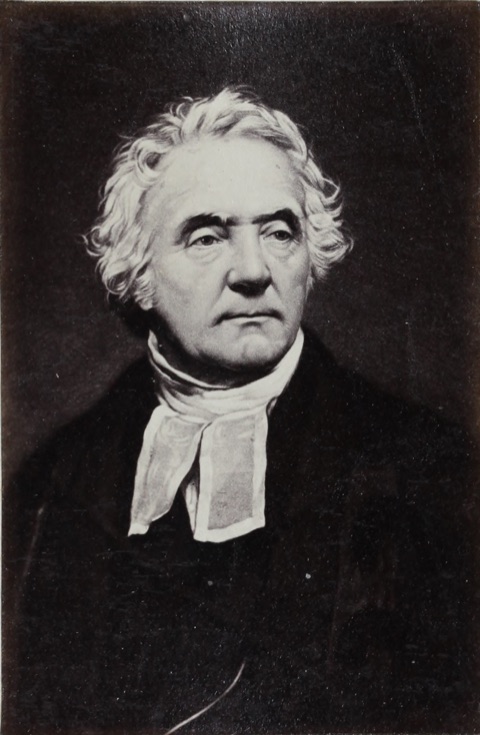
About the author
Thomas Chalmers
Thomas Chalmers (1780 to 1847 AD) was born in Anstruther, Fife, and entered the University of St Andrews at eleven. He became minister of Kilmany in 1803, turned to evangelical religion after a serious illness between 1809 and 1811, and in 1815 was called to the Tron Church in Glasgow. In 1819 he took the new parish of St John's, in one of the city's poorest districts, and relieved its poor through deacons, visitation and voluntary giving instead of the legal poor rate. He held the chair of moral philosophy at St Andrews from 1823 and the chair of divinity at Edinburgh from 1828. In 1843 he led the Disruption and became first Moderator of the Free Church of Scotland. He died at Edinburgh in 1847.