Volume 1 of 3 · Full text in modern English · Free PDF/EPUB
The Christian and Civic Economy of Large Towns: Volume 1 in Modern English
This volume
- Vol. 1 · Churches, Schools and Church Officers
- Vol. 2 · Pauperism and the Poor Laws
- Vol. 3 · Wages, Savings and Schools
What is in The Christian and Civic Economy of Large Towns, Volume 1?
The Christian and Civic Economy of Large Towns is Thomas Chalmers's account of how the parish order of rural Scotland could be rebuilt inside a crowded manufacturing city, written out of his ministry in Glasgow and first collected at Glasgow in 1821. This first of three volumes holds the author's preface and chapters 1 to 8; Volumes 2 and 3 carry chapters 9 to 24. Chalmers argues that a town can be made like a country parish, then treats the influence of locality on Sunday schools, the bond between a minister and the people of his parish, the endowment of district schools, popular preference in religion and church patronage, the reform of patronage in England and Scotland, the separation of elders from poor relief, and the place of lay Sunday school teachers. This edition closes with his note on the returns from Mr. Gladstone's churches at Liverpool.
Read the full summary of Volume 1Show less
The Christian and Civic Economy of Large Towns: Volume 1 holds the preface and first eight chapters of Thomas Chalmers's 1821 work. Writing from his Glasgow ministry, Chalmers argues that a crowded city can be given the moral order of a Scottish country parish by tying churches, schools, elders and Sunday teachers to small, defined districts.
How the argument unfolds
- 01
Bringing Parish Life to the City. After a brief preface: economics needs Christianity, a city parish divided into districts can match a country one, and secular duties are crushing the city clergy.
- 02
The Power of Neighborhood Work. Sunday teachers assigned to small districts reach families that citywide schools never touch, as the Saltmarket society shows.
- 03
The Parish Minister and the Neighborhood. An establishment carries religion to people who would never seek it, but city seat-letting has cut ministers off from their parishes.
- 04
Building Schools Through Local Effort. Endowed district schools, one for every 1,500 people, should be built district by district rather than by one society for the whole city.
- 05
Popular Faith and Church Patronage. Popular preference for evangelical preaching is neither foolish, immoral nor seditious, and patrons who defy it empty the churches.
- 06
Reforming Church Patronage. Subscribers to new churches should share in nominations, and the Scottish church courts may refuse presentees the people reject.
- 07
Elders, Deacons, and Poor Relief. Elders must be freed from distributing relief, which should return to voluntary collections, with deacons as a temporary help.
- 08
Sunday Schools and Lay Teachers. Learned clergy test the faith but humble lay teachers spread it, and Sunday schools restore family religion rather than displace it.
Notable images & quotes
- The two eddies. If ministers are buried in business, “another age will see two great eddies swallowing up our country’s theology”.
- The heavy sediment. A general school draws out only the purer elements: “But the heavy sediment remains untouched and motionless, and its power to make others like itself continually increases its bulk.”
- Delilah's shears. By letting church seats to the whole town, “Without any harmful intention, our city rulers have inflicted the harm Delilah inflicted.”
- A pair of shoes. When elders hand out relief, Christianity is valued for its benefits and “its ordinances only as possible steppingstones to a pair of shoes”.
Key themes
- Locality. A defined district binds worker and families together and makes a task that can be finished: “Locality is, in truth, the secret principle in which our great strength lies.”
- Small works over grand schemes. The philanthropist who takes one lane instead of a whole city “exchanges a splendid deception for a solid reality.”
- Establishment and dissent. Chalmers wants both an endowed church and free dissenters, for “the best ecclesiastical system for a kingdom combines a publicly endowed Church, expanding with the population, and entirely free and unfettered dissent”.
- Goodwill above money. Personal kindness, not public funds, wins the poor: “goodwill without wealth can spread a higher and more lasting happiness even through the poorest neighborhoods than wealth in all its abundance can spread without goodwill”.
Why read it today
Read it to see how a working minister in an industrial city thought about poverty, schooling and church order together. Chalmers argues from counted seats, pupils and pounds, and tests every proposal against what one man can do in one district.
It is a sustained case for small, persevering local work against large schemes that impress the public and change little.
It also shows the evangelical party in the Church of Scotland arguing that popular gospel preaching makes people honest, sober and loyal, and that the church courts can restore the people's voice in choosing ministers.
Reader questions (9)Hide the questions
Questions about The Christian and Civic Economy of Large Towns: Volume 1
Is there a modern English version of The Christian and Civic Economy of Large Towns: Volume 1?
Yes. This is The Christian and Civic Economy of Large Towns: Volume 1 by Thomas Chalmers in modern English. The language is modernized and the author's order and argument are kept. The full modernized text is free to read on this page.
Can I read The Christian and Civic Economy of Large Towns: Volume 1 online for free?
Yes. The complete text of this modern English edition is on this page, with no sign-up or paywall.
Is there a free PDF of The Christian and Civic Economy of Large Towns: Volume 1?
Yes. The PDF and EPUB of this edition are free with an Updated Works account. Sign in with Google or an email link; no card is needed.
What is The Christian and Civic Economy of Large Towns: Volume 1 by Thomas Chalmers about?
How the churches, schools and church officers of a large town could be organized so that a city reaches its poorest families as a Scottish country parish does, through Sunday schools, parish ministers, district schools, patronage, elders and lay teachers.
How does this volume relate to the rest of the set?
It is the first of three, holding the preface and chapters 1 to 8 and a note on Mr. Gladstone's churches. Chalmers defers fuller treatment of poor relief and the deacon's office to later installments, which Volumes 2 and 3 carry in chapters 9 to 24.
Why does Chalmers object to the way city churches let their seats?
Seats went to applicants from anywhere in town, so a minister might find fewer than a hundred of his hearers living in his parish, leaving its unchurched families unvisited.
Was Chalmers hostile to dissenters?
No. He asks that every legal disability on them be removed, credits them with slowing the decline of religion, and urges them to adopt district chapels and schools, even if that lets them overtake the establishment in the towns.
What does Chalmers think of compulsory poor relief?
He opposes it outright, calling compulsory provision one of the worst invasions ever made on the country's old habits. He holds that thrift, family duty and neighborly sympathy provide better, and that public relief breeds the need it claims to meet.
What evidence does he draw from Glasgow?
Attendance surveys of districts such as Goose-Dubbs, the Saltmarket and the Bridgegate, the failed evening sermon in Calton and Bridgeton, and the success of local Sunday schools and a district savings bank. He puts Glasgow and its suburbs at about 150,000 people.
The Christian and Civic Economy of Large Towns: Volume 1 in Modern English · Full text
Chapter 1
Bringing Parish Life to the City
There are two classes of writers whose principal subjects are closely connected with the study of human affairs, but whose habits of thought have unfortunately kept them apart. There are political economists who give Christianity no place in their reasoning, and Christian philanthropists who give political science no place in theirs. The former generally regard the latter’s professional subject, if not with contempt, at least with indifference. The latter generally regard the former’s subject with a sensitive prejudice bordering on disapproval and dislike.
These two groups of public workers might have made a very important contribution to society through mutual respect, understanding, and combined effort. Instead, each has pursued its own path while shutting out the light and rejecting the help the other could have supplied. In many cases, the result has been merely to entertain the thinking public with inactive, unproductive theory on one side, or to lead the practically benevolent public into well-intentioned but harmful and misdirected activity on the other.
Indeed, only in the more recent branches of political science has the practical importance of Christianity’s help become obvious. That help did not seem necessary to carry its earlier theories into effect. Until these last fifteen years, the great subject of inquiry among our political theorists was the theory of commerce. The moral habits of working people, as shaped by their religion, formed no part of that theory.
An enlightened Parliament could establish free trade by a simple decision. It could remove every artificial restriction and encouragement, and end all interference in a concern that government serves best by leaving it alone. Commerce could then be left to nature’s own principles and processes. Thus everything sound in the political economy of Smith and his immediate followers might have been put into practice through a series of enactments, or rather repeals, by the legislature. It would have required no corresponding principles or habits to be sought or secured among the population. The only help needed from New Testament religion would have been the general benefit it has brought society by making truth, justice, and generosity more widely practiced.
The more recent contributions to this science present a very different case. We refer especially to Malthus’s essay. Had his theory of population been present to Smith’s mind, we think it would have modified some of the doctrines and conclusions Smith presented to the world in his essay on the theory of commerce.
It is true that government’s intrusive interference has left the country worse off in relation to population than it would have been if this branch of its economy had been left entirely alone. Government has likewise left it worse off in commercial prosperity than it would have been if trade had been left alone. There are artificial encouragements to population that government should never have sanctioned, and that it would be wise to abolish with all prudent and practicable speed. The law has devised incentives to marriage as harmful and unwise as its incentives to trade. It would serve the interests of every class, especially working people, far better to withdraw them at once.
By going beyond its proper sphere, government has tried to provide for needs that would have been met more effectively without it: on one side by the strong instinct of self-preservation, and on the other by people’s free but powerful sympathies. In doing so, it has lulled the poor into improvidence and frozen the rich into indifference toward their wants and sufferings. Surely it would have been better never to enter this course, and it would be better now to retrace it as quickly as circumstances allow.
All this can be done, with some benefit, even among an unchristian population. Their comfort would improve to that extent simply by restoring the unrestricted operation of natural principles. This is desirable even if we fail to obtain the additional comfort that would come from bringing Christian principles more widely among them. Government, acting entirely in the spirit and with the purposes of worldly wisdom, can therefore benefit the great branch of political economy concerned with population, just as it can benefit the other great branch concerned with commerce. It can at least erase its own mistakes from the statute book and finally remove all the harm that our ancestors’ mistaken policy has passed down to the present generation.
But there is one broad and obvious distinction between commerce and population. Government can safely withdraw altogether from commerce. It can leave commerce to the desire for gain, the spirit of enterprise, the keen judgment that directs almost every pursuit of private interest, and the natural safeguards for justice between people in society. If it simply entrusts commerce to the combined operation of these influences, it entrusts it to the very forces best fitted to carry it to the highest prosperity possible.
It would also be well for government to withdraw altogether from ordinary poor relief, which is so closely connected with the question of population. This would do much to revive those habits of foresight that both restrain our people’s numbers and distribute their comforts more evenly. It would also do much to release sympathies that are otherwise checked and displaced. In their kind and spontaneous exercise, these sympathies are better fitted to bind the community gently together than all the legally established charities in our country.
Yet although government can do much in this way, it cannot do everything. A great further good would remain that only the people themselves could achieve. Unrestricted natural principles may suffice to bring a country’s commerce into the condition best and safest for the public welfare. Mere natural principles will not suffice to bring its population into that condition.
A compulsory provision for the poor does indeed aggravate poverty by increasing the pressure of population on the means of subsistence. Repealing such a system would remove the entire amount of that aggravation. But the relief of the pressure would be only partial. As long as moral corruption remains, the pressure, though reduced, will remain with it. As long as the sensual part of human nature prevails over the reflective part, there will be improvident marriages, families begun too early, excessive competition for subsistence, and wages generally inadequate to a fair measure of human enjoyment. In a word, there will be all the disorder and discomfort of an excessive population.
As long as people generally have low and degrading tastes, rather than aspiring to more comfort, cleanliness, and refinement than the squalid homes of a rough and half-barbarous country offer, they will rush into marriage. They will disregard their inability to meet its expenses and sacrifice all future ease and convenience to the present mastery of a blind and unthinking impulse. Government can reduce this pressure by the amount its own mismanagement has caused, but it can never remove it entirely, or even nearly do so. Only the improved habits, moral character, and elevated principles of the people themselves can thoroughly and decisively counteract the tendency toward excessive population.
To put the management of a nation’s wealth into the best possible condition, it may suffice to approach the legislature and ask it to withdraw its meddling hand from a concern that its touch always harms and never heals. To put the management of population into the best possible condition, it is right to ask the legislature to undo the harm of its interference. But something more is necessary. We must go among the people and add the principles of an effective morality to mere natural principles. We must transform their tastes and character, and give instruction that will itself encourage thoughtfulness.
That habit must gradually enter a person’s whole system of desires and actions. It must make him more farseeing, more thoughtful, and better able to anticipate consequences than before. It must raise the whole tone of his mind and bring duty, wisdom, and self-respect into every practical action alongside passion and self-interest.
However wisely students of political science reason about this question, their reasoning cannot produce its practical effect without character in the general population. As long as the people remain either corrupt or unenlightened, the country will never achieve a healthy condition in one of the great branches of its public affairs. This obstacle stands beyond the control of every other measure for relieving the evils of an excessive population. Until it is removed, legislators may devise and economists may demonstrate as they please. They lack one of the facts indispensable to solving the problem correctly. However clear its solution in theory, the problem will defeat in practice those who overlook human moral principles or despise the mysteries of the faith that alone can inspire them.
Political writers who honestly want to see their theories fulfilled should therefore look to the people best fitted to work among the population as its most welcome and effective moral teachers. Clearly the writers themselves are not best suited to such practical work in a community. We cannot expect their subjects or their dry demonstrations to win a general welcome and admission into homes.
Suppose one of them went out with Malthus’s argument, or another lesson of political economy, intending to enlighten his neighbors’ practices and outlook. The very first reception he met would probably stop this moral and benevolent venture from going any further and mark it with all the folly and futility of a quixotic undertaking. People would laugh, wonder, or take offense. The expedition would soon seem utterly ridiculous, and he would abandon it.
Here lies the Christian philanthropist’s great initial advantage over the purely civic philanthropist. He has a subject that provides a ready and appropriate introduction, allowing him to move through a population and come into close and extensive contact with its families. If his errand concerns religion, even a very obscure and wholly inexperienced individual may enter nearly every household without meeting a single act of rudeness or resistance throughout his visits.
Suppose, for example, that he simply invited the children to his Sunday school. With this as his stated purpose, he would possess a passport into almost every home, especially among the ordinary ranks of society. He could engage its members in religious conversation and leave behind at least a feeling of warmth and gratitude. He could prepare the way for repeated exercises of the same influence. And he could secure an acknowledgment in favor of his subject: that it deserves to be offered by one person and received and patiently heard by another.
We are not now speaking of his final success. We are speaking of his advantageous beginning: the wide and effective access to the population that the Christian philanthropist possesses and the civic philanthropist does not. It follows that if the former’s instruction can encourage habits favorable to the latter’s aims, an economist who undervalues the gospel of Jesus Christ and the zeal of its devoted workers denies the proper standing of his cause’s best helpers.
Much misunderstanding would be avoided if we kept one point clearly in mind. To give practical effect to the economist’s lessons, a worker in the gospel vineyard need neither teach nor even understand those lessons. Let him confine himself to his own particular work. Let him labor for immortality alone. Let his sole aim be conversion and Christian faith, and let prayer and effort succeed in establishing the faith of the New Testament in some people, so that they display its virtues for many others to esteem and imitate. He will do more for his neighborhood’s civic and economic well-being than he ever could through all the influence of secular reasoning.
Let his desire and devotion be directed exclusively toward the life to come. Without drawing a single argument from the interests of the present life, he will do more to bless and adorn its condition than all the other efforts of patriotism and philosophy combined. It would be worse than ridiculous, and it is certainly unnecessary, for him to champion an economic theory and constantly introduce its principles into either his preaching or his parish ministry.
His office may retain its entirely sacred character. The main desire and prayer of his heart towards God on behalf of his brethren may be that they should be saved. His mind may be as completely occupied with the one thing needful as was the Apostle’s, who determined to know nothing among his hearers, save Jesus Christ, and him crucified. Yet such is the fullness of the gospel’s blessing entrusted to him that, while rendering the best possible service to the converts he has gained to its cause under the Spirit of God, he also makes, through those converts, the best possible contribution to society’s temporal good.
It is enough that they have been rescued from the rule of sensuality. It is enough that they have become disciples of the book that teaches them to be fervent in spirit and also not slothful in business. It is enough that Christian faith has taken such powerful hold of their hearts that Christian morals become visibly exemplified in their lives. It is enough that the principle within them, even if it does not reproduce its own likeness in others, can at least act like the salt to which they have been compared, seasoning a whole neighborhood with many of its related and secondary qualities.
Few things in humble life are more familiar than the connection by which a Christian family is almost always a family in good circumstances. Yet its members know nothing of either the maxims or the theories of political science. They occupy their proper place in a sound and well-functioning mechanism, but they never hear of that mechanism and could not understand it. Their Christian adviser never gives them a lesson from any economist’s writings. Yet the moral habits he has helped them acquire bring them into practical agreement with the soundest and most valuable lessons an economist can devise.
Habits, character, and education among the poor have now become the great elements of recent political theory. An inventor of scientific equipment might as reasonably reject the help of craftsmen who know nothing of its use but know how to prepare and assemble its materials, as the soundest and most ingenious civic economist might reject Christian workers’ help. Those workers may know nothing of the new doctrine of population, but they know how to perform the work that can make the members of our actual population pure, prudent, and pious.
If we return to the habits of the last generation in Scotland, still fresh in the memory of many living people, we find ample confirmation of these remarks. Malthus had not yet written, and his theory had little more than an embryonic existence in Wallace’s pages. Certainly it had no existence at all in the minds of our solid, steady, and industrious peasantry. They acted on it without calculating on it.
Among the cherished domestic proprieties of an earlier age, passed from every mother to her daughters, was the rule against marrying without a substantial and respectable provision for the household. Years of delay were often spent in the great undertaking of assembling all the materials for this extensive and laborious preparation. A very large stock of the means of future comfort and respectability had to be accumulated before marriage was permissible, or at least respectable. Thus our great economist’s moral preventive check was operating fully and beneficially long before he brought it to public attention as a distinct and wholesome principle.
If we wish to revive its influence among the people, we do not think this will be done by making his doctrine cheaper to obtain and easier for ordinary readers to understand. We must use other writings than those of political economy to restore our countrymen’s declining habits. We need appeals more powerful than those that point to the future of an earthly life. We need people laboring, however strenuously, not for some great political achievement, but for the good of immortal souls: people whose life is centered in heaven, whose eyes are fixed on its glories, and who feel the relative insignificance of the pilgrimage that leads there. Until we restore Christianity, we shall never restore the thoughtful sobriety, steady and widely shared comfort, and virtuous independence of a generation whose habits and memory are so rapidly passing away from us.
Let me end this part of the subject by noting how surely neglect of a people’s Christianity is followed by the reaction of its turbulence. Of all forms of intolerance, the intolerance of irreligion, which denounces New Testament faith as fanaticism, brings the most grievous loss of civic and political advantages. The deadliest enemy of our state is not what has been called a Methodist spirit among the people. By far its deadliest enemy is a persecuting church that would frustrate everything serious and evangelical in the people’s desires. In doing so, it tramples on the sacred correspondence God has established between an awakened heart’s longings and the truth that leads to salvation.
So much for the civic philanthropist’s prevailing tendency to undervalue or disregard the Christian philanthropist’s work. But the latter has an equally prevalent tendency to neglect many of the former’s principles and undervalue many of his propositions.
It is certainly regrettable that many of our most pious and even most profound theologians understand so little of political economy. But what is chiefly regrettable is their active resistance to some of its clearest and most unquestionable principles. They have a blindly sentimental dislike of a doctrine resting on the firm foundation of arithmetic. They misrepresent it as hostile to our best feelings, when its hostility is directed entirely against perverse and unfortunate arrangements that have chilled and counteracted our natural sympathies. They dogmatically and strenuously deny what experience and demonstration continually press upon the judgment as undeniable truth.
This has enlisted the whole of their great and deserved influence on the side of institutions harmful to society. Perhaps worse still, it has led a very enlightened class of people in our country to imagine that limited understanding is inseparable from religious zeal. It thus lowers Christian workers from the standing that rightfully belongs to them on their own subject. It diminishes the weight of their professional testimony, which every class would do best to hear with the greatest patience and respect.
But the harm thus done to human welfare cannot compare with the still deadlier harm of an error that has received the fullest encouragement and support from a large body of religious people. We mean their distaste for every kind of external organization to advance a Christian undertaking. It rests on their misapplication of an unquestionable doctrine: that Christianity’s declines and revivals are primarily to be traced to changes in a direct influence from heaven.
They look, and rightly look, to the Spirit of God as the agent of every beneficial transformation in our country’s Christianity. When irreligion brings a general spiritual numbness among us, it is because there is a famine of spiritual nourishment. God has withdrawn the manifestations of the Holy Ghost from a careless, thoughtless, and worldly generation. When thoughtful and repentant seriousness awakens, it is because its Spirit has been poured out from the heavenly sanctuary. Prayer has ascended there from below, and a regenerating influence has descended in return for the devoted few’s intercessions on behalf of a world lying in wickedness.
All this is sacred and substantial truth that no theory can undermine. It would be folly to think that merely erecting a physical framework could advance Christianity by a hair’s breadth if that special and sanctifying grace were withheld, without which the builders labour in vain, and the watchmen wake but in vain.
Yet many people draw from this a complete indifference and inactivity concerning outward arrangements. Every visible apparatus seems insignificant to them. They look contemptuously on everything human beings can do outwardly and with their hands to accomplish the work, with something like the satisfaction of someone who imagines he possesses the hidden principle of a particular operation. Thus they treat the proposal to build more churches to increase Christianity in our country with almost inexpressible disdain.
This is only one of many instances in which their sense of the utter powerlessness of all machinery leads them to restrain human activity from any tangible work. They would sit in a kind of mystical and expectant passivity until the inspiring power that will provide and do everything visits us from the skies.
Perhaps we can reconcile these people to outward arrangements, and even enlist them in the work, by directing their attention to the period of world history most distinguished by visits of moral and spiritual power from heaven. We mean the apostolic age. Living water then flowed more abundantly among those who bear the Christian name than it has ever flowed since. Yet, to extend the image, the church’s leaders devoted much earnest effort to providing channels to carry it.
Perhaps there has never been so fine and varied an outward apparatus for transmitting Christianity from one human being to another as in that period when the Spirit descended most abundantly, for the very purpose of establishing Christianity in human hearts. Paul prayed without ceasing for this essential influence. He also considered without ceasing what arrangement of offices and routine of services would ensure its proper distribution.
Rain falling from the clouds does not remove the need to prepare receptacles to gather it and channels to carry it. Neither does the descent of living water, nourishing everything acceptable in human virtue and spiritual in human understanding, remove the question of how best to construct an outward system for circulating it through a neighborhood.
The Apostle who felt most deeply his dependence on the Spirit for the conversion of souls labored most to build an outward and visible agency to advance the cause. We read of the great variety of offices in the Christian church, including prophets, interpreters, and evangelists, for building up the body of Christ. We see the great Apostle’s labor to set things in order and his provision for ordaining elders in every city. In these things we can see that the age of greatest spiritual influence was also an age of active outward regulation. It does not follow that someone who places all his confidence in the former should neglect and undervalue the latter. Nor does someone who devotes thought and judgment to the machinery of bringing people to Christianity thereby deny the Holy Spirit his rightful supremacy.
Scotland’s schools were founded when the religious spirit was strong. The system of education devised and established then has at least opened a fountain of learning in every parish, to which the young of many successive generations have regularly gone. Here we see the benefit of what may be called a material organization. It survives every decline and change in the spirit that gave it birth. Who can fail to see the consequence? When that spirit reappears in the country, the existing organization gives it readier and more abundant access to every family than it could have in a country without parish endowments or a regular and universal habit of schooling.
But there is more. The religious spirit may decline in a country and, naturally, flow only scantily through the established channels between teacher and pupil. Yet we cannot deny that an influence favorable to society’s temporal welfare continues to flow. Even in times of the greatest abandonment of the gospel’s light and faith, these schools impart intelligence, breadth of mind, and thoughtful sobriety. Together these qualities have stamped a great civic and economic superiority of character on Scotland’s peasantry.
Such an organization, with its many small channels of distribution, is well fitted to spread the prevailing spirit of the times throughout the nation. When that spirit is the warm, affectionate, and evangelical spirit of the New Testament, it will have far wider and more effective access to the families of a country possessing this apparatus than to those of a country without it. It is therefore good for every country’s Christian life to possess such an establishment.
Even where the evangelical spirit has declined, public officials still ordinarily favor order and good conduct during the quiet, everyday course of a nation’s history. Together with the softening and humanizing effect of learning on habits of mind, this means such an establishment also benefits every country’s civic life.
We hold that exactly the same principles apply to established churches. It is true that our present imposing system of churches and parishes was built and perfected in days of the deepest darkness. But when the light of the Reformation arose, it broke through more powerfully and readily because of the very channels Roman Catholicism had opened. Let those dissatisfied with our churches attribute whatever corruption they please to the establishments of England and Scotland. We hold that these are the instruments destined both to spread and to increase Christianity in our country. We would never cease to regret the overthrow of this mighty apparatus as a catastrophe with the deadliest consequences for our nation’s religious character.
We feel all the more strongly about this because we believe that the difference in moral and religious habits between town and country populations has one chief cause. The established provision for instruction is less adequate in one than in the other. We consider this a greater cause than any other that can be assigned. The doctrine of a heavenly influence does not remove the need for an earthly mechanism; rather, it calls for one to guide and extend that influence’s distribution. For lack of such a mechanism, a mass of heathenism has deepened and accumulated in our great towns, reaching its present size and density.
The healing water is a treasure we must look and pray to heaven for. Yet it is put into earthen vessels and carried along earthen pathways through the whole body of corruption. We think it no more reasonable to expect Christianity to arise in pagan lands without missionary equipment and labor than to expect its revival among the enormous, still unreached sections of the city population without an active visiting ministry. Such a ministry must bring the Word of God into actual contact with families that remain still, sluggish, and stationary.
We maintain that a town can be made like a country parish, and we cannot doubt the advantage. Under Scotland’s parish and church system, a moral discipline has been established with great effect in her country parishes. We think a few simple and attainable measures could introduce the same discipline into her most crowded cities, with an equally striking and visible effect on the population’s whole habits and character.
The simple relationship between a minister and his people in the country could retain all the purity and fullness of its influence in the city. It could be equally effective in forming a population in good circumstances. In a word, no difference between town and country prevents Scotland’s great national superiority in having principled and educated people from being as evident in Glasgow or Edinburgh as in her most secluded districts under the most diligent moral and religious cultivation.
Many philanthropists regard the moral corruption found in every crowded and concentrated mass of human beings as one of the helpless, incurable diseases of the body politic. We maintain, on the contrary, that practicable arrangements exist which, with God’s blessing, will check this growing calamity. Persevered in for a few years, they would bring us to a purer and better generation.
One essential step toward this desirable result in a large city parish is to provide numerous and well-organized workers. Here the resemblance is not in the outward framework. In a small country parish, the minister alone, or with the few helpers of a small church session, can bring the personal influence of his kind and Christian attention to bear on every family. Among the ten thousand people of a city parish this is impossible. What he can do only partially and superficially in person must therefore be done through others if it is to be done thoroughly.
He can divide his parish into small, manageable districts and assign one or more friends to each, in one capacity or another. He can authorize them to exercise the sort of oversight or inquiry that the population will always receive gratefully. By thus establishing a ready means of communication between himself and his parishioners, he may eventually achieve the same result as a country parish, though by different means.
He can personally maintain fairly close and regular contact with at least the more notable cases. As for the moral power of warm Christian acquaintance, he can spread it through his representatives over the part of the city assigned to him. An influence long unfelt in towns can quickly be restored in this way. We affirm that anyone blind to the following truth knows nothing of this part of human nature: attention, advice, courtesy, and goodwill brought into poor people’s homes by men of a somewhat higher social rank can have a far more purifying and even more gracious effect on them than any other form of charitable ministry will ever achieve.
Notice here that the physical provision of schools serves a nation’s civic as well as Christian welfare by carrying good influences beyond those that are purely sacred. This is especially true of every arrangement that multiplies the subjects and occasions of contact between the higher and lower ranks of society. No large city would fail to benefit quickly from such an arrangement. But in a purely commercial city, this arrangement is better fitted than any other to repair a particular disadvantage.
In a provincial capital, the great mass of the population remains in kindly and immediate dependence on the wealthy residents. People living on annuities, landowners, lawyers, and members of other learned professions gather there. Their spending stimulates a great amount of local industry. If we inquire into the sources of working people’s livelihood and employment, we find that they chiefly serve the immediate needs and luxuries of the city’s higher classes. This brings the two ends of society into a relationship highly favorable to the whole population’s general gentleness and tranquility.
In a manufacturing town, by contrast, poor and wealthy people stand further apart. They often meet, certainly, but more in an arena of contest than on ground where one party’s patronage and custom are met by the other’s gratitude and goodwill. When a rich customer summons a workman to give him employment connected with his own personal needs, the workman’s general feeling must be entirely different from what it would be if summoned by a commercial capitalist to lower the price of his work, knowing another will take his place if they cannot agree on terms.
We intend not the slightest criticism of our country’s manufacturers. Yet the nature of the case makes it quite clear that their dealings with working people involve much more collision and much less kindness than those of the higher classes in towns such as Bath, Oxford, or Edinburgh.
Thus a great unfilled space stands between high and low in every large manufacturing city. Each group is consequently blind to the real warmth and attractive qualities of the other. A resentful spirit of either disdain or defiance is apt to grow, and removing it effectively will require all the resources of enlightened charity. We can imagine no more promising or immediate arrangement for this purpose than to multiply Christian workers among us: people who delight in going out among the population on an errand of pure goodwill, ministering only respect and tenderness.
There is one lesson we need not teach, for experience has already taught it: the kindly influence a human being’s mere presence has on his fellows. Let the attention given to another be a genuine expression of goodwill, and only one more thing is needed to make it irresistible. The readiest way into a man’s heart is to enter his house and perform the kindness there, or offer the customary and expected acknowledgment.
By placing ourselves under a poor neighbor’s roof, we in a sense place ourselves under his protection. For the time being we make him our superior. We entrust our welcome to his generosity, and we may be sure that this confidence will almost never fail us. If Christianity is the errand that brings us, it will open every family’s door. Even the irreligious and morally corrupt will come to recognize the worth of the principle that prompts such tireless service.
Each round of visits gains a higher position of moral and spiritual influence. Despite everything said about the ferocity of city populations, none of it is encountered in such visiting, even in the lowest haunts of human worthlessness. This is the round of household visits that earns a popularity peaceful, if not proud: the popularity of the heart. It brings greetings from people touched even by kindness’s cheapest and easiest services, who have nothing to give but kind wishes in return. Yet by giving these, they crown such religious attentions with the only popularity worth seeking: the popularity won within families and beside deathbeds.
We must refer to the following chapter, on the effect of working within a particular locality in towns, for a fuller explanation of this influence and its beneficial operation. For the present, indeed, we can do little more than clear the way toward demonstrating the various means by which a city can be made like a country parish in its arrangements and effects. We shall therefore confine ourselves chiefly to preliminary matters.
We have already noted how little political theorists tend to value the work of purely Christian laborers. Let us now expose a grievous and harmful intrusion that political administrators have actually made upon them. It has seriously impaired their religious usefulness, and their civic and political usefulness along with it. This subject is entirely relevant to the present chapter’s title, since it is closely connected with the cause of one of the greatest differences between town and country parishes. It shows how the scant respect political economists pay Christianity has been embodied in administrative practice by our public officials, endangering the very ends that civic and legislative policy should serve.
We mean the harm done by the secular duties imposed on the clergy. To expose it, we offer a short account of how a profession whose sacred character should always have been held inviolable has been opened to every rough and random intrusion now threatening to overwhelm it. We cannot, however, mention every item in the strange assortment of services that now presses on a large city parish’s minister at every hour, on every path, and at every turn in his movements.
The people of our busy country are always active. In peace or war, they are continually moved by some national undertaking. It is therefore unsurprising that a stream of transactions should constantly pass between the empire’s capital and its distant provinces. Soldiers and sailors send money through public offices to their relatives at home. Those relatives send letters of inquiry back. A soldier’s or sailor’s death gives rise to correspondence, drafts, and other financial dealings. There are hospital allowances, pension payments, and many other items which together would make a very strange and tedious list.
The identities of the people involved in these transactions have to be verified. They live in one parish or another, and who could be more suitable for this purpose than the parish minister? He knows, or ought to know, every parishioner. Yet this acquaintance, which he can acquire in towns only by years of ministerial work among them, is put to a use that destroys the very basis on which he was chosen for the service. He is saddled with a task that interrupts his ministry and widens his distance from his people. In the end it makes him as unfit to certify a single piece of information about them as the most private individual in his neighborhood.
Yet this is what happens. The minister conveys many communications between his people and the offices in London. Many a weary signature is demanded of him, and a world of management is placed on his shoulders. Instead of sitting, like his predecessors in office, surrounded by the theology of the present and earlier ages, he must turn his study into a business office. Before him must stand a well-arranged filing cabinet, with its compartments and other conveniences for notices, duplicates, scraps of paper, and memoranda from a many-sided correspondence.
But the story does not end there. Government’s example has spread downward and is now rapidly passing through the whole field of private and individual activity. The management of prize money is one of several examples that occur to me. The emigration of new settlers to Canada was another. The business of the Kinloch bequest is a third.
There appears to be no government act authorizing the agents in these matters to make the clergy either the managers of their business or the means of conveying their information to the people. But they find it convenient to follow government’s example and have done so accordingly. Thus a great host of schedules, circulars, and printed forms with long blank spaces, which the minister must fill in to the best of his knowledge, competes with all his other claims and commitments.
It is true that in this case the minister may refuse. But the people are informed of the arrangement. Trained all too well to look to the minister for help with civil business, they besiege his home and pour in with their inquiries. He faces a cruel alternative: either obstruct his parishioners’ convenience and send them away, or take on the full weight of a management so thoughtlessly and gratuitously assigned to him.
If even private individuals take liberties with us to expedite their business, it is unsurprising that charitable bodies should always expect us to serve their schemes and benevolent activities. When a patriotic fund or a Waterloo subscription appears before the public in all the splendor of national generosity and gratitude, who will dare refuse even one item of the cooperation required of him? Surely such a demand is irresistible. Accordingly, this source too lays a heavy load of consultations and certificates on the already exhausted and overburdened minister. It adds the peculiar duties of drawing money, keeping it safe, and distributing it in small amounts at his discretion according to the recipients’ needs and circumstances. All of it is placed on his shoulders.
We do not know where this will end, or what new and unheard-of duties remain in store for us. But we know this much: they are on a course of indefinite increase. We have heard vaguely of some very recent additions to our burdens, but have received no clear or authoritative information about their precise nature. We do not know enough of civil law to say whether even an Act of Parliament possesses such unlimited power as to authorize this strange series of gratuitous and arbitrary intrusions on clergymen’s private homes and liberties.
But we have enough patriotism to feel what our country’s rulers are doing. For a convenience that could easily be provided another way, they are trading away the people’s best interests. By striking at the public instructors, they are striking at the morality and principles of the commonwealth. Every unwise enactment of the kind we have tried to expose slows the circulation of Christianity, with all its healthy and elevating influences, through our towns and families. They are sweeping from every large city the best safeguards for order, contentment, and loyalty. We should not be surprised if, in some future time of turbulence and disorder, they regretted the delusion that led them to tamper with our country’s religion through these intrusions and this cruel violation of its ministers’ sacred office.
There is no need to dwell on the harmful effect of all this on the great mass of our population. Because the office has been so grievously stripped of its sacred character, we appear to them entirely different from the ministers of an earlier age. Each year we look more like surveyors, city clerks, magistrates, stamp distributors, and all the other officials who deal with people in civil or municipal business. Every sacred feature of our character wears away amid the bustle, hurry, and pressure of these many official duties.
Our parishioners have consequently almost lost sight of us as their spiritual guides. They seldom or never approach us on any spiritual errand. Taking us as this increasingly harmful system leads them to find us, they repeatedly overwhelm us with consultations about their temporal affairs. Thus the whole character of a spiritual relationship between pastor and flock is dissipated and lost. There is little of Christianity’s spiritual influence in his dealings with them. Everything concerning the soul, eternity, and the religious care of themselves and their families is pushed aside by filling out forms, advising about money, and working through the papers of an intricate correspondence.
The principle we lay down is this: a Christian teacher’s work is enough by itself to occupy the entire powers of any one man. Reflection is tiring work and leaves a general exhaustion behind it. The mind can grow weary. Surely, if weariness properly requires rest, the mind is overworked when, after being exercised to the limits of its strength, it faces many further and overwhelming demands on its attention, memory, judgment, and other faculties.
The closest parallel we can imagine in an ordinary citizen’s experience is a merchant exhausted by a morning’s work at his desk or business office. He retires to the pleasures of a comfortable home, takes consolation in friendly conversation, or restores his worn spirits among the affections of his family. Many merchants, we understand, have placed a defensive wall around themselves: they will neither entertain nor hear any business request outside business hours.
Let them imagine, then, how much they would be harassed, exhausted, and positively weakened if that wall were broken down. Every evening a host of invaders would regularly pass through the breach, in force and in frequent succession, armed with an assortment of varied requests. Let them apply this to the case of a man whose business is reflection.
They may never have engaged extensively in this business themselves. We do not therefore wait for them to be convinced by personal experience. We demand as a right that the man who has the experience should be believed. His positive testimony should outweigh everything inexperience may imagine or say about such a case. If he faces a public wholly unacquainted with the labor of intense thought, its condemnation should not be accepted as authoritative. It is not a competent jury on this question.
With that understood, we make an assertion we are not afraid to submit to the country’s more considered judgment: a few hours of sustained, intense study are as exhausting as an ordinary citizen’s busiest and longest morning. A man who has borne this labor has earned as good a right to freedom from everything that could disturb or annoy him during the rest of the day. If these annoyances nevertheless persist, they place him in mental and bodily suffering. The pressure on his whole constitution exceeds his strength to bear it. Under these circumstances he must seek relief through some change in his daily habits and arrangements.
We all know a feeling creature’s restless desire for a comfortable existence. In the case just described, that desire must have its effect. If a student has habitually worked at his particular task up to the limits of his physical capacity, the additional labor imposed on him also imposes the necessity of cutting back his studies. He must simply shorten his working hours.
A familiar piece of advice, often given to someone in difficulty, will come to him with all the force of a most insinuating temptation: “Take things easily.” Are you busy with outside requests? Take them easily. Are you burdened with official responsibilities on others’ behalf? Take them easily. Are you pressed to attend personally to secular business? Take it easily. Are your services required for all sorts of engagements throughout the week? Take them all easily. Are you also burdened with preparing for Sunday?
It is true that something in this work might well weigh a man down with a sense of its importance. He is to address immortal creatures about the affairs of immortality. But he has no resource left except to treat them as he treats the crowd and frequency of his other affairs. He must throw together whatever thoughts he can and somehow prepare a half-hour presentation. In self-defense, and as he values comfort and the ability to carry on, he must by all means take the matter easily.
We need say no more about the direct blow that the prevailing system in our towns must eventually deal in this way to practical Christianity in our congregations and parishes. We turn to another effect, still more obvious, if not more harmful: it will hold back and degrade Scotland’s theological literature.
The comparison we are about to draw between the theology of one age and another reflects only the highest honor on the present generation of clergymen. They have in fact held their ground so well against this whole destructive and degrading process that, to give our argument its full effect, we must look ahead to the next age. We must reckon the inevitable difference between its literature and that of the last generation.
Looking back half a century, we see a church adorned by its clergy’s scholarship. It makes no difference to the argument that not all this scholarship concerned their profession. Some of it did, and every part at least proved that they had time, tranquility, and full protection from whatever was uncongenial to intellectual labor.
We cannot help looking back with regret bordering on envy to that period in our church’s history. Her ministers associated with the sages of philosophy and received an equal share of public respect. When Hume amused himself with unguarded levity among enlightened circles, the pastors of humble Presbyterianism met him as equals in intellectual range and accomplishment. They could repel the force of all his sophistries and rebuke him into silence. When this most subtle and profound unbeliever aimed his decisive thrust at the Christian testimony, a minister of our church, and a town minister at that, risked the intellectual contest and carried away the victory.
In a word, we look back as on a scene of departed glory to the time when our city clergy could labor in uninterrupted solitude and send the results out over our country in a rich tide of moral and intellectual improvement. Not all that period’s labors were offered exclusively to theology. Among Wallace, Henry, Robertson, Blair, M‘Knight, and Campbell, some can be singled out who chose classical studies or devoted their talents to general philosophy.
Yet every one of their histories proves that there was then time to exercise talent. Those were days when a clergyman with an exclusive taste for theology could devote the whole force of his mind to its study. An ardent enthusiasm for the glories of his profession met nothing to stifle it or drag it down into commonplace work. A man of prayer and gospel ministry could give himself wholly to these things and show his profiting, either to everyone through his writings or to his own congregation through weekly addresses.
The names we have gathered all belong, it is true, to distinguished and conspicuous scholarship. Yet we chiefly value them as signs of the leisure, seclusion, and regular opportunity for private study that made the worthiest and most devoted ministers of an earlier generation ten times more effective. Such conditions enabled Hamilton and Gillies of our own city to shed a holier influence around them. They have enthroned in living memory Erskine, Walker, and Black of our capital, who maintained their sacred character throughout their lives and devoted every hour to its reflections and labors.
What must cause all resemblance to this to disappear from a future generation? Not that they will live in an age of lesser men. Not that Nature will blight our establishment and wither all the graces and talents that once distinguished it. Not that some adverse revolution of the elements will bring a strange, desolating influence upon the clergy’s genius and learning. The explanation lies nearer at hand. We need not seek it in the wilderness or obscurities of mysticism.
Nature will be as generous as before. She will produce the strongest and healthiest minds as abundantly as ever, and cast no deadly influence abroad to stunt their aspiring powers. Given free play, she will be as vigorous in producing moral and intellectual excellence as she was in producing the physical life of an earlier generation. This change, whose reality will be unquestionable however far its cause escapes public notice, will be the work of human beings, not Nature.
There will be no decline in talent’s existence. The decline will be entirely in its exercise. Talent’s solitude will have been violated, its claims ignored and despised, and its sensitivities overborne. Above all, its efforts and capacities will have been grossly misunderstood. People will not have understood how restraint stifles it, how ordinary business lowers its character, or how distraction impedes its greater undertakings. They will not have understood how fatigue from its own work, increased by fatigue from other work that does not belong to it, can eventually weaken and exhaust it altogether.
Thus a public without learning may both acknowledge the harm and lament its evils, yet remain entirely blind to its own responsibility for it. People impose their crude estimate on a profession whose cares and labors they have never experienced. Instead of encouraging those who defend our order’s privileges, they scowl at them. They continually measure the habits and requirements of intellectual work, which they do not know, by those of ordinary business, which they know something about.
Instead of the blind leading the blind, the blind first turn upon their leaders. They lend the whole weight of their influence and opinion to a cruel process. If the most enlightened clergy in the world submit to it, one more generation may see them sink into contentment with the tamest, humblest, and most insignificant attainments.
The system’s harmfulness would not be relieved at all, but made fearfully worse, if its result were that a succeeding age’s clergy and people settled down quietly in great mutual satisfaction. The clergy would have no ambition for professional excellence, and the people would have no demand for it. The clergy would peacefully lower themselves to whatever services they were asked to perform, and the people would neither seek nor care for higher services.
Everything said about this system’s evils should raise all our living clergymen in public esteem. It came upon them gradually, and each addition appeared to be a benevolent and kindly convenience for society’s humbler ranks. They are not to blame for its admission. We call on the public to admire how well they have resisted its harmful influence on all their professional work.
But one principle of human nature will, unless the system is abolished, eventually give all our predictions a terrible certainty. Spending one’s life in bustling and varied activity makes less demand on natural laziness than spending it in reflection and prayer. The former is positively the easier life. The two habits fit together very badly, and in some people they are wholly incompatible. But if a person must choose one habit or the other by itself, it is unquestionably easier, healthier, and generally more comfortable and cheerful to give his bodily presence to the varied demands for attendance and ordinary business than to devote his mind to strenuous and sustained thought.
Consider, then, the force of the temptation to abandon study and scholarship when personal comfort and public opinion unite to lure him away from them. Popular approval draws him into an occupation that, once entered, requires him to say farewell to all the demanding exercises of solitary contemplation. Popular disapproval glares upon the retirement in which he might devote his best powers to the best interests of a sadly misled and mistaken generation.
The multitude’s cheers urge him on to what can comparatively be called a life of amusement. Meanwhile, rich and poor people alike, without understanding intellectual work, condemn him if he refuses to relax the painful discipline of his mind by frittering it away among the lighter varieties of management and exertion that our cities habitually impose on him.
In time such a temptation must become irresistible. In proportion as people yield to it, talent must be withdrawn from theological literature. Everything fine, exquisite, and lofty in its contemplations must be deserted. There must be a retreat from the learning and industry of an earlier generation, a decline in theological attainment and authorship, and a yearly process of decay and deterioration in this branch of our national literature. There must be a downward movement toward the tame, weak, and commonplace.
Thus, for the hollow acclaim of getting clergy to do with their hands what thousands could do as well, our cities may eventually trade away the labor of their minds. They may strike theology so hard that people of learning and general cultivation will regard it as the most languishing of the sciences.
Here we cannot help referring to an observation of Hume. Whatever his authority in religion, he must be allowed very great authority in matters of literary experience alone. He tells us in the history of his own life that a great city is the only fit residence for a man of letters. His assertion rests on a true understanding of our nature.
The country may offer leisure for intellectual pursuits, but it lacks stimulus. The mind is apt to languish in a wilderness, perhaps surrounded by people with whom it has little in common. It stagnates and gathers the rust of decay simply because it is far from sympathy, example, and the invigorating conversation of people with similar tastes and ambitions.
Move such a man to a town, and he finds much to awaken him from this dormancy. He finds people whose views and pursuits agree with his own. The encouragement of their society refreshes him for action. Personal closeness to some of the great literary public’s most distinguished members makes him feel more closely connected with that public. Communications from eminent people throughout the country now reach him more abundantly.
Above all, he enjoys better opportunities for authorship. He is actually situated within a sphere where, as soon as he exercises his talents, their fruits can be brought before the public. All this provides a powerful and lively stimulus. It may set the whole machinery of his genius actively in motion and put his faculties to their proper use. Otherwise those faculties might have withered in idleness and finally died under the bleak influence of a solitude without encouragement or stimulus.
Every part of this applies to theological literature and shows how much our cities could do to advance it. They could keep a watchful eye over the country, identify the outstanding talent within our establishment, and draw it out of its surrounding obscurity. They could rescue it from the chill and languor of an uncongenial situation and transplant it to a more favorable region.
There it could be shielded from everything adverse to the mind’s free exercise and encouraged by an intelligent and approving piety. It could devote its undivided labor to sacred things, its solitude for reflection on them interrupted only by spiritual work outside the study, directed solely toward increasing Christian character and knowledge among the population.
This is what cities could do for theology. But what do they actually do? The two essential conditions for intellectual effort are stimulus and leisure. The first is supplied abundantly by the varieties of taste and understanding spread through a great population. But we shall be robbed of the second altogether if we give way much longer to the prevailing system. That will happen if we place no check on the public’s activities and make no stand against its many inconsiderate demands on us; if we surrender our right to judge our own habits and requirements; if we follow the impulse of people who, lacking experience of the matter, can neither sympathize with nor accurately estimate the special nature of clerical work.
Then we would suffer under the cruelty of an Egyptian bondage: bricks are required of us, and we have no straw. The public would like to see solid argument and all the graces of persuasion enlisted in sacred literature’s cause. Yet they would lay waste the sanctuaries of learning. They would drag the mind away from literary work. They would leave not a moment of time or tranquility for intellectual pursuits. Through a thousand absurd forms of servitude, they would consume the inner energies, every one of which might effectively be devoted to advancing scholarship. In a word, they would dethrone this sacred cause’s guardians from the natural eminence of their office. Weighing them down with other services, they would drag them into commonplace business until they lost all taste and generous aspiration for learning.
Here, then, is the full extent of this grievous, double calamity. In the country there is time for lofty and demanding work, but no stimulus. In the town there is stimulus, but as the system we have exposed advances, there will be no time. Our establishment’s more distinguished members are continually drawn away from the solitude of their first parishes. But they are drawn into a vortex that stifles and destroys them.
With a few very simple and practicable reforms, these towns could sustain theology’s cause. They could send out over the country a vigorous and healthy impulse toward theological learning. Instead, under the yearly process of extinction now proceeding, they may depress the whole literature of our profession. With every appointment that moves a minister from the country, they may in fact draw so much promise and ability away from the gospel’s cause.
The atmosphere of towns may eventually become so poisonous that it withers our church’s energies and casts a destructive influence over all the distinguished ministerial accomplishments that might otherwise adorn her. We need only look at the last fifty years and consider the new direction our habits have taken during that period. We can then reckon how soon the simple diversion of ministers into the drudgery of other services may strip our national establishment of her best and most substantial glories. We can reckon how soon the theology entrusted to her care may sink, in both vigor and exposition, below the spirit, literature, and general philosophy of the times.
If this harmful process is not stopped, another age will see two great eddies swallowing up our country’s theology. An Argus stands at each, his present office to watch for every rising excellence that becomes visible within our establishment. His office then will be to lure it to inevitable destruction. In each individual case, a brief whirl of fine and even brilliant performances may sustain it for a few circling years above the surface of mediocrity. At last it will reach the brink of final engulfment and disappear forever.
If any reader thinks we have drawn this picture with too faithful, or even too strong, a hand, we ask him to consider further that its very display may frighten away the realities it anticipates. We are persuaded that the case needs only to be understood and it will be addressed. Restoring the clergy to their own proper and distinctive influence over the multitudes of a city must appear to both the Christian and the general philanthropist as one of our most important national needs.
Chapter 2
The Power of Neighborhood Work
We do not know how these matters are arranged in London. But in the empire’s smaller cities, a philanthropic society formed for a particular purpose will often extend its operations over the entire urban population. This is generally true of societies for relief as well as societies for instruction. Consider, among the former, a clothing society, a society for the support of elderly men, or one for the destitute sick. Or consider a Sunday school society among the latter. In the great majority of cases, these societies concentrate their efforts on no single district or part of the city. They range over its entire territory, recognizing no boundary except one lying indefinitely, but well beyond, the furthest outskirts of its closely grouped and adjoining homes.
We do not propose at present to discuss the particular merits of any of these societies. Although the following remarks will chiefly concern Sunday school societies, our purpose is neither to assess nor to defend Sunday schools themselves. We use them to illustrate a principle of philanthropic management for which we can find no better name than the influence of locality in large towns.
Most Sunday school societies we know disregard this principle. Teachers are stationed indiscriminately throughout the city, and pupils are drawn just as indiscriminately from every part of it. We maintain that each teacher becomes far more effective when assigned a definite neighborhood. A body of teachers distributed through a neighborhood on this principle consequently gains much greater moral influence over the habits and opinions of the rising generation.
Let a teacher be assigned a small part of the town with defined geographical boundaries. Let his place of instruction stand within it, or as close as possible to its edge. Let him confine his attention to the children of its families, issuing no invitations beyond it and encouraging, as far as is proper, the attendance of everyone within it. Under this arrangement, he will find a satisfaction and effectiveness in his work that the usual arrangement cannot possibly provide. We also believe that, if this assignment of teachers to particular neighborhoods became general, it would produce far more valuable and lasting benefits for society.
However thoroughly convinced we may be of these benefits, explaining the influence of locality through argument is no easy task. Conviction comes much more readily through the practical understanding gained from living experience than through an instructor’s lessons. Everyone who tries neighborhood work feels its powerful attraction. Yet capturing that attraction in words, or demonstrating it convincingly to the public, is exceedingly difficult.
We know no one who has personally devoted himself to a manageable part of a city and entered into its cultivation with enthusiasm and spirit who fails to perceive something almost intuitively. If this method extended to a million people living together, it would quickly give a new moral character to the crowded population around him. But what he feels is difficult to make others see. Substantial as the influence of locality is, it has a subtle, elusive quality that makes observation and analysis difficult. Nevertheless, there is good practical evidence for the method’s soundness. The disbelief comes entirely from those outside the field of neighborhood work, and the confidence from those within it. The former consider it a mysterious, indefinable fancy. The latter find it as certain and substantial as something their eyes can see and their hands can touch.
Despite these difficulties, let us try to explain more precisely the character and tendency of the arrangement we have recommended.
The first effect to consider is its influence on the teacher. With a chosen vineyard of his own before him, he will feel a much stronger impulse to go among its families than under the usual arrangement. Another person may find it difficult to analyze this effect accurately. The teacher himself need only try the method to become aware of the strong additional interest he acquires when a small, specific neighborhood is assigned to him. When the people among whom he is to work appear before his mind as one unbroken field, one whole and continuous body, their very unity gives him a clearer and more compelling call to undertake the work.
He will feel a kind of ownership in the families. A physical boundary around their homes strengthens this impression by associating them in his mind with the hedges and landmarks of property. At any rate, the visible boundary continually shows him the length and breadth of his task. This encourages his energies in a way that, however difficult to explain, he will strongly feel and act upon.
An indefinite task has a very different practical effect from one that plainly can be completed. The first paralyzes effort; the second quickens it. A person takes fresh courage when every new movement brings him perceptibly nearer completion. With every house he enters to propose the children’s attendance, he can count the diminishing number still to be visited. The distinct and definite portion he has not yet covered constantly reminds him what remains before he has reached the whole district he feels to be his own.
He can also visit his families with far less travel than under the usual Sunday school system. For the same reason, he can give them fuller and more frequent attention. He will be drawn onward as he finds himself entering a closer and kinder relationship with the people of his district. If he enjoys warm intercourse with his fellow human beings, his growing familiarity with them all will gladden and encourage him. The neighborhood he has chosen will thus become a familiar home ground for many acts of kindness. Recognized as its moral benefactor, he will exercise his kindness, judgment, and Christianity with a well-earned, established influence for the benefit of a grateful population.
One great benefit of the arrangement, then, is that it draws out the teachers’ efforts. The next is that it draws out the pupils’ attendance. An invitation has much greater force when it asks children to attend weekly lessons close to their homes than when it calls them to a distant place where children gather from every quarter of the city.
The nearness of the school to the pupils is not the only kind of proximity that helps secure and maintain their attendance. The pupils’ nearness to one another also matters greatly. It gives fuller play to what we might call the tendency to follow the group. What children will not do individually, they will readily and happily do together. This powerfully reinforces the other advantages of the local system. The teacher will not merely find a kind reception when he first visits the families. Within a very few rounds of visits, he will find himself enrolling a great majority of the district’s children, rather than a small proportion. If he follows every absence with a visit to inquire of the parents, he will succeed in bringing the children into regular, continued attendance. With a little care, he can maintain and strengthen this habit until it becomes as reliable as a mechanical process throughout his little neighborhood.
The third distinctive benefit is the arrangement’s effect on the district’s population. The same influence that binds the teacher to the families also binds the families to one another, though by a looser and weaker tie. One great need in large towns is acquaintance among neighboring families. To encourage it, we should support every arrangement that is right in itself and brings the residents of one neighborhood to a common meeting place to receive a common service.
We believe that the complete absence of parish schools, together with the complete neglect of parishioners’ right to priority in seating at their parish churches, has deprived our population of this important incidental benefit, besides doing more direct and deadly harm. Local Sunday schools supply that benefit to some extent. Next-door neighbors gain a common point of contact. Their children meet in one another’s homes to prepare the same lessons. Everyone gains a common subject of simple but heartfelt gratitude. These things somewhat relieve the estrangement that, in our great cities, otherwise persists unchecked even among people living under the same roof. Among other causes, that estrangement powerfully contributes to the gloomy and unsociable character of a city population.
The usual Sunday school system has none of these advantages. Families sending children to the same teacher may live a great distance apart. He therefore seldom has any weekday contact with the few scattered households from which his pupils come. Seldom does he reach an understanding with the parents about their children, join his supervision to theirs in calling absentees to account, or become acquainted with them by bringing the most welcome and gratifying news of all: that their children are doing well.
A teacher serving the whole city lacks the close and frequently repeated influence by which a neighborhood teacher can make his school part of the habits of every family assigned to him. The former may nevertheless lead a very large and respectable school. But this owes more to a preexisting desire for Christian instruction than to any desire he has himself awakened among the families. Attendance at a general school, despite distance and other disadvantages, usually indicates a certain appreciation of Christianity’s lessons and a prior inclination toward them. Attendance at a neighborhood teacher’s school more often results from an interest he has communicated, rather than one that existed before.
It is a harvest he has gathered himself. The movement did not arise spontaneously. It began with an impulse he gave by actively going out into a particular district, and he maintains it through frequent calls, unremitting vigilance, and repeated appeals to the same neighborhood.
Under a local system, teachers move toward the people. Under a general system, those already inclined toward Christianity move toward the teachers. To compare the two methods, consider the actual condition of any mixed and crowded population, where this inclination must be utterly extinguished in many people. How can a Sunday school’s influence most readily and most extensively reach their families? Which party should make the first approach: the teacher or those who are to be taught?
In answering, we must always remember the immense difference between the needs of our physical nature and those of our moral and spiritual nature. Our desire for food increases with our lack of it. The same is not true of our lack of knowledge, virtue, or religion. The more destitute we are of these, the more dead we become to any desire for them. A general Sunday school system may attract all the existing inclination toward Christian instruction and still leave the majority as untouched and unawakened as it found them.
As we pass through the lanes and hidden corners of a long-neglected population, we will find something fearful about the multitude there. Not only has their acquaintance with the gospel died out, but so has their wish to become acquainted with it. They lack not only righteousness but any hunger or thirst for it.
A general teacher may draw some like-minded people out of this mass. He may gather families of a character similar to his own. Those purer elements that retain enough of a heavenly character to have a heavenward tendency may move toward a center of congenial attraction, even at a considerable distance. They may do so even though each must separately emerge from the overwhelming mixture surrounding them. But the heavy sediment remains untouched and motionless, and its power to make others like itself continually increases its bulk.
Schools may therefore multiply under a general system. A mighty population may supply overflowing attendance to every one of them, while only a small fraction of the whole is reached. Beneath the attractive surface of apparent activity, an unseen structure of baser materials may deepen and accumulate. This explains how increasing Christian effort among us can coexist with increasing heathenism.
In our judgment, the local system’s greater value and effectiveness come from its ability to reach throughout the population. Its influence spreads thoroughly through the portion of the mass in which it works. It moves through the whole population. Instead of merely signaling to those already awake, it knocks at the doors of those most deeply asleep and draws them into willing attendance through a force far more effective than physical force.
Even this, or any other method, may fail to reach the parents of the present generation. But one practical fact matters greatly. However averse they may be to Christianity for themselves, and however often they personally neglect their children’s Christianity, they still take pride and satisfaction in their children’s attendance and progress at Sunday school. However powerless the system may prove with the old, it reaches widely among the young, who are still pliable and receptive. Because it can gather nearly all of them into its presence, it can, in proper hands, exercise a great and governing influence over the destinies of a future age.
Schools under a general system are centers of attraction for whatever desire for Christianity already exists. Those drawn to them are doubtless often improved and advanced by the fellowship they enter. Schools under a local system are centers from which a life-giving influence actively spreads through a dead and putrid mass. We are not surprised to hear that, under the first method, youthful delinquency increases alongside public instruction for the young. If the second became universal in cities, we would be surprised if youthful delinquency still increased. We would be unable to explain such a phenomenon.
The general system gathers the children of our more decent and reputable families. It can set in motion all the material floating on society’s surface. The local system’s distinction is that, without refusing these children, it also brings the very poorest and most depraved out of obscurity. At first it may painfully encounter the filth, rags, and other rough and repulsive conditions it has laboriously unearthed from those mines of depravity lying beneath ordinary observation. But it may take comfort in this thought: its predecessor has done much good, yet the local system, which we trust is about to replace it, holds the materials for a far more glorious transformation.
This is an age of many conspicuous efforts on behalf of Christianity. To the public, it looks paradoxical that, alongside this prominent feature, there should also be an undoubted increase in crimes, imprisonments, and executions, all marking increased depravity among our people. We believe that very little arithmetic is needed to explain the paradox.
For any Christian institution, simply ask whether its chief function is to attract people or to reach throughout a population. If it merely attracts, we have no doubt that it may gather a great visible following. Fixed pulpits, general Sunday schools, and places of instruction open indiscriminately to all who choose to come must produce a large absolute attendance.
We see the streets alive with churchgoers. We witness a full assembly of children coming from every quarter with their weekly preparations to a devout and intelligent teacher. We count the overflowing audience that some free evening sermon reliably draws, Sunday after Sunday, from a densely crowded population. Or we read of the thousands listed by a great philanthropic society. From all this, we readily suppose that a good and religious influence is actively circulating on every side.
Yet every smaller city in our empire contains enough people to sustain all this activity and display while also sustaining a rapid increase in moral deterioration. The efforts we have mentioned may act like a magnet on everything congenial to their design and principles. They may set the willing minority in motion while leaving the unwilling majority stationary. Whole streets and districts may remain almost untouched. A settled corruption continues to grow firmly and obstinately, and it needs a more active challenge.
It is certainly cheering to count the positive numbers on Christianity’s side. But beyond ordinary observation stand still greater numbers practicing weekday depravity and profaning the Sabbath. There is ample room for apparent Christianity and real corruption to gain ground simultaneously in their respective territories. The delusion is that many may rejoice in signs of the country’s reformation while the country itself is ripening for some dreadful crisis, in which the fullness of its guilt will be marked by vengeance.
In these circumstances, we know no way to arrest and reverse this miserable decline except to search out and enter the territory of wickedness itself. A mere signal of invitation is insufficient. For the great majority, and especially those most in need, it would be as powerless as the invitation to the marriage feast in the parable. We must finally use the expedient adopted there. In other words, we must go out into the streets and highways and, by every fair means of moral, personal, and friendly appeal, compel the multitude to come in.
We must do with the nearby world what we are doing with the distant world. We do not expect to Christianize the latter by receiving appeals from pagan regions. We send our messages to them. Nor do we give the messengers a roving commission. We assign each his own station in the field that is the world. Surely, then, we cannot expect to Christianize a city of nominal Christendom by waiting for its different districts to request religious instruction and responding as the requests arrive.
The same active outward movement is needed in each case. The physical distance is different, but the moral distance to be crossed is nearly the same. Those who cross it, even without traveling a single mile to their work, effectively bear the character and fulfill the duty of missionaries.
One philanthropist, or at most two, may begin such an experiment. Their inquiries will soon enable them to verify the actual condition of our city families and their openness to an influence that reaches throughout a district. Let them enter a neighborhood they have already marked out for their benevolent work, preferably in some poor and neglected part of the city. Let one introduce the other to every family, simply explaining that he intends to open a Sunday school close at hand for the surrounding neighborhood.
Let his manner be nothing more than Christian kindness dictates, and his questions consistent with the respect every human being owes another. We promise him not merely a civil but a cordial reception in almost every home, with sensible answers to all his inquiries. Probably his first discovery will be how much good remains for him to do despite the number and efforts of the general Sunday schools around him. A few particular districts may prove exceptions. Generally speaking, however, a population of 300 will supply a sufficient school. Parents of every character will gratefully accept his proposal.
When he first meets their children in a room within the district, some whose attendance he expected may disappoint him by staying away. A few visits to inquire about them will generally secure their eventual attendance. By following every absence with a weekday inquiry of the parents, he will make attendance regular. He may thus bring his moral and personal influence to bear on their children for a few hours every Sunday. A small library attached to the school can also maintain an influence throughout the week by circulating books.
Frequent contact with the families will add greatly to the good he does. Their kindness and his enjoyment will increase as their mutual acquaintance grows. Suppose that, in a spirit of devoted philanthropy, he resolves to cultivate the district as his own; that he takes every opportunity for usefulness it offers; that he joins thoughtful judgment to sympathy; and that all his services and distributions respect people’s character as well as their comfort. We cannot confidently say that he will turn many from Satan unto God. But he will extinguish many elements of both moral and political disorder.
A few months’ perseverance will thoroughly attach him to the cause he has undertaken. He will find a satisfaction in this kind of philanthropy absent from the bustle and distractions of many societies. He will enjoy both the unity and the effectiveness of his work. Instead of passing his time among dull committees and puzzling over the problems of a large and laborious system of supervision, he will move unencumbered through his chosen field. He will rejoice in putting his own hand directly to the work of reclaiming it from the neglected waste of ignorance and improvidence surrounding it.
Wealth is unnecessary for effectiveness in this kind of benevolence. Suppose, for example, that one individual remedies an entire district’s defective education without spending a single shilling. By moral persuasion alone, he convinces every parent who needs urging to send all children of the proper age to a weekday school at the parents’ own expense. Or suppose another individual, standing in the relationship we have described to a particular district, sets a debt that weighs oppressively on one family on a sure and rapid course toward repayment. He advances no fraction of the money himself, but simply recommends setting aside a small sum each week.
Suppose examples like these were varied and multiplied as widely as we can conceive. Would they not prove that the good is to be accomplished through the moral powers of intelligence and affection, rather than the influence of wealth? The weapons of this warfare are advice, friendship, and humanity, always ready to help without ever becoming intrusive. Along with them comes the well-earned confidence that surely follows tested and demonstrated worth. When the same individual uses these means for a time among the same neighboring families, they will produce an improvement beyond the reach of all the contrivances and labors of ordinary committee work.
There are so many philanthropists today that, if every qualified person devoted his own kind of usefulness to one particular neighborhood, a great and visible effect on society would soon follow. One strong guarantee that this arrangement will spread is the satisfaction each person experiences after entering his own separate portion of the work. Yet the prevailing spirit of the times temporarily obstructs it.
The truth is that the isolated task we prescribe does not suit the current passion for general schemes. People hunger for magnificent designs. They are impatient with anything short of a universal plan leading to a universal result. Nothing will satisfy them but a mighty organization promising mighty consequences. A person infected with this spirit may reject the work of a single city court or lane as an object too limited for his attention. He may prefer to join others in bringing a whole city under the power of some great combined operation.
We may often need to free a man from this ambition before persuading him to settle humbly and perseveringly to his task. We must lead him to forget the whole and devote himself practically to one of its particulars. We must satisfy him that, if he improves the moral condition of a district of 300 people, he will not have lived in vain. We must get him to reach throughout his neighborhood and abandon his speculation.
This spirit has restrained philanthropy’s progress as effectively as, in earlier days, it restrained philosophy’s. The taste for splendid generalities long delayed the detailed drudgery of experimental science. There is a sound, inductive method of philanthropy just as there is a sound, inductive method of philosophical inquiry. A few patient disciples of the experimental school have constructed a far nobler and more enduring structure of truth than all the old schoolmen together could have raised.
Could we persuade those who tirelessly do good to take, each for himself, a separate strip of the vast territory before us? Could we persuade each to enter it equipped simply with common sense and common sympathy, setting aside his more extensive imaginings and actually working with the materials placed in his hands? By this inductive method, we would reach a result far more solid, and also more striking, than any society of wide and lofty undertakings can ever achieve.
The individual who soberly settles to work proportioned to the real limitations of human powers will soon find much to reconcile him to his undertaking. He cannot fail to contrast the powerlessness of general management over the whole with the effectiveness of his own particular management over a part. The greater satisfaction of his own work, and his conviction of its greater productivity, will soon compensate for the loss of those wider views presented by societies whose performance is so ineffective despite their gigantic aims.
He exchanges a splendid deception for a solid reality. And that reality will eventually grow and brighten into splendor simply through the addition of other districts to his own, through the accumulation of particulars. Each philanthropist can take the same path of effort and follow an example that every new experience will make more attractive.
Many inexperienced and optimistic philanthropists are impatient to do something great. With this goes an impatience to do that great thing quickly. They scorn the prospect of fussing over trifles. Some cannot be satisfied with a humble, detached allotment in the great vineyard of human usefulness unless the entire operation in which they play a part possesses a redeeming magnificence.
A Sunday school society for one city parish has a much narrower aim than a Sunday school society for the whole city, or a similar society for all Scotland. Nevertheless, in opposition to the maxim that “union is power,” we strongly advise every parish society’s managers to refuse any alliance with a wider association beyond goodwill. Within its own boundaries, let the society maintain the vitality and spirit of a wholly independent existence. Let it resist every offer to extend its organization. Let it leave the adjoining parish to follow its example rather than bind it with a chain of association that will only dampen the enthusiasm and impede the movements of both.
We do not admire an unsociable narrowness that cares for nothing beyond its own territory. We simply consider it bad moral strategy to extend the field of management in this way. It brings a whole city or province under one unwieldy jurisdiction. It disperses, and therefore weakens, an interest that becomes far more vivid and effective when concentrated on one neighborhood. It exchanges the warmth of a small home of one’s own for the cold glitter of wider and more public management. It spreads us superficially over a large expanse instead of thoroughly reaching and filling each of its smaller sections. In fact, we feel something of the same dislike for a general society handling spiritual matters that we feel for a general church session handling temporal matters. We are thoroughly persuaded that the less we are linked together and hampered by one another, the more effective all our operations will be.
In filling a parish with Sunday schools, we recommend the local system in its purest form. Assign a small, separate district to each teacher. He should no more draw children indiscriminately from all parts of the parish than he should draw them indiscriminately from all parts of the city. Many parishes in the empire have populations that would require 50 teachers to reach them thoroughly. The danger is that an ambitious desire to establish the complete system quickly will produce haste and disregard for qualifications in recruiting new workers.
The promoters would do far better to begin at one end of the ground they have entered and cautiously provide for each district as they advance toward the other. They should leave part of it temporarily uncultivated rather than rush appointments or give anyone a larger allocation than he can comfortably and effectively cover.
Some months ago, a proposal was considered to bring all Glasgow under this local system through simultaneous action by many individuals. It is much better that the scheme was abandoned. Its planners could never have made their way through the conflict and confusion of many opinions to achieve it. To muster a force at all adequate to begin such an enterprise, they would have needed a very large and crowded forum for consultation. That forum would almost certainly have become an arena of controversy. After a great deal of unproductive speechmaking, the parties would have canceled out one another’s proposals and abandoned the project in despair.
Even if a society could have been established for this purpose, the work of filling the city with local schools would have proceeded very sluggishly. The workers would have sunk under the sense of a burden too heavy for them. It would have been utterly impossible to communicate across so wide an area the impulse of a common spirit such as often animates a smaller, select band of philanthropists. The grandeur of the aim would have been matched by the shortness and meagerness of the achievement.
One more delusion would have joined the others that blind the public to the actual condition of our times. Amid all the zeal and variety of our apparent efforts on Christianity’s behalf, irreligion gains converts every day. Vice, ignorance, and brutality make frightful advances over a rapidly deteriorating population.
We can, however, record a far more successful attempt made some time ago to establish a similar society on a smaller scale. We refer to the Saltmarket Sunday School Society. Its field includes both sides of the street and the many deep, narrow lanes branching from them. Its population is 3,624. At the beginning, only four individuals undertook to cultivate this field. Instead of spreading themselves over the whole, each took a small neighborhood, and they waited for more workers before dividing up the rest.
A field of work whose boundaries lie visibly before us provides a powerful impulse. Human energy responds to a task that can be overcome far more readily than to an invitation to wander at random through an obscure and bottomless unknown. A clearly defined and surveyed district has a greater attraction than an extensive, indefinite territory. A devoted few pursuing a common, definite object share a more intense sympathy than scattered multitudes spread beyond the limits of mutual observation or general control. These advantages enabled the little association, within a few months, both to complete its body of workers and to allocate and reach thoroughly the whole ground of its proposed operations.
It has now opened 14 schools and supplied them with teachers. Its pupils number 420, more than one-ninth of the entire population. That is a very full proportion indeed. Fairly extensive surveys find that the whole number of children aged 6 to 15 comes to about one-fifth of a population.
Certainly, all the general societies previously at work had drawn out only a very small fraction of the number reached by this local society’s thorough outreach. Many crowded corners of the district had been as completely untouched by the earlier methods as families in the wilds of Tartary. Hundreds of young people had never been in church and had no religious observance to mark their Sabbath off from the other days of the week. They have now been brought into an atmosphere they are breathing for the first time in their lives.
A small collection of books attached to each humble school puts reading of the purest and most impressive kind into full circulation among both its parents and its children. Frequent weekday visits also send a Christian and civilizing influence through the whole neighborhood. This is not the least important effect. A thousand unrecorded kindnesses continually flow from the fatherly relationship thus established between a worthy man and so many outcast and neglected families.
We know that many view the entire Sunday school system coldly and suspiciously. We defer our direct defense of it to a future installment of this work. Our sole object at present is to use it to illustrate a principle that will later prove effective in addressing many other questions concerning both the Christian and the civic economy of our towns.
But we may at least say this: many objections arise from ignorance of the actual condition of a crowded society. People do not sufficiently understand how completely the great majority of our young people are cut off from every Christian opportunity. An unnoticed heathenism exists among us. It needs active entry from outside as much as the heathenism of antiquity needed apostles.
There is such a shortage of churches, and our city parishes stretch across such dreary and unprovided expanses, that most of our people may be said to live excluded from all the privileges of a Christian land. The disgrace of their present habits is not theirs alone. Others must share it. If their moral or religious worth has declined under treatment whose necessary effect was to degrade them, let us utter no disrespectful sentence before trying treatment whose natural effect is to raise and transform them.
Without that preliminary remark, we could not have described the beginnings of one of these Saltmarket schools, looked back on the children’s first uncultivated appearance, or publicly revealed what they once were. Nor could we have done so without being able to relate what, under one teacher’s energetic supervision, they have actually become.
Certainly, we have never witnessed such rapid improvement. Visiting the school a few months after its establishment, we saw the clothing and decent appearance of the children and the general propriety of their manners. We noticed the feeling evident in some answers and the ability and readiness shining through many. We rejoiced, too, in the greetings of the assembled parents, sharing their triumph and satisfaction in their children’s progress. Poor as they were, these parents had dressed their children so respectably entirely from their own unaided resources.
We reflected further that this living scene was not made up of a few scattered recruits from a whole city. It came from the closely grouped population of one small but thoroughly explored neighborhood. Seeing what the moral force of one individual’s care and kindness had accomplished, we could not avoid the conclusion: with the right distribution of their efforts, a number of individuals could give a different character to the habits and condition of another generation.
We believe much practical wisdom can be gathered from the circumstances of this little association’s origin and progress. Its history teaches us, first, what individuals can accomplish without authorization or official position. No superior introduced them or accompanied them on their rounds. Yet they found a gracious reception and firm practical cooperation with their plan among the general population.
They also demonstrated how much more stimulating a manageable section of the city is than a mighty whole burdened with a sense of insuperable weight and difficulty. From the outset they could clearly see the end of their undertaking. Each new step gave them fresh hope and energy until, in a very few weeks, their establishment was complete.
Their lists also show that this is the effective system for reaching every part of a given area. The Sunday school pupils amount to more than one-ninth of the entire population. One district of 264 people supplies no fewer than 50 pupils. Before admission, these pupils must already be able to read the New Testament. The purpose of such institutions is very different from their general purpose in England. They do not teach children to read the Scriptures. They exercise their memory, judgment, and conscience on the lessons of Scripture.
Our country’s Sunday schools stimulate weekday education rather than replace it. This has happened in many instances under the society we are discussing. If the opposite were true, they might substitute an inferior education for a better one. As the schools actually operate, however, learning to read is not a result of attendance but an essential preparation for admission. We therefore have the pleasure of recording that the care and vigilance of a few associated individuals have encouraged both Christianity and ordinary learning among the families of a district rapidly sinking toward utter deterioration in both respects. The machinery they have so quickly established now needs only to be worked diligently. Even a few months’ achievement warrants the largest expectations of good from their steady and unfaltering perseverance.
When the society was established, 128 pupils from this part of town attended the general schools, far fewer than a third of the number now attending its schools. But the most encouraging feature of the whole undertaking was the great and immediate power of local interest to call forth qualified workers for the association. It has 14 teachers, 10 of whom had never served in this capacity before. The particular motives and advantages attached to the work drew them into it.
In other words, we need not starve any existing field of public usefulness to multiply and extend the good accomplished in this part of the city. In answer to Christians’ prayers and efforts, laborers will come forward as the work of harvest begins. An influence that could never have flowed from any single center of general supervision will spread among adjoining districts simply through distinct and successive acts of imitation.
The writer of these remarks feels that the Saltmarket district’s size may be the most desirable for both good supervision and good work. It is about the right extent of ground for separate, independent management. One can scarcely go far beyond such limits without a growing sense of unwieldiness and a corresponding deadening of the interest and activity much better maintained among the members of a small association.
Certainly, Glasgow’s present parishes are far larger than the best size for this or any other undertaking directed toward our people’s moral and religious welfare. But there is a comforting hope that these enormous masses will be reduced and divided. We hope the process imposed on clergymen in recent years will be completely reversed. Instead of oversized charges in which the care of souls and secular business have been mixed into one repellent compound and laid on their shoulders, they will be freed entirely from secular duties. Multiplying churches will make their respective responsibilities strictly ecclesiastical and gradually reduce them until each comes within one individual’s capacity. They will then be able to care effectively for souls.
Strong as our affection for the Saltmarket Society is, we are not sure that an even greater interest does not attach to the solitary yet eminently successful effort of a gentleman in our city. Out of delicacy, we refrain from naming him. About a year and a half ago, he took a district for himself, resolving to cultivate it through local philanthropy. In the rank and circumstances of its inhabitants, we believe it lies far below Glasgow’s average.
Its population is 996. He began by surveying it thoroughly. We are confident that he has now won the attachment of everyone in it through a series of most friendly and enlightened services. Within its boundaries he has found room for four Sunday schools. He supplied them with teachers of his own choosing, who, like himself, naturally labor without payment in the cause. We believe all the other Sunday school teachers in the city do so as well. His pupils number 110, again a very full proportion of the inhabitants.
He has also established a savings bank that accepts deposits only from people who live or work within this little territory. By including those who work there, the bank may cover a population of 1,200. From its opening on December 19, 1818, through December 18, 1819, the total deposited was £235 12 s. 3 d. During those 12 months, 60 families in this small district opened accounts and received an impulse toward thrift and foresight. In such a year, this shows what might be made of the neglected capacities of our laboring classes.
No general savings bank for the town as a whole would have drawn out one-tenth of this sum from the obscure district this gentleman occupies. Through the efforts and arrangements of most judicious benevolence, he is rapidly rescuing it from all the miseries that attend a crowded population. We consider this one of the most signal triumphs of locality. The amount deposited in this local bank corresponds proportionally to about £30,000 for Glasgow and its suburbs. It supplies another proof, among the many multiplying around us, that small, distinct, and unhampered management is more effective than wide and ambitious supervision.
We read in the book of Genesis how few righteous men would have sufficed to save a city from destruction. It is encouraging to consider the powers of human agency and how much even one individual may accomplish when those powers are wisely and steadily directed. Above all, it is encouraging to consider the number of individuals needed to secure, together, the magnificent result of a country recovered from vice and violence and placed decisively beyond the reach of all moral and political disorders, if each labors faithfully and devotedly in his own field.
That result will eventually come through the accumulation of small things, rather than one mighty organization undertaking great things. It will come through men whose practical talent is to do substantial good, rather than those whose taste is to contemplate philanthropy’s splendor. It will come through men able to labor at separate portions of humanity in detail and drudgery, rather than those who gaze in imaginative delight over its broad and boundless expanse.
But before we can settle contentedly to do thoroughly and well what lies within our strength, we must conquer the pride of our nature. We must call our imagination back from those alluring generalities that have drawn so many away from sober and productive effort. We must surrender the glory of devising a magnificent whole and count it enough, in our narrow sphere and brief lifetime, to contribute one part to the good of human society.
Only he whose agents we are can contemplate the whole fully. He assigns each person a portion of usefulness as he wills. Our part is to follow the opportunities his providence opens and to do with all our might the work he has evidently placed in our hands. A great moral or economic change in a country’s condition is the achievement of many arms, rather than one. One man, in the pride of his heart, may wish to claim all its fame. But the scheme will remain powerless speculation unless thousands come forward to share its toil.
Science owes its present solidity and elevation to the separate labors of many, rather than to those who range over its entire field. Each occupies his own small territory and adds his distinct and particular contribution to the foundation of earlier discoveries. So it is with philanthropy. Its spirit has spread wonderfully among us in recent years. Yet it remains clouded and misdirected by the dazzling glare an ambitious man’s imagination throws around his own undertakings. He would rather be the sole creator of a magnificent structure than a humble contributor alongside a thousand others, each as necessary and important as himself.
Yet if he would only relinquish his speculations and devote himself to a task equal to his personal abilities, he would find much to compensate for the loss of the splendid delusions that have absorbed him until now. There would be less public glare but more of the warmth of a quiet and sheltered home. By his solitary strength he could not make the little stone grow into a great mountain. But the worth and effectiveness of his labors would surely recommend them to many imitators. Through example, the good work would spread from one individual and one district to another.
He might disappear from view amid the growing magnitude of the operations around him. Yet he would rejoice even in his own insignificance, as a fitting position for one person among the many millions of the species to which he belongs. It would be enough for him to have added one part, however small, to that great achievement that only an innumerable multitude’s exertions can complete, and whose fruit is to fill the whole earth.
Chapter 3
The Parish Minister and the Neighborhood
Perhaps our strongest general argument for a religious establishment is that people’s spontaneous demand for religion falls far short of their actual need for it. This is not true of their demand for food, clothing, or anything else that meets our physical necessities. The less we have of these things, the more we want them. Whenever the lack of something sharpens our appetite instead of weakening it, its supply can safely be left to the people’s own natural and powerful demand. Hunger is a sufficient guarantee that a country will have as many bakers as it needs, without a national establishment of bakers. Enough people will enter the trade simply because the public calls for them. Society will never lack nourishment for the body because there are too few bakers willing to supply it. Government wisely leaves the public good to the workings of individual nature wherever it can safely do so. Apart from administering justice between individuals, it would be better if government never intervened either to regulate or to encourage ordinary trade.
But the case is very different when our appetite for a good falls short of its usefulness or necessity, especially when our appetite declines in proportion to our lack of it. Generally speaking, this is the case with religious instruction. The less we have, the less we want. Food for the soul differs from food for the body. People will seek the latter; the former must be offered to people whose spiritual appetite lies dormant. We must create a hunger as well as provide a supply. In these circumstances, waiting for the first movement to come from the recipients would be useless. It must come from those who provide the instruction. Government may wisely leave to supply and demand all those interests in which our desires adequately correspond to our necessities. But it does not follow that government should abandon our interests when desire is rare, weak, and inactive, while the necessity is so profound and solemn that no earthly concern deserves a moment’s comparison with it.
We regard this as the principal ground for defending the advantage of a religious establishment. Under it, a church is built and a teacher provided in every small district of the country. Without it, our only guarantee that such provision would be made, generation after generation, would be the people’s natural desire and demand for Christianity. We fear that Christian cultivation would then appear only in scattered places across large territories. Instead of the uniform distribution of the word and ordinances that an establishment tends to secure, every nation of Christendom would have desolate, unprovided stretches. There would be no regular supply of instruction and no desire for it among the untaught and neglected population.
We know perfectly well that a pulpit may be corruptly occupied, spreading the harmful influence of a false or diluted Christianity through the surrounding neighborhood. This is an argument for toleration, rather than against the benefit of an establishment. No structure raised by human wisdom can withstand every recurring invasion of human depravity. But suppose our species has a great moral incapacity: unless the lessons of Christianity are constantly brought before people, their taste and desire for those lessons will certainly decline. If an establishment is a good means of overcoming this harmful tendency, it would be hard to punish the future inhabitants of a parish or country by destroying it because of one minister’s guilt or one generation’s unprincipled exercise of patronage.
Despite every corruption alleged against our parish establishments, we therefore trust that they will remain, with their churches maintained and a continuing succession of ministers provided. At the same time, we hope that no restriction whatever will be placed on the zeal and efforts of dissenters, and that every legal disability under which they still labor will eventually be removed. We know no better remedy for the temporary and incidental evils of an establishment than free, complete, unrestricted toleration. Nor do we know a more effective way to preserve an endowed church from stagnation or decay than to keep it alert through the talent, energy, and even the occasional malice and injustice of independent religious ventures.
Still, we are so convinced of the overwhelming balance of good done by an establishment that we credit it with more than the direct Christian influence its own ministers spread through the country. It has also made the country more receptive to Christian influence from any other source. Had Britain’s Reformation from Roman Catholicism also destroyed and ended every religious establishment, we believe there would now be no attendance at parish churches and less attendance at dissenting meetinghouses. Our establishments have nourished and sustained the population’s taste for Christianity. When that taste happens to be offended, they supply dissenting places of worship with numbers those places would never have gathered from an uncultivated population they had never reached.
For people to become Christians, either Christianity must be brought insistently to their attention, or we must wait until they seek it for themselves. We believe the first method, the method of active outreach, is the more effective. Human nature does not go out in search of Christianity. Christianity goes out to knock at the door of human nature and, if possible, wake it from its sluggishness. This was its method when it was first proclaimed. It is the method of every missionary enterprise. The human heart’s reluctance to entertain the offers of the gospel is a greater obstacle to its reception than all the oceans and continents missionaries must cross. There should therefore be a continuing series of active efforts on behalf of Christianity, from age to age, in every climate and country of Christendom.
To wait until people act strongly enough to build their own places of worship and support their own teachers, in numbers sufficient for all our nation’s moral and spiritual needs, comes close to reversing the principle on which Christianity was first introduced among us. We believe that same principle must still sustain it. We therefore consider it wise for every Christian government to meet the people with a ready provision for Christian education. This amounts to a continuous, renewed movement among them with lessons they would never have sought through all the sacrifices and obstacles otherwise required. To perpetuate the people’s religion, it maintains the same active outreach that first brought that religion into being.
We know that itinerant preaching is a form of active outreach, and that dissenters practice it. But unless we are mistaken, their traveling ministry brings less of the gospel into contact with our country’s inhabitants in a whole year than is heard every single Sunday within its two religious establishments. This does not dismiss dissenters as insignificant. We believe the good done by their traveling efforts is itself only a very small fraction of the good that comes from their pulpits and from their ministers’ work during the week in the surrounding neighborhoods. We are discussing a question of moral and spiritual methods. Dissenters’ ability, Christian worth, and precious contributions to religious literature should always protect them from careless or disrespectful speech. Yet among all their claims on public gratitude, we think they have a still higher one: their healthy influence on the country’s establishments. They bring fresh, vigorous, recurring impulses to a system whose usefulness they may deny in words, while in fact they are among the most effective contributors to it.
So much for a religious establishment across the country as a whole. We believe it has a particular advantage in towns that has largely been overlooked, or at least badly frustrated in the way towns are managed.
In the last chapter we compared Sunday schools serving a defined neighborhood with those drawing pupils from across town. A church is, or could easily become, a Sunday school of the former kind. Its district is, or ought to be, the parish with which it is nominally associated, and its seat holders ought to be that parish’s inhabitants. Each established minister in a large town should be able to concentrate the full influence of his character and office on his own separate portion of its territory. Anything that interrupts his repeated attention to the same neighborhood should be resisted as a loss to his real usefulness. We maintain that the combined efforts of all the clergy, spread generally across the town, will never approach the sum of their separate influences when each can devote all his Sunday and weekday labor to the people of his own geographical vineyard.
To demonstrate this fully would require us to repeat the last chapter’s argument in different terms. We could not completely analyze the influence of parish locality without often returning to the considerations that have already led us to favor neighborhood Sunday schools. We will therefore be as brief as the subject’s importance allows.
The influence of a defined locality has two aspects. The first operates on the worker assigned to it; the second operates on the people living within his field of work.
First, a minister is less likely to visit his share of the population when they are scattered at random throughout a city than when they live within an area he can cover. The second arrangement gives him an incentive to act that he does not feel when his attention is dispersed over a vast and bewildering field. Under one arrangement, he may have occasional, hurried, fleeting contact with individuals in a scattered multitude, but this can ripen into a solid acquaintance with only a few. Under the other, he can gain the confidence of some and become familiar with many, at much less cost in effort.
This work would be strengthened enormously if his Sunday hearers were also the parishioners he knew during the week. By this simple means, he would establish his position in the parish in a single month as firmly as years of labor and diligence could otherwise do. Knowing that most of his congregation lived in one particular neighborhood would assure him of a welcome and friendship there. His footsteps would continually turn toward his parish as the most promising and prepared field for all his efforts.
He would soon find that his Sunday work and his weekday work supported each other in a thoroughly beneficial way. The former would immediately open a broad and effective channel of contact with the people. The latter would keep them attending their minister and rapidly increase the demand to attend whenever room was available. Just as the neighborhood Sunday school teacher gathers pupils from the families of his assigned district, so the parish minister could gather his church from its assigned parish. He could do so with far less fatigue and travel than the present distractions of numerous scattered responsibilities require. He could also sustain an effective demand for seats that would press against the existing capacity and eventually require more accommodation.
But the second influence of a defined locality may be even more powerful. The first gives the minister a stronger sense of his relationship with his people; the second gives the people a stronger sense of their relationship with their minister. The mere fact that they live next to one another promotes this beyond calculation. A group of neighboring families, all linked to the same place of worship and the same minister, has an influence that words alone may not fully demonstrate. It would revive a feeling now almost extinguished in towns: a person would associate his home with the parish in which it stands and recognize a church relationship with its minister.
Where no objection of principle or personal disapproval of the minister intervened, attendance at the parish church would eventually become one of each small neighborhood’s established and habitual expectations. Old families would maintain it, and new families would adopt it. Rather than weaken under such an arrangement, the demand for seats would grow stronger every year. Whenever a growing population required more churches, that demand would issue a clear call for them.
There is nothing imaginary about the power we attribute to locality. It is a matter of fact and experience. It is better for people receiving the same beneficial impression from their minister to live near one another than far apart. We do not know how much shared feeling strengthens that impression. Suppose each of the thousand people attending a dramatic performance contented himself with reading the play at home. Their total impression would not be half as powerful as when they sit together in the theater, catching one another’s feelings during its performance. This is partly due to the vivid presentation of the acting, but it is also largely due to shared feeling.
When neighboring families hear the same minister on Sunday, or receive the same household attention on other days, a lasting and often cherished sympathy continues between them through the week. It would have no such effect if they lived far apart in different parts of town. This common subject of interest and attention would also bind each small neighborhood together. It would draw next-door families into closer relationships and spread a gentle moral light over many neighborhoods now crowded with people but empty of the feelings that comfort and sweeten human life. To some extent, it would transplant into our larger towns the kindness that grows from a limited circle of close relationships.
Even if a minister could visit as many families and befriend as many individuals under a citywide system as under a parish system, their dispersion alone would greatly reduce his influence. For all these reasons, we believe city clergy would become far more effective if the hearers of all churches were no longer intermingled throughout the town. As far as possible, they should be gathered from this dispersion into their respective parishes, each offering its minister a separate, compact circle of acquaintances.
Yet the strongest argument for a strictly parochial system in towns is the same as the argument for a religious establishment throughout the country. Mere attraction will not draw people to Christianity in such numbers as can be reached by carrying Christianity outward among them. We have not yet heard of a dissenting minister in towns assigning himself a particular district for its moral and religious cultivation. We think doing so would greatly strengthen his ministry. As things stand, however, his pulpit chiefly operates on the neighborhood as a center of attraction. The people first move toward him, instead of his first going out among the people.
We can see how he can form a congregation from the existing disposition toward Christianity. In this way dissenters have indeed rendered an important service to the nation by slowing the decline of its religious spirit and character. But we do not see in their system the forces that can bring the nation back from the decline into which it has actually fallen. We do not see how the sluggish, lethargic, steadily increasing mass can be effectively reached. Many will continue to attend their meetinghouses and thus remain on the side of Christianity. But we do not see how many are likely to be recovered from lives of practical heathenism and brought over to it. Consequently, despite the multiplication of dissenting pulpits and the undoubted zeal and ability of their ministers, our principal towns have seen an increasing estrangement from the word and ordinances, at a rate far exceeding their population growth.
Like a neighborhood Sunday school, an established minister’s pulpit can become a center from which influence spreads outward. Instead of merely attracting people who already have a taste for Christianity, it can send a pervasive influence through every part of his assigned area. The minister himself can do this through the particular advantages we have explained, returning at short intervals and applying that influence repeatedly. He and his fellow workers can maintain constant movement among the families and scarcely meet a single exception to a warm and universal welcome.
This is how a neighborhood teacher gathers pupils from families that felt no inclination whatever toward a teacher drawing from across town. In effect, it is also how a parish minister, if he had room for them, could bring a multitude back into congregational habits. These are people who have remained motionless for years and increased alarmingly in number despite everything churches and meetinghouses have yet done for them.
An establishment has long been associated with rest, stillness, and stagnation. In our judgment, however, its facilities for busy circulation throughout a given area give it an immense superiority over a system consisting only of dissenting congregations. The movement is largely within the country and therefore does not openly appear to be a missionary enterprise. But a movement embracing everyone within fulfills a missionary purpose just as surely as one extending to everyone outside. The command, “Go and preach the gospel to every creature,” applies to those outside religious life at home as well as abroad. The very principle that leads us to favor the structure of a missionary society also leads us to favor the structure of a national establishment.
People will readily ask why, if an establishment is so powerful an instrument, it has done so little. Is it at all evident that, with equal talent and professional zeal, an established minister does more to arrest the decline of religious habits in towns than a dissenting minister working beside him? Would the result have differed greatly from what we now see if, instead of so many endowed churches with assigned portions of the city, there had simply been the same number of additional meetinghouses, each drawing whatever hearers it could from the general population?
It is quite true that the establishment has been far less powerful in cities than careful and vigilant rulers could have made it. We complain of more than the inadequate number of churches, although in some of our empire’s principal cities they cannot accommodate even a tenth of the inhabitants. Nor is our complaint confined to the work outside their profession imposed on the clergy, which has in fact reduced their usefulness as ministers far below that of their dissenting brethren. In addition, a mere matter of civic practice and regulation has virtually thrown away an establishment’s most precious advantages and stripped its ministers of more than half their influence.
Through what might be called a most unfortunate blunder in moral strategy, a system capable of working with particular effectiveness on a vast and rapidly deteriorating population has been obstructed in its most essential operation. No one person is to blame; everyone has overlooked it. A wide separation has opened between city ministers and the people of their respective districts. We would regard it as a truly important moment in the Christian economy of towns if effective measures were now taken to repair this harm gradually and without force.
Our complaint concerns the established method of renting vacant church seats. Applications are accepted from every part of the town and its neighborhood, and until very recently no preference was given to inhabitants of the parish.
Trivial as it may seem, this practice has disabled our church establishment in towns and brought it down from the commanding position it might otherwise have held. Each church is made to attract people from an immense field, instead of spreading its influence outward through a distinct and manageable portion of it. Apart from his civil privileges and civil duties, which themselves greatly reduce his usefulness, nothing remains to distinguish an established minister from a dissenting one. Yet the possibilities of his office ought to give him the same advantage that a neighborhood Sunday school has over one drawing from across town.
What forms the chief strength of our establishment in argument has been so completely disregarded in practice that every city in the country has effectively been placed under a system of separate congregations. We do not complain of dissenters’ powerful influence, but of the weak influence of their system. They have not gained ground on the establishment by becoming like us. Rather, we have become like them, and both have lost ground among the general population.
Locality is, in truth, the secret principle in which our great strength lies. Our enemies could have devised no more effective way of overcoming, binding, and afflicting us than to separate that principle from our establishment. Without any harmful intention, our city rulers have inflicted the harm Delilah inflicted. When asked why, with all the strength and superiority we claim for an establishment, we exert so powerless an arm over the community, we answer that this treatment has taken our strength from us. We have become weak and are like other men.
It is perfectly reasonable for ordinary goods to be sold in fixed shops for the general and unrestricted use of the public. Everyone who needs those goods also feels that need and has an inward impulse to seek them. But that is no reason to treat Christianity in the same way. Everyone needs it, while few feel the need. Under our present urban arrangements, many thousands will therefore never move toward it, although we could still engage and reclaim them if we brought it before them.
We can think of no more effective way to carry a far-reaching, pervasive influence to this inactive portion of our population than to bind one church and one minister to one locality. Under the opposite system, unfortunately the actual one, the result now visible was unavoidable. All the activity of dissenters, aided by the established church whose activity and influence have effectively been reduced to theirs, could not have prevented it.
Sunday preaching alone will not retain people in Christian observances, much less bring them back. Even preaching supported by the most strenuous weekday attention will not suffice when hearers are thinly and irregularly scattered across a wide and exhausting territory. With oversight so general and thinly spread, many families will escape notice. Gaps will open between those reached, and in those gaps estrangement from all the habits of a country parish must grow wider every year. Meanwhile, a minister occupied with his congregation from outside the parish will lose his natural influence over a district that is only nominally his. The mutual support between his Sunday and weekday ministry disappears entirely.
As he walks through his parish, he may find fewer than a hundred of his hearers there, although more than ten times that number attend his church. Conversely, however urgently parish residents might demand room in his church, which the existing practice is unlikely to encourage, he has no room to give them because people from outside already occupy it. A parish congregation would have given him, from the outset, a moral ascendancy over his district that a lifetime’s diligence cannot now earn. As things stand, his influence is on the same level as that of his dissenting brethren. The whole structure of an establishment is virtually dissolved in those respects that should exert its most powerful and distinctive effects on the people.
If each minister filled his church from his parish, he could not only crowd his own place of worship but also stimulate an effective demand for further accommodation. This might have kept the number of churches in closer proportion to the number of people. Under the paralyzing influence of the present system, it is no wonder that demand for seats has fallen so far behind population growth, or that attendance at any place of religious instruction has so sadly fallen out of use. Nor is it surprising that the feeble practice of waiting for demand instead of stimulating it cannot restore that habit, or that urban laboring people have become so generally estranged from the country’s religious establishment.
Far worse than their abandonment of the establishment is the formation of a frightening majority, likely to increase every year, who are absent from every church and so far removed that the supplementary work of meetinghouses cannot reach them. This majority is rapidly growing around us. It will surely return all the disorders of weekday vice upon a country that has effectively abandoned it to the constant temptations and opportunities of Sunday profanation.
Before offering the remedies we venture to recommend, we will give numerical estimates of the harm. They come from actual surveys of small sections of the territory, but we are confident they do not exceed a fair average for the whole.
First, in a country parish, the number who should attend church is reckoned at half the population. Towns generally use a higher proportion because distance presents no obstacle. We think two-thirds is too high, however, and will use the intermediate fraction of five-eighths as the proportion of a town’s total inhabitants who should attend church.
Our first result comes from a larger survey in one of Glasgow’s outer districts, containing 10,304 people. At the stated rate, the number of Sunday hearers should have been 6,240. Yet only 2,930 seats had actually been taken in all churches and meetinghouses combined. The survey becomes more instructive when its separate portions are considered. As it approaches the limits of the city’s jurisdiction, where people become poorer and their district borders the enormous parish of Barony, nonattendance becomes much greater. A recent survey puts Barony’s population at 51,861.
Along the boundary between city and suburbs are neighboring populations of 377, 400, 500, 475, 469, and 468. The numbers who ought to attend a place of worship are, respectively, 236, 250, 322, 297, 293, and 293. The corresponding numbers of seats actually taken are 76, 74, 131, 87, 103, and 113. In some instances, then, churchgoers amount to less than one-fifth of the whole population and less than one-third of those who, under well-ordered conditions, would regularly attend ordinances.
Remarkably, in one surveyed area containing 875 people, no more than 4 individuals had a seat in an established church. Without the dissenters, who account for at least 148 of the total, and the 38 with seats in subsidiary chapels, a city district larger than many country parishes would have been in a state of almost complete heathenism. The country owes the deepest debt to dissenting clergy. Let no petty jealousy obstruct the acknowledgment due to men who have done so much to slow moral deterioration. Their ability and zeal have carried the high function they fulfill in the commonwealth to the furthest extent their system permits.
The survey did not extend beyond the city’s jurisdiction, but we are sure the results would have been worse if it had. In a parish of more than 50,000 people, where one church and three subsidiary chapels constitute the establishment’s entire provision, we confidently assert that fewer than one-fifth of the inhabitants, and fewer than one-third of those who should have seats, habitually attend any religious ordinances whatever. This calculation holds after dissent has deployed all its resources and has been free for several generations to work throughout every neighborhood. Such is the demonstrated inadequacy of its mechanism. By itself, it will never do an establishment’s work, however essential it may be to stimulate and supplement an establishment.
Consider the vast suburban wastes that have grown so rapidly around the metropolis and every commercial city in our country. Consider the lawless spirit allowed to ferment and multiply there, beyond the reach of every softening influence, without one effective hand extended to check this great and growing disease. Consider the families that, from infancy to adulthood, have received no visit bearing Christianity’s message, and whose consciences have never heard the voice of someone speaking the word from heaven. We cannot avoid charging a country that is satisfied merely to neutralize violence, while raising no preventive barrier against the people’s vices, with the guilt of inflicting moral, if not political, suicide upon itself.
Presumably, attendance at places of worship is less deficient in the city’s central districts. We observe that the mere proximity of a church or meetinghouse encourages attendance to some degree among its immediate neighbors. The very sight of a building for Christian instruction brings Christianity to people’s notice. But that circumstance alone will do little. Simply erecting buildings to accommodate a town’s inhabitants will have no appreciable effect without active outreach to the inhabitants themselves.
There are districts within Glasgow where churchgoing falls far below even the levels we have described. The short street called Goose-Dubbs, with its few lanes and alleys, contains 945 people, only 106 of whom have seats anywhere. The deficiency is as great in some sections of the Saltmarket. One Saltmarket district has 587 people, only 61 of whom have seats in any place of worship. In Clay-Braes there are 64 seats among 319 people. And in one continuous stretch of the Bridgegate there are 209 people, only 7 of whom have seats anywhere.
Dissent has done something for these families, much more than the establishment has done, yet only a small fraction of what an establishment could do and is best fitted to do. Merely building and opening a new church will not attract them. Those connected with the church must go out among them. An ingrained habit of indifference is harder to overcome than some imagine. Such people have observed only how readily a place of worship fills when it offers the excitement of novelty, a little more eloquence than usual, or even the substantial recommendation of a firm and faithful exposition of the New Testament. All these things affect the preferences and movements of people who already have a taste for Christianity. A new congregation may thus form at once from fragments detached from all the existing congregations. But it will be a mixed congregation, rather than a parish congregation. It will recover no appreciable portion of the population beyond their reach. Those who think attractive preaching alone can accomplish this know little of this area of human experience.
An experiment can often teach as much by failure as by success. We must record here the outcome of a highly commendable attempt to restore people estranged from Christian ordinances to regular attendance. It took place in Calton and Bridgeton, two adjoining suburbs of Glasgow with a combined population of more than 29,000. The establishment’s entire provision for them consisted of one subsidiary chapel. The proposal was to institute a regular evening sermon there. With annual seat rents as low as sixpence to one shilling and sixpence for each person, it was hoped that many who attended nowhere during the day could be persuaded to join a regular evening congregation.
The sermon was preached by a succession of available ministers rather than by one regular minister. Since variety is one attraction of a public presentation, this too might have seemed favorable. In addition, gentlemen brought the arrangement to the people’s attention, going beyond simply informing them to visit them with offers of seats. To remove every objection based on inability to pay, these men were authorized to offer seats free to those who could not afford them.
Had this experiment succeeded, it would indeed have been the proudest and most peaceful of victories. But overcoming a people’s physical resistance is much easier than overcoming an established moral habit. Of the 1,500 seats offered, no more than 50 were rented or accepted by people who had previously attended no religious worship at all. About 150 more were rented, but to people who already attended church during the day and had already acquired a taste for churchgoing, rather than to those the undertaking sought to reclaim. The effort dragged on weakly for some time. It had begun in September 1817 and was finally abandoned six months later.
Several ingredients of success were missing, however. No single minister appeared repeatedly enough for familiarity or friendship to develop between him and his hearers. Sunday duties and weekday duties did not reinforce one another. A minister’s most active outreach consists in being frequently among the people as a recognized individual: someone expected at their funerals, who baptizes their children, attends their sickbeds, and makes rounds of religious visits. The experiment included none of this. Nor were the Christian philanthropists who did go out among the people organized firmly enough under one head, or attached strictly and officially enough to one district, to represent fairly the work of a regular minister and, where possible, a body of elders living locally.
Above all, in a district so extensive and dispersed, no great or visible change in people’s habits should have been expected from the marvelous achievements of a single year. A decline extending over more than half a century will not be reversed so easily or quickly. Such a task can never be accomplished without labor and the perseverance of people willing to work steadily and pioneer their way through the difficulties of an entire generation.
This should guide our expectations about new churches built among the most crowded and least provided populations. Each should certainly receive a defined territory, with preference in seat rentals given to residents. But we should not confidently expect many residents to take up that preference at first. Unless the cause is recognized and anticipated, this may temporarily discourage the whole undertaking.
When we first enter new ground, we must remember that a minority already hold seats elsewhere, and that their number nearly exhausts the existing taste for churchgoing. Among the majority, that taste must be formed and inspired before they can supply the church with a congregation. Such a congregation may be expected in time as the fruit and reward of perseverance, but it cannot be expected immediately. The best rule is therefore to give the new parish’s inhabitants first preference and then offer whatever seats they do not take to the general public.
Each seat rented to someone outside the parish should, however, be let in one individual’s name. Groups of three or four should not be let in the name of a family’s head or representative, since they could then pass from one family member to another and perhaps descend through successive generations. The purpose of individual tenancies is to make seats held by people outside the parish become vacant more quickly and in greater numbers. As these vacancies occur each year, they should invariably and without exception be offered to parishioners.
Under this arrangement, a new church may begin with only a small proportion of parish residents attending. As hearers from outside move away or die, however, a certain number of seats will become available to parishioners annually. Meanwhile, the minister’s influence in his new parish will gradually extend. With quite ordinary attention on his part, it may keep pace with the departure and loss of outside members, enabling him to replace them with parish applicants. Over time, a local congregation will replace a mixed one.
It would be impossible to demand that a minister immediately summon 1,500 ready and willing hearers from a field not yet cultivated. But he could do this at a rate of fifty a year without any extraordinary exertion. Although he begins with hearers from all the city’s parishes, a quiet process of replacement may continue throughout his ministry, enabling him to leave his successor an almost entirely parish congregation.
Indeed, all our existing congregations could eventually be brought into their respective parishes in this way. A regulation working gradually should accomplish it. Breaking them up now to reorganize them immediately on the local principle would do violence to many people’s feelings. More than that, after our mixed congregations had dispersed, the poorer parishes would have far too few applicants ready to take the seats vacated. It is much better to correct the arrangement without the pain of forced or unnatural separations, and in a way that gives no existing seat holder a personal ground of complaint.
Even if each retains his right to occupy his seat until death, the replacement of an outside congregation by a local one will proceed, perhaps as rapidly as demand for seats can be stimulated within the parish. Eventually, parish and congregation will certainly be brought within a single sphere of influence and under the simplicity of a single management.
There is a philanthropy more hopeful than sound that, impatient of delay, would dismiss so slow a process as unworthy of consideration and refuse to wait for it. But sound legislation looks to distant results as well as immediate ones. It is satisfied to set a sure movement in motion, even if a slow one. Human wisdom never displays itself more nobly than when, without the stimulus of a speedy or splendid result, it calmly establishes an arrangement whose full benefit will not be realized until the present generation has passed away.
But stimulating each parish’s demand for seats up to its present capacity is not enough. All our large towns have so far outgrown the church establishment that even if every church were crowded with parish congregations, and every existing meetinghouse filled to overflowing, a frightening number would still remain outside Christian ordinances. Merely erecting more buildings will do nothing to remedy this without work among the people who should fill them.
The Calton experiment admittedly looks discouraging. Still, we believe some unfavorable elements can be removed and favorable ones substituted. Little could reasonably have been expected from an indefinite succession of ministers, each meeting the people briefly on a rare Sunday evening and doing no work among them during the week. Is success not more likely when one minister makes the same attempt in his own parish, perhaps together with an assistant equally bound to its locality? A few private philanthropists could not accomplish it through a temporary effort across so large and populous a district. But persevering, repeated efforts might eventually accomplish it through an official body, perhaps created for the express purpose of gathering a parish congregation and animated by a sense of that achievement’s importance.
Even with all these advantages, established habits will present strenuous resistance. It will have to be met as diligently by persuasion during the week as by preaching on Sunday. Yet it is a great mistake to suppose the work requires any special power beyond special care and effort. Our best guarantees for the world’s reformation lie in habits and principles that everyone can cultivate, rather than in rare and extraordinary talents bestowed on a few. This work will chiefly be done with ordinary instruments operating on ordinary materials, and more through increasing the number of workers than through the gigantic labors of a small number.
The arrangement we propose illustrates this. Let a Sunday evening sermon be preached in the church of a city parish to a parish congregation entirely distinct from the daytime hearers. Charge a moderate seat rent, giving preference to local people who have seats nowhere else. Success will require some care and perseverance. But nothing about the undertaking is impracticable, and no obstacle warrants calling it visionary.
The minister need bear no additional labor, since an assistant may in fact relieve him fully. Eventually, the city may bear no additional expense, since the seat rents will in time cover all the costs of the evening arrangement. Nor will additional buildings be needed at first. People are not yet ready to fill them if they are built in any appreciable proportion to the existing shortage.
Through this very cheap and simple arrangement, the number of church workers could be doubled in every city in the country. With separate daytime and evening congregations, the number of seat holders belonging to the establishment could eventually double too. We know no quicker method of bringing the outcasts and wanderers of an urban population into congregational habits. Nor can we imagine an approach to the parish system in towns that would be equally rapid and practicable.
It would immediately improve the minister’s relationship with his parish. In a single month, he would gain more recognition within his own district than he could gain by preaching to a mixed congregation for a lifetime. It would also gradually extend a taste and demand for Christianity’s services among people who previously had neither.
The fear that it would merely turn daytime seat holders into evening seat holders, making those who now participate fully in ordinances content with less, is entirely imaginary. It would turn people who attend nowhere into evening worshipers. Eventually, dissatisfied with receiving less than others, they would demand more. Rather than diminish the existing taste, it would create the taste that still needs to be brought into existence. Rather than replace the need for new churches, it would prepare people for them and become the most effective nursery of their future congregations.
Notice here how effectively Sunday evening schools support the future arrangement we are considering. Persuading adults who have never attended church to join either a daytime or an evening congregation requires a far harder struggle than most people realize. But the willingness to attend a school can be won in boyhood when willingness to attend a church cannot be won in adulthood. When the boy becomes a man, no second effort is needed. Passing from the evening school to the evening church would be a far more natural transition for him than if he had never attended school at all. Similarly, moving from an evening to a daytime congregation would be far more natural than if he had grown up entirely without congregational habits and attended neither.
Thus the Sunday school system, which many regret as a departure from the establishment’s regular arrangements, is the very best means of supplying that establishment and eventually making it adequate to our population’s moral and spiritual needs. It connects the receptiveness of youth with a result that might never be achieved without so manageable an element. It appears to be the first and firmest step toward a great moral renewal in our country. A parish system might never have been built in towns from the stubborn materials of the older generation’s depraved and ingrained habits. It is likely to be formed and extended through the more pliable materials of the younger generation.
Many people think the local system loses value in towns because poorer families change their homes so frequently. The same parish is not enough, they argue; there must also be the same parishioners. Otherwise, the acquaintances formed will continually be broken up by their members’ constant dispersal.
The extent of this movement is greatly exaggerated. The district mentioned in our last chapter, which a philanthropic individual adopted for its moral and economic improvement, contains 219 families. At the last moving term, 23 moved, or about one-tenth of the whole. Generally speaking, movement in small, compact districts of such a population will not exceed that fraction. Even this number must be reduced when estimating annual departures from a parish, since many moves are internal, from one small district of the parish to another.
Besides, even if one-tenth of all the families left the parish every year, it would not follow that all its families had changed after ten years, or that the old parish had been scooped away through successive removals of its inhabitants. The movement is far more a matter of people moving back and forth than of successive groups departing. The families leaving a parish this year are largely the same families that came to it last year. A certain number, chiefly among those in the worst condition, are constantly on the move. They alternate between parishes above a settled population.
In the long run, a system organized around local parishes would help retain even these families. But even at their present numbers, they leave the great bulk of every parish’s inhabitants settled and available for whatever cultivation might be undertaken among them. Indeed, we believe the families of a city parish move less than those of an agricultural parish, where leases expire and, above all, farm servants change places every year.
Scarcely any district, however poor, of any city, however crowded, could not therefore become familiar ground in time. If parishes were small enough, simply persevering in the church’s ordinary country practices would bind the minister to the families and the families to one another. Newcomers would soon absorb the community spirit already formed in their new neighborhood. Mixing with the far greater number already there, they would soon be brought into sufficient agreement with the existing tone and habits to become accessible to all the attention normally offered in the parish. They would very shortly learn to recognize their parish church and minister in a way now almost entirely unfelt and unknown in our large towns.
Nothing about being born in a town, or moving there from the country, can erase or reverse the laws governing human feeling. A single act of recognition inspires warmth; repeated acts strengthen that warmth into settled personal regard. This law works just as vigorously in one setting as in the other. In towns, everything has been done to obstruct repeated attention to the same families. For every moral and civilizing purpose, the relationship between ministers and their parishes has almost been broken up. Everything has been allowed to proceed at random. Through this complete disregard of locality, city ministers and their people have almost lost sight of one another.
The intimacy between these two parties has impressed its finest and most distinctive features on the Scottish nation. We would be surrendering to an entirely mystical fancy if we refused to believe that the treatment of human nature producing a particular result in the country would produce the same result among a town’s crowded families. We have no right to allege a special tendency toward moral worthlessness in towns when every moral influence brought to bear in the country has effectively been withdrawn from our cities. The moral treatment of the one is the exact reverse of the other. Until both are subjected to the same causes, we cannot properly judge whether town or country is less favorable to human virtue.
It may be a long time before we can fairly test this question by experience. It may be long before our enormous city parishes are divided enough for one church and one minister to meet the needs of each parish’s population. But one thing is certain: merely building churches or subdividing parishes will not suffice to restore the people to the habits of their Scottish forefathers. Work must first be done among the people before their desire or demand for Sunday accommodation can assure church builders that their churches will be filled.
For this purpose, we consider a strict and, as far as possible, exclusive union between churches and their parishes indispensable. Even with that advantage, we believe the existing habit of estrangement from ordinances will not be entirely overcome by effort. Part of it will have to disappear through death. We must look chiefly to work among the young through Sunday schools for a better order of things to arrive with the rising of another generation.
Chapter 4
Building Schools Through Local Effort
It may be too optimistic to expect the gradual process described in the last chapter to be completed within one generation, or even two. Restoring the people of our cities to regular attendance at Christian worship would require an extraordinary pace of church building. In several of our towns, more would have to be done than has been done altogether since they were first founded. Many have so few churches that it would be a great achievement to build enough, and prepare enough people to fill them, to provide one established-church congregation for every 5,000 inhabitants. This would still leave dissenters more room than they have so far succeeded in occupying. It might therefore still leave unfinished the great work of restoring a habit that surely can be recovered, since it once existed. There was a time when places of worship stood in a closer proportion to the urban population. Nearly as many churches as we have now were then more crowded, although the resident population was less than half its present size.
This gives us another view of the importance of dissenters, and of the growing demand their services may meet for many years to come. The established church must advance very gradually among the population outside it: those who now attend neither church nor dissenting meetinghouse. Meanwhile, if it advances at all, it will increase rather than reduce the demand for seats among dissenters.
A straightforward arithmetical calculation often fails when applied to the workings or principles of human nature. For example, many people fear that one benevolent society will lose income when another is established in the same town, among the same people. They calculate merely by subtracting from subscribers’ money, without considering the moral impulse that every new philanthropic undertaking may give their hearts. They seem unaware that the habit of generosity toward one cause makes people more responsive to the claims of another than they would have been without that habit. Even after all their charitable giving, ample resources remain for fresh and frequent appeals in the money spent on easily dispensable luxuries and casual pocket expenses.
The money is, of course, reduced by what has already been given. But if the habit and disposition to give grow stronger, they may more than compensate for that reduction for an indefinite time. Someone starting a new philanthropic enterprise may therefore count much more confidently on generous support in a town already full of charities. There, previous giving has reduced the funds available to some degree, but exercise has strengthened benevolent feeling. Support is less certain in a town where resources have not yet been drawn upon, but neither have charitable motives been awakened.
Something similar applies to our present subject. A new church will do less to subtract from those who worship in meetinghouses than to stir those who worship nowhere. It will increase the taste and demand for churchgoing. If properly followed up with the local, outward-reaching work we have already explained, it will leaven the lifeless mass and revive an appetite for Christian ministry beyond its own ability to satisfy. The population is larger than even the fastest rate of church building we can reasonably expect may be able to reach within a century. Those who know the extent of the untouched field, and consider what a living impulse could do across it, would see no contradiction if churches and meetinghouses continued to spring up together for many years. Both dissenters and the establishment could advance at the same time across the vast unoccupied territory before them.
Consider Glasgow and its suburbs. Their population is about 150,000, of whom 90,000 should be able to attend church. Even if our chapels of ease were converted into parish churches, as they ought to be, the establishment scarcely has room for a quarter of that number. To accommodate half would require at least 15 additional buildings. Even then, dissenters would have as much room for their efforts as the establishment itself had covered.
When repairing deficiencies in a great system of moral provision, it is harmful to underestimate the task. This explains why those who advise public measures often have such high expectations, while the measures themselves achieve so little. The grant of £1 million for new churches in England, for example, and the proposal of £100,000 for the same purpose in Scotland, sound far more magnificent to the public than their adequacy to the need will justify. They have certainly been welcomed by friends of our national religious establishments who also regard Christianity as the only specific remedy for all society’s disorders. Yet we must acknowledge that, even when fully carried out, they will leave a vast population without provision. Moreover, government will actually have delayed the cause it means to help if its intervention spreads a particular delusion: that because the strength and wisdom of our great national council are now engaged, all individuals and subordinate public bodies may respectfully suspend their efforts and wait upon the supreme body whose function is to oversee and provide for all.
This is precisely the danger in every broad, general system of oversight. The wider its reach, the greater its resources and efforts will be in absolute terms. That is enough to fill and satisfy the imagination of everyone who looks only at the measure itself, without the patience or arithmetic to compare it with the evil it is meant to remedy. But relative to the whole task, its achievement will fall far short of what many individuals would do for their own neighborhoods, and many municipal bodies for their own towns. To draw out their full resources and energies, however, they must have no delusive expectation of help from above. They must feel the full weight of their responsibility.
We would like the principle of locality to be put to work in this way, multiplying schools and churches throughout the country. Within its own limited sphere, it operates far more intensely and productively than we fear government will soon be able to operate across the nation, or a great city administration across its population as a whole. We therefore look for a great national effect through a slow, cumulative process, rather than a single corporate movement or legislative measure. It will advance mainly through the growth and spread of Christian philanthropy in our land, and finally become a whole as separately and independently completed parts are placed beside one another.
We fear that legislative action for Christian institutions, more impressive in appearance than productive in effect, has lulled much private generosity to sleep that would otherwise have been active. But an opposite and equally harmful reaction would also be regrettable: that the zeal, activity, and enterprise of individuals in the same cause should slow our already tardy municipal bodies instead of stirring them. It is highly desirable that these bodies should also come forward, even if only for the weight of their example, which is particularly capable of carrying public opinion with it. Their example should, however, be accompanied by an acknowledgment that they are utterly unable to accomplish more than a small fraction of the great undertaking. Resources sufficient to give the cause a national reach and change our people’s habits nationally must be found elsewhere than in the present funds of any municipal body. With their existing means, we can expect no more than a few scattered, occasional efforts toward an object that, after all they do, will still seem hopelessly beyond reach.
Both a city council and the great council of a nation should indeed be told how powerless their efforts often are. It is deeply troubling to observe the satisfaction with which magistrates dwell on the achievement of adding one church to a city that needs another 20. The one church is no cause for regret. The trouble is the sense of repose, or even triumph over a great accomplishment, that many public officials plainly feel. Nor should we complain merely that only one church is built in two or three years. Even if all society’s available energies were brought to bear, it would be vain to expect anything but very gradual progress.
What chiefly deserves regret is the deceptive belief that enough is being done, or has been done, when the weak and inadequate energies of a governing body have been stretched to their limit. The scale and publicity of its proceedings do far more to blind the public into that treacherous conclusion than to enlighten it about how much remains to be done. After the slight and superficial enterprise is over, arithmetic may show that the proportions between churchgoers and those outside have scarcely changed. The forces of depravity remain nearly as strong as ever, and the means provided to oppose them nearly as weak. In short, thoroughly filling the neglected spaces that have widened and multiplied across a town or kingdom requires something far greater than appears to lie within the resources of government or any lesser municipality in the land.
It is the misfortune of both municipal and national legislators that they deal so much in generalities. A legislator casts a hurried glance over the whole field, and the influence of what he does or proposes spreads thinly across it. He is seldom stopped by the dull and humbling arithmetic that shows how insignificant his attempts have been in relation to society’s general character and habits. He vainly tries, with one enactment, to match the needs or immoralities of a vast population. Nor will he endure being told that although everyone has heard of it, scarcely anyone feels its substantial and pervasive influence. The breadth of his survey makes him overlook particulars. Accustomed to ranging widely, he neglects to fill the field completely and in detail. This explains the utter futility of many projects, splendid in promise but dwindling to meager accomplishment. It explains the fruitless magnificence of many great national undertakings.
All this is a natural effect of office and position. We can hardly expect otherwise from members of a legislature or municipality. But private philanthropists are free to begin their own work in their own way. It is regrettable that they have not taken the clear path toward satisfaction, sound calculation, and ultimately sure and complete success. The prevailing tendency has been to attempt great things rather than do small things thoroughly and well. They have tried to establish machinery for the whole city instead of dividing it into manageable parts and achieving the desired result by bringing those parts together. They have sought, through the energies of one grand association, a universal result that will only be reached by adding together the separate achievements of many smaller associations.
It may seem a strange way to propose universal good for a city or nation to tell active philanthropists never to consider the town or nation as a whole in their plans. Yet we are fully convinced that much effort that could have been productive is wasted simply because its object is insuperably large. Many people’s zeal for humanity is now lost and scattered among vague generalities. It could be ten times more useful if only they could be persuaded not to undertake matters beyond their powers. They have enough goodness to live for society’s benefit, but not enough wisdom to fit their exertions to their actual, moderate abilities. They begin their enterprises as though the whole burden of the world’s benevolence rested on their shoulders.
The best thing they can do is draw in their ambitious imaginings and devote themselves instead to actual achievements in the sphere immediately around them. “The eyes of a fool,” says Solomon, “are towards all the ends of the earth.” We cannot join in the hostility often expressed toward missionary work. But there is certainly a vague and wandering philanthropy in our day that loses much of its energy through diffusion. It would be far better fixed, concentrated, and confined within a small locality. We leave the work of planning for the good of the world abroad to those bolder and more adventurous spirits whom Providence will certainly call forth. We trust that the generosity of people at home will never fail to support them in this noble cause.
Our present object, however, is to make the benevolence of someone whose position and opportunities keep him nearer home as productive as possible. We want, if possible, to engage him with the nearby, practical realities within his reach. His best contribution to the world’s good is to do the humble, practicable task at hand, and to do it with all his strength until it is finished. One obscure street, with a few lanes branching from it, may mark the full extent of his enterprise. Far better that he should do this thoroughly, with the means and companions available to him, than merge into a wider association and vainly attempt in bulk what can only be accomplished through humble, laborious attention to detail.
Let him not think that the region beyond his chosen territory must wither and be neglected because his presence is not there to make it fruitful. Let him not proudly imagine himself the world’s only philanthropist. Let him do his part, trusting that others around him have enough zeal and understanding to do theirs. The example of one well-cultivated portion of the territory will spread more good across the whole than the misplaced energies of people who cannot be induced to act until some mighty and magnificent design is put before them. Eventually the effectiveness of this humbler benevolence will be seen, and its satisfaction felt. Sympathy will spread it into neighboring areas. Each area’s local resources will be abundantly drawn out by the nearby and stirring task of its own cultivation.
The universal result will thus be attained by adding together many independent, separate efforts, rather than combining all powers in one effort. It will come through many associations, each taking on its own distinct task and completing work proportionate to its own energies, rather than through one striding society lording it over the whole.
The institutions most needed in our great towns and populous villages are those devoted to the Christian education of the working classes. This includes schools for ordinary education during the week and churches for gospel teaching and exhortation on Sunday. Friends of our country’s religious establishments can move much more directly toward building and endowing schools than churches. Those who found a school control the appointment of its teacher. Those who build and endow a church for the establishment cannot retain the right of appointment without many formalities and the agreement of many authorities. This peculiarity leads us to postpone the most essential explanations about multiplying churches until the next chapter. For now, we will only try to show friends of general education what seems to us the likeliest way of making our schools adequate to the population’s needs.
In a short work separate from the present series, we have already tried to explain the Scottish system of education and establish both the possibility and great advantage of applying it to large towns. We refer readers to that work, Considerations on the System of Parochial Schools in Scotland, and on the Advantage of Establishing Them in Large Towns. Here we will be content to repeat only as much as our present argument requires.
Ordinary education is like Christian education in this respect. In no country is the natural, spontaneous demand for it enough to bring forth a supply adequate to the population’s needs. Left to themselves, people will not initially emerge from ignorance through any movement of their own. Nor will they preserve a habit of education acquired in one generation if every succeeding generation is left entirely to seek and pay for schooling itself. The reason for an establishment to maintain popular education is the same as the reason we have already given for a religious establishment. Education must be brought directly to people’s attention and, to some extent, offered to them. Suppose the best way to do this is to provide a school building for general use in each distinct locality, to which parents may send their children under the influence of nearby examples. Then let enough such buildings be provided. Proper management will fully secure both the people’s rise to a suitable level of intellectual cultivation and, once they have attained it, their protection against sinking back into their former low condition.
In the short work just mentioned, we tried to expose the defects of both wholly free education and education without any endowment. Under the first system, education is undervalued; under the second, it is not sought as widely as would be beneficial. Almost all education in our great towns is divided between these two methods. The undeniable consequence is a woeful decline from the educational habits and attainments of our Scottish rural parishes. There seems only one way to restore the mass of our urban population to the level of learning that has cast such proud moral glory over the country at large: build schools and schoolmasters’ houses, and pay teachers’ salaries, for each little district of town and suburb. Establish a local connection between each school and a defined portion of its neighborhood. Announce to every family within its boundaries that its children have the privilege of a good, inexpensive education there.
We are aware that Lancastrianism proposes a more economical plan of education. It may serve very well when first opening up a country where no habit of schooling previously existed. But we consider it a poor substitute for the old Scottish method. That method provides a resident local schoolmaster and gathers around him no more pupils than he can supervise closely and personally.
It is a moderate estimate that one-fifteenth of the whole population should be at school. A school teaching 100 children should therefore meet the needs of a population of 1,500. It is equally moderate to estimate that £1,000 would be needed to endow such a school permanently. In other words, completing this system for Glasgow and its suburbs would require £100,000.
We are quite prepared for vehement denunciations of anyone who says that so great a sum will ever be raised for popular education among us, or so vast an object ever attained. “Visionary” and “theoretical” are the labels ready to fall upon them. We know the discredit this charge has brought, and the discouragement it has cast over many of the best benevolent projects. We therefore think it worth pausing to examine carefully the grounds on which such a charge can fairly be made, and the schemes that most deserve it.
A person does not deserve to be called an impractical dreamer merely for saying that some condition society has not yet attained would be desirable. It would certainly be desirable for everyone to be virtuous. It would be desirable for our poor to have such prudent habits that their mismanagement could not burden the country with an excessive population. It would be desirable for all their families to have an established habit of education that would both elevate individual character and lift them above delusions capable of stirring them into hatred and disorder against the cause of order. Simply saying that all these things are desirable seems no ground for the charge. We are fully entitled to express our wishes on the subject, whatever ridicule or resistance our speculations may encounter. Merely describing as desirable what everyone feels to be desirable does not provoke the charge. What, precisely, does?
The charge seems to fall specifically on someone who declares something practicable when his critics think it impracticable. Both sides may equally desire the object. The optimistic person thinks it can be done as well as desired. The slow and sober thinker also wishes for it, but believes it cannot be done.
A further distinction matters here. Someone may simply assert that an object is attainable without specifying the means he has in mind. If his listeners can think of no adequate means, he exposes himself to the charge of being a dreamer. Or he may propose his means, and if others think them inadequate, they will again pronounce him a dreamer, with contempt showing beneath their air of knowing wisdom.
Let us apply these obvious preliminary remarks to our present subject.
All friends of universal education will agree that providing a system for it is highly desirable. Plainly, none of our great towns has such a system. The question is simply what seems the likely and practicable way of obtaining it.
We have heard that the legally constituted bodies of this city have made various moves toward that object. But we have never heard of their contemplating more than one school for each parish. We are sure such an achievement would satisfy the great majority of our practical men. Glasgow’s remarkable effort to educate its citizens would be discussed and approved, and the public imagination set at rest on the subject for half a century.
Now let us apply our test to this measure and the expectations attached to it. The test of an impractical scheme is the inadequacy of its proposed means to its proposed object. Instead of a school for every 1,500 people, this measure would provide only one for about every 12,000. We doubt whether its educational benefit would not be more than canceled by the disguise it cast over the land’s destitution. We fear it would for ages put to sleep a philanthropy far more effective than any municipal body can exercise. The impressive array of 12 established schools, with the usual annual examination and published statement of pupils’ appearance and proficiency, would so fill and satisfy our citizens’ eyes that even the obvious arithmetic might not disturb their complacency. Any proposal to supplement what already looked so ample would seem quite unnecessary. Thus those who hold our wealth might be lulled into deeper apathy than before.
Meanwhile, this fractional attempt to change the people’s habits would leave them, by every visible indication, about as ignorant as ever. The people who glowed with the cherished hope of a more elevated and enlightened laboring population, and confidently expected to produce it through such inadequate means, would prove to be the dreamers.
We have also heard of various consultations with the national government on this subject. Later we will explain one way in which we think its intervention might eventually become effective. But we fear that anything it presently proposes will be powerless. One school for each parish, when a parish in many cities contains 10,000 or 12,000 people, will be a poor substitute for a good thing, rather than the good thing itself. Those who count on renewing our people through so meager a system, whether they are state officials or the people those officials consult, are indeed the most egregious dreamers of all.
Some people occupied solely with the operations of public business freely reproach others as dreamers without ever imagining that they could be dreamers themselves. They seem to think themselves sufficiently exempt from the charge because their hands are wholly occupied with practice and their minds little, if at all, with principle. It would seem that to avoid being a theorist on a subject, one must abstain from thinking about it altogether. To give a person’s ideas a sound, experience-based character, it apparently suffices for him to bustle about, spending all his time on practical handling and detail.
Such people may never in their lives have given the question an hour of solitary reflection. Perhaps they think the only effect of such solitude would be to gather the specters of idle imagination around them. They can conceive of a student only as someone who broods all day over the inapplicable abstractions of an imaginary, contemplative realm. They do not see how, in calm and collected retirement, the mind can calculate, recollect, and concern itself entirely with the realities of the living world. It may have observed that world closely, and be able to turn its familiar facts into the materials of sound understanding and sound anticipation.
Under these circumstances, it is hardly surprising that practical men have claimed all the credit for society’s practical wisdom. They have missed the self-knowledge that might have shown them another possibility. A man’s body may move its dull, unvarying round through public duties, while his mind sleeps soundly through the underlying reasons for public affairs, or catches occasional glimpses of them in rapid confusion. For all the confidence coarse, well-worn experience has given him, he may be the most blundering and bewildered dreamer of all.
What we should chiefly fear from government or municipal action in this matter is that it may overpower the public into believing enough has been done merely because they have done it. Measures taken by a public body possess an imposing scale. Only an arithmetical comparison with the scale of their subject can bring them into proper perspective. When such a benefit is conferred on a country, it is seldom accompanied by a proclamation of its insignificance in relation to the country’s entire need. Yet such a proclamation would be useful for both schools and churches.
A very partial endowment would then stimulate private benevolence instead of putting it to sleep. It is most desirable that national or city rulers should do something. If, when they did it, they fully demonstrated its inadequacy to the object, they would effectively lead the way toward completing that object. Such weighty testimony would draw out the resources and energies of many voluntary associations. Instead of being displaced into complete inactivity, as they might otherwise have been, these associations would be encouraged to follow the paternal example set before them.
But voluntary associations have come forward for education without waiting for such a signal. If confident anticipation of an end through weak and disproportionate means deserves the name of impractical dreaming, we fear the charge must fall on them too. They have all been far less effective than they might have been because they neglected the principle of locality. Many associations had resources enough to do something permanently and substantially for one district of a town. Instead, they vainly tried to do it for the whole and achieved only partial, superficial results. Money that could have built a local school, and yielded enough interest forever to keep it repaired and pay a teacher’s permanent salary, has been scattered among temporary and ineffective efforts toward a universal object. The mistake was to be carried away by the splendor of an idea far beyond the power to realize it. This ambition to plan beyond the ability to execute has brought failure and misdirection to so much philanthropy. Those who too hastily expected an appreciable general result from any one society, however magnificent its scale or princely its donations, have shown themselves well entitled to the name of dreamers.
The great harm of such a society is that it blinds the public to the utter inadequacy of its own operations. It casts a feeble light over the whole city. That would be an important benefit if it merely made the darkness visible. Instead, we fear that this imperfect light is valued according to how widely it spreads, thinly and dimly, rather than how brightly it shines upon the population. The mere title of a school for all is enough to deceive a miscalculating public into believing that all have been provided with schooling.
Had the society concentrated its means and energies on a part it could cover thoroughly, instead of trying to take in the whole, no such harmful delusion would obstruct a solid and complete benefit to the working classes. The contrast between the district it effectively brightened and the total darkness of surrounding or neighboring spaces would force a lesson upon the public that the generalizing system disguises altogether. Instead of the appearance of education for everyone, let there be its substance in one part. Eventually that will spread and reproduce its likeness in all the others. Like the touch of a flame, it will kindle the whole mass into a brightness as luminous as its own. It would never be allowed to stand as a barren, solitary monument. People now feeling no responsibility would soon feel it elsewhere. Other societies would quickly arise in other districts. The full effect so vainly expected from one great organization would finally be achieved by placing successive parts beside one another.
For these reasons, our earnest advice is that no educational benevolent society should undertake a larger area of the city than it can provide for completely and permanently. Through a permanent endowment attached exclusively to its district, it should establish schooling as an enduring habit among the families there. It is far better to cultivate one district well, even if all the others remain untouched, than to spread superficial efforts across the city. It is far better to leave those other districts as unprovided orphans to the benevolence that will surely be called forth at other times and in other circles. Instead of giving them weak and languid attention, it is infinitely better to leave them to the fresh, powerful, and unspent attention of other people.
Let none of us think we must monopolize all the world’s benevolence, or fear that no future band of philanthropists will arise to carry the cause forward from the point where our own efforts end. If voluntary benevolence is to make education universal in towns, it will do so through many small, successive efforts, rather than one great effort. The task will be completed piece by piece. What one vast and unwieldy mechanism could never achieve may thus be completed with the greatest ease within a single generation.
Let us now trace the process we have recommended from its beginning, along the path by which it finally reaches adequate provision for the complete and universal schooling of urban families. We see nothing impractical in its commencement. A society proposing to raise £100,000 for so gigantic a project might well be denounced as a dreamer. But the same cannot be said of one proposing to raise £1,000 or £2,000 for its own chosen share of the task. Many individuals have both enough philanthropy and enough influence among their acquaintances to bring sufficient strength to such an undertaking. All they need at first is for their philanthropy to be directed toward it.
Once fairly engaged, an individual has many reasons not to abandon it before completion. From the first moment he will find a charm in his undertaking unlike anything he has felt in the broad and bewildering generalities that have previously occupied his benevolence. He can adopt his little neighborhood, mark out its length and breadth, and measure it as a manageable field in which to give every family a complete and lasting benefit. He can know the people and be known among them, adding the pleasure of acquaintance with those he benefits to the satisfaction of giving.
Previously, his abundance fell into an ocean where it was instantly absorbed and disappeared. Now he can pour a deep, perceptible, and enduring contribution into his own selected portion of the intractable mass that has so far resisted philanthropy’s efforts. Instead of vainly grasping at the whole territory, he can make his own little settlement upon it, narrowing at least the untouched field he could not cover. He can beautify one humble spot and raise an enduring monument there, offering an example and sending a message to every area not yet entered. This is benevolence receiving a reward at the very outset of its work. Such a reward will not only secure the completion of its own task. The ease, certainty, and distinct, definite good accompanying its actions must also attract and secure a host of imitations.
To free this first step still further from the charge of impracticality, we should note that even if no one imitates it, it is not lost. Society will have received a definite good, fully proportionate to the labor and expense bestowed upon it. If permanently covering the whole city with education is worth £100,000, covering a hundredth part is worth £1,000. The purchase and its price are equivalent. The operation may not be magnificent, but at least it is not fruitless, like many magnificent projects of our day.
Even considered as one isolated effort, one single act of generosity, it has something well suited to engage our kindly affections, quite apart from its likelihood of leading to similar undertakings by other hands in other places. A person clothes himself with the noblest kind of property when he can point to a geographical district in a great city upon which his benevolence has stamped a visible impression. That impression will endure to the end of time, blessing its future families through every generation.
Some may see this chiefly as an indulgence of vanity. Yet surely it can soothe and satisfy his better feelings. Those who benefit from his generosity come distinctly before him. The good he has done survives his effort in a separate and visible form. The families he has helped can be specifically identified. He can meet the children whom he has brought within the wholesome influence of sound, inexpensive schooling as often as he likes, observe the progress of his experiment, and encourage them toward the attainments he has made possible. All this has a concentrated charm that would vanish into thin air if the same cost and effort were spent among the cold and unproductive generalities of a wider operation.
There is more. Everyone feels a stronger pull upon both generosity and effort when the end of an undertaking is in sight than when it lies at an obscure and indefinite distance. The moment an exhausted crew comes within sight of land, new energy returns to revive it. A charitable enterprise may be so vast that this sight is never attained. Or it may be confined within boundaries so clear and narrow that, from the outset, it continually enlivens hope and encourages the progress of its benevolent adventurers.
Under the local system, this principle comes fully into play and greatly increases the good done to society. Even with the same number of philanthropists, separate groups, each working within its own limited locality, contribute more money and effort to the cause than the whole body would through one gigantic effort across the entire field before it.
Again, this same system brings forth a greater number of philanthropists. That is due not only to the greater practicability of its object but also to the strength of the local interest attached to it. When the proposed good is specifically for one city parish, or even part of one, it appeals far more powerfully than a general object to everyone connected with the area through office, property, or residence. They all feel it as an application directly relevant to themselves. It therefore draws out a host of hidden capacities, both for active service and financial support, that a general system would never have reached or employed.
There can be no doubt that the more a territory is subdivided into districts, the more intense and productive the work in each becomes. It draws out far more supporters and raises far more money than could ever have been raised from the same district for a scheme of universal education. Better never to entertain that scheme than to let it float in optimistic imaginations and draw people away from the only path of practical wisdom that can accomplish it. Surely it is far better for universal education finally to appear as the actual result of each body working diligently for its particular object than for it to remain an airy dream upon which the whole public gaze is fixed, calling forth one ostentatious but futile movement that will never realize it.
People do not know how precious and productive local interest can be, even in our poorest districts. The capabilities of humble life are still far from fully understood or used to their full potential. We certainly invite the wealthy philanthropist, and invite him earnestly, to adopt a locality and lead an enterprise for schools on behalf of its neglected population. Yet little is known of how much the fund may be increased through patient, persistent work among the people themselves. With a little guidance, the poor may in fact become the most effective agents of their own improvement.
A system raising a single penny a week from each family could, without any other aid, build and permanently maintain sufficient provision for schooling across the whole empire, or any part where it was introduced, in about 12 years. This source has lately been tapped to support those excellent religious charities that have so distinguished our nation. More is drawn from it than from all the generosity of the wealthy. In so immediate and stirring a cause as education at home, strenuous cultivation could make it yield much more abundantly. Thus, if the rich refuse to help a cause so closely connected with our country’s best interests, we do not despair of eventually persuading the poor to take it upon themselves. They would thereby leave the higher classes behind in the pursuit of enlightened patriotism.
Still, it would be good for the rich to come forward and distinguish themselves in this matter. Amid all society’s turbulence and discontent, we believe no resentment in working-class hearts is so fierce or deep-rooted that convincing evidence of goodwill from those in better circumstances could not charm it away most effectively. How that goodwill should be demonstrated is a delicate question. We do not think it should be through a public or conspicuous gift toward the relief of destitution. We have long believed that this should be left entirely to the sympathies of private relationships. We believe experience uniformly shows that the more visible the machinery for relieving poverty becomes, the more likely it is to defeat its own object. It spreads all the jealousies associated with an imagined right among people who might otherwise have been softened into gratitude by visits of secret and spontaneous kindness.
A gift to education, however public or conspicuous, is different. Competition for this object should always be welcomed rather than resisted. The wealthy may therefore advance indefinitely along this path of benevolence until the need has been fully and permanently supplied. We know of no display that would do more to quiet our country than one convincing the poorer classes that their superiors in wealth truly desire to do anything and everything they believe to be for the poor’s good. Expressing an interest in people does so much to soothe and pacify their discontent. All that is necessary is for the expression to benefit, rather than injure, those for whom it is intended.
To direct philanthropy accordingly, we need only identify an object that substantially benefits poor families, and toward whose expenses there is no danger of contributing too splendidly. We know of no object better suited to these conditions than a district school. Precisely because its operation is confined within selected limits, it will come home to each householder with something of the force of an individual kindness.
In this way one person, leading a group of associates, could win the goodwill of several thousand neglected people toward himself, and through him toward the social class to which he belongs. He could walk through some neglected suburban area and mark out the boundaries of his enterprise. Amid the residents’ watching and questioning, he could cause the public building gradually to rise before them. They might at first regard it as a whim, but they would soon feel that it was at least a kindly whim toward them. Perhaps it was some well-meaning knight-errantry; wise or not, it plainly demonstrated goodwill. By a law of human feeling they could not resist, it would call forth honest goodwill in return.
Envy and derision so often assail the rich as they ride in splendid carriages through the city’s more remote and unfamiliar streets. But this generous, if somewhat eccentric, visitor would always find his carriage met with respectful and courteous acknowledgment. Through such an action, one individual in a district, and a few across the city, might bring the whole present generation to a kindness toward the upper classes that it does not now feel. They would do so through moral influence among the young, elevating humble life and preparing the rising generation’s habits for a better economy than our present one, rather than through the paltry provisions that further degrade and impoverish people.
Indeed, we know of nothing more effective in bringing society’s two great classes together than their cooperation in an object so closely concerning the families of all. We do not know how a wealthy person could do more effective good, or earn purer and more lasting gratitude from his chosen district, than through a splendid gift to education. Whatever objections may be raised against other benevolent schemes, this, at least, is a charity whose touch does not demean its beneficiaries. Unlike the support given through ordinary poor relief, it will not damage our people’s habits and character. Here, then, is a path upon which philanthropy may give free rein to its most ambitious wishes for the world’s good. As long as a single district lacks an effective system for schooling its families, every lover of humanity has room for generosity that can neither injure nor degrade them.
Every enlightened friend of the poor ought to rejoice in this opportunity, amid the coarse insults that assail him when honest conviction leads him to resist the display and publicity of so many present efforts to relieve destitution. Sometimes selfish people, seeking to escape the appeals of ill-judged charity, may gladly shelter behind maxims of a sounder economy that are plainly gaining credit and acceptance among us. Hence the ready accusation of selfishness against everyone who declines to support associations he considers questionable.
It is therefore somewhat amusing to see how a person who subscribes one guinea a year to a favorite philanthropic scheme thereby buys himself the right to stigmatize everyone who refuses to join him as a cold-blooded theorist. The latter is left altogether, and awkwardly, helpless under so disgraceful an accusation. He openly maintains that all public relief of poverty increases and aggravates its amount in the country, and that only unseen kindness can effectively lessen it. He therefore cannot lay bare the accounts of private benevolence, especially his own. He cannot drag it into the visibility that he believes would destroy its charm and effectiveness.
He cannot set the untold gifts conveyed secretly to the homes of the poor beside the activities and formally recorded reports of committees. He cannot anticipate the revelations of that eventful day when He who seeth in secret shall reward openly. Yet he may be thoroughly assured that the drops of individual sympathy far outweigh in value the streams of charitable distribution constructed by the labor and ingenuity of associated people. They outweigh them as the rain from heaven that feeds the world’s mighty rivers exceeds in volume the water flowing through all the aqueducts human hands have built.
The very situation of the evidence prevents him from doing any of this. Silent endurance is his only response to the zealots of public charity as they press the triumph of their widely advertised achievement. All the while he may be convinced that their intrusive intervention has displaced a far more productive benevolence than they could ever replace. They have displayed a scale and effort they cannot realize. Their manner of operating, mighty in promise but utterly insignificant in result, has deadened the responsibilities and private sympathies of individuals. Left to act in their own neighborhoods without being diverted, those feelings would yield a more plentiful and precious contribution to suffering humanity than any loud public proclamation could raise.
The disciples of Malthusian philanthropy, who hold back where they think publicity harmful, should come forward whenever it is harmless. That is their opportunity to vindicate themselves. Then they can meet on the same ground those miniature benefactors who think they do everything when they have in fact done nothing but harm. We hear much about the generosity of our age. But it seems to us nearly as small in amount as much of it is misplaced in direction. Except among the devoted missionaries of Serampore and a few others, we can discover scarcely any substantial approach to the great standard of Christian charity that the gospel sets before us for imitation.
The Savior was rich, and for our sakes he became poor. Before the world he died for is reclaimed to the knowledge of him, many of his followers must regard their wealth as a stewardship rather than a possession. In time we expect a much higher rate of generosity than the Christian world now practices. We know no cause better suited to encourage it than one that can be visibly supported without drawing a single individual into dependence on poor relief. Once permanently and substantially completed, it will forever increase the moral distance between our people and a condition so corrupt and degrading.
Before a system exists that can thoroughly saturate poor families with education, rather than skim faintly over them, there will be room for large sums and large sacrifices. We know no people upon whom this burden could rest more gracefully and fittingly than those whose reasoning has detached their sympathies from all societies for the relief of destitution. They are now bound to demonstrate that their judgment has not extinguished their feelings, and that they only await an object that satisfies their understanding, one to which they can give liberally without doing harm.
We recognize that expecting a universal result by the course we have recommended presupposes a very wide extension of Christian zeal, supported by an equal degree of Christian generosity throughout the land. If expecting this is impractical dreaming, we hold it equally impractical to expect any great moral improvement in our national institutions without it. We see no path to widespread public improvement except through greater worth in individual character and a greater number of such individuals in the country. Without this, we would despair of the cause upon which politicians and moralists have built so many optimistic speculations.
We do not think victory for this cause will be decided in the arena of political partisanship. Rather, like the small stone in prophecy that grew into a mountain filling the whole earth, it will advance gradually as the spirit and principles of the gospel enter more human hearts and multiply their converts among human families. If contemptuous skepticism finds the weak point of our argument here and proclaims it, here too prophecy turns its cheering light upon all our expectations. Meanwhile, its best and brightest fulfillments will come through human agency, rather than without it. Already we see a rising philanthropy in our day that warrants our fondest hopes for the increase of learning and virtue among our people.
For a time, it may waste some energy along the bypaths of inexperience. Ambition may bewilder it. Impatience may cause it to overreach. A taste for generalities may dazzle it into many cherished but foolish imaginings. An incredulous public may ridicule the humiliating failures that will always mark the enterprise of someone whose aim exceeds his means. But the spirit of benevolence will not evaporate amid these difficulties. It will only be nurtured into greater strength, guided into truer wisdom, and sobered into humbler and far more effective perseverance.
People will eventually learn to be more practical and less absorbed in imagination. They will consider it worthier to do something for a little neighborhood than to devise plans for a whole world. They will apply themselves more diligently to the object within reach and trust that other people and other means exist to accomplish what lies beyond it. The glory of establishing the universal reign of truth and righteousness that is coming to our world will belong to no single person. It will belong to him who sits above and employs his many millions of instruments to bring about this magnificent result. It is enough for each of us to be one of those instruments, to contribute our little share to the cause, and to look for the total as the product of innumerable contributions, each as meritorious as our own, and many perhaps far more splendid and important.
Chapter 5
Popular Faith and Church Patronage
In a district school whose teacher is appointed by those who built and partly endowed it, arrangements can be made that leave us little to fear from a corrupt use of the right of appointment. To keep that right in local, resident hands, we think two or three church officers from the parish where the school stands should have a voice in choosing the teacher. They would feel responsible for their choice to the district’s families, with whom they are closely connected. If public opinion failed to overcome their tendency to favoritism, the subscribers who also held appointment rights would usually far outnumber them and could neutralize it.
Even if a majority of the electors shared a desire to favor an unworthy candidate, the school’s endowment would go far toward checking them, precisely because it was only partial. If the position is properly constituted, it will attract only qualified applicants. The teacher may have a house and a salary while still depending chiefly on pupils’ fees. The keenest competitors will therefore be those most confident of attracting large numbers. Every vacancy will bring forward a range of known and ambitious talent. In a watchful neighborhood, where parents could reduce a teacher to starvation simply by withdrawing their children, we can hardly imagine patrons disgracing themselves with a plainly unfit appointment that would not even substantially benefit their favorite.
Could a district chapel not be established in the same way as a district school, with still greater safeguards for a proper appointment? How often we see a meetinghouse built at the expense of a group of private investors, expecting the seat rents, after the minister’s salary and all other charges have been paid, to repay their entire expenditure. In effect, the right of appointment is shared between those who elect the minister and those who hear him. Human self-interest could scarcely provide a stronger safeguard for an upright appointment, or at least a popular one. With such an appointment, every expense of the institution may be covered. Although founding a chapel looks at first like a more demanding undertaking than founding a school, the school may in fact require an act of generosity that the chapel does not.
To make ordinary education universal among working-class children, it seems necessary to provide the building and the teacher’s salary free of charge. The teacher can then offer schooling to the entire population at reduced fees, so that attendance bears only part of the total cost. Yet repeated and ample experience shows that the whole cost of Christian education for the same class can be charged to those attending, provided the right measures are taken to secure an audience. This is done simply through a popular appointment: offering people instruction from a man whose doctrine they accept and whose ability and character they esteem. The great and sufficient step toward filling the church is to fill its pulpit well. Those with a direct interest in attendance will therefore make this their first concern. Often that concern is so amply repaid that the chapel covers its own expenses from a congregation made up chiefly of laborers’ families.
If our proposed method of extending weekday education throughout a city is at all practicable, there appears to be an even easier and more practicable way of extending Christian education just as thoroughly on the Sabbath. By placing chapel districts beside one another, one after another, a town could eventually acquire sufficient provision for the religious instruction of every family. We believe wisely exercised appointment rights would be so effective in drawing people to attend that such a system could eventually be completed without any call on public generosity.
We think this great achievement lies within the reach of dissenters. If they have made so little progress toward it, the reason is simply that they have not concentrated their work in local districts. They have attracted a few scattered families but have not sent their influence out through the whole population. They have not yet discovered the powerful interaction between one man’s repeated weekday attentions to one neighborhood and his Sabbath instruction at its center. They have neither penetrated nor permeated the mass of our population, but merely gathered a few of its scattered particles.
A single month’s trial would give more convincing evidence of the truth and power of this local principle than many volumes of argument. Yet dissenters have scarcely acted on it, and we cannot tell how long they and the general public may continue to regard it as an imaginary charm without force or effect. If an association of Christian philanthropists would only try the experiment in some neglected suburban portion of a city’s population, we are persuaded they would soon discover a new power to bring people to the ministry of the gospel.
Let them simply build their place of worship and assign it a district. Give that district’s families first choice of seats, and confine the chosen minister’s weekday services to them. At first, in a rough and heathen district, few would take up the preference, and the remaining seats would be offered to the general public. We do not yet know how surely and quickly the minister’s persistent attentions within his district would spread the desire to hear him. Nor do we know how readily the chapel’s constant presence before their eyes, as a chapel specifically intended for their little neighborhood, would hasten their attendance. Nor have we measured the power of nearby and increasing example to draw neighboring families into the shared relationship of parishioners and hearers of a man who preached so close to them every Sabbath, and whom they saw daily carrying out the sacred and benevolent duties of his office among them during the week.
At the outset, the district might supply only part of the congregation, with hearers from across the city filling the rest. But if seats vacated by the death or departure of these outside hearers were always offered first to local applicants, a single generation would not pass before this chapel minister, though a dissenter, possessed all the influence over his neighborhood that a parish congregation can give a minister of the established church. He would soon discover the comfort and power of working within a district occupied by his own congregation. Concentrating all his efforts there would prove ten times more effective than his present scattered and varied movements.
In this way dissenters may gain territory from an establishment that either provides too little for a city population’s religious welfare or exercises its appointment rights carelessly. They may recover ground from the church as well as draw people away, and, if they choose, bring every inch they have gained under a parish system. Eventually they might secure an arrangement of great influence that current practice in our cities still denies to the established clergy. The influx of hearers from outside their parishes forces those clergy into a loose connection with the parishes themselves. Ministers of the establishment would thus become merely teachers of congregations, while dissenting ministers would gain, through local concentration, a close and intimate relationship with the great mass of city families. If the present wretched method of letting seats continues, dissenters can, if they choose, become the stable and recognized religious officers of our great towns and, by a legitimate takeover, exchange places with the establishment altogether.
If a city can be covered with district schools, whose expense requires a call on public generosity, it can surely be covered with district chapels. With both the advantage of local concentration and wisely exercised appointment rights, these chapels could always be made to pay their way. Dissenters little understand the first advantage and have scarcely acted on it. The second is far more obvious, although, for reasons already given, it will never halt the moral and religious deterioration of cities without the help of the first. Equipped with both, dissenters would gain a strength and preeminence in large towns they have never yet achieved. Their institutions would acquire all the respect and permanence of an establishment. They would exercise the very influences over the population that alone make a national church desirable.
But we should not carelessly set aside an instrument already at hand. It would be far better to spur the church into action than to replace it. The church already has a great advantage over dissenters in its local parish structure. Were it not for the obtuseness of our civic legislators, the full benefit of that structure could be restored quickly and easily. Yet there is no equivalent safeguard for the upright exercise of its appointment rights. Hearers do not generally pay for its buildings and salaries, so their preferences may receive no consideration when appointments are made.
Instead of respectful deference to public opinion, there is often proud, intolerant, and openly declared defiance of it. The public’s wishes are painfully frustrated by the patron’s unyielding determination. We can readily imagine the gulf between rulers and ruled when a spirit wholly opposed to prevailing preferences governs most church appointments. If power and popularity confront one another as enemies, we should not be surprised by the result: on one side, a church frowning from a distance upon the population in all the pride and remoteness of hierarchy; on the other, a people driven to complete distaste for established churches, and combining this with a widespread alienation from everything bearing the stamp of public authority.
Even for the sake of public peace and good order, we would welcome a more respectful accommodation of popular preferences in Christianity than the prevailing spirit of church patronage is disposed to allow. We believe those preferences have two principal ingredients. The first is the esteem human beings feel for what they believe to be religious honesty. The second is the desire, awakened by any sense of spiritual need, for the true and scriptural ministry that alone can meet that need. If these really are the principles of popular preference, we cannot imagine a deeper injury than to dismiss all its religious wishes and demands with disdain.
People distinguish quickly and strongly between what pleases and displeases them in a religious teacher’s ministry. Before even asking whether that judgment is just, one thing should be obvious. If the exercise of patronage systematically and increasingly irritates these preferences instead of satisfying them, it must breed brooding indignation against power, or at least a cold indifference toward everything connected with the country’s government and public administration.
Whenever a matter deeply affects the popular mind, political wisdom surely calls for calming disorder rather than inflaming it, by granting society’s general wishes wherever it is possible and right to do so. That mind is loud in its discontent and formidable in its violence. Its eruptions have raised many a destructive storm in our day. Still surging, dissatisfied, and restless, it seems ready to roll the burden of its real or imagined wrongs back upon the institutions from which they sprang.
The obligation would be stronger still if the desired concession could be shown to increase public peace by increasing public virtue. What was granted would then do more than appease a present desire. It would exercise a purifying as well as a calming influence on the population’s future habits. Instead of a corrupting bribe, it would be a benefit that elevated people and improved their morals. It would unite two properties rarely found in a single measure: awakening gratitude now and producing the precious fruits of national worth and loyalty afterward.
We believe there is no subject on which our statesmen are more sadly uninformed than the proper exercise of church patronage. They do not understand its true bearing on the country’s political welfare. Because the whole question is mixed with theology, it has acquired in their eyes the mystery that one profession presents to the understanding of another. They have not steadily examined it with their own minds. Instead, as often happens amid their many pressing duties, they act on other people’s information and guidance, and have naturally entrusted this part of their policy to the advice of churchmen alone.
It is true that, in many individual cases, family interests and connections may so control an appointment as to bring patronage and popularity together. With that qualification, however, a general policy governs this department of public affairs, and we repeat that it comes chiefly from the representations and authority of churchmen. A government has far more interest in being right than wrong. We think that here, as in every other branch of its operations, it does what it honestly believes will best promote the state’s civil and political welfare.
But just as government may be misled in commercial matters by listening to the political theories of partisan and self-interested merchants, it may be misled about church favor and promotion by listening to the authorities of a religious faction. Thus most of its patronage may support one kind of theology, which may be the very theology that empties the establishment of hearers. Most of its honors and rewards may be lavished on one set of churchmen, who may be the very men who alienate the population from the church and widen the unfortunate distance between a country’s rulers and its subjects.
Clearly, then, someone is mistaken on this subject, though the mistake may not be easy to expose. Harmony between statesmen and the population is obviously in the statesmen’s interest. We feel this most strongly at a time like the present, when a hidden fire is at work that, if irritated much further, will burst into a fierce and open conflagration upon the existing structure of society.
We do not know what political concessions would calm public turmoil. Nor are we sure that concessions of that kind would work at all. But there is at least one avenue by which our rulers could still win acceptance and gratitude throughout the land. There is at least one bond they need only extend a friendly hand to fasten. By holding it, they would retain a firm hold on the affections of a multitude now alienated from them.
Even rulers themselves must plainly see that one kind of church appointment spreads warm satisfaction among a parish’s families. By so cheap and simple a benefit as a regular practice of acceptable appointments, they could bring as many willing captives into the establishment as it has room to receive. Whatever they know of the theology involved, they must know this fact, so obvious to every observer: a certain approach to church appointments could, whenever they chose, turn the great current of the population into the national church. It could fill their hierarchy’s empty pews and spacious but deserted buildings again with willing and delighted hearers from every rank of society.
The question returns: what powerful and mysterious spell has so bewildered our men of power that they have left the path to so desirable a result? Or, if their conduct rests on principle rather than infatuation, what weighty reasons justify a policy that has so separated the church from ordinary people, and reduced half the costly provision of a former age to bare architecture, though it was built to uphold the commonwealth’s Christian worth and virtue?
There seem to be three distinct grounds on which those who distribute patronage disregard popular preferences in Christianity. First, they despise them as a low and foolish inclination. Second, they morally condemn them as hostile to human virtue. Third, they suspect a close alliance between these preferences and a factious, turbulent disposition, so that every encouragement strengthens the cause of democracy in the country. On one or another of these grounds, contempt and resistance are marshaled against popular religious preferences. Men with the greatest influence in the kingdom are often foremost in the ranks. The cry “Down with fanaticism!” rises from within the church, and the dignitaries of the state join firmly with religious dignitaries against the multitude’s strongest wishes.
1. Popular Faith and Prejudice
Those who hold appointment rights often treat popular preferences in Christianity as a perverse appetite for absurdity and error. They regard them as whim and fantasy. Undoubtedly those preferences do have their occasional whims and absurdities, their fastidious dislike of innocent things, and their fanciful, extravagant attachment to insignificant ones. We might mention the childish, fantastic hostility to any visible sign of written preparation in the pulpit; the suspicion of doctrine expressed in anything but familiar religious phrases; the sensitive recoil from changes in outward forms that might simplify or improve church services; and the appetite for length, loudness, exhausting religious occasions, and other childish things. Such traits have made popular religious taste appear utterly weak and contemptible to many scornful observers.
We must, however, earnestly recommend that everyone who reads sermons try to develop the habit of reading them freely and impressively, in a way that conveys personal feeling directly from the speaker to the people addressed.
Even in its purest and most respectable form, popular taste will remain open to caricature. But its own follies and excesses have supplied extra features for the caricature. To many observers, including some of the most powerful and enlightened in the country, it now looks like a generally freakish and wayward inclination that may fairly be trampled down. At any rate, they think completely frustrating and disregarding it does no violence to any worthy human feeling.
Here we see at least one reason why clergy should not indulge the mere whims of popular feeling. Favorite preachers and their doting admirers should never present the spectacle of servile indulgence on one side and weak, trivial, senseless notions of taste and favoritism on the other. Perhaps more than anything else, this has brought popular opinion into disrepute. It has surrounded it with ridiculous circumstances that sharpen satire and supply an excuse for a policy of disregarding it.
If people’s demands over meaningless trifles are painful to observe, the deference paid to them by timid worshipers at the shrine of popularity is more painful still. Onlookers find endless amusement in this exchange between small minds, where little matters become great and every popular whim becomes a subject for the gravest deliberation. Surely Christian people should reserve their zeal for essentials. Christian teachers, instead of pampering popular taste into complete childishness, should discipline it through a little wholesome resistance into a mature, rational, and commanding appetite.
Those who think as we do will regret anything that weakens the popular voice. In Christian matters, we believe it is chiefly directed toward what is practically and substantially good, and that the contempt shown for it has been precisely what has paralyzed the ministry of our establishment. We therefore greatly desire to see popular taste corrected of the extravagances that have driven away the respect it would otherwise receive.
We know it has occasional weaknesses and excesses, but we believe these are in no way essential to it. Ministers acting wisely, honestly, and independently could bring them all to an end. Once these were pruned away, the underlying affection would remain undiminished in strength. We would then see its true and characteristic nature: not the merely fantastic taste it is often thought to be, but the deep and powerful aspiration of conscious humanity, discerning with intelligence which truths and teachers are best fitted to elevate it and improve its morals.
As proof, we may safely propose the following case. Let a religious teacher, with a conscience alert to duty and an understanding soundly and firmly convinced of the gospel’s truths, go out with these as his only recommendations among a people ready to take offense at every slight. For generations they have been indulged in petty conceits and whims. Suppose they are prepared to make all the senseless demands that dark and narrow bigotry often imposes on a minister. Let him disdain absurdity in every form, remain zealous and determined in fulfilling every essential duty, and simply work among them with devotion. It will soon become clear that a neighborhood’s general goodwill rests on something far deeper and more solid than the petty compliances that have made popularity ridiculous to so many superficial observers.
The truth is that such a teacher would be free to oppose every irrational prejudice among his hearers until he had dislodged it altogether. Give him the Bible’s pure doctrine for his pulpit and a heart overflowing with love for his ministry in people’s homes. The simple display of such worth and affection during the week, by one who preaches scriptural truth on the Sabbath, will win from everyone’s heart, without any admixture of folly, the popularity always awarded to moral worth and wisdom.
We believe this is the principal substance of the popularity so derided by the careless and so often heartlessly trampled down by those who hold appointment rights. It is therefore frightening to think what government may have done, without knowing the harm, through its systematic opposition to the voice of the people on this subject. It may all along have checked the best aspiration that can arise in a country. It may have fought the growth of national virtue at its very beginnings. By needlessly quarreling with its subjects over religious principles, it may have withered all those graces of religion that would otherwise have blessed and beautified our population.
2. Faith and Moral Transformation
This brings us to the second charge against popular preferences in Christianity. It is far graver than anything uttered in playful contempt. On this ground those preferences have often been attacked as a harmful delusion that undermines public morality, as though preferring doctrine meant loathing and neglecting duty, and as though people could enjoy only a ministry that lulled human virtue to sleep instead of stimulating it.
We believe this view is widespread among the enemies of popular Christianity. Hence some may conscientiously resist its advance as they would the advance of a moral plague. They see the population’s character endangered by the spread of a fashionable, impressive-sounding mysticism that takes no account of ordinary practice and leaves its disciples’ conduct unrestrained and unregulated. The imagined presence of a seductive antinomianism in ordinary people’s creed enters into all this hostility to their religious opinions and wishes. It often gives the tone of serious and indignant principle to a class of opponents distinct from those who seize on the alleged follies of popular taste. The latter see a subject for light ridicule; the former, a subject for earnest, solemn, emphatic denunciation.
Our answer is that the gospel’s distinctive arrangement, devised to recover a sinful race from the great departure into which it has wandered, exposes its most honest and intelligent disciples to precisely these accusations. Contempt for popular religious preferences may therefore arise from misunderstanding that arrangement. The gospel first proclaims so wide an amnesty for wrongdoing that even the grossest and most worthless offenders are included. No one has sunk so far into the depths and atrocities of moral depravity that redeeming mercy cannot reach even his degraded level. He can still be told of an open gate and a welcome into heaven’s sanctuary. The atoning blood that cleanseth from all sin is proclaimed powerful enough to cleanse him from his sin. Without any deduction on account of his former crimes, he is not merely permitted but entreated and urged to pass, through a great propitiation, onto the firm ground of acceptance with God.
This encouragement, offered by the gospel to the most dissolute of our race, has suggested that it offers immunity to moral evil. But something else may do even more to provoke the charge that it takes no account of moral distinctions. It appears to reduce the purest and the most dissolute to the same level of worthlessness before God, and speaks to both in the same terms when pointing out the path of reconciliation. It looks as if, under this new system, all differences of character were to be set aside. Indeed, it is a very natural conclusion from the doctrine that faith is effective without works that works will henceforth be neither required nor valued.
The man whom society considers entirely without personal righteousness is told to rest all his hopes of acceptance on Christ’s righteousness. The man whom society honors for a pure and virtuous character is likewise told that it is a fatal error to base his security on any righteousness of his own. He too must place his entire reliance before God on Christ’s righteousness. It has been said that this looks very much like expelling personal virtues from religion altogether and replacing them with a mere intellectual dogma. Certainly this dogma stands out as the most prominent feature of the popular or evangelical system. We should not wonder if a partial and hurried examination leads people to suppose that its direct tendency is to corrupt and demoralize the population rather than improve it.
To reach the truth, we should consider the moral impression under which a believer who hopes for acceptance through the Mediator renounces all trust in his own righteousness. Those who malign his system say he does so because his moral sense has been so erased that the distinction between right and wrong means nothing to him. On their account, he thinks a man twice as criminal as his neighbor is no further from God’s friendship. But might he not instead have a moral sense so awakened and enlightened that the differences between better and worse people disappear within his overwhelming awareness of everyone’s fearful deficiency?
A man whose conceptions have expanded to astronomy’s immense measurements may know that one earthly object is nearer the sun than another, yet feel both to be nearly equally remote because their distances are so great. Similarly, a man whose conscience has been instructed in heaven’s law may know that a fellow human being who has stolen has retreated further than he himself, who has never stolen. Yet he may also know that their shared ungodliness places both at an immense distance from the spirit and character of heaven.
To compare one man’s righteousness with another’s and fail to perceive the difference would show moral blindness. But to compare the better of the two with the Savior’s righteousness and fail to see the contrast would show a still graver defect of moral vision and sensitivity. One shines with sacred brightness; the other has a shadowed, earthly, ambiguous character. If the New Testament really offers everyone the choice of being tried according to his own righteousness or being treated according to Christ’s righteousness, renouncing the former and embracing the latter as one’s entire defense and dependence may arise from a sensitive and enlightened sense of moral distinctions, rather than a dull one.
This seems to be the principle behind the gospel’s statement that tax collectors and sinners enter the kingdom of heaven before the Pharisees. The former’s obvious offenses seem to have forced the need for another righteousness than their own more readily upon their understanding. The latter’s plausible accomplishments blinded their consciences to that need. They recognized the difference between themselves and others, but did not recognize how far their own character fell short of God’s requirements.
Perhaps this also explains why the doctrine of human worthlessness still finds its readiest acceptance among society’s lower ranks. Their habitual sins are easier to demonstrate than the sensual or ungodly affections of the rich, often mingled with so much honor, elegance, and sensitivity. Yet penetrating these disguises to perceive their wearer’s actual character requires a delicate moral sense, not a dull one. A person renounces his own righteousness and turns to the righteousness of faith because this faculty of the mind is quick and discerning, rather than sunk in lethargy.
What is true of human acceptance of this righteousness is equally true of God’s offer of it. He does not refuse human morality as a ground of confidence before him because he undervalues morality. Rather, sensitive to the slightest violation of a law whose authority he regards as inviolable, he admits sinners only in a way that acknowledges the Lawgiver’s truth and fully reconciles it with his exercise of mercy.
Throughout the entire system of grace, nothing is expressed more thoroughly or plainly than the irreconcilable opposition between sin and the divine nature. It almost appears that the whole work of redemption was instituted to express this. Every circumstance that can lend weight to so solemn a demonstration accompanies the New Testament’s offers of forgiveness. What it presents is not a simple assurance of pardon, but pardon linked to the atonement made for wrongdoing. This is the gospel’s leading distinction: mercy is offered to all, but in terms and through a means that magnify every other attribute of God. No one can enter into peace without contemplating something that presses the complete and untainted purity of the divine nature upon the mind. Both sides of the avenue of reconciliation bear inscriptions declaring the evil of sin and the sacred jealousy against it of a most high and holy God.
If God’s intolerance of sin and his high regard for the inviolable authority of his law shaped the gospel’s original arrangement, it would be strange indeed for those principles to disappear, or be opposed and abandoned, as the gospel subsequently spread and worked among human beings. How strange if the principles that originated the system were abandoned or even weakened as it went out into the world. How strange if the moral meaning it bears so decisively when it leaves God’s hands dissolved into nothing as it passed through human hearts and homes.
Could something that so strongly declared God’s abhorrence of sin at the outset later encourage sin? Could a method of salvation devised so particularly to guard and demonstrate the honors of virtue erase the distinction between right and wrong, or make virtue neither required nor valued, once those for whom it was instituted had learned of it and accepted it?
Meanwhile, the gospel remains entirely consistent with itself. It reveals the provision by which atonement has been made for sin’s guilt, but never ceases to announce its further purpose: to destroy sin’s very existence in every disciple’s heart and conduct. Its office is to regenerate the world as well as reconcile it. No honest believer rejoices in pardon without also aspiring to every moral excellence. He knows that resolutely departing from all wrongdoing is his expressly assigned calling. Having obtained deliverance from sin’s punishment through Christ as redeemer, he must wage an unsparing war against sin’s power and existence under Christ as his commander.
Here, then, appears to be the misunderstanding we are trying to combat. Advocates of the evangelical system affirm that human righteousness counts for nothing as the foundation of a claim to reward from humanity’s great Moral Governor. They affirm this because admitting such a claim would lower heaven’s justice beneath its high, inflexible, uncompromising standard of purity. God will not consent to lower that standard to accommodate human weakness and sinfulness. Yet the same august Being, whose holy jealousy forbids the claims of sinfulness, must be equally determined, from that very impulse, to root sinfulness entirely out of everyone he reconciles to himself.
If sin’s presumption is hateful in his sight, its existence must be hateful too. He who, of purer eyes than to look upon sin, cannot tolerate its claims can no more tolerate its willful continuance in the sinner’s heart. Human righteousness counts for nothing as a claim to reward from a God of such surpassing holiness. Far from contradicting this, the absolute necessity of righteousness as a personal qualification for the company of One whose character is so exalted belongs to the very same argument. There is no inconsistency, but the opposite, in saying that human obedience is inadmissible as a personal claim to heaven, yet indispensable as a personal qualification for it.
Thus, in the doctrine of justification by faith alone, a person’s virtue forms no part of the deed conveying his right to enter paradise. Yet this virtue, and nothing else, progressing continually through time and reaching complete perfection in eternity, fits him for paradise’s blessedness, occupations, and entire company.
Perhaps the plainest and most direct defense of the evangelical system as wholly favorable to morality is that morality forms the very atmosphere both of the happiness it offers here and of the heaven to which it points hereafter. In serving an earthly superior, the reward is distinct from the work done to earn it. In serving God, the chief reward lies in the pleasure of the service itself. The work and the wages are the same. It is not after keeping the commandments, but in keeping the commandments, that there is a great reward (Ps 19:11).
Even the little revealed to us about the paradise above makes clear that its essential blessedness lies neither in splendor nor melody nor the rapture of delights and glories perceived by the senses. It lies simply in possessing and exercising a moral nature in harmony with everything right, and in joyfully contemplating the Being whose own moral excellence shines from his face and is imprinted on every member of his surrounding family (1 John 3:1-3).
The gate of reconciliation through Christ’s blood is more than a gate of escape from a region of wrath. It opens onto a field of growing and aspiring virtue. The growth of this virtue on earth constitutes the full and perfected blessedness of that life. Every honest believer directs his steps toward a land of uprightness (Ps 143:9-10). There, happiness consists simply in a well-ordered soul, rescued from evil’s tyranny and restored to the proper balance of principles and affections that had fallen into disorder. It is the happiness of a moral being doing and living as he ought.
To claim that such a system is hostile to virtue would be a contradiction in terms. Justification by faith does not swallow up all human activity. It is the first stimulus to an active and flourishing course in which the soul, freed from both fear and earthly attachment, rejoices in acquiring a character like God’s and finds obedience its most congenial and best-loved occupation. Every honest believer undergoes this real process of effort and inward discipline, though it is hidden from the general eye beneath language that the world ridicules and does not understand. He works diligently that he may be found without spot and blameless on the great day of examination. The business of his whole life is to perfect holiness in the fear of God.
This system of truth supplies the most abundant guarantees for such a moral transformation in its disciples. It declares expressly that without this transformation there will be no admission into God’s kingdom. It reveals an influence to accomplish it, always ready to descend in answer to the prayers of those who aspire to righteous habits and affections. Alongside the call to faith, it raises the simultaneous call to repentance. Countless urgent and guiding commands mark out a path of obedience.
Far from lulling its disciples into inaction, the free offer of forgiveness releases them from the inactivity of paralyzing terror. The love, gratitude, and joy of confident reconciliation give them the most generous incentives to serve God. Finally, as though to close off every escape from virtue’s labors and occupations, it reveals a day of judgment. People will then answer for their deeds, not their dogmas, and their principles will be judged only by the impulse those principles gave to their practical conduct in the world: they who have done good being called forth to the resurrection of the just, and they who have done evil unto the resurrection of damnation.
All this truth receives full recognition and a secure place among the articles of the evangelical creed. Far from restraining its practical influence, justification by faith alone gives, as every genuine believer feels, the whole spirit and scope to the gospel’s new obedience. Without this doctrine, there could in fact be no agreement between God and humanity except through a degrading compromise between divine purity and human imperfection. The point of compromise would be undefined and left to each individual’s discretion. Each would naturally adjust it to the standard of his own conduct.
The result would be a fatal tranquillity of conscience across every variety of moral depravity as well as moral accomplishment, in a world where everyone might live as he pleased. Once heaven’s law had been lowered to suit our fallen nature’s convenience, it might eventually cease to disturb any degree of ungodliness or unrighteousness among us. But justification by faith permits no such compromise. Divine government still grants its rewards in consideration of a righteousness entirely worthy of them. God’s claims to his creatures’ perfect reverence and perfect love remain intact.
When God declares his will to be our sanctification, the disciple feels both released from the vengeance of an unbending law and placed on a course of exertion without a fixed limit. He will stop short at no degree of moral excellence, and no specified measure of achievement can satisfy him. His whole desire and delight will lie in progress. He will never cease aspiring and pressing forward until he reaches his prize and stands at the summit of perfection.
Only under the impulse of principles like these can the great host of a country’s population be trained either in the virtues of society or in the virtues of religious life. Social virtues may flourish to some extent by themselves among those blessed with worldly prosperity. But in workshops and working people’s homes, they can never be sustained except in connection with, and as the outgrowth of, religious virtues.
People often mistakenly suppose that the evangelical system disregards social virtues because an evangelical Christian assigns them no religious value apart from their connection with God’s authority. Yet he cannot fail to observe how directly and abundantly every page of the Bible brings that authority’s sanctions to bear upon them. In his eyes they immediately reappear, strengthened by every obligation and invested with the deepest sacredness. The integrity of his creed is the best guarantee of integrity in his relationships and social conduct. Only in proportion as this derided orthodoxy spreads will honesty and sobriety spread healthfully throughout the country.
This body of doctrine is stigmatized as methodism. Government is led to marshal the overwhelming force of its patronage against it. Churchmen often unite against its approach as they would against the arrival of a plague. When it appears within the establishment’s neatly tended garden, they see a loathsome weed to be cast out and left to grow rankly in the wilds and commons of sectarianism. Yet what a mass of unintended injury must be inflicted every year upon the best objects of both principle and patriotism if this really is the only system stamped with heaven’s truth, and the only one that can transform our country’s families and improve their morals!
If, then, evangelical Christianity is popular Christianity; if its lessons are always sure to attract the multitude most powerfully; if, whatever the explanation, it is undeniable that the doctrine of our first Reformers draws the largest crowds around our pulpits; and if that doctrine, consisting chiefly of justification by faith and sanctification through God’s Spirit, is also the most powerful moral influence that can be brought to bear on them, then a conclusion follows. In this matter, the people’s voice points most clearly to what is best for the people’s virtue. Popular preference is the means by which conscious humanity expresses what is best fitted both to elevate and to console it. By so needlessly neglecting and defying its indications, our statesmen withhold the best nourishment of a people’s worth, and therefore the best remedy for a nation’s welfare.
3. Christian Independence and Public Loyalty
We turn now to the third great prejudice that must be opposed. Many politicians imagine an alliance between two kinds of popular fervor: the demand for the religion people find most appealing, and the demand for the rights that restless members of the community make their great subject of disaffection and complaint. They form their impression simply from hearing a voice in favor of a certain kind of Christianity rising from a large gathering composed chiefly of ordinary people. It reaches them as a cry or challenge from the multitude. Immediately it reminds them of the shouting and threats of political agitators, and they are inclined to treat it accordingly.
Let a number of people share the same passionate feeling, whatever its subject, and many distant observers need nothing more to summon up images of riot, resistance, and the obstinacy of discontented common people. When Bishop Horsley said in Parliament that the widely spreading popular zeal for missionary work was merely another expression of the revolutionary spirit, or the new direction it had taken after its clubs and associations had been overthrown, we do not doubt that he honestly believed he was speaking the truth.
Yet a simple list of names, had he actually compiled one, might have convinced him that the missionary cause was an altogether different enterprise, supported by a different set of people. Its spirit would not merely have failed to reinforce the turbulence he feared. Fostered to the utmost throughout the country, it would most effectively have neutralized it. Blindness here means blindness to one of political wisdom’s most important elements, even if not its very first. We cannot imagine a graver way of misleading a government than by thus misunderstanding the character and purposes of a large and growing body of its own subjects.
There are other causes of the delusion we are trying to expose. Perhaps the most powerful is the insignificance that a spiritual and devoted adherent of the evangelical system generally assigns to the ordinary objects of party allegiance. With his heart already occupied by eternal things, he cannot descend to a keen interest in the rivalries of worldly politics. Like a traveler intent on his journey and absorbed by its purpose, he cannot put much earnestness or intensity into his fellow travelers’ disputes, especially when they concern only the comfort and accommodation of the few days they will spend together. He is otherwise occupied. He has no room in his heart for a combatant’s eager and busy rivalries in an arena whose proceedings affect him comparatively little.
The governing party can see no use for such a person and can place little reliance on him. What confirms its despair of his services is that he seems impossible to buy, being as indifferent to the rewards of political allegiance as to many of its aims. Compared with the man it can always count on, he will indeed seem worth little or nothing for its purposes.
It is frightening to contemplate how directly and naturally government could therefore use all the church patronage in its hands to raise up a careless and worldly clergy throughout the land. Men loosely attached to temporal things would be the surest to be overlooked when church livings were distributed. Others, whose very zeal and indiscriminate party attachment betrayed the worldly atmosphere they breathed, might for that reason alone be raised to the highest positions of influence. From those positions, the weightiest and most extensive influence could be brought to bear upon the population’s character.
Here we may observe how readily a lack of devoted regard for the particular interests of the current administration is mistaken for a lack of loyalty. Those who do not honor the king’s immediate servants are liable to be accused of having little honor for the king himself. Thus a man simply unconcerned about the stability of the present administration may be compared to the radically disloyal, who pour out bitterness and threats against every administration. Surely one can feel the utmost reverence for the constitution’s solid and enduring pillars while taking little interest in changes within that more shifting and movable part of its machinery called the Cabinet.
Yet even this does not fully vindicate those who cannot commit their zeal to the affairs and contests of party. A man whose zeal is already wholly engaged by higher objects cannot do that. Accordingly, at least in this part of the kingdom, the upper classes very generally imagine that the more serious and spiritual clergy of our establishment have something hollow in their principles concerning the country’s government. They suspect a democratic tendency in them, and an overall ambiguity of political sentiment that could not be relied on in a national crisis, in the dark and troubled hour of popular violence.
The man who cannot take a keen interest in party affairs will fare no better with the opposition than with the governing party. His general disposition makes him care little, at least from any motive of self-interest, whether those in office retain it. Equally, he cares little whether those out of office succeed in getting it. In this apparent contest between office and patriotism, he sees no more greed in one party’s firm hold on what it possesses than in the other’s eager grasping after what it lacks.
If he sits in Parliament, he will therefore sit and vote like a conscientious juror, judging each question on its particular merits. We believe this principle would lead him, through every successive change of Cabinet, generally to vote with ministers and occasionally against them. Every administration has so much more interest in being right than wrong that it would be strange if its mistakes were so systematic as to put it in the wrong on anything like a majority of occasions.
This straightforward man cares nothing for the profit of domestic politics and is alive only to principle. His occasional departures from the ministry forfeit all confidence in him as its steadfast and thoroughgoing adherent. Yet his more habitual disagreement with the opposition’s measures brings much severer condemnation from that party.
Indeed, such a person may be merely slighted or made fun of by the governing party, while becoming the target of fierce and passionate hostility from its opponents. Exclusion from office presents them to the public as martyrs to political integrity. It is therefore unbearable when criticism descends from someone whose independence is visibly higher than their own. They could bear it from the ministry’s servile followers. Coming from the height of recognized honesty and unimpeachable worth, it is intolerably galling.
They know their popularity depends chiefly on the public’s belief in their disinterestedness. They cannot forgive someone who neither minds being out of office nor wishes to enter it when, from a position of far more unquestionable disinterestedness, he repeatedly destroys that impression. He neutralizes the very charm in which their great strength lies. Standing in opposition resembles standing in the ranks of sturdy, self-denying patriotism. Nothing more cruelly strips this imposing display of its force, or more undermines its power to maintain public confidence and esteem, than opposition at every turn from someone plainly purer and more patriotic than all of them. This may explain the parliamentary minority’s angry intolerance of every truly independent member, and why the press hostile to the ministry is sure to lavish all the strength and bitterness of its attacks upon such men.
To identify these men more precisely, let us compare them with another group who may appear to resemble them in certain features. Among the political figures of our age are some wholly unappeasable malcontents. They speak with equal despair and contempt of both great parties. If they have not yet entered the territory of radicalism, they stand at its very border. Their favorite weapons for harassing all existing public authorities are the passions of the multitude.
They resemble the men we have described in belonging to neither side of the regular party division in our legislative bodies. Yet their public conduct is diametrically opposite in its whole spirit, principles, and temper. Loud and inflammatory, they seize with delighted eagerness upon every subject of agitation. Uproar and discord are the only atmosphere they can breathe comfortably. Whether or not they seriously contemplate overthrowing government, there is no sight they more evidently enjoy than its structure being pressed and battered by waves of popular violence.
Such a furious denouncer of both parties differs in almost every feature from the man who is neither the hired servant nor the devotee of either. The latter’s calm and reflective independence belongs wholly to that wisdom which is pure, and peaceable; and gentle, and full of mercy and good fruits, without partiality and without hypocrisy. If anything further is needed to establish how completely the principles of these two kinds of independence differ, we need only observe the radical champion’s attitude toward the champion of Christian consistency in Parliament. His invective and scorn supply the clearest illustration.
But after all, someone may ask, what possible use are such straightforward and godly sincere men in Parliament? You can never be sure which side they will take. Their entire course constantly confounds party expectations. If politics had no principles higher than those that distinguish one party from another, the question would be entirely justified. But higher principles exist. Order and government in general are a higher cause than any particular administration.
In times of turmoil and national distress, that cause is often endangered. It is then the patriot’s testimony, rather than the partisan’s suspect testimony, that has power to quiet the commotion. The man who can raise an authoritative voice that will be heard is not the man unwaveringly devoted to his party through all its changing principles. It is the man steadfastly devoted to principle through all the changes of party. He alone will be heard amid the deafening noise that sometimes rises from every quarter of the country in one appalling outcry of threat and discontent.
He is loosely attached to both parties, but at such a crisis he stands worlds apart from the man who reviles both. While one does what he can to deepen the disorder, the other need only raise his voice to rally all the nation’s right-hearted men around the standard of loyalty. Even if this were his only service, it would give him a value far higher than any unwavering follower of either ministry or opposition could claim.
In truth, however, his presence in the legislature brings daily and continual benefit. He always carries an unseen restraining force over government’s movements. Each party, though ashamed to acknowledge it, constantly pays him respect and accommodates his principles and views. A man whose consistency always stands above mere party consistency cannot be disregarded with impunity. His own character exerts a moral compulsion. More visibly still, his opinions carry weight with the best and healthiest portion of the community.
He thus gains an unmeasured influence in Parliament, much of it hidden from public view, yet distinctly and powerfully felt in all the adjustments through which every bill is shaped and prepared before it is publicly introduced. If parties are indispensable to a large deliberative assembly’s business, if its machinery cannot work without them, if the vessel cannot sail unless a certain number of hands on each side remain firmly at their assigned rigging, let the many enlist in that necessary service, if it really is necessary.
But let us never lack men of purer and loftier character who bring thought, conscience, and moral principle to bear on each particular movement of this great national engine. Let them bring the freshness and simplicity of their individual worth to all its operations. They take no part in the two parties’ competitive game, and both often ridicule them as anomalies. Nevertheless, they exercise a powerful influence in checking both the corrupt encroachments of one and the factious excesses of the other.
We can now see what an upright exercise of church patronage would do for a country’s political welfare. We have already tried to show that upright appointments are, for the most part, also popular appointments. Generally, they would fill the establishment with clergy whose detachment from the world kept them loosely attached to party, but whose thorough immersion in the Bible’s spirit made them staunch and honest adherents of patriotism in general.
No single administration could look to them for effective help against its rivals in the struggle for power. But every administration would have reason to count on them for the most effective help against disaffection and disloyalty to the country’s lawful authorities. A minister who has earned his people’s confidence by pressing the faithful exposition of all Scripture upon them occupies high and secure ground when he draws from that enduring record and bids them honor the king, and obey magistrates, and meddle not with those who are given to change, and lead a quiet and a peaceable life, in all godliness and honesty.
Those instructions would fall powerless from the lips of a man who had displayed the heat or worldliness of a merely political clergyman in party contests. They would carry a different influence when recognized as the expression of the same honest principle that embraced the whole range of Scripture and brought out of its treasury every truth and lesson it contained.
We can therefore see how one approach to church patronage may sacrifice the kingdom’s lasting peace to a current administration’s short-lived aims. Another approach may raise a secure and enduring barrier against every surge of insurrectionary violence. A church filled with zealous friends and dependents of one leading political interest can have no authority over a population whom its clergy’s very character has alienated from its services.
But consider a church full of zealous, holy, principled evangelists, drawing large numbers of hearers from the multitude and winning their deep respect and regard. Such a church offers no sacrifice at the shrine of any party. Instead, it mingles lessons of loyalty with all the other lessons of Christian law. In the fiercest day of a nation’s trial, it will prove that nation’s best and surest safeguard.
Clerical partisanship, however, is just as harmful on one side of politics as on the other. The spirit of their office should lift clergy above this arena altogether and lead them to take no part in its contest. We believe the supposed alliance between the Whig party in the state and the evangelical party in the church has discouraged and weakened the best of causes in Scotland. It has helped direct government’s entire power and patronage against the clergy most acceptable to the people, multiplying occasions for resentment and irritation between people and rulers.
A few political clergy standing prominently on either side of the church are enough to fasten a political charge upon the entire body they represent. It is always regrettable that government should thus have been blinded into indiscriminate opposition to everything best calculated to promote the population’s Christian worth and eventual loyalty. Equally regrettable is that zealous supporters of the ministry should have imagined they were fighting for order when, mistaking sound faith for turbulent fanaticism, they continually frustrated the church measures best suited to bring harmony to the country’s lower ranks and elevate their morals.
Picture a clergy strictly devoted to the proper purposes of its calling, keeping clear of worldly political contests, neither servile in loyalty nor boisterous in independence, and ardently pursuing either the scholarly work of its profession or the labor of love in its parishes. The absorbing and deliberate aim of such a clergy is to raise a generation for eternity. Yet the blessings it would scatter along the path of time are incalculable too. The promise of the life that now is, as well as of the life that is to come, attends all its efforts. It is deeply regrettable that the voice of party has so distorted and transformed this whole prospect as to alienate the country’s government from the only instrument that can be at all effective in forming either a moral or a manageable population.
Chapter 6
Reforming Church Patronage
We know of no legal restriction on the right of patronage in the English Church. For all we know, that right may be exercised absolutely and without control, with no power of resistance or restraint vested in the people. However objectionable a minister nominated to a living may be to his assigned parish, his deed of presentation gives him a title to the office and its income that no earthly power can take away. The concurrence of the bishop of the diocese may be indispensable to completing this right. If the bishop answers to no power outside the Church for the principles on which he grants or refuses his concurrence, then the clergy effectively possess a veto on every nomination to church office, however little they may have exercised it recently. Yet if the Church’s dignitaries disregard popular preferences as much as we fear most patrons still do, the practical safeguard seems as weak as the legal one. In most cases, the people’s preferences concerning Christianity may still be thwarted and overruled.
In these circumstances, the most direct way to restore the Establishment’s effectiveness and acceptance among the people is to win both patrons and dignitaries over to evangelical Christianity. This alone can attract the multitude, because it alone makes them feel its application to their circumstances or their conscience. But this is not the work of a day. Whether we look at the High Church intolerance that so plainly frowns from the bishops’ bench, or at the jealousy of all popular participation in church appointments recently displayed by the legislature of these kingdoms, we must recognize how alarmingly far we remain from a proper balance between patronage and popular preference.
We believe, however, that this distance is shrinking. A fairer estimate of popular Christianity is gaining ground among people of property and political influence, and greater respect for the popular voice is sure to follow. They should now understand that the moral depravity of the lower classes, along with their political restlessness and discontent, springs from popular unbelief, rather than from what has been ignorantly and unjustly denounced as popular fanaticism. Once the whole truth becomes clear to them, they will see that only the latter can neutralize the former.
The Church of England will never gain a religious and rightful influence over its people by haughtily defying their preferences or inclinations, or by declaiming against sectarianism. Nor will it do so while its higher clergy maintain a lofty distance from those Christian institutions that both adorn and bless our country, or while bishops anxiously guard their dioceses against the entry of religious enthusiasm. Such a course will wither the Church’s strength. An instrument otherwise capable of greater power and effectiveness than dissent could ever attain, even with all its energies, will lose its entire moral and beneficial influence over the nation’s character. Every year the people will grow more estranged from the Establishment. Stripped of spiritual power, it will finally become a magnificent impotence, with noble buildings, lavish endowments, and stately, imposing ceremonies.
We do not plead for the overthrow of this magnificent framework. Animated by another spirit, we believe it could exercise a far more commanding influence for Christianity as it stands than anything likely to rise from its ashes. But it will never recover that influence until the spirit of earlier days returns. It must again recognize and cherish as the sound faith of the gospel what most of its members now dread as fanaticism. What they now reject with disgust as Methodism must be felt to be the only means of making the people moral in this life or preparing them for eternity.
Our claim that the British legislature is jealous of the popular voice in clerical appointments rests on an examination of its recent Act for building, and encouraging the building of, additional churches in populous parishes. The parliamentary grant is so small that any great national effort must receive extensive support from voluntary public subscriptions. Yet the public’s wishes are given no authority in nominating the minister. Their contributions are expected without any corresponding encouragement, whether a complete or partial share in the appointment.
When the new building is a chapel for an ecclesiastical district, patronage is vested either in the incumbent of the parish, or is arranged by agreement between the parish’s patrons and the commissioners responsible for carrying out the Act. When it is a new parish church, patronage is vested in the patron of the original parish from which it has been detached. In other words, patronage is to have as much authority, and the popular will as little legal power to resist it, in the new churches as in the existing ones. The aversion to any popular encroachment that might limit patronage is so sensitive that a proposed clause in the House of Commons was immediately defeated by an overwhelming majority. This clause would have vested patronage of new churches or chapels in the twelve largest subscribers when the buildings were funded entirely by subscription. The whole evangelical interest in Parliament supported it, and leading members of the Administration advocated it.
This is certainly no way to encourage the building of new churches, or to secure attendance once they are built. The only hopeful feature of the whole national provision is that the minister’s stipend comes from pew rents paid by the congregation. This will compel some accommodation to popular preferences, at least initially. Yet we cannot help observing how helpless the legislature’s plans for reviving and extending public virtue become when obstructed by its own groundless fears. It completely misunderstands both the means of drawing people to Christian instruction and the Christianity that came pure from revelation itself. Whenever that Christianity is addressed to the multitude, its fitness for human need and human consciousness is sure to awaken a response.
One evil has followed this legislative action. It has occupied and satisfied the public imagination, checking the zeal of private undertakers who support both the Establishment and Christian education. Before this Act passed, Mr. Gladstone of Liverpool built two new churches in that town. He first negotiated for himself, not permanent patronage, which he could not obtain, but the first three nominations of a minister to each church. In this case there was every safeguard for exercising patronage in accordance with popular preference. The zeal that prompted the undertaking was itself a guarantee that acceptable and effective clergy would be appointed. Moreover, because seat rents were to provide both the minister’s stipend and the repair and maintenance of the buildings, the arrangement itself effectively conceded a veto to the popular voice.
It is gratifying to know that this public-spirited and enlightened gentleman has now been repaid for his most benevolent undertaking by its actual returns. He has materially strengthened the Establishment and added two flourishing congregations in that great commercial town, where his philanthropy and public spirit have so distinguished him. This is a most important fact, since it points toward a safe and promising means of multiplying places of worship in our most populous and poorly provided cities. If magistrates or patrons would grant subscribers a generous share of patronage, we do not doubt that wealthy individuals would follow this fine example in sufficient numbers. Ready to risk money, and even willing to lose it in a good cause, they would support the government’s designs and far surpass its resources in advancing an enterprise closely connected with the highest aims of either statesmen or philanthropists.
It occurs to us here that if Mr. Gladstone had obtained perpetual patronage of his two churches in return for building and endowing them, the right would have passed by inheritance to his family and, like any other property, could have been sold. It would have originated and been transmitted quite legitimately. Perhaps long after the purely Christian purpose it first served had been forgotten, its character and exercise would have become like any other private right of church patronage in the country.
We do not know how far our existing patronage originated in, and descended from, the generosity of pious and benevolent founders, or was granted to great landowners in return for the church expenses imposed on them. But when we consider the essential purposes for which this right may be acquired, and how fairly it may be owned and handed down through generations, we look to its guidance rather than its overthrow for any great Christian reformation of our churches. Those who hold this important right will eventually share in the growing spirit and enlightenment of the age. Others regard patronage as the great instrument of Christianity’s corruption and decline. We trust that better principles will eventually make it the instrument of Christianity’s revival.
We do not look to a violent demolition of society’s existing framework for the impulse that will regenerate our nation. The present constitution of either Church or State is a fine and effective mechanism, if only the living agents who operate it possess the right zeal and principles. We would be especially sorry to see a rash innovator lay hands on England’s venerable hierarchy. Even the wealth of its higher dignitaries, so objectionable to some, could serve the best of causes. It could enlist on Christianity’s side that deference to rank which every man, despite his professed independence, feels to be irresistible within him.
We do not envy the feelings of any dissenter who would fail to bless God and rejoice at the progress of an apostolic bishop through his diocese. Yet at present it is not from dissenters that disapproving and disdainful looks are directed toward such a bishop. They come, we fear, from his own brethren on the bishops’ bench. If, instead of frowning on him with hostility, they followed his example, they would enthrone their Establishment in the affections of the whole population. The irresistible moral force of humble worth joined to exalted rank would make both radicalism and unbelief hide their faces in shame.
Whenever the good Bishop of Gloucester takes up, for a day, the work of a humble pastor in one of his humblest parishes, he leaves a blessing behind him. The precious fruit of such a journey of love and evangelical labor is beyond calculation. Mingling with the people in this way would not confuse social ranks, but bring them into the firmest harmony. It would sanctify and strengthen every bond of society. It is miserable to think not only that sound principle is being cast aside, but that sound policy is being so glaringly frustrated by the ridicule and discouragement directed at every activity of religious zeal. Those who preside over the English Church’s destiny, as well as those who hold its patronage, have been misled into imagining that its safety lies in stillness. They suppose that if any trace or measure of restless sectarian warmth enters it, that warmth will burn it up and destroy it.
Scotland, too, has a law of patronage, now firmly established and almost universally accepted. Few members of our Church even think of disputing a patron’s right to nominate. But there seems to be great disagreement about the boundary between his right and the Church’s. He can nominate. Yet most of our clergy would be startled to hear that the Church can stop his nominee on any principle it considers proper. The Church can reject any man the patron selects, on any ground it chooses. Its function is to judge every individual nomination, and in practice it has always done so.
There are a thousand ways in which a patron, through the person he nominates, might introduce corruption into our Establishment. We would abandon our best safeguards and make a degrading mockery of our office as the Church’s constitutional guardians if we behaved as though we could only look on helplessly and lament the absence of a remedy. The remedy lies entirely in our own hands. We can examine the nominee. If anything in his abilities, character, or other commitments, or in the moral barrier that widespread dislike in the parish would raise against his usefulness, makes him unfit in our judgment to work in that part of the vineyard, we can set aside the nomination and call on the patron to select someone else. The patron brings the nominee to our attention, but the church courts alone have the final decision on his fitness for the parish.
To limit the Church’s exercise of this right, some have argued that its judgment of a nominee’s fitness extends only to his moral and scholarly qualifications. Yet the Church has often considered far more than this, and nothing prevents it from extending its consideration as widely as it wishes. A law recently enacted with all the required formalities declares a university professor incapable of holding a country parish. Before that law was passed, the General Assembly had to decide the case of a professor who had received a presentation to such a parish. By a majority of five he was found competent for the charge. But if three of those five had voted differently, the holder of the presentation would have accepted that his cause was lost. The patron would never have imagined that anything remained for him to do but issue a new presentation for someone else. The nominee would thus have been declared incompetent on a ground entirely distinct from moral or scholarly qualifications.
The truth is that the Church is not limited to particular grounds. It is free to decide on any principle it chooses. Far from departing from its character, it will dignify and adorn that character by considering every principle connected with the people’s religious good. It can set aside any nominee on the general ground that sustaining his presentation would not serve spiritual edification. More particularly, it has often judged, in its past history, that appointing a nominee in the face of the people’s intense dislike and opposition would be unwise. On that ground alone it has vetoed his presentation, without reference to his moral or scholarly qualifications.
Many people are confused about this principle. Their confusion has been considerably increased by a case that occurred twice in the Church’s history. The General Assembly set aside a nominee put forward by one claimant to the patronage and authorized the appointment of a man nominated by another. The civil court later found the former entitled to retain the income of the living. But we must observe that this civil decision rested solely and exclusively on the claimants’ legal rights to the patronage. The minister actually inducted lost the stipend attached to his office simply because his presentation was found invalid.
A clergyman who had the Church’s authority for his appointment, but lacked a valid presentation, had no right to the income of his charge. Citing such a case provides no exception whatever to the principle we have just stated. The only case that would count against it would be a clergyman with a valid presentation, but without the Church’s authority for his appointment, who nevertheless enjoyed the income of the living. If no such case can be cited, except perhaps from days of persecution and violence, then the Church’s authority appears just as indispensable to a valid appointment as a deed of presentation. And the Church certainly does not answer for its decisions to any power outside its own ecclesiastical jurisdiction.
Two essential conditions must therefore come together before a preacher can be ordained to the charge of a parish. He must have a presentation from the lawful holder of the patronage, and he must have the concurrence of the Presbytery to which the parish belongs, or of its higher church courts. As things stand, the first condition is indispensable. We cannot proceed to ordain a preacher to a parish until he brings us a valid presentation, and few members of our Establishment would think it wise to oppose the right of patronage.
We contend that the other condition is equally indispensable. From our infancy as a Church to this very hour, the Church’s concurrence has been required before a man’s ordination. We know no present-day instance in which the law has allowed a minister to officiate and receive the income of his living in defiance of a patron’s right exercised against him. Equally, we know no instance of a minister being forced on a parish against the ecclesiastical authority, whatever the people’s attitude may have been. Nor do we know of any appointment in which the preacher entered his charge without the sanction of our votes and the shelter of our majorities.
Everyone concedes the Presbytery’s right to veto any presentation when it judges the nominee deficient in moral or scholarly qualifications. When it vetoes on any other ground, however, its judgment apparently must be taken by appeal to the General Assembly, which may decide on any principle that venerable court considers proper.
The appendix to Sir Harry Moncrieff’s Life of Dr. Erskine offers an able and lucid exposition of this whole question. It comes from the masterly hand of the Reverend Baronet, whose talents and strength of character have brought distinction to the Church in which he is so distinguished a minister.
The Assembly may impose a final veto on any presentation for any reason, or, if it chooses, for no reason at all. Even if its decision is manifestly unjust, there is no legal or constitutional provision outside the Church against that possibility. The only real safeguard is that a Church constituted as ours is will not be unjust. In any event, matters could not be improved by taking the question outside the Church’s jurisdiction. At least as great a risk of error and injustice would accompany it when a civil court reviewed the ecclesiastical reasons for the General Assembly’s judgment. In truth, however, such a transfer neither exists nor can exist. All law and practice vest the power to veto every presentation in this country’s supreme ecclesiastical court, answerable to no tribunal except public opinion.
With so ample a power, must we tamely surrender it to the sole operation of another power, no more firmly established or uniformly indispensable than our own? Our business is to watch over the interests of religion and provide for spiritual edification. If we would only exercise our rights, we could subordinate the Establishment’s whole machinery to our own independent judgment of what best serves those ends. Are we then to sit helplessly, as though paralyzed, beneath the imagined omnipotence of a deed of patronage?
As soon as a majority in our Church returns to the principle that admitting a nominee without his parish’s concurrence generally does not serve spiritual edification, no earthly barrier will prevent us from nullifying his presentation. We can make it as completely void and powerless as a blank sheet of paper. We are not now arguing for the right and authority of a popular call. We are arguing for the Church’s power to consider the people’s wishes or preferences when it asks, “Should this particular presentation be sustained?” The Church can then decide as it finds reason to do.
In the long contest between patrons’ rights and the people’s rights, the Church has given everything to the former and taken everything from the latter. It has done so in a way that gives a mere deed of presentation a kind of practical and unquestioned supremacy. In doing this, it has actually bartered away its own privileges and let its own essential power fall dormant: the power to act as the final and irreversible judge of every such question submitted to it.
But the Church has given away nothing that it cannot recall. If patrons are now entirely independent of the people, that is a temporary grant made at the pleasure of an authority that can rescind it at any time. Where was the contest between patronage and deference to popular preference fought? In the General Assembly. Where did patronage win its victory? In the supreme court of our Establishment. To what do patrons owe the practical sovereignty conceded for half a century to rights by which they proudly imagine they can overrule the clergy’s deliberations? To the votes of clergymen.
No legal necessity forced us to vote such unrestricted supremacy to patronage. It was the outcome of our own free deliberations, guided, or supposedly guided, by the good of the Church. Different views of the Church’s good may lead us to different conclusions again. Our right to sustain or refuse any presentation on ecclesiastical grounds is beyond doubt. Exercising it, we may once more consider, as we did formerly, the nominee’s ability to win acceptance, the number of signatures to his call, and the standing or character of those who have testified to their concurrence in his appointment. These may again become as essential to the question before us as his moral or scholarly qualifications.
On these principles, a considerable number of clergy remain attached to the Establishment despite all the particular corruptions that sectarians allege against it. They see an open path within their own Church to every desirable reform. They honestly believe that nowhere in the country is there a better field of Christian usefulness than within its walls. A man of principle and zeal, supported by its independence and protected by its ample safeguards and power, stands on the highest ground for honest and faithful ministry. They trust that the Church is destined to preserve and revive Christianity in our land. They would fear its overthrow as the severest blow that could fall on the gospel’s cause in this part of the island.
Whether patrons or people are in the wrong, may we never see the day when the decision is entrusted to anyone other than those whom the country’s wisdom has placed above the temptations of dependence. They can follow their course without wavering, unmoved alike by the smiles of the great or the frowns of a sometimes deluded population.
But we forget that agreement between patrons’ actions and the people’s wishes will not come primarily through victory in public controversy. Before most of our Church desires such an agreement, its views on the respect due to popular understanding must undergo a great change. This will imply a similar change among people of power and intelligence throughout the country. Suppose the clergy generally come to recognize that, apart from a few excesses, popular Christianity is indeed the Christianity of the New Testament. Suppose they recognize it as the only system of doctrine that can either regenerate the people for heaven or reform them into the sober and patriotic virtues of this world. That recognition will also be shared by the community’s reading and reflective classes.
Thus the voice of the people will not win through litigation the influence we believe it fully deserves in religious matters. It will reach that result more surely and peacefully through the quiet progress of a shared and reconciling judgment among the various classes. These classes once drew up in battle against one another, disputing their conflicting claims with all the intensity that opposing views and interests could inspire. Patrons will eventually see that the offering most acceptable to popular preference is also the best offering to patriotism. Government, too, will in time understand the people’s quick and sensitive perception in theology, which has so far received so little consideration. Far from being allied in any degree with the appetite for disturbance that endangers a nation, it is the longing of man’s diseased moral nature for the doctrine that brings with it the righteousness that exalteth a nation.
Among the great majority of dissenters, ministers are appointed by popular election. The franchise varies in extent. Sometimes it belongs to those who hold seats in the congregation; sometimes it is restricted to members, or those admitted to the ordinances. In a considerable number of cases it belongs exclusively to proprietors or trustees who own the chapel and undertake to meet all its expenses from its proceeds.
We do not consider this last arrangement different in its effects from either of the first two. It is certainly an example of patronage shared among several individuals, but that patronage remains controlled by the hearers and dependent on the popular will. The electors have an obvious and direct interest in choosing a man whose abilities and doctrine will secure full attendance on his ministry, and thus at least enough rental income to meet all their obligations.
This amounts to patronage vested in the few, with a veto on each nomination vested in the many. That power will be exercised over successive appointments until a person is proposed in whom patronage and popular preference meet. Perhaps this is a simpler and better way of finding an acceptable minister than allowing everyone in the multitude to propose his own candidate. The latter process may eventually acquire the turmoil and confusion that often attend a large popular assembly. We believe that patronage under this kind of influence may make each appointment smoother and easier, while providing ministers as zealous, able, and faithful as an arrangement in which every seat holder has a direct personal share in the nomination.
After all, even under the most democratic organization of a congregation, the minister must often receive his office in effect through the appointment of the few, with only the acquiescence of the many. This is how affairs are actually conducted in every human gathering. The influence of worth, talent, rank, or some other natural advantage is sure to place the initiative in the hands of a few. It leaves the many only a veto, and in many cases deprives them even of that.
We do not doubt that dissenting congregations generally choose their ministers very wisely and peaceably. Yet when we consider principles as well as forms, we are equally sure that in very many cases the appointment comes from a harmonious meeting between what might be called an effective deed of patronage and a power of refusal. Amid all the vigorous opposition to the Church over what has been felt to be its most corrupt and harmful grievance, it is curious to observe this result. Even under the most popular constitutions of a chapel, the procedure effectively resolves itself into a modified patronage.
There are many ways in which the Establishment may enjoy as favorable circumstances as dissent for modifying its patronage so that the popular voice has its proper influence over appointments. Whenever patrons rightly understand the character and tendencies of evangelical Christianity, that understanding alone will serve all the purposes of a modified patronage. Whenever the Church resumes its own authority to give effect to the popular will in each nomination, it will fully restore the veto that would restrain patronage as far as we think desirable. And wherever seat-rent revenue matters to the patron, as it does in large towns, it provides a strong safeguard for exercising the right in accordance with popular preference. Since revenue from this source endows new churches, we cannot extend the Establishment without extending popular Christianity. We add to the instances in which patrons’ choices and the people’s wishes are brought into agreement.
This last circumstance warrants a further observation. However corrupt patronage may be in the Establishment’s existing churches, every additional church built and endowed from its seat rents possesses, in its very constitution, a safeguard for the right and popular exercise of patronage. Whoever holds the right to nominate, the hearers retain an effective control that will compel patrons to choose acceptable evangelical clergy. Whatever disadvantages may be alleged against the Establishment in comparison with dissent over patronage disappear entirely in the case of new churches. With both standing on equal ground in this respect, only one question remains: Which is better fitted to meet the needs of the population still without provision?
We have already tried to explain why, after dissent has lavished all its resources on the task for more than a century, the population has grown so far beyond it. In our large cities, at least half the laboring classes remain, as regards the gospel’s ordinances, in a state of practical heathenism. We have also explained why no measure seems so likely to remedy this grievous deprivation as established churches with assigned local districts whose inhabitants receive preference for seats. Alleged corruption in the Establishment’s patronage does not restrain us from urging this measure. In new churches, popular influence will necessarily control the nomination. For this reason, as well as others, we look to the Establishment in both countries as the most promising instrument for recalling a degenerate people to the faith and habits of a Christian land.
Alongside our arguments for the influence and usefulness of religious establishments on local grounds, we will add a reason that comes more fittingly from a dissenter. The following passage is from Baxter, who, if second to anyone among the English Nonconformists of the seventeenth century, was second only to Dr. John Owen. That generation contributed greatly to the glories of what may be called the Augustan age of Christianity in our island:
“If you love the common good of England, do your best to keep up sound and serious religion in the public Parish Churches; and do not be guilty of anything that shall bring the chief interest of religion into private assemblies of men merely tolerated, if you can avoid it.
“Indeed, in a time of plagues’ epidemic infection, tolerated churches may be the best preservatives of religion, as it was in the first 300 years, and in the Arrian reign, and under Popery. But when sound and serious religion is acknowledged by the magistrates, tolerated churches are but as hospitals for the sick, and must not be the receptacle of all the healthy. And, doubtless, if the Papists can but get the Protestant interest over into prohibited or tolerated conventicles (as they will call them), they have more than half overcome it, and will not hesitate to use it next as they do in France, and by one turn more to cast it out. The support of authority will go far with the common people against all the scruples that men of conscience hesitate over, and they will mostly go to the allowed churches, whoever is there. Let us, therefore, lose no possession that we can justly get, nor be guilty of disgracing the honest Conformists, but do all we can to keep up their reputation for the good of souls. They do not see matters of difference through the same glass that we do. They think us unwarrantably scrupulous. We think the matter of their sins to be very great. But we know that before God the degree of guilt is much according to the degree of men’s negligence or unwillingness to know the truth, or to obey it. And prejudice, education, and association make a great difference in men’s understandings. Charity must not reconcile us to sin, but there is no end of uncharitable censuring each other.”
Still, it is good for a country that dissenters do their utmost. They are right to extend their interests and influence as far as they can, and to make the deepest possible impression on the outcast and estranged mass of our population. The very jealousy they awaken among the fiery and alarmed bigots of our Establishment is itself beneficial. We do not doubt that, in addition to the good of their own direct efforts, they have made a most important contribution to Christianity by stimulating a healthy response within the Church. We should rejoice that through their means Christ has been preached more in the Church, even if in some instances this has been through contention. They have poured fresh zeal into our Establishment and helped guide and purify the exercise of its patronage.
It would be good if, in every part of the land, dissenters could remedy all that is corrupt or defective in our national churches. If intolerance in any country became powerful enough to crush the energy of Nonconformists, even the purest Establishment on earth would surely languish into idleness or gather the mold of spiritual decay. We therefore hold that the best ecclesiastical system for a kingdom combines a publicly endowed Church, expanding with the population, and entirely free and unfettered dissent. No civil disability, and no stigma of degradation, however slight or mild, should be attached to the profession of dissent.
We have only one more word on this subject for our political rulers. We are fully aware that many of them associate dissent with democracy. This feeling makes them look hard and suspiciously at Nonconformity and resist any approach by the Establishment toward any of its features. Innumerable pieces of evidence show that the association is largely unfounded. Among them, we appeal to the charges issued by the Methodists in November 1819 against political disaffection, when radicalism was at its height. We appeal also to the known fact that individuals were expelled from their churches merely for attending seditious meetings.
But the most satisfactory evidence, immediately available to our statesmen, could come from investigating the habits and circumstances of those arrested for seditious practices. We understand that about three years ago, when such arrests were numerous, not one of those arrested belonged to any of the kingdom’s great dissenting bodies. In every season of political alarm when such arrests are called for, we venture to say it will be found that, with very few exceptions, neither guilt nor even suspicion of disaffection has brought this kind of action upon a regular member of any evangelical Christian denomination.
The great majority belong instead to those outcasts from the word and ordinances who join no body of worshipers at all. The question then becomes: Why were they not found in the Establishment’s empty churches? This subject offers statesmen whole volumes of argument and rebuke. They should know the real origin of the troubles that most embarrass them. It does not lie with dissenters, who are innocent of it all. It lies with the rulers’ own careless and corrupt patronage. If the Church of England were rightly extended and its patronage rightly exercised, there would be neither sedition nor unbelief among the common people of the land.
Thus, to someone who connects a final effect with its real though unseen cause, the whole host of radicalism may have been called into existence by the very government that sent its forces to destroy it. Fierce clergymen supporting the ministry, though they have no such intention, may each have contributed from his own parish a share of this mass of disaffection. Rising above men of subordinate influence, consider a bishop whose measures have estranged his whole diocese’s popular feeling from the Church. Instead of a captain of fifties, he may effectively, though unwittingly, be a captain of thousands in the camp of the very rebellion that, if triumphant, would sweep his order out of the kingdom. To complete this picture of grievous and deluded blindness, suppose there is a member of the Cabinet whose harmful influence has diverted the Crown’s patronage from the only men capable of Christianizing and reconciling the people. In every moral and substantial estimate, he is the commander in chief of this treasonable war against the monarchy’s rights and prerogatives.
In most cases, however, we believe the patrons of city churches are the city rulers. Their position therefore carries great responsibility for the empire’s well-being. Under their authority lies the most alarming shortage of religious instruction. Consequently, it is among the mighty populations they govern that violence, depravity, and every element of moral and political mischief are sure to be produced most abundantly.
Yet the power to counteract these evils lies in their own hands. If they once saw the influence of locality combined with smaller parishes and an honest exercise of patronage, they could not fail to see what steady management on sound principles might accomplish. The neglected multitudes of a city could eventually exchange their ferocious appearance for the moral and peaceful character of a rural population. The human nature to be worked upon is the same in both.
No district, however wild and uncultivated at present, is beyond speedy transformation, even if it teems with families living in the coarsest dissipation and worthlessness among the lower classes. All that is needed is to open practicable ways for them to attend a hardworking minister’s church on Sunday and to secure that same man’s tireless, constant attention throughout the week. Once he had established an eldership resident among them, his influence would increase tenfold. Without any extraordinary exertion, he could bring his densely populated vineyard under all the gentleness of village life. If extraordinary exertion were necessary, the whole scheme would be fruitless utopianism.
Locality has received too little attention. Parishioners’ preference for seats in their own church is still provokingly disregarded by our administrators. Moderately sized parishes may eventually be secured if magistrates offer generous encouragement to subscribers for new churches. These are the simple elements from which a sufficient mechanism can be built for regenerating even the most unwieldy metropolis. Finally, to give that mechanism the right spirit and a living principle, our city patrons must stop disdaining to grant appointments in response to the popular will. Since that will is generally on the side of religious honesty, it will almost always direct their attention to the most zealous and devoted workers.
We have already said enough about locality, patronage, and parishioners’ preference for seats. But on reducing the size of parishes by building new churches, we return to the Liverpool example. It proves how much can be done without risking municipal funds. If magistrates will not grant private undertakers perpetual patronage as an encouragement, they can at least grant it for a set term of years or a set number of successive nominations. In this way they can immediately extend the number of churches and ultimately extend their own patronage, without expense to the town.
Subscribers cannot be expected to pay for building and endowing a new church if others immediately take its patronage. But let them retain, at least for a time, control that safeguards popular appointments. They will then be drawn to this benevolent enterprise not only by the hope of reimbursement from seat rents, but also by the hope of fulfilling their own desire for more useful and acceptable clergy. If one individual has done so much in Liverpool, what might we not expect from the efforts of a great Christian public in this cause? We know of no measure that could enlarge church accommodation in populous towns so quickly and effectively.
One circumstance may discourage this process at the outset, and it should therefore be understood and prepared for. The people of every new parish should have preference for seats in their own church. But anyone expecting them to make extensive use of that preference will generally be disappointed. The great purpose of extending church accommodation in cities is not to meet an existing demand, but to create a taste and habit that have fallen out of use. It is entirely a work of reclaiming people, directed more toward awakening a proper appetite not yet felt than satisfying one already active and seeking instruction.
At first, therefore, demand for seats in the new building may be very slight within its own district. If so, after parishioners have been offered preference for a sufficient time, the seats should be opened to people throughout the town. Here lies locality’s charm and power. By concentrating his attention on the families living in the district, the minister will soon awaken a response that draws them toward the place of his Sunday ministry. He will stimulate a growing demand for seats that will soon press hard on the vacancies that arise. Continue the simple rule of giving parishioners preference for those vacancies, and over the years a parish congregation will replace a general one.
That would be triumph enough for one minister’s tenure. The people of a particular geographical section of a town, once estranged from Christianity and all its ordinances, would acquire the general habit of churchgoing. Trained in the mutual recognition and regular habits of a country parish, they would be found capable of exemplifying all its virtues. They could display the same kindness and sobriety that many think can be preserved only in the empire’s more secluded districts.
Plain buildings with moderate endowments can secure a most useful class of evangelical workers, supported by seat rents affordable to the great majority of the people. Indeed, every new church should observe the utmost economy, or the system will never be extended far enough to meet the need. If our city rulers seriously intend to provide churches on a scale at all proportionate to their populations, they must contemplate churches altogether less grand than the present ones, both in architectural splendor and in clergy salaries.
It is right to maintain a certain number of superior livings to attract men of professional eminence from every part of the country. But if every living must be maintained at that level, an insurmountable barrier will prevent the multiplication of parishes. For a town with only ten churches that needs thirty, the best course in supplying the deficiency is to come down from spires to belfries. Along with the greatest simplicity in the buildings, the minister should receive an income that allows the entire expense of construction and endowment to be met, as nearly as possible, by the proceeds of attendance. This would inspire confidence and bring forth a much larger effort through private subscriptions, or even enable magistrates to take the cause into their own hands.
By every possible means, however, the cause ought to advance. The most patriotic and enlightened rulers will set aside the prejudices that have so far kept popular preference and patronage so coldly apart. They will promptly pursue the great object of multiplying churches to meet the people’s needs, and filling their ministries in a way that draws the people willingly to Christian worship and instruction.
Chapter 7
Elders, Deacons, and Poor Relief
The constitution of the Church of Scotland provides for at least one minister in each parish. His office is to preach and administer the ordinances of Christianity on Sunday, and to labor in sacred things among the people during the week. There are also elders, whose office is to assist in administering the sacraments, to bring religious advice and comfort to families, and, in general, to work solely as church officers for the good of human souls. Finally, there are deacons. Their responsibility is neither to preach the word nor to administer the sacraments, but to take special care in meeting the needs of the poor. This is the arrangement set out in the Form of Church Government, agreed upon by the Assembly of Westminster Divines and subsequently ratified by an act of the General Assembly in 1645.
Over time, the last of these three offices has largely fallen out of use. Its duties have been transferred to the elders, who have thus been entrusted with two sets of responsibilities. They must work for the religious good of the people and also share in administering the funds that the law or custom of the country provides to meet demands for poor relief.
The moral effect of combining these responsibilities seems largely to have escaped notice. Indeed, only under certain unusual circumstances does that effect become particularly broad or striking. In the great majority of our Scottish parishes, money spent on poor relief is raised by voluntary collection and still has the character of a ministry of kindness. The amount is also so small that it has made little extensive or perceptible contact with the lower classes. In those parts of the country where compulsory assessments for the poor have not been established, the people still retain the seasoned hardiness and independence of their forefathers. Known and public dependence is still regarded among them as a family misfortune or a family disgrace.
Such Scottish parishes therefore do not give us the clearest view of the effects of combining these duties. Nor are we sure that a decisive illustration can be found anywhere in England. There, it is true, the funds for poor relief are enormous and are distributed among a very large proportion of the laboring classes. But we do not know whether this distribution is entrusted to men who also share in religious oversight of the people. We rather think that overseers and others employed in distributing legally provided support appear to the population exclusively as civil and secular officers. Among them, therefore, there is no such incongruity as the one we are considering: the same individual being required by one office to show concern and care for people’s eternal interests, and by another to enter a contest with them marked by clamorous demands, loudly proclaimed discontent, and stubborn or surly litigation.
A good many Scottish parishes, however, are now moving toward the English system of poor relief through compulsory assessments. In the amounts they spend, too, they are rapidly approaching the habits and arrangements of our southern neighbors. What people once requested with shame and humility, and received with gratitude, is now demanded as a right, in a peremptory challenge. The resentment and suspicion of a legal contest are beginning to enter the administration of parish charity. What was formerly distributed among very few families, and felt by them as an expression of kindness, is now taking on a dark and malignant character. Worse still, it is spreading among so many families that it threatens to damage the general habits and character of our population.
People at large are becoming more closely associated with public relief, while relief itself is rapidly losing its old appearance of gentle humanity and taking on the grim face of legal wrangling. Meanwhile, the old administrative bodies have not changed enough to correspond with this development. In many of our larger towns, ministers and elders, whose joint office is to draw people toward Christianity, have become involved in a most unseemly struggle with them on an entirely different ground. These parishes, in transition from an old system to a new one, offer the best opportunity to observe the phenomenon. Here we may see our nature unfold in a way that both demonstrates a present evil and reveals the general principles on which charitable relations between people ought to proceed.
Imagine, then, an individual assigned to a district in the joint capacity of elder and deacon. Suppose that poor relief there has become so large and firmly established that it has engaged the desires and expectations of a large proportion of the families. Our argument must assume that he is equally committed to the duties of both offices. Otherwise there is a failure of right and honest principle on his part, which is harmful in itself, even if no objection could be made to combining the offices. We can therefore expose the evils of the combination better by imagining a zealous and conscientious man who has been burdened with both offices and sincerely wishes to fulfill both.
There are many who are elders only in name, while in practice and performance they are deacons and nothing else. This is itself a grievous calamity, since it extinguishes, to that extent, the whole usefulness and influence of elders among the people. But let us instead consider someone who wants to exert a religious influence as an elder while also dealing rightly with the people as a deacon. We hope to show that no more ruinous combination of offices could have been devised, turning each of its elements into poison. An individual entrusted with duties so different in character faces an extremely delicate and difficult task if he is to move through his district without spreading the elements of moral deterioration among its people.
He acts as an elder when he goes among them to pray, to speak about Christianity, to encourage attention to its ordinances, or to inquire into their children’s education. There are a thousand ways in which he may attempt to exert a religious influence, and in using them he acts solely as a church worker. If he acted in that capacity alone, we could know what to make of the welcome he receives from families. But they recognize him also as a distributor of material aid. They have vague ideas about his powers, his patronage, and his funds. The mere sight of him sets their selfish or mercenary expectations to work. Some petty, self-interested desire of their own may therefore lie beneath all the apparent warmth of their relations with him.
It would be a great satisfaction to disentangle one motive from the other, and this can be done only by separating one office from the other. We would like to know how much of their welcome is for the Christian and how much for the financial assistance this philanthropist is charged with providing. The union of the two makes that question impenetrably obscure and prevents us from discerning the true character of the people with whom we deal.
But this combination does more than conceal their motives. It also corrupts them. If an affection for sacred things is beginning to grow among them, we should keep it undivided, protect it from every contaminating influence, and nourish its growth with its own proper food. Above all, we should guard against encouraging the subtlest of all hypocrisies, the hypocrisy of the heart. Nothing encourages it more surely or effectively than mingling lessons of preparation for another world with the bribe of certain advantages in this world, and bringing the two together in a single administration.
Throughout their work of making people Christian, the Savior and his apostles show a wonderful understanding of our nature. They stress an undivided spiritual vision. They declare that it is impossible to serve two masters and explain how divided affections close and darken the heart against the pure influence of truth. Singleness of desire, or its absence, makes all the difference between being full of light and full of darkness. Thus Christ refuses to act as judge and divider. The apostles entirely give up the work of attending to the material needs of the poor. Paul, in particular, takes great pains both to teach and to exemplify among his disciples the fullest possible independence from charity. He denounces the hypocrisy of those who turn godliness into a source of gain. He even goes so far as to say that a man who joined their society to relieve himself, from its funds, of the expense of supporting his own household was worse than an unbeliever.
On the principle that “my kingdom is not of this world,” every attempt to blend Christianity with the desires of earthly ambition will be vain. This applies as much to a poor man’s humble ambition to gain a place on the relief rolls as to the higher ambition that labors, aspires, and multiplies its desires and activities in pursuit of more distinguished patronage. We are not now arguing for the abolition of poor relief, but for transferring its duties to a separate class of officers. We want to remove a contaminating temptation from elders and thereby make their Christian work as effective as possible. We want to free the people from the conflict and perplexity of two affections that cannot work together in the same heart, at least at the same time.
On the principle that there is a time for every thing, we would like an elder’s visit to be a time when Christianity occupies a separate and unrivaled place in the attention of those with whom he is speaking. As the impression of sacred things grows stronger through his conversation, there should not be such a ready and obvious opening as there is now for secular concerns to stifle and overwhelm it.
There are two ways in which an elder may carry out the duties of deacon that have been added to his office. He may readily comply with the demands of the population, or he may make strict and conscientious inquiries, so as to deal rightly with the fund entrusted to him. Take the first course, and suppose that he also has the Christianity of his district at heart. What a reward he then carries around for the worst kind of deception! Here is a substance whose separate ingredients are not poisonous, but which gains all its deadly force from their combination. What a power of subtle but fatal corruption lies in the mere union of these two offices!
Many men who hold both offices can never verify this observation from their own experience, because they have effectively abandoned the better and higher of their functions, or rather have never exercised them at all. But let such a man go through his district fulfilling both, and what a sickeningly double reception he encounters! Beneath all the forced appearance of attention, what mortifying indifference there is to the subject closest to his heart! How skillfully the language of holiness can be pressed into service when it suits people’s purpose! Yet how often it is painfully evident that these cunning strategists have no feeling or desire whatever for the subject.
Under such an unfortunate arrangement, Christianity is often degraded into a vehicle for the most selfish and unworthy requests. Its lessons are valued only for the meager material benefits attached to them, and its ordinances only as possible steppingstones to a pair of shoes. Incompatible desires are mixed together. A pure moral influence is brought into contact with other influences that corrupt and extinguish it. What is suited in itself to raise character is combined with what is suited in itself to debase it, and is still more debasing through its hypocritical association with better things. This casts a withering blight over all the work of the man who holds both offices. It must convince every discerning observer that, until he puts away the many sources of temptation in his hands, he will never move among the population either with Christian comfort or with Christian effect.
Here we may notice another argument against combining these offices. It should weigh strongly with everyone who believes that an increase in moral corruption among the people certainly accompanies an increase in dependence on poor relief. There may be little harm in placing this administration in the hands of elders while the money is raised as a freewill offering from the giver and reaches the receiver as an act of unforced kindness, or while they deal only with moderate sums and moderate expectations. But the situation changes when the fund is raised legally and compulsorily by assessment, and what used to be requested as charity is demanded as justice.
When the people are armed on one side with the force and momentum of aggressive legal claims, and are not met on the other by a firm and resolute legal defense, dependence on poor relief will eventually increase among us far faster than it ever has in England. The old machinery that sufficed under the old system will offer a feeble defense against the weight and urgency of applications certain to arise under the new one. A kirk session may serve as a body for distribution while one side can express goodwill and the other can respond with gratitude. But when charitable administration becomes a contest over rights, the struggle becomes altogether unseemly for such parties. The greed and the love of pleasure or idleness that characterize our nature will powerfully prevail over the inexperienced simplicity we would always wish to characterize our elders. Their proper business is to assist at the sacraments and exercise Christian oversight of the families assigned to them.
Scotland’s freedom from an oppressive burden of poor relief is not due at all to the ecclesiastical form of its administration. It is due simply to the absence of compulsory provision. Once that provision is introduced, fully understood, and acted upon, everything ecclesiastical in our administrative courts, far from protecting our people’s independence, will actually ease, widen, and encourage their transition to dependence on public relief. Scotland has not yet had time to catch up with England in the amount of its expenditure. But in the great majority of parishes where compulsory provision for the poor has been established, Scotland will be found to be advancing at a faster rate. Manchester still spends more on poor relief than Glasgow. But the proportional increase in Glasgow during the last twenty years is very much greater than that in Manchester.
We are grieved to observe that strenuous advocates of legal and compulsory provision have recently appeared in Scotland. They rely on a few isolated cases in which introducing this method into Scottish parishes has not been followed by increased expenditure. The people’s habits may certainly outlive this system’s harmful influence for perhaps half a generation. A national spirit or habit cannot be overthrown all at once. But it will eventually yield to the force of new institutions. It must forever be regretted if the comprehensive experience of England, together with that of the vast majority of Scottish parishes that have admitted the English practice, fails to outweigh the arguments of certain able men. On this subject their powers of logic have certainly far outstripped their powers of observation.
Now imagine a man holding both offices who recognizes this danger and, to guard against it, adopts an attitude more characteristic of a deacon. He firmly resists every claim that can be reduced and is strict and resolute in all his inquiries. In that case, he must give up the only attitude suited to an elder’s effective work. He might as well try to look in two opposite directions at the same moment as try to combine the two: keeping people at a distance by resisting them in his lower office while drawing their affection through his better and higher ministry.
He will find it utterly impossible to bring the lessons of Christianity into hearts embittered against him, and perhaps frustrated in their sense of justice by disappointments he has caused. By a strange misfortune, the man entrusted with religious oversight of the people has thus become the least likely person to gain a religious influence over them. His former powers of usefulness are more than neutralized. The positive dislike directed against him has reduced them far below those of any ordinary private individual.
Surely no more complete travesty of wise and desirable institutions can be imagined than burdening a man whose original office is to draw people toward spiritual good with another office that requires him to fight them over their material interests. These functions may once have been compatible under the inexpensive arrangements of old Scottish poor relief. But their compatibility vanishes in the collision between one party’s rapacity and the other’s resistance under the English system. People will listen with disdain, or with shrewd and pointed contempt, to the Christian conversation of an elder who confronts them as a deacon. And they will expect ready, unresisting compliance with all their demands from a deacon who has addressed affectionate Christian counsels to them as an elder.
They will skillfully play the desire he feels in one capacity against the duties he wishes to fulfill in the other. They will tell him they have neither time nor heart for religion while burdened by the difficulties they allege and he does nothing to relieve. Meanwhile, he will see that without granting their demand he can gain no acceptance, and that even if he grants it, acceptance won by bribery will exert no pure or desirable influence on their character.
In this unfortunate contest, each party will probably believe the other to be hypocritical. The people will suspect the officer because the deacon’s legal toughness sits awkwardly and unseemly beside the elder’s apparent zeal and sincerity in the same person. He will suspect them because their selfish desire for material things appears together with a seeming deference to sacred things. Thus the man holding both offices feels himself paralyzed into complete helplessness. No public officer was ever more cruelly hampered than by this association of utterly discordant duties.
There is no place for the still small voice of Christian friendship in the atmosphere of recrimination, resentment, and mutual suspicion that now surrounds charitable administration in our great towns. Importing the English principle of poor relief into Scotland’s kirk sessions is like putting new wine into old bottles. It so tears and mangles the eldership that it destroys all the moral influence they once possessed over our population. We must always regret that such an administration was placed between these two parties. No subtle or satanic enemy of religion could have devised a more skillful barrier against the usefulness and effectiveness of these lay associates of the clergy. The unhappy result of this transformation will be to sweep from the land, for all practical purposes, a class of men who have done so much to build and sustain our national character.
The clergy themselves have also been corrupted by this harmful innovation. They too have become involved in the stubborn legal disputes of a business that has changed from a matter of the heart into a matter of technical points and precedents. Every question must now be decided rigorously, and every decision maintained with unyielding firmness. The minister finds himself in a new and strange relationship with his people, caught in inextricable difficulties over the character he should assume. Whether he acts as an affectionate pastor or confronts their claims with the stern face of a litigant, corruption is sure to follow him. On one side he will call forth the fawning hypocrisy of those hoping for relief; on the other he will meet the hurt and sullen feelings of disappointed applicants for parish support.
During the recent popular unrest in Glasgow, one of the earliest moves was a coordinated application to each kirk session for an extension of parish aid. Whether refusal was the pretext for the disturbances that followed or their underlying cause, it should at least be plain that our church courts ought never to be drawn into the turmoil of such political agitation. We have reason to believe that the Church’s deep involvement in what was once charitable administration, but is now regarded as legal administration, has helped spread a rancorous unbelief among the people. Contempt for religion itself has mingled with all the hatred and irritation incurred by its ministers.
There are two ways of undoing this mischief. One is to return to the old Scottish system of poor relief, meeting its expenses wholly through voluntary collections as before, and restoring its character as a purely ecclesiastical administration. We believe this practicable, and practicable with a speed and ease of which argument can give no adequate impression. In this matter the results of actual experience will far exceed even the most optimistic economist’s expectations.
Let existing recipients continue on the legal fund raised by assessment until their cases die out, and meet new applications from the voluntary fund collected at church doors. In a few years the former fund would have no burdens left and would no longer be needed. The latter would prove just as adequate to the demand then existing as the whole present revenue, both legal and voluntary, is to the present demand. It would anticipate a later part of our argument to discuss now why reducing, or even abolishing, public charity for the relief of poverty should produce a happier condition, with more widely shared comfort and sufficiency, than its most skillful or abundant administration could ever bring about.
For the present, let the proposal be tried rather than argued over. Let individual parishes venture without fear on an experiment that looks hazardous to many. Let the amount by which their actual poor relief exceeds their current collections be set apart and provided for from assessments. Let all future cases at least be attempted from the proceeds of future collections. Before a year has passed under this new arrangement, many public and practical men who have resisted every theoretical argument on the subject will, if they simply take part in the work themselves, reach a firm conviction founded on experience.
If this plan were adopted, we would feel less strongly about separating our elders from the work of public charity. Even after its scale was reduced, some of the harm we have exposed would remain. But its effects would be far more innocent because its magnitude would be far smaller. Perhaps, however, deacons might be temporarily useful in helping to restore poor relief to its original condition. In the meantime they would free elders from any fear of personal fatigue and difficulty while the experiment proceeded. They would extend that most desirable of activities, frequent contact between the lower and higher classes of the community. Widening the public agency would also widen practical observation of a matter grossly misunderstood by many who reason and declaim about it, and which needs only the light of close and familiar experience.
Later we may set out the reasons why deacons, however useful as a temporary expedient, need not be insisted upon as part of a parish’s permanent or essential machinery. Their services may nevertheless be important throughout the transition from the present corrupt and modernized system of poor relief in our large towns back to the old and healthy arrangements of our Scottish parishes.
But if this plan is not adopted, it would be much better to separate the Church entirely from the administration of public charity. We will never cease to regret the introduction of a legal spirit into human benevolence. We regard compulsory provision for the poor as one of the worst invasions ever made upon our country’s old habits, and one of the deadliest obstacles to its moral renewal. But if this curse is to remain upon our land, let elders, deacons, and everyone holding an ecclesiastical office cease at once to be implicated in so harmful a business.
It is enough that in their proper official work of sustaining the country’s principles and character, they must contend with the whole adverse influence of this corrupting provision. In the name of all Christian and political wisdom, let that provision not be placed in their hands. Let these workers for Scotland’s piety and worth not be charged with distributing something at once so poisonous and so alluring that they cannot withhold it without alienating many hearts, or distribute it freely without corrupting those hearts and scattering the seeds of a great and harmful disorder throughout the land.
We confidently expect, however, that our towns will take the better course and restore their separate parishes to the arrangements from which they have departed. In that case the evil to which elders are now so exposed will gradually diminish. Or, if an order of deacons is established to assist the process, the elders, entirely relieved of the public care of the poor, may be left free to move among the people solely as their Christian friends, with the single aim of promoting the spirit and observances of the gospel among their families.
When the elder’s work is freed from the influences that formerly corrupted it, he will feel a heavy burden of perplexity and discomfort lifted. Families that would have welcomed his material assistance may sometimes receive him with distaste. But surely it is better to have a clearly visible distinction between these families and those that still welcome him warmly on a higher ground. The motive for the latter’s welcome can then neither be mistaken nor misinterpreted.
Anyone who has enjoyed genuine Christian fellowship with the poor will feel the delight of deliverance when the selfish and the sacred are separated in this way. Freed from the suspicions that once harassed and distressed him, he can move through at least part of his territory with the encouraging thought that so many doors and hearts are open to him, solely because of the religious or respectful attentions he offers. He will feel lifted into a purer atmosphere, pleasantly sustained by the feelings and friendships that simple goodness calls forth on one side, and by the simple gratitude on the other that goodness is sure to attract even when it has no gift to bestow.
Indeed, the very purity of this ministry adds enormously to both its pleasure and its power. While an elder remained responsible for distributing poor relief, his widespread acceptance among the people allowed no encouraging conclusion. Once he gives up that responsibility, every additional house where he is welcomed as an acquaintance and respected friend provides evidence of the genuine progress of a right and peaceful influence among our families.
Inexperience creates a misleading fear on this subject. It supposes that greed is so widespread among poor families that unless a public fund is available to satisfy it, no private individual from the upper ranks can safely move freely among their homes. This overlooks how much that greed is sharpened by the idea of a great collective treasure at his disposal. An elder involved in poor relief, or someone known to act for a charitable society, will certainly awaken a thousand mercenary expectations and encounter a thousand mercenary demands in the course of frequent visits.
But let him be publicly known to have no connection with the arrangements of organized charity. Let his sole apparent purpose be to awaken the district’s religious spirit or advance its education. He may then walk the length and breadth of his territory every day of his life without encountering any demand that is unmanageable or needs to alarm him. The truth is that the lower classes possess far greater resources for supporting themselves than is generally imagined. Our first impressions of their want and misery are usually much exaggerated. We know no more effective way to correct those impressions than by becoming better acquainted with their resources, habits, and entire domestic economy.
Artificial arrangements can certainly create artificial desires and call forth a host of applications that would otherwise never have been made. Nothing leads more directly or surely to this result than a large, regular provision for poverty, prominently presented to the people with every appearance of legal entitlement, certainty, and abundance. But suppose the safeguards nature has established for relieving and mitigating extreme distress are left undisturbed. Suppose individuals’ economy, neighbors’ sympathy, and relatives’ sense of duty toward one another are allowed their own quiet and simple operation. Then moving through a whole crowded population, and facing all the complaints of real or pretended need that our appearance may provoke, will prove far less formidable.
Once people understand that everything such a venturesome philanthropist gives comes from himself, once he and the families have become acquainted, and once repeated experience of his kindness and personal trouble on their behalf has convinced them of his goodwill, their selfish appetite will be shamed almost out of existence. It would have remained vigorous as long as they imagined a fund for which he was merely the channel. It subsides as soon as that idea disappears. The poor people’s own delicacy of feeling will limit his sacrifices. He will be able to move among hundreds of his fellows and give a Christian hearing to every request, yet earn a reputation for generosity with only a small fraction of a modest income.
Indeed, we do not know how anyone could be made to see more effectively for himself that all public and legally established charity is unnecessary. Let him simply take responsibility for a district, become the familiar friend of its people, perform the thousand unnamed services of Christian regard, and encourage, in every wise and inoffensive way, their self-reliance and sympathy for one another. Daily observation of this kind will do more than all political theory to convince him how safely a people’s subsistence may be left to their own capacities. It will convince him, too, that the modern system of poor relief is a structure raised entirely on a foundation of imposture and worthlessness, a foundation the very weight of the structure tends to strengthen and extend.
We fully admit that an elder, if he is to be useful to the people at all, must demonstrate the genuineness of his Christianity among them. He cannot do so by appearing hard and forbidding, as though he has no feeling for the poor. The need to maintain that defensive attitude against the numerous applications generated by an artificial system of charity is precisely what makes it so desirable to free all church officers from distributing it. But suppose charity ceases to be artificial and the care of the poor is eventually entrusted to individuals’ sympathy and sense of duty. An elder who associates with the families of a city district must then, as one of those individuals, personally exemplify all the virtues of the gospel whose interests he professes to serve.
He will soon discover how different the pressure and urgency of applications are when alms come from public and collective charity and when they are given in secret. Better still, he will find in the latter a delight of gratitude and moral influence he never felt in the former. When a year has passed and he adds up the expenses of that season of kindness and enjoyment, he will find here, as in every other department of Christian experience, that the yoke of the Savior is, indeed, easy, and his burden is light.
Yet it is not the material gifts of benevolence, given to the few families that may need them, that will bind his chosen population to him. These may be necessary to demonstrate the sincerity of his principles. But it is the spirit of benevolence, the boundless and universal kindness he feels toward all the families and expresses in countless ways besides almsgiving, that will give him his chief and useful influence over them. We seldom consider how readily affection calls forth affection in return, provided it is genuinely manifested in some way. We little understand how open even the roughest and wildest members of a city population are to this wonderfully softening influence.
Here is a precious part of our nature that seems less overwhelmed than the rest by the ruins of the fall. Vanity and selfishness may perhaps contribute to the result. But it is certain that when one person sees goodwill toward himself in another’s heart, he is unable, and still less willing, to suppress or withhold the answering goodwill that rises in his own. Tough administrators of a poorhouse have little conception of this feature of our nature. They may be heard predicting that if you separate an elder from all the patronage he shares with them, you take away the only means by which he can ever hope to win his families’ affection.
In truth, his association with these administrators is the reason for the wide distance and the many resentments between him and his families. He will never make progress among them until the thing that hinders him is removed. The present system can abundantly nourish the people’s hostility or hypocrisy. Their hearts must be won through the action of altogether finer influences. We are well aware that practical men disbelieve this. But it is because their practical experience does not go far enough that they are blind to the truth and cannot perceive it.
On this subject, faithful descriptions of experience are so beautiful that an undiscriminating mind suspects an imaginary picture, lavishly decorated with an artist’s glitter, tinsel, and warm colors. We are nevertheless confident that as the system of local work develops, facts will multiply rapidly and convincingly, more than sufficiently to establish that what we have said is sober truth.
Too little attention has been paid to the way a process for making people Christian is sure to be corrupted and weakened when joined to a process for supporting them materially. A moral impossibility stands in the way of accomplishing both objects through the same machinery. If a collective effort has been established for the former purpose, its individual agents do wrong to combine their counsels and energies for the latter. In fulfilling the duties connected with material support, they should act simply as private Christians, separately and in secret, each within his own sphere. Each will eventually discover how much more remarkable that sphere becomes when charity regains its natural character and all artificial arrangement and publicity are removed.
Still, many people think everything said about the charm of private kindness, apart from gifts available only through the resources of public generosity, is an ornate and insubstantial romance. They regard it as a poetic dream never realized even in a country parish, which is thought more favorable to every kind of sentimental feeling. Among the rough and rugged elements of a city population, they therefore consider it still more hopelessly out of reach. By far the greater number of our municipal rulers remain firmly convinced that no progress can be made among a town’s crowded families without an abundant distribution of material assistance. They believe that benevolent affection alone, however intense its feeling and however obvious and sincere its expressions, cannot secure acceptance for a philanthropist who comes among the lower classes solely as a Christian.
This, too, is a question better tried than argued. Yet even our most ordinary observers should see plainly that human beings are constituted to feel pleasure in another person’s love as well as in the fruits of another’s generosity. When humanity reaches perfection, it will be the former, not the latter, that gives the highest pleasure. We are told there will be treasure in heaven. Yet there will be neither silver nor gold there, which the apostle Peter ranks among corruptible things. For according to our Savior, nothing in that place of blessedness can be corrupted by moth or rust, or stolen by thieves.
There will also be benevolence in heaven: a sharing of the treasure that belongs there, a mutual communication of enjoyment that increases the enjoyment of both parties. The fullness of delight will arise not only from the stream of kind and pleasurable feeling passing back and forth between God on his throne and the holy and happy family around him. It will arise also from the exchange of reverence, regard, and everything righteous, affectionate, and true among the various members of that family.
In such a state, poverty will be entirely excluded. Silver and gold cannot enter, as they do now, into the expressions of goodwill one person offers another. Even if material existence is present there, it will not be the corrupt and disordered material existence that surrounds us, in which want, sickness, and suffering continually call forth a supply of this world’s wealth from those who have it to those who do not. The miseries that ordinarily draw upon human beneficence will be unknown, and almsgiving will be impossible. Yet even there, in one way or another, a rich and blessed good will flow from those who have neither gold nor silver to give. By giving what they do possess, they will heighten heaven’s rapture and happiness and make its joy felt.
In this world the poor shall be with us always. Under the imperative duty to give what we have, everyone who possesses silver and gold is obliged to be willing to distribute, and ready to communicate. Yet this is also a world in which the principles of heaven ripen toward perfection. Here the affections of heaven are born and grow to maturity. They act amid much that frustrates and discourages them, and in the populated scenes of human life they find constant and varied opportunities for expression.
However gross and sensual the general nature of this world’s inhabitants may be, and however keenly their appetites turn toward silver and gold or the enjoyments these can purchase, the charm of simple kindness is felt in every generation, even when it has nothing to give. Here Christian love, though it lacks the resources of generosity, is no sooner recognized in one heart than it makes another respond and rejoice with it. Here human warmth, passing from heart to heart and home to home, is always sure to bring the truest and most touching pleasure. Here, we affirm, goodwill without wealth can spread a higher and more lasting happiness even through the poorest neighborhoods than wealth in all its abundance can spread without goodwill.
A time is coming when the world will be burned up and all its silver, gold, and other means of satisfying our bodies’ coarser desires will be entirely consumed and discarded like worthless dross. But if the soul’s pure and active benevolence, with all its warmth on one side and all its honest gratitude on the other, survives that destruction and is transplanted into heaven, there will be enough to delight its immortal society forever. The mere exchange of its moral affections and feelings will sustain its fondest delights and its highest and most enduring raptures.
Now, although these moral qualities are imperfect here, cannot even their present measure and degree be used to spread on earth some portion of heaven’s blessedness? When unaccompanied by the possession of gold and silver, they will of course give their means of doing good a benevolent aim and direction. But they are not always accompanied by that wealth. The poor in this world’s goods are often rich in faith, and heirs of the everlasting kingdom. They may possess the elements of heaven’s character without possessing earthly means of earthly gratification. Through that character and the influences flowing from it, they will shed brightness and blessedness around the dwellings of the city which hath foundations.
Although earthly nature differs from heavenly nature in its active principles, it is not so different in its capacity for receiving enjoyment that a poor man with this character cannot spread some of the same brightness and blessedness around his present home. Even the most morally corrupt among us can be soothed by attention, reconciled by civility, and softened into returning courtesy by the courtesy one human being owes another. Friendship with absolutely nothing to offer beyond affectionate regard can awaken enjoyment in their minds. Goodwill, with those small services whose material benefit is negligible and which merely show the motive from which they spring, can by its own unaided existence bring them to a reciprocal tenderness.
When all this plainly flows from a Christian heart, from a deep and sacred fountain opened there and forming a well of water which springeth up into life everlasting, it can give an unmistakably religious character to everything its possessor does or says to his neighbors. Though he has neither silver nor gold to give away, it may in fact make him their most important benefactor. In that crowded obscurity where God has placed his home, he may be a light, sending moral sunshine into the surrounding darkness. He may be a leaven, and the fermenting influence of his example and advice may leaven his whole little neighborhood. He may be a salt. Perhaps not until the revelations of another day will it be known how far his presence preserved the decaying mass of wickedness around him from utter dissolution, or how much the returning melody of his evening psalms moderated the uproar of its noisy and turbulent dissipation.
But the fact now before us is that even the most depraved of nature’s children acknowledge the power and grace of the simple services that are all a humble Christian can offer. His expressions of kindness, earnest appeals, religious advice to them and their families, and small sacrifices of time and trouble make an impression upon them. Despite their unregenerate hearts, the impression is, on the whole, one of kindness. Giving only what he has, with neither gold nor silver to give, he has benefited them and gained for himself a gratitude and affectionate remembrance surpassing what occurs in the more common forms of charity.
Consider both sides of this exchange. The good he has done consists of moral influence, friendly admonition, and the unnamed services of a humble but sincere regard. The response consists of a heartfelt warmth that even the sternest among us cannot withhold from someone who combines the worth of Christianity with its gentleness. In this simple exchange of benevolent feelings, separated from what we may call the material resources of benevolence, we will find more of the spiritual character of a higher and holier region than in the mere exchange of a generosity shown only by giving a gift and a gratitude shown only by the pleasure of receiving it.
Surely experience can establish this truth: kind affection on one side, and its recognition and answering affection on the other, are enough by themselves to increase both parties’ happiness substantially and satisfyingly. A man who has nothing to give but the expression of his friendly regard may therefore be distributing the means of real enjoyment among his fellows.
It will not be difficult to convince an affectionate family of this. Its members know intimately that the exchange of kindly feelings produces a sensation far more precious to the heart than any transfer of gold or silver. Nor will it be difficult to convince someone whose warmth continually overflows in social life. At a festive table, or even hurrying through a crowded street full of acquaintances, he is fully conscious of the pleasure both given and received by a smile, a quick inquiry, or the slightest, most momentary token of respect and goodwill.
Nor will someone with frequent experience of fellowship in the homes of the poor find the lesson difficult to recognize. He can testify to the purity and sweetness of the incense rising from the simple acknowledgments of those who have absolutely nothing to offer except the regard and expressions of their honest attachment. Nor will the poor themselves find the matter difficult to understand on reflection. The wealthy have seldom or never entered their humble neighborhoods. Yet they know well that within the narrow circle of their own relations a bright and cheering influence can pass from one modest home to another.
They know that a next-door neighbor’s affection brings a light into their hearts that would be absent if he held a grudge or resented them. They know that the difference in feeling between an atmosphere of kind agreement and one of fierce, fiery contention is as distinct as the difference between heaven and hell. It is therefore not so much the occasional generosity of a passing visitor who leaves some token of his abundance that cheers and lightens poverty. It is the steadier and more habitual blessing that the kindness of immediate neighbors can cause to shine and settle around its dwelling.
All this is abundantly clear in the various conditions of society: within a family; among the rich in their dealings with one another; among the rich in the sweetness they themselves have felt from a simple offering of affection from the poor; and among the poor in all they know and feel about their relations with their neighbors. The only difficulty remaining in our proof comes when we try to convince the rich of the same truth about their own dealings with the poor. While it is their duty to give their gold and silver to those who need it, their kindness, if perceived to be genuine, is more valued and enjoyed by the poor than even the fruits of that kindness. The principle prompting the gift gives their feelings a truer pleasure than the gift itself. Fellowship of hearts raises and delights them more than even a sharing of goods.
If fellowship of hearts is established among the different classes of society, it will undoubtedly bring the best and most fitting measure of shared goods along with it. But the important point now is that human nature, even sunk in abject poverty and thus relieved in its most pressing wants by almsgiving, is still more soothed and won over by the giver’s goodwill than by the entire material benefit he supplies. To think the poor beyond the reach of the finer influences passing between pure sympathy and the simple perception of that sympathy is a gross misconception, harmful in every way.
In other words, the rich misunderstand what most effectively gains influence over poor people’s hearts if they imagine that fortune has given them a power that belongs only to the inward principle of generosity, rather than to its outward fruit. They equally misunderstand it if they imagine that money distributed under the law of the land, as an unwilling or compulsory provision, contains any share of the higher influence belonging only to the law of love written in the heart. That law shows its operation in tireless attentions, engaging friendliness, and willing services.
Imagine, then, someone who for years has gone among an assigned population as the agent and distributor of relief from a public treasury. Suppose he transfers that office to another and continues his visits simply as a friend and Christian adviser. He may still have some silver and gold to distribute from his private means, which he, like everyone else, ought to use charitably according to the ability God has given him. Gold and silver may therefore not disappear entirely from his ministry. But under this arrangement they would at least be greatly reduced, and he would have nothing to put in their place except the attentions of kindness and Christianity.
We are not supposing his old office abolished, only entrusted to someone else. The question is plain: will the attentions just described be enough in themselves to maintain his former place in the neighborhood where he used to work? A practical answer would help determine whether our account of human nature is grounded in experience or merely visionary.
Suppose there are other tokens of affection besides giving money, and he displays them. Suppose there are other signs of goodwill besides distributing gold and silver, which he no longer has to give, and those signs can be genuinely seen and understood by everyone in his conduct. Suppose that, without the means of his former generosity, he establishes the reality of his love in its bare existence, or makes it known through the signs nature has attached to the feeling and every human being knows how to interpret. Suppose that through months of perseverance he has dispelled every suspicion of hypocrisy, and through tireless work and service has at last convinced the people that all their hopes and anxieties are his own. Suppose he knocks at their doors only to make a warm inquiry or offer an earnest appeal to them or their children. He may have absolutely nothing but his heart to give. But in giving that, he has touched the very principle of our nature that brings all its hidden workings under his influence.
This power of the moral over the material part of our constitution is neither romance nor poetic invention. It is exemplified every day in ordinary human experience. There is no neighborhood of adjoining families anywhere in our world so poor or so morally corrupt that it can withstand these repeated demonstrations. Sullenness that no bribe could overcome, and that grows darker and more determined under the hand of authority, has become as tractable as childhood under the mighty and wonderful spell of a meek, endearing, and sincere charity.
Reciprocal attraction between hearts is a law of nature as well as of Christianity. As soon as a philanthropist’s regard for his district’s people becomes known, their regard for him, from converted and unconverted alike, will testify to the kind of material of which humanity is made. The effect is so beautiful that no one can dwell upon it without being accused of romantic fancy by worldly, jaded, and incredulous men who have never once looked toward this field of observation. Yet it is also so certain that our statement has all the solidity of an assertion founded on experience.
Christianity alone can bring into the familiar domestic scenes of ordinary life the elevating power of a sentiment so pure and heavenly that it affects the imagination like poetry. But in the great enterprise of spreading Christianity’s light and influence among a population, how inviting it is to see that even the humblest of its zealous followers can work his way so surely toward the acceptance of all his fellows.
Let suspicion once be dispelled and natural hostility disarmed by the true and touching demonstrations of genuine kindness. Let ridicule fall silent, contempt finish its outcry, and the man’s worth and benevolence become as clear as daylight. Then, even though fortune has entirely denied him the means of distributing gold and silver, it is striking and encouraging to see how, despite themselves, he wins the people’s hearts. As though under some mysterious spell, even the most restless and corrupt feel the softening influence of his presence and actions. He tends their children, visits their sick, ministers in sacred exercises at the beds of the dying, and fills his opportunities for conversation with holy advice and holy example. These inexpensive, humble services, these simple attentions without material gifts, possess a charm felt and welcomed even in the most polluted atmosphere surrounding the most corrupt and crowded human homes.
Many of our citizens do not believe this. Men speaking with the grave and imposing air of respectable experience may be heard affirming that unless an elder has authority to administer public money, he will be an unwelcome visitor among most of our families. They say that few will wish him well when he comes solely on the errand of Christianity. The old system of payments without prayers, they say, was acceptable enough; the new system of prayers without payments will deprive the entire body of elders in our city of its inhabitants’ acceptance and goodwill.
Surely this is a matter for proof rather than conjecture, something to be decided by experience instead of left to the disputes of reasoning or sophistry. Let an elder regard regular, kindly contact with his district’s people as his duty and devote just a few hours a week to their highest interest. Let him draw from a heart full of goodwill toward humanity, especially that goodwill directed toward their eternal good, and use every practicable means of spreading the gospel’s light and influence among them. Let his constant aim be to warn the unruly, to comfort the afflicted, to encourage children’s education, and to urge attendance at religious ordinances. Let him use all his private persuasion and all his influence in support of public and parish measures that further the simple purpose of making our people good, devout, and holy.
Then he may go among them stripped of power, patronage, and financial administration. His honest Christian goodwill may be his only recommendation. The various secular concerns that have polluted and degraded our church offices may be conclusively removed, and our entire store of influence among the people reduced to goodwill, friendship, personal labor, and tireless earnestness in pursuing their spiritual welfare. Yet with these, and these alone, any of our elders will eventually find a welcome in every heart and a home in every dwelling.
Others may then take up the administration he has put aside. But his presence will awaken the finest warmth of kindly and reverential feeling among our population. Though he has neither gold nor silver from any public treasury to give, let him simply use his means and opportunities as every Christian should, and feel as every Christian should. He will rarely meet a family so poor as to undervalue his attentions, or so corrupt as to persist in despising them.
Every dispensation of Providence, and every great event in the course of human history, favors the Christian philanthropist. He has only to watch for his opportunity. No family is so hardened in impiety that he cannot eventually establish a place among them. Within a few short years, the most stubborn sinner he encounters must meet something that softens and humbles him. Death may make inroads into his household. Disease may attack his own body with threatening symptoms. On the sickbed he fears may be his last, the terrors and reproaches of conscience may prepare a welcome for his district’s elder. The man who used to laugh away his Christian friend’s ministry will at last send an urgent message asking for his prayers.
Such is the all-conquering power of Christian charity. At the very outset of its enterprise, a great and effective door will open to it. Over the course of months, its own perseverance will work for it. Providence will work for it. The mournful changes that occur in every family will work for it. All the frailties of misfortune and mortality to which our nature is subject will work for it. Thus one individual, acting as a Christian friend and always ready with Christian counsel and sympathy for his assigned population, may be the honored instrument of reviving another spirit and establishing another pattern of conduct and observance among them.
Thus he may gain a secure influence over the affections of hundreds. Like a leaven for good in the neighborhood entrusted to his care, he may, by God’s blessing, stir that gathering of immortal human beings with holy desires, penitent feelings, earnest aspirations, and searching inquiries after truth. These may eventually produce the solid result of many being called out of darkness into light, and many being turned unto righteousness.
The Christian elder who has given up his office’s material administration should not suppose that he therefore has little power. His presence has power. His advice has power. His friendship has power. The moral energy of his kind attentions and Christian arguments has power. His prayers at a sickbed and at a departed parishioner’s funeral have power. The books he recommends, the minister he persuades people to hear, and the habit of regular attendance at ordinances into which he brings them have power. His secret prayers to God for them have power. Dependence upon God and his blessing for the success of his own feeble efforts has power.
Consider what happens when all these influences are brought to bear on the rising generation. The children learn both to know and to love him. They come to feel the force of his approval, and every returning visit gives them a fresh impulse toward diligence at school and dutiful behavior outside it. When the possibilities of his simple Christian relationship with the people are properly estimated, it is not too much to say that men like him hold the precious interest of Christianity’s growth and transmission in our present age. Within his own chosen neighborhood, he is entrusted with the moral and spiritual destinies of the age to come.
We will conclude this part of the subject with three distinct observations about the office and duties of elders.
1. Restore Spiritual Visiting
We know how widely our generation’s practice has departed from that of our ancestors. The material duties added to the eldership have displaced its original and essential spiritual duties. Within our established Church, lay officers are rapidly giving up the whole work of going from house to house in prayer and exhortation, bringing spiritual comfort and advice to the sick, the desolate, and the dying. We recognize that reform here can come only through an influence gentler, more moral, and also more effective than authority. Yet we know almost nothing more important than establishing this kind of connection between elders and the people of their respective districts.
We know nothing more effective in making our families humane than such a pure fellowship of piety between men of respected standing on one side and working people and the poor on the other. We know nothing more powerful in linking the different classes of our community into one harmonious system of social order. On one side, we know no finer sight than a wealthy man acting as a man of piety, adorning the splendor of his civil distinctions with Christian benevolence, and thus adding goodness to the distinctions that give his name weight and luster in society.
On the other side, we know no healthier influence than such a man must carry when he enters workers’ homes and honors their occupants by his visits. He speaks with them as heirs of one hope and one immortality. Through the combined power of religion and sympathy he cheers even the humblest sufferers of misfortune. He convinces them of his genuine and eager affection for their best interests. He leaves them with this impression: here, at least, is one man who is our friend; here, at least, is one proof that we are not entirely without consideration among our fellows; here, at least, is someone on whom our confidence may rest. Yes, amid all the insignificance that hides us from society’s notice, we are sure of at least one person who, in the highest sense, is ready to befriend us, look after us, and care for us.
2. Honor the Office Through Personal Example
Those who have entered the important and honorable office of elder should fully appreciate its sacredness. We know perfectly well that every professing Christian forfeits all claim to the name and character of Christian unless he sincerely aspires, with all the energies of his soul, to be not merely almost, but altogether a disciple of the Lord Jesus. The most obscure member of a congregation must be as heavenly in his desires, as distinctively Christian in his whole conduct, as upright in his dealings, as careful in his walk, and as devoted in heart and service to the God who redeemed him as the minister who labors among them in word and doctrine. He must be as devoted as the elders assisting at the ordinances, or the most prominent officers of his church.
But these officers should remember that their very prominence gives them a double call to attend to certain prescribed duties of the New Testament. It makes their example especially important. By making their light shine before men, it makes that light a more powerful instrument for glorifying God. It also makes their misconduct ten times more harmful. With this in mind, they should take care lest their good be evil spoken of. They should be examples in all things to the flock over which God has appointed them overseers. They should remember that their conduct has a more decisive effect on others than it had before. Since they must look not only to their own interests but to others’ as well, they have a solemn and urgent obligation to take heed and give no just cause of offense in anything, so that the religion of which they are declared and visible officers may not be blamed.
We know no greater outrage against Christianity, no deadlier wound to its interests and reputation in the world, no crueler injury to a more tender place, than this: a man claims authority and high standing in our Redeemer’s church, then lives in a way that displays lukewarm indifference and conformity to the world’s frivolities and secular habits. Above all, he disfigures his own life with conduct so profane, corrupt, and unseemly that reports of his wrongdoing spread through the neighborhood. Wherever the report goes, it shocks the friends of Jesus and gives his enemies material for triumph and bitter derision.
3. Fulfill the District’s Duties Earnestly
Men entrusted with this office should make a matter of conscience of attending to the needs and claims of their respective populations. They must not skim over the task or treat it superficially, but bring strength, earnestness, and persevering attention to it. They must not enter their offices as though they were positions requiring no work. They should feel the duties attached to them and the weight of responsibility for performing those duties rightly and attentively.
Every parish offers an ample field for such work, so extensive that if left to one person’s management it must largely be neglected. It goes well beyond the minister’s time and strength. He cannot cultivate it fully through his own exertions, and to do it justice he must call upon his elders’ assistance. We are sure that if each elder were assigned a manageable district, he would eventually find enjoyment in what he might for a time feel to be a burden. Even if diffidence and inexperience initially restrain him from working as a spiritual laborer, regular and intimate contact with his people will soon reconcile him to his new employment and make it smooth, pleasant, and interesting.
Before closing this subject, we may be expected to offer a few rules for properly carrying out the office of deacon. We do not argue for it as a permanent institution of the Church, believing as we do that the people would be vastly better off if all public charity for the relief of poverty were abolished as soon as possible. Still, such an order of men might perform important service in bringing society back to its natural condition with respect to poor relief. We are thoroughly persuaded that by acting in the spirit of the following few suggestions, they will become convinced that all public and openly advertised charity could very safely be dispensed with.
1. Offer Friendly Attention and Counsel
The poor will be greatly soothed and won over by deacons’ ready attention, friendly counsels, advice and assistance in managing their small affairs, and the simple civility and courtesy of their dealings. These things will do more to gladden poor people’s hearts and endear the deacons to them than all the money they may find it necessary to award for the support of needy families.
2. Combine Kindness With Sound Judgment
It will be said that such an open and accommodating manner exposes deacons to incursions by the worthless and undeserving. We ask in reply: is there not room enough in one man’s character for the wisdom of the serpent along with the gentleness of the dove? To keep the undeserving poor at a distance, must we present a stern and repulsive front to every poor person who comes before us?
The right course, we believe, is to show patience and attention, and at first to meet every application with a readiness for prompt service. Every inquiry should be conducted calmly and kindly. Surely this can be done while remaining vigilant. Practice will soon sharpen their discrimination. Once they have thoroughly established the circumstances of a claim and found it invalid, let them show firmness. Let them display calm and settled determination. Let them show the people that they possess judgment as well as feeling. They know how to combine justice to the public, by refusing to squander its money on unsuitable recipients, with sympathy for genuine distress and ready attention to the merits of every application.
On this principle, a deacon can check every unreasonable application while preserving all the attachment that kindness to real sufferers, and fairness and courtesy to everyone, can secure. His people will not like him less because they see him dealing with them sensibly, judiciously, and with a knowledge founded on experience. They can appreciate good sense as well as we can. They admire it and actually like it. They are offended when kindness is lavished on the unworthy. Although they like attention and sympathy, they esteem them more highly when combined with judgment and good understanding. The more clearly a deacon shows his ability to reject groundless claims, therefore, the more a genuine sufferer will value the preference shown to his own. He will value the discernment that singled out his claim and the benevolence that provided for it so soothingly, sympathetically, and amply.
3. Help First Applicants Avoid Public Dependence
Finally, we know no case more deserving of a deacon’s interest than that of someone applying for relief from public charity for the first time. Some temporary distress hanging over his family often compels him to do so. If the emergency could be overcome without publicly exposing and humiliating the sufferer, a substantial saving to the public fund would be joined to a deeply comforting act of kindness toward the applicant. If the deacon’s influence, or that of his friends, could secure work for someone in these circumstances, or devise some private and discreet form of relief, we know no better way for him to establish himself as a most valuable public servant and the best and kindest friend of his immediate population.
Everything will depend on the earnestness and sense of duty he brings to his office. We would be much disappointed if his practice and observation in this charitable work did not lead him to conclude that the care of human poverty can, after all, be fully entrusted to individuals’ sympathy, and that even the disappearance of his own order is an essential step toward firmly establishing the condition in which nature and Christianity will make their most effective contributions to relieving humanity’s wants and miseries.
We may later enlarge on our reasons for viewing deacons as a temporary expedient for reducing the dependence on relief accumulated under a former administration, rather than as an institution essential to a parish’s permanent welfare. As long as any method of public relief for poverty remains among us, whether supported by assessments or voluntary collections, we consider it much better to entrust its entire conduct and management to deacons than to elders. At the same time, we believe an order of deacons can very practicably manage matters so that, within a few years, the whole expense of the parish poor is transferred from a compulsory fund to a voluntary one.
We believe further that their experience will lead these very men to see that the latter fund too can be dispensed with in perfect safety, and even with improved comfort for the lower classes. Their own labors may thus become unnecessary once they have achieved this most satisfactory outcome: leading the people to rely on their own capacities. For by making them understand that individual sympathy and their own foreseeing prudence are all they have to look to against the day of poverty, deacons will eventually reopen the mighty sources that artificial charity has sealed. From those sources, nature, when not tortured and tampered with as she has been by the meddling spirit of legislation, provides far more abundantly for the wants of all her children.
Chapter 8
Sunday Schools and Lay Teachers
It is good that Europe’s religious establishments have provided for the education as well as the support of a regular clergy. It is good when a teacher of the gospel knows not only the literature of his own profession but also the general literature of his time. We do not consider this indispensable for every minister. But a good course of education for the church should make it possible for every minister to become learned in theology. It should also make it almost certain that some ministers will attain a position of authority and respect in other fields of knowledge.
Christianity should have friends and defenders in every part of society. They should possess a range of weapons suited to every form of the continuing struggle between the church and the world. There is a special reason why philosophy’s prejudices against the gospel should, if possible, be confronted and overcome by people who can stand on the same ground and use the same methods as its most powerful advocates. This matters less for the personal benefit those philosophers may receive than for their commanding influence over the public mind. Countless others would suffer if the world witnessed so degrading a spectacle as Christianity, claiming the light of revelation, retreating in embarrassment before the light of cultivated human reason, afraid to meet opponents rich in academic knowledge or distinguished as writers.
Christianity owes it chiefly to the learning of its clergy that it has maintained its position among cultivated, well-educated people and holds so prominent and respected a place in our national literature. This may win respect from many whom it cannot bring into the obedience of the faith. It may save Christianity from contempt in a thousand cases where it has entirely failed to convert. Still, it is good to obtain this degree of respect and acknowledgment among the upper classes. In a free and enlightened nation such as ours, where government is so much guided by the country’s more cultivated judgment, Christianity benefits beyond expression from the talent and learning of its defenders.
The legislature would soon have withdrawn its support from all our Christian institutions if a trained and accomplished clergy had not visibly commended Christianity through the many defenses that enrich our country’s theological literature. Nor do we believe that political respect for Christianity could long have survived public opinion if Christianity had been defeated in its many conflicts with the pride and sophistry of able unbelievers. We therefore owe the security of our great national system of religious instruction to the learning of Christian ministers. We have already tried to demonstrate that system’s usefulness. Learning does not, by itself, convert a human soul and make it Christian. Yet it may help extend and strengthen the protection that our established church gives to humbler but more effective workers. Through their parish ministries, the doctrines of the gospel spread throughout the population, and Christianity brings light, comfort, and power into humble homes.
Learning must therefore serve Christianity to maintain its standing and acceptance among influential people. But learning is not indispensable to bringing Christianity’s moral and spiritual lessons into a disciple’s heart. Many subjects of ecclesiastical scholarship lie outside the direct substance of the Bible, which presents itself as a written communication from God to humanity. These include the historical testimonies cited in support of religion, the ancient affairs of the church that can be studied only through many volumes of weighty scholarship, and at least the history, if not the substance, of the controversies that have disturbed the Christian world.
We know that many of these controversies concern the contents of Scripture as well as its credentials. Heretical sophistry may have obscured its plainer passages, while its obscure passages have divided critics and translators. Yet the Bible, the English Bible, can still pour a flood of light over the ordinary people of England. No advanced and elaborate scholarship is needed to bring out that light, nor can such scholarship supply it. God’s Word may make a sound, wholesome, and sufficient impression on the understanding of someone entirely uneducated in schools or colleges. He may then convey that impression to many others as uneducated as himself. Everything in God’s testimony that chiefly enlightens a person and makes him a Christian may thus pass from one humble convert to his friends and neighbors. Without the learning that wins Christianity the dignified but vague and general respect of the upper classes, he may still be a suitable agent for spreading essential Christianity among the ordinary people around him.
To deny this would be to resist the assertions of the very record in which everything we can know about Christianity is found. There, from the Savior’s own mouth, we are told that things essential to salvation may be revealed unto babes, while they remain hid from the wise and the prudent. The poor to whom the gospel is preached have a full share in this revelation. We are told that God’s Spirit acts as a revealer. Yet his office is not to disclose truths additional to those already written in Scripture. His light shines on the inspired page and enables us to discern only what is written there. This process makes the Bible’s doctrine known to us, and nothing else.
Under the teaching of God’s Spirit, we learn only what the Bible’s words already fully express, but what, without his influence, we can never fully grasp in its meaning or feel in its power. He communicates nothing contrary to the written testimony, and nothing that the written testimony has not already declared, though his intervention is necessary for that testimony to be received.
We may illustrate this by the way a stamp makes an impression on a substance. The substance may be so hard and unyielding that it resists the impression when a weak arm presses the stamp. Yet a strong arm may make it receive a full and clear impression. So it may be when biblical doctrine is impressed upon a moral, thinking, intelligent person. The Bible may be brought into contact with the reader’s mind. Learning, talent, and every resource that humanity alone can gather may support the attempt, yet accomplish nothing. God’s Spirit may then undertake to enlighten that person, while keeping the Bible as his only instrument. Not one truth may pass from him into the person’s spirit except truths taken solely from God’s written Word. All the Christianity he teaches and engraves upon human hearts may be an exact copy of the Christianity that exists in the New Testament.
A working man with little education may thus become a sound, scriptural Christian rather than an erratic and fanciful enthusiast. His understanding may contain no religious belief beyond what the written record strictly and accurately defines. His heart may contain no religious feeling beyond what the moral influence of the truths made known to him appropriately calls forth.
If this account is true, the Bible is no more dispensable for impressing Christianity upon a human soul than the stamp is dispensable for impressing its design upon the material placed beneath it. The disciple’s mind must come into contact with Scripture. It does so when he hears, reads, or reflects upon what is written there. Moreover, when the Spirit impresses Christianity upon a person, he departs in no feature or detail from the Christianity already engraved upon God’s indelible Word. A hand pressing a seal does not alter or erase the inscription that the seal leaves upon the substance to which it is applied.
In this way, every pretension of religious enthusiasm may be exposed and refuted. Although the Spirit’s teaching is indispensable, the soundness and progress of those taught can still be examined and judged by the law and the testimony. This account gives no permission to the wanderings of a credulous, overheated imagination. All such claims must be tested by an unchanging Word that cannot pass away.
We know that many fear the doctrine of a special spiritual illumination in every conversion will open the Christian world to an endless flood of fancies and fluctuations. But the written record is the great defense against these irregularities. There might be grounds for such fear if the Spirit’s office were still to originate new and unheard-of truths in the minds he enlightens. That work ceased long ago. For many centuries, the book in which those truths were gathered has carried the seal of completeness. The Holy Spirit’s office now is not to tell any mind of novelties still unrevealed. It is simply to copy upon its understanding what has already been inscribed in the written revelation.
Thus it is true both that each believer is called out of darkness unto marvellous light through a distinct and personal work of the Holy Spirit, and that all believers have held one stable and enduring belief concerning Christianity’s essentials. A telescope pointed at a distant landscape reveals the same objects to every successive observer. So genuine disciples in every country chiefly hold the same doctrine, which has come down unchanged from generation to generation.
If this account seems greatly to diminish the importance of human learning, we should also observe that learning still has an important function in Christianity. A person need not himself receive a physical impression to judge whether an impression shown to him corresponds to the seal said to have made it. Both may be external to him. By looking at each, he can nevertheless see whether they correspond exactly.
Likewise, a person of insight and natural ability may never have received in his own heart the impression of the Bible that only the Holy Spirit has the power to make. Yet when such an impression is presented to him in another person, he may be able to detect false marks and, to some extent, recognize genuine correspondence between Scripture’s contents and a professing disciple’s beliefs or character. It is good when he first examines the written Word and uses grammar, dictionaries, and every resource of language study to establish the literal doctrine written there. It is also good when he then examines the person concerned and, through natural shrewdness or a penetrating philosophical investigation of character’s hidden workings, brings to light the moral and intellectual picture that biblical doctrine is said to have left upon the soul.
Any supposed convert who cannot withstand such a test, fairly conducted, is a pretender. He bears a counterfeit rather than the genuine stamp of Christianity. Thus someone who has no share in God’s teaching, who remains a natural man and has not received the things of the Spirit, may, to a certain extent, judge the claims of someone who believes the Holy Spirit has taken of the things of Christ and shown them to his soul. He can make a sound comparison between the testimonies of Scripture, which ordinary critical study has made clear to him, and the traces upon the soul, which ordinary perceptive observation has made clear to him. Without himself sharing in an unction from the Holy One, or being sealed by God’s Spirit into personal fitness for the inheritance of the saints, he may still correct and restrain fanaticism’s excesses. He may also call back heresy from its departures from the law and the testimony.
Bishop Horsley’s work against Unitarianism is something that learning and natural talent are fully capable of producing. It resulted from learned and laborious research into the early church and from his vigorous use of the material he collected in the controversy where he gained so distinguished a victory. We would not venture even a conjecture about this able and highly gifted individual’s personal Christianity. We affirm only that his personal religion was not indispensable to the important service he then rendered to the cause.
He may or may not, through spiritual discernment, have received upon his own soul an effective impression of the Christianity inscribed in Scripture. Either way, it was good that his profound understanding and scholarship cleared away the cloud in which his opponent, Dr. Priestley, might have hidden the record from both the natural and spiritual discernment of others. A person can know biblical doctrine and argue for it with extraordinary skill and irresistible force without having received its impression upon his own soul. He may not himself have come into effective personal contact with the seal of Holy Scripture. Yet he can demonstrate its markings, clear away what obscures them, and make them legible. They must be legible before they can make an impression upon others.
Many look with hostility upon the endowments of the English Church and the idleness of its dignitaries. Yet our nation’s theological literature owes that church its finest acquisitions. When thin Socinianism pours out another supply of glib assertions and errors, we find it refreshing to see, as we often have, a fully equipped champion emerge from some elevated retreat of learning within that noble hierarchy. Nor can we begrudge the church all its endowed wealth when we consider how well the battles of orthodoxy have been fought under its venerable protection. In this holy warfare, its sons and scholars are always foremost, ready to confront the threatening evil and overwhelm it with the force of their weighty scholarship.
But if human talent can demonstrate the markings on the seal, it can also, to that extent, judge the accuracy of the impression. Perhaps the best example is President Edwards’s work on the conversions in New England. He proposes to assess their genuineness by comparing the marks left upon the disciple with those inscribed in the book of the law and the testimony. His discrimination was certainly helped greatly by his being a genuine convert himself. He possessed evidence for his judgment within his own heart, immediately open to his own consciousness.
Yet without the philosophical powers nature had given him, no one could have produced an analysis at once so subtle, sound, and just. Without his insight into the mysteries of human nature, a power belonging to his mind’s original constitution, no one could have so clearly separated the Word’s genuine operation upon character from the errors and impulses of human fancy. Only a spiritual person could have examined in such detail the impression that the Holy Spirit was said to have made through the preaching of the Word during a season of general awakening. Yet few spiritual people could have examined it so masterfully. They lacked the faculties that equip someone for a shrewd philosophical discernment of human nature’s innermost workings.
Thus natural light enables a person to trace the markings upon the seal. Natural light may also help him trace the markings left upon a human being by this heavenly application. Human reason checks fanaticism and vindicates the sobriety of faith. The extravagance of everyone falsely claiming spiritual revelation is exposed and made plain. The true disciple withstands the test even before the tribunal of natural understanding.
We cannot leave Edwards without expressing the full extent of our reverence for him. In the arena of metaphysics, he stood above all his contemporaries, at a time when Hume was directing his deadliest attacks against the foundations of morality and lending the whole prestige of his reputation to unbelief. This American theologian offers perhaps the most remarkable modern example of someone richly gifted in both natural and spiritual discernment.
We hardly know what to admire most: the profound philosophy of his writings or the humble, childlike piety of his preaching; the subtle and searching arguments he offered his readers as an author or the gospel’s simple truths he offered his hearers as a Christian minister; the impression his writings made upon the schools and highest seats of learning or the impression his unstudied addresses made upon the ordinary consciences of an ordinary congregation.
In the first capacity, he could assess the genuineness of Christianity already formed in a disciple. In the second, speaking of him as an instrument, he formed it, as it were, with his own hands. In the first, he sat as a critic judging the resemblance between the seal of God’s Word and the impression made upon a human heart. In the second, he took up the seal himself and gave the imprinting touch that brings the heart into the obedience of the faith. The first was a theoretical capacity: he acted as an expert judging the correspondence between biblical doctrine and the character submitted to its influence. The second was a practical capacity: he acted as a worker bringing about that correspondence, handling biblical doctrines so as to mold people’s character and bring it under their authority. In one, he was an overseer inspecting and pronouncing judgment upon another’s work. In the other, he was the workman himself. As a philosopher, he could truly distinguish genuine Christianity from counterfeit. But as a humble and devoted pastor, he made Christians and multiplied Christianity through his work.
Now imagine these two faculties, so rarely and happily combined in Edwards, separated and given to two individuals. One could apply the discriminating tests by which Christianity is judged. The other, speaking of him as an instrument, could make Christians. One could do what Edwards did from the pulpit, another what he did through the press. Without the judges and overseers, the Christian world’s faith might sometimes be disfigured by fanaticism’s excesses. Without the active workers, faith might cease to be formed at all, and abuses would be removed only by destroying the whole stock upon which they sometimes grow.
Here churches governed by a worldly and unsanctified clergy are liable to go wrong. They entrust their cause to workers whose gifts are merely intellectual. They overlook, or rather violently and impetuously resist, those who do the practical work. They imagine that regulation must do everything, while impulse can produce nothing but harm. Almost all their measures tend to quiet activity; few or none encourage it. Their chief concern is to suppress the excesses of religious zeal, rather than to awaken and nourish zeal itself. They may thereby free their establishment from every extravagance, so that no ridiculous or offensive caricature of Christianity remains within it. But who cannot see that the same process may free the establishment from Christianity altogether? Genuine godliness may disappear under the same withering influence that deadens its occasional unhealthy growths.
A church may take proud satisfaction in the learning, arguments, and professional knowledge of certain ministers while proudly despising the pious earnestness and activity of others. It may applaud the talent that assesses Christianity but discourage the talent that produces it. Then, although the literature and accomplishments of its members continue to adorn it, the church may become barren and useless for the great practical purposes for which it was appointed.
Judging an impression requires one kind of talent; making it requires another. Both may exist in great perfection in the same individual, as in the example already given. But they may also exist separately. The power to make an impression may often be vigorous and effective where the power to judge it is entirely absent. A church’s proper course is to encourage both talents as fully as possible. It should not prevent the evils of bad currency by restricting production so severely that no currency remains. Currency must be produced before it can be tested. It is possible so to chill and discourage our church’s productive faculties that its testing faculty has no samples to examine.
This will always happen in a church whose sole guiding principle is a lofty contempt for what it considers fanaticism, and which responds with a freezing refusal to every activity that disturbs the settled inactivity into which it has sunk. Its leading measures assume that our religious tendencies are so abundant that they must be held in check. In fact, they are so dormant that keeping them alive requires work, watchfulness, and all the strenuous care of an evangelist.
A church’s true Christian policy is to draw upon all the zeal and energy of both clergy and laypeople to produce a positive effect among the population. Then, if folly or fanaticism accompanies that activity, the church should confidently entrust the correction of its excesses to good sense, scholarship, and sound intellectual Christianity. The establishment has itself made ample provision for spreading these qualities throughout its body.
We are so impressed by human nature’s lethargy, deadness, and indifference that we welcome anything that begins to move. We are pleased to see any sign of spiritual life or growth at all. Far from being alarmed by reports of excitement, feeling, and enthusiasm in any part of the country, we are ready to welcome them as the promise of approaching regeneration.
A church often follows precisely the opposite policy. Under its blighting influence, false and genuine Christianity disappear together. The work of pulling up the tares proceeds so furiously that the wheat is pulled up with them. The vineyard loses its finest blossoms as well as its poisonous weeds. The final result of efforts to eradicate fanaticism may be to turn a fruitful field into a wilderness, spreading desolation and apathy throughout it.
A church acting in this spirit does nothing but restrain the excesses of spiritual growth. It may do so thoroughly enough to leave a naked trunk where clustering branches might otherwise have borne abundant fruits of piety and righteousness. It puts forth no positive strength to encourage growth, but directs all its efforts against the overgrowth it hates. It uses only one instrument, the pruning hook, as though that alone could accomplish every purpose of cultivation.
Its treatment of humanity assumes such excessive religious fertility in the human heart that all the clergy’s labor and energy must be devoted to keeping religion down within moderate bounds. Instead, the heart’s natural barrenness requires that labor and energy to be devoted to the varied and ceaseless activities of an evangelist who is instant in season and out of season. The open field of dissent may therefore look entirely different from the enclosed and well-kept garden of an establishment. The former may contain a real and desirable crop alongside unchecked weeds and rank growth. In the latter there may be nothing offensive except the deadly offense of a vineyard so thoroughly cleaned, purified, and thwarted in every tendency to grow that it presents one unbroken expanse of worldliness.
We are therefore wrong to place so much discouragement upon productive workers while extending protection and kindness only to those who prune. What qualities of character and talent give a productive worker his greatest power? Not his scholarship, his critical ability to penetrate Scripture’s obscurities, or his searching and satirical insight into the mysteries of human nature. These may help him assess Christianity already formed and remove its unseemly growths. By themselves, however, they will never build the structure of Christianity upon the foundation of human nature.
That requires another set of qualifications. These may or may not accompany the acquired learning to which, we trust, we have already paid sufficient respect. Whether found in people supported by endowments or in those without them, these qualifications should be enlisted in Christianity’s service. They may exist apart from scholarly knowledge and may be exercised most usefully and productively without it. Their possessors are plentiful in private and humble life, and may powerfully spread their own moral and spiritual likeness through their neighborhoods.
We know the suspicion and disdain with which many churchmen regard them. They are considered untrained practitioners invading a profession reserved for qualified experts. It is thought that they do the same harm in theology that quacks do in medicine: diseases of the soul are supposedly as liable to harmful mismanagement in their hands as bodily diseases are in a quack’s. This is very much the feeling of the great majority of our clergy, whether they consider the efforts of uneducated Methodists in England or the Sunday teaching, traveling lay instruction, and unpaid zeal of people without official position or ordination in our own country.
But this parallel between medicine and theology does not hold. The power to produce an effect upon the body is not acquired by the same steps as the power to produce an effect upon the moral or spiritual nature. To heal the body, someone must know the countless effects of material agents and treatments upon the equally countless diseases to which the body is exposed. To heal the soul, there is one great application revealed in Scripture. Wherever it takes effect, it acts as an unfailing remedy for all the soul’s moral disorders.
In medicine, every addition to knowledge adds power. The best guarantees of effective medical practice are the science, study, and experience of a completed education. In spiritual work, these are also useful for assessing the effect already produced upon character, but they are not indispensable to producing it. That mighty truth, belief in which is the power of God, and the wisdom of God, unto salvation, may be placed by one person in another’s heart without any academic skill or preparation. It is too simple for human talent to throw further light upon it. Its passage from one heart to another depends upon influences as far beyond a philosopher’s reach as a peasant’s, and as much within a peasant’s reach as a philosopher’s.
Suppose the peasant possesses as much personal Christianity, as much devotion to the cause of human souls, and as much believing intercession with God for those among whom he works. He then possesses instruments just as powerful as the philosopher’s for bringing them under the authority of the truth, as it is in Jesus.
Bodily and spiritual inoculation therefore differ. The first requires the right substance to come into contact with the material subject to which it is applied. A person must study the properties of something external to himself before he is qualified to apply it. The second requires the right mind to come into contact with the moral subject to which it is applied. The possessor of such a mind has simply to put its desires and tendencies into action so that the desired effect may follow. He must act upon his affection for others and pour out his Christian concern for their welfare. He must win them through the display of his worth, kindness, and piety, holding out that Word of life in which nothing is dark except to those who love darkness. He must express himself in prayer for the saving illumination of those whom he continues, as long as hope and prudence warrant, to serve with tireless activity.
Anyone can see that mere scientific knowledge, even knowledge of human nature, is utterly inadequate to produce a moral effect such as love in another person’s heart. Someone who bears that affection in his own heart will do more to awaken it in his neighbor than someone who has no love himself but understands its operation with great intelligence. So it is with a Christian effect. The person best able to produce it in another mind is himself a Christian.
His sympathetic feelings, the sight of his actual faith and its bright and beautiful influence upon his character, and his attractive presentation of doctrine all have their part. That doctrine may be read a thousand times without effect in the New Testament’s written epistles. Yet it gains a new power to engage and soften an inquirer’s heart when he sees it embodied in a believer who is a living epistle of Christ Jesus. There is also the tender feeling with which the believer urges the gospel’s offers upon his fellow sinners. Above all, there is the efficacy of his prayers for grace to turn and enlighten them.
These qualities may equip a person who knows no book but his Bible to make Christians far more effectively than the most profound and elaborate theologian. They essentially constitute the leaven through which, with or without philosophy, a fermenting process spreads Christianity’s growth and influence far and wide among our population.
For this reason, although clergy should be thoroughly accomplished in their profession’s learning and scholarship, they should not discourage the efforts and activity of lay workers in the cause. They may inspect their work, but they should not stop it. When they find intelligence united with piety in someone, even in humble life, they should support his efforts to spread his moral and spiritual likeness around him. Otherwise, they may freeze into total inactivity the best resources for Christian usefulness within their reach. A clergyman may use the weight of his authority to prohibit the work of a whole host of Christian agents whom he ought to have called into action. Every one of them may fall far below him in Christian learning, yet stand far above him in the instrumental power of making Christians.
If the families in a city lane were entirely overrun by the foul spirit of radicalism, I would not place my greatest hope of reclaiming them in someone best able to lecture on the ethics of patriotism and good citizenship. I would expect a far more important and practical reform from the simple presence among them of someone who was perhaps their equal in social position and was himself a sound and loyal patriot. The mere display of his wholesome and well-ordered mind would carry an influence that no skillful argument or subtle examination of the difficult questions of public and political virtue could possess.
The living example of a sober, judicious, self-controlled spirit, maintaining its loyalty amid surrounding fury and agitation, would do more to calm the storm than the most ingenious political sermon ever composed. This would be especially true if his neighbors had long trusted his friendship and could all testify to his consistency and good conduct. No series of lectures in a public hall would have half the force of his personal dealings with those next door. What no political reasoner could accomplish through formal instruction would be accomplished far more readily by the immediate example and unstudied expressions of someone whose own character embodied the worth and practical wisdom of a good citizen.
Or suppose jealousy and dislike had estranged every person in another group of families from all the others. I would not look to the person who best understood the mysteries of our moral nature as the likeliest agent for restoring peace and trust. His insight into human nature’s hidden workings might enable him to perceive and announce that one person’s goodwill toward others calls forth their goodwill in return. But preaching about this principle’s operation does not produce the desired effect. Actually possessing and exercising the principle does.
The simple presence of someone, perhaps humble in rank but richly endowed with either Christian or natural benevolence, will do more to expel bitterness from a neighborhood and replace it with charity than any theoretical explanation of principles or processes. He may have no philosophical insight or power of philosophical explanation. The practical effect upon the neighborhood’s temper and mind comes from the person who possesses and actually uses the moving force, rather than from the person who best lectures about its operation.
Thus someone with Christian love works more powerfully as a leaven in his neighborhood than someone with Christian learning. It is an entire mistake to suppose that a religious teacher must complete a long and laborious course of scholarship before his efforts can effectively influence the moral and spiritual character of those who come to him for instruction.
Christianity is like the cases we have just considered. All its essential truths are easily understood. In mere intellectual knowledge of its most vital and important doctrines, the peasant and the philosopher stand on equal ground. But understanding the truth through natural reason is one thing. So realizing and taking it to oneself that it powerfully and personally influences the character is another. We find examples of the latter as readily in humble life as in high society. There we may as readily find someone who presents a living picture of Christianity and brings the whole moving force of its affections and virtues to bear upon his neighborhood.
To confine the work of spreading Christian influence through a population to university scholars would show a poor understanding of human nature. Confining it to formally trained and ordained clergy, whether in city or country parishes, would violate a true understanding of our nature just as seriously.
However offensive this may be to churchmen’s official pride and intolerance, it remains true that individuals among the very humblest of the flock may form a more powerful and purer leaven than the minister himself. They may make no claim to theological knowledge, yet Christianity’s virtues and graces attract others through sympathy. The best service the minister can render may therefore be to give this leaven freedom and encouragement wherever he knows it exists among his people.
Perhaps the deadliest obstacle to Christianity in his parish is his own bitterness toward the zeal and activity of lay workers. His contemptuous resistance is as contrary to a true understanding of human nature as it is to Scripture. He continually bears down upon his neighborhood’s emerging piety and suppresses, before they can develop, Sunday schools, fellowship meetings, and gatherings for prayer and religious conversation. Through these varied means, the Christianity of a few might reproduce and spread its likeness throughout his parish.
Every church should provide guarantees of the highest attainments in Christian learning, so that many of its clergy possess deep and varied theological scholarship. We know of no nobler intellectual height than one available in the neglected field of sound, scriptural philosophy. It may be reached by someone whose mind is well supplied with critical and historical knowledge of his profession, and who also knows how to inform his learning with the open and experimental spirit of our age. Without compromising the orthodoxy of God’s imperishable record, he could modernize the field of knowledge he both defends and adorns, bringing before the world new applications rather than new truths.
Christianity never changes, but human character and habits continually change. Our intellectual treatment of a subject that touches nearly every point of human nature and decisively affects the whole structure and economy of civil society can therefore offer inexhaustibly fresh observations and illustrations. In such a field of literature, study, reflection, and scholarship may be carried as far as possible. Anyone who has done so may rightly stand beside the most distinguished figures in moral or political philosophy.
Yet the crowning quality of his mind would be a proper appreciation, amid all the pride and power of his rare accomplishments, of an uneducated Christian’s piety and practical labors. Something as moving as Newton’s simplicity or Boyle’s missionary zeal and devotion would be added to his character if, surrounded by the trophies of his own successful authorship, he could see that many a humble person of private life and prayer stands far ahead of him in actually spreading Christianity from person to person, however profound his own knowledge of Christian teaching.
Our ideal of a well-functioning, well-constituted church would combine the highest professional learning among its clergy with the most zealous and active cooperation of its laypeople in personal labor for the cause. The only restraint upon the laypeople’s occasional eccentricities should be the clergy’s enlightened judgment. In any country enjoying freedom and full toleration, this will be sufficient to protect the community against the spread of degrading fanaticism.
It is entirely wrong to conclude that there should be no zeal because zeal sometimes breaks out into excess and error, or that all spiritual growth should be suppressed because it produces weeds as well as blossoms. We believe the wisest way to increase the Christian vineyard’s yield is to put every productive tendency within it into action. Unhealthy growths will wither and disappear under an enlightened clergy’s observation. Christian love’s many activities should therefore initially receive the fullest freedom and scope. No defense against their occasional excesses should be contemplated except Christian learning’s mild, peaceful, and wholly effective correction.
Every establishment contains two groups of clergy. It would be interesting to observe each group’s attitude toward two questions: whether gospel ministers should possess a richer store of Christian learning, and whether the laypeople under them should be allowed to supplement the clergy’s duties with Christian labor. In both England and Scotland, one group welcomes popular participation, lay enterprises, and the whole system of religious schools and societies multiplying around us in this busy age of philanthropic activity and enterprise.
We would ask these clergy whether they welcome or dislike measures that would raise the church’s ministers to still greater eminence in every accomplishment of sacred learning. Will they openly say that they are afraid of learning, that a more enlightened clergy would not suit them? Will they say that they love to breathe the muddy atmosphere of popular ignorance and folly, and want no knowledge or scholarship whose unwelcome light might disperse the congenial vapors with which popular excitement has filled the scene of their ignoble labors? Do they tremble lest philosophy’s light penetrate the dark recesses of their own dishonorable hiding places? Are they really conscious, after all, that what they have led and supported is a low, paltry, driveling fanaticism that would shrink before the full gaze of an educated, intellectual church, where every minister shines as a light of knowledge as well as a light of the gospel?
These are the degrading accusations they will bring upon themselves if they resist the clergy’s learning. Such resistance, if offered, will sound a timely alarm elsewhere and, we trust, cause the friends of learning to rally and gather strength. Ministers who strongly dislike laypeople’s active participation in religious instruction, whether they belong to the high church, moderate, or rational party, will know how to act if they discover an equally strong dislike among their opponents for any measure that would increase the professional learning of all our future clergy.
They cannot fail to see the present ferment, the gathering activity, the unprecedented restlessness, and the busy movement of plans and operations previously unknown in popular Christianity. If, in addition, they see its zealous champions and overseers afraid that the lamp of Christian learning may burn more brightly than before, we trust those who detest what they call our age’s missionary and Methodist spirit will recognize this as a signal of what they ought to do.
They will not strike that spirit a deathblow by extending the arm of intolerance. They will not smother it by vehemently issuing condemnatory edicts. They will not protect our establishment against what they honestly regard as the invasion of a pestilence by raising and strengthening every barrier of exclusion. These are not our church’s legitimate defenses against hateful fanaticism. Those who have arrayed themselves against this many-headed monster, whether it is real or merely a terror of their imagination, can do nothing better than raise an educated and enlightened clergy. Under its watchful eye, everything truly harmful and evil will also be most effectively disarmed.
But suppose the clergy who befriend this so-called fanaticism are also friends, rather than enemies, of scientific and theological accomplishment within their own order. Suppose they challenge their opponents to meet them openly in the light and in freedom. Suppose they demand that learning’s torch be fanned into a clearer, stronger flame and made to shine upon all their opinions and practices. Suppose they call for more scholarship and more philosophy, and insist that no worker enter the ministry until our universities, those established lights of our land, have shed a larger measure of pure and disciplined academic light upon his understanding. Such light guides rather than bewilders. It clarifies the mind’s vision rather than dazzling and overpowering all its faculties.
If this is fanaticism’s pleading voice, and it is allowed to pass unheard, then fanaticism’s enemies will have become the enemies of knowledge. Instead of displaying zeal tempered by wisdom, and warm, active, busy Christian philanthropy under the control and guardianship of accomplished, well-educated clergy, our church may eventually lose all its piety. It may become a heartless scene of worldliness, coarseness, and contempt for living religion. Christianity’s sacredness will have fled without leaving one redeeming quality in the theological knowledge of its officiating ministers. Abandoned alike by the light of the Divine Spirit and the light of human philosophy, it will present a dreary, extensive waste, without one beautiful or green spot upon which the eye can rest with delight.
We have been led almost unconsciously into some of these remarks by a measure now under consideration to increase the academic preparation required before students may enter the Scottish ministry. There is unquestionably a wide difference of opinion between two bodies of clergy about the wisdom of employing laypeople without university education as supplementary teachers. On the one hand, we think many private Christians without that education could be employed most usefully and effectively. On the other, we want the education of the establishment’s regular teachers to become far more complete and thorough.
We therefore believe the proposed measure should have friends and zealous supporters on both sides of the church. Those who fear that the new institutions of Sunday teaching and lay activity will subject the church to a kind of fanatical usurpation should desire a more accomplished clergy as the most effective barrier against that danger. Those who support these institutions should, for their own credit, show that they have no fear of light and learning. Rather, they should welcome its approach and thereby demonstrate their conviction that their practice agrees with revealed doctrine and a sound understanding of human nature.
It is now time to consider the more familiar objections to Sunday schools. None circulates more freely or receives a warmer and more indulgent welcome than the claim that these schools exert a harmful and hostile influence upon family religion. They are said to detach children from their families’ natural guardianship and to take the place of a far better and more beautiful system once found throughout the Scottish Lowlands. Then, almost every father was also his children’s Sunday teacher. The simple sound of psalms rose from our streets and cottages. The evening of God’s holy day was dedicated, in many a home of domestic piety, to sacred exercises that gathered each household’s children around their venerable fathers and transmitted the Christian worth and wisdom of one generation to the next.
Some such picture kindles many a sentimental observer’s indignation against the institutions we defend. These schools must contend not only with the indifference and hostility that many show toward every plan of Christian philanthropy, but also with the generous feelings and even the pious memories of a few who are at least willing to consider the question respectfully.
Yet taking the place of a better system is one thing; displacing it is another. Can anyone familiar with the chronology of Sunday schools claim that they overthrew Scotland’s family religion? Did they invade a beautiful moral landscape and ruthlessly sweep away everything moving and graceful in our forefathers’ observances? Did they desolate the territory, or did they merely establish themselves in a place already desolate?
For many years before this system spread, our country’s religious habits and character had been undergoing a deplorable decline. The reckless offenses of unrelenting patronage against parishes’ preferences and wishes had long been rapidly weakening the religious spirit once so characteristic of our nation. Particularly in our large towns, the population had outgrown the old ecclesiastical system and accumulated into masses of practical heathenism.
The choice now is not whether the rising generation will be trained in Christianity at school or beneath their fathers’ roofs. It is whether they will receive that training at school or receive none at all. A process of deterioration began more than half a century ago. Its various tendencies have been rapid and irresistible ever since. Shall it be allowed to carry our people still farther down into moral blindness and depravity? Or shall the only remaining means of arresting it be put into operation?
If persuading an irreligious parent to establish religious worship and instruction in his family were as easy as gaining his consent and persuading his children to attend a Sunday school, there might be some apparent grounds for the denunciations directed against these institutions. As matters stand, however, in many cities and parishes, the Christian philanthropist must concentrate upon the young as his last opportunity for our country’s moral regeneration. He despairs, with the warrant of all experience, of acting extensively upon adulthood’s fixed habits and obstinacy. He therefore takes hold of the human plant at an earlier and more receptive stage and offers the only hand that would ever have cultivated and trained this young immortal being.
In the great majority of cases, he does not remove his pupils for a single moment from any Christian influence they would otherwise have received. He pours upon their minds and hearts the only Christian influence to which they are exposed. In fact, he rebuilds the very system he is accused of destroying. Many young people who, without him, would have become the still more corrupt descendants of corrupt parents are being prepared to become a future generation’s religious guides and examples.
It is untrue that these schools replace family religion in a way that makes Christianity less a subject of shared activity and conversation between parents and children than it was before the schools began. Instead of banishing this subject from families, they have very often first introduced it into homes where it was entirely unknown. Even the most careless parents readily and gladly consent when a Sunday school teacher proposes that their children attend.
The children do not take away from their homes an element of worth that never existed there. They bring that very element home from schools branded as the great absorbers of all the land’s family religion. In spite of themselves, parents become interested in what interests and occupies their children. Through natural affection, their thoughts have been drawn to Christianity. Their children’s tasks and exercises have introduced a subject into the evening family circle about which not a syllable had previously been spoken. Where a small, carefully chosen library is attached to the school, it has done still more. It has brought wisdom and piety into the privacy of many homes as new visitors to a scene previously untouched by any trace of sacredness.
One biblical prophecy says that many shall run to and fro, and knowledge shall be increased. So it was at Christianity’s beginning, when apostles traveled from country to country. So it remains with missionaries going abroad. So it is also, though on a far smaller scale, with Sunday school teachers going out to spread Christianity, each stepping beyond his own threshold and making his benevolent round among other families.
In the natural course of things, this traveling work will gradually be confined within narrower limits. Christianity will first be established broadly throughout all lands through a more extensive series of movements. Then an active internal process within towns and parishes will fill each larger territory. The local system of Sunday schools may be regarded as a step in this transition from more widely dispersed work to more concentrated and intensive activity.
Far from replacing household education, its direct consequence is to establish that system where it was unknown or restore it where Christianity’s decline for one or more generations had interrupted it. We will not now assert whether Sunday schools are destined to remain beneficial until the end of time or whether, like the general work of missionaries, they too may become dispensable. They may have served an important but temporary purpose in leading the world toward the state foretold in another biblical prophecy, when “they shall not teach every man his neighbour, and every man his brother, saying, ‘know the Lord;’ for all shall know him, from the least to the greatest.”
Meanwhile, we see not only that Sunday schools directly promote household education, but also that they do not interfere with it even in families where it is fully practiced. Many concede the schools’ value where parents are neither able nor willing to teach their children, yet regard them as harmful and troublesome when they reach religious, well-ordered families. If this opinion prevails, both the teacher and the people among whom he works must feel awkwardly embarrassed by the operation of a Sunday school. No children can be admitted without an implied severe criticism of their parents. No parent can consent to send his children without feeling that he brings the gravest accusation upon his own character and respectability.
For our part, we feel entirely free of this embarrassment. In inviting families to our schools, we would make no distinction between religious and irreligious parents. In large towns, where church accommodation remains so miserably inadequate, we know that for the great majority of children such a school provides their only opportunity during the day to gather in a place of public worship or instruction. Attending it would no more interfere with household exercises than attending a regular clergyman’s ministry in a well-provided country parish.
The argument for the sufficiency and superiority of family instruction would apply just as strongly against children’s church attendance as against Sunday school attendance wherever no church is open to receive them. These schools are, in fact, the only supplement presently at our disposal for a large town’s deficient ecclesiastical system. They take the place of churches still to be provided. We have already demonstrated how alarmingly short the existing number falls of the population’s needs. Nor does a Sunday school keep children away from their natural guides and protectors any longer than they would, under a better system, spend away from home in a chapel or meetinghouse.
But suppose the parents are entirely religious and faithfully observe every religious ordinance. Suppose, in particular, that their well-filled family pew presents, Sunday after Sunday, the pleasing sight of a well-ordered and well-disciplined household. Even then, we do not consider Sunday school harmful or even unnecessary for their children.
A Sunday evening consists of at least four hours, enough time for both household and school exercises. For many reasons, dividing the time is better than having children spend it all in what they are apt to feel is the weary imprisonment of their own homes. Variety helps sustain and enliven their attention to religious subjects. It is good for parents to guide their children’s preparations for the teacher. It is also good for a judicious teacher to guide parents toward a sound course of exercises and questioning for their children.
Such a system leaves time for both family lessons and family prayers. It is also right that the heads of the family should have their own hours of deeper sacredness, uninterrupted even by the religious care of their children. Far from causing harm, the schools we defend harmonize at every point with the spiritual character of our most respectable and devoted families. We cannot imagine any degree of parental piety or Christian wisdom that should lead parents to regard a well-conducted Sunday school as anything other than a blessing and benefit for their children.
Here we may observe that a local school has a particular advantage over a general school in attracting every kind of family. It stands either within its small district or immediately beside it, only a few houses away from each home. Parents can easily follow or oversee the entire route each pupil takes, both going and returning. Thus no corrupting influence need meet him along the way, and between parent and teacher there is no opportunity for him to evade an evening’s attendance on an excursion of vice or idleness.
The protection and security of family guardianship thus extend over the system. Even the children of religious and irreligious parents mingle only under their teacher’s eye and may be separated immediately when the young congregation disperses. They mix only when the example and achievement of the good exercise a predominant influence over the depraved and careless. Passing in a moment from the teacher’s eye to the parent’s, they leave no time for the influence of the depraved to gain its natural ascendancy.
Like a channel, a Sunday school may carry a moralizing influence from the spirit and character of better families into others. Meanwhile, during the journey to and from school, every safeguard of watchful parental care may intercept the stream that might otherwise flow in the opposite direction. A Sunday school teacher’s presence and efforts may thus bring families into a relationship that gives every good element room to spread its likeness while checking every bad element’s power to do the same. He may hasten beyond conception the fermenting action of the leaven through which we are taught to expect Christianity eventually to spread throughout the population. We know of no single office within the regular bounds of any ecclesiastical constitution whose pious and faithful performance promises so remarkable a blessing for both present and future generations.
Nevertheless, we are glad that so much has been said in Scotland about Sunday schools’ invasion of family religion. It will have a wholesome effect upon teachers and parents alike. Everyone religiously disposed will be careful that so appealing a remnant of earlier Christianity is not further defaced or trampled upon by an institution intended to restore our population to everything pious, venerable, and moving in the old ways and habits.
There is one thing we may say to those who urge this objection most vehemently. In doing so, they surrender the principle of the earlier objection. By admitting that parents are competent to teach Christianity to their children, they admit that at least part of this work can be entrusted to hands other than those of regular, ordained clergy. They admit that a father in humble life may transmit Christian wisdom and worth to his own children. Although every parent’s undertaking to cure the family’s diseases would be quackery, undertaking the family’s religious instruction is not.
Thus these objectors themselves, at least in practice, abandon the comparison between unlicensed efforts in theology and medicine. We consider this a striking testimony, from opponents’ mouths, to uneducated Christianity’s power to reproduce its likeness among the young of our rising generation. Surely that power would not entirely dissipate if, for a short time each Sunday evening, it moved from its place in the family to a new place in a school of religious instruction such as we have defended.
A Sunday school teacher in humble circumstances also has one advantage over someone visibly and greatly above the families among whom he works. The latter certainly benefits from rank’s influence and from the particular respect the multitude always shows to piety when joined with wealth. But the former is compensated by the more unmixed influence of his ministry. His presence awakens no sordid or mercenary expectations among the poor. Their welcome is entirely disinterested. As we have already tried to show, the more untainted the motives for accepting a religious visit, the more unimpaired its practical effect.
To us, the purity of the ministry seems indispensable to its power. We would look for the readiest and most rapid spread of Christianity’s principles to someone who carries Christianity, and nothing else, into ordinary people’s homes. This goes far toward counteracting any supposed loss caused by the lack of more regular or refined scholarship. Where sincere piety is united with plain but sound intelligence, we would have no hesitation, quite the contrary, in employing Sunday school teachers from the very humblest classes. The weight of an exalted character will always outweigh the lack of an exalted condition. It is a striking testimony to the poor’s worth and importance that among them are found the best resources for transforming a corrupt community into a pure and virtuous one.
This opens a brilliant moral prospect before the philanthropist. In a few years, many pupils in our present schools will be able to become the teachers of a future generation. Our religious workforce will receive additions without any fixed limit. Instead of having to act, as now, upon the general body of the population through Christian influence from outside, we will penetrate the body itself. Resident and highly effective teachers will maintain an active process of internal circulation.
The person who patiently works at small things and is content to wait for great things contributes by far the most to the mighty task of regenerating our country. Extremes meet. The hopeful philanthropist whose impatience drives him to try everything and expect some great and immediate result will soon despair of ever accomplishing anything. Someone who calmly settles down to the work of a district school and is content to live and labor there without recognition may set a moral influence growing that will eventually spread over his entire city.
It is rash to declare the local system entirely impracticable in London. Yet it is natural that it should appear so to people who think nothing worth attempting unless it can be accomplished in a single leap, immediately dazzling the eye with magnificence and surrounded from the outset by all the pomp and patronage of a large committee organization.
Surely a single lane or court in London is no less manageable than one in another town of this empire. One person can be found there to take it as his district and fulfill its duties thoroughly and well. Another can establish himself alongside him in a neighboring district. Without considering himself obliged to devise plans for the entire metropolis, he can reach throughout his chosen portion and do much to purify it. A third will find such unnoticed and obscure work best suited to his modesty. A fourth will eagerly seek, in the same field, the reward of kind and simple gratitude in which his heart most delights.
We are sure that this work, carried out piece by piece, will not stop for lack of workers. It may be checked for a time because other enterprises, as powerless as they are imposing, draw workers’ eyes toward their dazzling, fleeting brilliance. As long as every person of ordinary ability imagines himself a person of great power and longs for a field broad enough for his supposed gifts, little or nothing will be done. But once that sweeping and grand imagination is dispelled, and he can bend to the drudgery of his small allotment in the field of usefulness, we will discover how the combined efforts of many ordinary people eventually produce a mighty result. Egypt’s pyramids rose through successive strokes of pickaxe and chisel. The company of workers must be great, and each person’s task limited, before the structure of a nation’s worth or true greatness can rise.
In the laborious process of nurturing an empire into Christianity, we know of no present system of means more readily available than the one Methodism has created. It has disciples in every large English town. Through a skillfully organized system long in operation, their leaders have detailed knowledge of each disciple’s abilities and character. Why should they not use their existing advantages to adopt this plan? Through Sunday schools, they could thoroughly reach the population they have so far drawn only partially to their pulpits.
In the long run, this would do more to renew and multiply Methodist chapels than anything they have yet devised. They might thereby extend both religious education among the young and churchgoing habits throughout the general population. We do not doubt that these new methods would greatly alarm the establishment. So much the better. This is precisely the wholesome stimulus the establishment needs. From everything we have learned about this body of dissenters’ generous and open spirit, we venture to think that even if they did no more than stimulate the Church of England to do the whole work, and do it rightly, they would bless God and rejoice.
Our goodwill toward dissenters is such that nothing would give us greater pleasure than their immediate adoption of a plan that we honestly believe would increase their resources and influence tenfold. Let them work in large towns on the principle of locality. Let them take territorial possession of this peopled wilderness. Let them establish as many district schools and district chapels as they find room for. If this varied activity does not rouse the establishment from its lethargy, dissent will eventually earn, and most rightfully earn, all the honors and influence of an establishment.
It is indeed very likely that the church would be stirred into action. This alone would be an important benefit conferred upon the country by dissenters’ industry and zeal. Yet when we consider the fearful inadequacy of our ecclesiastical system, we need not fear that all the small galleys of dissent, towing the slow and ponderous establishment behind them, will too soon reach the vast extent of our population still lacking provision. Nor do we know of any common undertaking more likely eventually to bring the church and dissenters together through some comprehensive act of union, such as the one that has lately brought so much honor to the two most numerous classes of dissenters in our country.
Gladstone’s Church Funding
Since the chapters on church patronage were published, the author has been honored by a kind and detailed communication from Mr. Gladstone about the returns from the churches he endowed.
One is in Liverpool, with an attached school currently educating 280 children free of charge. The cost of establishing the school and its annual expenses make a heavy deduction from the surplus seat rents that the church alone would otherwise have produced. The return on the total cost is therefore only between 3% and 4% a year.
The other church is at Seaforth, a short distance from Liverpool, and it too has an attached school. Both establishments also have schoolhouses. The Seaforth church’s smaller size clearly reduces the surplus return on the capital. Accordingly, although its schools are only partially endowed, while the Liverpool school remains wholly endowed, the return on the total cost is about 2.5%.
The author considers these details necessary to supplement the information in the text. He supplies them at his own discretion, which Mr. Gladstone kindly left entirely to him, rather than at Mr. Gladstone’s request. His purpose is to show how small the risk of such an undertaking is in populous cities with large churches. There is, however, one proviso: subscribers must restrict themselves to the single purpose of providing a church, rather than extending their charitable enterprise to additional objects, as was so benevolently done in these instances at Liverpool.
Finis
Keep this book
Free PDF/EPUB
It stays free to read here. Choose how you would like to take it with you.
One free account opens 600+ books and saves your place on every device. Google sign-in or an email link. No card.
Theme
Typeface
Size
Save your place
A free account remembers where you stopped, on your phone or at your desk, and adds the PDF/EPUB to your library.
Create a free accountAlready have one? Log in
Readers like you keep these books free
Every edition takes real work to modernize and record. One gift funds the next classic, with no subscription.
Supporters receive
All 153 audiobooks, now and future
The whole ebook library as one download
Support the work Copied words
Take the whole book with you
Your passage is on your clipboard. If you want the full text to quote, print or read offline, the PDF/EPUB is free with an account.
Get the free PDF/EPUBGoogle sign-in or an email link. No card.


You are reading Christian and Civic Economy, Vol. 1, free
Readers like you keep these books free
Every edition takes real work to modernize and record. One gift funds the next classic. No subscription.
- All 153 audiobooks, now and future
- The whole ebook library as one download
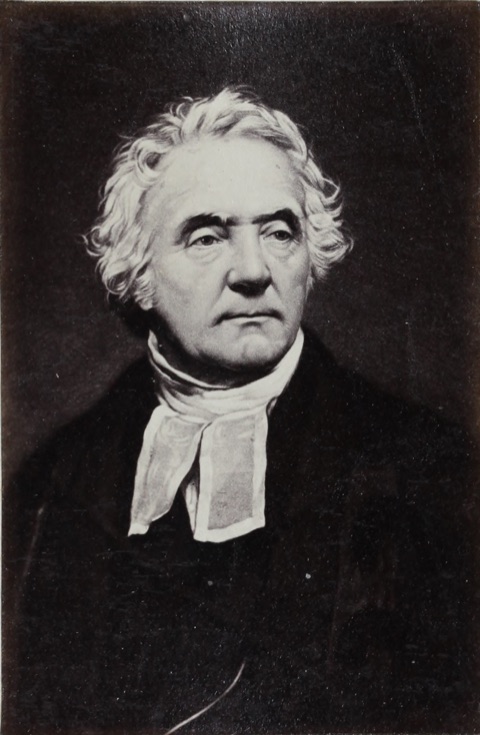
About the author
Thomas Chalmers
Thomas Chalmers (1780 to 1847 AD) was born in Anstruther, Fife, and entered the University of St Andrews at eleven. Minister of Kilmany from 1803, he turned to evangelical religion after illness between 1809 and 1811, and in 1815 he was called to the Tron Church in Glasgow. In 1819 he took charge of the new parish of St John's in one of the city's poorest districts, divided it into twenty-five units under deacons, and met poverty through visitation and voluntary giving rather than legal assessment. This book defends that work. He later taught moral philosophy at St Andrews and divinity at Edinburgh, led the Disruption of 1843 as first Moderator of the Free Church of Scotland, and died at Edinburgh in 1847.