Thomas Chalmers
Scottish minister, mathematician, and political economist who led the 1843 Disruption that created the Free Church of Scotland. He is also remembered for his Glasgow experiment in church-run poor relief and for his popular sermons linking Christian faith to modern science.
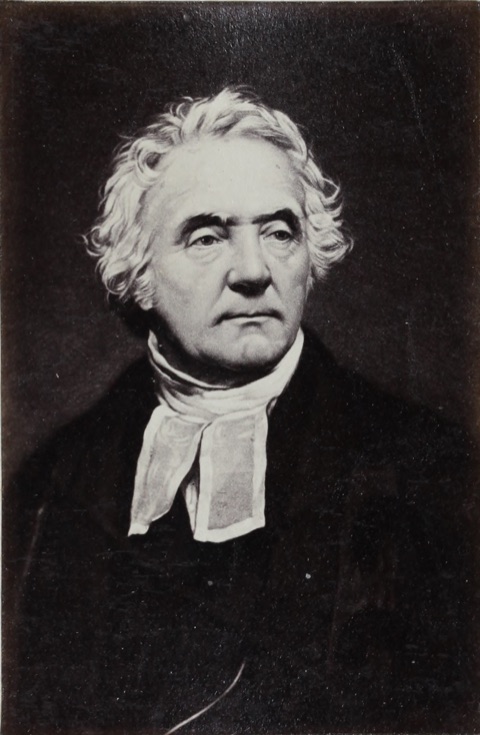
1780–1847
Biography
Thomas Chalmers (1780 to 1847) was a Scottish minister, mathematician, and political economist who led the 1843 Disruption that created the Free Church of Scotland. He was born on 17 March 1780 in Anstruther, a fishing town on the Fife coast, and entered the University of St Andrews at the age of eleven, where he was drawn more to mathematics than to divinity. In 1803 he became minister of the rural parish of Kilmany in Fife, but during his early years he treated the pulpit as secondary work, lecturing on mathematics and chemistry and holding that a parish left a minister ample time for other pursuits.
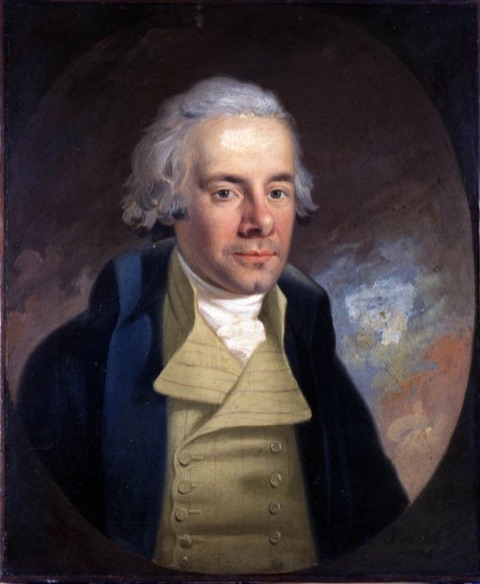
A period of serious illness between 1809 and 1811, together with the deaths of members of his family, turned him toward evangelical religion. His reading of William Wilberforce's "A Practical View of Christianity" deepened the change, and the Kilmany congregation heard a markedly different preacher afterward. His reputation began to spread across Scotland, and in 1815 he was called to the Tron Church in Glasgow.
Chalmers became one of the most sought-after preachers in Britain. His 1817 series of sermons connecting Christian revelation with modern astronomy, published as "A Series of Discourses on the Christian Revelation, viewed in connection with the Modern Astronomy," sold roughly twenty thousand copies within a year. Among the sermons from his Glasgow years was "The Expulsive Power of a New Affection," which argued that a sinful attachment is displaced not by bare prohibition but by a stronger and higher love.
In 1819 he took charge of the newly created parish of St John's, in one of Glasgow's poorest districts. He divided it into twenty-five smaller units, each supervised by a deacon, and set out to relieve poverty through the church's own visitation and voluntary giving rather than through the legal poor rates. He described and defended the scheme in "The Christian and Civic Economy of Large Towns," and the experiment became a reference point in nineteenth-century debates over poverty and charity.
In 1823 he accepted the chair of moral philosophy at the University of St Andrews, and in 1828 he became professor of divinity at the University of Edinburgh. He wrote extensively on political economy, most fully in "On Political Economy in Connexion with the Moral State and Moral Prospects of Society" (1832). In 1833 he contributed one of the Bridgewater Treatises, on the adaptation of external nature to the moral and intellectual constitution of man, continuing his lifelong effort to hold together natural science and Christian belief.
The final phase of his life centred on the conflict between the Church of Scotland and the civil courts over patronage, the right of landowners to appoint ministers against a congregation's wishes. When the dispute proved irreconcilable, Chalmers led about 450 ministers out of the established church at the General Assembly of May 1843, an event known as the Disruption, and helped found the Free Church of Scotland. He served as its first Moderator and as principal of its new theological college in Edinburgh. He died at Edinburgh at the end of May 1847.
Life & Career
Why Chalmers Matters
Chalmers is remembered first for the Disruption of 1843, the largest secession in the history of the Scottish church. The withdrawal of roughly a third of the Church of Scotland's ministers, who gave up manses, stipends, and church buildings over the question of patronage and spiritual independence, reshaped Scottish Presbyterianism and posed a lasting test case in the relationship between church and state. As the Free Church's first Moderator and the organiser of its finances, colleges, and congregations, Chalmers gave the new body its institutional shape.
His Glasgow parish work made him a figure in nineteenth-century social thought as well as church history. The St John's experiment, which sought to meet urban poverty through district visitation, personal knowledge of the poor, and voluntary giving rather than compulsory assessment, was studied and argued over long after Chalmers left Glasgow, and it fed directly into Scottish and English debates about the poor laws.
As a preacher and writer he did much to define the evangelical movement in Scotland. The wide sale of his astronomical discourses, his Bridgewater Treatise, and his lectures on political economy show a minister who insisted that Christianity had claims on science, economics, and public life, and who tried to argue those claims in the intellectual language of his day rather than retreat from it.
His writings on political economy and his idea of a "godly commonwealth," in which an active parish church supplied the moral foundation for society, connected theology to the social questions raised by industrial cities. That combination of pulpit, parish organisation, and economic argument kept his work in view among churchmen and social reformers well into the later nineteenth century.