

Full text in modern English · Free PDF/EPUB
Commercial Discourses
Want the file? The PDF/EPUB is free with an account.
Summary
- Author
- Thomas Chalmers (1780 to 1847 AD), Scottish minister
- Published
- 1820 AD
- Source edition
- Fourth edition, Glasgow: James Starke for Chalmers & Collins, 1820
- Type
- Sermons on business ethics and the Christian life
- Length
- 45,000 words · 3 hours
What is Commercial Discourses about?
Commercial Discourses is Thomas Chalmers's set of eight sermons, published in 1820 AD, arguing that a businessman can be scrupulously honest and still be at odds with God. Chalmers traces much commercial honesty to self-interest, treats petty fraud as real guilt, holds employers answerable for their dependents' souls, and calls the love of money idolatry.
How the argument unfolds
- 01
Preface: a fragment. The volume covers conduct and barely reaches the affections. Chalmers still claims that excess enterprise is what brings "bleak periods of bankruptcy and alarm following a season of excessive speculation."
- 02
Discourse 1: the honest unbeliever. He rebukes preachers who deny all goodness outside the church. The true charge is forgetting God: a trusted merchant may live "utterly careless about God and every avenue that leads to him."
- 03
Discourse 2: two kinds of virtue. Sobriety pleases God and irritates the crowd. Honesty pleases both, so it proves less. Yet Chalmers takes the pulpit into the marketplace anyway.
Read the full summary (9 points, key themes)Show less
- 04
Discourse 3: if honesty stopped paying. He consults merchants over philosophers, then weighs dissolving partnerships, near-bankrupts, tax evasion, smuggling and English tithes. Verdict: "much of the world’s actual honesty arises from its selfishness."
- 05
Discourse 4: no safe size of theft. Generosity comes in degrees; justice does not. A small gain aggravates the offense: "He has sold his honesty at a lower price."
- 06
Discourse 5: the Golden Rule and the poor. Chalmers rejects the commentators' limits on "all things whatsoever," then lays the harder duty on the poor: "Let him work and endure to the limit of what human nature can bear rather than beg, and let him beg only rather than starve."
- 07
Discourse 6: how cities ruin sons. A boy from a devout home meets ridicule, drinking parties and sexual license. The worst corrupter is the older man who outgrew vice without repenting. Prisons will not help; a hundred Christian firms might.
- 08
Discourse 7: stumbling blocks from above. An employer who orders Sabbath work outdoes, in Chalmers's reckoning, the highway robber and the slave trader. A lady who has her maid lie at the door shares in the maid's ruin. Servants must refuse.
- 09
Discourse 8: money as a god. "Someone who makes a god of pleasure pays that idol the homage of his senses. Someone who makes a god of wealth pays that idol the homage of his mind."
Key themes
- Morality without God. Reputation, conscience and real sympathy can all be present while the judgment question goes unanswered: "What have you done for me?"
- Selfishness as scaffolding. God has "made human selfishness support a most beautiful order of widespread and useful exchange." The order is a gift. It earns the individual nothing.
- The rights of those below. "No law, human or divine, entitles him to compel his servants to lie or act impiously." His remedy for the polite lie at the door: have the servant say "engaged."
Commercial Discourses · Full text
Discourse 1: Commercial Integrity Without Christian Faith
“Finally, brethren, whatsoever things are true, whatsoever things are honest, whatsoever things are just, whatsoever things are pure, whatsoever things are lovely, whatsoever things are of good report; if there be any virtue, and if there be any praise, think on these things” (Phil 4:8).
In these verses the Apostle uses certain terms without offering any definition of their meaning. He assumes that he and the people he addresses understand them in the same way. He assumes they know what truth, justice, loveliness, and the other moral qualities listed in our text mean. In fact, people had words to express these qualities for many ages before Christianity entered the world.
The very existence of those words proves that the realities they express must also have existed before the gospel was taught. People must sometimes have displayed these good and admirable qualities of character before the religion of the New Testament appeared. Society must have known virtue and praiseworthy conduct before the beginning of the new dispensation. The Apostle does not introduce them here as unfamiliar, unheard-of novelties. He treats them as things generally recognized, which could be understood at their mere mention, without preparation or explanation.
But there is more. These virtues must not only have been displayed before the gospel reached people, since the terms expressing them were perfectly understood. People must also have known how to love and admire them. Why do we call a moral quality lovely unless it actually draws love toward itself? Why do we say another quality is of good report unless people have given it their approval or spoken honorably of it?
The Apostle does not tell his readers to value lovely things and then, to keep them from going wrong, list the things he considers lovely. He leaves the matter with complete confidence to their own judgment and understanding. He tells them to value whatsoever things are lovely. He shows no suspicion that this leaves them uncertain or in the dark about the precise meaning of his advice.
He therefore recognizes that people can judge what is lovely and honorable in character. He appeals to a tribunal within their own hearts. He plainly assumes that, before the light of Christian revelation, certain principles of feeling and action were already scattered throughout the human race. Through these principles, people sometimes displayed what was just, true, and of good report. They could also respond to such conduct with regard and reverence. For now, we will postpone directly urging Christians to practice these virtues. We will confine ourselves to assessing their precise importance and character when they appear in people who are not Christians.
While we defend every doctrine of Christianity with zeal, let us remember that zeal can lack discernment. To bring that spirit to the defense of our faith, or any of its distinctive teachings, discredits the cause instead of vindicating it. There is a way of maintaining the utter depravity of our nature with such sweeping, vehement assertions that it offends not only taste but understanding. Statements on this subject are often so absolute and reckless that no intelligent person observing human character firsthand can accept them. In this way, unwise defenders of orthodoxy have brought against it not merely strong dislike, but substantial evidence and argument.
Human nature is certainly a ruin. Yet even the most ordinary observer can see that it does not present one uniform, unrelieved mass of ugliness. Some of its aspects and expressions are lovelier than others. Certain traits of character owe nothing to Christianity and yet call forth our admiration and affection. Some forms of moral character are much finer and more attractive than others. The proof that the gospel need not have helped to form them is that they attracted the world’s notice and respect before the gospel was ever heard of.
The classical literature of antiquity sparkles with repeated examples of what is bright and beautiful in human character. None of its descriptions of the natural world arouse such delighted enthusiasm as its accounts of some gracious or noble deed in human history. Consider the warmth of a mother’s affection, tireless devotion to parents, the constancy of tested and unchanging friendship, the earnestness of devoted patriotism, or the firmness of unwavering loyalty. Consider any of the recorded virtues that bring glory to the memory of Greece and Rome. We fully concede to the admiring scholar that every one of them was sometimes displayed in those days of paganism. Even from the records of an age crowded with moral abominations, we can gather things that are pure, lovely, true, just, honest, and of good report.
What, then, someone may ask, do we mean by the universal depravity of humanity? How can we reconcile what we have just admitted with the Bible’s unqualified, authoritative language about the extent and magnitude of human corruption? Where is the desperate wickedness attributed everywhere to people of every family on the face of the earth? How can we offer such a tribute to the sages and patriots of antiquity? As people who share our fallen nature, they must nevertheless be excluded from God’s favor and have evil stamped upon the imaginations of the thoughts of their hearts continually.
To answer these questions, let us appeal to your recollections of personal experience. On this subject, you have both your awareness of what happens within you and your observations of other people’s character to help you. Could a sense of honor not elevate a heart entirely without a sense of God? Could compassion not move a heart that never once feels dutiful loyalty toward the Lawgiver in heaven? Could our dealings with the beings around us not develop whatever generosity, friendship, integrity, and patriotism our nature contains, while the unseen Being who placed us in this setting remains unloved, unobeyed, and unheard?
Human character has many varieties, and many natural principles enter into its makeup. Could there not be someone whose natural virtues shine so brightly and dominate so strongly that his whole moral character appears graceful? Yet could he not be just as forgetful of God as if his natural principles had been combined in different proportions and made him hateful and repulsive?
In short, Sensibility might shed her tears, Friendship perform her services, Generosity share her treasure, and Patriotism earn a country’s gratitude. Honor might remain whole and untainted. Every gentle, lovable quality and every glory of chivalry and manly courage might gather into one brilliant display of moral excellence. Yet the person who embodies it all might never, for a single day of his life, submit one habit or affection to the Almighty’s will. He might be as careless and unconcerned about God as if his natural tendencies had made him a monster of ugliness. In this respect he would rebel against his Maker just as effectively as the most loathsome and dissolute person: he walks in the counsel of his own heart, and after the sight of his own eyes.
The same variety of natural disposition appears among the lower creatures. You see the gentleness of one animal, the affectionate faithfulness of another, and the cruel, relentless ferocity of a third. You never question the language used when some of these instinctive tendencies receive a better report than others, or when it is said of the former of them that they are finer, more lovable, and more endearing. Yet it never occurs to you that even the best of these displays involves any awareness of God, or that the great governing principle of his authority has anything to do with it.
Now turn your attention back to our own species. Beneath the same differences of disposition, some more lovely and some more hateful, you will find the same complete insensitivity to God, or the same complete failure of his law to subdue human habits and inclinations. There is, admittedly, one difference between the two cases. But it only increases humanity’s guilt and ingratitude. A human being has an understanding that the lower animals lack, yet refuses to acknowledge God in practice. He has a conscience they do not possess. Yet although it whispers within him the claims of an unseen Lawgiver, he spends his time asleep in indifference and lives without God in the world.
Or imagine the people of another planet whose allegiance to their Maker has never been broken. The Supreme Being sits enthroned in their hearts, and throughout their history they have constantly and unfailingly submitted to his law. They too might have different temperaments and natural inclinations, while all remain under the effective control of one great, commanding principle. In submission to God’s will, they would cultivate every kind and honorable disposition to the fullest. In submission to that same will, they would suppress every tendency toward anger, malice, and revenge at the first sign of its activity. In this way, they would constantly encourage one set of instincts and constantly struggle against the other.
Now imagine that this great bond of allegiance were dissolved. Suppose the mighty governing principle that had ruled every movement and affection were loosened and removed. That loyal, obedient world would then become what ours is apart from Christianity. Every natural desire would follow its own spontaneous course unchecked. Heaven’s law would offer no resistance to the impulses and tendencies of nature.
With the restraint of religion removed and all the passions released to pursue their own turbulent, independent courses, some of nature’s finer and lovelier sympathies might still gleam through the uproar of unrestrained and vindictive impulses. But tell us, would that change the condition of that world as a world at enmity with God? His will would have become utterly insignificant there. The voice of their rightful Master would fall powerless on the consciences of an indifferent, alienated family. Mood, interest, and inclination, sometimes selfish and sometimes social, would take turns ruling hearts from which every effective sense of an overruling God had been excluded.
If the creatures he has formed ignore and disown him, does it lessen the ugliness of their rebellion that they sometimes feel the impulse of an amiable affection he implanted, or sometimes display a beauty he bestowed? Can the value or number of his gifts release them from loyalty to the Giver? When nature takes a position of indifference or hostility toward him, how can her graces and accomplishments excuse her aversion to the One who gave her every grace and sustains her in the display of every accomplishment?
The way to maintain humanity’s depravity, then, is to identify its fundamental element and show how deeply it is embedded in our moral nature. We should not make reckless, sweeping denials that people possess any kindly sympathy or dignity of principle. That would contradict everything we observe. We should charge them directly with complete disloyalty to God, convict them of treason against the majesty of heaven, and bring home to them the impiety of not caring about God. We should tell them that the constant, habitual language of their hearts is, “I will not let the Being who made me rule over me.”
We should go to the man of honor and freely acknowledge that his pulse beats high with pride in his integrity. Then we should tell him that the One who keeps that pulse beating, sustains its vigorous movement, and could stop it forever in a moment is not in all his thoughts.
We should go to the person of gentle, tender feelings and look on him with affection. Then we should show him from his own character how the exquisite machinery of feeling can be fully at work while its Designer is forgotten. The One who poured the milk of human kindness into his nature may never receive a single thought of reverence or a single intention of obedience. God gave him his gentler nature and clothed him in all its beauty. By God’s appointment, he is a much-loved person of tender feeling instead of a hateful, repulsive monster. Yet he may utterly disown the God who made him so.
In short, we should examine everything fair, lovable, and engaging that Humanity has to offer and show how deeply she has revolted against the Being who has done so much to beautify and exalt her. We should show that the carnal mind, whether harsh or delicate in its disposition, is enmity against God. Nature may be rich in moral accomplishments, and her most favored son may embody the finest and fullest collection of them. Yet suppose that, on leaving this scene of display and breaking free from his mortal frame, he stood before his Judge and heard the question, “What have you done for me?” With all the greetings of honor he received on earth and all the reverence he left behind, this man of natural virtue might stand naked and defenseless before him who sitteth on the throne, without a plea or an argument.
God’s charge against our race is not that people never feel the warmth of honor or humanity. It is that none of them understandeth, and none of them seeketh after God. It is that he has been removed from his rightful supremacy. He placed in the human heart every principle that can adorn its possessor or maintain society’s order. Yet he is banished entirely from the circle of that person’s habitual thoughts.
The charge is that a person takes his way through life as aimlessly as if no God presided over it. Whether he grovels in the depths of sensuality at one moment or glows with generous sympathy or patriotism at another, he is equally forgetful of the One to whom he owes his birth and continued existence. He directs every step by his own will. He has utterly rejected the supreme authority of the will of that invisible Master who surrounds all his movements and never ceases to press on him the claims of an irresistible and rightful authority.
This is the essential, defining principle of rebellion against God. It is what has exiled our planet beyond the boundaries of his favored creation. Whether our world is shrouded in the wickedness of immorality and cruelty or occasionally brightened by a gleam of kindly and honorable virtue, this is why the One who sits on the throne sees it far away. He looks at our wandering world across a wide and desolate gulf of separation.
Love for his alienated children prompted him to devise a way of calling them back. Willing to forgive all their ingratitude, he opened a path of return and proclaimed a pardon and a welcome to everyone who would walk on it. Through the offered Mediator, who magnified his broken law and, by his mysterious sacrifice, upheld the dignity of the government Adam’s children had disowned, he invited everyone to come to him and be saved.
Suppose this message is brought to the most honorable man on earth, and he turns away from it with contempt and hostility. Has he not planted himself more firmly than ever in rebellion? His every transaction may bear the mark of unstained integrity. Confidence and respect may come to him from every part of society. Yet by rejecting the offers of reconciliation, has he not plunged deeper into the guilt of deliberate, determined ungodliness? Has the creature not exalted himself above the Creator? He prides himself on accomplishments that could never have adorned him unless they had come from above. In resisting the gospel, has he not added to the provocation of all his earlier defiance of its Author?
So much, then, for all the lovable qualities and manly strengths of natural character when separated from Christian faith. They occupy a different place in human character from the principle of godliness. Before Christianity, they do not lessen the guilt of our departure from the living God. After Christianity has come, they may adorn the character of someone who resists it. But on the clearest and most intelligible principles of justice, they can never shield him from the condemnation and curse of those who have neglected the great salvation.
The doctrine of the New Testament can stand comparison with everything we encounter or observe in human society. We confidently appeal to the experience of many who hear us. In the course of your many transactions, you have often met a man whom no possible advantage could bribe into the slightest departure from integrity. Everything bearing the mark of a sneaking or dishonorable trick aroused painful indignation in him. He positively could not rest if he knew that, even in his own heart, he had betrayed the faintest sign of such an inclination. The unaided law of justice and truth has therefore placed him in a high and deserved position among honorable merchants.
Let us give this character all the admiration it rightly deserves. But let us ask something further. With all his natural feeling and inborn integrity, have you never observed in such a person a complete absence of religion? Have you never seen that God is not in all his thoughts? When he does something that happens to agree with the Lawgiver’s will, he does it because his instinctive feelings move him, not because he knows it to be the Lawgiver’s will. However fortunate and admirable those feelings may be, they remain compatible with a mind habitually indifferent to God.
Have you never recognized in yourself, or observed in others, that the very man whose unstained and honorable reputation rightly commands society’s respect may entirely forget God’s claims? All his foundations may be in this world. Every source of security on which he relies and every enjoyment on which he sets his heart may lie on this side of death. Awareness of the coming day when God will bring him to judgment may have been erased from his heart as far as any practical influence is concerned. In desire, enjoyment, and habitual thought, he may be far away from that God who is not far from any one of us.
His growing credit, his increasing prosperity, and his magnificent retirement from business with all its splendid comforts may mark the furthest limits of his hopes. He does not look beyond them to the eternity that, in a few short years, will absorb and annihilate them all.
In short, have you never observed a man whose commercial principles were entirely sound and whose business dealings were open and beyond reproach, yet who lived utterly estranged from the concerns of immortality? In relation to God, he remained deeply asleep year after year. In relation to the person who tried to awaken him, he recoiled with the most sensitive dislike from that faithful ministry. In relation to the Book that tells him of his nakedness and guilt, he never consulted it with any practical purpose. He never tried to penetrate beyond the appearance of mystery it presents to an undiscerning world.
He did not attend church, or attended with all the lifelessness of mere form. He did not read his Bible, or read it as an unfruitful task he had set himself. He did not pray, or prayed with the mockery of a meaningless observance. In a word, though surrounded by every testimony that gives a person moral distinction among his fellows, he lived utterly careless about God and every avenue that leads to him.
Now consider for a moment what this man has and what he lacks. He has a quality of character that is itself pure, lovely, honorable, and of good report. He has a natural principle of integrity. Under its influence, he may act in ways worthy of every admiration. It is noble when his simple word provides as much security as the signatures, guarantees, and legal obligations required of other people.
One might be tempted to take pride in the human race on seeing the trust placed in him by a distant business correspondent. With no hold on him except his honor, that correspondent entrusts him with the wealth of an entire fleet of ships and sleeps in confidence that it is safe. Amid the gloom of this world’s depravity, it is heartening to see the trust one person places in another across oceans and continents. He anchors a firm and steady reliance on the reported honesty of someone he has never seen. He fears the treacherous elements through which his property must pass. Yet he knows that if it only reaches the person appointed to receive it, all his fears and suspicions can end.
We know nothing finer than this homage paid by one human being to another when perhaps the earth’s diameter separates them. Neither the renown of our country’s victories nor the wisdom of its councils distinguishes it, we think, as much as the honorable dealings of its merchants. All the glories of British policy and British valor are far eclipsed by the moral splendor that British trustworthiness has cast over our nation’s name and character. Britain has gained no prouder distinction from all those subject to her power than from the confidence freely given by people of every tribe, color, and language. They look to us for the most faithful management of their affairs and the most secure custody of their property.
There is no denying, then, that integrity is very widespread in the commercial world. Whoever possesses that principle has something to which every description in our text may rightly apply. But it is equally impossible to deny that, alongside what he has, there may be something he lacks. He may not have a single dutiful feeling of reverence directed upward to God, or a single wish or expectation directed forward to eternity.
He may have no sense of dependence on the Being who sustains him. God gave him his very principle of honor as part of his inward makeup. God surrounded him with the setting in which he has displayed it so finely and impressively. God set the whole machinery of his feeling and action in motion and can, by a single word of power, bring all the variety and grace of its movements to an end.
In other words, he is a man of integrity and yet a man of ungodliness. He is fitted to win the confidence and admiration of his fellows, yet his Maker can charge him with complete abandonment of every principle of spiritual obedience. His virtues have adorned his earthly character and upheld society’s interests. Yet no movement of principle has brought him nearer the kingdom of heaven than the most dissolute person. The condemnation that he is alienated from God rests on him with its full, unrelieved severity. The threat that they who forget God shall be turned into hell will include him among eternity’s miserable outcasts on the great day of its terrible and sweeping fulfillment.
While in the world, he withheld from God every due offering of gratitude and remembrance, and every complete submission of habit and desire. God will show him to his face that, beneath the deceptive covering of the sympathies that won his acquaintances’ love and the integrity that won their respect and confidence, he was a determined rebel against heaven’s authority. God will show him that he never fulfilled a single commandment of the law in its full meaning. Love to God, the principle that runs through all obedience to this law, never governed him.
The Lawgiver was deeply offended and insulted, yet in love devised a way of reconciliation for the guilty. But his pleading voice never brought this man back. The man neither desired God’s friendship nor cherished the hope of enjoying him. Therefore, as he lived without hope, he lived without God in the world. He found everything he desired and everything he relied on somewhere other than in that favour which is better than life. Thus, besides the curse of not continuing in all the words of the book of God’s law to do them, he brought on himself the immense additional guilt of neglecting every offer of God’s gospel.
We say of this natural virtue, then, what our Savior said of the virtue of the Pharisees, many of whom were not extortioners like other men: “verily, it hath its reward.” Separated from a sense of God, it has no religious value whatever and will lead to no religious blessing, either in this life or in eternity. Yet it has pleasures attached to it, just as refined taste has its pleasures, and in these it receives an abundant reward.
It is spared the inward pain that nature has attached to every departure from honesty. It is sustained by a conscious sense of uprightness and dignity. It is gratified by society’s homage, since society’s members are always ready to acknowledge the virtues that support its interests. Finally, prosperity, with occasional exceptions, generally accompanies the credit that everyone of unwavering justice is sure to acquire.
But tell us, what reward is due to this man on the great day when God’s righteousness is revealed, if he has in fact done nothing for God? What recompense can he receive from the books that will then be opened, in which he stands recorded as a man laden with the guilt of spiritual idolatry? How can God give him a servant’s reward when serving God was not the principle behind his actions in the world? Neither the justice he showed others nor the sympathy he felt for them had the slightest character of an offering to his Maker.
But wherever the religious principle has taken possession of the mind, it gives these virtues a new spirit. Animated by that spirit, all such things as are pure, lovely, just, true, honest, and of good report acquire a religious importance and character. Our text belongs to an epistle addressed to all the saints in Christ Jesus, which were at Philippi. Its lesson is a direct and authoritative command for everyone who is a saint in Christ Jesus today.
Christianity places the weight of its explicit authority behind what is lovable and honorable in human virtue. Its influence on genuine disciples is such that, in both unbending justice and continually active charity, they are sure to leave the great majority of the world behind. Simplicity and godly sincerity are essential to the distinctive character that marks them out in the midst of an ungodly generation.
The gospel’s true friends are deeply and anxiously concerned for the honor of their Master’s cause. They blush at the disgrace brought on it by people who observe its Sabbaths and make an ostentatious show of reverence for its doctrines and sacraments. They utterly reject any fellowship with that vile combination of affected religious talk and deceit that has sometimes given religion’s enemies cause to triumph. They both feel the solemn truth and act on the authority of the saying that neither thieves, nor liars, nor extortioners, nor unrighteous persons, have any part in the kingdom of Christ and of God.
Discourse 2: How Christianity Strengthens Commercial Integrity
“For he that in these things serveth Christ is acceptable to God, and approved of men” (Rom 14:18).
We have already affirmed that human hearts naturally contain principles that lead to many gracious and honorable expressions of character. We have also affirmed that this does nothing to weaken the orthodox doctrine of the utter depravity of our nature. The essence of that depravity lies in our breaking free from God’s authority and surrendering ourselves entirely to the guidance of our own inclinations. Some of these inclinations are admirable in themselves, and their effects greatly benefit human society. Yet because none of them refers to the will and rightful sovereignty of the Supreme Being, they cannot remove, or even lessen, the charge of ungodliness that applies to every son and daughter of the human race. They provide no adequate or satisfactory answer to the question, “What have you done for God?” Whether these desires spring from a natural sense of right or an instinctive benevolence, they cannot remove the guilt of having neither love nor concern for the Being who made and sustains us.
But there is more. If natural virtues and accomplishments are admitted at all into the dispute between God and humanity, they do not lessen the enormity of our guilt. Instead, they mark it as an even deeper and more determined ingratitude. Imagine for a moment that Scripture’s beautiful personifications became realities. Suppose the trees of the forest clapped their hands to God, and the islands rejoiced in his presence; the little hills shouted on every side, and the valleys covered with grain sent up their joyful songs. Suppose the sun and moon praised him, and the shining stars joined in solemn adoration. Suppose every mountain and waterfall gave voice to God’s glory, and all nature, conscious throughout of a God who filled and governed it, burst into one great universal song of praise.
Would we not hear a loftier strain rising from those regions where the God who works everywhere had left the marks of his own immensity than from the quieter, humbler scenery of an ordinary landscape? Would you not expect a more joyful acclamation from the fertile field than from the barren waste, where no grandeur compensated for the surrounding emptiness? Would not the magnificent tree, clothed in the glory of its summer leaves, lift a louder anthem of gratitude than the lowly shrub beneath it? Would not the flower whose petals reflected every lovely color express a sweeter rapture than the brown weed that never caught an admiring passerby’s eye? Wherever you saw nature’s towering heights or the splendor of her richest and most beautiful adornments, would you not expect the deepest tones of devotion, or its tenderest and most exquisite melodies?
Human character, too, displays both grandeur and beauty. We see its grandeur in that high sense of honor which neither self-interest nor terror can draw away from any obligation. We see its beauty in that kindness which a single look or sigh of pleading distress can awaken into the liveliest sympathy. Only grant that we have received everything in the constitution of our spirits and the structure of our bodies. Grant that mind, in all its varieties, is as much the work of a creating hand as matter in all its forms. Then the whole range of moral character we see across human society can be traced directly to the activity of him who works all in all.
We believe that, as far as any effective awareness of God is concerned, all the living, rational generations of this world sleep as deeply as its varied forms of silent, unconscious matter. To bring our alienated spirits back to life toward their Father requires as distinct and miraculous an exercise of divine power as turning stones into the children of Abraham. Suppose, then, that this happened. Suppose a life-giving awareness of God’s reality spread through the whole human race, and each person knew how to acknowledge the unseen author of his gifts with fitting gratitude. From which of these people would you expect the most fervent hallelujahs?
Would it not be from the person whom God had clothed in the splendor of nature’s brightest accomplishments? From the person whose natural feelings harmonized most fully with honor and benevolence? From the person whom his Maker had formed in the happiest mold, bringing him into the sweetest harmony with everything kind, generous, and lovely, ennobling him with the loftiest emotions, and raising him above his fellows as the finest example of all that was gracious and manly?
Surely the possession of these virtues provides another reason to acknowledge the Lord of the spirits of all flesh. If that acknowledgment is withheld, and these virtues dwell in someone entirely without piety, they aggravate the reproach of his ingratitude. They prove that, among all the people on earth who are far from God, he stands at the greatest distance. He resists the weightiest claims. Among those who are dead in trespasses and sins, he sleeps most profoundly through the call of religion and the supreme claims of its righteous obligations.
By arguments like these, we would seek to convince of sin those whose righteousness lacks godliness. We would show that, even though they possess things that are pure, lovely, honest, and of good report, they can be reconciled to God only on the same terms as the most worthless and dissolute people. They stand in the same need and nakedness, and are therefore children of wrath, even as others. They can be saved only through faith in the preaching of the gospel of our Lord Jesus Christ. They must be brought down from the deceptive height on which their awareness of their own accomplishments has placed them. Unless they receive forgiveness through the Redeemer’s blood and sanctification through the Spirit he gives, they will have no share in the inheritance that is incorruptible and undefiled, and which fadeth not away.
But the gospel of Jesus Christ does more than offer the guilty a refuge. It brings everyone who accepts its offer under its supreme and exclusive direction. It remains beside them with counsel, exhortation, and constant oversight. The grace it reveals is a grace that not only saves all people but teaches all people. The one presented as Savior also claims to be the sole master of those who trust in him. His oversight extends across their whole lives. There is no affection in their hearts and no deed in their outward conduct over which he does not claim an authority subject to no higher control and admitting no rival.
Now we want to draw your attention to a distinction between two sets of his requirements. One set commands us to practice virtues that society greatly values and honors even apart from his command: compassion, generosity, justice, and truth. Quite apart from the religious authority they receive from the Savior’s law, these virtues are so lovely, honorable, and well regarded that they are always sure to win general applause. They therefore combine both characteristics of our text: “he who in these things serveth Christ” is both “acceptable to God, and approved of men.”
But another set of requirements places God’s will in direct conflict with human applause, rather than receiving its support. Some people admire generous sacrifices made for truth or friendship, yet surrender themselves without a scruple to every excess of revelry and feasting. They are therefore the last to admire the Puritan strictness of someone whom they cannot tempt to abandon chastity or temperance. Yet the same God who commands us to “lie not one to another” also commands us to keep the body under control and abstain from “fleshly lusts, which war against the soul.”
Again, some people find uncorrupted moral sensitivity beautiful and attractive, and unwavering self-control manly and respectable. Yet they have no taste themselves, and no admiration in others, for the more direct practices of religion. They positively hate the strict, unbending exactness of those who take part in every religious observance and gather their families each evening to praise God. Yet the heavenly Lawgiver who tells us to “live righteously and soberly” also tells us to “live godly in the present evil world.”
Lastly, some people do more than tolerate the respectable forms of established religious observance: they like them. Yet while paying homage to Sabbaths and sacraments, they recoil from the Christian principle when it exercises its supreme, regenerating power. Beneath a generally religious appearance, they remain children of the world. They therefore hate the children of light for everything distinctive and essential to their high calling. They do not understand what it means to be “having our conversation in heaven.” Complete strangers to the new creature’s separate way of life, spiritual exercises, humble devotion, and consecrated affections in Jesus Christ, they shrink from all these things as the excesses of a fanaticism they neither share nor understand.
Yet the same Scripture that prescribes family and public religion claims undivided authority over every desire and affection of the soul. It allows no compromise between God and the world. It demands complete deadness to the world and the most intense responsiveness to God. It raises the standard of loyalty to the Father of our spirits to the height of loving him with all our strength and doing everything for his glory.
Let these examples impress upon you a real distinction, evident in experience, between two sets of virtues. One set has the single characteristic of being approved by God, without also being acceptable to people. The other has both characteristics. We may therefore practice the latter out of regard for God’s will, without any reference to human opinion, or out of regard for human opinion, without any reference to God’s will.
Among the first class of virtues, we would give a foremost place to all those inward, spiritual graces that belong to the obedience of the affections. God highly approves them, but the world in general finds them neither pleasing nor congenial. Certain other virtues belong more appropriately to this first class than to the second, although God’s approval is not their only attraction to quite the same degree. These include abstaining from profane language, attending church, strictly keeping the Sabbath, practicing family worship, maintaining the stricter degrees of sobriety, and carefully avoiding anything that encroaches on temperance or chastity. Many people without religion do find several of these virtues acceptable. Still, you will admit that they do not enjoy the universal popularity of certain virtues that indisputably belong to the second class.
The virtues of this second class bear more obviously and immediately on society’s interests. They include truthfulness that punctually fulfills every commitment; honor that never betrays the confidence it has inspired; compassion that cannot look unmoved at any sign of human misery; and generosity that gives freely to those around it. God commands these virtues, and humanity responds with loud and ready admiration. Both properties of our text meet and combine in them, so that “he who in these things serveth Christ” is both “approved of God, and acceptable unto men.”
Keep a firm hold on this distinction. It can serve a very useful purpose, both in explaining principle and in the important work of discerning character. With that purpose in view, let us carry it into a series of observations.
1. Social Virtue Can Exist Without Godliness
A person may possess the second class of virtues to a considerable degree without possessing even the smallest measure of religious principle. One reason is that he may value one characteristic of these virtues while placing no value at all on the other. Justice is both approved by God and acceptable to people. Its acceptability to people alone may induce him to maintain it with the utmost strictness, while God’s approval has no practical influence whatever on his habits or decisions. The same is true of every other virtue in this second class.
As these virtues exist in his character, none of them may contain any godliness. People may speak well of him because of them, while before God he may face as severe a reckoning as if he lacked them altogether. Surely your refusal to honor God is not made less serious by your reverence for human opinion, when that opinion moves you to do things that God’s law cannot move you to do. Your inclinations have revolted from the Creator. It cannot excuse that revolt that you have transferred them all to the creature, giving human reputation the authority you have denied to the voice of your heavenly Lawgiver. Your respectful submission to society’s taste or judgment surely does not compensate for your refusal to submit to him.
Remember, too, that other natural principles besides regard for others’ opinions may have helped form these virtues in your character. Compassion, generosity, and truthfulness might have flourished in you simply because you had a natural sensitivity or love of what is right. Yet if the first characteristic is missing, if regard for God’s approval has no part in producing the moral accomplishment, all the morality you can claim has no more religious value, and no more connection with religion’s rewards, than your refined taste, your rapturous love of music, or your strength and skill in physical exercise. In relation to the great question of immortality, all these things profit little. It is “godliness” alone that is “profitable unto all things.”
For this reason, we urge you to open your eyes to the nakedness of your condition before God. Consider the full weight of the charge he may bring against you. Recognize the fearful extent of what you lack. Resist the deceptive whisper of “peace, when there is no peace.” Understand that “the wrath of God abideth” on every person in the natural state, however rich that person may be in natural virtues and accomplishments.
2. Why Some Changes in Conversion Are More Visible
This distinction between the two sets of virtues helps explain why, when someone turns to God, one class seems to appear more abundantly and conspicuously in the renewed character than the other. It explains why the former looks more unmistakably religious than the latter. An air of gravity, propriety, and seriousness seems more closely allied with holiness than either open integrity or cheerful benevolence. The most obvious change in a converted person who formerly lived a dissolute life is withdrawal from the companions of his immorality. Renouncing the excesses of his former life is associated with becoming a Christian far more frequently, or at least far more visibly, than renouncing his former dishonesties.
The gospel’s law does, of course, place him just as strictly under the command to live righteously as under the command to live soberly. But the purely social virtues have a double character. The presence of one characteristic can overshadow, or completely disguise, the presence of the other. More irreligious people are just in their dealings than are pure and temperate in their habits. Even the most scrupulous justice is therefore a less distinctive, and consequently less convincing, sign of religion than strict and unbreakable sobriety.
All this helps explain why abandoning the frivolities of past conduct stands out more noticeably, when a person comes under religion’s power, than abandoning its injustices. The most characteristic transformation at that stage is a departure from thoughtlessness, immoral merrymaking, and the festive excesses he formerly shared with his companions. Of such excesses the Apostle says, “they which do these things shall not inherit the kingdom of God.” Even in the midst of his former impiety, the person may have been kindhearted, leaving no room for a visible transformation from cruelty. He may already have been honorable, leaving equally little room for a visible transformation from fraud.
3. Why Preaching Good Works Can Meet Resistance
Nothing is more obvious than the hostility a certain class of religious people feels toward the preaching of good works. That hostility certainly has sound and sufficient grounds when such preaching diminishes the importance, or compromises the simplicity, of the great doctrine of justification by faith. But alongside this, can we not observe their willingness to listen to a discourse on one set of good works, and their evident coldness and dislike toward a discourse on another?
A pointed rebuke of Sabbath breaking sounds to them more appropriate to the pulpit than a pointed rebuke of theft or malicious speech. Praise of family worship seems to them more filled with a sacred spirit than praise of the virtues practiced in shops and marketplaces. They approve the former as having the solemn and suitable character of godliness, while branding the latter as barren, heartless, heathen, philosophical morality.
There is something distinctive about this hostility to preaching the latter kind of good works. It is not enough to explain it as a sensitive concern for the security of the doctrine of justification. That doctrine opposes the merit of every kind of performance, not merely one particular class. To rest our acceptance with God on prayer, strict Sabbath keeping, or unblemished sobriety detracts from the great truth of salvation by faith just as unscripturally as resting it on the punctual fulfillment of every bargain or the extent of our many generous gifts.
Mere zeal for justification, then, cannot explain a particular dislike of sermons on social or humane virtues when no such dislike meets sermons on sober-mindedness, observing the sacrament, or practices directed more immediately and exclusively toward God. The distinction we have asked you to keep firmly in view, and to follow through its various applications, explains this frequent feature of the religious world.
The aversion is often, in fact, well founded. Its object may be a subject religious in its content but entirely secular in its governing principle because of the way it is presented. It resists what is regarded, rightly, as an attempt by certain virtues to claim a place to which they have no right. When those virtues are not animated by godliness, they have no place whatever in the ministry of Christ’s gospel. This resistance springs from an enlightened fear that something entirely devoid of religion’s spirit will be presented as the whole of religion.
It also springs from a true and tender concern that people may deceive themselves. Possessing accomplishments that secure a passing reputation during the brief hour of this world’s history, they may look forward to eternity with hope and upward to God with satisfaction, while bearing not one trace of heaven’s character, not one feature of godliness.
4. Distinctive Signs of Faith and Its Social Duties
The first class of virtues has a more strongly religious character precisely because that character is more exclusively religious. Those outside the faith might certainly see the second class of virtues in every real Christian as well. But Christians do not possess these virtues peculiarly or exclusively. Although every religious person must be honest, it does not follow that every honest person must be religious. Since the social virtues are not distinctive to Christianity, they do not form its most prominent and distinguishing marks. They can also appear in people who utterly reject the whole manner and teaching of the New Testament.
Hence the widespread impression that gospel faith does not exert so powerful and direct an influence on our duties toward one another. A few instances of hypocrisy among those who profess our faith most seriously fasten that impression in place and perpetuate it. Indeed, for many people, one example of sanctimonious deceit is enough to disgrace the whole of living, orthodox Christianity. Reports of it circulate triumphantly among gatherings of the irreligious. They contrast a man who pays no homage to Sabbaths or sacraments, but conducts every transaction openly, generously, and honorably, with the petty cunning of a contemptible pretender they dismiss as Methodist. The loud laughter of a crowd of scoffers adds force and volume to this public outcry against the whole body of the saints.
This mistake on the part of the unbelieving world is quite natural and should not astonish us. For the reasons already given, we are not surprised that people fail to notice the truthfulness, justice, humanity, and moral beauty that actually belong to every new creature in Jesus Christ our Lord. Or, if they notice them, they may fail to recognize them among the other, more obvious characteristics into which gospel faith has transformed believers.
But on this very subject, disciples of the faith are also liable to error. They need reminding of the solemn and indispensable religious character of the second class of virtues. These virtues do have the characteristic of being approved by people, and for that reason alone they may appear in the characters of those who live without God. Yet they also have the other characteristic of being acceptable to God. For that reason, believers should cultivate them with all their strength.
They must not lose sight of one characteristic in the other. They must not dismiss as so many fruitless, insignificant moralities those virtues that are essential parts of Christ’s service, so that “he who in these things serveth Christ” is both “acceptable to God, and approved by men.” They must not spend all their enthusiasm on the New Testament’s lofty and distinctive doctrine while admitting its practical duties only coldly and reluctantly.
The Apostle has tied the two together directly: “Wherefore, lie not one to another, as ye have put off the old man and his deeds, and put on the new man, which is formed after the image of God, in righteousness and true holiness.” Here the very obvious and popular virtue of truthfulness is grafted onto the very distinctive doctrine of regeneration. You entirely misunderstand the transforming influence that gospel faith brings if you think uprightness of character does not emerge alongside godliness of character. You misunderstand it if you think the social virtues do not gather around the believer in as rich and varied an array as the virtues of worship. You misunderstand it if you think that, while acquiring those graces acceptable to God alone, the believer falls behind in any grace that is both acceptable to God and approved by people.
Let everyone who claims Christianity, therefore, vindicate this assertion through his own life in the world. Do not lay your godliness aside when your family’s morning devotions are finished. Carry it out with you as your companion and guide through the whole business of the day. Always keep in your heart the thought, “thou God seest me.” Remember that no hour can pass, and no occasion arise, without his law being present with some commanding demand.
It is false that the principle of Christian sanctification has no influence over the familiar activities of ordinary social life. It is entirely false that godliness is a virtue so elevated and secluded that it rules only over solemn worship or solitary prayer and spiritual contemplation. If it truly exists within us as a grace at all, it will give direction and character to our whole course through society. There is no conceivable transaction, among all the varieties of human employment, that its spirit cannot animate. Nothing we encounter is too commonplace to receive the stamp of something heavenly through its influence.
Godliness claims to bring the whole person under its authority and govern every action. It does not occupy its rightful place until it exercises a presiding authority over the entire system of human affairs. A preacher therefore does not lower Christianity when he brings it into your business offices and rebukes every selfish inclination that would lead you even a little way into fraud. He is simply carrying it into its proper field of action.
He does the same when he enters your agencies’ offices and exposes the falsehood lurking beneath all the plausibility of your numerous and excessive charges. He does the same when he goes to the crowded marketplace and declares every bargain morally tainted unless truth has governed it with all the strictness of Quaker practice. He does the same when he looks into your shops and hears the argument between the seller who exaggerates the value of his goods and the buyer who pretends to undervalue them. He calls it a contest of greed that has broken free from the restraints of integrity.
In all this, he is not making religion vulgar or giving it an earthly character. He is asserting the power and universality of its sole supremacy over humanity. To bring his hearers, if possible, to a serious practice of simplicity and godly sincerity in their dealings, he would make the ugliness of sin plainly visible in every shade and form of dishonesty.
He would assure them of this: suppose there is a place in our world where subtle evasion, skillful deception, sly but profitable concealment, reports that mislead an inquirer, and flattering descriptions that tempt an unwary buyer are common in trade. Suppose people generally tolerate these practices so long as they stop short of blatant, outright falsehood. Suppose the moral sense has fallen so low there, and all the finer sensitivities of conscience are overborne in the fierce, ambitious rivalry of people hurrying to become rich and wholly devoted to the idolatrous service of the God of this world. Then that is the place from which the smoke of iniquity rises before him who sits on the throne in a tide of the deepest and most revolting abomination.
Here we must also protest against the public injustice done to Christianity when one of its showy adherents acts the hypocrite and is disgracefully exposed before the world. We mean the readiness to turn that exposure into a general charge against every appearance of religious seriousness. Loud denunciations fall upon the religion of everyone who stands out from others. If someone’s godliness is so pronounced that it makes him distinctive, that very distinctiveness becomes a reason to distrust and suspect him.
Yet in this world lying in wickedness, a person must stand out if he is to be a Christian at all. He is not on the way of salvation unless he belongs to a very distinctive people. Nor would we hastily discredit him even if his distinctiveness were conspicuous enough to provoke the charge of Methodism.
Instead of allowing one person’s hypocrisy to damage the reputation of a thousand, would it not be fairer and more reasonable to proceed by examining the evidence? Walk through the town and draw up a list of everyone who has gone so far as to have psalms sung in his family, attend fellowship meetings for prayer, or scrupulously avoid everything questionable in the world’s amusements. Include anyone who, by any other clear and visible sign, stands out before the public as a member of a holy and separate community.
We know that even among these people there are a few who, if Paul were alive, would move him to tears over the disgrace they bring upon his Master. But we also know that the blind and impetuous world magnifies the few into the many. It reverses the whole process of atonement by laying one person’s sins upon the multitude. It sees their general appearance of holiness and becomes so absorbed in this one expression of character that it fails to recognize the noble integrity and tender humanity associated with it.
We therefore make this assertion and challenge everyone to investigate it as thoroughly and searchingly as possible. The Christianity of these people, which many suppose does nothing but indulge in affected religious talk, make professions, and pursue religious observances, has increased their honesty and generosity to ten times the level found in society’s average character. These are the people we most often meet in the homes of the poor. They keep the most watchful eye on humanity’s sufferings and needs, and open their hands most widely to the pleading and the friendless.
Despite all their mockery, worldly people most readily place their confidence in them in business negotiations. They play the most splendid part in the great philanthropic movements that advance humanity’s general interests. With their eyes fixed on eternity, they scatter the most abundant blessings along time’s fleeting pilgrimage. While they “hold their conversation in heaven,” they do most to enrich the earth we walk upon with all those virtues that bring happiness to families and uphold the order and prosperity of the commonwealth.
Discourse 3: Self-Interest and Honest Dealing
“And if you do good to them which do good to you, what thank have ye? for sinners also do even the same” (Luke 6:33).
Many duties whose performance brings a person very little distinction are the very duties whose violation would bring the greatest condemnation and disgrace. Truthfulness and justice do not raise someone so high above the average morality of humanity as generosity, ardent friendship, or devoted and selfless patriotism would. The former virtues are much more common than the latter, so possessing them does less to distinguish an individual. But that is also one reason why lacking them would make someone a more monstrous exception to the general character of society. Accordingly, although there are more people of integrity in the world than people of very broad and generous benevolence, a single lie or dishonest act would brand an offender’s name with a more burning infamy than any failure to display those more heroic forms of love and extraordinary virtues of which humanity is capable.
It is therefore much more disgraceful to be unjust to another person than to fail to show kindness. At the same time, an act of kindness may deserve higher positive praise than an act of justice. Justice gives me what is mine by right, and its delivery calls for no special tribute of acknowledgment. Kindness gives me something beyond my rights. It offers spontaneous goodwill that I had no authority to demand, and receiving it therefore awakens a warmer gratitude in my heart.
Yet our Savior, who knew what was in man, saw that much of the apparent kindness of human nature could be traced to its actual selfishness. Much of the good done to others was done in the hope that they would do something in return. We believe that a skilled observer of human character would find this to be the hidden but substantial motive behind many of the courtesies and hospitalities of ordinary life. Without the expectation of a return in kind, or gratitude, or popularity, many of the virtues that sweeten a neighborhood’s life and bind it together would practically disappear. This would show that many virtues which actually promoted other people’s comfort and interests were tainted at their source by a hidden concern for one’s own advantage. Such a community does good either in return for good already received or in hope of a return to come. It might therefore be what our Savior calls it in the text: a fellowship of sinners.
But injustice is still more disgraceful than a failure of kindness. If we could show that the main practical restraint on injustice in society is the bond of common selfishness that moves and characterizes all its members, we would demonstrate even more strikingly how deeply sin has tainted our moral nature. Here is a curious but important question, if we could answer it: if people did not find honesty in their interest, how much honest conduct would remain in the world?
Our own view is that human nature has honorable feelings, instinctive principles of right, and an inherent love of truth and integrity. On that foundation, some uprightness would remain among us without the assistance of prudence or calculation of any kind. We have fully conceded all this. We have also already tried to show that, despite it, human character is thoroughly permeated by the very essence of sinfulness. Alongside all the natural virtues that adorn it, it retains the foulest of all spiritual deformities: indifference to God, and even hostility toward him.
People have argued against the orthodox doctrine of universal human corruption by pointing to the many attractive examples of goodness and benevolence found in society beyond the gospel’s influence. Our answer is that these may do nothing to weaken the doctrine. They may even make the case more serious, if the very people who display so much that is lovable remain indifferent in their hearts to the will of the Being who formed them and gave them these gifts.
But the opposing argument would indeed suffer a heavy loss if we could show that the vast majority of fair dealing between people rests on selfishness rather than honor. Suppose this is the soil in which the world’s honesty chiefly grows and finds its nourishment. Suppose that breaking the connection between justice to others and our own particular advantage would do much to drive the practice of justice from the earth. Suppose that, generally speaking, people are honest because they love themselves, rather than because they love God or even virtue. If that were so, separating personal advantage altogether from the habit of dealing fairly and kindly with those around us would have consequences beyond merely isolating people from one another in their duties of generosity. It would arm them for open hostility against one another’s rights.
The principle of disinterested goodness alone would then offer a feeble barrier against a devastating tide of selfishness, released from the restraint of considering its own advantage. The true depravity of the human heart would burst out and reveal its actual character. The world we live in would become a scene of shameless fraud and open, lawless plunder.
Perhaps the best practical way to answer this question is, after all, to turn to the broad, general experience of those most familiar with business, rather than to build a formal argument from particular cases. You all have a certain impression on this subject that is hard to define. Nevertheless, we place considerable weight on its accuracy. It is an impression gathered from a lifetime of memories and grounded in what you have observed in the history of your own conduct. It is a kind of judgment acquired through repeated dealings with people, through your many transactions with them, and through all the occasions when you have been personally caught up in the play of human passions and interests.
We are convinced that an experienced merchant could take a more intelligent view of this question than a practiced philosophical thinker. We therefore submit it to those of you who have most often put the most at risk by trusting agents, customers, and distant business contacts. We know that a secure and well-founded confidence in other people’s honesty is widespread among you. Without it, all the exchanges of trade would stop. Confidence is the very life and soul of commercial activity.
It is delightful to think how someone can let all his wealth pass out of his sight, cross the mightiest oceans and continents of our world, and enter the keeping of people he has never seen. One might think it a sublime tribute to the honorable and noble principles of our nature that, under their protection, opposite hemispheres of the globe can be joined in safe and profitable trade. A man in Britain can sleep without anxiety while all his property, and more than all of it, lies stored in warehouses in India. He rests because he knows that vigilance is there to defend it, energy to sell it, truthfulness to account for it, and all those trustworthy virtues that ennoble human character to shield it from injury and send it home to his door in a growing stream of wealth.
There is no question, then, about the existence of very widespread practical honesty in people’s dealings with one another. The only question concerns its cause. Why does the person you have trusted fulfill that trust so accurately and faithfully? Is his mind chiefly fixed on your interest or on his own? Does he act because he seeks your advantage or because he finds his own advantage in it? Tell us which concern makes him more anxious: your property or his reputation. Might concern for the latter drive him more powerfully toward fair dealing than concern for the former?
We know very well that there is room in his heart for both. But to determine how strongly self-interest is mixed with reliability and integrity in business, let us ask those best qualified by experience to speak on the subject. What would happen if self-interest were separated from commercial dealings in such a way that losing a good name no longer damaged a person’s prosperity? Suppose ruined creditworthiness and a tainted reputation no longer brought a loss of customers and employment. In a word, suppose his principles were our only security, and his own interests flourished and grew just as surely without those principles as with them. What would happen then?
Tell us how far the virtues of the commercial world would survive if we lost this hold on a person’s own advantage. Would cutting this powerful bond throw the world of trade into as violent a disorder as suspending the law of gravity would produce in the natural world? Would not the whole system fall apart and dissolve? Once released from the magical chain of self-interest that bound them together in a fair arrangement which seemed to rest on principle, would people not leap over their former restraints like predatory dogs let loose on their prey? Does this not prove that selfishness is, after all, the great principle holding the human family together? Does it not show that he who can make the wrath of man praise him has also made human selfishness support a most beautiful order of widespread and useful exchange?
But let us pause here. This picture gives us much reason to magnify the wisdom of the supreme Designer. It also gives us much reason to humble humanity and expose the deception in the moral satisfaction with which people regard their own character and achievements. It does much to show that their righteousnesses are as filthy rags, and that self-idolatry, however hidden its workings, can be detected in almost every one of them.
God may combine the separate interests of every member of the human race, and each person’s strenuous pursuit of those interests, into a harmonious system working for the good of one great and extended family. Yet consider the character of each individual within that family. We may find that the mainspring of his actions is the pressure of a selfish inclination, and that his very virtues serve it. Even the honesty marking his conduct may chiefly, though perhaps unconsciously, arise from the selfishness that drives him and fills his whole heart. If so, whatever appearances suggest, the reality agrees with the New Testament’s most humbling descriptions.
The moral virtues of unrenewed human nature last only a day. Their applause will end when this world, the only stage on which they receive it, is burned up. They are only the blossoms of a rank growth nourished in the soil of human corruption, and they can never bear fruit for immortality. The one who discerns every secret sees that they spring from a principle utterly opposed to the love that prepares heaven’s inhabitants for their joys and glows within their hearts. Therefore, though highly esteemed among people, they may be an abomination in his sight.
Let us make this clearer, if possible, by looking more closely at particular cases. Every member of the great commercial family shares a reciprocal interest with the circle of people with whom he does business. He does them good, but all the while he watches for them to do something in return. They supply all the profits of his occupation, but only if he supplies them with service, attention, and fidelity. If his creditworthiness deserts him, his prosperity will desert him too. If he loses other people’s confidence, he will also lose their business.
Thus, even while personal advantage remains his soul’s ruling idol, he may be just as sensitive to an attack on his reputation as to an attack on his property. He may guard his name against the faintest breath of slander or suspicion as vigilantly as he guards his estate against a robber’s invasion.
This bond of reciprocal benefit, which binds him to society at large in cooperation and good faith, will sometimes draw one or two individuals into a closer association with him through the ordinary course of business and its unexpected changes. There may be a profitable partnership in which each person urgently needs all the others to remain firmly together, at least for a time. Or a thriving exchange of goods may develop in which everyone’s interest requires each participant to take and keep to an assigned part. Or someone may devise a promising arrangement that requires coordination and agreement, leading several people to join in a skillful, well-organized association.
We are saying neither that this is very common in the commercial world nor that it is in the slightest degree unfair. But you must recognize that, amid the shifts and movements of the great trading community, a group sometimes appears whose members have entered an arrangement for mutual benefit. They consequently seem set apart from everyone else by the bond of a closer, separate alliance.
Our sole purpose is to illustrate our principle from the way the members of such a group behave toward one another. How warmly they may treat each other, with what one might take for genuine friendship! How their families may mingle in what looks like unmixed affection! How lavishly they may entertain one another, recalling those poetic days when greed was unknown and people lived together in harmony on the fruits of a common inheritance! How nobly each member seemed to disdain small savings that could readily be surrendered for the good and smooth working of the whole enterprise!
All this, you will observe, lasted while the enterprise prospered and remaining in it served each person’s interest. Each person’s current business accounts gladdened his heart by showing his abundant share of the common benefit. But every such operation comes to an end. We ask whether it is at all unlikely that the selfishness concealed throughout these transactions should now step forward and show its cloven foot as they approach their conclusion.
As the bond of reciprocal benefit loosens, is it not quite possible that complaints of unfair or ungenerous conduct will grow louder? Might an association conducted until then with smiles break up in reproaches? Might its whole character become clearer as it nears its end? As some members free themselves from the bond of mutual interest, might they also free themselves from the mutual consideration, propriety, and even honesty that had previously marked all their dealings? An affair in which everyone looked so fair, magnanimous, and generous might finally deteriorate into a fierce struggle to seize what each could, a scramble of outright, undisguised selfishness.
Although this may happen sometimes, we are far from saying that it generally happens. Indeed, it could not happen without exposing a person’s character in a way that might lower him in the opinion of more than those from whom he is withdrawing. It might also lower him in the opinion of the wider public with whom he remains connected, and whose opinion still carries great weight for his own interests.
To estimate the full influence of this consideration precisely, or determine how far honest character can be traced to selfish character, we would need to imagine a more complete separation. The bond of reciprocal benefit would have to be dissolved between the individual and his entire former circle of business acquaintances, rather than merely between him and those with whom he had been most closely associated.
The situation nearest to this is that of a man on the brink of bankruptcy, with no sure hope of recovering sufficiently to regain his creditworthiness and return to profitable work or a position of trust. If he has honorable or religious feelings, his character as a matter of principle may still mean something to him. But his reputation as a matter of prudence, or a calculation of personal advantage, may now mean nothing. In the dark hour of desperation, he may feel that he has nothing to lose. Let us see how he conducts himself when released from the restraint his reputation once imposed.
In these circumstances, perhaps you have seen someone abandon all concern for the honest conduct that once adorned him. Perhaps you have seen him do disgraceful things whose very suggestion he would have rejected in his prosperous days. Forgetting his former good name, he may use every deceptive device to prolong the credit of a failing business. To keep himself afloat for a few months of torment and restlessness, he may weave a web around his many friends and associates that will surely drag some of them into his fall. As the crisis approaches, he may employ petty tricks to survive the coming ruin and gather something from its wreckage for his family.
Oh, how much there is to mourn here! Who could be so ungenerous as to gloat relentlessly over the helplessness of such a sad collapse? If you ever witness such a spectacle, we ask you to keep your pity for the unfortunate. But we also ask you to read in it a lesson about humanity’s worthlessness and degradation. Even its virtues are tinged with corruption. The honor, truthfulness, and fairness with which people proudly think their nature is adorned often rest on a foundation of selfishness, and lie prostrate in the dust when that foundation is removed.
Other examples may provide still more convincing evidence of selfishness’s widespread influence on human moral judgment, and of how readily a person’s estimate of right and wrong adjusts to his own interests. There is a strong general exchange of benefits between a country’s government and all its inhabitants. One party supplies revenue for the state’s expenses. The other provides protection against injustice and violence. If the first withheld the necessary resources, the second would cease to provide the benefit. Nothing, then, could be stricter or more indispensable than the bond of reciprocal benefit between the government and the public as a whole.
But the separate individuals who make up that public do not feel this bond, and therefore do not act on it. The exchange of benefits does not strike each of them with a sufficiently direct and personal force. Each person may calculate that, if he uses clever evasions to withhold some of the taxes he owes, the resulting harm to himself will be shared with the rest of his countrymen. His own portion will be so small as to escape notice altogether. As far as he can feel, his country’s power and justice will shelter him just as effectively whether he pays his taxes in full or uses skillful concealment to pay only part. For practical purposes, therefore, the bond of reciprocal benefit between him and his sovereign is largely dissolved.
How do the population’s moral judgment and conduct actually adjust to this situation? The answer is plain. Evasions considered disgraceful in private business are considered less disgraceful in this part of a person’s affairs. The cry of indignation raised against falsehood or dishonesty in someone’s dealings with his neighbors is softened or silent when his dealings with the state show exactly the same failure of principle. Popular feeling tolerates conduct here that, if extended to all trade, would drive every safeguard of commerce from the world.
This gives us reason to believe that much of the good people do is done in expectation of good returned. Many virtues that regulate and sustain human fellowship still leave unanswered the charge that it is a fellowship of sinners. Both the practice of morality and the demand for it are measured by the workings of self-love. Far from distinguishing anyone or preparing him for eternity, this self-love is something he shares with the fiercest and most degraded members of our race. Apart from considerations of personal advantage, straightforwardness and godly sincerity are largely unknown.
God has intervened with a law of “giving unto all their dues,” and “tribute to whom tribute is due.” Yet we may venture to say of the great majority of these taxes that they are paid “for wrath’s sake,” and not “for conscience’ sake.” Conscience, standing alone and unsupported, does so little to stem the tide of selfishness. It is chiefly when honesty and truth move powerfully with that tide that people raise their voices to acknowledge them and become keenly aware of their obligations.
Let us ask here: how does the guilt of someone who uses smuggled goods compare with the guilt of someone who trades in them? The relationship is precisely that of a receiver of stolen goods to a thief or robber. Some may recoil from being put in that category. But if the habit we have just condemned can be found among people of rank and respectable reputation, let us humble ourselves enough to admit how little the world’s righteous conduct rests on righteous principle.
How feeble the safeguards of right conduct would be if it had nothing to uphold it beyond its inherent beauty and obligations! Society holds together only because God’s grace can put the worthless inclinations of its members to use. If fidelity, truthfulness, and justice did not have selfishness to support them, they would leave the world, apart from a few scattered remnants. They would leave it a prey to the anarchy of human passions and the wild misrule of all those depraved impulses that disturb and disfigure our ruined nature.
Almost every parish in England offers the same display of our nature. The people supply a revenue to the minister of religion, and the minister does indeed give something back. But ordinary, coarse selfishness does not consider his return at all equivalent to the sacrifice made. Here too, the law of reciprocal benefit that governs ordinary commercial transactions is entirely suspended. As a result, the law of right is trampled into ashes. A tide of public hatred runs against the men whose property is being violated, while a smile of general approval rewards the skill of those who successfully invade it.
A portion of the annual produce of our soil is allotted to a body of national officers on a legal foundation as firm as ownership of the soil itself. Without them, it would all have gone to the idle landowner as increased income. Yet this allotted portion is left entirely outside the protection of that great principle of reciprocal benefit on which, we strongly suspect, the honesty of this world chiefly rests.
The national clergy of England may be regarded as standing outside that protection. Consequently, what most rightfully and sacredly belongs to them is left as a plaything for thousands of plunderers. Besides bearing a burden of wholly undeserved condemnation, they have had to endure all the bitterness of injustice known and felt. The relationship between teachers and taught, which surely ought to be one of peace, friendship, and righteousness, becomes a contest between the natural greed of one party and the natural resentment of the other.
We do not wish the established Church of England swept away. We honestly believe that its overthrow would deal a severe blow to Christianity in our land. Nor do we envy that great hierarchy the splendor of its endowments. Better a dinner of herbs, surrounded by parishioners’ love, than an exalted, richly endowed church office accompanied by strife.
Neither do we think its ministers have disgraced themselves by greed. Look at the extent to which their rights have been encroached upon, and you will see that they have exercised their privileges with exemplary patience and moderation. Yet these very encroachments show us how lawless a human being becomes when freed from the bond of personal interest. They show how greatly such arrangements must multiply temptations to injustice throughout the country, and how desirable it is to end them.
We would do so through a fair and generous conversion of the revenue arrangements supporting that venerable church. The church itself should remain, and its clergy’s property should suffer no loss. The change would remove a most destructive blight from the moral worth of the population. Every inducement to injustice could then be removed, and the frailty of human principle would no longer be left to such ruinous and withering exposure.
We would not have mentioned this example except to add another proof from experience to the lesson of our text. We now turn directly to that lesson and a few of its applications.
We trust that what has been said has convinced you that much of the world’s actual honesty arises from its selfishness. Surely you will then admit that, insofar as selfishness supplies the motive, honesty falls from its place as a virtue deserving reward, or even affection. It becomes merely a matter of prudent self-interest. Far from morally elevating the person who displays it, it springs from an inclination that seems inseparable from every sentient creature’s constitution. In this respect, it places a person on the same level either as the most worthless members of his own species or as the lower animals, among whom moral worth is unattainable.
Do not let this argument lose its humbling force merely because you are not distinctly aware of selfishness directing every step of your honest daily dealings. Perhaps the only inward restraints against injustice that you recognize are your generous indignation against it and the real discomfort you would feel under your conscience’s reproaches. Selfishness may nevertheless have originated and nourished the whole of this virtue in you. Violating it may then trouble your mind just as violating any other established habit would.
As for your generous indignation against everything fraudulent and disgracefully wrong, never forget that this feeling may have grown out of the common selfishness that links people together in mutual dependence. We can see it in full development among highway bandits bound together by oaths. Society at large curses them for their agreement in wrongdoing. Yet they can maintain the most heroic fidelity to the virtues of their own brotherhood. They can be just as lofty and chivalrous about their points of honor as we are about ours. Their voices can rise in equal indignation against the worthlessness of someone who betrays their association’s secret or destroys any safeguard holding it together.
In the same way, we may belong to a wider association held together by reciprocal interest. All the virtues essential to its existence or welfare may become idols among us. The breath of human applause may fan them into a splendid luster of esteem. Yet the person regarded as good in earthly society may, along with all his fellows, remain a complete outcast from the society of heaven. His heart may be entirely without that allegiance to God which rules God’s unfallen creation. He may possess neither love for the Supreme Being nor that disinterested love for those around us which together form the graces and virtues of eternity.
We have not claimed that no natural, disinterested principle of honor exists among people. On a former occasion, however, we maintained that a sense of honor may live in the heart while a sense of God is entirely absent. We now maintain that much of the world’s honest conduct does not arise from an honest principle at all, but from a much baser element in our constitution.
It would be difficult to determine how widely selfishness operates on the one hand, and how narrowly principle alone operates on the other. A person’s own heart is such a labyrinth that self-awareness may leave him entirely unable to answer the question. Yet amid all the difficulties of examining himself, we ask him to think of another who remains unseen by us but is presented to us as seeing everything.
How could we portray this heavenly witness more impressively? He searches the heart and weighs its secrets. He fixes an attentive, judging eye on all its movements. He stores the whole history of a person’s outward and inward life in a book of remembrance, keeping it for that day when, as we are told, “the secrets of all hearts shall be laid open,” and “God shall bring out every secret thing, whether it be good, or whether it be evil.”
Your self-awareness may not tell you clearly how far your habits of integrity arise from the hidden workings of selfishness or the more direct and obvious workings of honor. But it may tell you clearly enough how little God’s will influences anything you do. Your own awareness and memory of what passes within you may confirm this monstrous charge: you live without God in the world.
You may stand out among your fellows for the character most highly valued and sought after in a commercial society. Yet you may at least recognize that you have built your established reputation without the influence of a godly principle. Perhaps the proud feelings of right conduct glowing in your heart contain no trace of homage to the Deity. Or perhaps, without even those feelings, Self is the divinity you have worshiped all along, and your very virtues are so many offerings of reverence at her shrine.
If this is indeed your spiritually destitute condition, is it not high time to wake from the delusion and shake off the lying spirit of deep and heavy sleep? With eternity approaching so quickly, is it not high time to examine your accounts with God and seek a settlement with the Being who will so soon meet your disembodied spirits with the question, “What have you done for me?”
And if all the virtues that adorn you merely serve this passing life and its conveniences, is it not high time to stop leaning on the securities you have trusted? If those virtues are either practiced entirely for yourselves or prompted spontaneously by your own feelings without any acknowledgment of God, should you not seek acceptance with your Maker on a firmer, unchanging foundation?
This is the ultimate purpose of all the evidence from experience that we have tried to set before you. We want it to be a schoolmaster to bring you to Christ. We want you to open your eyes to the agreement between the theology of the New Testament and humanity’s actual condition and history.
Above all, we want you to turn your eyes inward. Look there at a character without a single trace or feature of godliness. Look at a heart set on things entirely different from those that will be your portion and reward in eternity. Look at every motive for action traced either to the idolatry of self or, at least, to something independent of God’s authority. Look at the worthlessness beneath those virtues that seem so imposing in appearance and display. Here they gather popularity and applause around them. Hereafter, when brought before the judgment seat for examination, all that praise will dissolve into nothing.
When the gospel’s revelation charges you with the completeness and magnitude of your corruption, we want you to accept the charge. We want you to recognize its truth beneath the disguise of all those hollow, insubstantial accomplishments with which nature may dress her fallen and degenerate children. An examination of human character and a survey of human society can easily amuse, interest, and intellectually delight us. But reaching the individual conscience with the lesson, “We are ruined,” is much harder.
It is harder to strike your hearts with alarm at present guilt and future damnation. It is harder to drive the sharp arrow of conviction into your hearts so that it stays with you and pursues you like an arrow sticking fast. It is harder to humble you into the conclusion that, in God’s sight, you are under a curse, so that you seek him who became a curse for you and the preaching of his cross ceases to be foolishness to you.
Be assured, then, that if you continue to rely on your present works for justification, you will perish. We may not have succeeded in convincing you of their worthlessness. Nevertheless, be assured that a day is coming when such a flaw of deceitfulness will be exposed in the motive behind them all that the justice of your complete and everlasting condemnation will be demonstrated.
The message of the great atonement is sounded in your ears to avert the terrors of that day. The blood of Christ, cleansing from all sin, is offered for your acceptance. If you turn away from it, you add the insult of a neglected gospel to the guilt of a broken law. But if you accept the gospel’s pardon on the gospel’s terms, this great remedy is so effective that its mercy will reach farther than your own conscience has ever seen. It will redeem you from the guilt even of your most secret and unsuspected sins. It will wash you thoroughly from a stain of sinfulness more deeply rooted than you ever imagined in your natural blindness, or ever thought could belong to you.
When someone becomes a believer, however, two great events occur at this turning point in his history. One takes place in heaven: his name is erased from the book of condemnation. The other takes place on earth: a sanctifying influence is applied to him, so that all old things are done away with him, and all things become new with him. He is made the workmanship of God in Christ Jesus our Lord. He is forgiven for every evil deed of which he was formerly guilty, and he is also created anew to perform the corresponding good deed.
Therefore, if he is a Christian, his honesty will be purified of the taint of selfishness that so deeply and widely permeates the world’s ordinary honesty. He will not do this good thing so that someone may do something good for him in return. He will do it out of a simple regard for its own inherent and independent rightness. He will do it because it is honorable, and because God wills him in this way to adorn the doctrine of his Savior. All his fair dealing and friendship will be practiced without seeking personal advantage.
The principle within him will need no help from such an ally. Strong in its own resources, without borrowing support elsewhere, it will stamp a clearly visible dignity and uprightness on every kind of transaction he undertakes in the world. Everyone finds it advantageous to prolong a profitable association through honest dealings. But in his case, the same unstained integrity that held the association together and sustained its progress will remain through its last transactions and dignify its full and final conclusion.
Most people find that they could reduce their tax payments below what strict justice requires without bringing any harmful consequences back upon themselves. But he has a conscience toward both God and other people that will not allow him to do so. All his tax returns are rigorously truthful, and all his payments precisely accurate.
When difficulties close around him and he is plainly tottering toward financial collapse, nature demands that he use every device to set aside assets secretly for his family. But a Christian mind is incapable of such deceit. The voice of conscience within him will always speak louder than the voice of necessity. He will be as open as daylight with his creditors. He will no more reach for what rightfully belongs to them than he would reach out to commit sacrilege. Though entirely released from the bond of self-interest that binds a person to fair dealing with his fellows, he will retain the bond of principle in all its strength. Nor will he ever resort to fraud for the sake of subsistence. As one of the children of light, he would not, to gain the whole world, lose his own soul.
Discourse 4: Dishonesty’s Guilt Is Not Measured by Its Gain
“He that is faithful in that which is least, is faithful also in much; and he that is unjust in the least, is unjust also in much” (Luke 16:10).
A deceased poet from our own country offers a beautiful poetic conception. His imagination too often dwelt among the contemptible features of human character. Yet he could also present its tenderness and nobility, sometimes with a pleasing grace and sometimes with a proud grandeur. Of a man who carried within him an integrity that was his own, borrowed from no one and sustained from within, he says that “his eye, even turned on empty space, beamed keen with honour.”
In the last discourse, I argued that much of the world’s honorable conduct rests on a foundation of selfishness. Society maintains the virtues governing relations with others chiefly through the bond of mutual advantage. A person’s own interest binds him to the ordinary standards of fairness accepted around him. If he falls conspicuously below them, he loses the respect, confidence and goodwill of those with whom he deals. It is a melancholy thought that the appearance of virtue on earth so seldom indicates the real presence of virtuous principle.
Yet, rare as it may be, the soul can assume no more dignified attitude than when it catches fire with a sense of justice, and feeds that holy flame, as it were, with its own energies. A person then moves steadily forward in moral greatness, disdaining the help of those inferior motives that keep coarse and selfish humanity from its grosser offenses. He rejoices in truth as the element to which he naturally belongs. Even if truth were stripped of all its earthly accompaniments, even if he saw no interest of his own connected with honoring it, even if neither fame nor profit lay before him, his eye would retain its living brightness when turned on emptiness itself. An inward and independent reverence would keep that light alive.
We have already observed, fully and frequently enough, that much of the homage paid to integrity in the world comes from selfishness. This is largely why the principle of our text has so little hold on the human conscience. People are always inclined to measure the enormity of injustice by how much they suffer from it. They bring this moral question to the standard of their own interest. An employer will tolerate all the smaller liberties taken by his servants as long as he considers them harmless. Only when the amount or frequency of their thefts makes him fear personal loss does his moral indignation become noticeably aroused.
Thus the maxim of our great Teacher of righteousness remains largely unfelt or forgotten in society. People are far from viewing unfaithfulness in little things and unfaithfulness in great things as he did, under the same judgment of guilt. If little injury results, they feel that little wrong has been done. They rate the moral innocence of a dishonest liberty by the smallness of the amount involved. The boundary between right and wrong is trampled without remorse, provided that each person makes only a slight and gentle advance beyond his neighbor’s landmark.
The loose, popular judgment on this subject disagrees with the teaching of the New Testament. Those who habitually make these petty invasions scarcely feel that they are doing anything wrong. Those whose property is treated so freely also fall into a habit of careless tolerance. Neglected or dormant principles allow this injustice to be practiced easily on one side and accepted just as easily on the other. Amid this general failure to pay attention, justice in all its strictness and delicacy is completely overwhelmed.
It is the taint of selfishness, then, that has so damaged and corrupted the moral sensitivity of our world. But consider the man, if such a man exists, whose “eye, even turned on empty space, beams keen with honour.” His homage to justice is entirely free from unworthy, self-interested feelings. He will long to offer her, in every instance, a tribute that is complete and without fault. However patient he may be with others, he could not tolerate the slightest stain of corruption on his own conduct. Nothing would satisfy him short of fulfilling the very last jot and tittle of the demands of fairness.
He does more than share the world’s indignation against outrageous departures from right that ruin acquaintances or bring distress upon families. His inward principle is so sensitive that he could have no peace while conscious of even the smallest and least discoverable violation. He looks fully and fearlessly at the whole account justice holds against him. He cannot rest while a single item remains unpaid or a single demand unsatisfied.
Suppose he had secretly and wrongfully kept back as much as a farthing in any transaction. To him it would be like an accursed thing, spoiling the character of the whole proceeding and spreading over it an appearance of evil that offended and disturbed him. He could not bear the whisper of his own heart telling him that, by even the smallest shortfall, he had settled matters unfairly between himself and the unsuspecting person with whom he dealt. It would burden his mind, hurt him and make him unhappy until an opportunity for explanation arrived. Only by meeting every obligation in full could he ease his conscience.
Here is justice standing upright and moving steadily forward. Here is justice disdaining every advantage that would tempt her even slightly to the right or left, rejecting every paltry inducement to leave her course. She keeps to a path so perfectly straight that even the most suspicious and searching eye could discover no deviation. This is the justice our great moral Teacher presents in the passage before us. He tells us that this virtue refuses fellowship with every discernible degree of wrongdoing. If even the least act of unfaithfulness were admitted, justice would regard her sanctity as violated and her character as overthrown.
As we continue, let us first explain the principle of our text. Then let us press it to its practical consequences, both for our general relationship with God and for the particular lesson of faithfulness that it teaches.
1. Guilt Is Not Measured by Gain
The great principle of the text is this: a person may gain very little from a sin and yet incur full condemnation for the principle involved in committing it. This applies when he has crossed a forbidden boundary that he distinctly knew was there. In a word, the gain may be small while the guilt is great. The guilt must not be measured by the gain. In respect of the offense he has given to God, the person who is unfaithful in the least will be dealt with as though he had been unfaithful in much.
(1) Crossing the Boundary of Justice
The first reason supporting this principle is that a small act of injustice crosses the line between right and wrong just as effectively as a great one. Coarse humanity, absorbed in outward things, tends to measure the guilt of injustice by the amount it takes. It reduces the question to weights and measures. It counts the person who has gained twice as much by dishonesty as twice as dishonest as his neighbor. It makes the matter a question of proceeds rather than principle, weighing the morality of a character in the same arithmetic balance as numbers or physical quantities.
This is not the rule our Savior follows in the text. He speaks to the person who stands only half an inch inside forbidden ground in the very same terms as he addresses the person who has made the deepest and most extensive incursions into it. The first has gone only a little way beyond the boundary. But why is he on that side at all? The contest between right and wrong began and was decided when he crossed the line, not when he continued farther after crossing it. That was the moment when principle surrendered.
The great effort required of him was to leap the dividing fence. Once he had done that, justice had no further barrier with which to obstruct his progress across the whole forbidden field. There might be barriers of another kind. His humanity might recoil from the suffering that a larger fraud or theft would inflict. He might fear exposure if his dishonesty grew large enough to attract attention. After he had broken through the absolute boundary between justice and injustice, other limits might still restrain his encroachments. Fear of discovery, self-interest, kindness toward his victim or a pang of remorse might hold him back.
But these are not the limits at issue when we ask whether a person is truthful or honest. Truthfulness and honesty have already been surrendered. He may stand only a little way inside the unlawful territory, but he is there. The God who finds him there will call him to account and deal with him accordingly. Other principles and considerations may keep him from advancing to the heart of that territory, but justice is not among them. He deliberately cast justice aside when he crossed its defensive boundary.
He may spend all his days hovering near that boundary, engaged in the petty business of picking up and pilfering whatever scraps he finds. He may never venture toward a more daring or conspicuous atrocity. Yet God sees that, at least in respect of the principle of justice, his character has completely broken down. Thus the Savior, who knew what was in man, and therefore knew all the springs of the moral machinery that moves him, pronounces the person who is unfaithful in the least unfaithful also in much.
Once the crossing has taken place, further progress will naturally follow as opportunity invites and circumstances make it safe and practicable. Justice differs in this respect from generosity and some other virtues. It does not admit the same degrees. Other circumstances being equal, we may more properly call someone who gives twice as much to charity twice as generous as his neighbor. We cannot, with the same equality of circumstances, call someone who ventures only half as far into fraud only half as unjust as his neighbor.
Each has crossed a clear dividing line. Each has transgressed a distinct and visible boundary that he knew was forbidden. Each has knowingly forced his way beyond his neighbor’s landmark. That is where justice has placed the main force of her prohibition.
As far as the amount involved in injustice is concerned, the question is simply one of quantity. But the moral character of injustice must be assessed on other principles. It is on this latter question that our Savior pronounces judgment. He teaches us that a very small amount may reveal the moral evil in all its enormity.
He stands at the boundary between the lawful and the unlawful. He tells us that whoever takes a single step onto forbidden ground immediately acquires the full stamp and character of guilt. He allows no excuse for the lesser acts of dishonesty. He does not let right pass into wrong by gradually melting one into the other, and so erase moral distinctions. At the edge of guilt there is no gradual shading, but a clear and forceful outline.
A person does not move from honesty to dishonesty by an imperceptible transition. Between them stands a wall rising up unto heaven. Heaven’s own high authority must be stormed before anyone can advance one inch into the region of wrongdoing. The Savior’s morality never leads him to gloss over the beginnings of crime. His purpose, as in our text, is always to fortify the boundary. He builds a defensive wall around the whole territory of guilt, presenting it to human eyes with such strength and sacredness that people should feel it to be impregnable.
(2) Surrendering Honesty for Less
The second reason why someone unfaithful in the least incurs the condemnation of someone unfaithful in much is that the smallness of the gain, far from lessening the guilt, actually aggravates it. The difference is simply this: someone who commits injustice for a smaller advantage has yielded to a smaller temptation. He has sold his honesty at a lower price. This consideration may do much to equalize the judgment, bringing it into close agreement with the verdict of our great Teacher of righteousness in the text.
The boundary between good and evil stood just as distinctly before the small thief as before the great one. In terms of our first reason, the small thief violated it just as directly when he crossed to the wrong side. He may have gained little by the venture, but that does not lessen his guilt. According to our second reason, it may instead aggravate God’s wrath against him.
It shows how little he values his eternity, how cheaply he will bargain away God’s favor, how low a price he places on an inheritance with God, and for what a trifle he will surrender every interest in God’s kingdom and promises. The very circumstance that makes his offense appear milder to the world makes it more hateful in the judgment of the sanctuary. The more paltry the profit, the more contempt for sacred things the act may reveal in principle. It makes him more like profane Esau, who sold his birthright for a serving of stew.
How grievous it is to think of a world so senseless and estranged from God! Its people hurry heedlessly along their deluded road to destruction. For gain that might last them only a day, they contract guilt enough to ruin them forever. They remain profoundly asleep amid plans and actions that will furnish valid grounds for their complete and everlasting condemnation.
With arguments like these, we would try to bring conviction to a very numerous class of offenders in society. These are people who, in positions of trust, service or agency, constantly take small things in secret. They keep their hands defiled by reaching for what they ought to “touch not, and taste not, and handle not.” They quietly count whatever pilfering can pass unnoticed among the benefits of their office. They overcharge just slightly enough to escape detection, or restrain their habitual stealing just enough to avoid discovery. Meanwhile, they enjoy an easy conscience and an excellent reputation among their acquaintances.
They rely crudely on the smallness of their transgression. But they are simply making their way to hell on a small scale. They would recoil with intense dislike from the act of a burglar at midnight. Yet this is because terrors, trials and executions have surrounded that act with the imposing outward circumstances of guilt. At another judgment seat, on a day of more dreadful solemnity, their own guilt will appear in its essential character. Their condemnation will come from the lips of Him who judgeth righteously.
They feel that they have suffered no outrageous loss of reputation among other people, and this pours a treacherous complacency into their hearts. But the piercing eye of Him who looketh down from heaven sees the real issue. He who weighs the secrets of every heart can perceive that someone who recoils only from notorious injustice may have no justice in his character at all.
He may care about his reputation. He may fear detection and disgrace. His temperament may recoil from the sheer magnitude of a gross and glaring violation. He may even share all the feelings and principles of the conventional morality accepted in his neighborhood. But he has no share in the principle surrendered by the least act of unfaithfulness. He sees no awe-inspiring sacredness in the boundary between right and wrong. Provided he stays respectably near it, he does not care which side he stands on.
He can be unfaithful in the least. Other principles and considerations may restrain him, but it is certainly no longer justice that keeps him from being unfaithful in much. Justice has been surrendered. Through blindness to the great and important principle of our text, this virtue may, in its essential character, be virtually banished from the world. All its defenses may be overthrown. The line that should have guarded it firmly and scrupulously is erased.
Warning signs stand along the barrier to alert people and frighten them away. But once someone breaks through in defiance of them, no sense of honesty, at least, will keep him from ranging over the whole forbidden territory.
Consider the countless minor offenses so common in trade, service and agency. Consider the secret liberties many people take without a single protest from their own hearts. Consider the petty daily incursions along the borders of justice. Its dividing line is trampled down, and it loses the moral distinctness and charm that should have kept it inviolate.
Consider the enormous number of offenses trivial in their outward amount but fearfully important in the principle from which they spring. Consider the grievous accumulation of unseen and unrecorded guilt that escapes human law, yet can be exposed to the severest condemnation when tested by our text. From instances too numerous to repeat, but too obvious to escape even the most charitable observer, we may learn how frail human principle is. We may also learn the virulence of the moral poison now circulating so freely, tainting and corrupting the character of our race.
Before finishing this branch of the subject, we may observe something we find in many other features of human character. We cannot contemplate it for long without coming in sight of the great characteristic of fallen humanity that confronts us in every view we take of it: the great moral disease of ungodliness.
The flaming sword of God’s law stands at the precise boundary between right and wrong. There the words “Thus saith the Lord” present themselves clearly to our view. That is where his commandment begins to operate. It does not begin only at those greater degrees of dishonesty where the chance of detection first frightens the offender, or where the harm and insecurity inflicted on social life first frighten others.
Take fraud against the revenue. Unpopular as this branch of justice is, an extensive fraud would bring a person down from an eminent and trusted position in the commercial world. Yet petty fraud circulates widely throughout the trading community in connection with many smaller payments. A false written acknowledgment is both given and accepted as a means of escaping the payment required by law.
In the first example, as in all the greater cases of injustice, human restraint and human fear are at work. Disgrace and civil punishment frighten people away. Conventional morality brings all its sanctions to bear, resting on fear of human beings and their opinions. Even without acknowledging a God, such morality would naturally direct its weapons against every outrage that noticeably disturbed the security and rights of society.
But suppose the disturbance is not noticeable. The injustice remains small and secret. The individual can practice it safely, carried along by the general current of example and connivance. Nothing restrains him except God’s distinct and inflexible word, which forbids all unfaithfulness and allows it in no degree or form. Then let the almost universal sleep of conscience testify how little of God there is in the world’s virtue. Let it show how much of society’s peace and protection comes from moral rules that mere human selfishness would establish even in a community of atheists.
2. The Consequences for Faith and Conduct
Let us now draw out a few practical consequences from the principle of our text, both for our general relationship with God and for the particular lesson of faithfulness that it teaches.
(1) Sin, Reconciliation and Renewed Conduct
No stronger illustration of our argument is possible than the very first act of retribution in the history of our race. “And God said unto Adam, Of the tree of the knowledge of good and evil, thou shalt not eat of it. For in the day thou eatest thereof, thou shalt surely die. But the woman took of the fruit thereof, and did eat, and gave also unto her husband with her, and he did eat.”
What gives the eating of a single apple such momentous significance? How did an action so small in itself become the seed of such mighty consequences? How are we to understand that our first parents, through the act of a single instant, not only brought death on themselves but spread this great and deadly disaster over all their descendants? We may not be able to answer all these questions. But we can at least learn how dangerous it is to tamper with the limits of obedience under the government of a holy and unbending God.
Eating that apple broke a clear requirement. It marked a distinct passage from loyalty to rebellion and an entrance into the region of sin. This one act opened a gate, as it were, to a torrent of mighty harm. If the act itself was a trifle, that only aggravated the guilt of despising and trampling on God’s authority for such a trifle. In any case, his truthfulness was pledged to carry out the threat. The very insignificance of the deed that provoked its execution gives a more sublime character to the certainty of its fulfillment.
We know how much religious unbelief has ridiculed this feature of God’s dealings with humanity. But all this ridicule shows only a crude absorption in material magnitude. Suppose that instead of plucking a single apple from the forbidden tree, Adam had possessed the power of a malicious spirit. Suppose he had spread wanton destruction across paradise, stripped the garden of its loveliness, and marred and disfigured the whole earthly creation over which God had so recently rejoiced. To these arithmetical moralists, the punishment he suffered would then have looked like a more adequate return for his offense.
They cannot see that the moral lesson grows greater in proportion to the smallness of its material circumstances. They cannot see how it surrounds the holiness of God with a more sublime glory. From the transaction as it actually stands, the conclusion emerges more plainly, and therefore more impressively: it is an evil and bitter thing to sin against the Lawgiver.
God said, “Let there be light, and it was light.” People have always regarded it as a sublime sign of deity that so simple an utterance should receive so swift and magnificent a fulfillment. God also said, “Anyone who eats from the tree in the middle of the garden would die.” It does indeed seem a little thing for someone to reach for an apple and taste it. But a saying of God was involved, and heaven and earth must pass away before a saying of his can pass away. Thus the apple became decisive for the fate of a world. From the very smallness of the occasion emerged a more sublime display of truth and holiness.
The beginning of the world was indeed a time of great manifestations of God, and they all seem to agree in style and character. The very history that has provoked the irreverent and thoughtless laughter of many a scoffer reveals as much majesty of principle as the creation of light reveals majesty of power.
But this history also gives us something still more practical to consider. For this one offense, Adam and his descendants have suffered so much. God’s administration has proved so rigorously and unbendingly exact. Under heaven’s government, sin even in its smallest manifestations meets an intolerance so watchful and unrelenting. This transaction reveals a God who disdains fellowship with even the least iniquity, and whose declared judgments against it are dreadful in their certain fulfillment.
For a single transgression, all the promise and happiness of paradise had to be broken up. The miserable offenders had to be sent into a world now changed by the curse into a wilderness. Their secure and lovely home of innocence had to be abandoned. A flaming sword had to turn in every direction to keep them out and bar their return to the bowers of immortality.
If sin is so hateful in the sight of spotless holiness that its very first act and appearance brought an end to the accustomed communion between heaven and earth; if that was when God’s countenance toward our race changed; if one deed of disobedience proved so terribly decisive for the fate and history of a world, what should each of us think of his own danger when his life has been one continued habit of disobedience?
If we remain in the hands of the God who laid so terrible a condemnation on this one transgression, let us consider our many transgressions. Every hour we live multiplies their account. However completely they fade from our own memory, they remain alive in the records of a Judge whose sight and memory never fail.
Let us apply to our own case the lesson about heaven’s justice that we have learned from our first parents. Compare our lives with God’s law, and we shall find our sins beyond counting. Examine the habitual posture of our souls, with their dislike for the things above, and we shall find our thoughts and desires running in one continuous stream of sinfulness.
Let us count how often we fail in the love, godliness and patience commanded of us. These duties are commanded as clearly as the duty laid on our first parents. We shall find ourselves weighed down beneath a mountain of iniquity. In the language of the Psalmist, our transgressions have gone over our heads, and, as a heavy burden, are too heavy for us. If we are indeed under the government of Him who followed the offense of the stolen apple with so dreadful a punishment, then wrath has gone out to the uttermost against every one of us.
The history of that apple bears particularly on the case of those supposedly small sinners who practice their petty thefts in secret. But it also carries a great and universal moral lesson. It tells us that no sin is small. It serves the general purpose of bringing conviction. It makes a deeply alarming disclosure of the charge against us. To the conscience it awakens, it makes clear that unless God himself points out a way of escape, we are indeed hopelessly sunk in condemnation.
Such wrath went out from the sanctuary of this unchangeable God against the one offense of our first parents. It therefore follows irresistibly that we, with our many offenses, must take the way of reconciliation he has appointed. He who then punished the one offence through which all are dead now offers to us all that free gift, which is of many offences unto justification. If we refuse his offer, if we will not enter into peace through the offered Mediator, how much greater must be the wrath that remains upon us?
Let the sinner’s conscience be schooled by this contemplation, and his soul will find no rest until it finds rest in the Savior. Let him learn from God’s dealings with the first Adam what a God of holiness he himself must face. Let him learn further from the history of the second Adam that, for God to manifest himself as a God of love, another righteousness had to be brought in to replace the righteousness from which humanity had so completely fallen.
A faultless obedience was rendered by Him of whom it is said that he fulfilled all righteousness. One in human form magnified the law, meeting all its obligations to the last jot and tittle. A holy and harmless Being walked a pure, lofty and undefiled path. He did not give up his work on earth until, before leaving it, he could declare that “It was finished.” In this way he worked out a perfect righteousness for us.
The most prominent announcement of the New Testament is that the reward of this righteousness is offered to all. The gospel therefore places every one of us before this alternative: we must either be tried on our own merits or be treated according to the merits of Him who became sin for us, though he knew no sin, that we might be made the righteousness of God in him.
Let the sinner look at himself and at the Savior. Let him consider not his one offense but his many offenses, committed in the sight of a God who banished a world and passed a sentence of death on all its generations for a single offense so slight in its outward form as eating a forbidden apple. Let him learn that there is no tolerance in the heart of God for sin, even in its smallest degrees. With the magnitude and frequency of his own sin before him, how can he dare to remain on ground where, if he stays, the fierceness of a consuming fire will so certainly overtake him?
Christ’s righteousness is flawless, and there the sinner is invited to take shelter. Under the government God has actually established in our world, it is indeed his only security, his refuge from the tempest, and hiding place from the storm. The only beloved Son offers to spread his own unstained garment over him for protection. If the sinner truly feels the utter nakedness of his moral and spiritual condition, he will make no delay until he be found in Christ, and find that in him there is no condemnation.
Notice that these convictions leave a man no refuge but Christ: they “shut a man up unto the faith.” They do not disappear once they have brought him there. They remain with him, exert their proper influence on his character, and become the seed of a new moral creation. We can afterward detect their work in his heart and life. If they were present when saving belief was formed, they are no less unfailingly present in every true Christian throughout his subsequent life, as the elements of renewed conduct.
If sensitivity to the evil of sin helped turn him away from reliance on himself and led him to the Savior, that sensitivity does not fall asleep in the awakened sinner after Christ has given him light. It grows as his Christianity grows and strengthens as his Christianity strengthens. If, at the decisive passage from nature to grace, he saw even his least offense as a deadly provocation of the Lawgiver, he does not lose sight of that consideration as he advances.
Nor does it remain merely an unproductive notion belonging to an inactive and fruitless theory. It creates in his heart a fearful vigilance against the least appearance of evil. In everyone who has undergone genuine conversion, we see a scrupulous avoidance of sin in its slightest as well as its more aggravated forms.
Perhaps the perfection of Christ’s character first offered him a solid foundation on which to lean: Christ felt that it became him to fulfil all righteousness. That same character, which first drew his eye as an object of confidence, continues to draw his eye as an object of imitation. At the beginning of faith, all the essential moral powers of thought, feeling and conviction are at work. Nothing in the progress of real faith is calculated to send them back into the sleep from which they arose. Instead, in every new creature they appear more fully and flourish more abundantly with every new step and development of his inward life.
All the principles of the gospel serve, as it were, to fan and perpetuate his hostility to sin. All the powers of the gospel increasingly enable him to fulfill the desires of his heart and put that hostility into action. In every genuine believer, who walks not after the flesh, but after the spirit, we see the righteousness of the law being fulfilled. We see a strenuous avoidance of sin in its slightest possible taint or form, and a strenuous performance of duty to the last jot and tittle of its demands.
Let false claimants to faith do what they will in rejecting moral obligations. Let enemies of the faith say what they will about our supposed rejection of the moral law. The real spirit of the order under which we live is this: whosoever shall break one of the least of these commandments, and teach men so, is accounted the least; whosoever shall do and teach them is accounted the greatest.
(2) Faithfulness in Everyday Dealings
Let us therefore press both the spirit and the practice of this lesson upon your attention. The place to practice it is the familiar scene of weekday life. The principle that animates it descends into the heart from the most sublime heights of God’s sanctuary.
Bringing Christianity down to the humblest occupations of human life does not make it vulgar. It dignifies human life by raising it to the level of Christianity. Some may think it degrades the pulpit to tell a household servant to stand firm against the temptation of open doors and secret opportunities. They may think the same when a trusted agent is told to resist the slightest inclination to take unseen liberties with an employer’s property, or to make undetectable additions to management charges. Or they may think it when the recipient of a small payment is told to pay faithfully the duty owed on every written acknowledgment, rather than evade it by a fiction.
This does not rob religion of its sacredness. It spreads that sacredness over society. It brings human life under the gospel by filling its smallest transactions with the gospel’s spirit. It strengthens the dividing wall between sin and obedience. Here the Teacher of righteousness takes his stand at the outpost of the territory he is appointed to defend. He warns his hearers of the danger in a single step of encroachment.
He lets them know that in the very act of crossing the boundary, the sinner throws down his challenge against God’s authority. The sinner may deceive himself into imagining that his soul is safe because the gain from his injustice is small. But such is the God with whom he has to deal that, even if the gain is worth only a single apple, that tiny outward amount may contain as much guilt as brought death into our world and carried ruin down through all its generations.
It may seem a very little thing to be told to be honest in little matters. A servant is told to keep her hand from every article for which her superiors have given neither express nor understood permission. A dealer is told to put an end to the petty fraud so commonly practiced in the humbler branches of trade. A workman is told to refrain from secretly keeping small portions of his working materials, for which he is said to have such convenient and abundant opportunity. Without pronouncing on the actual extent of these transgressions, all are told to be faithful in the least. Otherwise, if our text is true, they incur the guilt of being unfaithful in much.
People may think that because such dishonesties are scarcely noticeable, they are not worth noticing. Yet precisely to the extent that they escape human observation, refraining from them is a religious act. These are the cases that reveal whether the restraint of God’s all-seeing knowledge can take the place of the restraint imposed by human observation. Here the conviction “thou God seest me” should outweigh every competing consideration in the secret places of a person’s life. When every earthly check supplied by an earthly morality has been removed, he should feel that God’s eye is upon him and God’s judgment awaits him.
Anyone with true discernment in these matters will see that the smaller the actions, often the more sacred the principle that causes them to be done honestly. Honesty in little transactions bears more of the appearance of holiness than honesty in great ones. The person most deeply sensitive to the obligations of the law is the one whose moral alarm awakens at its slightest violations.
A morality measured in quantities as minute as grains and scruples may reveal a more tender conscience and a more heaven-born holiness than the larger morality that flashes conspicuously before the world. Thus the faithfulness of a household maid or an apprentice boy may contain a truer principle than the more prominent transactions of business. What they do is done “not with eye-service”; what they do is done “unto the Lord.”
Here we may observe that noble circumstances are not an essential school for noble character. A person need not hold high office before he can surround himself with the worth and brightness of high-minded integrity. It is delightful to think that humble life may be as rich in moral grace and grandeur as the higher places of society. Someone conscientiously performing the plainest drudgery may attain as true a dignity of principle as someone entrusted with the fortunes of an empire.
The poorest household servant in the land, able to raise a hand unstained by the petty thefts within his reach, may have won a victory over temptation fully as honorable as any claimed by the proudest patriot who has rejected the bribes of courts. It is heartening to know from the heavenly Judge himself that he who is faithful in the least, is faithful also in much. Thus, in the labors of the field and workshop, the peasant may shine with as much honor as the peer, adorned with an equal chivalry of truth and virtue.
This lesson is great in principle, and it is no less great in its influence on the order and well-being of society. Whoever is unjust in the least is, in respect of guilt, unjust also in much. Reverse the proposition, as the first clause of our text does: he who is faithful in that which is least is, both in righteous principle and in actual experience, faithful also in much.
To whom would I most readily entrust all my property? To the person who would most disdain to lay a wrongful hand on a single farthing of it. From whom would I least fear any unjust encroachment? From the person whose finest moral sensitivities awaken as he approaches the boundary between justice and injustice. Whom shall we never find among the greater degrees of wrongdoing? The person who shrinks with sacred abhorrence from its lesser degrees.
It is a true, if homely, maxim of household economy that if we take care of our small sums, our great sums will take care of themselves. Passing from our own property to that of others, it is equally true that if principle led us all to guard our neighbor’s pennies with the strictest honesty, his pounds would be secure from the grasp of injustice behind a barrier that made taking them morally impossible.
If you put this lesson into practice, it would so strengthen all the defenses of security between one person and another as to make them impassable. Judged by the outward matters it concerns, it may look in one respect like one of the least commandments. Judged by both its principle and its effect, it is in another respect one of the greatest.
We therefore conclude by assuring you that nothing but godliness will spread the principle of this commandment widely through society. Nothing will secure the general practice of justice in all its punctuality and precision except the exacting Christianity that many call puritanical. In other words, the virtues of society must be sustained by the virtues of the sanctuary if they are to remain healthy and flourishing.
Human law may restrain many of the grosser violations. But without religion among the people, justice will never operate widely as a moral principle. A vast proportion of humanity will be as unjust as the vigilance and severity of the law allow. A thousand petty dishonesties that never will, and never can, come before our courts will continue to disrupt the business of life. They will continue to stir up all the bitterness of suspicion and resentment among the members of society.
A triumphant future vindication indeed awaits the Christianity of the New Testament. It will become as clear as daylight that its doctrine alone, through its searching and sanctifying influence, can so transform the morals of our world that each person may sleep secure in the embrace of his neighbor’s integrity. At last the delight of mutual confidence will be felt in the business of every town and within every family.
Discourse 5: The Christian Rule of Reciprocity
“Therefore all things whatsoever ye would that men should do to you, do ye even so to them: for this is the law and the prophets” (Matt 7:12).
Human society contains two great classes of people whose mutual claims and obligations can seem very difficult to settle. Some have requests of one kind or another to make. Others receive those requests and have the power to grant or refuse them. At first sight, a firm exercise of the power to refuse would seem the only barrier protecting the second class against unlimited encroachments by the first. Remove that barrier, and all the safeguards of rights and property would apparently disappear with it.
Those making requests may use violence to deprive others of their rightful power to refuse them. When this happens in individual cases, we have assault and robbery; when it happens on a larger scale, we have anarchy and insurrection. Or an authoritative religious command may take away the power to refuse. We might then still fear that our only defense against selfishness and injustice had effectively been surrendered. The peace and interests of families might seem dangerously exposed by the demands of an unrealistically idealistic and impractical system. Whenever this fear arises, we feel a strong temptation either to discard those demands altogether or at least to bring them closer to human feelings and convenience.
At first glance, Christianity appears to be precisely such a religion. It seems to deny people who possess property any right to resist, while granting those who make demands such extensive privileges that the two classes would soon change places. Here lies the real explanation for the many strained attempts, in this branch of morality, to depart from the obvious meaning of the New Testament. Here is the reason for the many qualifying clauses that have surrounded its clearest declarations until they are completely obscured. Here is what explains the regrettable interference with the plain and undeniable terms of Scripture.
Our present text, among others, has received its full share of mutilation and cosmetic alteration from commentators. It has awakened the very fears we have described and prompted the very attempts to quiet and suppress them. Surely, people have said, we can never be required to do for others what they have neither a right nor a reason to expect from us. The demand must not be extravagant. It must remain within moderate limits. It must be something that every fair-minded person would consider reasonable in the circumstances.
The principle on which our Savior bases the obligation in this text is that we wish others to do the particular thing for us. But frightened selfishness finds this too much. To protect itself, it puts forward a deceptive defense. In place of the clearly stated principle by which the Bible both directs us and specifies what we should do for others, selfishness substitutes an entirely different principle: simply do for others what is fair, right, and reasonable.
Yet one clause of this verse seems expressly to forbid all these qualifications. What are we to do with a phrase as sweeping and universal as “all things whatsoever”? We cannot think that this expression was inserted without purpose by him who has told us that “cursed is every one who taketh away from the words of this book.” No distinction is made between fair and unfair things, or between reasonable and unreasonable things. Both are included in “all things whatsoever.” The meaning is plain and absolute. Whatever the thing may be, if you wish others to do it for you, you are strictly bound to do the very same thing for them.
But on that basis, you may think, the whole system of human relations would fall apart. You may wish your next-door neighbor to give you half his fortune. In that case, we do not see how you can escape the conclusion that you are bound to give him half of yours. Or you may wish a relative to take on the expenses of your whole family. Then, if you are equally able to do so, you cannot escape the positive obligation to provide the same service for another person’s family. Or you may wish to occupy all an acquaintance’s time in attending to your personal needs. Then you must show the same degree of consideration to someone else who may desire it.
These are only a few examples of the many kinds of service or gifts conceivable between one person and another. We know of no ingenious explanation that could possibly exclude them from the “all things whatsoever” of this verse. These are its literal requirements, which we are not free to compromise. We are bound to insist on them, simply according to the terms in which the great Teacher of righteousness has given them to us.
This may awaken a nervous dread in many hearts. It may seem like opening a floodgate through which a torrent of human greed would pour over the orderly, measured boundaries of property, sweeping away every legal fence. Some such fearful prospect leads evasive moral reasoning to devise its crafty expedients and busily multiply limits and exceptions to New Testament morality. Yet we think it possible to demonstrate that our text needs no such modification. Even if accepted strictly and rigorously as the rule of our daily conduct, it would lead to no practical conclusions we need fear.
For what, precisely, places you under the obligation of this command? Other passages in the Bible may require you to do things for your neighbor’s benefit whether you would wish your neighbor to do those things for you or not. But that is not the requirement here. This passage lays nothing more upon you than to do for another the good action you would like that person to do for you. If you would not like him to do it for you, nothing in this particular sentence obliges you to do it for him.
If you would not like your neighbor to make the extravagant sacrifice of half his fortune for your benefit, nothing in the part of the gospel’s law we are now considering requires you to make the same offer to him. Suppose sincere consideration would make you recoil from the selfishness of placing your whole family’s expenses on a relative. Then this is not the service you would have him perform for you, and therefore it is not the service this text prescribes for you to perform for him.
Suppose you have such regard for another person’s ease and convenience that you could not take the ungenerous advantage of claiming so much of his time for yourself. Other verses in the Bible may call you to make a greater sacrifice for others than you would like them to make for you. But this is certainly not the verse that imposes that sacrifice. If you do not wish others to do these things for you, those things form no part of the “all things whatsoever” you would have them do for you. They therefore form no part of the “all things whatsoever” this verse requires you to do for them.
The simple fact that you positively do not wish to receive such services exempts you from the obligation to provide them, so far as the authority of this command alone is concerned. This is the limit on the services the text requires. Surely it is better that God himself should define every limit to one of his commandments than that we should derive it from human imagination or from our fears and concern for convenience.
Let someone commit himself to a strict and literal observance of this verse, and it will direct him in two ways. It will guide him not only in doing certain good things for others but also in regulating his own desires to receive good from them. His desires to receive good from others are set up here as the measure of the good he must do for them. The more selfish and unlimited his desires, the more extensive the actions he is obliged to perform.
Whatever he wishes others to do for him, he is bound to do for them. The more he indulges ungenerous and extravagant wishes for service from those around him, the heavier and more unbearable the burden of duty he brings upon himself. The command is absolute, and there is no escaping it. If excessive selfishness makes it impractical for him, the full punishment for rejecting its authority is added to the punishment attached to selfishness.
There is one way to be relieved of this burden. There is one way to make this verse a moderate and practical requirement: give up selfishness, suppress every ungenerous desire, and bring every wish for service or generosity from others down to the standard of what is right and fair. Other verses in the Bible may then call us to be kind even to evil and ungrateful people. But this verse certainly requires nothing beyond such services for others as are right and fair.
The more extravagant someone’s wishes for assistance from others become, then, the greater the distance between him and the actions our text commands. The separation between him and his duty grows like the distance between two bodies moving equally fast in opposite directions. The more selfishly he desires service from others, the less willing he will be to sacrifice anything for them. Yet the sacrifice he owes them is all the greater. This unfortunate man is moving away from the rule, while the rule is moving just as fast away from him. As selfishness draws his character below the level of fair and moderate expectations from others, the rule raises its demands on him in the scale of duty. In this way, every unfair and ungenerous demand he would make on the kindness of those around him returns upon him with double force.
Now there is one very effective way to bring these two ends together. Moderate your desires for service from others, and you will moderate to the same degree all those duties of service to others that are measured by those desires. Have the consideration to refrain from wishing to encroach on another person’s convenience or property. Have the dignity to support yourself by your own honest work rather than by the cowardly habit of preying on the unsuspecting people around you. Have so keen a sense of fairness, and so fine a spirit of independence, that you could not bear to cause hardship or distress to a single human being if you could avoid it.
Let the same spirit be in you that the apostle Paul wished to demonstrate to his disciples. He coveted no one’s gold, silver, or clothing. He worked to avoid becoming a charge on any of them, laboring with his own hands rather than being a burden. Share the outlook of this apostle to the Gentiles, and our text will not approach you with a single oppressive or impractical requirement. Other passages may call you to go beyond the strict line of justice or ordinary humanity for your suffering brothers and sisters. But this passage places no such demand upon you. By moderating your wishes from others to what is fair and equitable, you bring the rule that binds your actions to the measure of those wishes down to a rule of exact and unwavering fairness.
The operation resembles that of a mechanical speed regulator. This ingenious device keeps deficient or excessive motion within steady limits. In particular, it checks every tendency toward harmful acceleration. To a superficial observer, the impulse this verse gives to our conduct toward others might seem likely to carry us into all the excesses of ruinous and impractical generosity. But let that observer consider how skillfully the regulator is fitted to its purpose. Suppose moderation and fairness control a person’s wishes. Then no impulse is given to his conduct beyond the bounds of moderation and fairness.
You are not required here to do everything whatsoever for others, but to do everything whatsoever for them that you would wish to have done for yourself. This is the check that governs the whole movement commanded and prevents it from running into harmful excess. Such is the beautiful operation of this moral mechanism: while it suppresses every aspiration of selfishness, it also restrains every extravagance. It sets those who obey it on no course beyond that of steady and unbending justice.
Our Savior’s rule, then, prescribes moderation in our desires to receive good from others as well as generosity in what we do for them. It makes the first the measure of our obligation to the second. We can thus see how easily, in a Christian society, the whole work of charity could be arranged so that givers could not only meet but exceed the wishes and expectations of receivers. Other New Testament commands may place a heavier obligation on a rich man. But this command does not bind him to do more for a poor man than he himself would wish to receive in similar circumstances.
Let the poor man, on the other hand, wish for no more than a Christian ought to wish for. Let him work and endure to the limit of what human nature can bear rather than beg, and let him beg only rather than starve. With such principles prevailing among people, a tide of generosity would flow into every unfilled place in society until there was no room left to receive it. The duty of the rich in this arrangement is so direct and positive that it immediately commands the Christian moralist’s attention. But the poor also have a duty here. Our argument has led us toward it, and we think it a duty of even greater importance than the other to humanity’s best interests.
For let us first contrast the rich man who is ungenerous in his actions with the poor man who is ungenerous in his desires. Let us see which deals the deadlier blow to charity. We must admit that we occasionally meet someone who represents the first of these characters. Every affection gravitates toward himself and his sordid pleasures and interests. Intent on his own enjoyment or his own greed, he is so absorbed in them that he has no feeling left for his fellow human beings. His heart remains stubbornly closed against the most powerful appeal of all, the sight of genuine distress pleading for help. His very face declares a surly determination to reject every call it makes.
Constantly alarmed by new cases, new stories of suffering, and new charitable schemes, this man has finally learned to resist and resent them all. Impatiently brushing the whole disturbance aside, he firmly defends the closed circle of his selfish luxuries and comfortable arrangements. Such a man admittedly withholds from charity what he personally ought to have contributed. The resources available for philanthropy are diminished by the amount that generosity would have supplied from his own means and opportunities.
The good cause suffers, not from a direct blow, but simply from the absence of one friendly, nurturing hand that might otherwise have been extended to help and support it. There is only so much less direct encouragement and assistance than there would otherwise have been. For in our age we cannot imagine such an example proving at all contagious. A man wallowing in prosperity while ignoring the misery around him presents so repellent a spectacle that an observer is far more likely to rebuke it by the contrast of his own generosity than to approve it by imitation.
Thus all we have lost through the man who is ungenerous in his actions is his own contribution to philanthropy. It is a loss we can bear. The world’s charitable work can do abundantly well without him. There is ground still uncultivated, and there are resources still unexplored, that will yield far more substantial benefits to humanity than he and thousands as wealthy as he could provide from all their means.
But a poor man who is ungenerous in his desires inflicts far wider harm on charity. Every act of kindness prompts some new demand or expectation from him. A giver’s hand does not satisfy his needs; it inflames his greed. Trading on the sympathies of the credulous, he skillfully secures for himself ten times the amount that would have blessed and brightened many a deserving family’s life. We denounce him as the poor’s worst enemy. His ravenous grasp wrests a far greater benefit from them than does the proudest and most unfeeling landowner in the country.
He is the great oppressor of his brothers and sisters. The robbery he has committed against them cannot be measured merely by the alms he has monopolized, or by the food, clothing, and money he has diverted to himself from the more unassuming sufferers around him. He has done something infinitely worse than diverting the stream of charity. He has closed its floodgates. By pouring bitterness into this whole work, he has chilled and alienated the hearts of the wealthy.
A few such predators would be enough to deprive an entire neighborhood of charitable attention. They poison generous hearts with distrust and suspicion, arresting all the sympathetic feelings that would otherwise have flowed from them. This man is always watching for, and pursuing, some new scheme of deception. He makes it his business to manipulate and prey upon the compassion of human nature. In effect, he grinds the faces of the poor, and does so with a deadlier severity than even the great feudal tyrant whose castle battlements seem to frown with aristocratic pride over the land before them.
There is always a kindly feeling ready to flow out toward the humbler classes with ten times greater generosity than ever before. He and people like him have frozen it. He has placed a distorting lens between the rich and the poor, through which the former regard the latter with suspicion. No one who looks poor and presents an appeal for help escapes suffering from the worthless impostor who preceded him. The deceit, idleness, and sordid selfishness of a few have made outcasts of the many and locked the feelings of the wealthy against them as though in an iron prison.
The rich man who is ungenerous in his actions keeps one worker out of charity’s field. A poor man who is ungenerous in his desires can drive a thousand workers from it in disgust. He spreads a cruel and extensive blight over the fair region of philanthropy. Many have abandoned it who, but for him, would gladly have remained there. Very many, had their trust not been tested and trampled upon, would still enjoy the pleasure of doing good to the poor. They would delight, as well as find their duty, in spending their resources and moving freely among the homes of the poor.
We do not say this to excuse the rich. Their duty is to persevere in doing good, continuing the work and labor of love through every discouragement. Nor do we say it to disparage the poor. The picture we have drawn represents a few among the many. The closer our acquaintance with humble life becomes, the more we see how great a generosity even the very poorest can achieve.
Indeed, though they may not know it, the poor can contribute more to charity by moderating their desires than the rich can by generous actions. Without perhaps a penny to give, they might find a place in heaven’s record among humanity’s most liberal benefactors. Nothing in their humble condition excludes them from all that is great or gracious in human charity. There is a way in which they may equal and even surpass the wealthiest in the land in the very virtue that wealth alone has been thought exclusively to possess.
A common human character runs through every rank, and differences of station do not erase it. Because we share a common corruption, a poor man may plunder his neighbors as effectively as the wealthy man above him. In the same way, both can attain a common excellence. Through it, the poor man may be just as splendidly generous as the rich and make a far more important contribution to society’s peace and comfort.
To make this plain, a rich man acts generously when he offers money to relieve someone’s need. A poor man desires generously when he refuses it because he feels his needs do not yet justify becoming a burden on others. With a sensitive reluctance to accept this unexpected proposal, he resolves for the present to decline it and, if possible, provide for himself a little longer. Standing on the very edge of dependence, he would still rather struggle with his difficulties and continue this severe but honorable conflict until absolute necessity forces him to yield.
Let the money he has so nobly turned away from himself now go to someone else. Who, we ask, is its giver? The first and most obvious answer is the person who owned it. But in a still more emphatic sense, the giver is the person who declined it. It originally came from the rich man’s abundance, but the poor man’s noble-hearted generosity passed it on to its final destination. He did not originate the gift. Yet it matters just as much that he did not absorb it, leaving it instead to reach a neighbor poorer than himself, a family still more friendless and destitute than his own.
The first time, it was given from overflowing plenty. The second time, it is given from straitened and self-denying poverty. In the world’s eyes, the owner bestowed the charity. But in heaven’s eyes, the poor man who turned it away from himself toward another is the more distinguished philanthropist of the two. One gave from his affluence. The other gave from the sweat of his brow. He rose early and stayed up late so that he might have something to bestow on someone poorer than himself. Without ever extending a giver’s hand to meet his neighbors’ needs, he and people like him may still bear the chief burden of the world’s charitable work.
We scarcely need to add that no actual offer of money is necessary. A poor man whose desires are generous fulfills all the important functions we have described simply by refraining from taking a share in charitable distributions. He leaves the charitable fund untouched for distress that cries out more urgently than his own. We therefore look beyond those who originally give the money to those who stand along the very edge of dependence on charity and firmly refuse to enter it. We regard them as society’s foremost benefactors. They form, as it were, a defensive wall that limits the extent of human dependence. They are, in fact, the guides and guardians of all that wealth can bestow.
Thus, when Christianity becomes universal, the actions of one party and the desires of the other will meet, with the actions exceeding the desires. The poor will wish for no more than the rich will delight to give. The rule of our text, which every true Christian already finds so practical, will bind all society’s members into one willing brotherhood when it extends throughout society.
The duty of doing good to others will then unite with its corresponding duty of regulating our desires to receive good from them. At last, the work of charity will proceed without the greed on one side and distrust on the other that so greatly inflame and disturb it. To complete this adjustment, it is just as necessary to impress every relevant moral duty on those who ask as on those who give. Only when the whole text, embracing human wishes as well as actions, exercises its full authority over humanity will the disgust and prejudice that form such a barrier between social ranks be effectively removed.
Peace, friendship, and order will at last be firmly established in our world by assigning each rank its duties rather than abolishing rank. Such a delightful outcome will come through the power of principle rather than some great political upheaval. We have no expectation whatever that differences of wealth and station will eventually disappear, even in the millennial days.
Looking forward to the time when kings will be nursing fathers and queens nursing mothers to our church, we think we can see as varied a distribution of position and property as before. On life’s pilgrimage, the procession will still move forward with a few riding in splendid carriages on the highway and the many walking beside them on the same journey. Perhaps the crowd’s footpath will be somewhat higher. They will have an air of greater comfort and sufficiency, and the dignity of evident worth and goodness will appear on the faces of the population at large. But apart from these changes, we expect no great alteration in society’s outward appearance.
The change will be moral and spiritual. Kings will keep their scepters and nobles their coronets. But as they glide along in magnificence, they will look kindly upon the humble travelers, who will answer with sincere greetings of regard and reverence. If some weary traveler is about to sink along the way without a friend, his fellow walkers will at one time carry him onward. At another, a shower of generosity will descend from the carriage bearing a noble crest as it overtakes him.
It is utopian to think that, in the ages still to come, the outward distinctions of life will not all continue to be maintained. But it is no utopian fantasy, it is prophecy, to declare that the breath of a new spirit will pass over the great human family. Though every generation will have its high and low to the end of time, the love born of fellow feeling and common understanding will create fellowship between them on their journey. So they will travel until they reach that heaven where human love is perfected and all human greatness is unknown.
In various places in the New Testament, we see a dignified spirit and a considerate reluctance to impose upon others checking extravagant desires. Our text commands us to do good to others up to the full measure of the good we desire from them. It equally commands us to restrain those desires to the measure of what we do for others. If Christian givers had dealings only with Christian recipients, the whole work of charity would proceed easily and harmoniously.
The text makes the fullest provision for every unavoidable burden: everything that comes from the hand of Providence, everything laid upon our suffering brothers and sisters by unexpected accidents or disease, and all the pain and misfortune necessarily connected with our human constitution. A Christian society would gladly use its resources to alleviate or remove all such suffering.
We would not have spent so long on this lesson were it not for the essential Christian principle it contains. The morality of the gospel insists as strongly against the desire to receive this world’s goods when they are not needed as it insists on the duty to give them when they are needed. “It is more blessed to give than to receive,” and therefore it is less blessed to receive than to give.
To impress this principle on poorer believers, Paul devoted a great portion of his apostolic time and labor to it. He took up tent-making to give the flock an example of working with his own hands rather than becoming a burden. Surely a lesson deserves one sermon from an uninspired teacher when, for its sake, an inspired apostle to the Gentiles spent enough time to prepare and deliver many sermons.
But nothing reveals the gospel’s whole spirit and character in this matter more strikingly than the example of its author. Of him we read these moving words: “he came into the world not to be ministered unto, but to minister.” It is righteous for someone who has this world’s goods to serve the needs of others. But it is a still higher achievement of righteousness for someone who has nothing to depend on but the daily earnings of his daily work to manage and struggle so that he will not need others to serve his needs.
Christianity overlooks no part of human conduct. By making provision for this particular matter, it reaches the habits and circumstances of a very large class of society with a command of the utmost importance. Never does the gospel show its fitness for humanity more clearly, and never does virtue stand before us with greater strength and sacredness, than when virtue is shaped by the spirit of the gospel, moved by its motives, and draws its most direct authority from the Savior’s life and actions.
Anyone who feels as he ought will cheerfully bear everything the Savior commands when he considers how much the Savior has borne for him. We are not speaking of his poverty throughout his earthly life. We are not speaking of the years when he wandered homeless through an ungrateful world and “he had not where to lay his head.” We are not speaking of the meek and uncomplaining endurance with which he met the many evils that oppressed his mortal life. We are speaking of the terrible burden that crushed and overwhelmed him at its close. We are speaking of that season of “the hour and the power of darkness,” when “it pleased the Lord to bruise him,” and “to make his soul an offering for sin.”
To estimate rightly the endurance of him who himself bore our infirmities, we would ask a person to recall some deep and awful period of abandonment in his own history. Let him remember when the face that once shone brightly upon him from above was shrouded in the thickest darkness; when the iron of remorse entered his soul; when, laid on a bed of torture, he was made to see the evil of sin and taste its bitterness. Let him look back, if he can, on that conflict of troubled feelings. Then let him imagine all that mental misery carried by the ministers of vengeance into hell and prolonged throughout eternity.
And if, on the great day of expiation, a full atonement was made, and everything that should have fallen upon us was placed on the head of the sacrifice, let him calculate from this the weight and terror of those sorrows borne by him on whom the chastisement of our peace was laid, and who poured out his soul unto the death for us.
If a sinner who has undergone such an experience ever emerges again into peace and joy in believing; if he ever finds his way again to that fountain which is opened in the house of Judah; if he recovers that sunshine of the soul which in former days revealed the beauties of holiness here and the glories of heaven hereafter; if, in this world, he ever truly hears that voice from the mercy-seat which still welcomes the chief of sinners and calls him once more to reconciliation, oh, how gladly should he then accept, throughout the rest of his days, the whole authority of the Lord who bought him! How gladly should he bind to himself forever that yoke of the Savior which is easy, and that burden which is light!
Discourse 6: Indulgence and Vice in City Life
“Let no man deceive you with vain words: for because of these things cometh the wrath of God upon the children of disobedience” (Eph 5:6).
There is one obvious difference between the moral standard people apply to one another and the pure, universal standard God has established for his subjects’ obedience. People do not press one another very urgently to do what has little direct or immediate bearing on their own particular interests. They are keenly sensitive to violations of justice, truth, or humanity because these visibly threaten those interests, and their effects are quickly felt. Even without any direct sanction from God, the social virtues will therefore always command a measure of respect and reverence. Even ungodly people may loudly express their abhorrence of every vice that falls under the general heading of dishonesty.
The same is not true of another class of vices, those of reckless and immoral indulgence. These do not threaten so visibly or directly the security of people’s possessions or of what they value most. But human beings are selfish. Self-interest sharpens their sense of the evil and enormity of dishonesty in a way scarcely apparent in their judgment of these other vices. It is certainly true that, if we calculated all the harm such indulgence brings upon society, we would find that it does a great deal to destroy the world’s peace, enjoyment, and even the virtues governing relationships with others. Reforming these practices would greatly increase the earthly well-being of both individuals and families.
But the connection between sober conduct and the community’s happiness is less apparent because it is less immediate than the connection between integrity and that happiness. People are shortsighted as well as selfish. So, while every instance of fraud or injustice may provoke unmistakable condemnation, sexual immorality may occur on every side, be reported with the utmost flippancy, and be heard with complete and complacent tolerance.
Here, then, the world’s general morality is utterly and irreconcilably at odds with God’s law. The court of public opinion says one thing, and the sanctuary of God says another. When these two voices agree, the principle behind obedience to their combined authority may be entirely uncertain. Religious and irreligious people may display equal fairness and courtesy in all their dealings. But when the two voices disagree, when one declares certain habits criminal and the other offers no supporting testimony, we escape the confusion of mixed motives and competing authorities. The character of the two parties emerges from the ambiguity that concealed it.
God’s law, we must acknowledge, condemns the dishonest person as forcefully as the person given to immoral indulgence. But the world directs the greater weight of its condemnation against the former. Conduct in the latter sphere therefore gives us more revealing tests of principle and more satisfactory evidence for answering this question: who is on the side of the Lord of hosts, and who is against him?
The passage we have placed before you bears heavily on those devoted to immoral indulgence. It is like eternal truth raising its own proclamation and making itself heard among the errors and delusions of a thoughtless world. It is like God himself looking out from a cloud, as he once did upon the Egyptians, and troubling the souls of those who love pleasures more than they love God. It is like the voice of heaven overpowering the voice of human society and sounding an alarm among its heedless generations.
It is like unrolling a portion of that book of higher law by which we will be judged on the day we are called to account. It sets before our eyes a command which, if disregarded, will turn that day into the day of our condemnation. In this solemn proclamation against all unlawful and unholy pleasures, God takes notice of human words and calls them empty words. He sets aside the authority of human opinion altogether. On a record that cannot be revoked, he has asserted the authority that belongs to him alone. That assertion remains to the end of time as an enduring declaration of his will. It pledges the Lawgiver’s truthfulness to the execution of a sentence of wrath against all whose souls are hardened by sin’s deceitfulness. There is, indeed, a particular deceitfulness in the matter before us, and this verse warns us against it: “Let no man deceive you with vain words; for, because of these things, the wrath of God cometh on the children of disobedience.”
The preceding verse contains a list explaining what the text means by “these things.” Notice that this list directs the whole terror and threat of coming vengeance against anyone who possesses any one of the specified sinful characteristics. It does not apply only to someone who combines them all. The conjunction between them is not and, but or. It is not as though we said that someone who is dishonest, and sexually immoral, and covetous, and unfeeling will not inherit God’s kingdom. Rather, it is someone who is either dishonest, or sexually immoral, or covetous, or unfeeling. Possessing any single one of these characteristics is enough for God to deal with you as an enemy. This part of his law and testimony decisively demolishes the plea that we are a little thoughtless but have a good heart.
A corresponding passage in Paul’s First Letter to the Corinthians makes the same distinction in its list of those who will be excluded from God’s favor and bear the burden of his wrath through eternity (1 Cor 6:9). Again, it is not only someone who combines all the defects of character specified there, but someone who possesses any one of them. Some are vices of dishonesty; others are vices of immoral indulgence. As though aware of the deception this distinction might encourage, Paul first tells us that the unrighteous will not inherit God’s kingdom and then warns us not to be deceived: neither the licentious, nor the abominable, nor thieves, nor covetous, nor drunkards, nor revilers, nor extortioners, shall inherit the kingdom of God.
The apostle James says, “He who keepeth the whole law, but offendeth in one point, is guilty of all.” The truth is that disobedience on this one point may reveal more about someone’s loyalty to God than obedience on all the others. It may be the only point on which that loyalty has really been tested. All his acts of obedience to God’s law may have been performed because they did not oppose his own inclinations. He would therefore have performed them even if there had been no law at all. The single violation may have occurred in the only case where the creature’s will truly competed with the Creator’s. Its outcome proves which of the two was given the right to rule.
True allegiance to God is a single principle that can be stated in one brief expression. One act of disobedience may involve so complete a surrender of that principle that it entirely dethrones God from his rightful supremacy. The account between a creature and the Creator is therefore unlike an account containing many separate items, where removing one would subtract only a small fraction from the total sum of obedience. Suppose you withhold just one item from this account, while another person makes it his principle to complete and pay the whole. Your character differs from his by much more than a slight shade. The two stand in direct and absolute opposition.
We see that God’s will governs all his inclinations, while at least one of your inclinations governs what you allow God to command. Within him there is a single principle of allegiance that subjects everything to the law. Within you there is another principle, which expresses itself in transgression when a suitable opportunity arrives. God may be said to walk and dwell within him. Within you, however, an evil visitor has made its home in your heart and remains there, either dormant or active, according to circumstances. He honestly pursues the purpose of doing nothing God disapproves. Your purpose is not merely different but opposite: to do something God disapproves.
This single difference raises a question of kind, not degree. We are looking at two colors as sharply contrasted as light and darkness, rather than two shades of the same color. Such is the choice between partial and unreserved obedience. God commands unreserved obedience as his due and regards partial obedience as an expression of defiance against himself and his sovereignty.
The same holds in civil government. One act of disobedience makes a person an outlaw. He does not have to accumulate the guilt of every major crime before forfeiting his life to the laws of his country that he has violated. Committing any one of them brings the state’s full vengeance upon him. A sentence of death is pronounced for a single murder, forgery, or act of violent robbery.
Now reflect on the attitude toward God of someone who excuses his own immoral indulgence by pointing out that he is entirely free from dishonesty. Think of the true disposition and character of a soul that can say: “I will please God, but only when doing so also pleases me. I will honor his law, but only in those instances where I also respect society’s rights and meet its expectations. I will let his judgment of right and wrong decide my conduct, but only when my neighbors’ opinion lends it powerful and effective support. In other cases, when the question lies simply between God and me, when he is the only party I have to deal with, when his will and wrath are the only factors to consider, when judgment, eternity, and the voice of the one who speaks from heaven are all that is at stake, then I feel greater freedom. I will take my own way and follow the counsel of my own heart and the sight of my own eyes.”
Be assured that all this will be laid bare on the day of reckoning. The one who searches the heart will pronounce upon it, and his sentence will make clear to the consciences of everyone assembled that true and righteous are the judgments of God. Many a reputable man has passed through the world with everyone’s applause and approval. His reputation has borne no blemish beyond the supposedly slight one of certain harmless weaknesses and good-humored peculiarities. Yet, when brought to judgment, he will stand convicted of having made a god of his own will and spent his days in practical and habitual atheism.
The actual sinfulness and weakness into which we have fallen do not invalidate this argument. Even saints on earth commit sin. But being overtaken by a fault is one thing; committing it with the mind’s deliberate consent is another. Within every true Christian there is a vigorous principle of resistance to sin. Resistance to all sin belongs to the very nature of that principle. It allows no willing indulgence of one sin any more than another. Such indulgence would not merely alter the character of what we might call the fundamental principle of spiritual rebirth. It would destroy that principle altogether.
Someone who has entered the path of Christian discipleship wages an unsparing war against every form of iniquity. He has chosen Christ as his only master and struggles against the dominance of every other. His sustained and habitual effort, as he follows Christ, is to forsake everything. If his performance were as complete as his endeavor, you would see conformity to the whole law of God, rather than merely to some of its commands. In any case, the endeavor is honest and succeeds to this extent: sin does not have dominion. And we are certain that habitual immoral indulgence cannot exist in such a condition.
These vices, for example, can be avoided and overcome more effectively than the weaknesses of a bad temper. If, then, immoral indulgence still marks an individual’s character and conduct, we know of no more decisive evidence that he belongs among the many who crowd the broad road to destruction. We need look no further to judge his present condition as that of a rebel and his future prospect as an eternity in hell.
There can be no wavering between two opinions here. Someone who begins a career of immoral indulgence throws down a challenge of defiance to his God. Someone who persists in it remains in a position of hostility toward him.
Let us now try to trace the origin, progress, and effects of a life of immoral indulgence.
1. Preparation at Home
A very large number of young people enter the world of business without having been sufficiently strengthened against its seductive influences by their education at home. Generally speaking, they leave their parents’ homes unarmed and unprepared for the struggle awaiting them. If the spirit of worldly morality rules their own families, their introduction to a more public life cannot be closely guarded against vices on which the world smiles complacently, or at least looks with silent tolerance.
In early boyhood they may have been told how shameful a lie is. They may have had the virtues of punctuality, economy, and regular attention to business impressed upon them. They may have heard consistent support for good behavior up to the standard of morality accepted in their neighborhood. We readily admit that this may include condemnation of every excess of indulgence that would unfit them to pursue their worldly interests.
But are there not parents who stop their discipline at this point? They would mourn it as a family affliction if a son fell victim to excessive indulgence, yet willingly tolerate its lesser degrees. Instead of deciding the question in terms of heaven or hell for their son, they are satisfied with enough sobriety to save him from ruin and disgrace in this life. If they can secure that, they have no great objection to his sharing moderately in the world’s practices. They feel that necessity and the power of example make resistance useless, and that they must acquiesce. They deceive themselves by imagining that this evil cannot be stopped.
They say that business has to be carried on, and carrying it on necessarily involves exposure to temptation. Success requires a degree of accommodation to others. Since widening one’s connections is so important, a young man must be neither too withdrawn nor too conspicuously different. His hours with companions must not be watched or questioned too closely. We must not call him too strictly to account for his engagements, acquaintances, and spending. Nor must we forget that, just as sobriety has its season at one period of life, indulgence has its season at another. We can draw from the remembered follies of our own youth a lesson in tolerating his.
Altogether, they say, nothing can be done. It seems to them that, to keep him entirely from ever entering scenes of immoral indulgence, they would have to withdraw him entirely from the world. They would have to surrender all his prospects of advancement and abandon the provision for their families that they regard as a first and most important concern.
“Seek ye first the kingdom of God, and his righteousness,” says the Bible, “and all other things shall be added unto you.” This is the promise on which a Christian parent’s faith will rest. Despite every risk to his children’s worldly interests, he will bring them up under the Lord’s strict instruction and discipline. He will protest openly against iniquity in every degree and form. As long as he retains the power to discipline, he will exercise it on the side of pure, faultless, unwavering obedience. He will tolerate no exception.
He will face everything that seems daunting about standing apart, and everything that seems threatening about separation from the world’s customs and approval. His chief concern is to secure a place for himself and his family in the city with foundations. He will therefore reject all the maxims and plausible arguments of neighbors whose influence spreads like an infection. He knows the price of his Christianity: he must break with conformity to the world. He will not jeopardize his children’s eternity for any paltry advantage it offers.
Let us tell parents governed by another spirit and principle that they are virtually incurring the guilt of human sacrifice. They are offering their children at an idol’s shrine. They are helping to provoke God’s wrath against them here. On the day that wrath is revealed, they will hear not only their children’s moans of despair but their bitterest cries of condemnation. On that day, the reproachful glance of their own neglected children will deepen the misery of the dark and boundless future before them.
When the prophets proclaimed God’s displeasure against Israel, the people’s foulest abomination was declared to be that they made their children pass through the fire to Moloch. Know, then, you parents who have placed your children on a path to profitable employment, and without a sigh have placed them amid depravity so close and so surrounding that without a miracle they must perish: you have committed an act of idolatry toward the god of this world. You have commanded your households to follow you in worshiping him as the great divinity of their lives. You have brought your children into his presence and, in doing so, made them pass through the fire of temptations that have destroyed them.
We do not want to give you an exaggerated picture of this sorrowful subject. What we have just said does not apply to everyone. Even in our most corrupt and crowded cities, there are parents who courageously surrender every empty and flattering illusion rather than surrender their children’s Christianity.
Still more movingly, throughout the countryside we meet parents who regard this world as a passage to another and every member of their household as a fellow traveler toward eternity. In this true spirit of believers, they feel that their children’s salvation is indeed their greatest and dearest concern. Through prayer, instruction, and example, they have worked earnestly with their children’s souls from the first dawn of understanding. They have taught them to tremble at the path of evildoers and to have no fellowship with those who do not keep God’s commandments.
No day in the history of this devout family is more sorrowful than the one when time brings them to their eldest boy’s departure. He must say goodbye to his native home and all its abundant peace and simplicity. As he pictures the distant town to which he is going, he shrinks from it as from an unknown wilderness. He firmly intends to keep away from the dangers and immoral practices that disfigure it. If sinners try to entice him, he means not to consent, and never, never to forget the lessons of a watchful father and the tenderness of a mother’s prayers.
2. The Progress of Corrupting Influence
Let us now turn from the condition of young people as they first enter the world to their situation once they have become established in it. The children of the ungodly and the children of the religious meet in a common arena. Business brings them together in one room, and all-powerful custom requires them to gather at regular intervals for the same parties and entertainments. The yearly influx of young men from the country encounters that mass of corruption which draws newcomers into its likeness and is so firmly rooted in the town.
The timid boy’s fragile and unprotected moral sensitivities must withstand a rough and boisterous struggle with the hardened depravity of those who arrived before him. Ridicule, example, and the empty words of deceptive reasoning that excuses the enormity of vice are all directed against his scruples. They work to stifle the remorse he might feel as he throws away his principles and purity. Living among strangers, he finds that friendship with nearly everyone around him depends on his conforming to their practices.
A voice that sounds like protective friendship invites him to the feast. A welcome that seems honestly kind greets his arrival in the company. Something like the spirit of exhilarating joy animates the whole scene of hospitality. Hour after hour of rapture passes amid merriment, jokes, and song. Many drinking toasts pay homage to honor, fellowship, and patriotism. At last, with loud and open acclaim, impurity is proclaimed a presiding divinity at the table of their social gathering.
We must now reckon the general result of a process which, we assert, the vast majority of our young people undergo on their way to manhood. The result is that the vast majority are initiated into all the practices and run the full course of immoral indulgence. Those who have absorbed their fathers’ worldly morality are not significantly checked either by their friends’ opposition or by the voice of their own conscience.
Those who have absorbed the opposite spirit, brought it into conflict with an evil world, and finally yielded have done so, we may well suppose, with many a sigh and struggle. They have often looked back on those earlier years when they were taught to lisp their childhood prayers and trained in a devout home to revere God and all his ways. Even now, a parent’s parting advice will haunt such a young man’s memory. A letter from his good old father will revive the sensitivities that once guarded and adorned his character.
At times a passing flash of remorse will light up its anguish within him. When he contrasts his present companions’ profanity and depravity with the sacredness of everything he ever heard or saw in his father’s home, it will almost seem that conscience is about to regain its power and the returning Spirit of God to call him back from wicked paths. On his restless bed, images of guilt will combine to trouble him, and the terrors of punishment will threaten to frighten him away. In many dreary, dissatisfied intervals, he will be forced to acknowledge that, in trading his soul for sinful pleasures, he has traded away the world’s peace and enjoyment as well.
But alas, the entanglements of companionship have taken hold of him. Deep-rooted habit tyrannizes over all his resolutions. The regular occasion comes around again, and the loud laughter of his partners in guilt drives away his despondency for another season. His infatuation grows each month. His heart continues to harden, and sin’s deceitfulness grows rapidly. At last he becomes one of its most hardened and unrelenting devotees.
In his turn, he strengthens the conspiracy against the morals of a new generation. The innocent moral sensitivities of earlier days are erased. He develops a character of knowing, practiced, unfeeling depravity. Thus the harm passes from year to year, perpetuating the guilty history of every densely populated place.
Let us speak a word here to those more experienced in depravity: those who support and actively assist the corruption of younger acquaintances. They can initiate them into the mysteries of guilt without a sigh. They do not care if a parent’s hope withers and dies under the contagion of their brutal example. Only upon their own conversion can we speak to them of the gospel’s pardon. Only if they themselves are washed, sanctified, and justified can we assure them of their personal deliverance from the wrath to come.
Much about God’s future administration remains concealed, but we know there are degrees of suffering in hell. While some are beaten with few stripes, others are beaten with many. And surely, if those who turn many to righteousness will shine like the stars forever and ever, we can be certain of a corresponding fate for those who support the cause of iniquity. They beckon others toward the path leading to the chambers of death. They help extinguish youthful modesty and watch it happen without a sigh. Surely a darker frown will fall on them from the judgment seat, and through eternity they will bear the pains of fiercer indignation.
3. Outward Reform Without Repentance
Having considered the beginning and progress of a life of immoral indulgence, let us now look at its usual ending. We are not speaking at present of coming death and judgment. We mean the change that takes place in many a man devoted to sexual immorality when he becomes what the world calls a reformed man. He takes on the respectability of a sober, settled domestic life and says goodbye to the pursuits and excesses of youth because he has outlived them, rather than repented of them.
You can all see how this may happen without any movement of the heart or understanding toward God. Many make this change without any thought of duty to him. In such cases, the change is from one idol to another, rather than from the idol of pleasure to God. After this whole vaunted transformation, we may still see the same body of sin and death, with only a different appearance laid over it. Sobriety may have been put on, but godliness has not.
Moving from one kind of disobedience to another is common and easy. Giving up the rebelliousness of heart at the root of all disobedience is harder. Once the customary course of immoral indulgence is over, it may be easy to present a completely different appearance to acquaintances. But it is harder to recover from the shock and overthrow that religious principle suffers when a man first enters the world and surrenders to its enticements.
“Such were some of you,” says the apostle, “but ye are washed, and sanctified, and justified.” Our reformed man does not know what such a process means and most certainly has never experienced it in his own life. We will not say what new object he pursues. It may be wealth, ambition, or philosophy, but it has nothing to do with his soul’s interests. It bears no reference whatever to the concerns of that great relationship between creature and Creator. He has withdrawn, perhaps forever, from scenes of immoral indulgence and taken another path. But it is still his own path. He is not yet concerned with God’s will or way.
Such a man may have abandoned his own immoral practices, yet he smiles approvingly on the same practices in others. He lends them the full weight and authority of his knowing toleration. We will say it plainly: his power to seduce the young, though less alarming, is far more dangerous than the undisguised efforts of those who directly corrupt them.
The organized and deliberate conspiracy of those who meet at regular times for companionship can be seen, watched, and guarded against. But how can we follow this conspiracy into its other branches? How can we neutralize the insinuating poison that drips from the lips of serious and respectable citizens? How can we strip away the attractive gloss that the smile of elders and superiors throws over the sins of forbidden indulgence? How can we disarm the enchanting deception carried by all these evident signs of approval from older, reputable men? How can we trace this grievous evil through all society’s business and relationships? How can we stem the influence of corrupting conversation when a friend, a patron, a man who has encouraged and honored us with his courteous invitations, turns his own family table into a nursery of sexual immorality?
How can we help despairing of ever seeing a pure and holy generation on earth when even parents speak their polluting jokes within their own children’s hearing? Vice, humor, and gaiety are indiscriminately blended in one conversation. A loud laugh from those both experienced and inexperienced in immorality is always ready to flatter and delight the man who thus prostitutes his powers of entertainment. Oh, for a strong arm to demolish this firm and far-reaching alliance of iniquity! Oh, for the power of a piercing, prophetic voice that might convince our reformed men of the destructive influence they leave behind them on the morals of the next generation!
At the same time, we fully recognize the great outward improvement in society’s manners in recent years. Conversation is no longer so coarse. There is no longer the same impatience for the departure of the man invited to lend dignity to a party’s opening, but compelled by the requirements of professional propriety to leave at a certain stage of its festivities. Nor is participation on those terms so often demanded as one of the established duties of social or fashionable life.
If all-powerful custom ever imposed such a demand on a Christian minister, it was a demand with which he should never, never have complied. He must not lend the sanction of his presence to a gathering at which he could not remain until the end. He must not associate himself for a single hour with a company that begins in hypocrisy and ends in outright vulgar depravity. He must not watch for the approaching obscenity and choose exactly the moment when coarse talk, uproar, and boisterous merriment are about to burst upon the company and carry it to the noisy height of its enjoyment.
It is useless to say that he has blessed only one part of such an entertainment. He has effectively given his tacit approval to the whole and left behind a full acquittal of all its abominations. Whoever the participants may be, whether they belong to our country’s proudest aristocracy or ride in splendid carriages as its wealthiest citizens, he must keep as strictly and indignantly apart from such company as he would from the vilest and most degrading circles of immorality.
And now we must ask the important question: what is the likeliest way to erect a barrier against this devastating torrent of corruption? So many sources of power and strength feed it that, to most observers, it looks altogether irresistible. It is easier to answer this question negatively than positively. Our first observation, therefore, is that no measure will effectively combat the evil apart from the growth and spread of personal Christianity throughout the land.
Unless a country’s religious principle increases, its immorality will stubbornly withstand all the machinery of the most skillful, plausible, and promising schemes. We must not conceal from you that neither prisons nor penitentiaries can bring about any appreciable reduction in the wickedness of the present generation. The work must prevent rather than correct. It must begin with boyhood and continue through the whole period of unpredictable exposure to temptation before a young person reaches a settled position in society.
A high standard of moral purity must be instilled in many individuals. Through family and social connections, their efforts will accomplish what no framework of artificial regulations can achieve while society’s spirit and character remain unchanged. In other words, reform will never advance appreciably beyond the advance of personal Christianity in the world.
The question therefore becomes how best to increase the number of Christian parents who can strengthen their children’s principles as they first set out in life. It becomes how to increase the number of Christian young men who will nobly dare to stand apart and perform the angelic office of guardians and advisers to those younger than themselves. It becomes how to increase the number of Christians in middle and later life who will do what they can to alter society’s general attitudes and approval, weakening that silent but deeply seductive testimony which has done so much to veil and excuse the guilt of immoral indulgence.
We cannot examine every aspect of this question in its full breadth at present. We must therefore be content with a more limited aim. We have already tried to rebuke parents’ indifference and the unfeeling depravity of young men who spread infectious flippancy throughout their circle of companions. We will now briefly try to impress upon men in middle and later life their share of responsibility, in society generally, for the morals of the rising generation.
To advance this great cause, we need not instruct them in delicate or elaborate schemes. If we could only give them a desire to advance it and a sense of obligation, they would soon find their own way to use their influence rightly in promoting purity and virtue among the young. If we could only reach their consciences on this point, there would be almost no need to guide or enlighten their understanding. If we could only bring them to be Christians and carry their Christianity into their business, they would feel entrusted with a guardianship whose duties deserve their time, effort, and attention.
It is useless to ask, as though there were some mystery or helplessness about the matter, “What can they do?” Is it not perfectly obvious that much can be done by the power of example alone? Could not the head of a trading establishment spread the influence of his own principles among at least some of its workers and assistants? Could he not exercise some care in selecting those admitted to employment and so keep much contamination out of the branches of his business? Could he not encourage the deserving in ways that strengthen all their resolutions toward sober living? Could he not place the shield of his support and testimony between a struggling young man and his acquaintances’ ridicule? Could not half an hour of friendly conversation strengthen every principle of virtuous resistance within him?
Through these and a thousand other measures, which will readily occur to someone with the will to act, could not healing water flow through even the most corrupted of our establishments? Could it not become safe for unprotected young people to work in their rooms? Could it not become possible to enter the world’s business without entering a scene of temptation that makes the world’s vice, impiety, and final, everlasting condemnation almost inevitable?
If Christians would only be open and courageous, carrying their religion into their trade, and give us just a hundred such commercial firms in this city, where the employer’s care and character guaranteed the sobriety of everyone working under him, it would be like clearing a cultivated plot amid a dreadful wilderness. Parents would know where they could confidently go to place their children. We would see what is so greatly to be desired: a broad and visible boundary between the church and the world. Something as precious as children’s eternal destiny would no longer be left to the play of chance forces operating at random through the confused mass of an indiscriminate, mixed society.
Then the devotion of a father’s home could survive transplantation even into the scenes of ordinary business. Instead of withering, as it now does, under a contagion spreading in every direction and filling the whole community, it could flourish in that moral territory occupied by a people set apart, territory they had reclaimed from a world lying in wickedness.
Discourse 8: The Love of Money
“If I have made gold my hope, or have said to the fine gold, Thou art my confidence; if I rejoiced because my wealth was great, and because mine hand had gotten much; if I beheld the sun when it shined, or the moon walking in brightness; and my heart hath been secretly enticed, or my mouth hath kissed my hand; this also were an iniquity to be punished by the judge; for I should have denied the God that is above” (Job 31:24-28).
What deserves notice in this passage is that an affection found only among the followers of paganism is placed in the same category, and receives the same condemnation, as an affection not only known but accepted throughout Christendom, even cultivated until it habitually rules the heart. How common it is for those pursuing wealth to make gold their hope, and for those possessing wealth to make fine gold their confidence! Yet we are told here that this amounts to as complete a rejection of God as practicing some of the worst rites of idolatry.
Perhaps we could shake the complacency of those who are wholly devoted to this world, unaware of the disease in their hearts and entirely untroubled by the prospect of another world. We might do so if we could convince them that their strongest and most irresistible desire marks them, in God’s sight, with the same perversity he sees in those who worship the sun in the heavens or offer incense to the moon as the queen of heaven.
We recoil from an idolater as someone whose moral nature is seriously disordered, because he allows his devotion to turn away from the true God toward an idol. But does not the same disorder appear when a person loves any created good and loses sight of the Creator while enjoying it? He delights in possessing and using a gift, yet remains unmoved by the fact that a giver has placed it in his hands. Absorbed in the immediate pleasure of his senses, he leaves no room for duty or affection toward the Being who supplied the materials of every pleasure and gave him the organs by which he enjoys them.
He lavishes all his desires on the material things around him and draws all his delights from them, while the thought of their Maker is habitually absent from his heart. The attractions between him and the various objects near him operate with as little reference to God as the attractions between an unconscious piece of matter and the matter surrounding it. Every influence on his will comes from some point within the mechanism of creation; no effective or governing influence comes from the Deity who rules and preserves it. Is this not the same disorder?
If this is what a person is like, he could be no different if there were no God. His part in the world is exactly what it would have been if the world had come into existence by itself, or had existed eternally without an originating mind. He simply acts out his own nature as one individual within a vast, independent system of nature, composed of many parts and many individuals. When he hungers for what pleases his senses, or recoils from what is bitter or disagreeable to them, he does so without thinking of God. Nothing he knows or believes about God’s will gives direction to his own.
Religion has as little to do with his voluntary daily actions as with the involuntary growth of his body, or, to put it another way, with the processes and phenomena of vegetation. He has a mind that ought to know God and a conscience that ought to acknowledge God’s supreme authority. Yet he lives as completely without him as if he had neither mind nor conscience. Apart from a few passing thoughts and a few regular outward observances performed mechanically, we see him striving, choosing, preparing, and enjoying himself as if created things were his only portion, as if the world and its visible elements were all he had to do with.
I want to impress on you the distinction between loving money and loving what money buys. Either affection may equally displace God from the heart. But the former involves a more deeply corrupt and persistent disregard of God than the latter. This helps us see that the love of money is, indeed, the root of all evil.
When we indulge our love for something money buys, the object that gives pleasure and the organs that receive it are brought together. The same is true of the pleasures of the lower animals and of all our simple, immediate pleasures, such as tasting food or smelling a flower. Our senses are adapted to certain external objects, and pleasure arises from that adaptation. A person may experience this pleasure with a full and proper spirit of godliness. The early Christians, for example, ate their meat with gladness and singleness of heart, praising God.
But in every unconverted person, pleasure has no such accompaniment. His heart does not acknowledge the hand whose opening brings the means and materials of enjoyment within his reach. He concerns himself entirely with the things he enjoys. He pays no attention to the Author of his enjoyment. The eagerness with which he rushes toward any of nature’s direct pleasures resembles that of an animal rushing to its food, its water, or an open field. There it bounds about in the exuberance of freedom, finding exhilarating joy in the sheer strength and speed of its movements.
The human being has a mind capable of recognizing and knowing his Creator; the animal does not. Yet the human being’s disregard of God is often as complete as the animal’s lack of any knowledge of him. Man ought to look to the first cause of all his blessings, because he can see that far. Yet in the midst of enjoyment he is often as blind to God as the animal that cannot see him. He can trace the stream to its fountain, but still drinks from it with as greedy a pleasure, and as little acknowledgment of its source, as the animal beneath him.
In other words, while tasting the gifts of Providence, he is as completely without regard for God as the lower animals. But their condition comes from their inability to know God. His comes from his not liking to retain God in his knowledge. He could submit to the power of godliness if he wished. Instead, he chooses to let the power of sensory pleasure rule him, and his whole being is absorbed in the objects that provide it.
But a human being differs from an animal in being more than a creature capable of sensation. He can also reflect. His powers of thought, inference, and anticipation distinguish him from the beasts of the field and forest. Yet in every natural, unconverted person, the exercise of these powers has carried him farther from God rather than nearer. It has made his disregard of God more deliberate and willful than if he had possessed none of them.
His mental powers allow him to carry his thoughts beyond present desires and present gratification. He can anticipate future desires and calculate how to satisfy them. He can do more than follow the hunger he feels now. He can look ahead to the successive, recurring impulses of hunger awaiting him and devise ways to relieve them. From the great stream of supply that comes directly from heaven to earth to sustain all its living generations, he can divert a small channel for himself and direct it into his own reservoir.
He can enlarge that reservoir or strengthen its embankments. By enlarging it, he increases his share of the common tide of wealth circulating through the world. By strengthening it, he makes his continued possession more secure. The animal drinking from the stream does not think about where it comes from. But the man thinks about the reservoir that supplies his share, and looks no farther.
He does not consider that filling it requires a great original fountain, pouring out a mighty flood of abundance for distribution among all the tribes and families of the world. He stops at the secondary, artificial structure he has made himself, from which he draws his particular pleasures as from a spring. He never considers that his own supply fluctuates with changes in the original spring, or connects those changes with the will of the great but unseen ruler of all things.
It is true that if this original fountain supplies less at any time, he will have less to draw into his own reservoir. His share of the gifts of Providence will fall in exactly that proportion. Still, he looks to the well he has dug, the receptacle he has made, as his chief security for meeting nature’s needs and abundantly supplying its pleasures. In this he depends on his own work, rather than on the work or will of the Author of nature, who giveth rain from heaven and fruitful seasons, and filleth every heart with food and gladness.
Thus human reason, and the power to trace things back to their source, still fail to lead him upward to the First Cause. He stops at the intermediate cause he has set in operation by his own wisdom and power. In a word, his understanding is overrun with disregard of God, as are his desires. His intellectual powers seem as infected with it as his capacity for sensation. When he enjoys something directly, like an instinctive and unreflecting animal, he resembles it in his lack of regard for God. When he rises above the animal and uses his higher, wider faculties to provide for future enjoyment, he carries that disregard with him.
A sum of money serves, in every respect, as such a reservoir. Taking one year with another, the world’s annual consumption cannot exceed the annual produce coming from the storehouse of the great and generous Provider of all its families. The money anyone possesses represents the share of that produce he can claim for himself. A large sum resembles a spacious reservoir beside the river of abundance. Money invested in sound and stable securities resembles a reservoir with firm embankments. Someone working to increase his money resembles someone working to enlarge his reservoir.
Someone who suspects a defect in his securities, or fears from reports of failures and fluctuations that all his money will drain away, resembles someone who fears a breach in his reservoir’s embankments. Meanwhile, through all the care devoted to the money or the storehouse, he scarcely ever thinks about the original source that gives the one all its real value and the other all its actual fullness.
Let God turn the earth into a barren desert, and money can no longer be exchanged for anything that gives enjoyment. Or let him close the great storehouse of general supply from which he showers abundance among our homes, and every smaller storehouse beside the accustomed stream of his generosity would stand empty. Yet the vast majority of our thoughtless and unreflecting race forget all this.
God’s patience is not yet exhausted. The seasons still pass in kindly succession over the heads of an ungrateful generation. The time when the machinery of our present system will stop and be taken apart has not yet arrived. That Spirit, who will not always strive with the children of men, is still prolonging his trial of the powers and perversities of our moral nature. He still withholds the decree of dissolution by which this earth and these heavens will finally pass away.
So the sun still shines on us, the clouds still drop their rain, and the earth still displays the bloom and beauty of its luxuriant growth. All the servants of heaven’s generosity still make their annual rounds, scattering plenty over a world estranged from God. Nature continues to offer promises as bright, and fulfillment as sure, as in our forefathers’ days. Each returning year her vast, universal granary sends out as rich a supply of nourishment as before to the populous family for whose benefit it stands open.
But many members of that family occupy themselves with building separate granaries of their own, replenishing them from the general store, and feeding themselves and their dependents from them. They are right to do so. But a person is not right to look to his own particular store as if it were the original fountain from which all his pleasures flow. He is not right to idolize the work of his own hands, giving neither glory nor trust to the One who holds the key to the great storehouse from which every smaller human storehouse receives its fullness.
He is not right, while working for the money that buys all things, to turn his earnest attention away from the Being who provides all things. He is not right to build his security on what is subordinate while ignoring and forgetting the One who is supreme. It is not right that silver and gold, though not shaped into statues, should still do in this enlightened land what the images of paganism once did. They should not displace the reverence owed to the God and governor of all things.
Nor should any of us, through the secret homage of trust and satisfaction we give to our financial papers, deposits, and property deeds, invest these things with the same rule over our hearts that the household gods of antiquity exercised over their worshippers. We make them just as effectively usurp the place of God, dethroning the one Monarch of heaven and earth from the supreme place in our trust and affection that belongs to him.
Someone who makes a god of pleasure pays that idol the homage of his senses. Someone who makes a god of wealth pays that idol the homage of his mind. Of the two, therefore, the latter is the more determined idolater, and the more hopeless. Appetite drives the former into idolatry. The latter cultivates his idolatry with willful, deliberate perseverance. He dedicates his highest powers to its service. He enters it with the coolness of a settled, calculating principle rather than the heat of passion.
He gives his reason, his time, and every faculty of his understanding, as well as every desire of his heart, to the great object of a fortune in this world. He makes gain the settled aim of his existence, and pursuing it his settled habit. All day he sits at the post of his eager, unceasing devotions. As he works at his business desk, his soul is as effectively drawn away from the living God toward an object distinct from and opposed to him as if the ledger beneath his eyes were a book of mystical symbols. It might as well have been written in honor of a golden idol standing before him, to win that idol’s favor for himself and his family.
Baal and Moloch were no more truly the gods of rebellious Israel than Mammon is the god of all his affections. He attributes all the power and independence of a deity to the fortune he has built, or is building, for himself and his descendants. With wealth acquired by his own hands, he feels as independent of God as the pagan who rests happily in the imagined protection of an image made by his own hand. No thought of the real but unknown Deity disturbs that pagan’s peace.
His confidence is in his treasure, not in God. There he places all his safety and all his sufficiency. He does not depend on the Supreme Being as a real, personal agent. He depends on a silent, material statue of his own making. Wealth stands in God’s place for him. He credits it with all his pleasures and looks to it as the fountain from which his present sufficiency flows. From it he draws his dearest expectations of all the bright, imagined happiness ahead. On it he rests as the firmest, most stable foundation for everything his heart could wish or his eyes long for, both for himself and for his children.
It makes no difference to him that all his enjoyment comes from an original fountain, and that his wealth is only an intermediate reservoir. It makes no difference that if God sealed the door of the upper storehouse in heaven, or blighted and burned up all the earth’s fertility, he would reduce all its abundant silver and gold to the worthlessness of dross. Still, gold and silver are his gods.
His own fountain stands between him and the fountain of original supply. His wealth stands between him and God. The various places where it is held, whether a bank, a registry, or a repository of wills and title deeds, are the sanctuaries of his secret worship, the high places of his adoration. No devout Israelite ever looked more intently toward Mount Zion, with his face toward Jerusalem, than this man looks toward his wealth as the mountain and stronghold of his security.
The Supreme could not be more effectively deprived of the homage of trust and gratitude even if this wealth were withdrawn from all its investments, gathered into one mass of gold, and cast into a statue. The man might enshrine it on a pedestal, gather his entire household around it for family devotions, and attend it every hour of every day with all the foolish rites of a senseless and degrading paganism. God would be no more displaced than he already is.
In this way God may maintain the charge of idolatry against us even after all its images have been overthrown. This is why the New Testament still warns against idolatry those being taught under a new and better dispensation. Little children are warned against idols, and all of us are warned to flee from covetousness, which is idolatry.
To look no farther than wealth as the dispenser of every pleasure money can buy is to put that wealth in God’s place. It is to let sense shut out faith and to rob the King eternal and invisible of his supremacy. Every blessing of human existence and every variety of human circumstances ought, in every instance and every detail, to be referred to him.
But, as we have already observed, loving money is one affection, and loving what money buys is another. At first, we have no doubt, money was loved for the good things it enabled its owner to acquire. Yet money originally pursued for the sake of other things eventually comes to be prized for itself. Perhaps this results from mental associations so rapid that they escape our conscious notice. Or perhaps it spreads like an infection through mutual influence among people busily pursuing wealth as the supreme good of their existence. Whatever the explanation, the change is certain.
Perhaps nothing makes the love of money more like the most irrational heathen idolatries than its eventual transformation into love for money itself. It acquires a remarkably enduring hold on human affection, entirely apart from its power to purchase and command the proper, original objects of human desire. What first set a person pursuing wealth was that, through it as an intermediate means, he could reach other pleasures. As we have observed, his ability to calculate, foresee, and build up provision for future needs proves that he can anticipate more than the beasts of the field or the birds of the air.
But notice how quickly this boasted distinction of his faculties is overthrown, and how close together lie the dignity and degradation of human understanding. Suppose inventing money showed that man had a higher mind than the lower animals, because acquiring it lets him secure abundance for himself and pass that abundance on to future generations of his family. How, then, can we defend his intellectual superiority when we see how soon the pursuit of wealth becomes irrational?
Instead of pursuing it as a means of purchasing ease or enjoyment, he sacrifices a whole lifetime’s ease and enjoyment at its shrine. He first sought it as a servant to satisfy nature’s appetites. Eventually it enslaves nature, robs her of all her simple delights, and pours wormwood into the current of her feelings. It makes the man sad who ought to be cheerful. Instead of letting him rejoice in his present abundance, it fills him with the cares of an ambition that will never be satisfied, or with fears of a distress whose imagined and exaggerated evils will never be realized.
It is astonishing, beyond astonishing, that wealth should become the object of such fervent and exhausting devotion apart from all thought of the other benefits that give it its entire real and solid value. No Indian devotee ever inflicted on himself a more severe agony at the footstool of his pagan worship than these devotees of wealth inflict on themselves. To acquire it as their ultimate object, they forgo all the uses that alone make it valuable.
They surrender everything genuine or tranquil in life’s pleasures, and will pierce themselves through with many sorrows. They submit to the fiercest torments of the mind. Instead of using what they have to smooth their passage through the world, they venture onto the hazardous sea of commercial risk and turn the entire passage into a storm. They exalt wealth from a servant into a lord. In return for the homage of his worshippers, this lord treats them as Rehoboam treated his subjects of old, not with whips but with scorpions.
He afflicts them with consuming anxiety, desire that is never satisfied, brooding fear and its frequently shifting specters, and the endless jealousies of competition. Their rivals are just as intently devoted, and just as eager for a high place in the temple of their common idolatry, as they are themselves.
We need not look at the fiercest and most restless displays of this tendency. We need only observe its workings in the ordinary course of everyday civic life. There we can see wealth pursued for its own sake in the hearts of even its most commonplace devotees. It becomes detached from everything that reason says makes it valuable. Some mysterious, indefinable charm, working through a complete perversion of judgment rather than any sound principle of judgment, makes money count for more than everything it can buy.
Money thus acquires a rank corresponding to the one our Savior assigns to human life and the human body: it is reckoned more than meat and more than raiment. What is subordinate becomes primary, and what is primary becomes subordinate. A kind of fascination transfers affection from wealth in use to wealth held idle and unused.
Indeed, the most welcome news you could give the owner of many a comfortable deposit, held somewhere safe where it steadily accumulates, would be that he would never need to withdraw any of the principal or its earnings for expenditure. Every new year, to the end of his life, would then bring another undiminished addition to the size and grandeur of his idol.
His enjoyment would be heightened still further if you could tell him with prophetic certainty that this uninterrupted accumulation would continue among his children’s children until the world’s last age. The thrift of each succeeding generation would leave the sum and its interest untouched, and its sanctuary unviolated. Through an indefinite succession of generations, the household god he had raised for his own senseless adoration, and bequeathed to his family for equally senseless adoration, would forever grow in size and brighten in splendor.
We have the authority of that word, described as a discerner of the thoughts and intents of the heart, for saying that the heart cannot have two masters. There is no room within it for two great, ruling affections. This absorbing power is expressly attributed to the love of Mammon, or the love of money named and characterized as an idol. In other words, if the love of money is in the heart, the love of God is not there.
If someone trusts in uncertain riches, he is not trusting in the living God, who giveth us all things richly to enjoy. If his heart is set on covetousness, it is set on an object of idolatry. The true God is removed from his place. Worse than atheism, which would only leave the place empty, the love of wealth has raised another deity on his throne. Covetousness therefore makes a more daring and direct assault on the rights and dominion of the Godhead than even unbelief does. Unbelief would only empty heaven’s sanctuary; covetousness would set up an abomination in the midst of it. It not only strips God of the love and trust that belong to him but transfers them to another.
The man proud of his honorable conduct, yet also proud and aspiring in his ambition, scarcely thinks that this applies to him. Though all his fellow human beings acquit him, he remains chargeable with an evil deeper even than atheism. Let him examine his mind amid the work of his business. He will find that the living God has no governing influence there. Wealth exercises all the authority of God over him, just as if it had been personified and given life, agency, and power.
Where his treasure is, his heart is also. He connects his chief hope with its increase and his chief fear with its fluctuations and failures. He has dethroned the Supreme in his heart and made a usurper god in his place as effectively as if wealth had been embodied in a goddess and he regularly went with a crowd of other worshippers to her temple. She is, in fact, the dispenser of what he chiefly prizes in existence. A smile from her is worth all the promises of the Eternal, and her threatening frown is more dreadful to his imagination than all God’s terrors.
This disease is almost as universal as it is virulent. Wealth is the goddess whom all the world worshippeth. Many a city in our empire, viewed with apostolic discernment, may be seen to be almost wholly given over to idolatry. If someone looks no higher than his money for his pleasures, money is his god. It is the god on which he depends, the god on which his heart rests. Or if, apart from other pleasures, money has gained control through some magical power of its own, it is still pursued as the supreme good. The living God is actually displaced.
He is robbed of the gratitude we owe him for our daily sustenance. Instead of receiving it as something coming directly from his hand, we receive it as something coming from the hand of a secondary agent, to which we attribute all God’s stability and independence. Wealth in fact obscures God’s character as the real, though unseen, Author of our various blessings. Like a material object placed in our way, it hides from our natural perception the hand that feeds us, clothes us, and sustains our life with all its comforts and necessities.
It thickens still further the intangible veil between God and the eye of the senses. We lose all awareness of him as the giver of our comforts. Since they seem to come from the wealth our imagination has made into a living person, this idol stands before us as a substitute for the Being with whom we really have to do, rather than as his deputy. All this both widens and strengthens the breach between God and the world. It adds the power of one great ruling idol to the seductive influence of all the lesser idolatries.
When people’s affection and confidence are directed toward money, neither affection brings them into direct communion with God. In the very proportion that a person directs his desires toward money and rests his security on it, he renounces God as his hope and his dependence.
Consider for a moment the misery of this affection as well as its sinfulness. Once the person it rules has acquired wealth, he finds it unsatisfying. Add to this the restlessness of an appetite still unsatisfied, overruling all his convictions and panting for more. Add to his dull satisfaction in the riches he has his still unquenched, indeed unquenchable, desire for the riches he does not have.
Consider also that as he widens the range of his operations in pursuing wealth, he extends the line of his exposure to risk. Along that line he multiplies the vulnerable points through which one dart of anxiety after another may enter his heart. He feels as if he were floating on an ocean of uncertainty, perhaps kept afloat only by the breath of ill-founded credit. That support may burst at any moment, leaving him to sink beneath the weight of his overburdened speculation.
Everything hangs on the doubtful outcome of his bold and uncertain venture. He dreads news of disaster with every arrival. His many distractions crowd and jostle one another, keeping him in continual agony and filling the whole range of his thoughts so completely that no narrow space remains for the thought of eternity. With all this before us, can anyone look at this unhappy man’s mind, tossed about, bewildered, and driven into an unceasing frenzy of fears and agitations, without saying that the bird of the air enjoys a happier life? It sends out its unreflecting song and lives on the bounty Providence places in its way.
How much happier, then, is the quiet Christian beside him! Possessing food and raiment, he has that godliness with contentment which is great gain. With heaven’s peace in his heart and heaven’s glories before his eyes, he has found the true philosophy of existence. He has sought a lasting portion where alone one can be found. In dismissing the love of money from his mind, he has dismissed all its vexation and anxious care along with it.
Death will soon break apart every swelling enterprise of ambition and subject it to the cruelest, most degrading mockery. It is deeply moving to see the workings of this world’s delusion among so many of our fellow mortals. Every day they come nearer and nearer to eternity. Yet instead of attending to what lies ahead, they mistake their temporary vehicle for their permanent home and spend all their time and thought making it comfortable.
It is all the work of our great adversary to clothe the trifles of a day with such an appearance of greatness and permanence. This is indeed one of his most formidable deceits. Whatever may reclaim people from this delusion, it certainly is not an argument about life’s brevity or the certainty and awfulness of its approaching end. On this point a person can stubbornly resist even the evidence of his own eyes.
We know no more striking evidence of the impairment that must have overtaken human faculties than the sight of an old man’s continuing delight in wealth. Arithmetic, repeated experience, his gathering wrinkles and growing infirmities, the ever-shrinking distance between himself and his grave: all testify against his delusion. Weakness, breathlessness, and dimming sight visit him as signs that preparations are being made for the approach of the last messenger. Yet the feeble, asthmatic man still shakes his silver locks with all the joy and excitement he can muster when he hears of his profitable ventures and fresh accumulations.
We cannot tell how near he must come to the grave, or how far he must advance in the process of dying, before gain stops delighting him and the idol of wealth stops being dear to him. But when we see that trade and its profits are the subject that lights his faded eye with its keenest ecstasy, we are convinced that he leaves the world with all his treasure still there, and all his heart’s desires there too. We are as convinced of this as if he were acting out what is told of the miser’s deathbed: clasping his financial papers and documents securing his property to his breast, and making the last movements of his life a fearful, tenacious, determined grasp of what, to him, constituted everything that made life valuable.
Finis
Keep this book
Free PDF/EPUB · audiobook
It stays free to read here. Choose how you would like to take it with you.
One free account opens 400+ books and saves your place on every device. Google sign-in or an email link. No card.
Listen in the Updated Works app on any device, in the same place you read.
Commercial Discourses: questions
Can I read Commercial Discourses online for free?
Yes. The complete text of this modern English edition is on this page, with no sign-up or paywall.
Is there a free PDF of Commercial Discourses?
Yes. The PDF and EPUB of this edition are free with an Updated Works account. Sign in with Google or an email link; no card is needed.
What was the original title of Commercial Discourses?
The Application of Christianity to the Commercial and Ordinary Affairs of Life, in a Series of Discourses. Commercial Discourses is the familiar short form.
Is this edition complete?
Yes: the preface and all eight discourses. Discourse titles and section headings are modern. A few words damaged in the photographed copy are read from another 1820 copy or the New York printing of 1821.
Does Chalmers condemn business or wealth?
No. Commerce "is often conducted with the purest integrity," and of people building their own stores he says, "They are right to do so." His charge falls on trusting those stores in God's place.
What does Chalmers say about charity?
That "the poor can contribute more to charity by moderating their desires than the rich can by generous actions." He expects ranks to last: "Kings will keep their scepters and nobles their coronets."
Is The Expulsive Power of a New Affection in this book?
No. It is a separate sermon, also on this site. Discourse 8 comes closest: "There is no room within it for two great, ruling affections."
Theme
Typeface
Size
Save your place
A free account remembers where you stopped, on your phone or at your desk, and adds the PDF/EPUB to your library.
Create a free accountAlready have one? Log in
Readers like you keep these books free
Every edition takes months to modernize and record. One gift funds the next classic, with no subscription.
Supporters receive
All 153 audiobooks, now and future
The whole ebook library as one download
Support the work Copied words
Take the whole book with you
Your passage is on your clipboard. If you want the full text to quote, print or read offline, the PDF/EPUB is free with an account.
Get the free PDF/EPUBGoogle sign-in or an email link. No card.
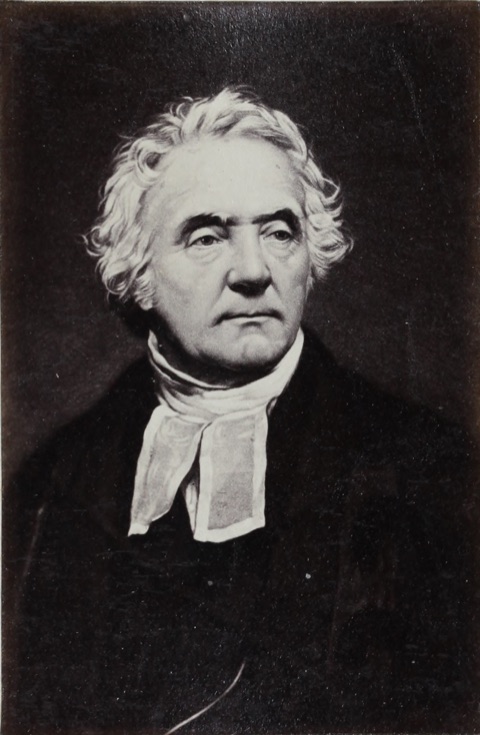
About the author
Thomas Chalmers
Thomas Chalmers (1780 to 1847 AD) was a Scottish minister, mathematician and political economist, born at Anstruther in Fife. A period of serious illness between 1809 and 1811, while he was minister of Kilmany, turned him toward evangelical religion. Called to the Tron Church in Glasgow in 1815, he became one of the most sought-after preachers in Britain. In 1819 he took charge of the new parish of St John's, in one of Glasgow's poorest districts, where he set out to relieve poverty through the church's own visitation and voluntary giving. He later held chairs at St Andrews and Edinburgh, and in 1843 he led the Disruption that created the Free Church of Scotland, serving as its first Moderator. His sermon The Expulsive Power of a New Affection is also on this site.
More in the free library
All 400+ books →
A Learned Discourse of Justification
Richard Hooker · Free
 Audio
A Treatise on Good Works
Martin Luther · Free
The Apology of the Church of England
John Jewel · Free
Commentary on Galatians
Martin Luther · Free

The Covenant of Life Opened
Samuel Rutherford · Free

De Regno Christi
Martin Bucer · Free