Volume 2 of 3 · Full text in modern English · Free PDF/EPUB
The Christian and Civic Economy of Large Towns: Volume 2 in Modern English
This volume
- Vol. 1 · Churches, Schools and Church Officers
- Vol. 2 · Pauperism and the Poor Laws
- Vol. 3 · Wages, Savings and Schools
What is in The Christian and Civic Economy of Large Towns, Volume 2?
The Christian and Civic Economy of Large Towns is Thomas Chalmers's account and defense of his Glasgow parish work, issued in three volumes between 1821 and 1826. This second volume, first published in 1823, holds chapters 9 to 16, where the work turns from church organization to the poor laws. Chapter 9 separates the Christian good a parish church does from its civic good, and Chapter 10 distinguishes poverty from pauperism. Chapters 11 to 13 treat Scotland: local rather than citywide management of relief, the experiment in St. John's parish, Glasgow, and the faults that remain even in voluntary Scottish relief. Chapters 14 to 16 turn to England, arguing for ending legal relief for new applicants, setting out the act Parliament should pass, and advising parish vestries on the change. This edition contains all eight chapters, with the letters, testimonies and tables of figures Chalmers gathered in England.
Read the full summary of Volume 2Show less
The Christian and Civic Economy of Large Towns: Volume 2 holds chapters 9 to 16 of Thomas Chalmers's work, first published in 1823. It argues that compulsory poor relief weakens thrift, family duty and neighborly kindness, reports how St. John's parish in Glasgow met its poor from church collections alone, and proposes a gradual, parish-by-parish end to England's poor laws.
How the argument unfolds
- 01
Christian Ministry and Civic Life. Parish seats should go first to parishioners, and the reformer must tell natural difficulties in the people from political difficulties in the governing bodies.
- 02
Christian Ministry and Poor Relief. Poverty will always exist, but pauperism, relief by legal right, dries up the thrift and sympathy that would otherwise meet need.
- 03
Local Management of Poor Relief. A citywide relief board corrupts both givers and receivers; each parish should manage its own new cases from its own collections.
- 04
Glasgow's Poor Relief Experiment. St. John's deacons met every new case from a small evening collection, and other Glasgow parishes began to separate from the Town Hospital.
- 05
The Limits of Scottish Poor Relief. The unassessed Gorbals shows that relief can be small, yet even church-door charity misleads people and should be turned toward special afflictions.
- 06
Ending Legal Poor Relief in England. English evidence shows the natural safeguards still active and strict management only a passing check, so legal relief should end for new applicants.
- 07
Parliament's Role in Poor Relief Reform. A permissive general act would let consenting parishes end legal relief, under the eye of commissioners, and widen the way as trials succeed.
- 08
Parish Management of Poor Relief Reform. A vestry facing only new applicants will find its work light, its funds in surplus and its people content.
Notable images & quotes
- The irrigation of Egypt. As fields along the Nile are furrowed before the flood, parishes are subdivided before the Spirit descends: “We are therefore preparing a proper spiritual irrigation when we arrange for the greatest possible number of people to come into the broadest and most frequent contact with that word and those ordinances.”
- The little streams. In poor neighborhoods food, fuel and service pass from house to house, and “The numerous small rivulets arising within it do more to refresh its most desolate places than the broad streams that might be sent from the great reservoir of pauperism.”
- The outer court and the inner temple. Glasgow's Kirk Sessions admitted the poor at one door and passed them to the Town Hospital at the other: “Through it, occupants of the outer court advanced to the inner temple.”
- Malaria in Italy. Pauperism works as a slow poison and a mildew on family virtue: “Like malaria in Italy, it has now spread and grown so virulent that people begin to contemplate it with the awe of some great approaching desolation.”
- The lodger and the stagecoach. A deacon with no fund to draw on got a coach owner to carry a sick young man inside for an outside fare, and the neighbors' subscription paid the rest of his way home to his relatives.
Key themes
- Christian good and civic good. A parish church may convert only a few, but its churchgoing, schools and visits improve the habits of the many, which is reason enough for magistrates to support it.
- Nature against legislation. Thrift, family affection and neighborly sympathy would meet need if law did not displace them: “Never did legislation usurp nature’s powers more harmfully than when, raising a prop for charity, it pierced her side, destroying what it intended to sustain.”
- Locality. Small, independent districts bring officers close to families, reveal their real resources, and give each Session a reason to spend with care.
- Charity as gift, not right. A claimed right sets rich and poor against one another; when relief is asked rather than demanded, kindness and gratitude return to both sides.
Why read it today
It is a working minister's case against compulsory poor relief, argued from his own parish books. Chalmers gives the collections, the costs and the procedure his deacons followed, and he answers each objection his opponents raised, from cruelty to secret bribery of the poor.
It gathers a wide record of English poor relief in the years after Waterloo. Letters from overseers, rectors and magistrates in Manchester, Spitalfields, Bath, Darlaston, Shaftesbury and many smaller parishes describe workhouses, savings banks, soup kitchens and the published lists of paupers.
It shows a Reformed minister treating the parish as the place where church and civic life meet. Chalmers asks the rich to visit the poor as friends rather than almsgivers, and expects the best vestry member to be the one who leaves the vestry with nothing to do.
Reader questions (10)Hide the questions
Questions about The Christian and Civic Economy of Large Towns: Volume 2
Is there a modern English version of The Christian and Civic Economy of Large Towns: Volume 2?
Yes. This is The Christian and Civic Economy of Large Towns: Volume 2 by Thomas Chalmers in modern English. The language is modernized and the author's order and argument are kept. The full modernized text is free to read on this page.
Can I read The Christian and Civic Economy of Large Towns: Volume 2 online for free?
Yes. The complete text of this modern English edition is on this page, with no sign-up or paywall.
Is there a free PDF of The Christian and Civic Economy of Large Towns: Volume 2?
Yes. The PDF and EPUB of this edition are free with an Updated Works account. Sign in with Google or an email link; no card is needed.
What is The Christian and Civic Economy of Large Towns: Volume 2 by Thomas Chalmers about?
It argues that relief of the poor by legal assessment does more harm than good, and that a city parish, organized in small districts and relying on church collections, can support its own poor. Chalmers proves the claim from his Glasgow parish and then proposes how England could leave its poor laws behind.
How does this volume relate to the rest of the work?
Volume 1 (1821) holds chapters 1 to 8 on church organization in towns, to which this volume often refers back, as with the Saltmarket Sabbath school of Chapter 2. Volume 2 holds chapters 9 to 16, the full treatment of pauperism. Volume 3 (1826) holds chapters 17 to 24.
What does Chalmers mean by pauperism?
A poor person lacks the means to support himself; a pauper has that lack supplied from a public fund raised by law. Poverty, he holds, will never vanish, but pauperism can: “Yet we consider it both desirable and practicable to bring pauperism to an end.”
What happened at St. John's parish?
Applications for relief fell to fewer than one for every five made before. By Chapter 16, fifteen of its paupers had moved to other parishes and twenty-eight had moved in, and its yearly relief cost a little above £300 against about £1,200 to £1,400 under the city's ordinary management.
Did Chalmers want to abolish Scotland's church-door relief?
No. He holds that even voluntary relief raises false hopes, but he would keep it where long established and make it harmless by honest administration: “We merely tolerate it as the lesser of two evils.”
How did he propose to end the English poor laws?
Not by a single national measure. A few parishes with nearly unanimous consent would try the new system first, and others would follow as their success became known: “We do not want England cast adrift on an untried hypothesis. We want her to go to school, as she needs to do.”
What should a parish do with surplus relief funds?
Use them where relief cannot multiply its own cases: for the blind, the deaf and the mentally ill, for a parish surgeon or dispensary, and above all for schools. St. John's placed £500 with the city to pay a schoolmaster's salary permanently.
The Christian and Civic Economy of Large Towns: Volume 2 in Modern English · Full text
9. Christian Ministry and Civic Life
Before proceeding further, it may help to review briefly the principles already explained concerning a sound church system for large towns. We can then clarify how good Christian organization contributes to good civic organization, while distinguishing what belongs specifically to each.
Experience establishes a connection between the lack of Christianity among a people and the lack of certain human arrangements that support its growth and preservation. One especially obvious deficiency is that city populations have been allowed to outgrow the means of their religious instruction. In many towns throughout our empire, the established church has not provided church seating for even a tenth of the inhabitants. Left to seek Christianity for themselves, the inhabitants have supplied room for only another tenth through chapels and meetinghouses. Their failure to make up this enormous deficiency shows how weak the human mind’s natural demand for Christianity is.
Under these circumstances, the vast majority must remain entirely outside the reach of Christian ministry and Christian ordinances. They have settled into a mass of heathenism that, to ordinary observation, seems beyond recovery. A widespread feeling of helplessness and despair surrounds the subject, as though the immorality and ungodliness of cities were as unconquerable as physical necessity itself. Many skeptical observers therefore rank any serious, sustained effort to confront this grievous evil with the adventures of a Don Quixote: an expedition into a wild region to tame a many-headed monster that can scarcely be softened and will certainly never be subdued.
To make this recovery seem still more hopeless, we cannot deny that even if enough churches were built immediately to accommodate all our city families, the change would have almost no perceptible effect on their established habits. The sound of a bell will not persuade them to abandon the degrading or profane pleasures with which they fill the day of rest, turning it into a day of riot and lawless indulgence. New churches might be built, and, if well staffed, they might be filled. But their congregations would consist chiefly of people transferring from old churches, rather than large numbers drawn from a population that still remains unmoved.
Thus the one expedient so much discussed, and lately considered even by the nation’s statesmen, may by itself be utterly powerless to make any appreciable advance against our people’s heathenism. This only confirms the general hopelessness and gives an apparent justification for the contempt with which philanthropic plans are often received. The more secular and sober-minded among our citizens are satisfied with things as they are. They do not want their repose disturbed by any suggestion, or even demonstration, of what things ought to be.
This sluggishness toward Christianity has led us to consider the difference between leaving people to seek it for themselves and actively approaching them with its ministry and instruction. We think the advantages of a local over a general Sunday school illustrate that difference well. A general Sunday school chiefly attracts children whose parents already favor the instruction of the gospel. Its teacher may therefore help preserve Christianity where it exists, without reviving it where it does not.
The teacher of a local Sunday school, by contrast, regards all the families within an assigned district as his responsibility. Through moral persuasion alone, he finds that he can bring nearly all their children into the school. Instead of merely attracting minds already somewhat sympathetic to religion, he actively reaches minds indifferent or even hostile to it. The encouraging result is that attendance among the young under this local system is more than three times what it was under the general system. This shows how a population might have been preserved from decline had the method been adopted sooner, and how it might still be reclaimed if the method is adopted now.
What is true of Sunday schools for the young is also true of churches for the whole population. When a church draws its congregation from the city at large, attraction alone, and a feeble attraction at that, secures attendance. A minister cannot take responsibility for the entire city. He cannot know all its families or give them the weekday attention that might induce them to attend his church on Sunday.
Meanwhile, the population increases beyond the seating available in churches. Many families fall entirely outside the knowledge and care of any minister. Without the habit of churchgoing, they also lack any taste for it. The number of places of worship is therefore far below the people’s needs, while their own demand for new places is equally far below those needs. If a sudden patriotic effort caused many new churches to rise before the citizens' eyes, the humiliating result would be empty buildings. The citizens would remain fixed in their long-established habits of nonattendance, and the whole undertaking would be branded rash and powerless.
For this reason, we consider it indispensable to restoring Christian habits in our cities that churches receive the same advantage of locality that has brought Sunday schools so effectively into contact with the whole population. Each established church should be connected as exclusively with its parish as a local Sunday school is with its assigned district. The minister’s weekday attention should not be spread across the whole city, where it is sure to become languid, dispirited, and ineffective. It should be concentrated, and repeated as frequently as possible, within the smaller, more manageable district over which his supervision has so far been little more than nominal.
If he were allowed to fill his church from his parish, as far as the parish was willing to supply hearers, he would soon enter a closer and more affectionate relationship with its families than all his other efforts could achieve. Having a thousand hearers in his parish instead of a hundred would give him an influence useful for the best Christian purposes. Alongside these, it would serve the best civic and economic purposes that patriotism has ever contemplated. All the gentle, kindly, civilizing influences of a parish system could then operate in the dark and crowded recesses of a city. Little is understood of how much the severing of minister from parish has contributed to a decline that now seems hopeless and irreversible. The system of renting seats that has produced this cruel separation ought to be abandoned at once.
But we must attend carefully to how the change is made. Replacing a general congregation with a local one should not mean immediately dismissing everyone who lives outside the parish and offering the empty seats to the parishioners. Besides doing violence to individual feelings, this would be unwise even for the purpose it was intended to accomplish. We must reckon with the deeply rooted estrangement from religious ordinances among those who have long lived comfortably without them. If a thousand seats in a church serving a working-class parish were emptied to accommodate its inhabitants, probably no more than a hundred would be requested.
Providing room is not enough; a new habit must be formed. We would positively waste the accommodation we already possess if pews were emptied faster than people came forward to ask for them. Parish attendance can therefore replace a general attendance only gradually. No gradual method seems better suited to the purpose than to give parishioners preference for every vacancy created by the death or departure of a present occupant. This offends no one who already has a seat. In a congregation of fifteen hundred, vacancies would arise at no more than about a hundred a year. That would not exceed the rate at which an ordinary city minister’s work and attention within his assigned parish could stimulate demand.
Every new letting would strengthen his interest in his own district by increasing the number of Sunday hearers who lived there. The reciprocal ties between him and his people would grow closer every day. Eventually, apart from the size of his population, the relationship could become as affectionate on his side and as cordial on theirs as that between a worthy country minister and the simple inhabitants of his parish. The present system of renting seats can never achieve this. Nor would sudden, irregular changes in the distribution of seats hasten it. Under the recommended method, however, we have no doubt that the full effect would be achieved quietly and surely in less than a generation, even though no striking or visible result could be produced in a single year.
The arrangement that enables a local Sunday school teacher to secure full attendance among his district’s children could give the same power to a city minister. He would not suddenly bring his whole population into his church, since he must contend with the fixed habits of adult life. But he would do so gradually and surely. Let the people know that they have a right of preference for vacant seats in their own church, and he will make steady progress toward a Sunday congregation drawn chiefly from the residents of his own field of labor.
Within a parish’s limited district, he has ample opportunity to become known among its families. His weekday attentions can readily bring both himself and the work of his calling to their notice. Through the service he can give to the young, the sick, and the dying, he can earn their gratitude and naturally become their preferred minister on Sundays. A good Sunday school system also provides a ready source of new members for his congregation. As pupils approach adulthood and leave the schools he has provided, many will naturally enter the church where he preaches.
By concentrating his weekday attention on a parish, the minister can thus recruit and sustain his congregation with a facility unavailable to a minister loosely connected with the whole city. The latter can rely only on the uncultivated demand of people largely beyond his reach, with whom he can never establish close and repeated contact through ministry in their homes.
We press this point because we know no other way to create a demand for additional churches proportionate to the moral and religious needs of our population. Under the present system, population growth alone may create enough demand in our medium-sized towns to secure one or two additional churches in half a century. Yet during that same period, enough new families may have arrived to fill a dozen. Thus immorality and irreligion rapidly outstrip every measure taken against them. However unnoticed the cause has been, these measures have lost their effectiveness through the complete neglect of locality in the organization of city churches and parishes.
Only the support and goodwill of magistrates may make it possible to provide churches, that indispensable accommodation for the people. But a demand for this accommodation is equally indispensable. That can be provided only through the diligent work of ministers who enjoy every advantage of concentrated parish care.
Give such a minister the power to meet this demand as vacancies arise. Let him assure his people that at the next letting, available seats will be theirs, and theirs alone. Spare both him and them the discouragement of seeing those seats given to outsiders through the favoritism of city administrators. Under this improved system, very ordinary exertion could create enough demand not merely to fill the existing church but to press beyond its capacity.
Demand would then make itself clear. The intensity of competition for seats would provide a distinct and reliable indication of when new buildings could safely be undertaken. Each minister might create a demand far beyond his own church’s capacity, supplying hearers for future churches. Their united voice would clearly indicate when old parishes should be divided and new ones formed from portions of neighboring parishes.
Without this expedient, we fear that new churches will trail slowly behind a much more rapidly increasing population. Year after year, the means of checking vice and immorality will diminish in proportion to the people they must serve. As we have often maintained, Christian instruction for spiritual needs differs from a commodity supplied for bodily needs. In the latter case, no strenuous effort is needed to create demand. Once the commodity is offered, we may be sure that it will be sought and used as much as serves humanity’s interests.
Christian instruction is very different. Creating a demand for it is as difficult as, or more difficult than, providing the supply. We believe that substantially more Sunday accommodation will be provided only if the established clergy maintain an intensely local ministry within their respective parishes, instead of dispersing their influence across the whole city. Only in this way will much more accommodation be either sought or valued.
Of all the proposals that could be offered to city administrators for improving Christian organization in large towns, we consider this method of letting parish seats by far the most important. Their compliance would be the best contribution they could make to the cause. Yet experience, as well as apprehension, prevents us from being very hopeful either of their speedy adoption of the method or of their faithful and persistent execution of it.
An extraordinary force is needed to alter the routine of municipal business. Nowhere is the supremacy of custom more devoutly honored than in the offices of city clerks and treasurers. There custom occupies a secure and impregnable stronghold, ruling with equal disregard for forgotten promises and misunderstood principles.
The proposed procedure is not difficult. Nothing could seem more straightforward than preferring applications from parishioners to those from outsiders when vacant seats are assigned. If some striking or visible result could emerge soon enough, we would be less doubtful of ready compliance. If the ultimate benefit could be brought immediately before our civic officials' eyes, forcing itself on their attention, they would probably adhere more punctually to this great rule of fairness to parishioners.
But the rule works gradually. Asked to look half a generation ahead for its full and beneficial effect, officials regard it as speculation rather than something they can observe. Arguments on its behalf then carry little weight against the mighty power of established practice and authority. We fear that, despite all the advantages of locality naturally belonging to an established church, towns may be slow to realize them fully. Meanwhile, unordained or dissenting religious teachers may assign themselves the equivalent of parishes and attain a degree of usefulness that our regular clergy, under the existing methods, will pursue in vain.
Suppose a hundred applications for seats come from families in a poor city parish, while another hundred come from families in a wealthier and more fashionable part of town. We scarcely know how strongly to condemn a policy that rejects the former and accepts the latter. The appearance of such demand among working people is precisely the beginning of a process that ought, above all, to be encouraged. Neither serious principle nor enlightened patriotism could choose a worthier object than opening and multiplying every possible opportunity for this best of popular movements.
News of the first year’s success would raise expectations among neighbors for the second year’s vacancies. The process would advance as a new taste spread into a new habit, in the very part of society now so grievously overrun by political bitterness and personal worthlessness. Demand for parish seats among artisans and laborers is an initial movement toward good. Everyone with responsibility for public affairs should welcome it gladly and respond without delay.
Instead, this movement may be discouraged and driven back into its former inactivity. The hand that should have fostered the approach may repel it humiliatingly, making the rejection as offensive as possible by preferring a rich outsider to a poor parishioner. Repeated failure may eventually convince the parishioners that the attempt is hopeless, until they cease to make it. What does this show? Philanthropy’s most promising plans may be defeated by something other than the natural obstacles in their path. Its dearest interests may lie at the disposal of men who have neither the heart to care about a generous undertaking nor the ability to appreciate it.
It is right to mention that Glasgow’s public officials are attentive to every consideration of public welfare. There the rule of giving parishioners preference for seats has effectively been conceded to at least one parish. At the beginning of its operation, however, the old habits of those responsible for carrying out the business may remain somewhat beyond control for a time.
A town’s Christian organization is much better served when fairness to parishioners disappoints wealthy people rather than laborers in the letting of seats. Disappointed wealthy applicants create an effective interest in additional churches. The inconvenience of limited accommodation then falls on those best able to remedy and enlarge it. These excluded wealthy people can organize a powerful request for another church. Preferring the poor to the wealthy thus leads directly toward increasing church provision in large cities.
Rejecting the poor in favor of the wealthy reverses this process. It makes permanent outcasts of those who cannot help themselves. It discourages the entire class to which they belong into an apathy from which they cannot recover. It extinguishes the first hopeful signs of revival among people whose estrangement from the sanctity of Sunday observance has such deadly consequences for the community. It stifles the emerging voice of the poorer people themselves. Had that voice been heard, a healing influence would have reached them and restored the great foundation of a country’s prosperity and peace: the virtue of its people. Thus the very men who are first to tremble at outbreaks of radicalism may be most deeply guilty of sustaining its underlying causes. They withhold the best counteracting influence against the gathering elements of a fiery and destructive upheaval.
Of all the real or imagined offenses against the people’s rights, this one brings the surest retaliation. Its most serious effect is less the immediate growth of discontent than the more firmly established irreligion of the city population. It adds at least one real grievance to the previous list of imaginary ones. Its blatant preference for the wealthy person’s wishes over the poor person’s rightful demand supplies a genuine provocation and lends plausibility to all the others.
Even this, however, is not the chief injury inflicted by the cruel and unfeeling policy we have exposed. Its gravest effect is to perpetuate the corruption of the multitude, even when they have shown a willingness to enter the path toward both peace and righteousness.
The importance of letting seats in itself justifies the extensive argument we have devoted to it. But it also illustrates a distinction closely relevant to many other questions concerning the Christian and civic organization of towns. The reader should grasp this distinction and keep it in mind, especially throughout our intended discussions of compulsory poor relief. It is the difference between what we may call a natural difficulty and a political difficulty in the way of a reform.
No natural difficulty prevents the benefits that would follow from a proper arrangement for letting seats. A political difficulty, however, obstructs the introduction and maintenance of the arrangement itself. Suppose a rule gives parishioners preference for every seat that becomes vacant in their own church, and suppose that rule is faithfully observed. In the nature of things, nothing then prevents a very great improvement in the organization of our cities. Little more is needed than to wait for the new method to work.
Vacancies will arise naturally through deaths and departures. Other things being equal, proximity, generally reinforced by other ties to their minister, will lead parishioners to prefer their own church to another. If the exceptional attractions of one or more city ministers disturb this preference, those attractions will operate within each minister’s parish as well as outside it. They will produce overwhelming competition from his own parishioners for his seats, making it all the more certain that the popular minister will eventually have a parish congregation.
In the ordinary course of things, he will reach that result sooner or later. Under such a system, each city minister would have a compact and concentrated influence over his own part of the city. That influence would increase beyond calculation because so many families connected with him through the week would now regularly hear him on Sundays. Locality would enable him to exercise it with ten times the ease and effect possible among the hearers of a general congregation.
Artificial obstacles may prevent the arrangement from being established, but no natural obstacles stand in its way. Once it is established and practiced, the nature of both individuals and society supplies nothing but opportunities and advantages in its favor. With no more exertion than ordinary people usually possess, its benefits would be incalculable.
The natural course of life would gradually empty the parish church of its present occupants. Parishioners would be more inclined than outsiders to fill the vacancies. A clergyman would naturally take a much livelier interest in a parish containing a thousand of his hearers than in one containing only a hundred, and he would gain a much more useful influence over it. He would be prompted to more willing activity in a district crowded with members of his congregation. Even if his natural disposition were toward idleness rather than work, as is undoubtedly true in some cases, the improved arrangement would make whatever slight weekday attention he chose to give ten times more effective than it can be under the existing system.
There are therefore no natural difficulties, meaning difficulties inherent in the people or affairs being managed, preventing the desired result. The natural tendencies are instead favorable. Whatever obstacles confront us here are artificial or political. They belong to the organization of the managing machinery rather than the nature of what it manages; to the agents directing the work rather than the people on whom they are to act.
In this instance, the difficulty lies outside the parish where we want the proposed arrangement introduced. It lies in the mysteries of city business and city committees. This is a political rather than a natural difficulty. A kind of inertia makes it exceedingly hard to divert a municipal body from its old course. The contest takes place among the heads and rulers of the population rather than among the population itself. Nearly all the formidable resistance comes from the rust and sluggishness of a ponderous city corporation. It stubbornly continues in its accustomed orbit, while its subordinate committees continue just as stubbornly in theirs.
The way to overcome this resistance is undoubtedly to persuade the living individuals who now administer these affairs. Yet we intend no disrespect to them. At the very least, their abilities must stand at the ordinary human level, and perhaps no class of men has better grounds for a sensitive dislike and suspicion of innovation. They are constantly assailed from every side with advice and criticism. Many crude and undigested speculations must be submitted to them. Separating valuable proposals from worthless ones must itself impose a heavy burden on men already overwhelmed with work. It is unsurprising that any interruption of their customary routine should seem harassing and vexatious.
The public scarcely recognizes how much allowance is due on these grounds to men who surrender so much time and convenience for the community’s welfare. We have pursued these observations to impress a distinction of the greatest importance, rather than to bring an accusation.
A natural difficulty arises in the direct work of management, after we have actually gained access to the field in the way we desire. A political difficulty arises before we obtain that access, generally on the way to it. It may be so intractable that the operation expected to produce a good result is never begun. The natural difficulty belongs to what is to be managed, obstructing the path between operation and result. The political difficulty belongs to the existing managers, preceding the operation and often preventing it altogether.
The rule for letting seats would certainly produce the result we have described and anticipated. Among private individuals in our parishes, natural tendencies favor that consequence rather than obstruct it. Among public officials in our corporations, however, a strong political obstacle stands in the way of establishing and consistently observing the rule.
The truth and importance of this distinction will become clearer when we discuss compulsory poor relief. Nearly all Europe, apart from England, shows that a population can maintain itself with scarcely a single person perishing from want, and without a legal or compulsory provision for the poor. No natural difficulty prevents this. But such a provision has now been established in this country. Before any step can be taken toward its abolition, the great, unwieldy corporation of the state must be moved. Subordinate administrative bodies in every parish have also settled into the stubbornness of long-established practice.
A host of political obstacles must therefore be overcome. They stand in the way of actually leaving the people to their own resources, rather than in the way of demonstrating how surely the people, once left to themselves, will find the path to comfort and independence. We think no natural difficulty would prevent the experiment from succeeding if tried. But many political difficulties prevent its being tried at all.
We consider it practicable to return any parish, urban or rural, to the old arrangements of a Scottish parish. Later we will explain in greater detail the method on which this claim rests. In the parish itself, the actual field of the experiment, nothing prevents its final and expected success. The struggle to obtain the arrangement is with our legislature and municipalities. It is not with the population to make the arrangement succeed.
The strongest resistance comes from the inner deliberative chambers of the undertaking, rather than from the field outside. There we must attempt to dismantle our existing artificial system, overcome the dislikes and prejudices of officials hardened by routine, and break through the nearly impregnable front with which clerks, committee chairs, and committee members of an old institution resist every novelty.
The battle is with the problem’s political difficulties rather than its natural ones. It concerns the tendencies of human nature displayed in public discussion and debate when the experiment is proposed, rather than the laws of human nature operating in the parish where the experiment is made. In abolishing legally enforced charity, the hardest conflict will be with the argumentative pride, fixed opinions, and other political feelings and powers of the higher classes, rather than with the natural poverty of the lower.
We maintain that nothing in the people’s condition prevents the abolition of all legal and compulsory poor relief. A powerful initial obstacle does exist in our laws, courts, and established practices. In resolving the question of public charity, recipients will prove less difficult to manage than lawmakers and administrators. There is a method by which public charity among the common people could be abolished almost without difficulty. But before we can put it into practice, the consent of the governing classes must be obtained. Securing permission and freedom to use the method is a greater achievement than making it succeed. The great obstacle to removing this grievous national disorder lies among the commonwealth’s governing classes, rather than among its ordinary people.
We must also emphasize another distinction: the difference between the Christian benefit and the civic benefit that a good church system brings to a city population.
We would not call anything a Christian benefit to an individual unless it contributes either to securing his inheritance in heaven or to preparing him for it. Before our work makes him better in the Christian sense, a change of principle and character must occur in his soul. Without it, he will remain forever excluded from the dwellings of a blessed eternity. We need not dogmatize here about the precise nature of that change. We need only suppose that some change must take place in every human heart before its possessor passes from being an heir of condemnation to an heir of glorious immortality.
No benefit short of this deserves the name of a Christian benefit. We would measure the amount of Christian good done among a population by the number of individuals who each receive this particular benefit.
The arrangements we have suggested would undoubtedly promote this good. Parishioners would attend their churches in full numbers under ministers they willingly hear. The ministers' work would become far more effective through the closer parish relationship we recommend. Yet we must acknowledge that even congregations considered highly prosperous and flourishing may contain very few actual converts in proportion to their steady and interested hearers. Within the whole congregation, the converted may form a very little flock, a distinct people among the many who remain sunk in nature’s lethargy and unconcern.
After a long ministry of diligent and earnest work, even a most attentive pastor may leave behind only a small fraction of his parishioners brought through his efforts to the genuine faith and discipleship of Christianity. Those who measure Christianity by the New Testament’s high standard will most readily admit this. They require the lofty and spiritual characteristics so common in the early churches, however rarely seen today, as evidence of real conversion. They demand devotion of heart as well as decency of outward observance in those preparing for eternity. No change of habit satisfies them unless it results from thorough regeneration, sanctifying the affections as well as reforming outward conduct, and making a person a new creature in Jesus Christ our Lord.
Suppose, then, that spiritual renewal into the feelings and principles of distinctive Christianity is so exceedingly rare. Suppose it occurs only at distant intervals to cheer and reward even our most devoted clergymen. Suppose that even under the best-attended ministry and the most active use of powerful persuasion, many are called but few are converted. This brings us back to the conclusion that churches may be built, parishes organized, and the wisest and most suitable arrangements adopted, while the resulting Christian good reaches only a minute proportion of those for whom it is attempted. A small handful from the otherwise untouched mass may be the entire harvest. Yet we are asked to expand the machinery producing it until that machinery reaches the whole population.
Both enlightened Christians and purely secular philanthropists may therefore think we greatly overestimate what a proper Christian organization in cities can achieve. The former know how scarce saving faith is. The latter can see how little the actual holiness of the gospel spreads through the general body of a congregation, even when its ordinances are administered closely and diligently.
The Christians are thoroughly convinced, and we believe rightly so, that no human device can convert a soul without a special and sanctifying influence from above. The secular philanthropists may feel that if all we gain is some mysterious, supernatural influence descending from heaven on a tiny portion of the population, the labor of creating so vast a spiritual organization has been wasted. To them, the object will seem inadequate, prized only by a few incomprehensible fanatics with whom they can neither sympathize nor associate.
We refer the first of these two classes to Chapter 1 of this work. There we attempted to demonstrate both the benefit and the necessity of earthly arrangements for distributing the living water, the spiritual influence that comes from above. We need only remind them further that even if these arrangements rescue just a few more human beings from the common ruin of our nature and restore them to a blessed immortality, they are the last people from whom we should expect a complaint that the result is insufficient for the means or labor spent on it.
Besides, the enlarged means of Christian instruction we recommend may be presumed to produce at least as great a proportion of additional Christianity as the present means actually produce. Would these Christians abandon the means already in use because so little is produced? Would they discontinue the expense of all existing churches because, as we have reason to fear, only a distressingly small minority in almost every church come under the gospel’s saving power and are prepared for paradise through spiritual education?
Whenever the Holy Ghost descends more abundantly upon us, that influence will pass through all the channels prepared for it throughout the land. It will enter pulpits, spread through congregations, and travel most readily along the freest and most frequently used paths of communication opened between ministers and the people among whom they work. Subdividing parishes multiplies these paths. Localizing parish ministry makes them shorter, more convenient, and more accessible.
We do not set aside the doctrine of spiritual influence. We believe it will be the primary and essential agent in the great moral regeneration awaiting humanity. But consider the irrigation of Egypt: reservoirs are constructed, furrows drawn, and every field along the Nile prepared for the coming flood. In the same way, we know that the Spirit enters the human heart through the word and ordinances of the gospel. We are therefore preparing a proper spiritual irrigation when we arrange for the greatest possible number of people to come into the broadest and most frequent contact with that word and those ordinances.
At present, however, we are still more concerned to win the second class, our purely civic and political philanthropists, to the cause of a sound church system for cities. Our argument is that such a system produces the civic benefit they chiefly value both earlier and far more widely than the Christian benefit about which, we fear, they care much less.
The fact can be explained, but for now we have time only to state it. The preacher whose teaching is best suited to converting the few is also best suited to gathering the many. The one whose ministry most powerfully brings a saving influence to the very little flock is also the most popular in attracting a multitude to hear him regularly. In other words, the minister best qualified for the Christian good of turning some from darkness to spiritual light is also best qualified for the civic good of turning many from Sunday riot and irreligion to at least a personal attendance at Christian worship.
Why do the lessons of an orthodox minister draw a crowd around his pulpit, while perhaps reaching only a small proportion of them with an effective Christian influence? This is certainly an interesting question. Without resolving it, we would make a fair practical use of the undoubted fact on which it rests. We ask philanthropists to distinguish between the Christian and the civic good that can be done among a population.
Christian good reaches only the select few who have been reclaimed from love of the world to love of its Maker and spiritual service to him. Civic good may reach the whole crowded congregation, drawing them from the heathen practices of their former lives to the decencies of Sunday dress and observance. An influence can humanize people while falling far short of making them Christians. A general population can be trained to sober habits by the very process that brings a few of its members to spirituality of heart.
The practice of churchgoing would itself make society on earth more orderly and peaceful, even if it prepared only a very few for heaven. By appointing a minister whom the people willingly hear, city magistrates can therefore confer an extensive and almost immediate temporal benefit on the community. This remains true even if their chosen minister must work strenuously for years to bring a Christian blessing to only a very small number of families.
The fact is melancholy to those absorbed in death, judgment, and the concerns of the imperishable soul. But we are addressing those occupied with the accommodations of this world’s fleeting journey. As rulers of a town, they want quiet citizens more than holy, regenerated believers. They wish people to be moral enough to be manageable, whether or not they become spiritual enough for heaven. At all events, they want a community free from the immorality that produces earthly turbulence, however far its vast majority may fall short of the piety that leads to triumph and a rich inheritance in paradise.
We maintain that, on the higher ground of Christian usefulness, a proper church system may reclaim only tens or fifties from evil to good among the teeming multitudes of a city parish. But alongside this, a secondary influence reclaims thousands and tens of thousands from evil to good on the lower ground of civic usefulness.
To estimate the Christian good done to someone made pious through a devoted clergyman’s work, we need only consider the difference between a ruined and a blessed eternity. To estimate the civic good done to a town, we must consider something else. Suppose most of its people were formerly estranged from Christian ordinances, but now attend them because churches have multiplied and ministers have been well chosen. We must think about the many substantial influences that this habit necessarily brings to their general character.
Picture a working-class family trained, perhaps only outwardly, to observe a Christian Sunday regularly. They respectably occupy their own pew, presenting a family group of well-conducted parents and well-disciplined children. Each has exchanged ordinary weekday clothing for suitable Sunday dress, supplied through thrift and good management. They regularly hear a minister whose lessons, even if they do not convey Christianity’s vital spirit, will at least impart something of its sober moral tone, perhaps without their noticing it. Their taste for the decencies of steady citizenship will be strengthened.
Can we not see in such a family’s appearance the signs of virtue, order, and industry through the week? Can we not see a clear superiority in these respects over another family that spends Sunday recklessly and without restraint? Families that rightly observe Sunday certainly do not supply the nourishment on which popular violence feeds. Such a habit has no alliance with dissipation, idleness, or discontent. If the right choice of ministers merely brought the lower classes into much more general attendance at divine worship, these secondary virtues would spread far more readily and widely than thorough conversion. The civic good would be incalculable.
We have tried to show that pure Christianity is also popular Christianity. Suppose it has an initial attraction that draws people to its ministry far beyond its final effect in turning children of this world into children of light. Suppose also that regular Sunday observance is connected with all the other habits of sober and peaceful citizenship. Even if the great majority of a congregation so attracted and retained remain people of this world, the virtue and peace of the world are greatly advanced by the more superficial transformation they have undergone.
Every appointment of a minister whom the people willingly hear may therefore add only a little to the kingdom of heaven, yet add greatly to the qualities and accomplishments of good citizenship on earth. Our municipal rulers could show the wisdom of their policy in no more effective way. Nothing could do more to improve a vicious and disorderly population than appointing, as vacancies arise, Christian ministers suited to the tastes of working people. Their overflowing congregations provide the most authentic and tangible evidence of that suitability.
The distinction between the Christian and civic good done to a community would be clearer still if the minister concentrated his work within a defined district. Going from house to house on weekday visits, he would be greeted at every turn with affectionate recognition by members of his now local congregation. He might rarely meet, throughout this work, with those who are heirs to a blessed eternity and look forward to it. Yet surely we can see that beyond this small, distinct circle, he carries a humanizing influence that may be felt in almost every home.
For someone whose heart is occupied with the weight and reality of eternal things, it is sad to contemplate that a mere handful of converts from so large a population may be the entire fruit of a long and laborious ministry. Yet experience shows that, in immediate and temporal good, an affectionate pastor’s recurring presence may appreciably improve the condition of the whole population.
His primary motive in going among his people is their eternal good. When that high purpose is occasionally fulfilled, he finds encouragement and reward. But he distributes another benefit far more widely among the families. Though secondary and subordinate in his own eyes, it is enough to mark him out to every civic and political ruler as by far the community’s most useful servant.
A visit from someone of higher station has a substantial, though unnoticed, attraction. His attentions are felt as a compliment. They awaken an emotion directly opposed to the contempt for the higher classes now so alarmingly prevalent among our working people. A poor man’s earthly morality genuinely benefits from knowing the friendly tie that joins him in an ever-growing acquaintance with his parish minister. Even the effort people make to receive him respectably, in the cleanliness of their homes and their children’s clothing, deserves consideration when we estimate the gentle and beneficial influence of his frequent visits throughout his assigned district.
In these and many other ways, the relationship between a local clergyman and the families under his care produces a healthy, effective, and widespread influence. Its effect on an individual may fall far short of the Christian good that ends in everlasting blessedness. But its reach extends through the whole body of parishioners and produces an important earthly or civic good: a population with better habits.
At the very least, this influence reduces their immorality, quiets their turbulence, softens their political bitterness, and encourages a kindly union among the different classes. Even if it does not secure their eternity, it can shed comfort and virtue over the journey that leads to it.
A well-chosen body of elders helps the minister both spread and greatly increase this moral bond. Through them, his people gain more Christian friends who enter their homes and take a kindly interest in their families. Even with this organization, the Christian good might reach only a fraction of the population. But that would not prevent civic good from becoming almost universal in a very few years.
First, the monstrous combination that has so grievously weakened spiritual ministry must be broken up. Duties connected with distributing poor relief must no longer be laid upon it. The jealousies and resentments that accompany that business must be entirely removed from Christian ministry. Let the clergyman have fellow workers who, like himself, visit families solely to offer Christian counsel or consolation. Let them watch for their best opportunities, especially when sickness opens the door to a religious visitor, or the death of a close and beloved relative makes his sympathy and attention inexpressibly soothing. Let them perhaps also possess, as they generally do, a little more wealth and intelligence than the mass of ordinary people, adding these advantages to their sincerity and worth.
The effect of such an arrangement in softening the social fabric and multiplying ties of confidence and goodwill between people would be incalculable. It would probably produce a certain amount of genuine Christianity. It would most certainly produce good citizenship in a much greater proportion. Those who care more about the latter than the former are therefore pursuing their own preferred object most directly when they seek to reach it through the former. In planning for the temporal welfare of the community entrusted to them, they should do all they can to improve the church system of large towns by multiplying churches and appointing capable ministers whom the people willingly hear.
Here we may also observe how much the force of popular violence is divided and weakened when an overgrown city is separated into distinct parish jurisdictions. Let each be set apart from the others as far as possible by visible boundaries and by its own distinct and active administration. Without this arrangement, people may all look in one direction toward a distant general authority, combining their hostile feelings and prejudices against it. A local system can instead create enough interest to establish a shared loyalty among the inhabitants of each subordinate district. People become accustomed to looking in different directions toward the nearer, more engaging local administrations that respectively surround them.
In a large town where parishes are little more than names, and no heartfelt relationship connects administrators and those they administer, the people’s public and political tendencies all run toward a single point. They may gather into one impetuous, overwhelming wave against the town’s governing authority. The more this otherwise unmanageable mass is penetrated and divided, and the more each part’s agitation is directed around a separate organization of its own, the safer the central corporation will be from those passing storms that often throw the multitude into fierce and irregular excitement.
A parish system is no less effective for this purpose because its jurisdictions have a moral and charitable, rather than a legal, character. The kindly relations it promotes among different classes provide the best possible soothing influence in seasons of political unrest. Whether in an unwieldy state or an unwieldy metropolis, distance between rulers and subjects leaves room for the dark and brooding imaginations that can irritate and inflame people into a storm. The more local subdivisions reduce that distance, the more the kindness of ordinary companionship mingles with the commotion, pouring oil upon the waters and calming their violence.
The towns of an empire are the powerful organs of every great political overthrow. If a proper parish system in towns would check, or rather soften, their turbulence, our rulers should regard its establishment as one of patriotism’s best objects.
No class of philanthropists ought to understand more clearly than Sunday school teachers the distinction between Christian and civic good, or the way civic good spreads beyond Christian good. After only a few months in these schools, a very obvious change appears in young pupils' manners, habits, and general appearance. Cleanliness, willingness to learn, educational attainment, decent behavior, and affection for their teacher can all be developed quickly in the great majority who attend. Each is an important contribution to the civic good of the community whose business and concerns they will later share.
The direct result of this early training is to make them better members of society than they would otherwise have become. Yet nothing is more familiar than visible improvement in these secondary qualities among almost all the pupils, while perhaps not one can be identified as having undergone a sound and scriptural conversion during attendance.
A Christian worker should persevere diligently and prayerfully. Even if only one among many is turned from nature’s darkness to the gospel’s light, he should not consider the result too insignificant for the great and busy labor of many years. Still less should a purely secular philanthropist begrudge the scale or expense of such an organization. He can expect a far more abundant harvest of the fruit that promotes social prosperity here than of the fruit that leads to immortality hereafter. His objects, at least, will be extensively advanced by spreading Sunday teaching among a city’s neglected and excluded families.
He must not measure the civic good of a sound church system by the extent of its Christian good. A theologian may support this arrangement of means only faintly because of its limited effectiveness in regenerating souls. But a municipal official can be sure that no more promising way exists to accomplish his earthly objects: humanizing the lower classes and increasing the virtues that strengthen and sustain a commonwealth.
We must also recall Wilberforce’s fine observation concerning Christianity’s power to raise the general standard of morality, even in countries where it has positively converted only a very small proportion of the inhabitants. Christianity does direct good when it impresses its teaching on the few whom it makes living letters of Christ Jesus. But these letters, to use the language of Scripture, “may be seen and read of all men.”
Society at large may not appreciate the hidden principle of evangelical life. It can at least read the inscription of its visible graces and virtues, paying homage to them both by wholehearted esteem and by partial imitation. In this way Christians are the salt of the earth. We scarcely know how much they contribute to the general health and preservation of the community throughout which they are scattered.
The presence of just one Christian in a city lane may indirectly influence the whole tone of the neighborhood. His example may lack the power to regenerate his acquaintances' hearts, yet still induce some reform in their habits. Whether or not the fire of holiness passes from one heart to another, the light illuminating every genuine disciple’s outward life may be borrowed and reflected, with a fainter and duller brightness, by all his associates.
Through a few Christians, then, many may be formed into better citizens. Conversion may be exceedingly rare, yet through this repeated effect on people’s social habits and earthly morality, the very little flock may spread a real, though unacknowledged, blessing over the whole face of a world lying in wickedness.
We have thought it necessary to explain at such length the relationship between the Christian and civic good that can be done among a town population. We know that some people regard the whole proposal with what they consider shrewd discernment, as an optimistic and plausible romance that could never be realized. Among these skeptics we must include some of our soundest theologians. Knowing how rare conversion is, even under the most promising means, they expect a corresponding scarcity of reform in people’s social and secular habits.
We entirely accept their judgment about the rarity of conversion. We fully agree that few now walk the path leading to everlasting life. We acknowledge the justice of their demand for a Christianity as strict, exalted, and spiritual as that portrayed in the New Testament. Knowing how seldom it is exemplified today, we agree that a sound organization may be established and actively employed for years, while only a few additional souls are gathered for the kingdom of heaven from a field teeming with immortal beings.
With our eyes fully open to this melancholy likelihood, however, we still desire this organization even on Christian grounds alone. As we have tried to show, it has indispensable uses even in the season when living water descends most abundantly from above. If, before that day of refreshing arrives, it helps add even one person to the number of the saved, we think its gain, measured by eternity, far outweighs both its labor and its expense.
But we think this machinery will achieve its earliest and most conspicuous triumphs on civic ground. We ask our ecclesiastics to consider how civic influence may spread throughout the whole of humanity while Christian influence remains confined within barriers that only the weapons of a higher warfare can overcome. They should consider this before decisively abandoning the cause of civic and economic improvement, as though church institutions could do nothing for it through either human effort or human policy.
A more immediately practical object, however, is to overcome our civic officials' skepticism. Many of them, we fear, see something obscure, mysterious, and remote from ordinary affairs in the particular work of clergymen. A spiritual worker’s direct aim is the spiritual regeneration of his people’s character. To clerks and council members, that may appear too far removed from everyday scenes and transactions to bear any intelligible relation to their own responsibilities.
Suppose an official of ordinary experience is told that the civic good of a population depends on, and is limited by, the operation of an exalted evangelical influence he does not understand. The expectation based on it will seem largely imaginary. If he is then told how exceedingly few are saved and sanctified by the truth as it is in Jesus, he will naturally conclude that both the alleged cause and its predicted consequence are insignificant. An improved church system in cities will appear as meager in its effects as it is fanciful in its theory. If Christian regeneration is as rarely found in actual life as the events of a poetic romance, a promise of great tangible benefit to society may seem no likelier to be fulfilled by the work of clergy than by the dreams of poets.
These are some of the sources of our rulers' reluctance to build city churches and subdivide city parishes. We must therefore make clear the more tangible human influences that connect vigorous, fully developed Christian organization with extensive popular improvement in the virtues of good neighborliness and good citizenship.
After all, the minister who most strongly urges the spiritual realities of Christian faith and holiness attracts the multitude most powerfully into a regular congregation. He thus leads them to exchange their former loose habits for the decencies of Sunday observance. He is generally the most diligent in weekday ministry as well. He will most readily secure the eager cooperation of others who join him in kindly relations among degraded and neglected working-class families. Even if the work of grace preparing people for another world remains restricted to a small minority in his parish, his labors surely have a further consequence. Friendly conversation and cordial relations spread through the mass of his people, improving the whole character and organization of the present world.
Even a merely earthly understanding can readily grasp the reasoning behind this process. It can equally grasp the power and attraction of locality; the effect of one Christian’s example in raising the moral standard of many who are not Christians; and the tendency of Sunday schooling both to develop more orderly and civilized habits among the young and to strengthen affection between teachers and pupils, or between the community’s higher and lower ranks.
Surely none of these influences is mystical or insubstantial. If they nevertheless flow most readily to families throughout our population from those who most faithfully serve as stewards of the mysteries of God, that should point our political leaders, whether in the state or in the city corporation, toward our best and least expensive defense against the evils of a coarse, lawless, and immoral community.
10. Christian Ministry and Poor Relief
We can affirm on the highest of all authorities that the poor shall be with us always. In other words, it is vain to expect poverty to disappear from the world. Yet we consider it both desirable and practicable to bring pauperism to an end. There must therefore be a distinction between poverty and pauperism, and we must understand it clearly if we are to avoid confusion.
The word poor applies far beyond the lower classes of society. We may quite properly speak of a poor nobleman, a poor bishop, or a poor baronet. Anyone may receive this description whose earnings or property cannot maintain him at the average level of comfort enjoyed by the class to which he belongs. The earl who cannot afford a carriage and the laborer who cannot afford the food and clothing usual among our working people may have very different claims on our sympathy. Nevertheless, both share the designation poor.
To be poor is primarily to lack what one needs. Yet even when neighbors' kindness reliably supplies the need, the person who originally bore the description continues to be called poor. An elderly woman maintaining her own household, destitute and ill, may attract enough attention to be supported more abundantly than anyone else in her humble alley. Still, she may truly be called the poorest of them all. She is poor in her own ability to support herself, though comfortable in the support she actually receives.
Even after this charitable provision has become part of her circumstances, she is still called poor. This is how we understand our Savior's prophecy that the poor shall be with us always. Amid her comforts, she still fulfills the prediction, and we do not doubt that there will be such examples to the end of time. She is poor, yet she does not lack what she needs. Poverty arising from a person's lack of ability or resources will, we believe, always be common in society. But the unmet needs of poverty, arising from relatives' lack of care or friends' and observers' lack of humanity, will, we trust, eventually disappear altogether. Even when the charity of the millennial age has taken complete possession of humanity, the prophecy may still be fulfilled. Poverty will sometimes exist, but its sufferings will be forever unknown, prevented by the vigilance and promptness of sympathies awakened and sustained by the gospel.
Poor rates were established in England with the benevolent purpose of hastening this desirable result. Each parish raises a fund by a legal and compulsory process. From it, a certain amount of support is distributed among residents who can establish their need to the administrators' satisfaction. A person is, or ought to be, poor before admission to this fund. Moreover, his poverty must be measured against the condition of the working classes, rather than that of the higher classes, as when we speak of a poor clergyman or gentleman. His own resources ought to place him below the average condition of our working people.
Once admitted to the fund, he is called a pauper. A poor person lacks adequate means for his own subsistence. A pauper has this deficiency supplied, wholly or partly, by a legal and compulsory provision. He would not be a pauper if neighbors' kindness, a voluntary allowance from a former employer, or any other source of voluntary charity supplied the whole deficiency. He becomes a pauper by receiving relief legally awarded from money legally raised. We are concerned here simply with definitions, but definitions are often necessary. We therefore repeat that poverty is the condition of someone unable by his own means to provide his family's average subsistence. Pauperism is the condition in which a public fund established by law supplies all or part of that missing ability.
Had the invention of pauperism succeeded, however, it would have abolished poverty itself as well as its sufferings. A man cannot be called poor if, the moment he approaches destitution, he has a legal right to demand that his downward course be stopped and sufficient support provided for himself and his family. The law has, in fact, given him a property interest in the land, which he can draw upon as soon as he reaches the borders of poverty. Had this desire been fulfilled as effectively as was hoped and intended, poverty would have been impossible. Someone relieved of all the discomforts of need by another person's generosity may still be called poor. But that description ought not to apply to someone who can prevent those discomforts by rightfully claiming what the law makes his own.
Had this great political expedient achieved as much as it promised, no one would have remained to whom the description poor could apply. Human wisdom would have defeated God's prophecy. But although human wisdom cannot overcome the condition of poverty, human charity may overcome its sufferings. Pauperism has, in fact, neither abolished poverty nor alleviated its evils. Legislation's attempt to give everyone a right to protection from the miseries of need has proved vain and powerless. This leaves a strong likelihood that more effective protection would have been provided had the matter been left to our unforced natural sympathies. Human compassion might have softened the misery of a condition whose existence no device of human policy seems able to prevent.
We have already said much about the limited influence of a well-ordered Christian ministry in making genuine Christians of a very small number out of the whole population. At the same time, its influence may be immediately and widely felt in improving the conduct of a very large number. We have tried to show this relationship between the Christian and civic benefits produced by sound arrangements in towns. We believe the same relationship exists still more remarkably between the specifically Christian effect achieved in a city parish and the effect of not merely checking its pauperism, but driving it away altogether.
If converting the many were an essential step toward overthrowing pauperism, some would regard its overthrow as a fanciful hope, and others as a fanatical one. But just as the same arrangements may produce a very small Christian benefit and an immense civic benefit, they may remove natural blindness and depravity from very few individuals in a parish while removing a corrupt and corrupting pauperism from all its families. A system chiefly directed toward making the people Christian may, we believe, accomplish the political achievement of freeing everyone from pauperism sooner than the spiritual achievement of freeing a twentieth of them from the power of the god of this world and calling them out of darkness into the marvelous light of the gospel.
We trust that the last chapter's observations and reasoning have sufficiently familiarized our readers with the combined effects of good parish arrangements upon the families they serve. One influence addresses the spiritual principles of our nature and may reach only a small, select portion of the population. Another addresses our natural principles and acts widely and suddenly upon the vast majority. There are also strong and urgent natural principles connected with pauperism. Some are powerfully affected by the local Christian arrangements we recommend, and all tend to hasten pauperism's extinction much faster than essential Christianity spreads among the people.
Indeed, we feel this so strongly that, while we consider good Christian organization especially suited to soften and accelerate the transition from the charity of human laws to the charity of human kindness, we do not consider it indispensable. Simply abolish the compulsory assessment for relieving new applicants, and innumerable springs now frozen or sealed by legislation would immediately break forth. Refreshing streams would reach the places left dry and destitute by the withdrawal of public charity, spreading a more evenly shared and smiling abundance over society than before.
The first and by far the most productive of these springs lies in the people's own habits and household management. An established system of pauperism cannot fail to weaken the working classes' habits of thrift and provision for the future. It cannot fail to undermine their incentives to save. It leads them to rely on public provision for an interest that their own prudence and care would otherwise have secured. In doing so, it has dried up far more abundant resources in one quarter than it has opened in another.
We know of no more urgent principle in our nature than self-preservation. It not only recoils from present suffering but looks to the future and prepares a defense against the needs and difficulties of coming years. Close the great reservoir of public charity for the town as a whole, and many family reservoirs would soon be formed. They would be fed by the thrift and sobriety that necessity would then stimulate, but that pauperism has so long displaced. These would supply more than the poor rates now provide to support working people in old age and to cushion all the changes of their lives.
The second spring that pauperism tends to close, and that its abolition would reopen, is the kindness of relatives. Among this artificial system's most obvious and grievous effects is its weakening of family ties and affections. This gives rise to the melancholy lists of runaway parents that often fill whole columns of England's provincial newspapers. Then, as if in retaliation, children cruelly abandon their own parents to the cold and reluctant hand of public charity.
In some cases, children may lack the necessary means. But laborers' actual spending on luxuries they could dispense with shows that, in most cases, they have the ability. Pauperism deadens the inclination. It has poisoned nature's strongest affections and turned inward, toward all-absorbing selfish indulgence, the stream that would otherwise have flowed toward needy people of our own blood and family. It has closed many channels of domestic kindness. Without its deadening and disturbing influence, those channels would have maintained a much better and more abundant circulation of necessary supplies throughout society.
We believe that restoring the first spring to its natural activity would, in most instances, provide enough by itself for the laborer's closing years. If that resource failed, the second would come to its aid. Each generation of grown working people would supply its aging parents with more than would replace the distributions of pauperism.
A third spring, on which pauperism has placed one of its strongest seals, would be instantly released by the system's abolition: the sympathy of the wealthier for the poorer classes. Pauperism has transformed the whole character of charity by turning a matter of love into a matter of litigation. It has thus hardened and closed many hearts whose spontaneous goodwill would have flowed abundantly into the homes of the destitute. Nothing, we think, could more thoroughly freeze the current of benevolence than meeting it with a demand for a right, perhaps an indignant one, to the very gift it was ready to offer of its own accord wherever misery had been established.
There is an immense difference between the effects of a commanding demand and an imploring request. One arouses our jealous defensiveness and puts us into a posture of surly, determined resistance. The other arouses compassion and inclines us toward free and willing generosity. Under the overgrown system of pauperism, we generally see England's wealthy people in the former attitude toward the working classes. The two stand facing each other in grim hostility. One is ungrateful and dissatisfied, stoutly claiming as its due what the other yields reluctantly and as sparingly as possible.
Had this been a proper state of affairs, pity would have been more nearly a superfluous feeling in our nature, its functions almost replaced by law and justice. In fact, legislation has greatly stifled this sweetener of life's sorrows. Meanwhile, the actual, unrelieved misery among England's working people shows only too plainly that pauperism has failed to provide an adequate substitute. Break up this system and leave human sympathy free once more to respond to its customary appeals. Let its accustomed streams flow through the many relationships of rank that bind society's classes together. From this alone, we do not doubt, charity would flow more abundantly, or at least far more effectively and evenly, through the homes of the needy.
But there is another spring that we consider much more productive even than this last one. It supplies more relief and adapts itself more suitably and promptly to the ever-changing accidents and misfortunes of our common humanity. Physical distance separates the wealthy from the poor, hindering the operation of the third spring. The next more than compensates for that disadvantage. Some may be surprised to hear that we consider the sympathy of poor people for one another far more important than the sympathy of the rich for the poor.
In the very heart of extensive neighborhoods inhabited entirely by working people, where street after street contains no house indicating a station higher than that of a common laborer, there are feelings of mutual kindness and capacities for mutual help far beyond what a hurried, superficial observer imagines. Pauperism has released immediate neighbors from the feeling they would otherwise have had that the poor themselves are, in truth, the poor's most important benefactors. Without it, a busy internal charity would have operated in these crowded lanes and densely populated recesses. It would have provided a more effective safeguard against anyone starving than any device of human policy can establish.
Consider someone who has closely observed such neighborhoods. He has witnessed the small but numerous contributions that pour into a family whose distress has attracted attention. He has seen food, service, and fuel supplied a little at a time by neighbors drawn, through a kind of moral gravitation, to the place where illness and destitution present their most moving appearance. Suppose he also has enough arithmetic to compare the sum of these unnoticed gifts with all the more visible generosity brought in from outside and scattered through the district by the wealthy. Such an observer will surely conclude that nature has planted the best safeguards against the horrors of extreme poverty in the very region of poverty itself. The numerous small rivulets arising within it do more to refresh its most desolate places than the broad streams that might be sent from the great reservoir of pauperism.
And if it is indeed the great stream that has dried up the little streams, making them disappear from a territory they would otherwise have watered healthfully and kindly, then let pauperism be abolished. Let humanity retain its customary qualities and sympathies, and we may be sure that the supplies formerly coming from public charity's storehouse would be amply replaced. Countless smaller charities would break forth, as they never fail to do when human suffering is brought before human eyes.
We cannot now discuss these compensating processes at length, though we may do so later. Abolishing pauperism would surely stimulate them to greater power and activity. But the last is so important to the argument that we may offer a few illustrations before proceeding to this chapter's main subject. The sympathies deeply rooted and widely spread among a population form a productive mine largely hidden from the philanthropy that walks the elevated paths of city committees and great national societies.
Perhaps the most tangible argument we could put to our institutional philanthropists is the fact that the Bible Society draws more revenue from the poor's weekly pennies than from the wealthy's splendid donations and annual contributions. This strikingly demonstrates the power of accumulated small gifts and shows how numbers compensate for the smallness of individual offerings. Yet even this obvious demonstration of the lower classes' importance to charity is far from adequate. Convincing as it is, it does not sufficiently represent the strength and extent of the resources held among the working classes. In a natural state of affairs, those resources would provide much more abundant relief to human need than all our country's loudly advertised charities.
It is delightful to see how readily poor people have taken an interest in a great Christian society. But the sight of human suffering, in circumstances like their own, appeals still more powerfully to their hearts. A next-door neighbor's illness or helplessness addresses their sympathy more constantly than even the weekly visit of someone collecting their humble contribution. A shared condition inspires a common feeling among working people. Fellowship with another in his circumstances is felt as a kind of claim to fellowship in his love and generosity.
These and many other principles of our nature provide daily, powerful appeals to charity. Had pauperism never interfered with them, they would have produced more for the cause than all the golden showers that have descended from the nation's rich, mighty, and noble put together. Smallness joined with numbers and frequency explains the mystery. Each offering is little, but the multitude of givers is unknown, and the nearby, constant display of suffering at their very doors appeals to them incessantly.
Had human artifice not attempted to replace nature, or human wisdom to improve upon the wisdom that placed these sympathies in the heart to sustain and ease society's workings, far more plentiful relief would have emerged. It would have exceeded what the wealthy have ever given, or perhaps even what they could afford. Their occasional gifts fall far short, in the quantity of help supplied, of all the kind services rendered, humble meals served, and countless little sharings in which a poor householder participates with neighboring families. Such hidden good circulates unseen throughout every neighborhood where the natural play of human feeling is not disturbed by the alien, artificial influences of a perverse human policy.
A statement by Buxton in his valuable work on prisons powerfully illustrates human sympathy. In Bristol Jail, the bread allowance for criminals falls below what is reasonably needed to sustain life. Debtors receive no allowance at all and must rely on their own resources or the town's chance charity. Sometimes both have failed them. Some debtors would inevitably have died of hunger had the criminals not given them part of their own scanty allowance rather than endure the sight of such agony. In doing so, the criminals shared their suffering.
It is delightful to observe that the sympathy found in humble life is no fragile creation of the poetic imagination. It is a plant hardy enough to survive even the harshest processes that carry a human being to the last stages of depravity. If this good principle can be detected among society's greatest outcasts, shall we trust it to do nothing among ordinary people and families? If such intense, unbroken fellow feeling exists even after a career of vice has run its course, are we to expect none of its effects before that career begins? In other words, if natural sympathy safeguards the destitute against starvation in prisons, is it too optimistic to affirm that the same safeguard exists, more strongly, in parishes?
One human being recoils so deeply from the thought of another's extreme hunger that news of a household perishing in some hidden recess of a city lane would distress the whole neighborhood. It would call forth frequent and timely help from nearby families. We know that pauperism obstructs this beautiful process. It weakens the mutual care and guardianship that would otherwise operate more vigorously. It has deadened the sense of responsibility that would have prompted and directed many acts of kindness.
There can be little doubt that opening this great artificial spring has diminished the natural spring whose waters lie so deep and spread so widely through the whole population. But in countries where pauperism is unknown and popular sympathy is allowed its course, that sympathy supplies human need in incalculable amounts. Even in our own country, it stands ready to break forth in rich and refreshing streams of compensation as soon as pauperism disappears.
It will be clear, then, that we do not consider good Christian organization indispensable to the absence of pauperism. We believe that any country will have less unrelieved poverty without this system of legal relief than with it fully established and operating. We would entrust this cause to the great natural springs of support. Left to themselves, people would first prevent most of the destitution now receiving public relief through their own prudent management. Next, individuals' care for their aged and helpless relatives, operating within each family circle, would greatly reduce the remaining field of need. More abundant generosity from the wealthier to the poorer classes would reduce it further. Finally, charity among the poor themselves would fill the countless gaps that escape general observation.
We cannot affirm that no unmet need would ever remain in any instance. But we are strongly persuaded that it would be infinitely less than the need now left untouched and unrelieved by all the ministrations of legalized charity. We believe this argument would hold even apart from Christianity, through the operation of self-preservation and the sympathies of society and family that are inseparable from human nature. Thus, introducing pauperism in Constantinople would make its people's material condition worse. London's people, at this moment, would have been materially better off had pauperism never been established.
In the great towns of continental Europe where compulsory relief is unknown, we read of no distress that should compel the adoption of such a measure. A very rare case of actual starvation may occur. But we must never forget that cases also occur in the British metropolis. Indeed, we think starvation more likely there precisely because pauperism has substituted the slow, roundabout proceedings of an administrative court for an immediate neighborhood's prompt and timely compassion. Whatever bearing good Christian organization may have on the question, we neither consider it indispensable to a country's freedom from pauperism nor consider pauperism beneficial to a country where Christianity is unknown.
Yet although calling Christianity indispensable would entirely misunderstand the truth and reasoning of the subject, it acts as a powerful and important force in this department of human affairs. Nature, left simply to develop its spontaneous, inborn principles, will indeed serve humanity better than England's legal charity can. But Christianity carries that development further and makes nature's provision still more abundant and sufficient. It is better to entrust human need to the safeguards nature has already established than to a compulsory assessment. But Christianity strengthens these safeguards, creating a much more effective defense against the miseries feared from pauperism's abolition.
Every gathering of human beings has its own original, natural springs of relief. Their mere outflow brings a greater blessing to the poor than public charity's storehouse can supply. Yet Christianity both quickens the flow and increases the productivity of all these springs. The Christian will be readiest to work with his own hands rather than be burdensome. If he has dependent relatives, he will be readiest to provide for his own household and kindred. If rich, he will be most willing to distribute and ready to communicate. If poor, he will still offer his humble mite, seeking the blessing promised to a giver and avoiding, as far as possible, the position of a receiver.
Christianity does not originate these principles in society. It adds enormously to the strength and intensity of their operation. Without perhaps opening any spring different from those already listed, it stimulates them and calls forth an immense addition to those healing waters that sustain human comfort and relieve human suffering.
Nor should we estimate Christianity's benefit in this part of life merely by the number who have become spiritually minded through its teaching. That would indeed diminish the worth and importance of the whole proposal. As we have said, Christianity has an indirect power to spread the virtues that improve social habits and correct disorders in society far beyond the spread of its own essential principle through people's hearts. The sound Christian organization that regenerates the few for heaven reforms the many into habits of thrift, industry, duty toward relatives, and all the other moral qualities associated with self-respect and decent character on earth.
We would expect much more prudent management, continued independence, and generous sympathy for neighbors and relatives from a regular churchgoer than from a man beyond the reach of all pastoral attention who spends his desecrated Sabbath in shameful, sordid indulgence. A hardworking local minister has far more power to gather his people into a congregation than to convert them. Through the civic virtues he spreads in his parish, he would give a powerful additional stimulus to all the sources of support and supply that would certainly reopen and flow again when pauperism was withdrawn. By preventing or positively relieving destitution, these would leave much less human suffering unredressed than we now see under public charity's fully established and long-standing operation.
Besides the growth and spread of civic virtue, good parish organization provides other, perhaps more powerful assurances that human need would be amply compensated if pauperism disappeared. It would enlist even our natural pride and selfishness in the service. The mingling and acquaintance that would develop among society's ranks would awaken a much more honorable feeling in the poor. It would sustain their generous resistance to public charity's humiliations. The respect paid to each household's dignity by the minister's annual presence and his parish agents' more frequent visits would help build a barrier against many families' decline and degradation.
We know the character of the loud, persistent demands that greet the rich when they enter a working-class district openly as distributors of alms. Instead, let them approach people through subjects of our common humanity that draw all ranks together. Let education, piety, or friendship occasion brief but frequent meetings in which inequalities of condition are temporarily forgotten. Let Christian philanthropy, given such ample room and exercise by good parish arrangements, guide our officers into the humblest city homes. Let their conversation suggest whatever good sense and sympathy can devise for the inhabitants' eternal well-being.
Even if these efforts fail in many thousands of instances to accomplish their direct and primary purpose, let them be repeated and sustained. One result will certainly follow: a more upright, honorable, and high-minded population. People will be less willing than before to expose their needs to someone else's observation. They will make greater efforts to sustain their respectability on the higher level to which ennobling intercourse with their social superiors has admitted them.
One kind of companionship with poor people calls forth demands in return that all the ministrations of wealth cannot satisfy. Another calls forth feelings much more delicate and sensitive than they are often credited with possessing. The agent of a relief society who visibly carries a commission to distribute aid is sure to be loudly besieged at every corner by appeals of alleged need. Someone bringing moral and spiritual help will, in the long run, be no less welcome. His kindness will be no less appreciated, and the courtesy of his repeated attentions will awaken an even gladder feeling in the heart.
Relations between rich and poor are ultimately most gratifying and beneficial to both when there is no temptation to cunning or selfish greed. On such occasions, each feels a gentler influence than the distribution of ordinary charity can ever produce. When someone openly goes among the people as an almsgiver, their reluctance to expose their needs is overcome at the very first interview. The barrier of reserve is broken, irretrievably. Deceit and selfishness then become permanent elements in every later encounter between them.
But when someone comes on a spiritual mission, he introduces a subject that puts humanity's accidental distinctions on a common level. He addresses a poor man as someone sharing the common hopes and interests of the human race. For the time being, the poor man is relieved of any sense of inferiority. He will not be the first to revive it within himself by descending to complaint or supplication. Acquaintance sustained by conversation on every subject except need thus increases poor people's reluctance to force that subject upon the wealthy. A simple Sabbath teacher soon encounters sensitivities among the lower classes that the administrators of a city hospital do not even suspect exist. Under a sound Christian system, the hearts and homes of the poor themselves would thus contain an effective barrier against the persistent, insatiable demands so encouraged by degrading pauperism.
The local system, once established, brings people more fully and frequently under one another's observation as well as that of their superiors. It gives neighboring families common places to gather, such as the parish church and schools. It supplies shared objects of interest and attention, such as their minister or their children's Sabbath teachers. It brings small groups of neighbors together in occasional household gatherings, as when the minister makes his annual round of visits or the more religious inhabitants of a district meet weekly for worship under his and his agents' fostering care.
Closer and more varied acquaintance must grow from these practices in every immediate neighborhood. The distance of feeling that now separates even families living side by side will be greatly reduced. People will live more fully under the eyes of the small surrounding public to which their ties of fellowship have become stronger and more numerous. Quite apart from any Christian or civic virtue, this will enlist natural pride of character on the side of habits that counteract the vice and misery of pauperism.
Aware of closer and more immediate observation, people would become more determined to avoid charity's degradation and the disgrace of shamefully abandoning their relatives. They would feel, too, the stigma of hearing an openhearted neighbor praised for generosity while knowing they suffered by comparison. In short, the local system would bring concern for character into quicker and more habitual action among the intimate relationships of a city population. This would favor the growth of at least its more popular and respectable virtues. Once people are somewhat raised by education and intelligence, scarcely anything forfeits respect more surely than unworthily stooping to supplicate and wait upon public charity. Nor is popular esteem more readily, openly, and warmly given than when a poor person shares his small resources with poorer neighbors.
Although Christianity's direct power and principle are confined to a few, the influence reflected from them upon the many would act with particular force upon the economic habits of the whole population. A single Christian in a city lane may fail to carry a spiritual lesson into his acquaintances' hearts. Yet his children's clothing and the decent sufficiency of his whole household teach another obvious lesson that they may all learn and imitate. They may compete with him in decent circumstances, at least, if not in devout character. Though they decline to run the heavenly race alongside him, they will much more readily compete for the honor and respectable appearance of earthly independence.
Those who suppose that the poorest working-class circles do not display the very same principles seen in fashionable high society entirely overlook the laws of our common nature. Poor people admire a certain style of manners and appearance. When a family introduces it, that family becomes the leader of a fashion the others are likely to imitate. Every district has a prevailing standard of manners that expresses its general feeling. Nothing raises it more powerfully than the presence of someone whose attention to his station's duties has kept him nobly and courageously above charity's degradation. The influence of his example spreads among his neighbors. What he avoids from principle they reject from pride. Thus even the human heart's envies and jealousies strengthen our confidence that, if pauperism in our cities gave way to sound Christian organization, the people's own spirit and capacities would amply compensate for everything withdrawn from them.
We are thoroughly aware of the disbelief with which such statements are heard by men long immersed in the details of official business. They regard any argument expressed in general terms and drawn from human nature's principles as abstract and theoretical. But they should learn that their institutional experience does not illuminate the real, original merits of this question. They may have spent years handling the accounts and operations of city pauperism without ever directing their eyes toward the only relevant field of observation. Practitioners though they are, true practical wisdom is not to be found along the path of their deliberations and activities.
The likeliest adviser is someone who travels among the actual, living population on business distinct from ordinary charity, rather than someone who has spent however many laborious years in committee rooms. We would expect a much sounder judgment about working people's ability to maintain their own comfort and independence from a local Sabbath teacher of ordinary perceptiveness than from a mere officeholder or clerk. The teacher meets people free from the disguise so readily assumed whenever their dealings with their superiors involve financial advantage.
We sufficiently answer the frequent charge that our confident assertions are overoptimistic or visionary by inviting the testimony of everyone who visits a working-class district daily, or at least frequently. A good Christian system would make no small contribution to solving this great political problem. It penetrates and opens the interior of a population previously hidden from inquirers by its own density. It unseals this mysterious book and offers each worker a separate page within his capacity to read. It thus brings him into immediate contact with the actual people concerned and allows the true account of pauperism to be established on the same solid foundation of observation and inference that supports all truth and philosophy.
We do not know how far two centuries of pauperism may have artificially transformed the habits and mutual sympathies of London's population. Nor do we know how much it may have suppressed people's concern for self-preservation or their neighborly kindness toward the unfortunate and needy whom they see in daily life. We can well believe that a given district of the metropolis could not dispense all at once with the sum it receives from legal charity. The people's natural capacities have been so weakened and impaired by the very system that now supplies the deficiencies it has itself created.
But we can affirm something different of Glasgow's worst and most wretched neighborhoods. There, pauperism is still advancing and has not become so established and accepted as to erase nature's original habits. Under sound arrangements, and without charity brought in from outside, each neighborhood has enough internal resources to support all its families. Let people be left to themselves, made to feel that they alone are the rightful guardians of their own households and relatives, and returned to the spontaneous charities that the sight of suffering never fails to awaken. It would then be found that the machinery of human laws, by thwarting and violating the laws of human nature, had displaced an earlier and better machinery.
The Saltmarket district mentioned in Chapter 2 of this work has now been supervised for several years by the same teacher who first took charge of it. We would consider it somewhat poorer than the average working-class district. Accordingly, the original proposal was to pay all the little institution's expenses through charitable subscriptions, including the room's rent, fuel, candles, and a small library of books.
But this effort was not pursued vigorously enough to cover all the costs, so the teacher resolved to rely on the parents' own goodwill and resources. Through a small monthly payment, most cheerfully made by his pupils, he has been able to meet and exceed all his little school's expenses. One might think the material amount of this voluntary offering too small to prove anything. Yet consider the readiness with which it was given; the evident capacity for the required sacrifice, and much more; and the additional interest felt in the school when each contributor came to regard it as a dependent child of his own.
Consider, too, the universal support. Not one family failed to supply its share, although the very poorest in the district had to participate. The proposal gave every contributor the standing and importance of a patron. They expressed delight in their independence, perhaps mixed with a generous disdain for any such obligation to their social superiors. These were signs of the ability and spirit still remaining among the humblest of our working people. They indicate elements of moral greatness that need only be roused from the sleep into which pauperism has nursed them. They would then restore within our community all those guarantees of our people's support that this cruel foster mother has destroyed.
We are glad to learn that this good example is beginning to be copied. About ten Sabbath school districts in that part of the town have recently adopted the same system of management. In all of them, the people cooperate most willingly. Such an arrangement honors them and roots each little association more firmly among the families admitted to nourish and sustain it. We earnestly recommend the practice to every other local teacher who has become sufficiently acquainted with the people to be sure of their confidence and their satisfaction with the kindness and usefulness of his work.
We have already tried at length to show that good Christian organization is not indispensable to the absence of pauperism, even in a country where such Christian organization has never been established. Simply abolishing pauperism would naturally, by itself, greatly improve the people's material condition. Nevertheless, Christianity would heighten and secure that improvement by strengthening both human sobriety and human sympathy.
Where pauperism is established, its abolition would return the care of human suffering to the individual concern and kindness from which legislation has so unwisely taken it. We think nothing could more effectively hasten and secure that return than parish subdivisions, sound appointments to church offices, and the wholesome influences upon the public mind that follow well-ordered church organization properly administered. It would be well for a good Christian system to develop gradually alongside pauperism's decline, until the full establishment of one eventually brought about the death and disappearance of the other.
Although the former is not absolutely essential to the latter, we know no way of reaching the desired economic result with greater practical ease and smoothness, or less danger of offending the country's deeply rooted prejudices, than by attaining the desired Christian result. For this reason, the purely secular philanthropist, however careless of eternity and all its concerns, should welcome good Christian organization as the most suitable and promising instrument of a great civic and political reform.
It is equally true that the Christian philanthropist, comparatively detached from this world and its passing interests, should desire the abolition of pauperism. He should desire it as the removal of a deadly obstacle to the great spiritual reformation he devotes his labor and prayers to hastening. We do not fear the statesman's contempt when we affirm that saving one soul is an achievement of greater worth and importance than freeing our whole empire from the burden of its assessments for pauperism. Nor do we fear the theologian's dislike when we declare that pauperism itself is a moral blight that must be swept from these realms before we can reasonably hope for a very powerful or widespread spirit of Christianity in the land. What obstructs the work must be taken out of the way.
A clergyman's office is to replace his people's hardness, selfishness, and depraved natural tendencies with the graces of a new character. It is a heavy burden upon his work that, besides the original and essential evils of human nature, he must fight in his spiritual warfare against a system so full of everything that nourishes our worst affections or withers our best. How successfully can he serve as a minister of the New Testament in the presence of this legalized, widespread temptation, which invites every working person in our land to cast off the brightest virtues adorning that sacred book's morality? How can he draw them away from earth and lift their aspiring hearts toward heaven while such bait and bribery are offered to every earthly appetite? How can he find a foothold for the religion of charity and peace in a land seething with litigation throughout its parishes, where charity has lost its loveliness and become an angry firebrand, kindling our most vindictive passions and fiercest jealousies?
A question of deep importance to human morality is whether, when a person has the choice, it is more fitting to face temptation or flee from it. The gospel's consistent and repeated teaching is that, whenever it can be done without neglecting the duties of the circumstances, temptation should be avoided rather than resisted. We have no reason to count on the present success or future moral well-being of anyone who, without a call of duty, boldly and recklessly enters the arena of trial, however determined his purpose or confident he may be of victory. “Enter not into temptation” is one of the New Testament's recorded precepts, and “lead us not into temptation” is one of its prescribed prayers. Our duty is not merely to keep away from evil but, as far as we can, to keep away from the things that excite us to evil.
This principle is among the most important for the discipline of character and entirely suited to the actual limitations of human strength. It should govern not only private Christians' conduct and sanctification. Those entrusted with the public interest should also attend to it, remembering the most precious public interest of all: the virtue of the commonwealth.
What an Augean stable, for example, is the whole business of excise and customs regulation! Britain's legislature has lately been so busy planning economies to reduce expenditure. No task would honor it more than attending now to the details of a still nobler reform. Government would pursue a higher improvement if, while trying to bear as lightly as possible upon the people's means, it also tried to bear as lightly as possible upon their morals. Abolishing pensions and government posts is counted a triumph in the contest between power and patriotism. Yet a more generous triumph remains for a still purer patriotism: abolishing the many provocations now offered to fraud, falsehood, and perjury among ordinary traders, and to the more daring offenses of smuggling among a bolder, hardier population.
Smuggling teaches a melancholy lesson about our nature. It surely flourishes up to the precise degree of encouragement Parliament provides by law. From the two elements of risk and profit, a definite reward for this lawless enterprise can be calculated. That reward will call forth enough crime and greed to seize every shilling of it. Every addition to the reward through a careless or unfortunate clause acts as certainly as physical attraction. It increases the number of desperate adventurers lured away from the pursuits and peaceful habits of regular industry. In other words, human principle is so frail that the extent of temptation corresponds exactly to the extent of an offense that has demoralized whole provinces of the empire. It has drawn people away from all the decency and sobriety of their former lives and completely unsettled their families' domestic habits.
We regard pauperism as a still deadlier enemy of our nation's morality, though the harm it does to human principle is neither so sudden nor so visible. Instead of producing local, visible eruptions in particular parts of the body politic, it offers a cup of apparent bounty charged with a slow, penetrating poison that has tainted society's whole frame. It destroys human character more by undermining its foundations than by storming them. Family virtues have not been swept away by it in a violent flood. They have drooped and languished until, after a few generations, they are now ready to die. The mildew it has scattered over the community has fallen in small, successive quantities. Only the addition made each year to this destructive blight finally brings the evil to completion.
Like malaria in Italy, it has now spread and grown so virulent that people begin to contemplate it with the awe of some great approaching desolation. Helplessness mingles with the terror inspired by forebodings of a mighty disaster that has gathered, over time, into a clearer shape and more appalling magnitude. It is indeed a frightful spectacle. The heart of the Christian as well as the civic philanthropist should be sobered by it.
The Christian, above all, should not look on indifferently as the vapor of this abundant exhalation thickens and spreads through our country's whole moral atmosphere. He sees its deadly effect upon both the sterner and the gentler virtues of our nature. He sees it extinguish diligence in people's work and economy in their habits, while chilling and overwhelming both family affections and the wider charities of life. We should expect this friend of humanity's higher interests, above all others, to be intent on destroying such a system. It cuts short the best promises of spiritual cultivation. Under its poisonous shadow, the very fairest fruits of righteousness are now withering into rapid decay and certain destruction.
11. Local Management of Poor Relief
The last chapter has shown our view that nature provides far better safeguards for the relief of poverty than the artificial safeguards established by legislation. The latter have done harm because they have weakened the former instead of helping them. This concern should have been entrusted to the spontaneous action of the sympathy and principle found among the individuals who make up society.
When we are asked what system of public administration is best for supporting the poor, we reply that the question would be clearer if it asked which system is least harmful, or least likely to obstruct and disturb the natural system. We consider every form of public management of this concern injurious. Pauperism, in the sense we have already defined, should be destroyed rather than regulated.
Yet this cannot happen instantly. One method may be better than another for returning the care of poverty to the charities of private life, from which it has been so unwisely taken. The same meddling spirit that has cramped the free energies and operations of commerce has interfered here. Benevolence’s domestic trade has been thwarted and disordered by unwise bounties, artificial channels, unnatural inducements, and all the other forced and contrived processes devised by a well-meaning government. The concern should have been left to itself and its own principles. Without either assistance or disturbance, they would have produced something far better than the result we now have the misfortune to see, grown almost to the point of explosion.
We would have preferred no administrative body in either town or parish to supply the needs of poverty. Kindness and compassion should have been left to work freely, even at random, among its families. Still, one path back from the present departure may be better than another. Even if reform stops short of abolishing all public charity, a change from a more harmful system to a less harmful one will achieve an important gain for humanity.
Scotland’s public charity is less harmful than England’s only because it departs less from nature and interferes less with the principles that prompt self-preservation and the exercise of social and family kindness. We prefer it because it does less damage to the sympathies and sober habits that best protect a population from extreme want, rather than because it positively does more good for the poor.
English philanthropists look in the wrong direction when, convinced of our system’s superiority, they seek its explanation in the organization of our relief authorities or their administrative machinery. They imagine an apparatus skillfully designed to distribute assistance among the destitute in the best and most satisfactory way. When they read that a Scottish parish supports the whole expense of its poor relief on twenty pounds a year, while many English parishes with an equal population spend fifteen hundred pounds, they naturally ask what energetic management or skillful adaptation of means could achieve so remarkable a result.
In truth, those administering relief in the Scottish parish are not conscious of any extraordinary energy or wisdom in their work. The achievement comes from the manageable character of the population itself. Its habits and expectations have adapted to circumstances in which compulsory provision for the poor is unknown. Had the administrators never interfered, the problem would have resolved itself naturally. Their slight departure from that course has merely given them a little work to restore the adjustment. The English parish’s enormous departure from nature, by contrast, has entangled the problem in difficulties that seem inescapable.
Between the distinctively English and Scottish forms of poor relief, several Scottish parishes occupy an intermediate or transitional position. Throughout most of Scotland, the relief fund is entirely voluntary. It is supported chiefly by weekly offerings at church doors or by interest on accumulated capital formed from earlier generations' savings and bequests. The Kirk Session, consisting of the parish minister and his elders, generally administers it. The annual expenditure is very small in proportion to the number of inhabitants.
We are well within safe bounds in saying that, throughout the parishes adhering strictly to this method, the average annual expense does not exceed forty pounds for every thousand inhabitants. In some, relief is merely nominal, amounting to less than five pounds a year per thousand. The variations between Scottish parishes provide a very clear and instructive comparison. Where the rural people have similar habits and occupations, and the same standard of living, there is no appreciably greater unrelieved misery in parishes where payments are insignificant than in those beginning to adopt compulsory provision. The latter are rapidly approaching England’s large distributions and profuse expenditure.
In England, as everyone knows, the money spent on the poor is levied rather than given. It is raised by legal authority, and each parish’s assessment can increase with the people’s growing needs, whatever their cause. The sure result of this arrangement has been the alarming growth of English pauperism. In many instances, English parishes spend a hundred times as much as equally populous Scottish parishes that still administer voluntary relief.
Most Scottish border parishes and many of the large towns combine the two methods. They have voluntary offerings collected at church doors and, to make up the supposed deficiency, an additional fund raised by legal assessment. Britain thus displays every stage of pauperism. We can trace it from its earliest beginnings in a northern parish through successive stages as we travel south. Eventually we reach parishes where property is almost overwhelmed by a burden unknown in other countries. In several cases it has lost all value and been abandoned. This variety also helps us judge the system’s effect on the comfort and character of those for whose welfare it was originally established.
We have no hesitation in declaring it desirable and entirely practicable to return a parish burdened by deeply entrenched pauperism to a condition in which pauperism is unknown. All its families would then enjoy more comfort and complain less than before. As the artificial source of relief gradually dried up, the natural and original sources already described would gradually reopen, more than compensating for every feared evil from the abolition of legal or compulsory provision.
Instead of describing that whole transition at once, however, let us show how part of it can easily be accomplished. We need not begin at the highest extreme and travel the whole scale down to the lowest. We can start considerably below the highest point and finish short of the lowest, without reaching the complete abolition of pauperism. Even this partial journey requires the principles governing the whole problem. It may also provide experience that illuminates the road and prepares us to travel its full length.
English philanthropists should therefore take an interest in returning a Scottish parish from compulsory poor relief to the entirely voluntary system it previously possessed. Perhaps it is better to present the subject first in this simpler, more manageable form, solving a comparatively straightforward case before confronting one of more formidable complexity and size. We learn to crawl before walking, submitting to gradual instruction before venturing into the subject’s depths and intricacies. Along part of the journey, we may find signs that prepare us for the whole. We should therefore explain the backward steps proposed or already being taken in Scotland before discussing the peculiarities of England’s poor-relief system.
Our explanation will have general importance if we can show two things: that the best civic arrangement for returning a transitional Scottish parish to voluntary provision is also the best for bringing an English parish to the same point once the legislature permits the change; and that, even before then, it is the best means of improving administration and reducing the weight of an oppressive, long-established system.
Let us begin with the changes in our large Scottish towns that seem indispensable if their present mixed or transitional relief system is to return to the voluntary church-door collections found in most of our rural parishes.
The great fault of city poor relief is its excessive concentration under a single general authority. The whole sum raised by assessment throughout the town passes through one administrative body. Sometimes the weekly church-door collections, still received in every large Scottish town, are merged with the poor-rate fund and distributed by the same administrators. Elsewhere the churches' collections remain separate from the assessed money but are pooled in another common fund. A different body controls it, yet exercises equally extensive supervision. Each organization deals with the whole town and receives applications from every part of it.
We know these bodies are organized differently in different places. Like the constitutions of our Scottish burghs, almost every one has its own peculiar arrangements and modifications. Yet scarcely any town containing more than one or two parishes gives each parish a genuinely independent administration. All draw on a common fund and remain subordinate to a common management. Unless illustration requires it, we need not examine each town’s particular organization. Our object is to expose a harmful feature common to them all.
We should remember, meanwhile, that every parish is divided into small, manageable districts, each assigned to a church elder. Usually he verifies applications for relief and recommends them. Often, though not always, he also delivers the assistance personally. Where the church and legal funds have separate administrations, he generally brings applications to both, though he more often delivers the resulting relief from the church fund than from the legal one.
Sometimes he submits a district’s application first to his own parish Session rather than directly to either fund’s administrators. If the Session approves it, the application goes forward through that body to one of the main sources, along with other approved cases and backed by the whole Session’s authority. Each parish Session thus receives a monthly sum for its poor from the higher management to which it is subordinate. Divided among its members, this sum brings each elder into contact with the relief recipients who call on him for their allotted assistance.
One harmful consequence of placing all a town’s parishes under one general board is that it makes the whole relief system more conspicuous and gives its administration an appearance of greater magnificence and power. This entices the popular imagination far more than people generally suppose. Spending five thousand pounds a year for the whole town carries more visible display than spending five hundred pounds separately in each of ten parishes. The system would become less harmful simply by becoming less noticeable.
The weakening of thrift and family duty that follows pauperism is proportionate to what people expect it to provide, rather than what it actually provides. It is therefore especially important that it should not be presented with promises and apparent powers that mislead people into grand and visionary expectations. A Kirk Session’s modest activity is less likely to draw families away from their own natural resources than a system whose entire relief is gathered into one reservoir and displayed from the lofty summit of a large, conspicuous institution.
Dividing previously centralized relief into smaller, less noticeable jurisdictions would do more than restrain the optimistic calculations of our own poor. It would also reduce the influx of poor people from elsewhere. A public charity attracts expectant families through its reputation and appearance rather than through what it actually distributes. Such families may barely subsist while waiting to establish a legal residence and claim. Their arrival brings damaging competition for the charity itself, while overcrowding the labor market and depressing the general comfort of our working population.
Secondly, the wider the area of supervision, the greater the personal and moral distance between those administering charity and those receiving it. An independent agency for each parish can maintain more frequent contact and closer acquaintance with its people than the officials of a large municipal institution serving the poor of an entire city. As management becomes more general, the two parties grow further apart, knowing less of each other and becoming less known themselves.
Overwhelmed by numerous applications and privately conscious that they cannot judge each one’s merits and necessity accurately, the dispensers of relief tend toward one of two indiscriminate responses. They may refuse nothing, or resist everything until clamor and persistence force them to yield.
Applicants, meanwhile, feel little restraint toward a stately, elevated board. A parish agent’s detailed inquiries might readily have checked their claims, or his gentle explanations and friendly attentions might have satisfied them. Before the general board, however, they can make a bold demand and confidently assert both their needs and their rights, safe from its patient and searching inspection.
No power of investigation or oversight can compensate for this disadvantage. A great city institution cannot match the effective vigilance of a parish’s church organization simply by multiplying agents and officials. The parish’s watchfulness grows out of fair and frequent intercourse with its families, without creating suspicion or resentment. Repeated close contact between the people and their deacons or elders has two certain consequences. Growing shame prevents many applications that would otherwise be made, while the administrators' growing knowledge of the details and difficulties of humble life enables them to resolve many more without granting requests they would otherwise have accepted.
Local overseers may become close enough to the poor to discover natural resources for their support that, we think, ought to have replaced public relief altogether. A Christian friend working within a manageable district can encourage an applicant to exert himself, remonstrate with his relatives, explain his case to neighbors, or, finally, if he thinks the case deserves it, interest a wealthy visitor on his behalf. He can thus readily secure enough for all the district’s needs from sources that operated long before pauperism was invented and will become active again after it is destroyed.
But these sources are too deeply embedded in private life for legal or general overseers to observe. Even if they wished, they could not activate them amid the endless confusion of widely scattered applications. They have no resource but to meet claims legally, which, in the vast majority of instances, means meeting them combatively. The parties then act from feelings very different from compassionate giving on one side and humble requests or grateful acceptance on the other.
A ministry that should sweeten and bind society together consequently threatens to shatter it. Each additional expenditure through artificial pauperism leaves the rich more despairing of doing effective good and the poor more dissatisfied with everything done for them.
But could not a large city institution combine the full benefit of parish agents with general supervision and abundant revenue? Do not the administrators in all our transitional parishes already use the elders' information, often acting on their explicit certificates? Was Glasgow’s Town Hospital, which distributes all the money raised by assessment, not accustomed to following the recommendations of these very men? We have credited them with every advantage for properly handling cases arising among the families. Applications passed through their own parish’s local or church agents before reaching the general management.
The same could be said of Glasgow’s General Session. It was chiefly a treasury sending money to the separate Sessions. Both through their individual members and in their meetings, these Sessions remained free to deal with applicants as they would have done if entirely independent. The first objection to this complex system may be admitted. But people do not generally see why the second should also be valid. Examining and approving cases can still belong to the separate Sessions, much as if each had to balance its expenditure against its own resources.
These questions deserve a plain and complete answer because they concern the actual condition of poor relief in almost every large Scottish town. Either assessed money and church collections are combined in one fund under one management, or they remain separate under two administrations. In the latter case, however, both administrations extend over all the families in all the parishes.
Glasgow’s Town Hospital receives the entire assessment and supplies the cases admitted to its relief throughout the town. Until recently, the General Session similarly received the weekly collections from all the churches. Pooled under its control, these were distributed at its discretion to the parish Sessions rather than directly to the poor. The parish Sessions dealt immediately with the individual cases supported from that source within their own boundaries.
What, then, is gained by replacing this general management with entirely independent local administrations? The benefit would be obvious if the General Session had previously examined every individual case and now transferred that work to the separate parish Sessions. But that was already their business under the old system. The General Session was little more than a depository receiving all the collections and returning them to the parish Sessions with due regard to their comparative needs.
Under the proposed change, each Session keeps its own collections and spends them without external control. How, it may be asked, does this improve administration? It gives no new opportunity to investigate particular applicants. Before the change, each Session and each elder could have investigated as strictly, and used their existing knowledge of the people as advantageously, as they can afterward.
This brings us to the third objection against general supervision of every parish’s poor relief and a common fund from which each draws its expenses. Our first objection concerned the harmful effect of a large and imposing system on those expecting charity. We now turn to its harmful effect on those administering it. The idea of a mighty, inexhaustible fund is as certain to relax the dispensers' vigilance as it is to excite recipients' appetites and weaken their thrift and foresight.
Suppose each Session retains the right to judge its parishioners' applications, while its own revenue is taken away and whatever it needs for expenditure is supplied from a common fund. This is perhaps the surest arrangement that could be devised for establishing lax, careless, improvident management in every parish.
First, it weakens each Session’s interest in its own income. The Session will care far less about revenue sent up to a General Session and merged into a common fund for the entire city than it would about revenue kept for its own district alone. Ministers and elders will take less trouble to encourage weekly collections when the benefit largely disappears from view in the common fund of ten parishes. Only a small fraction returns to them in the monthly distribution shared with the rest. They would act very differently if the whole collection remained in their own treasury, entered their own books, and served their own independent purposes.
Secondly, and more importantly, this complex general system weakens each Session’s concern for vigorous management and strict economy in spending. If we want the alertness, discernment, and patient attention with which a private individual manages his own affairs, we must place the Kirk Session on its own resources and leave it to balance its outgoings against its income. It is contrary to human nature to expect one corporation to guard another’s funds as carefully as its own. Nor could we encourage one set of administrators to admit new cases more readily than by placing the money to pay for them in another set of hands.
Under independent local poor relief, the parishes would compete to balance their separate expenditures against their separate resources. Under general management, the competition runs the other way: each seeks the largest possible share of the common stock to cover the costs of its own easy and indolent administration.
The effect is unavoidable. A Kirk Session will make no effort to increase local revenue it cannot retain. It will take equally little trouble to conserve a general revenue in which it has only a small fractional interest, and from which its own allowances are drawn. Listlessness, languor, and complacent indifference will characterize the separate administrations that first admit new cases. Every month, these will flow into the relief system with a harmful ease against which the general management’s annual investigations will provide a vain and powerless barrier.
An arrangement of this kind for ten parishes has the same harmful effect on their poor relief that it would have if ten individuals adopted it for their ordinary businesses. Imagine each continuing throughout the year to manage his own business and household expenses, but putting all profits into a common stock and drawing from it whatever he requires to maintain his establishment. Clearly this would weaken both his exertion in business and his economy at home. No annual review by a committee of all ten could prevent the effect.
We could scarcely expect any of them to work as carefully and industriously when, instead of keeping his individual gains, he must share them with others whose operations he scarcely controls. Nor could we rely as confidently on his frugality at home when he draws from a joint treasury rather than his own resources. The competition among such an ill-assorted group would be to do the least work and spend the largest share of the partnership’s produce.
Ill-designed as this partnership would be, it exactly illustrates the General Session for a whole town, with the parish Sessions subordinate to it. Break this complicated mechanism into its separate parts. Make each parish distinct and independent, give it complete control over its own income, and leave it responsible for its own expenditure. Each Kirk Session then receives the same incentive that governs private life, where a man keeps his own earnings and pays his own expenses. This makes him far more diligent in his calling and far more economical in his household and personal spending than he would be under the artificial combination we have described.
Our desire to replace general management of the poor with independent local management rests chiefly on the vigilance and care it would bring to spending, rather than the impulse it would give to increasing each parish’s revenue. It would produce both effects. Yet we would conceal our actual understanding of the whole subject if we treated increasing revenue as having any importance beside careful administration.
We maintain that no parish needs a large revenue for public charity. But if public charity in some form is to continue among us, it need only be entrusted to men who feel compelled to dispense it prudently, considerately, and cautiously. General management releases them from that feeling; local or parish management brings it back into practical operation. This is why we are so anxious to abolish the former and substitute the latter. Whatever the income, we have no fear that under this improved administration each population will support itself from its own resources in greater comfort and independence than before, even in the very poorest parishes.
We do not expect this result from making the poor endure greater hardship. Closing the modern avenue to relief merely guides them back to the good old paths from which they have temporarily been drawn away. So long as human nature remains unchanged, those paths will remain as open and as abundant in kindly, refreshing provision as before.
A parish would certainly feel the closing of an artificial source that had supplied its poor for years, unless this immediately prompted a response from the natural sources. What had flowed from one quarter must find immediate compensation in others, which were in danger of falling out of use because charity had long been forced into an unnatural direction. But no Scottish parish has gone so far into pauperism that its entire existing contribution could not safely be withheld from the population. A slight increase in industry, thrift, family duty, and neighborly kindness would far more than outweigh any feared loss to humanity.
To outward observation, there would be as little unrelieved want as before; in reality, there would be less. The overall change would leave the population somewhat freer from distress and more prosperous in its general economy. It would also enjoy the enormous advantage of a healthier moral discipline, with renewed impulse and freedom given to our natural habits of restraint and sympathy.
But this need not remain a theoretical expectation. Nor will the public be satisfied with an announcement delivered in the authoritative tones of someone who may be honoring his own optimistic imagination with the homage due only to truth in actual experience. The matter can be tested. Practical people ask for facts rather than principles.
Yet to state principles may simply be to state truths already established by experience. The urgency of self-preservation is one such truth. Another is that removing temptations that have weakened thrift will certainly restore some measure of it. The strength of family attachment is another, as is the dread of disgrace for unnaturally abandoning parents or relatives when public relief no longer offers them a refuge. So too are neighbors' mutual sympathy and the greater readiness of spontaneous kindness from rich to poor when legal claims and forced exactions do not extinguish it.
On these known and repeatedly established principles of our nature, we may rationally infer, rather than rashly guess, that abolishing pauperism will release relief for the destitute through channels it had closed or restricted. Still, trying the matter would be far more satisfactory than arguing it. We would give vastly greater authority to the particular result of an experiment in a particular district than to any speculation, however ingenious, about universal principles, however sound.
This is why we value Glasgow’s experience so highly. Nowhere else, at least within Scottish poor relief, do we know a field that could supply so sensitive and decisive a test. We are firmly convinced that if this city’s movement toward the English system can be arrested, it can be arrested with equal or greater ease in any Scottish parish. An experiment among an exclusively manufacturing population, during the greatest adversity the city’s trade has ever suffered through all its fluctuations, is indeed a decisive test. First, however, we must briefly describe the former administration of its poor relief.
Each parish is divided into districts called proportions, with an elder appointed over each. He receives the first applications for public relief from residents induced to become its recipients. The fund drawn chiefly from voluntary weekly offerings at parish church doors remains separate from the fund raised by legal assessment. When an application reached the elder, he therefore had to decide whether the need was slight enough to be met by the first and smaller fund, or serious enough to justify immediate referral to the second fund’s administrators.
Except on rare occasions, first applications are charged to the collection fund. They therefore come initially under the knowledge and control of the Kirk Session of the parish where they arise. A person’s first connection with the relief system is generally with his own Kirk Session, which enters him on its list at a monthly allowance of two to five shillings.
The separate Kirk Sessions, however, did not keep their own collections to pay their own expenses. All the collections were pooled under the control of the General Session, a body composed of every member of all the separate Sessions in the city. From this reservoir of weekly parish contributions, each subordinate Session received whatever monthly supply the General Session thought necessary. In judging this, it paid such attention as it chose to the number and needs of the poor actually on each parish’s list.
The voluntary charity fund was therefore administered under a system possessing all the defects we have described. Its harms were scarcely relieved by the General Session’s occasional inquiries intended to purify and reduce the relief rolls under its jurisdiction.
As already noted, some first applications involved more severe distress than a Kirk Session felt able or dared to undertake. These went directly to the Town Hospital, which administered the compulsory fund raised by legal assessment throughout the city. Its purpose was to supplement church-door revenue, the fund which, with a few trifling additions from other sources, supplies all public support for the poor in most Scottish parishes.
Yet only a small number reached the Town Hospital without first passing through a Kirk Session. Most who entered the compulsory fund came through the parish bodies administering voluntary relief, rather than directly from the population. As those bodies' cases multiplied or became more serious, they transferred them from their own lists to the other institution’s. When the Session’s largest allowance was considered insufficient for someone growing older and more needy, it recommended his admission to the more abundant fund before the Town Hospital’s weekly committee.
Each Session thus had two doors. One admitted people standing at the edge of pauperism; the other led out to the Town Hospital. Through it, occupants of the outer court advanced to the inner temple. The Sessions served as feeders or conduits supplying the Town Hospital with relief recipients. After lingering along this channel, they were propelled toward its far end and finally thrust into the wealthier institution by the steadily accumulating pressure behind them.
Plainly this arrangement further weakened every Sessional administration in the city. The stream of pauperism could enter easily at one end because so ready and abundant an outlet existed at the other. We can scarcely imagine a better way to lull the vigilance of those guarding the entrance. Yet that was precisely where firm and energetic care mattered most: at people’s first approach to public charity, when a judicious but tender response could so easily have checked their emerging tendency toward dependence.
One body stood at the entrance, bearing only the lighter initial expenses. It could confidently expect another body to relieve it of both the trouble and the expense of the fully developed condition. Hardly any process could have accelerated more harmfully toward all the misery and corruption attending England’s overgrown charity. In some recent years, Glasgow’s pauperism has amounted to about three times its level in 1803.
What was chiefly needed was to restore fully to a Kirk Session the conditions indispensable to the health, spirit, and success of any other administration. Give it an undivided task and independent means to carry it out. Make it wholly responsible for its own business from its own resources. To accomplish this, separate it conclusively from every body whose connection has made it indifferent both to increasing its revenue and to economizing its expenditure.
Separation from the Town Hospital appeared to require only closing the exit through which the Session had sent its poor to that institution. The entrance from the general population would become the only place to seek public assistance, for the gravest and most urgent distress as well as the lighter cases among its families. Separation from the General Session appeared to require only permission to keep its own collections and exercise sole, unrestricted control over their distribution.
This seemed likely to give a healthy stimulus both to the congregation supplying Sessional revenue and to the agents spending it. The latter, especially, would have the strongest possible incentive to match their management to their means. People’s first movements toward pauperism would meet the required vigilance and undergo strict and attentive examination.
This might seem to impose a great additional burden on each Session. Yet there was reason to believe that the work would eventually diminish for them all. The care given to each new application would become known among the population, greatly reducing the number of applications because people understood the more searching inquiry they must face.
Simplifying duties and attention would bring further relief. Elders would no longer need to attend the general bodies that entangled their parish Sessions in an unwieldy system. Breaking free from the control, controversy, and inextricable confusion of that ponderous mechanism felt like emancipation. A man could retire to his own small and separate corner, draw near to the people under his modest administration, and give them the attention and care from which bewildering general affairs had distracted him.
The minister and elders would lose some apparent importance when the territory over which they shared authority with the city corporation was reduced. But the charm of newly felt liberty would more than compensate. They could now oversee every detail of their own small concern and exercise unrestricted control within a limited but wholly independent jurisdiction.
We should not criticize an old system’s errors without observing how little its fault or absurdity can be charged against anyone now living. Glasgow’s General Session, like similar bodies elsewhere, was originally the Session of the town’s single parish. Its authority simply continued after that parish was divided and others multiplied. It began as no deliberate scheme of combination. It is a survival from former circumstances, rather than a recent arrangement designed for the present.
Its complete unsuitability to circumstances different from those of its foundation reflects badly on neither present administrators nor their predecessors. The mismatch between an old institution and a new condition arises from history rather than mismanagement. No wisdom could have foreseen those events, and no authority could or should have counteracted them. An institution that may originally have been founded in wisdom should not be branded an ill-designed scheme merely because later generations' inertia, rather than their folly, has preserved it.
Glasgow’s public men deserve admiration and gratitude for their conduct concerning poor relief, rather than criticism. Civic rulers' attachment to the beaten track of office is the great obstacle to every civic reform. They cling to it almost with mechanical certainty, and nothing causes them more painful disturbance or sensitive dread than plans for innovation. It was therefore especially fortunate that an incoherent administration, almost sinking beneath its own unwieldiness, should possess administrators of such exceptional breadth and generosity of spirit. Their openness to general principles is rarely found alongside the detailed concerns and tenacious habits of practical officeholders.
We would not have dwelt so long on Glasgow’s old organization had it not illustrated the essential defects still found in almost every large Scottish town. We know of no such town containing more than one parish in which each has an independent fund and independent management. In different ways, the parishes are generally entangled with one another.
Some have even deliberately merged separate local jurisdictions into a general authority, seeking greater administrative weight and efficiency, rather than drifting into the arrangement as their parishes multiplied. The enlarged and complicated machinery was expected to increase wisdom, vigilance, and energy. But this is at least one field of human experience where the maxim that safety lies in a multitude of counselors has failed to apply.
We have already sufficiently explained why this generalizing process should be reversed in every instance. Each parish should recover independent revenue and independent control. We are thoroughly persuaded that weekly church-door collections, with the separate supervision of each Kirk Session, would suffice to place all poor relief in our large towns under strictly parish management within a few years. Even the places most deeply and harmfully affected by England’s example could thus recover the old voluntary system of public charity once universal throughout Scotland.
This requires no withdrawal of, or interference with, any existing recipient’s allowance. He can retain his present support under the present arrangement. That arrangement may continue in all its customary relations to existing relief cases until those cases disappear through death.
For example, where a number of the poor already receive support from an assessed fund under a separate administration, as in Glasgow, they may continue to receive it without change. Refusing new admissions to that fund is all that is needed. As the existing recipients die, the compulsory provision will surely and gradually diminish, until in a few years it may disappear altogether. Meanwhile, each parish should attend to its own new applicants from its own resources.
Suppose instead that assessed revenue and other charitable funds are combined under one authority, such as a General Session or a body representing the town’s various corporate bodies. A temporary arrangement could still maintain every existing recipient as before while freeing each parish from outside jurisdiction to attend independently to new applications.
A citywide common fund will naturally send its largest shares to the poorest parishes. Their present relief expenditure may greatly exceed their own church collections. The common fund’s managers could accommodate this by assigning to each such parish as many existing recipients as its collections could support. After giving up both those recipients and those collections, the managers would remain just as able as before to support the poor left in their hands from the remaining fund. Death would soon relieve them of all these remaining cases.
A richer parish’s collections, on the other hand, might exceed the cost of its poor. The common fund’s managers could then retain enough of its surplus to support the additional poor left to them from poorer parishes. As these recipients die, less of that surplus will be needed. Whatever is released should remain with the richer parish that supplied it.
We recognize the temptation to make this connection permanent, maintaining a stream from one parish’s wealth toward another’s supposed needs. But that would require an authority to supervise the transmission, judge the claims, and direct the equalizing process. In other words, citywide supervision of poor relief would have to continue.
No obstacle to reform alarms us more than the belief that justice and expediency require the wealthier districts to be taxed for the whole town’s poor relief. Diverting the surplus of larger church collections to parishes with greater demands and smaller collections amounts to the same thing. It may be necessary until all existing cases accumulated under the present system have ended. It certainly need not be perpetuated afterward.
Every district, however poor, will prosper more in every part of its economy when all its public charity is managed internally and relies on its own resources, rather than having its Sessional revenue enlarged from outside. The pooled system ought to expire with the cases admitted under it. If maintained or revived in any form, it will return the parishes to lax administration among managers and grasping expectations among the people.
This is easily tested by experience. Take the poorest city parish in Scotland as it stands. Compare its collections with its relief expenditure. Let the existing management take responsibility for all recipients beyond the number the parish can support. Leave the parish on its own resources, responsible only for as many existing recipients as its Kirk Session’s revenue can maintain at their present allowances.
Let its elders undertake their work with this simple change in their understanding: their expenditure must now be matched to the separate, freely controlled income left in their hands. They may initially need more energy than they have customarily given their duties. But they will surely discover that the formidable specter of pauperism shrinks almost to nothing under stricter inquiry and closer personal contact with families.
Every step nearer to those in their care will reveal more of the people’s own resources. The claims we have made about stimulating and reopening natural sources of relief as the artificial source closes will prove to arise from experience rather than imagination.
The task may look somewhat formidable at first. They can nevertheless be assured that it will end in ease and pleasure. Clamor, urgency, and discontent among the poor will subside as the glare and magnitude of city institutions cease to draw them away from Nature’s and Providence’s means of relief. Once the present system’s heartless general arrangements have been broken up, the modest parish system will soon display its kindness as well.
Apart from a few turbulent or threatening outcries, which would have been far more frequent and bitter under the old system, every Kirk Session entering the undertaking fearlessly will soon reach the result of a parish better served and better satisfied than ever.
To encourage this undertaking and open the way, poorer city parishes should receive more favorable terms at the outset. Suppose a parish has small collections and one of the heaviest existing relief burdens. The general management could take over all its existing recipients and give it unrestricted possession of its collections. This would add little to the general burden. The management would lose only the collection, a loss that could be made up in the first year by a small increase in assessment. In any event, deaths among the old recipients, without any new cases replacing them, would soon compensate for it abundantly.
The Kirk Session would meanwhile control a small but independent revenue and deal only with cases that it itself subsequently admitted. This would give it the strongest incentive to patience, industry, and diligent use of every expedient in handling new applications. At first it would have income without expenditure. Its weekly collections would for a time exceed the gradual monthly additions to the new relief list.
How long that period lasted would depend on the encouragement it gave the congregation’s generosity and, still more, on its own incentive to careful and considerate administration. No Session’s income is so poor that it could not accumulate a little capital initially under this arrangement. But we must always remember that ultimate success, in every case, would depend chiefly on management rather than means. With both together, no parish is so helpless that its public charity could not be sustained from its own inherent resources.
This could happen without harshness, without a tenth of the bitterness and resentment that certainly accompany lavish distributions, and without the repellent disdain with which a great city institution looks down on the multitude. These are among the precious fruits of locality and local management. Closer and more frequent contact with families reveals the natural sources of relief in every community. It also acts on them so powerfully, though quietly, that the great artificial source can be almost entirely dried up without violent disruption.
In any event, the certain result would be a far gentler and more peaceful society. Far less public and visible relief would be accompanied by far less complaining in our streets.
Nothing could be smoother or more gradual than the return we recommend. No existing recipient is forcibly deprived of support. No old general institution is suddenly overthrown; it simply dies a natural death as its old cases disappear. No local institution faces an oppressive or overwhelming burden. However modest its means, it has only new cases to meet, and therefore only a small initial expenditure.
The pauperism accumulated under a corrupt system quietly but surely melts away through mortality. Our argument that it is an unnecessary, artificial growth on the body politic is borne out experimentally when every city parish, freed from the former arrangements and placed on its own resources, however scanty, meets the whole demand for public charity up to the maximum weight of new applications.
The process will prove short as well as certain. In Scotland, we think a generation of relief recipients lasts on average no more than five years. By then, the old generation will have almost disappeared, and the new will have reached the full extent it ever needs to attain. The bulky, overgrown parent that frightened and burdened the whole city through both its size and its expensive habits of indulgence will be succeeded by a few small, docile, manageable children.
The old general institution, entirely freed from its charge, will cease the heavy assessments that sustained a demand forever craving and never satisfied. Each of the smaller administrations into which it has been divided will have a separate task. With means inconceivably smaller than its former share, each will readily accomplish its own work. We repeat that under the new system, however moderate its income, administrators will see far less destitution and feel far less pressure than under the old one.
In a very few years, all Scotland’s transitional parishes may thus return to the entirely voluntary system from which some have been moving further away for several generations. Fortunately, none has completely abandoned Sunday collections. These provide a definite destination for the return, one that parish administrators can reach very shortly without extraordinary effort.
Since legal assessments entered rural parishes, church-door collections have naturally declined. Yet however small they have become, they would revive under any arrangement directed toward abolishing a poor rate. Again, the experiment’s success depends on the certainty with which people will adjust their habits of demand and expectation to any new relief system, rather than on the adequacy of the funds supplied, provided it is introduced gradually and without violence.
In rural transitional parishes, church collections are generally pooled with assessed money under the joint management of the heritors, the local property holders, and the Kirk Session. The route back is clear. Give the Kirk Session sole management of the voluntary fund. The heritors would wisely refrain from interfering with it. Charge every existing relief case at the beginning of reform to the compulsory fund, maintaining each without any difference in its relation to that fund or its allowance from what the old system would have provided.
Let the Session undertake new cases alone, using the voluntary church-door offerings, which it may encourage as it thinks appropriate. Let its members give their hearts and energy to the undertaking. Within a very few years, deaths among the existing recipients will free the parish entirely from assessment, while the Session’s revenue, drawn from purely Scottish sources, will fully cover the new poor relief.
Even if the experiment eventually failed, if after two or three years new applications overtook and exceeded the collections, it would possess a strong recommendation absent from many other experiments. No loss would have been incurred. Matters would be no worse than at the beginning, and with practical certainty they would be better.
The arrangement would undoubtedly bring more care and caution to new admissions and restrain their growth more effectively than before. Existing cases under the old administrators would disappear faster than new ones accumulated under the Kirk Session. Even if the accumulation finally overwhelmed the Session, forcing it to return to the assessed fund, that fund would have been lightened overall during the separation. The breathing space would have refreshed it for renewed drafts and demands.
We ourselves do not anticipate any such necessity. Nevertheless, the assurance that even the worst outcome would be harmless, and on balance somewhat advantageous, should encourage a trial. Even if the experiment ultimately failed, it would leave some benefit.
But we have no doubt about its final success. This is our reply to the loud accusations of wild theorizing directed against opponents of pauperism. We know of no closer, more relevant, or more satisfactory proof of any principle than the evidence so plainly and directly available on this question.
Our claim is that if a parish’s people are not drawn away from their own original means of relieving human suffering by a great public charity’s pomp, display, and pretensions, they will suffer less distress and complain less than when such a charity is conspicuously placed before them and draws their attention and inclinations toward itself.
What more effective test of this claim could there be than to detach a city parish from the magnificent general institutions to which it was formerly connected? Its poor-relief administration would then shrink to a modest and separate parish arrangement. Do not burden it with settling the old relief obligations. Give it responsibility for the new. Once independence has restored the Kirk Session’s energy and incentive, leave it to handle every particular application in its own particular way.
We ask it to face all complaints and claims openly rather than evade or overlook them. Its members should not enter their new charge hardened against the looks and language of supplication. They should courteously receive every request, patiently investigate it, and resolve it kindly and in a Christian spirit.
One protective measure must be conceded to them on every principle of fairness and legitimate self-defense. They should be protected against an influx of poor people from other parishes. If no law of residence applies reciprocally among the districts of the same city, a Session separating from the rest must not exceed the generosity of the former general administration’s allowances. Otherwise, an overwhelming influx would come from neighboring districts.
Surely its treatment is justified if, in every particular instance, it can show that an applicant has been treated as generously as someone in similar circumstances, and whose case has been equally well investigated and established, would have been in any other part of town.
With this single proviso, let an independent Kirk Session begin its work. Let it spare no effort in the necessary investigations and use every proper means of prevention. These serve the claimant’s interests more than the charitable fund’s. It should examine more than his personal resources: it should urge, remonstrate, and negotiate with relatives and friends, and impress on the applicant himself the lessons of thrift and good conduct.
In short, it should knock at every natural source of support that we have so often described as kinder and more productive than the artificial source of pauperism. The population would benefit if that artificial source could be conclusively sealed altogether. Before opening its own door and distributing its stores among the cases presented to it, the Session should make every effort, through moral persuasion and growing familiarity with families, to activate the better and more effective sources of relief.
Pursued in the simple spirit of nature and common sense, this management will make people more moderate in their demands and, on the whole, more satisfied with their new administration. We know of no more direct or decisive way to test the question than for a body of men to take it immediately in hand in this way. Surely fairness requires that such an experiment be tried, and fail, before opponents of pauperism are denounced as either inexperienced or unfeeling spectators.
12. Glasgow's Poor Relief Experiment
Our account of Glasgow's pauperism has shown that, before its old arrangements were broken up, each parish had two classes of poor. Its sessional poor were maintained from the share assigned for them by the General Session. Its more advanced cases, or hospital poor, had been transferred to the fund raised by assessment, either as inmates or as pensioners living outside the institution. The hospital poor cost much more than the sessional poor, just as the Hospital's revenue greatly exceeded the General Session's. The assessment once raised as much as £12,000 a year, while annual church-door collections seldom, if ever, reached £2,000.
When St. John's parish was founded in September 1819, its sessional poor cost only £225 a year, although its population then exceeded 10,000. Following the deduction made for the still more recently formed St. James' parish, its population now exceeds 8,000, somewhat more than a tenth of the whole city's. We would also place its wealth considerably below Glasgow's average, since it consists almost entirely of working people. Had it remained under the general system used by the other parishes, its Session could not have been charged with gross mismanagement if, after some years, all its poor had cost a tenth of the combined sessional and hospital revenue for the city. That calculation would, of course, include not only money paid directly for paupers' subsistence but the necessary service and administrative expenses of both general institutions. In other words, under ordinary management, the annual cost of pauperism for a tenth of Glasgow's population in its average circumstances would have been £1,200 to £1,400.
Several previous years' experience in another Glasgow parish justified expecting St. John's church-door collection to produce about £400 annually. Detaching the parish from the General Session therefore required that body to surrender the whole difference between St. John's sessional revenue and its sessional expenditure, which at the outset was only £225 a year. This surrender would ultimately be felt by the Town Hospital, since that institution bore all the parishes' deficits. Its compensation, however, was to be freedom from all the future pauperism that would otherwise flow to it from St. John's.
The passage from that parish's Session to the Town Hospital was immediately and conclusively closed. Admission to the Session from the parish population was, meanwhile, opened more widely than before: it became the sole point of entry for both the lighter and the more serious cases of need that might arise. Nevertheless, both the General Session and the Town Hospital made a generous concession. They gave up the immediate benefit of £175 for the distant, eventual, and still uncertain benefit of finally reclaiming a tenth of Glasgow's territory from its general system of pauperism.
The £175 surplus was all St. John's Kirk-Session could count upon for increasing its paupers' allowances when their growing needs would formerly have caused their transfer to the Town Hospital. It may seem rather adventurous for one party to have undertaken, on a £400 income, all the expenses of an undertaking that might easily have absorbed at least three times that amount each year under a different administration. On the other hand, the outcome of this untried proposal was still uncertain. The other parties therefore deserve the fullest credit for readily granting St. John's an arrangement it greatly desired.
In the following brief account of what was done, readers must distinguish what properly and essentially belongs to poor-relief reform from accompanying details of management that were not indispensable to its success. Otherwise, they may imagine a much more cumbersome and impracticable undertaking than it really is, and one less readily imitated in other parishes.
We consider the appointment of deacons one such accompanying arrangement. St. John's adopted it chiefly for an ecclesiastical rather than a civic purpose: more to separate the elders from pauperism than to administer pauperism itself properly. At the outset, no one could clearly foresee how much vigilance and examination the new system would require. It was therefore considered important to relieve the elders, whose office was more spiritual, of the work and unpopularity that might attend a strict handling of all new applications for public charity.
Events have now decisively shown, however, that under an independent parish system, pauperism is so easily managed and reduced that an order of deacons, however desirable on other grounds, is not indispensable to this specific task. We certainly prefer protecting the elders from any infringement, however slight, upon the strictly ecclesiastical character of their office. One of the old Glasgow system's gravest mischiefs was the injury done to that character by involving these men so deeply in an overgrown and rapidly expanding pauperism.
Establishing a separate parish system greatly reduces this evil. For our part, we consider eliminating an evil better than merely reducing it. We therefore think an order of deacons desirable in each parish so long as pauperism, even in its humblest degree, is to continue. Others may not attach the same importance to this consideration. To distinguish things that really are distinct, we affirm that deacons are not indispensable to the single purpose of leading a parish in transition back to Scotland's purely voluntary system of poor relief.
Another circumstance at St. John's was incidental rather than essentially connected with its successful administration: the establishment of a Sabbath evening church service for parishioners. Other parishes need not copy this either, since its purpose was purely ecclesiastical. We introduce it here because it lets us distinguish more clearly the new system's two main branches.
The first comprised the sessional paupers admitted before our work began, whose annual expense was, as stated, £225. The elders retained their management and received the weekly offerings of the daytime, or general, congregation to cover their costs. The second comprised new applicants for parish relief. The consideration and treatment of their cases were assigned to the deacons, who were entrusted with the evening collections, the voluntary offerings of the parish congregation.
This arrangement does not materially alter the process, but it illuminates it more clearly. First, it shows how far a Town Hospital or compulsory fund is needed to meet the increasing needs of people already admitted to the poor rolls. Second, it shows how far large church-door collections, or capital accumulated from them by a Session, are needed to meet eventual demands. For all that anyone knew beforehand, new applications might have multiplied in number and urgency until they became overwhelming.
The elders' fund was liable to increase from one source and decrease from another. The cases initially assigned to it cost £225 annually. As many of these paupers grew older and more infirm, their needs would increase. Without the new arrangement, they would have been transferred to the Town Hospital's larger allowances. Since that connection was closed, the Session had to provide the increases. On the other hand, deaths among the paupers relieved the fund. The initial uncertainty was whether the increasing allowances supplied in place of Hospital allowances would be more or less than offset by the existing cases' gradual disappearance through death.
We anticipated that, at first, rising costs would outweigh the reduction. After a slight temporary increase in demand upon the income, however, deaths would necessarily bring a rapid decline. If the evening collection could meanwhile meet new applications, the daytime collection might eventually be freed from even its original burden. It could then either accumulate to meet new cases when they became too heavy for the deacons' fund or serve some other legitimate purpose connected with the parish's good.
The elders' fund did, remarkably, experience a slight increase of a few pounds during the first year of separate administration. Now, as expected, deaths are reducing expenditure much more rapidly than increased allowances raise it. This was soon to be expected in the ordinary course of nature, since Scottish pauperism generally implies considerable age, and a generation of paupers therefore passes away quickly. The Session's expense in maintaining the original cases assigned to it in September 1819, paid from the daytime congregation's offerings, is now considerably below its initial level and rapidly diminishing.
The most interesting branch of the process, and the one on which success chiefly depended, was the handling of new cases admitted to the evening collection after examination by its separate administrators. Because this money came from a much poorer congregation, the deacons' fund was less than a fifth of that assigned to the elders. At the outset, however, they had little, or more precisely nothing, to do. They began with no existing body of pauperism. Their only business was to meet future applications with the means entrusted to them.
Their burden of management and expenditure must therefore grow gradually, one case after another. Even the scanty evening collection could accumulate a little capital in the early period. Only time could resolve how long it would take for new cases' expense to equal the modest revenue, exhaust the capital, and require the daytime collection's help against the accumulation of applicants.
Experience alone could decide the question, and the result has indeed been most satisfactory. After two and a half years, the evening collection still more than maintains the new cases, and the small capital formed from this source alone continues to increase. Judging by the rate of application since the start, during a period of exceptional adversity, we have every warrant for confidence that the deacons' fund will meet the full weight of cases. Their maximum will be reached when the span of an average generation of pauperism has elapsed.
If the evening, or parish, collection actually proves able to weather the old generation's departure and the new generation's arrival, death will in a few years relieve the Session of all the pauperism existing in 1819. Its daytime fund, contributed by the general congregation, will then be available for any other philanthropic purpose thought most beneficial to the parish's working classes. We shall see the gratifying spectacle of all parish pauperism supported by parish offerings on Sabbath evenings. In other words, a large, almost entirely working-class district will meet all its own poor-relief expenses through its own unaided capacities.
Such a gratifying result has certainly exceeded our expectations. We have never thought public charity for destitution necessary to social life, or believed that artificial legal and compulsory provision for the poor ever did anything but disturb nature's better machinery. Yet we did not expect people to adjust so quickly to the right system after the poison and perversion of the wrong one had so long spread among them. When the great external reservoir, the source of the main stream of pauperism, was shut, we did not expect them to find such immediate compensation by turning at once to sources of supply within themselves, their families, and their neighborhoods.
But this is what happened, without any unusual management on our part beyond carefully, considerately, and, we trust, humanely examining each new claim. The success belongs more to the people than to the agents. It depends less on the applications the agents resist than on the much greater number the people refrain from making. We do not drive the people back; they hold themselves back. No display of grand city administration deceives their imagination or lures them away from their own natural expedients and resources.
They also know that, if they come forward, they will meet men capable of an informed as well as a courteous reception. These men are fully prepared to appreciate each application's merits and firmly determined to try every proper preventive measure before any family in their care makes the humiliating descent into pauperism. The people like the very frankness with which this is announced. Let managers and those they serve mingle easily and often, and a shared feeling will readily develop. The managers' hostility toward pauperism is positively caught and shared by the people. Though of the humblest rank, they can, when properly treated, display a nobility of heart that makes them the best partners in this undertaking.
Indeed, the parish agents have had little more to do than show the people that they understand their needs. An immediate decline in demand for parish relief has followed. Every agent will testify that his district's work and management fall astonishingly short of his first expectations. There is not one application now for every five formerly made. It is unfair to deceive a population, and people are far too generous to dislike someone for reaching an open, decisive understanding with them.
Our purpose is not to devise new means of relief for people, but, as far as possible, to keep them close to their own. We do not aim to perform more than other parishes, but to promise less. We do not seek additional sources from which to distribute abundant help to human need. Wherever possible, we return it to the existing sources from which it should never have been tempted away in search of a remedy, when a nearer and more comfortable remedy was already within reach. We have no new way to maintain the poor. We have abandoned the old way that grievously misled them.
When people are not misled, they do not move. If their expectations are not first excited, they cause little or no disturbance. If they are not drawn away from their own capacities, they quietly rely upon them. Each friendly encounter between an observant philanthropist and the lower classes will increasingly show him how completely distance has deceived us about the people. In particular, it has made us underrate both their ability to maintain themselves and the noble spirit already moving them, or quickly awakened by the right kind of attention.
This has been the whole direction of our experience. To make it universal, the principle of locality need only be applied to pauperism, carried far enough through subdivision, and freed from the obstacles to its close and independent operation. The problem is solved simply by removing disturbing forces that ought never to have been introduced. We do not need to do something left undone, but to undo what has been done. Breaking up a great city's general management and replacing it with small, separate administrations is an important step.
Again, this works less by a positive good influence flowing from new machinery than by withdrawing the positive bad influence of the old. Credit for success belongs less to how the new agents conduct themselves than to how the people voluntarily conduct themselves. We must always understand this about close, vigilant, local supervision, operating independently, relying on its own means and management: its power lies less in the resistance it actually offers to applications than in its strong and almost immediate tendency to produce general quiet among the families it serves.
To show that our proceedings contain no special power or mystery beyond ordinary imitation, we should state the plain steps and inquiries taken when applicants come forward. We can do this most effectively by transcribing the method adopted at the beginning and followed ever since:
“When one applies for admission, through his deacon, to our funds, the first thing to be inquired into is whether there is any kind of work that he can yet do, so as either to keep him altogether off, or to make a partial allowance serve for his necessities. The second, what his relations and friends are willing to do for him. The third, whether he is a hearer in any dissenting place of worship, and whether its Session will contribute to his relief. And if, after these previous inquiries, it is found that further relief is necessary, then there must be a strict ascertainment of his term of residence in Glasgow, and whether he is yet on the funds of the Town Hospital, or is obtaining relief from any other parish.
“If, upon all these points being ascertained, the deacon of the district where he resides still considers him an object for our assistance, he will inquire whether a small temporary aid will meet the occasion, and state this to the first ordinary meeting. But if, instead of this, he considers him a fit subject for a regular allowance, he will receive the assistance of another deacon to complete and confirm his inquiries by the next ordinary meeting thereafter. At that time, the applicant, if they still think him a fit object, is brought before us, and received upon the fund at such a rate of allowance as, upon all the circumstances of the case, the meeting of deacons shall judge proper.”
Of course, while these inquiries are proceeding, the deacon may grant the same kind of discretionary aid customary in the other parishes.
These simple regulations, together with our separate and independent constitution, have stimulated parish management and placed wholesome restraints upon demand. They have enabled us to manage recent pauperism at least ten times more economically than we could or would have done under the general, complicated system from which we count ourselves privileged to be completely free. Our small but separate income gives us a greater sense of sufficiency than we had when all the place's wider and wealthier charities were open to us. If it is admitted that supplying human need through individuals' stimulated prudence, or the stimulated kindness of those responsible for helping, does as much good as other provision, then we are persuaded that, small as our distributions are, our parish is as well served and satisfied as any in the city.
The most important point is that the undertaking's success does not depend on the size of the collection. Management, not abundant means, has enabled one of the poorest city parishes to transfer its poor-relief expense from assessment to voluntary church-door offerings. Attentive readers must see that the often-alleged superiority of St. John's Kirk-Session's revenue need not discourage other parishes from imitation. That revenue has not overcome the problem's most essential and disputed step.
The daytime collection has been used for subsistence only to maintain the sessional pauperism already existing when the undertaking began. It has done this so effectively that the Kirk-Session retains a large annual surplus, which must rapidly increase. But every existing body of pauperism soon passes away. Far more interesting is the present management and probable future extent of the new pauperism that replaces it. The unimportance of a great revenue for this purpose should be unmistakable when it is known that all new applications have been satisfactorily handled for two and a half years by deacons whose sole ordinary fund is the evening collection, yielding no more than £80 a year.
We have no doubt that this modest income alone will continue meeting new applications until all pauperism accumulated under the old system has died away. St. John's will then stand in precisely the condition of a Scottish country parish. Its entire poor-relief expense will be paid not by wealthy daytime hearers from all over the city, but by the modest offerings of an evening congregation composed chiefly of parishioners and working people.
We warmly hope that this will finally dispose of one great objection repeatedly raised against the undertaking: that St. John's resources are so ample as to put its method of ending pauperism beyond other parishes' imitation. Another frequent objection is that management must require such intense exertion that only men inspired by novelty, or with their honor and responsibility bound up in the success of what many call a wild and irrational speculation, would undertake the work.
Every deacon in the parish could, we are quite sure, testify from experience to this objection's complete emptiness. Without exception, they find what we have already affirmed: pauperism's elimination is achieved not by extraordinary wisdom or activity on their part, but by the people's ready adjustment to a new system, accepted willingly and almost without a murmur. The task may look insuperable as a whole, but its obstacles disappear in detail. Once the territory is divided and assigned among the agents, each finds the time and trouble required for inquiry astonishingly below his original expectations.
We do not deny that more care may be spent on each application than under the former lax, complicated administration. But a great and immediate reduction in their number amply compensates. It almost turns an office imagined from a distance to require immense, nearly insurmountable labor into one with little work. We are especially anxious to remove this objection because we too would utterly condemn as utopian any plan that could not be achieved by ordinary people working with ordinary materials. An impressive example obtained through means and management so extraordinary as to prevent imitation would be a useless, empty display. It would resemble the deceptive glare of a meteor that soon passes away, rather than a calm, enduring light diffusing itself through all humanity's homes and activities.
Since we are addressing our many opponents' skepticism, we should return to another explanation offered to evade the undeniable success of St. John's parish experiment. It has repeatedly been attributed to poor people leaving St. John's for other Glasgow parishes, supposedly glad to escape its parsimonious administration for places where public charity still flowed as kindly and abundantly as before. But this is not the true explanation either.
The whole agency at St. John's ardently desires the same barrier of mutual protection among parishes within Glasgow's municipal jurisdiction as the law of residence establishes among Scottish parishes generally. They are sure such an internal arrangement would benefit them. They would willingly accept responsibility for everyone who had acquired legal residence in their territory if they were equally protected against arrivals of poor people or paupers belonging to other parts of the city. In fact, during the first year of reformed poor relief at St. John's, the number of paupers entering from the city was exactly twice the number leaving for other city parishes. Ever since, the balance has remained greatly to our disadvantage.
It is also understood that, when part of the parish was cut off and incorporated into the new St. James' parish, several poorer families left that district and moved within St. John's present boundaries. These are the facts, whatever difficulty there may be in explaining them. We may understand them better by reflecting that judgment and firmness need only be tempered with courtesy to become highly popular virtues. Yielding indulgently to poor people's unfair or extravagant demands does not have the same charm for their feelings as courtesy that honors them. The lower classes can bear rational treatment if they are also treated frankly, sincerely, and openly.
When the care of human need is entrusted to the cooperation of the people's own efforts and sympathies, it is placed in the best possible hands for relieving all its sufferings. A very slight impulse given to the common heart of a population will more than compensate for what is lost when all the pomp and circumstance of visible charity disappear.
Yet the objection will recur: people cannot be served under such arrangements and therefore cannot be satisfied. Suffering and starvation must accompany reduced pauperism. Such administration must require a cold heart as well as a cold understanding; unrelenting hardness must be indispensable to success. And when success is finally achieved, it must come at the expense of injured, aggrieved, and neglected humanity.
Coldness, cruelty, and hardness are the inseparable companions of legal charity. Under its oppressive influence, our opposite qualities, tenderness, gentleness, and compassion, have been grievously suppressed. But they are ready to bloom again in their old, natural vigor the moment this heavy burden is removed from humanity's soil. It is strange indeed that supporters of pauperism should reproach its opponents for the stern qualities that their own system directly tends to instill in its hardened, long-practiced administrators. Opponents affirm that care of the needy may safely be entrusted to spontaneous sympathies implanted by nature and fostered by Christianity. Yet supporters charge them with conspiring to weaken and disparage these sympathies, attempting to uproot the very principles on which they place so much reliance and whose power and importance they honor so highly.
The difference between administering a large public income for destitution and administering a small one seems to be this. Those distributing the large income are not naturally or necessarily led to think of any way to deal with poverty except applying the money entrusted to them. Since assessment allows that money to be increased indefinitely, they tend to suppose it sufficient for all the demands of every ascertainable need. At any rate, they seldom reckon upon providing for human need in any other way than directly dispensing legal support. Their only, or chief, business with applicants is therefore to adjust or dismiss a claim after comparing visible resources with visible necessities.
The whole process has much of a law court's coldness and formality. The undertaking's very size, and the unavoidable distance between such an elevated board and those venturing to approach it, intensify this character in all large, general administrations of pauperism. Everything is precise, rigorous, and stately. If human feeling enters at all, it is the heat of irritation rather than the warmth of kindness. Administrators repeatedly experience deception and know they cannot thoroughly protect themselves against its recurrence. They feel growing pressure, against which they know or employ no defense except stern or suspicious treatment. That treatment merely provokes more determined assertions from those pressing claims upon public charity. All this has embittered its administration.
Thousands may be distributed among the multitude drawn around a great city institution, yet not one softening moral influence spreads among them. There is no tenderness on one side, nor the gratitude that only perceived tenderness awakens on the other. Those whose claims succeed feel no heartfelt obligation. Among those rejected, one hears disappointed curses and the half-suppressed murmurs of deep, sullen indignation.
Least of all should administrators of a small parish income be accused of deficient feeling by those administering a system like this. Their very willingness to undertake the work with a small income proves confidence in nature's other resources for relieving need. Stimulating these resources, or showing the way to them, brings them into close and kindly contact with the humblest families. Among our most cheering experiences is the perfect rationality of the lower classes when treated rationally and respectfully. They readily yield to an appeal urged courteously and supported by the force of its own moral justice. The more detailed, free, and familiar contact between a population and its parish officers gives the Session's work a kind of domestic atmosphere.
It may be said that scanty means force an elder or deacon to devise expedients for managing his district. So they do. But these are the very expedients that return human charity to its proper principles. Once this is accomplished, the poor have more genuine satisfaction and everyone responsible for helping and sustaining them has more genuine sympathy. All our delightful experience confirms how cheaply and easily natural charity may replace artificial charity. Never forget that this natural charity's main springs lie among the people themselves. Persuasion and friendly contact easily lead them to reopen them.
Everyone able to do so should support his aged relatives. A man's own hands should, to the utmost of his ability, supply his needs and those of his household. Every excessive demand upon others' generosity injuriously encroaches on the fund intended for real and unquestionable misery. Poor people moderate in their requests, or refraining from requests altogether, are the best friends of those poorer than themselves. No lowliness of station therefore exempts anyone from the virtue of beneficence. The humble contributions of time, service, and whatever little they can spare made by the lower classes are by far the most important offerings to charity. Pauperism is their last and worst resort, never to be tried except in extreme urgency, after every earlier resource has been exhausted. If these resources were properly brought to bear upon every case of human suffering, they would forestall the operations of pauperism altogether.
Let a philanthropist go among the people, earn their confidence, and fill his mouth with arguments like these. He will never find an unwilling or unmanageable audience. Accusing such a system of coldness, hardness, and distance from all human sympathy is a gross violation of sound reasoning about truth and nature. Public charitable expenditure may indeed diminish each year under its influence. Far from indicating extinguished tenderness or frozen feeling, however, that decline may most reliably mark the growth of better habits and neighborly concern. These secure for every parish family the greatest comfort and contentment attainable in humanity's present condition.
We have breathed both atmospheres: that of a parish where strict legal obligation enforced supplies for the poor, and that of a parish where a voluntary system has entirely replaced it. We certainly feel that the air we now breathe is gentler and more kindly. It is not difficult to understand why many harsh feelings should have subsided. When people rely more upon themselves, they soon find that, as though by pressure, they draw more additional help from their own resources than they ever drew from public charity. They are positively more comfortable and better supplied than before.
Still more important, whatever contact occurs between rich and poor under this reformed system is purified of the soreness and bitterness attached to charitable distributions so long as an imagined right adheres to them. This freezing ingredient no longer chills one party's sympathy or the other's gratitude. Nothing is more certain than that, when compulsory pauperism is abolished in a parish and its intended object left to spontaneous charity, the little commonwealth becomes less harsh and resistant. A kinder spirit is felt throughout. It soon becomes as clear as daylight which system produces the more humane population and which the more hardened one.
By an unexpected coincidence, while preparing this chapter I had to appear before the General Assembly, Scotland's supreme ecclesiastical court, to defend my measures for reforming St. John's pauperism. I have since published the speech delivered there. Its long appendix allowed me to remove much material that might have been too local and temporary for a more general work. There readers will find some detailed instances of parish management that may reassure those whose humanity was offended by imagining a cold-blooded severity in a system intended to displace all public charity. We shall add one more instance to correct another suspicion, opposite to the one addressed above.
A different class of skeptics has suggested that our experiment has succeeded not through harshness, but through excessive kindness and generosity. They suspect a secret maneuver by our agents, as though we quietly appeased an otherwise dissatisfied population and bought its acceptance of a system to whose success we are so strongly committed. Here our opponents are as far from the truth as in their other attempts to explain away the undeniable prosperity of this much-questioned and much-resisted undertaking.
Abolishing legal charity would undoubtedly be followed immediately by the growth and wider activity of personal, private charity. Far from an argument against abolition, this is one of its strongest recommendations. But the promptest and most productive sympathy awakened would certainly be the mutual sympathy of neighbors and residents among the people themselves. We consider this ten times more important to the poor than all the help their parish officers could give or all the generosity coming from outside.
Our own agents occupy very different stations in life. Some, we are proud to say, have only personal worth and wisdom to qualify them for the charge they have kindly undertaken. We do not consider wealth among officeholders indispensable to the successful management of even the poorest districts. If we perceive any difference between districts where agents could give financial relief and districts where they could not, we would say that, on the whole, the latter are quieter and more satisfied. Outbreaks of greed or excessive expectation have chiefly arisen, as might be expected, in the former.
Yet this does not mean an elder or deacon possessing worldly goods should close his heart to an actual case of need before him. Helping would be his duty as a Christian in any station. Neither assuming a Christian office nor standing in a special relationship to people living in his assigned territory reverses his obligations or arrests his spontaneous generosity toward them. Like everyone else, he must do good to all as opportunity allows. If opportunities are clearer and more frequent within his district than beyond it, that naturally determines where and to whom most of his private generosity will flow.
Let human sympathy encounter human suffering as often as it may, and let the result follow. A man need not violate his faculties or feelings to qualify for this charge. He need not artificially harden his heart or suppress the free impulse toward kindness and generosity among these families that the same conversation and observation would prompt among others. But if his benevolent inclinations need not be checked, neither need any artificial stimulant urge them on. Let a philanthropist take responsibility for several hundred neighboring people and move among them daily, if he wishes, as a friend rather than a visible distributor of alms. He will not encounter more requests arising from their material needs than he can clearly and Christianly handle.
Even if he can give help and share his own goods, he will not find the relationship unmanageable or ruinously expensive. At first he may pass through a period of inexperience and alarm, perhaps accompanied by occasional exaggeration on their part. But once sound experience has trained him and reduced the matter to its just and reasonable dimensions, he will find Hannah More's exclamation true: “O how cheap is charity, O how expensive is vanity!”
If an individual can thus quiet a whole district's appeals, that alone proves capacities among the people themselves that make pauperism unnecessary. The utmost he could give is so small beside all his families' subsistence that it could never replace legal charity's provision. If he can maintain quiet among several hundred people without inconvenience or even a sense of sacrifice, that is strong and tangible evidence that such provision is superfluous. His personal contribution is so insignificant beside the district's total need that, materially, giving or withholding it makes no perceptible difference.
His gifts matter through their moral influence: they show his goodwill and, especially, stir the people's own sympathies into action. We offer the following anecdote simply to illustrate this and to show how readily the people can become the most effective instruments of one another's comfort and independence.
A young man who had lodged for several years with a parish family fell ill with consumption. His means were soon exhausted. The family had been kind and generous to the utmost, but could not be expected to support him entirely. Under our existing arrangement, the Town Hospital could not receive him. He had, however, expressed a longing to be with his relatives in the country, more than 100 miles away. They could not transport him with the care and shelter his health required.
The deacon certainly gave the case his fullest attention. Among other things, he appealed to a stagecoach proprietor to let the young man travel inside for an outside passenger's fare. Such readily offered services to a sufferer are never lost upon the small neighborhood observing him with sympathy. Here the neighbors most willingly cooperated in this labor of love. A subscription needed only to be started among them. The money raised was by far the most valuable contribution to the case. It also gratifyingly showed the power of a little timely charity: like leaven working through the whole mass, it enlists a whole population's readiness and spare resources.
The difficulty was met not by importing money from outside, but through the healthy operation of motives and principles within. A parish agent may be poor himself, but goodwill has other tokens than silver and gold. He may give what he has: advice, time, and trouble. These will earn him the moral influence to stimulate similar efforts in similar emergencies and call forth the powerful, coordinated help that provides a corresponding defense against humanity's extremities.
A man of sense and character may thus take charge of a district without fear and without a farthing to give, relying only on its people's internal capacities, properly directed or even simply left undisturbed. Unless a blight upon nature or some exceptional, extraordinary calamity occurs, not one instance of starvation will arise among them. In life's ordinary, even course, it is morally impossible. This should not release the rich from that ancient law of sympathy, as old as nature and echoed throughout the gospel of Jesus Christ. But it should certainly set aside the provisions of a modern, artificial pauperism.
St. John's is no longer alone in its poor-relief arrangements. Glasgow's Outer Kirk parish has also finally separated from the Town Hospital, on more generous terms and with a bolder venture than marked St. John's beginning. Its sessional income did not exceed its sessional expenditure. The existing poor cost about as much as its collections produced. Yet with no surplus, it withdrew from the wealthier institution and undertook both to send no more paupers there and to meet every new case from its own population out of its own resources.
Lacking present funds for such an undertaking, it first examined the existing poor on its roll. It then stimulated weekly collections by announcing the new system from the pulpit. Finally, it resolved to inquire most strictly and carefully into every future applicant's claims and circumstances. One experience strikingly agreed with St. John's: the number of applications suddenly fell. We would not wish to inspect others' affairs too closely or inquisitively. But we may say generally that, according to our latest information, they were proceeding most prosperously and hopefully. We confidently expect the old cases belonging to that parish and supported by the Town Hospital to die away. With no new cases entering that institution, another large section of Glasgow will soon be cleared of compulsory pauperism.
The General Session has now completely relinquished control of weekly church-door collections in all Glasgow parishes. Each Kirk-Session retains its own. Those needing outside assistance to supplement their poor-relief expenses are connected solely and directly with the Town Hospital. The old machinery is less complicated in this respect: the parishes are no longer combined with one another in ordinary poor-relief administration. Further reform is certainly more manageable, since each parish can negotiate its own separate arrangement with the Hospital without obstruction or opposition from its neighbors.
Glasgow has ten parishes. Two, St. John's and the Outer Kirk, have reached, or are certainly progressing toward, the final condition of a strictly voluntary system. Freedom from assessment requires the remaining eight to reach it too. Three of these, the North West, St. George's, and St. James', happened to have sessional expenses below their weekly collections. When the General Session dissolved, they therefore found themselves immediately well placed to separate from the Town Hospital and handle their pauperism alone.
They have accordingly begun, partly or rather almost entirely, to pay their own expenses from their own resources. We understand that they still receive occasional assistance from the Hospital, more through habit than necessity. Except for this remaining aid, which could readily be dispensed with, they take all new pauperism upon their own funds. Having stopped transmitting cases to the assessed fund, they need only wait for their hospital paupers to die before they too reach the desired destination.
We urge these three Kirk-Sessions to act upon a total, conclusive separation from the Town Hospital. They should cease all financial dealings with it and remove the last traces of dependence by which its necessity or importance might be acknowledged. It would be far better to eliminate even the faintest argument for compulsory provision so far as their poor are concerned. For a few rare, trifling exceptional expenses they could easily bear themselves, it would be a pity to forfeit the complete independence they are so entitled and able to maintain.
As they now operate, they place no substantial burden on the assessed fund. Why retain even a nominal obligation to it or offer any token acknowledgment, like a quit-rent, to an authority they ought to cast off and let fall permanently into disuse? If the question were merely courteous deference to the Town Hospital, it could willingly be rendered. But every addition, however trivial, to the need for its services adds to the argument for its existence. This is why accepting even the slightest benefit from it is so regrettable. The homage may be insignificant, but it is not innocent. It will be enlarged into an argument for continuing a system that ought to be demolished from its foundations.
Pauperism will never be properly ordered until everything legal and compulsory in its administration is destroyed, rather than merely regulated. At any rate, these three parishes already have the means, and need only one further step in their changed management, to become entirely independent. If they persevere for a very few years, deaths among their present hospital cases will leave half of Glasgow's territory altogether clear of compulsory pauperism.
Five parishes remain. Though no longer connected with one another through a General Session, each retains its separate tie of dependence and obligation to the Town Hospital. When the old system was broken into its parts, their sessional expenses exceeded their collections. Each Session receives money from the Hospital to cover the difference. Moreover, paupers continue to pass from sessional to hospital lists as before. Five channels thus remain open from about half of Glasgow to the assessed fund.
Without the kind of initial arrangement we have consistently recommended, this state of affairs was unavoidable. None of these Sessions had enough to pay even the existing allowances on its roll. Still less could it be expected to undertake all new pauperism without transferring its future excesses to the Hospital. Each already bore an excess it could not meet. Unless the Hospital makes a special accommodation for each such parish, freedom from compulsory pauperism appears impracticable.
Suppose the Hospital merely relieved these parishes of their excess sessional cases, transferring enough to its outdoor pension list to leave each Session with existing allowances exactly equal to its own income. Even then, we think every one of them could meet new pauperism's demands until all the old cases had died away. The buoyancy of felt independence would stimulate both its resources and its management. But we would prefer to give them a more favorable start, transferring still more sessional paupers to the Hospital and perhaps, in some instances, removing the whole weight of existing pauperism.
At all events, for their encouragement, we would rather they began with income exceeding present expenses. The full understanding must be that their handling of all future applications would finally relieve the Town Hospital of every influx of new pauperism. We again affirm our unqualified confidence in success. Nothing is wanting but the proper parties' consent to these arrangements to eliminate compulsory pauperism from all Glasgow.
We have already tried to expose the evils of their present system. Nothing could be worse than entrusting pauperism's management to one body and the provision of money to pay for it to another. Those stationed where the population first moves toward public charity should have every incentive to investigate closely and, above all, to use diligently the various preventive means that can avert or postpone an application. Glasgow's Kirk-Sessions occupy that very position. No more effective way could be devised to open the widest door to new cases than making them responsible for the first examination while placing the ultimate expense upon another institution.
Under these conditions, it is not merely conceivable but very likely that, although the Town Hospital loses responsibility for five city parishes, it will feel no appreciable relief. Increased expenditure upon the remaining five may almost immediately make up the difference. The disease removed from half the territory might, simply through the faulty arrangements themselves, grow so much more virulent in the other half that the community's burden remains unchanged or even increases. The uninformed and unthinking would then wonder why pauperism had so contracted geographically without reducing its demands upon the still heavily assessed citizens.
Even if half of Glasgow frees itself entirely from the Hospital through parish administration, let the other half retain its present relationship and nothing is more likely than that citywide assessments will remain at their present level and press as urgently as ever toward increase. Everything will depend on practical administration. If managers feel a spirit of rivalry with the independent parishes, they may certainly keep down, and even reduce, their expenditure through strenuous, determined effort. Yet a very slight relaxation of care and vigilance might equally allow demands from their remaining fragment of the population to become as overbearing as formerly from the whole.
In saying this, we charge those administering compulsory pauperism neither with incompetence nor with deficient regard for the public interest. Our charge is against the arrangements, not the people whose involvement in them is their misfortune rather than their fault. Indeed, they must possess more care and principle than average humanity supplies if they are to overcome such awkward and ill-matched arrangements.
The withdrawal of two or more parishes will undoubtedly relieve them for a time. But the very sense of relief may naturally encourage an almost imperceptible slackening of practice, allowing easier admission of new cases from the territory still attached to them. The same men who would firmly resist adding to the community's burden may not be equally eager to reduce it below the level the community already accepts. The moment they lower the defenses of caution, watchfulness, and strict inquiry, however slightly, they admit additional pauperism. Their remaining parishes may soon surround them with new applications so forceful and insistent that the whole business of administration retains its former size. The accustomed pressure from outside will once again balance the accustomed prompt, vigorous resistance within.
Should this actually result from Glasgow's recent changes, should a few parishes return to the voluntary system while the rest remain as burdensome as all the parishes formerly were together, we can imagine no more impressive display of our argument's truth. Every thoughtful observer must see in it the effectiveness of parish administration on one side and the ruinous, irrepressible, indefinite mischief of a general compulsory system on the other. It would prove that legal charity contains a creative power of evil wherever it operates, restrained by no management device or territorial limit. It is a virus scarcely admitting even mitigation, from which society can be delivered only by complete eradication.
Yet reform proposals encounter such blind impetuosity, such emotional rather than rational hostility, and such determined prejudice among unreflecting opponents that the contrary interpretation would not astonish us. An assessment increasing over a reduced territory would seem decisive evidence of assessments' tendency. Opponents might nevertheless cite the unchanged public burden, despite all the system's curtailments, as a reason to restore the old arrangement. They might claim that the boasted innovations had brought no relief.
The person most familiar with an old system's details, drudgery, and paperwork is not, for that reason, best qualified to judge a new system's merits. However well acquainted with official records and documents, he may remain a stranger to the only proper field in which this controversy can be decided. The experience of someone working inside a poorhouse differs entirely from that of someone diligently observing poor people's hearts, habits, and household management. Those loudest in demanding practical wisdom and denouncing theory's rash, confident expectations would do well to attend more closely to this distinction.
We would not most readily ask someone who had wandered all his life down error's byways to show us the highway to truth. His familiarity with the confusing turns of the labyrinth in which he has long been involved creates, in our minds, a presumption against his judgment on this question. Precisely for that reason, however, tenfold honor is due to someone who, despite being trained from his first public service in mistaken institutions, has grasped the right principle through the sheer force of vigorous native judgment. This is not wisdom aided by personal or local experience. It is the higher spectacle of wisdom forcing its way through surrounding obstacles into clear daylight, despite the intricacies of machinery that only clouds and confuses ordinary minds.
Glasgow's civic and municipal officials have finely illustrated this. As we close our account of the present state and future prospects of pauperism in that city, we gladly acknowledge men whose prompt, intelligent cooperation may alone have opened the practicable avenue to reform.
The Barony of Glasgow, one of its suburban parishes, now has more than 50,000 inhabitants. Its history of pauperism is instructive. Assessment was first introduced in 1810, strongly against the advice and opinion of those best acquainted with the earlier administration of poor relief. We know no more decisive experience against compulsory provision's wisdom, even for a large and entirely manufacturing population, than this: until 1810, expenditure in Scotland's most populous parish seldom exceeded £600 a year.
This proves that legal relief has no natural, permanent necessity under any circumstances. Once adopted, however, it creates an artificial necessity of its own, giving pauperism's supporters a ready argument for its continuation. On the other hand, we know no more striking evidence that enlarged public charity multiplies its cases and extends its own operations than the fact that, within seven years after 1810, expenditure rose to about five times its former amount.
We would ask the Barony's landowners who were most eager to establish a poor rate whether they perceive the slightest progress toward their benevolent expectations. Can they say the poor are any better off under the present system? Have they brought their parish to better arrangements than those they so recently abandoned? There is still time to retrace their steps. We would welcome their prompt and vigorous action, certainly not for the sake of their property, but for something far more valuable: a numerous population's comfort and character. Some may denounce this as a selfish cause. In the strongest sense, it is a cause of true philanthropy and patriotism.
We suggest the following steps. Let the parish church and each of its three subsidiary chapels retain their own collections. Assign each a definite district in which its officers must meet all demands from new pauperism. At first, the assessment for old cases would have to increase slightly to make up for the surrender of the church and chapel collections. Deaths among existing paupers would soon compensate, however, since no new cases from the districts assigned to these administrations would enter the compulsory fund. We repeat that failure to make these collections meet every fair demand of their respective territories would arise from want of management, not want of means.
Even after this division, however, the separate administrations would remain too large.
Some years ago, Dr. Mitchell of Anderston, an estimable and highly respected United Secession minister, offered to undertake the pauperism of a district in the Barony with his chapel's collections, on an equitable condition of relief from assessment for his congregation's members. If renewed and followed by similar offers elsewhere in the parish, this might begin a very important reform. Dissenting ministers in large towns who agreed to take districts would certainly find nothing oppressive in managing their new pauperism. The relief of their wealthier hearers from present assessment would soon compensate for the small portion of collections they needed to spend.
In time, we would expect an even more gratifying compensation. Each dissenting chapel's officers would have frequent contact with the people in their assigned district. Their right to enter homes and inquire would soon be recognized by every family. Many opportunities and means would arise for carrying Christian teaching among them. Our Secession ministers would immediately gain locality's full influence and advantage. They might reap a rich moral and spiritual harvest to sustain and replenish their congregations.
We feel so little jealousy of such progress that we would welcome it as a precursor to the generous and enlightened views expressed by the Barony's venerable pastor. Perhaps the day approaches when districts first assumed by Presbyterian dissenting ministers to reduce pauperism may become parishes. Retaining their own method of appointing ministers and tolerating ours, they might, with the only important difference between us thus accommodated, agree to sit beside us under our national establishment's canopy.
But suppose the establishment's zealots and the dissenters' zealots repel one another so strongly that complete union is distasteful to both, and even the first step toward closer relations is unlikely. Then, since the dissenters are so insensible to locality's charm and power, it becomes especially incumbent upon established ministers, remaining its sole possessors, to turn this mighty instrument to every advantage it can yield. Ending pauperism is only one of the blessings our established church's present organization is nearly sufficient to achieve. More chapels or smaller parishes would enormously accelerate their attainment.
The separate administrations could gradually be relieved by building additional chapels, a measure supportable on higher grounds than the benefit of reduced and better-ordered pauperism. Yet we would rejoice if even this latter motive persuaded wealthy and influential people to help a cause with better recommendations than its service to even the best of all civic reforms.
13. The Limits of Scottish Poor Relief
The Gorbals forms Glasgow's other suburban parish. Its more than 22,000 inhabitants work entirely in commerce and manufacturing. Unlike the Barony, it has no landed wealth to supply the relief that many consider indispensable among families exposed to all the fluctuations of trade. To many, then, it would seem the likeliest parish for compulsory pauperism and a rapidly growing assessment. If such provision were naturally necessary anywhere, one would think the need would be most urgently felt here, and a poor rate most unavoidable. But if the Gorbals has instead preserved the simple parish arrangements inherited from our ancestors and flourished under them, this might well lead us to question whether public and legalized charity is essential to any population's well-being.
This parish has never adopted an assessment. Its entire sessional expenditure for the poor is paid from an annual income of about £400. Far from making a poor rate necessary, its exclusively manufacturing character leaves expenditure as limited as in many of the north's most remote, wholly agricultural parishes. It does not reach £25 a year for each thousand inhabitants. Yet the general appearance of this industrious community warrants a confident judgment: its families are as well situated and as free from extreme misery as those of the adjoining assessed city. In this respect, it will also bear comparison with the most heavily assessed towns in England's great manufacturing districts.
There must be something hollow in the magnificence of public charities that apparently leave their people no better off or more comfortable than people among whom such charities are entirely unknown. The Gorbals remains an unimpaired monument of the old system, though fully exposed to the commercial failures and fluctuations chiefly urged in defense of modern pauperism. Looking at it, we cannot resist the conclusion that, had Scotland's other towns and parishes been wise enough to resist the first introduction of a poor rate, each would have as little unrelieved poverty as it has now. The charity of goodwill, unaided by compulsory charity, would have met all our country's needs and sufferings at least as well as the two together now do.
Some may think it rather gratuitous to assert at a glance that unassessed Gorbals's lower classes are as comfortable and adequately provided for as those of the assessed Barony and the still more heavily assessed Glasgow. But 1817 supplied an interesting numerical illustration. Trade was so depressed and wages so miserable that an extraordinary subscription of more than £10,000 was thought necessary to relieve working people in both the city and its suburban parishes.
The Gorbals has a much smaller population than either the Barony or Glasgow: somewhat less than half the former's and a third of the latter's. Yet the committee's whole grant to it was less than a third of the Barony's and less than a seventh of Glasgow's. Practical men examined the number and urgency of all the applications actually before them. Their judgment showed that, during a great common calamity, distress in the Gorbals fell far short of distress in the other two manufacturing communities equally involved in it.
If the relative degrees of sufficiency in ordinary times may be estimated inversely from the degrees of suffering during exceptional depression, there is reason to believe that compulsory provision has not merely failed to improve working people's condition but has positively aggravated the hardships to which they are exposed. It has unsettled habits of thrift and foresight and, cruelest deception of all, misled them by false promises away from the only true source of a people's comfort and independence.
Before leaving the Gorbals, we must notice a distinctive feature of its poor-relief administration. In Glasgow, elders generally live a considerable distance from their assigned districts. They therefore know the families only slightly and meet them rarely. In the Gorbals, when a vacancy occurs in the eldership, a successor is usually sought among the inhabitants of the district needing an elder. Changes of residence may disrupt this arrangement to some extent. On the whole, however, the parish's sessional affairs benefit from resident officers, many living within the very territory they supervise.
Suppose there were an urgent, indispensable need for a large charitable income to serve a large population. Suppose the small public expenditure in the Gorbals were glaringly inadequate for its multitude of artisans and laborers. In that case, the best course for its sessional administrators would be to live as far from their districts as possible, escaping the urgent and vehement applications that would otherwise surround them. It must puzzle ardent defenders of pauperism to see more than 20,000 people served, and on the whole satisfied, by public expenditure of about £400 a year.
If this result, so marvelous in their eyes, came from some clever or unfair trick, surely those practicing it should retreat as far as possible from the people's conversation, observation, and criticism. We should see the elders hiding at a distance from unsatisfied families' complaints and their sympathetic neighbors' protests. Instead, they place themselves fearlessly amid all these possibilities. With their slender means, they face every real or imagined poverty around them. If they outrageously neglected their neighbors' fair and honest claims, they surely could not enjoy their tolerance, much less the esteem they undoubtedly possess.
It is instructive to see the able, experienced minister's concern to obtain elders who personally live within their assigned districts. If he felt burdened by a mismatch between parish means and needs, his interest would be to keep elders beyond the population's reach, rather than within a five-minute walk of every family. He would want the administrators of this modest income never to be found. Instead, they are always available, generally living within their jurisdictions and mingling hourly and familiarly with their people.
Stationing parish officers within their own portions of the parish's pauperism brings experience's test as closely and satisfyingly to bear on the question as possible. There can be no evasion when it is treated this way. What has been proved, or rather discovered, is that pauperism is brought to its proper dimensions by facing it rather than fleeing from it. Instead of trying to starve it through cowardly retreat, the better means of reducing it is to probe it thoroughly through proximity and investigation. The nearer one comes, the more insignificant it becomes. Administrators' distance increases its actual size, while observers' distance makes its apparent size still greater. Personal contact can follow it back into the nothingness from which it would never have sprung had legislation's wand not conjured it up.
Wherever two parties practice deception, one or the other must conceal something, and distance favors concealment. When parish officers and poor people mingle as intimately as in the Gorbals and inexpensive administration results, we infer that this is all the population's real condition and needs require. When the parties remain farther apart, as in Glasgow, and expensive, lavish administration results, we would attribute part of it to the delusion created by that distance. Instead of inferring from Gorbals's moderate expenditure that applicants are deceived there, we should rather infer from Glasgow's lavish expenditure that those distributing public charity are daily being deceived.
We believe that the process of retracing our steps, explained so often in earlier chapters and particularly in Chapter 11, could return every assessed Scottish parish to the condition the Gorbals has never left. Yet there are evils and difficulties even in the best condition of Scottish pauperism, and they should not be concealed. It has done less harm than England's only because it departs less extravagantly from free charity, prompted by nature and strengthened as much as possible by Christianity. It still contains a taint and a mischief worth exposing, both for the truth of the subject and for our southern neighbors. Many of them have been misled into an unqualified admiration for Scottish parish arrangements.
England's overgrown pauperism can, we believe, be reduced, but we think a better destination could be provided than even our own parish administration. Every reform should take the right direction from the start. If England ever attempts such a movement, it should be directed as well as possible. Instead of moving from greater to lesser imperfection, its retreat from the present system should lead to arrangements most consistent with the universal, enduring principles of human nature.
Many in England would rejoice to exchange their corrupt, oppressive method of public charity for the North's comparatively light expenditure. But if a transition must be attempted, and the hazards of a great change in domestic policy faced in any event, we should choose the straight path of sound principle rather than another, however slightly it diverges. As the whole of Chapter 10 and the opening of Chapter 11 must show, we do not defend Scottish pauperism as good in itself. We merely tolerate it as the lesser of two evils.
This is why we wish to estimate the precise extent of our own error and departure from principle. It may guide our future suggestions for English pauperism and, by exposing and perhaps correcting our system's evils, appropriately conclude our observations on Scotland.
We consider it an evil, even in the smallest sessional administration, that its effectiveness in relieving need is so easily overrated. The public mind is deficient in arithmetic. Governed by imagination and habit, it is easily deceived by publicity's glitter and credits what it sees with illusory power and importance. Even a Kirk-Session appears grander to parishioners than the strength or scale of its operations warrants. It carries an air of promise and pretension far beyond its power. Exposing this illusion, showing public charity's actual dimensions, and convincing people of its real insignificance are not easy tasks.
This alone is a serious mischief. Artificial charity disturbs natural charity in proportion not to the relief it distributes but to the relief people expect. Someone expecting public charity relaxes his thrift in exact proportion to the hope he feels, not to its actual fulfillment. Merely setting up a visible distribution among a population can corrupt it, even if any particular family's chance of benefiting in an emergency remains undefined.
It is no sufficient answer that parish charity produces little. In almost every case, anticipation greatly exceeds experience. People are thus drawn to some degree away from self-reliance, the only solid foundation for their prosperity. Nor is this delusion confined to the poor. Those responsible for helping them share it fully. The existence of a distributing body has often quieted personal feelings that would have served charity ten times more effectively. Neighbors feel partly relieved of obligation because they see a Kirk-Session visiting and investigating a distressed household and understand that it receives some periodic allowance, however meager.
Both industry and private generosity are weakened by this meddling interference with natural habits and sympathies. If we believe England's lower classes are worse off because of their poor rates than they would otherwise have been, we truly and conscientiously believe that Scottish collections may similarly diminish our working people's comfort and character, though only to a fractional degree.
It is cruel to raise hope and then disappoint it. There are two ways this cruelty might be removed. The first and most obvious would be to meet the hope through generosity sufficient for its high expectations. England has tried this. We venture to affirm that it has produced ten times as much unsatisfied greed, bitter discontent, and distress arising from expectation outrunning fulfillment. The second would be to extinguish hope entirely by abolishing all public charity for destitution. Scotland has not attempted this, and both prudential and absolute reasons lead us to consider it inadvisable.
Meanwhile, if Scotland's sessional charity continues, honesty requires its utter insignificance to be proclaimed before everyone. People should learn that trusting it means trusting a deceptive mockery. Frankly and openly exposing the worthlessness of our parish distributions is the way to neutralize their harm. We know no more grievous injury to the poor than holding out an appearance of aid that even slightly reduces their own thrift or deadens their neighbors' sympathy.
Every neighborhood's families should retain a full sense of responsibility for human need and suffering. Everyone should understand that nothing our Kirk-Sessions do replaces people's care for themselves or guardianship of one another. An elder who teaches this effectively does more substantial good for his district's needy than any multiplication of public allowances could accomplish. Without a farthing to give, he may greatly alleviate poverty's hardships. Maintaining the forms of a great public distribution while concealing how rare and scanty its benefits are, wholly undeserving of the people's notice or reliance, is downright fraud.
The understanding should spread through the whole parish that no one is released from his duties. Each Kirk-Session ought to demonstrate its own inability. Better for its work as a public almsgiver to cease immediately than for it even slightly to lull the vigilance of self-preservation or lure relatives and neighbors away from the benevolent guardianship they would otherwise exercise.
Some Scots may be startled to hear that their sessional charity may be harmful and is certainly not indispensable to any parish's well-being or sound arrangements. An English reader has far more reason to be startled by the claim that his parish of 1,000 people, spending £1,500 annually, might reduce public charity to £20 a year with infinitely less clamor and disaffection than at present. If a parish could survive such a remarkable revolution, what mighty explosion or collapse would follow if the system's last fragments disappeared? If an English parish could reach a Scottish parish's condition in pauperism, abolishing Scottish pauperism would be only one small additional step after a vast transition.
When we wonder at southern prejudice and disbelief about the first achievement, remember that our own countrymen surpass it in their disbelief when they call the second wholly impracticable. We cannot understand why charitable expenditure below £500 a year should be considered essential to the sound condition of a parish exceeding 20,000 people. Nor can we see how its abolition would permanently and greatly disrupt that community. A very slight impulse to popular feeling and habits would fully balance such a paltry distribution's loss. The change would itself create that impulse. We believe ending all public charity would produce a most wholesome reaction. Private charity, freed from delusion, would bring a tenfold blessing upon our poor.
In most Scottish parishes, public charity's administrators profess only to “give in aid.” They do not accept responsibility for any pauper's whole subsistence. They generally presume other resources exist without inquiring specifically into their nature or amount. They are almost never disappointed in this presumption, which says much for the truth of our argument. Relatives' kindness, neighbors' sympathy, or the pauper's own many indefinable expedients and capacities supply the items of a maintenance.
It is instructive how little of a person's whole support a Kirk-Session's monthly allowance often provides, although no other visible means can be specified. The only inference is that Scottish public charity has not yet displaced the better operations of care and kindness among families to which we think all destitution might safely be entrusted. A Kirk-Session generally offers only a minute, insignificant fraction. The question remains whether, by offering it, the Session reduces supplies from elsewhere by more than it adds.
We have no doubt that, on the whole, it does. The dignity, circumstances, and formality of its proceedings magnify the hopes of prospective recipients and their friends far beyond its ability to satisfy the appetite it awakens. Without its own small contribution, free and undeceived natural generosity would have exceeded the whole present support of almost all its pensioners. That generosity would necessarily be strengthened by greater thrift, which even Scotland's modest pauperism has somewhat relaxed, and by the attention owed by friends and relatives, which it has somewhat displaced.
We do not believe that all Scotland's sessional charity, in parishes without assessments, supplies more than a fifth of its enrolled paupers' maintenance. Other sources yield the remaining four-fifths. Undisturbed and unweakened by an imposing apparatus of relief, those sources would have more than supplied the deficiency that they are now prevented from making good. Without the parish system's unfulfilled show of charity, our working people would, through their own undeceived habits, have enjoyed greater comfort and a better condition than they now possess.
Yet a country's institutions and established practices should not be disturbed without a great purpose. We therefore do not plead for abolishing Scottish pauperism. Its comparatively harmless character entitles it to toleration. Indeed, improved administration might make it entirely innocent, if not beneficial. We shall shortly explain how it might bring unquestionable benefits to the people, especially in great towns, by directly improving our country's morality and education.
But however well adapted to the good of a country where it is long established, that is no reason to introduce it with all its peculiarities where it remains unknown. Nor does the unwisdom of abolishing existing Scottish parish arrangements make them a faultless model or the best substitute for England's present pauperism.
We have identified Scottish pauperism's first evil, common to all public charity: its tendency to be overrated. Saying experience will correct this is not enough. Poor people's limited arithmetic makes a monthly half-crown or quarterly half-guinea sound much grander than a penny or three half-pence a day. A kind neighbor's daily meal seems nothing beside a large periodic allowance from a city board or parish vestry. The same spectacle deceives the neighbor as much as its recipient, making him feel released from his obligation.
Rather than this, human need might better be left like an unprotected orphan to the unplanned charities surrounding it. If that cannot be done, let public charity like ours be heralded by an announcement of its insignificance. Each elder should openly demonstrate its ineffectiveness to his people, preserving both the poor's self-reliance and an unabated sympathy for human need and suffering among everyone with anything to give.
With this corrective, Scottish parish charity may lose all its harmfulness and even become a means of further improving and purifying the people's economic habits. It brings the lowest among them into frequent, familiar conversation with men sufficiently raised above the common mass to be entrusted with a sacred office supervising families' concerns and character. Let the officeholder be both worthy and enlightened, and each encounter may improve even the population's secondary habits.
An application for sessional relief could itself become such an opportunity. The elder might demonstrate the arithmetic of its worthlessness to the applicant's satisfaction. He might protest the folly of so great and humiliating a descent for so paltry a return. He might take the argument among all the relatives, drawing out generosity and aid that put parish charity to shame and reduce it to its proper place in public esteem. Such an elder might increase poor people's sensitivity to dependence while quickening his district's generous sympathies. The benefit he could confer would be matched only by the mischief of sharing the delusion that Kirk-Session charity is the great remedy for human need and using it accordingly. If the blind lead the blind, degradation is unavoidable.
But let the whole truth and principle be explained, let fair and friendly conversation occur often, and let duty be fearlessly pointed out: the poor man ought to practice thrift, and his friends and relatives ought to feel for him. A kind, shared understanding will develop astonishingly soon between the elder moving through his district and its inhabitants. Everything can be achieved with them through frank, rational dealing. No truth need be withheld from them. There is nothing to fear from announcing anything that commends itself by its good sense and moral justice.
More particularly, let the Session's income take a sound direction. Let it serve some purpose both popular and beneficial: the endowment of schools, or full provision for the unforeseen bodily or mental incapacity by which nature marks out some unfortunate people in every neighborhood for everyone's unqualified tenderness. Make it as plain as daylight that every person whom Providence has afflicted with blindness, mental illness, or another special infirmity leaving him helpless throughout life receives the fullest care and support.
Then the elder can tell his people that, by restraining their demands, they allow greater generosity to reach families more helpless than their own. We do not despair of eventually gaining their full agreement to a system leaving ordinary destitution to private compassion and unforeseen incapacity alone to charitable institutions.
A second, more recent evil in Scottish pauperism seriously obstructs good practical understanding between parish managers and people: the imagined legal right of a poor man to subsistence from the Kirk-Session. This is a new spirit among our countrymen, but it grows rapidly wherever assessments have been introduced, with predictable effects. This harsh, alien legality counteracts every natural principle that, left free, would produce the best and kindest distribution of relief.
It sharpens recipients' greed tenfold and arms administrators' hearts with defensive suspicion and rigor. It strips a charitable undertaking of charity's feelings and character. It allows relatives and neighbors to feel the self-satisfaction of justice and acknowledged right about neglect that would otherwise shame them. An elder regarded as legally responsible, and liable to prosecution, for all his district's distress is less favorably placed for agreeable, successful management than one free of legal obligations and acting from spontaneous generosity.
Under the first arrangement, friends tend to do little, leaving the largest possible space for the elder's attention. Under the second, the people's charity so reinforces even his small attentions that whatever gap remains is sure to be filled. An elder possessing a Kirk-Session's legal means but burdened by its legal obligations is less able to benefit his district than if, with neither, he brought only visits, inquiries, and the recommendations of Christian kindness among its families.
People unite against the man upon whom they imagine the needy have a claim. They unite with the man whose sympathy and help are entirely voluntary. Scottish pauperism has partly obstructed this principle. We think it has locked away more private generosity throughout the country than its own distributions have replaced.
For this reason, we have often admired and envied the public charity practiced by many Scottish dissenting congregations. Their weekly collections, or part of them, are often distributed among poor people of their own congregations whose character also qualifies them for admission to Christian ordinances. There is no legal compulsion in this administration. Much of sympathy's and gratitude's precious feeling remains, we are persuaded.
It would greatly improve our pauperism if the courts permitted established congregations to follow this practice and regarded a Kirk-Session as fulfilling all its obligations to the poor simply by supporting poor members of its own church. We would have no fear for the population outside the congregation. In many country parishes, these people form no appreciable proportion of the whole, though in great towns they comprise the vast majority of the lower classes. Our confidence in the natural forces of sympathy and self-preservation is such that we believe poor people generally would find surer comfort and sufficiency if entirely separated from sessional relief.
We do not recommend abolishing the elders' present territorial supervision. Their office remains to give Christian attention and exemplify Christian virtues among their assigned people. But even as benefactors of the poor, we are sure they would become ten times more effective if no longer subject to any legal demand or expectation. Their quieter districts and the actually better management of family resources would soon demonstrate that neither a public fund raised by assessment nor one raised by collections for destitution is indispensable, or even adds to any population's well-being.
Imagine a Scottish parish in which the law of pauperism no longer operated. Its people would stand outside that law's supposed protection. Unlike consecrated ground where no debtor could legally be arrested, it would be a kind of outcast or proscribed territory where no poor person could legally demand a morsel to prevent starvation. Let it contain several thousand city working people and receive no more recognition from society's upper ranks than a church, minister, and eldership ordinarily bring.
From all we have seen or learned of such communities' internal life, we affirm that its church officers would be better placed to maintain a well-served, satisfied parish without the law of pauperism than with it. Every act of kindness to a poor family would draw tenfold cooperation from surrounding observers. The changed hopes, habits, and sympathies would produce less actual need. When need arose, more active internal charity would meet it more promptly and abundantly.
It would become clear that law had restrained our natural generosity and that removing the restraint allowed it to reach destitute families more surely and quickly. Law has done two harms: sharpening the appetite for relief and restricting its supply. Abolishing the law of pauperism would reduce misery at both ends. We affirm that any individual starving because of such an arrangement would be a moral impossibility. Its certain eventual result would be a more peaceful and prosperous community.
Many would regard such an experiment, if tried with such a result, as decisive proof of our argument. On reflection, however, the experiments actually made, though less striking, are even more decisive. Every unassessed Scottish parish provides distinct evidence against the need for public charity for destitution. In many, the entire annual expenditure is below £20 for each thousand inhabitants. It is a mere show of relief that could well have been dispensed with, more likely to impede natural charity than supplement it.
The survival of a parish under such arrangements itself proves it could be maintained equally well, if not better, without any artificial arrangement at all. A satisfied parish results not because of sessional income but despite it. This is especially true of the Gorbals and the Glasgow parishes retracing their steps, whose management faces the heavy disadvantage of people somewhat affected by England's notions of legal entitlement.
It would be far easier to remove both the administrators' income and the recipients' right altogether. We are sure there would then be less actual, unrelieved need than now. Our sessional machinery, with its accompanying hopes and desires, is an obstacle rather than an aid. Success in warding off compulsory provision despite that obstacle demonstrates the people's natural ability to replace pauperism more impressively than success without one farthing of public expense among people making no claim and entertaining no expectation.
At the same time, we know how strongly Scots favor a Sabbath offering. Many clergy and people would regard removing the church-door collection plates as a grave desecration. We believe good administration can largely neutralize the harm inherent in this, as in all public charity. With precautions we are about to describe, it may even bring great positive benefit to every parish. We would therefore join others in regretting its abolition. What practice has made so harmless may well be tolerated where long established, despite its unsound principle.
If the sole question were, What is best to do about Scottish pauperism? we would incline to leave it as it is in every unassessed parish. We would establish an impassable barrier between voluntary and compulsory public charity, checking its constant tendency to become English pauperism, as it has throughout our border counties. We would be further satisfied if ministers and elders in those assessed parishes used the methods already explained to return to their forefathers' good old way.
But the wrongness of disturbing one country's old, settled attachments gives no reason for another country, free of those attachments, blindly to adopt every feature of an imperfect system. Nor should any answer to the question “What is best to be done with the pauperism of England?” depart in any respect from human nature's sound and universal principles.
Before proceeding to that momentous and interesting part of the argument, however, let us consider some leading principles by which we believe Scottish pauperism's administration can be perfected.
First, we think great moral good would follow, without injury to humanity, if the Kirk-Session immediately refused demands arising directly and visibly from immoral character. We refer particularly to illegitimate children and runaway parents. An ecclesiastical court should regard it as an inviolable propriety never to countenance wickedness or provide security for it. Abandoned infants may impose a necessity upon it. Generally, however, we are sure the guilty parties may safely be left, without offending any proper sympathy, to the full weight of consequences that both follow and correct their transgression.
We know no more pitiable condition than that of a woman both degraded and deserted. Yet there are many reasons to leave her wholly to the secret, unobserved compassion her situation so strongly inspires. We know no more striking example of the sympathies we have so often described as sufficient for every emergency of human suffering than the unfailing help, service, and supplies certain to surround even a guilty woman's childbirth.
Things are better when, instead of the loud, impudent demand sometimes raised on these occasions, the sufferer depends upon her relatives and neighbors and upon the strong moral corrective contained in their very kindness. If every such need were understood to fall outside sessional administration and to draw only upon voluntary generosity, we believe that generosity would guarantee subsistence to everyone concerned. At the same time, stronger public disapproval would create a barrier against the sexual immorality that our sister country's institutions have so greatly fostered and encouraged.
A country's moral delicacy must be grievously blighted when the shameless prostitute receives a right because of the very misdeeds that ought to have humbled and abashed her. She can plead her disgrace as a reason to be heard and compel the country's authorities to honor her claim. Wrongdoing thus becomes a passport to legal privileges, while vice's natural ugliness is partly glossed over and diminished by the public recognition so unwisely given it.
When an uncaring, unnatural father abandons a family and there is no suspicion that the parents have acted together in the deception, the helpless sufferers deserve pity unmixed with blame. Our whole experience assures us this pity would produce much more substantial help than any Scottish public charity supplies on such occasions. The Kirk-Session's intervention restricts assistance to its own rigid allowance. Even the deserted household would fare better if each member were allowed to find the shelter of protection and kindness the neighborhood would spontaneously provide.
Better still, such arrangements would produce fewer abandonments. A man capable of leaving his children without remorse in a public body's charge and as a burden upon a public fund would need a still more desperate heart to leave them at random to his old acquaintances' care. To human nature's honor, there is a moral certainty that in the latter case no one would starve. But individuals' sympathies would not be tried by such a runaway experiment as often as a Kirk-Session's care and responsibility.
Surely it is better that this be counted among misfortunes for which no legal provision exists than that anything in our institutions should weaken or replace family ties. In a community undisturbed by pauperism, desertion would be as rare and appalling as a family's losing everything by fire. Like fire, it would call forth prompt and productive sympathy from neighbors. The indignation felt by everyone drawn into the calamity would strengthen popular habits in favor of every duty toward family and relatives.
Many may think it harsh and unfeeling to withdraw public charity from illegitimate or deserted children. We are satisfied that it would greatly reduce both crime and suffering. Far fewer unfortunate children would need provision, and actual sustenance would come from some quarter to all. We confidently anticipate this result. It would strikingly demonstrate individual benevolence's readiness when no artificial system obstructed it.
Second, if need resulting from crime can be left to private charity, we may be sure that private charity will liberally meet need unconnected with crime. Without legal provision, there would be much less destitution and much more generosity. But since legal provision exists, its administrator should manage it so as to prevent the one and encourage the other as fully as possible.
He should constantly teach that Kirk-Session charity is the last resort, following every other lawful means. Everyone must try to save the poor brother on its verge from the necessity of this humiliation. The applicant must exert all his powers of thrift and work. Relatives must supply his need, and neighbors must intervene, if possible, to keep him from the parish. The minister or elder must himself exemplify everything he so strenuously recommends, lest he appear to lay burdens on other men's shoulders without touching them with one finger himself. We do not know how little expense could thus meet demands from many thousands of city inhabitants, or how quickly this cultivation of honesty and frankness could wean families from every desire for and dependence upon public charity.
We need only add that, although this would naturally produce a much closer exchange of kindness between upper and lower classes, such contact is not indispensable to filling the gaps left by public charity's withdrawal, however desirable in itself. The rich unquestionably ought to meet poverty fairly, investigate it, and give. This should always be their delight. One of our chief arguments for returning almsgiving to natural arrangements is that wealthy and poor people would meet more frequently. Human feeling would voluntarily supply what law now exacts, without goodwill on one side or gratitude on the other.
Society would gain incalculably if a gentler, happier spirit could thus breathe through it. But as a matter of arithmetic, rich people's voluntary offerings are not essential substitutes for pauperism's allowances. It is not true that the latter must continue to some extent unless a corresponding amount of the former can reliably be expected. Ending all public charity would first greatly reduce applicants' expectations and demands. Second, although the rich would consequently increase their attention and generosity toward the poor, who shall be with us always, we are confident that even in our most thoroughly working-class city parishes, stimulated kindness among relatives and neighbors would provide much the most effective relief and the most suitable, ready compensation.
Third, there is a class of needs that public charity can relieve without any harmful effect. It may safely select these and support them as liberally and visibly as possible. We mean the various forms of mental or bodily disease for which it is wise and beneficial to establish a public institution. We do not consider such an asylum wise or beneficial for incapacity arising from age. Age is not unforeseen, and in the vast majority of cases individual care could have provided for it. Nor is it without resources in natural claims and obligations. What duty could be more explicit or imperative than children's duty to their parents? Systematic provision for old age in any country amounts to systematic hostility toward its virtues of prudence and natural family affection.
But other infirmities and afflictions can be provided for without these objections. We do not mean the ordinary household illnesses that fall, on average, upon every family. We mean exceptional afflictions that sometimes distinguish a family through one or more members. A child who is blind, unable to speak, or so intellectually disabled as to be helpless places his family in this condition. No harm can follow from fully providing for every such case.
A Kirk-Session's best defense of its scanty allowances where idle people might work or relatives might help would be its assistance to the utmost of its means in these unavoidable afflictions of nature. No prudence could prevent them. Since they cannot be charged against a struggling family's fault, neither should their expense be charged against it.
The distinction between the needs of exceptional, irremediable disease and those of general destitution is plain. However conspicuous provision for the former becomes, it adds not one case to the existing list. Regular, advertised provision for the latter will be counted upon and will therefore multiply its own recipients, creating more general need than it supplies. To qualify for the first kind, someone must be blind, deaf, mentally ill, or maimed, conditions no one willingly chooses. This field of charity can therefore be fully covered without corrupting those supported.
To qualify for the second, one need only be poor. Many become poor willingly, and always in numbers exceeding public charity's promises and ability to maintain them. This field can never be fully covered. Every step forward carries its boundary farther away and fills it more thickly with the thriftless, the beggarly, and the immoral. Nature presents us with a definite number of the first cases. It has also implanted such a recoil from pain or the loss of any sense that their multiplication is securely prevented.
Human action presents the second cases. People's natural love of idleness or dissipation becomes a spontaneous, abundant source of poverty wherever public charity removes its terrors. Thus, while pauperism has conspicuously failed to shelter all a country's destitution, there is no corresponding impossibility in providing shelter for mental illness or special incapacity and disease. One enterprise must always fall short of its purpose while bringing moral deterioration with it. The other may completely fulfill its purpose without a single accompanying evil for patriot or economist to fear.
Our Savior's actions after he entered upon his ministry had much of public charity's conspicuous character. Had he fully exercised his miraculous power of feeding, it would have released people from all regular habits and spread riot and disorder throughout the land. His miraculous healing carried no such disadvantage. We think his conduct shows profound wisdom and may guide philanthropic institutions and plans. We read of only two occasions when he multiplied loaves for people overtaken by hunger and one when he refused the miracle to people crowding about him to be fed. But when they followed him to be cured, he placed no limit upon his supernatural power.
Again and again it is recorded that people brought to him the lame, those with withered limbs, the blind, the helpless, and those suffering from various diseases. He looked upon them, had compassion upon them, and healed them all.
Here, then, is one safe and beneficial use for a Kirk-Session's income. Those unable to speak, the blind, and the mentally ill in a parish may receive full support, greatly relieving the few families so specially afflicted. This use of the fund could awaken no begging spirit in other families. Lacking the particular claim, they would feel they had no part or interest in the particular compassion.
There is immense comfort in philanthropy directed toward a definite good whose full achievement a specified expenditure can secure. That comfort accompanies the separate use of poor-relief money we recommend. But the chief benefit we expect is its wholesome effect on pauperism's general condition and administration. The more systematically and visibly parish managers distinguish special incapacity from general destitution, the more applicants on the latter ground will eventually yield to those on the former.
The first claim's obvious superiority would immediately reach the people's hearts. Ordinary destitution would learn that moderating its demands serves humanity by helping people even more helpless. The Sabbath offering might gradually become a consecrated treasure set apart for those Providence has set apart from the rest. Nor would ordinary destitution suffer through public charity's rejection of its claims. It would return to the better resources awaiting it in private life's kindness and goodwill. Parish administration could thus greatly benefit one class of sufferers while fully preserving both the ordinary poor's sensitivity to dependence and the private sympathy to which all their needs could safely be entrusted.
We are confident that steadily directing sessional means this way would eventually gain acceptance in both popular habit and opinion. Carried through, it might create a most beneficial system, especially in city parishes. No harm would come from encouraging a congregation's generosity to support a parish surgeon freely available to families. None would come from supporting a dispensary with good medicines or purchasing an unrestricted right of admission to a hospital for illness. These examples chiefly show how Scottish pauperism's existing machinery could serve high and unquestionable benefits without dismantling it or bringing ordinary pauperism's harmful taint upon a population's spirit and independence.
Many other safe and beneficial uses could be found for surplus sessional income. In time, all public charity might be diverted from relieving mere destitution. We would expect a great reduction in poverty's sufferings, since need would not be abandoned but transferred to a far better and more effective human care. We would gladly stimulate a congregation's generosity when directed to purposes that did not risk the people's moral deterioration.
Every public distribution of alms to the needy is a delicate and questionable undertaking. Scottish pauperism's continual tendency to pass into the English form, abundantly shown in our large towns and border parishes, proves that some of the same unsoundness already exists in the former that has become so obvious in the latter. Making one country's practice the other's model would return English pauperism to the very soil in which it might grow anew, adding another failure to its many attempted reforms.
Yet our country's parish charity need not be uprooted. Wise and wholesome administration can make it serve a high moral purpose: endowing schools, establishing parish libraries, or building chapels for people without adequate provision. The same process could supply their moral needs and wean them from the sordid dependence on charity that has not reduced their physical needs, but made them both more frequent and more severe.
14. Ending Legal Poor Relief in England
As a preliminary to our views on English poor relief, readers might expect us to explain again the principles of human nature on which we chiefly rest our solution to this much-debated problem. Those principles lead us to consider the abolition of all legally enforced charity for poverty both safe and beneficial. But we have already discussed this subject at sufficient length. Returning to it would burden and annoy our readers with repetitions into which, we fear, our anxiety to make everything clear has already too often led us.
We will avoid repeating the principles on which we rely for the eventual cure of English pauperism. We will also aim at the greatest possible brevity in describing its present condition. In particular, we will avoid multiplying examples to prove assertions already certain and familiar to everyone interested in the subject.
We are addressing a public that knows the evil exists and understands its principal forms. It would be an idle display to assemble a long list of parishes to establish a practice or abuse universally acknowledged in them all. Authors and readers often occupy common ground. Much can then be stated without proof because readers' independent prior knowledge immediately confirms it. There is no use in piling up evidence where experience has already produced a settled conviction.
In the preface to his able pamphlet on the Poor Laws, the Reverend Davison makes these judicious remarks about facts and examples:
“All reasoning on the subject of the Poor Laws must be idle, which is not supported by a real knowledge of the state of things in the country, as it stands under these laws; and existing facts must shape the anticipated experience by which any given alteration of them is to be judged of. Instances and particular cases therefore, commonly make a figure in the publications which treat of them. The author of these remarks has his facts and examples in view, such as his opportunities of observation have afforded: but he has not brought them forward to justify his notions by them. He has declined doing it, as well because particular cases, unless they are strong and aggravated, make little impression in the recital, and, in proportion as they are aggravated beyond the common average, though they catch exceedingly the popular understanding, they are of less real value; and also, because his assumptions will either be justified by the general experience of those who may happen to read them; or, if they are not so justified, the facts from which they have been drawn would be equally met and opposed by the reader’s own contrary experience.”
Davison’s work shows great taste and judgment. It approaches the true system of charity more closely than any recent English work specifically concerning the Poor Laws that we have encountered. In later installments we may dispute one or two positions, especially his claim that legal support is necessary in certain cases of helpless, hopeless poverty. We think he underestimates humanity’s power and readiness to meet every need. Legislation, in our view, both paralyzes benevolence and strips it of its essential character. We therefore admire the following passage’s eloquence while considering its argument entirely mistaken:
“The humanity, which it was designed, by the original text of the main statute upon this subject, to infuse into the law of the land, is a memorial of English feeling which has a right to be kept inviolate; and its just praise will be better understood, when it comes to be purified from the mistake which either a careless abusive usage, or an impartial and inexperienced policy in the extent of its first enactment, may have combined with it. It is the page of mercy in a book which has to deal much of necessity in severer things; and there is a spirit of Christian kindness in it particularly fitted to recommend the whole authority of law as a system framed for the well-being of its subjects. I would, therefore, as soon see the best clause of Magna Charta erased from the volume of our liberties, as this primary authentic text of humane legislation from our statute book. And if, in the course of a remote time, the establishments of liberty and humanity, which we now possess, are to leave us, and the spirit of them to be carried to other lands, I trust this one record of them will survive, and that charity by law will be a fragment of English history, to be preserved wherever the succession of our constitution or religion shall go.”
Had England never known charity by law, charity by love would have had less to do and performed its work more readily. The law has increased want while weakening sympathy. It has not covered poverty’s whole field sufficiently to remove the need for personal humanity, yet its nature has stifled that principle. Without a poor-relief law, people’s undamaged thrift and family virtues would have kept want within its proper bounds. Society’s benevolence would have been more alert and vigilant in performing the task the legislature so unfortunately assumed.
This makes much otherwise necessary detail superfluous. Yet some facts contain so much instruction, or are so characteristic in themselves, that a detailed account provides the best way both to demonstrate and to portray the system’s evils and the process by which it might be corrected.
We do not regard its heavy expense as the chief evil of English pauperism.
The total spent maintaining the poor in England and Wales in the year ending March 25, 1821, was £6,958,445 2s.
If the six or eight million pounds raised annually in poor rates secured the English people’s comfort and character, we would consider it a cheap purchase. We want legal charity abolished because we honestly believe it has diminished the one and grievously damaged the other.
Under its misplaced, meddling care, poor men have ceased to care for themselves, and relatives for one another. Nature’s and Providence’s best arrangements for society’s moral discipline have thus been frustrated. Life no longer teaches sobriety through the fear and foresight of want, or sympathy through the helplessness of relatives and neighbors whom a man would spontaneously have supported without the law’s interference.
Released from protecting himself and his household, he has lost the virtues best suited to guarding and dignifying his condition. Pauperism promised to free him from distress. It has failed in that, freeing him only from duty. Reckless habits, the immorality they produce, and the mutual abandonment of parents and children threaten the speedy dissolution of England’s social and domestic arrangements.
Instead of uniting the higher and lower classes kindly, the system opens a tremendous gulf between them. They face each other with the fierceness and suspicion of natural enemies. The rich feel preyed upon by endless grasping demands. The poor feel denied their rights by men whose hands only legal compulsion can open and whose hearts have no tenderness.
Nature did not produce this result. It could not have arisen unless nature had been subjected to violence. Remove that violence, and nature will resume her own processes. An English parish will then resemble many Scottish parishes today: little public charity, yet neither dissatisfaction nor unrelieved want.
Simply remove the artificial pressure legislation has imposed on the body politic. A healthy condition will arise of itself once the disturbing forces of the poor-relief law are withdrawn. Imagine a diseased growth on a patient’s body caused by addiction to a pleasant but harmful drink. The physician need only forbid the drink. The growth will subside without further care, and the healing power inherent in the patient’s constitution will restore his health.
So it is with the disease pauperism has brought upon England. The law admitting people to compulsory provision both created and continues to feed it. Close that access, and an inherent healing power will be free to produce a better, happier commonwealth without anxious supervision by politicians or statesmen.
An excessively sudden change might cause an unnecessary shock. Wise, cautious management should avoid an inconveniently rapid transition. This concerns policy, the best way to apply the cure. It does not alter the principle concerning either the disease’s cause or the certainty of a good result when that cause is removed. Abrupt abolition might seriously harm society. Yet abolishing this law may still be the only remedy for the lower classes' present disorder, while English society already contains natural principles capable of greatly alleviating its misery and more than replacing the legal charity that would cease.
Surely no one can question that these principles, which together make up society’s healing power, are as firmly rooted in England as anywhere else on earth. Under suitable circumstances they would operate just as unfailingly. The present legal charity undoubtedly counteracts and disguises them. Even under that pressure, however, they remain visibly active. Freed from their artificial burden, they need only spring into action to compensate families abundantly when public allowances are withdrawn.
First, what malignant spell in England’s air or geography could exempt its people from the urgent law of self-preservation? Much in public charity certainly obstructs that law. Yet even among laboring people, numerous traces of prudent foresight for their own interests remain. Pauperism unquestionably tends to extinguish such habits. Whatever prudence survives is therefore all the more decisive evidence that English people share this fundamental human characteristic with the rest of humanity.
Despite a system that lulls people into careless improvidence, prudence among the lower classes is weakened rather than destroyed. Savings banks and benefit societies in almost every district visibly demonstrate a proper and thoughtful self-interest. Kept alert, and undistracted by public charity’s promises, it would do more for our working people’s comfort than all parish and private benevolence combined. Nothing would revive the desire to save more than repealing the law of pauperism. Savings banks would multiply.
We must admit that savings-bank returns can mislead. They may suggest far more general thrift than actually exists, since a very large proportion of deposits comes from household servants and comfortably situated contributors. We would greatly welcome more working people into these institutions. If they could afford merely to reduce their work when wages fell, or stop working altogether, overstocked markets would clear much faster and labor’s remuneration return to its customary or natural level.
Public charity’s tendency to reduce deposits is obvious. The following anecdote illustrates it; proof is unnecessary. A poor woman at Clapham, near London, told her daughter, who had begun depositing in a savings bank, “Why, how foolish you are! It is all a contrivance of the rich to save their own pockets. You had much better enjoy your own money, and when you want, they will take care of you.”
The daughter did withdraw. My friend Dealtry, the parish rector who supplied this information, adds that the woman’s remark concerned not so much poor rates as a charitable fund raised by contributions and distributed as relief. But the principle is the same.
Perhaps no English parish better demonstrates either poor rates' inadequacy or the potential of people’s own thrift than Darlaston in Staffordshire. Its population in 1821 was 5,585. Of its 1,080 families, 1,060 worked in trade, handicrafts, and manufacturing. With only about 800 acres, it has almost no agricultural resources. The rate therefore falls almost entirely on householders who are not themselves receiving relief.
Mining and filing gun locks were the chief occupations. The latter failed at the war’s end. Distress began in 1816, when the poor rate amounted to £2,086 15s. 7d. Compulsory provision had reached its limit. Had property holders been forced to meet the whole emergency, continued occupation of the land would have ceased to be worthwhile. Prolonged distress would have swallowed everything. A further assessment increase would have driven liable householders to escape into less burdened neighboring parishes, as often happens elsewhere in England.
England’s great legal expedient was thus tested to the utmost. Its deficiencies required methods that would be both more productive and less necessary without poor rates or compulsory charity. Lowe, the parish’s humane and enlightened rector, raised £1,278 14s. 8d. through great exertion among benevolent people around the country. A society formed, we believe, in London to meet that period’s exceptional distress contributed another £1,157 10s. Altogether £4,523 3s. was distributed in 1816–17.
The parish workhouse was full. Its rooms were spread with bedding for as many as could be crowded together. Some people worked on roads. During distributions of soup, potatoes, and herrings, the starving crowd literally forced gates off their hinges. After some months, demand for work returned. One American trade replaced another that had failed; a large East India order gave a powerful stimulus. Other employments gradually absorbed the idle hands.
This narrative first shows that the poor rate did not remove the need to appeal to benevolence. Without legal charity, benevolent people would assuredly respond more promptly and with greater means to every emergency.
Secondly, and more interestingly, there is every reason to think total distress without a poor rate would be smaller than the remaining distress under one. Lowe distinctly testifies that, in good times, people could have saved enough to weather the whole crisis. In one sense, prosperity ruined the place. Public charities foster dissipation and improvidence, giving us reason to fear that people insolent in affluence become proportionately wretched and abject in adversity. Lowe’s insight into their economic condition is matched only by his tireless care for their spiritual welfare. He writes:
“That previous savings might have enabled our manufacturing poor to meet the distress of 1816-17, I feel confident, from many who have been thus carried through it, and risen above it, who, a few years before, were in no better, nay, even in worse circumstances than others, who were completely overwhelmed by it. For example, our present overseer is actually administering relief, even in the workhouse, to some once in better circumstances, but less provident than himself. On this account, I have been anxious to make my people acquainted with the benefits of Saving Banks, against which so strong a prejudice prevails, especially among their masters, that I have to travel more than 10 miles with the little I can induce them to deposit there. And I much fear, it will not be until they have been some time established in the midst of us, that any extensive good will be done by them.”
What an enemy the poor rate is to this plan for the lower classes' comfort and independence! A later chapter will examine its depressing influence on wages and the opposite influence of capital accumulated by workers. Such savings could permanently improve their condition by maintaining higher, or at least steadier, pay. We believe enlightened employers and capitalists would welcome this result as favorable to both parties, rather than fear it.
Employers' suspicion of savings banks is occasional and rare, largely confined to manufacturers with little education and limited capital. Amid conflicting opinions, we hope working people will eventually discern the truth: those advocating the abolition of legal charity and confidently entrusting poverty to individual resources and sympathy are their best friends.
My local inquiries found that servants and people in comfortable circumstances deposited more readily than laborers in Worcester, Gloucester, Clapham, St. Giles and St. George in London, Bury St. Edmunds, and Sheffield. Laborers also made very few deposits in Westham, Essex; Playford, Suffolk; Acton; Turvey, Bedfordshire; and Bedlington, Northumberland. The most encouraging accounts came from Portsmouth, Gosport, Spitalfields, Whitechapel in London, Coggeshall in Essex, Nottingham, Hull, and Leeds.
This is admittedly a very limited sample. Yet sound conclusions from experience may be drawn from the average of a few randomly encountered cases in distant districts, among neighborhoods differing as widely as possible in people’s occupations and circumstances.
My friend Hale of Spitalfields, well known in Parliament for his watchful, discerning observation of poor people’s habits, has frequently said that former relief recipients who regain sufficient means in better times almost never deposit in a savings bank.
Large deposit totals can produce an exaggerated estimate of savings banks' benefits. Worcester, for example, had received £84,279 8s. 4½d. over the four years before June 1822. But it had only 2,184 depositors, few of them artisans: chiefly servants, minors, and people with small amounts of capital.
Still, when a parish undertakes to end its pauperism, proper influence and management could undoubtedly make a savings bank highly popular. We would not begin such a process anywhere without securing existing recipients' present rights and obtaining very broad support among householders not receiving relief for a parliamentary application to end the legal obligation to provide for new cases.
Such a large majority would surely include people sincerely eager to promote every means of using the people’s virtues and resources to protect them against abolition’s feared evils. In many manageable English parishes, one or two influential men could give decisive encouragement to a provident bank. The community’s general agreement to escape poor rates would best assure general cooperation with an institution intended to replace them.
Knowing that any right to public or parish support had been surrendered would strongly reinforce everything helping people develop and conserve independent resources. Alongside healthier family habits and expenditure, we would expect far more laborers to use the parish savings bank. This would be among the clearest visible benefits of repealing the pauperism law.
Ruthwell parish, a few miles from the English border, has 1,285 inhabitants, chiefly farmers and farm servants, with a few rural artisans. Poor rates do not impair its incentive to thrift. All poverty is relieved through forty-three pounds a year from voluntary church-door offerings and small gifts from nonresident proprietors.
Its minister, the Reverend Henry Duncan, the patriotic inventor of savings banks, has fully demonstrated their effectiveness locally. Ruthwell Parish Bank provides a fair test of ordinary people’s habits and resources, since they make most, if not all, deposits. On June 1, 1821, deposits totaled £1,927 8s. 11d., from 134 depositors.
To doubt similar results in an English parish with similar conditions would question the identity of human nature worldwide. Devise a gradual release from poor rates, and a single influential individual could undoubtedly replace the parish vestry’s work entirely with a parish bank’s. This is possible, though we do not consider it indispensable. Even without any public institution, repeal’s private, unseen influence on families would, we believe, leave the parish economically healthier.
But the growth of savings banks, though the most visible result, would not be the only fruit of a sure and speedy revival of thrift. Other effects in private domestic life would escape observation and calculation. A thousand resourceful and beneficial practices would replace public payments. The country’s immorality would soon visibly decline.
In judging the likelihood of reform, we must distinguish virtues arising directly from principle from virtues arising from necessity. The former require changed character; the latter may require only changed circumstances. One demands either rare conversion or gradual education. The other may arise almost instantly through a legal enactment’s force alone.
This answers the objection that entrenched English habits, so different from Scottish rural habits, make reform impossible. Many habits are the immediate product of external circumstances and would quickly and necessarily change with them. These differ entirely from habits essentially dependent on moral or religious principle.
Self-preservation initially prompts, and afterward sustains, many habits in the circumstantial class. Declining pauperism would thus produce an immediate growth in sobriety. We also confidently expect a great decline in the immorality that has filled English parishes with illegitimate children. A traveler surveying our country morally or philanthropically encounters few more startling things than the sudden, rather than gradual, change in this practice on leaving Scotland’s unassessed parishes.
Public allowances not only shelter misconduct from destitution; they partly shelter it from disgrace. An event that would otherwise overwhelm a whole family falls lightly upon its feelings. One of the strongest external safeguards of female virtue disappears when the offender is legally protected from burdening her relatives, and thus from what would make their condemnation most bitter.
Withdraw this widespread bounty to vice, and its widespread growth would at least be restrained. Parents' self-interest would support their children’s purity. As soon as the burden became greater, the conduct would become more hateful. Early effects would include sharper indignation against the betrayer of innocence and more vigilant family guardianship. Present arrangements thwart nature’s moral and beneficial designs. By erasing vice’s shame and stigma, they erase the distinction accorded to virtue and annul the sanctions guarding the boundary between them.
Accordingly, the shameless and abandoned immorality of the lower classes is deplorable throughout England. Perhaps a tenth of all English poor-relief expenditure supports illegitimate children. We have not deducted sums recovered from fathers, since our concern is less the financial burden than the far more serious weakening of principle it indicates.
Accounts taken at random show annual spending under this heading of £1,388 3s. 10d. in Sheffield; £1,062 12s. 3d. in Leeds; £141 2s. in Bedford; £1,043 14s. 2d. in St. Mary’s, Nottingham; £2,865 5s. in St. Mary le Bone; £83 17s. 6d. in Hulme; £764 5s. 6d. in Stockport; £3,378 5s. ¼d. in Manchester; £761 7s. 2d. in Salford; and £2,536 6s. 4d. in Liverpool.
Numbers of cases may show moral dissolution still more precisely. Stroud, Gloucestershire, with 7,097 inhabitants, has sixty-seven mothers of illegitimate children still chargeable because of age or circumstances. St. Cuthbert’s In Parish, Wells, with 3,024 inhabitants, has eighteen such mothers. St. Mary’s Within, Carlisle, with 8,592 people, has twenty-eight. St. Cuthbert’s Within, Carlisle, has 5,884 people and also twenty-eight mothers receiving relief for illegitimate children. Horsley, Gloucestershire, with 3,565 people, regularly supports twenty-nine illegitimate children. St. Mary le Bone supports 460.
Examples could be multiplied endlessly. But the strongest evidence of the Poor Laws' grievous effect on character comes less from general statistics than from individual scenes in vestries and poorer people’s homes. In the vestries we see women’s unashamed avowals, insolent demands, and supposed entitlement triumphing over remorse’s trembling delicacy. At home we see parents, sisters, and natural guardians conniving at prostitution now considered creditable because legal arrangements make it profitable. Some women have enough illegitimate children to obtain a livelihood from the parish allowances.
People sometimes express alarm that abolishing legal charity might leave misconduct undiminished while mothers, deprived of their customary resource, seek escape through some dreadful act. The following simple but instructive account from Gratney, separated from England only by a small stream, may quiet that fear and show how safely nature’s provision for such emergencies may be trusted. Its minister, the Reverend Morgan, writes:
“To females who bring illegitimate children into the world we give nothing. They are left entirely to their own resources. It is, however, a remarkable fact, that children of this description with us are more tenderly brought up, better educated, and, of course, more respectable, and more useful members of society, than illegitimates on the other side of the Sark, who, in a great many instances, are brought up solely at the expense of their parishes.”
These adjacent parishes differ only in their arrangements. Their comparison shows how confidently natural methods might be attempted, admittedly for new cases and applications rather than those already existing. Knowing that no future legal allowance would be made for illegitimate children would immediately check immoral habits. Shame, prudence, and fear of relatives now injured and burdened would regain their proper strength. The misconduct would certainly diminish.
Even if it broke through all these restraints, nature has balanced human principles so wisely and delicately that trusting her is better than obstructing her. A guilty mother’s affection for her unfortunate child supplies a stronger safeguard for its safety and welfare than legal expedients. Gratney forcibly illustrates this, and should help convince statesmen how much legislative wisdom consists in leaving matters alone.
If nature has any truth or constancy, there can be no doubt that legal charity would eventually be replaced by something better: improved family habits and management.
Secondly, family affection should naturally operate as powerfully in England as anywhere else. To deny this seems inexplicable. It cannot readily be proved, since it works privately rather than displaying itself through philanthropic institutions. Yet we may safely presume that, once undisturbed, this domestic principle will take root and spread through English families as deeply and widely as it generally does throughout humanity.
Unfortunately for the people’s reputation, the fruits of this universal instinct are less conspicuous than departures from it. To see the former, we must enter private homes and know their occupants. The latter appear prominently in criminal records or parish relief registers. Daily advertisements for runaway husbands and abandoned children, and cases of aged parents sent by their children to the cheerless atmosphere of a poorhouse, show cruel departures from nature produced by mistaken policy, rather than nature’s genuine development in England.
Reverse the policy, and nature will regain her supremacy. The affections securing mutual aid among relatives throughout Europe will flow here in their accustomed channels again. Venerable grandfathers beside cottage firesides will become as familiar a sight here as elsewhere. A man’s children will best assure him that his final years will pass under a kinder roof than any prison-house of charity can provide. Abolish pauperism, and domestic virtue will revive. The national crime will disappear with the national temptation, and England will prove as tender and faithful to nature as any member of humanity’s great family.
Throughout England we have encountered no more universal testimony than accounts of close relatives abandoning each other unconcernedly to poorhouses. Most recipients strongly prefer partial support outside the workhouse to full maintenance within it. Yet in Bury, Lancashire, I learned that some very old recipients living with their children’s families preferred the workhouse because the children deliberately made them uncomfortable to get rid of them.
This agrees with general testimony. Whole columns of Manchester and other provincial newspapers advertise runaway fathers and husbands with descriptions as detailed as those used to trace criminals, outlaws, and army deserters. Yet we should not infer that these desperate men possess no family feeling. They know their wives and children will not starve. In the great majority of cases they would have stayed home had starvation been the alternative.
They leave their families with a right to subsistence, not destitute. Family affection remains rooted in them. Apparent unnatural cruelty is often collusion and understanding between fugitives and their families. Even children prosecuting a legal claim for aged parents may act from the same filial regard that would defend any other legal interest belonging to them, rather than unnaturally surrendering duty.
However unkindly pauperism affects family duties and affection, England offers no reason to deny her people humanity’s common instinctive virtues. They possess as good a natural foundation as any country for domestic charity and sympathy among relatives.
Virtues of principle require slow education; virtues of necessity arise as immediately as necessity itself. This promptness extends beyond habits demanded by self-preservation. Years of moral and religious counsel might fail to keep a man sober whom a day’s hunger could make abstain. Given money to buy either the bread he desperately needs or the drink he ordinarily craves uncontrollably, he might deny himself drink for bread.
He might equally make that sacrifice for his infant starving before his eyes. Denying a strong instinctive affection can be as painful as denying bodily appetite. We confidently believe that under a law excluding new recipients rather than dismissing existing ones, kindness among relatives would grow with its necessity. Much otherwise squandered carelessly or in degrading dissipation would acquire the wholesome direction of virtue.
Fairness requires adding that Gloucester supplied one testimony to continuing care among poor relatives, Portsmouth a stronger one, and Turvey, Bedfordshire, a slight one. Hale, exceptionally familiar with working people’s habits, distinguishes two classes with equally distinct characters. He knows many instances where children of parents who never received poor relief conscientiously support them, giving them the most gratifying reward for independence.
“I have known,” he writes, “very many instances, (among my own workmen and others) of the children of those who have never been paupers, making conscience of supporting their parents in old age. They will even submit to many hard and severe privations, (much more so than paupers will submit to) to maintain their resolution and their promise, that their parents never shall become paupers.”
Conversely, parents and children may share a roof without sharing help or interests. Ranken of Bocking, Essex, writes:
“it is very frequent for young people to live under the same roof with aged parents, and leave them to be wholly provided for by the parish, while they are fully employed, and at good wages; although, until they have been able to provide for themselves, they, in common with the whole family, have been receiving parochial assistance. Such is the want of proper feeling, that the parents, as soon as the children have attained the age of manhood, in but few instances, under any difficulties, think of assisting them more; nor do the children, after they have been emancipated from their fathers, pay attention to the wants and difficulties of their aged parents.”
Thirdly, England’s known generosity surely leaves no doubt that neighbors in humble circumstances need only scope and opportunity to show the strength and fruitfulness of their sympathy for each other. Its relative invisibility in England is entirely due to legal charity. We cannot expect such prompt and sensitive kindness among individuals where a public administration has taken over its cares and duties. Acquaintances will scarcely be more ready to help a man presenting a claim of poverty to a relief authority than one presenting a claim of ownership to a bank holding his money.
Even so, the beautiful natural law sustaining busy, spontaneous mutual aid within every human community has been weakened in England, not destroyed. Like family affection, it cannot be measured from the records of organized philanthropy. Its full extent appears only to observers intimately familiar with poor people’s habits and with frequent opportunities to witness their relationships.
On no subject are England’s higher classes less informed than the power and readiness of sympathy among working people. Public and parish institutions have partly displaced and stifled it throughout the country, yet it remains abundantly recognizable. We have especially heard it attributed to people with no legal right to relief where they live, who choose to remain rather than be removed to their place of settlement. They form a substantial class in large towns. Alongside their superior industry, care, and management, mutual generosity is described as a striking characteristic.
Abolishing pauperism would undoubtedly release this sympathy throughout English society. The revival of a great popular virtue would entirely remove the distress now feared as its consequence.
I found a good illustration of this principle in pauperism’s own territory. I first heard it at Gurney’s house in Westham, Essex. With his sister, Mrs. Fry, he is deservedly distinguished for benevolent attention to prisoners' comfort. He courteously answered further inquiries:
“In our workhouse we have found it needful to order deprivations, as a punishment for its refractory inmates; and, amongst others, we have ordered that such females should be debarred the use of tea, which they much value. It has been continually so ordered, but it has always been reported as wholly nugatory, as the companions of such cannot see their neighbours without it, during their own enjoyment, and have always, in consequence, shared their small pittance with the delinquent. I use the expression of ‘small pittance,’ because we so distribute what we look upon as a comfort, and not a necessary of life. The same may, with nearly equal truth, be related in respect of the men, in their allowance of meat.”
Hostility to workhouse discipline may admittedly have been as active here as sympathy for those punished. But no one familiar with humble life can question its members' strong mutual sympathy. It acts with the force of a natural feeling, not one dependent on slow cultivation. It is ready for immediate service after pauperism’s abolition, though it may sleep while people believe legal provision makes it unnecessary.
It is imprisoned, not extinct; temporarily displaced into inactivity, rather than permanently annihilated. It is asleep rather than dead, and repeal would awaken it. Natural charity would recover its vigilance and activity when artificial charity ceased holding it back. Perhaps next to hunger’s pain comes the pain of seeing another’s hunger. That alone securely guarantees timelier and better assistance in place of legal charity. No neighborhood would fail to anticipate extreme want’s horrors. Instinctive compassion would arise as promptly as any virtue of necessity when the occasion called for it.
Even a sudden withdrawal of existing allowances would, we believe, release compassionate feelings with something like a spring’s recoil to meet the immediate distress. We are much more confident that simply forbidding future allowances would release a continuing sympathetic supply corresponding to whatever new unrelieved need arose each year.
Yet willingness among poor people to help each other would mean little without the power to do so. Both material resources and moral disposition are needed if they are to replace the legal charity whose abolition we advocate. Here, too, we meet widespread disbelief.
Davison’s interesting work on the Poor Laws provides an example of this disbelief:
“It is not fit that the poor should subscribe for the relief of one another. Pecuniary charity is not their duty; it is out of their province. Their own real wants forbid the exercise of it; and they have not the feeling which such a sacrifice requires. In no way are they made for it. And to try to make them generous, when they have more necessary, and more attainable virtues to acquire, is to misplace the attention we bestow upon them. Benefit Societies, among the lower classes of the poor, are vicious on this account. These Societies profess to offer a mutual guarantee against the calamities and contingencies of life, as well as its more extraordinary wants, out of a property too small to be exposed to the risk of other men’s fortunes. The poor man’s endeavours can hardly extend any further than his family. His capacity of feeling and exertion fills his little circle; more is too much for him.”
Perhaps a complete arithmetical refutation is impossible. Religious associations among working people provide only a faint approximation. Yet aid, sympathy, and service circulate busily and invisibly in every human neighborhood. Their amount is great because countless small offerings flow continually, like innumerable little streams.
Pauperism has frozen this beautiful natural economy, but even its worst effects have not frozen it entirely. In many of our poorest, most crowded city districts, internal charity relieves more suffering than all generosity imported from outside. We are not advocating measures to solicit their contributions, but insisting that nothing should diminish or deaden their sympathy. Amid conspicuous philanthropy’s display and speculation, this remains their best security against extreme want. Their means are greatly underestimated; their feelings and virtues, still more ungenerously so.
People struggle to accept the arithmetic demonstrating the power of humble offerings, whose number amply compensates for each one’s smallness. Penny associations formed for Christian benevolence show the productive power of small contributions. Savings-bank deposits and benefit-society funds point the same way. Perhaps the most impressive, though melancholy, evidence of resources in humble life far beyond common estimates is the enormous annual expenditure in public houses frequented only by working people.
We know perfectly well that abolishing pauperism will not instantly transform the moral habits of England’s working population. Virtues rooted in principle develop slowly. Virtues called forth by necessity, however, arise promptly and powerfully to meet new occasions. No statute is needed to compel attendance at funerals sufficient to ensure that everyone is buried. People maintain that neighborhood decency at considerable expense of time and convenience. Leaving the dead unburied would be no more intolerable than letting the living starve. Both sights would cause the same painful revulsion.
Without artificial legal regulations, English people would have found, like people elsewhere, a secure defense against so horrible a catastrophe. Suspend the pauperism law in an English parish or county, and greater generosity among neighbors and relatives would instantly spread there like an epidemic virtue. We fear that cold indifference even to close relatives' comfort might now be called England’s epidemic vice compared with other countries. But the appearance is forced and unnatural. Remove its causes, and England’s native generosity would nobly redeem her reputation.
The fourth and final safeguard against the feared consequences of abolishing pauperism is the freer, larger sympathy the rich would then show the poor. We place it last because we consider it least important. Opinions may differ greatly about that ranking. There can be only one, however, about legal charity’s blighting effect on nature’s warm kindness.
The heart remains closed against a legal or litigious claimant’s loudest assaults, yet opens surely to the gentlest knock of one who pleads rather than demands. Almost everywhere in England we have heard farmers called the hardest-hearted of men. North of the Tweed we have never encountered that accusation. But once our farmers administer large compulsory poor rates, nature, consistent everywhere, will produce among us the same callousness attributed to our southern neighbors.
Yet how generous England remains despite her chilling, artificial system! Even under this perverse and unfortunate policy, her present gifts promise the nobler generosity we may confidently expect when it ends. How inexhaustible her schemes and efforts for humanity’s good! How productive her benevolence, which the poor rate plainly has not entirely displaced! Subscriptions and philanthropic societies are innumerable. No English parish of any size or importance lacks them. They show how confidently we may count on abundant kindness wherever pauperism’s distributions are withdrawn.
An endless list could be given of England’s continuously active local benevolent associations: Lying-in, Dorcas, Destitute Sick, Stranger’s Friend Societies, and many similar institutions. These demonstrate both legal charity’s inadequacy and spontaneous charity’s readiness to meet every variety of misery. So do the tolerated private begging in many parishes and the almost universal acknowledgment that poor people still seek, and rich people still give, much private help.
How, people ask, can Scotland manage without a poor rate? By the same expedients England uses for the distress its poor rate cannot reach. Probably that remainder is as great as the whole need would have been without any poor rate.
Many imagine poor rates particularly necessary in manufacturing towns, where people’s circumstances fluctuate. In a separate argument about pauperism and wages, we may later show that poor rates aggravate these inequalities. Meanwhile, observe how inadequate they are against such changes. Whenever trade declines and wages fall, heavily assessed English towns resort to the same expedients as other places, with distress as conspicuous and appalling as anywhere in Scotland.
During the disastrous winter of 1816–17, subscriptions were raised throughout England, soup kitchens worked busily, and urgent appeals sought personal benevolence. The very center of pauperism showed as much helplessness under its ordinary provision, and as much need of extraordinary assistance, as Scottish towns where compulsory methods were scarcely begun or unknown. Examples are superfluous: this was almost universal in large towns and very general in populous villages. Tested against trade fluctuations, pauperism also fails. The country longest accustomed to it must improvise in commercial adversity, facing distress and temporary expedients on the same footing as other countries.
When extraordinary distress requires added effort, ordinary poor-relief burdens necessarily affect contributors' means and willingness. Worst of all, these exceptional subscriptions leave a permanent addition to ordinary pauperism.
Without legal charity, extraordinary relief may leave no permanent deterioration of habits. When the last shilling is spent, people return to independence and expect outside assistance only when a similar calamity returns. Under compulsory provision, however, every bad-times subscription accustoms some people to receiving, preparing an easier entrance into ordinary parish relief. The poor rate acquires a distinct addition that prosperity never entirely removes.
Nothing fits worse together than occasional subscriptions for exceptional distress and permanent pauperism. Without the latter, subscriptions could be raised more safely, frequently, and abundantly to meet changing circumstances. Removing regular pauperism from a manufacturing town would remove obstacles to the very method generally used for its peculiar fluctuations.
I am grateful to Hale for permission to publish this account of the magnificent subscription raised for distressed Spitalfields families in 1816. I understand it totaled about £30,000. He distinctly testifies that it permanently increased pauperism in Christ Church, one of the Spitalfields parishes.
The gentlemen distributing the money were highly respectable. Many attended every morning as early as eight throughout much of the winter. They worked tirelessly, devoting nearly all their time and investigating claims from morning to night to guard against imposture. Yet much money went to unworthy applicants. Many were impostors. Many of Hale’s own workmen, earning fifteen to twenty shillings weekly, received relief; many obtained three to four shillings a week. When discovered, they defended themselves by saying that taking from the fund was general practice.
Such discoveries finally led the committee to discontinue distribution, leaving about £7,000. A thousand pounds went to the Spitalfields Soup Society; the rest went at different times to the Spitalfields Benevolent Society. It was exhausted only about a year ago. Given the administrators' diligence, this is an especially instructive lesson in public charity’s futility and harmfulness for poverty relief.
The account shows more than the lasting burden the subscription placed on Christ Church. It exposes the higher classes' delusions about poor people’s habits and resources. They might suspect that too much machinery already exists for public, advertised charity, and especially that a national apparatus of legal pauperism may be wholly unnecessary.
It particularly demonstrates how easily general management goes astray. Judicious and effective relief requires small independent jurisdictions. Divide Spitalfields into reasonably sized parishes, and we venture to say each could support itself comfortably and independently through every fluctuation from its own resources. Even there, no insuperable obstacle prevents returning charity by law to natural charity.
Hale’s testimony for locality is especially gratifying because it rests on sound experience. He recognizes its power, once established and practiced, to resolve even the hardest problems. His publication about ten years ago shows that he already understood locality’s spirit and its application to public administration. We wish he could be persuaded to republish Considerations on the Causes and Prevalence of Female Prostitution, or at least expand its concluding observations on London’s existing parish machinery into a separate publication.
Though a dissenter, he generously recognizes the moral and economic benefits of an establishment’s territorial divisions. Some of his northern brethren have shown impatience and dislike toward this philanthropic principle, treating its explanation as an insulting reflection on themselves. It is refreshing to see Hale’s practical devotion to it. Though outside the Church of England, he works alongside its most zealous officers within an established parish’s organization.
Hale’s testimony about Spitalfields' lasting dependence is supported by James Holden, relieving overseer of St. Leonard, Shoreditch. He states that “when the relief by the subscription ceased, a number of those who had been partakers of it, became paupers on the parish, who had not before applied for parochial relief,” and that “he believes it had the effect of increasing their pauperism.”
St. Giles likewise finds that occasional subscriptions increase its pauperism beyond what it can afterward reduce.
Two conclusions fairly follow. First, England’s poor rate has not covered the whole field of human misery. An enormous remainder of unrelieved want still needs provision. The charity of law has fallen so far short of its undertaking that charity by love has as much scope as in countries without pauperism.
If anything could open statesmen’s eyes to legal provision’s utter inadequacy, this should. However far pauperism extends its allowances and territory, an equally boundless field will remain outside it for voluntary benevolence. What service, then, has the poor rate rendered humanity? It has not relieved England of demands for kindness that might actually have been lighter had this system never existed.
Secondly, the task would have been lighter, with greater resources and readiness to perform it. Without a poor rate, benevolence’s resources would obviously be less exhausted. More importantly, its motives would be more encouraging. Benevolence now encounters much discouragement, particularly the hardness and ingratitude that the prevailing system directly fosters among its recipients.
One party’s goodwill needs the other’s gratitude to sustain it. Yet that gratitude is repeatedly destroyed by people’s shrewd suspicion that the rich act only to reduce the poor rate: their kindness merely relieves their own legal obligations. Charity will never rest on its natural foundation until this alien ingredient of entitlement is removed and a clear boundary separates justice from humanity. The law of pauperism has done everything to erase that boundary.
While the law exists, every emerging generous feeling risks being stifled by galling, ungenerous suspicions. Only when the poor’s right to relief ends will the rich’s humanity be free to develop all its fruit and graciousness.
From these several elements we confidently expect a healthier, happier commonwealth after pauperism’s abolition. Removing legal provision may at first seem to leave a terrible expanse of helpless misery. But revived foresight among the people would first greatly reduce that expanse. Renewed family duties would reduce it further. Mutual sympathies, already operating to a vast and unknown extent throughout the community, would receive new stimulus. Finally, the wealthy would give spontaneously from enlarged resources to a field already made more manageable by those preceding reductions. Gratitude would reward and encourage them, freed from legal jealousy and the bitterness that supposed rightful claims have brought into charity.
We need not wait through generations of slow, laborious education before approaching this condition. Education may strengthen these principles, but it does not implant them. They belong to our strong, uncontrollable natural instincts. Artificial pressure now partly suppresses them. Remove it, and they will spring rapidly into strength and immediate effectiveness.
Even under all the adverse, chilling influences by which pauperism’s law has weakened nature’s earlier laws in the human constitution, self-preservation and sympathy among relatives and neighbors remain visibly active. They are cast down, not destroyed. Freed from unnatural bondage, they will replace all public allowances with a tenfold blessing on family comfort and virtue.
Mr. Davison says well, that, “the actual progress of the harm, in contaminating the hearts and habits of our people, is, I am persuaded, very far short of all that overflowing measure of it which might have been let in upon us if it had not been powerfully resisted: and, if this persuasion be well founded, there is the firmer hope of our being able to retrieve ourselves, and make a successful turn, under those better energies, when they shall be more left to their own action, and disengaged from the counterpoise which has been hung upon them. The harm not yet produced, shows they have been strong at the bottom; and it is, therefore, a most substantial encouragement. The soundness of the constitution has been tried by the malignity of the poison, which has not proved mortal to it. For that a great degree of the bad influence of this system has not yet made its way among our people, is, I think, most apparent. We have examples among our lower classes, of sobriety, diligence, good conduct, and patient contented labour; many cheerful, thriving, independent working families, though they have been pitched upon the very edge of the precipice which the law has cut away under their feet; and every such example is in derogation of the natural tendency of the mistaken method in which they have been treated. Perhaps, the sketch of our history is this: that a religious, free, active, and enterprising people, have a depth and solidity of resources within them, not easy to be exhausted. Even the poor laws have not exhausted them. For had we not stood on some such ground of more than ordinary strength; had our people not had a conscience, a spirit, and a staple of honest feeling within them, to withhold them from accepting with unchecked avidity, the corrupting overtures of charitable maintenance, and to qualify the partial and constrained acceptance of it to which they have yielded; had they not had a sober religion continually recalling them to their obvious duties; and a breed of character naturalized among them, by the greater virtue and efficacy of many of our other constitutional laws themselves; what is there in the nature of these parochial laws, as they are now applied, which could have saved us from the degeneracy and degradation of having become one great national poor-house, overrun with the infection of a Spanish or Neapolitan leprosy of mendicancy?
“The evil, however, must be expected to be progressive, etc.”
A long argument to establish that English people share humanity’s urgent concern for their own preservation might seem ridiculous. So might an argument that they possess the same instinctive affection for children and relatives and the same prompt sympathy for others' needs. But England’s Parliament first displayed this strange disbelief.
Elizabeth’s act, praised as a monument to English feeling and wisdom, records the legislature’s fear that neither existed in the country. It is the cruelest reproach a government ever laid on its subjects: a law founded on distrust of national character, attempting to supply supposed deficiencies in personal, domestic, and social virtue. Never did rulers stray more unfortunately beyond their proper boundaries. Never did legislation usurp nature’s powers more harmfully than when, raising a prop for charity, it pierced her side, destroying what it intended to sustain.
Before presenting and defending our preferred path back, we will briefly examine two principal expedients. One has already been partly tried. The other is discussed to prepare for the modifications we recommend, rather than to urge its immediate adoption. They are stricter administration of the pauperism law and abolition of that law.
Recently, distress and the unprecedented expense of pauperism have prompted stricter administration in many parts of England. The Select Vestry Act greatly assists this by limiting or obstructing justices' power to summon overseers to explain why relief should not be given. It places the matter more fully within the parish vestry’s discretion.
The act is 59 George 3, chapter 12, better known as Sturgess Bourne’s Act. England owes this enlightened legislator much for his attention to the most important question in her domestic policy. Perhaps he has accomplished everything human wisdom can do to restrain compulsory poverty relief’s harm. Yet an inherent evil in its very principle seems to defeat every measure short of abolition.
Meanwhile, legislators must feel their way through prejudices and practical resistance to a fundamental cure. A measure someone frames and carries may not fully express his underlying views. Most philanthropists who initially restricted their efforts to abolishing the slave trade were, from the outset, determined enemies of all slavery. We naturally expect every palliative and superficial treatment to be tested before amputation. The admirably judicious report of the 1817 Poor Laws Committee to the Commons makes it fairly clear that the need for a more systematic, fundamental change is finally emerging: something beyond any improvement in administration.
Many towns and parishes have adopted this act. Many more have recently employed paid, permanent overseers, who soon gain the habits and experience needed for rigorous investigation. They use many different methods to reduce or entirely reject claims. This far more active and vigilant administration has certainly produced remarkable expenditure reductions in many parts of England.
We do not know whether the supplemental appendix to the Select Committee’s Poor Rate Returns report, ordered printed by the Commons on July 15, 1822, has appeared. It will show every English parish’s expenditure in each of the six years following March 25, 1815, enabling a precise estimate of reductions where select vestries or assistant overseers have been appointed. Such an authoritative document’s imminent appearance makes an individual’s brief local survey unnecessary.
It may suffice to mention great reductions in St. Mary’s Within, Carlisle; Liverpool; Manchester and neighboring Pilkington; Salford; Stockport; Birmingham; Worcester; Minchinhampton; Wells; Westham, Essex; many London parishes; and Nottingham. Reductions have generally been greatest where towns or populous parishes possessed the strongest agency for strict, careful management. This has often proved effective without a select vestry.
St. Mary’s Within, Carlisle, spent £3,039 19s. 6d. in 1819–20 and £1,436 1s. 11d. in 1821–22. Its select vestry began in June 1820. Deducting two to three hundred pounds for expenses other than poor relief would increase the proportion saved on relief itself. In any event, expenditure after the two-year reduction stood considerably below half the 1819–20 cost of the poor.
Manchester’s total spending from poor rates was £66,525 18s. 6d. in 1816–17 and £30,044 6s. in 1821–22. Over £15,000 of the latter went to other purposes. Make a similar deduction from the earlier total, and expenditure on the poor alone has fallen by more than half in five years.
Marriot writes that in Pilkington township, Prestwich parish, near Manchester, “the gross disbursements, under the poor rates, were from five to six thousand pounds; they are now reduced to about twelve hundred.”
This is among our most remarkable examples of a large reduction achieved by firm yet mild, friendly, and generally popular management.
Stockport’s total expenditure fell from £11,377 12s. 1d. in 1816–17 to £5,446 4s. 9d. in 1821–22. The cost of the poor alone has fallen to nearly a third.
Worcester’s great reduction appears in these figures. Its house of industry paid the highest weekly allowance to poor people outside the institution in February 1817: £83 11s. 4d. The lowest, in November 1822, was £20 2s., reducing this department to about a quarter. Weekly maintenance for the poor was £54 2s. 5d. in May 1817 and £12 16s. 8d. in November 1822, an equally great reduction in that department.
James Sherrin, assistant overseer of St. Cuthbert’s In Parish, Wells, reports that in three years its poor rate fell from £1,820 to £900, and expenditure from £1,830 to £795: considerably more than half.
Minchinhampton’s inmates soon fell from sixty to twenty-eight, through the overseer’s tireless efforts to find them outside employment.
St. Peter, West Cheap, London, reduced expenditure from £478 19s. 4d. in 1818 to £161 10s. ¼d. in 1822.
St. Vedast, now under the same excellent manager, Twinch, has reduced its quarterly rate from 1s. 6d. to 9d. Poor relief alone cost £1,022 1s. in 1815–16. Twinch became overseer the next year, when expenditure nationally was at its heaviest. Yet under him the cost fell to £790 12s. 2d., and has since gradually reached £566 16s. 10¼d. This small city parish has only 398 inhabitants.
Gurney of Westham, Essex, writes:
“the rate in 1818, for one whole year, was 8s. in the pound, amounting to £11,946, at which our expenditure may be reckoned, or very nearly so; and that, in the year 1821-22, the rate amounted to £5,818, with our expenditure equal; and that the reduction is mainly due to strict and judicious management.”
The parish’s latest Select Vestry Report states:
“The Select Vestry having now finished the third year of their labours, and the new system having been fairly tried, the present seems a favourable occasion to point out some savings which have occurred under their management.
| Payments and comparisons | £ | s. | d. |
|---|---|---|---|
| Out-door poor, year ending Lady Day 1819, before appointment of the Select Vestry in April 1819 | 4,652 | 0 | 9 |
| Year ending Lady Day 1820, the Select Vestry’s first year | 3,406 | 9 | 7 |
| Year ending Lady Day 1821, its second year | 2,988 | 2 | 10 |
| Year ending Lady Day 1822, its third year | 2,788 | 8 | 3 |
| Expenditure of 1820 less than 1819 by | 1,245 | 11 | 8 |
| Expenditure of 1821 less than 1819 by | 1,663 | 17 | 9 |
| Expenditure of 1822 less than 1819 by | 1,863 | 18 | 6 |
Making a saving, in three years of £4,773 1s. 11d. or £1,591 0s. 7d. per annum; and this in the department of out-door poor alone. And in the expenses of the workhouse establishment, a very great reduction has also taken place; for while, in 1818-19, its expenditure was £3,201 4s. in 1821-22, it is only £1,534 17s. 1d.”
Broadwater, Sussex, spent £3,383 19s. 5d. on the poor in 1817. A committee appointed at that year’s end assisted the parish officers. By 1822 expenditure had fallen to £1,641 8s. 2d., and the rate from fourteen to five shillings in the pound.
St. Mary’s, Nottingham, spent £7,032 5s. 11d. on occasional relief in 1819–20 and £2,242 9s. on permanent relief. The next year’s amounts were £4,240 12s. 1d. and £1,763 7s. 6d. respectively: a great one-year reduction.
The following account explains both a reduction’s size and how it was achieved. It copies a letter from Walcot’s overseers replying to Chester parish’s request for their economy plan. That plan reportedly saved £4,025 in the year March 25, 1820, to March 24, 1821. The extract comes from a newspaper. A written account from the neighborhood represents the annual saving as only £2,650 16s. 3½d.
“Walcot Workhouse, Bath, April 16, 1821.
“Gentlemen, in answer to yours, requesting some information concerning our improvement in the management of the Poor for the last year, I have to inform you, that in the first place, when we came into the office of Overseers (March 25th, 1820), we began by closely adhering to the principles laid down in the Act 59 Geo. III. cap. 12. commonly called the Select Vestry Act; that is, strictly to inquire and “examine into the state and condition” of all our paupers (about 925 families, besides 186 bastard children, and 98 individuals in the poor house); and this was done by our visiting them, every one at their own habitations, and inquiring into the means they possessed, and their ability to contribute to their own support; also by an inquiry in the neighbourhood, of those persons who were best acquainted with them and their circumstances; then striking off the book all those who could support themselves without parochial assistance, and providing work for all who were in any way capable, but who complained they could not get it for themselves. Though the work was unproductive (as work) to the parish, it was the means of getting rid of numbers from the books. As we paid but low wages, the paupers soon got employment for themselves; for we made it a rule never to give relief but by work (except in cases of sickness, extreme old age, and infancy); and on all new applications for relief, the same system of inquiry and work is pursued, and we find numberless instances of a downright refusal to do our work; and if accepted, two or three days is in general the longest time we have to employ them, before they quit and provide for themselves; we thereby prevent the increase of our pay list, which has been, and is now, decreasing every week, instead of increasing weekly, as it had done for years past. Next, with regard to bastard children, all cases where the reputed fathers were dead, or absconded (which last is generally the case with us), if the mother is in service, or other employ, we refuse her all assistance from the parish, considering it nothing less than giving a bounty from the poor rates (by giving her any thing) for the encouragement of prostitution, vice, and wickedness of every description, and laying contributions on the honest and industrious, for the support of the licentious and profligate. In cases where the mother is in bad circumstances, and, perhaps, the father also, and where he is absconded or is dead, we never allow more than 1s. or 1s. 6d. per week, and by calling on the Magistrates to commit some mothers (who have had two or three bastards) as lewd women, we have greatly reduced this head of expenditure; and although in some cases an order of filiation had been made on the reputed father to pay the overseers 2s. 6d. per week in relief of the parish, we very seldom pay the mother so large a sum, but place her on a level with other illegitimate mothers; we being determined never to give encouragement to prostitution. But the above system has not been carried into effect without the greatest opposition being made to it by the paupers, which was only overcome by the firmness and determined resolution of the overseers. In the beginning, we had almost insurmountable difficulties to encounter, as you may well imagine. The paupers left no manoeuvre unpractised, no scheme untried, no art, which they were capable of, unattempted, no source unapplied to, which had the smallest chance of giving success to their object, namely, obtaining money without working for it. They had constant recourse to the select vestry, to the Magistrates, and to Ladies or Gentlemen, who, they thought, were humane, to get them to advocate their cause; this was followed day after day, and week after week; but the manner in which they were met by the select vestry, and the Magistrates in general, reflects the highest credit on the good sense, discernment, and determination of those Gentlemen to stop the progress of vice, prodigality, improvidence, and idleness. We have no doubt, that if the same system were pursued through the whole kingdom, the expenses of maintaining the poor would soon be reduced to a very inconsiderable sum, and the number of prisoners confined in our jails lessened; for nothing tends more to encourage crime, than giving money to keep persons in idleness, while industry promotes health, competency, and happiness.
“Thus, Gentlemen, we have given you a brief outline of our plan of management, by which the most happy effects have been produced; and with pleasure we state, is still likely to operate to the general benefit of the parish, not only in the reduction of the poor rates, but in checking the growth of pauperism and crime. I remain, Gentlemen, Yours, respectfully,
“(For J. Allen and J. Wilkinson, Overseers,)
“John Curry, Assistant Overseer.”
We close this long account with recent developments in Bingham and Southwell, Nottinghamshire, extracted from an overseer’s pamphlet about their poor relief:
“The money collected for, and expended in aid of the poor, in the parish of Bingham, in the year ending at Lady-day, 1818, was £1,206; and it had been considerably more in some preceding years. This enormous expenditure among a population, ascertained at the last Census to amount to 1,574 persons, a considerable portion of whom are employed in agricultural pursuits, has, by judicious management, been lessened in the last year, 1821-22, to the sum of £400 1s. 9d. The total expenditure for the preceding year, 1820-21, amounted to £495 10s. 4d.
“In the year 1817, there were fifteen bastard children supported entirely by the parish of Bingham, at a weekly expense of £1 14s. 6d. Now, the sum of 2s. only, is paid weekly by the parish towards the support of two bastard children.
“No allowance from the parish of Bingham is now made to labourers in aid of wages.
“Should it be asked what effect this important reduction in the amount of the poor rates has had on the general appearance and conduct of the inhabitants of Bingham, I am authorized in stating, that here too, the result is precisely what accurate reasoning would have led us to expect. The people appear to be more happy, more comfortable, more respectable, than they did, when such large sums were disposed among them, in the form of relief; their attendance at church is more regular; they are more industrious, orderly, and sober, than they were before; in short, the parties who have been the greatest, if not the only losers by the change, are the publicans, with whom a considerable portion of the money, which used to be paid to the poor by its parish, was spent.
“The means by which all this good has been accomplished at Bingham consisted chiefly in the provision of a poorhouse, into which all persons belonging to the parish, who could not, or who would not maintain themselves, were received and maintained: but then, the regulations which were formed for this poorhouse, or workhouse, by the magistrates, (conformably to the power given them by the 50th of Geo. III. c. 50.) were so strict; there were so few indulgences permitted in it, and so small a portion of those comforts, which but too frequently serve to lure people into such abodes, were found within its walls, that its inmates were generally glad to quit it, and return to a reliance on their own endeavours, after a very short stay; and they were, moreover, observed to exert themselves afterwards with redoubled energy, rather than expose themselves and their families to the danger of again encountering its privations and restraints.
“The amount of relief actually disbursed to the poor of Southwell was, for the year 1820-21, £2,069; its population being 3,051. The amount of relief disbursed in the year just ended, at Lady-day, 1822, has only been £1,311.
“In cases of bastardy, wherever the parish is actually put to expense, by the parents not maintaining their illegitimate offspring, lists of the father’s and mother’s names are publicly exhibited, and showing the sum that each is in arrear to the parish. On every second offence, the overseers apply for the committal of the mother to the house of correction; and even for a first offence, if it be attended by circumstances glaringly offensive.
“A residence within the walls of the workhouse at Southwell, is now regarded as an evil by the lower orders; and they will speedily find that the readiest, indeed the only way, to avoid this evil, will be for them to become industrious, sober, and economical.”
Numerous other accounts throughout England testify to vigorous management’s effects. Most select vestries began energetically and succeeded enough to suspend further reform temporarily. People accustomed to a yoke feel such relief from even a slight lightening that they may accept existing laws and seek only their vigorous administration.
Asked whether select vestries' and permanent overseers' reforms had diminished the wish for fundamental change and reconciled them to existing law, people very frequently answered yes. We found able, intelligent men convinced no legal change was needed, encouraged by recent success and expecting further achievements, particularly in Kendal; Liverpool; Bury, Lancashire; Pilkington; Salford; Birmingham; Leamington; Wells; St. Peter, Westcheap, London; and Sheffield.
Conversely, despair of permanent benefit under the system, or at least a desire for abolition, was expressed in Darlaston, Gloucester, Bristol, Portsmouth, Mary le Bone, Clapham, Westham in Essex, and generally, though not universally, in agricultural parishes.
I owe Christopher Wilson of Abbothall, near Kendal, valuable facts and suggestions. Select vestries have worked beneficially even in some of that extensive parish’s smallest rural townships. I feared that inadequate administrative energy would make the measure fruitless in agricultural districts. He replied that “in his opinion the country townships will be better managed than the others; because, there the select vestry will nearly be permanently composed of the same individuals, some of whom born in the township, and occupying their own lands, will be intimately acquainted, even from their infancy, with the character, conduct, and habits of almost all those who make application to them. While the probability is, that in large towns the select vestry will be changed annually, and the habits of the applicants, in a dense population, cannot be so well known.
“The wisdom of the people of Scotland in rejecting all legal interference towards the maintenance of their poor, cannot be sufficiently admired, when we see the misery resulting from such provisions enacted in this country. May we copy your example by retracing our steps. The first step has been taken by the legislature, by removing (through the select vestry act) the interference of the magistrates.”
We must respectfully await time and experience’s developments. Yet we remain firmly persuaded that no device or modification can effectively stop the evil inherent in legal charity’s principle. A right to maintenance from a compulsory public fund inevitably presses demands upon it. Constant resistance is necessary to reduce or even hold them steady.
We fear the needed energy cannot be found everywhere or maintained always. It may last only while the occasion’s impulse lasts. Towns possessing adequate agents, and rural districts where an influential patriotic individual steps forward, may secure strict, effective administration. Nevertheless, across the empire we fear a small temporary decline will be followed by a burden as oppressive to national resources as before, accompanied by an equally harmful blight on family happiness and virtue.
In some places expenditure has suddenly fallen to a third of its former amount. In the great majority of cases we investigated, the saving was attributed more to better management than to any improvement in the people’s circumstances.
It was deeply gratifying to learn that, despite many dismissals and reduced allowances, people appeared as comfortable and adequately supplied as before. This fact carries important implications. Every refusal or reduced allowance sends people wholly or partly back to natural resources: their own thrift and industry, or relatives' and neighbors' kindness.
For this argument, the means by which they were displaced from public relief do not matter. Their whole or partial support has been transferred to resources elsewhere. The vestry may simply have refused stubbornly.
In bargaining between an applicant and a vestry, or even justices, refusal is often arbitrary: he is determinedly sent back to resources the authorities neither clearly nor specifically know. We have credible reports that magistrates in western Suffolk recently refused unemployed young men’s requests, telling them that in such times they must provide for themselves. Sent away to their own expedients, they found no need to apply again.
Or strict inquiry may have discovered previously unknown resources. Or the applicant may have been offered work he disliked.
This happened in Bingham and Southwell, as readers will see, and happens throughout England. The workhouse often serves as a scarecrow deterring applications. Is it fair to teach people they possess a right to subsistence, then obstruct it by attaching terror or disgrace to its exercise? Does the need to turn a charitable house into a house of correction not expose a fundamental mistake?
Would it not be better to dispense with both the false impulse and the resistance devised to neutralize it? Instead of granting a right and guarding against it through prison discipline, withdraw both the grant and the guard. Let the legislature free the country from both its own invasion and its own defenses.
We recommend Davison’s following passage to our readers:
“I know that many persons consider the terror of the workhouse to be a salutary check upon the poor; and are not unwilling to press the alternative upon them of receiving their subsistence in such an asylum, or of receiving nothing. The degradation of the asylum is to deter the approach to it. The hardship of it is to be the security they would keep in hand against importunate claims. There is a certain policy, no doubt, in this virtual correction of the wide and excessive engagement of the law to take care of everybody. And whoever considers the growth of heavy demands upon the parish, to be wholly independent of the constitution of the law, and believes it is to be ascribed solely to the misconduct or the misfortune of the applicants themselves, neither originating in the public system, nor encouraged by it, he may vindicate the policy on grounds of justice as well as expediency. But another who thinks that the public system itself is, in some measure, a source of the evil which is subsequently to be checked by such intimidation, must consider the law as visiting its own mistake upon those whom it has misled, when it first makes a promise of relief, and then tenders the relief in such a form as may forbid the acceptance of it. For my own part, believing as I do, that the Poor Laws themselves (in their practice, however, much more than by their original enactment) have actually favoured the growth of pauperism, and that they have loosened the motives of frugality, sober labour, and personal exertion in the country, I derive no satisfaction from the sight of those equivocal establishments, intended to play off a double meaning of invitation and repulse, of protection and abandonment; but would much rather see the laws gradually retract the erroneous principle upon which they have proceeded, than pretend to make it good in so exceptionable a manner.”
Nevertheless, Bingham’s experiment is highly instructive. If both poor-rate law and workhouse had disappeared, instead of the latter’s discipline counteracting the former, at least two-thirds of existing recipients would have found sufficient refuge in their own resources, leaving only a third needing provision.
We advocate no such abrupt abolition, only withdrawal of legal entitlement from new applicants. If immediate abolition would leave only a third requiring assistance, gradual abolition would leave far fewer: fewer by everyone whose foresight and thrift the poor rate now undermines, fewer by everyone supported by relatives who would otherwise abandon them, and ultimately so few that private benevolence would gladly sustain them.
Many English people consider workhouses the system’s most odious and intolerable feature. Their actual management in both single and combined parishes has often earned wise and good people’s condemnation. Their very susceptibility to corruption argues against them as a remedy for pauperism.
In commercial distress, offering work to those claiming unemployment has proved enormously useful. It tests applicants' honesty and removes unworthy claims. Emergency subscriptions will always provide such work, much more readily after emancipation from pauperism. Offering work instead of money has produced remarkable reductions in Liverpool, Manchester, Birmingham, Nottingham, and elsewhere.
Or an applicant may have faced an exposure he would have found shameful. Whatever the means, the conclusion from a great, sudden contraction of relief under strict management remains the same, especially when apparent sufficiency remains unchanged. Much former public relief was unnecessary. Natural resources had been underestimated, and the need for an artificial supplement misunderstood.
Where expenditure proved three times greater than necessary, discovering so large an error may suggest something deeper. If we could trace every channel of aid, employment, and sympathy, and every hostile influence by which public charity has obstructed them, we might discover a still subtler and more extensive delusion.
We will state our full conviction without disguise. Under lax management, expenditure sometimes seems to have reached three times the amount subsequently found necessary. Administrators overestimated the demand to that degree. But even where strict management no longer misleads administrators, recipients and society remain grievously misled by public charity’s very existence.
It turns thousands annually away from thrift who would otherwise never depend on charity. It turns parents, children, and more distant relatives from their family duties. It turns benevolent people of every rank from sympathy and generosity they would otherwise exercise. Correcting administrators' error has sometimes saved two-thirds of legal charity’s expenditure. Correcting the error that legal charity’s existence produces among the poor and the public would far more than cover the remaining third. The healthy response to abolition would greatly exceed its feared evils. Entirely removing legal charity for poverty would diminish suffering as well as sin throughout our land.
But if existing laws permit so great a reduction in cost, might not the whole evil be reduced proportionately? Should we not be satisfied with that, rather than risk a fundamental national change? Should we not first discover what good administration of existing laws can accomplish before considering further innovation?
The Select Vestry Act has been adopted in only 2,145 cases. About six-sevenths of English parishes have no select vestry. Permanent overseers number only 1,979.
Select vestries' slow spread is evident. Though the act passed in 1819 and 2,006 parishes had formed vestries by March 25, 1820, only 139 were added the next year. A possible misunderstanding of the question about permanent overseers leaves it uncertain whether their number rose or fell that year.
Many attempts to form vestries have failed. Some vestries ended after a few months; others may soon dissolve. Darlaston and Ilkestone have abandoned them. Bedlington’s relief from the burden has itself produced complacency: people think enough has been done. Relax vigilance, and the former condition may quickly return.
In rural districts, finding the people needed for an efficient vestry is extremely difficult. The act’s benefit has therefore largely been confined to towns. Throughout most of the country, poor relief proceeds as usual, and the kingdom feels its oppressive burden as strongly as ever. Agriculture in particular has never been more heavily burdened. Convert England’s present poor rate into quartern loaves, or measure it against the price of necessities, and more of the country’s effective wealth is being spent on pauperism than at any previous time.
The reductions already cited in individual parishes are generally measured from 1817–18, England’s greatest expenditure year. Some places reduced costs to a third of the maximum. This shows strenuous management’s power but also makes its limited national achievement important. England’s total poor-rate spending has fallen by less than an eighth from the maximum: £7,890,148 in 1817–18 against £6,948,445 in 1820–21.
Agriculture’s poor-relief burden has risen greatly relative to its means, even where figures could suggest a large reduction. Morton of Pudhill, Gloucestershire, writes:
“in 1811 the poor rate in Horsley, a parish in that county, was 12s. in the pound (the nominal rent in Horsley was then two-thirds of the actual or rack rent); that in 1821 it was 7s.; and in 1822 it was 6s. in the pound. But the rack or real rent of the parishes, as well as of all the neighbourhood, being reduced at least one-third of what it was in 1811, and the rate in the parish-book standing the same, the 6s. in the pound paid in 1822 is on the rack or real rent, and not on a nominal rent as in 1811. The 12s. in the pound on the nominal rent of 1811, was in fact only 8s. in the pound on its real rent. So that the whole amount of the reduction estimated in money is only from 8s. to 6s. on the real rent. But further, the price of wheat in 1811 was 14s. per bushel, and in 1822 only 5s. Though the farmer, then, has only one-half of the money to pay for the poor that he had to pay in 1811, he has to pay more in wheat, and that in the proportion of 14 to 10.”
Even where select vestries have succeeded best, their former laxity and carelessness may soon return. Initial energy may fade with novelty. Relief from the burden may itself bring a satisfied repose, soon attracting as many applicants as before. Pauperism always exerts an outside pressure ready to force admission at the slightest relaxation of the vigilance guarding its approach.
Recent management successes have suspended some parishes' desire for fundamental reform. We doubt this will last. After various expedients fail, experience will produce a stronger conviction than ever that something is wrong with the poor laws' principle as well as their practice.
We believe enforcement could be made rigorous enough to send two-thirds of the country’s present recipients back to their own resources while leaving them as comfortable and adequately supplied as their allowances now make them. Some parishes have demonstrated this; we think most could. But, first, most will never adopt the necessary rigor. Secondly, those that adopt it under a strong temporary impulse, with immediate success, will not maintain it. Success itself will lull management back into apathy, and its heightened tension will relax.
We cannot deny that firm, consistent administration eventually greatly reduces its own work because unworthy applicants abandon hope of success. Lister Ellis of Liverpool, who has managed its poor relief with great energy and intelligence, tells me his necessary daily attention now takes no more than two hours.
Occasionally a man of respectable station, humane and conciliatory in manner, undertakes parish reform and not only greatly reduces his own eventual trouble but gains recipients' gratitude and popularity.
Marriot, the active and intelligent magistrate near Pilkington, writes:
“the extreme burden of the poor’s rate then did bring forward very successful exertions on the part of the occupants, in the collection, as well as distribution of the rate.” “The undertaking of retrenchment, and economical distribution, may, in the outset, have been attended with some degree of odium: at this time, I think, all parties are aware of the service that has been rendered to the ratepayers, as well as to the paupers. Mr. Weston, of Stand, has had a principal share of the merit, in the very great benefit his surrounding neighbours have experienced.
“In the years 1816 to 18, I had considerable trouble in attending to this part of duty. I acted a good deal in the capacity of superintendent overseer of the poor. I sat one day every week from ten till three, and sometimes near four o’clock; for Pilkington only, I have sometimes heard seventy pauper cases in a morning. I had a most cheering satisfaction in my labours: the poor were invariably respectful and thankful for a very moderate relief, and the superior inhabitants viewed my exertions in a manner most flattering to my feelings. At this time, I sit one morning in a month, and am seldom detained one hour by my duty.”
Readers should notice two things. First, consistent treatment quickly accommodates people’s habits to the system’s spirit. If that spirit is economy, they readily forgo applications. Secondly, economical administration can also be popular when cases receive patient and obliging attention.
Marriot’s experience agrees perfectly with Ashworth of Turton, near Bolton. He says poor people are easily managed when treated civilly and given a reason for it. Intelligent men, especially those adding rank’s influence to worth and talent, can do much during their personal supervision to neutralize an inherently harmful system. We should not wonder if the quoted gentlemen favored existing laws.
But heavy expenditure first aroused these neighborhoods to active management. In many, we fear most, instances, management may almost imperceptibly lapse until costs rise and renew the original stimulus.
Humanity as well as laziness will lead managers gradually and almost imperceptibly to soften their practice. Human nature will tire of its initial exertion and return to its old inertia. Many philanthropic institutions, especially parish workhouses, have followed this history: astonishing early energy and efficiency, followed by a return to England’s ordinary average practice.
There must always be a balance between outside demands and resistance from within. We think resistance could increase enough to repel at least two-thirds of the demands actually admitted. But it is unlikely either to be raised to that level initially or maintained there. Once resistance falls to its original level, renewed admissions will restore the former balance and the former amount of pauperism.
Even if the utmost internal resistance were maintained, we can imagine nothing more injurious to the commonwealth’s virtue and peace. Make workhouse discipline identical to prison discipline, and, like other legal terrors, it may simply degrade people’s tastes and character to its own level. As the law multiplies severities, applicants will develop a stronger stomach for them. Regulations that initially deter will eventually be overcome by a fiercer, harder, more determined population.
We have always doubted the wisdom of intimidation, considering it a terribly hazardous experiment on the lower classes' principles and feelings. It may repel some whose temperaments are finer than their neighbors'. Far more often, rough handling will blunt their sensitivities, destroying the very instrument intended to drive applicants away. A temporary decline will be followed by a return in full force. Worse than renewed expense will be the degraded moral character and hardened appearance of a more sullen, intractable population.
This is particularly true of attempts to make poor relief as humiliating as possible. Every method has been tried, often with great temporary success, never, we believe, with lasting success. This harmful ordeal eventually degrades the poor without saving the wealthy anything. Badges, published names, and conspicuous posted lists may cause a temporary retreat. Dependence returns with greater force and a more obstinate, unmanageable character.
Liverpool now posts recipients' names in their districts' streets, near or at their homes. This recent practice explains much of the enormous expenditure reduction according to Cropper, who first informed me of it.
The following letter extract from Sherrin, Wells’s assistant overseer, combines evidence on this practice with other important information. We give the whole series of answers as a practical man’s plain testimony, fairly illustrating English poor relief.
“Question 1: Has not the poor rate of the In Parish declined, in five years, from £1800 to £900?
Answer 1: The Poor Rate has declined in five years from £1820 to £978; and the expenditure has declined from £1830 to £795. There was collected last year £183 more than was expended, which sum was turned over to the present overseers.
Question 2: Is not this more due to a proper attention, than to the improved circumstances of the people?
Answer 2: It certainly is: and in the five years past that I have filled the office of Assistant Overseer, I have had many difficulties to encounter: but, in the last three years, I have found great assistance in the select vestry that has been formed.
Question 3: Do you not think the people who have been dismissed from parochial relief are now better off, since they have been thrown upon their own industry?
Answer 3: They are: and much better labourers and mechanics.
Question 4: Was it not by the offer of work chiefly you got rid of them?
Answer 4: It was partly, and partly by publishing their names.
Question 5: Did not the more careless management of former overseers give rise to much drunkenness and dissipation among the paupers?
Answer 5: It did: and I have been creditably informed, that many of the paupers were in the habit of spending the Sabbath-day in drunkenness, and then sending their wives with a large cloak on to the vestry, for more pay; and they generally succeeded: the payers not then attending, and but seldom more than one overseer at the vestry-room, and he only serving for the year, would give them relief to get rid of their abusive tongues.
Question 6: Has not the publication of the names of paupers a good effect in chasing away many applications?
Answer 6: It has: and when we published their names at first, a great many who were receiving pay, but not deserving it, came to the pay-table, and gave it up, and threatened to bring an action against us if we ever put their names again in the list of paupers; although they stated before the publication, they could not do without parochial relief.”
At Wells, publishing names is also recent and still effective. Elsewhere, however, it was tried earlier and, I understand, abandoned. Before me is a vestry-ordered list of Minchinhampton’s poor, in Gloucestershire, showing relief from March 25, 1817, to March 25, 1818, excluding house rents. Illegitimate children’s cases are expressly specified. Its heading reads:
“Whoever may see any of the persons in this list living idly, when work may be had, or drinking in public-houses, is requested to inform the overseer, who will report to the magistrates the names of the publicans who harbour them; or who suffer this paper to be defaced or torn down, without applying for another, or who refuse to put it up in their kitchens.”
We have since heard locally that this is no longer observed. Horsley’s overseer, in the neighboring parish, tells me “that the publishing of the names had a great effect at first, but they soon became dead to it.”
This demonstrates the precarious ground on which the pauperism law has placed English society. It combines temptations with severities, awkwardly trying to neutralize the first with the second. The practical result is two classes, contrasted more sharply in England, we believe, than anywhere else in Europe. One is pure, noble, and high-minded, naturally revolted by the severities of poor relief. The other yields to its temptations, and enduring its severities only entrenches its meanness and corruption.
Education and moral enterprise will enlarge the first class. While the law remains, the second must also multiply. They are the country’s Gypsies within settled society, passing their habits to descendants. This explains why pauperism settles in families as though hereditary. Such a mass of corruption will disappear only with this celebrated charity by law. Unless its root is struck, the antidotes will prove as poisonous as the disease. Its severities injure as much as its temptations. No substantial, permanent reform can come from setting one against the other. A way must be found to cancel both.
We scarcely doubt that this expedient will ultimately fail to reduce expenditure, while adding a serious evil: a more hardened population.
In a recent conversation, Baron de Stael, who seems to inherit his mother’s talent for observing distinctions of national character, remarked that nowhere in Europe had he seen vice and virtue, immorality and principle, in such sharp contrast as in England. This struck us forcibly.
No such gulf appears north of the Tweed. Gradations fill the interval there, and the extremes themselves stretch less far, leaving Scottish people’s general habits a decent, fairly uniform middle level.
This may explain contradictory reports about improvement or decline in popular character. Justices of the peace have given the opposite answer from clergy and Sunday school teachers, as we should expect: the two groups meet opposite kinds of people. Stockport offered distinct testimony of dependence settling in particular families. Wherever Christian and philanthropic zeal is most active, two widely differing classes stand markedly apart.
Lowe of Darlaston writes:
“here, more than in most places, are to be seen two entirely distinct classes of population, rendered so among the adults partly by the cause above pointed out, but principally by the influence of the Gospel; the reception or rejection of which divides my population into professors and profane, with very little intermixture indeed of the devout or pharisaical. But the distinction is especially observable among the rising generation, to which, if I mistake not, your inquiry especially relates, and is the effect of the introduction of general education.”
Nevertheless, the enormous retrenchment achieved in some parishes greatly illuminates the question. When an applicant swears he cannot support himself, the parish bears the burden of disproving him. Proof is often so difficult that the claim is admitted without proper investigation. Stricter discipline and inquiry test it more closely. Thus some parishes have removed two-thirds of their expenditure, reducing relief to a third of its former extent.
Under voluntary relief, the net distress would have been smaller still. Greater thrift would have prevented much, and stronger family duty would have met much. No parish’s remaining want would have lacked a more abundant and kinder refuge in goodwill than it now finds in law. Poverty would not have been treated as crime, nor humanity strangely transformed out of its original character. Every act of charity would have sweetened society’s atmosphere and bound its fabric more firmly, instead of annually widening the division between higher and lower classes.
Believing stricter enforcement can produce no general or lasting good, we decidedly prefer gradual abolition. Without compulsory provision, far less poverty would arise than now appears claiming a right to its benefits. Unavoidable, genuine poverty would be met more fully, and with far greater gratitude, by spontaneous charity than by legal distributions.
We even think, though we are very far from desiring it, that suddenly stopping all existing allowances would produce no starvation within our borders. In that sudden return to nature, she would demonstrate the strength and promptness of her better safeguards against extreme misery. But we repeat: however confident we are in nature’s sufficiency, this is not how we wish it proved. The desirable transition should come through successive steps, not a leap.
We firmly believe England could thus emerge quickly from pauperism and, after its last traces disappeared, possess a better and happier people. The result’s greatness has made many regard the whole argument as visionary. Yet surely a result may be great while the road to it remains smooth and practicable.
Our belief that society’s native, essential principles could withstand immediate abolition without appalling calamity is offered only to lessen fears even about gradual abolition. We rest it on experience recently verified, and still being verified, throughout England.
The act of 59 George 3, chapter 12, passed only in March 1819, empowered parish overseers to answer each application by a native of Ireland or Scotland with removal to his own country. They have used this power extensively. Most Irish people accustomed to parish allowances, however, simply stopped applying when they saw each new application followed by removal. Remaining where they were, they immediately relied on their own resources and expedients.
By permitting removal when they continued as, or proposed becoming, relief recipients, the act virtually abolished pauperism instantly for them. Yet only a tiny fraction agreed to leave. Generally speaking, the vast majority who stayed, abruptly deprived of their customary allowances, appeared as comfortable and sufficiently supplied as before. They managed without them and apparently did as well. Suddenly thrown on their own resources, they found these compensated for everything withdrawn.
We do not doubt that all four natural safeguards came into action: more industry, more help from relatives, more sympathy from acquaintances, and more generosity from the wealthy. At all events, they have found compensation. English-born recipients would certainly do the same under an equally bold experiment.
We first encountered this remarkable Irish experience at Manchester. Weekly relief for Irish families was £275 13s. 6d. at the beginning of 1817 and only £17 10s. 1d. during the year ending March 25, 1822. Though under no legal duty to support Irish people, the authorities still spend about five hundred pounds annually from humanity. At one time Irish recipients nearly amounted to half the whole fund’s recipients. Very few of them were relieved, and of these a great part returned, while the great bulk remained and are not appreciably worse off than before.
Through the kindness of Marsland, a Stockport magistrate, I received this distinct statement:
“The number of Irish families chargeable to the township of Stockport, at the time of passing the Select Vestry Act, (March 1819,) was 53, only 5 of which were passed to Ireland; the remainder were willing to maintain themselves rather than be removed.”
Hale of Spitalfields writes:
“there are many Irish paupers since the last act for facilitating their removal, fallen off from parochial aid, and who still remain with us. And there is to all appearance as much sufficiency among them as before. In this parish, (Christ Church, Spitalfields,) when the act was first passed, we sent home from five to six every week; and now we do not pass home an Irishman once in two months. Before the last act, our average of casual Irish paupers was from twenty to thirty in a week; and now we do not relieve above two in a month; and yet we have as many Irish constantly residing in the parish, and they are in more comfort, because they are now more economical. The parishes of Whitechapel, St. George in the East, and All Saints, Poplar, being near to the side of the Thames, have by far the greater number of Irish. Neither of the above-mentioned parishes have now so many Irish who apply for relief, or to be passed home, as they had when the act was first passed, but still they have as many Irish residing among them.”
Irish people now sent home are generally not former regular recipients. They are people wanting to travel to their own country who use this method to have their expenses paid. Knowing relief applications will bring removal, they seek removal itself. They have learned to turn the act to their advantage. On one occasion, London’s united parishes of St. George and St. Giles removed 250 Irish families within ten days. Applications come in hundreds, especially from those returning after the hay harvest.
Gurney, however, thinks the act has increased Irish distress in his particular parish of Westham, though it has certainly checked tendencies to dissipation and excess.
General testimony agrees closely with accounts of English recipients returned to their resources by stricter management. We previously omitted Worcester’s example. William Sprigg writes “that, as far as his observation goes, the poor ejected from parish relief, and obliged to provide for themselves and families, are better off, and appear more cheerful and comfortable.”
Worcester’s workhouse contained 306 poor people in November 1817 and 128 in August 1822.
Scotland, particularly those inclined to introduce England’s poor rate here, has paid little attention to its failure to replace ordinary voluntary charity. It has not proved so unfailing a remedy for want that the charitable methods used where no poor rate exists have become unnecessary. Before concluding this discussion, we will present some available information on that subject.
During severe distress, voluntary charity grows alongside assessment. In many places begging is highest when the poor rate is highest, and the vestry’s heaviest expenditure year is also the parish’s largest subscription year.
Our only evidence for the following annual amounts is notes of conversations made locally. In such emergencies Leicester subscribed about £2,000; Bury, Lancashire, £800–£1,000; Salford, £1,000; Birmingham, about £3,000; Minchinhampton, over £200; the small parishes of Rodborough, £50, and Woodchester, £70–£80; Bristol, £2,000–£3,000; Wells, £150–£200; Clapham, £300; St. George’s, London, £2,000, besides a separate £1,800 for the united St. George and St. Giles; Westham, £600–£700; Bocking, £300; Loughborough, £400; Nottingham, £1,000; Leeds, £2,000–£3,000, chiefly for soup; and Newcastle, the same amount for employment.
These rounded amounts were recalled generally at the time. Leicester’s is distinct from its great special subscription. We give them merely to show England’s universal resort to voluntary relief for distress the celebrated poor rate could not or did not meet. They cover only one year, but such efforts recur frequently.
Portsea’s largest subscription notably arose from needs common throughout the neighborhood, rather than from the great transition from war to peace. Portsmouth also subscribed £500–£600. Without specified sums, such efforts are common in Gosport, Halstead, Mary le Bone, and Coggeshall, where I was told subscriptions peak when the poor rate peaks.
Kendal has raised large additional subscriptions in particular years. People preferred them to raising the rate, which would burden poorer ratepayers, while subscriptions let people whose wealth exceeded their assessable property give more. Subscriptions were £732 in 1800–01, £400 in 1809, and £400 in 1817. The lying-in charity receives £43, and a women’s society for the sick poor £82. The latter helps everyone, whether legally settled or not and whether receiving parish relief or not. Exceptional subscriptions have coincided with great rate increases and have been followed by permanent growth in pauperism.
The following information is more precise, taken from written or printed documents available to us.
“In Leicester, the greatest subscription for the poor, in one year, was in the winter of 1816-17; where a subscription was made amounting to £2130 8s. 9d. of which the sum of £763 8s. was raised by an Association of ladies, and consisted of subscriptions from ladies alone, a committee of whom distributed it in articles of clothing, I believe, entirely; the remaining £1,367 0s. 9d. was distributed in provisions; the whole to all the parishes in Leicester indiscriminately.”
“The subscriptions made for the relief of the necessitous poor in Manchester, during the winter of 1816-17, amounted to the sum of £6810 10s. 7d.”
“The largest sum ever raised in the town of Stockport, by voluntary subscriptions, is about £500.”
“There was a great deal of begging around us, (at Darlaston) when times were at the worst, when the improvident part of the population of the most distressed parishes, were scattered over the adjoining country, to the distance of many miles.”
“Amount of voluntary subscriptions for the relief of the poor in the city of Gloucester, the whole expended in the months of January, February, and March, 1817, £600; 1820, £832; 1821, for coals, £28; 1822, for coals, £24.”
The Benevolent Society at Westham reports, for October 1819 to October 1821:
“The poor of the parish, however, are so numerous that the committee have to lament their inability to afford relief in very many cases of urgent distress. They therefore feel compelled to press upon their benevolent neighbours the great advantage which would result from a more enlarged and general subscription, and the experience of four years enables them to speak with confidence of the beneficial tendency of the plan; which affords an opportunity to relieve the really necessitous, at the same time that it renders it more easy to detect imposition, and discourage the system of begging from door to door.”
How effective is a poor rate if appeals to benevolence remain as urgent as where none operates?
“The following are the particulars of the sums raised at Liverpool, by voluntary contribution, at two different periods, for the relief of the distresses of the poor. They were considered, in both instances, the result of a stagnation of trade, which threw a number of labourers and others out of employ, and of very severe weather.
| Receipts and expenditure | £ | s. | d. |
|---|---|---|---|
| Total receipts, December 1816–March 1817 | 8,914 | 4 | 0 |
| Mattresses given after being legibly marked to prevent misappropriation | 229 | 10 | 0 |
| Potatoes and herrings given | 1,040 | 11 | 0 |
| Bread given | 1,720 | 1 | 0 |
| January–September losses through gifts and soup sold below cost | 5,120 | 4 | 0 |
| Sundries | 446 | 0 | 0 |
| Total expenditure | 8,556 | 6 | 0 |
| Balance | 357 | 18 | 0 |
| Receipts, expenditure, and investment | £ | s. | d. |
|---|---|---|---|
| Receipts, January–April 1820, including balance of former contributions | 1,841 | 4 | 4 |
| Soup sold at reduced prices, January 21–April 28, 1820 | 629 | 5 | 3 |
| The same, January 22–March 21, 1821 | 220 | 9 | 2 |
| Invested in government securities | 1,000 | 0 | 0 |
| Total expenditure and investment | 1,849 | 14 | 5 |
“In this period there were 280,366 quarts sold at ½d. per quart.”
An 1819 account of the Worcester Institution for the Relief of the Poor provides further evidence of how much remains undone after the poor rate’s efforts, as much, we think, as without one. It also shows how legal relief may fail to reach growing distress by finally reaching its own limit:
“At the close of the last war, the labouring poor of this country, in many instances, totally deprived of their accustomed means of support, were entirely dependent upon parochial relief for subsistence, while, in others, they were either restricted to a small portion of work in the week, or their wages were so materially reduced, as to render their utmost exertions inadequate to procure even a scanty supply of the cheapest necessaries of life: hence then, poor rates progressively increased, till, in many places, they became absolutely insupportable, and no longer commensurate to the demands upon them. Local subscriptions for the relief of the distressed were resorted to, and the liberality of the public, on these occasions, was eminently displayed; but as the manufacturers, and persons in the middle walks of life, were themselves involved deeply in the difficulties of the times, it was not to be expected that these resources would be sufficiently ample, in parts where the calls for assistance were the most urgent.
“To meet this deficiency, a society was formed in London, open to the bounty of the opulent in all parts of the kingdom, for the express purpose of relieving the distresses of the poor in the manufacturing and commercial districts: to these districts large sums were occasionally remitted, as their necessities, on strict and judicious investigation, appeared to require.”
Worcester’s account says “the expectation of a large subscription was not sanguine,” with “the ordinary calls on the public being heavy.” Yet employed workmen, gratifyingly, “vied with each other in their contributions to the general fund; and the domestic servants in several families, who were themselves strangers to the prevailing distress, manifested a commendable disposition to relieve those, who were the peculiar objects of commiseration. By these accumulated means, the committee had the satisfaction to find the sum of £2,338 13s. placed at their disposal.”
Who can fail to see that the poor rate, by far the heaviest ordinary call, limited the subscription? Yet despite that rate, and much more without it, workmen, servants, and the humblest people display prompt and powerful sympathy for real distress. That itself better guarantees a nation’s safe passage through even its darkest seasons of suffering and change.
The money chiefly bought coal and soup, whose preparation will seem a curiosity in this part of the kingdom.
This is the recipe for 1,650 quarts, the largest daily distribution:
| Ingredient | Pounds | Ounces |
|---|---|---|
| Beef | 360 | 0 |
| Peas | 244 | 0 |
| Scotch barley | 92 | 0 |
| Rice | 56 | 0 |
| Onions | 56 | 0 |
| Leeks | 22 | 0 |
| Carrots | 26 | 0 |
| Parsnips | 26 | 0 |
| Salt | 28 | 0 |
| Pepper | 2 | 0 |
| Celery | 24 | 0 |
| Powdered ginger | 0 | 9 |
| Mustard flour | 0 | 9 |
| Dried mint | 0 | 6 |
Scottish readers may be surprised by so many ingredients in a preparation distributed as public charity. They may also be amused by the report that “a more convincing proof of the estimation in which the soup was held by the poor, cannot be adduced, than the circumstance mentioned in the report, that although the summer was considerably advanced, the demand for it was greater the last day than on any preceding one.”
Doubtless the soup’s quality sufficiently explains the continuing demand. What we fear, however, is that any free distribution might produce the same result.
It is a great mistake to suppose that distress beyond the poor rate’s reach is merely occasional, arising briefly and repeatedly from political or commercial changes. A constant remainder exists, which we sincerely believe as large as the whole would have been without legal charity.
Pauperism occupies part of English society. Beyond its margin lies a broad belt of still-unrelieved suffering, the field for private, free benevolence. Other countries possess no equivalent to the inner territory, though they too have unrelieved suffering. Yet we think no well-conducted or well-educated European people have total suffering equal to this English remainder outside legal relief. England’s poor rate has left more to do after reducing both means and willingness to do it.
The following survey stands interestingly along poor relief’s boundary, almost with a foot on either side. Such observation gives the best materials for judging a poor rate’s actual effectiveness. Rutter of Shaftesbury supplies this account in his pamphlet A Brief Sketch of the Poor, etc. of that town:
“As the recital of individual cases of distress would be tedious, and does not appear to be absolutely needful, we shall confine our description to the visits recently paid by some inhabitants of this town, to two large houses occupied by a number of poor families and individuals. The rent of both these houses is paid from the parish funds, and they may be considered, in some measure, as the existing poor houses.
“In one of these houses, No. 1. Is an upstairs room, inhabited by a woman eighty-four years of age, bedridden and almost blind, and who receives four shillings and sixpence per week from the parish. The general appearance of this room is wretched, and the floor and staircase are falling in. No. 2. A tolerably decent room, with good floor but bad ceiling, inhabited by a man and wife and one child, who receive no parish pay. No. 3. A double garret, not inhabited; window out, scarcely any flooring, and that little falling in; the rain comes in through the naked tiles, upon the inhabitants in the room below. No. 4. A small room upstairs, completely in ruins, not inhabited, but a nuisance to those below. No. 5. In a little better condition than most of the others, inhabited by a man and wife and five children, who receive no pay from the parish. No. 6. On the ground floor, a room tolerably comfortable, inhabited by a widow and two children, who receive no parish pay. No. 7. By far the most comfortable room in the house, inhabited by a husband and wife and eight children. No. 8. A miserable hole, with part of the floor falling into a common sewer, inhabited by two women and a girl, who are nearly naked, and much emaciated; they have no bedding; and only one blanket to cover them; their general state was excessively wretched and revolting.
“On the whole, the appearance of the inhabitants was marked by extreme poverty and filth, and the place has long been notorious as a scene of great wickedness. The premises were almost entirely untenantable and require a thorough repair; and the yard was filthy beyond expression.
“The visit to the other house may be thus described. We ascended an insecure staircase, to a room, which for the sake of distinction we shall call No. 1. Inhabited by a man and wife and daughter, and two others, who were much distressed for want of food and fuel in the winter, but received no parish pay. We perceived three bedsteads in the same apartment, covered with ragged great coats instead of blankets; the roof was open to the tiles, and every part hung with cobwebs, and darkened by smoke. This description was pretty fully borne out by our after observation, and would be correct if applied to the other apartments, but as some shade of difference existed, we prefer giving our observations as we proceeded. No. 2. A small apartment on the ground floor, about eight feet by ten, inhabited by a man and wife and four children, who have only one bed in a small room adjoining. No. 3. Upstairs, ceiling open to the rafters, one miserable bedstead, scarcely any bed or covering, inhabited by a widow and five young children, and by a man and wife, all in one room! The children are almost naked, never taste any meat, and were much distressed in the winter. No. 4. A miserable upstairs room, with a partially stopped hole through the wall, just opposite an ill-covered bedstead, inhabited by a man and wife and child, which appeared almost starved; they receive two shillings per week from the parish, and live upon one meal of potatoes per day. No. 5. A small miserable smoky room, inhabited by a man and wife, the former sixty-eight, and the latter eighty-three years of age; no sacking to the bedstead, and potatoes once a day. No. 6. On the ground floor; is inhabited by a man and wife, a son about fourteen, and a young child. The mother and child appear extremely ill; the bed on which they sleep has ropes instead of sacking, and the lad sleeps on the bare floor; they receive one shilling a week. No. 7. Is one shade more comfortable; inhabited by a man and wife and five children, two of whom have the whooping cough and no attendance; they receive no parish pay. No. 8. A small room upstairs, with a clean floor; the rain comes in through the bare tiles, and there is only one bed for the mother and her grown son! Such are the scenes which inquiry and personal inspection have opened to our view.
“It may perhaps be almost unnecessary to remark, that it is only in recent times, that these buildings and their inhabitants have fallen into this extreme state of decay and misery, arising from various general and local causes. Amongst these may be enumerated, the want of adequate employment, the high price of provisions, the present law of settlement, the increased depravity both of individuals and families, and the moral impossibility of regulation by any other means than a radical change of system.”
Thomas Richardson of Bristol, intimate friend of the benevolent Reynolds, will forgive my citing the important testimony he recently supplied. It concerns families hovering at poor relief’s boundary without entering it:
“It is indeed a matter of astonishment, how so many families who are suffering the greatest privations, owing to the want of employment, or to extreme low wages, and often from their chief support being laid aside by sickness, many of whom furnish a picture of wretchedness of which no one can furnish an adequate conception, but those who have been spectators; I say, it is wonderful how such families can bear up under such burdens, and can forbear from making applications to their parishes for relief. It is to this spirit of independence that we are alone to attribute, that our parochial rates have not grown more rapidly than they have done, amidst causes so powerfully operating. Instead of its being a matter of surprise, that the poor rates should have attained their present amount, it is to me much more so, that pauperism should not have extended its baleful influence very far beyond its present enlarged bounds. I will advert to your remark respecting the extent of the surplus of unrelieved poverty: I have no doubt but that this surplus always marches ahead of whatsoever relief is afforded; and I think we see this in Bristol, where, I believe, it is generally admitted that the amount of the various sums, raised for the Infirmary, Dispensary, etc. together with what is contributed to various public objects, and given in private benevolence, exceeds the amount raised for the maintenance of the pauper poor.”
Truly, England’s poor rate has not diminished her people’s misery but transferred it, after going far toward exhausting benevolence’s means and deadening its spirit.
Yet we recommend no such experiment in immediate abolition. We draw from this stronger case an argument for gradual emancipation from pauperism, which we consider entirely practicable and which has succeeded among us beyond our fondest expectations.
Let every existing recipient continue to be treated as if the present system remained unchanged. Apply every innovation exclusively to new applicants. Existing recipients retain until death both their right to apply to the vestry and their right to appeal to a magistrate. Only for new applicants would we try discretionary charity rather than charity by law.
Our strongest convictions will be utterly disproved unless a parish, without one compulsory sixpence, becomes more contented and suffers much less unrelieved want. Before the detailed explanation, this outline at least shows that existing pauperism disappears through death rather than forcible termination. No present recipient is deprived by force. It remains to be seen whether those who would form the next generation are better served and satisfied by the alternative treatment we will propose.
The question now divides into two distinct parts: parliamentary action and parish action after the legislature has acted. One concerns the law; the other human nature.
Stubborn disbelief, despite appearances, resembles optimistic utopianism in certain respects. The same grandeur that captivates one provokes the other’s derision and distrust. One rushes into an impossible enterprise precisely because its object is great. The other’s response to that greatness is hopeless, impractical apathy.
Both receive an immediate impression from the object itself and ignore the actual means of reaching it. The soaring visionary falls because he overlooks the pathless distance between himself and his impossible goal. The obstinate practitioner refuses a single step because he likewise overlooks a continuous road leading to a great but achievable result.
Give him time. A journey’s length alone should not deter the traveler, nor make him surrender the advantage awaiting its end, until one or more stages have been proved utterly impassable. There is blind disbelief as well as blinded imagination. It is hard to say whether philanthropy has suffered more from reckless projectors or from the sluggish inertia of men who cannot distinguish experiment from fantasy and are determined to despise and resist everything.
15. Parliament’s Role in Poor Relief Reform
A gentleman now giving much attention to the Poor Laws heard how quickly and easily compulsory poor relief had been extinguished in a particular parish. He replied that freeing one parish might be easy, but legislating for all England was harder.
Yet if an easy and applicable method can be devised for a parish, what properly remains for the legislature? Simply to remove the legal obstacles and authorize any willing parish to use it. If many, or eventually all, undertake it successfully, the national evil’s extinction should be attributed less to one powerful parliamentary blow than to a cause proportionate to the achievement: the many energies released throughout the land, each working independently toward its own limited object.
Obvious as this seems, overlooking it largely explains many legislators' despair about this national disorder. Apart from legal obstacles, many would confidently remove the nuisance from their own neighborhoods, leaving families more comfortable and their character improved. Thousands of others feel precisely the same. Freed from one unfortunate restraint, each could clear his own district and contribute to the empire’s deliverance.
But a man with authority in the nation’s councils surveys the whole country. Imagining himself everywhere at once, he encounters every parish’s struggles and difficulties and feels the entire labor of this vast undertaking accumulated on himself. Instead of seeing pauperism as something to be killed by inches through many separate hands, he faces a single terrifying, many-headed monster. Every heart fails and every arm is paralyzed before it.
A related mistake is to suppose that reform requires compulsory enactments followed immediately and simultaneously by changed administration everywhere. Such a measure would disturb every parish at once. Practical concern would arouse everyone, and the nationwide conflict of opinion might create a hostility too fierce and formidable for the nation’s safety.
This would unleash mighty agitation and put the question on a stage broad and conspicuous enough for the country’s leading demagogues. Writers who live on popular discontent would instantly seize it to sustain the ferment on which their prosperity depends. Many therefore dread any attempt on the Poor Laws as the certain precursor of revolution. They cannot see how the subject could be approached with the wisdom, calm, and happy results that other questions have enjoyed through England’s long period of peaceful, progressive domestic improvement.
For this reason, legislation should allow freedom to willing parishes rather than exert force on them all. It should give permission rather than issue a command. Permission should require such free and extensive agreement among the applying parish’s householders that their concurrence itself guarantees local popularity, however unpopular a general national movement against pauperism might be.
England’s appropriation of common land illustrates the process. General public acts authorize parishes to petition for local enclosure bills allowing division of their own commons; they do not require enclosure. The general acts define the principles on which local acts will be granted. Interested parties signify consent by signing. Although no fixed rule governs this, Parliament expects agreement from four-fifths of proprietors, measured in both number and property value.
Parliament has therefore opened a path from common land to private property and left each parish free to take it. Had anyone conceived the madness of forcing parishes into enclosure, nationwide clamor and discontent would have followed. No government would have risked so formidable a conflict merely for an improvement principally benefiting the districts concerned.
It was wiser to divide the task into parts and proceed successively rather than simultaneously. This has continued for years. A great national improvement advances quietly and surely. Parliament has opened a practicable door and wisely leaves the country to act through separate parish movements rather than a general one.
Occasional parish excitement does not agitate the whole public or threaten the state’s peace. A parish deep in Cornwall or Yorkshire naturally cares intensely about its local arrangements, while the wider public feels nothing. What could have fueled national politics has been divided into nourishment for a thousand remote hamlets' separate politics. Violence that might have gathered into a destructive volcano is dispersed.
The progress has generally been as peaceful as beneficial. A measure capable, in one form, of producing insurrection has advanced silently and surely in another. For the time being, it has lowered agricultural produce’s value and thus the landlord’s income, though he perhaps expected to gain most. At the same time, it has cheapened necessities and improved the laborer’s comfort, though he perhaps considered himself the principal sufferer. It continues through the classes' shortsighted and futile fears. Whatever temporary evils are charged against it, its undoubted effect is greater national abundance and a wealthier, more flourishing country.
We think the same order should govern the attack on pauperism.
Our recommended process follows the order of earlier parliamentary Poor Law reforms and the country’s response. The Select Vestry Act, 59 George 3, chapter 12, declares “that it shall be lawful for the inhabitants of any parish, in Vestry assembled, and they are hereby empowered to establish a select vestry for the overseers of the poor of such parish.”
Gilbert’s Act, 22 George 3, chapter 83, likewise operates only when requested by two-thirds in number and value of owners or occupiers according to their poor-rate assessments. A general act first authorizes arrangements. Parishes then present the required agreement among qualified owners or occupiers and put them into effect.
Gilbert’s Act has thus spread to some extent, while Sturgess Bourne’s continues spreading. Last July’s Select Committee report appendix contains many favorable accounts from adopting parishes. These will extend its operation further, multiplying facts until experiment becomes experience.
This common field, now defenseless against vice and idleness, should gradually be reclaimed within the secure boundaries that should protect all property. Many still believe this would cast human misery out as an unprotected orphan. Though we consider that impression mistaken, it deserves the tenderest and most respectful treatment.
English benevolence must be satisfied. It honors this noble people that, however heavily burdened they are and however great relief from the poor rate would be, they must first be convinced that the poor will not suffer from its abolition. This feeling must not be handled roughly. Throughout reform, we need the utmost tenderness both toward the lower classes and toward the humanity of those concerned for them.
A general act should provide for three distinct objects, each considered separately. First comes the agreement required before a parish may fundamentally change its poor-relief management. Second comes the nature of that change. Third comes the means of satisfying Parliament and the English people, initially and at every later stage, that the effects, particularly on the poor, are beneficial enough to be worthy of a humane and civilized nation.
1. Local Consent
For enclosure, Parliament expects four-fifths of proprietors to agree, in both number and value. For reorganizing poor relief, we would not object to requiring an even larger proportion of all parish householders who are not themselves relief recipients.
Gilbert’s Act requires agreement from two-thirds of ratepayers in number and value. Sturgess Bourne’s requires a majority assembled in vestry: those actually present who pay the rate. The act of 58 George 3, chapter 69, provides:
“That no person who shall have refused or neglected to pay any rate for the relief of the poor, which shall be due from and shall be demanded of him, shall be entitled to vote or to be present in any vestry of the parish for which such rate shall have been made, until he shall have paid the same.”
A more fundamental and complete change than either act permits should require broader agreement. A very large proportion of householders not receiving relief should consent beforehand. Even if the first general act required unanimity, we believe some parishes could satisfy it for the following reasons. Wherever achieved, that condition would demonstrate the measure’s utmost local popularity.
Ratepayers and recipients have the two opposing interests in the Poor Laws. But they do not exhaust all owners and occupiers. Many places have a large intermediate class neither paying nor receiving. Far from neutral, most perhaps expect future benefit from compulsory provision and naturally lean toward it. Even without that expectation, generous feeling inclines them to the existing system. Where this class is numerous, very broad agreement among householders not receiving relief may be almost impossible.
Strictly in law, however, even recipients have no exemption. The rate applies to every inhabitant occupying houses or land. It can reach the very edge of dependence or beyond it, leaving no intermediate class. Exemptions depend entirely on assessors' discretion, so practice varies enormously.
Liverpool formerly struck off about 13,000 of 20,000 assessments. Bury, in the same county, deducts the rate from recipients' payments. Pilkington levies it from people the overseers are simultaneously relieving. In Manchester, the intermediate class is nearly three-quarters of the whole: 12,000 exempt out of about 16,000 legally liable. Stockport informs me “that none is exempted from paying of rates, not even the paupers themselves.” Its overseers are accountable for all assessments.
In Salford about 1,500 pay the whole rate and about a thousand pay part through landlords; a considerable number still neither pay nor receive. Birmingham once had about 15,000 nonpayers out of 19,000, though its intermediate class steadily shrinks. Arbitrary differences among parishes and townships are endless. Yet nationally levies tend to reach as far down as practicable, perhaps narrowing this class’s territory and numbers every year.
A Select Vestry Act clause counteracts that tendency by allowing owners, rather than occupiers, to be rated on houses rented for six to twenty pounds annually. We believe occupiers gain no real relief. If charged directly, they would compensate through lower rent. The landlord undoubtedly recovers his present rate payments through higher rent.
The occupier appears free of the burden, however. Tenants of these houses may therefore remain in the intermediate class: industrious tradesmen, well-conducted workers, and together the better, more influential part of our working population.
We consequently regret the clause. It gives tenants no substantial relief, yet removes them from the visible position that would have aroused personal opposition to poor rates. Remaining ratepayers would have reinforced the movement already beginning even among the general public against them.
Still, charging owners or occupiers remains discretionary. Authorities generally use the clause to make collection easier rather than even ostensibly to relieve tenants. Overall, many more people oppose poor rates than formerly. Many parishes might therefore secure nearly universal agreement to fundamental reform among householders not themselves receiving relief.
A local act obtained under a general act can be very expensive. A parish need not incur that trouble or cost to put new poor-relief legislation into effect. Simply certifying to justices at quarter sessions that the parish approved and wished to adopt the general act might entitle it to proceed immediately.
Gilbert’s Act is adopted precisely this way. Under 33 George 3, chapter 35, section 1:
“Whenever two-third parts in number and value, as required by the said act, of such qualified persons only as actually attended, or may hereafter actually attend at such public meeting, held in pursuance of the directions of the said act, have there signified or may hereafter there signify, their approbation of the provisions in the said act contained, and their desire to adopt them, such approbation and desire so signified, or to be hereafter so signified as aforesaid, have been and shall be a sufficient compliance with the said act.”
Clearly, a larger required majority means fewer parishes able to qualify. The necessary number of householders would be far harder to obtain in a populous town than in a small, manageable rural parish. Initial action should therefore be expected in agricultural districts. The larger parishes would at first participate only as interested spectators, watching pioneers who have cast off before them. They might wait until those pioneers reached a safe, prosperous destination before daring to follow.
We want the process secure and experimental. The first general act should therefore require such broad agreement that very few parishes begin. Deliberately impose a difficult condition, restricting early trials to a few of the easiest, most promising places. We do not want England cast adrift on an untried hypothesis. We want her to go to school, as she needs to do.
By observing trial parishes, England learns initial lessons and gains the foundations of sound education. These parishes supply her alphabet. From them she may advance to harder achievements and eventually master complex results now lying beyond her understanding in a distant, apparently inaccessible background.
An English clergyman of talent and energy, deeply attentive to poor-relief administration, sent me a letter that gratifyingly expresses our idea briefly and clearly:
“If power,” he writes, “by a general bill, was given to vestries to make experiments and adopt measures suitable to themselves, some materials might be furnished for a universal principle. I know a case or two, where the whole property of a parish is in the hands of one person, and that a person who saw and determined to meet the growing evil; and the poor rate has been reduced to a mere nothing, and that instantly. There is a case you may see of Mr. Estcourt, in the Report for Bettering the Condition of the Poor.”
Requiring very broad householder agreement before a parish begins the new system has several distinct advantages. We will state a few briefly.
(1) It confines the act to places where the experiment is most popular, excluding places where general hostility would seriously impede success. The larger the required agreement, the more completely this object is secured.
(2) Broad agreement best guarantees determined, powerful administrators. Where nearly everyone consents to ending legal charity, we would confidently expect an effective vestry to conduct voluntary charity. A parish that has conspicuously singled itself out need not fear failure to demonstrate a happier, better population than its neighbors, without a poor rate or any painful sacrifice.
We predict success astonishing even to its participants. They will soon find that an energetic beginning alone is needed to secure both popular contentment and their own repose. Widespread agreement makes that energetic beginning likelier; wider responsibility better guarantees success.
For this reason, parliamentary commissioners or any other constituted body should not choose parishes for the experiment. Parishes should offer themselves. Their application, with the full number of names and signatures required by the act, is itself the best basis for choosing trial parishes.
(3) Near-unanimity may initially restrict trials to very few parishes, but does not ultimately exclude most of England. It prepares the way. If only twenty parishes came forward under the first act and prospered, that would reassure English hearts and hopes more than a thousand dissertations.
Having completed Parliament’s first lesson, teachers and learners would be ready for a second. A bolder step could follow. A second general act could make its conditions easier, bringing hundreds where previously tens had begun. Initial success would encourage Parliament to open the door wider by lowering admission terms, and encourage other parishes to imitate with greater readiness and confidence.
Simply reducing the required agreement would accomplish this. Suppose seven-eighths of householders in twenty parishes applied and succeeded on the untried project. Requiring only four-fifths afterward might reasonably encourage two hundred parishes to follow. Through successive general acts, like stepping-stones, England could emerge from all her present difficulties.
The first step rests on firm ground. Every further step remains experimental, never abandoning observation’s light. Through the provinces, then great cities, and finally in triumph to the mighty metropolis, achievement would guide achievement along the path most congenial to the undertaking’s sober, practical character.
2. The New Parish System
The condition and rights of everyone permanently receiving relief when reform begins should remain untouched. Nobody should be dismissed who would not have been dismissed under the old system. Their means may fairly be investigated thoroughly. If sufficient resources are discovered, or circumstances improve enough for self-support, their names may rightly be removed. This already happens and should continue.
Before dismissal, they may appeal to a magistrate as now. They lose that right only on leaving the existing class of relief recipients. Everyone receiving parish support at the change should, while remaining a recipient, retain the same rights and safeguards. Changed treatment applies exclusively to first-time applicants or those applying anew after a period without assistance.
This latter category includes former regular recipients removed because their resources improved or were better ascertained. It also includes those alternating between summer independence and winter dependence, and generally the casual or occasional poor: neither workhouse inmates nor regular weekly recipients on the outdoor list.
We recognize a possible initial difficulty. Casual recipients sometimes form a very large share of the population, with enormous summer-to-winter fluctuations. An English clergyman suggested treating everyone who had received anything from the poor rate during the previous year as an old case. Only those never previously connected with poor-rate assistance would count as new applicants.
This would lighten administrators' initial work while merely delaying complete release from old obligations. Personally, I think this wider definition unnecessary, at least initially. First trial parishes would be those without formidable starting difficulties. Before others imitated them, the legislature would have discovered what finer adjustments might be useful.
If a parish finds casual relief or seasonal fluctuation too burdensome to attempt with voluntary funds, it should await earlier trial parishes' experience. We confidently expect that experience to encourage it. A thousand fears and difficulties disappear before personal contact, especially when the right governing people’s dependence, habits, and spending has ceased.
(1) For every new applicant, remove justices' special power to order relief altogether. The parish vestry would become the only and final place of application. Its decisions about granting relief and its amount would be final. Justices would cease summoning overseers to explain why assistance should not be given.
As in practice throughout most of Scotland, the matter would be entrusted to the parish authority’s humanity and discretion. Trial parishes would test whether this produces less unrelieved poverty, immorality, and disorder than the present system.
The following accounts may rightly describe the evils of justices' interference. But their judgments about the personal worth and ability of magistrates need qualification: many belong among our country’s finest and most estimable people.
“First, the appeal to justices is a bad enactment. They are often weak men, men uninformed, and knowing little or nothing of business. They do not feel the burden they impose, but, on the contrary, a love of popularity and other passions often induce their determinations; and even when this is not the case, it is impossible they should know a pauper’s real wants. His oath is received; the burden of rebuttal lies on the parish, who often submits to imposition rather than take the trouble and expense attending the necessary proof. I know the Select Vestry Act has put the power in other hands, still with an appeal to justices. This is wrong. Is it to be supposed ten or twenty respectable inhabitants in a parish all want humanity? If they do, they have a character to sustain, and gross acts of oppression would soon find their way to the public ear. If, then, the power was solely in a select vestry, it being made imperative on the clergy and a competent number of respectable inhabitants to form that vestry, I am persuaded immense good would immediately be seen.”
“Your statement respecting clerical magistrates is perfectly correct. They universally favour paupers.”
“I am thoroughly satisfied that the interference of magistrates does much harm. It encourages the lazy, who are always thrown out of employment and most clamorous, and often puts the good and bad upon an equal footing. Overseers might, no doubt, sometimes be severe and even unjust; but they are far the best judges of those immediately under their care; and parishes would not submit to any flagrant acts of injustice towards a pauper.”
The Select Vestry Act has substantially checked such interference where adopted. It partly acknowledges parish authorities' ability to conduct their own business. We wish that acknowledgment completed by gradually abolishing justices' poor-relief powers throughout the country. Every parish community possesses adequate safeguards for meeting poor people’s wants and respecting humanity. At least let experience test this.
On a recent English journey, however, we found magistrates increasingly willing to cooperate with overseers against idleness and immorality’s demands. The heaviest complaints came from parts of Dorsetshire and Leicestershire and certain London parishes:
“A great deal of vexatious interference on the part of magistrates.”
“Many summonses, and the magistrates generally favourable to the paupers.”
“You ask, Do not the magistrates often refuse to listen to the plea of character, alleging they have to do with the plea of distress? Answer. Yes. On one occasion I relieved a woman, who had an illegitimate child, with 2s. per week, when she summoned me before a magistrate, who ordered her 7s. per week; and I refused to comply, and sent her into the workhouse, when she discharged herself and child the next morning, and she did with the allowance of 2s. a week as before.”
Scotland recently approached this condition in places where applicants began appealing from Kirk Sessions to county sheriffs. A recent decision rejected that practice. Appeal now lies from the parish authority to Edinburgh’s Court of Session. The English equivalent would be obtaining a writ of mandamus from the Court of King’s Bench against a vestry decision.
People fear the poor might starve before that court decides, preferring a nearby appeal to a distant one. Scotland has chosen the remoter, more laborious remedy. Experience shows poor people are never allowed to starve, and assuredly would not be if both near and distant appeals disappeared. We therefore regret Kennedy’s bill’s parliamentary failure.
English readers may find instructive the experience of two Scottish parishes a few miles from their border. First their system resembled England’s through a nearby appeal to the sheriff. Then transferring appeal to a distant court made it so cumbersome as to be practically ineffective.
The Reverend Morgan of Gratney writes:
“To avoid the expenses of litigation, we have now and then judged it prudent to grant a trifling weekly allowance. But since Lord Pitmilly’s decision in an appeal case, relative to the jurisdiction of sheriffs on cases of pauperism, we have not been so pestered with letters and summonses. We have, however, managed so well hitherto as to incur no legal expenses, which has not been the case in a neighbouring parish. Owing to our vicinity to England, our poor imagine that they have a right to be treated in the same liberal way, as their English neighbours; but our heritors and kirk-sessions have not allowed this idea to have any weight with them. In this parish, consisting of a population of 1945, for some years past the poor on our roll have averaged about sixty, and our subscriptions for their relief, for we have had no assessments, have not at any time exceeded two hundred pounds or guineas annually. At present they scarcely reach the half of that sum. We relieve the aged and infirm ones, who have no funds or relatives in ability to help them.”
The Reverend Monilaws of Kirkpatrick-Fleming, whose parish had 1,696 inhabitants at the last census, supplies another instructive account:
“The amount yearly of the funds for the poor, before the assessment was resorted to, was about £30. This arose from collections. Inconsiderable as these funds were, I never heard a complaint from the poor, and their quarterly proportions of the above sum were received with thankfulness. An assessment was first imposed in 1813, for the support of a friendless young man who had lost his sight. The heritors sent him to the asylum for the blind in Edinburgh, and supported him there by a weekly allowance. The amount of the assessments during the years 1813, 1814, 1815, was about £10 10s. per annum for the support of the above individual; when after that period, in consequence of his being able to maintain himself by his own industry, he ceased to become a burden upon the parish. In the year 1817, in consequence of the almost total want of employment, among the labouring poor, the heritors saw the necessity of aiding this description of people, and assessed themselves to the amount of £114 for that year. Immediately thereafter, and about the month of July, a great number of other indigent people, seeing with what facility the labouring poor had obtained relief, and encouraged by legal agents, threw in their claims also for parochial assistance. Some of these claims were admitted, and the others refused, but the heritors being threatened with prosecutions before the sheriff, and actually in one case subjected to the expense of above £50, listened to the petitions of most of these claimants, and assessed themselves to the amount of £42 for their support also, for that half-year.
| Year | Annual assessment (£) |
|---|---|
| 1818 | 135 |
| 1819 | 149 |
| 1820 | 160 |
| 1821 | 140 |
| 1822 | 116 |
“It being found by a decision of Lord Pitmilly, that the sheriff is incompetent to revise the decision of the heritors and kirk-session regarding the application of persons to be admitted to parochial aid, has had a most beneficial tendency indeed; for we have not been served with a summons to appear before the sheriff by a poor person, for two years past; whereas in 1818, 1819, and 1820, we had many citations. Nor has a new applicant appeared at any of our meetings of heritors, for eighteen months past; and I sincerely hope that this system of assessments will be abolished altogether, when the poor on our present list die off. I have only further to add, that the sum arising from collections, has never been mixed up with the above assessments, but has been managed by the kirk-session as formerly, and applied to the relief of a different set of poor, whom our kirk-sessions have always been in the habit of supporting.”
We could desire no better illustration of pauperism advancing under one system and receding under another. Provide an English parish a voluntary fund like that toward which Kirkpatrick-Fleming is returning, and we doubt not it could eventually reach the same destination. Existing recipients would die away, while the vestry handled new applications independently.
(2) Change the fund meeting new applications. The present poor rate would continue paying all existing relief expenditure, declining annually as old recipients die. No such fund should ever support new cases. For lasting, sound reform, churchwardens' and overseers' power to levy a rate, with or without inhabitants' agreement, must end for every fresh application.
Any fund deemed necessary for new cases, though publicly and parochially administered, must be entirely voluntary, never legal or compulsory. Ministers and churchwardens could be authorized to collect weekly at church doors. Communion collections could be assigned to it, and individual donations accepted: the chief sources supporting Scottish Kirk Sessions.
Parliament might further authorize redirecting existing charitable gifts, found throughout England and in nearly half its parishes. We do not consider this indispensable, though it might increase initial confidence. Many parishes could undertake new cases without it. Under kind, moral, independent vestry management, voluntary parish offerings alone would undoubtedly provide ample room for new relief needs after old pauperism and its corresponding rate disappeared.
Removing administrators' power to raise compulsory assessments is almost as indispensable as removing applicants' appeal to magistrates. Some English parishes greatly restrict appeals through local acts, yet their pauperism often remains as oppressive as elsewhere. In southern Scottish parishes with no appeal except to the Court of Session but with assessments, expenditure generally grows rapidly.
Unlimited fundraising often weakens administrators' management as badly as it corrupts recipients into dependence. This is especially true when actual administrators contribute little, as in an assessed Scottish parish’s Kirk Session or often an English vestry.
We fear nothing will stop Scotland’s contagion except a law forbidding compulsory funds for anyone applying after a specified date. This would confine new applicants to the Kirk Session and the Session to its proper income. With both parties limited, more moderate expectations and more vigilant distribution would, we confidently believe, produce a much more comfortable relief system than abundant funds matched by an equally abundant appetite to consume them.
(3) Change the vestry’s membership. Currently a specified poor-rate assessment qualifies someone to vote, on the principle that contributors should have a voice in administering their money. Giving ministers and churchwardens membership in respect of annual church-door and communion collections would depart little from that principle. If churchwardens were more numerous, England’s parish relief authorities would then closely resemble Scotland’s.
Where old charitable gifts were transferred to the new fund, their legal guardians or administrators might also become members. If a more popular constitution were wanted, contributors of a specified annual sum might qualify for each year of contribution. We will go no further into regulatory details. Sound, obvious principles could certainly frame a suitable vestry under the new system.
We know the demand for gradual reform. The entire and revolutionary character of our proposed change may seem incompatible with that wise legislative principle. Yet improvement may be gradual in two ways. Successive changes in general law can approach an eventually sound and unobjectionable system. Or the best law can be applied immediately to a few simple, manageable parishes, then adopted successively by larger and less manageable ones.
We prefer the latter. Rather than experimenting nationally with a defective principle, take the right principle immediately and test it in a few favorable places. Their experience can gradually enlighten the land. A sudden change in law followed by gradual parish action is better than timid legal progress requiring a general parish movement at every step.
A law ending all legal support for mothers of illegitimate children, or all supplements to inadequate wages, would cause more national agitation and a more dangerous shock than one permitting abolition of all legal support under conditions ensuring gentle progress within each neighborhood’s fears and prejudices.
Our method may be called sudden, but its suddenness belongs entirely to the statute book, where we want the subject’s true principle recognized immediately. Practice would have no inconvenient abruptness. Legislation would take a giant stride; the country outside would advance smoothly and progressively. Better to grasp the sound principle at once and carry it through successive parishes until fully established across the empire than to reach it through successive enactments.
3. Testing the Results
But what is this sound principle? May we simply imagine it and carry our fantasy across the land? Could our very starting point be mistaken? How do we know this celebrated cure would not increase suffering families' numbers and worsen their misery?
Our answer is that the process is strictly experimental. We do not dictate a method and demand unquestioning compliance. We confidently recommend one for testing by experience and willingly accept that safe teacher’s guidance and correction. Respectfully finding the truth differs entirely from rashly assuming it.
A few initial attempts will decide the question: voluntary charity against compulsory legal charity. The latter has been tried throughout England and found wanting. Give the former a fair, full trial in a few parishes, and abandon it if they become appreciably worse or fail to become appreciably better.
We believe each year will add successes and evidence, until all parts of the kingdom welcome it as an angel of deliverance. But if it fails to prosper, it will disappear into oblivion with earlier expedients. Parliament may withdraw its sanction when the people cease requesting it.
Parliamentary commissioners should therefore observe its progress. They must not receive appeals about relief, which would restore the present system under another name. They should record and report how communities actually fare when parish managers exercise unrestricted discretion: how families live, and whether sobriety among the poor and sympathy among the rich replace legal charity with natural provision more than sufficient for the feared deficiencies.
Suppose they find abuse more flagrant than the English parish average, or shameful neglect and cruelty that present administration would not have produced. Suppose they identify specific evils, or visibly greater misery among families under the scheme. Let that evidence condemn voluntary relief.
Suppose instead they report greater contentment, cheerfulness, and goodwill; more obvious kindness among the higher classes, answered by new confidence and gratitude among the lower; more frequent intercourse between classes; and educational encouragement visibly elevating working people’s minds and habits. Suppose they further testify that distress has never been left temporarily to suffer except in cases of guilt or idleness, where nature should wisely be left to her own corrective remedies. Suppose even then their most diligent search has found not one actual case of the starvation people feared.
Surely such testimony would soon unite Parliament’s voice with the people’s in accepting a system thoroughly tested and nobly vindicated.
Demanding evidence of a method’s soundness and effectiveness is right. Refusing someone the opportunity to produce it is surely wrong. Experience deserves paramount value; stubbornly excluding its light contradicts that value. Every experiment produces experience and may instruct as much by failure as success.
If English parishes are hopeful enough to face difficulty or risk eventual disgrace, what reason or expediency warrants denying them the chance? They interfere with nothing and obstruct nothing. Those who do not want the experiment remain undisturbed. Each parish or township corporation can rest with its settled prejudices until visible demonstration awakens it.
Even the most skeptical may consent to trial. Those who most deride it should first encourage its public appearance, so they may enjoy its downfall. Meanwhile, every other reform and regulation may continue. This one displaces none from parishes preferring them.
Gilbert’s Act has been tried. Bourne’s Act is being tried. Other proposals will doubtless appear, perhaps be adopted, to lighten pauperism’s load or arrest and reverse this mighty destroyer’s progress. We ask to add just one more: fundamental principle changed with gradual operation; management entirely transformed without revolutionary anarchy or uproar.
Being new, it should not spread until actual achievements establish its credit. Its pace should be governed only by tested safety, disturbing no other experiments and endangering no commonwealth.
If commissioners considered the initial number of volunteering parishes too large, they might be empowered to limit and select among them. They could temporarily delay places with poorer prospects or with less humane and informed householders.
Adapting settlement law to a trial parish seems entirely simple. A newcomer acquires no relief right there even after fulfilling conditions that secure settlement elsewhere. He may or may not share the vestry’s voluntary assistance with other parishioners. Neither he nor they would possess an enforceable right once human need had been entrusted to natural sympathy.
A trial parish would thus import no legal burden through newcomers. Fair reciprocity requires that others acquire no burden through people leaving it. Just as moving into a trial parish should create no right, moving out should create none.
This does not make the migrant an unprivileged outcast from civilized life’s safeguards. He moves voluntarily, knowing his circumstances. Trusting his own resources, and knowing he has nothing else to rely on, makes him far richer than someone possessing pauperism’s temptations alongside its rights. He will find his way, with greater sufficiency and comfort overall than the law supplies its artificial charity’s dependents.
Those leaving a trial parish for other English districts will exemplify the familiar habits of people who have no settlement where they reside yet choose to stay: habits often observed to show more industry and virtue than the population’s average.
16. Parish Management of Poor Relief Reform
The first obstacle to beginning the abolition of pauperism in any parish is that its difficulty will be greatly exaggerated. What people presently see is a large annual sum levied to support the existing generation of paupers, besides the cumbersome establishment built and still needed to accommodate them. If the assessment stopped immediately and all these poor people suddenly lost their accustomed supplies, providing for them at once would plainly be an unwieldy undertaking. Scarcely any body of parish managers in England would not shrink from it.
Without pausing to consider the real difference between that undertaking and ours, they regard both with almost equal fear. They measure our enterprise's weight and labor by the existing pauperism before their eyes, although the new system need not concern itself with any part of it. Existing pauperism may continue to be supported exactly as before for as long as any of it remains. As deaths gradually reduce it, the levies will decline until both the poor rate and those admitted to it have entirely passed away.
Meanwhile, the new system deals only with new applicants: not the present generation's full-grown pauperism, but the next generation's beginnings. Many parishes receive fewer than one fresh application a month, especially if all previous recipients of occasional relief are counted among the old cases. Each application can therefore be dealt with calmly and at leisure, using every appropriate means. No overwhelming labor confronts such an undertaking at its outset. Managing existing pauperism involves much business; managing and preventing future pauperism begins gradually. At first there is none.
The work begins with the first applicant. You have complete leisure to attend to him, examine his case thoroughly, calculate his means and opportunities, inquire about his relatives, and discover what work might be provided. Perhaps a neighbor as firmly opposed to pauperism as you could employ him, making his work contribute to his support. Temporary assistance from unobtrusive private charity might remove his need to apply. In short, you can try every means of putting him in a better position than admission to the new poor roll of the system you earnestly wish to administer well.
After the first case, a second comes at a longer or shorter interval. It finds you better prepared: more skilled in handling applications, better informed about humble life's resources, more experienced and knowledgeable, and better able to act prudently and even popularly through each encounter with the poor. You become more adept, not at turning a request away so that the petitioner starves, but at turning it away so that he is better off than if made your pensioner.
Persevere for a little, and where one regular pauper entered the list each month under the old system, fewer than one will enter every half-year under the new. What looks so formidable at a distance will become moderate and manageable when actually encountered. Both its ease and success will astonish you. By the time all the old, assessed pauperism has died away, it will have been replaced by something so mild in character and modest in amount that voluntary offerings alone will cheerfully cover every expense.
There is an important difference between old and new administration whose practical force you cannot yet appreciate but will soon find almost magical. What is now demanded as a right will then be offered as a request. It is the difference between claiming something and asking for it. Use this difference not to dismiss an applicant sternly because you now have the power, but to receive everyone courteously. When a fellow human being comes before you describing need or illness in his family, you must not “hide yourself from your own flesh.”
Your part, especially during transition to an untried charitable system, is to listen patiently to every case, investigate calmly, advise gently, and combine the greatest courtesy and self-control with wise and firm handling. In this work, you will quickly feel an entirely different spirit in your dealings with the poor. The two classes now regard one another with suspicion, sustained by a sense of right on one side and fear of greed on the other. Under the new system, one will soon abandon its insolence and the other its present distant, defensive posture.
This single legal change will immediately act as a balm between them. The poor will cease distrusting the rich, and the rich will cease fearing the poor. The parish vestry's proceedings will assume a wholly different character. Left to its discretion, it will use discretion; freed from compulsion, it will yield more to kindness. Its members will soon discover that protecting themselves does not require a harsh, imperious manner.
Inquiry, advice, and practical suggestions will suffice. They can offer friendly intervention with relatives who might help or neighbors who might employ. Where they discover a vicious or expensive habit, they can protest in a spirit both gentle and moral, both affectionate and firm. We do not know how quickly such treatment would reshape poor people's habits. Once the imagined right disappeared, charity would lose the bitterness law had infused and instantly recover its natural love and liberty.
The rich would find comfort in kindness recognized as kindness. The poor would enjoy gratitude when they saw wealthy people's attentions as the spontaneous expression of sympathy or respect for our common nature. No distorting medium would remain between them. Wealthy hearts would no longer recoil from misery that loudly demands redress instead of appealing for pity. Working people's minds would no longer fester with false, ungenerous thoughts about the upper classes.
Such improvement in the parish community would make it much more manageable. The vestry, the parish court of influential men entrusted with wholly voluntary public charity, would soon discover ample better resources already available, either disclosed by strict inquiry or created by its active influence. It would show that public charity, even in this best form, could easily be maintained or was largely unnecessary.
Remember that under our proposal no parish initially enters this return from legal to voluntary charity without very broad agreement among householders. That alone guarantees a safe and prosperous beginning and at least several years free from an oppressive weight of applications. Where would they come from? Not from existing paupers, whose circumstances and rights remain unchanged. Surely not in great numbers from families agreeing to the new system. Their expressed hostility toward pauperism best guarantees sentiments and habits that will keep them permanently above it. Applications can therefore come only from the small body of dissenters who were not paupers at adoption, or from descendants of the old generation of paupers.
These applications will arrive gradually, allowing ample time to distinguish genuine or deserving need from pretended need or the consequences of vicious indulgence. Most cases deserving attention can be transferred with perfect ease to resources other than public charity. The remainder accepted upon the parish fund will cost an indefinitely small amount, or at least an amount incomparable to the poor rate, which by then will nearly have disappeared.
As the old burden melts away, new resources will become more productive each year. Private benevolence's spirit, freer and more energetic than before, will be accompanied by more abundant material resources. The rich will have greater ability and willingness; the poor less need and expectation. The vestry might readily manage matters until even its office as administrator of a parish fund is almost unnecessary. At least as regards destitution, a parish's whole affairs could prosper without legal charity or even its outward resemblance in any public charity whatsoever.
Another fear is that, however sufficient the means, management will be too laborious to continue for long. This too is an imaginary terror, even less substantial than the first. Strenuous management is required only at the outset. Each case should then be fearlessly faced and thoroughly examined. Every proper means should be considered and tried to move it, if possible, from the parish fund to better provision through the applicant's thrift and labor, relatives' duty, or private generosity.
After a month or two, the method works in this way. When people understand how applications are handled, the great majority simply cease to apply. Those aware of means a careful inquiry can discover refrain from coming forward. Those disposed to idleness shrink from having their excuse disproved by an offer of work they would rather refuse. Some with kind relatives or neighbors prefer drawing upon them quietly to exposing private affairs before a vestry. Many safeguards thus prevent an overwhelming number of applications.
Some will come, and each must be followed through with the most elaborate inquiry and practical efforts. But the more labor spent upon each, the fewer applications will be made. Eventually, business will largely consist of genuine, unquestionable distress that it is a delight to assist, often with no difficulty finding enough generosity to take it off the vestry's hands. Strenuous beginnings will lead to lasting repose. This administration acts preventively, keeping each person in his own place.
Many whom the old system would have drawn to the vestry door will “study to be quiet, and to do their own business, and to work with their own hands, rather than be burdensome.” Many who would have brought aged relatives there will learn to show piety at home and to “requite their parents.” Many who would have thrown their children upon a poor rate will, without that ruinous temptation, “provide for their own, and specially for those of their own house.”
The ferment of hopes, appetites, and busy schemes now visible in every English parish, where legal provision has excited so many families, will quickly subside when that provision ends. The more skillful and diligent the vestry's inquiries, the quicker this will occur. People will settle into a quiet, manageable habit. After marveling at the first year's small expenditure following strict inquiry, the vestry will marvel still more in the second year at how few inquiries it needs to make.
No investigation under the present system, however strict or persistent, will ever produce this condition. It may temporarily repress the appetite for public relief, but cannot extinguish it. If the right remains, people will watch for an opportunity to recover it, and pauperism will return the moment the vestry relaxes. Moreover, a vestry subject to magistrates' interference and control will often compromise with an applicant known to be undeserving rather than undertake the work, often impracticable, of proving it to others' satisfaction.
The right gives pauperism its elasticity. External force can compress it, but remove that force and it suddenly expands to its former size. Remove the elasticity, and the compressing force will soon be unnecessary. Everything ungracious in charity will eventually disappear. Freed from constraint, it will assume its natural character and soon govern a better-served, more satisfied population.
Even under the present system, some of these principles could be illustrated. Let an upright, benevolent magistrate, aware of pauperism's harms and eager to reduce them, exercise the care and supervision we expect from an experimental parish's vestry. Despite the people's consciousness of a right and a large existing fund tempting them from their own resources, steady perseverance will greatly reduce expense and administrative trouble. Kind, reasonable conversation and dealings with applicants will even earn some popularity.
Marriot of Prestwich, whose experience we have already described, is a case in point. Strict, patient inquiry greatly reduced pauperism in Pilkington and eventually much reduced his own trouble. Unworthy and unnecessary applications gradually diminished until his hours spent on the business were twenty times fewer than at the outset.
This will work while Pilkington enjoys the rare advantage of a nearby magistrate with final decision-making power who uses it intelligently and popularly. Remove that advantage, however, and the right to legal relief remains, together with an unlimited fund that can be levied to satisfy it. These elements will eventually produce a return of pauperism, perhaps rapidly restoring its former force and magnitude.
Suppose instead that someone acted as an energetic, influential vestry member under the new system. The poor rate and its pauperism would gradually disappear, while voluntary offerings met new cases. The same quiet, satisfied population would plainly result, immeasurably improved by removing the jealousy and resentment of an imagined right from the whole administration. With a new generation's new habits, there is a moral certainty that the parish would reach quiet within a few years and retain it through every change of administrators. Abolishing its present pauper law would remove anything drawing people away from the peaceful, original habits to which they had returned.
Pilkington's little history also illustrates a principle that cannot develop fully under England's present arrangements: kind, patient attention from the upper classes wins the affections of those beneath them. The poor rate greatly diminishes this beneficial influence. How much, then, might be expected in an experimental parish, when we see it working even now? Gentlemen active in select vestries have surely often experienced this. We believe many have found poor people much easier to deal with than they first feared. Their observation will agree with Walker of Bury, Lancashire, who has a leading role in its stricter management and has met less grumbling than anticipated.
Having considered the fears that may initially keep parishes from adopting the new system, let us turn to mistakes and mismanagement that could occur in carrying it out.
First, success will depend on careful administration rather than great supplies. We would not consider the undertaking happily completed if church collections and private donations enabled a new vestry to spend as much relieving destitution as under the old system. That is not the compensation we want for losing the poor rate. Improved industry, sobriety, self-respect, and virtuous habits would be a far better equivalent. Expenditure as lavish as before would leave the change from a poor rate to voluntary offerings with nothing to foster those habits.
Overlooking this could produce a serious initial mistake. Even moderate receipts may rapidly accumulate a surplus during the first months, because new applications arrive gradually. That tempts liberal allowances that may later cause embarrassment. Even on a friendly society's principles, the vestry should husband its capital initially, preparing for cases that will not reach their maximum for several years.
Independently of this, the new vestry administers public charity. That should always be represented as human suffering's worst and therefore last resort. Management should rest on this foundation. Enrollment upon a parish alms list should be regarded as a humiliation from which even the humblest and poorest should, if possible, be protected. Let the upper classes act upon this in truth and friendship, and the lower classes will soon catch it sympathetically. Before an applicant becomes a pensioner on the parochial fund, every proper preventive means should be tried. The successful use of these means is where the new administration's great moral and economic benefit lies.
Second, although rich people's private generosity is one such means and greatly preferable to open distributions so apt to corrupt and degrade recipients, the rich may cause some of the very same harm as an incautious public administration. They must never forget that the best economic gift to the lower classes is the habit of self-respect and self-reliance. They should not disdain free, frequent contact with them for this purpose. That alone will greatly elevate working people's minds and manners.
It is a serious mistake to suppose that a person of rank or wealth is unwelcome in a poor man's cottage unless the visit ends in almsgiving. Wherever a philanthropist encounters obvious, verified distress, he must show that his benevolence is real through “willingness to distribute,” through “readiness to communicate.” But he should remember the many other subjects on which he can usefully meet his humbler fellow human beings and soon earn his neighborhood's confidence and regard.
There are their children's education, the good order of their homes, and little plans of household thrift and management inviting their cooperation. There is the parish bank, for which he seeks their assistance and contributions. There are advice, service, and small courteous gifts that honor rather than lower them; inexpensive, simple attentions that delight cottage children and make their parents grateful; and the countless unnamed graces and kindnesses by which an accomplished woman can bring moral gladness to the hamlet she has chosen for many duties and friendships.
All these can be pursued without feeding working people's greed or selfishness. Experience best teaches the way, perhaps after many mistakes and mortifying disappointments by a beginner in doing good. Kindness need not be shown through money alone. Countless other, better ways can refine and strengthen the sensitivity that indiscriminate giving would overcome. Let goodwill be in his heart. Even amid restraint in giving, or refusals prompted by suspected deceit or corruption in the recipient, it will eventually shine clearly before the people. It will give him influence capable of serving their lasting improvement.
Such a man will nobly overcome the initial suspicions and slanders that temporarily obstruct his best aspirations. If he has withheld the small, repeated, thoughtless gifts through which an idle sentimentalist scatters poison everywhere, his vindication will come when a village school's endowment or another costly, unquestionable good calls for his princely offering. From the secure position of acknowledged worth, he can effectively protest against the vice and idleness that impoverish and the begging that degrades.
He gives secretly whatever good might corrupt others if displayed. His chief good, most clearly establishing him as the poor's benefactor, is teaching among them that their own resources are their best safeguards against need and that they may indeed be their own best benefactors.
Many of England's most enlightened clergymen, each heading his vestry without the poor rate, that plague upon every reform, could quickly give their communities a new pulse and their parishes an appearance of moral health once they grasped the true principle of managing poor relief. Their declared purpose should be to return each applicant, as far as possible, to his own resources, first discovering what his industry and the duties and sympathies of those around him can do before admitting him as a pensioner. Pursuing this firmly yet feelingly, they will eventually rejoice at how little remains to do.
If genuine benevolence animates a parish court, nothing can withstand it, however careful, resolute, and moral its administration. Opposition stirred by its wholesome severities will eventually hide its head in shame. All the parish's good sense and feeling will support it. Even public opinion will be won over, and then everything is won. Poor families themselves will feel an atmosphere of goodwill never known under legal charity. They will acknowledge themselves happier recipients of their superiors' attention, kindness, and guiding wisdom, breathing a new moral existence under it.
They will eventually make common cause with their vestry. Once abolition unlocks the countless sympathies the old system froze, mutual help and generosity will circulate busily from house to house among working people. Even apart from the increased assistance of the wealthy, this will leave parish charity largely unnecessary.
A freer vestry, acting properly as a moral and ecclesiastical court, will discourage the immorality that chiefly feeds existing pauperism and protect itself against its incursions. It will have this power and need not fear causing crimes or consequences shocking to humanity. It will not violently depart from recognized principles. Even English precedents support refusing the application of an illegitimate child's mother. Denying relief because of an applicant's idleness or drunkenness merely follows the Select Vestry Act, which allows character as well as circumstances to be considered.
Even withholding intervention after parental desertion, from fear of giving the least encouragement to conduct so destructive of family ties, will turn apparent cruelty to one family into kindness and blessing to many. Nature will reassert its supremacy after the temptation weakening its feelings and principles disappears. Let the vestry invariably refrain from repairing crime's consequences. This practice will prove as safe as beneficial. Many will be restrained from evil. A whole century may pass over a parish so purely and rigorously managed without one guilty mother being tempted to unnatural violence or one deserted family being left by its neighbors to starve.
The great reductions possible in this way make us consider it quite safe for an experimental parish to meet both occasional and seasonal relief cases from its voluntary fund. At least many parishes could venture to treat these as new cases rather than consigning them, with regular paupers, to compulsory funds. We would welcome this demonstration of circumstances' great educational power and the speed with which changed habits follow changed circumstances.
Many occasional applications arise from slight, temporary disturbances: a father's illness for a few days, a mother's childbirth, or a brief interruption of work through weather or a week or two without demand. Treating people as incapable of such short foresight hardly treats them as rational beings. They should be trained to anticipate. By contesting these small demands, I would teach this earliest lesson and lead them onward in prudent habits until summer itself provides for winter's deficiencies.
Parish bank and parish vestry could support one another. I recommend dealing with occasional relief cases from voluntary income alone because I expect this part of the experiment to succeed strikingly and immediately. I am confident how readily people adjust new habits to new circumstances. It gives the vestry a more demanding beginning, but firmness and good management will overcome the difficulty and make the triumph greater.
We know that many parishes have dealt so extensively in occasional relief that, unless all its previous recipients remained under the old system, they would not risk the new one under such pressure. This could be left to discretion initially. Or, after smaller, more manageable parishes had tried it, experience might encourage them to attempt the fuller form.
We expect many experimental parishes to surpass their early hopes within a few months. Their success may not only assure them of a prosperous final result but lead them to hasten it by applying voluntary means even to all the old, regular pauperism, ending poor rates immediately. This might be rash and is entirely unnecessary to ultimate success, since deaths among old cases must surely, though more slowly, remove the rate. Still, the distinction of such an achievement may prompt impatience for it. Our faith in the new system's energies makes us consider them, in most instances, fully sufficient for it.
The following example of even sudden reform may show how promising and practicable the smoother, gradual reform we recommend would be. White Waltham has 795 inhabitants. Its expenditure on poor relief in 1820–1821 was £480, including indoor paupers. Sawyer's A Simple Statement of the Manner of Relieving the Poor of White Waltham, Berks. describes its proceedings:
“The conduct of the gentlemen and farmers of the parish of White Waltham, in the county of Berks, in attempting to abate the evils arising from an injudicious administration of the poor laws having lately been much the subject of conversation in the neighbourhood, and of course, as might be expected, approved of by some, and censured by others, it is thought advisable that a simple statement should be made, to enable their neighbours to form a correct judgment of their proceedings. The heavy pressure of the poor laws, in this period of agricultural distress, is severely felt: no one denies this plain fact, while the benefit to the poor themselves, by the extent of relief lately given, is very much doubted; greater misery, it is supposed, being produced from the destruction of their provident cares and forethought than the relief afforded from the poor rates counterbalances.
“Another point of view offers itself very strongly to the reflecting mind, whether sufficient, or at least equal relief, would not be given from motives of benevolence, which is now extorted by the hands of the law indiscriminately; and whether the relief so given would not act very beneficially upon the mind of the receiver. To say that no misery shall exist is beyond the power of man; all we can attempt is to lessen the quantity of it as much as possible.
“I do not attempt to conceal that, with the farmers, an abatement of the poor rate was the first object in view, but this was not the principal object with the gentlemen, who sincerely wished to improve the situation of the labouring classes; and while they acted in concert, there was not a well-grounded fear that the poor would be oppressed.
“At their first meeting the first thing proposed was that the weekly pensioners, who were generally old and infirm, should be taken off the parish books and supported by private benevolence, where necessary. One or two cases occurred where it was stated that the relations would come forward if the parish gave nothing, and this principle seemed so fair and just, and so desirable, that a brother, sister, or son should do all in their power to assist their relatives, that it was acted upon; and the result proved that the widow was not left without assistance.
“In all the other cases, the gentlemen and farmers present voluntarily agreed each to support a poor pensioner; or where their holdings were small, several were joined together. The smallest occupiers cheerfully assented, and, in two instances, the widow's pension was made up from four and six contributors, and the only complaint which has been made on the part of the widow was the necessity of applying to several instead of to one, namely, the overseer. And this has been occasionally remedied by the contributors agreeing to pay their quotas to the overseer, who would give to the pauper. No hardship has consequently been experienced by them.
“The actual expenditure of the parish in giving relief, from the 30th of July to the 3rd of December, being a period of nineteen weeks, has been only £14 6s. 1¼d.; other sums have been paid, but for other purposes, such as county rates, allowances to paupers not resident in the parish, and some old bills incurred in a preceding period; while in former periods of a similar duration, more than six times the amount has been expended.”
To explain and perhaps justify the confidence of some of our predictions, we should state that we speak from experience. Certain recently discovered criteria lead us now to consider St. John's the poorest parish in Glasgow in natural wealth. With more than 8,000 people, it is more unwieldy to manage than nine-tenths of English parishes. We may reasonably speak hopefully of a process recommended initially for their smaller, more manageable parishes when the very same process has succeeded with us. In less than four years it has reached a more perfect condition than we originally expected it to reach even after a whole generation of pauperism had passed away.
We now find that much smaller means than ours would have carried out everything essential to ending the old pauperism. We could have met new cases, leaving old ones upon the assessed fund until death removed them. Experience has shown this sure method of ending assessment practicable with such small means that any Glasgow parish, even on its existing collection, however slender, could arrange eventually to reach the same result.
Our means exceeded what this required, not because they increased, for the church-door collection has actually become smaller, but because independent management has so remarkably reduced our burdens. What we have done with the excess is precisely what we promise English parishes can do. The system has brought us not insufficient but more than sufficient resources for our original undertaking. Instead of waiting for old cases to die, we have now entirely relieved the assessed fund of them and pay all their expenses from our voluntary fund.
A large unappropriated surplus still remained. Had we been legally required to retain it for public relief of destitution, it would have embarrassed us. Our anxiety throughout has concerned not how to make up a shortage but how properly and beneficially to dispose of an excess. Increasing ordinary pauperism's allowances would, we honestly think, have been harmful. We therefore devised the very use we recommend to England's experimental parishes.
We placed £500 from our collections with the city corporation to endow a parish school's salary permanently. We repeat our grateful thanks to Glasgow's magistrates for agreeing to this use. It proves that even a city parish can be managed without compulsory pauperism and, through the education of the lower classes, adds protection against the low, cringing spirit of pauperism beginning to infect Scotland from the south.
The parish's future will be worth observing. If our successor or the city rulers overturn the arrangement and reconnect St. John's with the Town Hospital, its pauperism will quickly rise to Glasgow's average. The case would resemble an English parish where strict administration temporarily suppresses pauperism, but its relaxation restores the former magnitude because law, compulsory provision, and the natural appetite to seize as much of it as possible remain.
But if parish and city authorities continue protecting the present arrangement, its future history will run as follows. Total yearly expenditure is now a little above £300. Of this, £250 is the expense inherited from the old system; less than £80 has arisen under the new in three and a half years. The total will fall because old pauperism is dying much faster than new pauperism grows. A modest annual church collection of £200 and a still more modest chapel collection of £100 can nearly meet St. John's entire pauperism now and may meet it equally well forever under ordinary Scottish sessional management.
Our agents no longer need exhausting exertion. Our people, as every people will under the same circumstances, stop disturbing us with applications when we stop disturbing them with pauperism's false promises of sufficiency, which it can never fulfill. Our experience will be that of an English experimental parish which, once quiet has been established, never breaks out again, provided the legal provision exciting everyone's expectations is conclusively withdrawn.
We also speak from experience in promising an experimental parish greater satisfaction among its people under the new system. Glasgow's paupers' movements and changes of residence supply an arithmetical demonstration. The city's poor can still move between all its parishes, and this costs us. Fifteen of our paupers have left for other parishes; twenty-eight have entered St. John's from them. The balance of thirteen is against our funds and in favor of our management's popularity.
The first difficulty facing a well-managed vestry with slender means will therefore differ from the one now feared. It will be not how to find adequate supplies, but how to dispose of an unappropriated, accumulating surplus. Instead of pressure the voluntary fund cannot withstand, its surplus will progressively increase from year to year. Rather than devising ways to replenish an exhausted treasury, the vestry will need safe, beneficial uses for the excess.
A clergyman aware of public charity's harms might be tempted to restrain his parishioners' and hearers' generosity. Far better to keep it active, indeed encourage it, and direct its proceeds toward elevating and improving the people rather than corrupting them. A large public distribution for ordinary destitution may harm them, whether financed through rates or voluntary gifts. But there is no harm in meeting certain helpless, involuntary sufferings. There is none in setting apart for special care those in a parish unable to speak, the blind, and the mentally ill.
If the county rate pays for parish patients in the county asylum, that arrangement may continue under the new system. If a separate charge upon the parish poor rate pays, new cases may be met from the voluntary fund. Once old pauperism ends, any assessment remaining for other purposes should immediately change its name. A parish should proudly distinguish itself as having no poor rate and no parish assessment beyond county and constable rates.
Chapter 13 more fully explains our views on using a parish fund's surplus. Chapters 11 and 12, and my speech before the General Assembly in May 1822, give a fuller account of Glasgow's pauperism.
Nor is there harm, but quite the contrary, in using surplus income to build or support village schools. Education increases security against pauperism by widening the moral distance between the people's habits and such a degrading condition. This use brings more than eventual benefit. It provides an important aid to present administration. You can meet each applicant with an argument moderating his demand, perhaps shaming him out of it altogether.
By refraining, you can tell him, he leaves you better able to relieve families still more helpless than his own. By finding his own means of support and leaving your fund untouched for higher charities, he virtually contributes to humanity's good and the rising generation's interests. He ought therefore to make common cause with you. He gives important assistance by ceasing to be burdensome and meeting his own necessities through his own labor.
Such an argument acts powerfully in many Scottish parishes. It will act in England too once the artificial system now suppressing the public mind's worth and capacity disappears. Parish aristocracy and common people will eventually share a kindred spirit. Public charity will fall into disuse. Instead of the shortage now feared in the voluntary fund, an unexpected surplus will appear. Our purpose will not merely be achieved but exceeded. This great reform will find its best supporters among the very families from which pauperism now draws its ravenous multitudes.
Since the earlier pages went to press, we have seen the Supplementary Appendix to the Report from the Select Committee on Poor Rate Returns, ordered printed on July 15, 1822. It gives the sums spent on poor relief in each English parish for six years beginning in 1815–1816. These fall far below the sums raised under the name of poor rate. County and constable rates and other costs unrelated to the poor are deducted, but that is not all. Further deductions cover expenses connected with the poor but not their direct, personal relief: legal expenses, removals, salaries, building and repairing workhouses, and several others.
The figures in this document are therefore considerably below not only the sums raised as poor rate but the whole cost or expenditure upon the poor. For Stockport in 1817, the Appendix records £7,126 17s. for relief. Stockport's annual statement gives total disbursements of £17,367 12s. 1d. Even after deducting old debts paid, repayments from fathers of illegitimate children and other towns for their poor, county and constable rates, and other expenses unrelated to the poor, the remainder considerably exceeds the Appendix's figure.
We give a few particulars from this important document for the reader's information. The following parishes' expenditure covers poor relief only for 1820–1821. Their populations for the same year come from the latest census.
| Parish | Expenditure: pounds | Expenditure: shillings | Population |
|---|---|---|---|
| Colmworth, (Bedfordshire) | £611 | 1 | 450 |
| Eaton Socon | 2102 | 19 | 2039 |
| Renhold | 362 | 0 | 340 |
| Roxton | 710 | 0 | 537 |
| Battlesden | 366 | 4 | 151 |
| Bletsoe | 546 | 8 | 383 |
| Stagsden | 1046 | 13 | 542 |
| Foxton, (Leicestershire) | 889 | 10 | 383 |
| Frisby | 45 | 13 | 18 |
| Gumley | 538 | 10 | 289 |
| Lubenham | 1633 | 11 | 533 |
| Wigston Magna | 3412 | 17 | 2089 |
| Ford (Sussex) | 150 | 18 | 83 |
| Kirdford | 3243 | 0 | 1602 |
| Shipley | 3069 | 6 | 1159 |
| West Grinstead | 2835 | 1 | 1229 |
| Oving | 1289 | 7 | 637 |
The following parishes have increased their expenditure since 1817–1818.
| Parish | 1820: pounds | 1820: shillings | 1821: pounds | 1821: shillings |
|---|---|---|---|---|
| Huish (Devonshire) | £35 | 2 | £59 | 5 |
| Tavistock | 1492 | 6 | 2559 | 19 |
| Chawley | 555 | 0 | 653 | 0 |
| Brampton (Huntingdonshire) | 793 | 0 | 886 | 12 |
| Allwalton | 124 | 6 | 200 | 3 |
| Elton | 695 | 15 | 864 | 15 |
| Adbaston (Stafford) | 383 | 15 | 691 | 3 |
| Colwick | 592 | 7 | 827 | 6 |
| Tixall, | 53 | 17 | 116 | 3 |
| Wetton | 264 | 0 | 358 | 6 |
The following are some of the more remarkable cases of decreased expenditure.
| Parish | 1818: pounds | 1818: shillings | 1821: pounds | 1821: shillings |
|---|---|---|---|---|
| Thatcham, (Berks) | £3742 | 7 | £1552 | 9 |
| Englefield | 596 | 19 | 200 | 16 |
| East Hendred | 1265 | 3 | 616 | 6 |
| Cheadle Bulkeley (Cheshire) | 1096 | 0 | 458 | 7 |
| Macclesfield | 5165 | 12 | 2886 | 18 |
| St. Erth, (Cornwall) | 1047 | 9 | 471 | 6 |
| Melbourne, (Derby) | 1727 | 11 | 811 | 4 |
| Stanton and Newall | 1138 | 14 | 418 | 16 |
| Cullompton (Devon) | 2075 | 8 | 836 | 2 |
| Bourton (Dorset) | 2273 | 13 | 477 | 1 |
On reviewing our documents, we find that the earlier account in Chapter 14 misstated Stockport's expenditure, though a very great reduction during the last four years is undoubted. The permanent poor of St. Mary's, Nottingham, referred to there were outdoor recipients only.
We have recently received replies to the following questions from Bickersteth of Acton, Suffolk. We offer them as a reasonably fair example of English pauperism's condition and effects in smaller country parishes.
1. Wouldn't a great obstacle to your usefulness disappear if poor people's needs could be supplied through the charity of goodwill rather than the charity of law?
“Doubtless: could these wants be provided for as certainly: the legal relief is usually both demanded and given in a manner very injurious to all parties, and which cannot but create serious obstacles in the way of ministerial usefulness.”
2. Aren't the inmates of your workhouse very miserable?
“Truly so: and, in some respects, avowedly and designedly on the part of those by whom it should be regulated that the inmates may be the fewer; and yet this receptacle is crowded to excess.”
3. Do you find this part of your system very harmful to your parish's morals, particularly those of the young?
“When not only the old and infirm, but young persons of both sexes, and these generally orphans, and of the worst class, are brought together under one roof, the effect must be in the highest degree dangerous to the morals; and, in fact, nothing but the callousness induced by habit would render the place tolerable to one of better dispositions.”
4. Isn't there very little control or confinement in your workhouse?
“Control and confinement are, at present, terms unknown in our workhouse: and this is one aggravating cause of the evils connected with it. Some years ago, at my desire, a governor was appointed, and the place was put under better management: but the additional expense of that appointment, in connection with the depressed times, was made the plea for dispensing with a governor; and after his removal, the system rapidly declined, and the whole fell into its present state of wretchedness and insubordination.”
5. Didn't you have six or seven surplus workers last October, and don't you expect more?
“Yes: and I fear there are even some unemployed at present.”
6. Don't you find that very few members of your benefit society are paupers?
“Very few, if any, and this only in case of the total want of employment. In various instances, this Benefit Society has totally prevented any application for legal relief, and the advantage of it, in this respect, has been strongly felt, and thankfully noticed by the land occupiers, etc. who contribute to the rate.”
7. Didn't you have subscriptions during hard winters in addition to the poor rates?
“In hard winters, the benevolence of individuals has been called forth, or spontaneously exerted for the relief of the necessitous, and quite independently of the legal relief.”
8. Don't you have a small missionary association?
“Yes: and which is evidently important, not only directly by interesting the minds of the poor, and suggesting a train of thinking profitable and useful in various respects; but indirectly, by promoting gradually a spirit of selflessness, thrift, independence, industry, and self-denial.”
9. Are you aware of a great improvement in people's habits and character?
“Certainly: vices now shun the day, which formerly stalked abroad with an unblushing front in the face of the sun: and through the divine blessing, some have been turned from sin to righteousness, and many more reformed, and brought under wholesome restraint.”
10. But don't you find that Christianity on one side and pauperism on the other have divided your people into two classes, extremely opposite in character and spirit?
“I should hesitate in distributing the public into two distinct classes as formed by Christianity and pauperism: the latter being only one out of many causes, which produce a habit and character in contradiction to the former: while those under the influence of Christianity become more and more averse to apply for legal relief; others, apparently not under that best influence, from inferior motives, refuse to apply for a relief, which, to be obtained, must be extorted by clamorous importunity: and others again, of a worse stamp, will have what the law grants, not caring to what degradation they submit in receiving it. Usually this legal relief, without either charity or cheerfulness, is supplied grudgingly and of necessity; and thus a distressing alienation of mind is continually fostered between the giver and receiver, very destructive of the good-will and harmony which ought to subsist between the different classes of society.”
11. Is education progressing among you?
“Yes: the poor, even those who have had no advantage of education themselves, are generally desirous to obtain instruction for their children, and often grateful to those who assist them in attaining this object.”
12. Have you observed great kindness among poor people toward one another during illness and other exceptional needs not fully and immediately covered by the poor rate?
“Frequently; and with much satisfaction. Indeed this kindness is sometimes so exuberant as to need, at least, regulation, if not restraint; that the services of the poor, one to another, may be afforded with the least expense of strength or time.”
Our only observation on this interesting document is that we know no greater practical obstacle to abolishing English pauperism than generous people's doubt whether a free charitable system would relieve the poor as certainly as a legal one. The first reply reveals that doubt. Yet replies 6, 7, 11, and 12 give us thoroughly satisfactory assurance that, without compulsory provision, a parish would contain much less actual, unrelieved need. The lower classes' increased sobriety, sympathy, and knowledge would provide abundant safeguards against all the evils feared from ending the poor rate.
We shall pursue these details no further, but briefly mention the benefits of an arrangement we have explained elsewhere, important to all parish measures for ending pauperism. Subdivide the parish and assign each vestry member a district. He can take responsibility for its pauperism and channel its people's applications to the parish court. This will work effectively in crowded towns and is not inapplicable even to country parishes.
The best vestry member transmits not the most applications from his district, but prevents the most. He does so not through a stern, haughty refusal, but through patient inquiry, friendly argument, kind offers of work or intervention for the family, and affectionate persuasion with a dissolute husband or children hard and unnatural toward their parents. He also firmly opposes deceitful schemes and brazen vice.
Within a few months, he will be astonished that all his imagined difficulties have vanished. Frankly and naturally treated, people immediately turn to nature's resources and find them sufficient. Perhaps one brief season of trials and disputes will pass. Then comes a calm never again disturbed, because the angry spirit that law provoked is forever hushed. His work ends because nature's healing power now works for him with all its original freedom and vigor. His office eventually has nothing left to do. If he chooses to relinquish it, he may retire with the reputation of having best performed a vestry member's duties because he gave the vestry nothing to do.
Finis
Keep this book
Free PDF/EPUB
It stays free to read here. Choose how you would like to take it with you.
One free account opens 600+ books and saves your place on every device. Google sign-in or an email link. No card.
Theme
Typeface
Size
Save your place
A free account remembers where you stopped, on your phone or at your desk, and adds the PDF/EPUB to your library.
Create a free accountAlready have one? Log in
Readers like you keep these books free
Every edition takes real work to modernize and record. One gift funds the next classic, with no subscription.
Supporters receive
All 153 audiobooks, now and future
The whole ebook library as one download
Support the work Copied words
Take the whole book with you
Your passage is on your clipboard. If you want the full text to quote, print or read offline, the PDF/EPUB is free with an account.
Get the free PDF/EPUBGoogle sign-in or an email link. No card.


You are reading Christian and Civic Economy, Vol. 2, free
Readers like you keep these books free
Every edition takes real work to modernize and record. One gift funds the next classic. No subscription.
- All 153 audiobooks, now and future
- The whole ebook library as one download
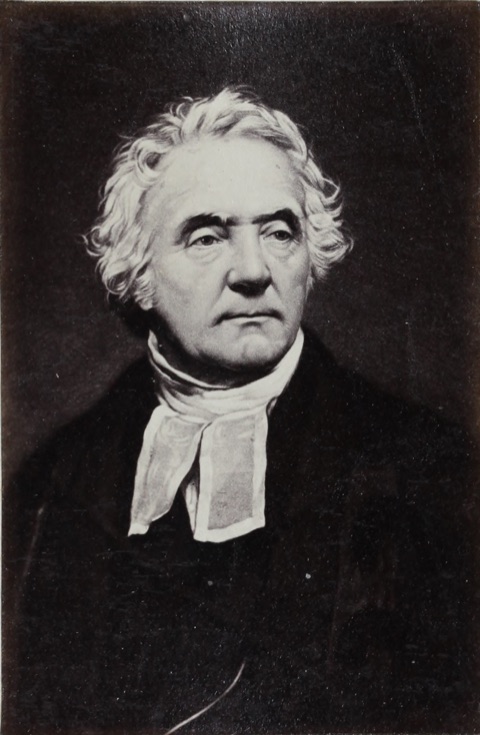
About the author
Thomas Chalmers
Thomas Chalmers (1780 to 1847 AD) was born in Anstruther, Fife, and entered the University of St Andrews at eleven. Minister of Kilmany from 1803, he turned to evangelical religion after illness between 1809 and 1811, and in 1815 was called to the Tron Church in Glasgow, where he became a widely sought preacher. In 1819 he took charge of the new parish of St. John's, in one of the city's poorest districts, and met its poverty through deacons, visitation and church collections rather than the legal poor rate. In 1823 he became professor of moral philosophy at St Andrews, and in 1828 professor of divinity at Edinburgh. He led the Disruption of 1843, became first Moderator of the Free Church of Scotland, and died at Edinburgh in 1847.