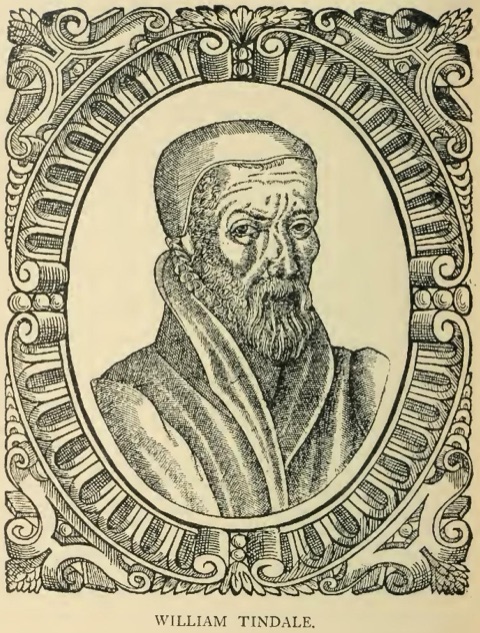
William Tyndale
The scholar who first translated the Bible into English directly from Hebrew and Greek and had it mass-produced in print, executed for heresy in 1536. His wording carried over into the King James Version and shaped English prose.
1494–1536
Biography
William Tyndale (around 1494 to 1536) was an English scholar and Bible translator who produced the first English New Testament rendered directly from Greek and the first printed in large quantities. Born in Gloucestershire, most likely near Dursley, he studied at Oxford, where he took his bachelor's degree in 1512 and his master's in 1515, and he is thought to have later spent time at Cambridge. He was ordained a priest and read widely in the biblical languages during a period when the study of Greek was still new in England.
By the early 1520s Tyndale was serving as tutor to the children of Sir John Walsh at Little Sodbury in Gloucestershire, and he had become convinced that ordinary people should be able to read Scripture in their own tongue. He reportedly told one opponent that he would cause a boy who drives the plough to know more of the Bible than the learned clergy did. In 1523 he traveled to London seeking the patronage of Cuthbert Tunstall, the bishop of London, to support a translation project. Tunstall refused him, and Tyndale concluded that the work could not be done anywhere in England.
In 1524 he left England for the continent and never returned. He began printing his English New Testament at Cologne in 1525, but the work was interrupted by authorities and he fled up the Rhine to Worms, where a complete edition was printed in 1526. Copies were smuggled into England hidden in bales of cloth and other cargo. Tunstall had the imported books condemned and publicly burned, and English authorities bought up and destroyed copies, which had the side effect of financing further printings.
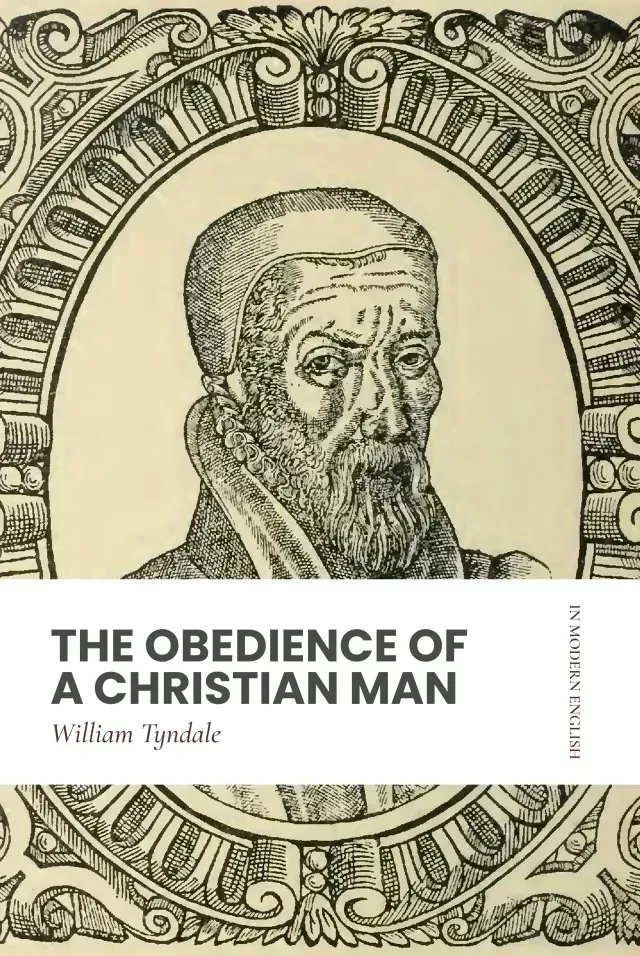
Tyndale continued to write and translate from the Low Countries. In 1528 he published The Obedience of a Christian Man, which argued that Scripture, not papal decree, holds final authority and that subjects owe obedience to their lawful princes. Henry VIII is said to have read the book and approved of its case for royal authority. Tyndale then turned to the Old Testament, and in 1530 he printed his translation of the Pentateuch, the first five books of the Bible, followed by the book of Jonah. His tract The Practice of Prelates, which criticized Henry VIII's plan to annul his marriage to Catherine of Aragon, cost him the king's favor.
In 1535 Tyndale was living in the English merchant community at Antwerp when he was betrayed by Henry Phillips, a man who had won his confidence. He was arrested and imprisoned in the castle of Vilvoorde, near Brussels, in territory controlled by the emperor Charles V. After a lengthy trial he was condemned as a heretic. In October 1536 he was strangled and his body burned at the stake. According to the account preserved by John Foxe, his last words were a prayer that the Lord would open the king of England's eyes.
Within a few years of his death, English Bibles that drew heavily on his work were circulating with royal permission, including the Matthew Bible of 1537 and the Great Bible of 1539. His phrasing passed through these editions into the King James Version of 1611. A scholarly analysis of the King James text found that a large majority of its New Testament, and much of the portion of the Old Testament that Tyndale had translated, reproduces his wording closely.
Life & Career
Why Tyndale Matters
Tyndale's central achievement was to make the Bible speak plain English drawn straight from its original languages. Earlier English Scriptures, chiefly the Wycliffite versions of the late fourteenth century, had been translated from the Latin Vulgate and circulated only in manuscript. Tyndale worked from the Greek text that Erasmus had published and from the Hebrew of the Old Testament, and he put his results into the new medium of print, which meant that his New Testament could reach thousands of readers at once rather than a handful of wealthy copy owners.
His decisions about wording carried theological weight. He translated the Greek term for the church community as congregation rather than church, the word for elder as senior or elder rather than priest, and the term for repentance in ways that avoided the vocabulary of the sacrament of penance. These choices supported the Reformation argument that authority rested in Scripture and the gathered believers rather than in the ordained hierarchy, and they were among the reasons his books were condemned in England.
Beyond doctrine, Tyndale shaped the English language itself. Because his phrasing was carried forward through the Matthew Bible, the Great Bible, and finally the King James Version, expressions he coined or fixed in English entered common speech, among them the powers that be, my brother's keeper, the salt of the earth, and a law unto themselves. Generations of English readers absorbed his cadences without knowing their source.
His death made him a central figure in the story English Protestants told about themselves. John Foxe placed Tyndale prominently in his Acts and Monuments, the martyrology that became one of the most widely read books in Elizabethan England, and there Tyndale stood as the scholar who died so that his countrymen could read the Bible for themselves.