William Perkins
The father of English Puritanism. His systematic works on theology, preaching, and the Christian life trained the first generation of Puritan ministers and shaped the movement's character.
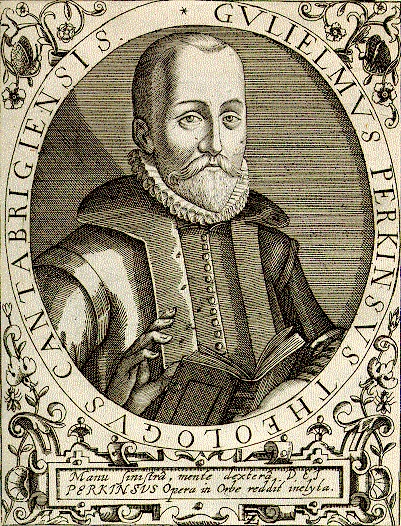
1558–1602
Biography
William Perkins was born in 1558 in Marston Jabbett, Warwickshire. He entered Christ's College, Cambridge, in 1577 and remained there for the rest of his life, as fellow, lecturer, and eventually the most influential theologian in the university.
As a student, Perkins was reportedly wild and dissolute, but he underwent a conversion experience that transformed his life and set him on the path to ministry. He became a fellow of Christ's College in 1584 and was ordained. He was appointed lecturer at Great St Andrew's Church, Cambridge, where his preaching drew enormous audiences of students and townspeople.
Perkins was a systematizer. He took the theology of Calvin and the continental Reformed theologians and organized it into practical frameworks that English ministers could teach and apply. His Golden Chain (Armilla Aurea, 1590) provided a visual and logical diagram of the order of salvation that became the standard Reformed schema in England. His Art of Prophesying (1592) was the first English manual on preaching methodology.
Perkins also wrote extensively on moral theology and cases of conscience. His Whole Treatise of the Cases of Conscience was the first comprehensive Protestant treatment of casuistry in English, providing guidance on practical moral questions that had previously been addressed only by Catholic manuals.
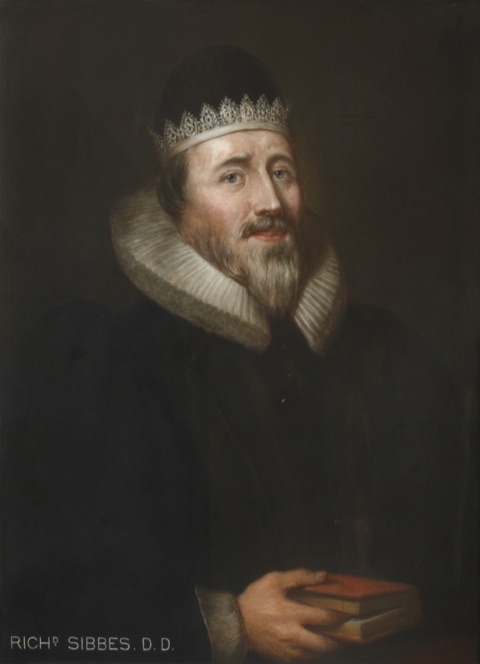
Perkins died in 1602 at the age of forty-four, probably of kidney stones. Despite his short life, his influence was enormous. His students included William Ames, Paul Baynes, and Richard Sibbes, and through them his theological method shaped the entire Puritan movement.
Life & Career
Why Perkins Matters
Perkins was the architect of English Reformed theology. He did not originate new doctrines but translated continental Reformed thought into an English idiom and gave it a practical, pastoral orientation that became the distinguishing mark of Puritanism.
His Golden Chain organized the doctrines of predestination and salvation into a clear logical order that ministers could teach to their congregations. The work was translated into multiple languages and remained the standard introduction to Reformed soteriology for decades.
Perkins's Art of Prophesying established the Puritan method of preaching: plain style, careful exposition of Scripture, logical division of the text, and pointed application to different classes of hearers. This method became so dominant that it defined English Puritan preaching for a century.
His work on cases of conscience brought the discipline of moral theology into the Protestant mainstream. By addressing practical ethical questions with systematic rigor, Perkins gave Puritan pastors tools for counseling that went beyond general doctrinal instruction.