John Foxe
English martyrologist and author of Acts and Monuments, popularly known as Foxe's Book of Martyrs, a history of Christian persecution that became one of the most widely read English books of the sixteenth and seventeenth centuries.
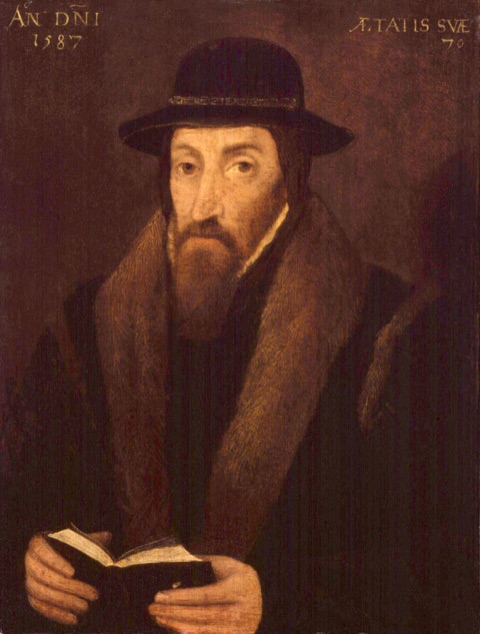
1516–1587
Biography
John Foxe (1516 to 1587) was an English historian and martyrologist whose Acts and Monuments, popularly called Foxe's Book of Martyrs, chronicled the sufferings of Christians who died for their faith from the early church through the persecutions of his own century. Born in Boston, Lincolnshire, he entered Brasenose College, Oxford, and later became a fellow of Magdalen College. He resigned that fellowship in 1545, unwilling to accept the celibacy and other obligations that his Protestant convictions had made impossible to keep.
After leaving Oxford, Foxe supported himself as a tutor, entering the household of the Howard family and teaching the grandchildren of the Duke of Norfolk. He remained in England through the reign of Edward VI, but the accession of the Catholic Mary I in 1553 and the burnings of Protestants that followed drove him into exile. In 1554 he crossed to the Continent and moved among the exile communities at Strasbourg, Frankfurt, and Basel, where he worked as a proofreader for the printer Johann Oporinus.
His martyrology took shape during these years abroad. A first Latin version appeared at Strasbourg in 1554, and a much larger Latin work was printed at Basel in 1559. When Elizabeth I came to the throne, Foxe returned to England, was ordained priest by Edmund Grindal in 1560, and set about turning his Latin history into a more ambitious English book. The London printer John Day produced the first English edition of Acts and Monuments in 1563.
The book was large and heavily documented, drawing on official records, eyewitness accounts, and the letters of the condemned. Foxe presented the executions under Mary I in close detail and placed them within a long history of the church suffering at the hands of its persecutors. He revised and expanded the work across his lifetime, issuing enlarged editions in 1570, 1576, and 1583, each fuller than the last and illustrated with woodcuts of the burnings.
In 1571 the Convocation of the Church of England ordered copies of Acts and Monuments to be set up in cathedral churches and in the houses of senior clergy. He spent his remaining years in London on continued study and revision. He died in April 1587 and was buried at St Giles Cripplegate.
Life & Career
Why Foxe Matters
Foxe's importance rests on a single large book and the hold it took on English readers. Acts and Monuments was one of the largest and most expensive publishing projects attempted in sixteenth-century England, and its detailed narratives of the Marian burnings gave English Protestantism a shared account of suffering and endurance. For generations of readers it stood beside the Bible and the Book of Common Prayer as a familiar household text.
As a work of history, the book combined documentary ambition with a clear interpretive frame. Foxe gathered trial records, correspondence, and testimony, reproducing much of it at length, while arranging the whole around the conviction that the persecuted were the true continuation of the apostolic church. This method made the book both a mine of source material that later historians would sift and a powerful shaper of how the English understood their own religious past.
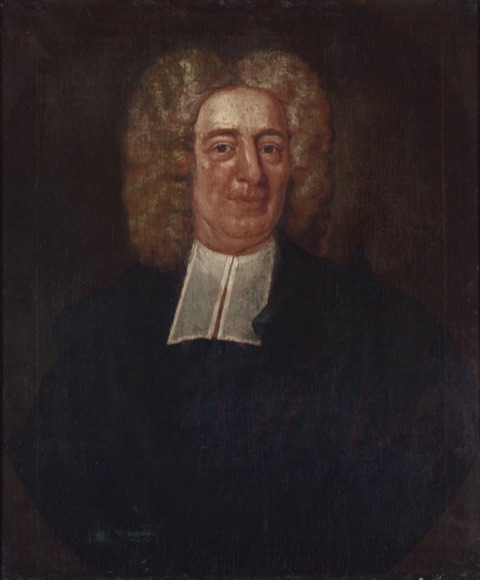
Its influence extended beyond the church. The martyr stories entered popular memory, informed later English attitudes toward Catholicism, and supplied imagery and argument that surfaced in Puritan writing and in the American colonies. Cotton Mather and other later authors drew on Foxe's model of recording the trials of the faithful.
Foxe himself became inseparable from the book that carried his name. Though he wrote sermons and other tracts, it is Acts and Monuments that fixed his place, and successive editors and printers kept expanding and reissuing it for more than two centuries after his death.