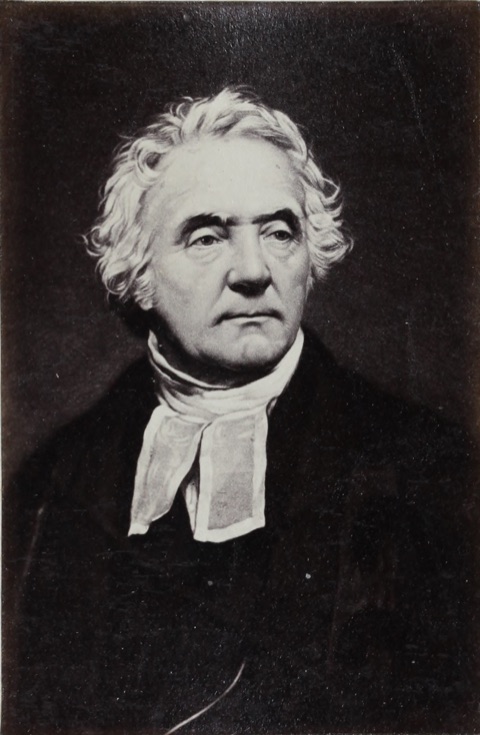
William Sprague
William Buell Sprague was an American Presbyterian minister who pastored the Second Presbyterian Church of Albany for four decades and compiled the nine-volume Annals of the American Pulpit, a biographical record of deceased American clergy. He was also one of the most active autograph and manuscript collectors of nineteenth-century America.
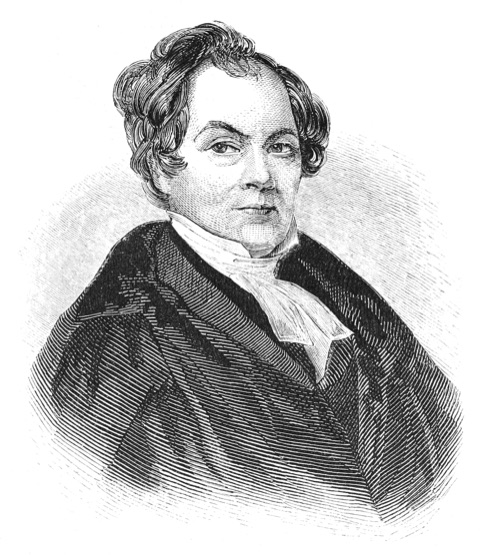
1795–1876
Biography
William Buell Sprague (1795 to 1876) was an American Presbyterian minister, biographer, and manuscript collector who spent most of his career at the Second Presbyterian Church in Albany, New York. He was born on October 16, 1795, in Andover, Connecticut, into a farming family.
Sprague graduated from Yale College in 1815. He then spent a period tutoring in Virginia, where he had access to the papers of prominent Revolutionary-era figures, an experience that helped fix his lifelong habit of collecting letters and signatures. He completed his ministerial training at Princeton Theological Seminary, then in its early years under Archibald Alexander and Samuel Miller.
In 1819 Sprague was ordained and installed as pastor of the Congregational church in West Springfield, Massachusetts, where he served for a decade. In 1829 he moved to the Second Presbyterian Church in Albany, New York, and remained there until his retirement in 1869, a pastorate of roughly forty years. During these decades Albany was the New York state capital and a growing commercial city, and Sprague's pulpit made him one of the better-known preachers in the region.
Alongside his preaching, Sprague wrote steadily for a general Christian readership. His Lectures on Revivals of Religion, published in 1832, addressed the wave of revival that spread through the northern states in that period. He also produced volumes of practical counsel, including Letters to a Daughter and Letters to Young Men, works that grew out of his pastoral experience and his own family life.
His largest undertaking was the Annals of the American Pulpit, issued in nine volumes between 1857 and 1869. The Annals gathered biographical sketches of deceased American ministers, organized by denomination, and drew on Sprague's correspondence with those who had known the subjects personally. It remains a standard reference for the study of American religious history.
Sprague was also among the most active autograph collectors of his century. He assembled tens of thousands of letters and signatures, including a complete set of the signers of the Declaration of Independence, and corresponded widely to obtain and trade material. He died on May 7, 1876.
Life & Career
Why Sprague Matters
Sprague's most lasting contribution is documentary. The Annals of the American Pulpit preserved firsthand recollections of hundreds of American ministers who would otherwise have left little biographical trace. Because he gathered his material from people who had known the subjects directly, the work captures details of preaching style, temperament, and pastoral practice that formal denominational records omit, and it remains a reference for historians of Congregationalism, Presbyterianism, and the other bodies he covered.
As a pastor, Sprague belonged to the broad Reformed and Presbyterian mainstream trained at Princeton in the era of Archibald Alexander. His Lectures on Revivals of Religion placed him within the debates over revival methods that divided American Protestants in the 1830s, offering a view rooted in settled congregational ministry rather than itinerant preaching.
His books of counsel, including Letters to a Daughter, belonged to a nineteenth-century genre of practical religious advice aimed at family and personal life. These writings extended his pastoral voice beyond his own congregation and kept his name in print among general readers.
Sprague's manuscript collecting also gave him a place in the early history of American archival preservation. His holdings of Revolutionary and early national correspondence, later dispersed to libraries and private collectors, helped keep a large body of early American letters intact for later study.