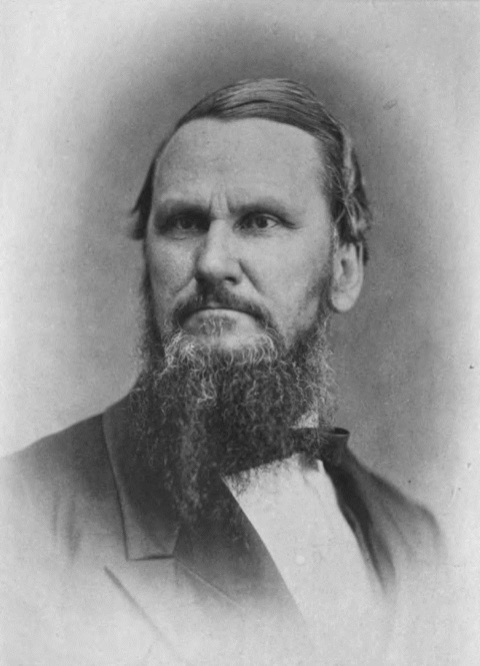
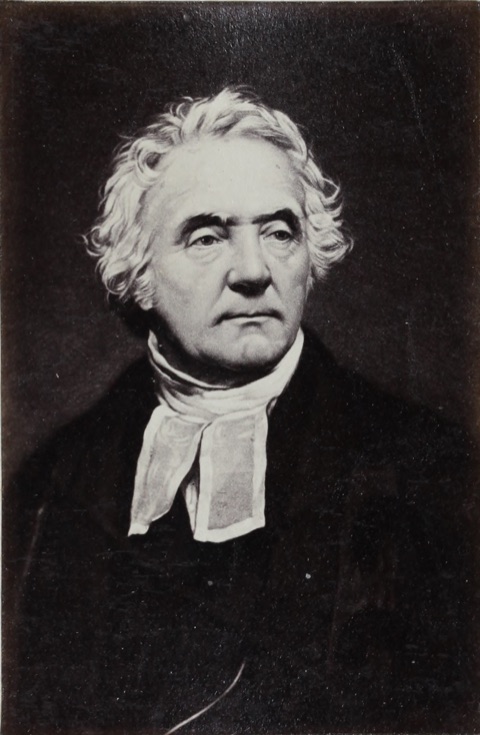
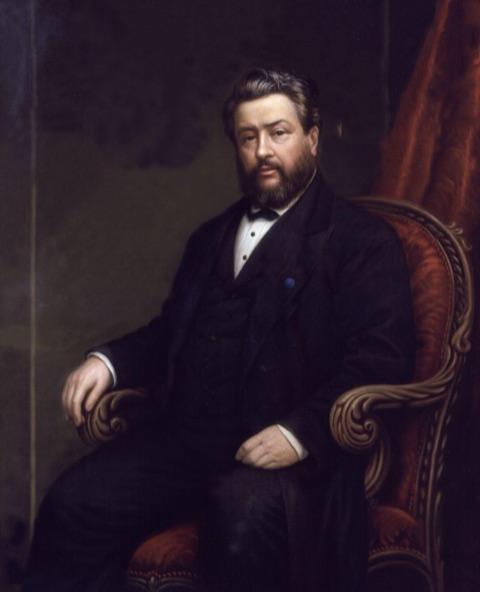
Benjamin Morgan Palmer
American Presbyterian minister who pastored the First Presbyterian Church of New Orleans for forty-six years and served as the first moderator of the Presbyterian Church in the Confederate States of America. With James Henley Thornwell and Robert Lewis Dabney, he was one of the principal architects of Southern Presbyterianism.
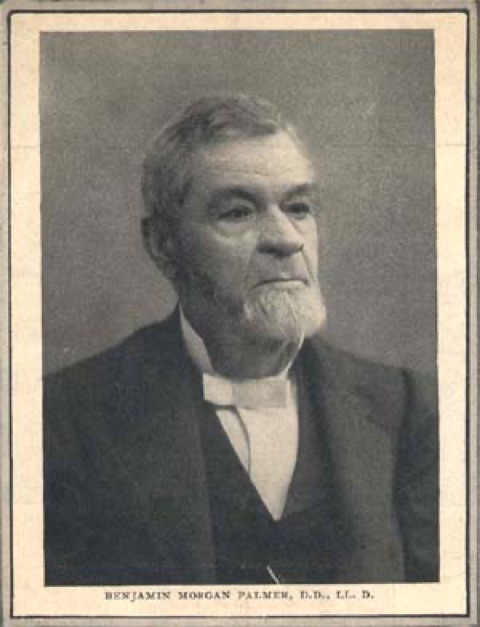
1818–1902
Biography
Benjamin Morgan Palmer (1818 to 1902) was an American Presbyterian minister and theologian who spent forty-six years as pastor of the First Presbyterian Church of New Orleans and served as the first moderator of the Presbyterian Church in the Confederate States of America. He was born on January 25, 1818, in Charleston, South Carolina, into a family that produced several generations of ministers.
Palmer studied briefly at Amherst College in Massachusetts before returning south and graduating from the University of Georgia in 1838. He then entered Columbia Theological Seminary in South Carolina, where he came under the influence of James Henley Thornwell, the dominant figure in antebellum Southern Presbyterianism and a lifelong colleague. After early work in Savannah, Palmer became pastor of the First Presbyterian Church of Columbia, South Carolina, in 1843, held that pulpit for more than a decade, and for a time taught at Columbia Seminary while contributing to and editing the Southern Presbyterian Review.
In 1856 Palmer accepted a call to the First Presbyterian Church of New Orleans, a congregation he would serve until his death. His preaching drew large audiences, and he became the best-known Presbyterian voice in the Gulf South. His writing ranged from doctrinal treatises to practical instruction, including Formation of Character, a set of lectures addressed to young people on the building of moral and intellectual habits.
On November 29, 1860, Palmer preached a Thanksgiving Day sermon in New Orleans in which he defended the institution of slavery and urged the Southern states toward secession. The sermon was printed and circulated in large numbers across the South in the weeks before Louisiana left the Union. When Southern Presbyterians organized their own denomination at Augusta, Georgia, in December 1861, Palmer was chosen as the first moderator of the new General Assembly, the body that would later be known as the Presbyterian Church in the United States.
In the decades after the war Palmer rebuilt his New Orleans congregation and became a central figure in the Southern church. He remained in the city through repeated yellow fever epidemics, including the severe outbreak of 1878, ministering to the sick while losing members of his own family to disease over the years. His later books included The Life and Letters of James Henley Thornwell (1875), a memorial to his mentor, The Family in Its Civil and Churchly Aspects (1876), and The Theology of Prayer (1894). He died in New Orleans in 1902 from injuries suffered when he was struck by a streetcar.
Life & Career
Why Palmer Matters
Palmer was one of the organizing figures of Southern Presbyterianism, the denominational tradition that separated from the northern Presbyterian church in 1861 and endured as a distinct body for more than a century. As the first moderator of the Presbyterian Church in the Confederate States of America, and as the leading preacher of the Gulf South, he helped set the structure and self-understanding of a church that shaped Reformed life across the American South well into the twentieth century.
With Thornwell, Palmer championed the doctrine of the spirituality of the church, the view that the church as an institution should confine itself to spiritual and ecclesiastical matters and refrain from pronouncing on questions of civil policy. This principle became a defining commitment of the Southern Presbyterian tradition, and Palmer's preaching and writing did much to fix it in the denomination's self-understanding, even as his own political sermons showed how contested its boundaries could be.
His long New Orleans pastorate made him a public figure beyond the church. Through the yellow fever epidemics that repeatedly struck the city, his decision to remain and minister to the sick brought him wide recognition among residents of all backgrounds, and his funeral in 1902 drew large crowds in the city he had served for nearly half a century.
Palmer's books carried his influence past his death. The Life and Letters of James Henley Thornwell preserved the record of the man Southern Presbyterians regarded as their greatest theologian, and works such as The Family in Its Civil and Churchly Aspects and Formation of Character carried his teaching on domestic and moral order to a broad readership. His sermons and treatises remain a primary source for understanding Reformed thought in the nineteenth-century South.