Robert Lewis Dabney
Southern Presbyterian theologian, seminary professor, and moral philosopher whose Lectures in Systematic Theology became a standard textbook in nineteenth-century Reformed education. He also served briefly as chief of staff to Stonewall Jackson and wrote the general's first full biography.
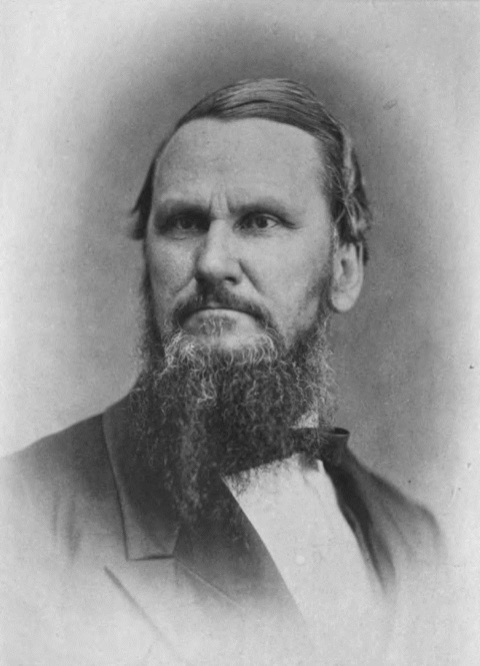
1820–1898
Biography
Robert Lewis Dabney (1820 to 1898) was an American Presbyterian theologian, moral philosopher, and educator who taught for three decades at Union Theological Seminary in Virginia and later at the University of Texas. He was the leading systematic theologian of the Southern Presbyterian Church and the author of textbooks in theology, ethics, and preaching that circulated widely in the second half of the nineteenth century.
Dabney was born on March 5, 1820, in Louisa County, Virginia, into a family of slaveholding planters. He studied at Hampden-Sydney College and took a master's degree at the University of Virginia in 1842, then trained for the ministry at Union Theological Seminary, which then stood in Prince Edward County, Virginia. Licensed to preach in 1846, he became pastor of the Tinkling Spring congregation in Augusta County in 1847. In 1853 he joined the Union Seminary faculty, and in 1859 he was appointed to its chair of systematic and polemic theology, the post that anchored the rest of his teaching career.
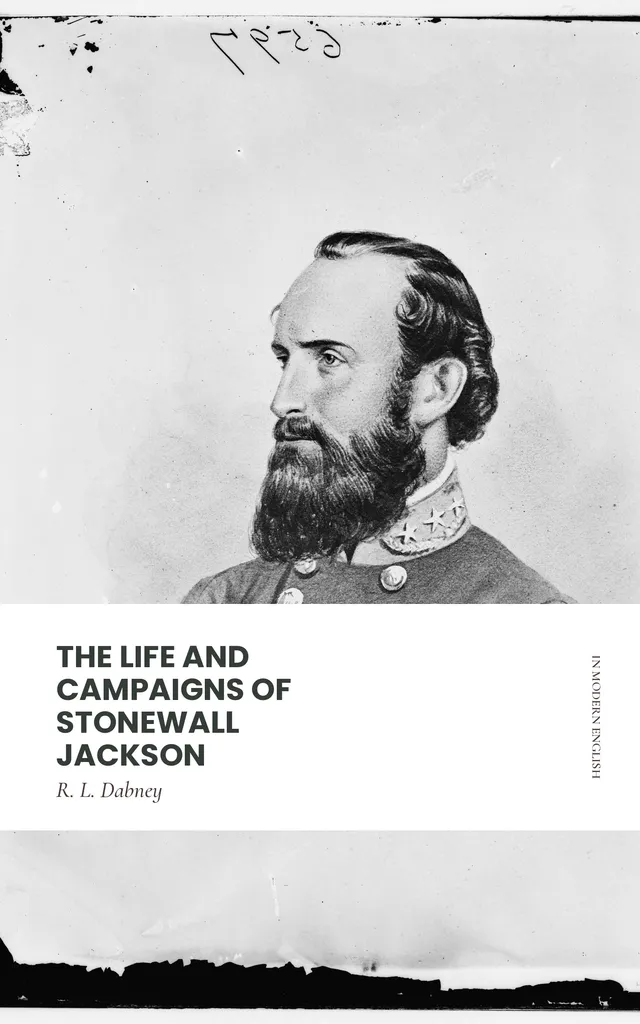
When the Civil War began, Dabney supported the Confederacy and, in the spring of 1862, served for several months as chief of staff and adjutant general to Thomas J. "Stonewall" Jackson during the Shenandoah Valley campaign. Ill health forced him from the field, but the association shaped his later work: in 1866 he published Life and Campaigns of Lieut.-Gen. Thomas J. Jackson, the first substantial biography of the general, drawn partly from Dabney's own service and from access to Jackson's family and papers.
After the war Dabney returned to the seminary and became a prominent voice in the Presbyterian Church in the United States, the Southern denomination organized in 1861. In A Defence of Virginia, and Through Her, of the South (1867) he argued for the biblical and social legitimacy of slavery, and he opposed the reunion of the Northern and Southern churches and the ordination of Black ministers. These positions, argued at length and in the terms of his own region and era, made him one of the most outspoken conservatives in the postwar Southern church.
His scholarly reputation rests on a steady output of books. His seminary lectures were published in 1871 as Lectures in Systematic Theology, which served for years as a course text in Reformed seminaries. He also wrote Sacred Rhetoric (1870) on preaching, The Sensualistic Philosophy of the Nineteenth Century (1875) attacking materialist and empiricist thought, and The Practical Philosophy (1897), his fullest treatment of ethics and the philosophy of mind. His shorter essays on theology, politics, and economy were gathered by C. R. Vaughan into the multivolume Discussions.
In 1883 Dabney left Virginia for Texas, where he became professor of mental and moral philosophy at the newly opened University of Texas at Austin and, in 1884, helped found the Austin School of Theology to train Presbyterian ministers in the Southwest. Failing eyesight left him blind in his final years, though he continued to lecture and dictate. He died on January 3, 1898, in Victoria, Texas.
Life & Career
Why Dabney Matters
Dabney was one of the most systematic theologians the Southern Presbyterian Church produced, and his Lectures in Systematic Theology gave that church a comprehensive statement of its Reformed, confessional position. Working within the Westminster Standards and the Old School Presbyterian tradition, he defended the authority and inerrancy of Scripture, Calvinist views of predestination and human depravity, and a covenantal reading of redemption. His textbook remained in classroom use beyond his lifetime and was reprinted in the twentieth century.
He was also a philosopher of the Scottish common-sense school, which held that the mind can trust its direct perceptions of the external world and of moral truth. In The Sensualistic Philosophy of the Nineteenth Century and The Practical Philosophy he set that outlook against the empiricism, positivism, and evolutionary naturalism gaining ground in his day, treating ethics and psychology as fields governed by fixed principles rather than by shifting scientific fashion. This placed him among the last major American defenders of common-sense realism in an era when it was losing academic standing.
Dabney's writing extended well past theology into education, politics, and economics. He opposed public-school systems he judged secular, criticized the industrial and commercial reordering of the postwar South, and defended an agrarian and hierarchical social vision. These essays, collected in Discussions, made him a reference point for later conservative and traditionalist thinkers who looked back to the nineteenth-century South.
Alongside his theology, Dabney wrote in defense of slavery, opposed the reunion of the Northern and Southern churches, and opposed the ordination of Black ministers, arguing these positions at the length he gave to doctrine. Historians study him both as a systematizer of Reformed doctrine and as an intellectual advocate of the antebellum Southern order, and his career is examined for what it shows about the union of confessional Calvinism and regional politics in nineteenth-century America.